EP1489777A2 - Multicasting network packets - Google Patents
Multicasting network packets Download PDFInfo
- Publication number
- EP1489777A2 EP1489777A2 EP04300224A EP04300224A EP1489777A2 EP 1489777 A2 EP1489777 A2 EP 1489777A2 EP 04300224 A EP04300224 A EP 04300224A EP 04300224 A EP04300224 A EP 04300224A EP 1489777 A2 EP1489777 A2 EP 1489777A2
- Authority
- EP
- European Patent Office
- Prior art keywords
- frame
- copies
- multicasting
- sent
- output
- Prior art date
- Legal status (The legal status is an assumption and is not a legal conclusion. Google has not performed a legal analysis and makes no representation as to the accuracy of the status listed.)
- Granted
Links
- 238000000034 method Methods 0.000 claims abstract description 29
- 238000012545 processing Methods 0.000 claims abstract description 26
- 239000004744 fabric Substances 0.000 claims description 4
- 238000004590 computer program Methods 0.000 claims 2
- 230000008569 process Effects 0.000 abstract description 17
- 238000010586 diagram Methods 0.000 description 11
- 238000005538 encapsulation Methods 0.000 description 2
- 241001481828 Glyptocephalus cynoglossus Species 0.000 description 1
- 230000000903 blocking effect Effects 0.000 description 1
- 230000008859 change Effects 0.000 description 1
- 238000004891 communication Methods 0.000 description 1
- 230000003993 interaction Effects 0.000 description 1
- 230000007246 mechanism Effects 0.000 description 1
- 238000012986 modification Methods 0.000 description 1
- 230000004048 modification Effects 0.000 description 1
- 238000012544 monitoring process Methods 0.000 description 1
- 230000003287 optical effect Effects 0.000 description 1
- 230000002311 subsequent effect Effects 0.000 description 1
- 239000004557 technical material Substances 0.000 description 1
Images

Classifications
-
- H—ELECTRICITY
- H04—ELECTRIC COMMUNICATION TECHNIQUE
- H04L—TRANSMISSION OF DIGITAL INFORMATION, e.g. TELEGRAPHIC COMMUNICATION
- H04L12/00—Data switching networks
- H04L12/02—Details
- H04L12/16—Arrangements for providing special services to substations
- H04L12/18—Arrangements for providing special services to substations for broadcast or conference, e.g. multicast
- H04L12/1886—Arrangements for providing special services to substations for broadcast or conference, e.g. multicast with traffic restrictions for efficiency improvement, e.g. involving subnets or subdomains
Definitions
- the present invention relates generally to network switching. More specifically, multicasting network packets is disclosed.
- Multicasting of a network packet or frame is sometimes performed by configuring a network processor to make as many copies of the frame as may be required for the multicasting and queues up the frames for output.
- the frames traversing the s witch just behind the multicast frame typically must wait until all multicast frames have cleared through the network processor until they can be queued up for output. It would be better if the other traffic could be interspersed with the multicast traffi c through an efficient mechanism.
- network environments have increasing requirements for complexity in making copies for the multicasting. In particular, it is important for network switches to be able to generate "copies" that are not exact duplicates of the original frame, to allow for network and destination requirements of networks (e.g. virtual private networks and destination specific requirements for multicasting).
- the invention can be implemented in numerous ways, including as a process, an apparatus, a system, a composition of matter, a computer readable medium such as a computer readable storage medium or a computer network wherein program instructions are sent over optical or electronic communication links.
- these implementations, or any other form that the invention may take, may be referred to as techniques.
- the order of the steps of disclosed processes may be altered within the scope of the invention.
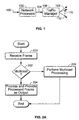
- FIG. 1 is a block diagram illustrating multicast processing in a simple network switch or network switch element, e.g., in a single queuing stage of a multistage network switch comprising typi cally an input queuing stage, a switch fabric and an output queuing stage.
- Frames enter on connection 100 to network processor 102.
- the frames are sent into network processor 102 on connection 100 by a device or component configured to receive packets from an external physical port or connection.
- the frames are sent into network processor 102 from a traffic manager in a different queuing stage of the switch, sometimes via a switch fabric.
- network processor 102 prepares the frames to be forwarded via a traffic manager such as traffic manager 106.
- the processor 102 prepares all the copies of the frame and provides the copies as output over connection 104 to traffic manager 106. Traffic manager 106 then queues up all of the frames to be sent to their respective destinations, as represented in Figure 1 by arrows 108 to 112.
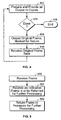
- FIG. 2A is a flow diagram illustrating frame proce ssing in a network switch.
- a frame is received.
- Figure 2B is a flow diagram of a process used i n some embodiments to process a multicast frame.
- the required n copies of the frame are prepared.
- the copies may not be exact duplicates and may instead have some differences depending on the nature or complexity of the network or destination of the frame.
- the multicast might be a video stream where some frames are encoded according to the PAL standard and others for the NTSC standard, for example, in which case it would be necessary to send the PAL frames to the destinati ons configured to receive PAL frames and NTSC frames to all others.
- the n copies of the frame are provided as output, e.g., to a traffic manager such as traffic manager 106 of Figure 1, to be sent to their proper destinations.
- the process shown in Figures 2A and 2B is implemented by the frame processor, which makes all the required copies and provides them as output to a traffic manager, where each copy is queued for delivery to the d estination to which it is addressed.
- the frame processor e.g., network processor 102 of Figure 1
- frames received subsequent to the multicast frame may have to wait to be processed, regardless of their priority, while all of the copies are made and provided as output, a condition sometimes referred to as "head of line blocking".
- head of line blocking For example, in the embodiment shown in Figure 1, all of the copies of the multicast frame must travel over connection 104 (see Figure 1).
- connection 100 a subsequent frame entering on connection 100 to network processor 102 that is destined to destination 108 by traffic manager 106 must wait until all the multicast traffic has been processed by network processor 102 and provided as output via connection 104.
- This problem can be exacerbated in implementations in which not all copies of the frame are identical, e.g., to accommodate differences in encapsulation, transport protocol, encoding, etc.
- Figure 3 is a block diagram illustrating alternate multicast processing in a network switch.
- Frames enter on connection 300 to network processor 302.
- Network processor 302 prepares the frames to be sent to the traffic manager.
- the network processor 302 determines whether a frame is a unicast (single destination) frame or a multicast frame, as in Figure 2A, and processes each frame accordingly.
- the network processor prepares m copies of the frame and provides the m as output on connection 304 to a traffic manager 306 for delivery to the first m destinations of the total set of destinations to which the multicast frame is required to be sent, represented in Figure 3 by destinations 308 -314.
- the number of frames sent per iteration (m) is a predetermined value. In some embodiments, it is a user configurable parameter. In some embodiments, the number of frames sent per iteration (m) is determined dynamically by the network processor 302 based on such factors as the total number of destinations (t) to which the multicast frame will be sent, the number of copies already sent, the number of copies remaining to be sent, switch fabric congestion, input/output module workload, network processor load, the priority level of the multicast frame, time of day, etc. The network processor keeps track of the destinations to which the multicast frame has been sent and the remaining destinations to which it still must be sent.
- the network processor 302 If the total number of destinations t is greater than the maximum number of frames m that the network processor is configured to prepare and send in any one iteration, and at the end of any iteration after which additional destinations remain to be serviced, the network processor 302 also outputs the original input frame marked to be returned to the network processor for further processing. At a later time, according to some scheduling algorithm, the traffic manager 306 sends the original input frame back to the network processor 302 via connection 316 to allow the network processor 302 to prepare the next m copies of the frame. In some embodiments, the number of copies prepared in each iteration may change dynamically based on real time monitoring of conditions such as those described above. Network processor 302 prepares the next m copies of the frame and provides them as output over connection 304 to traffic manager 306, as described above. Successive iterations of this process are repeated until all t copies have been sent to their respective destinations.
- FIG. 4 is a flow diagram illustrating a process for processing multicast frames in a network switch.
- step 402 m copies of the frame are prepared and provided as output, e.g., to a traffic manager device or process, for deliver y to their respective destinations.
- step 440 it is determined whether all required copies of the multicast frame have been made and sent. If it is determined in step 404 that the frames sent in step 402 were the final copies required to be sent, the process ends in step 406. If it is determined in step 404 that additional copies remain to be prepared and sent, in step 408 the original input frame is provided as output marked in a way that indicates that the frame is to be returned for further process ing.
- step 410 the original input frame is received again, and the next m copies of the multicast frame are prepared and provided as output, after which the process repeats through as many iterations as are necessary to prepare and send all of the requ ired copies.
- connection 304 All of the copies of the multicast frames in this case, must travel over connection 304 (see Figure 3). In this situation, however, because only a limited number of copies m are made in any iteration, where m may be smaller than t, a subsequ ent frame entering on connection 300 to network processor 302 that is destined to be output to one of the destinations 308 -314, e.g., by traffic manager 306 need only wait until m copies of the multicast frame have been processed by the network processor 3 02 and provided as output over connection 304.
- FIG. 5 is a flow chart illustrating a process implemented on a traffic manager device or process, such as the traffic manager 306 of Figure 3, to process a multicast frame.
- a frame is received.
- an indication is received that the frame is a multicast frame that is to be returned to the network processor for further processing.
- the indication comprises receiving and/or reading a data value associated with the fr ame, such as a value in an encapsulation header.
- the frame is returned to the network processor for further processing.
- the frame is returned to the network processor after a prescribed interval.
- th e prescribed interval is user configurable.
- the frame is returned to the network processor after an interval indicated by the network processor.
- the frame is returned at a time based on one of more factors such as a priority associated with the frame, the number and priority of packets waiting in queues to be service by the network processor, and/or other factors.
Landscapes
- Engineering & Computer Science (AREA)
- Computer Networks & Wireless Communication (AREA)
- Signal Processing (AREA)
- Data Exchanges In Wide-Area Networks (AREA)
Abstract
Description
- This application claims priority to U.S. Provisional Patent Application No. 60/465,653 (Attorney Docket No. TIMEP007+) entitled MANAGING NETWORK PACKET PROCESSOR AND NETWORK TRAFFIC MANA GER INTERACTIONS April 25, 2003 which is incorporated herein by reference for all purposes.
- The present invention relates generally to network switching. More specifically, multicasting network packets is disclosed.
- Multicasting of a network packet or frame is sometimes performed by configuring a network processor to make as many copies of the frame as may be required for the multicasting and queues up the frames for output. The frames traversing the s witch just behind the multicast frame typically must wait until all multicast frames have cleared through the network processor until they can be queued up for output. It would be better if the other traffic could be interspersed with the multicast traffi c through an efficient mechanism. In addition, network environments have increasing requirements for complexity in making copies for the multicasting. In particular, it is important for network switches to be able to generate "copies" that are not exact duplicates of the original frame, to allow for network and destination requirements of networks (e.g. virtual private networks and destination specific requirements for multicasting).
- Various embodiments of the invention a re disclosed in the following detailed description and the accompanying drawings.
- Figure 1 is a block diagram illustrating multicast processing in a network switch.
- Figure 2A is a flow diagram illustrating frame processing in a network switch.
- Figure 2B is a flow diagram illustrating multicast frame processing in a network switch.
- Figure 3 is a block diagram illustrating alternate multicast processing in a network switch.
- Figure 4 is a flow diagram illustrating multicast frame processing in a network switch.
- Figure 5 is a flow diagram illustrating the operation of a traffic manager with respect to a multicast frame.
-
- The invention can be implemented in numerous ways, including as a process, an apparatus, a system, a composition of matter, a computer readable medium such as a computer readable storage medium or a computer network wherein program instructions are sent over optical or electronic communication links. In this specification, these implementations, or any other form that the invention may take, may be referred to as techniques. In general, the order of the steps of disclosed processes may be altered within the scope of the invention.
- A detailed description of one or more embodiments of the invention is provided below along with accompanying figures that illustrate the principles of the invention. The invention is described in connection with such embodiments, but the invention is not limited to any embodiment. The scope of the invention is limited only by the claims an d the invention encompasses numerous alternatives, modifications and equivalents. Numerous specific details are set forth in the following description in order to provide a thorough understanding of the invention. These details are provided for the purpo se of example and the invention may be practiced according to the claims without some or all of these specific details. For the purpose of clarity, technical material that is known in the technical fields related to the invention has not been described in detail so that the invention is not unnecessarily obscured.
- Figure 1 is a block diagram illustrating multicast processing in a simple network switch or network switch element, e.g., in a single queuing stage of a multistage network switch comprising typi cally an input queuing stage, a switch fabric and an output queuing stage. Frames enter on
connection 100 tonetwork processor 102. In some embodiments, the frames are sent intonetwork processor 102 onconnection 100 by a device or component configured to receive packets from an external physical port or connection. In some other embodiments the frames are sent intonetwork processor 102 from a traffic manager in a different queuing stage of the switch, sometimes via a switch fabric. In a typical switch,network processor 102 prepares the frames to be forwarded via a traffic manager such astraffic manager 106. In the case of a multicast frame, in typical prior art switches theprocessor 102 prepares all the copies of the frame and provides the copies as output overconnection 104 totraffic manager 106.Traffic manager 106 then queues up all of the frames to be sent to their respective destinations, as represented in Figure 1 byarrows 108 to 112. - Figure 2A is a flow diagram illustrating frame proce ssing in a network switch. In
step 200, a frame is received. Instep 202, it is determined whether the frame is to be multicast. In some embodiments, the determination made instep 202 is made based at least in part on a data value associated with the frame, such as a header value and/or destination address associated with the frame. If the frame is not to be multicast, instep 204 the frame is processed and the processed frame is provided as output, e.g., to a traffic manager device or process configur ed to send the frame on to its final destination, after which the process of Figure 2A ends. If it is determined instep 202 that the frame is to be multicast, multicast processing is performed instep 206. - Figure 2B is a flow diagram of a process used i n some embodiments to process a multicast frame. In
step 208, the required n copies of the frame are prepared. In some embodiments, the copies may not be exact duplicates and may instead have some differences depending on the nature or complexity of the network or destination of the frame. For example, in the case of virtual private networks and other network services it may be necessary to send via a single physical port slightly different versions of a multicast frame addressed to two or more different destinations. In another example, the multicast might be a video stream where some frames are encoded according to the PAL standard and others for the NTSC standard, for example, in which case it would be necessary to send the PAL frames to the destinati ons configured to receive PAL frames and NTSC frames to all others. Instep 210, the n copies of the frame are provided as output, e.g., to a traffic manager such astraffic manager 106 of Figure 1, to be sent to their proper destinations. - In a typical prior art layer 2 (L2) switch, for example, the process shown in Figures 2A and 2B is implemented by the frame processor, which makes all the required copies and provides them as output to a traffic manager, where each copy is queued for delivery to the d estination to which it is addressed. However, when the frame processor (e.g.,
network processor 102 of Figure 1) is required to make all of the copies, frames received subsequent to the multicast frame may have to wait to be processed, regardless of their priority, while all of the copies are made and provided as output, a condition sometimes referred to as "head of line blocking". For example, in the embodiment shown in Figure 1, all of the copies of the multicast frame must travel over connection 104 (see Figure 1). In this situation, a subsequent frame entering onconnection 100 tonetwork processor 102 that is destined todestination 108 bytraffic manager 106 must wait until all the multicast traffic has been processed bynetwork processor 102 and provided as output viaconnection 104. This problem can be exacerbated in implementations in which not all copies of the frame are identical, e.g., to accommodate differences in encapsulation, transport protocol, encoding, etc. - Figure 3 is a block diagram illustrating alternate multicast processing in a network switch. Frames enter on
connection 300 tonetwork processor 302.Network processor 302 prepares the frames to be sent to the traffic manager. In one embodiment, thenetwork processor 302 determines whether a frame is a unicast (single destination) frame or a multicast frame, as in Figure 2A, and processes each frame accordingly. In the case of a multicast frame, in one embodiment the network processor prepares m copies of the frame and provides the m as output onconnection 304 to atraffic manager 306 for delivery to the first m destinations of the total set of destinations to which the multicast frame is required to be sent, represented in Figure 3 by destinations 308 -314. In some embodiments, the number of frames sent per iteration (m) is a predetermined value. In some embodiments, it is a user configurable parameter. In some embodiments, the number of frames sent per iteration (m) is determined dynamically by thenetwork processor 302 based on such factors as the total number of destinations (t) to which the multicast frame will be sent, the number of copies already sent, the number of copies remaining to be sent, switch fabric congestion, input/output module workload, network processor load, the priority level of the multicast frame, time of day, etc. The network processor keeps track of the destinations to which the multicast frame has been sent and the remaining destinations to which it still must be sent. If the total number of destinations t is greater than the maximum number of frames m that the network processor is configured to prepare and send in any one iteration, and at the end of any iteration after which additional destinations remain to be serviced, thenetwork processor 302 also outputs the original input frame marked to be returned to the network processor for further processing. At a later time, according to some scheduling algorithm, thetraffic manager 306 sends the original input frame back to thenetwork processor 302 viaconnection 316 to allow thenetwork processor 302 to prepare the next m copies of the frame. In some embodiments, the number of copies prepared in each iteration may change dynamically based on real time monitoring of conditions such as those described above.Network processor 302 prepares the next m copies of the frame and provides them as output overconnection 304 totraffic manager 306, as described above. Successive iterations of this process are repeated until all t copies have been sent to their respective destinations. - Figure 4 is a flow diagram illustrating a process for processing multicast frames in a network switch. In
step 402, m copies of the frame are prepared and provided as output, e.g., to a traffic manager device or process, for deliver y to their respective destinations. In step 440, it is determined whether all required copies of the multicast frame have been made and sent. If it is determined instep 404 that the frames sent instep 402 were the final copies required to be sent, the process ends instep 406. If it is determined instep 404 that additional copies remain to be prepared and sent, instep 408 the original input frame is provided as output marked in a way that indicates that the frame is to be returned for further process ing. Instep 410, the original input frame is received again, and the next m copies of the multicast frame are prepared and provided as output, after which the process repeats through as many iterations as are necessary to prepare and send all of the requ ired copies. - All of the copies of the multicast frames in this case, must travel over connection 304 (see Figure 3). In this situation, however, because only a limited number of copies m are made in any iteration, where m may be smaller than t, a subsequ ent frame entering on
connection 300 tonetwork processor 302 that is destined to be output to one of the destinations 308 -314, e.g., bytraffic manager 306 need only wait until m copies of the multicast frame have been processed by the network processor 3 02 and provided as output overconnection 304. - Figure 5 is a flow chart illustrating a process implemented on a traffic manager device or process, such as the
traffic manager 306 of Figure 3, to process a multicast frame. Instep 502, a frame is received. Instep 504, an indication is received that the frame is a multicast frame that is to be returned to the network processor for further processing. In some embodiments, the indication comprises receiving and/or reading a data value associated with the fr ame, such as a value in an encapsulation header. Instep 506, the frame is returned to the network processor for further processing. In some embodiments, the frame is returned to the network processor after a prescribed interval. In some embodiments, th e prescribed interval is user configurable. In some embodiments, the frame is returned to the network processor after an interval indicated by the network processor. In some embodiments, the frame is returned at a time based on one of more factors such as a priority associated with the frame, the number and priority of packets waiting in queues to be service by the network processor, and/or other factors. - Although the foregoing embodiments have been described in some detail for purposes of clarity of unde rstanding, the invention is not limited to the details provided. There are many alternative ways of implementing the invention. The disclosed embodiments are illustrative and not restrictive.
Claims (16)
- A method for multicasting a data frame comprising:preparing m copies of the frame, the number m being less than a total number of copies of the frame, t, to be sent;providing the m copies as output;providing the original input frame as output with an indication that the frame should be returned for further processing;discontinuing processing the frame during an interval during which one or more frames other than the frame being multicast may be processed; andrepeating until t copies have been sent.
- A method for multicasting as in c1 aim 1 further comprising determining the number of copies m to be prepared.
- A method for multicasting as in claim 1 wherein determining the number of copies m to be prepared depends on the number of copies of the frame that have already been sent.
- A method for multicasting as in claim 1 wherein determining the number of copies m to be prepared depends on the total number of copies of the frame, t, to be sent.
- A method for multicasting as in claim 1 wherein determining the number of copies m to be prepared d epends on a traffic level.
- A method for multicasting as in claim 1 wherein determining the number of copies m to be prepared depends on a priority level associated with the frame.
- A method for multicasting as in claim 1 wherein the m copies of the frame ar e prepared by a network processor.
- A method for multicasting as in claim 1 wherein the m copies of the frame are queued up to be sent to their respective destinations using a traffic manager.
- A method for multicasting as in claim 1 wherein the m copies of the frame are sent to their respective destination using a traffic manager.
- A method for multicasting as in claim 1 further comprising receiving the frame back and preparing the next set of m copies in response to receiving the frame back.
- A method for mul ticasting as in claim 1 wherein a copy of the frame may be different than one or more other copies of the frame.
- A device for multicasting a data frame comprising:an input interface configured to receive the frame; anda frame processor configured to:prepare m copies of the frame, the number m being less than a total number of copies of the frame, t, to be sent;provide the m copies as output;provide the original input frame as output with an indication that the frame should be returned for further pro cessing; anddiscontinue processing the frame during an interval during which one or more frames other than the frame being multicast may be processed.
- A device as in claim 12 wherein the processing further comprises a further iteration of preparing m copi es of the frame, providing the m copies as output, and discontinuing processing the frame during an interval during which one or more frames other than the frame being multicast may be processed.
- A device as in claim 13 in which successive iterations of re ceiving the frame, preparing m copies, providing the m copies as output, providing the original frame as output, and discontinuing processing the frame during an interval during which one or more frames other than the frame being multicast may be processed are completed until all t copies of the frame have been prepared and provided as output.
- A device for queuing data frames for delivery to a destination via a switch fabric, comprising:an input interface configured to receive processed data frames from a network packet processor device; anda packet routing engine configured to determine with respect to each processed data frame received whether the frame should be queued for delivery to its destination or returned to the network packet processor for further processing.
- A computer program product for multicasting a data frame, the computer program product being embodied in a computer readable medium and comprising computer instructions for:preparing m copies of the frame, the number m being less than a tot al number of copies of the frame, t, to be sent;providing the m copies as output;providing the original input frame as output with an indication that the frame should be returned for further processing;discontinuing processing the frame during an inter val during which one or more frames other than the frame being multicast may be processed; andrepeating until t copies have been sent.
Applications Claiming Priority (4)
| Application Number | Priority Date | Filing Date | Title |
|---|---|---|---|
| US46565303P | 2003-04-25 | 2003-04-25 | |
| US465653P | 2003-04-25 | ||
| US10/831,245 US8848587B2 (en) | 2003-04-25 | 2004-04-23 | Multicasting network packets |
| US831245 | 2004-04-23 |
Publications (3)
| Publication Number | Publication Date |
|---|---|
| EP1489777A2 true EP1489777A2 (en) | 2004-12-22 |
| EP1489777A3 EP1489777A3 (en) | 2005-08-10 |
| EP1489777B1 EP1489777B1 (en) | 2012-09-19 |
Family
ID=33303267
Family Applications (1)
| Application Number | Title | Priority Date | Filing Date |
|---|---|---|---|
| EP20040300224 Expired - Lifetime EP1489777B1 (en) | 2003-04-25 | 2004-04-26 | Multicasting network packets |
Country Status (2)
| Country | Link |
|---|---|
| US (1) | US8848587B2 (en) |
| EP (1) | EP1489777B1 (en) |
Families Citing this family (1)
| Publication number | Priority date | Publication date | Assignee | Title |
|---|---|---|---|---|
| JP2014207629A (en) * | 2013-04-16 | 2014-10-30 | 株式会社東芝 | Communication device, communication control method and program |
Family Cites Families (9)
| Publication number | Priority date | Publication date | Assignee | Title |
|---|---|---|---|---|
| EP0484597B1 (en) * | 1990-11-06 | 1995-08-30 | Hewlett-Packard Company | Multicast switch circuits and method |
| US6212182B1 (en) * | 1996-06-27 | 2001-04-03 | Cisco Technology, Inc. | Combined unicast and multicast scheduling |
| US6201792B1 (en) * | 1998-05-14 | 2001-03-13 | 3Com Corporation | Backpressure responsive multicast queue |
| KR100438167B1 (en) * | 2000-11-10 | 2004-07-01 | 엘지전자 주식회사 | Transmitting and receiving apparatus for internet phone |
| TW513635B (en) * | 2000-11-24 | 2002-12-11 | Ibm | Method and structure for variable-length frame support in a shared memory switch |
| US7151777B2 (en) * | 2002-04-04 | 2006-12-19 | Fujitsu Limited | Crosspoint switch having multicast functionality |
| US7649882B2 (en) * | 2002-07-15 | 2010-01-19 | Alcatel-Lucent Usa Inc. | Multicast scheduling and replication in switches |
| US7782885B1 (en) * | 2002-12-10 | 2010-08-24 | Cisco Technology, Inc. | System and method for queue management using queue sets |
| US20050141502A1 (en) * | 2003-12-30 | 2005-06-30 | Alok Kumar | Method and apparatus to provide multicast support on a network device |
-
2004
- 2004-04-23 US US10/831,245 patent/US8848587B2/en not_active Expired - Fee Related
- 2004-04-26 EP EP20040300224 patent/EP1489777B1/en not_active Expired - Lifetime
Non-Patent Citations (1)
| Title |
|---|
| None |
Also Published As
| Publication number | Publication date |
|---|---|
| US8848587B2 (en) | 2014-09-30 |
| EP1489777B1 (en) | 2012-09-19 |
| US20040215961A1 (en) | 2004-10-28 |
| EP1489777A3 (en) | 2005-08-10 |
Similar Documents
| Publication | Publication Date | Title |
|---|---|---|
| Mekkittikul et al. | A practical scheduling algorithm to achieve 100% throughput in input-queued switches | |
| US20050147095A1 (en) | IP multicast packet burst absorption and multithreaded replication architecture | |
| US6542462B1 (en) | Method and apparatus for overload control of multimedia communications in a hybrid switching system | |
| CN1310485C (en) | Method and system for open-loop congestion control in a system fabric | |
| US6870844B2 (en) | Apparatus and methods for efficient multicasting of data packets | |
| US7221647B2 (en) | Packet communication apparatus and controlling method thereof | |
| US6392996B1 (en) | Method and apparatus for frame peeking | |
| US20030063562A1 (en) | Programmable multi-service queue scheduler | |
| EP1269697B1 (en) | Segmentation and reassembly of data frames | |
| EP1528729B1 (en) | Distance-sensitive scheduling of TDM-over-packet traffic in VPLS | |
| CN111431812B (en) | Message forwarding control method and device | |
| EP2490403A1 (en) | Network communication node comprising a plurality of processors for processing layers of communication and associated node | |
| CN1518298A (en) | Virtual output queue (VoQ) management method and device | |
| CN101061671A (en) | In-order fibre channel packet delivery | |
| US20040213266A1 (en) | Network switch fabric configured to weight traffic | |
| Kim et al. | Call scheduling algorithms in a multicast switch | |
| US6956861B2 (en) | Controlled shared memory smart switch system | |
| EP1489777A2 (en) | Multicasting network packets | |
| US7158512B1 (en) | System and method for scheduling a cross-bar | |
| US7426575B1 (en) | Discard policy method and apparatus | |
| US7289503B1 (en) | Systems and methods for efficient multicast handling | |
| Kesselman et al. | Competitive buffer management with packet dependencies | |
| RU2257678C2 (en) | Module scaled commutator and method for distribution of frames in fast ethernet network | |
| US20040071144A1 (en) | Method and system for distributed single-stage scheduling | |
| US20020027902A1 (en) | Packet switches |
Legal Events
| Date | Code | Title | Description |
|---|---|---|---|
| PUAI | Public reference made under article 153(3) epc to a published international application that has entered the european phase |
Free format text: ORIGINAL CODE: 0009012 |
|
| AK | Designated contracting states |
Kind code of ref document: A2 Designated state(s): AT BE BG CH CY CZ DE DK EE ES FI FR GB GR HU IE IT LI LU MC NL PL PT RO SE SI SK TR |
|
| AX | Request for extension of the european patent |
Extension state: AL HR LT LV MK |
|
| PUAL | Search report despatched |
Free format text: ORIGINAL CODE: 0009013 |
|
| AK | Designated contracting states |
Kind code of ref document: A3 Designated state(s): AT BE BG CH CY CZ DE DK EE ES FI FR GB GR HU IE IT LI LU MC NL PL PT RO SE SI SK TR |
|
| AX | Request for extension of the european patent |
Extension state: AL HR LT LV MK |
|
| RIC1 | Information provided on ipc code assigned before grant |
Ipc: 7H 04L 12/56 A |
|
| 17P | Request for examination filed |
Effective date: 20060210 |
|
| AKX | Designation fees paid |
Designated state(s): DE ES FR GB IT |
|
| 17Q | First examination report despatched |
Effective date: 20060622 |
|
| REG | Reference to a national code |
Ref country code: DE Ref legal event code: R079 Ref document number: 602004039353 Country of ref document: DE Free format text: PREVIOUS MAIN CLASS: H04L0012560000 Ipc: H04L0012180000 |
|
| RIC1 | Information provided on ipc code assigned before grant |
Ipc: H04L 12/18 20060101AFI20111108BHEP |
|
| GRAP | Despatch of communication of intention to grant a patent |
Free format text: ORIGINAL CODE: EPIDOSNIGR1 |
|
| GRAS | Grant fee paid |
Free format text: ORIGINAL CODE: EPIDOSNIGR3 |
|
| GRAA | (expected) grant |
Free format text: ORIGINAL CODE: 0009210 |
|
| AK | Designated contracting states |
Kind code of ref document: B1 Designated state(s): DE ES FR GB IT |
|
| REG | Reference to a national code |
Ref country code: GB Ref legal event code: FG4D |
|
| REG | Reference to a national code |
Ref country code: DE Ref legal event code: R096 Ref document number: 602004039353 Country of ref document: DE Effective date: 20121115 |
|
| RAP2 | Party data changed (patent owner data changed or rights of a patent transferred) |
Owner name: ALCATEL LUCENT |
|
| PG25 | Lapsed in a contracting state [announced via postgrant information from national office to epo] |
Ref country code: ES Free format text: LAPSE BECAUSE OF FAILURE TO SUBMIT A TRANSLATION OF THE DESCRIPTION OR TO PAY THE FEE WITHIN THE PRESCRIBED TIME-LIMIT Effective date: 20121230 |
|
| PLBE | No opposition filed within time limit |
Free format text: ORIGINAL CODE: 0009261 |
|
| STAA | Information on the status of an ep patent application or granted ep patent |
Free format text: STATUS: NO OPPOSITION FILED WITHIN TIME LIMIT |
|
| 26N | No opposition filed |
Effective date: 20130620 |
|
| PG25 | Lapsed in a contracting state [announced via postgrant information from national office to epo] |
Ref country code: IT Free format text: LAPSE BECAUSE OF FAILURE TO SUBMIT A TRANSLATION OF THE DESCRIPTION OR TO PAY THE FEE WITHIN THE PRESCRIBED TIME-LIMIT Effective date: 20120919 |
|
| REG | Reference to a national code |
Ref country code: DE Ref legal event code: R097 Ref document number: 602004039353 Country of ref document: DE Effective date: 20130620 |
|
| REG | Reference to a national code |
Ref country code: FR Ref legal event code: GC Effective date: 20131018 |
|
| REG | Reference to a national code |
Ref country code: FR Ref legal event code: RG Effective date: 20141016 |
|
| REG | Reference to a national code |
Ref country code: FR Ref legal event code: PLFP Year of fee payment: 12 |
|
| REG | Reference to a national code |
Ref country code: FR Ref legal event code: PLFP Year of fee payment: 13 |
|
| PGFP | Annual fee paid to national office [announced via postgrant information from national office to epo] |
Ref country code: GB Payment date: 20160421 Year of fee payment: 13 Ref country code: DE Payment date: 20160421 Year of fee payment: 13 |
|
| PGFP | Annual fee paid to national office [announced via postgrant information from national office to epo] |
Ref country code: FR Payment date: 20160421 Year of fee payment: 13 |
|
| REG | Reference to a national code |
Ref country code: DE Ref legal event code: R119 Ref document number: 602004039353 Country of ref document: DE |
|
| GBPC | Gb: european patent ceased through non-payment of renewal fee |
Effective date: 20170426 |
|
| REG | Reference to a national code |
Ref country code: FR Ref legal event code: ST Effective date: 20171229 |
|
| PG25 | Lapsed in a contracting state [announced via postgrant information from national office to epo] |
Ref country code: FR Free format text: LAPSE BECAUSE OF NON-PAYMENT OF DUE FEES Effective date: 20170502 Ref country code: DE Free format text: LAPSE BECAUSE OF NON-PAYMENT OF DUE FEES Effective date: 20171103 |
|
| PG25 | Lapsed in a contracting state [announced via postgrant information from national office to epo] |
Ref country code: GB Free format text: LAPSE BECAUSE OF NON-PAYMENT OF DUE FEES Effective date: 20170426 |