EP1489751A2 - RF Empfänger und Verfahren zur Auswahl von gebietsspezifischen Daten - Google Patents
RF Empfänger und Verfahren zur Auswahl von gebietsspezifischen Daten Download PDFInfo
- Publication number
- EP1489751A2 EP1489751A2 EP04076754A EP04076754A EP1489751A2 EP 1489751 A2 EP1489751 A2 EP 1489751A2 EP 04076754 A EP04076754 A EP 04076754A EP 04076754 A EP04076754 A EP 04076754A EP 1489751 A2 EP1489751 A2 EP 1489751A2
- Authority
- EP
- European Patent Office
- Prior art keywords
- data
- receiver
- regional
- specific region
- broadcast
- Prior art date
- Legal status (The legal status is an assumption and is not a legal conclusion. Google has not performed a legal analysis and makes no representation as to the accuracy of the status listed.)
- Withdrawn
Links
Images


Classifications
-
- H—ELECTRICITY
- H04—ELECTRIC COMMUNICATION TECHNIQUE
- H04H—BROADCAST COMMUNICATION
- H04H40/00—Arrangements specially adapted for receiving broadcast information
- H04H40/18—Arrangements characterised by circuits or components specially adapted for receiving
- H04H40/27—Arrangements characterised by circuits or components specially adapted for receiving specially adapted for broadcast systems covered by groups H04H20/53 - H04H20/95
-
- H—ELECTRICITY
- H04—ELECTRIC COMMUNICATION TECHNIQUE
- H04H—BROADCAST COMMUNICATION
- H04H20/00—Arrangements for broadcast or for distribution combined with broadcast
- H04H20/28—Arrangements for simultaneous broadcast of plural pieces of information
-
- H—ELECTRICITY
- H04—ELECTRIC COMMUNICATION TECHNIQUE
- H04H—BROADCAST COMMUNICATION
- H04H60/00—Arrangements for broadcast applications with a direct linking to broadcast information or broadcast space-time; Broadcast-related systems
- H04H60/35—Arrangements for identifying or recognising characteristics with a direct linkage to broadcast information or to broadcast space-time, e.g. for identifying broadcast stations or for identifying users
- H04H60/49—Arrangements for identifying or recognising characteristics with a direct linkage to broadcast information or to broadcast space-time, e.g. for identifying broadcast stations or for identifying users for identifying locations
- H04H60/51—Arrangements for identifying or recognising characteristics with a direct linkage to broadcast information or to broadcast space-time, e.g. for identifying broadcast stations or for identifying users for identifying locations of receiving stations
-
- H—ELECTRICITY
- H04—ELECTRIC COMMUNICATION TECHNIQUE
- H04H—BROADCAST COMMUNICATION
- H04H60/00—Arrangements for broadcast applications with a direct linking to broadcast information or broadcast space-time; Broadcast-related systems
- H04H60/68—Systems specially adapted for using specific information, e.g. geographical or meteorological information
-
- H—ELECTRICITY
- H04—ELECTRIC COMMUNICATION TECHNIQUE
- H04H—BROADCAST COMMUNICATION
- H04H20/00—Arrangements for broadcast or for distribution combined with broadcast
- H04H20/28—Arrangements for simultaneous broadcast of plural pieces of information
- H04H20/30—Arrangements for simultaneous broadcast of plural pieces of information by a single channel
-
- H—ELECTRICITY
- H04—ELECTRIC COMMUNICATION TECHNIQUE
- H04H—BROADCAST COMMUNICATION
- H04H2201/00—Aspects of broadcast communication
- H04H2201/10—Aspects of broadcast communication characterised by the type of broadcast system
- H04H2201/19—Aspects of broadcast communication characterised by the type of broadcast system digital satellite radio [DSR]
Definitions
- the present invention generally relates to radio frequency (RF) receivers and, more particularly, to an RF receiver and method of providing geographic region specific data to a user.
- RF radio frequency
- Automotive vehicles are commonly equipped with audio radios for receiving broadcast radio frequency (RF) signals, processing the RF signals, and broadcasting audio information to passengers in the vehicle.
- satellite digital audio radio (SDAR) services have become available that offer digital radio service covering a large geographic area, such as North America.
- SDAR satellite digital audio radio
- a couple of satellite based digital audio radio services are available in North America, which generally employ either geostationary orbit satellites or highly elliptical orbit satellites that receive uplinked programming which, in turn, is rebroadcast directly to digital radios in vehicles on the ground that subscribe to the service.
- Each vehicle subscribing to the digital service generally includes a digital radio having a receiver and one or more antennas for receiving the digital broadcast.
- the radio receivers are programmed to receive and decode the digital data signals, which typically include many channels of digital audio.
- the satellite based digital audio radio service may also transmit data that may be used for various applications.
- the broadcast signal may also include other information for reasons such as advertising, informing the driver of warranty issues, providing information about the broadcast audio information, and providing news, sports, and entertainment broadcasting. Accordingly, the digital broadcast may be employed for any of a number of satellite audio radio, satellite television, satellite Internet, and various other consumer services.
- an RF receiver that can receive primary data designated for a broad geographic coverage region and also provide more geographically limited regional data to a user.
- a radio receiver may receive local information such as local news, weather, and traffic information that is specific to the end user's region of interest.
- a digital RF receiver and method for providing to a user regional data acquired from a data broadcast distributed over a large geographic area.
- the RF receiver includes an input for receiving an RF signal containing a stream of broadcast data.
- the stream of broadcast data includes primary data and regional data.
- the primary data is intended to be distributed over a broadcast area, and the regional data is specific to a select geographic region of the broadcast area.
- the receiver also includes a device for selecting a user specific region, and a decoder for acquiring the regional data from the stream of broadcast data.
- the receiver further includes a data processor for processing the regional data and the selected user specific region to obtain regional data designated for the selected user specific region, and an output for outputting the regional data pertaining to the selected user specific region.
- the RF receiver is thereby able to acquire and output regional information broadcast over a large geographic area.
- a digital RF receiver 10 for receiving RF signal broadcasts containing a stream of broadcast data.
- the RF signal broadcasts may be transmitted according to a satellite based digital audio radio service (SDAR) for providing any of a number of consumer services including radio, television, internet, and other data broadcast services.
- SDAR digital audio radio service
- the RF signal broadcast may otherwise be transmitted via terrestrial or other satellite-based RF broadcast services.
- the digital RF receiver 10 is well suited to be employed on a vehicle that is mobile and may travel throughout multiple regions within a large geographic area.
- the digital RF receiver 10 has an input for receiving an RF signal containing a stream of broadcast data.
- the input may include an antenna 12 for receiving satellite or terrestrial based broadcast signals.
- the digital RF receiver 10 also communicates with a user interface 28 having one or more outputs, such as output 50, and one or more inputs, such as input 52.
- Output 50 may include an audio output device (e.g., speaker), a visual output device (e.g., display) or other output device(s).
- Input 52 may include a voice recognition input device, a keypad, or other user inputs.
- the digital RF receiver 10 is configured to receive and process digital data signals received by the input antenna 12.
- the digital radio receiver 10 includes an RF tuner 14 receiving as an input the RF signals received by the antenna 12.
- the RF tuner 14 selects a frequency bandwidth of digital audio and/or other data to pass RF signals within a tuned frequency bandwidth.
- the digital radio receiver 10 also includes a digital demodulator and decoder for extracting the time division multiplexed (TDM) digital data stream 40.
- the digital data stream 40 includes primary data generally intended for broadcast and distribution over a wide geographic broadcast area and regional data that is intended to be a distributed in a more limited geographic size local region within the broadcast area.
- the regional data is processed as described herein in accordance with the present invention.
- the digital RF receiver 10 includes a regional data block de-interleaver channel decoder 18 that decodes the digital data stream 40 to determine and separate the primary data intended for wide geographic use from the regional data intended for regional use.
- the channel decoder 18 outputs primary data 42 shown in block 30 to an output 50 of the user interface 28.
- the primary data 42 may then be presented to the user via any of a number of outputs such as audio and/or visual outputs.
- the channel decoder 18 also outputs regional records 44 containing the regional data that is specific to predetermined geographic regions.
- the regional records 44 are input to a controller 20 which processes the regional records as described herein.
- the controller 20 includes a microprocessor 22 and memory 24.
- the microprocessor 22 may include a conventional microprocessor having the capability for processing algorithms and data as described herein.
- the memory 24 may include read-only memory (ROM), random access memory (RAM), flash memory, and other commercially available volatile and non-volatile memory devices.
- ROM read-only memory
- RAM random access memory
- flash memory and other commercially available volatile and non-volatile memory devices.
- data storage 26 Stored within memory 24 and accessed/processed by microprocessor 22 is data storage 26, region specific data selection user input routine 100, and region specific data de-interleaver routine 110.
- the region specific data selection user input routine 100 captures a user selected input of a specific region and stores the user selected input region in memory.
- the user input data may include any of a number of region identifiers including a name or identification (e.g., alphanumeric code) for a city, county, state, zip code, highway name/number, or other regional identifiers.
- the user input selection of the specific region may be achieved by use of a keypad input, a menu selection, voice recognition, or other available input devices.
- the region specific data de-interleaver routine 110 processes the regional data, obtains regional data for the user selected region, and compiles the regional data to form a completed message so that it may be output to a user as regional data 32.
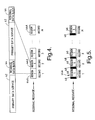
- a time serially transmitted stream of data 40 is illustrated in FIGS. 2-5 containing primary data service 42 and periodically transmitted regional data blocks 44.
- the primary data service 42 generally contains data intended for distribution to users over a wide geographic broadcast area.
- the primary data service 42 may include various forms of data such as audio (e.g., music), video images, Internet data, or other consumer oriented data.
- the primary data service 42 is intended to cover a broad geographic region without containing significant amounts of regionally specific data.
- the regional data 44 is shown periodically transmitted blocks of data embedded within the primary data service stream 40.
- the regional data blocks 44 may include various forms of data such as audio (e.g., music), video, Internet data, or other consumer oriented data that generally pertains to one or more geographic regions within the broadcast.
- audio e.g., music
- video e.g., video
- Internet data e.g., Internet Protocol
- consumer oriented data e.g., Internet data, or other consumer oriented data that generally pertains to one or more geographic regions within the broadcast.
- each regional data block 44 is divided into a series of regionally specific records 44A-44N.
- the region specific records 44A-44N each contains regional information relevant to a predetermined geographic region.
- the region specific records 44A-44N contain an identifier identifying the predetermined region.
- Each of region records 44A-44N could be of fixed length, or the regional data block 44 may contain a preamble identifying the number of subsequent records and the length of each regional record.
- record 44A pertaining to a specific geographic region are shown buffered and concatenated to form a complete regional message for its intended geographic region. That is region 1 which is provided in region specific record 44A may include data acquired from a series of regional data blocks 44 which, over a period of time, is acquired and compiled to form the complete regional data message. It should be appreciated that each of regions 44A-44N may likewise be buffered and concatenated to form separate complete messages for each geographic region of interest.
- regional data message 44A is further shown containing a regional identifier 48 and a data block 46.
- the regional identifier 48 may be stored in a record preamble and may include any of a number of geographic region identifiers including a name or code (e.g., alphanumeric code) for a city, county, state, zip code, highway name/number, or other identifiers that associate the information in data block 46 with a specific geographic region.
- the regional identifier 48 is compared with the user selected input to determine if the user has selected this regional data.
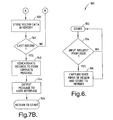
- the region specific data selection user input routine 100 is shown in FIG. 6 for capturing and storing the user entered regional input into memory.
- Routine 100 begins at step 102 and checks for an input request from a user in decision step 104.
- the input request from the user may include entry of a regional identifier by a user. If an input request has been received from a user, routine 100 proceeds to step 106 to capture the selected user input region and stores the selected region in memory. Otherwise, routine 100 continues to check for a region input request from the user.
- the user input may include an automatically generated local geographic region of interest. This may be accomplished by employing a position determining device, such as a global positioning system (GPS) receiver, to determine the current position of the receiver/user. Given the current position (e.g., latitude and longitude coordinates) of the receiver/user, a local regional coverage zone may be identified and used as the selected region input.
- a position determining device such as a global positioning system (GPS) receiver
- GPS global positioning system
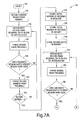
- routine 110 obtains the current user selected region stored in memory.
- the current region stored in memory is generated by user input routine 100.
- the next regional record from the regional data block de-interleaver is obtained.
- the region identification associated with this regional record is parsed from the record preamble in step 118.
- routine 110 determines if the region record matches the stored region selected by the user and, if not, returns to step 116 to obtain the next record. If the region record matches the stored region selected by the user, routine 110 proceeds to step 122 to parse the record number from the preamble.
- routine 110 determines if the record number is equal to one and, if not, returns to step 116 to obtain the next record. If the record number is equal to one, as determined in decision step 124, routine 110 proceeds to step 126 to parse the total number of records in the message. The total number of records are then stored in memory in step 128. The record data is also stored in memory in step 130.
- routine 110 obtains the next record from the regional data block de-interleaver. Routine 110 then parses the region from the record preamble in step 134. In decision step 136, routine 110 checks whether the region record matches the stored region selected by the user and, if not, returns to step 132 to obtain the next record. If the region record matches the stored region selected by the user, routine 110 proceeds to store the record data in memory in step 138. Routine 110 then proceeds to decision step 140 to determine if the record data is the last record and, if not, returns back to step 132 to obtain the next record. If the record data is the last record, routine 110 proceeds to concatenate the records to form a complete regional message in step 142. The regional message is then output to the user interface in step 144 so that it may be presented as an output to a user via an output device. Thereafter, routine 110 returns to the beginning by way of step 146.
- the RF receiver of the present invention advantageously provides primary information intended for a wide area broadcast and the ability to provide more geographically limited regional data to a user.
- both wide area and local area data can be broadcast via a single service and processed by a single receiver.
- a user may utilize the present invention to receive local news, weather, traffic, and other information from a larger national broadcast without being subjected to regional data in regions outside of the region of interest.
Landscapes
- Engineering & Computer Science (AREA)
- Signal Processing (AREA)
- Circuits Of Receivers In General (AREA)
- Two-Way Televisions, Distribution Of Moving Picture Or The Like (AREA)
Applications Claiming Priority (2)
| Application Number | Priority Date | Filing Date | Title |
|---|---|---|---|
| US601152 | 2003-06-20 | ||
| US10/601,152 US20040258179A1 (en) | 2003-06-20 | 2003-06-20 | RF receiver and method for region specific data selection |
Publications (2)
| Publication Number | Publication Date |
|---|---|
| EP1489751A2 true EP1489751A2 (de) | 2004-12-22 |
| EP1489751A3 EP1489751A3 (de) | 2005-03-02 |
Family
ID=33418582
Family Applications (1)
| Application Number | Title | Priority Date | Filing Date |
|---|---|---|---|
| EP04076754A Withdrawn EP1489751A3 (de) | 2003-06-20 | 2004-06-11 | RF Empfänger und Verfahren zur Auswahl von gebietsspezifischen Daten |
Country Status (2)
| Country | Link |
|---|---|
| US (1) | US20040258179A1 (de) |
| EP (1) | EP1489751A3 (de) |
Cited By (3)
| Publication number | Priority date | Publication date | Assignee | Title |
|---|---|---|---|---|
| EP1734679A3 (de) * | 2005-06-15 | 2012-05-09 | Delphi Technologies, Inc. | Verfahren zum Bereitstellen von Zusatzdaten in einem Gleichwellennetz, sowie Empfänger für den Empfang vom digitalen Tonrundfunk über Satellit |
| EP2120375A3 (de) * | 2008-05-13 | 2012-10-10 | Electronics and Telecommunications Research Institute | Verfahren zur Bereitstellung eines bereichsbasierten Rundfunkdienstes über digitalen Multimedia-Rundfunk sowie Vorrichtung und Verfahren für den Empfang eines bereichsbasierten Rundfunkdienstes nach diesem Verfahren |
| EP2941837A1 (de) * | 2013-01-07 | 2015-11-11 | Sony Corporation | Empfangsvorrichtung und -verfahren sowie computerprogramm |
Families Citing this family (2)
| Publication number | Priority date | Publication date | Assignee | Title |
|---|---|---|---|---|
| US20080119148A1 (en) * | 2006-11-16 | 2008-05-22 | William Martin Ray | Radio receiver and method of dynamically setting tuning parameters based on location |
| FR3106948B1 (fr) * | 2020-01-31 | 2022-10-07 | Enensys Tech | Procédés de diffusion, de réception, et d’analyse d’un flux de données diffusé dans au moins un réseau de diffusion, dispositifs et programme d’ordinateur correspondants. |
Family Cites Families (10)
| Publication number | Priority date | Publication date | Assignee | Title |
|---|---|---|---|---|
| US5089814A (en) * | 1989-04-28 | 1992-02-18 | Motorola, Inc. | Automatic time zone adjustment of portable receiver |
| JPH04137813A (ja) * | 1990-09-27 | 1992-05-12 | Mitsubishi Electric Corp | 受信機 |
| US6728269B1 (en) * | 1996-09-05 | 2004-04-27 | Hughes Electronics Corporation | Device and method for efficient delivery of redundant national television signals |
| US6021320A (en) * | 1997-06-27 | 2000-02-01 | Delco Electronics Corporation | Broadcast receiver providing selectable categories of available broadcast signals |
| DE19750942A1 (de) * | 1997-11-17 | 1999-05-20 | Delphi 2 Creative Tech Gmbh | Verfahren und Vorrichtung zum Signalisieren von lokalen Verkehrsstörungen |
| JP4102952B2 (ja) * | 1999-04-26 | 2008-06-18 | ソニー株式会社 | 受信機 |
| DE19944901A1 (de) * | 1999-09-10 | 2001-03-15 | Deutsche Telekom Ag | Verfahren und Einrichtungen zum Übertragen und Empfang von Wetterinformationen und Wettervorhersagen |
| US6735624B1 (en) * | 2000-04-07 | 2004-05-11 | Danger, Inc. | Method for configuring and authenticating newly delivered portal device |
| DE10114035A1 (de) * | 2001-03-22 | 2002-12-12 | Bosch Gmbh Robert | Verfahren zum Versenden von digitalen Rundfunksignalen |
| JP2006074718A (ja) * | 2004-06-30 | 2006-03-16 | Toshiba Corp | 放送受信装置及び放送受信方法 |
-
2003
- 2003-06-20 US US10/601,152 patent/US20040258179A1/en not_active Abandoned
-
2004
- 2004-06-11 EP EP04076754A patent/EP1489751A3/de not_active Withdrawn
Cited By (3)
| Publication number | Priority date | Publication date | Assignee | Title |
|---|---|---|---|---|
| EP1734679A3 (de) * | 2005-06-15 | 2012-05-09 | Delphi Technologies, Inc. | Verfahren zum Bereitstellen von Zusatzdaten in einem Gleichwellennetz, sowie Empfänger für den Empfang vom digitalen Tonrundfunk über Satellit |
| EP2120375A3 (de) * | 2008-05-13 | 2012-10-10 | Electronics and Telecommunications Research Institute | Verfahren zur Bereitstellung eines bereichsbasierten Rundfunkdienstes über digitalen Multimedia-Rundfunk sowie Vorrichtung und Verfahren für den Empfang eines bereichsbasierten Rundfunkdienstes nach diesem Verfahren |
| EP2941837A1 (de) * | 2013-01-07 | 2015-11-11 | Sony Corporation | Empfangsvorrichtung und -verfahren sowie computerprogramm |
Also Published As
| Publication number | Publication date |
|---|---|
| EP1489751A3 (de) | 2005-03-02 |
| US20040258179A1 (en) | 2004-12-23 |
Similar Documents
| Publication | Publication Date | Title |
|---|---|---|
| US6553077B2 (en) | Method and apparatus for customized selection of audio channels | |
| US7035628B2 (en) | Method and apparatus for content blocking | |
| US6741834B1 (en) | Device and method to improve integrated presentation of existing radio services and advanced multimedia services | |
| US6943702B2 (en) | Broadcasting system and its broadcasting transmission apparatus and reception terminal apparatus | |
| EP0813302A1 (de) | Rundfunksignalempfänger | |
| US20080039037A1 (en) | Method, apparatus and system for terrestrial dmb service | |
| US7606327B2 (en) | Method to receive local information with a national broadcast service | |
| US20030098782A1 (en) | Method and apparatus for dynamic group addressing | |
| US20090116584A1 (en) | System and Method for Receiving User-Specific Information Over Digital Radio | |
| US20040258179A1 (en) | RF receiver and method for region specific data selection | |
| EP1659715B1 (de) | Digitales Rundfunkverfahren, -sendeeinrichtung und Datenstruktur | |
| US7587168B2 (en) | Conditional access method and DMB system for regionally limiting DMB reception | |
| US20060062390A1 (en) | Digital RF receiver and method of dynamically adjusting a multi-cluster memory buffer | |
| US20080086748A1 (en) | Method and apparatus for automatically updating data broadcasting | |
| US20050273829A1 (en) | Digital multimedia broadcasting receiver and channel display method using the same | |
| EP1909415A2 (de) | Verfahren und Vorrichtung zum Anhören von Audio-Rundfunkprogrammen vom Anfang der Programmen | |
| US20100189028A1 (en) | Method and system for broadcasting digital services | |
| US20100304663A1 (en) | Time-varying indirect service authorization method and apparatus | |
| EP1727362B1 (de) | Digitaler Multimedia Rundfunkempfänger und Verfahren zur Kanalverwaltung desselben | |
| KR100595697B1 (ko) | Dmb 기능을 구비한 휴대단말기의 자동채널 처리방법 | |
| KR100718417B1 (ko) | Dmb 수신기에서 gps 위치정보와 tii 데이터베이스를 이용한 자동채널 설정방법 | |
| US20120315926A1 (en) | Method for automatically locating radio stations | |
| JP3946942B2 (ja) | デジタル放送受信機 | |
| EP2120375A2 (de) | Verfahren zur Bereitstellung eines bereichsbasierten Rundfunkdienstes über digitalen Multimedia-Rundfunk sowie Vorrichtung und Verfahren für den Empfang eines bereichsbasierten Rundfunkdienstes nach diesem Verfahren | |
| KR20070034370A (ko) | 디지털 멀티미디어 방송의 예약 녹화 방법 및 장치 |
Legal Events
| Date | Code | Title | Description |
|---|---|---|---|
| PUAI | Public reference made under article 153(3) epc to a published international application that has entered the european phase |
Free format text: ORIGINAL CODE: 0009012 |
|
| AK | Designated contracting states |
Kind code of ref document: A2 Designated state(s): AT BE BG CH CY CZ DE DK EE ES FI FR GB GR HU IE IT LI LU MC NL PL PT RO SE SI SK TR |
|
| AX | Request for extension of the european patent |
Extension state: AL HR LT LV MK |
|
| PUAL | Search report despatched |
Free format text: ORIGINAL CODE: 0009013 |
|
| AK | Designated contracting states |
Kind code of ref document: A3 Designated state(s): AT BE BG CH CY CZ DE DK EE ES FI FR GB GR HU IE IT LI LU MC NL PL PT RO SE SI SK TR |
|
| AX | Request for extension of the european patent |
Extension state: AL HR LT LV MK |
|
| 17P | Request for examination filed |
Effective date: 20050902 |
|
| AKX | Designation fees paid |
Designated state(s): AT BE BG CH CY CZ DE DK EE ES FI FR GB GR HU IE IT LI LU MC NL PL PT RO SE SI SK TR |
|
| STAA | Information on the status of an ep patent application or granted ep patent |
Free format text: STATUS: THE APPLICATION IS DEEMED TO BE WITHDRAWN |
|
| 18D | Application deemed to be withdrawn |
Effective date: 20060421 |