EP1489171A1 - Functional molecule and process for producing the same - Google Patents
Functional molecule and process for producing the same Download PDFInfo
- Publication number
- EP1489171A1 EP1489171A1 EP03708622A EP03708622A EP1489171A1 EP 1489171 A1 EP1489171 A1 EP 1489171A1 EP 03708622 A EP03708622 A EP 03708622A EP 03708622 A EP03708622 A EP 03708622A EP 1489171 A1 EP1489171 A1 EP 1489171A1
- Authority
- EP
- European Patent Office
- Prior art keywords
- producing
- functional molecule
- modified
- molecule according
- modified oligonucleotide
- Prior art date
- Legal status (The legal status is an assumption and is not a legal conclusion. Google has not performed a legal analysis and makes no representation as to the accuracy of the status listed.)
- Granted
Links
- 0 COC(C=CC(C(N1)=O)=CN(*(C2)OC(CO)C2O)C1=O)=O Chemical compound COC(C=CC(C(N1)=O)=CN(*(C2)OC(CO)C2O)C1=O)=O 0.000 description 5
- GFCKWCWPSQSNJW-UHFFFAOYSA-N CCCC(C1N2)SCC1NC2=O Chemical compound CCCC(C1N2)SCC1NC2=O GFCKWCWPSQSNJW-UHFFFAOYSA-N 0.000 description 1
- MXHRCPNRJAMMIM-UHFFFAOYSA-N OCC(C(C1)O)OC1N(C=CC(N1)=O)C1=O Chemical compound OCC(C(C1)O)OC1N(C=CC(N1)=O)C1=O MXHRCPNRJAMMIM-UHFFFAOYSA-N 0.000 description 1
Images


Classifications
-
- A—HUMAN NECESSITIES
- A61—MEDICAL OR VETERINARY SCIENCE; HYGIENE
- A61K—PREPARATIONS FOR MEDICAL, DENTAL OR TOILETRY PURPOSES
- A61K31/00—Medicinal preparations containing organic active ingredients
- A61K31/70—Carbohydrates; Sugars; Derivatives thereof
- A61K31/7088—Compounds having three or more nucleosides or nucleotides
- A61K31/7115—Nucleic acids or oligonucleotides having modified bases, i.e. other than adenine, guanine, cytosine, uracil or thymine
-
- A—HUMAN NECESSITIES
- A61—MEDICAL OR VETERINARY SCIENCE; HYGIENE
- A61P—SPECIFIC THERAPEUTIC ACTIVITY OF CHEMICAL COMPOUNDS OR MEDICINAL PREPARATIONS
- A61P21/00—Drugs for disorders of the muscular or neuromuscular system
- A61P21/04—Drugs for disorders of the muscular or neuromuscular system for myasthenia gravis
-
- A—HUMAN NECESSITIES
- A61—MEDICAL OR VETERINARY SCIENCE; HYGIENE
- A61P—SPECIFIC THERAPEUTIC ACTIVITY OF CHEMICAL COMPOUNDS OR MEDICINAL PREPARATIONS
- A61P25/00—Drugs for disorders of the nervous system
- A61P25/14—Drugs for disorders of the nervous system for treating abnormal movements, e.g. chorea, dyskinesia
-
- A—HUMAN NECESSITIES
- A61—MEDICAL OR VETERINARY SCIENCE; HYGIENE
- A61P—SPECIFIC THERAPEUTIC ACTIVITY OF CHEMICAL COMPOUNDS OR MEDICINAL PREPARATIONS
- A61P3/00—Drugs for disorders of the metabolism
-
- A—HUMAN NECESSITIES
- A61—MEDICAL OR VETERINARY SCIENCE; HYGIENE
- A61P—SPECIFIC THERAPEUTIC ACTIVITY OF CHEMICAL COMPOUNDS OR MEDICINAL PREPARATIONS
- A61P35/00—Antineoplastic agents
-
- A—HUMAN NECESSITIES
- A61—MEDICAL OR VETERINARY SCIENCE; HYGIENE
- A61P—SPECIFIC THERAPEUTIC ACTIVITY OF CHEMICAL COMPOUNDS OR MEDICINAL PREPARATIONS
- A61P7/00—Drugs for disorders of the blood or the extracellular fluid
- A61P7/04—Antihaemorrhagics; Procoagulants; Haemostatic agents; Antifibrinolytic agents
-
- C—CHEMISTRY; METALLURGY
- C07—ORGANIC CHEMISTRY
- C07H—SUGARS; DERIVATIVES THEREOF; NUCLEOSIDES; NUCLEOTIDES; NUCLEIC ACIDS
- C07H21/00—Compounds containing two or more mononucleotide units having separate phosphate or polyphosphate groups linked by saccharide radicals of nucleoside groups, e.g. nucleic acids
-
- C—CHEMISTRY; METALLURGY
- C12—BIOCHEMISTRY; BEER; SPIRITS; WINE; VINEGAR; MICROBIOLOGY; ENZYMOLOGY; MUTATION OR GENETIC ENGINEERING
- C12N—MICROORGANISMS OR ENZYMES; COMPOSITIONS THEREOF; PROPAGATING, PRESERVING, OR MAINTAINING MICROORGANISMS; MUTATION OR GENETIC ENGINEERING; CULTURE MEDIA
- C12N15/00—Mutation or genetic engineering; DNA or RNA concerning genetic engineering, vectors, e.g. plasmids, or their isolation, preparation or purification; Use of hosts therefor
- C12N15/09—Recombinant DNA-technology
- C12N15/10—Processes for the isolation, preparation or purification of DNA or RNA
- C12N15/1034—Isolating an individual clone by screening libraries
- C12N15/1048—SELEX
-
- C—CHEMISTRY; METALLURGY
- C12—BIOCHEMISTRY; BEER; SPIRITS; WINE; VINEGAR; MICROBIOLOGY; ENZYMOLOGY; MUTATION OR GENETIC ENGINEERING
- C12N—MICROORGANISMS OR ENZYMES; COMPOSITIONS THEREOF; PROPAGATING, PRESERVING, OR MAINTAINING MICROORGANISMS; MUTATION OR GENETIC ENGINEERING; CULTURE MEDIA
- C12N15/00—Mutation or genetic engineering; DNA or RNA concerning genetic engineering, vectors, e.g. plasmids, or their isolation, preparation or purification; Use of hosts therefor
- C12N15/09—Recombinant DNA-technology
- C12N15/10—Processes for the isolation, preparation or purification of DNA or RNA
- C12N15/1034—Isolating an individual clone by screening libraries
- C12N15/1058—Directional evolution of libraries, e.g. evolution of libraries is achieved by mutagenesis and screening or selection of mixed population of organisms
-
- C—CHEMISTRY; METALLURGY
- C12—BIOCHEMISTRY; BEER; SPIRITS; WINE; VINEGAR; MICROBIOLOGY; ENZYMOLOGY; MUTATION OR GENETIC ENGINEERING
- C12N—MICROORGANISMS OR ENZYMES; COMPOSITIONS THEREOF; PROPAGATING, PRESERVING, OR MAINTAINING MICROORGANISMS; MUTATION OR GENETIC ENGINEERING; CULTURE MEDIA
- C12N15/00—Mutation or genetic engineering; DNA or RNA concerning genetic engineering, vectors, e.g. plasmids, or their isolation, preparation or purification; Use of hosts therefor
- C12N15/09—Recombinant DNA-technology
- C12N15/11—DNA or RNA fragments; Modified forms thereof; Non-coding nucleic acids having a biological activity
- C12N15/115—Aptamers, i.e. nucleic acids binding a target molecule specifically and with high affinity without hybridising therewith ; Nucleic acids binding to non-nucleic acids, e.g. aptamers
-
- A—HUMAN NECESSITIES
- A61—MEDICAL OR VETERINARY SCIENCE; HYGIENE
- A61K—PREPARATIONS FOR MEDICAL, DENTAL OR TOILETRY PURPOSES
- A61K48/00—Medicinal preparations containing genetic material which is inserted into cells of the living body to treat genetic diseases; Gene therapy
-
- C—CHEMISTRY; METALLURGY
- C12—BIOCHEMISTRY; BEER; SPIRITS; WINE; VINEGAR; MICROBIOLOGY; ENZYMOLOGY; MUTATION OR GENETIC ENGINEERING
- C12N—MICROORGANISMS OR ENZYMES; COMPOSITIONS THEREOF; PROPAGATING, PRESERVING, OR MAINTAINING MICROORGANISMS; MUTATION OR GENETIC ENGINEERING; CULTURE MEDIA
- C12N2310/00—Structure or type of the nucleic acid
- C12N2310/50—Physical structure
- C12N2310/53—Physical structure partially self-complementary or closed
Definitions
- the present invention relates to a functional molecule that shows a high affinity to various targets (targeted material), is easily amplified and replicated, is suitable for a wide range of fields such as drugs, drug delivery, biosensors, regulation of gene expression amount, conquest of diseases caused by an abnormal gene and elucidation of the protein function translated by a gene, development of reaction catalysts, and particularly suitable for analysis of the protein, and relates to a process for producing the same.
- a compositional unit number of a nucleotide is 4 in both RNA and DNA and, thus, kinds of functional groups present in a polymer thereof are very limited to limit naturally functions thereof.
- RNA is enzymatically very unstable and, thus, an attempt to synthesize a molecule having the same function by using a DNA, which is enzymatically stable, has been failed.
- a molecule having an affinity to a specific target is obtained by repeated operation of amplification and purification and, therefore, it is at present difficult to synthesize many kinds of the molecule.
- Patent document 1
- the present invention has a purpose to provide a functional molecule having an affinity and specificity to a target comparable to the affinity and specificity of an antibody against an antigen, capable of functioning as similar to the antibody sensu stricto, capable of recognizing a wide range of targets, showing a high affinity to various kinds of targets (target material, detection target), easy to be amplified and replicated, preferably applicable in a wide range of fields such as drugs, drug delivery, biosensors, regulation of gene expression amount, conquest of diseases caused by an abnormal gene, elucidating the function of the protein translated from a gene and development of reaction catalysts, and preferable particularly for an analysis of a protein.
- the present invention has the purpose to provide a process for producing a functional molecule unnecessary of repeated complicated operations of amplification and purification of the functional molecule and capable of producing effectively and integrally.
- a process for producing a functional molecule according to the present invention includes a producing step which produces a modified oligonucleotide sequence by polymerizing randomly a modified nucleotide n-mer (n representing an integer) containing a modified nucleoside prepared by introducing a substituent into the nucleoside composing the nucleic acid.
- a modified oligonucleotide sequence is produced by polymerizing randomly a modified nucleotide n-mer (n representing the integer) containing a modified nucleoside prepared by inserting a substituent into the nucleoside composing the nucleic acid.
- the modified oligonucleotide sequence has more substituent numbers recognizing a target in comparison with 4 nucleotides composing the nucleic acid, holds a self-replicating ability of the nucleic acid as it is and is comparable to the antibody in the affinity and specificity. Therefore, amplifying and replicating the modified oligonucleotide sequence enables the efficient produce of various kinds of the functional molecule that can recognize the target.
- the functional molecule according to the present invention is produced by the process for producing a functional molecule according to the present invention.
- the affinity and specificity to the target is comparable to the affinity and specificity of an antibody to an antigen, can recognize various kinds of target, and is preferably usable for a wide range of fields such as drugs, drug delivery, biosensors, regulation of gene expression amount, conquest of diseases caused by gene abnormality and elucidation of the function of the protein translated by the gene, and developing reaction catalysts.
- a functional molecule according to the present invention is produced by the process for producing the functional molecule according to the present invention. Below, details of the functional molecule according to the present invention will be described with an explanation of the process for producing the functional molecule according to the present invention.
- the process for producing the functional molecule according to the present invention includes at least a producing step, preferably includes a selecting step, a determining step, and a translating step, and additionally includes other steps properly selected in accordance with a purpose.
- the producing step is a step of producing a modified oligonucleotide sequence by randomly polymerizing a modified nucleotide n-mer (n representing an integer) containing a modified nucleoside prepared by inserting a substituent into the nucleoside composing the nucleic acid.
- a reaction product which contains the modified oligonucleotide sequence obtained as a result of carrying out the producing step, can be used in the selecting step and the like as a random polymer pool containing the modified oligonucleotide sequence, intactly without separation and purification steps.
- the modified nucleotide n-mer comprises the modified nucleotide.
- the modified nucleotide is prepared by introducing a substituent into a nucleoside constructing the nucleic acid.
- n in the modified nucleotide n-mer represents an integer, is preferably 2 or more, more preferably 2 to 10, particularly preferably 2 to 3.
- n When the n is less than 2, number of kinds of the modified nucleotide is not almost different from 4 kinds of nucleotide composing the nucleic acid to cause sometimes impossible improvement of an ability of recognizing the target.
- n When the n is 4 or more, 1 base lack or 1 base addition, which may be caused during the amplification step, can be difficultly distinguished from others due to base sequence similarity and, when n is 3, different side chains of 64 kinds in a maximum can be introduced. Therefore, in consideration of that various kinds of proteins are made up from 20 kinds of amino acids, 3 is satisfactory for n and, thus, n of 4 or more numbers provides insufficient effect as the result of producing step and, on the contrary, a fear arises in an increase in a load on the synthesis.
- the nucleic acid includes either DNA or RNA, and the DNA or RNA may have a single-strand structure or a double-strand structure.
- the DNA has 4 bases, which are adenine (A), thymine (T), guanine (G) and cytosine (C), the bases in a DNA polynucleotide chain are present in a form projecting to an inside each other in a plane vertical to a central axis to make the so-called Watson-Click model base pair and thymine and cytosine make specifically hydrogen bonds to adenine and guanine, respectively.
- A adenine
- T thymine
- G guanine
- C cytosine
- the 4 nucleosides (deoxyribonucleosides) of the DNA include deoxyadenosine (dA), deoxyguanosine (dG), deoxycytidine (dC) and deoxythymidine (dT).
- the RNA has 4 bases, which are adenine (A), thymine (T), , uracil (U) and cytosine (C), and classified into 3 kinds, which are ribosome RNA (rRNA), transfer RNA (tRNA) and messenger RNA (mRNA).
- A adenine
- T thymine
- U uracil
- C cytosine
- rRNA ribosome RNA
- tRNA transfer RNA
- mRNA messenger RNA
- the 4 kinds of nucleosides (ribonucleosides) of the RNA include adenosine (A), guanosine (G), cytidine (C) and uridine (U).
- a modified nucleotide dimer in the case where n is 2 in the modified nucleotide n-mer is not restricted, and can be selected properly in accordance with the purpose.
- it may be a combination of 4 nucleosides constructing the nucleic acid with the modified nucleoside, or may be a combination of the modified nucleosides.
- the substituent may not be introduced into the nucleoside (a saccharide is bonded to a purine or pyrimidine base), but may be into nucleotide (a phosphate group is added to the nucleoside).
- a position in the modified nucleoside, into which the substituent may be introduced in the modified nucleoside, is not specially restricted, and can be selected properly in accordance with the purpose, including, for example, the 5th position in pyrimidine, the 7th position in purine, the 8th position in purine, substitution of an amine outside a ring, substitution of 4-thiouridine, substitution of 5-bromo, substitution of 5-iodide uracil, and the like.
- substitutions in consideration of scarcely inhibiting an enzyme reaction at amplification (replication), the 5th position in pyrimidine and the 7th position in purine are preferable and the 5th position in pyrimidine is more preferable because of easy synthesis.
- a process for introducing a substituent into the nucleoside is not specially restricted, and can be selected properly in accordance with the purpose, including, for example, preferably the process shown in the following formula, in which substituent R is introduced into the 5th position in pyrimidine base of the nucleoside.
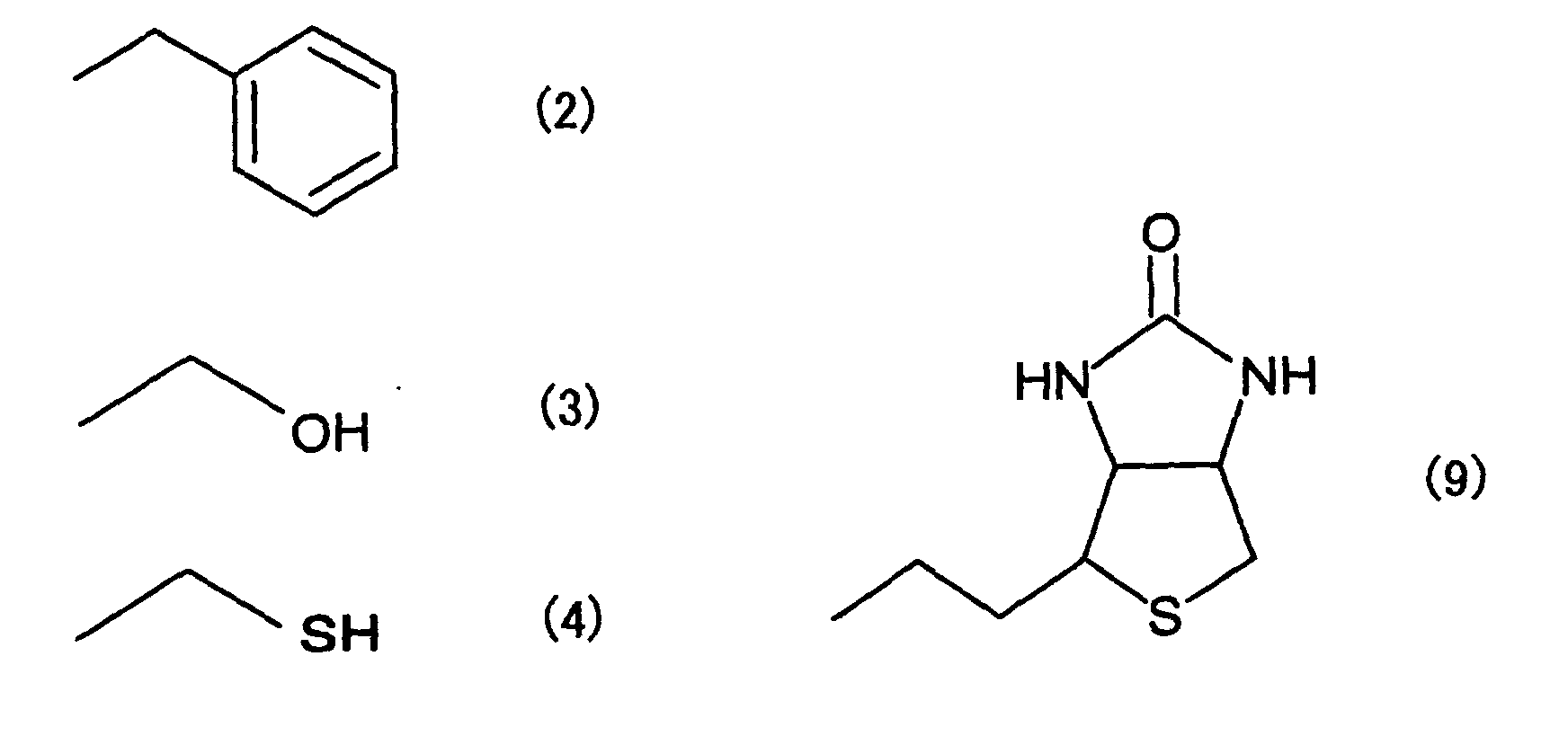
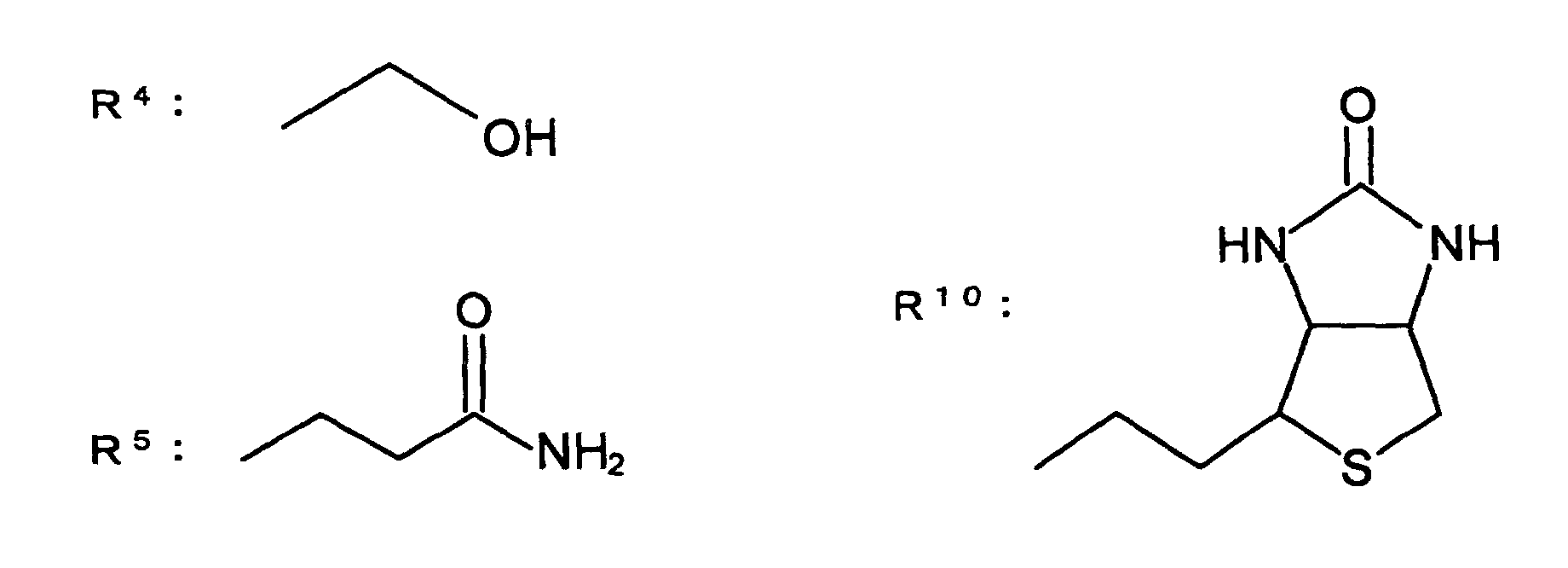
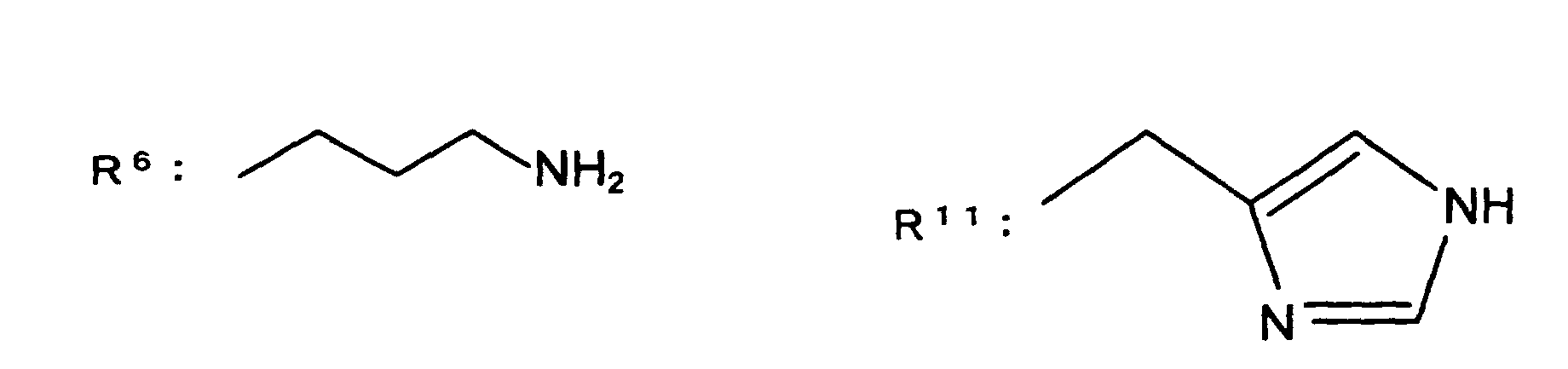
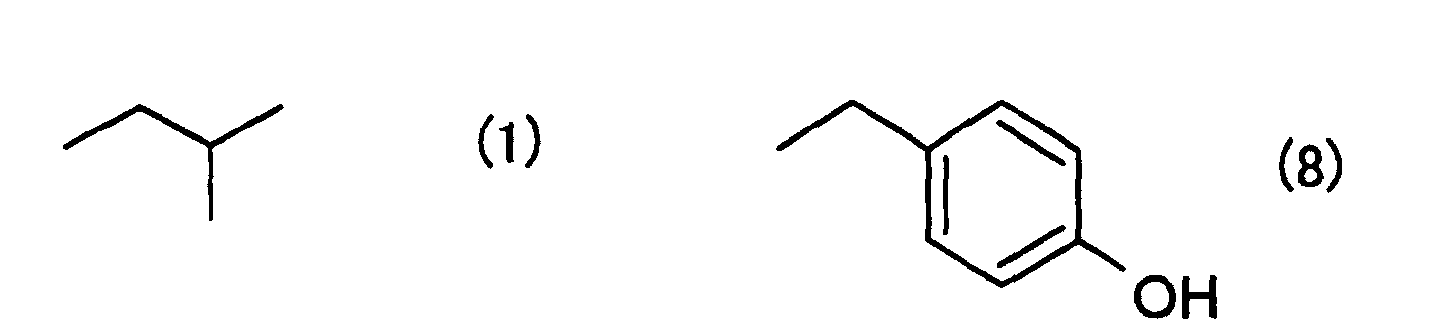
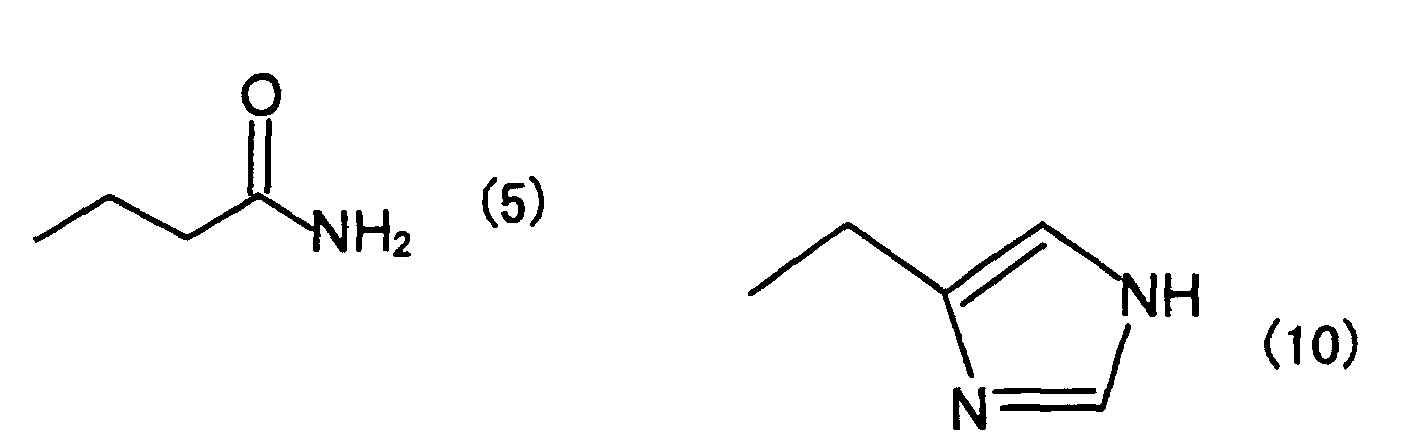
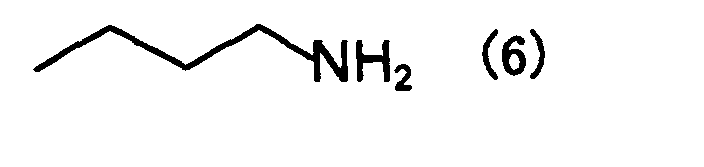
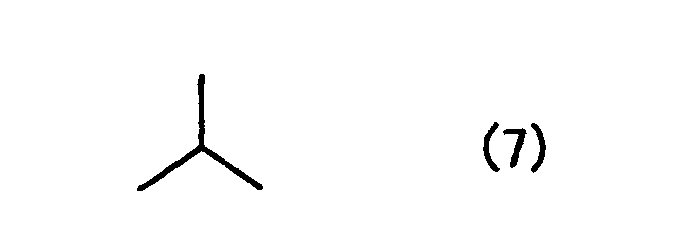
- the substituent R is not specially restricted, and can be selected properly in accordance with the purpose, including, for example, natural or nonnatural amino acids, metal complexes, fluorescent dyes, oxidation-reduction pigments, spin label compounds, hydrogen atom, alkyl groups having carbon number ranging from 1 to 10, and groups represented by the following formulae (1) to (10).
- the natural or nonnatural amino acids are not specially restricted, and can be selected properly in accordance with the purpose, including, for example, valine, leucine, isoleucine, alanine, arginine, glutamine, lysine, aspartic acid, glutamic acid, proline, cysteine, threonine, methionine, histidine, phenylalanine, tyrosine, tryptophane, asparagine, glycine, serine, and the like.
- the metal complex is not specially restricted, and can be selected properly in accordance with the purpose as long as it is a compound in which a ligand is coordinated with a metal ion, including, for example, Ru-bipyridil complex, ferrocene complex, nickel imidazole complex, and the like.
- the fluorescent dyes are not specially restricted, and can be selected properly in accordance with the purpose, including, for example, fluorescent dyes such as fluorescein dyes, rhodamine dyes, eosine dyes, NBD dyes, and the like.
- the oxidation-reduction pigments are not specially restricted, but can be selected properly in accordance with the purpose, including, for example, leuco pigments such as leucoaniline, leucoanthocyanine, and the like.
- the spin label compounds are not specially restricted, and can be selected properly in accordance with the purpose, including, for example, iron N-(dithiocarboxy) sarcosine, TEMPO (tetramethyl piperidine) derivatives, and the like.
- the alkyl groups having carbon number ranging from 1 to 10 are not specially restricted, and can be selected properly in accordance with the purpose, including, for example, a methyl group, ethyl group, propyl group, isopropyl group, butyl group, isobutyl group, tert-butyl group, pentyl group, neopentyl group, hexyl group, cyclohexyl group, octyl group, nonyl group, decyl group and the like.
- the process for synthesizing the modified nucleotide dimer is not specially restricted, and can be selected properly in accordance with the purpose, including, for example, a diester method, triester method, phosphite method, phosphoroamidite method, H-phosphonate method, thiophosphite method, and the like. Among these methods, the phosphoroamidite method is preferable.
- the phosphoroamidite method is, as a rule, employs a condensation reaction of nucleoside phosphoroamidite to the nucleoside as a key reaction using tetrazole as an enhancer.
- This reaction usually occurs competitively in both a hydroxyl group of a saccharide part and an amino group of a base part of the nucleoside.
- the reaction should occur selectively only in the hydroxyl group of the saccharide part.
- modification reaction is required using a protecting group.
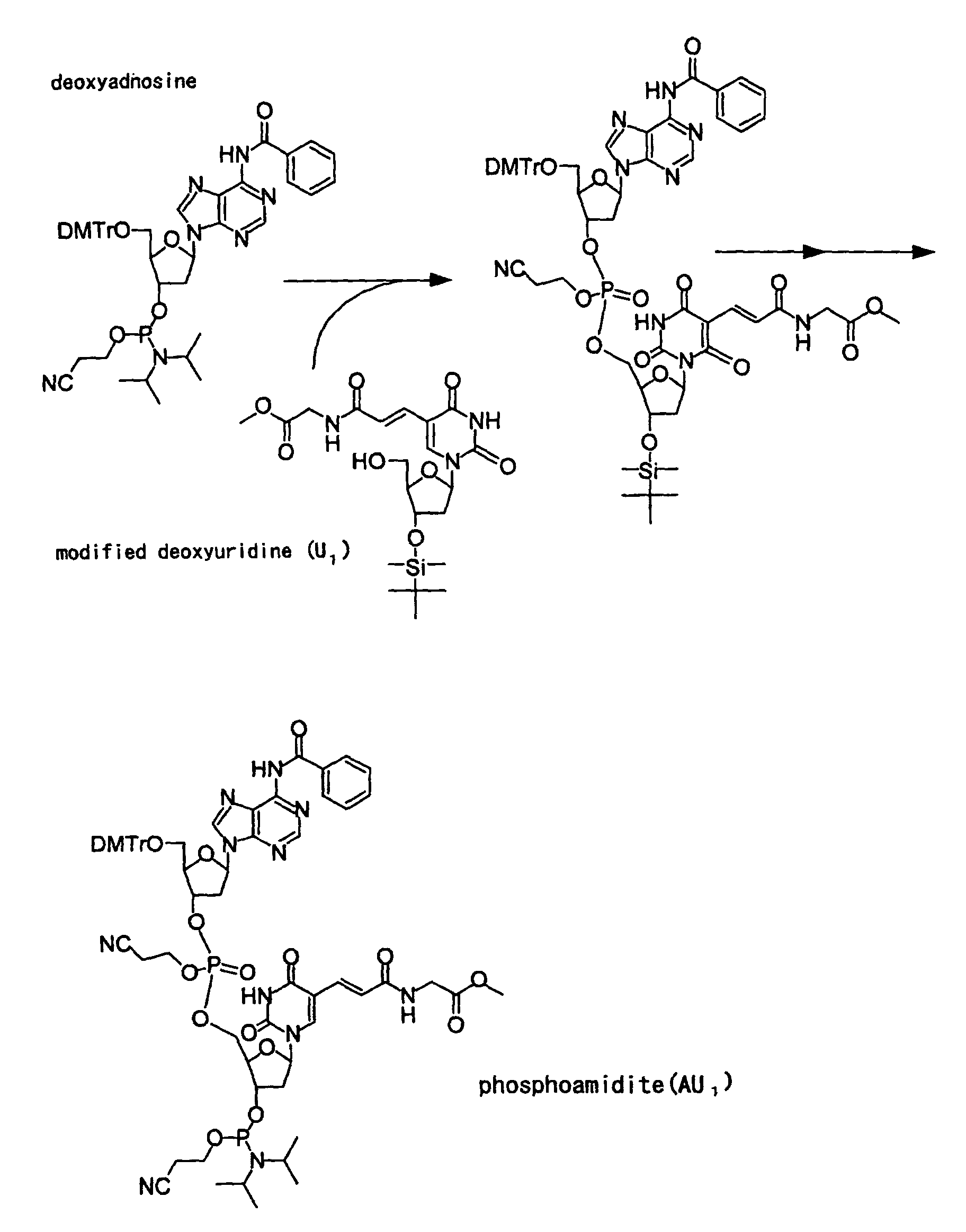
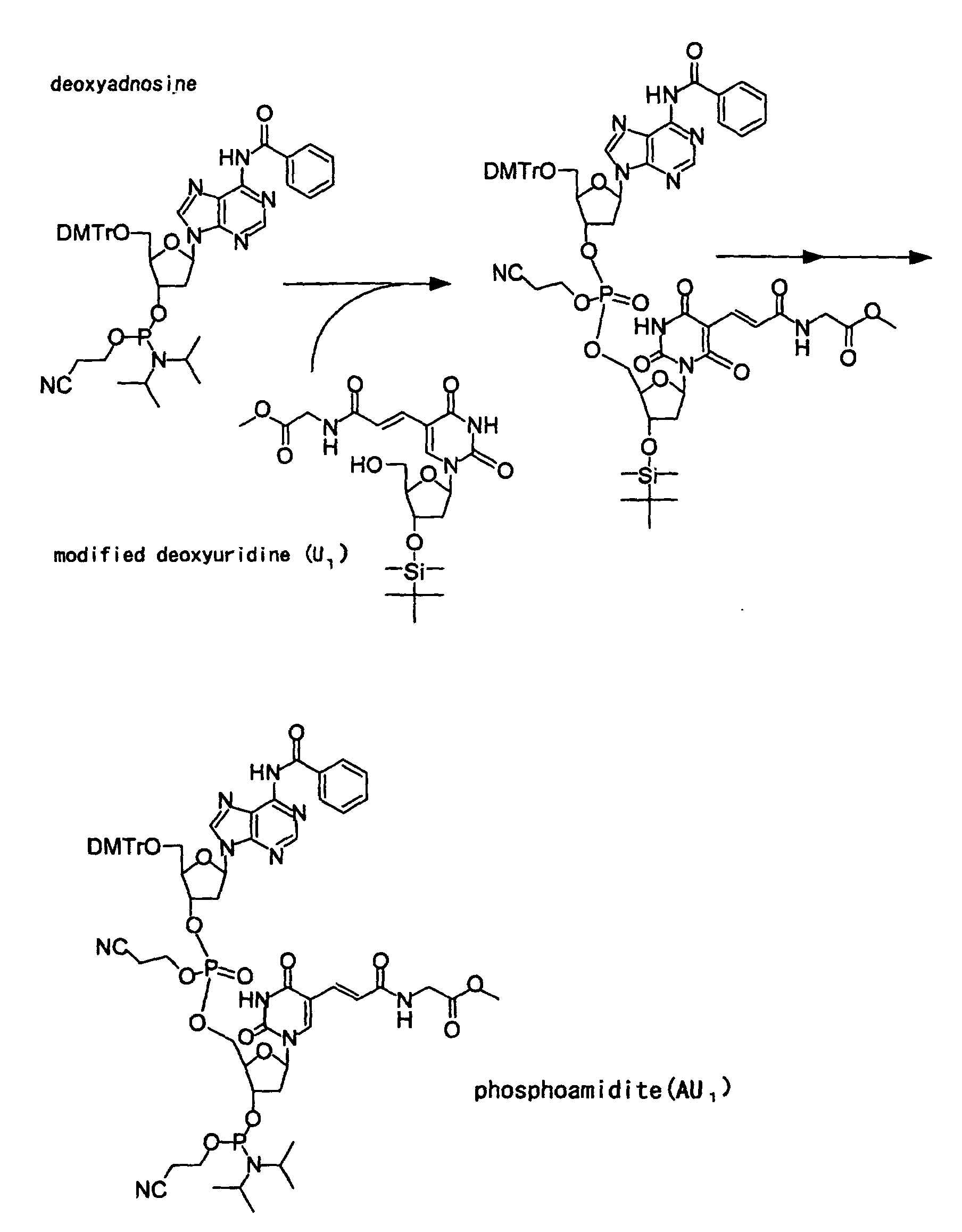
- the modified nucleotide dimer (AU 1 ) can be, as shown by the following formula, synthesized from deoxyadenosine and modified deoxyuridine.
- DMTr represents a dimethoxy trityl group.
- the modified nucleotide dimers (AC 1 , C 2 A, C 3 C, C 4 G, C 5 T, GC 6 , GU 2 , U 3 A, U 4 C, U 5 G, and U 6 T), which are represented in the relation table of the following Table 1 mentioned later, can be also synthesized by the similar method.
- the synthesized modified nucleotide dimer is made in a one-to-one combination (relation) with any one of 16 nucleosides in the relation table, which is made by combining 4 nucleosides constituting the nucleic acid, in a one-to-one format.
- the relation table is, for example, exemplified by that shown in the following Table 1.
- bases of 4 nucleosides are transversely (5' direction) arranged in the order of A, C, G and T and, on the other hand, bases of 4 nucleosides are longitudinally (3' direction) arranged in the order of A, C, G and T, and 16 patterns (boxes) are formed by relating these bases to each other one-to-one.
- a modified nucleotide trimer can be used.
- the relation table in this case includes that shown in the following Table 2.
- Table 2 56 patterns (56 kinds of modified nucleotide trimer) are formed.
- a modified nucleotide n-mer (n representing the integer) can be used.
- 4 n patterns (4 n modified nucleotide n-mer) can be made.
- a base sequence is read from a 5' side to a 3' side directions and a base sequence AC corresponds to the modified nucleotide dimer AC 1 .
- a sequence AT corresponds to the modified nucleotide dimer AU 1 .
- a base sequence CA corresponds to the modified nucleotide dimer C 2 A.
- a base sequence CC corresponds to the modified nucleotide dimer C 3 C.
- a base sequence CG corresponds to the modified nucleotide dimer C 4 G.
- a base sequence CT corresponds to the modified nucleotide dimer C 2 A.
- a base sequence GC corresponds to the modified nucleotide dimer GC 6 .
- a base sequence GT corresponds to the modified nucleotide dimer GU 2 .
- a base sequence TA corresponds to the modified nucleotide dimer U 3 A.
- a base sequence TC corresponds to the modified nucleotide dimer U 4 C.
- a base sequence TG corresponds to the modified nucleotide dimer U 5 G.
- a base sequence TT corresponds to the modified nucleotide dimer U 6 T.
- Conditioning of a base sequence and the modified nucleotide dimer in the relation table in Table 1 is not specially restricted, but can be selected properly in accordance with the purpose.
- Table 1 is simply an example. When it is difficult to prepare 12 modified nucleotide dimer, a portion may be duplicated. However, it may result in lowering the recognition ability to the target.
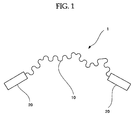
- both ends of the modified oligonucleotide sequence 10 have the fixed oligonucleotide sequence 20 and 20 in consideration of efficient amplification (replication) by attaching a primer to the fixed oligonucleotide sequence portion at PCR operation in the determining step mentioned later.
- the number of nucleotide of the modified oligonucleotide sequence is not specially restricted, and can be selected properly in accordance with the purpose; 10 to 100 nucleotides are preferable and 10 to 50 nucleotides are more preferable.
- the number of nucleotide of the fixed oligonucleotide sequence is not specially restricted, and can be selected properly in accordance with the purpose; usually 15 or more nucleotides are preferable and 20 to 40 nucleotides are more preferable.
- the process for preparing the random polymer pool is not specially restricted, and can be selected from publicly known methods properly in accordance with the purpose; for example, a method using a DNA synthesizer (automated DNA synthesizer) is preferable.
- the method using the DNA synthesizer is not specially restricted, but can be selected properly in accordance with the purpose; preferable process is that by using the DNA synthesizer (automated DNA synthesizer) as shown in FIG. 2, using a mixture (there are 12 kinds in the example shown in FIG. 2; expressed as "X" in FIG. 2) of a plurality of kinds of the synthesized modified nucleotide dimer as a reagent, sucking this reagent up by nozzle 15 to polymerize under control of a controller 25, and then, finally preparing the random polymer pool having the modified oligonucleotide sequence with all sequence orders randomly arranged. This case is advantageous in the point that the random polymer pool is efficiently prepared.
- A adenine
- T thymine
- G guanine
- C cytosine
- the process for preparing the random polymer pool also includes a process in which monomer blocks are aligned to the previously prepared oligonucleotide random sequence to carry out annealing and a DNA ligase or an RNA ligase are worked to ligate them for preparation of the random polymer pool. Also in this case, the process can prepare the random polymer pool containing the modified oligonucleotide sequence having all sequence orders randomly arranged.
- the DNA ligase is an enzyme to catalyze formation of a covalent bond between the 5' phosphate group and the 3' hydroxyl group of adjacent nucleotides.
- the RNA ligase is the enzyme to ligate a polynucleotide of the terminal of 5' phosphate group and the polynucleotide of the terminal of 3' hydroxyl group.
- a substrate of the RNA ligase is normally RNA, however, a polydeoxyribonucleotide of the terminal of 5' phosphate group and the polydeoxyribonucleotide of which 3' terminal only is ribonucleotide ligate efficiently.
- the random polymer pool contains the modified oligonucleotide sequence and, if required, may further contain a sequence which is prepared by polymerizing randomly monomers or oligomers of the DNA or RNA not modified by a substituent.
- the selecting step is a step of selecting one having an affinity with the target from the modified oligonucleotide sequence.
- the selection method is not specially restricted, and can be selected from publicly known methods properly in accordance with the purpose, including, for example, various methods such as affinity chromatography, filter binding assay, liquid-liquid partition, filtration, gel shift, density gradient centrifugation. These methods may be conducted in 1 method independently and may be conducted in 2 or more methods. Among these methods, affinity chromatography is preferable.
- the affinity chromatography is a separation and purification means by applying the biological affinity by which specific components are easy to bind each other.
- the target is immobilized in a column filler such as a resin to be equilibrated with a buffer solution for attachment, and then, a solution containing the random polymer pool is poured into a column to leave stand under a certain condition.
- the oligonucleotide sequence having affinity with the target adsorbs to the column, and sufficient washing with the buffer solution for attachment allows removing left components other than the oligonucleotide sequence. Passing the solution containing the target or a diluted buffer solution through the column enables to collect and select oligonucleotide containing the modified oligonucleotide sequence.
- means of the selection is preferably a method in which 2 or more targets are immobilized on a matrix having a linear to cubic spatial arrangement, the random polymer pool containing the modified oligonucleotide sequence is worked on the matrix on which the target has been immobilized, and then, the modified oligonucleotide sequence attached to the target is purified.
- the process for immobilizing the target on the matrix is not specially restricted, and can be selected in accordance with the purpose.
- the target is a protein
- a western blotting method in which the target is subjected to polyacrylamide electrophoresis (for example, SDS-PAGE and the like) and, then, transferred to the membranous matrix
- a dot blotting method and slot blotting method in which the target or diluted solution thereof is directly impregnated into the membranous matrix, and the like.
- the western blotting method is preferable in consideration of that a trace amount of the protein contained in the solution of a complicated composition such as a cell extract can be clearly detected.
- the western blotting method is an approach for detecting a specific protein from a protein mixture by using combination of an excellent separation performance of electrophoresis with high specificities of an antigen-antibody reaction, and also is the method in which SDS-PAGE, isoelectric focusing, or 2-dimensional electrophoresis is conducted and, then, the protein is electrically moved from a gel to and immobilized on the membranous matrix.
- the membranous matrix is not specially restricted, and can be selected in accordance with the purpose, including, for example, highly hydrophobic nitrocellulose film, to which the protein is easy to be bound, and excellently hydrophobic PVDF (polyvinylidene difluoride) film.
- the target is preferably labeled, for example, with at least one of labeling materials selected from radioisotopes, chemiluminescence materials, fluorescent materials, enzymes, antibodies, ligands and receptors; or the modified oligonucleotide sequence contained in the random polymer pool is preferably labeled with at least one of labeling materials selected from radioisotopes, chemiluminescence materials, fluorescent materials, enzymes, antibodies, ligands and receptors.
- the radioisotope includes, for example, 32 P, 33 P 35 S and the like.
- the chemiluminescence material includes, for example, acridinium ester, luminol, isoluminol, or these derivatives, and the like. Detection by using the chemiluminescence requires exposure detection to an X-ray film or a scanner capable of detecting chemiluminescence, however, has an advantage of easy detection of a trace protein due to a higher sensitivity than other coloration methods by 10 to 50 folds or more.
- the fluorescent material includes, for example, fluorescent dyes such as fluorescein series, fluorescein series, rhodamine series, eosine series and NDB series, green fluorescent protein (GFP), chelates of rare earths such as europium (Eu), terbium (Tb) and samarium (Sm), tetramethyl rhodamine, Texas Red, 4-methyl umbelliferone, 7-amino-4-methyl coumarin, Cy3, Cy5, and the like.
- fluorescent dyes such as fluorescein series, fluorescein series, rhodamine series, eosine series and NDB series
- GFP green fluorescent protein
- Eu europium
- Tb terbium
- Sm samarium
- tetramethyl rhodamine Texas Red
- 4-methyl umbelliferone 7-amino-4-methyl coumarin
- Cy3, Cy5, and the like and the like.
- the enzyme includes, for example, peroxidase, alkaline phosphatase, glucose oxidase, beta-galactosidase, luciferase, and the like.
- the labeling materials include biotin, ligand, a specific nucleic acid, protein, hapten, and the like. Possible combinations are that when the labeling material is biotin, avidin or streptavidin specifically binding to this, that when the labeling material is hapten, an antibody specifically binding to this, that when the labeling material is a ligand, the receptor, and that when the labeling material is the specific nucleic acid, protein, hapten and the like, the specific nucleic acid, a nucleic acid-binding protein, a protein having the affinity to the specific protein, respectively.
- the process for purification is not specially restricted, but can be selected in accordance with the purpose.
- a particularly preferable method is that the modified oligonucleotide sequence, which has been immobilized on a predetermined position (domain) on the membranous matrix (a membrane such as a nitrocellulose film) by the western blotting method and attached to the target, is cut at every predetermined position (domain) together with the matrix (the membrane such as a nitrocellulose film) to yield a fragment and, then, the modified oligonucleotide sequence is collected from the cut piece.
- This way is advantageous in the point that no special purification step is required and the modified oligonucleotide sequence can be efficiently and conveniently purified.
- it is advantageous in the point that the modified oligonucleotide sequences different between the predetermined positions (domains) can be efficiently purified.
- Collecting the modified oligonucleotide sequence from the cut piece can be carried out by applying a voltage using an ionic solution by electroelution or by using a hot water.
- the purification may be carried out by another method, in which the modified oligonucleotide is dissociated from the target, monitoring a dissociation constant of the target and the modified oligonucleotide sequence.
- the functional molecule having the desired dissociation constant can be selected through a minimal 1 processing.
- measuring the dissociation constant and controlling the dissociation constant in the selecting step enables to select the functional molecule efficiently.
- the dissociation constant can be properly set in accordance with the target. For example, it can be measured by using a measuring instrument using warbis plasmon resonance.
- the selecting step by using an interaction between 2 or more kinds of molecules having different dissociation constants, for example, the functional molecule is selected by a washing operation matching a smaller dissociation constant and, on the other hand, by a drastic washing operation matching a larger dissociation constant, a carrier for selection can be regenerated.
- this method even when the targets are 2 or more, regeneration becomes possible and, therefore, a plurality of the functional molecule can be efficiently selected in a unit by using a single substrate to eliminate waste losses and reduce a cost.
- one-to-one relation of linkers having different reactivities to a plurality of molecules allows selecting orderly the functional molecules capable of recognizing individual molecules by different posttreatments. By these steps, the functional molecules can be selected. In this way, using commonly the random polymer pool enables efficient selection of a plurality of the functional molecules.
- the different posttreatments include a process for flowing a reagent capable of adjusting a binding strength of the linker, a process for flowing a reagent capable of adjusting a cleaving easiness of the linker bond, and a process using a reaction to cut selectively a specific position by an optical reaction or electrode reaction.
- the target is not specially restricted, and can be selected properly in accordance with the purpose, including, for example, proteins, lipoproteins, sugar proteins, polypeptides, lipids, polysaccharides, lipopolysaccharides, nucleic acids, environmental hormones, drugs, a complex of these substances, and the like.
- These substances can be used independently and may be used in combination of 2 or more kinds.
- preferable ones are plasma protein, tumor marker, apoprotein, virus, autoantibody, coagulation and fibrinolysis factor, hormone, drug in blood, HLA antigen, environmental hormone, nucleic acid, and the like.
- the plasma protein includes, for example, immunoglobulin (IgG, IgA, IgM, IgD, IgE), component of complement (C3, C4, C5, C1q), CRP, ⁇ 1 -antitrypsin, ⁇ 1 -microglobulin, ⁇ 2 -microglobulin, haptoglobin, transferrin, ceruloplasmin, ferritin, and the like.
- immunoglobulin IgG, IgA, IgM, IgD, IgE
- component of complement C3, C4, C5, C1q
- CRP ⁇ 1 -antitrypsin
- ⁇ 1 -microglobulin ⁇ 2 -microglobulin
- haptoglobin transferrin
- ceruloplasmin ferritin
- the tumor marker includes, for example, ⁇ -fetoprotein (AFP), carcinoembryonic antigen (CEA), CA19-9, CA125, CA15-3, SCC antigen, prostatic acid phosphatase (PAP), PIVKA-II, ⁇ -seminoprotein, TPA, elastase I, nerve specific enolase (NSE), immunosuppressive acid protein (IAP), and the like.
- AFP ⁇ -fetoprotein
- CEA carcinoembryonic antigen
- CA19-9 CA125
- CA15-3 SCC antigen
- PAP prostatic acid phosphatase
- PIVKA-II prostatic acid phosphatase
- TPA ⁇ -seminoprotein
- NSE nerve specific enolase
- IAP immunosuppressive acid protein
- the apoprotein includes, for example, apoA-I, apoA-II, apoB, apoC-II, apoC-III, apoE, and the like.
- the virus includes, for example, hepatitis type B virus (HBV), hepatitis type C virus (HBC), HTLV-I, HIV, and the like.
- infectious diseases caused by pathogens other than virus include ASO, toxoplasma, mycoplasma, STD, and the like.
- the autoantibody includes, for example, antimicrosome antibody, anti-thyroglobulin antibody, antinuclear antibody, rheumatism factor, antimitochondrial antibody, myelin antibody, and the like.
- the coagulation and fibrinolysis factor includes, for example, fibrinogen, fibrin decomposition product (FDP), plasminogen, ⁇ 2 -plasmin inhibitor, antithrombin III, ⁇ -thromboglobulin, factor VIII, protein C, protein S, and the like.
- the hormone includes, for example, pituitary hormones (LH, FSH, GH, ACTH, TSH, prolactin), thyroid hormones (T 3 , T 4 , thyroglobulin), calcitonin, parathyroid hormone (PTH), adrenocortical hormones (aldosterone, cortisol), gonad hormones (hCG, estrogen, testosteron, hPL), pancreas digestive tract hormones (insulin, C-peptide, glucagon, gastrin), others (renin, angiotensin I, II, encephalin, erythropoietin), and the like.
- PTH parathyroid hormone
- adrenocortical hormones aldosterone, cortisol
- gonad hormones hCG, estrogen, testosteron, hPL
- pancreas digestive tract hormones insulin, C-peptide, glucagon, gastrin
- others renin,
- the environmental hormone is a exogenous endocrine disrupting chemicals widely distributed in the ambient world and taken in organisms in accordance with daily activities to influence to various physiological endocrine phenomena such as reproduction, ontogenesis, and behaviors.
- the environmental hormone includes, for example, nonyl phenol, octyl phenol, bisphenol A, butyl benzyl phthalate, tributyltin, PCB, polychlorinated dibenzodioxin, polychlorinated dibenzofuran, dioxins, DDT, DDE, DDD, endosulfan, methoxychlor, heptachlor, toxaphen, dieldrin, lindane, diethylstilbestrol (DES), ethynyl estradiol (component of the Pill), coumestrol, formononetein, Genistein, and the like.
- the drug in blood includes, for example, antiepileptic agents such as carbamazepin, primidon and valproic acid, circulatory disease drugs such as digoxin, chinidine, digitoxin and theophylline, and antibiotics such as gentamycin, kanamycin and streptomycin, and the like.
- antiepileptic agents such as carbamazepin, primidon and valproic acid
- circulatory disease drugs such as digoxin, chinidine, digitoxin and theophylline
- antibiotics such as gentamycin, kanamycin and streptomycin, and the like.
- the nucleic acid includes, for example, gene related to cancer, gene related to genetic disease, virus gene, bacterial gene and gene showing polymorphism called a risk factor of a disease, and the like.
- the gene related to cancer includes, for example, k-ras gene, N-ras gene, p53 gene, BRCA1 gene, BRCA 2 gene, src gene, and ros gene or APC gene, and the like.
- the gene related to genetic disease includes, for example, those related to various inborn errors of metabolism such as phenylketonuria, alcaptonuria, cystinuria, Huntington's chorea, Down's syndrome, Duchenne muscular dystrophy, angiostaxis, and the like.
- the virus and bacterial genes include, for example, hepatitis C virus, hepatitis B virus, influenza virus, measles virus, HIV, mycoplasma, Rickettsia, streptococcus, Salmonella, and the like.
- the gene showing polymorphism includes, for example, gene having the base sequence, which is not necessarily related to directly a cause of a disease and is different between individuals, such as PS1 (preselinin 1) gene, PS2 (preselinin 2) gene, APP ( ⁇ -amyloid precursor protein) gene, lipoprotein gene, gene related to HLA (Human Leukocyte Antigen) or blood group, or gene related to onset of hypertension and diabetes.
- PS1 preselinin 1 gene
- PS2 preselinin 2
- APP ⁇ -amyloid precursor protein
- lipoprotein gene gene related to HLA (Human Leukocyte Antigen) or blood group
- HLA Human Leukocyte Antigen
- a sample containing the target includes, for example, pathogens such as bacteria and virus, blood, saliva and an affected tissue piece collected from organisms, or excretes such as feces and urine.
- pathogens such as bacteria and virus
- blood saliva and an affected tissue piece collected from organisms, or excretes such as feces and urine.
- excretes such as feces and urine.
- prenatal diagnosis it may include a fetal cell presenting in amniotic fluid, a portion of dividing egg cells in vitro, and the like.
- a cytocidal treatment such as an oxygen treatment, heat treatment, surfactant treatment, ultrasonication treatment or a combination of these operations directly or, if required, after being subjected to condensation by centrifugal operation or the like as sedimentation.
- the determining step is a step for amplifying the modified oligonucleotide sequence, which has been selected by the selecting step, to determine the base sequence.
- the amplification method is not specially restricted as long as it can amplify the number of the targeted modified oligonucleotide sequence, and can be selected properly from methods publicly known in the technical field, including, for example, the PCR (Polymerase Chain Reaction) method, LCR (Ligase Chain Reaction) method, 3SR (Self-sustained Sequence Replication) method, SDA (Strand Displacement Amplification) method, RT-PCR method, ICAN method, LAMP method, and the like. These methods may be conducted in 1 method independently or in 2 or more methods.
- the PCR method means Polymerase Chain Reaction method and the method can amplify the specific oligonucleotide region some by hundred thousand folds by repeating the DNA synthesis reaction in vitro by DNA synthetase.
- the primer elongation reaction is carried out by taking-in of 4 kinds or 5 kinds of nucleotide triphosphate (deoxyadenosine triphosphate, deoxyguanosine triphosphate, deoxycytidine triphosphate, and deoxythymidine triphosphate or deoxyuridine triphosphate (a mixture of these compounds may be also called dNTP) as a substrate into the primer.
- nucleotide triphosphate deoxyadenosine triphosphate, deoxyguanosine triphosphate, deoxycytidine triphosphate, and deoxythymidine triphosphate or deoxyuridine triphosphate (a mixture of these compounds may be also called dNTP)
- an amplification reaction reagent containing the unit nucleic acid and a nucleic acid elongation enzyme is usually used for amplifying a nucleic acid chain.
- the usable nucleic acid elongation enzymes include arbitrary DNA polymerases such as E. coli DNA polymerase I, Klenow fragment of E. coli DNA polymerase I, T4 DNA polymerase and the like.
- heat-stable DNA polymerases such as Taq DNA polymerase, Tth DNA polymerase, Vent DNA polymerase and the like can be preferably used.
- an oil can be added to prevent evaporation of water contained in a reaction solution.
- the oil is sufficient to be that possible to make a distribution between the oil and water and has a smaller specific gravity than that of water.
- silicone oil, mineral oil and the like are exemplified.
- the primer elongation reaction can be also conducted by using such the gene amplification instrument.
- repeating the elongation reaction by using the primer enables to operate efficient gene amplification of the target oligonucleotide to yield a large amount of the oligonucleotide.
- the specific method including conditions for the gene amplification reaction includes the publicly known methods described in references such as Zikken Igaku (Yodosha, 8, No. 9. 1990), PCR Technology (Stockton Press, 1989), and the like.
- the modified oligonucleotide sequence is substituted for a natural oligonucleotide sequence having no modified substituent.
- the DNA can be synthesized by performing a reverse transcription reaction.
- the reverse transcription reaction is a process for synthesizing the DNA by using the RNA as a template.
- a reaction solution and a reaction condition of the reverse transcription reaction are different in accordance with a target RNA. For instance, operations comprise adding an RNase-free sterilized distilled water and a 3'-primer to an RNA solution and incubating and, then, cooling and adding a reverse transcription buffer solution, which includes Tris-HCl, KCl, MgCl 2 and the like, DTT, and dNTPs, and adding a reverse transcriptase followed by incubation. Stopping the reverse transcription reaction can be operated by adjusting conditions of the incubation. Such the reverse transcription reaction can be also performed by a reverse transcription PCR.
- the process for determining the base sequence of the amplified oligonucleotide is not specially restricted, and can be selected properly from methods publicly known in the technical field in accordance with the purpose, including, for example, a method by gene cloning, chain terminator method, Sanger method, a DNA sequencer (automated DNA base sequence determination equipment) by using a dideoxy method, and the like. These methods may be employed in 1 method independently or in 2 or more methods.
- produce By the gene cloning, produce can be operated by transforming a host cell by an expression vector, into which the amplified oligonucleotide sequence is incorporated, followed by culturing this transformant.
- the expression vector includes, for example, a plasmid vector, a phage vector, a chimera vector prepared from a plasmid and a phage, and the like.
- the host cell includes, for example, prokaryotes such as Escherichia coli and Bacillus subtilis, eukaryotes such as yeast, an animal cell, and the like.
- the translating step is a step of translating the sequence of the modified oligonucleotide sequence, of which base sequence has been determined, on the basis of the relation table prepared by relating at least one of 4 n nucleotide n-mers, which are presented in the relation table prepared by the one-to-one combination of 4 nucleosides, to a modified nucleotide n-mer.
- the translating step translates the base sequence of the oligonucleotide amplified by the determining step to determine the base sequence on the basis of the relation table prepared by relating at least one of 4 n nucleotide n-mers (n representing an integer), which are represented in the relation table prepared by the one-to-one combination of 4 nucleosides, to a modified nucleotide n-mer (n representing the integer).
- the translation is preferably carried out for every n base from the 5' terminal side of the modified oligonucleotide sequence made of the modified nucleotide n-mer, of which base sequence has been determined, on the basis of the relation table. It is more preferable to insert a fixed base to define a block periodically.
- the modified nucleotide n-mer is a modified nucleotide dimer
- the translation is carried out for every 2 base from the 5' terminal side of the modified oligonucleotide sequence, of which base sequence has been determined, made of the modified nucleotide dimer on the basis of the relation table. Practically, the translation is carried out on the basis of the relation table expressed by the following Table 1.
- the translation is carried out for every 3 base from the 5' terminal side of the modified oligonucleotide sequence, of which base sequence has been determined, made of the modified nucleotide trimer on the basis of the relation table. Practically, the translation is carried out on the basis of the relation table expressed by the following Table 2.
- the translation is carried out in the same way, for example, on the basis of the relation table prepared by relating at least one of 4 n kinds of nucleotide n-mers (n ⁇ 4), which are represented in the relation table prepared by the one-to-one combination of 4 nucleosides, to a modified nucleotide n-mer (n ⁇ 4).
- the functional molecule according to the present invention obtained by the process for producing the functional molecule according to the present invention has the affinity and specificity comparable to those of the antibody and can be preferably and widely used for various fields.
- the functional molecule according to the present invention which was found as the functional molecule having an affinity to a specific protein and produced by the producing method of the functional molecule according to the present invention, can be preferably used in fields of drugs and drug delivery.
- the functional molecule according to the present invention which was found as the functional molecule having an affinity to a specific DNA sequence and produced by the producing method of the functional molecule according to the present invention, can be preferably used for conquering a disease caused by gene abnormality and discovering a function of a protein translated by the gene.
- the functional molecule according to the present invention which was found as the functional molecule having an affinity to the molecule prepared by mixing a reaction intermediate and produced by the producing method of the functional molecule according to the present invention, can be preferably used for development of a catalyst for efficient progress of the reaction.
- each of the synthesized (prepared) 12 kinds of the modified nucleoside dimer was one-to-one related to any one selected from 16 patterns of the relation table represented in the following Table 1.
- the relation table was prepared by combining one-to-one the 4 nucleosides composing the DNA.
- the modified oligonucleotide amidite (M) represented in the relation table in the above Table 1 were chemically synthesized.
- the modified nucleotide dimer (AU 1 ) can be, as shown in the following formula, synthesized from deoxyadenosine and modified deoxyuridine.
- DMTr in the formula represents a dimethoxytrityl group.
- a random polymer pool was prepared containing random oligonucleotide N 20 -M 20 -N 20 (DNA 80-mer) consisting of a fixed oligonucleotide sequence 20-mer (N 20 ) - a modified oligonucleotide random sequence 20-mer (M 20 ) - the fixed oligonucleotide sequence 20-mer (N 20 ).
- the above described step is the producing step.
- FIG. 3A shows the modified oligonucleotide sequence (functional molecule), which was bound strongly with the specific protein, which was identified.
- An open square in FIG. 3A expresses the fixed nucleotide sequence and a wavy line expresses the modified nucleotide random sequence.
- an affinity column which was filled with beads bound with human albumin as the target, was prepared and a solution containing the random polymer pool was passed through this column to leave at a specific condition and, then, the modified oligonucleotide sequence showing the affinity to the target adsorbed to the column (FIG. 3B). Subsequently, remained components other than the remained oligonucleotide sequence were removed by washing sufficiently with a buffer solution and the solution containing human albumin was passed through the column to select and collect the oligonucleotide containing the modified oligonucleotide random sequence (FIG. 3C). The step described above is the selecting step.
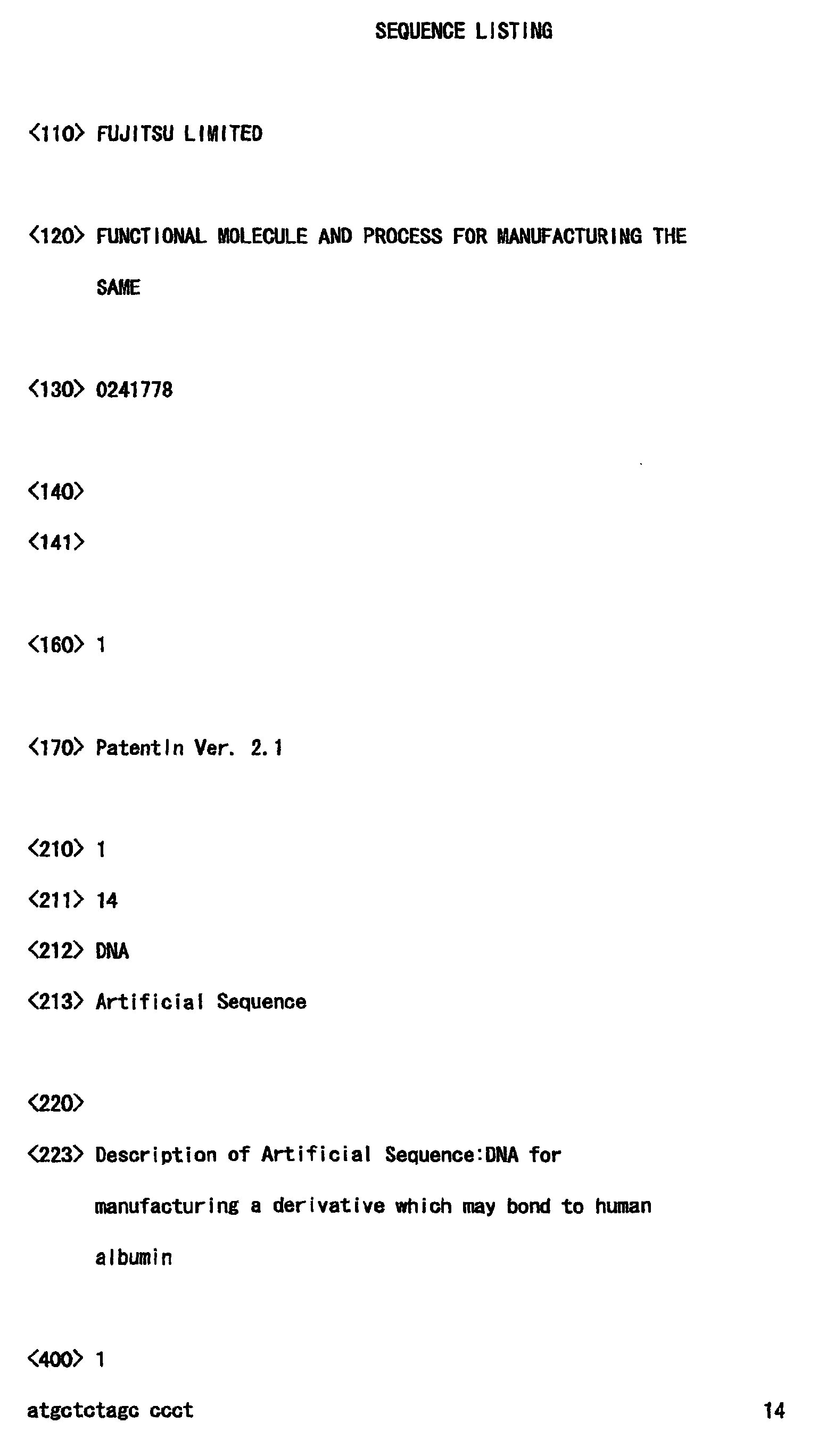
- This selected modified oligonucleotide sequence was amplified by PCR followed by cloning to know the base sequence of the DNA. As the result, a portion of the base sequence of the determined modified oligonucleotide was "ATGCTCTAGCCCCT" (FIG. 3D). The step described above is the determining step.
- a 5'- 32 P radiolabeled standard that prepared by previously labeling a nucleotide monomer containing a modified base by a radioactive element
- total amount 20 OD total amount 20 OD
- the step described above is the step of producing the modified oligonucleotide sequence.
- a cytoplasm fraction was purified from a rat liver tissue in the usual manner.
- a protein mixture contained in this fraction was subjected to linear isoelectric focusing (pH 4 to 7) in the usual manner followed by SDS-PAGE as two-dimensional electrophoresis.
- the protein contained in the protein mixture was blotted on a nitrocellulose membrane by the western blotting method.
- the obtained 28 kinds of the modified oligonucleotide sequences were each subjected to cloning by using plasmid vectors to determine the DNA sequences.
- the step described above is the determining step. Following this step, the sequence of the modified DNA was determined by the same manner as described in Example 1 to synthesize the modified DNA (the functional molecule) by employing an automated DNA synthesizer.
- the step described above is the translating step.
- the obtained modified DNA could recognize the protein isolated by two-dimensional electrophoresis specifically. Further, the dissociation constant of an available protein was measured by applying a surface plasmon resonance method and, as the result, was 1.0 ⁇ 10 -7 to 1.0 ⁇ 10 -9 and the protein was found to have the affinity.
- the labeling material usable in a radiolabeled random polymer pool can include, in addition to the radioisotope, those selected properly from labeling materials such as enzymes, fluorescent materials and chemiluminescence materials.
- labeling materials such as enzymes, fluorescent materials and chemiluminescence materials.
- a transferred proteins on a support such as a blotted nitrocellulose membrane for a transferring operation can be visualized by staining or spectroscopy to extract a DNA sequence from a portion having an abundant transferred proteins for cloning and sequencing.
- various conventional problems can be solved and can provide a functional molecule comparable of an affinity and specificity to a target to the affinity and specificity of an antibody against an antigen, capable of functioning as similar to the antibody sensu stricto, capable of recognizing a wide range of the target, showing a high affinity to various kinds of targets (target material and detection target), easy to be amplified and replicated, preferable for wide fields such as medical drugs, drug delivery, biosensors, regulation of gene expression amount, conquest of diseases caused by an abnormal gene, elucidating the function of the protein translated by a gene and development of reaction catalysts, and preferable particularly for an analysis of a protein.
- the present invention provides a process for producing the functional molecule unnecessary of repeated complicated operations of amplification and purification and capable of producing effectively and integrally.
Landscapes
- Health & Medical Sciences (AREA)
- Life Sciences & Earth Sciences (AREA)
- Chemical & Material Sciences (AREA)
- Engineering & Computer Science (AREA)
- Genetics & Genomics (AREA)
- Organic Chemistry (AREA)
- Bioinformatics & Cheminformatics (AREA)
- General Health & Medical Sciences (AREA)
- Biomedical Technology (AREA)
- Molecular Biology (AREA)
- Biotechnology (AREA)
- Biochemistry (AREA)
- Wood Science & Technology (AREA)
- Zoology (AREA)
- General Engineering & Computer Science (AREA)
- Animal Behavior & Ethology (AREA)
- Pharmacology & Pharmacy (AREA)
- Public Health (AREA)
- Veterinary Medicine (AREA)
- Medicinal Chemistry (AREA)
- Plant Pathology (AREA)
- Physics & Mathematics (AREA)
- Microbiology (AREA)
- Biophysics (AREA)
- General Chemical & Material Sciences (AREA)
- Nuclear Medicine, Radiotherapy & Molecular Imaging (AREA)
- Chemical Kinetics & Catalysis (AREA)
- Crystallography & Structural Chemistry (AREA)
- Bioinformatics & Computational Biology (AREA)
- Epidemiology (AREA)
- Neurology (AREA)
- Ecology (AREA)
- Diabetes (AREA)
- Hematology (AREA)
- Neurosurgery (AREA)
- Orthopedic Medicine & Surgery (AREA)
- Physical Education & Sports Medicine (AREA)
- Psychology (AREA)
- Obesity (AREA)
- Measuring Or Testing Involving Enzymes Or Micro-Organisms (AREA)
Abstract
Description











Claims (30)
- A process for producing a functional molecule having an affinity to a target, comprising a producing step which produces a modified oligonucleotide sequence by randomly polymerizing a modified nucleotide n-mer (where, n represents an integer) containing a modified nucleoside prepared by introducing a substituent into a nucleoside composing a nucleic acid.
- A process for producing the functional molecule according to claim 1, wherein the producing step prepares the modified oligonucleotide sequence and prepares a random polymer pool containing the modified oligonucleotide sequence.
- A process for producing the functional molecule according to one of claim 1 and claim 2, further comprising a selecting step which selects a sequence having an affinity to a target from the modified oligonucleotide sequences.
- A process for producing the functional molecule according to claim 3, further comprising a determining step which amplifies the selected modified oligonucleotide sequence and determines the base sequence thereof.
- A process for producing the functional molecule according to claim 4, further comprising a translating step which translates the sequence of the modified oligonucleotide sequence, of which base sequence has been determined, on the basis of a relation table,
wherein the relation table relates at least one of 4n nucleotide n-mers, which are presented in the relation table prepared by the one-to-one combination of 4 nucleosides, to a modified nucleotide n-mer. - A process for producing the functional molecule according to any of claim 1 to claim 5, wherein the nucleic acid is one of a DNA and an RNA
- A process for producing the functional molecule according to any of claim 1 to claim 6, wherein the number of the modified nucleotide n-mer is 5 to 4n.
- A process for producing the functional molecule according to any of claim 1 to claim 7, wherein the modified nucleotide n-mer is a modified nucleotide dimer
wherein the number of the modified nucleotide dimer is 5 to 16. - A process for producing the functional molecule according to any of claim 1 to claim 7, wherein the modified nucleotide n-mer is a modified nucleotide trimer
wherein the number of the modified nucleotide trimer is 5 to 56. - A process for producing the functional molecule according to any of claim 1 to claim 9, wherein the substituent is introduced into a 5th position of a pyrimidine base of the nucleoside.
- A process for producing the functional molecule according to any of claim 1 to claim 10, wherein the substituent is selected from groups represented by the following structural formula (I):where, in the formula (I), R represents any one of groups selected from one of natural and nonnatural amino acids, metal complexes, fluorescent dyes, oxidation-reduction pigments, spin label compounds, hydrogen atom, alkyl groups having carbon number ranging from 1 to 10, and groups selected from the following formulae (1) to (10); P represents the pyrimidine base.


- A process for producing the functional molecule according to any of claim 1 to claim 11, wherein the modified nucleotide n-mer is a modified oligonucleotide amidite.
- A process for producing the functional molecule according to any of claim 1 to claim 12, wherein the modified oligonucleotide sequence is synthesized by using a DNA synthesizer.
- A process for producing the functional molecule according to any of claim 1 to claim 12, wherein the modified oligonucleotide sequence is synthesized by annealing a nucleotide monomer to a nucleotide random sequence and ligating the nucleotide monomer by using at least one of a DNA ligase and an RNA ligase.
- A process for producing the functional molecule according to any of claim 1 to claim 14, wherein the modified oligonucleotide sequence has a fixed oligonucleotide sequence on both terminals thereof.
- A process for producing the functional molecule according to claim 3, wherein the selecting step is carried out by affinity chromatography employing a column in which beads bound with a target is filled.
- A process for producing the functional molecule according to one of claim 3 and claim 16, wherein the selecting step is carried out by dissociating the modified oligonucleotide from the target through monitoring a dissociation constant of the target and the modified oligonucleotide sequence.
- A process for producing the functional molecule according to claim 3, wherein the selecting step is carried out by the manner in which 2 or more targets are immobilized on a matrix having a linear to cubic spatial arrangement, a random polymer pool containing the modified oligonucleotide sequence is worked on the matrix on which the target has been immobilized, and then, a modified oligonucleotide sequence attached to the target is purified.
- A process for producing the functional molecule according to claim 18, wherein the immobilization on the matrix is carried out by any one selected from a western blotting method, dot blotting method, and slot blotting method.
- A process for producing the functional molecule according to one of claim 18 and claim 19, wherein the target immobilized on the matrix is labeled with at least one of labeling materials selected from a radioisotope, chemiluminescence materials, fluorescent materials, enzymes, antibodies, ligands and receptors.
- A process for producing the functional molecule according to any one of claim 17 to claim 20, wherein the modified oligonucleotide sequence contained in the random polymer pool is labeled with at least one of labeling materials selected from radioisotopes, chemiluminescence materials, fluorescent materials, enzymes, antibodies, ligands and receptors.
- A process for producing the functional molecule according to any one of claim 17 to claim 21, wherein the selecting step is carried out by cutting the modified oligonucleotide sequence, which has been bound to the target immobilized on the matrix, together with the matrix to yield a cut piece and, then, one of directly conducting PCR and collecting the modified oligonucleotide sequence from the cut piece.
- A process for producing the functional molecule according to claim 22, wherein the collection of the modified oligonucleotide sequence from the cut piece is carried out by one of the electroelution method applying a voltage using an ionic solution and a method using a hot water.
- A process for producing the functional molecule according to any one of claim 1 to claim 23, wherein the target is at least one selected from proteins, lipoproteins, sugar proteins, polypeptides, lipids, polysaccharides, lipopolysaccharides, nucleic acids, environmental hormones, drugs, and a complex of these substances.
- A process for producing the functional molecule according to claim 4, wherein the amplification step is carried out by any one method selected from a PCR method, LCR method, 3SR method, SDA method, RT-PCR method, ICAN method and LAMP method, and the base sequence is determined by cloning.
- A process for producing the functional molecule according to claim 5, wherein the translating step is carried out for every n base from the 5' terminal side of the modified oligonucleotide sequence on the basis of the relation table, and
wherein the modified oligonucleotide sequence is made by polymerizing randomly a modified nucleotide n-mer and the base sequence of the modified oligonucleotide sequence has been determined. - A process for producing the functional molecule according to claim 26, wherein the modified nucleotide n-mer is a modified nucleotide dimer and the translating step is carried out for every 2 base from the 5' terminal side of the modified oligonucleotide sequence on the basis of the relation table, and
wherein the modified oligonucleotide sequence is made by randomly polymerizing a modified nucleotide dimer and the base sequence of the modified oligonucleotide sequence has been determined. - A process for producing the functional molecule according to claim 26, wherein the modified nucleotide n-mer is a modified nucleotide trimer and the translating step is carried out for every 3 base from the 5' terminal side of the modified oligonucleotide sequence on the basis of the relation table, and
wherein the modified oligonucleotide sequence is made by randomly polymerizing a modified nucleotide trimer and the base sequence of the modified oligonucleotide sequence has been determined. - A functional molecule produced by a producing step which produces the functional molecule according to any of claim 1 to claim 28.
- A functional molecule according to claim 29, comprising a modified nucleotide n-mer (where, n represents an integer) having an affinity to a target and containing a modified nucleoside prepared by introducing a substituent into a nucleoside composing a nucleic acid.
Applications Claiming Priority (3)
| Application Number | Priority Date | Filing Date | Title |
|---|---|---|---|
| JP2002077040 | 2002-03-19 | ||
| JP2002077040 | 2002-03-19 | ||
| PCT/JP2003/003087 WO2003078623A1 (en) | 2002-03-19 | 2003-03-14 | Functional molecule and process for producing the same |
Publications (3)
| Publication Number | Publication Date |
|---|---|
| EP1489171A1 true EP1489171A1 (en) | 2004-12-22 |
| EP1489171A4 EP1489171A4 (en) | 2008-05-07 |
| EP1489171B1 EP1489171B1 (en) | 2012-10-31 |
Family
ID=28035480
Family Applications (1)
| Application Number | Title | Priority Date | Filing Date |
|---|---|---|---|
| EP03708622A Expired - Lifetime EP1489171B1 (en) | 2002-03-19 | 2003-03-14 | Functional molecule and process for producing the same |
Country Status (4)
| Country | Link |
|---|---|
| US (1) | US7517646B2 (en) |
| EP (1) | EP1489171B1 (en) |
| JP (1) | JP3978187B2 (en) |
| WO (1) | WO2003078623A1 (en) |
Cited By (4)
| Publication number | Priority date | Publication date | Assignee | Title |
|---|---|---|---|---|
| US7951533B2 (en) * | 2005-02-14 | 2011-05-31 | Fujitsu Limited | Structure determining method of functional substance having affinity to biomolecule or chemical, and method for producing functional substance |
| EP2580324A4 (en) * | 2010-06-11 | 2013-11-27 | Univ Brandeis | METHODS FOR THE DEVELOPMENT OF OLIGOSACCHARIDE-OLIGONUCLEOTIDE CONJUGATED VACCINES |
| EP2799549A4 (en) * | 2011-12-28 | 2015-08-12 | Sysmex Corp | Molecule capable of binding to adrenocorticotropic hormone, and use thereof |
| US10378017B2 (en) | 2013-12-02 | 2019-08-13 | Brandeis University | High temperature selection of nucleotide-supported carbohydrate vaccines and resulting glycosylated oligonucleotides |
Families Citing this family (19)
| Publication number | Priority date | Publication date | Assignee | Title |
|---|---|---|---|---|
| JP2006230227A (en) * | 2005-02-22 | 2006-09-07 | Fujitsu Ltd | Artificial enzyme and method for producing the same |
| US7947447B2 (en) | 2007-01-16 | 2011-05-24 | Somalogic, Inc. | Method for generating aptamers with improved off-rates |
| US20110136099A1 (en) | 2007-01-16 | 2011-06-09 | Somalogic, Inc. | Multiplexed Analyses of Test Samples |
| JP2008199969A (en) * | 2007-02-21 | 2008-09-04 | Fujitsu Ltd | Functional molecule that specifically binds to membrane protein and method for producing the same |
| JP5750209B2 (en) | 2007-03-16 | 2015-07-15 | アプタ バイオサイエンス リミテッド | Functional molecule, amidite for functional molecule synthesis, and target substance analysis method |
| US8404830B2 (en) * | 2007-07-17 | 2013-03-26 | Somalogic, Inc. | Method for generating aptamers with improved off-rates |
| CN101802225B (en) * | 2007-07-17 | 2013-10-30 | 私募蛋白质体公司 | Multivariate analysis of test samples |
| WO2009028345A1 (en) * | 2007-08-31 | 2009-03-05 | Fujitsu Limited | Dimer amidite for synthesis of nucleic acid, nucleic acid synthesis method |
| JP4499141B2 (en) | 2007-09-05 | 2010-07-07 | 富士通株式会社 | Modified nucleic acid synthesis amidite and modified nucleic acid synthesis method |
| JP5544833B2 (en) | 2009-11-17 | 2014-07-09 | 富士通株式会社 | Protecting group for indole group |
| JP5901610B2 (en) | 2010-04-12 | 2016-04-13 | ソマロジック・インコーポレーテッド | 5-position modified pyrimidine and its use |
| KR102290214B1 (en) | 2013-11-21 | 2021-08-18 | 소마로직, 인크. | Cytidine-5-carboxamide modified nucleotide compositions and methods related thereto |
| GB201603789D0 (en) | 2016-03-04 | 2016-04-20 | Apta Biosciences Ltd | Oligonucleotides and methods for preparing |
| JP7203613B2 (en) | 2016-07-01 | 2023-01-13 | ソマロジック オペレーティング カンパニー インコーポレイテッド | Oligonucleotides containing modified nucleosides |
| WO2018051581A1 (en) | 2016-09-15 | 2018-03-22 | Necソリューションイノベータ株式会社 | Nucleoside derivative or salt thereof, reagent for synthesizing polynucleotide, method for producing polynucleotide, polynucleotide, and method for producing binding nucleic acid molecule |
| WO2018051580A1 (en) | 2016-09-15 | 2018-03-22 | Necソリューションイノベータ株式会社 | Nucleoside derivative or salt thereof, reagent for synthesizing polynucleotide, method for producing polynucleotide, polynucleotide, and method for producing binding nucleic acid molecule |
| US11643660B2 (en) | 2016-11-28 | 2023-05-09 | Nec Solution Innovators, Ltd. | Nucleoside derivative or salt thereof, polynucleotide synthesis reagent, method for producing polynucleotide, polynucleotide, and method for producing binding nucleic acid molecule |
| CA3120107A1 (en) * | 2018-11-30 | 2020-06-04 | Geneinfosec, Inc. | A method for generating random oligonucleotides and determining their sequence |
| CN111072729B (en) * | 2019-12-13 | 2023-06-13 | 天津大学 | Solid phase carrier device for oligonucleotide synthesis and selective modification method thereof |
Family Cites Families (10)
| Publication number | Priority date | Publication date | Assignee | Title |
|---|---|---|---|---|
| JP3306063B2 (en) | 1990-08-24 | 2002-07-24 | イグジス, インコーポレイテッド | Method for synthesizing oligonucleotides having random codons |
| JPH06503715A (en) * | 1990-09-21 | 1994-04-28 | フレッド ハッチンソン キャンサー リサーチ センター | Protein sequence specific oligonucleotide sequences |
| WO1992014842A1 (en) * | 1991-02-21 | 1992-09-03 | Gilead Sciences, Inc. | Aptamers specific for thrombin and methods of use |
| US5756291A (en) * | 1992-08-21 | 1998-05-26 | Gilead Sciences, Inc. | Aptamers specific for biomolecules and methods of making |
| EP0830367A4 (en) | 1995-06-07 | 2003-03-05 | Nexstar Pharmaceuticals Inc | High-affinity nucleic acid ligands of cytokines |
| IT1295830B1 (en) | 1997-10-28 | 1999-05-28 | Angeletti P Ist Richerche Bio | PROCEDURE FOR THE SYNTHESIS OF POLYNUCLEOTIDES HAVING TOTALLY OR PARTIALLY RANDOM NUCLEOTIDE SEQUENCES |
| US6175001B1 (en) * | 1998-10-16 | 2001-01-16 | The Scripps Research Institute | Functionalized pyrimidine nucleosides and nucleotides and DNA's incorporating same |
| US6423493B1 (en) * | 1998-10-26 | 2002-07-23 | Board Of Regents The University Of Texas System | Combinatorial selection of oligonucleotide aptamers |
| JP3613576B2 (en) | 2000-10-30 | 2005-01-26 | 独立行政法人産業技術総合研究所 | Method for selecting highly functional nucleic acid molecules in cells |
| JP2002291491A (en) | 2001-01-23 | 2002-10-08 | Gencom Co | Rna-dna conjugate |
-
2003
- 2003-03-14 WO PCT/JP2003/003087 patent/WO2003078623A1/en not_active Ceased
- 2003-03-14 JP JP2003576617A patent/JP3978187B2/en not_active Expired - Lifetime
- 2003-03-14 EP EP03708622A patent/EP1489171B1/en not_active Expired - Lifetime
-
2004
- 2004-09-17 US US10/943,150 patent/US7517646B2/en not_active Expired - Lifetime
Cited By (7)
| Publication number | Priority date | Publication date | Assignee | Title |
|---|---|---|---|---|
| US7951533B2 (en) * | 2005-02-14 | 2011-05-31 | Fujitsu Limited | Structure determining method of functional substance having affinity to biomolecule or chemical, and method for producing functional substance |
| EP2580324A4 (en) * | 2010-06-11 | 2013-11-27 | Univ Brandeis | METHODS FOR THE DEVELOPMENT OF OLIGOSACCHARIDE-OLIGONUCLEOTIDE CONJUGATED VACCINES |
| US9080169B2 (en) | 2010-06-11 | 2015-07-14 | Brandeis University | Methods for the development of vaccines based on oligosaccharide-oligonucleotide conjugates |
| US10125162B2 (en) | 2010-06-11 | 2018-11-13 | Brandeis University | Methods for the development of vaccines based on oligosaccharide-oligonucleotide conjugates |
| EP2799549A4 (en) * | 2011-12-28 | 2015-08-12 | Sysmex Corp | Molecule capable of binding to adrenocorticotropic hormone, and use thereof |
| US10378017B2 (en) | 2013-12-02 | 2019-08-13 | Brandeis University | High temperature selection of nucleotide-supported carbohydrate vaccines and resulting glycosylated oligonucleotides |
| US11268099B2 (en) | 2013-12-02 | 2022-03-08 | Brandeis University | High temperature selection of nucleotide-supported carbohydrate vaccines and resulting glycosylated oligonucleotides |
Also Published As
| Publication number | Publication date |
|---|---|
| JP3978187B2 (en) | 2007-09-19 |
| EP1489171B1 (en) | 2012-10-31 |
| EP1489171A4 (en) | 2008-05-07 |
| US20050130195A1 (en) | 2005-06-16 |
| WO2003078623A1 (en) | 2003-09-25 |
| US7517646B2 (en) | 2009-04-14 |
| JPWO2003078623A1 (en) | 2005-07-14 |
Similar Documents
| Publication | Publication Date | Title |
|---|---|---|
| US7517646B2 (en) | Functional molecule and process for producing the same | |
| US12344888B1 (en) | Linked ligation | |
| EP3013983B1 (en) | Spatially encoded biological assays using a microfluidic device | |
| CN103703143A (en) | Method for identifying multiple epitopes in a cell | |
| US20210198731A1 (en) | Linked target capture and ligation | |
| EP3380607B1 (en) | Purification of polymerase complexes | |
| JP5128941B2 (en) | Target-specific compomers and methods of use | |
| JP4344330B2 (en) | Nucleotide oligomer, nucleotide polymer, method for determining structure of functional substance, and method for producing functional substance | |
| US7951533B2 (en) | Structure determining method of functional substance having affinity to biomolecule or chemical, and method for producing functional substance | |
| JP2004337022A (en) | Functional molecule and method for producing the same | |
| JP4984990B2 (en) | Method for producing functional molecules | |
| US20060188958A1 (en) | Artificial enzyme and method for producing the same | |
| HK40097121A (en) | Spatially encoded biological assays using a microfluidic device | |
| WO2025097174A1 (en) | Spatially encapsulated dna encoded libraries and methods of screening same | |
| CN117101564A (en) | A kind of preparation system and preparation method of biological macromolecules | |
| HK1224342B (en) | Spatially encoded biological assays using a microfluidic device |
Legal Events
| Date | Code | Title | Description |
|---|---|---|---|
| PUAI | Public reference made under article 153(3) epc to a published international application that has entered the european phase |
Free format text: ORIGINAL CODE: 0009012 |
|
| 17P | Request for examination filed |
Effective date: 20041011 |
|
| AK | Designated contracting states |
Kind code of ref document: A1 Designated state(s): AT BE BG CH CY CZ DE DK EE ES FI FR GB GR HU IE IT LI LU MC NL PT RO SE SI SK TR |
|
| AX | Request for extension of the european patent |
Extension state: AL LT LV MK |
|
| RIC1 | Information provided on ipc code assigned before grant |
Ipc: C12N 15/11 20060101AFI20070710BHEP Ipc: A61K 31/7115 20060101ALI20070710BHEP Ipc: C12N 15/10 20060101ALI20070710BHEP |
|
| A4 | Supplementary search report drawn up and despatched |
Effective date: 20080407 |
|
| 17Q | First examination report despatched |
Effective date: 20081008 |
|
| GRAP | Despatch of communication of intention to grant a patent |
Free format text: ORIGINAL CODE: EPIDOSNIGR1 |
|
| GRAS | Grant fee paid |
Free format text: ORIGINAL CODE: EPIDOSNIGR3 |
|
| GRAA | (expected) grant |
Free format text: ORIGINAL CODE: 0009210 |
|
| RAP1 | Party data changed (applicant data changed or rights of an application transferred) |
Owner name: FUJITSU LIMITED |
|
| AK | Designated contracting states |
Kind code of ref document: B1 Designated state(s): DE FR GB |
|
| REG | Reference to a national code |
Ref country code: GB Ref legal event code: FG4D |
|
| REG | Reference to a national code |
Ref country code: DE Ref legal event code: R096 Ref document number: 60342476 Country of ref document: DE Effective date: 20121227 |
|
| PLBE | No opposition filed within time limit |
Free format text: ORIGINAL CODE: 0009261 |
|
| STAA | Information on the status of an ep patent application or granted ep patent |
Free format text: STATUS: NO OPPOSITION FILED WITHIN TIME LIMIT |
|
| 26N | No opposition filed |
Effective date: 20130801 |
|
| REG | Reference to a national code |
Ref country code: DE Ref legal event code: R097 Ref document number: 60342476 Country of ref document: DE Effective date: 20130801 |
|
| REG | Reference to a national code |
Ref country code: GB Ref legal event code: 732E Free format text: REGISTERED BETWEEN 20140612 AND 20140618 |
|
| REG | Reference to a national code |
Ref country code: DE Ref legal event code: R082 Ref document number: 60342476 Country of ref document: DE Representative=s name: REICHERT & LINDNER PARTNERSCHAFT PATENTANWAELT, DE |
|
| REG | Reference to a national code |
Ref country code: FR Ref legal event code: TP Owner name: APTA BIOSCIENCES LTD, GB Effective date: 20141013 |
|
| REG | Reference to a national code |
Ref country code: DE Ref legal event code: R082 Ref document number: 60342476 Country of ref document: DE Representative=s name: REICHERT & LINDNER PARTNERSCHAFT PATENTANWAELT, DE Effective date: 20141023 Ref country code: DE Ref legal event code: R081 Ref document number: 60342476 Country of ref document: DE Owner name: APTA BIOSCIENCES LTD., GB Free format text: FORMER OWNER: FUJITSU LIMITED, KAWASAKI-SHI, KANAGAWA, JP Effective date: 20141023 Ref country code: DE Ref legal event code: R081 Ref document number: 60342476 Country of ref document: DE Owner name: APTA BIOSCIENCES LTD., GB Free format text: FORMER OWNER: FUJITSU LTD., KAWASAKI-SHI, KANAGAWA-KEN, JP Effective date: 20121031 Ref country code: DE Ref legal event code: R081 Ref document number: 60342476 Country of ref document: DE Owner name: APTA BIOSCIENCES LTD., GB Free format text: FORMER OWNER: FUJITSU LIMITED, KAWASAKI-SHI, KANAGAWA, JP Effective date: 20121031 |
|
| REG | Reference to a national code |
Ref country code: FR Ref legal event code: PLFP Year of fee payment: 14 |
|
| REG | Reference to a national code |
Ref country code: FR Ref legal event code: PLFP Year of fee payment: 15 |
|
| REG | Reference to a national code |
Ref country code: FR Ref legal event code: PLFP Year of fee payment: 16 |
|
| PGFP | Annual fee paid to national office [announced via postgrant information from national office to epo] |
Ref country code: GB Payment date: 20220302 Year of fee payment: 20 Ref country code: DE Payment date: 20220316 Year of fee payment: 20 |
|
| PGFP | Annual fee paid to national office [announced via postgrant information from national office to epo] |
Ref country code: FR Payment date: 20220321 Year of fee payment: 20 |
|
| REG | Reference to a national code |
Ref country code: DE Ref legal event code: R071 Ref document number: 60342476 Country of ref document: DE |
|
| REG | Reference to a national code |
Ref country code: GB Ref legal event code: PE20 Expiry date: 20230313 |
|
| PG25 | Lapsed in a contracting state [announced via postgrant information from national office to epo] |
Ref country code: GB Free format text: LAPSE BECAUSE OF EXPIRATION OF PROTECTION Effective date: 20230313 |
|
| P01 | Opt-out of the competence of the unified patent court (upc) registered |
Effective date: 20230429 |