EP1487181A2 - Verfahren zur Zuteilung von einem Identifikator zu einer Gruppe von gleichrangigen Knoten in einem gleichrangigen Netz - Google Patents
Verfahren zur Zuteilung von einem Identifikator zu einer Gruppe von gleichrangigen Knoten in einem gleichrangigen Netz Download PDFInfo
- Publication number
- EP1487181A2 EP1487181A2 EP04300196A EP04300196A EP1487181A2 EP 1487181 A2 EP1487181 A2 EP 1487181A2 EP 04300196 A EP04300196 A EP 04300196A EP 04300196 A EP04300196 A EP 04300196A EP 1487181 A2 EP1487181 A2 EP 1487181A2
- Authority
- EP
- European Patent Office
- Prior art keywords
- nodes
- group
- peer
- label
- node
- Prior art date
- Legal status (The legal status is an assumption and is not a legal conclusion. Google has not performed a legal analysis and makes no representation as to the accuracy of the status listed.)
- Granted
Links
- 238000000034 method Methods 0.000 title claims abstract description 38
- 238000001514 detection method Methods 0.000 claims description 4
- 238000005516 engineering process Methods 0.000 abstract description 2
- 230000008569 process Effects 0.000 description 10
- 238000004364 calculation method Methods 0.000 description 8
- 238000004891 communication Methods 0.000 description 3
- 230000008901 benefit Effects 0.000 description 2
- 238000012790 confirmation Methods 0.000 description 2
- 238000010586 diagram Methods 0.000 description 2
- 230000004048 modification Effects 0.000 description 2
- 238000012986 modification Methods 0.000 description 2
- 230000008520 organization Effects 0.000 description 2
- 230000006399 behavior Effects 0.000 description 1
- 230000008859 change Effects 0.000 description 1
- 230000001419 dependent effect Effects 0.000 description 1
- 230000000694 effects Effects 0.000 description 1
- 238000011156 evaluation Methods 0.000 description 1
- 230000007246 mechanism Effects 0.000 description 1
- 230000006855 networking Effects 0.000 description 1
- 238000011002 quantification Methods 0.000 description 1
Images
Classifications
-
- H—ELECTRICITY
- H04—ELECTRIC COMMUNICATION TECHNIQUE
- H04L—TRANSMISSION OF DIGITAL INFORMATION, e.g. TELEGRAPHIC COMMUNICATION
- H04L67/00—Network arrangements or protocols for supporting network services or applications
- H04L67/01—Protocols
- H04L67/10—Protocols in which an application is distributed across nodes in the network
- H04L67/104—Peer-to-peer [P2P] networks
-
- H—ELECTRICITY
- H04—ELECTRIC COMMUNICATION TECHNIQUE
- H04L—TRANSMISSION OF DIGITAL INFORMATION, e.g. TELEGRAPHIC COMMUNICATION
- H04L61/00—Network arrangements, protocols or services for addressing or naming
- H04L61/50—Address allocation
- H04L61/5069—Address allocation for group communication, multicast communication or broadcast communication
-
- H—ELECTRICITY
- H04—ELECTRIC COMMUNICATION TECHNIQUE
- H04L—TRANSMISSION OF DIGITAL INFORMATION, e.g. TELEGRAPHIC COMMUNICATION
- H04L67/00—Network arrangements or protocols for supporting network services or applications
- H04L67/01—Protocols
- H04L67/10—Protocols in which an application is distributed across nodes in the network
- H04L67/104—Peer-to-peer [P2P] networks
- H04L67/1044—Group management mechanisms
-
- H—ELECTRICITY
- H04—ELECTRIC COMMUNICATION TECHNIQUE
- H04L—TRANSMISSION OF DIGITAL INFORMATION, e.g. TELEGRAPHIC COMMUNICATION
- H04L67/00—Network arrangements or protocols for supporting network services or applications
- H04L67/01—Protocols
- H04L67/10—Protocols in which an application is distributed across nodes in the network
- H04L67/104—Peer-to-peer [P2P] networks
- H04L67/1087—Peer-to-peer [P2P] networks using cross-functional networking aspects
- H04L67/1093—Some peer nodes performing special functions
-
- H—ELECTRICITY
- H04—ELECTRIC COMMUNICATION TECHNIQUE
- H04L—TRANSMISSION OF DIGITAL INFORMATION, e.g. TELEGRAPHIC COMMUNICATION
- H04L67/00—Network arrangements or protocols for supporting network services or applications
- H04L67/14—Session management
-
- H—ELECTRICITY
- H04—ELECTRIC COMMUNICATION TECHNIQUE
- H04L—TRANSMISSION OF DIGITAL INFORMATION, e.g. TELEGRAPHIC COMMUNICATION
- H04L67/00—Network arrangements or protocols for supporting network services or applications
- H04L67/2866—Architectures; Arrangements
- H04L67/30—Profiles
-
- H—ELECTRICITY
- H04—ELECTRIC COMMUNICATION TECHNIQUE
- H04L—TRANSMISSION OF DIGITAL INFORMATION, e.g. TELEGRAPHIC COMMUNICATION
- H04L69/00—Network arrangements, protocols or services independent of the application payload and not provided for in the other groups of this subclass
- H04L69/30—Definitions, standards or architectural aspects of layered protocol stacks
- H04L69/32—Architecture of open systems interconnection [OSI] 7-layer type protocol stacks, e.g. the interfaces between the data link level and the physical level
- H04L69/322—Intralayer communication protocols among peer entities or protocol data unit [PDU] definitions
- H04L69/329—Intralayer communication protocols among peer entities or protocol data unit [PDU] definitions in the application layer [OSI layer 7]
-
- H—ELECTRICITY
- H04—ELECTRIC COMMUNICATION TECHNIQUE
- H04L—TRANSMISSION OF DIGITAL INFORMATION, e.g. TELEGRAPHIC COMMUNICATION
- H04L67/00—Network arrangements or protocols for supporting network services or applications
- H04L67/01—Protocols
- H04L67/10—Protocols in which an application is distributed across nodes in the network
- H04L67/104—Peer-to-peer [P2P] networks
- H04L67/1059—Inter-group management mechanisms, e.g. splitting, merging or interconnection of groups
Definitions
- This invention relates to a method for selecting an identification label for peer-groups in peer-to-peer networks.
- networks can be classified as having either client-server or peer-to-peer (P2P) architectures.
- P2P peer-to-peer
- a device or network node is also referred to as a peer.
- each peer can be unambiguously addressed through a unique label or identifier, e.g. a so-called Universal Unique Identifier (UUID).
- UUID Universal Unique Identifier
- the peers in P2P networks may communicate directly with each other, so that no central network organization is required, and further may cooperate with each other, sharing services and resources and thus forming a so-called peer-group.
- the peer-group as such gets a dedicated label, e.g. UUID, which can be used for identifying the members of the group. It can therefore also be used as an address to the peer-group.
- This label is usually changed when the structure of the peer-group is modified, e.g. a peer is added or removed.
- the described peer-to-peer networks and mechanisms are in a detailed manner published e.g. in WO 02/057917 A2.
- Peers can be connected to the network or disconnected from the network at any time.
- Particularly home networks are highly dynamic systems, where peers are joining and leaving arbitrarily the system, or peer-groups are split or merged.
- a home network can be implemented as a peer-group, by assigning a common group label to the peers.
- the resulting peer-group is called OwnerZone, and the common group label is called Zone_UUID.
- Communication between nodes is only allowed if they belong to the same OwnerZone, or to a specified so-called trusted zone.
- the OwnerZone concept aims at devices that may automatically set up a home network, with only minimal or no administration to be done by the user.
- the peers may autonomously 'negotiate' their new Zone_UUID after any network modification.
- Zone_Info_Data a service for providing information regarding its structure and/or contents
- the database for Zone_Info_Data can be updated automatically and may contain information like e.g. Zone_UUID or Zone_Service_List.
- the Zone_Service_List defines which services the OwnerZone may offer. It may also define in detail which services shall be accessible for which trusted zones.
- new Zone_Info_Data is generated in order to describe the structure and contents of the new OwnerZone.
- the new Zone_Info_Data may contain information about both source OwnerZones, e.g. their respective Zone_UUIDs, and thus make it possible to track on OwnerZone modifications.
- the problem to be solved by this invention is to determine automatically a common identifier for a peer-group, e.g. an OwnerZone, after the structure of the peer-group was changed, either by adding or by removing one or more peers. This is a part of what is called Zone Management.
- a precondition to be kept is that in this case the amount of administrational work and data traffic shall be minimized.
- Such method is disclosed in claim 1.
- An apparatus according to the invention is disclosed in claim 8.
- the invention defines suited parameters and algorithms for automatically determining an identifier for a peer-group, while simultaneously minimizing the amount of data traffic required for distribution of the new identifier.
- the best-suited existing group identifier is determined and reused.
- the inventive method can be used when the structure of an OwnerZone is changed by adding or removing peers, and when a new OwnerZone is created by splitting or merging OwnerZones.
- the inventive method comprises selecting an OwnerZone identifier, like Zone_UUID, in consideration of the peer and zone characteristics.
- An OwnerZone identifier like Zone_UUID
- the term 'durability' is used herein to reflect the zones resistance against a friendly takeover by other zones. When two zones shall be merged, the durability of a zone determines the importance of each zone, or how strong its impact on the newly created zone may be.
- a single peer may be understood as an implicit OwnerZone, so that the method may also be used when a single peer is added to or disconnected from a peer-group.
- a single peer herein referred to as 'negotiation peer', is automatically selected within a newly created peer-group, using any arbitrary method for determining a node for executing a service.
- the task of the negotiation peer is to execute the zone management service in the case of changing the structure of the peer-group, e.g. merging the peer-group with another peer-group or with a single peer.
- This negotiation peer has the required information about the structure and capabilities of the OwnerZone, e.g. it may have access to the Zone_Service_List and Zone_Info_Data, in order to get the contained information characterizing the peer-group.
- the invention comprises that every peer in the peer-group that receives information regarding a structural change forwards this information to its negotiation peer.
- the two negotiation peers of the two peer-groups to be merged may exchange relevant parts of their information, and determine the common identifier for the new peer-group. This is possible if both execute the same determination procedure, based on the same data.
- the new OwnerZone keeps the identifier, e.g. Zone_UUID, of one of the source zones, namely the source zone with the higher durability.
- a peer-group with a connection to other peer-groups is rearranged, e.g. a peer is added or removed, because in this case the identifier, and thus the peer-group's address, may remain unchanged. This eliminates the necessity to publish a new address to the other peer-groups, which reduces network traffic and administrational activities.
- the procedure of determining the identifier for the new peer-group comprises asserting certain durability to each of the source OwnerZones, and may consist of multiple steps, divided in multiple groups of steps.
- the first group of steps investigates the most important features of the OwnerZone, e.g. regarding its external connections.
- the existence of these features is scanned through sequentially in a predefined order, such that if any feature exists only in one of the source OwnerZones, the durability of this OwnerZone is higher and thus its Zone_UUID is assigned to the new merged OwnerZone.
- the determination procedure may in this case be finished. This may also be understood as rating the features such that any feature belonging to the first group is rated higher than the sum of all lower rated features.
- the second group of steps rates other OwnerZone features by quantification. These steps need only be performed if the first group of steps gave the same result for both source zones.
- Each of the respective quantifiable features is asserted a certain value, and the values are added for each of the source zones.
- the source zone with the higher resulting sum value has the higher durability, and its identifier is used as identifier of the new OwnerZone.
- the features considered in the first group of steps may comprise external access, or existence of trusted zones, existence of user specific configuration and current zone behavior, or at least some of these.
- the second group of steps may consider features like the type and number of services that the OwnerZone may offer to other zones, the peer-group size, i.e. number of connected peers, peer-group lifetime or available storage capacity.
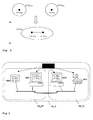
- Fig.1 a shows two nodes of a peer-to-peer network, being labeled UUID N1 and UUID N2 respectively.
- the nodes belong to different OwnerZones, and thus have associated individual group labels UUID Z1 ,UUID Z2 . Therefore they may generally not communicate with each other.
- the users of the respective OwnerZones may be prompted about whether they want to merge their OwnerZones.
- the respective users are not prompted, but may explicitly call a service for this purpose.
- a common OwnerZone may be created, which requires assigning a common group label to the nodes.
- Using the inventive method allows the nodes to select autonomously such a group label.
- one of the existing group labels UUID Z1 , UUID Z2 is used as common group label.
- the nodes may periodically send messages, thus detecting each other soon.
- the communicating nodes UUID N1 , UUID N2 are the negotiation peers.
- both nodes exchange information about their respective OwnerZones with each other, e.g. parameters like their zone labels UUID Z1 , UUID Z2 , the number of nodes belonging to their respective groups and whether they have trusted zones, i.e. if they may connect to nodes belonging to other OwnerZones.
- each negotiation peer compares the received information with its own, i.e. with the information it has transmitted, and performs a rating.
- Both nodes UUID N1 ,UUID N2 use the same rating algorithm, based on the same data and thus giving the same result.
- one of the nodes e.g. UUID N2
- both nodes have the same group label, and therefore belong to the new common OwnerZone.
- a critical situation may occur when both nodes are rated equally. Comparing individual lowest-rated parameters can avoid this, e.g. the value of an internal lifetime counter with millisecond resolution, or the numerical value of the node label (Node_UUID) or the Zone label (Zone_UUID) .
- the OwnerZone concept includes also that the connected nodes need not be located close to each other, but they may be connected via a network. E.g. two nodes belonging to the same user are located in different buildings, and are connected to a global net. When the user wants to create a common OwnerZone, he must specify for the nodes that they may communicate with each other. Then the nodes may select a common group label, as described before.
- This concept can also be used to merge two OwnerZones belonging to different users, and therefore requires security measures in order to prevent hostile takeovers. Security may be increased by various means, e.g. the respective users of each OwnerZone may be required, in advance or online, to explicitly accept the merging.
- the described algorithm can be understood such that each of the nodes UUID N1 , UUID N2 offers a certain service for zone management.
- the owner zone provides the zone management service, and one node within the group has to perform or offer this service.
- this zone management service is automatically associated with only one of the nodes of the group at a time.
- This node is called herein 'negotiation peer', since the described process is similar to a negotiation.
- An easy way to determine the negotiation peer is to select one of the nodes being involved in the previous merge process or negotiation, e.g. the node that kept its group label.
- Fig.2 shows two OwnerZones OZ_20, OZ_21, each of which consisting of two nodes. While all nodes N20,...,N23 have individual node identifiers N_ID 1 ,...,N_ID 4 , the nodes N20,N21 belonging to the first OwnerZone OZ_20 are labeled with the first OwnerZone's group label Z_ID A , and the nodes N22,N23 belonging to the other OwnerZone OZ_21 are labeled with the other OwnerZone's group label Z_ID B .
- One of the nodes of each OwnerZone OZ_20, OZ_21 e.g.
- N21 and N23 is the negotiation peer, and thus performs the zone management service for the respective peer-group.
- the user of the first OwnerZone OZ_20 may authorize his negotiation peer N21 to contact the other peer-group OZ_21, being specified by its group label Z_ID B .
- the negotiation peer N21 sends a message to the other OwnerZone OZ_21, where the negotiation peer N23 analyzes the message and requests a confirmation by its respective user. E.g. it may also request the user to enter a secret keyword that is valid only for this purpose and must be decided upon by the users of the first and second OwnerZone OZ_20, OZ_21 in advance.
- the negotiation peers N21,N23 exchange information about their respective OwnerZones OZ_20, OZ_21, e.g. data about their connections, structures and capabilities, and determine the respective durability, e.g. as described in detail below. Both come to the conclusion that e.g. the second OwnerZone OZ_21 is rated higher than the first OZ_20, i.e. has higher durability. Then the negotiation peer N21 of the OwnerZone OZ_20 with lower durability asserts the new common group label Z_ID B to the nodes N20,N21 of its peer-group. Further, the node N21 deactivates its zone management service, since the other negotiation peer N23 performs this service now for the new peer-group OZ_2. Again, authorized users may also assign the service to any other node within the OwnerZone.
- Fig.2 can also be used to explain the reverse process of splitting an OwnerZone.
- OZ_2 decides to split the OwnerZone
- One possibility is that the user performs a controlled split into two groups OZ_20, OZ_21, e.g. by creating a list of the nodes to be connected to the first OZ_20 and the second OZ_21 partial group, and then lets a dedicated service, e.g. also the negotiation service, perform the split process at a specified time.
- This may also be used for splitting the OwnerZone into more than two partial groups, and for disconnecting a single peer from the OwnerZone in a controlled way.
- the negotiation peer has the task to assign the existing group label Z_ID B to only one of the partial groups OZ_20, OZ_21, namely the one that has higher durability than the other. Then another group label must be assigned to the other partial group.
- the negotiation peer may use the same durability calculation as for merging, compare the features of the first and second partial groups OZ_20, OZ_21, and thus decide which has higher durability.
- each node in the network may detect the situation because according to standard P2P protocols the nodes send and receive discovery messages. Thus each node may detect to which other nodes it is connected.
- the OwnerZone may be configured to handle this situation, e.g. by always storing a copy of the Zone_Info_Data database in all nodes. After a split of the OwnerZone OZ_2 into two partial zones OZ_20, OZ_21, each partial zone OZ_20, OZ_21 may determine an own negotiation peer, e.g. N21 for OZ_20 and N23 for OZ_21.
- the negotiation peers N21,N23 may calculate the durability of their own peer-group and the durability of the other part, since the copy of the Zone_Info_Data database contains information about both partial groups. Furthermore, since both partial groups OZ_20, OZ_21 have the same data and use the same algorithm, they come to the same result, and may assign the group label Z_ID B of the previous peer-group, before being split, to the partial group with the higher durability. The other partial group may calculate and assign to itself another group label. In Fig.2 the OwnerZone OZ_2 before the split had the group label Z_ID B , and after the split one partial group OZ_20 comprises nodes N20 and N21 while the second partial group OZ_21 consists of nodes N22 and N23.
- the durability calculation is performed identically by the two negotiation peers, e.g. N21 and N23, and leads to the result that e.g. the durability of the second partial group OZ_21 is higher than that of the first partial group OZ_20. Then, according to the invention, the second partial group OZ_21 having higher durability keeps the group label Z_ID B , while the first partial group OZ_20 gets another group label Z_ID A . Particularly in the case when a single peer is disconnected, the remaining peer-group will usually keep its group label. This has the advantage that the user needs not care about the internal organization of his home network, and that it is not necessary to distribute a new group label, or OwnerZone address, over the network to e.g. trusted zones when a peer is added or removed.
- An important aspect of the invention is the negotiation process, which comprises the calculation of the OwnerZones durability.
- the durability of the own peer-group can be calculated at any time, preferably whenever a relevant parameter of the peer-group is changed, e.g. memory is allocated for any purpose, a node is disconnected or an additional service is installed.
- the calculation of durability is done in at least two steps: in the first of these steps predefined parameters are compared in a predefined order, and every parameter has a defined weight. The weight is higher than the total weight of all lower rated parameters, i.e. the comparison may be stopped when a parameter applies only to one node.
- the first parameter to be compared is whether a node has trusted zones or not, i.e. if it may connect to external peers. Other criteria are e.g. if the respective databases for Zone_Info_Data are automatically generated or user manipulated, or what services the OwnerZones may offer to each other. User manipulated Zone_Info_Data may contain information that should also be available for the new OwnerZone. Additionally, one of the users or both may have the possibility to influence the process or explicitly decide which label to use, and this may have the highest or a lower priority.
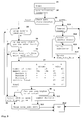
- FIG.3 An exemplary flow diagram specifying the negotiation process for merging is shown in Fig.3.
- the zone management service starts 31 a negotiation procedure, beginning with node detection 32, i.e. determining the transmitting node's group label. Then the type of relationship between the two OwnerZones is evaluated 33. This may require the user to confirm that a connection to the other node may be established, data exchanged and a merge performed. If the user accepts, the connection to the other negotiation peer is regarded as a local connection, and the durability calculation may begin.
- a special situation occurs if e.g. a new peer is added to an existing P2P network via a local connection. In this case the peer may be programmed by the manufacturer to allow negotiation and merging.
- the negotiation peer checks 313 if the node that has transmitted the request message belongs already to a trusted zone. In this case, the negotiation is finished since the OwnerZones may communicate with each other. Otherwise, if the node that has transmitted the message does not belong to a trusted zone yet, the receiving negotiation peer analyzes 314 if the message contains a request to establish a trusted zone relationship between the two OwnerZones. This will usually also require a user confirmation, and if both users accept a trusted zone relationship to be established, the internal database for Zone_Info_Data is updated 316. Otherwise the connection is rejected 315.
- connection to the other negotiation peer is regarded as a local connection
- the two negotiation peers exchange the data that are required for the durability calculation, and the calculation can be performed.
- An initial check 34 verifies if the message comes from another peer-group, e.g. a peer that was not connected to this OwnerZone before.
- a peer that is disconnected from an OwnerZone keeps the OwnerZones' group label. If the peer is reconnected, the negotiation may be finished after this step 34 because the group labels are identical.
- the first of these groups contains two characteristics: the first is if the OwnerZones have external connections or trusted zones 35. If only one of the two OwnerZones may connect to external nodes, then the group label or Zone_UUID of this OwnerZone is selected 39 for the new OwnerZone. If both OwnerZones may connect to external nodes for any reason, but only one has trusted zones, then the group label of this OwnerZone is selected.
- the second characteristic 36 is if both OwnerZones to be merged have a Zone_Info_Data service. This could be not the case, e.g. there may be certain devices that are not prepared for being a negotiation peer. If only one of the two OwnerZones has a Zone_Info_Data service, then the group label of this OwnerZone is selected 39.
- the second group of characteristics 37 is only evaluated if the first group gave no decision about which group label to select.
- the characteristics of the second group 37 are rated with values, i.e. they are quantified in a sense that every evaluated item may win points, and the points for all items are summed up for each peer-group.
- these items comprise the number of nodes that belong to the OwnerZones, the available memory space and the type of available services.
- Other examples are the number of trusted zones, or the number of nodes belonging to trusted zones. Any items are possible for the second group of items 37, as long as its evaluation comprises assigning a value to the item and summing up the values for each OwnerZone. This means that the items within this group do not have an order, since all must be compared.
- the group label is then taken 39 from the peer-group that has more points, or a higher value.
- This decision 38 may also yield that both have the same value.
- any decision 311 is taken, e.g. based on the numerical value of the group label Zone_UUID.
- the nodes have an internal lifetime counter with sufficient resolution, the current values of these counters are exchanged and the exchanged values compared.
- OwnerZones to be merged both have a Zone_Info_Data service, one of these services is disabled and the database of the remaining service is updated 310, e.g. merged, with the database of the disabled service.
- An advantage of this two-step method is that in many cases arithmetical calculations can be avoided, and thus the decision may be found very quickly, without putting unnecessary strain on the negotiation peer.
- Advertisement messages that are transmitted by peer-groups differ from advertisement messages that are transmitted by OwnerZones. Advertisement messages may contain group label and/or ZoneInfoData. Also, the new peer may, but needs not, have OwnerZone information already attached, like group label or ZoneInfoData. OwnerZone information that is attached to a peer is called herein "permanent".
- a peer that is connected to a P2P network has no permanent OwnerZone information attached, and may receive advertisement messages from existing OwnerZones or other peer-groups. In that case, if it receives advertisement messages from only one OwnerZone, it may simply assume the existing OwnerZones group label, and thus join the OwnerZone. If otherwise it receives advertisement messages from more than one peer-group, it may select a valid OwnerZone by selecting an advertisement pointing to the peer-group that is the current OwnerZone. If otherwise it receives OwnerZone advertisement messages from more than one OwnerZone, it may select which OwnerZone to contact, e.g. according to user preferences.
- the peer that is connected to a P2P network has no own permanent OwnerZone information attached, and receives no OwnerZone advertisement messages from the network. In that case a new OwnerZone may be created, as described above.
- the peer that is connected to a P2P network has permanent OwnerZone information attached, but receives no peer-group advertisement messages from the network.
- the new peer may maintain its OwnerZone information, and other peers in the network may instantiate, or join, the new peers OwnerZone.
- the peer that is connected to a P2P network has permanent OwnerZone information attached, but also receives peer-group advertisement messages from the network. In that case the above-described zone management process may be performed.
- the invention can be used for all kinds of devices that can be connected to a P2P network, particularly a P2P home network. These may be computers, but also other electronic devices such as TV, CD or DVD players/recorders or storage units. Furthermore, the method may be used not only for selecting an identification label, but also whenever a peer-group in a P2P network must come to a common decision.
Landscapes
- Engineering & Computer Science (AREA)
- Computer Networks & Wireless Communication (AREA)
- Signal Processing (AREA)
- Computing Systems (AREA)
- Computer Security & Cryptography (AREA)
- Physics & Mathematics (AREA)
- Mathematical Physics (AREA)
- Theoretical Computer Science (AREA)
- Computer And Data Communications (AREA)
Priority Applications (1)
| Application Number | Priority Date | Filing Date | Title |
|---|---|---|---|
| EP04300196A EP1487181B1 (de) | 2003-05-23 | 2004-04-08 | Verfahren zur Zuteilung von einem Identifikator zu einer Gruppe von gleichrangigen Knoten in einem gleichrangigen Netz |
Applications Claiming Priority (5)
| Application Number | Priority Date | Filing Date | Title |
|---|---|---|---|
| EP03011674 | 2003-05-23 | ||
| EP03011674A EP1480415A1 (de) | 2003-05-23 | 2003-05-23 | Verfahren zur Zuteilung von einem Identifikator zu einer Gruppe von gleichrangigen Knoten in einem gleichrangigen Netz |
| EP03020120 | 2003-09-05 | ||
| EP03020120 | 2003-09-05 | ||
| EP04300196A EP1487181B1 (de) | 2003-05-23 | 2004-04-08 | Verfahren zur Zuteilung von einem Identifikator zu einer Gruppe von gleichrangigen Knoten in einem gleichrangigen Netz |
Publications (3)
| Publication Number | Publication Date |
|---|---|
| EP1487181A2 true EP1487181A2 (de) | 2004-12-15 |
| EP1487181A3 EP1487181A3 (de) | 2005-02-09 |
| EP1487181B1 EP1487181B1 (de) | 2007-06-20 |
Family
ID=33303472
Family Applications (1)
| Application Number | Title | Priority Date | Filing Date |
|---|---|---|---|
| EP04300196A Expired - Lifetime EP1487181B1 (de) | 2003-05-23 | 2004-04-08 | Verfahren zur Zuteilung von einem Identifikator zu einer Gruppe von gleichrangigen Knoten in einem gleichrangigen Netz |
Country Status (1)
| Country | Link |
|---|---|
| EP (1) | EP1487181B1 (de) |
Cited By (6)
| Publication number | Priority date | Publication date | Assignee | Title |
|---|---|---|---|---|
| EP1684481A1 (de) * | 2005-01-21 | 2006-07-26 | Research In Motion Limited | Système et procédé de sélection d'une connexion active |
| CN100384146C (zh) * | 2005-06-08 | 2008-04-23 | 杭州华三通信技术有限公司 | 管理分布式网络设备的方法 |
| US7444409B2 (en) | 2005-01-21 | 2008-10-28 | Research In Motion Limited | System and method for determining a designated connection between components of computing devices |
| EP1836861A4 (de) * | 2005-01-11 | 2010-08-25 | Telcordia Tech Inc | Verfahren zum einrichten und organisieren eines drahtlosen ad-hoc-peer-to-peer-netzwerks |
| EP1987521A4 (de) * | 2006-02-16 | 2011-09-14 | Trend Micro Inc | Vertrauensbewertung |
| US20190132385A1 (en) * | 2017-10-31 | 2019-05-02 | Microsoft Technology Licensing, Llc | Techniques for peer matching in peer-to-peer communications |
Family Cites Families (5)
| Publication number | Priority date | Publication date | Assignee | Title |
|---|---|---|---|---|
| US5193152A (en) * | 1989-11-03 | 1993-03-09 | Racal-Datacom, Inc. | Network management system with group naming |
| AU2001264504A1 (en) * | 2000-06-12 | 2001-12-24 | Telefonaktiebolaget Lm Ericsson (Publ) | Random identity management in scatternets |
| AU2002234258A1 (en) * | 2001-01-22 | 2002-07-30 | Sun Microsystems, Inc. | Peer-to-peer network computing platform |
| US7120681B2 (en) * | 2001-01-30 | 2006-10-10 | International Business Machines Corporation | Cluster control in network systems |
| US6662183B2 (en) * | 2001-04-05 | 2003-12-09 | International Business Machines Corporation | Vendor independent network configuration tool method, system, and product |
-
2004
- 2004-04-08 EP EP04300196A patent/EP1487181B1/de not_active Expired - Lifetime
Cited By (12)
| Publication number | Priority date | Publication date | Assignee | Title |
|---|---|---|---|---|
| EP1836861A4 (de) * | 2005-01-11 | 2010-08-25 | Telcordia Tech Inc | Verfahren zum einrichten und organisieren eines drahtlosen ad-hoc-peer-to-peer-netzwerks |
| CN101536581B (zh) * | 2005-01-11 | 2011-10-26 | 泰克迪亚科技公司 | 用以建立和组织ad-hoc无线对等网络的方法 |
| EP1684481A1 (de) * | 2005-01-21 | 2006-07-26 | Research In Motion Limited | Système et procédé de sélection d'une connexion active |
| AU2006200249B2 (en) * | 2005-01-21 | 2008-01-24 | Blackberry Limited | System and method for determining a designated connection between components of computing devices |
| US7444409B2 (en) | 2005-01-21 | 2008-10-28 | Research In Motion Limited | System and method for determining a designated connection between components of computing devices |
| CN100459521C (zh) * | 2005-01-21 | 2009-02-04 | 捷讯研究有限公司 | 确定在计算设备的部件之间指定连接的系统和方法 |
| US7761580B2 (en) | 2005-01-21 | 2010-07-20 | Research In Motion Limited | System and method for determining a designated connection between components of computing devices |
| CN100384146C (zh) * | 2005-06-08 | 2008-04-23 | 杭州华三通信技术有限公司 | 管理分布式网络设备的方法 |
| EP1987521A4 (de) * | 2006-02-16 | 2011-09-14 | Trend Micro Inc | Vertrauensbewertung |
| US20190132385A1 (en) * | 2017-10-31 | 2019-05-02 | Microsoft Technology Licensing, Llc | Techniques for peer matching in peer-to-peer communications |
| WO2019089284A1 (en) * | 2017-10-31 | 2019-05-09 | Microsoft Technology Licensing, Llc | Techniques for peer matching in peer-to-peer communications |
| US10735506B2 (en) * | 2017-10-31 | 2020-08-04 | Microsoft Technology Licensing, Llc | Techniques for peer matching in peer-to-peer communications |
Also Published As
| Publication number | Publication date |
|---|---|
| EP1487181B1 (de) | 2007-06-20 |
| EP1487181A3 (de) | 2005-02-09 |
Similar Documents
| Publication | Publication Date | Title |
|---|---|---|
| US7991855B2 (en) | Method for assigning an identifier to a peer-group in a peer-to-peer network | |
| CN100583874C (zh) | 利用公共组标签组建对等家庭网络的方法 | |
| JP4657878B2 (ja) | ピアグループ間で通信を確立する方法 | |
| JP4546720B2 (ja) | 共通のグループラベルを用いたピア・ツー・ピアネットワークにおけるノード間の通信のための方法 | |
| KR100621092B1 (ko) | P2p 프로토콜을 이용하여 어플리케이션을 공유하는 방법및 장치 | |
| US8332908B2 (en) | Sharing management system, sharing management method and program | |
| CN100365977C (zh) | 操作服务器群集的方法和系统 | |
| US11425133B2 (en) | System and method for network device security and trust score determinations | |
| EP1427148B1 (de) | Verfahren zur Kommunikation von Knoten in Peer-to-Peer Netzwerken mit Hilfe eines gemeinsamen Gruppenetiketts | |
| EP1487181B1 (de) | Verfahren zur Zuteilung von einem Identifikator zu einer Gruppe von gleichrangigen Knoten in einem gleichrangigen Netz | |
| US20060168320A1 (en) | Network topology discovery service | |
| US20230283664A1 (en) | Method for processing a data transport service | |
| EP1480415A1 (de) | Verfahren zur Zuteilung von einem Identifikator zu einer Gruppe von gleichrangigen Knoten in einem gleichrangigen Netz | |
| CN115622723B (zh) | 设备访问控制方法及装置、电子设备及存储介质 | |
| KR102798598B1 (ko) | 블록체인 기반 정보 처리 방법 | |
| EP4425828B1 (de) | Verfahren zur bereitstellung von netzwerkbezogenen diensten | |
| EP1427149B1 (de) | Verfahren zur Gestaltung eines Peer-to-Peer Netzwerks mit Hilfe eines gemeinsamen Gruppenetiketts | |
| WO2024231389A1 (en) | Techniques to provide network-related services | |
| EP1646206A1 (de) | Eine Methode zur Aufbau einer Kommunikation zwischen Peer-Gruppen | |
| CN117319107A (zh) | 路由器信息的管理方法、装置以及系统 | |
| Kateb | On The Assessment of Communities of Web Services |
Legal Events
| Date | Code | Title | Description |
|---|---|---|---|
| PUAI | Public reference made under article 153(3) epc to a published international application that has entered the european phase |
Free format text: ORIGINAL CODE: 0009012 |
|
| AK | Designated contracting states |
Kind code of ref document: A2 Designated state(s): AT BE BG CH CY CZ DE DK EE ES FI FR GB GR HU IE IT LI LU MC NL PL PT RO SE SI SK TR |
|
| AX | Request for extension of the european patent |
Extension state: AL HR LT LV MK |
|
| PUAL | Search report despatched |
Free format text: ORIGINAL CODE: 0009013 |
|
| AK | Designated contracting states |
Kind code of ref document: A3 Designated state(s): AT BE BG CH CY CZ DE DK EE ES FI FR GB GR HU IE IT LI LU MC NL PL PT RO SE SI SK TR |
|
| AX | Request for extension of the european patent |
Extension state: AL HR LT LV MK |
|
| AKX | Designation fees paid |
Designated state(s): DE ES FR GB IT |
|
| 17P | Request for examination filed |
Effective date: 20050809 |
|
| GRAP | Despatch of communication of intention to grant a patent |
Free format text: ORIGINAL CODE: EPIDOSNIGR1 |
|
| RAP1 | Party data changed (applicant data changed or rights of an application transferred) |
Owner name: THOMSON LICENSING, S.A. |
|
| RAP1 | Party data changed (applicant data changed or rights of an application transferred) |
Owner name: THOMSON LICENSING |
|
| GRAS | Grant fee paid |
Free format text: ORIGINAL CODE: EPIDOSNIGR3 |
|
| GRAA | (expected) grant |
Free format text: ORIGINAL CODE: 0009210 |
|
| AK | Designated contracting states |
Kind code of ref document: B1 Designated state(s): DE ES FR GB IT |
|
| REG | Reference to a national code |
Ref country code: GB Ref legal event code: FG4D |
|
| REF | Corresponds to: |
Ref document number: 602004007064 Country of ref document: DE Date of ref document: 20070802 Kind code of ref document: P |
|
| REG | Reference to a national code |
Ref country code: GB Ref legal event code: 746 Effective date: 20070713 |
|
| ET | Fr: translation filed | ||
| PG25 | Lapsed in a contracting state [announced via postgrant information from national office to epo] |
Ref country code: ES Free format text: LAPSE BECAUSE OF FAILURE TO SUBMIT A TRANSLATION OF THE DESCRIPTION OR TO PAY THE FEE WITHIN THE PRESCRIBED TIME-LIMIT Effective date: 20071001 |
|
| PLBE | No opposition filed within time limit |
Free format text: ORIGINAL CODE: 0009261 |
|
| STAA | Information on the status of an ep patent application or granted ep patent |
Free format text: STATUS: NO OPPOSITION FILED WITHIN TIME LIMIT |
|
| PG25 | Lapsed in a contracting state [announced via postgrant information from national office to epo] |
Ref country code: IT Free format text: LAPSE BECAUSE OF FAILURE TO SUBMIT A TRANSLATION OF THE DESCRIPTION OR TO PAY THE FEE WITHIN THE PRESCRIBED TIME-LIMIT Effective date: 20070620 |
|
| 26N | No opposition filed |
Effective date: 20080325 |
|
| REG | Reference to a national code |
Ref country code: FR Ref legal event code: PLFP Year of fee payment: 13 |
|
| REG | Reference to a national code |
Ref country code: FR Ref legal event code: PLFP Year of fee payment: 14 |
|
| REG | Reference to a national code |
Ref country code: DE Ref legal event code: R082 Ref document number: 602004007064 Country of ref document: DE Representative=s name: DEHNS, DE Ref country code: DE Ref legal event code: R082 Ref document number: 602004007064 Country of ref document: DE Representative=s name: DEHNS PATENT AND TRADEMARK ATTORNEYS, DE Ref country code: DE Ref legal event code: R082 Ref document number: 602004007064 Country of ref document: DE Representative=s name: HOFSTETTER, SCHURACK & PARTNER PATENT- UND REC, DE |
|
| REG | Reference to a national code |
Ref country code: FR Ref legal event code: PLFP Year of fee payment: 15 |
|
| REG | Reference to a national code |
Ref country code: DE Ref legal event code: R082 Ref document number: 602004007064 Country of ref document: DE Representative=s name: DEHNS, DE Ref country code: DE Ref legal event code: R081 Ref document number: 602004007064 Country of ref document: DE Owner name: INTERDIGITAL CE PATENT HOLDINGS SAS, FR Free format text: FORMER OWNER: THOMSON LICENSING, BOULOGNE-BILLANCOURT, FR Ref country code: DE Ref legal event code: R082 Ref document number: 602004007064 Country of ref document: DE Representative=s name: DEHNS PATENT AND TRADEMARK ATTORNEYS, DE |
|
| REG | Reference to a national code |
Ref country code: GB Ref legal event code: 732E Free format text: REGISTERED BETWEEN 20190912 AND 20190918 |
|
| PGFP | Annual fee paid to national office [announced via postgrant information from national office to epo] |
Ref country code: DE Payment date: 20200430 Year of fee payment: 17 Ref country code: FR Payment date: 20200429 Year of fee payment: 17 |
|
| PGFP | Annual fee paid to national office [announced via postgrant information from national office to epo] |
Ref country code: GB Payment date: 20200429 Year of fee payment: 17 |
|
| REG | Reference to a national code |
Ref country code: DE Ref legal event code: R119 Ref document number: 602004007064 Country of ref document: DE |
|
| REG | Reference to a national code |
Ref country code: DE Ref legal event code: R079 Ref document number: 602004007064 Country of ref document: DE Free format text: PREVIOUS MAIN CLASS: H04L0029120000 Ipc: H04L0067286900 |
|
| GBPC | Gb: european patent ceased through non-payment of renewal fee |
Effective date: 20210408 |
|
| PG25 | Lapsed in a contracting state [announced via postgrant information from national office to epo] |
Ref country code: DE Free format text: LAPSE BECAUSE OF NON-PAYMENT OF DUE FEES Effective date: 20211103 Ref country code: FR Free format text: LAPSE BECAUSE OF NON-PAYMENT OF DUE FEES Effective date: 20210430 Ref country code: GB Free format text: LAPSE BECAUSE OF NON-PAYMENT OF DUE FEES Effective date: 20210408 |