TECHNICAL FIELD
The present invention relates to an adhesive resin and
an adhesive resin composition used for a liquid crystal
polymer.
BACKGROUND ART
In general, polyolefins are characterized by excellent
properties in moldability, thermal resistance, mechanical
characteristics, hygienic adaptability, and steam permeation
resistance, and with excellent appearance as molded articles.
Therefore, they are widely used in extrusion molded articles,
blow molded articles, injection molded articles, etc.
However, since the polyolefins are so-called non-polar
resins without polar groups in the molecule, they are poor
in the affinity with various polar materials including
metals, and have difficulties in laminating and using these
materials.
Thus, improvement of the affinity with polar materials
by graft polymerization of maleic anhydride to the
polylolefins has widely been used, but the improvement for
some adherends is sometimes inadequate, hence a modified
polyolefin having higher adhesive force to polar materials
is desired.
On the other hand, liquid crystal (hereafter referred
to as LC) polymers including all the aromatic polyesters
have excellent chemical resistance and gas barrier
properties, and application to packaging materials for
vessels, gasoline tanks of automobiles, etc. has been
expected. However, the LC polymer in general has properties
of high tendency for orientation in the direction of flow at
melting, and hence has high strength in the molding
direction but low strength in the direction perpendicular to
molding. Also, because the LC polymers are expensive, it is
necessary to use them by laminating with polymers such as
the polyolefins.
Adhesiveness between the LC polymers and the
polyolefins in conventional thermal fusion is poor, and
certain adhesive resins are necessary to laminate them.
Various investigations have so far been performed on
the adhesive resins for the LC polymers and the polyolefins.
These adhesive resins are mainly copolymers manufactured by
radical copolymerization of ethylene and a polar monomer
such as (meth)acrylic acid under high pressure. Since many
long-chain branches are formed in a polymerization reaction,
copolymers with high crystallinity are difficult to be
manufactured; hence there were cases in which the adhesive
strength is extremely decreased when the copolymers were
applied to usage in direct contact with a solvent such as
gasoline or to usage for fatty food materials.
DISCLOSURE OF INVENTION
The present inventors, in consideration of these
conventional technologies, have conducted extensive
investigations and as a result found that a polyolefin
wherein specific ethylenically unsaturated monomers are
graft polymerized has excellent adhesiveness to the LC
polymer and excellent solvent resistance. Based on these
findings the present invention has been completed.
An object of the present invention is to provide an
adhesive resin and an adhesive resin composition that have
excellent adhesiveness to the LC polymer and excellent
solvent resistance.
The adhesive resin for the LC polymer according to the
present invention is characterized by comprising:
Examples of the modified polyolefin (D) include a
modified polyolefin (D-1) and a modified polyolefin (D-2) to
be described later. The modified polyolefin (D-1) is
preferably a modified polyolefin (d-1) to be described later.
Also, the adhesive resin composition for the LC polymer
according to the present invention is characterized by
comprising a modified polyolefin (D) prepared by graft
polymerizing at least one an epoxy group-containing
ethylenically unsaturated monomer (B) to a polyolefin (A)
obtained by polymerizing one or more kinds of olefins
selected from ethylene and α-olefin having from 3 to 20
carbon atoms, in an amount in the range of from 0.01 to 50%
by weight, with the proviso that the modified polyolefin is
100% by weight; and a thermoplastic resin (E).
BEST MODE FOR CARRAYING OUT THE INVENTION
Next, the adhesive resin and the composition for the LC
polymer comprising the same according to the present
invention will be specifically described.
(Polyolefin (A))
The polyolefin (A) to be used in the present invention
is obtained by polymerizing at least one olefin selected
from ethylene and α-olefin having from 3 to 20 carbon atoms.
Specific examples include α-olefin having from 3 to 20
carbon atoms, such as propylene, 1-butene, 2-butene, 1-pentene,
3-methyl-1-butene, 1-hexene, 4-methyl-1-pentene, 3-methyl-1-pentene,
3-ethyl-1-pentene, 4,4-dimethyl-1-pentene,
4-methyl-1-hexene, 4,4-dimethyl-1-hexene, 4-ethyl-1-hexene,
3-ethyl-1-hexene, 1-octene, 1-decene, 1-dodecene, 1-tetradecene,
1-hexadecene, 1-octadecene, and 1-eicosene, in
addition to ethylene. Homopolymers or copolymers thereof can
be used alone or in combination with several kinds.
Among them, the polyolefin (A) containing polymers or
copolymers obtained from one or more kinds of olefins
selected from ethylene, propylene, 1-butene, 4-methyl-1-pentene,
1-hexene, and 1-octene is preferable.
Among them, the polyolefin (A) containing an ethylene
homopolymer (A-1) or a copolymer (A-2) of ethylene and at
least one olefin selected from α-olefin having from 3 to 20
carbon atoms is more preferable. Herein, as for α-olefins to
be copolymerized with ethylene, propylene, 1-butene, 4-methyl-1-pentene,
1-hexene and 1-octene are particularly
preferable.
In the case where an ethylene-based copolymer is used
as the polyolefin (A), the content of ethylene is usually 83
mole% or more, preferably 95 mole% or more, and more
preferably 97 mole% or more.
The density of the polyolefin (A) used in the present
invention is usually 0.895 g/cc or more, preferably 0.900
g/cc or more, more preferably 0.905 g/cc or more, and most
preferably 0.910 g/cc or more, in viewing of obtaining the
modified polyolefin having an excellent balance between
adhesiveness to the LC polymer and solvent resistance.
The melt flow rate (MFR; ASTM D 1238, at 190°C under a
load of 2.16 kg) of the polyolefin (A) is usually in the
range of from 0.01 to 500 g/10 minutes, preferably from 0.05
to 200 g/10 minutes, and more preferably from 0.1 to 100
g/10 minutes.
The crystallinity of the polyolefin (A) is usually 10%
or more, preferably 25% or more, and more preferably 35% or
more.
Also, the weight average molecular weight (Mw) measured
by gel permeation chromatography (GPC) is usually in the
range of from 5,000 to 1,000,000, preferably from 8,000 to
500,000, and more preferably from 10,000 to 200,000.
The molecular weight distribution (Mw/Mn) is usually
0.6 or less, preferably 5.5 or less, and more preferably 5.0
or less. In addition, Mn refers to the number average
molecular weight.
Manufacturing of the above polyolefin can be carried
out by any one of known conventional methods, for example,
by polymerization using titanium-based catalysts, vanadium-based
catalysts, metallocene catalysts, etc.
(Epoxy group-containing ethylenically unsaturated
monomer (B))
The epoxy group-containing ethylenically unsaturated
monomer is a monomer containing at least one of a
polymerizable unsaturated bond and at least one of an epoxy
group in the molecule. Examples of the epoxy group-containing
ethylenically unsaturated compound include
glycidyl acrylate; glycidyl (meth)acrylate; mono- and
alkylglycidyl esters (wherein the alkyl group for the
monoglycidyl ester has 1 to 12 carbon atoms) of dicarboxylic
acids such as, mono- and diglycidyl esters of maleic acid,
mono- and diglycidyl esters of fumaric acid, mono- and
diglycidyl esters of crotonic acid, mono- and diglycidyl
esters of tetrahydrophthalic acid, mono- and glycidyl esters
of itaconic acid, mono- and diglycidyl esters of butene
tricarboxylic acid, mono- and diglycidyl esters of
citraconic acid, monoglycidyl and diglycidyl esters of endo-cis-bicyclo[2.2.1]hept-5-ene-2,3-dicarboxylic
acid (nadic
acid TM), mono- and diglycidyl esters of endo-cis-bicyclo[2.2.1]hept-5-ene-2-methyl-2,3-dicarboxylic
acid
(methyl nadic acid TM) and mono- and glycidyl esters of
allyl succinic acid; alkyl glycidyl esters of p-styrene
carboxylic acid; allyl glycidyl ether; 2-methylallyl
glycidyl ether; styrene-p-glycidyl ether; 3,4-epoxy-1-butene;
3,4-epoxy-3-methyl-1-butene; 3,4-epoxy-1-pentene;
3,4-epoxy-3-methyl-1-pentene; and 5,6-epoxy-1-hexene.
Among these compounds, it is preferable to use glycidyl
acrylate, glycidyl (meth)acrylate, mono- and diglycidyl
esters of maleic acid.
(Alicyclic epoxy group-containing ethylenically
unsaturated monomer)
In addition, in addition to these, examples of the
epoxy group-containing ethylenically unsaturated monomer (B)
used in the present invention include preferably the
alicyclic epoxy group-containing ethylenically unsaturated
monomer represented by the following formulae (1) to (5):
(wherein R
1 is a hydrogen atom or a methyl group, R
2 is
a single bond or a bivalent hydrocarbon group having from 1
to 20 carbon atoms and optionally containing hetero atoms,
R
3 is a hydrogen atom or a hydrocarbon group having from 1
to 20 carbon atoms and optionally containing hetero atoms,
and n is an integer between 0 and 2, with the proviso that
R
3 may be all the same or different from each other.)
Examples of the bivalent hydrocarbon group having from
1 to 20 carbon atoms and optionally containing hetero atoms,
of R2, include an alkylene group such as methylene, ethylene,
propylene, and butylene, a (poly)alkylene oxide such as
ethylene oxide and polyethylene oxide, and an arylene group
such as phenylene group.
Examples of the hydrocarbon group having from 1 to 20
carbon atoms and optionally containing hetero atoms, of R3,
include an alkyl group such as methyl, ethyl, propyl, and
butyl, a hydroxyl group, and an alkoxy group such as methoxy
and ethoxy.
Specific examples of these compounds include compounds
represented by the following structural formulae:
In the present invention, it is preferable to use the
aromatic vinyl monomer (C) simultaneously with the epoxy
group-containing ethylenically unsaturated monomer.
Examples of the aromatic vinyl monomer (C) include a
compound represented by the following formula [I]:
In the above formula [I], R6 and R7 may be the same or
different each other, and is a hydrogen atom or an alkyl
group having from 1 to 3 carbon atoms, and specific examples
thereof include a methyl group, an ethyl group, a propyl
group and an isopropyl group. Also, R8 is a hydrocarbon
group having from 1 to 3 carbon atoms or a halogen atom, and
specific examples thereof include a methyl group, an ethyl
group, a propyl group, an isopropyl group, a chlorine atom,
a bromine atom or an iodine atom. Further, n is an integer
usually between 0 and 5, and preferably of 1 to 5. In
addition, [Φ] in the formula [I] is an aromatic ring
optionally containing hetero atoms. In addition, R7 may be
all the same or different from each other, and R8 may be all
the same or different from each other.
Specific examples of the aromatic vinyl monomer include
styrene, α-methylstyrene, o-methylstyrene, p-methylstyrene,
m-methylstyrene, p-chlorostyrene, m-chlorostyrene, p-chlorostyrene,
4-vinyl pyridine, 2-vinyl pyridine, 5-ethyl-2-vinyl
pyridine, 2-methyl-5-vinyl pyridine, 2-isopropenyl
pyridine, 2-vinyl quinoline, 3-vinyl isoquinoline, N-vinyl
carbazole, and N-vinyl pyrrolidone.
(Ethylenically unsaturated monomer other than (B) and
(C))
In the present invention, the ethylenically unsaturated
monomer other than the epoxy group-containing ethylenically
unsaturated monomer (B) and the aromatic vinyl monomer (C)
is optionally used, provided that such monomers are within
the spirit or scope of the present invention.
Examples of the ethylenically unsaturated monomers that
may be used in the present invention include hydroxyl group-containing
ethylenically unsaturated compounds, amino group-containing
ethylenically unsaturated compounds, unsaturated
carboxylic acids and derivatives thereof, vinyl ester
compounds, vinyl chlorides, and oxazoline group-containing
unsaturated monomers.
Specific examples of the hydroxyl group-containing
ethylenically unsaturated compounds include (meth)acrylic
acid esters, such as, hydroxyethyl (meth)acrylate, 2-hydroxypropyl
(meth)acrylate, 3-hydroxypropyl (meth)acrylate,
2-hydroxy-3-phenoxypropyl (meth)acrylate, 3-chloro-2-hydroxypropyl
(meth)acrylate, glycerin mono(meth)acrylate,
pentaerythritol mono(meth)acrylate, trimethylolpropane
mono(meth)acrylate, tetramethylolethane mono(meth)acrylate,
butanediol mono(meth)acrylate, polyethyleneglycol
mono (meth) acrylate, and 2-(6-hydroxyhexanoyloxy)ethylacrylate,
as well as 10-undecen-1-ol, 1-octen-3-ol, 2-methanolnorbornene,
hydroxystyrene, hydroxyethyl vinyl ether,
hydroxybutyl vinyl ether, N-methylolacrylamide, 2-(meth)acryloyloxyethyl
acid phosphate, glycerin monoallyl
ether, allyl alcohol, allyloxyethanol, 2-butene-1,4-diol and
glycerin monoalcohol.
The amino group-containing ethylenically unsaturated
compound is a compound containing ethylenic double bond(s)
and amino group(s). For such compounds, there can be
exemplified a vinyl monomer having at least one amino group
or a substituted amino group represented by the following
formula:
C(R4)2 = CR4-COO-(CH2)mN(R5)2
In the formula [II], each R4 is independently a
hydrogen atom, a methyl group or an ethyl group, each R5 is
independently a hydrogen atom, an alkyl group having from 1
to 12 carbon atoms, preferably 1 to 8 carbon atoms or a
cycloalkyl group having from 6 to 12 carbon atoms,
preferably 6 to 8 carbon atoms. In addition, the alkyl group
or the cycloalkyl group may further have a substituent.
Further, m is an integer between 1 and 5, preferably 1 to 3.
Specific examples of the amino group-containing
ethylenically unsaturated compound include alkyl ester
derivatives of acrylic acid or methacrylic acid, such as
aminoethyl (meth)acrylate, propylaminoethyl (meth)acrylate,
dimethylaminoethyl methacrylate, aminopropyl (meth)acrylate,
phenylaminoethyl methacrylate, and cyclohexylaminoethyl
methacrylate; vinylamine derivatives such as N-vinyldiethylamine
and N-acetylvinylamine; allylamine
derivatives such as allylamine, methacrylamine, N-methylacrylamine,
N,N-dimethylacrylamide, and N,N-dimethylaminopropylacrylamide;
acrylamide derivatives such
as acrylamide and N-methylacrylamide; aminostyrenes such as
p-aminostyrene; imide 6-aminohexylsuccinate and imide 2-aminoethylsuccinate.
As the unsaturated carboxylic acid, there may be
exemplified unsaturated carboxylic acids, such as, acrylic
acid, methacrylic acid, maleic acid, fumaric acid,
tetrahydrophthalic acid, itaconic acid, citraconic acid,
crotonic acid, isocrotonic acid, norbornene dicarboxylic
acid, bicyclo[2.2.1]hept-2-ene-5,6-dicarboxylic acid, or
their anhydrides or their derivatives (for example, acid
halides, amides, imides, esters, etc.).
Specific examples include malenyl chloride, malenyl
imide, maleic anhydride, itaconic anhydride, citraconic
anhydride, tetrahydrophthalic anhydride, bicyclo[2.2.1]hept-2-ene-5,6-dicarboxylic
acid anhydride, dimethyl maleate,
monomethyl maleate, diethyl maleate, diethyl fumarate,
dimethyl itaconate, diethyl citraconate, dimethyl
tetrahydrophthalate, dimethyl bicyclo[2.2.1]hept-2-ene-5,6-dicarboxylate,
hydroxyethyl (meth)acrylate, hydroxypropyl
(meth)acrylate, glycidyl (meth)acrylate, aminoethyl
methacrylate and aminopropyl methacrylate. Among them,
(meth)acrylic acid, maleic anhydrid, hydroxyethyl
(meth)acrylate, glycidyl methacrylate and aminopropyl
methacrylate are preferred.
Examples of the vinyl ester compound include vinyl
acetate, vinyl propionate, vinyl n-butyrate, vinyl
isobutyrate, vinyl pivalate, vinyl caproate, vinyl versatate,
vinyl laurate, vinyl stearate, vinyl benzoate, vinyl p-t-butylbenzoate,
vinyl salicylate, and vinyl
cyclohexanecarboxylate.
Specific examples of the oxazoline group-containing
unsaturated monomer include 2-vinyl-2-oxazoline, 5-methyl-2-vinyl-2-oxazoline,
4,4-dimethyl-2-vinyl-2-oxazoline, 4,4-dimethyl-2-vinyl-5,6-dihydro-4H-1,3-oxazine,
4,4,6-trimethyl-2-vinyl-5,6-dihydro-4H-1,3-oxazine,
2-isopropenyl-2-oxazoline,
4,4-dimethyl-2-isopropenyl-2-oxazoline,
ricinoloxazoline acrylate, ricinoloxazoline methacrylate,
and ricinoloxazoline maleate. Among them, ricinoloxazoline
acrylate, ricinoloxazoline methacrylate and ricinoloxazoline
maleate are preferred.
Examples of the modified polyolefin (D) suitable as an
adhesive resin for the LC polymer of the present invention
include the modified polyolefin (D-1).
Modified polyolefin (D-1)
The modified polyolefin (D-1) formed by graft
polymerizing 0.01 to 20% by weight of the epoxy group-containing
ethylenically unsaturated monomer (B) to the
polyolefin (A) wherein the polyolefin (A) is an ethylene
homopolymer (A-1) or a copolymer (A-2) of ethylene and at
least one α-olefin selected from α-olefin having from 3 to
20 carbon atoms, the ethylene homopolymer (A-1) or the
copolymer (A-2) has a density of 0.895 g/cc or more, a melt
flow rate (190°C and a load of 2.16 kg) is within the range
of from 0.01 to 500 g/10 minutes (with the proviso that, in
the modified polyolefin (D-1), the epoxy group-containing
ethylenically unsaturated monomer (B) is the epoxy group-containing
ethylenically unsaturated monomer excluding the
alicyclic epoxy group-containing ethylenically unsaturated
monomers represented by the above formulae (1) to (5)).
As the modified polyolefin (D-1), the following
modified polyolefin (d-1) is more preferred.
Modified polyolefin (d-1)
The modified polyolefin formed by graft polymerizing
0.01 to 20% by weight of the epoxy group-containing
ethylenically unsaturated monomer (B) and 0.01 to 20% by
weight of the aromatic vinyl monomer (C) to the polyolefin
(A) wherein the polyolefin (A) is an ethylene homopolymer
(A-1) or a copolymer (A-2) of ethylene and at least one α-olefin
selected from α-olefin having from 3 to 20 carbon
atoms, the ethylene homopolymer (A-1) or the copolymer (A-2)
has a density of 0.895 g/cc or more and a melt flow rate
(190°C and a load of 2.16 kg) is within the range of from
0.01 to 500 g/10 minutes.
The modified polyolefin (d-1) of the present invention
can be manufactured by reacting the polyolefin (A) with the
epoxy group-containing ethylenically unsaturated monomer (B),
and the aromatic vinyl monomer (C), and, if necessary, the
ethylenically unsaturated monomer other than (B) and (C)
under heating in the presence or absence of a radical
initiator.
The reaction efficiency of this graft polymerization is
increased when performed in the presence of the radical
initiator, hence it is preferable to carry out graft
reaction using the radical initiator in manufacturing the
modified polyolefin (d-1) of the present invention.
Examples of the radical initiator used herein include
an organic peroxide or an azo compound.
Specific examples of the organic peroxide include
dicumyl peroxide, di-t-butyl peroxide, 2,5-dimethyl-2,5-bis(t-butylperoxy)hexane,
2,5-dimethyl-2,5-bis(t-butylperoxy)hexyne-3,
1,3-bis(t-butylperoxyisopropyl)benzene,
1,1-bis(t-butylperoxy)valerate, benzoyl peroxide, t-butylperoxy
benzoate, acetyl peroxide, isobutyryl peroxide,
octanoyl peroxide, decanoyl peroxide, lauroyl peroxide,
3,5,5-trimethylhexanoyl peroxide, 2,4-dichlorobenzoyl
peroxide and m-toluyl peroxide. In addition, examples of the
azo compound include azoisobutyronitrile and
dimethylazoisobutyronitrile.
The radical initiator is used in general in an amount
of 0.001 to 10 parts by weight, preferably 0.05 to 5 parts
by weight per 100 parts by weight of the polyolefin (A). The
radical initiator can be employed as such by mixing with the
polyolefin (A), or can be also used by dissolving it in a
small amount of an organic solvent.
As the organic solvent to be employed here, every
organic solvent capable of dissolving the radical initiator
can be used without any restriction. Examples of the organic
solvent include an aromatic hydrocarbon solvent such as
benzene, toluene and xylene; an aliphatic hydrocarbon
solvent such as pentane, hexane, heptane, octane, nonane and
decane; an alicyclic hydrocarbon solvent such as cyclohexane,
methylcyclohexane and decahydronaphthalene; a chlorinated
hydrocarbon such as chlorobenzene, dichlorobenzene,
trichlorobenzene, methylene chloride, chloroform, carbon
tetrachloride and tetrachloroethylene; an alcohol solvent
such as methanol, ethanol, n-propinol, iso-propanol, n-butanol,
sec-butanol and tert-butanol; a ketone solvent such
as acetone, methyl ethyl ketone and methyl isobutyl ketone;
an ester solvent such as ethyl acetate and dimethyl
phthalate; and an ether solvent such as dimethyl ether,
diethyl ether, di-n-amyl ether, tetrahydrofuran and
dioxyanisole.
In addition, in the present invention, on graft-modifying
the polyolefin (A), a reducing substance may also
be used. The reducing substance has a function of increasing
the grafted amount in the resulting modified polyolefin (d-1).
Examples of the reducing substance include iron (II)
ion, chromium ion, cobalt ion, nickel ion, palladium ion,
sulfite, hydroxyamine, hydrazine, as well as compounds
having groups such as -SH, -SO3H, -NHNH2, and -COCH(OH)-.
Specific examples of these reducing substances include
ferrous chloride, potassium bichromate, cobalt chloride,
cobalt naphthenate, palladium chloride, ethanolamine,
diethanolamine, N,N-dimethylaniline, hydrazine, ethyl
mercaptan, benzenesulfonic acid, and p-toluenesulfonic acid.
The reducing substance mentioned above is used usually
in an amount of 0.001 to 5 parts by weight, preferably 0.1
to 3 parts by weight per 100 parts by weight of the
polyolefin (A).
The graft polymerization stated above may be performed
under any of the following conditions in that at least part
of the polyolefin (A) is in a solid state, molten state, or
at least partly dissolved in an organic solvent.
In the case where the graft polymerization is performed
under the conditions where at least part of the
thermoplastic polymer is dissolved in an organic solvent, it
is performed usually at 50 to 200°C, preferably at 60 to
190°C, and more preferably at 70 to 180°C.
The organic solvent used in the graft polymerization is
any of those capable of dissolving the thermoplastic polymer,
and is not particularly limited. Examples of the organic
solvent suitable for use with the ethylenic polymer (A)
include aromatic hydrocarbon solvents such as benzene,
toluene and xylene, and aliphatic hydrocarbon solvents such
as pentane, hexane, and heptane.
Also, the epoxy group-containing ethylenically
unsaturated monomer (B) and the aromatic vinyl monomer (C)
are added by the following methods:
In addition, in this case, (B) and (C) may be dropped
using separate inlet tubes or may be added (dropped) by
mixing them. The latter method is preferable.
In the case where the radical polymerization initiator
is used, it may be added all at once before initiation of
reaction, or may be dropped in a predetermined duration
after heating. The latter method, wherein the initiator is
dropped in a predetermined duration after heating, is
preferable. In this case, the radical polymerization
initiator is dropped preferably through a separate inlet
tube independently from (B) and (C) inlet tubes.
Also, in the case where the graft polymerization is
carried out under the conditions in which the polyolefin (A)
is in a molten state, the reaction is carried out usually at
temperatures higher than the melting point of the polyolefin
(A). That is, graft polymerization reaction is carried out
at temperatures higher than the melting point of the
polyolefin (A), specifically, usually at 80 to 300°C, and
preferably at 80 to 250°C.
In the case where an extruder is used in graft
polymerization, examples of the method include a method
wherein:
The grafted amount of the epoxy group-containing
ethylenically unsaturated monomer in the modified polyolefin
(d-1) prepared as above is usually in the range of from 0.01
to 20% by weight, preferably from 0.02 to 15% by weight, and
more preferably from 0.03 to 10% by weight.
In addition, the grafted amount of the aromatic vinyl
monomer contained in the modified polyolefin (d-1) is
usually in the range of from 0.01 to 20% by weight,
preferably from 0.02 to 15% by weight, and more preferably
from 0.03 to 10% by weight.
The mole ratio between the epoxy group-containing
ethylenically unsaturated monomer (B) and the aromatic vinyl
monomer (C) that are graft polymerized in the modified
polyolefin (d-1) of the present invention is usually from
10:90 to 95:5, preferably from 20:80 to 90: 10, more
preferably from 25:75 to 85:15, and most preferably from
30:70 to 80:20.
In the case where the epoxy group-containing
ethylenically unsaturated monomer (B) and the aromatic vinyl
monomer (C) are graft polymerized with these mole ratios,
the modified polyolefin (d-1) thus obtained has excellent
adhesiveness to the LC polymer and excellent solvent
resistance.
Examples of the modified polyolefin (D) suitable as the
adhesive resin for the LC polymer of the present invention
include the modified polyolefin (D-2) described below:
Modified polyolefin (D-2)
The modified polyolefin prepared by graft polymerizing
at least one alicyclic epoxy group-containing ethylenically
unsaturated monomer represented by the above formulae (1) to
(5) to a polyolefin (A) obtained by polymerizing one or more
olefins selected from ethylene and α-olefin having from 3 to
20 carbon atoms, in an amount in the range of from 0.01 to
50% by weight, with the proviso that the modified polyolefin
is 100% by weight.
The modified polyolefin (D-2) is preferably prepared by
graft polymerizing at least one alicyclic epoxy group-containing
ethylenically unsaturated monomer (B) represented
by the above formulae (1) to (5) in the range of from 0.01
to 50% by weight, and the other ethylenically unsaturated
monomer in the range of from 0.01 to 50% by weight to a
polyolefin (A) obtained by polymerizing one or more olefins
selected from ethylene and α-olefin having from 3 to 20
carbon atoms, with the proviso that the modified polyolefin
is 100% by weight and the total grafted amount of (B) and
the other ethylenically unsaturated monomer is in the range
of from 0.02 to 60% by weight.
In this case, the polyolefin (A) is preferably the
ethylene homopolymer (A-1) or the ethylene copolymer (A-2),
and the density of the polyolefin (A) is preferably 0.895
g/cc. In addition, the other ethylenically unsaturated
monomer is preferably the aromatic vinyl monomer (C).
Graft polymerization
The modified polyolefin (D-2) of the present invention
can be obtained by graft polymerization of the polyolefin
(A) with at least one alicyclic epoxy group-containing
ethylenically unsaturated monomer (B) represented by the
aforementioned formulae (1) to (5) and optionally the other
ethylenically unsaturated monomer, by heating in the
presence or absence of the radical initiator.
Graft polymerization is preferably carried out in the
presence of the radical initiator so that graft
polymerization reaction efficiency is higher. Examples of
the radical initiator used herewith include the organic
peroxide or the azo compound.
Specific examples of the organic peroxide and the azo
compound are similar to those listed in the aforementioned
modified polyolefin (d-1).
The radical initiator is preferably used in general in
the range of from 0.001 to 10 parts by weight per 100 parts
by weight of the polyolefin.
The radical initiator can be employed as such by mixing
with the polyolefin (A) and the alicyclic epoxy group-containing
ethylenically unsaturated monomer, or can be also
used by dissolving it in a small amount of an organic
solvent. As the organic solvent to be employed here, every
organic solvent capable of dissolving the radical initiator
can be used without any particular restriction.
Examples of the organic solvent are similar to those
listed in the aforementioned modified polyolefin (d-1).
In addition, in the present invention, on graft-modifying
the polyolefin, a reducing substance may also be
used. The reducing substance has a function of increasing
the grafted amount in the resulting modified polyolefin.
Examples of the reducing substance are similar to those
listed in the aforementioned modified polyolefin (d-1).
The above reducing substances are used usually in the
range of from 0.001 to 5 parts by weight, preferably in the
range of from 0.1 to 3 parts by weight per 100 parts by
weight of polyolefin (A).
The graft polymerization stated above may be performed
under any of the following conditions in that at least part
of the polyolefin (A) is in a solid state, molten state, or
at least partly dissolved in an organic solvent.
In the case where the graft polymerization is performed
under the conditions where at least part of the polyolefin
(A) is dissolved in an organic solvent, it is performed
usually at 50 to 200°C, preferably at 60 to 190°C, and more
preferably at 70 to 180°C.
The organic solvent used in the graft polymerization is
any of those capable of dissolving the polyolefin (A), and
is not particularly limited. Examples of the organic solvent
include aromatic hydrocarbon solvents such as benzene,
toluene and xylene, and aliphatic hydrocarbon solvents such
as pentane, hexane, and heptane.
Also, in the case where the graft polymerization is
carried out under the condition where the polyolefin (A) is
in a molten state, the reaction temperature is usually
higher than the melting point of the polyolefin.
Specifically, the reaction temperature is usually at 80 to
300°C, and preferably at 80 to 250°C.
In the case where an extruder is used in the graft
polymerization, examples of the method include a method
wherein:
In addition, in the case where both the alicyclic epoxy
group-containing ethylenically unsaturated monomer (B) and
the other ethylenically unsaturated monomer are graft
polymerized, each monomer may be mixed and then added, each
monomer may be added through separate inlet tubes, or one
monomer may be added after the other monomer is added. Among
them, the method wherein the alicyclic epoxy group-containing
ethylenically unsaturated monomer (B) and the
other ethylenically unsaturated monomer are mixed and then
added, or the method where each monomer is added to the
reaction system through the separate inlet tubes is
preferable as the method gives high grafting efficiency, and
yields the modified polyolefin (D-2) with excellent
adhesiveness performance.
The grafted amount of the grafted groups derived from
the alicyclic epoxy group-containing ethylenically
unsaturated monomer in the thus prepared modified polyolefin
(D-2) is usually in the range of from 0.01 to 50% by weight,
preferably from 0.02 to 30% by weight, more preferably from
0.03 to 10% by weight, and most preferably from 0.03 to 5%
by weight, with respect to the modified polyolefin as 100%
by weight.
In the present invention, in the case where the other
ethylenically unsaturated monomer is graft polymerized with
the alicyclic epoxy group-containing ethylenically
unsaturated monomer (B), the grafted amount of the other
ethylenically unsaturated monomer is usually in the range of
from 0.01 to 50% by weight, preferably from 0.02 to 30% by
weight, more preferably from 0.03 to 10% by weight, and most
preferably from 0.03 to 5% by weight. Note however, in this
case the total grafted amount of the alicyclic epoxy group-containing
ethylenically unsaturated monomer (B) and the
other ethylenically unsaturated monomer is usually from 0.02
to 60% by weight, preferably from 0.03 to 40% by weight,
more preferably from 0.04 to 20% by weight, and most
preferably from 0.06 to 10% by weight.
Also, the ratio of the grafted amount of the alicyclic
epoxy group-containing ethylenically unsaturated monomer (B)
and that of the other ethylenically unsaturated monomer is
usually from 99.5:0.5 to 1.0:99.0, preferably from 90:10 to
5:95, and more preferably from 80:20 to 10:90.
As stated above, the method of the graft polymerization
is explained with the modified polyolefins (d-1) and (D-2)
as examples. The modified polyolefin (D) other than those
described above can be manufactured by the graft
polymerization according to the condition described above or
a condition with appropriate changes.
(Adhesive resin and adhesive resin composition)
The adhesive resin for the LC polymer of the present
invention is characterized by comprising the modified
polyolefin described above.
Also, the adhesive resin composition for the LC polymer
of the present invention may be formed from two or more
kinds of polymers selected from the modified polyolefin (D)
described above, or from the modified polyolefin (D)
described above and the thermoplastic resin (E) other than
said polymers.
Particularly, the adhesive resin composition preferably
comprises 1 to 90% by weight of the modified polyolefin (D),
based on the total of the modified polyolefin (D) and the
thermoplastic resin (E) as 100% by weight.
In the present invention, one kind of the thermoplastic
resin (E) selected from the listed below is preferably used:
polyolefin, polyamide, polyester, polyacetal, polystyrene,
acrylonitrile-butadiene-styrene copolymer (ABS),
polymethacrylate, polycarbonate, polyphenylene oxide,
polyvinyl chloride, polyvinylidene chloride, polyvinyl
acetate and ethylene-(meth)acrylate ester copolymer, diene-based
polymer.
Examples of the polyolefin include olefin homopolymers
such as polyethylene, polypropylene, poly-1-butene,
polymethylpentene, and polymethylbutene; and olefin
copolymers such as ethylene-α-olefin random copolymer,
ethylene-propylene-diene ternary copolymer, propylene-ethylene
random copolymer, propylene-α-olefin random
copolymer, propylene-ethylene-α-olefin ternary copolymer.
Among them, polyethylene, polyproylene, ethylene-α-olefin
random copolymer, ethylene-propylene-diene ternary copolymer,
propylene-ethylene random copolymer, and propylene-α-olefin
random copolymer are preferably used. In addition, in the
case where the polyolefin is obtained from an olefin having
three or more carbon atoms, it may be an isotactic polymer
or a syndiotactic polymer.
Also, any of known catalysts such as Ziegler-Natta type
catalyst or metallocene catalyst catalysts may be used for
manufacture of the polyolefin.
Examples of the polyamide include aliphatic polyamides
such as nylon-6, nylon-66, nylon-10, nylon-12 and nylon-46;
and aromatic polyamides manufactured from aromatic
dicarboxylic acids and aliphatic diamines, of which nylon-6
is preferable.
Examples of the polyester include aromatic polyesters
such as polyethylene terephthalate, polyethylene naphthalate,
and polybutylene terephthalate, polycaprolactone, and
polyhydroxybutyrate, of which polyethylene terephthalate is
preferable.
Examples of the polyacetal include polyformaldehyde
(polyoxymethylene), polyacetaldehyde, polypropionaldehyde,
and polybutylaldehyde, of which polyformaldehyde is
particularly preferable.
The polystyrene may be a styrene homopolymer, or a
binary copolymer between styrene and acrylonitrile, methyl
methacrylate, or α-methyl styrene such as acrylonitrile-styrene
copolymer.
For ABS, those comprising a structural unit derived
from acrylonitrile in the range of from 20 to 35 mole%, a
structural unit derived from butadiene in the range of from
20 to 30 mole% and a structural unit derived from styrene in
the range of from 40 to 60 mole% are preferably used.
For polymethacrylate, polymethyl methacrylate (PMMA) is
preferable.
Examples of polycarbonates include those obtained from
bis(4-hydroxyphenyl)methane, 1,1-bis(4-hydroxyphenyl)ethane,
2,2-bis(4-hydroxyphenyl)propane, or 2,2-bis(4-hydroxyphenyl)butane,
of which polycarbonate obtained from
2,2-bis(4-hydroxyphenyl)propane is preferable.
For the polyphenylene oxide, poly(2,6-dimethyl-1,4-phenylene
oxide) is preferable.
The polyvinyl chloride may be a vinyl chloride
homopolymer, or a copolymer with vinylidene chloride,
acrylic acid ester, acylonitrile, propylene, etc.
For the polyvinylidene chloride, a copolymer with vinyl
chloride, acrylonitrile, (meth)acrylic acid ester,
allylester, unsaturated ether, and styrene containing 85% or
more of the vinylidene chloride unit is usually used.
The polyvinyl acetate may be a vinyl acetate
homopolymer, or a copolymer with ethylene or vinyl chloride,
of which the ethylene-vinyl acetate copolymer is preferable.
For the ethylene-(meth)acrylic acid ester copolymer, an
ethylene-methylacrylate copolymer, an ethylene-ethylacrylate
copolymer, an ethylene-methylmethacrylate copolymer, or an
ethylene-ethylmethacrylate copolymer is preferable.
Examples of the diene-based polymer include
polybutadiene, polyisoprene, or aromatic hydrocarbon-based
block copolymer which is optionally hydrogenated.
The aromatic hydrocarbon-based block copolymer that is
optionally hydrogenated is an aromatic vinyl-conjugated
diene block copolymer comprising a block polymer unit (X)
derived from an aromatic vinyl and a block polymer unit (Y)
derived from a conjugated diene, and a hydrogenated
derivative thereof.
The chemical form of the aromatic vinyl-conjugated
diene block copolymer is represented by X(YX)n or (XY)n
(where n is an integer of one or more), for example.
Among them, a block copolymer in the form of X(YX)n,
particularly of X-Y-X, is preferable, and specifically the
styrene-based block copolymer in the form of polystyrene-polybutadiene
(or polyisoprene or polyisoprene-butadiene)-polystyrene
is preferable.
In the styrene-based block copolymer, an aromatic vinyl
block polymer unit (X) which is a hard segment acts as a
crosslinking point for a conjugated diene block polymer unit
(Y), thus forming a physical crosslinking (domain). The
conjugated diene block polymer unit (Y) present among the
aromatic vinyl block polymer unit (X) is a soft segment and
has rubber elasticity.
Specific examples of the aromatic vinyl compound
forming the block polymer unit (X) described above include,
besides styrene, styrene derivatives such as α-methylstyrene,
3-methylstyrene, p-methylstyrene, 4-propylstyrene, 4-dodecylstyrene,
4-cyclohexylstyrene, 2-ethyl-4-benzylstyrene,
4-(phenylbutyl)styrene. Among them, styrene is preferable.
Also, examples of the conjugated diene forming the
block polymer unit (Y) include butadiene, isoprene,
pentadiene, 2,3-dimethylbutadiene, and their combination.
Among them, butadiene or isoprene or a combination of
butadiene and isoprene is preferable.
In the case where the conjugated diene block polymer
unit (Y) is derived from butadiene and isoprene, it contains
preferably 40 mole% or more of an isoprene-derived unit.
In addition, the conjugated diene block polymer unit
(Y) comprising such a butadiene-isoprene copolymer unit may
be a random polymer unit, or a block copolymer unit, or a
tapered copolymer unit between butadiene and isoprene.
The aromatic vinyl-conjugated diene block copolymer
described above comprises 22% by weight or less, preferably
5 to 22% by weight of the aromatic vinyl block polymer unit
(X). The amount of the aromatic vinyl polymer unit can be
measured by conventional methods such as infrared
spectroscopy, NMR spectroscopy, etc.
Also, the melt flow rate (MFR; ASTM D 1238, 200°C and a
load of 2.16 kg) of the aromatic vinyl-conjugated diene
block copolymer is usually 5 g/10 minutes or more,
preferably 5 to 100 g/10 minutes.
Various methods for manufacturing the aromatic vinyl-conjugated
diene block copolymer are available. Examples
thereof include:
In addition, the hydrogenated aromatic vinyl-conjugated
diene block copolymer can be obtained by hydrogenation of
the aforementioned aromatic vinyl-conjugated diene block
copolymer using known methods. The hydrogenated aromatic
vinyl-conjugated diene block copolymer have usually a
hydrogenation degree of 90% or more.
The hydrogenation degree is based on the total amount
of carbon-carbon double bonds in the conjugated diene block
polymer unit (Y) as being 100%.
Specific examples of the hydrogenated aromatic vinyl-conjugated
diene block copolymer include a hydrogenated
styrene-isoprene block copolymer (SEP), a hydrogenated
styrene-isoprene-styrene block copolymer (SEPS; a
polystyrene-polyethylene/propylene-polystyrene block
copolymer), and a hydrogenated styrene-butadiene block
copolymer (SEBS; a polystyrene-polyethylene/butylene-polystyrene
block copolymer). More specifically, examples
thereof include HYBRAR (trade name, produced by Kuraray Co.,
Ltd.), Kraton (trade name, produced by Shell Chemical Co.,
Ltd.), Cariflex TR (trade name, produced by Shell Chemical
Co., Ltd.), Solprene (trade name, produced by Phillips
Petroleum Co., Ltd.), Europrene SOLT (trade name, produced
by Anic S. p. A.), Tufprene (trade name, produced by Asahi
Kasei Corporation), Solprene-T (trade name, produced by
Japan Elastomer Co., Ltd.), JSR-TR (trade name, produced by
Japan Synthetic Rubber Co., Ltd.), Denka STR (trade name,
produced by Denki Kagaku Kogyo K.K.), Quintack (trade name,
produced by Zeon Corporation), Kraton G (trade name,
produced by Shell Chemical Co., Ltd.) and Tuftec (trade name,
produced by Asahi Kasei Corporation).
The thermoplastic resin (E) described above may be used
alone or in combination with 2 or more kinds.
Among examples of the thermoplastic resin (E),
polyolefin, polyester, polyamide, polystyrene, and diene-based
polymer are preferably used.
In the case where the polyolefin is used as the
thermoplastic resin (E), at least one ethylenic polymer
selected from the ethylene homopolymer and at least one
ethylenic copolymer comprising ethylene and at least one α-olefin
selected from the α-olefins having from 3 to 20
carbon atoms are used preferably. Among the α-olefins that
are copolymerized with ethylene, particularly preferable are
propylene, 1-butene, 4-methyl-1-pentene, 1-hexene and 1-octene.
In the case where the ethylenic copolymer is used as
the polyolefin, the amount of ethylene is usually 95 mole%
or more, preferably 97 mole% or more, and more preferably 98
mole% or more.
The density of the ethylenic polymer used in the
present invention is usually 0.895 g/cc or more, preferably
0.900 g/cc or more, and more preferably 0.910 g/cc or more.
A value of MFR of the ethylenic polymer used in the
present invention measured at 190°C is usually in the range
of from 0.01 to 500 g/10 minutes, preferably from 0.05 to
200 g/10 minutes, and more preferably from 0.1 to 100 g/10
minutes.
The crystallinity of the ethylenic polymer used in the
present invention is usually 25% or more, preferably 30% or
more, and more preferably 35% or more.
The weight average molecular weight (Mw) of the
ethylenic polymer used in the present invention measured by
gel permeation chromatography (GPC) is usually in the range
of from 5,000 to 1,000,000, preferably from 8,000 to 500,000,
and more preferably from 10,000 to 200,000.
Also, the molecular weight distribution (Mw/Mn) is
usually 6.0 or less, preferably 5.5 or less, and more
preferably 5.0 or less.
The polyolefin described above can be manufactured by
any of known methods, for example, by polymerization using a
titanium-based catalyst, a vanadium-based catalyst and a
metallocene catalyst.
The adhesive resin and the adhesive resin composition
of the present invention can be used for adhesion between
the polyolefin and the LC polymer, between the LC polymer
and the LC polymer, between the LC polymer and another polar
resin.
Examples of the polar resins other than the LC polymer
that can be adhered to the adhesive resin composition of the
present invention include polyamide, polyester, polyacetal,
polystyrene, acrylonitrile-butadiene-styrene copolymer (ABS),
polymethacrylate, polycarbonate, polyphenylene oxide,
polyvinyl chloride, and polyvinylidene chloride.
(Other additives)
The adhesive resin and the adhesive resin composition
used in the present invention may contain a crosslinking
agent, a filler, a crosslinking promoter, a crosslinking
auxiliary agent, a softening agent, a tackifier, an
antioxidant, a foaming agent, a processing aid, an inorganic
filler, an organic filler, a crystal nucleating agent, a
heat-resistant stabilizer, an anti-weathering stabilizer, an
antistatic agent, a coloring agent, a lubricant, a flame
retardant, and an anti-blooming agent.
Crosslinking agent
Examples of the crosslinking agent include sulfur, a
sulfur compound and an organic peroxide.
Examples of the sulfur include powder sulfur,
precipitated sulfur, colloidal sulfur, surface treatment
sulfur, insoluble sulfur, etc.
Examples of the sulfur compound include sulfur chloride,
sulfur dichloride, and high molecular polysulfide. Also, the
sulfur compound that undergoes crosslinking by liberating
activated sulfur at crosslinking temperature, for example,
morpholine disulfide, alkylphenol disulfide,
tetramethylthiuram disulfide, dipentamethylenethiuram
tetrasulfide, selenium dimethyldithiocarbamate, etc. may
also be used. In addition, in the case where the sulfur or
the sulfur compound is used as the crosslinking agent, it is
preferable to use in combination with the crosslinking
promoter.
Specific examples of the organic peroxide include
alkylperoxides such as dicumyl peroxide (DCP), di-t-butyl
peroxide, di-t-butylperoxy-3,3,5-trimethylcyclohexane, t-butylcumyl
peroxide, di-t-amyl peroxide, 2,5-dimethyl-2,5-di(t-butylperoxy)hexine-3,
2,5-dimethyl-2,5-di(benzolyperoxy)hexane,
2,5-dimethyl-2,5-di(t-butylperoxy)-hexane,
α,α'-bis(t-butylperoxy-m-isopropyl)benzene, and t-butylhydroperoxides;
peroxyesters such as t-butylperoxy
acetate, t-butylperoxy isobutyrate, t-butylperoxy pivalate,
t-butylperoxy maleate, t-butylperoxy neodecanoate, t-butylperoxy
benzoate, di-t-butylperoxy phthalate; and ketone
peroxides such as dicyclohexanone peroxide. The organic
peroxide may be used alone or in combination with two or
more peroxides.
Among them, the organic peroxide that a one-minute
half-life is in the range of from 130 to 200 °C is
preferable; specifically dicumyl peroxide, di-t-butyl
peroxide, di-t-butylperoxy-3,3,5-trimethylcyclohexane, t-butylcumyl
peroxide, di-t-amyl peroxide, t-butyl
hydroperoxide, and 2,5-dimethyl-2,5-di-(t-butylperoxy)-hexane
are preferable. Furthermore, in the case where the
organic peroxide is used as the crosslinking agent, it is
preferable to use in combination with the crosslinking
auxiliary agent.
Among various kinds of the crosslinking agent, use of
the sulfur or a sulfur-based compound, particularly use of
the sulfur is preferable since a crosslinked product with
excellent characteristics can be obtained. However, the
organic peroxide is more preferable because of excellent
degree of crosslinking.
In the case where the crosslinking agent is the sulfur
or the sulfur-based compound, the corsslinking agent is
usually used in the range of from 0.5 to 10 parts by weight,
preferably from 0.5 to 9 parts by weight, and more
preferably from 0.5 to 8 parts by weight with respect to100
parts by weight of the adhesive resin and the adhesive resin
composition.
In the case where the crosslinking agent is the organic
peroxide, the crosslinking agent is used in the range of
from 0.05 to 3.0 parts by weight, preferably from 0.1 to 1.5
parts by weight with respect to 100 parts by weight of the
adhesive resin and the adhesive resin composition.
In addition, the crosslinking agent is used usually in
the range of from 1 × 10⁻⁵ to 1 × 10⁻¹ mole, preferably from 1
× 10-5 to 1 × 10⁻² mole with respect to 100 grams of the
adhesive resin and the adhesive resin composition described
above.
Furthermore, whether the composition is crosslinked or
not can be judged by finding out whether or not, after
boiling the composition of the present invention for more
than 4 hours in boiling xylene, the amount of residue
filtered using a wire gauze of 400 mesh is more than 10
parts by weight with respect to 100 parts by weight of the
adhesive resin and the adhesive resin composition described
above.
Filler
The filler has either strengthening properties or does
not have strengthening properties. The filler with
strengthening properties enhances mechanical properties such
as tensile strength, tear strength, and wear resistance.
Specific examples of the filler with strengthening
properties include a carbon black product such as SRF, GPF,
FEF, MAF, HAF, ISAF, SAF, FT, and MT, a product derived by
surface treatment thereof with a silane coupling agent,
silica, activated calcium carbonate, and talc fine powder.
Crosslinking promoter
Specific examples of the crosslinking promoter include
thiazole-based compounds such as N-cyclohexyl-2-benzothiazole
sulfenamide (CBZ), N-oxydiethylene-2-benzothiazole
sulfenamide, N,N-diisopropyl-2-benzothiazole
sulfenamide, 2-mercaptobenzothiazole, 2-(2,4-dinitrophenyl)mercaptobenzothiazole,
2-(2,6-diethyl-4-morphorinothio)benzothiazole,
and dibenzothiazyl sulfide;
guanidine compounds such as diphenylguanidine (DPG),
triphenylguanidine, di-orthonitrileguanidine, orthonitrile
biguanide, and diphenylguanidine phthalate; aldehyde-amine
or aldehyde-ammonia-based compounds such as an acetaldehyde-aniline
reaction product, butyraldehyde-aniline condensate,
hexamethylenetetramine, and acetaldehyde-ammonia;
imidazoline-based compound such as 2-mercaptoimidazoline;
thiourea-based compounds such as thiocarbanilide,
diethylthiourea, dibutylthiourea, trimethylthiourea, and di-orthotolylthiourea;
thiuram-based compounds such as
tetramethylthiuram monosulfide; tetramethylthiuram disulfide,
tetraethylthiuram disulfide, tetrabutylthiuram disulfide,
and pentamethylenethiuram tetrasulfide; dithioate-based
compounds such as zinc dimthyldithiocarbamate, zinc
diethyldithiocarbamate, zinc di-n-butyldithiocarbamate, zinc
ethylphenyldithiocarbamate, zinc butylphenyldithiocarbamate,
sodium dimethyldithiocarbamate, selenium
dimethyldithiocarbamate, and tellurium
dimethyldithiocarbamate; xanthate-based compounds such as
zinc dibutylxanthate; and a compound such as zinc white. The
crosslinking promoters is used in the range of from 1 to 20
parts by weight, preferably from 2 to 10 parts by weight
with respect to 100 parts by weight of the adhesive resin
and the adhesive resin composition.
Crosslinking auxiliary agent
The crosslinking auxiliary agent is used in
crosslinking with the organic peroxide. Specific examples of
the crosslinking auxiliary agent include sulfur;
quinonedioxime-based compounds such as p-quinonedioxime and
p,p'-dibenzoylquinonedioxime; and polyfunctional monomers,
i.e., (meth)acrylate-based compounds such as trimethylol
propane triacrylate and polyethyleneglycol dimethacrylate;
allylic compounds such as diallylphthalate,
triallylcyanurate; maleimide-based compounds such as N,N'-m-phenylenebismaleimide;
and divinylbenzene. The crosslingking
auxiliary agent is used in the range of from 0.5 to 2 mole
per 1 mole of the organic peroxide, and preferably by about
the same amount as the organic peroxide. If the amount of
the crosslinking auxiliary agent exceeds the amount
described above, the crosslinking reaction proceeds
excessively, which may reduce fluidity of the composition,
lower moldability, and increase the unreacted monomer
component remaining in the composition.
Softening agent
Specific examples of the softening agent include
petroleum-based softening agents such as process oil,
lubricating oil, paraffin, liquid paraffin, petroleum
asphalt, and vaseline; coal tar-based softening agents such
as coal tar and coal tar pitch; fatty oil-based softening
agents such as castor oil, linseed oil, rapeseed oil, and
coconut oil; tall oil; sub (or rubber substitute); waxes
such as bees wax, carnauba wax, and lanolin; fatty acid and
fatty acid salts such as ricinolic acid, palmitic acid,
barium stearate, calcium stearate, and zinc laurate; and
synthetic polymer substances such as petroleum resin,
atactic polypropylene, and coumarone-indene resin. Among
them, the petroleum-based softening agent is preferably used,
and particularly the process oil is preferably used. The
softening agent is used in the range of 200 parts by weight
or less, preferably in the range of from 5 to 200 parts by
weight, more preferably from 10 to 150 parts by weight, and
particularly preferably from 10 to 100 parts by weight with
respect to 100 parts by weight of the adhesive resin and the
adhesive resin composition.
Foaming agent
Specific examples of the foaming agent include
inorganic foaming agents such as sodium bicarbonate, sodium
carbonate, ammonium bicarbonate, ammonium carbonate, and
ammonium nitrite; nitroso compounds such as N,N'-dimethyl-N,N'-dinitrosoterephthalamide
and N,N'-dinitrosopentamethylenetetramine.;
azo compounds such as
azodicarbonamide, azobisisobutyronitrile,
azocyclohexylnitrile, azoaminobenzene, and barium
azodicarboxylate; sulfonyl hydrazide compounds such as
benzenesulfonyl hydrazide, toluenesulfonyl hydrazide, p,p'-oxybis(benzenesulfonyl
hydrazide), and diphenyl sulfone-3,3'-disulfonyl
hydrazide; and azide compounds such as
calcium azide, 4,4-diphenyl disulfonyl azide, and p-toluenesulfonyl
azide. Among them, the nitroso compound, the
azo compound and the azide compound are preferable. The
foaming agent is used in the range of from 0.5 to 30 parts
by weight, preferably from 1 to 20 parts by weight with
respect to 100 parts by weight of the adhesive resin and the
adhesive resin composition. From the adhesive resin and the
adhesive resin composition containing the foaming agent in
the amount stated above, a foam with the apparent specific
gravity in the range of from 0.03 to 0.8 g/cm3 can be
manufactured.
Foaming auxiliary agent
The foaming auxiliary agent can be used with the
foaming agent. Concurrent use of the foaming auxiliary agent
is effective in reducing decomposition temperature of the
foaming agent, accelerating decomposition, and
homogenization of foams. Examples of the foaming auxiliary
agent include organic acids such as salicylic acid, phthalic
acid, stearic acid, and oxalic acid, urea or derivatives
thereof. The foaming auxiliary agent is used in the range of
from 0.01 to 10 parts by weight, and preferably from 0.1 to
5 parts by weight with respect to 100 parts by weight of the
adhesive resin and the adhesive resin composition.
Processing auxiliary agent
The processing auxiliary agent that is generally added
to rubbers can be widely used. Specific examples of the
processing auxiliary agent include a higher fatty acid such
as ricinolic acid, stearic acid, palmitic acid, and lauric
acid, and a salt of the higher fatty acid such as barium
stearate, zinc stearate, calcium stearate, or esters of the
higher fatty acid.
The processing auxiliary agent is suitably used in the
range of 10 parts by weight or less, and preferably in the
range of 5 parts by weight or less per 100 parts by weight
of the adhesive resin and the adhesive resin composition.
Inorganic filler
Specific examples of the inorganic filler include
natural silicic acids or silicates such as fine powder talc,
kaolinite, sintered clay, pyrophyllite, sericite, and
wallastonite; a carbonate such as precipitated calcium
carbonate, heavy calcium carbonate, and magnesium carbonate;
a hydroxide such as aluminum hydroxide and magnesium
hydroxide; oxides such as zinc oxide, zinc white, and
magnesium oxide; powder fillers of synthetic silicic acid or
silicate such as hydrous calcium silicate, hydrous aluminum
silicate, hydrous silicic acid, and anhydrous silicic acid;
flaky fillers such as mica; fibrous fillers such as basic
magnesium sulfate whisker, calcium titanate whisker,
aluminum borate whisker, sepiolite, PMF (Processed Mineral
Fiber), xonotlite, potassium titanate, and ellestadite; and
balloon fillers such as glass balloon and fly ash balloon.
Among them, in the present invention, the talc is
preferably used, and particularly the fine powder talc with
an average particle size in the range of from 0.01 to 10 µm
is preferably used. Note that the average particle size of
the talc can be measured by a liquid-phase precipitation
method.
The inorganic filler used in the present invention,
particularly the talc may be unprocessed or pre-processed
with surface treatment. Specific examples of the surface
treatment include a chemical or physical process using
treatment agents such as silane coupling agent, higher fatty
acid, metal salt of fatty acid, unsaturated organic acid,
organic titanate, resin acid, and polyethylene glycol. Use
of the talc thus surface treated can produce molded articles
with excellent weld strength, coatability, and moldability.
Two or more of the inorganic fillers described above
may be concurrently used.
Also, in the present invention, together with the
inorganic filler, the organic filler such as high styrene
(rubber), lignin, and reclaimed rubber can be also used.
Crystal nucleating agent
Various nucleating agents known as the crystal
nucleating agents are used without any particular limitation.
Aromatic phosphoric ester salt, benzylidenesorbitol,
aromatic carboxylic acid, rosin-based nucleating agents
described below can be listed as examples of the crystal
nucleating agent.
As the aromatic phosphoric ester salt, a compound
represented by the following formula (9) can be given.
(wherein R
9 is an oxygen atom, a sulfur atom, or a
hydrocarbon group having from 1 to 10 carbon atoms, R
10 and
R
11 are a hydrogen atom or a hydrocarbon group having from 1
to 10 carbon atoms, and R
10 and R
11 may be the same or
different, or form a ring structure comprising R
10 bonded to
R
10, or R
11 bonded to R
11 or R
10 and R
11 bonded to each other
and M is a metal atom having from 1 to 3 valences, and n is
an integer between 1 and 3. R
10 may be all the same or
different, and R
11 may be all the same or different.)
Specific examples of the compound represented by the
aforementioned formula (I) include the following compounds,
and mixtures of two or more thereof: sodium-2,2'-methylene-bis(4,6-di-t-butylphenyl)phosphate,
sodium-2,2'-ethylidene-bis(4,6-di-t-butylphenyl)phosphate,
lithium-2,2'-methylene-bis(4,6-di-t-butylphenyl)phosphate,
lithium-2,2'-ethylidene-bis(4,6-di-t-butylphenyl)phosphate,
sodium-2,2'-ethylidene-bis(4-i-propyl-6-t-butylphenyl)phosphate,
lithium-2,2'-methylene-bis(4-methyl-6-t-butylphenyl)phosphate,
lithium-2,2'-methylene-bis(4-ethyl-6-t-butylphenyl)phosphate,
calcium-bis[2,2'-thiobis(4-methyl-6-t-butylphenyl)phosphate],
calcium-bis[2,2'-thiobis(4-ethyl-6-t-butylphenyl)phosphate],
calcium-bis[2,2'-thiobis-(4,6-di-t-butylphenyl)phosphate],
magnesium-bis-[2,2'-thiobis(4,6-di-t-butylphenyl)phosphate],
magnesium-bis[2,2'-thiobis-(4-t-octylphenyl)phosphate],
sodium-2,2'-butylidene-bis(4,6-di-methylphenyl)phosphate,
sodium-2,2'-butylidene-bis(4,6-di-t-butylphenyl)phosphate,
sodium-2,2'-t-octylmethylene-bis(4,6-di-methylphenyl)phosphate,
sodium-2,2'-t-octylmethylene-bis(4,6-di-t-butylphenyl)phosphate,
calcium-bis-(2,2'-methylene-bis(4,6-di-t-butylphenyl)phosphate),
magnesium-bis[2,2'-methylene-bis(4,6-di-t-butylphenyl)phosphate],
barium-bis[2,2'-methylene-bis(4,6-di-t-butylphenyl)phosphate],
sodium-2,2'-methylene-bis(4-methyl-6-t-butylphenyl)phosphate,
sodium-2,2'-methylene-bis(4-ethyl-6-t-butylphenyl)phosphate,
sodium(4,4'-dimethyl-5,6'-di-t-butyl-2,2'-biphenyl)phosphate,
calcium-bis[(4,4'-dimethyl-6,6'-di-t-butyl-2,2'-biphenyl)phosphate],
sodium-2,2'-ethylidene-bis(4-m-butyl-6-t-butylphenyl)phosphate,
sodium-2,2'-methylene-bis(4,6-di-methylphenyl)phosphate,
sodium-2,2'-methylene-bis(4,6-di-ethylphenyl)phosphate,
potassium-2,2'-ethylidene-bis(4,6-di-t-butylphenyl)phosphate,
calcium-bis[2,2'-ethylidene-bis(4,6-di-t-butylphenyl)phosphate],
magnesium-bis[2,2'-ethylidene-bis(4,6-di-t-butylphenyl)phosphate],
barium-bis[2,2'-ethylidene-bis(4,6-di-t-butylphenyl)phosphate],
aluminum-tris[2,2'-methylene-bis(4,6-di-t-butylphenyl)phosphate,
and
aluminum-tris[2,2'-ethylidene-bis(4,6-di-t-butylphenyl)phosphate.
In particular, sodium-2,2'-methylene-bis(4,6-di-t-butylphenyl)phosphate
is preferable.
As the aromatic phosphoric ester salt, a compound
represented by the following formula (10) can be given.
(wherein each R
12 may be the same or different, and is a
hydrogen atom or a hydrocarbon group having from 1 to 10
carbon atoms, M is a metal atom having from 1 to 3 valences,
and n is an integer between 1 and 3.)
Specific examples of the compound represented by the
aforementioned formula (.) include the following compounds,
and mixtures of two or more thereof: sodium-bis(4-t-butylphenyl)phosphate,
sodium-bis(4-methylphenyl)phosphate,
sodium-bis(4-ethylphenyl)phosphate, sodium-bis(4-i-propylphenyl)
phosphate, sodium-bis(4-t-octylphenyl)phosphate,
potassium-bis(4-t-butylphenyl)phosphate, calcium-bis(4-t-butylphenyl)phosphate,
magnesium-bis(4-t-butylphenyl)
phosphate, lithium-bis(4-t-butylphenyl)phosphate,
and aluminum-bis(4-t-butylphenyl)phosphate. In particular,
sodium-bis(4-t-butylphenyl)phosphate is preferable.
As the benzylidenesorbitol, a compound represented by
the following formula (11) can be given.
(wherein each R
13 may be the same or different, and is a
hydrogen atom or a hydrocarbon group having from 1 to 10
carbon atoms, and m and n are integers from 0 to 5,
respectively.)
Specific examples of the compound represented by the
aforementioned formula (.) include the following compounds,
and mixtures of two or more thereof: 1,3,2,4-dibenzylidenesorbitol,
1,3-benzylidene-2,4-p-methylbenzylidenesorbitol,
1,3-benzylidene-2,4-p-ethylbenzylidenesorbitol,
1,3-p-methylbenzylidene-2,4-benzylidenesorbitol,
1,3-p-ethylbenzylidene-2,4-benzylidenesorbitol,
1,3-p-methylbenzylidene-2,4-p-ethylbenzylidenesorbitol,
1,3-p-ethylbenzylidene-2,4-p-methylbenzylidenesorbitol,
1,3,2,4-di(p-methylbenzylidene)sorbitol,
1,3,2,4-di(p-ethylbenzylidene)sorbitol,
1,3,2,4-di(p-n-propylbenzylidene)sorbitol,
1,3,2,4-di(p-i-propylbenzylidene)sorbitol,
1,3,2,4-di(p-n-butylbenzylidene)sorbitol,
1,3,2,4-di(p-s-butylbenzylidene)sorbitol,
1,3,2,4-di(p-t-butylbenzylidene)sorbitol,
2,3,2,4-di(2',4'-dimethylbenzylidene)sorbitol,
1,3,2,4-di(p-methoxybenzylidene)sorbitol,
1,3,2,4-di(p-ethoxybenzylidene)sorbitol,
1,3-benzylidene-2,4-p-chlorobenzylidenesorbitol,
1,3-p-chlrorobenzylidene-2,4-benzylidenesorbitol,
1,3-p-chlorobenzylidene-2,4-p-methylbenzylidenesorbitol,
1,3-p-chlorobenzylidene-2,4-p-ethylbenzylidenesorbitol,
1,3-p-methylbenzylidene-2,4-p-chlorobenzylidenesorbitol,
1,3-p-ethylbenzylidene-2,4-p-chlorobenzylidenesorbitol,
and 1,3,2,4-di-(p-chlorobenzylidene)sorbitol.
In particular, 1,3,2,4-dibenzylidenesorbitol,
1,3,2,4-di(p-methylbenzylidene)sorbitol,
1,3,2,4-di(p-ethylbenzylidene)sorbitol,
1,3-p-chlorobenzylidene-2,4-p-methylbenzylidenesorbitol,
1,3,2,4-di(p-chlorobenzylidene)sorbitol,
and mixtures of two or more of
these compounds are preferable.
Among the benzylidenesorbitol described above, a
compound represented by the following formula (12) is given
as a prefered example.
(wherein each R
14 may be the same or different, and is a
methyl group or an ethyl group.)
As the aromatic carboxylic acid, aluminum hydroxy-di-p-t-butylbenzoate
represented by the following formula (13) is
given.
The rosin-based crystal nucleating agent is, for
example, metal salt of rosin acid, and the metal salt of the
rosin acid refers to a reaction product between the rosin
acid and a metal compound. Examples of the rosin acid
include natural rosin such as gum rosin, tall oil rosin, and
wood rosin; various kinds of a modified rosin such as
disproportionated rosin, hydrogenated rosin, dehydrogenated
rosin, polymerized rosin, and α,β-ethylenically unsaturated
carboxylic acid- modified rosin; a purified product of the
aforementioned natural rosin, and a purified product of the
aforementioned modified rosin. In addition, examples of the
unsaturated carboxylic acid used for preparation of the
aforementioned α,β-ethylenically unsaturated carboxylic
acid-modified rosin include maleic acid, maleic anhydride,
fumaric acid, itaconic acid, itaconic anhydride, citraconic
acid, acrylic acid, and methacrylic acid. Among them, at
least one rosin acid selected from a group comprising the
natural rosin, modified rosin, purified product of the
natural rosin, and purified product of the modified rosin is
preferable. In the above, examples of the rosin acid include
plural resin acids selected from pimaric acid,
sandaracopimaric acid, parastric acid, isopimaric acid,
abietic acid, dehydroabietic acid, neoabietic acid,
dihydropimaric acid, dihydroabietic acid, and
tetrahydroabietic acid.
The metal compound that forms metal salt in the
reaction with the aforementioned rosin acid is a compound
containing a metal element such as sodium, potassium, and
magnesium, and undergoing salt formation with the
aforementioned rosin acid. Specific examples thereof include
chloride, nitrate, acetate, sulfate, carbonate, oxide, and
hydroxide of the metal described above.
Other examples of the crystal nucleating agent include
a high melting-point polymer, a metal salt of an aromatic
carboxylic acid and an aliphatic carboxylic acid, an
inorganic compound, etc.
Examples of the high-melting point polymer include a
polyvinyl cycloalkane such as poly(vinylcyclohexane) and
poly(vinylcyclopentane), poly(3-methyl-1-pentene), poly(3-methyl-1-butne),
and a polyalkenyl silane.
Examples of the metal salt of the aromatic carboxylic
acid and the aliphatic carboxylic acid include aluminum
benzoate, aluminum p-t-butylbenzoate, sodium adipate, sodium
thiophenecarboxylate, and sodium pyrrolecarboxylate.
(LC polymer)
The LC polymer that is preferably used as an adherend
for the adhesive resin and the adhesive resin composition of
the present invention is an aromatic polyester and/or an
aromatic polyester-amide, generally called a thermotropic LC
polymer.
Specific examples thereof include (1) a polymer of a
combination of an aromatic dicarboxylic acid, an aromatic
diol and an aromatic hydroxycarboxylic acid; (2) a polymer
of a combination of different kinds of aromatic
hydroxycarboxylic acids; (3) polymer of a combination of an
aromatic dicarboxylic acid and a nuclear-substituted
aromatic diol, and (4) a polymer obtained by reacting a
polyester such as polyethylene terephthalate with an
aromatic hydroxycarboxylic acid, and the polymer forms an
anisotropic melt at a temperature of not more than 400°C. In
addition, in place of the aromatic dicarboxylic acid,
aromatic diol and aromatic hydroxycarboxylic acid, an ester-forming
derivative thereof may also be used.
In the present invention, among examples of the LC
polymer, the LC polymer containing a monomer unit derived
from one or more kinds, usually at least two kinds of
monomers described below is preferably used: terephthalic
acid, isophthalic acid, 1,4-hydroquinone, resorcinol, 4-aminobenzoic
acid, 4-hydroxybenzoic acid, 4-aminophenol,
1,4-phenylenediamine, 4,4'-biphenol, 4,4'-biphenyldicarboxylic
acid, 6-hydroxy-2-naphthoic acid, 2,6-naphthalenedicarboxylic
acid, and 2,6-dihydroxynaphthalene.
(Molding method)
A method of molding a laminated body comprising layers
of the LC polymer using the adhesive resin and the adhesive
resin composition of the present invention is publicly known,
including, for example, lamination, co-extrusion, extrusion
lamination, and co-extrusion coating.
In this case, a preferable structure of the laminated
body is formed wherein the layer containing the polyolefin
and the layer containing the LC polymer are adhered with a
layer comprising the adhesive resin and the adhesive resin
composition of the present invention.
The polyolefin used herein may be any of the
aforementioned polyolefin.
Provided that these three layers are included, other
layers may be included, and in an example of a five-layer
structure, it may contain a first layer of the polyolefin, a
second layer comprising the adhesive resin composition of
the present invention, a third layer of the LC polymer, a
fourth layer comprising the adhesive resin of the present
invention, and a fifth layer of the polyolefin.
In the following, the present invention will be
described by way of Examples, wherein it is to be noted that
the present invention should not be restricted to these
Examples.
Method of measurement of physical properties used in
the present invention
(1) Density
A strand obtained during measurement of the melt flow
rate at 190°C under a load of 2.16 kg is subjected to heat
treatment at 120°C for 1 hour, and is slowly cooled to room
temperature over 1 hour, and subsequently the density is
measured using a density gradient tube.
(2) Melt flow rate (MFR)
MFR is measured under the load of 2.16 kg according to
ASTM D1238-65T.
(3) Weight average molecular weight (Mw) and molecular
weight distribution (Mw/Mn)
They were measured in the following manner using GPC-150C
produced by Millipore Co., Ltd.
A separatory column of TSK GNH HT having a diameter of
72 mm and a length of 600 mm was used. The column
temperature was set to 140°C. A sample (concentration: 0.1%
by weight, amount: 500 µl) was moved in the column at a rate
of 1.0 ml/min using o-dichlorobenzene (Wako Pure Chemical
Industries, Ltd.) as a mobile phase and 0.025% by weight of
BHT (available from Takeda Chemical Industries, Ltd.) as an
antioxidant. A differential refractometer was used as a
detector. Standard polystyrenes available from Tosoh
Corporation were used as those of Mw < 1,000 and Mw > 4 × 10⁶,
and standard polystyrenes available from Pressure Chemical
Co. were used as those of 1,000 < Mw < 4 × 10⁶.
(4) Crystallinity
The crystallinity was determined by subjecting a
pressed sheet having a thickness of 1.0 mm to X-ray
diffractometry after at least 24 hours had passed since the
sheet was formed.
EXAMPLE 1
Using toluene as a reaction solvent, 50 g of
ethylene/4-methyl-1-pentene copolymer (LLDPE-1, density:
0.920 g/cc, the ethylene content: 97 mole%, MFR (at 190°C ):
20.0 g/10 minutes, and crystallinity: 49.6%) in 170 ml of
toluene was placed in a one-liter autoclave, and was
dissolved at 140°C under a nitrogen atmosphere. Next, to
this polymer solution, a mixture of 5 g of glycidyl
methacrylate and 5 g of styrene, and a toluene (40 ml)
solution of dicumylperoxide (1 g), each prepared beforehand,
were added by dropping from separate inlet tubes over 4
hours. After the end of dropping, the reaction system was
kept at the same temperature for additional 2 hours. After
ending the reaction, the system was cooled to room
temperature, then the resultant polymer solution in toluene
was injected into 3 liters of acetone, and left for polymer
precipitation. The precipitated polymer was filtered and
repeatedly washed with acetone, subsequently was dried
overnight under reduced pressure at 80°C, and the desired
modified ethylenic copolymer was obtained.
Based on the elemental analysis and NMR spectroscopy of
the prepared modified ethylenic copolymer, the grafted
amount of glycidyl methacrylate was found to be 1.0% by
weight and the grafted amount of styrene to be 1.3% by
weight. A film was prepared from the produced modified
ethylenic copolymer as described below, and the adhesive
strength to the LC polymer was measured in the following
manner.
The results are shown in Table 1.
[Preparation of films]
On a press plate an aluminum sheet of 0.1 mm in
thickness, a polyimide sheet, and an aluminum sheet of 100
µm in thickness whose center portion was cut out in a square
of 20 cm × 20 cm and removed were placed in this order, and
in the center (where a portion of the sheet was cut out and
removed) 4.0 g of the sample (the modified polymer) was
placed. Next, this was covered with a polyimide sheet, an
aluminum sheet and a press plate in this order.
The sample placed between the above press plates was
put in a hot press at 190°C , preheated for about 5 min, and
pressurizing (at 50 kg/cm2-G) and depressurizing were
repeated several times to remove bubbles in the sample. Next,
the pressure was increased to 100 kg/cm2-G and press-heated
for 5 min. After depressurizing, the press plates were
removed from the press and were then placed in a different
press whose pressing surfaces were kept at 20°C, press-cooled
at 100 kg/cm2-G for 5 min, then depressurized, and
the sample was taken out. A part of the so-prepared film (an
adhesive resin sheet) whose thickness was found to be
uniform from about 150 to 170 µm was used for measurement of
the adhesive strength.
Except for the change of press temperature, a press
sheet of the LC polymer (marketed product Vectran V300P,
press temperature: 230°C), and a press sheet of a high-density
polyethylene (marketed product Hizex 7000F, press
temperature: 190°C) were prepared.
[Measurement of the adhesive strength to the LC
polymer]
The press sheets prepared as above were superposed in
the order of the high-density polyethylene/the adhesive
resin composition/the LC polymer, and a laminated body
comprising three layers was prepared at the press
temperature of 260°C, according to a procedure similar to
[Preparation of films] described above. The laminated body
thus obtained was cut in the form of long strips of 15 mm in
width, and the tear strength was measured by tearing apart
the adhesive interface between the LC polymer and the
adhesive resin composition in the direction of 180° with a
tear velocity of 300 mm/min.
The measurement of the adhesive strength after
immersion in gasoline was performed in the following way.
The laminated body comprising the high-density
polyethylene/the adhesive resin composition/the LC polymer
was prepared according to a procedure similar to that used
in the measurement of the adhesive strength as described
above. The laminated body thus obtained was cut in the form
of long strips of 15 mm in width, and was then immersed in
standard gasoline (toluene/isooctane = 50/50 mixture
solution) at 40°C for one week. After the end of immersion,
a specimen taken out of the immersion bath was left for one
day for conditioning of the state. Then the tear strength
was measured according to the procedure similar to those
described above.
(EXAMPLES 2 to 10, COMPARATIVE EXAMPLE 1 and 2)
Tests were carried out similarly to that of EXAMPLE 1
except that the test conditions were modified as described
in Table 1. The results are shown in Table 1.
Further, symbols and abbreviated notations of Table 1
are explained below.
INDUSTRIAL APPLICABILITY
The adhesive resin and the adhesive resin composition
of the present invention have an excellent adhesiveness to
the liquid crystal polymer and excellent solvent resistance.
The adhesive resin and the adhesive resin composition
of the present invention are applicable as products of any
shape if used as adhesive resins for multilayer structures
including the liquid crystal polymer described above, and in
particular used preferably as adhesive resins for multilayer
films, multilayer sheet, multilayer blow molded articles,
and multilayer injection molded articles wherein the
polyolefin and the liquid crystal polymer are laminated.
These multilayer structures can be used as packaging
materials for food packaging and pharmaceuticals packaging,
and as containers such as automobile fuel tanks.


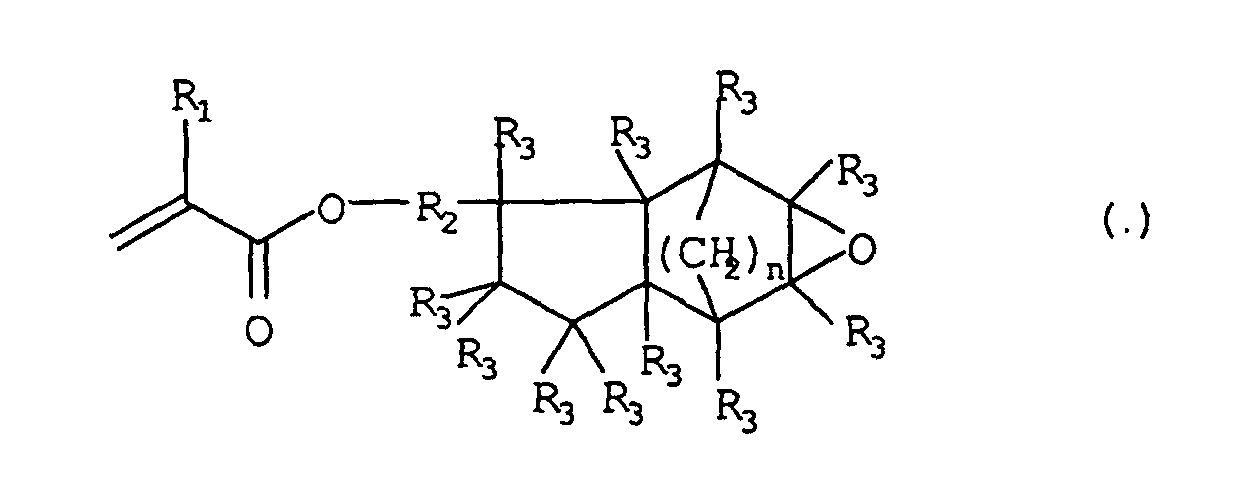







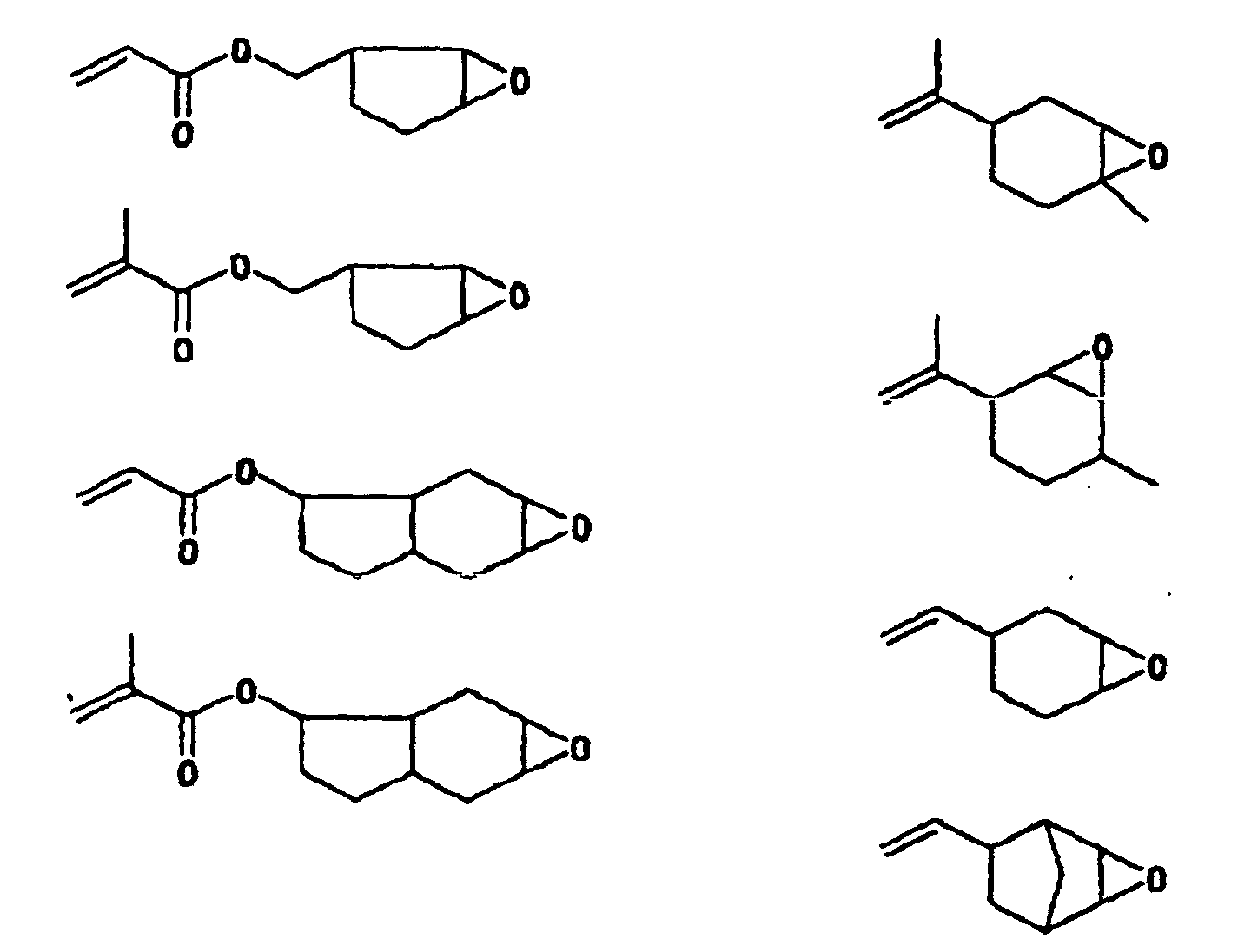

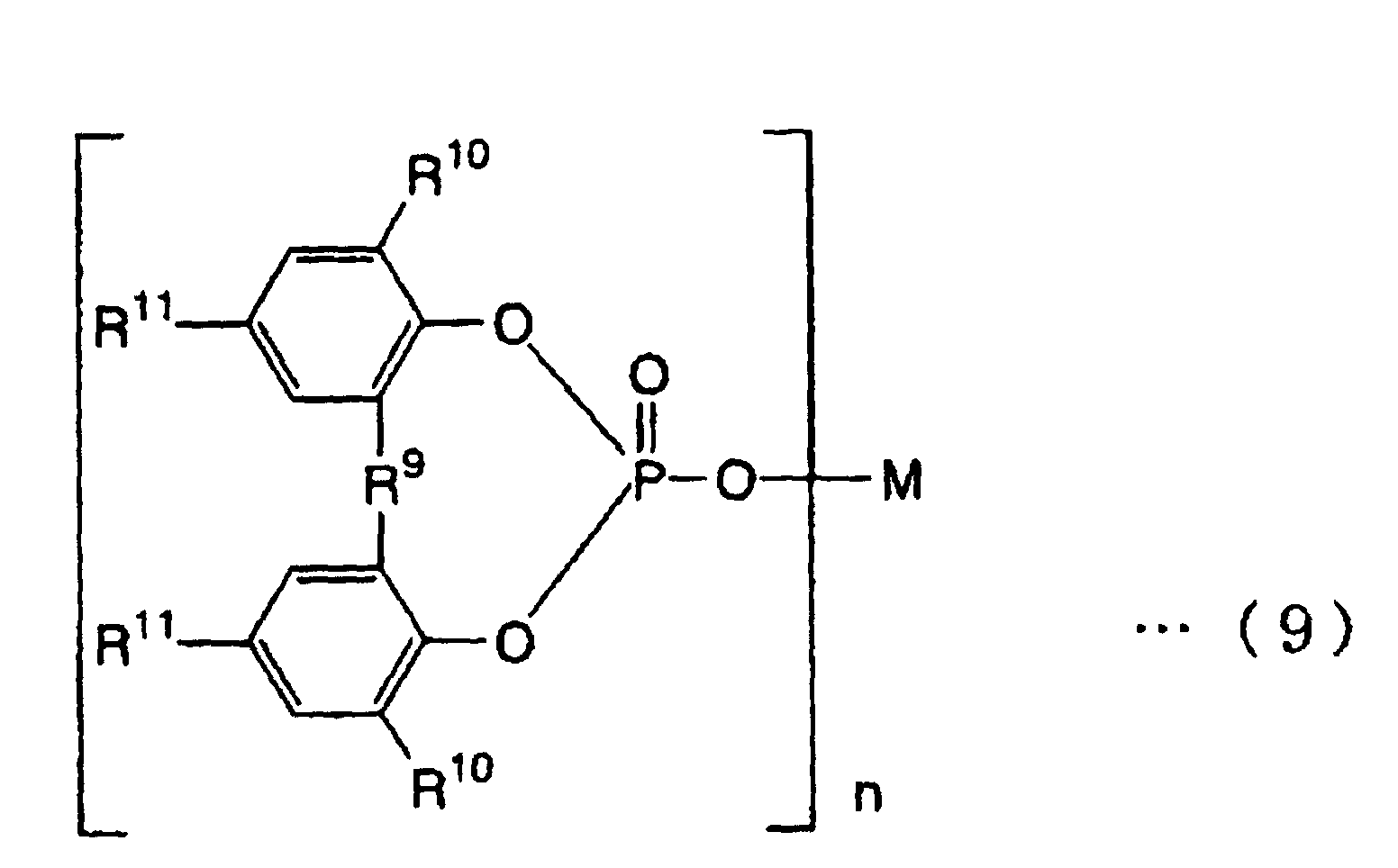




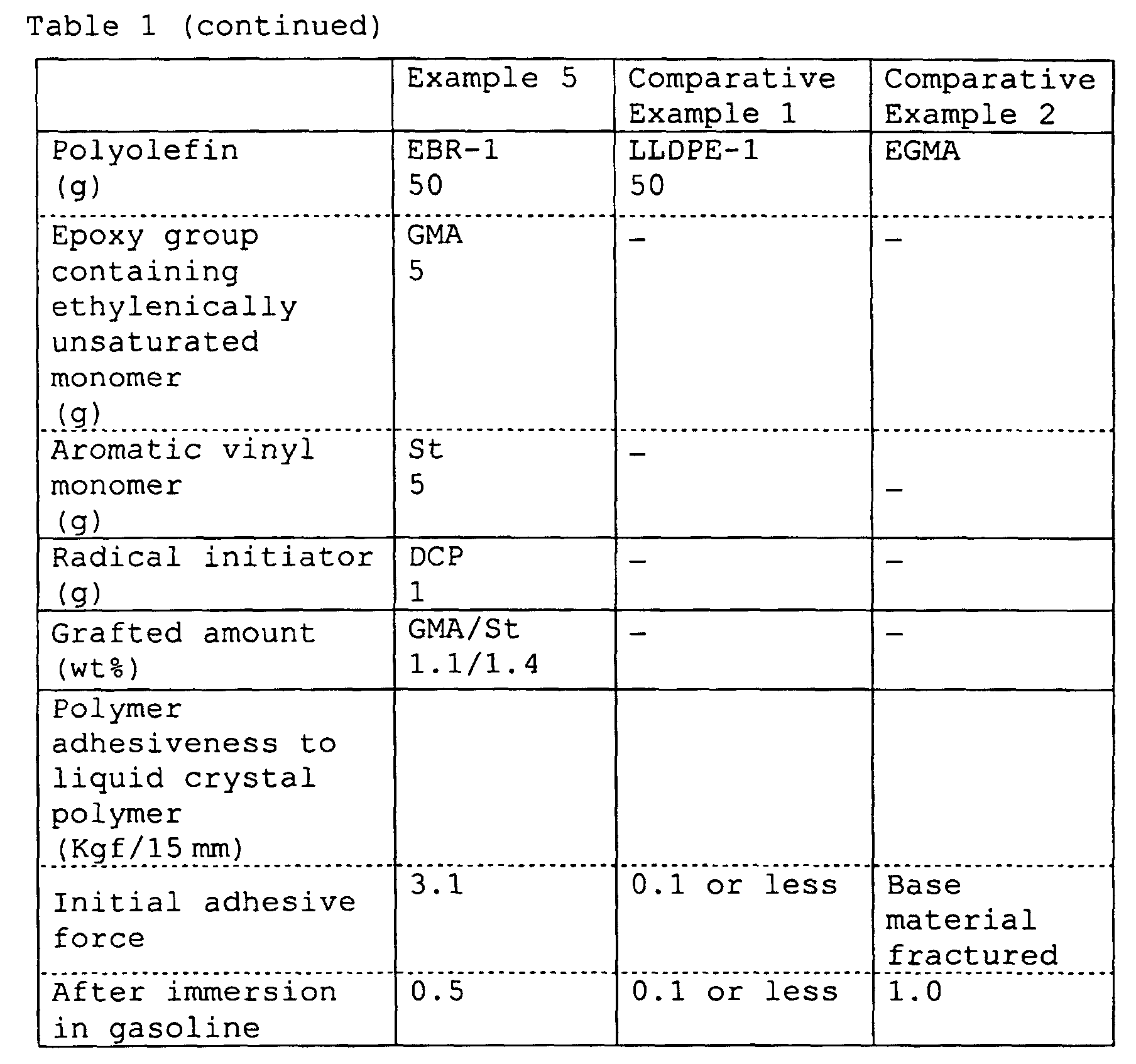


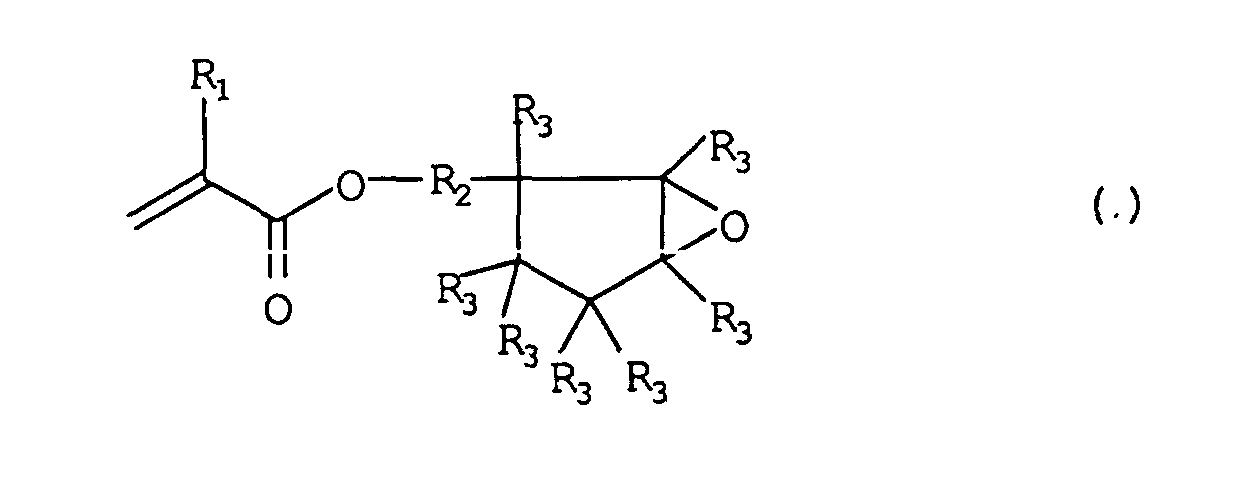
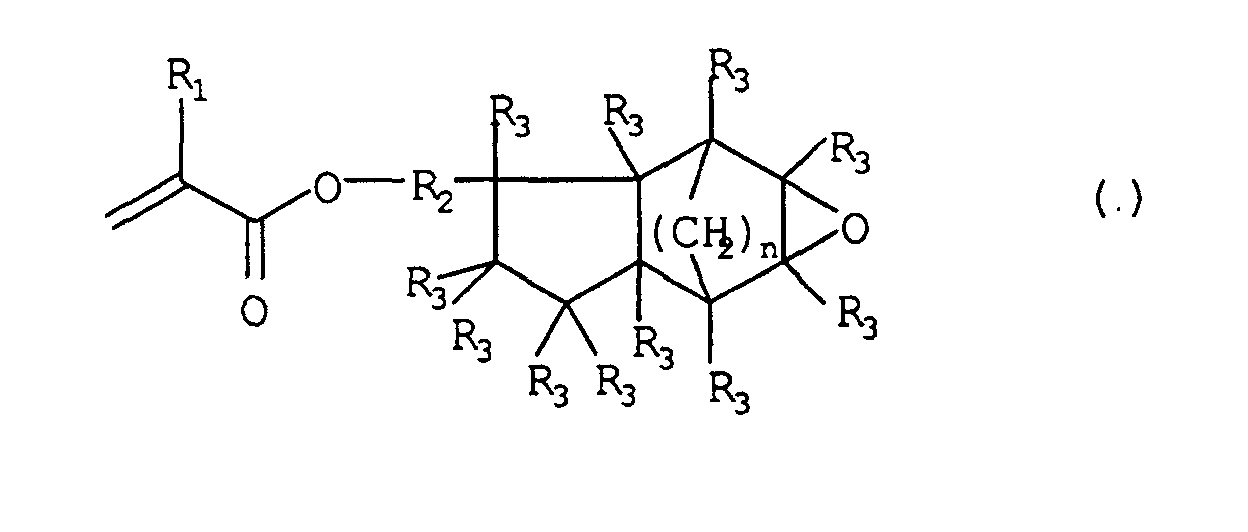
 (wherein R1 is a hydrogen atom or a methyl group, R2 is a single bond or a bivalent hydrocarbon group having from 1 to 20 carbon atoms and optionally containing hetero atoms, R3 is a hydrogen atom or a hydrocarbon group having from 1 to 20 carbon atoms and optionally containing hetero atoms, and n is an integer of 0 to 2, with the proviso that R3 may be all the same or different from each other.)