EP1483206B1 - Process for making nano-sized and sub-micron-sized lithium-transition metal oxides - Google Patents
Process for making nano-sized and sub-micron-sized lithium-transition metal oxides Download PDFInfo
- Publication number
- EP1483206B1 EP1483206B1 EP03726038A EP03726038A EP1483206B1 EP 1483206 B1 EP1483206 B1 EP 1483206B1 EP 03726038 A EP03726038 A EP 03726038A EP 03726038 A EP03726038 A EP 03726038A EP 1483206 B1 EP1483206 B1 EP 1483206B1
- Authority
- EP
- European Patent Office
- Prior art keywords
- lithium
- sized
- transition
- particles
- size
- Prior art date
- Legal status (The legal status is an assumption and is not a legal conclusion. Google has not performed a legal analysis and makes no representation as to the accuracy of the status listed.)
- Expired - Lifetime
Links
Images


Classifications
-
- C—CHEMISTRY; METALLURGY
- C01—INORGANIC CHEMISTRY
- C01G—COMPOUNDS CONTAINING METALS NOT COVERED BY SUBCLASSES C01D OR C01F
- C01G1/00—Methods of preparing compounds of metals not covered by subclasses C01B, C01C, C01D, or C01F, in general
- C01G1/02—Oxides
-
- B—PERFORMING OPERATIONS; TRANSPORTING
- B82—NANOTECHNOLOGY
- B82Y—SPECIFIC USES OR APPLICATIONS OF NANOSTRUCTURES; MEASUREMENT OR ANALYSIS OF NANOSTRUCTURES; MANUFACTURE OR TREATMENT OF NANOSTRUCTURES
- B82Y30/00—Nanotechnology for materials or surface science, e.g. nanocomposites
-
- C—CHEMISTRY; METALLURGY
- C01—INORGANIC CHEMISTRY
- C01G—COMPOUNDS CONTAINING METALS NOT COVERED BY SUBCLASSES C01D OR C01F
- C01G23/00—Compounds of titanium
- C01G23/003—Titanates
- C01G23/005—Alkali titanates
-
- C—CHEMISTRY; METALLURGY
- C01—INORGANIC CHEMISTRY
- C01G—COMPOUNDS CONTAINING METALS NOT COVERED BY SUBCLASSES C01D OR C01F
- C01G45/00—Compounds of manganese
- C01G45/12—Complex oxides containing manganese and at least one other metal element
- C01G45/1221—Manganates or manganites with trivalent manganese, tetravalent manganese or mixtures thereof
- C01G45/1242—Manganates or manganites with trivalent manganese, tetravalent manganese or mixtures thereof of the type (Mn2O4)-, e.g. LiMn2O4 or Li(MxMn2-x)O4
-
- C—CHEMISTRY; METALLURGY
- C01—INORGANIC CHEMISTRY
- C01G—COMPOUNDS CONTAINING METALS NOT COVERED BY SUBCLASSES C01D OR C01F
- C01G51/00—Compounds of cobalt
- C01G51/40—Complex oxides containing cobalt and at least one other metal element
- C01G51/42—Complex oxides containing cobalt and at least one other metal element containing alkali metals, e.g. LiCoO2
-
- C—CHEMISTRY; METALLURGY
- C01—INORGANIC CHEMISTRY
- C01P—INDEXING SCHEME RELATING TO STRUCTURAL AND PHYSICAL ASPECTS OF SOLID INORGANIC COMPOUNDS
- C01P2004/00—Particle morphology
- C01P2004/01—Particle morphology depicted by an image
- C01P2004/03—Particle morphology depicted by an image obtained by SEM
-
- C—CHEMISTRY; METALLURGY
- C01—INORGANIC CHEMISTRY
- C01P—INDEXING SCHEME RELATING TO STRUCTURAL AND PHYSICAL ASPECTS OF SOLID INORGANIC COMPOUNDS
- C01P2004/00—Particle morphology
- C01P2004/60—Particles characterised by their size
- C01P2004/61—Micrometer sized, i.e. from 1-100 micrometer
-
- C—CHEMISTRY; METALLURGY
- C01—INORGANIC CHEMISTRY
- C01P—INDEXING SCHEME RELATING TO STRUCTURAL AND PHYSICAL ASPECTS OF SOLID INORGANIC COMPOUNDS
- C01P2004/00—Particle morphology
- C01P2004/60—Particles characterised by their size
- C01P2004/62—Submicrometer sized, i.e. from 0.1-1 micrometer
-
- C—CHEMISTRY; METALLURGY
- C01—INORGANIC CHEMISTRY
- C01P—INDEXING SCHEME RELATING TO STRUCTURAL AND PHYSICAL ASPECTS OF SOLID INORGANIC COMPOUNDS
- C01P2004/00—Particle morphology
- C01P2004/60—Particles characterised by their size
- C01P2004/64—Nanometer sized, i.e. from 1-100 nanometer
-
- C—CHEMISTRY; METALLURGY
- C01—INORGANIC CHEMISTRY
- C01P—INDEXING SCHEME RELATING TO STRUCTURAL AND PHYSICAL ASPECTS OF SOLID INORGANIC COMPOUNDS
- C01P2006/00—Physical properties of inorganic compounds
- C01P2006/12—Surface area
-
- Y—GENERAL TAGGING OF NEW TECHNOLOGICAL DEVELOPMENTS; GENERAL TAGGING OF CROSS-SECTIONAL TECHNOLOGIES SPANNING OVER SEVERAL SECTIONS OF THE IPC; TECHNICAL SUBJECTS COVERED BY FORMER USPC CROSS-REFERENCE ART COLLECTIONS [XRACs] AND DIGESTS
- Y10—TECHNICAL SUBJECTS COVERED BY FORMER USPC
- Y10T—TECHNICAL SUBJECTS COVERED BY FORMER US CLASSIFICATION
- Y10T428/00—Stock material or miscellaneous articles
- Y10T428/29—Coated or structually defined flake, particle, cell, strand, strand portion, rod, filament, macroscopic fiber or mass thereof
- Y10T428/2982—Particulate matter [e.g., sphere, flake, etc.]
- Y10T428/2991—Coated
Definitions
- the present invention relates to a process for producing nano-sized and sub-micron-sized lithium titanate, lithium manganate, lithium cobalt oxide and other oxides of lithium and transition metals. It covers parts of the process and the product of the process.
- the starting material is a coarse oxide with low surface area.
- the product made according to the process of the present invention has a high surface area and a narrow particle size distribution.
- Lithium-transition metal oxides are materials presently used or under development for the electrodes of lithium ion batteries.
- the transition metals Co, Mn, Ni, Ti, and V have received particular attention for this application. Recently, it has become apparent that a smaller particle size and a narrower particle size distribution are beneficial for producing electrodes, which retain their charging capacity at high charging and discharging rates.
- a method to prepare lithium titanate from inorganic solutions or suspensions is described in US Pat. Appln. Pub. 2003/0017104 A1 . That application describes a process to produce lithium titanate crystallites. The process achieves good phase and size control in the range of 5 to 2000 nm. In general, the process includes providing a source of lithium titanate with a particle size smaller than the desired particle size and re-firing the lithium titanate under conditions to produce a final lithium titanate having a desired particle size with a narrow size distribution and controlled surface area.
- a source of lithium titanate is from a process that includes forming a blend that comprises titanium and lithium.
- the blend is evaporated to form homogeneous particles containing a lithium salt and titanium dioxide.
- the evaporation is conducted at a temperature above the boiling point of the solution in the blend but below the temperature where reaction of the lithium salt and the titanium dioxide occurs.
- the homogeneous particles are calcined to form lithium titanate.
- the lithium titanate is milled or crushed to a size smaller than the desired size of the final product. Finally, the milled lithium titanate is re-fired under conditions to produce lithium titanate having a desired surface area and size distribution.
- the blend of titanium and lithium can be provided from a variety of suitable sources.
- the blend of titanium and lithium is provided as aqueous chloride solutions of titanium and lithium.
- the blend of titanium and lithium is provided as a suspension of amorphous titanium dioxide in a lithium solution.
- the lithium solution can be formed from a source of lithium selected from the group consisting of lithium chloride, lithium nitrate, lithium hydroxide, lithium sulfate, lithium oxide, lithium fluoride, lithium bromide, and mixtures thereof.
- lithium titanate made by any known means and having a particle size smaller than the particle size of the desired product, can be used as the source of lithium and titanium for the re-firing step, where crystals are grown tc the desired size.
- the present invention provides a process for producing a nano-sized or sub-micron sized oxide of lithium and a transition metal comprising, sequentially:
- the process starts from a coarse oxide of lithium and a transition metal.
- the coarse oxide of lithium and a transition metal can be provided by any suitable method including using commercially available coarse oxides.
- the process produces nano-sized crystals through a combination of milling, dispersion and calcining (re-firing) steps.
- the transition metal may be any metal commonly defined as transition metal, including but not limited to Ti, Co, Mn, V, Fe, and Ni.
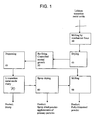
- Fig. 1 is a flow sheet of an aspect of the process.
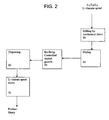
- Fig. 2 is a flow sheet of part of the process according to one embodiment of the present invention, where the starting material is lithium titanate spinel and the final product is a slurry containing nano-sized particles.
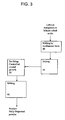
- Fig. 3 is a flow sheet of part of the process according to the invention, where the starting material is lithium manganate LiMn 2 O 4 or lithium cobalt oxide LiCoO 2 and the final product is a nano-sized dispersed lithium manganate or lithium cobalt oxide powder.
- Fig. 4 is a scanning electron micrograph of lithium titanate spinel of about 1 to 2 ⁇ m in size, serving as starting material for the process of the present invention.
- Fig. 5 is a scanning electron micrograph showing lithium titanate spinel products of different particles sizes, produced following the process of the present invention.
- Fig. 6 is a scanning electron micrograph showing commercial lithium manganate used as starting material for the process of the present invention.
- Fig. 7 is a scanning electron micrograph showing lithium manganate products of different particle sizes produced following the process of the present invention.
- a process for making lithium-transition-metal oxides is provided.
- a lithium transition-metal oxide is wet milled or crushed to a size smaller than the desired size of the final product.
- the milled or crushed lithium-metal oxide is re-fired under controlled conditions to produce lithium-transition-metal oxide (e.g., lithium titanate) having a desired surface area and size distribution.
- Further processing may include dispersion, remilling, slurrying and spray drying and the final product may be a slurry, a spry dried powder consisting of agglomerates of nano-particles, or a fully dispersed powder.
- Coarse lithium-transition-metal oxide particles are wet milled 40 to a desired median size. After milling, the lithium-transition-metal oxide (e.g., lithium titanate) is dried 45 and re-fired in a controlled temperature furnace 50 to produce particles having a desired size and size distribution.
- the lithium-transition-metal oxide e.g., lithium titanate
- the particles produced from the re-firing can be dispersed 60 or can be milled 90. If the particles are dispersed, they may be further processed or may be left as is. Further processing may include forming a lithium-transition metal oxide slurry 70, which can be further processed by spray drying 80 to produce spray-dried powder agglomerates that consist of primary particles. The spray-dried powder agglomerates may be sold or may be further processed by milling 90 to produce a fully dispersed powder.
- the starting material of coarse particles can be made by any method.
- commercially available coarse lithium-transition-metal oxide particles can be used as the starting material.
- one suitable method is described in US Pat. Appln. Publication 2003/0017104 A1 . While the process described in US Pat. Appln. Publication 2003/0017104 is directed to lithium titanate; it has now been found that the described process can be used to make the lithium transition-metal oxides described in the present application.
- a related method is described in US Pat. Appln. Publication 2002/0071806 , the relevant portions of which are incorporated herein by reference.
- a blend of a transition metal and lithium is provided by providing a source of lithium and a source of a transition metal.
- This blend may be referred to herein as the lithium-transition-metal blend or the transition-metal-lithium blend.
- the blend is evaporated.
- the evaporation process is conducted above the boiling point of the liquid in the blend and below the temperature where significant reaction of the lithium and the transition-metal compounds occurs or where there is significant crystallization of lithium-transition-metal.
- the evaporation is conducted under conditions to achieve substantially total evaporation and to form an intermediate.
- the evaporation is conducted at a temperature higher than the boiling point of the blend but lower than the temperature where significant crystal growth of an oxide phase occurs.
- the evaporation may be conducted at a temperature higher than the boiling point of the blend but lower than the calcination temperature of the intermediate.
- substantially total evaporation or “substantially complete evaporation” refers to evaporation of greater than 85% of the free water content, preferably greater than 90% of the free water and more preferably greater than 95% of the free water present in the feed solution.
- free water is understood and means water that is not chemically bound and can be removed by heating at a temperature below 150° C. After substantially total evaporation or substantially complete evaporation, the intermediate product will have no visible moisture present.
- the evaporation process is performed in a manner to control the physical form of the product.
- the evaporation process is accomplished by spraying the blend while it is heated at a temperature in the range from about 120°C to about 350°C, and desirably in the range from about 200°C to about 250°C. This process may be conducted in a spray dryer.
- the evaporation process may be conducted in such a manner as to form a film of a mixture of a lithium compound and an amorphous oxidized transition-metal compound.
- the evaporation process may be conducted in such a way as to form a thin film of lithium salt on the preexisting particles of amorphous oxidized transition-metal compound.
- the product resulting from injection in a spray dryer will generally be composed of hollow spheres or parts of spheres.
- the dimensions of the spheres may vary from less than 0.1 ⁇ m to 100 ⁇ m or more in diameter and a shell thickness in the range from about 30 nanometer to about 1000 nanometer or more.
- the structure of the shell consists of an intimate mixture of transition-metal and lithium compounds.
- Evaporation by spraying also has the advantage of direct processing of the solution so that a homogeneous intermediate product is formed and so that evaporation of water and acid is simultaneously accomplished. Preferably, from about 90% to about 99% of any aqueous material is evaporated.
- the product resulting from the evaporation step is calcined at a temperature and for a length of time sufficient to convert the mixture of transition-metal and lithium compounds to lithium transition metal oxide of the desired structure and particle size.
- Calcination temperatures can range between about 600°C to 950°C. Desirably, the calcination is conducted at temperatures ranging from about 700° C to about 900° C.
- the calcination time varies over a wide range, from about 1 hour to as long as 36 hours. Desirably, the calcination time is in the range from about 6 hours to about 12 hours. Lower temperatures will require longer calcination times.
- the product of calcination shows a structure of individual units that can be broken up by milling into particles of the desired median size and size distribution.
- the lithium salt reacts with oxygen and water in the furnace atmosphere to release, for example, HCl gas or nitrous and nitric oxides or other gases formed by decomposition of the salt present in the original solution. These gases may be recovered.
- the calcination conditions are chosen such that contact with oxygen is sufficient to substantially convert the mixture to a lithium transition-metal oxide with low impurity level.
- the product of calcination may contain traces of the original lithium salt used as feed.
- the particles may be subject to one or several wash cycles. In each cycle, the particles are mixed with water and are separated by settling or filtration. The washing step is particularly useful if the lithium salt used is lithium chloride.
- the lithium-transition metal oxide is suspended in water and wet milled in a bead mill to crush the crystals to a size smaller than the size desired in the final product.
- wet-milled particles are dried by any known means.
- wet-milled particles may be dried in a spray drier at a temperature from about 120° to about 350°C, desirably from about 200° to about 250°C. Drying may also be part of the re-firing process.
- the product After milling or drying, the product is re-fired in a controlled-temperature furnace to make a product with a well-controlled specific surface area, consisting of regular-shaped crystals with a narrow size distribution.
- the refiring temperature is chosen to achieve the desired particle size and surface area of the product.
- the re-firing temperature is between about 250° and 900° C, and the BET surface area of the re-fired product is in the range 5 to 100 m 2 /g, with the higher re-firing temperature corresponding to the lower specific surface area.
- the product may be dispersed 60 to separate the agglomerates formed during re-fring into distinct nano-sized particles. This step is generally accomplished after slurrying the product in water.
- the product of the re-firing step may be milled 90, i.e., dry-milled, preferably in a jet-mill.
- the product from the dispersing step can be kept as a slurry, or spray-dried, or spray-dried and jet-milled as indicated in Fig. 1 .
- the product after calcination consisted of crystals of Li 4 Ti 5 O 12 of about 400 to about 1000 nm in size.
- Figure 4 is a scanning electron micrograph of the product serving as starting material for the process of the present invention.
- Fig. 5 shows electron micrographs of the product obtained after refiring at 900°, 650°, 500°, and 400° C respectively.
- the particle size was about 100 nm at 400° C, and increased to about 200, 500 and 1000 nm respectively at the higher temperatures.
- the micrographs show well-formed crystals with a narrow size distribution.
- Electron micrographs of each of the samples are shown in Fig. 7 . All calcined crystals are well formed and show narrow size distributions.
Landscapes
- Chemical & Material Sciences (AREA)
- Organic Chemistry (AREA)
- Inorganic Chemistry (AREA)
- Engineering & Computer Science (AREA)
- Nanotechnology (AREA)
- Environmental & Geological Engineering (AREA)
- Materials Engineering (AREA)
- Physics & Mathematics (AREA)
- General Life Sciences & Earth Sciences (AREA)
- Composite Materials (AREA)
- Condensed Matter Physics & Semiconductors (AREA)
- General Physics & Mathematics (AREA)
- Geology (AREA)
- Crystallography & Structural Chemistry (AREA)
- Life Sciences & Earth Sciences (AREA)
- Inorganic Compounds Of Heavy Metals (AREA)
- Battery Electrode And Active Subsutance (AREA)
- Oxygen, Ozone, And Oxides In General (AREA)
- Secondary Cells (AREA)
Abstract
Description
- The present application claims priority to
USSN 60/362,723 filed March 8, 2002 - The present invention relates to a process for producing nano-sized and sub-micron-sized lithium titanate, lithium manganate, lithium cobalt oxide and other oxides of lithium and transition metals. It covers parts of the process and the product of the process. The starting material is a coarse oxide with low surface area. The product made according to the process of the present invention has a high surface area and a narrow particle size distribution.
- Lithium-transition metal oxides are materials presently used or under development for the electrodes of lithium ion batteries. The transition metals Co, Mn, Ni, Ti, and V have received particular attention for this application. Recently, it has become apparent that a smaller particle size and a narrower particle size distribution are beneficial for producing electrodes, which retain their charging capacity at high charging and discharging rates.
- A method to prepare lithium titanate from inorganic solutions or suspensions is described in
US Pat. Appln. Pub. 2003/0017104 A1 .
That application describes a process to produce lithium titanate crystallites. The process achieves good phase and size control in the range of 5 to 2000 nm. In general, the process includes providing a source of lithium titanate with a particle size smaller than the desired particle size and re-firing the lithium titanate under conditions to produce a final lithium titanate having a desired particle size with a narrow size distribution and controlled surface area. - That application describes that a source of lithium titanate is from a process that includes forming a blend that comprises titanium and lithium. The blend is evaporated to form homogeneous particles containing a lithium salt and titanium dioxide. The evaporation is conducted at a temperature above the boiling point of the solution in the blend but below the temperature where reaction of the lithium salt and the titanium dioxide occurs. The homogeneous particles are calcined to form lithium titanate.
- The lithium titanate is milled or crushed to a size smaller than the desired size of the final product. Finally, the milled lithium titanate is re-fired under conditions to produce lithium titanate having a desired surface area and size distribution.
- The blend of titanium and lithium can be provided from a variety of suitable sources. For example, the blend of titanium and lithium is provided as aqueous chloride solutions of titanium and lithium. Alternatively, the blend of titanium and lithium is provided as a suspension of amorphous titanium dioxide in a lithium solution. In this instance, the lithium solution can be formed from a source of lithium selected from the group consisting of lithium chloride, lithium nitrate, lithium hydroxide, lithium sulfate, lithium oxide, lithium fluoride, lithium bromide, and mixtures thereof. In yet another alternative, lithium titanate, made by any known means and having a particle size smaller than the particle size of the desired product, can be used as the source of lithium and titanium for the re-firing step, where crystals are grown tc the desired size.
- A method to prepare mixed metal oxides and metal oxide compounds is also described in US Patent Application Publication
US 2002/0071806 A1 . This method applies to mixed oxides of lithium and transition metals. Products made according to this Patent Application can be used as starting materials for the process of the present invention. - Materials commercially available for the manufacture of battery electrodes generally have a wide particle size distribution and include large particles of several microns in size as well as very fine dust. Therefore, there is a need for materials having a narrow size distribution and having a controlled surface area for such applications as electrodes for batteries. Journal of Power Sources, 90(2), 224-230, 1 October 2000, describes a process for producing sub-mircron sized LiCoO2.
EP-A-1026765 relates to a lithium secondary battery. This document describes a process for producing sub-micron sized LiMn2O4. - Accordingly, the present invention provides a process for producing a nano-sized or sub-micron sized oxide of lithium and a transition metal comprising, sequentially:
- a. providing an aqueous suspension of coarse lithium transition-metal oxide particles having a first size;
- b. milling the lithium transition-metal oxide particles to a median size smaller than the first size and smaller than the size of the particles in the final product, wherein the milling is accomplished by wet-milling in a bead mill; and
- c. re-firing the lithium transition-metal oxide at a temperature of from 250 to 900°C to produce a final product of particles having a size between 10 nm and 100 nm, with a standard deviation of no more than 20%, and a BET surface area of 5 to 100 m2/g.
- In general, the process starts from a coarse oxide of lithium and a transition metal. The coarse oxide of lithium and a transition metal can be provided by any suitable method including using commercially available coarse oxides. The process produces nano-sized crystals through a combination of milling, dispersion and calcining (re-firing) steps. The transition metal may be any metal commonly defined as transition metal, including but not limited to Ti, Co, Mn, V, Fe, and Ni.
-
Fig. 1 is a flow sheet of an aspect of the process. -
Fig. 2 is a flow sheet of part of the process according to one embodiment of the present invention, where the starting material is lithium titanate spinel and the final product is a slurry containing nano-sized particles. -
Fig. 3 is a flow sheet of part of the process according to the invention, where the starting material is lithium manganate LiMn2O4 or lithium cobalt oxide LiCoO2 and the final product is a nano-sized dispersed lithium manganate or lithium cobalt oxide powder. -
Fig. 4 is a scanning electron micrograph of lithium titanate spinel of about 1 to 2 µm in size, serving as starting material for the process of the present invention. -
Fig. 5 is a scanning electron micrograph showing lithium titanate spinel products of different particles sizes, produced following the process of the present invention. -
Fig. 6 is a scanning electron micrograph showing commercial lithium manganate used as starting material for the process of the present invention. -
Fig. 7 is a scanning electron micrograph showing lithium manganate products of different particle sizes produced following the process of the present invention. - According to the present invention, a process for making lithium-transition-metal oxides is provided. In this process, a lithium transition-metal oxide is wet milled or crushed to a size smaller than the desired size of the final product. The milled or crushed lithium-metal oxide is re-fired under controlled conditions to produce lithium-transition-metal oxide (e.g., lithium titanate) having a desired surface area and size distribution. Further processing may include dispersion, remilling, slurrying and spray drying and the final product may be a slurry, a spry dried powder consisting of agglomerates of nano-particles, or a fully dispersed powder.
- Turning now to
Figure 1 . a flow sheet according to a part of the process is shown. Coarse lithium-transition-metal oxide particles are wet milled 40 to a desired median size. After milling, the lithium-transition-metal oxide (e.g., lithium titanate) is dried 45 and re-fired in a controlledtemperature furnace 50 to produce particles having a desired size and size distribution. - Thereafter, the particles produced from the re-firing can be dispersed 60 or can be milled 90. If the particles are dispersed, they may be further processed or may be left as is. Further processing may include forming a lithium-transition
metal oxide slurry 70, which can be further processed by spray drying 80 to produce spray-dried powder agglomerates that consist of primary particles. The spray-dried powder agglomerates may be sold or may be further processed by milling 90 to produce a fully dispersed powder. - The specific steps of the process will be explained in more detail below.
- The starting material of coarse particles can be made by any method. For example, commercially available coarse lithium-transition-metal oxide particles can be used as the starting material. Alternatively, as noted above, one suitable method is described in
US Pat. Appln. Publication 2003/0017104 A1 .
While the process described inUS Pat. Appln. Publication 2003/0017104 is directed to lithium titanate; it has now been found that the described process can be used to make the lithium transition-metal oxides described in the present application. In addition, a related method is described inUS Pat. Appln. Publication 2002/0071806 , the relevant portions of which are incorporated herein by reference. - According to those processes, a blend of a transition metal and lithium is provided by providing a source of lithium and a source of a transition metal. This blend may be referred to herein as the lithium-transition-metal blend or the transition-metal-lithium blend.
- After the lithium-transition-metal blend is created, the blend is evaporated. The evaporation process is conducted above the boiling point of the liquid in the blend and below the temperature where significant reaction of the lithium and the transition-metal compounds occurs or where there is significant crystallization of lithium-transition-metal.
- The evaporation is conducted under conditions to achieve substantially total evaporation and to form an intermediate. In particular, the evaporation is conducted at a temperature higher than the boiling point of the blend but lower than the temperature where significant crystal growth of an oxide phase occurs. The evaporation may be conducted at a temperature higher than the boiling point of the blend but lower than the calcination temperature of the intermediate.
- The term "substantially total evaporation" or "substantially complete evaporation" refers to evaporation of greater than 85% of the free water content, preferably greater than 90% of the free water and more preferably greater than 95% of the free water present in the feed solution. The term "free water" is understood and means water that is not chemically bound and can be removed by heating at a temperature below 150° C. After substantially total evaporation or substantially complete evaporation, the intermediate product will have no visible moisture present.
- The evaporation process is performed in a manner to control the physical form of the product. Preferably, the evaporation process is accomplished by spraying the blend while it is heated at a temperature in the range from about 120°C to about 350°C, and desirably in the range from about 200°C to about 250°C. This process may be conducted in a spray dryer.
- As noted in
US Pat. Appln. Pub. 2003/0017104 A1 , the evaporation process may be conducted in such a manner as to form a film of a mixture of a lithium compound and an amorphous oxidized transition-metal compound. In this regard, the evaporation process may be conducted in such a way as to form a thin film of lithium salt on the preexisting particles of amorphous oxidized transition-metal compound. - In both cases, through control of the operating parameters, including temperature and concentration of transition- metal and lithium, the characteristics of the solid intermediate product can be reliably controlled within a fairly narrow range. For example, the product resulting from injection in a spray dryer, will generally be composed of hollow spheres or parts of spheres. The dimensions of the spheres may vary from less than 0.1 µm to 100 µm or more in diameter and a shell thickness in the range from about 30 nanometer to about 1000 nanometer or more. The structure of the shell consists of an intimate mixture of transition-metal and lithium compounds.
- Evaporation by spraying also has the advantage of direct processing of the solution so that a homogeneous intermediate product is formed and so that evaporation of water and acid is simultaneously accomplished. Preferably, from about 90% to about 99% of any aqueous material is evaporated.
- The product resulting from the evaporation step is calcined at a temperature and for a length of time sufficient to convert the mixture of transition-metal and lithium compounds to lithium transition metal oxide of the desired structure and particle size. Calcination temperatures can range between about 600°C to 950°C. Desirably, the calcination is conducted at temperatures ranging from about 700° C to about 900° C. The calcination time varies over a wide range, from about 1 hour to as long as 36 hours. Desirably, the calcination time is in the range from about 6 hours to about 12 hours. Lower temperatures will require longer calcination times. The product of calcination shows a structure of individual units that can be broken up by milling into particles of the desired median size and size distribution.
- During calcination, the lithium salt reacts with oxygen and water in the furnace atmosphere to release, for example, HCl gas or nitrous and nitric oxides or other gases formed by decomposition of the salt present in the original solution. These gases may be recovered. The calcination conditions are chosen such that contact with oxygen is sufficient to substantially convert the mixture to a lithium transition-metal oxide with low impurity level.
- The product of calcination may contain traces of the original lithium salt used as feed. To remove the traces of salt, the particles may be subject to one or several wash cycles. In each cycle, the particles are mixed with water and are separated by settling or filtration. The washing step is particularly useful if the lithium salt used is lithium chloride.
- The lithium-transition metal oxide is suspended in water and wet milled in a bead mill to crush the crystals to a size smaller than the size desired in the final product.
- The wet-milled particles are dried by any known means. For example, wet-milled particles may be dried in a spray drier at a temperature from about 120° to about 350°C, desirably from about 200° to about 250°C. Drying may also be part of the re-firing process.
- After milling or drying, the product is re-fired in a controlled-temperature furnace to make a product with a well-controlled specific surface area, consisting of regular-shaped crystals with a narrow size distribution. The refiring temperature is chosen to achieve the desired particle size and surface area of the product. The re-firing temperature is between about 250° and 900° C, and the BET surface area of the re-fired product is in the range 5 to 100 m2/g, with the higher re-firing temperature corresponding to the lower specific surface area.
- After the refiring step, the product may be dispersed 60 to separate the agglomerates formed during re-fring into distinct nano-sized particles. This step is generally accomplished after slurrying the product in water. Alternatively, the product of the re-firing step may be milled 90, i.e., dry-milled, preferably in a jet-mill.
- Depending on the destination of the final product, the product from the dispersing step can be kept as a slurry, or spray-dried, or spray-dried and jet-milled as indicated in
Fig. 1 . - Lithium titanate made by spray drying according to
US Pat. Appln. Publication 2003/0017104 A1 and described above was further calcined in an oxidizing atmosphere at a temperature of 800° C for 12 hours. The product after calcination consisted of crystals of Li4Ti5O12 of about 400 to about 1000 nm in size.Figure 4 is a scanning electron micrograph of the product serving as starting material for the process of the present invention. - The product of the calcination step was further suspended in water and milled with 0.4 to 0.6 mm zirconia grinding media for 8 hours. The BET surface area of this product was 135 m2/g. This product was refired at constant temperature for 3 hours.
Fig. 5 shows electron micrographs of the product obtained after refiring at 900°, 650°, 500°, and 400° C respectively. The particle size was about 100 nm at 400° C, and increased to about 200, 500 and 1000 nm respectively at the higher temperatures. The micrographs show well-formed crystals with a narrow size distribution. - Commercial lithium manganate, of particle size and shape shown in
Fig. 6 , was slurried as a 40 weight % suspension in water and was milled in a Premier Mill bead mill for 20 h. The product of this operation was dried, and then calcined in ceramic trays placed in a constant temperature furnace for 3 hours. The results of calcinations at different temperatures are given in the Table below:Calcination temperature Particle size (C) (nm) uncalcined 15 400° 20 450° 30 500° 50 - Electron micrographs of each of the samples are shown in
Fig. 7 . All calcined crystals are well formed and show narrow size distributions.
Claims (8)
- A process for producing a nano-sized or sub-micron sized oxide of lithium and a transition metal comprising, sequentially:a. providing an aqueous suspension of coarse lithium transition-metal oxide particles having a first size;b. milling the lithium transition-metal oxide particles to a median size smaller than the first size and smaller than the size of the particles in the final product, wherein the milling is accomplished by wet-milling in a bead mill; andc. re-firing the lithium transition-metal oxide at a temperature of from 250 to 900°C to produce a final product of particles having a size between 10 nm and 100 nm, with a standard deviation of no more than 20%, and a BET surface area of 5 to 100 m2/g.
- The process of claim 1, wherein the lithium transition-metal oxide is tetra lithium titanate spinel.
- The process of claim 1, wherein the lithium transition-metal oxide is LiCoO2.
- The process of claim 1, wherein the lithium transition-metal oxide is LiMn2O4.
- The process of claim 1, further comprising:d. dispersing the product resulting from re-firing to liberate crystallites; ande. slurrying the crystallites to form a suspension.
- The process of claim 1, further comprising milling the product resulting from re-firing to form a dispersed powder.
- The process of claim 5, further comprising spray-drying the suspension.
- The process of claim 7, further comprising milling the spray-dried product to form a dispersed powder.
Applications Claiming Priority (3)
| Application Number | Priority Date | Filing Date | Title |
|---|---|---|---|
| US36272302P | 2002-03-08 | 2002-03-08 | |
| US362723P | 2002-03-08 | ||
| PCT/US2003/006989 WO2003076338A1 (en) | 2002-03-08 | 2003-03-07 | Process for making nono-sized and sub-micron-sized lithium-transition metal oxides |
Publications (2)
| Publication Number | Publication Date |
|---|---|
| EP1483206A1 EP1483206A1 (en) | 2004-12-08 |
| EP1483206B1 true EP1483206B1 (en) | 2010-10-20 |
Family
ID=27805218
Family Applications (1)
| Application Number | Title | Priority Date | Filing Date |
|---|---|---|---|
| EP03726038A Expired - Lifetime EP1483206B1 (en) | 2002-03-08 | 2003-03-07 | Process for making nano-sized and sub-micron-sized lithium-transition metal oxides |
Country Status (8)
| Country | Link |
|---|---|
| US (2) | US6881393B2 (en) |
| EP (1) | EP1483206B1 (en) |
| JP (1) | JP4340160B2 (en) |
| AT (1) | ATE485241T1 (en) |
| AU (1) | AU2003228290A1 (en) |
| CA (1) | CA2478698C (en) |
| DE (1) | DE60334610D1 (en) |
| WO (1) | WO2003076338A1 (en) |
Families Citing this family (41)
| Publication number | Priority date | Publication date | Assignee | Title |
|---|---|---|---|---|
| US6964828B2 (en) * | 2001-04-27 | 2005-11-15 | 3M Innovative Properties Company | Cathode compositions for lithium-ion batteries |
| EP1282180A1 (en) * | 2001-07-31 | 2003-02-05 | Xoliox SA | Process for producing Li4Ti5O12 and electrode materials |
| KR101036743B1 (en) * | 2001-08-07 | 2011-05-24 | 쓰리엠 이노베이티브 프로퍼티즈 컴파니 | Cathode composition for lithium ion battery |
| ATE485241T1 (en) * | 2002-03-08 | 2010-11-15 | Altair Nanomaterials Inc | METHOD FOR PRODUCING NANOSCALE AND SUBMICRON SCALE LITHIUM TRANSITION METAL OXIDES |
| US20040121234A1 (en) * | 2002-12-23 | 2004-06-24 | 3M Innovative Properties Company | Cathode composition for rechargeable lithium battery |
| TWM249953U (en) * | 2003-03-19 | 2004-11-11 | Yeu Ming Tai Chemical Ind Co L | Processing device for nano-material |
| DE10317067A1 (en) * | 2003-04-14 | 2004-11-11 | Degussa Ag | Domains in a metal oxide matrix |
| US7211237B2 (en) | 2003-11-26 | 2007-05-01 | 3M Innovative Properties Company | Solid state synthesis of lithium ion battery cathode material |
| TWI233231B (en) * | 2003-12-25 | 2005-05-21 | Ind Tech Res Inst | Cathode material with nano-oxide layer on the surface and the produce method |
| US7608332B2 (en) * | 2004-06-14 | 2009-10-27 | Industrial Technology Research Institute | Cathode material particle comprising of plurality of cores of coated grains |
| JP4630021B2 (en) * | 2004-08-26 | 2011-02-09 | 大研化学工業株式会社 | Spinel type lithium manganate powder, method for producing the same, electrode and lithium secondary battery |
| JP2007018883A (en) | 2005-07-07 | 2007-01-25 | Toshiba Corp | Negative electrode active material, non-aqueous electrolyte battery and battery pack |
| AU2006304951B2 (en) * | 2005-10-21 | 2011-10-20 | Altairnano, Inc. | Lithium ion batteries |
| US7968231B2 (en) * | 2005-12-23 | 2011-06-28 | U Chicago Argonne, Llc | Electrode materials and lithium battery systems |
| EP1986804B1 (en) | 2006-02-16 | 2011-12-28 | Brigham Young University | Preparation of uniform nanoparticles of ultra-high purity metal oxides, mixed metal oxides, metals, and metal alloys |
| EP2455355A1 (en) * | 2006-02-28 | 2012-05-23 | Primet Precision Materials, Inc. | Methods for producing nanoparticle compositions |
| US7820327B2 (en) * | 2006-04-11 | 2010-10-26 | Enerdel, Inc. | Lithium titanate and lithium cells and batteries including the same |
| US8168330B2 (en) * | 2006-04-11 | 2012-05-01 | Enerdel, Inc. | Lithium titanate cell with reduced gassing |
| US7879493B2 (en) * | 2006-06-05 | 2011-02-01 | A123 Systems, Inc. | Alkali metal titanates and methods for their synthesis |
| US8076030B2 (en) | 2006-06-05 | 2011-12-13 | A123 Systems, Inc. | Alkali metal titanates, and electrodes and batteries based on the same |
| US8168146B2 (en) * | 2006-11-08 | 2012-05-01 | The Lubrizol Corporation | Process for preparing high concentration dispersions of lithium hydroxide monohydrate and of anhydrous lithium hydroxide oils |
| US20100135937A1 (en) * | 2007-03-26 | 2010-06-03 | The Trustees Of Columbia University In The City Of New York | Metal oxide nanocrystals: preparation and uses |
| KR101543809B1 (en) * | 2007-03-29 | 2015-08-11 | 도호 티타늄 가부시키가이샤 | Method for production of alkali titanate method for production of hollow powder of alkali titanate alkali titanate and hollow powder thereof produced by the methods and friction material comprising the alkali titanate or the hollow powder thereof |
| KR20090129500A (en) * | 2007-03-30 | 2009-12-16 | 알타이어나노 인코포레이티드 | Method for preparing a lithium ion cell |
| CN100453212C (en) * | 2007-07-17 | 2009-01-21 | 南京航空航天大学 | Mechanical preparation method of nano-ceramic and micro-metal composite powder |
| PE20110470A1 (en) | 2008-06-27 | 2011-07-15 | Proterra Inc | BATTERY SYSTEMS AND METHODS FOR VEHICLES |
| RU2397576C1 (en) * | 2009-03-06 | 2010-08-20 | ООО "Элионт" | Anode material for lithium electrolytic cell and method of preparing said material |
| JP5174730B2 (en) * | 2009-03-27 | 2013-04-03 | 日揮触媒化成株式会社 | Method for producing crystalline lithium titanate and crystalline lithium titanate |
| US8333950B2 (en) * | 2009-08-27 | 2012-12-18 | Honeywell International Inc. | Process for the preparation of lithium metal oxides involving fluidized bed techniques |
| CN103038975B (en) | 2010-04-26 | 2016-09-14 | 普罗特拉公司 | For electric motor car at charging station from the System and method for being dynamically connected and charging |
| CN102139929A (en) * | 2011-03-28 | 2011-08-03 | 浙江理工大学 | A method for preparing Co3O4 nanosheets |
| WO2012169331A1 (en) * | 2011-06-10 | 2012-12-13 | 東邦チタニウム株式会社 | Lithium titanate primary particles, lithium titanate aggregate, lithium ion secondary battery using lithium titanate primary particles or lithium titanate aggregate, and lithium ion capacitor using lithium titanate primary particles or lithium titanate aggregate |
| JP5569980B2 (en) * | 2011-12-26 | 2014-08-13 | 太陽誘電株式会社 | Lithium titanium composite oxide, battery electrode using the same, and lithium ion secondary battery |
| JP5597662B2 (en) * | 2012-03-09 | 2014-10-01 | 株式会社東芝 | Negative electrode active material, non-aqueous electrolyte battery and battery pack |
| US9079164B2 (en) | 2012-03-26 | 2015-07-14 | Brigham Young University | Single reaction synthesis of texturized catalysts |
| US9114378B2 (en) | 2012-03-26 | 2015-08-25 | Brigham Young University | Iron and cobalt based fischer-tropsch pre-catalysts and catalysts |
| JP2014001110A (en) * | 2012-06-20 | 2014-01-09 | Taiyo Yuden Co Ltd | Lithium titanium complex oxide, production method thereof and electrode for battery |
| US9925887B2 (en) | 2012-11-13 | 2018-03-27 | Proterra Inc. | Electric vehicle charging interface |
| US9289750B2 (en) | 2013-03-09 | 2016-03-22 | Brigham Young University | Method of making highly porous, stable aluminum oxides doped with silicon |
| US11081731B2 (en) | 2017-10-18 | 2021-08-03 | International Business Machines Corporation | High-capacity rechargeable batteries |
| CN118942919A (en) * | 2024-09-04 | 2024-11-12 | 贵州梅岭电源有限公司 | A hybrid capacitor composite positive electrode material and preparation method thereof |
Family Cites Families (72)
| Publication number | Priority date | Publication date | Assignee | Title |
|---|---|---|---|---|
| US4065544A (en) * | 1970-05-11 | 1977-12-27 | Union Carbide Corporation | Finely divided metal oxides and sintered objects therefrom |
| US3765921A (en) * | 1972-03-13 | 1973-10-16 | Engelhard Min & Chem | Production of calcined clay pigment from paper wastes |
| US3903239A (en) * | 1973-02-07 | 1975-09-02 | Ontario Research Foundation | Recovery of titanium dioxide from ores |
| GB1489927A (en) * | 1974-08-10 | 1977-10-26 | Tioxide Group Ltd | Titanium dioxide carrier |
| US4058592A (en) * | 1976-06-30 | 1977-11-15 | Union Carbide Corporation | Preparation of sub-micron metal oxide powders from chloride-containing compounds |
| US4189102A (en) * | 1978-05-10 | 1980-02-19 | Andrews Norwood H | Comminuting and classifying apparatus and process of the re-entrant circulating stream jet type |
| US4219164A (en) * | 1979-03-16 | 1980-08-26 | Microfuels, Inc. | Comminution of pulverulent material by fluid energy |
| US4502641A (en) * | 1981-04-29 | 1985-03-05 | E. I. Du Pont De Nemours And Company | Fluid energy mill with differential pressure means |
| DE3132674C2 (en) * | 1981-08-19 | 1983-12-08 | Degussa Ag, 6000 Frankfurt | Process for the production of compacts |
| FI63869C (en) * | 1981-11-27 | 1983-09-12 | Jouko Niemi | TRYCKKAMMARKVARN |
| US4664319A (en) * | 1984-09-24 | 1987-05-12 | Norandy, Incorporated | Re-entrant circulating stream jet comminuting and classifying mill |
| EP0214308B1 (en) * | 1985-03-05 | 1993-07-28 | Idemitsu Kosan Company Limited | Method for preparing super-fine spherical particles of metal oxide |
| US4649037A (en) * | 1985-03-29 | 1987-03-10 | Allied Corporation | Spray-dried inorganic oxides from non-aqueous gels or solutions |
| US5173455A (en) * | 1986-09-24 | 1992-12-22 | Union Carbide Coatings Service Technology Corporation | Low sintering cordierite powder composition |
| US4944936A (en) * | 1987-04-10 | 1990-07-31 | Kemira, Inc. | Titanium dioxide with high purity and uniform particle size and method therefore |
| FR2624505A1 (en) * | 1987-12-11 | 1989-06-16 | Rhone Poulenc Chimie | STABILIZED ZIRCONIA, PROCESS FOR PREPARING THE SAME AND APPLICATION THEREOF IN CERAMIC COMPOSITIONS |
| US5114702A (en) * | 1988-08-30 | 1992-05-19 | Battelle Memorial Institute | Method of making metal oxide ceramic powders by using a combustible amino acid compound |
| GB8829402D0 (en) * | 1988-12-16 | 1989-02-01 | Tioxide Group Plc | Dispersion |
| US4923682A (en) * | 1989-03-30 | 1990-05-08 | Kemira, Inc. | Preparation of pure titanium dioxide with anatase crystal structure from titanium oxychloride solution |
| US5036037A (en) * | 1989-05-09 | 1991-07-30 | Maschinenfabrik Andritz Aktiengesellschaft | Process of making catalysts and catalysts made by the process |
| GB2242898B (en) * | 1990-04-12 | 1993-12-01 | Technology Finance Corp | Lithium transition metal oxide |
| US5133504A (en) * | 1990-11-27 | 1992-07-28 | Xerox Corporation | Throughput efficiency enhancement of fluidized bed jet mill |
| DE4211560A1 (en) * | 1992-04-07 | 1993-10-14 | Merck Patent Gmbh | Composite pigment prodn. - by spraying drying aq. suspension of substrate particles and fine pigment free from additive, used in plastics, lacquer, ink and cosmetics |
| US5478671A (en) * | 1992-04-24 | 1995-12-26 | Fuji Photo Film Co., Ltd. | Nonaqueous secondary battery |
| US5550095A (en) * | 1992-05-08 | 1996-08-27 | Mitsubishi Rayon Co., Ltd. | Process for producing catalyst used for synthesis of methacrylic acid |
| JP3502118B2 (en) * | 1993-03-17 | 2004-03-02 | 松下電器産業株式会社 | Method for producing lithium secondary battery and negative electrode thereof |
| DE4329129A1 (en) * | 1993-08-30 | 1995-03-02 | Merck Patent Gmbh | Photostabilisation of titanium dioxide sols |
| US5714260A (en) * | 1993-12-13 | 1998-02-03 | Ishihara Sangyo Kaisha, Ltd. | Ultrafine iron-containing rutile titanium oxide and process for producing the same |
| JPH07263028A (en) * | 1994-03-25 | 1995-10-13 | Fuji Photo Film Co Ltd | Nonaqueous secondary battery |
| US5698177A (en) * | 1994-08-31 | 1997-12-16 | University Of Cincinnati | Process for producing ceramic powders, especially titanium dioxide useful as a photocatalyst |
| DE4447578C2 (en) * | 1994-09-30 | 1999-01-14 | Zsw | Ternary mixed lithium oxides, process for their preparation and their use |
| US5807532A (en) * | 1995-01-26 | 1998-09-15 | Japan Metals And Chemicals Co., Ltd. | Method of producing spinel type limn204 |
| JPH11512336A (en) * | 1995-09-15 | 1999-10-26 | ロディア シミ | Substrate with photocatalytic coating based on titanium dioxide and organic dispersion based on titanium dioxide |
| DE19543204C2 (en) * | 1995-11-20 | 1997-09-18 | Bayer Ag | Process for the production of nanodisperse titanium dioxide and its use |
| JPH09272815A (en) * | 1996-04-02 | 1997-10-21 | Merck Japan Kk | Metal oxide composite fine particles and method for producing the same |
| DE69701063T2 (en) * | 1996-06-27 | 2000-07-13 | The Honjo Chemical Corp., Osaka | Process for the production of lithium manganese oxide with spinel structure |
| US5833892A (en) * | 1996-07-12 | 1998-11-10 | Kemira Pigments, Inc. | Formation of TiO2 pigment by spray calcination |
| JP3269396B2 (en) * | 1996-08-27 | 2002-03-25 | 松下電器産業株式会社 | Non-aqueous electrolyte lithium secondary battery |
| US6447739B1 (en) * | 1997-02-19 | 2002-09-10 | H.C. Starck Gmbh & Co. Kg | Method for producing lithium transition metallates |
| JP4018770B2 (en) * | 1997-02-28 | 2007-12-05 | チタン工業株式会社 | Fan-shaped titanium oxide, method for producing fan-shaped or plate-shaped titanium oxide, and use thereof |
| EP0968135A1 (en) * | 1997-03-14 | 2000-01-05 | Eveready Battery Company, Inc. | Lithiated metal oxides |
| US5766796A (en) * | 1997-05-06 | 1998-06-16 | Eic Laboratories, Inc. | Passivation-free solid state battery |
| DE69842254D1 (en) * | 1997-07-15 | 2011-06-16 | Ishihara Sangyo Kaisha | LITHIUM STEAM TITANATE AND METHOD FOR THE PRODUCTION THEREOF |
| US6506493B1 (en) * | 1998-11-09 | 2003-01-14 | Nanogram Corporation | Metal oxide particles |
| US6749648B1 (en) * | 2000-06-19 | 2004-06-15 | Nanagram Corporation | Lithium metal oxides |
| KR100261120B1 (en) | 1997-08-26 | 2000-07-01 | 김순택 | Lithium manganese oxide, method for manufacturing the same and secondary lithiumion ion battery having same |
| KR100277164B1 (en) * | 1998-07-16 | 2001-01-15 | 장인순 | A preparing method for crystalline micropowder of Titania from aqueous Titanium(Ⅳ) chloride by homogeneous precipitation process at low temperature |
| JP3048352B1 (en) * | 1998-12-02 | 2000-06-05 | 三井金属鉱業株式会社 | Method for producing lithium manganate |
| JP3652539B2 (en) | 1999-02-05 | 2005-05-25 | 日本碍子株式会社 | Method for manufacturing lithium secondary battery |
| JP4540167B2 (en) * | 1999-02-16 | 2010-09-08 | 東邦チタニウム株式会社 | Method for producing lithium titanate |
| US6645673B2 (en) * | 1999-02-16 | 2003-11-11 | Toho Titanium Co., Ltd. | Process for producing lithium titanate and lithium ion battery and negative electrode therein |
| US6168884B1 (en) * | 1999-04-02 | 2001-01-02 | Lockheed Martin Energy Research Corporation | Battery with an in-situ activation plated lithium anode |
| US6375923B1 (en) * | 1999-06-24 | 2002-04-23 | Altair Nanomaterials Inc. | Processing titaniferous ore to titanium dioxide pigment |
| US6548039B1 (en) * | 1999-06-24 | 2003-04-15 | Altair Nanomaterials Inc. | Processing aqueous titanium solutions to titanium dioxide pigment |
| US6440383B1 (en) * | 1999-06-24 | 2002-08-27 | Altair Nanomaterials Inc. | Processing aqueous titanium chloride solutions to ultrafine titanium dioxide |
| US6673491B2 (en) | 2000-01-21 | 2004-01-06 | Showa Denko Kabushiki Kaisha | Cathode electroactive material, production method therefor, and nonaqueous secondary cell using the same |
| US6596439B1 (en) * | 2000-04-26 | 2003-07-22 | Quallion Llc | Lithium ion battery capable of being discharged to zero volts |
| JP2004508261A (en) * | 2000-09-05 | 2004-03-18 | アルテア ナノマテリアルズ インコーポレイテッド | Method for producing mixed metal oxide and metal oxide compound |
| ATE290431T1 (en) * | 2000-10-17 | 2005-03-15 | Altair Nanomaterials Inc | METHOD FOR PRODUCING CATALYST STRUCTURES |
| WO2002100924A2 (en) * | 2001-02-12 | 2002-12-19 | Nanoproducts Corporation | Precursors of engineered powders |
| AU2002319587B2 (en) * | 2001-07-20 | 2007-05-10 | Altair Nanomaterials Inc. | Process for making lithium titanate |
| EP1282180A1 (en) * | 2001-07-31 | 2003-02-05 | Xoliox SA | Process for producing Li4Ti5O12 and electrode materials |
| KR100477744B1 (en) * | 2001-10-31 | 2005-03-18 | 삼성에스디아이 주식회사 | Organic electrolytic solution and lithium secondary battery adopting the same |
| US6982073B2 (en) * | 2001-11-02 | 2006-01-03 | Altair Nanomaterials Inc. | Process for making nano-sized stabilized zirconia |
| US7026074B2 (en) * | 2002-02-15 | 2006-04-11 | The University Of Chicago | Lithium ion battery with improved safety |
| US6789756B2 (en) * | 2002-02-20 | 2004-09-14 | Super Fine Ltd. | Vortex mill for controlled milling of particulate solids |
| ATE485241T1 (en) * | 2002-03-08 | 2010-11-15 | Altair Nanomaterials Inc | METHOD FOR PRODUCING NANOSCALE AND SUBMICRON SCALE LITHIUM TRANSITION METAL OXIDES |
| WO2003080517A1 (en) * | 2002-03-26 | 2003-10-02 | Council Of Scientific And Industrial Research | Solid state thermal synthesis of lithium cobaltate |
| US6908711B2 (en) * | 2002-04-10 | 2005-06-21 | Pacific Lithium New Zealand Limited | Rechargeable high power electrochemical device |
| TWI236778B (en) * | 2003-01-06 | 2005-07-21 | Hon Hai Prec Ind Co Ltd | Lithium ion battery |
| US7115339B2 (en) * | 2003-02-21 | 2006-10-03 | Matsushita Electric Industrial Co., Ltd. | Lithium ion secondary battery |
| AU2006304951B2 (en) * | 2005-10-21 | 2011-10-20 | Altairnano, Inc. | Lithium ion batteries |
-
2003
- 2003-03-07 AT AT03726038T patent/ATE485241T1/en not_active IP Right Cessation
- 2003-03-07 WO PCT/US2003/006989 patent/WO2003076338A1/en not_active Ceased
- 2003-03-07 CA CA2478698A patent/CA2478698C/en not_active Expired - Fee Related
- 2003-03-07 US US10/383,821 patent/US6881393B2/en not_active Expired - Lifetime
- 2003-03-07 AU AU2003228290A patent/AU2003228290A1/en not_active Abandoned
- 2003-03-07 JP JP2003574567A patent/JP4340160B2/en not_active Expired - Fee Related
- 2003-03-07 DE DE60334610T patent/DE60334610D1/en not_active Expired - Lifetime
- 2003-03-07 EP EP03726038A patent/EP1483206B1/en not_active Expired - Lifetime
-
2005
- 2005-03-24 US US11/088,529 patent/US20050169833A1/en not_active Abandoned
Also Published As
| Publication number | Publication date |
|---|---|
| EP1483206A1 (en) | 2004-12-08 |
| JP2005519831A (en) | 2005-07-07 |
| US6881393B2 (en) | 2005-04-19 |
| CA2478698C (en) | 2012-05-29 |
| JP4340160B2 (en) | 2009-10-07 |
| US20050169833A1 (en) | 2005-08-04 |
| WO2003076338A1 (en) | 2003-09-18 |
| US20030228464A1 (en) | 2003-12-11 |
| ATE485241T1 (en) | 2010-11-15 |
| DE60334610D1 (en) | 2010-12-02 |
| AU2003228290A1 (en) | 2003-09-22 |
| CA2478698A1 (en) | 2003-09-18 |
Similar Documents
| Publication | Publication Date | Title |
|---|---|---|
| US6881393B2 (en) | Process for making nano-sized and sub-micron-sized lithium-transition metal oxides | |
| CA2454324C (en) | Process for making lithium titanate | |
| AU2002319587A1 (en) | Process for making lithium titanate | |
| EP2786969B1 (en) | Preparation method of lithium titanium composite oxide doped with dissimilar metal, and lithium titanium composite oxide doped with dissimilar metal prepared thereby | |
| JP6204576B2 (en) | Method for producing lithium titanium composite oxide doped with different metal, and lithium titanium composite oxide doped with different metal produced thereby | |
| US8333950B2 (en) | Process for the preparation of lithium metal oxides involving fluidized bed techniques | |
| JP3894614B2 (en) | Method for producing lithium titanate | |
| JP2009526735A (en) | Method for producing lithium-metal composite oxide | |
| JPH10251020A (en) | Metal substituted lithium titanate, its production and lithium battery using the same | |
| KR20140047669A (en) | Production of nanostructured li4ti5o12 with superior high rate performance | |
| JPH111324A (en) | Platy nickel hydroxide particle, its production and production of lithium-nickel complex oxide particle using the nickel hydroxide particle as raw material | |
| JP7618991B2 (en) | Positive electrode active material for lithium ion secondary battery, manufacturing method thereof, and lithium ion secondary battery | |
| JP3753754B2 (en) | Method for producing spinel type LiMn2O4 | |
| Park et al. | Ultrasonic spray pyrolysis of nano crystalline spinel LiMn2O4 showing good cycling performance in the 3 V range | |
| CN111094189A (en) | Method for preparing electrode active material | |
| EP3543215B1 (en) | Method for manufacturing lithium-titanium composite oxide by controlling particle size of slurry through wet milling | |
| KR101480110B1 (en) | Synthesis Method of Nano-Chemical Manganese Dioxide(CMD) by Epitaxial Growth for Cathode Material used in Secondary Battery | |
| JPH10182157A (en) | Production of lithium manganese multiple oxide | |
| TW202506562A (en) | Production method for lithium cobalt-based composite oxide particles | |
| JPWO2001004975A1 (en) | Positive electrode active material, its manufacturing method, and secondary battery |
Legal Events
| Date | Code | Title | Description |
|---|---|---|---|
| PUAI | Public reference made under article 153(3) epc to a published international application that has entered the european phase |
Free format text: ORIGINAL CODE: 0009012 |
|
| 17P | Request for examination filed |
Effective date: 20040924 |
|
| AK | Designated contracting states |
Kind code of ref document: A1 Designated state(s): AT BE BG CH CY CZ DE DK EE ES FI FR GB GR HU IE IT LI LU MC NL PT RO SE SI SK TR |
|
| AX | Request for extension of the european patent |
Extension state: AL LT LV MK |
|
| 17Q | First examination report despatched |
Effective date: 20050117 |
|
| 17Q | First examination report despatched |
Effective date: 20050117 |
|
| GRAP | Despatch of communication of intention to grant a patent |
Free format text: ORIGINAL CODE: EPIDOSNIGR1 |
|
| GRAS | Grant fee paid |
Free format text: ORIGINAL CODE: EPIDOSNIGR3 |
|
| GRAA | (expected) grant |
Free format text: ORIGINAL CODE: 0009210 |
|
| AK | Designated contracting states |
Kind code of ref document: B1 Designated state(s): AT BE BG CH CY CZ DE DK EE ES FI FR GB GR HU IE IT LI LU MC NL PT RO SE SI SK TR |
|
| REG | Reference to a national code |
Ref country code: GB Ref legal event code: FG4D |
|
| REG | Reference to a national code |
Ref country code: CH Ref legal event code: EP |
|
| REG | Reference to a national code |
Ref country code: IE Ref legal event code: FG4D |
|
| REF | Corresponds to: |
Ref document number: 60334610 Country of ref document: DE Date of ref document: 20101202 Kind code of ref document: P |
|
| REG | Reference to a national code |
Ref country code: NL Ref legal event code: VDEP Effective date: 20101020 |
|
| PG25 | Lapsed in a contracting state [announced via postgrant information from national office to epo] |
Ref country code: SI Free format text: LAPSE BECAUSE OF FAILURE TO SUBMIT A TRANSLATION OF THE DESCRIPTION OR TO PAY THE FEE WITHIN THE PRESCRIBED TIME-LIMIT Effective date: 20101020 Ref country code: SE Free format text: LAPSE BECAUSE OF FAILURE TO SUBMIT A TRANSLATION OF THE DESCRIPTION OR TO PAY THE FEE WITHIN THE PRESCRIBED TIME-LIMIT Effective date: 20101020 Ref country code: NL Free format text: LAPSE BECAUSE OF FAILURE TO SUBMIT A TRANSLATION OF THE DESCRIPTION OR TO PAY THE FEE WITHIN THE PRESCRIBED TIME-LIMIT Effective date: 20101020 Ref country code: BG Free format text: LAPSE BECAUSE OF FAILURE TO SUBMIT A TRANSLATION OF THE DESCRIPTION OR TO PAY THE FEE WITHIN THE PRESCRIBED TIME-LIMIT Effective date: 20110120 Ref country code: AT Free format text: LAPSE BECAUSE OF FAILURE TO SUBMIT A TRANSLATION OF THE DESCRIPTION OR TO PAY THE FEE WITHIN THE PRESCRIBED TIME-LIMIT Effective date: 20101020 Ref country code: PT Free format text: LAPSE BECAUSE OF FAILURE TO SUBMIT A TRANSLATION OF THE DESCRIPTION OR TO PAY THE FEE WITHIN THE PRESCRIBED TIME-LIMIT Effective date: 20110221 Ref country code: FI Free format text: LAPSE BECAUSE OF FAILURE TO SUBMIT A TRANSLATION OF THE DESCRIPTION OR TO PAY THE FEE WITHIN THE PRESCRIBED TIME-LIMIT Effective date: 20101020 |
|
| PG25 | Lapsed in a contracting state [announced via postgrant information from national office to epo] |
Ref country code: GR Free format text: LAPSE BECAUSE OF FAILURE TO SUBMIT A TRANSLATION OF THE DESCRIPTION OR TO PAY THE FEE WITHIN THE PRESCRIBED TIME-LIMIT Effective date: 20110121 Ref country code: BE Free format text: LAPSE BECAUSE OF FAILURE TO SUBMIT A TRANSLATION OF THE DESCRIPTION OR TO PAY THE FEE WITHIN THE PRESCRIBED TIME-LIMIT Effective date: 20101020 |
|
| PG25 | Lapsed in a contracting state [announced via postgrant information from national office to epo] |
Ref country code: CZ Free format text: LAPSE BECAUSE OF FAILURE TO SUBMIT A TRANSLATION OF THE DESCRIPTION OR TO PAY THE FEE WITHIN THE PRESCRIBED TIME-LIMIT Effective date: 20101020 Ref country code: ES Free format text: LAPSE BECAUSE OF FAILURE TO SUBMIT A TRANSLATION OF THE DESCRIPTION OR TO PAY THE FEE WITHIN THE PRESCRIBED TIME-LIMIT Effective date: 20110131 Ref country code: EE Free format text: LAPSE BECAUSE OF FAILURE TO SUBMIT A TRANSLATION OF THE DESCRIPTION OR TO PAY THE FEE WITHIN THE PRESCRIBED TIME-LIMIT Effective date: 20101020 |
|
| PLBE | No opposition filed within time limit |
Free format text: ORIGINAL CODE: 0009261 |
|
| STAA | Information on the status of an ep patent application or granted ep patent |
Free format text: STATUS: NO OPPOSITION FILED WITHIN TIME LIMIT |
|
| PG25 | Lapsed in a contracting state [announced via postgrant information from national office to epo] |
Ref country code: DK Free format text: LAPSE BECAUSE OF FAILURE TO SUBMIT A TRANSLATION OF THE DESCRIPTION OR TO PAY THE FEE WITHIN THE PRESCRIBED TIME-LIMIT Effective date: 20101020 Ref country code: SK Free format text: LAPSE BECAUSE OF FAILURE TO SUBMIT A TRANSLATION OF THE DESCRIPTION OR TO PAY THE FEE WITHIN THE PRESCRIBED TIME-LIMIT Effective date: 20101020 Ref country code: RO Free format text: LAPSE BECAUSE OF FAILURE TO SUBMIT A TRANSLATION OF THE DESCRIPTION OR TO PAY THE FEE WITHIN THE PRESCRIBED TIME-LIMIT Effective date: 20101020 |
|
| 26N | No opposition filed |
Effective date: 20110721 |
|
| PG25 | Lapsed in a contracting state [announced via postgrant information from national office to epo] |
Ref country code: MC Free format text: LAPSE BECAUSE OF NON-PAYMENT OF DUE FEES Effective date: 20110331 |
|
| REG | Reference to a national code |
Ref country code: CH Ref legal event code: PL |
|
| REG | Reference to a national code |
Ref country code: DE Ref legal event code: R097 Ref document number: 60334610 Country of ref document: DE Effective date: 20110721 |
|
| REG | Reference to a national code |
Ref country code: IE Ref legal event code: MM4A |
|
| PG25 | Lapsed in a contracting state [announced via postgrant information from national office to epo] |
Ref country code: LI Free format text: LAPSE BECAUSE OF NON-PAYMENT OF DUE FEES Effective date: 20110331 Ref country code: CH Free format text: LAPSE BECAUSE OF NON-PAYMENT OF DUE FEES Effective date: 20110331 Ref country code: IE Free format text: LAPSE BECAUSE OF NON-PAYMENT OF DUE FEES Effective date: 20110307 |
|
| PG25 | Lapsed in a contracting state [announced via postgrant information from national office to epo] |
Ref country code: CY Free format text: LAPSE BECAUSE OF FAILURE TO SUBMIT A TRANSLATION OF THE DESCRIPTION OR TO PAY THE FEE WITHIN THE PRESCRIBED TIME-LIMIT Effective date: 20101020 Ref country code: LU Free format text: LAPSE BECAUSE OF NON-PAYMENT OF DUE FEES Effective date: 20110307 |
|
| PG25 | Lapsed in a contracting state [announced via postgrant information from national office to epo] |
Ref country code: TR Free format text: LAPSE BECAUSE OF FAILURE TO SUBMIT A TRANSLATION OF THE DESCRIPTION OR TO PAY THE FEE WITHIN THE PRESCRIBED TIME-LIMIT Effective date: 20101020 |
|
| PG25 | Lapsed in a contracting state [announced via postgrant information from national office to epo] |
Ref country code: HU Free format text: LAPSE BECAUSE OF FAILURE TO SUBMIT A TRANSLATION OF THE DESCRIPTION OR TO PAY THE FEE WITHIN THE PRESCRIBED TIME-LIMIT Effective date: 20101020 |
|
| PGFP | Annual fee paid to national office [announced via postgrant information from national office to epo] |
Ref country code: DE Payment date: 20140331 Year of fee payment: 12 |
|
| PGFP | Annual fee paid to national office [announced via postgrant information from national office to epo] |
Ref country code: IT Payment date: 20140319 Year of fee payment: 12 Ref country code: FR Payment date: 20140225 Year of fee payment: 12 |
|
| PGFP | Annual fee paid to national office [announced via postgrant information from national office to epo] |
Ref country code: GB Payment date: 20140225 Year of fee payment: 12 |
|
| REG | Reference to a national code |
Ref country code: DE Ref legal event code: R119 Ref document number: 60334610 Country of ref document: DE |
|
| GBPC | Gb: european patent ceased through non-payment of renewal fee |
Effective date: 20150307 |
|
| PG25 | Lapsed in a contracting state [announced via postgrant information from national office to epo] |
Ref country code: IT Free format text: LAPSE BECAUSE OF NON-PAYMENT OF DUE FEES Effective date: 20150307 |
|
| REG | Reference to a national code |
Ref country code: FR Ref legal event code: ST Effective date: 20151130 |
|
| PG25 | Lapsed in a contracting state [announced via postgrant information from national office to epo] |
Ref country code: DE Free format text: LAPSE BECAUSE OF NON-PAYMENT OF DUE FEES Effective date: 20151001 Ref country code: GB Free format text: LAPSE BECAUSE OF NON-PAYMENT OF DUE FEES Effective date: 20150307 |
|
| PG25 | Lapsed in a contracting state [announced via postgrant information from national office to epo] |
Ref country code: FR Free format text: LAPSE BECAUSE OF NON-PAYMENT OF DUE FEES Effective date: 20150331 |