EP1482710A1 - Data transmission apparatus and data transmission method - Google Patents
Data transmission apparatus and data transmission method Download PDFInfo
- Publication number
- EP1482710A1 EP1482710A1 EP03707088A EP03707088A EP1482710A1 EP 1482710 A1 EP1482710 A1 EP 1482710A1 EP 03707088 A EP03707088 A EP 03707088A EP 03707088 A EP03707088 A EP 03707088A EP 1482710 A1 EP1482710 A1 EP 1482710A1
- Authority
- EP
- European Patent Office
- Prior art keywords
- transmission
- data
- time
- completion time
- candidate data
- Prior art date
- Legal status (The legal status is an assumption and is not a legal conclusion. Google has not performed a legal analysis and makes no representation as to the accuracy of the status listed.)
- Withdrawn
Links
Images










Classifications
-
- H—ELECTRICITY
- H04—ELECTRIC COMMUNICATION TECHNIQUE
- H04W—WIRELESS COMMUNICATION NETWORKS
- H04W72/00—Local resource management
- H04W72/12—Wireless traffic scheduling
- H04W72/1215—Wireless traffic scheduling for collaboration of different radio technologies
-
- H—ELECTRICITY
- H04—ELECTRIC COMMUNICATION TECHNIQUE
- H04L—TRANSMISSION OF DIGITAL INFORMATION, e.g. TELEGRAPHIC COMMUNICATION
- H04L47/00—Traffic control in data switching networks
- H04L47/10—Flow control; Congestion control
- H04L47/28—Flow control; Congestion control in relation to timing considerations
-
- H—ELECTRICITY
- H04—ELECTRIC COMMUNICATION TECHNIQUE
- H04L—TRANSMISSION OF DIGITAL INFORMATION, e.g. TELEGRAPHIC COMMUNICATION
- H04L47/00—Traffic control in data switching networks
- H04L47/10—Flow control; Congestion control
- H04L47/28—Flow control; Congestion control in relation to timing considerations
- H04L47/286—Time to live
-
- H—ELECTRICITY
- H04—ELECTRIC COMMUNICATION TECHNIQUE
- H04L—TRANSMISSION OF DIGITAL INFORMATION, e.g. TELEGRAPHIC COMMUNICATION
- H04L47/00—Traffic control in data switching networks
- H04L47/50—Queue scheduling
-
- H—ELECTRICITY
- H04—ELECTRIC COMMUNICATION TECHNIQUE
- H04L—TRANSMISSION OF DIGITAL INFORMATION, e.g. TELEGRAPHIC COMMUNICATION
- H04L47/00—Traffic control in data switching networks
- H04L47/50—Queue scheduling
- H04L47/54—Loss aware scheduling
-
- H—ELECTRICITY
- H04—ELECTRIC COMMUNICATION TECHNIQUE
- H04L—TRANSMISSION OF DIGITAL INFORMATION, e.g. TELEGRAPHIC COMMUNICATION
- H04L47/00—Traffic control in data switching networks
- H04L47/50—Queue scheduling
- H04L47/56—Queue scheduling implementing delay-aware scheduling
- H04L47/564—Attaching a deadline to packets, e.g. earliest due date first
-
- H—ELECTRICITY
- H04—ELECTRIC COMMUNICATION TECHNIQUE
- H04W—WIRELESS COMMUNICATION NETWORKS
- H04W28/00—Network traffic management; Network resource management
- H04W28/02—Traffic management, e.g. flow control or congestion control
-
- H—ELECTRICITY
- H04—ELECTRIC COMMUNICATION TECHNIQUE
- H04W—WIRELESS COMMUNICATION NETWORKS
- H04W8/00—Network data management
- H04W8/02—Processing of mobility data, e.g. registration information at HLR [Home Location Register] or VLR [Visitor Location Register]; Transfer of mobility data, e.g. between HLR, VLR or external networks
- H04W8/04—Registration at HLR or HSS [Home Subscriber Server]
-
- H—ELECTRICITY
- H04—ELECTRIC COMMUNICATION TECHNIQUE
- H04W—WIRELESS COMMUNICATION NETWORKS
- H04W28/00—Network traffic management; Network resource management
- H04W28/02—Traffic management, e.g. flow control or congestion control
- H04W28/10—Flow control between communication endpoints
- H04W28/14—Flow control between communication endpoints using intermediate storage
-
- H—ELECTRICITY
- H04—ELECTRIC COMMUNICATION TECHNIQUE
- H04W—WIRELESS COMMUNICATION NETWORKS
- H04W72/00—Local resource management
- H04W72/50—Allocation or scheduling criteria for wireless resources
- H04W72/54—Allocation or scheduling criteria for wireless resources based on quality criteria
Definitions
- the present invention relates to scheduling for data transmission, for example, scheduling for transmission of stream-type data which is sensitive to delay.
- a mobile communication system In a mobile communication system, plural users in the same area need to be provided with services. Accordingly, it is necessary to assign different radio resource (frequency, time, or diffusion code) to each user to avoid interference. Further, in a mobile communication system which handles variable-rate traffic, in order to effectively use the radio resource, scheduling is carried out so as to dynamically assign the radio resource to users who need to use.
- radio resource frequency, time, or diffusion code
- the scheduling is carried out with a radio frame cycle. Two typical algorithms for scheduling will be explained.
- a line quality reflective type users who have good quality of radio line are provided with a chance to be assigned preferentially, and if requested, the resource is assigned. Since a chance to be assigned is given preferentially to the users having good quality of radio line, it is possible to implement a highly effective use of the radio resource in the system as a whole.
- stream-type data such as real-time animation or speech would be increased.
- This stream-type data is sensitive to delay, so that it becomes impossible to normally reproduce data at a receiver side if excessive delay than an authorized value is applied to a packet caused by transmission queuing due to the scheduling.
- JP8-288952 proposes to output preferentially a packet categorized in a quality class having a short authorized delay time.
- This prior art is not directed to the mobile communication system; however, the purpose is the same, and thus the art is described here as a related art.
- Fig. 20 explains a configuration of a transmission apparatus of the first related art (JP 8-288952).
- 2004 is a packet separating unit
- 2005 is a packet storing unit
- 2006 is a scheduling unit
- 2007 is a packet multiplexing unit.
- the packet separating unit 2004 checks a quality class of a packet inputted, and separates the packet to the packet storing unit corresponding to the quality class.
- the quality class an authorized delay time is mainly assumed.
- the packet storing unit 2005 stores the packet for each quality class.
- the scheduling unit 2006 carries out scheduling so as to extract the packet preferentially from the packet storing unit of the quality class of a short authorized delay time.
- the packet multiplexing unit 2007 extracts the packet from the packet storing unit 2005 by an instruction of the scheduling unit 2006, multiplexes and outputs the packet.
- a retransmission control function is often used in which a retransmission request is sent to a transmitter side, and the transmitter side retransmits the corresponding packet.
- JP 10-56480 offers to terminate the retransmission if the time required for the retransmission exceeds the authorized delay time.
- Fig. 21 explains a configuration of a transmission apparatus of the second related art (JP 10-56480).
- 2108 is a retransmission controlling unit
- 2110 is an authorized delay time excess observing unit.
- numerals 2104 through 2107 show the same as those in Fig. 20.
- the retransmission controlling unit 2108 On receiving a retransmission request issued by a reception apparatus, the retransmission controlling unit 2108 generates a retransmission packet corresponding to the request and transfers it to the packet storing unit.
- the authorized delay time excess observing unit 2110 observes each packet stored in the packet storing unit, searches a packet which has been stored for longer than the authorized delay time, and if such packet exists, instructs the packet storing unit to discard the corresponding packet.
- the class with a short "authorized delay time” is always treated preferentially over the class with a long "authorized delay time.” Accordingly, in case of convergence, the packet is discarded from the class with the long "authorized delay time.”
- an application with the long "authorized delay time” is not always robust to the packet discarding, and thus the method proposed by the first related art lacks the equality.
- the secondary problem is that generation of the retransmission is likely to prevent completion of the transmission within the authorized delay time.
- the effective use of the radio resource is attempted by discarding a packet which exceeds the "authorized delay time" at the transmitter side without retransmission; however, the art does not provide a process to passively complete the transmission before exceeding the "authorized delay time.” Accordingly, it is still impossible to solve the problem that the reception apparatus cannot receive the packet within the "authorized delay time.”
- the present invention therefore, aims to solve the problems of the related arts as discussed above.
- a data transmission apparatus for carrying out data transmission and includes:
- the data specifying unit specifies the transmission candidate data of which the difference between the transmission completion time and the current time is smallest as the transmission object.
- the data transmission apparatus carries out data transmission of data received from another apparatus, and the data specifying unit obtains an arrival time and an authorized delay time for each transmission candidate data, adds the arrival time and the authorized delay time obtained, and sets a value obtained by the adding as the transmission completion time of each transmission candidate data.
- the data transmission apparatus further includes a retransmission controlling unit for receiving a retransmission request for the data transmitted by the data transmitting unit and instructing the data storing unit which has stored retransmission requested data of which retransmission is requested to generate the retransmission requested data, each data storing unit generates the retransmission requested data instructed when generation of the retransmission requested data is instructed by the retransmission controlling unit and stores the retransmission requested data generated, and the data specifying unit checks existence of the retransmission requested data stored for each data storing unit, for the data storing unit without storing the retransmission requested data, selects specific transmission queuing data as transmission candidate data from the transmission queuing data stored, and for the data storing unit storing at least one piece of the retransmission requested data, selects specific retransmission requested data as the transmission candidate data from the retransmission requested data stored.
- a retransmission controlling unit for receiving a retransmission request for the data transmitted by the data transmitting unit and instructing
- the data transmission apparatus further includes a transmission completion time storing unit, when the transmission completion time for the transmission candidate data which is the transmission queuing data is specified by the data specifying unit, for storing the transmission completion time specified by relating with the corresponding transmission candidate data, and the data specifying unit, when one of the retransmission requested data is selected as the transmission candidate data, obtains the transmission completion time related with the transmission candidate data selected from the transmission completion time storing unit, and sets the transmission completion time obtained as the transmission completion time of the transmission candidate data selected.
- the data transmission apparatus carries out data transmission of data received from another apparatus, and the data specifying unit obtains an arrival time and an authorized delay time for each transmission candidate data, multiplies a coefficient defined for each transmission candidate data with the authorized delay time, adds the arrival time to a value obtained by the multiplying, and sets a value obtained by the adding as the transmission completion time of each transmission candidate data.
- the data transmission apparatus carries out data transmission received from another apparatus, the data transmission apparatus further includes a transmission completion time storing unit, when a first transmission completion time for the transmission candidate data which is the transmission queuing data is specified by the data specifying unit, for storing the first transmission completion time specified by relating with the corresponding transmission candidate data, and the data specifying unit:
- the data transmission apparatus further includes a coefficient value determining unit for determining a value of the coefficient based on quality of a communication line used for transmitting the transmission candidate data, for each transmission candidate data.
- the data transmission apparatus further includes a coefficient value determining unit for determining a value of the coefficient based on moving speed of a mobile communication apparatus which is a destination of the transmission candidate data, for each transmission candidate data.
- the data transmission apparatus further includes a coefficient value determining unit for determining a value of the coefficient based on geographical condition of a location of a mobile communication apparatus which is a destination of the transmission candidate data, for each transmission candidate data.
- the data transmission apparatus carries out data transmission of data received from another apparatus, the data transmission apparatus further includes a transmission completion time storing unit, when a transmission completion time for each transmission trial is specified for the transmission candidate data which is the transmission queuing data by the data specifying unit, for storing the transmission completion time for each transmission trial specified by relating with the corresponding transmission candidate data, and the data specifying unit:
- the specifying unit specifies the transmission completion time for each transmission trial by equally setting intervals of the transmission completion times.
- the data specifying unit specifies the transmission completion time for each transmission trial by setting intervals of transmission completion times so that later transmission trials have shorter intervals.
- the data transmission apparatus carries out data transmission of data received from another apparatus, and the data specifying unit obtains an arrival time and an authorized delay time for each transmission candidate data, checks a number of transmission trial conducted for each transmission candidate data, and specifies the transmission completion time for each transmission candidate data based on the arrival time, the authorized delay time, and the number of transmission trials conducted.
- a data transmission method for carrying out data transmission includes:
- the data specifying step specifies the transmission candidate data of which the difference between the transmission completion time and the current time is smallest as the transmission object.
- the data transmission method carries out data transmission of data received from another communication method, and the data specifying step obtains an arrival time and an authorized delay time for each transmission candidate data, adds the arrival time and the authorized delay time obtained, and sets a value obtained by the adding as the transmission completion time of each transmission candidate data.
- the data specifying unit specifies the transmission completion time for each transmission candidate data, obtains the difference between the transmission completion time and the current time, specifies the transmission candidate data of which the difference between the transmission completion time and the current time is smaller than a predetermined threshold value as the transmission object, and determines if the transmission candidate data of which the difference between the transmission completion time and the current time is larger than the predetermined threshold value is to be specified as the transmission object or not based on a different criteria other than the difference between the transmission completion time and the current time.
- the data transmission apparatus carries out data transmission to a plurality of mobile communication apparatuses; the data transmission apparatus further includes a data receipt status information receiving unit for receiving information related to data receipt status of each mobile communication apparatus from each mobile communication apparatus; and the data specifying unit, when the transmission candidate data exists of which the difference between the transmission completion time and the current time is larger than the predetermined threshold value, analyses the data receipt status of each mobile communication apparatus based on the information related to the data receipt status received from each mobile communication apparatus, and determines if the transmission candidate data of which the difference between the transmission completion time and the current time is larger than the predetermined threshold value is to be specified as the transmission object or not based on an analysis result.
- Each of the plurality of data storing units is related to any one of the plurality of mobile communication apparatuses and the data specifying unit, when the transmission candidate data exists of which the difference between the transmission completion time and the current time is larger than the predetermined threshold value, analyses for each data storing unit the data receipt status of each mobile communication apparatus corresponding to each data storing unit, and preferentially specifies the transmission queuing data stored in the data storing unit to which the data receipt status of the mobile communication apparatus corresponding is good as the transmission object.
- Fig. 1 shows a configuration of a transmission apparatus constituting a radio communication system according to the first embodiment of the present invention.
- a reference numeral 101 shows a transmission block receiving unit
- 102 shows a request issuing time assigning unit
- 104 shows a transmission block separating unit
- 105 shows a transmission block storing unit
- 106 is a scheduling unit
- 107 is a transmission block multiplexing unit
- 109 is a radio transmission unit.
- the transmission block receiving unit 101 accepts (receives) a transmission block from the outside (another apparatus).
- the request issuing time assigning unit 102 assigns a time when the transmission block reaches the transmission apparatus (reception time) to each of the transmission blocks received as a request issuing time.
- the transmission block separating unit 104 separates the transmission blocks into respective reception apparatuses or respective connections.
- the transmission block storing unit 105 stores the transmission blocks.
- the transmission blocks are stored in an order of receipt for each reception apparatus or each connection.
- the transmission block storing unit 105 is an example of a data storing unit.
- the transmission block stored in the transmission block storing unit 105 corresponds to transmission queuing data.
- the scheduling unit 106 specifies a transmission block as a transmission object and radio resource (a frequency, a time, a diffused code, etc.) to be assigned to the transmission block based on information from the transmission block storing unit 105, authorized delay time information given to each user, and the current time information.
- the scheduling unit 106 is an example of a data specifying unit.
- the transmission block multiplexing unit 107 extracts the transmission block, which is the transmission object specified by the scheduling unit 106, from the transmission block storing unit 105 and carries out a multiplexing.
- the radio transmission unit 109 outputs the transmission block via an antenna after performing processes such as modulation, amplification, etc.
- a combination of the transmission block multiplexing unit 107 and the radio transmission unit 109 corresponds to an example of a data transmitting unit.
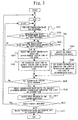
- Fig. 2 is a flowchart explaining the operation of a scheduling unit according to the first embodiment of the invention. In this flowchart, it is assumed that the operation is initiated by a cycle such as a radio frame cycle, etc.
- the request issuing time of the oldest transmission block is obtained out of the transmission blocks to which the radio resource have not been assigned yet and which are waiting for transmission, based on the information attached to the transmission blocks (S204).
- the oldest transmission block within each transmission block storing unit corresponds to transmission candidate data.
- the scheduling unit adds an authorized delay time to the request issuing time of each oldest transmission block in each transmission block storing unit to obtain a transmission completion time limit (transmission completion time) (S205).
- This transmission completion time limit shows a targeted time limit when the transmission block completes the transmission.
- the transmission block having the transmission completion time limit of which the time difference from the current time is the smallest is specified as a transmission object (S210). That the difference is the smallest means the transmission completion time limit is imminent, and such transmission block needs to have a priority to be transmitted.
- the radio resource is assigned to the selected transmission block (S211).
- Fig. 3 explains an outline of the operation of the scheduling unit according to the first embodiment.
- Fig. 3 shows the case in which transmission blocks arrive for a user A, a user B, and a user C, respectively, and they are scheduled.
- Two transmission blocks namely, a transmission block 1 and a transmission block 2 have arrived for the user A and the user B, respectively.
- the authorized delay time (user A) is added to the request issuing time (transmission block 1) for the transmission block 1
- the authorized delay time (user B) is added to the request issuing time (transmission block 2) for the transmission block 2
- the transmission completion time limit of each transmission block is obtained as shown in Fig. 3.
- the difference between the current time and the transmission completion time limit shows a grace time until the transmission completion time limit, and the radio resource is assigned to each of the transmission blocks preferentially from the one having the smallest grace time.
- the transmission block 2 is scheduled to be transmitted prior to the transmission block 1.
- the present embodiment sets the priority according to the "grace time” which is a difference between the transmission completion time limit and the current time and scheduling is carried out, it can be avoided that unnecessary radio resource is assigned to the transmission block of which the "grace time” is still long enough. And thus an unassigned part of radio resource generated by this avoidance can be assigned preferentially to the transmission block of which the "grace time” is short.
- the arrival time of each transmission block at this apparatus is referred to as the "request issuing time,” however; when a packet is separated into transmission blocks in an apparatus which is located in the upstream of the dataflow, the "request issuing time" of each transmission block can be a time when the packet arrives at the apparatus located in the upstream.
- the flowchart for explaining the operation of the scheduling unit merely explains the simplest example of operation, and another implementing unit enables the operation with a higher speed. For instance, it is considered to have a means that aligns previously all of the transmission blocks sequentially according to an order of the transmission completion time limit within the transmission block storing unit.
- Fig. 4 is a configuration of a transmission apparatus which constitutes a radio communication system according to the second embodiment.
- a reference numeral 403 shows a sequence number assigning unit.
- 405 shows a transmission block storing unit.
- 408 shows a retransmission controlling unit.
- the sequence number assigning unit 403 assigns a sequence number to each of the transmission blocks.
- the retransmission controlling unit 408 instructs the transmission block storing unit which has stored the transmission block of the retransmission object to generate a retransmission block (retransmission requested data) of the corresponding transmission block.
- the transmission block storing unit 405 When the above instruction is received, the transmission block storing unit 405 generates the retransmission block.
- Fig. 5 is a flowchart explaining the operation of the scheduling unit according to the second embodiment of this invention.
- Fig. 6 shows a transmission completion time limit storing table used by the scheduling unit in the second embodiment of this invention.
- This transmission completion time limit storing table can be administrated by the scheduling unit 106, or can be administrated by some means other than the scheduling unit 106.
- the means to administrate this transmission completion time limit storing table corresponds to a transmission completion time storing unit.
- the oldest transmission block is selected from the new transmission blocks to which the radio resource has not been assigned, and its request issuing time is obtained from the information attached to the oldest transmission block (S504).
- the authorized delay time is added to the request issuing time, the transmission completion time limit is obtained, and it is memorized with the sequence number (S505).
- This transmission completion time limit shows a targeted time limit when the transmission block finishes the transmission. The memorizing is conducted at the transmission completion time limit storing table shown in Fig. 6.
- the oldest retransmission block is selected from the transmission blocks to which the radio resource has not been assigned yet (S507).
- the transmission completion time limit stored in the transmission completion time limit storing table is obtained, which is set as the transmission completion time limit of the retransmission block (S508).
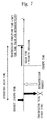
- Fig. 7 is an explanatory drawing for explaining the operation of the scheduling unit according to the second embodiment.
- Fig. 7 shows a case that the transmission block arrives for a certain user, the transmission block is scheduled and transmitted, but the retransmission is done because an error occurs.
- the error occurs in a transmission trial (the first time), and a retransmission request is received from the reception apparatus.
- the transmission apparatus generates a corresponding retransmission block; it is assumed that the transmission completion time limit of the retransmission block is the same as the transmission completion time limit stored in the transmission completion time limit storing table.
- a difference between the current time and the transmission completion time limit is set as the "grace time,” and the radio resource is assigned preferentially to the transmission block of which the grace time is short.
- the scheduling is carried out by setting a priority based on the "grace time” which is the difference between the transmission completion time limit and the current time. Accordingly, it can be avoided that unnecessary radio resource is assigned to the transmission block of which the "grace time” is still long enough. And thus the unassigned part of radio resource generated by this avoidance can be assigned preferentially to the transmission block of which the "grace time” is short.
- a configuration of a transmission apparatus according to the present embodiment is the same as that of Fig. 4 in the second embodiment.
- Fig. 8 is a flowchart explaining the operation of a scheduling unit according to the third embodiment of this invention.
- the oldest transmission block is selected from the new transmission blocks to which the radio resource has not been assigned, and its request issuing time is obtained from the information attached to that transmission block (S804).
- the authorized delay time is added to the request issuing time, and a final transmission completion time limit is obtained and stored with the sequence number (S805).
- This final transmission completion time limit shows a targeted deadline until which the transmission of the transmission block is finished.
- this final transmission completion time limit corresponds to a first transmission completion time.
- the memorizing is done at the transmission completion time limit storing table shown in Fig. 6.
- a product of multiplication of the authorized delay time with a coefficient K (0 ⁇ K ⁇ 1) is added to the request issuing time, and the total value is set as the transmission completion time limit (S806).
- this transmission completion time limit corresponds to a second transmission completion time.
- the oldest retransmission block is selected from the transmission blocks to which the radio resource has not been assigned yet (S807).
- the final transmission completion time limit stored in the transmission completion time limit storing table is obtained.
- a product of multiplication of a difference between the request issuing time (retransmission request arrival time) and the obtained final transmission completion time limit with the coefficient K (0 ⁇ K ⁇ 1) is added to the request issuing time (retransmission request arrival time) and the total value is set as the transmission completion time limit (S808).
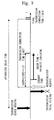
- Fig. 9 shows relationship among each period and time.
- a user A and a user B for whom the same authorized delay time is defined, the transmission blocks arrive respectively at the same time.
- the number of transmission trials, which is necessary to correctly transmit one transmission block to the receiver side, of the user B can be smaller than that of the user A.
- these transmission blocks have the same transmission completion time limits, they are treated equally according to the scheduling of the second embodiment. However, as the numbers of transmission trials are different, the time when the transmission finishes for the user A becomes later. If this time is later than the transmission completion time, the transmission block for the user A becomes unnecessary. In this way, even if the given conditions are the same, the result may be unequal according to different numbers of transmission trials.
- the user whose number of transmission trials is large is allowed to do more transmission trials by shortening an interval between the transmission trials, so that the equality can be established between the users.
- the coefficient K (0 ⁇ K ⁇ 1) has the following features.
- Fig. 12 shows a flowchart of the operation for determining the value of coefficient K.
- the radio line becomes stable, and thus the number of retransmissions necessary to transmit one transmission block becomes small.
- the moving speed of the mobile station is fast, the radio line becomes unstable, and thus the necessary number of the retransmissions becomes large. Based on this, an appropriate value of the coefficient K can be obtained according to the moving speed of the mobile station.
- the radio line becomes stable, and thus the number of retransmission necessary to transmit one transmission block can be small.
- the radio line becomes unstable, and thus the number of retransmission necessary to transmit one transmission block becomes large.
- an interval between the arrival time of the transmission block or the arrival time of the retransmission request and the final transmission completion time limit is divided by a ratio obtained by a predetermined coefficient value.
- the time given by the division is set as the transmission completion time limit for the request, and the coefficient value can vary for each user.
- the coefficient value small to be given to the user whose number of the transmission trials is large, it is possible to transmit preferentially the transmission packet of the user over the other users.
- the coefficient value makes a time necessary to complete transmission almost equal, and equality can be obtained among the users to whom the same "authorized delay times" are specified.
- the coefficient value from the quality of the radio line, the moving speed of the mobile station, or the geographical complexity around the mobile station, it is possible to maintain the equality among the users whose "authorized delay times" are the same.
- the priority is set and scheduling is done based on the "grace time," which is the difference between the transmission completion time limit and the current time, it can be avoided that unnecessary radio resource is assigned to the transmission block of which the "grace time” is still long enough. And thus the unassigned part of radio resource generated by this avoidance can be assigned preferentially to the transmission block of which the "grace time” is short.
- a configuration of a transmission apparatus according to the present embodiment is the same as that of Fig. 4 in the second embodiment.
- Fig. 13 is a flowchart explaining the operation of the scheduling unit according to the fourth embodiment of this invention.
- Fig. 14 shows a transmission completion time limit storing table used in the scheduling unit according to the fourth embodiment of this invention.
- Fig. 13 first, it is checked if the retransmission block exists or not for each of the transmission block storing units (S1302).
- the oldest transmission block is selected from the new transmission blocks to which the radio resource has not been assigned, and its request issuing time is obtained from the information attached to the oldest transmission block (S1304).
- the authorized delay time is added to the request issuing time, a final transmission completion time limit is obtained (S1305).
- This final transmission completion time limit shows a targeted deadline until which the transmission of the transmission block is finished.
- the transmission completion time limit for each transmission trial is determined within the time before the final transmission completion time limit beforehand and is memorized (S1306).
- the memorizing is done at the transmission completion time limit storing table shown in Fig. 14.
- the oldest retransmission block is selected from the transmission blocks to which the radio resource has not been assigned yet (S1307).
- a sequence number of the selected retransmission block is obtained, and the number of a next transmission trials conducted of the retransmission block is obtained. From the sequence number and the number of next transmission trials conducted, the corresponding transmission completion time limit is obtained out of the transmission completion time limits stored in the transmission completion time limit storing table, and it is set as the transmission completion time limit of the retransmission block (S1308).
- the new transmission block a difference between the first transmission completion time limit out of the transmission completion time limits for each of the transmission trials and the current time is obtained.
- a difference between the transmission completion time limit obtained from the transmission completion time limit storing table and the current time is obtained.
- the transmission block which has the smallest difference with the current time is specified as the transmission object.
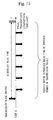
- Fig. 15 is an explanatory drawing for explaining the operation of the scheduling unit according to the fourth embodiment.
- a time period until the final transmission completion time limit obtained at arrival time of the transmission block is equally divided by an expected number of the transmission trials.
- Each timing of the equally divided time period is set as the transmission completion time limit for each transmission trial.
- Fig. 16 is an explanatory drawing for explaining another operation of the scheduling unit according to the fourth embodiment.
- a time period until the final transmission completion time limit obtained at arrival of the transmission block is divided by an expected number of the transmission trials so that intervals of the divided time period become gradually short.
- Each timing of the divided time period is set as the transmission completion time limit for each of the transmission trials.
- the possibility of completing the transmission of the transmission block by the first transmission trial is the highest, and as the number of the transmission trials increases, the possibility becomes lower. Therefore, with a distribution shown here, the possibility to press the transmission block for another user becomes lower.
- the "expected number of the transmission trials" can be the maximum number of the retransmissions defined by the retransmission controlling unit, or it can be obtained by probability based on the quality of the radio line.
- the "transmission completion time limit" is determined beforehand for each of the transmission trials when the new transmission block arrives.
- the priority is set and scheduling is done based on the "grace time," which is the difference between the transmission completion time limit and the current time, it can be avoided that unnecessary radio resource is assigned to the transmission block of which the "grace time” is still long enough. And thus the unassigned part of radio resource generated by this avoidance can be assigned preferentially to the transmission block of which the "grace time” is short.
- a configuration of the transmission apparatus in relation to this embodiment is the same as that of Fig. 4 in the second embodiment.
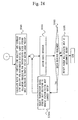
- Fig. 17 is a flowchart explaining the operation of a scheduling unit according to the fifth embodiment of this invention.
- the oldest transmission block is selected out of the new transmission blocks to which the radio resource has not been assigned, and its request issuing time is obtained from the information attached to the corresponding transmission block (S1704).
- the transmission completion time limit is obtained by using a formula (S1705).
- the oldest retransmission block is selected from the transmission blocks to which the radio resource has not been assigned yet (S1707).
- the transmission completion time limit is obtained by using the formula (S1708).
- Fig. 18 shows the above formula in graph form. As shown in Fig. 18, as the number of the transmission trials increases, it approaches to T arrival + Tau, namely, the final transmission completion time limit.
- the transmission completion time limit can be calculated for each transmission trial.
- the transmission completion time limit of the transmission block is obtained by using the formula.
- the priority is set and scheduling is done based on the "grace time," which is the difference between the transmission completion time limit and the current time, it can be avoided that unnecessary radio resource is assigned to the transmission block of which the "grace time” is still long enough. And thus the unassigned part of radio resource generated by this avoidance can be assigned preferentially to the transmission block of which the "grace time” is short.
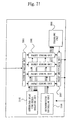
- Fig. 22 is a configuration diagram of a transmission apparatus constituting a radio communication system according to the sixth embodiment of the invention.
- a reference numeral 2201 shows a radio line quality receiving unit.
- the radio line quality receiving unit 2201 receives the radio line quality information collected/sent by each of the mobile stations (mobile communication apparatus), computes and stores "instant line quality” and "average line quality” of each mobile station, and supplies such information to the scheduling unit 106 when needed.
- the line quality means the line quality of the radio line between each mobile station and the transmission apparatus, and shows that the better the line quality is, the better the status of receiving data at the mobile station becomes.
- the radio line quality receiving unit 2201 corresponds to an example of a data receipt status information receiving unit.
- Figs. 23 and 24 are flowcharts explaining the operation of the scheduling unit 106 according to the sixth embodiment of the invention.
- steps S501 through S510 are the same as ones in Fig. 5, and the explanation will be omitted.
- the scheduling unit 106 After selecting the transmission block having the smallest difference between the transmission completion time limit and the current time at step S510, the scheduling unit 106 compares the "difference" between the transmission completion time limit and the current time and a predetermined "threshold value" (S2301), and if the "threshold value" is larger, the operation proceeds to the process of assigning the radio resource to the corresponding transmission block (S511).
- step S2301 If the "difference" is larger at step S2301, the operation proceeds to the flowchart shown in Fig. 24.
- the scheduling unit 106 computes a ratio of the "instant line quality" to the "average line quality” of each mobile station provided by the radio line quality receiving unit 2201 (analyzes the status of receiving data for each mobile station), and carries out the following process for the transmission block storing unit belonging to the mobile station having a large “ratio” (S2401).
- the "ratio" shows that the larger it is, the better the data receipt status of the mobile station is.
- the radio resource is assigned to the transmission block of the corresponding transmission block storing unit (S2402).
- the transmission block multiplexing unit is notified of the assignment result (S2405).
- the scheduling unit 106 analyzes the data receiving status for each mobile station and assigns the radio resource preferentially to the transmission block stored in the transmission block storing unit corresponding to the mobile station of which the data receiving status is good.
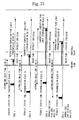
- Fig. 25 shows an explanatory diagram for explaining the operation of the scheduling unit according to the sixth embodiment.
- the "transmission completion time limit” is obtained, and a difference between the "current time” and the “transmission completion time limit” corresponds to the "grace time.”
- the scheduling is carried out in the manner explained in the first through fifth embodiments. That is, as for the transmission block 1 for the user A and the transmission block 2 for the user B, the radio resource is assigned preferentially to the transmission block 1 and then to the transmission block 2.
- the scheduling is carried out using "normalized line quality,” which is obtained from the “instant line quality” notified by each user (each mobile station) by normalizing with the "average line quality” of each user (each mobile station), as a priority indicator
- scheduling algorithm using the "normalized line quality" is only one of examples, and scheduling can be carried out according to another algorithm.
- the scheduling is done by a priority of the "grace time.” Accordingly, unnecessary assignment of the radio resource to the transmission block having an enough large "grace time” can be avoided. In addition, unassigned radio resource generated by this avoidance can be assigned preferentially to the transmission block having a small "grace time.”
- the scheduling is done, for example, based on the "normalized line quality,” while the radio resource can be assigned preferentially to the user whose line quality status is good, and thus the throughput can be improved.
- the transmission apparatus in the radio communication system has been discussed as an example; however, the contents that have been shown in the first through sixth embodiments can be applied to a transmission apparatus of a wired communication system.
- the transmission apparatus has been discussed as an example of the data transmission apparatus according to the present invention; however, it is also possible to implement a data transmission method according to the present invention using the operational procedure shown in the first through sixth embodiments.
- a transmission apparatus shown in the first embodiment is characterized to include:
- the transmission apparatus shown in the first embodiment is characterized to include a function to obtain a transmission completion time limit for each transmission block by adding an authorized delay time to an arrival time of the transmission block.
- a transmission apparatus shown in the second embodiment is characterized to include:
- the transmission apparatus shown in the second embodiment is characterized to include:
- a transmission apparatus shown in the third embodiment is characterized to include:
- the transmission apparatus shown in the third embodiment is characterized to include a function to set different coefficients for respective users.
- the transmission apparatus shown in the third embodiment is characterized to include a function to determine the coefficient according to radio line quality of each user.
- the transmission apparatus shown in the third embodiment is characterized to include a function to determine the coefficient according to a moving speed of the user.
- the transmission apparatus shown in the third embodiment is characterized to include a function to determine the coefficient according to location information of the user.
- a transmission apparatus shown in the fourth and fifth embodiments is characterized to include a function to obtain transmission completion time limits of the first, the second and thereafter transmission trials using an arrival time and an authorized delay time of the transmission block and the number of transmission trials conducted.
- a transmission apparatus shown in a sixth embodiment is characterized to include a function to assign radio resource based on another scheduling standard when an authorized delay time is larger than a predetermined "threshold value.”
- a transmission object is specified out of transmission candidate data based on a grace time which is a difference between a transmission completion time limit and a current time, it is possible to send preferentially from the transmission candidate data having a small grace time. This enables to maintain equality among the transmission candidate data, and thus appropriate transmission can be carried out without generating delay even if the transmission candidate data is streaming type data which is sensitive to delay.
- the grace time which is a difference between the transmission completion time and the current time is obtained also for the retransmission requested data and the transmission object is specified based on the grace time. Therefore, even if the retransmission requested data is included, it is possible to transmit preferentially the transmission candidate data of which the grace time is small, accordingly the equality among the transmission candidate data can be established, and thus appropriate transmission can be carried out without generating delay even if the transmission candidate data is streaming type data which is sensitive to delay.
- the transmission candidate data is the transmission queuing data
- an interval between the arrival time of the transmission candidate data and the first transmission completion time is divided
- an interval between the arrival time of the retransmission request and the first transmission completion time is divided, by a ratio which can be obtained by a certain coefficient value.
- the time obtained by the division is set as the second transmission completion time, and the transmission object is specified among the transmission candidate data based on a difference between the second transmission completion time and the current time.
- the coefficient value is made variable. Consequently, by setting an appropriate coefficient value for each transmission candidate data, it is possible to approximate times necessary to complete the transmission among the transmission candidate data, and thus the equality of the transmission candidate data can be established.
- the coefficient value is determined for each transmission candidate data based on the communication line quality, the moving speed of the mobile communication apparatus, or the geographic condition of the location of the mobile communication apparatus, the equality of the transmission candidate data can be established.
- the transmission completion time is specified for each transmission trial of the transmission candidate data which is the transmission queuing data and the transmission completion time is memorized for each transmission trial specified, to the retransmission requested data, it is possible to apply the transmission completion time corresponding to the number of transmission trials conducted among the transmission completion time stored. Consequently, there is no need to obtain the transmission completion time for each generation of the retransmission requested data.
- the transmission completion times are respectively obtained based on the arrival time, the authorized delay time, and the number of transmission trials conducted. Consequently, even if the retransmission requested data is included, the equality among the transmission candidate data can be established without memorizing the transmission completion time.
Landscapes
- Engineering & Computer Science (AREA)
- Computer Networks & Wireless Communication (AREA)
- Signal Processing (AREA)
- Databases & Information Systems (AREA)
- Mobile Radio Communication Systems (AREA)
- Data Exchanges In Wide-Area Networks (AREA)
- Communication Control (AREA)
Abstract
Description
the data specifying unit obtains an arrival time and an authorized delay time for each transmission candidate data, adds the arrival time and the authorized delay time obtained, and sets a value obtained by the adding as the transmission completion time of each transmission candidate data.
each data storing unit generates the retransmission requested data instructed when generation of the retransmission requested data is instructed by the retransmission controlling unit and stores the retransmission requested data generated, and
the data specifying unit checks existence of the retransmission requested data stored for each data storing unit, for the data storing unit without storing the retransmission requested data, selects specific transmission queuing data as transmission candidate data from the transmission queuing data stored, and for the data storing unit storing at least one piece of the retransmission requested data, selects specific retransmission requested data as the transmission candidate data from the retransmission requested data stored.
the data specifying unit, when one of the retransmission requested data is selected as the transmission candidate data, obtains the transmission completion time related with the transmission candidate data selected from the transmission completion time storing unit, and sets the transmission completion time obtained as the transmission completion time of the transmission candidate data selected.
the data specifying unit obtains an arrival time and an authorized delay time for each transmission candidate data, multiplies a coefficient defined for each transmission candidate data with the authorized delay time, adds the arrival time to a value obtained by the multiplying, and sets a value obtained by the adding as the transmission completion time of each transmission candidate data.
the data transmission apparatus further includes a transmission completion time storing unit, when a first transmission completion time for the transmission candidate data which is the transmission queuing data is specified by the data specifying unit, for storing the first transmission completion time specified by relating with the corresponding transmission candidate data, and
the data specifying unit:
the data transmission apparatus further includes a transmission completion time storing unit, when a transmission completion time for each transmission trial is specified for the transmission candidate data which is the transmission queuing data by the data specifying unit, for storing the transmission completion time for each transmission trial specified by relating with the corresponding transmission candidate data, and
the data specifying unit:
the data specifying unit obtains an arrival time and an authorized delay time for each transmission candidate data, checks a number of transmission trial conducted for each transmission candidate data, and specifies the transmission completion time for each transmission candidate data based on the arrival time, the authorized delay time, and the number of transmission trials conducted.
the data specifying step obtains an arrival time and an authorized delay time for each transmission candidate data, adds the arrival time and the authorized delay time obtained, and sets a value obtained by the adding as the transmission completion time of each transmission candidate data.
the data transmission apparatus further includes a data receipt status information receiving unit for receiving information related to data receipt status of each mobile communication apparatus from each mobile communication apparatus; and
the data specifying unit, when the transmission candidate data exists of which the difference between the transmission completion time and the current time is larger than the predetermined threshold value, analyses the data receipt status of each mobile communication apparatus based on the information related to the data receipt status received from each mobile communication apparatus, and determines if the transmission candidate data of which the difference between the transmission completion time and the current time is larger than the predetermined threshold value is to be specified as the transmission object or not based on an analysis result.
the data specifying unit, when the transmission candidate data exists of which the difference between the transmission completion time and the current time is larger than the predetermined threshold value, analyses for each data storing unit the data receipt status of each mobile communication apparatus corresponding to each data storing unit, and preferentially specifies the transmission queuing data stored in the data storing unit to which the data receipt status of the mobile communication apparatus corresponding is good as the transmission object.
Claims (20)
- A data transmission apparatus carrying out data transmission and comprising:a plurality of data storing units respectively being capable to store at least one piece of transmission queuing data which is awaiting transmission;a data specifying unit for selecting specific transmission queuing data as transmission candidate data out of the transmission queuing data stored in each data storing unit, specifying a transmission completion time for each transmission candidate data, obtaining a difference between the transmission completion time and a current time, and specifying specific transmission candidate data as a transmission object based on the difference between the transmission completion time and the current time for each transmission candidate data; anda data transmitting unit for transmitting the transmission candidate data specified as the transmission object by the data specifying unit.
- The data transmission apparatus of claim 1, wherein the data specifying unit specifies the transmission candidate data of which the difference between the transmission completion time and the current time is smallest as the transmission object.
- The data transmission apparatus of claim 1,
wherein the data transmission apparatus carries out data transmission of data received from another apparatus, and
wherein the data specifying unit obtains an arrival time and an authorized delay time for each transmission candidate data, adds the arrival time and the authorized delay time obtained, and sets a value obtained by the adding as the transmission completion time of each transmission candidate data. - The data transmission apparatus of claim 1 further comprising
a retransmission controlling unit for receiving a retransmission request for the data transmitted by the data transmitting unit and instructing the data storing unit which has stored retransmission requested data of which retransmission is requested to generate the retransmission requested data,
wherein each data storing unit generates the retransmission requested data instructed when generation of the retransmission requested data is instructed by the retransmission controlling unit and stores the retransmission requested data generated, and
wherein the data specifying unit checks existence of the retransmission requested data stored for each data storing unit, for the data storing unit without storing the retransmission requested data, selects specific transmission queuing data as transmission candidate data from the transmission queuing data stored, and for the data storing unit storing at least one piece of the retransmission requested data, selects specific retransmission requested data as the transmission candidate data from the retransmission requested data stored. - The data transmission apparatus of claim 4 further comprising
a transmission completion time storing unit, when the transmission completion time for the transmission candidate data which is the transmission queuing data is specified by the data specifying unit, for storing the transmission completion time specified by relating with the corresponding transmission candidate data,
wherein the data specifying unit, when one of the retransmission requested data is selected as the transmission candidate data, obtains the transmission completion time related with the transmission candidate data selected from the transmission completion time storing unit, and sets the transmission completion time obtained as the transmission completion time of the transmission candidate data selected. - The data transmission apparatus of claim 1,
wherein the data transmission apparatus carries out data transmission of data received from another apparatus, and
wherein the data specifying unit obtains an arrival time and an authorized delay time for each transmission candidate data, multiplies a coefficient defined for each transmission candidate data with the authorized delay time, adds the arrival time to a value obtained by the multiplying, and sets a value obtained by the adding as the transmission completion time of each transmission candidate data. - The data transmission apparatus of claim 4,
wherein the data transmission apparatus carries out data transmission received from another apparatus,
wherein the data transmission apparatus further comprises a transmission completion time storing unit, when a first transmission completion time for the transmission candidate data which is the transmission queuing data is specified by the data specifying unit, for storing the first transmission completion time specified by relating with the corresponding transmission candidate data,
wherein the data specifying unit:checks the existence of the retransmission requested data stored for each data storing unit, for the data storing unit without storing the retransmission requested data, selects specific transmission queuing data as the transmission candidate data from the transmission queuing data stored, and for the data storing unit storing at least one piece of the retransmission requested data, selects specific retransmission requested data as the transmission candidate data from the retransmission requested data stored;for the transmission candidate data which is the transmission queuing data, obtains an arrival time and an authorized delay time for each transmission candidate data, adds the arrival time and the authorized delay time obtained, and sets a value obtained by the adding as the first transmission completion time of each transmission candidate data, multiplies a coefficient defined for each transmission candidate data with the authorized delay time, adds the arrival time to a value obtained by the multiplying, and sets a value obtained by the adding as a second transmission completion time of each transmission candidate data;for the transmission candidate data which is the retransmission requested data, obtains an arrival time of the retransmission request for each transmission candidate data, obtains the first transmission completion time related to each transmission candidate data from the transmission completion time storing unit, subtracts the arrival time of the retransmission request from the first transmission completion time obtained, multiplies a coefficient defined for each transmission candidate data with a value obtained by the subtracting, adds the arrival time to a value obtained by the multiplying, and specifies a value obtained by the adding as the second transmission completion time; andobtains a difference between the second transmission completion time and the current time for each transmission candidate data, and specifies specific transmission candidate data as the transmission object based on the difference between the second transmission completion and the current time for each transmission candidate data. - The data transmission apparatus of claim 7 further comprising
a coefficient value determining unit for determining a value of the coefficient based on quality of a communication line used for transmitting the transmission candidate data, for each transmission candidate data. - The data transmission apparatus of claim 7 further comprising
a coefficient value determining unit for determining a value of the coefficient based on moving speed of a mobile communication apparatus which is a destination of the transmission candidate data, for each transmission candidate data. - The data transmission apparatus of claim 7 further comprising
a coefficient value determining unit for determining a value of the coefficient based on geographical condition of a location of a mobile communication apparatus which is a destination of the transmission candidate data, for each transmission candidate data. - The data transmission apparatus of claim 4,
wherein the data transmission apparatus carries out data transmission of data received from another apparatus,
wherein the data transmission apparatus further comprises a transmission completion time storing unit, when a transmission completion time for each transmission trial is specified for the transmission candidate data which is the transmission queuing data by the data specifying unit, for storing the transmission completion time for each transmission trial specified by relating with the corresponding transmission candidate data,
wherein the data specifying unit:checks the existence of the retransmission requested data stored for each data storing unit, for the data storing unit without storing the retransmission requested data, selects specific transmission queuing data as the transmission candidate data from the transmission queuing data stored, and for the data storing unit storing at least one piece of the retransmission requested data, selects specific retransmission requested data as the transmission candidate data from the retransmission requested data stored;for the transmission candidate data which is the transmission queuing data, specifies the transmission completion time for each transmission trial based on a number of transmission trials defined for each transmission candidate data, and obtains a difference between the transmission completion time for a first transmission trial out of the transmission completion time specified and the current time;for the transmission candidate data which is the retransmission requested data, checks a next number of transmission trials conducted, obtains a transmission completion time for the next number of transmission trials conducted from the transmission completion time storing unit, and obtains a difference between the transmission completion time obtained and the current time; andspecifies specific transmission candidate data as the transmission object based on the difference between the transmission completion time for each transmission candidate data and the current time. - The data transmission apparatus of claim 11, wherein the data specifying unit specifies the transmission completion time for each transmission trial by equally setting intervals of the transmission completion times.
- The data transmission apparatus of claim 11, wherein the data specifying unit specifies the transmission completion time for each transmission trial by setting intervals of transmission completion times so that later transmission trials have shorter intervals.
- The data transmission apparatus of claim 1,
wherein the data transmission apparatus carries out data transmission of data received from another apparatus,
wherein the data specifying unit obtains an arrival time and an authorized delay time for each transmission candidate data, checks a number of transmission trial conducted for each transmission candidate data, and specifies the transmission completion time for each transmission candidate data based on the arrival time, the authorized delay time, and the number of transmission trials conducted. - A data transmission method for carrying out data transmission comprising:a data specifying step for selecting at least two pieces of transmission queuing data from a plurality pieces of transmission queuing data which are awaiting transmission, specifying transmission completion time for each transmission candidate data, obtaining a difference between the transmission completion time and a current time, and specifying specific transmission candidate data as a transmission object based on the difference between the transmission completion time for each transmission candidate data and the current time; anda data transmitting step for transmitting the transmission candidate data specified as the transmission object by the data specifying step.
- The data transmission method of claim 15, wherein the data specifying step specifies the transmission candidate data of which the difference between the transmission completion time and the current time is smallest as the transmission object.
- The data transmission method of claim 15,
wherein the data transmission method carries out data transmission of data received from another communication method, and
wherein the data specifying step obtains an arrival time and an authorized delay time for each transmission candidate data, adds the arrival time and the authorized delay time obtained, and sets a value obtained by the adding as the transmission completion time of each transmission candidate data. - The data transmission apparatus of claim 1,
wherein the data specifying unit specifies the transmission completion time for each transmission candidate data, obtains the difference between the transmission completion time and the current time, specifies the transmission candidate data of which the difference between the transmission completion time and the current time is smaller than a predetermined threshold value as the transmission object, and determines if the transmission candidate data of which the difference between the transmission completion time and the current time is larger than the predetermined threshold value is to be specified as the transmission object or not based on a different criteria other than the difference between the transmission completion time and the current time. - The data transmission apparatus of claim 18,
wherein the data transmission apparatus carries out data transmission to a plurality of mobile communication apparatuses;
wherein the data transmission apparatus further comprises a data receipt status information receiving unit for receiving information related to data receipt status of each mobile communication apparatus from each mobile communication apparatus; and
wherein the data specifying unit, when the transmission candidate data exists of which the difference between the transmission completion time and the current time is larger than the predetermined threshold value, analyses the data receipt status of each mobile communication apparatus based on the information related to the data receipt status received from each mobile communication apparatus, and determines if the transmission candidate data of which the difference between the transmission completion time and the current time is larger than the predetermined threshold value is to be specified as the transmission object or not based on an analysis result. - The data transmission apparatus of claim 19,
wherein each of the plurality of data storing units is related to any one of the plurality of mobile communication apparatuses;
the data specifying unit, when the transmission candidate data exists of which the difference between the transmission completion time and the current time is larger than the predetermined threshold value, analyses for each data storing unit the data receipt status of each mobile communication apparatus corresponding to each data storing unit, and preferentially specifies the transmission queuing data stored in the data storing unit to which the data receipt status of the mobile communication apparatus corresponding is good as the transmission object.
Applications Claiming Priority (3)
| Application Number | Priority Date | Filing Date | Title |
|---|---|---|---|
| JP2002104999 | 2002-04-08 | ||
| JP2002104999 | 2002-04-08 | ||
| PCT/JP2003/002117 WO2003085934A1 (en) | 2002-04-08 | 2003-02-26 | Data transmission apparatus and data transmission method |
Publications (2)
| Publication Number | Publication Date |
|---|---|
| EP1482710A1 true EP1482710A1 (en) | 2004-12-01 |
| EP1482710A4 EP1482710A4 (en) | 2009-12-09 |
Family
ID=28786356
Family Applications (1)
| Application Number | Title | Priority Date | Filing Date |
|---|---|---|---|
| EP03707088A Withdrawn EP1482710A4 (en) | 2002-04-08 | 2003-02-26 | APPARATUS AND METHOD FOR DATA TRANSMISSION |
Country Status (5)
| Country | Link |
|---|---|
| US (1) | US20050149470A1 (en) |
| EP (1) | EP1482710A4 (en) |
| JP (1) | JP3989903B2 (en) |
| CN (1) | CN1640095A (en) |
| WO (1) | WO2003085934A1 (en) |
Cited By (2)
| Publication number | Priority date | Publication date | Assignee | Title |
|---|---|---|---|---|
| WO2006075293A1 (en) * | 2005-01-12 | 2006-07-20 | Koninklijke Philips Electronics N.V. | Requesting permission from a base station to send packets queued at a mobile station according to its transmission delay |
| EP2317686A1 (en) * | 2009-10-28 | 2011-05-04 | Alcatel Lucent | Method and apparatus for requesting and allocating network resource |
Families Citing this family (19)
| Publication number | Priority date | Publication date | Assignee | Title |
|---|---|---|---|---|
| JP2004343524A (en) | 2003-05-16 | 2004-12-02 | Mitsubishi Electric Corp | Base station, mobile station, communication system and communication method |
| US7643419B2 (en) | 2004-05-07 | 2010-01-05 | Interdigital Technology Corporation | Method and apparatus for implementing a data lifespan timer for enhanced dedicated channel transmissions |
| JP4547210B2 (en) * | 2004-08-27 | 2010-09-22 | 株式会社エヌ・ティ・ティ・ドコモ | Client terminal, service providing apparatus, and service discovery method |
| JP2007028132A (en) * | 2005-07-15 | 2007-02-01 | Noritsu Koki Co Ltd | Communications system |
| JP2007028491A (en) * | 2005-07-21 | 2007-02-01 | Noritsu Koki Co Ltd | Communications system |
| JP4404848B2 (en) * | 2005-12-05 | 2010-01-27 | Necアクセステクニカ株式会社 | Band limiting method and apparatus, and network communication device using the same |
| JP2007243405A (en) * | 2006-03-07 | 2007-09-20 | Kddi Corp | Wireless buffer device, wireless communication device, and wireless buffer control method |
| US7818306B2 (en) * | 2006-03-24 | 2010-10-19 | International Business Machines Corporation | Read-copy-update (RCU) operations with reduced memory barrier usage |
| US7353346B2 (en) * | 2006-03-24 | 2008-04-01 | International Business Machines Corporation | Read-copy-update (RCU) operations with reduced memory barrier usage |
| MX2017008822A (en) | 2014-12-31 | 2017-10-19 | Wal Mart Stores Inc | System and method for monitoring gas emission of perishable products. |
| US10466111B2 (en) | 2016-05-05 | 2019-11-05 | Walmart Apollo, Llc | Systems and methods for monitoring temperature or movement of merchandise |
| CA3034397A1 (en) * | 2016-09-19 | 2018-03-22 | Wal-Mart Stores, Inc. | Secure enclosure system and associated methods |
| WO2018179067A1 (en) * | 2017-03-27 | 2018-10-04 | 日本電気株式会社 | Communication apparatus, base station, wireless resource allocation method, and computer-readable medium |
| WO2018217280A1 (en) | 2017-05-23 | 2018-11-29 | Walmart Apollo, Llc | Automated inspection system |
| US11448632B2 (en) | 2018-03-19 | 2022-09-20 | Walmart Apollo, Llc | System and method for the determination of produce shelf life |
| WO2020023762A1 (en) | 2018-07-26 | 2020-01-30 | Walmart Apollo, Llc | System and method for produce detection and classification |
| US11715059B2 (en) | 2018-10-12 | 2023-08-01 | Walmart Apollo, Llc | Systems and methods for condition compliance |
| WO2020106332A1 (en) | 2018-11-20 | 2020-05-28 | Walmart Apollo, Llc | Systems and methods for assessing products |
| US12175476B2 (en) | 2022-01-31 | 2024-12-24 | Walmart Apollo, Llc | Systems and methods for assessing quality of retail products |
Family Cites Families (21)
| Publication number | Priority date | Publication date | Assignee | Title |
|---|---|---|---|---|
| US4346440A (en) * | 1978-06-30 | 1982-08-24 | Motorola, Inc. | Advanced data link controller |
| JPH06309296A (en) * | 1993-04-19 | 1994-11-04 | Fujitsu Ltd | Network analysis method |
| US6470391B2 (en) * | 1995-09-08 | 2002-10-22 | Hitachi, Ltd. | Method for transmitting data via a network in a form of divided sub-packets |
| US5768527A (en) * | 1996-04-23 | 1998-06-16 | Motorola, Inc. | Device, system and method of real-time multimedia streaming |
| JP3589260B2 (en) * | 1996-05-17 | 2004-11-17 | 株式会社日立コミュニケーションテクノロジー | Traffic shaping device |
| US6014694A (en) * | 1997-06-26 | 2000-01-11 | Citrix Systems, Inc. | System for adaptive video/audio transport over a network |
| JPH1155276A (en) * | 1997-08-01 | 1999-02-26 | Oki Electric Ind Co Ltd | Shaping device |
| US6134596A (en) * | 1997-09-18 | 2000-10-17 | Microsoft Corporation | Continuous media file server system and method for scheduling network resources to play multiple files having different data transmission rates |
| JPH1198574A (en) * | 1997-09-24 | 1999-04-09 | Toyota Motor Corp | Mobile radio communication system and radio communication mobile station used in the system |
| SE512310C3 (en) * | 1998-04-30 | 2000-03-20 | Ericsson Telefon Ab L M | Procedure device base station system and radio unit for processing data frames in a packet data radio system |
| US6081507A (en) * | 1998-11-04 | 2000-06-27 | Polytechnic University | Methods and apparatus for handling time stamp aging |
| WO2000060813A1 (en) * | 1999-04-02 | 2000-10-12 | Qualcomm Incorporated | System and method for prioritizing traffic channel messages |
| US6269080B1 (en) * | 1999-04-13 | 2001-07-31 | Glenayre Electronics, Inc. | Method of multicast file distribution and synchronization |
| US6418474B1 (en) * | 1999-04-16 | 2002-07-09 | Peerless Systems Corporation | Data transfer protocol flow controller and method |
| JP3733784B2 (en) * | 1999-05-21 | 2006-01-11 | 株式会社日立製作所 | Packet relay device |
| JP3714036B2 (en) * | 1999-06-07 | 2005-11-09 | 株式会社日立製作所 | Communication device |
| JP2001007808A (en) * | 1999-06-18 | 2001-01-12 | Hitachi Ltd | Traffic shaping device |
| US6501733B1 (en) * | 1999-10-01 | 2002-12-31 | Lucent Technologies Inc. | Method for controlling data flow associated with a communications node |
| AU2001231175A1 (en) * | 2000-01-26 | 2001-08-07 | Vyyo, Ltd. | Quality of service scheduling scheme for a broadband wireless access system |
| US8321542B1 (en) * | 2000-05-05 | 2012-11-27 | Ipr Licensing, Inc. | Wireless channel allocation in a base station processor |
| US7069325B1 (en) * | 2001-12-21 | 2006-06-27 | Cisco Technology, Inc. | Method and apparatus for handling requests in a network |
-
2003
- 2003-02-26 CN CNA038051036A patent/CN1640095A/en active Pending
- 2003-02-26 JP JP2003582994A patent/JP3989903B2/en not_active Expired - Fee Related
- 2003-02-26 EP EP03707088A patent/EP1482710A4/en not_active Withdrawn
- 2003-02-26 WO PCT/JP2003/002117 patent/WO2003085934A1/en not_active Ceased
- 2003-02-26 US US10/504,080 patent/US20050149470A1/en not_active Abandoned
Cited By (4)
| Publication number | Priority date | Publication date | Assignee | Title |
|---|---|---|---|---|
| WO2006075293A1 (en) * | 2005-01-12 | 2006-07-20 | Koninklijke Philips Electronics N.V. | Requesting permission from a base station to send packets queued at a mobile station according to its transmission delay |
| AU2006205610B2 (en) * | 2005-01-12 | 2010-05-13 | Koninklijke Philips Electronics N.V. | Requesting permission from a base station to send packets queued at a mobile station according to its transmission delay |
| US7953003B2 (en) | 2005-01-12 | 2011-05-31 | Koninklijke Philips Electronics N.V. | Requesting permission from a base station to send packets queued at a mobile station according to its transmission delay |
| EP2317686A1 (en) * | 2009-10-28 | 2011-05-04 | Alcatel Lucent | Method and apparatus for requesting and allocating network resource |
Also Published As
| Publication number | Publication date |
|---|---|
| JP3989903B2 (en) | 2007-10-10 |
| US20050149470A1 (en) | 2005-07-07 |
| CN1640095A (en) | 2005-07-13 |
| EP1482710A4 (en) | 2009-12-09 |
| JPWO2003085934A1 (en) | 2005-08-18 |
| WO2003085934A1 (en) | 2003-10-16 |
Similar Documents
| Publication | Publication Date | Title |
|---|---|---|
| EP1482710A1 (en) | Data transmission apparatus and data transmission method | |
| Galinina et al. | Stabilizing multi-channel slotted aloha for machine-type communications | |
| US7633946B2 (en) | Scheduler system and method thereof | |
| EP3545636B1 (en) | System and method for varying verbosity of response based on channel properties in a group communication using artificial intelligence | |
| US6571391B1 (en) | System and method for scheduling on-demand broadcasts for heterogeneous workloads | |
| KR100649300B1 (en) | Adaptive data transmission method and communication device in communication system | |
| Kleinrock et al. | Random access techniques for data transmission over packet-switched radio channels | |
| CN109639470B (en) | VSAT satellite communication system bandwidth allocation method based on star networking | |
| CN100473045C (en) | Transmit multiple packets in one frame | |
| US7058946B2 (en) | Adaptive scheduling of data delivery in a central server | |
| CN1937847A (en) | Method and apparatus for scheduling packet data transmissions in a wireless communication system | |
| RU2004101288A (en) | METHOD AND DEVICE FOR MANAGING A LOT OF LOGIC DATA STREAMS IN THE ENVIRONMENT WITH VARIABLE DATA TRANSFER SPEED | |
| US6502062B1 (en) | System and method for scheduling data delivery using flow and stretch algorithms | |
| Yang et al. | Adaptive network coding for scheduling real-time traffic with hard deadlines | |
| Koseoglu | Pricing-based load control of M2M traffic for the LTE-A random access channel | |
| KR102298698B1 (en) | Method and apparatus for service caching in edge computing network | |
| CN113542155B (en) | Method and device for processing business flow | |
| JP3746717B2 (en) | Bandwidth allocation method in point-multipoint communication system | |
| CN114845338B (en) | A random backoff method for user access | |
| Gokhale et al. | Vitals—a novel link-layer scheduling framework for tactile internet over wi-fi | |
| EP2141936A1 (en) | Mobile communication system, network device and packet sequence control method | |
| Shudrenko et al. | Using integer compositions to model end-to-end delay in wireless sensor networks under 6tisch | |
| Burkov et al. | Contention-based protocol with time division collision resolution | |
| US20100128659A1 (en) | Bandwidth allocation in satellite communication networks | |
| WO2005032075A1 (en) | Communication device and scheduling method |
Legal Events
| Date | Code | Title | Description |
|---|---|---|---|
| PUAI | Public reference made under article 153(3) epc to a published international application that has entered the european phase |
Free format text: ORIGINAL CODE: 0009012 |
|
| 17P | Request for examination filed |
Effective date: 20040921 |
|
| AK | Designated contracting states |
Kind code of ref document: A1 Designated state(s): AT BE BG CH CY CZ DE DK EE ES FI FR GB GR HU IE IT LI LU MC NL PT SE SI SK TR |
|
| RAP1 | Party data changed (applicant data changed or rights of an application transferred) |
Owner name: MITSUBISHI DENKI KABUSHIKI KAISHA |
|
| A4 | Supplementary search report drawn up and despatched |
Effective date: 20091105 |
|
| 17Q | First examination report despatched |
Effective date: 20100122 |
|
| STAA | Information on the status of an ep patent application or granted ep patent |
Free format text: STATUS: THE APPLICATION IS DEEMED TO BE WITHDRAWN |
|
| 18D | Application deemed to be withdrawn |
Effective date: 20100803 |