BACKGROUND OF THE INVENTION
1. Field of the Invention
The present invention relates to an anode comprising an anode
current collector and an anode active material layer, and a battery using
the anode.
2. Description of the Related Art
In recent years, as mobile devices have higher performance and
more functions, higher capacities of secondary batteries as power sources of
the mobile devices have been desired. As a secondary battery which meets
the requirement, a lithium secondary battery is cited. However, the
battery capacity of a currently typical lithium secondary battery which
uses lithium cobalt oxide as a cathode and graphite as an anode has
reached a point of saturation, so it is extremely difficult to substantially
increase the capacity of the lithium secondary battery. Although an anode
using metal lithium (Li) has been studied since a long time ago, in order to
put the anode to practical use, it is required to improve
precipitation/dissolution efficiency and control dendritic precipitation.
On the other hand, an anode with a high capacity which uses silicon
(Si), tin (Sn) or the like has been actively studied recently. However, when
charge and discharge are repeated, the anode is broken into small pieces
due to severe expansion and shrinkage of an anode active material of the
anode, thereby a current collecting property declines, or the decomposition
of an electrolyte solution is accelerated due to an increase in a surface area,
thereby cycle characteristics are extremely poor. Therefore, an anode in
which an anode active material layer is formed on an anode current
collector through a vapor-phase deposition method, a liquid-phase
deposition method or a sintering method (for example, refer to Japanese
Unexamined Patent Application Publication No. Hei 8-50922, Japanese
Patent No. 2948205, and Japanese Unexamined Patent Application
Publication No. Hei 11-135115) has been studied. Compared to a
conventional coating type anode to which slurry including a particulate
anode active material, a binder and the like is applied, the anode can be
prevented from being broken into small pieces, and the anode current
collector and the anode active material layer can be formed as one unit, so
the electronic conductivity in the anode is extremely superior. Therefore,
higher performance in terms of capacity and cycle lifespan is expected.
Moreover, an electronic conductor, a binder and gaps which are present in
a conventional anode can be reduced or eliminated, so the anode can be
formed into a thin film in essence.
In the integral type anode, in the case where the anode active
material layer includes tin, for example, heat treatment is preferably
performed to accelerate alloying between the anode current collector and
the anode active material layer in at least a portion of an interface between
the anode current collector and the anode active material layer. Generally,
the heat treatment is performed after an anode in which an anode active
material layer is formed on a strip-shaped anode current collector is wound
into a roll.
However, in this case, the anode active material layers formed on
both sides of the anode current collector face and come into contact with
each other, so the anode active material layers may be fusion bonded by the
heat treatment. Therefore, a fracture in the anode may occur in a process
of unfolding the anode wound into a roll and laminating the anode on a
cathode, or cycle characteristics may be degraded due to unevenness in the
thickness of the anode active material layer.
SUMMARY OF THE INVENTION
In view of the foregoing, it is an object of the invention to provide an
anode having superior productivity and superior cycle characteristics, and
a battery using the anode.
An anode according to the invention comprises: an anode current
collector; an anode active material layer being disposed on the anode
current collector, being alloyed with the anode current collector in at least a
portion of an interface with the anode current collector, and including tin;
and a protective layer being disposed on the anode active material layer on
a side opposite to the anode current collector, and including an element of a
simple substance with a higher melting point than tin.
A battery according to the invention comprises: a cathode; an
anode; and an electrolyte, wherein the anode comprises: an anode current
collector; an anode active material layer being disposed on the anode
current collector, being alloyed with the anode current collector in at least a
portion of an interface with the anode current collector, and including tin;
and a protective layer being disposed on the anode active material layer on
a side opposite to the anode current collector, and including an element of a
simple substance with a higher melting point than tin.
In the anode according to the invention, the protective layer
including an element of a simple substance with a higher melting point
than tin is disposed on the anode active material layer on a side opposite to
the anode current collector, so even if the anode wound into a roll is
subjected to heat treatment, fusion bonding between adjacent anodes can
be prevented. Therefore, unevenness in the thickness of the anode active
material layer and a fracture in the anode active material layer can be
prevented.
In the battery according to the invention, the anode according to the
invention is used, so superior cycle characteristics can be obtained.
Other and further objects, features and advantages of the invention
will appear more fully from the following description.
BRIEF DESCRIPTION OF THE DRAWINGS
FIG. 1 is a sectional view of an anode according to an embodiment
of the invention;
FIG. 2 is a sectional view of a secondary battery using the anode
shown in FIG. 1;
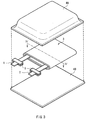
FIG. 3 is a perspective view of another secondary battery using the
anode shown in FIG. 1; and
FIG. 4 is a sectional view of a spirally wound electrode body taken
along a line IV-IV of FIG. 3.
DETAILED DESCRIPTION OF THE PREFERRED EMBODIMENTS
A preferred embodiment of the present invention will be described
in more detail below referring to the accompanying drawings.
FIG. 1 shows a schematic structure of an anode according to an
embodiment of the invention. The anode comprises, for example, an anode
current collector 11, an anode active material layer 12 and a protective
layer 13. The anode active material layer 12 is disposed on the anode
current collector 11, and the protective layer 13 is disposed on the anode
active material layer 12 on a side opposite to the anode current collector 11.
The anode current collector 11 preferably includes, for example, one
kind or two or more kinds selected from the group consisting of copper (Cu),
nickel (Ni), cobalt (Co), manganese (Mn), titanium (Ti), molybdenum (Mo),
tungsten (W), aluminum (Al) and stainless. In some cases, the anode
current collector 11 more preferably includes a metal which is easily
alloyed with the anode active material layer 12 among them. In the
embodiment, as will be described later, the anode active material layer 12
includes tin, so materials suitable for the anode current collector 11 include
copper, nickel, cobalt, manganese, titanium and stainless. The anode
current collector 11 may include a single layer or a plurality of layers. In
the case where the anode current collector 11 includes a plurality of layers,
a layer in contact with the anode active material layer 12 may be made of a
metal material which is easily alloyed with the anode active material layer
12, and other layers may be made of any other metal materials.
The anode active material layer 12 includes tin, and tin may be
included as a simple substance, a compound or an alloy. Tin, a tin
compound or a tin alloy functions as an anode active material. As the tin
compound or the tin alloy, for example, an alloy including tin and an
element in Groups 4 through 11 of the long form of the periodic table of the
elements is cited. In addition, Mg2Sn, SnOw (0<w≦2), SnSiO3 and LiSnO
are cited.
The anode active material layer 12 is alloyed with the anode
current collector 11 in at least a portion of an interface with the anode
current collector 11. More specifically, in the interface, an element of the
anode current collector 11 is diffused into the anode active material layer
12, or an element of the anode active material is diffused into the anode
current collector 11, or they are diffused into each other. In the description,
the above-described diffusion of the elements is considered as a mode of
alloying.
The anode active material layer 12 is preferably formed through at
least one method selected from the group consisting of a vapor-phase
deposition method, a liquid-phase deposition method and a sintering
method. It is because a fracture in the anode active material layer 12 due
to expansion and shrinkage thereof according to charge and discharge can
be prevented, and the anode current collector 11 and the anode active
material layer 12 can be formed as one unit, and the electronic conductivity
in the anode can be improved. Moreover, it is because in contrast to a
conventional coating type anode, a binder and gaps can be reduced or
eliminated, and the anode can be formed into a thin film.
The protective layer 13 includes one kind or two or more kinds
selected from elements constituting simple substances having a higher
melting point than tin (hereinafter referred to as elements with a higher
melting point than tin). The elements with a higher melting point than tin
may be included as a simple substance, a compound or an alloy. Thereby,
the melting point of the protective layer 13 becomes higher, so, for example,
as will be described later, even if heat treatment is performed after a strip-shaped
anode is wound into a roll, fusion bonding between adjacent anodes,
more specifically fusion bonding between anode active material layers 12 or
between the anode current collector 11 and the anode active material layer
12 can be prevented.
The protective layer 13 may be formed on at least a portion of a
surface of the anode active material layer 12, so the protective layer 13 is
not necessarily formed all over the surface of the anode active material
layer 12. For example, the protective layer 13 may be scattered on the
anode active material layer 12 like islands, or may have apertures for
exposing the anode active material layer 12. Moreover, the protective layer
13 may be alloyed with the anode active material layer 12 in at least a
portion of an interface with the anode active material layer 12. In other
words, in the interface, an element of the protective layer 13 may be
diffused into the anode active material layer 12, or an element of the anode
active material may be diffused into the protective layer 13, or they may be
diffused into each other.
The content of the element with a higher melting point than tin in
the protective layer 13 is larger than that in a region of the anode active
material layer 12 on a side closer to the protective layer 13. It is because
the protective layer 13 has a higher melting point than the region of the
anode active material layer 12 on a side closer to the protective layer 13 so
as to prevent fusion bonding between the anodes. Moreover, the content of
the element with a higher melting point than tin in the protective layer 13
may be uniform or vary in the protective layer 13; however, in the case
where the content varies, the content is preferably larger on a side opposite
to the anode active material layer 12 than on a side closer to the anode
active material layer 12. It is because fusion bonding between the anodes
can be more effectively prevented.
As the element with a higher melting point than tin, an element
which does not form a compound with tin is preferable, and more
specifically, carbon (C), silicon, tungsten or the like is preferable. It is
because diffusion into the anode active material layer 12 can be reduced,
and the protective layer 13 can have a higher melting point.
The protective layer 13 is preferably formed through at least one
method selected from the group consisting of a vapor-phase deposition
method, a liquid-phase deposition method and a sintering method, because
the protective layer 13 can be formed into a thin film. The protective layer
13 may be formed through a coating method, and include a binder in
addition to one kind or two or more kinds selected from the group
consisting of simple substances, compounds and alloys of the elements with
a higher melting point than tin. As the binder, a material with a melting
point higher than a heat treatment temperature is preferable in order to
prevent fusion bonding between binders during heat treatment, and a
combination of the material with a melting point higher than the heat
treatment temperature and a conventionally used binder such as
polyvinylidene fluoride may be used.
The protective layer 13 preferably has a thickness of 10 nm or over,
and in the case where the protective layer 13 includes an element capable
of electrochemically inserting and extracting lithium as the element with a
higher melting point than tin, the protective layer 13 more preferably has a
thickness of 0.1 µm or over to obtain a sufficient effect. Moreover, from
the viewpoint of maintaining a higher capacity and superior cycle
characteristics of the anode, the protective layer 13 preferably has a
thickness of 2 µm or less. In the case where the protective layer 13 is
alloyed with the anode active material layer 12, the thickness of the
protective layer 13 means a thickness of the protective layer 13 except for a
portion thereof alloyed with the anode active material layer 12.
The anode can be manufactured through the following steps, for
example.
At first, for example, the strip-shaped anode current collector 11 is
prepared, and the anode active material layer 12 is formed on the anode
current collector 11. The anode active material layer 12 may be formed
through depositing an anode active material on the anode current collector
11 by a vapor-phase deposition method or a liquid-phase deposition method,
or through a sintering method in which after a layer including a particulate
anode active material is formed on the anode current collector 11, the layer
is sintered, or through a combination of two or three methods selected from
the group consisting of a vapor-phase deposition method, a liquid-phase
deposition method and a sintering method.
Next, the protective layer 13 is formed on the anode active material
layer 12. As in the case of the anode active material layer 12, the
protective layer 13 may be formed through depositing one kind or two or
more kinds selected from the group consisting of simple substances,
compounds and alloys of elements with a higher melting point than tin on
the anode active material layer 12 by a vapor-phase deposition method or a
liquid-phase deposition method, or through a sintering method in which
after one kind or two or more kinds selected from the group consisting of
simple substances, compounds and alloys of elements with a higher melting
point than tin is formed on the anode active material layer 12, they are
sintered, or through a combination of two or three methods selected from
the group consisting of a vapor-phase deposition method, a liquid-phase
deposition method and a sintering method. Moreover, for example, the
protective layer 13 may be formed through a coating method in which the
anode active material layer 12 is coated with a mixture including a binder
in addition to one kind or two or more kinds selected from the group
consisting of simple substances, compounds and alloys of elements with a
higher melting point than tin. At this time, as the binder, a material with
a melting point higher than a heat treatment temperature is preferably
used in order to prevent fusion bonding between binders during heat
treatment which will be described later, and a combination of a material
with a melting point higher than the heat treatment temperature and a
conventionally used material such as polyvinylidene fluoride may be used.
As the vapor-deposition method which is used to form the anode
active material layer 12 and the protective layer 13, for example, a physical
deposition method or a chemical deposition method are used, and more
specifically, a vacuum deposition method, a sputtering method, an ion
plating method, a laser ablation method, a thermal CVD (chemical vapor
deposition) method, a plasma CVD method or the like can be used. As the
liquid-phase deposition method, an electrolytic plating method, an
electroless plating method or the like can be used. As the sintering method,
a known technique such as, for example, an atmosphere sintering method,
a reaction sintering method or a hot press sintering method can be used.
As the coating method, a known technique such as a spray method, a doctor
blade method or a transfer method can be used.
After the protective layer 13 is formed, the anode current collector
11 on which the anode active material layer 12 and the protective layer 13
are formed is wound into a roll, and the anode current collector 11 is
subjected to heat treatment, for example, in a vacuum atmosphere, an air
atmosphere, a reduction atmosphere, an oxidizing atmosphere or an inert
atmosphere. At this time, fusion bonding between adjacent anodes can be
prevented by the protective layer 13. Therefore, an anode with less or no
unevenness in the thickness and less or no fracture can be obtained. The
heat treatment temperature is preferably 100°C or over in order to
accelerate alloying in at least a portion of the interface between the anode
current collector 11 and the anode active material layer 12, and more
preferably 200°C or over in order to further accelerate alloying. Moreover,
in order to prevent deformation and a fracture in the anode current
collector 11, the heat treatment temperature is preferably equal to or lower
than the melting point of the anode current collector 11, and more
preferably 300°C or less in order to prevent a side reaction except for
alloying at which the heat treatment is aimed. For example, when the
anode current collector 11 is made of electrolytic copper foil, the heat
treatment temperature is preferably within a range of 100°C to 1083°C
inclusive, and more preferably within a range of 200°C to 300°C inclusive.
The anode according to the embodiment is completed through the above
steps.
The anode is used in a secondary battery as follows, for example.
FIG. 2 shows the structure of the secondary battery. The secondary
battery is a so-called coin type, and a disk-shaped cathode 30 contained in a
package can 20 and a disk-shaped anode 50 according to the embodiment
contained in a package cup 40 are laminated with a separator 60 in
between to form the secondary battery. Edge portions of the package can
20 and the package cup 40 are caulked with an insulating gasket 70 to seal
them. The package can 20 and the package cup 40 are made of, for
example, metal such as stainless or aluminum (Al).
The cathode 30 includes, for example, a cathode current collector 31
and a cathode active material layer 32 disposed on the cathode current
collector 31, and the cathode active material layer 32 is disposed so as to
face the protective layer 13. The cathode current collector 31 is made of, for
example, aluminum, nickel or stainless.
The cathode active material layer 32 includes, for example, one kind
or two or more kinds of cathode materials capable of inserting and
extracting lithium as the cathode active material, and may include an
electronic conductor such as a carbon material and a binder such as
polyvinylidene fluoride if necessary. As the cathode material capable of
inserting and extracting lithium, for example, lithium-containing metal
complex oxide represented by a general formula LixMIO2 is preferable,
because when the cathode active material layer 32 includes the lithium-containing
metal complex oxide, a higher capacity can be achieved. In the
general formula, MI represents one or more kinds of transition metals, and,
for example, at least one kind selected from the group consisting of cobalt,
nickel and manganese is preferable as MI. The value of x depends upon a
charge-discharge state of the battery, and is generally within a range of
0.05 ≦ x ≦ 1.10. Specific examples of such a lithium-containing metal
complex oxide include LiCoO2, LiNiO2 and the like.
Moreover, for example, the cathode 30 can be formed through
forming the cathode active material layer 32 on the cathode current
collector 31 by a coating method in which the cathode current collector 31 is
coated with a mixture including a binder in addition to the cathode active
material.
The separator 60 is provided to isolate the cathode 30 from the
anode 50 to prevent a short circuit of current due to a contact between the
cathode 30 and the anode 50, and passes lithium ions therethrough. The
separator 60 is made of, for example, polyethylene or polypropylene.
The separator 60 is impregnated with an electrolyte solution which
is a liquid electrolyte. The electrolyte solution includes, for example, a
solvent and a lithium salt as an electrolyte salt dissolved in the solvent,
and may include various additives if necessary. The electrolyte solution is
preferably used, because high ion conductivity can be obtained. Examples
of the solvent include organic solvents such as ethylene carbonate,
propylene carbonate, dimethyl carbonate, diethyl carbonate and ethyl
methyl carbonate. One kind or a mixture of two or more kinds selected
from them may be used.
Examples of the lithium salt include LiPF6 and LiClO4. One kind
or a mixture of two or more kinds of lithium salts may be used.
For example, the secondary battery can be manufactured through
laminating the cathode 30, the separator 60 which is impregnated with the
electrolyte solution, and the anode 50, containing them in the package can
20 and the package cup 40, and caulking the package can 20 and the
package cup 40.
When the secondary battery is charged, for example, lithium ions
are extracted from the cathode 30, and are inserted into the anode 50
through the electrolyte solution. When the secondary battery is discharged,
for example, lithium ions are extracted from the anode 50, and are inserted
into the cathode 30 through the electrolyte solution. The anode according
to the embodiment is used in the secondary battery, so superior cycle
characteristics can be obtained.
The anode according to the embodiment may be used in a secondary
battery as follows.
FIG. 3 shows the structure of the secondary battery. The secondary
battery comprises a spirally wound electrode body 3 to which a cathode
lead 1 and an anode lead 2 are attached and which is contained in film- shape
package members 4A and 4B, thereby the secondary battery can be
formed with a smaller size, a lighter weight and a lower profile.
For example, the cathode lead 1 and the anode lead 2 are derived
from the interiors of the package members 4A and 4B to outside in the
same direction. The cathode lead 1 and the anode lead 2 are made of, for
example, a metal material such as aluminum, copper, nickel or stainless in
a sheet shape or a mesh shape.
The package members 4A and 4B are made of, for example, a
rectangular aluminum laminate film including a nylon film, aluminum foil
and a polyethylene film laminated in this order. The package members 4A
and 4B are disposed so that the polyethylene film of each of the package
members 4A and 4B faces the spirally wound electrode body 3, and edge
portions of the package members 4A and 4B are adhered to each other by
fusion bonding or an adhesive. An adhesive film is inserted each between
the package member 4A and the cathode lead 1, between the package
member 4A and the anode lead 2, between the package member 4B and the
cathode lead 1 and between the package member 4B and the anode lead 2
for preventing the entry of outside air. The adhesive film 5 is made of, for
example, a material having adhesion to the cathode lead 1 and the anode
lead 2, that is, a polyolefin resin such as polyethylene, polypropylene,
modified polyethylene or modified polypropylene.
In addition, the package members 4A and 4B may be made of a
laminate film with any other structure, a high molecular weight film such
as polypropylene, or a metal film instead of the aluminum laminate film.
FIG. 4 shows a sectional view of the spirally wound electrode body 3
taken along a line IV-IV of the FIG. 3. The spirally wound electrode body 3
is a spirally wound laminate including a cathode 80 and an anode 90
according to the embodiment with a separator 100 and an electrolyte layer
110 in between, and an outermost portion of the spirally wound electrode
body 3 is protected with a protective tape 120.
The cathode 80 has a structure in which a cathode active material
layer 82 is disposed on one side or both sides of a cathode current collector
81. The anode 90 has a structure in which the anode active material layer
12 and the protective layer 13 are disposed on one side or both sides of the
anode current collector 11, and the protective layer 13 is disposed so as to
face the cathode active material layer 82. The structures of the cathode
current collector 81, the cathode active material layer 82 and the separator
100 are the same as those of the above described cathode current collector
31, the above described cathode active material layer 32 and the above
described separator 60.
The electrolyte layer 110 is made of a so-called gel electrolyte in
which a holding body holds an electrolyte solution. The gel electrolyte is
preferable, because the gel electrolyte can obtain high ion conductivity, and
can prevent leakage of the battery or expansion due to high temperature.
The structure of the electrolyte solution (that is, a solvent and an
electrolyte salt) is the same as that in the coin type secondary battery
shown in FIG. 2.
The holding body is made of, for example, a high molecular weight
material. As the high molecular weight material, for example,
polyvinylidene fluoride which is a block copolymer is cited.
The secondary battery can be manufactured through the following
steps, for example.
At first, an electrolyte layer 110 in which a holding body holds an
electrolyte solution is formed on each of the cathode 80 and the anode 90.
After that, the cathode lead 1 is attached to an end portion of the cathode
current collector 81 through welding or the like, and the anode lead 2 is
attached to an end portion of the anode current collector 11 through
welding or the like.
Next, after the cathode 80 on which the electrolyte layer 110 is
formed and the anode 90 on which the electrolyte layer 110 is formed are
laminated with the separator 100 in between to form a laminate body, the
laminate body was spirally wound in a longitudinal direction, and the
protective tape 120 is bonded to an outermost portion of the laminate body
so as to form the spirally wound electrode body 3.
Finally, for example, the spirally wound electrode body 3 is
sandwiched between the package members 4A and 4B, and edge portions of
the package members 4A and 4B are adhered to each other through
thermal fusion bonding or the like to seal the spirally wound electrode body
3 in the package members 4A and 4B. At this time, the adhesive film 5 is
inserted each between the cathode lead 1 and the package member 4A,
between the anode lead 2 and the package member 4A, between the
cathode lead 1 and the package member 4B and the anode lead 2 and the
package member 4B. Thereby, the secondary battery shown in FIG. 3 is
completed.
The functions of the secondary battery are equivalent to the coin-type
secondary battery shown in FIG. 2.
Thus, in the embodiment, the protective layer 13 is disposed on the
anode active material layer 12 on a side opposite to the anode current
collector 11, so even if the anode wound into a roll is subjected to heat
treatment, fusion bonding between adjacent anodes can be prevented, and
unevenness in the thickness of the anode active material layer 12 and a
fracture in the anode active material layer 12 can be prevented. Therefore,
superior cycle characteristics can be obtained.
More specifically, when the anode active material layer 12 includes
an element with a higher melting point than tin which does not form a
compound with tin, that is, at least one kind selected from the group
consisting of carbon, silicon and tungsten, a higher effect can be obtained.
[Examples]
Next, specific examples of the invention will be described in detail
below.
(Examples 1-1 through 1-6)
At first, copper foil with a surface roughness (arithmetic mean
roughness Ra) of 0.3 µm and a thickness of 15 µm was used as the anode
current collector 11, and the anode
active material layer 12 made of tin
with a thickness of 2 µm was formed on a surface of the anode
current
collector 11 through a resistance heating vacuum deposition method. Next,
after the
protective layer 13 made of carbon (C) was formed on a surface of
the anode
active material layer 12 through a sputtering method, the anode
current collector 11 was wound into a roll, and was subjected to heat
treatment for 10 hours at 250°C in a vacuum atmosphere. Thereby, anodes
of Examples 1-1 through 1-6 were formed. The thickness of the
protective
layer 13 varied as shown in Table 1.
| | ANODE ACTIVE MATERIAL LAYER | PROTECTIVE LAYER | HEAT TREATMENT CONDITIONS | FUSION BONDING BETWEEN ANODES | CAPATICY RETENTION RATIO |
| | ELEMENT | THICKNESS | FORMING METHOD | ELEMENT | THICKNESS | FORMING METHOD |
| EXAMPLE 1-1 | Sn | 2 µm | VACUUM DEPOSITION | C | | 3 nm | SPUTTERING | 250°C·10hr | NOT BONDED | 17% |
| EXAMPLE 1-2 | Sn | 2 µm | VACUUM | C | 10 nm | SPUTTERING | 250°C·10 hr | NOT BONDED | 46% |
| EXAMPLE 1-3 | Sn | 2 µm | VACUUM | C | 0.1 µm | SPUTTERING | 250°C·10 hr | NOT BONDED | 77% |
| EXAMPLE 1-4 | Sn | 2 µ m | VACUUM | C | | 1 µm | SPUTTERING | 250°C·10 hr | NOT BONDED | 83% |
| EXAMPLE 1-5 | Sn | 2 µm | VACUUM DEPOSITION | C | | 2 µm | SPUTTERING | 250°C·10 hr | NOT BONDED | 80% |
| EXAMPLE 1-6 | Sn | 2 µm | VACUUM DEPOSITION | C | | 3 µm | SPUTTERING | 250°C·10 hr | NOT BONDED | 76% |
| COMPARATIVE EXAMPLE 1-1 | Sn | 2 µ m | VACUUM DEPOSITION | - | - | - | 250°C·10 hr | BONDED | 13% |
Moreover, as Comparative Example 1-1 relative to Examples 1-1
through 1-6, an anode was formed as in the case of Examples 1-1 through
1-6, except that the protective layer was not formed. When the anodes of
Examples 1-1 through 1-6 and Comparative Example 1-1 were analyzed by
XPS (X-ray Photoelectron Spectroscopy), AES (Auger Electron
Spectroscopy), an EDX (Energy Dispersive X-Ray Spectroscope), a TEM
(Transmission Electron Microscope) and XRD (X-Ray Diffraction), it was
confirmed that the anode active material layer 12 was alloyed with the
anode current collector 11 in at least a portion of an interface with the
anode current collector 11. Moreover, the plate-shaped anodes of Examples
1-1 through 1-6 and Comparative Example 1-1 were piled together, and
were subjected to heat treatment for 10 hours at 250°C in a vacuum to
determine whether fusion bonding between the anode active material
layers 12 occurred. More specifically, after the heat treatment, one of
adjacent anodes was fixed, and the other anode was peeled by
approximately 10 mm, and then a peel test in which the other anode was
further peeled by 20 mm or over in a perpendicular direction at a speed of
50 mm/min was performed to measure its peel strength. Even if the anode
had a slight amount of peel strength, the anode was considered "bonded",
and the anode having no peel strength was considered "not bonded". The
results are shown in Table 1.
Moreover, coin-type secondary batteries with a diameter of 20 mm
and a thickness of 1.6 mm shown in FIG. 2 were formed by using the
anodes of Examples 1-1 through 1-6 and Comparative Example 1-1. At
that time, the cathode 30 was formed as follows. At first, lithium cobalt
oxide (LiCoO2) powder with an average diameter of 5 µm, carbon black
and polyvinylidene fluoride were mixed at a mass ratio of 92:3:5, and the
mixture was put into N-methyl pyrrolidone to form slurry. After the slurry
was applied to the cathode current collector 31 made of aluminum with a
thickness of 20 µm, and was dried, the slurry was pressed to form the
cathode active material layer 32, thereby the cathode 30 was formed. As
the electrolyte, a mixed solvent including 40% by mass of ethylene
carbonate and 60% by mass of dimethyl carbonate in which LiPF6 was
dissolved so as to have a concentration of 1.0 mol/dm3 was used. As the
separator 60, a microporous film made of polypropylene with a thickness of
25 µm was used.
The secondary batteries of Examples 1-1 through 1-6 and
Comparative Example 1-1 were subjected to a charge-discharge cycle in
which the secondary batteries were subjected to a constant-current
constant-voltage charge at an upper limit voltage of 4.2 V and a current
density of 1 mA/cm2, and then they were subjected to a constant-current
discharge at a current density of 1 mA/cm2 and a final voltage of 2.5 V. The
charge-discharge cycle was repeated to determine a capacity retention ratio
after 20 cycles, assuming that the initial discharge capacity was 100%. The
results are shown in Table 1.
It was obvious from Table 1 that the secondary batteries of
Examples 1-1 through 1-6 could have a higher capacity retention ratio than
that of Comparative Example 1-1. Specifically, in the Examples 1-2
through 1-6, no fusion bonding between anodes occurred, and the capacity
retention ratio could be 45% or over, and specifically in Examples 1-4 and
1-5, the capacity retention ratio could be 80% or over. In other words, it
was found out that when the anode active material layer 12 included the
protective layer 13 including carbon, fusion bonding between anodes could
be prevented, and superior cycle characteristics could be obtained.
Moreover, it was found out that the protective layer 13 including carbon
preferably had a thickness of 10 nm or over, and more preferably a
thickness of 1 µm to 2 µm inclusive.
(Examples 2-1 through 2-4)
Anodes were formed as in the case of Examples 1-1 through 1-6,
except that the
protective layer 13 was made of silicon (Si) with a thickness
shown in Table 2, and secondary batteries were formed by using the anodes.
When the anodes of Examples 2-1 through 2-4 were analyzed by the XPS,
the AES, the EDX, the TEM and the XRD as in the case of Examples 1-1
through 1-6, it was confirmed that the anode
active material layer 12 was
alloyed with the anode
current collector 11 in at least a portion of the
interface with the anode
current collector 11. Moreover, as in the case of
Examples 1-1 through 1-6, whether fusion bonding occurred in the anodes
of Examples 2-1 through 2-4 was determined. Further, a capacity retention
ratio after 20 cycles in each of the secondary batteries of Examples 2-1
through 2-4 was determined as in the case of Examples 1-1 through 1-6.
The obtained results are shown in Table 2 together with the results of
Comparative Example 1-1.
| | ANODE ACTIVE MATERIAL LAYER | PROTECTIVE LAYER | HEAT TREATMENT CONDITIONS | FUSION BONDING BETWEEN ANODES | CAPATICY RETENTION RATIO |
| | ELEMENT | THICKNESS | FORMING METHOD | ELEMENT | THICKNESS | FORMING METHOD |
| EXAMPLE 2.1 | Sn | 2 µm | VACUUM DEPOSITION | Si | 0.1 µm | SPUTTERING | 250°C·10hr | NOT BONDED | 81% |
| EXAMPLE 2-2 | Sn | 2 µm | VACUUM DEPOSITION | Si | | 1 µm | SPUTTERING | 250°C·10hr | NOT BONDED | 78% |
| EXAMPLE 2-3 | Sn | 2 µm | VACUUM DEPOSTION | Si | | 2 µm | SPUTTERING | 250°C·10 hr | NOT BONDED | 72% |
| EXAMPLE 2-4 | Sn | 2 µm | VACUUM DEPOSITION | Si | | 3 µm | SPUTTERING | 250°C·10 hr | NOT BONDED | 61% |
| COMPARATIVE EXAMPLE 1-1 | Sn | 2 µm | VACUUM DEPOSITION | - | - | - | 250°C-10hr | NOT BONDED | 13% |
It was obvious from Table 2 that in the secondary batteries of
Examples 2-1 through 2-4, no fusion bonding between anodes occurred, and
compared to Comparative Example 1-1, the capacity retention ratio could
be higher, and specifically in Example 2-1, the capacity retention ratio
could be 80% or over. In other words, it was found out that when the anode
active material layer 12 included the protective layer 13 including silicon,
fusion bonding between anodes could be prevented, and superior cycle
characteristics could be obtained. Moreover, it was found out that the
protective layer 13 including silicon preferably had a thickness of
approximately 0.1 µm.
(Examples 3-1 through 3-4)
Anodes were formed as in the case of Examples 1-1 through 1-6,
except that the
protective layer 13 was made of tungsten with a thickness
shown in Table 3, and secondary batteries were formed by using the anodes.
When the anodes of Examples 3-1 through 3-4 were analyzed by the XPS,
the AES, the EDX, the TEM and the XRD as in the case of Examples 1-1
through 1-6, it was confirmed that the anode
active material layer 12 was
alloyed with the anode
current collector 11 in at least a portion of the
interface with the anode
current collector 11. Moreover, as in the case of
Examples 1-1 through 1-6, whether fusion bonding occurred in the anodes
of Examples 3-1 through 3-4 was determined. Further, a capacity retention
ratio after 20 cycles in each of the secondary batteries of Examples 3-1
through 3-4 was determined as in the case of Examples 1-1 through 1-6.
The obtained results are shown in Table 3 together with the results of
Comparative Example 1-1.
| | ANODE ACTIVE MATERIAL LAYER | PROTECTIVE LAYER | HEAT TREATMENT CONDITIONS | FUSION BONDING BETWEEN ANODES | CAPATICY RETENTION RATIO |
| | ELEMENT | THICKNESS | FORMING METHOD | ELEMENT | THICKNESS | FORMING METHOD |
| EXAMPLE 3-1 | Sn | 2 µm | VACUUM DEPOSITION | W | 10 nm | SPUTTERING | 250°C·10 hr | NOT BONDED | 80% |
| EXAMPLE 3-2 | Sn | 2 µm | VACUUM DEPOSITION | W | 0.1 µm | SPUTTERING | 250°C·10 hr | NOT BONDED | 84% |
| EXAMPLE 3-3 | Sn | 2 µm | VACUUM DEPOSITION | W | | 1 µm | SPUTTERING | 250°C·10 hr | NOT BONDED | 66% |
| EXAMPLE 3-4 | Sn | 2 µm | VACUUM DEPOSITION | W | | 2 µm | SPUTTERING | 250°C·10hr | NOT BONDED | 63% |
| COMPARATIVE EXAMPLE 1-1 | Sn | 2 µm | VACUUM DEPOSITION | - | - | - | 250°C-10 hr | BONDED | 13% |
It was obvious from Table 3 that in Examples 3-1 through 3-4, no
fusion bonding between anodes occurred, and compared to Comparative
Example 1-1, the capacity retention ratio could be higher, and specifically
in Examples 3-1 and 3-2, the capacity retention ratio could be 80% or over.
In other words, it was found out that when the anode active material layer
12 included the protective layer 13 including tungsten, fusion bonding
between anodes could be prevented, and superior cycle characteristics could
be obtained. Moreover, it was found out that the protective layer 13
including tungsten preferably had a thickness of 0.1 µm or less.
Although the present invention is described referring to the
embodiment and the examples, the invention is not specifically limited to
the above embodiment and the above examples, and is variously modified.
For example, in the above embodiment and the above examples, the case
where the electrolyte solution which is a liquid electrolyte, or the so-called
gel electrolyte is used is described; however, any other electrolyte may be
used. As the other elecrolyte, a solid electrolyte having ionic conductivity,
a mixture of a solid electrolyte and an electrolyte solution, or a mixture of a
solid electrolyte and a gel electrolyte is cited.
In the solid electrolyte, for example, a solid high molecular weight
electrolyte in which an electrolyte salt is dispersed in a high molecular
weight compound having ionic conductivity, or an inorganic solid
electrolyte made of ion conducting glass, ionic crystal or the like can be
used. As the high molecular weight compound of the solid high molecular
weight electrolyte, for example, an ether-based high molecular weight
compound such as polyethylene oxide or a cross-link including polyethylene
oxide, an ester-based high molecular weight compound such as
polymethacrylate, an acrylate-based high molecular weight compound, a
mixture thereof, or a copolymer thereof can be used. Further, as the
inorganic solid electrolyte, lithium nitride, lithium phosphate or the like
can be used.
Moreover, in the above embodiment and the above examples, the
anode active material layer 12 is formed on the anode current collector 11;
however, any other layer may be formed between the anode current
collector and the anode active material layer.
Further, in the above embodiment and the above examples, the coin
type secondary battery and the laminate type secondary battery are
described; however, the invention is also applicable to secondary batteries
with any other structure and any other shape such as a cylindrical shape, a
prismatic shape, a button shape, a thin shape, a large shape or a laminate
shape. Moreover, the invention is applicable to not only the secondary
batteries but also primary batteries.
As described above, in the anode according to the invention, the
protective layer including an element of a simple substance with a higher
melting point than tin is disposed on the anode active material layer on a
side opposite to the anode current collector, so even if the anode wound into
a roll is subjected to heat treatment, fusion bonding between adjacent
anodes can be prevented, and unevenness in the thickness of the anode
active material layer and a fracture in the anode active material layer can
be prevented.
Moreover, in the battery according to the invention, the anode
according to the invention is used, so superior cycle characteristics can be
obtained.
Specifically, the protective layer includes an element constituting a
simple substance with a higher melting point than tin, and not forming a
compound with tin, more specifically the protective layer includes at least
one kind selected from the group consisting of carbon, silicon and tungsten,
a higher effect can be obtained.
Obviously many modifications and variations of the present
invention are possible in the light of the above teachings. It is therefore to
be understood that within the scope of the appended claims the invention
may be practiced otherwise than as specifically described.