EP1481977A1 - Nitrogen-containing heterocyclic compound - Google Patents
Nitrogen-containing heterocyclic compound Download PDFInfo
- Publication number
- EP1481977A1 EP1481977A1 EP03743518A EP03743518A EP1481977A1 EP 1481977 A1 EP1481977 A1 EP 1481977A1 EP 03743518 A EP03743518 A EP 03743518A EP 03743518 A EP03743518 A EP 03743518A EP 1481977 A1 EP1481977 A1 EP 1481977A1
- Authority
- EP
- European Patent Office
- Prior art keywords
- group
- lower alkyl
- triazolo
- substituents selected
- pyridazine
- Prior art date
- Legal status (The legal status is an assumption and is not a legal conclusion. Google has not performed a legal analysis and makes no representation as to the accuracy of the status listed.)
- Withdrawn
Links
Images

Classifications
-
- C—CHEMISTRY; METALLURGY
- C07—ORGANIC CHEMISTRY
- C07D—HETEROCYCLIC COMPOUNDS
- C07D487/00—Heterocyclic compounds containing nitrogen atoms as the only ring hetero atoms in the condensed system, not provided for by groups C07D451/00 - C07D477/00
- C07D487/02—Heterocyclic compounds containing nitrogen atoms as the only ring hetero atoms in the condensed system, not provided for by groups C07D451/00 - C07D477/00 in which the condensed system contains two hetero rings
- C07D487/04—Ortho-condensed systems
-
- A—HUMAN NECESSITIES
- A61—MEDICAL OR VETERINARY SCIENCE; HYGIENE
- A61P—SPECIFIC THERAPEUTIC ACTIVITY OF CHEMICAL COMPOUNDS OR MEDICINAL PREPARATIONS
- A61P19/00—Drugs for skeletal disorders
-
- A—HUMAN NECESSITIES
- A61—MEDICAL OR VETERINARY SCIENCE; HYGIENE
- A61P—SPECIFIC THERAPEUTIC ACTIVITY OF CHEMICAL COMPOUNDS OR MEDICINAL PREPARATIONS
- A61P19/00—Drugs for skeletal disorders
- A61P19/08—Drugs for skeletal disorders for bone diseases, e.g. rachitism, Paget's disease
-
- A—HUMAN NECESSITIES
- A61—MEDICAL OR VETERINARY SCIENCE; HYGIENE
- A61P—SPECIFIC THERAPEUTIC ACTIVITY OF CHEMICAL COMPOUNDS OR MEDICINAL PREPARATIONS
- A61P19/00—Drugs for skeletal disorders
- A61P19/08—Drugs for skeletal disorders for bone diseases, e.g. rachitism, Paget's disease
- A61P19/10—Drugs for skeletal disorders for bone diseases, e.g. rachitism, Paget's disease for osteoporosis
-
- A—HUMAN NECESSITIES
- A61—MEDICAL OR VETERINARY SCIENCE; HYGIENE
- A61P—SPECIFIC THERAPEUTIC ACTIVITY OF CHEMICAL COMPOUNDS OR MEDICINAL PREPARATIONS
- A61P43/00—Drugs for specific purposes, not provided for in groups A61P1/00-A61P41/00
-
- C—CHEMISTRY; METALLURGY
- C07—ORGANIC CHEMISTRY
- C07D—HETEROCYCLIC COMPOUNDS
- C07D487/00—Heterocyclic compounds containing nitrogen atoms as the only ring hetero atoms in the condensed system, not provided for by groups C07D451/00 - C07D477/00
- C07D487/02—Heterocyclic compounds containing nitrogen atoms as the only ring hetero atoms in the condensed system, not provided for by groups C07D451/00 - C07D477/00 in which the condensed system contains two hetero rings
Definitions
- the present invention relates to a nitrogen-containing heterocyclic compound having an ability of stimulating bone formation in an osteoblast or a pharmaceutically acceptable salt thereof.
- a nitrogen-containing heterocyclic compound shown below exhibits a potent bone formation-stimulating effect on the osteoblast and thus can serve as an excellent prophylactic or therapeutic agent against a metabolic bone disease, whereby establishing the invention.
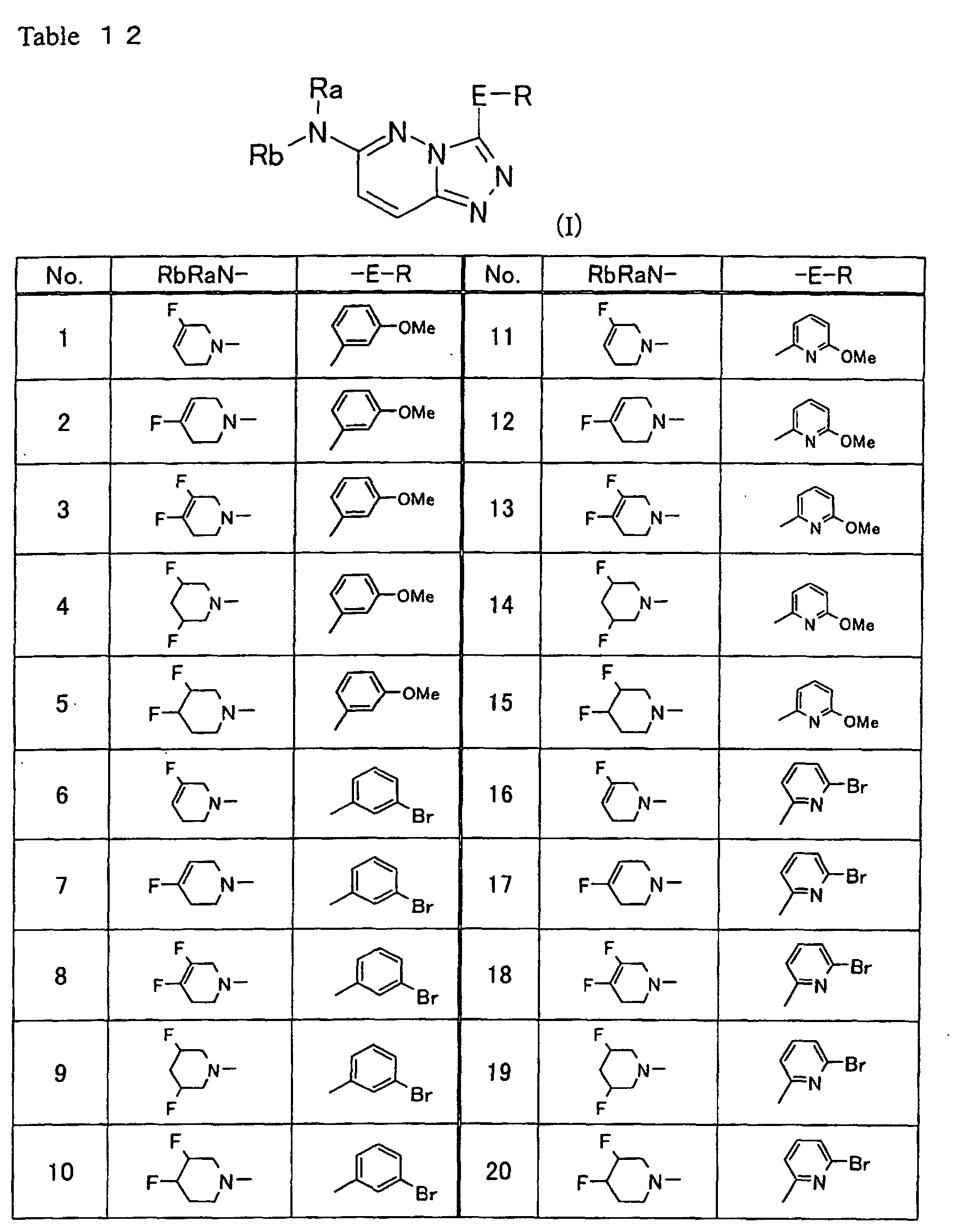
- the invention relates to a nitrogen-containing heterocyclic compound represented by the formula (I): or a pharmaceutically acceptable salt thereof, wherein
- aryl is preferably a C 6-14 monocyclic to tricyclic aryl group. More preferably, it is a phenyl or naphthyl group, particularly, a phenyl group. It is also possible that a phenyl group is fused with a C 5-8 cycloalkyl group to form, for example, an indanyl or tetrahydronaphthyl group.
- a "cycloalkyl” is preferably a C 3-14 cycloalkyl group, which may have bridge(s). More preferably, it is a C 3-10 cycloalkyl group, particularly, a cyclopentyl, cyclohexyl and cycloheptyl group.
- a "cycloalkenyl” is a group having 1 to 2 double bonds in the above-mentioned "cycloalkyl” ring.
- Such a 5- to 6-membered heteroaryl is preferably a furyl, thienyl, pyrrolyl, imidazolyl, pyrazolyl, thiazolyl, isothiazolyl, oxazolyl, isoxazolyl, oxadiazolyl, thiadiazolyl, triazolyl, tetrazolyl, pyridyl, pyrimidinyl, pyridazinyl, pyrazinyl and triazinyl group, while a bi- to tri-cyclic heteroaryl is preferably a benzofuranyl, benzothienyl, benzothiadiazolyl, benzothiazolyl, benzoxazolyl, benzoxadiazolyl, benzoimidazolyl, indolyl, isoindolyl, indazolyl, quinolyl, isoquinolyl, cinnolinyl, quinazolinyl, quinox
- a substituent on an “optionally substituted aryl”, and “optionally substituted heteroaryl”, “optionally substituted cycloalkyl”, “optionally substituted cycloalkenyl”, “optionally substituted 4- to 8-membered monocyclic saturated or partially unsaturated heterocyclic ring” is preferably the same or different 1 to 5 substituents selected from Group B shown below, more preferably groups selected from Group B1, especially a halogen, OAlk and SAlk.
- a "4- to 8-membered saturated or partially unsaturated heterocyclic ring" which may be formed from Ra and Rb taken together with an adjacent N atom may for example be a 4- to 8-membered monocyclic saturated or partially unsaturated heterocyclic ring having 1 to 2 N atoms as ring atoms with the rest of the ring atoms being C atoms.
- Such a heterocyclic ring may form a fused ring together with a benzene ring or a C 5-8 cycloalkyl ring, may have bridge(s), and may form a spiro ring.
- it is pyrrolydinyl, piperidinyl, homopiperidinyl, piperazinyl, pyrazolidinyl, imidazolidinyl, homopiperazinyl, perhydroazocinyl, pyrrolinyl, imidazolinyl, pyrazolinyl, 1,2,3,6-tetrahydropyridyl, 1,2-dihydropyridyl, tetrahydropyridazinyl, tetrahydropyrazinyl, 1,4,5,6-tetrahydropyrimidinyl, indolinyl, isoindolinyl, 1,2,3,4-tetrahydroquinolyl, 1,2,3,4-tetrahydroisoquinolyl, 3-azabicyclo[3.2.1]octyl, 8-azabicyclo[3.2.1]octyl, 3-azabicyclo[3.2.2]nonyl, 3-azabicyclo[3.3.1
- a piperidyl group is especially preferred.
- An especially preferred compound in the invention is nitrogen-containing heterocyclic compounds listed below and their pharmaceutically acceptable salts.
- Some of the invention substituents may allow geometric isomers or tautomers to exist, and the invention encompasses all these isomers as being separated or in a mixture.
- An invention compound may have an asymmetric carbon atom, based on which an optical isomer may exist.
- the invention encompasses all of these optical isomers as mixtures or individually separated forms.
- L is a leaving group such as a halogen atom or an organic sulfonate. the same applies analogously to the followings.
- An invention compound (I) can be obtained by a standard N -alkylation method, for example by reacting an amine derivative (III) and a compound (II) having an ordinary leaving group such as a halogen atom or an organic sulfonate in the presence or absence of a base such as potassium carbonate, triethylamine, sodium hydride and the like, in an inert solvent such as N , N -dimethylformamide (DMF), toluene, tetrahydrofuran (THF), acetonitrile and the like or without using any solvent with cooling or under reflux.
- a base such as potassium carbonate, triethylamine, sodium hydride and the like
- an inert solvent such as N , N -dimethylformamide (DMF), toluene, tetrahydrofuran (THF), acetonitrile and the like or without using any solvent with cooling or under reflux.
- a compound obtained in the first preparation method described above can further be subjected to a standard substituent-modifying reaction, for example, reduction from a nitro group to an amino group, amidation, sulfonamidation, N -alkylation, esterification, ester hydrolysis, hydroxyl group etherification, thioether sulfonation, halogenation, olefin-derivatization, and the like to obtain an invention compound having a desired substituent.
- a standard substituent-modifying reaction for example, reduction from a nitro group to an amino group, amidation, sulfonamidation, N -alkylation, esterification, ester hydrolysis, hydroxyl group etherification, thioether sulfonation, halogenation, olefin-derivatization, and the like to obtain an invention compound having a desired substituent.
- Any of these reactions can readily be conducted in accordance with a method described for example in ORGANIC FUNCTIONAL GROUP PREP
- the dehydration condensation reaction in the first step can be conducted by a standard method, for example by using a free carboxylic acid and a coupling agent such as 1-(3-dimethylaminopropyl)-3-ethylcarbodiimide (WSCD) or a carboxylic acid-activating agent such as 1,1'-carbonyldiimidazole, or using a reactive derivative of a carboxylic acid (for example, acid halide such as acid chloride and acid bromide; acid azides; active esters prepared from methanol, ethanol, benzyl alcohol, optionally substituted phenol, N -hydroxysuccinimide and the like; symmetric acid anhydrides; mixed acid anhydrides with alkylcarbonates, p -toluenesulfonic acid and the like).
- a coupling agent such as 1-(3-dimethylaminopropyl)-3-ethylcarbodiimide (WSCD) or a carboxylic acid-activating agent
- the reaction is conducted using equimolar amounts or an excessive amount of any one of the reactants, in an organic solvent which is inert to the reaction, such as pyridine, THF, methylene chloride, DMF, acetonitrile and the like.
- organic solvent which is inert to the reaction
- the reaction temperature is selected appropriately depending on the type of the reactive derivative. In a case of a certain reactive derivative, it may be advantageous to add a base such as 4-dimetylaminopyridine for promoting the reaction.
- the cyclization in the second step can be conducted by a reaction in the presence or absence of an acid such as acetic acid, p -toluenesulfonic acid, hydrochloric acid and the like, in a solvent such as xylene, ethylene glycol and the like, or without using any solvent.
- This reaction can be conducted at room temperature or with heating under reflux.
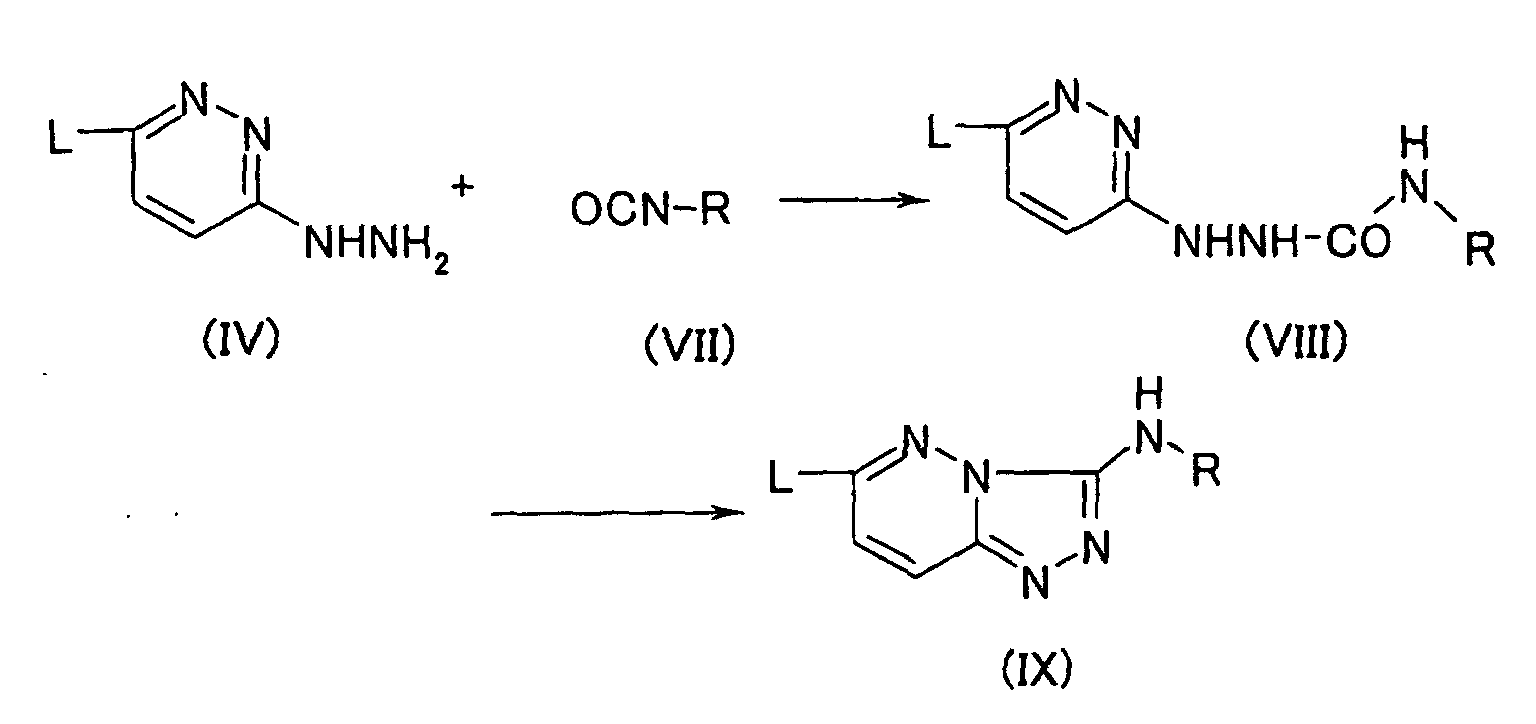
- An starting material (IX) of the present application can be produced by coupling a compound (IV) with an isocyanate compound (VII) in a solvent inert to the reaction such as acetonitrile to form a compound (VIII) followed by adding 1,2-dibromo-1,1,2,2-tetrachloroethane and triphenylphosphine in the presence of a base such as triethylamine whereby effecting a cyclization.
- the reaction can be conducted appropriately by a standard method at room temperature or with heating under reflux.
- a reaction product obtained by each preparation method described above can be isolated and purified as a free base, free acid, its salt, hydrate or any of various solvates.
- a salt can be produced by an ordinary salt formation reaction.
- the isolation and the purification can be conducted by applying ordinary chemical procedures such as extraction, concentration, distillation, crystallization, filtration, recrystallization, various chromatographies and the like.
- Each isomer can be isolated utilizing a physicochemical difference between isomers.
- an optical isomer can be separated by an ordinary optical resolution method, for example, fractional crystallization or chromatography.
- An optical isomer can be synthesized from a suitable optically active starting compound.
- An invention compound has an ability of stimulating the bone formation by osteoblasts, and is useful in preventing or treating a metabolic bone disease associated with a lower bone formation ability relative to the bone resorption ability.
- a metabolic bone disease includes osteoporosis, osteitis fibrosa (hyperparathyroidism), osteomalacia and Paget's disease which affects the parameters of systemic bone metabolism. It is useful especially in a senile osteoporosis associated with a reduced bone formation ability.
- the role of the ALP for the bone formation by the osteoblast is believed to be to increase the phosphate ion level at a site of the bone formation and to decompose pyrophosphoric acid which is an inhibitor of calcification ("SAIBO KOGAKU", Vol.13, No. 12, 1062 (1994)). It was also reported that a subcutaneous implantation of the ALP bound covalently to a collagen sheet caused the calcification (J. Clin. Invest., 89, 1974 (1992)). Accordingly, the osteoblast-induced ALP activity elevation can be regarded as an index of the bone formation.
- the reaction was stopped by adding 0.5M sodium hydroxide, and the absorbance at a wavelength of 405 nm (correction wavelength: 492 nm) was measured and represented by a % value based on the value in the control group being regarded as 100%, from which the ALP activity was calculated.
- the measurement described above was in accordance with the method by Lowry et al (Journal of Biological Chemistry, Vol. 207, page 19, (1954)).
- each rat was treated only with 0.1 ml of the mineral oil once a day for successive 10 days. On the 11th day of the treatment, the drug was discontinued and on the 18th day each rat was sacrificed to remove the calvaria.
- tetracyclin 25 mg/kg was given on the 10th day of the treatment and then calcein (20 mg/kg) was given subcutaneously to the dorsal area on the 16th day for labeling the bone.
- the calvaria thus obtained was fixed in 70% ethanol, and coronal sections were made according to a standard procedure and subjected to a bone morphometric measurements. Osteoids thickness and bone formation rate in an invention compound treatment group and a control group are shown in Fig. 1 and Fig. 2.
- a pharmaceutical composition containing an invention compound (I) or pharmaceutically acceptable salt thereof and a pharmaceutically acceptable carrier can be prepared by an ordinary method using one or more of a compound represented by the formula (I) or pharmaceutically acceptable salt thereof together with a pharmaceutical carrier, excipient and other additives employed usually in a formulation.
- the administration can be conducted in various dosage forms orally as a tablet, pill, capsule, granule, powder, liquid, inhalation formulation and the like, or parenterally as an injection formulation such as an intravenous injection, intramuscular injection and the like, as well as a suppositories, percutaneous liquid formulations, ointments, percutaneous patches and the like.
- Any of these materials can be made aseptic by filtration through a filter retaining bacteria, incorporation of a sterilizing agent or irradiation. Any of these material can be formulated as an aseptic solid composition which is to be reconstituted just before use with an aseptic water or aseptic solvent for injection.
- Reference Example 3 A mixture of (6-chloropyridazin-3-yl)hydrazine, 3-dimethylaminobenzoic acid, WSCD hydrochloride and THF was stirred at room temperature for 2 hours. The reaction solution was combined with water, and the precipitate was collected by filtration, washed with water and isopropyl ether to obtain N'-(6-chloropyridazin-3-yl)-3-dimethylaminobenzohydrazide. To this, ethylene glycol was added and the mixture was stirred at 160°C for 4 hours.
- Example 4 A mixture of 3-[6-(piperidin-1-yl)-1,2,4-triazolo[4,3-b]pyridazine-3-yl]aniline (180 mg) and acetic anhydride (3 ml) was stirred at room temperature for 6 hours. The reaction solution was concentrated under reduced pressure, and the resultant crude crystals were washed with diethyl ether to obtain 3'-[6-(piperidin-1-yl)-1,2,4-triazolo[4,3-b]pyridazin-3-yl]acetoanilide (190 mg) as colorless crystals.
- Example 5 To a solution mixture of 6-piperidin-1-yl-3-piperidin-3-yl-1,2,4-triazolo[4,3-b]pyridazine (670 mg), triethylamine (360 mg) and methylene chloride (15 ml), methanesulfonyl chloride (320 mg) was added and the mixture was stirred at room temperature for 8 hours. The reaction solution was concentrated under reduced pressure, and the resultant residue was extracted with ethyl acetate. The extract was washed successively with water and brine, dried over anhydrous magnesium sulfate, and concentrated under reduced pressure.
- Example 8 A mixture of 6-azocan-1-yl-3-(6-chloropyridin-2-yl)-1,2,4-triazolo[4,3-b]pyridazine (360 mg), sodium methoxide (570 mg) and toluene (20 ml) was stirred with heating under reflux for 3 hours. After allowing to cool to room temperature, the reaction solution was concentrated under reduced pressure, and the resultant residue was extracted with ethyl acetate. The extract was washed with water and brine, dried over anhydrous magnesium sulfate, and concentrated under reduced pressure.
- Example 9 To a solution mixture of 3-[6-(piperidin-1-yl)-1,2,4-triazolo[4,3-b]pyridazine-3-yl]benzoic acid (430 mg), a catalytic amount of DMF and THF (10 ml), oxalyl chloride (0.44 ml) was added with cooling in ice, and the mixture was stirred at room temperature for 2 hours and then ammonia gas was passed with cooling in ice for 15 minutes. The reaction solution was concentrated under reduced pressure, and the resultant residue was combined with chloroform:methanol (10:1), and then insoluble materials were filtered off.
- Example 10 To a solution of 3-[3-(methylsulfanyl)phenyl]-6-piperidin-1-yl-1,2,4-triazolo[4,3-b]pyridazine (550 mg) in methylene chloride (30 ml), 3-chloroperbenzoic acid (1.25 g) was added at room temperature, and the mixture was stirred for 13 hours. The reaction solution was combined with water, and diluted with methylene chloride. The organic phase washed successively with water, 1M aqueous solution of sodium hydroxide and brine, dried over anhydrous sodium sulfate, and concentrated under reduced pressure.
- Example 11 A solution mixture of concentrated sulfuric acid (1.5 ml) and water (3 ml) was cooled to -5°C, and 4-(6-piperidin-1-yl-1,2,4-triazolo[4,3-b]pyridazin-3-yl)-1,3-thiazol-2-amine (0.90 g), copper (II) sulfate (1.50 g) and sodium bromide (0.62 g) were added successively, and the mixture was stirred at 0°C for 5 minutes. Then, a solution of sodium nitrite (0.25 g) in water (1.6 ml), followed by stirring at room temperature overnight.
- reaction solution was combined with water, chloroform and 2-propanol, and insoluble materials were filtered off.
- the resultant organic phase was washed with water, dried over anhydrous magnesium sulfate, and concentrated under reduced pressure.
- Example 12 A mixture of 6-(6-azepan-1-yl-1,2,4-triazolo[4,3-b]pyridazin-3-yl)pyridine-2-ol (700 mg) and phosphorus tribromide (7 ml) was stirred at 130°C for 6 hours. After allowing to cool to room temperature, an ice-water was added, and the mixture was neutralized with saturated aqueous solution of potassium carbonate, and extracted with chloroform. The extract was washed with saturated aqueous solution of sodium hydrogen carbonate and brine, dried over anhydrous sodium sulfate, and then concentrated under reduced pressure.
- Example 13 To a solution of diethyl [(6-azepan-1-yl-1,2,4-triazolo[4,3-b]pyridazin-3-yl)methyl]phosphonate (367 mg) in THF (10 ml), potassium tert-butoxide (127 mg) was added with cooling in an ice bath, and the mixture was stirred at room temperature for 40 minutes. The resultant red solution was combined with 2-bromobenzaldehyde (0.128 ml), and stirred at room temperature for further 1 hour. The reaction solution was combined with water, and extracted with ethyl acetate. The extract was washed with water and brine, dried over anhydrous magnesium sulfate, and concentrated under reduced pressure.
- Example 14 A mixture of ethyl 6-chloro-1,2,4-triazolo[4,3-b]pyridazine-3-carboxylate (3.00 g) and hexamethylenimine (10 ml) was stirred at 100°C for 2 hours.
- Example 15 A mixture of 1-[(benzyloxy)carbonyl]piperidine-3-carboxylic acid (2.44 g), 3-chloro-6-hydrazinopyridazine (1.34g), WSCD hydrochloride (2.13 g) and methylene chloride (60 ml) was stirred at room temperature for 16 hours. The reaction solution was concentrated under reduced pressure and extracted with ethyl acetate. The extract was washed successively with water and brine, dried over anhydrous sodium sulfate, and concentrated under reduced pressure. The resultant reside was combined with acetic acid (80 ml), stirred at 100°C for 2 days, and then the solvent was distilled off under reduced pressure.
- acetic acid 80 ml
- the resultant crude crystals were washed with ethanol, and stirred with heating under reflux in piperidine (10 ml) for 3 hours.
- the resultant colorless solids were combined with ethanol (40 ml) and 10% palladium-carbon (150 mg), and stirred under hydrogen atmosphere at room temperature for 6 hours, and then the catalyst was filtered off.
- the resultant filtrate was concentrated under reduced pressure to obtain 6-piperidin-1-yl-3-piperidin-3-yl-1,2,4-triazolo[4,3-b]pyridazine (1.18 g) as a colorless amorphous.
- Example 16 To a solution of ethyl 2-aminothiazole-4-carboxylate (4.56 g) in THF (200 ml), 1M aqueous solution of sodium hydroxide (30 ml) was added and the mixture was stirred at room temperature for 3 hours. The reaction solution was combined with 1M hydrochloric acid (30 ml), concentrated, and the resultant residue was dissolved in DMF (50 ml). Then, 6-chloropyridazin-3-ylhydrazine (3.83 g) and WSCD hydrochloride (6.09 g) were added, and the mixture was stirred at room temperature.
- reaction solution was combined with water, and the precipitate was collected by filtration, and washed with water and diethyl ether, combined with acetic acid (30 ml), heated under reflux, and then the reaction solution was concentrated under reduced pressure.
- the residue was combined with saturated aqueous solution of sodium hydrogen carbonate, and extracted with ethyl acetate. The organic layer was washed with water and brine, dried over anhydrous magnesium sulfate, and concentrated under reduced pressure.
- Example 17 To a solution of 6-hydrazino- N -azethyl- N -phenylpyridazine-3-amine (1.14 g) in methylene chloride (10 ml), 6-chloropicolic acid (0.83 g) and WSCD hydrochloride (1.22 g) were added, and the mixture was stirred at room temperature overnight. The reaction solution was purified by silica gel column chromatography (eluent: chloroform) to obtain 6-chloro- N '- ⁇ 6-[methyl(phenyl)amino]pyridazin-3-yl ⁇ pyridine-2-carbohydrazide (0.57 g).
- Example 18 A mixture of 6-chloro-3-(6-chloropyridin-2-yl)-1,2,4-triazolo[4,3-b]pyridazine (620 mg), heptamethylenimine (1.32 g) and 1,4-dioxane (20 ml) was stirred at 100°C for 9 hours. After allowing to cool to room temperature, the reaction solution was concentrated under reduced pressure, and the resultant residue was extracted with ethyl acetate. The extract was washed successively with 5% aqueous solution of citric acid, water, saturated aqueous solution of sodium hydrogen carbonate and brine, dried over anhydrous sodium sulfate, and concentrated under reduced pressure.
- Example 19 A mixture of 6-(6-chloro-1,2,4-triazolo[4,3-b]pyridazin-3-yl)pyridin-2-ol (960 mg) and piperidine (10 ml) was stirred at 100°C for 3 hours. After allowing to cool to room temperature, the reaction solution was concentrated under reduced pressure, and the resultant crystalline residue was recrystallized from ethanol to obtain 6-(6-piperidin-1-yl-1,2,4-triazolo[4,3-b]pyridazin-3-yl)pyridin-2-ol (820 mg) as grayish white crystals.
- Example 2 By proceeding similarly to Example 1 optionally with conducting an ordinary salt formation using 4M hydrogen chloride - ethyl acetate, the compounds of Examples 20 to 170 were obtained.
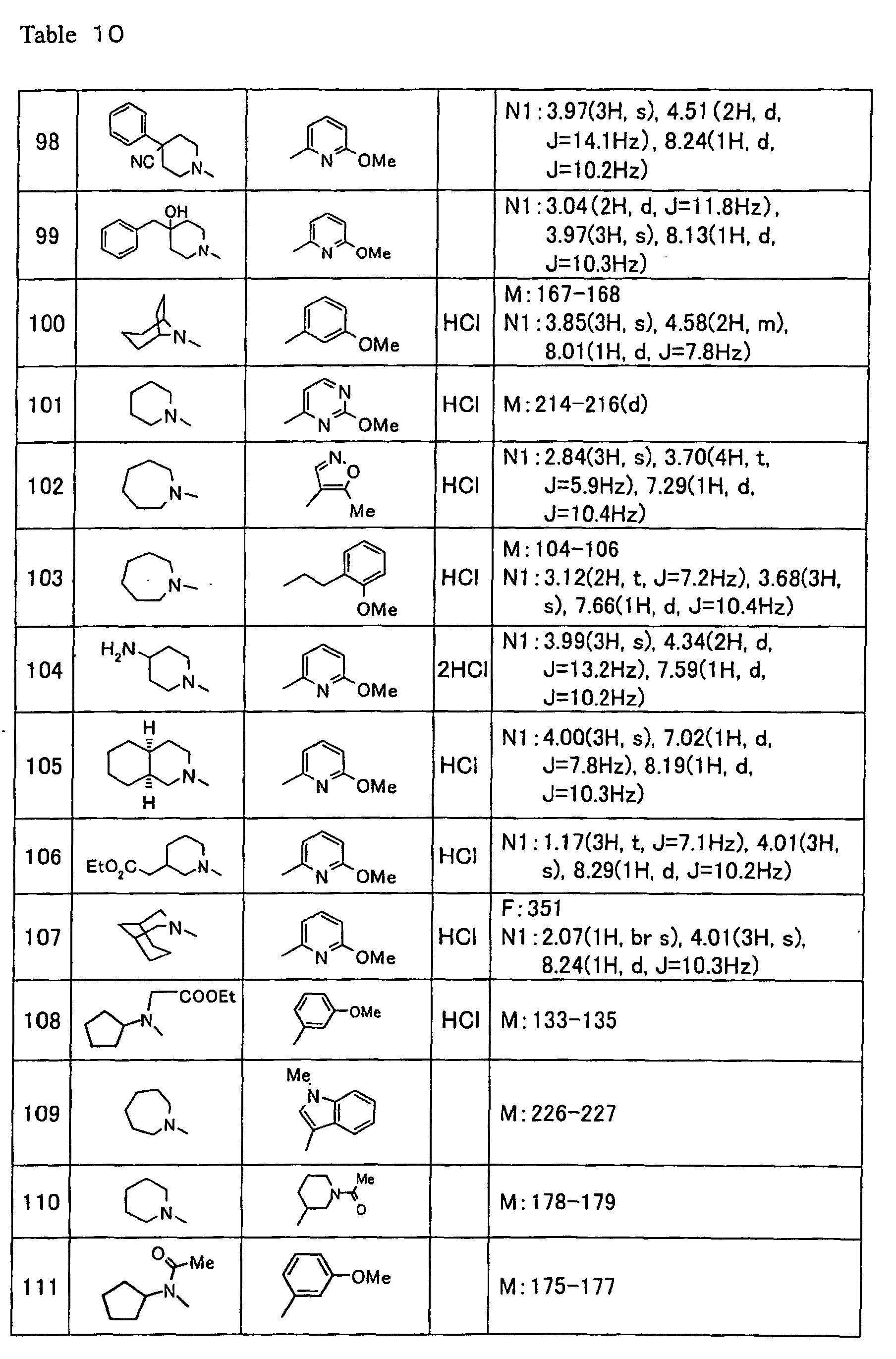
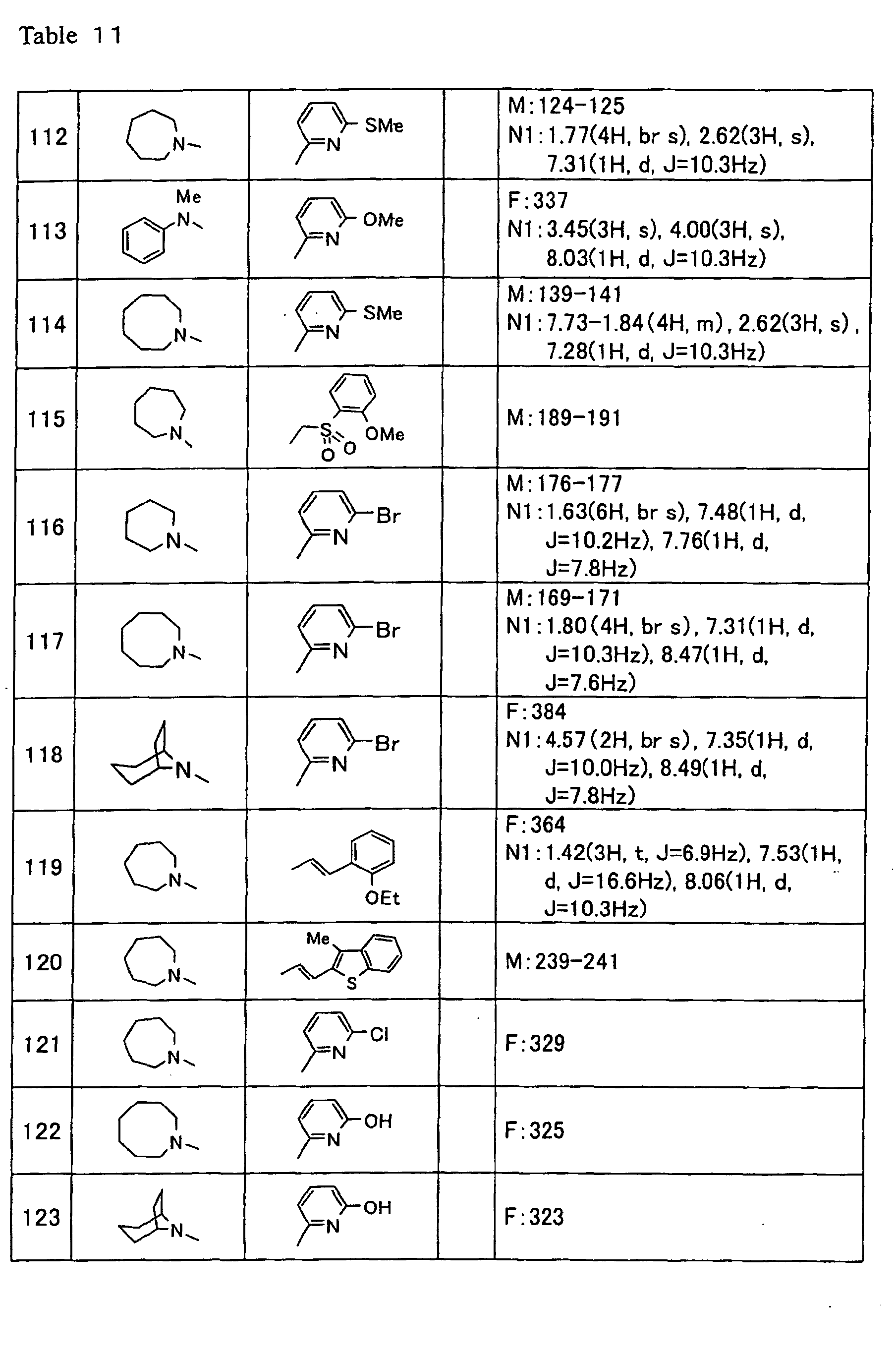
- the compound of Example 108 was obtained similarly to Example 2, the compound of Example 109 similarly to Example 3, the compounds of Examples 110 and 111 similarly to Example 4, the compounds of Examples 112 to 114 similarly to Example 8, the compound of Example 115 similarly to Example 10, the compounds of Examples 116 to 118 similarly to Example 12, the compounds of Examples 119 and 120 similarly to Example 13, the compound of Example 121 similarly to Example 18, and the compounds of Example 122 to 123 similarly to Example 19.
Landscapes
- Organic Chemistry (AREA)
- Chemical & Material Sciences (AREA)
- Health & Medical Sciences (AREA)
- Physical Education & Sports Medicine (AREA)
- Chemical Kinetics & Catalysis (AREA)
- Animal Behavior & Ethology (AREA)
- Medicinal Chemistry (AREA)
- Nuclear Medicine, Radiotherapy & Molecular Imaging (AREA)
- Engineering & Computer Science (AREA)
- Pharmacology & Pharmacy (AREA)
- Life Sciences & Earth Sciences (AREA)
- General Chemical & Material Sciences (AREA)
- General Health & Medical Sciences (AREA)
- Public Health (AREA)
- Veterinary Medicine (AREA)
- Bioinformatics & Cheminformatics (AREA)
- Orthopedic Medicine & Surgery (AREA)
- Rheumatology (AREA)
- Pharmaceuticals Containing Other Organic And Inorganic Compounds (AREA)
Abstract
Description
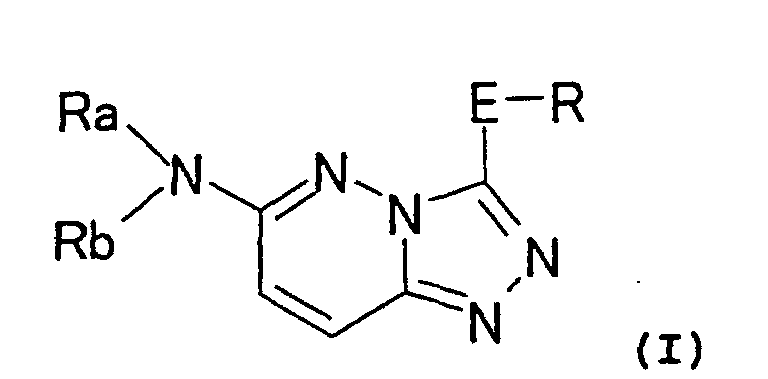
wherein
- (1) a compound wherein Ra and Rb taken together with an adjacent N atom represent a piperidino, E is a single bond and R is a piperidino, unsubstituted phenyl, p-(trifluoromethyl)phenyl, p-chlorophenyl or o-nitrophenyl,
- (2) a compound wherein Ra and Rb taken together with an adjacent N atom represent a 4-methyl-1-piperazinyl, E is a single bond, and R is an unsubstituted phenyl, p-methylphenyl, m-methylphenyl, p-methoxyphenyl, m-chlorophenyl, p-chlorophenyl or m-nitrophenyl,
- (3) a compound wherein R is an optionally substituted imidazolyl, 5-nitro-2-furyl or 5-nitro-2-thienyl,
- (4) a compound wherein Ra is H, Rb is cyclopropyl, E is a single bond and R is a p-(trifluoromethyl)phenyl, and
- (5) a compound wherein Ra is a methyl, Rb is a 2-hydroxypropyl, E is a single bond and R is a 3-pyridyl, and the same applies analogously to the followings.


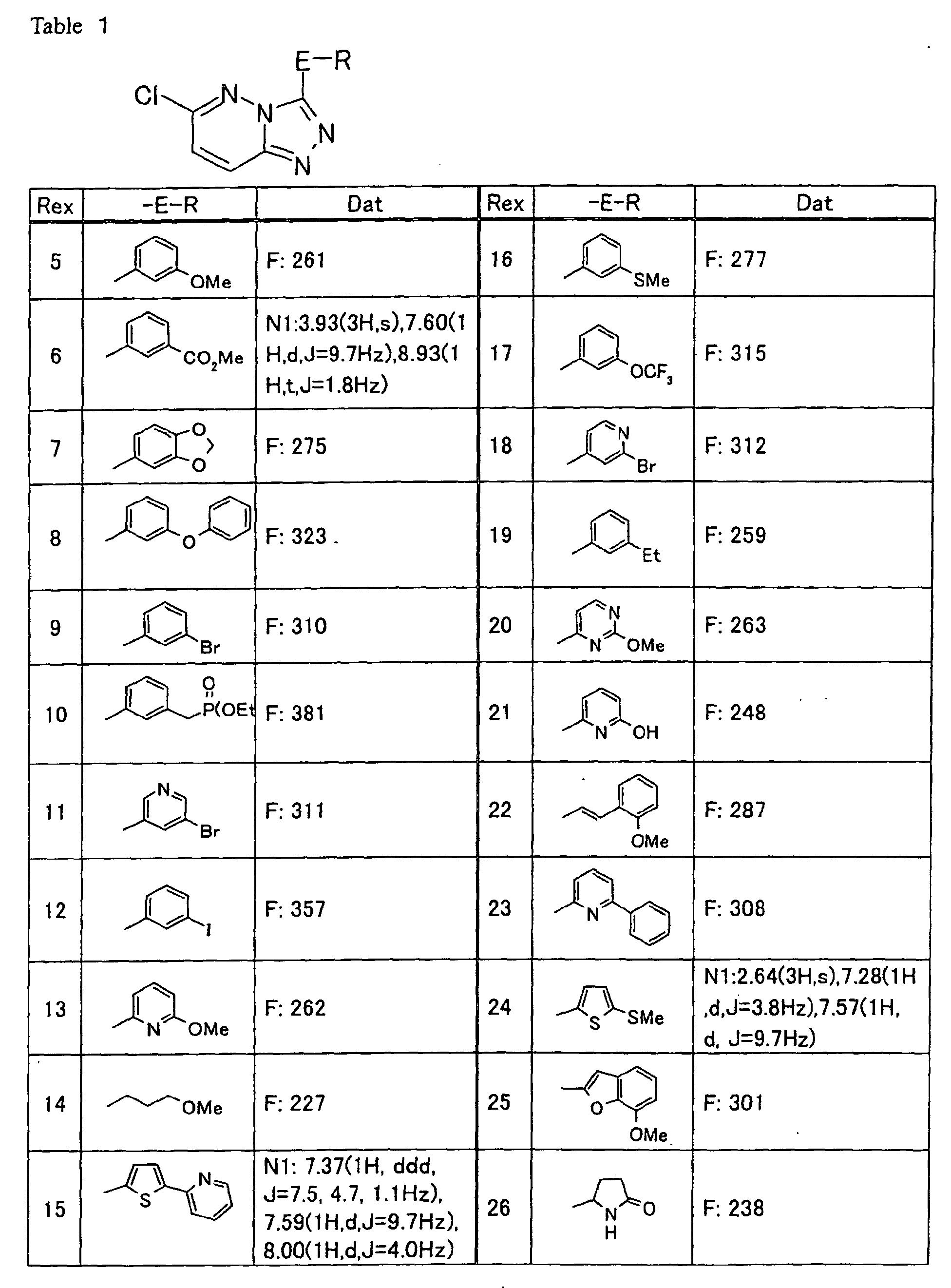


Claims (9)
- A nitrogen-containing heterocyclic compound represented by the formula (I):or a pharmaceutically acceptable salt thereof,
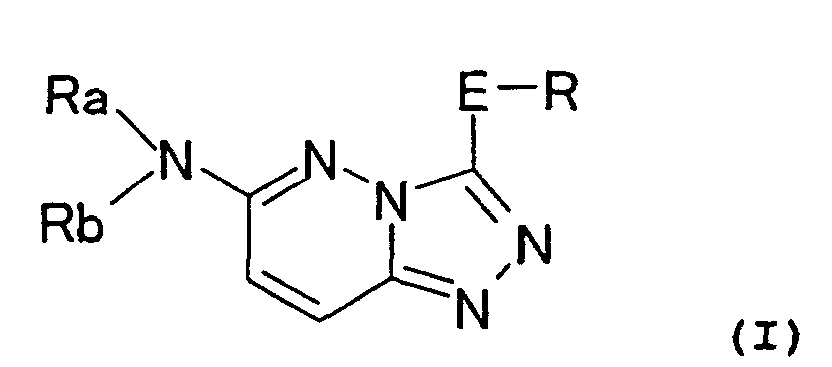
whereinwith the proviso that the following compounds are excluded:Ra and Rb: the same or different and each represents H; CO-lower alkyl; SO2-lower alkyl; an optionally substituted cycloalkyl; an optionally substituted aryl; or a lower alkyl which may have 1 to 3 substituents selected from the group consisting of an optionally substituted cycloalkyl, an optionally substituted aryl, an optionally substituted 4- to 8-membered monocyclic saturated or partially unsaturated heterocyclic ring, CO-lower alkyl, SO2-lower alkyl, OR1, SR1, NR1R2, halogen, NO2, CN and COOR1; provided that at least one of Ra and Rb represents a group other than H; or,Ra and Rb taken together with an adjacent N atom represent a 4- to 8-membered saturated or partially unsaturated heterocyclic ring containing 1 to 2 nitrogen atoms as heteroatoms, said heterocyclic ring may be fused with a benzene ring or a cycloalkyl ring and may have a bridge and may form a spiro ring, and said heterocyclic ring may have 1 to 5 substituent,E: a single bond, C1-3 alkylene, vinylene (-C=C-), ethynylene (-C≡C-), CO, NR3, CH2-J, CONR4 or NR5CO,J: O, S, NR6, CO, SO or SO2,R: an optionally substituted aryl, an optionally substituted heteroaryl, an optionally substituted cycloalkyl, an optionally substituted cycloalkenyl or an optionally substituted 4- to 8-membered monocyclic saturated or partially saturated heterocyclic ring,R1 to R6: the same or different and each denotes H or lower alkyl;(1) a compound wherein Ra and Rb taken together with an adjacent N atom represent a piperidino, E is a single bond and R is a piperidino, unsubstituted phenyl, p-(trifluoromethyl)phenyl, p-chlorophenyl or o-nitrophenyl,(2) a compound wherein Ra and Rb taken together with an adjacent N atom represent a 4-methyl-1-piperazinyl, E is a single bond, and R is an unsubstituted phenyl, p-methylphenyl, m-methylphenyl, p-methoxyphenyl, m-chlorophenyl, p-chlorophenyl or m-nitrophenyl,(3) a compound wherein R is an optionally substituted imidazolyl, 5-nitro-2-furyl or 5-nitro-2-thienyl,(4) a compound wherein Ra is H, Rb is cyclopropyl, E is a single bond and R is a p-(trifluoromethyl)phenyl, and,(5) a compound wherein Ra is a methyl, Rb is a 2-hydroxy-propyl, E is a single bond and R is a 3-pyridyl. - A nitrogen-containing heterocyclic compound according to Claim 1 or a pharmaceutically acceptable salt thereof,
wherein -NRaRb forms a 4- to 8-membered saturated or partially unsaturated heterocyclic ring having 1 to 2 N atoms as heteroatoms, which may be fused with a benzene ring or a cycloalkyl ring, which may have a bridge, or which may form a spiro ring, which may have 1 to 5 substituents selected from Group B; wherein Group B comprises a lower alkyl which may have 1 to 4 substituents selected from Group G, halogen, NR1R2, -NR1CO-lower alkyl, NO2, CN, OR1, -O-(lower alkyl having 1 to 4 substituents selected from Group G), SR1, -S-halogeno-lower alkyl, -O-CO-lower alkyl, COOR1, COR1, CONR1R2, SO-lower alkyl, SO2-lower alkyl, SO2NR1R2, P(=O)(OR1)2, -O-CH2-O-, -O-(CH2)2-O-, aryl which may have 1 to 4 substituents selected from Group D, heteroaryl which may have 1 to 4 substituents selected from Group D, -O-(aryl which may have 1 to 4 substituents selected from Group D), 4- to 8-membered monocyclic saturated or partially unsaturated heterocyclic ring which may have 1 to 4 substituents selected from Group D, cycloalkyl and -O-cycloalkyl; Group D comprises a lower alkyl, halogen, halogeno-lower alkyl, NR1R2, NO2, CN, OR1 and SR1; Group G comprises a halogen, NR1R2, CN, COOR1, OR1, SR1, 4- to 8-membered monocyclic saturated or partially unsaturated heterocyclic ring which may have 1 to 4 substituents selected from Group D, aryl which may have 1 to 4 substituents selected from Group D and heteroaryl which may have 1 to 4 substituents selected from Group D; E is a single bond, C1-3 alkylene, vinylene, ethynylene, CONH, CH2NH, CH2O or CH2S; R is an aryl which may have 1 to 5 substituents selected from Group B or heteroaryl which may have 1 to 5 substituents selected from Group B. - A nitrogen-containing heterocyclic compound according to Claim 2 or a pharmaceutically acceptable salt thereof, wherein E is a single bond, C1-3 alkylene, vinylene or ethynylene; R is an aryl having 1 to 5 substituents selected from Group B1 or heteroaryl having 1 to 5 substituents selected from Group B1; Group B1 comprises a lower alkyl, halogeno-lower alkyl, halogen, NR1R2, NO2, CN, OR1, -O-halogeno-lower alkyl, SR1, COOR1, CONR1R2, SO2-lower alkyl, 4- to 8-membered monocyclic saturated or partially unsaturated heterocyclic ring, phenyl and phenoxy.
- A nitrogen-containing heterocyclic compound according to Claim 3 or a pharmaceutically acceptable salt thereof, wherein -NRaRb is a 4- to 8-membered monocyclic saturated or partially unsaturated heterocyclic ring which may have one N atom as a heteroatom and may have a bridge, and may have 1 to 2 substituents selected from a lower alkyl, halogen , OR1 and COOR1; E is a single bond; R is a phenyl having a substituent in its m-position selected from a halogen, O-lower alkyl and S-lower alkyl or a pyridyl having a substituent in its 6-position selected from a halogen, O-lower alkyl and S-lower alkyl.
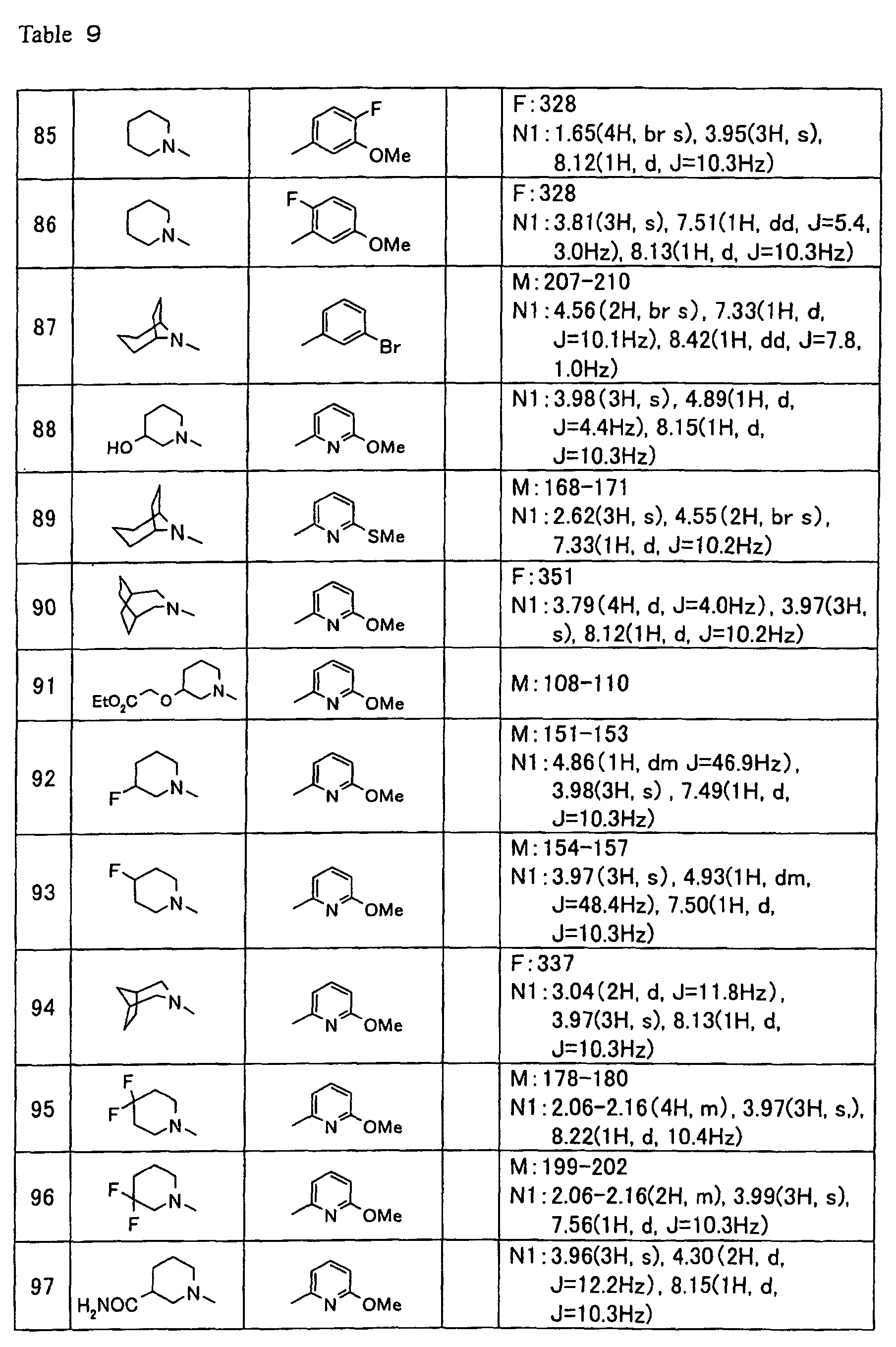
- A nitrogen-containing heterocyclic compound according to Claim 1 or a pharmaceutically acceptable salt thereof selected from 6-azocan-1-yl-3-(6-methoxypyridin-2-yl)-1,2,4-triazolo[4,3-b]pyridazine, 6-azepan-1-yl-3-(6-bromopyridin-2-yl)-1,2,4-triazolo[4,3-b]pyridazine, 3-(3-methoxyphenyl)-6-(piperidin-1-yl)-1,2,4-triazolo[4,3-b]pyridazine, 3-(3-bromophenyl)-6-(piperidin-1-yl)-1,2,4-triazolo[4,3-b]pyridazine, 6-azepan-1-yl-3-(6-methoxypyridin-2-yl)-1,2,4-triazolo[4,3-b]pyridazine, 6-(4-fluoropiperidin-1-yl)-3-(6-methoxypyridin-2-yl)-1,2,4-triazolo[4,3-b]pyridazine, 6-(3-azabicyclo[3.2.1]octan-3-yl)-3-(6-methoxypyridin-2-yl)-1,2,4-triazolo[4,3-b]pyridazine, 6-(4,4-difluoropiperidin-1-yl)-3-(6-methoxypyridin-2-yl)-1,2,4-triazolo[4,3-b]pyridazine, 6-(3,3-difluoropiperidin-1-yl)-3-(6-methoxypyridin-2-yl)-1,2,4-triazolo[4,3-b]pyridazine, 6-azocan-1-yl-3-(6-bromopyridin-2-yl)-1,2,4-triazolo[4,3-b]pyridazine, and 6-(8-azabicyclo[3.2.1]octan-8-yl)-3-(6-bromopyridin-2-yl)-1,2,4-triazolo[4,3-b]pyridazine.
- A pharmaceutical composition comprising a nitrogen-containing heterocyclic compound according to Claim 1 or a pharmaceutically acceptable salt thereof and a pharmaceutically acceptable carrier.
- A pharmaceutical composition according to Claim 6 which is a bone-forming agent.
- Use of a nitrogen-containing heterocyclic compound according to Claim 1 or a pharmaceutically acceptable salt thereof for the manufacture of a bone-forming agent for a mammalian animal.
- A method for stimulating bone formation in a mammalian animal, comprising administering an effective amount of a nitrogen-containing heterocyclic compound according to Claim 1 or a pharmaceutically acceptable salt thereof to the mammalian animal.
Applications Claiming Priority (3)
| Application Number | Priority Date | Filing Date | Title |
|---|---|---|---|
| JP2002056209 | 2002-03-01 | ||
| JP2002056209 | 2002-03-01 | ||
| PCT/JP2003/002248 WO2003074525A1 (en) | 2002-03-01 | 2003-02-27 | Nitrogen-containing heterocyclic compound |
Publications (2)
| Publication Number | Publication Date |
|---|---|
| EP1481977A1 true EP1481977A1 (en) | 2004-12-01 |
| EP1481977A4 EP1481977A4 (en) | 2006-02-01 |
Family
ID=27784631
Family Applications (1)
| Application Number | Title | Priority Date | Filing Date |
|---|---|---|---|
| EP03743518A Withdrawn EP1481977A4 (en) | 2002-03-01 | 2003-02-27 | HETEROCYCLIC NITROGEN COMPOUND |
Country Status (7)
| Country | Link |
|---|---|
| US (2) | US20050096322A1 (en) |
| EP (1) | EP1481977A4 (en) |
| KR (1) | KR20040087335A (en) |
| CN (1) | CN1281606C (en) |
| AU (1) | AU2003211424A1 (en) |
| CA (1) | CA2476757A1 (en) |
| WO (1) | WO2003074525A1 (en) |
Cited By (9)
| Publication number | Priority date | Publication date | Assignee | Title |
|---|---|---|---|---|
| WO2007138472A3 (en) * | 2006-05-30 | 2008-02-07 | Pfizer Prod Inc | Triazolopyridazine derivatives |
| WO2008008539A3 (en) * | 2006-07-14 | 2009-02-12 | Amgen Inc | Fused heterocyclic derivatives useful as inhibitors of the hepatocyte growth factor receptor |
| US8030305B2 (en) | 2005-12-21 | 2011-10-04 | Janssen Pharmaceutica N.V. | Triazolopyridazines as kinase modulators |
| US8198448B2 (en) | 2006-07-14 | 2012-06-12 | Amgen Inc. | Fused heterocyclic derivatives and methods of use |
| US8217177B2 (en) | 2006-07-14 | 2012-07-10 | Amgen Inc. | Fused heterocyclic derivatives and methods of use |
| EP2170337A4 (en) * | 2007-06-28 | 2013-12-18 | Abbvie Inc | Novel triazolopyridazines |
| US8685981B2 (en) | 2009-01-19 | 2014-04-01 | Daiichi Sankyo Company, Limited | Cyclic compound having hetero atom |
| EP2844660A4 (en) * | 2012-05-02 | 2015-09-23 | Southern Res Inst | TRIAZOLOPYRIDAZINE COMPOUNDS, USE AS INHIBITORS OF KINASE LRRK2, AND METHODS FOR THEIR PREPARATION |
| RU2677698C1 (en) * | 2013-12-09 | 2019-01-21 | Юсб Байофарма Спрл | Triazolopyridazine derivatives as modulators of tnf activity |
Families Citing this family (27)
| Publication number | Priority date | Publication date | Assignee | Title |
|---|---|---|---|---|
| AU2003297161B8 (en) | 2002-12-18 | 2011-03-31 | Vertex Pharmaceuticals Incorporated | Triazolopyridazines as protein kinases inhibitors |
| JPWO2005002590A1 (en) * | 2003-07-01 | 2006-08-10 | アステラス製薬株式会社 | Bone mass increase inducer |
| US7683060B2 (en) | 2006-08-07 | 2010-03-23 | Incyte Corporation | Triazolotriazines as kinase inhibitors |
| GEP20125658B (en) * | 2006-11-22 | 2012-10-10 | Incyte Corp | Imidazotriazines and imidazo pyrimidines as kinase inhibitors |
| WO2009017954A1 (en) * | 2007-08-01 | 2009-02-05 | Phenomix Corporation | Inhibitors of jak2 kinase |
| SI2300455T1 (en) | 2008-05-21 | 2017-12-29 | Incyte Holdings Corporation | Salts of 2-fluoro-n-methyl-4-(7-(quinolin-6-yl-methyl)- imidazo(1,2-b)(1,2,4)triazin-2-yl)benzamide and processes related to preparing the same |
| JP2011520986A (en) * | 2008-05-22 | 2011-07-21 | アムジエン・インコーポレーテツド | Heterocycles as protein kinase inhibitors |
| EP2131407A1 (en) * | 2008-06-05 | 2009-12-09 | Nexans | Superconducting wire with low AC losses |
| BRPI1013988A2 (en) | 2009-04-06 | 2016-04-05 | Daiichi Sankyo Co Ltd | compound, pharmaceutical composition, and use of a compound or a pharmaceutically acceptable salt thereof |
| MX2012008898A (en) | 2010-02-03 | 2012-11-06 | Incyte Corp | Imidazo[1,2-b][1,2,4]triazines as c-met inhibitors. |
| JPWO2011136264A1 (en) * | 2010-04-28 | 2013-07-22 | 第一三共株式会社 | [5,6] heterocyclic compounds |
| WO2012075456A1 (en) | 2010-12-02 | 2012-06-07 | Constellation Pharmaceuticals | Bromodomain inhibitors and uses thereof |
| AR084070A1 (en) | 2010-12-02 | 2013-04-17 | Constellation Pharmaceuticals Inc | BROMODOMINIUM INHIBITORS AND USES OF THE SAME |
| WO2012151512A2 (en) | 2011-05-04 | 2012-11-08 | Constellation Pharmaceuticals, Inc. | Bromodomain inhibitors and uses thereof |
| WO2012174487A2 (en) * | 2011-06-17 | 2012-12-20 | Constellation Pharmaceuticals, Inc. | Bromodomain inhibitors and uses thereof |
| TWI602820B (en) | 2012-06-06 | 2017-10-21 | 星宿藥物公司 | Bromodomain inhibitors and uses thereof |
| WO2013184878A1 (en) | 2012-06-06 | 2013-12-12 | Constellation Pharmaceuticals, Inc. | Benzo [b] isoxazoloazepine bromodomain inhibitors and uses thereof |
| JP6484555B2 (en) | 2013-08-29 | 2019-03-13 | 京都薬品工業株式会社 | Novel aromatic compound and use thereof |
| CN106687463B (en) | 2014-06-20 | 2019-04-09 | 星座制药公司 | A crystal form of acetamide compounds |
| US20180185368A1 (en) | 2014-11-06 | 2018-07-05 | Lysosomal Therapeutics Inc. | Substituted pyrrolo[1,2-a]pyrimidines and their use in the treatment of medical disorders |
| EP3215511B1 (en) | 2014-11-06 | 2024-04-17 | Bial-R&D Investments, S.A. | Substituted pyrazolo(1,5-a)pyrimidines and their use in the treatment of medical disorders |
| WO2016073889A1 (en) | 2014-11-06 | 2016-05-12 | Lysosomal Therapeutics Inc. | Substituted imidazo[1,5-a]pyrimidines and their use in the treatment of medical disorders |
| MX388912B (en) | 2016-04-06 | 2025-03-20 | Lysosomal Therapeutics Inc | Pyrrolo[1,2-a]pyrimidinyl carboxamide compounds and their use in the treatment of medical disorders |
| KR20180133461A (en) | 2016-04-06 | 2018-12-14 | 리소소말 테라퓨틱스 인크. | Pyrazolo [1,5-a] pyrimidinylcarboxamide compounds and their use in the treatment of medical disorders |
| WO2017176961A1 (en) | 2016-04-06 | 2017-10-12 | Lysosomal Therapeutics Inc. | Imidazo [1,5-a]pyrimidinyl carboxamide compounds and their use in the treatment of medical disorders |
| WO2017192930A1 (en) | 2016-05-05 | 2017-11-09 | Lysosomal Therapeutics Inc. | SUBSTITUTED IMIDAZO[1,2-b]PYRIDAZINES, SUBSTITUTED IMIDAZO[1,5-b]PYRIDAZINES, RELATED COMPOUNDS, AND THEIR USE IN THE TREATMENT OF MEDICAL DISORDERS |
| WO2017192931A1 (en) | 2016-05-05 | 2017-11-09 | Lysosomal Therapeutics Inc. | SUBSTITUTED IMDAZO[1,2-α]PYRIDINES, SUBSTITUTED IMIDAZO[1,2-α]PYRAZINES, RELATED COMPOUNDS, AND THEIR USE IN THE TREATMENT OF MEDICAL DISORDERS |
Family Cites Families (10)
| Publication number | Priority date | Publication date | Assignee | Title |
|---|---|---|---|---|
| US3957766A (en) * | 1970-06-19 | 1976-05-18 | Boehringer Mannheim G.M.B.H. | Novel nitrofuran compounds and pharmaceutical compositions |
| DE2113438A1 (en) | 1971-03-19 | 1972-09-21 | Boehringer Mannheim Gmbh | Anti-microbial nitrofuryl-triazolo -(4,3-b) - pyridazine derivs - used for treating urinary system infections |
| DE2161586A1 (en) | 1971-12-11 | 1973-06-14 | Boehringer Mannheim Gmbh | 5-nitrofuryl triazolopyridazines - microbicides, active against urinary tract infections |
| DE2161587A1 (en) | 1971-12-11 | 1973-06-14 | Boehringer Mannheim Gmbh | 5-nitrofuryl triazolopyridazines - microbicides, active against urinary tract infections |
| JPS5436495B2 (en) | 1971-11-09 | 1979-11-09 | ||
| DE2215999B2 (en) | 1972-04-01 | 1977-10-20 | Boehnnger Mannheim GmbH, 6800 Mannheim | 3- (5-NITRO-2-IMIDAZOLYL) -S-TRIAZOLO SQUARE BRACKET ON 4.3 SQUARE BRACKET FOR PYRIDAZINE, METHOD FOR THEIR MANUFACTURING AND MEDICINAL PRODUCT |
| DE2261693A1 (en) | 1972-04-01 | 1974-06-20 | Boehringer Mannheim Gmbh | Anti-microbial nitroimidazolyl-triazolo-pyridazines - used in pharma-ceuticals, prepd via amination or cyclisation reactions |
| US3915968A (en) | 1973-09-21 | 1975-10-28 | Lepetit Spa | Triazolopyridazines |
| DE19915364A1 (en) * | 1999-04-06 | 2000-10-12 | Merck Patent Gmbh | Use of arylalkanoylpyridazines |
| EP1277754B8 (en) | 2000-04-27 | 2005-09-28 | Astellas Pharma Inc. | Imidazopyridine derivatives |
-
2003
- 2003-02-27 CA CA002476757A patent/CA2476757A1/en not_active Abandoned
- 2003-02-27 AU AU2003211424A patent/AU2003211424A1/en not_active Abandoned
- 2003-02-27 US US10/505,939 patent/US20050096322A1/en not_active Abandoned
- 2003-02-27 EP EP03743518A patent/EP1481977A4/en not_active Withdrawn
- 2003-02-27 WO PCT/JP2003/002248 patent/WO2003074525A1/en not_active Ceased
- 2003-02-27 KR KR10-2004-7013543A patent/KR20040087335A/en not_active Withdrawn
- 2003-02-27 CN CNB038049376A patent/CN1281606C/en not_active Expired - Fee Related
-
2005
- 2005-07-28 US US11/190,859 patent/US7173033B2/en not_active Expired - Fee Related
Cited By (18)
| Publication number | Priority date | Publication date | Assignee | Title |
|---|---|---|---|---|
| US8173654B2 (en) | 2005-12-21 | 2012-05-08 | Janssen Pharmaceutica N.V. | Triazolopyridazine compounds |
| US8030305B2 (en) | 2005-12-21 | 2011-10-04 | Janssen Pharmaceutica N.V. | Triazolopyridazines as kinase modulators |
| WO2007138472A3 (en) * | 2006-05-30 | 2008-02-07 | Pfizer Prod Inc | Triazolopyridazine derivatives |
| US8217177B2 (en) | 2006-07-14 | 2012-07-10 | Amgen Inc. | Fused heterocyclic derivatives and methods of use |
| TWI394755B (en) * | 2006-07-14 | 2013-05-01 | Amgen Inc | Fused heterocyclic derivatives and methods of use |
| EA016028B1 (en) * | 2006-07-14 | 2012-01-30 | Амген Инк. | Fused heterocyclic derivatives and use thereof |
| US8198448B2 (en) | 2006-07-14 | 2012-06-12 | Amgen Inc. | Fused heterocyclic derivatives and methods of use |
| US8212041B2 (en) | 2006-07-14 | 2012-07-03 | Amgen Inc. | Fused heterocyclic derivatives and methods of use |
| WO2008008539A3 (en) * | 2006-07-14 | 2009-02-12 | Amgen Inc | Fused heterocyclic derivatives useful as inhibitors of the hepatocyte growth factor receptor |
| EP2578583A1 (en) * | 2006-07-14 | 2013-04-10 | Amgen Inc. | Fused heterocyclic derivatives and methods of use |
| AU2007272783B2 (en) * | 2006-07-14 | 2012-04-26 | Amgen Inc. | Fused heterocyclic derivatives and methods of use |
| US8524900B2 (en) | 2006-07-14 | 2013-09-03 | Amgen Inc. | Fused heterocyclic derivatives and methods of use |
| US9066954B2 (en) | 2006-07-14 | 2015-06-30 | Amgen Inc. | Fused heterocyclic derivatives and methods of use |
| EP2170337A4 (en) * | 2007-06-28 | 2013-12-18 | Abbvie Inc | Novel triazolopyridazines |
| US8685981B2 (en) | 2009-01-19 | 2014-04-01 | Daiichi Sankyo Company, Limited | Cyclic compound having hetero atom |
| EP2844660A4 (en) * | 2012-05-02 | 2015-09-23 | Southern Res Inst | TRIAZOLOPYRIDAZINE COMPOUNDS, USE AS INHIBITORS OF KINASE LRRK2, AND METHODS FOR THEIR PREPARATION |
| US9187484B2 (en) | 2012-05-02 | 2015-11-17 | Southern Research Institute | Triazolopyridazine compounds, use as inhibitors of the kinase LRRK2, and methods for preparation thereof |
| RU2677698C1 (en) * | 2013-12-09 | 2019-01-21 | Юсб Байофарма Спрл | Triazolopyridazine derivatives as modulators of tnf activity |
Also Published As
| Publication number | Publication date |
|---|---|
| CN1639164A (en) | 2005-07-13 |
| EP1481977A4 (en) | 2006-02-01 |
| WO2003074525A1 (en) | 2003-09-12 |
| KR20040087335A (en) | 2004-10-13 |
| US20050096322A1 (en) | 2005-05-05 |
| CN1281606C (en) | 2006-10-25 |
| US20050261297A1 (en) | 2005-11-24 |
| US7173033B2 (en) | 2007-02-06 |
| AU2003211424A1 (en) | 2003-09-16 |
| CA2476757A1 (en) | 2003-09-12 |
Similar Documents
| Publication | Publication Date | Title |
|---|---|---|
| US7173033B2 (en) | Nitrogen-containing heterocyclic compound | |
| EP1640010A1 (en) | Agent inducing increase in bone mass | |
| EP1910370B1 (en) | A pyridin quinolin substituted pyrrolo [1,2-b] pyrazole monohydrate as tgf-beta inhibitor | |
| CA2905993C (en) | Substituted 4-amino-pyrimidinyl-2-amino-phenyl derivatives and pharmaceutical compositions thereof for use as jak2 and alk2 inhibitors | |
| WO2012159565A1 (en) | 6-(aryl-carboxamide) imidazo [1,2-a] pyrimidine and 6-(aryl carboxamide) [1,2,4] triazolo [4,3-a] pyrimidine as hedgehog pathway inhibitor and use thereof | |
| EP0674627A1 (en) | Pyrimidine, pyridine, pteridinone and indazole derivatives as enzyme inhibitors | |
| CZ20032696A3 (en) | Thiohydantoins and their use when treating diabetes mellitus | |
| SK12472002A3 (en) | 5-Alkylpyrido[2,3-d]pyrimidines tyrosine kinase inhibitors | |
| NZ264063A (en) | N-(2-phenylpyrid-3-yl)- and n-(4-phenylpyrimidin-5-yl)-n'-phenylurea derivatives and pharmaceutical compositions | |
| TWI322809B (en) | Substituted 8-perfluoroalkyl-6,7,8,9-tetrahydropyrimido[1,2-a] pyrimidin-4-one derivatives | |
| NO310512B1 (en) | 5H-Thiazolo [3,2-a] pyrimidine derivatives | |
| EP3470409A1 (en) | Benzotriazole-derived and unsaturated amide compound used as tgf- r1 inhibitor | |
| EP4069697B1 (en) | Crf receptor antagonists and methods of use | |
| JP2002530385A (en) | Substituted 4-amino-2-arylcyclopenta [d] pyrimidines, their preparation, their use and pharmaceutical formulations containing them | |
| PL180801B1 (en) | A new derivative of pyrrolocarbazole and a pharmaceutical composition containing it | |
| PL165775B1 (en) | Method for the production of new aminocarbonylcarbamates PL PL PL PL | |
| EP1833477B1 (en) | Pyrazolo-heteroaryl compounds useful to treat tnf-alpha and il-1 mediated diseases | |
| EP1683798B1 (en) | Fused polycyclic compounds having heterocycle and medicinal use thereof | |
| JP4385620B2 (en) | Nitrogen-containing heterocyclic compounds | |
| KR20010022658A (en) | 3-Substituted 3,4,5,7-Tetrahydro-Pyrrolo[3',4':4,5]Thieno[2,3-D]Pyrimidine Derivatives, Their Preparation and Use as 5HT Antagonists | |
| ES2259704T3 (en) | BENZOIL COMPOUNDS. | |
| JP2003520851A (en) | Isatin derivatives with neurotrophic activity | |
| KR20010031297A (en) | 2-Substituted 1,2-Benzisothiazole Derivatives and Their Use as Serotonin Antagonists (5-HT1A, 5-HT1B and 5-HT1D) | |
| JP2006290791A (en) | Azole-substituted sulfonylbenzene derivatives | |
| CN115232134B (en) | Vardenafil analog and its synthesis method and application |
Legal Events
| Date | Code | Title | Description |
|---|---|---|---|
| PUAI | Public reference made under article 153(3) epc to a published international application that has entered the european phase |
Free format text: ORIGINAL CODE: 0009012 |
|
| 17P | Request for examination filed |
Effective date: 20040827 |
|
| AK | Designated contracting states |
Kind code of ref document: A1 Designated state(s): AT BE BG CH CY CZ DE DK EE ES FI FR GB GR HU IE IT LI LU MC NL PT SE SI SK TR |
|
| AX | Request for extension of the european patent |
Extension state: AL LT LV MK RO |
|
| RAP1 | Party data changed (applicant data changed or rights of an application transferred) |
Owner name: ASTELLAS PHARMA INC. |
|
| A4 | Supplementary search report drawn up and despatched |
Effective date: 20051220 |
|
| RAP1 | Party data changed (applicant data changed or rights of an application transferred) |
Owner name: ASTELLAS PHARMA INC. |
|
| 17Q | First examination report despatched |
Effective date: 20080306 |
|
| GRAP | Despatch of communication of intention to grant a patent |
Free format text: ORIGINAL CODE: EPIDOSNIGR1 |
|
| STAA | Information on the status of an ep patent application or granted ep patent |
Free format text: STATUS: THE APPLICATION IS DEEMED TO BE WITHDRAWN |
|
| 18D | Application deemed to be withdrawn |
Effective date: 20101123 |