EP1474146B1 - Phenylpyrimidine amines as ige inhibitors - Google Patents
Phenylpyrimidine amines as ige inhibitors Download PDFInfo
- Publication number
- EP1474146B1 EP1474146B1 EP03704506A EP03704506A EP1474146B1 EP 1474146 B1 EP1474146 B1 EP 1474146B1 EP 03704506 A EP03704506 A EP 03704506A EP 03704506 A EP03704506 A EP 03704506A EP 1474146 B1 EP1474146 B1 EP 1474146B1
- Authority
- EP
- European Patent Office
- Prior art keywords
- alkyl
- hydrogen
- compound
- formula
- alkylamino
- Prior art date
- Legal status (The legal status is an assumption and is not a legal conclusion. Google has not performed a legal analysis and makes no representation as to the accuracy of the status listed.)
- Expired - Lifetime
Links
- 0 *c(c(*)c1)ccc1NC(N)=N Chemical compound *c(c(*)c1)ccc1NC(N)=N 0.000 description 3
- HJVOLHCNLCTZMC-ZETCQYMHSA-N C[C@@H](C(OC)=O)NC(COCC(C)=O)=O Chemical compound C[C@@H](C(OC)=O)NC(COCC(C)=O)=O HJVOLHCNLCTZMC-ZETCQYMHSA-N 0.000 description 1
- OSBHHTXUNQCORF-BYPYZUCNSA-N C[C@@H](COC(C)=O)N Chemical compound C[C@@H](COC(C)=O)N OSBHHTXUNQCORF-BYPYZUCNSA-N 0.000 description 1
Classifications
-
- C—CHEMISTRY; METALLURGY
- C07—ORGANIC CHEMISTRY
- C07D—HETEROCYCLIC COMPOUNDS
- C07D239/00—Heterocyclic compounds containing 1,3-diazine or hydrogenated 1,3-diazine rings
- C07D239/02—Heterocyclic compounds containing 1,3-diazine or hydrogenated 1,3-diazine rings not condensed with other rings
- C07D239/24—Heterocyclic compounds containing 1,3-diazine or hydrogenated 1,3-diazine rings not condensed with other rings having three or more double bonds between ring members or between ring members and non-ring members
- C07D239/28—Heterocyclic compounds containing 1,3-diazine or hydrogenated 1,3-diazine rings not condensed with other rings having three or more double bonds between ring members or between ring members and non-ring members with hetero atoms or with carbon atoms having three bonds to hetero atoms with at the most one bond to halogen, directly attached to ring carbon atoms
- C07D239/32—One oxygen, sulfur or nitrogen atom
- C07D239/42—One nitrogen atom
-
- A—HUMAN NECESSITIES
- A61—MEDICAL OR VETERINARY SCIENCE; HYGIENE
- A61P—SPECIFIC THERAPEUTIC ACTIVITY OF CHEMICAL COMPOUNDS OR MEDICINAL PREPARATIONS
- A61P1/00—Drugs for disorders of the alimentary tract or the digestive system
-
- A—HUMAN NECESSITIES
- A61—MEDICAL OR VETERINARY SCIENCE; HYGIENE
- A61P—SPECIFIC THERAPEUTIC ACTIVITY OF CHEMICAL COMPOUNDS OR MEDICINAL PREPARATIONS
- A61P37/00—Drugs for immunological or allergic disorders
-
- A—HUMAN NECESSITIES
- A61—MEDICAL OR VETERINARY SCIENCE; HYGIENE
- A61P—SPECIFIC THERAPEUTIC ACTIVITY OF CHEMICAL COMPOUNDS OR MEDICINAL PREPARATIONS
- A61P37/00—Drugs for immunological or allergic disorders
- A61P37/02—Immunomodulators
-
- A—HUMAN NECESSITIES
- A61—MEDICAL OR VETERINARY SCIENCE; HYGIENE
- A61P—SPECIFIC THERAPEUTIC ACTIVITY OF CHEMICAL COMPOUNDS OR MEDICINAL PREPARATIONS
- A61P37/00—Drugs for immunological or allergic disorders
- A61P37/02—Immunomodulators
- A61P37/06—Immunosuppressants, e.g. drugs for graft rejection
-
- A—HUMAN NECESSITIES
- A61—MEDICAL OR VETERINARY SCIENCE; HYGIENE
- A61P—SPECIFIC THERAPEUTIC ACTIVITY OF CHEMICAL COMPOUNDS OR MEDICINAL PREPARATIONS
- A61P37/00—Drugs for immunological or allergic disorders
- A61P37/08—Antiallergic agents
-
- A—HUMAN NECESSITIES
- A61—MEDICAL OR VETERINARY SCIENCE; HYGIENE
- A61P—SPECIFIC THERAPEUTIC ACTIVITY OF CHEMICAL COMPOUNDS OR MEDICINAL PREPARATIONS
- A61P43/00—Drugs for specific purposes, not provided for in groups A61P1/00-A61P41/00
-
- C—CHEMISTRY; METALLURGY
- C07—ORGANIC CHEMISTRY
- C07D—HETEROCYCLIC COMPOUNDS
- C07D401/00—Heterocyclic compounds containing two or more hetero rings, having nitrogen atoms as the only ring hetero atoms, at least one ring being a six-membered ring with only one nitrogen atom
- C07D401/02—Heterocyclic compounds containing two or more hetero rings, having nitrogen atoms as the only ring hetero atoms, at least one ring being a six-membered ring with only one nitrogen atom containing two hetero rings
- C07D401/12—Heterocyclic compounds containing two or more hetero rings, having nitrogen atoms as the only ring hetero atoms, at least one ring being a six-membered ring with only one nitrogen atom containing two hetero rings linked by a chain containing hetero atoms as chain links
-
- C—CHEMISTRY; METALLURGY
- C07—ORGANIC CHEMISTRY
- C07D—HETEROCYCLIC COMPOUNDS
- C07D403/00—Heterocyclic compounds containing two or more hetero rings, having nitrogen atoms as the only ring hetero atoms, not provided for by group C07D401/00
- C07D403/02—Heterocyclic compounds containing two or more hetero rings, having nitrogen atoms as the only ring hetero atoms, not provided for by group C07D401/00 containing two hetero rings
- C07D403/12—Heterocyclic compounds containing two or more hetero rings, having nitrogen atoms as the only ring hetero atoms, not provided for by group C07D401/00 containing two hetero rings linked by a chain containing hetero atoms as chain links
-
- C—CHEMISTRY; METALLURGY
- C07—ORGANIC CHEMISTRY
- C07D—HETEROCYCLIC COMPOUNDS
- C07D405/00—Heterocyclic compounds containing both one or more hetero rings having oxygen atoms as the only ring hetero atoms, and one or more rings having nitrogen as the only ring hetero atom
- C07D405/02—Heterocyclic compounds containing both one or more hetero rings having oxygen atoms as the only ring hetero atoms, and one or more rings having nitrogen as the only ring hetero atom containing two hetero rings
- C07D405/12—Heterocyclic compounds containing both one or more hetero rings having oxygen atoms as the only ring hetero atoms, and one or more rings having nitrogen as the only ring hetero atom containing two hetero rings linked by a chain containing hetero atoms as chain links
Definitions
- the present invention relates to organic compounds, e.g. substituted amines having pharmaceutical e.g. IgE-synthesis inhibiting, activity.
- the present invention provides a compound of formula wherein R 1 is halogen or halo(C 1-4 )alkyl, R 2 is hydrogen, halogen or halo(C 1-4 )alkyl, R 3 is halogen or halo(C 1-4 )alkyl, R 4 is hydrogen, (C 1-8 )alkyl, hydroxy(C 1-6 )alkyl or a group of formula -CO-R 5 , -CO-(CH 2 ) m -OR 6 , -CO-CO-R 7 , -CO-CO-OR 8 , -CO-N(R 9 R 10 ), -CO-(CH 2 ) n -CO-R 11 , -CO-(CHR 15 )-O-(CH 2 ) o -CO-R 11 , -CO-(CH 2 ) p -O-(CH 2 ) q -O-(CH 2 ) r -R 16 , -CO-CO-
- the present invention provides a compound of formula I, wherein
- the present invention provides a compound of formula I, selected from the group consisting of N-[4-(3-Chloro-phenyl)-pyrimidin-2-yl]-N-(4-chloro-3-trifluoromethyl-phenyl)-amine, N-[4-(3-Trifluoromethyl-phenyl)-pyrimidin-2-yl]-N-(4-fluoro-3-trifluoromethyl-phenyl)amine, N-[4-(3-Trifluoromethyl-phenyl)-pyrimidin-2-yl]-N-(4-chloro-3-trifluoromethyl-phenyl)-amine, N-[4-(3-Trifluoromethyl-phenyl)-pyrimidin-2-yl]-N-(4-trifluoromethyl-phenyl)-amine, and N-[4-(3-Chloro-phenyl)-pyrimidin-2-yl]-N-(4-trifluoromethyl-pheny
- aryl includes phenyl.
- Halogen includes fluoro, chloro, bromo.
- Haloalkyl includes halo(C 1-4 )alkyl, wherein halo is one or more halogen, preferably trifluoromethyl.
- (C 3-8 )cydoalkyl includes e.g. (C 3-8 )cycloalkyl.
- Amino includes amino, (C 1-4 )alkyamino and di(C 1-4 )alkylamino.
- Aminoalkyl includes amino(C 1-6 )alkyl, e.g.
- Hydroxyalkylamino includes hydroxy(C 1-6 )alkyl, hydroxy(C 1-4 )alkylamino(C 1-6 )alkyl, preferably hydroxy(C 1-3 )alkyl or hydroxy(C 1-2 )alkylamino(C 1-2 )alkyl.
- Amino acid includes all natural and synthetic amino acids, preferably ⁇ -amino acids, e.g. alanine, phenylalanine, glycine, glutamic acid and lysine.
- Amino acid includes one or more of amino acid, e.g. di- or tripeptides.
- Heterocyclyl includes 5 or 6 membered heterocyclic ring systems having 1 to 4 heteroatoms selected from N, O or S.
- the heterocyclyl is a 5 or 6 membered ring system having 1 or 2 heteroatoms selected from N or O.
- Preferred is pyrrolidine, morpholine and piperazine.
- a compound of the present invention includes a compound in any form, e.g. in free form, in the form of a salt, in the form of a solvate and in the form of a salt and a solvate.
- a salt of a compound of the present invention includes a pharmaceutically acceptable salt, e.g. including a metal salt or an acid addition salt.
- Metal salts include for example alkali or earth alkali salts;
- acid addition salts include salts of a compound of formula I with an acid, e.g. including inorganic and organic acids, e.g. including pharmaceutically acceptable acids, such as hydrochloric acid, sulfuric acid, methanesulfonic acid, benzenesulfonic acid, p-toluenesulfonic acid, tartaric acid.
- a compound of the present invention in free form may be converted into a corresponding compound in the form of a salt; and vice versa.
- a compound of the present invention in free form or in the form of a salt and in the form of a solvate may be converted into a corresponding compound in free form or in the form of a salt in unsolvated form; and vice versa.
- a compound of the present invention may exist in the form of isomers and mixtures thereof; e.g. optical isomers, diastereoisomers, cis-trans conformers.
- a compound of the present invention may e.g. contain asymmetric carbon atoms and may thus exist in the form of enantiomeres, diastereoisomeres and mixtures thereof, e.g. racemates.
- a substitutent attached to an asymmetric carbon atom in a compound of the present invention may be in the R- or in the S-configuration, including mixtures thereof.
- the present invention includes a compound of the present invention in any isomeric form and in any isomeric mixture.
- Any compound described herein, e.g. a compound of the present invention, may be prepared as appropriate, e.g. according to a method as conventional, e.g. or as described herein.
- a compound of the present invention wherein the amine group is substituted by phenyl-substituted pyrimidin; and phenyl; and hydrogen may be prepared e.g. according, e.g. analogously, to a method as conventional, preferably according to the following reaction scheme 1: e.g.
- R 1 , R 2 and R 3 are as defined above, and R 4 is H; and optionally further reacting a compound obtained with an appropriate reagent to obtain a compound of of the present invention, e.g. a compound of formula I, wherein R 4 is as defined above, but other than hydrogen; e.g. reacting a compound of formula I wherein R 4 is H and the other substituents are as defined above
- the present invention provides a process for the production of a compound of formula I comprising reacting a compound of formula II wherein R 1 is as defined above and ALK denotes alkyl or cycloalkyl, with a compound of formula III, wherein R 2 and R 3 are as defined above, to obtain a compound of formula I wherein R 1 , R 2 and R 3 are as defined above, and R 4 is hydrogen, and optionally alkylating or acylating a compound obtained, e.g. and deprotecting groups if desired, to obtain a compound of formula I wherein R 1 , R 2 and R 3 are as defined above and R 4 is as defined above, but other than hydrogen, and isolating a compound of formula I obtained from the reaction mixture.
- Any compound described herein, e.g. a compound of the present invention, may be prepared as appropriate, e.g. according to a method as conventional, e.g. or as described herein.
- Compounds of formula II and of formula III are known or may be obtained e.g. according to a method as conventional or as described herein.
- the compounds of the present invention exhibit in vitro and in vivo pharmacological activity and are therefore useful as pharmaceuticals:
- T-helper type 2 cells are generated from na ⁇ ve T-cell precursors following stimulation by allergen presented by dendritic cells (DC) in the presence of the Th2 cytokine IL-4.
- DC dendritic cells
- Th2 cells induce a complex inflammatory response in the lung leading to the onset and progression of allergic asthma.
- Cytokines produced by these Th2 cells which include e.g.
- IL-4, IL-5, IL-10 and IL-13 mediate the expansion of pro-inflammatory effector cells such as eosinophils, basophils and mast cells which accumulate in the lungs.
- IL-4 and IL-13 induce IgE production by B-cells. Binding of IgE to high affinity IgE receptors (Fc ⁇ RI) on mast cells and basophils results, following crosslinking by allergen, in the activation of the pro-inflammatory cells and the release of mediators of allergic inflammation. Based on these observations, it is expected that inhibition of both Th2 cell mediated allergic inflammatory responses and effects on IgE production would provide a novel way to efficiently intervene in allergic asthma and other allergic diseases such as e.g.
- the compounds of the present invention may act as modulators of human DC function.
- DC cell surface molecules known to be important for interaction with na ⁇ ve T-cell precursors, such as CD86, CD83, CD25 and HLA class II antigens may be diminished on the surface of human monocyte-derived dendritic cells upon treatment with compounds of the present invention.
- the secretion of IL-6 by mature DC may be inhibited by the compounds of the present invention.
- Compound-treated dendritic cells show impaired ability to stimulate the proliferation and cytokine production of na ⁇ ve CD4-positive autologous T-cells.
- the compounds of the present invention may act as specific inhibitors of IgE synthesis.
- a compound of the present invention may suppress immunoglobulin synthesis, in particular the synthesis of immunoglobulin E in B-lymphocytes, i.e. a compound of the present invention may exhibit isotype specificity.
- a compound of the present invention may not inhibit B-cell proliferation in concentrations below the concentrations needed to block IgE synthesis.
- Mononuclear cells are purified from normal human spleens.
- the resulting cell suspension contains 50-70% B-lymphocytes as judged by CD19 expression in a FACS analysis.
- Using 96-well round-bottomed microtiter plates (Costar) 5x10 4 spleenocytes are set up in a final volume of 200 ⁇ l/well in IMDM. After pre-incubation with test compound for one hour the cells are cultured to induce IgE production for 9 days at 37° in air supplied with 5 % CO 2 in the presence of 50 ng/ml of IL-4 and 500 ng/ml of anti-CD40 antibody. The culture cell supernatants are collected and quantitated for IgE by standard isotype specific sandwich ELISA.
- the cells are cultured with 100ng/ml IL-10 and 500 ng/ml of anti-CD40 antibody for the same time period before IgG levels are quantitated in the cell supernatants by isotype specific ELISA.
- the compounds of the present invention inhibit IgE production preferentially over IgG (IgG1).
- Normal human B-lymphocytes are purified from tonsils by removing contaminating T-cells with SRBC-rosetting according to M.S. Weiner et al. , Blood 42 (1973) 939. The resulting B-cells are more than 95% pure as judged by CD19 expression in a FACS analysis.
- Using 96-well round-bottomed microtiter plates (Costar) 1x10 5 spleenocytes are set up in a final volume of 200 ⁇ l/well in IMDM. After pre-incubation with test compound for one hour, cell proliferation is induced with 50 ng/ml IL-4 and 500ng/ml anti-CD40 antibody.
- Human peripheral blood monocytes are prepared by elutriation or by negative selection of PBMC using a commercially available kit (Miltenyl). The resulting monocyte population is routinely >97% positive for CD14 as checked for purity by FACS staining for CD14.
- Monocytes are seeded in 6-well plates at 3 ⁇ 10 6 cells/well in 5ml of IMDM medium supplemented with 1% FCS, streptomycin and glutamin.
- Generation of immature Mo-DC is induced by adding 40ng/ml IL-4 and 15ng/ml GM-CSF for 6 days in the absence or presence of test compounds. After the first 2 days, half of the volume is replaced with fresh medium, cytokines and compounds where appropriate.
- cell surface expression levels of CD86 and HLA-DR is measured by FACS staining. Maturation of DC is induced by activation of immature DC with 100ng/ml LPS (Sigma) or by a cocktail containing 20ng/ml GM-CSF, 100U/ml IFN- ⁇ , 20U/ml TNF- ⁇ and 4 ⁇ g/ml crosslinked anti-CD40 monoclonal antibodies for 24 hours. Then, cell surface expression levels of CD83 and CD25 was quantitated by FACS. In these tests, compounds of the present invention inhibit the cell surface expression levels of CD86, HLA-DR, CD83 and CD25.
- Immature Mo-DC are generated in the absence or presence of test compounds. Then, the cells are pulsed with 100 ⁇ g/ml KLH over night and then co-cultured with autologous CD4-positive T-cells for nine days to elicit a primary T-cell response in the absence or presence of test compound. After washing the cells, the primed T-cells are re-stimulated with fresh KLH-pulsed DC in different T/DC ratios for 3 days without adding compound. For the last 16 hours 1 ⁇ Ci of tritiated thymidine is added. The cells are collected on a nitrocellulose filter and the DNA-bound radioactivity is quantitated by liquid scintillation counting. In these tests, compounds of the present invention inhibit DC mediated T-cell proliferation.
- Heparinized blood is obtained from human volunteers and from Balb/c mice. Blood obtained is centrifuged for 4 minutes at 13,000 rpm at room temperature (RT) to obtain plasma. To aliquots of plasma (1 ml) test compounds, i.e. compounds of the present invention, are added (1 ⁇ l of 10 mM stock solutions in DMSO or water). The samples are incubated at 37°. At various time points, aliquots of 100 ⁇ l are taken from said samples. An internal standard (5 ⁇ l of a 100 ⁇ g/ml solution of an internal standard compound in methanol) is added, followed by 300 ⁇ l of methanol (or acetonitrile or acetonitrile/1 M HCl, as required).
- test compounds i.e. compounds of the present invention
- UV detection is carried out at 277 nm.
- plasma samples are spiked with a compound of formula I wherein R 4 is hydrogen, or with a compound of formula I wherein R 4 is as defined above, but other than hydrogen; both in the range of 0.5 to 20 ⁇ M, and internal standard. Absolute concentrations are calculated using these calibration sets.
- the compounds of the present invention are therefore indicated for use as modulators of DC function and inhibitors of immunoglobulin synthesis, especially inhibitors of IgE synthesis, and are useful in the treatment of IgE-mediated diseases, particularly IgE-mediated allergic diseases, e.g. of diseases mediated by IgE expression, such as atopic dermatitis, particularly in children, urticaria, particularly acute urticaria, allergic asthma, allergic rhinitis, food allergies, allergic conjunctivitis, hayfever, bullous pemphigoid and industrial sensitization.
- IgE-mediated allergic diseases e.g. of diseases mediated by IgE expression, such as atopic dermatitis, particularly in children, urticaria, particularly acute urticaria, allergic asthma, allergic rhinitis, food allergies, allergic conjunctivitis, hayfever, bullous pemphigoid and industrial sensitization.
- these compounds are indicated in other diseases in which inflammatory conditions play a major pathological role,
- the present invention provides the use of a compound of the present invention, in the preparation of a medicament for the treatment of IgE-synthesis-mediated diseases, autoimmune diseases, gastrointestinal diseases and chronic rejection of transplants.
- a third substituent e.g. includes a group R 4 as defined above.
- the present invention provides the use of a compound of formula I wherein the substituents R 1 to R 4 are as defined above in the preparation of a medicament for the treatment of IgE-synthesis-mediated diseases, autoimmune diseases, gastrointestinal diseases and chronic rejection of transplants.
- the dosage to be used will vary, of course, depending e.g. on the particular compound employed, the mode of administration and the treatment desired. However, in general satisfactory results may be obtained when the compounds are administered at a daily dosage of from about 1 mg/kg to about 30 mg/kg animal body weight, suitably given in divided doses two to four times daily. For most larger mammals the total daily dosage is from about 70 mg to about 2000 mg, conveniently administered, for example, in divided doses up to four times a day or in retard form.
- Unit dosage forms comprise, for example, from about 17.5 mg to about 1000 mg of compound in admixture with at least one solid or liquid pharmaceutically acceptable excipient, e.g. carrier or diluent.
- a compound of the present invention may be administered in similar manner to known standards such as glucocorticoids and antihistaminics for use in such indications. It may be admixed with conventional therapeutically acceptable carriers and diluents and, optionally, further excipients, and administered e.g. orally in such forms, e.g. in the form of tablets, capsules; or, alternatively, it may be administered topically, e.g. in conventional forms, such as aerosols, ointments or creams; parenterally or intravenously.
- the concentration of the substance will, of course vary, e.g. depending on the compound administered, the treatment desired and the nature of the form. In general, however, satisfactory results may be obtained in topical application forms at concentrations of from about 0.05 % to about 5 %, particularly from about 0.1 % to about 1 % by weight.
- the present invention provides the use of a compound of the present invention in the preparation of a medicament for the therapy of IgE-mediated diseases, e.g. of diseases mediated by IgE expression, autoimmune diseases, gastrointestinal diseases and chronic transplant rejection.
- IgE-mediated diseases e.g. of diseases mediated by IgE expression, autoimmune diseases, gastrointestinal diseases and chronic transplant rejection.
- compositions for use in the therapy of IgE-mediated diseases, autoimmune diseases, gastrointestinal diseases and chronic transplant rejection may be prepared by mixing a compound of the present invention together with at least one pharmaceutically acceptable excipient, e.g. carrier or diluent.
- a compound of the present invention may be well tolerated, as may be determined according to a method as conventional.
- a compound of the present invention may possess beneficial pharmacogalenical properties, such as good solubility in various solvents.
- the present invention provides a compound of the present invention for use as a pharmaceutical, preferably in indications of IgE mediated diseases, autoimmune diseases, gastrointestinal diseases and chronic transplant rejection.
- the compounds of the present invention may be administered in the form of a pharmaceutically acceptable salt, e.g. an acid addition salt or metal salt; or in free form; optionally in the form of a solvate.
- a pharmaceutically acceptable salt e.g. an acid addition salt or metal salt
- the compounds of the present invention in the form of a salt exhibit the same order of activity as the compounds of the present invention in free form; optionally in the form of a solvate.
- the present invention provides a pharmaceutical composition
- a pharmaceutical composition comprising a compound of the present invention in association with at least one pharmaceutical excipient, e.g. carrier or diluent.
- Such compositions may be manufactured according to a method as conventional.
- a compound, or more than one compounds, of the present invention may be used for pharmaceutical treatment according to the present invention alone, or in combination with one or more other pharmaceutically active agents, e.g. such as useful in the treatment of IgE-mediated diseases, particularly IgE-mediated allergic diseases, e.g. of diseases mediated by IgE expression, such as atopic dermatitis, particularly in children, urticaria, particularly acute urticaria, allergic asthma, allergic rhinitis, food allergies, allergic conjunctivitis, hayfever, bullous pemphigoid and industrial sensitization.
- IgE-mediated diseases particularly IgE-mediated allergic diseases, e.g. of diseases mediated by IgE expression, such as atopic dermatitis, particularly in children, urticaria, particularly acute urticaria, allergic asthma, allergic rhinitis, food allergies, allergic conjunctivitis, hayfever, bullous pemphigoid and industrial sensitization.
- these compounds are indicated in other
- Such other pharmaceutically active agents include e.g. steroids, anti-histaminica, ascomycins, ASM981, rapamycins.
- Combinations include fixed combinations, in which two or more pharmaceutically active agents are in the same formulation; kits, in which two or more pharmaceutically active agents in separate formulations are sold in the same package, e.g. with instruction for coadministration; and free combinations in which the pharmaceutically active agents are packaged separately, but instruction for simultaneous or sequential administration are given.
- the present invention provides a pharmaceutical composition
- a pharmaceutical composition comprising as an active ingredient a compound of the present invention in combination, e.g. including fixed combinations, kits and free combinations, with one or more other pharmaceutically active agents, e.g. which other pharmaceutically active agents are, e.g. selected from, e.g. the group consisting of, steroids, anti-histaminica, ascomycins, ASM981, rapamycins.
- a mixture of 1.5 g of 1-(3-chloro-phenyl)-3-dimethylamino-propenone, 1.7 g of of N-(4-trifluoromethyl-phenyl)-guanidine carbonate and 15 ml of n-butanol is heated at 120° for ca. 24 hours, the mixture obtained is cooled to RT and a solid precipitates. The precipitate is filtrated off and is re-crystallised from n-butanol. 1.0 g of N-[4-(3-chloro-phenyl)-pyrimidin-2-yl]-N-(4-trifluoromethyl-phenyl)-amine in crystalline form are obtained. m.p. 201.5° .
- N-[4-(3-Chloro-phenyl)-pyrimidin-2-yl]-N-(4-trifluoromethyl-phenyl)-acetamide is obtained in solid (crystalline) form from a mixture of toluene and pentane in the form of a powder. m.p. 128.6 - 129.6°.
- the mixture obtained is treated at RT with 0.675 ml of a solution of 2-[(2-hydroxy-ethyl)-methyl-amino]-ethanol in 5 ml of chlorobenzene and stirred at 130°, cooled to RT and concentrated in vacuum.
- the concentration residue obtained is dissolved in ethyl acetate and washed with aqueous, saturated NaHCO 3 solution and brine.
- the organic layer obtained is treated with acetic acid, the mixture obtained is concentrated in vacuum and the concentrate obtained is subjected to chromatography.
- examples 33, 37 and 40 is the data of the compounds in free base form
- the m.p. or 1 H-NMR data of examples 34, 35, 36, 38 and 39 is the data of the compounds in the form of hydrochlorides
- the m.p. of example 32b to 32f) are the date for the following salts: 32b) mesylate, 32c) sulfate, 32d) tartrate, 32e) p-toluenesulfonate and 32f) besylate.
- R 4EX is -CO-N(CH 3 ) 2
- a mixture of 0.5 g of N-[4-(3-chloro-phenyl)-pyrimidln-2-yl]-N-(4-trifluoromethyl-phenyl)-amine, 86 mg of NaH, 0.4 ml of N,N-dimethylcarbamoylchloride in 5 ml of N,N-dimethylformamide is heated for 4 hours at 80°. Solvent is evaporated and to a residue obtained ethylacetate is added. After washing and drying a concentrate obtained is chromatographed on silicagel and the product is obtained. m.p. 143°
- R 4Ex is A mixture of 1 g of N-[4-(3-chloro-phenyl)-pyrimidin-2-yl]-N-(4-trifluoromethyl-phenyl)-amine, 1.98 ml of glutaric acid monomethyl ester chloride, 1.1 ml pyridine and 10 mg of dimethylaminopyridine in 25 ml of toluene is heated. The mixture is diluted with ethyl acetate, washed with cold 0.01 N aq HCl, aq. bicarbonate and brine. The organic phase is dried, solvent evaporated and the product is obtained.
- R 4Ex is 0.01 N aqueous NaOH is added dropwise to a solution of 4.5 g N-[4-(3-chloro-phenyl)-pyrimidin-2-yl]-N-(4-trifluoromethyl-phenyl)-amine in a mixture of tetrahydrofuran and water. A precipitate formed is filtered off and solvent is evaporated. The evaporation residue obtained is filtered and a filtrate obtained is acidified to pH 2 with 0.1 N HCl and extracted with ethylacetate. The organic phase is washed and dried and solvent is stripped off to give a solid. Crystallisation from a mixture dichloromethane and pentane results in the product.
- R 4Ex is 1.97 ml of diisopropylethyl amine are added dropwise to a mixture of 2 g of N-[4-(3-chlorophenyl)-pyrimidin-2-yl]-N-(4-trifluoromethyl-phenyl)-amine, 1.21 ml of succinyl chloride and 10 mg of dimethylaminopyridine in CH 2 Cl 2 .
- the mixture is stirred at RT, cooled and 2 g of L-alanine methyl ester hydrochloride are added.
- 3.4 ml of diisopropyl ethylamine are added dropwise to the mixture and stirred further.
- the mixture obtained is diluted with ethylacetate, washed and dried.
- R 4Ex is A solution 6.5 g of 3-[5-(2-Chlorocarbonyl-ethoxy)-pentyloxy]-propionyl chloride in 10 ml of CH 2 Cl 2 is added dropwise to a mixture of 1 g of N-[4-(3-chloro-phenyl)-pyrimidin-2-yl]-N-(4-trifluoromethyl-phenyl)-amine, 10 mg of dimethylaminopyridine and 2.7 ml of diisopropyl ethylamine in CH 2 Cl 2 . The mixture obtained is stirred at RT, cooled and acetonitrile and water are added; the mixture is stirred further. The mixture obtained is extracted with ethylacetate.
Landscapes
- Organic Chemistry (AREA)
- Chemical & Material Sciences (AREA)
- Health & Medical Sciences (AREA)
- Engineering & Computer Science (AREA)
- Bioinformatics & Cheminformatics (AREA)
- Immunology (AREA)
- Nuclear Medicine, Radiotherapy & Molecular Imaging (AREA)
- Animal Behavior & Ethology (AREA)
- Veterinary Medicine (AREA)
- Medicinal Chemistry (AREA)
- Life Sciences & Earth Sciences (AREA)
- Pharmacology & Pharmacy (AREA)
- Chemical Kinetics & Catalysis (AREA)
- General Chemical & Material Sciences (AREA)
- General Health & Medical Sciences (AREA)
- Public Health (AREA)
- Transplantation (AREA)
- Pulmonology (AREA)
- Pharmaceuticals Containing Other Organic And Inorganic Compounds (AREA)
- Plural Heterocyclic Compounds (AREA)
Abstract
Description
- The present invention relates to organic compounds, e.g. substituted amines having pharmaceutical e.g. IgE-synthesis inhibiting, activity.
- In one aspect the present invention provides a compound of formula

R1 is halogen or halo(C1-4)alkyl,
R2 is hydrogen, halogen or halo(C1-4)alkyl,
R3 is halogen or halo(C1-4)alkyl,
R4 is hydrogen, (C1-8)alkyl, hydroxy(C1-6)alkyl or a group of formula
-CO-R5,
-CO-(CH2)m-OR6,
-CO-CO-R7,
-CO-CO-OR8,
-CO-N(R9R10),
-CO-(CH2)n-CO-R11,
-CO-(CHR15)-O-(CH2)o-CO-R11,
-CO-(CH2)p-O-(CH2)q-O-(CH2)r-R16,
-CO-O-(CH2)s-O-CO-R17,
-CO-O-(CH2)t-N(R18R19),
-CO-O-(CH2)u-NH-CO-CH(NH2)-R20,
or
-CO-O-(CH2)w-NH-CO-R17,
wherein - R5 is hydrogen, (C1-8)alkyl, (C3-8)cycloalkyl, amino, (C1-4)alkylamino, di(C1-4)alkylamino, aryl or heterocyclyl which is a 5 or 6-membered heterocyclic ring system having 1 to 4 heteroatoms selected from N, O or S,
- R6 is hydrogen, (C1-4)alkyl, (C3-8)cycloalkyl, aryl, (C1-4)alkyl substituted by heterocyclyl which is a 5 or 6-membered heterocyclic ring system having 1 to 4 heteroatoms selected from N, O or S, amino(C1-6)alkyl, (C1-4)alkylamino(C1-6)alkyl, di(C1-4)alkylamino(C1-6)alkyl, hydroxy(C1-6)alkyl, hydroxy(C1-4)alkylamino(C1-6)alkyl or an amino acid residue, e.g. -CH2-CH(NH2)-COOH,
- R7 and R8 independently of each other are (C1-4)alkyl, (C3-8)cycloalkyl, aryl or heterocyclyl which is a 5 or 6-membered heterocyclic ring system having 1 to 4 heteroatoms selected from N, O or S,
- R9 and R10 independently of each other are hydrogen or (C1-4)alkyl or one of R9 and R10 is hydrogen and the other is (C3-8)cycloalkyl, (C1-4)alkyl, aryl or heterocyclyl,
- R11 is (C1-4)alkyl, -OR12, -NR13R14, an amino acid, an (C1-4)alkylester thereof or a di(C1-4)alkylester thereof ,
R12 is hydrogen or (C1-4)alkyl,
R13 and R14 independently of each other are hydrogen, (C1-4)alkyl, amino(C1-6)alkyl, (C1-4)alkylamino(C1-6)alkyl, di(C1-4)alkylamino(C1-6)alkyl, - R15 is hydrogen or (C1-4)alkyl,
- R16 is hydrogen, (C1-4)alkyl, carboxyl or carboxylic ester,
- R17 is amino(C1-4)alkyl, (C1-4)alkylamino(C1-4)alkyl or di(C1-4)alkylamino(C1-4)alkyl,
- R18 is hydrogen or (C1-4)alkyl,
- R19 is hydroxy(C1-4)alkyl,
- R20 is (C1-4)alkyl or hydroxy(C1-4)alkyl,
- m is 0 to 4,
- n is 2 to 8,
- o is 0 to 4,
- p is 0 to 4,
- q is 1 to 8,
- r is 0 to 4,
- s is 1 to 4,
- t is 1 to 4,
- u is 1 to 6 and
- w is 1 to 6.
- In another aspect the present invention provides a compound of formula I, wherein
- R1 is chloro or trifluoromethyl,
- R2 is hydrogen or trifluoromethyl,
- R3 is chloro, fluoro or trifluoromethyl,
- R4 is hydrogen, (C1-4)alkyl, e.g. methyl, hydroxy(C1-4)alkyl, e.g.hydroxyethyl, or a group of formula
-CO-R5,
-CO-(CH2)m-OR6,
-CO-CO-R7,
-CO-CO-OR8,
-CO-N(R9R10),
-CO-(CH2)n-CO-R11,
-CO-(CHR15)-O-(CH2)o-CO-R11,
-CO-(CH2)p-O-(CH2)q-O-(CH2)r-R16,
-CO-O-(CH2)s-O-CO-R17,
-CO-O-(CH2)t-N(R18R19),
-CO-O-(CH2)u-NH-CO-CH(NH2)-R20,
or
-CO-O-(CH2)w-NH-CO-R17,
wherein- R5 is hydrogen, (C1-4)alkyl, (C3-6)cycloalkyl, dimethylamino, phenyl or heterocyclyl which is a 6-membered heterocyclic ring system having one O as a heteroatom, e.g. tetrahydropyranyl,
- R6 is hydrogen, (C1-4)alkyl, (C1-2)alkyl substituted by heterocyclyl which is a 5 or 6-membered heterocyclic ring system having 1 or 2 heteroatoms selected from N or O, e.g. including unsubstituted pyrrolidine, morpholine and piperazine and piperazine substituted by e.g. (C1-2)alkyl or (C1-2)hydroxyalkyl; amino(C1-4)alkyl, (C1-2)alkylamino(C1-4)alkyl, di(C1-2)alkylamino(C1-4)alkyl, hydroxy(C1-3)alkyl, hydroxy(C1-2)alkylamino(C1-2)alkyl or an amino acid residue, e.g. -CH2-CH(NH2)-COOH,
- R7 and R8 independently of each other are (C1-2)alkyl or phenyl,
- R9 and R10 independently of each other are hydrogen or (C1-2)alkyl,
- R11 is (C1-2)alkyl, -OR12, -NR13R14, an amino acid, an (C1-2)alkylester thereof or an di(C1-2)alkylester thereof, preferably an amino acid selected from the group consisting of alanine, phenylalanine, glutamic acid and lysine, wherein the binding is effected via the α- amino group or in the case of e.g. lysine via the ε-amino group,
R12 is hydrogen or (C1-2)alkyl,
R13 and R14 independently of each other are hydrogen, (C1-2)alkyl, amino(C1-4)alkyl, (C1-2)alkylamino(C1-4)alkyl, di(C1-2)alkylamino(C1-4)alkyl, - R15 is hydrogen or (C1-2)alkyl,
- R16 is hydrogen, (C1-2)alkyl, carboxyl or carboxylic ester,
- R17 is amino(C1-2)alkyl,
- R18 is hydrogen or (C1-2)alkyl,
- R19 is hydroxy(C1-2)alkyl,
- R20 is (C1-2)alkyl or hydroxy(C1-2)alkyl,
- m is 0 or 1,
- n is 2 to 4,
- o is 0 or 1,
- p is 0 to 2,
- q is 2 to 5,
- r is 0 to 2,
- sis2,
- t is 2,
- u is 1 to 3 and
- w is 1 to 3.
- In another aspect the present invention provides a compound of formula I, selected from the group consisting of
N-[4-(3-Chloro-phenyl)-pyrimidin-2-yl]-N-(4-chloro-3-trifluoromethyl-phenyl)-amine,
N-[4-(3-Trifluoromethyl-phenyl)-pyrimidin-2-yl]-N-(4-fluoro-3-trifluoromethyl-phenyl)amine,
N-[4-(3-Trifluoromethyl-phenyl)-pyrimidin-2-yl]-N-(4-chloro-3-trifluoromethyl-phenyl)-amine,
N-[4-(3-Trifluoromethyl-phenyl)-pyrimidin-2-yl]-N-(4-trifluoromethyl-phenyl)-amine, and
N-[4-(3-Chloro-phenyl)-pyrimidin-2-yl]-N-(4-trifluoromethyl-phenyl)-amine,
wherein the amine group is further substituted by R4, wherein R4 is as defined above. - In a further aspect the present invention provides a compound of formula I wherein
- R1 is chloro,
- R2 is hydrogen,
- R3 is trifluoromethyl and
- R4 is hydrogen.
- In a further aspect the present invention provides a compound of formula I wherein
- R1 is chloro,
- R2 is hydrogen,
- R3 is trifluoromethyl and
- R4 is a group of formula -CO-O-(CH2)2-N[(C2H5OH)(CH3)].
- If not otherwise defined herein aryl includes phenyl. Halogen includes fluoro, chloro, bromo. Haloalkyl includes halo(C1-4)alkyl, wherein halo is one or more halogen, preferably trifluoromethyl. (C3-8)cydoalkyl includes e.g. (C3-8)cycloalkyl. Amino includes amino, (C 1-4)alkyamino and di(C1-4)alkylamino. Aminoalkyl includes amino(C1-6)alkyl, e.g. (C 1-4)alkylamino(C1-6)alkyl, di(C1-4)alkylamino(1-6)alkyl, preferably disubstituted amino(C 1-4)alkylamino(C1-4)alkyl, e.g. dimethyl- or diethylamino(C1-4)alkyl, Hydroxyalkylamino includes hydroxy(C1-6)alkyl, hydroxy(C1-4)alkylamino(C1-6)alkyl, preferably hydroxy(C1-3)alkyl or hydroxy(C1-2)alkylamino(C1-2)alkyl. Amino acid includes all natural and synthetic amino acids, preferably α-amino acids, e.g. alanine, phenylalanine, glycine, glutamic acid and lysine. Amino acid includes one or more of amino acid, e.g. di- or tripeptides. Heterocyclyl includes 5 or 6 membered heterocyclic ring systems having 1 to 4 heteroatoms selected from N, O or S. Preferably the heterocyclyl is a 5 or 6 membered ring system having 1 or 2 heteroatoms selected from N or O. Preferred is pyrrolidine, morpholine and piperazine.
- Compounds provided by the present invention are hereinafter designated as "compound(s) of the present invention". A compound of the present invention includes a compound in any form, e.g. in free form, in the form of a salt, in the form of a solvate and in the form of a salt and a solvate.
- A salt of a compound of the present invention includes a pharmaceutically acceptable salt, e.g. including a metal salt or an acid addition salt. Metal salts include for example alkali or earth alkali salts; acid addition salts include salts of a compound of formula I with an acid, e.g. including inorganic and organic acids, e.g. including pharmaceutically acceptable acids, such as hydrochloric acid, sulfuric acid, methanesulfonic acid, benzenesulfonic acid, p-toluenesulfonic acid, tartaric acid.
- A compound of the present invention in free form may be converted into a corresponding compound in the form of a salt; and vice versa. A compound of the present invention in free form or in the form of a salt and in the form of a solvate may be converted into a corresponding compound in free form or in the form of a salt in unsolvated form; and vice versa.
A compound of the present invention may exist in the form of isomers and mixtures thereof; e.g. optical isomers, diastereoisomers, cis-trans conformers. A compound of the present invention may e.g. contain asymmetric carbon atoms and may thus exist in the form of enantiomeres, diastereoisomeres and mixtures thereof, e.g. racemates. E.g. a substitutent attached to an asymmetric carbon atom in a compound of the present invention may be in the R- or in the S-configuration, including mixtures thereof. The present invention includes a compound of the present invention in any isomeric form and in any isomeric mixture. - Any compound described herein, e.g. a compound of the present invention, may be prepared as appropriate, e.g. according to a method as conventional, e.g. or as described herein.
A compound of the present invention wherein the amine group is substituted by phenyl-substituted pyrimidin; and phenyl; and hydrogen may be prepared e.g. according, e.g. analogously, to a method as conventional, preferably according to the following reaction scheme 1:
- with an alkyliodide in the presence of NaH, to obtain a compound of formula I wherein R4 is alkyl,
- with a bromo-hydroxyalkane to obtain a compound of formula I wherein R4 is hydroxyalkyl,
- with a halogenide or an anhydride of a carboxylic acid of formula R5COOH wherein R5 is as defined above, to obtain a compound of formula I wherein R4 is a group -CO-R5, wherein R5 is as defined above,
- with phosgene to obtain a compound of formula I wherein R4 is -COCI and further reacting a compound obtained with a compound of formula
- a) R6-(CH2)m-OH, wherein R6 is as defined above and m is 0 to obtain a compound of formula I wherein R4 is a group of formula -CO-(CH2)m-OR6, wherein R6 is as defined above and m is 0,
- b) R17-CO-O-(CH2)s-OH, wherein R17 and s are as defined above to obtain a compound of formula I wherein R4 is a group of formula -CO-O-(CH2)s-O-CO-R17, wherein R17 and s are as defined above,
- c) N(R18R19)-(CH2)t-OH, wherein R18, R19 and t are as defined above to obtain a compound of formula I wherein R4 is a group of formula -CO-O-(CH2)t-N(R18R19), wherein R18, R19 and t are as defined above,
- d) R20-(NH2)CH-CO-NH-(CH2)u-OH, wherein R20 and u are as defined above to obtain a compound of formula I wherein R4 is a group of formula -CO-O-(CH2)u-NH-CO-CH(NH2)-R20, wherein R20 and u are as defined above,
- e) R17CO-NH-(CH2)w-OH, wherein R17 and w are as defined above to obtain a compound of formula I wherein R4 is a group of formula -CO-O-(CH2)w-NH-CO-R17, wherein R17 and w are as defined above,
- with a compound of formula R5CO-Cl, wherein R5 is as defined above to obtain a compound of formula I wherein R4 is a group of formula -CO-R5, wherein R5 is as defined above,
- with a compound of formula R6-O-(CH2)m-CO-Cl, wherein R6 is as defined above to obtain a compound of formula I wherein R4 is a group of formula -CO-(CH2)m-OR6, wherein R6 is as defined above,
- with a compound of formula R7-COCO-Cl, wherein R7 is as defined above to obtain a compound of formula I wherein R4 is a group of formula -CO-CO-R7, wherein R7 is as defined above,
- with a compound of formula R8-O-CO-CO-Cl, wherein R8 is as defined above, to obtain a compound of formula I wherein R4 is a group of formula -CO-CO-OR8, wherein R8 is as defined above,
- with a compound of formula (R9R10)N-CO-Cl, wherein R9 and R10 are as defined above, to obtain a compound of formula I wherein R4 is a group of formula -CO-N(R9R10), wherein R9 and R10 are as defined above,
- with a compound of formula R11-CO-(CH2)n-CO-Cl, wherein R11 and n are as defined above to obtain a compound of formula I wherein R4 is a group of formula -CO-(CH2)n-COR11, wherein R11 and n are as defined above,
- with a compound of formula R11-CO-(CH2)o-O-(CHR16)-CO-Cl, wherein R11, R16 and o are as defined above to obtain a compound of formula I wherein R4 is a group of formula -CO-(CHR16)-O-(CH2)o-CO-R11, wherein R11, R16 and o are as defined above,
- with a compound of formula R16-(CH2)r-O-(CH2)q-O-(CH2)p-CO-Cl, wherein R16, r, q and p are as defined above to obtain a compound of formula I wherein R4 is a group of formula
-CO-(CH2)p-O-(CH2)q-O-(CH2)rR16,
wherein R16, r, q and p are as defined above, - with a compound of formula Cl-OC-(CH2)v-CO-Cl to obtain a compound of formula I wherein R4 is a group of formula -CO-(CH2)v-CO-Cl and further reacting a compound obtained with an amino acid, an amino acid mono(C1-6)alkyl ester, an amino acid di(C1-6)alkyl ester or with a primary or secondary amine, optionally containing additional amine groups to obtain a compound of formula I wherein R4 is a group of formula -CO-(CH2)v-CO-amino acid, -CO-(CH2)v-CO-amino acid mono(C1-6)alkyl ester or -CO-(CH2)v-CO-amino acid di(C1-6)alkyl ester and v is 1 to 6, preferably 1 to 5.
- In another aspect the present invention provides a process for the production of a compound of formula I comprising reacting a compound of formula II wherein R1 is as defined above and ALK denotes alkyl or cycloalkyl, with a compound of formula III, wherein R2 and R3 are as defined above, to obtain a compound of formula I wherein R1, R2 and R3 are as defined above, and R4 is hydrogen, and optionally alkylating or acylating a compound obtained, e.g. and deprotecting groups if desired, to obtain a compound of formula I wherein R1, R2 and R3 are as defined above and R4 is as defined above, but other than hydrogen, and isolating a compound of formula I obtained from the reaction mixture.
- Any compound described herein, e.g. a compound of the present invention, may be prepared as appropriate, e.g. according to a method as conventional, e.g. or as described herein. Compounds of formula II and of formula III are known or may be obtained e.g. according to a method as conventional or as described herein.
- The compounds of the present invention exhibit in vitro and in vivo pharmacological activity and are therefore useful as pharmaceuticals:
In the course of an allergic response e.g. in the airways, T-helper type 2 cells (Th2 cells) are generated from naïve T-cell precursors following stimulation by allergen presented by dendritic cells (DC) in the presence of the Th2 cytokine IL-4. These Th2 cells induce a complex inflammatory response in the lung leading to the onset and progression of allergic asthma. Cytokines produced by these Th2 cells, which include e.g. IL-4, IL-5, IL-10 and IL-13, mediate the expansion of pro-inflammatory effector cells such as eosinophils, basophils and mast cells which accumulate in the lungs.
In addition, IL-4 and IL-13 induce IgE production by B-cells. Binding of IgE to high affinity IgE receptors (FcεRI) on mast cells and basophils results, following crosslinking by allergen, in the activation of the pro-inflammatory cells and the release of mediators of allergic inflammation.
Based on these observations, it is expected that inhibition of both Th2 cell mediated allergic inflammatory responses and effects on IgE production would provide a novel way to efficiently intervene in allergic asthma and other allergic diseases such as e.g. atopic dermatitis, allergic conjunctivitis and allergic rhinitis.
We have found that the compounds of the present invention may act as modulators of human DC function. DC cell surface molecules known to be important for interaction with naïve T-cell precursors, such as CD86, CD83, CD25 and HLA class II antigens may be diminished on the surface of human monocyte-derived dendritic cells upon treatment with compounds of the present invention. Similarly, the secretion of IL-6 by mature DC may be inhibited by the compounds of the present invention. Compound-treated dendritic cells show impaired ability to stimulate the proliferation and cytokine production of naïve CD4-positive autologous T-cells.
In addition, we have found that the compounds of the present invention may act as specific inhibitors of IgE synthesis. Upon systemic or oral administration a compound of the present invention may suppress immunoglobulin synthesis, in particular the synthesis of immunoglobulin E in B-lymphocytes, i.e. a compound of the present invention may exhibit isotype specificity. Further we have found that a compound of the present invention may not inhibit B-cell proliferation in concentrations below the concentrations needed to block IgE synthesis. - These activities can be shown in the following assays. Temperature are in degrees Celsius and are uncorrected. The following abbreviations are used:
DC Dendritic cell ELISA enzyme-linked immunosorbent assay FACS fluorescence-activated cell sorting FCS fetal calf serum GM-CSF granulocyte macrophage-colony stimulating factor IgE immunoglobulin E IL-4 interleukin-4 IL-5 interleukin-5 IL-6 interleukin-6 IL-10 interleukin-10 IMDM Iscove's modified Dulbecco medium KLH keyhole limpet hemocyanin Mo-DC monocyte derived dendritic cells PBMC peripheral blood mononuclear cells SRBC sheep red blood cells RT room temperature Th T helper cell Th2 T helper cell type 2 - Mononuclear cells are purified from normal human spleens. The resulting cell suspension contains 50-70% B-lymphocytes as judged by CD19 expression in a FACS analysis. Using 96-well round-bottomed microtiter plates (Costar) 5x10⁴ spleenocytes are set up in a final volume of 200 µl/well in IMDM. After pre-incubation with test compound for one hour the cells are cultured to induce IgE production for 9 days at 37° in air supplied with 5 % CO2 in the presence of 50 ng/ml of IL-4 and 500 ng/ml of anti-CD40 antibody. The culture cell supernatants are collected and quantitated for IgE by standard isotype specific sandwich ELISA. For the induction of IgG synthesis, the cells are cultured with 100ng/ml IL-10 and 500 ng/ml of anti-CD40 antibody for the same time period before IgG levels are quantitated in the cell supernatants by isotype specific ELISA.
In these tests the compounds of the present invention inhibit IgE production preferentially over IgG (IgG1). - Normal human B-lymphocytes are purified from tonsils by removing contaminating T-cells with SRBC-rosetting according to M.S. Weiner et al. , Blood 42 (1973) 939. The resulting B-cells are more than 95% pure as judged by CD19 expression in a FACS analysis. Using 96-well round-bottomed microtiter plates (Costar) 1x10⁵ spleenocytes are set up in a final volume of 200 µl/well in IMDM. After pre-incubation with test compound for one hour, cell proliferation is induced with 50 ng/ml IL-4 and 500ng/ml anti-CD40 antibody. After a 4 day incubation period at 37° in air supplied with 5% CO2, 1 µCl of tritiated thymidine is added and the cells are cultured for ca. 16 hours. The cells are collected on a nitrocellulose filter and the DNA-bound radioactivity is quantitated by liquid scintillation counting.
In these tests compounds of the present invention inhibit IL-4 and anti-CD40 antibody mediated B-cell proliferation above the concentrations needed to block IgE synthesis. - Human peripheral blood monocytes are prepared by elutriation or by negative selection of PBMC using a commercially available kit (Miltenyl). The resulting monocyte population is routinely >97% positive for CD14 as checked for purity by FACS staining for CD14. Monocytes are seeded in 6-well plates at 3×10⁶ cells/well in 5ml of IMDM medium supplemented with 1% FCS, streptomycin and glutamin. Generation of immature Mo-DC is induced by adding 40ng/ml IL-4 and 15ng/ml GM-CSF for 6 days in the absence or presence of test compounds. After the first 2 days, half of the volume is replaced with fresh medium, cytokines and compounds where appropriate. On day 6 of culture, cell surface expression levels of CD86 and HLA-DR is measured by FACS staining.
Maturation of DC is induced by activation of immature DC with 100ng/ml LPS (Sigma) or by a cocktail containing 20ng/ml GM-CSF, 100U/ml IFN-γ, 20U/ml TNF-α and 4µg/ml crosslinked anti-CD40 monoclonal antibodies for 24 hours. Then, cell surface expression levels of CD83 and CD25 was quantitated by FACS.
In these tests, compounds of the present invention inhibit the cell surface expression levels of CD86, HLA-DR, CD83 and CD25. - Immature Mo-DC are generated in the absence or presence of test compounds. Then, the cells are pulsed with 100µg/ml KLH over night and then co-cultured with autologous CD4-positive T-cells for nine days to elicit a primary T-cell response in the absence or presence of test compound. After washing the cells, the primed T-cells are re-stimulated with fresh KLH-pulsed DC in different T/DC ratios for 3 days without adding compound. For the last 16 hours 1µCi of tritiated thymidine is added. The cells are collected on a nitrocellulose filter and the DNA-bound radioactivity is quantitated by liquid scintillation counting.
In these tests, compounds of the present invention inhibit DC mediated T-cell proliferation. - Supernatants from DC/T-cell re-stimulation cultures (see above) were taken after 48 hours and quantitated for GM-CSF and IL-2 by ELISA using commercially available kits.
In these tests, compounds of the present invention inhibit DC mediated T-cell cytokine production. - Heparinized blood is obtained from human volunteers and from Balb/c mice. Blood obtained is centrifuged for 4 minutes at 13,000 rpm at room temperature (RT) to obtain plasma. To aliquots of plasma (1 ml) test compounds, i.e. compounds of the present invention, are added (1 µl of 10 mM stock solutions in DMSO or water). The samples are incubated at 37°. At various time points, aliquots of 100 µl are taken from said samples. An internal standard (5 µl of a 100 µg/ml solution of an internal standard compound in methanol) is added, followed by 300 µl of methanol (or acetonitrile or acetonitrile/1 M HCl, as required). Samples are centrifuged for 5 minutes at 13,000 rpm.
For analysis, 50 µl of the supernatants obtained are injected into an HPLC system (HP1090), equipped with a Hypersil BDS C-8 column (5 µm, 250x4.6 mm) plus pre-column (10x4.6 mm). The column is eluted isocratically at 55°C and at a flow rate of 1.5 ml/min with mixtures of acetonitrile and 10 mM (NH4)2SO4, pH 2.7; the acetonitrile content of the mixtures used is in the range of 55 - 65 % for various substances.
Analysis of specific compounds may require a different HPLC-system, e.g. column: Zorbax Extend C18 (3.5 µm, 150x4.6 mm); pre-column: Hypersil BDS, C-8 (5 µm, 10x4.6 mm); RT; acetonitrile contents of solvent: 65 %.
UV detection is carried out at 277 nm. For calibration, plasma samples are spiked with a compound of formula I wherein R4 is hydrogen, or with a compound of formula I wherein R4 is as defined above, but other than hydrogen; both in the range of 0.5 to 20 µM, and internal standard. Absolute concentrations are calculated using these calibration sets.
In these determination tests we have found that a compound of formula I wherein R4 is as defined above, but other than hydrogen has a lower stability in plasma than a compound of formula I wherein R4 is hydrogen. From that it may be assumed that compounds of formula I wherein R4 is as defined above, but other than hydrogen, may be regarded as prodrugs of compounds of formula I, wherein R4 is hydrogen. Compounds of formula I, wherein R4 is hydrogen, on the other hand, may establish a highly active principle, e.g. may establish the basic structure for the surprising activity of a compound of the present invention which was found in vitro and in vivo. Compounds of formula I, wherein R4 is hydrogen may thus be regarded as those compounds having the regular drug structure.
Compounds of the present invention show a good solubility and good plasma levels after e.g. oral administration. - The compounds of the present invention are therefore indicated for use as modulators of DC function and inhibitors of immunoglobulin synthesis, especially inhibitors of IgE synthesis, and are useful in the treatment of IgE-mediated diseases, particularly IgE-mediated allergic diseases, e.g. of diseases mediated by IgE expression, such as atopic dermatitis, particularly in children, urticaria, particularly acute urticaria, allergic asthma, allergic rhinitis, food allergies, allergic conjunctivitis, hayfever, bullous pemphigoid and industrial sensitization. In addition, these compounds are indicated in other diseases in which inflammatory conditions play a major pathological role, such as autoimmune diseases (e.g. systemic lupus erythematosus, psoriasis and rheumatoid arthritis) and gastrointestinal diseases (e.g. Crohns disease) and chronic rejection of transplants.
- In another aspect the present invention provides the use of a compound of the present invention,
in the preparation of a medicament for the treatment of IgE-synthesis-mediated diseases, autoimmune diseases, gastrointestinal diseases and chronic rejection of transplants.
A third substituent e.g. includes a group R4 as defined above. - In a preferred aspect the present invention provides the use of a compound of formula I wherein the substituents R1 to R4 are as defined above in the preparation of a medicament for the treatment of IgE-synthesis-mediated diseases, autoimmune diseases, gastrointestinal diseases and chronic rejection of transplants.
- For the above uses the dosage to be used will vary, of course, depending e.g. on the particular compound employed, the mode of administration and the treatment desired. However, in general satisfactory results may be obtained when the compounds are administered at a daily dosage of from about 1 mg/kg to about 30 mg/kg animal body weight, suitably given in divided doses two to four times daily. For most larger mammals the total daily dosage is from about 70 mg to about 2000 mg, conveniently administered, for example, in divided doses up to four times a day or in retard form. Unit dosage forms comprise, for example, from about 17.5 mg to about 1000 mg of compound in admixture with at least one solid or liquid pharmaceutically acceptable excipient, e.g. carrier or diluent.
- A compound of the present invention may be administered in similar manner to known standards such as glucocorticoids and antihistaminics for use in such indications. It may be admixed with conventional therapeutically acceptable carriers and diluents and, optionally, further excipients, and administered e.g. orally in such forms, e.g. in the form of tablets, capsules; or, alternatively, it may be administered topically, e.g. in conventional forms, such as aerosols, ointments or creams; parenterally or intravenously. The concentration of the substance will, of course vary, e.g. depending on the compound administered, the treatment desired and the nature of the form. In general, however, satisfactory results may be obtained in topical application forms at concentrations of from about 0.05 % to about 5 %, particularly from about 0.1 % to about 1 % by weight.
- In another aspect the present invention provides the use of a compound of the present invention in the preparation of a medicament for the therapy of IgE-mediated diseases, e.g. of diseases mediated by IgE expression, autoimmune diseases, gastrointestinal diseases and chronic transplant rejection.
- Pharmaceutical compositions for use in the therapy of IgE-mediated diseases, autoimmune diseases, gastrointestinal diseases and chronic transplant rejection may be prepared by mixing a compound of the present invention together with at least one pharmaceutically acceptable excipient, e.g. carrier or diluent.
- A compound of the present invention may be well tolerated, as may be determined according to a method as conventional. A compound of the present invention may possess beneficial pharmacogalenical properties, such as good solubility in various solvents.
- In another aspect the present invention provides a compound of the present invention for use as a pharmaceutical, preferably in indications of IgE mediated diseases, autoimmune diseases, gastrointestinal diseases and chronic transplant rejection.
- The compounds of the present invention may be administered in the form of a pharmaceutically acceptable salt, e.g. an acid addition salt or metal salt; or in free form; optionally in the form of a solvate. The compounds of the present invention in the form of a salt exhibit the same order of activity as the compounds of the present invention in free form; optionally in the form of a solvate.
- In another aspect the present invention provides a pharmaceutical composition comprising a compound of the present invention in association with at least one pharmaceutical excipient, e.g. carrier or diluent. Such compositions may be manufactured according to a method as conventional.
- A compound, or more than one compounds, of the present invention may be used for pharmaceutical treatment according to the present invention alone, or in combination with one or more other pharmaceutically active agents, e.g. such as useful in the treatment of IgE-mediated diseases, particularly IgE-mediated allergic diseases, e.g. of diseases mediated by IgE expression, such as atopic dermatitis, particularly in children, urticaria, particularly acute urticaria, allergic asthma, allergic rhinitis, food allergies, allergic conjunctivitis, hayfever, bullous pemphigoid and industrial sensitization. In addition, these compounds are indicated in other diseases in which inflammatory conditions play a major pathological role, such as autoimmune diseases (e.g. systemic lupus erythematosus, psoriasis and rheumatoid arthritis) and gastrointestinal diseases (e.g. Crohns disease) and chronic rejection of transplants. Such other pharmaceutically active agents include e.g. steroids, anti-histaminica, ascomycins, ASM981, rapamycins.
Combinations include fixed combinations, in which two or more pharmaceutically active agents are in the same formulation; kits, in which two or more pharmaceutically active agents in separate formulations are sold in the same package, e.g. with instruction for coadministration; and free combinations in which the pharmaceutically active agents are packaged separately, but instruction for simultaneous or sequential administration are given. - In another aspect the present invention provides a pharmaceutical composition comprising as an active ingredient a compound of the present invention in combination, e.g. including fixed combinations, kits and free combinations, with one or more other pharmaceutically active agents, e.g. which other pharmaceutically active agents are, e.g. selected from, e.g. the group consisting of, steroids, anti-histaminica, ascomycins, ASM981, rapamycins.
- In the following examples which illustrate the invention references to temperature are in degrees Celsius and are uncorrected. In the 1H-NMR chemical shifts are given in delta units; J values in Hz. The following abbreviations are used:
m.p. melting point RT room temperature br. broad - A mixture of 50 g of 3-chloroacetophenone and 65 ml of N,N-dimethylformamide dimethyl acetal is heated at ca. 100° for ca. 24 hours and cooled to RT. A precipitate formed is filtrated off, washed and dried. 40 g of 1-(3-chloro-phenyl)-3-dimethylamino-propenone in crystalline form are obtained. m.p. 72.8°.
- 13.75 ml of aqueous 37% HCl are added dropwise to a mixture of 17.5 ml of 4-trifluoromethylaniline and 28 ml of water, the mixture obtained is preheated to ca. 75° for ca. 20 minutes. To the mixture obtained a solution of 12.9 g of cyanamide in 13 ml of water is added dropwise at ca. 75° and stirring is continued for ca. 4 hours at that temperature. The mixture obtained is cooled to RT and a solution of 9.26 g of Na2CO3 in 43 ml of water are added dropwise. To the mixture obtained 140 ml of water are added and the mixture obtained is stirred overnight. A solid precipitates, is filtrated off, washed and dried. 14 g of N-(4-trifluoromethyl-phenyl)-guanidine carbonate in crystalline form are obtained. m.p. 125.3°.
- A mixture of 1.5 g of 1-(3-chloro-phenyl)-3-dimethylamino-propenone, 1.7 g of of N-(4-trifluoromethyl-phenyl)-guanidine carbonate and 15 ml of n-butanol is heated at 120° for ca. 24 hours, the mixture obtained is cooled to RT and a solid precipitates. The precipitate is filtrated off and is re-crystallised from n-butanol. 1.0 g of N-[4-(3-chloro-phenyl)-pyrimidin-2-yl]-N-(4-trifluoromethyl-phenyl)-amine in crystalline form are obtained. m.p. 201.5°.
- Analogously as described in example 1 but using appropriate starting material, compounds of formula

TABLE 1 Example R1EX R2EX R3EX m.p. (°) 2 CF3 CF3 F 168.0 3 Cl CF3 Cl 182.3 4 CF3 CF3 Cl 161.8 5 CF3 H CF3 185.9 - Starting from a compound of formula

- A solution of 1.6 g of a compound of formula IIEX wherein R4 is hydrogen and 300 mg of 4-dimethylaminopyrimidine in 30 ml of dry pyridine is treated with acetic acid anhydrid and stirred at 70°. From the mixture obtained solvent is evaporated off, diethyl ether is added and a precipitate obtained is removed by filtration . The filtrate obtained is concentrated and the concentrate obtained is subjected to silicagel medium pressure chromatography. N-[4-(3-Chloro-phenyl)-pyrimidin-2-yl]-N-(4-trifluoromethyl-phenyl)-acetamide is obtained in solid (crystalline) form from a mixture of toluene and pentane in the form of a powder.
m.p. 128.6 - 129.6°. - Analogously to the method as described in example 6, but using appropriate starting materials, compounds of formula IIEX, wherein R4EX is as set out in TABLE 2 below, having 1H-NMR or m.p. data as defined in TABLE 2 are obtained:
TABLE 2 Example R4EX m.p. / 1H-NMR 7 -CO-CH2-CH3 121.1° 8 -CO-CH(CH3)2 122-122.8° 9 -CO-C6H5 130.1° 10 -CO-CH2CH(CH3)2 109-110° 11 -CO-CO-C6H5 144.9° 12 -CO-C(CH3)3 103.9-104.7° 13 
136.8° 14 
158.8° 15 -CO-CO-O-CH2-CH3 133.7° 16 -CO-CH2O-CO-CH3 150.8° 17 -CO-CO-O-CH3 141.3° 18 
94.5-95.8° 19 -CO-CH2-CH3 124.6° 20 
1H-NMR (d6-DMSO, 400 MHz, RT): 8.96(d, J=5.3,1H), 8.15(d, J=5.3,1H), 7.95(d, J=8.3,2H), 7.70(t,J= 7.8,1H), 7.60 (d, J=8.2,2H), 5.97 (q, J=6.7,1H), 2.06(s,3H), 1.69(d, J=6.7,3H) -

- 0.5 g of a solution of a compound of formula IIEX wherein R4 is hydrogen in 30 ml of dry chlorobenzene is treated with a solution of 0.76 ml of 20% phosgene in toluene. The mixture obtained is stirred at 130°, a clear solution obtained is cooled to 100° and a further solution of 0.76 ml of 20% phosgene in toluene is added. The mixture obtained is stirred at 130°, cooled to 100° and treated with argon in order to remove excess phosgene. To the mixture obtained a solution of 144 µl of [(S)-1-(3-hydroxy-propylcarbamoyl)-ethyl]-carbamic acid tert-butyl ester and 130 µl of pyridine in 5 ml of chlorobenzene is added, the mixture obtained is stirred at 130° and cooled to RT. The mixture obtained is washed with 1 N aqueous HCl, aqueous, saturated NaHCO3 solution and brine and concentrated. The concentrate obtained is subjected to flash chromatography on silicagel. [4-(3-Chlorophenyl)-pyrimidin-2-yl]-(4-trifluoromethyl-phenyl)-carbamic acid 3-((S)-2-tert.-butoxycarbonylamino-propionylamino)-propyl ester is obtained in the form of an oil.
1H-NMR (CDCl3, 400 MHz, RT) δ: 8.77(d;1H), 7.94(s;1H), 7.83(d;1H), 7.69(d;1H), 7.51(d; 1H), 7.50-7.38(m;4H), 4.35(t;2H), 3.16(m;2H), 1.84(m;2H), 1.43(s;9H). - 276 mg of a solution of [4-(3-chloro-phenyl)-pyrimidin-2-yl]-(4-trifluoromethyl-phenyl)-carbamic acid 3-((S)-2-tert.-butoxycarbonylamino-propionylamino)-propyl ester in trifluoroacetic acid is stirred for ca. 2 hours. From the mixture obtained solvent is evaporated off and the evaporation residue obtained is dissolved in diethyl ether. The mixture obtained is treated with HCl in diethyl ether. [4-(3-Chloro-phenyl)-pyrimidin-2-yl]-(4-trifluoromethyl-phenyl)-carbamic acid 3-((S)-2-tert.-butoxycarbonylamino-propionylamino)-propyl ester in the form of a hydrochloride precipitates, is filtrated off, washed and dried. m.p.: 54.6-54.8°.
- Analogously to the method as described in example 21, but using appropriate starting materials, compounds of formula IIEX, wherein R4EX is as described in TABLE 3 below, having 1H-NMR or m.p. data as defined in TABLE 3 are obtained:
TABLE 3 Example R4EX m.p. / 1H-NMR 22 
65.7-72.9° 23 
192.5-194.2° 24 
191.9-193.7° 25 
126.8-130.8° 26 
161-162.8° 27 
138.1-143.2° 28 
1H-NMR (d6-DMSO, 400 MHz, RT) δ: 8.86(d;1H), 8.44(bd;3H), 8.15(m;1H), 8.10(m;1H), 8.06(d;1H), 7.76/7.51 (AB-system;4H), 7.64(m;1H), 7.57(t;1H), 4.62-4.36(m;3H), 4.32-4.28(m;1H), 4.02-3.98(m;1H), 1.26(d;3H) 29a 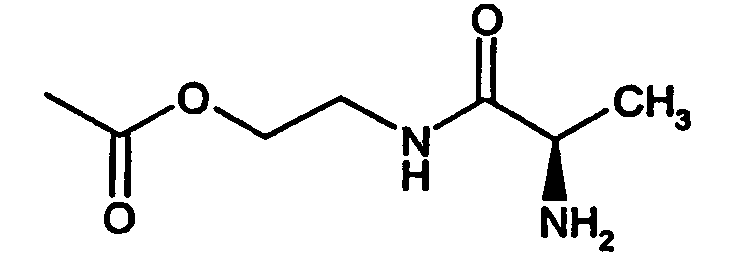
133-136.3° 29b as in example 29a 185.6-187.1° 30 
91.9-95° 31 
1H-NMR (d6-DMSO): 8.85 (d; 1H), 8.23 (br; 2H), 8.14 (m; 1H), 8.10 (m; 1H), 8.06 (d; 1H), 7.76 (d; 2H), 7.64 (m; 1H), 7.59 (t; 1 H), 7.49 (d; 2H), 4.28 (m; 2H), 4.12 (m; 2H), 4.07 (q, 1H), 1.93 (m; 2H), 1.34 (d; 3H) -

- 0.5 g of a solution of a compound of formula IIEX wherein R4 is hydrogen in 30 ml of dry chlorobenzene is treated with a solution of 0.76 ml of 20% phosgene in toluene. The mixture obtained is stirred at 130°, a clear solution obtained is cooled to 100° and a further solution of 0.76 ml of 20% phosgene in toluene is added. The mixture obtained is stirred at 130°, cooled to 100° and treated with argon in order to remove excess phosgene. The mixture obtained is treated at RT with 0.675 ml of a solution of 2-[(2-hydroxy-ethyl)-methyl-amino]-ethanol in 5 ml of chlorobenzene and stirred at 130°, cooled to RT and concentrated in vacuum. The concentration residue obtained is dissolved in ethyl acetate and washed with aqueous, saturated NaHCO3 solution and brine. The organic layer obtained is treated with acetic acid, the mixture obtained is concentrated in vacuum and the concentrate obtained is subjected to chromatography. [4-(3-Chloro-phenyl)-pyrimidin-2-yl]-(4-trifluoromethyl-phenyl)-carbamic acid 2-[(2-hydroxy-ethyl)-methyl-amino]-ethyl ester in the form of an acetate obtained is dissolved in diethylether and treated with HCl in diethyl ether. [4-(3-Chloro-phenyl)-pyrimidin-2-yl]-(4-trifluoromethyl-phenyl)-carbamic acid 2-[(2-hydroxyethyl)-methyl-amino]-ethyl ester in the form of a hydrochloride precipitates (crystallizes), is filtrated off, washed and dried. m.p.: 145.9 - 147.7°.
- Analogously to the method as described in example 32a, but using appropriate starting materials, compounds of formula IIEX, wherein R4EX is as described in TABLE 4 below, having 1H-NMR or m.p. data as defined in TABLE 4 are obtained:
TABLE 4 Example R4EX m.p. / 1H-NMR 32b as in example 32a 119.5° 32c as in example 32a 190.2-190.7° 32d as in example 32a 66.5-72.2° 32e as in example 32a 134.1-135.5° 32f as in example 32a 130.4-132.5° 33 -CO-O-CH2-CH3 68.3-69.2° 34 
151.3-154.3° 35 
171.2-174.3° 36 
128.9-129.1° 37 
1H-NMR (DMSO-d6, 400 MHz, RT) δ: 8.85(d;1H), 8.15(m;1H), 8.10(m;1H), 8.04(d;1H), 7.75/7.48 (AB-system,4H); 7.63(m;1H), 7.57(t;1H), 4.46(t;1H), 4.25(t;2H), 3.34(dt;2H), 1.69(d;2H) 38 
152.7-156.2° 39 
154.9-162.8° 40 
1H-NMR (d6-DMSO, 400 MHz, RT) δ: 8.86(d;1H), 8.11-8.05(m;3H), 7.79(d; 2H); 7.64 -7.57(m;4H), 4.62(bs;2H), 3.60-3.40(m;8H), 3.40-3.25(m;2H), 2.76 (s; 3H) - A solution of 160 mg of a compound of formula IIEX wherein R4 is hydrogen in 4 ml of dry dimethylformamide is treated with NaH, the mixture obtained is stirred at 100°, cooled to RT and treated with 57µl of methyliodide. The mixture obtained is stirred overnight at RT. From the mixture obtained a precipitate is filtrated off and the filtrate obtained is concentrated in vacuum. The concentration residue obtained is subjected to flash chromatography on silicagel. [4-(3-Chloro-phenyl)-pyrimidin-2-yl]-methyl-(4-tifluoromethyl-phenyl)-amine obtained is precipitated from n-pentane in the form of a solid, filtrated off and dried. Structure confirmed by 1H-NMR data.
- Analogously to the method as described in example 41, but using appropriate starting materials, compounds of formula IIEx, wherein R4EX is CH3 is prepared.
Example 42 1H-NMR: 8.55 (d, J=5.2 Hz, 1H); 7.49 (d, 1H); 3.59 (s, 3H) - R4EX is -CO-N(CH3)2
A mixture of 0.5 g of N-[4-(3-chloro-phenyl)-pyrimidln-2-yl]-N-(4-trifluoromethyl-phenyl)-amine, 86 mg of NaH, 0.4 ml of N,N-dimethylcarbamoylchloride in 5 ml of N,N-dimethylformamide is heated for 4 hours at 80°. Solvent is evaporated and to a residue obtained ethylacetate is added. After washing and drying a concentrate obtained is chromatographed on silicagel and the product is obtained. m.p. 143° - R4Ex is
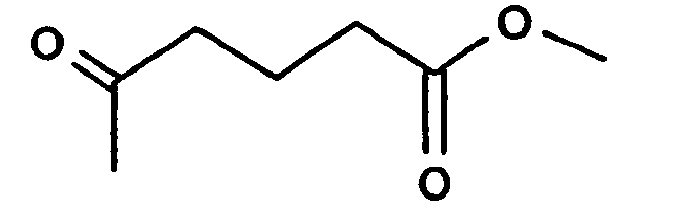
(d6-DMSO, 500 MHz, RT): 8.83 (d, J = 5.2, 1 H); 8.12 - 8.10 (m, 1H); 8.10 - 8.07 (m, 1H); 8.02 (d, J = 5.2, 1 H); 7.79 (d, J = 8.5, 2H) 7.65 - 7.62 (m, 1 H); 7.57 (t, J = 7.8, 1 H); 7.47 (d, J = 8.2, 2H); 3.53 (s, 3H); 2.84 (t, J = 7.3, 2H); 2.38 (t, J = 7.5, 2H); 1.89 (quintett, J = 7.3, 2H) - Analogously as described in example 44 but using appropriate starting material, compounds of formula I, wherein R4EX is as described in TABLE 5 below, having 1H-NMR (d6-DMSO, 500 MHz, RT, unless given otherwisse) or m.p. as defined in TABLE 5 are obtained:
TABLE 5 Example R4EX m.p./1H-NMR 45 
8.83 (d, J = 5.2, 1H); 8.12 - 8.11 (m, 1H); 8.10 - 8.08 (m, 1 H); 8.02 (d, J = 5.2, 1 H); 7.78 (d, J = 8.5, 2H); 7.65 - 7.62 (m, 1H); 7.58 (t, J = 7.9, 1H); 7.45 (d, J = 8.3, 2H); 3.54 (s, 3H); 2.79 (t, J = 7.5, 2H); 2.29 (m, 2H); 1.68 - 1.62 (m, 2H); 1.52 - 1.48 (m, 2H) 46 
(400 MHz): 8.84 (d, J = 5.3, 1 H); 8.13 - 8.09 (m, 2H); 8.02 (d, J = 5.3, 1 H); 7.80 (d, J = 8.4, 2H); 7.64 - 7.62 (m, 1 H); 7.57 (t, J = 7.8, 1 H); 7.46 (d, J = 8.2, 2H); 3.59 (s, 3H); 3.12 - 3.08 (m, 2H); 2.68 - 2.65 (m, 2H) 47 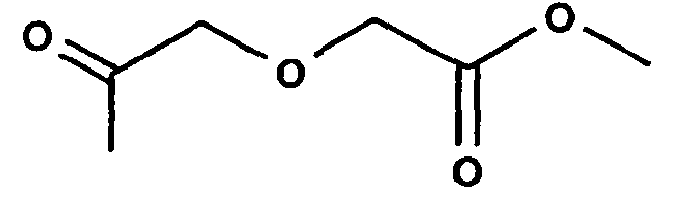
8.77 (d, J = 5.5, 1 H); 8.08 - 8.07 (m, 2H); 7.96 (d, J = 5.2, 1H); 7.83 (d, J = 8.5, 2H); 7.65 - 7.62 (m, 1H); 7.57 (t, J = 8.1, 1 H); 7.51 (d, J = 8.2, 2H); 4.90 (s, 2H); 4.22 (s, 2H); 3.61 (s, 3H) 48 
8.79 (d, J = 5.5, 1 H); 8.11 - 8.10 (m, 1H); 8.09 - 8.08 (m, 1 H); 7.98 (d, J = 5.2, 1H); 7.81 (d, J = 8.2, 2H); 7.65 - 7.62 (m, 1H); 7.58 (t, J = 8.1, 1 H); 7.47 (d, J = 8.2, 2H); 4.72 (s, 2H), 3.56 - 3.54 (m, 2H); 3.34 - 3.32 (m, 2H); 3.14 (s, 3H) - R4Ex is
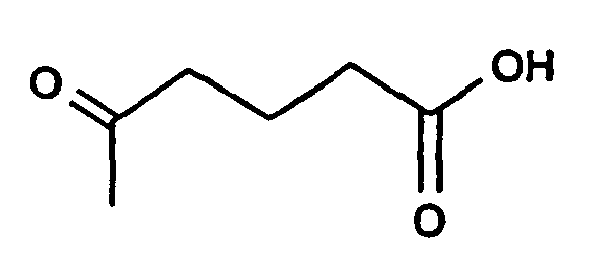
- 40 mg of calcium hydroxide are added to a mixture of 0.5 g of a compound of example 49a, 11 ml of tetrahydrofuran and 5 ml of water. A mixture obtained is shaken for a few minutes and left at RT. Crystals separated are filtered and washed with cold isopropanol to give the calcium salt of a compound of example 49a.
1H-NMR (d6-DMSO, 400 MHz, RT): 8.83 (d, J = 5.3); 8.00 (d, J = 5.3); 7.78 (d, J = 8.5); 7.45 (d, J = 8.3); 2.78 (t, J=7.5); 1.99 (t, J=7.3); 1.8 (m) - Analogously as described in example 49a but using appropriate starting material, compounds of formula I, wherein R4Ex is as described in TABLE 6 below, having 1H-NMR (d6-DMSO, 500 MHz, RT) or m.p. as defined in TABLE 6 are obtained:
TABLE 6 Example R4EX m.p./1H-NMR 50 
11.98 (br, 1 H); 8.83 (d, J = 5.3, 1 H); 8.12 - 8.11 (m, 1H); 8.10 - 8.08 (m, 1 H); 8.01 (d, J = 5.3, 1 H); 7.78 (d, J = 8.3, 2H); 7.65 - 7.62 (m, 1H); 7.57 (t, J = 7.8, 1 H); 7.45 (d, J = 8.3, 2H); 2.79 (t, J = 7.5, 2H); 2.19 (t, J = 7.3, 2H); 1.69 - 1.63 (m, 2H); 1.56 - 1.50 (m, 2H) 51 
8.82 (d, J = 5.5, 1 H); 8.15 (d, J = 7.3, 1 H); 8.12 - 8.08 (m, 2H); 8.00 (d, J = 5.2, 1 H); 7.78 (d, J = 8.2, 2H); 7.65 - 7.62 (m, 1H); 7.57 (t, J = 7.8, 1 H); 7.46 (d, J = 8.2, 2H); 4.16 (quintett, J = 7.2, 1 H); 3.05 - 2.95 (m, 2H); 2.58 - 2.52 (m, 2H); 1.22 (d, J = 7.3, 3H) 52 
12.40 (br., 1 H); 8.83 (d, J = 5.5, 1 H); 8.11 - 8.08 (m, 2H); 8.05 (d, J = 7.3, 1H); 8.02 (d, J = 5.5, 1 H); 7.78 (d, J = 8.5, 2H); 7.64 - 7,62 (m, 1H); 7.57 (t, J = 7.8, 1 H); 7.47 (d, J = 8.2, 2H); 4.16 - 4.09 (m, 1H); 2.80 - 2.76 (m, 2H); 2.16 (t, J = 7.3, 2H); 1.89 - 1.81 (m, 2H); 1.17 (d, J = 7.3, 3H) 53 
8.78 (d, J = 5.2, 1 H); 8.09 - 8.06 (m, 2H); 7.97 (d, J = 5.2, 1H); 7.95 (d, J = 7.5, 1 H); 7.83 (d, J = 8.5, 2H); 7.64 - 7.62 (m, 1 H); 7.57 (t, J = 7.8, 1 H); 7.52 (d, J = 8.5, 2H); 4.90 (s, 2H); 4.26 - 4.18 (m, 1H); 4.01 (s, 2H); 1.24 (d, J = 7.0, 3H) - R4Ex is

(d6-DMSO, 500 MHz, RT): 8.83 (d, J = 5.3, 1 H); 8.31 (d, J = 7.0, 1 H); 8.12 - 8.08 (m, 2H); 8.01 (d, J = 5.3, 1H); 7.79 (d, J = 8.4, 2H); 7.64 - 7.62 (m, 1H); 7.57 (t, J = 7.9, 1 H); 7.46 (d, J = 8.2, 2H); 4.24 (quintett, J = 7.2, 1 H); 3.58 (s, 3H); 3.04 - 2.98 (m, 2H); 2.60 - 2.51 (m, 2H); 1.24 (d, J = 7.3, 3H) - Analogously as described in example 54 but using appropriate starting material, compounds of formula I, wherein R4 is as described in TABLE 7 below, having 1H-NMR (d6-DMSO, 500 MHz, RT) or m.p. as defined in TABLE 7 are obtained:
TABLE 7 Example R4EX m.p/1H-NMR 55 
12.61 (br.); 8.82 (d, J = 5.3, 1 H); 8.09 - 8.06 (m, 3H); 8.01 (d, J = 5.2, 1 H); 7.78 (d, J = 8.7, 2H); 7.63 - 7.61 (m, 1H); 7.58 - 7.54 (m, 1H); 7.45 (d, J = 8.3, 2H); 7.21-7.13 (m, 5H); 4.40 - 4.35 (m, 1H); 3.00 (dd, J = 13.9, 4.8, 1H); 2.79 (dd, J = 13.8, 9.7, 1H); 2.69 (t, J = 7.3, 2H); 2.12 - 2.08 (m, 2H); 1.79 (quintet, J = 7.3, 2H) 56 
8.82 (d, J = 5.5, 1 H); 8.13 - 8.12 (m, 1 H); 8.11 - 8.09 (m, 1H); 8.00 (d, J = 5.2, 1 H); 7.79 (d, J = 8.2, 2H); 7.65 - 7.62 (m, 1 H); 7.57 (t, J = 7.9, 1H); 7.46 (d, J = 8.2, 2H); 3.35 - 3.21 (m, 4H); 2.99 - 2.96 (m, 2H); 2.70 - 2.67 (m, 2H); 1.09 (t, J = 7.0, 3H); 0.98 (t, J = 7.0, 3H) 57 
8.82 (d, J = 5.3, 1 H); 8.12 - 8.07 (m, 2H); 8.00 (d, J = 5.3, 1 H); 7.83 (t, J = 5.6, 1 H); 7.78 (d, J = 8.8, 2H); 7.63 (m, 1H); 7.56 (t, J = 7.8, 1 H); 7.45 (d, J = 8.6, 2H); 3.04 - 2.96 (m, 4H); 2.45 (m); 2.17 (t, J = 7.2, 2H); 2.07 (s, 6H); 1.47 (quintett, J = 7.1, 2H) 58 
(400 MHz): 8.82 (d, J = 5.3, 1 H); 8.31 (d, J = 7.7, 1 H); 8.11 - 8.08 (m, 2H); 8.01 (d, J = 5.3, 1H); 7.77 (d, J = 8.7, 2H); 7.64 - 7.61 (m, 1H); 7.56 (t, J = 7.7, 1 H); 7.44 (d, J = 8.2, 2H); 4.28 - 4.23 (m, 1 H); 3.58 (s, 3H); 2.97 (m, 2H); 2.62 - 2.48 (m); 2.25 (t, J = 7.5, 2H); 1.90 (m, 1 H); 1.75 (m, 1H) 59 
12.64 (br); 8.82 (d, J = 5.2, 1 H); 8.21 (d, J = 8.0, 1 H); 8.11 - 8.07 (m, 2H); 8.01 (d, J = 5.3, 1 H); 7.77 (d, J = 8.5, 2H); 7.64 - 7.61 (m, 1 H); 7.56 (t, J = 7.9, 1 H); 7.45 (d, J = 8.3, 2H); 7.22 - 7.11 (m, 5 H); 4.40 (dt, 1 H); 3.01 (dd, J = 13.8, 5.1, 1 H); 2.92 - 2.88 (m, 2H); 2.83 (dd, J = 13.7, 9.1, 1H); 2.55 - 2.43 (m) 60 
8.83 (d, J = 5.3, 1 H); 8.30 (d, J = 7.5, 1 H); 8.12 - 8.08 (m, 2H); 8.01 (d, J = 5.3, 1 H); 7.78 (d, J = 8.9, 2H); 7.64 - 7.62(m, 1 H); 7.57 (t, J = 7.9, 1 H); 7.45 (d, J = 8.4, 2H); 4.27 (dt, J = 5.3, 8.3, 1 H); 3.59 (s, 3H); 3.55 (s, 3H); 3.04 - 2.96 (m, 2H); 2.62 - 2.49 (m, 2H); 2.38 - 2.31 (m, 2H); 1.99 - 1.92 (m, 1H); 1.83 - 1.76 (m, 1H) 61 
8.83 (d, J = 5.2, 1H); 8.19 (d, J = 7.5, 1H); 8.11 - 8.07 (m, 2H); 8.02 (d, J = 5.3, 1 H); 7.78 (d, J = 8.6, 2H); 7.64 - 7.62(m, 1H); 7.57 (t, J = 7.8, 1H); 7.47 (d, J = 8.1, 2H); 4.22 - 4.18 (m, 1H); 3.55 (two singlets, 6H); 2.78 (t, J = 7.4, 2H); 2.30 (t, J = 7.8, 2H); 2.18 (t, J = 7.2, 2H); 1.96 -1.84 (m, 3H); 1.80-1.72 (m, 1 H) 62 
8.83 (d, J = 5.2, 1H); 8.10 -8.07 (m, 2H); 8.05 (d, J = 7.6, 1 H); 8.01 (d, J = 5.2, 1H); 7.78 (d, J = 8.9, 2H); 7.63 - 7.61 (m, 1H); 7.57 (t, J = 7.9, 1 H); 7.47 (d, J = 8.5, 2H); 4.15 (dt, J = 5.0, 8.4, 1 H); 3.54 (s, 3H); 2.78 (m, 2H); 2.30 - 2.27 (m, 2H); 2.18 (t, J = 7.3, 2H); 1.96 -1.90 (m, 1H); 1.88 -1.82 (m, 2H); 1.78 - 1.70 (m, 1H) 63 
8.83 (d, J = 5.5, 1 H); 8.20 (d, J = 7.0, 1H); 8.11 - 8.08 (m, 2H); 8.02 (d, J = 5.2, 1H); 7.78 (d, J = 8.2, 2H); 7.65 - 7.62 (m, 1H); 7.57 (t, J = 7.9, 1H); 7.47 (d, J = 7.9, 2H); 4.21 - 4.15 (m, 1 H); 3.54 (s, 3H); 2.78 (t, J = 7.5, 2H); 2.16 (t, J = 7.3, 2H); 1.89 - 1.82 (m, 2H); 1.18 (d, J = 7.3, 3H) 64 
8.78 (d, J = 5.3, 1 H); 8.15 (d, J = 7.3, 1 H); 8.09 - 8.07 (m, 2H); 7.97 (d, J = 5.3, 1 H); 7.84 (d, J = 8.3, 2H); 7.65 - 7.62 (m, 1H); 7.58 - 7.55 (m, 1H); 7.52 (d, J = 8.3, 2H); 4.90 (s, 2H); 4.35 - 4.28 (m, 1H); 4.02 (s, 2H); 3.58 (s, 3H); 1.25 (d, J = 7.3, 3H) 65 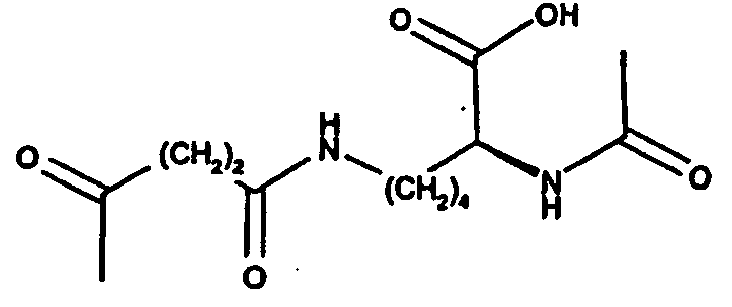
8.82 (d, 1H); 8.12 - 8.07 (m, 2H); 8.02 (d, J = 7.8, 1 H); 8.00 (d, J = 5.3, 1 H); 7.84 (m, 1H); 7.77 (d, J = 8.4, 2H); 7.63 - 7.61 (m, 1H); 7.55 (t, 1H); 7.45 (d, J = 8.2, 2H); 4.12 - 4.07 (m, 1 H); 3.01 - 2.97 (m, 4H); 2.48-2.45 (m,2H); 1.80 (s, 3H) 66 
8.82 (d, 1H); 8.12 - 8.07 (m, 2H); 8.00 (d, J = 5.3, 1 H); 7.78 (d, J = 8.3, 2H); 7.63 (m, 1 H); 7.56 (t, J = 7.9, 1 H); 7.45 (d, J = 8.1, 2H); 3.25 - 3.16 (m, 4H); 2.80 (t, J = 7.3, 2H); 2.31 (t, J = 7.3, 2H); 1.85 (quintett, J = 7.3, 2H); 1.00 (t, J=7.1, 3H); 0.92 (t, J=7.1, 3H) 67 
8.83 (d, J = 5.3, 1 H); 8.11 - 8.07 (m, 2H); 8.01 (d, J = 5.3, 1 H); 7.80 - 7.73 (m, 3H); 7.62 (d, 1 H); 7.55 (t, 1 H); 7.45 (d, J = 8.3, 2H); 2.95 (m, 2H); 2.75 (t, J = 7.2, 2H); 2.05(s) - R4Ex is

Claims (8)
- A compound of formula

R1 is halogen or halo(C1-4)alkyl,
R2 is hydrogen, halogen or halo(C1-4)alkyl,
R3 is halogen or halo(C1-4)alkyl,
R4 is hydrogen, (C1-8)alkyl, hydroxy(C1-6)alkyl or a group of formula
-CO-R5,
-CO-(CH2)m-OR6,
-CO-CO-R7,
-CO-CO-OR8,
-CO-N(R9R10),
-CO-(CH2)n-CO-R11,
-CO-(CHR15)-O-(CH2)o-CO-R11,
-CO-(CH2)p-O-(CH2)q-O-(CH2)r-R16,
-CO-O-CH2)s-O-CO-R17,
-CO-O-(CH2)t-N(R18R19),
-CO-O-(CH2)u-NH-CO-CH(NH2)-R20,
or
-CO-O-(CH2)w-NH-CO-R17,
whereinR5 is hydrogen, (C1-8)alkyl, (C3-8)cycloalkyl, amino, (C1-4)alkylamino, di(C1-4)alkylamino, aryl or heterocyclyl which is a 5 or 6-membered heterocyclic ring system having 1 to 4 heteroatoms selected from N, O or S,R6 is hydrogen, (C1-4)alkyl, (C3-8)cycloalkyl, aryl, (C1-4)alkyl substituted by heterocyclyl which is a 5 or 6-membered heterocyclic ring system having 1 to 4 heteroatoms selected from N, O or S, amino(C1-6)alkyl, (C1-4)alkylamino(C1-6)alkyl, di(C1-4)alkylamino(C1-6)alkyl, hydroxy(C1-6)alkyl, hydroxy(C1-4)alkylamino(C1-6)alkyl or an amino acid residue, e.g. -CH2-CH(NH2)-COOH,R7 and R8 independently of each other are (C1-4)alkyl, (C3-8)cycloalkyl, aryl or heterocyclyl which is a 5 or 6-membered heterocyclic ring system having 1 to 4 heteroatoms selected from N, O or S,R9 and R10 independently of each other are hydrogen or (C1-4)alkyl or one of R9 and R10 is hydrogen and the other is (C3-8)cycloalkyl, (C1-4)alkyl, aryl or heterocyclyl,R11 is (C1-4)alkyl, -OR12, -NR13R14, an amino acid, an (C1-4)alkylester thereof or a di(C1-4)alkylester thereof,
R12 is hydrogen or (C1-4)alkyl,
R13 and R14 independently of each other are hydrogen, (C1-4)alkyl, amino(C1-6)alkyl, (C1-4)alkylamino(C1-6)alkyl, di(C1-4)alkylamino(C1-6)alkyl,R15 is hydrogen or (C1-4)alkyl,R16 is hydrogen, (C1-4)alkyl, carboxyl or carboxylic ester,R17 is amino(C1-4)alkyl, (C1-4)alkylamino(C1-4)alkyl or di(C1-4)alkylamino(C1-4)alkyl,R18 is hydrogen or (C1-4)alkyl,R19 is hydroxy(C1-4)alkyl,R20 is (C1-4)alkyl or hydroxy(C1-4)alkyl,m is 0 to 4,n is 2 to 8,o is 0 to 4,p is 0 to 4,q is 1 to 8,r is 0 to 4,s is 1 to 4,t is 1 to 4,u is 1 to 6 andw is 1 to 6. - A compound of claim 1 wherein- R1 is chloro or trifluoromethyl,- R2 is hydrogen or trifluoromethyl,- R3 is chloro, fluoro or trifluoromethyl,- R4 is hydrogen, (C1-4)alkyl, e.g. methyl, hydroxy(C1-4)alkyl, e.g.hydroxyethyl, or a group of formula
-CO-R5,
-CO-(CH2)m-OR6,
-CO-CO-R7,
-CO-CO-OR8,
-CO-N(R9R10),
-CO-(CH2)n-CO-R11,
-CO-(CHR15)-O-(CH2)o-CO-R11,
-CO-(CH2)p-O-(CH2)q-O-(CH2)r-R16,
-CO-O-(CH2)s-O-CO-R17,
-CO-O-(CH2)t-N(R18R19),
-CO-O-(CH2)u-NH-CO-CH(NH2)-R20,
or
-CO-O-(CH2)w-NH-CO-R17,
whereinR5 is hydrogen, (C1-4)alkyl, (C3-6)cycloalkyl, dimethylamino, phenyl or heterocyclyl which is a 6-membered heterocyclic ring system having one O as a heteroatom, e.g. tetrahydropyranyl,R6 is hydrogen, (C1-4)alkyl, (C1-2)alkyl substituted by heterocyclyl which is a 5 or 6-membered heterocyclic ring system having 1 or 2 heteroatoms selected from N or O, e.g. including unsubstituted pyrrolidine, morpholine and piperazine and piperazine substituted by e.g. (C1-2)alkyl or (C1-2)hydroxyalkyl;
amino(C1-4)alkyl, (C1-2)alkylamino(C1-4)alkyl, di(C1-2)alkylamino(C1-4)alkyl, hydroxy(C1-3)alkyl, hydroxy(C1-2)alkylamino(C1-2)alkyl or an amino acid residue, e.g. -CH2-CH(NH2)-COOH,R7 and R8 independently of each other are (C1-2)alkyl or phenyl,R9 and R10 independently of each other are hydrogen or (C1-2)alkyl,R11 is (C1-2)alkyl, -OR12, -NR13R14, an amino acid, an (C1-2)alkylester thereof or an di(C1-2)alkylester thereof, preferably an amino acid selected from the group consisting of alanine, phenylalanine, glutamic acid and lysine, wherein the binding is effected via the α- amino group or in the case of e.g. lysine via the ε-amino group,
R12 is hydrogen or (C1-2)alkyl,
R13 and R14 independently of each other are hydrogen, (C1-2)alkyl, amino(C1-4)alkyl, (C1-2)alkylamino(C1-4)alkyl, di(C1-2)alkylamino(C1-4)alkyl,R15 is hydrogen or (C1-2)alkyl,R16 is hydrogen, (C1-2)alkyl, carboxyl or carboxylic ester,R17 is amino(C1-2)alkyl,R18 is hydrogen or (C1-2)alkyl,R19 is hydroxy(C1-2)alkyl,R20 is (C1-2)alkyl or hydroxy(C1-2)alkyl,m is 0 or 1,n is 2 to 4,o is 0 or 1,p is 0 to 2,q is 2 to 5,r is 0 to 2,s is 2,t is 2,u is 1 to 3 andw is 1 to 3. - A compound according to claim 1 or 2 which is a compound of formula I wherein
R1 is chloro,
R2 is hydrogen,
R3 is trifluoromethyl and
R4 is hydrogen. - A compound according to claim 1 or 2 which is a compound of formula I wherein
R1 is chloro,
R2 is hydrogen,
R3 is trifluoromethyl and
R4 is a group of formula -CO-O-(CH2)2- N[(C2H5OH)(CH3)]. - A compound according to any one of claims 1 to 4 in the form of a salt.
- Use of a compound of any one of claims 1 to 5 in the preparation of a medicament for the therapy or for the treatment of IgE-synthesis-mediated diseases, autoimmune diseases, gastrointestinal diseases and chronic rejection of transplants.
- A compound of any one of claims 1 to 5 for use as a pharmaceutical.
- A pharmaceutical composition comprising a compound of any one of claims 1 to 5 in association with at least one pharmaceutical excipient.
Applications Claiming Priority (5)
| Application Number | Priority Date | Filing Date | Title |
|---|---|---|---|
| GB0202381A GB0202381D0 (en) | 2002-02-01 | 2002-02-01 | Organic compounds |
| GB0202381 | 2002-02-01 | ||
| GB0221953A GB0221953D0 (en) | 2002-09-20 | 2002-09-20 | Organic compounds |
| GB0221953 | 2002-09-20 | ||
| PCT/EP2003/000973 WO2003063871A1 (en) | 2002-02-01 | 2003-01-31 | Phenylpyrimidine amines as ige inhibitors |
Publications (2)
| Publication Number | Publication Date |
|---|---|
| EP1474146A1 EP1474146A1 (en) | 2004-11-10 |
| EP1474146B1 true EP1474146B1 (en) | 2008-08-27 |
Family
ID=27665364
Family Applications (1)
| Application Number | Title | Priority Date | Filing Date |
|---|---|---|---|
| EP03704506A Expired - Lifetime EP1474146B1 (en) | 2002-02-01 | 2003-01-31 | Phenylpyrimidine amines as ige inhibitors |
Country Status (23)
| Country | Link |
|---|---|
| US (2) | US20050119255A1 (en) |
| EP (1) | EP1474146B1 (en) |
| JP (1) | JP4393198B2 (en) |
| KR (1) | KR20040081159A (en) |
| CN (2) | CN1622807A (en) |
| AR (1) | AR038368A1 (en) |
| AT (1) | ATE406165T1 (en) |
| AU (1) | AU2003206810B2 (en) |
| BR (1) | BR0307379A (en) |
| CA (1) | CA2471883C (en) |
| DE (1) | DE60323205D1 (en) |
| EC (1) | ECSP045213A (en) |
| ES (1) | ES2312749T3 (en) |
| IL (1) | IL162766A0 (en) |
| MX (1) | MXPA04007395A (en) |
| NO (1) | NO20043610L (en) |
| NZ (1) | NZ534229A (en) |
| PE (1) | PE20030983A1 (en) |
| PL (1) | PL370666A1 (en) |
| PT (1) | PT1474146E (en) |
| RU (1) | RU2004126614A (en) |
| TW (1) | TW200302728A (en) |
| WO (1) | WO2003063871A1 (en) |
Families Citing this family (7)
| Publication number | Priority date | Publication date | Assignee | Title |
|---|---|---|---|---|
| US20050014753A1 (en) * | 2003-04-04 | 2005-01-20 | Irm Llc | Novel compounds and compositions as protein kinase inhibitors |
| EP1648875A1 (en) * | 2003-07-30 | 2006-04-26 | Cyclacel Limited | 2-aminophenyl-4-phenylpyrimidines as kinase inhibitors |
| JPWO2005040135A1 (en) * | 2003-10-24 | 2007-03-08 | 小野薬品工業株式会社 | Anti-stress drugs and their medicinal uses |
| US20080279829A1 (en) | 2005-09-29 | 2008-11-13 | Maximilian Woisetschlaeger | Phenyl-(4-Phenyl-Pyrimidin-2-Yl)-Amines For Enhancing Immunotolerance |
| KR20100044251A (en) * | 2007-08-15 | 2010-04-29 | 싸이토키네틱스, 인코포레이티드 | Certain chemical entities, compositions, and methods |
| CN115279741A (en) | 2019-12-20 | 2022-11-01 | 医肯纳肿瘤学公司 | 4-phenyl-N- (phenyl) thiazol-2-amine derivatives and related compounds as Aryl Hydrocarbon Receptor (AHR) agonists for the treatment of, for example, angiogenesis-related disorders or inflammatory disorders |
| KR20240159754A (en) * | 2023-04-28 | 2024-11-06 | 한국원자력의학원 | Compound comprising N-methylpiperazine ethanol carbamate structure and use thereof |
Family Cites Families (40)
| Publication number | Priority date | Publication date | Assignee | Title |
|---|---|---|---|---|
| GB1185039A (en) | 1966-03-31 | 1970-03-18 | Ici Ltd | Pyrimidine Derivatives and Compositions containing them |
| GB2001069B (en) | 1977-07-12 | 1982-01-20 | Scras | Pyrimidine derivatives |
| AU5319479A (en) | 1978-12-22 | 1980-06-26 | Ici Australia Limited | Pyrimidinyl amino phenoxy carboxylate derivatives |
| US4351939A (en) * | 1980-10-16 | 1982-09-28 | Mead Johnson & Company | Spiro-quaternary ammonium halides and N-(2-pyrimidinyl)piperazinylalkylazaspiroalkanedione process |
| EP0084194B1 (en) * | 1982-01-14 | 1986-04-30 | MERCK PATENT GmbH | Liquid crystal mixtures |
| FR2536071B1 (en) | 1982-11-12 | 1986-07-11 | Sanofi Sa | 2-PIPERAZINOPYRIMIDINE ACID SALTS, PROCESS FOR THEIR PREPARATION AND PHARMACEUTICAL COMPOSITIONS CONTAINING THE SAME |
| FR2547821B1 (en) * | 1983-06-24 | 1985-12-06 | Sanofi Sa | 2-PIPERAZINOPYRIMIDINE SALT, PROCESS FOR ITS PREPARATION AND PHARMACEUTICAL COMPOSITIONS CONTAINING SAME |
| US4659363A (en) | 1983-07-25 | 1987-04-21 | Ciba-Geigy Corporation | N-(2-nitrophenyl)-2-aminopyrimidine derivatives, the preparation and use thereof |
| EP0164204A1 (en) | 1984-05-12 | 1985-12-11 | FISONS plc | Novel pharmaceutically useful pyrimidines |
| DE3581570D1 (en) * | 1984-06-25 | 1991-03-07 | Ciba Geigy Ag | PYRIMID DERIVATIVES EFFECTIVE AS A PEST CONTROL. |
| ATE135699T1 (en) | 1986-01-13 | 1996-04-15 | American Cyanamid Co | 4,5,6-SUBSTITUTED 2-PYRIMIDINAMINES |
| DE3614060A1 (en) | 1986-04-23 | 1987-10-29 | Schering Ag | PYRIMIDINE DERIVATIVES, METHOD FOR THE PRODUCTION THEREOF AND THEIR USE AS FUNGICIDES |
| EP0254259A3 (en) | 1986-07-21 | 1989-11-23 | Otsuka Pharmaceutical Factory, Inc. | P-aminophenol derivatives |
| EP0264348B1 (en) * | 1986-10-13 | 1993-12-15 | Ciba-Geigy Ag | Ureas |
| US4826990A (en) | 1987-09-30 | 1989-05-02 | American Home Products Corporation | 2-aryl substituted heterocyclic compounds as antiallergic and antiinflammatory agents |
| US4966622A (en) * | 1988-04-12 | 1990-10-30 | Ciba-Geigy Corporation | N-phenyl-N-pyrimidin-2-ylureas |
| DE58905007D1 (en) * | 1988-04-12 | 1993-09-02 | Ciba Geigy Ag | UREA. |
| US4973690A (en) * | 1988-04-12 | 1990-11-27 | Ciba-Geigy Corporation | Novel ureas |
| JPH02308248A (en) * | 1989-05-24 | 1990-12-21 | Fuji Photo Film Co Ltd | Aminopyrimidine dye forming coupler and silver halide color photographic sensitive material containing this coupler |
| US5521184A (en) * | 1992-04-03 | 1996-05-28 | Ciba-Geigy Corporation | Pyrimidine derivatives and processes for the preparation thereof |
| US5516775A (en) * | 1992-08-31 | 1996-05-14 | Ciba-Geigy Corporation | Further use of pyrimidine derivatives |
| US5728708A (en) | 1993-10-01 | 1998-03-17 | Novartis Corporation | Pharmacologically active pyridine derivatives and processes for the preparation thereof |
| ES2262137T3 (en) | 1993-10-01 | 2006-11-16 | Novartis Ag | PHARMACOLOGICALLY ACTIVE PIRIMIDINAMINE DERIVATIVES AND PROCEDURES FOR THEIR PREPARATION. |
| JPH08503971A (en) | 1993-10-01 | 1996-04-30 | チバ−ガイギー アクチェンゲゼルシャフト | Pyrimidineamine derivatives and methods for their preparation |
| CA2174080A1 (en) * | 1993-10-12 | 1995-04-20 | Paul Edward Aldrich | 1n-alkyl-n-arylpyrimidinamines and derivatives thereof |
| AU688087B2 (en) | 1994-08-13 | 1998-03-05 | Yuhan Corporation | Novel pyrimidine derivatives and processes for the preparation thereof |
| GB9523675D0 (en) | 1995-11-20 | 1996-01-24 | Celltech Therapeutics Ltd | Chemical compounds |
| AR038955A1 (en) | 1996-12-05 | 2005-02-02 | Amgen Inc | PIRIMIDINONE AND PIRIDONA SUBSTITUTED COMPOUNDS AND METHODS FOR USE |
| CN1142931C (en) * | 1997-03-26 | 2004-03-24 | 大正制药株式会社 | 4-Tetrahydropyridylpyrimidine Derivatives |
| IN188411B (en) | 1997-03-27 | 2002-09-21 | Yuhan Corp | |
| US6440965B1 (en) | 1997-10-15 | 2002-08-27 | Krenitsky Pharmaceuticals, Inc. | Substituted pyrimidine derivatives, their preparation and their use in the treatment of neurodegenerative or neurological disorders of the central nervous system |
| WO1999035140A1 (en) * | 1998-01-12 | 1999-07-15 | Novartis Ag | PYRIDINYLPYRIMIDINE AMINES AS IMMUNOGLOBULINE E (IgE) SYNTHESIS INHIBITORS |
| EP1052238A4 (en) * | 1998-01-28 | 2007-05-02 | Shionogi & Co | Novel tricyclic compound |
| AU751573C (en) | 1998-03-27 | 2003-10-09 | Janssen Pharmaceutica N.V. | HIV inhibiting pyrimidine derivatives |
| TWI241298B (en) | 1998-09-25 | 2005-10-11 | Mitsubishi Chem Corp | Pyrimidone derivatives |
| SK286264B6 (en) * | 1998-11-17 | 2008-06-06 | Kumiai Chemical Industry Co., Ltd. | Pyrimidinylbenzimidazole or triazinylbenzimidazole derivatives, intermediates for preparing them and agricultural/horticultural fungicides containing them |
| GB9828511D0 (en) | 1998-12-24 | 1999-02-17 | Zeneca Ltd | Chemical compounds |
| ATE365158T1 (en) | 1999-04-28 | 2007-07-15 | Inst Med Molecular Design Inc | PYRIMIDINE CARBOXYLIC ACID DERIVATIVES |
| GB9914258D0 (en) | 1999-06-18 | 1999-08-18 | Celltech Therapeutics Ltd | Chemical compounds |
| GB0003224D0 (en) | 2000-02-11 | 2000-04-05 | Glaxo Group Ltd | Chemical compounds |
-
2003
- 2003-01-30 AR ARP030100267A patent/AR038368A1/en not_active Application Discontinuation
- 2003-01-30 TW TW092102250A patent/TW200302728A/en unknown
- 2003-01-31 RU RU2004126614/04A patent/RU2004126614A/en not_active Application Discontinuation
- 2003-01-31 PE PE2003000116A patent/PE20030983A1/en not_active Application Discontinuation
- 2003-01-31 WO PCT/EP2003/000973 patent/WO2003063871A1/en not_active Ceased
- 2003-01-31 NZ NZ534229A patent/NZ534229A/en unknown
- 2003-01-31 DE DE60323205T patent/DE60323205D1/en not_active Expired - Fee Related
- 2003-01-31 AU AU2003206810A patent/AU2003206810B2/en not_active Ceased
- 2003-01-31 PT PT03704506T patent/PT1474146E/en unknown
- 2003-01-31 BR BR0307379-3A patent/BR0307379A/en not_active IP Right Cessation
- 2003-01-31 CN CNA038027372A patent/CN1622807A/en active Pending
- 2003-01-31 JP JP2003563561A patent/JP4393198B2/en not_active Expired - Fee Related
- 2003-01-31 CN CN200910205037A patent/CN101684097A/en active Pending
- 2003-01-31 IL IL16276603A patent/IL162766A0/en unknown
- 2003-01-31 MX MXPA04007395A patent/MXPA04007395A/en active IP Right Grant
- 2003-01-31 CA CA2471883A patent/CA2471883C/en not_active Expired - Fee Related
- 2003-01-31 PL PL03370666A patent/PL370666A1/en not_active Application Discontinuation
- 2003-01-31 AT AT03704506T patent/ATE406165T1/en active
- 2003-01-31 US US10/501,445 patent/US20050119255A1/en not_active Abandoned
- 2003-01-31 EP EP03704506A patent/EP1474146B1/en not_active Expired - Lifetime
- 2003-01-31 ES ES03704506T patent/ES2312749T3/en not_active Expired - Lifetime
- 2003-01-31 KR KR10-2004-7011797A patent/KR20040081159A/en not_active Withdrawn
-
2004
- 2004-07-30 EC EC2004005213A patent/ECSP045213A/en unknown
- 2004-08-30 NO NO20043610A patent/NO20043610L/en not_active Application Discontinuation
-
2007
- 2007-05-23 US US11/805,515 patent/US7759357B2/en not_active Expired - Fee Related
Also Published As
| Publication number | Publication date |
|---|---|
| JP4393198B2 (en) | 2010-01-06 |
| ATE406165T1 (en) | 2008-09-15 |
| CA2471883C (en) | 2010-12-07 |
| BR0307379A (en) | 2004-12-28 |
| ECSP045213A (en) | 2004-09-28 |
| CA2471883A1 (en) | 2003-08-07 |
| PE20030983A1 (en) | 2004-01-26 |
| PL370666A1 (en) | 2005-05-30 |
| AR038368A1 (en) | 2005-01-12 |
| EP1474146A1 (en) | 2004-11-10 |
| CN101684097A (en) | 2010-03-31 |
| US20070281956A1 (en) | 2007-12-06 |
| DE60323205D1 (en) | 2008-10-09 |
| RU2004126614A (en) | 2005-05-27 |
| KR20040081159A (en) | 2004-09-20 |
| JP2005516051A (en) | 2005-06-02 |
| US7759357B2 (en) | 2010-07-20 |
| US20050119255A1 (en) | 2005-06-02 |
| IL162766A0 (en) | 2005-11-20 |
| AU2003206810B2 (en) | 2006-06-29 |
| NZ534229A (en) | 2005-04-29 |
| WO2003063871A1 (en) | 2003-08-07 |
| PT1474146E (en) | 2008-12-05 |
| TW200302728A (en) | 2003-08-16 |
| CN1622807A (en) | 2005-06-01 |
| MXPA04007395A (en) | 2005-06-17 |
| ES2312749T3 (en) | 2009-03-01 |
| NO20043610L (en) | 2004-10-05 |
Similar Documents
| Publication | Publication Date | Title |
|---|---|---|
| EP3634951B1 (en) | Novel substituted sulfoximine compounds | |
| KR0142417B1 (en) | Tertiary alkyl functionalized pyrazine derivatives | |
| CA2148928C (en) | Pharmacologically active pyridine derivatives and processes for the preparation thereof | |
| RU2108325C1 (en) | Heterocyclic amines, methods of their synthesis and pharmaceutical composition based on thereof | |
| US5500424A (en) | Pyrimidine and pyridine derivatives, their production and use | |
| US7759357B2 (en) | Phenylpyrimidine amines as IgE inhibitors | |
| FI89362C (en) | FRAMEWORK FOR THERAPEUTIC OPERATION OF THERAPEUTIC NETWORK OF METHYLAMIN ACCOUNTING STAUROSPORINDERIVAT | |
| JP6881879B2 (en) | Pyrimidine compounds as JAK kinase inhibitors | |
| UA81808C2 (en) | Normal;heading 1;heading 2;DERIVATIVES OF PIPERIDINYL- AND PIPERAZINYL-ALKYL CARBAMATES, PROCESS FOR PREPARATION AND THERAPEUTIC USES THEREOF | |
| EP0395313A2 (en) | Tertiary alkyl functionalized piperazine derivatives | |
| UA45351C2 (en) | DERIVATIVES OF SUBSTITUTED BENZAMIDINE | |
| RU2119913C1 (en) | 1,4-disubstituted piperazines useful for treatment of patients with asthma and respiratory way inflammation, method of their synthesis, drugs based on thereof and a method of preparing | |
| US6531476B1 (en) | Piperazine derivatives inhibiting human immunodeficiency virus replication | |
| AU2003206810A1 (en) | Phenylpyrimidine amines as Ige inhibitors | |
| HUT68936A (en) | Process for preparing 2-amino-1,2,3,4-tetrahydronaphtalene derivatives and pharmaceutical compositions containing them | |
| ZA200404958B (en) | Phenylpyrimidine amines as Ige inhibitors | |
| CA2459364A1 (en) | Ccr-3 receptor antagonists v | |
| TW202440580A (en) | Imidazotriazine derivatives as il-17 modulators | |
| HUT65599A (en) | Process for producing 3h,7h/thiazole/3,4-a/pyridines and pharmaceutical preparations containing them | |
| JP2003137886A (en) | PYRIMIDO[4,5-b]INDOLE | |
| MXPA05004967A (en) | Phenyl or heteroaryl amino alkane derivatives as ip receptor antagonist. | |
| IE870687L (en) | Pyridine derivatives | |
| JPH05239088A (en) | Cycloartenol derivative or its salt and ameliorant of cerebral function comprising the same | |
| OA16358A (en) | Co-crystals and salts of CCR3-inhibitors. |
Legal Events
| Date | Code | Title | Description |
|---|---|---|---|
| PUAI | Public reference made under article 153(3) epc to a published international application that has entered the european phase |
Free format text: ORIGINAL CODE: 0009012 |
|
| 17P | Request for examination filed |
Effective date: 20040901 |
|
| AK | Designated contracting states |
Kind code of ref document: A1 Designated state(s): AT BE BG CH CY CZ DE DK EE ES FI FR GB GR HU IE IT LI LU MC NL PT SE SI SK TR |
|
| AX | Request for extension of the european patent |
Extension state: AL LT LV MK RO |
|
| REG | Reference to a national code |
Ref country code: HK Ref legal event code: DE Ref document number: 1070577 Country of ref document: HK |
|
| 17Q | First examination report despatched |
Effective date: 20060622 |
|
| GRAP | Despatch of communication of intention to grant a patent |
Free format text: ORIGINAL CODE: EPIDOSNIGR1 |
|
| RAP1 | Party data changed (applicant data changed or rights of an application transferred) |
Owner name: NOVARTIS PHARMA GMBH Owner name: NOVARTIS AG |
|
| GRAS | Grant fee paid |
Free format text: ORIGINAL CODE: EPIDOSNIGR3 |
|
| GRAA | (expected) grant |
Free format text: ORIGINAL CODE: 0009210 |
|
| AK | Designated contracting states |
Kind code of ref document: B1 Designated state(s): AT BE BG CH CY CZ DE DK EE ES FI FR GB GR HU IE IT LI LU MC NL PT SE SI SK TR |
|
| AX | Request for extension of the european patent |
Extension state: RO |
|
| REG | Reference to a national code |
Ref country code: GB Ref legal event code: FG4D |
|
| REG | Reference to a national code |
Ref country code: CH Ref legal event code: EP |
|
| REG | Reference to a national code |
Ref country code: IE Ref legal event code: FG4D |
|
| REF | Corresponds to: |
Ref document number: 60323205 Country of ref document: DE Date of ref document: 20081009 Kind code of ref document: P |
|
| REG | Reference to a national code |
Ref country code: PT Ref legal event code: SC4A Free format text: AVAILABILITY OF NATIONAL TRANSLATION Effective date: 20081124 |
|
| REG | Reference to a national code |
Ref country code: GR Ref legal event code: EP Ref document number: 20080403143 Country of ref document: GR |
|
| PG25 | Lapsed in a contracting state [announced via postgrant information from national office to epo] |
Ref country code: FI Free format text: LAPSE BECAUSE OF FAILURE TO SUBMIT A TRANSLATION OF THE DESCRIPTION OR TO PAY THE FEE WITHIN THE PRESCRIBED TIME-LIMIT Effective date: 20080827 Ref country code: SI Free format text: LAPSE BECAUSE OF FAILURE TO SUBMIT A TRANSLATION OF THE DESCRIPTION OR TO PAY THE FEE WITHIN THE PRESCRIBED TIME-LIMIT Effective date: 20080827 |
|
| REG | Reference to a national code |
Ref country code: ES Ref legal event code: FG2A Ref document number: 2312749 Country of ref document: ES Kind code of ref document: T3 |
|
| PG25 | Lapsed in a contracting state [announced via postgrant information from national office to epo] |
Ref country code: DK Free format text: LAPSE BECAUSE OF FAILURE TO SUBMIT A TRANSLATION OF THE DESCRIPTION OR TO PAY THE FEE WITHIN THE PRESCRIBED TIME-LIMIT Effective date: 20080827 Ref country code: BG Free format text: LAPSE BECAUSE OF FAILURE TO SUBMIT A TRANSLATION OF THE DESCRIPTION OR TO PAY THE FEE WITHIN THE PRESCRIBED TIME-LIMIT Effective date: 20081127 |
|
| PG25 | Lapsed in a contracting state [announced via postgrant information from national office to epo] |
Ref country code: SK Free format text: LAPSE BECAUSE OF FAILURE TO SUBMIT A TRANSLATION OF THE DESCRIPTION OR TO PAY THE FEE WITHIN THE PRESCRIBED TIME-LIMIT Effective date: 20080827 Ref country code: CZ Free format text: LAPSE BECAUSE OF FAILURE TO SUBMIT A TRANSLATION OF THE DESCRIPTION OR TO PAY THE FEE WITHIN THE PRESCRIBED TIME-LIMIT Effective date: 20080827 |
|
| PLBE | No opposition filed within time limit |
Free format text: ORIGINAL CODE: 0009261 |
|
| STAA | Information on the status of an ep patent application or granted ep patent |
Free format text: STATUS: NO OPPOSITION FILED WITHIN TIME LIMIT |
|
| PG25 | Lapsed in a contracting state [announced via postgrant information from national office to epo] |
Ref country code: EE Free format text: LAPSE BECAUSE OF FAILURE TO SUBMIT A TRANSLATION OF THE DESCRIPTION OR TO PAY THE FEE WITHIN THE PRESCRIBED TIME-LIMIT Effective date: 20080827 |
|
| 26N | No opposition filed |
Effective date: 20090528 |
|
| PG25 | Lapsed in a contracting state [announced via postgrant information from national office to epo] |
Ref country code: MC Free format text: LAPSE BECAUSE OF NON-PAYMENT OF DUE FEES Effective date: 20090131 |
|
| REG | Reference to a national code |
Ref country code: IE Ref legal event code: MM4A |
|
| PG25 | Lapsed in a contracting state [announced via postgrant information from national office to epo] |
Ref country code: SE Free format text: LAPSE BECAUSE OF FAILURE TO SUBMIT A TRANSLATION OF THE DESCRIPTION OR TO PAY THE FEE WITHIN THE PRESCRIBED TIME-LIMIT Effective date: 20081127 Ref country code: IE Free format text: LAPSE BECAUSE OF NON-PAYMENT OF DUE FEES Effective date: 20090131 |
|
| PGFP | Annual fee paid to national office [announced via postgrant information from national office to epo] |
Ref country code: CH Payment date: 20100113 Year of fee payment: 8 Ref country code: ES Payment date: 20100128 Year of fee payment: 8 Ref country code: PT Payment date: 20100119 Year of fee payment: 8 |
|
| PGFP | Annual fee paid to national office [announced via postgrant information from national office to epo] |
Ref country code: FR Payment date: 20100208 Year of fee payment: 8 Ref country code: IT Payment date: 20100121 Year of fee payment: 8 |
|
| PGFP | Annual fee paid to national office [announced via postgrant information from national office to epo] |
Ref country code: BE Payment date: 20100125 Year of fee payment: 8 Ref country code: DE Payment date: 20100211 Year of fee payment: 8 Ref country code: GB Payment date: 20100202 Year of fee payment: 8 Ref country code: TR Payment date: 20100106 Year of fee payment: 8 |
|
| PGFP | Annual fee paid to national office [announced via postgrant information from national office to epo] |
Ref country code: NL Payment date: 20100101 Year of fee payment: 8 |
|
| PGFP | Annual fee paid to national office [announced via postgrant information from national office to epo] |
Ref country code: GR Payment date: 20101221 Year of fee payment: 9 |
|
| PG25 | Lapsed in a contracting state [announced via postgrant information from national office to epo] |
Ref country code: LU Free format text: LAPSE BECAUSE OF NON-PAYMENT OF DUE FEES Effective date: 20090131 |
|
| PGFP | Annual fee paid to national office [announced via postgrant information from national office to epo] |
Ref country code: AT Payment date: 20101222 Year of fee payment: 9 |
|
| PG25 | Lapsed in a contracting state [announced via postgrant information from national office to epo] |
Ref country code: HU Free format text: LAPSE BECAUSE OF FAILURE TO SUBMIT A TRANSLATION OF THE DESCRIPTION OR TO PAY THE FEE WITHIN THE PRESCRIBED TIME-LIMIT Effective date: 20090228 |
|
| BERE | Be: lapsed |
Owner name: NOVARTIS A.G. Effective date: 20110131 |
|
| REG | Reference to a national code |
Ref country code: PT Ref legal event code: MM4A Free format text: LAPSE DUE TO NON-PAYMENT OF FEES Effective date: 20110801 |
|
| REG | Reference to a national code |
Ref country code: NL Ref legal event code: V1 Effective date: 20110801 |
|
| REG | Reference to a national code |
Ref country code: CH Ref legal event code: PL |
|
| REG | Reference to a national code |
Ref country code: HK Ref legal event code: WD Ref document number: 1070577 Country of ref document: HK |
|
| GBPC | Gb: european patent ceased through non-payment of renewal fee |
Effective date: 20110131 |
|
| PG25 | Lapsed in a contracting state [announced via postgrant information from national office to epo] |
Ref country code: CY Free format text: LAPSE BECAUSE OF FAILURE TO SUBMIT A TRANSLATION OF THE DESCRIPTION OR TO PAY THE FEE WITHIN THE PRESCRIBED TIME-LIMIT Effective date: 20080827 |
|
| REG | Reference to a national code |
Ref country code: FR Ref legal event code: ST Effective date: 20110930 |
|
| PG25 | Lapsed in a contracting state [announced via postgrant information from national office to epo] |
Ref country code: PT Free format text: LAPSE BECAUSE OF NON-PAYMENT OF DUE FEES Effective date: 20110801 Ref country code: LI Free format text: LAPSE BECAUSE OF NON-PAYMENT OF DUE FEES Effective date: 20110131 Ref country code: CH Free format text: LAPSE BECAUSE OF NON-PAYMENT OF DUE FEES Effective date: 20110131 Ref country code: FR Free format text: LAPSE BECAUSE OF NON-PAYMENT OF DUE FEES Effective date: 20110131 |
|
| PG25 | Lapsed in a contracting state [announced via postgrant information from national office to epo] |
Ref country code: BE Free format text: LAPSE BECAUSE OF NON-PAYMENT OF DUE FEES Effective date: 20110131 Ref country code: GB Free format text: LAPSE BECAUSE OF NON-PAYMENT OF DUE FEES Effective date: 20110131 |
|
| REG | Reference to a national code |
Ref country code: DE Ref legal event code: R119 Ref document number: 60323205 Country of ref document: DE Effective date: 20110802 |
|
| PG25 | Lapsed in a contracting state [announced via postgrant information from national office to epo] |
Ref country code: NL Free format text: LAPSE BECAUSE OF NON-PAYMENT OF DUE FEES Effective date: 20110801 Ref country code: IT Free format text: LAPSE BECAUSE OF NON-PAYMENT OF DUE FEES Effective date: 20110131 |
|
| REG | Reference to a national code |
Ref country code: DE Ref legal event code: R082 Ref document number: 60323205 Country of ref document: DE Representative=s name: DR. SCHOEN & PARTNER, DE Ref country code: DE Ref legal event code: R082 Ref document number: 60323205 Country of ref document: DE Representative=s name: DR. SCHOEN, NEYMEYR & PARTNER MBB, DE |
|
| REG | Reference to a national code |
Ref country code: ES Ref legal event code: FD2A Effective date: 20120220 |
|
| PG25 | Lapsed in a contracting state [announced via postgrant information from national office to epo] |
Ref country code: ES Free format text: LAPSE BECAUSE OF NON-PAYMENT OF DUE FEES Effective date: 20110201 |
|
| REG | Reference to a national code |
Ref country code: GR Ref legal event code: ML Ref document number: 20080403143 Country of ref document: GR Effective date: 20120802 |
|
| PG25 | Lapsed in a contracting state [announced via postgrant information from national office to epo] |
Ref country code: GR Free format text: LAPSE BECAUSE OF NON-PAYMENT OF DUE FEES Effective date: 20120802 |
|
| REG | Reference to a national code |
Ref country code: AT Ref legal event code: MM01 Ref document number: 406165 Country of ref document: AT Kind code of ref document: T Effective date: 20120131 |
|
| PG25 | Lapsed in a contracting state [announced via postgrant information from national office to epo] |
Ref country code: AT Free format text: LAPSE BECAUSE OF NON-PAYMENT OF DUE FEES Effective date: 20120131 |
|
| PG25 | Lapsed in a contracting state [announced via postgrant information from national office to epo] |
Ref country code: DE Free format text: LAPSE BECAUSE OF NON-PAYMENT OF DUE FEES Effective date: 20110802 |
|
| PG25 | Lapsed in a contracting state [announced via postgrant information from national office to epo] |
Ref country code: TR Free format text: LAPSE BECAUSE OF NON-PAYMENT OF DUE FEES Effective date: 20110131 |