EP1473289A1 - Preventives or remedies for alzheimer's disease or amyloid protein fibrosis inhibitors containing nitrogen-containing heteroaryl compounds - Google Patents
Preventives or remedies for alzheimer's disease or amyloid protein fibrosis inhibitors containing nitrogen-containing heteroaryl compounds Download PDFInfo
- Publication number
- EP1473289A1 EP1473289A1 EP02783612A EP02783612A EP1473289A1 EP 1473289 A1 EP1473289 A1 EP 1473289A1 EP 02783612 A EP02783612 A EP 02783612A EP 02783612 A EP02783612 A EP 02783612A EP 1473289 A1 EP1473289 A1 EP 1473289A1
- Authority
- EP
- European Patent Office
- Prior art keywords
- group
- hydrogen atom
- alkyl
- diamine
- bis
- Prior art date
- Legal status (The legal status is an assumption and is not a legal conclusion. Google has not performed a legal analysis and makes no representation as to the accuracy of the status listed.)
- Granted
Links
- 0 *N(*N(*)c1ccccc1)c1ccccc1 Chemical compound *N(*N(*)c1ccccc1)c1ccccc1 0.000 description 2
Classifications
-
- C—CHEMISTRY; METALLURGY
- C07—ORGANIC CHEMISTRY
- C07D—HETEROCYCLIC COMPOUNDS
- C07D239/00—Heterocyclic compounds containing 1,3-diazine or hydrogenated 1,3-diazine rings
- C07D239/02—Heterocyclic compounds containing 1,3-diazine or hydrogenated 1,3-diazine rings not condensed with other rings
- C07D239/24—Heterocyclic compounds containing 1,3-diazine or hydrogenated 1,3-diazine rings not condensed with other rings having three or more double bonds between ring members or between ring members and non-ring members
- C07D239/28—Heterocyclic compounds containing 1,3-diazine or hydrogenated 1,3-diazine rings not condensed with other rings having three or more double bonds between ring members or between ring members and non-ring members with hetero atoms or with carbon atoms having three bonds to hetero atoms with at the most one bond to halogen, directly attached to ring carbon atoms
- C07D239/46—Two or more oxygen, sulphur or nitrogen atoms
- C07D239/48—Two nitrogen atoms
-
- A—HUMAN NECESSITIES
- A61—MEDICAL OR VETERINARY SCIENCE; HYGIENE
- A61K—PREPARATIONS FOR MEDICAL, DENTAL OR TOILETRY PURPOSES
- A61K31/00—Medicinal preparations containing organic active ingredients
- A61K31/33—Heterocyclic compounds
- A61K31/395—Heterocyclic compounds having nitrogen as a ring hetero atom, e.g. guanethidine or rifamycins
- A61K31/495—Heterocyclic compounds having nitrogen as a ring hetero atom, e.g. guanethidine or rifamycins having six-membered rings with two or more nitrogen atoms as the only ring heteroatoms, e.g. piperazine or tetrazines
-
- A—HUMAN NECESSITIES
- A61—MEDICAL OR VETERINARY SCIENCE; HYGIENE
- A61K—PREPARATIONS FOR MEDICAL, DENTAL OR TOILETRY PURPOSES
- A61K31/00—Medicinal preparations containing organic active ingredients
- A61K31/33—Heterocyclic compounds
- A61K31/395—Heterocyclic compounds having nitrogen as a ring hetero atom, e.g. guanethidine or rifamycins
- A61K31/495—Heterocyclic compounds having nitrogen as a ring hetero atom, e.g. guanethidine or rifamycins having six-membered rings with two or more nitrogen atoms as the only ring heteroatoms, e.g. piperazine or tetrazines
- A61K31/50—Pyridazines; Hydrogenated pyridazines
-
- A—HUMAN NECESSITIES
- A61—MEDICAL OR VETERINARY SCIENCE; HYGIENE
- A61K—PREPARATIONS FOR MEDICAL, DENTAL OR TOILETRY PURPOSES
- A61K31/00—Medicinal preparations containing organic active ingredients
- A61K31/33—Heterocyclic compounds
- A61K31/395—Heterocyclic compounds having nitrogen as a ring hetero atom, e.g. guanethidine or rifamycins
- A61K31/495—Heterocyclic compounds having nitrogen as a ring hetero atom, e.g. guanethidine or rifamycins having six-membered rings with two or more nitrogen atoms as the only ring heteroatoms, e.g. piperazine or tetrazines
- A61K31/505—Pyrimidines; Hydrogenated pyrimidines, e.g. trimethoprim
-
- A—HUMAN NECESSITIES
- A61—MEDICAL OR VETERINARY SCIENCE; HYGIENE
- A61K—PREPARATIONS FOR MEDICAL, DENTAL OR TOILETRY PURPOSES
- A61K31/00—Medicinal preparations containing organic active ingredients
- A61K31/33—Heterocyclic compounds
- A61K31/395—Heterocyclic compounds having nitrogen as a ring hetero atom, e.g. guanethidine or rifamycins
- A61K31/53—Heterocyclic compounds having nitrogen as a ring hetero atom, e.g. guanethidine or rifamycins having six-membered rings with three nitrogens as the only ring hetero atoms, e.g. chlorazanil, melamine
-
- A—HUMAN NECESSITIES
- A61—MEDICAL OR VETERINARY SCIENCE; HYGIENE
- A61P—SPECIFIC THERAPEUTIC ACTIVITY OF CHEMICAL COMPOUNDS OR MEDICINAL PREPARATIONS
- A61P13/00—Drugs for disorders of the urinary system
- A61P13/12—Drugs for disorders of the urinary system of the kidneys
-
- A—HUMAN NECESSITIES
- A61—MEDICAL OR VETERINARY SCIENCE; HYGIENE
- A61P—SPECIFIC THERAPEUTIC ACTIVITY OF CHEMICAL COMPOUNDS OR MEDICINAL PREPARATIONS
- A61P25/00—Drugs for disorders of the nervous system
-
- A—HUMAN NECESSITIES
- A61—MEDICAL OR VETERINARY SCIENCE; HYGIENE
- A61P—SPECIFIC THERAPEUTIC ACTIVITY OF CHEMICAL COMPOUNDS OR MEDICINAL PREPARATIONS
- A61P25/00—Drugs for disorders of the nervous system
- A61P25/02—Drugs for disorders of the nervous system for peripheral neuropathies
-
- A—HUMAN NECESSITIES
- A61—MEDICAL OR VETERINARY SCIENCE; HYGIENE
- A61P—SPECIFIC THERAPEUTIC ACTIVITY OF CHEMICAL COMPOUNDS OR MEDICINAL PREPARATIONS
- A61P25/00—Drugs for disorders of the nervous system
- A61P25/28—Drugs for disorders of the nervous system for treating neurodegenerative disorders of the central nervous system, e.g. nootropic agents, cognition enhancers, drugs for treating Alzheimer's disease or other forms of dementia
-
- A—HUMAN NECESSITIES
- A61—MEDICAL OR VETERINARY SCIENCE; HYGIENE
- A61P—SPECIFIC THERAPEUTIC ACTIVITY OF CHEMICAL COMPOUNDS OR MEDICINAL PREPARATIONS
- A61P3/00—Drugs for disorders of the metabolism
- A61P3/08—Drugs for disorders of the metabolism for glucose homeostasis
- A61P3/10—Drugs for disorders of the metabolism for glucose homeostasis for hyperglycaemia, e.g. antidiabetics
-
- A—HUMAN NECESSITIES
- A61—MEDICAL OR VETERINARY SCIENCE; HYGIENE
- A61P—SPECIFIC THERAPEUTIC ACTIVITY OF CHEMICAL COMPOUNDS OR MEDICINAL PREPARATIONS
- A61P35/00—Antineoplastic agents
-
- A—HUMAN NECESSITIES
- A61—MEDICAL OR VETERINARY SCIENCE; HYGIENE
- A61P—SPECIFIC THERAPEUTIC ACTIVITY OF CHEMICAL COMPOUNDS OR MEDICINAL PREPARATIONS
- A61P43/00—Drugs for specific purposes, not provided for in groups A61P1/00-A61P41/00
-
- A—HUMAN NECESSITIES
- A61—MEDICAL OR VETERINARY SCIENCE; HYGIENE
- A61P—SPECIFIC THERAPEUTIC ACTIVITY OF CHEMICAL COMPOUNDS OR MEDICINAL PREPARATIONS
- A61P7/00—Drugs for disorders of the blood or the extracellular fluid
-
- A—HUMAN NECESSITIES
- A61—MEDICAL OR VETERINARY SCIENCE; HYGIENE
- A61P—SPECIFIC THERAPEUTIC ACTIVITY OF CHEMICAL COMPOUNDS OR MEDICINAL PREPARATIONS
- A61P9/00—Drugs for disorders of the cardiovascular system
-
- C—CHEMISTRY; METALLURGY
- C07—ORGANIC CHEMISTRY
- C07D—HETEROCYCLIC COMPOUNDS
- C07D237/00—Heterocyclic compounds containing 1,2-diazine or hydrogenated 1,2-diazine rings
- C07D237/02—Heterocyclic compounds containing 1,2-diazine or hydrogenated 1,2-diazine rings not condensed with other rings
- C07D237/06—Heterocyclic compounds containing 1,2-diazine or hydrogenated 1,2-diazine rings not condensed with other rings having three double bonds between ring members or between ring members and non-ring members
- C07D237/10—Heterocyclic compounds containing 1,2-diazine or hydrogenated 1,2-diazine rings not condensed with other rings having three double bonds between ring members or between ring members and non-ring members with hetero atoms or with carbon atoms having three bonds to hetero atoms with at the most one bond to halogen, e.g. ester or nitrile radicals, directly attached to ring carbon atoms
- C07D237/20—Nitrogen atoms
-
- C—CHEMISTRY; METALLURGY
- C07—ORGANIC CHEMISTRY
- C07D—HETEROCYCLIC COMPOUNDS
- C07D237/00—Heterocyclic compounds containing 1,2-diazine or hydrogenated 1,2-diazine rings
- C07D237/02—Heterocyclic compounds containing 1,2-diazine or hydrogenated 1,2-diazine rings not condensed with other rings
- C07D237/06—Heterocyclic compounds containing 1,2-diazine or hydrogenated 1,2-diazine rings not condensed with other rings having three double bonds between ring members or between ring members and non-ring members
- C07D237/10—Heterocyclic compounds containing 1,2-diazine or hydrogenated 1,2-diazine rings not condensed with other rings having three double bonds between ring members or between ring members and non-ring members with hetero atoms or with carbon atoms having three bonds to hetero atoms with at the most one bond to halogen, e.g. ester or nitrile radicals, directly attached to ring carbon atoms
- C07D237/22—Nitrogen and oxygen atoms
-
- C—CHEMISTRY; METALLURGY
- C07—ORGANIC CHEMISTRY
- C07D—HETEROCYCLIC COMPOUNDS
- C07D239/00—Heterocyclic compounds containing 1,3-diazine or hydrogenated 1,3-diazine rings
- C07D239/02—Heterocyclic compounds containing 1,3-diazine or hydrogenated 1,3-diazine rings not condensed with other rings
- C07D239/24—Heterocyclic compounds containing 1,3-diazine or hydrogenated 1,3-diazine rings not condensed with other rings having three or more double bonds between ring members or between ring members and non-ring members
- C07D239/28—Heterocyclic compounds containing 1,3-diazine or hydrogenated 1,3-diazine rings not condensed with other rings having three or more double bonds between ring members or between ring members and non-ring members with hetero atoms or with carbon atoms having three bonds to hetero atoms with at the most one bond to halogen, directly attached to ring carbon atoms
- C07D239/46—Two or more oxygen, sulphur or nitrogen atoms
- C07D239/50—Three nitrogen atoms
-
- C—CHEMISTRY; METALLURGY
- C07—ORGANIC CHEMISTRY
- C07D—HETEROCYCLIC COMPOUNDS
- C07D241/00—Heterocyclic compounds containing 1,4-diazine or hydrogenated 1,4-diazine rings
- C07D241/02—Heterocyclic compounds containing 1,4-diazine or hydrogenated 1,4-diazine rings not condensed with other rings
- C07D241/10—Heterocyclic compounds containing 1,4-diazine or hydrogenated 1,4-diazine rings not condensed with other rings having three double bonds between ring members or between ring members and non-ring members
- C07D241/14—Heterocyclic compounds containing 1,4-diazine or hydrogenated 1,4-diazine rings not condensed with other rings having three double bonds between ring members or between ring members and non-ring members with hetero atoms or with carbon atoms having three bonds to hetero atoms with at the most one bond to halogen, e.g. ester or nitrile radicals, directly attached to ring carbon atoms
- C07D241/20—Nitrogen atoms
-
- C—CHEMISTRY; METALLURGY
- C07—ORGANIC CHEMISTRY
- C07D—HETEROCYCLIC COMPOUNDS
- C07D251/00—Heterocyclic compounds containing 1,3,5-triazine rings
- C07D251/02—Heterocyclic compounds containing 1,3,5-triazine rings not condensed with other rings
- C07D251/12—Heterocyclic compounds containing 1,3,5-triazine rings not condensed with other rings having three double bonds between ring members or between ring members and non-ring members
- C07D251/14—Heterocyclic compounds containing 1,3,5-triazine rings not condensed with other rings having three double bonds between ring members or between ring members and non-ring members with hydrogen or carbon atoms directly attached to at least one ring carbon atom
- C07D251/16—Heterocyclic compounds containing 1,3,5-triazine rings not condensed with other rings having three double bonds between ring members or between ring members and non-ring members with hydrogen or carbon atoms directly attached to at least one ring carbon atom to only one ring carbon atom
- C07D251/18—Heterocyclic compounds containing 1,3,5-triazine rings not condensed with other rings having three double bonds between ring members or between ring members and non-ring members with hydrogen or carbon atoms directly attached to at least one ring carbon atom to only one ring carbon atom with nitrogen atoms directly attached to the two other ring carbon atoms, e.g. guanamines
-
- C—CHEMISTRY; METALLURGY
- C07—ORGANIC CHEMISTRY
- C07D—HETEROCYCLIC COMPOUNDS
- C07D251/00—Heterocyclic compounds containing 1,3,5-triazine rings
- C07D251/02—Heterocyclic compounds containing 1,3,5-triazine rings not condensed with other rings
- C07D251/12—Heterocyclic compounds containing 1,3,5-triazine rings not condensed with other rings having three double bonds between ring members or between ring members and non-ring members
- C07D251/26—Heterocyclic compounds containing 1,3,5-triazine rings not condensed with other rings having three double bonds between ring members or between ring members and non-ring members with only hetero atoms directly attached to ring carbon atoms
- C07D251/40—Nitrogen atoms
- C07D251/48—Two nitrogen atoms
-
- C—CHEMISTRY; METALLURGY
- C07—ORGANIC CHEMISTRY
- C07D—HETEROCYCLIC COMPOUNDS
- C07D251/00—Heterocyclic compounds containing 1,3,5-triazine rings
- C07D251/02—Heterocyclic compounds containing 1,3,5-triazine rings not condensed with other rings
- C07D251/12—Heterocyclic compounds containing 1,3,5-triazine rings not condensed with other rings having three double bonds between ring members or between ring members and non-ring members
- C07D251/26—Heterocyclic compounds containing 1,3,5-triazine rings not condensed with other rings having three double bonds between ring members or between ring members and non-ring members with only hetero atoms directly attached to ring carbon atoms
- C07D251/40—Nitrogen atoms
- C07D251/48—Two nitrogen atoms
- C07D251/52—Two nitrogen atoms with an oxygen or sulfur atom attached to the third ring carbon atom
-
- C—CHEMISTRY; METALLURGY
- C07—ORGANIC CHEMISTRY
- C07D—HETEROCYCLIC COMPOUNDS
- C07D251/00—Heterocyclic compounds containing 1,3,5-triazine rings
- C07D251/02—Heterocyclic compounds containing 1,3,5-triazine rings not condensed with other rings
- C07D251/12—Heterocyclic compounds containing 1,3,5-triazine rings not condensed with other rings having three double bonds between ring members or between ring members and non-ring members
- C07D251/26—Heterocyclic compounds containing 1,3,5-triazine rings not condensed with other rings having three double bonds between ring members or between ring members and non-ring members with only hetero atoms directly attached to ring carbon atoms
- C07D251/40—Nitrogen atoms
- C07D251/54—Three nitrogen atoms
- C07D251/70—Other substituted melamines
Definitions
- the present invention relates to preventives or remedies for Alzheimer's disease and to amyloid protein fibril-formation inhibitors which include at least one nitrogen-containing heteroaryl compound or physiologically-permitted salt thereof as an active ingredient.
- the present invention also relates to nitrogen-containing heteroaryl derivatives with specified substituents which are valuable as preventives or remedies for Alzheimer's disease, or as amyloid protein fibril-formation inhibitors.
- a ⁇ ⁇ -Amyloid protein
- a ⁇ ⁇ -Amyloid protein
- a ⁇ is a major structural component of the senile plaques strikingly present in the brains of patients with Alzheimer's disease, and it is an insoluble peptide comprising 39 to 43 amino acids. It is produced by enzymic cleavage from ⁇ -amyloid protein precursor protein.
- a ⁇ which comprises 40 amino acids (A ⁇ 1-40) and its active central portion peptide (A ⁇ 25-35) cause degeneration and death of rat primary hippocampal neurons in an in vitro experimental system and specifically lower the cellular MTT [3-(4,5-dimethylthiazol-2-yl)-2,5-diphenyl tetrazolium bromide] reduction capacity [see, respectively, Science, Vol.250, 279 (1990) and J. Neurochem., Vol.65, 2585 (1995)].
- LTP long-term potentiation
- a ⁇ is regarded as at least one of the causes of the occurrence of Alzheimer's disease, so a substance which inhibits the impairment of nerve cells induced by A ⁇ would be effective as a preventive or remedy for Alzheimer's disease.
- (-)-huperzine A is an example of a compound reported to suppress LTP impairment in the hippocampus due to A ⁇ [Neurosci. Lett. Vol.275 (3): 187-190 (1999)].
- amyloidosis Illnesses which are characterized by the extracellular deposition in various organs and tissues of polymerized amyloid protein which adopts a specific fibrillar structure are generally classified as amyloidosis.
- the protein from which this amyloid is composed is, for example, in Alzheimer's disease, A ⁇ which is deposited in the brain; in type 2 diabetes, it is amylin which is deposited in the pancreas; in familial amyloid neuropathy, it is serum prealbumin (transthyretin) which is deposited in the peripheral nerves; it is immunoglobulin light chain-derived AL protein in the case of amyloidosis accompanying primary and multiple myeloma; and it is AA protein in the case of secondary amyloidosis, etc. [See, for example, Sipe, J.D., Annu. Rev. Biochem., Vol.61, 947-97 (1992), etc.]
- amyloid protein in the course of fibril-formation produces a ⁇ -sheet structure
- amyloid protein in the course of fibril-formation produces a ⁇ -sheet structure
- a ⁇ is a typical amyloid protein, and it accumulates in the brains of Alzheimer's disease patients, forming senile plaques. Within the senile plaques, a ⁇ -sheet structure is adopted and fibril formation occurs, and there is known to be characteristic staining by dyes such as thioflavin and Congo red which denote a fibrillar structure. Furthermore, it is known that with the adoption of the ⁇ -sheet structure and fibril formation, A ⁇ shows toxicity to cultured nerve cells [Pike, C.J. et al , J. Neurosci. Vol.13, 1676-1687 (1993)]
- amylin which is the main structural component of the amyloid protein deposited in the pancreas in type 2 diabetes, adopts a ⁇ -sheet structure and forms fibrils, which show toxicity to pancreatic ⁇ -cells [Lorenzo, A. et al , Nature, Vol.368, 756-760 (1994)].
- amyloid proteins such as A ⁇ and amylin both exhibit cytotoxicity by adopting a ⁇ -sheet structure and forming fibrils, and by lowering the cell MTT reduction capacity. Consequently, it is thought that compounds which inhibit this fibril formation by amyloid proteins like A ⁇ and amylin would inhibit their cell toxicity. Furthermore, since the mechanism of such manifestation of cytotoxicity is common to a number of amyloid proteins, it is believed that drugs which inhibit the cytotoxicity of certain amyloid proteins and suppress fibril-formation could also inhibit cytotoxicity and fibril-formation in other amyloid proteins.
- amyloid protein by suppressing fibril-formation of amyloid protein this will be effective as a preventive or remedy for, for example, immunoglobulinic amyloidosis, reactive amyloidosis, familial amyloidosis, dialysis-related amyloidosis, senile amyloidosis, cerebrovascular amyloidosis, hereditary cerebral haemorrhage with amyloidosis, Creutzfeldt-Jakob disease, bovine spongiform encephalitis (BSE), scrapie, medullary carcinoma of the thyroid, insulinoma, localized atrial amyloid, amyloidosis cutis, localized nodular amyloidosis and other types of amyloidosis, preferably for Alzheimer's disease, type 2 diabetes, dialysis-related amyloidosis, familial amyloidosis, Creutzfeldt-Jakob disease and BSE, and in particular
- Known examples of compounds which inhibit amyloid protein fibril-formation include variant peptide (WO96/28471), imino-aza-anthracyclinone derivatives derived from anthrazalone (WO98/32754), thionaphthalene derivatives with a specific structure (JP-A-9-95444) and isochroman compounds (JP-A-2000-198781).
- As compounds which inhibit fibril-formation by A ⁇ in particular from amongst the amyloid proteins there are known iA ⁇ 5 [Nat. Med., Vol.4, 822-826 (1998)], and PTI-00703 [Neurobiol. Aging, Vol.19 (Suppl 4) 1070 (1998).
- these compounds have a structure which is completely different from the nitrogen-containing heteroaryl compounds which are the effective component of the amyloid protein fibril-formation inhibitors of the present invention.
- 4,4'-[(6-methyl-2,4-pyrimidinediyl)diimino]bisphenol, 4,4'-[(6-amino-1,3,5-triazine-2,4-diyl)diimino]bisphenol and 4,4'-[2,4-pyrimidinediyldiimino]bisphenol are disclosed as having an antibacterial action or anti-HIV action [J. Indian Chem. Soc. Vol.58 [5], 512-13 (1981), Acta Cienc. Indica. Chem. Vol.11[1], 66-70 (1985), J. Med. Chem. Vol.9(3), 423-4, (1966), WO99/36410, WO99/50250].
- triazine derivatives with a 4-position derivative have an impeding action for kinase which is an enzyme catalysing the reaction to produce ATP by transfer of a phosphoryl group within the cell, and are valuable in the treatment of Alzheimer's disease, etc (WO01/25220).
- the present inventors have carried out a painstaking study with the objective of developing preventives or remedies for Alzheimer's disease which have powerful activity and are highly safe, and they have discovered that nitrogen-containing heteroaryl compounds have an outstanding action in inhibiting the lowering of MTT reduction capacity and in inhibiting long-term potentiation impairment in the hippocampus, and are useful as preventives or remedies for Alzheimer's disease.
- the present invention has been perfected based on this discovery.
- the present inventors have also carried out a painstaking study with the objective of developing highly active and highly safe drugs which can suppress amyloid protein fibril-formation and can suppress cytotoxicity brought about by the amyloid protein, and they have discovered that nitrogen-containing heteroaryl compounds have an outstanding inhibitory action in terms of amyloid protein fibril-formation, and also have a fibrillar amyloid protein breakdown action and are valuable as preventives or remedies for amyloidosis, for example Alzheimer's disease and type 2 diabetes.
- the present invention has also been perfected based on this discovery.
- This invention provides preventives or remedies for Alzheimer's disease, or amyloid protein fibril-formation inhibitors, which include at least one nitrogen-containing heteroaryl compound, or pharmacologically permitted salt thereof, as an active ingredient.
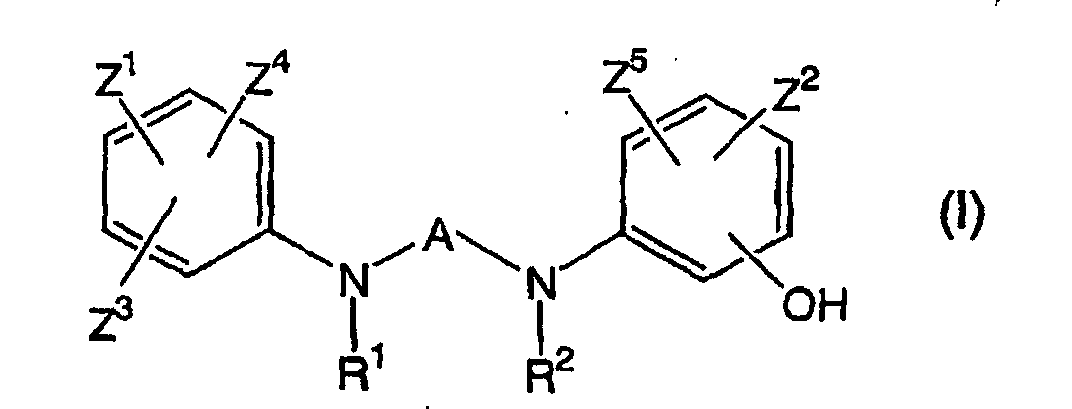
- the nitrogen-containing heteroaryl compounds which are an active ingredient of the Alzheimer's disease preventives or remedies, or of the amyloid protein fibril-formation inhibitors, of the present invention, have the following general formula (I).
- R 1 and R 2 each independently represent a hydrogen atom or a C 1-6 alkyl group
- Z 1 and Z 2 each independently represent a hydrogen atom, C 1-6 alkyl group, C 1-6 alkoxy group, halo-C 1-6 alkyl group or halogen atom
- Z 3 represents a C 1-6 alkoxy group, mercapto group, C 1-6 alkylthio group, amino group, mono- or di-C 1-6 alkylamino group, hydroxy group or halogen atom
- Z 4 and Z 5 each independently represent a hydrogen atom or halogen atom
- A represents a group of formula (II) to (VI) below.
- R 3 represents a hydrogen atom, C 1-6 alkyl group, C 1-6 alkoxy group, mercapto group, C 1-6 alkylthio group, amino group, mono- or di-C 1-6 alkylamino group or hydroxy group
- R 4 represents a hydrogen atom or nitro group
- R 5 represents a hydrogen atom or C 1-6 alkyl group
- R 6 represents a hydrogen atom, C 1-6 alkyl group, C 1-6 alkoxy group, mercapto group, C 1-6 alkylthio group, amino group, mono- or di-C 1-6 alkylamino group or hydroxy group
- R 7 and R 8 each independently represent a hydrogen atom, C 1-6 alkyl group, C 1-6 alkoxy group, mercapto group, C 1-6 alkylthio group, amino group or mono- or di-C 1-6 alkylamino group
- R 9 represents a C 1-6 alkyl group, C 1-6 alkoxy group
- R 1 , R 2 , R 3 , Z 1 , Z 2 , Z 4 , Z 5 and A have the same meanings as above, and Z 6 represents a C 1 -C 6 alkoxy group or a halogen atom.
- the "C 1 -C 6 alkyl group” denoted by R 1 , R 2 , R 3 , R 5 , R 6 , R 7 , R 8 , R 9 , R 10 , R 11 , Z 1 and Z 2 , or the C 1 -C 6 alkyl portion of the "C 1 -C 6 alkoxy group" denoted by R 3 , R 7 , R 8 , R 9 , Z 1 , Z 2 , Z 3 and Z 6 may be, for example, a methyl, ethyl, propyl, isopropyl, butyl, isobutyl, s-butyl, t-butyl, pentyl, 1-methylbutyl, 2-methylbutyl, 3-methylbutyl, 1,1-dimethylpropyl, 1,2-dimethylpropyl, 2,2-dimethylpropyl, 1-ethylpropyl, hexyl, 1-methylpentyl, 2-methylpentyl,
- alkyl group and the alkyl portion of the alkoxy group in the definitions of R 1 , R 2 , R 3 , R 9 , R 10 and R 11 , and the alkyl portion of the alkoxy group in the definitions of R 6 and Z 3 it is preferably a C 1-4 alkyl group, more preferably a methyl or ethyl group, and in particular a methyl group.
- the alkyl group and the alkyl portion of the alkoxy ⁇ sic ⁇ group in the definitions of R 1 and R 2 are preferably a methyl or ethyl group.
- the alkyl group in the definition of R 3 is preferably a C 1-5 alkyl group, more preferably a C 1-4 alkyl group, and still more preferably an ethyl, propyl or isopropyl group.
- the alkyl portion of the alkoxy group in the definition of R 3 is preferably a C 1-4 alkyl group and more preferably a C 1-3 alkyl group.
- the alkyl portion of the alkoxy group in the definition of R 6 is preferably a C 1-3 alkyl group, and more preferably a methyl or ethyl group.
- the alkyl group in the definition of R 9 is preferably a C 1-5 alkyl group, more preferably a C 2-4 alkyl group and still more preferably an ethyl, propyl, isobutyl, s-butyl or t-butyl group.
- the alkyl portion of the alkoxy group in the definition of R 9 is preferably a C 1-4 alkyl group, more preferably a methyl, ethyl or butyl group, and in particular a butyl group.
- the alkyl group and the alkyl portion of the alkoxy group in the definitions of R 10 and R 11 are preferably a C 1-3 alkyl group.
- the alkyl portion of the alkoxy group in the definition of Z 3 is preferably a C 1-3 alkyl group.
- halogen atom in the definitions of Z 1 , Z 2 , Z 3 , Z 4 , Z 5 and Z 6 is for example a fluorine, chlorine, bromine or iodine atom, preferably a fluorine or chlorine atom, and in particular a chlorine atom.
- the C 1-6 alkyl portion of the "halo-C 1-6 alkyl group" in the definitions of Z 1 and Z 2 is the same as in the case of the C 1-6 alkyl group above, and the halogen portion is the same as the halogen atom above.
- Examples are the fluoromethyl, difluoromethyl, trifluoromethyl, chloromethyl, dichloromethyl, trichloromethyl, 1-fluoroethyl, 2-fluoroethyl, 1,1-difluoroethyl, 1,2-difluoroethyl, 1-chloroethyl, 2-chloroethyl, 1,1-dichloroethyl and 1,2-dichloroethyl group, with the fluoromethyl, difluoromethyl, trifluoromethyl, chloromethyl, dichloromethyl, trichloromethyl, 1-fluoroethyl and 1-chloroethyl group being preferred, and the trifluoromethyl group further preferred.
- the C 1-6 alkyl portion of the "C 1-6 alkylthio group" in the definitions of R 3 , R 6 , R 7 , R 8 , R 9 , R 10 , R 11 and Z 3 is the same as the C 1-6 alkyl group above, and examples are methylthio, ethylthio, propylthio, isopropylthio, butylthio, isobutylthio, s-butylthio and t-butylthio.
- a C 1-4 alkylthio is preferred, more preferably the methylthio or ethylthio group, and in particular the methylthio group.
- alkyl portion of the thioalkyl group in the definitions of R 3 , R 6 , R 10 , R 11 and Z 3 this is preferably a C 1-3 alkyl group, with the methylthio group being particularly preferred.
- the C 1-6 alkyl portion of the "mono- or di-C 1-6 alkylamino group" in the definitions of R 3 , R 6 , R 7 , R 8 , R 9 , R 10 , R 11 and Z 3 is the same as the C 1-6 alkyl group above, examples being the methylamino, ethylamino, propylamino, dimethylamino, methylethylamino, methylpropylamino, diethylamino, ethylpropylamino and dipropylamino groups.
- the methylamino, ethylamino or dimethylamino group is preferred, with the methylamino group particularly preferred.
- a mono- or di-alkylamino group in the definitions of R 3 and R 9 a mono- or di-C 1-3 alkylamino group is preferred, and methylamino or dimethylamino is further preferred.
- Z 3 is preferably a C 1-4 alkoxy group, C 1-4 alkylthio group or hydroxy group, more preferably a C 1-2 alkoxy group, C 1-2 alkylthio group or hydroxy group, with a hydroxy group particularly preferred.
- the compounds of the present invention of general formula (I), (VII) or (VIII) possess within the same molecule a phenolic hydroxy group, which is a weakly acidic group, and an amino group or alkylamino group, etc, which is a weakly basic group, so they form physiologically permitted salts when reacted with a comparatively strong base or acid.
- salts are the salts with a base, such as alkali metal salts like the lithium salt, sodium salt and potassium salt, alkaline earth metal salts like the magnesium salt, calcium salt and barium salt, and amino acid salts like the glycine salt, lysine salt, arginine salt, ornithine salt, glutamic acid salt and aspartic acid salt.
- the alkali metal salts are preferred (in particular the sodium salt).
- examples of the salts with an acid are mineral acid salts like hydrohalide salts such as the hydrochloride, hydrobromide and hydroiodide, the nitrate, perchlorate, sulphate, phosphate and carbonate, sulphonic acid salts like the methanesulphonate, trifluoromethanesulphonate, ethanesulphonate, benzene-sulphonate and toluenesulphonate, and carboxylic acid salts such as the acetate, fumarate and maleate.
- hydrochloride, nitrate, sulphate and phosphate are preferred.
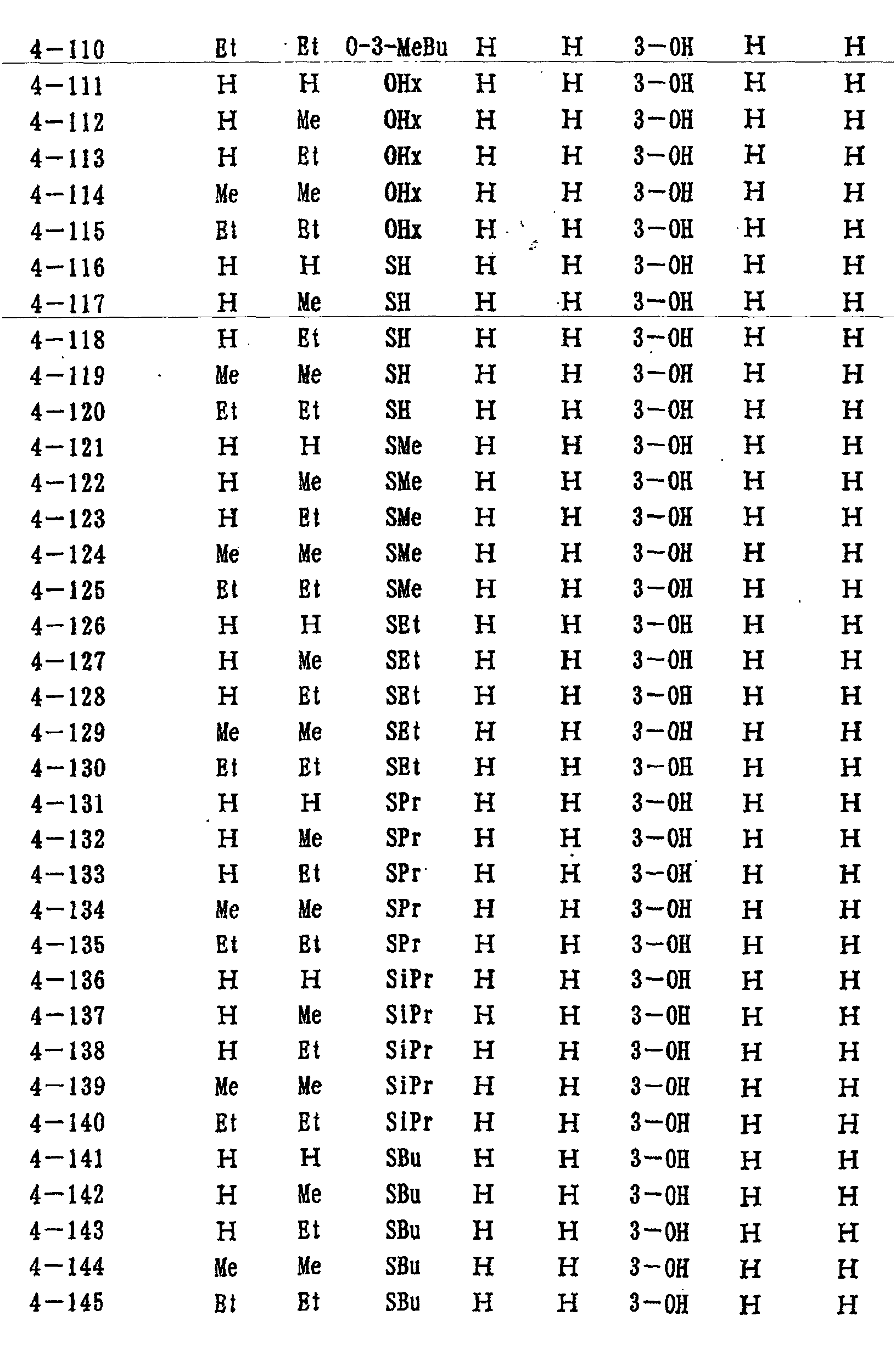
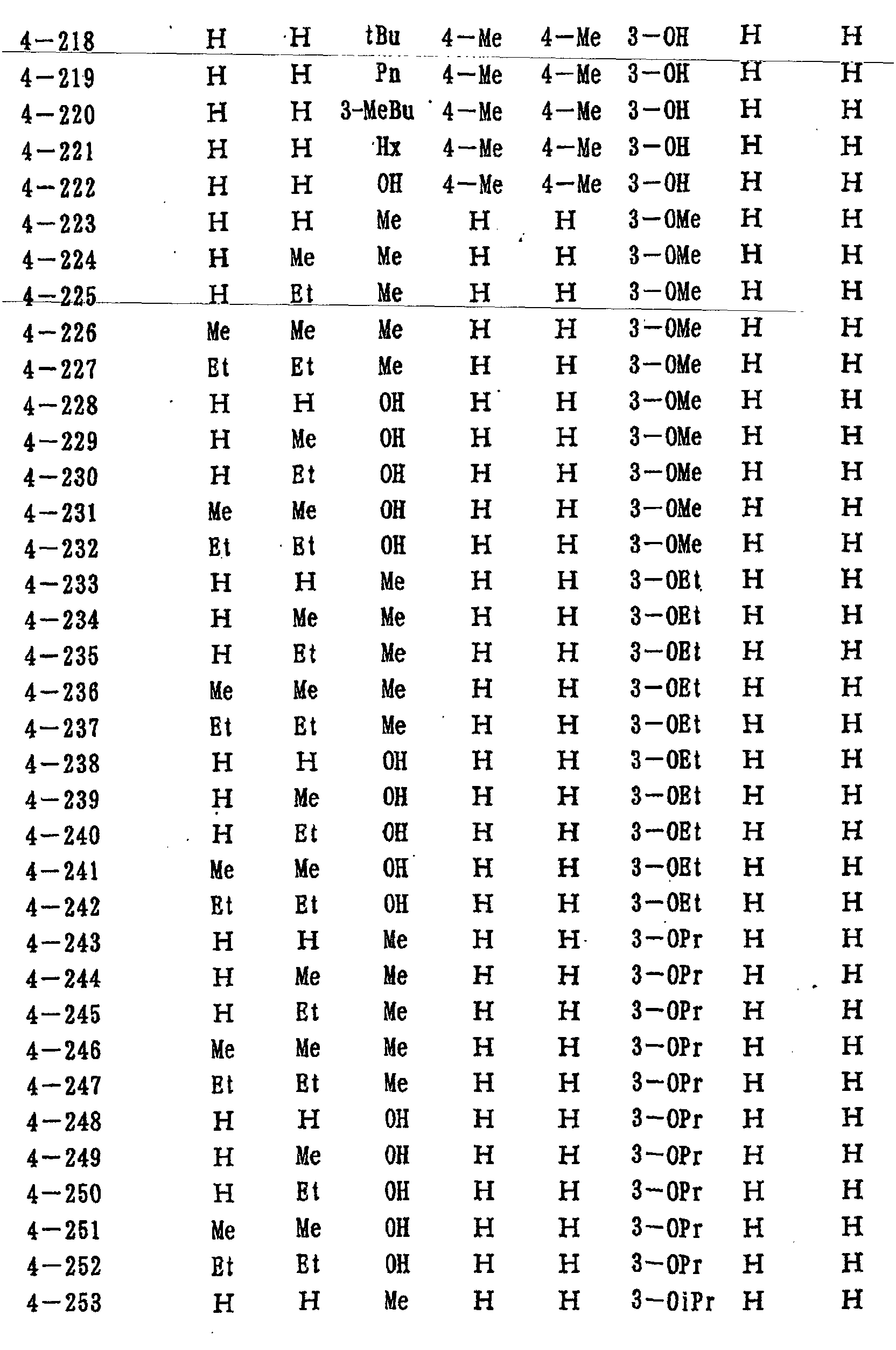
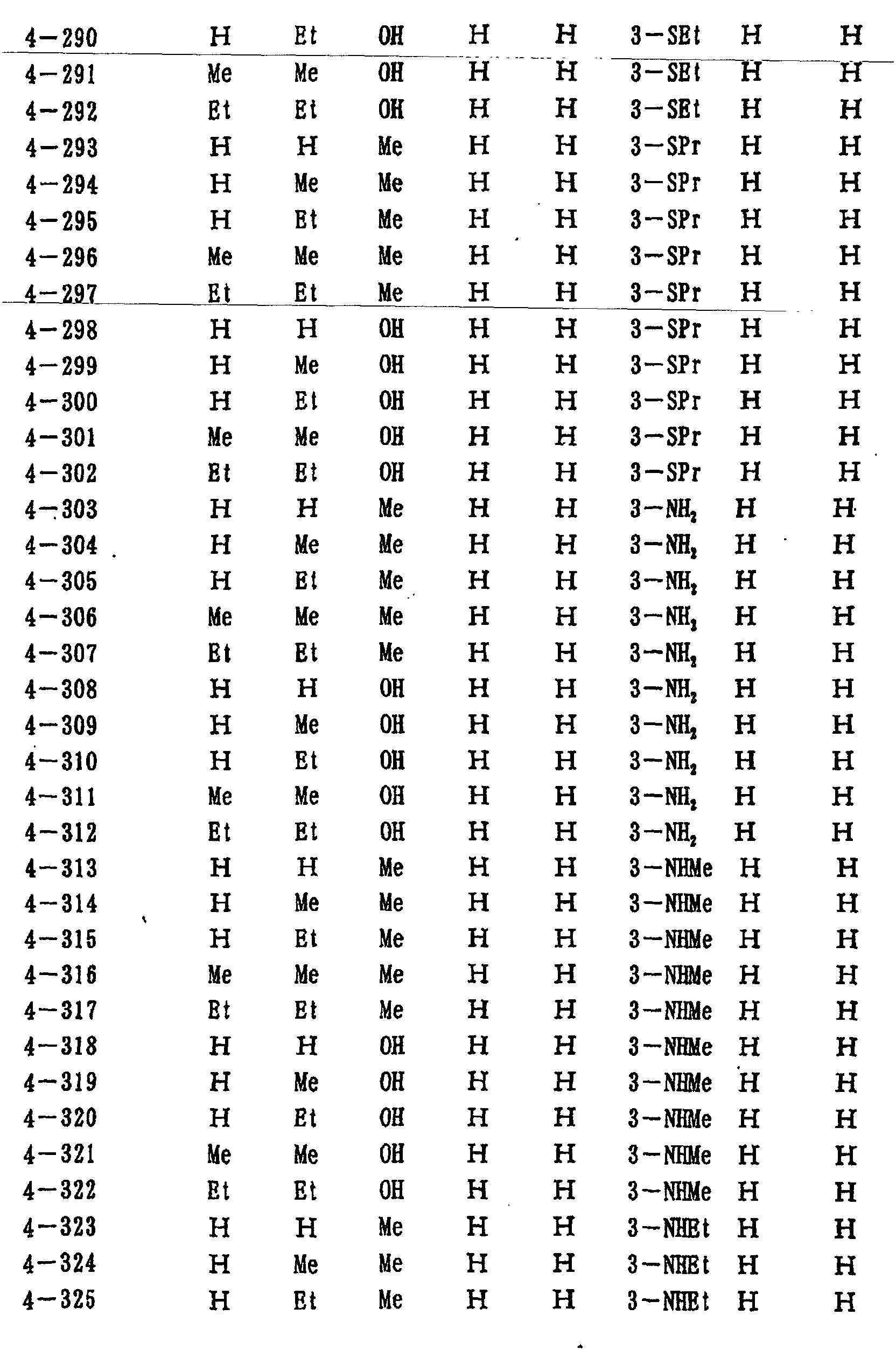
- Tables 1 to 5 below give specific examples of preferred compounds represented by aforesaid general formulae (I), (VII) or (VIII).
- the compounds shown in Tables 1 to 5 have the formulae denoted by (1) to (5) respectively.
- Me means the methyl group
- Et means the ethyl group
- Pr means the propyl group
- iPr means the isopropyl group
- Bu means the butyl group
- iBu means the isobutyl group
- sBu means the s-butyl group
- tBu means the t-butyl group
- Pn means the pentyl group
- Hx means the hexyl group.
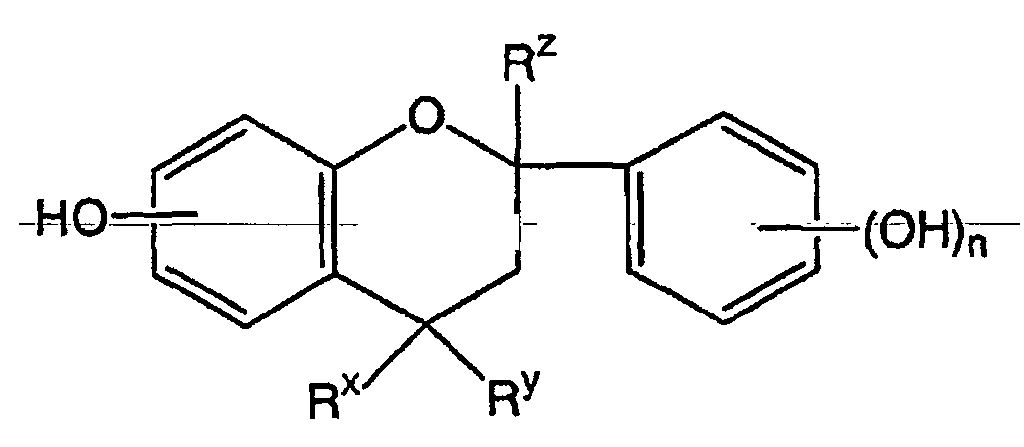
- R x , R y and R z are the same or different, and each represent a hydrogen atom or a C 1-4 alkyl group (preferably R x , R y and R z are the same or different, and each represent a hydrogen atom or a methyl group; more preferably, R x , R y and R z are methyl groups), and n is 1 or 2 (preferably 2)] are known compounds (see, for example, JP-A-5-32654), and possess an outstanding action in inhibiting a lowering of the MTT reduction capacity and in inhibiting LTP impairment in the hippocampus, and they are valuable as Alzheimer's disease preventives or remedies.
- the preferred compounds are Exemplified Compound Nos 1-1 ⁇ 1-27, 1-29 ⁇ 1-30, 1-32, 1-36 ⁇ 1-37, 1-40 ⁇ 1-41, 1-56, 1-58, 1-60, 1-62, 1-68 ⁇ 1-69, 1-71 ⁇ 1-72, 1-74 ⁇ 1-75, 1-86 ⁇ 1-109, 1-114 ⁇ 1-116, 1-120 ⁇ 1-122, 1-127 ⁇ 1-136, 1-147 ⁇ 1-153, 1-155 ⁇ 1-156, 1-158 ⁇ 1-165, 1-173 ⁇ 1-175, 1-178 ⁇ 1-183, 1-200 ⁇ 1-203, 2-1 ⁇ 2-3, 2-6 ⁇ 2-8, 2-11 ⁇ 2-13, 2-16 ⁇ 2-18, 2-21 ⁇ 2-23, 2-31 ⁇ 2-33, 2-36 ⁇ 2-38, 2-41 ⁇ 2-43, 2-46 ⁇ 2-48, 2-56 ⁇ 2-58, 2-61 ⁇ 2-63, 2-66 ⁇ 2-68, 2-71 ⁇ 2-73, 2-76 ⁇ 2-78, 2-81 ⁇ 2-83, 2-86 ⁇ 2-88, 2-91 ⁇ 2-93, 2-96 ⁇ 2-98, 2-101 ⁇
- the nitrogen-containing heteroaryl compounds represented by general formulae (I) of the present invention and the nitrogen-containing heteroaryl derivatives represented by general formulae (VII) and (VIII) are either known compounds (for example WO00/12485 pamphlet) or they can be produced by the following method using known compounds as the starting materials.
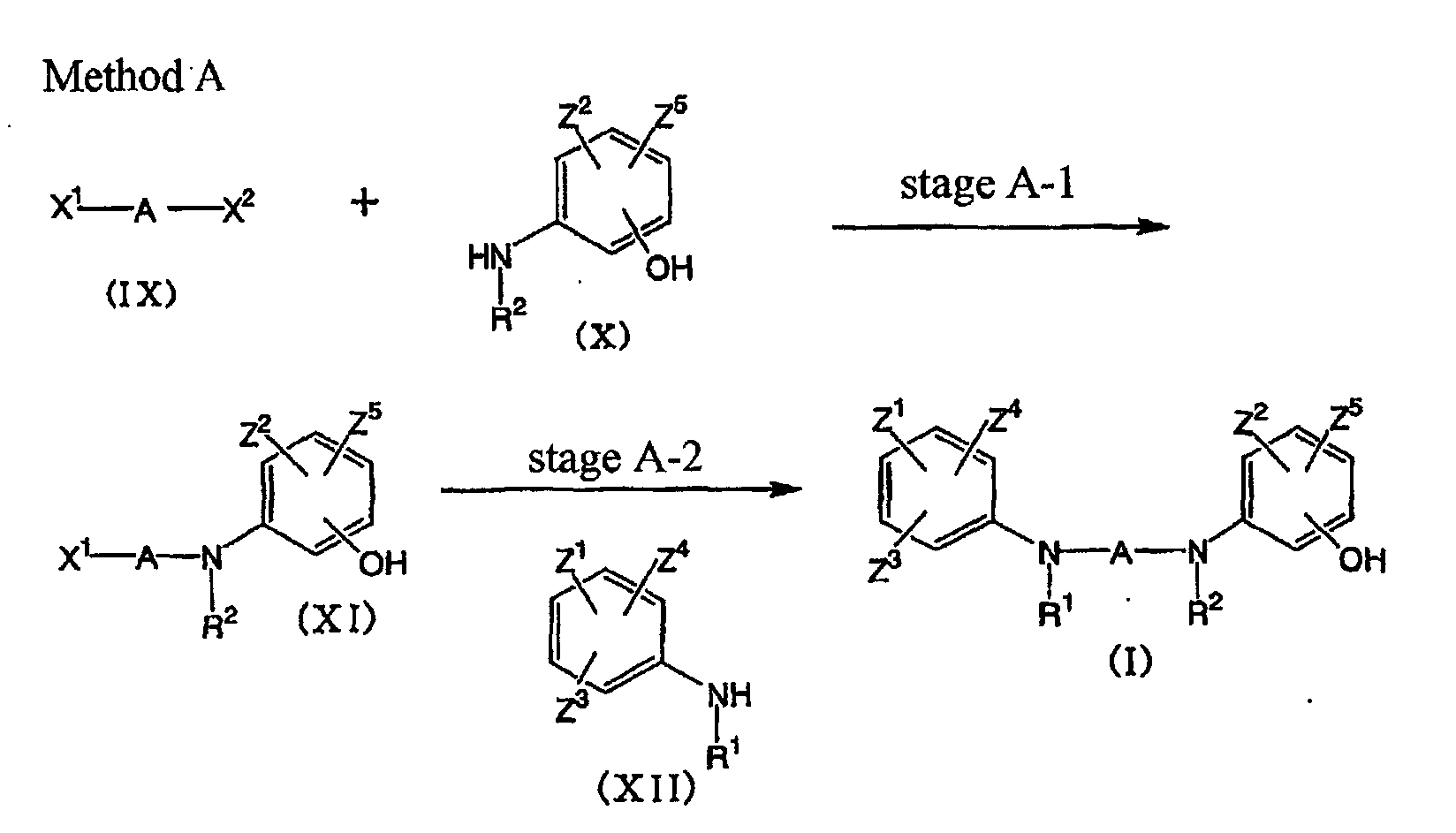
- R 1 , R 2 , Z 1 , Z 2 , Z 3 , Z 4 , Z 5 and A have the same meanings as above, and X 1 and X 2 each represents a halogen atom (preferably a chlorine atom, bromine atom or iodine atom, and more preferably a chlorine atom).
- Stage A-1 is a stage for the production of a compound of general formula (XI) by the reaction between a halogen compound of general formula (IX) and an aminophenol of general formula (X) in an inert solvent.
- the inert solvent used is not particularly restricted providing it does not impede the reaction, and to some extent dissolves the starting materials.
- examples include aliphatic hydrocarbons such as hexane, heptane, ligroin and petroleum ether; aromatic hydrocarbons such as benzene, toluene and xylene; halo-hydrocarbons such as dichloromethane, chloroform, carbon tetrachloride, dichloroethane, chlorobenzene and dichlorobenzene; nitriles such as acetonitrile and propionitrile; ethers such as diethyl ether, diisopropyl ether, tetrahydrofuran, dioxane, dimethoxyethane and diethylene glycol dimethyl ether; amides such as formamide, dimethylformamide, dimethylacetamide, N-methyl-2-pyrrolidone and hexamethylphosphoramide; sulphoxides such as
- This stage can be carried out with the optional addition of a base, such as an organic base like triethylamine, N-methylmorpholine, pyridine, 4-(N,N-dimethylamino)-pyridine, or an alkali metal carbonate such as sodium carbonate or potassium carbonate.
- a base such as an organic base like triethylamine, N-methylmorpholine, pyridine, 4-(N,N-dimethylamino)-pyridine, or an alkali metal carbonate such as sodium carbonate or potassium carbonate.
- An organic base is preferred.
- the reaction temperature will differ with the starting material compounds and the solvent but, normally, it is 0-200°C and preferably 50-170°C.
- the reaction time will vary with the reaction temperature, the starting material compounds and the solvent but, normally, it is in the range from 10 minutes to 24 hours, and preferably 30 minutes to 8 hours.
- the target material can be obtained from the reaction mixture by the usual methods.
- the solvent is distilled off and water poured onto the residue obtained, then extraction performed with a water-immiscible solvent (such as benzene, ether, ethyl acetate or the like), after which the extraction liquid is washed with water and dried with anhydrous magnesium sulphate.
- a water-immiscible solvent such as benzene, ether, ethyl acetate or the like
- the target compound is obtained.
- the target compound thus obtained can, where necessary, be further purified by the usual methods, such as column chromatography, etc.
- the aminophenol (X) used in stage A-1 is either a known compound or can be readily produced by known methods [see J. Am. Chem. Soc., Vol.47, 1712-1718 (1925), J. Heterocyclic Chem., Vol.26, 1255-1259 (1989), Synthesis, 1446-1450 (1997), J. Chem. Soc., 3017-3020 (1949), J. Chem. Soc., 2426-2430 (1951)].
- Stage A-2 is a stage for the production of the target compound (I), and this is achieved by performing reaction between the compound of general formula (XI) and an amine of general formula (XII) in the same way as in stage A-1.
- stage A-2 The amine of general formula (XII) used in stage A-2 is either a known compound or is readily produced by known methods [Synth. Commun., Vol.30, 3639-3644 (2000)].
- the compound (IXa) where, in the compound of general formula (IX) employed in stage A-1, A is a group of formula (V) and R 9 is a C 1-6 alkyl group, can be produced by the following method B.
- X 1 and X 2 have the same meanings as above, and X 3 represents a halogen atom (preferably a chlorine atom, bromine atom or iodine atom, and more preferably a chlorine atom), and R 12 is a C 1-6 alkyl group.
- halogen atom preferably a chlorine atom, bromine atom or iodine atom, and more preferably a chlorine atom
- Stage B-1 is a stage based on a known method [Helv. Chim. Acta, Vol.33, 1365-1369 (1950)] and is carried out by the reaction between a trihalo-triazine compound of general formula (XIII) and an alkali organo-metal (for example, an organo-lithium reagent such as methyllithium, ethyllithium or propyllithium; an organo-magnesium reagent such as methylmagnesium bromide or ethylmagnesium bromide; an organo-aluminium reagent such as trimethylaluminium; an organo-zinc reagent such as dimethylzinc; or an organo-copper reagent such as lithium dimethyl-cuprate; preferably an organo-lithium reagent or an organo-magnesium reagent) in an inert solvent (for example an aliphatic hydrocarbon such as hexane; an aromatic hydrocarbon such as benzene or to
- the target compound is obtained from the reaction mixture by the usual methods.
- the reaction mixture is concentrated or extracted with a water-immiscible organic solvent (such as benzene, ether, ethyl acetate or the like), followed by drying with anhydrous magnesium sulphate, after which the solvent is distilled off.
- a water-immiscible organic solvent such as benzene, ether, ethyl acetate or the like
- anhydrous magnesium sulphate after which the solvent is distilled off.
- the target material thus obtained can be further purified by normal methods, for example by column chromatography.
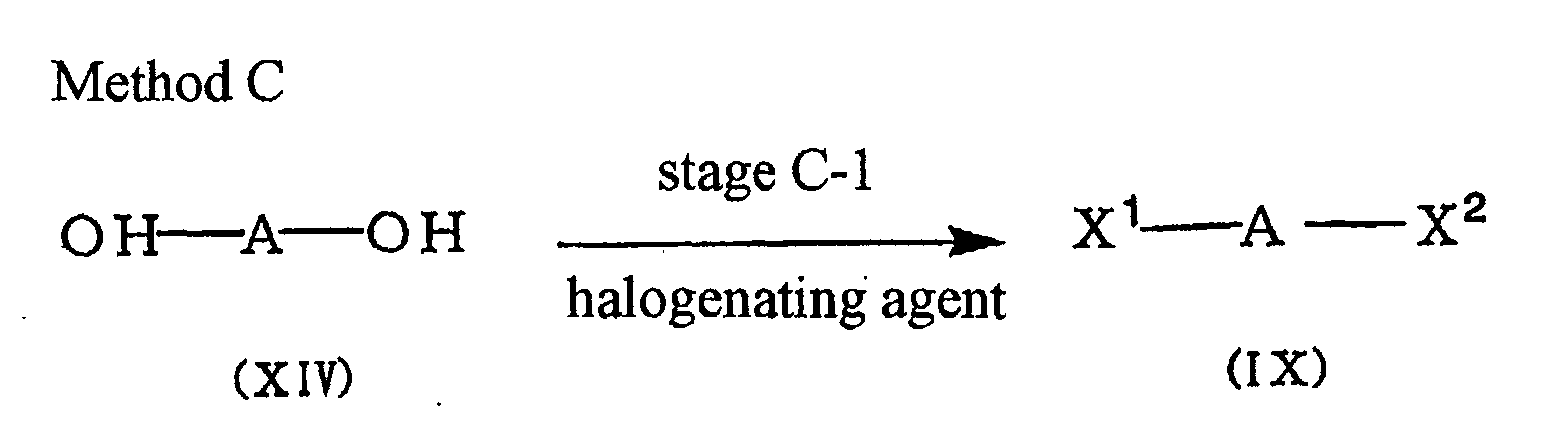
- the compound of general formula (IX) used in stage A-1 can also be produced by the following method C.
- Stage C-1 is a stage based on a known method [J. Org. Chem., Vol.17, 1320-1327 (1952); J. Org. Chem., Vol.18, 653-656 (1953); J. Am. Chem. Soc.
- a compound of general formula (XIV) by the reaction between a compound of general formula (XIV) and a halogenating agent (such as a thionyl halide such as thionyl chloride; a phosphorus trihalide such as phosphorus trichloride, phosphorus tribromide or phosphorus triiodide; a phosphorus pentahalide such as phosphorus pentachloride, phosphorus pentabromide or phosphorus pentaiodide; or a phosphorus oxyhalide such as phosphorus oxychloride, phosphorus oxybromide or phosphorus oxyiodide; in particular with phosphorus oxychloride) either in the absence of solvent or in the presence of an inert solvent (such as an aliphatic hydrocarbon such as hexane or heptane; an aromatic hydrocarbon such as benzene or toluene; a halo-hydrocarbon such as dichlor
- the target compound is obtained from the reaction mixture by the usual methods.
- the reaction mixture is concentrated or extracted with a water-immiscible organic solvent (such as benzene, ether, ethyl acetate or the like), followed by drying with anhydrous magnesium sulphate, after which the solvent is distilled off and the target material obtained.
- a water-immiscible organic solvent such as benzene, ether, ethyl acetate or the like
- anhydrous magnesium sulphate anhydrous magnesium sulphate
- the target material thus obtained can be further purified by normal methods, for example by column chromatography.
- nitrogen-containing heteroaryl compounds of general formula (I) of the present invention or pharmacologically permitted salts thereof, are used as preventives or remedies for Alzheimer's disease or as amyloid protein fibril-formation inhibitors, they can be administered orally in the form of tablets, capsules, granules, powders or syrups, etc, or parenterally in the form of injections or suppositories, etc, either on their own or after mixing with suitable pharmacologically-permitted fillers, diluents or the like.
- additives such as fillers/excipients (examples of which are organic fillers like lactose, sucrose, glucose, mannitol, sorbitol or other sugar or sugar derivative; corn starch, potato starch, ⁇ -starch, dextrin or other such starch or starch derivative; crystalline cellulose or other such cellulose derivative; gum Arabic; dextran; pullulan or the like; and inorganic fillers like light silica, synthetic aluminium silicate, calcium silicate, magnesium metasilicate or other silicic acid derivative; calcium hydrogen phosphate or other phosphate; calcium carbonate or other carbonate; calcium sulphate or other sulphate, or the like), lubricants (examples of which are stearic acid and metal stearates like calcium stearate and magnesium stearate; talc; colloidal silica; beeswax, sperm whale wax and other such waxes; boric acid;
- fillers/excipients examples
- the amount used will differ according to the symptoms, age, etc, but when administered orally to an adult there can be used an amount between a lower limit of 1 mg (preferably 10 mg) and an upper limit of 1,000 mg (preferably 500 mg) per time, and when administered intravenously there can be used an amount between a lower limit of 0.5 mg (preferably 5 mg) and an upper limit of 500 mg (preferably 250 mg) per time, from once to six times per day according to the symptoms.
- This compound was prepared based on a known method [Helv. Chem. Acta, 33, 1365-1369 (1950)]. That is to say, 2,4,6-trichloro-1,3,5-triazine (4.61 g, 25.0 mmol) was dissolved in benzene (50.0 mL) under an atmosphere of nitrogen and the solution cooled with an ice bath.
- ethylmagnesium bromide (3.0 M ether solution, 10.0 mL) was slowly added over 20 minutes and stirring carried out for a further 30 minutes while ice cooling.
- the reaction was monitored by thin layer chromatography and, following the end of the reaction, saturated aqueous ammonium chloride solution (20.0 mL) was added to the reaction liquid and stirring carried out.
- Ether 200 mL was also added and liquid separation performed. The organic layer obtained was removed, washed with distilled water (20.0 mL) and then with saturated sodium chloride solution (20.0 mL), after which drying was carried out with anhydrous magnesium sulphate. By distilling off the solvent under reduced pressure, the crude target compound was obtained.
- the HeLa cells employed were purchased from the Dainippon Pharmaceutical Co.
- the HeLa cells were seeded by suspension in MEM (Minimum essential medium; produced by the Sigma Chemical Co.) containing 10% inactivated FBS (foetal bovine serum) such that there were 1,000 per well in a 96-well microplate, and then culturing was carried out overnight in an incubator at 37°C in the presence of 5% CO 2 .
- MEM Minimum essential medium
- FBS foetal bovine serum
- test compound was dissolved in dimethyl sulphoxide (DMSO) and diluted with the MEM medium so that the final concentration of DMSO was no more than 0.1 wt%, and added to the cells seeded the previous day.
- DMSO dimethyl sulphoxide
- a solution of ⁇ -amyloid protein (A ⁇ 1-40: produced by the Sigma Chemical Co.) dissolved in MEM medium was added so the final A ⁇ 1-40 concentration was 100 ng/mL.
- Overnight culturing was carried out using an incubator at 37°C in the presence of 5% CO 2 , with 100 ⁇ L/well of MEM medium containing 5% deactivated FBS.
- the A ⁇ 1-40 had been dissolved in buffer and left overnight so that the amyloid coagulated.
- MTT [3-(4,5-dimethylthiazol-2-yl)-2,5-diphenyltetrazolium bromide: produced by Wako Pure Chemical Industries] prepared at a concentration of 5 mg/mL with phosphate buffered saline (PBS), and incubation carried out for 2 hours at 37°C in the presence of 5% CO 2 .
- PBS phosphate buffered saline
- the medium was then eliminated and the formazan dye produced measured colorimetrically (A570 nm-A650 nm) using a Microplate Reader (produced by the Molecular Devices Co.), by dissolving with the addition of 100 ⁇ L per well of isopropanol. In this way, the change in the MTT reduction capacity of the HeLa cells was measured.
- the percentage inhibition (%) by the test compound was determined from the following formula. inhibition (%) [(a - b)/(a - c)] ⁇ 100 where
- Table 6 shows the action in inhibiting the lowering of the MTT reduction capacity by A ⁇ 1-40 (100 nM) in HeLa cells, denoted by the 50% inhibitory concentration (IC50).
- the method for testing the suppression of the impairment of long-term potentiation was based on that described in J. Neurosci. Vol.20, 2003-10 (2000). That is to say, acute i sections of thickness 400 ⁇ m were prepared from the hippocampus of the brains of 3-4 week old male Wistar rats. These acute sections were immersed in artificial cerebrospinal fluid in which ⁇ -amyloid protein (A ⁇ 1-42: produced by the Sigma Chemical Co.) and compound from Production Examples 1 or 12 had been dissolved, and pretreatment carried out for 5 hours.
- ⁇ -amyloid protein A ⁇ 1-42: produced by the Sigma Chemical Co.
- the concentration of the A ⁇ 1-42 in the artificial cerebrospinal fluid was 500 nM and the concentration of the compound from Production Example 1 was 1 ⁇ g/mL.
- the concentration of the A ⁇ 1-42 in the artificial cerebrospinal fluid was 1 ⁇ M and the concentration of the compound from Production Example 12 was 3 ⁇ g/mL.
- the A ⁇ 1-42 was used after coagulation of the amyloid by leaving overnight.
- the fEPSP was measured at 30 second intervals following application of the high frequency stimulation and the fEPSP slope (units [%]) measured. The average values of the slope over 0-20 minutes, 20-40 minutes and 40-60 minutes were determined. This test was repeated five times over. The results are shown in Table 7. In the table, the figures are the average values ⁇ standard deviation for the five averages obtained in the five tests. "Test 1" shows the measurements employing the compound from Production Example 1 and “Test 2" shows the measurements employing the compound from Production Example 12. "A ⁇ " denotes the A ⁇ 1-42.
- the compounds of the present invention show an outstanding suppression action against the impairment of synapse transmission produced by A ⁇ .
- the A ⁇ fibril-formation inhibiting action and fibrillar A ⁇ breakdown action were evaluated using the thioflavin binding assay method.
- the details of the test method are based on the method described in J. Biol. Chem. Vol.274, 25945-25952 (1999).
- the concentration of the A ⁇ 1-42 was 25 ⁇ M and the concentration of the compound synthesized in Production Example 4 or Production Example 12 was 100 ⁇ g/mL in each case.
- the measurement of the A ⁇ fibril-formation inhibiting action was carried out following incubation for 2 days at 37°C of the A ⁇ 1-42 alone and of the A ⁇ 1-42 to which the compound synthesized in Production Example 4 or Production Example 12 had been added,.
- the concentration of the A ⁇ 1-42 was 25 ⁇ M and the concentration of the compound synthesized in Production Example 4 or Production Example 12 was 100 ⁇ g/mL in each case. After incubating the A ⁇ 1-42 for 2 days or 3 days at 37°C, the compound synthesized in Production Example 4 or Production Example 12 was or was not added, and then further incubation performed for 2 days, after which measurement of the fibrillar A ⁇ breakdown action was performed.
- the measurements of the A ⁇ fibril-formation inhibiting action and of the fibrillar A ⁇ breakdown action were carried out by placing a 100 ⁇ L sample obtained by pretreatment as described above, plus 800 ⁇ L of distilled water, 1 mL of glycine (100 mM) and 50 ⁇ L of thioflavin (100 ⁇ M) in a cuvette, and measuring the fluorescence at an excitation wavelength of 435 nm and a fluorescence wavelength of 490 nm.
- the results are shown in Table 9.
- the figures in the table show the calculated percentages taking the fluorescent intensity obtained when the fluorescence of the sample obtained by incubating A ⁇ 1-42 (25 ⁇ M) alone by the above method, and measured at an excitation wavelength of 435 nm and a fluorescence wavelength of 490 nm, was taken as 100.
- the figures are in the form of the average value ⁇ standard deviation, for the three to nine averages obtained in three to nine tests.
- “Test 3" shows the measurements using the compound from Production Example 4
- “Test 4" shows the measurements using the compound from Production Example 12.
- “A ⁇ " is for the A ⁇ 1-42.
- No.3 capsule containers are filled with 180 mg quantities of the mixture and capsules obtained.
- the drugs of the present invention which contain a compound of general formula (I) are outstanding in their action in suppressing the fall in MTT reduction capacity brought about by ⁇ -amyloid protein, and in inhibiting impairment of long-term potentiation of hippocampal nerve cells, so they are useful as preventatives or remedies for Alzheimer's disease.
- amyloid protein fibril-formation inhibitors of the present invention are outstanding in their action in inhibiting amyloid protein fibril-formation and in their fibrillar amyloid protein breakdown action, so they are valuable as preventatives or remedies for amyloidosis, such as Alzheimer's disease, type 2 diabetes, immunoglobulinic amyloidosis, reactive amyloidosis, familial amyloidosis, dialysis-related amyloidosis, senile amyloidosis, cerebrovascular amyloidosis, hereditary cerebral haemorrhage with amyloidosis, Creutzfeldt-Jakob disease, bovine spongiform encephalitis (BSE), scrapie, medullary carcinoma of the thyroid, insulinoma, localized atrial amyloid, amyloidosis cutis and localized nodular amyloidosis, preferably for Alzheimer's disease, type 2 diabetes, dialysis-related amyloidosis, familial amyloid
- nitrogen-containing heteroaryl derivatives of the present invention and their pharmacologically permitted salts are valuable as preventives or remedies for Alzheimer's disease of warm-blooded animals (in particular humans), or as amyloid protein fibril-formation inhibitors.
Landscapes
- Chemical & Material Sciences (AREA)
- Organic Chemistry (AREA)
- Health & Medical Sciences (AREA)
- Veterinary Medicine (AREA)
- Life Sciences & Earth Sciences (AREA)
- Public Health (AREA)
- General Health & Medical Sciences (AREA)
- Animal Behavior & Ethology (AREA)
- Medicinal Chemistry (AREA)
- Pharmacology & Pharmacy (AREA)
- Epidemiology (AREA)
- Bioinformatics & Cheminformatics (AREA)
- Nuclear Medicine, Radiotherapy & Molecular Imaging (AREA)
- General Chemical & Material Sciences (AREA)
- Chemical Kinetics & Catalysis (AREA)
- Engineering & Computer Science (AREA)
- Neurosurgery (AREA)
- Diabetes (AREA)
- Biomedical Technology (AREA)
- Neurology (AREA)
- Hematology (AREA)
- Hospice & Palliative Care (AREA)
- Heart & Thoracic Surgery (AREA)
- Psychiatry (AREA)
- Emergency Medicine (AREA)
- Endocrinology (AREA)
- Obesity (AREA)
- Cardiology (AREA)
- Urology & Nephrology (AREA)
- Pharmaceuticals Containing Other Organic And Inorganic Compounds (AREA)
- Nitrogen- Or Sulfur-Containing Heterocyclic Ring Compounds With Rings Of Six Or More Members (AREA)
- Plural Heterocyclic Compounds (AREA)
Abstract

Description
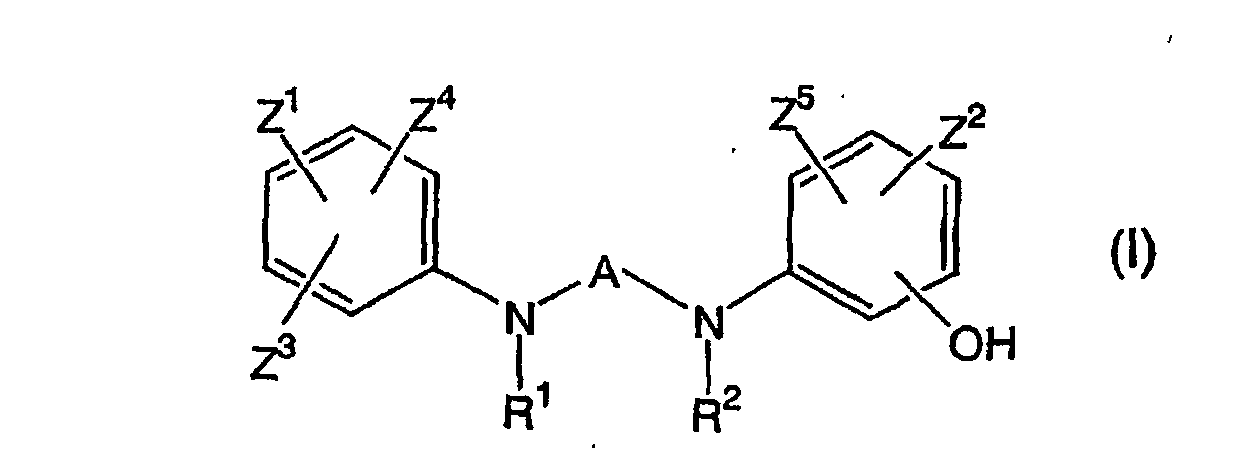
R1 and R2 each independently represent a hydrogen atom or a C1-6 alkyl group,
Z1 and Z2 each independently represent a hydrogen atom, C1-6 alkyl group, C1-6 alkoxy group, halo-C1-6 alkyl group or halogen atom,
Z3 represents a C1-6 alkoxy group, mercapto group, C1-6 alkylthio group, amino group, mono- or di-C1-6 alkylamino group, hydroxy group or halogen atom,
Z4 and Z5 each independently represent a hydrogen atom or halogen atom, and
A represents a group of formula (II) to (VI) below.
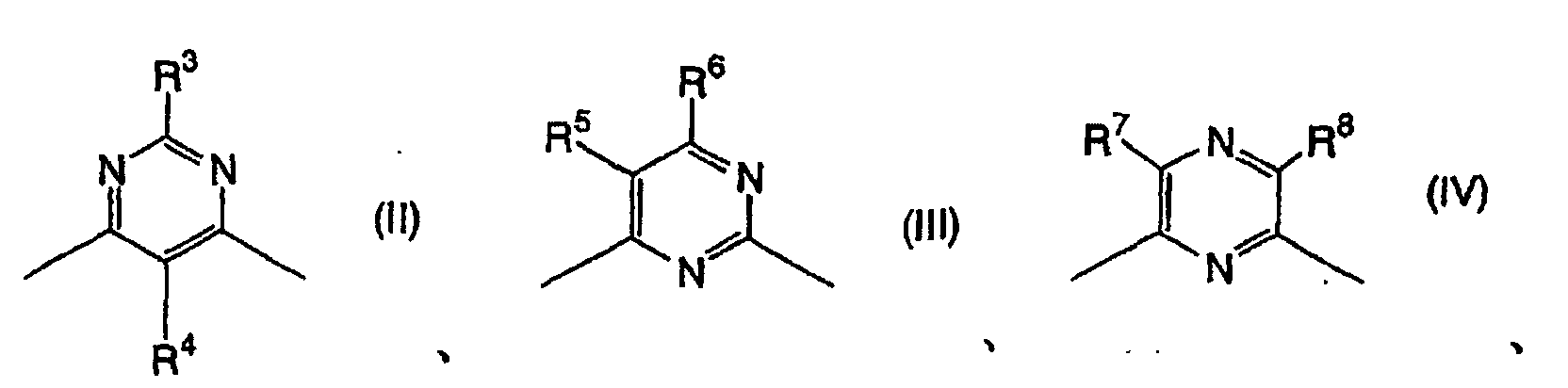
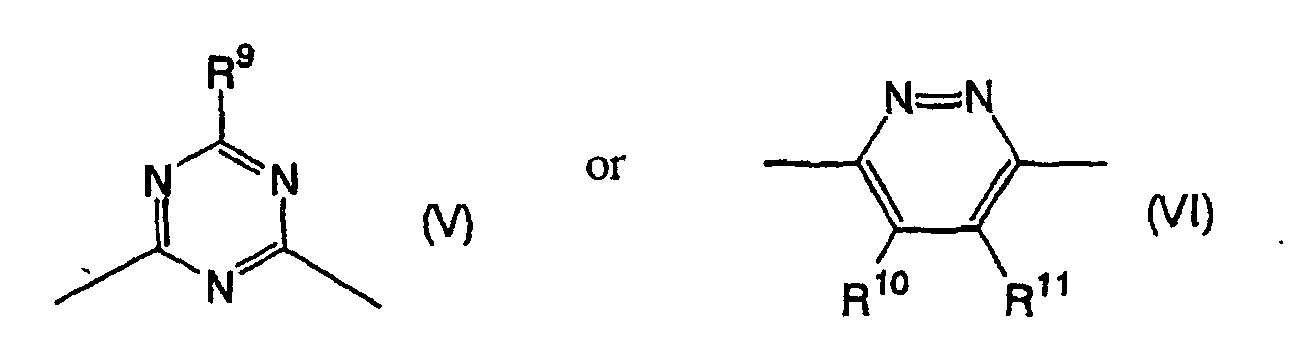
R3 represents a hydrogen atom, C1-6 alkyl group, C1-6 alkoxy group, mercapto group, C1-6 alkylthio group, amino group, mono- or di-C1-6 alkylamino group or hydroxy group,
R4 represents a hydrogen atom or nitro group,
R5 represents a hydrogen atom or C1-6 alkyl group,
R6 represents a hydrogen atom, C1-6 alkyl group, C1-6 alkoxy group, mercapto group, C1-6 alkylthio group, amino group, mono- or di-C1-6 alkylamino group or hydroxy group,
R7 and R8 each independently represent a hydrogen atom, C1-6 alkyl group, C1-6 alkoxy group, mercapto group, C1-6 alkylthio group, amino group or mono- or di-C1-6 alkylamino group,
R9 represents a C1-6 alkyl group, C1-6 alkoxy group, mercapto group, C1-6 alkylthio group, amino group, mono- or di-C1-6 alkylamino group or hydroxy group, and
R10 and R11 each independently represent a hydrogen atom, C1-6 alkyl group, C1-6 alkoxy group, C1-6 alkylthio group, or mono- or di-C1-6 alkylamino group.


Z3 is a meta-position hydroxy group (in the case of compound (I)), or the hydroxy group on the phenyl ring to which Z1 is bonded is in the meta-position (in the case of compound (VII)) and
Z4 and Z5 are hydrogen atoms,
Z3 is a meta-position hydroxy group (in the case of compound (I), or the hydroxy group on the phenyl ring to which Z1 is bonded is in the meta-position (in the case of compound (VII)), and
Z4 and Z5 are hydrogen atoms.
Taking these together, for example combinations of 2), 3) to 6) and 8) are preferred. Amongst these combinations, the combination of 2), 6) and 8) is further preferred.

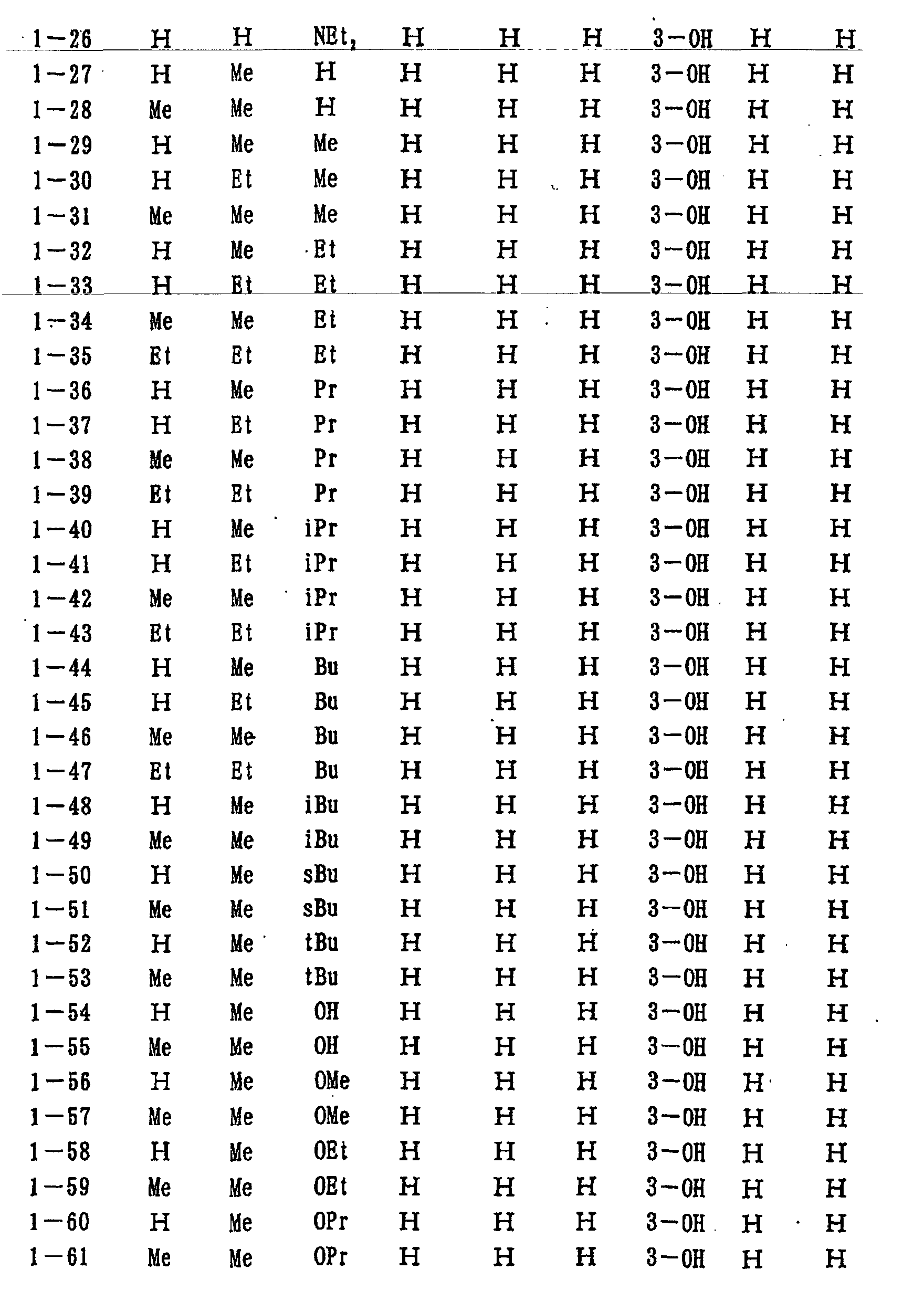


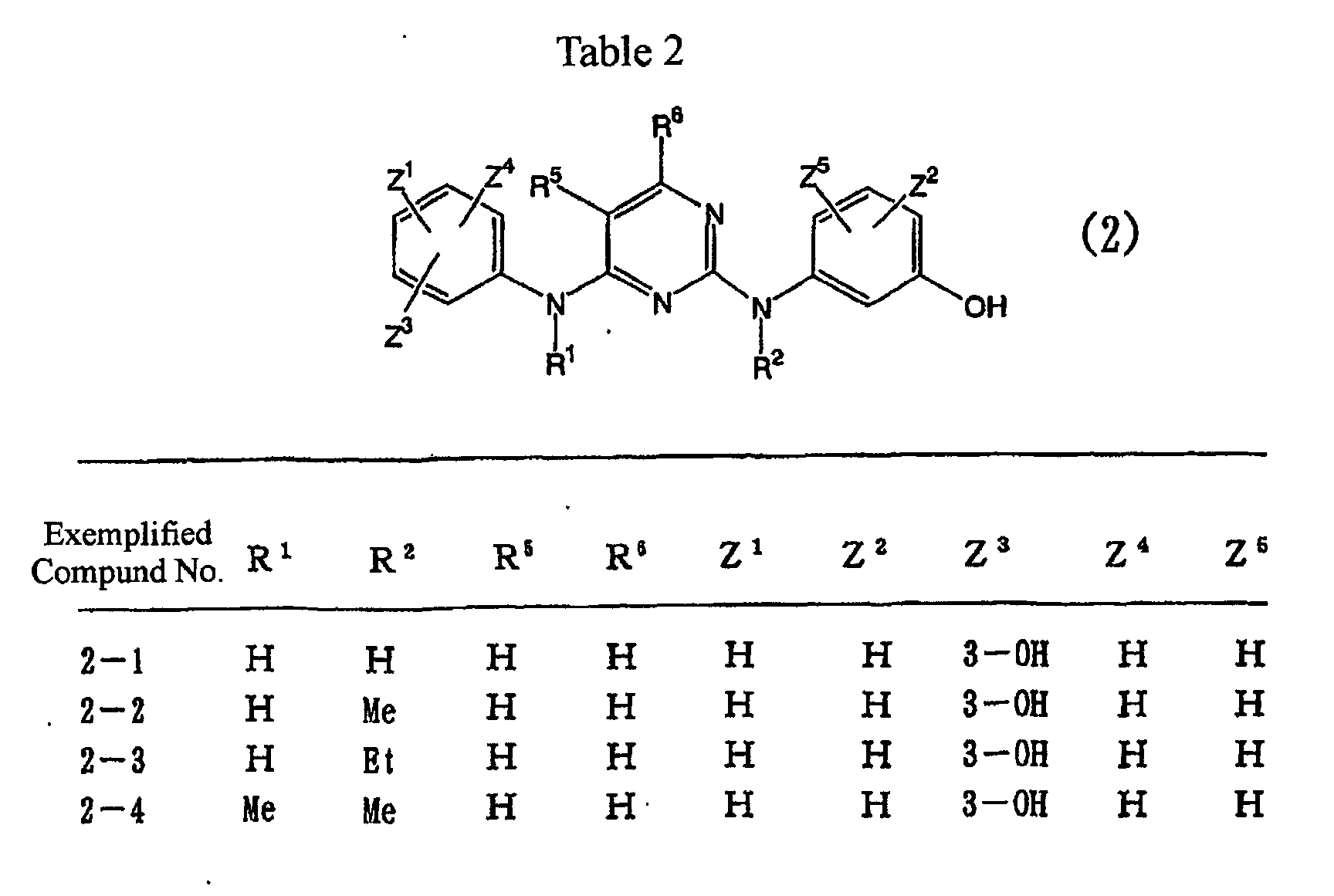
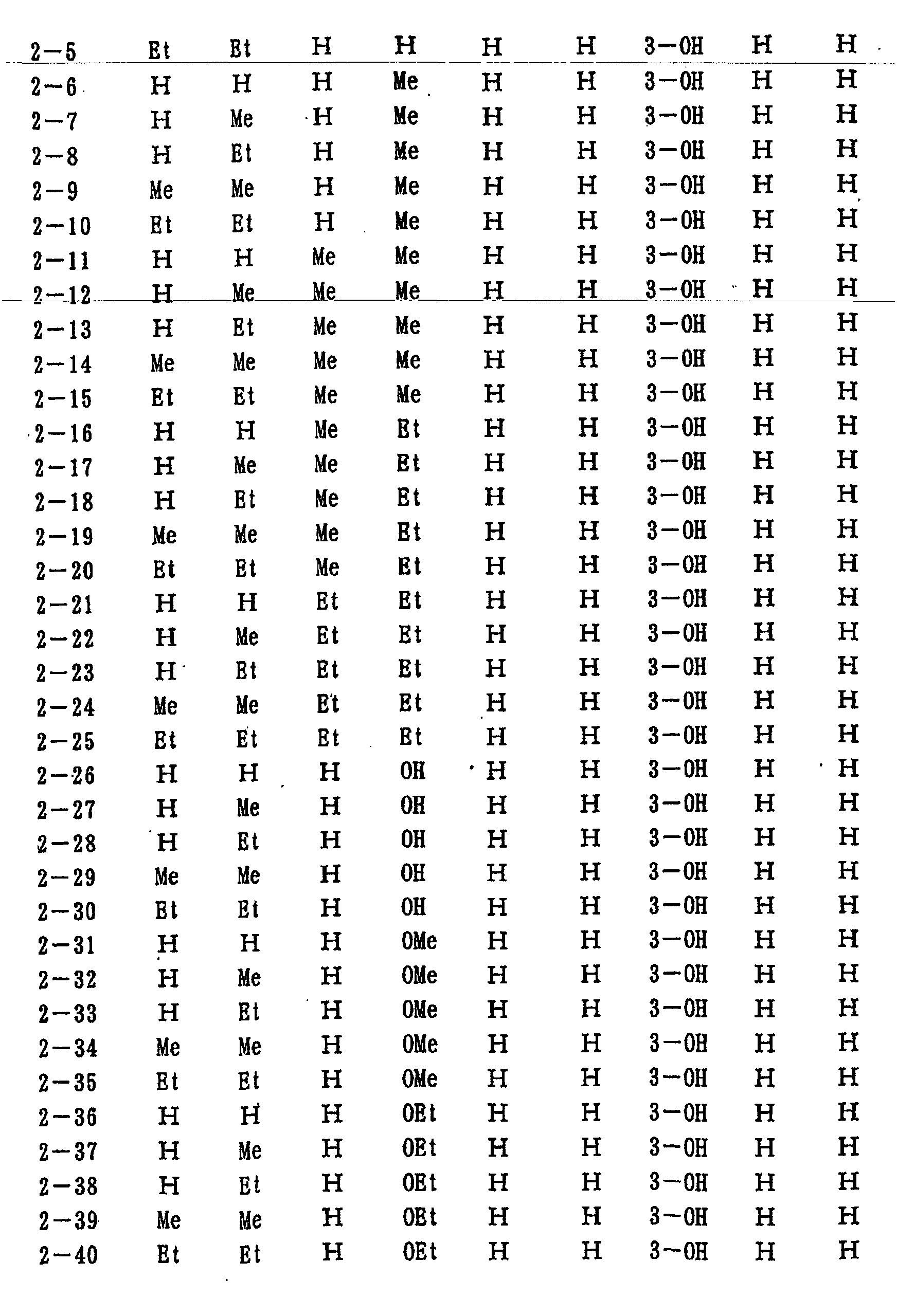


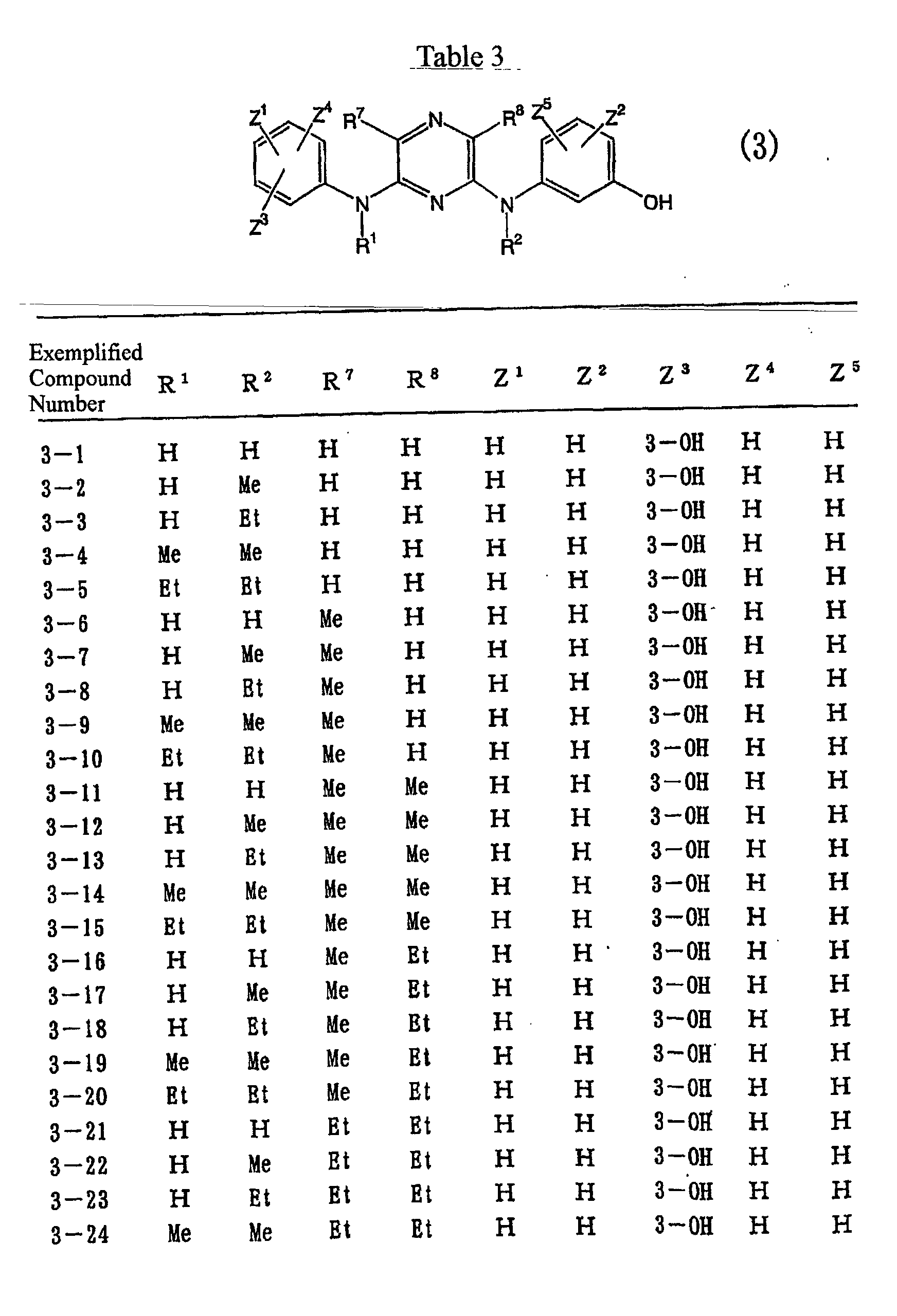

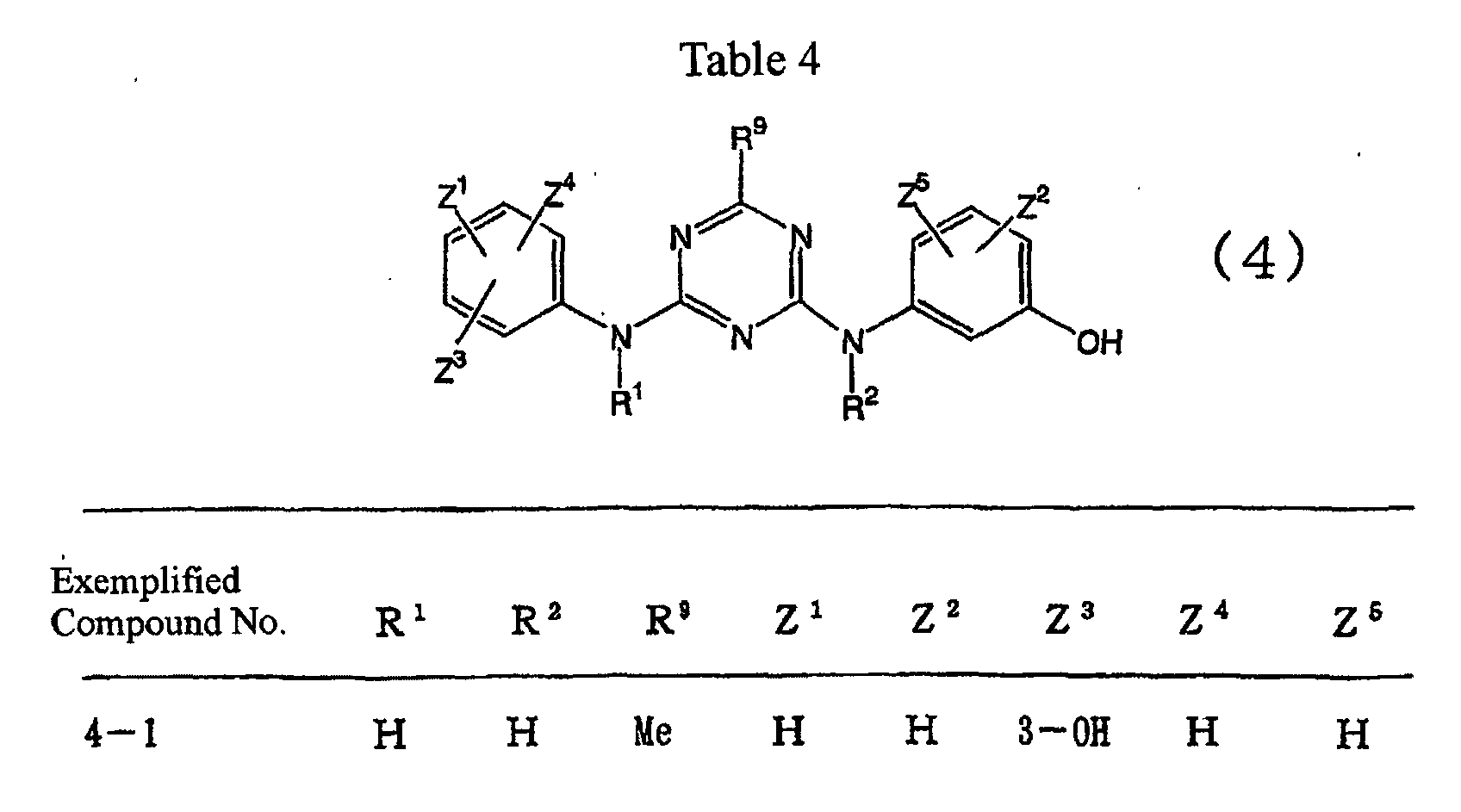





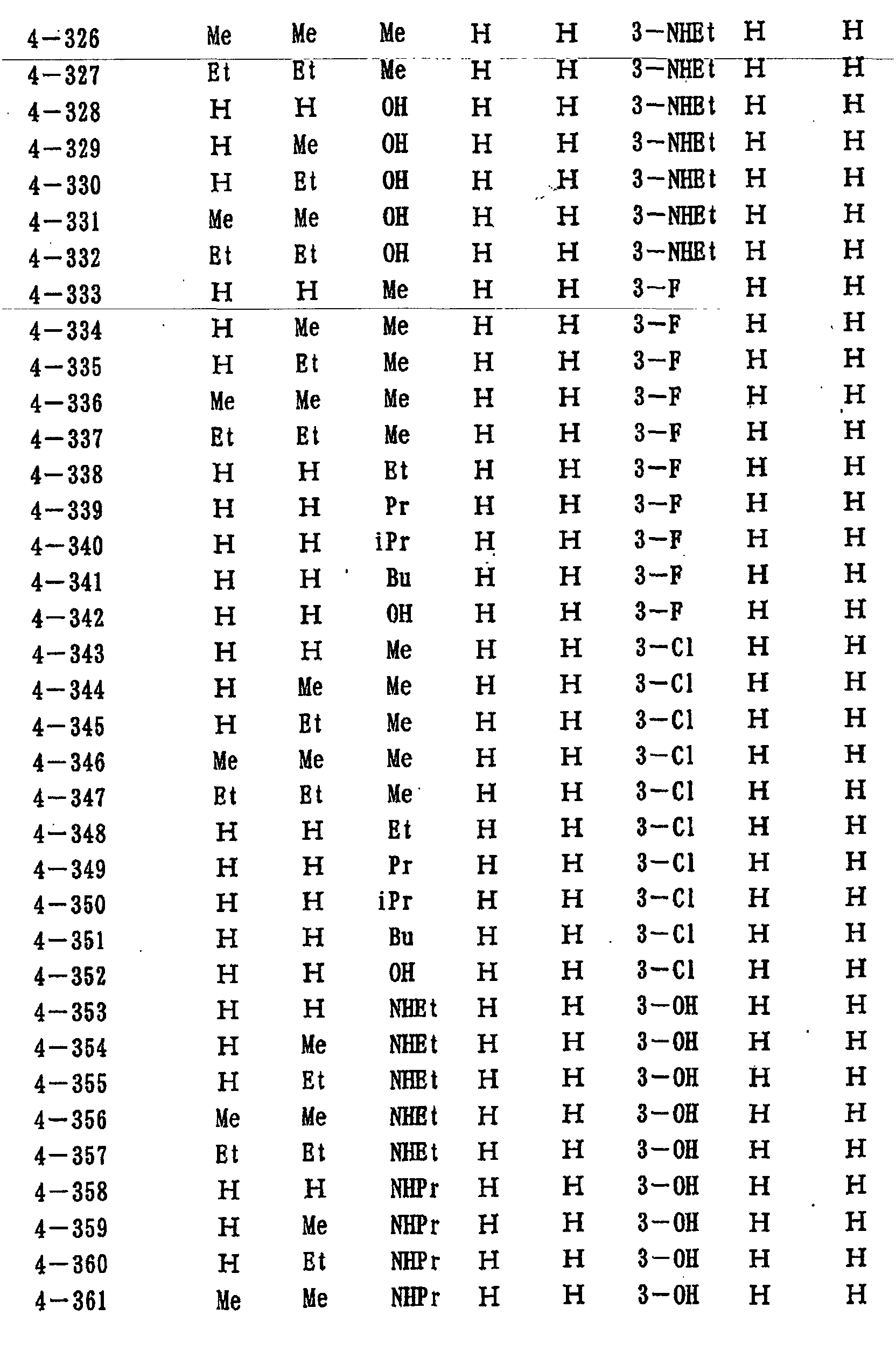


1-1∼1-27, 1-29∼1-30, 1-32, 1-36∼1-37, 1-40∼1-41, 1-56, 1-58, 1-60, 1-62, 1-68∼1-69, 1-71∼1-72, 1-74∼1-75, 1-86∼1-109, 1-114 ∼1-116, 1-120∼1-122, 1-127∼1-136, 1-147∼1-153, 1-155∼1-156, 1-158∼1-165, 1-173∼1-175, 1-178∼1-183, 1-200∼1-203,
2-1∼2-3, 2-6∼2-8, 2-11∼2-13, 2-16∼2-18, 2-21∼2-23, 2-31∼2-33, 2-36∼2-38, 2-41∼2-43, 2-46∼2-48, 2-56∼2-58, 2-61∼2-63, 2-66 ∼2-68, 2-71∼2-73, 2-76∼2-78, 2-81∼2-83, 2-86∼2-88, 2-91∼2-93, 2-96∼2-98, 2-101∼2-109,
3-1∼3-3, 3-6∼3-8, 3-11∼3-13, 3-16∼3-18, 3-21∼3-23, 3-26∼3-32,
4-1∼4-3, 4-6∼4-8, 4-11∼4-13, 4-16∼4-18, 4-21∼4-23, 4-26∼4-28, 4-31∼4-33, 4-36∼4-38, 4-41∼4-43, 4-46∼4-48, 4-51∼4-53, 4-56 ∼4-58, 4-61∼4-63, 4-66∼4-68, 4-71∼4-73, 4-76∼4-78, 4-81∼4-83, 4-85∼4-88, 4-91∼4-93, 4-96∼4-98, 4-101∼4-103, 4-106∼4-108, 4-111∼4-113, 4-116∼4-118, 4-121∼4-123, 4-126∼4-128, 4-131∼4-133, 4-136∼4-138, 4-141∼4-143, 4-146∼4-148, 4-151∼4-153, 4-156∼4-158, 4-161∼4-163, 4-166∼4-168, 4-171∼4-173, 4-176∼4-178, 4-181∼4-183, 4-186∼4-188, 4-191∼4-193, 4-196∼4-198, 4-201∼4-203, 4-206∼4-208, 4-211∼4-225, 4-228∼4-230, 4-233∼4-235, 4-238∼4-240, 2-243∼4-245, 4-248∼4-250, 4-253∼4-255, 4-258∼4-260, 4-263∼4-265, 4-268∼4-270, 4-273∼4-275, 4-278∼4-280, 4-283∼4-285, 4-288∼4-290, 4-303∼4-305, 4-308∼4-310, 4-313∼4-315, 4-318∼4-320, 4-323∼4-325, 4-328∼4-330, 4-353∼4-355, 4-358∼4-360,
5-1∼5-7, 5-12∼5-17, 5-24∼5-29, 5-35∼5-40, 5-46∼5-49, 5-54∼5-57, 5-64∼5-65
and the following are further preferred:-
1-1∼1-6, 1-11∼1-12, 1-20∼1-26, 1-30, 1-71, 1-87, 1-89, 1-91∼1-93, 1-100∼1-106, 1-127∼1-131, 1-147∼1-150, 1-152∼1-153, 1-155 ∼1-156, 1-161, 1-173, 1-178∼1-181,
2-1, 2-6, 2-11, 2-16, 2-21, 2-31, 2-36, 2-41, 2-46, 2-56, 2-61, 2-66, 2-71, 2-76, 2-81, 2-86, 2-91, 2-96, 2-102∼2-107,
3-1, 3-6, 3-11, 3-16, 3-21, 3-26∼3-28, 3-31∼3-32,
4-1, 4-6, 4-11, 4-16, 4-21, 4-26, 4-31, 4-36, 4-41, 4-46, 4-51, 4-56, 4-61, 4-66, 4-71, 4-76, 4-81, 4-85∼4-86, 4-91, 4-96, 4-101, 4-106, 4-111, 4-116, 4-121, 4-126, 4-131, 4-136, 4-141, 4-146, 4-151, 4-156, 4-201, 4-206, 4-211∼4-222, 4-263, 4-303, 4-313, 4-353, 4-358,
5-1∼5-6, 5-12∼5-17, 5-24∼5-29, 5-35∼5-39, 5-54∼5-55, 5-64∼5-65
with the following being still further preferred:-
1-1, 1-2, 1-3, 1-4, 1-5, 1-6, 1-22, 1-30, 1-71, 1-161, 1-173, 2-1,
2-11, 4-6, 4-11, 4-26, 4-31, 4-36, 4-81, 4-212. and 5-1
in particular, the following:-
2-methyl-N,N'-bis(3-hydroxyphenyl)pyrimidine-4,6-diamine and
N,N'-bis(3-hydroxyphenyl)pyridazine-3,6-diamine.

1H NMR spectrum (DMSO, 400 MHz), δ : 1.29(3H, t, J = 7.6 Hz), 2.68(2H, q, J = 7.6 Hz), 6.59(2H, d, J = 7.2 Hz), 7.04(2H, brs), 7.13(2H, t, J = 8.0 Hz), 7.18(2H, d, J = 7.2 Hz).
Mass spectrum (EI), m/z: 323 (M+)
1H NMR spectrum (DMSO, 400 MHz) , δ : 1.27(3H, t, J = 7.4 Hz), 2.62(2H, q, J = 7.4Hz), 6.06(1H, s), 6.37(2H, m), 6.96(2H, m), 7.01-7.09(4H, m), 8.91(2H, brs), 9.27(2H, m).
Mass spectrum (EI), m/z: 322 (M+)
1H NMR spectrum (DMSO, 400 MHz), δ : 2.42(3H, s), 6.50(1H, m), 6.73(1H, s), 7.05(1H, m), 7.12(1H, m), 7.19(1H, s), 10.00(1H, s). Mass spectrum (EI), m/z: 234 (M-H+)
1H NMR spectrum (CDCl3, 400 MHz), δ : 2.40(3H, s), 3.75(3H, s), 6.16(1H, s), 6.59-6.74(4H, m), 6.75(1H, t, J = 2.2 Hz), 6.83(1H, t, J = 2.2 Hz), 6.95(2H, brs), 7.13(1H, t, J = 8.0 Hz), 7.18(1H, t, J = 8.0 Hz).
Mass spectrum (EI), m/z: 322 (M+)
1H NMR spectrum (DMSO, 400 MHz), δ : 2.35(3H, s), 6.05(1H, s), 6.35(2H, m), 6.92(2H, m), 7.00-7.10(4H, m), 8.95(1H, brs), 9.30(1H, s).
Mass spectrum (EI), m/z: 308 (M+)
1H NMR spectrum (DMSO, 400 MHz), δ : 6.20(1H, s), 6.38(2H, m), 6.92(2H, m), 7.01-7.13(4H, m), 8.25(1H, s), 9.02(1H, s), 9.31(1H, s).
Mass spectrum (EI), m/z: 294 (M+)
1H NMR spectrum (DMSO, 400 MHz), δ : 6.46(2H, d, J = 8.6 Hz), 6.63 (2H, m), 6.85(1H, s), 6.95-7.06(2H, m), 7.10-7.30(3H, m), 7.93(1H, d, J = 8.2 Hz), 9.62(1H, brs), 10.47(1H, s), 10.80(1H, s).
Mass spectrum (EI), m/z: 294 (M+)
1H NMR spectrum (DMSO, 400 MHz), δ : 2.12(3H, s), 2.37(3H, s), 6.49(1H, dd, J = 1.6, 8.2 Hz), 8.67(2H, m), 6.88(1H, t, J = 1.6 Hz), 6.94-7.20(2H, m), 7.06(1H, d, J= 8.2 Hz), 7.18(1H, t, J = 8.2 Hz), 9.40-9.60(4H, brs).
Mass spectrum (EI), m/z: 322 (M+)
1H NMR spectrum (DMSO, 400 MHz), δ : 0.94(3H, t, J = 7.5 Hz), 1.38 (2H, sextet, J = 7.5 Hz), 1.76(2H, quintet, J = 7.5 Hz), 2.64(2H, t, J = 7.5 Hz), 6.08(1H, s), 6.44(1H, dd, J = 1.6, 8.0 Hz), 6.95(2H, d, J = 8.0 Hz), 7.00(2H, m), 7.08(2H, t, J = 8.0 Hz), 9.17(2H, s), 9.40(2H, s).
Mass spectrum (EI), m/z: 350 (M+)
1H NMR spectrum (DMSO, 400 MHz), δ : 0.96 (3H, t, J = 7. 2 Hz), 1.79(2H, sextet, J = 7.2 Hz), 2.58(2H, t, J = 7.2 Hz), 6.06(1H, s), 6.37(2H, dd, J = 1.2, 7.6 Hz), 6.96(2H, d, J = 8.8 Hz), 7.02-7.07(4H, m), 8.90(2H, s), 9.28(2H, s).
Mass spectrum (EI), m/z: 336 (M+)
1H NMR spectrum (DMSO, 400 MHz), δ : 0.96(3H, t, J =7.2 Hz), 1.77(2H, sextet, J = 7.2 Hz), 2.51 (2H, t, J = 7.2 Hz), 6.42(2H, dd, J = 2.0, 8.0 Hz), 7.05(2H, t, J = 8.0 Hz), 7.14(2H, brs), 7.31(2H, d, J = 8.0 Hz), 9.26(2H, brs), 9.51(2H, brs).
Mass spectrum (EI), m/z: 337 (M+)
1H NMR spectrum (DMSO, 400 MHz), δ : 1.06 (3H, t, J = 7.3 Hz), 2. 32 (3H, s), 3.87(2H, q, J = 7.3 Hz), 5.39(1H, s), 6.25(1H, dd, J = 2.2, 8.0 Hz), 6.61(1H, m), 6.66(1H, d, J = 8.0 Hz), 6.71(1H, dd, J = 2.2, 8.0 Hz), 6.86(1H, d, J = 8.0 Hz), 6.92(1H, t, J = 8.0 Hz), 7.05(1H, m), 7.25(1H, t, J = 8.0 Hz), 8.28(1H, s), 8.68(1H, s), 9.17(1H, brs), 9.65(2H, brs).
Mass spectrum (EI), m/z: 336 (M+)
1H NMR spectrum (DMSO, 400 MHz), δ : 6.28(2H, dd, J = 2.2, 7.7 Hz), 6.96-7.07(4H, m), 7.06(2H, s), 7.44(2H, t, J = 2.2 Hz), 8.78(1H, s), 9.23(1H, s).
Mass spectrum (EI), m/z: 294 (M+)
1H NMR spectrum (DMSO, 400 MHz), δ : 5.49(1H, s), 6.35(2H, d. J = 8.0 Hz), 6.75(2H, brs), 6.77-6.86(4H, m), 6.96(2H, t, J = 8.0 Hz), 9.14(2H, brs), 9.36(2H, brs).
Mass spectrum (FAB), m/z: 310 (M+H+)
1H NMR spectrum (DMSO, 400 MHz), δ : 2.48(3H, s), 5.91(1H, s), 6.39(2H, dd, J = 1.4, 8.0 Hz), 6.92(2H, d, J = 8.0 Hz), 6.99(2H, m), 7.06(2H, t, J = 8.0 Hz), 9.01(2H, s), 9.31(2H, s).
Mass spectrum (EI), m/z: 340 (M+)
1H NMR spectrum (DMSO, 400 MHz), δ : 1.04(6H, t, J = 7.3 Hz), 2.42(3H, s), 3.80(4H, q, J = 7.3 Hz), 4.87(1H, s), 6.50-6.60(6H, m), 7.09(2H, t, J = 8.0 Hz), 9.42(2H, brs).
Mass spectrum (EI), m/z: 396 (M+)
1H NMR spectrum (DMSO, 400 MHz), δ : 0.94(3H, t, J = 7.2 Hz), 1.42(2H, sextet, J = 7.2 Hz), 1.70(2H, quintet, J = 7.2 Hz), 4.31(2H, t, J = 7.2 Hz), 6.43(2H, dd, J = 2.0, 8.0 Hz), 7.05(2H, t, J = 8.0 Hz), 7.14(2H, brs), 7.25(2H, brs), 9.28(2H, brs), 9.45(2H, brs).
Mass spectrum (FAB), m/z: 368 (M+H+)
1H NMR spectrum (DMSO, 400 MHz), δ : 0.83(3H, t, J = 7.3 Hz), 1.08(6H, m), 1.24(2H, m), 1. 52 (2H, m), 3.79(4H, m), 4.02(2H, m), 6.60-6.70(6H, m), 7.15(2H, t, J = 8.0 Hz).
Mass spectrum (FAB), m/z: 424 (M+H+)
1H NMR spectrum (DMSO, 400 MHz), δ : 6.65(2H, m), 7.95(2H, m), 7.10 ― 7.22(4H, m), 8.20(1H, s), 9.60(2H, m), 10.80(2H, brs).
Mass spectrum (EI), m/z: 339 (M+)
1H NMR spectrum (DMSO, 400 MHz), δ : 1.95(6H, s), 5.48(1H, s), 6.61(2H, d, J = 5.3 Hz), 6.73(2H, d, J = 5.3 Hz), 6.92(2H, d, J = 5.3 Hz), 8.00(1H, s), 8.29(1H, s), 9.30(1H, brs).
Mass spectrum (EI), m/z: 322 (M+)
Mass spectrum (EI), m/z: 322 (M+)
1H NMR spectrum (DMSO, 400 MHz), δ : 3.73(6H, s), 5.93(1H, s), 6.81(4H, m), 7.00(2H, s), 8.12(1H, s), 8.71(1H, brs), 8.99(1H, brs).
Mass spectrum (EI), m/z: 354 (M+)
1H NMR spectrum (DMSO, 400 MHz), δ : 2.36(3H, s), 6.17(1H, s), 6.46(1H, dd, J = 1.9, 8.5Hz), 6.50(1H, dd, J = 1.9, 8.5 Hz), 6.94(1H, s), 7.01-7.12(3H, m), 7.20(2H, t, J = 8.5 Hz), 9.35(1H, s), 9.44(1H, s), 9.50(1H, brs), 9.80(1H, brs).
Mass spectrum (EI), m/z: 308 (M+)
1H NMR spectrum (CDCl3, 400 MHz), δ : 3.49(3H, s), 6.10(1H, s), 6.62(1H, dd, J = 2.0, 7.6 Hz), 6.73-6.78(3H, m), 7.04-7.11(2H, m), 7.17-7.25(2H, m), 7.33(1H, t, J = 2.0 Hz).
Mass spectrum (EI), m/z: 326 (M+)
1H NMR spectrum (DMSO, 400 MHz), δ : 2.30(3H, s), 5.77(1H, s), 7.21(2H, t, 3JHF = 11.0 Hz), 7.41(2H, t, 4JHF = 8.8 Hz), 8.58(2H, brs), 9.79(2H, brs).
Mass spectrum (EI), m/z: 380 (M+)
1H NMR spectrum (CD3OD, 400 MHz), δ : 1.32(6H, d, J = 6.9 Hz), 2.88(1H, septet, J = 6.9 Hz), 6.08(1H, s), 6.47(2H, ddd, J = 0.9, 2.2, 8.1 Hz), 6.90(2H, ddd, J = 0.9, 2.2, 8.1 Hz), 6.98(2H, t, J = 2.2 Hz), 7.09(2H, t, J = 8.1 Hz).
Mass spectrum (EI), m/z: 336 (M+)
1H NMR spectrum (CD3OD, 400 MHz), δ : 2.46(3H, s), 6.05(1H, s), 6.68(2H, m), 7.30(2H, m), 7.34(2H, t, J = 2.0 Hz).
Mass spectrum (EI), m/z: 444 (M+)
1H NMR spectrum (DMSO, 400 MHz), δ : 2.29(3H, s), 6.43(2H, dd, J = 2.4, 8.0 Hz), 7.06(2H, t, J = 8.0 Hz), 7.13(2H, brs), 7.30(2H, d, J = 8.0 Hz), 9.27(2H, brs), 9.53(2H, brs).
Mass spectrum (EI), m/z: 309 (M+)
1H NMR spectrum (DMSO, 400 MHz), δ : 0.92 (3H, t, J = 7.3 Hz), 1.37 (2H, sextet, J = 7/3 Hz), 1.73(2H, quintet, J = 8.0 Hz), 2.51(2H, m), 6.42(2H, dd, J = 2.5, 8.0 Hz), 7.05(2H, t, J = 8.0 Hz), 7.13(2H, s), 7.31(2H, d, J = 8.0 Hz), 9.26(2H, brs), 9.51(2H, brs).
Mass spectrum (EI), m/z: 351 (M+)
1H NMR spectrum (DMSO, 400 MHz), δ : 3.28(6H, s), 5.50(1H, s), 6.54-6.64(6H, m), 7.11(2H, t, J = 8.0 Hz), 8.21(1H, s), 9.50(2H, brs).
Mass spectrum (EI), m/z: 340 (M+)
1H NMR spectrum (DMSO, 400 MHz), δ : 2.31(3H, s), 3.28(6H, s), 5.35(1H, s), 6.53-6.61(6H, m), 7.09(2H, t, J = 8.0 Hz), 9.48(2H, brs).
Mass spectrum (EI), m/z: 336 (M+)
1H NMR spectrum (DMSO, 400 MHz), δ : 0.99(6H, d, J = 6.8 Hz), 2.42(1H, m), 2.49(2H, d, J = 7.2 Hz), 6.54(2H, dd, J = 1.5, 8.0 Hz), 7.00-7.09(2H, m), 7.11(2H, t, J = 8.0 Hz), 7.21(2H, m).
Mass spectrum (EI), m/z: 351 (M+)
1H NMR spectrum (DMSO, 400 MHz), δ : 1.13 (3H, t, J = 7.2 Hz), 1.96(6H, s), 2.51(2H, q, J = 7.2 Hz), 6.87(2H, d, J = 8.0 Hz), 6.98(2H, brs), 7.02(2H, d, J = 8.0 Hz).
Mass spectrum (EI), m/z: 351 (M+)
1H NMR spectrum (DMSO, 400 MHz), δ : 1.32(9H, s), 6.43(2H, dd, J = 2.0, 8.0 Hz), 7.06(2H, t, J = 8.0 Hz), 7.20(2H, brs), 7.34(2H, d, J = 8.0 Hz), 9.27(2H, brs), 9.39(2H, brs).
Mass spectrum (EI), m/z: 351 (M+)
1H NMR spectrum (DMSO, 400 MHz), δ : 0.90(3H, t, J = 7.4 Hz), 1.26(3H, d, J = 6.4 Hz), 1.59(1H, ddq, J = 6. 4, 7.4, 14.0 Hz), 1.83(1H, ddq, J = 6.4, 7.4, 14.0 Hz), 2.60(1H, ddq, J = 6. 4 , 6 . 4 , 6.4 Hz), 4.00(2H, brs), 6.51(2H, d, J = 7.2 Hz), 7.09(2H, d, J = 7.5 Hz), 7.12(2H, s), 7.27(2H, d, J = 7.5 Hz), 9.40(1H, brs), 9.90(1H, brs).
Mass spectrum (EI), m/z: 351 (M+)
| Test Compound | IC50 (µm) |
| compound of Production Example 1 | 3.5 |
| compound of Production Example 2 | 1.9 |
| compound of Production Example 4 | 6.0 |
| compound of Production Example 5 | 9.6 |
| compound of Production Example 6 | 6.7 |
| compound of Production Example 8 | 5.5 |
| compound of Production Example 9 | 2.4 |
| compound of Production Example 10 | 4.2 |
| compound of Production Example 13 | 5.5 |
| compound of Production Example 18 | 3.8 |
| compound of Production Example 27 | 2.4 |
| compound of Production Example 33 | 2.2 |
| compound of Production Example 34 | 4.1 |
| compound of Production Example 35 | 2.1 |
| compound of Production Example 36 | 5.8 |
| Value of fEPSP Slope [%] | |||
| 0-20 minutes | 20-40 minutes | 40-60 minutes | |
| Test 1 Control group | 158.8±5.2 | 157.5±4.2 | 155.6±5.4 |
| Aβ(500nM) | 145.8±5.8 | 136.1±4.0 | 113.0±2.6 |
| Prod.Ex. 1 compound (1µg/mL) | 155.3±3.4 | 156.5±3.9 | 155.8±5.0 |
| Aβ(500nM) + Prod.Ex. 1 compound (1µg/mL) | 150.0±8.4 | 149.6±6.9 | 151.2±7.5 |
| Test 2 Control group | 145.8±5.8 | 136.1±4.0 | 113.0±2.6 |
| Aβ(1µM) | 132.3±8.8 | 114.4±6.4 | 103.7±5.4 |
| Prod.Ex. 12 compound (3 µg/mL) | 175.3±7.4 | 162.9±9.8 | 160.8±10.3 |
| Aβ(1µM) + Prod.Ex. 12 compound (3 µg/mL) | 161.7±2.6 | 148.1±3.1 | 146.2±4.6 |
| Value of fEPSP Slope [%] | |||
| 0-20 minutes | 20-40 minutes | 40-60 minutes | |
| Control group | 158.7 ± 5.1 | 157.5 ± 4.1 | 155.5 ± 5.3 |
| Aβ(1µM) | 133.5 ± 9.5 | 123.8 ± 6.6 | 122.8 ± 7.1 |
| Compound A (1µg/mL) | 168.6 ± 13.0 | 146.6 ± 15.9 | 149.7 ± 16.1 |
| Aβ(1µM) + Compound A (1µg/mL) | 159.5 ± 6.6 | 142.8 ± 5.4 | 137.3 ± 4.5 |
| fibril-formation inhibiting action (fluorescent intensity %) | fibrillar breakdown action (fluorescent intensity %) | |
| Test 3 | ||
| Aβ (25µM) | 100.00 ± 1.18 | 100.00 ± 8.88 |
| Aβ(25µM) + Prod.Ex. 4 compound (100µg/mL) | 16.26 ± 5.30 | 30.63 ± 1.26 |
| Test 4 | ||
| Aβ (25µM) | 100.00 ± 2.24 | 100.00 ± 2.07 |
| Aβ(25µM)+Prod.Ex.12 compound (100µg/mL) | 1.69 ± 1.324 | 28.49 ± 5.17 |
Claims (18)
- Preventives or remedies for Alzheimer's disease which contain, as an active ingredient, at least one nitrogen-containing heteroaryl compound represented by the following general formula (I)[where
R1 and R2 each independently represent a hydrogen atom or a C1-6 alkyl group,
Z1 and Z2 each independently represent a hydrogen atom, C1-6 alkyl group, C1-6 alkoxy group, halo-C1-6 alkyl group or halogen atom,
Z3 represents a C1-6 alkoxy group, mercapto group, C1-6 alkylthio group, amino group, mono- or di-C1-6 alkylamino group, hydroxy group or halogen atom,
Z4 and Z5 each independently represent a hydrogen atom or halogen atom, and
A represents a group of formula (II) to (VI) below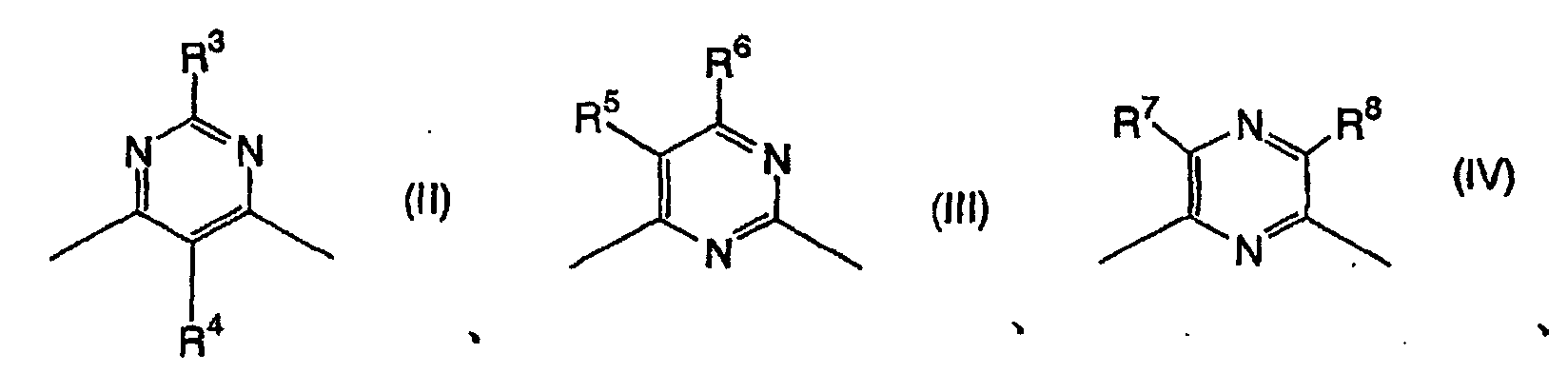 (where
R3 represents a hydrogen atom, C1-6 alkyl group, C1-6 alkoxy group, mercapto group, C1-6 alkylthio group, amino group, mono- or di-C1-6 alkylamino group or hydroxy group,
R4 represents a hydrogen atom or nitro group,
R5 represents a hydrogen atom or C1-6 alkyl group,
R6 represents a hydrogen atom, C1-6 alkyl group, C1-6 alkoxy group, mercapto group, C1-6 alkylthio group, amino group, mono- or di-C1-6 alkylamino group or hydroxy group,
R7 and R8 each independently represent a hydrogen atom, C1-6 alkyl group, C1-6 alkoxy group, mercapto group, C1-6 alkylthio group, amino group or mono- or di-C1-6 alkylamino group,
R9 represents a C1-6 alkyl group, C1-6 alkoxy group, mercapto group, C1-6 alkylthio group, amino group, mono- or di-C1-6 alkylamino group or hydroxy group, and
R10 and R11 each independently represent a hydrogen atom, C1-6 alkyl group, C1-6 alkoxy group, C1-6 alkylthio group, or mono- or di-C1-6 alkylamino group)], or pharmacologically permitted salt thereof. - Nitrogen-containing heteroaryl derivatives represented by the following general formula (VII)[where R1 and R2 each independently represent a hydrogen atom or C1-6 alkyl group,
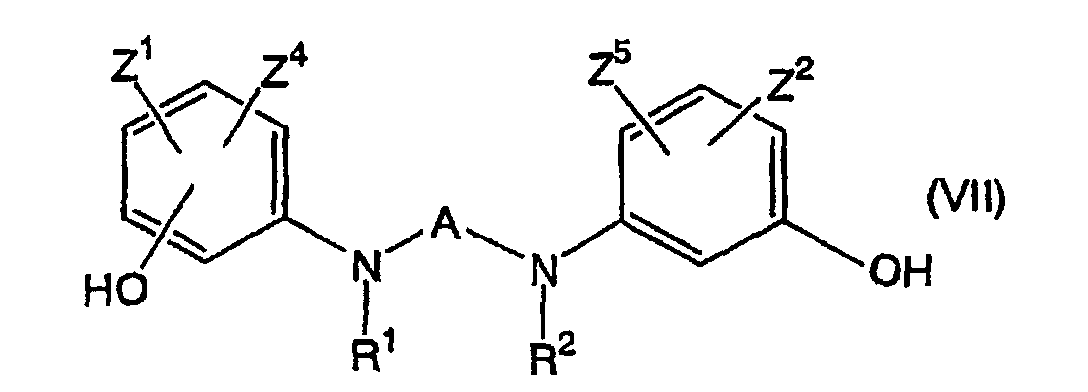
Z1 and Z2 each independently represent a hydrogen atom, C1-6 alkyl group, C1-6 alkoxy group, halogen atom or halo-C1-6 alkyl group,
Z4 and Z5 each independently represent a hydrogen atom or halogen atom, and
A represents a group of formula (II) to (VI) below (where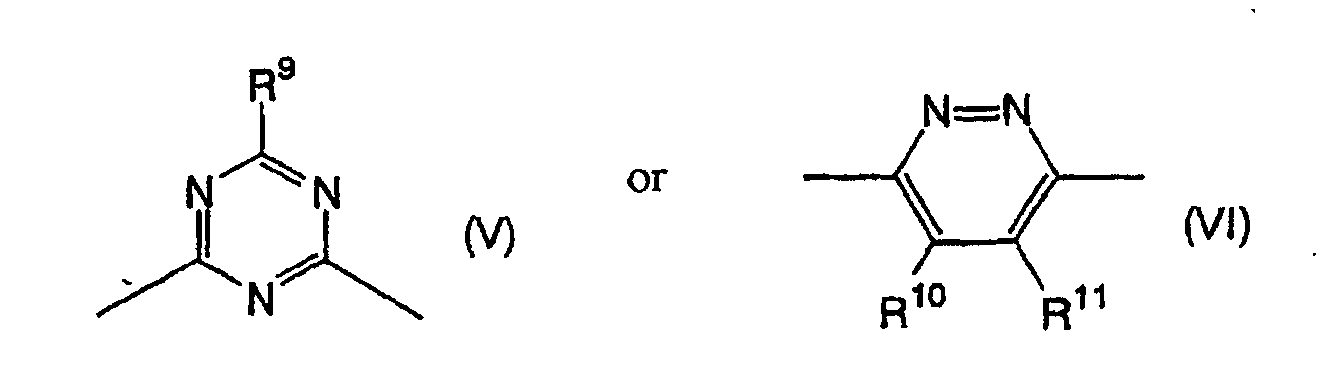
R3 represents a hydrogen atom, C1-6 alkyl group, C1-6 alkoxy group, mercapto group, C1-6 alkylthio group, amino group, mono- or di-C1-6 alkylamino group or hydroxy group,
R4 represents a hydrogen atom or nitro group,
R5 represents a hydrogen atom or C1-6 alkyl group,
R6 represents a hydrogen atom, C1-6 alkyl group, C1-6 alkoxy group, mercapto group, C1-6 alkylthio group, amino group, mono- or di-C1-6 alkylamino group or hydroxy group,
R7 and R8 each independently represent a hydrogen atom, C1-6 alkyl group, C1-6 alkoxy group, mercapto group, C1-6 alkylthio group, amino group or mono- or di-C1-6 alkylamino group,
R9 represents a C1-6 alkyl group, C1-6 alkoxy group, mercapto group, C1-6 alkylthio group, amino group, mono- or di-C1-6 alkylamino group or hydroxy group, and
R10 and R11 each independently represent a hydrogen atom, C1-6 alkyl group, C1-6 alkoxy group, C1-6 alkylthio group, or mono- or di-C1-6 alkylamino group)], or pharmacologically permitted salts thereof. - Nitrogen-containing heteroaryl derivatives or pharmacologically permitted salts thereof according to Claim 2, where R1 and R2 are each independently a hydrogen atom or C1-2 alkyl group.
- Nitrogen-containing heteroaryl derivatives or pharmacologically permitted salts thereof according to Claim 2, where R1 and R2 are hydrogen atoms.
- Nitrogen-containing heteroaryl derivatives or pharmacologically permitted salts thereof according to any one of Claims 2 to 4, where A is a group of formula (II) (where R3 is a hydrogen atom, C1-5 alkyl, C1-3 alkylthio or mono- or di-C1-3 alkylamino group, and R4 is a hydrogen atom or nitro group), a group of formula (III) (where R5 and R6 are each independently a hydrogen atom or C1-2 alkyl group), a group of formula (IV) (where R7 and R8 are each independently a hydrogen atom or C1-2 alkyl group), a group of formula (V) (where R9 is a C1-5 alkyl, C1-4 alkoxy or a C1-4 alkylthio group), or a group of formula (VI) (where R10 and R11 are each independently a hydrogen atom or C1-3 alkyl group).
- Nitrogen-containing heteroaryl derivatives or pharmacologically permitted salts thereof according to any one of Claims 2 to 4, where A is a group of formula (II) (where R3 is a hydrogen atom, C1-5 alkyl, C1-3 alkylthio or mono- or di-C1-3 alkylamino group, and R4 is a hydrogen atom or nitro group), a group of formula (III) (where R5 is a hydrogen atom and R6 is a methyl or ethyl group), a group of formula (IV) (where R7 and R8 are hydrogen atoms), a group of formula (V) (where R9 is a C1-5 alkyl, C1-4 alkoxy or C1-4 alkylthio group), or a group of formula (VI) (where R10 and R11 are hydrogen atoms).
- Nitrogen-containing heteroaryl derivatives or pharmacologically permitted salts thereof according to any of Claims 2 to 4, where A is a group of formula (II) (where R3 is a hydrogen atom, C1-4 alkyl or amino group, and R4 is a hydrogen atom or nitro group) or a group of formula (V) (where R9 is a C2-4 alkyl or a butoxy group).
- Nitrogen-containing heteroaryl derivatives or pharmacologically permitted salts thereof according to any of Claims 2 to 4, where A is a group of formula (II) (where R3 is an ethyl, propyl, isopropyl or amino group and R4 is a hydrogen atom, or R3 is a hydrogen atom and R4 is a nitro group) or a group of formula (V) (where R9 is a C2-4 alkyl group).
- Nitrogen-containing heteroaryl derivatives or pharmacologically permitted salts thereof according to any of Claims 2 to 8, where Z1 and Z2 are each independently a hydrogen atom or para-position fluorine atom, chlorine atom or C1-2 alkyl group, the hydroxy group on the phenyl ring to which Z1 is bonded is in the meta-position, and Z4 and Z5 are hydrogen atoms.
- Nitrogen-containing heteroaryl derivatives or pharmacologically permitted salts thereof according to any of Claims 2 to 8, where Z1 and Z2 are each independently a hydrogen atom or para-position fluorine atom, chlorine atom or C1-2 alkyl group, the hydroxy group on the phenyl ring to which Z1 is bonded is in the meta-position, and Z4 and Z5 are hydrogen atoms.
- Nitrogen-containing heteroaryl derivatives or pharmacologically permitted salts thereof according to any of Claims 2 to 8, where Z1 and Z2 are hydrogen atoms or para-position methyl groups, the hydroxy group on the phenyl ring to which Z1 is bonded is in the meta-position, and Z4 and Z5 are hydrogen atoms.
- Pyrimidine derivatives which are represented by the following general formula (VIII), or pharmacologically permitted salts thereof,(where
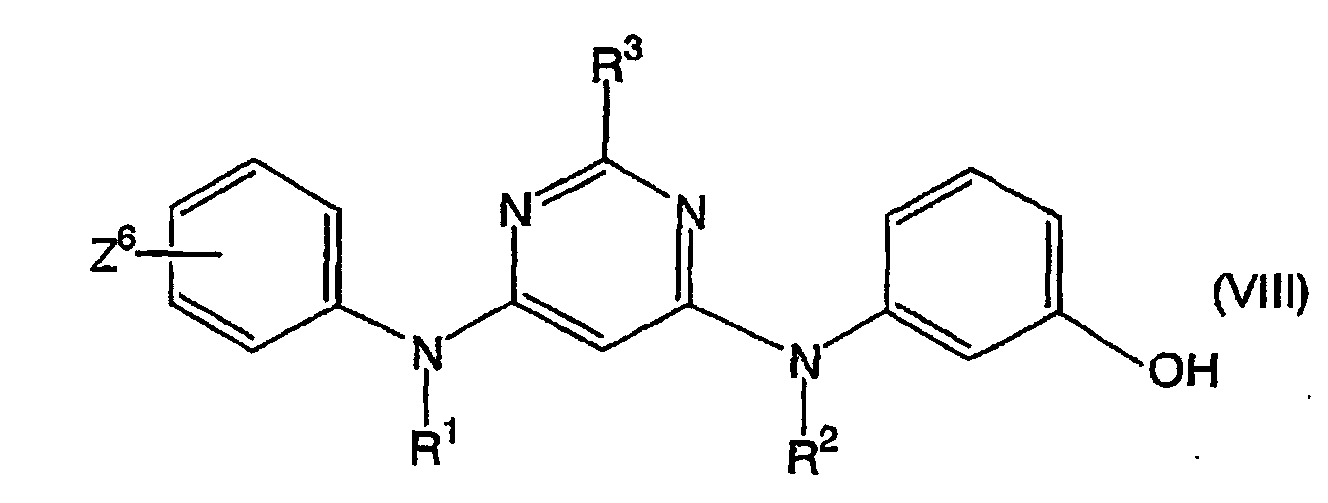
R1 and R2 respectively and independently represent a hydrogen atom or C1-6 alkyl group,
R3 represents a hydrogen atom, C1-6 alkyl group, C1-6 alkoxy group, mercapto group, C1-6 alkylthio group, amino group, mono- or di-C1-6 alkylamino group or hydroxy group, and
Z6 represents a C1-6 alkoxy group or a halogen atom). - Pyrimidine derivatives or pharmacologically permitted salts thereof according to Claim 12, where R1 and R2 are hydrogen atoms, R3 is a hydrogen atom or C1-4 alkyl group, and Z6 is a methoxy group, ethoxy group or chlorine atom.
- A nitrogen-containing heteroaryl derivative according to Claim 2 which is selected from any of the following, or pharmacologically permitted salts thereof;
N,N'-bis(3-hydroxyphenyl)pyrimidine-4,6-diamine,
2-methyl-N,N'-bis(3-hydroxyphenyl)pyrimidine-4,6-diamine,
2-ethyl-N,N'-bis(3-hydroxyphenyl)pyrimidine-4,6-diamine,
2-propyl-N,N'-bis(3-hydroxyphenyl)pyrimidine-4,6-diamine,
2-isopropyl-N,N'-bis(3-hydroxyphenyl)pyrimidine-4,6-diamine,
2-butyl-N,N'-bis(3-hydroxyphenyl)pyrimidine-4,6-diamine,
2-amino-N,N'-bis(3-hydroxyphenyl)pyrimidine-4,6-diamine,
N,N'-bis(3-hydroxyphenyl)-5-nitropyrimidine-4,6-diamine,
N,N'-bis(3-hydroxyphenyl)pyrimidine-2,4-diamine,
6-ethyl-N,N'-bis(3-hydroxyphenyl)-1,3,5-triazine-2,4-diamine,
N,N'-bis(3-hydroxyphenyl)-6-propyl-1,3,5-triazine-2,4-diamine,
6-isobutyl-N,N'-bis(3-hydroxyphenyl)-1,3,5-triazine-2,4-diamine,
6-s-butyl-N,N'-bis(3-hydroxyphenyl)-1,3,5-triazine-2,4-diamine,
6-t-butyl-N,N'-bis(3-hydroxyphenyl)-1,3,5-triazine-2,4-diamine,
6-ethyl-N,N'-bis(3-hydroxy-4-methylphenyl)-1,3,5-triazine-2,4-diamine and
N,N'-bis(3-hydroxyphenyl)pyridazine-3,6-diamine. - A nitrogen-containing heteroaryl derivative according to Claim 2 selected from the following, or pharmacologically permitted salts thereof;
2-methyl-N,N'-bis(3-hydroxyphenyl)pyrimidine-4,6-diamine and
N,N'-bis(3-hydroxyphenyl)pyridazine-3,6-diamine. - An Alzheimer's disease preventive or remedy which contains, as an active ingredient, a nitrogen-containing heteroaryl derivative according to any of Claims 2 to 15, or pharmacologically permitted salt thereof.
- Amyloid protein fibril-formation inhibitors which contain as an active ingredient at least one nitrogen-containing heteroaryl compound represented by the following general formula (I)[where

R1 and R2 each independently represent a hydrogen atom or a C1-6 alkyl group,
Z1 and Z2 each independently represent a hydrogen atom, C1-6 alkyl group, C1-6 alkoxy group, halo-C1-6 alkyl group or halogen atom,
Z3 represents a C1-6 alkoxy group, mercapto group, C1-6 alkylthio group, amino group, mono- or di-C1-6 alkylamino group, hydroxy group or halogen atom,
Z4 and Z5 each independently represent a hydrogen atom or a halogen atom, and
A represents a group of formula (II) to (VI) below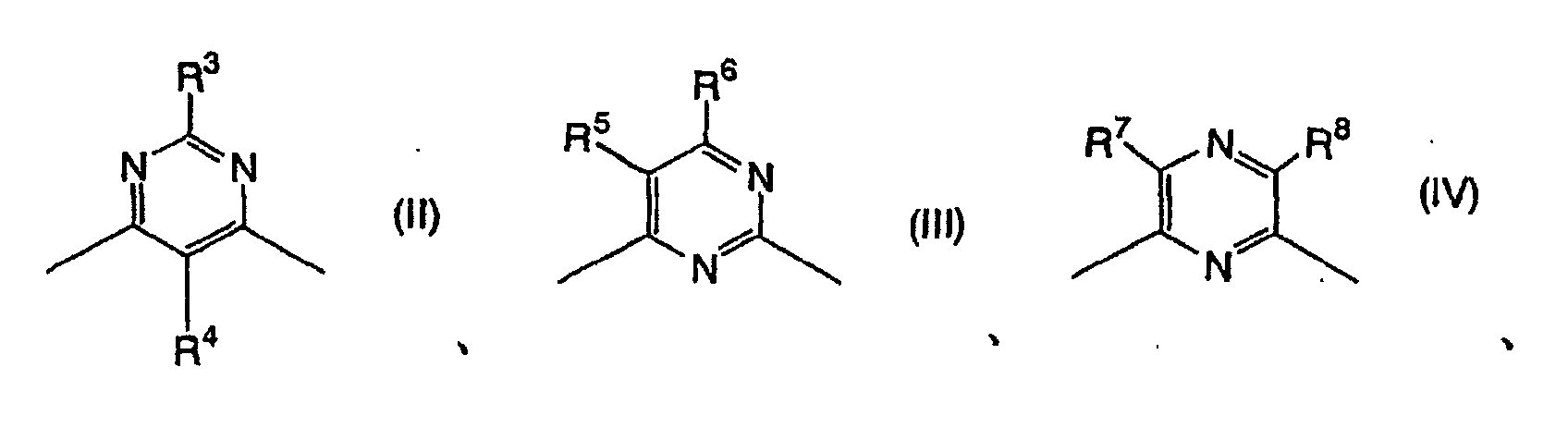 (where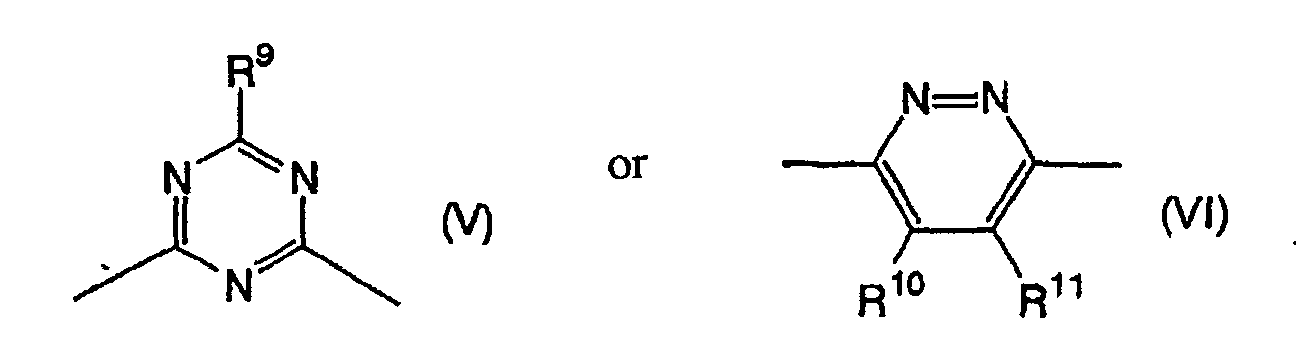
R3 represents a hydrogen atom, C1-6 alkyl group, C1-6 alkoxy group, mercapto group, C1-6 alkylthio group, amino group, mono- or di-C1-6 alkylamino group or hydroxy group,
R4 represents a hydrogen atom or nitro group,
R5 represents a hydrogen atom or C1-6 alkyl group,
R6 represents a hydrogen atom, C1-6 alkyl group, C1-6 alkoxy group, mercapto group, C1-6 alkylthio group, amino group, mono- or di-C1-6 alkylamino group or hydroxy group,
R7 and R8 each independently represent a hydrogen atom, C1-6 alkyl group, C1-6 alkoxy group, mercapto group, C1-6 alkylthio group, amino group or mono- or di-C1-6 alkylamino group,
R9 represents a C1-6 alkyl group, C1-6 alkoxy group, mercapto group, C1-6 alkylthio group, amino group, mono- or di-C1-6 alkylamino group or hydroxy group, and
R10 and R11 each independently represent a hydrogen atom, C1-6 alkyl group, C1-6 alkoxy group, C1-6 alkylthio group, or mono- or di-C1-6 alkylamino group)], or a pharmacologically permitted salt thereof. - Amyloid protein fibril-formation inhibitors which contain, as an active ingredient, a nitrogen-containing heteroaryl derivative according to any of Claims 2 to 15, or pharmacologically permitted salt thereof.
i It is not clear what 'acute' sections means. Perhaps these are rapidly-taken fresh sections.
Applications Claiming Priority (5)
| Application Number | Priority Date | Filing Date | Title |
|---|---|---|---|
| JP2001361847 | 2001-11-28 | ||
| JP2001361847 | 2001-11-28 | ||
| JP2002192777 | 2002-07-02 | ||
| JP2002192777 | 2002-07-02 | ||
| PCT/JP2002/012265 WO2003045923A1 (en) | 2001-11-28 | 2002-11-25 | Preventives or remedies for alzheimer’s disease or amyloid protein fibrosis inhibitors containing nitrogen-containing heteroaryl compounds |
Publications (3)
| Publication Number | Publication Date |
|---|---|
| EP1473289A1 true EP1473289A1 (en) | 2004-11-03 |
| EP1473289A4 EP1473289A4 (en) | 2005-11-23 |
| EP1473289B1 EP1473289B1 (en) | 2009-08-05 |
Family
ID=26624724
Family Applications (1)
| Application Number | Title | Priority Date | Filing Date |
|---|---|---|---|
| EP02783612A Expired - Lifetime EP1473289B1 (en) | 2001-11-28 | 2002-11-25 | Preventives or remedies for alzheimer's disease or amyloid protein fibrosis inhibitors containing nitrogen-containing heteroaryl compounds |
Country Status (20)
| Country | Link |
|---|---|
| US (6) | US7589105B2 (en) |
| EP (1) | EP1473289B1 (en) |
| JP (1) | JP4490690B2 (en) |
| KR (1) | KR101031720B1 (en) |
| CN (1) | CN100354267C (en) |
| AT (1) | ATE438629T1 (en) |
| AU (1) | AU2002349480B2 (en) |
| BR (1) | BR0214539A (en) |
| CA (1) | CA2468948C (en) |
| DE (1) | DE60233266D1 (en) |
| DK (1) | DK1473289T3 (en) |
| ES (1) | ES2330090T3 (en) |
| HU (1) | HUP0402657A3 (en) |
| IL (2) | IL162210A0 (en) |
| MX (1) | MXPA04005027A (en) |
| NO (1) | NO328271B1 (en) |
| NZ (1) | NZ533147A (en) |
| PL (1) | PL370531A1 (en) |
| TW (1) | TW200300688A (en) |
| WO (1) | WO2003045923A1 (en) |
Cited By (9)
| Publication number | Priority date | Publication date | Assignee | Title |
|---|---|---|---|---|
| WO2006096405A3 (en) * | 2005-03-04 | 2007-05-18 | Alsgen Llc | Treatment of amyotrophic lateral sclerosis with pyrimethamine and analogues |
| WO2007125351A1 (en) * | 2006-04-27 | 2007-11-08 | Senexis Limited | Pyrimidine derivatives for the treatment of amyloid-related diseases |
| WO2008067389A3 (en) * | 2006-11-28 | 2008-12-04 | Alsgen Inc | Modulation of sod protein synthesis for the treatment of neurodegenerative diseases |
| US7655797B2 (en) | 2002-02-01 | 2010-02-02 | Rigel Pharmaceuticals, Inc. | Intermediates for making 2,4-pyrimidinediamine compounds |
| US7812029B1 (en) | 2002-07-29 | 2010-10-12 | Rigel Pharmaceuticals, Inc. | Methods of treating or preventing autoimmune diseases with 2,4-pyrimidinediamine compounds |
| US7851480B2 (en) | 2004-11-24 | 2010-12-14 | Rigel Pharmaceuticals, Inc. | Spiro 2,4-pyrimidinediamine compounds and their uses |
| EP2214486A4 (en) * | 2007-10-19 | 2011-03-09 | Avila Therapeutics Inc | Heteroaryl compounds and uses thereof |
| US7989465B2 (en) | 2007-10-19 | 2011-08-02 | Avila Therapeutics, Inc. | 4,6-disubstituted pyrimidines useful as kinase inhibitors |
| WO2013018071A3 (en) * | 2011-08-04 | 2013-07-11 | Colourtex Industries Limited | Fibre reactive azo reactive colorants containing two reactive groups of the vinylsulfone type, production and use thereof |
Families Citing this family (12)
| Publication number | Priority date | Publication date | Assignee | Title |
|---|---|---|---|---|
| SI1534286T1 (en) * | 2002-07-29 | 2010-04-30 | Rigel Pharmaceuticals Inc | Methods of treating or preventing autoimmune diseases with 2,4-pyrimidinediamine compounds |
| WO2005003103A2 (en) * | 2003-06-30 | 2005-01-13 | Astrazeneca Ab | 2, 4, 6-tri-substituted 6-membered heterocycles and their use in the treatment of neurodegenerative diseases |
| CN102358738A (en) | 2003-07-30 | 2012-02-22 | 里格尔药品股份有限公司 | 2,4-pyrimidinediamine compounds and uses of treating or preventing autoimmune diseases thereof |
| JP4801096B2 (en) * | 2005-01-19 | 2011-10-26 | ライジェル ファーマシューティカルズ, インコーポレイテッド | Prodrugs of 2,4-pyrimidinediamine compounds and their use |
| US20060270694A1 (en) * | 2005-05-03 | 2006-11-30 | Rigel Pharmaceuticals, Inc. | JAK kinase inhibitors and their uses |
| US8393968B2 (en) * | 2008-09-03 | 2013-03-12 | Igt | Gaming system, gaming device and method for providing a strategy game having a plurality of awards |
| US8210935B2 (en) * | 2008-11-12 | 2012-07-03 | Igt | Gaming system, gaming device and method of providing collectors and tokens associated with collectors |
| US8287364B2 (en) * | 2008-11-13 | 2012-10-16 | Igt | Gaming system, gaming device, and method for providing a game in which a player collects emblems by positioning accumulators in a field |
| KR101095026B1 (en) * | 2009-01-23 | 2011-12-20 | 한국과학기술연구원 | Bis (styryl) pyrimidine and bis (styryl) benzene derivative, pharmaceutically acceptable salt thereof, preparation method thereof and pharmaceutical composition for preventing or treating beta amyloid accumulation related disease containing the same as an active ingredient |
| CN102706839B (en) * | 2011-01-31 | 2015-08-12 | 香港科技大学 | Water-soluble AIE luminescent agent and its use in detecting and delaying amyloid fibrillation of amyloid protein |
| WO2016153023A1 (en) | 2015-03-25 | 2016-09-29 | 国立研究開発法人国立長寿医療研究センター | Novel oxadiazole derivative and pharmaceutical containing same |
| WO2017106367A1 (en) * | 2015-12-15 | 2017-06-22 | D.E. Shaw Research, Llc | Method of treating neurodegenerative disorders by rescuing alpha-synuclein toxicity |
Family Cites Families (12)
| Publication number | Priority date | Publication date | Assignee | Title |
|---|---|---|---|---|
| US2393755A (en) * | 1942-08-05 | 1946-01-29 | Gen Electric | Method of preparing hydroxyarylamino triazines |
| GB9325217D0 (en) * | 1993-12-09 | 1994-02-09 | Zeneca Ltd | Pyrimidine derivatives |
| FR2720638B1 (en) * | 1994-06-03 | 1997-04-04 | Oreal | Sunscreen cosmetic compositions based on a synergistic mixture of filters and uses. |
| GB9523675D0 (en) * | 1995-11-20 | 1996-01-24 | Celltech Therapeutics Ltd | Chemical compounds |
| CA2291710A1 (en) * | 1997-05-22 | 1998-11-26 | Tatsuya Tamaoki | Bisaryl compounds and cancer remedies containing the same |
| US6335339B1 (en) * | 1998-01-13 | 2002-01-01 | Scriptgen Pharmaceuticals, Inc. | Triazine antiviral compounds |
| DE69933680T2 (en) * | 1998-08-29 | 2007-08-23 | Astrazeneca Ab | PYRIMIDINE COMPOUNDS |
| US6632820B1 (en) * | 1998-08-29 | 2003-10-14 | Astrazeneca Ab | Pyrimidine compounds |
| JP2003511378A (en) | 1999-10-07 | 2003-03-25 | アムジエン・インコーポレーテツド | Triazine kinase inhibitors |
| JP2002145840A (en) * | 2000-01-25 | 2002-05-22 | Japan Tobacco Inc | N-arylhydrazing compound and its medicinal use |
| WO2001055093A1 (en) | 2000-01-25 | 2001-08-02 | Japan Tobacco Inc. | N-arylhydrazide compounds and use thereof as drugs |
| GB0428082D0 (en) * | 2004-12-22 | 2005-01-26 | Welcome Trust The Ltd | Therapeutic compounds |
-
2002
- 2002-11-25 MX MXPA04005027A patent/MXPA04005027A/en active IP Right Grant
- 2002-11-25 DE DE60233266T patent/DE60233266D1/en not_active Expired - Lifetime
- 2002-11-25 DK DK02783612T patent/DK1473289T3/en active
- 2002-11-25 BR BR0214539-1A patent/BR0214539A/en not_active Application Discontinuation
- 2002-11-25 AU AU2002349480A patent/AU2002349480B2/en not_active Ceased
- 2002-11-25 WO PCT/JP2002/012265 patent/WO2003045923A1/en not_active Ceased
- 2002-11-25 JP JP2003547375A patent/JP4490690B2/en not_active Expired - Fee Related
- 2002-11-25 ES ES02783612T patent/ES2330090T3/en not_active Expired - Lifetime
- 2002-11-25 CN CNB028238044A patent/CN100354267C/en not_active Expired - Fee Related
- 2002-11-25 PL PL02370531A patent/PL370531A1/en unknown
- 2002-11-25 IL IL16221002A patent/IL162210A0/en unknown
- 2002-11-25 CA CA2468948A patent/CA2468948C/en not_active Expired - Fee Related
- 2002-11-25 EP EP02783612A patent/EP1473289B1/en not_active Expired - Lifetime
- 2002-11-25 NZ NZ533147A patent/NZ533147A/en not_active IP Right Cessation
- 2002-11-25 HU HU0402657A patent/HUP0402657A3/en unknown
- 2002-11-25 US US10/497,183 patent/US7589105B2/en not_active Expired - Fee Related
- 2002-11-25 AT AT02783612T patent/ATE438629T1/en not_active IP Right Cessation
- 2002-11-25 KR KR1020047008193A patent/KR101031720B1/en not_active Expired - Fee Related
- 2002-11-26 TW TW091134250A patent/TW200300688A/en unknown
-
2004
- 2004-05-27 IL IL162210A patent/IL162210A/en not_active IP Right Cessation
- 2004-06-28 NO NO20042709A patent/NO328271B1/en not_active IP Right Cessation
-
2008
- 2008-02-06 US US12/068,407 patent/US8003645B2/en not_active Expired - Fee Related
-
2009
- 2009-07-27 US US12/458,890 patent/US20090286794A1/en not_active Abandoned
- 2009-07-27 US US12/458,891 patent/US20090286809A1/en not_active Abandoned
-
2011
- 2011-05-10 US US13/067,111 patent/US20110275641A1/en not_active Abandoned
- 2011-05-10 US US13/067,110 patent/US20110275640A1/en not_active Abandoned
Cited By (18)
| Publication number | Priority date | Publication date | Assignee | Title |
|---|---|---|---|---|
| US8334296B2 (en) | 2002-02-01 | 2012-12-18 | Rigel Pharmaceuticals, Inc. | 2,4-pyrimidinediamine compounds and their uses |
| US7655797B2 (en) | 2002-02-01 | 2010-02-02 | Rigel Pharmaceuticals, Inc. | Intermediates for making 2,4-pyrimidinediamine compounds |
| US7803939B2 (en) | 2002-02-01 | 2010-09-28 | Rigel Pharmaceuticals, Inc. | 2,4-pyrimidinediamine compounds and their uses |
| US7812029B1 (en) | 2002-07-29 | 2010-10-12 | Rigel Pharmaceuticals, Inc. | Methods of treating or preventing autoimmune diseases with 2,4-pyrimidinediamine compounds |
| US7825116B2 (en) | 2002-07-29 | 2010-11-02 | Rigel Pharmaceuticals, Inc. | N2, N4-bis-aryl-5-fluoro-2,4-pyrimidinediamines |
| US7851480B2 (en) | 2004-11-24 | 2010-12-14 | Rigel Pharmaceuticals, Inc. | Spiro 2,4-pyrimidinediamine compounds and their uses |
| WO2006096405A3 (en) * | 2005-03-04 | 2007-05-18 | Alsgen Llc | Treatment of amyotrophic lateral sclerosis with pyrimethamine and analogues |
| WO2007125351A1 (en) * | 2006-04-27 | 2007-11-08 | Senexis Limited | Pyrimidine derivatives for the treatment of amyloid-related diseases |
| WO2008067389A3 (en) * | 2006-11-28 | 2008-12-04 | Alsgen Inc | Modulation of sod protein synthesis for the treatment of neurodegenerative diseases |
| EP2214486A4 (en) * | 2007-10-19 | 2011-03-09 | Avila Therapeutics Inc | Heteroaryl compounds and uses thereof |
| US8329901B2 (en) | 2007-10-19 | 2012-12-11 | Celgene Avilomics Research, Inc. | 4,6-disubstitued pyrimidines useful as kinase inhibitors |
| US7989465B2 (en) | 2007-10-19 | 2011-08-02 | Avila Therapeutics, Inc. | 4,6-disubstituted pyrimidines useful as kinase inhibitors |
| US8445498B2 (en) | 2007-10-19 | 2013-05-21 | Celgene Avilomics Research, Inc. | 4,6-disubstituted pyrimidines useful as kinase inhibitors |
| US8748606B2 (en) | 2007-10-19 | 2014-06-10 | Celgene Avilomics Research, Inc. | 4,6-diaminopyrimidines useful as kinase inhibitors |
| US9040541B2 (en) | 2007-10-19 | 2015-05-26 | Celgene Avilomics Research, Inc. | 4,6-disubstituted pyrimidines useful as kinase inhibitors |
| US9296704B2 (en) | 2007-10-19 | 2016-03-29 | Celgene Avilomics Research, Inc. | Substituted pyrimidines as protein kinase inhibitors |
| US9393246B2 (en) | 2007-10-19 | 2016-07-19 | Celgene Avilomics Research, Inc. | 4,6-disubstituted pyrimidines as kinase inhibitors |
| WO2013018071A3 (en) * | 2011-08-04 | 2013-07-11 | Colourtex Industries Limited | Fibre reactive azo reactive colorants containing two reactive groups of the vinylsulfone type, production and use thereof |
Also Published As
Similar Documents
| Publication | Publication Date | Title |
|---|---|---|
| US8003645B2 (en) | Preventives or remedies for Alzheimer's disease, or amyloid protein fibril-formation inhibitors, which include a nitrogen-containing heteroaryl compound | |
| US8735412B2 (en) | Sulfoximine-substituted anilinopyrimidine derivatives as CDK inhibitors, the production thereof, and use as medicine | |
| CZ113297A3 (en) | Carboxylic acid derivative | |
| SK278444B6 (en) | Substituted 5-arylpyrimidine, manufacturing process thereof and pharmaceutical composition containing its | |
| NO178926B (en) | Analogous process for the preparation of pharmacologically active pyrimidine compounds | |
| NZ283333A (en) | Pyrimidine or triazine carboxylic acid derivatives and medicaments | |
| KR101379808B1 (en) | Pyrazolopyrimidine derivatives for inhibiting nitric oxide | |
| HRP980126A2 (en) | Novel carboxilic acid derivatives, their preparation and use in treating cancer | |
| JP2004083547A (en) | Preventive or remedy containing nitrogen containing aromatic heterocyclic compound for alzheimer's disease, or amyloid protein fibroplasis inhibitor | |
| Jonak et al. | Effect of the substituent at C-6 on the biological activity of 2, 4-diamino-5-(1-adamantyl) pyrimidines | |
| HK1070371B (en) | Preventives or remedies for alzheimer's disease or amyloid protein fibrosis inhibitors containing nitrogen-containing heteroaryl compounds | |
| PT862550E (en) | NEW CARBOXYLIC ACID DERIVATIVES ITS PREPARATION AND UTILIZATION | |
| BG104577A (en) | 5-substituted pyrimidine-2-yloxy carboxylic acid derivatives, the production of the same and their utilization as endothelin antagonists | |
| CZ324199A3 (en) | Medicament for inhibiting growth of solid tumor in human and process for preparing thereof | |
| JP2003500476A (en) | Novel carboxylic acid derivatives having an aryl-substituted nitrogen heterocycle, their preparation and their use as endothelin receptor antagonists | |
| SI9010607A (en) | Pharmacologically active cns compounds |
Legal Events
| Date | Code | Title | Description |
|---|---|---|---|
| PUAI | Public reference made under article 153(3) epc to a published international application that has entered the european phase |
Free format text: ORIGINAL CODE: 0009012 |
|
| 17P | Request for examination filed |
Effective date: 20040615 |
|
| AK | Designated contracting states |
Kind code of ref document: A1 Designated state(s): AT BE BG CH CY CZ DE DK EE ES FI FR GB GR IE IT LI LU MC NL PT SE SK TR |
|
| AX | Request for extension of the european patent |
Extension state: AL LT LV MK RO SI |
|
| REG | Reference to a national code |
Ref country code: HK Ref legal event code: DE Ref document number: 1070371 Country of ref document: HK |
|
| RAP1 | Party data changed (applicant data changed or rights of an application transferred) |
Owner name: BTG INTERNATIONAL LIMITED |
|
| A4 | Supplementary search report drawn up and despatched |
Effective date: 20051011 |
|
| R17P | Request for examination filed (corrected) |
Effective date: 20040615 |
|
| 17Q | First examination report despatched |
Effective date: 20070504 |
|
| GRAP | Despatch of communication of intention to grant a patent |
Free format text: ORIGINAL CODE: EPIDOSNIGR1 |
|
| GRAS | Grant fee paid |
Free format text: ORIGINAL CODE: EPIDOSNIGR3 |
|
| GRAA | (expected) grant |
Free format text: ORIGINAL CODE: 0009210 |
|
| AK | Designated contracting states |
Kind code of ref document: B1 Designated state(s): AT BE BG CH CY CZ DE DK EE ES FI FR GB GR IE IT LI LU MC NL PT SE SK TR |
|
| REG | Reference to a national code |
Ref country code: GB Ref legal event code: FG4D |
|
| REG | Reference to a national code |
Ref country code: CH Ref legal event code: EP |
|
| REG | Reference to a national code |
Ref country code: IE Ref legal event code: FG4D |
|
| REF | Corresponds to: |
Ref document number: 60233266 Country of ref document: DE Date of ref document: 20090917 Kind code of ref document: P |
|
| REG | Reference to a national code |
Ref country code: CH Ref legal event code: NV Representative=s name: KIRKER & CIE S.A. |
|
| REG | Reference to a national code |
Ref country code: SE Ref legal event code: TRGR |
|
| REG | Reference to a national code |
Ref country code: DK Ref legal event code: T3 |
|
| REG | Reference to a national code |
Ref country code: ES Ref legal event code: FG2A Ref document number: 2330090 Country of ref document: ES Kind code of ref document: T3 |
|
| PG25 | Lapsed in a contracting state [announced via postgrant information from national office to epo] |
Ref country code: AT Free format text: LAPSE BECAUSE OF FAILURE TO SUBMIT A TRANSLATION OF THE DESCRIPTION OR TO PAY THE FEE WITHIN THE PRESCRIBED TIME-LIMIT Effective date: 20090805 Ref country code: FI Free format text: LAPSE BECAUSE OF FAILURE TO SUBMIT A TRANSLATION OF THE DESCRIPTION OR TO PAY THE FEE WITHIN THE PRESCRIBED TIME-LIMIT Effective date: 20090805 |
|
| PG25 | Lapsed in a contracting state [announced via postgrant information from national office to epo] |
Ref country code: BG Free format text: LAPSE BECAUSE OF FAILURE TO SUBMIT A TRANSLATION OF THE DESCRIPTION OR TO PAY THE FEE WITHIN THE PRESCRIBED TIME-LIMIT Effective date: 20091105 Ref country code: PT Free format text: LAPSE BECAUSE OF FAILURE TO SUBMIT A TRANSLATION OF THE DESCRIPTION OR TO PAY THE FEE WITHIN THE PRESCRIBED TIME-LIMIT Effective date: 20091205 |
|
| PG25 | Lapsed in a contracting state [announced via postgrant information from national office to epo] |
Ref country code: CZ Free format text: LAPSE BECAUSE OF FAILURE TO SUBMIT A TRANSLATION OF THE DESCRIPTION OR TO PAY THE FEE WITHIN THE PRESCRIBED TIME-LIMIT Effective date: 20090805 Ref country code: EE Free format text: LAPSE BECAUSE OF FAILURE TO SUBMIT A TRANSLATION OF THE DESCRIPTION OR TO PAY THE FEE WITHIN THE PRESCRIBED TIME-LIMIT Effective date: 20090805 |
|
| REG | Reference to a national code |
Ref country code: HK Ref legal event code: GR Ref document number: 1070371 Country of ref document: HK |
|
| PG25 | Lapsed in a contracting state [announced via postgrant information from national office to epo] |
Ref country code: SK Free format text: LAPSE BECAUSE OF FAILURE TO SUBMIT A TRANSLATION OF THE DESCRIPTION OR TO PAY THE FEE WITHIN THE PRESCRIBED TIME-LIMIT Effective date: 20090805 |
|
| PLBE | No opposition filed within time limit |
Free format text: ORIGINAL CODE: 0009261 |
|
| STAA | Information on the status of an ep patent application or granted ep patent |
Free format text: STATUS: NO OPPOSITION FILED WITHIN TIME LIMIT |
|
| PG25 | Lapsed in a contracting state [announced via postgrant information from national office to epo] |
Ref country code: MC Free format text: LAPSE BECAUSE OF NON-PAYMENT OF DUE FEES Effective date: 20091130 |
|
| 26N | No opposition filed |
Effective date: 20100507 |
|
| PG25 | Lapsed in a contracting state [announced via postgrant information from national office to epo] |
Ref country code: GR Free format text: LAPSE BECAUSE OF FAILURE TO SUBMIT A TRANSLATION OF THE DESCRIPTION OR TO PAY THE FEE WITHIN THE PRESCRIBED TIME-LIMIT Effective date: 20091106 Ref country code: IE Free format text: LAPSE BECAUSE OF NON-PAYMENT OF DUE FEES Effective date: 20091125 |
|
| PGFP | Annual fee paid to national office [announced via postgrant information from national office to epo] |
Ref country code: DE Payment date: 20101117 Year of fee payment: 9 |
|
| PGFP | Annual fee paid to national office [announced via postgrant information from national office to epo] |
Ref country code: GB Payment date: 20101124 Year of fee payment: 9 Ref country code: IT Payment date: 20101120 Year of fee payment: 9 |
|
| PG25 | Lapsed in a contracting state [announced via postgrant information from national office to epo] |
Ref country code: LU Free format text: LAPSE BECAUSE OF NON-PAYMENT OF DUE FEES Effective date: 20091125 |
|
| PG25 | Lapsed in a contracting state [announced via postgrant information from national office to epo] |
Ref country code: TR Free format text: LAPSE BECAUSE OF FAILURE TO SUBMIT A TRANSLATION OF THE DESCRIPTION OR TO PAY THE FEE WITHIN THE PRESCRIBED TIME-LIMIT Effective date: 20090805 |
|
| PG25 | Lapsed in a contracting state [announced via postgrant information from national office to epo] |
Ref country code: CY Free format text: LAPSE BECAUSE OF FAILURE TO SUBMIT A TRANSLATION OF THE DESCRIPTION OR TO PAY THE FEE WITHIN THE PRESCRIBED TIME-LIMIT Effective date: 20090805 |
|
| PGFP | Annual fee paid to national office [announced via postgrant information from national office to epo] |
Ref country code: SE Payment date: 20111115 Year of fee payment: 10 Ref country code: FR Payment date: 20111118 Year of fee payment: 10 Ref country code: ES Payment date: 20111216 Year of fee payment: 10 Ref country code: NL Payment date: 20111117 Year of fee payment: 10 Ref country code: DK Payment date: 20111110 Year of fee payment: 10 Ref country code: CH Payment date: 20111114 Year of fee payment: 10 |
|
| PGFP | Annual fee paid to national office [announced via postgrant information from national office to epo] |
Ref country code: BE Payment date: 20111114 Year of fee payment: 10 |
|
| BERE | Be: lapsed |
Owner name: BTG INTERNATIONAL LTD Effective date: 20121130 |
|
| REG | Reference to a national code |
Ref country code: NL Ref legal event code: V1 Effective date: 20130601 |
|
| REG | Reference to a national code |
Ref country code: CH Ref legal event code: PL |
|
| REG | Reference to a national code |
Ref country code: DK Ref legal event code: EBP |
|
| GBPC | Gb: european patent ceased through non-payment of renewal fee |
Effective date: 20121125 |
|
| PG25 | Lapsed in a contracting state [announced via postgrant information from national office to epo] |
Ref country code: LI Free format text: LAPSE BECAUSE OF NON-PAYMENT OF DUE FEES Effective date: 20121130 Ref country code: CH Free format text: LAPSE BECAUSE OF NON-PAYMENT OF DUE FEES Effective date: 20121130 Ref country code: SE Free format text: LAPSE BECAUSE OF NON-PAYMENT OF DUE FEES Effective date: 20121126 |
|
| REG | Reference to a national code |
Ref country code: FR Ref legal event code: ST Effective date: 20130731 |
|
| PG25 | Lapsed in a contracting state [announced via postgrant information from national office to epo] |
Ref country code: BE Free format text: LAPSE BECAUSE OF NON-PAYMENT OF DUE FEES Effective date: 20121130 Ref country code: IT Free format text: LAPSE BECAUSE OF NON-PAYMENT OF DUE FEES Effective date: 20121125 Ref country code: NL Free format text: LAPSE BECAUSE OF NON-PAYMENT OF DUE FEES Effective date: 20130601 |
|
| REG | Reference to a national code |
Ref country code: DE Ref legal event code: R119 Ref document number: 60233266 Country of ref document: DE Effective date: 20130601 |
|
| PG25 | Lapsed in a contracting state [announced via postgrant information from national office to epo] |
Ref country code: DK Free format text: LAPSE BECAUSE OF NON-PAYMENT OF DUE FEES Effective date: 20121130 Ref country code: DE Free format text: LAPSE BECAUSE OF NON-PAYMENT OF DUE FEES Effective date: 20130601 |
|
| PG25 | Lapsed in a contracting state [announced via postgrant information from national office to epo] |
Ref country code: GB Free format text: LAPSE BECAUSE OF NON-PAYMENT OF DUE FEES Effective date: 20121125 Ref country code: FR Free format text: LAPSE BECAUSE OF NON-PAYMENT OF DUE FEES Effective date: 20121130 |
|
| REG | Reference to a national code |
Ref country code: ES Ref legal event code: FD2A Effective date: 20140527 |
|
| PG25 | Lapsed in a contracting state [announced via postgrant information from national office to epo] |
Ref country code: ES Free format text: LAPSE BECAUSE OF NON-PAYMENT OF DUE FEES Effective date: 20121126 |