EP1472342B1 - Durch oxa1p verbesserte proteinsekretion - Google Patents
Durch oxa1p verbesserte proteinsekretion Download PDFInfo
- Publication number
- EP1472342B1 EP1472342B1 EP02790086A EP02790086A EP1472342B1 EP 1472342 B1 EP1472342 B1 EP 1472342B1 EP 02790086 A EP02790086 A EP 02790086A EP 02790086 A EP02790086 A EP 02790086A EP 1472342 B1 EP1472342 B1 EP 1472342B1
- Authority
- EP
- European Patent Office
- Prior art keywords
- spoiiij
- protein
- yqjg
- gene
- subtilis
- Prior art date
- Legal status (The legal status is an assumption and is not a legal conclusion. Google has not performed a legal analysis and makes no representation as to the accuracy of the status listed.)
- Expired - Lifetime
Links
Images





Classifications
-
- C—CHEMISTRY; METALLURGY
- C07—ORGANIC CHEMISTRY
- C07K—PEPTIDES
- C07K14/00—Peptides having more than 20 amino acids; Gastrins; Somatostatins; Melanotropins; Derivatives thereof
- C07K14/195—Peptides having more than 20 amino acids; Gastrins; Somatostatins; Melanotropins; Derivatives thereof from bacteria
- C07K14/32—Peptides having more than 20 amino acids; Gastrins; Somatostatins; Melanotropins; Derivatives thereof from bacteria from Bacillus (G)
Definitions
- the present invention provides methods and compositions for the efficient and enhanced secretion of a protein of interest from a host cell.
- proteins are secreted through the Sec-dependent pathway, involving the spoIIIJ and/or yqjG gene product(s).
- expression of the spoIIIJ and/or yqjG gene product(s) is modulated by a promoter operably linked to the gene.
- the Sec-dependent translocation machinery of B. subtilis lacks a SecB component ( van Wely et al., J. Bacteriol., 181:1786-1792 [2000 ]).
- the B. subtilis SecDF component which is present as a natural fusion protein, is merely required to optimize the efficiency of protein translocation under conditions of protein hyper-secretion at gram per litre levels (Bolhuis et al., [1998], supra), while the separate SecD and SecF proteins of E.
- Tat twin-arginine translocation
- B. subtilis lacks distinguishable TatA/E and TatB components, while two paralogous TatC proteins with distinct functions are present (Jongbloed et al., [2000], supra).
- Translocated pre-proteins of B . subtilis with Sec-type or twin-arginine signal peptides have been shown to be subject to processing by the largest number of type I signal peptidases (SPases) known in various organisms.
- SPases type I signal peptidases
- some B. subtilis strains contain plasmid-encoded SPases ( Meijer et al., Mol. Microbiol., 17:621-631 [1995 ]).
- SipW was the first known eubacterial SPase of a type that is mainly encountered in archaea and the eukaryotic endoplasmic reticular membrane (Tjalsma et al., [1998], supra; and Tjalsma et al., J. Biol. Chem., 275:25102-25108 [2000b ]).
- the present invention provides methods and compositions for the efficient secretion of proteins from Gram-positive microorganisms.
- the present invention provides DNA constructs for the inducible expression of the spoIIIJ or SpoIIIJ and yqjG gene(s).
- the spoIIIJ or SpoIIIJ and yqjG gene(s) is/are operably linked to a promoter sequence.
- the promoter is inducible, while in other embodiments the promoter is constitutive.
- a second DNA sequence is inserted into the host cell.
- the second sequence encodes a Sec-dependent signal sequence that is inked or fused to a protein of Interest.
- the protein of interest is homologous, while in other embodiments, it is heterologous to the host cell.
- the present invention further provides methods for modulating Sec-dependent protein secretion comprising the steps of: introducing a spoIIIJ gene linked to an inducible promoter into a Bacillus cell; and modulating the expression of the spoIIIJ gene by varying the level of induction of the inducible promoter.
- the inducible promoter is the Pspac promoter.
- the methods of inhibiting sporulation in a Bacillus cell comprise a mutation of the spoIIIJ gene wherein the mutation results in the formation of an inactive gene product.
- the present invention provides purified DNA molecules comprising an inducible promoter operatively linked to the spoIIIJ gene.
- the present invention also provides methods for modulating the secretion of a protein of interest, comprising the steps of: forming a first DNA molecule encoding a chimeric protein comprising a Sec-dependent secretion signal peptide; forming a second DNA molecule encoding an Inducible promoter operably linked to the spoIIIJ gene; transforming a host cell with the DNA molecule of steps the previous steps; and growing the host cell under conditions wherein the protein of interest is expressed at the desired level.
- the host cell is grown under conditions wherein the inducible promoter is induced.
- the protein of interest is expressed at low level.
- the present invention further provides methods of modulating Sec-dependent protein secretion comprising the steps of: introducing a yqjG gene linked to an inducible promoter into a Bacillus cell; and modulating the expression of the yqjG gene by varying the level of induction of the inducible promoter.
- the inducible promoter is the Pspac promoter.
- the present Invention also provides methods of inhibiting sporulation in a Bacillus cell, wherein the methods comprise a mutation of the spoIIIJ gene wherein the mutation results in the formation of an inactive gene product. Further, the present document describes purified DNA molecules comprising an inducible promoter operatively linked to the yqjG gene.
- the present invention further provides methods for modulating the secretion of a protein of interest, comprising the steps of: forming a first DNA molecule encoding a chimeric protein comprising a Sec-dependent secretion signal peptide; forming a second DNA molecule encoding an inducible promoter operably linked to the yqjG gene; transforming a host cell with the DNA molecule of steps the previous steps; and growing the host cell under conditions wherein the protein of interest is expressed at the desired level.
- the host cell is grown under conditions wherein the inducible promoter is induced.
- the protein of interest is expressed at low level.
- the present invention also provides methods of modulating Sec-dependent protein secretion comprising the steps of: providing a Bacillus cell comprising spoIIIJ and yqjG genes linked to an endogenous high expression promoter; and modulating the expression of the spoIIIJ and yqjG genes by varying the level of induction of the promoter.
- the promoter is the Pspac promoter.
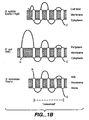
- Panel A provides a sequence comparison showing the conservation of Oxa1p(-like) proteins in B. subtilis, E. coli and mitochondria of the yeast S. cerevisiae.
- the amino acid sequences of SpoIIIJ and YqjG, and the partial sequences of YidC and Oxa 1 p, comprising the conserved part as depicted in Panel B are shown. Identical residues are indicated in bold.
- the conserved transmembrane segments I-V (marked in gray shading) were predicted as described by Sipos and von Heijne ( Sipos and von Heijne, Eur. J. Biochem., 213:1333-1340 [1993 ]).
- the putative SPase II cleavage sites (lipoboxes) in SpoIIIJ and YqjG are underlined.
- SpoIIIJ/YqjG orthologues with putative lipoprotein signal peptides have been found in several Gram-positive eubacteria (during the development of the present invention, SpoIIIJ/YQJG orthologues with putative lipoprotein signal peptides were identified in B. anthracis, B. halodurans, B. stearothermophilus, Lactococcus lactis, and Staphylococcus aureus ) .
- the numbers refer to the position of amino acids in the corresponding protein sequence.
- FIG. 1 Panel B, provides the predicted membrane topologies of SpoIIIJ and YqjG of B. subtilis, YidC of E. coli , and Oxa1 p of S . cerevisiae. Only the membrane topology of YidC has been verified experimentally ( Saaf et al., J. Biol. Chem., 273:30415-30418 [1998 ]). Notably, the YidC protein has a large amino-terminal loop located in the periplasm that is absent from SpoIIIJ, YqjG and Oxa1 p.
- FIG. 2 shows the construction of spoIIIJ and/or yqjG mutant strains of B . subtilis.
- B . subtilis ⁇ spoIIIJ and B . subtilis ⁇ yqjG were respectively, constructed by the single cross-over integration of pMutin- ⁇ spoIIIJ and pMutin- ⁇ yqjG into the chromosome B. subtilis 168.
- the respective spoIIIJ or yqjG genes are disrupted while the IacZ gene of pMutin2 is placed under the transcriptional control of the promoter regions of these genes.
- B . subtilis ⁇ spoIIIJ and B . subtilis ⁇ yqjG were respectively, constructed by the single cross-over integration of pMutin- ⁇ spoIIIJ and pMutin- ⁇ yqjG into the chromosome B. subtilis 168.
- the respective spoIIIJ or yqjG genes are disrupted while the Ia
- subtilis ⁇ yqjG -Tc was constructed by replacement of the 5' part of the yqjG gene with a tetracycline resistance marker by double cross-over recombination.
- B . subtilis ⁇ yqjG-IspoIIIJ was constructed by integration of pMutin-I spoIIIJ into the spoIIIJ region of B. subtilis ⁇ yqjG -Tc.
- the spoIIIJ gene was placed under the control of the (IPTG)-dependent Pspac promoter. Notably, growth and viability of the latter strain is dependent on the presence of IPTG.
- IPTG IPTG
- PCR-amplified DNA fragments that were used to direct the integration of pMutin2 into the B. subtilis chromosome are indicated with black bars.
- the abbreviations (including restriction sites relevant for the construction) used in this Figure are: B, BamHl; dco, double cross-over, E, Eco Rl; H, Hin dIII; jag, gene of unknown function specifying a predicted cytoplasmic protein; P, Pst I.
- Ori pBR322 replication functions of pBR322; Emr, erythromycin resistance marker; sco, single cross-over; T1 T2, transcriptional terminators on pMutin2; spoIIIJ', 3' truncated spoIIIJ gene; 'spoIIIJ, 5' truncated spoIIIJ gene; yqjG', 3' truncated yqjG gene; and 'yqjG, 5' truncated yqjG gene.
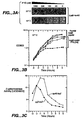
- Figure 3 depicts properties of spoIIIJ and/or yqjG mutant strains of B . subtilis.
- Panel A IPTG-dependent growth of B . subtilis ⁇ yqjG-IspoIIIJ on plates incubated at 15°C and 37°C is shown. Individual colonies of B . subtilis ⁇ yqjG-IspoIIIJ were transferred to fresh TY-agar plates containing 1000, 500, 100, 50, or 0 nM IPTG. Next, the plates were incubated overnight at 37°C (upper panel), or for 5 days at 15°C (lower panel).
- FIG. 3 Panel B shows the IPTG-dependent growth of B. subtilis ⁇ yqjG-IspoIIIJ.
- Panel C provides the transcription profiles of the spoIIIJ and yqjG genes.
- Time courses of the transcription of the spoIIIJ-lacZ and yqjG-lacZ gene fusions in B. subtilis ⁇ spoIIIJ (o) and B. subtilis ⁇ yqjG ( ⁇ ) were determined in cells growing at 37°C in TY medium.
- ⁇ -galactosidase activities were determined in Units per OD 600 .
- Figure 4 provides data showing that SpoIIIJ and YqjG are required for efficient protein secretion.
- Panel A provides results for precultures of B . subtilis ⁇ yqjG-IspoIIIJ and the parental strain B. subtilis 168, both transformed with plasmid pLip2031 (specifying LipA), pPSPPhoA5 (specifying PhoA), or pKTH10 (specifying AmyQ), prepared by overnight growth at 37°C in TY medium containing 500 nM IPTG. Next, cells were washed with fresh TY medium without IPTG, diluted 20-fold in fresh TY medium containing 500 nM, 50 nM or no (0) IPTG, and incubated for 3 hours at 37°C before sampling for SDS-PAGE and Western blotting.
- pre-LipA, PhoA, or (pre-)AmyQ levels upper panels
- levels of secreted LipA, PhoA, or AmyQ in the growth medium lower panels
- the positions of pre-LipA and pre-AmyQ (o), mature LipA, PhoA and AmyQ (•), or degradation products of PhoA (*) are indicated.
- Panel B provides data from experiments in which processing of pre-AmyQ in B .
- subtilis ⁇ yqjG- I spoIIIJ was analyzed by pulse-chase labeling at 37°C in S7 medium with (500 nM; upper panel) or without (0) IPTG (lower panel), subsequent immunoprecipitation, SDS-PAGE, and fluorography.
- Cells were labeled with [35S]-methionine for 1 min prior to chase with excess non-radioactive methionine. Samples were withdrawn after the chase at the times indicated.
- the positions of pre-AmyQ ( ⁇ ) and mature AmyQ (•) are indicated.
- Panel C shows the translocation of pre-AmyQ-PSBT in SpoIIIJ-depleted cells lacking YqjG.
- cells of B. subtilis ⁇ yqjG- I spoIIIJ, B. subtilis D secDF (positive control) and the parental strain B. subtilis 168 (negative control) were transformed with plasmid pKTH10-BT (specifying AmyQ-PSBT), and grown as described for Panel A.
- Cellular (biotinylated) AmyQ-PSBT was visualized by SDS-PAGE and Western blotting using AmyQ-specific antibodies (upper panel), or a streptavidin-HRP conjugate (lower panel). Precursor (o) and mature (•) forms of AmyQ-PSBT are indicated.
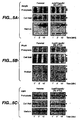
- Figure 5 provides data showing that SpoIIIJ and YqjG are required for efficient post- translocationally folding and release of secretory proteins.
- Processing and release of pre-AmyQ (Panel A), pre-pro-PhoA (Panel B), and pre-LipA (Panel C) were analyzed in B. subtilis ⁇ yqjG- I spoIIIJ and the parental strain B. subtilis 168 by pulse-chase labeling at 37°C in S7 medium, subsequent cell fractionation (protoplasts, cell wall and medium), immunoprecipitation, SDS-PAGE, and fluorography. Cells were labeled with [ 35 S] methionine for 1 min prior to chase with excess non-radioactive methionine.
- Figure 6 provides illustrates that SpoIIIJ and YqjG are of minor importance for membrane protein biogenesis.
- Cells of B . subtilis ⁇ yqjG- I spoIIIJ xSecDF-Myc ( ⁇ yqjG-IspoIIIJ) and the control strain B . subtilis xSecDF-Myc (parental) were grown overnight at 37°C in TY medium containing 500 nM IPTG.
- cells were washed with fresh TY medium without IPTG, diluted 20-fold in fresh TY medium containing 1 % xylose (production SecDF-Myc) and 500 nM, 50 nM or no (0) IPTG, and incubated at 37°C for 3 hours.
- Figure 7 shows results of protease mapping of membrane proteins in SpoIIIJ-depleted cells lacking YqjG.
- B . subtilis ⁇ yqiG- I spoIIIJ xSecDF-Myc ⁇ yqjG- I spoIIIJ
- B . subtilis xSecDF-Myc parental
- Figure 8 provides data showing pulse-chase/protease mapping of membrane proteins in SpoIIIJ-depleted cells lacking YqjG.
- Protoplasts were incubated for 30 min without further additions, in the presence of trypsin (1 mg/ml), or trypsin and Triton X-100 (1 %) prior to immunoprecipitation, SDS-PAGE, and fluorography. Immunoprecipitation with anti-GroEL antibodies was used to check protoplast integrity. The positions of intact proteins (•) and trypsin-resistant fragments ( ⁇ ) are indicated.
- the present invention provides methods and compositions for the efficient secretion of proteins from Gram-positive microorganisms.
- nucleic acids are written left to right in 5' to 3' orientation; amino acid sequences are written left to right in amino to carboxy orientation, respectively. It is to be understood that this invention is not limited to the particular methodology, protocols, and reagents described, as these may vary.
- the term "host cell” refers to a cell that has the capacity to act as a host and expression vehicle for an expression cassette according to the invention.
- the host cell is a Gram-positive microorganism.
- "host cell” refers to members of the genus Bacillus.
- the genus Bacillus includes all members known to those of skill in the art, including but not limited to B. subtilis, B. licheniformis, B. lentus, B. brevis, B. stearothermophilus, B. alkalophilus, B. amyloliquefaciens, B. coagulans, B. circulans, B. lautus, B. clausii, and B. thuringiensis.
- polypeptide refers to a compound made up of amino acid residues linked by peptide bonds.
- protein as used herein may be synonymous with the term “polypeptide” or may refer, in addition, to a complex of two or more polypeptides.
- protein of interest and “polypeptide of interest” refer to the protein to be expressed and secreted by the host cell.
- the protein of interest may be any protein that up until now has been considered for expression in prokaryotes.
- the protein of interest may be either homologous or heterologous to the host.
- chimeric polypeptide and “fusion polypeptide” are used interchangeably in reference to a protein that comprises at least two separate and distinct regions that may or may not originate from the same protein.
- a signal peptide linked to the protein of interest wherein the signal peptide is not normally associated with the protein of interest would be termed a chimeric polypeptide or chimeric protein.
- signal peptide and “signal sequence” refer to an amino-terminal extension on a protein to be secreted. Nearly all secreted proteins use an amino-terminal protein extension which plays a crucial role in the targeting to and translocation of precursor proteins across the membrane and which is proteolytically removed by a signal peptidase during or immediately following membrane transfer.
- the signal sequence is the sec-dependent signal peptides derived from Bacillus.
- the term “enhanced” refers to improved production of proteins of interest.
- the present invention provides enhanced (i.e., improved) production and secretion of a protein of interest.
- the "enhanced” production is improved as compared to the normal levels of production by the host (e.g., wild-type cells).
- the host e.g., wild-type cells.
- isolated and purified refer to a nucleic acid or amino acid that is removed from at least one component with which it is naturally associated.
- heterologous protein refers to a protein or polypeptide that does not naturally occur in a host cell.
- heterologous proteins include enzymes such as hydrolases including proteases, cellulases, amylases, other carbohydrases, and lipases; isomerases such as racemases, epimerases, tautomerases, or mutases; transferases, kinases and phosphatases, hormones, growth factors, cytokines, antibodies and the like.
- heterologous nucleic acid construct or sequence has a portion of the sequence that is not native to the cell in which it is expressed.
- "Heterologous,” with respect to a control sequence refers to a control sequence (i.e. promoter or enhancer) that does not function in nature to regulate the same gene the expression of which it is currently regulating.
- heterologous nucleic acid sequences are not endogenous to the cell or part of the genome in which they are present, and have been added to the cell, by infection, transfection, microinjection, electroporation, or the like.
- "heterologous" nucleic acid constructs contain a control sequence/DNA coding sequence combination that is the same as, or different from a control sequence/DNA coding sequence combination found in the native cell.
- the term "homologous protein” refers to a protein or polypeptide native or naturally occurring in a host cell.
- the present invention encompasses host cells producing the homologous protein via recombinant DNA technology.
- the present invention further encompasses a host cell which may have one or more deletions or one or more interruptions of the nucleic acid encoding the naturally occurring homologous protein or proteins, such as, for example, a protease, and having nucleic acid encoding the homologous protein or proteins reintroduced in a recombinant form ( i.e., in an expression cassette).
- the host cell produces the homologous protein.
- nucleic acid molecule includes RNA, DNA and cDNA molecules. It will be understood that, as a result of the degeneracy of the genetic code, a multitude of nucleotide sequences encoding a given protein may be produced.
- vector refers to a nucleic acid construct designed for transfer between different host cells.
- expression vector refers to a vector that has the ability to incorporate and express heterologous DNA fragments in a foreign cell. Many prokaryotic and eukaryotic expression vectors are commercially available. Selection of appropriate expression vectors is within the knowledge of those having skill in the art.
- expression cassette and "expression vector” refer to a nucleic acid construct generated recombinantly or synthetically, with a series of specified nucleic acid elements that permit transcription of a particular nucleic acid in a target cell.
- the recombinant expression cassette can be incorporated into a plasmid, chromosome, mitochondrial DNA, plastid DNA, virus, or nucleic acid fragment.
- the recombinant expression cassette portion of an expression vector includes, among other sequences, a nucleic acid sequence to be transcribed and a promoter.
- plasmid refers to a circular double-stranded (ds) DNA construct used as a cloning vector, and which forms an extrachromosomal self-replicating genetic element in many bacteria and some eukaryotes.
- selectable marker-encoding nucleotide sequence refers to a nucleotide sequence which is capable of expression in the host cells and where expression of the selectable marker confers to cells containing the expressed gene the ability to grow in the presence of a corresponding selective agent or lack of an essential nutrient.
- promoter refers to a nucleic acid sequence that functions to direct transcription of a downstream gene.
- the promoter is appropriate to the host cell in which the target gene is being expressed.
- the promoter, together with other transcriptional and translational regulatory nucleic acid sequences (also termed “control sequences") is necessary to express a given gene.
- control sequences also termed “control sequences”
- the transcriptional and translational regulatory sequences include, but are not limited to, promoter sequences, ribosomal binding sites, transcriptional start and stop sequences, translational start and stop sequences, and enhancer or activator sequences.
- chimeric gene and heterologous nucleic acid construct refer to a non-native gene (i.e., one that has been introduced into a host) that may be composed of parts of different genes, including regulatory elements.
- a chimeric gene construct for transformation of a host cell is typically composed of a transcriptional regulatory region (promoter) operably linked to a heterologous protein coding sequence, or, in a selectable marker chimeric gene, to a selectable marker gene encoding a protein conferring antibiotic resistance or other selectable properties to transformed cells.
- a typical chimeric gene of the present invention for transformation into a host cell, includes a transcriptional regulatory region that is constitutive or inducible, a signal peptide coding sequence, a protein coding sequence, and a terminator sequence.
- chimeric gene constructs also include a second DNA sequence encoding a signal peptide if secretion of the target protein is desired.
- a nucleic acid is "operably linked" when it is placed into a functional relationship with another nucleic acid sequence.
- DNA encoding a secretory leader i.e., a signal peptide
- a promoter or enhancer is operably linked to a coding sequence if it affects the transcription of the sequence
- a ribosome binding site is operably linked to a coding sequence if it is positioned so as to facilitate translation.
- operably linked means that the DNA sequences being linked are contiguous, and, in the case of a secretory leader, contiguous and in reading phase. However, enhancers do not have to be contiguous. Linking is accomplished by ligation at convenient restriction sites. If such sites do not exist, the synthetic oligonucleotide adaptors or linkers are used in accordance with conventional practice.
- the term "gene” means the segment of DNA involved in producing a polypeptide chain, that may or may not include regions preceding and following the coding region (e.g. 5' untranslated (5' UTR) or “leader” sequences and 3' UTR or “trailer” sequences), as well as intervening sequences (introns) between individual coding segments (exons).
- 5' untranslated (5' UTR) or “leader” sequences and 3' UTR or “trailer” sequences as well as intervening sequences (introns) between individual coding segments (exons).
- the gene encodes therapeutically significant proteins or peptides, such as growth factors, cytokines, ligands, receptors and inhibitors, as well as vaccines and antibodies.
- the gene may encode commercially important industrial proteins or peptides, such as enzymes (e.g., proteases, carbohydrases such as amylases and glucoamylases, cellulases, oxidases and lipases).
- enzymes e.g., proteases, carbohydrases such as amylases and glucoamylases, cellulases, oxidases and lipases.
- the gene of interest is a naturally-occurring gene, a mutated gene or a synthetic gene.
- a nucleic acid sequence is considered to be "selectively hybridizable" to a reference nucleic acid sequence if the two sequences specifically hybridize to one another under moderate to high stringency hybridization and wash conditions.
- Hybridization conditions are based on the melting temperature I of the nucleic acid binding complex or probe.
- “maximum stringency” typically occurs at about Tm-5°C (5° below the Tm of the probe); “high stringency” at about 5-10°C below the Tm; “intermediate stringency” at about 10-20°C below the Tm of the probe; and “low stringency” at about 20-25°C below the Tm.
- maximum stringency conditions may be used to identify sequences having strict identity or near-strict identity with the hybridization probe; while high stringency conditions are used to identify sequences having about 80% or more sequence identity with the probe.
- Moderate and high stringency hybridization conditions are well known in the art.
- An example of high stringency conditions includes hybridization at about 42°C in 50% formamide, 5X SSC, 5X Denhardt's solution, 0.5% SDS and 100 ⁇ g/ml denatured carrier DNA followed by washing two times in 2X SSC and 0.5% SDS at room temperature and two additional times in 0.1X SSC and 0.5% SDS at 42°C.
- recombinant includes reference to a cell or vector, that has been modified by the introduction of a heterologous nucleic acid sequence or that the cell is derived from a cell so modified.
- recombinant cells express genes that are not found in identical form within the native (non-recombinant) form of the cell or express native genes that are otherwise abnormally expressed, under expressed or not expressed at all as a result of deliberate human intervention.
- “Recombination, "recombining,” or generating a “recombined” nucleic acid is generally the assembly of two or more nucleic acid fragments wherein the assembly gives rise to a chimeric gene.
- the terms “transformed,” “stably transformed,” and “transgenic” used in reference to a cell means the cell has a non-native (heterologous) nucleic acid sequence integrated into its genome or as an episomal plasmid that is maintained through two or more generations.
- expression refers to the process by which a polypeptide is produced based on the nucleic acid sequence of a gene.
- the process includes both transcription and translation.
- the term "introduced” used in the context of inserting a nucleic acid sequence into a cell means “transfection,” “transformation,” or “transduction,” and includes reference to the incorporation of a nucleic acid sequence into a eukaryotic or prokaryotic cell where the nucleic acid sequence may be incorporated into the genome of the cell (e.g., chromosome, plasmid, plastid, or mitochondrial DNA), converted into an autonomous replicon, or transiently expressed (for example, transfected mRNA).
- present invention finds use in enhancing the secretion of any protein of interest that may be made to be secreted via the Sec-dependent secretion pathway.
- Any protein of interest that may be fused to a Sec-dependent signal peptide by recombinant DNA methods finds use in the present invention.
- the host cell is rendered capable of enhanced secretion of a protein of interest.
- the protein of interest is endogenous, while in alternative embodiments, it is heterologous.
- the protein of interest is a chimeric protein, in that the native protein of interest is fused to a Sec-dependent signal sequence.
- the host cell is also transformed with a DNA construct encoding the spoIIIJ gene.
- the spoIIIJ gene is operably linked to a promoter.
- the promoter is constitutive, while in other embodiments, it is inducible.
- One preferred promoter is the Pspac.
- a host cell deficient in the spoIIIJ gene may have impaired protein secretion.
- the host cell is a Gram-positive cell.
- the Gram-positive cell is a member of the genus Bacillus.
- This inner membrane protein has been implicated in the export of the amino- and carboxyl-termini of the mitochondrially-encoded precursor of cytochrome c oxidase subunit II (pre-Coxll) from the mitochondrial matrix ( Hell et al., FEBS Lett., 418:367-370 [1997 ]; and Hell et al., Proc. Natl. Acad. Sci. USA 95:2250-2255 [1998 ]).
- the E . coli orthologue of Oxa1 p denoted YidC, is associated with the Sec translocase ( Scotti et al., EMBO J., 19:542-549 [2000 ]).
- the present invention provides the identification of roles of SpoIIIJ and YqjG in protein secretion and/or membrane protein biogenesis. Indeed, results obtained during the development of the present invention show that SpoIIIJ and YqjG are important for post-translocational stages in protein secretion. Consistent with an important role in secretion, the presence of at least one of these two Oxa1p orthologues is essential for cell growth. It is noted that under SpoIIIJ- and YqjG-limiting conditions that strongly affect protein secretion, the stability of various membrane proteins is not, or only very mildly, affected.
- subtilis ⁇ yqjG could be obtained showed that YqjG, like SpoIIIJ, is not essential for growth (See, Figure 3 , Panel A). Notably, disruption of the yqjG gene did not detectably affect sporulation, while a ⁇ spoIIIJ control strain constructed with pMutin2 was unable to develop viable spores (data not shown). Thus, as discussed in greater detail in the Experimental section, YqjG has no essential function in the sporulation process, in contrast to SpoIIIJ.
- AmyQ levels in the medium was not paralleled by reduced rates of pre-AmyQ translocation and processing, or the cellular accumulation of pre-AmyQ, as previously documented for secDF, tepA or sip mutant strains with translocation defects (Bolhuis et al., [1998], supra; Tjalsma et al., [1998], supra; Bolhuis et al., [1999a], supra; and Tjalsma et al., J. Biol. Chem., 272:25983-25992 [1997 ]).
- SpoIIIJ and YqjG facilitate the folding of translocated proteins in at least two different ways. However, it is not intended that the present invention be limited to any particular mechanism. Nonetheless, it is conceivable that SpoIIIJ and YqjG have a direct role in the correct folding of mature proteins shortly after their translocation across the membrane, similar to the essential function proposed for the folding catalyst PrsA (Tjalsma et al., [1999], supra; and Kontinen et al., supra). Alternatively, it is contemplated that SpoIIIJ and YqjG have an indirect role in protein secretion by modulating the activity of folding catalysts, such as PrsA.
- Oxa1p protein of yeast mitochondria was shown to be required for the processing of mitochondrially-encoded precursors ( Bauer et al., Mol. Gen. Genet., 245:272-278 [1994 ]), the export of amino- and carboxyl-termini from pre-Cox II synthesized in the mitochondrial matrix (Hell et al., [1997], supra; and Hell et al., [1998], supra) and the insertion of transmembrane domains into the mitochondrial inner membrane in a pairwise fashion ( Herrmann et al., EMBO J., 16:2217-2226 [1997 ]).
- SpoIIIJ and YqjG are important for post-translocational protein folding steps in the secretion process, it is contemplated that SpoIIIJ is specifically required for the folding of certain, translocated sporulation factors.
- the importance of protein transport for sporulation is underscored by the observations that SecA, and the type I SPases, SipT and SipV, are required for this process, as indicated by results obtained during the development of the present invention and data included in various reports (Bonnefoy et al., [2000], supra; Jiang et al., J. Bacteriol., 182:303-310 [2000 ]).
- SpoIIIJ is involved in the insertion of specific membrane proteins that are essential for the sporulation process after stage III. It is further contemplated that these membrane proteins are involved in the communication between the forespore and the mother cell.
- the present invention be limited to any particular or specific mechanism.
- TY medium tryptone/yeast extract
- Bacto tryptone 1%
- Bacto yeast extract 0.5%)
- NaCl 1%
- Minimal medium for B . subtilis was prepared as described by Tjalsma et al . ([1998], supra).
- Schaeffer's sporulation medium was prepared as described by Schaeffer et al. ( Schaeffer et al., Proc. Natl. Acad Sci. USA 54:704-711 [1965 ]). When required, medium for E.
- coli was supplemented with kanamycin (Km; 40 ⁇ g/ml), ampicillin (Ap; 50 ⁇ g/ml), or erythromycin (Em; 100 ⁇ g/ml); media for B. subtilis were supplemented with chloramphenicol (Cm; 5 ⁇ g/ml), Km (10 ⁇ g/ml), tetracycline (Tc; 6 ⁇ g/ml), or Em (1 ⁇ g/ml).
- Km kanamycin
- Amicillin Amicillin
- Em erythromycin
- Cm chloramphenicol
- Km 10 ⁇ g/ml
- Tc tetracycline
- Em Em (1 ⁇ g/ml).
- the pMutin2 plasmid was described by Vagner et al., ( Vagner et al., Microbiol., 144:3097-3104 [1998 ]), while the pUK21 plasmid was described by Vieria and Messing ( Vieria and Messing, Gene 100:189-194 [1990 ]), pLip2031 was described by Dartois et al. ( Dartois et al., Appl. Environ.
- pKTH10 was described by Palva ( Palva, Gene 19:81-87 [1982 ]), and pKTH10-BT was described by Tjalsma et al., (Tjalsma et al., [1998], supra).
- the E . coli MC1061 strain was described by Wertman et al ( Wertman et al., Genen., 49:253-262 [1986 ]), while the B. subtilis 168 strain was described by Kunststoff et al . ( Kunststoff et al., Nature 390:249-256 [1997 ]), the B . subtilis ⁇ secDF and xSecDF-Myc strains were described by Bolhuis et al. ( Bolhuis et al., J. Biol. Chem., 273:21217-21224 [1998 ]). Table I. Plasmids and Bacterial Strains Relevant Properties Plasmids pMutin2 pBR322-based integration vector for B .
- subtilis contains a multiple cloning site downstream of the Pspac promoter, and a promoter-less lacZ gene preceded by the RBS of the spoVG gene; Ap r ; Em r pMutin- ⁇ spoIIIJ As pMutin2, contains an internal fragment of the B . subtilis spoIIIJ gene pMutin-I spo III J As pMutin2, contains the 5' part of the B . subtilis spoIIIJ gene pMutin - ⁇ yqjG As pMutin2, contains an internal fragment of the B .
- subtilis Km r pKTH10 Encodes AmyQ of Bacillus amyloliquefaciens; Km r pKTH10-BT As pKTH10, encodes the AmyQ-PSBT fusion protein Strains E. coli MC1061 F - ; araD 139 ; ⁇ ( ara-leu )7696 ; ⁇ (lac) X74 ; galU ; galK ; hsdR2 ; mcrA ; mcrB1 ; rspL B.
- subtilis 168 trpC2 ⁇ spoIIIJ Derivative of 168 contains an integrated copy of plasmid pMutin2 in the spoIIIJ gene; spoIIIJ-IacZ, Em r ⁇ yqjG Derivative of 168; contains an integrated copy of plasmid pMutin2 in the yqjG gene; yqjG-lacZ , Em r yqjG-Tc Derivative of 168; 5' part of the yqjG gene is replaced with a phosphatases resistance marker, using pUKyqjG-Tc, by double cross-over recombination; yqjG:: Tc, Tc r ⁇ yqjG- I spoIIIJ Derivative of B.
- subtilis 168 yqjGTc contains an integrated copy of plasmid pMutin2 in the spoIIIJ region; Pspac-spoIIIJ, spoIIIJ-lacZ, Em r ; IPTG-inducible spoIIIJ transcription; Tc r ; Em r ⁇ secDF
- MIF derivative of B. subtilis 168; contains an integrated copy of plasmid pMutin2 in the secDF gene; secDF-lacZ, Em r xSecDF-Myc Derivative of B. subtilis 168; amyE::xylA-secDFmyc; Cm r ; also referred to as XDF-Myc
- the efficiency of sporulation was determined by overnight growth in SSM medium, killing of cells with 0.1 volume chloroform, and subsequent plating.
- lysis buffer (20 mM potassium phosphate, pH 7.5; 15 mM MgCl 2 ; 20% sucrose; 0.5 mg/ml lysozyme) and incubated for 15 min at 37°C.
- 1 volume of SDS sample buffer 100 mM Tris-HCl [pH 6]; 4% SDS; 10% 2-mercaptoethanol; 30% glycerol; 0.005% bromophenolblue; and 1% Triton X-100
- SDS sample buffer 100 mM Tris-HCl [pH 6]; 4% SDS; 10% 2-mercaptoethanol; 30% glycerol; 0.005% bromophenolblue; and 1% Triton X-100
- proteins were visualized with the ECL detection system, using rabbit/mouse sera and horseradish peroxidase (HRP)-anti-rabbit/mouse-IgG conjugates (Amersham).
- HRP horseradish peroxidase
- Aminylated AmyQ-PSBT was visualized with a streptavidin-HRP conjugate (Amersham).
- B. subtilis ⁇ yqjG- I spoIIIJ was grown overnight in S7 medium (See, van Dijl et al., J. Gen. Microbiol., 137:2073-2083 [1991a ]) supplemented with 500 nM IPTG, Em (1 ⁇ g/ml) and Tc (6 ⁇ g/ml).
- Cells were washed with fresh S7 medium without IPTG and diluted 1:10 in fresh S7 medium containing Em (1 ⁇ g/ml), in the presence or absence of IPTG. After 2 hours of growth, cells were resuspended in methionine and cysteine-free S7 (S7 starvation) medium with or without IPTG and grown for another hour prior to pulse-chase labeling.
- Protoplasts were prepared from late exponentially growing cells of B. subtilis. Cells were resuspended in protoplast buffer (20 mM potassium phosphate, pH 7.5; 15 mM MgCl 2 ; 20% sucrose) and incubated for 30 min with 1 mg/ml lysozyme (37C). Protoplasts were collected by centrifugation, resuspended in fresh protoplast buffer and incubated at 37°C in the presence of 1 mg/ml trypsin (Sigma) for 30 min. The reaction was terminated by the addition of CompleteTM protease inhibitors (Roche) and protoplasts were used for SDS-PAGE and Western-blotting. In parallel, protoplasts were incubated without trypsin, or in the presence of trypsin and 1 % Triton X-100.
- B. subtilis ⁇ spoIIIJ an internal fragment of the spoIIIJ gene was amplified with the primers spoIIIJ -1 (5'- GAG AAT TCG ACG GGA GAT AAC TAC GGG C -3'; SEQ ID NO:1) and spoIIIJ -2 (5'-ATG GAT CCT ATG CTC TGA AAT CGC CTG GG-3'; SEQ ID NO:2).
- the amplified fragment was cleaved with Eco RI and Bam HI, and ligated into the corresponding sites of pMutin2, resulting in pMutin- ⁇ spoIIIJ.
- subtilis ⁇ spoIIIJ was obtained by a single cross-over (Campbell-type) integration of pMutin- ⁇ spoIIIJ into the spoIIIJ gene of B . subtilis 168, in such a way that the spoIIIJ gene was disrupted and the spoVG-lacZ reporter gene of pMutin2 was placed under the transcriptional control of the spoIIIJ promoter region (See, Figure 2 ). Simultaneously, the jag gene located downstream of spoIIIJ was placed under the control of the isopropyl- ⁇ -D-thiogalacto-pyranoside (IPTG)-dependent Pspac promoter (See, Figure 2 ).
- IPTG isopropyl- ⁇ -D-thiogalacto-pyranoside
- B . subtilis ⁇ yqjG an internal fragment of the yqjG gene was amplified with the primers yqjG -3 (5'-TGA AGC TTG CCG GGC TGT TTC ACG G-3'; SEQ ID NO:3) and yqjG -2 (5'-ATG GAT CCA TCG TCA TCA TCA CAG GGA AGA TG-3'; SEQ ID NO:4).
- the amplified fragment was cleaved with Hin dIII and BamHI, and ligated into the corresponding sites of pMutin2, resulting in pMutin- ⁇ yqjG .
- subtilis ⁇ yqjG was obtained by a single cross-over integration of pMutin- ⁇ yqjG into the yqjG gene of B . subtilis 168, in such a way that the yqjG gene was disrupted and the spoVG-lacZ reporter gene of pMutin2 was placed under the transcriptional control of the yqjG promoter region (See, Figure 2 ).
- subtilis ⁇ yqjG- I spoIIIj a fragment comprising the yqjG gene and upstream and downstream sequences was first amplified with the primers yqjG- 1 (5'-GCT TTG GAT TTC TTT TGC CGT CTC-3'; SEQ ID NO:5) and yqjG-4 (5'- GGT TCG TGA GCA TAA AGG GAA GC-3'.; SEQ ID NO:6). The amplified fragment was cleaved with Xba I and Kpn I , and ligated into the corresponding sites of pUK21.
- B. subtilis ⁇ qiG-IspoIIIJ To construct B. subtilis ⁇ qiG-IspoIIIJ, first a fragment comprising the ribosome binding site, start codon and the 5' region of the spoIIIJ gene, but not the spoIIIJ promoter(s), was amplified with the primers spoIIIJ -3 (5'-GGA ATT CTA GAG TGT AAA GAT TAA TTA TAG GAG GAA ATG TTG-3'; SEQ ID NO:7) and spoIIIJ-2. The amplified fragment was cleaved with EcoR I and BamH I, and ligated into the corresponding sites of pMutin2, resulting in pMutin-I spoIIIJ. Finally, B .
- subtilis ⁇ yqjG- I spoIIIJ was obtained by Campbell-type integration of pMutin-I spoIIIJ into the spoIIIJ gene of B. subtilis yqjG- Tc , in such a way that the spoIIIJ gene and the downstream jag gene were placed under the control of the IPTG-dependent Pspac promoter, whereas the spoVG-IacZ reporter gene of pMutin2 was placed under the transcriptional control of the spoIIIJ promoter region (See, Figure 2 ).
- B. subtilis ⁇ yqjG- I spoIIIJ containing a xylose-inducible secDF-Myc gene was obtained by transformation of B. subtilis ⁇ yqjG- l spoIIIJ with chromosomal DNA of the xSecDF-Myc strain (Bolhuis et al., 1998). All constructed strains were selected on plates with the proper antibiotics, and checked by PCR analyses for correct integration of plasmids into the chromosome.
- IPTG-dependent strain B . subtilis ⁇ yqjG- I spoIIIJ, and derivatives thereof, were grown in media containing 500 nM IPTG, Em (1 ⁇ g/ml) and Tc (6 ⁇ g/ml). It should be noted that in the absence of IPTG, such strains sometimes start to grow again after a lag period. This is probably due to the occurrence of a point mutation in the Pspac promoter, causing constitutive expression of the downstream genes ( Prágai and Harwood, J. Bacteriol., 182:6819-6823 [2000 ]).
- a yqjG disruption strain was constructed with the integration vector pMutin2 (See, Figure 2 ).
- the fact that B . subtilis ⁇ yqjG could be obtained showed that YqjG, like SpoIIIJ, is not essential for growth (See, Figure 3 , Panel A).
- disruption of the yqjG gene did not detectably affect sporulation, while a ⁇ spoIIIJ control strain constructed with pMutin2 was unable to develop viable spores (data not shown).
- YqjG has no essential function in the sporulation process, in contrast to SpoIIIJ.
- a conditional (IPTG-dependent) yqjG-spoIIIJ double mutant strain was constructed in two steps. First, the largest part of the yqjG gene was replaced with a tetracycline resistance marker via double cross-over recombination. Second, the spoIIIJ gene of the latter strain was placed under the control of the isopropyl- ⁇ -D-thiogalacto-pyranoside (IPTG)-inducible Pspac promoter, present on pMutin2. This was achieved by single cross-over of pMutin2 into the spoIIIJ region of the chromosome. (See, Figure 2 ).
- IPTG isopropyl- ⁇ -D-thiogalacto-pyranoside
- the resulting B. subtilis ⁇ yqjG- I spoIIIJ strain could be obtained only in the presence of IPTG, indicating that at least the spoIIIJ gene had to be transcribed for the growth of this strain.
- Panel A about 500 nM IPTG was required for this strain to display unimpaired growth on TY agar plates at 37°C.
- B . subtilis ⁇ yqjG-IspoIIIJ stopped growing after 2-3 hours of incubation (See, Figure 3 , Panel B). Similar to the IPTG-dependent growth of this strain on TY plates, the presence of 500 nM IPTG was required to support wild-type growth of B.
- subtilis ⁇ yqjG-IspoIIIJ in liquid TY medium at 37°C.
- growth of B . subtilis ⁇ yqiG-IspoIIIJ in the presence of 50 nM IPTG was significantly reduced as compared to that of the parental strain 168, indicating that SpoIIIJ was synthesized at limiting levels.
- growth of B . subtilis ⁇ yqiG-IspoIIIJ in the absence of IPTG could be restored by the ectopic expression of the spoIIIJ gene, showing that the growth inhibition of this strain is due to SpoIIIJ limitation, and not to polar effects on the expression of the downstream-located jag gene.
- B. subtilis ⁇ yqjG, ⁇ spoIIIJ, and ⁇ yqjG- l spoIIIJ were transformed with plasmid pLip2031 for the secretion of the B. subtilis lipase LipA (Dartois et al., supra), pPSPPhoA5 for the secretion of the alkaline phosphatases PhoA of E .
- TY medium with 50 nM IPTG (limiting amounts of SpoIIIJ), or 500 nM IPTG (full induction of SpoIIIJ) was used (See, Figure 3 , Panels A and B).
- the secretion of LipA, PhoA and AmyQ was analyzed by Western blotting, as described above.
- Panel A lower panels
- the levels of LipA, PhoA and AmyQ in the medium of SpoIIIJ-depleted cells of B . subtilis ⁇ yqjG- I spoIIIJ (no IPTG) were significantly reduced compared to those in the media of the fully induced double mutant (500 nM IPTG), or the parental strain 168.
- SpolllJ-depleted double mutant cells containing pPSPPhoA5 or pKTH10 also contained significantly decreased levels of mature PhoA or AmyQ, respectively (See, Figure 4 , Panel A).
- the cellular levels of mature LipA, and the precursor forms of LipA and AmyQ were not affected by SpoIIIJ depletion in the absence of YqjG (See, Figure 4 , Panel A, upper panels).
- AmyQ-PSBT which contains a carboxyl-terminal biotin accepting domain (PSBT) of a transcarboxylase from Propionibacterium shermannii (Tjalsma et al., [1998], supra).
- pre-AmyQ-PSBT can only be biotinylated by the cytoplasmic biotin ligase when the PSBT domain folds into its native three-dimensional structure prior to translocation. Consequently, biotinylation of pre-AmyQ-PSBT occurs at significantly increased levels when pre-AmyQ-PSBT translocation is slowed-down, for example by the disruption of the secDF gene (Bolhuis et al. [1998], supra).
- pro-PhoA is extremely unstable, as at least four degradation products of pro-PhoA were detected in the cell wall and medium fractions (middle and lower panels). However, the levels of these degradation products were significantly reduced in the cell wall of B . subtilis ⁇ yqjG-IspoIIIJ depleted of SpoIIIJ. Furthermore, the release of these pro-PhoA forms and mature PhoA into the medium of B . subtilis ⁇ yqjG-IspoIIIJ depleted of SpoIIIJ was found to be reduced compared to the parental strain (about 2-fold; lower panel). Finally, a specific PhoA degradation product was only released into the medium of ⁇ yqjG- I spoIIIJ cells depleted of SpoIIIJ (lower panel).
- the YidC protein of E. coli is very important for the correct insertion of various proteins into the inner membrane, but not the export and processing of Sec-dependent pre-proteins.
- the cellular levels of the BdbB, BdbC, FtsH, PrsA, SecDF-Myc, SipS, and SPase II proteins in the ⁇ yqiG- I spoIIIJ strain were monitored by Western blotting.
- the Oxa1 p protein of yeast mitochondria was previously shown to be required for the correct assembly of cytochrome c oxidase complexes ( Bonnefoy et al., Proc. Natl. Acad. Sci. USA 91:11978-11982 [1994 ]; and Altemura et al., FEBS Lett., 382:111-115 [1996 ]), and the specific export of the amino- and carboxyl-termini of pre-Cox II from the mitochondrial matrix to the intermembrane space (Hell et al., [1997], supra; Hell et al., [1998], supra; and He and Fox, Mol. Biol. Cell., 8:1449-1460 [1997 ]).
- the cytoplasmic protein GroEL was not degraded by extracellular trypsin, indicating that lysis of protoplasts did not occur during the assay. It should be noted that the degradation product of FtsH, which accumulates in ⁇ yqjG- I spoIIIJ cells depleted of SpoIIIJ (See, Figure 6 ), was also detectable in the parental strain upon protoplasting. Also, the degradation product of CtaC, which accumulates in ⁇ yqjG- I spoIIIJ cells depleted of SpoIIIJ (See, Figure 6 ), was not detectable upon protoplasting of these cells.
Landscapes
- Chemical & Material Sciences (AREA)
- Organic Chemistry (AREA)
- Health & Medical Sciences (AREA)
- General Health & Medical Sciences (AREA)
- Biochemistry (AREA)
- Biophysics (AREA)
- Life Sciences & Earth Sciences (AREA)
- Genetics & Genomics (AREA)
- Medicinal Chemistry (AREA)
- Molecular Biology (AREA)
- Proteomics, Peptides & Aminoacids (AREA)
- Gastroenterology & Hepatology (AREA)
- Micro-Organisms Or Cultivation Processes Thereof (AREA)
- Peptides Or Proteins (AREA)
- Preparation Of Compounds By Using Micro-Organisms (AREA)
Claims (13)
- Verfahren zum Modulieren der Sec-abhängigen Proteinsekretion, umfassend die Schritte:a) Einbringen eines mit einem induzierbaren Promoter verbundenen spoIIIJ-Gens in eine Bacillus-Zelle, undb) Modulieren der Expression des spoIIIJ-Gens durch Variieren des Niveaus der Induktion des induzierbaren Promoters.
- Verfahren nach Anspruch 1, worin der induzierbare Promoter der Pspac-Promoter ist.
- Gereinigtes DNA-Molekül, das einen induzierbaren Promoter umfasst, der wirksam mit dem spoIIIJ-Gen verbunden ist.
- Verfahren zum Modulieren der Sekretion eines Proteins von Interesse, umfassend die Schritte:a) Bilden eines ersten DNA-Moleküls, das ein chimäres Protein codiert, welches ein Sec-abhängiges Sekkretionssignalpeptid umfasst,b) Bilden eines zweiten DNA-Moleküls, das einen induzierbaren Promoter codiert, welcher wirksam mit dem spoIIIJ-Gen verbunden ist,c) Transformieren einer Wirtszelle mit dem DNA-Molekül der Schritte a und b, undd) Wachsen lassen der Wirtszelle unter Bedingungen, wobei das Protein von Interesse auf dem gewünschten Niveau exprimiert wird.
- Verfahren nach Anspruch 4, worin man die Wirtszelle unter Bedingungen wachsen lässt, wobei der induzierbare Promoter induziert wird.
- Verfahren nach Anspruch 4, worin das Protein von Interesse auf einem niedrigen Niveau exprimiert wird.
- Verfahren zum Modulieren der Sec-abhängigen Proteinsekretion, umfassend die Schritte:a) Einbringen eines mit einem induzierbaren Promoter verbundenen yqjG-Gens in eine Bacillus-Zelle,b) Modulieren der Expression des yqjG -Gens durch Variieren des Niveaus der Induktion des induzierbaren Promoters.
- Verfahren nach Anspruch 7, worin der induzierbare Promoter der Pspac-Promoter ist.
- Verfahren zum Modulieren der Sekretion eines Proteins von Interesse, umfassend die Schritte:a) Bilden eines ersten DNA-Moleküls, das ein chimäres Protein codiert, welches ein Sec-abhängiges Sekkretionssignalpeptid umfasst,b) Bilden eines zweiten DNA-Moleküls, das einen induzierbaren Promoter codiert, welcher wirksam mit dem yqjG-Gen verbunden ist,c) Transformieren einer Wirtszelle mit dem DNA-Molekül der Schritte a und b, undd) Wachsen lassen der Wirtszelle unter Bedingungen, wobei das Protein von Interesse auf dem gewünschten Niveau exprimiert wird.
- Verfahren nach Anspruch 9, worin man die Wirtszelle unter Bedingungen wachsen lässt, wobei der induzierbare Promoter induziert wird.
- Verfahren nach Anspruch 10, worin das Protein von Interesse auf einem niedrigen Niveau exprimiert wird.
- Verfahren zum Modulieren der Sec-abhängigen Proteinsekretion, umfassend die Schritte:a) Bereitstellen einer Bacillus-Zelle, Welche die mit einem endogenen Hochexpressionspromoter verbundenen spoIIIJ- und yqjG-Gene umfasst, undb) Modulieren der Expression der spoIIIJ- und yqjG-Gene durch Variieren des Niveaus der Induktion des Promoters.
- Verfahren nach Anspruch 12, worin der Promoter der Pspac-Promoter ist.
Priority Applications (1)
| Application Number | Priority Date | Filing Date | Title |
|---|---|---|---|
| EP08012307A EP1992686A1 (de) | 2002-01-09 | 2002-12-12 | OXA1P verstärkte Proteinsekretion |
Applications Claiming Priority (5)
| Application Number | Priority Date | Filing Date | Title |
|---|---|---|---|
| US34808002P | 2002-01-09 | 2002-01-09 | |
| US348080P | 2002-01-09 | ||
| US42683202P | 2002-11-15 | 2002-11-15 | |
| US426832P | 2002-11-15 | ||
| PCT/US2002/039634 WO2003060068A2 (en) | 2002-01-09 | 2002-12-12 | Oxa1p enhanced protein secretion |
Related Child Applications (1)
| Application Number | Title | Priority Date | Filing Date |
|---|---|---|---|
| EP08012307A Division EP1992686A1 (de) | 2002-01-09 | 2002-12-12 | OXA1P verstärkte Proteinsekretion |
Publications (3)
| Publication Number | Publication Date |
|---|---|
| EP1472342A2 EP1472342A2 (de) | 2004-11-03 |
| EP1472342A4 EP1472342A4 (de) | 2006-03-29 |
| EP1472342B1 true EP1472342B1 (de) | 2008-07-09 |
Family
ID=26995555
Family Applications (2)
| Application Number | Title | Priority Date | Filing Date |
|---|---|---|---|
| EP08012307A Withdrawn EP1992686A1 (de) | 2002-01-09 | 2002-12-12 | OXA1P verstärkte Proteinsekretion |
| EP02790086A Expired - Lifetime EP1472342B1 (de) | 2002-01-09 | 2002-12-12 | Durch oxa1p verbesserte proteinsekretion |
Family Applications Before (1)
| Application Number | Title | Priority Date | Filing Date |
|---|---|---|---|
| EP08012307A Withdrawn EP1992686A1 (de) | 2002-01-09 | 2002-12-12 | OXA1P verstärkte Proteinsekretion |
Country Status (7)
| Country | Link |
|---|---|
| US (1) | US7553637B2 (de) |
| EP (2) | EP1992686A1 (de) |
| AT (1) | ATE400645T1 (de) |
| AU (1) | AU2002353111A1 (de) |
| DE (1) | DE60227564D1 (de) |
| DK (1) | DK1472342T3 (de) |
| WO (1) | WO2003060068A2 (de) |
Families Citing this family (2)
| Publication number | Priority date | Publication date | Assignee | Title |
|---|---|---|---|---|
| US20160090577A1 (en) * | 2014-09-26 | 2016-03-31 | Dow Agrosciences Llc | Heterologous expression of glycine n-acyltransferase proteins |
| CN109852632A (zh) * | 2019-02-22 | 2019-06-07 | 中国农业科学院生物技术研究所 | spoIIIJ蛋白作为芽孢杆菌表面展示系统中锚定蛋白的用途 |
Family Cites Families (2)
| Publication number | Priority date | Publication date | Assignee | Title |
|---|---|---|---|---|
| FR2739629B1 (fr) * | 1995-10-06 | 1997-12-26 | Systems Bio Ind | Utilisation d'un systeme de secretion sec-dependant pour secreter des proteines normalement secretees par un systeme de secretion sec-independant, bacteries les contenant et leur utilisation |
| EP0798380A3 (de) * | 1996-03-28 | 1998-04-29 | Mitsui Toatsu Chemicals, Inc. | Verfahren zur Herstellung sekretischer Proteinprodukten |
-
2002
- 2002-12-12 AT AT02790086T patent/ATE400645T1/de not_active IP Right Cessation
- 2002-12-12 US US10/500,660 patent/US7553637B2/en not_active Expired - Fee Related
- 2002-12-12 WO PCT/US2002/039634 patent/WO2003060068A2/en not_active Ceased
- 2002-12-12 EP EP08012307A patent/EP1992686A1/de not_active Withdrawn
- 2002-12-12 AU AU2002353111A patent/AU2002353111A1/en not_active Abandoned
- 2002-12-12 EP EP02790086A patent/EP1472342B1/de not_active Expired - Lifetime
- 2002-12-12 DK DK02790086T patent/DK1472342T3/da active
- 2002-12-12 DE DE60227564T patent/DE60227564D1/de not_active Expired - Lifetime
Also Published As
| Publication number | Publication date |
|---|---|
| US7553637B2 (en) | 2009-06-30 |
| AU2002353111A8 (en) | 2003-07-30 |
| WO2003060068A3 (en) | 2003-09-18 |
| DK1472342T3 (da) | 2008-10-06 |
| AU2002353111A1 (en) | 2003-07-30 |
| EP1472342A2 (de) | 2004-11-03 |
| EP1992686A1 (de) | 2008-11-19 |
| EP1472342A4 (de) | 2006-03-29 |
| WO2003060068A2 (en) | 2003-07-24 |
| DE60227564D1 (de) | 2008-08-21 |
| US20050170511A1 (en) | 2005-08-04 |
| ATE400645T1 (de) | 2008-07-15 |
Similar Documents
| Publication | Publication Date | Title |
|---|---|---|
| Tjalsma et al. | Complementary impact of paralogous Oxa1-like proteins of Bacillus subtilis on post-translocational stages in protein secretion | |
| US7897742B2 (en) | Twin-arginine translocation in Bacillus | |
| Tjalsma et al. | The role of lipoprotein processing by signal peptidase II in the Gram-positive eubacterium Bacillus subtilis: signal peptidase II is required for the efficient secretion of α-amylase, a non-lipoprotein | |
| EP2440573B1 (de) | Bazillus-stamm zur erhöhten proteinproduktion | |
| Tjalsma et al. | Signal peptide-dependent protein transport in Bacillus subtilis: a genome-based survey of the secretome | |
| US8268586B2 (en) | Modified messenger RNA stabilizing sequences for expressing genes in bacterial cells | |
| US7358084B2 (en) | Enhanced secretion of a polypeptide by a microorganism | |
| US8293516B2 (en) | Recombinant microorganism | |
| Nickerson et al. | Comparison of Staphopain A (ScpA) and B (SspB) precursor activation mechanisms reveals unique secretion kinetics of proSspB (Staphopain B), and a different interaction with its cognate Staphostatin, SspC | |
| EP1472342B1 (de) | Durch oxa1p verbesserte proteinsekretion | |
| EP1003873B1 (de) | Erhöhung der proteinproduktion in gram-positiven mikroorganismen | |
| US6630328B2 (en) | Increasing production of proteins in gram-positive microorganisms | |
| EP1472347B1 (de) | Verbesserte proteinexpression in bacillus subtilis | |
| Dorenbos et al. | YolJ, a CxxS protein required for sublancin 168 production by Bacillus subtilis | |
| Leite | Construction of an efficient secretion system for recombinant proteins in Bacillus subtilis | |
| Zanen | Pre-and post-translocational stages in protein secretion by Bacillus subtilis | |
| Kouwen | Protein secretion and disulfide bond handling in Bacillus subtilis | |
| Vitikainen | PrsA lipoprotein and posttranslocational folding of secretory proteins in bacillus subtilis |
Legal Events
| Date | Code | Title | Description |
|---|---|---|---|
| PUAI | Public reference made under article 153(3) epc to a published international application that has entered the european phase |
Free format text: ORIGINAL CODE: 0009012 |
|
| 17P | Request for examination filed |
Effective date: 20040806 |
|
| AK | Designated contracting states |
Kind code of ref document: A2 Designated state(s): AT BE BG CH CY CZ DE DK EE ES FI FR GB GR IE IT LI LU MC NL PT SE SI SK TR |
|
| AX | Request for extension of the european patent |
Extension state: AL LT LV MK RO |
|
| A4 | Supplementary search report drawn up and despatched |
Effective date: 20060214 |
|
| GRAP | Despatch of communication of intention to grant a patent |
Free format text: ORIGINAL CODE: EPIDOSNIGR1 |
|
| GRAS | Grant fee paid |
Free format text: ORIGINAL CODE: EPIDOSNIGR3 |
|
| GRAA | (expected) grant |
Free format text: ORIGINAL CODE: 0009210 |
|
| AK | Designated contracting states |
Kind code of ref document: B1 Designated state(s): AT BE BG CH CY CZ DE DK EE ES FI FR GB GR IE IT LI LU MC NL PT SE SI SK TR |
|
| REG | Reference to a national code |
Ref country code: GB Ref legal event code: FG4D |
|
| REG | Reference to a national code |
Ref country code: CH Ref legal event code: EP |
|
| REF | Corresponds to: |
Ref document number: 60227564 Country of ref document: DE Date of ref document: 20080821 Kind code of ref document: P |
|
| REG | Reference to a national code |
Ref country code: IE Ref legal event code: FG4D |
|
| NLV1 | Nl: lapsed or annulled due to failure to fulfill the requirements of art. 29p and 29m of the patents act | ||
| PG25 | Lapsed in a contracting state [announced via postgrant information from national office to epo] |
Ref country code: PT Free format text: LAPSE BECAUSE OF FAILURE TO SUBMIT A TRANSLATION OF THE DESCRIPTION OR TO PAY THE FEE WITHIN THE PRESCRIBED TIME-LIMIT Effective date: 20081209 Ref country code: NL Free format text: LAPSE BECAUSE OF FAILURE TO SUBMIT A TRANSLATION OF THE DESCRIPTION OR TO PAY THE FEE WITHIN THE PRESCRIBED TIME-LIMIT Effective date: 20080709 Ref country code: ES Free format text: LAPSE BECAUSE OF FAILURE TO SUBMIT A TRANSLATION OF THE DESCRIPTION OR TO PAY THE FEE WITHIN THE PRESCRIBED TIME-LIMIT Effective date: 20081020 |
|
| PG25 | Lapsed in a contracting state [announced via postgrant information from national office to epo] |
Ref country code: BG Free format text: LAPSE BECAUSE OF FAILURE TO SUBMIT A TRANSLATION OF THE DESCRIPTION OR TO PAY THE FEE WITHIN THE PRESCRIBED TIME-LIMIT Effective date: 20081009 Ref country code: AT Free format text: LAPSE BECAUSE OF FAILURE TO SUBMIT A TRANSLATION OF THE DESCRIPTION OR TO PAY THE FEE WITHIN THE PRESCRIBED TIME-LIMIT Effective date: 20080709 Ref country code: SI Free format text: LAPSE BECAUSE OF FAILURE TO SUBMIT A TRANSLATION OF THE DESCRIPTION OR TO PAY THE FEE WITHIN THE PRESCRIBED TIME-LIMIT Effective date: 20080709 |
|
| PG25 | Lapsed in a contracting state [announced via postgrant information from national office to epo] |
Ref country code: BE Free format text: LAPSE BECAUSE OF FAILURE TO SUBMIT A TRANSLATION OF THE DESCRIPTION OR TO PAY THE FEE WITHIN THE PRESCRIBED TIME-LIMIT Effective date: 20080709 |
|
| PG25 | Lapsed in a contracting state [announced via postgrant information from national office to epo] |
Ref country code: EE Free format text: LAPSE BECAUSE OF FAILURE TO SUBMIT A TRANSLATION OF THE DESCRIPTION OR TO PAY THE FEE WITHIN THE PRESCRIBED TIME-LIMIT Effective date: 20080709 |
|
| PLBE | No opposition filed within time limit |
Free format text: ORIGINAL CODE: 0009261 |
|
| STAA | Information on the status of an ep patent application or granted ep patent |
Free format text: STATUS: NO OPPOSITION FILED WITHIN TIME LIMIT |
|
| PG25 | Lapsed in a contracting state [announced via postgrant information from national office to epo] |
Ref country code: SK Free format text: LAPSE BECAUSE OF FAILURE TO SUBMIT A TRANSLATION OF THE DESCRIPTION OR TO PAY THE FEE WITHIN THE PRESCRIBED TIME-LIMIT Effective date: 20080709 Ref country code: CZ Free format text: LAPSE BECAUSE OF FAILURE TO SUBMIT A TRANSLATION OF THE DESCRIPTION OR TO PAY THE FEE WITHIN THE PRESCRIBED TIME-LIMIT Effective date: 20080709 |
|
| 26N | No opposition filed |
Effective date: 20090414 |
|
| PG25 | Lapsed in a contracting state [announced via postgrant information from national office to epo] |
Ref country code: MC Free format text: LAPSE BECAUSE OF NON-PAYMENT OF DUE FEES Effective date: 20081231 |
|
| REG | Reference to a national code |
Ref country code: CH Ref legal event code: PL |
|
| PG25 | Lapsed in a contracting state [announced via postgrant information from national office to epo] |
Ref country code: IT Free format text: LAPSE BECAUSE OF FAILURE TO SUBMIT A TRANSLATION OF THE DESCRIPTION OR TO PAY THE FEE WITHIN THE PRESCRIBED TIME-LIMIT Effective date: 20080709 |
|
| REG | Reference to a national code |
Ref country code: IE Ref legal event code: MM4A |
|
| PG25 | Lapsed in a contracting state [announced via postgrant information from national office to epo] |
Ref country code: CH Free format text: LAPSE BECAUSE OF NON-PAYMENT OF DUE FEES Effective date: 20081231 Ref country code: IE Free format text: LAPSE BECAUSE OF NON-PAYMENT OF DUE FEES Effective date: 20081212 Ref country code: LI Free format text: LAPSE BECAUSE OF NON-PAYMENT OF DUE FEES Effective date: 20081231 |
|
| PG25 | Lapsed in a contracting state [announced via postgrant information from national office to epo] |
Ref country code: SE Free format text: LAPSE BECAUSE OF FAILURE TO SUBMIT A TRANSLATION OF THE DESCRIPTION OR TO PAY THE FEE WITHIN THE PRESCRIBED TIME-LIMIT Effective date: 20081009 |
|
| PG25 | Lapsed in a contracting state [announced via postgrant information from national office to epo] |
Ref country code: LU Free format text: LAPSE BECAUSE OF NON-PAYMENT OF DUE FEES Effective date: 20081212 Ref country code: CY Free format text: LAPSE BECAUSE OF FAILURE TO SUBMIT A TRANSLATION OF THE DESCRIPTION OR TO PAY THE FEE WITHIN THE PRESCRIBED TIME-LIMIT Effective date: 20080709 |
|
| PG25 | Lapsed in a contracting state [announced via postgrant information from national office to epo] |
Ref country code: TR Free format text: LAPSE BECAUSE OF FAILURE TO SUBMIT A TRANSLATION OF THE DESCRIPTION OR TO PAY THE FEE WITHIN THE PRESCRIBED TIME-LIMIT Effective date: 20080709 |
|
| PG25 | Lapsed in a contracting state [announced via postgrant information from national office to epo] |
Ref country code: GR Free format text: LAPSE BECAUSE OF FAILURE TO SUBMIT A TRANSLATION OF THE DESCRIPTION OR TO PAY THE FEE WITHIN THE PRESCRIBED TIME-LIMIT Effective date: 20081010 |
|
| REG | Reference to a national code |
Ref country code: FR Ref legal event code: PLFP Year of fee payment: 14 |
|
| REG | Reference to a national code |
Ref country code: FR Ref legal event code: PLFP Year of fee payment: 15 |
|
| REG | Reference to a national code |
Ref country code: FR Ref legal event code: PLFP Year of fee payment: 16 |
|
| PGFP | Annual fee paid to national office [announced via postgrant information from national office to epo] |
Ref country code: FI Payment date: 20191209 Year of fee payment: 18 Ref country code: DE Payment date: 20191126 Year of fee payment: 18 |
|
| PGFP | Annual fee paid to national office [announced via postgrant information from national office to epo] |
Ref country code: DK Payment date: 20191210 Year of fee payment: 18 Ref country code: FR Payment date: 20191115 Year of fee payment: 18 |
|
| PGFP | Annual fee paid to national office [announced via postgrant information from national office to epo] |
Ref country code: GB Payment date: 20191213 Year of fee payment: 18 |
|
| REG | Reference to a national code |
Ref country code: DE Ref legal event code: R119 Ref document number: 60227564 Country of ref document: DE |
|
| REG | Reference to a national code |
Ref country code: FI Ref legal event code: MAE |
|
| REG | Reference to a national code |
Ref country code: DK Ref legal event code: EBP Effective date: 20201231 |
|
| PG25 | Lapsed in a contracting state [announced via postgrant information from national office to epo] |
Ref country code: FI Free format text: LAPSE BECAUSE OF NON-PAYMENT OF DUE FEES Effective date: 20201212 |
|
| GBPC | Gb: european patent ceased through non-payment of renewal fee |
Effective date: 20201212 |
|
| PG25 | Lapsed in a contracting state [announced via postgrant information from national office to epo] |
Ref country code: FR Free format text: LAPSE BECAUSE OF NON-PAYMENT OF DUE FEES Effective date: 20201231 |
|
| PG25 | Lapsed in a contracting state [announced via postgrant information from national office to epo] |
Ref country code: GB Free format text: LAPSE BECAUSE OF NON-PAYMENT OF DUE FEES Effective date: 20201212 Ref country code: DE Free format text: LAPSE BECAUSE OF NON-PAYMENT OF DUE FEES Effective date: 20210701 |
|
| PG25 | Lapsed in a contracting state [announced via postgrant information from national office to epo] |
Ref country code: DK Free format text: LAPSE BECAUSE OF NON-PAYMENT OF DUE FEES Effective date: 20201231 |