EP1471647A2 - Codage et décodage utilisant un code construit sur un treillis dont les sections sont basées sur des codes en bloc à bonne distance - Google Patents
Codage et décodage utilisant un code construit sur un treillis dont les sections sont basées sur des codes en bloc à bonne distance Download PDFInfo
- Publication number
- EP1471647A2 EP1471647A2 EP04364025A EP04364025A EP1471647A2 EP 1471647 A2 EP1471647 A2 EP 1471647A2 EP 04364025 A EP04364025 A EP 04364025A EP 04364025 A EP04364025 A EP 04364025A EP 1471647 A2 EP1471647 A2 EP 1471647A2
- Authority
- EP
- European Patent Office
- Prior art keywords
- code
- coding method
- coding
- sections
- vector
- Prior art date
- Legal status (The legal status is an assumption and is not a legal conclusion. Google has not performed a legal analysis and makes no representation as to the accuracy of the status listed.)
- Granted
Links
Images




Classifications
-
- G—PHYSICS
- G08—SIGNALLING
- G08G—TRAFFIC CONTROL SYSTEMS
- G08G1/00—Traffic control systems for road vehicles
- G08G1/09—Arrangements for giving variable traffic instructions
- G08G1/0962—Arrangements for giving variable traffic instructions having an indicator mounted inside the vehicle, e.g. giving voice messages
- G08G1/0968—Systems involving transmission of navigation instructions to the vehicle
- G08G1/096855—Systems involving transmission of navigation instructions to the vehicle where the output is provided in a suitable form to the driver
- G08G1/096872—Systems involving transmission of navigation instructions to the vehicle where the output is provided in a suitable form to the driver where instructions are given per voice
-
- H—ELECTRICITY
- H03—ELECTRONIC CIRCUITRY
- H03M—CODING; DECODING; CODE CONVERSION IN GENERAL
- H03M13/00—Coding, decoding or code conversion, for error detection or error correction; Coding theory basic assumptions; Coding bounds; Error probability evaluation methods; Channel models; Simulation or testing of codes
- H03M13/03—Error detection or forward error correction by redundancy in data representation, i.e. code words containing more digits than the source words
- H03M13/05—Error detection or forward error correction by redundancy in data representation, i.e. code words containing more digits than the source words using block codes, i.e. a predetermined number of check bits joined to a predetermined number of information bits
- H03M13/11—Error detection or forward error correction by redundancy in data representation, i.e. code words containing more digits than the source words using block codes, i.e. a predetermined number of check bits joined to a predetermined number of information bits using multiple parity bits
- H03M13/1102—Codes on graphs and decoding on graphs, e.g. low-density parity check [LDPC] codes
-
- G—PHYSICS
- G01—MEASURING; TESTING
- G01S—RADIO DIRECTION-FINDING; RADIO NAVIGATION; DETERMINING DISTANCE OR VELOCITY BY USE OF RADIO WAVES; LOCATING OR PRESENCE-DETECTING BY USE OF THE REFLECTION OR RERADIATION OF RADIO WAVES; ANALOGOUS ARRANGEMENTS USING OTHER WAVES
- G01S19/00—Satellite radio beacon positioning systems; Determining position, velocity or attitude using signals transmitted by such systems
- G01S19/01—Satellite radio beacon positioning systems transmitting time-stamped messages, e.g. GPS [Global Positioning System], GLONASS [Global Orbiting Navigation Satellite System] or GALILEO
- G01S19/13—Receivers
-
- H—ELECTRICITY
- H03—ELECTRONIC CIRCUITRY
- H03M—CODING; DECODING; CODE CONVERSION IN GENERAL
- H03M13/00—Coding, decoding or code conversion, for error detection or error correction; Coding theory basic assumptions; Coding bounds; Error probability evaluation methods; Channel models; Simulation or testing of codes
- H03M13/03—Error detection or forward error correction by redundancy in data representation, i.e. code words containing more digits than the source words
- H03M13/033—Theoretical methods to calculate these checking codes
-
- H—ELECTRICITY
- H03—ELECTRONIC CIRCUITRY
- H03M—CODING; DECODING; CODE CONVERSION IN GENERAL
- H03M13/00—Coding, decoding or code conversion, for error detection or error correction; Coding theory basic assumptions; Coding bounds; Error probability evaluation methods; Channel models; Simulation or testing of codes
- H03M13/03—Error detection or forward error correction by redundancy in data representation, i.e. code words containing more digits than the source words
- H03M13/05—Error detection or forward error correction by redundancy in data representation, i.e. code words containing more digits than the source words using block codes, i.e. a predetermined number of check bits joined to a predetermined number of information bits
-
- H—ELECTRICITY
- H03—ELECTRONIC CIRCUITRY
- H03M—CODING; DECODING; CODE CONVERSION IN GENERAL
- H03M13/00—Coding, decoding or code conversion, for error detection or error correction; Coding theory basic assumptions; Coding bounds; Error probability evaluation methods; Channel models; Simulation or testing of codes
- H03M13/03—Error detection or forward error correction by redundancy in data representation, i.e. code words containing more digits than the source words
- H03M13/23—Error detection or forward error correction by redundancy in data representation, i.e. code words containing more digits than the source words using convolutional codes, e.g. unit memory codes
-
- H—ELECTRICITY
- H03—ELECTRONIC CIRCUITRY
- H03M—CODING; DECODING; CODE CONVERSION IN GENERAL
- H03M13/00—Coding, decoding or code conversion, for error detection or error correction; Coding theory basic assumptions; Coding bounds; Error probability evaluation methods; Channel models; Simulation or testing of codes
- H03M13/29—Coding, decoding or code conversion, for error detection or error correction; Coding theory basic assumptions; Coding bounds; Error probability evaluation methods; Channel models; Simulation or testing of codes combining two or more codes or code structures, e.g. product codes, generalised product codes, concatenated codes, inner and outer codes
- H03M13/2957—Turbo codes and decoding
- H03M13/296—Particular turbo code structure
-
- H—ELECTRICITY
- H03—ELECTRONIC CIRCUITRY
- H03M—CODING; DECODING; CODE CONVERSION IN GENERAL
- H03M13/00—Coding, decoding or code conversion, for error detection or error correction; Coding theory basic assumptions; Coding bounds; Error probability evaluation methods; Channel models; Simulation or testing of codes
- H03M13/29—Coding, decoding or code conversion, for error detection or error correction; Coding theory basic assumptions; Coding bounds; Error probability evaluation methods; Channel models; Simulation or testing of codes combining two or more codes or code structures, e.g. product codes, generalised product codes, concatenated codes, inner and outer codes
- H03M13/2957—Turbo codes and decoding
- H03M13/2996—Tail biting
-
- H—ELECTRICITY
- H03—ELECTRONIC CIRCUITRY
- H03M—CODING; DECODING; CODE CONVERSION IN GENERAL
- H03M13/00—Coding, decoding or code conversion, for error detection or error correction; Coding theory basic assumptions; Coding bounds; Error probability evaluation methods; Channel models; Simulation or testing of codes
- H03M13/37—Decoding methods or techniques, not specific to the particular type of coding provided for in groups H03M13/03 - H03M13/35
- H03M13/39—Sequence estimation, i.e. using statistical methods for the reconstruction of the original codes
-
- H—ELECTRICITY
- H03—ELECTRONIC CIRCUITRY
- H03M—CODING; DECODING; CODE CONVERSION IN GENERAL
- H03M13/00—Coding, decoding or code conversion, for error detection or error correction; Coding theory basic assumptions; Coding bounds; Error probability evaluation methods; Channel models; Simulation or testing of codes
- H03M13/03—Error detection or forward error correction by redundancy in data representation, i.e. code words containing more digits than the source words
- H03M13/05—Error detection or forward error correction by redundancy in data representation, i.e. code words containing more digits than the source words using block codes, i.e. a predetermined number of check bits joined to a predetermined number of information bits
- H03M13/13—Linear codes
- H03M13/15—Cyclic codes, i.e. cyclic shifts of codewords produce other codewords, e.g. codes defined by a generator polynomial, Bose-Chaudhuri-Hocquenghem [BCH] codes
- H03M13/1505—Golay Codes
-
- H—ELECTRICITY
- H03—ELECTRONIC CIRCUITRY
- H03M—CODING; DECODING; CODE CONVERSION IN GENERAL
- H03M13/00—Coding, decoding or code conversion, for error detection or error correction; Coding theory basic assumptions; Coding bounds; Error probability evaluation methods; Channel models; Simulation or testing of codes
- H03M13/03—Error detection or forward error correction by redundancy in data representation, i.e. code words containing more digits than the source words
- H03M13/05—Error detection or forward error correction by redundancy in data representation, i.e. code words containing more digits than the source words using block codes, i.e. a predetermined number of check bits joined to a predetermined number of information bits
- H03M13/13—Linear codes
- H03M13/19—Single error correction without using particular properties of the cyclic codes, e.g. Hamming codes, extended or generalised Hamming codes
Definitions
- the field of the invention is that of digital communications. More specifically, the invention relates to error correcting codes. The invention relates in particular, but not exclusively, to known codes under the name of "turbo-code”.
- Turbo codes and LDPC codes provide performance in terms of correction which are remarkable, for large block sizes, and in particular blocks of at least minus a few thousand or tens of thousands of bits of information.
- these structures do not perform well in error correction for small blocks, for example of the order of the hundred or a thousand bits.
- the invention particularly aims to provide a solution to this need and to overcome the disadvantages of prior techniques.
- an objective of the invention is to provide a error correcting coding technique, in particular of the “turbo-code” type, allowing to reduce the complexity of the decoding.
- the object of the invention is to provide such a coding technique, which allows the realization of a simplified decoder, and therefore at reduced cost, without of course degrading the quality of the correction of errors.
- Another object of the invention is to provide such a technique for coding, which is well suited for error correction for blocks of small sizes.
- another object of the invention is to provide a such technique, offering good minimum distances, despite small block sizes.
- Yet another object of the invention is to provide such technique, which allows coding and decoding to be carried out in a simple manner, and can therefore be easily implemented.
- an error correcting coding method uses at least two separate sections of an elementary code predetermined, associating with a starting state vector (s0, s1) a vector of arrival (s2, s3), as a function of a vector of branch labels (b0, b1, b2, b3), defining a code word, two sections of said elementary code being distinct when the order and / or the role of the elements of said vector branch labels are changed.
- a code thus constituted is very simple, since it is formed from very small and complex base bricks (which can if necessary be done in analog, wired), and yet very effective. As we will see later, it allows in particular to reproduce codes known per se, but in a very simplified form.
- the invention makes it possible to obtain a reduction in the complexity of a report at least 2 (in particular by the use of trellis to low number of states, in this case a minimum of 4 for codes binaries, as explained below) compared to the existing state of the art for the same correction capacity.
- these short binary codes built with these trellis can have very good minimum distances, hence an ability to correct more errors than current “turbo-codes” despite small sizes block and trellis with only 4 states in the binary case.
- the code words of said elementary code have undergone partitioning into four packets (s0, s1), (s2, s3), (b0, b1), (b2, b3) such that each code word, except the null code word, includes at at least three out of four packets lit, one packet being said to be lit when it includes at least one bit worth 1.
- said elementary code sections are associated in sequence so as to form at least one coding trellis.
- a choice judicious sequences of stages (sections) forming this trellis allows optimize the error correction capacity.
- the said lattice (s) are cyclical.
- the coding result is advantageously kept one who presents an arrival state identical to his arrival state, among all the possible starting states for one of said sections of elementary code, chosen as the start section.
- the coding method of the invention comprises two trellises, in which the source data to be coded is entered into different orders.
- said coding result is all the information and redundancy elements delivered by the or said lattices.
- At least one of said sections is stamped.
- the data to be coded can advantageously be transmitted to each of said coding sets, preferably so offset.
- said vectors are made up of binary elements.
- said elementary code is advantageously a Hamming code [8, 4, 4].
- the coding comprises three coding sets each receiving 12 coding bits via respectively identity permutation, 4 bit cyclic shift permutation and 4 bit cyclic shift permutation.
- said coding sets are advantageously organized to produce a Golay code [24, 12, 8].
- said vectors are made up basic words that can take 4 values.
- said code elementary is advantageously a Nordstrom-Robinson code of parameters [8, 4, 6].
- said vectors are made up of basic words that can take 8 values.
- said elementary code can in particular be an M code [8, 4].
- the code thus obtained is from "turbo-code" type.
- the invention also relates to the corrective coding devices. error implementing such a coding method.
- the invention also relates to the decoding devices and methods. correspondents.
- Such a method implements stages symmetrical to those implemented works on coding. So we use at least two separate sections of a predetermined elementary code, associating with a starting state vector (s0, s1) an arrival vector (s2, s3), as a function of a label vector of branches (b0, b1, b2, b3), two sections of said elementary code being distinct when the order and / or the role of the elements of said label vector of branches are changed.
- said decoding method is iterative.
- probabilities are calculated a posteriori on metrics associated with at least one lattice defined using said sections of elementary code, and said iterations are interrupted when a stable result is obtained and / or after a predetermined number iterations.
- the objective of the invention is to provide codes, in particular “turbo-codes”, the decoding complexity of which is less, compared to known techniques, while ensuring good error correction capabilities, even for small block sizes.
- the invention makes it possible to obtain a decrease in the complexity of a ratio at least equal to 2, in particular by using trellises with a low number of states (in this case a minimum of 4 states for binary codes) compared to known techniques, for a same correction ability.
- the short length codes constructed with these trellises have very good minimum distances, hence an ability to correct more errors than current “turbo-codes”, despite this small block size and trellises.
- turbo-codes obtained according to the invention stems from the fact that this little code is unique, and that it has a length of 8 bits, for 4 bits of useful information, and a minimum distance between code words equal to 4.
- the sections, or stages, of trellis are derived from the basic section, by changing the order and role (input or output) of the label bits of branches.
- the small basic codes taken for build the basic floors are partitioned, according to a non- trivial, in 4 bit packets, the partition being such that all code words non-zero always have at least 3 out of 4 packets non-zero, i.e. they have at least 1 non-zero bit per packet. We then say that we always have at least 3 packets out of 4 "lit", one packet being lit when at least 1 bit is not zero.
- the four packets are made up of 2 bits.
- each trellis is therefore seen as a sequence of different stages (or not) derived from a basic section. A wise choice of these sequences makes it possible to optimize the error correction capacity.
- the trellises thus obtained are cyclic (or "tail-biting", which optimizes the correction capabilities errors, and to standardize the level of protection between the bits of information.
- MDP4 modulation in two MDP2 modulations, or a MAQ16 modulation in two MDP4 modulations, MAQ32 modulation into a product of MAQ8 modulation and MDP4 modulation, one MAQ64 modulation in two MDP8 modulations, or another MAQ256 modulation in two MDP16 modulations ...
- the trellises made on Z4 or Z8 are therefore good basic bricks, low complexity, to build modulator-coders at reduced cost very high performance, and decoding more easily.
- the section “H” of basic lattice describes the words of the code of Hamming [8,4,4] which has as a generating matrix G H such that:
- Section H illustrated by FIG. 1, represents the set of code words of the Hamming code [8,4,4] in the form of a set of paths from the starting states ( s 0 , s 1 ) to the arrival states ( s 2 , s 3 ) passing through the label branches (b 0 , b 1 , b 2 , b 3 ) .
- Figure 2 gives an example of a “turbo-code” parallel to 1 permutation comprising two “tail-biting” cyclic trellises constructed with the sections listed above.
- Punched base sections can be used.
- Punched (removed) bits are indicated by stars *.
- H g / a and H d / a with a ⁇ ⁇ ⁇ , ⁇ , ⁇ , ⁇ , ⁇ , ⁇ ⁇ the other derived and punched sections written previously.
- Figure 4 shows an example of (triple) use of the trellis of Figure 3, and therefore of the previous C code [16,12,2] by setting parallel of 3 trellises each receiving the 12 bits of information placed at the center of the star.
- Block R represents the triple repeat code of the vector 12-bit information.
- the permutations in this particular case are very simple: it is the identity permutation noted Id corresponding to the sequence (X5, X9, X4, X11, X6, X8, X10, X0, X1, X2, X3, X7), and cyclic shift permutations of 4 bits and 8 bits respectively denoted D 4 and D 8 delivering sequences shifted circularly by 4 places and 8 places with respect to the sequence of the identity.
- the input data for coding on the example of FIG. 2 are the information bits ( x 0 , x 1 , ..., x 15 ) from which the redundancy bits ( y 0 , y 1 , ..., y 15 ) and ( z 0 , z 1 , ..., z 15 ).
- the information bits placed in this case in the middle of the structure are entered in the natural order on one of the trellises and swapped in the other.
- trellis is cyclic
- a code word is a simple circuit made up of a branch in each section of the trellis and therefore having the same starting and ending state.
- the result of the coding is the set of bits of information and redundancy, which one can choose to transmit or not according to any punching before transmission.
- the iterative "soft" decoding can be based on that, now classic, “turbo-codes”. From the a priori information available on the information and redundancy bits on reception at the output of the demodulator.
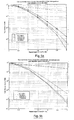
- Figures 5a to 5e show some error rate curves binary (BER according to the useful signal / noise ratio Eb / N0) resulting from this algorithm, for some length and efficiency codes 1/2 and 1/3 simulated on Gaussian channel and 2-state phase modulation "MDP2".
- Figure 6 is a comparison curve in terms of BER of codes of length 400 encoding 200 bits of useful information according to the prior art with lattices with 16 states (or equivalent complexity) and prime results (not yet optimized) of a code according to the invention for these lengths.
- CT (3.1) and TC (21.37) correspond respectively to Li-Ping's previous "turbo-codes” built with 3 tree codes and Berrou “turbo-codes” with trellis 16-state binaries.
- the structure of the new trellises used is in fact not optimized and invariant, because it is composed only of sections H ⁇ .
- a variety of types of sections in each trellis will increase the correction capacities and therefore improve the BER curves.
- the 4 symbols ⁇ 0,1,2,3 ⁇ of Z 4 correspond to the following 2-bit Gray mapping: 0 ⁇ ⁇ 0.0 ⁇ , 1 ⁇ ⁇ 0.1 ⁇ , 2 ⁇ ⁇ 1.1 ⁇ , 3 ⁇ ⁇ 1.0 ⁇ ,
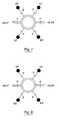
- the section N illustrated in a simplified way in figure 7 by its Tanner graph, represents the set of code words of the code of N [8,4,6] by a set of paths of the starting states ( s 0 , s 1 ) to the arrival states ( s 2 , s 3 ) via the label branches ( b 0 , b 1 , b 2 , b 3 ) .
- the symbols ⁇ 0,1, ..., 7 ⁇ of Z 8 correspond to the classic binary coding of integers on 3 bits: 0 ⁇ ⁇ 0.0.0 ⁇ , 1 ⁇ ⁇ 0.0.1 ⁇ , 2 ⁇ ⁇ 0.1.0 ⁇ , 3 ⁇ ⁇ 0.1.1 ⁇ , 4 ⁇ ⁇ 1.0.0 ⁇ , 5 ⁇ ⁇ 1.0.1 ⁇ , 6 ⁇ ⁇ 1.10 ⁇ , 7 ⁇ ⁇ 1.1.1 ⁇ ,
- the section M illustrated in a simplified way in figure 8 by its Tanner graph, represents the set of code words of the code of M [8,4] by a set of paths of the starting states ( s 0 , s 1 ) to the arrival states ( s 2 , s 3 ) via the label branches ( b 0 , b 1 , b 2 , b 3 ) .
Landscapes
- Engineering & Computer Science (AREA)
- Physics & Mathematics (AREA)
- Probability & Statistics with Applications (AREA)
- Theoretical Computer Science (AREA)
- Radar, Positioning & Navigation (AREA)
- Remote Sensing (AREA)
- General Physics & Mathematics (AREA)
- Computer Networks & Wireless Communication (AREA)
- Error Detection And Correction (AREA)
- Detection And Prevention Of Errors In Transmission (AREA)
- Detection And Correction Of Errors (AREA)
Abstract
Description
- à la protection contre des erreurs dues aux bruits et interférences inhérents aux canaux physiques de transmissions (codage correcteur d'erreurs classiques et codes spatio-temporels pour les systèmes multi-antennes);
- la compression de signaux issus de sources d'informations : images, sons, signaux, données;
- la protection contre les erreurs pour le stockage des données sur des mémoires de masse, telles que les disques d'ordinateurs ou les micro-processeurs.
- Hα : (y 0 ,y 1 ,x 0,x 1) → (b 0 ,b 1 ,b 2 ,b 3)
- Hβ : (x 0 ,x 1 ,y 0 ,y 1) → (b 0 ,b 1 ,b 2 ,b 3)
- Hγ : (x 0,y 0,y 1 ,x 1) → (b 0 ,b 1 ,b 2 ,b 3)
- Hδ : (y 0 ,x 0 ,x 1 ,y 1) → (b 0 ,b 1 ,b 2 ,b 3)
- Hε : (y 0 ,x 0 ,y 1 ,x 1) → (b 0 ,b 1 ,b 2,b 3)
- H : (x 0 ,y 0 ,x 1 ,y 1) → (b 0 ,b 1 ,b 2 ,b 3)
- Hg : (*,*,x 0 ,x 1) → (*,*,b 2 ,b 3)
- Hd: (x 0 ,x 1 ,*,*) → (b 0 ,b 1 ,*,*)
- la figure 1 présente la section de base d'un code élémentaire utilisé selon un premier mode de réalisation de l'invention, et le graphe de Tanner correspondant ;
- la figure 2 est un exemple de turbo-code parallèle construit à l'aide de la section selon la figure 1 ;
- la figure 3 est un autre exemple de treillis construit à l'aide de la section de la figure 1;
- la figure 4 présente un turbo-code parallèle à trois permutations utilisant un code selon le treillis de la figure 3;
- les figures 5a à 5e sont des courbes de taux d'erreurs binaires pour différents types de codes et différents nombres d'itérations;
- la figure 6 est une comparaison des résultats de décodage de la technique de l'invention avec trois autres techniques de l'art antérieur;
- la figure 7 est un graphe de Tanner pour un code à section de base à 16 états;
- la figure 8 présente un graphe de Tanner pour un code à section de base à 64 états.

- 1 mot avec 0 paquet sur 4 allumé (le mot nul),
- 12 mots avec 3 paquets sur 4 allumés soit 75% des mots du code,
- 3 mots avec 4 paquets sur 4 allumés soit 18.75% des mots du code.
- Hα : (y 0,y 1,x 0,x 1)→(b 0 ,b 1 ,b 2 b 3)
- Hβ : (x 0,x 1,y 0,y 1) → (b 0,b 1 ,b 2 ,b 3)
- Hγ : (x 0 ,y 0 ,y 1,x 1) → (b 0 ,b 1 ,b 2 ,b 3)
- Hδ : (y 0 ,x 0 ,x 1 ,y 1) → (b 0 ,b 1 ,b 2 ,b 3)
- Hε : (y 0,x 0,y 1,x 1) → (b 0 ,b 1 ,b 2 'b 3)
- H : (x 0 ,y 0 ,x 1 ,y 1) → (b 0, b 1, b 2, b 3)
- Hg : (*,*,x 0 ,x 1) → (*,*,b2,b3)
- H d : (x 0 ,x 1 ,*,*) → (b 0 ,b 1 ,*,*)

- 1 mot avec 0 paquet sur 4 allumé (le mot nul),
- 60 mots avec 3 paquets sur 4 allumés soit environ 23% des mots du code,
- 195 mots avec 4 paquets sur 4 allumés soit environ 76% des mots du code.

- 1 mot avec 0 paquet sur 4 allumé (le mot nul),
- 252 mots avec 3 paquets sur 4 allumés soit environ 6% des mots du code,
- 3443 mots avec 4 paquets sur 4 allumés soit environ 94% des mots du code.
Claims (28)
- Procédé de codage correcteur d'erreur, caractérisé en ce qu'on utilise au moins deux sections distinctes d'un code élémentaire prédéterminé, associant à un vecteur d'état de départ (s0, s1) un vecteur d'arrivée (s2, s3), en fonction d'un vecteur d'étiquettes de branches (b0, b1, b2, b3), définissant un mot de code, deux sections dudit code élémentaire étant distinctes lorsque l'ordre et/ou le rôle des éléments dudit vecteur d'étiquettes de branches sont modifiées.
- Procédé de codage selon la revendication 1, caractérisé en ce que les mots de code dudit code élémentaire ont subi un partitionnement en quatre paquets (s0, s1), (s2, s3), (b0, b1), (b2, b3) tel que chaque mot de code, à l'exception du mot de code nul, comprend au moins trois paquets sur quatre allumés, un paquet étant dit allumé lorsqu'il comprend au moins un bit valant 1.
- Procédé de codage selon l'une quelconque des revendications 1 et 2, caractérisé en ce que lesdites sections de code élémentaire sont associées en séquence de façon à former au moins un treillis de codage.
- Procédé de codage selon la revendication 3, caractérisé en ce que le ou lesdits treillis sont cycliques.
- Procédé de codage selon l'une quelconque des revendications 3 et 4, caractérisé en ce qu'il comprend deux treillis, dans lesquels les données source à coder sont entrées dans des ordres différents.
- Procédé de codage selon l'une quelconque des revendications 4 et 5, caractérisé en ce qu'on conserve comme résultat de codage celui qui présente un état d'arrivée identique à son état de départ, parmi tous les états de départ possible pour l'une desdites sections de code élémentaire, choisie comme section de départ.
- Procédé de codage selon la revendication 6, caractérisé en ce que ledit résultat de codage est l'ensemble des éléments d'information et de redondance délivrés par le ou lesdits treillis.
- Procédé de codage selon la revendication 7, caractérisé en ce qu'on applique un poinçonnage sur lesdits éléments formant le résultat de codage.
- Procédé de codage selon l'une quelconque des revendications 1 à 8, caractérisé en ce qu'au moins une desdites sections est poinçonnée.
- Procédé de codage selon la revendication 9, caractérisé en ce qu'on utilise au moins une section poinçonnée à gauche et au moins une section poinçonnée à droite.
- Procédé de codage selon l'une quelconque des revendications 3 à 10, caractérisé en ce qu'on duplique au moins une fois le ou lesdits treillis, pour disposer d'au moins deux ensembles de codage interconnectés via des moyens de permutation.
- Procédé de codage selon la revendication 11, caractérisé en ce que les données à coder sont transmises à chacun desdits ensembles de codage de façon décalée.
- Procédé de codage selon l'une quelconque des revendications 1 à 12, caractérisé en ce que lesdits vecteurs sont constitués d'éléments binaires.
- Procédé de codage selon la revendication 13, caractérisé en ce que ledit code élémentaire est un code de Hamming [8, 4, 4].
- Procédé de codage selon la revendication 14, caractérisé en ce qu'il met en oeuvre les sections suivantes :Hα : (y 0,y 1,x 0,x 1) → (b 0 ,b 1 ,b 2 ,b 3)Hβ : (x0,x1,y 0,y1) → (b 0 ,b 1 ,b 2 ,b 3)Hγ : (x 0 ,y 0 ,y 1 ,x 1) → (b 0 ,b 1 ,b 2 ,b 3)Hδ : (y 0,x 0,x 1,y 1) → (b 0 ,b 1 ,b 2 ,b 3)Hε : (y 0 ,x 1 ,y 1 ,x 1) → (b 0 ,b 1 ,b 2 ,b 3)H : (x 0 ,y 0 ,x 1 ,y 1) → (b 0 ,b 1 ,b 2 ,b 3)
- Procédé de codage selon l'une quelconque des revendications 14 et 15 et la revendication 10, caractérisé en ce qu'il met en oeuvre les sections poinçonnées suivantes :Hg : (*,*,x 0,x 1) → (*,*,b2,b3)Hd : (x 0 ,x 1 ,*,*) → (b 0 ,b 1 ,*,*)
- Procédé de codage selon l'une quelconque des revendications des 14 à 16 et la revendication 11, caractérisé en ce qu'il comprend trois ensembles de codage recevant chacun 12 bits de codage via respectivement une permutation identité, une permutation à décalage cyclique de 4 bits et une permutation à décalage cyclique de 8 bits.
- Procédé de codage selon la revendication 17, caractérisé en ce que lesdits ensembles de codage sont organisés de façon à produire un code de Golay [24, 12, 8].
- Procédé de codage selon l'une quelconque des revendications 1 à 12, caractérisé en ce que lesdits vecteurs sont constitués de mots de base pouvant prendre 4 valeurs.
- Procédé de codage selon la revendication 19, caractérisé en ce que ledit code élémentaire est un code de Nordstrom-Robinson de paramètres [8, 4, 6].
- Procédé de codage selon l'une quelconque des revendications 1 à 12, caractérisé en ce que lesdits vecteurs sont constitués de mots de base pouvant prendre 8 valeurs.
- Procédé de codage selon la revendication 21, caractérisé en ce que ledit code élémentaire est un code M[8, 4].
- Procédé de codage selon l'une quelconque des revendications 1 à 22, caractérisé en ce qu'il est du type « turbo-code ».
- Dispositif de codage correcteur d'erreur, caractérisé en ce qu'il comprend au moins deux modules de codage correspondant à au moins deux sections distinctes d'un code élémentaire prédéterminé, associant à un vecteur d'état de départ (s0, s1) un vecteur d'arrivée (s2, s3), en fonction d'un vecteur d'étiquettes de branches (b0, b1, b2, b3), deux sections dudit code élémentaire étant distinctes lorsque l'ordre et/ou le rôle des éléments dudit vecteur d'étiquettes de branches sont modifiées.
- Procédé de décodage de données codées selon le procédé de codage selon l'une quelconque des revendications 1 à 23, caractérisé en ce qu'on utilise au moins deux sections distinctes d'un code élémentaire prédéterminé, associant à un vecteur d'état de départ (s0, s1) un vecteur d'arrivée (s2, s3), en fonction d'un vecteur d'étiquettes de branches (b0, b1, b2, b3), deux sections dudit code élémentaire étant distinctes lorsque l'ordre et/ou le rôle des éléments dudit vecteur d'étiquettes de branches sont modifiées.
- Procédé de décodage selon la revendication 25, caractérisé en ce qu'il est itératif.
- Procédé de décodage selon la revendication 26, caractérisé en ce que, à chacune des itérations, on calcule des probabilités a posteriori sur des métriques associés à au moins un treillis défini à l'aide desdites sections de code élémentaire, et en ce qu'on interrompt lesdites itérations lorsqu'on obtient un résultat stable et/ou après un nombre prédéterminé d'itérations.
- Dispositif de décodage de données codées à l'aide du procédé de codage selon l'une quelconque des revendications 1 à 23, caractérisé en ce qu'il comprend au moins deux modules de décodage correspondant à au moins deux sections distinctes d'un code élémentaire prédéterminé, associant à un vecteur d'état de départ (s0, s1) un vecteur d'arrivée (s2, s3), en fonction d'un vecteur d'étiquettes de branches (b0, b1, b2, b3),
deux sections dudit code élémentaire étant distinctes lorsque l'ordre et/ou le rôle des éléments dudit vecteur d'étiquettes de branches sont modifiées.
Applications Claiming Priority (2)
| Application Number | Priority Date | Filing Date | Title |
|---|---|---|---|
| FR0303989A FR2853164A1 (fr) | 2003-03-31 | 2003-03-31 | Procede de codage correcteur d'erreur utilisant au moins deux fois un meme code elementaire, procede de codage, dispositifs de codage et de decodage correspondants |
| FR0303989 | 2003-03-31 |
Publications (3)
| Publication Number | Publication Date |
|---|---|
| EP1471647A2 true EP1471647A2 (fr) | 2004-10-27 |
| EP1471647A3 EP1471647A3 (fr) | 2004-11-03 |
| EP1471647B1 EP1471647B1 (fr) | 2007-05-23 |
Family
ID=32947341
Family Applications (1)
| Application Number | Title | Priority Date | Filing Date |
|---|---|---|---|
| EP04364025A Expired - Lifetime EP1471647B1 (fr) | 2003-03-31 | 2004-03-30 | Codage et décodage utilisant un code construit sur un treillis dont les sections sont basées sur des codes en bloc à bonne distance |
Country Status (9)
| Country | Link |
|---|---|
| US (1) | US7392455B2 (fr) |
| EP (1) | EP1471647B1 (fr) |
| JP (1) | JP4593955B2 (fr) |
| KR (1) | KR101154229B1 (fr) |
| CN (1) | CN1571282B (fr) |
| AT (1) | ATE363156T1 (fr) |
| DE (1) | DE602004006558T2 (fr) |
| ES (1) | ES2287674T3 (fr) |
| FR (1) | FR2853164A1 (fr) |
Cited By (1)
| Publication number | Priority date | Publication date | Assignee | Title |
|---|---|---|---|---|
| EP2037586A1 (fr) * | 2007-09-14 | 2009-03-18 | France Télécom | Procédé de codage et dispositif des codes LDPC à treillis circulaire |
Families Citing this family (5)
| Publication number | Priority date | Publication date | Assignee | Title |
|---|---|---|---|---|
| GB2455283A (en) * | 2007-10-31 | 2009-06-10 | Hewlett Packard Development Co | Error correction in data communication apparatus using toroidal-web Tanner graph |
| US20090282313A1 (en) * | 2008-05-07 | 2009-11-12 | Legend Silicon Corp. | Method and apparatus for hard decision bounded distance decoding of nordstrom robinson code |
| US10193566B2 (en) * | 2012-09-21 | 2019-01-29 | Nippon Telegraph And Telephone Corporation | Encoding/decoding system for parallel data |
| JP6541916B2 (ja) * | 2017-03-09 | 2019-07-10 | 三菱電機株式会社 | 誤り訂正装置および誤り訂正方法 |
| CN107612561B (zh) * | 2017-09-30 | 2021-02-02 | 武汉虹信科技发展有限责任公司 | 一种编码、译码方法及装置 |
Family Cites Families (8)
| Publication number | Priority date | Publication date | Assignee | Title |
|---|---|---|---|---|
| US4295218A (en) * | 1979-06-25 | 1981-10-13 | Regents Of The University Of California | Error-correcting coding system |
| EP1085660A1 (fr) * | 1999-09-15 | 2001-03-21 | TELEFONAKTIEBOLAGET L M ERICSSON (publ) | Mise en oeuvre d'un dispositif de codage turbo |
| FR2805106A1 (fr) * | 2000-02-14 | 2001-08-17 | Mitsubishi Electric Inf Tech | Procede de transmission numerique de type a codage correcteur d'erreurs |
| US6539367B1 (en) * | 2000-05-26 | 2003-03-25 | Agere Systems Inc. | Methods and apparatus for decoding of general codes on probability dependency graphs |
| FR2816773B1 (fr) * | 2000-11-10 | 2004-11-26 | France Telecom | Module, dispositif et procede de decodage a haut debit, d'un code concatene |
| JP2002314433A (ja) * | 2001-04-04 | 2002-10-25 | Daewoo Electronics Co Ltd | 誤り訂正可能なチャンネルコーディング方法 |
| EP1317070A1 (fr) * | 2001-12-03 | 2003-06-04 | Mitsubishi Electric Information Technology Centre Europe B.V. | Méthode pour obtenir un code correcteur d'erreurs aux paramètres désirés à partir d'un turbo-code de blocs |
| US7484158B2 (en) * | 2003-12-03 | 2009-01-27 | Infineon Technologies Ag | Method for decoding a low-density parity check (LDPC) codeword |
-
2003
- 2003-03-31 FR FR0303989A patent/FR2853164A1/fr active Pending
-
2004
- 2004-03-26 US US10/811,487 patent/US7392455B2/en not_active Expired - Fee Related
- 2004-03-30 ES ES04364025T patent/ES2287674T3/es not_active Expired - Lifetime
- 2004-03-30 EP EP04364025A patent/EP1471647B1/fr not_active Expired - Lifetime
- 2004-03-30 AT AT04364025T patent/ATE363156T1/de not_active IP Right Cessation
- 2004-03-30 DE DE602004006558T patent/DE602004006558T2/de not_active Expired - Lifetime
- 2004-03-31 CN CN2004100552253A patent/CN1571282B/zh not_active Expired - Fee Related
- 2004-03-31 JP JP2004103305A patent/JP4593955B2/ja not_active Expired - Fee Related
- 2004-03-31 KR KR1020040022409A patent/KR101154229B1/ko not_active Expired - Fee Related
Cited By (3)
| Publication number | Priority date | Publication date | Assignee | Title |
|---|---|---|---|---|
| EP2037586A1 (fr) * | 2007-09-14 | 2009-03-18 | France Télécom | Procédé de codage et dispositif des codes LDPC à treillis circulaire |
| WO2009034561A3 (fr) * | 2007-09-14 | 2009-08-13 | France Telecom | Procédé de codage et dispositif permettant de déterminer des codes tldpc |
| US8751914B2 (en) | 2007-09-14 | 2014-06-10 | Orange | Encoding method of TLDPC codes utilizing treillis representations of the parity check equations and associated encoding device |
Also Published As
| Publication number | Publication date |
|---|---|
| EP1471647B1 (fr) | 2007-05-23 |
| US7392455B2 (en) | 2008-06-24 |
| JP2004304807A (ja) | 2004-10-28 |
| ES2287674T3 (es) | 2007-12-16 |
| DE602004006558D1 (de) | 2007-07-05 |
| KR101154229B1 (ko) | 2012-06-07 |
| CN1571282B (zh) | 2010-10-06 |
| CN1571282A (zh) | 2005-01-26 |
| ATE363156T1 (de) | 2007-06-15 |
| EP1471647A3 (fr) | 2004-11-03 |
| US20050210363A1 (en) | 2005-09-22 |
| KR20040088385A (ko) | 2004-10-16 |
| JP4593955B2 (ja) | 2010-12-08 |
| DE602004006558T2 (de) | 2007-12-27 |
| FR2853164A1 (fr) | 2004-10-01 |
Similar Documents
| Publication | Publication Date | Title |
|---|---|---|
| EP2341628B1 (fr) | Procédé de codage LDPC a redondance incrémentale | |
| EP0827284B1 (fr) | Procédé de transmission de bits d'information avec codage correcteur d'erreurs, codeur et décodeur pour la mise en oeuvre de ce procédé | |
| EP0827285B1 (fr) | Procédé de transmission de bits d'information avec codage correcteur d'erreurs, codeur et décodeur pour la mise en oeuvre de ce procédé | |
| EP2486661B1 (fr) | Procédé de décodage de codes non binaires | |
| FR2909499A1 (fr) | Procede et dispositif de decodage pour codes ldpc, et appareil de communication comprenant un tel dispositif | |
| CN103138768B (zh) | 编码和解码通信系统中的信道的设备和方法 | |
| EP2198523B1 (fr) | Codage et décodage de codes LDPC non binaires | |
| EP0848524A1 (fr) | MAQ à codage perforé en trellis, avec décodage itératif | |
| EP1959572B1 (fr) | Procédé de décodage à passage de messages et à convergence forcée | |
| EP1974472A1 (fr) | Procedes d'encodage et de decodage rapides et dispositifs associes | |
| EP1471647B1 (fr) | Codage et décodage utilisant un code construit sur un treillis dont les sections sont basées sur des codes en bloc à bonne distance | |
| FR2952252A1 (fr) | Procede et dispositif de decodage, produit programme d'ordinateur, moyen de stockage correspondants et noeud destination correspondants | |
| EP1527521B1 (fr) | Dispositif et procede de decodage robuste de codes arithmetiques | |
| EP1905157B1 (fr) | Procede et systeme d'encodage d'une sequence de donnees | |
| EP1749361A1 (fr) | Procede de codage correcteur d'erreurs comprenant des codes locaux detecteurs d'erreurs, procede de decodage, dispositifs d'emission, de reception et de stockage, et programme correspondants | |
| EP2766996B1 (fr) | Codage et decodage correcteur d'erreurs | |
| FR2888062A1 (fr) | Codeur et turbo decodeur de code produit | |
| FR3022651A1 (fr) | Procedes et dispositifs de codage et de decodage correcteur d'erreurs, et programme d'ordinateur correspondant. | |
| WO2015079168A1 (fr) | Codage de paquets de données par codes convolutifs et recouvrement de paquets effacés | |
| WO2016198801A1 (fr) | Décodage sur une pluralité de treillis à sections auto-complémentaires a 4 états | |
| FR3016760A1 (fr) | Procede et dispositif de decodage de symboles codes a l'aide d'un code correcteur d'erreurs lineaires, procede et dispositif de codage, et programme d'ordinateur correspondants | |
| EP1217752A2 (fr) | Procédé de décodage itératif associé à toutes concaténations d'un nombre déterminé de codes en blocs ou assimilés | |
| Jardel | Distributed coding and computing for networks | |
| EP1475895A1 (fr) | Dispositif et procédé d'addition-comparaison-sélection-ajustement dans un décodeur |
Legal Events
| Date | Code | Title | Description |
|---|---|---|---|
| PUAI | Public reference made under article 153(3) epc to a published international application that has entered the european phase |
Free format text: ORIGINAL CODE: 0009012 |
|
| PUAL | Search report despatched |
Free format text: ORIGINAL CODE: 0009013 |
|
| AK | Designated contracting states |
Kind code of ref document: A2 Designated state(s): AT BE BG CH CY CZ DE DK EE ES FI FR GB GR HU IE IT LI LU MC NL PL PT RO SE SI SK TR |
|
| AX | Request for extension of the european patent |
Extension state: AL LT LV MK |
|
| AK | Designated contracting states |
Kind code of ref document: A3 Designated state(s): AT BE BG CH CY CZ DE DK EE ES FI FR GB GR HU IE IT LI LU MC NL PL PT RO SE SI SK TR |
|
| AX | Request for extension of the european patent |
Extension state: AL LT LV MK |
|
| 17P | Request for examination filed |
Effective date: 20050211 |
|
| 17Q | First examination report despatched |
Effective date: 20050406 |
|
| AKX | Designation fees paid |
Designated state(s): AT BE BG CH CY CZ DE DK EE ES FI FR GB GR HU IE IT LI LU MC NL PL PT RO SE SI SK TR |
|
| GRAP | Despatch of communication of intention to grant a patent |
Free format text: ORIGINAL CODE: EPIDOSNIGR1 |
|
| GRAS | Grant fee paid |
Free format text: ORIGINAL CODE: EPIDOSNIGR3 |
|
| GRAA | (expected) grant |
Free format text: ORIGINAL CODE: 0009210 |
|
| AK | Designated contracting states |
Kind code of ref document: B1 Designated state(s): AT BE BG CH CY CZ DE DK EE ES FI FR GB GR HU IE IT LI LU MC NL PL PT RO SE SI SK TR |
|
| PG25 | Lapsed in a contracting state [announced via postgrant information from national office to epo] |
Ref country code: FI Free format text: LAPSE BECAUSE OF FAILURE TO SUBMIT A TRANSLATION OF THE DESCRIPTION OR TO PAY THE FEE WITHIN THE PRESCRIBED TIME-LIMIT Effective date: 20070523 |
|
| REG | Reference to a national code |
Ref country code: GB Ref legal event code: FG4D Free format text: NOT ENGLISH |
|
| REG | Reference to a national code |
Ref country code: CH Ref legal event code: EP |
|
| REG | Reference to a national code |
Ref country code: IE Ref legal event code: FG4D Free format text: LANGUAGE OF EP DOCUMENT: FRENCH |
|
| REF | Corresponds to: |
Ref document number: 602004006558 Country of ref document: DE Date of ref document: 20070705 Kind code of ref document: P |
|
| PG25 | Lapsed in a contracting state [announced via postgrant information from national office to epo] |
Ref country code: SE Free format text: LAPSE BECAUSE OF FAILURE TO SUBMIT A TRANSLATION OF THE DESCRIPTION OR TO PAY THE FEE WITHIN THE PRESCRIBED TIME-LIMIT Effective date: 20070823 |
|
| GBT | Gb: translation of ep patent filed (gb section 77(6)(a)/1977) |
Effective date: 20070904 |
|
| NLV1 | Nl: lapsed or annulled due to failure to fulfill the requirements of art. 29p and 29m of the patents act | ||
| PG25 | Lapsed in a contracting state [announced via postgrant information from national office to epo] |
Ref country code: PL Free format text: LAPSE BECAUSE OF FAILURE TO SUBMIT A TRANSLATION OF THE DESCRIPTION OR TO PAY THE FEE WITHIN THE PRESCRIBED TIME-LIMIT Effective date: 20070523 Ref country code: AT Free format text: LAPSE BECAUSE OF FAILURE TO SUBMIT A TRANSLATION OF THE DESCRIPTION OR TO PAY THE FEE WITHIN THE PRESCRIBED TIME-LIMIT Effective date: 20070523 |
|
| REG | Reference to a national code |
Ref country code: ES Ref legal event code: FG2A Ref document number: 2287674 Country of ref document: ES Kind code of ref document: T3 |
|
| REG | Reference to a national code |
Ref country code: IE Ref legal event code: FD4D |
|
| PG25 | Lapsed in a contracting state [announced via postgrant information from national office to epo] |
Ref country code: BG Free format text: LAPSE BECAUSE OF FAILURE TO SUBMIT A TRANSLATION OF THE DESCRIPTION OR TO PAY THE FEE WITHIN THE PRESCRIBED TIME-LIMIT Effective date: 20070823 Ref country code: SI Free format text: LAPSE BECAUSE OF FAILURE TO SUBMIT A TRANSLATION OF THE DESCRIPTION OR TO PAY THE FEE WITHIN THE PRESCRIBED TIME-LIMIT Effective date: 20070523 Ref country code: PT Free format text: LAPSE BECAUSE OF FAILURE TO SUBMIT A TRANSLATION OF THE DESCRIPTION OR TO PAY THE FEE WITHIN THE PRESCRIBED TIME-LIMIT Effective date: 20071023 Ref country code: CZ Free format text: LAPSE BECAUSE OF FAILURE TO SUBMIT A TRANSLATION OF THE DESCRIPTION OR TO PAY THE FEE WITHIN THE PRESCRIBED TIME-LIMIT Effective date: 20070523 Ref country code: IE Free format text: LAPSE BECAUSE OF FAILURE TO SUBMIT A TRANSLATION OF THE DESCRIPTION OR TO PAY THE FEE WITHIN THE PRESCRIBED TIME-LIMIT Effective date: 20070523 Ref country code: NL Free format text: LAPSE BECAUSE OF FAILURE TO SUBMIT A TRANSLATION OF THE DESCRIPTION OR TO PAY THE FEE WITHIN THE PRESCRIBED TIME-LIMIT Effective date: 20070523 Ref country code: DK Free format text: LAPSE BECAUSE OF FAILURE TO SUBMIT A TRANSLATION OF THE DESCRIPTION OR TO PAY THE FEE WITHIN THE PRESCRIBED TIME-LIMIT Effective date: 20070523 |
|
| PG25 | Lapsed in a contracting state [announced via postgrant information from national office to epo] |
Ref country code: SK Free format text: LAPSE BECAUSE OF FAILURE TO SUBMIT A TRANSLATION OF THE DESCRIPTION OR TO PAY THE FEE WITHIN THE PRESCRIBED TIME-LIMIT Effective date: 20070523 |
|
| PLBE | No opposition filed within time limit |
Free format text: ORIGINAL CODE: 0009261 |
|
| STAA | Information on the status of an ep patent application or granted ep patent |
Free format text: STATUS: NO OPPOSITION FILED WITHIN TIME LIMIT |
|
| 26N | No opposition filed |
Effective date: 20080226 |
|
| PG25 | Lapsed in a contracting state [announced via postgrant information from national office to epo] |
Ref country code: GR Free format text: LAPSE BECAUSE OF FAILURE TO SUBMIT A TRANSLATION OF THE DESCRIPTION OR TO PAY THE FEE WITHIN THE PRESCRIBED TIME-LIMIT Effective date: 20070824 |
|
| PG25 | Lapsed in a contracting state [announced via postgrant information from national office to epo] |
Ref country code: RO Free format text: LAPSE BECAUSE OF FAILURE TO SUBMIT A TRANSLATION OF THE DESCRIPTION OR TO PAY THE FEE WITHIN THE PRESCRIBED TIME-LIMIT Effective date: 20070523 |
|
| BERE | Be: lapsed |
Owner name: FRANCE TELECOM Effective date: 20080331 |
|
| PG25 | Lapsed in a contracting state [announced via postgrant information from national office to epo] |
Ref country code: MC Free format text: LAPSE BECAUSE OF NON-PAYMENT OF DUE FEES Effective date: 20080331 |
|
| REG | Reference to a national code |
Ref country code: CH Ref legal event code: PL |
|
| PG25 | Lapsed in a contracting state [announced via postgrant information from national office to epo] |
Ref country code: LI Free format text: LAPSE BECAUSE OF NON-PAYMENT OF DUE FEES Effective date: 20080331 Ref country code: EE Free format text: LAPSE BECAUSE OF FAILURE TO SUBMIT A TRANSLATION OF THE DESCRIPTION OR TO PAY THE FEE WITHIN THE PRESCRIBED TIME-LIMIT Effective date: 20070523 Ref country code: CH Free format text: LAPSE BECAUSE OF NON-PAYMENT OF DUE FEES Effective date: 20080331 |
|
| PG25 | Lapsed in a contracting state [announced via postgrant information from national office to epo] |
Ref country code: BE Free format text: LAPSE BECAUSE OF NON-PAYMENT OF DUE FEES Effective date: 20080331 |
|
| PG25 | Lapsed in a contracting state [announced via postgrant information from national office to epo] |
Ref country code: CY Free format text: LAPSE BECAUSE OF FAILURE TO SUBMIT A TRANSLATION OF THE DESCRIPTION OR TO PAY THE FEE WITHIN THE PRESCRIBED TIME-LIMIT Effective date: 20070523 |
|
| PG25 | Lapsed in a contracting state [announced via postgrant information from national office to epo] |
Ref country code: HU Free format text: LAPSE BECAUSE OF FAILURE TO SUBMIT A TRANSLATION OF THE DESCRIPTION OR TO PAY THE FEE WITHIN THE PRESCRIBED TIME-LIMIT Effective date: 20071124 Ref country code: LU Free format text: LAPSE BECAUSE OF NON-PAYMENT OF DUE FEES Effective date: 20080330 |
|
| PG25 | Lapsed in a contracting state [announced via postgrant information from national office to epo] |
Ref country code: TR Free format text: LAPSE BECAUSE OF FAILURE TO SUBMIT A TRANSLATION OF THE DESCRIPTION OR TO PAY THE FEE WITHIN THE PRESCRIBED TIME-LIMIT Effective date: 20070523 |
|
| REG | Reference to a national code |
Ref country code: FR Ref legal event code: PLFP Year of fee payment: 13 |
|
| PGFP | Annual fee paid to national office [announced via postgrant information from national office to epo] |
Ref country code: IT Payment date: 20160224 Year of fee payment: 13 Ref country code: ES Payment date: 20160304 Year of fee payment: 13 Ref country code: DE Payment date: 20160218 Year of fee payment: 13 |
|
| PGFP | Annual fee paid to national office [announced via postgrant information from national office to epo] |
Ref country code: FR Payment date: 20160219 Year of fee payment: 13 Ref country code: GB Payment date: 20160223 Year of fee payment: 13 |
|
| REG | Reference to a national code |
Ref country code: DE Ref legal event code: R119 Ref document number: 602004006558 Country of ref document: DE |
|
| GBPC | Gb: european patent ceased through non-payment of renewal fee |
Effective date: 20170330 |
|
| REG | Reference to a national code |
Ref country code: FR Ref legal event code: ST Effective date: 20171130 |
|
| PG25 | Lapsed in a contracting state [announced via postgrant information from national office to epo] |
Ref country code: FR Free format text: LAPSE BECAUSE OF NON-PAYMENT OF DUE FEES Effective date: 20170331 Ref country code: DE Free format text: LAPSE BECAUSE OF NON-PAYMENT OF DUE FEES Effective date: 20171003 |
|
| PG25 | Lapsed in a contracting state [announced via postgrant information from national office to epo] |
Ref country code: IT Free format text: LAPSE BECAUSE OF NON-PAYMENT OF DUE FEES Effective date: 20170330 Ref country code: GB Free format text: LAPSE BECAUSE OF NON-PAYMENT OF DUE FEES Effective date: 20170330 |
|
| REG | Reference to a national code |
Ref country code: ES Ref legal event code: FD2A Effective date: 20180626 |
|
| PG25 | Lapsed in a contracting state [announced via postgrant information from national office to epo] |
Ref country code: ES Free format text: LAPSE BECAUSE OF NON-PAYMENT OF DUE FEES Effective date: 20170331 |