EP1469615A1 - Base station and mobile communication system utilizing the same - Google Patents
Base station and mobile communication system utilizing the same Download PDFInfo
- Publication number
- EP1469615A1 EP1469615A1 EP03703030A EP03703030A EP1469615A1 EP 1469615 A1 EP1469615 A1 EP 1469615A1 EP 03703030 A EP03703030 A EP 03703030A EP 03703030 A EP03703030 A EP 03703030A EP 1469615 A1 EP1469615 A1 EP 1469615A1
- Authority
- EP
- European Patent Office
- Prior art keywords
- transmission
- control signal
- transmission control
- base station
- spread
- Prior art date
- Legal status (The legal status is an assumption and is not a legal conclusion. Google has not performed a legal analysis and makes no representation as to the accuracy of the status listed.)
- Withdrawn
Links
Images



Classifications
-
- H—ELECTRICITY
- H04—ELECTRIC COMMUNICATION TECHNIQUE
- H04B—TRANSMISSION
- H04B7/00—Radio transmission systems, i.e. using radiation field
- H04B7/02—Diversity systems; Multi-antenna system, i.e. transmission or reception using multiple antennas
- H04B7/022—Site diversity; Macro-diversity
-
- H—ELECTRICITY
- H04—ELECTRIC COMMUNICATION TECHNIQUE
- H04W—WIRELESS COMMUNICATION NETWORKS
- H04W36/00—Hand-off or reselection arrangements
- H04W36/16—Performing reselection for specific purposes
- H04W36/18—Performing reselection for specific purposes for allowing seamless reselection, e.g. soft reselection
-
- H—ELECTRICITY
- H04—ELECTRIC COMMUNICATION TECHNIQUE
- H04W—WIRELESS COMMUNICATION NETWORKS
- H04W52/00—Power management, e.g. Transmission Power Control [TPC] or power classes
- H04W52/04—Transmission power control [TPC]
- H04W52/38—TPC being performed in particular situations
- H04W52/40—TPC being performed in particular situations during macro-diversity or soft handoff
-
- H—ELECTRICITY
- H04—ELECTRIC COMMUNICATION TECHNIQUE
- H04B—TRANSMISSION
- H04B7/00—Radio transmission systems, i.e. using radiation field
- H04B7/02—Diversity systems; Multi-antenna system, i.e. transmission or reception using multiple antennas
- H04B7/04—Diversity systems; Multi-antenna system, i.e. transmission or reception using multiple antennas using two or more spaced independent antennas
- H04B7/0491—Diversity systems; Multi-antenna system, i.e. transmission or reception using multiple antennas using two or more spaced independent antennas using two or more sectors, i.e. sector diversity
-
- H—ELECTRICITY
- H04—ELECTRIC COMMUNICATION TECHNIQUE
- H04B—TRANSMISSION
- H04B7/00—Radio transmission systems, i.e. using radiation field
- H04B7/02—Diversity systems; Multi-antenna system, i.e. transmission or reception using multiple antennas
- H04B7/04—Diversity systems; Multi-antenna system, i.e. transmission or reception using multiple antennas using two or more spaced independent antennas
- H04B7/06—Diversity systems; Multi-antenna system, i.e. transmission or reception using multiple antennas using two or more spaced independent antennas at the transmitting station
- H04B7/0602—Diversity systems; Multi-antenna system, i.e. transmission or reception using multiple antennas using two or more spaced independent antennas at the transmitting station using antenna switching
- H04B7/0608—Antenna selection according to transmission parameters
- H04B7/061—Antenna selection according to transmission parameters using feedback from receiving side
Definitions
- the present invention relates to a base station and a mobile communication system using the same, and particularly, relates to a CDMA (Code Division Multiple Access) communication method for performing a slte selection diversity control during soft-handover that the base station having antennas corresponding to a plurality of sectors, respectively, and a mobile terminal perform communication through more than one sector.
- CDMA Code Division Multiple Access
- a CDMA radio transmission method in a cellular method dividing a service area into a plurality of cells and arranging a base station at the center of each cell, transmission is performed by dividing one cell into plural areas referred to as a sector and arranging an antenna for each sector.
- the base station Upon performing so-called soft-handover that the mobile terminal performs communication through more than one sector concurrently with the base station (strictly, softer-handover is distinguished from the soft-handover performing simultaneous communication through the plural cells, however, they are not particularly distinguished from each other in this specification), the base station spreads the same symbol data simultaneously with different spread codes and transmits them from the plural antennas to each sector. This increases the amount of interference between transmission signals in each sector (or a cell) and as a result, the number of users admitted in a sector is reduced.
- SSDT Site Selection Diversity Transmit Power Control
- the SSDT By performing a site selection diversity power control (SSDT: Site Selection Diversity Transmit Power Control) upon the soft-handover, it is possible to suppress the increase of the interference occurred due to transmission of the same data to the plural sectors (or cells).
- SSDT Site Selection Diversity Transmit Power Control
- the SSDT a high-speed site selection can be performed without increasing the load of the network due to the site selection control via a network.
- the output states of the plural antennas transmitting the same data are changed, so that it is necessary to change over the transmission state of a spreader corresponding to each antenna into the output state or the stop state.
- the transmission spread processing part is configured by an encode processing part 1, a spread part 2, radio transmission processing parts 3a to 3c, and antennas 4a to 4c.
- the spread part 2 is configured by a data separating part 201, a CPU 202, spread processing part groups 203a to 203c. and additively combining circuits 208a to 208c.
- the spread processing part group 203a has a plurality of spread processing parts having the same configurations and corresponding to users and each spread processing part is made of a spread processing circuit 205a.
- the spread processing part group 203b also has a plurality of spread processing parts having the same configurations and corresponding to users and each spread processing part is made of a spread processing circuit 205b.
- the spread processing part group 203c also has a plurality of spread processing parts having the same configurations and corresponding to users and each spread processing part is made of a spread processing circuit 205c.
- the encode processing part 1 generates a transmission baseband signal and transmits it to the spread part 2.
- the spread part 2 performs the data separation with the data separating part 201 and inputs the transmission baseband signal that is separated to the spread processing part groups 203a to 203c therein.
- the spread processing circuit 205a performs the spread processing of the transmission baseband signal with a spread code for a transmission destination antenna 4a that is set by the CPU 202 and outputs the transmission spread signal to the additively combining circuit 208a.
- the additively combining circuit 208a additively combines each transmission spread signal from a plurality of spread processing circuits 205a and provides it to the corresponding radio transmission processing part 3a.
- the spread processing circuit 205b performs the spread processing of the transmission baseband signal with the spread code for a transmission destination antenna 4b that is set by the CPU 202 and outputs the transmission spread signal to the additively combining circuit 208b.
- the additively combining circuit 208b additively combines each transmission spread signal from a plurality of spread processing circuits 205b and provides it to the corresponding radio transmission processing part 3b.
- the spread processing circuit 205c performs the spread processing of the transmission baseband signal by using the spread code for a transmission destination antenna 4c that is set by the CPU 202 and outputs the transmission spread signal to the additively combining circuit 208c.
- the additively combining circuit 208c additively combines each transmission spread signal from a plurality of spread processing circuits 205c and provides it to the corresponding radio transmission processing part 3c.
- the radio transmission processing pans 3a to 3c perform the orthogonal modulation, the radio frequency conversion, and the transmission power control with respect to the inputted transmission spread signals, and then, transmit them to the antennas 4a to 4c, respectively, as radio transmission signals.
- the antennas 4a to 4c radiation transmits the inputted radio transmission signals.
- the output state control of the spread processing part groups 203a to 203c is performed by the software processing with the CPU 202 in such a manner that spread processing parameters such as spread codes or the like in the spread processing circuits 205a to 205c are set or unset.
- a counter is provided in order to perform the transmission output control at the designated timing and if a counter value becomes the designated counter value, the control of the spread processing circuits 205a to 205c is performed.
- the transmission spread processing part shown in FIG. 1 involves a problem such that, if the frequency of use (a rate of operation) of the spread processing part is increased due to increase of calling and increase of the handover generation rate, the delay of the SSDT processing is caused due to increase of the software processing and this makes it impossible to change over the site instantaneously.
- the present invention has been made taking the foregoing problems into consideration and an object of which is to avoid performance degradation that occurs due to load increase caused by a software processing, to provide a base station that can instantaneously perform a transmission control and provide a high-speed site selection, and to provide a CDMA communication method using the base station.
- the base station according to the present invention having a plurality of antennas corresponding to sectors, which is used in a CDMA (Code Division Multiple Access) communication system for performing a site selection diversity control during soft-handover that the base station and a mobile terminal perform communication through more than one sector.
- This base station is characterized by including transmission control signal generating means for adding a transmission control signal showing if the transmission can be realized or not for the above-described plural antennas to the transmission data; and transmission control means for performing on-off control of the above-described transmission data to the above-described antennas in response to this transmission control signal.
- the above-described transmission control signal generating means is characterized by having means for generating the above-described control signal for each symbol of the above-described transmission data, respectively, and means for time division multiplexing the above-described symbol and the above-described control signal corresponding to the above-described symbol and outputting them.
- the above-described transmission control signal generating means is characterized by having means for generating the above-described transmission control signal according to a receiving quality of a transmission pilot signal from each of the above-described antennas at the above-described mobile terminal.
- the above-described control signal is characterized by indicating that the transmission can be performed only to the antenna with the best receiving quality from among the above-described antennas and the transmission cannot be performed to other antennas.
- the above-described base station includes spread processing means for performing the spread processing of the above-described transmission data separately for the above-described plural antennas; characterized in that the above-described transmission control means has means for separating the above-described transmission data and the above-described transmission control signal and means for performing the output control of the above-described corresponding spread processing means in response to this separated transmission control signal for the corresponding antenna.
- the above-described base station further includes a plurality of spread processing means for performing the spread processing of the above-described transmission data and output destination selecting means for freely selecting the above-described antenna as the output destination of the above-described spread processing means; characterized in that the above-described transmission control means has means for separating the above-described transmission data and the above-described transmission control signal and means for performing the output control of the above-described spread processing means corresponding to the output destination that is selected by the above-described output destination selecting means in response to this separated transmission control signal for the corresponding antenna.
- the CDMA mobile communication system according to the present invention is characterized by including the above-described base station.
- the site selection diversity power control for the purpose of reducing the amount of interference that would be caused by transmitting to a plurality of cells or antennas during soft-handover is performed upon the soft-handover.
- the encode processing part adds the transmission control signal (bit) showing if the transmission can be realized or not for a plurality of antennas to the transmission data and transmits it to the spread processing part.
- the spread processing part selects the transmission control signal of the destination (antenna) in response to this transmission control signal to perform on-off control of the signal after performing the transmission spread processing to the corresponding antennas in accordance with the obtained transmission control signal.
- the transmission control is performed instantaneously, and this makes the high-speed site selection possible.
- FIG. 2 is a functional block diagram showing a configuration of a spread part that is used in a base station of an embodiment according to the present invention.
- the same reference numerals are applied to the same parts as in FIG. 1.
- a transmission baseband signal and a control signal are inputted in the data separating part 201, which are time division multiplexed as described later.
- the data separating part 201 may separate the transmission baseband signal and the transmission control signal that are inputted and time division multiplexed and may transmit them to the spread processing circuit 205a and a transmission control signal selecting circuit 206a, respectively.
- the spread processing circuit 205a may generate a transmission spread signal by using the spread code that is designated by the CPU 202.
- the transmission control signal selecting circuit 206a extracts the transmission control signal showing if the transmission can be realized or not for the transmission destination antenna to be designated by the CPU 202 from the transmission control signal inputted and time division multiplexed and transmits it to an output control circuit 207a.
- the output control circuit 207a may control the output state of the transmission spread signal to be inputted from the spread processing circuit 205a to be made into the output state or the output stopping state in accordance with the transmission control signal to be inputted.
- the transmission control signal showing if the transmission can be realized or not for the transmission destination antenna is time division multiplexed into the transmission data to be supplied to the spread part 2 and the output control of the transmission spread data is controlled by using the control signal to be obtained by separating this multiplexed data, it is not necessary for the spread part 2 to perform the output control of the transmission spread signal by the software processing. In other words, it is not necessary to control the spread processing circuit 205a by the software processing. Therefore, there is no need to consider the delay of the processing of the spread processing part caused due to increase of the frequency of use of the spread processing circuit 205a.
- the control of the transmission and output state for each symbol can be instantaneously realized by the hardware processing.
- FIG. 3 is a block diagram of an embodiment of the transmission part including the transmission spread processing circuit of the CDMA base station according to the present invention.
- This transmission part is configured by the encode processing part 1, the spread part 2, the radio transmission processing parts 3a to 3c, and the antennas 4a to 4c.
- the encode processing part 1 is configured as shown in FIG. 4.
- the encode processing part 1 is configured by a transmission baseband signal generation circuit 11, a transmission control signal generation circuit 12, a time division multiplex circuit 13, a despread part 14, a demodulation part 15, a transmission control signal extracting circuit 16, and a transmission selecting circuit 17.
- FIG. 4 shows an example of timing chart showing the details of the operation of this encode processing part 1.
- the mobile terminal may include the control information indicating the antenna of which receiving quality is the best in an upward signal to the base station.
- the despread part 14 shown in FIG. 4 receives the upward signal from the mobile terminal and performs despread processing for this upward signal.
- the demodulation part 15 may demodulate the despread upward signal.
- the transmission control signal extracting circuit 16 may extract this control information from the demodulated upward signal.
- This extracted control information is inputted in the transmission selecting circuit 17 and the transmission selecting circuit 17 may determine if the transmission can be realized or not in respective antennas 4a to 4c on the basis of this extracted control information.
- the transmission selecting circuit 17 may generate a transmission selecting signal for each antenna and transmit it to the transmission control signal generation circuit 12.
- the transmission baseband signal generation circuit 11 generates a baseband signal to be transmitted and simultaneously, generates a transmission control adding bit for each symbol data.
- “the control symbol” shown in FIG. 5 temporally corresponding to this transmission control adding bit (binary 1) is the information indicating a control signal (a pilot signal or the like) corresponding to "an individual symbol" just before it, respectively.
- the transmission control adding bit is binary 1
- the transmission control adding bit is binary 0.
- the transmission control adding bit thus generated is supplied to the transmission control signal generation circuit 12.
- the transmission control signal generation circuit 12 may implement the logical OR operation between the transmission control adding bit and the selecting signal for each antenna that is inputted from the transmission selecting circuit 17 and may generate the transmission control signal for each antenna.
- the selecting signal and the transmission control signal for each antenna indicate that the transmission is performed at its high level (the transmission ON) and that the transmission is not performed at its low level (the transmission OFF).
- the transmission control signal of the antenna 4a is ON and those of other antennas are OFF.
- the transmission control signals of all antennas 4a to 4c are ON.
- the transmission control signals thus generated are inputted in the time division multiplex circuit 13.
- the time division multiplex circuit 13 may parallel-serial convert the inputted transmission control signals and may time division multiplex these signals with the transmission baseband signal from the transmission baseband signal generation circuit 11.
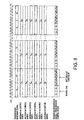
- An example of the multiplexed signal in this case will be shown in FIG. 6.
- the spread part 2 is configured by the data separating part 201, the CPU 202, the spread processing part groups 203a to 203c, and the additively combining circuits 208a to 208c.
- the spread processing part group 203a may output a signal to the antenna 4a via the radio transmission processing part 3a
- the spread processing part group 203b may output a signal to the antenna 4b via the radio transmission processing part 3b
- the spread processing part group 203c may output a signal to the antenna 4c via the radio transmission processing part 3c, respectively.
- the spread processing part group 203a has a plurality of spread processing parts, and each spread processing part thereof is configured by the spread processing circuit 205a, the transmission control signal selecting circuit 206a, and the output control circuit 207a.
- the spread processing part group 203b has a plurality of spread processing parts, and each spread processing part thereof is configured by the spread processing circuit 205b, the transmission control signal selecting circuit 206b, and the output control circuit 207b.
- the spread processing part group 203c has a plurality of spread processing parts, and each spread processing part thereof is configured by the spread processing circuit 205c, the transmission control signal selecting circuit 206c, and the output control circuit 207c.
- the baseband signal and the transmission control signals multiplexed as shown in Fig. 6 are inputted in the spread part 2 by the time division multiplex circuit 13 of the encode processing part 1.
- the data separating part 201 of the spread part 2 may separate the time division multiplexed transmission signal to be inputted from the encode processing part 1 into the baseband signal and the transmission control signal.
- the separated transmission baseband signal is transmitted to the spread processing circuits 205a to 205c, and the separated transmission control signal is transmitted to the transmission control signal selecting circuits 206a to 206c, respectively.
- the spread code is set by the CPU 202 to be transmitted to the antenna 4a.
- the spread processing circuit 205a may perform the spread processing of the inputted transmission baseband signal by using the set spread code, and may transmit it to the output control circuit 207a.
- the transmission control signal selecting circuit 206a is set so as to correspond to the antenna 4a by the CPU 202.
- the transmission control signal selecting circuit 206a may select and separate the transmission control signal for the antenna 4a from the inputted transmission control signal, and then, may output it to the output control circuit 207a.
- the output control circuit 207a is changed into the output possible state or the output stopping state in accordance with the transmission control signal to be inputted. This state change is carried out in symbol units of the transmission spread signal to be inputted.
- the transmission spread signal is outputted from the output control circuit 207a to be transmitted to the additively combining circuit 208a.
- the spread code is set by the CPU 202 to be transmitted to the antenna 4b.
- the spread processing circuit 205b may perform the spread processing of the inputted transmission baseband signal by using the set spread code, and may transmit it to the output control circuit 207b.
- the transmission control signal selecting circuit 206b is set so as to correspond to the antenna 4b by the CPU 202.
- the transmission control signal selecting circuit 206b may select and separate the transmission control signal for the antenna 4b from the inputted transmission control signal, and then, may output it to the output control circuit 207b.
- the output control circuit 207b is changed into the output possible state or the output stopping state in accordance with the transmission control signal to be inputted. This state change is carried out in symbol units of the transmission spread signal to be inputted.
- the transmission spread signal is outputted from the output control circuit 207b to be transmitted to the additively combining circuit 208b.
- the spread code is set by the CPU 202 to be transmitted to the antenna 4c.
- the spread processing circuit 205c may perform the spread processing of the inputted transmission baseband signal by using the set spread code, and may transmit it to the output control circuit 207c.
- the transmission control signal selecting circuit 206c is set so as to correspond to the antenna 4c by the CPU 202.
- the transmission control signal selecting circuit 206c may select and separate the transmission control signal for the antenna 4c from the inputted transmission control signal, and then, may output it to the output control circuit 207c.
- the output control circuit 207c is changed into the output possible state or the output stopping state in accordance with the transmission control signal to be inputted. This state change is carried out in symbol units of the transmission spread signal to be inputted.
- the transmission spread signal is outputted from the output control circuit 207c to be transmitted to the additively combining circuit 208c.
- the additively combining circuits 208a to 208c may add and combine the transmission spread signals to be inputted from the spread processing part groups 203a to 203c, respectively, for each of the transmission destination antennas 4a to 4c and may transmit the added and combined transmission spread signals to the radio transmission processing parts 3a to 3c that are connected to respective transmission destination antennas 4a to 4c.
- the radio transmission processing parts 3a to 3c perform the orthogonal modulation, the radio frequency conversion, and the transmission power control with respect to the inputted transmission spread signals, and then, transmits it to the corresponding antennas 4a to 4c, respectively, as radio transmission signals.
- the antennas 4a to 4c radiation transmit the inputted radio transmission signals.
- the encode processing part 1 may generate a transmission control signal such that the antenna 4a is put in the transmission ON state and the antenna 4b and 4c are put in the transmission OFF state in the transmission control signal generation circuit 12.
- the time division multiplex circuit 13 may time division multiplex the transmission baseband signal to be generated by the transmission baseband signal generation circuit 11 with the transmission control signal for each symbol and may transmit it to the spread part 2.
- the spread processing part groups 203a to 203c individually corresponding to transmission destination antennas 4a to 4c may perform the spread processing for the transmission baseband signal that is separated by the data separating part 201 by means of the spread code designated by the CPU 202 for the transmission destination antennas 4a to 4c.
- the transmission control signal separated by the data separating part 201 is inputted in the transmission control signal selecting circuits 206a to 206c.
- the spread processing circuit 205a may perform the spread processing for the transmission baseband signal by using the spread code set by the CPU 202 for the antenna 4a and may transmit it to the output control circuit 207a.
- the transmission control signal selecting circuit 206a outputs the transmission control signal (the ON signal) for the antenna 4a to the output control circuit 207a. Thereby, the output control circuit 207a may output the transmission spread signal to the additively combining circuit 208a.
- the spread processing circuit 205b may perform the spread processing for the transmission baseband signal by using the spread code set by the CPU 202 for the antenna 4b and may transmit it to the output control circuit 207b.
- the transmission control signal selecting circuit 206b outputs the transmission control signal (the OFF signal) for the antenna 4b to the output control circuit 207b. Thereby, the output control circuit 207b is put in the output stopping state and may stop the output of the transmission spread signal to the additively combining circuit 208b.
- the spread processing circuit 205c may perform the spread processing for the transmission baseband signal by using the spread code set by the CPU 202 for the antenna 4c and may transmit it to the output control circuit 207c.
- the transmission control signal selecting circuit 206c outputs the transmission control signal (the OFF signal) for the antenna 4c to the output control circuit 207c.
- the output control circuit 207c is put in the output stopping state and may stop the output of the transmission spread signal to the additively combining circuit 208c.
- the base station of the present embodiment is provided with six radio transmission processing parts 3a to 3f, and six antennas 4a to 4f.
- the encode processing part 1 may generate a control signal for the six antennas.
- the transmission baseband signal to be inputted in the time division multiplex circuit 13 of the encode processing part 1 and the transmission control signal are time division multiplexed into a signal format shown in FIG. 8 to be transmitted to the spread part 2.
- the spread processing part groups 203a to 203f and the additively combining circuits 208a to 208f are provided as accessible to the six antennas 4a to 4f, respectively.
- the transmission part according to the present embodiment since the signal format is configured so as to correspond to the six antennas, the transmission part according to the present embodiment has a new advantage such that the number of the transmission destination antenna is changed from one to six in accordance with the transmission state of each base station.
- the transmission part according to the present embodiment is configured such that output destination selecting circuits 210a to 210n are added between respective output control circuits 207a to 207n and additively combining circuits 208a to 208f within n pieces of spread processing part groups 203a to 203n, respectively.
- the additively combining circuits 208a to 208f and the radio transmission processing parts 3a to 3c are provided as accessible to the antennas 4a to 4f, respectively. Since the transmission destination antenna is designated to the output destination selecting circuits 210a to 210n by the CPU 202, the output destination selecting circuits 210a to 210n time division multiplexes the transmission spread signals to be inputted from output control circuits 207a to 207n for each transmission destination antenna and transmits them to respective additively combining circuits 208a to 208f.
- the additively combining circuits 208a to 208f adds and combines the transmission spread signals to be inputted from the spread processing parts 203b to 203n for each of transmission destination antennas 4a to 4f. Since the output destination selecting circuits 210a to 210n are provided, the transmission part according to the present embodiment is not connected fixedly to any one of the transmission destination antennas 4a to 4f but can be randomly connected to them, so that the present embodiment has a new advantage capable of selecting the transmission destination flexibly.
- the control of the transmission state of the spread processing part is performed by the hardware processing, the high-speed site selection can be changed over in units of slot or symbol.
- the processing is delayed due to increase of the number of processing calls and this leads to the case that the output control cannot be realized instantaneously.
- the present configuration to perform the control by the hardware processing that is designed in consideration of control timing in advance is more excellent,
- the performance degradation of the SSDT processing can be avoided by performing the hardware processing. If the number of the spread processing parts for the transmission baseband signal is increased, as the processing, to generate the control signal in the encoding processing part is easier than to perform the transmission state control of the spread part by the software processing and this leads to reduce the load of the software processing in the spread processing circuit.
Landscapes
- Engineering & Computer Science (AREA)
- Computer Networks & Wireless Communication (AREA)
- Signal Processing (AREA)
- Mobile Radio Communication Systems (AREA)
- Radio Transmission System (AREA)
Abstract
A hardware is used to perform an SSDT processing, thereby avoiding
performance degradation than otherwise would occur due to load increase
caused by a software processing, and thereby realizing a base station that can
instantaneously perform a transmission control and provide a high speed site
selection. In order to perform a site selection diversity power control (SSDT) for
the purpose of reducing the amount of interference that would be caused by
transmitting the same data to a plurality of cells or antennas during soft-handover,
an encode processing part (1) is used to add a transmission control
bit to the transmitted data. In response to this transmission control bit, a
transmission control signal selecting circuit (206) selects a transmission control
signal of destination. An output control circuit (207) receives, as its inputs, a
transmission spread signal and the transmission control signal to perform an
output control and instantaneously perform a transmission control, thereby
realizing a high-speed site selection.
Description
The present invention relates to a base station and a mobile
communication system using the same, and particularly, relates to a CDMA
(Code Division Multiple Access) communication method for performing a slte
selection diversity control during soft-handover that the base station having
antennas corresponding to a plurality of sectors, respectively, and a mobile
terminal perform communication through more than one sector.
According to a CDMA radio transmission method, in a cellular method
dividing a service area into a plurality of cells and arranging a base station at
the center of each cell, transmission is performed by dividing one cell into plural
areas referred to as a sector and arranging an antenna for each sector. Upon
performing so-called soft-handover that the mobile terminal performs
communication through more than one sector concurrently with the base station
(strictly, softer-handover is distinguished from the soft-handover performing
simultaneous communication through the plural cells, however, they are not
particularly distinguished from each other in this specification), the base station
spreads the same symbol data simultaneously with different spread codes and
transmits them from the plural antennas to each sector. This increases the
amount of interference between transmission signals in each sector (or a cell)
and as a result, the number of users admitted in a sector is reduced.
By performing a site selection diversity power control (SSDT: Site
Selection Diversity Transmit Power Control) upon the soft-handover, it is
possible to suppress the increase of the interference occurred due to
transmission of the same data to the plural sectors (or cells). In addition, by the
SSDT, a high-speed site selection can be performed without increasing the load
of the network due to the site selection control via a network. In the SSDT, the
output states of the plural antennas transmitting the same data are changed, so
that it is necessary to change over the transmission state of a spreader
corresponding to each antenna into the output state or the stop state.
In order to perform the high-speed site selection, it is necessary for the
SSDT to change the transmission state of the spreader in units of slot or
symbol. In addition, this operation is performed for each of plural spread
processing parts at a transmission part. Accordingly, it is feared that the
processing is delayed due to increase of the number of processing calls and a
generation rate of the handover.
As an example of the configuration of a transmission spread processing
part in a communication base station in a conventional CDMA method, the
configuration that the number of the antenna is three is shown in FIG. 1. With
reference to FIG. 1, the transmission spread processing part is configured by an
encode processing part 1, a spread part 2, radio transmission processing parts
3a to 3c, and antennas 4a to 4c. The spread part 2 is configured by a data
separating part 201, a CPU 202, spread processing part groups 203a to 203c.
and additively combining circuits 208a to 208c.
The spread processing part group 203a has a plurality of spread
processing parts having the same configurations and corresponding to users
and each spread processing part is made of a spread processing circuit 205a.
In addition, the spread processing part group 203b also has a plurality of spread
processing parts having the same configurations and corresponding to users
and each spread processing part is made of a spread processing circuit 205b.
Further, the spread processing part group 203c also has a plurality of spread
processing parts having the same configurations and corresponding to users
and each spread processing part is made of a spread processing circuit 205c.
The encode processing part 1 generates a transmission baseband signal
and transmits it to the spread part 2. The spread part 2 performs the data
separation with the data separating part 201 and inputs the transmission
baseband signal that is separated to the spread processing part groups 203a to
203c therein. The spread processing circuit 205a performs the spread
processing of the transmission baseband signal with a spread code for a
transmission destination antenna 4a that is set by the CPU 202 and outputs the
transmission spread signal to the additively combining circuit 208a. The
additively combining circuit 208a additively combines each transmission spread
signal from a plurality of spread processing circuits 205a and provides it to the
corresponding radio transmission processing part 3a.
The spread processing circuit 205b performs the spread processing of
the transmission baseband signal with the spread code for a transmission
destination antenna 4b that is set by the CPU 202 and outputs the transmission
spread signal to the additively combining circuit 208b. The additively combining
circuit 208b additively combines each transmission spread signal from a
plurality of spread processing circuits 205b and provides it to the corresponding
radio transmission processing part 3b. In the same way, the spread processing
circuit 205c performs the spread processing of the transmission baseband
signal by using the spread code for a transmission destination antenna 4c that
is set by the CPU 202 and outputs the transmission spread signal to the
additively combining circuit 208c. The additively combining circuit 208c
additively combines each transmission spread signal from a plurality of spread
processing circuits 205c and provides it to the corresponding radio transmission
processing part 3c.
The radio transmission processing pans 3a to 3c perform the orthogonal
modulation, the radio frequency conversion, and the transmission power control
with respect to the inputted transmission spread signals, and then, transmit
them to the antennas 4a to 4c, respectively, as radio transmission signals. The
antennas 4a to 4c radiation transmits the inputted radio transmission signals.
Here, the output state control of the spread processing part groups 203a
to 203c is performed by the software processing with the CPU 202 in such a
manner that spread processing parameters such as spread codes or the like in
the spread processing circuits 205a to 205c are set or unset. In order to
perform the transmission output control at the designated timing, in the software
processing, a counter is provided and if a counter value becomes the
designated counter value, the control of the spread processing circuits 205a to
205c is performed.
The transmission spread processing part shown in FIG. 1 involves a
problem such that, if the frequency of use (a rate of operation) of the spread
processing part is increased due to increase of calling and increase of the handover
generation rate, the delay of the SSDT processing is caused due to
increase of the software processing and this makes it impossible to change over
the site instantaneously.
The present invention has been made taking the foregoing problems into
consideration and an object of which is to avoid performance degradation that
occurs due to load increase caused by a software processing, to provide a base
station that can instantaneously perform a transmission control and provide a
high-speed site selection, and to provide a CDMA communication method using
the base station.
The base station according to the present invention having a plurality of
antennas corresponding to sectors, which is used in a CDMA (Code Division
Multiple Access) communication system for performing a site selection diversity
control during soft-handover that the base station and a mobile terminal perform
communication through more than one sector. This base station is
characterized by including transmission control signal generating means for
adding a transmission control signal showing if the transmission can be realized
or not for the above-described plural antennas to the transmission data; and
transmission control means for performing on-off control of the above-described
transmission data to the above-described antennas in response to this
transmission control signal.
Then, the above-described transmission control signal generating means
is characterized by having means for generating the above-described control
signal for each symbol of the above-described transmission data, respectively,
and means for time division multiplexing the above-described symbol and the
above-described control signal corresponding to the above-described symbol
and outputting them. In addition, the above-described transmission control
signal generating means is characterized by having means for generating the
above-described transmission control signal according to a receiving quality of a
transmission pilot signal from each of the above-described antennas at the
above-described mobile terminal. The above-described control signal is
characterized by indicating that the transmission can be performed only to the
antenna with the best receiving quality from among the above-described
antennas and the transmission cannot be performed to other antennas.
Further, the above-described base station includes spread processing
means for performing the spread processing of the above-described
transmission data separately for the above-described plural antennas;
characterized in that the above-described transmission control means has
means for separating the above-described transmission data and the above-described
transmission control signal and means for performing the output
control of the above-described corresponding spread processing means in
response to this separated transmission control signal for the corresponding
antenna.
Further, the above-described base station further includes a plurality of
spread processing means for performing the spread processing of the above-described
transmission data and output destination selecting means for freely
selecting the above-described antenna as the output destination of the above-described
spread processing means; characterized in that the above-described
transmission control means has means for separating the above-described
transmission data and the above-described transmission control signal and
means for performing the output control of the above-described spread
processing means corresponding to the output destination that is selected by
the above-described output destination selecting means in response to this
separated transmission control signal for the corresponding antenna.
In addition, the CDMA mobile communication system according to the
present invention is characterized by including the above-described base
station.
According to the present invention, in a code division multiple access
(CDMA) system using a spectrum spread technology for the radio transmission,
the site selection diversity power control (SSDT) for the purpose of reducing the
amount of interference that would be caused by transmitting to a plurality of
cells or antennas during soft-handover is performed upon the soft-handover. In
this case, the encode processing part adds the transmission control signal (bit)
showing if the transmission can be realized or not for a plurality of antennas to
the transmission data and transmits it to the spread processing part. The
spread processing part selects the transmission control signal of the destination
(antenna) in response to this transmission control signal to perform on-off
control of the signal after performing the transmission spread processing to the
corresponding antennas in accordance with the obtained transmission control
signal. According to such a configuration, the transmission control is performed
instantaneously, and this makes the high-speed site selection possible.
With reference to the drawings, the embodiments of the present
invention will be described in detail. FIG. 2 is a functional block diagram
showing a configuration of a spread part that is used in a base station of an
embodiment according to the present invention. In FIG. 2, the same reference
numerals are applied to the same parts as in FIG. 1. With reference to FIG. 2, a
transmission baseband signal and a control signal are inputted in the data
separating part 201, which are time division multiplexed as described later. The
data separating part 201 may separate the transmission baseband signal and
the transmission control signal that are inputted and time division multiplexed
and may transmit them to the spread processing circuit 205a and a
transmission control signal selecting circuit 206a, respectively. The spread
processing circuit 205a may generate a transmission spread signal by using the
spread code that is designated by the CPU 202.
The transmission control signal selecting circuit 206a extracts the
transmission control signal showing if the transmission can be realized or not for
the transmission destination antenna to be designated by the CPU 202 from the
transmission control signal inputted and time division multiplexed and transmits
it to an output control circuit 207a. The output control circuit 207a may control
the output state of the transmission spread signal to be inputted from the spread
processing circuit 205a to be made into the output state or the output stopping
state in accordance with the transmission control signal to be inputted.
Thus, since the transmission control signal showing if the transmission
can be realized or not for the transmission destination antenna is time division
multiplexed into the transmission data to be supplied to the spread part 2 and
the output control of the transmission spread data is controlled by using the
control signal to be obtained by separating this multiplexed data, it is not
necessary for the spread part 2 to perform the output control of the transmission
spread signal by the software processing. In other words, it is not necessary to
control the spread processing circuit 205a by the software processing.
Therefore, there is no need to consider the delay of the processing of the
spread processing part caused due to increase of the frequency of use of the
spread processing circuit 205a. In addition, by transmitting the transmission
control signal for each symbol data of the transmission baseband signal, the
control of the transmission and output state for each symbol can be
instantaneously realized by the hardware processing.
FIG. 3 is a block diagram of an embodiment of the transmission part
including the transmission spread processing circuit of the CDMA base station
according to the present invention. In FIG. 3, it is illustrated that there are three
antennas as the transmission destination. With reference to FIG. 3, the entire
configuration will be described. This transmission part is configured by the
encode processing part 1, the spread part 2, the radio transmission processing
parts 3a to 3c, and the antennas 4a to 4c.
The encode processing part 1 is configured as shown in FIG. 4. In other
words, the encode processing part 1 is configured by a transmission baseband
signal generation circuit 11, a transmission control signal generation circuit 12,
a time division multiplex circuit 13, a despread part 14, a demodulation part 15,
a transmission control signal extracting circuit 16, and a transmission selecting
circuit 17. FIG. 4 shows an example of timing chart showing the details of the
operation of this encode processing part 1.
According to the SSDT method, pilot signals that are transmitted by
respective antennas 4a to 4c of the base station are received at the mobile
terminal side to be demodulated so as to correspond to the antenna, and the
antenna corresponding to the pilot signal to be received at the maximum power
(namely, the receiving quality is the best) is decided as the site selection upon
the SSDT. Therefore, the mobile terminal may include the control information
indicating the antenna of which receiving quality is the best in an upward signal
to the base station. The despread part 14 shown in FIG. 4 receives the upward
signal from the mobile terminal and performs despread processing for this
upward signal. The demodulation part 15 may demodulate the despread
upward signal. The transmission control signal extracting circuit 16 may extract
this control information from the demodulated upward signal.
This extracted control information is inputted in the transmission
selecting circuit 17 and the transmission selecting circuit 17 may determine if
the transmission can be realized or not in respective antennas 4a to 4c on the
basis of this extracted control information. The transmission selecting circuit 17
may generate a transmission selecting signal for each antenna and transmit it to
the transmission control signal generation circuit 12. As shown in the
uppermost line of FIG. 5, the transmission baseband signal generation circuit 11
generates a baseband signal to be transmitted and simultaneously, generates a
transmission control adding bit for each symbol data. In the meantime, "the
control symbol" shown in FIG. 5 temporally corresponding to this transmission
control adding bit (binary 1) is the information indicating a control signal (a pilot
signal or the like) corresponding to "an individual symbol" just before it,
respectively. In addition, when the transmission symbol is the control symbol
data, the transmission control adding bit is binary 1, and when it is the individual
symbol data, the transmission control adding bit is binary 0.
The transmission control adding bit thus generated is supplied to the
transmission control signal generation circuit 12. The transmission control
signal generation circuit 12 may implement the logical OR operation between
the transmission control adding bit and the selecting signal for each antenna
that is inputted from the transmission selecting circuit 17 and may generate the
transmission control signal for each antenna. In the meaning, in FIG. 5, the
selecting signal and the transmission control signal for each antenna indicate
that the transmission is performed at its high level (the transmission ON) and
that the transmission is not performed at its low level (the transmission OFF).
For example, with respect to an individual symbol α shown at a left upper end of
FIG. 5, the transmission control signal of the antenna 4a is ON and those of
other antennas are OFF. In addition, with respect to a control symbol β
corresponding to the individual symbol α, the transmission control signals of all
antennas 4a to 4c are ON.
The transmission control signals thus generated are inputted in the time
division multiplex circuit 13. The time division multiplex circuit 13 may parallel-serial
convert the inputted transmission control signals and may time division
multiplex these signals with the transmission baseband signal from the
transmission baseband signal generation circuit 11. An example of the
multiplexed signal in this case will be shown in FIG. 6.
Returning to FIG. 3, the spread part 2 is configured by the data
separating part 201, the CPU 202, the spread processing part groups 203a to
203c, and the additively combining circuits 208a to 208c. In this case, the
spread processing part group 203a may output a signal to the antenna 4a via
the radio transmission processing part 3a, the spread processing part group
203b may output a signal to the antenna 4b via the radio transmission
processing part 3b, and the spread processing part group 203c may output a
signal to the antenna 4c via the radio transmission processing part 3c,
respectively.
The spread processing part group 203a has a plurality of spread
processing parts, and each spread processing part thereof is configured by the
spread processing circuit 205a, the transmission control signal selecting circuit
206a, and the output control circuit 207a. The spread processing part group
203b has a plurality of spread processing parts, and each spread processing
part thereof is configured by the spread processing circuit 205b, the
transmission control signal selecting circuit 206b, and the output control circuit
207b. In the same way, the spread processing part group 203c has a plurality
of spread processing parts, and each spread processing part thereof is
configured by the spread processing circuit 205c, the transmission control
signal selecting circuit 206c, and the output control circuit 207c.
The baseband signal and the transmission control signals multiplexed as
shown in Fig. 6 are inputted in the spread part 2 by the time division multiplex
circuit 13 of the encode processing part 1. The data separating part 201 of the
spread part 2 may separate the time division multiplexed transmission signal to
be inputted from the encode processing part 1 into the baseband signal and the
transmission control signal. The separated transmission baseband signal is
transmitted to the spread processing circuits 205a to 205c, and the separated
transmission control signal is transmitted to the transmission control signal
selecting circuits 206a to 206c, respectively.
In the spread processing circuit 205a, the spread code is set by the CPU
202 to be transmitted to the antenna 4a. The spread processing circuit 205a
may perform the spread processing of the inputted transmission baseband
signal by using the set spread code, and may transmit it to the output control
circuit 207a. The transmission control signal selecting circuit 206a is set so as
to correspond to the antenna 4a by the CPU 202. The transmission control
signal selecting circuit 206a may select and separate the transmission control
signal for the antenna 4a from the inputted transmission control signal, and
then, may output it to the output control circuit 207a. The output control circuit
207a is changed into the output possible state or the output stopping state in
accordance with the transmission control signal to be inputted. This state
change is carried out in symbol units of the transmission spread signal to be
inputted. The transmission spread signal is outputted from the output control
circuit 207a to be transmitted to the additively combining circuit 208a.
In addition, similarly, in the spread processing circuit 205b, the spread
code is set by the CPU 202 to be transmitted to the antenna 4b. The spread
processing circuit 205b may perform the spread processing of the inputted
transmission baseband signal by using the set spread code, and may transmit it
to the output control circuit 207b. The transmission control signal selecting
circuit 206b is set so as to correspond to the antenna 4b by the CPU 202. The
transmission control signal selecting circuit 206b may select and separate the
transmission control signal for the antenna 4b from the inputted transmission
control signal, and then, may output it to the output control circuit 207b. The
output control circuit 207b is changed into the output possible state or the
output stopping state in accordance with the transmission control signal to be
inputted. This state change is carried out in symbol units of the transmission
spread signal to be inputted. The transmission spread signal is outputted from
the output control circuit 207b to be transmitted to the additively combining
circuit 208b.
Further, similarly, in the spread processing circuit 205c, the spread code
is set by the CPU 202 to be transmitted to the antenna 4c. The spread
processing circuit 205c may perform the spread processing of the inputted
transmission baseband signal by using the set spread code, and may transmit it
to the output control circuit 207c. The transmission control signal selecting
circuit 206c is set so as to correspond to the antenna 4c by the CPU 202. The
transmission control signal selecting circuit 206c may select and separate the
transmission control signal for the antenna 4c from the inputted transmission
control signal, and then, may output it to the output control circuit 207c. The
output control circuit 207c is changed into the output possible state or the output
stopping state in accordance with the transmission control signal to be inputted.
This state change is carried out in symbol units of the transmission spread
signal to be inputted. The transmission spread signal is outputted from the
output control circuit 207c to be transmitted to the additively combining circuit
208c.
The additively combining circuits 208a to 208c may add and combine the
transmission spread signals to be inputted from the spread processing part
groups 203a to 203c, respectively, for each of the transmission destination
antennas 4a to 4c and may transmit the added and combined transmission
spread signals to the radio transmission processing parts 3a to 3c that are
connected to respective transmission destination antennas 4a to 4c. The radio
transmission processing parts 3a to 3c perform the orthogonal modulation, the
radio frequency conversion, and the transmission power control with respect to
the inputted transmission spread signals, and then, transmits it to the
corresponding antennas 4a to 4c, respectively, as radio transmission signals.
The antennas 4a to 4c radiation transmit the inputted radio transmission
signals.
In the next place, the operation changing the transmission destination
antenna only into the antenna 4a (the transmission can be performed only for
the antenna 4a and it cannot be performed for other antennas) in the circuit
configuration shown in FIG. 3 will be described. The encode processing part 1
may generate a transmission control signal such that the antenna 4a is put in
the transmission ON state and the antenna 4b and 4c are put in the
transmission OFF state in the transmission control signal generation circuit 12.
The time division multiplex circuit 13 may time division multiplex the
transmission baseband signal to be generated by the transmission baseband
signal generation circuit 11 with the transmission control signal for each symbol
and may transmit it to the spread part 2.
The spread processing part groups 203a to 203c individually
corresponding to transmission destination antennas 4a to 4c may perform the
spread processing for the transmission baseband signal that is separated by the
data separating part 201 by means of the spread code designated by the CPU
202 for the transmission destination antennas 4a to 4c. The transmission
control signal separated by the data separating part 201 is inputted in the
transmission control signal selecting circuits 206a to 206c.
The spread processing circuit 205a may perform the spread processing
for the transmission baseband signal by using the spread code set by the CPU
202 for the antenna 4a and may transmit it to the output control circuit 207a.
The transmission control signal selecting circuit 206a outputs the transmission
control signal (the ON signal) for the antenna 4a to the output control circuit
207a. Thereby, the output control circuit 207a may output the transmission
spread signal to the additively combining circuit 208a.
The spread processing circuit 205b may perform the spread processing
for the transmission baseband signal by using the spread code set by the CPU
202 for the antenna 4b and may transmit it to the output control circuit 207b.
The transmission control signal selecting circuit 206b outputs the transmission
control signal (the OFF signal) for the antenna 4b to the output control circuit
207b. Thereby, the output control circuit 207b is put in the output stopping state
and may stop the output of the transmission spread signal to the additively
combining circuit 208b.
In the same way, the spread processing circuit 205c may perform the
spread processing for the transmission baseband signal by using the spread
code set by the CPU 202 for the antenna 4c and may transmit it to the output
control circuit 207c. The transmission control signal selecting circuit 206c
outputs the transmission control signal (the OFF signal) for the antenna 4c to
the output control circuit 207c. Thereby, the output control circuit 207c is put in
the output stopping state and may stop the output of the transmission spread
signal to the additively combining circuit 208c.
In the next place, other embodiment of the present invention will be
described with reference to FIG. 7. In FIG. 7, the same reference numerals are
applied to the same parts as in FIG. 2 and FIG. 3. With reference to FIG. 7, the
base station of the present embodiment is provided with six radio transmission
processing parts 3a to 3f, and six antennas 4a to 4f. In other words, in the
transmission part of the base station shown in FIG. 7, the example of six
transmission destination antennas is indicated. In this transmission part, the
encode processing part 1 may generate a control signal for the six antennas.
The transmission baseband signal to be inputted in the time division multiplex
circuit 13 of the encode processing part 1 and the transmission control signal
are time division multiplexed into a signal format shown in FIG. 8 to be
transmitted to the spread part 2.
In the spread part 2, the spread processing part groups 203a to 203f and
the additively combining circuits 208a to 208f are provided as accessible to the
six antennas 4a to 4f, respectively. As shown in FIG. 8, since the signal format
is configured so as to correspond to the six antennas, the transmission part
according to the present embodiment has a new advantage such that the
number of the transmission destination antenna is changed from one to six in
accordance with the transmission state of each base station.
In the next place, further other embodiment according to the present
invention will be described with reference to FIG. 9. In FIG. 9, the same
reference numerals are applied to the same parts as in FIG. 2, FIG. 3, and FIG.
7. With reference to FIG. 9, the transmission part according to the present
embodiment is configured such that output destination selecting circuits 210a to
210n are added between respective output control circuits 207a to 207n and
additively combining circuits 208a to 208f within n pieces of spread processing
part groups 203a to 203n, respectively.
In the meantime, in FIG. 9, functional blocks in the spread processing
part 203a are only shown for simplification, however, other spread processing
parts 203b to 203n are configured in the same way. In other words, the spread
processing parts 203b to 203n are provided with the output destination selecting
circuits 210a to 210n, respectively. These output destination selecting circuits
210a to 210n are controlled by the CPU 22.
In addition, in the transmission part according to the present
embodiment, the additively combining circuits 208a to 208f and the radio
transmission processing parts 3a to 3c are provided as accessible to the
antennas 4a to 4f, respectively. Since the transmission destination antenna is
designated to the output destination selecting circuits 210a to 210n by the CPU
202, the output destination selecting circuits 210a to 210n time division
multiplexes the transmission spread signals to be inputted from output control
circuits 207a to 207n for each transmission destination antenna and transmits
them to respective additively combining circuits 208a to 208f.
The additively combining circuits 208a to 208f adds and combines the
transmission spread signals to be inputted from the spread processing parts
203b to 203n for each of transmission destination antennas 4a to 4f. Since the
output destination selecting circuits 210a to 210n are provided, the transmission
part according to the present embodiment is not connected fixedly to any one of
the transmission destination antennas 4a to 4f but can be randomly connected
to them, so that the present embodiment has a new advantage capable of
selecting the transmission destination flexibly.
According to the present invention, since the control of the transmission
state of the spread processing part is performed by the hardware processing,
the high-speed site selection can be changed over in units of slot or symbol. In
the case of the software processing for providing a counter and performing the
control of the transmission state according to the counter value, the processing
is delayed due to increase of the number of processing calls and this leads to
the case that the output control cannot be realized instantaneously. On the
contrary, the present configuration to perform the control by the hardware
processing that is designed in consideration of control timing in advance is more
excellent,
In addition, conventionally, if the number of the spread processing parts
is increased, the load of the software processing is increased and the
performance degradation of the SSDT processing is occured. However,
according to the present invention, the performance degradation of the SSDT
processing can be avoided by performing the hardware processing. If the
number of the spread processing parts for the transmission baseband signal is
increased, as the processing, to generate the control signal in the encoding
processing part is easier than to perform the transmission state control of the
spread part by the software processing and this leads to reduce the load of the
software processing in the spread processing circuit.
Claims (12)
- A base station having a plurality of antennas corresponding to sectors, which is used in a CDMA (Code Division Multiple Access) communication system for performing a site selection diversity control during soft-handover that the base station and a mobile terminal perform communication through more than one sector, said base station characterized by comprising:transmission control signal generating means for adding a transmission control signal showing if the transmission can be realized or not for said plural antennas to the transmission data; andtransmission control means for performing on-off control of said transmission data to said antennas in response to this transmission control signal.
- The base station according to claim 1, characterized in that said transmission control signal generating means has means for generating said control signal for each symbol of said transmission data, respectively, and means for time division multiplexing said symbol and said control signal corresponding to said symbol and outputting them.
- The base station according to claim 1 or 2, characterized in that said transmission control signal generating means has means for generating said transmission control signal according to a receiving quality of a transmission pilot signal from each of said antennas at said mobile terminal.
- The base station according to claim 3, characterized in that said control signal indicates that the transmission can be performed only to the antenna with the best receiving quality from among said antennas and the transmission cannot be performed to other antennas.
- The base station according to any one of claims 1 to 4, further comprising spread processing means for performing the spread processing of said transmission data separately for said plural antennas;
characterized in that said transmission control means has means for separating said transmission data and said transmission control signal and means for performing the output control of said corresponding spread processing means in response to this separated transmission control signal for the corresponding antenna. - The base station according to any one of claims 1 to 4, further comprising a plurality of spread processing means for performing the spread processing of said transmission data and output destination selecting means for freely selecting said antenna as the output destination of said spread processing means;
characterized in that said transmission control means has means for separating said transmission data and said transmission control signal and means for performing the output control of said spread processing means corresponding to the output destination that is selected by said output destination selecting means in response to this separated transmission control signal for the corresponding antenna. - A mobile communication system, particularly, a CDMA (Code Division Multiple Access) communication system for performing a site selection diversity control during soft-handover that a base station having a plurality of antennas corresponding to sectors and a mobile terminal communicating to said base station perform communication through more than one sector, said base station characterized by comprising:transmission control signal generating means for adding a transmission control signal showing if the transmission can be realized or not for said plural antennas to the transmission data; andtransmission control means for performing on-off control of said transmission data to said antennas in response to this transmission control signal.
- The mobile communication system according to claim 7, characterized in that said transmission control signal generating means has means for generating said control signal for each symbol of said transmission data, respectively, and means for time division multiplexing said symbol and said control signal corresponding to said symbol and outputting them.
- The mobile communication system according to claim 7 or 8, characterized in that said mobile terminal has means for measuring the receiving quality of the transmission pilot signal from each of said antennas and said transmission control signal generating means of said base station has means for generating said transmission control signal according to said receiving quality.
- The mobile communication system according to claim 9,
characterized in that said control signal indicates that the transmission can be performed only to the antenna with the best receiving quality from among said antennas and the transmission cannot be performed to other antennas. - The mobile communication system according to any one of claims 7 to 10, characterized in that said base station further comprising spread processing means for performing the spread processing of said transmission data separately for said plural antennas;
wherein said transmission control means has means for separating said transmission data and said transmission control signal and means for performing the output control of said corresponding spread processing means in response to this separated transmission control signal for the corresponding to said antenna. - The mobile communication system according to any one of claims 7 to 10, characterized in that said base station further comprising a plurality of spread processing means for performing the spread processing of said transmission data and output destination selecting means for freely selecting said antenna as the output destination of said spread processing means;
wherein said transmission control means has means for separating said transmission data and said transmission control signal and means for performing the output control of said spread processing means corresponding to the output destination that is selected by said output destination selecting means in response to this separated transmission control signal for the corresponding antenna.
Applications Claiming Priority (3)
| Application Number | Priority Date | Filing Date | Title |
|---|---|---|---|
| JP2002013624 | 2002-01-23 | ||
| JP2002013624A JP3932906B2 (en) | 2002-01-23 | 2002-01-23 | Base station apparatus and mobile communication system using the same |
| PCT/JP2003/000589 WO2003063389A1 (en) | 2002-01-23 | 2003-01-23 | Base station and mobile communication system utilizing the same |
Publications (2)
| Publication Number | Publication Date |
|---|---|
| EP1469615A1 true EP1469615A1 (en) | 2004-10-20 |
| EP1469615A4 EP1469615A4 (en) | 2010-04-07 |
Family
ID=27606075
Family Applications (1)
| Application Number | Title | Priority Date | Filing Date |
|---|---|---|---|
| EP03703030A Withdrawn EP1469615A4 (en) | 2002-01-23 | 2003-01-23 | Base station and mobile communication system utilizing the same |
Country Status (8)
| Country | Link |
|---|---|
| US (1) | US7672646B2 (en) |
| EP (1) | EP1469615A4 (en) |
| JP (1) | JP3932906B2 (en) |
| KR (1) | KR100658128B1 (en) |
| CN (1) | CN100505586C (en) |
| CA (1) | CA2473918A1 (en) |
| NO (1) | NO20043145L (en) |
| WO (1) | WO2003063389A1 (en) |
Cited By (1)
| Publication number | Priority date | Publication date | Assignee | Title |
|---|---|---|---|---|
| EP1931060A4 (en) * | 2005-09-26 | 2013-06-05 | Sharp Kk | Wireless communication system, base station apparatus, mobile station apparatus, and macro-diversity selecting method |
Families Citing this family (10)
| Publication number | Priority date | Publication date | Assignee | Title |
|---|---|---|---|---|
| US20070053416A1 (en) * | 2005-09-08 | 2007-03-08 | Yuan Li | Methods and apparatus to perform closed-loop transmit diversity with frequency-domain equalizers |
| DE102005061248B4 (en) | 2005-12-20 | 2007-09-20 | Infineon Technologies Ag | System carrier with surfaces to be embedded in plastic compound, method for producing a system carrier and use of a layer as a primer layer |
| JP4685682B2 (en) * | 2006-03-31 | 2011-05-18 | 富士通株式会社 | Semiconductor device |
| US8878393B2 (en) * | 2008-05-13 | 2014-11-04 | Qualcomm Incorporated | Wireless power transfer for vehicles |
| US8629650B2 (en) * | 2008-05-13 | 2014-01-14 | Qualcomm Incorporated | Wireless power transfer using multiple transmit antennas |
| US8854224B2 (en) * | 2009-02-10 | 2014-10-07 | Qualcomm Incorporated | Conveying device information relating to wireless charging |
| US20100201312A1 (en) | 2009-02-10 | 2010-08-12 | Qualcomm Incorporated | Wireless power transfer for portable enclosures |
| US9312924B2 (en) | 2009-02-10 | 2016-04-12 | Qualcomm Incorporated | Systems and methods relating to multi-dimensional wireless charging |
| CN103378882B (en) * | 2012-04-16 | 2018-04-27 | 中兴通讯股份有限公司 | A kind of extensive antenna system control signal sending method and device |
| CN112822114B (en) * | 2021-04-19 | 2021-07-02 | 军事科学院系统工程研究院网络信息研究所 | Routing control method, system and medium based on behavior tree |
Family Cites Families (38)
| Publication number | Priority date | Publication date | Assignee | Title |
|---|---|---|---|---|
| US3693088A (en) * | 1970-12-29 | 1972-09-19 | Bell Telephone Labor Inc | Diversity system for mobile radio using fade rate switching |
| US5280631A (en) * | 1988-06-15 | 1994-01-18 | Matsushita Electric Works, Ltd. | Polarization diversity system suitable for radio communication in indoor space |
| US5812935A (en) * | 1993-04-17 | 1998-09-22 | Hughes Electronics | Cellular system employing base station transmit diversity according to transmission quality level |
| JP2942977B2 (en) * | 1993-07-16 | 1999-08-30 | 松下電器産業株式会社 | CDMA mobile station apparatus, CDMA base station apparatus, and CDMA wireless communication system |
| JP2876517B2 (en) * | 1994-02-16 | 1999-03-31 | 松下電器産業株式会社 | CDMA / TDD base station apparatus, CDMA / TDD mobile station apparatus, CDMA / TDD wireless communication system, and CDMA / TDD wireless communication method |
| US5884173A (en) * | 1994-12-19 | 1999-03-16 | Lucent Technologies | Mobile radio system with improved handover facility |
| US5805583A (en) * | 1995-08-25 | 1998-09-08 | Terayon Communication Systems | Process for communicating multiple channels of digital data in distributed systems using synchronous code division multiple access |
| CA2200518C (en) * | 1996-03-21 | 2000-11-14 | Etsuhiro Nakano | Cdma mobile communication scheme with effective use of sector configuration |
| JP3034481B2 (en) | 1996-03-21 | 2000-04-17 | エヌ・ティ・ティ移動通信網株式会社 | Mobile communication method, base station apparatus and mobile station apparatus |
| US5737327A (en) * | 1996-03-29 | 1998-04-07 | Motorola, Inc. | Method and apparatus for demodulation and power control bit detection in a spread spectrum communication system |
| KR100216349B1 (en) * | 1996-05-09 | 1999-08-16 | 윤종용 | Radio relay device of code division multiple access communication system |
| JPH1065609A (en) * | 1996-08-23 | 1998-03-06 | Sony Corp | Communication method, base station and terminal device |
| EP0845877A3 (en) * | 1996-11-28 | 2002-03-27 | Oki Electric Industry Co., Ltd. | Mobile communication system for accomplishing handover with phase difference of frame sync signals corrected |
| JPH10190616A (en) | 1996-12-20 | 1998-07-21 | Oki Electric Ind Co Ltd | Hand-over controller |
| US6131016A (en) * | 1997-08-27 | 2000-10-10 | At&T Corp | Method and apparatus for enhancing communication reception at a wireless communication terminal |
| SE521005C2 (en) * | 1998-01-30 | 2003-09-23 | Ericsson Telefon Ab L M | A method and system for using diversity information extracted in the uplink during downlink transmission |
| JPH11308662A (en) | 1998-02-20 | 1999-11-05 | Hitachi Ltd | Mobile communication system, base station and base station controller |
| US6236866B1 (en) * | 1998-05-15 | 2001-05-22 | Raytheon Company | Adaptive antenna pattern control for a multiple access communication system |
| US6373832B1 (en) * | 1998-07-02 | 2002-04-16 | Lucent Technologies Inc. | Code division multiple access communication with enhanced multipath diversity |
| KR100326314B1 (en) * | 1998-08-03 | 2002-06-24 | 윤종용 | Transmission switching diversity transmission apparatus and method for limiting transmission power in a base station of a mobile communication system |
| JP3204310B2 (en) * | 1998-08-12 | 2001-09-04 | 日本電気株式会社 | CDMA mobile communication system and downlink transmission power control method thereof |
| GB9828216D0 (en) * | 1998-12-21 | 1999-02-17 | Northern Telecom Ltd | A downlink beamforming approach for frequency division duplex cellular systems |
| US6862275B1 (en) * | 1999-02-26 | 2005-03-01 | Texas Instruments Incorporated | Cell selection with STTD and SSDT |
| US6594473B1 (en) * | 1999-05-28 | 2003-07-15 | Texas Instruments Incorporated | Wireless system with transmitter having multiple transmit antennas and combining open loop and closed loop transmit diversities |
| JP3319436B2 (en) | 1999-06-02 | 2002-09-03 | 日本電気株式会社 | CDMA mobile communication device, searcher circuit, and communication method |
| GB2392352B (en) * | 1999-08-20 | 2004-04-28 | Nec Corp | Power control for mobile communications |
| US6434135B1 (en) * | 1999-08-31 | 2002-08-13 | Interdigital Technology Corporation | Adaptive RF amplifier prelimiter |
| US6757536B1 (en) * | 1999-11-26 | 2004-06-29 | Samsung Electronics Co., Ltd. | Method of providing site selection diversity in mobile communication system |
| JP2001285913A (en) | 2000-03-30 | 2001-10-12 | Matsushita Electric Ind Co Ltd | Mobile station device and wireless communication method |
| TW469712B (en) * | 2000-06-23 | 2001-12-21 | Nat Science Council | Fiber Bragg grating-based optical CDMA encoder/decoder |
| US6834043B1 (en) * | 2000-07-24 | 2004-12-21 | Motorola, Inc. | Method and device for exploiting transmit diversity in time varying wireless communication systems |
| US7149256B2 (en) * | 2001-03-29 | 2006-12-12 | Quellan, Inc. | Multilevel pulse position modulation for efficient fiber optic communication |
| KR100401954B1 (en) * | 2001-11-01 | 2003-10-17 | 한국전자통신연구원 | Apparatus for determining whether space-time transmit diversity is used in base station and method thereof |
| US7280842B2 (en) * | 2001-12-17 | 2007-10-09 | Marvell International Ltd. | Wireless communication device and method for communicating in site selection diversity mode |
| US6785558B1 (en) * | 2002-12-06 | 2004-08-31 | Lgc Wireless, Inc. | System and method for distributing wireless communication signals over metropolitan telecommunication networks |
| US7058407B2 (en) * | 2003-05-12 | 2006-06-06 | Motorola, Inc. | Adapting a diversity transmission mode in a wireless communication system |
| US7539463B2 (en) * | 2005-03-30 | 2009-05-26 | Intel Corporation | Techniques to enhance diversity for a wireless system |
| JP4965657B2 (en) * | 2006-08-25 | 2012-07-04 | クゥアルコム・インコーポレイテッド | CDMA wireless communication system |
-
2002
- 2002-01-23 JP JP2002013624A patent/JP3932906B2/en not_active Expired - Fee Related
-
2003
- 2003-01-23 WO PCT/JP2003/000589 patent/WO2003063389A1/en not_active Ceased
- 2003-01-23 US US10/502,481 patent/US7672646B2/en not_active Expired - Fee Related
- 2003-01-23 CA CA002473918A patent/CA2473918A1/en not_active Abandoned
- 2003-01-23 CN CNB038025957A patent/CN100505586C/en not_active Expired - Fee Related
- 2003-01-23 EP EP03703030A patent/EP1469615A4/en not_active Withdrawn
- 2003-01-23 KR KR20047011361A patent/KR100658128B1/en not_active Expired - Fee Related
-
2004
- 2004-07-22 NO NO20043145A patent/NO20043145L/en not_active Application Discontinuation
Cited By (1)
| Publication number | Priority date | Publication date | Assignee | Title |
|---|---|---|---|---|
| EP1931060A4 (en) * | 2005-09-26 | 2013-06-05 | Sharp Kk | Wireless communication system, base station apparatus, mobile station apparatus, and macro-diversity selecting method |
Also Published As
| Publication number | Publication date |
|---|---|
| WO2003063389A1 (en) | 2003-07-31 |
| CA2473918A1 (en) | 2003-07-31 |
| US7672646B2 (en) | 2010-03-02 |
| KR100658128B1 (en) | 2006-12-15 |
| JP2003218775A (en) | 2003-07-31 |
| CN1698287A (en) | 2005-11-16 |
| NO20043145L (en) | 2004-08-23 |
| KR20040071781A (en) | 2004-08-12 |
| US20050083881A1 (en) | 2005-04-21 |
| EP1469615A4 (en) | 2010-04-07 |
| JP3932906B2 (en) | 2007-06-20 |
| CN100505586C (en) | 2009-06-24 |
Similar Documents
| Publication | Publication Date | Title |
|---|---|---|
| JP4098833B2 (en) | Mobile communication base station equipment | |
| EP0693834B1 (en) | Method and system for cdma mobile radio communication | |
| KR100362074B1 (en) | A cellular system, a mobile station and a base station used in a cellular system | |
| CA2302491C (en) | Apparatus and method for transmitting signals in a communication system | |
| US6600934B1 (en) | Device and method for providing selection transmit diversity in mobile communication system | |
| CA2234923C (en) | Cdma communication apparatus and cdma communication method | |
| US6151328A (en) | Apparatus and method for controlling power in code division multiple access system | |
| US6628631B1 (en) | Radio communication system and handoff method therefor | |
| JPH11298954A (en) | Wireless communication method and wireless communication device | |
| JPH09508773A (en) | Mobile communication system with reliable handover method | |
| KR19980042345A (en) | Communication channel conversion control method, mobile communication control station apparatus, base station apparatus, mobile station apparatus, mobile communication system and handover control apparatus | |
| EP1469615A1 (en) | Base station and mobile communication system utilizing the same | |
| JPH1169416A (en) | Cellular communication system and mobile equipment and base station used for the same | |
| CA2606579C (en) | Composite code-division/time-division multiplex system | |
| KR100259847B1 (en) | Grouping and Ungrouping Between Sector Cells Using Pseudo Noise Offset | |
| JPH1198550A (en) | Base station device | |
| JPH10190616A (en) | Hand-over controller | |
| KR100300085B1 (en) | Multiple sector base transceiver station in mobile communication system | |
| EP1387599A1 (en) | Improved channelisation code management for softer handover in CDMA mobile communications systems | |
| JP2001016184A (en) | Received data repeating circuit for cdma base station | |
| KR100390398B1 (en) | Apparatus and method for controlling power in code division multiple access system | |
| HK1083156A (en) | Base station and mobile communication system utilizing the same | |
| HK1062984A (en) | Improved channelisation code management for softer handover in cdma mobile communications systems |
Legal Events
| Date | Code | Title | Description |
|---|---|---|---|
| PUAI | Public reference made under article 153(3) epc to a published international application that has entered the european phase |
Free format text: ORIGINAL CODE: 0009012 |
|
| 17P | Request for examination filed |
Effective date: 20040723 |
|
| AK | Designated contracting states |
Kind code of ref document: A1 Designated state(s): DE ES FI FR GB IT NL SE |
|
| A4 | Supplementary search report drawn up and despatched |
Effective date: 20100304 |
|
| RIC1 | Information provided on ipc code assigned before grant |
Ipc: H04B 7/26 20060101AFI20030808BHEP Ipc: H04B 7/02 20060101ALI20100226BHEP |
|
| STAA | Information on the status of an ep patent application or granted ep patent |
Free format text: STATUS: THE APPLICATION HAS BEEN WITHDRAWN |
|
| 18W | Application withdrawn |
Effective date: 20100906 |