EP1465340A2 - Broadcast wave receiving apparatus - Google Patents
Broadcast wave receiving apparatus Download PDFInfo
- Publication number
- EP1465340A2 EP1465340A2 EP04007799A EP04007799A EP1465340A2 EP 1465340 A2 EP1465340 A2 EP 1465340A2 EP 04007799 A EP04007799 A EP 04007799A EP 04007799 A EP04007799 A EP 04007799A EP 1465340 A2 EP1465340 A2 EP 1465340A2
- Authority
- EP
- European Patent Office
- Prior art keywords
- tuning circuits
- broadcast wave
- frequency
- specific frequency
- predetermined threshold
- Prior art date
- Legal status (The legal status is an assumption and is not a legal conclusion. Google has not performed a legal analysis and makes no representation as to the accuracy of the status listed.)
- Withdrawn
Links
Images



Classifications
-
- H—ELECTRICITY
- H03—ELECTRONIC CIRCUITRY
- H03J—TUNING RESONANT CIRCUITS; SELECTING RESONANT CIRCUITS
- H03J1/00—Details of adjusting, driving, indicating, or mechanical control arrangements for resonant circuits in general
- H03J1/0008—Details of adjusting, driving, indicating, or mechanical control arrangements for resonant circuits in general using a central processing unit, e.g. a microprocessor
- H03J1/0058—Details of adjusting, driving, indicating, or mechanical control arrangements for resonant circuits in general using a central processing unit, e.g. a microprocessor provided with channel identification means
- H03J1/0083—Details of adjusting, driving, indicating, or mechanical control arrangements for resonant circuits in general using a central processing unit, e.g. a microprocessor provided with channel identification means using two or more tuners
Definitions
- the present invention relates to a broadcast wave receiving apparatus, and more particularly to a broadcast wave receiving apparatus for selectively receiving a plurality of broadcast waves while performing the detection of the broadcast waves.
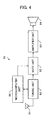
- the conventional broadcast wave receiving apparatus 80 comprises an antenna 81 having passed therethrough a plurality of broadcast waves each having information on an audio wave.
- the broadcast waves are respectively oscillated at specific frequencies different from one another.
- the conventional broadcast wave receiving apparatus 80 further comprises a tuning circuit 82 having a resonance frequency electronically tunable to each of the specific frequencies, and a microcomputer unit 86 for controlling the tuning circuit 82 to ensure that the resonance frequency of the tuning circuit 82 is tuned to the specific frequency before allowing the tuning circuit 82 to produce a broadcast signal indicative of the broadcast wave at the specific frequency.
- the conventional broadcast wave receiving apparatus 80 further comprises a demodulating unit 87, a mute circuit 85, an amplifier unit 83, and a speaker unit 84.
- the demodulating unit 87 is adapted to produce an audio signal indicative of the audio wave from the broadcast signal produced by the tuning circuit 82.
- the mute circuit 85 is adapted to assume two different operation state consisting of a first operation state to have the amplifier unit 16 receive the audio signal from the tuning circuit 82, and a second operation state to have the amplifier unit 16 fail to receive the audio signal from the tuning circuit 82.
- the amplifier unit 83 is adapted to amplify the audio signal produced by the tuning circuit 82, while the speaker unit 84 is adapted to produce an audio sound to be represented by the audio signal produced by the tuning circuit 82.
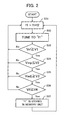
- the microcomputer unit 86 When the microcomputer unit 86 is operated to control the tuning circuit 82 to ensure that the resonance frequency of the tuning circuit 82 is electronically and automatically tuned to each of the specific frequencies under the condition that the audio signal is produced from the broadcast wave detected at the specific frequency "f1" by the tuning circuit 82, the audio signal produced by the tuning circuit 82 firstly fails to be outputted to the amplifier unit 83 by the mute circuit 85 in the step S91.
- the microcomputer unit 86 is then operated to produce information on the updated specific frequency equal to the addition of the specific frequency "f1" and the increment “f2" in the step S92.
- the microcomputer unit 86 is then operated to control the tuning circuit 82 to ensure that the resonance frequency of the tuning circuit 82 is tuned to the updated specific frequency "f1" before allowing the tuning circuit 82 to detect the broadcast wave which is oscillated at the updated specific frequency "f1" in the step S93.
- the microcomputer unit 86 is then operated to judge whether or not the electric field intensity "Vf" of the broadcast wave detected by the tuning circuit 82 is smaller than the predetermined threshold level "V" in the step S94.
- step S94 proceeds to the step S92.
- the answer in the step S94 is negative “NO”, i.e., the electric field intensity "Vf" of the broadcast wave detected by the tuning circuit 82 is not smaller than the predetermined threshold level "V”
- the judgment is made by the microcomputer unit 86 whether or not the intermediate signal which is oscillated at the intermediate frequency exists in the broadcast signal indicative of the broadcast wave detected by the tuning circuit 82 in the step S95.
- step S95 When the answer in the step S95 is affirmative "YES”, i.e., the intermediate signal which is oscillated at the intermediate frequency exists in the broadcast signal, the audio signal produced from the broadcast wave is outputted to the amplifier unit 83 by the mute circuit 85.
- the answer in the step S95 is negative "NO”, i.e., the intermediate signal which is oscillated at the intermediate frequency does not exist in the broadcast signal, the step S95 proceeds to the step S92.
- the conventional broadcast wave receiving apparatus encounters such a problem that the audio sound fails to be produced from the broadcast wave while the detection of the broadcast waves is performed by the microcomputer unit.
- a broadcast wave receiving apparatus comprising: first and second tuning circuits each having a resonance frequency; first controlling means for controlling one of the first and second tuning circuits to ensure that the resonance frequency of one of the first and second tuning circuits is tuned to a specific frequency before allowing one of the first and second tuning circuits to detect a broadcast wave at the specific frequency; judging means for judging whether or not to receive the broadcast wave detected by one of the first and second tuning circuits on the basis of predetermined threshold information on the broadcast waves; and second controlling means for controlling the other of the first and second tuning circuits to ensure that the resonance frequency of the other of the first and second tuning circuits is tuned to the specific frequency before allowing the other of the first and second tuning circuits to produce a broadcast signal indicative of the broadcast wave detected by one of the first and second tuning circuits in response to the judgment of the judging means.
- the first and second tuning circuits each may include electric field intensity detecting means for detecting the electric field intensity of the broadcast wave at the specific frequency.
- the broadcast wave receiving apparatus may further comprise electric field intensity judging means for judging whether or not the electric field intensity of the broadcast wave detected at the specific frequency by the electric field intensity detecting means of one of the first and second tuning circuits is smaller than a predetermined threshold level.
- the second controlling means may be adapted to control the other of the first and second tuning circuits to ensure that the resonance frequency of the other of the first and second tuning circuits is tuned to the specific frequency before allowing the other of the first and second tuning circuits to produce a broadcast signal indicative of the broadcast wave detected by one of the first and second tuning circuits under the condition that the judgment is made that the electric field intensity of the broadcast wave which is oscillated at the specific frequency is larger than the predetermined threshold level.
- the first and second tuning circuits each may include multi-path detecting means for detecting a multi-path noise at the specific frequency.
- the broadcast wave receiving apparatus may further comprise multi-path judging means for judging whether or not the multi-path noise detected at the specific frequency by the multi-path detecting means of one of the first and second tuning circuits is smaller than a predetermined threshold level.
- the second controlling means may be adapted to control the other of the first and second tuning circuits to ensure that the resonance frequency of the other of the first and second tuning circuits is tuned to the specific frequency before allowing the other of the first and second tuning circuits to produce a broadcast signal indicative of the broadcast wave detected by one of the first and second tuning circuits under the condition that the judgment is made that the multi-path noise detected at the specific frequency by the multi-path detecting means of one of the first and second tuning circuits is smaller than the predetermined threshold level.
- the first and second tuning circuits each may include mutual interference detecting means for detecting mutual interference noise at the specific frequency.
- the broadcast wave receiving apparatus may further comprise mutual interference judging means for judging whether or not the mutual interference noise detected at the specific frequency by the mutual interference detecting means of one of the first and second tuning circuits is smaller than a predetermined threshold level.
- the second controlling means may be adapted to control the other of the first and second tuning circuits to ensure that the resonance frequency of the other of the first and second tuning circuits is tuned to the specific frequency before allowing the other of the first and second tuning circuits to produce a broadcast signal indicative of the broadcast wave detected by one of the first and second tuning circuits under the condition that the judgment is made that the mutual interference noise detected at the specific frequency by the mutual interference detecting means of one of the first and second tuning circuits is smaller than the predetermined threshold level.
- the broadcast wave receiving apparatus may be installed in an automotive vehicle.
- FIGS. 1 to 3 of the drawings there is shown one preferred embodiment of the broadcast wave receiving apparatus according to the present invention.
- the broadcast wave receiving apparatus 10 is shown in FIG. 1 as comprising first and second antennas 11 and 13 each having passed therethrough a plurality of broadcast waves each having an electric field intensity.
- the broadcast waves are respectively oscillated at specific frequencies.
- the broadcast wave receiving apparatus 10 further comprises first and second tuning circuits 12 and 14 each having a resonance frequency electronically tunable to each of the specific frequencies, first controlling means for controlling one of the first and second tuning circuits 12 and 14 to ensure that the resonance frequency of one of the first and second tuning circuits 12 and 14 is tuned to one of the specific frequencies before allowing one of the first and second tuning circuits 12 and 14 to detect a broadcast wave at one of the specific frequencies, judging means for judging whether or not to receive the broadcast wave detected by one of the first and second tuning circuits 12 and 14 on the basis of predetermined threshold information on the broadcast waves, and second controlling means for controlling the other of the first and second tuning circuits 12 and 14 to ensure that the resonance frequency of the other of the first and second tuning circuits 12 and 14 is tuned to the specific frequency before allowing the other of the first and second tuning circuits 12 and 14 to produce a broadcast signal indicative of the broadcast wave detected by one of the first and second tuning circuits 12 and 14 in response to the judgment of the judging means.
- the first tuning circuit 12 includes electric field intensity detecting means 12a for detecting the electric field intensity of the broadcast wave at the specific frequency, while the second tuning circuit 14 includes electric field intensity detecting means 14a for detecting the electric field intensity of the broadcast wave at the specific frequency.
- the broadcast wave receiving apparatus 100 further comprises electric field intensity judging means 19a for judging whether or not the electric field intensity of the broadcast wave detected at the specific frequency by the electric field intensity detecting means 12a, 14a of one of the first and second tuning circuits 12 and 14 is smaller than a predetermined threshold level.
- the second controlling means is adapted to control the other of the first and second tuning circuits 12 and 14 to ensure that the resonance frequency of the other of the first and second tuning circuits 12 and 14 is tuned to the specific frequency before allowing the other of the first and second tuning circuits 12 and 14 to produce a broadcast signal indicative of the broadcast wave detected by one of the first and second tuning circuits 12 and 14 under the condition that the judgment is made that the electric field intensity of the broadcast wave which is oscillated at the specific frequency is larger than the predetermined threshold level.
- the first tuning circuit 12 includes multi-path detecting means 12b for detecting a multi-path noise at the specific frequency, while the second tuning circuit 14 includes multi-path detecting means 14b for detecting a multi-path noise at the specific frequency.
- the broadcast wave receiving apparatus 100 further comprises multi-path judging means 19b for judging whether or not the multi-path noise detected at the specific frequency by the multi-path detecting means 12b, 14b of one of the first and second tuning circuits 12 and 14 is smaller than a predetermined threshold level.
- the second controlling means is adapted to control the other of the first and second tuning circuits 12 and 14 to ensure that the resonance frequency of the other of the first and second tuning circuits 12 and 14 is tuned to the specific frequency before allowing the other of the first and second tuning circuits 12 and 14 to produce a broadcast signal indicative of the broadcast wave detected by one of the first and second tuning circuits 12 and 14 under the condition that the judgment is made that the multi-path noise detected at the specific frequency by the multi-path detecting means 12b, 14b of one of the first and second tuning circuits 12 and 14 is smaller than the predetermined threshold level.
- the first tuning circuit 12 includes mutual interference detecting means 12c for detecting mutual interference noise at the specific frequency, while the second tuning circuit 14 includes mutual interference detecting means 14c for detecting mutual interference noise at the specific frequency.
- the broadcast wave receiving apparatus 100 further comprises mutual interference judging means 19c for judging whether or not the mutual interference noise detected at the specific frequency by the mutual interference detecting means 12c, 14c of one of the first and second tuning circuits 12 and 14 is smaller than a predetermined threshold level.
- the second controlling means is adapted to control the other of the first and second tuning circuits 12 and 14 to ensure that the resonance frequency of the other of the first and second tuning circuits 12 and 14 is tuned to the specific frequency before allowing the other of the first and second tuning circuits 12 and 14 to produce a broadcast signal indicative of the broadcast wave detected by one of the first and second tuning circuits 12 and 14 under the condition that the judgment is made that the mutual interference noise detected at the specific frequency by the mutual interference detecting means 12c, 14c of one of the first and second tuning circuits 12 and 14 is smaller than the predetermined threshold level.
- the first tuning circuit 12 includes intermediate frequency signal detecting means 12d and 14d for detecting an intermediate frequency signal, while the second tuning circuit 14 includes intermediate frequency signal detecting means 14b for detecting an intermediate frequency signal.
- the broadcast wave receiving apparatus 100 further comprises intermediate frequency signal judging means 19d for judging whether or not the level of the intermediate frequency signal detected by the intermediate frequency signal detecting means 12d, 14d of one of the first and second tuning circuits 12 and 14 is smaller than a predetermined threshold level.
- the first and second controlling means (not shown), the electric field intensity judging means 19a, the multi-path judging means 19b, and the mutual interference judging means 19c collectively constitute a microcomputer unit 19.
- the broadcast wave receiving apparatus 100 may be installed in an automotive vehicle.
- the memory unit 20 may have stored therein frequency information on the frequency of the broadcast wave detected by one of the first and second tuning units 12 and 14, and time information on the time at which the detection of the broadcast waves is performed by the microcomputer unit 19.
- the microcomputer unit 19 is firstly operated to control the second tuning circuit 14 to ensure that the resonance frequency of the second tuning circuit 14 is tuned to the specific frequency equal to the addition of the specific frequency "f1" and the incremental value "f2" in the step S31, and to allow the second tuning circuit 14 to produce a broadcast signal indicative of the broadcast wave which is oscillated at the frequency "f1" in the step S32.
- the judgment is made by the electric field intensity judging means 19a of the microcomputer unit 19 on whether or not the electric field intensity "Vrf" of the broadcast wave detected at the frequency "f1" by the electric field intensity detecting means 14a of the second tuning circuit 14 is smaller than the predetermined threshold level "V1" in the step S33.
- step S33 proceeds to the step S31.
- the answer in the step S33 is negative “NO", i.e., the electric field intensity "Vrf" of the broadcast wave detected at the frequency "f1" by the electric field intensity detecting means 14a of the second tuning circuit 14 is not smaller than the predetermined threshold level "V1", the judgment is made by the multi-path judging means 19b of the microcomputer unit 19 on whether or not the multi-path noise "Vmp" detected at the frequency "f1” by the multi-path detecting means 14b of the second tuning circuit 14 is larger than the predetermined threshold level "V2" in the step S34.
- step S34 proceeds to the step S31.
- the answer in the step S34 is negative “NO", i.e., the multi-path noise "Vmp" detected at the frequency "f1" by the multi-path detecting means 14b of the second tuning circuit 14 is larger than the predetermined threshold level "V2"
- the judgment is made by the mutual interference judging means 19c of the microcomputer unit 19 on whether or not the mutual interference noise "Vadj" detected at the frequency "f1” by the mutual interference detecting means 14c of the second tuning circuit 14 is larger than the predetermined threshold level "V3" in the step S35.
- step S35 proceeds to the step S31.
- the answer in the step S34 is negative “NO", i.e., the mutual interference noise "Vadj" detected at the frequency "f1" by the mutual interference detecting means 14c of the second tuning circuit 14 is not larger than the predetermined threshold level "V3", the judgment is made by the IF signal judging means 19d of the microcomputer unit 19 on whether or not the IF signal "Vif" detected at the frequency "f1” by the IF signal detecting means 14d of the second tuning circuit 14 is smaller than the predetermined threshold level "V4" in the step S36.
- step S36 proceeds to the step S31.
- the answer in the step S36 is negative “NO", i.e., the IF signal "Vif' detected at the frequency "f1" by the IF signal detecting means 14d of the second tuning circuit 14 is not smaller than the predetermined threshold level "V4", the frequency information on the frequency "f1" of the broadcast wave detected by the tuning circuit 14 and the time information on the time at which the detection of the broadcast waves is performed by the microcomputer unit 19 are stored in the memory unit 20.
- the time difference information on the time difference "t1" between the current time and the time at which the detection of the broadcast waves is performed by the microcomputer unit 19 is then produced by the microcomputer unit 19 in the step S37.
- the microcomputer unit 19 is firstly operated to control the first tuning circuit 12 tune to ensure that the resonance frequency of the first tuning circuit 12 is tuned to the frequency "f3" before allowing the first tuning circuit 12 to produce a broadcast signal indicative of the broadcast wave which is oscillated at the frequency "f3".
- the audio signal indicative of the audio sound is produced from the broadcast signal produced by the first tuning circuit 12 by the demodulating unit 15.
- the audio signal produced by the demodulating unit 15 is received by the amplifier unit 16 through the mute unit 18, while the audio signal is amplified by the amplifier unit 16.
- the audio sound is produced from the audio signal amplified by the amplifier unit 16 by the speaker unit 17.
- the mute unit 18 is operated to have the amplifier unit 16 fail to receive the audio signal produced by the demodulating unit 15 in the step S41.
- the judgment is made by the microcomputer unit 19 on whether or not the memory unit 20 has the frequency information on the frequency "f1" in the step S42.
- the microcomputer unit 19 is operated to control the first tuning circuit 12 to ensure that the resonance frequency of the first tuning circuit 12 is tuned to the updated frequency "f3" equal to the addition of the frequency "f3" and the incremental value "f4" in the step S43 before allowing the first tuning circuit 12 to produce a broadcast signal indicative of the broadcast wave which is oscillated at the updated frequency "f3" in the step S43.
- the answer in the step S42 is affirmative "YES", i.e., the memory unit 20 have the frequency information on the frequency "f1" of the broadcast wave
- the judgment is made by the microcomputer unit 19 on whether or not the time difference between the current time and the time at which the detection of the broadcast waves is performed by the microcomputer unit 19 exceeds the predetermined threshold level "t2" in the step S44.
- step S44 When the answer in the step S44 is affirmative "YES”, i.e., the time difference between the current time and the time at which the detection of the broadcast waves is performed by the microcomputer unit 19 exceeds the predetermined threshold level "t2", the step 44 proceeds to the step S43.
- the microcomputer unit 19 is operated to control the first tuning circuit 12 to ensure that the resonance frequency of the first tuning circuit 12 is tuned to the frequency "f1" to be represented by the frequency information stored by the memory unit 20 before allowing the first tuning circuit 12 to produce a broadcast signal indicative of the broadcast wave which is oscillated at the frequency "f1" in the step S45.
- the judgment is made by the electric field intensity judging means 19a of the microcomputer unit 19 on whether or not the electric field intensity "Vrf" of the broadcast wave detected at the frequency "f1" by the electric field intensity detecting means 12a of the first tuning circuit 12 is smaller than the predetermined threshold level "V1" in the step S46.
- the microcomputer unit 19 is operated to control the first tuning circuit 12 to ensure that the resonance frequency of the first tuning circuit 12 is tuned to the updated frequency "f3" equal to the addition of the frequency "f3” and the incremental value "f4" before allowing the first tuning circuit 12 to produce a broadcast signal indicative of the broadcast wave which is oscillated at the updated frequency "f3" in the step S48.
- the mute unit 18 is operated to have the amplifier unit 16 receive the audio signal produced by the demodulating unit 15.
- the audio signal produced by the demodulating unit 15 is then amplified by amplifier unit 16.
- the audio sound is then produced from the audio signal amplified by the amplifier unit 16 by the speaker unit 17 in the step S47.
- the microcomputer unit 19 When the microcomputer unit 19 is operated to control the first tuning circuit 12 to ensure that the resonance frequency of the first tuning circuit 12 is tuned to the updated frequency "f3" equal to the addition of the frequency "f3” and the incremental value "f4" before allowing the first tuning circuit 12 to produce a broadcast signal indicative of the broadcast wave which is oscillated at the updated frequency "f3" in the step S43, the judgment is made by the electric field intensity judging means 19a of the microcomputer unit 19 on whether or not the electric field intensity "Vrf" of the broadcast wave detected at the updated frequency "f3" by the electric field intensity detecting means 12a of the first tuning circuit 12 is smaller than the predetermined threshold level "V1" in the step S49.
- step S49 proceeds to the step S43.
- the answer in the step S49 is negative “NO", i.e., the electric field intensity "Vrf" of the broadcast wave detected at the updated frequency "f3" by the electric field intensity detecting means 12a of the first tuning circuit 12 is not smaller than the predetermined threshold level "V1", the judgment is made by the multi-path judging means 19b of the microcomputer unit 19 on whether or not the multi-path noise "Vmp" detected at the updated frequency "f3" by the multi-path detecting means 12b of the first tuning circuit 12 is larger than the predetermined threshold level "V2" in the step S50.
- step S50 proceeds to the step S43.
- the answer in the step S50 is negative “NO", i.e., the multi-path noise "Vmp" detected at the updated frequency "f3" by the multi-path detecting means 12b of the first tuning circuit 12 is not larger than the predetermined threshold level "V2"
- the judgment is made by the mutual interference judging means 19c of the microcomputer unit 19 on whether or not the mutual interference noise "Vadj" detected at the updated frequency "f3" by the mutual interference detecting means 12c of the first tuning circuit 12 is larger than the predetermined threshold level "V3" in the step S51.
- step S51 proceeds to the step S43.
- the answer in the step S51 is negative “NO", i.e., the mutual interference noise "Vadj" detected at the updated frequency "f3" by the mutual interference detecting means 12c of the first tuning circuit 12 is not larger than the predetermined threshold level "V3", the judgment is made by the IF signal judging means 19d of the microcomputer unit 19 on whether or not the IF signal "Vif" detected at the updated frequency "f3" by the IF signal detecting means 14d of the first tuning circuit 12 is smaller than the predetermined threshold level "V4" in the step S52.
- step S52 proceeds to the step S43.
- the mute unit 18 is operated to have the amplifier unit 16 receive the audio signal produced by the demodulating unit 15.
- the audio signal produced by the demodulating unit 15 is then amplified by amplifier unit 16.
- the audio sound is then produced from the audio signal amplified by the amplifier unit 16 by the speaker unit 17 in the step S47.
- the broadcast wave receiving apparatus can produce a broadcast signal indicative of the broadcast wave while performing the detection of the broadcast waves
- the broadcast wave receiving apparatus can allow the frequency information on the frequency of the broadcast wave having an electric field intensity larger or equal to the predetermined threshold level "V1" to be stored into the memory unit, and prevent the frequency information on the frequency of the broadcast wave having an electric field intensity smaller than the predetermined threshold level "V1" from being stored into the memory unit.
- the broadcast wave receiving apparatus can allow the frequency information on the frequency "f1" of the broadcast wave to be stored into the memory unit when the judgment is made that the multi-path noise detected at the frequency "f1" is smaller than the predetermined threshold level "V2", and prevent the frequency information on the frequency "f1" of the broadcast wave from being stored into the memory unit when, on the other hand, the judgment is made that the multi-path noise detected at the frequency "f1" is not smaller than the predetermined threshold level "V2".
- the broadcast wave receiving apparatus can allow the frequency information on the frequency "f1" of the broadcast wave to be stored into the memory unit when the judgment is made that the mutual interference noise detected at the frequency "f1" is smaller than the predetermined threshold level "V3", and prevent the frequency information on the frequency "f1" of the broadcast wave from being stored into the memory unit when, on the other hand, the judgment is made that the mutual interference noise detected at the frequency "f1" is not smaller than the predetermined threshold level "V3".
- the broadcast wave receiving apparatus can update the frequency information stored in the memory unit when the time difference "t1" between the current time and the time at which the detection of the broadcast waves is performed by the microcomputer unit is larger than the predetermined threshold level "t2".
- the broadcast wave receiving apparatus may regularly update the frequency information stored in the memory unit.
- the broadcast wave receiving apparatus can selectively receive the broadcast waves which are respectively oscillated at the specific frequencies each to be represented by the frequency information stored in the memory unit.
- the broadcast wave receiving apparatus according to the present invention may be installed into other electronic appliance such as for example a portable audio system and a mobile phone.
- the broadcast wave receiving apparatus can allow the frequency information on the frequency of the broadcast wave having an electric field intensity larger or equal to the predetermined threshold level "V1" to be stored into the memory unit, and prevent the frequency information on the frequency of the broadcast wave having an electric field intensity smaller than the predetermined threshold level "V1" from being stored into the memory unit
- the memory unit of the broadcast wave receiving apparatus may have stored therein, irrespective of the level of the electric field intensity of the broadcast wave, the frequency information on the frequency of the detected broadcast wave.
- the broadcast wave receiving apparatus may selectively receive, irrespective of the level of the electric field intensity of the broadcast wave, the broadcast waves which are respectively oscillated at the specific frequencies each to be represented by the frequency information stored in the memory unit.
- the broadcast wave receiving apparatus can allow the frequency information on the frequency "f1" of the broadcast wave to be stored into the memory unit when the judgment is made that the multi-path noise detected at the frequency "f1" is smaller than the predetermined threshold level "V2", and prevent the frequency information on the frequency "f1" of the broadcast wave from being stored into the memory unit when, on the other hand, the judgment is made that the multi-path noise detected at the frequency "f1" is not smaller than the predetermined threshold level "V2"
- the memory unit of the broadcast wave receiving apparatus may have stored therein, irrespective of the level of the multi-path noise detected by the multi-path detecting means of each of the first and second tuning units, the frequency information on the frequency of the detected broadcast wave.
- the broadcast wave receiving apparatus may selectively receive, irrespective of the level of the multi-path noise detected by the multi-path detecting means of each of the first and second tuning units, the broadcast waves which are respectively oscillated at the specific frequencies each to be represented by the frequency information stored in the memory unit.
- the broadcast wave receiving apparatus can allow the frequency information on the frequency "f1" of the broadcast wave to be stored into the memory unit when the judgment is made that the mutual interference noise detected at the frequency "f1" is smaller than the predetermined threshold level "V3", and prevent the frequency information on the frequency "f1" of the broadcast wave from being stored into the memory unit when, on the other hand, the judgment is made that the mutual interference noise detected at the frequency "f1" is not smaller than the predetermined threshold level "V3"
- the memory unit of the broadcast wave receiving apparatus may have stored therein, irrespective of the level of the mutual interference noise detected by the mutual interference detecting means of each of the first and second tuning units, the frequency information on the frequency of the detected broadcast wave.
- the broadcast wave receiving apparatus may selectively receive, irrespective of the level of the mutual interference noise detected by the mutual interference detecting means of each of the first and second tuning units, the broadcast waves which are respectively oscillated at the specific frequencies each to be represented by the frequency information stored in the memory unit.
Landscapes
- Engineering & Computer Science (AREA)
- Computer Hardware Design (AREA)
- Microelectronics & Electronic Packaging (AREA)
- Noise Elimination (AREA)
- Input Circuits Of Receivers And Coupling Of Receivers And Audio Equipment (AREA)
- Circuits Of Receivers In General (AREA)
Abstract
Description
Claims (5)
- A broadcast wave receiving apparatus (100), comprising:first and second tuning circuits (12 and 14) each having a resonance frequency;first controlling means (19) for controlling one of said first and second tuning circuits (12 and 14) to ensure that said resonance frequency of one of said first and second tuning circuits (12 and 14) is tuned to a specific frequency before allowing one of said first and second tuning circuits (12 and 14) to detect a broadcast wave at said specific frequency;judging means (19) for judging whether or not to receive said broadcast wave detected by one of said first and second tuning circuits (12 and 14) on the basis of predetermined threshold information on said broadcast waves; andsecond controlling means (19) for controlling the other of said first and second tuning circuits (12 and 14) to ensure that said resonance frequency of the other of said first and second tuning circuits (12 and 14) is tuned to said specific frequency before allowing the other of said first and second tuning circuits (12 and 14) to produce a broadcast signal indicative of said broadcast wave detected by one of said first and second tuning circuits (12 and 14) in response to the judgment of said judging means (19).
- A broadcast wave receiving apparatus (100) as set forth in claim 1, in which said first and second tuning circuits (12 and 14) each includes electric field intensity detecting means (12a, 14a) for detecting said electric field intensity of said broadcast wave at said specific frequency, which further comprises electric field intensity judging means (19a) for judging whether or not said electric field intensity of said broadcast wave detected at said specific frequency by said electric field intensity detecting means (12a, 14a) of one of said first and second tuning circuits (12 and 14) is smaller than a predetermined threshold level, and in which said second controlling means (19) is adapted to control the other of said first and second tuning circuits (12 and 14) to ensure that said resonance frequency of the other of said first and second tuning circuits (12 and 14) is tuned to said specific frequency before allowing the other of said first and second tuning circuits (12 and 14) to produce a broadcast signal indicative of said broadcast wave detected by one of said first and second tuning circuits (12 and 14) under the condition that the judgment is made that said electric field intensity of said broadcast wave which is oscillated at said specific frequency is larger than said predetermined threshold level.
- A broadcast wave receiving apparatus (100) as set forth in claim 1, in which said first and second tuning circuits (12 and 14) each includes multi-path detecting means (12b, 14b) for detecting a multi-path noise at said specific frequency, which further comprises multi-path judging means (19b) for judging whether or not said multi-path noise detected at said specific frequency by said multi-path detecting means (12b, 14b) of one of said first and second tuning circuits (12 and 14) is smaller than a predetermined threshold level, and in which said second controlling means (19) is adapted to control the other of said first and second tuning circuits (12 and 14) to ensure that said resonance frequency of the other of said first and second tuning circuits (12 and 14) is tuned to said specific frequency before allowing the other of said first and second tuning circuits (12 and 14) to produce a broadcast signal indicative of said broadcast wave detected by one of said first and second tuning circuits (12 and 14) under the condition that the judgment is made that said multi-path noise detected at said specific frequency by said multi-path detecting means (12b, 14b) of one of said first and second tuning circuits (12 and 14) is smaller than said predetermined threshold level.
- A broadcast wave receiving apparatus (100) as set forth in claim 1, in which said first and second tuning circuits (12 and 14) each includes mutual interference detecting means (12c, 14c) for detecting mutual interference noise at said specific frequency, which further comprises mutual interference judging means (19c) for judging whether or not said mutual interference noise detected at said specific frequency by said mutual interference detecting means (12c, 14c) of one of said first and second tuning circuits (12 and 14) is smaller than a predetermined threshold level, and in which said second controlling means (19) is adapted to control the other of said first and second tuning circuits (12 and 14) to ensure that said resonance frequency of the other of said first and second tuning circuits (12 and 14) is tuned to said specific frequency before allowing the other of said first and second tuning circuits (12 and 14) to produce a broadcast signal indicative of said broadcast wave detected by one of said first and second tuning circuits (12 and 14) under the condition that the judgment is made that said mutual interference noise detected at said specific frequency by said mutual interference detecting means (12c, 14c) of one of said first and second tuning circuits (12 and 14) is smaller than said predetermined threshold level.
- A broadcast wave receiving apparatus (100) as set forth in claim 1, which is installed in an automotive vehicle.
Applications Claiming Priority (2)
| Application Number | Priority Date | Filing Date | Title |
|---|---|---|---|
| JP2003098953A JP2004312081A (en) | 2003-04-02 | 2003-04-02 | Broadcast wave receiver |
| JP2003098953 | 2003-04-02 |
Publications (2)
| Publication Number | Publication Date |
|---|---|
| EP1465340A2 true EP1465340A2 (en) | 2004-10-06 |
| EP1465340A3 EP1465340A3 (en) | 2005-01-05 |
Family
ID=32844684
Family Applications (1)
| Application Number | Title | Priority Date | Filing Date |
|---|---|---|---|
| EP04007799A Withdrawn EP1465340A3 (en) | 2003-04-02 | 2004-03-31 | Broadcast wave receiving apparatus |
Country Status (4)
| Country | Link |
|---|---|
| US (1) | US7236755B2 (en) |
| EP (1) | EP1465340A3 (en) |
| JP (1) | JP2004312081A (en) |
| CA (1) | CA2463023A1 (en) |
Families Citing this family (2)
| Publication number | Priority date | Publication date | Assignee | Title |
|---|---|---|---|---|
| JP5075032B2 (en) * | 2008-06-30 | 2012-11-14 | キヤノン株式会社 | Communication apparatus and communication method |
| JP5171436B2 (en) * | 2008-06-30 | 2013-03-27 | キヤノン株式会社 | COMMUNICATION DEVICE, DATA COMMUNICATION SYSTEM, COMMUNICATION DEVICE CONTROL METHOD, AND PROGRAM |
Family Cites Families (11)
| Publication number | Priority date | Publication date | Assignee | Title |
|---|---|---|---|---|
| JPS5847100B2 (en) * | 1979-01-10 | 1983-10-20 | 松下電器産業株式会社 | Channel selection device |
| US4654884A (en) * | 1984-05-10 | 1987-03-31 | Alps Electric Co., Ltd. | Radio receiver with switching circuit for elimination of intermodulation interference |
| US4868892A (en) * | 1987-05-08 | 1989-09-19 | Rca Licensing Corporation | Tuning system with provisions for calculating the local oscillator frequency from an aft characteristic |
| JP2625759B2 (en) * | 1987-09-22 | 1997-07-02 | ソニー株式会社 | Auto tuning device |
| JP2760552B2 (en) | 1988-03-17 | 1998-06-04 | 三洋電機株式会社 | Receiving machine |
| JPH044615A (en) * | 1990-04-23 | 1992-01-09 | Pioneer Electron Corp | Radio receiver |
| US5575001A (en) * | 1995-06-07 | 1996-11-12 | Hwa Lin Electronic Co., Ltd. | Direct broadcasting satellite tuner with a negative feedback and image compression circuit |
| KR100477409B1 (en) * | 1995-12-21 | 2005-08-29 | 코닌클리케 필립스 일렉트로닉스 엔.브이. | Receiver, device and method for comparing two signals |
| JP3606420B2 (en) | 1997-10-15 | 2005-01-05 | パイオニア株式会社 | Data multiplex broadcast receiver with tuner |
| JP2002051273A (en) * | 2000-08-04 | 2002-02-15 | Pioneer Electronic Corp | Broadcast signal processing unit |
| US20050221773A1 (en) * | 2002-06-24 | 2005-10-06 | Koninklijke Philips Electronics N.V. | Tuning system |
-
2003
- 2003-04-02 JP JP2003098953A patent/JP2004312081A/en active Pending
-
2004
- 2004-03-31 EP EP04007799A patent/EP1465340A3/en not_active Withdrawn
- 2004-03-31 US US10/814,744 patent/US7236755B2/en not_active Expired - Fee Related
- 2004-04-01 CA CA002463023A patent/CA2463023A1/en not_active Abandoned
Also Published As
| Publication number | Publication date |
|---|---|
| CA2463023A1 (en) | 2004-10-02 |
| US20040198283A1 (en) | 2004-10-07 |
| JP2004312081A (en) | 2004-11-04 |
| US7236755B2 (en) | 2007-06-26 |
| EP1465340A3 (en) | 2005-01-05 |
Similar Documents
| Publication | Publication Date | Title |
|---|---|---|
| US5465408A (en) | AGC circuit for operating in accordance with the nature of the interference signal and method for controlling this circuit | |
| US20050046546A1 (en) | Passive keyless entry device | |
| US20080146159A1 (en) | Fm transmission system and method | |
| CN101442323A (en) | Method of selecting and broadcasting over a transmission frequency and device for the same | |
| EP1465340A2 (en) | Broadcast wave receiving apparatus | |
| JP4488983B2 (en) | Radio receiver and reception method | |
| KR100270568B1 (en) | An information receiving system and an information receiving method using such a system | |
| KR20100106439A (en) | Method for automatic frequency range and step selection using region signature for a digital am/fm tuner | |
| US6272191B1 (en) | Information receiving system and an information receiving method using such a system | |
| US9654321B2 (en) | Method for reception improvement of a FM tuner in a common channel situation | |
| JPH1098423A (en) | Broadcasting reception system and control method for the same | |
| KR20020010154A (en) | Circuit arrangement and method for verifying a switching diversity system | |
| US6529718B1 (en) | Receiver with a search circuit | |
| KR100320524B1 (en) | Method for discriminating a broadcasting signal of vehicle audio | |
| JP2990187B1 (en) | RDS automatic tracking device and RDS automatic tracking method | |
| JP2004056500A (en) | Auto-preset method and broadcast receiving device | |
| JPH08213860A (en) | Antenna amplifier control circuit for in-vehicle television receiver | |
| JPH04267635A (en) | On-vehicle diversity television receiver | |
| JP2003283302A (en) | Broadcasting receiving apparatus | |
| JP2006165860A (en) | Antenna amplifier and antenna amplifier system | |
| JP2006186587A (en) | Sound controller and sound control method | |
| JP2000115042A (en) | Diversity receiver | |
| JPH08163016A (en) | Diversity receiver | |
| JP2003174354A (en) | Radio receiver | |
| KR19980036966A (en) | Automatic tuning method of audio and its device |
Legal Events
| Date | Code | Title | Description |
|---|---|---|---|
| PUAI | Public reference made under article 153(3) epc to a published international application that has entered the european phase |
Free format text: ORIGINAL CODE: 0009012 |
|
| AK | Designated contracting states |
Kind code of ref document: A2 Designated state(s): AT BE BG CH CY CZ DE DK EE ES FI FR GB GR HU IE IT LI LU MC NL PL PT RO SE SI SK TR |
|
| AX | Request for extension of the european patent |
Extension state: AL LT LV MK |
|
| PUAL | Search report despatched |
Free format text: ORIGINAL CODE: 0009013 |
|
| AK | Designated contracting states |
Kind code of ref document: A3 Designated state(s): AT BE BG CH CY CZ DE DK EE ES FI FR GB GR HU IE IT LI LU MC NL PL PT RO SE SI SK TR |
|
| AX | Request for extension of the european patent |
Extension state: AL LT LV MK |
|
| AKX | Designation fees paid |
Designated state(s): DE FR IT |
|
| STAA | Information on the status of an ep patent application or granted ep patent |
Free format text: STATUS: THE APPLICATION IS DEEMED TO BE WITHDRAWN |
|
| 18D | Application deemed to be withdrawn |
Effective date: 20050706 |