EP1465079A2 - Gerät und Verfahren zur Berechnung des Logarithmus einer Summe von Exponentialfunktionen - Google Patents
Gerät und Verfahren zur Berechnung des Logarithmus einer Summe von Exponentialfunktionen Download PDFInfo
- Publication number
- EP1465079A2 EP1465079A2 EP02293271A EP02293271A EP1465079A2 EP 1465079 A2 EP1465079 A2 EP 1465079A2 EP 02293271 A EP02293271 A EP 02293271A EP 02293271 A EP02293271 A EP 02293271A EP 1465079 A2 EP1465079 A2 EP 1465079A2
- Authority
- EP
- European Patent Office
- Prior art keywords
- sum
- logarithm
- exponentials
- calculating
- hyperbolic cosine
- Prior art date
- Legal status (The legal status is an assumption and is not a legal conclusion. Google has not performed a legal analysis and makes no representation as to the accuracy of the status listed.)
- Withdrawn
Links
Images


Classifications
-
- G—PHYSICS
- G06—COMPUTING OR CALCULATING; COUNTING
- G06F—ELECTRIC DIGITAL DATA PROCESSING
- G06F17/00—Digital computing or data processing equipment or methods, specially adapted for specific functions
- G06F17/10—Complex mathematical operations
Definitions
- This invention relates to an application of a mathematical function to calculate a logarithm of a sum of exponentials.
- the invention is applicable to, but not limited to, an improved implementation structure for calculating a logarithm of a sum of exponentials in a digital communication receiver.
- Wireless communication systems typically provide for radio telecommunication links to be arranged between a plurality of base transceiver stations (BTSs) and a plurality of subscriber units, often termed mobile stations (MSs).
- BTSs base transceiver stations
- MSs mobile stations
- Wireless communication systems are distinguished over fixed communication systems, such as the public switched telephone network (PSTN), principally in that mobile stations move between BTS and/or different service providers. In doing so wireless communication units encounter varying radio propagation environments.
- PSTN public switched telephone network
- wireless digital communication technology has been developed to cope with the peculiarities of, for example, Rayleigh fading, varying signal strength, varying propagation conditions, etc.
- a number of present-day communication receivers are designed to provide an estimate of the effect induced by the radio communication channel on the data being transmitted. Channel estimation is required so that the received data can be equalised to reduce, restore or minimise signal degradation caused by transmission channel impairments.
- a number of digital coding/ decoding and digital modulation/demodulation techniques have been developed to optimise the use of, what is effectively, a finite amount of radio frequency spectrum.
- a current popular approach in decoding and demodulating received signals is to use an iterative algorithm.
- receiver functions that employ iterative algorithms include: a turbo-decoder, a BCJR decoder (as described in L. R. Bahl, J. Cocke, F. Jelinek, J. Raviv: Optimal Decoding of Linear Codes for Minimizing Symbol Error Rate, IEEE Transactions on Information Theory, March 1974), a turbo-demodulation, etc.
- a key function in implementing such iterative algorithms is the requirement to perform efficiently a number of mathematical functions including a logarithm of the sum of exponentials.
- Max-star The classical approach to implementing a logarithm of the sum of exponentials is to use the so-called 'Max-Star' (Max*) approach.
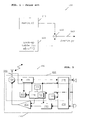
- the Max-star approach 100 is illustrated in FIG. 1, and is further described in the paper titled 'VLSI Architectures for the forward-Backward Algorithm', submitted to IEEE Transactions on Communications and authored by E. Boutillon et al.
- Sum-star or Sum*
- Max-star (or Max*) Operation 140 This expression of the Sum-star as the max(x,y), plus a correction term, is widely termed the "max-star (or Max*) Operation" 140.
- the Max* Operation 140 results from a summation 130 of the functions max(x,y) 110, giving:
- correction term has the following characteristics:
- look-up tables In a hardware receiver implementation, the use of look-up tables is to be avoided if possible. Look-up tables require substantial amounts of memory, and therefore increase cost and footprint space. Furthermore, increasing the memory requirements in a circuit such as a communication receiver requires, in turn, additional testing.
- the 'correction term' cannot be easily approximated by a simple function that is implementable in hardware. This is problematic in some implementations where a hardware-based approach is favoured (for some reason).
- an apparatus and a method of calculating a logarithm of a sum of exponentials are provided, as described in the appended Claims.
- the preferred embodiment of the present invention proposes a Hyperbolic-Cosine approach to calculate a logarithm of the sum of exponentials.
- a logarithm of a sum of two or more exponentials may hereinafter be referred to as a Sum-star (or Sum *) function.
- the inventive concepts described herein introduce a very efficient mechanism to compute the 'non-trivial' expression in a very simple manner.
- the Hyperbolic-Cosine approach has been developed so that it can be implemented as a simple topology with minimal performance cost.
- the hyperbolic-cosine approach of the preferred embodiment of the present invention is particularly useful in a hardware or firmware communication receiver design. This advantage is achieved as the logarithm of the sum of exponentials is approximated by simple functions and can thus be directly implemented without requiring additional memory elements/look-up tables, etc.
- FIG. 2 there is shown a block diagram of a wireless digital communication unit, hereinafter referred to as a mobile station (MS) 200, which is adapted to support the inventive concepts of the preferred embodiments of the present invention.
- MS mobile station
- FIG. 2 a block diagram of a wireless digital communication unit, hereinafter referred to as a mobile station (MS) 200, which is adapted to support the inventive concepts of the preferred embodiments of the present invention.
- MS mobile station
- the MS 200 comprises, for example, standard radio frequency components and circuits, such as an antenna 202 preferably coupled to an antenna switch 204 that provides isolation between a receive and a transmit chain within the MS 200.
- a receiver chain typically includes receiver front-end circuitry 206 (effectively providing reception, filtering and intermediate or base-band frequency conversion).
- the front-end circuit 206 is serially coupled to a signal processing function 208.
- An output from the signal processing function is provided to a suitable output device 210, such as a speaker.
- the signal processing function 208 performs all signal processing functions for the MS 200, including, for example, demodulation, de-mapping, bit de-interleaving, channel estimation and decoding, as known in the art.
- the operation of the signal processing function 208 has been adapted to support the inventive concepts herein described.
- the signal processing function 208 calculates any logarithm of a sum of exponentials by applying a hyperbolic-cosine function, as described further with respect to FIG. 3.
- the receiver chain also includes received signal strength indicator (RSSI) circuitry 212 coupled to a controller 214, which maintains overall subscriber unit control.
- the controller 214 is also coupled to the receiver front-end circuitry 206 and the signal processing function 208 (generally realised by a digital signal processor (DSP)).
- the controller 214 may therefore receive bit error rate (BER) or frame error rate (FER) data from recovered information.
- the controller 214 is coupled to the memory device 216 for storing operating regimes, such as decoding/encoding functions and the like.
- a timer 218 is typically coupled to the controller 214 to control the timing of operations (transmission or reception of time-dependent signals) within the MS 200. In the context of the present invention, the timer 218 dictates the timing of speech signals, in the transmit (encoding) path and/or the receive (decoding) path.
- the transmit chain essentially includes an input device, such as a microphone transducer coupled in series via transmit signal processor 228 to a transmitter/ modulation circuit 222. Thereafter, any transmit signal is passed through a power amplifier 224 to be radiated from the antenna 202.
- the transmitter/ modulation circuitry 222 and the power amplifier 224 are operationally responsive to the controller, with an output from the power amplifier coupled to the duplex filter or circulator 204.
- the transmitter/ modulation circuitry 222 and receiver front-end circuitry 206 comprise frequency up-conversion and frequency down-conversion functions (not shown).
- the various components within the MS 200 can be arranged in any suitable functional topology that is able to utilise the inventive concepts of the present invention.
- the various components within the MS 200 can be realised in discrete or integrated component form, with an ultimate structure therefore being merely an arbitrary selection.
- a preferred decoding and/or demodulation function can be implemented in software, firmware or hardware, with the function being implemented in a software processor (or indeed a digital signal processor (DSP)), merely a preferred option.
- Sum-star Operator Sum*
- the expression may be defined as the 'correction term'.
- the hyperbolic cosine (cosh) function has the following characteristics:
- equation [8] can be approximately replaced by its asymptotic function for a sufficiently large x, usually when x > 3.
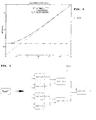
- FIG. 3 a topology for implementing a logarithm of a sum of exponentials calculation is illustrated in accordance with a preferred embodiment of the present invention.
- the function [8] can be expressed without any approximation by two functions 310, 320:
- a graph 400 illustrates the approximation of equation [7] by two simple linear functions. This approximation is not perfect, but performs reasonably well. It is noteworthy that near-perfect approximations are obtained for a 2 nd or 3 rd order approximation.
- FIG. 6 demonstrates that the approximation of equation [7] by two linear functions is leading to acceptable results.
- the preferred hyperbolic cosine function offers particular benefits in a hardware receiver implementation, since it enables a very simple approximation of the function which leads to a new readily implementable correction term. This is in direct contrast to the classical approach that is based upon a look-up table.
- Sum-star approach can be implemented either in software, firmware or hardware.
- inventive concepts are applicable in many applications, including all algorithms that involve a Sum* operator, such as turbo-codes.
- the general expression [4] is, for example, implemented by using a well-known tree-structure of operators [5]. As shown, at each branch of the tree structure, the operation is performed. Possible implementation solutions of this operation are presented above. Advantageously, in this manner, the preferred embodiment of the present invention can be applied to well known implementations in order to calculate a logarithm of a sum of two or more exponentials using this tree structure.
- FIG. 6 a graph 600 illustrates a simulated performance of a receiver employing a Sum* Operation according to the aforementioned inventive concepts.
- FIG. 6 presents the simulation results based on a 64-carrier frequency orthogonal frequency division multiplex (OFDM) modulation, with 16-QAM constellations and a Rayleigh fading channel.
- the bit-error-rate (BER) is shown over the signal-to-noise ratio (SNR), here defined as data symbol power over noise power.
- SNR signal-to-noise ratio
- FIG. 6 clearly illustrates that even the very simple approximation of the hyperbolic cosine functions leads to very little performance loss when compared to a full-precision implementation.
- the hyperbolic cosine approximation, in this case, is implemented by simply employing two linear functions, as illustrated in FIG. 3.
- inventive concepts hereinbefore described propose an improved mechanism for implementing a Sum-star Operation and particularly an algorithm of the sum of exponentials.
- the proposed implementation is of particular use in a hardware communication receiver implementation.
- any applications where the calculation: is required, such as turbo-decoders, BCJR decoders, turbo-demodulation, etc. may benefit from the inventive concepts described herein. More generally, the inventive concepts of the present invention can be applied to any number of estimation algorithms and/or probabilistic calculations, where expressions such as [4] and [5] occur.
- a speech recognition unit may use the aforementioned concepts to calculate a logarithm of a sum of exponentials in the processing of a speech signal that is to be recognised.
- an apparatus for example a communication unit, and a method of calculating a logarithm of a sum of exponentials, as described above, tend to provide at least one or more of the following advantages:
Landscapes
- Engineering & Computer Science (AREA)
- Physics & Mathematics (AREA)
- Mathematical Physics (AREA)
- Theoretical Computer Science (AREA)
- Data Mining & Analysis (AREA)
- General Physics & Mathematics (AREA)
- Pure & Applied Mathematics (AREA)
- Mathematical Optimization (AREA)
- Algebra (AREA)
- Computational Mathematics (AREA)
- Databases & Information Systems (AREA)
- Software Systems (AREA)
- General Engineering & Computer Science (AREA)
- Mathematical Analysis (AREA)
- Test And Diagnosis Of Digital Computers (AREA)
- Mobile Radio Communication Systems (AREA)
Priority Applications (3)
| Application Number | Priority Date | Filing Date | Title |
|---|---|---|---|
| EP02293271A EP1465079A3 (de) | 2002-12-31 | 2002-12-31 | Gerät und Verfahren zur Berechnung des Logarithmus einer Summe von Exponentialfunktionen |
| AU2003303405A AU2003303405A1 (en) | 2002-12-31 | 2003-12-22 | Apparatus and method of calculating a logarithm of a sum of exponentials |
| PCT/EP2003/051088 WO2004059516A2 (en) | 2002-12-31 | 2003-12-22 | Apparatus and method of calculating a logarithm of a sum of exponentials |
Applications Claiming Priority (1)
| Application Number | Priority Date | Filing Date | Title |
|---|---|---|---|
| EP02293271A EP1465079A3 (de) | 2002-12-31 | 2002-12-31 | Gerät und Verfahren zur Berechnung des Logarithmus einer Summe von Exponentialfunktionen |
Publications (2)
| Publication Number | Publication Date |
|---|---|
| EP1465079A2 true EP1465079A2 (de) | 2004-10-06 |
| EP1465079A3 EP1465079A3 (de) | 2005-08-03 |
Family
ID=32668929
Family Applications (1)
| Application Number | Title | Priority Date | Filing Date |
|---|---|---|---|
| EP02293271A Withdrawn EP1465079A3 (de) | 2002-12-31 | 2002-12-31 | Gerät und Verfahren zur Berechnung des Logarithmus einer Summe von Exponentialfunktionen |
Country Status (3)
| Country | Link |
|---|---|
| EP (1) | EP1465079A3 (de) |
| AU (1) | AU2003303405A1 (de) |
| WO (1) | WO2004059516A2 (de) |
Cited By (1)
| Publication number | Priority date | Publication date | Assignee | Title |
|---|---|---|---|---|
| US20220357919A1 (en) * | 2021-05-07 | 2022-11-10 | Oracle International Corporation | Numeric Operations on Logarithmically Encoded Data Values |
Family Cites Families (1)
| Publication number | Priority date | Publication date | Assignee | Title |
|---|---|---|---|---|
| EP1189355B1 (de) * | 2000-08-04 | 2003-10-22 | Motorola Inc. | Lineare Approximation des LOG-MAP Algorithmus für Turbodekodierung |
-
2002
- 2002-12-31 EP EP02293271A patent/EP1465079A3/de not_active Withdrawn
-
2003
- 2003-12-22 WO PCT/EP2003/051088 patent/WO2004059516A2/en not_active Ceased
- 2003-12-22 AU AU2003303405A patent/AU2003303405A1/en not_active Abandoned
Cited By (1)
| Publication number | Priority date | Publication date | Assignee | Title |
|---|---|---|---|---|
| US20220357919A1 (en) * | 2021-05-07 | 2022-11-10 | Oracle International Corporation | Numeric Operations on Logarithmically Encoded Data Values |
Also Published As
| Publication number | Publication date |
|---|---|
| AU2003303405A1 (en) | 2004-07-22 |
| WO2004059516A2 (en) | 2004-07-15 |
| EP1465079A3 (de) | 2005-08-03 |
| WO2004059516A3 (en) | 2005-07-28 |
| AU2003303405A8 (en) | 2004-07-22 |
Similar Documents
| Publication | Publication Date | Title |
|---|---|---|
| KR101333222B1 (ko) | 간섭 제거된 스트림들에 대한 채널 및 잡음 적응을 갖는 단일 하드웨어 엘리먼트의 사용에 의한 sic-mimo 디코딩의 하드웨어 단순화 | |
| JP3112029B2 (ja) | 通信チャンネルのチャンネル利得および雑音変化を計算するシステムおよび方法 | |
| US6977977B1 (en) | Compensation of I/Q gain mismatch in a communications receiver | |
| US8270543B1 (en) | Scaling and quantization of soft decoding metrics | |
| JP4927285B2 (ja) | 干渉キャンセルに基づく結合されたソフト判定と復号のための方法と装置 | |
| KR101458009B1 (ko) | Harq 결합 및 소프트 판정 지시 채널 추정을 통한 반복 디코딩 아키텍처 | |
| US7769082B2 (en) | Frequency domain equalizer for single antenna radio | |
| US7065146B1 (en) | Method and apparatus for equalization and decoding in a wireless communications system including plural receiver antennae | |
| US20070149135A1 (en) | Information transfer method and system | |
| US20040081263A1 (en) | Method and apparatus for receiving diversity transmissions | |
| CN101141159B (zh) | 在蓝牙系统中接收信号的装置与方法 | |
| US7957463B2 (en) | Adaptive frequency equalizer | |
| JP2003514408A (ja) | 無線通信におけるチャンネル状態の推定方法、及び受信器と復号器 | |
| US8196024B2 (en) | Demapper using floating-point representation of soft bits | |
| US7492844B2 (en) | Data processing method, equalizer and receiver | |
| EP3454517A1 (de) | Ftn-basiertes kommunikationsverfahren und entsprechende vorrichtung | |
| EP1317107B1 (de) | Transientenkompensation für Leistungverstärker in OFDM-Systemen | |
| EP3553953A1 (de) | Annäherung der logarithmischen wahrscheinlichkeitsverhältnisse für die soft-dekodierung bei impulsrauschkanälen | |
| US9179442B2 (en) | Wireless communication system, communication apparatus, communication method, and communication program | |
| EP1465079A2 (de) | Gerät und Verfahren zur Berechnung des Logarithmus einer Summe von Exponentialfunktionen | |
| US7418052B2 (en) | Iterative turbo decision feedback receiver | |
| US10484224B2 (en) | Peak-to-average power reduction using guard tone filtering | |
| Gomes et al. | Iterative FDE design for LDPC-coded magnitude modulation schemes | |
| Peng et al. | New approaches to clipped OFDM channels: modeling and receiver design | |
| EP1439680A1 (de) | Digitalerempfängerumwandler |
Legal Events
| Date | Code | Title | Description |
|---|---|---|---|
| PUAI | Public reference made under article 153(3) epc to a published international application that has entered the european phase |
Free format text: ORIGINAL CODE: 0009012 |
|
| AK | Designated contracting states |
Kind code of ref document: A2 Designated state(s): AT BE BG CH CY CZ DE DK EE ES FI FR GB GR IE IT LI LU MC NL PT SE SI SK TR |
|
| AX | Request for extension of the european patent |
Extension state: AL LT LV MK RO |
|
| PUAL | Search report despatched |
Free format text: ORIGINAL CODE: 0009013 |
|
| RIC1 | Information provided on ipc code assigned before grant |
Ipc: 7H 03M 13/29 B Ipc: 7G 06F 17/10 A |
|
| AK | Designated contracting states |
Kind code of ref document: A3 Designated state(s): AT BE BG CH CY CZ DE DK EE ES FI FR GB GR IE IT LI LU MC NL PT SE SI SK TR |
|
| AX | Request for extension of the european patent |
Extension state: AL LT LV MK RO |
|
| 17P | Request for examination filed |
Effective date: 20060203 |
|
| AKX | Designation fees paid |
Designated state(s): AT BE BG CH CY CZ DE DK EE ES FI FR GB GR IE IT LI LU MC NL PT SE SI SK TR |
|
| RAP1 | Party data changed (applicant data changed or rights of an application transferred) |
Owner name: MOTOROLA MOBILITY, INC. |
|
| RAP1 | Party data changed (applicant data changed or rights of an application transferred) |
Owner name: MOTOROLA MOBILITY LLC |
|
| STAA | Information on the status of an ep patent application or granted ep patent |
Free format text: STATUS: THE APPLICATION HAS BEEN WITHDRAWN |
|
| 18W | Application withdrawn |
Effective date: 20140330 |
|
| P01 | Opt-out of the competence of the unified patent court (upc) registered |
Effective date: 20230520 |