TECHNICAL FIELD
The present invention relates to a friction material
composition suitable for the production of friction
materials, such as disc brake pads and brake linings, which
are used to brake cars, railroad vehicles and other various
industrial machines. It also relates to a friction material
produced by using the friction material composition.
BACKGROUND ART
Friction materials have been used to brake cars,
railroad vehicles and other various industrial machines. The
current mainstreams of the friction materials are non-asbestos
disc brake pads, and, as disclosed in Japanese
Patent Application Examined Publication No. 59-4462 (1984)
and Japanese Patent Application Unexamined Publication No. 6-184525
(1994), contain as reinforcing fibers combinations of
metal fibers, such as steel fibers, brass fibers and copper
fibers, organic fibers, such as acrylic fibers, aramid fibers
and phenolic fibers, and inorganic fibers, such as rock wool,
potassium titanate fibers, alumina-silica fibers and carbon
fibers.
In view of heat resistance and strength, phenolic resins
have generally been used as binders in the friction
materials, but, under such severe conditions as frictionally
sliding faces are heated to 300°C or higher, apt to cause the
fading phenomenon that the friction coefficient is reduced
considerably because the binders are thermally decomposed
into liquid decomposed matters and lubricate the sliding
faces.
Decreasing the content of organic materials and
controlling the porosity of friction materials have been the
conventional means for preventing the fading phenomenon, but
hardly solved the problem of the reduction of friction
coefficient at elevated temperatures due to the fading
phenomenon.
Further, the thin sliding film formed on frictional
sliding faces and composed mainly of organic matters rapidly
increases the friction coefficient on braking in a cold
environment, causing the problematic, high frequency noise
(grabbing chatter).
To solve these problems, abrasive materials of various
hardness and particle diameters have been blended to grind
the film on the frictional sliding faces and controlling the
thickness, but could not reduce the thickness uniformly and
failed to reduce the grabbing chatter both under normal
conditions and after allowing to cool. For example, In
Japanese Patent Application Unexamined Publication No. 2000-234086
disclosed is a friction material comprising a fiber
component, a binder and friction adjusting components,
wherein calcium oxide and calcium hydroxide are used as
friction adjusting components in combination with other
friction adjusting components, such as activated alumina.
However, even the friction material cannot prevent
sufficiently the reduction of friction coefficient and the
occurrence of the fading phenomenon. Additionally, as
matters now stand, it can hardly reduce the grabbing chatter
after allowing to cool.
DISCLOSURE OF INVENTION
An object of the invention is to provide a friction
material composition suitable for the production of a
friction material which can control the thickness of the
sliding film formed on its frictional sliding face without
considerably reducing friction coefficient at elevated
temperatures, and is improved in the capability of preventing
high frequency noise (grabbing chatter).
Another object of the invention is to provide a friction
material composition suitable for the production of a
friction material which can prevent fading phenomenon without
adversely affecting its characteristics of attacking to
mating disc rotors and without considerably reducing friction
coefficient at elevated temperatures, and can control the
thickness of the sliding film formed on its frictional
sliding face and is also improved in the capability of
preventing high frequency noise (grabbing chatter).
Another object of the invention is to provide a friction
material composition suitable for the production of a
friction material which can prevent fading phenomenon without
adversely affecting its characteristics of attacking to
mating disc rotors and without considerably reducing friction
coefficient at elevated temperatures.
Another object of the invention is to provide a friction
material composition suitable for the production of a
friction material which can prevent fading phenomenon without
adversely affecting its characteristics of attacking to
mating disc rotors and without considerably reducing friction
coefficient at elevated temperatures, and can control the
thickness of the sliding film formed on its frictional
sliding face and is also improved in the capability of
preventing high frequency noise (grabbing chatter).
Another object of the invention is to provide a friction
material, which can prevent fading phenomenon without
adversely affecting its characteristics of attacking to
mating disc rotors and without considerably reducing friction
coefficient at elevated temperatures, and can control the
thickness of the sliding film formed on its frictional
sliding face and is also improved in the capability of
preventing high frequency noise (grabbing chatter).
Accordingly, the present invention provides the
following friction material composition and friction
material.
BRIEF DESCRIPTION OF THE DRAWING
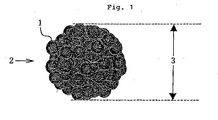
Fig. 1 is a schematic view of spherical secondary
aggregates of an activated alumina used in the present
invention.
BEST MODE FOR CARRYING OUT THE INVENTION
As shown in Fig. 1, each spherical secondary aggregate 2
of activated alumina used in the present invention is an
aggregate of a plurality of particles 1 of activated alumina
(primary particles) and is spherical on the whole. Such
secondary aggregates of activated alumina are advantageous
because due to a decomposition mechanism catalyzed by the
activated alumina, liquid decomposed matters resulting from
thermal decomposition on sliding faces are removed by their
accelerated catalytic decomposition, thereby preventing
fading phenomenon which causes considerable reduction of
friction coefficient.
Spherical secondary aggregates of activated alumina are
obtainable by making small particles of aluminum hydroxide to
gel, and dehydrating and drying the gel so as to form
spherical aggregates.
In a cold, dry environment, the film formed on a
frictional sliding face and composed mainly of organic
matters rapidly increases friction coefficient, so that high
frequency noise (grabbing chatter) is easily made. The use
of an activated alumina, particularly the spherical secondary
aggregates of activated alumina used in the present
invention, accelerates the catalytic decomposition of the
film of the organic matters by the decomposition mechanism
due to the catalysis of activated alumina and controls the
thickness of the sliding film on the sliding face, thereby
preventing a rapid increase of friction coefficient and
reducing the phenomenon of grabbing chatter. The spherical
secondary aggregates of activated alumina are particularly
effective in reduction of grabbing chatter after allowing to
cool.
It is necessary that the secondary aggregates of
activated alumina to be used in the present invention are
spherical. For example, secondary aggregates of activated
alumina having sharp edges or protrusions suffer the
shortcoming of rapidly grinding the frictional sliding faces
of friction materials.
The spherical secondary aggregates 2 of activated
alumina that are used in the present invention and shown in
Fig. 1 are 10 to 300 µm in diameter 3, preferably 75 to 300
µm, more preferably 100 to 300 µm. Spherical secondary
aggregates of more than 300 µm in diameter may form a
frictional sliding face that lacks uniformity in the
characteristics of attacking to rotors, so that the thickness
of the sliding film on the frictional sliding faces cannot be
controlled and high frequency noise (grabbing chatter) cannot
be prevented enough. Those of less than 10 µm in diameter
may hardly maintain their spherical shapes and loose stable
pores. The diameter of the spherical secondary aggregates of
activated alumina may be measured by using a laser
diffraction particle size distribution analyzer.
The spherical secondary aggregates of activated alumina
having diameters of 10 to 300 µm are obtainable by arranging
sieves one over another so that upper sieves have rougher
meshes, with the lowest sieve having the smallest meshes of
10 µm in opening size and with the top sieve having the
largest meshes of 300 µm in opening size, placing spherical
secondary aggregates of activated alumina in the sieve of 300
µm-mesh, shaking them for 20 minutes with a shaking machine
defined by JIS K 1555, and correcting from particles passed
through the sieve of 300 µm-mesh those remaining on and over
the sieve of 10 µm-mesh.
For example, placing sieves of opening sizes increasing
by 25 µm one over another gives portions of spherical
secondary aggregates of activated alumina having various
ranges of diameters different by 25 µm.
The spherical secondary aggregates of activated alumina
used in the present invention preferably have a specific
surface area of 100 to 400 m2/g, more preferably 200 to 400
m2/g, further preferably 200 to 300 m2/g. Pores of the
spherical secondary aggregates of activated alumina having
the above-described ranges of specific surface areas are
suited to the adsorption of the liquid decomposed matters
resulting from thermal decomposition. The catalytic
decomposition mechanism of a part of the liquid decomposed
matters taken in the pores accelerates the catalytic
decomposition, so that the liquid matters on sliding faces
are removed. Thus the reduction of friction coefficient can
be prevented and fading phenomenon can be reduced. Spherical
secondary aggregates of activated alumina having a specific
surface area of more than 400 m2/g tend to be cracked on
molding friction materials, and the molded friction materials
have poor strength and considerably lose frictional
characteristics. On the other hand, those having a specific
surface area of less than 100 m2/g may be less effective in
exhibiting their high adsorption characteristics, failing to
reduce the fading phenomenon. The specific surface area of
the spherical secondary aggregates of activated alumina may
be measured by the BET adsorption method.
In the present invention, the above-described spherical
secondary aggregates of activated alumina, which have a
diameter of 10 to 300 µm and are used as a friction adjusting
agent, may be substituted by primary particles of activated
alumina (they, hereinafter, will be called primary particles
of activated alumina) that are yet to be aggregated into
secondary aggregates and have a specific surface area of 100
to 400 m2/g and an average particle diameter of 1 to 200 µm.
The primary particles of activated alumina having the
above-mentioned specific surface area can also adsorb in
their pores the liquid decomposed matters resulting from
thermal decomposition. The catalytic decomposition mechanism
of a part of the liquid decomposed matters taken in the pores
accelerates the catalytic decomposition, so that the liquid
matters on sliding faces are removed. Thus the reduction of
friction coefficient can be prevented and fading phenomenon
can be reduced.
The primary particles of activated alumina used in the
present invention preferably have a specific surface area of
100 to 400 m2/g, more preferably 200 to 400 m2/g, further
preferably 200 to 300 m2/g. Primary particles of activated
alumina having a specific surface area of more than 400 m2/g
will be cracked on molding friction materials, giving molded
friction materials having poor strength and considerably
inferior frictional characteristics. On the other hand,
those having a specific surface area of less than 100 m2/g
will be less effective in exhibiting their high adsorption
characteristics, failing to reduce fading phenomenon. The
specific surface area of the primary particles of activated
alumina may be measured by the BET adsorption method.
The primary particles of activated alumina have an
average particle diameter of 1 to 200 µm, preferably 3 to 100
µm, more preferably 5 to 70 µm. Primary particles of
activated alumina having an average particle diameter of more
than 200 µm will be less effective in exhibiting their
excellent adsorption characteristics, failing to reduce
fading phenomenon. Those having an average particle diameter
of less than 1 µm will have considerably reduced specific
surface area, failing to reduce fading phenomenon. The
average particle diameter of primary particles of activated
alumina may be measured using a laser diffraction particle
size distribution analyzer.
The primary particles of activated alumina used in the
present invention are particles of γ-alumina, which are
obtainable by drying aluminum hydroxide at a low temperature
and then calcining (activating) the resulting alumina gel at
500 to 800°C, and are characterized in having a specific
surface area of 100 to 400 m2/g and an average particle
diameter of 1 to 200 µm and having pores extending from their
respective surfaces to centers.
In the present invention, it is necessary to use as a
friction adjusting agent the above-described spherical
secondary aggregates of activated alumina or primary
particles of activated alumina, namely γ-alumina. α-alumina
(having a specific surface area of about 12 m2/g)
adversely affects the characteristics of attacking to disc
rotors, thereby increasing grabbing chatter both before and
after allowing to cool and causing fading phenomenon that is
a considerable reduction of friction coefficient at high
temperatures.
The pores of the spherical secondary particles or
primary particles of activated alumina to be used in the
present invention preferably have an average pore diameter of
10 to 150Å, more preferably 20 to 130Å, further preferably
50 to 100Å. The average pore diameter may be measured by
the BET adsorption method.
The content of the spherical secondary aggregates of
activated alumina or the primary particles of activated
alumina in the whole composition is preferably 0.1 to 30 % by
weight, more preferably 0.3 to 25 % by weight, further
preferably 0.5 to 20 % by weight. If it is more than 30 % by
weight, excessive attacking to rotors may aggravates grabbing
chatter, and if less than 0.1 % by weight, it may become
difficult to prevent fading phenomenon that is a considerable
reduction of friction coefficient at high temperatures.
Particularly, the content of the primary particles of
activated alumina in the whole friction material composition
is preferably 1 to 30 % by weight, more preferably 3 to 25 %
by weight, further preferably 5 to 20 % by weight, while the
content of the spherical secondary aggregates of activated
alumina in the whole friction material composition is
preferably 0.1 to 10 % by weight, more preferably 0.3 to 5 %
by weight, further preferably 0.5 to 3 % by weight.
The materials of the friction material of the present
invention are not particularly limited, and may be either of
a semi-metallic type or of a non-steel type.
In the friction material composition of the present
invention, the fibrous material, the binder and other
friction adjusting agents, which may be used in addition to
the above-described spherical secondary aggregates of
activated alumina or the primary particles of activated
alumina, are not particularly limited, and may be known ones.
Non-limiting examples of usable fibrous materials include
steel fiver, brass fiber, copper fiber, aramid fiber, acrylic
fiber, phenolic fiber, wollastonite, ceramic fiber, rock
wool, potassium titanate fiber and carbon fiber. Non-limiting
examples of usable binders include thermosetting
resins, such as phenolic resin, epoxy resin, melamine resin
and cashew resin, and rubber compositions, such as NBR, SBR
ad IR. Non-limiting examples of usable friction adjusting
agents other than the spherical secondary aggregates of
activated alumina and the primary particles of activated
alumina include organic friction adjusting agents, such as
cashew dust and rubber dust and inorganic friction adjusting
agents, such as barium sulfate, graphite, antimony
trisulfide, zeolite, mica, zirconia, silica, zeolite, calcium
carbonate and magnesium carbonate. Metal powders, such as
brass and copper powders, may optionally be added.
The content of the fibrous material in the whole
friction material composition is preferably 30 to 60 % by
weight, more preferably 40 to 50 % by weight. The content of
the binder in the whole friction material composition is
preferably 3 to 25 % by weight, more preferably 5 to 20 % by
weight, further preferably 7 to 12 % by weight. The content
of the organic friction adjusting agent in the whole
composition is preferably 1 to 15 % by weight, more
preferably 2 to 12 % by weight. The content of the inorganic
friction adjusting agent other than activated alumina in the
whole friction material composition is preferably 20 to 50 %
by weight, more preferably 25 to 45 % by weight.
The content of the optional metal powder in the whole
friction material composition is preferably 1 to 20 % by
weight, more preferably 3 to 15 % by weight.
These components are mixed to keep the whole composition
100 % by weight.
The friction material of the present invention is
obtainable by mixing the friction material composition, which
comprises the fibrous material, the binder, the friction
adjusting agent and other optional components including the
optional metal powder, to form a uniform mixture, pre-molding
the mixture, inserting a backing metal and the pre-molded
product in a mold, and then carrying out molding by
thermocompression molding, optional after-heat treatment, and
scorching for removing organic components exposed on the
surface.
The pre-molding is carried out at room temperature with
a pressure lower than that for the molding by
thermocompression molding. The thermocompression molding
temperature is preferably 130 to 170°C, more preferably 140
to 160°C. The thermocompression molding pressure is
preferably 20 to 60 MPa, more preferably 30 to 50 MPa. The
compression time is preferably 1 to 10 minutes, more
preferably 3 to 7 minutes. The temperature of the optional
heat treatment is preferably 150 to 300°C, more preferably
170 to 250°C. The heat treatment time is preferably 2 to 8
hours, more preferably 3 to 7 hours. Non-limiting examples
of the methods of the scorching include pressing a hot plate
to the friction material, heating with direct fire, such as
flames of a gas, or heating by irradiation of far infrared
rays or the like. The scorching conditions may be varied
depending on the materials used. For example, in cases where
the binder is a phenolic resin, the scorching temperature is
preferably 400 to 600°C, more preferably 450 to 500°C. The
treating time is preferably 1 to 10 minutes, more preferably
2 to 8 minutes.
Hereinafter, the invention will be described referring
to working examples.
EXAMPLES 1-8 AND COMPARATIVE EXAMPLES 1-9
EXAMPLE 1
A γ-alumina (primary particles of activated alumina)
having an average pore diameter of 50Å, an average particle
diameter of 50 µm and a specific surface area of 400 m2/g
and other components listed in Table 1 were mixed in the
amounts listed in Table 1 in an mixer at a rotational speed
of 3000 r/min for 4 minutes, to give a friction material
composition A.
EXAMPLE 2
A γ-alumina (primary particles of activated alumina)
having an average pore diameter of 150Å, an average particle
diameter of 50 µm and a specific surface area of 400 m2/g
and other components listed in Table 1 were mixed in the
amounts listed in Table 1 in an mixer at a rotational speed
of 3000 r/min for 4 minutes, to give a friction material
composition B.
EXAMPLE 3
A γ-alumina (primary particles of activated alumina)
having an average pore diameter of 50Å, an average particle
diameter of 50 µm and a specific surface area of 100 m2/g
and other components listed in Table 1 were mixed in the
amounts listed in Table 1 in an mixer at a rotational speed
of 3000 r/min for 4 minutes, to give a friction material
composition C.
EXAMPLE 4
A γ-alumina (primary particles of activated alumina)
having an average pore diameter of 150Å, an average particle
diameter of 50 µm and a specific surface area of 100 m2/g
and other components listed in Table 1 were mixed in the
amounts listed in Table 1 in an mixer at a rotational speed
of 3000 r/min for 4 minutes, to give a friction material
composition D.
COMPARATIVE EXAMPLE 1
A γ-alumina (primary particles of activated alumina)
having an average pore diameter of 100Å, an average particle
diameter of 50 µm and a specific surface area of 50 m2/g and
other components listed in Table 1 were mixed in the amounts
listed in Table 1 in an mixer at a rotational speed of 3000
r/min for 4 minutes, to give a friction material composition
E.
COMPARATIVE EXAMPLE 2
A γ-alumina (primary particles of activated alumina)
having an average pore diameter of 100Å, an average particle
diameter of 50 µm and a specific surface area of 500 m2/g
and other components listed in Table 1 were mixed in the
amounts listed in Table 1 in an mixer at a rotational speed
of 3000 r/min for 4 minutes, to give a friction material
composition F.
COMPARATIVE EXAMPLE 3
A γ-alumina (primary particles of activated alumina)
having an average pore diameter of 30Å, an average particle
diameter of 50 µm and a specific surface area of 50 m2/g and
other components listed in Table 1 were mixed in the amounts
listed in Table 1 in an mixer at a rotational speed of 3000
r/min for 4 minutes, to give a friction material composition
G.
COMPARATIVE EXAMPLE 4
A γ-alumina (primary particles of activated alumina)
having an average pore diameter of 200Å, an average particle
diameter of 50 µm and a specific surface area of 50 m2/g and
other components listed in Table 1 were mixed in the amounts
listed in Table 1 in an mixer at a rotational speed of 3000
r/min for 4 minutes, to give a friction material composition
H.
COMPARATIVE EXAMPLE 5
A non-activated α-alumina having an average particle
diameter of 10 µm and a specific surface area of 20 m2/g and
other components listed in Table 1 were mixed in the amounts
listed in Table 1 in an mixer at a rotational speed of 3000
r/min for 4 minutes, to give a friction material composition
I.
Each of the friction material compositions A, B, C and D
obtained in Examples 1-4 and the friction material
compositions E, F, G, H and I obtained in Comparative
Examples 1-5 was pre-molded by compressing for 5 seconds at
room temperature with a pressure of 20 MPa. Each of the
resulting pre-moldings and a backing metal for a disc brake
pad were inserted in a mold, and thermocompression molding
was carried out for 5 minutes at a temperature of 152.5±
2.5°C with a pressure of 49 MPa. The products were heat
treated at 200°C for 5 hours, polished after cooling and
subjected to surface scorching treatment at 470±10°C for 5
minutes, to obtain disc brake pads A, B, C, D, E, F, G, H and
I of 127 mm long between one and the other end.
| (unit: wt%) |
| Components | Example No. | Comparative Example No. |
| | 1 | 2 | 3 | 4 | 1 | 2 | 3 | 4 | 5 |
| Phenolic resin | 15.0 | 15.0 | 15.0 | 15.0 | 15.0 | 15.0 | 15.0 | 15.0 | 15.0 |
| NBR powder | 5.0 | 5.0 | 5.0 | 5.0 | 5.0 | 5.0 | 5.0 | 5.0 | 5.0 |
| Copper fiber | 18.0 | 18.0 | 18.0 | 18.0 | 18.0 | 18.0 | 18.0 | 18.0 | 18.0 |
| Ceramic fiber | 7.0 | 7.0 | 7.0 | 7.0 | 7.0 | 7.0 | 7.0 | 7.0 | 7.0 |
| Aramid fiber | 5.0 | 5.0 | 5.0 | 5.0 | 5.0 | 5.0 | 5.0 | 5.0 | 5.0 |
| Potassium titanate fiber | 10.0 | 10.0 | 10.0 | 10.0 | 10.0 | 10.0 | 10.0 | 10.0 | 10.0 |
| Zirconia | 3.0 | 3.0 | 3.0 | 3.0 | 3.0 | 3.0 | 3.0 | 3.0 | 3.0 |
| Graphite | 5.0 | 5.0 | 5.0 | 5.0 | 5.0 | 5.0 | 5.0 | 5.0 | 5.0 |
| Barium sulfate | 13.0 | 13.0 | 13.0 | 13.0 | 13.0 | 13.0 | 13.0 | 13.0 | 13.0 |
| Cashew dust | 6.0 | 6.0 | 6.0 | 6.0 | 6.0 | 6.0 | 6.0 | 6.0 | 6.0 |
| Antimony trisulfide | 3.0 | 3.0 | 3.0 | 3.0 | 3.0 | 3.0 | 3.0 | 3.0 | 3.0 |
| γ-alumina | Content | 10.0 | 10.0 | 10.0 | 10.0 | 10.0 | 10.0 | 10.0 | 10.0 | - |
| Average pore diameter (Å) | 50 | 150 | 50 | 150 | 100 | 100 | 30 | 200 | - |
| Specific surface area (m2/g) | 400 | 400 | 100 | 100 | 50 | 500 | 50 | 50 | - |
| α-alumina | Content | - | - | - | - | - | - | - | - | 10.0 |
| Particle diameter (µm) | - | - | - | - | - | - | - | - | 10 |
| Specific surface area (m2/g) | - | - | - | - | - | - | - | - | 20 |
The disc brake pads A, B, C and D of the present
invention and the comparative disc brake pads E, F, G, H and
I were tested for comparison. The results are shown in Table
2. The tests were carried out as follows.
1 ○ Evaluation of Fading
The passenger car brake dynamo meter testing method
according to JASO C406-87 was conducted by using a dynamo
tester, and the minimum friction coefficient (µ) during the
first fading test and the minimum friction coefficient (µ)
during one braking were determined.
2 ○ Evaluation of Grabbing Chatter
In an urban district, 1000 km was covered by a 2000-cc
automatic clutch car of 1600 kg in weight and of a collet
type (cylinder surface area: 28 cm2) in brake type, and the
grabbing chatter percentage was determined from the following
equation.
grabbing chatter percentage (%) = (number of the times of
grabbing chatter)/(number of the times of braking) × 100
3 ○ Evaluation of Abrasion
The passenger car brake dynamometer test according to
JASO C406-87 was carried out, and then the abrasions of disc
rotors were measured.
| | Minimum friction coefficient during fading test(µ) | Minimum friction coefficient during one braking(µ) | Percentage of grabbing chatter (%) | Abrasion of disc rotor (µm) |
| Ex. 1 | 0.33 | 0.26 | 0.23 | 11.2 |
| Ex. 2 | 0.35 | 0.28 | 0.17 | 9.8 |
| Ex. 3 | 0.30 | 0.21 | 0.20 | 10.5 |
| Ex. 4 | 0.32 | 0.23 | 0.15 | 12.2 |
| Comp. Ex. 1 | 0.20 | 0.16 | 0.56 | 10.8 |
| Comp. Ex. 2 | 0.24 | 0.19 | 0.35 | 12.8 |
| Comp. Ex. 3 | 0.18 | 0.13 | 0.86 | 11.1 |
| Comp. Ex. 4 | 0.23 | 0.17 | 0.44 | 13.3 |
| Comp. Ex. 5 | 0.16 | 0.12 | 2.25 | 45.3 |
As to the percentage of grabbing chatter and the abrasion of
disc rotor, the less, the better, and as to the friction
coefficient, the larger, the better.
As apparent from Table 2, the disc brake pads produced
from the friction material compositions of Examples according
to the present invention caused less fading phenomenon due to
less reduction of friction coefficient, were less abrasive to
disc rotors and caused less grabbing chatter. To the
contrary, the disc brake pads produced by using the friction
material compositions of Comparative Examples 1-4 contained
activated alumina, but caused larger reductions of friction
coefficient at high temperatures and also caused grabbing
chatter more frequently.
The disc brake pad produced by using the friction
material composition of Comparative Example 5 was extremely
abrasive to the disc rotor and caused a larger reduction of
friction coefficient at high temperatures and considerably
frequent grabbing chatter.
Example 5
A spherical γ-alumina (spherical secondary aggregates
of activated alumina) having an average pore diameter of 50Å,
particle diameters of 75 ± 25 µm and a specific surface
area of 250 m2/g and other components listed in Table 3 were
mixed in the amounts listed in Table 3 in an mixer at a
rotational speed of 3000 r/min for 4 minutes, to give a
friction material composition J.
Example 6
A spherical γ-alumina (spherical secondary aggregates
of activated alumina) having an average pore diameter of 50Å,
particle diameters of 250 ± 25 µm and a specific surface
area of 250 m2/g and other components listed in Table 3 were
mixed in the amounts listed in Table 3 in an mixer at a
rotational speed of 3000 r/min for 4 minutes, to give a
friction material composition K.
Example 7
A spherical γ-alumina (spherical secondary aggregates
of activated alumina) having an average pore diameter of
100Å, particle diameters of 75 ± 25 µm and a specific
surface area of 200 m2/g and other components listed in Table
3 were mixed in the amounts listed in Table 3 in an mixer at
a rotational speed of 3000 r/min for 4 minutes, to give a
friction material composition L.
Example 8
A spherical γ-alumina (spherical secondary aggregates
of activated alumina) having an average pore diameter of
100Å, particle diameters of 250 ± 25 µm and a specific
surface area of 200 m2/g and other components listed in Table
3 were mixed in the amounts listed in Table 3 in an mixer at
a rotational speed of 3000 r/min for 4 minutes, to give a
friction material composition M.
Comparative Example 6
A spherical γ-alumina (spherical secondary aggregates
of activated alumina) having an average pore diameter of
100Å, particle diameters of 10 ± 5 µm and a specific
surface area of 200 m2/g and other components listed in Table
3 were mixed in the amounts listed in Table 3 in an mixer at
a rotational speed of 3000 r/min for 4 minutes, to give a
friction material composition N.
Comparative Example 7
A spherical γ-alumina (spherical secondary aggregates
of activated alumina) having an average pore diameter of
100Å, particle diameters of 350 ± 25 µm and a specific
surface area of 200 m2/g and other components listed in Table
3 were mixed in the amounts listed in Table 3 in an mixer at
a rotational speed of 3000 r/min for 4 minutes, to give a
friction material composition O.
Comparative Example 8
A non-activated α-alumina having a particle diameter of
10 µm and a specific surface area of 20 m2/g and other
components listed in Table 3 were mixed in the amounts listed
in Table 3 in an mixer at a rotational speed of 3000 r/min
for 4 minutes, to give a friction material composition P.
Comparative Example 9
A non-activated α-alumina having a particle diameter of
10 µm and a specific surface area of 20 m2/g and other
components listed in Table 3 were mixed in the amounts listed
in Table 3 in an mixer at a rotational speed of 3000 r/min
for 4 minutes, to give a friction material composition Q.
Each of the friction material compositions J, K, L and M
obtained in Examples 5-8 and the friction material
compositions N, O, P and Q obtained in Comparative Examples
6-9 was pre-molded by compressing for 5 seconds at room
temperature and with a pressure of 20 MPa. Each of the
resulting pre-moldings and a backing metal for a disc brake
pad were inserted in a mold, and thermocompression molding
was carried out for 5 minutes at a temperature of 152.5±
2.5°C with a pressure of 49 MPa. The products were heat
treated at 200°C for 5 hours, polished after cooling and
subjected to surface scorching treatment at 470±10°C for 5
minutes, to obtain disc brake pads J, K, L, M, N, O, P and Q
of 127 mm long between one and the other end.
| (unit: wt%) |
| Components | Example No. | Comparative Example No. |
| | 5 | 6 | 7 | 8 | 6 | 7 | 8 | 9 |
| Phenolic resin | 15.0 | 15.0 | 15.0 | 15.0 | 15.0 | 15.0 | 15.0 | 15.0 |
| NBR powder | 5.0 | 5.0 | 5.0 | 5.0 | 5.0 | 5.0 | 5.0 | 5.0 |
| Copper fiber | 18.0 | 18.0 | 18.0 | 18.0 | 18.0 | 18.0 | 18.0 | 18.0 |
| Ceramic fiber | 7.0 | 7.0 | 7.0 | 7.0 | 7.0 | 7.0 | 7.0 | 7.0 |
| Aramid fiber | 5.0 | 5.0 | 5.0 | 5.0 | 5.0 | 5.0 | 5.0 | 5.0 |
| Potassium titanate fiber | 10.0 | 10.0 | 10.0 | 10.0 | 10.0 | 10.0 | 10.0 | 10.0 |
| Zirconia | 3.0 | 3.0 | 3.0 | 3.0 | 3.0 | 3.0 | 3.0 | 3.0 |
| Graphite | 5.0 | 5.0 | 5.0 | 5.0 | 5.0 | 5.0 | 5.0 | 5.0 |
| Barium sulfate | 22.0 | 22.0 | 22.0 | 22.0 | 22.0 | 22.0 | 22.0 | 22.5 |
| Cashew dust | 6.0 | 6.0 | 6.0 | 6.0 | 6.0 | 6.0 | 6.0 | 6.0 |
| Antimony trisulfide | 3.0 | 3.0 | 3.0 | 3.0 | 3.0 | 3.0 | 3.0 | 3.0 |
| γ-alumina | Content | 1.0 | 1.0 | 1.0 | 1.0 | 1.0 | 1.0 | - | - |
| Average diameter diameter (Å) | 50 | 50 | 100 | 100 | 100 | 100 | - | - |
| Diameter (µm) | 75 ±25 | 250 ±25 | 75 ±25 | 250 ±25 | 15 ±10 | 350 ±25 | - | - |
| α-alumina | Content | - | - | - | - | - | - | 1.0 | 0.5 |
| Diameter (µm) | - | - | - | - | - | - | 10 | 10 |
The disc brake pads J, K, L and M of the present
invention and the comparative disc brake pads N, O, P and Q
were tested for comparison. The results are shown in Table
4. The tests were carried out as follows.
1 ○ Evaluation of Grabbing Chatter
In an urban district, 1000 km was covered by a 2000-cc
automatic clutch car of 1600 kg in weight and of a collet
type (cylinder surface area: 28 cm2) in brake type, and the
grabbing chatter percentage was determined from the following
equation.
grabbing chatter percentage (%) = (number of the times of
grabbing chatter)/(number of the times of braking) × 100
2 ○ Evaluation of Grabbing Chatter after Allowing to Cool
Passenger car brake dynamo meter testing method was
conducted in an environment of room temperature (5°C),
humidity of 40% and absolute humidity of 2.8 g/m3, and the
grabbing chatter percentage was determined from the above-mentioned
equation.
3 ○ Evaluation of Fading
The passenger car brake dynamo meter testing method
according to JASO C406-87 was conducted by using a dynamo
tester, and the minimum friction coefficient (µ) during the
first fading test and the minimum friction coefficient (µ)
during one braking were determined.
| | Percentage of grabbing chatter (%) | Percentage of grabbing chatter after allowing to cool (%) | Minimum friction coefficient during fading test(µ) | Minimum friction coefficient during fading during braking(µ) |
| Ex. 5 | 0.21 | 0.10 | 0.30 | 0.21 |
| Ex. 6 | 0.25 | 0.08 | 0.28 | 0.23 |
| Ex. 7 | 0.23 | 0 | 0.26 | 0.21 |
| Ex. 8 | 0.25 | 0.06 | 0.28 | 0.19 |
| Comp. Ex. 6 | 0.43 | 0.32 | 0.24 | 0.15 |
| Comp. Ex. 7 | 0.53 | 0.43 | 0.24 | 0.15 |
| Comp. Ex. 8 | 0.63 | 0.52 | 0.22 | 0.17 |
| Comp. Ex. 9 | 0.72 | 0.63 | 0.23 | 0.15 |
| *1 As to the percentage of grabbing chatter and that of grabbing chatter after cooling, the less, the better. |
| *2 As to the friction coefficient, the larger, the better. |
As apparent from Table 4, the disc brake pads produced
by using the friction material compositions of Examples
according to the present invention caused less grabbing
chatter and less grabbing chatter after allowing to cool, and
caused less fading phenomenon due to less reductions of
friction coefficient. To the contrary, the disc brake pads
produced by using the friction material compositions of
Comparative Examples 6 and 7 contained spherical secondary
aggregates of activated alumina, but caused grabbing chatter
and grabbing chatter after allowing to cool more frequently,
and caused considerable reduction of friction coefficient at
high temperatures.
The disc brake pads produced by using the friction
material compositions of Comparative Examples 8 and 9 caused
grabbing chatter and grabbing chatter after allowing to cool
very frequently, and caused considerable reduction of
friction coefficient at high temperatures.
INDUSTRIAL APPLICABILITY
The friction material produced by using the friction
material composition of the present invention exhibits
significant improvement with respect to fading phenomenon,
without adversely affecting its characteristics of attacking
to mating disc rotors and without marked reduction of the
friction coefficient at high temperatures, and can control
the thickness of the sliding film formed on its frictional
sliding face and prevent high frequency noise (grabbing
chatter). The friction material, therefore, is very suitable
for industrial application.