EP1445253B1 - 4,4-difluoro-1, 2, 3, 4-tetrahydro-5h-1-benzazepine derivatives or salts thereof - Google Patents
4,4-difluoro-1, 2, 3, 4-tetrahydro-5h-1-benzazepine derivatives or salts thereof Download PDFInfo
- Publication number
- EP1445253B1 EP1445253B1 EP02781759A EP02781759A EP1445253B1 EP 1445253 B1 EP1445253 B1 EP 1445253B1 EP 02781759 A EP02781759 A EP 02781759A EP 02781759 A EP02781759 A EP 02781759A EP 1445253 B1 EP1445253 B1 EP 1445253B1
- Authority
- EP
- European Patent Office
- Prior art keywords
- substituted
- group
- tetrahydro
- difluoro
- pra
- Prior art date
- Legal status (The legal status is an assumption and is not a legal conclusion. Google has not performed a legal analysis and makes no representation as to the accuracy of the status listed.)
- Expired - Lifetime
Links
- DTSDJGNXLLPHFA-UHFFFAOYSA-N 4,4-difluoro-1,2,3,5-tetrahydro-1-benzazepine Chemical class C1C(F)(F)CCNC2=CC=CC=C21 DTSDJGNXLLPHFA-UHFFFAOYSA-N 0.000 title claims abstract description 15
- 150000003839 salts Chemical class 0.000 title claims description 38
- 239000003814 drug Substances 0.000 claims abstract description 29
- KBZOIRJILGZLEJ-LGYYRGKSSA-N argipressin Chemical compound C([C@H]1C(=O)N[C@@H](CCC(N)=O)C(=O)N[C@@H](CC(N)=O)C(=O)N[C@@H](CSSC[C@@H](C(N[C@@H](CC=2C=CC(O)=CC=2)C(=O)N1)=O)N)C(=O)N1[C@@H](CCC1)C(=O)N[C@@H](CCCN=C(N)N)C(=O)NCC(N)=O)C1=CC=CC=C1 KBZOIRJILGZLEJ-LGYYRGKSSA-N 0.000 claims abstract description 24
- 229940079593 drug Drugs 0.000 claims abstract description 16
- 208000028235 central diabetes insipidus Diseases 0.000 claims abstract description 12
- 208000003450 Neurogenic Diabetes Insipidus Diseases 0.000 claims abstract description 11
- 201000010064 diabetes insipidus Diseases 0.000 claims abstract description 11
- 201000005119 neurohypophyseal diabetes insipidus Diseases 0.000 claims abstract description 11
- 101800001144 Arg-vasopressin Proteins 0.000 claims abstract description 10
- 102100026383 Vasopressin-neurophysin 2-copeptin Human genes 0.000 claims abstract description 10
- 206010029446 nocturia Diseases 0.000 claims abstract description 10
- 150000001875 compounds Chemical class 0.000 claims description 154
- 125000002023 trifluoromethyl group Chemical group FC(F)(F)* 0.000 claims description 135
- 125000000217 alkyl group Chemical group 0.000 claims description 54
- -1 -CO2-RA Chemical group 0.000 claims description 49
- 125000003236 benzoyl group Chemical group [H]C1=C([H])C([H])=C(C([H])=C1[H])C(*)=O 0.000 claims description 31
- DLFVBJFMPXGRIB-UHFFFAOYSA-N Acetamide Chemical compound CC(N)=O DLFVBJFMPXGRIB-UHFFFAOYSA-N 0.000 claims description 27
- 125000003118 aryl group Chemical group 0.000 claims description 20
- 229910052736 halogen Inorganic materials 0.000 claims description 20
- 150000002367 halogens Chemical group 0.000 claims description 19
- 125000002924 primary amino group Chemical group [H]N([H])* 0.000 claims description 14
- 125000003917 carbamoyl group Chemical group [H]N([H])C(*)=O 0.000 claims description 13
- 125000004432 carbon atom Chemical group C* 0.000 claims description 12
- 125000001424 substituent group Chemical group 0.000 claims description 11
- 125000003277 amino group Chemical group 0.000 claims description 10
- 125000001309 chloro group Chemical group Cl* 0.000 claims description 10
- 125000000753 cycloalkyl group Chemical group 0.000 claims description 10
- 125000000623 heterocyclic group Chemical group 0.000 claims description 10
- 125000002947 alkylene group Chemical group 0.000 claims description 8
- 125000003178 carboxy group Chemical group [H]OC(*)=O 0.000 claims description 8
- OKTJSMMVPCPJKN-UHFFFAOYSA-N Carbon Chemical group [C] OKTJSMMVPCPJKN-UHFFFAOYSA-N 0.000 claims description 6
- 229910052757 nitrogen Inorganic materials 0.000 claims description 6
- 239000008194 pharmaceutical composition Substances 0.000 claims description 6
- 239000000018 receptor agonist Substances 0.000 claims description 6
- 229940044601 receptor agonist Drugs 0.000 claims description 6
- 125000004122 cyclic group Chemical group 0.000 claims description 5
- 125000003342 alkenyl group Chemical group 0.000 claims description 4
- 125000005842 heteroatom Chemical group 0.000 claims description 4
- 125000000717 hydrazino group Chemical group [H]N([*])N([H])[H] 0.000 claims description 4
- 125000004433 nitrogen atom Chemical group N* 0.000 claims description 4
- 125000002777 acetyl group Chemical group [H]C([H])([H])C(*)=O 0.000 claims description 3
- 239000004480 active ingredient Substances 0.000 claims description 3
- 125000005931 tert-butyloxycarbonyl group Chemical group [H]C([H])([H])C(OC(*)=O)(C([H])([H])[H])C([H])([H])[H] 0.000 claims description 3
- RMBNRLDCAGTRHR-ZHZULCJRSA-N (2z)-2-[4,4-difluoro-1-[2-methyl-4-(3-methylpyrazol-1-yl)benzoyl]-2,3-dihydro-1-benzazepin-5-ylidene]acetamide Chemical compound N1=C(C)C=CN1C(C=C1C)=CC=C1C(=O)N1C2=CC=CC=C2C(=C/C(N)=O)/C(F)(F)CC1 RMBNRLDCAGTRHR-ZHZULCJRSA-N 0.000 claims description 2
- XJAAGIPVUPTVBV-AQTBWJFISA-N (2z)-2-[4,4-difluoro-1-[4-(3-methylpyrazol-1-yl)-2-(trifluoromethyl)benzoyl]-2,3-dihydro-1-benzazepin-5-ylidene]acetamide Chemical compound N1=C(C)C=CN1C(C=C1C(F)(F)F)=CC=C1C(=O)N1C2=CC=CC=C2C(=C/C(N)=O)/C(F)(F)CC1 XJAAGIPVUPTVBV-AQTBWJFISA-N 0.000 claims description 2
- ASCIOPIXFWDYNH-WQRHYEAKSA-N (2z)-2-[4,4-difluoro-1-[4-(4-methylpyrazol-1-yl)-2-(trifluoromethyl)benzoyl]-2,3-dihydro-1-benzazepin-5-ylidene]acetamide Chemical compound C1=C(C)C=NN1C(C=C1C(F)(F)F)=CC=C1C(=O)N1C2=CC=CC=C2C(=C/C(N)=O)/C(F)(F)CC1 ASCIOPIXFWDYNH-WQRHYEAKSA-N 0.000 claims description 2
- BNXHTZDLWITTKP-FPXKJXHESA-N 2-[[(2z)-2-[1-[2-chloro-4-[(3r)-3-methylpyrrolidin-1-yl]benzoyl]-4,4-difluoro-2,3-dihydro-1-benzazepin-5-ylidene]acetyl]amino]acetamide Chemical compound C1[C@H](C)CCN1C(C=C1Cl)=CC=C1C(=O)N1C2=CC=CC=C2C(=C/C(=O)NCC(N)=O)/C(F)(F)CC1 BNXHTZDLWITTKP-FPXKJXHESA-N 0.000 claims description 2
- 125000004397 aminosulfonyl group Chemical group NS(=O)(=O)* 0.000 claims description 2
- 125000001584 benzyloxycarbonyl group Chemical group C(=O)(OCC1=CC=CC=C1)* 0.000 claims description 2
- 125000004093 cyano group Chemical group *C#N 0.000 claims description 2
- 125000003754 ethoxycarbonyl group Chemical group C(=O)(OCC)* 0.000 claims description 2
- 125000001160 methoxycarbonyl group Chemical group [H]C([H])([H])OC(*)=O 0.000 claims description 2
- 125000000449 nitro group Chemical group [O-][N+](*)=O 0.000 claims description 2
- UYWQUFXKFGHYNT-UHFFFAOYSA-N phenylmethyl ester of formic acid Natural products O=COCC1=CC=CC=C1 UYWQUFXKFGHYNT-UHFFFAOYSA-N 0.000 claims description 2
- XKJCHHZQLQNZHY-UHFFFAOYSA-N phthalimide Chemical compound C1=CC=C2C(=O)NC(=O)C2=C1 XKJCHHZQLQNZHY-UHFFFAOYSA-N 0.000 claims description 2
- GRCPGLCEGKJUFI-ULJHMMPZSA-N (2z)-2-[1-[2-chloro-4-(3-methylpyrazol-1-yl)benzoyl]-4,4-difluoro-2,3-dihydro-1-benzazepin-5-ylidene]-n-(pyridin-2-ylmethyl)acetamide Chemical compound N1=C(C)C=CN1C(C=C1Cl)=CC=C1C(=O)N(CCC\1(F)F)C2=CC=CC=C2C/1=C/C(=O)NCC1=CC=CC=N1 GRCPGLCEGKJUFI-ULJHMMPZSA-N 0.000 claims 1
- TZYCDHYHTOXKQU-FPXKJXHESA-N 2-[[(2z)-2-[4,4-difluoro-1-[4-[(3r)-3-methylpyrrolidin-1-yl]-2-(trifluoromethyl)benzoyl]-2,3-dihydro-1-benzazepin-5-ylidene]acetyl]amino]acetamide Chemical compound C1[C@H](C)CCN1C(C=C1C(F)(F)F)=CC=C1C(=O)N1C2=CC=CC=C2C(=C/C(=O)NCC(N)=O)/C(F)(F)CC1 TZYCDHYHTOXKQU-FPXKJXHESA-N 0.000 claims 1
- 125000002029 aromatic hydrocarbon group Chemical group 0.000 claims 1
- 125000001183 hydrocarbyl group Chemical group 0.000 claims 1
- 230000000694 effects Effects 0.000 abstract description 17
- VEXZGXHMUGYJMC-UHFFFAOYSA-N Hydrochloric acid Chemical compound Cl VEXZGXHMUGYJMC-UHFFFAOYSA-N 0.000 description 57
- 238000006243 chemical reaction Methods 0.000 description 55
- 239000000243 solution Substances 0.000 description 46
- 239000000203 mixture Substances 0.000 description 44
- XLYOFNOQVPJJNP-UHFFFAOYSA-N water Substances O XLYOFNOQVPJJNP-UHFFFAOYSA-N 0.000 description 41
- 239000002904 solvent Substances 0.000 description 37
- HEMHJVSKTPXQMS-UHFFFAOYSA-M Sodium hydroxide Chemical compound [OH-].[Na+] HEMHJVSKTPXQMS-UHFFFAOYSA-M 0.000 description 30
- 238000004519 manufacturing process Methods 0.000 description 30
- OKKJLVBELUTLKV-UHFFFAOYSA-N Methanol Chemical compound OC OKKJLVBELUTLKV-UHFFFAOYSA-N 0.000 description 27
- ZMXDDKWLCZADIW-UHFFFAOYSA-N N,N-Dimethylformamide Chemical compound CN(C)C=O ZMXDDKWLCZADIW-UHFFFAOYSA-N 0.000 description 27
- HEDRZPFGACZZDS-UHFFFAOYSA-N Chloroform Chemical compound ClC(Cl)Cl HEDRZPFGACZZDS-UHFFFAOYSA-N 0.000 description 26
- XEKOWRVHYACXOJ-UHFFFAOYSA-N Ethyl acetate Chemical compound CCOC(C)=O XEKOWRVHYACXOJ-UHFFFAOYSA-N 0.000 description 26
- WEVYAHXRMPXWCK-UHFFFAOYSA-N Acetonitrile Chemical compound CC#N WEVYAHXRMPXWCK-UHFFFAOYSA-N 0.000 description 21
- YXFVVABEGXRONW-UHFFFAOYSA-N Toluene Chemical compound CC1=CC=CC=C1 YXFVVABEGXRONW-UHFFFAOYSA-N 0.000 description 21
- LFQSCWFLJHTTHZ-UHFFFAOYSA-N Ethanol Chemical compound CCO LFQSCWFLJHTTHZ-UHFFFAOYSA-N 0.000 description 20
- JUJWROOIHBZHMG-UHFFFAOYSA-N Pyridine Chemical compound C1=CC=NC=C1 JUJWROOIHBZHMG-UHFFFAOYSA-N 0.000 description 20
- 239000012044 organic layer Substances 0.000 description 20
- 238000001704 evaporation Methods 0.000 description 19
- WYURNTSHIVDZCO-UHFFFAOYSA-N Tetrahydrofuran Chemical compound C1CCOC1 WYURNTSHIVDZCO-UHFFFAOYSA-N 0.000 description 18
- 239000012267 brine Substances 0.000 description 18
- 238000000034 method Methods 0.000 description 18
- HPALAKNZSZLMCH-UHFFFAOYSA-M sodium;chloride;hydrate Chemical compound O.[Na+].[Cl-] HPALAKNZSZLMCH-UHFFFAOYSA-M 0.000 description 18
- QTBSBXVTEAMEQO-UHFFFAOYSA-N Acetic acid Chemical compound CC(O)=O QTBSBXVTEAMEQO-UHFFFAOYSA-N 0.000 description 17
- 230000008020 evaporation Effects 0.000 description 17
- 102000005962 receptors Human genes 0.000 description 17
- 108020003175 receptors Proteins 0.000 description 17
- 230000002829 reductive effect Effects 0.000 description 17
- 230000005764 inhibitory process Effects 0.000 description 14
- 238000010898 silica gel chromatography Methods 0.000 description 14
- 235000019439 ethyl acetate Nutrition 0.000 description 13
- IAZDPXIOMUYVGZ-UHFFFAOYSA-N Dimethylsulphoxide Chemical compound CS(C)=O IAZDPXIOMUYVGZ-UHFFFAOYSA-N 0.000 description 12
- 238000001816 cooling Methods 0.000 description 11
- PMZURENOXWZQFD-UHFFFAOYSA-L Sodium Sulfate Chemical compound [Na+].[Na+].[O-]S([O-])(=O)=O PMZURENOXWZQFD-UHFFFAOYSA-L 0.000 description 10
- 238000003556 assay Methods 0.000 description 10
- UMJSCPRVCHMLSP-UHFFFAOYSA-N pyridine Natural products COC1=CC=CN=C1 UMJSCPRVCHMLSP-UHFFFAOYSA-N 0.000 description 10
- 102000002004 Cytochrome P-450 Enzyme System Human genes 0.000 description 9
- 108010015742 Cytochrome P-450 Enzyme System Proteins 0.000 description 9
- RTZKZFJDLAIYFH-UHFFFAOYSA-N Diethyl ether Chemical compound CCOCC RTZKZFJDLAIYFH-UHFFFAOYSA-N 0.000 description 9
- 102000004190 Enzymes Human genes 0.000 description 9
- 108090000790 Enzymes Proteins 0.000 description 9
- 239000007864 aqueous solution Substances 0.000 description 9
- 239000003795 chemical substances by application Substances 0.000 description 9
- KRKNYBCHXYNGOX-UHFFFAOYSA-N citric acid Chemical compound OC(=O)CC(O)(C(O)=O)CC(O)=O KRKNYBCHXYNGOX-UHFFFAOYSA-N 0.000 description 9
- OAYLNYINCPYISS-UHFFFAOYSA-N ethyl acetate;hexane Chemical compound CCCCCC.CCOC(C)=O OAYLNYINCPYISS-UHFFFAOYSA-N 0.000 description 9
- 125000000325 methylidene group Chemical group [H]C([H])=* 0.000 description 9
- YLQBMQCUIZJEEH-UHFFFAOYSA-N tetrahydrofuran Natural products C=1C=COC=1 YLQBMQCUIZJEEH-UHFFFAOYSA-N 0.000 description 9
- CSNNHWWHGAXBCP-UHFFFAOYSA-L Magnesium sulfate Chemical compound [Mg+2].[O-][S+2]([O-])([O-])[O-] CSNNHWWHGAXBCP-UHFFFAOYSA-L 0.000 description 8
- UIIMBOGNXHQVGW-UHFFFAOYSA-M Sodium bicarbonate Chemical class [Na+].OC([O-])=O UIIMBOGNXHQVGW-UHFFFAOYSA-M 0.000 description 8
- 239000002253 acid Substances 0.000 description 8
- 230000009435 amidation Effects 0.000 description 8
- 238000007112 amidation reaction Methods 0.000 description 8
- 239000012528 membrane Substances 0.000 description 8
- 230000004060 metabolic process Effects 0.000 description 8
- 125000002496 methyl group Chemical group [H]C([H])([H])* 0.000 description 8
- 238000010992 reflux Methods 0.000 description 8
- FPQQSJJWHUJYPU-UHFFFAOYSA-N 3-(dimethylamino)propyliminomethylidene-ethylazanium;chloride Chemical compound Cl.CCN=C=NCCCN(C)C FPQQSJJWHUJYPU-UHFFFAOYSA-N 0.000 description 7
- OAKJQQAXSVQMHS-UHFFFAOYSA-N Hydrazine Chemical compound NN OAKJQQAXSVQMHS-UHFFFAOYSA-N 0.000 description 7
- 150000002148 esters Chemical class 0.000 description 7
- CBOIHMRHGLHBPB-UHFFFAOYSA-N hydroxymethyl Chemical compound O[CH2] CBOIHMRHGLHBPB-UHFFFAOYSA-N 0.000 description 7
- 125000001997 phenyl group Chemical group [H]C1=C([H])C([H])=C(*)C([H])=C1[H] 0.000 description 7
- 238000002360 preparation method Methods 0.000 description 7
- 108010000543 Cytochrome P-450 CYP2C9 Proteins 0.000 description 6
- 102000004328 Cytochrome P-450 CYP3A Human genes 0.000 description 6
- 108010081668 Cytochrome P-450 CYP3A Proteins 0.000 description 6
- 102100029358 Cytochrome P450 2C9 Human genes 0.000 description 6
- TWRXJAOTZQYOKJ-UHFFFAOYSA-L Magnesium chloride Chemical compound [Mg+2].[Cl-].[Cl-] TWRXJAOTZQYOKJ-UHFFFAOYSA-L 0.000 description 6
- QAOWNCQODCNURD-UHFFFAOYSA-N Sulfuric acid Chemical compound OS(O)(=O)=O QAOWNCQODCNURD-UHFFFAOYSA-N 0.000 description 6
- ZMANZCXQSJIPKH-UHFFFAOYSA-N Triethylamine Chemical compound CCN(CC)CC ZMANZCXQSJIPKH-UHFFFAOYSA-N 0.000 description 6
- 235000011054 acetic acid Nutrition 0.000 description 6
- 230000002686 anti-diuretic effect Effects 0.000 description 6
- NPZTUJOABDZTLV-UHFFFAOYSA-N hydroxybenzotriazole Substances O=C1C=CC=C2NNN=C12 NPZTUJOABDZTLV-UHFFFAOYSA-N 0.000 description 6
- 125000000956 methoxy group Chemical group [H]C([H])([H])O* 0.000 description 6
- BWHMMNNQKKPAPP-UHFFFAOYSA-L potassium carbonate Chemical compound [K+].[K+].[O-]C([O-])=O BWHMMNNQKKPAPP-UHFFFAOYSA-L 0.000 description 6
- FYSNRJHAOHDILO-UHFFFAOYSA-N thionyl chloride Chemical compound ClS(Cl)=O FYSNRJHAOHDILO-UHFFFAOYSA-N 0.000 description 6
- 125000001462 1-pyrrolyl group Chemical group [*]N1C([H])=C([H])C([H])=C1[H] 0.000 description 5
- WORJEOGGNQDSOE-UHFFFAOYSA-N chloroform;methanol Chemical compound OC.ClC(Cl)Cl WORJEOGGNQDSOE-UHFFFAOYSA-N 0.000 description 5
- 238000004992 fast atom bombardment mass spectroscopy Methods 0.000 description 5
- 238000001914 filtration Methods 0.000 description 5
- 125000003226 pyrazolyl group Chemical group 0.000 description 5
- 125000000719 pyrrolidinyl group Chemical group 0.000 description 5
- JOXIMZWYDAKGHI-UHFFFAOYSA-N toluene-4-sulfonic acid Chemical compound CC1=CC=C(S(O)(=O)=O)C=C1 JOXIMZWYDAKGHI-UHFFFAOYSA-N 0.000 description 5
- 230000036325 urinary excretion Effects 0.000 description 5
- CYPYTURSJDMMMP-WVCUSYJESA-N (1e,4e)-1,5-diphenylpenta-1,4-dien-3-one;palladium Chemical compound [Pd].[Pd].C=1C=CC=CC=1\C=C\C(=O)\C=C\C1=CC=CC=C1.C=1C=CC=CC=1\C=C\C(=O)\C=C\C1=CC=CC=C1.C=1C=CC=CC=1\C=C\C(=O)\C=C\C1=CC=CC=C1 CYPYTURSJDMMMP-WVCUSYJESA-N 0.000 description 4
- LMDZBCPBFSXMTL-UHFFFAOYSA-N 1-Ethyl-3-(3-dimethylaminopropyl)carbodiimide Substances CCN=C=NCCCN(C)C LMDZBCPBFSXMTL-UHFFFAOYSA-N 0.000 description 4
- NGNBDVOYPDDBFK-UHFFFAOYSA-N 2-[2,4-di(pentan-2-yl)phenoxy]acetyl chloride Chemical compound CCCC(C)C1=CC=C(OCC(Cl)=O)C(C(C)CCC)=C1 NGNBDVOYPDDBFK-UHFFFAOYSA-N 0.000 description 4
- IJGRMHOSHXDMSA-UHFFFAOYSA-N Atomic nitrogen Chemical compound N#N IJGRMHOSHXDMSA-UHFFFAOYSA-N 0.000 description 4
- JLTDJTHDQAWBAV-UHFFFAOYSA-N N,N-dimethylaniline Chemical compound CN(C)C1=CC=CC=C1 JLTDJTHDQAWBAV-UHFFFAOYSA-N 0.000 description 4
- RWRDLPDLKQPQOW-UHFFFAOYSA-N Pyrrolidine Chemical compound C1CCNC1 RWRDLPDLKQPQOW-UHFFFAOYSA-N 0.000 description 4
- 150000004945 aromatic hydrocarbons Chemical group 0.000 description 4
- FJDQFPXHSGXQBY-UHFFFAOYSA-L caesium carbonate Chemical compound [Cs+].[Cs+].[O-]C([O-])=O FJDQFPXHSGXQBY-UHFFFAOYSA-L 0.000 description 4
- 229910000024 caesium carbonate Inorganic materials 0.000 description 4
- 150000001721 carbon Chemical group 0.000 description 4
- 229910052799 carbon Inorganic materials 0.000 description 4
- 230000018109 developmental process Effects 0.000 description 4
- 125000001495 ethyl group Chemical group [H]C([H])([H])C([H])([H])* 0.000 description 4
- 125000000524 functional group Chemical group 0.000 description 4
- 125000004536 indazol-1-yl group Chemical group N1(N=CC2=CC=CC=C12)* 0.000 description 4
- 239000003701 inert diluent Substances 0.000 description 4
- 238000002347 injection Methods 0.000 description 4
- 239000007924 injection Substances 0.000 description 4
- 230000003993 interaction Effects 0.000 description 4
- 238000001990 intravenous administration Methods 0.000 description 4
- 125000001449 isopropyl group Chemical group [H]C([H])([H])C([H])(*)C([H])([H])[H] 0.000 description 4
- BDAGIHXWWSANSR-UHFFFAOYSA-N methanoic acid Natural products OC=O BDAGIHXWWSANSR-UHFFFAOYSA-N 0.000 description 4
- CTSLXHKWHWQRSH-UHFFFAOYSA-N oxalyl chloride Chemical compound ClC(=O)C(Cl)=O CTSLXHKWHWQRSH-UHFFFAOYSA-N 0.000 description 4
- 239000000843 powder Substances 0.000 description 4
- AOJFQRQNPXYVLM-UHFFFAOYSA-N pyridin-1-ium;chloride Chemical compound [Cl-].C1=CC=[NH+]C=C1 AOJFQRQNPXYVLM-UHFFFAOYSA-N 0.000 description 4
- 239000011877 solvent mixture Substances 0.000 description 4
- 239000000758 substrate Substances 0.000 description 4
- 229910052717 sulfur Inorganic materials 0.000 description 4
- 125000004434 sulfur atom Chemical group 0.000 description 4
- 125000000999 tert-butyl group Chemical group [H]C([H])([H])C(*)(C([H])([H])[H])C([H])([H])[H] 0.000 description 4
- 210000002700 urine Anatomy 0.000 description 4
- 0 *c1c(*=C)cc(C(O)=O)c(Cl)c1 Chemical compound *c1c(*=C)cc(C(O)=O)c(Cl)c1 0.000 description 3
- NOIXNOMHHWGUTG-UHFFFAOYSA-N 2-[[4-[4-pyridin-4-yl-1-(2,2,2-trifluoroethyl)pyrazol-3-yl]phenoxy]methyl]quinoline Chemical group C=1C=C(OCC=2N=C3C=CC=CC3=CC=2)C=CC=1C1=NN(CC(F)(F)F)C=C1C1=CC=NC=C1 NOIXNOMHHWGUTG-UHFFFAOYSA-N 0.000 description 3
- UHOVQNZJYSORNB-UHFFFAOYSA-N Benzene Chemical compound C1=CC=CC=C1 UHOVQNZJYSORNB-UHFFFAOYSA-N 0.000 description 3
- 108010000437 Deamino Arginine Vasopressin Proteins 0.000 description 3
- YMWUJEATGCHHMB-UHFFFAOYSA-N Dichloromethane Chemical compound ClCCl YMWUJEATGCHHMB-UHFFFAOYSA-N 0.000 description 3
- WHUUTDBJXJRKMK-UHFFFAOYSA-N Glutamic acid Natural products OC(=O)C(N)CCC(O)=O WHUUTDBJXJRKMK-UHFFFAOYSA-N 0.000 description 3
- KFZMGEQAYNKOFK-UHFFFAOYSA-N Isopropanol Chemical compound CC(C)O KFZMGEQAYNKOFK-UHFFFAOYSA-N 0.000 description 3
- CKLJMWTZIZZHCS-REOHCLBHSA-N L-aspartic acid Chemical compound OC(=O)[C@@H](N)CC(O)=O CKLJMWTZIZZHCS-REOHCLBHSA-N 0.000 description 3
- WHUUTDBJXJRKMK-VKHMYHEASA-N L-glutamic acid Chemical compound OC(=O)[C@@H](N)CCC(O)=O WHUUTDBJXJRKMK-VKHMYHEASA-N 0.000 description 3
- GUBGYTABKSRVRQ-QKKXKWKRSA-N Lactose Natural products OC[C@H]1O[C@@H](O[C@H]2[C@H](O)[C@@H](O)C(O)O[C@@H]2CO)[C@H](O)[C@@H](O)[C@H]1O GUBGYTABKSRVRQ-QKKXKWKRSA-N 0.000 description 3
- OFOBLEOULBTSOW-UHFFFAOYSA-N Malonic acid Chemical compound OC(=O)CC(O)=O OFOBLEOULBTSOW-UHFFFAOYSA-N 0.000 description 3
- FXHOOIRPVKKKFG-UHFFFAOYSA-N N,N-Dimethylacetamide Chemical compound CN(C)C(C)=O FXHOOIRPVKKKFG-UHFFFAOYSA-N 0.000 description 3
- 238000005481 NMR spectroscopy Methods 0.000 description 3
- 206010030302 Oliguria Diseases 0.000 description 3
- MUBZPKHOEPUJKR-UHFFFAOYSA-N Oxalic acid Chemical compound OC(=O)C(O)=O MUBZPKHOEPUJKR-UHFFFAOYSA-N 0.000 description 3
- KWYUFKZDYYNOTN-UHFFFAOYSA-M Potassium hydroxide Chemical compound [OH-].[K+] KWYUFKZDYYNOTN-UHFFFAOYSA-M 0.000 description 3
- DNIAPMSPPWPWGF-UHFFFAOYSA-N Propylene glycol Chemical compound CC(O)CO DNIAPMSPPWPWGF-UHFFFAOYSA-N 0.000 description 3
- 150000008065 acid anhydrides Chemical class 0.000 description 3
- 235000003704 aspartic acid Nutrition 0.000 description 3
- 150000008038 benzoazepines Chemical class 0.000 description 3
- OQFSQFPPLPISGP-UHFFFAOYSA-N beta-carboxyaspartic acid Natural products OC(=O)C(N)C(C(O)=O)C(O)=O OQFSQFPPLPISGP-UHFFFAOYSA-N 0.000 description 3
- 239000008280 blood Substances 0.000 description 3
- 210000004369 blood Anatomy 0.000 description 3
- PFKFTWBEEFSNDU-UHFFFAOYSA-N carbonyldiimidazole Chemical compound C1=CN=CN1C(=O)N1C=CN=C1 PFKFTWBEEFSNDU-UHFFFAOYSA-N 0.000 description 3
- 150000001732 carboxylic acid derivatives Chemical class 0.000 description 3
- 235000015165 citric acid Nutrition 0.000 description 3
- 239000012043 crude product Substances 0.000 description 3
- 239000013078 crystal Substances 0.000 description 3
- 125000001559 cyclopropyl group Chemical group [H]C1([H])C([H])([H])C1([H])* 0.000 description 3
- 229960004281 desmopressin Drugs 0.000 description 3
- NFLWUMRGJYTJIN-NXBWRCJVSA-N desmopressin Chemical compound C([C@H]1C(=O)N[C@H](C(N[C@@H](CC(N)=O)C(=O)N[C@@H](CSSCCC(=O)N[C@@H](CC=2C=CC(O)=CC=2)C(=O)N1)C(=O)N1[C@@H](CCC1)C(=O)N[C@@H](CCCNC(N)=N)C(=O)NCC(N)=O)=O)CCC(=O)N)C1=CC=CC=C1 NFLWUMRGJYTJIN-NXBWRCJVSA-N 0.000 description 3
- 238000010494 dissociation reaction Methods 0.000 description 3
- 230000005593 dissociations Effects 0.000 description 3
- 239000012153 distilled water Substances 0.000 description 3
- MVEAAGBEUOMFRX-UHFFFAOYSA-N ethyl acetate;hydrochloride Chemical compound Cl.CCOC(C)=O MVEAAGBEUOMFRX-UHFFFAOYSA-N 0.000 description 3
- 125000001153 fluoro group Chemical group F* 0.000 description 3
- 235000013922 glutamic acid Nutrition 0.000 description 3
- 239000004220 glutamic acid Substances 0.000 description 3
- 150000008282 halocarbons Chemical class 0.000 description 3
- 125000005843 halogen group Chemical group 0.000 description 3
- 238000010438 heat treatment Methods 0.000 description 3
- 150000002429 hydrazines Chemical class 0.000 description 3
- 239000008101 lactose Substances 0.000 description 3
- 229910001629 magnesium chloride Inorganic materials 0.000 description 3
- HNTTUOZVNTUYCD-NTMALXAHSA-N methyl (2z)-2-(4,4-difluoro-2,3-dihydro-1h-1-benzazepin-5-ylidene)acetate Chemical compound N1CCC(F)(F)C(=C/C(=O)OC)\C2=CC=CC=C21 HNTTUOZVNTUYCD-NTMALXAHSA-N 0.000 description 3
- 230000011224 negative regulation of urine volume Effects 0.000 description 3
- 230000003287 optical effect Effects 0.000 description 3
- 230000036961 partial effect Effects 0.000 description 3
- 125000003386 piperidinyl group Chemical group 0.000 description 3
- 229910000027 potassium carbonate Inorganic materials 0.000 description 3
- 125000004076 pyridyl group Chemical group 0.000 description 3
- 125000000168 pyrrolyl group Chemical group 0.000 description 3
- 229910052938 sodium sulfate Inorganic materials 0.000 description 3
- 235000011152 sodium sulphate Nutrition 0.000 description 3
- 239000008247 solid mixture Substances 0.000 description 3
- 239000007858 starting material Substances 0.000 description 3
- 238000006467 substitution reaction Methods 0.000 description 3
- 239000000725 suspension Substances 0.000 description 3
- WSLDOOZREJYCGB-UHFFFAOYSA-N 1,2-Dichloroethane Chemical compound ClCCCl WSLDOOZREJYCGB-UHFFFAOYSA-N 0.000 description 2
- OISVCGZHLKNMSJ-UHFFFAOYSA-N 2,6-dimethylpyridine Chemical compound CC1=CC=CC(C)=N1 OISVCGZHLKNMSJ-UHFFFAOYSA-N 0.000 description 2
- HZAXFHJVJLSVMW-UHFFFAOYSA-N 2-Aminoethan-1-ol Chemical compound NCCO HZAXFHJVJLSVMW-UHFFFAOYSA-N 0.000 description 2
- WOXFMYVTSLAQMO-UHFFFAOYSA-N 2-Pyridinemethanamine Chemical compound NCC1=CC=CC=N1 WOXFMYVTSLAQMO-UHFFFAOYSA-N 0.000 description 2
- JBSFTFLMZMRNLI-UHFFFAOYSA-N 2-chloro-4-(3-methylpyrazol-1-yl)benzoic acid Chemical compound N1=C(C)C=CN1C1=CC=C(C(O)=O)C(Cl)=C1 JBSFTFLMZMRNLI-UHFFFAOYSA-N 0.000 description 2
- 125000003903 2-propenyl group Chemical group [H]C([*])([H])C([H])=C([H])[H] 0.000 description 2
- BMYNFMYTOJXKLE-UHFFFAOYSA-N 3-azaniumyl-2-hydroxypropanoate Chemical compound NCC(O)C(O)=O BMYNFMYTOJXKLE-UHFFFAOYSA-N 0.000 description 2
- PJCCSZUMZMCWSX-UHFFFAOYSA-N 4,4-Dimethoxy-2-butanone Chemical compound COC(OC)CC(C)=O PJCCSZUMZMCWSX-UHFFFAOYSA-N 0.000 description 2
- OSWFIVFLDKOXQC-UHFFFAOYSA-N 4-(3-methoxyphenyl)aniline Chemical compound COC1=CC=CC(C=2C=CC(N)=CC=2)=C1 OSWFIVFLDKOXQC-UHFFFAOYSA-N 0.000 description 2
- VHYFNPMBLIVWCW-UHFFFAOYSA-N 4-Dimethylaminopyridine Chemical compound CN(C)C1=CC=NC=C1 VHYFNPMBLIVWCW-UHFFFAOYSA-N 0.000 description 2
- XKVUYEYANWFIJX-UHFFFAOYSA-N 5-methyl-1h-pyrazole Chemical compound CC1=CC=NN1 XKVUYEYANWFIJX-UHFFFAOYSA-N 0.000 description 2
- 102100031126 6-phosphogluconolactonase Human genes 0.000 description 2
- 108010029731 6-phosphogluconolactonase Proteins 0.000 description 2
- QGZKDVFQNNGYKY-UHFFFAOYSA-N Ammonia Chemical compound N QGZKDVFQNNGYKY-UHFFFAOYSA-N 0.000 description 2
- VHUUQVKOLVNVRT-UHFFFAOYSA-N Ammonium hydroxide Chemical compound [NH4+].[OH-] VHUUQVKOLVNVRT-UHFFFAOYSA-N 0.000 description 2
- 108091003079 Bovine Serum Albumin Proteins 0.000 description 2
- FERIUCNNQQJTOY-UHFFFAOYSA-N Butyric acid Chemical compound CCCC(O)=O FERIUCNNQQJTOY-UHFFFAOYSA-N 0.000 description 2
- OYPRJOBELJOOCE-UHFFFAOYSA-N Calcium Chemical compound [Ca] OYPRJOBELJOOCE-UHFFFAOYSA-N 0.000 description 2
- NBSCHQHZLSJFNQ-GASJEMHNSA-N D-Glucose 6-phosphate Chemical compound OC1O[C@H](COP(O)(O)=O)[C@@H](O)[C@H](O)[C@H]1O NBSCHQHZLSJFNQ-GASJEMHNSA-N 0.000 description 2
- QOSSAOTZNIDXMA-UHFFFAOYSA-N Dicylcohexylcarbodiimide Chemical compound C1CCCCC1N=C=NC1CCCCC1 QOSSAOTZNIDXMA-UHFFFAOYSA-N 0.000 description 2
- QUSNBJAOOMFDIB-UHFFFAOYSA-N Ethylamine Chemical compound CCN QUSNBJAOOMFDIB-UHFFFAOYSA-N 0.000 description 2
- VZCYOOQTPOCHFL-OWOJBTEDSA-N Fumaric acid Chemical compound OC(=O)\C=C\C(O)=O VZCYOOQTPOCHFL-OWOJBTEDSA-N 0.000 description 2
- VFRROHXSMXFLSN-UHFFFAOYSA-N Glc6P Natural products OP(=O)(O)OCC(O)C(O)C(O)C(O)C=O VFRROHXSMXFLSN-UHFFFAOYSA-N 0.000 description 2
- 108010018962 Glucosephosphate Dehydrogenase Proteins 0.000 description 2
- 208000032843 Hemorrhage Diseases 0.000 description 2
- 229920002153 Hydroxypropyl cellulose Polymers 0.000 description 2
- AFVFQIVMOAPDHO-UHFFFAOYSA-N Methanesulfonic acid Chemical compound CS(O)(=O)=O AFVFQIVMOAPDHO-UHFFFAOYSA-N 0.000 description 2
- BAVYZALUXZFZLV-UHFFFAOYSA-N Methylamine Chemical compound NC BAVYZALUXZFZLV-UHFFFAOYSA-N 0.000 description 2
- JGFZNNIVVJXRND-UHFFFAOYSA-N N,N-Diisopropylethylamine (DIPEA) Chemical compound CCN(C(C)C)C(C)C JGFZNNIVVJXRND-UHFFFAOYSA-N 0.000 description 2
- SJRJJKPEHAURKC-UHFFFAOYSA-N N-Methylmorpholine Chemical compound CN1CCOCC1 SJRJJKPEHAURKC-UHFFFAOYSA-N 0.000 description 2
- SECXISVLQFMRJM-UHFFFAOYSA-N N-Methylpyrrolidone Chemical compound CN1CCCC1=O SECXISVLQFMRJM-UHFFFAOYSA-N 0.000 description 2
- NBIIXXVUZAFLBC-UHFFFAOYSA-N Phosphoric acid Chemical compound OP(O)(O)=O NBIIXXVUZAFLBC-UHFFFAOYSA-N 0.000 description 2
- 208000004880 Polyuria Diseases 0.000 description 2
- WTKZEGDFNFYCGP-UHFFFAOYSA-N Pyrazole Chemical group C=1C=NNC=1 WTKZEGDFNFYCGP-UHFFFAOYSA-N 0.000 description 2
- 241000700159 Rattus Species 0.000 description 2
- CDBYLPFSWZWCQE-UHFFFAOYSA-L Sodium Carbonate Chemical compound [Na+].[Na+].[O-]C([O-])=O CDBYLPFSWZWCQE-UHFFFAOYSA-L 0.000 description 2
- FEWJPZIEWOKRBE-UHFFFAOYSA-N Tartaric acid Natural products [H+].[H+].[O-]C(=O)C(O)C(O)C([O-])=O FEWJPZIEWOKRBE-UHFFFAOYSA-N 0.000 description 2
- DTQVDTLACAAQTR-UHFFFAOYSA-N Trifluoroacetic acid Chemical compound OC(=O)C(F)(F)F DTQVDTLACAAQTR-UHFFFAOYSA-N 0.000 description 2
- XJLXINKUBYWONI-DQQFMEOOSA-N [[(2r,3r,4r,5r)-5-(6-aminopurin-9-yl)-3-hydroxy-4-phosphonooxyoxolan-2-yl]methoxy-hydroxyphosphoryl] [(2s,3r,4s,5s)-5-(3-carbamoylpyridin-1-ium-1-yl)-3,4-dihydroxyoxolan-2-yl]methyl phosphate Chemical compound NC(=O)C1=CC=C[N+]([C@@H]2[C@H]([C@@H](O)[C@H](COP([O-])(=O)OP(O)(=O)OC[C@@H]3[C@H]([C@@H](OP(O)(O)=O)[C@@H](O3)N3C4=NC=NC(N)=C4N=C3)O)O2)O)=C1 XJLXINKUBYWONI-DQQFMEOOSA-N 0.000 description 2
- 239000000654 additive Substances 0.000 description 2
- 235000001014 amino acid Nutrition 0.000 description 2
- 150000001413 amino acids Chemical class 0.000 description 2
- 235000011114 ammonium hydroxide Nutrition 0.000 description 2
- 230000002421 anti-septic effect Effects 0.000 description 2
- 229940124538 antidiuretic agent Drugs 0.000 description 2
- 239000003160 antidiuretic agent Substances 0.000 description 2
- 239000007900 aqueous suspension Substances 0.000 description 2
- QVGXLLKOCUKJST-UHFFFAOYSA-N atomic oxygen Chemical compound [O] QVGXLLKOCUKJST-UHFFFAOYSA-N 0.000 description 2
- 239000012752 auxiliary agent Substances 0.000 description 2
- 125000002785 azepinyl group Chemical group 0.000 description 2
- 125000003785 benzimidazolyl group Chemical group N1=C(NC2=C1C=CC=C2)* 0.000 description 2
- MUALRAIOVNYAIW-UHFFFAOYSA-N binap Chemical group C1=CC=CC=C1P(C=1C(=C2C=CC=CC2=CC=1)C=1C2=CC=CC=C2C=CC=1P(C=1C=CC=CC=1)C=1C=CC=CC=1)C1=CC=CC=C1 MUALRAIOVNYAIW-UHFFFAOYSA-N 0.000 description 2
- 230000037396 body weight Effects 0.000 description 2
- 229940098773 bovine serum albumin Drugs 0.000 description 2
- 239000011575 calcium Substances 0.000 description 2
- 229910052791 calcium Inorganic materials 0.000 description 2
- 238000004587 chromatography analysis Methods 0.000 description 2
- 238000005859 coupling reaction Methods 0.000 description 2
- 238000002425 crystallisation Methods 0.000 description 2
- 230000008025 crystallization Effects 0.000 description 2
- 125000000113 cyclohexyl group Chemical group [H]C1([H])C([H])([H])C([H])([H])C([H])(*)C([H])([H])C1([H])[H] 0.000 description 2
- 125000005054 dihydropyrrolyl group Chemical group [H]C1=C([H])C([H])([H])C([H])([H])N1* 0.000 description 2
- 125000002147 dimethylamino group Chemical group [H]C([H])([H])N(*)C([H])([H])[H] 0.000 description 2
- XBDQKXXYIPTUBI-UHFFFAOYSA-N dimethylselenoniopropionate Natural products CCC(O)=O XBDQKXXYIPTUBI-UHFFFAOYSA-N 0.000 description 2
- MKRTXPORKIRPDG-UHFFFAOYSA-N diphenylphosphoryl azide Chemical compound C=1C=CC=CC=1P(=O)(N=[N+]=[N-])C1=CC=CC=C1 MKRTXPORKIRPDG-UHFFFAOYSA-N 0.000 description 2
- 239000000839 emulsion Substances 0.000 description 2
- 238000005755 formation reaction Methods 0.000 description 2
- 235000019253 formic acid Nutrition 0.000 description 2
- 125000002541 furyl group Chemical group 0.000 description 2
- 239000008187 granular material Substances 0.000 description 2
- 239000001863 hydroxypropyl cellulose Substances 0.000 description 2
- 235000010977 hydroxypropyl cellulose Nutrition 0.000 description 2
- 239000005457 ice water Substances 0.000 description 2
- 125000002883 imidazolyl group Chemical group 0.000 description 2
- 125000003453 indazolyl group Chemical group N1N=C(C2=C1C=CC=C2)* 0.000 description 2
- 125000001041 indolyl group Chemical group 0.000 description 2
- CGIGDMFJXJATDK-UHFFFAOYSA-N indomethacin Chemical compound CC1=C(CC(O)=O)C2=CC(OC)=CC=C2N1C(=O)C1=CC=C(Cl)C=C1 CGIGDMFJXJATDK-UHFFFAOYSA-N 0.000 description 2
- 229910052500 inorganic mineral Inorganic materials 0.000 description 2
- 238000002955 isolation Methods 0.000 description 2
- 125000003253 isopropoxy group Chemical group [H]C([H])([H])C([H])(O*)C([H])([H])[H] 0.000 description 2
- JVTAAEKCZFNVCJ-UHFFFAOYSA-N lactic acid Chemical compound CC(O)C(O)=O JVTAAEKCZFNVCJ-UHFFFAOYSA-N 0.000 description 2
- 239000011777 magnesium Substances 0.000 description 2
- 229910052749 magnesium Inorganic materials 0.000 description 2
- HQKMJHAJHXVSDF-UHFFFAOYSA-L magnesium stearate Chemical compound [Mg+2].CCCCCCCCCCCCCCCCCC([O-])=O.CCCCCCCCCCCCCCCCCC([O-])=O HQKMJHAJHXVSDF-UHFFFAOYSA-L 0.000 description 2
- 239000000463 material Substances 0.000 description 2
- 125000004170 methylsulfonyl group Chemical group [H]C([H])([H])S(*)(=O)=O 0.000 description 2
- 235000010755 mineral Nutrition 0.000 description 2
- 239000011707 mineral Substances 0.000 description 2
- 239000012457 nonaqueous media Substances 0.000 description 2
- 150000007524 organic acids Chemical class 0.000 description 2
- 150000007530 organic bases Chemical class 0.000 description 2
- 229910052760 oxygen Inorganic materials 0.000 description 2
- 239000001301 oxygen Substances 0.000 description 2
- 125000004430 oxygen atom Chemical group O* 0.000 description 2
- 238000007911 parenteral administration Methods 0.000 description 2
- 125000001147 pentyl group Chemical group C(CCCC)* 0.000 description 2
- 239000008055 phosphate buffer solution Substances 0.000 description 2
- 239000002504 physiological saline solution Substances 0.000 description 2
- 239000006187 pill Substances 0.000 description 2
- 125000004193 piperazinyl group Chemical group 0.000 description 2
- 125000000587 piperidin-1-yl group Chemical group [H]C1([H])N(*)C([H])([H])C([H])([H])C([H])([H])C1([H])[H] 0.000 description 2
- 238000001556 precipitation Methods 0.000 description 2
- 229940002612 prodrug Drugs 0.000 description 2
- 239000000651 prodrug Substances 0.000 description 2
- 125000001436 propyl group Chemical group [H]C([*])([H])C([H])([H])C([H])([H])[H] 0.000 description 2
- 241000894007 species Species 0.000 description 2
- 239000003381 stabilizer Substances 0.000 description 2
- 230000004936 stimulating effect Effects 0.000 description 2
- 239000000126 substance Substances 0.000 description 2
- 238000001308 synthesis method Methods 0.000 description 2
- 239000003826 tablet Substances 0.000 description 2
- 239000011975 tartaric acid Substances 0.000 description 2
- 235000002906 tartaric acid Nutrition 0.000 description 2
- 125000003718 tetrahydrofuranyl group Chemical group 0.000 description 2
- 125000005958 tetrahydrothienyl group Chemical group 0.000 description 2
- 125000000335 thiazolyl group Chemical group 0.000 description 2
- 125000001544 thienyl group Chemical group 0.000 description 2
- VZCYOOQTPOCHFL-UHFFFAOYSA-N trans-butenedioic acid Natural products OC(=O)C=CC(O)=O VZCYOOQTPOCHFL-UHFFFAOYSA-N 0.000 description 2
- 125000005951 trifluoromethanesulfonyloxy group Chemical group 0.000 description 2
- LENZDBCJOHFCAS-UHFFFAOYSA-N tris Chemical compound OCC(N)(CO)CO LENZDBCJOHFCAS-UHFFFAOYSA-N 0.000 description 2
- 125000000391 vinyl group Chemical group [H]C([*])=C([H])[H] 0.000 description 2
- 229920002554 vinyl polymer Polymers 0.000 description 2
- IMQAEUNTHXLLNQ-PTNGSMBKSA-N (2z)-2-(4,4-difluoro-2,3-dihydro-1h-1-benzazepin-5-ylidene)-n-(pyridin-2-ylmethyl)acetamide Chemical compound FC1(F)CCNC2=CC=CC=C2\C1=C\C(=O)NCC1=CC=CC=N1 IMQAEUNTHXLLNQ-PTNGSMBKSA-N 0.000 description 1
- CSYRMSZBPMQKFS-VQFXXQHUSA-N (2z)-2-[1-(2-chloro-4-piperidin-1-ylbenzoyl)-4,4-difluoro-2,3-dihydro-1-benzazepin-5-ylidene]-n-(pyridin-2-ylmethyl)acetamide;hydrochloride Chemical compound Cl.C12=CC=CC=C2\C(=C\C(=O)NCC=2N=CC=CC=2)C(F)(F)CCN1C(=O)C(C(=C1)Cl)=CC=C1N1CCCCC1 CSYRMSZBPMQKFS-VQFXXQHUSA-N 0.000 description 1
- YMPZQQIPZSPCHV-XLNRJJMWSA-N (2z)-2-[1-[2-chloro-4-(3-methylpyrazol-1-yl)benzoyl]-4,4-difluoro-2,3-dihydro-1-benzazepin-5-ylidene]-n-(2-hydroxycyclohexyl)acetamide Chemical compound N1=C(C)C=CN1C(C=C1Cl)=CC=C1C(=O)N(CCC\1(F)F)C2=CC=CC=C2C/1=C/C(=O)NC1C(O)CCCC1 YMPZQQIPZSPCHV-XLNRJJMWSA-N 0.000 description 1
- KNETVZFEQDLUSG-ULJHMMPZSA-N (2z)-2-[1-[2-chloro-4-(3-methylpyrazol-1-yl)benzoyl]-4,4-difluoro-2,3-dihydro-1-benzazepin-5-ylidene]-n-(3-fluorophenyl)acetamide Chemical compound N1=C(C)C=CN1C(C=C1Cl)=CC=C1C(=O)N(CCC\1(F)F)C2=CC=CC=C2C/1=C/C(=O)NC1=CC=CC(F)=C1 KNETVZFEQDLUSG-ULJHMMPZSA-N 0.000 description 1
- FIPAXDJNYFEJQS-BWAHOGKJSA-N (2z)-2-[1-[2-chloro-4-(3-methylpyrazol-1-yl)benzoyl]-4,4-difluoro-2,3-dihydro-1-benzazepin-5-ylidene]-n-(3-methylphenyl)acetamide Chemical compound N1=C(C)C=CN1C(C=C1Cl)=CC=C1C(=O)N(CCC\1(F)F)C2=CC=CC=C2C/1=C/C(=O)NC1=CC=CC(C)=C1 FIPAXDJNYFEJQS-BWAHOGKJSA-N 0.000 description 1
- RRQZWAHDKQVHRR-BWAHOGKJSA-N (2z)-2-[1-[2-chloro-4-(3-methylpyrazol-1-yl)benzoyl]-4,4-difluoro-2,3-dihydro-1-benzazepin-5-ylidene]-n-(3-methylsulfonylphenyl)acetamide Chemical compound N1=C(C)C=CN1C(C=C1Cl)=CC=C1C(=O)N(CCC\1(F)F)C2=CC=CC=C2C/1=C/C(=O)NC1=CC=CC(S(C)(=O)=O)=C1 RRQZWAHDKQVHRR-BWAHOGKJSA-N 0.000 description 1
- VTWDKRCVVJVOLW-UQQQWYQISA-N (2z)-2-[1-[2-chloro-4-(3-methylpyrazol-1-yl)benzoyl]-4,4-difluoro-2,3-dihydro-1-benzazepin-5-ylidene]-n-[(6-methylpyridin-2-yl)methyl]acetamide Chemical compound N1=C(C)C=CN1C(C=C1Cl)=CC=C1C(=O)N(CCC\1(F)F)C2=CC=CC=C2C/1=C/C(=O)NCC1=CC=CC(C)=N1 VTWDKRCVVJVOLW-UQQQWYQISA-N 0.000 description 1
- PTOIJMRVRIZVFU-ITYLOYPMSA-N (2z)-2-[1-[2-chloro-4-(3-methylpyrazol-1-yl)benzoyl]-4,4-difluoro-2,3-dihydro-1-benzazepin-5-ylidene]-n-[3-(1-hydroxyethyl)phenyl]acetamide Chemical compound CC(O)C1=CC=CC(NC(=O)\C=C\2C(CCN(C3=CC=CC=C3/2)C(=O)C=2C(=CC(=CC=2)N2N=C(C)C=C2)Cl)(F)F)=C1 PTOIJMRVRIZVFU-ITYLOYPMSA-N 0.000 description 1
- LWDRXULBPTYGBL-XHPQRKPJSA-N (2z)-2-[1-[2-chloro-4-(3-methylpyrazol-1-yl)benzoyl]-4,4-difluoro-2,3-dihydro-1-benzazepin-5-ylidene]-n-[3-(2-hydroxyethyl)phenyl]acetamide Chemical compound N1=C(C)C=CN1C(C=C1Cl)=CC=C1C(=O)N(CCC\1(F)F)C2=CC=CC=C2C/1=C/C(=O)NC1=CC=CC(CCO)=C1 LWDRXULBPTYGBL-XHPQRKPJSA-N 0.000 description 1
- LKUAKCIMWLXXEP-UQQQWYQISA-N (2z)-2-[1-[2-chloro-4-(3-methylpyrazol-1-yl)benzoyl]-4,4-difluoro-2,3-dihydro-1-benzazepin-5-ylidene]-n-[3-(hydroxymethyl)phenyl]acetamide Chemical compound N1=C(C)C=CN1C(C=C1Cl)=CC=C1C(=O)N(CCC\1(F)F)C2=CC=CC=C2C/1=C/C(=O)NC1=CC=CC(CO)=C1 LKUAKCIMWLXXEP-UQQQWYQISA-N 0.000 description 1
- JSSOYSGGQCXTFX-ITYLOYPMSA-N (2z)-2-[1-[2-chloro-4-(3-methylpyrazol-1-yl)benzoyl]-4,4-difluoro-2,3-dihydro-1-benzazepin-5-ylidene]-n-[3-(methoxymethyl)phenyl]acetamide Chemical compound COCC1=CC=CC(NC(=O)\C=C\2C(CCN(C3=CC=CC=C3/2)C(=O)C=2C(=CC(=CC=2)N2N=C(C)C=C2)Cl)(F)F)=C1 JSSOYSGGQCXTFX-ITYLOYPMSA-N 0.000 description 1
- DWEPCELBBKJHOI-UQQQWYQISA-N (2z)-2-[1-[2-chloro-4-(3-methylpyrazol-1-yl)benzoyl]-4,4-difluoro-2,3-dihydro-1-benzazepin-5-ylidene]-n-[4-(hydroxymethyl)phenyl]acetamide Chemical compound N1=C(C)C=CN1C(C=C1Cl)=CC=C1C(=O)N(CCC\1(F)F)C2=CC=CC=C2C/1=C/C(=O)NC1=CC=C(CO)C=C1 DWEPCELBBKJHOI-UQQQWYQISA-N 0.000 description 1
- UZKDUTKZERCXGJ-ITYLOYPMSA-N (2z)-n-(3-acetylphenyl)-2-[1-[2-chloro-4-(3-methylpyrazol-1-yl)benzoyl]-4,4-difluoro-2,3-dihydro-1-benzazepin-5-ylidene]acetamide Chemical compound CC(=O)C1=CC=CC(NC(=O)\C=C\2C(CCN(C3=CC=CC=C3/2)C(=O)C=2C(=CC(=CC=2)N2N=C(C)C=C2)Cl)(F)F)=C1 UZKDUTKZERCXGJ-ITYLOYPMSA-N 0.000 description 1
- ZGGHKIMDNBDHJB-NRFPMOEYSA-M (3R,5S)-fluvastatin sodium Chemical compound [Na+].C12=CC=CC=C2N(C(C)C)C(\C=C\[C@@H](O)C[C@@H](O)CC([O-])=O)=C1C1=CC=C(F)C=C1 ZGGHKIMDNBDHJB-NRFPMOEYSA-M 0.000 description 1
- BJEPYKJPYRNKOW-REOHCLBHSA-N (S)-malic acid Chemical compound OC(=O)[C@@H](O)CC(O)=O BJEPYKJPYRNKOW-REOHCLBHSA-N 0.000 description 1
- SCYULBFZEHDVBN-UHFFFAOYSA-N 1,1-Dichloroethane Chemical compound CC(Cl)Cl SCYULBFZEHDVBN-UHFFFAOYSA-N 0.000 description 1
- RYHBNJHYFVUHQT-UHFFFAOYSA-N 1,4-Dioxane Chemical compound C1COCCO1 RYHBNJHYFVUHQT-UHFFFAOYSA-N 0.000 description 1
- ASOKPJOREAFHNY-UHFFFAOYSA-N 1-Hydroxybenzotriazole Chemical compound C1=CC=C2N(O)N=NC2=C1 ASOKPJOREAFHNY-UHFFFAOYSA-N 0.000 description 1
- JZLFWIGBRDRKRZ-KQWNVCNZSA-N 1-[(2z)-2-[1-[2-chloro-4-(3-methylpyrazol-1-yl)benzoyl]-4,4-difluoro-2,3-dihydro-1-benzazepin-5-ylidene]acetyl]piperidine-3-carboxamide Chemical compound N1=C(C)C=CN1C(C=C1Cl)=CC=C1C(=O)N(CCC\1(F)F)C2=CC=CC=C2C/1=C/C(=O)N1CC(C(N)=O)CCC1 JZLFWIGBRDRKRZ-KQWNVCNZSA-N 0.000 description 1
- DQFQCHIDRBIESA-UHFFFAOYSA-N 1-benzazepine Chemical group N1C=CC=CC2=CC=CC=C12 DQFQCHIDRBIESA-UHFFFAOYSA-N 0.000 description 1
- 125000004973 1-butenyl group Chemical group C(=CCC)* 0.000 description 1
- 125000006039 1-hexenyl group Chemical group 0.000 description 1
- IRSPCJLMPFDMGD-UHFFFAOYSA-N 1-hydroxybenzimidazole Chemical compound C1=CC=C2N(O)C=NC2=C1 IRSPCJLMPFDMGD-UHFFFAOYSA-N 0.000 description 1
- 238000005160 1H NMR spectroscopy Methods 0.000 description 1
- KAESVJOAVNADME-UHFFFAOYSA-N 1H-pyrrole Natural products C=1C=CNC=1 KAESVJOAVNADME-UHFFFAOYSA-N 0.000 description 1
- GFISDBXSWQMOND-UHFFFAOYSA-N 2,5-dimethoxyoxolane Chemical compound COC1CCC(OC)O1 GFISDBXSWQMOND-UHFFFAOYSA-N 0.000 description 1
- FBRJYBGLCHWYOE-UHFFFAOYSA-N 2-(trifluoromethyl)benzoic acid Chemical compound OC(=O)C1=CC=CC=C1C(F)(F)F FBRJYBGLCHWYOE-UHFFFAOYSA-N 0.000 description 1
- KIYGGLLNVAXCEH-RGEXLXHISA-N 2-[[(2z)-2-[1-(2-chloro-4-pyrrolidin-1-ylbenzoyl)-4,4-difluoro-2,3-dihydro-1-benzazepin-5-ylidene]acetyl]amino]acetamide Chemical compound C1CC(F)(F)C(=C/C(=O)NCC(=O)N)\C2=CC=CC=C2N1C(=O)C(C(=C1)Cl)=CC=C1N1CCCC1 KIYGGLLNVAXCEH-RGEXLXHISA-N 0.000 description 1
- IBBBZLZUISURMH-ZHZULCJRSA-N 2-[[(2z)-2-[1-[2-chloro-4-(3-methylpyrazol-1-yl)benzoyl]-4,4-difluoro-2,3-dihydro-1-benzazepin-5-ylidene]acetyl]-methylamino]acetamide Chemical compound C1CC(F)(F)C(=C/C(=O)N(CC(N)=O)C)\C2=CC=CC=C2N1C(=O)C(C(=C1)Cl)=CC=C1N1C=CC(C)=N1 IBBBZLZUISURMH-ZHZULCJRSA-N 0.000 description 1
- NKUVQUMIPWFFSH-ZHZULCJRSA-N 2-[[(2z)-2-[1-[2-chloro-4-(3-methylpyrazol-1-yl)benzoyl]-4,4-difluoro-2,3-dihydro-1-benzazepin-5-ylidene]acetyl]amino]-n-methylacetamide Chemical compound C1CC(F)(F)C(=C/C(=O)NCC(=O)NC)\C2=CC=CC=C2N1C(=O)C(C(=C1)Cl)=CC=C1N1C=CC(C)=N1 NKUVQUMIPWFFSH-ZHZULCJRSA-N 0.000 description 1
- LQUBGKQHGZLFAC-UYRXBGFRSA-N 2-[[(2z)-2-[1-[2-chloro-4-(3-methylpyrazol-1-yl)benzoyl]-4,4-difluoro-2,3-dihydro-1-benzazepin-5-ylidene]acetyl]amino]acetic acid Chemical compound N1=C(C)C=CN1C(C=C1Cl)=CC=C1C(=O)N1C2=CC=CC=C2C(=C/C(=O)NCC(O)=O)/C(F)(F)CC1 LQUBGKQHGZLFAC-UYRXBGFRSA-N 0.000 description 1
- BNXHTZDLWITTKP-SMEDBKPVSA-N 2-[[(2z)-2-[1-[2-chloro-4-[(3s)-3-methylpyrrolidin-1-yl]benzoyl]-4,4-difluoro-2,3-dihydro-1-benzazepin-5-ylidene]acetyl]amino]acetamide Chemical compound C1[C@@H](C)CCN1C(C=C1Cl)=CC=C1C(=O)N1C2=CC=CC=C2C(=C/C(=O)NCC(N)=O)/C(F)(F)CC1 BNXHTZDLWITTKP-SMEDBKPVSA-N 0.000 description 1
- XZGJMHMSZOYIIA-MTJSOVHGSA-N 2-[[(2z)-2-[1-[4-(3,4-dimethylpyrrolidin-1-yl)-2-(trifluoromethyl)benzoyl]-4,4-difluoro-2,3-dihydro-1-benzazepin-5-ylidene]acetyl]amino]acetamide Chemical compound C1C(C)C(C)CN1C(C=C1C(F)(F)F)=CC=C1C(=O)N1C2=CC=CC=C2C(=C/C(=O)NCC(N)=O)/C(F)(F)CC1 XZGJMHMSZOYIIA-MTJSOVHGSA-N 0.000 description 1
- 125000004974 2-butenyl group Chemical group C(C=CC)* 0.000 description 1
- QMZLYZCZDQIOIL-UHFFFAOYSA-N 2-chloro-4-pyrrolidin-1-ylbenzoic acid Chemical compound C1=C(Cl)C(C(=O)O)=CC=C1N1CCCC1 QMZLYZCZDQIOIL-UHFFFAOYSA-N 0.000 description 1
- BSKHPKMHTQYZBB-UHFFFAOYSA-N 2-methylpyridine Chemical compound CC1=CC=CC=N1 BSKHPKMHTQYZBB-UHFFFAOYSA-N 0.000 description 1
- BVJSRBYYBCLOLM-ULJHMMPZSA-N 3-[[(2z)-2-[1-[2-chloro-4-(3-methylpyrazol-1-yl)benzoyl]-4,4-difluoro-2,3-dihydro-1-benzazepin-5-ylidene]acetyl]amino]benzamide Chemical compound N1=C(C)C=CN1C(C=C1Cl)=CC=C1C(=O)N(CCC\1(F)F)C2=CC=CC=C2C/1=C/C(=O)NC1=CC=CC(C(N)=O)=C1 BVJSRBYYBCLOLM-ULJHMMPZSA-N 0.000 description 1
- 125000006041 3-hexenyl group Chemical group 0.000 description 1
- XKKNUYSHXLIXCK-ULJHMMPZSA-N 4-[[(2z)-2-[1-[2-chloro-4-(3-methylpyrazol-1-yl)benzoyl]-4,4-difluoro-2,3-dihydro-1-benzazepin-5-ylidene]acetyl]amino]benzamide Chemical compound N1=C(C)C=CN1C(C=C1Cl)=CC=C1C(=O)N(CCC\1(F)F)C2=CC=CC=C2C/1=C/C(=O)NC1=CC=C(C(N)=O)C=C1 XKKNUYSHXLIXCK-ULJHMMPZSA-N 0.000 description 1
- RVCJOGNLYVNRDN-UHFFFAOYSA-N 4-bromo-2-methylbenzoic acid Chemical compound CC1=CC(Br)=CC=C1C(O)=O RVCJOGNLYVNRDN-UHFFFAOYSA-N 0.000 description 1
- BTJIUGUIPKRLHP-UHFFFAOYSA-N 4-nitrophenol Chemical compound OC1=CC=C([N+]([O-])=O)C=C1 BTJIUGUIPKRLHP-UHFFFAOYSA-N 0.000 description 1
- YYROPELSRYBVMQ-UHFFFAOYSA-N 4-toluenesulfonyl chloride Chemical compound CC1=CC=C(S(Cl)(=O)=O)C=C1 YYROPELSRYBVMQ-UHFFFAOYSA-N 0.000 description 1
- HAZHUELNIGDYQH-UHFFFAOYSA-N 7-methoxy-4-(trifluoromethyl)chromen-2-one Chemical compound FC(F)(F)C1=CC(=O)OC2=CC(OC)=CC=C21 HAZHUELNIGDYQH-UHFFFAOYSA-N 0.000 description 1
- WVKLERKKJXUPIK-UHFFFAOYSA-N 7-phenylmethoxy-4-(trifluoromethyl)chromen-2-one Chemical compound C1=CC=2C(C(F)(F)F)=CC(=O)OC=2C=C1OCC1=CC=CC=C1 WVKLERKKJXUPIK-UHFFFAOYSA-N 0.000 description 1
- QTBSBXVTEAMEQO-UHFFFAOYSA-M Acetate Chemical compound CC([O-])=O QTBSBXVTEAMEQO-UHFFFAOYSA-M 0.000 description 1
- GUBGYTABKSRVRQ-XLOQQCSPSA-N Alpha-Lactose Chemical compound O[C@@H]1[C@@H](O)[C@@H](O)[C@@H](CO)O[C@H]1O[C@@H]1[C@@H](CO)O[C@H](O)[C@H](O)[C@H]1O GUBGYTABKSRVRQ-XLOQQCSPSA-N 0.000 description 1
- 239000004475 Arginine Substances 0.000 description 1
- 208000037157 Azotemia Diseases 0.000 description 1
- 241000894006 Bacteria Species 0.000 description 1
- CPELXLSAUQHCOX-UHFFFAOYSA-M Bromide Chemical compound [Br-] CPELXLSAUQHCOX-UHFFFAOYSA-M 0.000 description 1
- 239000002083 C09CA01 - Losartan Substances 0.000 description 1
- QXZMPCUGTVEZOR-QNGOZBTKSA-N C1CC(F)(F)C(=C/C(=O)OC)\C2=CC=CC=C2N1C(=O)C(C(=C1)C)=CC=C1N1C=CC(C)=N1 Chemical compound C1CC(F)(F)C(=C/C(=O)OC)\C2=CC=CC=C2N1C(=O)C(C(=C1)C)=CC=C1N1C=CC(C)=N1 QXZMPCUGTVEZOR-QNGOZBTKSA-N 0.000 description 1
- OCVSAXDEWZQNDW-PTNGSMBKSA-N C1CC(F)(F)C(=C/C(=O)OC)\C2=CC=CC=C2N1C(=O)C1=CC=C(Br)C=C1C(F)(F)F Chemical compound C1CC(F)(F)C(=C/C(=O)OC)\C2=CC=CC=C2N1C(=O)C1=CC=C(Br)C=C1C(F)(F)F OCVSAXDEWZQNDW-PTNGSMBKSA-N 0.000 description 1
- MKRFJWRYWOPJCU-UHFFFAOYSA-N CNCC(NCc1cccc(N(C)C)n1)=O Chemical compound CNCC(NCc1cccc(N(C)C)n1)=O MKRFJWRYWOPJCU-UHFFFAOYSA-N 0.000 description 1
- 101100043731 Caenorhabditis elegans syx-3 gene Proteins 0.000 description 1
- 206010010356 Congenital anomaly Diseases 0.000 description 1
- FBPFZTCFMRRESA-KVTDHHQDSA-N D-Mannitol Chemical compound OC[C@@H](O)[C@@H](O)[C@H](O)[C@H](O)CO FBPFZTCFMRRESA-KVTDHHQDSA-N 0.000 description 1
- GSNUFIFRDBKVIE-UHFFFAOYSA-N DMF Natural products CC1=CC=C(C)O1 GSNUFIFRDBKVIE-UHFFFAOYSA-N 0.000 description 1
- FEWJPZIEWOKRBE-JCYAYHJZSA-N Dextrotartaric acid Chemical compound OC(=O)[C@H](O)[C@@H](O)C(O)=O FEWJPZIEWOKRBE-JCYAYHJZSA-N 0.000 description 1
- 101100535673 Drosophila melanogaster Syn gene Proteins 0.000 description 1
- 208000008967 Enuresis Diseases 0.000 description 1
- 108010010803 Gelatin Proteins 0.000 description 1
- WQZGKKKJIJFFOK-GASJEMHNSA-N Glucose Natural products OC[C@H]1OC(O)[C@H](O)[C@@H](O)[C@@H]1O WQZGKKKJIJFFOK-GASJEMHNSA-N 0.000 description 1
- AEMRFAOFKBGASW-UHFFFAOYSA-M Glycolate Chemical compound OCC([O-])=O AEMRFAOFKBGASW-UHFFFAOYSA-M 0.000 description 1
- 208000031220 Hemophilia Diseases 0.000 description 1
- 208000009292 Hemophilia A Diseases 0.000 description 1
- 206010062767 Hypophysitis Diseases 0.000 description 1
- HEFNNWSXXWATRW-UHFFFAOYSA-N Ibuprofen Chemical compound CC(C)CC1=CC=C(C(C)C(O)=O)C=C1 HEFNNWSXXWATRW-UHFFFAOYSA-N 0.000 description 1
- DGAQECJNVWCQMB-PUAWFVPOSA-M Ilexoside XXIX Chemical compound C[C@@H]1CC[C@@]2(CC[C@@]3(C(=CC[C@H]4[C@]3(CC[C@@H]5[C@@]4(CC[C@@H](C5(C)C)OS(=O)(=O)[O-])C)C)[C@@H]2[C@]1(C)O)C)C(=O)O[C@H]6[C@@H]([C@H]([C@@H]([C@H](O6)CO)O)O)O.[Na+] DGAQECJNVWCQMB-PUAWFVPOSA-M 0.000 description 1
- AHLPHDHHMVZTML-BYPYZUCNSA-N L-Ornithine Chemical compound NCCC[C@H](N)C(O)=O AHLPHDHHMVZTML-BYPYZUCNSA-N 0.000 description 1
- KDXKERNSBIXSRK-YFKPBYRVSA-N L-lysine Chemical compound NCCCC[C@H](N)C(O)=O KDXKERNSBIXSRK-YFKPBYRVSA-N 0.000 description 1
- 239000004472 Lysine Substances 0.000 description 1
- KDXKERNSBIXSRK-UHFFFAOYSA-N Lysine Natural products NCCCCC(N)C(O)=O KDXKERNSBIXSRK-UHFFFAOYSA-N 0.000 description 1
- FYYHWMGAXLPEAU-UHFFFAOYSA-N Magnesium Chemical compound [Mg] FYYHWMGAXLPEAU-UHFFFAOYSA-N 0.000 description 1
- 229930195725 Mannitol Natural products 0.000 description 1
- 229920000168 Microcrystalline cellulose Polymers 0.000 description 1
- PCZOHLXUXFIOCF-UHFFFAOYSA-N Monacolin X Natural products C12C(OC(=O)C(C)CC)CC(C)C=C2C=CC(C)C1CCC1CC(O)CC(=O)O1 PCZOHLXUXFIOCF-UHFFFAOYSA-N 0.000 description 1
- 101100368134 Mus musculus Syn1 gene Proteins 0.000 description 1
- NQTADLQHYWFPDB-UHFFFAOYSA-N N-Hydroxysuccinimide Chemical compound ON1C(=O)CCC1=O NQTADLQHYWFPDB-UHFFFAOYSA-N 0.000 description 1
- ZBBHBTPTTSWHBA-UHFFFAOYSA-N Nicardipine Chemical compound COC(=O)C1=C(C)NC(C)=C(C(=O)OCCN(C)CC=2C=CC=CC=2)C1C1=CC=CC([N+]([O-])=O)=C1 ZBBHBTPTTSWHBA-UHFFFAOYSA-N 0.000 description 1
- GRYLNZFGIOXLOG-UHFFFAOYSA-N Nitric acid Chemical compound O[N+]([O-])=O GRYLNZFGIOXLOG-UHFFFAOYSA-N 0.000 description 1
- CTQNGGLPUBDAKN-UHFFFAOYSA-N O-Xylene Chemical compound CC1=CC=CC=C1C CTQNGGLPUBDAKN-UHFFFAOYSA-N 0.000 description 1
- AHLPHDHHMVZTML-UHFFFAOYSA-N Orn-delta-NH2 Natural products NCCCC(N)C(O)=O AHLPHDHHMVZTML-UHFFFAOYSA-N 0.000 description 1
- UTJLXEIPEHZYQJ-UHFFFAOYSA-N Ornithine Natural products OC(=O)C(C)CCCN UTJLXEIPEHZYQJ-UHFFFAOYSA-N 0.000 description 1
- 229940122828 Oxytocin receptor antagonist Drugs 0.000 description 1
- 206010073391 Platelet dysfunction Diseases 0.000 description 1
- 239000002202 Polyethylene glycol Substances 0.000 description 1
- ZLMJMSJWJFRBEC-UHFFFAOYSA-N Potassium Chemical compound [K] ZLMJMSJWJFRBEC-UHFFFAOYSA-N 0.000 description 1
- RYMZZMVNJRMUDD-UHFFFAOYSA-N SJ000286063 Natural products C12C(OC(=O)C(C)(C)CC)CC(C)C=C2C=CC(C)C1CCC1CC(O)CC(=O)O1 RYMZZMVNJRMUDD-UHFFFAOYSA-N 0.000 description 1
- KEAYESYHFKHZAL-UHFFFAOYSA-N Sodium Chemical compound [Na] KEAYESYHFKHZAL-UHFFFAOYSA-N 0.000 description 1
- 229920002472 Starch Polymers 0.000 description 1
- KDYFGRWQOYBRFD-UHFFFAOYSA-N Succinic acid Natural products OC(=O)CCC(O)=O KDYFGRWQOYBRFD-UHFFFAOYSA-N 0.000 description 1
- 229930006000 Sucrose Natural products 0.000 description 1
- CZMRCDWAGMRECN-UGDNZRGBSA-N Sucrose Chemical compound O[C@H]1[C@H](O)[C@@H](CO)O[C@@]1(CO)O[C@@H]1[C@H](O)[C@@H](O)[C@H](O)[C@@H](CO)O1 CZMRCDWAGMRECN-UGDNZRGBSA-N 0.000 description 1
- 208000036064 Surgical Blood Loss Diseases 0.000 description 1
- 241000534944 Thia Species 0.000 description 1
- JLRGJRBPOGGCBT-UHFFFAOYSA-N Tolbutamide Chemical compound CCCCNC(=O)NS(=O)(=O)C1=CC=C(C)C=C1 JLRGJRBPOGGCBT-UHFFFAOYSA-N 0.000 description 1
- 206010053476 Traumatic haemorrhage Diseases 0.000 description 1
- 206010046543 Urinary incontinence Diseases 0.000 description 1
- 208000028938 Urination disease Diseases 0.000 description 1
- 206010047139 Vasoconstriction Diseases 0.000 description 1
- GXBMIBRIOWHPDT-UHFFFAOYSA-N Vasopressin Natural products N1C(=O)C(CC=2C=C(O)C=CC=2)NC(=O)C(N)CSSCC(C(=O)N2C(CCC2)C(=O)NC(CCCN=C(N)N)C(=O)NCC(N)=O)NC(=O)C(CC(N)=O)NC(=O)C(CCC(N)=O)NC(=O)C1CC1=CC=CC=C1 GXBMIBRIOWHPDT-UHFFFAOYSA-N 0.000 description 1
- 108010004977 Vasopressins Proteins 0.000 description 1
- 102000002852 Vasopressins Human genes 0.000 description 1
- 208000027276 Von Willebrand disease Diseases 0.000 description 1
- BHIIGRBMZRSDRI-UHFFFAOYSA-N [chloro(phenoxy)phosphoryl]oxybenzene Chemical compound C=1C=CC=CC=1OP(=O)(Cl)OC1=CC=CC=C1 BHIIGRBMZRSDRI-UHFFFAOYSA-N 0.000 description 1
- 238000010521 absorption reaction Methods 0.000 description 1
- 230000009471 action Effects 0.000 description 1
- 239000013543 active substance Substances 0.000 description 1
- 230000032683 aging Effects 0.000 description 1
- 150000001299 aldehydes Chemical class 0.000 description 1
- BJEPYKJPYRNKOW-UHFFFAOYSA-N alpha-hydroxysuccinic acid Natural products OC(=O)C(O)CC(O)=O BJEPYKJPYRNKOW-UHFFFAOYSA-N 0.000 description 1
- 229910000147 aluminium phosphate Inorganic materials 0.000 description 1
- 150000001412 amines Chemical class 0.000 description 1
- HTIQEAQVCYTUBX-UHFFFAOYSA-N amlodipine Chemical compound CCOC(=O)C1=C(COCCN)NC(C)=C(C(=O)OC)C1C1=CC=CC=C1Cl HTIQEAQVCYTUBX-UHFFFAOYSA-N 0.000 description 1
- 229960000528 amlodipine Drugs 0.000 description 1
- 229910021529 ammonia Inorganic materials 0.000 description 1
- 150000003863 ammonium salts Chemical class 0.000 description 1
- 125000002490 anilino group Chemical group [H]N(*)C1=C([H])C([H])=C([H])C([H])=C1[H] 0.000 description 1
- ODKSFYDXXFIFQN-UHFFFAOYSA-N arginine Natural products OC(=O)C(N)CCCNC(N)=N ODKSFYDXXFIFQN-UHFFFAOYSA-N 0.000 description 1
- METKIMKYRPQLGS-UHFFFAOYSA-N atenolol Chemical compound CC(C)NCC(O)COC1=CC=C(CC(N)=O)C=C1 METKIMKYRPQLGS-UHFFFAOYSA-N 0.000 description 1
- 150000001538 azepines Chemical class 0.000 description 1
- 150000001540 azides Chemical class 0.000 description 1
- 229910052728 basic metal Inorganic materials 0.000 description 1
- KXDAEFPNCMNJSK-UHFFFAOYSA-N benzene carboxamide Natural products NC(=O)C1=CC=CC=C1 KXDAEFPNCMNJSK-UHFFFAOYSA-N 0.000 description 1
- 125000001164 benzothiazolyl group Chemical group S1C(=NC2=C1C=CC=C2)* 0.000 description 1
- 125000001797 benzyl group Chemical group [H]C1=C([H])C([H])=C(C([H])=C1[H])C([H])([H])* 0.000 description 1
- WQZGKKKJIJFFOK-VFUOTHLCSA-N beta-D-glucose Chemical compound OC[C@H]1O[C@@H](O)[C@H](O)[C@@H](O)[C@@H]1O WQZGKKKJIJFFOK-VFUOTHLCSA-N 0.000 description 1
- 230000015572 biosynthetic process Effects 0.000 description 1
- 229910052794 bromium Inorganic materials 0.000 description 1
- 239000007853 buffer solution Substances 0.000 description 1
- KDYFGRWQOYBRFD-NUQCWPJISA-N butanedioic acid Chemical compound O[14C](=O)CC[14C](O)=O KDYFGRWQOYBRFD-NUQCWPJISA-N 0.000 description 1
- 125000000484 butyl group Chemical group [H]C([*])([H])C([H])([H])C([H])([H])C([H])([H])[H] 0.000 description 1
- 239000002775 capsule Substances 0.000 description 1
- 125000002915 carbonyl group Chemical group [*:2]C([*:1])=O 0.000 description 1
- 210000004027 cell Anatomy 0.000 description 1
- 239000001913 cellulose Substances 0.000 description 1
- 229920002678 cellulose Polymers 0.000 description 1
- 235000010980 cellulose Nutrition 0.000 description 1
- 210000004978 chinese hamster ovary cell Anatomy 0.000 description 1
- 229940005991 chloric acid Drugs 0.000 description 1
- 229910052801 chlorine Inorganic materials 0.000 description 1
- 239000000701 coagulant Substances 0.000 description 1
- 238000002648 combination therapy Methods 0.000 description 1
- 125000000596 cyclohexenyl group Chemical group C1(=CCCCC1)* 0.000 description 1
- 125000000640 cyclooctyl group Chemical group [H]C1([H])C([H])([H])C([H])([H])C([H])([H])C([H])(*)C([H])([H])C([H])([H])C1([H])[H] 0.000 description 1
- 125000001511 cyclopentyl group Chemical group [H]C1([H])C([H])([H])C([H])([H])C([H])(*)C1([H])[H] 0.000 description 1
- XUJNEKJLAYXESH-UHFFFAOYSA-N cysteine Natural products SCC(N)C(O)=O XUJNEKJLAYXESH-UHFFFAOYSA-N 0.000 description 1
- VRLDVERQJMEPIF-UHFFFAOYSA-N dbdmh Chemical compound CC1(C)N(Br)C(=O)N(Br)C1=O VRLDVERQJMEPIF-UHFFFAOYSA-N 0.000 description 1
- 230000003247 decreasing effect Effects 0.000 description 1
- 238000003745 diagnosis Methods 0.000 description 1
- 229960001259 diclofenac Drugs 0.000 description 1
- DCOPUUMXTXDBNB-UHFFFAOYSA-N diclofenac Chemical compound OC(=O)CC1=CC=CC=C1NC1=C(Cl)C=CC=C1Cl DCOPUUMXTXDBNB-UHFFFAOYSA-N 0.000 description 1
- 229960004132 diethyl ether Drugs 0.000 description 1
- VLNZUSMTOFYNPS-UHFFFAOYSA-N diethylphosphorylformonitrile Chemical compound CCP(=O)(CC)C#N VLNZUSMTOFYNPS-UHFFFAOYSA-N 0.000 description 1
- WOAZEKPXTXCPFZ-UHFFFAOYSA-N dimethyl(phenyl)azanium;chloride Chemical compound Cl.CN(C)C1=CC=CC=C1 WOAZEKPXTXCPFZ-UHFFFAOYSA-N 0.000 description 1
- HPYNZHMRTTWQTB-UHFFFAOYSA-N dimethylpyridine Natural products CC1=CC=CN=C1C HPYNZHMRTTWQTB-UHFFFAOYSA-N 0.000 description 1
- GPAYUJZHTULNBE-UHFFFAOYSA-N diphenylphosphine Chemical compound C=1C=CC=CC=1PC1=CC=CC=C1 GPAYUJZHTULNBE-UHFFFAOYSA-N 0.000 description 1
- 239000002270 dispersing agent Substances 0.000 description 1
- 239000003937 drug carrier Substances 0.000 description 1
- 238000002451 electron ionisation mass spectrometry Methods 0.000 description 1
- 239000003995 emulsifying agent Substances 0.000 description 1
- 239000012374 esterification agent Substances 0.000 description 1
- CCIVGXIOQKPBKL-UHFFFAOYSA-M ethanesulfonate Chemical compound CCS([O-])(=O)=O CCIVGXIOQKPBKL-UHFFFAOYSA-M 0.000 description 1
- 125000004494 ethyl ester group Chemical group 0.000 description 1
- 238000000605 extraction Methods 0.000 description 1
- KTWOOEGAPBSYNW-UHFFFAOYSA-N ferrocene Chemical compound [Fe+2].C=1C=C[CH-]C=1.C=1C=C[CH-]C=1 KTWOOEGAPBSYNW-UHFFFAOYSA-N 0.000 description 1
- 239000000706 filtrate Substances 0.000 description 1
- 239000000796 flavoring agent Substances 0.000 description 1
- 229910052731 fluorine Inorganic materials 0.000 description 1
- 229960003765 fluvastatin Drugs 0.000 description 1
- 235000013355 food flavoring agent Nutrition 0.000 description 1
- 235000003599 food sweetener Nutrition 0.000 description 1
- 238000009472 formulation Methods 0.000 description 1
- 239000001530 fumaric acid Substances 0.000 description 1
- 239000008273 gelatin Substances 0.000 description 1
- 229920000159 gelatin Polymers 0.000 description 1
- 235000019322 gelatine Nutrition 0.000 description 1
- 235000011852 gelatine desserts Nutrition 0.000 description 1
- 230000002070 germicidal effect Effects 0.000 description 1
- 239000011521 glass Substances 0.000 description 1
- 229960004580 glibenclamide Drugs 0.000 description 1
- 239000008103 glucose Substances 0.000 description 1
- 235000001727 glucose Nutrition 0.000 description 1
- ZNNLBTZKUZBEKO-UHFFFAOYSA-N glyburide Chemical compound COC1=CC=C(Cl)C=C1C(=O)NCCC1=CC=C(S(=O)(=O)NC(=O)NC2CCCCC2)C=C1 ZNNLBTZKUZBEKO-UHFFFAOYSA-N 0.000 description 1
- 150000004820 halides Chemical class 0.000 description 1
- QKGYJVXSKCDGOK-UHFFFAOYSA-N hexane;propan-2-ol Chemical compound CC(C)O.CCCCCC QKGYJVXSKCDGOK-UHFFFAOYSA-N 0.000 description 1
- 125000004051 hexyl group Chemical group [H]C([H])([H])C([H])([H])C([H])([H])C([H])([H])C([H])([H])C([H])([H])* 0.000 description 1
- 150000002430 hydrocarbons Chemical group 0.000 description 1
- XMBWDFGMSWQBCA-UHFFFAOYSA-N hydrogen iodide Chemical compound I XMBWDFGMSWQBCA-UHFFFAOYSA-N 0.000 description 1
- 229940071870 hydroiodic acid Drugs 0.000 description 1
- DCPMPXBYPZGNDC-UHFFFAOYSA-N hydron;methanediimine;chloride Chemical compound Cl.N=C=N DCPMPXBYPZGNDC-UHFFFAOYSA-N 0.000 description 1
- 125000002887 hydroxy group Chemical group [H]O* 0.000 description 1
- 229940031704 hydroxypropyl methylcellulose phthalate Drugs 0.000 description 1
- 229920003132 hydroxypropyl methylcellulose phthalate Polymers 0.000 description 1
- 210000003016 hypothalamus Anatomy 0.000 description 1
- 229960001680 ibuprofen Drugs 0.000 description 1
- 125000003387 indolinyl group Chemical group N1(CCC2=CC=CC=C12)* 0.000 description 1
- 229960000905 indomethacin Drugs 0.000 description 1
- 239000012442 inert solvent Substances 0.000 description 1
- 230000002401 inhibitory effect Effects 0.000 description 1
- 150000007529 inorganic bases Chemical class 0.000 description 1
- 229910010272 inorganic material Inorganic materials 0.000 description 1
- 239000011147 inorganic material Substances 0.000 description 1
- 238000010255 intramuscular injection Methods 0.000 description 1
- 239000007927 intramuscular injection Substances 0.000 description 1
- 238000010253 intravenous injection Methods 0.000 description 1
- 229910052740 iodine Inorganic materials 0.000 description 1
- 125000004594 isoindolinyl group Chemical group C1(NCC2=CC=CC=C12)* 0.000 description 1
- 125000001786 isothiazolyl group Chemical group 0.000 description 1
- 239000004310 lactic acid Substances 0.000 description 1
- 235000014655 lactic acid Nutrition 0.000 description 1
- 239000010410 layer Substances 0.000 description 1
- 230000035777 life prolongation Effects 0.000 description 1
- 239000007788 liquid Substances 0.000 description 1
- 210000004185 liver Anatomy 0.000 description 1
- 229960004773 losartan Drugs 0.000 description 1
- KJJZZJSZUJXYEA-UHFFFAOYSA-N losartan Chemical compound CCCCC1=NC(Cl)=C(CO)N1CC1=CC=C(C=2C(=CC=CC=2)C=2[N]N=NN=2)C=C1 KJJZZJSZUJXYEA-UHFFFAOYSA-N 0.000 description 1
- 229960004844 lovastatin Drugs 0.000 description 1
- PCZOHLXUXFIOCF-BXMDZJJMSA-N lovastatin Chemical compound C([C@H]1[C@@H](C)C=CC2=C[C@H](C)C[C@@H]([C@H]12)OC(=O)[C@@H](C)CC)C[C@@H]1C[C@@H](O)CC(=O)O1 PCZOHLXUXFIOCF-BXMDZJJMSA-N 0.000 description 1
- QLJODMDSTUBWDW-UHFFFAOYSA-N lovastatin hydroxy acid Natural products C1=CC(C)C(CCC(O)CC(O)CC(O)=O)C2C(OC(=O)C(C)CC)CC(C)C=C21 QLJODMDSTUBWDW-UHFFFAOYSA-N 0.000 description 1
- 239000000314 lubricant Substances 0.000 description 1
- 235000019359 magnesium stearate Nutrition 0.000 description 1
- 229910052943 magnesium sulfate Inorganic materials 0.000 description 1
- 235000019341 magnesium sulphate Nutrition 0.000 description 1
- VZCYOOQTPOCHFL-UPHRSURJSA-N maleic acid Chemical compound OC(=O)\C=C/C(O)=O VZCYOOQTPOCHFL-UPHRSURJSA-N 0.000 description 1
- 239000011976 maleic acid Substances 0.000 description 1
- 239000001630 malic acid Substances 0.000 description 1
- 235000011090 malic acid Nutrition 0.000 description 1
- 239000000594 mannitol Substances 0.000 description 1
- 235000010355 mannitol Nutrition 0.000 description 1
- 238000004949 mass spectrometry Methods 0.000 description 1
- 239000002207 metabolite Substances 0.000 description 1
- 125000005394 methallyl group Chemical group 0.000 description 1
- JHHMSRLTZAUMOJ-UHFFFAOYSA-N methanamine;oxolane Chemical compound NC.C1CCOC1 JHHMSRLTZAUMOJ-UHFFFAOYSA-N 0.000 description 1
- 229940098779 methanesulfonic acid Drugs 0.000 description 1
- WUMBSYFQGUCRLV-ATVHPVEESA-N methyl (2Z)-2-[1-(4-bromo-2-methylbenzoyl)-4,4-difluoro-2,3-dihydro-1-benzazepin-5-ylidene]acetate Chemical compound C1CC(F)(F)C(=C/C(=O)OC)\C2=CC=CC=C2N1C(=O)C1=CC=C(Br)C=C1C WUMBSYFQGUCRLV-ATVHPVEESA-N 0.000 description 1
- BXSFODFSBQHNDM-UHFFFAOYSA-N methyl 2-chloro-4-(3-methylpyrazol-1-yl)benzoate Chemical compound C1=C(Cl)C(C(=O)OC)=CC=C1N1N=C(C)C=C1 BXSFODFSBQHNDM-UHFFFAOYSA-N 0.000 description 1
- YZDLPZNWBRBZMZ-UHFFFAOYSA-N methyl 2-chloro-4-fluorobenzoate Chemical compound COC(=O)C1=CC=C(F)C=C1Cl YZDLPZNWBRBZMZ-UHFFFAOYSA-N 0.000 description 1
- DQASRULSFAKRPY-UHFFFAOYSA-N methyl 2-chloro-4-pyrrol-1-ylbenzoate Chemical compound C1=C(Cl)C(C(=O)OC)=CC=C1N1C=CC=C1 DQASRULSFAKRPY-UHFFFAOYSA-N 0.000 description 1
- JEVSPDRAHHJXPA-UHFFFAOYSA-N methyl 2-methyl-4-pyrrolidin-1-ylbenzoate Chemical compound C1=C(C)C(C(=O)OC)=CC=C1N1CCCC1 JEVSPDRAHHJXPA-UHFFFAOYSA-N 0.000 description 1
- DSHBGNPOIBSIOQ-UHFFFAOYSA-N methyl 4-amino-2-chlorobenzoate Chemical compound COC(=O)C1=CC=C(N)C=C1Cl DSHBGNPOIBSIOQ-UHFFFAOYSA-N 0.000 description 1
- CYEXEOXALMJXDI-UHFFFAOYSA-N methyl 4-bromo-2-methylbenzoate Chemical compound COC(=O)C1=CC=C(Br)C=C1C CYEXEOXALMJXDI-UHFFFAOYSA-N 0.000 description 1
- 150000004702 methyl esters Chemical class 0.000 description 1
- RDOXTESZEPMUJZ-UHFFFAOYSA-N methyl phenyl ether Natural products COC1=CC=CC=C1 RDOXTESZEPMUJZ-UHFFFAOYSA-N 0.000 description 1
- 239000008108 microcrystalline cellulose Substances 0.000 description 1
- 235000019813 microcrystalline cellulose Nutrition 0.000 description 1
- 229940016286 microcrystalline cellulose Drugs 0.000 description 1
- DDLIGBOFAVUZHB-UHFFFAOYSA-N midazolam Chemical compound C12=CC(Cl)=CC=C2N2C(C)=NC=C2CN=C1C1=CC=CC=C1F DDLIGBOFAVUZHB-UHFFFAOYSA-N 0.000 description 1
- 229960003793 midazolam Drugs 0.000 description 1
- 238000002156 mixing Methods 0.000 description 1
- 125000002757 morpholinyl group Chemical group 0.000 description 1
- SYSQUGFVNFXIIT-UHFFFAOYSA-N n-[4-(1,3-benzoxazol-2-yl)phenyl]-4-nitrobenzenesulfonamide Chemical class C1=CC([N+](=O)[O-])=CC=C1S(=O)(=O)NC1=CC=C(C=2OC3=CC=CC=C3N=2)C=C1 SYSQUGFVNFXIIT-UHFFFAOYSA-N 0.000 description 1
- 125000001624 naphthyl group Chemical group 0.000 description 1
- 229960001783 nicardipine Drugs 0.000 description 1
- 229910017604 nitric acid Inorganic materials 0.000 description 1
- 208000005346 nocturnal enuresis Diseases 0.000 description 1
- 239000004006 olive oil Substances 0.000 description 1
- 235000008390 olive oil Nutrition 0.000 description 1
- 239000003960 organic solvent Substances 0.000 description 1
- 229960003104 ornithine Drugs 0.000 description 1
- 235000006408 oxalic acid Nutrition 0.000 description 1
- 230000002093 peripheral effect Effects 0.000 description 1
- 230000004526 pharmaceutical effect Effects 0.000 description 1
- 239000008023 pharmaceutical filler Substances 0.000 description 1
- 125000005936 piperidyl group Chemical group 0.000 description 1
- 210000003635 pituitary gland Anatomy 0.000 description 1
- 239000010773 plant oil Substances 0.000 description 1
- 229920001223 polyethylene glycol Polymers 0.000 description 1
- 239000000244 polyoxyethylene sorbitan monooleate Substances 0.000 description 1
- 235000010482 polyoxyethylene sorbitan monooleate Nutrition 0.000 description 1
- 229920000053 polysorbate 80 Polymers 0.000 description 1
- 229940068968 polysorbate 80 Drugs 0.000 description 1
- 239000001267 polyvinylpyrrolidone Substances 0.000 description 1
- 229920000036 polyvinylpyrrolidone Polymers 0.000 description 1
- 235000013855 polyvinylpyrrolidone Nutrition 0.000 description 1
- 239000011591 potassium Substances 0.000 description 1
- 229910052700 potassium Inorganic materials 0.000 description 1
- 230000002265 prevention Effects 0.000 description 1
- 108090000765 processed proteins & peptides Proteins 0.000 description 1
- SAALQYKUFCIMHR-UHFFFAOYSA-N propan-2-ol;2-propan-2-yloxypropane Chemical compound CC(C)O.CC(C)OC(C)C SAALQYKUFCIMHR-UHFFFAOYSA-N 0.000 description 1
- 235000019260 propionic acid Nutrition 0.000 description 1
- 125000006239 protecting group Chemical group 0.000 description 1
- 238000000159 protein binding assay Methods 0.000 description 1
- 238000000746 purification Methods 0.000 description 1
- 239000008213 purified water Substances 0.000 description 1
- 125000003373 pyrazinyl group Chemical group 0.000 description 1
- 125000003072 pyrazolidinyl group Chemical group 0.000 description 1
- 125000002098 pyridazinyl group Chemical group 0.000 description 1
- 125000000714 pyrimidinyl group Chemical group 0.000 description 1
- 125000001422 pyrrolinyl group Chemical group 0.000 description 1
- IUVKMZGDUIUOCP-BTNSXGMBSA-N quinbolone Chemical compound O([C@H]1CC[C@H]2[C@H]3[C@@H]([C@]4(C=CC(=O)C=C4CC3)C)CC[C@@]21C)C1=CCCC1 IUVKMZGDUIUOCP-BTNSXGMBSA-N 0.000 description 1
- 125000005493 quinolyl group Chemical group 0.000 description 1
- 239000002994 raw material Substances 0.000 description 1
- 239000011541 reaction mixture Substances 0.000 description 1
- 239000002464 receptor antagonist Substances 0.000 description 1
- 229940044551 receptor antagonist Drugs 0.000 description 1
- 238000001525 receptor binding assay Methods 0.000 description 1
- 238000001953 recrystallisation Methods 0.000 description 1
- 229960002855 simvastatin Drugs 0.000 description 1
- RYMZZMVNJRMUDD-HGQWONQESA-N simvastatin Chemical compound C([C@H]1[C@@H](C)C=CC2=C[C@H](C)C[C@@H]([C@H]12)OC(=O)C(C)(C)CC)C[C@@H]1C[C@@H](O)CC(=O)O1 RYMZZMVNJRMUDD-HGQWONQESA-N 0.000 description 1
- 239000011734 sodium Substances 0.000 description 1
- 229910052708 sodium Inorganic materials 0.000 description 1
- 229910000030 sodium bicarbonate Inorganic materials 0.000 description 1
- 229910000029 sodium carbonate Inorganic materials 0.000 description 1
- 239000012312 sodium hydride Substances 0.000 description 1
- 229910000104 sodium hydride Inorganic materials 0.000 description 1
- 239000012453 solvate Substances 0.000 description 1
- 235000019698 starch Nutrition 0.000 description 1
- 239000008107 starch Substances 0.000 description 1
- 239000008223 sterile water Substances 0.000 description 1
- 230000000638 stimulation Effects 0.000 description 1
- 238000003756 stirring Methods 0.000 description 1
- 239000005720 sucrose Substances 0.000 description 1
- 239000000829 suppository Substances 0.000 description 1
- 239000000375 suspending agent Substances 0.000 description 1
- 239000003765 sweetening agent Substances 0.000 description 1
- 208000024891 symptom Diseases 0.000 description 1
- 238000003786 synthesis reaction Methods 0.000 description 1
- 239000006188 syrup Substances 0.000 description 1
- 235000020357 syrup Nutrition 0.000 description 1
- QZKQDZWDGWFGSB-QNGOZBTKSA-N tert-butyl n-amino-n-[4-[(5z)-4,4-difluoro-5-(2-oxopropylidene)-2,3-dihydro-1-benzazepine-1-carbonyl]-3-methylphenyl]carbamate Chemical compound C1CC(F)(F)C(=C/C(=O)C)\C2=CC=CC=C2N1C(=O)C1=CC=C(N(N)C(=O)OC(C)(C)C)C=C1C QZKQDZWDGWFGSB-QNGOZBTKSA-N 0.000 description 1
- DKACXUFSLUYRFU-UHFFFAOYSA-N tert-butyl n-aminocarbamate Chemical compound CC(C)(C)OC(=O)NN DKACXUFSLUYRFU-UHFFFAOYSA-N 0.000 description 1
- CZDYPVPMEAXLPK-UHFFFAOYSA-N tetramethylsilane Chemical compound C[Si](C)(C)C CZDYPVPMEAXLPK-UHFFFAOYSA-N 0.000 description 1
- FKKJJPMGAWGYPN-UHFFFAOYSA-N thiophen-2-ylmethanamine Chemical compound NCC1=CC=CS1 FKKJJPMGAWGYPN-UHFFFAOYSA-N 0.000 description 1
- 229960005371 tolbutamide Drugs 0.000 description 1
- 230000000472 traumatic effect Effects 0.000 description 1
- 208000009852 uremia Diseases 0.000 description 1
- 230000025033 vasoconstriction Effects 0.000 description 1
- 229960003726 vasopressin Drugs 0.000 description 1
- 108010047303 von Willebrand Factor Proteins 0.000 description 1
- 208000012137 von Willebrand disease (hereditary or acquired) Diseases 0.000 description 1
- 102100036537 von Willebrand factor Human genes 0.000 description 1
- 229960001134 von willebrand factor Drugs 0.000 description 1
- 239000008096 xylene Substances 0.000 description 1
Classifications
-
- C—CHEMISTRY; METALLURGY
- C07—ORGANIC CHEMISTRY
- C07D—HETEROCYCLIC COMPOUNDS
- C07D223/00—Heterocyclic compounds containing seven-membered rings having one nitrogen atom as the only ring hetero atom
- C07D223/14—Heterocyclic compounds containing seven-membered rings having one nitrogen atom as the only ring hetero atom condensed with carbocyclic rings or ring systems
- C07D223/16—Benzazepines; Hydrogenated benzazepines
-
- A—HUMAN NECESSITIES
- A61—MEDICAL OR VETERINARY SCIENCE; HYGIENE
- A61P—SPECIFIC THERAPEUTIC ACTIVITY OF CHEMICAL COMPOUNDS OR MEDICINAL PREPARATIONS
- A61P13/00—Drugs for disorders of the urinary system
-
- A—HUMAN NECESSITIES
- A61—MEDICAL OR VETERINARY SCIENCE; HYGIENE
- A61P—SPECIFIC THERAPEUTIC ACTIVITY OF CHEMICAL COMPOUNDS OR MEDICINAL PREPARATIONS
- A61P43/00—Drugs for specific purposes, not provided for in groups A61P1/00-A61P41/00
-
- A—HUMAN NECESSITIES
- A61—MEDICAL OR VETERINARY SCIENCE; HYGIENE
- A61P—SPECIFIC THERAPEUTIC ACTIVITY OF CHEMICAL COMPOUNDS OR MEDICINAL PREPARATIONS
- A61P7/00—Drugs for disorders of the blood or the extracellular fluid
- A61P7/02—Antithrombotic agents; Anticoagulants; Platelet aggregation inhibitors
-
- A—HUMAN NECESSITIES
- A61—MEDICAL OR VETERINARY SCIENCE; HYGIENE
- A61P—SPECIFIC THERAPEUTIC ACTIVITY OF CHEMICAL COMPOUNDS OR MEDICINAL PREPARATIONS
- A61P7/00—Drugs for disorders of the blood or the extracellular fluid
- A61P7/12—Antidiuretics, e.g. drugs for diabetes insipidus
-
- C—CHEMISTRY; METALLURGY
- C07—ORGANIC CHEMISTRY
- C07D—HETEROCYCLIC COMPOUNDS
- C07D401/00—Heterocyclic compounds containing two or more hetero rings, having nitrogen atoms as the only ring hetero atoms, at least one ring being a six-membered ring with only one nitrogen atom
- C07D401/02—Heterocyclic compounds containing two or more hetero rings, having nitrogen atoms as the only ring hetero atoms, at least one ring being a six-membered ring with only one nitrogen atom containing two hetero rings
- C07D401/12—Heterocyclic compounds containing two or more hetero rings, having nitrogen atoms as the only ring hetero atoms, at least one ring being a six-membered ring with only one nitrogen atom containing two hetero rings linked by a chain containing hetero atoms as chain links
-
- C—CHEMISTRY; METALLURGY
- C07—ORGANIC CHEMISTRY
- C07D—HETEROCYCLIC COMPOUNDS
- C07D401/00—Heterocyclic compounds containing two or more hetero rings, having nitrogen atoms as the only ring hetero atoms, at least one ring being a six-membered ring with only one nitrogen atom
- C07D401/14—Heterocyclic compounds containing two or more hetero rings, having nitrogen atoms as the only ring hetero atoms, at least one ring being a six-membered ring with only one nitrogen atom containing three or more hetero rings
-
- C—CHEMISTRY; METALLURGY
- C07—ORGANIC CHEMISTRY
- C07D—HETEROCYCLIC COMPOUNDS
- C07D403/00—Heterocyclic compounds containing two or more hetero rings, having nitrogen atoms as the only ring hetero atoms, not provided for by group C07D401/00
- C07D403/02—Heterocyclic compounds containing two or more hetero rings, having nitrogen atoms as the only ring hetero atoms, not provided for by group C07D401/00 containing two hetero rings
- C07D403/10—Heterocyclic compounds containing two or more hetero rings, having nitrogen atoms as the only ring hetero atoms, not provided for by group C07D401/00 containing two hetero rings linked by a carbon chain containing aromatic rings
-
- C—CHEMISTRY; METALLURGY
- C07—ORGANIC CHEMISTRY
- C07D—HETEROCYCLIC COMPOUNDS
- C07D403/00—Heterocyclic compounds containing two or more hetero rings, having nitrogen atoms as the only ring hetero atoms, not provided for by group C07D401/00
- C07D403/14—Heterocyclic compounds containing two or more hetero rings, having nitrogen atoms as the only ring hetero atoms, not provided for by group C07D401/00 containing three or more hetero rings
-
- C—CHEMISTRY; METALLURGY
- C07—ORGANIC CHEMISTRY
- C07D—HETEROCYCLIC COMPOUNDS
- C07D405/00—Heterocyclic compounds containing both one or more hetero rings having oxygen atoms as the only ring hetero atoms, and one or more rings having nitrogen as the only ring hetero atom
- C07D405/14—Heterocyclic compounds containing both one or more hetero rings having oxygen atoms as the only ring hetero atoms, and one or more rings having nitrogen as the only ring hetero atom containing three or more hetero rings
-
- C—CHEMISTRY; METALLURGY
- C07—ORGANIC CHEMISTRY
- C07D—HETEROCYCLIC COMPOUNDS
- C07D409/00—Heterocyclic compounds containing two or more hetero rings, at least one ring having sulfur atoms as the only ring hetero atoms
- C07D409/14—Heterocyclic compounds containing two or more hetero rings, at least one ring having sulfur atoms as the only ring hetero atoms containing three or more hetero rings
-
- C—CHEMISTRY; METALLURGY
- C07—ORGANIC CHEMISTRY
- C07D—HETEROCYCLIC COMPOUNDS
- C07D417/00—Heterocyclic compounds containing two or more hetero rings, at least one ring having nitrogen and sulfur atoms as the only ring hetero atoms, not provided for by group C07D415/00
- C07D417/14—Heterocyclic compounds containing two or more hetero rings, at least one ring having nitrogen and sulfur atoms as the only ring hetero atoms, not provided for by group C07D415/00 containing three or more hetero rings
Definitions
- the present invention relates to a novel 4,4-difluoro-1,2,3,4-tetrahydro-5H-1-benzazepine derivative or a salt thereof, which is useful as a medicament, especially as a drug for the treatment of central diabetes insipidus or nocturia, and to a medicament comprising the compound as an active ingredient.
- Arginine vasopressin is a peptide consisting of 9 amino acids, which is biosynthesized and secreted from the hypothalamus/ pituitary gland.
- AVP receptors are classified into three subtypes, i.e. V 1a , V 1b , and V 2 . It is known that the main pharmaceutical effects of AVP in peripheral are vasoconstriction through the V 1a receptor, and antidiuresis through the V 2 receptor.
- desmopressin As a medicament for selectively stimulating V 2 receptors, desmopressin has been synthesized (by deleting the amino acid of cystein in position 1 of AVP, and converting arginine of position 8 into a d form) and is used in the treatment of central diabetes insipidus ( Journal of Japanese Academy of Endocrinology, 54, 676-691, 1978 ).
- an oral agent of desmopressin has very low biological availability and requires a high dose.
- desmopressin formulation is expensive, and side effect based on variation of absorption according to individuals is often recognized. Therefore, there is a demand for the development of a nonpeptide antidiuretic agent, which selectively stimulates V 2 receptors and has high biological availability.
- a medicine is inactivated by the action of a medicine metabolism enzyme in the liver and is converted into a metabolite, and among these enzymes, cytochrome P450 (CYP) is most important.
- CYP cytochrome P450
- tricyclic compounds represented by the general Formula (A), general Formula (B), or general Formula (C) are disclosed in WO 99/06409 , WO 99/06403 , and WO 00/46224 .
- condensed azepine derivatives represented by the general Formula (D) are disclosed in WO 01/49682 .
- benzazepine derivatives represented by the general Formula (E) are disclosed in WO 97/22591 and Japanese Patent No. 2926335
- benzoheterocyclic compounds represented by the general Formula (F) or general Formula (G) are disclosed in Japanese Patent No. 3215910
- Japanese Patent Publication Nos. tokkaihei 11-349570 and tokkai 2000-351768 are disclosed in Japanese Patent No. 3215910 .
- the inventors as a result of assiduous studies on compounds having V 2 receptor agonist effects and efficacy in treating central diabetes insipidus and/or nocturia, discovered that 4,4-difluoro-1,2,3,4-tetrahydro-5H-1-benzazepin derivatives have such effects, and completed the present invention. Additionally, the inventors discovered that the compound of the present invention has a very low inhibitory activity against medicine metabolism enzymes of CYP3A4 and CYP2C9, compared with known benzazepine derivatives having V 2 receptor agonist activity, and completed the present invention.
- the object of the present invention is to provide a novel 4,4-difluoro-1,2,3,4-tetrahydro-5H-1-benzazepine derivative represented by the following general Formula (I) or a pharmaceutically acceptable salt thereof, which are useful for a drug for the treatment of central diabetes insipidus and/or nocturia; and a drug comprising the compound as an active ingredient, particularly a drug for the treatment of central diabetes insipidus or nocturia, or a drug as arginine vasopressin V 2 receptor agonist.
- general Formula (I) or a pharmaceutically acceptable salt thereof
- R 2 a lower alkyl which may be substituted with one or more halogen, or a halogen
- R 3 ,R 4 one is -H, a lower alkyl, or a halogen, and the other is an optionally substituted nonaromatic cyclic amino, or an optionally substituted aromatic cyclic amino
- R 5 -H, a lower alkyl, or a halogen
- R 1 is as defined below.
- the compound of the present invention is characterized by having two fluoro groups on a carbon atom in a benzazepine ring, which carbon atom is adjacent to a carbon atom substituted by substituted methylidene group in the ring. Further, since the double bond conjugated with a carbonyl group is not isomerized due to the two fluoro groups, the compound of the invention has a sufficient stability even in a living body.
- R 1 is a group represented by the general Formula (II), or a group represented by the general Formula (III).
- R 11 a lower alkyl which may be substituted with a group selected from the group consisting of -OH, -O-lower alkyl, -CO 2 H-, -CO 2 -lower alkyl, and carbamoyl which may be substituted with one or two lower alkyl, or -H
- R 12 (1) when A is a single bond or lower alkylene, R 12 is aryl, cycloalkyl, aromatic heterocycle, or nonaromatic heterocycle, each of which may be substituted, or -H, -OH, -O-lower alkyl, -CO 2 H, -CO 2 -lower alkyl, or carbamoyl which may be substituted with one or two lower alkyl.
- R 1 is a group represented by the general Formula (II), or a group represented by the general Formula (III);
- R 3 is an optionally substituted nonaromatic cyclic amino group, or an optionally substituted aromatic cyclic amino group;
- R 4 is -H, a lower alkyl, or a halogen; and
- R 5 is -H.
- a novel 4,4-difluoro-1,2,3,4-tetrahydro-5H-1-benzazepine derivative represented by the general Formula (I) or a pharmaceutically acceptable salt thereof, wherein R 1 is a group represented by the general Formula (II), or a group represented by the general Formula (III); R 3 is an optionally substituted nonaromatic cyclic amino, or an optionally substituted aromatic cyclic amino; R 4 is -H; and R 5 is -H.
- R 1 is a group represented by the general Formula (II), or a group represented by the general Formula (III);
- R 3 is methylpyrazolyl, pyrrolidinyl, or methylpyrrolidinyl;
- R 4 is -H; and
- R 5 is -H.
- a compound or a pharmaceutically acceptable salt thereof selected from the compound group A and the compound group B are particularly preferable, and a compound or a pharmaceutically salt thereof selected from the compound group A are more preferable.
- the compound group A includes:
- the compound group B includes:
- Another object of the present invention is to provide a novel 4,4-difluoro-1,2,3,4-tetrahydro-5H-1-benzazepine derivative represented by the following general Formula (V) or a pharmaceutically acceptable salt thereof, which is a useful intermediate in the preparation of the 4,4-difluoro-1,2,3,4-tetrahydro-5H-1-benzazepine derivative represented by the above general Formula (I) or a pharmaceutically acceptable salt thereof, which is useful in the treatment of central diabetes insipidus and/or nocturia.
- general Formula (V) or a pharmaceutically acceptable salt thereof
- R 21 lower alkyl
- R 22 chloro or trifluoromethyl
- R 23 , R 24 one is -H, and the other is an optionally protected hydrazino group
- R 21 is preferably methyl or ethyl, more preferably methyl.
- lower alkyl means a monovalent group of a straight or branched carbon chain having 1 to 6 carbon atoms, and its examples include methyl, ethyl, propyl, butyl, pentyl, and hexyl, and structural isomers thereof such as isopropyl, tert-butyl, and the like, of which alkyl having 1 to 3 carbon atoms such as methyl, ethyl, propyl, and isopropyl are preferred.
- lower alkenyl means a monovalent group of a straight or branched unsaturated carbon chain having 2 to 6 carbon atoms, and its examples include vinyl, allyl, 1-butenyl, 2-butenyl, 1-hexenyl, and 3-hexenyl, and structural isomers thereof such as 2-methylallyl, and the like, of which vinyl and allyl are preferred.
- lower alkylene means a divalent group of a straight or branched carbon chain having 1 to 6 carbon atoms, and its examples include methylene, ethylene, trimethylene, methylmethylene, methylethylene, dimethylmethylene, and the like.
- cycloalkyl means a monovalent group of a nonaromatic hydrocarbon ring having 3 to 8 carbon atoms, which may have a partial unsaturation, and its examples include cyclopropyl, cyclopentyl, cyclohexyl, cyclooctyl, cyclohexenyl, cyclooctandienyl, and the like.
- aryl means a monovalent group of a mono- to tri-cyclic aromatic hydrocarbon ring having 6 to 14 carbon atoms, and its examples include phenyl, naphthyl, and the like, of which phenyl is preferred.
- aromatic heterocycle means a monovalent group of a mono- to tri-cyclic aromatic ring having a hetero atom such as a nitrogen atom, an oxygen atom, a sulfur atom, and the like, and its examples include pyridyl, thienyl, furyl, benzimidazolyl, pyrazinyl, pyridazinyl, thiazolyl, pyrimidinyl, benzothiazoyl, pyrazolyl, indazolyl, pyrrolyl, oxazoyl, triazoyl, tetrazoyl, indolyl, quinolyl, isothiazolyl, isooxazoyl, imidazoyl, and the like, of which pyridyl is preferred.
- nonaromatic heterocycle means a monovalent group of a five- to seven-membered ring having a hetero atom such as a nitrogen atom, an oxygen atom, a sulfur atom, and the like, which may have a partial unsaturation and may be condensed with an aryl or aromatic heterocycle, and its examples include pyrrolidinyl, imidazolydinyl, piperidinyl, piperazinyl, azepinyl, morphonyl, thiomorphonyl, tetrahydrofuryl, tetrahydrothienyl, and the like, of which pyrrolidinyl, tetrahydrofuryl, and tetrahydrothienyl are preferred.
- aromatic cyclic amino means a monovalent group of a five- to seven-membered aromatic cyclic amine, which may contain a nitrogen, an oxygen, or a sulfur atom, and its examples include benzimidazolyl, indolyl, pyrazolyl, indazolyl, pyrrolyl, imidazolyl, and the like, of which pyrazolyl is preferred.
- nonaromatic cyclic amino means a monovalent group of a three- to ten-membered, preferably a five to seven-membered nonaromatic cyclic amine, which may have a partial unsaturation and comprise a nitrogen, an oxygen or a sulfur atom, and its examples include pyrrolidinyl, piperidinyl, azepinyl, morphonyl, thiomorphonyl, piperazinyl, pyrazolidinyl, indolinyl, isoindolinyl, dihydropyrrolyl, pyrrolinyl, dihydropyrrolinyl, and the like, of which pyrrolidinyl, piperidinyl, and dihydropyrrolyl are preferred.
- halogen means a monovalent group of a halogen atom, and its examples include fluoro, chloro, bromo, iodo, and the like.
- substituent group that can be used for the term "optionally substituted” or "which may be substituted", those which are defined below and in the claims as a substituent group for each corresponding group can be used, and each group may have one or more substituent groups.
- substituent groups that can be used for "aryl, cycloalkyl, aromatic heterocycle, or nonaromatic heterocycle, each of which may be substituted” in the definition of R 12 and "optionally substituted nonaromatic cyclic amino group” and “optionally substituted aromatic cyclic amino group” in the definition of R 13 , R 14 , R 3 , and R 4 , the following groups (a) to (h) can be exemplified.
- R A is a lower alkyl group which may be substituted with one or more groups selected from the group consisting of - OH, -O-lower alkyl, an amino which may be substituted with one or two lower alkyls, a carbamoyl which may be substituted with one or two lower alkyls, an aryl, an aromatic heterocycle and a halogen.
- protection group that can be used for "optionally protected hydrazino group" in the definition of R 23 and R 24 , those which are defined below and in the claims as a protection group for an amino group can be used. It is selected from acetyl, methoxycarbonyl, ethoxycarbonyl, tert-butyloxycarbonyl, benzyloxycarbonyl, and phthalimide, of which tert-butyloxycarbonyl is preferred.
- the compound represented by the general Formula (I) may comprise asymmetric carbon atoms according to the kinds of substituent groups, and optical isomers based on the asymmetric carbon atom may exist.
- the compound of the present invention includes a mixture of these optical isomers or isolated ones.
- tautomers may be included in the compound of the present invention, and the compound of the present invention includes these isomers as a mixture or as an isolated one.
- the compound of the present invention may form a salt, which is included in the present invention as long as pharmaceutically acceptable.
- the salt include addition salts with a mineral acid such as hydrochloric acid, hydrobromic acid, hydroiodic acid, sulfuric acid, nitric acid, phosphoric acid, and the like, or an organic acid such as formic acid, acetic acid, propionic acid, oxalic acid, malonic acid, succinic acid, fumaric acid, maleic acid, lactic acid, malic acid, tartaric acid, citric acid, methanesulfonic acid, ethanesulfonic acid, p-toluenesulfonic acid, aspartic acid, glutamic acid, and the like; salts with an inorganic base such as sodium, potassium, magnesium, calcium, and the like, or an organic base such as methylamine, ethylamine, ethanolamine, lysine, ornithine, and the like; and ammonium salts, and
- the compound of the present invention also includes a compound which is metabolized in a living organism to be converted into the compound of the general Formula (I) or the salt thereof, a so-called prodrug.
- a prodrug those described in Prog. Med., 5; 2157-2161, 1985 . and Hirokawa Shoten, 1990, "Development of medicine” Vol. 7, Molecular Design, pp 163-198 can be exemplified.
- the compound and its pharmaceutically acceptable salt can be prepared by various known synthesis methods, using characteristics based on its basic backbone or the kinds of substituent groups.
- the Representative preparation methods will be explained in detail.
- a suitable protection group i.e., a group that can be easily converted into the functional group
- the protection group is removed to obtain a desired compound.
- the functional group include hydroxyl, carboxy, and amino groups
- examples of the protection group include those described in "Protective Groups in Organic Synthesis ", third edition, edited by Greene and Wuts. It is preferable to suitably use them depending on reaction conditions.
- R 2 , R 3 , and R 4 are as defined in the foregoing; and one of X and Y is -H, a lower alkyl, or a halogen, and the other is a leaving group or an amino group.
- a leaving group of X or Y in the compound (1a) is substituted with an optionally substituted nonaromatic cyclic amine or aromatic cyclic amine ("(1b)") to prepare a compound (1c), or an amino group of X or Y is converted into a pyrrol-1-yl group.
- the leaving group of X or Y include a halogen atom, methylsulfonyl, 1H-benzotriazol-1-yloxy, methanesulfonyloxy, p-toluenesulfonyloxy, and trifluoromethanesulfonyloxy.
- the compound (1c) can be synthesized by a coupling reaction using Pd(0).
- the coupling reaction can be conducted with reference to Tetrahedron Letters, Vol. 38, No. 66, pp. 6359-662, 1997 .
- the compound (1c) can be synthesized by a substitution reaction.
- the reaction can be carried out free of a solvent or in an inert solvent including an aromatic hydrocarbon such as benzene, toluene, xylene, and the like; an ether such as diethylether, tetrahydrofuran (THF), dioxane, and the like; a halogenated hydrocarbon such as dichloromethane, 1,2-dichloroethane, chloroform, and the like; N,N-dimethylformamide (DMF); dimethylacetamide (DMA); N-methylpyrrolidone; dimethylsulfoxide (DMSO); an ester such as ethyl acetic acid (EtOAc); acetonitrile, and the like, or an alcohol solvent such as methanol (MeOH), ethanol (EtOH), 2-propanol, and the like, at room temperature or while heating under
- an aromatic hydrocarbon such as benzene, to
- an organic base preferably, triethylamine, diisopropylethylamine, N-methylmorpholin, pyridine, 4-(N,N-dimethylamino)pyridine
- a basic metal salt preferably potassium carbonate, cesium carbonate, sodium hydroxide, or sodium hydride.
- R 3 and R 4 when one of R 3 and R 4 is an optionally substituted pyrazolyl group, the substitution reaction may be carried out using an optionally protected hydrazine, preferably a hydrazine protected with mono tert-butyl oxycarbonyl instead of the compound (1b), and then, if necessary, the protection group is removed to react the aldehyde protected form of acylacetaldehyde (e.g., acetylacetaldehyde dimethylacetal) to form an optionally substituted pyrazol ring.
- the formation of the pyrazol ring is advantageously carried out in the presence of acid, preferably hydrochloric acid, trifluoroacetic acid, p-toluenesulfonic acid, and the like), under room temperature or with heating.
- the compound (1c) obtained in the first step of the first production method is hydrolyzed to prepare a compound (1d).
- the reaction can be carried out in a solvent inert to the compound (1c), such as an aromatic hydrocarbon, an ether, a halogenated hydrocarbon, an alcohol, DMF, DMA, DMSO, pyridine, water, and the like, in the presence of a mineral acid such as sulfuric acid, hydrochloric acid, hydrobromic acid, an organic acid such as formic acid, acetic acid, and the like, or a base such as sodium hydroxide, potassium hydroxide, potassium carbonate, sodium carbonate, cesium carbonate, or ammonia, under a cooling to a heat refluxing environment. Reaction temperature can be appropriately selected depending on the compounds.
- a solvent inert to the compound (1c), such as an aromatic hydrocarbon, an ether, a halogenated hydrocarbon, an alcohol, DMF, DMA, DMSO, pyridine, water, and the like
- a mineral acid such as sulfuric acid, hydrochloric acid, hydrobromic acid, an organic acid such as formic acid, acetic
- a compound (1f) of the present invention is prepared by the amidation of the compound (1d) obtained in the second step of the first production method or its reactive derivative with a compound (1e).
- a common ester such as methylester, ethylester, tert-butyl ester, and the like; an acid halide such as acid chloride, acid bromide, and the like; an acid azide; an active ester with N-hydroxybenzotriazole, p-nitrophenol, or N-hydroxysuccinimide, and the like; a symmetrical acid anhydride; an acid anhydride mixture of an alkyl halide carbonate, and the like, and an halocarboxylic acid alkylester, pivaloyl halide, p-toluenesulfonic acid chloride, and the like; and a phosphate-type acid anhydride mixture obtained by the reaction of diphenylphosphoryl chloride and N-methylmorpholin can be used.
- a condensing agent such as dicyclohexylcarbodiimide (DCC), 1,1'-carbonylbis-1H-imidazole(CDI), diphenylphosphorylazide (DPPA), diethylphosphorylcyanide, and 1-ethyl-3-(3-dimehtylaminopropyl)carbodiimide hydrochloride (EDCI ⁇ HCl), and the like.
- DCC dicyclohexylcarbodiimide
- CDI 1,1'-carbonylbis-1H-imidazole
- DPPA diphenylphosphorylazide
- EDCI ⁇ HCl 1-ethyl-3-(3-dimehtylaminopropyl)carbodiimide hydrochloride
- an acid chloride method a method of carrying out the reaction in the presence of both an active esterification agent and a condensing agent, or a method of treating a common ester with an amine is convenient because it is easy to prepare the compound of the present invention therewith.
- the reaction is, although it varies depending on the employed reactive derivative or condensing agent, carried out in an inert organic solvent such as a halogenated hydrocarbon, an aromatic hydrocarbon, an ether, an ester, acetonitrile, DMF, or DMSO, and the like, under a cooling, a cooling to room temperature, or a room temperature to heating environment.
- a base such as N,N-dimethylaniline, pyridine, 4-(N,N-dimethylamino)pyridine, picoline, lutidine, and the like.
- a salt consisting of a strong acid and a weak base such as pyridine hydrochloride, pyridine, p-toluenesulfonate, N,N-dimethylaniline hydrochloride, and the like can be used.
- Pyridine can also be used as a solvent.
- a solvent such as acetonitrile, DMF, and the like
- a base such as pyridine, N,N-dimethylaniline, and the like, or a salt such as pyridine hydrochloride, and the like.
- NRR' is an optionally substituted amino, preferably a group represented by the general Formula (II) or (III).
- a compound (1f) of the present invention obtained in the third step of the first production method is hydrolyzed to prepare a compound (1g) of the present invention, and then the compound (I) of the present invention is prepared by the amidation of the compound (1g) or its reactive derivative with a compound (1h).
- Each reaction can be carried out in accordance with the second step or third step of the first production method.
- a compound (1e) is hydrolyzed in a first step to prepare a compound (2a)
- a compound (2b) is prepared by the amidation of the compound (2a) or its reactive derivative with a compound (1h) in a second step
- the compound (I) is prepared by the amidation of the compound (2b) with a compound (1d) or its reactive derivative in a third step.
- the reaction in the first step can be carried out in accordance with the second step of the first production method, and the reactions in the second and third steps in accordance with the third step of the first production method.
- a compound (3b) is prepared by the amidation of the compound (2b) obtained in the second step of the second production method with a compound (3a) or its reactive derivative in a first step, and in a second step, a leaving group of X or Y of the obtained compound (3b) is substituted with a compound (1b) or an optionally substituted hydrazine to form an optionally substituted pyrazole ring, as shown in the first step of the first production method, thereby forming a compound (I) of the present invention.
- the leaving group of X or Y is as defined in the first step of the first production method.
- the reaction in the first step can be carried out in accordance with the third step of the first production method, and the reaction in the second step in accordance with the first step of the first production method.
- a compound (4a) is prepared by the amidation of a compound (1e) with a compound (3a) or its reactive derivative in a first step, the obtained compound (4a) is hydrolyzed to prepare a compound (4b) in a second step, and a compound (3b) is prepared by the amidation of the obtained compound (4b) or its reactive derivative with a compound (1h) in a third step, and then, in a fourth step, the leaving group of X or Y of the obtained compound (3b) is substituted with a compound (1b) or an optionally substituted hydrazine to form an optionally substituted pyrazole ring, as shown in the first step of the first production method, thereby preparing a compound (I) of the present invention.
- the leaving group of X or Y is as defined in the first step of the first production method.
- the reactions in the first and third steps can be carried out in accordance with the third step of the first production method, the reaction in the second step in accordance with the second step of the first production method, and the reaction in the fourth step in accordance with the first step of the first production method.
- the leaving group of X or Y of the compound (4a) obtained in the first step of the fourth production method is substituted with a compound (1b) or an optionally substituted hydrazine to form an optionally substituted pyrazole ring, as shown in the first step of the first production method, thereby forming a compound (1f) of the present invention, which is hydrolyzed to prepare a compound (1g) of the present invention in a second step, and then the compound (I) of the present invention is prepared by the amidation of the compound (1g) or its reactive derivative with a compound (1h) in a third step.
- the leaving group of X or Y is as defined in the first step of the first production method.
- the reaction in the first step can be carried out in accordance with the first step of the first production method, the reaction in the second step in accordance with the second step of the first production method, and the reaction in the third step in accordance with the third step of the first production method.
- the thus produced compound of the present invention is isolated and purified as its free form or as a salt thereof.
- a salt of the compound (I) can be produced by subjecting it to a usual salt formation reaction.
- the isolation and purification are carried out by usual chemical manipulations such as extraction, concentration, evaporation, crystallization, filtration, recrystallization, various types of chromatography, and the like.
- racemic compounds can be separated by a general racemic compound resolution method, e.g., a method in which racemic compounds are converted into diastereomer salts with an optically active base such as tartaric acid, and the like and then subjected to optical resolution.
- diastereomers can be separated by fraction crystallization or various types of chromatography or the like.
- optically active compounds can be prepared using appropriate optically active starting materials.
- the compound and its salt of the present invention have excellent stimulation effects for arginine vasopressin V 2 receptors.
- the compound of the present invention has antidiuretic effects and effects of releasing blood coagulating agents VIII factor and von Willebrand factor, is useful for treating various urination disorders, polyuria, or hemorrhage conditions, and is effective in the diagnosis, prevention, and treatment of polyuria, urinary incontinence, central diabetes insipidus, nocturia, nocturnal enuresis, spontanous hemorrhage, hemophilia, von Willebrand disease, uremia, congenital or acquired platelet dysfunction, traumatic or surgical hemorrhage, hepatocirrhosis, and the like.
- the compound of the present invention has little inhibition effects against medicine metabolism enzymes CYP3A4 and CYP2C9, there is less concern for interaction with other medicines metabolized by CYP3A4 or CYP2C9, compared with known benzazepine derivatives having arginine vasopressin V 2 receptor agonist effects, and it can be safely used in combined therapy with various preparations.
- Examples of medicines metabolized by CYP3A4 include simvastatin, lovastatin, fluvastatin, midazolam, niphedipine, amlodipine, nicardipine, and the like, and example of medicines metabolized by CYP2C9 include diclofenac, ibuprofen, indomethacin, tolbutamide, glibenclamide, losartan, and the like ( General Clinic, 48(6), 1427-1431, 1999 ).
- BSA bovine serum albumin
- Dissociation Coefficient Ki IC 50 / 1 + L / Kd [L] : the concentration of [ 3 H]-Vasopressin Kd: dissociation coefficient of [ 3 H]-Vasopressin for the receptor, calculated from saturation binding assay (Table 1) [Affinity for V 2 receptor] Compound Ki (nM) Compound Ki (nM) Example 72 3.7 Example 58 4.8 Example 76 2.2 Example 74 5.6 Example 119 5.6 Control 68
- Example 32 As the control, the compound of Example 32 described in WO 97/22591 (Compound name: 2-[(5R)-1-(2-chloro-4-pyrrolidin-1-ylbenzoyl)-2,3,4,5-tetrahydro-1H-1-benzazepin-5-yl]-N-isopropyacetamide) was used.
- the compound of the present invention has excellent antidiuretic effects by oral administration as well as by intravenous administration.
- the assay was carried out in accordance with a method of Crespi, et al. (Analytical Biochemistry, 248, 188-190, 1997 ).
- Inhibition Rate % 100 ⁇ C 1 - B 1 / C 0 - B 1 ⁇ 100 C 1 : fluorescence intensity in the presence of a known concentration of test compound, enzyme, and a substrate C 0 : fluorescence intensity in the presence of an enzyme and a substrate, in the absence of a test compound B 1 : fluorescence intensity of a blank well
- the assay was carried out in accordance with a method of Crespi, et al. (Analytical Biochemistry, 248, 188-190, 1997 ).
- the compound of the present invention showed very low inhibition effects for the medicine metabolism enzymes CYP3A4 and CYP2C9.
- the control was the same as in Table 1.
- a pharmaceutical composition of the present invention can be prepared by generally used methods using one or more kinds of the compound of the present invention and pharmaceutical carriers, fillers, and other additives generally used in the preparation of medicaments.
- It may be administrated either by oral administration through tablets, pills, capsules, granules, powders, solutions, and the like, or by parenteral administration through injections such as intravenous injection, intramuscular injection, and the like, or through suppositories, or pernasal, permucosal, or percutaneous preparations, and the like.
- the solid composition for use in the oral administration according to the present invention is used in the forms of tablets, powders, granules, and the like.
- one or more active substances are mixed with at least one inert diluent such as lactose, mannitol, glucose, hydroxypropylcellulose, microcrystalline cellulose, starch, polyvinyl pyrrolidone, metasilicate, or magnesium aluminate.
- the composition may contain additives other than the inert diluent, which include a lubricant such as magnesium stearate, a disintegrating agent such as calcium cellulose glycolate, a stabilizing agent such as lactose, and a solubilization-assisting agent such as glutamic acid or aspartic acid.
- a lubricant such as magnesium stearate
- a disintegrating agent such as calcium cellulose glycolate
- a stabilizing agent such as lactose
- solubilization-assisting agent such as glutamic acid or aspartic acid.
- tablets or pills may be coated with a sugar coat or a film of gastrosoluble or enterosoluble substance such as sucrose, gelatin, hydroxypropylcellulose, hydroxypropylmethylcellulose phthalate, or the like.
- the liquid composition for oral administration includes pharmaceutically acceptable emulsions, solutions, suspensions, syrups, elixirs, and the like, and it contains a generally used inert diluent such as purified water or ethanol.
- this composition may also contain auxiliary agents such as a moistening agent and a suspending agent, as well as a sweetener, a flavoring agent, an aromatic, and an antiseptic.
- the injections for parenteral administration include aseptic aqueous or non-aqueous solutions, suspensions, and emulsions.
- aqueous solutions and suspensions include distilled water for injection use, and physiological saline.
- non-aqueous solutions and suspensions include plant oil such as propylene glycol, polyethylene glycol, olive oil or the like, alcohol such as ethanol, polysorbate 80 (trade name), and the like.
- auxiliary agents such as an antiseptic, a moistening agent, an emulsifying agent, a dispersing agent, a stabilizing agent (e.g., lactose), and a solubilization-assisting agent (e.g., glutamic acid or aspartic acid.
- compositions are sterilized, for example by filtration through a bacteria retaining filter, blending of a germicide, or irradiation. Alternatively, they may be used by firstly making into sterile solid compositions and dissolving them in sterile water or a sterile solvent for injection use, prior to their use.
- a daily dose is approximately 0.0001 ⁇ 50 mg/kg of body weight, preferably approximately 0.001 ⁇ 10 mg/kg, and more preferably approximately 0.01 ⁇ 1 mg/kg, and the daily dose is administered once a day or by dividing it into 2 to 4 doses per day.
- a daily dose is approximately 0.0001 ⁇ 1 mg/kg of body weight, preferably approximately 0.0001 ⁇ 0.1 mg/kg, and the daily dose is administered once a day or by dividing it into plural doses per day.
- the dose is appropriately determined by taking symptoms, age, the sex of the patient to be treated, and the like into consideration. Since the dose is varied depending on various conditions, a smaller dose is sufficient in some cases.
- R b , R c , R d substituent group in the general formula (Me: methyl, Et: ethyl, iPr: isopropyl, cPr: cyclopropyl, tBu: tert-butyl, Ph: phenyl, pra: pyrazolyl, pyrr: pyrrolinidyl, mor: morpholinyl, the: thienyl, imid: imidazolyl, bimid: benzoimidazolyl, pipe: piperidyl, di: di), The number before the substituent group indicates location of substitution.
- 3-Me-1-pra indicates 3-methylpyrazol-1-yl
- 3,3-diMe-1-pyrr indicates 3,3-dimethylpyrrolidin-1-yl
- 3-(2-the)-1-pra indicates 3-thiophene-2-ylpyrazol-1-yl.
- Table 5 Rf R b R c MS 1 Cl 3-Me-1-pra 251.
- 2 Cl 1-pyrr 240. 3 Cl 1-pra 237.
- the reaction solution was mixed with water and EtOAc, and extracted. The organic layer was washed with brine, and dried over anhydrous sodium sulfate. After evaporation of the solvent, the residue was purified by silica gel column chromatography (chloroform-MeOH (35:1)). The residue obtained by concentration under reduced pressure was dissolved in EtOAc, 0.4 ml of 4M HCl-EtOAc solution was added thereto, and the solvent was evaporated under reduced pressure.
- the organic layer was washed with saturated sodium bicarbonate aqueous solution, water, and brine, and the dried over anhydrous sodium sulfate. After evaporation of the solvent, the residue was purified by silica gel column chromatography (chloroform-MeOH-ammonia water (25:0:0.1)). The residue obtained by concentration under reduced pressure was dissolved in EtOAc, 0.18 ml of 4M HCl-EtOAc solution was added thereto, and the solvent was evaporated under reduced pressure.
- NMR data of the compounds of some Examples are shown in Table 17.
- the term 'NMR' indicates ⁇ (ppm) of the peaks in 1 H-NMR employing DMSO- d 6 as a measuring solvent unless otherwise indicated, using (CH 3 ) 4 Si as an internal standard.
Landscapes
- Organic Chemistry (AREA)
- Chemical & Material Sciences (AREA)
- Health & Medical Sciences (AREA)
- Pharmacology & Pharmacy (AREA)
- Nuclear Medicine, Radiotherapy & Molecular Imaging (AREA)
- Bioinformatics & Cheminformatics (AREA)
- Chemical Kinetics & Catalysis (AREA)
- General Chemical & Material Sciences (AREA)
- Medicinal Chemistry (AREA)
- Life Sciences & Earth Sciences (AREA)
- Veterinary Medicine (AREA)
- Engineering & Computer Science (AREA)
- Public Health (AREA)
- Animal Behavior & Ethology (AREA)
- General Health & Medical Sciences (AREA)
- Diabetes (AREA)
- Hematology (AREA)
- Urology & Nephrology (AREA)
- Pharmaceuticals Containing Other Organic And Inorganic Compounds (AREA)
- Plural Heterocyclic Compounds (AREA)
- Other In-Based Heterocyclic Compounds (AREA)
- Nitrogen Condensed Heterocyclic Rings (AREA)
Abstract
Description
- The present invention relates to a novel 4,4-difluoro-1,2,3,4-tetrahydro-5H-1-benzazepine derivative or a salt thereof, which is useful as a medicament, especially as a drug for the treatment of central diabetes insipidus or nocturia, and to a medicament comprising the compound as an active ingredient.
- Arginine vasopressin (AVP) is a peptide consisting of 9 amino acids, which is biosynthesized and secreted from the hypothalamus/ pituitary gland. AVP receptors are classified into three subtypes, i.e. V1a, V1b, and V2. It is known that the main pharmaceutical effects of AVP in peripheral are vasoconstriction through the V1a receptor, and antidiuresis through the V2 receptor. As a medicament for selectively stimulating V2 receptors, desmopressin has been synthesized (by deleting the amino acid of cystein in position 1 of AVP, and converting arginine of position 8 into a d form) and is used in the treatment of central diabetes insipidus (Journal of Japanese Academy of Endocrinology, 54, 676-691, 1978). However, an oral agent of desmopressin has very low biological availability and requires a high dose. Thus, desmopressin formulation is expensive, and side effect based on variation of absorption according to individuals is often recognized. Therefore, there is a demand for the development of a nonpeptide antidiuretic agent, which selectively stimulates V2 receptors and has high biological availability.
- In addition, according to diversified medical treatment and aging population, it has become rare to employ a single medicine, and in most cases, plural kinds of medicines are administrated simultaneously or at intervals. The same applies to the field of medicament for stimulating AVP. A medicine is inactivated by the action of a medicine metabolism enzyme in the liver and is converted into a metabolite, and among these enzymes, cytochrome P450 (CYP) is most important. Several types of molecular species of CYP exist, but if plural kinds of medicines that are metabolized by the same molecular species of CYP compete on the metabolism enzyme, it is believed that metabolism is somewhat inhibited, although the extent of the inhibition varies depending on affinity of each of the medicines for CYP. As a result, interactions between medicines such as blood concentration increase or blood half life prolongation, etc. are expressed.
- Such interactions between medicines are not desirable, except in a case where synergism is intended, and often result in unexpected side effect. Therefore, there is a demand for the development of pharmaceuticals that have low affinity for CYP and between which causes little concern about interactions between other medicines.
- As conventional nonpeptide compounds that selectively stimulate V2 receptor and show antidiuretic effects, tricyclic compounds represented by the general Formula (A), general Formula (B), or general Formula (C) are disclosed in
WO 99/06409 WO 99/06403 WO 00/46224 
- Additionally, condensed azepine derivatives represented by the general Formula (D) are disclosed in
WO 01/49682 
- Also, benzazepine derivatives represented by the general Formula (E) are disclosed in
WO 97/22591 2926335 3215910 tokkaihei 11-349570 tokkai 2000-351768 
- However, none of the publications discloses 4,4-difluoro-1,2,3,4-tetrahydro-5H-1-benzazepine derivatives.
- In addition, although
WO 95/06035 WO 98/39325 tokkaihei 9-221475 - Accordingly, there is a demand for the development of a nonpeptide antidiuretic agent that is useful in the treatment of central diabetes insipidus and/or nocturia, and has high biological availability.
- The inventors, as a result of assiduous studies on compounds having V2 receptor agonist effects and efficacy in treating central diabetes insipidus and/or nocturia, discovered that 4,4-difluoro-1,2,3,4-tetrahydro-5H-1-benzazepin derivatives have such effects, and completed the present invention. Additionally, the inventors discovered that the compound of the present invention has a very low inhibitory activity against medicine metabolism enzymes of CYP3A4 and CYP2C9, compared with known benzazepine derivatives having V2 receptor agonist activity, and completed the present invention.
- The object of the present invention is to provide a novel 4,4-difluoro-1,2,3,4-tetrahydro-5H-1-benzazepine derivative represented by the following general Formula (I) or a pharmaceutically acceptable salt thereof, which are useful for a drug for the treatment of central diabetes insipidus and/or nocturia; and a drug comprising the compound as an active ingredient, particularly a drug for the treatment of central diabetes insipidus or nocturia, or a drug as arginine vasopressin V2 receptor agonist.

R2: a lower alkyl which may be substituted with one or more halogen, or a halogen;
R3,R4: one is -H, a lower alkyl, or a halogen, and the other is an optionally substituted nonaromatic cyclic amino, or an optionally substituted aromatic cyclic amino; and
R5: -H, a lower alkyl, or a halogen; and R1 is as defined below. - The compound of the present invention is characterized by having two fluoro groups on a carbon atom in a benzazepine ring, which carbon atom is adjacent to a carbon atom substituted by substituted methylidene group in the ring. Further, since the double bond conjugated with a carbonyl group is not isomerized due to the two fluoro groups, the compound of the invention has a sufficient stability even in a living body.
- In the novel 4,4-difluoro-1,2,3,4-tetrahydro-5H-1-benzazepine derivative represented by the general Formula (I) or a pharmaceutically acceptable salt thereof, R1 is a group represented by the general Formula (II), or a group represented by the general Formula (III).

A: a single bond, lower alkylene, or -lower alkylene-C(=O)-;
R11: a lower alkyl which may be substituted with a group selected from the group consisting of -OH, -O-lower alkyl, -CO2H-, -CO2-lower alkyl, and carbamoyl which may be substituted with one or two lower alkyl, or -H;
R12:(1) when A is a single bond or lower alkylene, R12 is aryl, cycloalkyl, aromatic heterocycle, or nonaromatic heterocycle, each of which may be substituted, or -H, -OH, -O-lower alkyl, -CO2H, -CO2-lower alkyl, or carbamoyl which may be substituted with one or two lower alkyl.
(2) when A is -lower alkylene-C(=O)-, R12 is a group represented by the general Formula (III), or a group represented by the general Formula (IV);
R13, R14: optionally substituted nonaromatic cyclic amino group bonded together with an adjacent nitrogen atom. - More preferred is a novel 4,4-difluoro-1,2,3,4-tetrahydro-5H-1-benzazepine derivative represented by the general Formula (I) or a pharmaceutically acceptable salt thereof, wherein R1 is a group represented by the general Formula (II), or a group represented by the general Formula (III); R3 is an optionally substituted nonaromatic cyclic amino group, or an optionally substituted aromatic cyclic amino group; R4 is -H, a lower alkyl, or a halogen; and R5 is -H.
- Still more preferred is a novel 4,4-difluoro-1,2,3,4-tetrahydro-5H-1-benzazepine derivative represented by the general Formula (I) or a pharmaceutically acceptable salt thereof, wherein R1 is a group represented by the general Formula (II), or a group represented by the general Formula (III); R3 is an optionally substituted nonaromatic cyclic amino, or an optionally substituted aromatic cyclic amino; R4 is -H; and R5 is -H.
- Most preferred is a novel 4,4-difluoro-1,2,3,4-tetrahydro-5H-1-benzazepine derivative represented by the general Formula (I) or a pharmaceutically acceptable salt thereof, wherein R1 is a group represented by the general Formula (II), or a group represented by the general Formula (III); R3 is methylpyrazolyl, pyrrolidinyl, or methylpyrrolidinyl; R4 is -H; and R5 is -H.
- Among these compounds, a compound or a pharmaceutically acceptable salt thereof selected from the compound group A and the compound group B are particularly preferable, and a compound or a pharmaceutically salt thereof selected from the compound group A are more preferable.
- The compound group A includes:
- (2Z)-2-{1-[2-chloro-4-(3-methyl-1H-pyrazoly-yl)benzoyl]-4,4-difluoro-1,2,3,4-tetrahydro-5H-1-benzazepin-5-ylidene}-N-(pyridin-2-ylmethyl)acetamide;
- (2Z)-N-(2-amino-2-oxoethyl)-2-[1-(2-chloro-4-pyrrolidin-1-ylbenzoyl)-4,4-difluoro-1,2,3,4-tetrahydro-5H-1-benzazepin-5-ylidene]acetamide;
- (2Z)-2-{4,4-difluoro-1-[4-(3-methyl-1H-pyrazol-1-yl)-2-(trifluoromethyl)benzoyl]-1,2,3,4-tetrahydro-5H-1-benzazepin-5-ylidene}acetamide;
- (2Z)-N-(2-amino-2-oxoethyl)-2-{4,4-difluoro-1-[4-(3R)-3-methylpyrrolidin-1-yl]-2-(trifluoromethyl)benzoyl]-1,2,3,4-tetrahydro-5H-1-benzazepin-5-ylidene}acetamide;
- (2Z)-2-{4,4-difluoro-1-[4-[(3R)-3-methylpyrrolidin-lyl]-2-(trifluoromethyl)benzoyl]-1,2,3,4-tetrahydro-5H-1-benzazepin-5-ylidene}-N-(2-hydroxyethyl)acetamide;
- (2Z)-N-(2-amino-2-oxoethyl)-2-{4,4-difluoro-1-[4-(3S)-3-methylpyrrolidin-1-yl]-2-(trifluoromethyl)benzoyl]-1,2,3,4- tetrahydro-5H-1-benzazepin-5-ylidene}acetamide;
- (2Z)-2-{4,4-difluoro-1-[4-[(3-methyl-1H-pyrazol-1-yl)-2-(trifluoromethyl)benzoyl]-1,2,3,4-tetrahydro-5H-1-benzazepin-5-ylidene]-N-(2-hydroxyethyl)acetamide;
- (2Z)-N-(2-amino-2-oxoethyl)-2-(1-{2-chloro-4-[(3R)-3-methylpyrrolidin-1-yl]benzoyl}-4,4-difluoro-1,2,3,4-tetrahydro-5H-1-benzazepin-5-ylidene)acetamide;
- (2Z)-N-(2-amino-2-oxoethyl)-2-(1-{2-chloro-4-[(3S)-3-methylpyrrolidin-1-yl]benzoyl}-4,4-difluoro-1,2,3,4-tetrahydro-5H-1-benzazepin-5-ylidene)acetamide;
- (2Z)-2-{4,4-difluoro-1-[4-(4-methyl-1H-pyrazol-1-yl)-2-(trifluoromethyl)benzoyl]-1,2,3,4-tetrahydro-5H-1-benzazepin-5-ylidene}acetamide;
- (2Z)-N-(2-amino-2-oxoethyl)-2-{1-[4-(3,4-dimethylpyrrolidin-1-yl)-2-(trifluoromethyl)benzoyl]-4,4-difluoro-1,2,3,4-tetrahydro-5H-1-benzazepin-5-ylidene}acetamide; and
- (2Z)-2-{4,4-difluoro-1-[2-methyl-4-(3-methyl-1H-pyrazol-1-yl)benzoyl]-1,2,3,4-tetrahydro-5H-1-benzazepin-5-ylidene}acetamide.
- The compound group B includes:
- (2Z)-2-{1-[2-chloro-4-(3-methyl-1H-pyrazol-1-yl)benzoyl]-4,4-difluoro-1,2,3,4-tetrahydro-5H-1-benzazepin-5-ylidene}-N-[3-(hydroxymethyl)phenyl]acetamide;
- (2Z)-2-{1-[2-chloro-4-(3-methyl-1H-pyrazol-1-yl)benzoyl]-4,4-difluoro-1,2,3,4-tetrahydro-5H-1-benzazepin-5-ylidene}-N-[4-(hydroxymethyl)phenyl]acetamide;
- (2Z)-2-{1-[2-chloro-4-(3-methyl-1H-pyrazol-1-yl)benzoyl]-4,4-difluoro-1,2,3,4-tetrahydro-5H-1-benzazepin-5-ylidene}-N-[(6-methylpyridin-2-yl)methyl]acetamide;
- 3-[((2Z)-2-{1-[2-chloro-4-(3-methyl-1H-pyrazol-1-yl)benzoyl]-4,4-difluoro-1,2,3,4-tetrahydro-5H-1-benzazepin-5-ylidene}acetyl)amino]benzamide;
- 4-[((2Z)-2-{1-[2-chloro-4-(3-methyl-1H-pyrazol-1-yl)benzoyl]-4,4-difluoro-1,2,3,4-tetrahydro-5H-1-benzazepin-5-ylidene}acetyl)amino]benzamide;
- 4-{[((2Z)-2-{1-[2-chloro-4-(3-methyl-1H-pyrazol-1-yl)benzoyl]-4,4-diffuoro-1,2,3,4-tetrahydro-5H-1-benzazepin-5-ylidene}acetyl)amino]methyl}benzamide;
- (2Z)-2-{1-[2-chloro-4-(3-methyl-1H-pyrazol-1-yl)benzoyl]-4,4-difluoro-1,2,3,4-tetrahydro-5H-1-benzazepin-5-ylidene}-N-[3-(methoxymethyl)phenyl]acetamide;
- (2Z)-2-{1-[2-chloro-4-(3-methyl-1H-pyrazol-1-yl)benzoyl]-4,4-difluoro-1,2,3,4-tetrahydro-5H-1-benzazepin-5-ylidene}-N-[3-(1-hydroxyethyl)phenyl]acetamide;
- (2Z)-2-{1-[2-chloro-4-(3-methyl-1H-pyrazol-1-yl)benzoyl]-4,4-difluoro-1,2,3,4-tetrahydro-5H-1-benzazepin-5-ylidene}-N-[3-(methylsulfonyl)phenyl]acetamide;
- (2Z)-N-(3-acetylphenyl)-2-{1-[2-chloro-4-(3-methyl-1H-pyrazol-1-yl)benzoyl]-4,4-difluoro-1,2,3,4-tetrahydro-5H-1-benzazepin-5-ylidene}acetamide;
- (2Z)-2-{1-[2-chloro-4-(3-methyl-1H-pyrazol-1-yl)benzoyl]-4,4-difluoro-1,2,3,4-tetrahydro-5H-1-benzazepin-5-ylidene}-N-(3-methylphenyl)acetamide;
- (2Z)-2-{1-[2-chloro-4-(3-methyl-1H-pyrazol-1-yl)benzoyl]-4,4-difluoro-1,2,3,4-tetrahydro-5H-1-benzazepin-5-ylidene}-N-(3-fluorophenyl)acetamide;
- (2Z)-2-{1-[2-chloro-4-(3-methyl-1H-pyrazol-1-yl)benzoyl]-4,4-difluoro-1,2,3,4-tetrahydro-5H-1-benzazepin-5-ylidene}-N-[3-(2-hydroxyethyl)phenyl]acetamide;
- (2Z)-2-{1-[2-chloro-4-(3-methyl-1H-pyrazol-1-yl)benzoyl]-4,4-difluoro-1,2,3,4-tetrahydro-5H-1-benzazepin-5-ylidene}-N-(2-hydroxy-1,1-dimethyletyl)acetamide;
- 1-((2Z)-2-{1-[2-chloro-4-(3-methyl-1H-pyrazol-1-yl)benzoyl]-4,4-difluoro-1,2,3,4-tetrahydro-5H-1-benzazepin-5-ylidene}acetyl)piperidine-3-carboxamide;
- (2Z)-N-[4-(aminosulfonyl)benzyl]-2-{1-[2-chloro-4-(3-methyl-1H-pyrazol-1-yl)benzoyl]-4,4-diffuoro-1,2,3,4-tetrahydro-5H-1-benzazepin-5-ylidene}acetamide;
- (2Z)-2-{1-[2-chloro-4-(3-methyl-1H-pyrazol-1-yl)benzoyl]-4,4-difluoro-1,2,3,4-tetrahydro-5H-1-benzazepin-5-ylidene}-N-(2-hydroxycyclohexyl)acetamide;
- (2Z)-N-[3-(2-amino-2-oxoethyl)phenyl]-2-{1-[2-chloro-4-(3-methyl-1H-pyrazol-1-yl)benzoyl]-4,4-difluoro-1,2,3,4-tetrahydro-5H-1-benzazepin-5-yliende}acetamide;
- 3-{3-[((2Z)-2-{1-[2-chloro-4-(3-methyl-1H-pyrazol-1-yl)benzoyl]-4,4-difluoro-1,2,3,4-tetrahydro-5H-1-benzazepin-5-yliende}acetyl)amino]phenyl}propanamide;
- (2E)-3-{3-[((2Z)-2-{1-[2-chloro-4-(3-methyl-1H-pyrazol-1-yl)benzoyl]-4,4-difluoro-1,2,3,4-tetrahydro-5H-1-benzazepin-5-yliende}acetyl)amino]phenyl}acrylamide;
- (2Z)-2-{1-[2-chloro-4-(3-methyl-1H-pyrazol-1-yl)benzoyl]-4,4-difluoro-1,2,3,4-tetrahydro-5H-1-benzazepin-5-yliende}-N-(2-oxopyrrolidin-3-yl)acetamide;
- (2Z)-2-{1-[2-chloro-4-(3-methyl-1H-pyrazol-1-yl)benzoyl]-4,4-difluoro-1,2,3,4-tetrahydro-5H-1-benzazepin-5-yliende}-N-(2-oxotetrahydrofuran-3-yl)acetamide;
- 3-[((2Z)-2-{1-[2-chloro-4-(3-methyl-1H-pyrazol-1-yl)benzoyl]-4,4-difluoro-1,2,3,4-tetrahydro-5H-1-benzazepin-5-yliende}acetyl)amino]-N-methylbenzamide;
- (2Z)-2-{1-[2-chloro-4-(3-methyl-1H-pyrazol-1-yl)benzoyl]-4,4-difluoro-1,2,3,4-tetrahydro-5H-1-benzazepin-5-yliende}-N-{2-[2-(hydroxymethyl)piperidin-1-yl]-2-oxoethyl}acetamide;
- (2Z)-2-{1-[2-chloro-4-(3-methyl-1H-pyrazol-1-yl)benzoyl]-4,4-difluoro-1,2,3,4-tetrahydro-5H-1-benzazepin-5-yhende}-N-{2- [3-(hydroxymethyl)piperidin-1-yl]-2-oxoethyl}acetamide;
- (2Z)-N-[3-(acetylamino)phenyl]-2-{1-[2-chloro-4-(3-methyl-1H-pyrazol-1-yl)benzoyl]-4,4-difluoro-1,2,3,4-tetrahydro-5H-1-benzazepin-5-yliende}acetamide;
- (2Z)-2-{1-[2-chloro-4-(3-methyl-1H-pyrazol-1-yl)benzoyl]-4,4-difluoro-1,2,3,4-tetrahydro-5H-1-benzazepin-5-yliende}-N-(2-oxotetrahydrothiophen-3-yl)acetamide;
- (2Z)-2-{1-[2-chloro-4-(3,3-dimethylpyrrolidin-1-yl)benzoyl]-4,4-difluoro-1,2,3,4-tetrahydro-5H-1-benzazepin-5-yliende}-N-(pyridine-2-ylmethyl)acetamide;
- (2Z)-2-{1-[2-chloro-4-(3,3-dimethylpyrrolidin-1-yl)benzoyl]-4,4-difluoro-1,2,3,4-tetrahydro-5H-1-benzazepin-5-yliende}acetamide;
- (2Z)-N-(2-amino-2-oxoethyl)-2-{1-[2-chloro-4-(3-ethyl-3-methylpyrrolidin-1-yl)benzoyl]-4,4-difluoro-1,2,3,4-tetrahydro-5H-1-bezazepin-5-yliende}acetamide;
- (2Z)-N-(2-amino-2-oxoethylyl)-2-{1-[2-chloro-4-(3,3-dimethylpyrrolidin-1-yl)benzoyl]-4,4-difluoro-1,2,3,4-tetrahydro-5H-1-benzazepin-5-yliende}acetamide;
- (2Z)-N-(2-amino-2-oxoethylyl)-2-{1-[2-chloro-4-(3-phenylpyrrolidin-1-yl)benzoyl]-4,4-difluoro-1,2,3,4-tetrahydro-5H-1-benzazepin-5-yliende}acetamide;
- (2Z)-2-{1-[2-chloro-4-(3,3-dimethylpyrrolidin-1-yl)benzoyl]-4,4-difluoro-1,2,3,4-tetrahydro-5H-1-benzazepin-5-yliende}-N-(2-hydroxyethyl)acetamide;
- (2Z)-2-{1-[2-chloro-4-(3-phenylpyrrolidin-1-yl)benzoyl]-4,4-difluoro-1,2,3,4-tetrahydro-5H-1-benzazepin-5-yliende}acetamide;
- (2Z)-2-{1-[2-chloro-4-(3-ethyl-3-methylpyrrolidin-1-yl)benzoyl]-4,4-difluoro-1,2,3,4-tetrahydro-5H-1-benzazepin-5-yliende}acetamide;
- (2Z)-2-{4,4-difluoro-1-[4-[(3R)-3-methylpyrrolidin-1-yl]-2-(trifluoromethyl)benzoyl]-1,2,3,4-tetrahydro-5H-1-benzazepin-5-yliende}-N-(2-hydroxyethyl)acetamide;
- (2Z)-2-{4,4-difluoro-1-[4-[(3R)-3-methylpyrrolidin-1-yl]-2-(trifluoromethyl)benzoyl]-1,2,3,4-tetrahydro-5H-1-benzazepin-5-yliende}acetamide;
- (2Z)-2-{1-[2-chloro-5-fluoro-4-(3-methyl-1H-pyrazol-1-yl)benzoyl]-4,4-difluoro-1,2,3,4-tetrahydro-5H-1-benzazepin-5-yhende}acetamide; and
- (2Z)-2-{1-[2-chloro-4-(3-methyl-1H-pyrazol-1-yl)benzoyl]-4,4-difluoro-1,2,3,4-tetrahydro-5H-1-benzazepin-5-yliende}-N-[4-(1,2-dihydroxyethyl)phenyl]acetamide.
- Another object of the present invention is to provide a novel 4,4-difluoro-1,2,3,4-tetrahydro-5H-1-benzazepine derivative represented by the following general Formula (V) or a pharmaceutically acceptable salt thereof, which is a useful intermediate in the preparation of the 4,4-difluoro-1,2,3,4-tetrahydro-5H-1-benzazepine derivative represented by the above general Formula (I) or a pharmaceutically acceptable salt thereof, which is useful in the treatment of central diabetes insipidus and/or nocturia.

R21: lower alkyl,
R22: chloro or trifluoromethyl,
R23, R24: one is -H, and the other is an optionally protected hydrazino group, and
R21 is preferably methyl or ethyl, more preferably methyl. - The present invention will be explained in detail herein below.
- In the definition of the general formula for the compound of the present invention, the term "lower alkyl" means a monovalent group of a straight or branched carbon chain having 1 to 6 carbon atoms, and its examples include methyl, ethyl, propyl, butyl, pentyl, and hexyl, and structural isomers thereof such as isopropyl, tert-butyl, and the like, of which alkyl having 1 to 3 carbon atoms such as methyl, ethyl, propyl, and isopropyl are preferred.
- The term "lower alkenyl" means a monovalent group of a straight or branched unsaturated carbon chain having 2 to 6 carbon atoms, and its examples include vinyl, allyl, 1-butenyl, 2-butenyl, 1-hexenyl, and 3-hexenyl, and structural isomers thereof such as 2-methylallyl, and the like, of which vinyl and allyl are preferred.
- The term "lower alkylene" means a divalent group of a straight or branched carbon chain having 1 to 6 carbon atoms, and its examples include methylene, ethylene, trimethylene, methylmethylene, methylethylene, dimethylmethylene, and the like.
- The "cycloalkyl" means a monovalent group of a nonaromatic hydrocarbon ring having 3 to 8 carbon atoms, which may have a partial unsaturation, and its examples include cyclopropyl, cyclopentyl, cyclohexyl, cyclooctyl, cyclohexenyl, cyclooctandienyl, and the like.
- The term "aryl" means a monovalent group of a mono- to tri-cyclic aromatic hydrocarbon ring having 6 to 14 carbon atoms, and its examples include phenyl, naphthyl, and the like, of which phenyl is preferred.
- The term "aromatic heterocycle" means a monovalent group of a mono- to tri-cyclic aromatic ring having a hetero atom such as a nitrogen atom, an oxygen atom, a sulfur atom, and the like, and its examples include pyridyl, thienyl, furyl, benzimidazolyl, pyrazinyl, pyridazinyl, thiazolyl, pyrimidinyl, benzothiazoyl, pyrazolyl, indazolyl, pyrrolyl, oxazoyl, triazoyl, tetrazoyl, indolyl, quinolyl, isothiazolyl, isooxazoyl, imidazoyl, and the like, of which pyridyl is preferred.
- The term "nonaromatic heterocycle" means a monovalent group of a five- to seven-membered ring having a hetero atom such as a nitrogen atom, an oxygen atom, a sulfur atom, and the like, which may have a partial unsaturation and may be condensed with an aryl or aromatic heterocycle, and its examples include pyrrolidinyl, imidazolydinyl, piperidinyl, piperazinyl, azepinyl, morphonyl, thiomorphonyl, tetrahydrofuryl, tetrahydrothienyl, and the like, of which pyrrolidinyl, tetrahydrofuryl, and tetrahydrothienyl are preferred.
- The term "aromatic cyclic amino" means a monovalent group of a five- to seven-membered aromatic cyclic amine, which may contain a nitrogen, an oxygen, or a sulfur atom, and its examples include benzimidazolyl, indolyl, pyrazolyl, indazolyl, pyrrolyl, imidazolyl, and the like, of which pyrazolyl is preferred.
- The term "nonaromatic cyclic amino" means a monovalent group of a three- to ten-membered, preferably a five to seven-membered nonaromatic cyclic amine, which may have a partial unsaturation and comprise a nitrogen, an oxygen or a sulfur atom, and its examples include pyrrolidinyl, piperidinyl, azepinyl, morphonyl, thiomorphonyl, piperazinyl, pyrazolidinyl, indolinyl, isoindolinyl, dihydropyrrolyl, pyrrolinyl, dihydropyrrolinyl, and the like, of which pyrrolidinyl, piperidinyl, and dihydropyrrolyl are preferred.
- The term "halogen" means a monovalent group of a halogen atom, and its examples include fluoro, chloro, bromo, iodo, and the like.
- As the substituent group that can be used for the term "optionally substituted" or "which may be substituted", those which are defined below and in the claims as a substituent group for each corresponding group can be used, and each group may have one or more substituent groups.
- As the substituent groups that can be used for "aryl, cycloalkyl, aromatic heterocycle, or nonaromatic heterocycle, each of which may be substituted" in the definition of R12, and "optionally substituted nonaromatic cyclic amino group" and "optionally substituted aromatic cyclic amino group" in the definition of R13, R14, R3, and R4, the following groups (a) to (h) can be exemplified. RA is a lower alkyl group which may be substituted with one or more groups selected from the group consisting of - OH, -O-lower alkyl, an amino which may be substituted with one or two lower alkyls, a carbamoyl which may be substituted with one or two lower alkyls, an aryl, an aromatic heterocycle and a halogen.
- (a) halogen;
- (b) -OH, -O-RA, -O-aryl, -OCO-RA, oxo(=O);
- (c) -SH, -S-RA, -S-aryl, -SO-RA, -SO-aryl, SO2-RA, -SO2-aryl, sulfamoyl which may be substituted with one or two RA;
- (d) amino which may be substituted with one or two RA, -NHCO-RA, - NHCO-aryl, -NHSO2-RA, -NHSO2-aryl, nitro;
- (e) -CHO, -CO-RA, -CO2H, -CO2-RA, carbamoyl which may be substituted with one or two RA, cyano;
- (f) aryl or cycloalkyl, each of which may be substituted with one or more groups selected from the group consisting of -OH, -O-lower alkyl, amino which may be substituted with one or two lower alkyls, carbamoyl which may be substituted with one or two lower alkyls, aryl, aromatic heterocycle, halogen and RA;
- (g) aromatic heterocycle or nonaromatic heterocycle, each of which may be substituted with one or more groups selected from the group consisting of-OH, -O-lower alkyl, amino which may be substituted with one or two lower alkyls, carbamoyl which may be substituted with one or two lower alkyls, aryl, aromatic heterocycle, halogen and RA;
- (h) lower alkyl or lower alkenyl, each of which may be substituted with one or more groups selected from the substituent groups described in (a) to (g).
- As a protection group that can be used for "optionally protected hydrazino group" in the definition of R23 and R24, those which are defined below and in the claims as a protection group for an amino group can be used. It is selected from acetyl, methoxycarbonyl, ethoxycarbonyl, tert-butyloxycarbonyl, benzyloxycarbonyl, and phthalimide, of which tert-butyloxycarbonyl is preferred.
- The compound represented by the general Formula (I) may comprise asymmetric carbon atoms according to the kinds of substituent groups, and optical isomers based on the asymmetric carbon atom may exist. The compound of the present invention includes a mixture of these optical isomers or isolated ones. Also, tautomers may be included in the compound of the present invention, and the compound of the present invention includes these isomers as a mixture or as an isolated one.
- In addition, the compound of the present invention may form a salt, which is included in the present invention as long as pharmaceutically acceptable. Examples of the salt include addition salts with a mineral acid such as hydrochloric acid, hydrobromic acid, hydroiodic acid, sulfuric acid, nitric acid, phosphoric acid, and the like, or an organic acid such as formic acid, acetic acid, propionic acid, oxalic acid, malonic acid, succinic acid, fumaric acid, maleic acid, lactic acid, malic acid, tartaric acid, citric acid, methanesulfonic acid, ethanesulfonic acid, p-toluenesulfonic acid, aspartic acid, glutamic acid, and the like; salts with an inorganic base such as sodium, potassium, magnesium, calcium, and the like, or an organic base such as methylamine, ethylamine, ethanolamine, lysine, ornithine, and the like; and ammonium salts, and the like. And, a hydrate and a solvate of the compound and its pharmaceutically acceptable salt of the present invention, and those having polymorphism, are also included in the present invention. In addition, the compound of the present invention also includes a compound which is metabolized in a living organism to be converted into the compound of the general Formula (I) or the salt thereof, a so-called prodrug. As a group for forming the prodrug, those described in Prog. Med., 5; 2157-2161, 1985. and Hirokawa Shoten, 1990, "Development of medicine" Vol. 7, Molecular Design, pp 163-198 can be exemplified.
- The compound and its pharmaceutically acceptable salt can be prepared by various known synthesis methods, using characteristics based on its basic backbone or the kinds of substituent groups. The Representative preparation methods will be explained in detail. And, according to the kinds of functional groups, it is advantageous in some cases in terms of preparation technique to substitute a functional group with a suitable protection group, i.e., a group that can be easily converted into the functional group, in the step of a preparation of raw material or intermediate. Then, if necessary, the protection group is removed to obtain a desired compound. Examples of the functional group include hydroxyl, carboxy, and amino groups, and examples of the protection group include those described in "Protective Groups in Organic Synthesis ", third edition, edited by Greene and Wuts. It is preferable to suitably use them depending on reaction conditions.
-

- In this step, a leaving group of X or Y in the compound (1a) is substituted with an optionally substituted nonaromatic cyclic amine or aromatic cyclic amine ("(1b)") to prepare a compound (1c), or an amino group of X or Y is converted into a pyrrol-1-yl group. Examples of the leaving group of X or Y include a halogen atom, methylsulfonyl, 1H-benzotriazol-1-yloxy, methanesulfonyloxy, p-toluenesulfonyloxy, and trifluoromethanesulfonyloxy.
- When one of R3 and R4 is pyrrole, one of X and Y is an amino group, and in this case, the compound (1c) can be synthesized with reference to J. Med. Chem., 28(10), 1405, 1985.
- And, when X or Y is a leaving group, preferably I, Br, or trifluoromethanesulfonyloxy, the compound (1c) can be synthesized by a coupling reaction using Pd(0). The coupling reaction can be conducted with reference to Tetrahedron Letters, Vol. 38, No. 66, pp. 6359-662, 1997.
- And, when X is a leaving group, preferably F or Cl, the compound (1c) can be synthesized by a substitution reaction. The reaction can be carried out free of a solvent or in an inert solvent including an aromatic hydrocarbon such as benzene, toluene, xylene, and the like; an ether such as diethylether, tetrahydrofuran (THF), dioxane, and the like; a halogenated hydrocarbon such as dichloromethane, 1,2-dichloroethane, chloroform, and the like; N,N-dimethylformamide (DMF); dimethylacetamide (DMA); N-methylpyrrolidone; dimethylsulfoxide (DMSO); an ester such as ethyl acetic acid (EtOAc); acetonitrile, and the like, or an alcohol solvent such as methanol (MeOH), ethanol (EtOH), 2-propanol, and the like, at room temperature or while heating under reflux, using equal moles of the compound (1a) and the compound (1b) or an excess amount of any one of them.
- Depending on the compounds to be produced, it is advantageous to carry out the reaction in the presence of an organic base (preferably, triethylamine, diisopropylethylamine, N-methylmorpholin, pyridine, 4-(N,N-dimethylamino)pyridine), or a basic metal salt (preferably potassium carbonate, cesium carbonate, sodium hydroxide, or sodium hydride). And, when one of R3 and R4 is an optionally substituted pyrazolyl group, the substitution reaction may be carried out using an optionally protected hydrazine, preferably a hydrazine protected with mono tert-butyl oxycarbonyl instead of the compound (1b), and then, if necessary, the protection group is removed to react the aldehyde protected form of acylacetaldehyde (e.g., acetylacetaldehyde dimethylacetal) to form an optionally substituted pyrazol ring. The formation of the pyrazol ring is advantageously carried out in the presence of acid, preferably hydrochloric acid, trifluoroacetic acid, p-toluenesulfonic acid, and the like), under room temperature or with heating.
-

- In this step, the compound (1c) obtained in the first step of the first production method is hydrolyzed to prepare a compound (1d).
- The reaction can be carried out in a solvent inert to the compound (1c), such as an aromatic hydrocarbon, an ether, a halogenated hydrocarbon, an alcohol, DMF, DMA, DMSO, pyridine, water, and the like, in the presence of a mineral acid such as sulfuric acid, hydrochloric acid, hydrobromic acid, an organic acid such as formic acid, acetic acid, and the like, or a base such as sodium hydroxide, potassium hydroxide, potassium carbonate, sodium carbonate, cesium carbonate, or ammonia, under a cooling to a heat refluxing environment. Reaction temperature can be appropriately selected depending on the compounds.
-

- In this step, a compound (1f) of the present invention is prepared by the amidation of the compound (1d) obtained in the second step of the first production method or its reactive derivative with a compound (1e).
- As the reactive derivative of the compound (1d), a common ester such as methylester, ethylester, tert-butyl ester, and the like; an acid halide such as acid chloride, acid bromide, and the like; an acid azide; an active ester with N-hydroxybenzotriazole, p-nitrophenol, or N-hydroxysuccinimide, and the like; a symmetrical acid anhydride; an acid anhydride mixture of an alkyl halide carbonate, and the like, and an halocarboxylic acid alkylester, pivaloyl halide, p-toluenesulfonic acid chloride, and the like; and a phosphate-type acid anhydride mixture obtained by the reaction of diphenylphosphoryl chloride and N-methylmorpholin can be used.
- And, when the compound (1d) is used in its free acid form or an active ester without isolation, it is preferable to use a condensing agent such as dicyclohexylcarbodiimide (DCC), 1,1'-carbonylbis-1H-imidazole(CDI), diphenylphosphorylazide (DPPA), diethylphosphorylcyanide, and 1-ethyl-3-(3-dimehtylaminopropyl)carbodiimide hydrochloride (EDCI·HCl), and the like.
- Particularly, in the present invention, an acid chloride method, a method of carrying out the reaction in the presence of both an active esterification agent and a condensing agent, or a method of treating a common ester with an amine is convenient because it is easy to prepare the compound of the present invention therewith. The reaction is, although it varies depending on the employed reactive derivative or condensing agent, carried out in an inert organic solvent such as a halogenated hydrocarbon, an aromatic hydrocarbon, an ether, an ester, acetonitrile, DMF, or DMSO, and the like, under a cooling, a cooling to room temperature, or a room temperature to heating environment.
- In carrying out the reaction, in order to progress the reaction smoothly, it is advantageous in some cases to use the compound (1e) in an excess amount or to carry out the reaction in the presence of a base such as N,N-dimethylaniline, pyridine, 4-(N,N-dimethylamino)pyridine, picoline, lutidine, and the like. And, a salt consisting of a strong acid and a weak base such as pyridine hydrochloride, pyridine, p-toluenesulfonate, N,N-dimethylaniline hydrochloride, and the like can be used. Pyridine can also be used as a solvent.
- Particularly, it is preferable to carry out the reaction in a solvent such as acetonitrile, DMF, and the like, in the presence of a base such as pyridine, N,N-dimethylaniline, and the like, or a salt such as pyridine hydrochloride, and the like.
-

- In this step, a compound (1f) of the present invention obtained in the third step of the first production method is hydrolyzed to prepare a compound (1g) of the present invention, and then the compound (I) of the present invention is prepared by the amidation of the compound (1g) or its reactive derivative with a compound (1h).
- Each reaction can be carried out in accordance with the second step or third step of the first production method.
-

- In this method, a compound (1e) is hydrolyzed in a first step to prepare a compound (2a), a compound (2b) is prepared by the amidation of the compound (2a) or its reactive derivative with a compound (1h) in a second step, and then the compound (I) is prepared by the amidation of the compound (2b) with a compound (1d) or its reactive derivative in a third step.
- The reaction in the first step can be carried out in accordance with the second step of the first production method, and the reactions in the second and third steps in accordance with the third step of the first production method.
-

- In this method, a compound (3b) is prepared by the amidation of the compound (2b) obtained in the second step of the second production method with a compound (3a) or its reactive derivative in a first step, and in a second step, a leaving group of X or Y of the obtained compound (3b) is substituted with a compound (1b) or an optionally substituted hydrazine to form an optionally substituted pyrazole ring, as shown in the first step of the first production method, thereby forming a compound (I) of the present invention. The leaving group of X or Y is as defined in the first step of the first production method.
- The reaction in the first step can be carried out in accordance with the third step of the first production method, and the reaction in the second step in accordance with the first step of the first production method.
-

- In this method, a compound (4a) is prepared by the amidation of a compound (1e) with a compound (3a) or its reactive derivative in a first step, the obtained compound (4a) is hydrolyzed to prepare a compound (4b) in a second step, and a compound (3b) is prepared by the amidation of the obtained compound (4b) or its reactive derivative with a compound (1h) in a third step, and then, in a fourth step, the leaving group of X or Y of the obtained compound (3b) is substituted with a compound (1b) or an optionally substituted hydrazine to form an optionally substituted pyrazole ring, as shown in the first step of the first production method, thereby preparing a compound (I) of the present invention. The leaving group of X or Y is as defined in the first step of the first production method.
- The reactions in the first and third steps can be carried out in accordance with the third step of the first production method, the reaction in the second step in accordance with the second step of the first production method, and the reaction in the fourth step in accordance with the first step of the first production method.
-

- In this method, in a first step, the leaving group of X or Y of the compound (4a) obtained in the first step of the fourth production method is substituted with a compound (1b) or an optionally substituted hydrazine to form an optionally substituted pyrazole ring, as shown in the first step of the first production method, thereby forming a compound (1f) of the present invention, which is hydrolyzed to prepare a compound (1g) of the present invention in a second step, and then the compound (I) of the present invention is prepared by the amidation of the compound (1g) or its reactive derivative with a compound (1h) in a third step. The leaving group of X or Y is as defined in the first step of the first production method.
- The reaction in the first step can be carried out in accordance with the first step of the first production method, the reaction in the second step in accordance with the second step of the first production method, and the reaction in the third step in accordance with the third step of the first production method.
- The thus produced compound of the present invention is isolated and purified as its free form or as a salt thereof. A salt of the compound (I) can be produced by subjecting it to a usual salt formation reaction. The isolation and purification are carried out by usual chemical manipulations such as extraction, concentration, evaporation, crystallization, filtration, recrystallization, various types of chromatography, and the like.
- Various types of isomers can be separated by usual method using the difference in physicochemical properties among isomers. For example, racemic compounds can be separated by a general racemic compound resolution method, e.g., a method in which racemic compounds are converted into diastereomer salts with an optically active base such as tartaric acid, and the like and then subjected to optical resolution. And, diastereomers can be separated by fraction crystallization or various types of chromatography or the like. Also, optically active compounds can be prepared using appropriate optically active starting materials.
- The compound and its salt of the present invention have excellent stimulation effects for arginine vasopressin V2 receptors. Thus, the compound of the present invention has antidiuretic effects and effects of releasing blood coagulating agents VIII factor and von Willebrand factor, is useful for treating various urination disorders, polyuria, or hemorrhage conditions, and is effective in the diagnosis, prevention, and treatment of polyuria, urinary incontinence, central diabetes insipidus, nocturia, nocturnal enuresis, spontanous hemorrhage, hemophilia, von Willebrand disease, uremia, congenital or acquired platelet dysfunction, traumatic or surgical hemorrhage, hepatocirrhosis, and the like.
- Since the compound of the present invention has little inhibition effects against medicine metabolism enzymes CYP3A4 and CYP2C9, there is less concern for interaction with other medicines metabolized by CYP3A4 or CYP2C9, compared with known benzazepine derivatives having arginine vasopressin V2 receptor agonist effects, and it can be safely used in combined therapy with various preparations.
- Examples of medicines metabolized by CYP3A4 include simvastatin, lovastatin, fluvastatin, midazolam, niphedipine, amlodipine, nicardipine, and the like, and example of medicines metabolized by CYP2C9 include diclofenac, ibuprofen, indomethacin, tolbutamide, glibenclamide, losartan, and the like (General Clinic, 48(6), 1427-1431, 1999).
- Pharmaceutical efficacy of the compound of the present invention was confirmed by the following assays.
- A human V2 expression CHO cell membrane sample was prepared in accordance with a method of Tahara, et al. (British Journal of Pharmacology. Vol 125, p. 1463-1470, 1998). 2 µg of the membrane sample were incubated in a total of 250 µl of 50 mM tris-chloric acid buffer solution (pH=7.4) containing 10 mM MgCl2 and 0.1% bovine serum albumin (BSA), together with [3H]-Arginine-Vasopressin (hereinafter referred to as '[3H]-Vasopressin') (0.5 nM, Specific activity = 75 Ci / mmol) and a test compound (10-10∼10-5 M) at 25°C for 60 minutes. Then, free [3H]-Vasopressin and receptor binding [3H]-Vasopressin were separated using a cell harvester, and the receptor binding [3H]-Vasopressin was adsorbed on a Unifilter Plate GF/B glass filter, sufficiently dried, and then mixed with a microplate scintillation cocktail. The amount of receptor binding [3H]-Vasopressin was measured using a top count, and inhibition rate was calculated by the following equation.

- C1: the amount of [3H]-Vasopressin bound to the membrane sample, when the receptor membrane sample is treated in the coexistence of a test compound of known concentration and [3H]-Vasopressin
- C0: the amount of [3H]-Vasopressin bound to the membrane sample, when the receptor membrane sample is treated with [3H]-Vasopressin, in the absence of a test compound
- B1: the amount of [3H]-Vasopressin bound to the membrane sample, when the receptor membrane sample is treated in the coexistence of an excess amount of Vasopressin (10-6 M) and [3H]-Vasopressin
- From the above equation, concentration of the test compound corresponding to the inhibition rate of 50% (IC50) was calculated, from which affinity of the test compound for a receptor, i.e., dissociation coefficient (Ki) was calculated by the following equation.

[L] : the concentration of [3H]-Vasopressin
Kd: dissociation coefficient of [3H]-Vasopressin for the receptor, calculated from saturation binding assay(Table 1) [Affinity for V2 receptor] Compound Ki (nM) Compound Ki (nM) Example 72 3.7 Example 58 4.8 Example 76 2.2 Example 74 5.6 Example 119 5.6 Control 68 - As the control, the compound of Example 32 described in
WO 97/22591 - As shown in Table 1, it has been verified that the compound of the present invention has high affinity for the V2 receptor.
- For the assay, 5 Wistar male rats (10∼12 weeks of age) were employed for each group. For group A, 0.3 mg/kg of the compound of Example 135, for group B, 0.3 mg/kg of the compound of Example 201, and for group C, 1 ml/kg of physiological saline solution comprising DMSO as a control were intravenously administrated. After 15 minutes, 30 ml/kg of distilled water were orally administrated (water load). Until 2 hours after the water load, urine was collected in a metabolism cage, and the amount of urine when the water load is set to 100% was calculated as the urinary excretion rate. For the assay, the average value in each group of urinary excretion rate until 1 hour after the water load and that until 2 hours after the water load was employed. The results are described in the following Table 2.
(Table 2) [Antidiuretic effects (intravenous administration)] Compound Urinary excretion rate (%) After 1 hour After 2 hours Group A Example 135 0 1.1 Group B Example 201 0 13.3 Group C DMSO 49.9 58.4 - As shown in Table 2, it has been verified that the compound of the present invention has excellent antidiuretic effects.
- For the assay, Wistar male rats (10∼12 weeks of age) were employed. The test compound was orally administrated, and after 15 minutes, 30 ml/kg of distilled water were orally administrated (water load). Until 4 hours after the water load, urine was collected in a metabolism cage, and the amount of urine when the water load was set to 100% was calculated as the urinary excretion rate. For the assay, the amount of the test compound required for decreasing urinary excretion rate by 50% (ED50) was employed. The results are described in the following Table 3.
(Table 3) [Antidiuretic effects (oral administration)] Compound ED50 (mg / kg) Compound ED50 (mg / kg) Example 139 0.14 Example 174 0.17 Example 76 0.22 Example 173 0.16 Example 175 0.38 - As shown in Table 3, it has been verified that the compound of the present invention has excellent antidiuretic effects by oral administration as well as by intravenous administration.
- The assay was carried out in accordance with a method of Crespi, et al. (Analytical Biochemistry, 248, 188-190, 1997).
- A 96 well plate was employed, and 7-benzyloxy-4-(trifluoromethyl)coumarin (5 x 10⁻⁵ M) as a substrate, a test compound (4.9 x 10⁻⁸ ∼ 5 x 10⁻⁵ M), and an enzyme (5 x 10⁻⁹ M) were incubated in a total of 200 µl of a 200 mM phosphate buffer solution (pH=7.4) comprising 8.2 µM NADP+, 0.41 mM glucose-6-phosphate, 0.41 mM MgCl2, and 0.4 Units/ml glucose-6-phosphate dehydrogenase, at 37°C for 30 minutes. Then, 0.5 M aqueous solution of 2-amino-2-hydroxymethyl-1,3-propanediol containing 80% acetonitrile was added thereto to stop the reaction, and fluorescence intensity was measured with a fluorescent plate reader (excited wavelength: 409 nm, fluorescent wavelength: 530 nm). Inhibition rate was calculated by the following equation, and the concentration of the test compound corresponding to an inhibition rate of 50% (IC50) was calculated. The results are described in the following Table 4.

C1: fluorescence intensity in the presence of a known concentration of test compound, enzyme, and a substrate
C0: fluorescence intensity in the presence of an enzyme and a substrate, in the absence of a test compound
B1: fluorescence intensity of a blank well - The assay was carried out in accordance with a method of Crespi, et al. (Analytical Biochemistry, 248, 188-190, 1997).
- A 96 well plate was employed, and 7-methoxy-4-(trifluoromethyl)coumarin (7.5 x 10⁻⁵ M) as a substrate, a test compound (4.9 x 10⁻⁸ ∼ 5 x 10⁻⁵ M), and an enzyme (10-8 M) were incubated in a total of 200 µl of a 200 mM phosphate buffer solution (pH=7.4) comprising 8.2 µm NADP+, 0.41 mM glucose-6-phosphate, 0.41 mM MgCl2, and 0.4 Units/ml glucose-6-phosphate dehydrogenase, at 37°C for 45 minutes. Then, 0.5 M aqueous solution of 2-amino-2-hydroxymethyl-1,3-propanediol containing 80% acetonitrile was added thereto to stop the reaction, and fluorescence intensity was measured with a fluorescent plate reader (excited wavelength: 409 nm, fluorescent wavelength: 530 nm). Inhibition rate was calculated from the above equation in (4), and the concentration of the test compound corresponding to an inhibition rate of 50% (IC50) was calculated. The results are described in the following Table 4.
(Table 4) [CYP(3A4 and 2C9) inhibition effects] Compound IC50 (µM) CYP3A4 CYP2C9 Example 8 >20 13 Example 190 16 6.5 Example 220 10 11 Control <0.091 <0.091 - As shown in Table 4, the compound of the present invention showed very low inhibition effects for the medicine metabolism enzymes CYP3A4 and CYP2C9. The control was the same as in Table 1.
- A pharmaceutical composition of the present invention can be prepared by generally used methods using one or more kinds of the compound of the present invention and pharmaceutical carriers, fillers, and other additives generally used in the preparation of medicaments.
- It may be administrated either by oral administration through tablets, pills, capsules, granules, powders, solutions, and the like, or by parenteral administration through injections such as intravenous injection, intramuscular injection, and the like, or through suppositories, or pernasal, permucosal, or percutaneous preparations, and the like.
- The solid composition for use in the oral administration according to the present invention is used in the forms of tablets, powders, granules, and the like. In such a solid composition, one or more active substances are mixed with at least one inert diluent such as lactose, mannitol, glucose, hydroxypropylcellulose, microcrystalline cellulose, starch, polyvinyl pyrrolidone, metasilicate, or magnesium aluminate. In the usual way, the composition may contain additives other than the inert diluent, which include a lubricant such as magnesium stearate, a disintegrating agent such as calcium cellulose glycolate, a stabilizing agent such as lactose, and a solubilization-assisting agent such as glutamic acid or aspartic acid. As occasion demands, tablets or pills may be coated with a sugar coat or a film of gastrosoluble or enterosoluble substance such as sucrose, gelatin, hydroxypropylcellulose, hydroxypropylmethylcellulose phthalate, or the like.
- The liquid composition for oral administration includes pharmaceutically acceptable emulsions, solutions, suspensions, syrups, elixirs, and the like, and it contains a generally used inert diluent such as purified water or ethanol. In addition to the inert diluent, this composition may also contain auxiliary agents such as a moistening agent and a suspending agent, as well as a sweetener, a flavoring agent, an aromatic, and an antiseptic.
- The injections for parenteral administration include aseptic aqueous or non-aqueous solutions, suspensions, and emulsions. Examples of the aqueous solutions and suspensions include distilled water for injection use, and physiological saline. Examples of the non-aqueous solutions and suspensions include plant oil such as propylene glycol, polyethylene glycol, olive oil or the like, alcohol such as ethanol, polysorbate 80 (trade name), and the like. Such a composition may further contain auxiliary agents such as an antiseptic, a moistening agent, an emulsifying agent, a dispersing agent, a stabilizing agent (e.g., lactose), and a solubilization-assisting agent (e.g., glutamic acid or aspartic acid. These compositions are sterilized, for example by filtration through a bacteria retaining filter, blending of a germicide, or irradiation. Alternatively, they may be used by firstly making into sterile solid compositions and dissolving them in sterile water or a sterile solvent for injection use, prior to their use.
- In the case of oral administration, a daily dose is approximately 0.0001∼50 mg/kg of body weight, preferably approximately 0.001∼10 mg/kg, and more preferably approximately 0.01∼1 mg/kg, and the daily dose is administered once a day or by dividing it into 2 to 4 doses per day. In the case of intravenous administration, a daily dose is approximately 0.0001∼1 mg/kg of body weight, preferably approximately 0.0001∼0.1 mg/kg, and the daily dose is administered once a day or by dividing it into plural doses per day. The dose is appropriately determined by taking symptoms, age, the sex of the patient to be treated, and the like into consideration. Since the dose is varied depending on various conditions, a smaller dose is sufficient in some cases.
- The following describes the invention more illustratively with reference to examples, but the present invention is not limited to these examples. In this connection, novel materials are included in the starting materials to be used in the examples, and production methods of the starting materials from known materials are described as reference examples.
- 20.85 g of methyl 2-chloro-4-fluorobenzoate were dissolved in 150 ml of N-methylpyrrolidone, 30.68 g of potassium carbonate and 9.38 ml of 3-methylpyrazole were added thereto, and the mixture was stirred at 120 °C for 3 hours. Additionally, thereto was added 1.79 ml of 3-methylpyrazole, and the mixture was stirred at 120 °C for 3 hours. The reaction solution was cooled, mixed with water, and extracted with EtOAc. The organic layer was washed with water and brine, and then dried over magnesium sulfate. The solvent was evaporated, and then the residue was purified by silica gel column chromatography (hexane-EtOAc (20:1)) to obtain 9.25 g of methyl 2-chloro-4-(3-metyl-1H-pyrazol-1-yl)benzoate.
- The compounds of Reference Examples 2 -40 were synthesized in the same manner as described in Reference Example 1.
- 2.0 g of methyl 4-amino-2-chlorobenzoate were dissolved in 10 ml of acetic acid, 2.0 ml of 2,5-dimethoxytetrahydrofuran were added thereto, and the mixture was heated under reflux for 15 minutes. After cooling the reaction solution, the solvent was evaporated. The obtained residue was mixed with EtOAc and saturated NaHCO3 aq. and extracted. The organic layer was washed with brine, and dried over sodium sulfate anhydride. After evaporating the solvent, the residue was purified by silica gel column chromatography (hexane-EtOAc (4:1)) to obtain 2.1 g of methyl 2-chloro-4-(1H-pyrrol-1-yl)benzoate.
- The compound of Reference Example 42 was synthesized in the same manner as described in Reference Example 41.
- 2.0 g of methyl 4-bromo-2-methylbenzoate were dissolved in 20 ml of toluene, and 1.08 ml of pyrrolidine, 4.0 g of cesium carbonate, 200mg of tris(dibenzylideneacetone)-dipalladium (0) and 200 mg of (R)-(+)-2,2'-bis(diphenylphosphino)-1,1'-binaphthyl were added thereto, and then the mixture was heated under reflux for 6 hours. The reaction solution was cooled, mixed with water and EtOAc, and extracted. The organic layer was washed with water and brine, and dried over anhydrous sodium sulfate. After evaporating the solvent, the residue was purified by silica gel column chromatography (hexane-EtOAc (25:1)) to obtain 0.784 g of methyl 2-methyl-4-pyrrolidin-1-ylbenzoate.
- The compound of Reference Example 44 was synthesized in the same manner as described in Reference Example 43.
- 9.25 g of the compound of the Reference Example 1 were dissolved in 10 ml of acetic acid and 10 ml of 6M HCl aq., and then the mixture was heated under reflux for 13 hours. The reaction solution was cooled, and then poured into ice water, and the thus precipitated crystals were collected by filtration to obtain 8.56 g of 2-chloro-4-(3-methylpyrazol-1-yl) benzoic acid.
- 10.7 g of the compound of Reference Example 2 were dissolved in 60 ml of MeOH and 20 ml of 5M NaOH aq., and the mixture was heated under reflux for 2 hours. The reaction solution was cooled, and then neutralized with 2M HCl aq., and the solvent was evaporated. To the obtained residue, water was added, and the thus precipitated crystals were collected by filtration to obtain 10.17g of 2-chloro-4-pyrrolidin-1-ylbenzoic acid.
- The compounds of Reference Examples 47-88 were synthesized in the same manner as described in Reference Example 46.
- The structures and physical data of the compounds of Reference Examples are shown in Tables 5 to 8. Symbol meanings in the Tables are as follows.
Rf: Reference Example number
MS: Mass spectrometry data (FAB-MS(M+H)+ unless otherwise noted, and MM, MN, and ME respectively indicate FAB-MS(M)+, FAB-MS(M-H)+, and EI-MS(M)+).
Rb, Rc, Rd: substituent group in the general formula (Me: methyl, Et: ethyl, iPr: isopropyl, cPr: cyclopropyl, tBu: tert-butyl, Ph: phenyl, pra: pyrazolyl, pyrr: pyrrolinidyl, mor: morpholinyl, the: thienyl, imid: imidazolyl, bimid: benzoimidazolyl, pipe: piperidyl, di: di), The number before the substituent group indicates location of substitution. Thus, for example, 3-Me-1-pra indicates 3-methylpyrazol-1-yl, 3,3-diMe-1-pyrr indicates 3,3-dimethylpyrrolidin-1-yl, and 3-(2-the)-1-pra indicates 3-thiophene-2-ylpyrazol-1-yl.(Table 5) 
Rf Rb Rc MS 1 Cl 3-Me-1-pra 251. 2 Cl 1-pyrr 240. 3 Cl 1-pra 237. 4 Cl 4-mor ME:255. 5 Cl 3-Ph-1-pra 313. 6 Cl 4-Br-1-pra 315,317. 7 Cl 3-(2-the)-1-pra 319. 8 Cl indazol-1-yl 287. 9 Cl 3,5-diMe-1-pra 265. 10 Cl 2-Me-imid 251. 11 Cl 1-bimid 287. 12 Cl 5-Me-1-pra 251. 13 Cl 2-Me-1-pyrr 254. 14 Cl 3-(R)-Me-1-pyrr 254. 15 Cl 3-(S)-Me-1-pyrr 254. 16 Cl 3,3-diMe-1-pyrr MM:267. 17 Cl 3-F-1-pyrr 258. 18 Cl 3-Ph-1-pyrr 316. 19 Cl 3-Me-3-Et-1-pyrr 282. 20 Cl 3,5-diMe-1-pipe 282. 21 Cl 3-Me-1-pipe 268. 22 Cl 3-Et-1-pra 265. 23 Cl 3-iPr-1-pra 279. 24 Cl 3-cPr-1-pra 277. 25 CF3 1-pyrr 274. 26 CF3 3-Me-1-pra 285. 27 CF3 3-(R)-Me-1-pyrr 288. 28 CF3 3-(S)-Me-1-pyrr 288. 29 CF3 3,4-diMe-1-pyrr 302. 30 CF3 3,3-diMe-1-pyrr MM:301. 31 CF3 2,5-dihydropyrrol-1-yl 272. 32 CF3 3-iPr-1-pra 313. 33 CF3 3-F3C-1-pra 339. 34 CF3 3,5-diMe-1-pra 299. 35 CF3 4-Me-1-pra 285. 36 CF3 3-tBu-1-pra 327. 37 CF3 5-Me-1-pra 285. 39 Cl 1-pipe ME:253. 40 Cl azepin-1-yl ME:267. 41 Cl pyrrol-1-yl 236. 42 Cl 2,5-diMe-pyrrol-1-yl MM:263. 43 Me 1-pyrr 220. (Table 6) 
Rf Rc Rd MS 38 3-Me-l-pra F 269. 44 H 1-pyrr 240. (Table 7) 
Rf Rb Rc MS 45 Cl 3-Me-1-pra MN:235. 46 Cl 1-pyrr 226. 47 Cl 1-pra 223. 48 Cl 4-mor MN:241. 49 Cl 3-Ph-1-pra MN:297. 50 Cl 4-Br-1-pra MN:299,301. 51 Cl 3-(2-the)-1-pra MN:303. 52 Cl indazol-1-yl MN:271. 53 Cl 3,5-diMe-1-pra MN:249. 54 Cl pyrrol-1-yl MN:220. 55 Cl 2-Me-1-imid 237. 56 Cl 1-bimid 273. 57 Cl 5-Me-1-pra MN:235. 58 Cl 2-Me-1-pyrr 240. 59 Cl 3-(R)-Me-1-pyrr 240. 60 Cl 3-(S)-Me-1-pyrr 240. 61 Cl 3,3-diMe-1-pyrr 254. 62 Cl 3-F-1-pyrr 244. 63 Cl 3-Ph-1-pyrr MN:300. 64 Cl 3-Me-3-Et-1-pyrr 268. 65 Cl 3,5-diMe-1-pipe MN:266. 66 Cl 3-Me-1-pipe MN:252. 67 Cl 3-Et-1-pra 251. 68 Cl 3-iPr-1-pra 265. 69 Cl 3-cPr-1-pra 263. 70 Cl 2,5-diMe-pyrrol-1-yl MN;248. 71 CF3 1-pyrr 258. 72 CF3 3-Me-1-pra 271. 73 CF3 3-(R)-Me-1-pyrr 274. 74 CF3 3-(S)-Me-1-pyrr MN;272. 75 CF3 3,4-diMe-1-pyrr 288. 76 CF3 3,3-diMe-1-pyrr 288. 77 CF3 2,5-dihydropyrrol-1-yl 258. 78 CF3 3-iPr-1-pra 299. 79 CF3 3-F3C-1-pra MN:323. 80 CF3 3,5-diMe-1-pra 285. 81 CF3 4-Me-1-pra 271. 82 CF3 3-tBu-1-pra 313. 83 CF3 5-Me-1-pra 271. 84 Me 1-pyrr 206. 85 Cl 1-pipe MN:238. 86 Cl azepin-1-yl MN:252. (Table 8) 
Rf Rc Rd MS 87 3-Me-1-pra F 255. 88 H 1-pyrr 226. - 8.0 g of methyl (2Z)-(4,4-difluoro-1,2,3,4-tetrahydro-5H-1-benzazepin-5-ylidene)acetate were dissolved in 20 ml of MeOH and 20 ml of THF. 45 ml of 1M NaOH aq. were added thereto, and the mixture was stirred at room temperature for 15 hours. The reaction solution was concentrated under reduced pressure, and the residue was neutralized with 1M HCl aq.. The reaction solution was mixed with chloroform and extracted. The organic layer was washed with brine, dried over sodium sulfate, and the solvent was evaporated to obtain 4.57 g of carboxylic acid intermediate. 4.57 g of the carboxylic acid intermediate were dissolved in 45 ml of DMF. 2.22 ml of 2-picolyl amine, 3.6 g of 1-hydroxybenzoimidazol (HOBt), and 5.6 g of 1-ethyl-3-(3'-dimethylaminopropyl)carbodiimide hydrochloride (EDCI·HCl) were added thereto, and the mixture was stirred at room temperature for 18 hours. The reaction solution was mixed with water and EtOAc and extracted therewith. The organic layer was washed with brine, and dried over sodium sulfate anhydride. After evaporation of the solvent, the residue was purified by silica gel column chromatography (chloroform-MeOH (25:1)) to obtain 6.849 g of (2Z)-2-(4,4-difluoro-1,2,3,4-tetrahydro-5H-1-benzazepin-5-ylidene)-N-(pyridine-2-ylmethyl)acetamide. FAB-MS; 330. ([M+H]+)
- To a solution of 1.37 g of the compound of Example 6, 0.45 g of HOBt, and 0.63 g of EDCI HCl in 15 ml of DMF, 0.46 g of sarcosinic methylester hydrochloride and 0.47g of triethylamine were added, and the mixture was stirred at room temperature overnight. The reaction solution was mixed with NaHCO3 aq. and EtOAc and extracted. The organic layer was washed with water and brine, and dried over anhydrous magnesium sulfate. After evaporation of the solvent, the obtained ester intermediate was dissolved in 20 ml of MeOH, 5 ml of 1M NaOH aq. was added thereto, and the mixture was stirred at room temperature for 1 hour. To the crude product obtained by the evaporation of the solvent, 1M HCl aq. was added, and the thus precipitated white crystals were collected by filtration, washed with water, and dried under reduced pressure to obtain 1.43 g of [((2Z)-2-{1-[2-chloro-4-(3-methyl-1H-pyrazol-1-yl)benzoyl]-4,4-difluoro-1,2,3,4-tetrahydro-5H-1-benzazpine-5-ylidene}acetyl(methyl)amino)acetic acid.
FAB-MS; 529. ([M+H]+) - To a suspension of 21.0 g of 2-chloro-4-(3-methyl-1H-pyrazol-1-yl)benzoic acid in 200 ml of 1,2-dichloroethane, 15 ml of thionyl chloride and 3 drops of DMF were added at room temperature, and the mixture was stirred at 70°C for 2 hours. The reaction solution was cooled to room temperature, the solvent was evaporated, and the residue was dried to obtain acid chloride form. 22.5 g of methyl (2Z)-(4,4-difluoro-1,2,3,4-tetrahydro-5H-1-benzazepin-5-ylidene)acetate were added thereto, 200 ml of pyridine was added thereto under ice cooling, and the mixture was stirred at room temperature for 20 hours. After completion of the reaction, the solvent was evaporated, and the residue was mixed with diluted hydrochloric acid water and EtOAc and extracted. The organic layer was washed with brine, and dried over anhydrous magnesium sulfate. After evaporation of the solvent, the residue was purified by silica gel column chromatography (hexane-EtOAc (9:1 ∼ 4:1)) to obtain 38.0 g of methyl (2Z)-{1-[2-chloro-4-(3-methyl-1H-pyrazol-1-yl)benzoyl]-4,4-diffuoro-1,2,3,4-tetrahydro-5H-1-benzazepin-5-ylidene}acetate.
- To a solution of 3.0 g of 4-bromo-2-methylbenzoic acid in 20 ml of THF and 1 drop of DMF, 1.9 ml of oxalyl chloride was added under ice cooling, and the mixture was stirred at room temperature for 2 hours. The reaction solution was concentrated, and the residue was mixed with 3 ml of toluene and concentrated again. The obtained residue was mixed with 20 ml of pyridine and 3.5 g of methyl (2Z)-(4,4-difluoro-1,2,3,4-tetrahydro-5H-1-benzazepin-5-ylidene)acetate and the mixture was stirred at room temperature for 12 hours. The reaction mixture was concentrated, then to the mixture was added chloroform and 1M aqueous NaOH and was extracted. The organic layer was washed with water and brine, and dried over anhydrous sodium sulfate. After evaporation of the solvent, the residue was purified by silica gel column chromatography (hexane-EtOAc (6:1)) to obtain 5.94 g of methyl (2Z)-[1-(4-bromo-2-methylbenzoyl)-4,4-difluoro-1,2,3,4-tetrahydro-5H-1-benzazepin-5-ylidene]acetate.
- To a solution of 4.62 g of 2-(trifluoromethyl)benzoic acid in 30 ml of sulfuric acid, 3.48 g of 1,3-dibromo-5,5-dimethylhydantoin were added. The mixture was stirred at room temperature for 15 hours, and then added to ice water dropwise. 5M NaOH aq. were added to the reaction solution to control pH of the solution to 12, and then the reaction solution was extracted with chloroform. To the aqueous layer, concentrated hydrochloric acid was added to control the pH of the solution to 1, and then the reaction solution was extracted with chloroform. The organic layer was washed with water and brine, and dried over anhydrous sodium sulfate. After evaporation of the solvent, 20 ml of THF and 1 drop of DMF were added to the residue, and 2.5 ml of oxalyl chloride were added thereto under ice cooling, and then the mixture was stirred at room temperature for 2 hours. The reaction solution was concentrated under reduced pressure, and the residue was mixed with 10 ml of toluene and concentrated again. To the obtained residue, 20 ml of pyridine and 6.2 g of methyl (2Z)-(4,4-difluoro-1,2,3,4-tetrahydro-5H-1-benzazepin-5-ylidene) acetate were added, and the mixture was stirred at room temperature for 12 hours. The reaction solution was concentrated, and the residue was mixed with chloroform and 1M HCl aq. and extracted. The organic layer was washed with water and brine, and dried over anhydrous sodium sulfate. After evaporation of the solvent, the residue was purified by silica gel column chromatography (hexane-EtOAc(6:1)). And, the residue obtained by concentration under reduced pressure was crystallized from EtOH to obtain 3.66 g of methyl (2Z)-{1-[4-bromo-2-(trifluoromethyl)benzoyl]-4,4-difluoro-1,2,3,4-tetrahydro-5H-1-benzazepin-5-ylidene}acetate.
- To a solution of 2.0 g of the compound of Example 2 in 30 ml of toluene, 22.35 g of tert-butyl hydrazine carboxylate, 1.43 g of cesium carbonate, 400 mg of tris(dibenzylideneacetone)dipalladium (0), and 740 mg of 1,1'-bis(diphenylphosphine)ferrocene were added, and the mixture was stirred at 100°C for 4 hours. After cooling the reaction solution, insoluble matter was filtered, and EtOAc and 10% citric acid aqueous solution were added to the filtrate to extract it. The organic layer was washed with water and brine, and dried over anhydrous sodium sulfate anhydride. After evaporation of the solvent, the residue was purified by silica gel column chromatography (hexane-EtOAc (2:1)) to obtain 1.0 g of tert-butyl 1-(4-{[(5Z)-4,4-difluoro-5-(2-methyl-2-oxoethylidene)-2,3,4,5-tetrahydro-1H-1-benzazepin-1-yl]carbonyl}-3-methylphenyl)hydrazine carboxylate.
- To a solution of 1.0 g of the compound of Example 4 in 10 ml of EtOAc, 10 ml of 4M HCl-EtOAc were added, and the mixture was stirred at room temperature for 4 hours. The reaction solution was concentrated under reduced pressure, and the residue was mixed with saturated NaHCO3 aq. and chloroform and extracted. The organic layer was washed with water and brine, and dried over anhydrous sodium sulfate. After evaporation of the solvent, 40 ml of MeOH and 275 mg of acetylacetaldehyde dimethylacetal were added to the residue, and the mixture was heated under reflux for 1.5 hours. To the reaction solution, 3 drops of conc. hydrochloric acid were added, and the mixture was heated under reflux for 30 minutes again. The reaction solution was cooled, and then concentrated under reduced pressure. The residue was mixed with saturated sodium hydrogen carbonate aqueous solution and chloroform and extracted. The organic layer was washed with water and brine, and dried over anhydrous sodium sulfate. After evaporation of the solvent, the residue was purified by silica gel column chromatography (hexane-EtOAc (4:1)) to obtain 561 mg of methyl (2Z)-{4,4-difluoro-1-[2-methyl-4-(3-methyl-1H-pyrazol-1-yl)benzoyl]-1,2,3,4-tetrahydro-5H-1-benzazepin-5-ylidene}acetate.
- 38.0 g of the compound of Example 1 were dissolved in 120 ml of MeOH and 120 ml of THF, 100 ml of 1M NaOH aq. was added at room temperature, and the mixture was stirred for 10 hours. Approximately 200 ml of the solvent were evaporated under reduced pressure, 0.5M HCI aq. were added to the residue under ice cooling, and the mixture was stirred for 1 hour. Thus formed white precipitations were filtered and dried to obtain 36.5 g of (2Z)-{1-[2-chloro-4-(3-methyl-1H-pyrazol-1-yl)benzoyl]-4,4-difluoro-1,2,3,4-tetrahydro-1H-1-benzazepin-5-ylidene}acetic acid in the form of powder.
- To a solution of 229 mg of the compound of Example 6, 71 mg of HOBt and 101 mg of EDCI HCl in 3 ml of DMF, 35 mg of thiophen-2-ylmethylamine were added, and the mixture was stirred at room temperature overnight. The reaction solution was mixed with saturated sodium bicarbonate aqueous solution and chloroform, and extracted. The organic layer was dried over anhydrous magnesium sulfate, and the solvent was evaporated. Then, the residue was purified by silica gel column chromatography (chloroform-MeOH (30:1)). The residue obtained by concentration under reduced pressure was crystallized from a 2-propanol-diisopropyl ether solvent mixture to obtain 61 mg of (2Z)-2-{1-[2-chloro-4-(3-methyl-1H-pyrazol-1-yl]benzoyl}-4,4-difluoro-1,2,3,4,-tetrahydro-5H-1-benzazepin-5-ylidene}-N-(thiophen-2-ylmethyl)acetamide.
- 210 mg of the compound of Example 6 were dissolved in 20 ml of dichloroethane, 2 ml of thionyl chloride were added, and the mixture was stirred at room temperature for 30 minutes. The reaction solution was concentrated under reduced pressure, and the residue was mixed with toluene and concentrated again. The obtained acid chloride form were dissolved in 30 ml of acetonitrile, and added dropwise to 30 ml of ammonia water at room temperature. After stirring at room temperature for 12 hours, the formed white precipitations were filtered and dried to obtain 259 mg of (2Z)-2-{1-[2-chloro-4-(3-methyl-1H-pyrazol-1-yl)benzoyl]-4,4-difluoro-1,2,3,4-tetrahydro-5H-benzazepine}acetamide in the form of powder.
- 915 mg of the compound of Example 14 were dissolved in 20 ml of MeOH, 3 ml of 1M NaOH aq. were added, and the mixture was stirred at room temperature for 15.5 hours. The solvent was evaporated under reduced pressure, and then the residue was acidified with 1M HCl aq. and extracted with chloroform. The organic layer was washed with water and brine, and dried over anhydrous sodium sulfate. After evaporation of the solvent, the obtained carboxylic acid intermediate was dissolved in 10 ml of DMF, 0.24 ml of 2-picolyl amine, 0.39 g of HOBt and 0.61 g of EDCI ·HCl were added thereto, and the mixture was stirred at room temperature for 84 hours. The reaction solution was mixed with water and EtOAc, and extracted. The organic layer was washed with brine, and dried over anhydrous sodium sulfate. After evaporation of the solvent, the residue was purified by silica gel column chromatography (chloroform-MeOH (35:1)). The residue obtained by concentration under reduced pressure was dissolved in EtOAc, 0.4 ml of 4M HCl-EtOAc solution was added thereto, and the solvent was evaporated under reduced pressure. The obtained residue was crystallized from EtOH to obtain 0.456 g of (22)-2-[1-(2-chloro-4-pyrrolidin-1-ylbenzoyl)-4,4-difluoro-1,2,3,4-tetrahydro-5H-1-benzazepin-5-ylidene]-N-(pyridin-2-ylmethyl)acetamide hydrochloride.
- 0.25 g of the compound of Example 93 were dissolved in 10 ml of MeOH, 10 ml of 1M NaOH were added, and the mixture was stirred at room temperature for 16 hours. The reaction solution was neutralized with 1M HCl aq., and extracted with chloroform. The organic layer was washed with water and brine, and dried over anhydrous magnesium sulfate. After evaporation of the solvent, the residue was crystallized from an EtOAc-hexane solvent mixture to obtain 116 mg of [((2Z)-2-{1-[2-chloro-4-(3-methyl-1H-pyrazol-1-yl)benzoyl]-4,4-difluoro-1,2,3,4-tetrahydro-5H-1-benzazepin-5-ylidene}acetyl)amino]acetic acid.
- To a solution of 258 mg of the compound of Example 10, 71 mg of HOBt and 101 mg of EDCI HCI in 5 ml of THF, and 0.5 ml of 2.0 M methylamine-THF solution were added, and the mixture was stirred at room temperature overnight. The reaction solution was mixed with saturated NaHCO3 aq. and extracted with chloroform. The organic layer was dried over anhydrous magnesium sulfate. The crude product obtained by evaporation of the solvent was purified by silica gel column chromatography (chloroform-MeOH (30:1)). The residue obtained by concentration under reduced pressure was crystallized from a 2-propanol-hexane solvent mixture to obtain 51 mg of (2Z)-2-{1-[2-chloro-4-(3-methyl-1H-pyrazol-1-yl)benzoyl]-4,4-difluoro-1,2,3,4-tetrahydro-5H-1-benzazepin-5-ylidene}-N-[2-(methylamino)-2-oxoethyl]acetamide.
- To a solution of 265 mg of the compound of Reference Example 90 in 5 ml of THF, 82 mg of 1,1'-carbonylbis-1H-imidazole were added, and the mixture was stirred at room temperature for 1 hour. Then, ammonia water was added to the reaction solution, and the mixture was stirred at room temperature for 22 hours. The reaction solution was mixed with water and EtOAc, and extracted therewith. The organic layer was washed with water and brine, and dried over anhydrous magnesium sulfate. The crude product obtained by evaporation of the solvent was purified by silica gel column chromatography (chloroform-MeOH(100:1)). The residue obtained by concentration under reduced pressure was crystallized from a 2-propnaol-diisopropyl ether solvent mixture to obtain 41 mg of (2Z)-N-[2-amino-2-oxoethyl]-N-methyl-2-{1-[2-chloro-4-(3-methyl-1H-pyrazol-1-yl)benzoyl]-4,4-difluoro-1,2,3,4-tetrahydro-5H-1-benzazepin-5-ylidene}acetamide.
- To a solution of 0.35 g of the compound of Reference Example 85 in 10 ml of THF and 1 drop of DMF, 0.22 ml of thionylchloride were added under ice cooling, and the mixture was stirred at room temperature for 2.5 hours. The reaction solution was concentrated under reduced pressure, and the residue was mixed with 3 ml of toluene and concentrated again. The obtained residue was dissolved in 20 ml of acetonitrile, 0.4 g of the compound of Reference Example 89 and 0.4 ml of pyridine were added, and the mixture was stirred at 80°C for 17 hours. After cooling the reaction solution, the solvent was evaporated, and the residue was mixed with chloroform and 10% citric acid aqueous solution, and extracted therewith. The organic layer was washed with saturated sodium bicarbonate aqueous solution, water, and brine, and the dried over anhydrous sodium sulfate. After evaporation of the solvent, the residue was purified by silica gel column chromatography (chloroform-MeOH-ammonia water (25:0:0.1)). The residue obtained by concentration under reduced pressure was dissolved in EtOAc, 0.18 ml of 4M HCl-EtOAc solution was added thereto, and the solvent was evaporated under reduced pressure. The obtained residue was crystallized from EtOH to obtain 0.176 g of (2Z)-2-[1-(2-chloro-4-piperidin-1-ylbenzoyl)-4,4-difluoro-1,2,3,4-tetrahydro-5H-1-benzazepin-5-ylidene]-N-(pyridine-2-ylmethyl)acetamide hydrochloride.
- The structures and physicochemical data of the compounds of Examples are shown in Tables 9. Additionally, the structures and physicochemical data of the compounds obtained by the same production method are also shown in Tables 9 to 16. The symbols in the Tables have the following meanings.
Ex: number of Example
Salt: salt (HCl: hydrochloride, inorganic material: free form)
Syn: synthesis method (The number indicates the number of Example of which method is applied)
RA, RB, RC, RD, R1A: substituent group in the general formula (nPen: normal pentyl, cHex: cyclohexyl, Ac: acetyl, Ms: mesyl, Boc: tert-butyloxycarbony, py: pyridyl, fur:furyl, thia: thiazolyl, bthia: benzothiazolyl. Thus, as examples, -NH2CH2-(2-py) indicates pyridine-2-ylmethylamino, -NH2CH2-(4-HO-3-MeO-Ph) indicates 4-hydroxy-3-methoxybenzylamino, and 2-HOCH2-1-pipe indicates 2-hydroxymethylpiperidin-1-yl.)(Table 9) [* indicates reference examples] 
Ex(Salt) RA RB RC MS Syn 1 * -OMe Cl 3-Me-1-pra 472. 1 2 * -OMe Me -Br 452. 2 3 * -OMe CF3 -Br 504. 3 4 * -OMe Me -N(Boc)NH2 502. 4 5 * -OMe Me 3-Me-1-pra 452. 5 6 * -OH Cl 3-Me-1-pra 458. 6 7 -NHCH2-(2-the) Cl 3-Me-1-pra 553. 7 8 -NH2 Cl 3-Me-1-pra 457. 8 9(HCl) -NHCH2-(2-py) Cl 1-pyrr 538. 9 10 -NHCH2CO2H Cl 3-Me-1-pra 515. 10 11 -NHCH2CONHMe Cl 3-Me-1-pra 528. 11 12 -N(Me)CH2CONH2 Cl 3-Me-1-pra 528. 12 13(HCl) -NHCH2-(2-py) Cl 1-pipe 551. 13 (Table 10), reference examples 
Ex(Salt) RB RC MS Syn 14 Cl 1-pyrr 461. 1 15 Cl 2-Me-1-pyrr 475. 1 16 Cl 3-Me-1-pyrr 475. 1 17 Cl 3-(R)-Me-1-pyrr MM;474. 1 18 Cl 3-(S)-Me-1-pyrr 475. 1 19 Cl 3,3-diMe-1-pyrr 489. 1 20 Cl 3-Me-3-Et-1-pyrr 503. 1 21 Cl 3-F-1-pyrr 479. 1 22 Cl 3-Ph-1-pyrr 538. 1 23 CF3 1-pyro 495. 1 24 CF3 3-(R)-Me-1-pyrr 509. 1 25 CF3 3-(S)-Me-1-pyrr 509. 1 26 CF3 3,4-diMe-1-pyrr 523. 1 27 CF3 3,3-diMe-pyrr 523. 1 28 Me 1-pyrr 441. 1 29 Cl 1-pra 458. 1 30 Cl 5-Me-1-pra 472. 1 31 Cl 3-Et-1-pra 486. 1 32 Cl 3-iPr-1-pra 500. 1 33 Cl 3-cPr-1-pra 498. 1 34 Cl 3,5-diMe-1-pra 486. 1 35 Cl 4-Br-1-pra 536,538. 1 36 Cl 3-Ph-1-pra 534. 1 37 Cl 3-(2-the)-1-pra 540. 1 38 CF3 3-Me-1-pra 506. 1 39 CF3 3-Me-1-pra 506. 5 40 CF3 4-Me-1-pra 506. 1 41 CF3 5-Me-1-pra 506. 1 42 CF3 3-iPr-1-pra 534. 1 43 CF3 3-F3C-1-pra 560. 1 44 CF3 3-tBu-1-pra 548. 1 45 CF3 3,5-diMe-1-pra 520. 1 46 Cl 3-Me-1-pipe 565. 1 47 Cl 3,5-diMe-1-pipe 579. 1 48 Cl 4-mor 477. 1 49 Cl pyrrol-1-yl 457. 1 50 Cl 2,5-diMe-pyrrol-1-yl 485. 1 51 CF3 2,5-dihydro-1H-pyrrol-1-yl 493. 1 52 Cl 2-Me-imidazol-1-yl 472. 1 53 Cl 1-bimid 508. 1 54 Cl indazol-1-yl 508. 1 55 CF3 -N(Boc)NH2 556. 4 (Table 11) 
Ex(Salt) RA RB MS Syn 56 3-HO-1-pyrr Cl 527. 7 57 3-HO-1-pipe Cl 541. 7 58 3-H2NOC-1-pipe Cl 568. 7 59 4-H2NOC-1-pipe Cl 568. 7 60 2-HOCH2-1-pipe Cl 555. 7 61 3-HOCH2-1-pipe Cl 555. 7 62 -NH-(2-HO-cHex) Cl 555. 7 63 -NHPh Cl 533. 7 64 -NH-(2-HO-Ph) Cl 549. 7 65 -NH-(3-HO-Ph) Cl 549. 7 66 -NH-(4-HO-Ph) Cl 549. 7 67 -NH-(3-Ac-Ph) Cl 575. 7 68 -NH-(3-HO2C-Ph) Cl 577. 7 69 -NH-(3-MeO2C-Ph) Cl 591. 7 70 -NH-(2-H2NOC-Ph) Cl 576. 7 71 -NH-(3-H2NOC-Ph) Cl 576. 7 72 -NH-(4-H2NOC-Ph) Cl 576. 7 73 -NH-(3-MeNHCO-Ph) Cl 590. 7 74 -NH-(3-Me-Ph) Cl 547. 7 75 -NH-(2-HOCH2-Ph) Cl 563. 7 76 -NH-(3-HOCH2-Ph) Cl 563. 7 77 -NH-(4-HOCH2-Ph) Cl 563. 7 78 -NH-(3-HO(CH2)2-Ph) Cl 577. 7 79 -NH-(3-MeCH(OH)-Ph) Cl 577. 7 80 -NH-(2-HOCH2CH(OH)-Ph) Cl 593. 7 81 -NH-(4-HOCH2CH(OH)-Ph) Cl 593. 7 82 -NH-(3-MeOCH2-Ph) Cl 577. 7 83 -NH-(3-H2NOCCH2-Ph) Cl 590. 7 84 -NH-(3-H2NOC(CH2)2-Ph) Cl 604. 7 85 -NH-(3-H2NOC-(E)-CH=CH-Ph) Cl 602. 7 86 -NH-(3-F-Ph) Cl 551. 7 87 -NH-(3-Ms-Ph) Cl 611. 7 88 -NH-(3-AcNH-Ph) Cl 590. 7 89 -NH-(3-the) Cl 539. 7 90 
Cl 540. 7 91 
Cl 541. 7 92 
Cl 557. 7 93 -NHCH2CO2Me Cl 529. 7 94 -NHCH2CONH2 Cl 514. 7 95 -NHCH2Ph Cl 547. 7 96 -NHCH2-(4-HO-Ph) Cl 563. 7 97 -NHCH2-(3-HO-Ph) Cl 563. 7 98 -NHCH2-(2-HO-Ph) Cl 563. 7 99 -NHCH2-(3,4-diHO-Ph) Cl 579. 7 100 -NHCH2-(4-MeO-Ph) Cl 577. 7 101 -NHCH2-(3,4-diMeO-Ph) Cl 607. 7 102 -NHCH2-(4-HO-3-MeO-Ph) Cl 593. 7 103 -NHCH2-(4-HO2C-Ph) Cl 591. 7 104 -NHCH2-(4-MeO2C-Ph) Cl 605. 7 105 -NHCH2-(4-H2NOC-Ph) Cl 590. 7 106 -NHCH2-(3-H2NOC-Ph) Cl 590. 7 107 -NHCH2-(3-HOCH2-Ph) Cl 577. 7 108 -NHCH2-(4-F-Ph) Cl 565. 7 109 -NHCH2-(4-H2NO2S-Ph) Cl 626. 7 110(HCl) -NHCH2-(2-py) Cl 548. 7 111 -NHCH2-(6-HO-2-py) Cl 564. 7 112 -NHCH2-(5-MeO-2-py) Cl 578. 7 113(HCl) -NHCH2-(6-MeO-2-py) Cl 578. 7 114 -NHCH2-(6-iPrO-2-py) Cl 606. 7 115 -NHCH2-(6-H2NOC-2-py) Cl 591. 7 116 -NHCH2-(6-Me2NOC-2-py) Cl 619. 7 117 -NHCH2-(6-cyano-2-py) Cl 573. 7 118 -NHCH2-(5-Me-2-py) Cl 562. 7 119(HCl) -NHCH2-(6-Me-2-py) Cl 562. 7 120(HCl) -NHCH2-(6-HOCH2-2-py) Cl 578. 7 121 (HCl) -NHCH2-(6-H2N-2-Me-3-py) Cl 577. 7 122(HCl) -NHCH2-(6-H2N-2-py) Cl 563. 7 123 -NHCH2-(6-Me2N-2-py) Cl 591. 7 124 -NHCH2-(6-F-2-py) Cl 566. 7 125 -NHCH2-(6-Cl-2-py) Cl 582. 7 126(HCl) -NHCH2-(3-py) Cl 548. 7 127 -NHCH2-(3-the) Cl 553. 7 128 -NHCH2-(2-fur) Cl 537. 7 129 -NHCH2-(2-thia) Cl 554. 7 130 -NHCH2-(4-thia) Cl 554. 7 131(HCl) -NHCH2-(pyrazol-2-yl) Cl 549. 7 132 -NHCH2-(pyridazin-3-yl) Cl 549. 7 133 -NHCH2-(pyrimidin-4-yl) Cl 549. 7 134 -NHCH2-(pyridazin-4-yl) Cl 549. 7 135(HCl) -NHCH2-(2-bimid) Cl 587. 7 136(HCl) -NHCH2-(1-Me-2-bimid) Cl 601. 7 137 -NHCH2-(2-bthia) Cl 604. 7 138 -NHCH(CONH2)2 Cl 557. 7 139 -NH(CH2)2OH Cl 501. 7 140 -(R)-NHCH(Me)CH2OH Cl 515. 7 141 -(S)-NHCH(Me)CH2OH Cl 515. 7 142 -(R)-NHCH2CH(Me)OH Cl 515. 7 143 -(S)-NHCH2CH(Me)OH Cl 515. 7 144 -NHC(Me)2CH2OH Cl 529. 7 145 -NHCH2C(Me)2OH Cl 529. 7 146 -NH(CH2)2OMe Cl 515. 7 147 -NH(CH2)2CONH2 Cl 528. 7 148 -NHCH(CO2Me)CH2OH Cl 559. 7 149 -NHCH(CONH2)CH2OH Cl 544. 7 150 -NHCH(Ph)CH2OH Cl 577. 7 151 -NH(CH2)3OH Cl 515. 7 152 -NHCH2CH(OH)CH2OH Cl 531. 7 153 -NHCH(CH2OH)2 Cl 531. 7 154 -NH(CH2)4OH Cl 529. 7 155 -NHnPen Cl 527. 7 156 -NMe2 Cl 485. 7 157 -N(Me)(CH2)2OH Cl 515. 7 158 -N((CH2)2OH)2 Cl 545. 7 159 -N(CH2CONH2)((CH2)2OH) Cl 558. 7 160 -N(CH2-2-py)((CH2)2OH) Cl 592. 7 161 -N(CH2CONH2)2 Cl 571. 7 162 -NH2 CF3 491. 9(8) 163 -NH(CH2)2OH CF3 535. 9 164 -NHCH2CONH2 CF3 548. 9 165(HCl) -NHCH2-(2-py) CF3 582. 9 166 -NHCH2CONH2 Me 494. 9 167 -NH2 Me 437. 9(8) (Table 12) 
Ex(Salt) RB RC MS Syn 168 Cl 1-pyrr 446. 9(8) 169 Cl 3,3-diMe-1-pyrr 474. 9(8) 170 Cl 3-F-1-pyrr 464. 9(8) 171 Cl 3-Ph-1-pyrr 522. 9(8) 172 Cl 3-Me-3-Et-1-pyrr 488. 9(8) 173 Cl 3-(S)-Me-1-pyrr 460. 9(8) 174 Cl 3-(R)-Me-1-pyrr 460. 9(8) 175 CF3 1-pyrr 480. 9(8) 176 CF3 3-(R)-Me-1-pyrr 494. 9(8) 177 CF3 3-(S)-Me-1-pyrr 494. 9(8) 178 CF3 3,3-diMe-1-pyrr 508. 9(8) 179 CF3 3,4-diMe-1-pyrr 508. 9(8) 180 CF3 4-Me-1-pra 491. 9(8) 181 CF3 5-Me-1-pra 491. 9(8) 182 CF3 3-iPr-1-pra 519. 9(8) 183 CF3 3-tBu-1-pra 533. 9(8) 184 CF3 3-F3C-1-pra 545. 9(8) 185 CF3 3,5-diMe-1-pra 505. 9(8) (Table 13) 
Ex(Salt) RB RC MS Syn 186(HCl) Cl 2-Me-1-pyrr 551. 9 187(HCl) Cl 3-Me-1-pyrr 551. 9 188(HCl) Cl 3,3-diMe-1-pyrr 565. 9 189(HCl) Cl 3-F-1-pyrr 555. 9 190(HCl) Cl 1-pra 534. 9 191(HCl) Cl 5-Me-1-pra 547. 9 192(HCl) Cl 3-Et-1-pra 562. 9 193(HCl) Cl 3-iPr-1-pra 576. 9 194(HCl) Cl 3-cPr-1-pra 574. 9 195(HCl) Cl 3,5-diMe-1-pra 562. 9 196 Cl 4-Br-1-pra 612,614. 9 197 Cl 3-Ph-1-pra 610. 9 198 Cl 3-(2-the)-1-pra 616. 9 199(HCl) Cl 3-Me-1-pipe 565. 9 200(HCl) Cl 3,5-diMe-1-pipe 579. 9 201(HCl) Cl 4-mor 553. 9 202(HCl) Cl azepin-1-yl 565. 13 203(HCl) Cl pyrrol-1-yl 533. 9 204(HCl) Cl 2,5-diMe-pyrrol-1-yl 561. 9 205 Cl 2-Me-1-imid 548. 9 206(HCl) Cl 1-bimid 584. 9 207(HCl) Cl indazol-1-yl 584. 9 208(HCl) CF3 1-pyrr 571. 9 209(HCl) Me 1-pyrr 517. 9 (Table 14) 
Ex(Salt) RA RB RC MS Syn 210 -NH(CH2)2OH Cl 1-pyrr 490. 9 211 -NH(CH2)2OH Cl 3-(R)-Me-1-pyrr 504. 9 212 -NH(CH2)2OH Cl 3-(S)-Me-1-pyrr 504. 9 213 -NH(CH2)2OH Cl 3,3-diMe-1-pyrr 518. 9 214 -NH(CH2)2OH CF3 1-pyrr 524. 9 215 -NH(CH2)2OH CF3 3-(R)-Me-1-pyrr 538. 9 216 -NH(CH2)2OH CF3 3-(S)-Me-1-pyrr 538. 9 217 -NH(CH2)2OH CF3 3,3-diMe-1-pyrr 552. 9 218 -NH(CH2)2OH CF3 3,4-diMe-1-pyrr 552. 9 219 -NH(CH2)2OH CF3 4-Me-1-pra 535. 9 220 -NHCH2CONH2 Cl 1-pyrr 503. 9 221 -NHCH2CONH2 Cl 3-(R)-Me-1-pyrr 517. 9 222 -NHCH2CONN2 Cl 3-(S)-Me-1-pyrr 517. 9 223 -NHCH2CONH2 Cl 3,3-diMe-1-pyrr 531. 9 224 -NHCH2CONH2 Cl 3-Ph-1-pyrr 579. 9 225 -NHCH2CONH2 Cl 3-Me-3-Et-1-pyrr 545. 9 226 -NHCH2CONH2 CF3 1-pyrr 537. 9 227 -NHCH2CONH2 CF3 3-(R)-Me-1-pyrr 551. 9 228 -NHCH2CONH2 CF3 3-(S)-Me-1-pyrr 551. 9 229 -NHCH2CONH2 CF3 3,3-diMe-1-pyrr 565. 9 230 -NHCH2CONH2 CF3 3,4-diMe-1-pyrr 565. 9 231 -NHCH2CONH2 CF3 3-F3C-1-pra 602. 9 232 -NHCH2CONH2 CF3 4-Me-1-pra 548. 9 233 -NHCH2CONH2 CF3 3-tBu-1-pra 590. 9 234 -NHCH2CONH2 CF3 2,5-dihydropyrrol-1-yl 535. 9 (Table 15) [* indicates reference examples] 
Ex(Salt) RA RB RC RD MS Syn 235 * OMe Cl H 1-pyrr 461. 1 236 * OMe Cl 3-Me-1-pra F 490. 1 237(HCl) -NHCH2-(2-py) Cl H 1-pyrr 537. 9 238 -NH2 Cl 3-Me-1-pra F 474. 9(8) (Table 16) 
Ex(Salt) R1A RB RC MS Syn 239 -NMe2 Cl 3-Me-1-pra 542. 11 240 -NH(CH2)2OH Cl 3-Me-1-pra 558. 11 241 1-pyrr Cl 3-Me-1-pra 568. 11 242 1-pipe Cl 3-Me-1-pra 582. 11 243 2-HOCH2-1-pipe Cl 3-Me-1-pra 612. 11 244 3-HOCH2-1-pipe Cl 3-Me-1-pra 612. 11 - NMR data of the compounds of some Examples are shown in Table 17. The term 'NMR' indicates δ(ppm) of the peaks in 1H-NMR employing DMSO- d 6 as a measuring solvent unless otherwise indicated, using (CH3)4Si as an internal standard.
(Table 17) Ex NMR 58 1.22-1.78(3H,m),1.86-2.011(1H,m),2.22(3H,s),2.26-2.42(2H,m),2.64-2.74(2H,m),3.02-3.28 (2H,m),3.88(1H,d,J=12.2Hz),4.42(1H,d,J=12.2Hz),4.70-4.93(1H,br),6.32(1H,d,J=2.4Hz), 6.65(1H,s),6.85-6.98(1H,m),7.00-7.12(2H,m),7.18(1H,t,J=7.8Hz),7.22-7.29(1H,m),7.35-7.50(2H,m),7.54-7.62(1H,m),7.81(1H,s),8.37(1H,s). 62 1.12-1.32(4H,m),1.56-1.72(2H,m),1.83-1.96(2H,m),2.22(3H,s),2.36-2.45(1H,br),2.54-2.7 9(1H,br),3.04-3.23(1H,br),3.29-3.38(1H,m),3.44-3.57(1H,br),4.52(1H,d,J=4.9Hz),4.68-4. 94(1H,br),6.33(1H,d,J=2.5Hz),6.36(1H,s),6.93-7.09(2H,m),7.16(1H,dt,J=1.2,7.8Hz),7.25 (1H,t,J=7.8Hz),7.33(1H,d,J=7.8Hz),7.57(1H,d,J=7.8Hz),7.84(1H,s),8.09-8.18(1H,br),8.38 (1H,d,J=2.4Hz). 67 2.22(3H,s),2.55-2.90(1H,br),2.60(3H,s),3.10-3.35(1H,br),3.50-3.65(1H,br),4.80-4.95(1H,b r),6.34(1H,d,J=2.4Hz),6.65(1H,s),7.00-7.96(10H,m),8.20(1H,s),8.38(1H,d,J=2.6Hz),10.57 (1H,s). 71 2.22(3H,s),2.41-2.47(1H,br),2.60-2.78(1H,br),3.12-3.28(1H,br),4.69-4.98(1H,br),6.63(1H, d,J=2.4Hz),6.63(1H,s),7.02(1H,d,J=7.8Hz),7.05-7.14(1H,br),7.20(1H,dt,J=1.5,7.8Hz),7.28 (1H,t,J=7.8Hz),7.34-7.41(2H,m),7.44(1,t,J=7.8Hz),7.61(2H,t,J=7.8Hz),7.83-7.88(2H,m), 7.95(1H,s),8.07(1H,s),8.37(1H,d,J=2.4Hz),10.47(1H,s). 72 2.22(3H,s),2.28-2.39(1H,br),2.58-2.79(1H,br),3.22-3.40(1H,br),4.50-4.83(1H,br),6.33(1H, d,J=2.4Hz),6.65(1H,s),7.03(1H,d,J=7.8Hz),7.06-7.13(1H,br),7.21(1H,dt,J=1.5,7.8Hz),7.2 4-7.33(2H,m),7.37(1H,d,J=7.8Hz),7.59(1H,d,J=8.3Hz),7.71(2H,d,J=8.8Hz),7.83-7.91(4H, m),8.33(1H,d,J=2.4Hz),10.56(1H,s). 73 2.23(3H,s),2.34-2.47(1H,br),2.54-2.69(1H,br),2.79(3H,d,J=4.4Hz),3.00-3.28(1H,br),4.71-4.90(1H,br),6.34(1H,d,J=2.4Hz),6.63(1H,s),6.96-7.14(2H,m),7.21(1H,t,J=7.8Hz),7.29(1H, t,J=7.8Hz),7.37(1H,d,J=7.8Hz),7.45(1H,t,J=7.8Hz),7.52-7.64(2H,m),8.07(1H,s),8.38(1H, d,J=2.4Hz),8.41-8.49(1H,m),10.50(1H,s). 74 2.22(3H,s),2.31(3H,s),2.55-2.90(1H,br),3.10-3.35(1H,br),3.50-3.65(1H,br),4.80-4.95(1H,b r),6.33(1H,d,J=2.4Hz),6.60(1H,s),6.90-7.61(10H,m),7.84(1H,s),8.38(1H,d,J=2.4Hz),10.27 (1H,s). 76 2.22(3H,s),2.60-2.90(1H,br),3.05-3.35(1H,br),3.50-3.65(1H,br),4.51(2H,d,J=5.1Hz),4.76-4.90(1H,br),5.23(1H,t,J=5.6Hz),6.33(1H,d,J=2.4Hz),6.61(1H,s),6.98-7.39(7H,m),7,51-7.6 3(3H,m),7.84(1H,s),8.38(1H,d,J=2.4Hz),10.33(1H,s). 77 2.22(3H,s),2.60-2.95(1H,br),3.00-3.30(1H,br),3.50-3.65(1H,br),4.47(2H,d,J=5.5Hz),4.75-4.95(1H,br),5.13(1H,t,J=5.6Hz),6.33(1H,d,J=2.4Hz),6.61(1H,s),6.99-7.39(7H,m),7.56-7.6 1(3H,m),7.84(1H,s),8.37(1H,d,J=2.4Hz),10.32(1H,s). 78 2.22(3H,s),2.72(2H,t,J=7.0Hz),2.55-2.90(1H,br),3.10-3.35(1H,br),3.50-3.65(1H,br),3.58-3.66(2H,m),4.66(1H,t,J=5.2Hz),4.80-4.95(1H,br),6.33(1H,d,J=2.4Hz),6.60(1H,s),6.95-7.6 1(10H,m),7.84(1H,s),8.38(1H,d,J=2.4Hz),10.29(1H,s). 79 1.33(3H,d,J=6.4Hz),2.22(3H,s),2.55-2.90(1H,br),3.05-3.30(1H,br),3.50-3.65(1H,br),4.67-4.76(1H,m),4.75-4.90(1H,br),5.20(1H,d,J=4.0Hz),6.33(1H,d,J=2.4Hz),6.60(1H,s),7.00-7.3 9(7H,m),7.52-7.61(3H,m),7.84(1H,s),8.38(1H,d,J=2.4Hz),10.33(1H,s). 81 2.22(3H,s),2.45-2.55(1H,br),2.70-2.80(1H,br),3.15-3.25(1H,br),3.42(2H,t,J=6.1Hz),4.51(1 H,q,J=5.4Hz),4.69(1H,t,J=5.9Hz),4.75-4.95(1H,br),5.18(1H,d,J=3.9Hz),6.34(1H,d,J=2.4H z),6.61(1H,s),7.01(1H,d,J=7.8Hz),7.03-7.15(1H,br),7.20(1H,dt,J=1.5,7.8Hz),7.25-7.35(3 H,m),7.38(1H,dd,J=7.8,1.5Hz),7.55-7.61(3H,m),7.85(1H,s),8.38(1H,d,J=2.4Hz),10.3(1H, s). 82 2.22(3H,s),2.55-2.90(1H,br),3.10-3.35(1H,br),3.32(3H,s),3.50-3.65(1H,br),4.42(2H,s),4.8 0-4.95(1H,br),6.34(1H,d,J=2.4Hz),6.61(1H,s),7.00-7.39(7H,m),7.55-7.64(3H,m),7.85(1H, s),8.38(1H,d,J=2.4Hz),10.37(1H,s). 83 2.22(3H,s),2.42-2.48(1H,br),2.66-2.93(1H,br),3.09-3.27(1H,br),3.38(2H,s),4.69-5.00(1H,b r),6.33(1H,d,J=2.4Hz),6.51(1H,s),6.91(1H,s),7.02(2H,d,J=7.8Hz),7.04-7.15(1H,br),7.20(1 H,t,J=7.8Hz),7.24-7.33(2H,m),7.37(1H,d,J=7.8Hz),7.46-7.63(4H,m),7.84(1H,s),8.38(1H, d,J=2.4Hz),10.35(1H,s). 84 2.22(3H,s),2.37(2H,t,J=7.8Hz),2.43-2.48(1H,br),2.63-2.74(1H,br),2.80(2H,t,J=7.8Hz),3.1 9-3.24(1H,br),4.75-4,94(1H,br),6.34(H,d,J=2.4Hz),6.60(1H,s),6.77(1H,s),6.97(1H,d,J=7. 8Hz),7.03(1H,d,J=7.8Hz),7.06-7.14(1H,br),7.17-7.34(5H,m),7.37(1H,dd,J=1.0,7.8Hz),7.4 4-7.52(1H,m),7.59(1H,d,J=7.8Hz),7.84(1H,d),8.37(1H,d,J=2.4Hz),10.31(1H,s). 85 2.22(3H,s),2.42-2.48(1H,br),2.69-2.82(1H,br),3.22-3.29(1H,br),4.74-5.02(1H,br),6.34(1H, d,J=2.4Hz),6.62-6.67(2H,m),7.03(1H,d,J=7.8Hz),7.05-7.16(2H,m),7.22(1H,dt,J=1.4,7.8H z),7.27-7.33(2H,m),7.36-7.44(3H,m),7.51-7.65(3H,m),7.84(1H,s),7.99(1H,s),8.38(1H,d,J= 2.4Hz),10.43(1H,s). 86 2.22(3H,s),2.55-2.90(1H,br),3.10-3.35(1H,br),3.50-3.65(1H,br),4.80-4.95(1H,br),6.33(1H, d,J=2.4Hz),6.64(1H,s),6.91-7.66(10H,m),7.84(1H,s),8.38(1H,d,J=2.4Hz),10.57(1H,s). 87 2.22(3H,s),2.55-2.90(1H,br),3.10-3.35(1H,br),3.24(3H,s),3.50-3.65(1H,br),4.80-4.95(1H,b r),6.34(1H,d,J=2.4Hz),6.66(1H,s),7.00-7.40(5H,m),7.57-7.69(3H,m),7.84(1H,s),7.95-8.00 (1H,m),8.26(1H,s),8.38(1H,d,J=2.4Hz),10.75(1H,s). 88 2.05(3H,s),2.22(3H,s),2.32-2.47(1H,br),2.55-2.78(1H,br),2.99-3.28(1H,br),4.70-4.98(1H,b r),6.33(1H,d,J=2.4Hz),6.60(1H,s),7.02(1H,d,J=7.8Hz),7.04-7.15(1H,br),7.17-7.39(6H,m), 7.60(1H,d,J=8.3Hz),7.84(1H,s),7.98(1H,s),8.38(1H,d,J=2.4Hz),9.99(1H,s),10.37(1H,s). 90 1.77-1.91(1H,m),2.22(3H,s),2.32-2.47(2H,m),2.69-2.83(1H,br),3.19-3.27(3H,m),4.32-4.5 0(1H,m),4.75-4.92(1H,br),6.33(1H,d,J=2.4Hz),6.42(1H,s),6.91-7.07(2H,m),7.17(1H,dt,J= 1.5,7.8Hz),7.24(1H,t,J=7.8Hz),7.32(1H,dd,J=1.5,7.8Hz),7.59(1H,d,J=8.3Hz),7.84(1H,s),7. 91(1H,s),8.37(1H,d,J=2.4Hz),8.65-8.76(1H,m). 91 2.22(3H,s),2.32-2.47(1H,br),2.62-2.90(1H,br),3.09-3.23(1H,br),3.25-3.31(2H,m),4.22-4.3 0(1H,br),4.37-4.44(1H,m),4.61-5.00(2H,m),6.33(1H,d,J=2.4Hz),6.45(1H,s),6.93-7.07(2H, m),7.18(1H,dt,J=1.4,7.8Hz),7.25(1H,t,J=7.8Hz),7.31(1H,d,J=7.8Hz),7.58(1H,d,J=7.8Hz), 7.83(1H,s),8.37(1H,d,J=2.4Hz),8.74-8.98(1H,br). 92 1.04-1.12(1H,m),2.07-2.19(2H,m),2.22(3H,s),2.34-2.45(1H,br),2.57-2.93(1H,br),3.02-3.2 7(1H,br),3.33-3.51(1H,m),4.62-4.97(2H,br),6.33(1H,d,J=2.4Hz),6.45(1H,s),6.90-7.08(2H, m),7.16(1H,t,J=7.3Hz),7.24(1H,t,J=7.3Hz),7.31(1H,d,J=7.3Hz),7.59(1H,d,J=7.3Hz),7.84 (1H,s),8.3(1H,s),8.71-8.83(1H,br). 105 2.22(3H,s),2.55-2.90(1H,br),3.05-3.30(1H,br),3.50-3.65(1H,br),4.45(2H,d,J=5.9Hz),4.75-4.90(1H,br),6.33(1H,d,J=2.4Hz),6.47(1H,s),6.95-7.58(9H,m),7.82-7.95(4H,m),8.37(1H,d, J=2.6Hz),8.94(1H,s). 109 2.22(3H,s),2.41-2.47(1H,br),2.55-2.64(1H,br),3.09-3.26(1H,br),4.46(2H,d,J=4.9Hz),4.74-4.90(1H,br),6.33(1H,d,J=2.4Hz),6.49(1H,s),6.95-7.10(2H.,m),7.17(1H,dt,J=1.5,7.8Hz),7.2 5(1H,dt,J=1.5,7.8Hz),7.29-7.36(3H,m),7.48-7.60(3H.,m),7.77-7.84(3H,m),8.37(1H,d,J=2. 4Hz),9.00(1H,s). 110 2.22(3H,s),2.40-2.50(1H,br),2.67-2.89(1H,br),3.11-3.23(1H,br),4.73(2H,d,J=5.4Hz),4.76-4.90(1H,br),6.34(1H,d,J=2.5Hz),6.41(1H,s),6.99(1H,d,J=7.8Hz),7.19(1H,t,J=7.8Hz),7.26 (1H,t,J=7.8Hz),7.33(1H,d,J=6.8Hz),7.61 (1H,d,J=8.3Hz),7.79-7.88(3H,m),8.35-8.45(2H, m),8.79(1H,d,J=4.8Hz),9.30(1H,s). 119 2.22(3H,s),2.35-2.55(1H,br),2.70(3H,s),2.70-2.85(1H,br),3.12-3.30(1H,br),4.67(2H,brs),4. 75-4.90(1H,br),6.34(1H,d,J=2.5Hz),6.53(1H,s),6.99(1H,d,J=7.8Hz),7.00-7.12(1H,br),7.19 (1H,td,J=7.8,1.5Hz),7.26(1H,d,J=7.8Hz),7.33(1H,d,J=7.8Hz),7.55-7.70(3H,m),7.84(1H,s), 8.23-8.33(1H,br),8.39(1H,d,J=2.5Hz),9.23(1H,brs). 144 1.27(6H,s),2.22(3H,s),2.34-2.55(1H,br),2.55-2.80(1H,br),3.21-3.28(1H,br),3.45(2H,s),4.7 0-4.96(1H,br),4.86(1H,t,J=5.9Hz),6.32(1H,s),6.33(H,d,J=2.5Hz),6.87-7.07(1H,br),6.96(1 H,d,J=7.8Hz),7.15(1H,t,J=7.3Hz),7.22(1H,t,J=7.3Hz),7.33(1H,d,J=7.3Hz),7.56(1H,d,J=8. 8Hz),7.74(1H,s),7.83(1H,s),8.37(1H,d,J=3.5Hz). 162 2.24(3H,s),2.34-2.45(1H,br),2.57-2.70(1H,br),3.06-3.20(1H,br),4.69-4.99 (1H,br),6.36(1 H,d,J=2.5Hz),6.46(1H,s),6.76(1H,d,J=7.8Hz),7.02(1H,d,J=8.3Hz),7.16(1H,dt,J=1.5,7.8H z),7.24(1H.dt,J=1.5,7.8Hz),7.32(1H,dd,J=1.5,7.8Hz),7.36(1H,s),7.85(1H,dd,J=1.5,8.3Hz), 7.91(1H,s),8.09(1H,d,J=1.5Hz),8.46(1H,d,J=2.5Hz). 163 2.22(3H,s),2.37-2.45(1H,br),2.71-2.87(1H,br),3.08-3.29(3H,m),3.49(2H,t,J=6.4Hz),4.70-4.92(11H,br),6.36(1H,d,J=2.5Hz),6.48(1H,s),6.97(1H,d,J=7.8Hz),7.03(1H,d,J=8.8Hz),7.15 (1H,dt,J=1.5,7.8Hz),7.25(1H,dt,J=1.5,7.8Hz),7.34(1H,dd,J=1.8,7.8Hz),7.84(1H,dd,J=1.5, 8.8Hz),8.09(1H,d,J=1.5Hz),8.47(1H,d,J=2.5Hz),8.51(1H,t,J=5.3Hz). 167 2.22(3H,s),2.4(3H,s),2.43-2.46(1H,br),2.57-2.64(1H,br),3.00-3.21(1H,br),4.71-4.99(1H,b r),6.24-6.31(1H,br),6.37(1H,s),6.57-6.87(2H,m),7.09(1H,t,J=7.8Hz),7.15(1H,t,J=7.8Hz),7. 25-7.39(3H,m),7.58(1H,s),7.84(1H,s),8.27(1H,s). 169 1.04(6H,s),1.70(2H,t,J=6.3Hz),2.43-2.48(1H,br),2.53-2.57(1H,br),2.86-2.96(2H,br),3.17-3.26(3H,m),4.62-5.02(1H,br),6.12-6.19(1H,m),6.25(1H,s),6.36-6.40(1H,br),6.64-6.72(1H, br),6.86-6.92(1H,br),7.13-7.35(4H,m),7.79(1H,s). 171 1.94-2.09(H,m),2.26-2.45(2H,m),2.53-2.73(1H,br),3.04-3.19(3H,m),3.28-3.51(2H,m),3.5 7-3.68(1H,m),4.57-5.04(1H,br),6.21-6.30(2H,br),6.47(1H,s),6.65-6.75(1H,m),6.84-6.91(1 H,m),7.12-7.37(9H,m),7.76-7.83(1H,br). 172 0.86(3H,t,J=7.3Hz),0.97(3H,s),1.33-1.44(2H,m),1.60-1.77(2H,m),2.33-2.47(1H,br),2.54-2.71(1H,br),2.85-2.98(2H,m),3.16-3.26(3H,m),4.72-5.03(1H,br),6.13-6.20(1H,m),6.25(1 H,s),6.33-6.42(1H,br),6.60-6.72(1H,br),6.81-6.92(1H,br),7.12-7.29(3H,m),7.33(1H,s),7.7 5-7.84(1H,br). 176 1.03(3H,d,J=6.3Hz),1.48-1.60(1H,m),1.99-2.10(1H,m),2.24-2.47(2H,m),2.54-2.80(2H,m), 3.10-3.38(4H,m),4.72-4.93(1H,br),6.35(1H,s),6.38-6.43(1H,m),6.61(1H,s),6.64-6.75(2H, m),7.14(1H,t,J=7.8Hz),7.23(1H,t,J=7.8Hz),7.29(1H,d,J=7.8Hz),7.35(1H,s),7.85(1H,s). 180 2.06(3H,s),2.32-2.44(1H,br),2.61-2.79(1H,br),2.98-3.20(1H,br),4.78-4.99(1H,br),6.45(1H, s),6.70(1H,d,J=7.8Hz),7.03(1H,d,J=8.3Hz),7.16(1H,dt,J=1.5,7.8Hz),7.25(1H,dt,J=1.5,7.8 Hz),7.32(1H,dd,J=1.5,7.8Hz),7.37(1H,s),7.60(1H,s),7.84(1H,dd,J=1.5,8.3Hz),7.92(1H,s), 8.09(1H,d,J=1.5Hz),8.36(1H,s). 188 1.07(6H,s),1.71(2H,t,J=6.4Hz),2.36-2.47(1H,br),2.55-2.68(1H,br),2.88-2.96(2H,br),3.02-3.16(1H,br),3.17-3.28(2H,br),4.63-4.82(3H,m),6.13-6.25(1H,m),6.33-6.42(1H,br),6.47(1 H,s),6.67-6.77(1H,m),6.83-6.94(1H,m),7.13-7.38(3H,m),7.79-7.80(2H,m),8.41(1H,t,J=7.8 Hz),8.79(1H,d,J=4.9Hz),9.20-9.29(1H,m). 213 1.04(6H,s),1.69(2H,t,J=6.8Hz),2.42-2.48(1H,br),2.53-2.70(1H,br),2.87-2.95(2H,br),3.18-3.25(5H,m),3.43-3.50(2H,m),4.71(1H,t,J=5.4Hz),4.73-4.86(1H,br),6.10-6.19(1H,m),6.27 (1H,s),6.34-6.40(1H,br),6.61-6.71(1H,br),6.80-6.92(1H,br),7.12-7.32(3H,m),8.31-8.40(1 H,br). 215 1.03(3H,d,J=6.8Hz),1.47-1.60(1H,m),2.00-2.10(1H,m),2.25-2.47(2H,m),2.57-2.82(2H,m), 3.14-3.50(8H,m),4.73(1H,t,J=5.4Hz),4.76-4.92(1H,br),6.34-6.44(2H,m),6.62(1H,s),6.66-6.72(2H,m),7.16(1H,t,J=7.8Hz),7.22(1H,t,J=7.8Hz),7.32(1H,d,J=7.8Hz),8.43(1H,s). 216 1.03(3H,d,J=6.8Hz),1.50-1.60(1H,m),2.00-2.05(1H,m),2.25-2.40(2H,m),2.41-2.55(1H,m), 2.70-2.80(1H,m),3.20-3.40(7H,m),3.47(2H,q,J=5.9Hz),4.75-4.90(1H,br),6.37(1H,s),6.37-6.42(1H,m),6.62(1H,s),6.63-6.75(2H,m),7.16(1H,t,J=7.3Hz),7.23(1H,t,J=7.3Hz),7.32(1H, d,J=7.3Hz),8.42(1H,s). 220 1.81-1.96(4H,m),2.32-2.41(1H,br),2.54-2.67(1H,br),3.06-3.17(4H,m),3.27-3.49(1H,br),3. 78(2H,s),4.62-5.01(1H,br),6.13-6.22(1H,m),6.34(1H,s),6.37-6.45(1H,m),6.62-6.73(1H,m), 6.82-6.91(1H,m),7.10-7.35(5H,m),5.50-8.64(11H,br). 221 1.02(3H,d,J=5.9Hz),1.45-1.55(1H,m),1.95-2.10(1H,m),2.25-2.50(3H,m),2.65-2.75(2H,m), 3.00-3.35(3H,m),3.70-3.80(2H,m),4.70-4.95(1H,m),6.15-6.20(H,m),6.34(1H,s),6.39(1H, s),6.60-6.70(1H,br),6.80-6.90(1H,br),7.10-7.40(5H,m),8.50-8.60(1H,br). 222 1.02(3H,d,J=5.9Hz),1.45-1.55(1H,m),1.97-2.08(1H,m),2.25-2.60(3H,m),2.65-2.75(2H,m), 3.05-3.35(3H,m),3.70-3.80(2H,m),4.65-4.80(1H,m),6.10-6.20(1H,m),6.34(1H,s),6.39(1H, s),6.60-6.70(1H,br),6.80-6.90(1H,br),7.10-7.40(5H,m),8.50-8.60(1H,br). 223 1.04(6H,s),1.69(2H,t,J=6.4Hz),2.44-2.47(1H,br),2.53-2.69(1H,br),2.87-2.95(2H,br),3.17-3.27(3H,m),3.71-3.77(2H,m),4.77-4.98(1H,br),6.11-6.19(1H,m),6.34(1H,s),6.35-6.41(1H, br),6.62-6.73(1H,br),6.83-6.92(1H,br),7.10-7.36(5H,m),8.58(1H,s). 224 1.95-2.09(1H,m),2.27-2.36(1H,m),2.42-2.48(1H,br),2.52-2.58(1H,br),3.11-3.20(1H,m),3.2 3-3.33(2H,m),3.35-3.51(2H,m),3.58-3.66(1H,m),3.74(2H,d,J=3.9Hz),4.48-5.11(1H,br),6.2 1-6.26(1H,m),6.34(1H,s),6.44-6.52(1H,br),6.65-6.76(1H,br),6.83-6.92(1H,m),7.12(1H,s), 7.16-7.34(9H,m),8.54-8.63(1H,br). 225 0.86(3H,t,J=7.3Hz),0.97(3H,s),1.34-1.44(2H,m),1.61-1.76(2H,m),2.42-2.48(1H,br),2.52-2.57(1H,br),2.85-2.97(2H,m),3.15-3.27(3H,m),3.74(2H,d,J=4.4Hz),4.70-5.03(1H,br),6.11-6.20(1H,m),6.34(1H,s),6.36-6.45(1H,br),6.62-6.74(1H,br),6.82-6.95(1H,m),7.10-7.34(5H, m),8.53-8.64(1H,br). 227 1.03(3H,d,J=5.8Hz),1.48-1.60(1H,m),1.99-2.10(1H,m),2.24-2.36(2H,m),2.70-2.81(1H,m), 3.00-3.42(5H,m),3.69-3.80(2H,br),4.78-4.82(1H,br),6.39(1H,d,J=7.8Hz),6.43(1H,s),6.62 (1H,s),6.65-6.74(2H,m),7.10-7.29(4H,m),7.35(1H,d,J=8.4Hz),8.65(1H,s). 228 1.03(3H,d,J=6.3Hz),1.50-1.60(1H,m),1.95-2.10(1H,m),2.20-2.40(2H,m),2.70-2.80(1H,m), 3.00-3.40(5H,m),3.70-3.80(2H,br),4.70-4.95(1H,br),6.39(1H,d,J=7.8Hz),6.43(1H,s),6.62 (1H,s),6.65-6.75(2H,m),7.10-7.30(4H,m),7.35(1H,d,J=8.4Hz),8.64(1H,s). 230 0.90(6H,d,J=5.9Hz),2.23-2.50(4H,m),2.55-2.75(1H,br),2.80-3.00(2H,br),3.01-3.20(1H,b r),3.25-3.40(1H,m),3.70-3.80(2H,br),4.75-4.90(1H,br),6.30-6.40(1H,m),6.43(1H,s),6.60(1 H,s),6.68(1H,d,J=8.3Hz),6.72(1H,d,J=6.8Hz),7.10-7.30(4H,m),7.35(1H,d,J=7.4Hz),8.63(1 H,s). 238 2.23(3H,s),2.33-2.46(1H,br),2.54-2.79(1H,br),2.98-3.27(1H,br),4.62-4.97(1H,br),6.24(1H, s),6.37(1H,d,J=2.4Hz),7.07-7.54(6H,m),7.75-7.92(2H,m),8.05(1H,s). 243 1.20-1.85(6H,m),2.22(3H,s),2.25-2.90(5H,m),3.00-4.35(5H,m),4.45-4.70(1H,m),4.75-4.90 (1H,br),6.33(1H,d,J=2.5Hz),6.39(1H,s),6.98(1H,d,J=7.8Hz),7.00-7.12(1H,br),7.16(1H,t,J= 7.1Hz),7.25(1H,t,J=7.3Hz),7.37(1H,d,J=7.4Hz),7.57(1H,d,J=7.8Hz),7.83(1H,s),8.38(1H,d, J=2.4Hz),8.40-8.55(1H,m). 244 1.20-1.75(6H,m),2.22(3H,s),2.30-2.50(2H,m),2.65-3.01(3H,m),3.20-3.40(3H,m),3.70-3.80 (1H,m),4.07(1H,s),4.54(0.5H,t,J=5.4Hz),4.63(0.5H,t,J=5.4Hz),4.65-4.80(1H,br),6.33(1H, d,J=2.5Hz),6.40(1H,s),6.98(1H,d,J=7.8Hz),7.00-7.10(1H,br),7.17(1H,t,J=1.5,7.8Hz),7.25 (1H,dt,J=1.0,7.8Hz),7.37(1H,d,J=7.3Hz),7.57(1H,d,J=7.8Hz),7.83(1H,s),8.38(1H,d,J=2.5 Hz),8.47-8.60(1H,br). - The structures of the compounds of the present invention are shown in Table 18. These compounds can be easily synthesized by methods that are self-evident to an ordinarily skilled person, or with modified methods. The 'No' in the Table indicates compound number.
(Table 18) [* indicates reference examples] 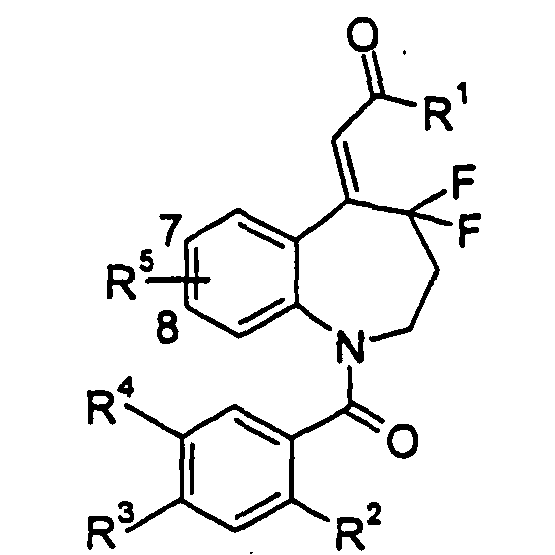
No R1 R2 R3 R4 R5 A1 -NH-(4-HO2C-Ph) Cl 3-Me-pra H H A2 -NH-(2-HO2C-Ph) Cl 3-Me-pra H H A3 -NH-(4-Me2N-Ph) Cl 3-Me-pra H H A4 -NH-(4-cyano-Ph) Cl 3-Me-pra H H A5 -NH-(3-F3C-Ph) Cl 3-Me-pra H H A6 -NH-(2-MeO-Ph) Cl 3-Me-pra H H A7 -NH-(2-F-Ph) Cl 3-Me-pra H H A8 -NHCH2-(2-H2NOC-Ph) Cl 3-Me-pra H H A9 -NH-(6-HO-3-py) Cl 3-Me-pra H H A10 -NH-(6-Cl-pyridazin-3-yl) Cl 3-Me-pra H H A11 -NH-(6-Me-2-py) Cl 3-Me-pra H H A12 -NH-(5-H2NOC-2-py) Cl 3-Me-pra H H A13 -NH-(2-thia) Cl 3-Me-pra H H A14 -NH-(1-Me-2-imid) Cl 3-Me-pra H H A15 -NH-(pyrazin-2-yl) Cl 3-Me-pra H H A16 -N(Me)-(6-HO-3-py) Cl 3-Me-pra H H A17 -NHCH2-(4-H2NOC-2-py) Cl 3-Me-pra H H A18 -N(Me)CH2-(3-py) Cl 3-Me-pra H H A19 -NHCH2-(4-F-2-py) Cl 3-Me-pra H H A20 -NHCH2-(pyrimidin-2-yl) Cl 3-Me-pra H H A21 2-H2NOC-pyrr Cl 3-Me-pra H H A22 2-H2NOC-pipe Cl 3-Me-pra H H A23 
Cl 3-Me-pra- H H A24 
Cl 3-Me-pra- H H A25 
Cl 3-Me-pra- H H A26 
Cl 3-Me-pra- H H A27 
Cl 3-Me-pra- H H A28 
Cl 3-Me-pra- H H A29 
Cl 3-Me-pra- H H A30 
Cl 3-Me-pra- H H A31 
Cl 3-Me-pra- H H A32 
Cl 3-Me-pra- H H A33 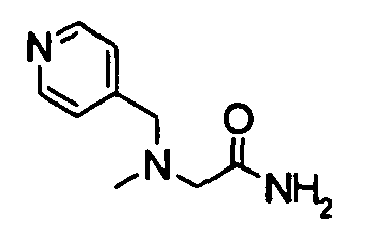
Cl 3-Me-pra- H H A34 
Cl 3-Me-pra- H H A35 
Cl 3-Me-pra- H H A36 
Cl 3-Me-pra- H H A37 
Cl 3-Me-pra- H H A38 
Cl 3-Me-pra- H H A39 
Cl 3-Me-pra- H H A40 
Cl 3-Me-pra- H H A41 
Cl 3-Me-pra- H H A42 
Cl 3-Me-pra- H H A43 
Cl 3-Me-pra- H H A44 -NHCH2-(2-py) Br 3-Me-pra- H H A45 -NH(CH2)2OH Br 3-Me-pra- H H A46 -NHCH2CONH2 Br 3-Me-pra- H H A47 -NH2 Br 3-Me-pra- H H A48 -NHCH2-(2-py) Me 3-Me-pra- H H A49 -NH(CH2)2OH Me 3-Me-pra- H H A50 -NHCH2CONH2 Me 3-Me-pra- H H A51 -NH2 Me 3-Me-pra- H H A52 -NH(CH2)2OH Me pyrr- H H A53 -NHCH2-(6-HO-2-py) Me pyrr- H H A54 -NHCH2-(2-py) Me pyrr- H H A55 -N((CH2)2OH)2 Me pyrr- H H A56 -NH2 Me pyrr- H H A57 -NHCH2CONH2 Me 3-Me-pyrr- H H A58 -NHCH2-(2-py) Me 3-Me-pyrr- H H A59 -NH2 Me 3-Me-pyrr- H H A60 -NH(CH2)2OH Me 3-Me-pyrr- H H A61 -NHCH2CONH2 Me 3,3-diF-pyrr- H H A62 -NHCH2CONH2 Me 3,4-diMe-pyrr- H H A63 -NH2 Me 3,3-diF-pyrr- H H A64 -NH2 Me 3,4-diMe-pyrr- H H A65 -NHCH2-(6-HO-2-py) CF3 3-Me-pra- H H A66 -NHCH2-(6-Me-2-py) CF3 3-Me-pra- H H A67 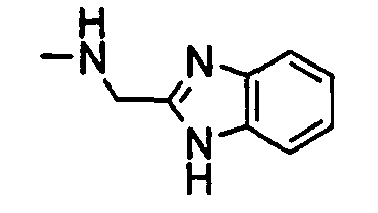
CF3 3-Me-pra- H H A68 -NHCH2-(6-HO-2-py) CF3 3-Me-pra- H H A69 -N((CH2)2OH)2 CF3 3-Me-pra- H H A70 -NHCH2-(6-HO-2-py) CF3 pyrr- H H A71 -NHCH2-(2-py) CF3 pyrr- H H A72 -N((CH2)2OH)2 CF3 pyrr- H H A73 -N((CH2)2OH)2 Cl 3-Me-pyrr- H H A74 -NHCH2-(2-py) Cl 2-H2NOC-pyrr- H H A75 -NHCH2-(2-py) Cl 3-HO-pipe- H H A76 -NHCH2-(2-py) CF3 3-HO-pipe- H H A77 -NHCH2-(2-py) Cl 3-MeO-pyrr- H H A78 -NHCH2-(2-py) CF3 3-MeO-pyrr- H H A79 -NHCH2-(2-py) Cl 4-NC-pipe- H H A80 -NHCH2-(2-py) Cl 3,4-diMe-pyrr- H H A81 -NH(CH2)2OH Cl 2,4-diMe-pyrr- H H A82 -NHCH2-(2-py) Cl 
H H A83 -NH(CH2)2OH Cl 
H H A84 -NHCH2CONH2 Cl 
H H A85 -NH(CH2)2OH CF3 
H H A86 -NHCH2-(2-py) CF3 
H H A87 -NHCH2-(2-py) Cl 3-Me-pra- H 7-Me A88 -NHCH2-(2-py) Cl 3-Me-pyrr- H 7-Me A89 -NHCH2-(2-py) Cl 3-Me-pra- H 7-Cl A90 -NHCH2-(2-py) Cl 3-Me-pyrr- H 7-Cl A91 -NHCH2-(2-py) CF3 3-Me-pra H 7-Me A92 -NHCH2-(2-py) CF3 3-Me-pyrr H 7-Me A93 -NHCH2-(2-py) CF3 3-Me-pra H 7-Cl A94 -NHCH2-(2-py) CF3 3-Me-pyrr H 7-Cl A95 -NHCH2-(2-py) Cl 3-Me-pra H 8-Me A96 -NHCH2-(2-py) Cl 3-Me-pyrr H 8-Me A97 -NHCH2-(2-py) Cl 3-Me-pra H 8-Cl A98 -NHCH2-(2-py) Cl 3-Me-pyrr H 8-Cl A99 -NHCH2-(2-py) CF3 3-Me-pra H 8-Me A100 -NHCH2-(2-py) CF3 3-Me-pyrr H 8-Me A101 -NHCH2-(2-py) CF3 3-Me-pra H 8-Cl A102 -NHCH2-(2-py) CF3 3-Me-pyrr H 8-Cl A103 -NHCH2-(2-py) Cl H 3-Me-pra- H A104 -NHCH2-(2-py) Cl H 3-Me-pyrr- H A105 -NHCH2CONH2 Cl H 3-Me-pyrr- H A106 -NHCH2-(2-py) Cl H pyrr- H A107 -NHCH2-(2-py) CF3 H 3-Me-pra- H A108 -NHCH2-(2-py) CF3 H 3-Me-pyrr- H A109 -NHCH2CONH2 CF3 H 3-Me-pyrr- H A110 -NHCH2-(2-py) CF3 H pyrr- H A111 -NH(CH2)2OH Cl 3,3-diF-pyrr H H A112 -NHCH2CONH2 Cl 3,3-diF-pyrr H H A113 -NH(CH2)2OH CF3 3,3-diF-pyrr H H A114 -NHCH2CONH2 CF3 3,3-diF-pyrr H H A115 -NH(CH2)2OH Cl 3-CF3-pyrr H H A116 -NHCH2CONH2 Cl 3-CF3-pyrr H H A117 -NH(CH2)2OH CF3 3-CF3-pyrr H H A118 -NHCH2CONH2 CF3 3-CF3-pyrr H H A119 -NH(CH2)2OH Cl 2,5-dihydropyrrol-1-yl H H A120 -NHCH2CONH2 Cl 2,5-dihydropyrrol-1-yl H H A121 -NH2 Cl 2,5-dihydropyrrol-1-yl H H A122 -NH(CH2)2OH Cl 3,4-diMe-1-pyrr H H A123 -NHCH2CONH2 Cl 3,4-diMe-1-pyrr H H A124 -NH2 Cl 3,4-diMe-1-pyrr H H A125 -NHCH2CONH2 Cl 
H H A126 -NH2 Cl 
H H A127 -NHCH2CONH2 Cl 3,4-diHO-1-pyrr H H A128 -NH2 Cl 3,4-diHO-1-pyrr H H A129 -NH-(3-HOCH2-(E)-CH=CH-Ph) CF3 3-Me-pra H H A130 -NH-(3-HO2C-(E)-CH=CH-Ph) CF3 3-Me-pra H H A131 -NH-(3-Ph-(E)-CH=CH-Ph) CF3 3-Me-pra H H A132 -NH-2-(5-H2NOC-(E)-CH=CH-Py) CF3 3-Me-pra H H A133 * OMe CF3 H2N-(Ac)N- H H A134 * OEt CF3 H2N-(Ac)N- H H A135 * OEt CF3 H2N-(Boc)N- H H A136 * OiPr CF3 H2N-(Boc)N- H H A137 * OEt Cl H2N-(Boc)N- H H A138 * OiPr Cl H2N-(Boc)N- H H A139 * OEt CF3 H2N-HN- H H A140 * OiPr CF3 H2N-HN- H H A141 * OEt Cl H2N-HN- H H A142 * OiPr Cl H2N-HN- H H A143 -NHCH2CONH2 CF3 3-Me-pra Me H A144 -NH2 CF3 3-Me-pra Me H A145 -NHCH2CONH2 CF3 3-Me-pra F H A146 -NH2 CF3 3-Me-pra F H A147 -NHCH2CONH2 CF3 3-Me-pyrr F H A148 -NH2 CF3 3-Me-pyrr F H A149 -NH2 CF3 3-Me-pyrr Me H A150 -NH-(4-H2NOC-Ph) CF3 3-Me-pra H H A151 -NH-(3-H2NOC-Ph) CF3 3-Me-pra H H A152 -NH-(3-Me-Ph) CF3 3-Me-pra H H A153 -NH-(4-HOCH2-Ph) CF3 3-Me-pra H H A154 -NH-(3-HOCH2-Ph) CF3 3-Me-pra H H A155 -NH-(4-MeOCH2-Ph) CF3 3-Me-pra H H A156 -NHCH2-(4-H2NOC-Ph) CF3 3-Me-pra H H A157 -NH-(3-Ms-Ph) CF3 3-Me-pra H H A158 -NH-(3-Ac-Ph) CF3 3-Me-pra H H A159 -NHCH2-(4-H2NO2S-Ph) CF3 3-Me-pra H H A160 -NH-(2-HO-cHex) CF3 3-Me-pra H H A161 -NH-(3-H2NOCCH2-Ph) CF3 3-Me-pra H H A162 -NH-(3-H2NOC(CH2)2-Ph) CF3 3-Me-pra H H A163 -NH-(3-H2NOC-(E)-CH=CH-Ph) CF3 3-Me-pra H H A164 -NH-(3-AcNH-Ph) CF3 3-Me-pra H H A165 -NH-(4-H2NOC-Ph) CF3 3-Me-pyrr H H A166 -NH-(3-H2NOC-Ph) CF3 3-Me-pyrr H H A167 -NH-(3-Me-Ph) CF3 3-Me-pyrr H H A168 -NH-(4-HOCH2-Ph) CF3 3-Me-pyrr H H A169 -NH-(3-HOCH2-Ph) CF3 3-Me-pyrr H H A170 -NH-(4-MeOCH2-Ph) CF3 3-Me-pyrr H H A171 -NH-(3-Ms-Ph) CF3 3-Me-pyrr H H A172 -NH-(3-Ac-Ph) CF3 3-Me-pyrr H H A173 -NHCH2-(4-H2NO2S-Ph) CF3 3-Me-pyrr H H A174 -NH-(2-HO-cHex) CF3 3-Me-pyrr H H A175 -NH-(3-H2NOCCH2-Ph) CF3 3-Me-pyrr H H A176 -NH-(3-H2NOC(CH2)2-Ph) CF3 3-Me-pyrr H H A177 -NH-(3-H2NOC-(E)-CH=CH-Ph) CF3 3-Me-pyrr H H A178 -NH-(3-AcNH-Ph) CF3 3-Me-pyrr H H A179 -NH-(4-H2NOC-Ph) Cl 3-Me-pyrr H H A180 -NH-(3-H2NOC-Ph) Cl 3-Me-pyrr H H A181 -NH-(3-Me-Ph) Cl 3-Me-pyrr H H A182 -NH-(4-HOCH2-Ph) Cl 3-Me-pyrr H H A183 -NH-(3-HOCH2-Ph) Cl 3-Me-pyrr H H A184 -NH-(4-MeOCH2-Ph) Cl 3-Me-pyrr H H A185 -NH-(3-Ms-Ph) Cl 3-Me-pyrr H H A186 -NH-(3-Ac-Ph) Cl 3-Me-pyrr H H A187 -NHCH2-(4-H2NO2S-Ph) Cl 3-Me-pyrr H H A188 -NH-(2-HO-cHex) Cl 3-Me-pyrr H H A189 -NH-(3-H2NOCCH2-Ph) Cl 3-Me-pyrr H H A190 -NH-(3-H2NOC(CH2)2-Ph) Cl 3-Me-pyrr H H A191 -NH-(3-H2NOC-(E)-CH=CH-Ph) Cl 3-Me-pyrr H H A192 -NH-(3-AcNH-Ph) Cl 3-Me-pyrr H H
Claims (8)
- 4,4-difluoro-1,2,3,4-tetrahydro-5H-1-benzazepine derivative represented by the general Formula (I) or a pharmaceutically acceptable salt thereof:

R2: lower alkyl which may be substituted with one or more halogen, or halogen;
R3 and R4: one is -H, lower alkyl, or halogen, and the other is an optionally substituted nonaromatic cyclic amino or an optionally substituted aromatic cyclic amino; and
R5: -H, lower alkyl, or halogen, and
wherein R1 is a group represented by the following general Formula (II), or a group represented by the following general Formula (III):
A: a single bond, lower alkylene, or -lower alkylene-C(=O)-;
R11: lower alkyl which may be substituted with a group selected from the group consisting of -OH, -O-lower alkyl, -CO2H, -CO2-lower alkyl, and carbamoyl which may be substituted with one or two lower alkyl, or -H;
R12: (1) when A is a single bond or lower alkylene, R12 is aryl, cycloalkyl, aromatic heterocycle, or nonaromatic heterocycle, each of which may be substituted, or -H, -OH, -O-lower alkyl, -CO2H, -CO2-lower alkyl, or carbamoyl which may be substituted with one or two lower alkyls; and
(2) when A is -lower alkylene-C(=O)-, R12 is a group represented by the above general Formula (III), or a group represented by the following general Formula (IV),
R13 and R14: optionally substituted nonaromatic cyclic amino, bonded together with an adjacent nitrogen atom,
wherein the term aryl, cycloalkyl, aromatic heterocycle, or nonaromatic heterocycle, each of which may be substituted in the definition of R12, and the terms "optionally substituted nonaromatic cyclic amino group" and "optionally substituted aromatic cyclic amino group" in the definition of R13, R14, R3, and R4, is one of an aryl, cycloalkyl, aromatic heterocycle or nonaromatic heterocycle, an aromatic cyclic amino group or a nonaromatic cyclic amino group that may be substituted by(a) halogen;(b) -OH, -O-RA, -O-aryl, -OCO-RA, oxy(=O);(c) -SH, -S-RA, -S-aryl, -SO-RA, -SO-aryl, SO2-RA, -SO2-aryl, sulfamoyl which may be substituted with one or two RA;(d) amino which may be substituted with one or two RA, -NHCO-RA, NHCO-aryl, -NHSO2-RA, -NHSO2-aryl, nitro;(e) -CHO, -CO-RA, -CO2H, -CO2-RA, carbamoyl which may be substituted with one or two RA, cyano;(f) aryl or cycloalkyl, each of which may be substituted with one or more groups selected from the group consisting of -OH, -O-lower alkyl, amino which may be substituted with one or two lower alkyls, carbamoyl which may be substituted with one or two lower alkyls, aryl, aromatic heterocycle, halogen and RA;(g) aromatic heterocycle or nonaromatic heterocycle, each of which may be substituted with one or more groups selected from the group consisting of - OH, -O-lower alkyl, amino which may be substituted with one or two lower alkyls, carbamoyl which may be substituted with one or two lower alkyls, aryl, aromatic heterocycle, halogen and RA; and/or(h) lower alkyl or lower alkenyl, each of which may be substituted with one or more groups selected from the substituent groups described in (a) to (g),wherein RA is a lower alkyl group which may be substituted with one or more groups selected from the group consisting of - OH, -O-lower alkyl, an amino which may be substituted with one or two lower alkyls, a carbamoyl which may be substituted with one or two lower alkyls, an aryl, an aromatic heterocycle and a halogen,
and wherein the term "lower alkyl" means a monovalent group of a straight or branched carbon chain having 1 to 6 carbon atoms,
the term "lower alkenyl" means a monovalent group of a straight or branched unsaturated carbon chain having 2 to 6 carbon atoms,
the term "lower alkylene" means a divalent group of a straight or branched carbon chain having 1 to 6 carbon atoms
"cycloalkyl" means a monovalent group of a nonaromatic hydrocarbon ring having 3 to 8 carbon atoms,
"aryl" means a monovalent group of a mono- to tri-cyclic aromatic hydrocarbon ring having 6 to 14 carbon atoms,
"aromatic heterocycle" means a monovalent group of a mono- to tri-cyclic aromatic ring having a hetero atom
"aromatic cyclic amino" means a monovalent group of a five- to seven-membered aromatic cyclic amine,
"nonaromatic cyclic amino" means a monovalent group of a three- to ten-membered nonaromatic cyclic amine,
and the term "nonaromatic heterocycle" means a monovalent group of a five- to seven-membered ring having a hetero atom. - The compound according to Claim 1, wherein R3 is an optionally substituted nonaromatic cyclic amino, or an optionally substituted aromatic cyclic amino; R4 is -H, lower alkyl, or halogen; and R5 is -H
- The compound according to Claim 2, wherein R4 is -H.
- The compound according to any one of Claim 1 to Claim 3, wherein the compound is selected from the group consisting of:(2Z)-2-{1-[2-chloro-4-(3-methyl-1H-pyrazol-1-yl)benzoyl]-4,4-difluoro-1,2,3,4-tetrahydro-5H-1-benzazepin-5-ylidene}-N-(pyridin-2-ylmethyl)acetamide;(2Z)-N-(2-amino-2-oxoethyl)-2-[1-(2-chloro-4-pyrrolidin-1-ylbenzoyl)-4,4-difluoro-1,2,3,4-tetrahydro-5H-1-benzazepin-5-ylidene] acetamide;(2Z)-2-{4,4-difluoro-1-[4-(3-methyl-1H-pyrazol-1-yl)-2-(trifluoromethyl)benzoyl]-1,2,3,4-tetrahydro-5H-1-benzazepin-5-ylidene}acetamide;(2Z)-N-(2-amino-2-oxoethyl)-2-{4,4-difluoro-1-[4-[(3R)-3-methylpyrrolidin-1-yl]-2-(trifluoromethyl)benzoyl]-1,2,3,4-tetrahydro-5H-1-benzazepin-5-ylidene}acetamide;(2Z)-2-{4,4-difluoro-1-[4-(3R)-3-methylpyrrolidin-1-yl]-2-(trifluoromethy)benzoyl]-1,2,3,4-tetrahydro-5H-1-benzazepin-5-ylidene}-N-(2-hydroxehtyl)acetamide;(2Z)-N-(2-amino-2-oxoethyl)-2-{4,4-diffuoro-1-[4-(3S)-3-methylpyrrolidin-1-yl]-2-(trifluoromethyl)benzoyl]-1,2,3,4-tetrahydro-5H-1-benzazepin-5-ylidene}acetamide;(2Z)-2-{4,4-difluoro-1-[4-[(3-methyl-1H-pyrazol-1-yl)-2-(trifluoromethyl)benzoyl]-1,2,3,4-tetrahydro-5H-1-benzazepin-5-ylidene]-N-(2-hydroxyethyl)acetamide;(2Z)-N-(2-amino-2-oxoethyl)-2-(1-{2-chloro-4-[(3R)-3-methylpyrrolidin-1-yl]benzoyl}-4,4-difluoro-1,2,3,4-tetrahydro-5H-1-benzazepin-5-ylidene)acetamide;(2Z)-N-(2-amino-2-oxoethyl)-2-(1-{2-chloro-4-[(3S)-3-methylpyrrolidin-1-y]benzoyl}-4,4-difluoro-1,2,3,4-tetrahydro-5H-1-benzazepin-5-ylidene)acetamide;(2Z)-2-{4,4-difluoro-1-[4-(4-methyl-1H-pyrazol-1-yl)-2-(trifluoromethyl)benzoyl]-1,2,3,4-tetrahydro-5H-1-benzazepin-5-ylidene}acetamide;(2Z)-N-(2-amino-2-oxoethyl)-2-{1-[4-(3,4-dimethylpyrrolidin-lyl)-2-(trifluoromethyl)benzoyl]-4,4-difluoro-1,2,3,4-tetrahydro-5H-1-benzazepin-5-ylidene}acetamide(2Z)-2-{4,4-difluoro-1-[2-methyl-4-(3-metyl-1H-pyrazol-1-yl)benzoyl]-1,2,3,4-tetrahydro-5H-1-benzazepine-5-ylidene}acetamide; anda pharmaceutically acceptable salt thereof.
- A pharmaceutical composition comprising the compound of Claim 1 as an active ingredient.
- The pharmaceutical composition according to Claim 5, wherein the pharmaceutical composition is a drug for the treatment of central diabetes insipidus or nocturia.
- The pharmaceutical composition according to Claim 5, wherein the pharmaceutical composition is an arginine vasopressin V2 receptor agonist.
- 4,4-difluoro-1,2,3,4-tetrahydro-5H-1-benzazepine derivative represented by the general Formula (V) or a pharmaceutically acceptable salt thereof:
 R21: lower alkyl;R22: chloro or trifluoromethyl; andR23 and R24: one is -H, and the other is an optionally protected hydrazino group, wherein the term lower alkyl has the same meaning as in claim 1 and wherein the hydrazino group is optionally protected by one of acetyl, methoxycarbonyl, ethoxycarbonyl, tert-butyloxycarbonyl, benzyloxycarbonyl and phthalimide.
Applications Claiming Priority (5)
| Application Number | Priority Date | Filing Date | Title |
|---|---|---|---|
| JP2001350909 | 2001-11-16 | ||
| JP2001350909 | 2001-11-16 | ||
| JP2002252931 | 2002-08-30 | ||
| JP2002252931 | 2002-08-30 | ||
| PCT/JP2002/011842 WO2003042181A1 (en) | 2001-11-16 | 2002-11-13 | 4,4-difluoro-1,2,3,4-tetrahydro-5h-1-benzazepine derivatives or salts thereof |
Publications (3)
| Publication Number | Publication Date |
|---|---|
| EP1445253A1 EP1445253A1 (en) | 2004-08-11 |
| EP1445253A4 EP1445253A4 (en) | 2005-11-16 |
| EP1445253B1 true EP1445253B1 (en) | 2009-08-05 |
Family
ID=26624548
Family Applications (1)
| Application Number | Title | Priority Date | Filing Date |
|---|---|---|---|
| EP02781759A Expired - Lifetime EP1445253B1 (en) | 2001-11-16 | 2002-11-13 | 4,4-difluoro-1, 2, 3, 4-tetrahydro-5h-1-benzazepine derivatives or salts thereof |
Country Status (17)
| Country | Link |
|---|---|
| US (1) | US7169772B2 (en) |
| EP (1) | EP1445253B1 (en) |
| JP (1) | JP4075064B2 (en) |
| KR (1) | KR100632882B1 (en) |
| CN (1) | CN1323076C (en) |
| AT (1) | ATE438626T1 (en) |
| AU (1) | AU2002349773B2 (en) |
| BR (1) | BR0214224A (en) |
| CA (1) | CA2464069A1 (en) |
| DE (1) | DE60233251D1 (en) |
| ES (1) | ES2327620T3 (en) |
| HU (1) | HUP0402235A2 (en) |
| MX (1) | MXPA04004501A (en) |
| NO (1) | NO20042497L (en) |
| PL (1) | PL369999A1 (en) |
| RU (1) | RU2268882C1 (en) |
| WO (1) | WO2003042181A1 (en) |
Families Citing this family (24)
| Publication number | Priority date | Publication date | Assignee | Title |
|---|---|---|---|---|
| GB0210397D0 (en) | 2002-05-07 | 2002-06-12 | Ferring Bv | Pharmaceutical formulations |
| AU2003267245C1 (en) | 2002-09-20 | 2008-05-29 | Promega Corporation | Luminescence-based methods and probes for measuring cytochrome P450 activity |
| US7241803B2 (en) * | 2002-11-21 | 2007-07-10 | New York Blood Center | Compounds for inhibition of HIV infection by blocking HIV entry |
| RU2326868C2 (en) | 2003-04-28 | 2008-06-20 | Астеллас Фарма Инк. | Derivative of 4,4-difluoro-1,2,2,4-tetrahydro-5h-1-benzazepine and its salt |
| US8519158B2 (en) * | 2004-03-12 | 2013-08-27 | Ligand Pharmaceuticals Incorporated | Androgen receptor modulator compounds and methods |
| EP1935986B1 (en) | 2005-05-31 | 2014-04-16 | Promega Corporation | Luminogenic and fluorogenic compounds and methods to detect molecules or conditions |
| EP2272973B1 (en) | 2005-05-31 | 2015-05-27 | Promega Corporation | Luminogenic and fluorogenic compounds and methods to detect molecules or conditions |
| JP4754566B2 (en) * | 2005-07-22 | 2011-08-24 | 持田製薬株式会社 | Novel heterocyclideneacetamide derivatives |
| JP5164510B2 (en) * | 2006-10-06 | 2013-03-21 | 日本曹達株式会社 | Nitrogen-containing heterocyclic compounds and pest control agents |
| EP2119719A1 (en) | 2006-12-26 | 2009-11-18 | Daiichi Sankyo Company, Limited | Thiazepine derivative |
| US20100016285A1 (en) * | 2007-01-24 | 2010-01-21 | Mochida Pharmaceutical Co., Ltd. | Heterocyclidene-n-(aryl) acetamide derivative |
| PE20081692A1 (en) | 2007-01-24 | 2008-12-18 | Mochida Pharm Co Ltd | NEW DERIVATIVE OF HETEROCICLIDEN ACETAMIDA |
| CN101679244B (en) * | 2007-04-11 | 2014-01-01 | 橘生药品工业株式会社 | 5-membered heterocyclic derivative and use thereof for medical purposes |
| KR20140143461A (en) | 2007-08-06 | 2014-12-16 | 알레간 인코포레이티드 | Methods and devices for desmopressin drug delivery |
| US11963995B2 (en) | 2008-05-21 | 2024-04-23 | Ferring B.V. | Methods comprising desmopressin |
| SI2712622T1 (en) * | 2008-05-21 | 2016-10-28 | Ferring B.V. | Orodispersible desmopressin for increasing initial period of sleep undisturbed by nocturia |
| US20100286045A1 (en) | 2008-05-21 | 2010-11-11 | Bjarke Mirner Klein | Methods comprising desmopressin |
| UY32940A (en) | 2009-10-27 | 2011-05-31 | Bayer Cropscience Ag | AMIDAS REPLACED WITH HALOGENO RENT AS INSECTICIDES AND ACARICIDES |
| US9598373B2 (en) | 2012-06-11 | 2017-03-21 | Tacurion | Method for producing 4,4,7-trifluoro-1,2,3,4-tetrahydro-5H-1-benzazepine compound and intermediate used in the method |
| ES2633981T3 (en) * | 2012-12-26 | 2017-09-26 | Sanwa Kagaku Kenkyusho Co., Ltd | New benzoazepine derivative and medical use thereof |
| WO2015116867A1 (en) | 2014-01-29 | 2015-08-06 | Promega Corporation | Quinone-masked probes as labeling reagents for cell uptake measurements |
| CN105310978A (en) * | 2014-08-04 | 2016-02-10 | 李峰 | Drug combination containing conivaptan hydrochloride as active ingredient and preparation of drug combination |
| KR20220003554A (en) | 2019-04-19 | 2022-01-10 | 리간드 파마슈티칼스 인코포레이티드 | Crystalline Forms of Compounds and Methods of Preparing Crystalline Forms |
| CN112079826B (en) * | 2020-09-17 | 2022-07-29 | 广州中医药大学(广州中医药研究院) | Steroid synthetase inhibitor and treatment application thereof |
Family Cites Families (6)
| Publication number | Priority date | Publication date | Assignee | Title |
|---|---|---|---|---|
| CN1039999A (en) * | 1988-07-30 | 1990-02-28 | 刘晓非 | Multiple layer decorative compound sheet and preparation method |
| TW270927B (en) * | 1992-10-16 | 1996-02-21 | Otsuka Pharma Co Ltd | |
| FI960867A7 (en) * | 1993-08-26 | 1996-02-26 | Yamanouchi Pharma Co Ltd | Benzazepine derivative, its pharmaceutical composition and intermediate |
| TW359669B (en) * | 1995-12-15 | 1999-06-01 | Otsuka Pharma Co Ltd | Benzazepine derivatives |
| JPH09221475A (en) * | 1996-02-13 | 1997-08-26 | Yamanouchi Pharmaceut Co Ltd | Novel oxime derivative |
| AR011913A1 (en) | 1997-03-06 | 2000-09-13 | Yamano Masaki | DERIVATIVES OF 4,4-DIFLUORO-2,3,4,5-TETRAHIDRO-1H-1-BENZOAZEPINA AND PHARMACEUTICAL COMPOSITIONS THEREOF. |
-
2002
- 2002-11-13 EP EP02781759A patent/EP1445253B1/en not_active Expired - Lifetime
- 2002-11-13 ES ES02781759T patent/ES2327620T3/en not_active Expired - Lifetime
- 2002-11-13 AU AU2002349773A patent/AU2002349773B2/en not_active Ceased
- 2002-11-13 PL PL02369999A patent/PL369999A1/en not_active Application Discontinuation
- 2002-11-13 US US10/495,494 patent/US7169772B2/en not_active Expired - Fee Related
- 2002-11-13 KR KR1020047007126A patent/KR100632882B1/en not_active Expired - Fee Related
- 2002-11-13 CA CA002464069A patent/CA2464069A1/en not_active Abandoned
- 2002-11-13 RU RU2004118063/04A patent/RU2268882C1/en not_active IP Right Cessation
- 2002-11-13 BR BR0214224-4A patent/BR0214224A/en not_active IP Right Cessation
- 2002-11-13 MX MXPA04004501A patent/MXPA04004501A/en active IP Right Grant
- 2002-11-13 WO PCT/JP2002/011842 patent/WO2003042181A1/en not_active Ceased
- 2002-11-13 DE DE60233251T patent/DE60233251D1/en not_active Expired - Lifetime
- 2002-11-13 HU HU0402235A patent/HUP0402235A2/en unknown
- 2002-11-13 AT AT02781759T patent/ATE438626T1/en not_active IP Right Cessation
- 2002-11-13 JP JP2003544017A patent/JP4075064B2/en not_active Expired - Fee Related
- 2002-11-13 CN CNB028226046A patent/CN1323076C/en not_active Expired - Fee Related
-
2004
- 2004-06-15 NO NO20042497A patent/NO20042497L/en unknown
Also Published As
| Publication number | Publication date |
|---|---|
| PL369999A1 (en) | 2005-05-16 |
| CA2464069A1 (en) | 2003-05-22 |
| KR100632882B1 (en) | 2006-10-13 |
| ATE438626T1 (en) | 2009-08-15 |
| KR20050044401A (en) | 2005-05-12 |
| WO2003042181A1 (en) | 2003-05-22 |
| EP1445253A1 (en) | 2004-08-11 |
| RU2004118063A (en) | 2006-01-10 |
| US7169772B2 (en) | 2007-01-30 |
| CN1585752A (en) | 2005-02-23 |
| US20050004103A1 (en) | 2005-01-06 |
| RU2268882C1 (en) | 2006-01-27 |
| AU2002349773B2 (en) | 2007-12-13 |
| BR0214224A (en) | 2004-09-21 |
| NO20042497L (en) | 2004-07-21 |
| EP1445253A4 (en) | 2005-11-16 |
| MXPA04004501A (en) | 2004-08-11 |
| ES2327620T3 (en) | 2009-11-02 |
| DE60233251D1 (en) | 2009-09-17 |
| JPWO2003042181A1 (en) | 2005-03-10 |
| JP4075064B2 (en) | 2008-04-16 |
| CN1323076C (en) | 2007-06-27 |
| HUP0402235A2 (en) | 2005-02-28 |
Similar Documents
| Publication | Publication Date | Title |
|---|---|---|
| RU2268882C1 (en) | Derivative of 4,4-difluoro-1,2,3,4-tetrahydro-5h-benzazepine, its salt and pharmaceutical composition comprising thereof | |
| EP1465631B1 (en) | Pyrimidine a2b selective antagonist compounds, their synthesis and use | |
| EP1751108B1 (en) | Adamantyl-acetamide derivatives as inhibitors of the 11-beta-hydroxysteroid dehydrogenase type 1 enzyme | |
| EP2811997B1 (en) | Substituted prolines/piperidines as orexin receptor antagonists | |
| US7880001B2 (en) | Inhibitors of the 11-beta-hydroxysteroid dehydrogenase Type 1 enzyme | |
| KR101738866B1 (en) | Cyclic N,N'-diarylthioureas and N,N'-diarylureas as androgen receptor antagonists, anti-cancer agent, method for producing and using same | |
| EP1466912A1 (en) | 2-acylaminothiazole derivative or salt thereof | |
| US8372841B2 (en) | Inhibitors of the 11-beta-hydroxysteroid dehydrogenase type 1 enzyme | |
| SK116394A3 (en) | Substituted phenylcarbamates and ureas | |
| JP2004043456A (en) | Medicine containing benzazepine derivative or its salt as active component | |
| JP6231621B2 (en) | Novel benzazepine derivatives and their pharmaceutical uses | |
| JP4765545B2 (en) | Pharmaceutical composition comprising a benzazepine derivative as an active ingredient | |
| ZA200403189B (en) | 4,4-difluoro-1,2,3,4-tetrahydro-5H-1-benzazepine derivatives or salts thereof. | |
| HK1102593B (en) | Adamantyl-acetamide derivatives as inhibitors of the 11-beta-hydroxysteroid dehydrogenase type 1 enzyme | |
| HK1159111A (en) | Adamantyl- acetamide derivatives as inhibitors of the 11-beta-hydroxysteroid dehydrogenase type 1 enzyme |
Legal Events
| Date | Code | Title | Description |
|---|---|---|---|
| PUAI | Public reference made under article 153(3) epc to a published international application that has entered the european phase |
Free format text: ORIGINAL CODE: 0009012 |
|
| 17P | Request for examination filed |
Effective date: 20040510 |
|
| AK | Designated contracting states |
Kind code of ref document: A1 Designated state(s): AT BE BG CH CY CZ DE DK EE ES FI FR GB GR IE IT LI LU MC NL PT SE SK TR |
|
| AX | Request for extension of the european patent |
Extension state: AL LT LV MK RO SI |
|
| RAP1 | Party data changed (applicant data changed or rights of an application transferred) |
Owner name: ASTELLAS PHARMA INC. |
|
| A4 | Supplementary search report drawn up and despatched |
Effective date: 20050929 |
|
| RAP1 | Party data changed (applicant data changed or rights of an application transferred) |
Owner name: ASTELLAS PHARMA INC. |
|
| 17Q | First examination report despatched |
Effective date: 20070615 |
|
| GRAP | Despatch of communication of intention to grant a patent |
Free format text: ORIGINAL CODE: EPIDOSNIGR1 |
|
| GRAS | Grant fee paid |
Free format text: ORIGINAL CODE: EPIDOSNIGR3 |
|
| GRAA | (expected) grant |
Free format text: ORIGINAL CODE: 0009210 |
|
| AK | Designated contracting states |
Kind code of ref document: B1 Designated state(s): AT BE BG CH CY CZ DE DK EE ES FI FR GB GR IE IT LI LU MC NL PT SE SK TR |
|
| REG | Reference to a national code |
Ref country code: GB Ref legal event code: FG4D |
|
| REG | Reference to a national code |
Ref country code: CH Ref legal event code: EP |
|
| REG | Reference to a national code |
Ref country code: IE Ref legal event code: FG4D |
|
| REF | Corresponds to: |
Ref document number: 60233251 Country of ref document: DE Date of ref document: 20090917 Kind code of ref document: P |
|
| REG | Reference to a national code |
Ref country code: ES Ref legal event code: FG2A Ref document number: 2327620 Country of ref document: ES Kind code of ref document: T3 |
|
| PG25 | Lapsed in a contracting state [announced via postgrant information from national office to epo] |
Ref country code: AT Free format text: LAPSE BECAUSE OF FAILURE TO SUBMIT A TRANSLATION OF THE DESCRIPTION OR TO PAY THE FEE WITHIN THE PRESCRIBED TIME-LIMIT Effective date: 20090805 Ref country code: FI Free format text: LAPSE BECAUSE OF FAILURE TO SUBMIT A TRANSLATION OF THE DESCRIPTION OR TO PAY THE FEE WITHIN THE PRESCRIBED TIME-LIMIT Effective date: 20090805 Ref country code: SE Free format text: LAPSE BECAUSE OF FAILURE TO SUBMIT A TRANSLATION OF THE DESCRIPTION OR TO PAY THE FEE WITHIN THE PRESCRIBED TIME-LIMIT Effective date: 20090805 |
|
| PGFP | Annual fee paid to national office [announced via postgrant information from national office to epo] |
Ref country code: DE Payment date: 20091105 Year of fee payment: 8 Ref country code: ES Payment date: 20091125 Year of fee payment: 8 |
|
| PGFP | Annual fee paid to national office [announced via postgrant information from national office to epo] |
Ref country code: NL Payment date: 20091114 Year of fee payment: 8 |
|
| PG25 | Lapsed in a contracting state [announced via postgrant information from national office to epo] |
Ref country code: PT Free format text: LAPSE BECAUSE OF FAILURE TO SUBMIT A TRANSLATION OF THE DESCRIPTION OR TO PAY THE FEE WITHIN THE PRESCRIBED TIME-LIMIT Effective date: 20091205 Ref country code: BG Free format text: LAPSE BECAUSE OF FAILURE TO SUBMIT A TRANSLATION OF THE DESCRIPTION OR TO PAY THE FEE WITHIN THE PRESCRIBED TIME-LIMIT Effective date: 20091105 |
|
| PG25 | Lapsed in a contracting state [announced via postgrant information from national office to epo] |
Ref country code: DK Free format text: LAPSE BECAUSE OF FAILURE TO SUBMIT A TRANSLATION OF THE DESCRIPTION OR TO PAY THE FEE WITHIN THE PRESCRIBED TIME-LIMIT Effective date: 20090805 Ref country code: CZ Free format text: LAPSE BECAUSE OF FAILURE TO SUBMIT A TRANSLATION OF THE DESCRIPTION OR TO PAY THE FEE WITHIN THE PRESCRIBED TIME-LIMIT Effective date: 20090805 Ref country code: EE Free format text: LAPSE BECAUSE OF FAILURE TO SUBMIT A TRANSLATION OF THE DESCRIPTION OR TO PAY THE FEE WITHIN THE PRESCRIBED TIME-LIMIT Effective date: 20090805 |
|
| PGFP | Annual fee paid to national office [announced via postgrant information from national office to epo] |
Ref country code: FR Payment date: 20091123 Year of fee payment: 8 Ref country code: GB Payment date: 20091111 Year of fee payment: 8 Ref country code: IT Payment date: 20091116 Year of fee payment: 8 |
|
| PG25 | Lapsed in a contracting state [announced via postgrant information from national office to epo] |
Ref country code: SK Free format text: LAPSE BECAUSE OF FAILURE TO SUBMIT A TRANSLATION OF THE DESCRIPTION OR TO PAY THE FEE WITHIN THE PRESCRIBED TIME-LIMIT Effective date: 20090805 |
|
| PLBE | No opposition filed within time limit |
Free format text: ORIGINAL CODE: 0009261 |
|
| STAA | Information on the status of an ep patent application or granted ep patent |
Free format text: STATUS: NO OPPOSITION FILED WITHIN TIME LIMIT |
|
| PG25 | Lapsed in a contracting state [announced via postgrant information from national office to epo] |
Ref country code: MC Free format text: LAPSE BECAUSE OF NON-PAYMENT OF DUE FEES Effective date: 20091130 Ref country code: BE Free format text: LAPSE BECAUSE OF FAILURE TO SUBMIT A TRANSLATION OF THE DESCRIPTION OR TO PAY THE FEE WITHIN THE PRESCRIBED TIME-LIMIT Effective date: 20090805 |
|
| REG | Reference to a national code |
Ref country code: CH Ref legal event code: PL |
|
| 26N | No opposition filed |
Effective date: 20100507 |
|
| PG25 | Lapsed in a contracting state [announced via postgrant information from national office to epo] |
Ref country code: CH Free format text: LAPSE BECAUSE OF NON-PAYMENT OF DUE FEES Effective date: 20091130 Ref country code: LI Free format text: LAPSE BECAUSE OF NON-PAYMENT OF DUE FEES Effective date: 20091130 Ref country code: GR Free format text: LAPSE BECAUSE OF FAILURE TO SUBMIT A TRANSLATION OF THE DESCRIPTION OR TO PAY THE FEE WITHIN THE PRESCRIBED TIME-LIMIT Effective date: 20091106 Ref country code: IE Free format text: LAPSE BECAUSE OF NON-PAYMENT OF DUE FEES Effective date: 20091113 |
|
| PG25 | Lapsed in a contracting state [announced via postgrant information from national office to epo] |
Ref country code: LU Free format text: LAPSE BECAUSE OF NON-PAYMENT OF DUE FEES Effective date: 20091113 |
|
| REG | Reference to a national code |
Ref country code: NL Ref legal event code: V1 Effective date: 20110601 |
|
| GBPC | Gb: european patent ceased through non-payment of renewal fee |
Effective date: 20101113 |
|
| REG | Reference to a national code |
Ref country code: FR Ref legal event code: ST Effective date: 20110801 |
|
| PG25 | Lapsed in a contracting state [announced via postgrant information from national office to epo] |
Ref country code: NL Free format text: LAPSE BECAUSE OF NON-PAYMENT OF DUE FEES Effective date: 20110601 Ref country code: TR Free format text: LAPSE BECAUSE OF FAILURE TO SUBMIT A TRANSLATION OF THE DESCRIPTION OR TO PAY THE FEE WITHIN THE PRESCRIBED TIME-LIMIT Effective date: 20090805 |
|
| REG | Reference to a national code |
Ref country code: DE Ref legal event code: R119 Ref document number: 60233251 Country of ref document: DE Effective date: 20110601 Ref country code: DE Ref legal event code: R119 Ref document number: 60233251 Country of ref document: DE Effective date: 20110531 |
|
| PG25 | Lapsed in a contracting state [announced via postgrant information from national office to epo] |
Ref country code: CY Free format text: LAPSE BECAUSE OF FAILURE TO SUBMIT A TRANSLATION OF THE DESCRIPTION OR TO PAY THE FEE WITHIN THE PRESCRIBED TIME-LIMIT Effective date: 20090805 |
|
| PG25 | Lapsed in a contracting state [announced via postgrant information from national office to epo] |
Ref country code: FR Free format text: LAPSE BECAUSE OF NON-PAYMENT OF DUE FEES Effective date: 20101130 |
|
| PG25 | Lapsed in a contracting state [announced via postgrant information from national office to epo] |
Ref country code: GB Free format text: LAPSE BECAUSE OF NON-PAYMENT OF DUE FEES Effective date: 20101113 |
|
| PG25 | Lapsed in a contracting state [announced via postgrant information from national office to epo] |
Ref country code: IT Free format text: LAPSE BECAUSE OF NON-PAYMENT OF DUE FEES Effective date: 20101113 |
|
| REG | Reference to a national code |
Ref country code: ES Ref legal event code: FD2A Effective date: 20120305 |
|
| PG25 | Lapsed in a contracting state [announced via postgrant information from national office to epo] |
Ref country code: ES Free format text: LAPSE BECAUSE OF NON-PAYMENT OF DUE FEES Effective date: 20101114 |
|
| PG25 | Lapsed in a contracting state [announced via postgrant information from national office to epo] |
Ref country code: DE Free format text: LAPSE BECAUSE OF NON-PAYMENT OF DUE FEES Effective date: 20110531 |