EP1444350B1 - Hiv-1 subtype isolate regulatory/accessory genes, and modifications and derivatives thereof - Google Patents
Hiv-1 subtype isolate regulatory/accessory genes, and modifications and derivatives thereof Download PDFInfo
- Publication number
- EP1444350B1 EP1444350B1 EP02802345.5A EP02802345A EP1444350B1 EP 1444350 B1 EP1444350 B1 EP 1444350B1 EP 02802345 A EP02802345 A EP 02802345A EP 1444350 B1 EP1444350 B1 EP 1444350B1
- Authority
- EP
- European Patent Office
- Prior art keywords
- sequence
- seq
- set out
- tat
- hiv
- Prior art date
- Legal status (The legal status is an assumption and is not a legal conclusion. Google has not performed a legal analysis and makes no representation as to the accuracy of the status listed.)
- Expired - Lifetime
Links
Images


Classifications
-
- C—CHEMISTRY; METALLURGY
- C07—ORGANIC CHEMISTRY
- C07K—PEPTIDES
- C07K14/00—Peptides having more than 20 amino acids; Gastrins; Somatostatins; Melanotropins; Derivatives thereof
- C07K14/005—Peptides having more than 20 amino acids; Gastrins; Somatostatins; Melanotropins; Derivatives thereof from viruses
-
- A—HUMAN NECESSITIES
- A61—MEDICAL OR VETERINARY SCIENCE; HYGIENE
- A61K—PREPARATIONS FOR MEDICAL, DENTAL OR TOILETRY PURPOSES
- A61K39/00—Medicinal preparations containing antigens or antibodies
- A61K2039/51—Medicinal preparations containing antigens or antibodies comprising whole cells, viruses or DNA/RNA
- A61K2039/53—DNA (RNA) vaccination
-
- A—HUMAN NECESSITIES
- A61—MEDICAL OR VETERINARY SCIENCE; HYGIENE
- A61K—PREPARATIONS FOR MEDICAL, DENTAL OR TOILETRY PURPOSES
- A61K39/00—Medicinal preparations containing antigens or antibodies
-
- C—CHEMISTRY; METALLURGY
- C12—BIOCHEMISTRY; BEER; SPIRITS; WINE; VINEGAR; MICROBIOLOGY; ENZYMOLOGY; MUTATION OR GENETIC ENGINEERING
- C12N—MICROORGANISMS OR ENZYMES; COMPOSITIONS THEREOF; PROPAGATING, PRESERVING, OR MAINTAINING MICROORGANISMS; MUTATION OR GENETIC ENGINEERING; CULTURE MEDIA
- C12N2740/00—Reverse transcribing RNA viruses
- C12N2740/00011—Details
- C12N2740/10011—Retroviridae
- C12N2740/16011—Human Immunodeficiency Virus, HIV
- C12N2740/16211—Human Immunodeficiency Virus, HIV concerning HIV gagpol
- C12N2740/16222—New viral proteins or individual genes, new structural or functional aspects of known viral proteins or genes
-
- C—CHEMISTRY; METALLURGY
- C12—BIOCHEMISTRY; BEER; SPIRITS; WINE; VINEGAR; MICROBIOLOGY; ENZYMOLOGY; MUTATION OR GENETIC ENGINEERING
- C12N—MICROORGANISMS OR ENZYMES; COMPOSITIONS THEREOF; PROPAGATING, PRESERVING, OR MAINTAINING MICROORGANISMS; MUTATION OR GENETIC ENGINEERING; CULTURE MEDIA
- C12N2740/00—Reverse transcribing RNA viruses
- C12N2740/00011—Details
- C12N2740/10011—Retroviridae
- C12N2740/16011—Human Immunodeficiency Virus, HIV
- C12N2740/16311—Human Immunodeficiency Virus, HIV concerning HIV regulatory proteins
- C12N2740/16322—New viral proteins or individual genes, new structural or functional aspects of known viral proteins or genes
Definitions
- THIS invention relates to a process for the selection of HIV-1 subtype (clade) C isolate regulatory/accessory genes, selected HIV-1 subtype C isolate regulatory/accessory genes and modifications and derivatives thereof for use in prophylactic and therapeutic vaccines to produce proteins and polypeptides for the purpose of eliciting protection against HIV infection or disease.
- HIV-1 subtype (clade) C isolate regulatory/accessory genes selected HIV-1 subtype C isolate regulatory/accessory genes and modifications and derivatives thereof for use in prophylactic and therapeutic vaccines to produce proteins and polypeptides for the purpose of eliciting protection against HIV infection or disease.
- HIV human immunodeficiency virus
- HIV shows remarkable genetic diversity that has confounded the development of a vaccine.
- the molecular basis of variation resides in the viral enzyme reverse transcriptase which not only introduces an error every round of replication, but also promotes recombination between viral RNAs.
- HIV has been classified into a number of groups: the M (major group) which comprises subtypes A to H and K, the O (outlier group) and the N (non-M, non-O group).
- CRF circulating recombinant forms
- Subtype C predominates in the Southern African region which includes Botswana, Colombia, Malawi, Mozambique and South Africa. In addition, increasing numbers of subtype C infections are being detected in the Southern region of Africa. This subtype also predominates in Ethiopia and India and is becoming more important in China.
- HIV requires two receptors to infect cells, the CD4 and co-receptors of which CCRS and CXCR4 are the major co-receptors used by HIV-1 strains.
- the most commonly transmitted phenotype is non-syncytium inducing (NSI), macrophage-tropic viruses that utilise the CCR5 co-receptor for entry (R5 viruses). Langerhans cells in the mucosa are thought to selectively pick up R5 variants at the portal of entry and transport them to the lymph nodes where they undergo replication and expansion.
- NKI non-syncytium inducing
- R5 viruses macrophage-tropic viruses that utilise the CCR5 co-receptor for entry
- Langerhans cells in the mucosa are thought to selectively pick up R5 variants at the portal of entry and transport them to the lymph nodes where they undergo replication and expansion.
- viruses evolve that have increased replicative capacity and the ability to grow in T cell lines.
- T-tropic viruses use CXCR4 in conjunction with or in preference to CCR5, and in some cases also use other minor co-receptors (Connor et al., 1997, Richman & Bozzette, 1994).
- SI syncytium-inducing
- HIV-1 subtype C viruses appear to be unusual in that they do not readily undergo this phenotypic switch, as R5 viruses are also predominant in patients with advanced AIDS (Bjorndal et al ., 1999, Peeters et al., 1999, Tscheming et al., 1998, Scarlatti et al., 1997).
- CTL cytotoxic T lymphocyte
- CTL cytotoxic T-lymphocyte
- a comparison of CTL epitopes in the HIV-1 sequence database indicated that there is a greater conservation of cytotoxic T epitopes within a subtype compared to between subtypes and that there will be a greater chance of a CTL response if the challenge virus is the same subtype as the vaccine strain.
- Tat Rev and Nef are all expressed early in the infectious cycle and would thus provide targets for cytotoxic T lymphocytes (CTLs) early in infection, possibly allowing virus infected cells to be destroyed before the virus can spread (Klotman et. al., 1991; Addo et. al., 2001).
- CTLs cytotoxic T lymphocytes
- the Tat protein elicits an effective immune response in HIV-infected, asymptomatic people (Calarota et. al., 1999; Calarota et. al., 2001). It has recently been reported that the Tat protein is one of the first to undergo escape from CTL in infected macaques (Allen et. a/., 2000). This indicates that there is immune pressure on tat and that there is an early response to the Tat protein.
- WO 00/26416 discloses nucleotide sequences for the genomes of eleven molecular clones for non-subtype B isolates of HIV-1, and the use of the relevant nucleic acids and peptides in diagnostic methods and as immunogens.
- WO 0204493 discloses polynucleotides encoding immunogenic HIV type C polypeptides such as nef and tat and their uses in inter alia DNA immunisation.
- the Los Alamos HIV database (online_URL:http://www.hiv.lanl.gov/content/hiv-db/COMPENDIUM/1996/PART-II/nef.pdf) also provides nef sequences and alignments thereof. None of these documents refer to the shuffled tat sequences of the claims. Williams et al. South African Journal of Science, June 2000, vol. 96, No. 6, pages 318-324 discusses strategies for designing HIV-1 subtype C vaccines for South Africa, including some vaccines in development at the time.
- Viral strains used in the design of a vaccine need to be shown by genotypic analysis to be representative of the circulating strains and not an unusual or outlier strain.
- a vaccine strain also has the phenotype of a recently transmitted virus, which is NSI and uses the CCR5 co-receptor.
- a molecule is disclosed, the molecule having:
- the modified sequence is preferably that set out in either one of Figures 9 and 10 , which are consensus sequences of Du422 and Du151 (SEQ I. D. Nos. 9 and 10).
- molecule having:
- the modified sequence is preferably that set out in either one of Figures 9 and 10 , which are consensus sequences of Du422 and Du151 (SEQ I. D. No. 9 and No. 10).
- molecule having:
- the modified sequence is preferably that set out in either one of Figures 12 and 13 (SEQ I. D. Nos. 11 and 13).
- molecule having:
- the modified sequence preferably has similar or the same modifications as those set out in either one of Figures 12 and 13 (SEQ I. D. Nos. 12 and 13) for the nef gene of the isolate Du151.
- molecule having:
- molecule having:
- polypeptide having:
- the modified sequence is preferably that set out in Figure 11 , which is a consensus sequence of Du422 and Du151 (SEQ I. D. No. 11).
- polypeptide having:
- the modified sequence is preferably that set out in Figure 11 , which is a consensus sequence of Du422 and Du151 (SEQ I. D. No. 11).
- polypeptide having:
- the modified sequence is preferably that set out in Figure 14 (SEQ I. D. No. 14).
- polypeptide having:
- the modified sequence preferably has similar or the same modifications as those set out in Figure 14 (SEQ I. D. No. 14) for the amino acid sequence of the nef gene of the isolate Du151.
- polypeptide having:
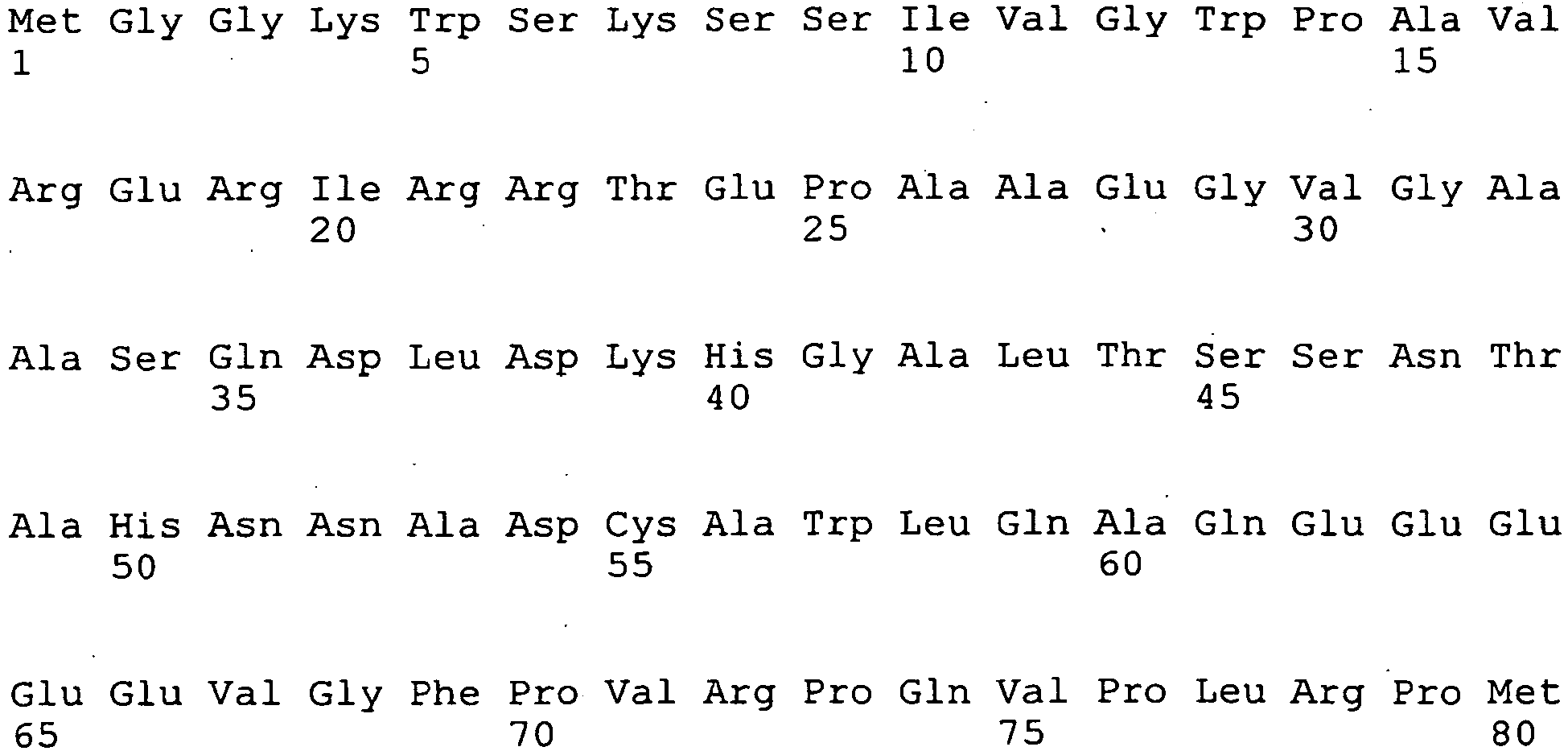
- a consensus amino acid sequence for the tat gene of HIV-1 subtype C is the following:
- a consensus amino acid sequence for the partial nef gene of HIV-1 subtype C is the following :
- a consensus amino acid sequence for the partial rev gene of HIV-1 subtype C is the following :
- the invention provides a molecule comprising:
- polypeptide comprising:
- tat sequence is a sequence set out in any one of SEQ I.D. Nos. 9 to 11 or a sequence which is at least 97% identical to SEQ I.D. Nos. 9 or 10 or 95% identical to SEQ ID No. 11.
- the tat sequence is a sequence set out in any one of SEQ I.D. Nos. 9 to 11 or a sequence which is at least 97% identical to SEQ I.D. Nos. 9 or 10 or 95% identical to SEQ ID No. 11.
- at least two of the sequences are used in the vaccine.
- Other preferred embodiments are set out in claims 2-4.
- a vaccine for the treatment or prevention of HIV infection comprising at least one shuffled tat sequence set out in any one of SEQ I.D. Nos. 9-11. Preferred embodiments are set out in claims 6-8.
- This invention relates to the selection of HIV-1 subtype C isolate regulatory and accessory genes and the use of these genes and modifications and derivatives thereof in making prophylactic and therapeutic pharmaceutical compositions and formulations, and in particular vaccines against HIV-1 subtype C.
- the compositions could therefore be used either prophylactically to prevent infection or therapeutically to prevent or modify disease.
- a number of factors must be taken into consideration in the development of an HIV vaccine and one aspect of the present invention relates to a process for the selection of suitable HIV isolates accessory and regulatory genes that may be used in the development of a vaccine.
- a process was developed to identify appropriate strains for use in developing a vaccine for HIV-1 subtype C.
- Viral isolates from acutely infected individuals were collected. They were sequenced in the tat, rev and nef regions and the amino acid sequences for the tat, rev and nef genes from these isolates were compared.
- a consensus sequence the South African consensus sequence, was then formed by selecting the most frequently appearing amino acid at each position.
- the consensus sequence for each of the tat, rev and nef genes of HIV-1 subtype C is disclosed herein.
- Appropriate strains for vaccine development were then selected from these isolates by comparing them with the consensus sequence and characterising them phenotypically. The isolates are disclosed herein.
- NSI strains which use the CCR5 co-receptor
- Du422 and Du151 Two potential vaccine strains, designated Du422 and Du151 were selected.
- Du422 and Du151 were selected based on amino acid homology to the consensus sequence in all three gene regions: tat, rev and nef, CCR5 tropism and ability to grow and replicate in tissue culture.
- the nucleotide and amino acid sequences of the three gene regions of the three isolates and modifications and derivatives thereof also form aspects of the invention.
- HIV peripheral blood mononuclear cells
- 2x10 6 patient PBMC were co-cultured with 2x10 6 donor PBMC in 12 well plates with 2 ml RPMI 1640 with 20% FCS, antibiotics and 5% IL-2 (Boehringer). Cultures were replenished twice weekly with fresh medium containing IL-2 and once with 5x10 5 /ml donor PBMC. Virus growth was monitored weekly using a commercial p24 antigen assay (Coulter). Antigen positive cultures were expanded and cultured for a further 2 weeks to obtain 40 ml of virus containing supernatant which was stored at -70°C until use. The results of the isolation of the viruses from the commercial sex workers is also shown in Table 1 below.
- Virus-containing supernatant was used to assess the biological phenotype of viral isolates on MT-2 and co-receptor transfected cell lines.
- 500 ⁇ l of supernatant was incubated with 5x10 4 MT-2 cells in PRMI plus 10% FCS and antibiotics. Cultures were monitored daily for syncitia formation over 6 days.
- U87.CD4 cell expressing either the CCR5 or CXCR4 co-receptor were grown in DMEM with 10% FCS, antibiotics, 500 ⁇ g/ml G418 and 1 ⁇ g/ml puromycin GHOST cells expressing minor co-receptors were grown in DMEM with 10% FCS, 500 ⁇ g/ml G418, 1 ⁇ g/ml puromycin and 100 ⁇ g/ml hygromycin. Cell lines were passaged twice weekly by trypsination. Co-receptor assays were done in 12 well plates; 5x10 4 cells were plated in each well and allowed to adhere overnight.
- the positions of the PCR primers are as follows, (numbering using the HIV-1 HXBr sequence): tat outer forward primer (5'GGC CGC AGA GGG AAC CAT AC3' (SEQ ID No: 21) 5584-5703bp), or rev outer reverse primer (5'GCC CTG TCT TAT TCT TCT AGG3' (SEQ ID No: 22) 8753-8774bp).
- the remaining primers used for nested PCR were as follows: the tat outer reverse primer (5'CCT CAA TAT CCC CAT CAC TCT C3' (SEQ ID No: 23) 6226-6248bp), tat inner forward (5'TGC CAG CAT AGC AGA ATA GG3' (SEQ ID No: 24) 5785-5804bp) and reverse (5'CTA TCA ATG CTC CTA CTC CTA ATC3' (SEQ ID No: 25) 6078-6101bp) primers and for rev, with the rev outer forward primer (5'GAT AGT AGG AGG CTT GAT AGG3' (SEQ ID No: 26) 8285-8302bp) and inner forward (5'GGT GTA CTC GCT ATA GTG3' (SEQ ID No: 27) 8321-8339bp) and reverse primers (5'CCT TCA GCT ACT GCT ATT GC3' (SEQ ID No: 28) 8689-8698b
- the amplified DNA fragments were purified using the QIAQUICK PCR Purification Kit (Qiagen, Germany). The DNA fragments were then sequenced using the upstream PCR primers as sequencing primers. Sequencing was done using the Sanger dideoxyterminator strategy with fluorescent dyes attached to the dideoxynucleotides. The sequence determination was made by electrophoresis using an ABI 377 Sequencer. A mapped illustration of an HIV-1 proviral genome showing the tat, rev and nef genes sequenced as described above, is shown in Figure 18 .
- Figure 18 To select the vaccine isolate or isolates, a survey covering the three HIV genes tat (101 codons, 306 bases), rev (107 contiguous codons, 324 bases) and nef (207 codons, 618 bases) was done ( Figure 18 ).
- the map of Figure 18 shows the 5' long terminal repeat, the structural and functional genes (gag, pol and env) as well as the regulatory and accessory proteins ( vif, tat, rev, nef, vpr and vpu).
- the gag open reading frame illustrates the regions encoding p17 matrix protein and the p24 core protein and the p7 and p6 nuclearcapsid proteins.
- the pol open reading frame illustrates the protease (PR) p15, reverse transcriptase (RT) p66 and the Rnase H integrase p51.
- the env open reading frame indicates the region coding for gp120 and the region coding for gp41.
- nucleic acid sequences from the Durban (Du) Africa (GG, RB, SW and COT) and Cape Town (CT) cohorts were phylogenetically compared to a number of available published subtype C sequences (obtained from the Los Alamos HIV Sequence Database) including sequences from the other southern African countries and the overall subtype C consensus from the Los Alamos HIV sequence database. This comparison was done to ensure that the selected vaccine isolates were not phylogenetic outliers when compared to the Southern African sequences and the results of the comparison are shown in Figure 19 , Figure 20 and Figure 21 .
- Figures 19 to 21 illustrate that the sequences from Southern Africa are divergent and that the Indian sequences usually form a separate distinct cluster from these African sequences.
- South African sequences are not unique and, general, are as related to each other as they are to other sequences from Southern Africa. Overall this suggests Indian sequences are unique from Southern African subtype C sequences and that we do not have a clonal epidemic in South Africa, but rather South African viruses reflect the diversity of subtype C viruses in the Southern African region
- Amino acid sequences were derived from the sequences shown in Table 2 and were used to determine a South African consensus sequence. The most frequently appearing amino acid at each position was selected as the consensus amino acid at that position. In this way, the consensus sequence was determined along the linear length of each of the sequenced genes ( tat, rev and nef genes). The alignments were done using the DNAMAN program (DNAMAN2 output), which generates a consensus sequence in this manner. These resulted in the consensus sequence for each gene region. The alignments of the amino acid sequences and the resulting consensus sequences are shown in Figures 22 , 23 and 24 . The amino acid similarities are shown in Figures 25 to 27 .
- the first strain is Du151 for the tat and nef genes and the second strain is Du422 for the tat and rev genes. These three strains were selected for the following reasons:
- Du151 and Du422 tat sequences were shown to be very similar to the South African consensus sequence shown in Figures 19 and 22 . They shared 89.4% (Du151) and 91.6% (Du422) amino acid sequence identity with the consensus sequence. Both Du151 and Du422 were thus used to generate the resynthesized, shuffled Tat in both a wild-type (non-codon optimized) and humanized (codon-optimized) form. They were chosen over slightly closer related isolates to the South African consensus sequence due to their ability to grow in tissue culture and due to both isolates entire genome having been sequenced and characterized.
- the nef gene showed the greatest sequence diversity. Based on the analysis of the Nef amino acid pairwise identity score with the SA consensus (93.4%) shown in Figure 29 , we chose the Du151 isolate as the source of the nef gene. All pairwise identity scores are above 80.2% with either the Du151 isolate sequence when compared to the other recent seroconverters, as shown in Figure 29 . Other contributing factors in this decision were that this is the same isolate that was chosen for the source of the env and pol genes and that this was an isolate with excellent growth properties in vitro.
- the rev gene was the most conserved of the three. Based on the amino acid pairwise identity score with the SA consensus (95.2%), the Du422 rev gene was selected. In addition, all pairwise identity scores are above 83% with the Du422 isolate sequence when compared to the other recent seroconverters, as shown in Figure 30 . These pairwise scores make the Du422 sequence similar to the best scores in this sequence pool and combine these levels of similarity with an R5 virus with good cell culture replication kinetics.
- the Tat-nef polyprotein gene was produced by synthesis of oligonucleotide fragments that were ligated together to form the full gene by GeneArt (geneart GmbH, Regensburg). The codon optimised and non-codon optimised versions were synthesised and cloned into pPCR-Script (Stratagene) vector. The identity of the insert was confirmed by sequencing the insert on both strands and comparing these sequences to the original sequences. The modifications to the tat and nef gene sequences of Du422/Du151 and Du151 separately and Tat-nef polyprotein gene sequence are shown in Sequence I. D. Nos. 9-17.
- the Tat protein was split into three overlapping fragments and reshuffled (as shown in figure 31 ) to inactivate the protein, making it safer, but without losing potential CTL epitopes.
- the Nef protein was shortened by 10 amino acids, removing the N terminal myristylation site that allows the Nef protein to exit the cell (SEQ I. D. No. 12). Apart from making the protein safer, it is hoped that this will result in a more efficient CTL response, as the protein is trapped inside the cell.
- the vaccines of the invention will be formulated in a number of different ways using a variety of different vectors. They involve encapsulating RNA or transcribed DNA sequences from the viruses in a variety of different vectors.
- the vaccines contain at least part of the tat and rev genes from the Du422 isolate, and at least part of the tat and nef genes from the Du151 isolate of the present invention or derivatives or modifications thereof according to the appended claims.
- tat Du422 Genes for use in DNA vaccines have been resynthesized to reflect human codon usage.
- the tat Du422 gene was also divided into three fragments with overlapping ends so that no potential CTL epitopes are lost and reshuffled to improve safety of the Tat protein.
- the Du151 nef gene had the first 10 amino acids deleted to remove the myristylation site for safety reasons.
- the reshuffled tat and shortened nef were then synthesised together in the same reading frame to constitute a Tat-Nef polyprotein.
- Both humanised and non-humanised versions of the Tat-nef polyprotein have been synthesised for alternative vaccines.
- a similarly codon optimised rev gene may be expressed by DNA vaccines.
- RNA for the tat gene from the Du422 and Du151 isolates DNA transcribed from the RNA for the nef gene from the Du151 isolate and DNA transcribed from the RNA for the rev gene from the Du422 isolate.
- These genes could also be expressed as oligomeric envelope glycoprotein complexes (Progenics, USA) as published in J Virol 2000 Jan;74(2):627-43 (Binley, J.L. et al.
- AAV adeno associated virus
- VMA Modified Vaccinia Ankara
- a vaccine construct containing an in frame polygene, GrttnC ( Figures 32a and 32b ; SEQ I.D. Nos. 29 and 30) including codon optimised Du422 gag ( Figures 34 and 35 ; SEQ I.D. Nos. 31 and 32), Du151 RT (reverse transcriptase) ( Figures 36 and 37 ; SEQ I.D. Nos. 33 and 34) ( WO 02/04494 , the contents of which are incorporated herein by reference) and the shuffled tat - truncated nef (SEQ I.D. No.
Landscapes
- Chemical & Material Sciences (AREA)
- Organic Chemistry (AREA)
- Health & Medical Sciences (AREA)
- Life Sciences & Earth Sciences (AREA)
- Proteomics, Peptides & Aminoacids (AREA)
- Biochemistry (AREA)
- Biophysics (AREA)
- Virology (AREA)
- Medicinal Chemistry (AREA)
- General Health & Medical Sciences (AREA)
- Molecular Biology (AREA)
- Genetics & Genomics (AREA)
- Gastroenterology & Hepatology (AREA)
- Medicines Containing Antibodies Or Antigens For Use As Internal Diagnostic Agents (AREA)
- Peptides Or Proteins (AREA)
- Medicines That Contain Protein Lipid Enzymes And Other Medicines (AREA)
Description
- THIS invention relates to a process for the selection of HIV-1 subtype (clade) C isolate regulatory/accessory genes, selected HIV-1 subtype C isolate regulatory/accessory genes and modifications and derivatives thereof for use in prophylactic and therapeutic vaccines to produce proteins and polypeptides for the purpose of eliciting protection against HIV infection or disease.
- The disease acquired immunodeficiency syndrome (AIDS) is caused by human immunodeficiency virus (HIV). Over 34 million people worldwide are thought to be living with HIV/AIDS, with over 95% of infected people living in developing countries (UNAIDS, 1999). It is estimated that 24.5 million infected people reside in sub-Saharan Africa and that South Africa currently has one of the world's fastest growing HIV-1 epidemics. At the end of 2000, over 24% of pregnant women attending government antenatal clinics in South Africa were HIV positive (Department of Health, 2001). A preventative vaccine is considered to be the only feasible way to control this epidemic in the long term.
- HIV shows remarkable genetic diversity that has confounded the development of a vaccine. The molecular basis of variation resides in the viral enzyme reverse transcriptase which not only introduces an error every round of replication, but also promotes recombination between viral RNAs. Based on phylogenetic analysis of sequences, HIV has been classified into a number of groups: the M (major group) which comprises subtypes A to H and K, the O (outlier group) and the N (non-M, non-O group). Recently recombinant viruses have been more frequently identified and there are a number which have spread significantly and established epidemics (circulating recombinant forms or CRF) such as subtype A/G recombinant in West Africa, and CRF A/E recombinant in Thailand (Robertson et al., 2000).
- Subtype C predominates in the Southern African region which includes Botswana, Zimbabwe, Zambia, Malawi, Mozambique and South Africa. In addition, increasing numbers of subtype C infections are being detected in the Southern region of Tanzania. This subtype also predominates in Ethiopia and India and is becoming more important in China.
- A possible further obstacle to vaccine development is that the biological properties of HIV change as disease progresses. HIV requires two receptors to infect cells, the CD4 and co-receptors of which CCRS and CXCR4 are the major co-receptors used by HIV-1 strains. The most commonly transmitted phenotype is non-syncytium inducing (NSI), macrophage-tropic viruses that utilise the CCR5 co-receptor for entry (R5 viruses). Langerhans cells in the mucosa are thought to selectively pick up R5 variants at the portal of entry and transport them to the lymph nodes where they undergo replication and expansion. As the infection progresses, viruses evolve that have increased replicative capacity and the ability to grow in T cell lines. These syncytium-inducing (SI) T-tropic viruses use CXCR4 in conjunction with or in preference to CCR5, and in some cases also use other minor co-receptors (Connor et al., 1997, Richman & Bozzette, 1994). However HIV-1 subtype C viruses appear to be unusual in that they do not readily undergo this phenotypic switch, as R5 viruses are also predominant in patients with advanced AIDS (Bjorndal et al., 1999, Peeters et al., 1999, Tscheming et al., 1998, Scarlatti et al., 1997).
- An HIV vaccine alms to elicit both a CD8+ cytotoxic T lymphocyte (CTL) immune response as well as a neutralizing antibody response. Many current vaccine approaches have primarily focused on inducing a CTL response. It is thought that the CTL response may be more important as it is associated with the initial control of viral replication after infection, as well as control of replication during disease, and is inversely correlated with disease progression (Koup et al., 1994, Ogg et al., 1999 Schmitz et al., 1999). The importance of CTL in protecting individuals from infection is demonstrated by their presence in highly exposed seronegative individuals, for example certain sex-workers in Kenya (Rowland-Jones et al., 1998).
- Knowledge of genetic diversity is highly relevant to the design of vaccines aiming at eliciting a cytotoxic T-lymphocyte (CTL) response. There are many CTL epitopes in common between viruses (HIV Molecular Immunology Database, 1998). In addition, several studies have now shown that there is a cross-reactive CTL response: individuals vaccinated with a subtype B-based vaccine could lyse autologous targets infected with a diverse group of isolates (Ferrari et al., 1997); and CTLs from non-B infected individuals could lyse subtype B-primed targets (Betts et al. 1997; Durali et al, 1998). A comparison of CTL epitopes in the HIV-1 sequence database indicated that there is a greater conservation of cytotoxic T epitopes within a subtype compared to between subtypes and that there will be a greater chance of a CTL response if the challenge virus is the same subtype as the vaccine strain.
- It is thought that the regulatory genes of HIV are extremely important in eliciting an immune response. Tat, Rev and Nef are all expressed early in the infectious cycle and would thus provide targets for cytotoxic T lymphocytes (CTLs) early in infection, possibly allowing virus infected cells to be destroyed before the virus can spread (Klotman et. al., 1991; Addo et. al., 2001). In addition, there is promising data showing that the Tat protein elicits an effective immune response in HIV-infected, asymptomatic people (Calarota et. al., 1999; Calarota et. al., 2001). It has recently been reported that the Tat protein is one of the first to undergo escape from CTL in infected macaques (Allen et. a/., 2000). This indicates that there is immune pressure on tat and that there is an early response to the Tat protein.
- Sequences of HIV-1 proteins and genes were known at the time the invention was made. Database EMBL 1 November 1999 Carr J.K. et al., accession No. Q9W544 provides an amino acid sequence for HIV-1 nef.
WO 00/26416 WO 0204493 - Viral strains used in the design of a vaccine need to be shown by genotypic analysis to be representative of the circulating strains and not an unusual or outlier strain. In addition, it is important that a vaccine strain also has the phenotype of a recently transmitted virus, which is NSI and uses the CCR5 co-receptor.
- In the specification which follows, certain terms are intended to have the following meanings:
- "wild-type" means the naturally occurring HIV codon bias of the virus isolate;
- "codon optimised"means the resynthesis of the gene using a human codon bias instead of the HIV codon bias; "truncated"means having the first ten amino acids removed from the Nef protein to inactivate function whilst maintaining immunogenicity; "shuffled"means the rearrangement of the Tat protein in order to inactivate function whilst maintaining immunogenicity.
- A molecule is disclosed, the molecule having:
- (i) the nucleotide sequence as set out in
Figure 1 (SEQ I. D. No. 1); - (ii) an RNA sequence corresponding to the nucleotide sequence set out in
Figure 1 (SEQ I. D. No. 1); - (iii) a sequence which is at least 97% DNA similar to the nucleotide sequence set out in
Figure 1 (SEQ I. D. No. 1) or an RNA sequence corresponding to it, and which displays substantially similar immunogenicity; - (iv) a sequence which is homologous to the nucleotide sequence set out in Sequence I. D. No. 1 or an RNA sequence corresponding to it; or
- (v) a sequence which is a modification or derivative of the sequence of any one of (i) to (iv).
- The modified sequence is preferably that set out in either one of
Figures 9 and 10 , which are consensus sequences of Du422 and Du151 (SEQ I. D. Nos. 9 and 10). - Also disclosed is a molecule, the molecule having:
- (i) the nucleotide sequence set out in
Figure 3 (SEQ I. D. No. 3); - (ii) an RNA sequence corresponding to the nucleotide sequence set out in
Figure 3 (SEQ I. D. No. 3); - (iii) a sequence which is at least 97% DNA similar to the nucleotide sequence set out in
Figure 3 (SEQ I. D. No. 3) or an RNA sequence corresponding to it, and which displays substantially similar immunogenicity; - (iv) a sequence which is homologous to the nucleotide sequence set out in
Figure 3 (SEQ I. D. No. 3) or an RNA sequence corresponding to it ; or - (v) a sequence which is a modification or derivative of the sequence of any one of (i) to (iv).
- The modified sequence is preferably that set out in either one of
Figures 9 and 10 , which are consensus sequences of Du422 and Du151 (SEQ I. D. No. 9 and No. 10). - Also disclosed is a molecule; the molecule having:
- (i) the nucleotide sequence set out in
Figure 5 (SEQ I. D. No. 5); - (ii) an RNA sequence corresponding to the nucleotide sequence set out in
Figure 5 (SEQ I. D. No. 5); - (iii) a sequence which is at least 98% DNA similar to the nucleotide sequence set out in
Figure 5 (SEQ I. D. No. 5) or an RNA sequence corresponding to it, and which displays substantially similar immunogenicity; - (iv) a sequence which is homologous to the nucleotide sequence set out in
Figure 5 (SEQ I. D. No. 5) or an RNA sequence corresponding to it; or - (v) a sequence which is a modification or derivative of the sequence of any one of (i) to (iv).
- The modified sequence is preferably that set out in either one of
Figures 12 and 13 (SEQ I. D. Nos. 11 and 13). - Also disclosed is a molecule, the molecule having:
- (i) the nucleotide sequence set out in
Figure 7 (SEQ I. D. No. 7); - (ii) an RNA sequence corresponding to the nucleotide sequence set out in
Figure 7 (SEQ I. D. No. 7); - (iii) a sequence which is at least 96% DNA similar to the nucleotide sequence set out in
Figure 7 (SEQ I. D. No. 7) or an RNA sequence corresponding to it, and which displays substantially similar immunogenicity; - (iv) a sequence which is homologous to the nucleotide sequence set out in
Figure 7 (SEQ I. D. No. 7) or an RNA sequence corresponding to it; or - (v) a sequence which is a modification or derivative of the sequence of any one of (i) to (iv).
- The modified sequence preferably has similar or the same modifications as those set out in either one of
Figures 12 and 13 (SEQ I. D. Nos. 12 and 13) for the nef gene of the isolate Du151. - Also disclosed is a molecule, the molecule having:
- (i) the nucleotide sequence set out in
Figure 15 (SEQ I. D. No. 15); - (ii) an RNA sequence corresponding to the nucleotide sequence set out in
Figure 15 (SEQ I. D. No. 15); - (iii) a sequence which is at least 90% or greater DNA similar to the nucleotide sequence set out in
Figure 15 (SEQ I. D. No. 15) or an RNA sequence corresponding to it, and which displays substantially similar immunogenicity; - (iv) a sequence which is homologous to the nucleotide sequence set out in
Figure 15 (SEQ I. D. No. 15) or an RNA sequence corresponding to it; or - (v) a sequence which is a modification or derivative of the sequence of any one of (i) to (iv).
- Also disclosed is a molecule, the molecule having:
- (i) the nucleotide sequence set out in
Figure 17 (SEQ I. D. No. 17); - (ii) an RNA sequence corresponding to the nucleotide sequence set out in
Figure 17 (SEQ I. D. No. 17); - (iii) a sequence which is at least 90% DNA similar to the nucleotide sequence set out in
Figure 17 (Sequence I. D. No. 17) or an RNA sequence corresponding to it, and which displays substantially similar immunogenicity; - (iv) a sequence which is homologous to the nucleotide sequence set out in
Figure 17 (SEQ I. D. No. 17) or an RNA sequence corresponding to it; or - (v) a sequence which is a modification or derivative of the sequence of any one of (i) to (iv).
- According to another aspect of the invention a polypeptide is provided, the polypeptide having:
- (i) the amino acid sequence set out in
Figure 2 (SEQ I. D. No. 2); - (ii) a sequence which is at least 95% similar to the sequence of
Figure 2 and which has substantially similar immunogenicity; or - (iii) a sequence which is a modification or derivative of the amino acid sequence set out in
Figure 2 (SEQ I. D. No. 2). - The modified sequence is preferably that set out in
Figure 11 , which is a consensus sequence of Du422 and Du151 (SEQ I. D. No. 11). - Also disclosed is a polypeptide, the polypeptide having:
- (i) the amino acid sequence set out in
Figure 4 (SEQ I. D. No. 4); - (ii) a sequence which is at least 95% similar to the sequence of
Figure 4 and which has substantially similar immunogenicity; or - (iii) a sequence which is a modification or derivative of the amino acid sequence set out in
Figure 4 (SEQ I. D. No. 4). - The modified sequence is preferably that set out in
Figure 11 , which is a consensus sequence of Du422 and Du151 (SEQ I. D. No. 11). - Also disclosed is a polypeptide, the polypeptide having:
- (i) the amino acid sequence set out in
Figure 6 (SEQ I. D. No. 6); - (ii) a sequence which is at least 92% similar to the sequence of
Figure 6 and which has substantially similar immunogenicity; or - (iii) a sequence which is a modification or derivative of the amino acid sequence set out in
Figure 6 (SEQ I. D. No. 6). - The modified sequence is preferably that set out in
Figure 14 (SEQ I. D. No. 14). - Also disclosed is a polypeptide, the polypeptide having:
- (i) the amino acid sequence set out in
Figure 8 (SEQ I. D. No. 8); - (ii) a sequence which is at least 95% similar to the sequence of
Figure 8 and which has substantially similar immunogenicity; or - (iii) a sequence which is a modification or derivative of the amino acid sequence set out in
Figure 8 (SEQ I. D. No. 8). - The modified sequence preferably has similar or the same modifications as those set out in
Figure 14 (SEQ I. D. No. 14) for the amino acid sequence of the nef gene of the isolate Du151. - Also disclosed is a polypeptide, the polypeptide having:
- (i) the amino acid sequence set out in
Figure 16 (SEQ I. D. No. 16); - (ii) a sequence which is at least 90% similar to the sequence of
Figure 16 and which has substantially similar immunogenicity; or - (iii) a sequence which is a modification or derivative of the amino acid sequence set out in
Figure 16 (SEQ I. D. No. 16). - A consensus amino acid sequence for the tat gene of HIV-1 subtype C is the following:

- A consensus amino acid sequence for the partial nef gene of HIV-1 subtype C is the following :

- A consensus amino acid sequence for the partial rev gene of HIV-1 subtype C is the following :

- According to one aspect, the invention provides a molecule comprising:
- (i) the nucleotide sequence set out in SEQ I.D. Nos. 9, 10, 15 or 17;
- (ii) a sequence which is at least 90% or greater DNA identical to the nucleotide sequence set out in SEQ I.D. Nos. 15 or 17, or an RNA sequence corresponding to these sequences; or a sequence which is at least 97% DNA identical to the nucleotide sequence set out in SEQ I.D. Nos. 9 or 10 or an RNA sequence corresponding to these sequences; or
- (iii) an RNA sequence corresponding to the nucleotide sequence set out in (i).
- According to a further aspect, the invention provides a polypeptide comprising:
- (i) the amino acid sequence set out in SEQ I.D. Nos. 11 or 16;
- (ii) an amino acid sequence which is at least 90% identical to the sequence of SEQ ID No. 16; or a sequence which is at least 95% identical to the sequence of SEQ I.D. Nos. 2 or 4; or a sequence which is at least 95% identical to the sequence of SEQ I.D. No. 11.
- According to a further aspect of the invention, there is provided the use of at least one shuffled tat sequence in the manufacture of a vaccine for use in the treatment or prevention of HIV infection, wherein the tat sequence is a sequence set out in any one of SEQ I.D. Nos. 9 to 11 or a sequence which is at least 97% identical to SEQ I.D. Nos. 9 or 10 or 95% identical to SEQ ID No. 11. Preferably, at least two of the sequences are used in the vaccine. Other preferred embodiments are set out in claims 2-4.
- According to a further aspect of the invention, there is provided a vaccine for the treatment or prevention of HIV infection comprising at least one shuffled tat sequence set out in any one of SEQ I.D. Nos. 9-11. Preferred embodiments are set out in claims 6-8.
-
- Figure 1 (SEQ I. D. No 1)
- shows the nucleic acid sequence (cDNA) of the sequenced tat gene of the isolate Du422;
- Figure 2 (SEQ I.D. No 2)
- shows the amino acid sequence of the sequenced tat gene of the isolate Du422, derived from the nucleic acid sequence;
- Figure 3 (SEQ I.D. No 3)
- shows the nucleic acid sequence (cDNA) of the sequenced tat gene of the isolate Du151;
- Figure 4 (SEQ I.D. No 4)
- shows the amino acid sequence of the sequenced tat gene of the isolate Du151, derived from the nucleic acid sequence;
- Figure 5 (SEQ I.D. No 5)
- shows the nucleic acid sequence (cDNA) of the sequenced nef gene of the isolate Du151;
- Figure 6 (SEQ I.D. No 6)
- shows the amino acid sequence of the sequenced nef gene of the isolate Du151, derived from the nucleic acid sequence;
- Figure 7 (SEQ I.D. No 7)
- shows the nucleic acid sequence of the sequenced rev gene of the isolate Du422, derived from the nucleic acid sequence;
- Figure 8 (SEQ I.D. No 8)
- shows the amino acid sequence of the sequenced rev gene of the isolate Du422, derived from the nucleic acid sequence;
- Figure 9 (SEQ I.D. No 9)
- shows the nucleic acid sequence (DNA) of the wild-type, shuffled, sequenced tat gene of a consensus of the isolates Du422 and Du151;
- Figure 10 (SEQ I.D. No 10)
- shows the nucleic acid sequence (DNA) of the codon optimised, shuffled, sequenced tat gene of a consensus of the isolates Du422 and Du151 for the purposes of increased expression;
- Figure 11 (SEQ I.D. No 11)
- shows the amino acid sequence of the shuffled, sequenced Tat protein of a consensus of the isolates Du422 and Du151;
- Figure 12 (SEQ I.D. No 12)
- shows the nucleic acid sequence (DNA) of the wild-type, truncated, sequenced nef gene of the isolate Du151;
- Figure 13 (SEQ I.D. No 13)
- shows the nucleic acid sequence (DNA) of codon optimised, truncated, sequenced nef gene of the isolate Du151 for the purposes of increased expression;
- Figure 14 (SEQ I.D. No 14)
- shows the amino acid sequence of the truncated, sequenced Nef protein of the isolate Du151;
- Figure 15 (SEQ I.D. No 15)
- shows the nucleic acid sequence (DNA) of the wild-type polygene consisting of shuffled tat (SEQ I.D. No 9) - truncated nef (SEQ I.D. No 11) genes of the isolates Du422 and Du151;
- Figure 16 (SEQ I.D. No 16)
- shows the amino acid sequence of the sequenced shuffled Tat (SEQ I.D. No 10) - truncated Nef (SEQ I.D. No 12) polyprotein of the isolates Du422 and Du151; and
- Figure 17 (SEQ I.D. No 17)
- shows the nucleic acid sequence (DNA) of the sequenced polygene consisting of shuffled tat - truncated nef genes of the isolates Du422 and Du151 modified to reflect human codon usage for the purposes of increased expression.
- Figure 18
- shows a schematic representation of the HIV-1 genome and illustrates the location of overlapping fragments that were sequenced having been generated by reverse transcriptase followed by polymerase chain reaction, in order to generate the South African consensus sequences;
- Figure 19
- shows a phylogenetic tree of nucleic acid sequences of various HIV-1 subtype C isolates based on the sequences of the tat gene of the various isolates and includes a number of consensus sequences as well as the South African consensus sequence of the present invention and selected isolates, Du422 and Du151, of the present invention;
- Figure 20
- shows a phylogenetic tree of nucleic acid sequences of various HIV-1 subtype C isolates based on the sequences of the nef gene of the various isolates and includes a number of consensus sequences as well as the South African consensus sequence of the present invention and a selected isolate, Du151, of the present invention;
- Figure 21
- shows a phylogenetic tree of nucleic acid sequences of various HIV-1 subtype C isolates based on the sequences of the rev gene of the various isolates and includes a number of consensus sequences as well as the South African consensus sequence of the present invention and a selected isolate, Du422, of the present invention;
- Figure 22
- shows how the sequences of the Tat proteins of each of a number of isolates varies from the South African consensus sequence for the tat gene which was developed according to the present invention;
- Figure 23
- shows how the sequences of the Nef proteins of each of a number of isolates varies from the South African consensus sequence for the nef gene which was developed according to the present invention;
- Figure 24
- shows how the sequences of the Rev proteins of each of a number of isolates varies from the South African consensus sequence for the rev gene which was developed according to the present invention;
- Figure 25
- shows the phylogenetic tree of amino acid sequences of various HIV-1 subtype C isolates based on the sequences of the Tat protein of the various isolates and including a number of consensus sequences, as well as the South African consensus sequence of the present invention and selected isolates, Du422 and Du151, of the present invention;
- Figure 26
- shows the phylogenetic tree of amino acid sequences of various HIV-1 subtype C isolates based on the sequences of the Nef protein of the various isolates and including a number of consensus sequences, as well as the South African consensus sequence of the present invention and selected isolates, Du422 and Du151, of the present invention;
- Figure 27
- shows the phylogenetic tree of amino acid sequences of various HIV-1 subtype C isolates based on the sequences of the Tat protein of the various isolates and including a number of consensus sequences, as well as the South African consensus sequence of the present invention and selected isolates, Du422 and Du151, of the present invention;
- Figure 28
- shows the percentage amino acid sequence identity of the sequenced Tat proteins of the various isolates in relation to one another, to the Du422 and Du151 Tat clones selected and to the South African consensus sequence for the Tat protein and is based on a pairwise comparison of the Tat proteins of the isolates;
- Figure 29
- shows the percentage amino acid sequence identity of the sequenced Nef proteins of the various isolates in relation to one another, to the Du151 Nef clone selected and to the South African consensus sequence for the Nef protein and is based on a pairwise comparison of the Nef protein of the isolates;
- Figure 30
- shows the percentage amino acid sequence identity of the sequenced Rev proteins of the various isolates in relation to one another, to the Du422 Rev clone selected and to the South African consensus sequence for the Rev protein and is based on a pairwise comparison of the Rev proteins of the isolates;
- Figure 31
- shows a schematic representation of the shuffled Tat protein, including overlapping fragments for CTL epitope maintenance;
- Figure 32a
- shows a nucleic acid sequence of GrttnC made up of gag (Du422), RT (Du151), shuffled tat (SEQ I.D. No. 10) and truncated nef(SEQ I.D. No. 13) (SEQ I.D. No. 29);
- Figure 32b
- shows an amino acid sequence of GrttnC, made up of gag (Du422), RT (Du151), shuffled tat and truncated nef (SEQ I.D. No. 16) (SEQ I.D. No. 30);
- Figure 33
- shows a plasmid map of pTHgrttnC, the DNA vaccine vector expressing GrttnC for prophylactic or therapeutic use against HIV infection;
- Figure 34
- shows the Du422 gag nucleotide sequence which forms part of grttnC (SEQ I.D. No: 31);
- Figure 35
- shows the Du422 Gag amino acid sequence which forms part of grttnC (SEQ I.D. No: 32);
- Figure 36
- shows the Du151 reverse transcriptase (RT) nucleotide sequence which forms part of grttnC (SEQ I. D. No: 33); and
- Figure 37
- shows the Du151 reverse transcriptase (RT) amino acid sequence which forms part of grttnC (SEQ I. D. No: 34).
- This invention relates to the selection of HIV-1 subtype C isolate regulatory and accessory genes and the use of these genes and modifications and derivatives thereof in making prophylactic and therapeutic pharmaceutical compositions and formulations, and in particular vaccines against HIV-1 subtype C. The compositions could therefore be used either prophylactically to prevent infection or therapeutically to prevent or modify disease. A number of factors must be taken into consideration in the development of an HIV vaccine and one aspect of the present invention relates to a process for the selection of suitable HIV isolates accessory and regulatory genes that may be used in the development of a vaccine.
- The applicant envisages that the vaccine developed according to the above method could be used against one or more HIV subtypes as well as HIV-1 subtype C.
- A process was developed to identify appropriate strains for use in developing a vaccine for HIV-1 subtype C. Viral isolates from acutely infected individuals were collected. They were sequenced in the tat, rev and nef regions and the amino acid sequences for the tat, rev and nef genes from these isolates were compared. A consensus sequence, the South African consensus sequence, was then formed by selecting the most frequently appearing amino acid at each position. The consensus sequence for each of the tat, rev and nef genes of HIV-1 subtype C is disclosed herein. Appropriate strains for vaccine development were then selected from these isolates by comparing them with the consensus sequence and characterising them phenotypically. The isolates are disclosed herein.
- In order to select for NSI strains which use the CCR5 co-receptor, a well established sex worker cohort was used to identify the appropriate strains. Appropriate strains were identified from acutely infected individuals by comparing them with the consensus sequence which had been formed. Viral isolates from 12 acutely infected individuals were sequenced in the tat, rev and/or nef regions and phenotypically characterised. These sequences were compared with viral isolates from 15 asymptomatic individuals from another region having more than 500 CD4 cells, as well as 11 viral isolates from AIDS patients attending a TB infectious disease hospital in Gauteng (n=9) and two children with AIDS (n=2). Other published subtype C sequences located in the Los Alamos Database were also included (http://ww.hiv-web.lanl.gov/).
- Two potential vaccine strains, designated Du422 and Du151 were selected. Du422 and Du151 were selected based on amino acid homology to the consensus sequence in all three gene regions: tat, rev and nef, CCR5 tropism and ability to grow and replicate in tissue culture. The nucleotide and amino acid sequences of the three gene regions of the three isolates and modifications and derivatives thereof also form aspects of the invention.
- The following criteria were used to select appropriate strains for inclusion into HIV-1 vaccines for Southern Africa:
- that the strains be genotypically representative of circulating strains;
- that the strain not be an outlier strain;
- that the strain be as close as possible to the consensus amino acid sequence developed according to the invention for the tat, rev and nef genes of HIV-1 subtype C;
- that the strain have an R5 phenotype, i.e. a phenotype associated with transmission for selection; and
- that the vaccine be able to be grown in tissue culture.
- The following procedure was followed in the selection of viral strains for the design of a vaccine. A well-established sex worker cohort in Kwazulu Natal, South Africa was used to identify the appropriate strains for use in an HIV vaccine. Viral isolates from 12 acutely infected individuals were sequenced in tat, rev and nef and were also isolated and phenotypically characterised. These sequences were compared with a similar collection from asymptomatic and AIDS infected (nef region) individuals from the Gauteng region in South Africa and Cape Town region of the Western Cape as well as other published subtype C sequences.
- Individuals with HIV infection were recruited from 4 regions in South Africa. Blood samples were obtained from recently infected sex workers from Kwazulu-Natal (n=12). Recent infection was defined as individuals who were previously seronegative and had became seropositive within the previous year. Samples were also collected from individuals attending out-patients clinics In Cape Town (n=2), women attending antenatal clinics in Johannesburg (n=6) and men attending a STD clinic on a gold mine outside. Johannesburg (n=7). The latter 2 groups were clinically stable and were classified as asymptomatic infections. In addition, for comparison in the nef gene, 11 isolates from AIDS patients were included from Gauteng; 9 isolates from patients attending a TB infectious disease hospital and 2 isolates from children infected with AIDS. Blood samples were collected in EDTA and used to determine the CD4 T cell count and genetic analysis of the virus. In the case of recent infections a branched ohain (bDNA) assay (Chiron) to measure plasma viral load was done, and the virus was isolated. HIV-1 serostatus was determined by ELISA. The results of the CD4 T cell counts and the viral loads on the sex workers were established and information on the clinical status as at date of seroconversion, CD4, and data on the co-receptor usage is set out in Table 1 below.
- HIV was isolated from peripheral blood mononuclear cells (PBMC) using standard co-culture techniques with mitogen-activated donor PBMC. 2x10⁶ patient PBMC were co-cultured with 2x10⁶ donor PBMC in 12 well plates with 2 ml RPMI 1640 with 20% FCS, antibiotics and 5% IL-2 (Boehringer). Cultures were replenished twice weekly with fresh medium containing IL-2 and once with 5x10⁵/ml donor PBMC. Virus growth was monitored weekly using a commercial p24 antigen assay (Coulter). Antigen positive cultures were expanded and cultured for a further 2 weeks to obtain 40 ml of virus containing supernatant which was stored at -70°C until use. The results of the isolation of the viruses from the commercial sex workers is also shown in Table 1 below.
- Virus-containing supernatant was used to assess the biological phenotype of viral isolates on MT-2 and co-receptor transfected cell lines. For the MT-2 assay, 500 µl of supernatant was incubated with 5x10⁴ MT-2 cells in PRMI plus 10% FCS and antibiotics. Cultures were monitored daily for syncitia formation over 6 days. U87.CD4 cell expressing either the CCR5 or CXCR4 co-receptor were grown in DMEM with 10% FCS, antibiotics, 500 µg/ml G418 and 1 µg/ml puromycin GHOST cells expressing minor co-receptors were grown in DMEM with 10% FCS, 500 µg/ml G418, 1 µg/ml puromycin and 100 µg/ml hygromycin. Cell lines were passaged twice weekly by trypsination. Co-receptor assays were done in 12 well plates; 5x10⁴ cells were plated in each well and allowed to adhere overnight. The following
day 500 µl of virus containing supernatant was added and incubated overnight to allow viral attachment and infection and washed three times the following day. Cultures were monitored ondays TABLE 1 - COHORT OF ACUTE INFECTIONS FOR SELECTION OF VACCINE CANDIDATES Sample ID Sero date Sample date Duration of infection CD4 count Viral load Co-culture p24 pos MT-2 assay Biotype Du123 17 Aug 9817 Nov 983 mon 841 19,331 d6 (50pg) NSI R5 Du151 12 Oct 9824 Nov 981.5 mon 367 >500,000 d6 (>1ng) NSI R5 Du156 16 Nov 9817 Nov 98<1 mon 404 22,122 d6 (>1ng) NSI R5 Du179 13 Aug 9720 May 99 21 mon 394* 1,359* d7 (<50pg) SI R5x4 Du204 20 May 98 20 May 99 1 year 633* 8,734* d7 (<50pg) NSI R5 Du258 3 June 98 22 Jun 991 year 433* 9,114* - No isolate - Du281 24 July 98 17 Nov 984 mon 594 24,689 d6 (1ng) NSI R5 Du285 2 Oct 98 - - 560* 161* - No isolate - Du368 8 Apr 9824 Nov 987.5 mon 670 13,993 d6 (300pg) NSI R5 Du422 2 Oct 9828 Jan 994 mon 397 17,118* d6 (600 pg) NSI R5 Du457 17 Aug 9817 Nov 983 mon 665 6,658 - No isolate - Du467 26 Aug 98 - - 671 19,268 - No isolate - * date from Nov 98 - RNA was isolated from plasma and the gene fragments were amplified from RNA using reverse transcriptase to generate a cDNA followed by PCR to generate amplified DNA segments. The positions of the PCR primers are as follows, (numbering using the HIV-1 HXBr sequence): tat outer forward primer (5'GGC CGC AGA GGG AAC CAT AC3' (SEQ ID No: 21) 5584-5703bp), or rev outer reverse primer (5'GCC CTG TCT TAT TCT TCT AGG3' (SEQ ID No: 22) 8753-8774bp). The remaining primers used for nested PCR were as follows: the tat outer reverse primer (5'CCT CAA TAT CCC CAT CAC TCT C3' (SEQ ID No: 23) 6226-6248bp), tat inner forward (5'TGC CAG CAT AGC AGA ATA GG3' (SEQ ID No: 24) 5785-5804bp) and reverse (5'CTA TCA ATG CTC CTA CTC CTA ATC3' (SEQ ID No: 25) 6078-6101bp) primers and for rev, with the rev outer forward primer (5'GAT AGT AGG AGG CTT GAT AGG3' (SEQ ID No: 26) 8285-8302bp) and inner forward (5'GGT GTA CTC GCT ATA GTG3' (SEQ ID No: 27) 8321-8339bp) and reverse primers (5'CCT TCA GCT ACT GCT ATT GC3' (SEQ ID No: 28) 8689-8698bp).
- The amplified DNA fragments were purified using the QIAQUICK PCR Purification Kit (Qiagen, Germany). The DNA fragments were then sequenced using the upstream PCR primers as sequencing primers. Sequencing was done using the Sanger dideoxyterminator strategy with fluorescent dyes attached to the dideoxynucleotides. The sequence determination was made by electrophoresis using an ABI 377 Sequencer. A mapped illustration of an HIV-1 proviral genome showing the tat, rev and nef genes sequenced as described above, is shown in
Figure 18 . - To select the vaccine isolate or isolates, a survey covering the three HIV genes tat (101 codons, 306 bases), rev (107 contiguous codons, 324 bases) and nef (207 codons, 618 bases) was done (
Figure 18 ). The map ofFigure 18 shows the 5' long terminal repeat, the structural and functional genes (gag, pol and env) as well as the regulatory and accessory proteins (vif, tat, rev, nef, vpr and vpu). The gag open reading frame illustrates the regions encoding p17 matrix protein and the p24 core protein and the p7 and p6 nuclearcapsid proteins. The pol open reading frame illustrates the protease (PR) p15, reverse transcriptase (RT) p66 and the Rnase H integrase p51. The env open reading frame indicates the region coding for gp120 and the region coding for gp41. - Of a total of 38 isolates, 12 were from the Durban cohort (DU), 24 were from Johannesburg (GG, RB, COT and SW) and 2 from Cape Town (CT). Of these 17 were sequenced in the tat gene, 17 in the rev gene and 32 in the nef gene. The isolates that were sequenced are shown in Table 2.
TABLE 2-LIST OF ISOLATES AND THE REGIONS GENES SEQUENCED Isolate Tat sequence Rev sequence Nef sequence CTSC1 ✔ - - CTSC2 ✔ ✔ ✔ Du123 ✔ ✔ ✔ Du151 ✔ ✔ ✔ Du156 ✔ ✔ - Du179 ✔ ✔ ✔ Du204 ✔ ✔ - Du258 - - ✔ Du281 ✔ ✔ - Du368 ✔ ✔ ✔ Du422 ✔ ✔ ✔ Du457 - - ✔ Du467 - - ✔ GG10 ✔ ✔ ✔ GG2 ✔ - ✔ GG3 - - ✔ GG4 ✔ - ✔ GG5 - ✔ ✔ GG6 - - ✔ RB12 ✔ ✔ ✔ RB13 ✔ ✔ ✔ RB15 - - ✔ RB18 - ✔ ✔ RB21 - ✔ ✔ RB27 - ✔ - RB28 ✔ ✔ ✔ SW10 - - ✔ SW7 - - ✔ SW15 - - ✔ SW5 - - ✔ SW20 - - ✔ SW9 - - ✔ SW2 - - ✔ SW8 - - ✔ SW23 - - ✔ COT2 - - ✔ COT6 - - ✔ - The nucleic acid sequences from the Durban (Du) Johannesburg (GG, RB, SW and COT) and Cape Town (CT) cohorts were phylogenetically compared to a number of available published subtype C sequences (obtained from the Los Alamos HIV Sequence Database) including sequences from the other southern African countries and the overall subtype C consensus from the Los Alamos HIV sequence database. This comparison was done to ensure that the selected vaccine isolates were not phylogenetic outliers when compared to the Southern African sequences and the results of the comparison are shown in
Figure 19 ,Figure 20 andFigure 21 .Figures 19 to 21 illustrate that the sequences from Southern Africa are divergent and that the Indian sequences usually form a separate distinct cluster from these African sequences. The South African sequences are not unique and, general, are as related to each other as they are to other sequences from Southern Africa. Overall this suggests Indian sequences are unique from Southern African subtype C sequences and that we do not have a clonal epidemic in South Africa, but rather South African viruses reflect the diversity of subtype C viruses in the Southern African region - Amino acid sequences were derived from the sequences shown in Table 2 and were used to determine a South African consensus sequence. The most frequently appearing amino acid at each position was selected as the consensus amino acid at that position. In this way, the consensus sequence was determined along the linear length of each of the sequenced genes (tat, rev and nef genes). The alignments were done using the DNAMAN program (DNAMAN2 output), which generates a consensus sequence in this manner. These resulted in the consensus sequence for each gene region. The alignments of the amino acid sequences and the resulting consensus sequences are shown in
Figures 22 ,23 and24 . The amino acid similarities are shown inFigures 25 to 27 . - The final choice of which isolate or isolates to use was based on the similarity of the sequence of the tat, rev and nef genes of a particular isolate to the South African consensus sequence that had been derived as set out above, as well as the availability of an R5 isolate which had good replication kinetics as shown in Table 1.
- Based on the considerations and methodology set out above, two strains were selected from the acute infection cohort as the vaccine strains. The first strain is Du151 for the tat and nef genes and the second strain is Du422 for the tat and rev genes. These three strains were selected for the following reasons:
- 1. At the time the samples were obtained, Du151 had been infected for 6 weeks and had a CD4 count of 367 cells per ul of blood and a viral load above 500,000 copies per ml of plasma. Given the high viral load, and the recorded time from infection, it is probable that the individual was still in the initial stages of viraemia prior to control of HIV replication by the immune system.
- 2. At the time the samples were obtained, Du422 had been infected for 4 months with a CD4 count of 397 cells per ul of blood and a viral load of 17,118 copies per ml of plasma. In contrast to Du151, this individual had already brought viral replication under control to a certain extent.
- Both isolates are able to grow In cell culture and have been sequence analyzed throughout their whole genome.
- Based on the analysis of the amino acid pairwise comparison between Du151 and Du422 Tat protein sequences and other isolates shown in
Figure 28 , the Du151 and Du422 tat sequences were shown to be very similar to the South African consensus sequence shown inFigures 19 and22 . They shared 89.4% (Du151) and 91.6% (Du422) amino acid sequence identity with the consensus sequence. Both Du151 and Du422 were thus used to generate the resynthesized, shuffled Tat in both a wild-type (non-codon optimized) and humanized (codon-optimized) form. They were chosen over slightly closer related isolates to the South African consensus sequence due to their ability to grow in tissue culture and due to both isolates entire genome having been sequenced and characterized. - The nef gene showed the greatest sequence diversity. Based on the analysis of the Nef amino acid pairwise identity score with the SA consensus (93.4%) shown in
Figure 29 , we chose the Du151 isolate as the source of the nef gene. All pairwise identity scores are above 80.2% with either the Du151 isolate sequence when compared to the other recent seroconverters, as shown inFigure 29 . Other contributing factors in this decision were that this is the same isolate that was chosen for the source of the env and pol genes and that this was an isolate with excellent growth properties in vitro. - The rev gene was the most conserved of the three. Based on the amino acid pairwise identity score with the SA consensus (95.2%), the Du422 rev gene was selected. In addition, all pairwise identity scores are above 83% with the Du422 isolate sequence when compared to the other recent seroconverters, as shown in
Figure 30 . These pairwise scores make the Du422 sequence similar to the best scores in this sequence pool and combine these levels of similarity with an R5 virus with good cell culture replication kinetics. - The Tat-nef polyprotein gene was produced by synthesis of oligonucleotide fragments that were ligated together to form the full gene by GeneArt (geneart GmbH, Regensburg). The codon optimised and non-codon optimised versions were synthesised and cloned into pPCR-Script (Stratagene) vector. The identity of the insert was confirmed by sequencing the insert on both strands and comparing these sequences to the original sequences. The modifications to the tat and nef gene sequences of Du422/Du151 and Du151 separately and Tat-nef polyprotein gene sequence are shown in Sequence I. D. Nos. 9-17.
- The Tat protein was split into three overlapping fragments and reshuffled (as shown in
figure 31 ) to inactivate the protein, making it safer, but without losing potential CTL epitopes. The Nef protein was shortened by 10 amino acids, removing the N terminal myristylation site that allows the Nef protein to exit the cell (SEQ I. D. No. 12). Apart from making the protein safer, it is hoped that this will result in a more efficient CTL response, as the protein is trapped inside the cell. - The vaccines of the invention will be formulated in a number of different ways using a variety of different vectors. They involve encapsulating RNA or transcribed DNA sequences from the viruses in a variety of different vectors. The vaccines contain at least part of the tat and rev genes from the Du422 isolate, and at least part of the tat and nef genes from the Du151 isolate of the present invention or derivatives or modifications thereof according to the appended claims.
- Genes for use in DNA vaccines have been resynthesized to reflect human codon usage. The tat Du422 gene was also divided into three fragments with overlapping ends so that no potential CTL epitopes are lost and reshuffled to improve safety of the Tat protein. The Du151 nef gene had the first 10 amino acids deleted to remove the myristylation site for safety reasons. The reshuffled tat and shortened nef were then synthesised together in the same reading frame to constitute a Tat-Nef polyprotein. Both humanised and non-humanised versions of the Tat-nef polyprotein have been synthesised for alternative vaccines. A similarly codon optimised rev gene may be expressed by DNA vaccines.
- Other vaccines will contain DNA transcribed from the RNA for the tat gene from the Du422 and Du151 isolates, DNA transcribed from the RNA for the nef gene from the Du151 isolate and DNA transcribed from the RNA for the rev gene from the Du422 isolate. These genes could also be expressed as oligomeric envelope glycoprotein complexes (Progenics, USA) as published in J Virol 2000 Jan;74(2):627-43 (Binley, J.L. et al.), or in the adeno associated virus (AAV) (Target Genetics), the Venezuelan equine encephalitus virus (US
patent application USSN 60/216,995 - A vaccine construct containing an in frame polygene, GrttnC (
Figures 32a and32b ; SEQ I.D. Nos. 29 and 30) including codon optimised Du422 gag (Figures 34 and 35 ; SEQ I.D. Nos. 31 and 32), Du151 RT (reverse transcriptase) (Figures 36 and 37 ; SEQ I.D. Nos. 33 and 34) (WO 02/04494 Figure 33 ) using the pTH DNA vaccine vector (Hanke et al., 2000) and an MVA vaccine (Amara et al., 2002). The nucleotide and amino acid sequences of the gag and pol genes isolated from Du422 and Du151 are shown in SEQ I.D. Nos. 35 to 38, respectively. - The invention is not intended to be limited to the precise embodiments described.
- The following material has been deposited with the European Collection of Cell Cultures, Centre for Applied Microbiology and Research, Salisbury, Wiltshire SP4 OJG, United Kingdom (ECACC).
Material ECACC Deposit No. Deposit Date HIV-1 Viral isolate Du151 Accession Number 27 July 2000 00072724 HIV-1 Viral isolate Du422 Provisional Accession 27 July 2000 Number 00072726 Provisional Accession 22 March 2001 Number 01032114 - The deposit was made under the provisions of the Budapest Treaty on the International Recognition of the Deposit of Microorganisms for the Purpose of Patent Procedure and regulations thereunder (Budapest Treaty).
-
- UNAIDS. AIDS epidemic update. December 1999.
- www.unaids.org/hivaidsinfo/documents.html
- Addo, M.M., Altfeld, M., Rosenburg, E.S., Eldridge, R.L., Philips, M.N., Habeeb, K,. Khatri, A., Brander, C., Robbins, G.K., Mazzara, G.P., Goulder, P.J.R., Walker, B.D., and the HIV Controller Study Collaboration. (2001). The HIV-1 regulatory proteins Tat and Rev are frequently targeted by cytotoxic T lymphocytes derived from HIV-1 -infected individuals. Proc Natl Acad Sci USA 98(4): 1781-1786.
- Allen, T.M., O'Connor, D.H., Jing, P., Dzuris, J.L, Mothe, B.R., Vogel, T.U., Dunphy, E., Liebl, M.E., Emerson, C., Wilson, N., Kunstman, K.J., Wang, X., Allison, D.B., Hughes, A.L., Desrosiers, R.C., Altman, J.D., Wolinsky, S.M., Sette, A. and Watkins, D.I. (2000). Tat-specific cytotoxic T lymphocytes select for SIV escape variants during resolution of primary viraemia. Nature 407(6802):386-90.
- Amara RR, Villinger F, Staprans SI, Altman JD, Montefiori DC, Kozyr NL, Xu Y, Wyatt LS, Earl PL, Herndon JG, McClure HM, Moss B, Robinson HL. (2002). Different patterns of immune responses but similar control of a simian-human immunodeficiency virus 89.6P mucosal challenge by modified vaccinia virus Ankara (MVA) and DNA/MVA vaccines. J Virol Aug;76(15):7625-31. Betts, M.R., Krowka, J., Santamaria, C., Balsamo, K., Gao, F., Mulundu, G., Luo, C., N'Gandu, N., Sheppard, H., Hahn, B.H., Allen, S. and Frelinger, J.A. (1997). Cross-clade human immunodeficiency virus (HIV)-specific cytotoxic T-lymphocyte responses in HIV-infected Zambians. J Virol, 71 (11):8908-11.
- Binley JM, Sanders RW, Clas B, Schuelke N, Master A, Guo Y, Kajumo F, Anselma DJ, Maddon PJ, Olson WC, Moore JP., (2000). J Virol Jan;74(2):627-43
- Bjorndal, A., Sonnerborg, A., Tscherning, C., Albert, J. & Fenyo, E. M. (1999). Phenotypic characteristics of human .
- Calarota, S.A., Kjerrstrom, A., Islam, K.B., and Wahren, B. (2001). Gene combination raises broad human immunodeficiency virus-specific cytotoxicity. Hum Gene Ther 12(13):1623-37.
- Calarota, S.A., Leandersson, A.C., Bratt, G., Hinkula, J., Klinman, D.M., Weinhold, K.J., Sandstrom, E. and Wahren, B. (1999). Immune responses in asymptomatic HIV-1-infected patients after HIV-DNA immunization followed by highly active antiretroviral treatment. J. Immunol 163(4):2330-8.
- Connor, R., Sheridan, K., Ceraldini, D., Choe, S. & Landau, N. (1997). Changes in co-receptor use correlates with disease progression in HIV-1-infected individuals. J Exp Med 185, 621-628.
- Durali D, Morvan J, Letourneur F, Schmitt D, Guegan N, Dalod M, Saragosti S, Sicard D, Levy JP & Gomard E (1998). Cross-reactions between the cytotoxic T-lymphocyte responses of human immunodeficiency virus-infected African and European patients. J Virol 72:3547-53.
- Ferrari G, Humphrey W, McElrath MJ, Excler JL, Duliege AM, Clements ML, Corey LC, Bolognesi DP & Weinhold KJ (1997). Clade B-based HIV-1 vaccines elicit cross-clade cytotoxic T lymphocyte reactivities in uninfected volunteers. Proc Natl Acad Sci U S A 94(4):1396-401.
- Hanke T, McMichael AJ. (2000). Design and construction of an experimental HIV-1 vaccine for a year-2000 clinical trial in Kenya. Nat Med Sep;6(9):951-5.
- HIV Molecular Immunology Database 1998: Korber B, Brander C, Koup R, Walker B, Haynes B, & Moore J, Eds. Theoretical Biology and Biophysics Group, Los Alamos National Laboratory, Los Alamos, NM.
- Klotman, M.E., Kim, S., Buchbinder, A., DeRossi, A., Baltimore, D. and Wong-Staal, F. (1991). Kinetics of expression of multiply spliced RNA in early human .
- Kostrikis, L.G., Cao, Y., Ngai, H., Moore, J.P. & Ho, D.D (1996). Quantitative analysis of serum neutralization of human .
- Koup RA, Safrit JT, Cao Y, Andrews CA, McLeod G, Borkowsky W, Farthing C, Ho DD (1994). Temporal association of cellular immune responses with the initial control of viremia in primary human .
- Moore JP, Cao Y, Leu J, Qin L, Korber B & Ho DD (1996). Inter- and intraclade neutralization of human imunodeficiency virus type 1: genetic clades do not correspond to neutralization serotypes but partially correspond to gp120 antigenic serotypes. J. Virol. 70, 427-444.
- Ogg GS, Kostense S, Klein MR, Jurriaans S, Hamann D, McMichael AJ & Miedema F (1999). Longitudinal phenotypic analysis of human immunodeficiency virus type 1-specific cytotoxic T lymphocytes: correlation with disease progression. J Virol; 73(11):9153-60.
- Peeters, M., Vincent, R., Perret, J.-L., Lasky, M., Patrel, D., Liegeois, F., Courgnaud, V., Seng, R., Matton, T., Molinier, S. & Delaporte, E. (1999). Evidence for differences in MT2 cell tropism according to genetic subtypes of HIV-1: syncitium-inducing variants seem rare among subtype C HIV-1 viruses. J Acquir .
- Richman, D. & Bozzette, S. (1994). The impact of the syncytium-inducing phenotype of human immunodeficiency virus on disease progression. J Inf Dis 169, 968-974.
- Robertson DL, Anderson JP, Bradac JA, Carr JK, Foley B, Funkhouser RK, Gao R, Hahn BH, Kalish ML, Kuiken C, Learn GH Leitner T, McCutchan F, Osmanov S, Peeters M, Pieniazek D, Salminen M, Sharp PM, Wolinsky S, Korber B (2000). HIV nomenclature proposal. .
- Rowland-Jones SL, Dong T, Fowke KR, Kimani J, Krausa P, Newell H, Blanchard T, Ariyoshi K, Oyugi J, Ngugi E, Bwayo J, MacDonald KS, McMichael AJ & Plummer FA (1998). Cytotoxic T-cell responses to multiple conserved epitopes in HIV-resistant prostitutes in Nairobi. J. Clin. Invest. 102 (9): 1758-1765.
- Scarlatti, G., Tresoldi, E., Bjorndal, A., Fredriksson, R., Colognesi, C., Deng, H., Malnati, M., Plebani, A., Siccardi, A., Littman, D., Fenyo, E. & Lusso, P. (1997). In vivo evolution of HIV-1 co-receptor usage and sensitivity to chemokine-mediated suppression. .
- Schmitz JE, Kuroda MJ, Santra S, Sasseville VG, Simon MA, Lifton MA, Racz P, Tenner-Racz K, Dalesandro M, Scallon BJ, Ghrayeb J, Forman MA, Montefiori DC, Rieber EP, Letvin NL, Reimann KA (1999). Control of viremia in simian immunodeficiency virus infection by CD8+ lymphocytes. .
- Summary Report: National HIV sero-prevalence survey of women attending public antenatal clinics in South Africa, 2000 (2001). Department of Health, Directorate: Health Systems Research & Epidemiology, April 2001.
- Tscherning, C., Alaeus, A., Fredriksson, R., Bjorndal, A., Deng, H., Littman, D., Fenyo, E. M. & Alberts, J. (1998). Differences in chemokine co-receptor usage between genetic subtypes of HIV-1. .
-
- <110> South African Medical Research Council and University of Ca pe Town
- <120> HIV-1 Subtype Isolate Regulatory/Accessory Genes, and Modif
ications and Derivatives Thereof - <130> PA134027/PCT
- <140>
ZA 2001/8978
<141> 2001-10-31 - <160> 38
- <170> PatentIn version 3.1
- <210> 1
<211> 306
<212> DNA
<213> Humanimmunodeficiency virus type 1 - <400> 1

- <210> 2
<211> 101
<212> PRT
<213> Humanimmunodeficiency virus type 1 - <400> 2


- <210> 3
<211> 306
<212> DNA
<213> Humanimmunodeficiency virus type 1 - <400> 3

- <210> 4
<211> 101
<212> PRT
<213> Humanimmunodeficiency virus type 1 - <400> 4

- <210> 5
<211> 618
<212> DNA
<213> Humanimmunodeficiency virus type 1 - <400> 5


- <210> 6
<211> 207
<212> PRT
<213> Humanimmunodeficiency virus type 1 - <400> 6


- <210> 7
<211> 324
<212> DNA
<213> Humanimmunodeficiency virus type 1 - <400> 7

- <210> 8
<211> 107
<212> PRT
<213> Humanimmunodeficiency virus type 1 - <400> 8

- <210> 9
<211> 392
<212> DNA
<213> Humanimmunodeficiency virus type 1 - <400> 9


- <210> 10
<211> 392
<212> DNA
<213> Humanimmunodeficiency virus type 1 - <400> 10

- <210> 11
<211> 122
<212> PRT
<213> Humanimmunodeficiency virus type 1 - <400> 11


- <210> 12
<211> 617
<212> DNA
<213> Humanimmunodeficiency virus type 1 - <400> 12


- <210> 13
<211> 617
<212> DNA
<213> Humanimmunodeficiency virus type 1 - <400> 13

- <210> 14
<211> 196
<212> PRT
<213> Humanimmunodeficiency virus type 1 - <400> 14

- <210> 15
<211> 1009
<212> DNA
<213> Humanimmunodeficiency virus type 1 - <400> 15


- <210> 16
<211> 318
<212> PRT
<213> Humanimmunodeficiency virus type 1 - <400> 16


- <210> 17
<211> 1009
<212> DNA
<213> Humanimmunodeficiency virus type 1 - <400> 17


- <210> 18
<211> 101
<212> PRT
<213> Humanimmunodeficiency virus type 1 - <400> 18


- <210> 19
<211> 207
<212> PRT
<213> Humanimmunodeficiency virus type 1 - <400> 19

- <210> 20
<211> 107
<212> PRT
<213> Humanimmunodeficiency virus type 1 - <400> 20


- <210> 21
<211> 20
<212> DNA
<213> Humanimmunodeficiency virus type 1 - <400> 21

- <210> 22
<211> 21
<212> DNA
<213> Humanimmunodeficiency virus type 1 - <400> 22

- <210> 23
<211> 21
<212> DNA
<213> Humanimmunodeficiency virus type 1 - <400> 23

- <210> 24
<211> 20
<212> DNA
<213> Humanimmunodeficiency virus type 1 - <400> 24

- <210> 25
<211> 24
<212> DNA
<213> Humanimmunodeficiency virus type 1 - <400> 25

- <210> 26
<211> 21
<212> DNA
<213> Humanimmunodeficiency virus type 1 - <400> 26

- <210> 27
<211> 18
<212> DNA
<213> Humanimmunodeficiency virus type 1 - <400> 27

- <210> 28
<211> 20
<212> DNA
<213> Humanimmunodeficiency virus type 1 - <400> 28

- <210> 29
<211> 3687
<212> DNA
<213> Humanimmunodeficiency virus type 1 - <400> 29


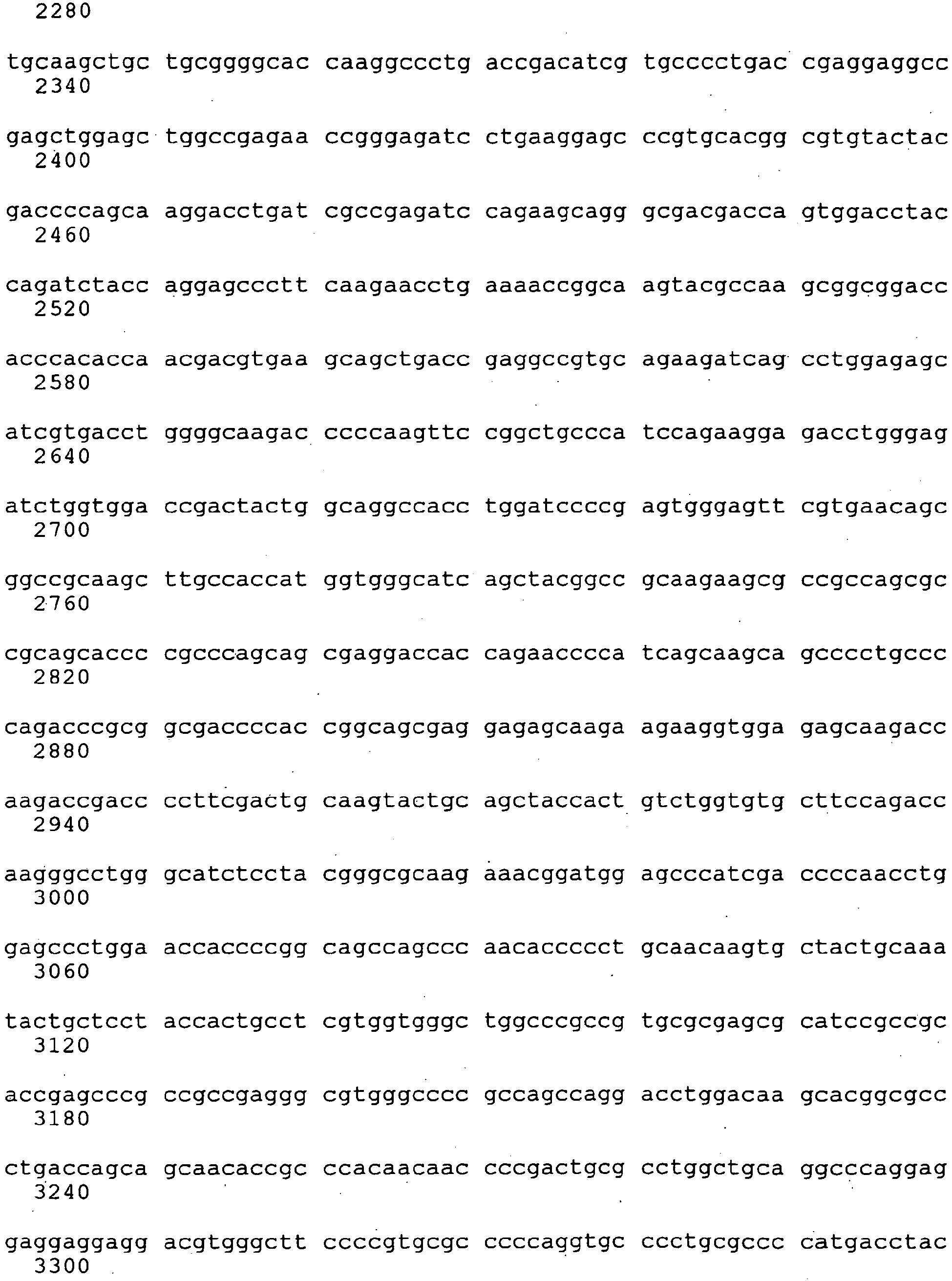

- <210> 30
<211> 1228
<212> PRT
<213> Humanimmunodeficiency virus type 1 - <400> 30


- <210> 31
<211> 1326
<212> DNA
<213> Humanimmunodeficiency virus type 1 - <400> 31


- <210> 32
<211> 442
<212> PRT
<213> Humanimmunodeficiency virus type 1 - <400> 32


- <210> 33
<211> 1397
<212> DNA
<213> Humanimmunodeficiency virus type 1 - <400> 33


- <210> 34
<211> 451
<212> PRT
<213> Humanimmunodeficiency virus type 1 - <400> 34

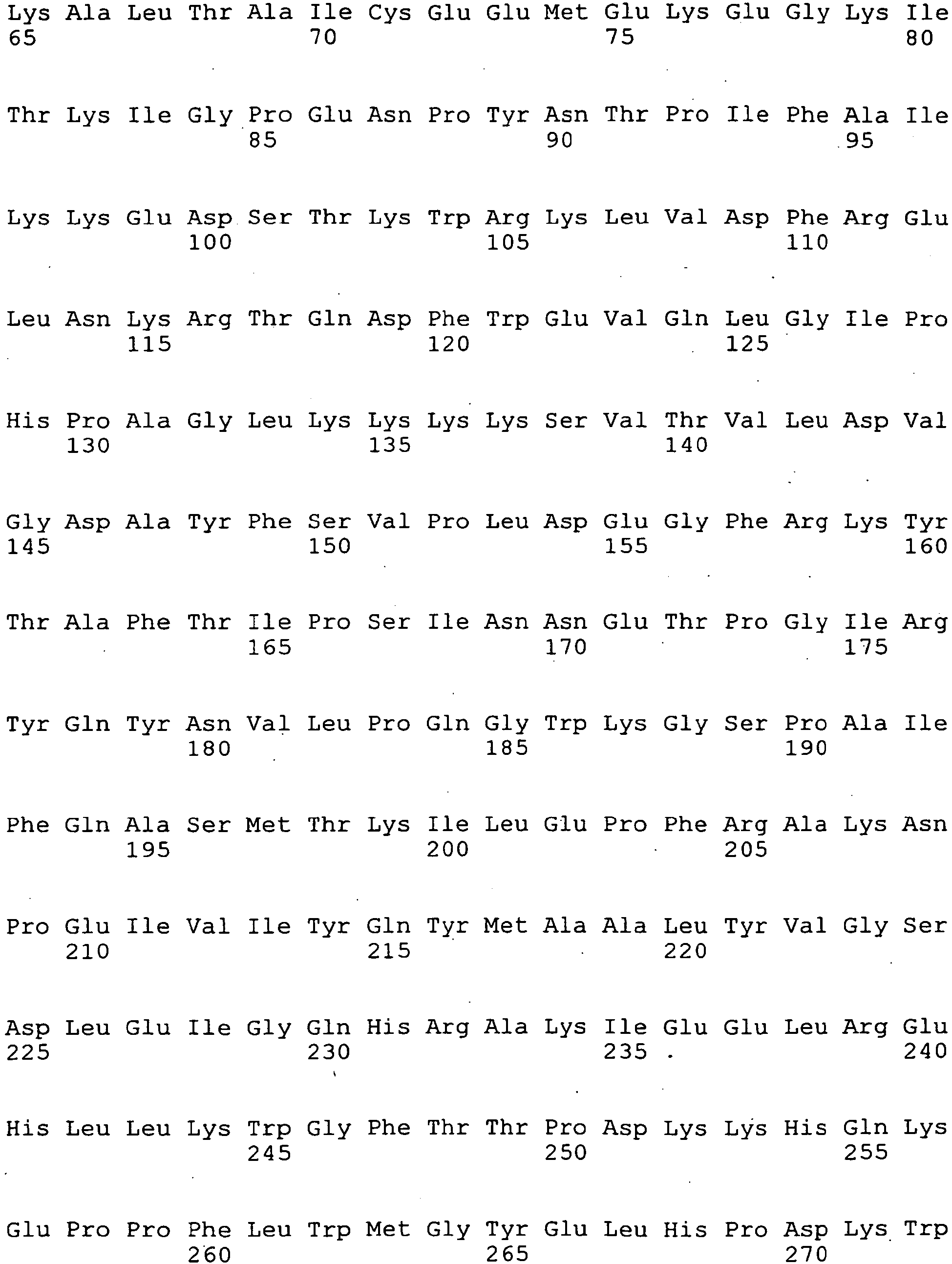

- <210> 35
<211> 1479
<212> DNA
<213> Humanimmunodeficiency virus type 1 - <400> 35

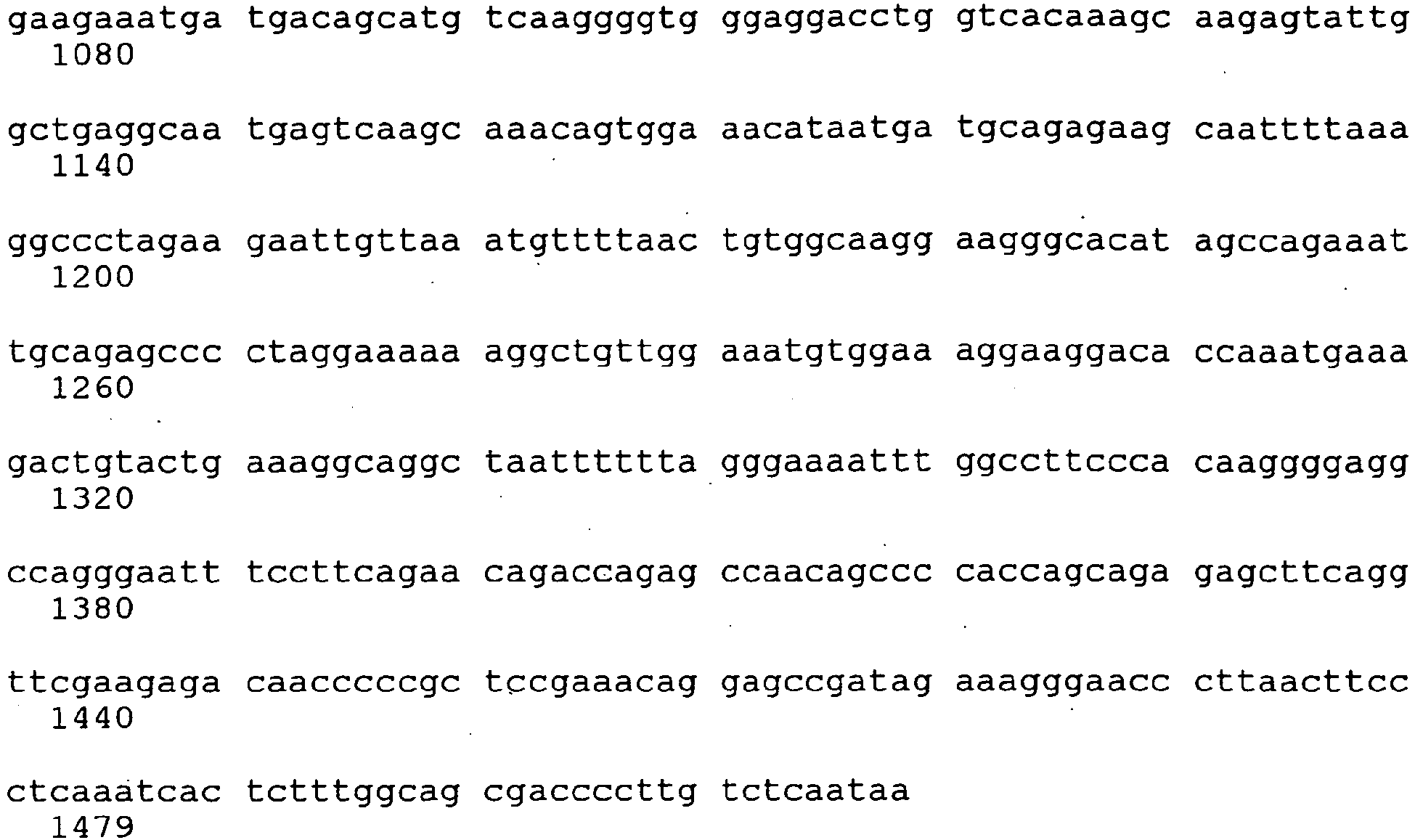
- <210> 36
<211> 492
<212> PRT
<213> Humanimmunodeficiency virus type 1 - <400> 36


- <210> 37
<211> 2997
<212> DNA
<213> Humanimmunodeficiency virus type 1 - <400> 37


- <210> 38
<211> 998
<212> PRT
<213> Humanimmunodeficiency virus type 1 - <400> 38


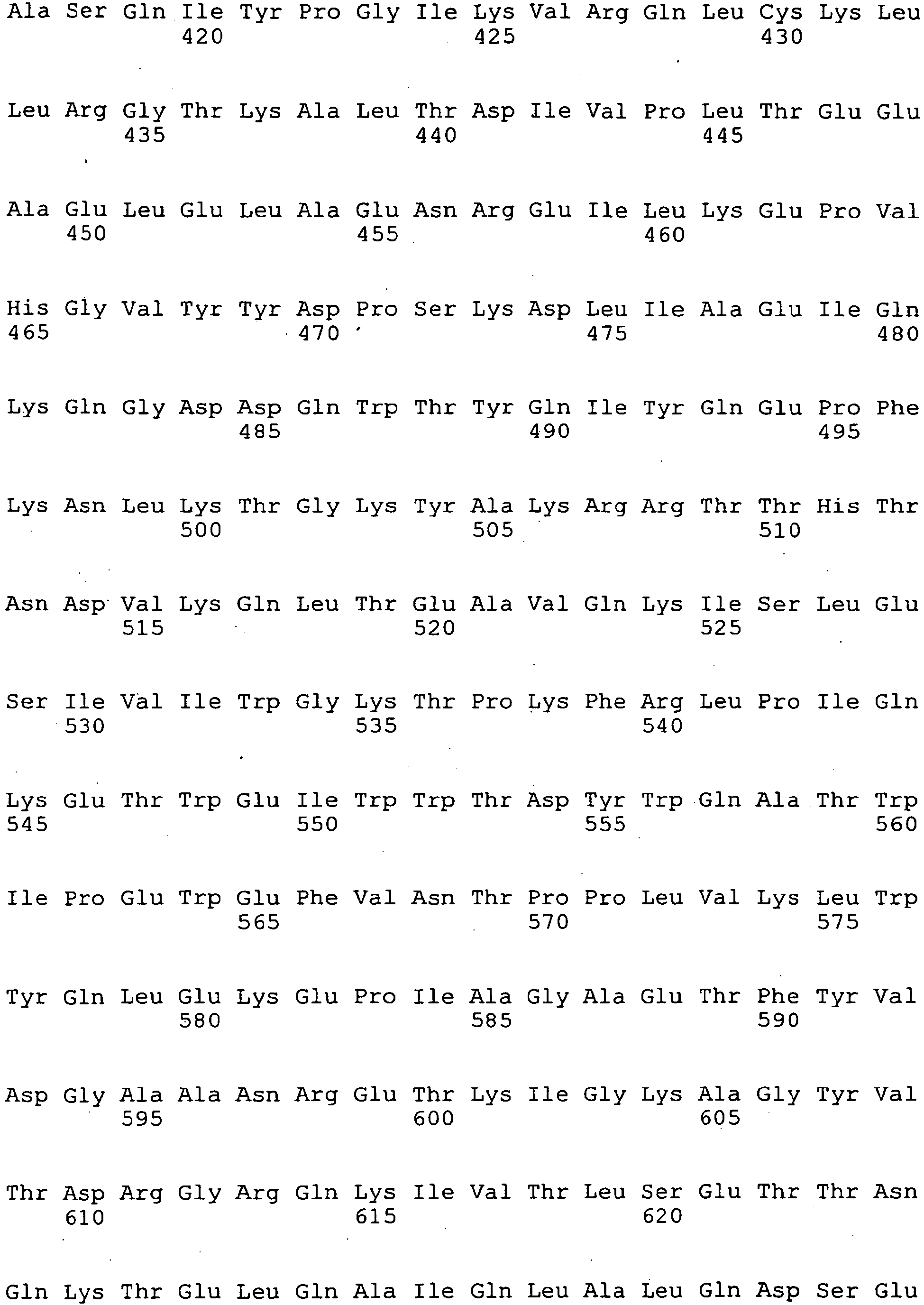


Claims (12)
- Use of at least one shuffled tat sequence in the manufacture of a vaccine for use in the treatment or prevention of HIV infection, wherein the tat sequence is a sequence set out in any one of SEQ I.D. Nos. 9 to 11 or a sequence which is at least 97% identical to SEQ ID Nos. 9 or 10 or 95% identical to SEQ ID No. 11.
- Use according to claim 1 wherein said at least one shuffled tat sequence and additionally at least one truncated nef sequence is used in the manufacture of said vaccine, wherein the nef sequence is a sequence set out in any one of SEQ ID Nos. 12 or 13 or amino acids 1-196 of SEQ ID No. 14, or a sequence which is at least 98% identical to SEQ ID Nos. 12 or 13 or 92% identical to amino acids 1-196 of SEQ ID No. 14.
- Use according to claim 2, wherein the vaccine comprises a shuffled tat sequence and a truncated nef sequence, the combined sequence being:(i) a sequence set out in any one of SEQ I.D. Nos. 15 to 17; or(ii) a sequence which is at least 90% identical to the amino acid sequence of SEQ I.D. No. 16.
- Use according to claim 1 or 2, wherein the shuffled tat sequence is a sequence selected from any one of SEQ I.D. Nos. 9-11 and the truncated nef sequence is a sequence set out in SEQ ID Nos. 12 or 13 or amino acids 1-196 of SEQ ID No. 14.
- A vaccine for the treatment or prevention of HIV infection comprising at least one shuffled tat sequence set out in any one of SEQ I.D. Nos. 9-11.
- A vaccine according to claim 5 additionally comprising at least one truncated nef sequence set out in SEQ ID Nos. 12 or 13 or amino acids 1-196 of SEQ ID No. 14.
- A vaccine according to claim 5 comprising a shuffled tat sequence set out in SEQ I.D. No. 10, a truncated nef sequence set out in SEQ I.D. No. 13, a portion of a gag gene sequence and a portion of a reverse transcriptase (pol) gene sequence, which have been ligated to form an in frame polygene designated grttnC (SEQ I.D. No. 29).
- A vaccine according to claim 5 comprising a shuffled tat sequence set out in SEQ I.D. No. 11, a truncated nef sequence set out in amino acids 1-196 of SEQ I.D. No. 14, a portion of a gag sequence and a portion of a reverse transcriptase (pol) sequence, which have been ligated to form SEQ I.D. No. 30.
- A molecule comprising:(i) the nucleotide sequence set out in SEQ I.D. Nos. 9, 10, 15 or 17;(ii) a sequence which is at least 90% or greater DNA identical to the nucleotide sequence set out in SEQ I.D. Nos. 15 or 17, or an RNA sequence corresponding to these sequences; or a sequence which is at least 97% DNA identical to the nucleotide sequence set out in SEQ I.D. Nos. 9 or 10 or an RNA sequence corresponding to these sequences; or(iii) an RNA sequence corresponding to the nucleotide sequence set out in (i).
- A molecule according to claim 9, wherein the nucleotide sequence is sequence set out in either one of SEQ I.D. Nos. 9 or 10.
- A polypeptide comprising:(i) the amino acid sequence set out in SEQ I.D. Nos. 11 or 16;(ii) an amino acid sequence which is at least 90% identical to the sequence of SEQ ID No. 16; or a sequence which is at least 95% identical to the sequence of SEQ I.D. Nos. 2 or 4; or a sequence which is at least 95% identical to the sequence of SEQ I.D. No. 11.
- A polypeptide according to claim 11, wherein the amino acid sequence is set out in SEQ I.D. No. 11.
Applications Claiming Priority (3)
| Application Number | Priority Date | Filing Date | Title |
|---|---|---|---|
| ZA200108978 | 2001-10-31 | ||
| ZA200108978 | 2001-10-31 | ||
| PCT/IB2002/004550 WO2003037919A2 (en) | 2001-10-31 | 2002-10-31 | Hiv-1 subtype isolate regulatory/accessory genes, and modifications and derivatives thereof |
Publications (2)
| Publication Number | Publication Date |
|---|---|
| EP1444350A2 EP1444350A2 (en) | 2004-08-11 |
| EP1444350B1 true EP1444350B1 (en) | 2013-06-19 |
Family
ID=25589361
Family Applications (1)
| Application Number | Title | Priority Date | Filing Date |
|---|---|---|---|
| EP02802345.5A Expired - Lifetime EP1444350B1 (en) | 2001-10-31 | 2002-10-31 | Hiv-1 subtype isolate regulatory/accessory genes, and modifications and derivatives thereof |
Country Status (7)
| Country | Link |
|---|---|
| US (2) | US7479547B2 (en) |
| EP (1) | EP1444350B1 (en) |
| CN (1) | CN1606625A (en) |
| AP (1) | AP2696A (en) |
| AU (1) | AU2002363189A1 (en) |
| WO (1) | WO2003037919A2 (en) |
| ZA (1) | ZA200404205B (en) |
Families Citing this family (4)
| Publication number | Priority date | Publication date | Assignee | Title |
|---|---|---|---|---|
| AU2002363189A1 (en) | 2001-10-31 | 2003-05-12 | The South African Medical Research Council | Hiv-1 subtype isolate regulatory/accessory genes, and modifications and derivatives thereof |
| BRPI0619665B1 (en) * | 2005-11-08 | 2022-04-12 | University Of Cape Town | Method for improving the expression of a transgene in a host cell in vitro, mammalian expression cassette, vector, DNA vaccine and pharmaceutical composition |
| CA2695433C (en) | 2007-08-03 | 2025-05-06 | Institut Pasteur | Lentiviral gene transfer vectors and their medicinal applications |
| EP2047861B1 (en) * | 2007-10-12 | 2019-07-31 | Institut Pasteur | Lentiviral gene transfer vectors suitable for iterative administration and their medicinal applications |
Family Cites Families (8)
| Publication number | Priority date | Publication date | Assignee | Title |
|---|---|---|---|---|
| US6228128B1 (en) | 1997-11-10 | 2001-05-08 | Charlotte Johansen | Antimicrobial activity of laccases |
| US7935805B1 (en) | 1998-12-31 | 2011-05-03 | Novartis Vaccines & Diagnostics, Inc | Polynucleotides encoding antigenic HIV Type C polypeptides, polypeptides and uses thereof |
| AU2001278641A1 (en) * | 2000-07-07 | 2002-01-21 | Alphavax, Inc. | Process for the selection of hiv-1 subtype c isolates, selected hiv-1 subtype isolates, their genes and modifications and derivatives thereof |
| US6611377B1 (en) | 2000-07-10 | 2003-08-26 | Intel Corporation | Micromechanical diffraction phase grating |
| AU2001294562B2 (en) | 2000-09-15 | 2007-05-24 | Merck & Co., Inc. | Enhanced First Generation Adenovirus Vaccines Expressing Codon Optimized HIV1-Gag, Pol, Nef and Modifications |
| US20030198621A1 (en) | 2001-07-05 | 2003-10-23 | Megede Jan Zur | Polynucleotides encoding antigenic HIV type B and/or type C polypeptides, polypeptides and uses thereof |
| CA2452015C (en) | 2001-07-05 | 2012-07-03 | Chiron Corporation | Polynucleotides encoding antigenic hiv type c polypeptides, polypeptides and uses thereof |
| AU2002363189A1 (en) | 2001-10-31 | 2003-05-12 | The South African Medical Research Council | Hiv-1 subtype isolate regulatory/accessory genes, and modifications and derivatives thereof |
-
2002
- 2002-10-31 AU AU2002363189A patent/AU2002363189A1/en not_active Abandoned
- 2002-10-31 CN CNA028257111A patent/CN1606625A/en active Pending
- 2002-10-31 WO PCT/IB2002/004550 patent/WO2003037919A2/en not_active Ceased
- 2002-10-31 AP APAP/P/2004/003042A patent/AP2696A/en active
- 2002-10-31 EP EP02802345.5A patent/EP1444350B1/en not_active Expired - Lifetime
- 2002-10-31 US US10/494,131 patent/US7479547B2/en not_active Expired - Fee Related
-
2004
- 2004-05-28 ZA ZA2004/04205A patent/ZA200404205B/en unknown
-
2008
- 2008-07-30 US US12/182,479 patent/US7713530B2/en not_active Expired - Fee Related
Also Published As
| Publication number | Publication date |
|---|---|
| EP1444350A2 (en) | 2004-08-11 |
| WO2003037919A3 (en) | 2004-01-22 |
| AU2002363189A1 (en) | 2003-05-12 |
| CN1606625A (en) | 2005-04-13 |
| US20090076245A1 (en) | 2009-03-19 |
| AP2004003042A0 (en) | 2004-06-30 |
| ZA200404205B (en) | 2005-08-31 |
| US7479547B2 (en) | 2009-01-20 |
| US20050176929A1 (en) | 2005-08-11 |
| AP2696A (en) | 2013-07-17 |
| US7713530B2 (en) | 2010-05-11 |
| WO2003037919A2 (en) | 2003-05-08 |
Similar Documents
| Publication | Publication Date | Title |
|---|---|---|
| JP6480028B2 (en) | Lentiviral gene transfer vectors and their application to pharmaceuticals | |
| Williamson et al. | Characterization and selection of HIV-1 subtype C isolates for use in vaccine development | |
| Deml et al. | Multiple effects of codon usage optimization on expression and immunogenicity of DNA candidate vaccines encoding the human immunodeficiency virus type 1 Gag protein | |
| Okuda et al. | Induction of potent humoral and cell-mediated immune responses following direct injection of DNA encoding the HIV type 1 env and rev gene products | |
| Lifson et al. | Evaluation of the safety, immunogenicity, and protective efficacy of whole inactivated simian immunodeficiency virus (SIV) vaccines with conformationally and functionally intact envelope glycoproteins | |
| JP2010001290A (en) | ATTENUATED vif DNA IMMUNIZATION CASSETTE FOR GENETIC VACCINE | |
| Stahl-Hennig et al. | Immunization with tween-ether-treated SIV adsorbed onto aluminum hydroxide protects monkeys against experimental SIV infection | |
| US20070172930A1 (en) | process for the selection of HIV-1 subtype C isolates, selected HIV-1 subtype isolates, their genes and modifications and derivatives thereof | |
| AU784635B2 (en) | The genome of the HIV-1 inter-subtype (C/B') and use thereof | |
| Stratov et al. | Vaccines and vaccine strategies against HIV | |
| US7713530B2 (en) | HIV-1 subtype isolate regulatory/accessory genes, and modification and derivatives thereof | |
| Gorelick et al. | Protection of Macaca nemestrina from disease following pathogenic simian immunodeficiency virus (SIV) challenge: utilization of SIV nucleocapsid mutant DNA vaccines with and without an SIV protein boost | |
| US5876724A (en) | Induction of neutralizing antibody against viral infection by synergy between virus envelope glycoprotein and peptides corresponding to neutralization epitopes of the glycoprotein | |
| Wagner et al. | Correlates of protection, antigen delivery and molecular epidemiology: basics for designing an HIV vaccine | |
| EP1309617B1 (en) | Process for the selection of hiv-1 subtype c isolates, selected hiv-1 subtype isolates, their genes and modifications and derivatives thereof | |
| Mossman et al. | Immunization against SIVmne in macaques using multigenic DNA vaccines | |
| US7910716B2 (en) | Nucleic acids encoding modified South African HIV-1 subtype C gag proteins | |
| Puaux et al. | Efficient priming of simian/human immunodeficiency virus (SHIV)-specific T-cell responses with DNA encoding hybrid SHIV/hepatitis B surface antigen particles | |
| Vogt et al. | Heterologous HIV-2 challenge of rhesus monkeys immunized with recombinant vaccinia viruses and purified recombinant HIV-2 proteins | |
| WO2003062377A2 (en) | COMPLETE GENOME SEQUENCE OF SIVcpzTAN1 | |
| Rubinstein et al. | Immunologic responses of HIV-1-infected study subjects to immunization with a mixture of peptide protein derivative-V3 loop peptide conjugates | |
| Bäyon-Auboyer et al. | Evolution of the human immunodeficiency virus type 2 envelope gene in preimmunized and persistently infected rhesus macaques | |
| Tao et al. | Pathogenicity and comparative evolution in vivo of the transitional quasispecies SIVsmmPBj8 | |
| Petry et al. | Prechallenge high neutralizing antibodies and long-lasting immune reactivity to gp41 correlate with protection of rhesus monkeys against productive simian immunodeficiency virus infection or disease development | |
| US20040116660A1 (en) | Process for the selection of hiv-1 subtype c Isolates, selected hiv-1 subtype c isolates, their genes and modifications and derivatives thereof |
Legal Events
| Date | Code | Title | Description |
|---|---|---|---|
| PUAI | Public reference made under article 153(3) epc to a published international application that has entered the european phase |
Free format text: ORIGINAL CODE: 0009012 |
|
| 17P | Request for examination filed |
Effective date: 20040528 |
|
| AK | Designated contracting states |
Kind code of ref document: A2 Designated state(s): AT BE BG CH CY CZ DE DK EE ES FI FR GB GR IE IT LI LU MC NL PT SE SK TR |
|
| AX | Request for extension of the european patent |
Extension state: AL LT LV MK RO SI |
|
| 17Q | First examination report despatched |
Effective date: 20050620 |
|
| GRAP | Despatch of communication of intention to grant a patent |
Free format text: ORIGINAL CODE: EPIDOSNIGR1 |
|
| GRAS | Grant fee paid |
Free format text: ORIGINAL CODE: EPIDOSNIGR3 |
|
| GRAA | (expected) grant |
Free format text: ORIGINAL CODE: 0009210 |
|
| AK | Designated contracting states |
Kind code of ref document: B1 Designated state(s): AT BE BG CH CY CZ DE DK EE ES FI FR GB GR IE IT LI LU MC NL PT SE SK TR |
|
| REG | Reference to a national code |
Ref country code: GB Ref legal event code: FG4D |
|
| REG | Reference to a national code |
Ref country code: CH Ref legal event code: EP |
|
| REG | Reference to a national code |
Ref country code: AT Ref legal event code: REF Ref document number: 617690 Country of ref document: AT Kind code of ref document: T Effective date: 20130715 |
|
| REG | Reference to a national code |
Ref country code: IE Ref legal event code: FG4D |
|
| REG | Reference to a national code |
Ref country code: DE Ref legal event code: R096 Ref document number: 60245127 Country of ref document: DE Effective date: 20130814 |
|
| PG25 | Lapsed in a contracting state [announced via postgrant information from national office to epo] |
Ref country code: SE Free format text: LAPSE BECAUSE OF FAILURE TO SUBMIT A TRANSLATION OF THE DESCRIPTION OR TO PAY THE FEE WITHIN THE PRESCRIBED TIME-LIMIT Effective date: 20130619 Ref country code: FI Free format text: LAPSE BECAUSE OF FAILURE TO SUBMIT A TRANSLATION OF THE DESCRIPTION OR TO PAY THE FEE WITHIN THE PRESCRIBED TIME-LIMIT Effective date: 20130619 Ref country code: ES Free format text: LAPSE BECAUSE OF FAILURE TO SUBMIT A TRANSLATION OF THE DESCRIPTION OR TO PAY THE FEE WITHIN THE PRESCRIBED TIME-LIMIT Effective date: 20130930 Ref country code: GR Free format text: LAPSE BECAUSE OF FAILURE TO SUBMIT A TRANSLATION OF THE DESCRIPTION OR TO PAY THE FEE WITHIN THE PRESCRIBED TIME-LIMIT Effective date: 20130920 |
|
| REG | Reference to a national code |
Ref country code: AT Ref legal event code: MK05 Ref document number: 617690 Country of ref document: AT Kind code of ref document: T Effective date: 20130619 |
|
| PG25 | Lapsed in a contracting state [announced via postgrant information from national office to epo] |
Ref country code: BG Free format text: LAPSE BECAUSE OF FAILURE TO SUBMIT A TRANSLATION OF THE DESCRIPTION OR TO PAY THE FEE WITHIN THE PRESCRIBED TIME-LIMIT Effective date: 20130919 |
|
| REG | Reference to a national code |
Ref country code: NL Ref legal event code: VDEP Effective date: 20130619 |
|
| PG25 | Lapsed in a contracting state [announced via postgrant information from national office to epo] |
Ref country code: AT Free format text: LAPSE BECAUSE OF FAILURE TO SUBMIT A TRANSLATION OF THE DESCRIPTION OR TO PAY THE FEE WITHIN THE PRESCRIBED TIME-LIMIT Effective date: 20130619 Ref country code: PT Free format text: LAPSE BECAUSE OF FAILURE TO SUBMIT A TRANSLATION OF THE DESCRIPTION OR TO PAY THE FEE WITHIN THE PRESCRIBED TIME-LIMIT Effective date: 20131021 Ref country code: SK Free format text: LAPSE BECAUSE OF FAILURE TO SUBMIT A TRANSLATION OF THE DESCRIPTION OR TO PAY THE FEE WITHIN THE PRESCRIBED TIME-LIMIT Effective date: 20130619 Ref country code: EE Free format text: LAPSE BECAUSE OF FAILURE TO SUBMIT A TRANSLATION OF THE DESCRIPTION OR TO PAY THE FEE WITHIN THE PRESCRIBED TIME-LIMIT Effective date: 20130619 Ref country code: CZ Free format text: LAPSE BECAUSE OF FAILURE TO SUBMIT A TRANSLATION OF THE DESCRIPTION OR TO PAY THE FEE WITHIN THE PRESCRIBED TIME-LIMIT Effective date: 20130619 Ref country code: CY Free format text: LAPSE BECAUSE OF FAILURE TO SUBMIT A TRANSLATION OF THE DESCRIPTION OR TO PAY THE FEE WITHIN THE PRESCRIBED TIME-LIMIT Effective date: 20130703 Ref country code: BE Free format text: LAPSE BECAUSE OF FAILURE TO SUBMIT A TRANSLATION OF THE DESCRIPTION OR TO PAY THE FEE WITHIN THE PRESCRIBED TIME-LIMIT Effective date: 20130619 |
|
| PGFP | Annual fee paid to national office [announced via postgrant information from national office to epo] |
Ref country code: GB Payment date: 20131106 Year of fee payment: 12 Ref country code: DE Payment date: 20131128 Year of fee payment: 12 |
|
| PG25 | Lapsed in a contracting state [announced via postgrant information from national office to epo] |
Ref country code: NL Free format text: LAPSE BECAUSE OF FAILURE TO SUBMIT A TRANSLATION OF THE DESCRIPTION OR TO PAY THE FEE WITHIN THE PRESCRIBED TIME-LIMIT Effective date: 20130619 |
|
| PGFP | Annual fee paid to national office [announced via postgrant information from national office to epo] |
Ref country code: FR Payment date: 20131202 Year of fee payment: 12 |
|
| PG25 | Lapsed in a contracting state [announced via postgrant information from national office to epo] |
Ref country code: CY Free format text: LAPSE BECAUSE OF FAILURE TO SUBMIT A TRANSLATION OF THE DESCRIPTION OR TO PAY THE FEE WITHIN THE PRESCRIBED TIME-LIMIT Effective date: 20130619 |
|
| PLBE | No opposition filed within time limit |
Free format text: ORIGINAL CODE: 0009261 |
|
| STAA | Information on the status of an ep patent application or granted ep patent |
Free format text: STATUS: NO OPPOSITION FILED WITHIN TIME LIMIT |
|
| PG25 | Lapsed in a contracting state [announced via postgrant information from national office to epo] |
Ref country code: DK Free format text: LAPSE BECAUSE OF FAILURE TO SUBMIT A TRANSLATION OF THE DESCRIPTION OR TO PAY THE FEE WITHIN THE PRESCRIBED TIME-LIMIT Effective date: 20130619 |
|
| 26N | No opposition filed |
Effective date: 20140320 |
|
| PG25 | Lapsed in a contracting state [announced via postgrant information from national office to epo] |
Ref country code: MC Free format text: LAPSE BECAUSE OF FAILURE TO SUBMIT A TRANSLATION OF THE DESCRIPTION OR TO PAY THE FEE WITHIN THE PRESCRIBED TIME-LIMIT Effective date: 20130619 Ref country code: IT Free format text: LAPSE BECAUSE OF FAILURE TO SUBMIT A TRANSLATION OF THE DESCRIPTION OR TO PAY THE FEE WITHIN THE PRESCRIBED TIME-LIMIT Effective date: 20130619 |
|
| REG | Reference to a national code |
Ref country code: CH Ref legal event code: PL |
|
| REG | Reference to a national code |
Ref country code: DE Ref legal event code: R097 Ref document number: 60245127 Country of ref document: DE Effective date: 20140320 |
|
| REG | Reference to a national code |
Ref country code: IE Ref legal event code: MM4A |
|
| PG25 | Lapsed in a contracting state [announced via postgrant information from national office to epo] |
Ref country code: CH Free format text: LAPSE BECAUSE OF NON-PAYMENT OF DUE FEES Effective date: 20131031 Ref country code: LI Free format text: LAPSE BECAUSE OF NON-PAYMENT OF DUE FEES Effective date: 20131031 |
|
| PG25 | Lapsed in a contracting state [announced via postgrant information from national office to epo] |
Ref country code: IE Free format text: LAPSE BECAUSE OF NON-PAYMENT OF DUE FEES Effective date: 20131031 |
|
| REG | Reference to a national code |
Ref country code: DE Ref legal event code: R119 Ref document number: 60245127 Country of ref document: DE |
|
| GBPC | Gb: european patent ceased through non-payment of renewal fee |
Effective date: 20141031 |
|
| PG25 | Lapsed in a contracting state [announced via postgrant information from national office to epo] |
Ref country code: TR Free format text: LAPSE BECAUSE OF FAILURE TO SUBMIT A TRANSLATION OF THE DESCRIPTION OR TO PAY THE FEE WITHIN THE PRESCRIBED TIME-LIMIT Effective date: 20130619 |
|
| PG25 | Lapsed in a contracting state [announced via postgrant information from national office to epo] |
Ref country code: DE Free format text: LAPSE BECAUSE OF NON-PAYMENT OF DUE FEES Effective date: 20150501 Ref country code: GB Free format text: LAPSE BECAUSE OF NON-PAYMENT OF DUE FEES Effective date: 20141031 Ref country code: LU Free format text: LAPSE BECAUSE OF NON-PAYMENT OF DUE FEES Effective date: 20131031 |
|
| REG | Reference to a national code |
Ref country code: FR Ref legal event code: ST Effective date: 20150630 |
|
| PG25 | Lapsed in a contracting state [announced via postgrant information from national office to epo] |
Ref country code: FR Free format text: LAPSE BECAUSE OF NON-PAYMENT OF DUE FEES Effective date: 20141031 |