EP1442811A1 - Silver powder for silver clay and silver clay comprising the silver powder - Google Patents
Silver powder for silver clay and silver clay comprising the silver powder Download PDFInfo
- Publication number
- EP1442811A1 EP1442811A1 EP02736157A EP02736157A EP1442811A1 EP 1442811 A1 EP1442811 A1 EP 1442811A1 EP 02736157 A EP02736157 A EP 02736157A EP 02736157 A EP02736157 A EP 02736157A EP 1442811 A1 EP1442811 A1 EP 1442811A1
- Authority
- EP
- European Patent Office
- Prior art keywords
- silver
- weight
- powder
- clay
- remainder
- Prior art date
- Legal status (The legal status is an assumption and is not a legal conclusion. Google has not performed a legal analysis and makes no representation as to the accuracy of the status listed.)
- Granted
Links
Images

Classifications
-
- A—HUMAN NECESSITIES
- A44—HABERDASHERY; JEWELLERY
- A44C—PERSONAL ADORNMENTS, e.g. JEWELLERY; COINS
- A44C27/00—Making jewellery or other personal adornments
- A44C27/001—Materials for manufacturing jewellery
- A44C27/002—Metallic materials
-
- A—HUMAN NECESSITIES
- A44—HABERDASHERY; JEWELLERY
- A44C—PERSONAL ADORNMENTS, e.g. JEWELLERY; COINS
- A44C27/00—Making jewellery or other personal adornments
- A44C27/001—Materials for manufacturing jewellery
- A44C27/002—Metallic materials
- A44C27/003—Metallic alloys
-
- B—PERFORMING OPERATIONS; TRANSPORTING
- B22—CASTING; POWDER METALLURGY
- B22F—WORKING METALLIC POWDER; MANUFACTURE OF ARTICLES FROM METALLIC POWDER; MAKING METALLIC POWDER; APPARATUS OR DEVICES SPECIALLY ADAPTED FOR METALLIC POWDER
- B22F1/00—Metallic powder; Treatment of metallic powder, e.g. to facilitate working or to improve properties
-
- B—PERFORMING OPERATIONS; TRANSPORTING
- B22—CASTING; POWDER METALLURGY
- B22F—WORKING METALLIC POWDER; MANUFACTURE OF ARTICLES FROM METALLIC POWDER; MAKING METALLIC POWDER; APPARATUS OR DEVICES SPECIALLY ADAPTED FOR METALLIC POWDER
- B22F1/00—Metallic powder; Treatment of metallic powder, e.g. to facilitate working or to improve properties
- B22F1/05—Metallic powder characterised by the size or surface area of the particles
- B22F1/052—Metallic powder characterised by the size or surface area of the particles characterised by a mixture of particles of different sizes or by the particle size distribution
-
- B—PERFORMING OPERATIONS; TRANSPORTING
- B22—CASTING; POWDER METALLURGY
- B22F—WORKING METALLIC POWDER; MANUFACTURE OF ARTICLES FROM METALLIC POWDER; MAKING METALLIC POWDER; APPARATUS OR DEVICES SPECIALLY ADAPTED FOR METALLIC POWDER
- B22F1/00—Metallic powder; Treatment of metallic powder, e.g. to facilitate working or to improve properties
- B22F1/10—Metallic powder containing lubricating or binding agents; Metallic powder containing organic material
-
- B—PERFORMING OPERATIONS; TRANSPORTING
- B22—CASTING; POWDER METALLURGY
- B22F—WORKING METALLIC POWDER; MANUFACTURE OF ARTICLES FROM METALLIC POWDER; MAKING METALLIC POWDER; APPARATUS OR DEVICES SPECIALLY ADAPTED FOR METALLIC POWDER
- B22F1/00—Metallic powder; Treatment of metallic powder, e.g. to facilitate working or to improve properties
- B22F1/10—Metallic powder containing lubricating or binding agents; Metallic powder containing organic material
- B22F1/107—Metallic powder containing lubricating or binding agents; Metallic powder containing organic material containing organic material comprising solvents, e.g. for slip casting
-
- B—PERFORMING OPERATIONS; TRANSPORTING
- B22—CASTING; POWDER METALLURGY
- B22F—WORKING METALLIC POWDER; MANUFACTURE OF ARTICLES FROM METALLIC POWDER; MAKING METALLIC POWDER; APPARATUS OR DEVICES SPECIALLY ADAPTED FOR METALLIC POWDER
- B22F3/00—Manufacture of workpieces or articles from metallic powder characterised by the manner of compacting or sintering; Apparatus specially adapted therefor ; Presses and furnaces
- B22F3/22—Manufacture of workpieces or articles from metallic powder characterised by the manner of compacting or sintering; Apparatus specially adapted therefor ; Presses and furnaces for producing castings from a slip
-
- B—PERFORMING OPERATIONS; TRANSPORTING
- B22—CASTING; POWDER METALLURGY
- B22F—WORKING METALLIC POWDER; MANUFACTURE OF ARTICLES FROM METALLIC POWDER; MAKING METALLIC POWDER; APPARATUS OR DEVICES SPECIALLY ADAPTED FOR METALLIC POWDER
- B22F2998/00—Supplementary information concerning processes or compositions relating to powder metallurgy
Definitions
- the present invention relates to a silver powder for a silver clay having superior sintering characteristics at low temperatures and a silver clay that contains this silver powder.
- silver ornaments and artworks are manufactured by using casting or forging.
- a clay that contains silver powder (Ag powder) has become commercially available, and a method has been proposed wherein the silver ornaments or artworks having a predetermined shape are manufactured by molding this silver clay into a predetermined shape, and sintering it.
- this method by using the silver clay, it is possible to carry out free molding in a manner identical to that of normal clay craftwork. After the molded article obtained by molding is dried, it is sintered in a sintering furnace, and thereby it is possible to manufacture silver ornaments and artworks extremely easily.
- a conventional silver clay that consists of a silver powder having a high purity of 99.99 weight % and an average particle diameter of 3 to 20 ⁇ m incorporated at 50 to 95 weight %, a cellulose water soluble binder at 0.8 to 8 weight %; an oil at 0.1 to 3 weight %, a surface active agent at 0.03 to 3 weight %; with the remainder being water (refer to Japanese Unexamined Patent Application, First Publication No. Hei 4-26707).
- the inventors carried out investigations to ascertain that if the silver clay can be sintered at a comparatively low temperature, then it would be possible to carry out sintering satisfactorily even using a household electrical furnace having a low heat capacity, and furthermore, if temperature control of the electrical furnace is comparatively simple at low temperatures and the silver clay can be sintered at a low temperature, then satisfactory sintering would be possible even if accurate temperature control cannot be carried out.
- a silver clay in which an organic binder or other additives are added to a silver powder for a silver clay can used to carry out satisfactory sintering even when the sintering is 250 to 410°C below the melting point of pure silver (that is, a temperature of 550 to less than 710°C), where the silver powder for the silver clay is prepared by mixing such that a fine Ag powder having an average particle diameter of 2 ⁇ m (preferably a fine Ag powder having an average particle diameter of 0.5 to 1.5 ⁇ m) is incorporated at 15 to 50 weight %, and a Ag powder having an average particle diameter exceeding 2 ⁇ m and equal to or less than 100 ⁇ m (preferably a fine Ag powder having an average particle diameter of 3 to 20 ⁇ m) is incorporated at greater than 50 weight % and less than 85 weight %.
- a fine Ag powder having an average particle diameter of 2 ⁇ m preferably a fine Ag powder having an average particle diameter of 0.5 to 1.5 ⁇ m
- a Ag powder having an average particle diameter exceeding 2 ⁇ m and equal to or less than 100 ⁇ m
- the fine Ag powder having an average particle diameter equal to or less than 2 ⁇ m contained in the silver powder for the silver clay of the present invention is preferably a spherical fine Ag powder manufactured by using a chemical reduction method or the like.
- the reason for limiting the content of this fine Ag powder to 15 to 50 weight % is that when the content of the fine Ag powder having an average particle diameter equal to or less than 2 ⁇ m is less than 15 weight %, the physical strength of the obtained sintered article deteriorates, and is thus not preferable.
- the content of the fine Ag powder having an average particle diameter equal to or less than 2 ⁇ m exceeds 50 weight %, the amount of the organic binder that imparts pliability to the clay is increased, and thus the coefficient of contraction during sintering becomes large, which is not preferable.
- the preferable range for the content of the fine Ag powder having an average particle diameter equal to or less than 2 ⁇ m is thus 20 to 45 weight %.
- the reason that the remainder of the Ag powder contained in the silver powder for silver clay of the present invention has an average particle diameter that exceeds 2 ⁇ m and is equal to or less than 100 ⁇ m is that when the average particle diameter is equal to or less than 2 ⁇ m, the physical strength of the sintered article deteriorates, and when the average particle diameter exceeds 100 ⁇ m, the molding characteristics of the clay deteriorate.
- the silver powder for the silver clay of the present invention is composed of a mixed silver powder obtained by mixing a fine Ag powder having an average particle diameter equal to or less than 2 ⁇ m (preferably, an average particle diameter of 0.5 to 1.5 ⁇ m, and more preferably, 0.6 to 1.2 ⁇ m) and an Ag powder having an average particle diameter greater than 2 ⁇ m and equal to or less than 100 ⁇ m (preferably, an average particle diameter of 3 to 20 ⁇ m, and more preferably, 3 to 8 ⁇ m). Therefore, as shown by the solid line in FIG.
- the particle distribution curve 1 of the silver powder for the silver clay of the present invention exhibits at least one peak A for the fine Ag powder having an average particle diameter equal to or less than 2 ⁇ m (preferably, an average particle diameter or 0.1 to 0.5 ⁇ m, and more preferably 0.6 to 1.2 ⁇ m), and exhibits at least one peak B for the silver powder having an average particle diameter larger than 2 ⁇ m and equal to or less than 100 ⁇ m (preferably, an average particle diameter of 3 to 20 ⁇ m, and more preferably, 3 to 8 ⁇ m). That is, the particles of the silver powder for the silver clay of the present invention exhibit a particle distribution curve 1 having at least two peaks A and B.
- the particle distribution of the silver powder for the silver clay of this invention differs from that of the conventional silver powder for silver clay.
- the average particle diameter of the fine Ag powder and the Ag powder that constitute the silver powder for silver clay of the present invention is an average particle diameter of a fine Ag powder and an Ag powder that does not include clumps of powder.
- the reason that the content of the silver powder for silver clay in (1) and (2) described above, which are contained in the silver clay of the present invention, is limited to 50 to 95 weight % is that when the content of the silver powder for silver clay is less than 50 weight %, the effect of satisfactorily exhibiting the metallic luster of the obtained sintered article is insufficient, and when it exceeds 95 weight %, the pliability and strength of the clay deteriorate, neither of which is preferable.
- a more preferable range of the content of the silver powder for silver clay is thus 70 to 95 weight %.
- the organic binders that are contained in the silver clay of the present invention include cellulose binders, polyvinyl binders, acryl binders, wax binders, resin binders, starch, gelatin, wheat flour, and the like.
- a cellulose binder in particular, a water soluble cellulose binder, is most preferable. These binders quickly gel when heated, and facilitate the maintaining of the shape of the molded body.
- the content of the binder in the silver clay of the present invention is thus 0.8 to 8 weight %, and more preferably, the range is 0.8 to 5 weight %.
- surface active agents can be added, and when added, the added amount is preferably 0.03 to 3 weight %.
- the types of the added surface active agents are not particularly limited, and common surface active agents can be used.
- oils can also be added, and when added, the added amount is preferably 0.1 to 3 weight %.
- Added oils include organic acids (oleic acid, stearic acid, phthalic acid, palmitic acid, sebacic acid, acetylcitric acid, hydroxybenzoic acid, lauric acid, myristic acid, caproic acid, enanthic acid, butyric acid, capric acid), organic esters (organic esters containing a methyl group, ethyl group, propyl group, butyl group, oxyl group, hexyl group, dimethyl group, diethyl group, isopropyl group, isobutyl group), higher alcohols (octanol, nonanol, decanol), polyalcohols (glycerin, arabitol, sorbitol), ethers (dioxyl ether, didecyl ether), and the like.
- methyl cellulose, a surface active agent, olive oil as an oil, and water were added to the nine types of silver powder for silver clay having differing particle distributions, and silver clays 1 to 9 were produced that contain the silver powder for silver clay at 85 weight %, methyl cellulose at 4.5 weight %, surface active agent at 1.0 weight %, olive oil at 0.3 weight %, with the remainder being water.
- the silver clays 1 to 9 were molded, and the obtained molded articles were sintered 30 minutes at a low temperature of 600°C to produce sample sintered articles having dimensions of a length of 3mm, a width of 4mm, and a thickness of 65mm.
- the tensile strength and the density of the obtained sample sintered articles were measured, and the results of the measurements are shown in Table 1.
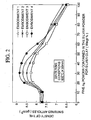
- the graph shown in FIG. 2 was produced by plotting the ⁇ marks and connecting these ⁇ marks with a line, where, as shown in Table 2, the measured values of the density are on the ordinate and the content of the spherical fine Ag powder included in the silver powder for silver clay are on the abscissa.
- Tensile strength N/mm 2
- Density g/cm 3
- Silver clay 1 *- 100 43 7.8 2 *10 remainder 45 7.9 3 20 remainder 80 8.5 4 30 remainder 100 8.7 5 40 remainder 75 8.6 6 50 remainder 73 8.2 7 *60 remainder 51 7.8 8 *80 remainder 42 7.2 9 *100 - 38 6.5 (The * mark denotes a value falling outside of the range of this invention.)
- silver powder for silver clay were having different particle distributions were produced by a spherical fine Ag powder having an average particle diameter of 1.5 ⁇ m produced by a chemical reduction method being mixed into an atomized Ag powder having an average particle diameter of 5.0 ⁇ m, at 0 weight %, 10 weight %, 20 weight %, 30 weight %, 40 weight %, 50 weight %, 60 weight %, 80 weight %, and 100 weight %.
- silver clays 10 to 18 were produced by the same method as Embodiment 1.
- Tensile strength N/mm 2
- Density g/cm 3
- silver powder for silver clay were having different particle distributions were produced by a spherical fine Ag powder having an average particle diameter of 0.5 ⁇ m produced by a chemical reduction method being mixed into an atomized Ag powder having an average particle diameter of 5.0 ⁇ m, at 0 weight %, 10 weight %, 20 weight %, 30 weight %, 40 weight %, 50 weight %, 60 weight %, 80 weight %, and 100 weight %.
- silver clays 19 to 27 were produced by the same method as Embodiment 1.
- remainder 90 8.2 23 40 remainder 75 8.1 24 50 remainder 71 8.0 25 *60 remainder 51 7.4 26 *80 remainder 45 7.0 27 *100 - 35 6.5 (The * mark denotes a value falling outside of the range of this invention.)
- silver powder for silver clay were having different particle distributions were produced by a spherical fine Ag powder having an average particle diameter of 0.8 ⁇ m produced by a chemical reduction method being mixed into an atomized Ag powder having an average particle diameter of 5.0 ⁇ m, at 0 weight %, 10 weight %, 20 weight %, 30 weight %, 40 weight %, 50 weight %, 60 weight %, 80 weight %, and 100 weight %.
- silver clays 28 to 36 were produced by the same method as Embodiment 1.
- a spherical fine Ag powder having an average particle diameter of 1.0 ⁇ m is mixed into an atomized Ag powder having an average particle diameter of 5.0 ⁇ m to produce a silver powder for silver clay.
- Methyl cellulose, surface active agent, olive oil, and water are mixed into the obtained silver powder for silver clay in the proportions shown in Table 5 to produce silver clays 37 to 42.
- These silver clays 37 to 42 are molded, and sintered for 30 minutes at 600°C to produce sample sintered articles having a length of 3 mm, a width of 4 mm, and a thickness of 65 mm.
- the tensile strength and the density of the obtained sample sintered articles were measured, and the results of the measurement are shown in Table 5.
- Type Mixture composition (weight %) Characteristics of sintered article Silver power for silver clay Cellulose Surface active agent Olive oil water Tensile strength (N/mm 2 ) Density (g/cm 3 ) Silver clay 37 (silver power for silver clay consisting of fine Ag power having an average particle diameter of 1.0 ⁇ m: 30%, and remainder atomized powder having an average diameter of 5 ⁇ m): 80 7.5 - - remainder 90 8.2 38 3.0 - - remainder 93 8.0 39 7.5 2.3 - remainder 100 8.7 40 4.5 1.0 - remainder 90 8.2 41 7.0 - 0.5 remainder 95 8.3 42 5.5 - 1.3 remainder 98 8.5
- the silver clay of the present invention has the superior effects that it can be sintered at a lower temperature than conventional silver clays, and thus more people can use the silver clay to produce arts and crafts and ornaments by using the silver clay.
Landscapes
- Engineering & Computer Science (AREA)
- Manufacturing & Machinery (AREA)
- Chemical & Material Sciences (AREA)
- Materials Engineering (AREA)
- Mechanical Engineering (AREA)
- Powder Metallurgy (AREA)
Abstract
Description
| Type | Silver powder for silver clay | Sample sintered articles | |||
| Spherical fine Ag powder, average particle diameter = 1µm | Atomized Ag powder, average particle diameter = 5µm | Tensile strength (N/mm2) | Density (g/cm3) | ||
| | 1 | *- | 100 | 43 | 7.8 |
| 2 | *10 | remainder | 45 | 7.9 | |
| 3 | 20 | | 80 | 8.5 | |
| 4 | 30 | | 100 | 8.7 | |
| 5 | 40 | remainder | 75 | 8.6 | |
| 6 | 50 | remainder | 73 | 8.2 | |
| 7 | *60 | remainder | 51 | 7.8 | |
| 8 | *80 | remainder | 42 | 7.2 | |
| 9 | *100 | - | 38 | 6.5 | |
| (The * mark denotes a value falling outside of the range of this invention.) |
| Type | Silver powder for silver clay | Sample sintered articles | |||
| Spherical fine Ag powder, average particle diameter = 1.5µm | Atomized Ag powder, average particle diameter = 5µm | Tensile strength (N/mm2) | Density (g/cm3) | ||
| | 10 | *- | 100 | 38 | 7.8 |
| 11 | *10 | remainder | 51 | 7.7 | |
| 12 | 20 | | 90 | 8.4 | |
| 13 | 30 | remainder | 95 | 8.5 | |
| 14 | 40 | remainder | 73 | 8.3 | |
| 15 | 50 | | 70 | 8.1 | |
| 16 | *60 | | 50 | 7.7 | |
| 17 | *80 | remainder | 43 | 7.3 | |
| 18 | *100 | - | 40 | 6.7 | |
| (The * mark denotes a value falling outside of the range of this invention.) |
| Type | Silver powder for silver clay | Sample sintered articles | |||
| Spherical fine Ag powder, average particle diameter = 0.5µm | Atomized Ag powder, average particle diameter = 5µm | Tensile strength (N/mm2) | Density (g/cm3) | ||
| Silver clay | 19 | *- | 100 | 39 | 7.7 |
| 20 | *10 | remainder | 48 | 7.8 | |
| 21 | 20 | remainder | 92 | 8.3 | |
| 22 | 30 | | 90 | 8.2 | |
| 23 | 40 | remainder | 75 | 8.1 | |
| 24 | 50 | remainder | 71 | 8.0 | |
| 25 | *60 | remainder | 51 | 7.4 | |
| 26 | *80 | remainder | 45 | 7.0 | |
| 27 | *100 | - | 35 | 6.5 | |
| (The * mark denotes a value falling outside of the range of this invention.) |
| Type | Silver powder for silver clay | Sample sintered articles | |||
| Spherical fine Ag powder, average particle diameter = 0.8µm | Atomized Ag powder, average particle diameter = 5µm | Tensile strength (N/mm2) | Density (g/cm3) | ||
| Silver clay | 28 | *- | 100 | 40 | 7.7 |
| 29 | *10 | remainder | 47 | 7.8 | |
| 30 | 20 | remainder | 85 | 8.6 | |
| 31 | 30 | remainder | 93 | 8.8 | |
| 32 | 40 | remainder | 78 | 8.7 | |
| 33 | 50 | remainder | 73 | 8.5 | |
| 34 | *60 | remainder | 52 | 7.8 | |
| 35 | *80 | remainder | 42 | 7.2 | |
| 36 | *100 | - | 39 | 6.5 | |
| (The * mark denotes a value falling outside of the range of this invention.) |
| Type | Mixture composition (weight %) | Characteristics of sintered article | ||||||
| Silver power for silver clay | Cellulose | Surface active agent | Olive oil | water | Tensile strength (N/mm2) | Density (g/cm3) | ||
| Silver clay | 37 | (silver power for silver clay consisting of fine Ag power having an average particle diameter of 1.0µm: 30%, and remainder atomized powder having an average diameter of 5µm): 80 | 7.5 | - | - | | 90 | 8.2 |
| 38 | 3.0 | - | - | remainder | 93 | 8.0 | ||
| 39 | 7.5 | 2.3 | - | | 100 | 8.7 | ||
| 40 | 4.5 | 1.0 | - | | 90 | 8.2 | ||
| 41 | 7.0 | - | 0.5 | remainder | 95 | 8.3 | ||
| 42 | 5.5 | - | 1.3 | remainder | 98 | 8.5 |
Claims (10)
- A silver powder for silver clay formed by a mixed powder comprising a fine Ag powder having an average particle diameter equal to or less than 2µm incorporated at 15 to 50 weight %, with the remainder being a Ag powder having an average particle diameter exceeding 2µm and equal to or less than 100µm.
- A silver powder for silver clay formed by a mixed powder comprising a fine Ag powder having an average particle diameter of 0.5 to 1.5µm incorporated at 15 to 50 weight %, with the remainder being a Ag powder having an average particle diameter of 3 to 20µm.
- A silver clay comprising the silver powder for silver clay according to claim 1 incorporated at 50 to 95 weight % an organic binder incorporated at 0.8 to 8 weight %, with the remainder being water.
- A silver clay comprising the silver powder for silver clay according to claim 2 incorporated at 50 to 95 weight % an organic binder incorporated at 0.8 to 8 weight %, with the remainder being water.
- A silver clay comprising the silver powder for silver clay according to claim 1 incorporated at 50 to 95 weight %, an organic binder incorporated at 0.8 to 8 weight %, a surface active agent incorporated at 0.03 to 3 weight %, with the remainder being water.
- A silver clay comprising the silver powder for silver clay according to claim 2 incorporated at 50 to 95 weight %, an organic binder incorporated at 0.8 to 8 weight %, a surface active agent incorporated at 0.03 to 3 weight %, with the remainder being water.
- A silver clay comprising the silver powder for silver clay according to claim 1 incorporated at 50 to 95 weight %, an organic binder incorporated at 0.8 to 8 weight %, an oil incorporated at 0.1 to 3 weight %, with the remainder being water.
- A silver clay comprising the silver powder for silver clay according to claim 2 incorporated at 50 to 95 weight %, an organic binder incorporated at 0.8 to 8 weight %, an oil incorporated at 0.1 to 3 weight %, with the remainder being water.
- A silver clay comprising the silver powder for silver clay according to claim 1 incorporated at 50 to 95 weight %, an organic binder incorporated at 0.8 to 8 weight %, an oil incorporated at 0.1 to 3 weight %, a surface active agent incorporated at 0.03 to 3 weight %, with the remainder being water.
- A silver clay comprising the silver powder for silver clay according to claim 2 incorporated at 50 to 95 weight %, an organic binder incorporated at 0.8 to 8 weight %, an oil incorporated at 0.1 to 3 weight %, a surface active agent incorporated at 0.03 to 3 weight %, with the remainder being water.
Applications Claiming Priority (3)
| Application Number | Priority Date | Filing Date | Title |
|---|---|---|---|
| JP2001301375A JP4265127B2 (en) | 2000-12-12 | 2001-09-28 | Silver powder for silver clay excellent in low temperature sintering property and silver clay containing this silver powder |
| JP2001301375 | 2001-09-28 | ||
| PCT/JP2002/006064 WO2003028927A1 (en) | 2001-09-28 | 2002-06-18 | Silver powder for silver clay and silver clay comprising the silver powder |
Publications (3)
| Publication Number | Publication Date |
|---|---|
| EP1442811A1 true EP1442811A1 (en) | 2004-08-04 |
| EP1442811A4 EP1442811A4 (en) | 2007-01-10 |
| EP1442811B1 EP1442811B1 (en) | 2012-03-14 |
Family
ID=19121800
Family Applications (1)
| Application Number | Title | Priority Date | Filing Date |
|---|---|---|---|
| EP02736157A Expired - Lifetime EP1442811B1 (en) | 2001-09-28 | 2002-06-18 | Silver clay containing silver powder |
Country Status (5)
| Country | Link |
|---|---|
| US (1) | US7081149B2 (en) |
| EP (1) | EP1442811B1 (en) |
| KR (1) | KR100881306B1 (en) |
| CN (1) | CN1280045C (en) |
| WO (1) | WO2003028927A1 (en) |
Cited By (1)
| Publication number | Priority date | Publication date | Assignee | Title |
|---|---|---|---|---|
| EP3117935A1 (en) * | 2013-08-20 | 2017-01-18 | The Trustees of Princeton University | Density enhancement methods and compositions |
Families Citing this family (12)
| Publication number | Priority date | Publication date | Assignee | Title |
|---|---|---|---|---|
| KR20100043405A (en) * | 2008-10-20 | 2010-04-29 | 서울시립대학교 산학협력단 | Binder composition for silver clay and silver clay composition having the same |
| WO2011125244A1 (en) * | 2010-04-09 | 2011-10-13 | 三菱マテリアル株式会社 | Clay-like composition for forming a sintered object, powder for a clay-like composition for forming a sintered object, method for manufacturing a clay-like composition for forming a sintered object, sintered silver object, and method for manufacturing a sintered silver object |
| JP5861872B2 (en) * | 2012-01-10 | 2016-02-16 | 三菱マテリアル株式会社 | Silver powder for silver clay, method for producing silver powder for silver clay, and silver clay containing the silver powder |
| WO2013126022A2 (en) | 2012-02-22 | 2013-08-29 | Odak Sanat Hobi Ve Kraft Sanayi Dis Ticaret Limited Sirketi | Metal clays sintering at low temperature |
| JP6241228B2 (en) * | 2013-11-28 | 2017-12-06 | 三菱マテリアル株式会社 | Clay-like molded body for precious metal sintered body formation |
| CN106180675A (en) * | 2015-05-05 | 2016-12-07 | 光洋应用材料科技股份有限公司 | Silver clay |
| CN105499597A (en) * | 2015-12-09 | 2016-04-20 | 陕西黄金集团西安秦金有限责任公司 | Preparation method for micron silver powder for silver clay, and preparation method for silver clay product |
| KR102455612B1 (en) * | 2016-07-06 | 2022-10-18 | 울산대학교 산학협력단 | Silver - ceramic composition for silver art clay and producing method of same |
| CN107052327B (en) * | 2017-04-06 | 2019-07-05 | 广州市尤特新材料有限公司 | A kind of silver clay silver powder and the silver-colored clay comprising the silver powder |
| CN107999741A (en) * | 2017-11-13 | 2018-05-08 | 武汉地质资源环境工业技术研究院有限公司 | A kind of silver clay and the method using its making Silver Jewelry |
| KR102077280B1 (en) * | 2018-05-02 | 2020-02-14 | 울산대학교 산학협력단 | Silver - ceramic composites for silver art clay and producing method of same |
| CN110814334B (en) * | 2019-12-03 | 2022-02-22 | 上海宸玺珠宝有限公司 | Metal clay and shaping sintering method based on flexible metal paper |
Family Cites Families (17)
| Publication number | Priority date | Publication date | Assignee | Title |
|---|---|---|---|---|
| US3502466A (en) * | 1969-04-22 | 1970-03-24 | Ceramco Ind Products Corp | Manufacture of articles from powdered metals |
| DE3532331A1 (en) * | 1985-09-11 | 1987-03-19 | Degussa | METHOD FOR PRODUCING A METAL DENTAL REPLACEMENT |
| DE3841903A1 (en) * | 1988-12-13 | 1990-06-21 | Degussa | Process for producing a decoration of rare metal |
| DE3841902C1 (en) * | 1988-12-13 | 1989-11-02 | Degussa Ag, 6000 Frankfurt, De | |
| JP2760134B2 (en) | 1990-05-18 | 1998-05-28 | 三菱マテリアル株式会社 | Noble metal molding plastic composition |
| JP2836232B2 (en) * | 1990-10-09 | 1998-12-14 | 三菱マテリアル株式会社 | Alloy gold clay |
| US5328775A (en) * | 1990-05-18 | 1994-07-12 | Mitsubishi Materials Corporation | Moldable mixture for use in the manufacturing of precious metal articles |
| AU638832B2 (en) | 1990-05-18 | 1993-07-08 | Mitsubishi Materials Corporation | Precious metal article, method for manufacturing same, moldable mixture for use in manufacture of same and method for producing moldable mixture |
| JP3078832B2 (en) * | 1990-11-21 | 2000-08-21 | 株式会社フコク | Piezoelectric vibrator for vibration wave motor |
| JPH04303909A (en) * | 1991-04-01 | 1992-10-27 | Nec Corp | Resin molded electronic component |
| JPH06158102A (en) | 1992-11-26 | 1994-06-07 | Pilot Corp:The | Noble metal sintered compact and its production |
| JPH0770602A (en) | 1993-09-06 | 1995-03-14 | Mitsubishi Materials Corp | Precious metal raw material powder for producing precious metal clay |
| KR100255996B1 (en) * | 1995-05-22 | 2000-05-01 | 아이다 마사이 | Clayish composition for molding shaped article of noble metal and method for production of sintered article of noble metal |
| JP3274960B2 (en) * | 1996-02-23 | 2002-04-15 | 相田化学工業株式会社 | Manufacturing method of sintered metal products |
| JP3896181B2 (en) * | 1997-01-30 | 2007-03-22 | 相田化学工業株式会社 | Manufacturing method of precious metal products |
| WO1999014387A1 (en) * | 1997-09-12 | 1999-03-25 | Engelhard-Clal Uk Ltd. | Process for manufacturing precious metal artefacts |
| JP3248505B2 (en) * | 1999-02-12 | 2002-01-21 | 相田化学工業株式会社 | Noble metal sintered product and method for producing the same |
-
2002
- 2002-06-18 EP EP02736157A patent/EP1442811B1/en not_active Expired - Lifetime
- 2002-06-18 KR KR1020047004427A patent/KR100881306B1/en not_active Expired - Lifetime
- 2002-06-18 CN CNB02819005XA patent/CN1280045C/en not_active Expired - Lifetime
- 2002-06-18 WO PCT/JP2002/006064 patent/WO2003028927A1/en not_active Ceased
- 2002-06-18 US US10/490,972 patent/US7081149B2/en not_active Expired - Lifetime
Cited By (6)
| Publication number | Priority date | Publication date | Assignee | Title |
|---|---|---|---|---|
| EP3117935A1 (en) * | 2013-08-20 | 2017-01-18 | The Trustees of Princeton University | Density enhancement methods and compositions |
| EP3036191A4 (en) * | 2013-08-20 | 2017-01-18 | The Trustees Of Princeton University | Density enhancement methods and compositions |
| US10207327B2 (en) | 2013-08-20 | 2019-02-19 | The Trustees Of Princeton University | Density enhancement methods and compositions |
| US10864577B2 (en) | 2013-08-20 | 2020-12-15 | Uniformity Labs Inc. | Density enhancement methods and compositions |
| US11396044B2 (en) | 2013-08-20 | 2022-07-26 | The Trustees Of Princeton University | Density enhancement methods and compositions |
| US12151978B2 (en) | 2013-08-20 | 2024-11-26 | The Trustees Of Princeton University | Density enhancement methods and compositions |
Also Published As
| Publication number | Publication date |
|---|---|
| WO2003028927A1 (en) | 2003-04-10 |
| CN1280045C (en) | 2006-10-18 |
| CN1561274A (en) | 2005-01-05 |
| HK1071325A1 (en) | 2005-07-15 |
| US7081149B2 (en) | 2006-07-25 |
| EP1442811A4 (en) | 2007-01-10 |
| KR100881306B1 (en) | 2009-02-03 |
| US20050115466A1 (en) | 2005-06-02 |
| EP1442811B1 (en) | 2012-03-14 |
| KR20040037141A (en) | 2004-05-04 |
Similar Documents
| Publication | Publication Date | Title |
|---|---|---|
| US7081149B2 (en) | Silver powder for silver clay and silver clay containing this silver powder | |
| US4963183A (en) | Corrosion resistant cemented carbide | |
| JP4265127B2 (en) | Silver powder for silver clay excellent in low temperature sintering property and silver clay containing this silver powder | |
| JPH0665621B2 (en) | Composition containing granular ceramic material | |
| CA2382761C (en) | Platinum material reinforced by oxide dispersion and process for producing the same | |
| DE60307777T2 (en) | Tool insert and associated manufacturing method | |
| DE4401589C5 (en) | Silicon nitride ceramics and processes for the production of nitride ceramics | |
| AU2010350288B2 (en) | Clay-like composition for forming a sintered silver alloy object, powder for a clay-like composition for forming a sintered silver alloy object, method for manufacturing a clay-like composition for forming a sintered silver alloy object, sintered silver alloy object, and method for manufacturing a sintered silver alloy object | |
| JP2006183076A (en) | Atomized gold powder and conductive gold paste and decorative gold clay using the same | |
| JP4203727B2 (en) | Silver clay for forming porous sintered bodies | |
| JP3687419B2 (en) | Silver powder for silver clay having excellent sintering properties and silver clay containing this silver powder | |
| US9194025B2 (en) | Method of manufacturing sintered silver alloy body and copper oxide-containing clay-like composition | |
| JP3978727B2 (en) | Gold-coated silver powder for silver clay with excellent corrosion resistance and low temperature sinterability and silver clay with excellent low temperature sinterability without discoloration | |
| JPS647030B2 (en) | ||
| JP2005290498A (en) | Silver powder for silver clay excellent in low temperature sintering property and silver clay containing this silver powder | |
| DE3825955C2 (en) | ||
| JPH07157362A (en) | Aluminum oxide based ceramics with high strength and toughness | |
| JP7171973B1 (en) | Method for producing silicon nitride powder, slurry, and silicon nitride sintered body | |
| EP3075467B1 (en) | Clay-like composition for noble metal sintered compact | |
| JP2008038206A (en) | Platinum powder for platinum clay and platinum clay containing this platinum powder | |
| JP2836232B2 (en) | Alloy gold clay | |
| DE3801710A1 (en) | METHOD FOR PRODUCING HOMOGENIC SILICON NITRIDE SINTER BODIES | |
| JPH075387B2 (en) | Method for manufacturing silicon nitride sintered body | |
| Harris et al. | Roll Forming Strip from Oxide Powders | |
| JP2680127B2 (en) | Si Lower 3 N Lower 4 Sintered body |
Legal Events
| Date | Code | Title | Description |
|---|---|---|---|
| PUAI | Public reference made under article 153(3) epc to a published international application that has entered the european phase |
Free format text: ORIGINAL CODE: 0009012 |
|
| 17P | Request for examination filed |
Effective date: 20040324 |
|
| AK | Designated contracting states |
Kind code of ref document: A1 Designated state(s): AT BE CH CY DE DK ES FI FR GB GR IE IT LI LU MC NL PT SE TR |
|
| A4 | Supplementary search report drawn up and despatched |
Effective date: 20061208 |
|
| RIC1 | Information provided on ipc code assigned before grant |
Ipc: B22F 1/00 20060101ALI20061204BHEP Ipc: A44C 27/00 20060101AFI20061204BHEP |
|
| 17Q | First examination report despatched |
Effective date: 20090409 |
|
| RTI1 | Title (correction) |
Free format text: SILVER CLAY CONTAINING SILVER POWDER |
|
| GRAP | Despatch of communication of intention to grant a patent |
Free format text: ORIGINAL CODE: EPIDOSNIGR1 |
|
| RIN1 | Information on inventor provided before grant (corrected) |
Inventor name: HIRASAWA, JUICHI Inventor name: IDO, YASUO |
|
| GRAS | Grant fee paid |
Free format text: ORIGINAL CODE: EPIDOSNIGR3 |
|
| GRAA | (expected) grant |
Free format text: ORIGINAL CODE: 0009210 |
|
| RIN1 | Information on inventor provided before grant (corrected) |
Inventor name: IDO, YASUO Inventor name: HIRASAWA, JUICHI |
|
| RAP1 | Party data changed (applicant data changed or rights of an application transferred) |
Owner name: MITSUBISHI MATERIALS CORPORATION |
|
| AK | Designated contracting states |
Kind code of ref document: B1 Designated state(s): DE FR GB IT |
|
| REG | Reference to a national code |
Ref country code: GB Ref legal event code: FG4D |
|
| REG | Reference to a national code |
Ref country code: DE Ref legal event code: R096 Ref document number: 60242395 Country of ref document: DE Effective date: 20120510 |
|
| PLBE | No opposition filed within time limit |
Free format text: ORIGINAL CODE: 0009261 |
|
| STAA | Information on the status of an ep patent application or granted ep patent |
Free format text: STATUS: NO OPPOSITION FILED WITHIN TIME LIMIT |
|
| 26N | No opposition filed |
Effective date: 20121217 |
|
| REG | Reference to a national code |
Ref country code: DE Ref legal event code: R097 Ref document number: 60242395 Country of ref document: DE Effective date: 20121217 |
|
| REG | Reference to a national code |
Ref country code: FR Ref legal event code: PLFP Year of fee payment: 15 |
|
| REG | Reference to a national code |
Ref country code: FR Ref legal event code: PLFP Year of fee payment: 16 |
|
| REG | Reference to a national code |
Ref country code: FR Ref legal event code: PLFP Year of fee payment: 17 |
|
| PGFP | Annual fee paid to national office [announced via postgrant information from national office to epo] |
Ref country code: FR Payment date: 20210622 Year of fee payment: 20 Ref country code: DE Payment date: 20210618 Year of fee payment: 20 Ref country code: IT Payment date: 20210625 Year of fee payment: 20 |
|
| PGFP | Annual fee paid to national office [announced via postgrant information from national office to epo] |
Ref country code: GB Payment date: 20210625 Year of fee payment: 20 |
|
| REG | Reference to a national code |
Ref country code: DE Ref legal event code: R071 Ref document number: 60242395 Country of ref document: DE |
|
| REG | Reference to a national code |
Ref country code: GB Ref legal event code: PE20 Expiry date: 20220617 |
|
| PG25 | Lapsed in a contracting state [announced via postgrant information from national office to epo] |
Ref country code: GB Free format text: LAPSE BECAUSE OF EXPIRATION OF PROTECTION Effective date: 20220617 |