EP1441589B1 - Stable liquid pharmaceutical formulation of igg antibodies - Google Patents
Stable liquid pharmaceutical formulation of igg antibodies Download PDFInfo
- Publication number
- EP1441589B1 EP1441589B1 EP02802895A EP02802895A EP1441589B1 EP 1441589 B1 EP1441589 B1 EP 1441589B1 EP 02802895 A EP02802895 A EP 02802895A EP 02802895 A EP02802895 A EP 02802895A EP 1441589 B1 EP1441589 B1 EP 1441589B1
- Authority
- EP
- European Patent Office
- Prior art keywords
- clear
- antibody
- formulation
- buffer
- succinate
- Prior art date
- Legal status (The legal status is an assumption and is not a legal conclusion. Google has not performed a legal analysis and makes no representation as to the accuracy of the status listed.)
- Expired - Lifetime
Links
Images


Classifications
-
- A—HUMAN NECESSITIES
- A61—MEDICAL OR VETERINARY SCIENCE; HYGIENE
- A61K—PREPARATIONS FOR MEDICAL, DENTAL OR TOILETRY PURPOSES
- A61K39/00—Medicinal preparations containing antigens or antibodies
- A61K39/395—Antibodies; Immunoglobulins; Immune serum, e.g. antilymphocytic serum
-
- C—CHEMISTRY; METALLURGY
- C07—ORGANIC CHEMISTRY
- C07K—PEPTIDES
- C07K16/00—Immunoglobulins [IG], e.g. monoclonal or polyclonal antibodies
- C07K16/18—Immunoglobulins [IG], e.g. monoclonal or polyclonal antibodies against material from animals or humans
- C07K16/24—Immunoglobulins [IG], e.g. monoclonal or polyclonal antibodies against material from animals or humans against cytokines, lymphokines or interferons
- C07K16/249—Interferons
-
- A—HUMAN NECESSITIES
- A61—MEDICAL OR VETERINARY SCIENCE; HYGIENE
- A61K—PREPARATIONS FOR MEDICAL, DENTAL OR TOILETRY PURPOSES
- A61K39/00—Medicinal preparations containing antigens or antibodies
- A61K39/395—Antibodies; Immunoglobulins; Immune serum, e.g. antilymphocytic serum
- A61K39/39591—Stabilisation, fragmentation
-
- A—HUMAN NECESSITIES
- A61—MEDICAL OR VETERINARY SCIENCE; HYGIENE
- A61K—PREPARATIONS FOR MEDICAL, DENTAL OR TOILETRY PURPOSES
- A61K47/00—Medicinal preparations characterised by the non-active ingredients used, e.g. carriers or inert additives; Targeting or modifying agents chemically bound to the active ingredient
- A61K47/02—Inorganic compounds
-
- A—HUMAN NECESSITIES
- A61—MEDICAL OR VETERINARY SCIENCE; HYGIENE
- A61K—PREPARATIONS FOR MEDICAL, DENTAL OR TOILETRY PURPOSES
- A61K47/00—Medicinal preparations characterised by the non-active ingredients used, e.g. carriers or inert additives; Targeting or modifying agents chemically bound to the active ingredient
- A61K47/06—Organic compounds, e.g. natural or synthetic hydrocarbons, polyolefins, mineral oil, petrolatum or ozokerite
- A61K47/08—Organic compounds, e.g. natural or synthetic hydrocarbons, polyolefins, mineral oil, petrolatum or ozokerite containing oxygen, e.g. ethers, acetals, ketones, quinones, aldehydes, peroxides
- A61K47/12—Carboxylic acids; Salts or anhydrides thereof
-
- A—HUMAN NECESSITIES
- A61—MEDICAL OR VETERINARY SCIENCE; HYGIENE
- A61K—PREPARATIONS FOR MEDICAL, DENTAL OR TOILETRY PURPOSES
- A61K9/00—Medicinal preparations characterised by special physical form
- A61K9/0012—Galenical forms characterised by the site of application
- A61K9/0019—Injectable compositions; Intramuscular, intravenous, arterial, subcutaneous administration; Compositions to be administered through the skin in an invasive manner
-
- A—HUMAN NECESSITIES
- A61—MEDICAL OR VETERINARY SCIENCE; HYGIENE
- A61K—PREPARATIONS FOR MEDICAL, DENTAL OR TOILETRY PURPOSES
- A61K9/00—Medicinal preparations characterised by special physical form
- A61K9/08—Solutions
-
- A—HUMAN NECESSITIES
- A61—MEDICAL OR VETERINARY SCIENCE; HYGIENE
- A61P—SPECIFIC THERAPEUTIC ACTIVITY OF CHEMICAL COMPOUNDS OR MEDICINAL PREPARATIONS
- A61P37/00—Drugs for immunological or allergic disorders
- A61P37/02—Immunomodulators
- A61P37/06—Immunosuppressants, e.g. drugs for graft rejection
-
- C—CHEMISTRY; METALLURGY
- C07—ORGANIC CHEMISTRY
- C07K—PEPTIDES
- C07K16/00—Immunoglobulins [IG], e.g. monoclonal or polyclonal antibodies
- C07K16/18—Immunoglobulins [IG], e.g. monoclonal or polyclonal antibodies against material from animals or humans
- C07K16/24—Immunoglobulins [IG], e.g. monoclonal or polyclonal antibodies against material from animals or humans against cytokines, lymphokines or interferons
- C07K16/244—Interleukins [IL]
-
- C—CHEMISTRY; METALLURGY
- C07—ORGANIC CHEMISTRY
- C07K—PEPTIDES
- C07K16/00—Immunoglobulins [IG], e.g. monoclonal or polyclonal antibodies
- C07K16/18—Immunoglobulins [IG], e.g. monoclonal or polyclonal antibodies against material from animals or humans
- C07K16/24—Immunoglobulins [IG], e.g. monoclonal or polyclonal antibodies against material from animals or humans against cytokines, lymphokines or interferons
- C07K16/244—Interleukins [IL]
- C07K16/246—IL-2
-
- C—CHEMISTRY; METALLURGY
- C07—ORGANIC CHEMISTRY
- C07K—PEPTIDES
- C07K16/00—Immunoglobulins [IG], e.g. monoclonal or polyclonal antibodies
- C07K16/18—Immunoglobulins [IG], e.g. monoclonal or polyclonal antibodies against material from animals or humans
- C07K16/28—Immunoglobulins [IG], e.g. monoclonal or polyclonal antibodies against material from animals or humans against receptors, cell surface antigens or cell surface determinants
- C07K16/2851—Immunoglobulins [IG], e.g. monoclonal or polyclonal antibodies against material from animals or humans against receptors, cell surface antigens or cell surface determinants against the lectin superfamily, e.g. CD23, CD72
- C07K16/2854—Immunoglobulins [IG], e.g. monoclonal or polyclonal antibodies against material from animals or humans against receptors, cell surface antigens or cell surface determinants against the lectin superfamily, e.g. CD23, CD72 against selectins, e.g. CD62
-
- A—HUMAN NECESSITIES
- A61—MEDICAL OR VETERINARY SCIENCE; HYGIENE
- A61K—PREPARATIONS FOR MEDICAL, DENTAL OR TOILETRY PURPOSES
- A61K39/00—Medicinal preparations containing antigens or antibodies
- A61K2039/505—Medicinal preparations containing antigens or antibodies comprising antibodies
-
- A—HUMAN NECESSITIES
- A61—MEDICAL OR VETERINARY SCIENCE; HYGIENE
- A61K—PREPARATIONS FOR MEDICAL, DENTAL OR TOILETRY PURPOSES
- A61K47/00—Medicinal preparations characterised by the non-active ingredients used, e.g. carriers or inert additives; Targeting or modifying agents chemically bound to the active ingredient
- A61K47/06—Organic compounds, e.g. natural or synthetic hydrocarbons, polyolefins, mineral oil, petrolatum or ozokerite
- A61K47/26—Carbohydrates, e.g. sugar alcohols, amino sugars, nucleic acids, mono-, di- or oligo-saccharides; Derivatives thereof, e.g. polysorbates, sorbitan fatty acid esters or glycyrrhizin
-
- C—CHEMISTRY; METALLURGY
- C07—ORGANIC CHEMISTRY
- C07K—PEPTIDES
- C07K2317/00—Immunoglobulins specific features
- C07K2317/20—Immunoglobulins specific features characterized by taxonomic origin
- C07K2317/24—Immunoglobulins specific features characterized by taxonomic origin containing regions, domains or residues from different species, e.g. chimeric, humanized or veneered
Definitions
- the present invention relates generally to the field of pharmaceutical formulation of antibodies. Specifically, the present invention relates to a stable, liquid, high concentration antibody formulation.
- This invention is exemplified by a stabilized liquid formulation of Daclizumab, an anti-IL2 receptor antibody; HAIL-12, a humanized anti-IL-12 monoclonal antibody; and HuEP5C7, a humanized anti-L selectin monoclonal antibody.
- Immunoglobulins are recognized as possessing characteristics that tend to form aggregates and particulates in solution, and as such, may require filtration before use for intravenous or subcutaneous injection.
- the formation of protein aggregates and particulates has long been a problem in the development of parenteral immunoglobulin products, especially when the immunoglobulins are formulated at high concentrations.
- SynagisTM (MedImmune) is a humanized monoclonal IgG1 antibody produced by recombinant DNA technology, directed to an epitope in the A antigenic site of the T protein of respiratory syncytial virus (RSV).
- SynagisTM is a composite of human (90%) and murine (10%) antibody sequences.
- SynagisTM is supplied as a sterile lyophilized product for reconstruction with sterile water for injection. Reconstituted SynagisTM is to be administered by intramuscular injection only. Upon reconstitution, SynagisTM contains the following excipients: 47mM histidine, 3.0 mM glycine, 5.6% mannitol, and the active ingredient, IgG1 antibody, at a concentration of 100 milligrams per vial. The reconstituted SynagisTM is to be administered within 6 hours of reconstitution.
- WO 89/11297 discloses a lyophilized monoclonal antibody formulation comprising a lyophilized formulation of 1-25 mg/ml IgG monoclonal antibody, 2-10% maltose, and sodium acetate, phosphate, or citrate buffer having a pH between 3.0 to 6.0.
- WO 97/45140 discloses an aqueous preparation of anti-CD4 antibody concentrated to approximately 100 mg/ml in 100 mM sodium citrate, 0.05 mM EDTA, pH 6.0.
- the application discloses a slight rise in turbidity after concentration of the antibody, which likely reflects protein aggregation. Removing this aggregation requires addition of Polysorbate 80 and sterile filtration.
- WO 90/11091 discloses injectable aqueous compositions comprising about 5 mg/ml of IgM, 2.5-5 % (w/v) human serum albumin, in 8-20 mM phosphate buffer, 270 mM sodium chloride, pH 6.8-7.4.
- U.S. Patent No. 6,171,586 discloses a stable aqueous pharmaceutical formulation comprising a therapeutically effective amount of an antibody not subjected to prior lyophilization, an acetate buffer from about pH 4.8 to about 5.5, a surfactant, and a polyol, wherein the formulation lacks a tonicifying amount of sodium chloride.
- U.S. Patent Application Publication No. US 2001/0014326A1 discloses a pre-lyophilized antibody formulation containing 25 mg/ml anti-IgE antibody, 5 mM histidine, pH 6.0, 85 mM sucrose, and 0.01% polysorbate 20.
- U.S. Patent No. 5,744,132 discloses a composition comprising 1-1000 ⁇ g/ml IL-12 antibody, 2% sucrose, 4.15% mannitol, 10mM sodium succinate, and about 0.02% Tween ® 20, having a pH of about 5.6.
- U.S. Patent No. 6,267,958 discloses a reconstituted formulation of 100 mg/ml rhuMab E25, in 20 mM histidine, pH 6.0, 340 mM sucrose, 0.04 % polysorbate 20, and 0.9 % benzyl alcohol.
- U.S. Patent No. 6,165,467 discloses a process for stabilizing a human monoclonal antibody composition produced by hybridoma cell line having accession number HB8307, which comprises dialyzing the human monoclonal antibody in a phosphate salt stabilized buffer solution having a pH from 7.2 to 7.4, said solution comprising 1-20 mg of D-mannitol per mg of said monoclonal antibody, 0.005-0.2 millimole of glycine per mg of said monoclonal antibody, and an amount of pH stabilizing phosphate salt to stabilize the pH of said solution.
- a stable liquid antibody preparation wherein the antibody concentration is 50 mg/ml or greater; such preparation is suitable for parenteral administration, including intravenous, intramuscular, intraperitoneal, or subcutaneous injection to a human.
- This invention is directed to a stable liquid pharmaceutical formulation comprising a high concentration, e.g., greater than 50 mg/ml, of an antibody in 20-60 mM succinate buffer or 30-70 mM histidine buffer (pH from about pH 5.5 to about pH 6.5), a tonicity modifier, and about 0.01- 0.1 % polysorbate.
- This formulation retains the physical, chemical, and biological stability of antibody and prevents the immunoglobulins intended for administration to human subjects from forming aggregates and particulates in the final product.
- Preferred antibodies of this invention include Daclizumab, a humanized anti-IL-2 receptor monoclonal antibody; HAIL-12, a humanized anti-IL-12 monoclonal antibody; and HuEP5C7, a humanized anti-L selectin monoclonal antibody; and fontolizumab, a humanized anti-gamma interferon monoclonal antibody.
- the liquid antibody formulation is stable at refrigerated temperature (2-8°C) for at least 1 year and preferably 2 years. This liquid formulation is also stable at room temperature (23-27°C) for at least six months. This liquid formulation is suitable for subcutaneous injection.
- buffer encompasses those agents which maintain the solution pH in an acceptable range and may include succinate (sodium), histidine, phosphate'(sodium or potassium), Tris (tris (hydroxymethyl) aminomethane), diethanolamine, and the like.
- the buffer of this invention has a pH in the range from about 5.5 to about 6.5; and preferably has a pH of about 6.0.
- Examples of buffers that will control the pH in this range include succinate (such as sodium succinate), gluconate, histidine, citrate phospate and other organic acid buffers.
- “Pharmaceutically acceptable excipients” are those inert substances that can reasonably be administered to a subject mammal and provide an effective dose of the active ingredient employed. These substances are added to a formulation to stabilize the physical, chemical and biological structure of the antibody. The term also refers to additives that may be needed to attain an isotonic formulation, suitable for the intended mode of administration.
- pharmaceutical formulation refers to preparations which are in such form as to permit the biological activity of the active ingredients to be unequivocally effective, and which contain no additional components which are toxic to the subjects to which the formulation would be administered.
- a “stable" formulation is one in which the protein therein essentially retains its physical stability, chemical stability, and biological activity upon storage.
- Various analytical techniques for measuring protein stability are available in the art and are reviewed in Peptide and Protein Drug Delivery, 247-301, Vincent Lee Ed., Marcel Dekker, Inc., New York, N.Y., Pubs. (1991 ) and Jones, A. Adv. Drug Delivery Rev. 10:29-90 (1993 ). Stability can be measured at a selected temperature for a selected time period.
- a “stable" liquid antibody formulation is a liquid antibody formulation with no significant changes observed at a refrigerated temperature (2-8 °C) for at least 12 months, preferably 2 years, and more preferably 3 years; or at room temperature (23 -27 °C) for at least 3 months, preferably 6 months, and more preferably 1 year.
- the criteria for stability are as follows. No more than 10%, preferably 5%, of antibody monomer is degraded as measured by SEC-HPLC. The solution is colorless, or clear to slightly opalescent by visual analysis. The concentration, pH and osmolality of the formulation have no more than +/-10% change. Potency is within 70-130%, preferably 80-120% of the control. No more than 10%, preferably 5% of clipping (hydrolysis) is observed. No more than 10%, preferably 5% of aggregation is formed.
- An antibody "retains its physical stability" in a pharmaceutical formulation if it shows no significant increase of aggregation, precipitation and/or denaturation upon visual examination of color and/or clarity, or as measured by UV light scattering, size exclusion chromatography (SEC-HPLC) and dynamic light scattering.
- SEC-HPLC size exclusion chromatography
- dynamic light scattering the protein conformation is not altered.
- the changes of protein conformation can be evaluated by fluorescence spectroscopy, which determines the protein tertiary structure, and by FTIR spectroscopy, which determines the protein secondary structure.
- An antibody "retains its chemical stability" in a pharmaceutical formulation, if it shows no significant chemical alteration. Chemical stability can be assessed by detecting and quantifying chemically altered forms of the protein.
- Degradation processes that often alter the protein chemical structure include hydrolysis or clipping (evaluated by methods such as size exclusion chromatography and SDS-PAGE), oxidation (evaluated by methods such as by peptide mapping in conjunction with mass spectroscopy or MALDI/TOF/MS), deamidation (evaluated by methods such as ion-exchange chromatography, capillary isoelectric focusing, peptide mapping, isoaspartic acid measurement), and isomerization (evaluated by measuring the isoaspartic acid content, peptide mapping, etc.).
- An antibody "retains its biological activity" in a pharmaceutical formulation, if the biological activity of the antibody at a given time is within a predetermined range of the biological activity exhibited at the time the pharmaceutical formulation was prepared.
- the biological activity of an antibody can be determined, for example, by an antigen binding ELISA assay.
- isotonic means that the formulation of interest has essentially the same osmotic pressure as human blood. Isotonic formulations will generally have an osmotic pressure from about 270-328 mOsm. Slightly hypotonic osmotic pressure is 250-269 and slightly hypertonic osmotic pressure is 328-350 mOsm. Osmotic pressure can be measured, for example, using a vapor pressure or ice-freezing type osmometer.
- Tonicity modifiers are those pharmaceutically acceptable inert substances that can be added to the formulation to provide an isotonity of the formulation.
- Tonicity modifiers suitable for this invention include salts and amino acids.
- the antibody formulation contains pharmaceutically acceptable excipients.
- the antibody formulation is formulated such that the antibody retains its physical, chemical and biological activity.
- the formulation is preferably stable for at least 1 year at refrigerated temperature (2-8°C) and 6 months at room temperature (23-27°C).
- the analytical methods for evaluating the product stability include size exclusion chromatography (SEC-HPLC), dynamic light scattering test (DLS), differential scanning calorimetery (DSC), iso-asp quantification, potency, UV at 340nm, and UV spectroscopy.
- SEC J. Pharm. Scien., 83:1645-1650, (1994 ); Pharm. Res., 11:485 (1994 ); J. Pharm. Bio. Anal., 15:1928 (1997 ); J. Pharm. Bio. Anal., 14:1133-1140 (1986 )
- DSC Pharm. Res., 15:200 (1998 ); Pharm.
- the iso-Asp content in the samples is measured using the Isoquant Isoaspartate Detection kit (Promega).
- the kit uses the enzyme Protein Isoaspartyl Methyltransferase (PIMT) to specifically detect the presence of isoaspartic acid residues in a target protein.
- PIMT catalyzes the transfer of a methyl group from S-adenosyl-L-methionine to isoaspartic acid at the ⁇ -carboxyl position, generating S-adenosyl-L-homocysteine (SAH) in the process.
- SAH S-adenosyl-L-homocysteine
- the potency or bioactivity of an antibody can be measured by its ability to bind to its antigen.
- the specific binding of an antibody to its antigen can be quantitated by any method known to those skilled in the art, for example, an immunoassay, such as ELISA (enzyme-linked immunosorbant assay).
- the invention herein relates to a stable aqueous formulation comprising an antibody.
- the antibody in the formulation is prepared using techniques available in the art for generating antibodies, exemplary methods of which are described in more detail in the following sections.
- the antibody is directed against an antigen of interest.
- the antigen is a biologically important polypeptide and administration of the antibody to a mammal may prevent or treat a disorder.
- antibodies directed against nonpolypeptide antigens are also contemplated.
- the antigen is a polypeptide, it may be a transmembrane molecule (e.g. receptor) or ligand such as a growth factor.
- exemplary antigens include molecules such as renin; a growth hormone, including human growth hormone and bovine growth hormone; growth hormone releasing factor; parathyroid hormone; thyroid stimulating hormone; lipoproteins; alpha-1-antitrypsin; insulin A-chain; insulin B-chain; proinsulin; follicle stimulating hormone; calcitonin; luteinizing hormone; glucagon; clotting factors such as factor VIIIC, factor IX, tissue factor, and von Willebrands factor; anti-clotting factors such as Protein C; atrial natriuretic factor; lung surfactant; a plasminogen activator, such as urokinase or human urine or tissue-type plasminogen activator (t-PA); bombesin; thrombin; hemopoietic growth factor; tumor necrosis factor-alpha and -be
- the antibody can be produced intracellularly, in the periplasmic space, or directly secreted into the medium. If the antibody is produced intracellularly, as a first step, the particulate debris, either host cells or lysed cells, is removed, for example, by centrifugation or ultrafiltration. Where the antibody is secreted into the medium, supernatants from such expression systems are generally first concentrated using a commercially available protein concentration filter, for example, an Amicon or Millipore Pellicon ultrafiltration unit. A protease inhibitor such as PMSF may be included in any of the foregoing steps to inhibit proteolysis and antibiotics may be included to prevent the growth of adventitious contaminants.
- a protease inhibitor such as PMSF may be included in any of the foregoing steps to inhibit proteolysis and antibiotics may be included to prevent the growth of adventitious contaminants.
- the antibody composition prepared from the cells can be purified using, for example, hydroxylapatite chromatography, gel electrophoresis, dialysis, and affinity chromatography, with affinity chromatography being the preferred purification technique.
- affinity chromatography is the preferred purification technique.
- the suitability of protein A as an affinity ligand depends on the species and isotype of any immunoglobulin Fc domain that is present in the antibody.
- Protein A can be used to purify antibodies that are based on human ⁇ 1 , ⁇ 2 , or ⁇ 4 heavy chains ( Lindmark et al., J. Immuno/. Meth. 62:1-13 (1983 )). Protein G is recommended for all mouse isotypes and for human ⁇ 3 ( Guss et al., EMBO J.
- the matrix to which the affinity ligand is attached is most often agarose, but other matrices are available. Mechanically stable matrices such as controlled pore glass or poly(styrenedivinyl)benzene allow for faster flow rates and shorter processing times than can be achieved with agarose.
- the antibody comprises a C H3 domain
- the Bakerbond ABXTM resin J. T. Baker, Phillipsburg, N.J. is useful for purification.
- Daclizumab (USAN, United States Adopted Names), a humanized anti-IL-2 receptor antibody.
- Daclizumab is currently being marketed as Zenapax ® for the prevention of organ rejection after renal transplantation and is administered through the intravenous route.
- Daclizumab is also useful for treating psoriasis, for which, the subcutaneous delivery is the preferred route of administration. For a subcutaneous delivery of antibody, high concentration of antibody is preferred.
- Daclizumab is a recombinant humanized monoclonal antibody, subclass IgG1. The molecule is composed of two identical heavy chain and two identical light chain subunits. Disulfide bridges link the four chains.
- Daclizumab monomer is approximately 150,000 daltons in molecular weight. Daclizumab binds to the p55 subunit of the IL-2 receptor expressed on activated T cells. The antigen target is designated CD25. Daclizumab is produced from a GS-NS0 cell line containing the heavy and light chain genes by fed-batch fermentation culture. Bioreactor harvests are processed to remove cells and debris and purified using a combination of ion-exchange and gel filtration chromatography and a series of ultrafiltration and filtration techniques to produce drug substance containing greater than 95% monomeric species.
- IL-12 anti-interleukin 12
- IL-12 is a cytokine synthesized by antigen presenting cells. It is composed of two subunits (p35 and p40), both must be present for functional activity. Functional IL-12 is also called IL-12p70.
- This cytokine preferentially acts on T helper cell type 1 (Th1) lymphocytes and natural killer cells by increasing their proliferative rate.
- Th1 T helper cell type 1
- IFNg interferon gamma
- 16G2 (Hoffman La Roche) is a murine antibody raised against IL-12p70. 16G2 has been shown to act in near stoichiometric amounts to IL-12 in a functional assay-the inhibition of proliferation of activated T cells from human peripheral blood (PBMC). This is an important characteristic because p40 dimers of IL-12 exist in serum and antibodies raised to the p40 subunit need to be used in excess amounts to neutralize the proliferative capacity of a given amount of IL-12. 16G2 was humanized at Protein Design Labs. (Fremont, CA) to give rise to HAIL-12 (humanized anti-IL-I2, an IgG1 antibody).
- Another preferred antibody is anti-L selectin antibody.
- Selectins such as L, E, and P-selectin have been found to be associated with tissue damage during the course of ischemia and reperfusion. Neutrophils play an important role in this connection. It is assumed that selectin is required for the recruitment of neutrophils. L-selectin is important for the complete development of damage in skeletal muscle as well as in the lung ( Seekamp, et al., Am. J. Pathol. 11:592-598 (1994 ). Mulligan, et al., J. Immunol. 151:832-840 (1994 ).
- HuEP5C7 (SMART Anti-L Selectin) is a humanized anti-L selectin monoclonal antibody, that contains mutant IgG2 Fc, cross reacts with both human E and P selectin antigens. It is currently being developed by Protein Design Labs, Inc. for various indications such as asthma, stroke, trauma, and certain autoimmune diseases.
- Fontolizumab is an anti-gamma interferon antibody.
- Fontolizumab is an IgG1 humanized monoclonal antibody developed by Protein Design Labs, Inc. for the treatment of immune disorders mediated by interferon-gamma (IFN-g), a proinflammatory cytokine.
- IFN-g interferon-gamma
- IFN-g induces the expression of major histocompatibility complex (MHC) class I and/or class II (HLA-DR) antigens, enhances the cytolytic activity of natural killer cells, activates macrophages, and modulates the immunoglobulin isotype profile of the humoral response.
- MHC major histocompatibility complex
- HLA-DR class II
- IFN-g As a lymphokine, IFN-g also enhances the development of T helper cell type 1 (Th1), while suppressing the development of T helper cell type 2 (Th2) cells. Aberrations in the Th1/Th2 ratio have been implicated in a variety of autoimmune conditions.
- a pharmaceutical formulation comprising the antibody is prepared.
- the formulation development approach is as follows: selecting the optimum solution pH, selecting buffer type and concentration, evaluating the effect of various excipients of the liquid stability, and optimizing the concentration of the screened excipients using an I-optimal experimental design ( Statistics for Experimenters: An Introduction to Design, Data Analysis, and Model Building, Box, George E.P. et al., John Wiley and Sons, Inc., 1978 ).
- compositions of this invention minimize the formation of antibody aggregates and particulates and insure that the antibody maintains its bioactivity over time.
- the composition is a pharmaceutically acceptable liquid formulation containing a high concentration of an antibody in a buffer having a neutral or slightly acidic pH (pH 5.5-6.5), a surfactant, and a tonicity modifier.
- the antibody in the composition is a high concentration of 50 mg/ml or greater, preferably 100 mg/ml or greater.
- a preferred composition of this invention contains Daclizumab, a humanized anti-IL2 receptor antibody; HAIL12, a humanized anti-IL-12 antibody; HaEP5C7, a humanized anti-L selectin antibody; and fontolizumab, a humanized anti-gamma interferon antibody.
- a buffer of pH 5.5-6.5 is used in the composition.
- a buffer of pH 6.0-6.5 is preferred.
- buffers that control the pH in this range include succinate (such as sodium succinate), gluconate, histidine, citrate, phosphate, and other organic acid buffers.
- Succinate pKa 5.63 is a preferred buffer for subcutaneous injection.
- Histidine pK 5.97 is less preferred because of its susceptibility to oxidization, although such oxidation can be retarded by replacing the vial headspace with N 2 or adding an antioxidant.
- Citrate and phosphate buffers are much less preferred because it causes a painful reaction when injected subcutaneously.
- a preferred buffer contains about 20-60 mM sodium succinate.
- Another preferred buffer is 30-70 mM histidine buffer overlaid with N 2 .
- a surfactant is also added to the antibody formulation.
- exemplary surfactants include nonionic surfactants such as polysorbates (e.g. polysorbates 20, 80, such as Tween ® 20, Tween ® 80) or poloxamers (e.g. poloxamer 188).
- the amount of surfactant added is such that it reduces aggregation of the formulated antibody and/or minimizes the formation of particulates in the formulation and/or reduces adsorption.
- the surfactant may be present in the formulation in an amount from about 0.005% to about 0.5%, preferably from about 0.01% to about 0.1%, more preferably from about 0.01% to about 0.05%, and most preferably from about 0.02% to about 0.04%.
- a tonicity modifier which contributes to the isotonicity of the formulations, is added to the present composition.
- the tonicity modifier useful for the present invention includes salts and amino acids. Salts that are pharmaceutically acceptable and suitable for this invention include sodium chloride, sodium succinate, sodium sulfate, potassuim chloride, magnesium chloride, magnesium sulfate, and calcium chloride. Preferred salts for this invention are NaCl and MgCl 2 . MgCl 2 may also improve the antibody stability by protecting the protein from deamidation. A preferred concentration of NaCl is about 75-150 mM. A preferred concentration of MgCl 2 is about 1-100 mM.
- Amino acids that are pharmaceutically acceptable and suitable for this invention include proline, alanine, L-arginine, asparagine, L-aspartic acid, glycine, serine, lysine, and histidine.
- a preferred amino acid for this invention is proline.
- a preferred concentration of proline is than 200 mM.
- EDTA which is commonly used to stabilize a protein formulation, may also be included in the formulation.
- EDTA as a chelating agent, may inhibit the metal-catalyzed oxidation of the sulfhydryl groups, thus reducing the formation of disulfide-linked aggregates.
- a preferred concentration of EDTA is 0.01-0.2%.
- Exemplary liquid compositions are formulations comprising antibody at about 100 mg/ml or greater, about 20-60 mM sodium succinate (pH 6), about 0.01-0.1% polysorbate 20 or 80, and about 75-150 mM NaCl. This formulation retains the stability of biological activity of the monoclonal antibody, and prevents the immunoglobulins intended for administration to human subjects from physical, chemical and biological degradation in the final product.
- the liquid antibody formulation of this invention is suitable for parenteral administration such as intravenous, intramuscular, intraperitoneal, or subcutaneous injection; particularly suitable for subcutaneous injection.
- Sample formulations contained 5.0 mg/ml anti-IL2 receptor antibody (Daclizumab) in one of three buffers: 50 mM sodium acetate buffer at pH 4.0 or 5.0, 50 mM histidine at pH 5.5, 6.0, or 6.5, or 50 mM sodium phosphate buffer at pH 7.0 or 8. 5. Independent formulations were incubated at either 5°C or 45° C with 100 RPM shaking for 4 weeks.
- Daclizumab anti-IL2 receptor antibody
- the physical and chemical stability of each sample was assessed at 0 and 4 weeks by analytical methods including: pH and visual analysis, UV spectroscopy at 340 nm, size exclusion chromatography (SEC-HPLC), fluorescence spectroscopy, dynamic light scattering (DLS), differential scanning calorimetry (DSC), Promega IsoQuant Assay, capillary isoelectric focusing (cIEF), SDS-PAGE (reduced and non-reduced), and bioactivity assessments (ELISA).
- pH and visual analysis UV spectroscopy at 340 nm
- SEC-HPLC size exclusion chromatography
- fluorescence spectroscopy fluorescence spectroscopy
- DLS dynamic light scattering
- DSC differential scanning calorimetry
- Promega IsoQuant Assay capillary isoelectric focusing (cIEF), SDS-PAGE (reduced and non-reduced), and bioactivity assessments (ELISA).
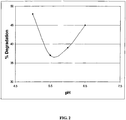
- Figure 2 shows the percent of degradation obtained at various pH levels as assessed by cIEF following a four-week incubation of the sample at 45°C. Minimal degradation was obtained at a pH value of about 5.5.
- Figure 3 shows the percent of iso-aspartic acid formed at various pH levels as assessed by the Promega IsoQuant kit following a four-week incubation of the sample at 45°C. Iso-aspartic acid formation (deamidation) was minimized at pH values of 6 and 6.5, and increased sharply at pH 8.0.
- independent formulations contained 5.0 mg/ml Daclizumab antibody in 50 mM sodium succinate, pH 6.0; and 50 mM histidine, pH 6.0, with and without N 2 gassing.
- Sodium citrate buffer was not included because of reports of pain on subcutaneous injection.
- the bioactivity (potency) at time 0, and after 4, 8, and 12 weeks of incubation at 37° C was measured by ELISA using microplates coated with recombinant human IL2 alpha receptor (II,-2 sR ⁇ ) antigen, and goat anti-human IgG-HRP conjugate.
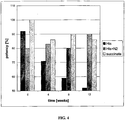
- Figure 4 shows the effect of different buffers over time on potency following incubation at 37°C.
- Highest stability of the antibody formulation was achieved through 8 weeks with 50 mM sodium succinate buffer at pH 6.0.
- Formulations in histidine alone rapidly (less than 8 weeks) lost their potency as the buffer oxidized.
- Potency of the formulation remained greater than 80% for at least 12 weeks in either sodium succinate buffer or histidine buffer gassed with N 2 to prevent oxidation.
- surfactants Teween 80 ® and Tween 20 ®
- salts NaCl and MgCl 2
- antioxidants EDTA and methionine
- amino acids glycine, lysine, serine and proline
- co-solvents glycerol and ethanol.
- Various analytical techniques clarity, pH, SEC-HPLC, UV-Vis, and cIEF were used to characterize the excipient-containing formulations.
- the Daclizumab antibody was in a 67 mM sodium phosphate formulation (without Tween ® 80) at a concentration of 6.6 mg/mL. This material was concentrated to about 30 mg/mL in the Pellicon II (Millipore) unit, and subsequently, buffer exchanged into two selected buffers (50 mM sodium phosphate pH 6.5, and 50 mM sodium succinate pH 6.0) using the 50 mL amicon stir cell (Millipore). During the third and final buffer exchange step, the material was also concentrated to a final concentration of ⁇ 125 mg/mL. Finally, the antibody was filtered through 0.8 ⁇ m membrane (Uniflo). The post filtration protein concentration was determined to be approximately 100 mg/mL for the phosphate buffer sample and 97 mg/mL for the succinate buffer sample.
- the target concentration of the excipients at which they were screened is shown in Table 1 .
- the formulations were prepared by either weighing the required amount of the excipients directly into the vial (e.g. all amino acids) or by preparing concentrated stock solutions of the excipients.
- the excipients were added to 0.5 mL of the appropriate buffer solution and the pH adjusted to the desired value with either 1N HCl or 10% NaOH. Subsequently, 0.5 mL of the concentrated antibody solution in the appropriate buffer ( ⁇ 100 mg/mL) was added to attain the target concentration of 50 mg/mL. This procedure was adopted to prevent protein degradation due to direct contact with concentrated excipients.
- the 1 mL solution was split into two vials with 0.5 mL fill each.
- the samples were analyzed using various analytical techniques. Solution clarity was visually examined by holding the sample vials up against a black background under fluorescent lighting. The solution was inspected for insoluble species and color changes were recorded. Size exclusion chromatography was performed using a Perkin Elmer HPLC unit with diode array detection and two Tosohaas columns connected in series. The samples were diluted approximately 5 fold with the corresponding buffer to bring the concentration to about 1 mg/mL and 100 ⁇ L of the sample was injected onto the column. The sample concentration was measured by UV spectroscopy using the Perkin Elmer Lambda Bio 40 spectrophotometer.
- the samples from the 3-week time point were analyzed by Capillary Isoelectric Focusing on the BioRAD CE (BioFocus 3000) System. All the samples were diluted to 0.25 mg/mL with water and a 1:1 dilution (to a final concentration of 0.125 mg/mL) was made with the pharmalyte solution containing TEMED and two internal pI markers, 8.4 and 10.1.
- the capillary used was an eCAP with neutral coating (Beckmann, 56 cm length, 50 um ID).
- Table 3(A-C) indicates the % monomer for all samples being investigated in this study.
- no significant change was observed in the % monomer for the 5°C samples in both buffers.
- all samples indicated a slight drop in the % monomer ( ⁇ 5%).
- the % monomer varied from 94.08 (methionine) to 97.29 (proline)
- the % monomer varied from 95.86 (methionine) to 97.55 (Tween-80).
- the methionine and glycine containing formulations showed the most significant drop in % monomer. The decrease in % monomer was mostly due to clip formation.
- Table 3B lists the % aggregate formation in all samples being investigated in this study. It is clear from these results that the increase in aggregate formation during the 3-week duration is minimal for all samples at 5°C in both buffers. After 3 weeks of incubation at 45°C, samples in the phosphate buffer showed an increase in % aggregate ranging from 0.40% (EDTA) to 2.40% (glycine). In the succinate buffer, the aggregate formation was slightly lower; ranging from 0.7 % (methionine) to 1.09% (glycine) after the 3 week incubation period.
- EDTA EDTA
- succinate buffer the aggregate formation was slightly lower; ranging from 0.7 % (methionine) to 1.09% (glycine) after the 3 week incubation period.
- One of the hypotheses that supports these results is that if aggregate formation is due to oxidation, it may be slowed down in the succinate buffer due to the metal chelating properties of the succinate buffer.
- Table 3C lists the % clip formation in all samples being investigated in this study.
- the % clipping ranged from ⁇ 0.2-0.4 % in all samples.
- the % increase in clips was insignificant over the 3-week period.
- the % clipping varied from 4.74 (methionine) to 1.5 % (proline, glycerol and ethanol), while in the succinate buffer, the range was 1.48 %(Tween-80) to 3.44 (methionine).
- an increase in the clip formation was observed in the amino acid containing formulations.
- the rate of clip formation appears to be higher in the phosphate buffer. This may be attributed to the pH difference of the Na-succinate and Na-phosphate buffers (pH 6.0 and 6.5, respectively), indicating base catalyzed hydrolysis as being the primary reason for clip formation
- the stability of formulation was higher in the Na-succinate buffer at pH 6.0, compared with the Na-phosphate buffer at pH 6.5. This is primarily due to base-catalyzed hydrolysis that is accelerated at the higher pH of 6.5, causing an increase in the rate of clip formation.
- the Na-succinate buffer at pH 6.0 is the selected buffer for all future studies. Results of this study also clearly indicated that in both buffers, the amino acids (glycine, lysine, serine, proline, and methionine) did not have a stabilizing effect on the protein stability. As shown by the data on sample clarity, all amino acid containing formulations indicated the formation of insoluble aggregates at 45°C.
- the excipient MgCl 2 was selected in this study based on the hypothesis that it might protect the protein against dimidiation. While MgCl 2 precipitated in the Na-phosphate buffer; in the Na-succinate buffer, based on the cIEF data, MgCl 2 has a stabilizing effect on the protein. Ethanol was also included as an excipient to test if it stabilized the protein against deamidation by lowering the dielectric constant of the solution. The results, however, do not support this hypothesis. Finally, Tween-80, EDTA, and NaCl, the excipients most commonly used to stabilize protein formulations, did not show any destabilizing effect on the protein in either buffer.
- MgCl 2 in the concentration range of 0-50 mM also could have a favorable effect.
- the results also indicate that the excipient concentrations for the most stable formulation are: 150 mM NaCl, 0.05% Tween 80, 0.03-0.04% EDTA and 60-70 mM MgCl 2 , however, these conditions are not practical because they do not provide isotonic conditions.
- a liquid antibody formulation of 100 mg/ml Daclizumab in 30 mM sodium succinate, pH 6, 100 mM NaCl, and 0.03% Tween ® 80 was incubated at 5°C (2-8°C) and tested for stability at different time points. The stability results indicate that the formulation is stable for at least 18 months at refrigerated temperature ( Table 8 ). Table 8. Stability Results of Daclizumab at 5°C. Time (Month) % Monomer % Aggregate 0 99.0 N/A 3 99.1 0.2% 6 99.1 0.2% 9 98.8 0.2% 12 98.9 0.2% 18 98.6 0.2%
- HAIL-12 (50 and 100 mg/mL) was formulated in 40 mM Na-succinate buffer, 100 mM NaCl, and 0.03% Tween-80, pH 6.0. The ongoing stability testing indicates that the formulation is stable at 5, 25, and 37°C for at least 12 weeks (Tables 10 and 11 ). Table 10. Stability Results of HAIL-12 (50 mg/mL)at various temperatures.
- HuEP5C7 (anti-L selectin antibody, 50 and 100 mg/mL) was formulated in 50 mM histidine buffer, 125 mM sodium chloride, 0.01% Tween 80, pH 6.0.
- the on-going stability testing indicates that the formulation is stable for three months at 25°C and 45°C and for at least 9 months at 5°C.
- the results of the 9-month stability testing at 5°C is shown in Table12 .
- the results of the 3-month accelerated stability testing is shown in Table13. Table 12. Stability Results of HuEP5C7 at 5°C.
Landscapes
- Health & Medical Sciences (AREA)
- Chemical & Material Sciences (AREA)
- Life Sciences & Earth Sciences (AREA)
- Medicinal Chemistry (AREA)
- General Health & Medical Sciences (AREA)
- Organic Chemistry (AREA)
- Immunology (AREA)
- Public Health (AREA)
- Animal Behavior & Ethology (AREA)
- Pharmacology & Pharmacy (AREA)
- Veterinary Medicine (AREA)
- Epidemiology (AREA)
- Biochemistry (AREA)
- Proteomics, Peptides & Aminoacids (AREA)
- Molecular Biology (AREA)
- Genetics & Genomics (AREA)
- Biophysics (AREA)
- Engineering & Computer Science (AREA)
- Bioinformatics & Cheminformatics (AREA)
- General Chemical & Material Sciences (AREA)
- Chemical Kinetics & Catalysis (AREA)
- Microbiology (AREA)
- Mycology (AREA)
- Oil, Petroleum & Natural Gas (AREA)
- Inorganic Chemistry (AREA)
- Dermatology (AREA)
- Transplantation (AREA)
- Nuclear Medicine, Radiotherapy & Molecular Imaging (AREA)
- Medicines Containing Antibodies Or Antigens For Use As Internal Diagnostic Agents (AREA)
- Medicinal Preparation (AREA)
Abstract
Description
- The present invention relates generally to the field of pharmaceutical formulation of antibodies. Specifically, the present invention relates to a stable, liquid, high concentration antibody formulation. This invention is exemplified by a stabilized liquid formulation of Daclizumab, an anti-IL2 receptor antibody; HAIL-12, a humanized anti-IL-12 monoclonal antibody; and HuEP5C7, a humanized anti-L selectin monoclonal antibody.
- Many protein preparations intended for human use require stabilizers to prevent denaturation, aggregation and other alternations to the proteins prior to the use of the preparation. This instability is manifested in the formation of soluble/insoluble particles, and is often increased when the protein preparation is stored over time and during shipping. A major aim in the development of protein drug formulations is to maintain both protein solubility, stability and bioactivity.
- Immunoglobulins, in particular, are recognized as possessing characteristics that tend to form aggregates and particulates in solution, and as such, may require filtration before use for intravenous or subcutaneous injection. The formation of protein aggregates and particulates has long been a problem in the development of parenteral immunoglobulin products, especially when the immunoglobulins are formulated at high concentrations. Synagis™ (MedImmune) is a humanized monoclonal IgG1 antibody produced by recombinant DNA technology, directed to an epitope in the A antigenic site of the T protein of respiratory syncytial virus (RSV). Synagis™ is a composite of human (90%) and murine (10%) antibody sequences. Synagis™ is supplied as a sterile lyophilized product for reconstruction with sterile water for injection. Reconstituted Synagis™ is to be administered by intramuscular injection only. Upon reconstitution, Synagis™ contains the following excipients: 47mM histidine, 3.0 mM glycine, 5.6% mannitol, and the active ingredient, IgG1 antibody, at a concentration of 100 milligrams per vial. The reconstituted Synagis™ is to be administered within 6 hours of reconstitution.
-
WO 89/11297 -
WO 97/45140 Polysorbate 80 and sterile filtration. -
WO 90/11091 -
U.S. Patent No. 6,171,586 discloses a stable aqueous pharmaceutical formulation comprising a therapeutically effective amount of an antibody not subjected to prior lyophilization, an acetate buffer from about pH 4.8 to about 5.5, a surfactant, and a polyol, wherein the formulation lacks a tonicifying amount of sodium chloride. - U.S. Patent Application Publication No.
US 2001/0014326A1 discloses a pre-lyophilized antibody formulation containing 25 mg/ml anti-IgE antibody, 5 mM histidine, pH 6.0, 85 mM sucrose, and 0.01% polysorbate 20. -
U.S. Patent No. 5,744,132 discloses a composition comprising 1-1000 µg/ml IL-12 antibody, 2% sucrose, 4.15% mannitol, 10mM sodium succinate, and about 0.02% Tween® 20, having a pH of about 5.6. -
U.S. Patent No. 6,267,958 discloses a reconstituted formulation of 100 mg/ml rhuMab E25, in 20 mM histidine, pH 6.0, 340 mM sucrose, 0.04 % polysorbate 20, and 0.9 % benzyl alcohol. -
U.S. Patent No. 6,165,467 discloses a process for stabilizing a human monoclonal antibody composition produced by hybridoma cell line having accession number HB8307, which comprises dialyzing the human monoclonal antibody in a phosphate salt stabilized buffer solution having a pH from 7.2 to 7.4, said solution comprising 1-20 mg of D-mannitol per mg of said monoclonal antibody, 0.005-0.2 millimole of glycine per mg of said monoclonal antibody, and an amount of pH stabilizing phosphate salt to stabilize the pH of said solution. - There is a need for a stable liquid antibody preparation, wherein the antibody concentration is 50 mg/ml or greater; such preparation is suitable for parenteral administration, including intravenous, intramuscular, intraperitoneal, or subcutaneous injection to a human.
- This invention is directed to a stable liquid pharmaceutical formulation comprising a high concentration, e.g., greater than 50 mg/ml, of an antibody in 20-60 mM succinate buffer or 30-70 mM histidine buffer (pH from about pH 5.5 to about pH 6.5), a tonicity modifier, and about 0.01- 0.1 % polysorbate. This formulation retains the physical, chemical, and biological stability of antibody and prevents the immunoglobulins intended for administration to human subjects from forming aggregates and particulates in the final product. Preferred antibodies of this invention include Daclizumab, a humanized anti-IL-2 receptor monoclonal antibody; HAIL-12, a humanized anti-IL-12 monoclonal antibody; and HuEP5C7, a humanized anti-L selectin monoclonal antibody; and fontolizumab, a humanized anti-gamma interferon monoclonal antibody.
The liquid antibody formulation is stable at refrigerated temperature (2-8°C) for at least 1 year and preferably 2 years. This liquid formulation is also stable at room temperature (23-27°C) for at least six months. This liquid formulation is suitable for subcutaneous injection. -
-
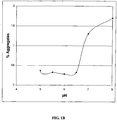
Figure 1A shows the percent clips formation, andFigure 1B shows the percent aggregates, at various pH levels following a four-week incubation of the sample at 45°C, as assessed by SEC-HPLC. -
Figure 2 shows the percent of degradation obtained at various pH levels as assessed by cIEF following a four-week incubation of the sample at 45°C. -
Figure 3 shows the percent of iso-aspartic acid formed at various pH levels as assessed by the Promega IsoQuant kit following a four-week incubation of the sample at 45°C. -
Figure 4 shows the effect of different buffers over time on potency following incubation at 37°C. - As used herein, the term "buffer" encompasses those agents which maintain the solution pH in an acceptable range and may include succinate (sodium), histidine, phosphate'(sodium or potassium), Tris (tris (hydroxymethyl) aminomethane), diethanolamine, and the like. The buffer of this invention has a pH in the range from about 5.5 to about 6.5; and preferably has a pH of about 6.0. Examples of buffers that will control the pH in this range include succinate (such as sodium succinate), gluconate, histidine, citrate phospate and other organic acid buffers.
- "Pharmaceutically acceptable excipients" (vehicles, additives) are those inert substances that can reasonably be administered to a subject mammal and provide an effective dose of the active ingredient employed. These substances are added to a formulation to stabilize the physical, chemical and biological structure of the antibody. The term also refers to additives that may be needed to attain an isotonic formulation, suitable for the intended mode of administration.
- The term "pharmaceutical formulation" refers to preparations which are in such form as to permit the biological activity of the active ingredients to be unequivocally effective, and which contain no additional components which are toxic to the subjects to which the formulation would be administered.
- A "stable" formulation is one in which the protein therein essentially retains its physical stability, chemical stability, and biological activity upon storage. Various analytical techniques for measuring protein stability are available in the art and are reviewed in Peptide and Protein Drug Delivery, 247-301, Vincent Lee Ed., Marcel Dekker, Inc., New York, N.Y., Pubs. (1991) and Jones, A. Adv. Drug Delivery Rev. 10:29-90 (1993). Stability can be measured at a selected temperature for a selected time period.
- A "stable" liquid antibody formulation is a liquid antibody formulation with no significant changes observed at a refrigerated temperature (2-8 °C) for at least 12 months, preferably 2 years, and more preferably 3 years; or at room temperature (23 -27 °C) for at least 3 months, preferably 6 months, and more preferably 1 year. The criteria for stability are as follows. No more than 10%, preferably 5%, of antibody monomer is degraded as measured by SEC-HPLC. The solution is colorless, or clear to slightly opalescent by visual analysis. The concentration, pH and osmolality of the formulation have no more than +/-10% change. Potency is within 70-130%, preferably 80-120% of the control. No more than 10%, preferably 5% of clipping (hydrolysis) is observed. No more than 10%, preferably 5% of aggregation is formed.
- An antibody "retains its physical stability" in a pharmaceutical formulation if it shows no significant increase of aggregation, precipitation and/or denaturation upon visual examination of color and/or clarity, or as measured by UV light scattering, size exclusion chromatography (SEC-HPLC) and dynamic light scattering. In addition the protein conformation is not altered. The changes of protein conformation can be evaluated by fluorescence spectroscopy, which determines the protein tertiary structure, and by FTIR spectroscopy, which determines the protein secondary structure.
- An antibody "retains its chemical stability" in a pharmaceutical formulation, if it shows no significant chemical alteration. Chemical stability can be assessed by detecting and quantifying chemically altered forms of the protein. Degradation processes that often alter the protein chemical structure include hydrolysis or clipping (evaluated by methods such as size exclusion chromatography and SDS-PAGE), oxidation (evaluated by methods such as by peptide mapping in conjunction with mass spectroscopy or MALDI/TOF/MS), deamidation (evaluated by methods such as ion-exchange chromatography, capillary isoelectric focusing, peptide mapping, isoaspartic acid measurement), and isomerization (evaluated by measuring the isoaspartic acid content, peptide mapping, etc.).
- An antibody "retains its biological activity" in a pharmaceutical formulation, if the biological activity of the antibody at a given time is within a predetermined range of the biological activity exhibited at the time the pharmaceutical formulation was prepared. The biological activity of an antibody can be determined, for example, by an antigen binding ELISA assay.
- The term "isotonic" means that the formulation of interest has essentially the same osmotic pressure as human blood. Isotonic formulations will generally have an osmotic pressure from about 270-328 mOsm. Slightly hypotonic osmotic pressure is 250-269 and slightly hypertonic osmotic pressure is 328-350 mOsm. Osmotic pressure can be measured, for example, using a vapor pressure or ice-freezing type osmometer.
- "Tonicity modifiers" are those pharmaceutically acceptable inert substances that can be added to the formulation to provide an isotonity of the formulation. Tonicity modifiers suitable for this invention include salts and amino acids.
- The following criteria are important in developing a stable pharmaceutical antibody formulation. The antibody formulation contains pharmaceutically acceptable excipients. The antibody formulation is formulated such that the antibody retains its physical, chemical and biological activity. The formulation is preferably stable for at least 1 year at refrigerated temperature (2-8°C) and 6 months at room temperature (23-27°C).
- The analytical methods for evaluating the product stability include size exclusion chromatography (SEC-HPLC), dynamic light scattering test (DLS), differential scanning calorimetery (DSC), iso-asp quantification, potency, UV at 340nm, and UV spectroscopy. SEC ( J. Pharm. Scien., 83:1645-1650, (1994); Pharm. Res., 11:485 (1994); J. Pharm. Bio. Anal., 15:1928 (1997); J. Pharm. Bio. Anal., 14:1133-1140 (1986)) measures percent monomer in the product and gives information of the amount of soluble aggregates and clips. DSC (Pharm. Res., 15:200 (1998); Pharm. Res., 9:109 (1982)) gives information of protein denaturation temperature and glass transition temperature. DLS (American Lab., Nov. (1991)) measures mean diffusion coefficient, and gives information of the amount of soluble and insoluble aggregates. UV at 340nm measures scattered light intensity at 340nm and gives information about the amounts of soluble and insoluble aggregates. UV spectroscopy measures absorbance at 278nm and gives information of protein concentration.
- The iso-Asp content in the samples is measured using the Isoquant Isoaspartate Detection kit (Promega). The kit uses the enzyme Protein Isoaspartyl Methyltransferase (PIMT) to specifically detect the presence of isoaspartic acid residues in a target protein. PIMT catalyzes the transfer of a methyl group from S-adenosyl-L-methionine to isoaspartic acid at the α-carboxyl position, generating S-adenosyl-L-homocysteine (SAH) in the process. This is a relatively small molecule, and can usually be isolated and quantitated by reverse phase HPLC using the SAH HPLC standards provided in the kit.
- The potency or bioactivity of an antibody can be measured by its ability to bind to its antigen. The specific binding of an antibody to its antigen can be quantitated by any method known to those skilled in the art, for example, an immunoassay, such as ELISA (enzyme-linked immunosorbant assay).
- The invention herein relates to a stable aqueous formulation comprising an antibody. The antibody in the formulation is prepared using techniques available in the art for generating antibodies, exemplary methods of which are described in more detail in the following sections.
- The antibody is directed against an antigen of interest. Preferably, the antigen is a biologically important polypeptide and administration of the antibody to a mammal may prevent or treat a disorder. However, antibodies directed against nonpolypeptide antigens (such as tumor-associated glycolipid antigens; see
U.S. Pat. No. 5,091,178 ) are also contemplated. - Where the antigen is a polypeptide, it may be a transmembrane molecule (e.g. receptor) or ligand such as a growth factor. Exemplary antigens include molecules such as renin; a growth hormone, including human growth hormone and bovine growth hormone; growth hormone releasing factor; parathyroid hormone; thyroid stimulating hormone; lipoproteins; alpha-1-antitrypsin; insulin A-chain; insulin B-chain; proinsulin; follicle stimulating hormone; calcitonin; luteinizing hormone; glucagon; clotting factors such as factor VIIIC, factor IX, tissue factor, and von Willebrands factor; anti-clotting factors such as Protein C; atrial natriuretic factor; lung surfactant; a plasminogen activator, such as urokinase or human urine or tissue-type plasminogen activator (t-PA); bombesin; thrombin; hemopoietic growth factor; tumor necrosis factor-alpha and -beta; enkephalinase; RANTES (regulated on activation normally T-cell expressed and secreted); human macrophage inflammatory protein (MIP-1-alpha); a serum albumin such as human serum albumin; Muellerian-inhibiting substance; relaxin A-chain; relaxin B-chain; prorelaxin; mouse gonadotropin-associated peptide; a microbial protein, such as beta-lactamase; DNase; IgE; a cytotoxic T-lymphocyte associated antigen (CTLA), such as CTLA-4; inhibin; activin; vascular endothelial growth factor (VEGF); receptors for hormones or growth factors; protein A or D; rheumatoid factors; a neurotrophic factor such as bone-derived neurotrophic factor (BDNF), neurotrophin-3, -4, -5, or -6 (NT-3, NT4, NT-5, or NT-6), or a nerve growth factor such as NGF-β; platelet-derived growth factor (PDGF); fibroblast growth factor such as aFGF and bFGF; epidermal growth factor (EGF); transforming growth factor (TGF) such as TGF-α and TGF-β, including TGF-β1, TGF-β2, TGF-β3, TGF-β4, or TGF-β5; insulin-like growth factor-I and -II (IGF-I and IGF-II); des(1-3)-IGF-I (brain IGF-I), insulin-like growth factor binding proteins; CD proteins such as CD3, CD4, CD8, CD19 and CD20; erythropoietin; osteoinductive factors; immunotoxins; a bone morphogenetic protein (BMP); an interferon such as interferon-α, - β, and -γ; colony stimulating factors (CSFs), e.g., M-CSF, GM-CSF, and G-CSF; interleukins (ILs), e.g., IL-1 to IL-12; receptors to interleukins IL-1 to IL-12; selectins such as L, E, and P-selectin; superoxide dismutase; T-cell receptors; surface membrane proteins; decay accelerating factor; viral antigen such as, for example, a portion of the AIDS envelope; transport proteins; homing receptors; addressins; regulatory proteins; integrins such as CD11a, CD11b, CD11c, CD18, an ICAM, VLA-4 and VCAM; a tumor associated antigen such as HER2, HER3 or HER4 receptor; and fragments of any of the above-listed polypeptides.
- When using recombinant techniques, the antibody can be produced intracellularly, in the periplasmic space, or directly secreted into the medium. If the antibody is produced intracellularly, as a first step, the particulate debris, either host cells or lysed cells, is removed, for example, by centrifugation or ultrafiltration. Where the antibody is secreted into the medium, supernatants from such expression systems are generally first concentrated using a commercially available protein concentration filter, for example, an Amicon or Millipore Pellicon ultrafiltration unit. A protease inhibitor such as PMSF may be included in any of the foregoing steps to inhibit proteolysis and antibiotics may be included to prevent the growth of adventitious contaminants.
- The antibody composition prepared from the cells can be purified using, for example, hydroxylapatite chromatography, gel electrophoresis, dialysis, and affinity chromatography, with affinity chromatography being the preferred purification technique. The suitability of protein A as an affinity ligand depends on the species and isotype of any immunoglobulin Fc domain that is present in the antibody. Protein A can be used to purify antibodies that are based on human Υ1, Υ2, or Υ4 heavy chains (Lindmark et al., J. Immuno/. Meth. 62:1-13 (1983)). Protein G is recommended for all mouse isotypes and for human Υ3 (Guss et al., EMBO J. 5:1567-1575 (1986)). The matrix to which the affinity ligand is attached is most often agarose, but other matrices are available. Mechanically stable matrices such as controlled pore glass or poly(styrenedivinyl)benzene allow for faster flow rates and shorter processing times than can be achieved with agarose. Where the antibody comprises a CH3 domain, the Bakerbond ABX™ resin (J. T. Baker, Phillipsburg, N.J.) is useful for purification. Other techniques for protein purification such as fractionation on an ion-exchange column, ethanol precipitation, Reverse Phase HPLC, chromatography on silica, chromatography on heparin SEPHAROSET™ chromatography on an anion or cation exchange resin (such as a polyaspartic acid column), chromatofocusing, SDS-PAGE, and ammonium sulfate precipitation are also available depending on the antibody to be recovered.
- Preferred antibodies encompassed by the present invention include Daclizumab (USAN, United States Adopted Names), a humanized anti-IL-2 receptor antibody. Daclizumab is currently being marketed as Zenapax® for the prevention of organ rejection after renal transplantation and is administered through the intravenous route. Daclizumab is also useful for treating psoriasis, for which, the subcutaneous delivery is the preferred route of administration. For a subcutaneous delivery of antibody, high concentration of antibody is preferred. Daclizumab is a recombinant humanized monoclonal antibody, subclass IgG1. The molecule is composed of two identical heavy chain and two identical light chain subunits. Disulfide bridges link the four chains. Daclizumab monomer is approximately 150,000 daltons in molecular weight. Daclizumab binds to the p55 subunit of the IL-2 receptor expressed on activated T cells. The antigen target is designated CD25. Daclizumab is produced from a GS-NS0 cell line containing the heavy and light chain genes by fed-batch fermentation culture. Bioreactor harvests are processed to remove cells and debris and purified using a combination of ion-exchange and gel filtration chromatography and a series of ultrafiltration and filtration techniques to produce drug substance containing greater than 95% monomeric species.
- Another preferred antibody is anti-interleukin 12 (IL-12) antibody. IL-12 is a cytokine synthesized by antigen presenting cells. It is composed of two subunits (p35 and p40), both must be present for functional activity. Functional IL-12 is also called IL-12p70. This cytokine preferentially acts on T helper cell type 1 (Th1) lymphocytes and natural killer cells by increasing their proliferative rate. One downstream effect is the secretion of interferon gamma (IFNg) by Th1 cells. Both of these functions (proliferative and IFNg production) can be easily assayed for and were used to detect IL-12 activity in samples. Certain antibodies to IL-12 have been shown to "neutralize" the above activities. Since Th1 cells have been implicated in playing a pivotal role in a variety of diseases, an antibody with neutralizing characteristics would have potential therapeutic value. 16G2 (Hoffman La Roche) is a murine antibody raised against IL-12p70. 16G2 has been shown to act in near stoichiometric amounts to IL-12 in a functional assay-the inhibition of proliferation of activated T cells from human peripheral blood (PBMC). This is an important characteristic because p40 dimers of IL-12 exist in serum and antibodies raised to the p40 subunit need to be used in excess amounts to neutralize the proliferative capacity of a given amount of IL-12. 16G2 was humanized at Protein Design Labs. (Fremont, CA) to give rise to HAIL-12 (humanized anti-IL-I2, an IgG1 antibody).
- Another preferred antibody is anti-L selectin antibody. Selectins, such as L, E, and P-selectin have been found to be associated with tissue damage during the course of ischemia and reperfusion. Neutrophils play an important role in this connection. It is assumed that selectin is required for the recruitment of neutrophils. L-selectin is important for the complete development of damage in skeletal muscle as well as in the lung (Seekamp, et al., Am. J. Pathol. 11:592-598 (1994). Mulligan, et al., J. Immunol. 151:832-840 (1994). HuEP5C7 (SMART Anti-L Selectin) is a humanized anti-L selectin monoclonal antibody, that contains mutant IgG2 Fc, cross reacts with both human E and P selectin antigens. It is currently being developed by Protein Design Labs, Inc. for various indications such as asthma, stroke, trauma, and certain autoimmune diseases.
- Another preferred antibody is fontolizumab, an anti-gamma interferon antibody. Fontolizumab is an IgG1 humanized monoclonal antibody developed by Protein Design Labs, Inc. for the treatment of immune disorders mediated by interferon-gamma (IFN-g), a proinflammatory cytokine. IFN-g induces the expression of major histocompatibility complex (MHC) class I and/or class II (HLA-DR) antigens, enhances the cytolytic activity of natural killer cells, activates macrophages, and modulates the immunoglobulin isotype profile of the humoral response. As a lymphokine, IFN-g also enhances the development of T helper cell type 1 (Th1), while suppressing the development of T helper cell type 2 (Th2) cells. Aberrations in the Th1/Th2 ratio have been implicated in a variety of autoimmune conditions.
- After the antibody of interest is prepared as described above, a pharmaceutical formulation comprising the antibody is prepared. The formulation development approach is as follows: selecting the optimum solution pH, selecting buffer type and concentration, evaluating the effect of various excipients of the liquid stability, and optimizing the concentration of the screened excipients using an I-optimal experimental design (Statistics for Experimenters: An Introduction to Design, Data Analysis, and Model Building, Box, George E.P. et al., John Wiley and Sons, Inc., 1978).
- The compositions of this invention minimize the formation of antibody aggregates and particulates and insure that the antibody maintains its bioactivity over time. The composition is a pharmaceutically acceptable liquid formulation containing a high concentration of an antibody in a buffer having a neutral or slightly acidic pH (pH 5.5-6.5), a surfactant, and a tonicity modifier.
- The antibody in the composition is a high concentration of 50 mg/ml or greater, preferably 100 mg/ml or greater. A preferred composition of this invention contains Daclizumab, a humanized anti-IL2 receptor antibody; HAIL12, a humanized anti-IL-12 antibody; HaEP5C7, a humanized anti-L selectin antibody; and fontolizumab, a humanized anti-gamma interferon antibody.
- A buffer of pH 5.5-6.5 is used in the composition. A buffer of pH 6.0-6.5 is preferred. Examples of buffers that control the pH in this range include succinate (such as sodium succinate), gluconate, histidine, citrate, phosphate, and other organic acid buffers. Succinate (pKa 5.63) is a preferred buffer for subcutaneous injection. Histidine (pK 5.97) is less preferred because of its susceptibility to oxidization, although such oxidation can be retarded by replacing the vial headspace with N2 or adding an antioxidant. Citrate and phosphate buffers are much less preferred because it causes a painful reaction when injected subcutaneously. A preferred buffer contains about 20-60 mM sodium succinate. Another preferred buffer is 30-70 mM histidine buffer overlaid with N2.
- A surfactant is also added to the antibody formulation. Exemplary surfactants include nonionic surfactants such as polysorbates (e.g. polysorbates 20, 80, such as Tween® 20, Tween® 80) or poloxamers (e.g. poloxamer 188). The amount of surfactant added is such that it reduces aggregation of the formulated antibody and/or minimizes the formation of particulates in the formulation and/or reduces adsorption. The surfactant may be present in the formulation in an amount from about 0.005% to about 0.5%, preferably from about 0.01% to about 0.1%, more preferably from about 0.01% to about 0.05%, and most preferably from about 0.02% to about 0.04%.
A tonicity modifier, which contributes to the isotonicity of the formulations, is added to the present composition. The tonicity modifier useful for the present invention includes salts and amino acids. Salts that are pharmaceutically acceptable and suitable for this invention include sodium chloride, sodium succinate, sodium sulfate, potassuim chloride, magnesium chloride, magnesium sulfate, and calcium chloride. Preferred salts for this invention are NaCl and MgCl2. MgCl2 may also improve the antibody stability by protecting the protein from deamidation. A preferred concentration of NaCl is about 75-150 mM. A preferred concentration of MgCl2 is about 1-100 mM. Amino acids that are pharmaceutically acceptable and suitable for this invention include proline, alanine, L-arginine, asparagine, L-aspartic acid, glycine, serine, lysine, and histidine. A preferred amino acid for this invention is proline. A preferred concentration of proline is than 200 mM. - EDTA, which is commonly used to stabilize a protein formulation, may also be included in the formulation. EDTA, as a chelating agent, may inhibit the metal-catalyzed oxidation of the sulfhydryl groups, thus reducing the formation of disulfide-linked aggregates. A preferred concentration of EDTA is 0.01-0.2%.
- Exemplary liquid compositions are formulations comprising antibody at about 100 mg/ml or greater, about 20-60 mM sodium succinate (pH 6), about 0.01-0.1
% polysorbate 20 or 80, and about 75-150 mM NaCl. This formulation retains the stability of biological activity of the monoclonal antibody, and prevents the immunoglobulins intended for administration to human subjects from physical, chemical and biological degradation in the final product. - The liquid antibody formulation of this invention is suitable for parenteral administration such as intravenous, intramuscular, intraperitoneal, or subcutaneous injection; particularly suitable for subcutaneous injection.
- The invention is illustrated further by the following examples, which are not to be construed as limiting the invention in scope of the specific procedures described in them.
- To identify the optimum formulation for pH range and to identify major degradation pathways, a pH profile study was conducted. Sample formulations contained 5.0 mg/ml anti-IL2 receptor antibody (Daclizumab) in one of three buffers: 50 mM sodium acetate buffer at pH 4.0 or 5.0, 50 mM histidine at pH 5.5, 6.0, or 6.5, or 50 mM sodium phosphate buffer at pH 7.0 or 8. 5. Independent formulations were incubated at either 5°C or 45° C with 100 RPM shaking for 4 weeks. The physical and chemical stability of each sample was assessed at 0 and 4 weeks by analytical methods including: pH and visual analysis, UV spectroscopy at 340 nm, size exclusion chromatography (SEC-HPLC), fluorescence spectroscopy, dynamic light scattering (DLS), differential scanning calorimetry (DSC), Promega IsoQuant Assay, capillary isoelectric focusing (cIEF), SDS-PAGE (reduced and non-reduced), and bioactivity assessments (ELISA).
- SEC-HPLC performed on samples after four weeks of incubation at 45°C showed that clipping is a major degradation pathway for the liquid formulation, as shown in
Figure 1A by the percent of clips recovered at various pH levels with SEC. Both the percent of clips and the percent of aggregates (Figure 1B ) determined by SEC were reduced at the midrange pH values of 5.5 to 6.5. -
Figure 2 shows the percent of degradation obtained at various pH levels as assessed by cIEF following a four-week incubation of the sample at 45°C. Minimal degradation was obtained at a pH value of about 5.5. -
Figure 3 shows the percent of iso-aspartic acid formed at various pH levels as assessed by the Promega IsoQuant kit following a four-week incubation of the sample at 45°C. Iso-aspartic acid formation (deamidation) was minimized at pH values of 6 and 6.5, and increased sharply at pH 8.0. - The results from this experiment indicate that pH 5.5 to 6.5 and preferable pH 6.0 to 6.5, are the optimal pH which minimize antibody degradation and aggregation.
- In this experiment, independent formulations contained 5.0 mg/ml Daclizumab antibody in 50 mM sodium succinate, pH 6.0; and 50 mM histidine, pH 6.0, with and without N2 gassing. Sodium citrate buffer was not included because of reports of pain on subcutaneous injection. The bioactivity (potency) at
time 0, and after 4, 8, and 12 weeks of incubation at 37° C was measured by ELISA using microplates coated with recombinant human IL2 alpha receptor (II,-2 sRα) antigen, and goat anti-human IgG-HRP conjugate. -
Figure 4 shows the effect of different buffers over time on potency following incubation at 37°C. Highest stability of the antibody formulation was achieved through 8 weeks with 50 mM sodium succinate buffer at pH 6.0. Formulations in histidine alone rapidly (less than 8 weeks) lost their potency as the buffer oxidized. Potency of the formulation remained greater than 80% for at least 12 weeks in either sodium succinate buffer or histidine buffer gassed with N2 to prevent oxidation. - This study was conducted to screen various excipients for the formulation of Daclizumab antibody at 50 mg/mL. From the pH optimization study conducted earlier (Example 1), the formulation stability was maximized in the pH range of 6.0-6.5. Therefore in this study, excipients were screened in two buffers; 50 mM phosphate, pH 6.5 and 50 mM succinate, pH 6.0. The stability of antibody was monitored in the two buffers for 3 weeks at 5°C and 45 °C with shaking at 100 RPM at a concentration of 50 mg/mL. The excipients examined included: surfactants (
Tween 80® and Tween 20®), salts (NaCl and MgCl2), antioxidants (EDTA and methionine), amino acids (glycine, lysine, serine and proline), and co-solvents (glycerol and ethanol). Various analytical techniques (clarity, pH, SEC-HPLC, UV-Vis, and cIEF) were used to characterize the excipient-containing formulations. - The Daclizumab antibody was in a 67 mM sodium phosphate formulation (without Tween® 80) at a concentration of 6.6 mg/mL. This material was concentrated to about 30 mg/mL in the Pellicon II (Millipore) unit, and subsequently, buffer exchanged into two selected buffers (50 mM sodium phosphate pH 6.5, and 50 mM sodium succinate pH 6.0) using the 50 mL amicon stir cell (Millipore). During the third and final buffer exchange step, the material was also concentrated to a final concentration of~125 mg/mL. Finally, the antibody was filtered through 0.8 µm membrane (Uniflo). The post filtration protein concentration was determined to be approximately 100 mg/mL for the phosphate buffer sample and 97 mg/mL for the succinate buffer sample.
- The target concentration of the excipients at which they were screened is shown in Table 1. The formulations were prepared by either weighing the required amount of the excipients directly into the vial (e.g. all amino acids) or by preparing concentrated stock solutions of the excipients. The excipients were added to 0.5 mL of the appropriate buffer solution and the pH adjusted to the desired value with either 1N HCl or 10% NaOH. Subsequently, 0.5 mL of the concentrated antibody solution in the appropriate buffer (~100 mg/mL) was added to attain the target concentration of 50 mg/mL. This procedure was adopted to prevent protein degradation due to direct contact with concentrated excipients. The 1 mL solution was split into two vials with 0.5 mL fill each. One vial was used for initial T=0 analysis and then stored at 2-8°C for the 3 week time point analysis at 2-8 °C. The other vial was incubated at 45°C with shaking at 100 RPM for 3 weeks and analyzed at the end of that time period.
Table 1: List of excipients and their concentrations as used in the study. # Excipient Target Conc. 1 Tween 800.05% 2 EDTA 0.05% 3 NaCl 150 mM 4 Methionine 100 mM 5 Glycine 200 mM 6 Serine 200 mM 7 Proline 200 mM 8 Lysine 200 mM 9 MgCl 2100 mM 10 Tween 20 0.05% 11 Glycerol 5.0% 12 Ethanol 5.0% - At each of the two time points, the samples were analyzed using various analytical techniques. Solution clarity was visually examined by holding the sample vials up against a black background under fluorescent lighting. The solution was inspected for insoluble species and color changes were recorded. Size exclusion chromatography was performed using a Perkin Elmer HPLC unit with diode array detection and two Tosohaas columns connected in series. The samples were diluted approximately 5 fold with the corresponding buffer to bring the concentration to about 1 mg/mL and 100 µL of the sample was injected onto the column. The sample concentration was measured by UV spectroscopy using the Perkin
Elmer Lambda Bio 40 spectrophotometer. - The samples from the 3-week time point were analyzed by Capillary Isoelectric Focusing on the BioRAD CE (BioFocus 3000) System. All the samples were diluted to 0.25 mg/mL with water and a 1:1 dilution (to a final concentration of 0.125 mg/mL) was made with the pharmalyte solution containing TEMED and two internal pI markers, 8.4 and 10.1. The capillary used was an eCAP with neutral coating (Beckmann, 56 cm length, 50 um ID).
- The potency of samples formulated in the succinate buffer with the excipients, Tween-80, EDTA, NaCl and MgCl2 was tested after 3 weeks of incubation at 5 and 45°C. It was a bio-assay involving KIT-225-K6 cells.
- There were 24 samples at time point T=0 as 12 different excipients were monitored in two different buffers. At the 3 week time point, there were 48 samples to be analyzed (12 different excipients x 2 temperatures x 2 buffers = 48). Assays performed include concentration determination by UV-Vis, pH, Clarity, SEC-HPLC, and CIEF.
- Sample appearance is indicated in Table 2 . All samples were clear in both the buffers at the initial time point T = 0. At the 3 week time point, all samples in the phosphate buffer except the one containing lysine were clear at 5°C. In the same buffer, at 45°C, the samples containing amino acids (glycine, serine, proline and lysine) appeared clear but had some thread like floaties in the vials. The sample with MgCl2 had clear crystals settled in the bottom of the vial.
- In the succinate buffer, all samples except the amino acid containing formulations were clear after three weeks of incubation at 5°C. The samples with proline and lysine were the most turbid. At 45°C, all samples in succinate buffer were clear at the 3 week time point.
Table 2: Sample clarity determined by fluorescence light at T=0 and T=4 weeks at 5 and 45°C in the Na-succinate (pH 6.0) and Na-phosphate (pH 6.5) buffers. Sample Phosphate
T=0
ClarityPhosphate
T= 3 wks
Clarity, 5°CPhosphate
T= 3 wks
Clarity, 45°CSuccinate
T=0
ClaritySuccinate
T= 3 wks
Clarity, 5°CSuccinate
T= 3 wks
Clarity, 45°CTween-80 Clear Clear Clear Clear Clear Clear EDTA Clear Clear Clear Clear Clear Clear NaCl Clear Clear Clear Clear Clear Clear Methionine Clear Clear Clear Clear Turbid Clear Glycine Clear Clear Clear Clear Turbid Clear Serine Clear Clear Clear Clear Turbid Clear Proline Clear Clear Clear Clear Turbid Clear Lysine Clear Turbid Clear Clear Turbid Clear MgCl2 Clear Clear Clear Clear Clear Clear Tween-20 Clear Clear Clear Clear Clear Clear Glycerol Clear Clear Clear Clear Clear Clear Ethanol Clear Clear Clear Clear Clear Clear - Results of SEC-HPLC are tabulated in Table 3(A-C). Table 3A indicates the % monomer for all samples being investigated in this study. The % monomer at T=0 for all samples was ≥99%. At the three weeks time point, no significant change was observed in the % monomer for the 5°C samples in both buffers. However, at 45°C, all samples indicated a slight drop in the % monomer (<5%). For samples formulated in the phosphate buffer, the % monomer varied from 94.08 (methionine) to 97.29 (proline), while for the samples formulated in the succinate buffer, the % monomer varied from 95.86 (methionine) to 97.55 (Tween-80). In both the buffers, the methionine and glycine containing formulations showed the most significant drop in % monomer. The decrease in % monomer was mostly due to clip formation.
- Table 3B lists the % aggregate formation in all samples being investigated in this study. It is clear from these results that the increase in aggregate formation during the 3-week duration is minimal for all samples at 5°C in both buffers. After 3 weeks of incubation at 45°C, samples in the phosphate buffer showed an increase in % aggregate ranging from 0.40% (EDTA) to 2.40% (glycine). In the succinate buffer, the aggregate formation was slightly lower; ranging from 0.7 % (methionine) to 1.09% (glycine) after the 3 week incubation period. One of the hypotheses that supports these results is that if aggregate formation is due to oxidation, it may be slowed down in the succinate buffer due to the metal chelating properties of the succinate buffer.
- Table 3C lists the % clip formation in all samples being investigated in this study. At the initial time point, the % clipping ranged from ~0.2-0.4 % in all samples. For all samples incubated at 5°C, the % increase in clips was insignificant over the 3-week period. At 45°C, a significant increase in the rate of clip formation was observed. For samples formulated in the phosphate buffer, the % clipping varied from 4.74 (methionine) to 1.5 % (proline, glycerol and ethanol), while in the succinate buffer, the range was 1.48 %(Tween-80) to 3.44 (methionine). In general, an increase in the clip formation was observed in the amino acid containing formulations. Further, the rate of clip formation appears to be higher in the phosphate buffer. This may be attributed to the pH difference of the Na-succinate and Na-phosphate buffers (pH 6.0 and 6.5, respectively), indicating base catalyzed hydrolysis as being the primary reason for clip formation
Table 3A: % Monomer as determined by SEC at T=0 and 3 weeks at 5°C and 45°C in the Na-succinate (pH 6.0) and Na-phosphate (pH 6.5) buffers. Sample Phosphate
T=0
% MonoPhosphate
T= 3 wks
%Mono, 5°CPhosphate
T= 3 wks
%Mono, 45°CSuccinate
T=0 %
MonoSuccinate
T= 3 wks
%Mono, 5°CSuccinate
T= 3 wks
%Mono, 45°CTween-80 99.36 99.48 96.71 99.43 99.51 97.55 EDTA 99.37 99.42 96.43 99.42 99.53 97.51 NaCl 99.37 99.41 96.84 99.42 99.53 97.31 Methionine 99.42 99.42 94.08 99.47 99.53 95.86 Glycine 99.41 99.42 95.90 99.46 99.53 96.46 Serine 99.41 99.45 96.15 99.45 99.53 97.29 Proline 99.40 99.43 97.29 99.45 99.52 97.06 Lysine 99.34 99.62 95.45 99.45 99.57 96.28 MgCl2 99.37 99.44 97.12 99.47 99.53 96.62 Tween-20 99.17 99.53 96.33 99.44 99.53 97.27 Glycerol 99.41 99.59 96.32 99.43 99.48 97.46 Ethanol 99.41 99.42 97.24 99.31 99.19 97.42 Table 3B: % Aggregate as determined by SEC at T=0 and 3 weeks at 5°C and 45°C in the Na-succinate (pH 6.0) and Na-phosphate (pH 6.5) buffers. Sample Phosphate
T=0
% AggPhosphate
T= 3 wks
%Agg, 5°CPhosphate
T= 3 wks
%Agg, 45°CSuccinate
T=0
% AggSuccinate
T= 3 wks
%Agg, 5°CSuccinate
T= 3 wks
%Agg, 45°CTween-80 0.41 0.00 1.61 0.36 0.36 0.96 EDTA 0.39 0.43 0.40 0.35 0.35 0.96 NaCl 0.40 0.43 1.23 0.33 0.34 0.85 Methionine 0.36 0.41 1.18 0.32 0.34 0.70 Glycine 0.38 0.42 2.40 0.33 0.35 1.09 Serine 0.38 0.40 2.15 0.32 0.33 0.91 Proline 0.38 0.41 1.14 0.35 0.34 0.86 Lysine 0.39 0.36 1.50 0.32 0.30 0.64 MgCl2 0.38 0.42 0.60 0.32 0.34 0.82 Tween-20 0.40 0.44 1.55 0.34 0.34 1.00 Glycerol 0.37 0.40 2.13 0.35 0.32 0.94 Ethanol 0.37 0.43 1.26 0.28 0.38 0.91 Table 3C: % Clipping as determined by SEC at T=0 and 3 weeks at 5°C and 45°C in the Na-succinate (pH 6.0) and Na-phosphate (pH 6.5) buffers. Sample Phosphate
T=0
% ClipPhosphate
T= 3 wks
%Clip, 5°CPhosphate
T= 3 wks
%Clip, 45°CSuccinate
T=0
% ClipSuccinate
T= 3 wks
%Clip, 5°CSuccinate
T= 3 wks
%Clip, 45°CTween-80 0.21 0.52 1.67 0.22 0.11 1.48 EDTA 0.22 0.15 2.00 0.22 0.12 1.53 NaCl 0.24 0.16 1.93 0.21 0.12 1.85 Methionine 0.21 0.16 4.74 0.21 0.13 3.44 Glycine 0.20 0.15 1.70 0.21 0.12 2.41 Serine 0.21 0.14 1.69 0.23 0.12 1.81 Proline 0.22 0.16 1.58 0.21 0.13 2.08 Lysine 0.24 0.02 3.05 0.23 0.12 3.09 MgCl2 0.21 0.14 2.28 0.21 0.13 2.55 Tween-20 0.44 0.03 2.12 0.22 0.11 1.73 Glycerol 0.23 0.01 1.54 0.22 0.20 1.61 Ethanol 0.22 0.14 1.51 0.41 0.40 1.67 - All the samples from this study were analyzed by capillary electrophoresis (cIEF) on the BioRAD system. A typical cIEF profile of Daclizumab shows four peaks. Typically on accelerated aging at high temperatures, the area of the main isoform peak decreases followed by an increase in the other isoform peaks, which indicates the conversion of one isoform to another isoform. The % degradation is calculated by percent decrease in the peak area of the main isoform:

- Our results indicate that the 45°C samples are more degraded in the phosphate buffer (pH 6.5) when compared with similar samples in the succinate buffer (pH 6.0).The best electropherograms were seen for the excipients, EDTA, NaCl, lysine and MgCl2. The % degradation after 3 weeks for the 5°C versus the 45°C could not be calculated for the
samples containing Tween 80, Tween 20, serine and proline as their electropherograms were very collapsed and the peaks indistinguishable. - Based on the results of this study, the Na-succinate buffer appears to be more promising than the Na-phosphate buffer. Thus, potency assessments were done for the most stabilizing excipients in the Na-succinate buffer only. This included the formulations containing Tween-80, EDTA, NaCl and MgCl2, subject to three weeks of incubation at 5 and 45°C. Results ( Table 4 ) showed that the potency of all formulations was within specifications, indicating that the underlying chemical and physical degradation processes are not significantly altering the protein activity.
Table 4: Potency results of selected formulations in succinate buffer at T=3 weeks at 5 and 45°C. Sample pH % Potency Tween-80, 5°C 6.0 105 Tween-80, 45°C 6.0 80 EDTA, 5°C 6.0 103 EDTA, 45°C 6.0 74 NaCl, 5°C 6.0 105 NaCl, 45°C 6.0 98 MgCl2, 5°C 6.0 112 MgCl2, 45°C 6.0 96 - Based on the results of this study, the stability of formulation was higher in the Na-succinate buffer at pH 6.0, compared with the Na-phosphate buffer at pH 6.5. This is primarily due to base-catalyzed hydrolysis that is accelerated at the higher pH of 6.5, causing an increase in the rate of clip formation. Thus, the Na-succinate buffer at pH 6.0 is the selected buffer for all future studies. Results of this study also clearly indicated that in both buffers, the amino acids (glycine, lysine, serine, proline, and methionine) did not have a stabilizing effect on the protein stability. As shown by the data on sample clarity, all amino acid containing formulations indicated the formation of insoluble aggregates at 45°C.
- The excipient MgCl2 was selected in this study based on the hypothesis that it might protect the protein against dimidiation. While MgCl2 precipitated in the Na-phosphate buffer; in the Na-succinate buffer, based on the cIEF data, MgCl2 has a stabilizing effect on the protein. Ethanol was also included as an excipient to test if it stabilized the protein against deamidation by lowering the dielectric constant of the solution. The results, however, do not support this hypothesis. Finally, Tween-80, EDTA, and NaCl, the excipients most commonly used to stabilize protein formulations, did not show any destabilizing effect on the protein in either buffer.
- Further experiments were conducted in the Na-succinate buffer at pH 6.0; the effect of the excipients (MgCl2, Tween-80, NaCl, and EDTA) was further examined on the protein stability. The results indicate that to formulate an antibody at 100 mg/mL with 100 mM NaCl, the optimal concentration of
Tween 80 falls in the range of 0.02-0.03%. Results also indicate that increasing the salt concentration (100-150 mM) could further stabilize the formulation. Thus, the concentration of NaCl should be maximized while maintaining the tonicity requirements. The results also indicate that the stability of theTween 80 and NaCl containing formulation could be enhanced by adding EDTA in the concentration range of 0.35-0.5%. The addition of MgCl2 in the concentration range of 0-50 mM also could have a favorable effect. The results also indicate that the excipient concentrations for the most stable formulation are: 150 mM NaCl, 0.05% Tween 80, 0.03-0.04% EDTA and 60-70 mM MgCl2, however, these conditions are not practical because they do not provide isotonic conditions. -
Formulations - Formulation 1: 100 mg/ml Daclizumab antibody, 30 mM sodium succinate (pH 6.0) 100 mM NaC1 and 0.03 % Tween®-80.
- Formulation 2: same as
Formulation 1, plus 0.05% EDTA. - The stability results of
Formulations Table 5: Stability results of Formulations T=0 Sample Clarity % Monomer % Clip % Aggregate % Potency F1 Clear 98.27 0.77 0.96 100 F2 Clear 98.27 0.77 0.96 90 T=2 Weeks Sample Clarity % Monomer % Clip % Aggregate % Potency F1-5C Clear 98.31 0.73 0.95 NA F1-25C Clear 98.03 0.82 1.14 NA F1-37C Clear 97.11 1.21 1.69 NA F2-5C Clear 98.20 0.92 0.90 NA F2-25C Clear 97.90 1.09 1.06 NA T=4 Weeks Sample Clarity % Monomer % Clip % Aggregate % Potency F1-5C Clear 98.30 0.74 0.96 93 F1-25C Clear 97.80 0.92 1.28 88 F1-37C Clear 96.20 1.77 2.03 84 F2-5C Clear 98.30 0.77 0.93 94 F2-25C Clear 97.85 0.95 1.20 92 F2-37C Clear 96.30 1.83 1.87 80 T=8 Weeks Sample Clarity % Monomer % Clip % Aggregate % Potency F1-5C Clear 98.24 0.73 0.95 96 F1-25C Clear 97.51 0.82 1.14 96 F1-37C Clear 94.76 1.21 1.69 90 F2-5C Clear 98.34 0.78 0.88 90 F2-25C Clear 97.42 1.20 1.38 90 F2-37C Clear 94.63 3.06 2.31 85 T=12 Weeks Sample Clarity % Monomer % Clip % Aggregate % Potency F1-5C Clear 98.25 0.73 1.02 98 F1-25C Clear 97.07 1.26 1.62 90 F1-37C Clear 93.31 3.88 2.81 84 F2-5C Clear 98.30 0.70 1.00 94 F2-25C Clear 97.22 1.30 1.48 88 F2-37C Clear 92.88 4.05 1.54 82 -
Formulations - Formulation 3: 100 mg/ml Daclizumab antibody, 50 mM histidine (pH 6.0), 115 mM NaCl, 0.03% Tween®-80, purged with nitrogen.
- Formulation 4: same as
Formulation 3, plus 0.05% EDTA. - The stability results of
Formulations Table 6: Stability results of Formulations T=0 Sample Clarity % Monomer % Clip % Aggregate % Potency F3 Clear 99.24 0.43 0.33 79 F4 Clear 99.01 0.68 0.32 89 T=2 Weeks Sample Clarity % Monomer % Clip % Aggregate % Potency F3-5C Clear 99.24 0.38 0.38 ND F3-25C Clear 99.09 0.47 0.44 ND F3-37C Clear 98.32 1.01 0.67 ND F4-5C Clear 99.19 0.44 0.37 ND F4-25C Clear 99.11 0.47 0.42 ND F4-37C Clear 98.41 0.93 0.66 ND T=4 Weeks Sample Clarity % Monomer % Clip % Aggregate % Potency F3-5C Clear 99.26 0.37 0.35 91 F3-25C Clear 98.99 0.56 0.45 76 F3-37C Clear 97.96 1.42 0.62 83 F4-5C Clear 99.28 0.38 0.34 81 F4-25C Clear 99.00 0.56 0.44 85 F4-37C Clear 97.94 1.44 0.63 79 T=8 Weeks pH 6.0 Sample Clarity % Monomer % Clip % Aggregate % Potency F3-5C Clear 99.24 0.38 0.38 86 F3-25C Clear 98.74 0.72 0.54 82 F3-37C Clear 96.87 2.37 0.76 75 F4-5C Clear 99.23 0.39 0.38 97 F4-25C Clear 98.71 0.75 0.54 92 F4-37C Clear 96.90 2.34 0.76 86 T=12 Weeks pH 6.0 Sample Clarity % Monomer % Clip % Aggregate % Potency F3-5C Clear 98.89 0.63 0.49 99 F3-25C Clear 98.04 1.21 0.75 96 F3-37C Clear 94.79 4.06 1.17 90 F4-5C Clear 98.92 0.60 0.48 91 F4-25C Clear 98.06 1.23 0.72 87 F4-37C Clear 95.02 3.83 1.15 78 - A liquid antibody formulation of 100 mg/ml Daclizumab in 30 mM sodium succinate,
pH % Tween ® 80 was tested for stability after one year storage at 25°C. The stability results indicate that the formulation is stable for at least one year at 25°C ( Table 7 ).Table 7. Stability Results of Daclizumab formulation after One-Year Storage at 25 °C. Sample Clarity % Monomer % Clip % Aggregate % Potency T=0 Clear 98.27 0.77 0.96 100 T = 1 year Clear 94.32 3.14 2.53 86 - A liquid antibody formulation of 100 mg/ml Daclizumab in 30 mM sodium succinate,
pH % Tween ® 80 was incubated at 5°C (2-8°C) and tested for stability at different time points. The stability results indicate that the formulation is stable for at least 18 months at refrigerated temperature (Table 8).Table 8. Stability Results of Daclizumab at 5°C. Time (Month) % Monomer % Aggregate 0 99.0 N/ A 3 99.1 0.2% 6 99.1 0.2% 9 98.8 0.2% 12 98.9 0.2% 18 98.6 0.2% - HAIL-12 (anti-IL12 antibody, 50 mg/mL) was formulated in 50 mM Histidine buffer, 120 mM sodium chloride, 0.03
% Tween 80, pH 6.0. The on-going stability testing indicates that the formulation is stable at 5°C for at least 9 months ( Table 9 ).Table 9. Stability Results of HAIL-12 at 5 °C. Sample Clarity % Monomer % Clip % Aggregate % Potency T=0 Clear 99.47 0.18 0.35 95 T = 7 months Clear 98.90 0.65 0.45 ---- T = 8 months ---- ---- ---- ---- 100 T= 9 months ---- 98.52 ---- ---- ---- - HAIL-12 (50 and 100 mg/mL) was formulated in 40 mM Na-succinate buffer, 100 mM NaCl, and 0.03% Tween-80, pH 6.0. The ongoing stability testing indicates that the formulation is stable at 5, 25, and 37°C for at least 12 weeks ( Tables 10 and 11 ).
Table 10. Stability Results of HAIL-12 (50 mg/mL)at various temperatures. T=0 Sample Clarity % Monomer % Clip % Aggregate % Potency 5°C Clear 99.27 0.27 0.47 99 T=12 Weeks Sample Clarity % Monomer % Clip % Aggregate % Potency 5°C Clear 99.00 0.34 0.67 109 25°C Clear 98.05 0.92 1.04 76 37°C Clear 93.86 4.25 1.90 75 T=6 Months Sample Clarity % Monomer % Clip % Aggregate % Potency 5°C Clear 98.63 0.61 0.76 97 25°C Clear 97.1 1.67 1.22 78 Table 11. Stability Results of HAIL-12 (100 mg/ml) at various temperatures. T=0 Sample Clarity % Monomer % Clip % Aggregate 5°C Clear 99.2 0.31 0.49 T=12 Weeks Sample Clarity % Monomer % Clip % Aggregate 5°C Clear 98.9 0.31 0.78 25°C Clear 97.67 0.95 1.38 37°C Clear 93.26 4.14 2.6 - HuEP5C7 (anti-L selectin antibody, 50 and 100 mg/mL) was formulated in 50 mM histidine buffer, 125 mM sodium chloride, 0.01
% Tween 80, pH 6.0. The on-going stability testing indicates that the formulation is stable for three months at 25°C and 45°C and for at least 9 months at 5°C. The results of the 9-month stability testing at 5°C is shown in Table12. The results of the 3-month accelerated stability testing is shown in Table13.Table 12. Stability Results of HuEP5C7 at 5°C. 50 mg/mL Sample % Monomer % Clip % Aggregate % Potency T=0 98.54 0.30 1.17 83 T = 9 months 99.08 0 0.91 99 100 mg/mL Sample % Monomer % Clip % Aggregate % Potency T=0 98.56 0.23 1.21 79 T = 9 months 98.05 0.03 1.47 90 Table 13. Stability Results of HuEP5C7 at various temperatures. T=3 months Sample % Monomer % Clip % Aggregate % Potency 50 mg/mL - 5°C 99.48 0.14 0.39 121 50 mg/mL - 25°C 98.81 0.31 0.88 72 50mg/mL - 45°C 98.26 0.99 0.76 107 100 mg/mL - 5°C 99.03 0 0.97 93 100 mg/mL - 25°C 98.56 0.40 1.06 78 100 mg/mL - 45°C 97.88 0.92 1.20 91 - The invention, and the manner and process of making and using it, are now described in such full, clear, concise and exact terms as to enable any person skilled in the art to which it pertains, to make and use the same. It is to be understood that the foregoing describes preferred embodiments of the present invention and that modifications may be made therein without departing from the scope of the present invention as set forth in the claims. To particularly point out and distinctly claim the subject matter regarded as invention, the following claims conclude this specification.
Claims (5)
- A stable liquid pharmaceutical formulation comprising:20-60 mM succinate buffer having pH from pH 5.5 to pH 6.5,0.02% - 0.04% polysorbate,75-150 mM sodium chloride, andan antibody having a concentration of 50 mg/ml or more, wherein the antibody is a recombinant humanized monoclonal antibody of subclass IgG1 called "daclizumab" that binds to the p55 subunit of the IL-2 receptor expressed on activated T cells and has a monomer weight of approximately 150,000 daltons.
- The stable liquid pharmaceutical formulation according to Claim 1, wherein said antibody has a concentration of 100 mg/ml or more.
- The stable liquid pharmaceutical formulation according to Claim 1, wherein said succinate buffer is sodium succinate.
- The stable liquid pharmaceutical formulation according to Claim 3, wherein said formulation is suitable for parenteral administration.
- The stable liquid pharmaceutical formulation according to Claim 3, wherein said formulation is suitable for subcutaneous administration.
Priority Applications (1)
| Application Number | Priority Date | Filing Date | Title |
|---|---|---|---|
| CY20121100699T CY1113904T1 (en) | 2001-11-08 | 2012-08-03 | IGG IMPORTANT STABLE MEDICINAL PREPARATION |
Applications Claiming Priority (3)
| Application Number | Priority Date | Filing Date | Title |
|---|---|---|---|
| US33750901P | 2001-11-08 | 2001-11-08 | |
| US337509P | 2001-11-08 | ||
| PCT/US2002/036093 WO2003039485A2 (en) | 2001-11-08 | 2002-11-08 | Stable liquid pharmaceutical formulation of igg antibodies |
Publications (3)
| Publication Number | Publication Date |
|---|---|
| EP1441589A2 EP1441589A2 (en) | 2004-08-04 |
| EP1441589A4 EP1441589A4 (en) | 2007-07-04 |
| EP1441589B1 true EP1441589B1 (en) | 2012-05-09 |
Family
ID=23320826
Family Applications (1)
| Application Number | Title | Priority Date | Filing Date |
|---|---|---|---|
| EP02802895A Expired - Lifetime EP1441589B1 (en) | 2001-11-08 | 2002-11-08 | Stable liquid pharmaceutical formulation of igg antibodies |
Country Status (16)
| Country | Link |
|---|---|
| US (3) | US20030138417A1 (en) |
| EP (1) | EP1441589B1 (en) |
| JP (2) | JP5290489B2 (en) |
| KR (1) | KR100913714B1 (en) |
| CN (1) | CN1292655C (en) |
| AT (1) | ATE556591T1 (en) |
| AU (1) | AU2002363339B2 (en) |
| CA (1) | CA2466034C (en) |
| CY (1) | CY2016044I2 (en) |
| DK (1) | DK1441589T3 (en) |
| ES (1) | ES2392073T3 (en) |
| IL (2) | IL161677A0 (en) |
| LU (1) | LU93314I2 (en) |
| NZ (1) | NZ532896A (en) |
| PT (1) | PT1441589E (en) |
| WO (1) | WO2003039485A2 (en) |
Cited By (1)
| Publication number | Priority date | Publication date | Assignee | Title |
|---|---|---|---|---|
| US9089529B2 (en) | 2011-10-25 | 2015-07-28 | Prothena Therapeutics Limited | Antibody formulations and methods |
Families Citing this family (213)
| Publication number | Priority date | Publication date | Assignee | Title |
|---|---|---|---|---|
| US7588766B1 (en) | 2000-05-26 | 2009-09-15 | Elan Pharma International Limited | Treatment of amyloidogenic disease |
| US7964192B1 (en) | 1997-12-02 | 2011-06-21 | Janssen Alzheimer Immunotherapy | Prevention and treatment of amyloidgenic disease |
| US20080050367A1 (en) | 1998-04-07 | 2008-02-28 | Guriq Basi | Humanized antibodies that recognize beta amyloid peptide |
| TWI239847B (en) | 1997-12-02 | 2005-09-21 | Elan Pharm Inc | N-terminal fragment of Abeta peptide and an adjuvant for preventing and treating amyloidogenic disease |
| US7790856B2 (en) | 1998-04-07 | 2010-09-07 | Janssen Alzheimer Immunotherapy | Humanized antibodies that recognize beta amyloid peptide |
| US6761888B1 (en) | 2000-05-26 | 2004-07-13 | Neuralab Limited | Passive immunization treatment of Alzheimer's disease |
| US8703126B2 (en) | 2000-10-12 | 2014-04-22 | Genentech, Inc. | Reduced-viscosity concentrated protein formulations |
| JP4340062B2 (en) * | 2000-10-12 | 2009-10-07 | ジェネンテック・インコーポレーテッド | Concentrated protein preparation with reduced viscosity |
| TWI255272B (en) | 2000-12-06 | 2006-05-21 | Guriq Basi | Humanized antibodies that recognize beta amyloid peptide |
| US7700751B2 (en) | 2000-12-06 | 2010-04-20 | Janssen Alzheimer Immunotherapy | Humanized antibodies that recognize β-amyloid peptide |
| ES2392073T3 (en) * | 2001-11-08 | 2012-12-04 | Abbott Biotherapeutics Corp. | Stable liquid pharmaceutical formulation of IGG antibodies |
| US20070148171A1 (en) * | 2002-09-27 | 2007-06-28 | Xencor, Inc. | Optimized anti-CD30 antibodies |
| MY139983A (en) | 2002-03-12 | 2009-11-30 | Janssen Alzheimer Immunotherap | Humanized antibodies that recognize beta amyloid peptide |
| US20040002451A1 (en) * | 2002-06-20 | 2004-01-01 | Bruce Kerwin | Compositions of pegylated soluble tumor necrosis factor receptors and methods of preparing |
| EP1551875A4 (en) * | 2002-06-21 | 2006-06-28 | Biogen Idec Inc | Buffered formulations for concentrating antibodies and methods of use thereof |
| US20040033228A1 (en) | 2002-08-16 | 2004-02-19 | Hans-Juergen Krause | Formulation of human antibodies for treating TNF-alpha associated disorders |
| MY150740A (en) * | 2002-10-24 | 2014-02-28 | Abbvie Biotechnology Ltd | Low dose methods for treating disorders in which tnf? activity is detrimental |
| US20040191243A1 (en) * | 2002-12-13 | 2004-09-30 | Bei Chen | System and method for stabilizing antibodies with histidine |
| US20040208869A1 (en) * | 2003-01-30 | 2004-10-21 | Medimmune, Inc. | Uses of anti-integrin alphanubeta3 antibody formulations |
| US20040208870A1 (en) * | 2003-01-30 | 2004-10-21 | Medimmune, Inc. | Stabilized high concentration anti-integrin alphanubeta3 antibody formulations |
| CA2517310C (en) * | 2003-02-28 | 2015-11-24 | Chugai Seiyaku Kabushiki Kaisha | Stabilized protein-containing formulations comprising a poloxamer |
| US20050158303A1 (en) * | 2003-04-04 | 2005-07-21 | Genentech, Inc. | Methods of treating IgE-mediated disorders comprising the administration of high concentration anti-IgE antibody formulations |
| AU2004229335C1 (en) | 2003-04-04 | 2010-06-17 | Genentech, Inc. | High concentration antibody and protein formulations |
| PE20050627A1 (en) | 2003-05-30 | 2005-08-10 | Wyeth Corp | HUMANIZED ANTIBODIES THAT RECOGNIZE THE BETA AMYLOID PEPTIDE |
| DK1691833T3 (en) * | 2003-11-28 | 2010-05-03 | Micromet Ag | Compositions comprising polypeptides |
| US20050136055A1 (en) * | 2003-12-22 | 2005-06-23 | Pfizer Inc | CD40 antibody formulation and methods |
| MX370489B (en) * | 2004-01-09 | 2019-12-16 | Pfizer | ANTIBODIES TO MAdCAM. |
| US20060008415A1 (en) * | 2004-06-25 | 2006-01-12 | Protein Design Labs, Inc. | Stable liquid and lyophilized formulation of proteins |
| US20060051347A1 (en) | 2004-09-09 | 2006-03-09 | Winter Charles M | Process for concentration of antibodies and therapeutic products thereof |
| JO3000B1 (en) | 2004-10-20 | 2016-09-05 | Genentech Inc | Antibody Formulations. |
| PE20061329A1 (en) | 2004-12-15 | 2006-12-08 | Neuralab Ltd | HUMANIZED AB ANTIBODIES TO IMPROVE COGNITION |
| ES2396555T3 (en) | 2004-12-15 | 2013-02-22 | Janssen Alzheimer Immunotherapy | Antibodies that recognize beta amyloid peptide |
| GT200600031A (en) | 2005-01-28 | 2006-08-29 | ANTI-BETA ANTIBODY FORMULATION | |
| KR20070107079A (en) * | 2005-01-28 | 2007-11-06 | 와이어쓰 | Stabilized Liquid Polypeptide Formulations |
| AU2014240252B2 (en) * | 2005-03-08 | 2016-10-06 | Pfizer Products Inc | Anti-CTLA-4 Antibody Compositions |
| LT2620450T (en) * | 2005-03-08 | 2019-02-11 | Pfizer Products Inc. | ANTI-CTLA-4 ANTIBODY COMPOSITIONS |
| AU2012200203B2 (en) * | 2005-03-08 | 2014-07-03 | Pfizer Products Inc. | Anti-CTLA-4 Antibody Compositions |
| HUE034109T2 (en) | 2005-03-25 | 2018-01-29 | Regeneron Pharma | Vegf antagonist formulations |
| EP1888637A2 (en) * | 2005-05-19 | 2008-02-20 | Amgen Inc. | Compositions and methods for increasing the stability of antibodies |
| WO2006138181A2 (en) | 2005-06-14 | 2006-12-28 | Amgen Inc. | Self-buffering protein formulations |
| KR20080025174A (en) * | 2005-06-23 | 2008-03-19 | 메디뮨 인코포레이티드 | Antibody Preparations with Optimized Aggregation and Fragmentation Profiles |
| JP2009502972A (en) * | 2005-07-29 | 2009-01-29 | アムジエン・インコーポレーテツド | Formulation that suppresses protein aggregation |
| WO2007019232A2 (en) * | 2005-08-03 | 2007-02-15 | Immunogen, Inc. | Immunoconjugate formulations |
| AR057807A1 (en) * | 2005-09-12 | 2007-12-19 | Novimmune Sa | ANTI-CD3 ANTIBODY FORMULATIONS |
| KR101105871B1 (en) * | 2005-09-27 | 2012-01-16 | 주식회사 엘지생명과학 | Stable Solution Formulation of Phosphorus Follicle Stimulating Hormone |
| JP4860703B2 (en) | 2005-10-06 | 2012-01-25 | ゼンコー・インコーポレイテッド | Optimized anti-CD30 antibody |
| JP5405122B2 (en) * | 2005-12-21 | 2014-02-05 | ワイス・エルエルシー | Low viscosity protein formulations and uses thereof |
| CN101374510A (en) * | 2006-01-25 | 2009-02-25 | 塔罗制药北美有限公司 | Antihistamine composition and its application |
| AR059066A1 (en) | 2006-01-27 | 2008-03-12 | Amgen Inc | COMBINATIONS OF THE ANGIOPOYETINE INHIBITOR -2 (ANG2) AND THE VASCULAR ENDOTELIAL GROWTH FACTOR INHIBITOR (VEGF) |
| EP2738179A1 (en) | 2006-04-05 | 2014-06-04 | AbbVie Biotechnology Ltd | Antibody purification |
| CN101421411B (en) | 2006-04-13 | 2015-06-03 | 中外制药株式会社 | Taurine transporter gene |
| US8784810B2 (en) | 2006-04-18 | 2014-07-22 | Janssen Alzheimer Immunotherapy | Treatment of amyloidogenic diseases |
| GEP20125628B (en) | 2006-04-21 | 2012-09-10 | Novartis Ag | Pharmaceutical compositions containing antagonist anti-cd40 antibody |
| TW200806315A (en) * | 2006-04-26 | 2008-02-01 | Wyeth Corp | Novel formulations which stabilize and inhibit precipitation of immunogenic compositions |
| AU2014268186C1 (en) * | 2006-04-26 | 2017-12-07 | Wyeth Llc | Novel formulations which stabilize and inhibit precipitation of immunogenic compositions |
| AU2016204760A1 (en) * | 2006-04-26 | 2016-07-28 | Wyeth Llc | Novel formulations which stabilize and inhibit precipitation of immunogenic compositions |
| SI2944306T1 (en) | 2006-06-16 | 2021-04-30 | Regeneron Pharmaceuticals, Inc. | Vegf antagonist formulations suitable for intravitreal administration |
| AU2012200284B2 (en) * | 2006-10-06 | 2014-03-06 | Amgen Inc. | Stable Antibody Formulations |
| EP2081553B1 (en) * | 2006-10-06 | 2020-08-12 | Amgen Inc. | Stable antibody formulations |
| JP5623743B2 (en) * | 2006-10-20 | 2014-11-12 | アムジエン・インコーポレーテツド | Stable polypeptide preparation |
| MX2009006594A (en) * | 2006-12-21 | 2009-08-12 | Amgen Inc | Formulations. |
| WO2008114673A1 (en) | 2007-03-15 | 2008-09-25 | Chugai Seiyaku Kabushiki Kaisha | Method for production of polypeptide |
| US8003097B2 (en) | 2007-04-18 | 2011-08-23 | Janssen Alzheimer Immunotherapy | Treatment of cerebral amyloid angiopathy |
| EP2173163A4 (en) * | 2007-07-06 | 2010-12-08 | Glaxosmithkline Llc | Antibody formulations |
| SI2182983T1 (en) | 2007-07-27 | 2014-09-30 | Janssen Alzheimer Immunotherapy | Treatment of amyloidogenic diseases with humanised anti-abeta antibodies |
| ES2591284T3 (en) | 2007-08-07 | 2016-11-25 | Chugai Seiyaku Kabushiki Kaisha | Method for the production of heterogeneous proteins |
| EP3415529B1 (en) | 2007-09-26 | 2020-11-04 | Chugai Seiyaku Kabushiki Kaisha | Modified antibody constant region |
| CN101874042B9 (en) | 2007-09-26 | 2019-01-01 | 中外制药株式会社 | Method for changing isoelectric point of antibody by using amino acid substitution of CDR |
| CN101939425B (en) | 2007-09-26 | 2014-05-14 | 中外制药株式会社 | Anti-IL-6 receptor antibody |
| WO2009051109A1 (en) | 2007-10-15 | 2009-04-23 | Chugai Seiyaku Kabushiki Kaisha | Method of constructing cells with high productivity of foreign protein |
| JO3076B1 (en) | 2007-10-17 | 2017-03-15 | Janssen Alzheimer Immunotherap | Immunotherapy regimes dependent on apoe status |
| AU2008314973C1 (en) | 2007-10-24 | 2014-05-08 | Chugai Seiyaku Kabushiki Kaisha | A cell for use in production of heteroproteins and production method using the same |
| EP3381445B1 (en) | 2007-11-15 | 2023-10-25 | Amgen Inc. | Aqueous formulation of antibody stablised by antioxidants for parenteral administration |
| US8883146B2 (en) | 2007-11-30 | 2014-11-11 | Abbvie Inc. | Protein formulations and methods of making same |
| PE20091174A1 (en) | 2007-12-27 | 2009-08-03 | Chugai Pharmaceutical Co Ltd | LIQUID FORMULATION WITH HIGH CONCENTRATION OF ANTIBODY CONTENT |
| AU2008342942A1 (en) * | 2007-12-28 | 2009-07-09 | Biolnvent International Ab | Formulation |
| EP2328607A1 (en) | 2008-07-16 | 2011-06-08 | Arecor Limited | Stable formulation of a therapeutic protein |
| BRPI0918419A2 (en) * | 2008-09-19 | 2015-11-24 | Hoffmann La Roche | new antibody formulation |
| US9067981B1 (en) | 2008-10-30 | 2015-06-30 | Janssen Sciences Ireland Uc | Hybrid amyloid-beta antibodies |
| MX2011005672A (en) * | 2008-11-28 | 2011-06-20 | Abbott Lab | Stable antibody compositions and methods for stabilizing same. |
| EP2196476A1 (en) * | 2008-12-10 | 2010-06-16 | Novartis Ag | Antibody formulation |
| WO2010100135A1 (en) | 2009-03-05 | 2010-09-10 | Ablynx N.V. | Novel antigen binding dimer-complexes, methods of making/avoiding and uses thereof |
| US9265834B2 (en) | 2009-03-05 | 2016-02-23 | Ablynx N.V. | Stable formulations of polypeptides and uses thereof |
| BRPI1006519A2 (en) * | 2009-03-06 | 2016-08-09 | Genentech Inc | antibody formulation |
| CN102361632A (en) * | 2009-03-30 | 2012-02-22 | 弗·哈夫曼-拉罗切有限公司 | Method for avoiding glass fogging |
| US8741601B2 (en) | 2009-04-22 | 2014-06-03 | Chugai Seiyaku Kabushiki Kaisha | Method for producing a cell capable of high-yield production of heteroproteins |
| NZ595694A (en) * | 2009-05-04 | 2013-09-27 | Abbvie Biotechnology Ltd | Stable high protein concentration formulations of human anti-tnf-alpha-antibodies |
| EP2453874A2 (en) * | 2009-07-14 | 2012-05-23 | Biogen Idec MA Inc. | Methods for inhibiting yellow color and peroxide formation in a composition |
| CA2726232A1 (en) * | 2009-07-16 | 2010-08-12 | Arecor Limited | Stable formulation of a therapeutic protein |
| EP2473851A1 (en) | 2009-08-31 | 2012-07-11 | Abbott Biotherapeutics Corp. | Use of an immunoregulatory nk cell population for monitoring the efficacy of anti-il-2r antibodies in multiple sclerosis patients |
| LT2805731T (en) * | 2009-09-03 | 2019-02-11 | Ablynx N.V. | Stable formulations of polypeptides and uses thereof |
| US8821879B2 (en) | 2009-09-04 | 2014-09-02 | Xoma Technology Ltd. | Anti-botulism antibody coformulations |
| US20110059079A1 (en) * | 2009-09-04 | 2011-03-10 | Xoma Technology Ltd. | Antibody Coformulations |
| AU2010313318A1 (en) | 2009-10-30 | 2012-04-12 | Abbott Biotherapeutics Corp. | Use of immunoregulatory nk cell populations for predicting the efficacy of anti-il-2r antibodies in multiple sclerosis patients |
| CN102686241A (en) * | 2009-12-29 | 2012-09-19 | 霍夫曼-拉罗奇有限公司 | Antibody formulation |
| ES2688093T3 (en) | 2010-01-06 | 2018-10-30 | Dyax Corp. | Plasma kallikrein binding proteins |
| US20120294866A1 (en) * | 2010-01-19 | 2012-11-22 | F. Hoffmann-La Roche Ag | Pharmaceutical formulation for proteins |
| AR080428A1 (en) | 2010-01-20 | 2012-04-11 | Chugai Pharmaceutical Co Ltd | FORMULATIONS STABILIZED LIQUID CONTAINERS OF ANTIBODIES |
| RS59830B1 (en) | 2010-03-01 | 2020-02-28 | Bayer Healthcare Llc | Optimized monoclonal antibodies against tissue factor pathway inhibitor (tfpi) |
| BR112012022223B1 (en) * | 2010-03-01 | 2022-08-09 | Cytodyn Inc | CONCENTRATED PROTEIN FORMULATION, USE AND METHOD OF PREPARING IT |
| PT3170508T (en) | 2010-06-04 | 2020-01-16 | Wyeth Llc | Vaccine formulations |
| FR2961107B1 (en) * | 2010-06-15 | 2012-07-27 | Lab Francais Du Fractionnement | HUMAN IMMUNOGLOBULIN COMPOSITION STABILIZED |
| EA032336B1 (en) * | 2010-09-17 | 2019-05-31 | Баксалта Инкорпорейтид | Stable aqueous immunoglobulin composition and method of stabilization thereof |
| JO3400B1 (en) | 2010-09-30 | 2019-10-20 | Ferring Bv | Pharmaceutical compound of carbetocin |
| SG190006A1 (en) | 2010-11-04 | 2013-06-28 | Boehringer Ingelheim Int | Anti-il-23 antibodies |
| CN103458926B (en) | 2010-11-11 | 2016-10-26 | 艾伯维生物技术有限公司 | Improved liquid preparation of high concentration anti-TNFα antibody |
| EP2471554A1 (en) * | 2010-12-28 | 2012-07-04 | Hexal AG | Pharmaceutical formulation comprising a biopharmaceutical drug |
| IL269565B2 (en) | 2011-01-06 | 2024-06-01 | Dyax Corp | KALLIKREIN PLASMA BINDING PROTEINS |
| CN103533950A (en) | 2011-01-13 | 2014-01-22 | 瑞泽恩制药公司 | Use of a vegf antagonist to treat angiogenic eye disorders |
| BR112013024521A2 (en) | 2011-03-25 | 2019-09-24 | Genentech Inc | protein purification methods |
| UY34105A (en) * | 2011-06-03 | 2012-07-31 | Lg Life Sciences Ltd | STABLE LIQUID FORMULATION OF ETANERCEPT |
| WO2013003680A1 (en) * | 2011-06-30 | 2013-01-03 | Genentech, Inc. | Anti-c-met antibody formulations |
| ES2732243T3 (en) * | 2012-02-16 | 2019-11-21 | Santarus Inc | Pharmaceutical compositions of ANTI-VLA1 antibodies (CD49A) |
| CN104507497B (en) * | 2012-05-03 | 2018-10-19 | 勃林格殷格翰国际有限公司 | Anti-IL-23p19 antibody |
| PL2849723T3 (en) * | 2012-05-18 | 2018-10-31 | Genentech, Inc. | High-concentration monoclonal antibody formulations |
| US9216219B2 (en) | 2012-06-12 | 2015-12-22 | Novartis Ag | Anti-BAFFR antibody formulation |
| JP6271536B2 (en) * | 2012-07-09 | 2018-01-31 | コヒラス・バイオサイエンシズ・インコーポレイテッド | Etanercept formulation showing marked reduction of macroscopic invisible particles |
| FR2994390B1 (en) | 2012-08-10 | 2014-08-15 | Adocia | METHOD FOR LOWERING THE VISCOSITY OF HIGH CONCENTRATION PROTEIN SOLUTIONS |
| US8613919B1 (en) | 2012-08-31 | 2013-12-24 | Bayer Healthcare, Llc | High concentration antibody and protein formulations |
| US9592297B2 (en) | 2012-08-31 | 2017-03-14 | Bayer Healthcare Llc | Antibody and protein formulations |
| MX2015003007A (en) | 2012-09-07 | 2015-06-05 | Coherus Biosciences Inc | Stable aqueous formulations of adalimumab. |
| EP2727602A1 (en) | 2012-10-31 | 2014-05-07 | Takeda GmbH | Method for preparation of a high concentration liquid formulation of an antibody |
| UA117466C2 (en) * | 2012-12-13 | 2018-08-10 | Мерк Шарп Енд Доме Корп. | STABLE COMPOSITION IN THE VIEW OF AN ANTIBODY ANTIBODY TO IL-23p19 |
| US20150010538A1 (en) | 2013-03-15 | 2015-01-08 | Abbvie Biotherapeutics Inc. | Anti-cd25 antibodies and their uses |
| JP2016515524A (en) | 2013-03-15 | 2016-05-30 | アッヴィ バイオテクノロジー リミテッド | Anti-CD25 antibodies and their use |
| JP2016513682A (en) | 2013-03-15 | 2016-05-16 | ダイアックス コーポレーション | Anti-plasma kallikrein antibody |
| KR20150132332A (en) * | 2013-03-15 | 2015-11-25 | 글락소스미스클라인 인털렉츄얼 프로퍼티 (넘버 2) 리미티드 | Low concentration antibody formulations |
| CN103217525B (en) * | 2013-03-21 | 2015-04-29 | 上海执诚生物科技股份有限公司 | Composition for improving cystatin C latex coated antibody stability, stabilizer containing the same, preparation method and application thereof |
| KR20140119396A (en) | 2013-03-29 | 2014-10-10 | 삼성전자주식회사 | Liquid formulation containing a protein drug |
| RU2714919C2 (en) | 2013-08-30 | 2020-02-21 | Такеда Гмбх | Gm-csf-neutralizing antibodies for use in treating rheumatoid arthritis or as analgesics |
| HRP20241036T1 (en) | 2013-11-21 | 2024-11-08 | Genmab A/S | LYOPHILIZED FORMULATION OF ANTIBODY-DRUG CONJUGATE |
| KR20240049627A (en) | 2014-01-21 | 2024-04-16 | 다케다 파머수티컬 컴패니 리미티드 | Plasma kallikrein binding proteins and uses thereof in treating hereditary angioedema |
| EP3122782A4 (en) | 2014-03-27 | 2017-09-13 | Dyax Corp. | Compositions and methods for treatment of diabetic macular edema |
| AR100268A1 (en) * | 2014-05-07 | 2016-09-21 | Takeda Gmbh | LIQUID FORMULATION INCLUDING GM-CSF NEUTRALIZING COMPOUND |
| TWI694836B (en) | 2014-05-16 | 2020-06-01 | 英商葛蘭素史克智慧財產管理有限公司 | Antibody formulation |
| US11357857B2 (en) | 2014-06-20 | 2022-06-14 | Comera Life Sciences, Inc. | Excipient compounds for protein processing |
| US10478498B2 (en) | 2014-06-20 | 2019-11-19 | Reform Biologics, Llc | Excipient compounds for biopolymer formulations |
| US20160074515A1 (en) | 2014-06-20 | 2016-03-17 | Reform Biologics, Llc | Viscosity-reducing excipient compounds for protein formulations |
| US10588980B2 (en) | 2014-06-23 | 2020-03-17 | Novartis Ag | Fatty acids and their use in conjugation to biomolecules |
| SG11201609706VA (en) | 2014-06-23 | 2017-01-27 | Novartis Ag | Site specific protein modifications |
| US20170204149A1 (en) | 2014-06-23 | 2017-07-20 | Novartis Ag | Hsa-gdf-15 fusion polypeptide and use thereof |
| WO2016014775A1 (en) | 2014-07-24 | 2016-01-28 | Boehringer Ingelheim International Gmbh | Biomarkers useful in the treatment of il-23a related diseases |
| AR101753A1 (en) | 2014-09-03 | 2017-01-11 | Boehringer Ingelheim Int | COMPOUND OF OBJECTIVE TO IL-23A AND TNF-A AND USE OF THE SAME |
| CA3093383A1 (en) | 2014-10-24 | 2016-04-28 | Merck Sharp & Dohme Corp. | Co-agonists of the glucagon and glp-1 receptors |
| US11142571B2 (en) | 2014-11-07 | 2021-10-12 | Sesen Bio, Inc. | IL-6 antibodies |
| AR103173A1 (en) | 2014-12-22 | 2017-04-19 | Novarits Ag | PHARMACEUTICAL PRODUCTS AND STABLE LIQUID COMPOSITIONS OF ANTIBODIES IL-17 |
| CA2972871A1 (en) | 2015-01-23 | 2016-07-28 | Novartis Ag | Synthetic apelin fatty acid conjugates with improved half-life |
| SG10202103879YA (en) | 2015-02-04 | 2021-05-28 | Boehringer Ingelheim Int | Methods of treating inflammatory diseases |
| SG10202108996PA (en) | 2015-05-07 | 2021-09-29 | Swedish Orphan Biovitrum Ag | Methods and compositions for diagnosis and treatment of disorders in patients with elevated levels of cxcl9 and other biomarkers |
| US11091543B2 (en) | 2015-05-07 | 2021-08-17 | Swedish Orphan Biovitrum Ag | Methods, compositions and dosing regimens for treating or preventing interferon-gamma related indications |
| AR104847A1 (en) * | 2015-06-17 | 2017-08-16 | Lilly Co Eli | FORMULATION OF ANTI-CGRP ANTIBODY |
| MA42613A (en) | 2015-08-13 | 2018-06-20 | Amgen Inc | DEEP FILTRATION LOADED WITH ANTIGEN BINDING PROTEIN |
| US11229702B1 (en) | 2015-10-28 | 2022-01-25 | Coherus Biosciences, Inc. | High concentration formulations of adalimumab |
| PT3384049T (en) | 2015-12-03 | 2023-08-18 | Regeneron Pharma | Methods of associating genetic variants with a clinical outcome in patients suffering from age-related macular degeneration treated with anti-vegf |
| US20170157215A1 (en) | 2015-12-04 | 2017-06-08 | Jomoco, Corp. | Compositions and methods to mitigate or prevent an immune response to an immunogenic therapeutic molecule in non-human primates |
| BR112018011622A2 (en) | 2015-12-11 | 2018-11-27 | Dyax Corp | method to treat hereditary angioedema attack (hae) or reduce hae attack rate |
| CN108367053A (en) | 2015-12-22 | 2018-08-03 | 诺华股份有限公司 | Method for treating or improving metabolic diseases using growth differentiation factor 15 (GDF-15) |
| MX2018008300A (en) | 2016-01-13 | 2018-09-21 | Genmab As | Formulation for antibody and drug conjugate thereof. |
| EP3419599A4 (en) | 2016-02-23 | 2019-09-11 | Sesen Bio, Inc. | FORMULATIONS OF IL-6 ANTAGONISTS AND USES THEREOF |
| WO2017184880A1 (en) | 2016-04-20 | 2017-10-26 | Coherus Biosciences, Inc. | A method of filling a container with no headspace |
| WO2018027195A1 (en) * | 2016-08-05 | 2018-02-08 | Abbvie Biotherapeutics Inc. | Compositions containing reduced amounts of daclizumab acidic isoforms and methods for preparing the same |
| ES3064802T3 (en) | 2016-10-21 | 2026-04-29 | Amgen Inc | Pharmaceutical formulations and methods of making the same |
| JP2019532970A (en) * | 2016-10-24 | 2019-11-14 | ノビミューン エスアー | Methods, compositions and dosing regimens for treating or preventing indications related to interferon gamma |
| US11236146B2 (en) | 2016-10-28 | 2022-02-01 | Celltrion Inc. | Stable pharmaceutical formulation |
| US20200087390A1 (en) | 2016-12-21 | 2020-03-19 | Amgen Inc. | Anti-tnf alpha antibody formulations |
| US11608357B2 (en) | 2018-08-28 | 2023-03-21 | Arecor Limited | Stabilized antibody protein solutions |
| GB201703062D0 (en) * | 2017-02-24 | 2017-04-12 | Arecor Ltd | Stabilized antibody protein solutions |
| US10093731B2 (en) * | 2017-02-24 | 2018-10-09 | Kindred Biosciences, Inc. | Anti-IL31 antibodies for veterinary use |
| WO2018156367A1 (en) * | 2017-02-24 | 2018-08-30 | Kindred Biosciences, Inc. | Anti-il31 antibodies for veterinary use |
| TWI911431B (en) * | 2017-03-01 | 2026-01-11 | 英商梅迪繆思有限公司 | Anti-rsv monoclonal antibody formulation |
| EP3372242A1 (en) | 2017-03-06 | 2018-09-12 | Ares Trading S.A. | Liquid pharmaceutical composition |
| EP3372241A1 (en) | 2017-03-06 | 2018-09-12 | Ares Trading S.A. | Liquid pharmaceutical composition |
| KR102692727B1 (en) * | 2017-03-31 | 2024-08-08 | 메이지 세이카 파루마 가부시키가이샤 | Aqueous formulations and aqueous formulations in syringes, and antibody protein deaggregators and antibody protein deaggregation methods |
| US11639391B2 (en) * | 2017-04-18 | 2023-05-02 | Dr. Reddy's Laboratories Limited | Stable liquid pharmaceutical composition |
| RU2019138507A (en) | 2017-05-02 | 2021-06-02 | Мерк Шарп И Доум Корп. | ANTIBODY AGAINST LAG3 AND JOINT ANTIBODY AGAINST LAG3 AND ANTIBODY AGAINST PD-1 |
| JOP20190260A1 (en) | 2017-05-02 | 2019-10-31 | Merck Sharp & Dohme | Stable formulations of programmed death receptor 1 (pd-1) antibodies and methods of use thereof |
| RU2766590C2 (en) * | 2017-05-16 | 2022-03-15 | Цзянсу Хэнжуй Медисин Ко., Лтд. | Pharmaceutical composition based on antibody to pd-l1 and its application |
| GB201708655D0 (en) | 2017-05-31 | 2017-07-12 | Ucb Biopharma Sprl | Cell culture methods |
| AU2018300189B2 (en) | 2017-07-14 | 2025-05-15 | Pfizer, Inc. | Antibodies to MAdCAM |
| WO2019050780A1 (en) | 2017-09-05 | 2019-03-14 | Merck Sharp & Dohme Corp. | Compounds for reducing the viscosity of biological formulations |
| EP3684332A1 (en) * | 2017-09-18 | 2020-07-29 | Amgen Inc. | Vegfr-fc fusion protein formulations |
| AU2018375398C1 (en) | 2017-11-30 | 2026-01-15 | Regeneron Pharmaceuticals, Inc. | Use of a VEGF antagonist to treat angiogenic eye disorders |
| CN111601613A (en) | 2017-12-22 | 2020-08-28 | 诺华股份有限公司 | Methods of treating metabolic disorders with FGF21 variants |
| TWI841554B (en) | 2018-03-21 | 2024-05-11 | 丹麥商珍美寶股份有限公司 | Methods of treating cancer with a combination of a platinum-based agent and an anti-tissue factor antibody-drug conjugate |
| CA3099547A1 (en) | 2018-05-07 | 2019-11-14 | Reshma Abdulla RANGWALA | Methods of treating cancer with a combination of an anti-pd-1 antibody and an anti-tissue factor antibody-drug conjugate |
| JP7235770B2 (en) | 2018-05-10 | 2023-03-08 | リジェネロン・ファーマシューティカルズ・インコーポレイテッド | Formulations Containing High Concentrations of VEGF Receptor Fusion Proteins |
| US11519020B2 (en) | 2018-05-25 | 2022-12-06 | Regeneron Pharmaceuticals, Inc. | Methods of associating genetic variants with a clinical outcome in patients suffering from age-related macular degeneration treated with anti-VEGF |
| TW202011995A (en) * | 2018-07-03 | 2020-04-01 | 比利時商葛萊伯格有限公司 | High concentration liquid antibody formulation |
| UA130214C2 (en) | 2018-07-20 | 2025-12-24 | Момента Фармасьютикалз, Інк. | PHARMACEUTICAL COMPOSITION OF ANTIBODY AGAINST FCRN |
| US20210299255A1 (en) * | 2018-07-20 | 2021-09-30 | Momenta Pharmaceuticals, Inc. | Compositions of fcrn antibodies and methods of use thereof |
| CN113056482A (en) | 2018-10-18 | 2021-06-29 | 默沙东公司 | Formulations of anti-RSV antibodies and methods of use thereof |
| TWI844571B (en) | 2018-10-30 | 2024-06-11 | 丹麥商珍美寶股份有限公司 | Methods of treating cancer with a combination of an anti-vegf antibody and an anti-tissue factor antibody-drug conjugate |
| CN120842406A (en) | 2018-10-31 | 2025-10-28 | 默沙东有限责任公司 | Anti-human PD-1 antibody crystals and methods of use thereof |
| KR20210089215A (en) | 2018-11-07 | 2021-07-15 | 머크 샤프 앤드 돔 코포레이션 | Co-Formulation of Anti-LAG3 Antibody and Anti-PD-1 Antibody |
| JP2022513626A (en) | 2018-11-26 | 2022-02-09 | ノバルティス アーゲー | LPL-GPIHBP1 fusion polypeptide |
| AU2019388808A1 (en) * | 2018-11-29 | 2021-06-17 | Harbour Biomed Therapeutics Limited | Anti-PD-L1 antibody preparation |
| US20220098252A1 (en) | 2019-01-25 | 2022-03-31 | Ospedale San Raffaele S.R.L. | Inhibitor of dux4 and uses thereof |
| EP3996740A4 (en) * | 2019-07-12 | 2023-07-05 | Contrafect Corporation | THERAPEUTIC PROTEIN FORMULATIONS WITH ANTIBODIES AND THEIR USES |
| TW202123965A (en) * | 2019-09-09 | 2021-07-01 | 德商百靈佳殷格翰國際股份有限公司 | Anti-il-23p19 antibody formulations |
| GB201913697D0 (en) | 2019-09-23 | 2019-11-06 | King S College London | DAP10/DAP12 fusion polypeptides |
| CA3167336A1 (en) | 2020-01-13 | 2021-07-22 | Takeda Pharmaceutical Company Limited | Plasma kallikrein inhibitors and uses thereof for treating pediatric hereditary angioedema attack |
| KR20220140500A (en) * | 2020-01-13 | 2022-10-18 | 압테보 리서치 앤드 디벨롭먼트 엘엘씨 | Methods and compositions for preventing adsorption of therapeutic proteins to components of drug delivery systems |
| GB202003277D0 (en) | 2020-03-06 | 2020-04-22 | King S College London | Therapeutic agents |
| EP4149521A1 (en) * | 2020-05-11 | 2023-03-22 | MedImmune Limited | Formulations of anti-il-33 antibodies |
| CN115605185A (en) * | 2020-05-19 | 2023-01-13 | 豪夫迈·罗氏有限公司(Ch) | Use of a chelating agent to prevent the formation of visible particles in parenteral protein solutions |
| GB202007655D0 (en) | 2020-05-22 | 2020-07-08 | King S College London | Chimeric nkg2d protein |
| TWI872251B (en) | 2020-05-29 | 2025-02-11 | 日商中外製藥股份有限公司 | Antibody-containing formulation |
| ES3065672T3 (en) | 2021-03-23 | 2026-05-07 | King S College London | Compositions comprising nkg2d, cxcr2, and dap10/dap12 fusion polypeptides and methods of use thereof |
| EP4493592A1 (en) | 2022-03-14 | 2025-01-22 | LamKap Bio gamma AG | Bispecific gpc3xcd28 and gpc3xcd3 antibodies and their combination for targeted killing of gpc3 positive malignant cells |
| GB202214120D0 (en) | 2022-09-27 | 2022-11-09 | King S College London | Compositions comprising NKG2D, CXCR2, and DAP10/DAP12 fusion polypeptides and methods of use thereof |
| EP4389762A1 (en) | 2022-12-23 | 2024-06-26 | Ospedale San Raffaele S.r.l. | Inhibitors of dux4 activity and their use in therapy. |
| WO2025140467A1 (en) * | 2023-12-29 | 2025-07-03 | 上海复宏汉霖生物技术股份有限公司 | Stable high-concentration anti-pd-1 antibody pharmaceutical formulation |
| WO2025196207A1 (en) | 2024-03-20 | 2025-09-25 | King's College London | Compositions and methods for use in depleting senescent cells and treating aging |
Family Cites Families (18)
| Publication number | Priority date | Publication date | Assignee | Title |
|---|---|---|---|---|
| US5091178A (en) * | 1986-02-21 | 1992-02-25 | Oncogen | Tumor therapy with biologically active anti-tumor antibodies |
| WO1989011297A1 (en) | 1988-05-27 | 1989-11-30 | Centocor, Inc. | Freeze-dried formulation for antibody products |
| EP0448605A4 (en) * | 1988-12-15 | 1991-11-21 | Invitron Corporation | Use of basic amino acids to solubilize immunoglobulins |
| CA2049342A1 (en) | 1989-03-27 | 1990-09-28 | Sally Bolmer | Formulations for stabilizing of igm antibodies |
| US6165467A (en) * | 1991-07-20 | 2000-12-26 | Yoshihide Hagiwara | Stabilized human monoclonal antibody preparation |
| JP2000510813A (en) * | 1995-02-06 | 2000-08-22 | ジェネテイックス・インスティテュート・インコーポレイテッド | Formulation for IL-12 |
| US6685940B2 (en) * | 1995-07-27 | 2004-02-03 | Genentech, Inc. | Protein formulation |
| CA2226575C (en) * | 1995-07-27 | 2011-10-18 | Genentech, Inc. | Stabile isotonic lyophilized protein formulation |
| US6267958B1 (en) * | 1995-07-27 | 2001-07-31 | Genentech, Inc. | Protein formulation |
| GB9610992D0 (en) * | 1996-05-24 | 1996-07-31 | Glaxo Group Ltd | Concentrated antibody preparation |
| EP0852951A1 (en) * | 1996-11-19 | 1998-07-15 | Roche Diagnostics GmbH | Stable lyophilized monoclonal or polyclonal antibodies containing pharmaceuticals |
| US6171586B1 (en) * | 1997-06-13 | 2001-01-09 | Genentech, Inc. | Antibody formulation |
| EP0999853B1 (en) * | 1997-06-13 | 2003-01-02 | Genentech, Inc. | Stabilized antibody formulation |
| EP2168984B1 (en) | 1999-03-25 | 2012-08-29 | Abbott GmbH & Co. KG | Human antibodies that bind human IL-12 and methods for producing |
| US6914128B1 (en) * | 1999-03-25 | 2005-07-05 | Abbott Gmbh & Co. Kg | Human antibodies that bind human IL-12 and methods for producing |
| JP4340062B2 (en) * | 2000-10-12 | 2009-10-07 | ジェネンテック・インコーポレーテッド | Concentrated protein preparation with reduced viscosity |
| GB0113179D0 (en) * | 2001-05-31 | 2001-07-25 | Novartis Ag | Organic compounds |
| ES2392073T3 (en) * | 2001-11-08 | 2012-12-04 | Abbott Biotherapeutics Corp. | Stable liquid pharmaceutical formulation of IGG antibodies |
-
2002
- 2002-11-08 ES ES02802895T patent/ES2392073T3/en not_active Expired - Lifetime
- 2002-11-08 PT PT02802895T patent/PT1441589E/en unknown
- 2002-11-08 US US10/291,528 patent/US20030138417A1/en not_active Abandoned
- 2002-11-08 JP JP2003541777A patent/JP5290489B2/en not_active Expired - Fee Related
- 2002-11-08 CA CA2466034A patent/CA2466034C/en not_active Expired - Lifetime
- 2002-11-08 EP EP02802895A patent/EP1441589B1/en not_active Expired - Lifetime
- 2002-11-08 DK DK02802895.9T patent/DK1441589T3/en active
- 2002-11-08 AT AT02802895T patent/ATE556591T1/en active
- 2002-11-08 IL IL16167702A patent/IL161677A0/en unknown
- 2002-11-08 KR KR1020047006962A patent/KR100913714B1/en not_active Expired - Fee Related
- 2002-11-08 NZ NZ532896A patent/NZ532896A/en not_active IP Right Cessation
- 2002-11-08 AU AU2002363339A patent/AU2002363339B2/en not_active Ceased
- 2002-11-08 CN CNB028267273A patent/CN1292655C/en not_active Expired - Fee Related
- 2002-11-08 WO PCT/US2002/036093 patent/WO2003039485A2/en not_active Ceased
-
2004
- 2004-04-29 IL IL161677A patent/IL161677A/en active IP Right Grant
-
2010
- 2010-11-24 US US12/954,512 patent/US20110070231A1/en not_active Abandoned
- 2010-12-10 JP JP2010276222A patent/JP2011068675A/en active Pending
-
2011
- 2011-09-06 US US13/226,372 patent/US8465739B2/en not_active Expired - Fee Related
-
2016
- 2016-11-17 LU LU93314C patent/LU93314I2/fr unknown
- 2016-12-09 CY CY2016044C patent/CY2016044I2/en unknown
Cited By (3)
| Publication number | Priority date | Publication date | Assignee | Title |
|---|---|---|---|---|
| US9089529B2 (en) | 2011-10-25 | 2015-07-28 | Prothena Therapeutics Limited | Antibody formulations and methods |
| US9884020B2 (en) | 2011-10-25 | 2018-02-06 | Prothena Therapeutics Limited | Antibody formulations and methods for treating AL amyloidosis |
| US10517830B2 (en) | 2011-10-25 | 2019-12-31 | Prothena Biosciences Limited | Antibody formulations and methods |
Also Published As
| Publication number | Publication date |
|---|---|
| ATE556591T1 (en) | 2012-05-15 |
| EP1441589A2 (en) | 2004-08-04 |
| CY2016044I1 (en) | 2017-07-12 |
| LU93314I2 (en) | 2019-11-20 |
| JP2005508981A (en) | 2005-04-07 |
| WO2003039485A3 (en) | 2004-02-12 |
| CA2466034A1 (en) | 2003-05-15 |
| US8465739B2 (en) | 2013-06-18 |
| KR20050044365A (en) | 2005-05-12 |
| CN1292655C (en) | 2007-01-03 |
| US20030138417A1 (en) | 2003-07-24 |
| US20110070231A1 (en) | 2011-03-24 |
| US20110318343A1 (en) | 2011-12-29 |
| DK1441589T3 (en) | 2012-08-06 |
| HK1074750A1 (en) | 2005-11-25 |
| PT1441589E (en) | 2012-08-13 |
| CA2466034C (en) | 2012-12-18 |
| NZ532896A (en) | 2007-08-31 |
| EP1441589A4 (en) | 2007-07-04 |
| IL161677A (en) | 2010-06-16 |
| CY2016044I2 (en) | 2017-07-12 |
| JP2011068675A (en) | 2011-04-07 |
| KR100913714B1 (en) | 2009-08-24 |
| IL161677A0 (en) | 2004-09-27 |
| JP5290489B2 (en) | 2013-09-18 |
| CN1612689A (en) | 2005-05-04 |
| AU2002363339B2 (en) | 2008-02-07 |
| WO2003039485A2 (en) | 2003-05-15 |
| ES2392073T3 (en) | 2012-12-04 |
Similar Documents
| Publication | Publication Date | Title |
|---|---|---|
| US8465739B2 (en) | Stable aqueous pharmaceutical formulations of daclizumab antibodies | |
| AU2002363339A1 (en) | Stable liquid pharmaceutical formulation of IGG antibodies | |
| US8298530B2 (en) | Stable lyophilized pharmaceutical formulation of IgG antibodies | |
| AU2003211991B2 (en) | Antibody-containing solution formulations | |
| EP2568960B1 (en) | Liquid formulation of polypeptides containing an fc domain of an immunoglobulin | |
| WO2004039337A2 (en) | Stable liquid pharmaceutical formulation of antibodies that are prone to isomerization | |
| US20060182740A1 (en) | Buffered formulations for concentrating antibodies and methods of use thereof | |
| US20110158987A1 (en) | Novel antibody formulation | |
| CN110787292B (en) | Programmed cell death receptor 1 antibody preparation and application thereof | |
| EP3585360B1 (en) | Stabilized antibody solutions | |
| MXPA04007562A (en) | Immunocytokine-containing lyophilized preparation. | |
| HK1074750B (en) | Stable liquid pharmaceutical formulation of igg antibodies | |
| WO2024257040A1 (en) | Composition and stable liquid formulations comprising humanized anti-human interleukin 6 (il-6) receptor monoclonal antibodies | |
| HK1069547A (en) | Antibody-containing solution pharmaceuticals |
Legal Events
| Date | Code | Title | Description |
|---|---|---|---|
| PUAI | Public reference made under article 153(3) epc to a published international application that has entered the european phase |
Free format text: ORIGINAL CODE: 0009012 |
|
| 17P | Request for examination filed |
Effective date: 20040506 |
|
| AK | Designated contracting states |
Kind code of ref document: A2 Designated state(s): AT BE BG CH CY CZ DE DK EE ES FI FR GB GR IE IT LI LU MC NL PT SE SK TR |
|
| AX | Request for extension of the european patent |
Extension state: AL LT LV MK RO SI |
|
| RIN1 | Information on inventor provided before grant (corrected) |
Inventor name: SUBRAMANIAN, MALATHY Inventor name: DUVUR, SHANTI, G. Inventor name: GUPTA, SUPRIYA Inventor name: KAISHEVA, ELIZABET, A. |
|
| RAP1 | Party data changed (applicant data changed or rights of an application transferred) |
Owner name: PDL BIOPHARMA, INC. |
|
| A4 | Supplementary search report drawn up and despatched |
Effective date: 20070604 |
|
| RAP1 | Party data changed (applicant data changed or rights of an application transferred) |
Owner name: PDL BIOPHARMA, INC. |
|
| 17Q | First examination report despatched |
Effective date: 20090210 |
|
| RAP1 | Party data changed (applicant data changed or rights of an application transferred) |
Owner name: FACET BIOTECH CORPORATION |
|
| RAP1 | Party data changed (applicant data changed or rights of an application transferred) |
Owner name: ABBOTT BIOTHERAPEUTICS CORP. |
|
| GRAP | Despatch of communication of intention to grant a patent |
Free format text: ORIGINAL CODE: EPIDOSNIGR1 |
|
| GRAS | Grant fee paid |
Free format text: ORIGINAL CODE: EPIDOSNIGR3 |
|
| GRAA | (expected) grant |
Free format text: ORIGINAL CODE: 0009210 |
|
| AK | Designated contracting states |
Kind code of ref document: B1 Designated state(s): AT BE BG CH CY CZ DE DK EE ES FI FR GB GR IE IT LI LU MC NL PT SE SK TR |
|
| REG | Reference to a national code |
Ref country code: GB Ref legal event code: FG4D |
|
| REG | Reference to a national code |
Ref country code: AT Ref legal event code: REF Ref document number: 556591 Country of ref document: AT Kind code of ref document: T Effective date: 20120515 Ref country code: CH Ref legal event code: EP |
|
| REG | Reference to a national code |
Ref country code: IE Ref legal event code: FG4D |
|
| REG | Reference to a national code |
Ref country code: DE Ref legal event code: R096 Ref document number: 60242909 Country of ref document: DE Effective date: 20120712 |
|
| REG | Reference to a national code |
Ref country code: SE Ref legal event code: TRGR Ref country code: CH Ref legal event code: NV Representative=s name: ING. MARCO ZARDI C/O M. ZARDI & CO. S.A. |
|
| REG | Reference to a national code |
Ref country code: DK Ref legal event code: T3 |
|
| REG | Reference to a national code |
Ref country code: PT Ref legal event code: SC4A Free format text: AVAILABILITY OF NATIONAL TRANSLATION Effective date: 20120807 |
|
| REG | Reference to a national code |
Ref country code: NL Ref legal event code: T3 |
|
| REG | Reference to a national code |
Ref country code: EE Ref legal event code: FG4A Ref document number: E006823 Country of ref document: EE Effective date: 20120802 |
|
| REG | Reference to a national code |
Ref country code: GR Ref legal event code: EP Ref document number: 20120401759 Country of ref document: GR Effective date: 20120920 |
|
| REG | Reference to a national code |
Ref country code: SK Ref legal event code: T3 Ref document number: E 12341 Country of ref document: SK |
|
| REG | Reference to a national code |
Ref country code: ES Ref legal event code: FG2A Ref document number: 2392073 Country of ref document: ES Kind code of ref document: T3 Effective date: 20121204 |
|
| PLBE | No opposition filed within time limit |
Free format text: ORIGINAL CODE: 0009261 |
|
| STAA | Information on the status of an ep patent application or granted ep patent |
Free format text: STATUS: NO OPPOSITION FILED WITHIN TIME LIMIT |
|
| 26N | No opposition filed |
Effective date: 20130212 |
|
| REG | Reference to a national code |
Ref country code: DE Ref legal event code: R097 Ref document number: 60242909 Country of ref document: DE Effective date: 20130212 |
|
| REG | Reference to a national code |
Ref country code: CH Ref legal event code: PFA Owner name: ABBVIE BIOTHERAPEUTICS INC., US Free format text: FORMER OWNER: ABBOTT BIOTHERAPEUTICS CORP., US |
|
| REG | Reference to a national code |
Ref country code: DE Ref legal event code: R082 Ref document number: 60242909 Country of ref document: DE Representative=s name: HUBER & SCHUESSLER, DE |
|
| REG | Reference to a national code |
Ref country code: NL Ref legal event code: TD Effective date: 20130821 |
|
| REG | Reference to a national code |
Ref country code: DE Ref legal event code: R082 Ref document number: 60242909 Country of ref document: DE Representative=s name: HUBER & SCHUESSLER, DE Effective date: 20130807 Ref country code: DE Ref legal event code: R081 Ref document number: 60242909 Country of ref document: DE Owner name: ABBVIE BIOTECHNOLOGY LTD., BM Free format text: FORMER OWNER: ABBOTT BIOTHERAPEUTICS CORP., REDWOOD CITY, CALIF., US Effective date: 20130807 Ref country code: DE Ref legal event code: R081 Ref document number: 60242909 Country of ref document: DE Owner name: ABBVIE BIOTECHNOLOGY LTD., BM Free format text: FORMER OWNER: PROTEIN DESIGN LABS, INC., FREMONT, CALIF., US Effective date: 20120516 Ref country code: DE Ref legal event code: R081 Ref document number: 60242909 Country of ref document: DE Owner name: ABBVIE BIOTHERAPEUTICS INC., REDWOOD CITY, US Free format text: FORMER OWNER: PROTEIN DESIGN LABS, INC., FREMONT, CALIF., US Effective date: 20120516 Ref country code: DE Ref legal event code: R081 Ref document number: 60242909 Country of ref document: DE Owner name: ABBVIE BIOTHERAPEUTICS INC., REDWOOD CITY, US Free format text: FORMER OWNER: ABBOTT BIOTHERAPEUTICS CORP., REDWOOD CITY, CALIF., US Effective date: 20130807 Ref country code: DE Ref legal event code: R081 Ref document number: 60242909 Country of ref document: DE Owner name: ABBVIE BIOTHERAPEUTICS INC., US Free format text: FORMER OWNER: ABBOTT BIOTHERAPEUTICS CORP., REDWOOD CITY, US Effective date: 20130807 Ref country code: DE Ref legal event code: R081 Ref document number: 60242909 Country of ref document: DE Owner name: ABBVIE BIOTHERAPEUTICS INC., US Free format text: FORMER OWNER: PROTEIN DESIGN LABS, INC., FREMONT, US Effective date: 20120516 |
|
| REG | Reference to a national code |
Ref country code: EE Ref legal event code: HC1A Ref document number: E006823 Country of ref document: EE |
|
| REG | Reference to a national code |
Ref country code: ES Ref legal event code: PC2A Owner name: ABBVIE BIOTHERAPEUTICS INC Effective date: 20131018 |
|
| REG | Reference to a national code |
Ref country code: SK Ref legal event code: TC4A Ref document number: E 12341 Country of ref document: SK Owner name: ABBVIE BIOTHERAPEUTICS INC., REDWOOD CITY, CA, US Effective date: 20131031 |
|
| REG | Reference to a national code |
Ref country code: FR Ref legal event code: CD Owner name: ABBVIE BIOTHERAEUTICS INC., US Effective date: 20131127 |
|
| REG | Reference to a national code |
Ref country code: FR Ref legal event code: PLFP Year of fee payment: 14 |
|
| REG | Reference to a national code |
Ref country code: DE Ref legal event code: R082 Ref document number: 60242909 Country of ref document: DE Representative=s name: HUBER & SCHUESSLER, DE Ref country code: DE Ref legal event code: R081 Ref document number: 60242909 Country of ref document: DE Owner name: ABBVIE BIOTECHNOLOGY LTD., BM Free format text: FORMER OWNER: ABBVIE BIOTHERAPEUTICS INC., REDWOOD CITY, CALIF., US |
|
| REG | Reference to a national code |
Ref country code: CH Ref legal event code: PUE Owner name: ABBVIE BIOTECHNOLOGY LTD., BM Free format text: FORMER OWNER: ABBVIE BIOTHERAPEUTICS INC., US |
|
| REG | Reference to a national code |
Ref country code: GB Ref legal event code: 732E Free format text: REGISTERED BETWEEN 20151105 AND 20151111 |
|
| REG | Reference to a national code |
Ref country code: PT Ref legal event code: PC4A Owner name: ABBVIE BIOTECHNOLOGY LTD., BM Effective date: 20151209 |
|
| REG | Reference to a national code |
Ref country code: EE Ref legal event code: GB1A Ref document number: E006823 Country of ref document: EE |
|
| REG | Reference to a national code |
Ref country code: ES Ref legal event code: PC2A Owner name: ABBVIE BIOTECHNOLOGY LTD Effective date: 20160125 |
|
| REG | Reference to a national code |
Ref country code: FR Ref legal event code: TP Owner name: ABBVIE BIOTECHNOLOGY LTD.,, BM Effective date: 20160126 |
|
| REG | Reference to a national code |
Ref country code: SK Ref legal event code: PC4A Ref document number: E 12341 Country of ref document: SK Owner name: ABBVIE BIOTECHNOLOGY LTD., HAMILTON, BM Free format text: FORMER OWNER: ABBVIE BIOTHERAPEUTICS INC., REDWOOD CITY, CA, US Effective date: 20150526 |
|
| PG25 | Lapsed in a contracting state [announced via postgrant information from national office to epo] |
Ref country code: CY Free format text: THE PATENT HAS BEEN ANNULLED BY A DECISION OF A NATIONAL AUTHORITY Effective date: 20121108 |
|
| REG | Reference to a national code |
Ref country code: AT Ref legal event code: PC Ref document number: 556591 Country of ref document: AT Kind code of ref document: T Owner name: ABBVIE BIOTECHNOLOGY LTD., BM Effective date: 20160622 |
|
| REG | Reference to a national code |
Ref country code: FR Ref legal event code: PLFP Year of fee payment: 15 |
|
| REG | Reference to a national code |
Ref country code: IT Ref legal event code: SPCF Ref document number: 502012902074224 Country of ref document: IT Free format text: PRODUCT NAME: DACLIZUMAB(ZINBRYTA); AUTHORISATION NUMBER(S) AND DATE(S): EU/1/16/1107, 20160705 Spc suppl protection certif: 132016000123368 |
|
| REG | Reference to a national code |
Ref country code: FI Ref legal event code: SPCF Spc suppl protection certif: C20160049 Ref country code: NL Ref legal event code: SPCF Free format text: PRODUCT NAME: DADIZUMAB; REGISTRATION NO/DATE: EU/1/16/1107 20160705 Spc suppl protection certif: 300846 Filing date: 20161130 Expiry date: 20221107 Extension date: 20271107 |
|
| REG | Reference to a national code |
Ref country code: FR Ref legal event code: CP Free format text: PRODUCT NAME: DACLIZUMAB; REGISTRATION NO/DATE: EU/1/16/1107 20160705 Spc suppl protection certif: 16C1018 Filing date: 20161208 |
|
| REG | Reference to a national code |
Ref country code: SE Ref legal event code: SPCF Free format text: PRODUCT NAME: DACLIZUMAB OR A PHARMACEUTICALLY ACCEPTABLE SALT, HYDRATE OR SOLVATE THEREOF; REG. NO/DATE: EU/1/16/1107 20160705 Spc suppl protection certif: 1690056-5 Ref country code: DE Ref legal event code: R065 Ref document number: 60242909 Country of ref document: DE Free format text: PRODUCT NAME: DACLIZUMAB; REGISTRATION NO/DATE: EU/1/16/1107 20160701 Spc suppl protection certif: 122016000100 Filing date: 20161206 Expiry date: 20221109 |
|
| REG | Reference to a national code |
Ref country code: GB Ref legal event code: CTFF Free format text: PRODUCT NAME: DACLIZUMAB; REGISTERED: UK EU/1/16/1107 20160705 Spc suppl protection certif: SPC/GB16/069 Filing date: 20161209 |
|
| REG | Reference to a national code |
Ref country code: IE Ref legal event code: SPCF Free format text: PRODUCT NAME: DACLIZUMAB; REGISTRATION NO/DATE: EU/1/16/1107 20160701 Spc suppl protection certif: 2016/053 Filing date: 20161202 |
|
| REG | Reference to a national code |
Ref country code: AT Ref legal event code: SPCF Ref document number: 556591 Country of ref document: AT Kind code of ref document: T Free format text: PRODUCT NAME: DACLIZUMAB; REGISTRATION NO/DATE: EU/1/16/1107 (MITTEILUNG) 20160705 Spc suppl protection certif: 54/2016 Filing date: 20161117 Effective date: 20170115 |
|
| REG | Reference to a national code |
Ref country code: DK Ref legal event code: CTFF Free format text: PRODUCT NAME: DACLIZUMAB; REG. NO/DATE: EU/1/16/1107 20160705 Spc suppl protection certif: CA 2016 00057 Filing date: 20161201 Expiry date: 20221108 Extension date: 20271108 |
|
| REG | Reference to a national code |
Ref country code: DK Ref legal event code: CTFG Free format text: PRODUCT NAME: DACLIZUMAB; REG. NO/DATE: EU/1/16/1107 20160705 Spc suppl protection certif: CR 2016 00057 Filing date: 20161201 Expiry date: 20221108 Extension date: 20271108 |
|
| REG | Reference to a national code |
Ref country code: EE Ref legal event code: AA1Y Ref document number: E006823 Country of ref document: EE Free format text: PRODUCT NAME: DACLIZUMAB;REG NO/DATE: EU/1/16/1107 05.07.2016 Spc suppl protection certif: C20160040 Filing date: 20161130 |
|
| REG | Reference to a national code |
Ref country code: CH Ref legal event code: SPCF Free format text: PRODUCT NAME: DACLIZUMAB; REGISTRATION NO/DATE: SWISSMEDIC 66069 26.01.2017 Filing date: 20170330 |
|
| REG | Reference to a national code |
Ref country code: IT Ref legal event code: SPCG Ref document number: 502012902074224 Country of ref document: IT Free format text: PRODUCT NAME: DACLIZUMAB(ZINBRYTA); AUTHORISATION NUMBER(S) AND DATE(S): EU/1/16/1107, 20160705 Spc suppl protection certif: 132016000123368 Extension date: 20271108 |
|
| REG | Reference to a national code |
Ref country code: EE Ref legal event code: SPCM Free format text: CORRECTION CHANGE PRODUCT NAME FROM DACLIZUMAB TO DAKLIZUMAB Spc suppl protection certif: C20160039 Ref country code: EE Ref legal event code: SPCM Free format text: CORRECTION CHANGE PRODUCT NAME FROM DACLIZUMAB TO DAKLIZUMAB Spc suppl protection certif: C20160040 Ref country code: AT Ref legal event code: SPCG Ref document number: 556591 Country of ref document: AT Kind code of ref document: T Free format text: PRODUCT NAME: DACLIZUMAB; REGISTRATION NO/DATE: EU/1/16/1107 (MITTEILUNG) 20160705 Spc suppl protection certif: 54/2016 Filing date: 20161117 Effective date: 20170515 |
|
| REG | Reference to a national code |
Ref country code: EE Ref legal event code: FG1Y Ref document number: E006823 Country of ref document: EE Free format text: PRODUCT NAME: DAKLIZUMAB;REG NO/DATE: EU/1/16/1107 05.07.2016 Spc suppl protection certif: C20160040 00210 Filing date: 20161130 Extension date: 20271108 |
|
| REG | Reference to a national code |
Ref country code: FR Ref legal event code: PLFP Year of fee payment: 16 |
|
| REG | Reference to a national code |
Ref country code: FR Ref legal event code: SPCW Free format text: PRODUCT NAME: DACLIZUMAB; REGISTRATION NO/DATE: EU/1/16/1107 20160705 Spc suppl protection certif: 16C1018 Filing date: 20161208 |
|
| REG | Reference to a national code |
Ref country code: IE Ref legal event code: SPCG Free format text: PRODUCT NAME: DACLIZUMAB; REGISTRATION NO/DATE: EU/1/16/1107 20160701 Spc suppl protection certif: 2016/053 Extension date: 20271107 Effective date: 20171222 |
|
| REG | Reference to a national code |
Ref country code: FR Ref legal event code: AV Effective date: 20171221 |
|
| REG | Reference to a national code |
Ref country code: SK Ref legal event code: SPCF Free format text: PRODUCT NAME: DAKLIZUMAB; REGISTRATION NO/DATE: EU/1/16/1107 20160705 Spc suppl protection certif: 5028-2016 Filing date: 20161206 |
|
| REG | Reference to a national code |
Ref country code: FR Ref legal event code: PLFP Year of fee payment: 17 |
|
| REG | Reference to a national code |
Ref country code: SK Ref legal event code: SPCX Free format text: PRODUCT NAME: DAKLIZUMAB; REGISTRATION NO/DATE: EU/1/16/1107 20160705 Spc suppl protection certif: 5028-2016 Filing date: 20161206 |
|
| REG | Reference to a national code |
Ref country code: CH Ref legal event code: SPCW Free format text: PRODUCT NAME: DACLIZUMAB BETA; REGISTRATION NO/DATE: AUTORISATION SWISSMEDIC 66069 26.01.2017 Spc suppl protection certif: C01441589/01 |
|
| REG | Reference to a national code |
Ref country code: LU Ref legal event code: SPCG Free format text: NAME: DACLIZUMAB; AUTHORISATION NUMBER AND DATE: EU/1/16/1107 20160705 Spc suppl protection certif: 93314 Filing date: 20161117 Expiry date: 20221108 Extension date: 20271108 Effective date: 20191120 |
|
| PGFP | Annual fee paid to national office [announced via postgrant information from national office to epo] |
Ref country code: SE Payment date: 20191108 Year of fee payment: 18 |
|
| PGFP | Annual fee paid to national office [announced via postgrant information from national office to epo] |
Ref country code: IT Payment date: 20191113 Year of fee payment: 18 |
|
| PGFP | Annual fee paid to national office [announced via postgrant information from national office to epo] |
Ref country code: BG Payment date: 20200928 Year of fee payment: 19 |
|
| PGFP | Annual fee paid to national office [announced via postgrant information from national office to epo] |
Ref country code: TR Payment date: 20201105 Year of fee payment: 19 Ref country code: NL Payment date: 20201015 Year of fee payment: 19 Ref country code: LU Payment date: 20201015 Year of fee payment: 19 |
|
| PGFP | Annual fee paid to national office [announced via postgrant information from national office to epo] |
Ref country code: FR Payment date: 20201023 Year of fee payment: 19 Ref country code: CY Payment date: 20201014 Year of fee payment: 19 Ref country code: MC Payment date: 20201027 Year of fee payment: 19 Ref country code: FI Payment date: 20201026 Year of fee payment: 19 Ref country code: CH Payment date: 20201015 Year of fee payment: 19 Ref country code: GR Payment date: 20201026 Year of fee payment: 19 Ref country code: DK Payment date: 20201026 Year of fee payment: 19 Ref country code: CZ Payment date: 20201019 Year of fee payment: 19 Ref country code: GB Payment date: 20201029 Year of fee payment: 19 Ref country code: ES Payment date: 20201202 Year of fee payment: 19 Ref country code: IE Payment date: 20201027 Year of fee payment: 19 Ref country code: EE Payment date: 20201015 Year of fee payment: 19 Ref country code: DE Payment date: 20201013 Year of fee payment: 19 Ref country code: AT Payment date: 20201027 Year of fee payment: 19 Ref country code: PT Payment date: 20201027 Year of fee payment: 19 |
|
| PGFP | Annual fee paid to national office [announced via postgrant information from national office to epo] |
Ref country code: BE Payment date: 20201015 Year of fee payment: 19 Ref country code: SK Payment date: 20201028 Year of fee payment: 19 |
|
| REG | Reference to a national code |
Ref country code: SE Ref legal event code: EUG |
|
| REG | Reference to a national code |
Ref country code: GB Ref legal event code: CTFW Free format text: PRODUCT NAME: DACLIZUMAB; REGISTERED: UK EU/1/16/1107 20160705 Spc suppl protection certif: SPC/GB16/069 Filing date: 20161209 |
|
| PG25 | Lapsed in a contracting state [announced via postgrant information from national office to epo] |
Ref country code: SE Free format text: LAPSE BECAUSE OF NON-PAYMENT OF DUE FEES Effective date: 20201109 |
|
| REG | Reference to a national code |
Ref country code: FI Ref legal event code: SPCL Spc suppl protection certif: C20160049 |
|
| PG25 | Lapsed in a contracting state [announced via postgrant information from national office to epo] |
Ref country code: IT Free format text: LAPSE BECAUSE OF NON-PAYMENT OF DUE FEES Effective date: 20201108 |
|
| REG | Reference to a national code |
Ref country code: DE Ref legal event code: R119 Ref document number: 60242909 Country of ref document: DE |
|
| REG | Reference to a national code |
Ref country code: DK Ref legal event code: EBP Effective date: 20211130 |
|
| PG25 | Lapsed in a contracting state [announced via postgrant information from national office to epo] |
Ref country code: MC Free format text: LAPSE BECAUSE OF NON-PAYMENT OF DUE FEES Effective date: 20211130 Ref country code: CY Free format text: THE PATENT HAS BEEN ANNULLED BY A DECISION OF A NATIONAL AUTHORITY Effective date: 20211108 |
|
| REG | Reference to a national code |
Ref country code: CH Ref legal event code: PL Ref country code: SK Ref legal event code: MM4A Ref document number: E 12341 Country of ref document: SK Effective date: 20211108 |
|
| REG | Reference to a national code |
Ref country code: FI Ref legal event code: MAE |
|
| REG | Reference to a national code |
Ref country code: NL Ref legal event code: MM Effective date: 20211201 |
|
| REG | Reference to a national code |
Ref country code: AT Ref legal event code: MM01 Ref document number: 556591 Country of ref document: AT Kind code of ref document: T Effective date: 20211108 |
|
| GBPC | Gb: european patent ceased through non-payment of renewal fee |
Effective date: 20211108 |
|
| PG25 | Lapsed in a contracting state [announced via postgrant information from national office to epo] |
Ref country code: SK Free format text: LAPSE BECAUSE OF NON-PAYMENT OF DUE FEES Effective date: 20211108 Ref country code: PT Free format text: LAPSE BECAUSE OF NON-PAYMENT OF DUE FEES Effective date: 20220509 Ref country code: LU Free format text: LAPSE BECAUSE OF NON-PAYMENT OF DUE FEES Effective date: 20211108 Ref country code: CZ Free format text: LAPSE BECAUSE OF NON-PAYMENT OF DUE FEES Effective date: 20211108 Ref country code: BG Free format text: LAPSE BECAUSE OF NON-PAYMENT OF DUE FEES Effective date: 20220531 Ref country code: BE Free format text: LAPSE BECAUSE OF NON-PAYMENT OF DUE FEES Effective date: 20211130 |
|
| REG | Reference to a national code |
Ref country code: BE Ref legal event code: MM Effective date: 20211130 |
|
| PG25 | Lapsed in a contracting state [announced via postgrant information from national office to epo] |
Ref country code: LI Free format text: LAPSE BECAUSE OF NON-PAYMENT OF DUE FEES Effective date: 20211130 Ref country code: GR Free format text: LAPSE BECAUSE OF NON-PAYMENT OF DUE FEES Effective date: 20220607 Ref country code: FI Free format text: LAPSE BECAUSE OF NON-PAYMENT OF DUE FEES Effective date: 20211108 Ref country code: CH Free format text: LAPSE BECAUSE OF NON-PAYMENT OF DUE FEES Effective date: 20211130 Ref country code: AT Free format text: LAPSE BECAUSE OF NON-PAYMENT OF DUE FEES Effective date: 20211108 |
|
| PG25 | Lapsed in a contracting state [announced via postgrant information from national office to epo] |
Ref country code: NL Free format text: LAPSE BECAUSE OF NON-PAYMENT OF DUE FEES Effective date: 20211201 |
|
| PG25 | Lapsed in a contracting state [announced via postgrant information from national office to epo] |
Ref country code: IE Free format text: LAPSE BECAUSE OF NON-PAYMENT OF DUE FEES Effective date: 20211108 Ref country code: GB Free format text: LAPSE BECAUSE OF NON-PAYMENT OF DUE FEES Effective date: 20211108 Ref country code: DK Free format text: LAPSE BECAUSE OF NON-PAYMENT OF DUE FEES Effective date: 20211130 Ref country code: DE Free format text: LAPSE BECAUSE OF NON-PAYMENT OF DUE FEES Effective date: 20220601 |
|
| PG25 | Lapsed in a contracting state [announced via postgrant information from national office to epo] |
Ref country code: FR Free format text: LAPSE BECAUSE OF NON-PAYMENT OF DUE FEES Effective date: 20211130 |
|
| PG25 | Lapsed in a contracting state [announced via postgrant information from national office to epo] |
Ref country code: PT Free format text: LAPSE BECAUSE OF EXPIRATION OF PROTECTION Effective date: 20221117 |
|
| REG | Reference to a national code |
Ref country code: DE Ref legal event code: SPC2 Ref document number: 60242909 Country of ref document: DE Free format text: PRODUCT NAME: DACLIZUMAB; REGISTRATION NO/DATE: EU/1/16/1107 20160701 Spc suppl protection certif: 122016000100 Filing date: 20161206 Expiry date: 20221109 |
|
| REG | Reference to a national code |
Ref country code: ES Ref legal event code: FD2A Effective date: 20230207 |
|
| REG | Reference to a national code |
Ref country code: DE Ref legal event code: R003 Ref document number: 60242909 Country of ref document: DE Free format text: PRODUCT NAME: DACLIZUMAB; REGISTRATION NO/DATE: EU/1/16/1107 20160701 Spc suppl protection certif: 122016000100 Filing date: 20161206 Expiry date: 20221109 |
|
| REG | Reference to a national code |
Ref country code: AT Ref legal event code: SPCN Ref document number: 556591 Country of ref document: AT Kind code of ref document: T Free format text: PRODUCT NAME: DACLIZUMAB; REGISTRATION NO/DATE: EU/1/16/1107 (MITTEILUNG) 20160705 Spc suppl protection certif: 54/2016 Filing date: 20161117 Expiry date: 20221108 Extension date: 20271108 Effective date: 20221108 |
|
| PG25 | Lapsed in a contracting state [announced via postgrant information from national office to epo] |
Ref country code: ES Free format text: LAPSE BECAUSE OF NON-PAYMENT OF DUE FEES Effective date: 20211109 |
|
| REG | Reference to a national code |
Ref country code: DK Ref legal event code: CTFL Free format text: PRODUCT NAME: DACLIZUMAB; REG. NO/DATE: EU/1/16/1107 20160705 Spc suppl protection certif: CR 2016 00057 Filing date: 20161201 Expiry date: 20221108 |
|
| REG | Reference to a national code |
Ref country code: BE Ref legal event code: SPCF Free format text: PRODUCT NAME: DACLIZUMAB; AUTHORISATION NUMBER AND DATE: EU/1/16/1107 20160705 Spc suppl protection certif: 2016C/062 Filing date: 20161117 Expiry date: 20221108 |
|
| PG25 | Lapsed in a contracting state [announced via postgrant information from national office to epo] |
Ref country code: EE Free format text: LAPSE BECAUSE OF NON-PAYMENT OF DUE FEES Effective date: 20211130 |
|
| REG | Reference to a national code |
Ref country code: IE Ref legal event code: SPCL Free format text: PRODUCT NAME: DACLIZUMAB; REGISTRATION NO/DATE: EU/1/16/1107 20160701 Spc suppl protection certif: 2016/053 Filing date: 20171222 |
|
| REG | Reference to a national code |
Ref country code: EE Ref legal event code: SPCT Free format text: PARTY DATA CHANGE RELATED TO A GRANTED SPC Spc suppl protection certif: 00210 |
|
| PG25 | Lapsed in a contracting state [announced via postgrant information from national office to epo] |
Ref country code: PT Free format text: LAPSE BECAUSE OF NON-PAYMENT OF DUE FEES Effective date: 20211108 |
|
| PG25 | Lapsed in a contracting state [announced via postgrant information from national office to epo] |
Ref country code: PT Free format text: LAPSE BECAUSE OF NON-PAYMENT OF DUE FEES Effective date: 20211108 |