EP1438973A1 - Remedies for stress diseases comprising mitochondrial benzodiazepine receptor antagonists - Google Patents
Remedies for stress diseases comprising mitochondrial benzodiazepine receptor antagonists Download PDFInfo
- Publication number
- EP1438973A1 EP1438973A1 EP02800776A EP02800776A EP1438973A1 EP 1438973 A1 EP1438973 A1 EP 1438973A1 EP 02800776 A EP02800776 A EP 02800776A EP 02800776 A EP02800776 A EP 02800776A EP 1438973 A1 EP1438973 A1 EP 1438973A1
- Authority
- EP
- European Patent Office
- Prior art keywords
- tetrazole
- dichlorophenyl
- chloro
- benzyl
- fluorobenzyl
- Prior art date
- Legal status (The legal status is an assumption and is not a legal conclusion. Google has not performed a legal analysis and makes no representation as to the accuracy of the status listed.)
- Withdrawn
Links
- 0 CB1c(cccc2)c2C(*)=*C1C(N(*)*)=O Chemical compound CB1c(cccc2)c2C(*)=*C1C(N(*)*)=O 0.000 description 6
- KPTCJUTZLOCSNZ-UHFFFAOYSA-N CC(C=CCC1)=C1C(NCc1cccc2c1cccc2)=O Chemical compound CC(C=CCC1)=C1C(NCc1cccc2c1cccc2)=O KPTCJUTZLOCSNZ-UHFFFAOYSA-N 0.000 description 1
- OYIYVUUYYCPJOX-UHFFFAOYSA-N COc(cc1)ccc1OCc(cccc1)c1-c1nnn[n]1Cc(c(Cl)ccc1)c1F Chemical compound COc(cc1)ccc1OCc(cccc1)c1-c1nnn[n]1Cc(c(Cl)ccc1)c1F OYIYVUUYYCPJOX-UHFFFAOYSA-N 0.000 description 1
- RUYVMTPXXWJHGM-UHFFFAOYSA-N COc1cc(CNC(c(cccc2)c2Cl)=O)cc(OC)c1 Chemical compound COc1cc(CNC(c(cccc2)c2Cl)=O)cc(OC)c1 RUYVMTPXXWJHGM-UHFFFAOYSA-N 0.000 description 1
- IKLUGNXIJBQDMD-UHFFFAOYSA-N COc1ccccc1CNC(c(c(F)ccc1)c1Cl)=O Chemical compound COc1ccccc1CNC(c(c(F)ccc1)c1Cl)=O IKLUGNXIJBQDMD-UHFFFAOYSA-N 0.000 description 1
- CIVQDIYLUWOTIU-UHFFFAOYSA-N Cc1c(C[n]2nnnc2-c(cccc2)c2OC)cccc1 Chemical compound Cc1c(C[n]2nnnc2-c(cccc2)c2OC)cccc1 CIVQDIYLUWOTIU-UHFFFAOYSA-N 0.000 description 1
- MIMCLVWWFFNOFW-UHFFFAOYSA-N Cc1ccc(CNC(c(c(Cl)ccc2)c2Cl)=O)cc1 Chemical compound Cc1ccc(CNC(c(c(Cl)ccc2)c2Cl)=O)cc1 MIMCLVWWFFNOFW-UHFFFAOYSA-N 0.000 description 1
- CPUXXWYCZUADAA-UHFFFAOYSA-N Cc1ccccc1CNC(c(cccc1)c1Cl)=O Chemical compound Cc1ccccc1CNC(c(cccc1)c1Cl)=O CPUXXWYCZUADAA-UHFFFAOYSA-N 0.000 description 1
- XECKHOUSPJSGNC-UHFFFAOYSA-N Cc1ccccc1C[n]1nnnc1-c(cccc1)c1Cl Chemical compound Cc1ccccc1C[n]1nnnc1-c(cccc1)c1Cl XECKHOUSPJSGNC-UHFFFAOYSA-N 0.000 description 1
- HWHNFJYQDMSYAF-UHFFFAOYSA-N Cc1nnn[n]1C Chemical compound Cc1nnn[n]1C HWHNFJYQDMSYAF-UHFFFAOYSA-N 0.000 description 1
- WFMZCOXNMNYRTG-UHFFFAOYSA-N Clc(cc1)cc(C[n]2nnnc2-c(cc(cc2)Cl)c2Cl)c1OCc1ccccc1 Chemical compound Clc(cc1)cc(C[n]2nnnc2-c(cc(cc2)Cl)c2Cl)c1OCc1ccccc1 WFMZCOXNMNYRTG-UHFFFAOYSA-N 0.000 description 1
- WFLXRWWMCNDPBD-UHFFFAOYSA-N Clc(cc1)cc(C[n]2nnnc2-c(cccc2Cl)c2Cl)c1OC1CCCCC1 Chemical compound Clc(cc1)cc(C[n]2nnnc2-c(cccc2Cl)c2Cl)c1OC1CCCCC1 WFLXRWWMCNDPBD-UHFFFAOYSA-N 0.000 description 1
- ZZCLYEYJFVPKOV-UHFFFAOYSA-N Clc(cc1)cc(C[n]2nnnc2-c(cccc2Cl)c2Cl)c1OCC1CCCCC1 Chemical compound Clc(cc1)cc(C[n]2nnnc2-c(cccc2Cl)c2Cl)c1OCC1CCCCC1 ZZCLYEYJFVPKOV-UHFFFAOYSA-N 0.000 description 1
- JHPZDBGOKJASMX-UHFFFAOYSA-N Clc1cccc(-c2nnn[n]2Cc2c(COc3ccccc3)cccc2)c1Cl Chemical compound Clc1cccc(-c2nnn[n]2Cc2c(COc3ccccc3)cccc2)c1Cl JHPZDBGOKJASMX-UHFFFAOYSA-N 0.000 description 1
- YSSBGPCETIEKST-UHFFFAOYSA-N FC(C1C[n]2nnnc2-c(cc(cc2)Cl)c2Cl)=CC=CC1Cl Chemical compound FC(C1C[n]2nnnc2-c(cc(cc2)Cl)c2Cl)=CC=CC1Cl YSSBGPCETIEKST-UHFFFAOYSA-N 0.000 description 1
- IBSHARWKJOGXNG-UHFFFAOYSA-N FC(c(cccc1)c1-c1n[n-2]n[n]1Cc(c(Cl)c1)ccc1F)(F)F Chemical compound FC(c(cccc1)c1-c1n[n-2]n[n]1Cc(c(Cl)c1)ccc1F)(F)F IBSHARWKJOGXNG-UHFFFAOYSA-N 0.000 description 1
- GHNYCFSDULGUGN-UHFFFAOYSA-N Fc1c(C[n]2nnnc2C(CCC=C2Cl)=C2Cl)c(Cl)ccc1 Chemical compound Fc1c(C[n]2nnnc2C(CCC=C2Cl)=C2Cl)c(Cl)ccc1 GHNYCFSDULGUGN-UHFFFAOYSA-N 0.000 description 1
- XPMVHMFWSNCIMR-UHFFFAOYSA-N Fc1ccc(C[n]2nnnc2-c(c(Cl)ccc2)c2Cl)cc1 Chemical compound Fc1ccc(C[n]2nnnc2-c(c(Cl)ccc2)c2Cl)cc1 XPMVHMFWSNCIMR-UHFFFAOYSA-N 0.000 description 1
- MRHFDRSPIYPWPJ-UHFFFAOYSA-N Fc1ccc(C[n]2nnnc2-c(cccc2Cl)c2Cl)cc1 Chemical compound Fc1ccc(C[n]2nnnc2-c(cccc2Cl)c2Cl)cc1 MRHFDRSPIYPWPJ-UHFFFAOYSA-N 0.000 description 1
- IXHYXRMCYBQZTM-UHFFFAOYSA-N Fc1ccc(C[n]2nnnc2-c2c[s]cc2)cc1 Chemical compound Fc1ccc(C[n]2nnnc2-c2c[s]cc2)cc1 IXHYXRMCYBQZTM-UHFFFAOYSA-N 0.000 description 1
- YWKKZMXUCHCQTL-UHFFFAOYSA-N Nc(cc1)cc(C[n]2nnnc2-c(cccc2Cl)c2Cl)c1OCc1ccccc1 Chemical compound Nc(cc1)cc(C[n]2nnnc2-c(cccc2Cl)c2Cl)c1OCc1ccccc1 YWKKZMXUCHCQTL-UHFFFAOYSA-N 0.000 description 1
- RJKCVDXWMSBSCP-UHFFFAOYSA-N O=C(c(c(Cl)c1)ccc1Cl)NCc(cccc1)c1Oc1ccccc1 Chemical compound O=C(c(c(Cl)c1)ccc1Cl)NCc(cccc1)c1Oc1ccccc1 RJKCVDXWMSBSCP-UHFFFAOYSA-N 0.000 description 1
- RAPRDVRZPAPOSL-UHFFFAOYSA-N O=C(c(c(Cl)ccc1)c1Cl)NCc(cccc1)c1-c1ccccc1 Chemical compound O=C(c(c(Cl)ccc1)c1Cl)NCc(cccc1)c1-c1ccccc1 RAPRDVRZPAPOSL-UHFFFAOYSA-N 0.000 description 1
- NGRSYEUMTHENFR-UHFFFAOYSA-N O=C(c(cccc1)c1Cl)NCc(c(C(F)(F)F)c1)ccc1F Chemical compound O=C(c(cccc1)c1Cl)NCc(c(C(F)(F)F)c1)ccc1F NGRSYEUMTHENFR-UHFFFAOYSA-N 0.000 description 1
- IHFUEAHNRAJQFJ-UHFFFAOYSA-N O=C(c(cccc1)c1Cl)NCc(cc1)cc(Cl)c1Cl Chemical compound O=C(c(cccc1)c1Cl)NCc(cc1)cc(Cl)c1Cl IHFUEAHNRAJQFJ-UHFFFAOYSA-N 0.000 description 1
- XQFWGRUDRDBEOE-UHFFFAOYSA-N O=C(c(cccc1Cl)c1Cl)NC1c2ccccc2CCCC1 Chemical compound O=C(c(cccc1Cl)c1Cl)NC1c2ccccc2CCCC1 XQFWGRUDRDBEOE-UHFFFAOYSA-N 0.000 description 1
- WSTKRMQDVBUKNH-UHFFFAOYSA-N O=C(c(cccc1Cl)c1Cl)NCc1c(COc2ccccc2)cccc1 Chemical compound O=C(c(cccc1Cl)c1Cl)NCc1c(COc2ccccc2)cccc1 WSTKRMQDVBUKNH-UHFFFAOYSA-N 0.000 description 1
- MSENDTYYYWMILS-UHFFFAOYSA-N O=C(c1c(C(F)(F)F)cccc1)NCc(c(F)ccc1)c1Cl Chemical compound O=C(c1c(C(F)(F)F)cccc1)NCc(c(F)ccc1)c1Cl MSENDTYYYWMILS-UHFFFAOYSA-N 0.000 description 1
- SIQPKVDEAKFLPQ-UHFFFAOYSA-N O=C(c1c(cccc2)c2ccc1)NCc(c(F)ccc1)c1Cl Chemical compound O=C(c1c(cccc2)c2ccc1)NCc(c(F)ccc1)c1Cl SIQPKVDEAKFLPQ-UHFFFAOYSA-N 0.000 description 1
- UNUQTCCBPSKMDK-UHFFFAOYSA-N OCc(cccc1)c1-c1nnn[n]1Cc(c(Cl)ccc1)c1F Chemical compound OCc(cccc1)c1-c1nnn[n]1Cc(c(Cl)ccc1)c1F UNUQTCCBPSKMDK-UHFFFAOYSA-N 0.000 description 1
- VECYYZWJQDDDEH-UHFFFAOYSA-N [O-][N+](c(cc1)cc(Cl)c1C(NCc(cc1)ccc1F)=O)=O Chemical compound [O-][N+](c(cc1)cc(Cl)c1C(NCc(cc1)ccc1F)=O)=O VECYYZWJQDDDEH-UHFFFAOYSA-N 0.000 description 1
Images

Classifications
-
- C—CHEMISTRY; METALLURGY
- C07—ORGANIC CHEMISTRY
- C07D—HETEROCYCLIC COMPOUNDS
- C07D257/00—Heterocyclic compounds containing rings having four nitrogen atoms as the only ring hetero atoms
- C07D257/02—Heterocyclic compounds containing rings having four nitrogen atoms as the only ring hetero atoms not condensed with other rings
- C07D257/04—Five-membered rings
-
- A—HUMAN NECESSITIES
- A61—MEDICAL OR VETERINARY SCIENCE; HYGIENE
- A61K—PREPARATIONS FOR MEDICAL, DENTAL OR TOILETRY PURPOSES
- A61K31/00—Medicinal preparations containing organic active ingredients
- A61K31/16—Amides, e.g. hydroxamic acids
- A61K31/165—Amides, e.g. hydroxamic acids having aromatic rings, e.g. colchicine, atenolol, progabide
- A61K31/166—Amides, e.g. hydroxamic acids having aromatic rings, e.g. colchicine, atenolol, progabide having the carbon of a carboxamide group directly attached to the aromatic ring, e.g. procainamide, procarbazine, metoclopramide, labetalol
-
- A—HUMAN NECESSITIES
- A61—MEDICAL OR VETERINARY SCIENCE; HYGIENE
- A61K—PREPARATIONS FOR MEDICAL, DENTAL OR TOILETRY PURPOSES
- A61K31/00—Medicinal preparations containing organic active ingredients
- A61K31/16—Amides, e.g. hydroxamic acids
- A61K31/165—Amides, e.g. hydroxamic acids having aromatic rings, e.g. colchicine, atenolol, progabide
- A61K31/167—Amides, e.g. hydroxamic acids having aromatic rings, e.g. colchicine, atenolol, progabide having the nitrogen of a carboxamide group directly attached to the aromatic ring, e.g. lidocaine, paracetamol
-
- A—HUMAN NECESSITIES
- A61—MEDICAL OR VETERINARY SCIENCE; HYGIENE
- A61K—PREPARATIONS FOR MEDICAL, DENTAL OR TOILETRY PURPOSES
- A61K31/00—Medicinal preparations containing organic active ingredients
- A61K31/275—Nitriles; Isonitriles
- A61K31/277—Nitriles; Isonitriles having a ring, e.g. verapamil
-
- A—HUMAN NECESSITIES
- A61—MEDICAL OR VETERINARY SCIENCE; HYGIENE
- A61K—PREPARATIONS FOR MEDICAL, DENTAL OR TOILETRY PURPOSES
- A61K31/00—Medicinal preparations containing organic active ingredients
- A61K31/33—Heterocyclic compounds
- A61K31/38—Heterocyclic compounds having sulfur as a ring hetero atom
- A61K31/381—Heterocyclic compounds having sulfur as a ring hetero atom having five-membered rings
-
- A—HUMAN NECESSITIES
- A61—MEDICAL OR VETERINARY SCIENCE; HYGIENE
- A61K—PREPARATIONS FOR MEDICAL, DENTAL OR TOILETRY PURPOSES
- A61K31/00—Medicinal preparations containing organic active ingredients
- A61K31/33—Heterocyclic compounds
- A61K31/395—Heterocyclic compounds having nitrogen as a ring hetero atom, e.g. guanethidine or rifamycins
- A61K31/40—Heterocyclic compounds having nitrogen as a ring hetero atom, e.g. guanethidine or rifamycins having five-membered rings with one nitrogen as the only ring hetero atom, e.g. sulpiride, succinimide, tolmetin, buflomedil
- A61K31/4015—Heterocyclic compounds having nitrogen as a ring hetero atom, e.g. guanethidine or rifamycins having five-membered rings with one nitrogen as the only ring hetero atom, e.g. sulpiride, succinimide, tolmetin, buflomedil having oxo groups directly attached to the heterocyclic ring, e.g. piracetam, ethosuximide
-
- A—HUMAN NECESSITIES
- A61—MEDICAL OR VETERINARY SCIENCE; HYGIENE
- A61K—PREPARATIONS FOR MEDICAL, DENTAL OR TOILETRY PURPOSES
- A61K31/00—Medicinal preparations containing organic active ingredients
- A61K31/33—Heterocyclic compounds
- A61K31/395—Heterocyclic compounds having nitrogen as a ring hetero atom, e.g. guanethidine or rifamycins
- A61K31/41—Heterocyclic compounds having nitrogen as a ring hetero atom, e.g. guanethidine or rifamycins having five-membered rings with two or more ring hetero atoms, at least one of which being nitrogen, e.g. tetrazole
-
- A—HUMAN NECESSITIES
- A61—MEDICAL OR VETERINARY SCIENCE; HYGIENE
- A61K—PREPARATIONS FOR MEDICAL, DENTAL OR TOILETRY PURPOSES
- A61K31/00—Medicinal preparations containing organic active ingredients
- A61K31/33—Heterocyclic compounds
- A61K31/395—Heterocyclic compounds having nitrogen as a ring hetero atom, e.g. guanethidine or rifamycins
- A61K31/41—Heterocyclic compounds having nitrogen as a ring hetero atom, e.g. guanethidine or rifamycins having five-membered rings with two or more ring hetero atoms, at least one of which being nitrogen, e.g. tetrazole
- A61K31/415—1,2-Diazoles
-
- A—HUMAN NECESSITIES
- A61—MEDICAL OR VETERINARY SCIENCE; HYGIENE
- A61K—PREPARATIONS FOR MEDICAL, DENTAL OR TOILETRY PURPOSES
- A61K31/00—Medicinal preparations containing organic active ingredients
- A61K31/33—Heterocyclic compounds
- A61K31/395—Heterocyclic compounds having nitrogen as a ring hetero atom, e.g. guanethidine or rifamycins
- A61K31/435—Heterocyclic compounds having nitrogen as a ring hetero atom, e.g. guanethidine or rifamycins having six-membered rings with one nitrogen as the only ring hetero atom
- A61K31/44—Non condensed pyridines; Hydrogenated derivatives thereof
- A61K31/4427—Non condensed pyridines; Hydrogenated derivatives thereof containing further heterocyclic ring systems
-
- A—HUMAN NECESSITIES
- A61—MEDICAL OR VETERINARY SCIENCE; HYGIENE
- A61K—PREPARATIONS FOR MEDICAL, DENTAL OR TOILETRY PURPOSES
- A61K31/00—Medicinal preparations containing organic active ingredients
- A61K31/33—Heterocyclic compounds
- A61K31/395—Heterocyclic compounds having nitrogen as a ring hetero atom, e.g. guanethidine or rifamycins
- A61K31/435—Heterocyclic compounds having nitrogen as a ring hetero atom, e.g. guanethidine or rifamycins having six-membered rings with one nitrogen as the only ring hetero atom
- A61K31/47—Quinolines; Isoquinolines
-
- A—HUMAN NECESSITIES
- A61—MEDICAL OR VETERINARY SCIENCE; HYGIENE
- A61K—PREPARATIONS FOR MEDICAL, DENTAL OR TOILETRY PURPOSES
- A61K31/00—Medicinal preparations containing organic active ingredients
- A61K31/33—Heterocyclic compounds
- A61K31/395—Heterocyclic compounds having nitrogen as a ring hetero atom, e.g. guanethidine or rifamycins
- A61K31/495—Heterocyclic compounds having nitrogen as a ring hetero atom, e.g. guanethidine or rifamycins having six-membered rings with two or more nitrogen atoms as the only ring heteroatoms, e.g. piperazine or tetrazines
- A61K31/505—Pyrimidines; Hydrogenated pyrimidines, e.g. trimethoprim
- A61K31/517—Pyrimidines; Hydrogenated pyrimidines, e.g. trimethoprim ortho- or peri-condensed with carbocyclic ring systems, e.g. quinazoline, perimidine
-
- A—HUMAN NECESSITIES
- A61—MEDICAL OR VETERINARY SCIENCE; HYGIENE
- A61K—PREPARATIONS FOR MEDICAL, DENTAL OR TOILETRY PURPOSES
- A61K31/00—Medicinal preparations containing organic active ingredients
- A61K31/33—Heterocyclic compounds
- A61K31/395—Heterocyclic compounds having nitrogen as a ring hetero atom, e.g. guanethidine or rifamycins
- A61K31/495—Heterocyclic compounds having nitrogen as a ring hetero atom, e.g. guanethidine or rifamycins having six-membered rings with two or more nitrogen atoms as the only ring heteroatoms, e.g. piperazine or tetrazines
- A61K31/505—Pyrimidines; Hydrogenated pyrimidines, e.g. trimethoprim
- A61K31/519—Pyrimidines; Hydrogenated pyrimidines, e.g. trimethoprim ortho- or peri-condensed with heterocyclic rings
-
- A—HUMAN NECESSITIES
- A61—MEDICAL OR VETERINARY SCIENCE; HYGIENE
- A61P—SPECIFIC THERAPEUTIC ACTIVITY OF CHEMICAL COMPOUNDS OR MEDICINAL PREPARATIONS
- A61P1/00—Drugs for disorders of the alimentary tract or the digestive system
-
- A—HUMAN NECESSITIES
- A61—MEDICAL OR VETERINARY SCIENCE; HYGIENE
- A61P—SPECIFIC THERAPEUTIC ACTIVITY OF CHEMICAL COMPOUNDS OR MEDICINAL PREPARATIONS
- A61P1/00—Drugs for disorders of the alimentary tract or the digestive system
- A61P1/02—Stomatological preparations, e.g. drugs for caries, aphtae, periodontitis
-
- A—HUMAN NECESSITIES
- A61—MEDICAL OR VETERINARY SCIENCE; HYGIENE
- A61P—SPECIFIC THERAPEUTIC ACTIVITY OF CHEMICAL COMPOUNDS OR MEDICINAL PREPARATIONS
- A61P1/00—Drugs for disorders of the alimentary tract or the digestive system
- A61P1/04—Drugs for disorders of the alimentary tract or the digestive system for ulcers, gastritis or reflux esophagitis, e.g. antacids, inhibitors of acid secretion, mucosal protectants
-
- A—HUMAN NECESSITIES
- A61—MEDICAL OR VETERINARY SCIENCE; HYGIENE
- A61P—SPECIFIC THERAPEUTIC ACTIVITY OF CHEMICAL COMPOUNDS OR MEDICINAL PREPARATIONS
- A61P1/00—Drugs for disorders of the alimentary tract or the digestive system
- A61P1/06—Anti-spasmodics, e.g. drugs for colics, esophagic dyskinesia
-
- A—HUMAN NECESSITIES
- A61—MEDICAL OR VETERINARY SCIENCE; HYGIENE
- A61P—SPECIFIC THERAPEUTIC ACTIVITY OF CHEMICAL COMPOUNDS OR MEDICINAL PREPARATIONS
- A61P1/00—Drugs for disorders of the alimentary tract or the digestive system
- A61P1/08—Drugs for disorders of the alimentary tract or the digestive system for nausea, cinetosis or vertigo; Antiemetics
-
- A—HUMAN NECESSITIES
- A61—MEDICAL OR VETERINARY SCIENCE; HYGIENE
- A61P—SPECIFIC THERAPEUTIC ACTIVITY OF CHEMICAL COMPOUNDS OR MEDICINAL PREPARATIONS
- A61P1/00—Drugs for disorders of the alimentary tract or the digestive system
- A61P1/14—Prodigestives, e.g. acids, enzymes, appetite stimulants, antidyspeptics, tonics, antiflatulents
-
- A—HUMAN NECESSITIES
- A61—MEDICAL OR VETERINARY SCIENCE; HYGIENE
- A61P—SPECIFIC THERAPEUTIC ACTIVITY OF CHEMICAL COMPOUNDS OR MEDICINAL PREPARATIONS
- A61P1/00—Drugs for disorders of the alimentary tract or the digestive system
- A61P1/16—Drugs for disorders of the alimentary tract or the digestive system for liver or gallbladder disorders, e.g. hepatoprotective agents, cholagogues, litholytics
-
- A—HUMAN NECESSITIES
- A61—MEDICAL OR VETERINARY SCIENCE; HYGIENE
- A61P—SPECIFIC THERAPEUTIC ACTIVITY OF CHEMICAL COMPOUNDS OR MEDICINAL PREPARATIONS
- A61P1/00—Drugs for disorders of the alimentary tract or the digestive system
- A61P1/18—Drugs for disorders of the alimentary tract or the digestive system for pancreatic disorders, e.g. pancreatic enzymes
-
- A—HUMAN NECESSITIES
- A61—MEDICAL OR VETERINARY SCIENCE; HYGIENE
- A61P—SPECIFIC THERAPEUTIC ACTIVITY OF CHEMICAL COMPOUNDS OR MEDICINAL PREPARATIONS
- A61P11/00—Drugs for disorders of the respiratory system
-
- A—HUMAN NECESSITIES
- A61—MEDICAL OR VETERINARY SCIENCE; HYGIENE
- A61P—SPECIFIC THERAPEUTIC ACTIVITY OF CHEMICAL COMPOUNDS OR MEDICINAL PREPARATIONS
- A61P11/00—Drugs for disorders of the respiratory system
- A61P11/06—Antiasthmatics
-
- A—HUMAN NECESSITIES
- A61—MEDICAL OR VETERINARY SCIENCE; HYGIENE
- A61P—SPECIFIC THERAPEUTIC ACTIVITY OF CHEMICAL COMPOUNDS OR MEDICINAL PREPARATIONS
- A61P13/00—Drugs for disorders of the urinary system
-
- A—HUMAN NECESSITIES
- A61—MEDICAL OR VETERINARY SCIENCE; HYGIENE
- A61P—SPECIFIC THERAPEUTIC ACTIVITY OF CHEMICAL COMPOUNDS OR MEDICINAL PREPARATIONS
- A61P13/00—Drugs for disorders of the urinary system
- A61P13/02—Drugs for disorders of the urinary system of urine or of the urinary tract, e.g. urine acidifiers
-
- A—HUMAN NECESSITIES
- A61—MEDICAL OR VETERINARY SCIENCE; HYGIENE
- A61P—SPECIFIC THERAPEUTIC ACTIVITY OF CHEMICAL COMPOUNDS OR MEDICINAL PREPARATIONS
- A61P13/00—Drugs for disorders of the urinary system
- A61P13/08—Drugs for disorders of the urinary system of the prostate
-
- A—HUMAN NECESSITIES
- A61—MEDICAL OR VETERINARY SCIENCE; HYGIENE
- A61P—SPECIFIC THERAPEUTIC ACTIVITY OF CHEMICAL COMPOUNDS OR MEDICINAL PREPARATIONS
- A61P15/00—Drugs for genital or sexual disorders; Contraceptives
-
- A—HUMAN NECESSITIES
- A61—MEDICAL OR VETERINARY SCIENCE; HYGIENE
- A61P—SPECIFIC THERAPEUTIC ACTIVITY OF CHEMICAL COMPOUNDS OR MEDICINAL PREPARATIONS
- A61P15/00—Drugs for genital or sexual disorders; Contraceptives
- A61P15/06—Antiabortive agents; Labour repressants
-
- A—HUMAN NECESSITIES
- A61—MEDICAL OR VETERINARY SCIENCE; HYGIENE
- A61P—SPECIFIC THERAPEUTIC ACTIVITY OF CHEMICAL COMPOUNDS OR MEDICINAL PREPARATIONS
- A61P15/00—Drugs for genital or sexual disorders; Contraceptives
- A61P15/08—Drugs for genital or sexual disorders; Contraceptives for gonadal disorders or for enhancing fertility, e.g. inducers of ovulation or of spermatogenesis
-
- A—HUMAN NECESSITIES
- A61—MEDICAL OR VETERINARY SCIENCE; HYGIENE
- A61P—SPECIFIC THERAPEUTIC ACTIVITY OF CHEMICAL COMPOUNDS OR MEDICINAL PREPARATIONS
- A61P15/00—Drugs for genital or sexual disorders; Contraceptives
- A61P15/10—Drugs for genital or sexual disorders; Contraceptives for impotence
-
- A—HUMAN NECESSITIES
- A61—MEDICAL OR VETERINARY SCIENCE; HYGIENE
- A61P—SPECIFIC THERAPEUTIC ACTIVITY OF CHEMICAL COMPOUNDS OR MEDICINAL PREPARATIONS
- A61P15/00—Drugs for genital or sexual disorders; Contraceptives
- A61P15/12—Drugs for genital or sexual disorders; Contraceptives for climacteric disorders
-
- A—HUMAN NECESSITIES
- A61—MEDICAL OR VETERINARY SCIENCE; HYGIENE
- A61P—SPECIFIC THERAPEUTIC ACTIVITY OF CHEMICAL COMPOUNDS OR MEDICINAL PREPARATIONS
- A61P17/00—Drugs for dermatological disorders
-
- A—HUMAN NECESSITIES
- A61—MEDICAL OR VETERINARY SCIENCE; HYGIENE
- A61P—SPECIFIC THERAPEUTIC ACTIVITY OF CHEMICAL COMPOUNDS OR MEDICINAL PREPARATIONS
- A61P17/00—Drugs for dermatological disorders
- A61P17/04—Antipruritics
-
- A—HUMAN NECESSITIES
- A61—MEDICAL OR VETERINARY SCIENCE; HYGIENE
- A61P—SPECIFIC THERAPEUTIC ACTIVITY OF CHEMICAL COMPOUNDS OR MEDICINAL PREPARATIONS
- A61P17/00—Drugs for dermatological disorders
- A61P17/14—Drugs for dermatological disorders for baldness or alopecia
-
- A—HUMAN NECESSITIES
- A61—MEDICAL OR VETERINARY SCIENCE; HYGIENE
- A61P—SPECIFIC THERAPEUTIC ACTIVITY OF CHEMICAL COMPOUNDS OR MEDICINAL PREPARATIONS
- A61P19/00—Drugs for skeletal disorders
- A61P19/02—Drugs for skeletal disorders for joint disorders, e.g. arthritis, arthrosis
-
- A—HUMAN NECESSITIES
- A61—MEDICAL OR VETERINARY SCIENCE; HYGIENE
- A61P—SPECIFIC THERAPEUTIC ACTIVITY OF CHEMICAL COMPOUNDS OR MEDICINAL PREPARATIONS
- A61P19/00—Drugs for skeletal disorders
- A61P19/06—Antigout agents, e.g. antihyperuricemic or uricosuric agents
-
- A—HUMAN NECESSITIES
- A61—MEDICAL OR VETERINARY SCIENCE; HYGIENE
- A61P—SPECIFIC THERAPEUTIC ACTIVITY OF CHEMICAL COMPOUNDS OR MEDICINAL PREPARATIONS
- A61P21/00—Drugs for disorders of the muscular or neuromuscular system
-
- A—HUMAN NECESSITIES
- A61—MEDICAL OR VETERINARY SCIENCE; HYGIENE
- A61P—SPECIFIC THERAPEUTIC ACTIVITY OF CHEMICAL COMPOUNDS OR MEDICINAL PREPARATIONS
- A61P21/00—Drugs for disorders of the muscular or neuromuscular system
- A61P21/02—Muscle relaxants, e.g. for tetanus or cramps
-
- A—HUMAN NECESSITIES
- A61—MEDICAL OR VETERINARY SCIENCE; HYGIENE
- A61P—SPECIFIC THERAPEUTIC ACTIVITY OF CHEMICAL COMPOUNDS OR MEDICINAL PREPARATIONS
- A61P25/00—Drugs for disorders of the nervous system
-
- A—HUMAN NECESSITIES
- A61—MEDICAL OR VETERINARY SCIENCE; HYGIENE
- A61P—SPECIFIC THERAPEUTIC ACTIVITY OF CHEMICAL COMPOUNDS OR MEDICINAL PREPARATIONS
- A61P25/00—Drugs for disorders of the nervous system
- A61P25/02—Drugs for disorders of the nervous system for peripheral neuropathies
-
- A—HUMAN NECESSITIES
- A61—MEDICAL OR VETERINARY SCIENCE; HYGIENE
- A61P—SPECIFIC THERAPEUTIC ACTIVITY OF CHEMICAL COMPOUNDS OR MEDICINAL PREPARATIONS
- A61P25/00—Drugs for disorders of the nervous system
- A61P25/06—Antimigraine agents
-
- A—HUMAN NECESSITIES
- A61—MEDICAL OR VETERINARY SCIENCE; HYGIENE
- A61P—SPECIFIC THERAPEUTIC ACTIVITY OF CHEMICAL COMPOUNDS OR MEDICINAL PREPARATIONS
- A61P25/00—Drugs for disorders of the nervous system
- A61P25/18—Antipsychotics, i.e. neuroleptics; Drugs for mania or schizophrenia
-
- A—HUMAN NECESSITIES
- A61—MEDICAL OR VETERINARY SCIENCE; HYGIENE
- A61P—SPECIFIC THERAPEUTIC ACTIVITY OF CHEMICAL COMPOUNDS OR MEDICINAL PREPARATIONS
- A61P25/00—Drugs for disorders of the nervous system
- A61P25/20—Hypnotics; Sedatives
-
- A—HUMAN NECESSITIES
- A61—MEDICAL OR VETERINARY SCIENCE; HYGIENE
- A61P—SPECIFIC THERAPEUTIC ACTIVITY OF CHEMICAL COMPOUNDS OR MEDICINAL PREPARATIONS
- A61P25/00—Drugs for disorders of the nervous system
- A61P25/22—Anxiolytics
-
- A—HUMAN NECESSITIES
- A61—MEDICAL OR VETERINARY SCIENCE; HYGIENE
- A61P—SPECIFIC THERAPEUTIC ACTIVITY OF CHEMICAL COMPOUNDS OR MEDICINAL PREPARATIONS
- A61P25/00—Drugs for disorders of the nervous system
- A61P25/24—Antidepressants
-
- A—HUMAN NECESSITIES
- A61—MEDICAL OR VETERINARY SCIENCE; HYGIENE
- A61P—SPECIFIC THERAPEUTIC ACTIVITY OF CHEMICAL COMPOUNDS OR MEDICINAL PREPARATIONS
- A61P27/00—Drugs for disorders of the senses
- A61P27/02—Ophthalmic agents
-
- A—HUMAN NECESSITIES
- A61—MEDICAL OR VETERINARY SCIENCE; HYGIENE
- A61P—SPECIFIC THERAPEUTIC ACTIVITY OF CHEMICAL COMPOUNDS OR MEDICINAL PREPARATIONS
- A61P27/00—Drugs for disorders of the senses
- A61P27/02—Ophthalmic agents
- A61P27/06—Antiglaucoma agents or miotics
-
- A—HUMAN NECESSITIES
- A61—MEDICAL OR VETERINARY SCIENCE; HYGIENE
- A61P—SPECIFIC THERAPEUTIC ACTIVITY OF CHEMICAL COMPOUNDS OR MEDICINAL PREPARATIONS
- A61P27/00—Drugs for disorders of the senses
- A61P27/16—Otologicals
-
- A—HUMAN NECESSITIES
- A61—MEDICAL OR VETERINARY SCIENCE; HYGIENE
- A61P—SPECIFIC THERAPEUTIC ACTIVITY OF CHEMICAL COMPOUNDS OR MEDICINAL PREPARATIONS
- A61P29/00—Non-central analgesic, antipyretic or antiinflammatory agents, e.g. antirheumatic agents; Non-steroidal antiinflammatory drugs [NSAID]
-
- A—HUMAN NECESSITIES
- A61—MEDICAL OR VETERINARY SCIENCE; HYGIENE
- A61P—SPECIFIC THERAPEUTIC ACTIVITY OF CHEMICAL COMPOUNDS OR MEDICINAL PREPARATIONS
- A61P3/00—Drugs for disorders of the metabolism
-
- A—HUMAN NECESSITIES
- A61—MEDICAL OR VETERINARY SCIENCE; HYGIENE
- A61P—SPECIFIC THERAPEUTIC ACTIVITY OF CHEMICAL COMPOUNDS OR MEDICINAL PREPARATIONS
- A61P3/00—Drugs for disorders of the metabolism
- A61P3/04—Anorexiants; Antiobesity agents
-
- A—HUMAN NECESSITIES
- A61—MEDICAL OR VETERINARY SCIENCE; HYGIENE
- A61P—SPECIFIC THERAPEUTIC ACTIVITY OF CHEMICAL COMPOUNDS OR MEDICINAL PREPARATIONS
- A61P3/00—Drugs for disorders of the metabolism
- A61P3/08—Drugs for disorders of the metabolism for glucose homeostasis
-
- A—HUMAN NECESSITIES
- A61—MEDICAL OR VETERINARY SCIENCE; HYGIENE
- A61P—SPECIFIC THERAPEUTIC ACTIVITY OF CHEMICAL COMPOUNDS OR MEDICINAL PREPARATIONS
- A61P3/00—Drugs for disorders of the metabolism
- A61P3/08—Drugs for disorders of the metabolism for glucose homeostasis
- A61P3/10—Drugs for disorders of the metabolism for glucose homeostasis for hyperglycaemia, e.g. antidiabetics
-
- A—HUMAN NECESSITIES
- A61—MEDICAL OR VETERINARY SCIENCE; HYGIENE
- A61P—SPECIFIC THERAPEUTIC ACTIVITY OF CHEMICAL COMPOUNDS OR MEDICINAL PREPARATIONS
- A61P35/00—Antineoplastic agents
-
- A—HUMAN NECESSITIES
- A61—MEDICAL OR VETERINARY SCIENCE; HYGIENE
- A61P—SPECIFIC THERAPEUTIC ACTIVITY OF CHEMICAL COMPOUNDS OR MEDICINAL PREPARATIONS
- A61P37/00—Drugs for immunological or allergic disorders
- A61P37/02—Immunomodulators
-
- A—HUMAN NECESSITIES
- A61—MEDICAL OR VETERINARY SCIENCE; HYGIENE
- A61P—SPECIFIC THERAPEUTIC ACTIVITY OF CHEMICAL COMPOUNDS OR MEDICINAL PREPARATIONS
- A61P37/00—Drugs for immunological or allergic disorders
- A61P37/08—Antiallergic agents
-
- A—HUMAN NECESSITIES
- A61—MEDICAL OR VETERINARY SCIENCE; HYGIENE
- A61P—SPECIFIC THERAPEUTIC ACTIVITY OF CHEMICAL COMPOUNDS OR MEDICINAL PREPARATIONS
- A61P43/00—Drugs for specific purposes, not provided for in groups A61P1/00-A61P41/00
-
- A—HUMAN NECESSITIES
- A61—MEDICAL OR VETERINARY SCIENCE; HYGIENE
- A61P—SPECIFIC THERAPEUTIC ACTIVITY OF CHEMICAL COMPOUNDS OR MEDICINAL PREPARATIONS
- A61P5/00—Drugs for disorders of the endocrine system
-
- A—HUMAN NECESSITIES
- A61—MEDICAL OR VETERINARY SCIENCE; HYGIENE
- A61P—SPECIFIC THERAPEUTIC ACTIVITY OF CHEMICAL COMPOUNDS OR MEDICINAL PREPARATIONS
- A61P5/00—Drugs for disorders of the endocrine system
- A61P5/14—Drugs for disorders of the endocrine system of the thyroid hormones, e.g. T3, T4
-
- A—HUMAN NECESSITIES
- A61—MEDICAL OR VETERINARY SCIENCE; HYGIENE
- A61P—SPECIFIC THERAPEUTIC ACTIVITY OF CHEMICAL COMPOUNDS OR MEDICINAL PREPARATIONS
- A61P5/00—Drugs for disorders of the endocrine system
- A61P5/24—Drugs for disorders of the endocrine system of the sex hormones
-
- A—HUMAN NECESSITIES
- A61—MEDICAL OR VETERINARY SCIENCE; HYGIENE
- A61P—SPECIFIC THERAPEUTIC ACTIVITY OF CHEMICAL COMPOUNDS OR MEDICINAL PREPARATIONS
- A61P9/00—Drugs for disorders of the cardiovascular system
-
- A—HUMAN NECESSITIES
- A61—MEDICAL OR VETERINARY SCIENCE; HYGIENE
- A61P—SPECIFIC THERAPEUTIC ACTIVITY OF CHEMICAL COMPOUNDS OR MEDICINAL PREPARATIONS
- A61P9/00—Drugs for disorders of the cardiovascular system
- A61P9/06—Antiarrhythmics
-
- A—HUMAN NECESSITIES
- A61—MEDICAL OR VETERINARY SCIENCE; HYGIENE
- A61P—SPECIFIC THERAPEUTIC ACTIVITY OF CHEMICAL COMPOUNDS OR MEDICINAL PREPARATIONS
- A61P9/00—Drugs for disorders of the cardiovascular system
- A61P9/10—Drugs for disorders of the cardiovascular system for treating ischaemic or atherosclerotic diseases, e.g. antianginal drugs, coronary vasodilators, drugs for myocardial infarction, retinopathy, cerebrovascula insufficiency, renal arteriosclerosis
-
- A—HUMAN NECESSITIES
- A61—MEDICAL OR VETERINARY SCIENCE; HYGIENE
- A61P—SPECIFIC THERAPEUTIC ACTIVITY OF CHEMICAL COMPOUNDS OR MEDICINAL PREPARATIONS
- A61P9/00—Drugs for disorders of the cardiovascular system
- A61P9/12—Antihypertensives
-
- C—CHEMISTRY; METALLURGY
- C07—ORGANIC CHEMISTRY
- C07D—HETEROCYCLIC COMPOUNDS
- C07D217/00—Heterocyclic compounds containing isoquinoline or hydrogenated isoquinoline ring systems
- C07D217/12—Heterocyclic compounds containing isoquinoline or hydrogenated isoquinoline ring systems with radicals, substituted by hetero atoms, attached to carbon atoms of the nitrogen-containing ring
- C07D217/18—Aralkyl radicals
-
- C—CHEMISTRY; METALLURGY
- C07—ORGANIC CHEMISTRY
- C07D—HETEROCYCLIC COMPOUNDS
- C07D307/00—Heterocyclic compounds containing five-membered rings having one oxygen atom as the only ring hetero atom
- C07D307/02—Heterocyclic compounds containing five-membered rings having one oxygen atom as the only ring hetero atom not condensed with other rings
- C07D307/34—Heterocyclic compounds containing five-membered rings having one oxygen atom as the only ring hetero atom not condensed with other rings having two or three double bonds between ring members or between ring members and non-ring members
- C07D307/56—Heterocyclic compounds containing five-membered rings having one oxygen atom as the only ring hetero atom not condensed with other rings having two or three double bonds between ring members or between ring members and non-ring members with hetero atoms or with carbon atoms having three bonds to hetero atoms with at the most one bond to halogen, e.g. ester or nitrile radicals, directly attached to ring carbon atoms
- C07D307/68—Carbon atoms having three bonds to hetero atoms with at the most one bond to halogen
-
- C—CHEMISTRY; METALLURGY
- C07—ORGANIC CHEMISTRY
- C07D—HETEROCYCLIC COMPOUNDS
- C07D317/00—Heterocyclic compounds containing five-membered rings having two oxygen atoms as the only ring hetero atoms
- C07D317/08—Heterocyclic compounds containing five-membered rings having two oxygen atoms as the only ring hetero atoms having the hetero atoms in positions 1 and 3
- C07D317/10—Heterocyclic compounds containing five-membered rings having two oxygen atoms as the only ring hetero atoms having the hetero atoms in positions 1 and 3 not condensed with other rings
- C07D317/14—Heterocyclic compounds containing five-membered rings having two oxygen atoms as the only ring hetero atoms having the hetero atoms in positions 1 and 3 not condensed with other rings with substituted hydrocarbon radicals attached to ring carbon atoms
- C07D317/18—Radicals substituted by singly bound oxygen or sulfur atoms
- C07D317/22—Radicals substituted by singly bound oxygen or sulfur atoms etherified
-
- C—CHEMISTRY; METALLURGY
- C07—ORGANIC CHEMISTRY
- C07D—HETEROCYCLIC COMPOUNDS
- C07D319/00—Heterocyclic compounds containing six-membered rings having two oxygen atoms as the only ring hetero atoms
- C07D319/10—1,4-Dioxanes; Hydrogenated 1,4-dioxanes
- C07D319/14—1,4-Dioxanes; Hydrogenated 1,4-dioxanes condensed with carbocyclic rings or ring systems
- C07D319/16—1,4-Dioxanes; Hydrogenated 1,4-dioxanes condensed with carbocyclic rings or ring systems condensed with one six-membered ring
- C07D319/20—1,4-Dioxanes; Hydrogenated 1,4-dioxanes condensed with carbocyclic rings or ring systems condensed with one six-membered ring with substituents attached to the hetero ring
-
- C—CHEMISTRY; METALLURGY
- C07—ORGANIC CHEMISTRY
- C07D—HETEROCYCLIC COMPOUNDS
- C07D333/00—Heterocyclic compounds containing five-membered rings having one sulfur atom as the only ring hetero atom
- C07D333/02—Heterocyclic compounds containing five-membered rings having one sulfur atom as the only ring hetero atom not condensed with other rings
- C07D333/04—Heterocyclic compounds containing five-membered rings having one sulfur atom as the only ring hetero atom not condensed with other rings not substituted on the ring sulphur atom
- C07D333/26—Heterocyclic compounds containing five-membered rings having one sulfur atom as the only ring hetero atom not condensed with other rings not substituted on the ring sulphur atom with hetero atoms or with carbon atoms having three bonds to hetero atoms with at the most one bond to halogen, e.g. ester or nitrile radicals, directly attached to ring carbon atoms
- C07D333/38—Carbon atoms having three bonds to hetero atoms with at the most one bond to halogen, e.g. ester or nitrile radicals
-
- C—CHEMISTRY; METALLURGY
- C07—ORGANIC CHEMISTRY
- C07D—HETEROCYCLIC COMPOUNDS
- C07D401/00—Heterocyclic compounds containing two or more hetero rings, having nitrogen atoms as the only ring hetero atoms, at least one ring being a six-membered ring with only one nitrogen atom
- C07D401/02—Heterocyclic compounds containing two or more hetero rings, having nitrogen atoms as the only ring hetero atoms, at least one ring being a six-membered ring with only one nitrogen atom containing two hetero rings
- C07D401/12—Heterocyclic compounds containing two or more hetero rings, having nitrogen atoms as the only ring hetero atoms, at least one ring being a six-membered ring with only one nitrogen atom containing two hetero rings linked by a chain containing hetero atoms as chain links
-
- C—CHEMISTRY; METALLURGY
- C07—ORGANIC CHEMISTRY
- C07D—HETEROCYCLIC COMPOUNDS
- C07D403/00—Heterocyclic compounds containing two or more hetero rings, having nitrogen atoms as the only ring hetero atoms, not provided for by group C07D401/00
- C07D403/02—Heterocyclic compounds containing two or more hetero rings, having nitrogen atoms as the only ring hetero atoms, not provided for by group C07D401/00 containing two hetero rings
- C07D403/12—Heterocyclic compounds containing two or more hetero rings, having nitrogen atoms as the only ring hetero atoms, not provided for by group C07D401/00 containing two hetero rings linked by a chain containing hetero atoms as chain links
-
- C—CHEMISTRY; METALLURGY
- C07—ORGANIC CHEMISTRY
- C07D—HETEROCYCLIC COMPOUNDS
- C07D405/00—Heterocyclic compounds containing both one or more hetero rings having oxygen atoms as the only ring hetero atoms, and one or more rings having nitrogen as the only ring hetero atom
- C07D405/02—Heterocyclic compounds containing both one or more hetero rings having oxygen atoms as the only ring hetero atoms, and one or more rings having nitrogen as the only ring hetero atom containing two hetero rings
- C07D405/04—Heterocyclic compounds containing both one or more hetero rings having oxygen atoms as the only ring hetero atoms, and one or more rings having nitrogen as the only ring hetero atom containing two hetero rings directly linked by a ring-member-to-ring-member bond
-
- C—CHEMISTRY; METALLURGY
- C07—ORGANIC CHEMISTRY
- C07D—HETEROCYCLIC COMPOUNDS
- C07D405/00—Heterocyclic compounds containing both one or more hetero rings having oxygen atoms as the only ring hetero atoms, and one or more rings having nitrogen as the only ring hetero atom
- C07D405/02—Heterocyclic compounds containing both one or more hetero rings having oxygen atoms as the only ring hetero atoms, and one or more rings having nitrogen as the only ring hetero atom containing two hetero rings
- C07D405/12—Heterocyclic compounds containing both one or more hetero rings having oxygen atoms as the only ring hetero atoms, and one or more rings having nitrogen as the only ring hetero atom containing two hetero rings linked by a chain containing hetero atoms as chain links
-
- C—CHEMISTRY; METALLURGY
- C07—ORGANIC CHEMISTRY
- C07D—HETEROCYCLIC COMPOUNDS
- C07D409/00—Heterocyclic compounds containing two or more hetero rings, at least one ring having sulfur atoms as the only ring hetero atoms
- C07D409/02—Heterocyclic compounds containing two or more hetero rings, at least one ring having sulfur atoms as the only ring hetero atoms containing two hetero rings
- C07D409/04—Heterocyclic compounds containing two or more hetero rings, at least one ring having sulfur atoms as the only ring hetero atoms containing two hetero rings directly linked by a ring-member-to-ring-member bond
Definitions
- the present invention relates to a pharmaceutical composition for the treatment of diseases induced, exacerbated or reignited by stressors, which comprises a mitochondrial benzodiazepine receptor antagonist as an active ingredient.
- the present invention relates to
- a mitochondrial benzodiazepine receptor (which may be abbreviated to MBR hereafter) is identified in 1977 as a different receptor from the benzodiazepine binding cite which exists in the GABAA receptor which benzodiazepine(s) bind ( Science , 198 , 849-851 (1977); Proc. Natl . Acad . Sci ., 89 , 3805-3809 (1977)), Although its physiological function is not completely revealed, it is reported that it participates in steroid synthesis, differentiation and proliferation of cells, immunity functional regulation, etc.
- MBR exists in immunity system cells such as erythrocyte, blood platelets, a single ball, and macrophages besides the adrenal cortex, heart, a smooth muscle, kidneys, lungs, and a spermary, in a peripheral organization, while in a central nervous system, it exists in choroid plexus, a pineal body, olfactory bulb, the cerebral cortex, hippocampus, etc . It is known that the main expression cells in the central nervous system is a neuroglia, and since the amount of expression increases accompanying nerve denaturation diseases, such as Alzheimer's disease, cerebral ischemia, multiple sclerosis, and the Huntington disease, it is used as a marker of gliosis.
- nerve denaturation diseases such as Alzheimer's disease, cerebral ischemia, multiple sclerosis, and the Huntington disease
- the steroid synthesized in a brain is called neurosteroid
- the cholesterol which is a steroid precursor is metabolized by side-chain cutting enzyme P-450scc
- the stage changed into pregnenolone is the first phase of a steroid generation system.
- this transportation process is the rate-determining step of the steroid generation system rather than the metabolism by P-450scc. Therefore, if it is possible to adjust the function of MBR, it will be possible to adjust the neurosteroid content in a brain.
- Diazepam binding inhibitor which may be abbreviated to DBI hereafter
- DBI diazepam binding inhibitor
- Neurosteroids adjust the functions of various receptors and ion channels positively or negatively according to the kind. According to the kind, neurosteroid adjusts the function of various receptors and ion channels to positive or negative.
- pregnenolone sulfate and dehydroepiandrosterone sulfate suppresses the GABA A receptor function, and progesterone activates it.
- pregnenolone sulfate suppresses AMPA / kainate-type glutamate receptor function, glycine receptor, voltage-dependent calcium channel function, but it activates NMDA-type glutamate receptor function.
- progestelone suppresses the function of acetylcholine receptor as well as glycine receptor. Moreover, dehydroepiandrostelone sulfate activates the function of ⁇ receptor, while progestelone suppresses it in the contrary.
- MBR antagonist is provided for the purpose, it is expected it is extremely useful for the prophylaxis or treatment of these diseases.
- R 1YB and R 2YB are each independently straight or branched-chain alkyl having 1-6 carbon atom(s), cycloalkyl having 3-7 carbon atoms, phenylalkyl which has 1-3 carbon atom(s) in alkyl or alkyl substituted with cycloalkyl, or alkenyl having 3-6 carbon atoms or alkynyl (wherein double bond or triple bond is not located in 1-2 position to nitrogen.)
- a YB and B YB are each independently N or CH
- X 1YB and X 2YB are each independently halogen, straight or branched-chain alkyl which has 1-3 of carbon, straight or branched-chain alkoxy which has 1-3 of carbon, nitro, or trifluoromethyl
- Ar YB is phenyl, pyridyl, thienyl, or substituted phenyl (substituent on
- R 1YC is unsubstituted phenyl, or substituted phenyl (substituent on phenyl is 1-2 selected from halogen, straight or branched-chain alkyl having 1-6 of carbon, straight or branched-chain alkoxy having 1-6 of carbon.), or thienyl
- R 2YC is hydrogen or halogen, optionally substituted straight or branched-chain alkyl having 1-6 of carbon (substituent is selected from amino, alkylamino, and dialkylamino.)
- R 3YC is a group represented by (R 4YC )(R 5YC )N-CO-Q YC (wherein Q YC is straight or branched-chain alkylene having 1-6 of carbon, R 4YC and R 5YC are each independently straight or branched-chain alkyl which has 1-6 of carbon, unsubsti
- the compound of formula (VI) acts on peripheral BZ ⁇ 3 receptor selectively, and is useful for the treatment of central nervous system diseases such as anxiety-related diseases (neuropathy, psychosomatic disorder, anxiety disorder, etc .), depression, epilepsy, circulatory system diseases such as angina pectoris, hypertension, etc .
- central nervous system diseases such as anxiety-related diseases (neuropathy, psychosomatic disorder, anxiety disorder, etc .), depression, epilepsy, circulatory system diseases such as angina pectoris, hypertension, etc .
- MBR antagonist not MBR agonist
- MBR antagonist is useful for diseases induced, exacerbated or reignited by stressors and that the compound of formula (I) relieves stress as MBR antagonist, to complete the present invention.
- the present invention relates to a pharmaceutical composition of diseases for the prophylaxis and/or treatment of diseases induced, exacerbated or reignited by stressor comprising an MBR antagonist.
- the present invention relates to an agent for the prophylaxis and/or treatment of diseases induced, exacerbated or reignited by stressors, which comprises an MBR antagonist characterized by inhibiting neurosteroid production.
- the present invention relates to,
- C1-8 alkyl is methyl, ethyl, propyl, butyl, pentyl, hexyl, heptyl, octyl and isomers thereof.
- C1-8 alkoxycarbonyl is methoxycarbonyl, ethoxycarbonyl, propoxycarbonyl, butoxycarbonyl, pentyloxycarbonyl, hexyloxycarbonyl, heptyloxycarbonyl, octyloxycarbonyl and isomers thereof.
- C1-4 alkylene is methylene, ethylene, propylene, butylene and isomers thereof.
- C2-5 alkylene is ethylene, propylene, butylenes, pentylene and isomers thereof.
- halogen is fluorine, chlorine, bromine and iodine.
- C2-8 acyl is acetyl, propanoyl, butanoyl, pentanoyl, hexanoyl, heptanoyl, octanoyl and isomers thereof.
- C1-8 alkoxy is methoxy, ethoxy, propoxy, butoxy, pentyloxy, hexyloxy, heptyloxy, octyloxy and isomers thereof.
- C1-8 alkylthio is methylthio, ethylthio, propylthio, butylthio, pentylthio, hexylthio, heptylthio, octylthio and isomers thereof.
- 5-10 membered carboring or heteroring which represents ring A and ring C is C5-10 mono-, bi- or tri-cyclic carboring or 5-10 membered mono- or bi-cyclic heteroring.
- 5-10 Membered mono- or bi-cyclic heteroring which ring A or ring C represents includes, a 5-10 membered mono- or bi-cyclic heteroring comprising 1-4 of N, 1-2 of O and/or 1-2 of S, and the 5-10 membered mono- or bi-cyclic heteroring compnsing 1-4 ofN, 1-2 of O and/or 1-2 of S includes 5-10 membered mono- or bi-cyclic heteroaryl comprising 1-4 of N, 1-2 of O and/or 1-2 of S and its partially or completely saturated one.
- membered mono- or bi-cyclic heteroaryl comprising 1-4 of N, 1-2 of O and/or 1-2 of S includes, for example, pyrrole, imidazole, triazole, tetrazole, pyrazole, pyridine, pyrazine, pyrimidine, pyridazine, azepine, diazepine, furan, pyran, oxepin, oxazepine, thiophene, thiain(thiopyran), thiepine, oxazole, isoxazole, thiazole, isothiazole, oxadiazole, oxazine, oxadiazine, oxazepine, oxadiazepine, thiadiazole, thiazine, thiadiazine, thiazepine, thiadiazepine, isoindole, isobenzofuran, isobenzothioph
- 5-10 membered mono- or bi-cyclic heteroaryl comprising 1-4 of N, 1-2 of O and/or 1-2 of S includes, for example, pyrroline, pyrrolidine, imidazoline, imidazolidine, triazoline, triazolidine, tetrazoline, tetrazolidine, dihydropyridine, dihydropyrazine, dihydropyrimidine, dihydropyridazine, piperidine, tetrahydropyridine, piperazine, tetrahydropynmidine, tetrahydropyridazine, dihydrofuran, tetrahydrofuran, dihydropyran, tetrahydropyran, dihydrothiophene, tetrahydrothiophene, dihydrothiain (dihydrothiopyran), tetrahydrothiain (tetrahydrothiopyran), dihydroxazole, te
- C3-10 mono-, bi- or tri-cyclic carboring includes, for example, benzene, cyclopropane, cyclobutane, cyclopentane, cyclohexane, cycloheptane, cyclooctane, cyclononane, cyclodecane, cyclopentene, cyclohexene, cycloheptene, cyclooctene, cyclopentadiene, cyclohexadiene, cycloheptadiene, cyclooctadiene, pentalene, indan, indene, naphthalene, dihydronaphthalene, tetrahydronaphthalene, azulene, perhydropentalene, perhydroindene, dihydronaphthalene, tetrahydronaphthalene, perhydronaphthalene, perhydroazulene, norbomane, [2.2.2]bic
- 3-10 membered mono- or bi-cyclic heteroring includes, 3-10 membered mono- or bi-cyclic heteroring comprising 1-4 of N, 1-2 of O, and/or 1-2 of S, and the 3-10 membered mono- or bi-cyclic heteroring comprising 1-4 of N, 1-2 of O, and/or 1-2 of S includes 3-10 membered mono- or bi-cyclic heteroaryl comprising 1-4 of N, 1-2 of O, and/or 1-2 of S and its partially or completely saturated one.
- 3-10 membered mono- or bi-cyclic heteroaryl comprising 1-4 of N, 1-2 of O, and/or 1-2 of S includes, for example, pyrrole, imidazole, triazole, tetrazole, pyrazole, pyridine, pyrazine, pyrimidine, pyridazine, azepine, diazepine, furan, pyran, oxepin, thiophene, thiopyran, thiepine, oxazole, isoxazole, thiazole, isothiazole, furazane, oxadiazole, oxazine, oxadiazine, oxazepine, oxadiazepine, thiadiazole, thiazine, thiadiazine, thiazepine, thiadiazepine, indole, isoindole, indolizine, benzofuran, isobenz
- 3-10 membered mono- or bi-cyclic heteroaryl comprising 1-4 of N, 1-2 of O, and/or 1-2 of S includes, aziridine, azetidine, pyrroline, pyrrolidine, imidazoline, imidazolidine, triazoline, triazolidine, tetrazoline, tetrazolidine, pyrazoline, pyrazolidine, dihydropyridine, tetrahydropyridine, pipendine, dihydropyrazine, tetrahydropyrazine, piperazine, dihydropyrimidine, tetrahydropyrimidine, perhydropyrimidine, dihydropyridazine, tetrahydropyridazine, perhydropyridazine, dihydroazepine, tetrahydroazepine, perhydroazepine, dihydrodiazepine, tetrahydrodiazepine, perhydrodiazepine, te
- ring A and ring C are preferably, above described C5-10 mono-, bi- or tri-cyclic carboring or 5-10 membered mono- or bi-cyclic heteroring, and more preferably benzene, cyclohexane, naphthalene, dihydronaphthalene, tetrahydronaphthalene, cyclopentane, cycloheptane, cyclooctane, indan, norbornane, adamantan, furan, thiophene, pyridine, pyran, pyrrole, pyrazole, triazole, tetrazole, thiazole, oxazole, imidazole, pyrrolidine, morpholine, thiomorpholine, 1,4-dioxaindan, benzofuran and benzothiophene.
- p+q is preferably 1 or 2, and more preferably 1.
- (p,q) is preferably (0,1), (1,0), (1,1), (2,0), (0,2).
- R 1 and R 2 are each preferably halogen, nitro, cyano, OR 5 , NR 6 R 7 , COR 8 , 5-10 membered carboring or heteroring, or C1-8 alkyl which may be substituted with 1-5 group(s) selected from halogen, OR 5 , NR 6 R 7 , COR 8 or 5-10 membered carboring or heteroring, more preferably fluorine, chlorine, bromine, nitro, cyano, OR 5 , NR 6 R 7 , C2-8 acyl, COOR 9 , CONR 10 R 11 , 5-10 membered carboring or heteroring, or halogen, hydroxy, OR 5 , NR 6 R 7 , C2-8 acyl, COOR 9 , CONR 10 R 11 or C1-8 alkyl which may be substituted with 5-10 membered carboring or heteroring.
- R 3 is all preferable, and more preferably, hydrogen and C1-4 alkyl, and taken together with R 2 to represent C1-4 alkylene.
- X and Y are preferably -CH 2 -, -CHR 4 - and -O-.
- n and n are preferably 0 and 1-3, respectively.
- Preferable compounds in the present invention include the compounds in the following table 1 to table 64 in addition to the compound shown in the examples.
- Ph is phenyl
- iPr is isopropyl
- Bzl is benzyl
- the present invention provides a substance possessing an effect of antagonizing diazepam binding inhibitor (DBI), which is increased by stressor and its metabolite on mitochondrial benzodiazepine receptor (MBR) and inhibits excessive neurosteroid production which mediates MBR and recover the excitory and inhibitory transmission to normal level, that is, MBR antagonist effect.
- DBI antagonizing diazepam binding inhibitor
- MBR mitochondrial benzodiazepine receptor
- the present invention further provides a pharmaceutical composition for the prophylaxis and/or treatment of diseases induced, exacerbated or reignited by stressor comprising a substance possessing MBR antagonistic effect.
- the present invention provides a pharmaceutical composition for the prophylaxis and/or treatment of diseases induced, exacerbated or reignited by stressor comprising a substance acting on MBR possessing MBR antagonistic effect.
- the present invention provides a pharmaceutical composition for the prophylaxis and/or treatment of diseases induced, exacerbated or reignited by stressor comprising a substance which acts on MBR and suppresses the increase of abnormal neurosteroid production in a stress state.
- the compound of the present invention acts on MBR and suppresses the increase of neurosteroid production by MBR agonist. As a result, the compound of the present invention suppresses increased neurosteroid production and recovers excitory and inhibitory signaling pathway and then recovers the function of nervous, immune internal secretion.
- the compound of the present invention binds to MBR and it acts as competitive antagonist against MBR agonist which binds to this receptor and increases neurosteroid production [for example, FGIN 2-[2-(4-fluorophenyl)-1H-indole- 3-yl]-N,N-dihexylacetamide: J . Pharmacol . Exp . Ther., 262 , 971-978 (1992)]. It is considered that the compound of the present invention demonstrates anti-stress effect by acting as an antagonist to MBR and antagonizing the increasing effect of steroid production induced by endogenous MBR ligand.
- the compound of the present invention is characterized by (a) inhibiting steroid production induced by MBR agonist and by the steroid production inhibitory effect, it is characterized by (b) expressing anti-stress effect by decreasing neurosteroid and recovers the balance of excitory and inhibitory signaling pathway to the normal level. Therefore, the compound of the present invention is not limited to a particular chemical structure, but all compounds which have the above features should be included in the scope of the present invention. And the methods for confirming the above features are described in the examples of the present specification.
- the compound of the present invention includes MBR antagonist as an active ingredient and it accomplishes the prophylaxis and/or treatment of diseases induced, exacerbated or reignited by stressors effectively by inhibiting steroid production to recover the balance of excitory and inhibitory signaling pathway to the normal level and by recovering the function of a nerve, immunity, and an internal secretion system.
- MBR antagonist as an active ingredient and it accomplishes the prophylaxis and/or treatment of diseases induced, exacerbated or reignited by stressors effectively by inhibiting steroid production to recover the balance of excitory and inhibitory signaling pathway to the normal level and by recovering the function of a nerve, immunity, and an internal secretion system.
- Those diseases induced, exacerbated or reignited by stress include, digestive organ diseases (functional dyspepsia, gastric and duodenal ulcer, chronic ulcerative colitis, irritable bowel syndrome, biliary dyskinesia, esophagus spasm, gastric atony, aerophagia, chronic hepatitis, chronic pancreatitis, etc.
- circulatory organ disease primary hypertension, primaryhypotension, (nervous) angina pectoris, arrhythmia, orthostatic disturbance, myocardial infarction, arteriosclerosis, dizziness, etc .
- internal secretion and a metabolism diseases anorexia nervosa, bulimia, barter syndrome, cachexia exophthalmica, diabetes, psychogenic polydipsia, obesity, reflective hypoglycemia, etc.
- respiratory disease bronchial asthma, hyperventilation syndrome, larynx spasm, chronic obstructive pulmonary diseases, etc.
- nervous and muscular diseases migraine, tension-type headache, migrainous neuralgia, post-traumatic stress disorder, dissociative disorder, panic disorder, anxiety, depression, insomnia, nervous vomiting, nervous cough, neurosis, autonomic imbalance, reactive depression, psychogenic spasm, psychogenic faint spasm, maladjustment to job, burnout syndrome, chronic fatigue syndrome, writer's cramp, spasmodic torticollis, etc.
- dermatological diseases chronic urticaria, atopic dermatitis, hyperhidrosis, eczema, skin pruritus, alopecia areata, systemic lupus erythematosus, etc.
- the compound of formula (I) used in the present invention is known or may be prepared by the following methods.
- R 1A and R 2A are the same meanings as R 1 and R 2 respectively, but do not represent amino, hydroxy, carboxy or mercapto and the other symbols have the same meaning as above.
- R 1A and R 2A are the same meanings as R 1 and R 2 respectively, but do not represent amino, hydroxy, carboxy or mercapto and the other symbols have the same meaning as above.
- R 1B and R 2B are the same meanings as R 1 and R 2 , respectively, but at least one of them contains amino, hydroxy or carboxy.
- R 1B and R 2B are the same meanings as R 1 and R 2 , respectively, but at least one of them contains amino, hydroxy or carboxy.
- Protective groups for amino include, for example, benzyloxycarbonyl, t-butoxycarbonyl, trifluoroacetyl, 9-fluorenylmethoxycarbonyl, etc.
- Protective groups for hydroxyl include, for example, methoxymethyl, 2-tetrahydropyranyl, t-butyldimethylsilyl, t-butyldiphenylsilyl, acetyl, benzyl.
- Protective groups for carboxy include, for example, methyl, ethyl, t-butyl, benzyl.
- Protective groups for mercapto include, for example, benzyl, methoxybenzyl, methoxymethyl, 2-tetrahydropyranyl, diphenylmethyl, acetyl.
- Protective groups for carboxy, hydroxy or amino are not limited to above listed, but other groups may also be used instead, if easily and selectively eliminated.
- the groups described in T. W. Greene, Protective Groups in Organic Synthesis 3rd edition, Wiley, New York, 1999 may be used.
- the target compounds of the present invention may be easily prepared by these reactions.
- the reaction is known, for example,
- carboxylic acid compounds and amine compounds which are used as starting materials in the above methods are known or may be prepared according to known methods.
- the compound of formula (II) may be prepared according to the method described in the specification of WO98/14213.
- the compound of formula (III) may be prepared according to the method described in the specification of JP4-217682(A).
- the compound of formula (IV) may be prepared according to the method described in JP3-24467(B).
- the compound of formula (V) may be prepared according to the method described in the specification of EP210084.
- obtained products may be purified by conventional techniques.
- purification may be carried out by distillation at atmospheric or reduced pressure, by high performance liquid chromatography, by thin layer chromatography or by column chromatography using silica gel or magnesium silicate, by washing or by recrystallization. Purification may be carried out after each reaction, or after a series of reactions.
- the compounds of formula (I), (II), (III), (IV) and (V) may be converted into non-toxic salts thereof by conventional techniques.
- non-toxic salts include, alkali metal salt, alkaline earth metal salt, ammonium salt, amine salt, acid-addition salt, etc .
- Non-toxic and water-soluble salts are preferable.
- Appropriate salts include salts of alkali metals (potassium, sodium, etc. ), salts of alkaline-earth metals (calcium, magnesium, etc .), ammonium salts, pharmaceutically acceptable organic amines (tetramethylammonium, triethylamine, methylamine, dimethylamine, cyclopentylamine, benzylamine, phenethylamine, piperidine, monoethanolamine, diethanolamine, tris(hydroxymethyl)aminomethane, lysine, arginine, N-methyl-D-glucamine, etc .).
- Non-toxic and water-soluble acid-addition salts are preferable.
- Appropriate acid-addition salts include, salts of inorganic acid, e.g. hydrochloride, hydrobromide, hydroiodide, sulfate, phosphate, nitrate, or salts of organic acid, e.g. acatate, lactate, tartarate, benzoate, citrate, methanesulfonate, ethanesulfonate, benzenesulfonate, toluenesulfonate, isethionate, glucronate, gluconate, etc .
- the compound of formula (I) and its salt may be converted to a solvate thereof.
- Non-toxic and water-soluble solvates are preferable.
- Appropriate ones are solvates of water and alcohol solvent (e.g. ethanol etc. )
- Acid-addition salt is preferably non-toxic and water-soluble.
- Appropriate acid-addition salt include, for example, inorganic salt such as hydrochloride, hydrobromide, hydroiodide, sulfate, phosphate, or organic salt such as acetate, lactate, tartrate, benzoate, citrate, metanesulfonate, ethanesulfonate, benzenesulfonate, toluenesulfonate, isethionate, glucuronate, gluconate, etc .
- inorganic salt such as hydrochloride, hydrobromide, hydroiodide, sulfate, phosphate
- organic salt such as acetate, lactate, tartrate, benzoate, citrate, metanesulfonate, ethanesulfonate, benzenesulfonate, toluenesulfonate, isethionate, glucuronate, glu
- the compound of the present invention of formula (I) and a salt thereof may be converted into a solvate thereof by a conventional technique.
- Solvates are preferably non-toxic and water-soluble.
- Appropriate solvates include, for example, ones of water and alcohol solvents such as ethanol.
- 'PK11195' is MBR ligand [1-(2-chlorophenyl)-N-methyl-N-(1-methylpropyl)-3-isoquinolinecarboxamide: Eur. J . Pharmacol ., 119 , 153-167 (1985)] (one among the compound of formula (III)), 'FGIN1-27' is MBR agonist [2-[2-(4-fluorophenyl)-1H-indole-3-yl]-N,N-dihexylacetamide: J . Pharmacol. Exp.
- 'AC5216' is MBR agonist [N-benzyl-N-ethyl-2-(7-methyl-8-oxo-2-phenyl-7,8-dihydro-9H-purin-9-yl)acetamide; WO99/28320].
- CB34 is MBR selective agonist [5,7-dichloro-2-(4-chlorophenyl)-3-dipropylaminocarbonylimidazo[1,2-a]pyridine; British Journal of Pharmacology (1999), 127 , 177-187],
- Ro5-4864 is MBR agonist [7-chloro-5-(4-chlorophenyl)-1-methyl-2-oxo-2,3-dihydro-1H-benzodiazepine; Peripheral Benzodiazepine Receptors, E. Giesen-Crouse, p.62].
- the affinity of the compound to MBR was determined using rat brain membrane preparation.
- Male Wistar rats were decapitated. After extirpation of the brain, cerebellum was removed. The brains without cerebellum were homogenized in ice-cold 50 mmol/L Tris-HCl buffer (pH7.4). The homogenate was centrifuged at 12,000g for 20 min (4°C), then supernatant was discarded. The residual pellet was washed in the same buffer. The pellet resuspended in 50 mmol/L Tris-HCl buffer (pH7.4) and adjusted to about 1 mg/mL was used as the rat brain membrane preparation for binding assay. [ 3 H]PK11195, a selective MBR ligand, was used for binding assay.
- steroid production of the compound was evaluated using mitochondrial fraction from rat adrenal cortex.
- Five min after intraperitoneal administration of 20 mg/mL (1 mL) of cycloheximide, 10 IU/mL (0.3 mL) of adrenocorticotropic hormone (ACTH) was intraperitoneally administered to Male SD rat.
- Adrenal cortexes were obtained and homogenized in buffer A (50 mmol/L Tris-HCl, 250 mmol/L Sucrose), then centrifuged at 2,000g for 3 min (4°C).
- [ 3 H]Pregnenolone 10,000 cpm, 100 ⁇ L
- pregnenolone antibody ICN Biomedicals Inc, 100 ⁇ L
- sample 100 ⁇ L
- the reaction was terminated by adding dextran/charcoal (200 ⁇ L) and mixed well. After kept on ice for 10 min, the mixture was centrifuged at 1,000g for 10 min (4°C). The radioactivity of the supernatant was measured by liquid scintillation counter.
- the pregnenolone content in the sample was calculated from standard curve.
- the pregnenolone content in FFIN1-27 treated group was 1.37 times as high as that in DMSO treated group.
- FGIN1-27, CB34, Ro5-4864 and AC-5216 are MBR agonists which increase pregnenolone production
- the inventions and PK11195 are MBR antagonists which hardly effect on it compared with DMSO treated group.
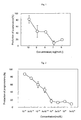
- Vertical axis represents% of pregnenolone production in the group treated with FGIN1-27 (1 nmol/L) and MBR antagonist (0.1 pmol/L to 1 ⁇ mol/L) simultaneously which is expressed taking that in DMSO treated group as 0% and that in FGIN1-27 (1 nmol/L) treated group as 100% (mean ⁇ standard errors in 3 experiments).
- Horizontal axis represents the concentrations of the compound.
- Pregnenolone content in hippocampus in vehicle-treated and stress-loaded group significantly increased compared with that in non-stressed group.
- the stress-stimulated increase in the pregnenolone content was inhibited in the compound (oral administration at doses from 3 to 30 mg/kg)-treated group. Significant effect was observed at 30 mg/kg (p ⁇ 0.01, t test).
- MBR antagonists whose structures are shown as (I) and (III) have anti-stress effects. So it is easily deduced that the compounds with the structures shown as (II), (IV) and (V) also have anti-stress effects.
- PK11195 and the compound with structure shown as (I) produced significant effects in water aversive stress model.
- Ro5-4864 Vehicle 3mg/kg, p.o. 10mg/kg, p.o. 30mg/kg, p.o.
- the toxicity of the compound of the present invention is very low and it is thought to be safe enough for pharmaceutical use.
- the compound of the present invention of formula (I) antagonize MBR, and it is thought that it is useful for the prophylaxis and/or treatment of those diseases induced, exacerbated or reignited by stress.
- Those diseases induced, exacerbated or reignited by stress include, digestive organ diseases (functional dyspepsia, gastric and duodenal ulcer, chronic ulcerative colitis, irritable bowel syndrome, biliary dyskinesia, esophagus spasm, gastric atony, aerophagia, chronic hepatitis, chronic pancreatitis, etc.
- circulatory organ disease primary hypertension, primaryhypotension, (nervous) angina pectoris, arrhythmia, orthostatic disturbance, myocardial infarction, arteriosclerosis, dizziness, etc .
- internal secretion and a metabolism diseases anorexia nervosa, bulimia, barter syndrome, cachexia exophthalmica, diabetes, psychogenic polydipsia, obesity, reflective hypoglycemia, etc .
- respiratory disease bronchial asthma, hyperventilation syndrome, larynx spasm, chronic obstructive pulmonary diseases, etc .
- nervous and muscular diseases migraine, tension-type headache, migrainous neuralgia, post-traumatic stress disorder, dissociative disorder, panic disorder, anxiety, depression, insomnia, nervous vomiting, nervous cough, neurosis, autonomic imbalance, reactive depression, psychogenic spasm, psychogenic faint spasm, maladjustment to job, burnout syndrome, chronic fatigue syndrome, writer's cramp, spasmodic tortic
- preferable is irritable bowel syndrome.
- the compound of formula (I) or non-toxic salt thereof may be administered in combination with other pharmaceutical preparations to accomplish the following purposes:
- the compound of formula (I) and other pharmaceutical preparations may be administered in the form of formulation having these components incorporated in one preparation or may be administered in separate preparations. In the case where these pharmaceutical preparations are administered in separate preparations, they may be administered simultaneously or at different times. In the latter case, the compound represented of formula (I) may be administered before the other pharmaceutical preparations. Alternatively, the other pharmaceutical preparations may be administered before the compound represented of formula (I). The method for the administration of these pharmaceutical preparations may be the same or different.
- the diseases on which the preventive and/or treatment effect of the aforementioned combined preparations works are not specifically limited but may be those for which the preventive and/or treatment effect of the compound represented by formula (I-1), (I-2) or (I-3) is compensated for and/or enhanced.
- Examples of the other pharmaceutical preparations for compensating for and/or enhancing the preventive and/or treatment effect of the compound of formula (I) on irritable bowel syndrome include antidepressant (benzodiazepine drugs, thienodiazepine drugs, non-benzodiazepinedrugs, etc .), antidepressant (monoamine liberating agent, monoamine oxidase inhibitor, monoamine reuptake inhibitor (SNRI, SSRI), dopamine (D2) antagonist, CRF antagonist, ⁇ 3 agonist, neurotensin antagonist, NK1 antagonist, tricyclic antidepressant, tetracyclic antidepressant, etc .), anticholinergic drugs, affinity polyacrylic resin, antidiarrheal drug, mucosal paralytic agent, bulk cathartic, saline purgative, fiber formulation, drug for controlling intestinal function, autonomic nervous system modulator, calcium blocker, phosphodiesterase inhibitor, serotonin antagonist (5-HT3 antagonist, 5-HT4 antagonist), serotonin
- Examples of the other pharmaceutical preparations for compensating for and/or enhancing the preventive and/or treatment effect of the compound of formula (I) on gastric and duodenal ulcer include, acid reducer, histamine (H2) receptor antagonist, proton-pump inhibitor, muscarine receptor antagonist, antiulcer drugs (defensive factor enhancer, anti-pepsin drugs, prostaglandin derivatives, mesalazine, salazosulfapyrizine, etc. ), anticholinergic drugs, gastric mucosa anesthetics, antidepressant, dopamine antagonist, etc .
- Examples of the other pharmaceutical preparations for compensating for and/or enhancing the preventive and/or treatment effect of the compound of formula (I) on ulcerative colitis include, mesalazine, salazosulfapyrizine, antiulcer drug, anticholinergic agent, steroid agent, 5-lipoxygenase inhibitor, antioxidant, LTB4 antagonist, local anesthetics, immunosuppressant, defensive factor enhancer, metalloprotease inhibitor, etc .
- Examples of the other pharmaceutical preparations for compensating for and/or enhancing the preventive and/or treatment effect of the compound of formula (I) on bilary dyskinesia include, cerulein, spasmolytic agents, COMT (catechol-O-methyl transferase) inhibitor, cholinergic agent, anticholinergic agent, anxiolytic drug, cholagogue, antidepressant, CCK-A antagonist, etc .
- Examples of the other pharmaceutical preparations for compensating for and/or enhancing the preventive and/or treatment effect of the compound of formula (I) on aerophagia include, drug for controlling intestinal function, anxiolytic drug, autonomic nerve modulator, fiber formulations, digestive enzyme formulation, gas absorption agent, intestinal tract motion promoter.
- Examples of the other pharmaceutical preparations for compensating for and/or enhancing the preventive and/or treatment effect of the compound of formula (I) on chronic hepatitis include, hepatic hydrolysate drugs, polyenephosphatidylcholine, glycyrrhizinate formulations, protoporphyrin disodium, ursodeoxycholic acid, steroid drugs, anticholinergic agents, antacidum, propagermanium, lipid peroxisome inhibitor, etc .
- Examples of the other pharmaceutical preparations for compensating for and/or enhancing the preventive and/or treatment effect of the compound of formula (I) on chronic pancreatitis include, protease inhibitor, gastric acid secretion suppressant,antispasmodicantispasmodic agents (COMT inhibitor, antiserotonin drug, etc .), non-steroidal anti-inflammatory drug, central analgesics, sedatives, digestive enzyme formulation, acid reducer, H2 receptor antagonist, antidepressant, gastric mucosa local anesthetic, digestive function modulator (CCK-A antagonist), etc .
- Examples of the other pharmaceutical preparations for compensating for and/or enhancing the preventive and/or treatment effect of the compound of formula (I) on throat spasms include, throat mobile function modulator, anxiolytic drug, autonomic nerve modulator, etc.
- Examples of the other pharmaceutical preparations for compensating for and/or enhancing the preventive and/or treatment effect of the compound of formula (I) on gastric atony include, digestive function promotor, digestive enzyme formulation, tranquilizers, etc .
- Examples of the other pharmaceutical preparations for compensating for and/or enhancing the preventive and/or treatment effect of the compound of formula (I) on functional dyspepsia include, acid reducer, H2 receptor antagonist, digestive function modulator, digestive function promoters, anxiolytic drug, tranquilizers, digestive enzyme formulation, proton pump inhibitor, muscarine receptor antagonist, anticholinergic agent, defensive factor enhancer, dopamine antagonist, etc .
- Anxiolytic drugs include, for example, diazepam, oxazolam, flutazolam, alprazolam, ethyl loflazepate, tofisopam, etc .
- Tricyclic antidepressants include, for example, amitriptyline, imipramine, clomipramine, nortriptyline, amoxapine, etc .
- Tetracyclic antidepressants include, for example, maprotiline, mianserin, etc .
- Acid reducers include, for example, sodium bicarbonate, magnesium oxide, dry aluminum hydroxide, aluminum silicate, etc.
- H2 receptor antagonist includes, for example, famotidine, lanitidine, cimetidine, etc .
- Proton pump inhibitors include, for example, omeprazole, etc .
- Muscarine receptor antagonists include, for example, pirenzepine hydrochloride, etc .
- Defensive factor enhancers include, for example, sucralfatc, aldioxa, tcprenonc, cetraxate hydrochloride, omoprostil, etc .
- Anti-pepsine drugs include, for example, sucralfate etc .
- Prostaglandin derivatives include, for example, omoprostil, misoprostol, etc .
- Anticholinergic drugs include, for example, mepenzolate bromide, ipratropium bromide, etc .
- Steroid drus include, for example, prednisolone, etc .
- Topical anesthetics include, for example, cocaine hydrochlonde, procaine hydrochloride, lidocaine, dibucaine hydrochloride, tetracaine hydrochloride, etc .
- Immunosuppresants include, for example, cyclosporin, tacrolimus, azathiopurine, etc .
- Autonomic nerve modulators include, for example, ⁇ -oryzanol, etc .
- Cholagogues include, for example, ursodesoxycholic acid, etc.
- Drugs which adjust the function of gastrointestinal tract include, for example, metoclopramide, domperidone, trimebutine maleate, etc .
- Drugs which assist the function of gastrointestinal tract include, for example, cisapride, bethanechol hydrochloride.
- the weight proportion of the compound of formula (I) and the other pharmaceutical preparations is not specifically limited.
- Examples of the other pharmaceutical preparations for compensating for and/or enhancing the preventive and/or treatment effect of the compound of formula (I) include not only those which have so far been found but also those which will be found on the basis of the aforementioned mechanism.
- the compounds of the present invention of formula (I), non-toxic salts, acid addition salts or hydrates thereof may normally be administered usually systemically or topically, orally or parenterally.
- the doses to be administered are determined depending upon, for example, age, body weight, symptom, the desired therapeutic effect, the route of administration, and the duration of the treatment.
- the doses per person are generally in the range of from 1 mg to 1000 mg, by oral administration, up to several times per day, and in the range of from 0.1 mg to 100 mg, by parenteral administration (preferably intravenous administration), up to several times per day, or continuous administration from 1 to 24 hours per day from vein.
- the doses to be used depend upon various conditions. Therefore, there are cases in which doses lower than or greater than the ranges specified above may be used.
- the compounds of the present invention may be administered in the form of, for example, solid forms for oral administration, liquid forms for oral administration, injections, liniments or suppositories for parenteral administration.
- Solid forms for oral administration include compressed tablets, pills, capsules, dispersible powders, and granules, etc .
- Capsules include hard capsules and soft capsules.
- one or more of the active compound(s) may be admixed with excipients (e.g. lactose, mannitol, glucose, microcrystalline cellulose, starch), binders (e.g. hydroxypropyl cellulose, polyvinylpyrrolidone or magnesium metasilicate aluminate), disintegrants (e.g. cellulose calcium glycolate), lubricants (e.g. magnesium stearate), stabilizing agents, and adjuvants to assist dissolution (e.g. glutamic acid, aspartic acid) and prepared according to methods well known to those skilled in the art.
- the solid forms may, if desired, be coated with coating agents (e.g. sugar, gelatin, hydroxypropyl cellulose or hydroxypropylmethyl cellulose phthalate), or be coated with two or more films. And further, coating may include containment within capsules of absorbable materials such as gelatin.
- Liquid forms for oral administration include pharmaceutically acceptable aqueous solutions, suspensions, emulsions, syrups and elixirs, etc.
- one or more of the active compound(s) may be dissolved, suspended or emulsified into diluent(s) commonly used in the art (e.g. purified water, ethanol or a mixture thereof).
- diluent(s) commonly used in the art (e.g. purified water, ethanol or a mixture thereof).
- Besides such liquid forms may also comprise wetting agents, suspending agents, emulsifying agents, sweetening agents, flavoring agents, aroma, preservative or buffering agent, etc .
- Sprays may comprise additional substances other than diluents, such as stabilizing agents (e.g. sodium bisulfite), isotonic buffers (e.g. sodium chloride, sodium citrate or citric acid).
- stabilizing agents e.g. sodium bisulfite
- isotonic buffers e.g. sodium chloride, sodium citrate or citric acid.
- injections for parenteral administration include sterile aqueous and/or inaqueous solutions, suspensions and emulsions.
- Aqueous solutions and suspensions include, for example, distilled water and physiological saline.
- Inaqueous solutions and suspensions include, for example, propylene glycol, polyethylene glycol, vegetable oils such as olive oil, alcohols such as ethanol,polysorbate 80 (registered trademark), etc .
- Sterile aqueous and inaqueous solutions, suspensions and emulsions may be mixed in use.
- compositions may further comprise some additives, such as antiseptic agents, wetting agents, emulsifying agents, dispersing agents, stabilizing agents (for example, lactose), solubilizing agents (e.g. glutamic acid, aspartic acid).
- additives such as antiseptic agents, wetting agents, emulsifying agents, dispersing agents, stabilizing agents (for example, lactose), solubilizing agents (e.g. glutamic acid, aspartic acid).
- additives such as antiseptic agents, wetting agents, emulsifying agents, dispersing agents, stabilizing agents (for example, lactose), solubilizing agents (e.g. glutamic acid, aspartic acid).
- stabilizing agents for example, lactose
- solubilizing agents e.g. glutamic acid, aspartic acid
- parenteral administration include liquids for external use, ointments and endermic liniments, inhalations, sprays, suppositories and pessaries for vaginal administration which comprise one or more of the active compound(s) and may be prepared by methods known per se.
- Sprays may comprise additional substances other than diluents, such as stabilizing agents (e.g. sodium sulfate), isotonic buffers (e.g. sodium chloride, sodium citrate or citric acid).
- stabilizing agents e.g. sodium sulfate
- isotonic buffers e.g. sodium chloride, sodium citrate or citric acid.
- the solvents in the parentheses show the developing or eluting solvents and the ratios of the solvents used are by volume in chromatographic separations and TLC.
- Example 2(104) To a solution of the compound prepared in Example 2(104) (342 mg) in methanol (5 ml)-tetrahydrofuran (5 ml) was added 2N hydrochloric acid (2 ml) and the mixture was stirred for 3 hour at 80°C. To the reaction mixture was added water, the precipitate was collected by filtration, dried and recrystallized by n-hexane-ethyl acetate, the compound of the present invention having the following physical data (249 mg) was given.
Landscapes
- Health & Medical Sciences (AREA)
- Chemical & Material Sciences (AREA)
- Organic Chemistry (AREA)
- Medicinal Chemistry (AREA)
- Pharmacology & Pharmacy (AREA)
- Veterinary Medicine (AREA)
- Public Health (AREA)
- General Health & Medical Sciences (AREA)
- Animal Behavior & Ethology (AREA)
- Life Sciences & Earth Sciences (AREA)
- General Chemical & Material Sciences (AREA)
- Engineering & Computer Science (AREA)
- Nuclear Medicine, Radiotherapy & Molecular Imaging (AREA)
- Chemical Kinetics & Catalysis (AREA)
- Bioinformatics & Cheminformatics (AREA)
- Epidemiology (AREA)
- Diabetes (AREA)
- Endocrinology (AREA)
- Neurology (AREA)
- Pain & Pain Management (AREA)
- Biomedical Technology (AREA)
- Neurosurgery (AREA)
- Reproductive Health (AREA)
- Immunology (AREA)
- Urology & Nephrology (AREA)
- Hematology (AREA)
- Pulmonology (AREA)
- Cardiology (AREA)
- Obesity (AREA)
- Physical Education & Sports Medicine (AREA)
- Heart & Thoracic Surgery (AREA)
- Gynecology & Obstetrics (AREA)
- Orthopedic Medicine & Surgery (AREA)
- Ophthalmology & Optometry (AREA)
- Rheumatology (AREA)
- Dermatology (AREA)
- Psychiatry (AREA)
- Pregnancy & Childbirth (AREA)
- Emergency Medicine (AREA)
- Vascular Medicine (AREA)
Abstract
A pharmaceutical composition for the prophylaxis and/or treatment of diseases
induced, exacerbated or reignited by stressors comprising the compound of formula (I)
 wherein all symbols have the same meanings as described in the specification, etc. as an active
ingredient.
wherein all symbols have the same meanings as described in the specification, etc. as an active
ingredient.
Description
The present invention relates to a pharmaceutical composition for the treatment of
diseases induced, exacerbated or reignited by stressors, which comprises a mitochondrial
benzodiazepine receptor antagonist as an active ingredient.
More specifically, the present invention relates to

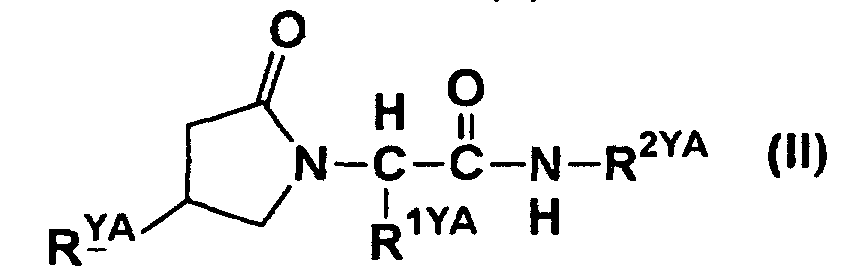


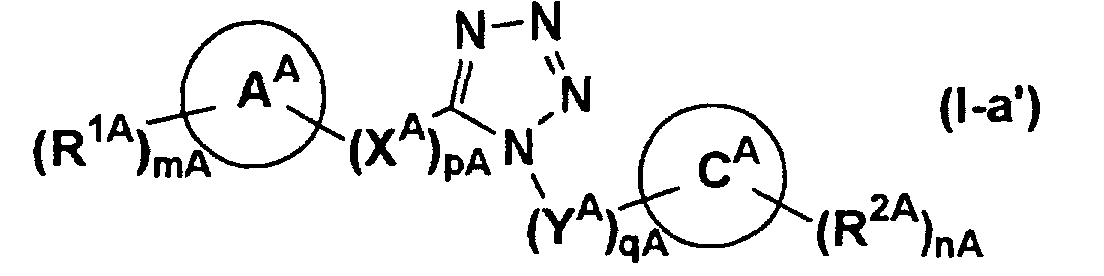
A mitochondrial benzodiazepine receptor (which may be abbreviated to MBR
hereafter) is identified in 1977 as a different receptor from the benzodiazepine binding cite which
exists in the GABAA receptor which benzodiazepine(s) bind (Science, 198, 849-851 (1977); Proc.
Natl. Acad. Sci., 89, 3805-3809 (1977)), Although its physiological function is not completely
revealed, it is reported that it participates in steroid synthesis, differentiation and proliferation of
cells, immunity functional regulation, etc. MBR exists in immunity system cells such as
erythrocyte, blood platelets, a single ball, and macrophages besides the adrenal cortex, heart, a
smooth muscle, kidneys, lungs, and a spermary, in a peripheral organization, while in a central
nervous system, it exists in choroid plexus, a pineal body, olfactory bulb, the cerebral cortex,
hippocampus, etc. It is known that the main expression cells in the central nervous system is a
neuroglia, and since the amount of expression increases accompanying nerve denaturation diseases,
such as Alzheimer's disease, cerebral ischemia, multiple sclerosis, and the Huntington disease, it is
used as a marker of gliosis.
It is reported that, exposed to chronic stressors, morphological changes are recognized
in hippocampus such as neurocyte death in CA3 region and atorophy of dendrite and that the glia
fiber acidic protein positive cells increases in number (Stress, 3, 275-284, 2000); it implies that
MBR is activated in glia cells when one is in the stress condition. MBR exists in the
mitochondrial outer mcmbrane, and cholesterol is conveyed to the mitochondria inner membrane
which is the activity cite of P-450scc from the inside the cells.
The steroid synthesized in a brain is called neurosteroid, the cholesterol which is a
steroid precursor is metabolized by side-chain cutting enzyme P-450scc, and the stage changed into
pregnenolone is the first phase of a steroid generation system. However, it is shown that that this
transportation process is the rate-determining step of the steroid generation system rather than the
metabolism by P-450scc. Therefore, if it is possible to adjust the function of MBR, it will be
possible to adjust the neurosteroid content in a brain. It is actually reported that diazepam binding
inhibiting protein (Diazepam binding inhibitor; which may be abbreviated to DBI hereafter), which
is identified as endogenic ligand to GABAA receptor benzodiazepine binding site and MBR,
promotes synthesis of pregnenolone in rat brain and mitochondria fraction derived from glioma cell.
It is shown that a DBI content increases in a hippocampus and that DBI concentration
in cerebrospinal fluid in a depression patient is rising when sound stressor is loaded on a rat-- it is
expected that the amount from neurosteroid of raw is increasing in a stress state, It is expected that
the amount of neurosteroid production is increasing in a stress state. As an experimental result
which supports it, it is reported that if stressor is loaded on a rat, such as compulsive swimming, a
foot shock, carbon dioxide exposure, and a restraint, various neuro-steroid contents increase within
a brain.
Neurosteroids adjust the functions of various receptors and ion channels positively or
negatively according to the kind. According to the kind, neurosteroid adjusts the function of
various receptors and ion channels to positive or negative. For example, pregnenolone sulfate and
dehydroepiandrosterone sulfate suppresses the GABAA receptor function, and progesterone
activates it. And, pregnenolone sulfate suppresses AMPA / kainate-type glutamate receptor
function, glycine receptor, voltage-dependent calcium channel function, but it activates NMDA-type
glutamate receptor function. It suppresses kainite-type glutamate-type receptor, glycine
receptor, charge-dependent calcium channel function, but it activates the function of NMDA type
glutamate receptor. And progestelone suppresses the function of acetylcholine receptor as well as
glycine receptor. Moreover, dehydroepiandrostelone sulfate activates the function of σreceptor,
while progestelone suppresses it in the contrary. Thus, since the amount of neurosteroid in a brain
changes in a stress state, activity of the nervous system currently variously adjusted by these
nervous systems because the balance of excitement nature and a control nature communication-of-information
system disrupts, an immunity system, and an internal secretion system also changes, it
is thought that various stress-related diseases are caused. Furthermore, considering that it is
reported that pregnenolone sulfate reinforces the NMDA induction cell death of a cultivation
hippocampus nerve cell and that it causes delayed cell death accompanied by DNA fragmentation
in retina nerve cells, it suggests a possibility that pregnenolone sulfate are participating also in the
denaturation of hippocampus CA3 field at stress state at least in part.
Thus, it is effective to inhibit the increase of production of neurosteroid which is
mediated by MBR which is overactivated by stressor loading and resume the balance of excitatory
or inhibitory information transmission to normal condition in order to treat stress-related diseases.
If MBR antagonist is provided for the purpose, it is expected it is extremely useful for the
prophylaxis or treatment of these diseases.
On the other hand, as tetrazole compounds which possess substituents in 1- and 5-positions,
the followings are known;
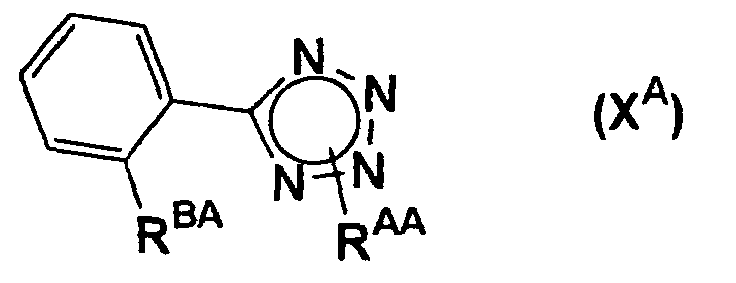


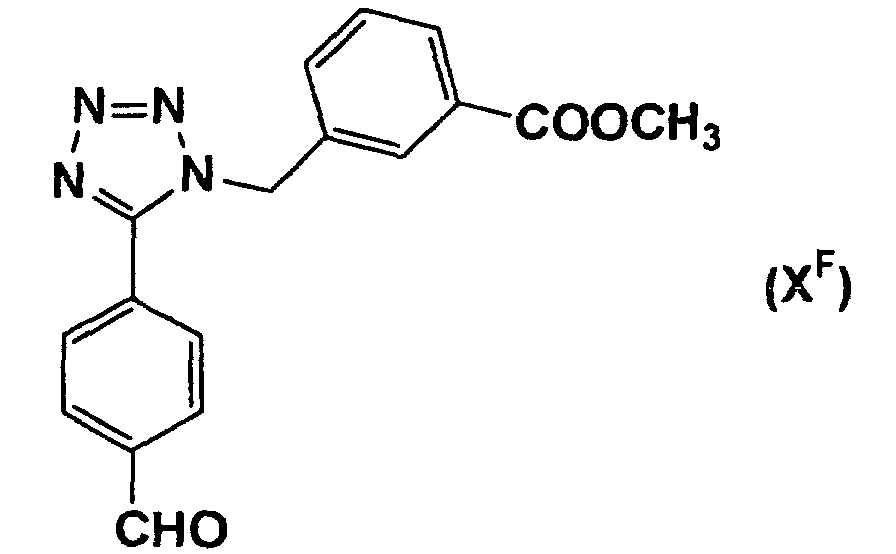
Furthermore, 1H-1,2,3,4-tetrazole derivatives which are substituted in its 1- or 5-position
are described in Russ., J. Org. Chem., 33(4), 524-531 (1997), Heterocycles, 40(2), 801-8
(1995), Khim-Geterotsikl. Soedin., 6, 851-3 (1984), Khim-Farm Zh., 20(5), 559-63 (1986),
Tetrahedron Lett., 36(10), 1679-82 (1995), Khim-Geterotsikl. Soedin, (8) 1060-3 (1993), J.C.S.
Perkin Trans I, (2), 323-7 (1991), Synlett., 7, 413-4 (1990), Tetrahedron Lett., 31(13), 1925-8
(1990), J. Am. Chem. Soc., 102(9), 2968-79 (1980), J. Org. Chem., 44(19), 3281-7 (1979), J. Med.
Chem., 13(4), 777-9 (1970) and so on.
However, it is not known so far that these tetrazole derivatives have MBR antagonist
activity or are useful for stress-related diseases.
And, concretely, the following tetrazole derivatives are known. The numbers
described after the substance names are, registry numbers in chemical abstracts (CAS).
On the other hand, the followings are known ligands which bind to MBR.
In WO98/14213. it is described that the compound of formula (II)
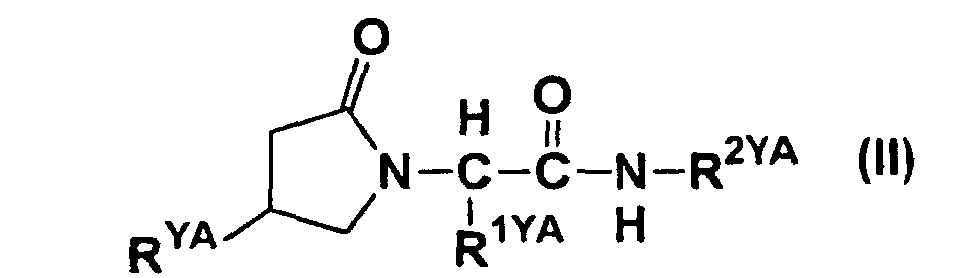 (wherein RE is hydrogen atom or hydroxy, R1E is hydrogen or methyl, R2E is pyridyl or
substituted phenyl which is substituted with 1-3 of the same or different substituent(s)) has a
stabilizing effect on mitochondria membrane and that it is useful for the diseases resulting from
mitochondria function disorders, and it acts on MBR as antagonist.
(wherein RE is hydrogen atom or hydroxy, R1E is hydrogen or methyl, R2E is pyridyl or
substituted phenyl which is substituted with 1-3 of the same or different substituent(s)) has a
stabilizing effect on mitochondria membrane and that it is useful for the diseases resulting from
mitochondria function disorders, and it acts on MBR as antagonist.
According to JP4-217682, it is known that the compound of formula (III)
 (wherein R1YB and R2YB are each independently straight or branched-chain alkyl
having 1-6 carbon atom(s), cycloalkyl having 3-7 carbon atoms, phenylalkyl which has 1-3 carbon
atom(s) in alkyl or alkyl substituted with cycloalkyl, or alkenyl having 3-6 carbon atoms or alkynyl
(wherein double bond or triple bond is not located in 1-2 position to nitrogen.),
(wherein R1YB and R2YB are each independently straight or branched-chain alkyl
having 1-6 carbon atom(s), cycloalkyl having 3-7 carbon atoms, phenylalkyl which has 1-3 carbon
atom(s) in alkyl or alkyl substituted with cycloalkyl, or alkenyl having 3-6 carbon atoms or alkynyl
(wherein double bond or triple bond is not located in 1-2 position to nitrogen.),
AYB and BYB are each independently N or CH,
X1YB and X2YB are each independently halogen, straight or branched-chain alkyl which has 1-3 of carbon, straight or branched-chain alkoxy which has 1-3 of carbon, nitro, or trifluoromethyl,
ArYB is phenyl, pyridyl, thienyl, or substituted phenyl (substituent on phenyl is 1 or 2 selected from a group consisting of, halogen, straight or branched-chain alkyl which has 1-4 of carbon atom, straight or branched-chain alkoxy which has 1-4 of carbon, straight or branched-chain alkylthio which has 1-4 of carbon, trifluoromethyl, and nitro.).) binds to MBR.
AYB and BYB are each independently N or CH,
X1YB and X2YB are each independently halogen, straight or branched-chain alkyl which has 1-3 of carbon, straight or branched-chain alkoxy which has 1-3 of carbon, nitro, or trifluoromethyl,
ArYB is phenyl, pyridyl, thienyl, or substituted phenyl (substituent on phenyl is 1 or 2 selected from a group consisting of, halogen, straight or branched-chain alkyl which has 1-4 of carbon atom, straight or branched-chain alkoxy which has 1-4 of carbon, straight or branched-chain alkylthio which has 1-4 of carbon, trifluoromethyl, and nitro.).) binds to MBR.
In JP kokoku hei 3-24467, it is described that the compound of formula (IV)
 (wherein R1YC is unsubstituted phenyl, or substituted phenyl (substituent on phenyl is
1-2 selected from halogen, straight or branched-chain alkyl having 1-6 of carbon, straight or
branched-chain alkoxy having 1-6 of carbon.), or thienyl,
(wherein R1YC is unsubstituted phenyl, or substituted phenyl (substituent on phenyl is
1-2 selected from halogen, straight or branched-chain alkyl having 1-6 of carbon, straight or
branched-chain alkoxy having 1-6 of carbon.), or thienyl,
R2YC is hydrogen or halogen, optionally substituted straight or branched-chain alkyl having 1-6 of carbon (substituent is selected from amino, alkylamino, and dialkylamino.),
R3YC is a group represented by (R4YC)(R5YC)N-CO-QYC (wherein QYC is straight or branched-chain alkylene having 1-6 of carbon, R4YC and R5YC are each independently straight or branched-chain alkyl which has 1-6 of carbon, unsubstituted phenyl, or substituted phenyl (phenyl is substituted with 1-2 selected from halogen, straight or branched-chain alkyl having 1-6 of carbon, and straight or branched-chain alkoxy having 1-6 of carbon atom),
XYC is hydrogen atom or halogen,
YYC is oxygen atom or sulfur atom.) binds to MBR.
R2YC is hydrogen or halogen, optionally substituted straight or branched-chain alkyl having 1-6 of carbon (substituent is selected from amino, alkylamino, and dialkylamino.),
R3YC is a group represented by (R4YC)(R5YC)N-CO-QYC (wherein QYC is straight or branched-chain alkylene having 1-6 of carbon, R4YC and R5YC are each independently straight or branched-chain alkyl which has 1-6 of carbon, unsubstituted phenyl, or substituted phenyl (phenyl is substituted with 1-2 selected from halogen, straight or branched-chain alkyl having 1-6 of carbon, and straight or branched-chain alkoxy having 1-6 of carbon atom),
XYC is hydrogen atom or halogen,
YYC is oxygen atom or sulfur atom.) binds to MBR.
In EP210084, it is described that the compound of formula (V)
 (wherein AYD and BYD are each independently N or CH,
VYD and WYD are, each independently hydrogen, halogen, C1-3 alkyl, C1-3 alkoxy, nitro or trifluoromethyl,
ZYD is phenyl, thienyl or pyridyl, and above phenyl is unsubstituted or substituted with 1-2 of halogen, C1-4 alkyl, C1-4 alkoxy, trifluoromethyl and nitro, ZYD is located ortho or para to BYD,
side chain -XYD-(CH2)nYD-(CHRYD)mYD-CONR1YDR2YD is located ortho or para to BYD, RYD is hydrogen or C1-3 alkyl,
R1YD and R2YD are each independently C1-6 alkyl, C3-6 cycloalkyl, phenyl, phenyl-C1-3 alkyl, C3-6 cycloalkyl-C1-3 alkyl or C3-6 alkenyl (with proviso that, double bond in alkenyl is not located in 1,2-position to N atom.), or
NR1YDR2YD is pyrrolidino, piperidino, morpholino or thiomorpholino,
XYD is CHR3YD, NR4YD, SO, SO2, O or S,
R3YD is hydrogen or C1-3 alkyl,
R4YD is C1-3 alkyl,
mYD is 0 or 1,
nYD is 0 or 1-2
(with proviso that,
VYD and WYD are, each independently hydrogen, halogen, C1-3 alkyl, C1-3 alkoxy, nitro or trifluoromethyl,
ZYD is phenyl, thienyl or pyridyl, and above phenyl is unsubstituted or substituted with 1-2 of halogen, C1-4 alkyl, C1-4 alkoxy, trifluoromethyl and nitro, ZYD is located ortho or para to BYD,
side chain -XYD-(CH2)nYD-(CHRYD)mYD-CONR1YDR2YD is located ortho or para to BYD, RYD is hydrogen or C1-3 alkyl,
R1YD and R2YD are each independently C1-6 alkyl, C3-6 cycloalkyl, phenyl, phenyl-C1-3 alkyl, C3-6 cycloalkyl-C1-3 alkyl or C3-6 alkenyl (with proviso that, double bond in alkenyl is not located in 1,2-position to N atom.), or
NR1YDR2YD is pyrrolidino, piperidino, morpholino or thiomorpholino,
XYD is CHR3YD, NR4YD, SO, SO2, O or S,
R3YD is hydrogen or C1-3 alkyl,
R4YD is C1-3 alkyl,
mYD is 0 or 1,
nYD is 0 or 1-2
(with proviso that,
In the specification of WO 99/28320, it is described that the compound of formula
(VI)
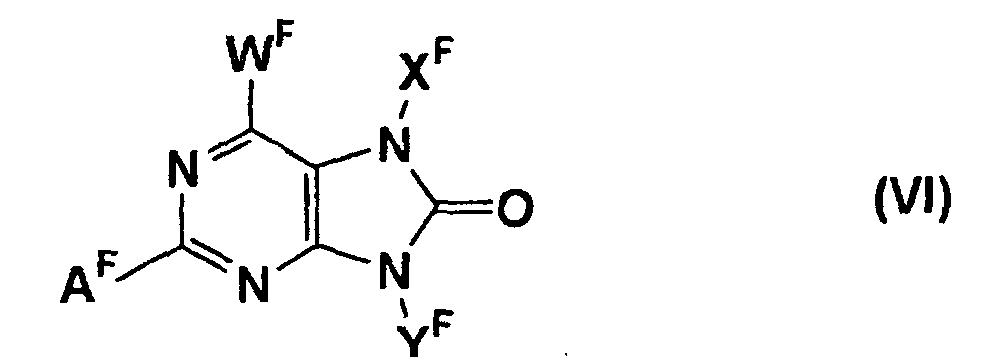 acts on peripheral BZω3 receptor selectively, and is useful for the treatment of central nervous
system diseases such as anxiety-related diseases (neuropathy, psychosomatic disorder, anxiety
disorder, etc.), depression, epilepsy, circulatory system diseases such as angina pectoris,
hypertension, etc.
acts on peripheral BZω3 receptor selectively, and is useful for the treatment of central nervous
system diseases such as anxiety-related diseases (neuropathy, psychosomatic disorder, anxiety
disorder, etc.), depression, epilepsy, circulatory system diseases such as angina pectoris,
hypertension, etc.
However, in the above specification, no implication is suggested about the relationship
between MBR antagonist and diseases induced by stress and no experimental proof was carried out.
Furthermore, as a result of the experiment which the present inventors tried on the compound
described in above WO 99/28320 (The compound of Example 146; N-benzyl-N-ethyl-2-(7-methyl-8-oxo-2-phenyl-7,8-dihydro-9H-purin-9-yl)acetamide),
the compound proved to be MBR
antagonist and it did not show an effect on stress loaded model of example 5.
As a result of energetic investigation of the present inventors, the present inventors
have found out that MBR antagonist, not MBR agonist, is useful for diseases induced, exacerbated
or reignited by stressors and that the compound of formula (I) relieves stress as MBR antagonist, to
complete the present invention.
The present invention relates to a pharmaceutical composition of diseases for the
prophylaxis and/or treatment of diseases induced, exacerbated or reignited by stressor comprising
an MBR antagonist.
More particularly, the present invention relates to an agent for the prophylaxis and/or
treatment of diseases induced, exacerbated or reignited by stressors, which comprises an MBR
antagonist characterized by inhibiting neurosteroid production.
The present invention relates to,

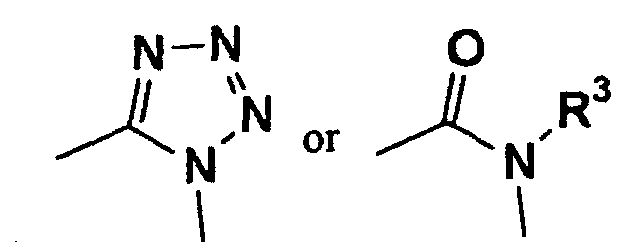
X and Y are each independently -CH2-, -O- or -CHR4- (wherein R4 is C1-4 alkyl, or taken together with R1 or R2, represents C2-5 alkylene),
p and q are each independently 0 or an integer of 1-2 (wherein p and q do not represent 0 at the same time.),
R1 and R2 are each independently
- 1) hydrogen,
- 2) C1-8 alkyl which may be substituted with 1-5 group(s) selected from halogen, OR9, SR9, NR10R11, nitro, cyano, COR12, and 3-10 membered carboring or heteroring (the ring may be substituted with 1-5 group(s) selected from halogen, OR9, SR9, NR10R11, nitro, cyano, COR12, phenyl, and C1-8 alkyl (the alkyl may be substituted with 1-5 group(s) selected from halogen, OR9, SR9, NR10R11, nitro, cyano, COR12, and phenyl.).),
- 3) 3-10 membered carboring or heteroring which may be substituted with 1-5 group(s) selected from C1-8 alkyl (the alkyl may be substituted with 1-5 group(s) selected from halogen, OR9, SR9, NR10R11, nitro, cyano, COR12, and phenyl.), halogen, OR9, SR9, NR10R11, nitro, cyano, COR12, and 3-10 membered carboring or heteroring (the ring may be substituted with 1-5 group(s) selected from, halogen, OR9, SR9, NR10R11, nitro, cyano, COR12, phenyl, and C1-8 alkyl.), or
- 4) COR13 (R13 is C1-8 alkyl (the alkyl may be substituted with 1-5 group(s) selected from halogen, OR9, SR9, NR10R11, nitro, cyano, COR12, and phenyl.) or 3-10 membered carboring or heteroring (the ring may be substituted with 1-5 group(s) selected from halogen, OR9, SR9, NR10R11, nitro, cyano, COR12, phenyl, and C1-8 alkyl.).),
- 1) hydrogen,
- 2) C2-8 acyl may be substituted with 1-5 group(s) selected from halogen, OR9, SR9, NR10R11, nitro, cyano, COR12, and 3-10 membered carboring or heteroring (the ring may be substituted with 1-5 group(s) selected from halogen, OR9, SR9, NR10R11, nitro, cyano, COR12, and 3-10 membered carboring or heteroring (the ring may be substituted with 1-5 group(s) selected from, halogen, OR9, SR9, NR10R11, nitro, cyano, COR12, and C1-8 alkyl (the alkyl may be substituted with 1-5 group(s) selected from halogen, OR9, SR9, NR10R11, nitro, cyano, COR12, and phenyl.).).),
- 3) COOR12,
- 4) CONR10R11,
- 5) 3-10 membered carboring which may substituted with 1-5 group(s) selected from C1-8 alkyl (the alkyl may be substituted with 1-5 group(s) selected from halogen, OR9, SR9, NR10R11, nitro, cyano, COR12 and phenyl.), halogen, OR9, SR9, NR10R11, nitro, cyano, COR12, and 3-10 membered carboring or heteroring (the ring may be substituted with 1-5 group(s) selected from, halogen, OR9, SR9, NR10R11, nitro, cyano, COR12, and C1-8 alkyl (the alkyl may be substituted with 1-5 group(s) selected from halogen, OR9, SR9, NR10R11, nitro, cyano, and COR12.).) or
- 6) C1-8 alkyl which may be substituted with 1-5 group(s) selected from halogen, OR9, SR9, NR10R11, nitro, cyano, COR12, and 3-10 membered carboring or heteroring (the ring may be substituted with 1-5 group(s) selected from halogen, OR9, SR9, NR10R11, nitro, cyano, COR12, and C1-8 alkyl (the alkyl may be substituted with 1-5 group(s) selected from halogen, OR9, SR9, NR10R11, nitro, cyano, and COR12.).),
- 1) hydrogen,
- 2) OR9,
- 3) NR10R11,
- 4) 3-10 membered carboring or heteroring which may be substituted with 1-5 group(s) selected from halogen, OR9, SR9, NR10R11, nitro, cyano, COR12, phenyl, C1-8 alkyl (the alkyl may be substituted with 1-5 group(s) selected from halogen, OR9, SR9, NR10R11, nitro, cyano, COR12, and phenyl.), and 3-10 membered carboring or heteroring (the ring may be substituted with 1-5 group(s) selected from halogen, OR9, SR9, NR10R11, nitro, cyano, COR12, C1-8 alkyl, and phenyl.), or
- 5) C1-8 alkyl which may be substituted with 1-5 group(s) selected from halogen, OR9, SR9, NR10R11, nitro, cyano, COR12, and 3-10 membered carboring or heteroring (the ring may be substituted with 1-5 group(s) selected from halogen, OR9, SR9, NR10R11, nitro, cyano, COR12, and C1-8 alkyl (the alkyl may be substituted with 1-5 group(s) selected from halogen, OR9, SR9, NR10R11, nitro, cyano, COR12, and phenyl.).)
R10 and R11 are each independently hydrogen atom, C1-8 alkyl or phenyl,
R12 is hydrogen atom, phenyl, C1-8 alkyl optionally substituted with phenyl, or C1-8 alkoxy optionally substituted with phenyl.).),
m and n are each independently 0 or 1-5.] and
a non-toxic salt thereof and

R1YA is hydrogen or methyl,
R2YA is pyridyl or phenyl substituted with 1-3 of the same or different substituent(s),
the substituents on phenyl are selected from halogen, trifluoromethyl, nitro, acetyl, straight or branched-chain alkyl having 1-4 carbon atom(s), straight or branched-chain alkoxy having 1-4 carbon atom(s), straight or branched-chain alkylmercapto having 1-7 carbon atom(s), substituted alkylmercapto of formula: -S-(CH2)nYA-CH(R3YA)(R4YA) (wherein nYA is 1 or 2, R3YA is hydrogen or methyl, R4YA is hydroxy or substituted amino of formula: -NR8YAR9YA (wherein R8YA is hydrogen or methyl, R9YA is methyl, benzyl, or substituted benzyl, or R8YA and R9YA are taken together to form substituted pyrrolidine ring with the nitrogen atom in the formula.).), sulfonyl of formula: -SO2R5YA (wherein R5YA is amino or alkyl having 1-3 carbon atom(s).), and aminoethoxycarbonyl of formula: -COO(CH2)2-NR6YAR7YA (wherein R6YA and R7YA are each independently hydrogen atom, methyl, or ethyl.).) as an active ingredient,

AYB and BYB are each independently N or CH,
X1YB and X2YB are each independently halogen, straight or branched-chain alkyl which has 1-3 of carbon atom, straight or branched-chain alkoxy which has 1-3 of carbon atom(s), nitro, or trifluoromethyl, ArYB is phenyl, pyridyl, thienyl, or substituted phenyl (substituent on phenyl is 1 or 2 selected from a group consisting of, halogen, straight or branched-chain alkyl which has 1-4 of carbon atom(s), straight or branched-chain alkoxy which has 1-4 of carbon atom(s), straight or branched-chain alkylthio which has 1-4 of carbon atom(s), trifluoromethyl, and nitro.).) as an active ingredient,
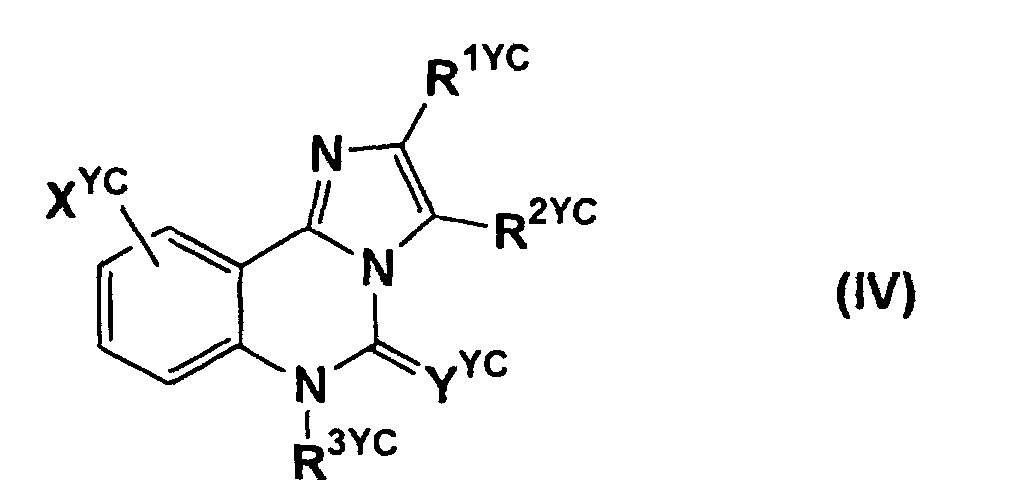
R2YC is hydrogen atom or halogen, optionally substituted straight or branched-chain alkyl having C1-6 (substituent is selected from amino, alkylamino, and dialkylamino.),
R3YC is a group of formula (R4YC)(R5YC)N-CO-QYC (wherein QYC is straight or branched-chain alkylene having C1-6, R4YC and R5YC are each independently straight or branched-chain alkyl having C1-6, unsubstituted phenyl, or substituted phenyl (substituents on phenyl are 1 or 2 selected from halogen, straight or branched-chain alkyl having C1-6, and straight or branched-chain alkoxy having C1-6.),
XYC is hydrogen or halogen,
YYC is oxygen or sulfur.) as an active ingredient,

VYD and WYD are, each independently hydrogen, halogen, C1-3 alkyl, C1-3 alkoxy, nitro or trifluoromethyl,
ZYD is phenyl, thienyl or pyridyl, above phenyl is unsubstituted or substituted with 1-2 substituent(s) selected from halogen, C1-4 alkyl, C1-4 alkoxy, trifluoromethyl, and nitro, ZYD is located to ortho- or para-position to BYD,
side chain -XYD-(CH2)nYD-(CHRYD)mYD-CONR1YDR2YD is located to ortho- or para- to BYD,
RYD is hydrogen or C 1-3 alkyl,
R1YD, R2YD is each independently C1-6 alkyl, C3-6 cycloalkyl, phenyl, phenyl-C1-3 alkyl, C3-6 cycloalkyl-C1-3 alkyl or C3-6 alkenyl (wherein the double bond in alkenyl is not located in the 1,2-position to N atom.), or
NR1YDR2YD is pyrrolidino, piperidino, morpholino or thiomorpholino,
XYD is CHR3YD, NR4YD, SO, SO2, O or S,
R3YD is hydrogen or C1-3 alkyl,
R4YD is C1-3 alkyl,
mYD is 0 or 1,
nYD is 0 or 1-2
(wherein (1) when XYD is SO, SO2 or NR4YD, mYD+nYD is 1 or more,
- (2) when both AYD and BYD are N and ZYD is para to BYD, XYD is not CHR3YD,
- (3) when AYD is CH, BYD is N, ZYD is ortho to BYD, XYD is O and RYD is hydrogen, mYD+nYD is not 1,
- (4) 2-phenylquinolin-4-yl-N,N'-dimethylcarbamate is excluded.)), its racemate or optical
isomer, or a non-toxic salt thereof as an active ingredient
And the present invention further relates to a compound of formula (I-a')(wherein AA and CA are each independently 5-10 membered carboring or heteroring,
pA and qA are each independently 0 or an integer of 1-2 (wherein pA and qA do not form 0 at the same time.),
R1A and R2A are each independently
- 1) halogen,
- 2) OR5A,
- 3) SR5A,
- 4) NR6AR7A,
- 5) nitro,
- 6) cyano,
- 7) COR8A,
- 8) 3-10 membered carboring or heteroring which may be substituted with 1-5 group(s) selected from C1-8 alkyl (the alkyl may be substituted with 1-5 group(s) selected from halogen, OR5A, SR5A, NR6AR7A, nitro, cyano, COR8A, and phenyl.), halogen, OR5A, SR5A, NR6AR7A, nitro, cyano, COR8A, and 5-10 membered carboring or heteroring (the ring may be substituted with 1-5 group(s) selected from halogen, OR5A, SR5A, NR6AR7A, nitro, cyano, COR8A, phenyl, and C1-8 alkyl.), or
- 9) C1-8 alkyl which may be substituted with 1-5 group(s) selected from halogen, OR5A, SR5A, NR6AR7A, nitro, cyano, COR8A, and 5-10 membered carboring or heteroring (the ring may be substituted with 1-5 group(s) selected from halogen, OR9A, SR9A, NR10AR11A, nitro, cyano, COR12A, and C1-8 alkyl (the alkyl may be substituted with 1-5 group(s) selected, halogen, OR5A, SR5A, NR6AR7A, nitro, cyano, COR8A, and phenyl.).),
- 1) hydrogen,
- 2) C1-8 alkyl substituted with 1-5 group(s) selected from halogen, OR9A, SR9A, NR10AR11A, nitro, cyano, COR12A, and 3-10 membered carboring or heteroring (the ring may be substituted with 1-5 group(s) selected from halogen, OR9A, SR9A, NR10AR11A, nitro, cyano, COR12A, phenyl, and C1-8 alkyl (the alkyl may be substituted with 1-5 group(s) selected from halogen, OR9A, SR9A, NR10AR11A, nitro, cyano, COR12A, and phenyl.).),
- 3) 3-10 membered carboring or heteroring which may be substituted with 1-5 group(s) selected from C1-8 alkyl (the alkyl may be substituted with 1-5 group(s) selected from halogen, OR9A, SR9A, NR10AR11A, nitro, cyano, COR12A and phenyl.), halogen, OR9A, SR9A, NR10AR11A, nitro, cyano, COR12A, and 3-10 membered carboring or heteroring (the ring may be substituted with 1-5 group(s) selected from halogen, OR9A, SR9A, NR10AR11A, nitro, cyano, COR12A, phenyl, and C1-8 alkyl), or
- 4) COR13A (R13A is C1-8 alkyl (the alkyl may be substituted with 1-5 group(s) selected from halogen, OR9A, SR9A, NR10AR11A, nitro, cyano, COR12A, and phenyl.) or 3-10 membered carboring or heteroring (the ring may be substituted with 1-5 group(s) selected from halogen, OR9A, SR9A, NR10AR11A, nitro, cyano, COR12A, phenyl, and C1-8 alkyl.).),
- 1) hydrogen,
- 2) C2-8 acyl which may be substituted with 1-5 group(s) selected from halogen, OR9A, SR9A, NR10AR11A, nitro, cyano, COR12A, and 3-10 membered carboring or heteroring (the ring may be substituted with 1-5 group(s) selected from halogen, OR9A, SR9A, NR10AR11A, nitro, cyano, COR12A, and 3-10 membered carboring or heteroring (the ring may be substituted with 1-5 group(s) selected from halogen, OR9A, SR9A, NR10AR11A, nitro, cyano, COR12A and C1-8 alkyl (the alkyl may be substituted with 1-5 group(s) selected from halogen, OR9A, SR9A, NR10AR11A, nitro, cyano, COR12A, and phenyl.).).),
- 3) COOR12A,
- 4) CONR10AR11A,
- 5) 3-10 membered carboring or heteroring which may be substituted with 1-5 group(s) selected from C1-8 alkyl (the alkyl may be substituted with 1-5 group(s) selected from halogen, OR9A, SR9A, NR10AR11A, nitro, cyano, COR12A, and phenyl.), halogen, OR9A, SR9A, NR10AR11A, nitro, cyano, COR12A, and 3-10 membered carboring or heteroring (the ring may be substituted with 1-5 group(s) selected from halogen, OR9A, SR9A, NR10AR11A, nitro, cyano, COR12A and C1-8 alkyl (the alkyl may be substituted with 1-5 group(s) selected from halogen, OR9A, SR9A, NR10AR11A, nitro, cyano, and COR12A.).) or
- 6) C1-8 alkyl which may be substituted with 1-5 group(s) selected from halogen, OR9A, SR9A, NR10AR11A, nitro, cyano, COR12A, and 3-10 membered carboring or heteroring (the ring may be substituted with 1-5 group(s) selected from halogen, OR9A, SR9A, NR10AR11A, nitro, cyano, COR12A, and C1-8 alkyl (the alkyl may be substituted with 1-5 group(s) selected from halogen, OR9A, SR9A, NR10AR11A, nitro, cyano, and COR12A.).),
- 1) hydrogen,
- 2) OR9A,
- 3) NR10AR11A,
- 4) 3-10 membered carboring or heteroring which may be substituted with 1-5 group(s) selected from halogen, OR9A, SR9A, NR10AR11A, nitro, cyano, COR12A, phenyl, C1-8 alkyl (the alkyl may be substituted with 1-5 group(s) selected from halogen, OR9A, SR9A, NR10AR11A, nitro, cyano, COR12A, and phenyl.), and 3-10 membered carboring or heteroring (the ring may be substituted with 1-5 group(s) selected from halogen, OR9A, SR9A, NR10AR11A, nitro, cyano, COR12A, C1-8 alkyl, and phenyl.) or
- 5) C1-8 alkyl which may be substituted with 1-5 group(s) selected from halogen, OR9A, SR9A, NR10AR11A, nitro, cyano, COR12A, and 3-10 membered carboring or heteroring (the ring may be substituted with 1-5 group(s) selected from halogen, OR9A, SR9A, NR10AR11A, nitro, cyano, COR12A, and C1-8 alkyl (the alkyl may be substituted with 1-5 group(s) selected from halogen, OR9A, SR9A, NR10AR11A, nitro, cyano, COR12A, and phenyl.).),
R10A and R11A are each independently hydrogen, C1-8 alkyl or phenyl,
R12A is hydrogen, phenyl, C1-8 alkyl which may be substituted with phenyl, or C1-3 alkoxy which may be substituted with phenyl,
mA and nA are each independently 0 or an integer of 1-5;
wherein the compounds of following (1)-(73) are excluded;
- (1) 5-(4-chlorophenyl)-1-(3-chlorobenzyl)-1H-1,2,3,4-tetrazole,
- (2) 5-(4-chlorophenyl)-1-(3-trifluoromethylbenzyl)-1H-1,2,3,4-tetrazole,
- (3) 5-(3-chlorophenyl)-1-(3-chlorobenzyl)-1H-1,2,3,4-tetrazole,
- (4) 5-(3-chlorophenyl)-1-(3-trifluoromethylbenzyl)-1H-1,2,3,4-tetrazole,
- (5) 5-(3-trifluoromethylphenyl)-1-(3-chlorobenzyl)-1H-1,2,3,4-tetrazole,
- (6) 5-(3,5-dichlorophenyl)-1-(3-chlorobenzyl)-1H-1,2,3,4-tetrazole,
- (7) 5-(3-trifluoromethylphenyl)-1-(3-trifluoromethylbenzyl)-1H-1,2,3,4-tetrazole,
- (8) 5-(3,5-dichlorophenyl)-1-(3-trifluoromethylbenzyl)-1H-1,2,3,4-tetrazole,
- (9) 5-(4-bromophenyl)-1-benzyl-1H-1,2,3,4-tetrazole,
- (10) 5-(4-pyridyl)-1-(2,5-dimethyl-4-hydroxybenzyl)-1H-1,2,3,4-tetrazole,
- (11) 5-(4-bromophenyl)-1-(2,5-dimethyl-4-hydroxybenzyl)-1H-1,2,3,4-tetrazole
- (12) 5-phenyl-1-(5-formyl-2-hydroxy-3-methoxybenzyl)-1H-1,2,3,4-tetrazole,
- (13) 5-(3,4-dimethoxyphenyl)-1-(5-formyl-2-hydroxy-3-methoxybenzyl)-1H-1,2,3,4-tetrazole,
- (14) 5-(4-bromophenyl)-1-(3,5-dimethyl-4-hydroxybenzyl)-1H-1,2,3,4-tetrazole,
- (15) 5-(4-pyridyl)-1-(3,5-dimethyl-4-hydroxybenzyl)-1H-1,2,3,4-tetrazole,
- (16) 5-cyclohexyl-1-cyclohexylmethyl-1H-1,2,3,4-tetrazole,
- (17) 5-(4-nitrobenzyl)-1-phenyl-1H-1,2,3,4-tetrazole,
- (18) 5-(4-aminobenzyl)-1-phenyl-1H-1,2,3,4-tetrazole,
- (19) 5-(4-dimethylaminocarbonylaminobenzyl)-1-phenyl-1H-1,2,3,4-tetrazole,
- (20) 5-[2-(4-methylphenyl)phenyl]-1-(4-nitrobenzyl)-1H-1,2,3,4-tetrazole,
- (21) 5-phenyl-1-(4-methylbenzyl)-1H-1,2,3,4-tetrazole,
- (22) 5-[4-(4-chlorophenylhydroxymethyl)phenyl]-1-(4-fluorobenzyl)-1H-1,2,3,4-tetrazole,
- (23) 5-[4-(4-chlorobenzoyl)phenyl]-1-(4-fluorobenzyl)-1H-1,2,3,4-tetrazole,
- (24) 1-benzyl-5-(5-nitrofuran-2-yl)-1H-1,2,3,4-tetrazole,
- (25) 1-benzyl-5-[2-(4-bromomethylphenyl)phenyl]-1H-1,2,3,4-tetrazole,
- (26) -1-(3,5-dimethyl-4-hydroxybenzyl)-5-(4-pyridyl)1H-1,2,3,4-tetrazole,
- (27) 1-(3,5-dimethyl-4-hydroxybenzyl)-5-(4-nitrophenyl)-1H-1,2,3,4-tetrazole,
- (28) 5-(4-chlorophenyl)-1-(3,5-dimethyl-4-hydroxybenzyl)-1H-1,2,3,4-tetrazole,
- (29) 1-benzyl-5-(4-methylphenyl)-1H-1,2,3,4-tetrazole,
- (30) 1-benzyl-5-(4-fluorophenyl)-1H-1,2,3,4-tetrazole,
- (31) 1-benzyl-5-(4-methoxyphenyl)-1H-1,2,3,4-tetrazole,
- (32) 1-benzyl-5-(2-methoxyphenyl)-1H-1,2,3,4-tetrazole,
- (33) 1-benzyl-5-(4-benzyloxymethylphenyl)-1H-1,2,3,4-tetrazole,
- (34) 1-benzyl-5-(2-(4-methylphenyl)phenyl)-1H-1,2,3,4-tetrazole,
- (35) 5-(2-chlorophenyl)-1-(4-methoxybenzyl)-1H-1,2,3,4-tetrazole,
- (36) 1-benzyl-5-(2-chlorophenyl)-1H-1,2,3,4-tetrazole,
- (37) 1-(3,5-dimethyl-4-hydroxybenzyl)-5-phenyl-1H-1,2,3,4-tetrazole,
- (38) 1-(4-bromobenzyl)-5-(3-cyanophenyl)-1H-1,2,3,4-tetrazole,
- (39) 5-(3-cyanophenyl)-1-[4-(2-trifluoromethylphenyl)benzyl]-1H-1,2,3,4-tetrazole,
- (40) 5-(5-bromofuran-2-yl)-1-(4-methoxybenzyl)-1H-1,2,3,4-tetrazole,
- (41) 5-(6-bromopyridin-2-yl)-1-(4-methoxybenzyl)-1H-1,2,3,4-tetrazole,
- (42) 5-(6-iodopyridin-2-yl)-1-(4-methoxybenzyl)-1H-1,2,3,4-tetrazole,
- (43) 5-(3-ethoxycarbonylmethyloxy-5-iodophenyl)-1-(4-methoxybenzyl)-1H-1,2,3,4-tetrazole,
- (44) 5-(3-iodo-2-isopropyloxyphenyl)-1-(4-methoxybenzyl)-1H-1,2,3,4-tetrazolc,
- (45) 5-(4-formylphenyl)-1-(3-methoxycarbonylbenzyl)-1H-1,2,3,4-tetrazole,
- (46) 5-(2-aminophenyl)-1-benzyl-1H-1,2,3,4-tetrazole,
- (47) 5-(2-acetylaminophenyl)-1-benzyl-1H-1,2,3,4-tetrazole,
- (48) 5-phenyl-1-benzyl-1H-1,2,3,4-tetrazole,
- (49) 5-benzyl-1-(4-mercaptophenyl)-1H-1,2,3,4-tetrazole,
- (50) 5-benzyl-1-phenyl-1H-1,2,3,4-tetrazole,
- (51) 5-benzyl-1-(3,5-dimethyl-4-hydroxybenzyl)-1H-1,2,3,4-tetrazole,
- (52) 1-benzyl-5-benzyl-1H-1,2,3,4-tetrazole,
- (53) 5-phenyl-1-[2-(2-pyridyl)ethyl]-1H-1,2,3,4-tetrazole,
- (54) 5-(2,4-dimethoxy-5-ethylphenethyl)-1-benzyl-1H-1,2,3,4-tetrazole,
- (55) 5-(2,4-diethoxy-5-ethylphenethyl)-1-benzyl-1H-1,2,3,4-tetrazole,
- (56) 5-(2,4-diethoxy-5-ethylphenethyl)-1-phenethyl-1H-1,2,3,4-tetrazole,
- (57) 5-(2,4-dimethoxy-5-ethylphenethyl)-1-phenethyl-1H-1,2,3,4-tetrazole,
- (58) 5-benzyl-1-N,N-diisopropylaminocarbonylbenzyl-1H-1,2,3,4-tetrazole,
- (59) 5-[4-(4-acetyl-3-hydroxy-2-propylphenyloxy)phenyl]-1-(4-cyanobenzyl)-1H-1,2,3,4-tetrazole,
- (60) 5-benzyl-1-(4-amino-2,5-dimethoxyphenyl)-1H-1,2,3,4-tetrazole,
- (61) 5-(2-aminophenyl)-1-benzyl-1H-1,2,3,4-tetrazole,
- (62) 5-(4-t-butylcarbonyloxyphenyl)-1-(4-aminomethylbenzyl)-1H-1,2,3,4-tetrazole,
- (63) 5-(4-t-butylcarbonyloxyphenyl)-1-(4-isopropylbenzyl)-1H-1,2,3,4-tetrazole,
- (64) 5-(4-t-butylcarbonyloxyphenyl)-1-(4-dimethylaminobenzyl)-1H-1,2,3,4-tetrazole,
- (65) 5-(4-t-butylcarbonyloxyphenyl)-1-(4-N-t-butoxycarbonyl-N-methylbenzyl)-1H-1,2,3,4-tetrazole,
- (66) 5-(1-hydroxycycloheptyl)-1-benzyl-1H-1,2,3,4-tetrazole,
- (67) 5-(1-naphthylmethyl)-1-(2-carboxyphenyl)-1H-1,2,3,4-tetrazole,
- (68) 5-(4-carboxy-2-methoxyphenyl)-1-(4-methoxybenzyl)-1H-1,2,3,4-tetrazole,
- (69) 5-(2-furyl)-1-benzyl-1H-1,2,3,4-tetrazole,
- (70) 5-[2-(5-nitro)thieno]-1-benzyl-1H-1,2,3,4-tetrazole,
- (71) 5-[4-methoxycarbonyl-3-(2-methylphenyl)benzyl]-1-benzyl-1H-1,2,3,4-tetrazole,
- (72) 5-[4-carboxy-3-(2-methylphenyl)benzyl]-1-benzyl-1H-1,2,3,4-tetrazole and
- (73) 5-thieno-1-benzyl-1H-1,2,3,4-tetrazole.)
In the formula (I), C1-8 alkyl is methyl, ethyl, propyl, butyl, pentyl, hexyl, heptyl,
octyl and isomers thereof.
In the formula (I), C1-8 alkoxycarbonyl is methoxycarbonyl, ethoxycarbonyl,
propoxycarbonyl, butoxycarbonyl, pentyloxycarbonyl, hexyloxycarbonyl, heptyloxycarbonyl,
octyloxycarbonyl and isomers thereof.
In the formula (I), C1-4 alkylene is methylene, ethylene, propylene, butylene and
isomers thereof.
In the formula (I), C2-5 alkylene is ethylene, propylene, butylenes, pentylene and
isomers thereof.
In the formula (I), halogen is fluorine, chlorine, bromine and iodine.
In the formula (I), C2-8 acyl is acetyl, propanoyl, butanoyl, pentanoyl, hexanoyl,
heptanoyl, octanoyl and isomers thereof.
In the formula (I), C1-8 alkoxy is methoxy, ethoxy, propoxy, butoxy, pentyloxy,
hexyloxy, heptyloxy, octyloxy and isomers thereof.
In the formula (I), C1-8 alkylthio is methylthio, ethylthio, propylthio, butylthio,
pentylthio, hexylthio, heptylthio, octylthio and isomers thereof.
In the formula (I), 5-10 membered carboring or heteroring which represents ring A
and ring C is C5-10 mono-, bi- or tri-cyclic carboring or 5-10 membered mono- or bi-cyclic
heteroring.
C5-10 mono-, bi- or tri-cyclic carboring which ring A or ring C represents includes,
benzene, cyclopentane, cyclohexane, cycloheptane, cyclooctane, cyclononane, cyclodecane,
cyclopentene, cyclohexene, cycloheptene, cyclooctene, cyclopentadiene, cyclohexadiene,
cycloheptadiene, cyclooctadiene, pentalene, indan, indene, naphthalene, dihydronaphthalene,
tetrahydronaphthalene, azulene, perhydropentalene, perhydroindene, dihydronaphthalene,
tetrahydronaphthalene, perhydronaphthalene, perhydroazulene, norbomane, [2.2.2]bicyclooctane,
adamantan, etc.
5-10 Membered mono- or bi-cyclic heteroring which ring A or ring C represents
includes, a 5-10 membered mono- or bi-cyclic heteroring comprising 1-4 of N, 1-2 of O and/or 1-2
of S, and the 5-10 membered mono- or bi-cyclic heteroring compnsing 1-4 ofN, 1-2 of O and/or 1-2
of S includes 5-10 membered mono- or bi-cyclic heteroaryl comprising 1-4 of N, 1-2 of O and/or
1-2 of S and its partially or completely saturated one.
Above 5-10 membered mono- or bi-cyclic heteroaryl comprising 1-4 of N, 1-2 of O
and/or 1-2 of S includes, for example, pyrrole, imidazole, triazole, tetrazole, pyrazole, pyridine,
pyrazine, pyrimidine, pyridazine, azepine, diazepine, furan, pyran, oxepin, oxazepine, thiophene,
thiain(thiopyran), thiepine, oxazole, isoxazole, thiazole, isothiazole, oxadiazole, oxazine,
oxadiazine, oxazepine, oxadiazepine, thiadiazole, thiazine, thiadiazine, thiazepine, thiadiazepine,
isoindole, isobenzofuran, isobenzothiophene, indazole, isoquinoline, phthalazine, naphthyridine,
quinoxaline, quinazoline, cinnoline, benzoxazole, benzothiazole, benzimidazole, carbazole,
acridine, indoloxazepine, indoloxadiazepine, indolothiazepine, indolothiadiazepine, indoloazepine,
indolodiazepine, benzofurazane, benzotriazole, imidazothiazole, etc.
Above partially or completely saturated 5-10 membered mono- or bi-cyclic heteroaryl
comprising 1-4 of N, 1-2 of O and/or 1-2 of S includes, for example, pyrroline, pyrrolidine,
imidazoline, imidazolidine, triazoline, triazolidine, tetrazoline, tetrazolidine, dihydropyridine,
dihydropyrazine, dihydropyrimidine, dihydropyridazine, piperidine, tetrahydropyridine, piperazine,
tetrahydropynmidine, tetrahydropyridazine, dihydrofuran, tetrahydrofuran, dihydropyran,
tetrahydropyran, dihydrothiophene, tetrahydrothiophene, dihydrothiain (dihydrothiopyran),
tetrahydrothiain (tetrahydrothiopyran), dihydroxazole, tetrahydroxazole, dihydroisoxazole,
tetrahydroisoxazole, dihydrothiazole, tetrahydrothiazole, dihydroisothiazole, tetrahydroisothiazole,
morpholine, thiomorpholine, indoline, isoindoline, dihydrobenzofuran, perhydrobenzofuran,
dihydroisobenzofuran, perhydroisobenzofuran, dihydrobenzothiophene, perhydrobenzothiophene,
dihydroisobenzothiophene, perhydroisobenzothiophene, dihydroindazole, perhydroindazole,
dihydroquinoline, tetrahydroquinoline, perhydroquinoline, dihydroisoquinoline,
tetrahydroisoquinoline, perhydroisoquinoline, dihydrophthalazine, tetrahydrophthalazine,
perhydrophthalazine, dihydronaphthyridine, tetrahydronaphthyridine, perhydronaphthyridine,
dihydroquinoxaline, tetrahydroquinoxaline, perhydroquinoxaline, dihydroquinazoline,
tetrahydroquinazoline, perhydroquinazoline, dihydrocinnoline, tetrahydrocinnoline,
perhydrocinnoline, dihydrobenzoxazole, perhydrobenzoxazole, dihydrobenzothiazole,
perhydrobenzothiazole, dihydrobenzimidazole, perhydrobenzimidazole, dihydrobenzotriazole,
camphor, tetrahydrocarbazole, perhydrocarbazole, dihydroacridine, tetrahydroacridine,
perhydroacridine, dihydroimidazothiazole, perhydroimidazothiazole, 1,3-dioxaindan, 1,4-benzodioxane,
quinuclidine, aziridine, dioxan, oxylan, thioxylane, azetidine, oxetane, thioxetane,
etc.
In the formula (1), 3-10 membered carboring or heteroring in R1, R2, R5, R6, R7, R8 and
R9, C3-10 mono-, bi- or tri- carboring or 3-10 membered mono- or bi-cyclic heteroring.
Above C3-10 mono-, bi- or tri-cyclic carboring includes, for example, benzene,
cyclopropane, cyclobutane, cyclopentane, cyclohexane, cycloheptane, cyclooctane, cyclononane,
cyclodecane, cyclopentene, cyclohexene, cycloheptene, cyclooctene, cyclopentadiene,
cyclohexadiene, cycloheptadiene, cyclooctadiene, pentalene, indan, indene, naphthalene,
dihydronaphthalene, tetrahydronaphthalene, azulene, perhydropentalene, perhydroindene,
dihydronaphthalene, tetrahydronaphthalene, perhydronaphthalene, perhydroazulene, norbomane,
[2.2.2]bicyclooctane, adamantan, etc.
Above 3-10 membered mono- or bi-cyclic heteroring includes, 3-10 membered mono-
or bi-cyclic heteroring comprising 1-4 of N, 1-2 of O, and/or 1-2 of S, and the 3-10 membered
mono- or bi-cyclic heteroring comprising 1-4 of N, 1-2 of O, and/or 1-2 of S includes 3-10
membered mono- or bi-cyclic heteroaryl comprising 1-4 of N, 1-2 of O, and/or 1-2 of S and its
partially or completely saturated one.
Above 3-10 membered mono- or bi-cyclic heteroaryl comprising 1-4 of N, 1-2 of O,
and/or 1-2 of S includes, for example, pyrrole, imidazole, triazole, tetrazole, pyrazole, pyridine,
pyrazine, pyrimidine, pyridazine, azepine, diazepine, furan, pyran, oxepin, thiophene, thiopyran,
thiepine, oxazole, isoxazole, thiazole, isothiazole, furazane, oxadiazole, oxazine, oxadiazine,
oxazepine, oxadiazepine, thiadiazole, thiazine, thiadiazine, thiazepine, thiadiazepine, indole,
isoindole, indolizine, benzofuran, isobenzofuran, benzothiophene, isobenzothiophene,
dithianaphthalene, indazole, quinoline, isoquinoline, quinolizine, purine, phthalazine, pteridine,
naphthyridine, quinoxaline, quinazoline, cinnoline, benzoxazole, benzothiazole, benzimidazole,
chromene, benzofurazane, benzothiadiazole, benzotriazole, etc.
Above partially or completely saturated 3-10 membered mono- or bi-cyclic heteroaryl
comprising 1-4 of N, 1-2 of O, and/or 1-2 of S includes, aziridine, azetidine, pyrroline, pyrrolidine,
imidazoline, imidazolidine, triazoline, triazolidine, tetrazoline, tetrazolidine, pyrazoline,
pyrazolidine, dihydropyridine, tetrahydropyridine, pipendine, dihydropyrazine, tetrahydropyrazine,
piperazine, dihydropyrimidine, tetrahydropyrimidine, perhydropyrimidine, dihydropyridazine,
tetrahydropyridazine, perhydropyridazine, dihydroazepine, tetrahydroazepine, perhydroazepine,
dihydrodiazepine, tetrahydrodiazepine, perhydrodiazepine, oxylane, oxetane, dihydrofuran,
tetrahydrofuran, dihydropyran, tetrahydropyran, dihydrooxepine, tetrahydroxepine, perhydroxepine,
thiilane, thietane, dihydrothiophene, tetrahydrothiophene, dihydrothiopyran, tetrahydrothiopyran,
dihydrothiepine, tetrahydrothiepine, perhydrothiepine, dihydroxazole, tetrahydroxazole
(oxazolidine), dihydroisoxazole, tetrahydroisoxazole (isoxazolidine), dihydrothiazole,
tetrahydrothiazole (thiazolidine), dihydroisothiazole, tetrahydroisothiazole (isothiazolidine),
dihydrofurazane, tetrahydrofurazane, dihydroxadiazole, tetrahydroxadiazole (oxadiazolidine),
dihydroxazine, tetrahydroxazine, dihydroxadiazine, tetrahydroxadiazine, dihydroxazepine,
tetrahydroxazepine, perhydroxazepine, dihydroxadiazepine, tetrahydroxadiazepine,
perhydroxadiazepine, dihydrothiadiazole, tetrahydrothiadiazole (thiadiazolidine), dihydrothiazine,
tetrahydrothiazine, dihydrothiadiazine, tetrahydrothiadiazine, dihydrothiazepine,
tetrahydrothiazepine, perhydrothiazepine, dihydrothiadiazepine, tetrahydrothiadiazepine,
perhydrothiadiazepine, morpholine, thiomorpholine, oxathian, indoline, isoindoline,
dihydrobenzofuran, perhydrobenzofuran, dihydroisobenzofuran, perhydroisobenzofuran,
dihydrobenzothiophene, perhydrobenzothiophene, dihydroisobenzothiophene,
perhydroisobenzothiophene, dihydroindazole, perhydroindazole, dihydroquinoline,
tetrahydroquinoline, perhydroquinoline, dihydroisoquinoline, tetrahydroisoquinoline,
perhydroisoquinoline, dihydrophthalazme, tetrahydrophthalazine, perhydrophthalazine,
dihydronaphthyridine, tetrahydronaphthyridine, perhydronaphthyndine, dihydroquinoxaline,
tetrahydroquinoxaline, perhydroquinoxaline, dihydroquinazoline, tetrahydroquinazoline,
perhydroquinazoline, dihydrocinnoline, tetrahydrocinnoline, perhydrocinnoline, benzoxathiane,
dihydrobenzoxazine, dihydrobenzothiazine, pyrazinomorpholine, dihydrobenzoxazole,
perhydrobenzoxazole, dihydrobenzothiazole, perhydrobenzothiazole, dihydrobenzimidazole,
perhydrobenzimidazole, dioxolane, dioxane, dithiolane, dithiane, dioxaindan, benzodioxane,
chroman, benzodithiolane, benzodithiane, etc.
The definition of the groups in the compounds of formula (II), (III), (IV) and (V) are
as described in WO 98/14213, JP hei 4-217682(A), JP 3-24467(B), and EP210084, respectively.
The definition of the groups in the compound of formula (I-a') is the same as the
counterpart in the compound of formula (I), respectively.
In the compound of formula (I), ring A and ring C are preferably, above described C5-10
 mono-, bi- or tri-cyclic carboring or 5-10 membered mono- or bi-cyclic heteroring, and more
preferably benzene, cyclohexane, naphthalene, dihydronaphthalene, tetrahydronaphthalene,
cyclopentane, cycloheptane, cyclooctane, indan, norbornane, adamantan, furan, thiophene, pyridine,
pyran, pyrrole, pyrazole, triazole, tetrazole, thiazole, oxazole, imidazole, pyrrolidine, morpholine,
thiomorpholine, 1,4-dioxaindan, benzofuran and benzothiophene.
mono-, bi- or tri-cyclic carboring or 5-10 membered mono- or bi-cyclic heteroring, and more
preferably benzene, cyclohexane, naphthalene, dihydronaphthalene, tetrahydronaphthalene,
cyclopentane, cycloheptane, cyclooctane, indan, norbornane, adamantan, furan, thiophene, pyridine,
pyran, pyrrole, pyrazole, triazole, tetrazole, thiazole, oxazole, imidazole, pyrrolidine, morpholine,
thiomorpholine, 1,4-dioxaindan, benzofuran and benzothiophene.
B is preferably, both
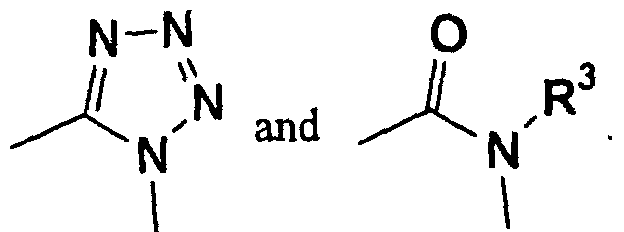
As the combination of p and q, p+q is preferably 1 or 2, and more preferably 1. (p,q)
is preferably (0,1), (1,0), (1,1), (2,0), (0,2).
R1 and R2 are each preferably halogen, nitro, cyano, OR5, NR6R7, COR8, 5-10
membered carboring or heteroring, or C1-8 alkyl which may be substituted with 1-5 group(s)
selected from halogen, OR5, NR6R7, COR8 or 5-10 membered carboring or heteroring, more
preferably fluorine, chlorine, bromine, nitro, cyano, OR5, NR6R7, C2-8 acyl, COOR9, CONR10R11,
5-10 membered carboring or heteroring, or halogen, hydroxy, OR5, NR6R7, C2-8 acyl, COOR9,
CONR10R11 or C1-8 alkyl which may be substituted with 5-10 membered carboring or heteroring.
R3 is all preferable, and more preferably, hydrogen and C1-4 alkyl, and taken together
with R2 to represent C1-4 alkylene.
X and Y are preferably -CH2-, -CHR4- and -O-.
m and n are preferably 0 and 1-3, respectively.
Preferable compounds in the compound of formula (I-a') are the same as the
corresponding ones in the compound of formula (I) shown above.
Preferable compounds in the present invention include the compounds in the
following table 1 to table 64 in addition to the compound shown in the examples.
In the following tables, Ph is phenyl, iPr is isopropyl, and Bzl is benzyl.

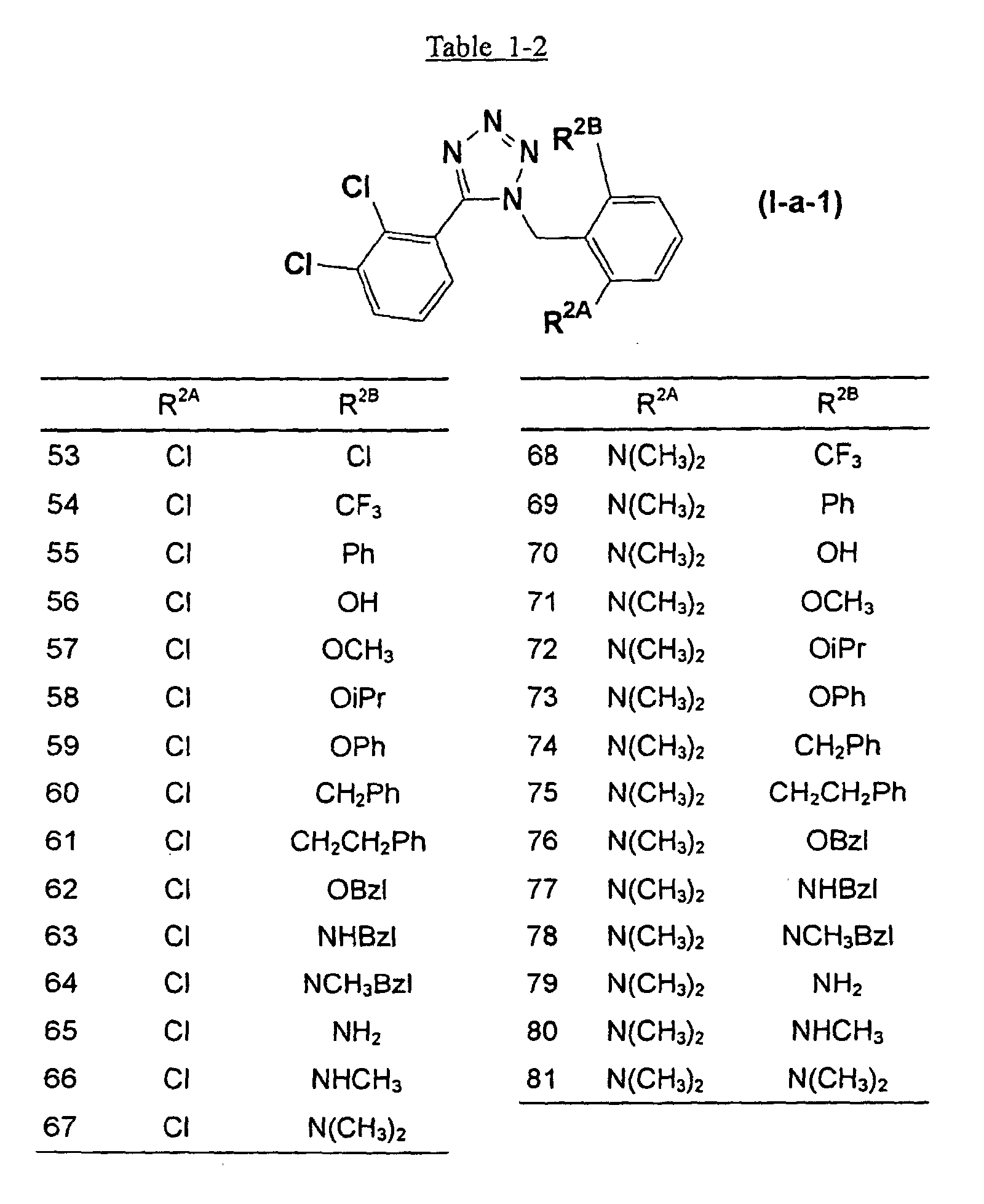
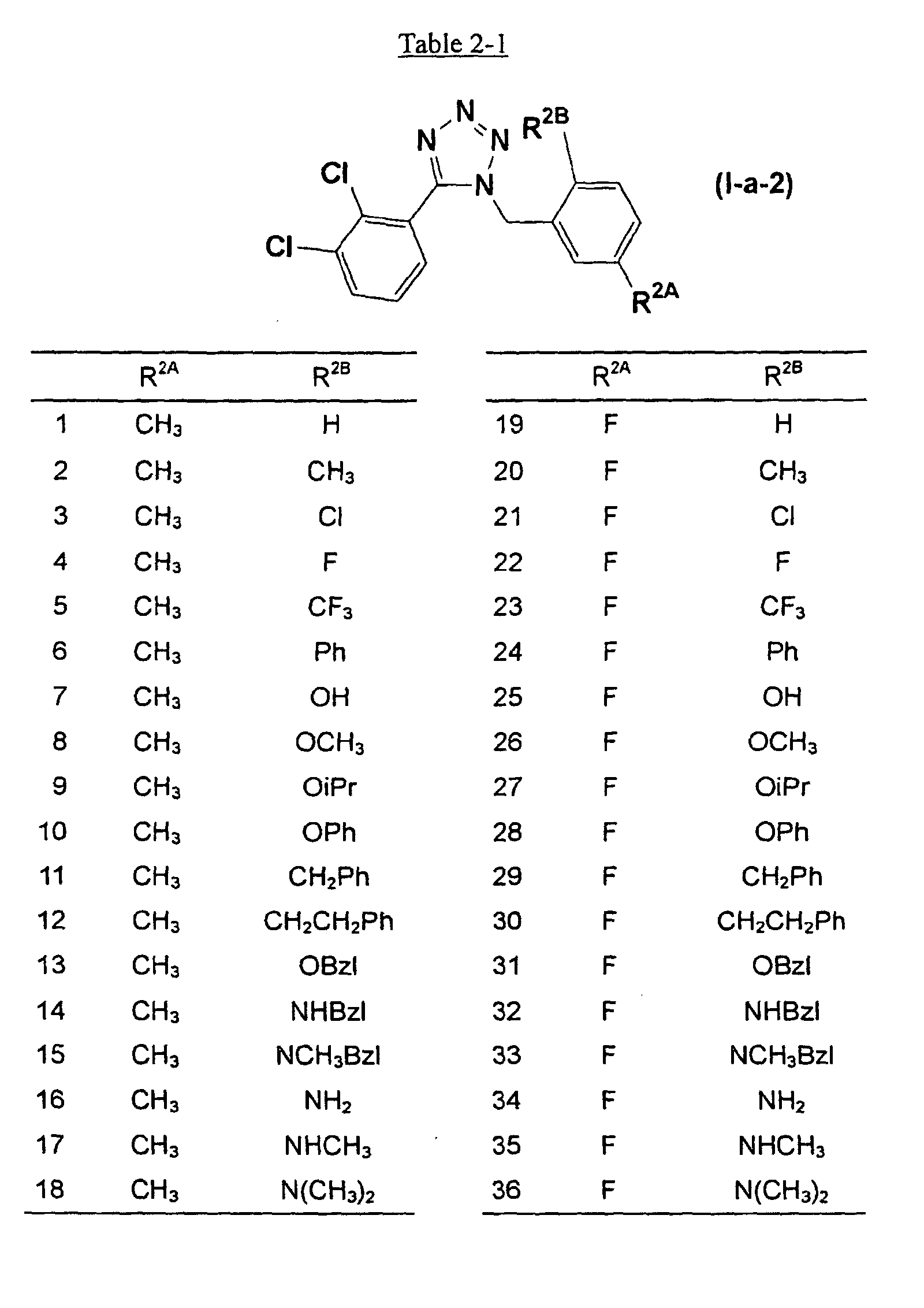

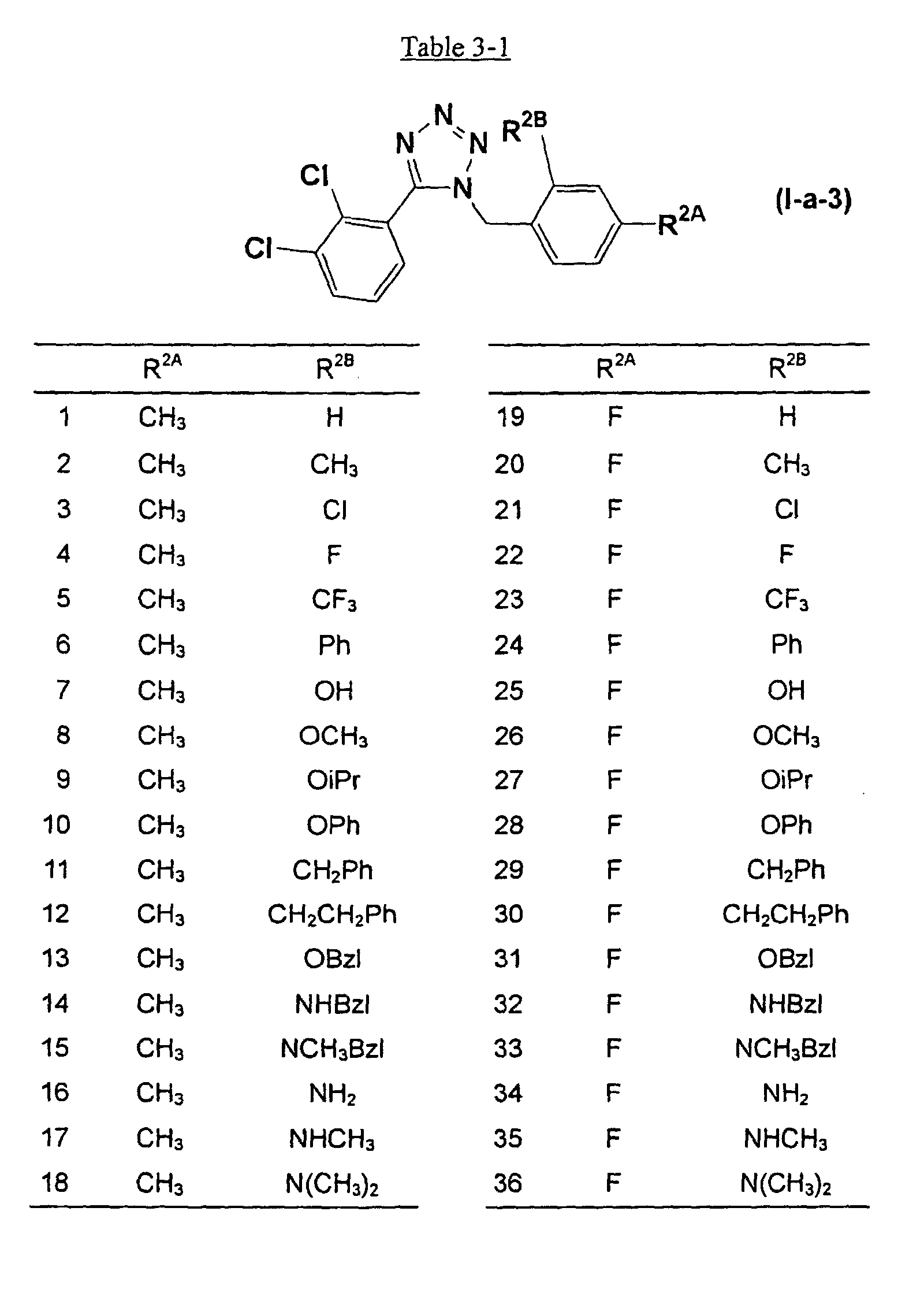


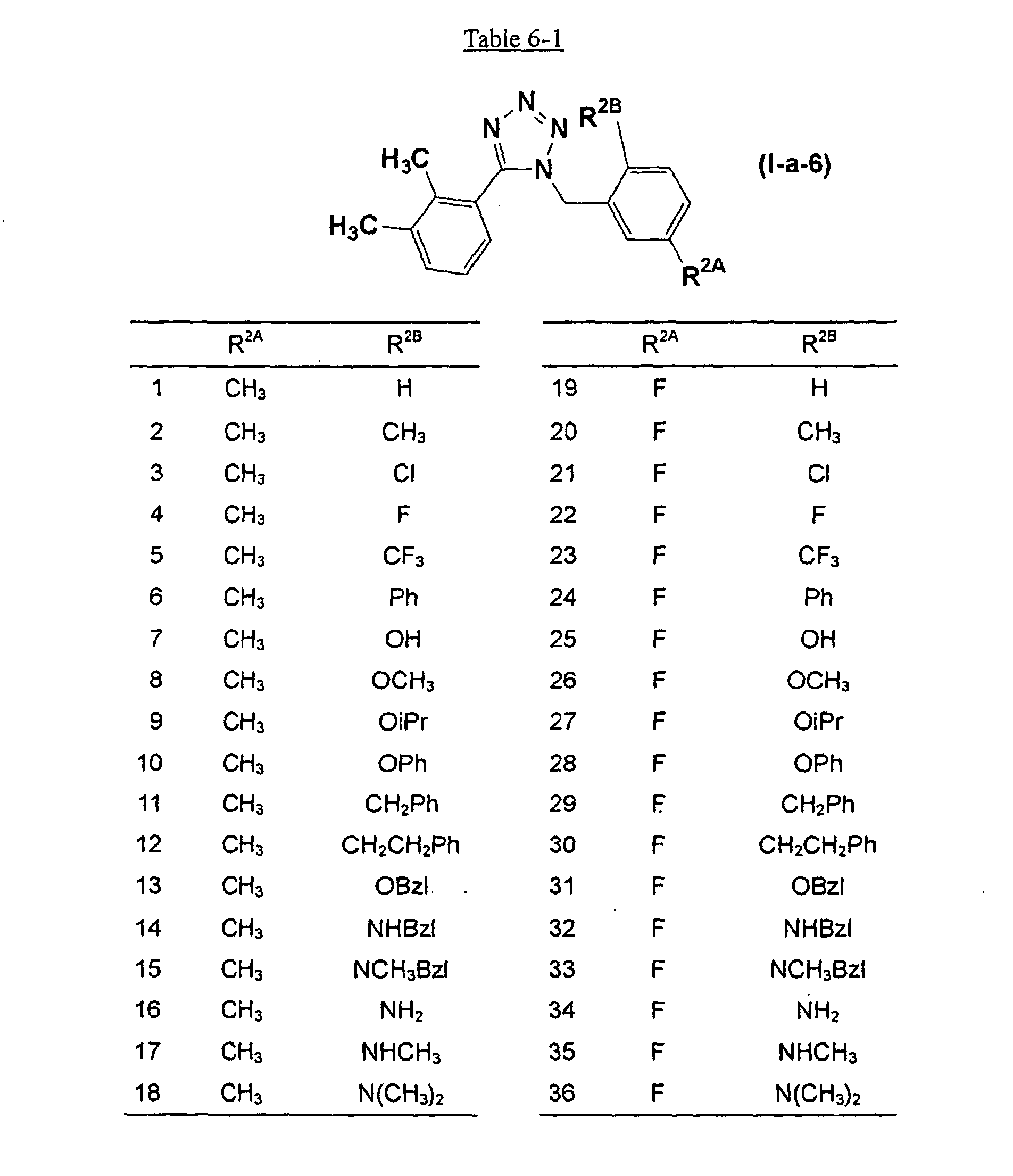


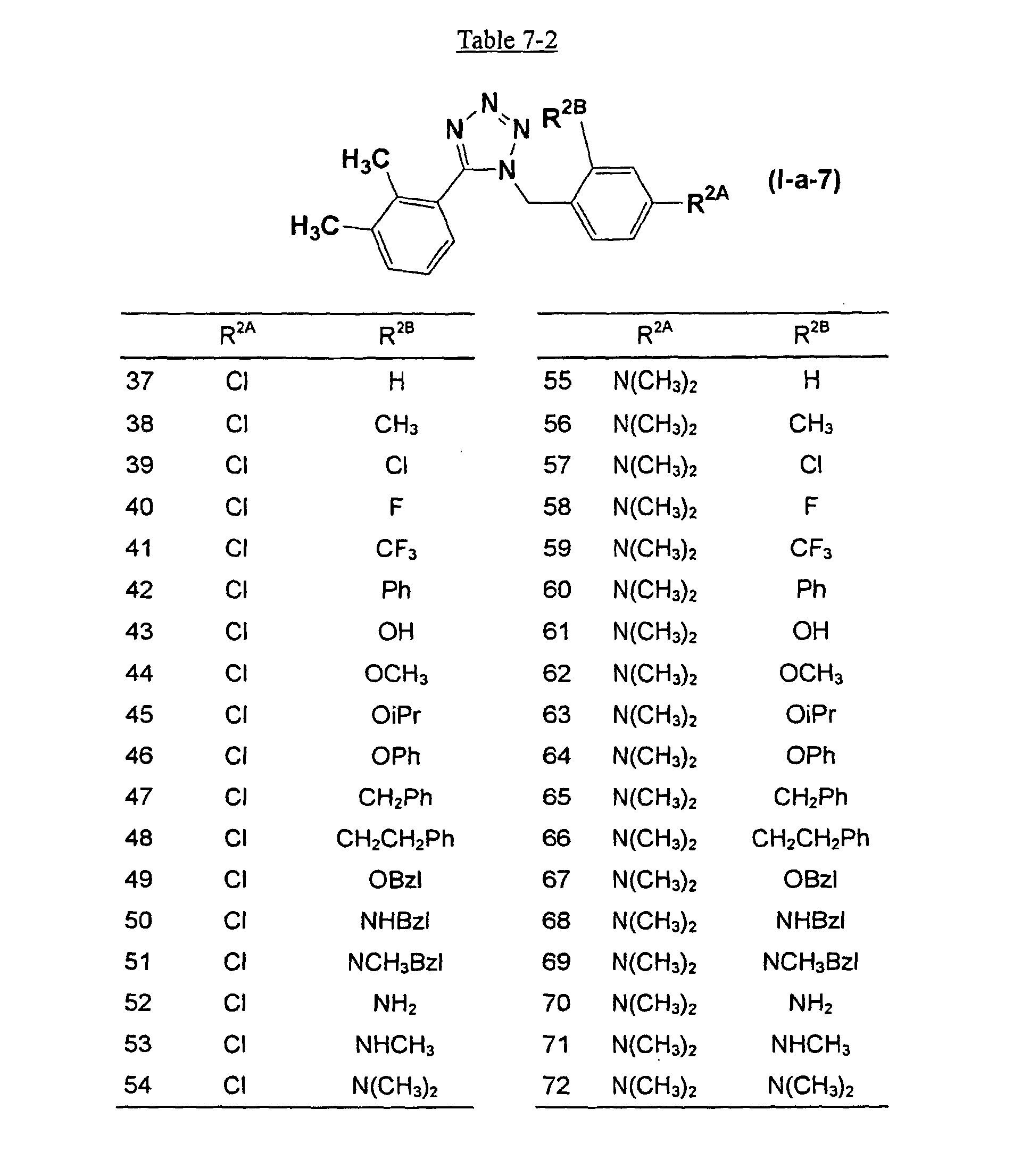

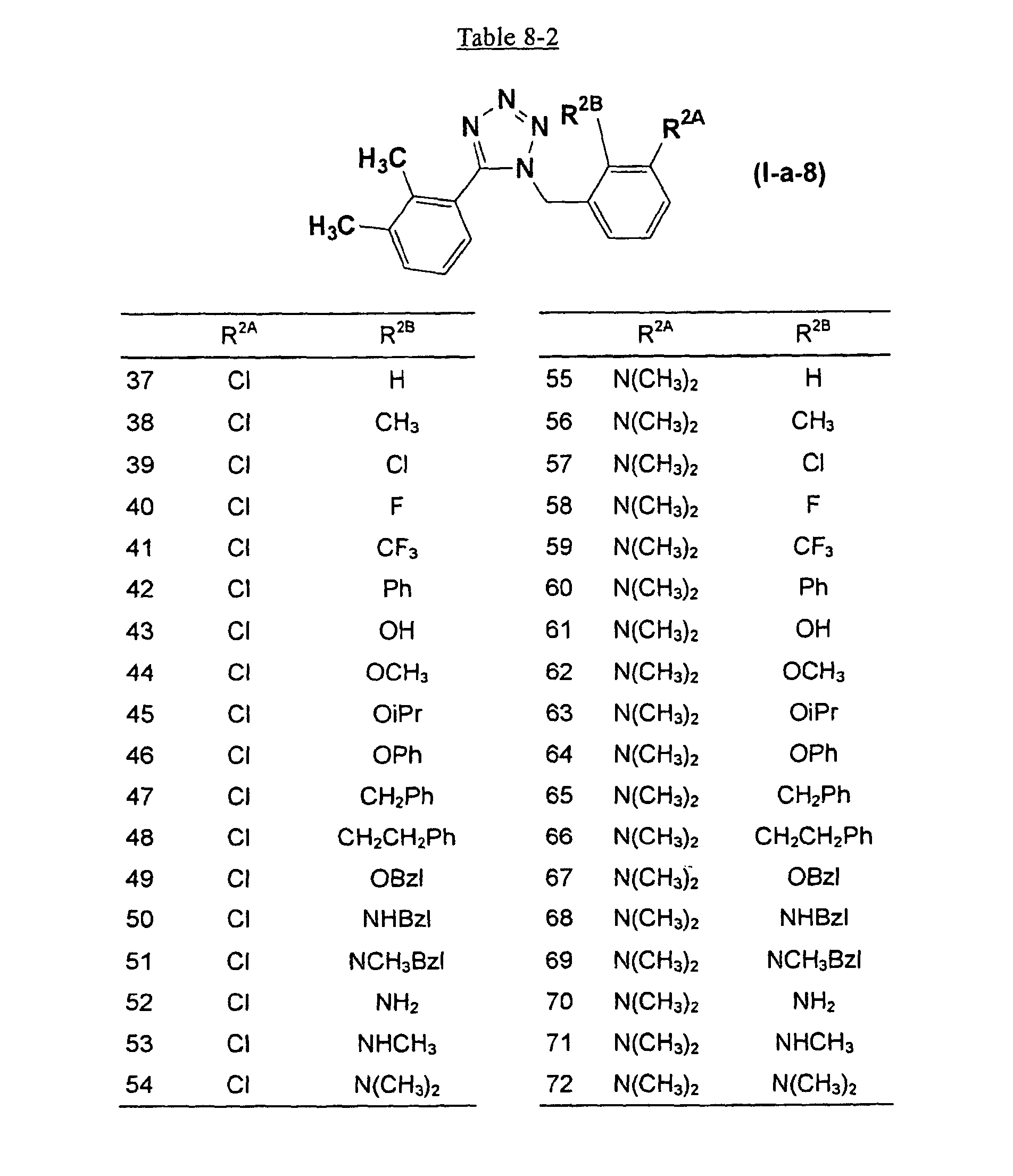

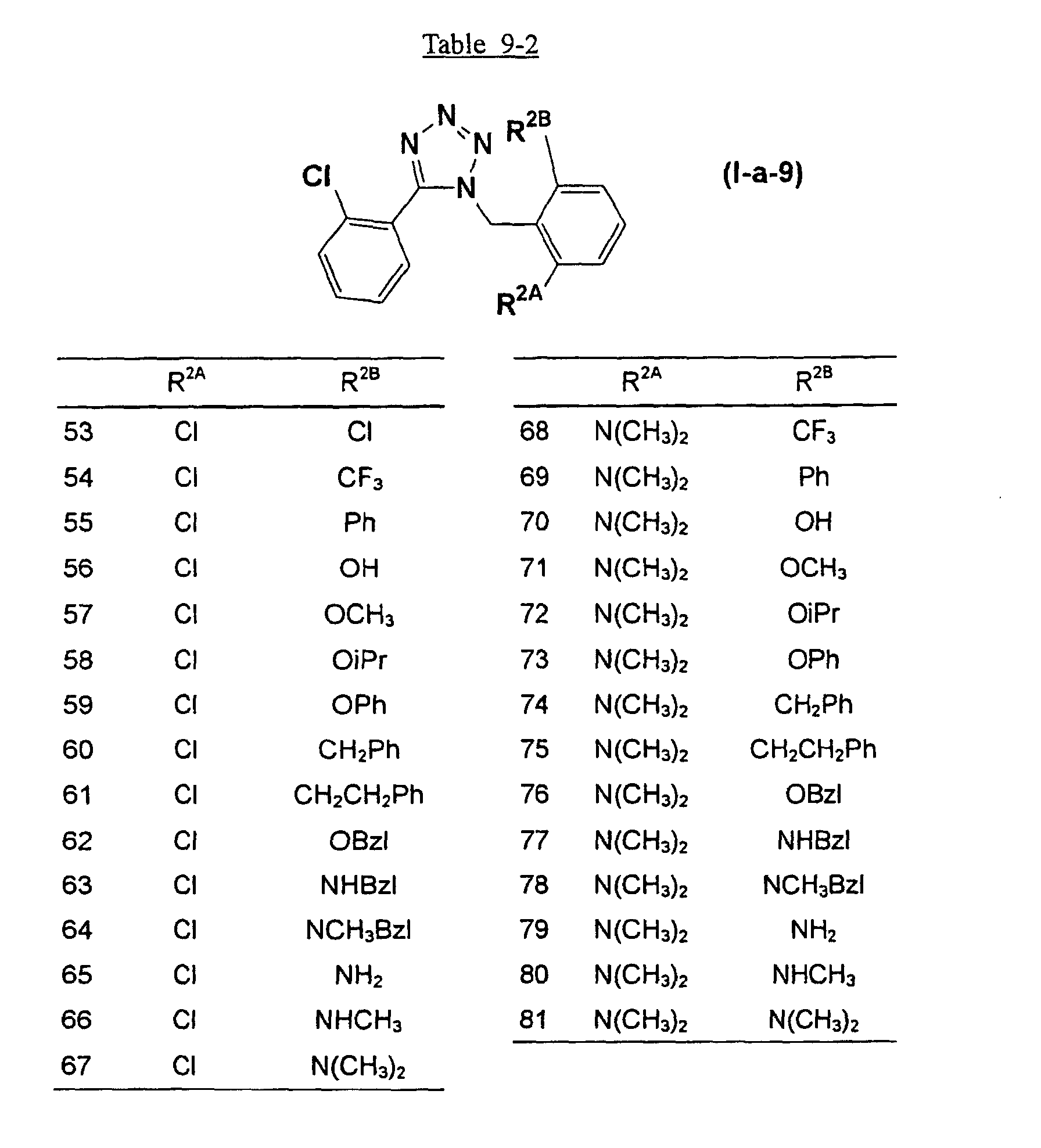

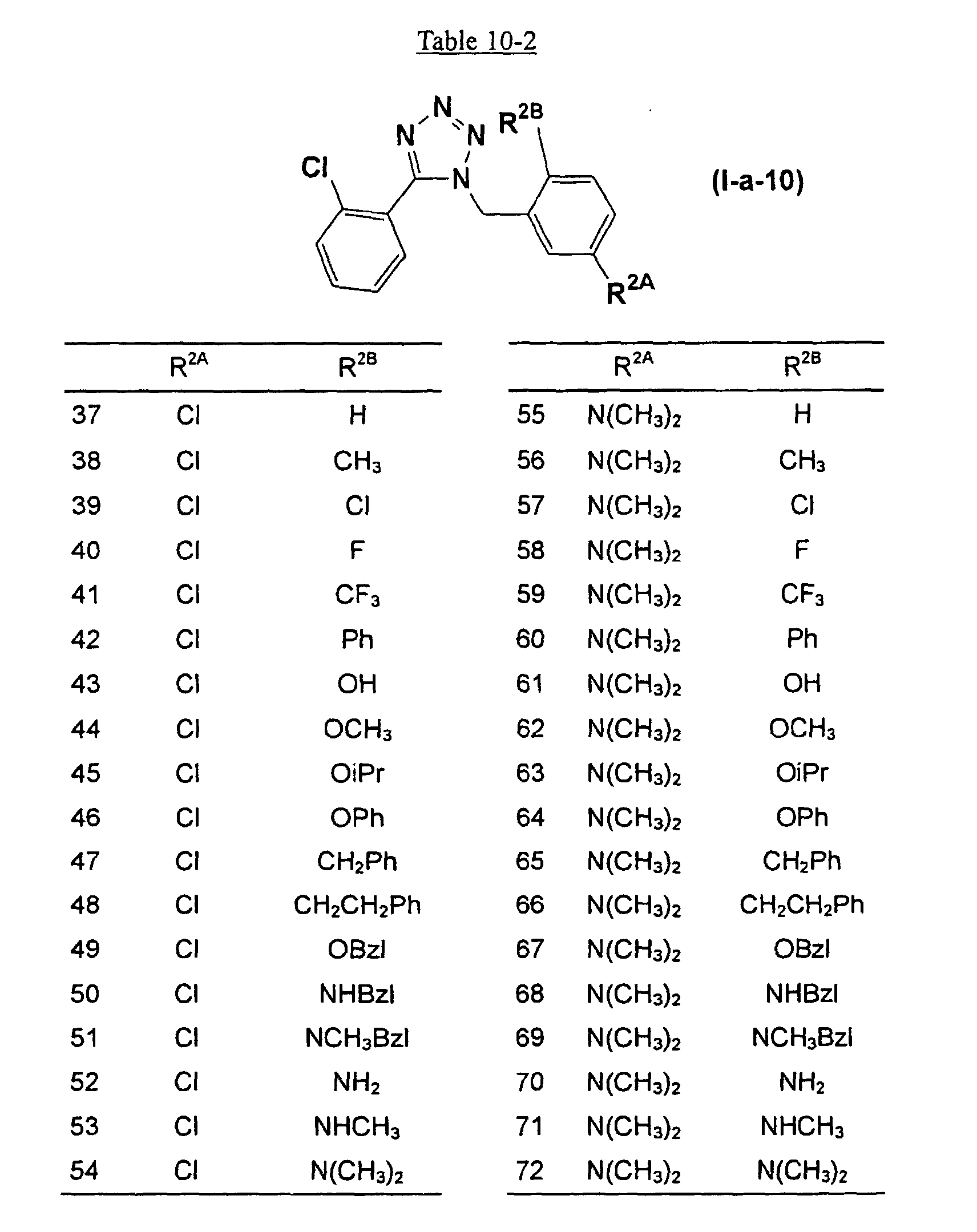
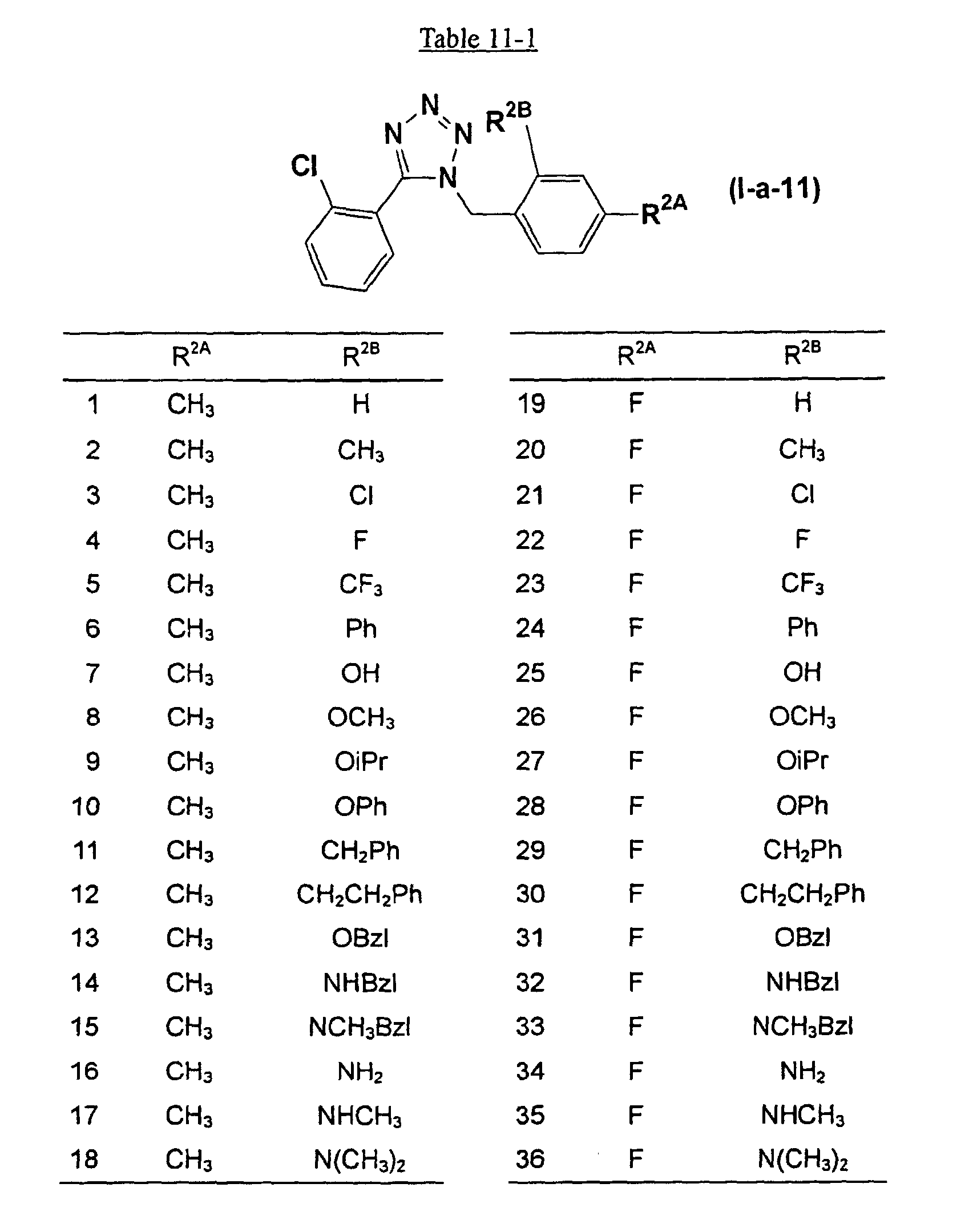
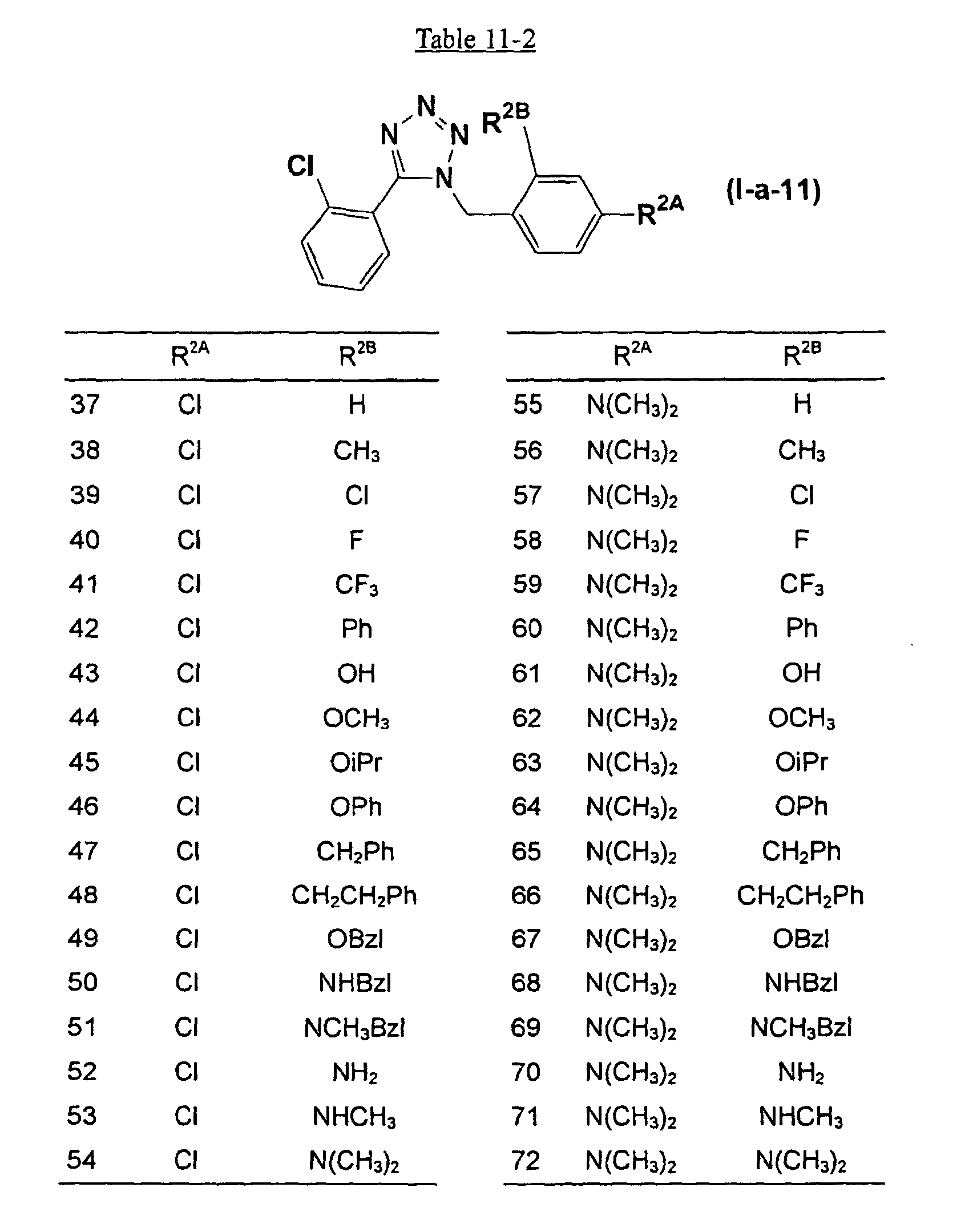
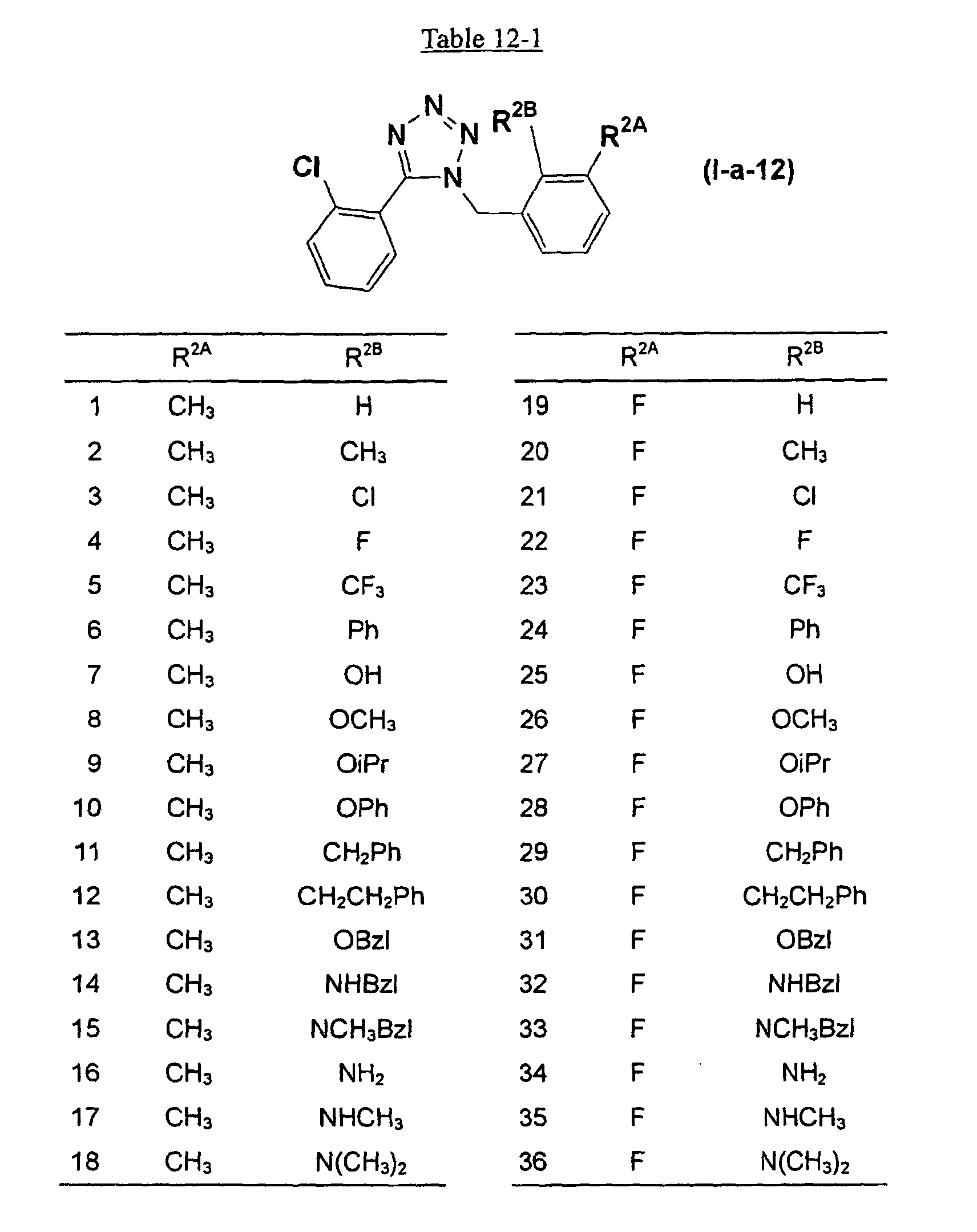
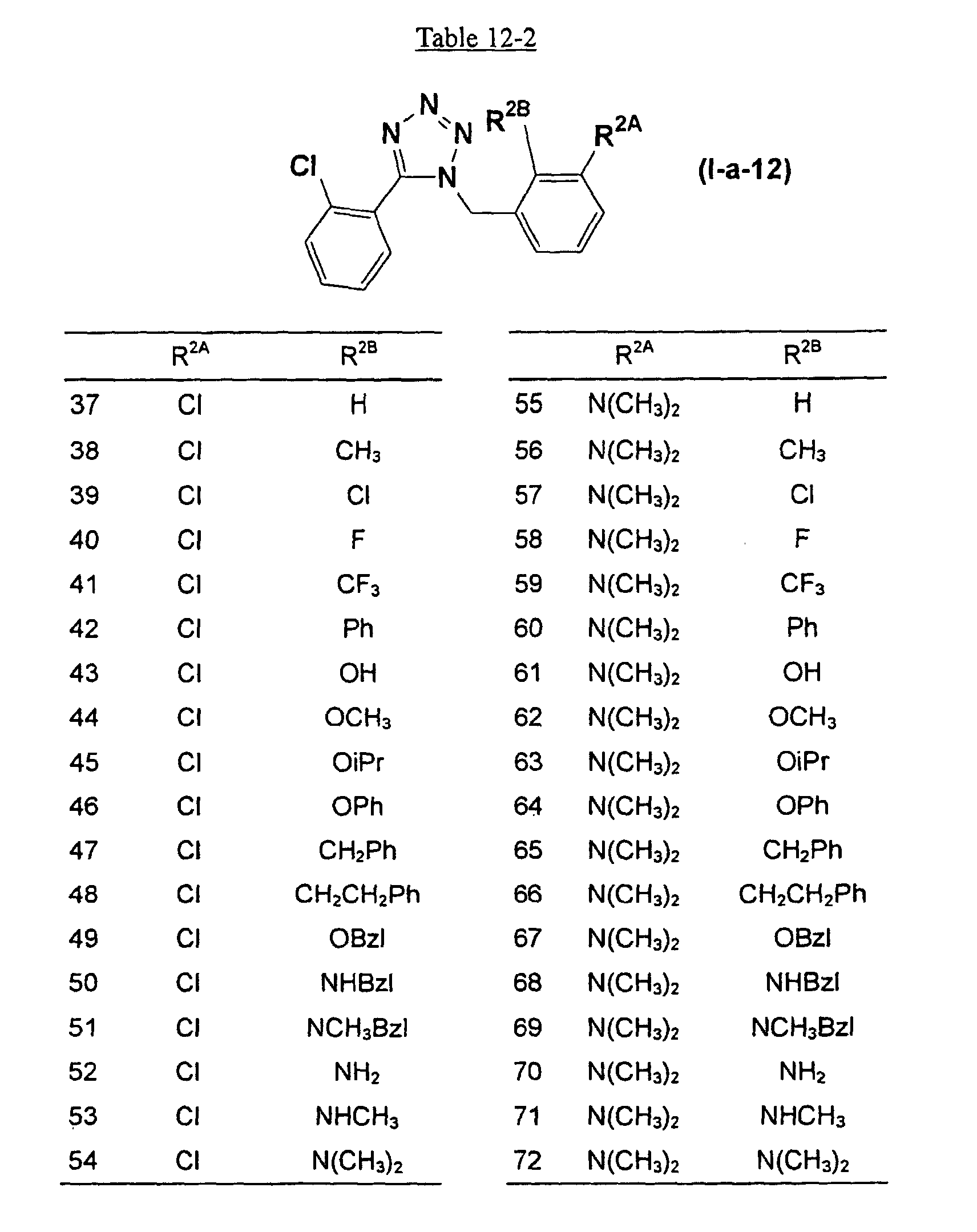
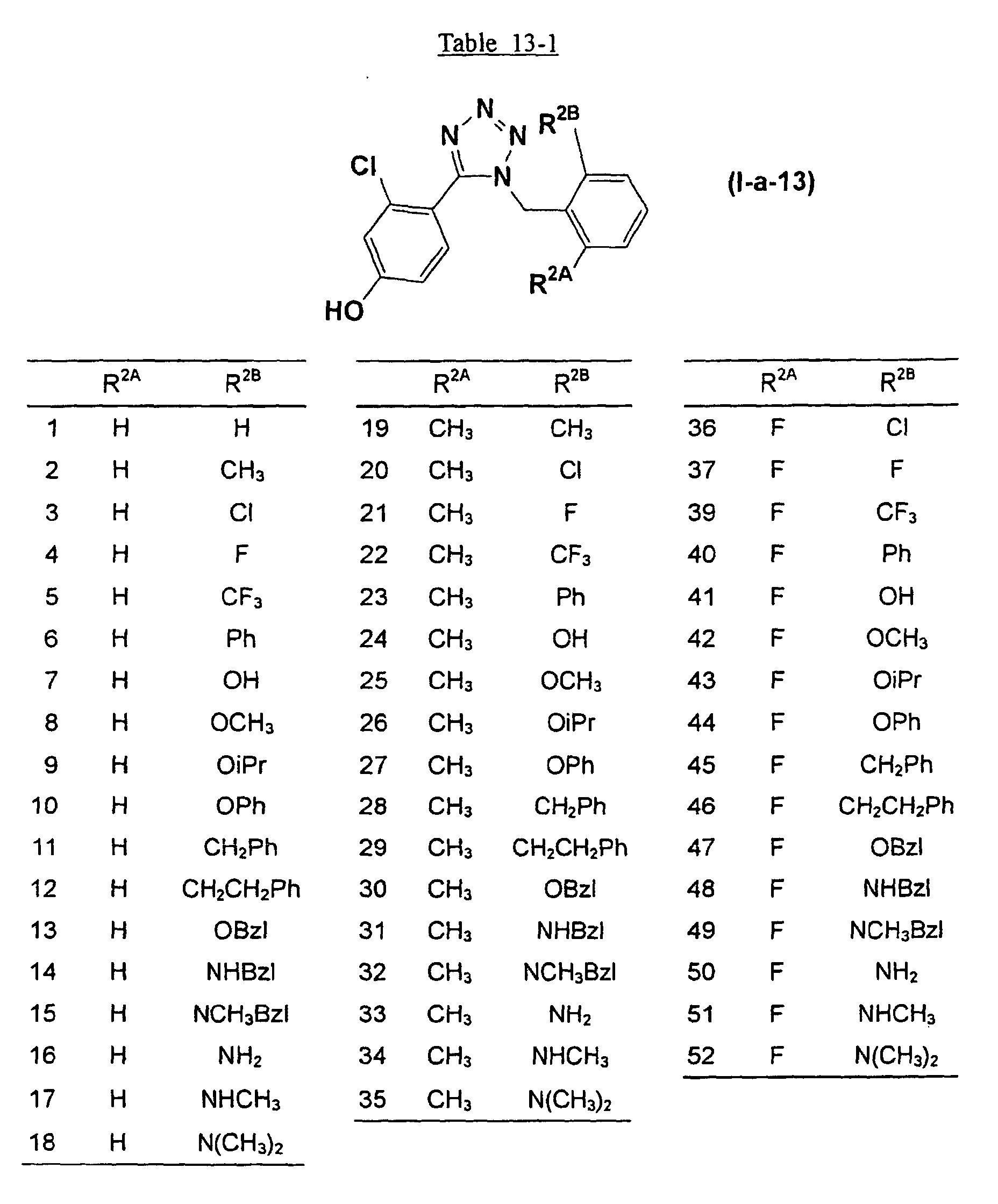
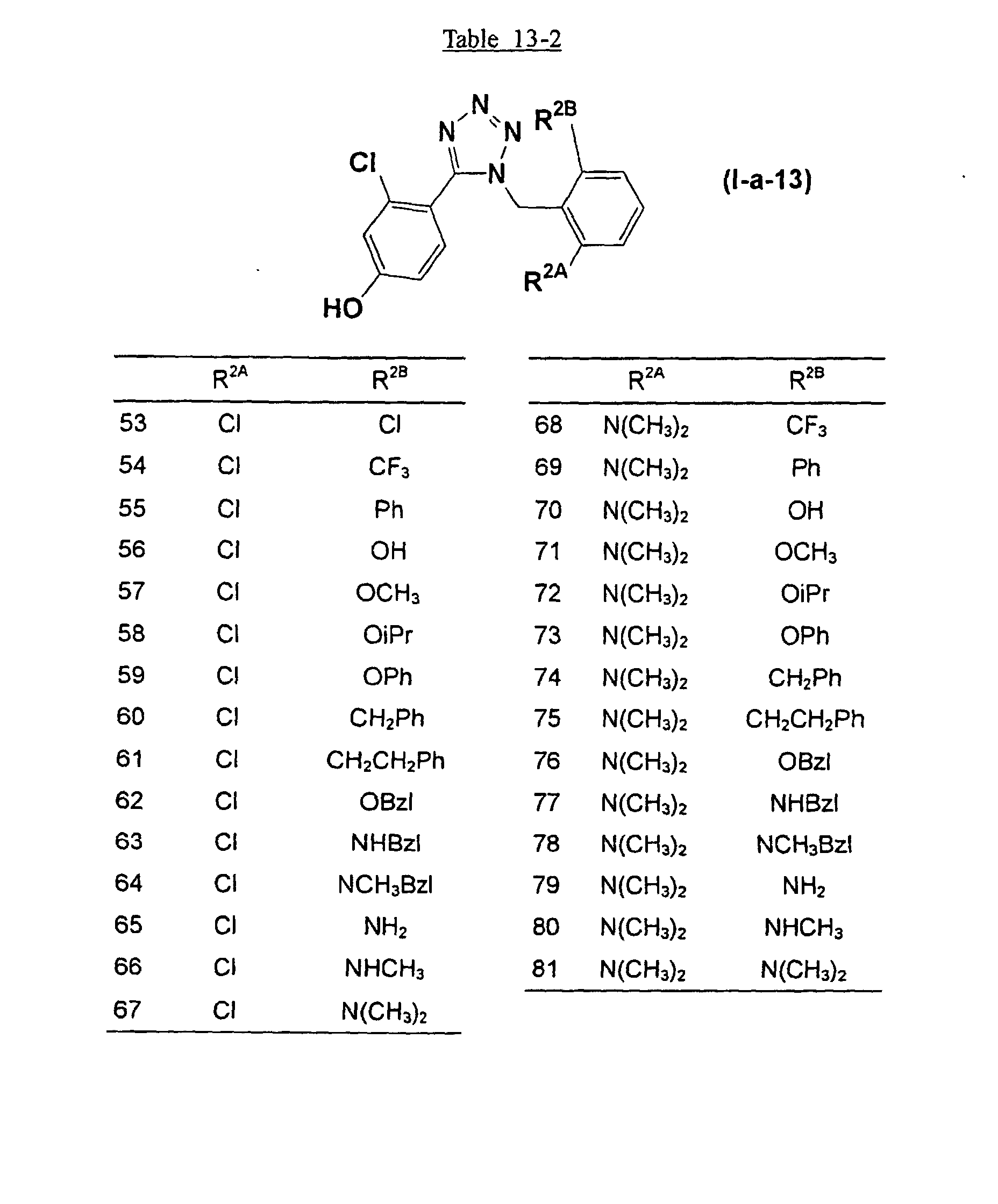


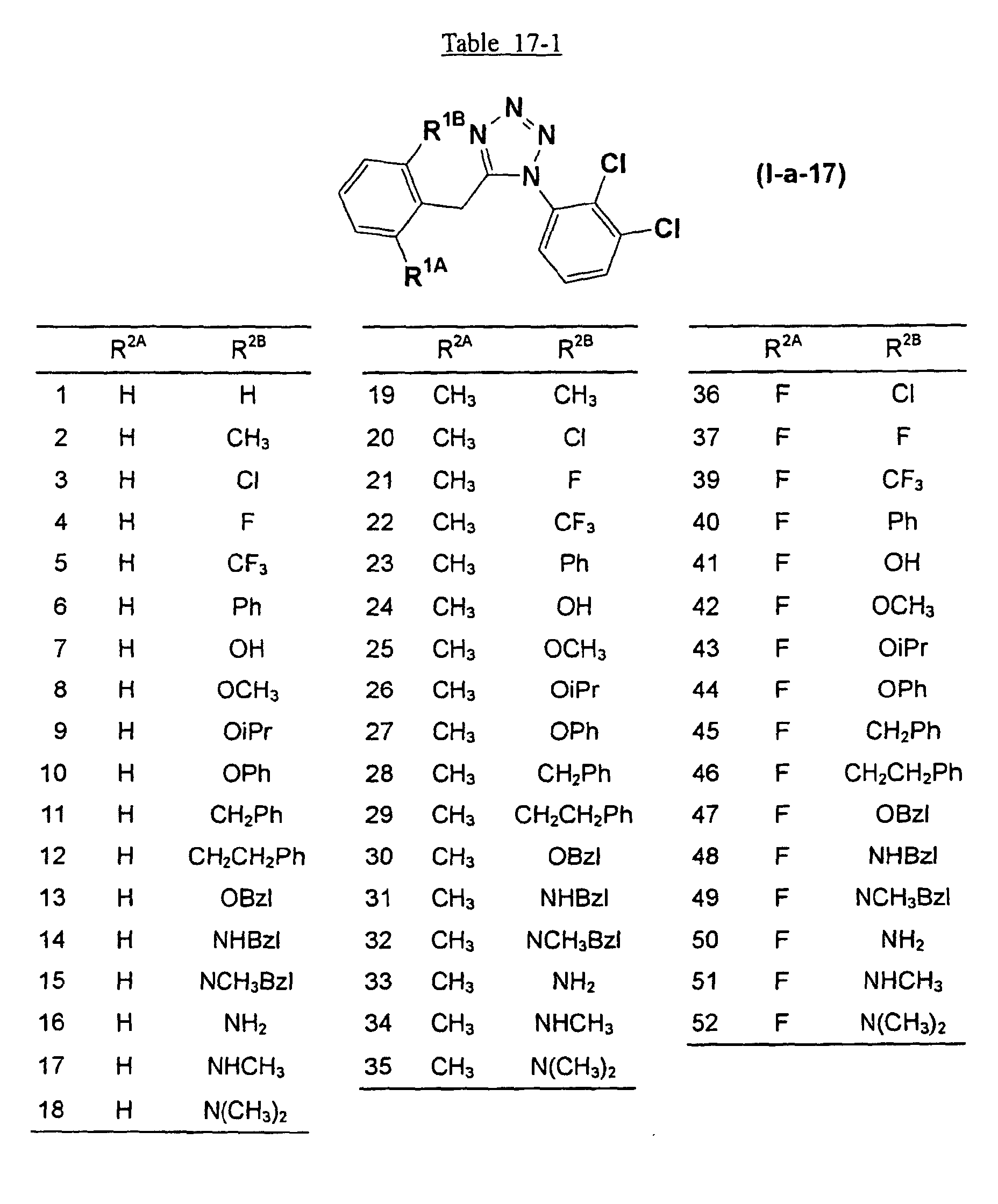


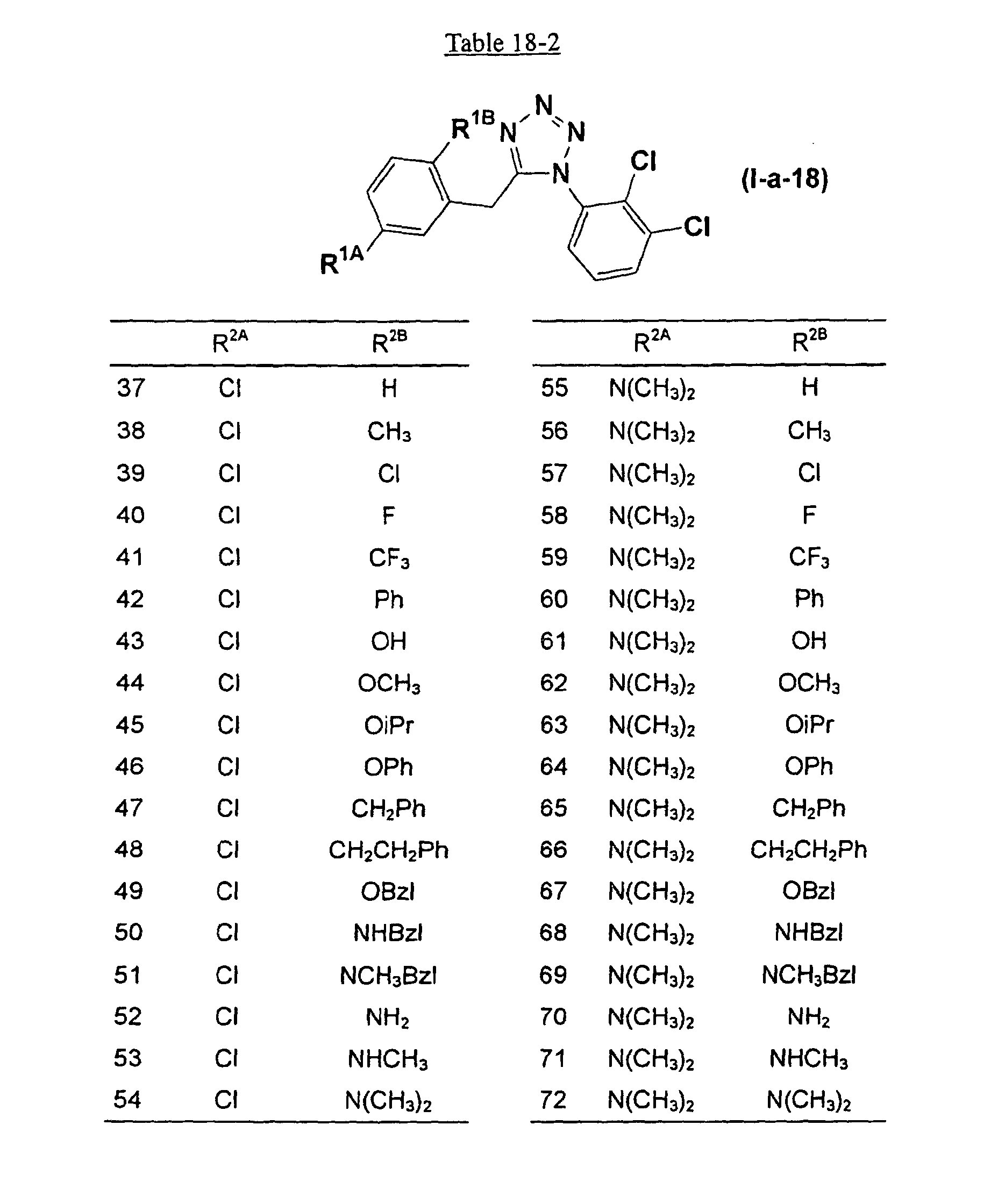
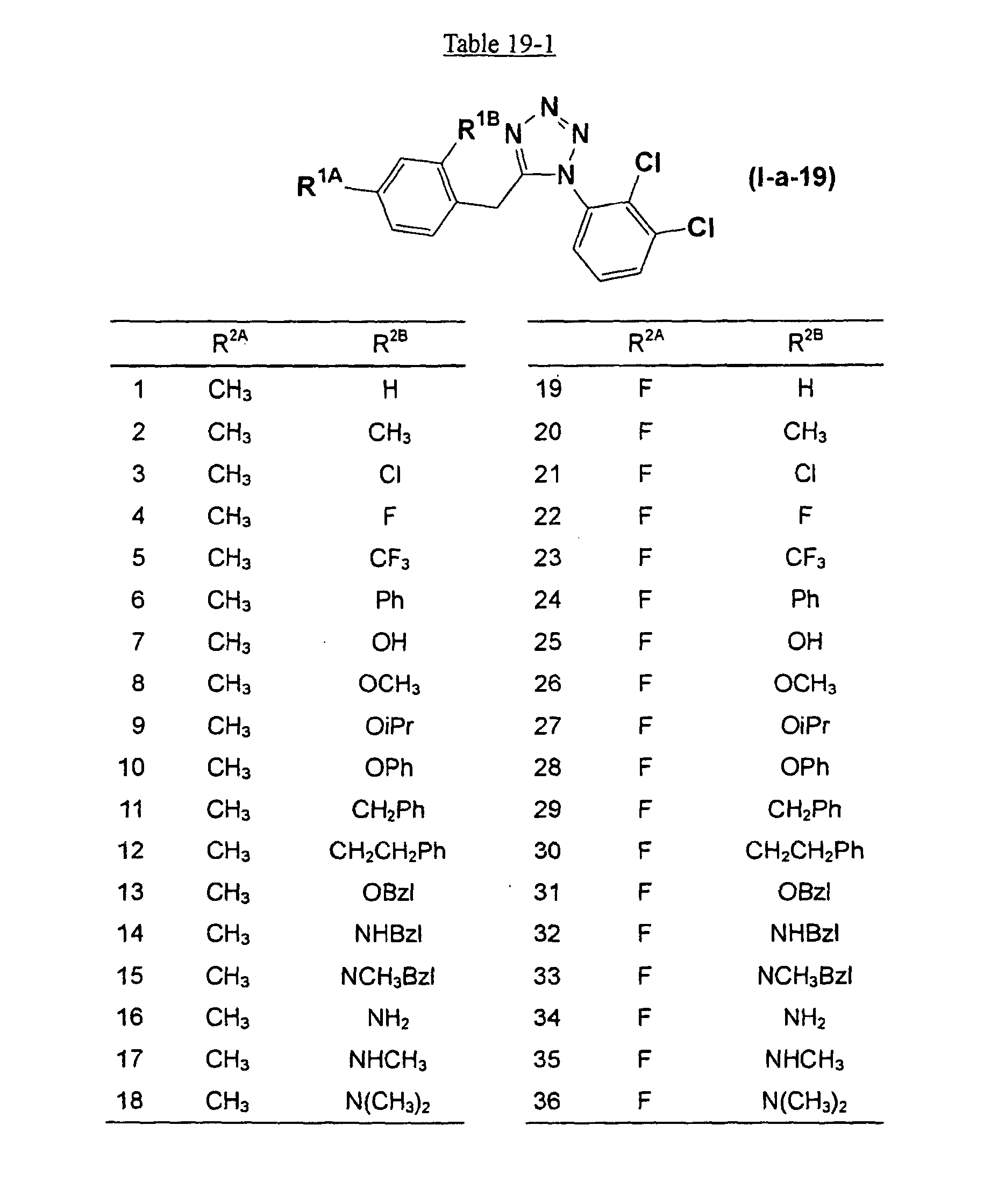


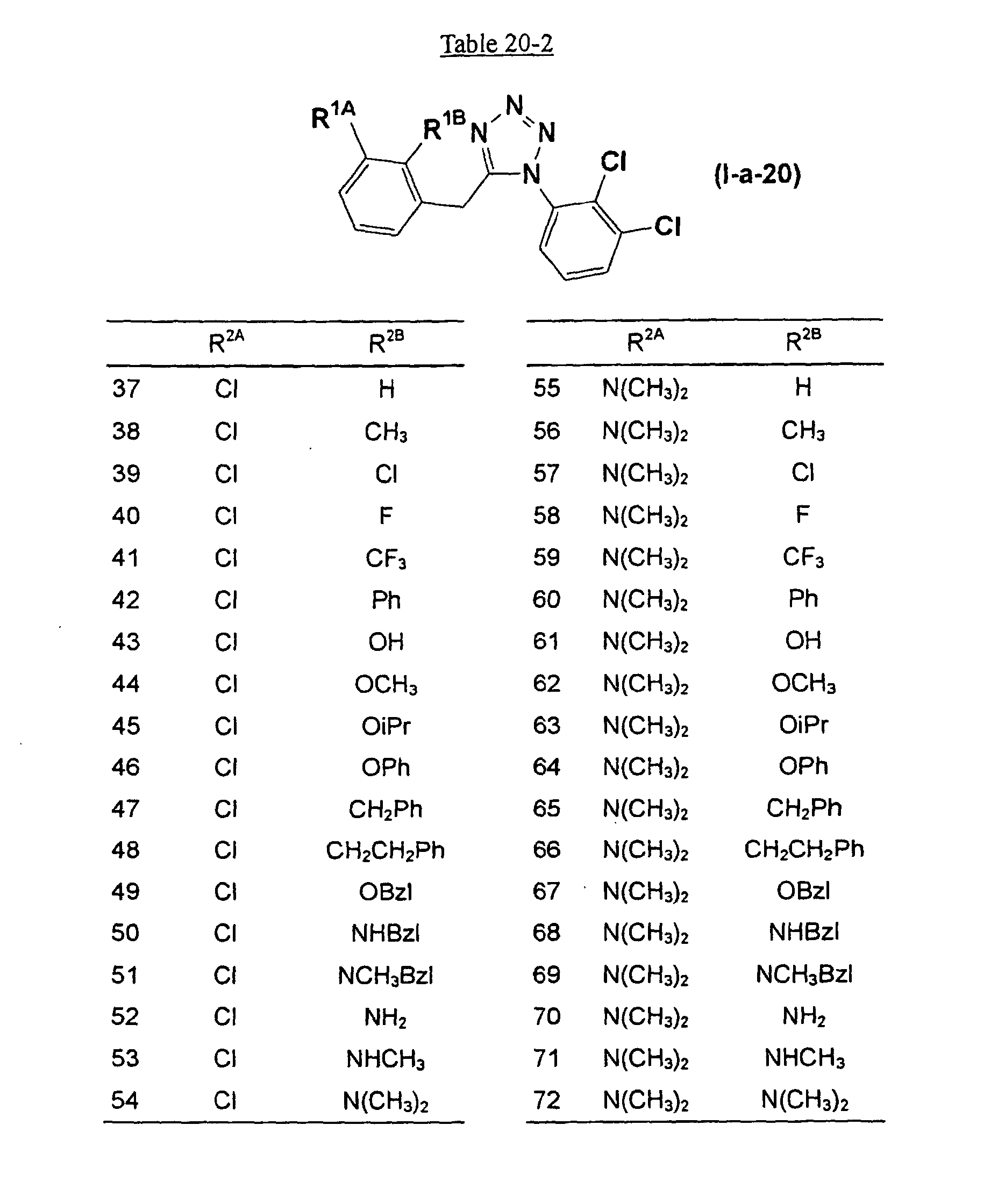
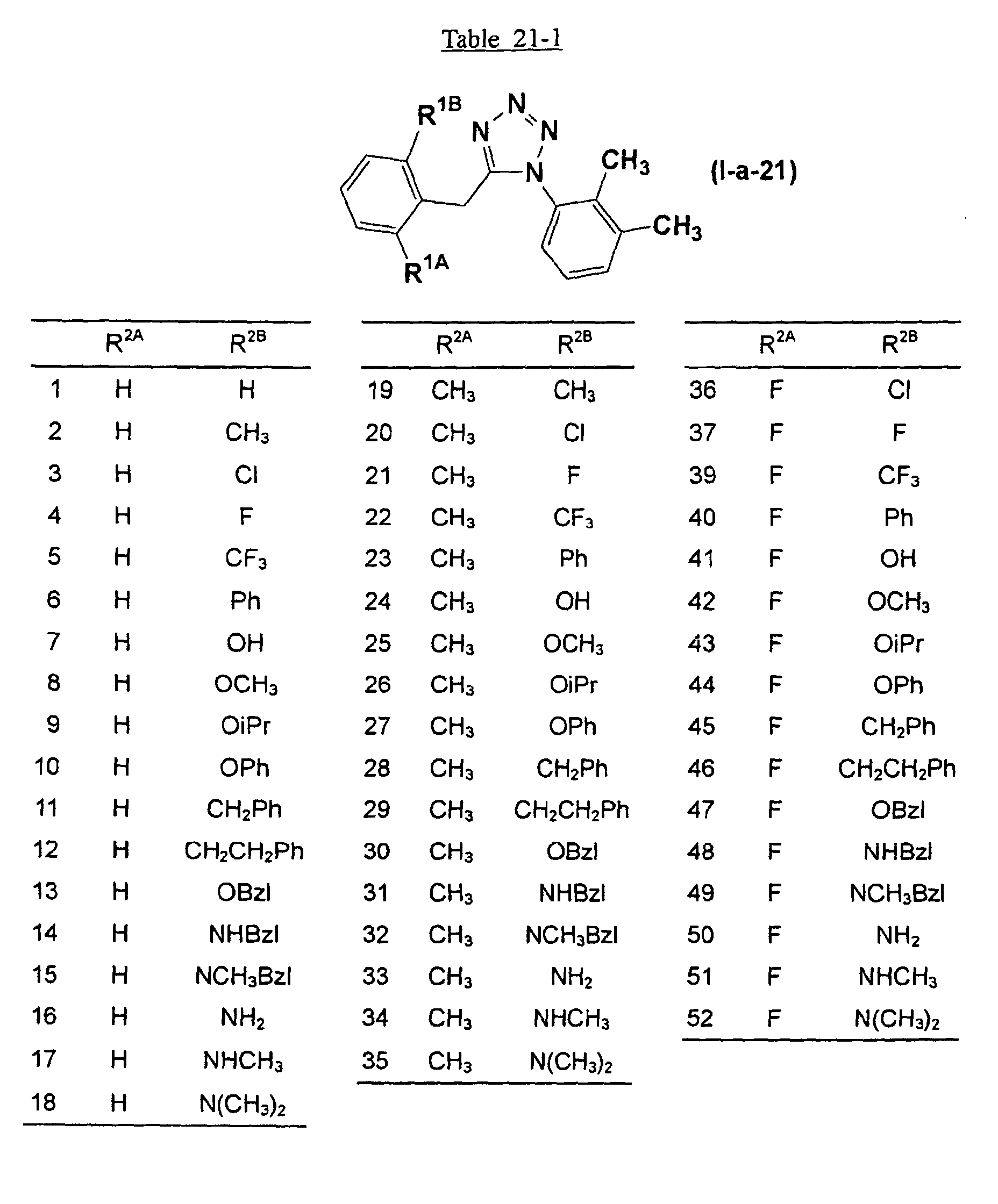
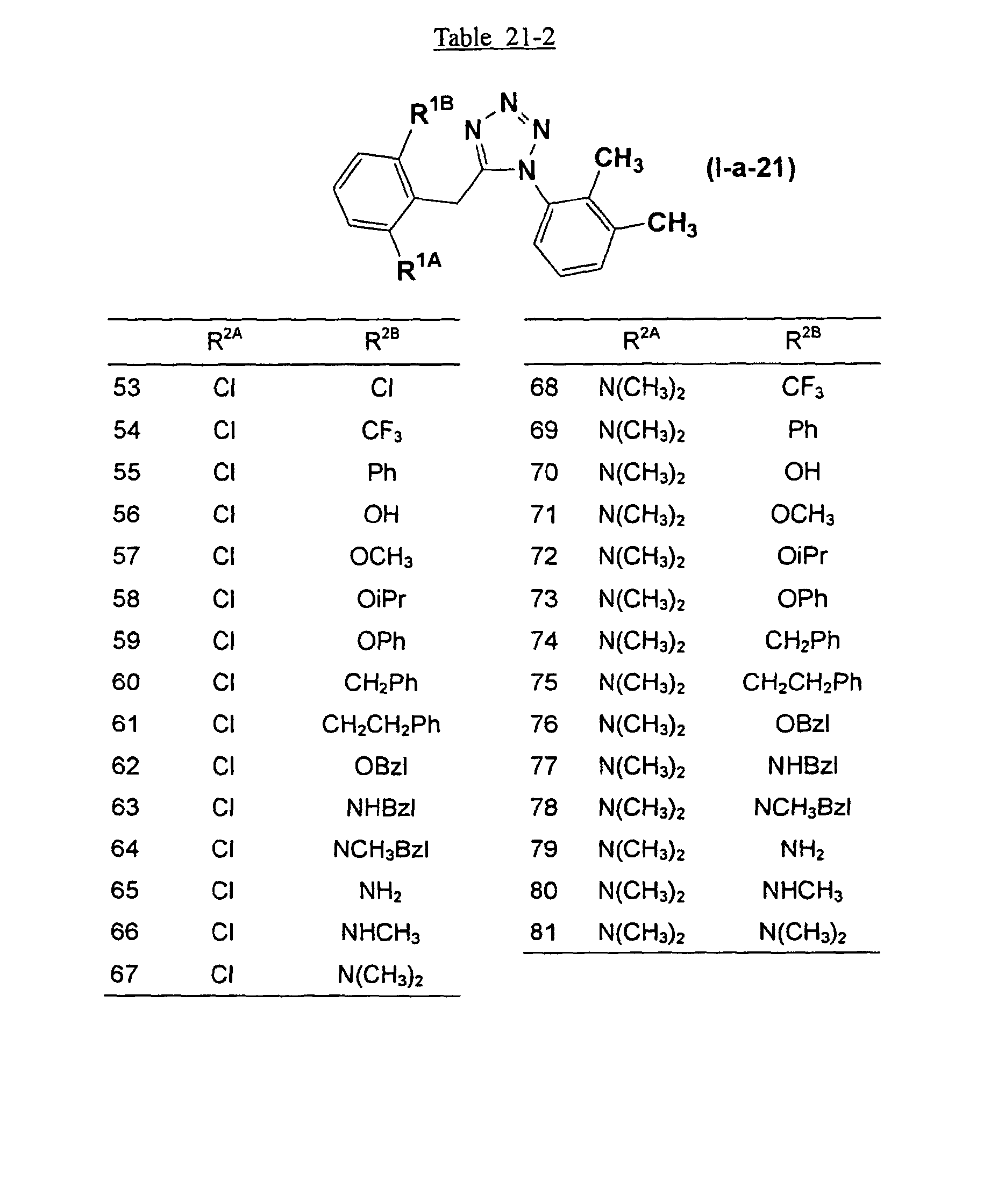


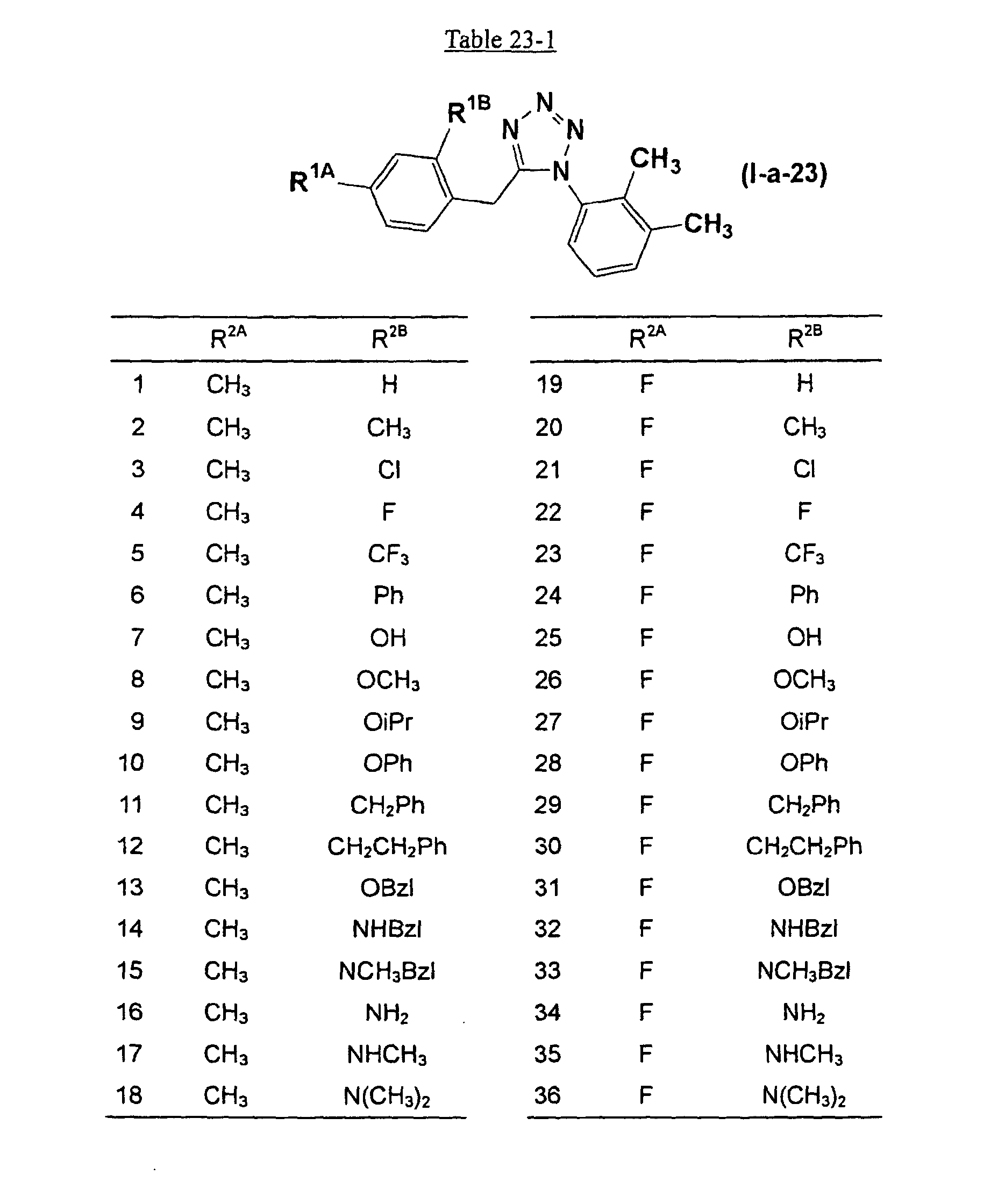
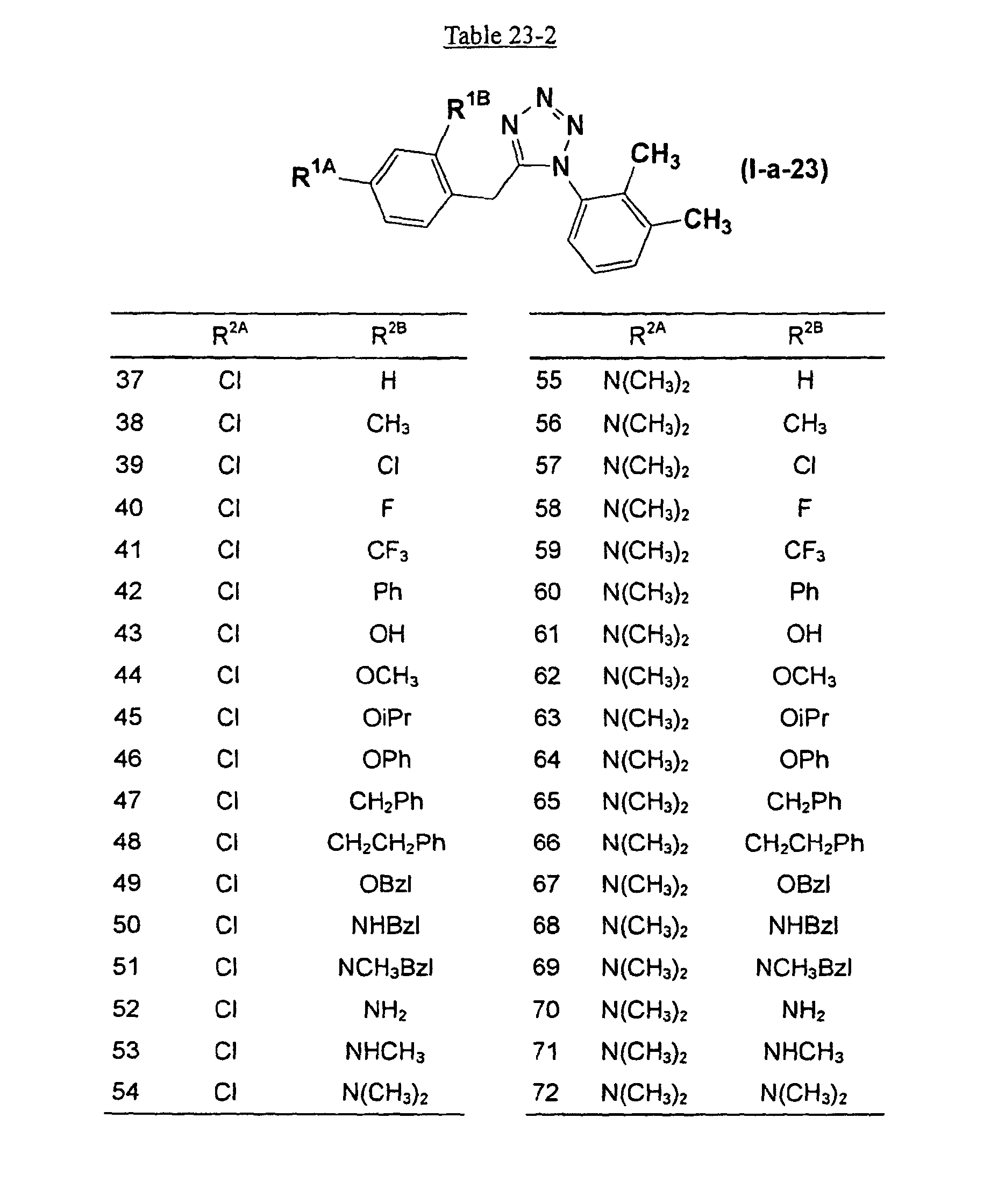
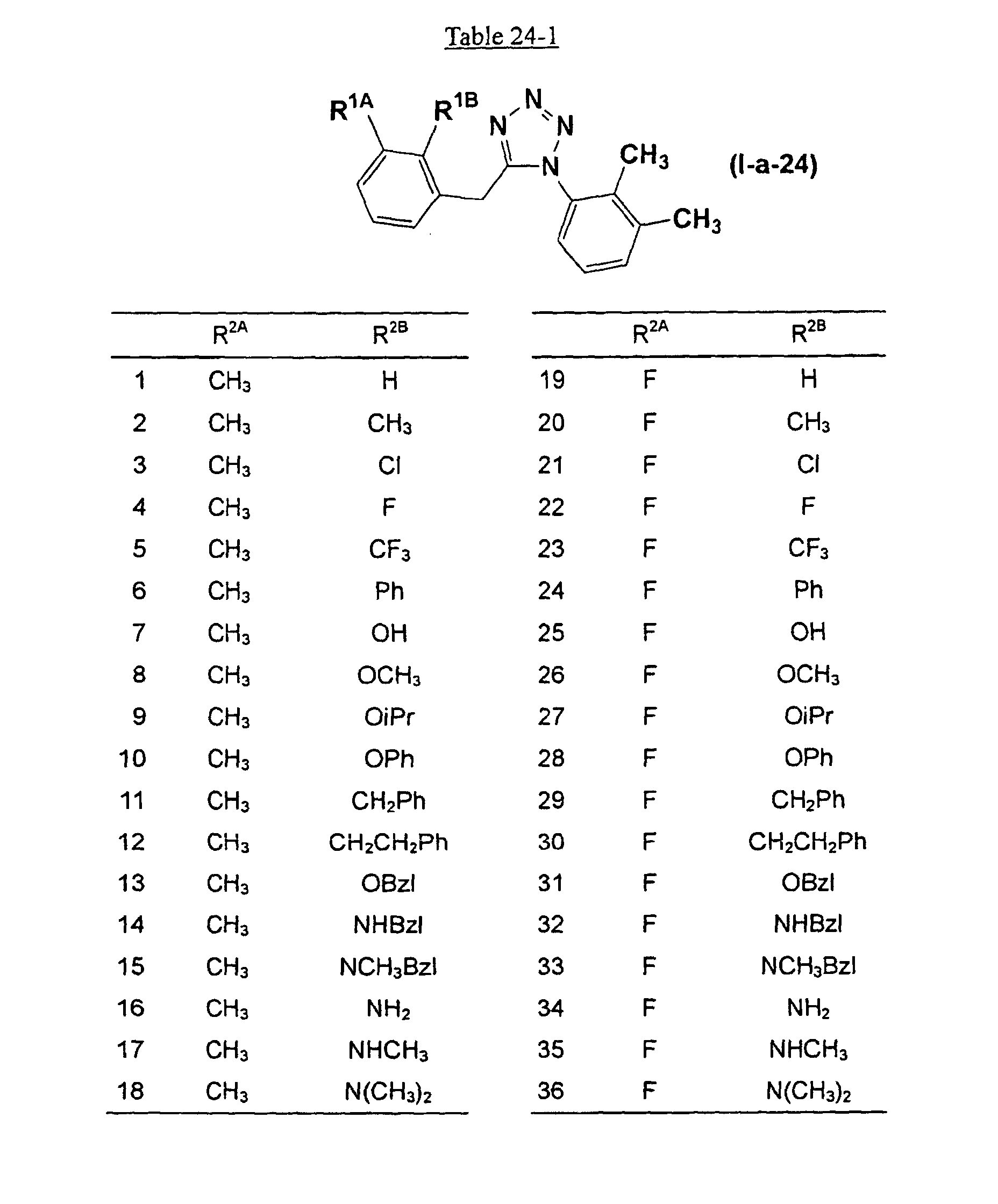


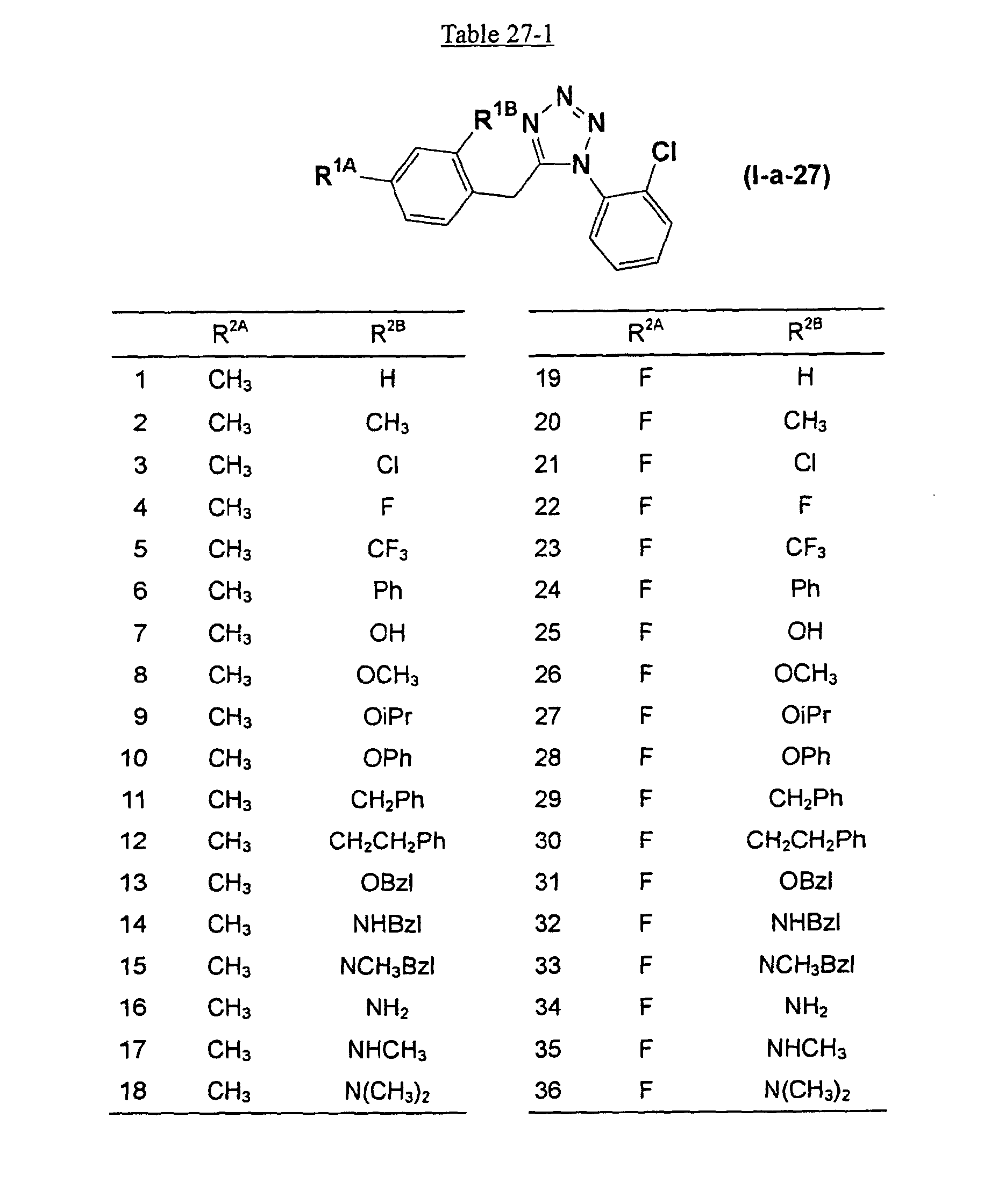

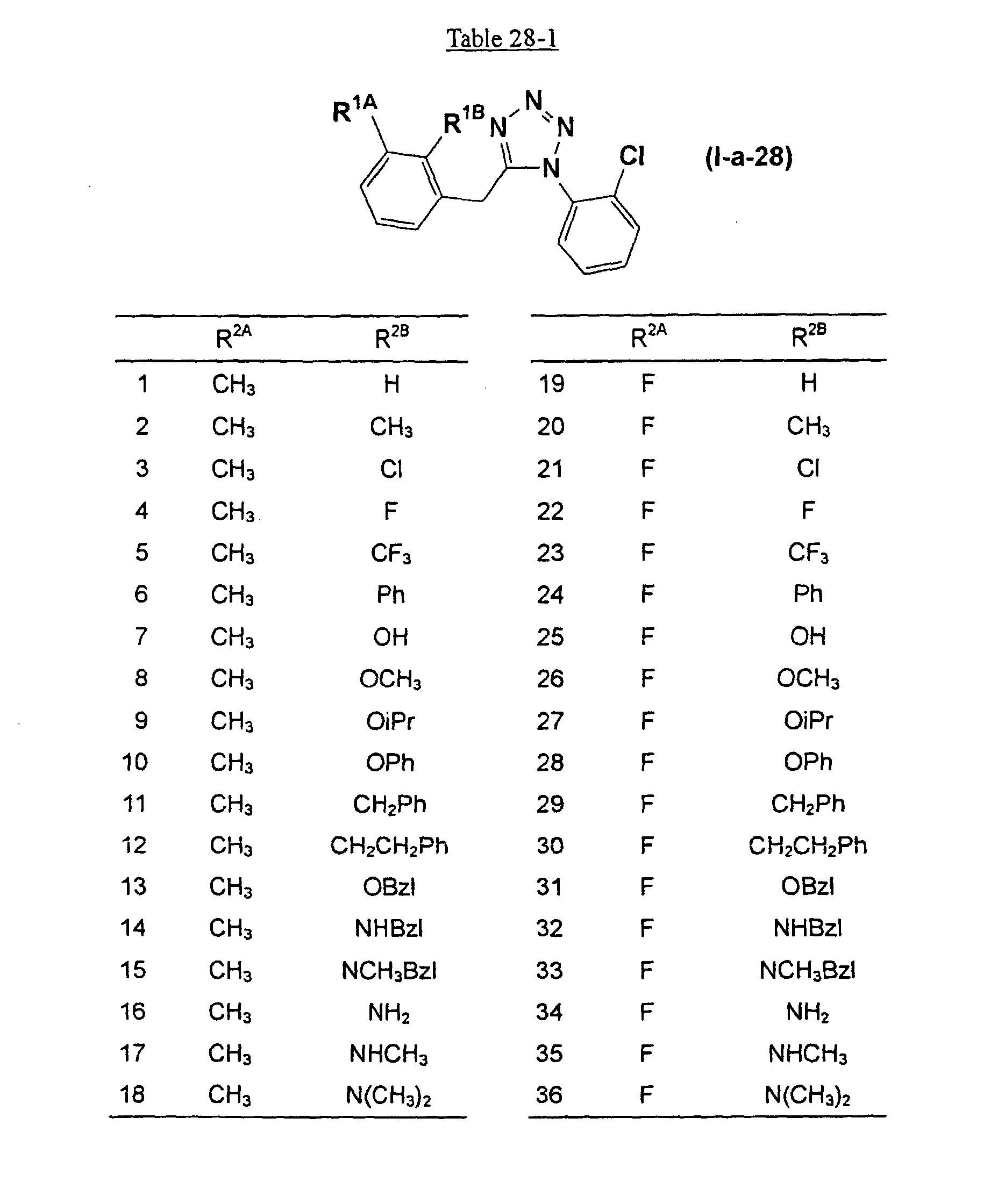
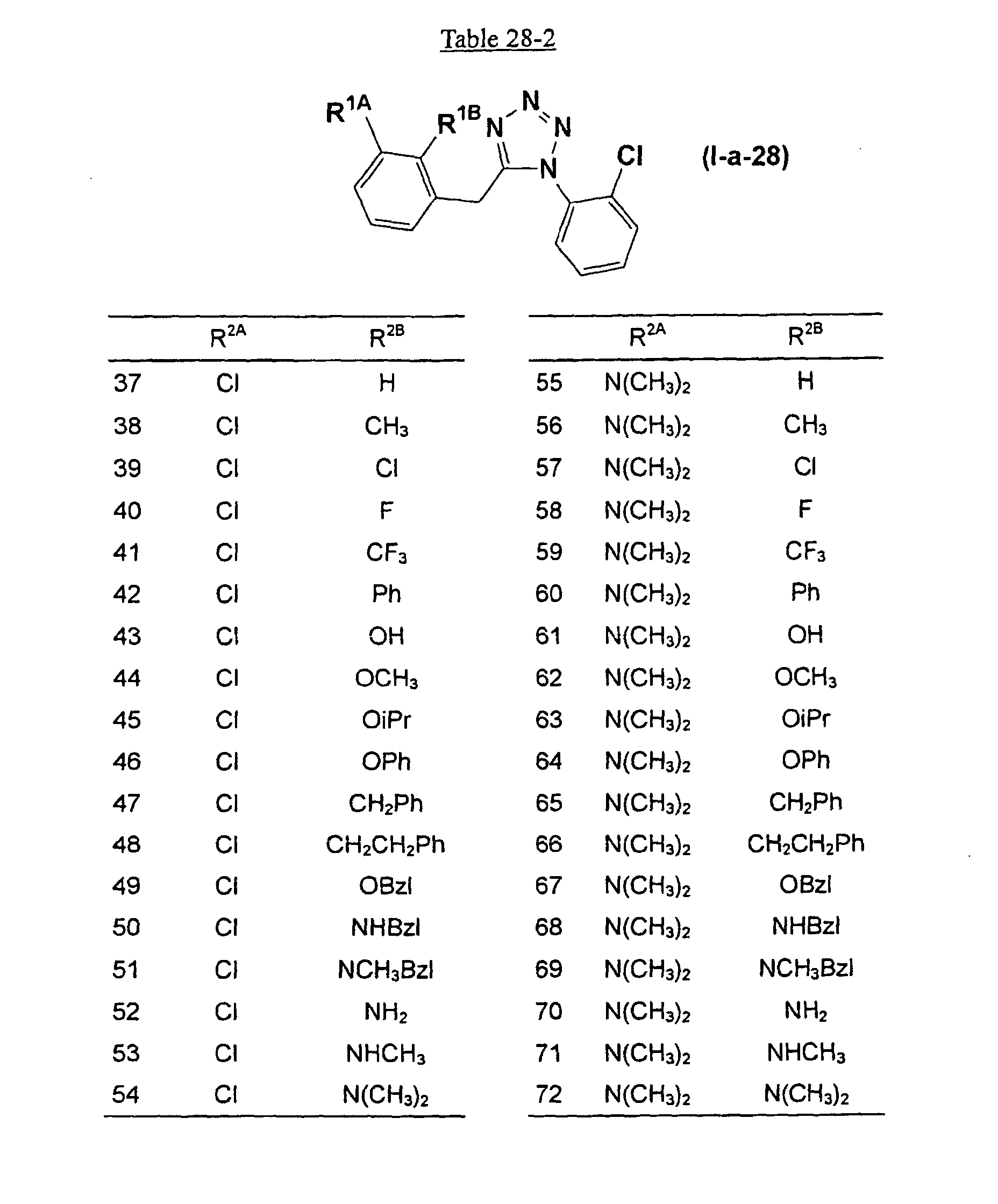
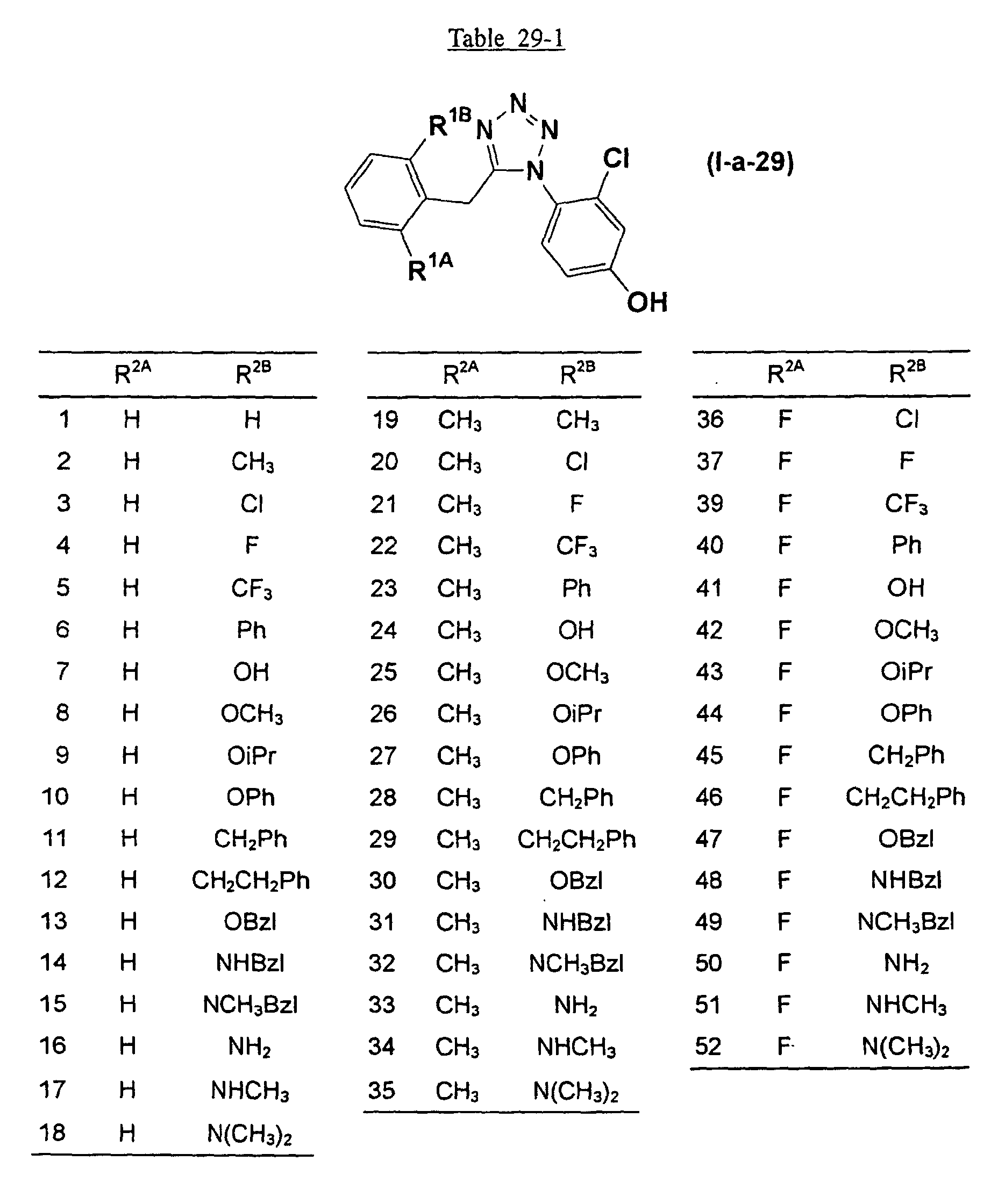

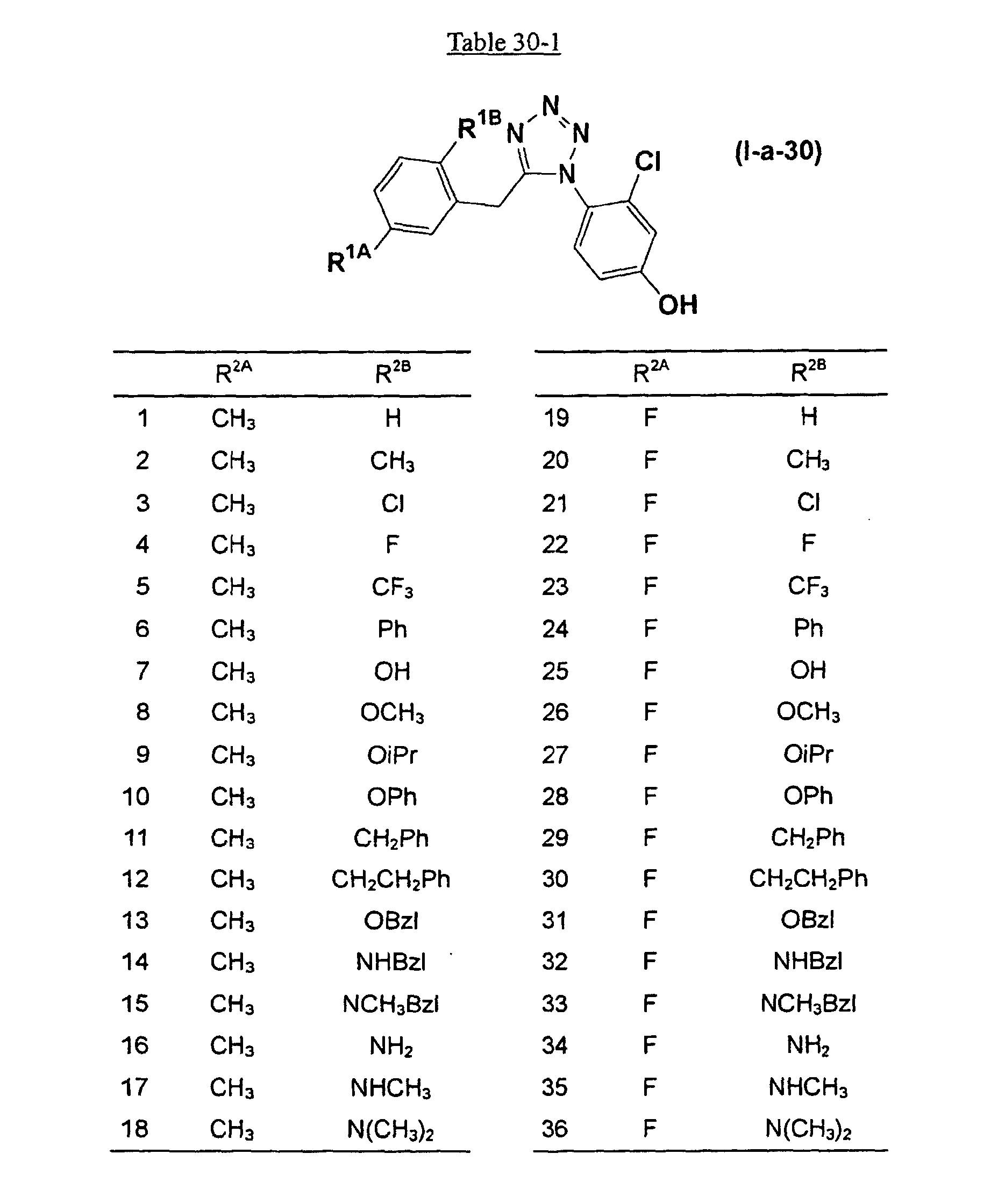


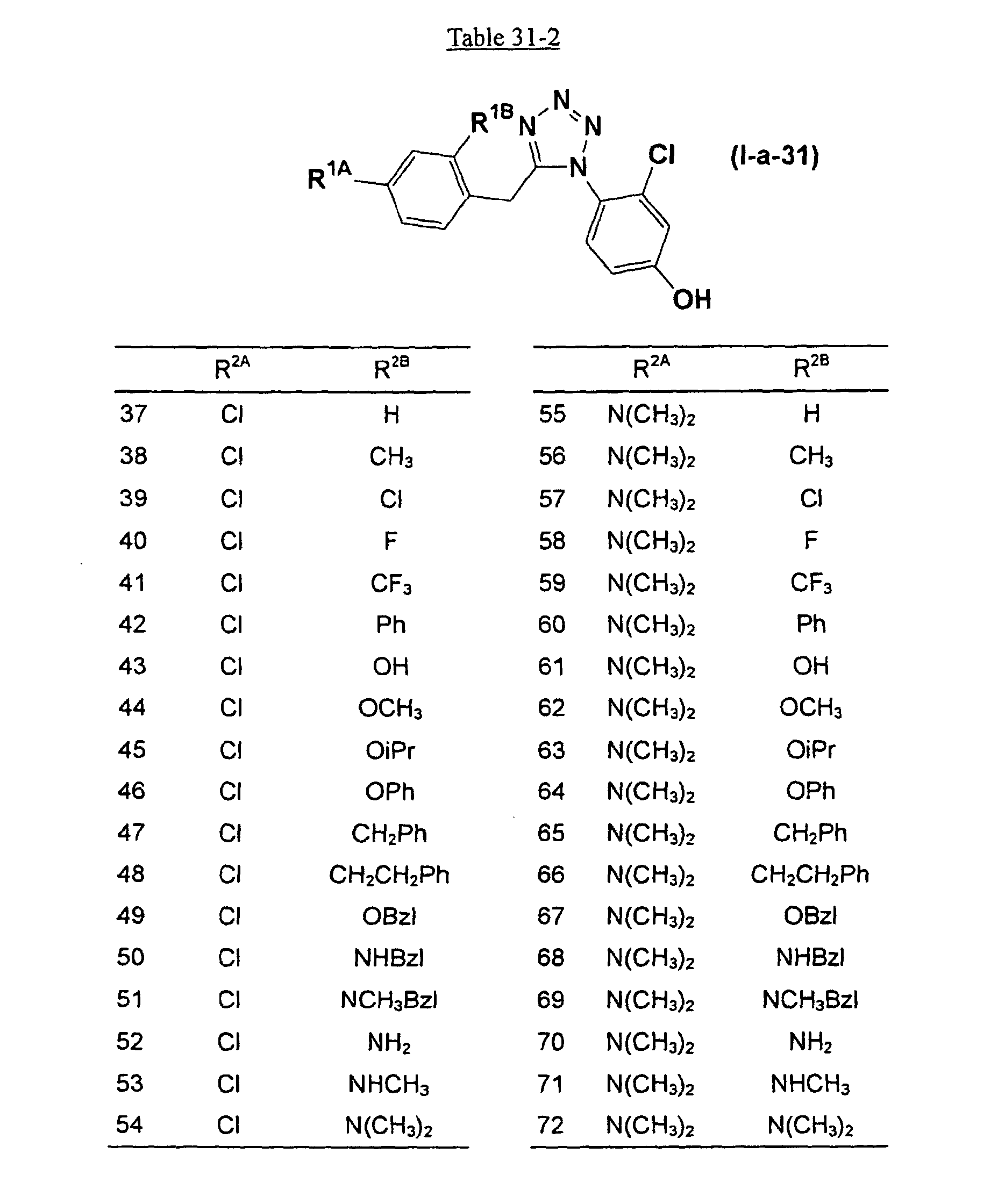
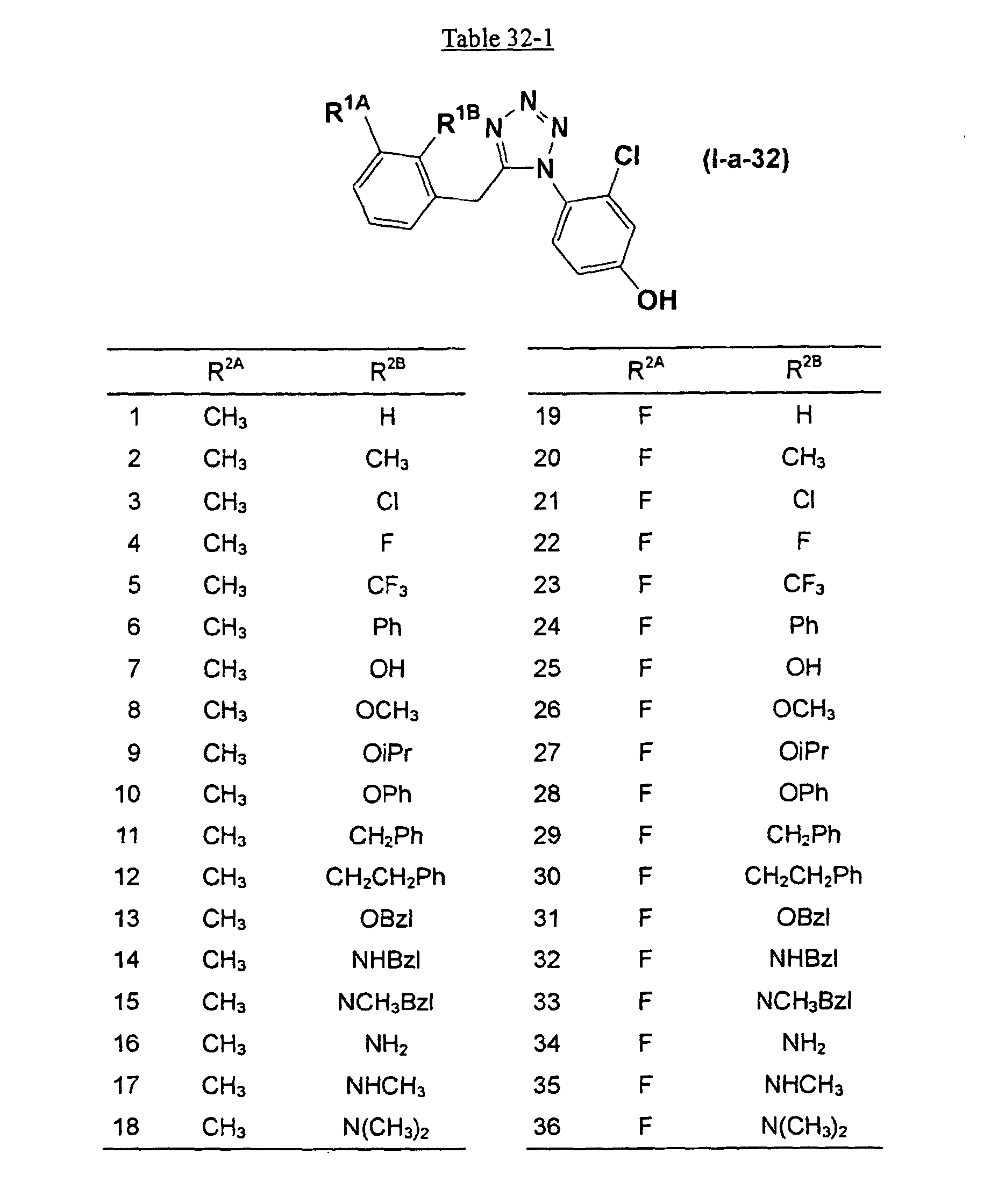

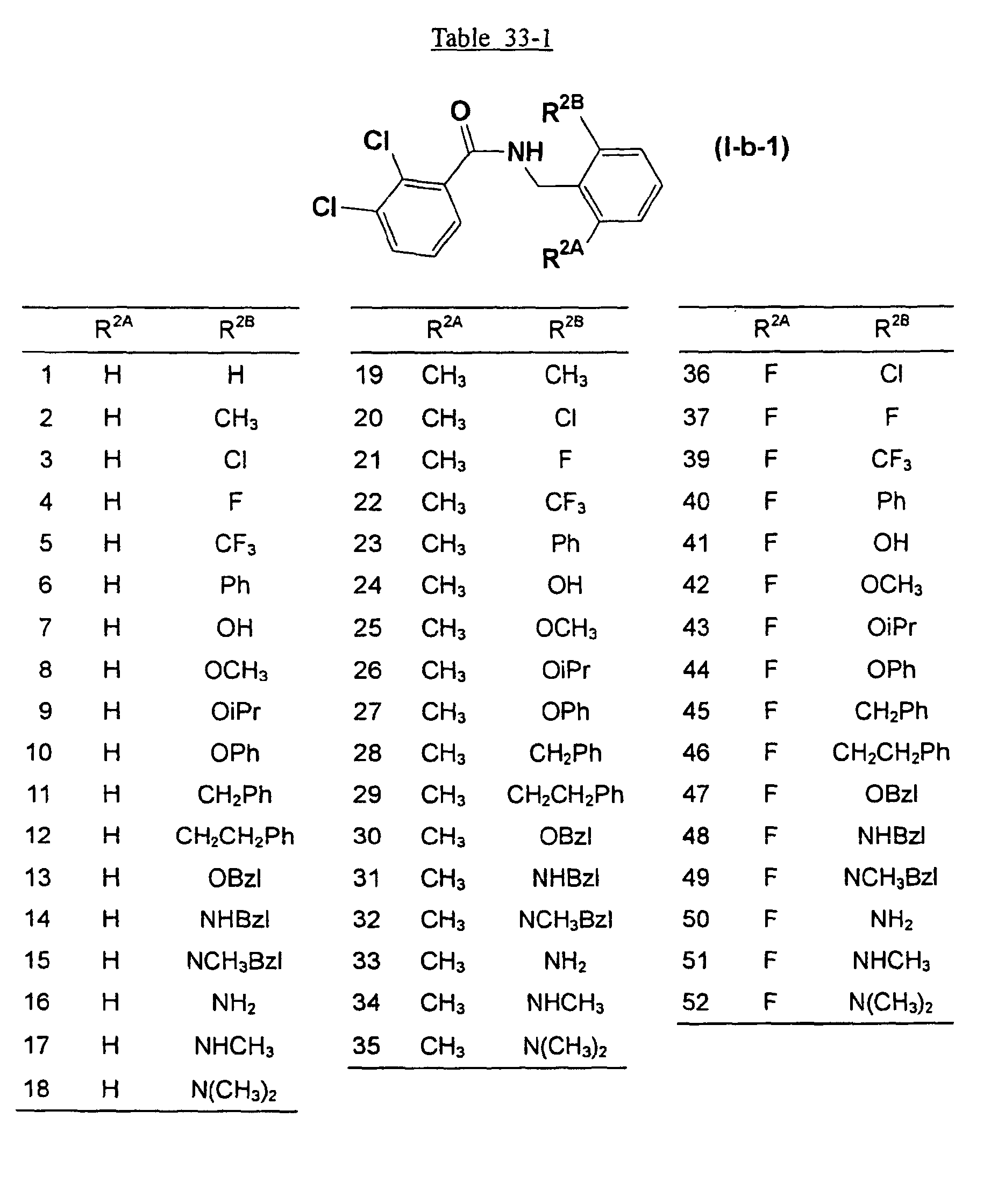
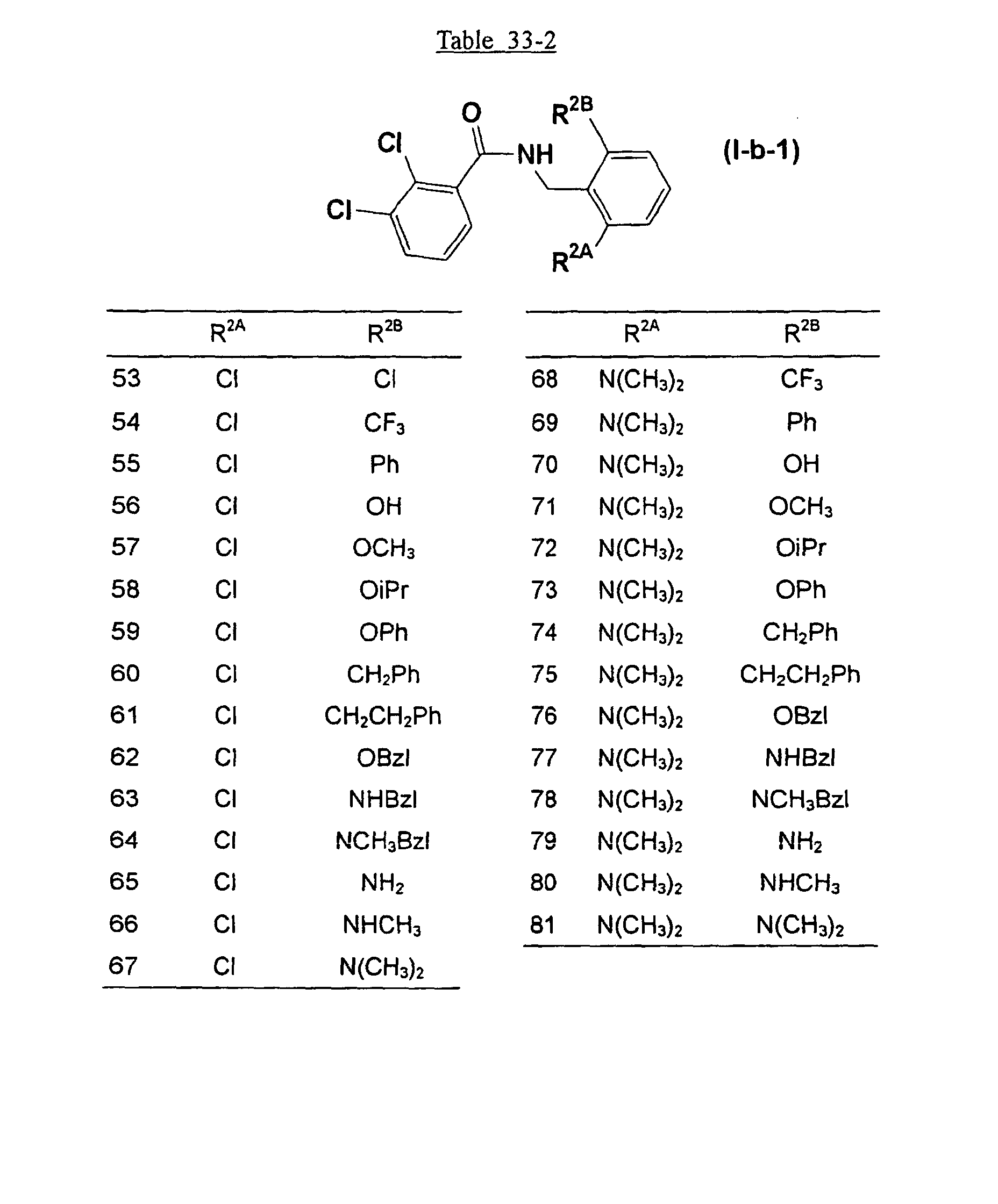

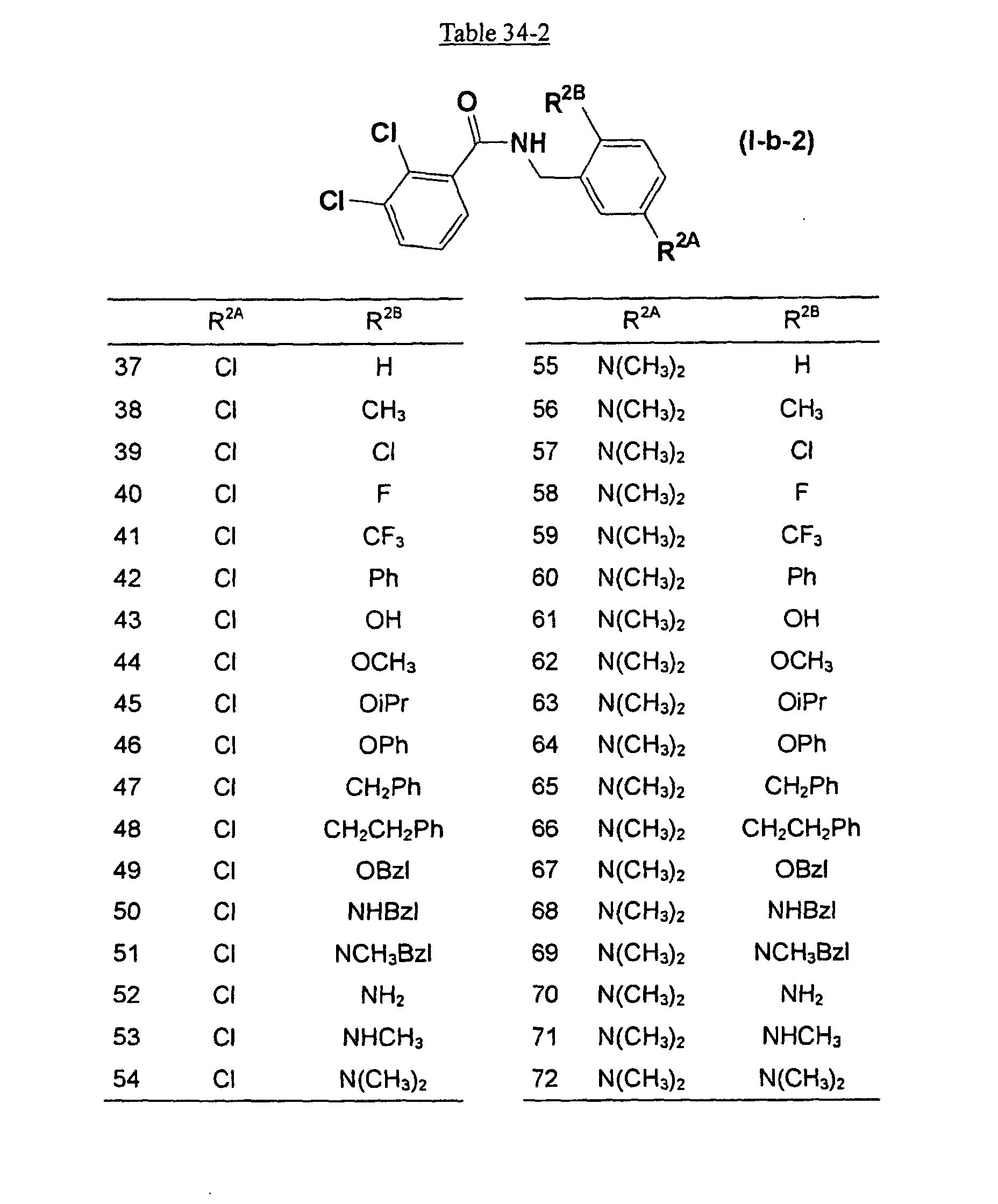
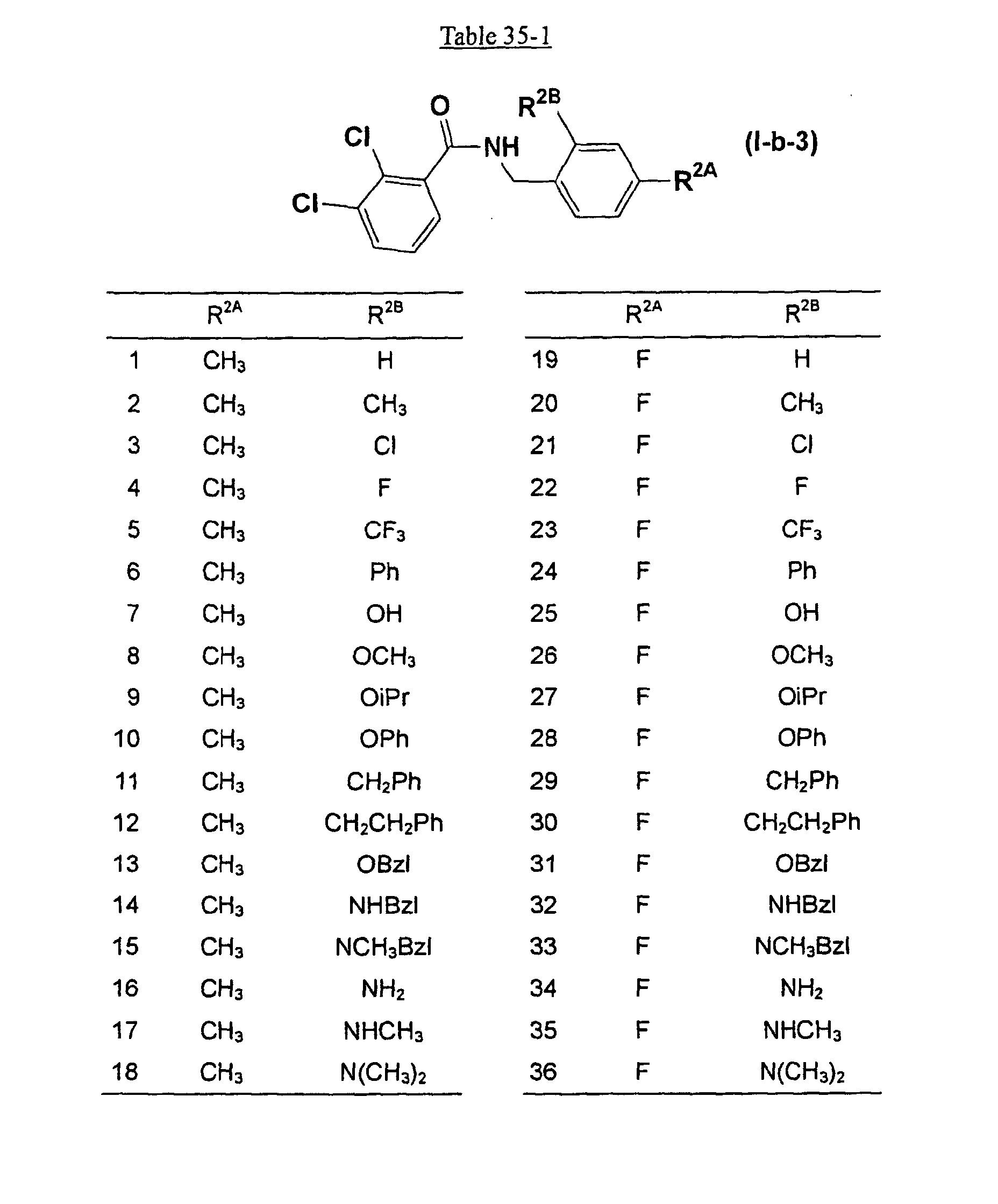


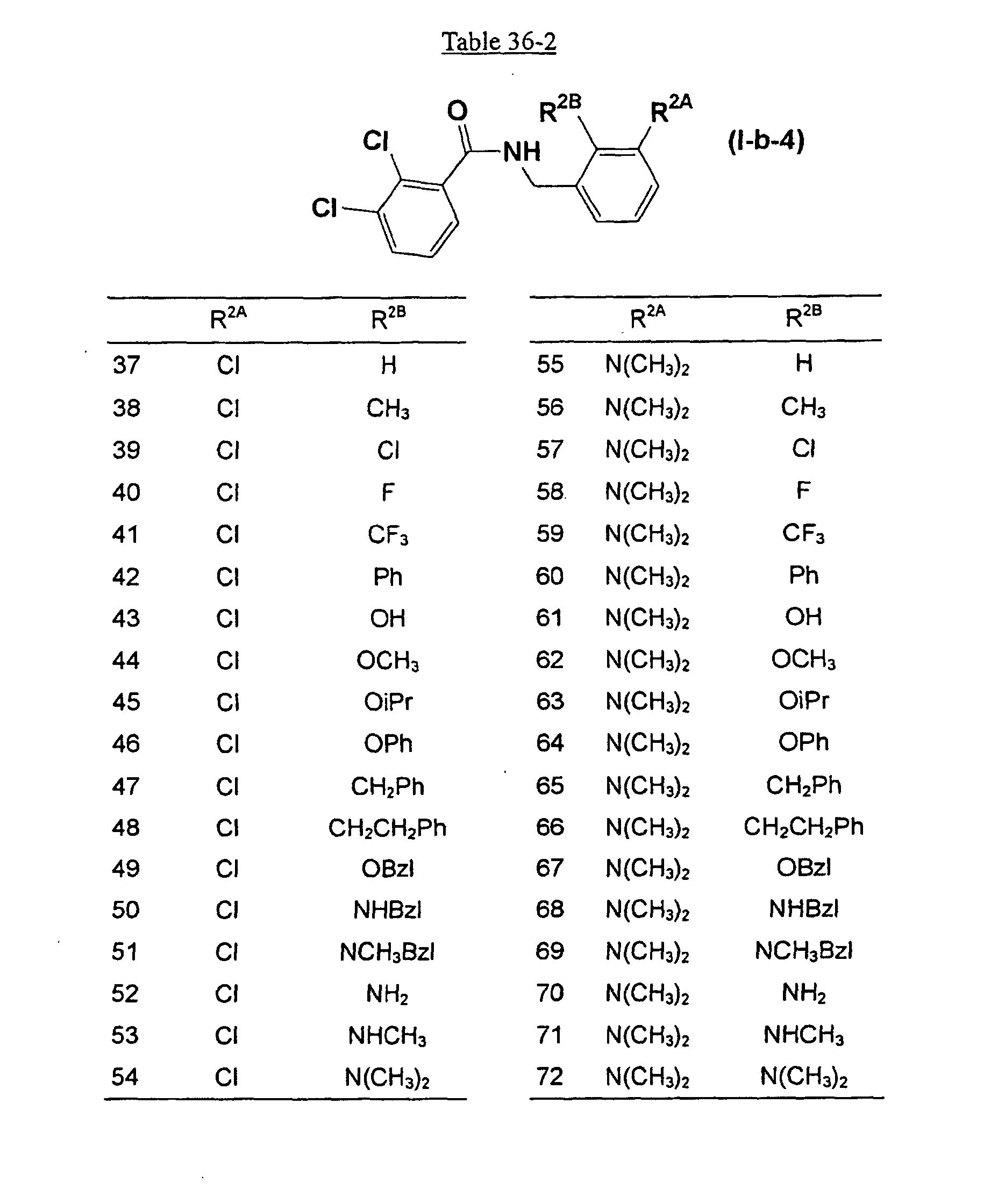
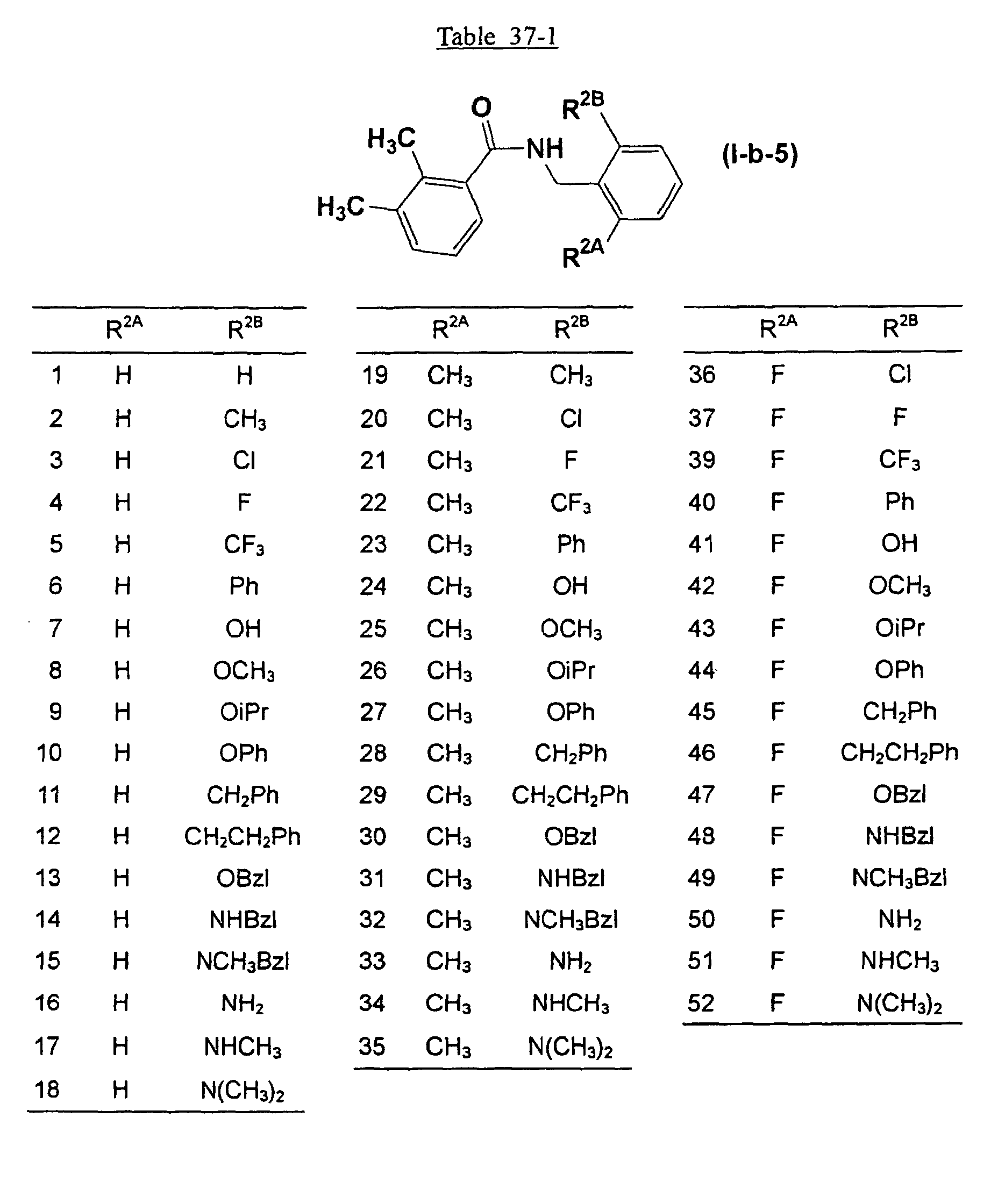

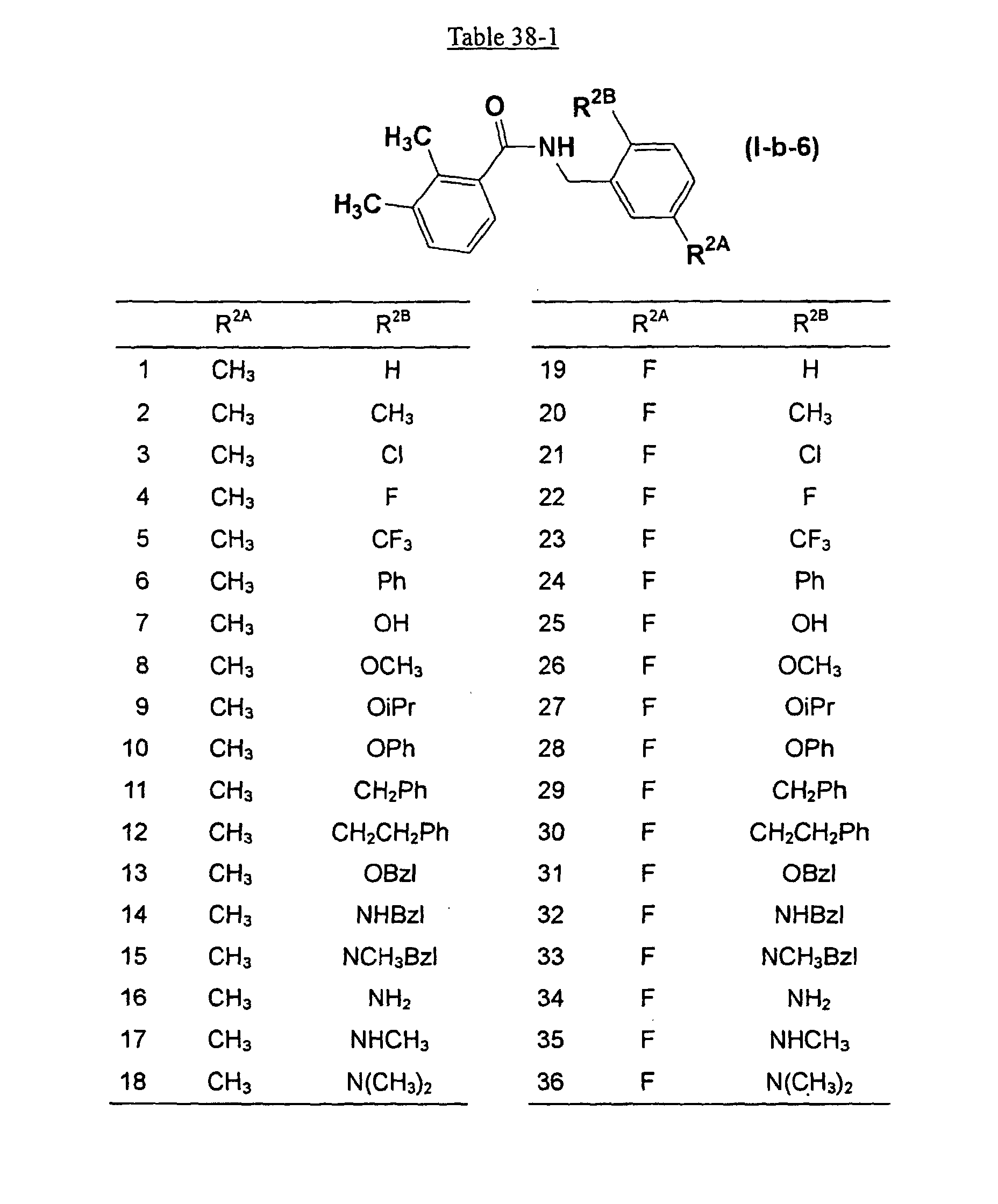
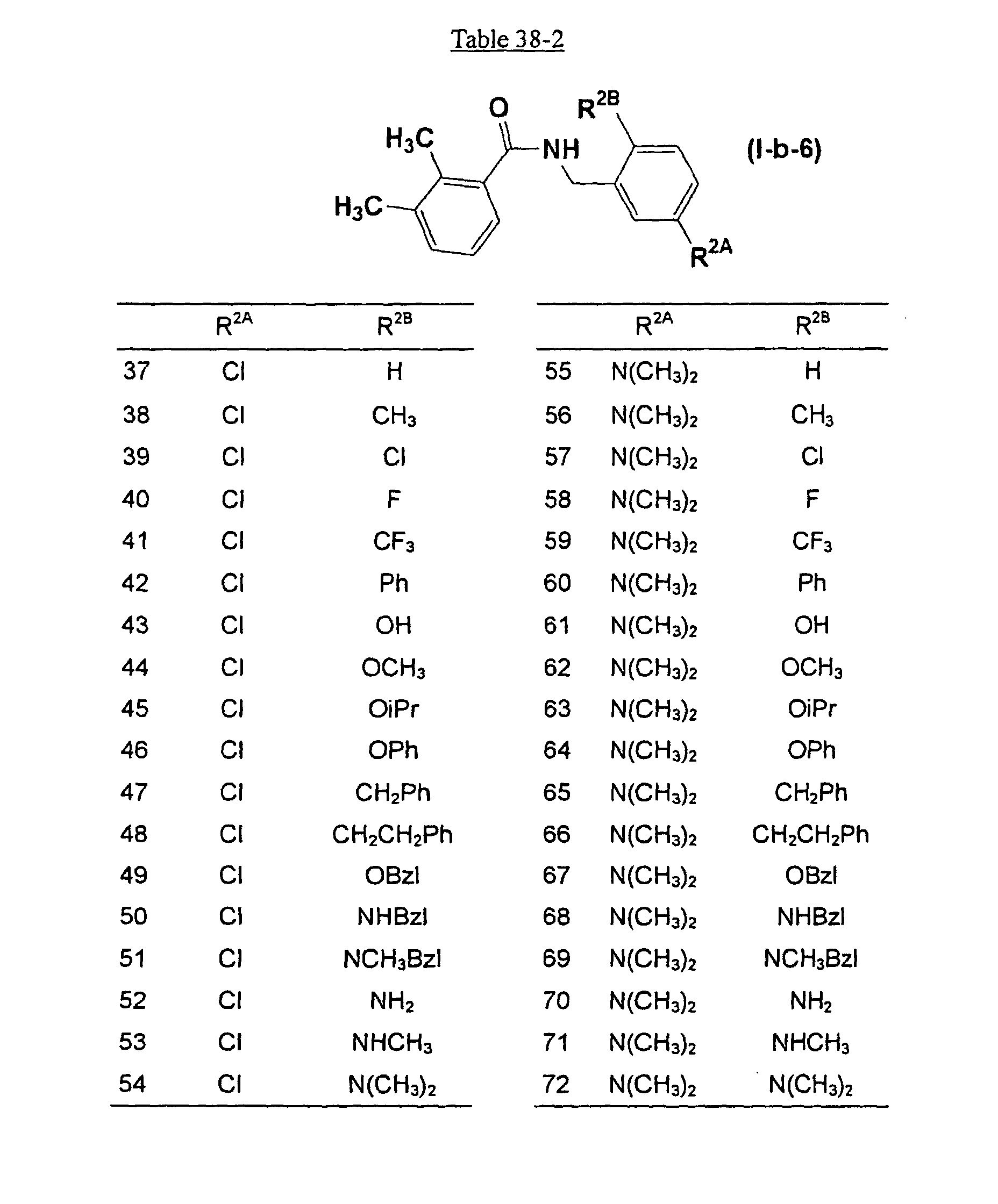
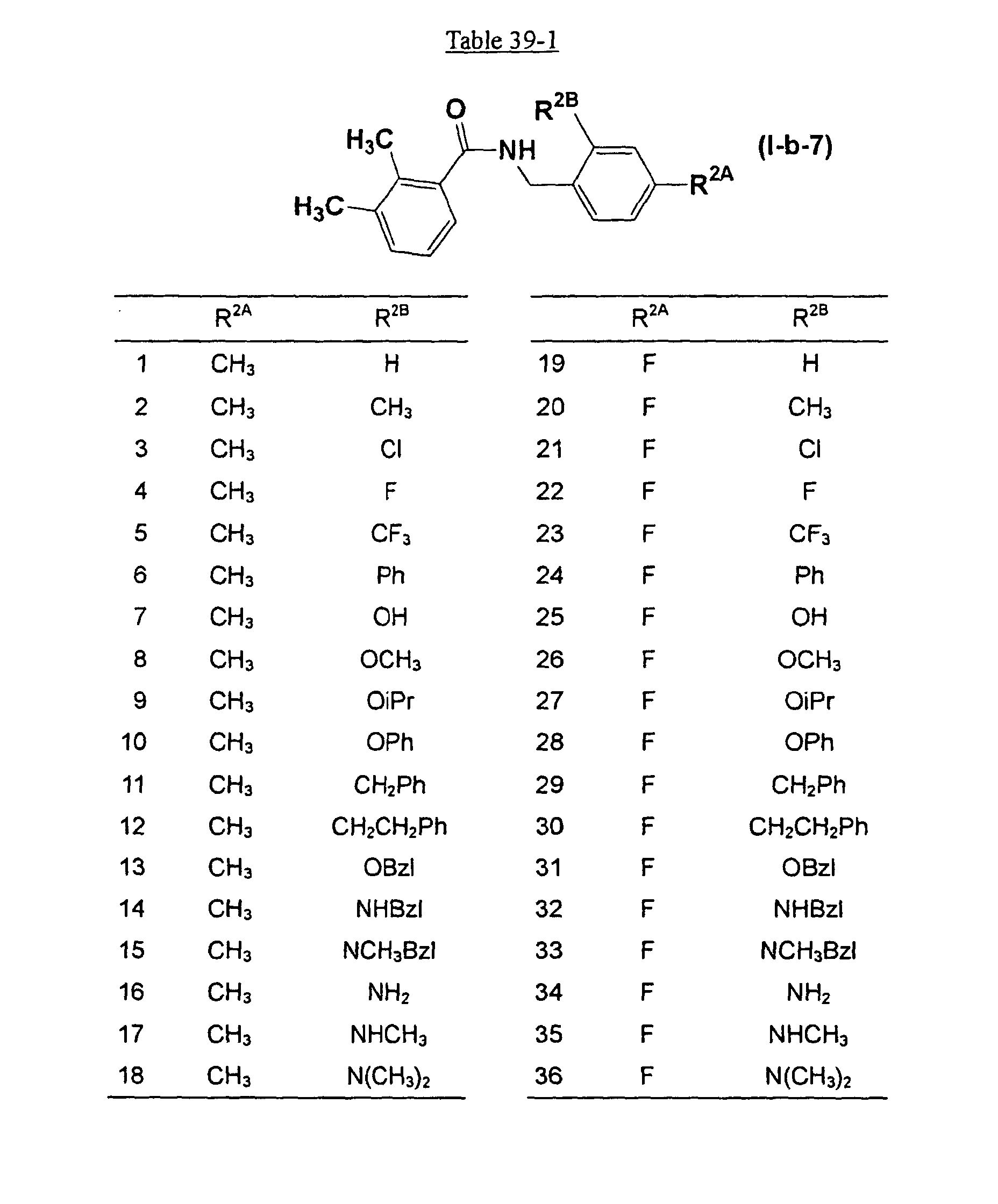


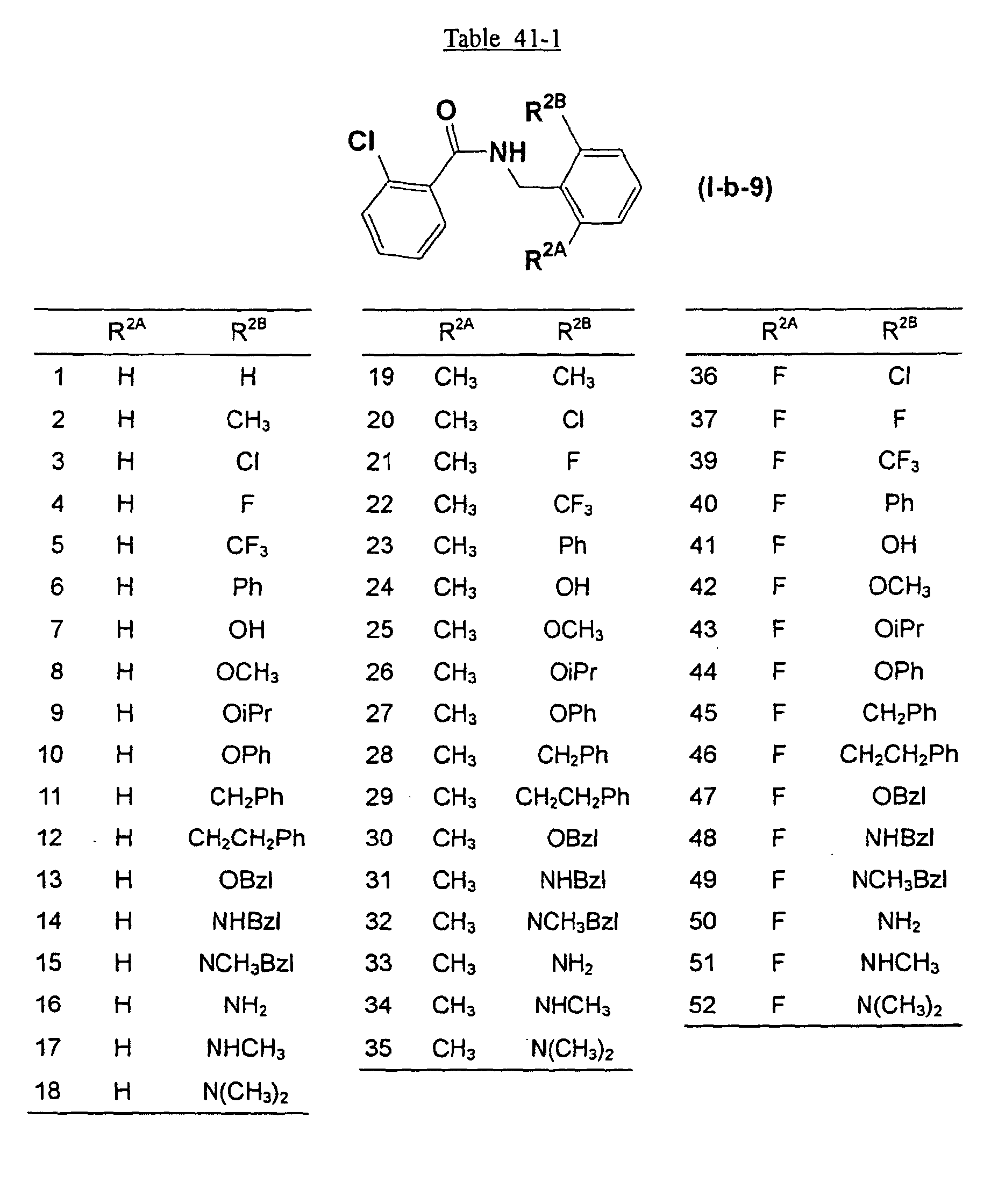

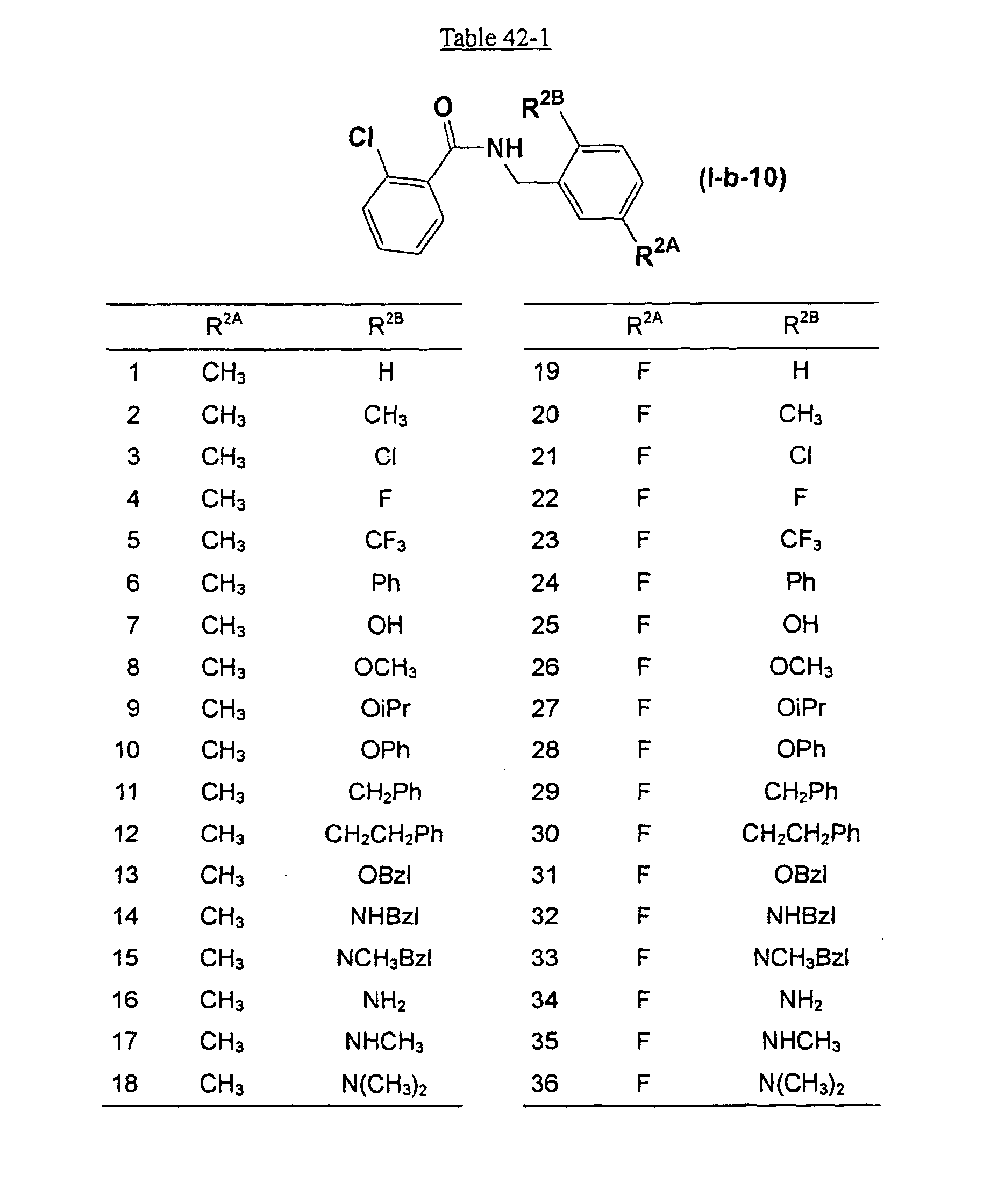
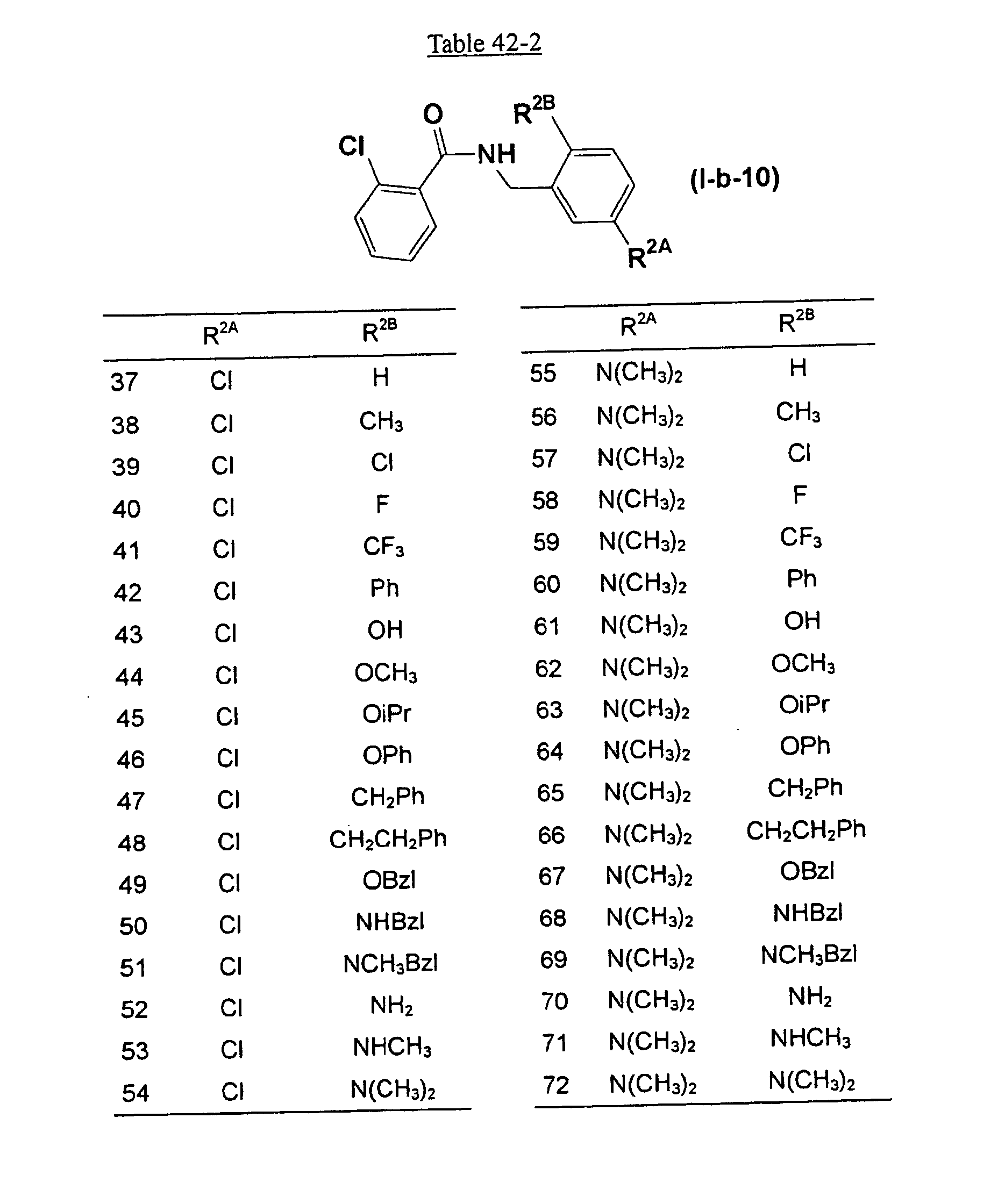


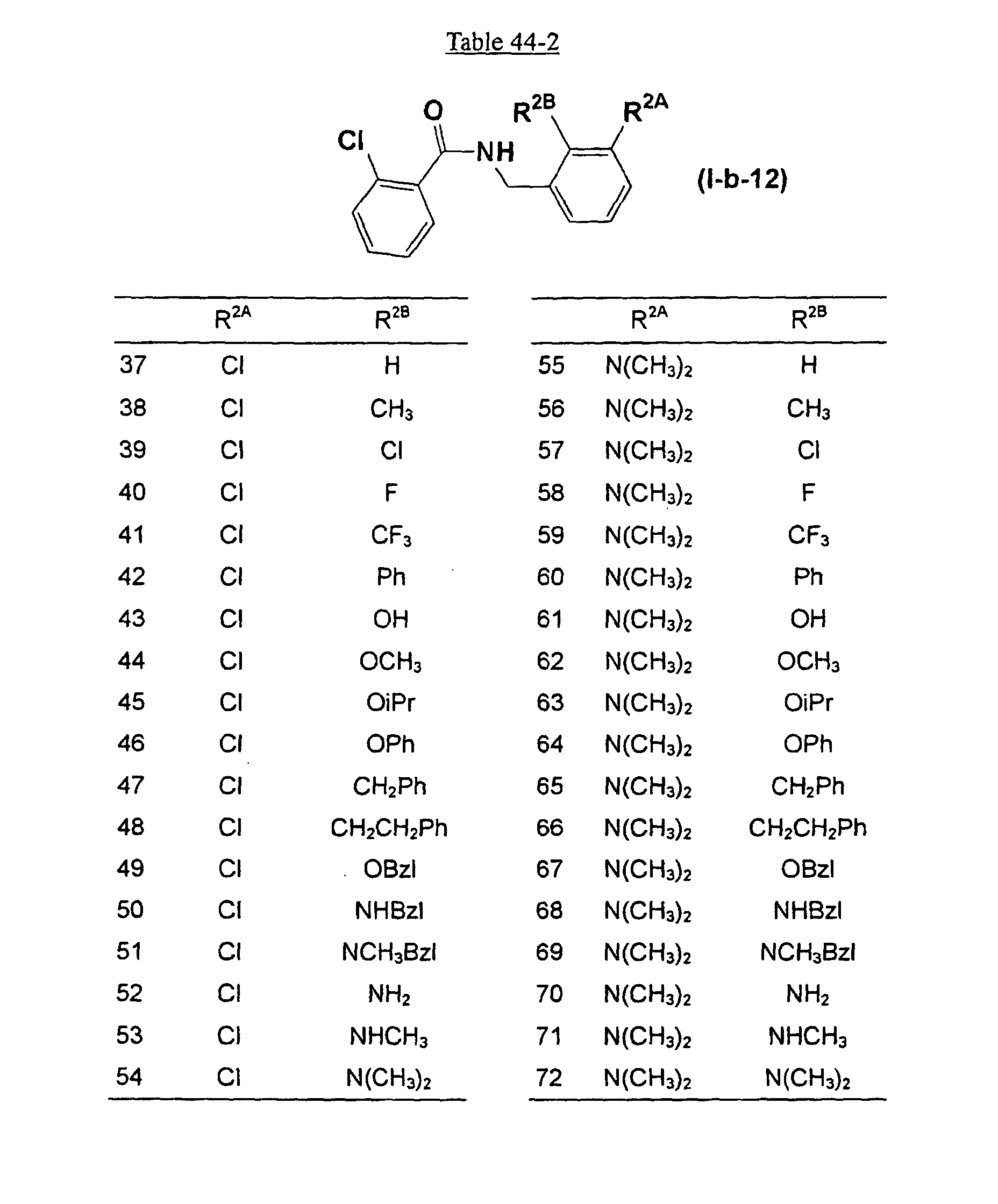

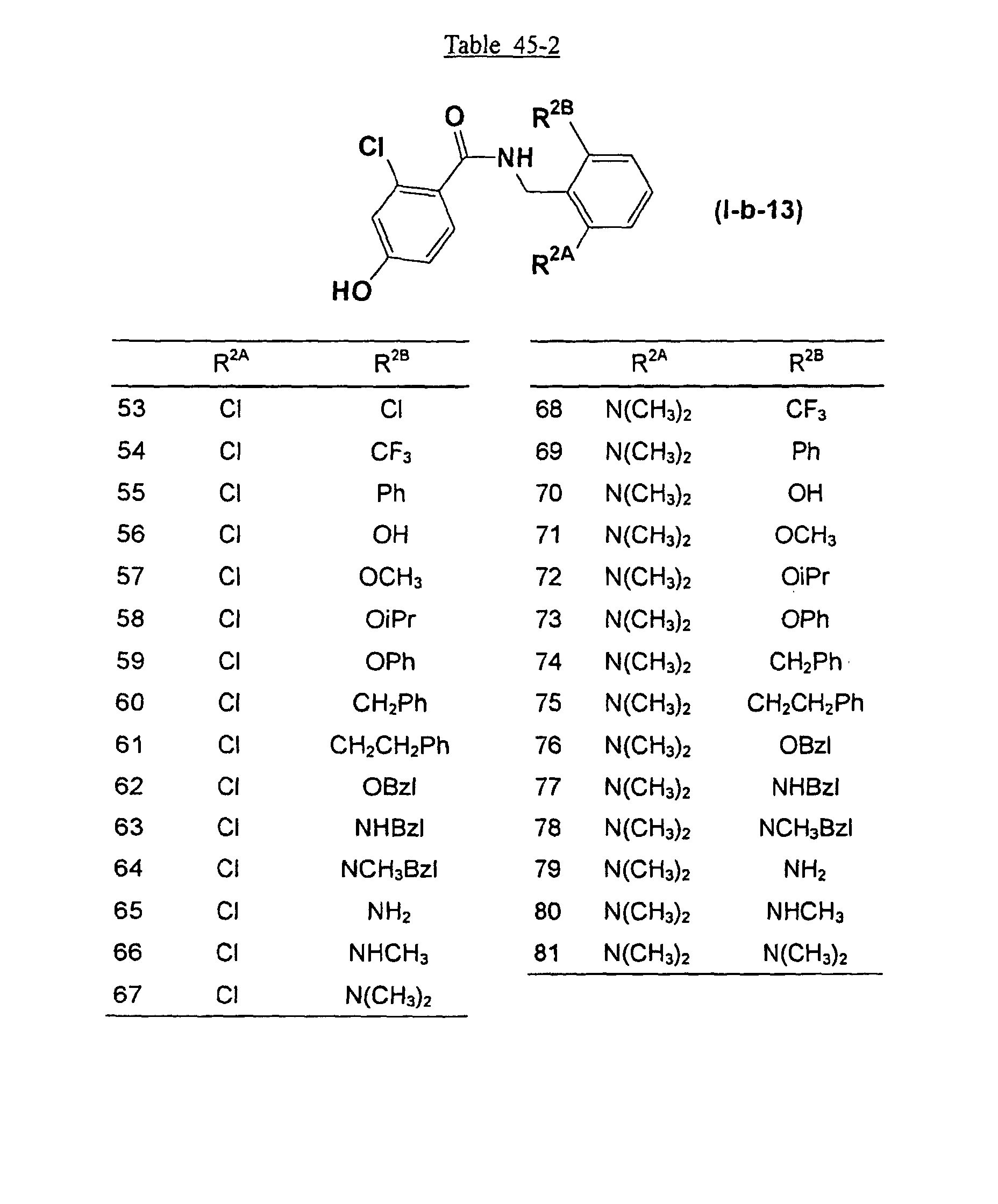


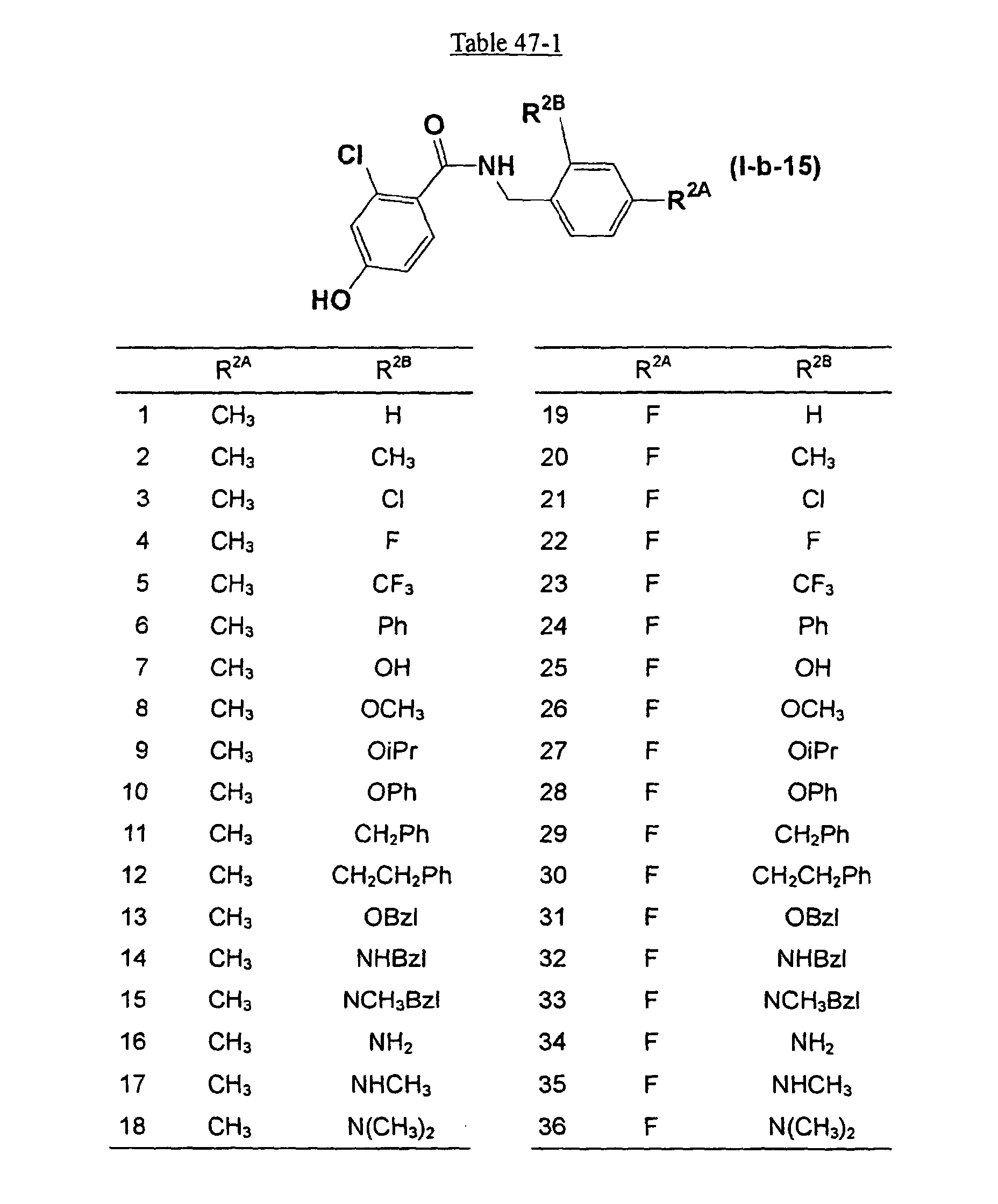
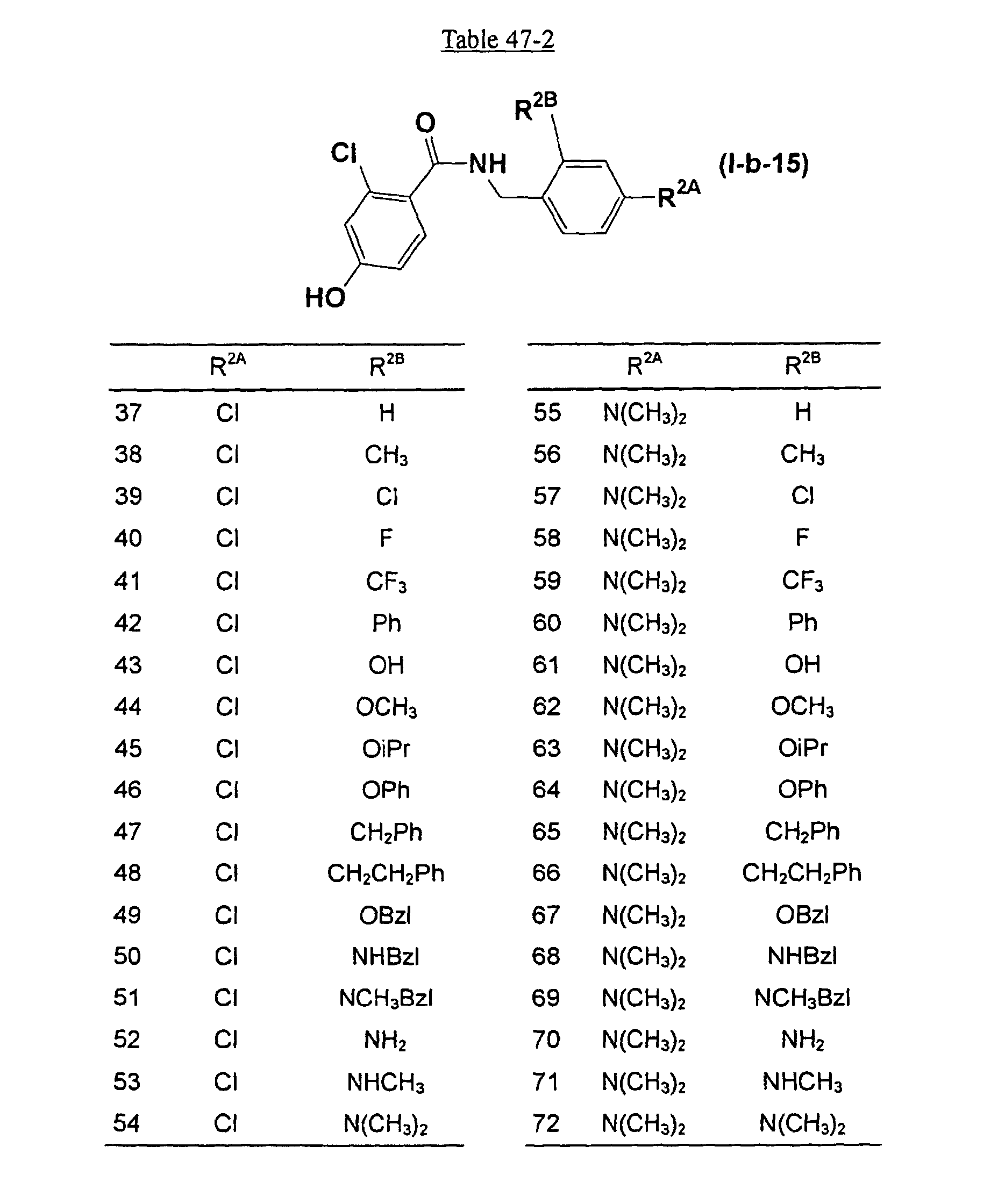


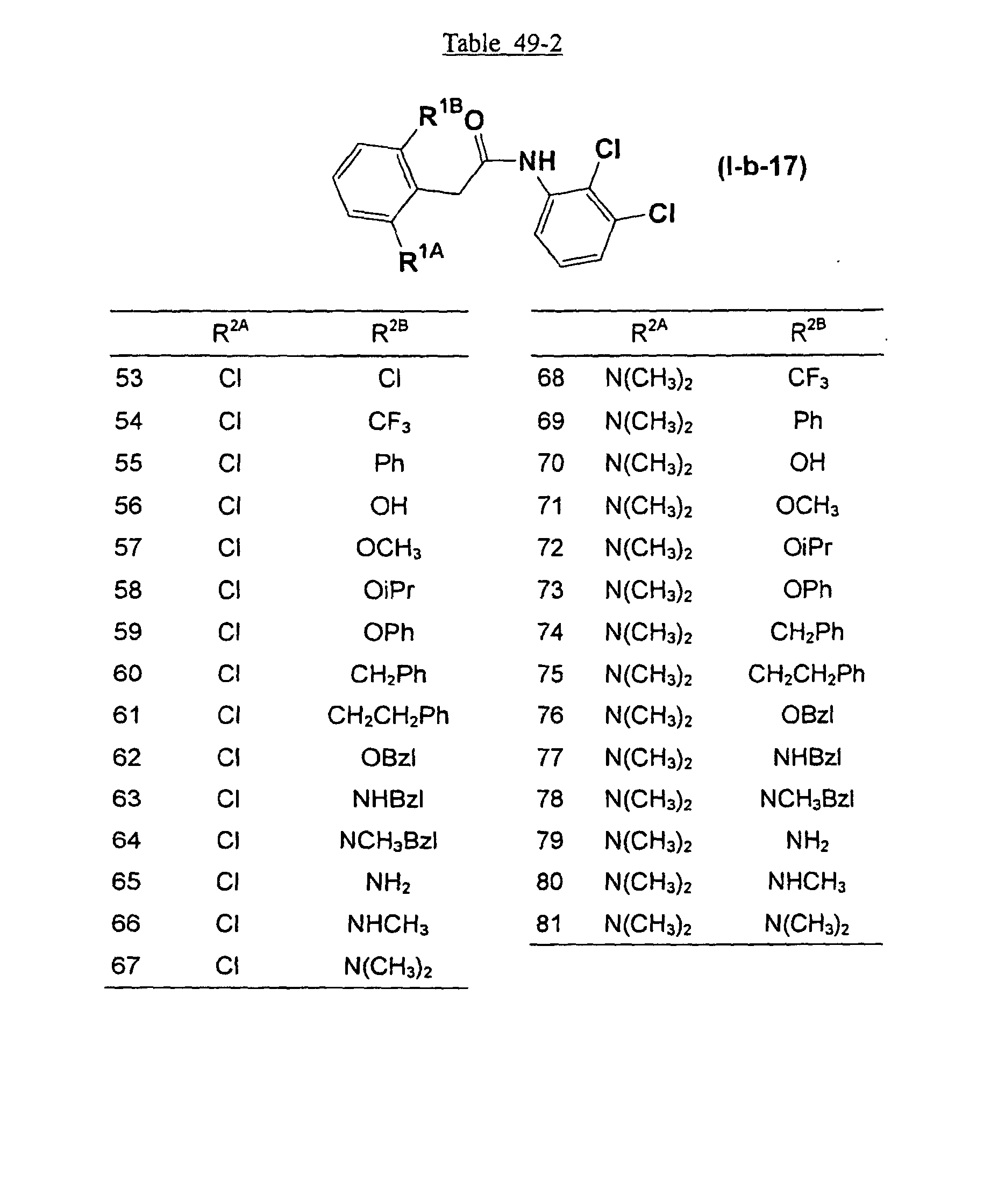
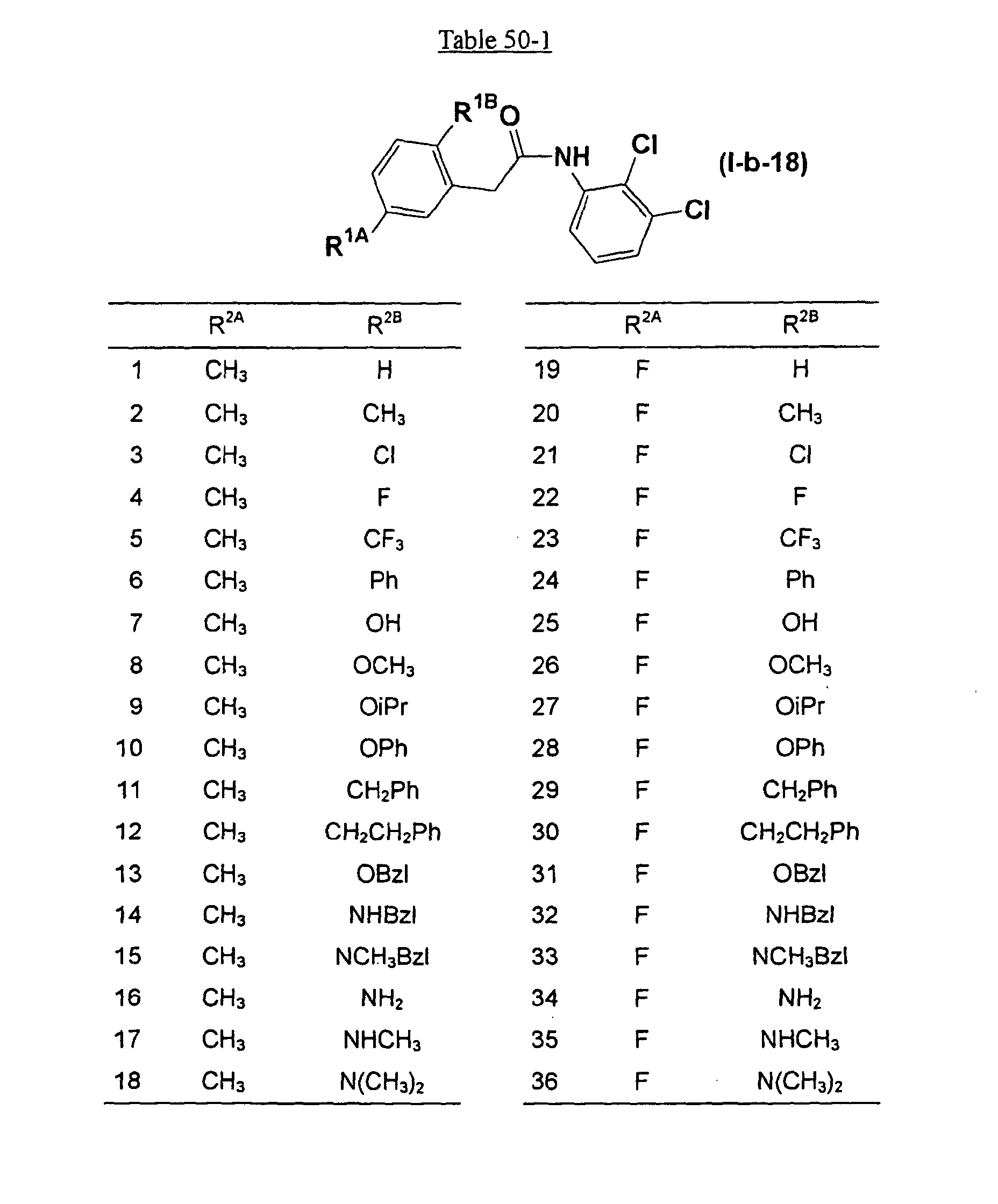


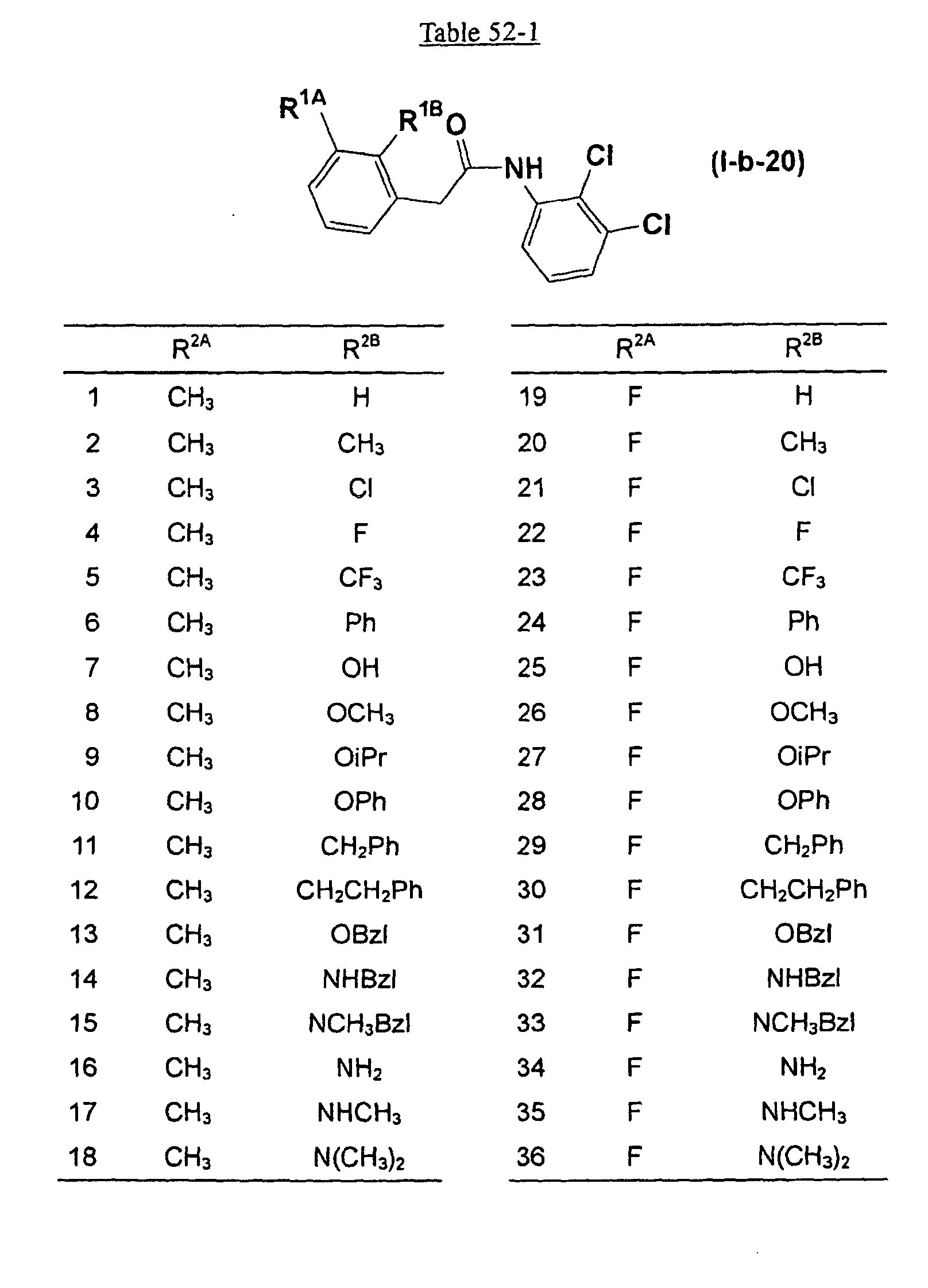


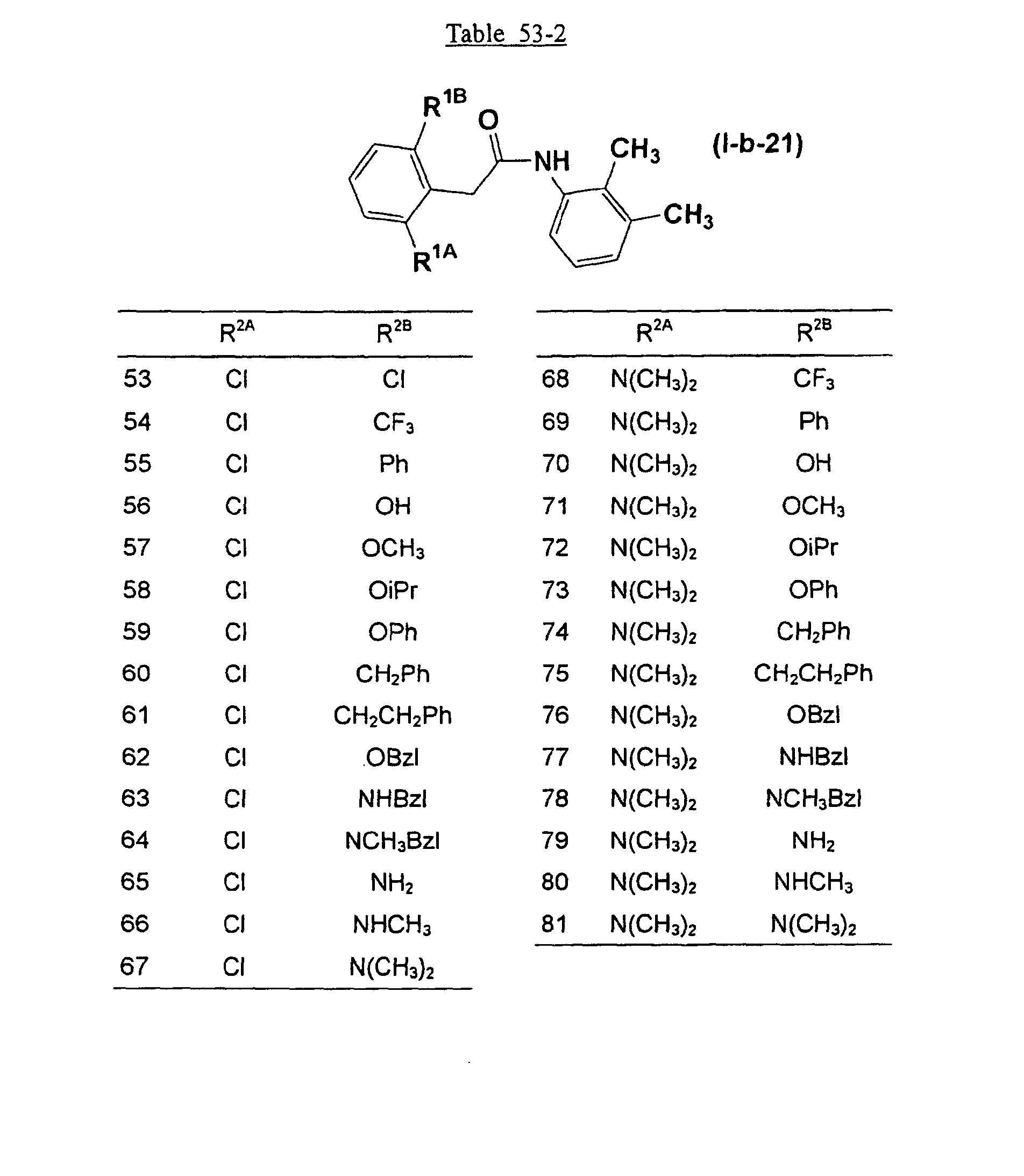
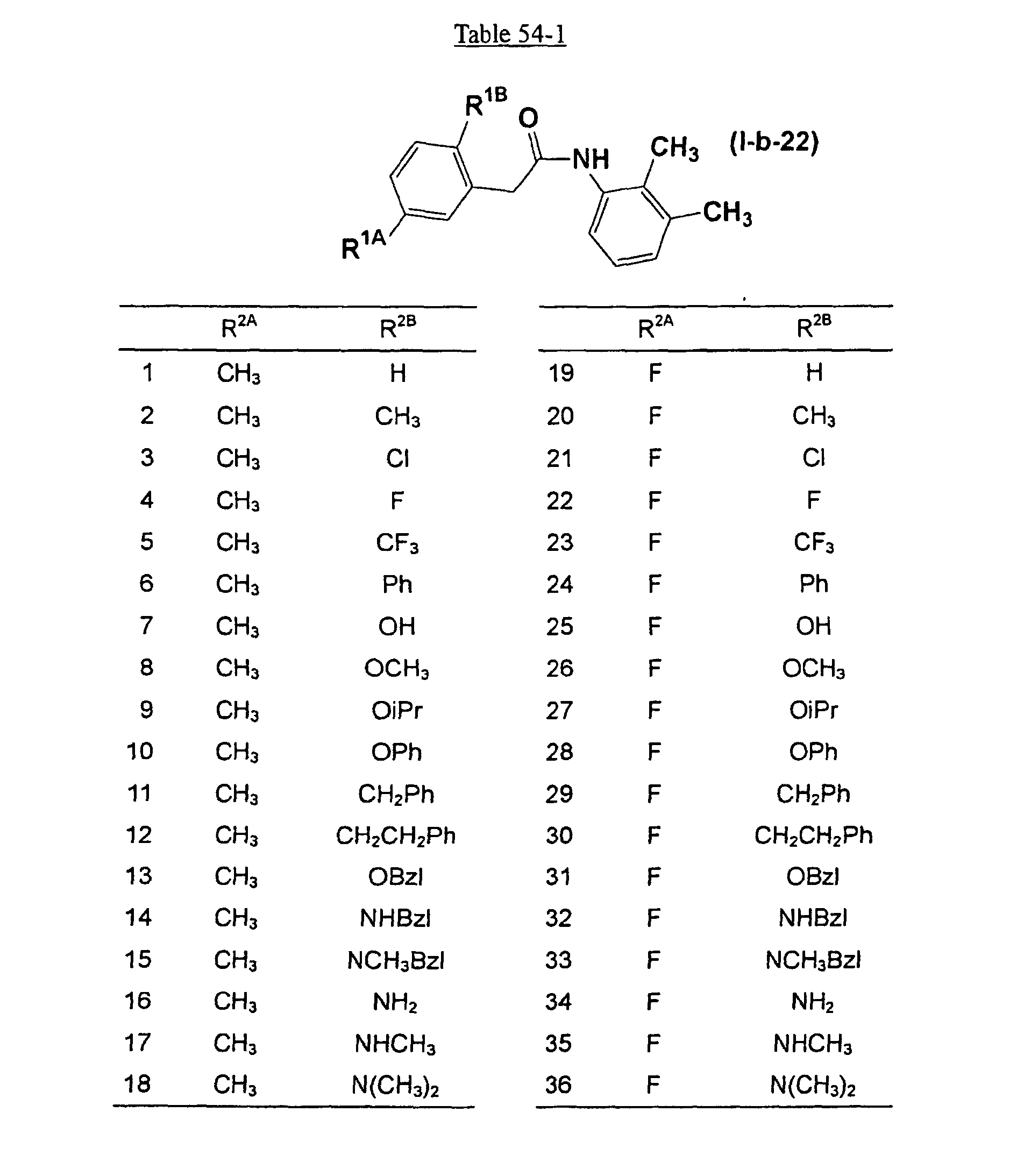
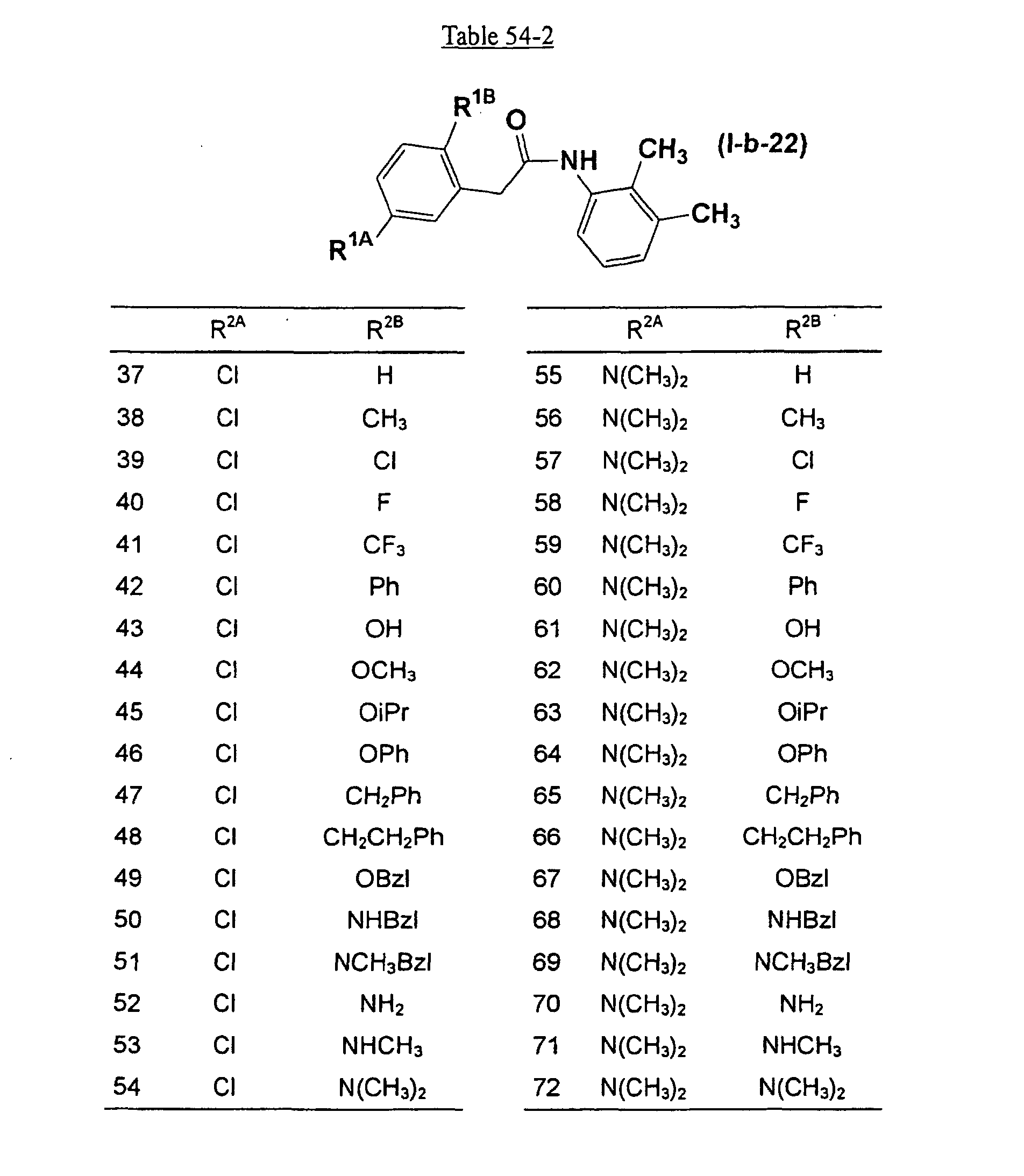


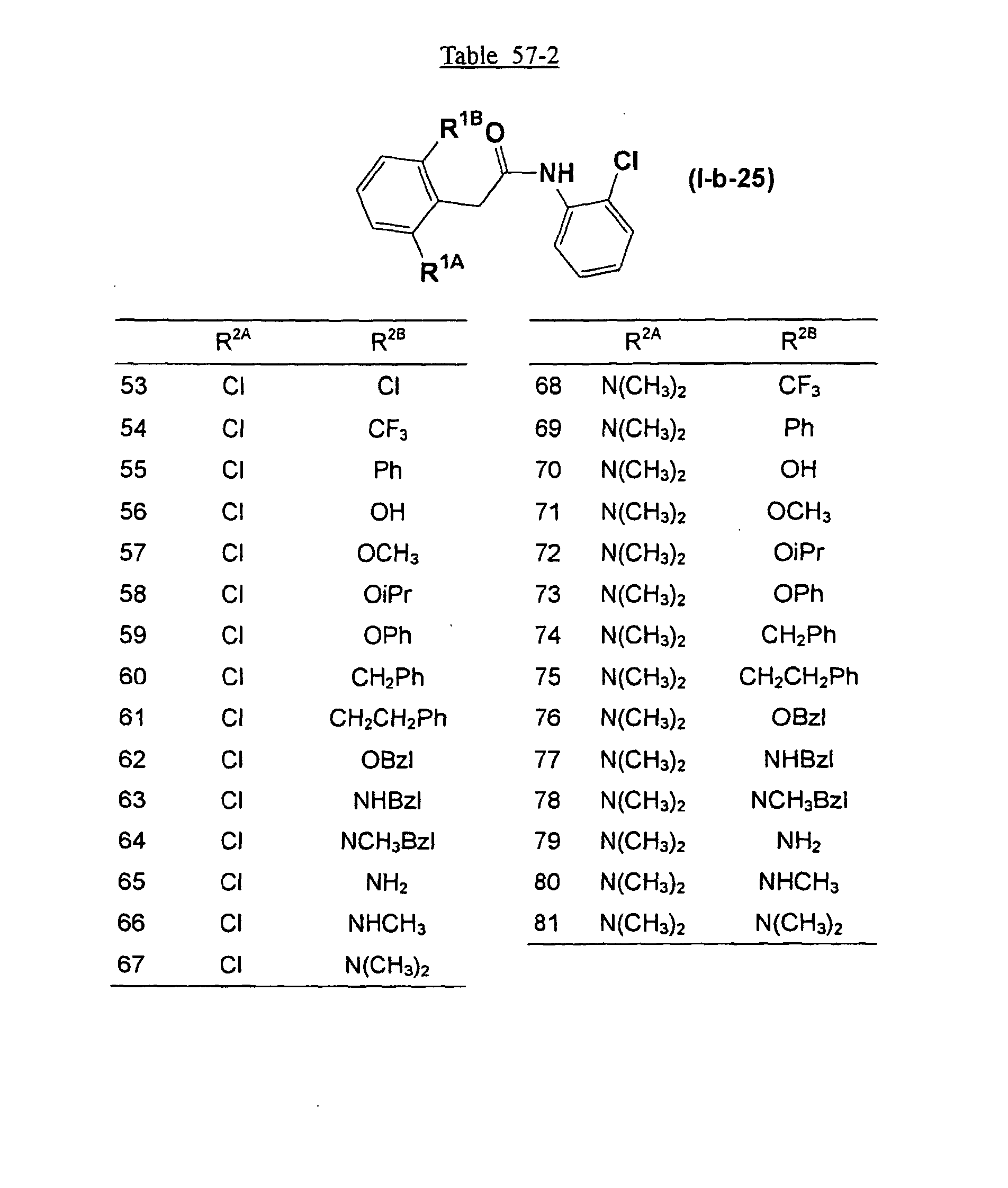
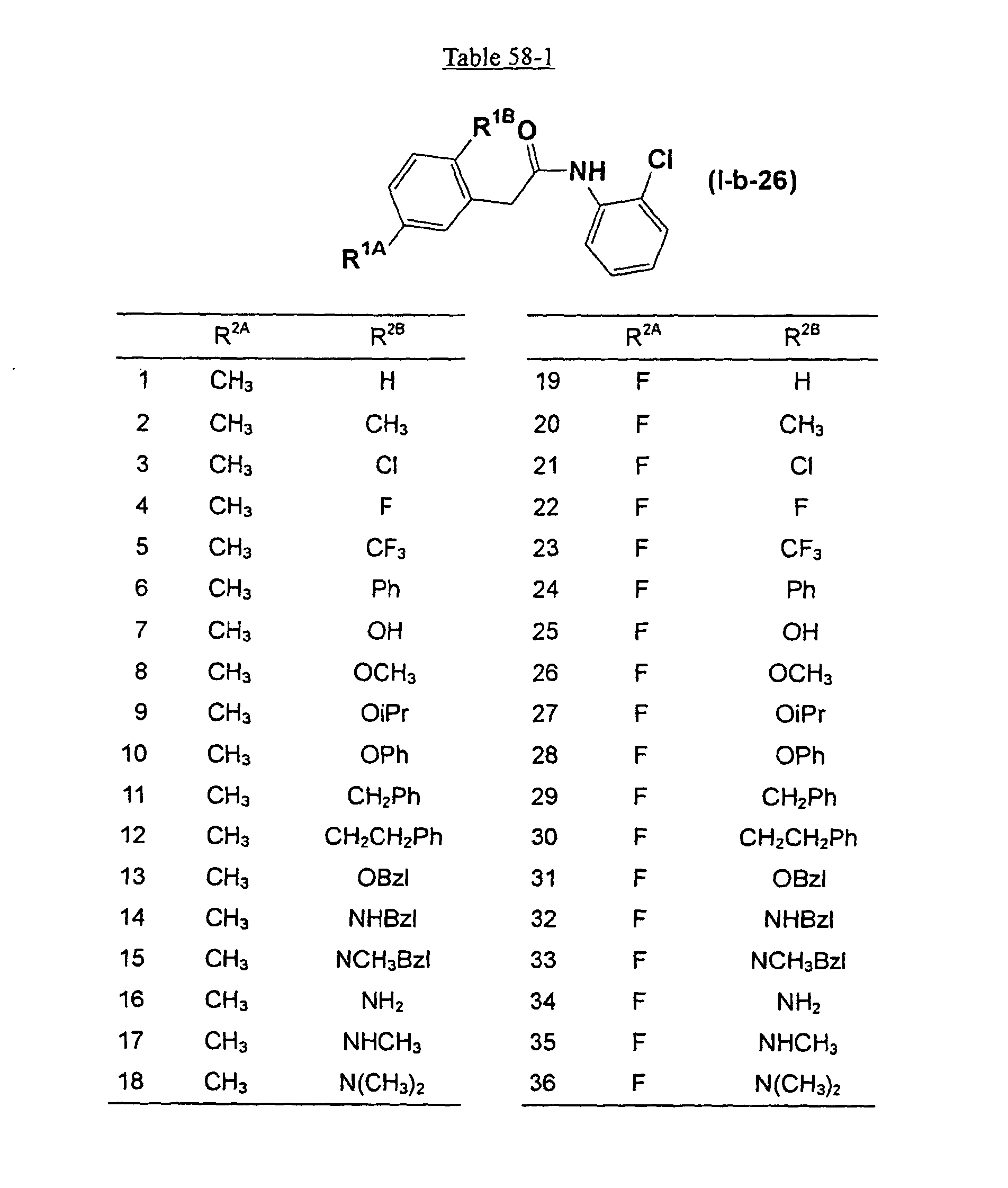

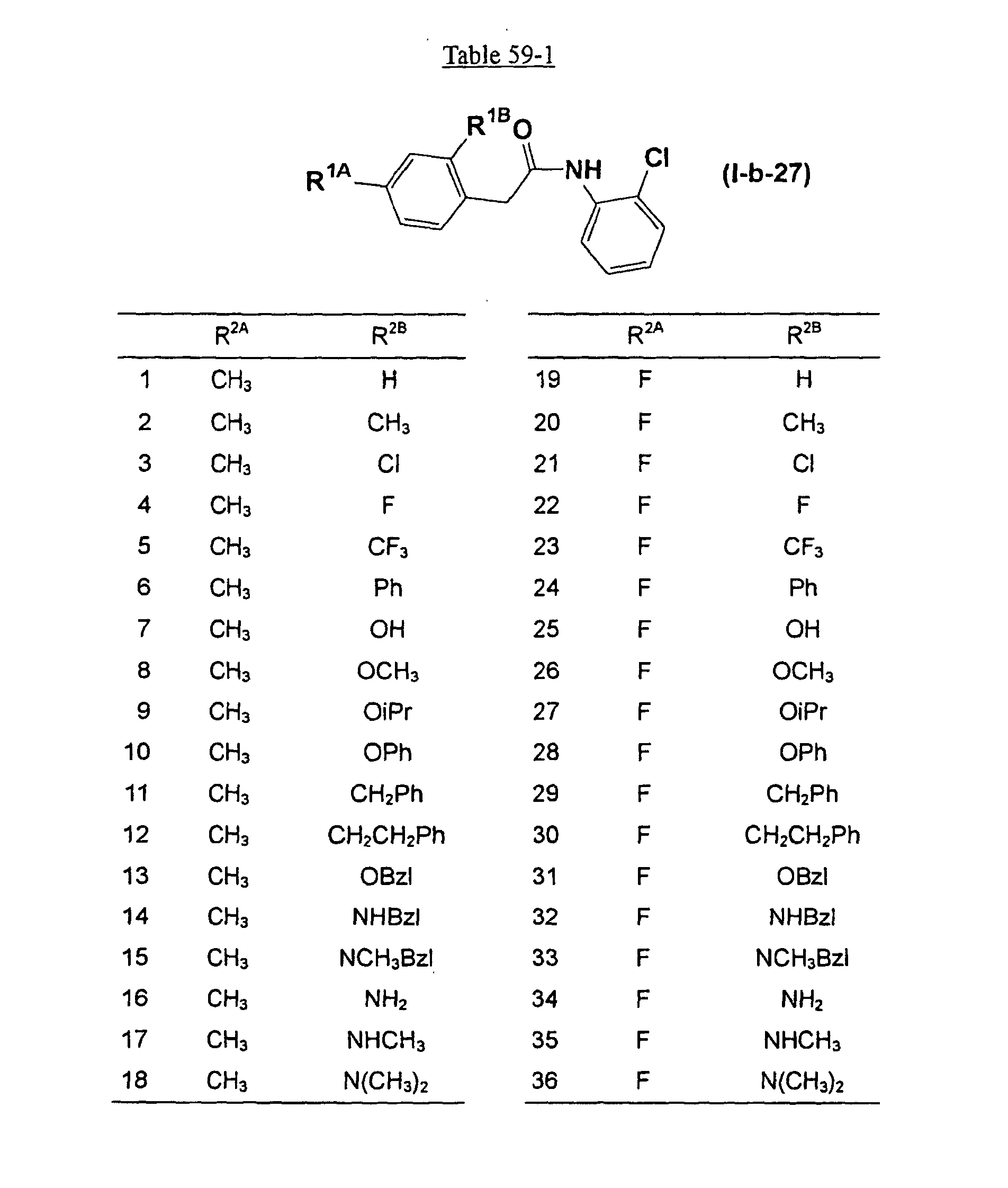
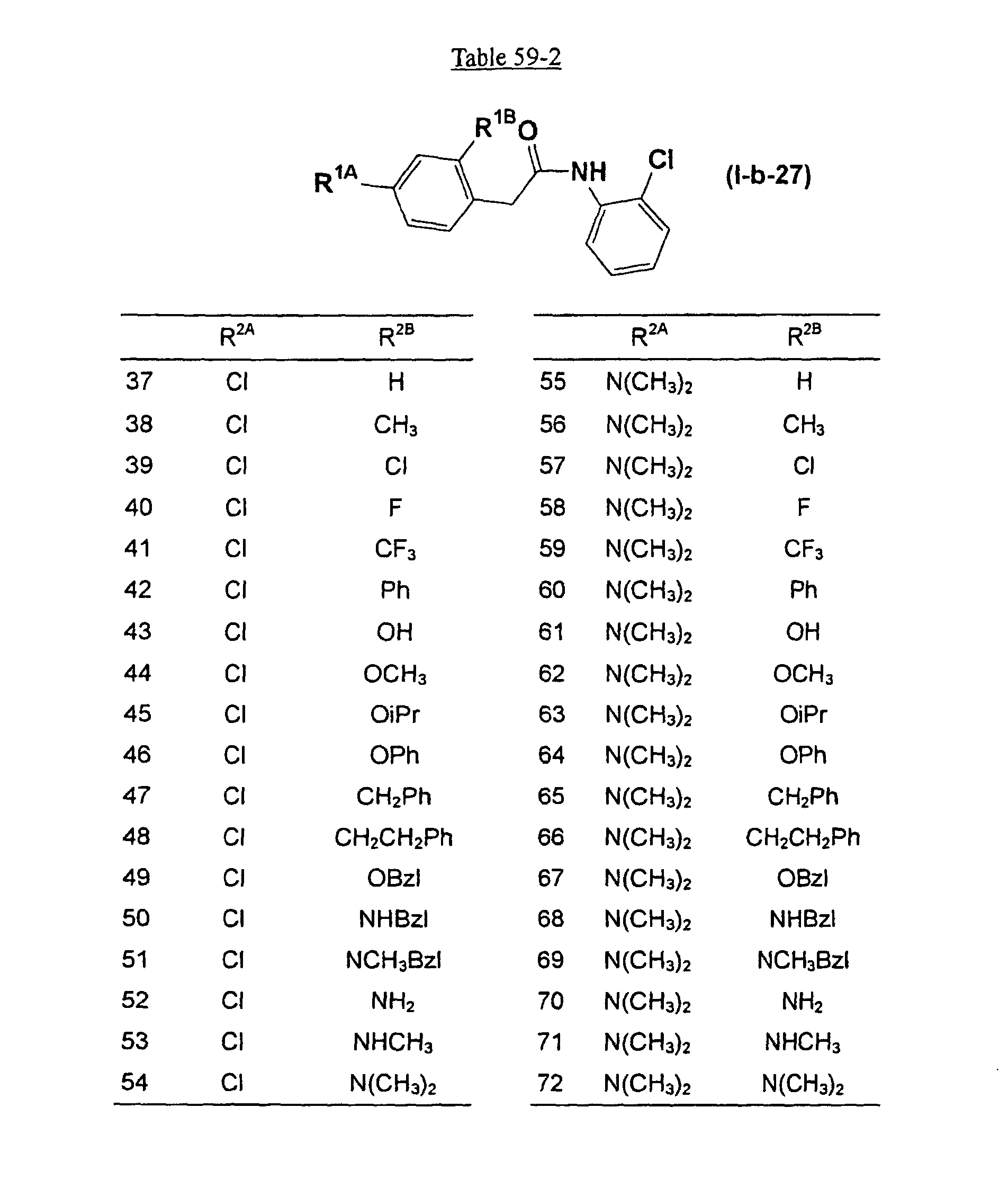

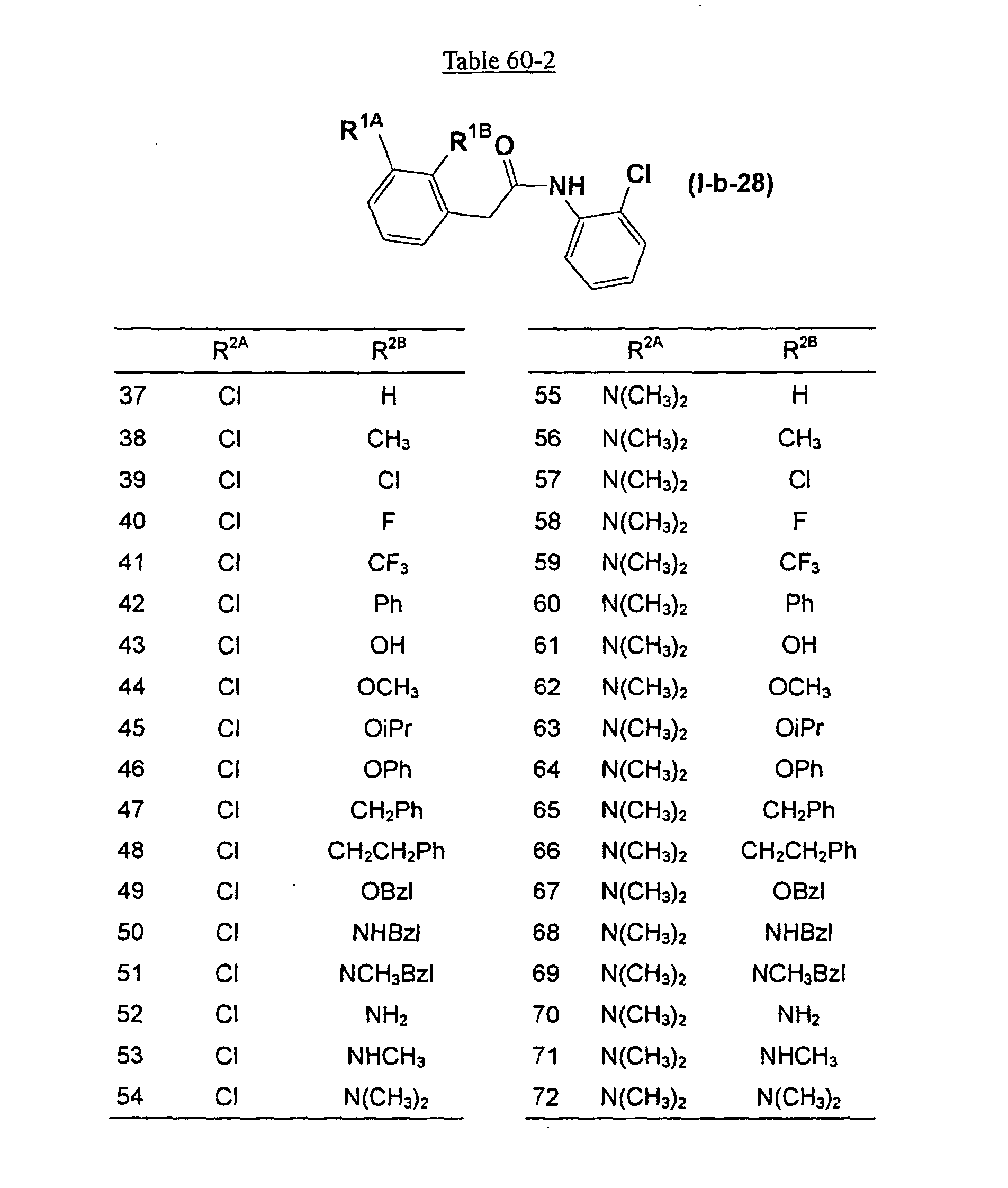


The present invention provides a substance possessing an effect of antagonizing
diazepam binding inhibitor (DBI), which is increased by stressor and its metabolite on
mitochondrial benzodiazepine receptor (MBR) and inhibits excessive neurosteroid production
which mediates MBR and recover the excitory and inhibitory transmission to normal level, that is,
MBR antagonist effect. The present invention further provides a pharmaceutical composition for
the prophylaxis and/or treatment of diseases induced, exacerbated or reignited by stressor
comprising a substance possessing MBR antagonistic effect.
The present invention provides a pharmaceutical composition for the prophylaxis
and/or treatment of diseases induced, exacerbated or reignited by stressor comprising a substance
acting on MBR possessing MBR antagonistic effect.
The present invention provides a pharmaceutical composition for the prophylaxis
and/or treatment of diseases induced, exacerbated or reignited by stressor comprising a substance
which acts on MBR and suppresses the increase of abnormal neurosteroid production in a stress
state.
The compound of the present invention acts on MBR and suppresses the increase of
neurosteroid production by MBR agonist. As a result, the compound of the present invention
suppresses increased neurosteroid production and recovers excitory and inhibitory signaling
pathway and then recovers the function of nervous, immune internal secretion.
When stressor is added to a living body, the production of pregnenolone, which
mediates MBR in the mitochondria of a neuroglia increases, and as a result kinds of neurosteroid
also increases, which are metabolites. Since neurosteroid adjusts the function of various receptors
and ion channels to positive or negative according to the kind, the balance of excitatory and
inhibitory signaling pathway collapses, and thereby the activity of nervous system, immunity
system, and internal secretion system also changes, accordingly various stress related diseases are
caused. The medicament provided by the present invention, when especially MBR is activated
and neurosteroid production increases extraordinarily, suppresses its production, and recovers the
function of a nerve, immunity, and an internal secretion system.
The compound of the present invention binds to MBR and it acts as competitive
antagonist against MBR agonist which binds to this receptor and increases neurosteroid production
[for example, FGIN 2-[2-(4-fluorophenyl)-1H-indole- 3-yl]-N,N-dihexylacetamide: J. Pharmacol.
Exp. Ther., 262, 971-978 (1992)]. It is considered that the compound of the present invention
demonstrates anti-stress effect by acting as an antagonist to MBR and antagonizing the increasing
effect of steroid production induced by endogenous MBR ligand.
Therefore, the compound of the present invention is characterized by (a) inhibiting
steroid production induced by MBR agonist and by the steroid production inhibitory effect, it is
characterized by (b) expressing anti-stress effect by decreasing neurosteroid and recovers the
balance of excitory and inhibitory signaling pathway to the normal level. Therefore, the
compound of the present invention is not limited to a particular chemical structure, but all
compounds which have the above features should be included in the scope of the present invention.
And the methods for confirming the above features are described in the examples of the present
specification.
And the compound of the present invention includes MBR antagonist as an active
ingredient and it accomplishes the prophylaxis and/or treatment of diseases induced, exacerbated or
reignited by stressors effectively by inhibiting steroid production to recover the balance of excitory
and inhibitory signaling pathway to the normal level and by recovering the function of a nerve,
immunity, and an internal secretion system. The methods for the confirmation of the effect of
MBR antagonist and anti-stress effect of MBR antagonist are described concretely in the
experimental examples of the present specification.
Those diseases induced, exacerbated or reignited by stress include, digestive organ
diseases (functional dyspepsia, gastric and duodenal ulcer, chronic ulcerative colitis, irritable bowel
syndrome, biliary dyskinesia, esophagus spasm, gastric atony, aerophagia, chronic hepatitis,
chronic pancreatitis, etc.), circulatory organ disease (primary hypertension, primaryhypotension,
(nervous) angina pectoris, arrhythmia, orthostatic disturbance, myocardial infarction,
arteriosclerosis, dizziness, etc.), internal secretion and a metabolism diseases (anorexia nervosa,
bulimia, barter syndrome, cachexia exophthalmica, diabetes, psychogenic polydipsia, obesity,
reflective hypoglycemia, etc.), respiratory disease (bronchial asthma, hyperventilation syndrome,
larynx spasm, chronic obstructive pulmonary diseases, etc.), nervous and muscular diseases
(migraine, tension-type headache, migrainous neuralgia, post-traumatic stress disorder, dissociative
disorder, panic disorder, anxiety, depression, insomnia, nervous vomiting, nervous cough, neurosis,
autonomic imbalance, reactive depression, psychogenic spasm, psychogenic faint spasm,
maladjustment to job, burnout syndrome, chronic fatigue syndrome, writer's cramp, spasmodic
torticollis, etc.), dermatological diseases (chronic urticaria, atopic dermatitis, hyperhidrosis, eczema,
skin pruritus, alopecia areata, systemic lupus erythematosus, etc.), surgery diseases (postoperative
abdominal neurosis, dumping syndrome, polysurgery, neurosis after formation, etc.), orthopedic
diseases (rheumatoid arthritis, low back pain, cervico-omo-brachial syndrome, stiff neck, uniting
callus, polyarthralgia, systemic muscle pain, gout, etc.), urologic and genital diseases (nervous
pollakiuria (overactive bladder), bed-wetting, enuresis, psychogenic anuria, impotence, prostatism,
urethra syndrome, etc.), gynecological diseases (menopausal disorders, menstrual pain, menstrual
disorder, premenstrual syndrome, infertility, frigidity, serious vomiting of pregnancy, abortus
pregnancy immature birth, etc.), ophthalmologic diseases (asthenopia, central retinitis,
myodesopsia, palpebra spasm, primary glaucoma, etc.), otolaryngological diseases (tinnitus,
dizziness, psychogenic deafness, chronic sinusitis, allergic rhinitis, anosmia, stammering, aphonia,
etc.), oral surgery dentistry diseases (temporomandibular arthrosis, glossopharyngeal neuralgia,
spasmodic glossalgia, stomatitis, toothache, ozostomia, abnormal salivation, teeth grinding, etc.),
cancer, etc. are mentioned.
The compound of formula (I) used in the present invention is known or may be
prepared by the following methods.


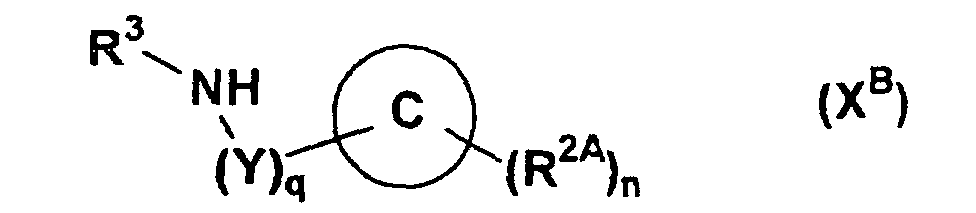
Methods for amidation reaction are known, for example,
To explain these methods concretely,
These reactions (1), (2) and (3) are desirably carried out under atmosphere of an inert
gas (argon, nitrogen, etc.) under anhydrous conditions.


Protective groups for amino include, for example, benzyloxycarbonyl, t-butoxycarbonyl,
trifluoroacetyl, 9-fluorenylmethoxycarbonyl, etc.
Protective groups for hydroxyl include, for example, methoxymethyl, 2-tetrahydropyranyl,
t-butyldimethylsilyl, t-butyldiphenylsilyl, acetyl, benzyl.
Protective groups for carboxy include, for example, methyl, ethyl, t-butyl, benzyl.
Protective groups for mercapto include, for example, benzyl, methoxybenzyl,
methoxymethyl, 2-tetrahydropyranyl, diphenylmethyl, acetyl.
Protective groups for carboxy, hydroxy or amino are not limited to above listed, but
other groups may also be used instead, if easily and selectively eliminated. For example, the
groups described in T. W. Greene, Protective Groups in Organic Synthesis 3rd edition, Wiley, New
York, 1999 may be used.
Deprotection reactions of protective groups of carboxy, hydroxy or amino is known,
for example,
To describe these methods concretely,
As easily understood by those skilled in the art, the target compounds of the present
invention may be easily prepared by these reactions.


The reaction is known, for example
To explain these methods concretely,
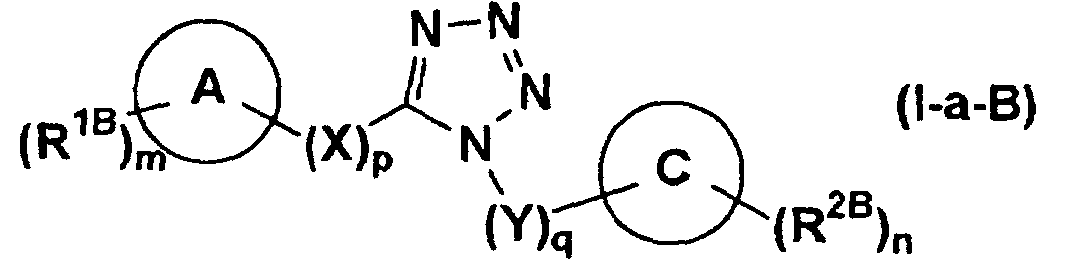
may be prepared by subjecting to a deprotection reaction the compound of formula (I-a-A-1)
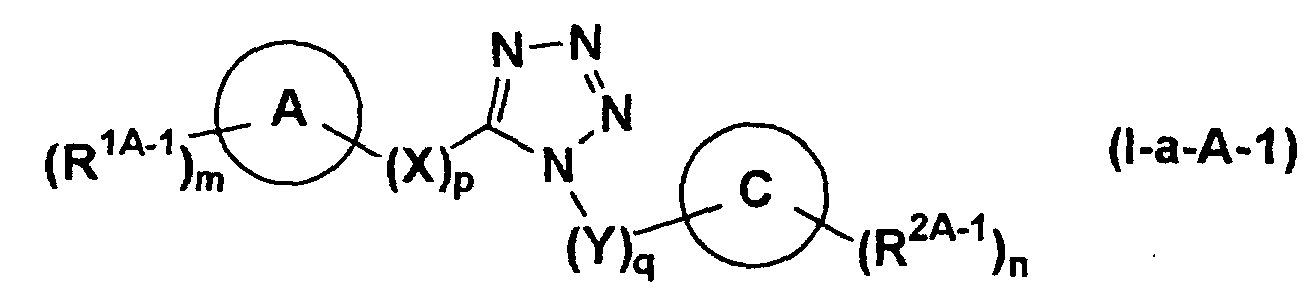
The carboxylic acid compounds and amine compounds, which are used as starting
materials in the above methods are known or may be prepared according to known methods.
The compound of formula (II) may be prepared according to the method described in
the specification of WO98/14213.
The compound of formula (III) may be prepared according to the method described in
the specification of JP4-217682(A).
The compound of formula (IV) may be prepared according to the method described in
JP3-24467(B).
The compound of formula (V) may be prepared according to the method described in
the specification of EP210084.
In each reaction of the present specification, obtained products may be purified by
conventional techniques. For example, purification may be carried out by distillation at
atmospheric or reduced pressure, by high performance liquid chromatography, by thin layer
chromatography or by column chromatography using silica gel or magnesium silicate, by washing
or by recrystallization. Purification may be carried out after each reaction, or after a series of
reactions.
The compounds of formula (I), (II), (III), (IV) and (V) may be converted into non-toxic
salts thereof by conventional techniques.
In the present specification, non-toxic salts include, alkali metal salt, alkaline earth
metal salt, ammonium salt, amine salt, acid-addition salt, etc.
Non-toxic and water-soluble salts are preferable. Appropriate salts include salts of
alkali metals (potassium, sodium, etc.), salts of alkaline-earth metals (calcium, magnesium, etc.),
ammonium salts, pharmaceutically acceptable organic amines (tetramethylammonium,
triethylamine, methylamine, dimethylamine, cyclopentylamine, benzylamine, phenethylamine,
piperidine, monoethanolamine, diethanolamine, tris(hydroxymethyl)aminomethane, lysine,
arginine, N-methyl-D-glucamine, etc.).
Non-toxic and water-soluble acid-addition salts are preferable. Appropriate acid-addition
salts include, salts of inorganic acid, e.g. hydrochloride, hydrobromide, hydroiodide,
sulfate, phosphate, nitrate, or salts of organic acid, e.g. acatate, lactate, tartarate, benzoate, citrate,
methanesulfonate, ethanesulfonate, benzenesulfonate, toluenesulfonate, isethionate, glucronate,
gluconate, etc.
The compound of formula (I) and its salt may be converted to a solvate thereof.
Acid-addition salt is preferably non-toxic and water-soluble. Appropriate acid-addition
salt include, for example, inorganic salt such as hydrochloride, hydrobromide, hydroiodide,
sulfate, phosphate, or organic salt such as acetate, lactate, tartrate, benzoate, citrate,
metanesulfonate, ethanesulfonate, benzenesulfonate, toluenesulfonate, isethionate, glucuronate,
gluconate, etc.
The compound of the present invention of formula (I) and a salt thereof may be
converted into a solvate thereof by a conventional technique.
Solvates are preferably non-toxic and water-soluble. Appropriate solvates include,
for example, ones of water and alcohol solvents such as ethanol.
It was proved by the following experiments that the compound of the present
invention of formula (I) has an MBR antagonistic activity and that it is effective for the diseases
induced, exacerbated or reignited by a stressor, and it was also proved by the following
experiments that MBR antagonist is effective for stress-induced diseases.
In the following experimental examples, 'PK11195' is MBR ligand [1-(2-chlorophenyl)-N-methyl-N-(1-methylpropyl)-3-isoquinolinecarboxamide:
Eur. J. Pharmacol., 119,
153-167 (1985)] (one among the compound of formula (III)), 'FGIN1-27' is MBR agonist [2-[2-(4-fluorophenyl)-1H-indole-3-yl]-N,N-dihexylacetamide:J.
Pharmacol. Exp. Ther., 262, 971-978
(1992)], 'AC5216' is MBR agonist [N-benzyl-N-ethyl-2-(7-methyl-8-oxo-2-phenyl-7,8-dihydro-9H-purin-9-yl)acetamide;
WO99/28320]. CB34 is MBR selective agonist [5,7-dichloro-2-(4-chlorophenyl)-3-dipropylaminocarbonylimidazo[1,2-a]pyridine;
British Journal of Pharmacology
(1999), 127, 177-187], Ro5-4864 is MBR agonist [7-chloro-5-(4-chlorophenyl)-1-methyl-2-oxo-2,3-dihydro-1H-benzodiazepine;Peripheral
Benzodiazepine Receptors, E. Giesen-Crouse, p.62].
The affinity of the compound to MBR was determined using rat brain membrane
preparation. Male Wistar rats were decapitated. After extirpation of the brain, cerebellum was
removed. The brains without cerebellum were homogenized in ice-cold 50 mmol/L Tris-HCl
buffer (pH7.4). The homogenate was centrifuged at 12,000g for 20 min (4°C), then supernatant
was discarded. The residual pellet was washed in the same buffer. The pellet resuspended in 50
mmol/L Tris-HCl buffer (pH7.4) and adjusted to about 1 mg/mL was used as the rat brain
membrane preparation for binding assay. [3H]PK11195, a selective MBR ligand, was used for
binding assay.
To determine the amount of total binding in saturation binding study, membrane
preparation, various concentrations of [3H]PK11195, dimethylsulfoxide (DMSO, final
concentration: 0.5 vol%) and 50 mmol/L Tris-HCl buffer (pH7.4) in a total volume of 200 µL were
incubated for 1 h at room temperature. To determine the amount of non-specific binding, 20
µmol/L of PK11195 was added in place of DMSO and incubate for 1 h. The reaction was
terminated by rapid filtration on GF/B filter soaked with 0.3% polyethyleneimine using cell
harvester, then the filter was washed twice with 50 mmol/L Tris-HCl buffer (pH7.4). After dried
in the oven, the radioactivity on the filer was measured by liquid scintillation counter. The data
were analyzed using analysis soft KELL (Ver.6, BIOSOFT). The Scatchard analyses revealed
that dissociation constant (KD value) was 0.75 ± 0.054 nmol/L.
To determine the amount of total binding in competition binding study, membrane
preparation, [3H]PK11195 (final concentration: 1 nmol/L), DMSO (final concentration. 0.5 vol%)
and 50 mmol/L Tris-HCl buffer (pH7.4) in a total volume of 200 µL were incubated for 1 h at
room temperature. To determine the amount of non-specific binding, 20 µmol/L of PK11195 was
added in place of DMSO. And to determine the affinity of the invention, 10 pmol/L to 1 µmol/L
of the compound dissolved in DMSO was added in place of DMSO. The reaction was terminated
as above described, then radioactivity on the filer was measured by liquid scintillation counter.
The concentration of the compound required to reduce [3H]PK11195 binding to 50% of the amount
of specific binding of [3H]PK11195 (IC50 value) were derived from the data obtained. The
inhibitory constant (Ki value) was derived according to the equation of Cheng & Prusoff (Biochem.
Pharmacol., 22, 3099-3108, 1973). The Ki values of the compounds in this invention are shown
in Table 65. These results clearly indicate that these compounds have high affinity to MBR.
| Example | Ki (nM) |
| 1(16) | 0. 19 |
| 1(110) | 0. 22 |
| 2(14) | 3. 30 |
| 2(71) | 0. 08 |
| 2(74) | 0. 16 |
| 2(105) | 0. 73 |
The ability of steroid production of the compound was evaluated using mitochondrial
fraction from rat adrenal cortex. Five min after intraperitoneal administration of 20 mg/mL (1
mL) of cycloheximide, 10 IU/mL (0.3 mL) of adrenocorticotropic hormone (ACTH) was
intraperitoneally administered to Male SD rat. Twenty min after ACTH administration, rat was
sacrificed by cervical dislocation and bilateral adrenal glands were extirpated. Adrenal cortexes
were obtained and homogenized in buffer A (50 mmol/L Tris-HCl, 250 mmol/L Sucrose), then
centrifuged at 2,000g for 3 min (4°C). The supernatant was centrifuged at 12,500g for 10 min
(4°C). The residual pellet was resuspended in buffer A, then further centrifuged at 12,500g for 10
min (4°C). The pellet was washed again and finally suspended in buffer B (250 mmol/L Sucrose,
10 mmol/L potassium phosphate buffer, 15 mmol/L triethanolamine, 20 mmol/L potassium
chloride, 5 mmol/L magnesium chloride, 10 µmol/L trilostane, 10 µmol/L SU10603) for
experiments. Malate (150 mmol/L), β-NADP+ (5 mmol/L) and the compound in a total volume of
25 µL were incubated for 5 min at 37°C. Following the incubation, 225 µL of mitochondrial
membrane fraction from rat adrenal cortexes in buffer B preincubated for 5 min at 37°C was added,
then further incubated for 10 min at 37°C to produce pregnenolone (final concentration of the
compound: 1 µmol/L). The reaction was terminated by addition of ether (1 mL) and
pregnenolone was extracted with n-hexane (1.25 mL). The organic phase was collected and
evaporated. The residual was dissolved in buffer C (0.1% gelatin in phosphate buffered saline).
After centrifuged at 12,000g for 5 min, the supernatant was collected as a sample for determination
of pregnenolone. [3H]Pregnenolone (10,000 cpm, 100 µL), pregnenolone antibody (ICN
Biomedicals Inc, 100 µL) and sample (100 µL) were mixed and incubated overnight at 4°C. The
reaction was terminated by adding dextran/charcoal (200 µL) and mixed well. After kept on ice
for 10 min, the mixture was centrifuged at 1,000g for 10 min (4°C). The radioactivity of the
supernatant was measured by liquid scintillation counter. The pregnenolone content in the sample
was calculated from standard curve. The pregnenolone content in FFIN1-27 treated group was
1.37 times as high as that in DMSO treated group. But, the pregnenolone content in the invention
(Compound (14) in Experiment 2) treated group was as 0.98 times as high as that in DMSO treated
group. The Table 66 summarizes effects of some other compounds on pregnenolone production
(n=5).
The amount of pregnenolone production when treated with DMSO was assumed 100, and
the amount of pregnenolone production when treated with the compound of the present
invention was displayed as %.
| Compound (10 µ mol/L) | Amount of pregnenolone production(%) |
| | 100 ± 0.00 |
| CB34 | 131.36 ± 5.38 |
| Ro5-4864 | 123.59 ± 5.41 |
| AC-5216 | 122.65 ± 7.56 |
| PK11195 | 101.82 ± 1.64 |
Accordingly, these results indicate that FGIN1-27, CB34, Ro5-4864 and AC-5216 are
MBR agonists which increase pregnenolone production, on the other hand, the inventions and
PK11195 are MBR antagonists which hardly effect on it compared with DMSO treated group.
The results of the experiments evaluated the antagonistic effects of MBR antagonists
on FGIN1-27 (1 nmol/L)-stimulated pregnenolone production according to the method described in
Experiment 2 are shown in Figure 1 and 2.
Vertical axis represents% of pregnenolone production in the group treated with
FGIN1-27 (1 nmol/L) and MBR antagonist (0.1 pmol/L to 1 µmol/L) simultaneously which is
expressed taking that in DMSO treated group as 0% and that in FGIN1-27 (1 nmol/L) treated group
as 100% (mean ± standard errors in 3 experiments). Horizontal axis represents the concentrations
of the compound. These results indicate that the compounds antagonize the steroid production
stimulated by MBR agonist. The MBR antagonists used in the experiments were the compound
(Figure 1) in experiment 2 (14) and PK11195 (Figure 2).
Psychological stress was loaded to male Wistar rats (Brain Res., 641, 21-28, 1994).
Platform was located in the center of the container and water was collected to 10 cm in height.
The rats in non-treated group were treated with microwave (output: about 6.5 kW, exposure time:
0.96 s, Muromachi Kikai Co., Ltd.) without administration and stress loading. On the other hand,
the rats in stressed groups were rendered to stress loading by putted them on the platform for 1 h
which started at 30 min after oral administration with vehicle or compound, then treated with
microwave. Bilateral hippocampi were extirpated and weighted. Internal standard (D4-pregnenolone,
20 ng), water (1 mL) and diethyl ether / n-hexane (9 : 1) (3 mL) were added to the
crushed hippocampi. Following sonication and stir, the homogenate was centrifuged at 3,000 rpm
for 5 min. The organic phase was collected to new tube with pipette. Water phase was extracted
with diethyl ether / n-hexane (9 : 1) again, then the organic phase was added to the preserved one.
The organic phase was evaporated. The residual was dissolved in 150 µL of H2O/acetonitrile (1 :
9), then the pregnenolone content was measured by LC-MS. The measurement conditions are as
follows.
Pregnenolone content in hippocampus in vehicle-treated and stress-loaded group
significantly increased compared with that in non-stressed group. On the other hand, the stress-stimulated
increase in the pregnenolone content was inhibited in the compound (oral administration
at doses from 3 to 30 mg/kg)-treated group. Significant effect was observed at 30 mg/kg (p<0.01,
t test). These results indicate that the inventions inhibit stress-stimulated increase in pregnenolone
content in hippocampus.
Psychological stress was loaded to male Wistar rats (Brain Res., 641, 21-28 (1994)).
Platform was located in the center of the container and water was collected to 10 cm in height.
Thirty min after oral administration of vehicle or the compound, stress loading was started. One
hour after, number of fecal pellets were counted (n=10/group). The rats without administration
and stress-loading rarely defecated in 1 h. On the other hand, vehicle-treated and stress-loaded
rats remarkably defecated as shown in Table 67 and Figure 3. But, the inventions significantly
inhibited stress-induced increase in the number of fecal pellets compared with vehicle-treated
group These results clearly indicate that MBR antagonists have anti-stress effects.
As described in Experiment 1 to 5, MBR antagonists whose structures are shown as (I)
and (III) have anti-stress effects. So it is easily deduced that the compounds with the structures
shown as (II), (IV) and (V) also have anti-stress effects.
Although MBR agonists, like AC-5261, Ro5-4864 and CB-34, did not produce
significant effects, PK11195 and the compound with structure shown as (I) produced significant
effects in water aversive stress model.
| AC-5216 | Vehicle | 0.3mg/kg, p.o. | 3mg/kg, p.o. | 30mg/kg, p.o. |
| 8.6±0.99 | 9.6±0.74 | 7.5±0.63 | 9.3±0.94 | |
| n=10 | n=10 | n=10 | n=10 | |
| No significant effect in any dose. | ||||
| Ro5-4864 | Vehicle | 3mg/kg, p.o. | 10mg/kg, p.o. | 30mg/kg, p.o. |
| 8.6±0.82 | 8.9±1.16 | 9.2±0.98 | 8.6±0.91 | |
| No significant effect in any dose. | ||||
| CB34 | Vehicle | 3mg/kg, p.o. | 10mg/kg, p.o. | 30mg/kg, p.o. |
| 9.7±0.70 | 10.2±0.96 | 7.6±0.93 | 8.6±1.00 | |
| No significant effect in any dose. | ||||
| PK11195 | Vehicle | 0.3mg/kg, p.o. | 3mg/kg, p.o. | 30mg/kg, p.o. |
| 8.9±0.82 | 6.4±0.76 | 6.6±0.97 | 5.5±0.81* | |
| *p<0.05 vs vehicle (U-test) | ||||
| The compound of example 2(14) | Vehicle | 0.3mg/kg, p.o. | 3mg/kg, p.o. | 30mg/kg, p.o. |
| 10.0±0.88 | 6.1±0.82* | 6.6±0.76* | 5.1±0.78** | |
| **p<0.01, *p<0.05 vs vehicle (U-test) |
The toxicity of the compound of the present invention is very low and it is thought to
be safe enough for pharmaceutical use.
The compound of the present invention of formula (I) antagonize MBR, and it is
thought that it is useful for the prophylaxis and/or treatment of those diseases induced, exacerbated
or reignited by stress.
Those diseases induced, exacerbated or reignited by stress include, digestive organ
diseases (functional dyspepsia, gastric and duodenal ulcer, chronic ulcerative colitis, irritable bowel
syndrome, biliary dyskinesia, esophagus spasm, gastric atony, aerophagia, chronic hepatitis,
chronic pancreatitis, etc.), circulatory organ disease (primary hypertension, primaryhypotension,
(nervous) angina pectoris, arrhythmia, orthostatic disturbance, myocardial infarction,
arteriosclerosis, dizziness, etc.), internal secretion and a metabolism diseases (anorexia nervosa,
bulimia, barter syndrome, cachexia exophthalmica, diabetes, psychogenic polydipsia, obesity,
reflective hypoglycemia, etc.), respiratory disease (bronchial asthma, hyperventilation syndrome,
larynx spasm, chronic obstructive pulmonary diseases, etc.), nervous and muscular diseases
(migraine, tension-type headache, migrainous neuralgia, post-traumatic stress disorder, dissociative
disorder, panic disorder, anxiety, depression, insomnia, nervous vomiting, nervous cough, neurosis,
autonomic imbalance, reactive depression, psychogenic spasm, psychogenic faint spasm,
maladjustment to job, burnout syndrome, chronic fatigue syndrome, writer's cramp, spasmodic
torticollis, etc.), dermatological diseases (chronic urticaria, atopic dermatitis, hyperhidrosis, eczema,
skin pruritus, alopecia areata, systemic lupus erythematosus, etc.), surgery diseases (postoperative
abdominal neurosis, dumping syndrome, polysurgery, neurosis after formation, etc.), orthopedic
diseases (rheumatoid arthritis, low back pain, cervico-omo-brachial syndrome, stiff neck, uniting
callus, polyarthralgia, systemic muscle pain, gout, etc.), urologic and genital diseases (nervous
pollakiuria (overactive bladder), bed-wetting, enuresis, psychogenic anuria, impotence, prostatism,
urethra syndrome, etc.), gynecological diseases (menopausal disorders, menstrual pain, menstrual
disorder, premenstrual syndrome, infertility, frigidity, serious vomiting of pregnancy, abortus
pregnancy immature birth, etc.), ophthalmologic diseases (asthenopia, central retinitis,
myodesopsia, palpebra spasm, primary glaucoma, etc.), otolaryngological diseases (tinnitus,
dizziness, psychogenic deafness, chronic sinusitis, allergic rhinitis, anosmia, stammering, aphonia,
etc.), oral surgery dentistry diseases (temporomandibular arthrosis, glossopharyngeal neuralgia,
spasmodic glossalgia, stomatitis, toothache, ozostomia, abnormal salivation, teeth grinding, etc.),
cancer, etc. are mentioned.
In the diseases described hereinbefore, preferable is irritable bowel syndrome.
The compound of formula (I) or non-toxic salt thereof may be administered in
combination with other pharmaceutical preparations to accomplish the following purposes:
The compound of formula (I) and other pharmaceutical preparations may be
administered in the form of formulation having these components incorporated in one preparation
or may be administered in separate preparations. In the case where these pharmaceutical
preparations are administered in separate preparations, they may be administered simultaneously or
at different times. In the latter case, the compound represented of formula (I) may be
administered before the other pharmaceutical preparations. Alternatively, the other
pharmaceutical preparations may be administered before the compound represented of formula (I).
The method for the administration of these pharmaceutical preparations may be the same or
different.
The diseases on which the preventive and/or treatment effect of the aforementioned
combined preparations works are not specifically limited but may be those for which the preventive
and/or treatment effect of the compound represented by formula (I-1), (I-2) or (I-3) is compensated
for and/or enhanced.
Examples of the other pharmaceutical preparations for compensating for and/or
enhancing the preventive and/or treatment effect of the compound of formula (I) on irritable bowel
syndrome include antidepressant (benzodiazepine drugs, thienodiazepine drugs, non-benzodiazepinedrugs,
etc.), antidepressant (monoamine liberating agent, monoamine oxidase
inhibitor, monoamine reuptake inhibitor (SNRI, SSRI), dopamine (D2) antagonist, CRF antagonist,
β3 agonist, neurotensin antagonist, NK1 antagonist, tricyclic antidepressant, tetracyclic
antidepressant, etc.), anticholinergic drugs, affinity polyacrylic resin, antidiarrheal drug, mucosal
paralytic agent, bulk cathartic, saline purgative, fiber formulation, drug for controlling intestinal
function, autonomic nervous system modulator, calcium blocker, phosphodiesterase inhibitor,
serotonin antagonist (5-HT3 antagonist, 5-HT4 antagonist), serotonin agonist (5-HT4 agonist, 5-HT1A
agonist), modulator of gastrointestinal tract function (CCK-A antagonist, β3 agonist,
neurotensin, antagonist, opioid agonist, NK1 antagonist, NK2 antagonist, 5-HT1A agonist,
muscarine agonist, 5-lipoxygenase inhibitor, CRF antagonist), etc.
Examples of the other pharmaceutical preparations for compensating for and/or
enhancing the preventive and/or treatment effect of the compound of formula (I) on gastric and
duodenal ulcer include, acid reducer, histamine (H2) receptor antagonist, proton-pump inhibitor,
muscarine receptor antagonist, antiulcer drugs (defensive factor enhancer, anti-pepsin drugs,
prostaglandin derivatives, mesalazine, salazosulfapyrizine, etc.), anticholinergic drugs, gastric
mucosa anesthetics, antidepressant, dopamine antagonist, etc.
Examples of the other pharmaceutical preparations for compensating for and/or
enhancing the preventive and/or treatment effect of the compound of formula (I) on ulcerative
colitis include, mesalazine, salazosulfapyrizine, antiulcer drug, anticholinergic agent, steroid agent,
5-lipoxygenase inhibitor, antioxidant, LTB4 antagonist, local anesthetics, immunosuppressant,
defensive factor enhancer, metalloprotease inhibitor, etc.
Examples of the other pharmaceutical preparations for compensating for and/or
enhancing the preventive and/or treatment effect of the compound of formula (I) on bilary
dyskinesia include, cerulein, spasmolytic agents, COMT (catechol-O-methyl transferase) inhibitor,
cholinergic agent, anticholinergic agent, anxiolytic drug, cholagogue, antidepressant, CCK-A
antagonist, etc.
Examples of the other pharmaceutical preparations for compensating for and/or
enhancing the preventive and/or treatment effect of the compound of formula (I) on aerophagia
include, drug for controlling intestinal function, anxiolytic drug, autonomic nerve modulator, fiber
formulations, digestive enzyme formulation, gas absorption agent, intestinal tract motion promoter.
Examples of the other pharmaceutical preparations for compensating for and/or
enhancing the preventive and/or treatment effect of the compound of formula (I) on chronic
hepatitis include, hepatic hydrolysate drugs, polyenephosphatidylcholine, glycyrrhizinate
formulations, protoporphyrin disodium, ursodeoxycholic acid, steroid drugs, anticholinergic agents,
antacidum, propagermanium, lipid peroxisome inhibitor, etc.
Examples of the other pharmaceutical preparations for compensating for and/or
enhancing the preventive and/or treatment effect of the compound of formula (I) on chronic
pancreatitis include, protease inhibitor, gastric acid secretion
suppressant,antispasmodicantispasmodic agents (COMT inhibitor, antiserotonin drug, etc.), non-steroidal
anti-inflammatory drug, central analgesics, sedatives, digestive enzyme formulation, acid
reducer, H2 receptor antagonist, antidepressant, gastric mucosa local anesthetic, digestive function
modulator (CCK-A antagonist), etc.
Examples of the other pharmaceutical preparations for compensating for and/or
enhancing the preventive and/or treatment effect of the compound of formula (I) on throat spasms
include, throat mobile function modulator, anxiolytic drug, autonomic nerve modulator, etc.
Examples of the other pharmaceutical preparations for compensating for and/or
enhancing the preventive and/or treatment effect of the compound of formula (I) on gastric atony
include, digestive function promotor, digestive enzyme formulation, tranquilizers, etc.
Examples of the other pharmaceutical preparations for compensating for and/or
enhancing the preventive and/or treatment effect of the compound of formula (I) on functional
dyspepsia include, acid reducer, H2 receptor antagonist, digestive function modulator, digestive
function promoters, anxiolytic drug, tranquilizers, digestive enzyme formulation, proton pump
inhibitor, muscarine receptor antagonist, anticholinergic agent, defensive factor enhancer,
dopamine antagonist, etc.
Anxiolytic drugs include, for example, diazepam, oxazolam, flutazolam, alprazolam,
ethyl loflazepate, tofisopam, etc.
Tricyclic antidepressants include, for example, amitriptyline, imipramine,
clomipramine, nortriptyline, amoxapine, etc.
Tetracyclic antidepressants include, for example, maprotiline, mianserin, etc.
Acid reducers include, for example, sodium bicarbonate, magnesium oxide, dry
aluminum hydroxide, aluminum silicate, etc.
H2 receptor antagonist includes, for example, famotidine, lanitidine, cimetidine, etc.
Proton pump inhibitors include, for example, omeprazole, etc.
Muscarine receptor antagonists include, for example, pirenzepine hydrochloride, etc.
Defensive factor enhancers include, for example, sucralfatc, aldioxa, tcprenonc,
cetraxate hydrochloride, omoprostil, etc.
Anti-pepsine drugs include, for example, sucralfate etc.
Prostaglandin derivatives include, for example, omoprostil, misoprostol, etc.
Anticholinergic drugs include, for example, mepenzolate bromide, ipratropium
bromide, etc.
Steroid drus include, for example, prednisolone, etc.
Topical anesthetics include, for example, cocaine hydrochlonde, procaine
hydrochloride, lidocaine, dibucaine hydrochloride, tetracaine hydrochloride, etc.
Immunosuppresants include, for example, cyclosporin, tacrolimus, azathiopurine, etc.
Autonomic nerve modulators include, for example, γ-oryzanol, etc.
Cholagogues include, for example, ursodesoxycholic acid, etc.
Drugs which adjust the function of gastrointestinal tract include, for example,
metoclopramide, domperidone, trimebutine maleate, etc.
Drugs which assist the function of gastrointestinal tract include, for example, cisapride,
bethanechol hydrochloride.
The weight proportion of the compound of formula (I) and the other pharmaceutical
preparations is not specifically limited.
Arbitrary two or more of the other pharmaceutical preparations may be administered
in combination.
Examples of the other pharmaceutical preparations for compensating for and/or
enhancing the preventive and/or treatment effect of the compound of formula (I) include not only
those which have so far been found but also those which will be found on the basis of the
aforementioned mechanism.
For the purpose above described, the compounds of the present invention of formula
(I), non-toxic salts, acid addition salts or hydrates thereof may normally be administered usually
systemically or topically, orally or parenterally.
The doses to be administered are determined depending upon, for example, age, body
weight, symptom, the desired therapeutic effect, the route of administration, and the duration of the
treatment. In the human adult, the doses per person are generally in the range of from 1 mg to
1000 mg, by oral administration, up to several times per day, and in the range of from 0.1 mg to
100 mg, by parenteral administration (preferably intravenous administration), up to several times
per day, or continuous administration from 1 to 24 hours per day from vein.
As mentioned above, the doses to be used depend upon various conditions.
Therefore, there are cases in which doses lower than or greater than the ranges specified above may
be used.
The compounds of the present invention may be administered in the form of, for
example, solid forms for oral administration, liquid forms for oral administration, injections,
liniments or suppositories for parenteral administration.
Solid forms for oral administration include compressed tablets, pills, capsules,
dispersible powders, and granules, etc.
Capsules include hard capsules and soft capsules.
In these solid forms, one or more of the active compound(s) may be admixed with
excipients (e.g. lactose, mannitol, glucose, microcrystalline cellulose, starch), binders (e.g.
hydroxypropyl cellulose, polyvinylpyrrolidone or magnesium metasilicate aluminate), disintegrants
(e.g. cellulose calcium glycolate), lubricants (e.g. magnesium stearate), stabilizing agents, and
adjuvants to assist dissolution (e.g. glutamic acid, aspartic acid) and prepared according to methods
well known to those skilled in the art. The solid forms may, if desired, be coated with coating
agents (e.g. sugar, gelatin, hydroxypropyl cellulose or hydroxypropylmethyl cellulose phthalate), or
be coated with two or more films. And further, coating may include containment within capsules
of absorbable materials such as gelatin.
Liquid forms for oral administration include pharmaceutically acceptable aqueous
solutions, suspensions, emulsions, syrups and elixirs, etc. In such forms, one or more of the active
compound(s) may be dissolved, suspended or emulsified into diluent(s) commonly used in the art
(e.g. purified water, ethanol or a mixture thereof). Besides such liquid forms may also comprise
wetting agents, suspending agents, emulsifying agents, sweetening agents, flavoring agents, aroma,
preservative or buffering agent, etc.
Sprays may comprise additional substances other than diluents, such as stabilizing
agents (e.g. sodium bisulfite), isotonic buffers (e.g. sodium chloride, sodium citrate or citric acid).
For the preparation of such sprays, for example, the method described in the United States Patent
No. 2,868,691 or 3,095,355 may be used.
In the present invention, injections for parenteral administration include sterile
aqueous and/or inaqueous solutions, suspensions and emulsions. Aqueous solutions and
suspensions include, for example, distilled water and physiological saline. Inaqueous solutions
and suspensions include, for example, propylene glycol, polyethylene glycol, vegetable oils such as
olive oil, alcohols such as ethanol,polysorbate 80 (registered trademark), etc. Sterile aqueous and
inaqueous solutions, suspensions and emulsions may be mixed in use. These compositions may
further comprise some additives, such as antiseptic agents, wetting agents, emulsifying agents,
dispersing agents, stabilizing agents (for example, lactose), solubilizing agents (e.g. glutamic acid,
aspartic acid). They may be sterilized at the final step, or may be prepared and compensated
according to sterile methods. They may also be manufactured in the form of sterile solid forms,
which may be dissolved in sterile water or some other sterile diluent(s) for injection immediately
before use.
Other forms for parenteral administration include liquids for external use, ointments
and endermic liniments, inhalations, sprays, suppositories and pessaries for vaginal administration
which comprise one or more of the active compound(s) and may be prepared by methods known
per se.
Sprays may comprise additional substances other than diluents, such as stabilizing
agents (e.g. sodium sulfate), isotonic buffers (e.g. sodium chloride, sodium citrate or citric acid).
For preparation of such sprays, for example, the method described in the United States Patent No.
2,868,691 or 3,095,355 may be used.
The following examples and experimental examples illustrate the present invention,
but the present invention is not limited to them.
The solvents in the parentheses show the developing or eluting solvents and the ratios
of the solvents used are by volume in chromatographic separations and TLC.
Solvents in the parentheses of NMR show the solvents used for measurement.

To a solution of 2-chlorobenzylamine (708 mg) and triethylamine (0.7 ml) in
tetrahydrofuran (3.0 ml) was added, 2-methoxybenzoyl chloride (853 mg) under cooling with ice,
and the mixture was stirred for 1 hour. The reaction mixture was poured into ice water and the
precipitate was collected and dried to give the compound of the present invention (1.31 g) having
the following physical data.
TLC:Rf 0.45(n-hexane : ethyl acetate = 2 : 1).
TLC:Rf 0.45(n-hexane : ethyl acetate = 2 : 1).
By the same procedure as described in example 1 using corresponding compounds, the
following physical data were given.

NMR (CDCl3):δ 7.69-7.49 (m, 4H), 7.30-7.23 (m, 2H), 7.07-7.01 (m, 1H), 6.07 (brs, 1H), 4.83 (dd, J = 5.7, 1.8 Hz, 2H).

NMR (CDCl3):δ 7.49-6.96 (m, 7H), 5.15 (brd, J = 13.0 Hz, 1H x 3/5), 4.95 (brd, J = 13.0 Hz, 1H x 3/5), 4.69 (d, J = 14.4 Hz, 1H x 2/5), 4.49 (dd, J = 14.4, 1.8 Hz, 1H x 2/5), 2.96 (s, 3H x 2/5), 2.67 (s, 3H x 3/5).

NMR (CDCl3):δ 7.50-6.84 (m, 12H), 5.05 (d, J = 15.0 Hz, 1H), 4.94 (m, 1H x 1/2), 4.70 (d, J = 14.3 Hz, 1H x 1/2), 4.49 (d, J = 14.3 Hz, 1H x 1/2), 4.34-4.28 (m, 1.5H).

NMR (CDCl3):δ 7.37-7.18 (m, 7H), 5.81 (brs, 1H), 4.67 (d, J = 5.4 Hz, 2H), 2.42 (s, 3H).
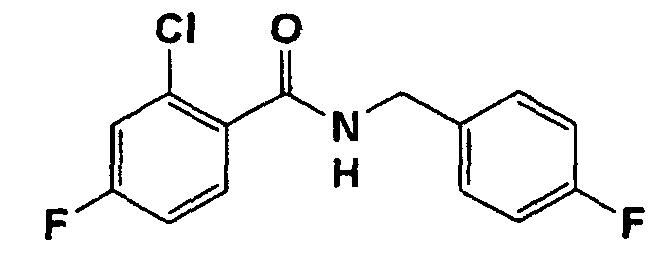
NMR (CDCl3):δ 7.75 (dd, J = 8.7, 6.3 Hz, 1H), 7.35 (dd, J = 8.4, 5.4 Hz, 1H), 7.15 (dd, J = 8.4, 2.4 Hz, 1H), 7.09-7.02 (m, 4H), 6.53 (brs, 1H), 4.62 (d, J = 5.7 Hz, 2H).

NMR (CDCl3):δ 7.53 (dd, J = 8.1, 1.5 Hz, 1H), 7.48 (dd, J = 8.1, 1.5 Hz, 1H), 7.37-7.24 (m, 3H), 7.09-7.02 (m, 2H), 6.29 (brs, 1H), 4.62 (d, J = 5.7 Hz, 2H).
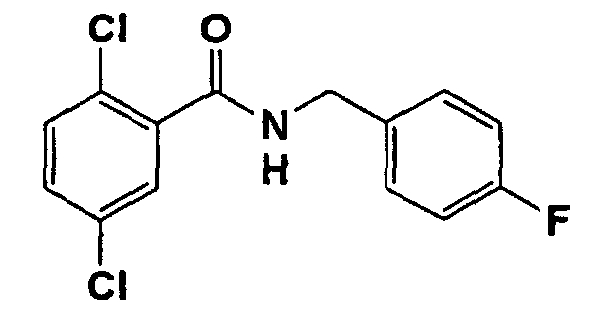
NMR (CDCl3):δ 7.68 (t, J = 1.5 Hz, 1H), 7.37-7.30 (m, 4H), 7.08-7.02 (m, 2H), 6.49 (brs, 1H), 4.62 (d, J = 6.0 Hz, 2H).

NMR (CDCl3):δ 7.68 (m, 1H), 7.38-7.26 (m, 7H), 6.48 (brs, 1H), 4.66 (d, J = 5.7 Hz, 2H).

NMR (DMSO-d6):δ 12.97 (brs, 1H), 8.85 (t, J = 6.0 Hz, 1H), 7.76 (d, J = 7.2 Hz, 1H), 7.60-7.39 (m, 5H), 7.13 (t, J = 9.0 Hz, 2H), 4.40 (d, J = 6.0 Hz, 2H).

NMR (DMSO-d6):δ 13.92 (brs, 1H), 8.76 (t, J = 5.4 Hz, 1H), 7.75 (dd, J = 7.5, 1.5 Hz, 1H), 7.59-7.35 (m, 4H), 7.15 (m, 3H), 4.38 (d, J = 5.4 Hz, 2H), 2.31 (s, 3H).
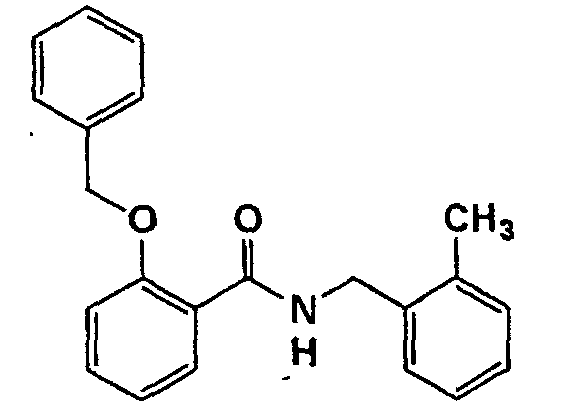
NMR (CDCl3):δ 8.29 (dd, J = 7.8, 1.5 Hz, 1H), 8.08 (brs, 1H), 7.48-7.42 (m, 1H), 7.33-7.04 (m, 11H), 5.10 (s, 2H), 4.55 (d, J = 5.4 Hz, 2H), 2.18 (s, 3H).
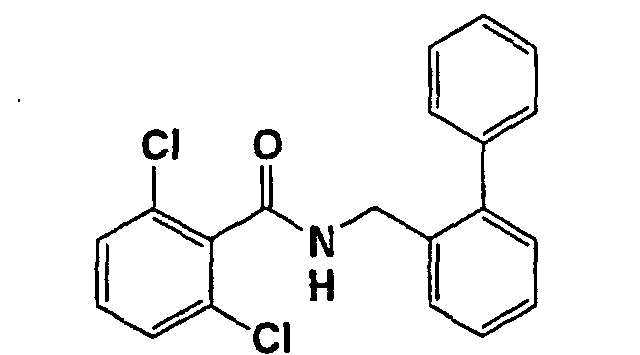
NMR (CDCl3):δ 7.65-7.60 (m, 1H), 7.47-7.18 (m, 11H), 5.81 (bs, 1H), 4.65 (d, J = 5.4 Hz, 2H)..
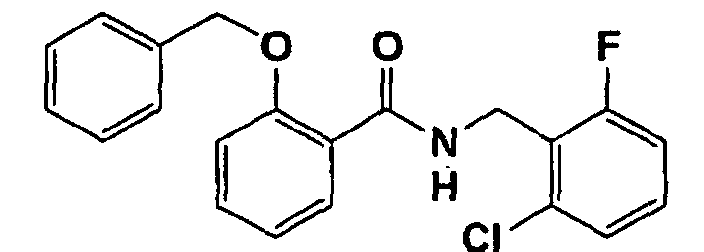
NMR (CDCl3):δ 8.35-8.26 (m, 2H), 7.46-7.38 (m, 1H), 7.38-7.28 (m, 5H), 7.20-7.00 (m, 4H), 6.95-6.88 (m, 1H), 5.12 (s, 2H), 4.72 (dd, J = 5.1 Hz, 1.5 Hz, 2H).

NMR (CDCl3):δ 7.49-7.42 (m, 1H), 7.35-7.28 (m, 2H), 7.25-7.15 (m, 3H), 7.14-7.07 (m, 1H), 6.00-5.90 (m, 1H), 5.46-5.38 (m, 1H), 2.90-2.71 (m, 2H), 2.26-2.14 (m, 1H), 2.12-2.00 (m, 1H), 1.94-1.84 (m, 2H).

NMR (CDCl3):δ 7.71 (dd, J = 8.4 HZ, 5.1 Hz, 1H), 7.69-7 66 (m, 1H), 7.38 (dd, J = 8.4 HZ, 3.0 Hz, 1H), 7.36-7.23 (m, 3H), 6.63 (bs, 1H), 4.79 (d, J = 6.3 Hz, 2H).
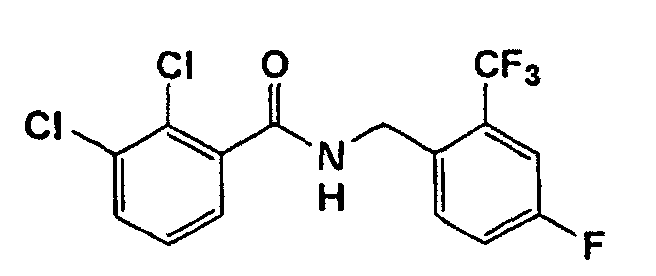
NMR (CDCl3):δ 7.73 (dd, J = 8.4 HZ, 5.1 Hz, 1H), 7.54 (dd, J = 8.1 HZ, 1.8 Hz, 1H), 7.46 (dd, J = 7.5 HZ, 1.8 Hz, 1H), 7.39 (dd, J = 8.7 HZ, 2.4 Hz, 1H), 7.32-7.23 (m, 2H), 6.37 (bs, 1H), 4.79 (d, J = 6.0 Hz, 2H).
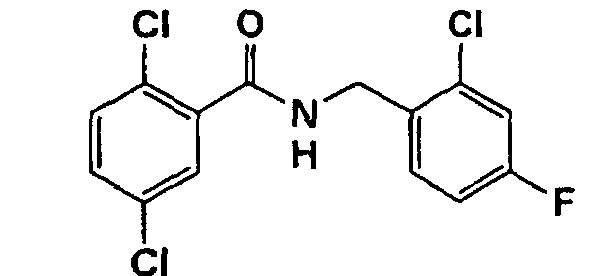
NMR (CDCl3):δ 7.71-7.67 (m, 1H), 7.50 (dd, J = 8.4 HZ, 6.0 Hz, 1H), 7.36-7.32 (m, 2H), 7.16 (dd, J = 8.4 HZ, 2.7 Hz, 1H), 7.00 (td, J = 8.4 HZ, 2.7 Hz, 1H), 6.70 (bs, 1H), 4.69 (d, J = 6.3 Hz, 2H).
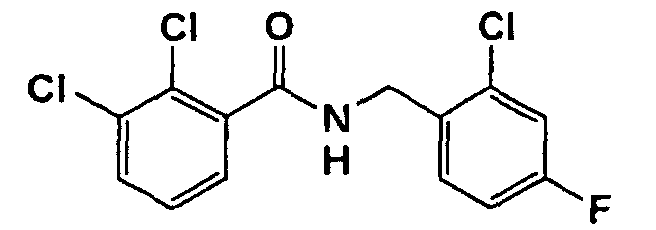
NMR (CDCl3):δ 7.56-7.45 (m, 2H), 7.30-7.23 (m, 2H), 7.16 (dd, J = 8.4 HZ, 2.7 Hz, 1H), 7.00 (td, J = 8.4 HZ, 2.7 Hz, 1H), 6.47 (bs, 1H), 4.70 (d, J = 6.0 Hz, 2H).

NMR (CDCl3):δ 7.72-7.69 (m, 1H), 7.50 (d, J = 2.4 Hz, 1H), 7.38-7.30 (m, 2H), 7.28-7.21 (m, 2H), 6.74 (bs, 1H), 4.70 (d, J = 6.0 Hz, 2H).

NMR (CDCl3):δ 7.70-7.67 (m, 1H), 7.38-7.32 (m, 2H), 7.20-7.13 (m, 1H), 7.08-6.92 (m, 2H), 6.63 (bs, 1H), 4.67 (d, J = 6.3 Hz, 2H).
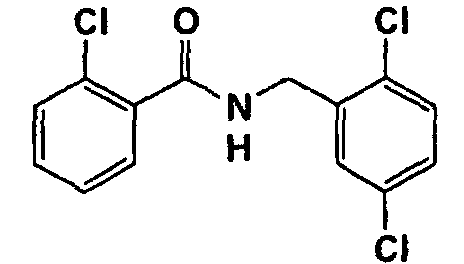
NMR (CDCl3):δ 7.74-7.70 (m, 1H), 7.52 (d, J = 2.4 Hz, 1H), 7.44-7.30 (m, 4H), 7.23 (dd, J = 8.1, 2.4 Hz, 1H), 6.73 (bs, 1H), 4.71 (d, J = 6.3 Hz, 2H).

NMR (CDCl3):δ 7.73-7.68 (m, 1H), 7.44-7.30 (m, 3H), 7.22-7.14 (m, 1H), 7.07-6.90 (m, 2H), 6.64 (bs, 1H), 4.69 (d, J = 6.0 Hz, 2H).
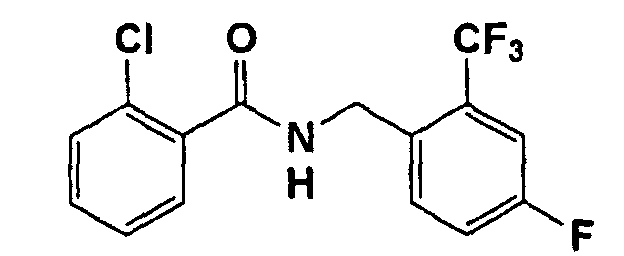
NMR (CDCl3):δ 7.76-7.64 (m, 2H), 7.42-7.22 (m, 3H), 6.62 (bs, 1H), 4.80 (d, J = 6.3 Hz, 2H).
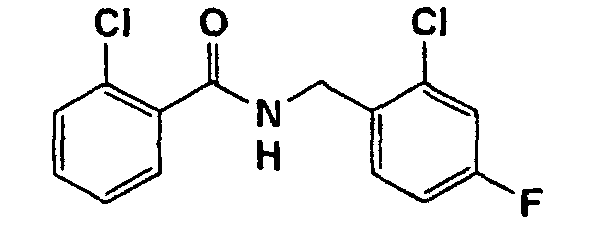
NMR (CDCl3):δ 7.70 (dd, J = 6.9 Hz, 1.8 Hz, 1H), 7.52 (dd, J = 8.7 Hz, 6.0 Hz, 1H), 7.42-7.29 (m, 3H), 7.15 (dd, J = 8.7 Hz, 2.4 Hz, 1H), 6.99 (td, J = 8.7 Hz, 2.4 Hz, 1H), 6.70 (bs, 1H), 4.71 (d, J = 6.0 Hz, 2H).
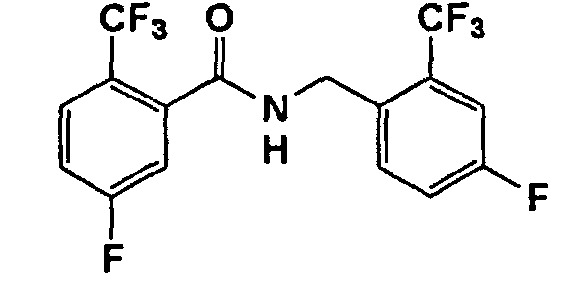
NMR (CDCl3):δ 7.74-7.67 (m, 2H), 7.39 (dd, J = 8.7 Hz, 2.7 Hz, 1H), 7.32-7.18 (m, 3H), 6 13 (bs, 1H), 4.76 (d, J = 6.0 Hz, 2H).

NMR (CDCl3):δ 7.70 (dd, J = 8.1 Hz, 4.8 Hz, 1H), 7.50 (dd, J = 8.4 Hz, 6.0 Hz, 1H), 7.28-7.18 (m, 2H), 7.16 (dd, J = 8.4 Hz, 2.7 Hz, 1H), 7.01 (td, J = 8.4 Hz, 2.7 Hz, 1H), 6.22 (bs, 1H), 4.68 (d, J = 6.0 Hz, 2H).

NMR (CDCl3):δ 7.68-7.64 (m, 1H), 7.38-7 26 (m, 4H), 6.69 (brs, 1H), 6.46-6.43 (m, 2H), 4.58 (d, J = 5.7 Hz, 2H), 3.83 (s, 3H), 3.80 (s, 3H).
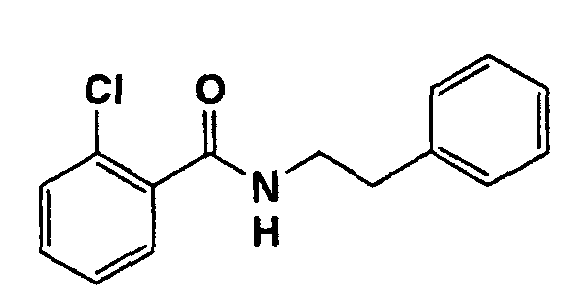
NMR (CDCl3):δ 7.63-7.58 (m, 1H), 7.38-7.19 (m, 8H), 6.21 (brs, 1H), 3.75 (q, J = 7.0 Hz, 2H), 2.96 (t, J = 7.0 Hz, 2H).

NMR (CDCl3):δ 7.68-7.65 (m, 1H), 7.43-7.26 (m, 8H), 6.46 (brs, 1H), 5.34 (m, 1H), 1.62 (d, J = 6.9 Hz, 3H).
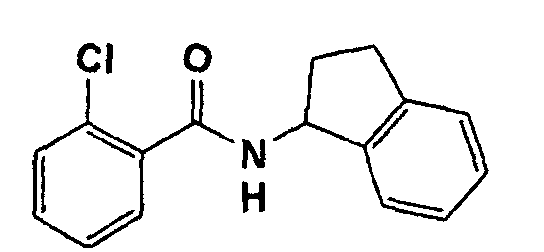
NMR (CDCl3):δ 7.73-7.70 (m, 1H), 7.43-7.21 (m, 7H), 6.38 (brd, 1H), 5.72 (td, J = 7.8, 7.8 Hz, 1H), 3 09-2.88 (m, 2H), 2.78-2.67 (m, 1H), 2.03-1.91 (m, 1H).

NMR (CDCl3):δ 7.69-7.66 (m, 1H), 7.40-7.19 (m, 7H), 6.32 (brs, 1H), 4.65 (d, J = 5.4 Hz, 2H), 2.40 (s, 3H).
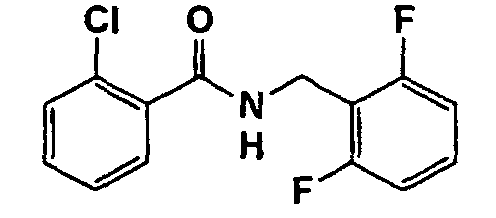
NMR(CDCl3):δ 7.69-7.66 (m, 1H), 7.40-7.22 (m, 4H), 6.95-6.89 (m, 2H), 6.59 (brs, 1H), 4.76 (d, J = 5.4 Hz, 2H).
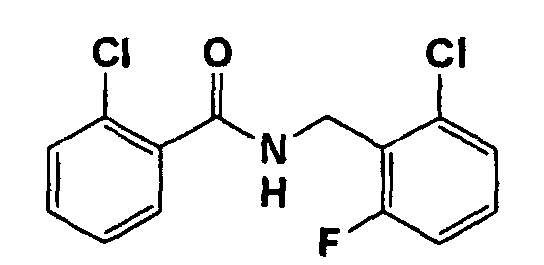
NMR (CDCl3):δ 7.71-7.68 (m, 1H), 7.39-7.21 (m, 5H), 7.07-7.01 (m, 1H), 6.58 (brs, 1H), 4 86-4.83 (m, 2H).

NMR (CDCl3):δ 7.35-7.14 (m, 6H), 7.07-7.01 (m, 1H), 6.04 (brs, 1H), 4.82-4.80 (m, 2H), 2.43 (s, 3H).
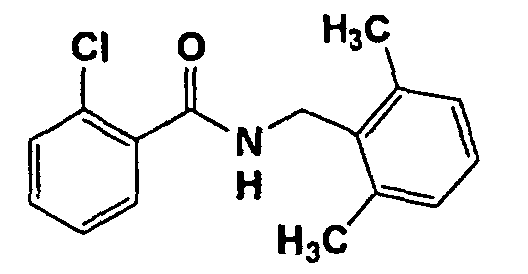
NMR (CDCl3):δ7.68-7.63 (m, 1H), 7.37-7.03 (m, 6H), 5.97 (brs, 1H), 4.68 (d, J = 4.8 Hz, 2H), 2.43 (s, 6H).
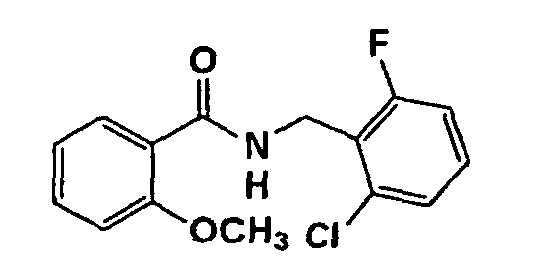
NMR (CDCl3):δ 8.47 (brs, 1H), 8.23 (dd, J = 8.0, 2.0 Hz, 1H), 7.47-7.38 (m, 1H), 7.27-6.93 (m, 5H), 4.86-4.83 (m, 2H), 3.94 (s, 3H).

NMR (CDCl3):δ 7.41 (dd, J = 1.8, 0.9 Hz, 1H), 7.28-7.20 (m, 2H), 7.13 (dd, J = 3.3, 0.9 Hz, 1H), 7.06-7.00 (m, 1H), 6.67 (brs, 1H), 6.48 (dd, J = 3.3, 1.8 Hz, 1H), 4.80 (dd, J = 5.9, 1.8 Hz, 2H).

NMR (CDCl3):δ 7.73-7.68 (m, 1H), 7.50-7.23 (m, 6H), 6.73 (brs, 1H), 4.71 (d, J = 5.8 Hz, 2H).

NMR (CDCl3):δ 7.72-7.67 (m, 1H), 7.48-7.20 (m, 6H), 6.62 (brs, 1H), 4.61 (d, J = 5.8 Hz, 2H).
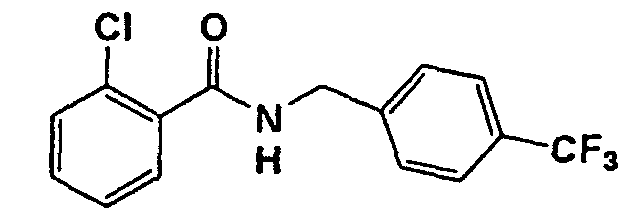
NMR (CDCl3):δ 7.75-7.26 (m, 8H), 6.63 (brs, 1H), 4.73 (d, J = 6.0 Hz, 2H).
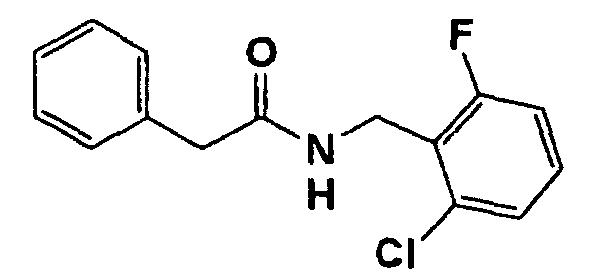
NMR (CDCl3):δ 7.39-7.16 (m, 7H), 7.02-6.93 (m, 1H), 5.76 (brs, 1H), 4.58 (dd, J = 5.6, 1.6 Hz, 2H), 3.57 (s, 2H).

NMR (CDCl3):δ 7.73-7.68 (m, 1H), 7.43-7.26 (m, 7H), 6.52 (brs, 1H), 4.64 (d, J = 5.8 Hz, 2H).
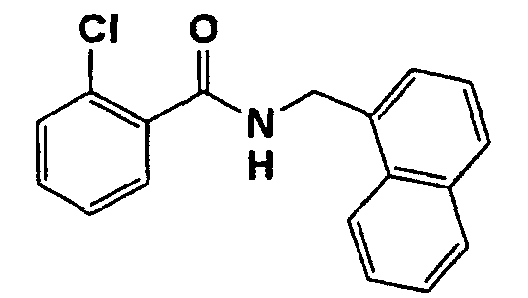
NMR (CDCl3):δ 8.15-8.11 (m, 1H), 7.92-7.82 (m, 2H), 7.69-7.25 (m, 8H), 6.40 (brs, 1H), 5.12 (d, J = 5 0 Hz, 2H).

NMR (CDCl3):δ 7.27-6.99 (m, 4H), 6.52 (d, J = 8.4 Hz, 2H), 6.06 (brs, 1H), 4.81 (dd, J = 5.7, 1.5 Hz, 2H), 3.76 (s, 6H).
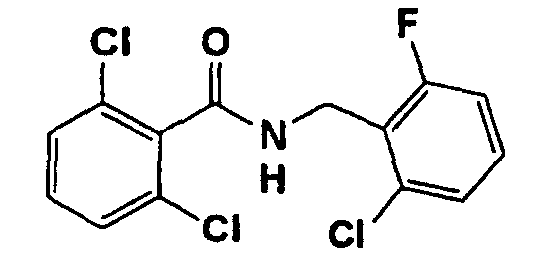
NMR (CDCl3):δ 7.35-7.23 (m, 5H), 7.07-7.01 (m, 1H), 6.01 (brs, 1H), 4.86 (dd, J = 5.7, 1.8 Hz, 2H).

NMR (CDCl3):

NMR (CDCl3):δ 7.96-7.93 (m, 2H), 7 58-7.13 (m, 9H), 6.98-6.92 (m, 1H), 6.59 (brs, 1H), 5.53 (s, 2H), 4.81 (dd, J = 5.4, 1.5 Hz, 2H).

NMR (CDCl3):
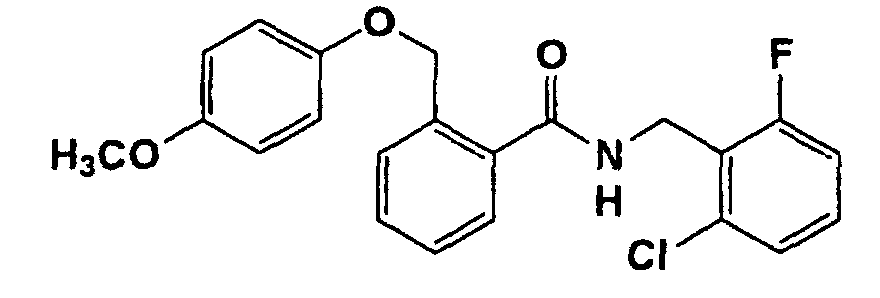
NMR (CDCl3):δ 7.71-7.68 (m, 1H), 7.49-7.38 (m, 3H), 7.15-7.03 (m, 2H), 6.89-6.83 (m, 2H), 6.74 (s, 4H), 5.05 (s, 2H), 4.76 (dd, J = 5.4, 1.5 Hz, 1H), 3.78 (s, 3H).

NMR (CDCl3):δ 7.29-6.97 (m, 6H), 5.88 (brs, 1H), 4.82 (dd, J = 5.4, 1.5 Hz, 2H), 2.27 (s, 6H).
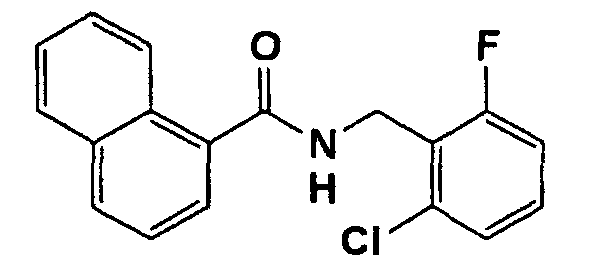
NMR (CDCl3):δ 8.34-8.31 (m, 1H), 7.92-7.84 (m, 2H), 7.61-7.41 (m, 4H), 7.28-7.23 (m, 2H), 7.09-7.03 (m, 1H), 6.26 (brs, 1H), 4.93 (dd, J = 5.7, 1.5 Hz, 2H)

NMR (CDCl3):δ 7.38-6.92 (m, 7H), 4.98 (s, 2H x 3/5), 4.38 (s, 2H x 2/5), 4.05 (t, J = 6.0 Hz, 2H x 2/5), 3.49 (t, J = 6.0 Hz, 2H x 3/5), 3.00 (t, J = 6.0 Hz, 2H x 2/5), 2.90 (t, J = 6.0 Hz, 2H x 3/5).

NMR (CDCl3):δ 7.53-7.46 (m, 2H), 7.30-7.22 (m, 3H), 7.08-7.01 (m, 1H), 6.33 (brs, 1H), 4.84 (dd, J = 5.7, 1.5 Hz, 2H).

NMR (CDCl3):δ 7.66 (d, J = 8.1 Hz, 1H), 7.39 (d, J = 2.1 Hz, 1H), 7.31-7.21 (m, 3H), 7.07-7.01 (m, 1H), 6.64 (brs, 1H), 4.83 (dd, J = 5.7, 1.5 Hz, 2H).
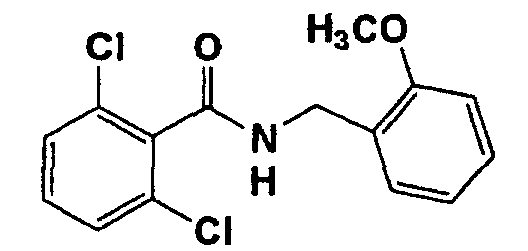
NMR (CDCl3):δ 7.43-7.20 (m, 5H), 6.95 (t, J = 7.2 Hz, 1H), 6.88 (d, J = 8.1 Hz, 1H), 6.18 (brs, 1H), 4.67 (d, J = 6.3 Hz, 2H), 3.85 (s, 3H).
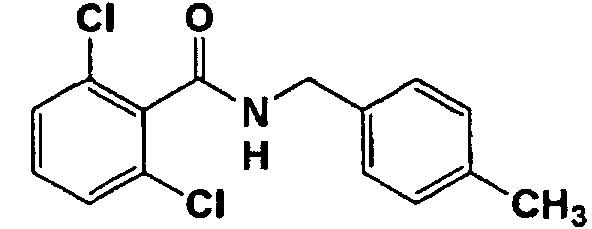
NMR (CDCl3):δ 7.35-7.21 (m, 5H), 7.16 (d, J = 8.4 Hz, 2H), 5.95 (brs, 1H), 4.64 (d, J = 5.4 Hz, 2H), 2.34 (s, 3H).

NMR (CDCl3):δ 7.80 (d, J = 7.8 Hz, 1H), 7.67 (d, J = 7.8 Hz, 1H), 7.58 (t, J = 7.8 Hz, 1H), 7.42 (t, J = 7.8 Hz, 1H), 7.33-7.22 (m, 3H), 6.07 (brs, 1H), 4.86 (d, J = 6.3 Hz, 2H).
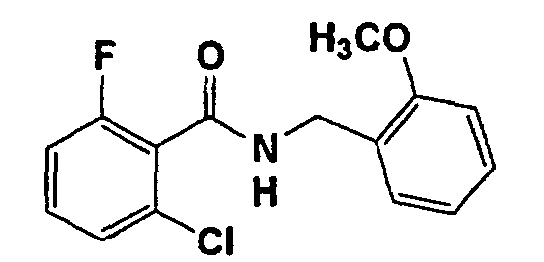
NMR (CDCl3):δ 7.38 (dd, J = 7.5, 1.5 Hz, 1H), 7.32-7.26 (m, 2H), 7.21-7.17 (m, 1H), 7.05-6.93 (m, 2H), 6.89 (d, J = 8.1 Hz, 1H), 6.27 (brs, 1H), 4.67 (d, J = 5.7 Hz, 2H), 3.85 (s, 3H).

NMR (CDCl3):δ 7.37-7.26 (m, 3H), 6.97-6.88 (m, 4H), 6.45 (brs, 1H), 4.65 (d, J = 6.0 Hz, 2H), 3.87 (s, 3H).

NMR (CDCl3):δ 7.34-7.22 (m, 4H), 6.98-6.96 (m, 2H), 6.85-6.81 (m, 1H), 6.02 (brs, 1H), 4.66 (d, J = 6.0 Hz, 2H), 3.80 (s, 3H).

NMR (CDCl3):δ 7.35-7.21 (m, 5H), 6.90-6.86 (m, 2H), 5.96 (brs, 1H), 4.61 (d, J = 5 4 Hz, 2H), 3.80 (s, 3H).

NMR (CDCl3):
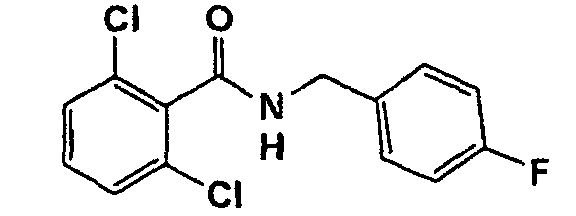
NMR (CDCl3):δ 7.40-7.22 (m, 5H), 7.07-7.01 (m, 2H), 6.03 (brs, 1H), 4.65 (d, J = 5.7 Hz, 2H).

NMR (CDCl3):δ 7.38-7.23 (m, 4H), 7.07-7.01 (m, 1H), 6.63 (brs, 1H), 4.84 (dd, J = 5.4, 1.5 Hz, 2H).
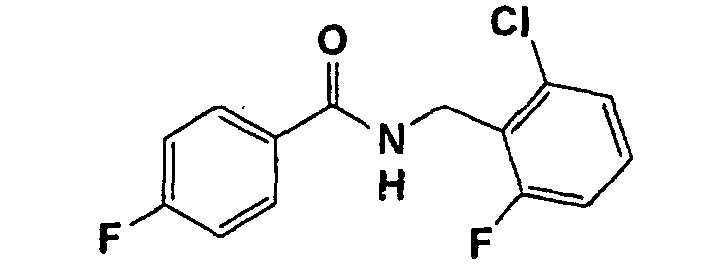
NMR (CDCl3):δ 7.80-7.75 (m, 2H), 7.29-7.21 (m, 2H), 7.13-7.01 (m, 3H), 6.42 (brs, 1H), 4.82 (dd, J = 5.4, 1.5 Hz, 2H).

NMR (CDCl3):δ 7.82-7.77 (m, 2H), 7 35-7.30 (m, 2H), 7.14-7.01 (m, 4H), 6.37 (brs, 1H), 4.60 (d, J = 5.7 Hz, 2H).
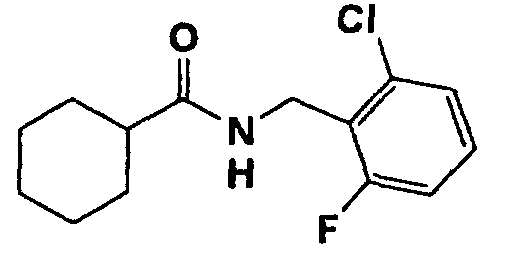
NMR (CDCl3):δ 7.27-7.18 (m, 2H), 7.04-6.97 (m, 1H), 5.73 (brs, 1H), 4.61 (dd, J = 5.4, 1.2 Hz, 2H), 2.11-2.02 (m, 1H), 1.87-1.20 (m, 10H).
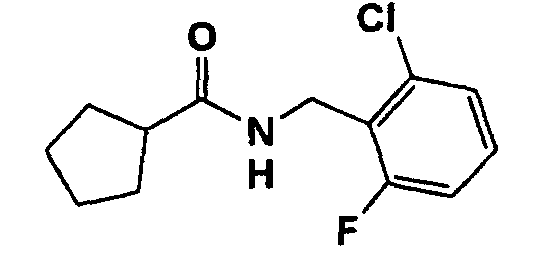
NMR (CDCl3):δ 7.27-7.18 (m, 2H), 7.04-6.98 (m, 1H), 5.75 (brs, 1H), 4.62 (dd, J = 5.4, 1.5 Hz, 2H), 2.53-2.45 (m, 1H), 1.86-1.51 (m, 8H).

NMR (CDCl3):δ 7.51 (dd, J = 7.8, 1.5 Hz, 1H), 7.45 (dd, J = 7.8, 1.5 Hz, 1H), 7.25 (t, J = 7.8 Hz, 1H), 6.04 (brs, 1H), 3.31 (t, J = 6.3 Hz, 2H), 1.83-0.96 (m, 11H).
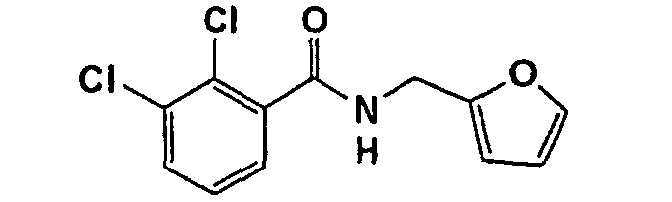
NMR (CDCl3):δ 7.52 (dd, J = 7.8, 1.5 Hz, 1H), 7.45 (dd, J = 7.8, 1.5 Hz, 1H), 7.38 (t, J = 0.9 Hz, 1H), 7.24 (t, J = 7.8 Hz, 1H), 6.36 (brs, 1H), 6.35-6.31 (m, 2H), 4.64 (d, J = 5.4 Hz, 2H).
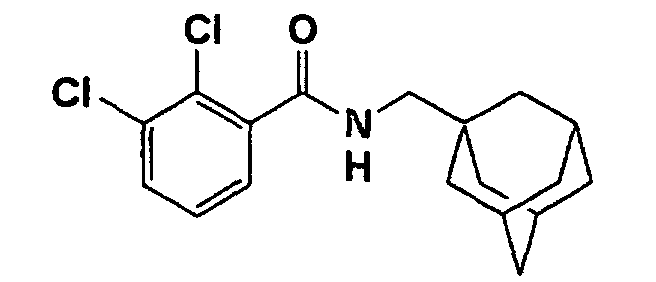
NMR (CDCl3):δ 7.52 (dd, J = 7.8, 1.5 Hz, 1H), 7 47 (dd, J = 7.8, 1.5 Hz, 1H), 7.26 (t, J = 7.8 Hz, 1H), 6.03 (brs, 1H), 3.17 (d, J = 6.6 Hz, 2H), 2.01-1.58 (m, 15H).
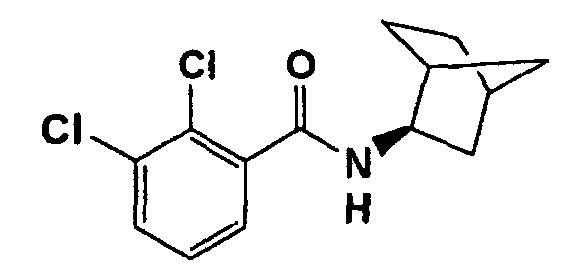
NMR (CDCl3):δ 7.50 (dd, J = 7.8, 1.5 Hz, 1H), 7.43 (dd, J = 7.8, 1.5 Hz, 1H), 7.24 (t, J = 7.8 Hz, 1H), 5.88 (brs, 1H), 3.95-3.89 (m, 1H), 2.37-2.33 (m, 2H), 1.94-1.86 (m, 1H), 1.65-1.15 (m, 7H).

NMR (CDCl3):δ 7.49 (dd, J = 7.8, 1.5 Hz, 1H), 7.40-7.11 (m, 7H), 7.02-6.98 (m, 2H), 6.80 (t, J = 4.8 Hz, 1H), 6.33 (brs, 1H), 4.91 (d, J = 5.4 Hz, 2H).
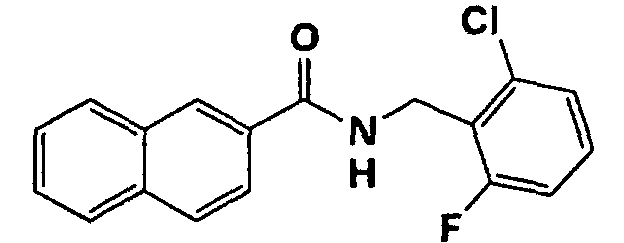
NMR (CDCl3):δ 8.28 (s, 1H), 7.92-7.80 (m, 4H), 7.59-7.50 (m, 2H), 7.27-7.04 (m, 3H), 6.62 (brs, 1H), 4.90 (dd, J = 5.7, 1.2 Hz, 2H).

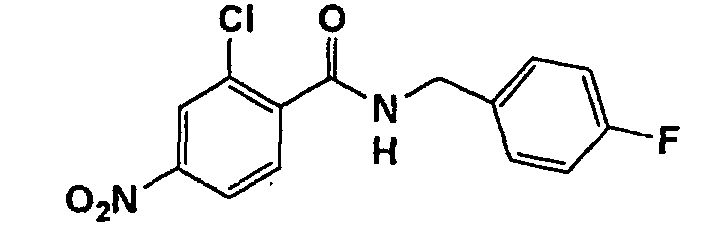
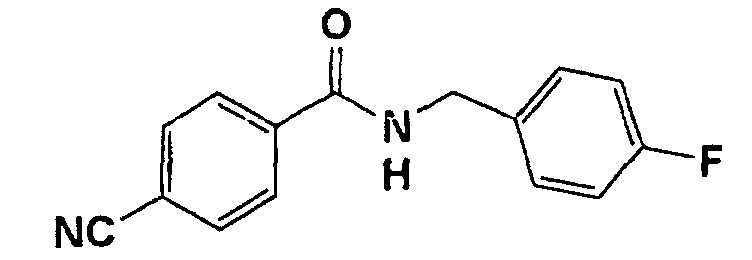


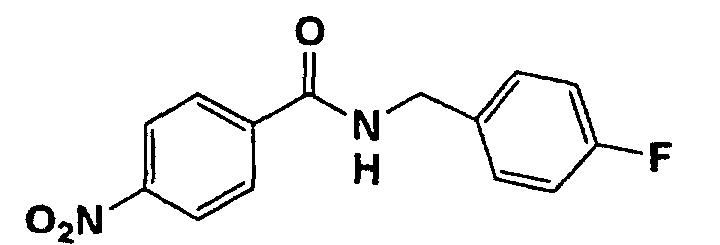
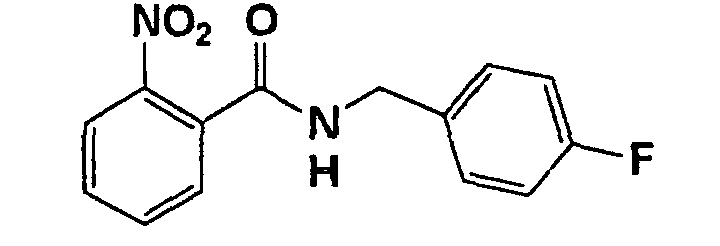

NMR (CDCl3):δ 7.52-7.46 (m, 2H), 7.36-7.28 (m, 2H), 7.10-7.00 (m, 3H), 6.26 (bs, 1H), 4 59 (d, J = 5.7 Hz, 2H).
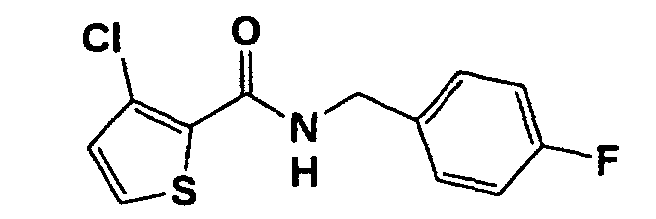
NMR (CDCl3):δ 7.48 (d, J = 5.4 Hz, 1H), 7.38-7.30 (m, 2H), 7.30-7.22 (b, 1H), 7.08-7.00 (m, 2H), 6.98 (d, J = 5.4 Hz, 1H), 4.63 (d, J = 6.0 Hz, 2H).

NMR (CDCl3):
δ 7.88 (dd, J = 2.7 Hz, 1.5 Hz, 1H), 7.40-7.28 (m, 4H), 7.08-6.99 (m, 2H), 6.24 (bs, 1H), 4.59 (d, J = 6.0 Hz, 2H).

NMR (CDCl3):δ 7.54-7.48 (m, 2H), 7.41-7.07 (m, 7H), 7.00-6.94 (m, 2H), 6.90 (dd, J = 7.8 Hz, 1.5 Hz, 1H), 6.50-6.42 (m, 1H), 4.70 (d, J = 5.7 Hz, 2H).
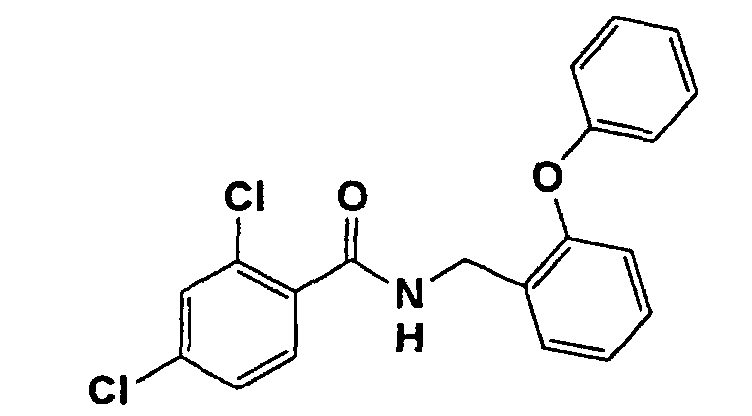
NMR (CDCl3):δ 7.59 (d, J = 8.4 Hz, 1H), 7.50 (dd, J = 7.2 Hz, 1.5 Hz, 1H), 7.39 (d, J = 2.1 Hz, 1H), 7.36-7.23 (m, 4H), 7.16-7.07 (m, 2H), 7.00-6.94 (m, 2H), 6.90 (dd, J = 8.1 Hz, 1.0 Hz, 1H), 6.76-6.68 (m, 1H), 4.70 (d, J = 6.0 Hz, 2H).
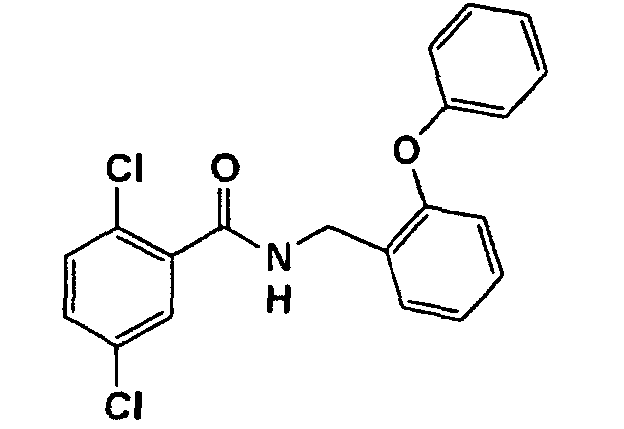
NMR (CDCl3):δ 7.62-7.58 (m, 1H), 7.51 (dd, J = 7.8 Hz, 1.5 Hz, 1H), 7.38-7.22 (m, 5H), 7.18-7.07 (m, 2H), 7.01-6.94 (m, 2H), 6.90 (d, J = 7.8 Hz, 1H), 6.74-6.62 (m, 1H), 4.70 (d, J = 6.0 Hz, 2H).

NMR (CDCl3):δ 7.76-7.67 (m, 2H), 7.63-7.50 (m, 3H), 7.38 (dd, J = 9 Hz, 3 Hz, 1H), 7.32-7.24 (m, 1H), 6.20-6.00 (m, 1H), 4.77 (d, J = 6.3 Hz, 2H).
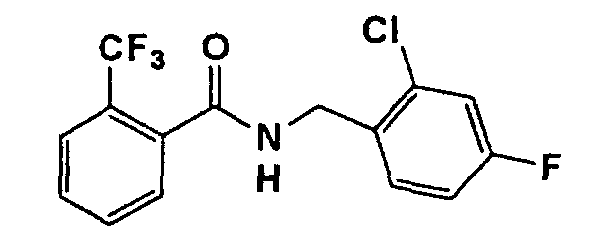
NMR (CDCl3):δ 7.70 (d, J = 6.9 Hz, 1H), 7.64-7.48 (m, 4H), 7.15 (dd, J = 8.4 Hz, 3.0 Hz, 1H), 7.00 (dt, J = 3.0 Hz, 8.7 Hz, 1H) 6.21 (bs, 1H), 4.69 (d, J = 6.0 Hz, 2H).

NMR (CDCl3):δ 8.38-8.29 (m, 1H), 7.76-7.71 (m, 1H), 7.48 (dd, J = 9.0 Hz, 6.0 Hz, 1H), 7.32-7.07 (m, 9H), 5.03 (s, 2H), 4.58 (d, J = 6.0Hz, 2H), 3.93 (s, 3H).

NMR (CDCl3):δ 7.53 (dd, J = 7.8 Hz, 1.5 Hz, 1H), 7.50-7.44 (m, 2H), 7.42 (dd, J = 2.4 Hz, 1H), 7.29-7.23 (m, 2H), 6.50 (bs, 1H), 4.69 (d, J = 6.0 Hz, 2H).

NMR (CDCl3):δ 7.54 (dd, J = 8.1 Hz, 1.5 Hz, 1H), 7.52-7.47 (m, 2H), 7.35-7.22 (m, 3H), 6.51 (bs, 1H), 4.70 (d, J = 6.0 Hz, 2H).
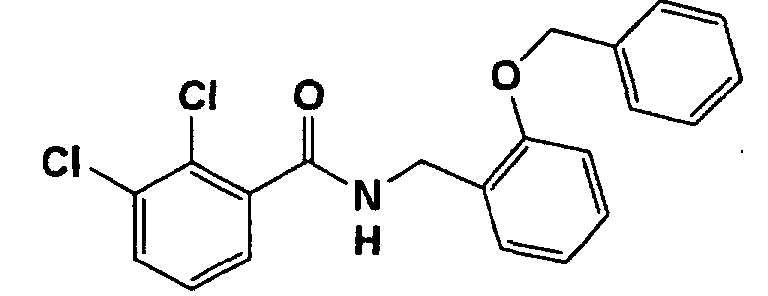
NMR (CDCl3):δ 7.49 (dd, J = 8.1 Hz, 1.5 Hz, 1H), 7.42-7.26 (m, 8H), 7.20 (t, J = 8.1 Hz, 1H), 7.01-6.94 (m, 2H), 6.56-6.46 (m, 1H), 5.11 (s, 2H), 4.69 (d, J = 5.7 Hz, 2H).

NMR (CDCl3):δ 7.51 (dd, J = 8.1 Hz, 2.7 Hz, 1H), 7.42-7.19 (m, 9H), 6.89 (d, J = 9.0 Hz, 1H), 6.52-6.44 (m, 1H), 5.09 (s, 2H), 4.64 (d, J = 6.0 Hz, 2H).
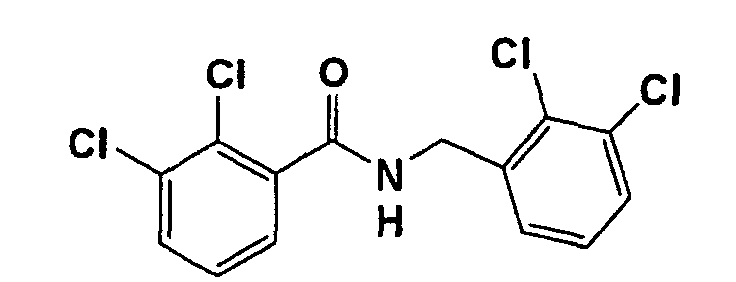
NMR (CDCl3):δ 7.53 (dd, J = 7.8 Hz, 1.5 Hz, 1H), 7.48 (dd, J = 7.8 Hz, 1.5 Hz, 1H), 7.44 (d, J = 8.1 Hz, 1H), 7.30-7.19 (m, 3H), 6.54 (bs, 1H), 4.76 (d, J = 6.3 Hz, 2H).
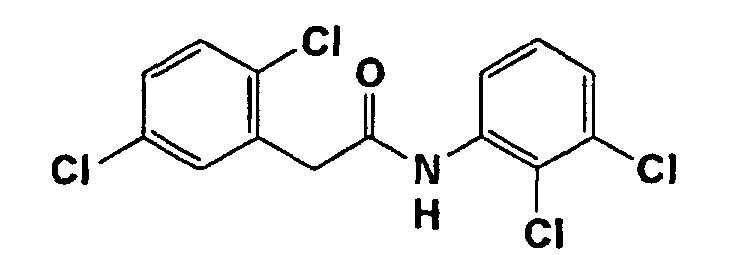
NMR (CDCl3):δ 8.35-8.28 (m, 1H), 7.81 (bs, 1H), 7.44 (d, J = 2.4 Hz, 1H), 7.40 (d, J = 8.4 Hz, 1H), 7.29 (dd, J = 8.4 Hz, 2.4 Hz, 1H), 7.24-7.18 (m, 2H), 3.89 (s, 2H).
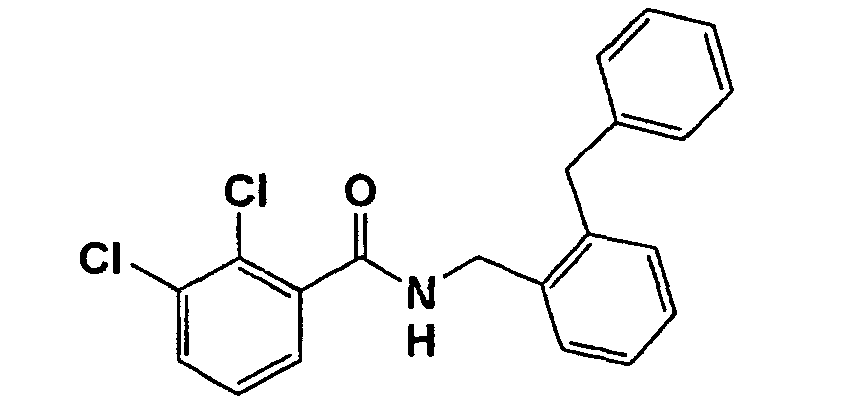
NMR (CDCl3):δ 7.48 (dd, J = 6.6, 3.0 Hz, 1H), 7.41 (dd, J = 6.6, 3.0 Hz, 1H), 7.31-7.12 (m, 10H), 5.71 (brs, 1H), 4.60 (d, J = 5.7 Hz, 2H), 4.10 (s, 2H).
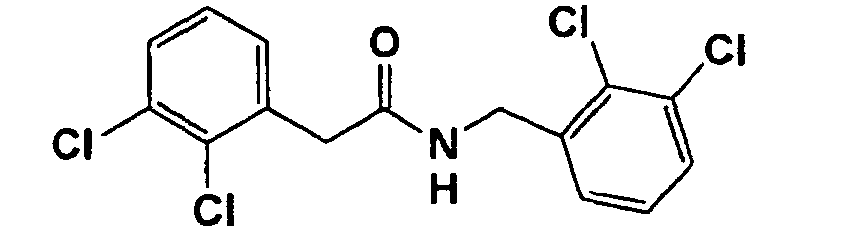
NMR (CDCl3):δ 7.43 (dd, J = 7.8 Hz, 1.5 Hz, 1H), 7.39 (dd, J = 7.8 Hz, 1.5 Hz, 1H), 7.29-7.13 (m, 4H), 6.05-5.90 (b, 1H), 4.52 (d, J = 6.0 Hz, 2H), 3.76 (s, 2H).
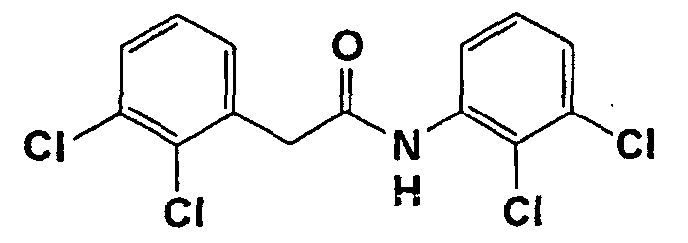
NMR (CDCl3):δ 8.34-8.28 (m, 1H), 7.78 (s, 1H), 7.49 (dd, J = 7.8 Hz, 1.5 Hz, 1H), 7.35 (dd, J = 7.8 Hz, 1.5 Hz, 1H), 7.27 (t, J = 7.8 Hz, 1H), 7.23-7.18 (m, 2H), 3.96 (s, 2H).
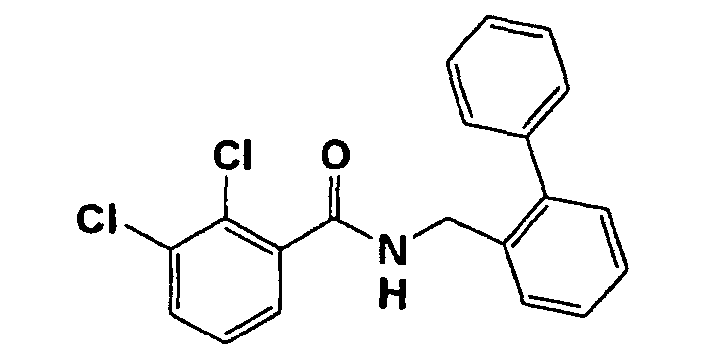
NMR (CDCl3):δ 7.56-7.19 (m, 12H), 6.08-5.98 (m, 1H), 4.64 (d, J = 5.4 Hz, 2H).
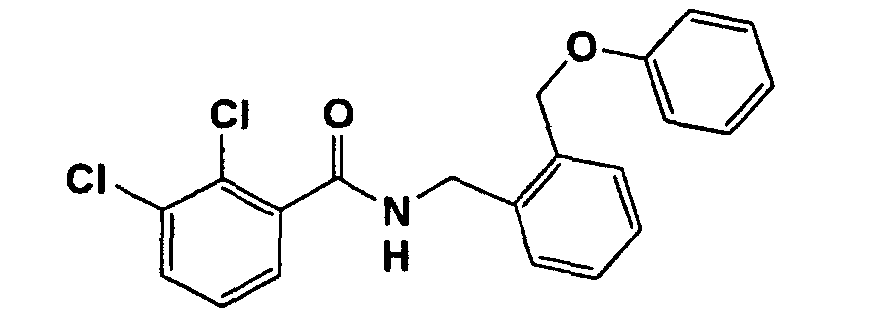
NMR (CDCl3):δ 7.54-7.14 (m, 7H), 7.02-6.95 (m, 1H), 6.94-6.87 (m, 2H), 6.54-6.44 (m, 1H), 5.13 (s, 2H), 4.74 (d, J = 5.4 Hz, 2H).
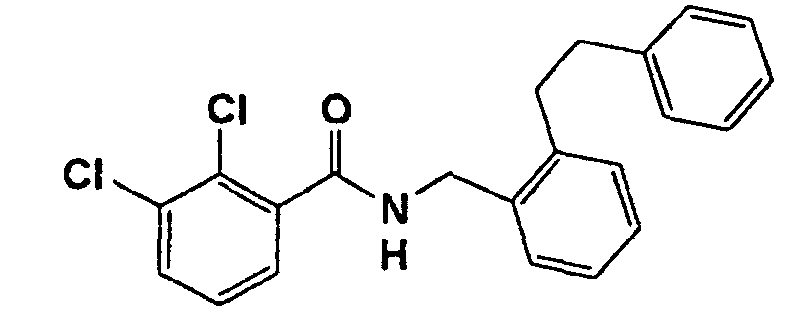
NMR (CDCl3):δ 7.51 (dd, J = 8.1 Hz, 1.5 Hz, 1H), 7.39-7.15 (m, 8H), 7.13-7.08 (m, 2H), 7.03-6.97 (m, 1H), 5.58 (b, 1H), 4.56 (d, J = 5.4 Hz, 2H), 3.05-2.88 (m, 4H).

NMR (CDCl3):δ 7.49 (dd, J = 7.8, 1.8 Hz, 1H), 7.39 (d, J = 7.8 Hz, 1H), 7.31-7.16 (m, 5H), 7.11-7 08 (m, 3H), 6.94-6.88 (m, 2H), 6.42 (bs, 1H), 4.65 (d, J = 6.3 Hz, 2H).
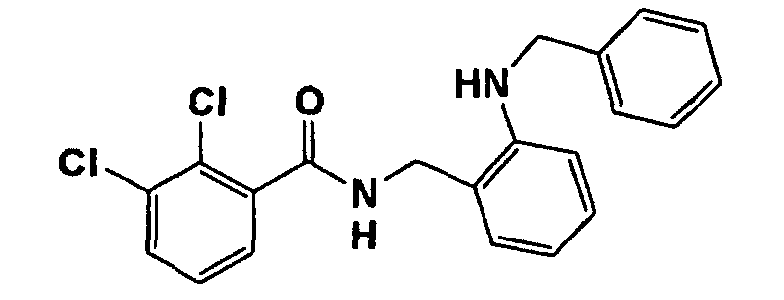
NMR (CDCl3):δ 7.51 (dd, J = 7.8, 1.5 Hz, 1H), 7.37-7.11 (m, 9H), 6.66 (dd, J = 7.8, 1.5 Hz, 1H), 6.61 (d, J = 7.8 Hz, 1H), 6.28-6.18 (br, 1H), 5.37-5.18 (br, 1H), 4.63 (d, J = 6.0 Hz, 1H), 4.42 (s, 2H).
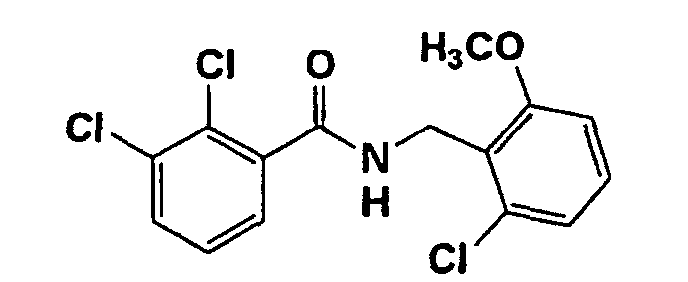
NMR (CDCl3):δ 7.51-7.46 (m, 2H), 7.27-7.19 (m, 2H), 7.03 (d, J = 8.1 Hz, 1H), 6.82 (d, J = 8.1 Hz, 1H), 6.32 (s, 2H), 4.86 (d, J = 5.4 Hz, 2H), 3.88 (s, 3H).

NMR (CDCl3):δ 7.56 (dd, J = 7.5, 1.5 Hz, 1H), 7.47 (dd, J = 7.8, 1.8 Hz, 1H), 7.41-7.28 (m, 2H), 7.24-7.11 (m, 5H), 6.74-6.68 (m, 1H), 6.57-6.53 (m, 2H), 6.24-6.13 (br, 1H), 4.55 (d, J = 6 3 Hz, 2H), 3.28 (s, 3H).
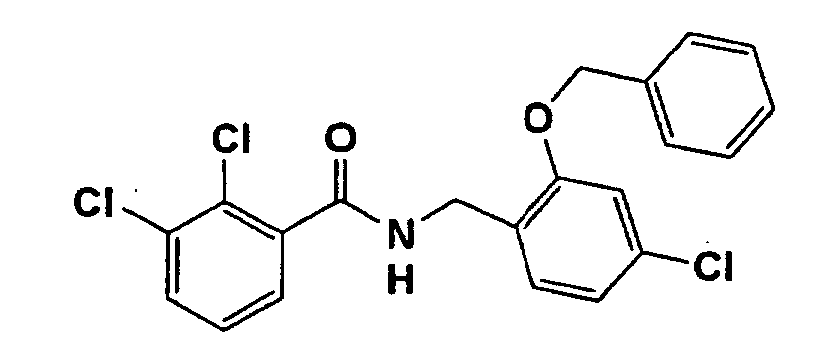
NMR (CDCl3):δ 7.52-7.46 (m, 1H), 7.40-7.28 (m, 7H), 7.21 (t, J = 7.8 Hz, 1H), 7.00-6.94 (m, 2H), 6.50-6.40 (m, 1H), 5.08 (s, 2H), 4.63 (d, J = 5.7 Hz, 2H).
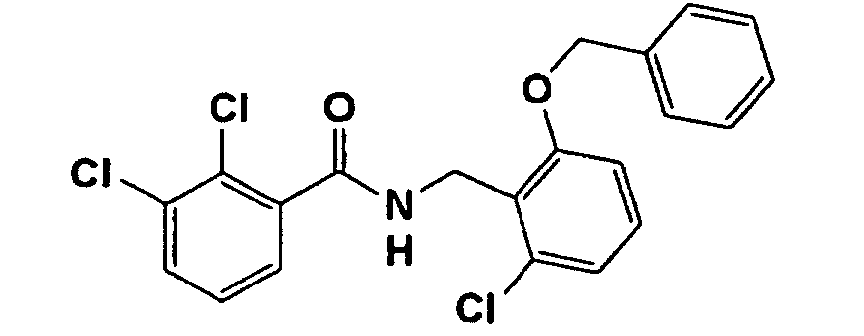
NMR (CDCl3):δ 7.48 (dd, J = 8.1 Hz, 1.5 Hz, 1H), 7.43-7.28 (m, 6H), 7.24-7.16 (m, 2H), 7.05 (dd, J = 8.1 Hz, 1.2 Hz, 1H), 6.89 (d, J = 8.1 Hz, 1H), 6.34-6.24 (m, 1H), 5.13 (s, 2H), 4.91 (d, J = 5.4 Hz, 2H).
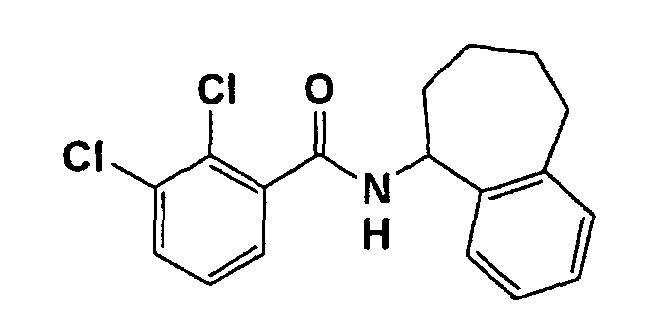
NMR (CDCl3):δ 7.55-7.51 (m, 2H), 7.33-7.22 (m, 2H), 7.20-7.11 (m, 3H), 6.44 (d, J = 6.9 Hz, 1H), 5.43-5.38 (m, 1H), 2.97-2.81 (m, 2H), 2.07-1 92 (m, 4H), 1.84-1.60 (m, 2H).
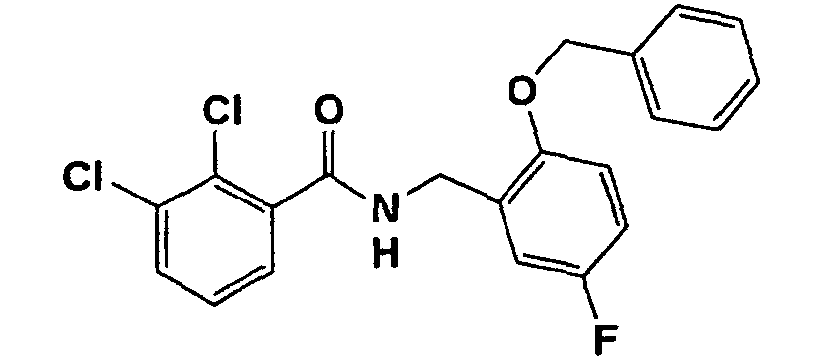
NMR (CDCl3):δ 7.51 (dd, J = 7.5, 1.5 Hz, 1H), 7.41-7.30 (m, 6H), 7.22 (t, J = 7.5 Hz, 1H), 7.13 (dd, J = 8.4, 3.0 Hz, 1H), 7.00-6.86 (m, 2H), 6.56-6.42 (m, 1H), 5.07 (s, 2H), 4.64 (d, J = 5.7 Hz, 2H).

NMR (CDCl3):δ 7.49 (dd, J = 7.8, 1.5 Hz, 1H), 7.40-7.28 (m, 6H), 7.22-7.16 (m, 2H), 7.09-7.06(m, 1H), 6.86 (d, J = 8.1 Hz, 1H), 6.58-6.45 (m, 1H), 5.07 (s, 2H), 4.64 (d, J = 5.7 Hz, 2H), 2.29 (s, 3H).

NMR (CDCl3):δ 8.32 (d, J = 2.7 Hz, 1H), 8.20 (dd, J = 9.0, 2.7 Hz, 1H), 7.53 (dd, J = 8 1, 1.5 Hz, 1H), 7.45 (dd, J = 8.1, 1.5 Hz, 1H), 7.42-7.35 (m, 5H), 7.26 (t, J = 8.1 Hz, 1H), 7.03 (d, J = 9.0 Hz, 1H), 6.60-6.00 (m, 1H), 5.22 (s, 2H), 4.73 (d, J = 6.0 Hz, 2H).

NMR (CDCl3):δ 7.49 (dd, J = 8.0, 1.8 Hz, 1H), 7.40-7.28 (m, 6H), 7.20 (t, J = 8.0 Hz, 1H), 6.97 (d, J = 3.0 Hz, 1H), 6.90 (d, J = 8.7 Hz, 1H), 6.79 (dd, J = 8.7, 3.0 Hz, 1H), 6.49-6.41 (m, 1H), 5.05 (s, 2H), 4.65 (d, J = 5.7 Hz, 2H), 3.78 (s, 3H).

NMR (CDCl3):δ 8.36-8.28 (m, 1H), 8.12 (bs, 1H), 7.39-7.28 (m, 7H), 7.19-7.12 (m, 2H), 7.04-6.98 (m, 2H), 5.16 (s, 2H), 3.82 (s, 2H).
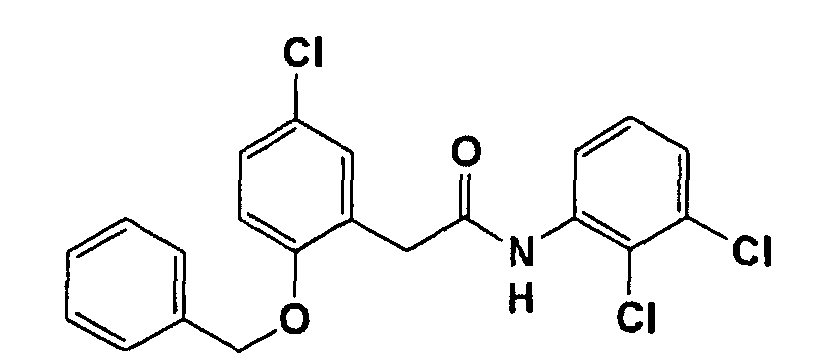
NMR (CDCl3):δ 8.33-8.27 (m, 1H), 8.07 (bs, 1H), 7.37-7.24 (m, 7H), 7.20-7.14 (m, 2H), 6.94 (d, J = 9.0 Hz, 1H), 5.14 (s, 2H), 3.77 (s, 2H)

NMR (CDCl3):δ 7.54 (dd, J = 7.8, 1.5 Hz, 1H), 7.49 (dd, J = 7.8, 1.5 Hz, 1H), 7.31 (d, J = 2.1 Hz, 1H), 7.27 (t, J = 7.8 Hz, 1H), 7.19 (dd, J = 8.1, 2.1 Hz, 1H), 7.13 (d, J = 8.1 Hz, 1H), 6 21-6.10 (m, 1H), 4.61 (d, J = 5.7 Hz, 2H), 2.35 (s, 3H).

NMR (CDCl3):δ 7.51 (dd, J = 8.1, 1.5 Hz, 1H), 7.47 (dd, J = 8.1, 1.5 Hz, 1H), 7.25 (t, J = 8.1 Hz, 1H), 7.20 (d, J = 7.5 Hz, 1H), 7.05-6.98 (m, 2H), 6.08-5.97 (m, 1H), 4.61 (d, J = 5.4 Hz, 2H), 2.36 (s, 3H), 2.31 (s, 3H).

NMR (CDCl3):δ 7.68-7.62 (m, 2H), 7.51-7.33 (m, 9H), 7.21 (dd, J = 9.0, 2.7 Hz, 1H), 6.89 (d, J = 9.0 Hz, 1H), 6.72-6.60 (m, 1H), 5.10 (s, 2H), 4 64 (d, J = 6.0 Hz, 2H).

NMR (CDCl3):δ 7.63-7.58 (m, 1H), 7.43-7.24 (m, 9H), 7.20 (dd, J = 9.0, 2.7 Hz, 1H), 6.87 (d, J = 9.0 Hz, 1H), 6.80-6.69 (m, 1H), 5.08 (s, 2H), 4.64 (d, J = 6 0 Hz, 2H).
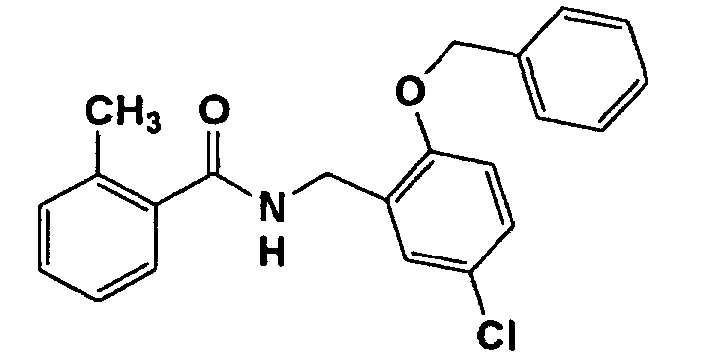
NMR (CDCl3):δ 7.39-7.12 (m, 11H), 6.88 (d, J = 8.7 Hz, 1H), 6.24-6.17 (m, 1H), 5.08 (s, 2H), 4.62 (d, J = 6.0 Hz, 2H), 2.38 (s, 3H).

NMR (CDCl3):δ 7.54-7.51 (m, 1H), 7.45-7.22 (m, 9H), 7.20 (dd, J = 8.7, 2.7 Hz, 1H), 6.87 (d, J = 8.7 Hz, 1H), 6.70-6.61 (m, 1H), 5.09 (s, 2H), 4.62 (d, J = 6.0 Hz, 2H), 2.35 (s, 3H).

NMR (CDCl3):δ 7.44-7.26 (m, 6H), 7.24-7.16 (m, 2H), 7.14-7.02 (m, 2H), 6.88 (d, J = 8.4 Hz, 1H), 6.20-6.10 (m, 1H), 5.08 (s, 2H), 4.62 (d, J = 6.3 Hz, 2H), 2.27 (s, 3H), 2.24 (s, 3H).

NMR (CDCl3):δ 9.14 (t, J = 5.7 Hz, 1H), 8.05 (dd, J = 8.1, 1.5 Hz, 1H), 7.79-7.67 (m, 3H), 7.58-7.53 (m, 1H), 7.46-7.40 (m, 2H), 4.73 (d, J = 5.7 Hz, 2H).

NMR (CDCl3):δ 7.52 (dd, J = 8.1, 1.5 Hz, 1H), 7.48 (dd, J = 8.1, 1.5 Hz, 1H), 7.25 (t, J = 8 1 Hz, 1H), 7.13 (d, J = 1.5 Hz, 1H), 7.10 (d, J = 7.8 Hz, 1H), 7.03 (dd, J = 7.8, 1.5 Hz, 1H), 6.09-5.98 (m, 1H), 4.61 (d, J = 5.4 Hz, 1H), 2.35 (s, 3H), 2.31 (s, 3H).
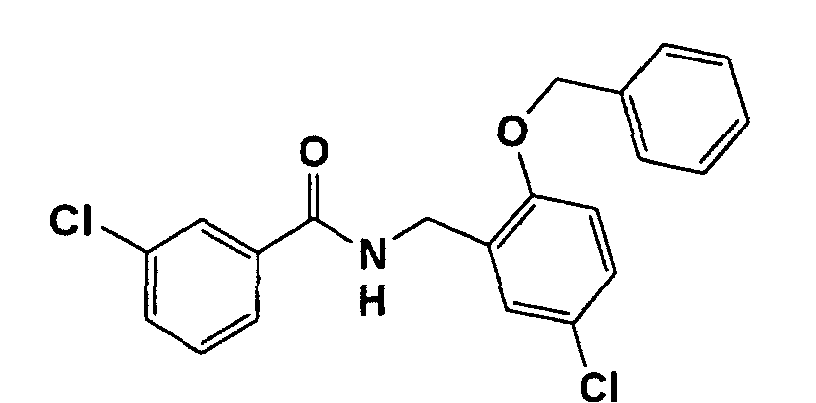
NMR (CDCl3):
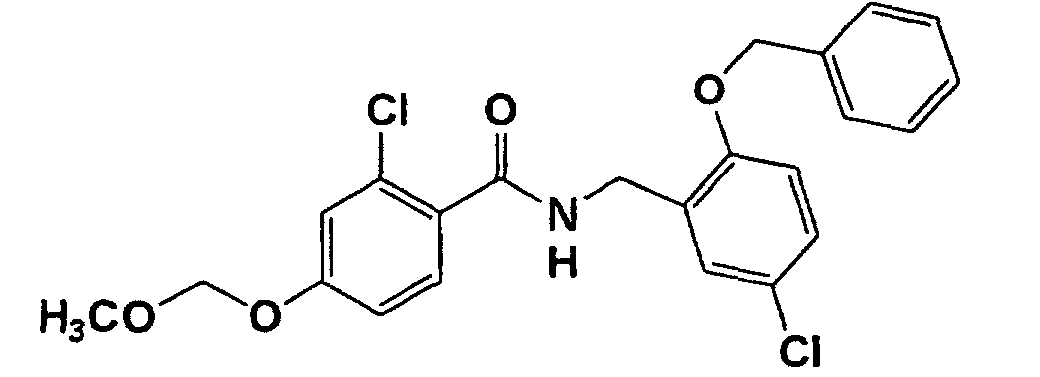
NMR (CDCl3):δ 7.70 (d, J = 9.0 Hz, 1H), 7.42-7.29 (m, 6H), 7.20 (dd, J = 8.7 Hz, 2.4 Hz, 1H), 7.04 (d, J = 2.4 Hz, 1H), 6.96 (dd, J = 9.0 Hz, 2.4 Hz, 1H), 6.92-6.84 (m, 2H), 5.17 (s, 2H), 5.09 (s, 2H), 4.65 (d, J = 5.7 Hz, 2H), 3.46 (s, 3H).

NMR (CDCl3):δ 7.51 (dd, J = 7.8 Hz, 1.8 Hz, 1H), 7.49 (dd, J = 7.8 Hz, 1.8 Hz, 1H), 7.44-7.30 (m, 6H), 7.24 (t, J = 7.8 Hz, 1H), 7.03 (d, J = 2.4 Hz, 1H), 6.87 (dd, J = 8.4 Hz, 2.4 Hz, 1H), 6.44-6.36 (m, 1H), 5.05 (s, 2H), 4.66 (d, J = 6.0 Hz, 2H).

To a solution of the compound prepared in Example 1(413 mg) in toluene (3.0 ml)
was added phosphorus pentachloride (344 mg) and the mixture was refluxed for 3 hours. The
mixture was concentrated and the residue was dissolved in acetonitrile (3.0 ml). To the mixture
was added trimethylsilyl azide (0.22 ml) and the mixture was stirred overnight. To the reaction
mixture was added water, and the mixture was extracted with ethyl acetate. The organic layer was
washed with 1N hydrochloric acid, a saturated aqueous solution of sodium bicarbonate, and brine
successively, dried over anhydrous sodium sulfate and was concentrated. The residue was
purified by column chromatography on silica gel (hexane : ethyl acetate = 7 : 3) to give the
compound of the present invention (238 mg) having the following physical data.
TLC:Rf 0.37 (ethyl acetate : n-hexane = 1 : 2);
NMR (CDCl3):δ 7.58-7.40 (m, 2H), 7.36-7.14 (m, 3H), 7.11-6.96 (m, 3H), 5.56 (s, 2H), 3.64 (s, 3H).
TLC:Rf 0.37 (ethyl acetate : n-hexane = 1 : 2);
NMR (CDCl3):δ 7.58-7.40 (m, 2H), 7.36-7.14 (m, 3H), 7.11-6.96 (m, 3H), 5.56 (s, 2H), 3.64 (s, 3H).
By the same procedure as described in example 2 using a corresponding compound,
optionally followed by converting into a corresponding salt by a conventional method, the
compounds of the present invention having the following physical data were given.
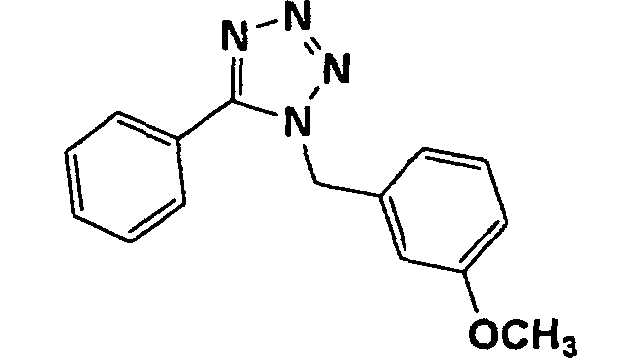
NMR (CDCl3):δ 7.64-7.45 (m, 5H), 7.32-7.21 (m, 1H), 6.91-6.84 (m, 1H), 6.76-6.67 (m, 2H), 5.59 (s, 2H), 3.76 (s, 3H).

NMR (CDCl3):δ 7.76-7.68 (m, 2H), 7.63-7.52 (m, 3H), 7.38-7.22 (m, 3H), 5.80 (s, 2H).
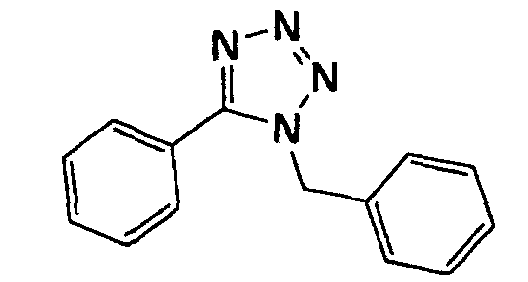
NMR (CDCl3):δ 7.63-7.45 (m, 5H), 7.40-7.31 (m, 3H), 7.19-7.13 (m, 2H), 5.62 (s, 2H).

NMR (CDCl3):δ 7.91-7.84 (m, 1H), 7.76-7.66 (m, 1H), 7.64-7.53 (m, 1H), 7.31-7.20 (m, 3H), 7.12-7.06 (m, 1H), 7.06-6.98 (m, 2H), 5.37 (s, 2H).
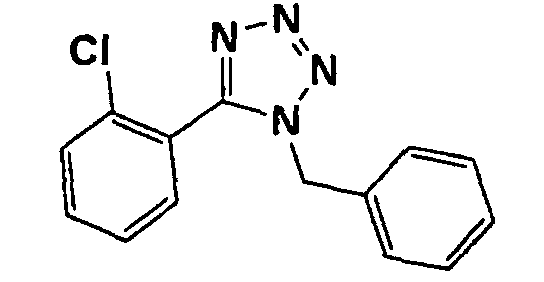
NMR (CDCl3):δ 7.60-7.46 (m, 2H), 7.38-7.15 (m, 5H), 7.06-6.96 (m, 2H), 5.47(s, 2H).
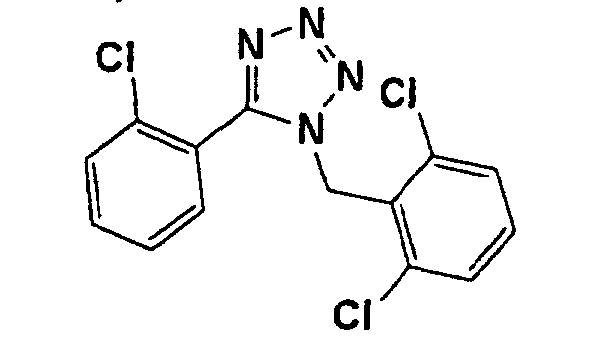
NMR (CDCl3):δ 7.61-7.19 (m, 7H), 5.67 (s, 2H).

NMR (CD3OD):δ 8.78 (bd, J = 6 Hz, 1H), 8.41 (td, J = 8, 2 Hz, 1H), 7.95-7 86 (m, 1H), 7.74 (d, J = 8 Hz, 1H), 7.69-7.48 (m, 4H), 5.95 (s, 2H).

NMR (CD3OD):δ 8.90-8.81 (m, 2H), 8.48 (d, J = 8 Hz, 1H), 8.07 (dd, J = 8, 6 Hz, 1H), 7.76-7.64 (m, 2H), 7.64-7.52 (m, 2H), 5.85 (s, 2H).

NMR (CD3OD):δ 8.88-8.81 (m, 2H), 7.90-7.85 (m, 2H), 7.70-7.49 (m, 4H), 5.97 (s, 2H).
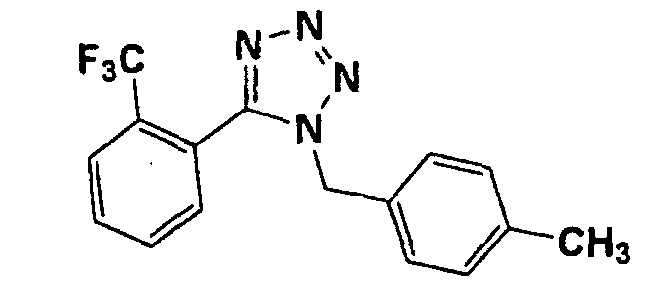
NMR (CDCl3):δ 7.85 (bd, J = 7 Hz, 1H), 7.72 (bt, J = 7 Hz, 1H), 7.59 (bt, J = 7 Hz, 1H), 7.14-7.03 (m, 3H), 6.94-6.87 (m, 2H), 5.32 (s, 2H), 2.31 (s, 3H).
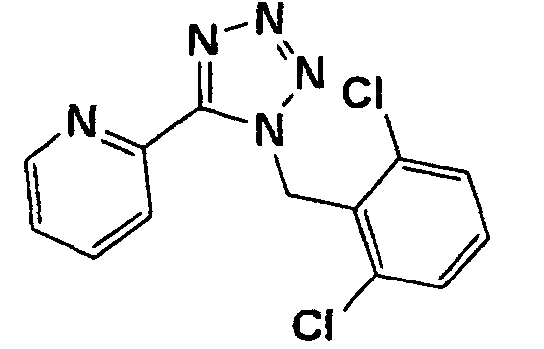
NMR (CDCl3):δ 8.81-8.76 (m, 1H), 8.25-8.19 (m, 1H), 7.84 (td, J = 8.0, 2.0 Hz, 1H), 7.45-7.25 (m, 4H), 6.17 (s, 2H).
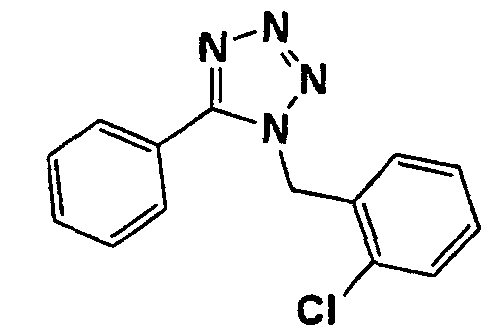
NMR (CDCl3):δ 7.64-7.41 (m, 6H), 7.37-7.20 (m, 2H), 6.94-6.88 (m, 1H), 5.74 (s, 2H).

NMR (CD3OD):δ 9.27-9.20 (m, 1H), 9.08-9.00 (m, 1H), 8.86-8.73 (m, 1H), 8.23-8.09 (m, 1H), 7.46-7.24 (m, 4H), 5.94 (s, 2H).

NMR (CDCl3):δ 7.86 (d, J = 7.8 Hz, 1H), 7.78-7.69 (m, 1H), 7.68-7.60 (m, 1H), 7.34-7.24 (m, 2H), 7.19 (d, J = 8.1 Hz, 1H), 6.97-6.89 (m, 1H), 5.52 (d, J = 1.2 Hz, 2H).

NMR (CDCl3):δ 7.46-7.42 (m, 1H), 7.41-7.36 (m, 1H), 7.32 (td, J = 7.5, 2.1 Hz, 1H), 7.26 (td, J = 7.5, 1.5 Hz, 1H), 7.14-7.06 (m, 3H), 6.90 (dd, J = 7.5, 2.1 Hz, 1H), 5.75 (s, 2H), 3.77 (s, 3H).
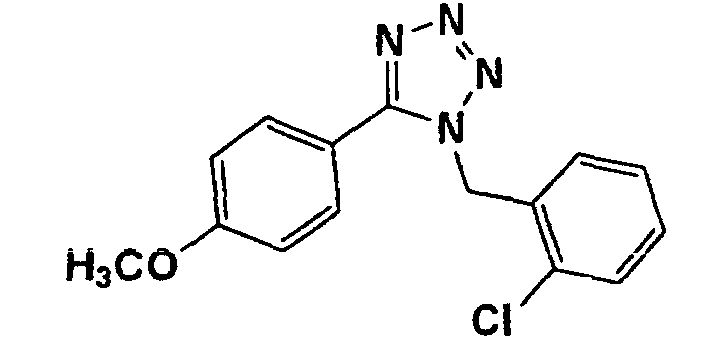
NMR (CDCl3):δ 7.57-7.51 (m, 2H), 7.45 (dd, J = 7.8, 1.5 Hz, 1H), 7.32 (td, J = 7.8, 1.5 Hz, 1H), 7.25 (td, J = 7 8, 1.5 Hz, 1H), 7.03-6.97 (m, 2H), 6.89 (dd, J = 7.8, 1 5 Hz, 1H), 5.73 (s, 2H), 3.86 (s, 3H).
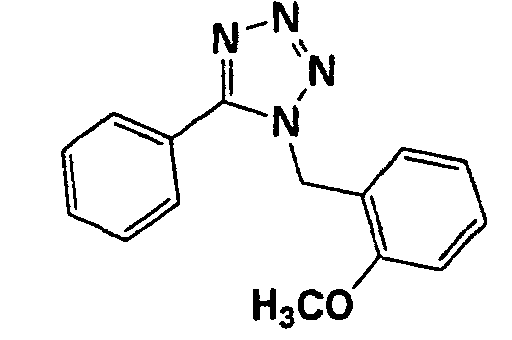
NMR (CDCl3):δ 7.70-7.62 (m, 2H), 7.62-7.44 (m, 3H), 7.36-7.26 (m, 1H), 7.02-6.84 (m, 3H), 5.63 (s, 2H), 3.71 (s, 3H).

NMR (CDCl3):δ 7.64-7.46 (m, 5H), 7.14-7.06 (m, 2H), 6.91-6.82 (m, 2H), 5.55 (s, 2H), 3.79 (s, 3H).

NMR (CDCl3):δ 7.54-7.43 (m, 3H), 7.36-7.18 (m, 2H), 6.87-6.80 (m, 1H), 6.76-6.66 (m, 2H), 5.74 (s, 2H), 3.02 (s, 6H).

NMR (CDCl3):δ 7.48-7.41 (m, 1H), 7.37-7.20 (m, 3H), 6.90-6.80 (m, 4H), 5.75 (s, 2H), 2.89 (s, 6H).
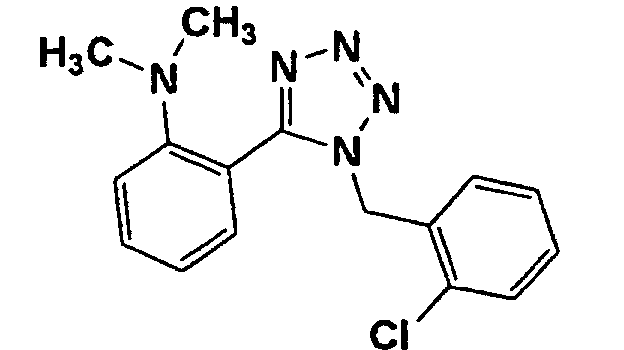
NMR (CDCl3):δ 7.51-6.89 (m, 8H), 5.57 (s, 2H), 2.47 (s, 6H).
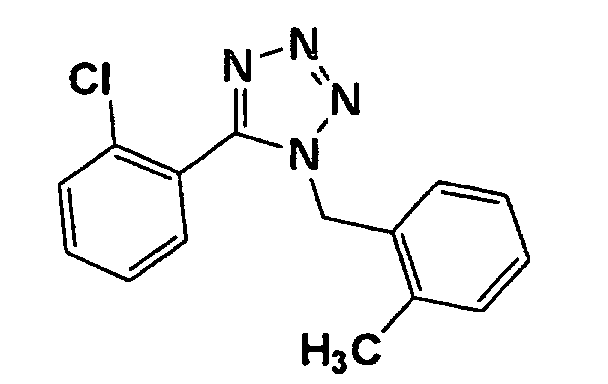
NMR (CDCl3):δ 7.56-7.45 (m, 2H), 7.35-7.28 (m, 1H), 7.20-6.96 (m, 4H), 6.76 (d, J = 7.4 Hz, 1H), 5.51 (s, 2H), 2.14 (s, 3H).
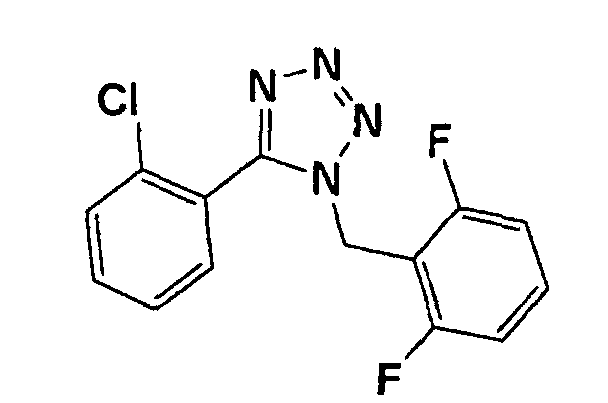
NMR (CDCl3):δ 7.57-7.30 (m, 5H), 6.88-6.80 (m, 2H), 5.53 (s, 2H).

NMR (CDCl3):δ 7.65-7.60 (m, 2H), 7.60-7.46 (m, 3H), 7.19 (t, J = 8.4 Hz, 1H), 6.70-6.64 (m, 1H), 6.49-6.44 (m, 2H), 5.56 (s, 2H), 2.81 (s, 6H).
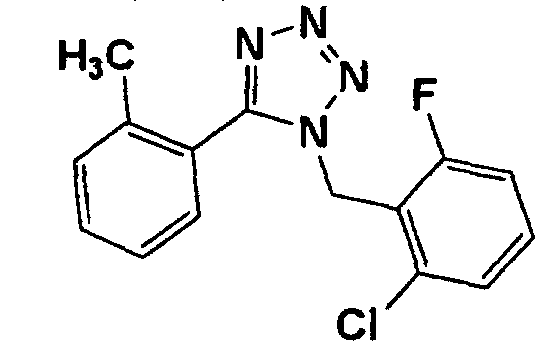
NMR (CDCl3):δ 7.48-7.42 (m, 1H), 7.35-7.24 (m, 4H), 7.17 (d, J = 8.4 Hz, 1H), 6.95 (td, J = 9.0, 1.2 Hz, 1H), 5.54 (d, J = 1.2 Hz, 2H), 2.18 (s, 3H).
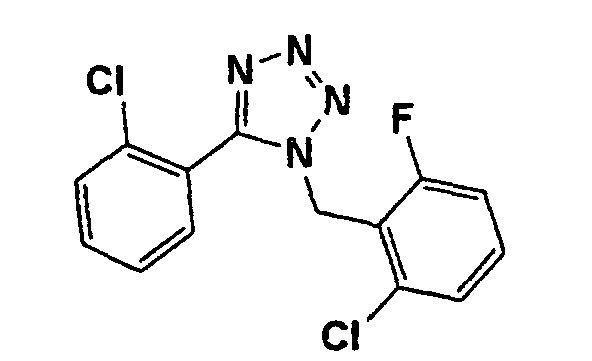
NMR (CDCl3):δ 7.58-7.50 (m, 2H), 7.41-7.39 (m, 2H), 7.31-7.24 (m, 1H), 7.16(d, J = 8.1 Hz, 1H), 6.96 (td, J = 8.7, 1.5 Hz, 1H), 5.59 (d, J = 1.5 Hz, 2H).
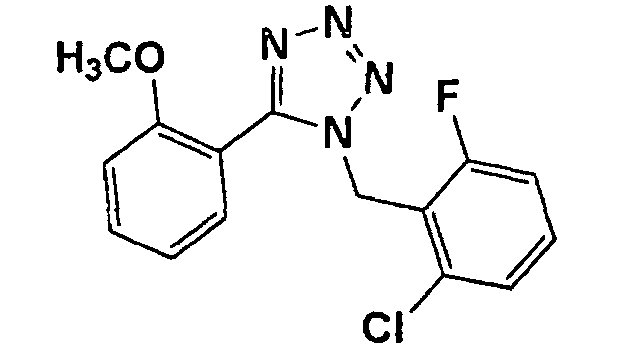
NMR (CDCl3):δ 7.56-7.50 (m, 1H), 7.43 (dd, J = 7.5, 1.8 Hz, 1H), 7.28-6.92 (m, 5H), 5.55 (d, J = 1.2 Hz, 2H), 3.86 (s, 3H).

NMR (CDCl3):δ 7.72 (dd, J = 2.0, 0.8 Hz, 1H), 7.35-7.26 (m, 3H), 7.10-7.04 (m, 1H), 6.67 (dd, J = 3.6, 2.0 Hz, 1H), 6.00 (d, J = 1.5 Hz, 2H).
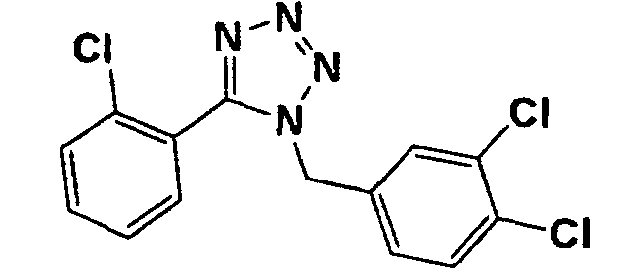
NMR (CDCl3):δ 7.59-7.22 (m, 5H), 7.09 (d, J = 2.2 Hz, 1H), 6.90 (dd, J = 8.2, 2.2 Hz, 1H), 5.42 (s, 2H).
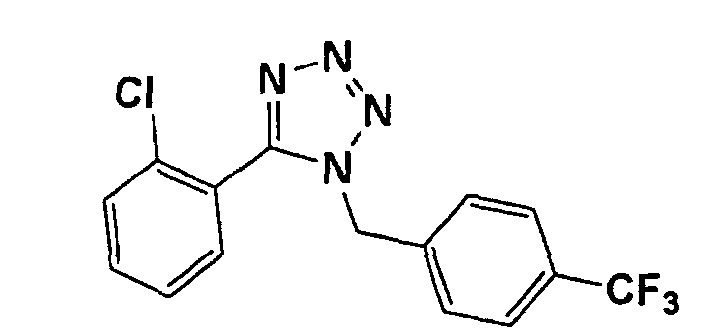
NMR (CDCl3):δ 7.57-7.50 (m, 4H), 7.41-7.33 (m, 1H), 7.27-7.21 (m, 1H), 7.16 (d, J = 8.0 Hz, 2H), 5.53 (s, 2H).

NMR (CDCl3):δ 7.71 (d, J = 7.8 Hz, 1H), 7.61 (td, J = 7.8, 1.5 Hz, 1H), 7.47 (td, J = 7.8, 1.5 Hz, 1H), 7.36-7.25 (m, 2H), 7.18 (d, J = 7.8 Hz, 1H), 6.97 (t, J = 9.0, 1.5 Hz, 1H), 6.81-6.72 (m, 4H), 5.55 (d, J = 1.5 Hz, 2H), 4.91 (s, 2H), 3.75 (s, 3H).

NMR (CDCl3):δ 7.56-7.46 (m, 2H), 7.37-7.07 (m, 9H), 6.92 (td, J = 9.0, 1.2 Hz, 1H), 5.47 (d, J = 1.2 Hz, 2H), 5.12 (s, 2H).

NMR (CDCl3):δ 7.70-7.67 (m, 1H), 7.37-7.24 (m, 3H), 7.17 (d, J = 8.1 Hz, 1H), 6.96 (td, J = 8.7, 1.2 Hz, 1H), 5.60 (d, J = 1.5 Hz, 2H).
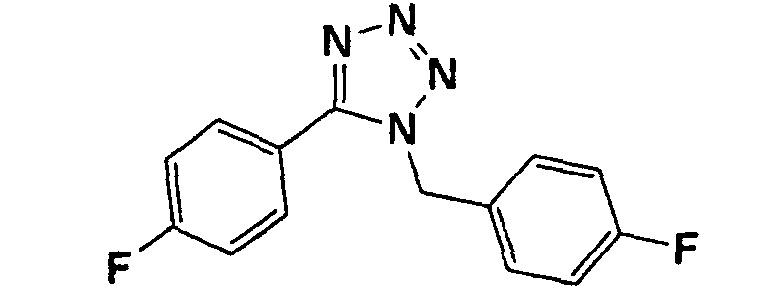
NMR (CDCl3):δ 7.60-7.55 (m, 2H), 7.27-7.02 (m, 6H), 5.58 (s, 2H).

NMR (CDCl3):δ 7.50-7.40 (m, 3H), 7.07-7.03 (m, 2H), 6.96-6.90 (m, 2H), 5.40 (s, 2H).

NMR (CDCl3):δ 7.50 (m, 2H), 7.17-6.94 (m, 5H), 5.45 (s, 2H).
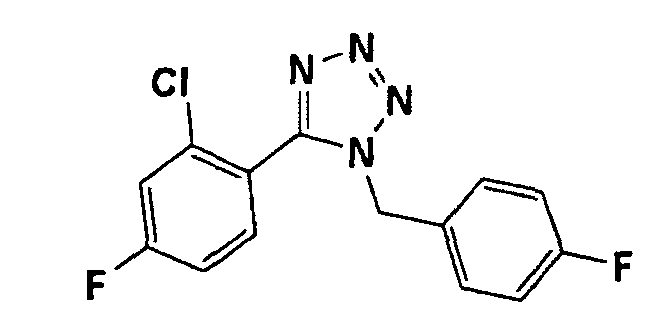
NMR (CDCl3):δ 7.33 (dd, J = 8.1, 2.7 Hz, 1H), 7.19 (dd, J = 9.0, 5.7 Hz, 1H), 7.12-6.92 (m, 5H), 5.44 (s, 2H).

NMR (CDCl3):δ 7.72 (dd, J = 8.1, 1.5 Hz, 1H), 7.42 (t, J = 8.1 Hz, 1H), 7.34 (dd, J = 8.1, 1.5 Hz, 1H), 4.04 (d, J = 7.5 Hz, 2H), 1.92 (m, 1H), 1.70-1.06 (m, 8H), 0.88-0.80 (m, 2H).
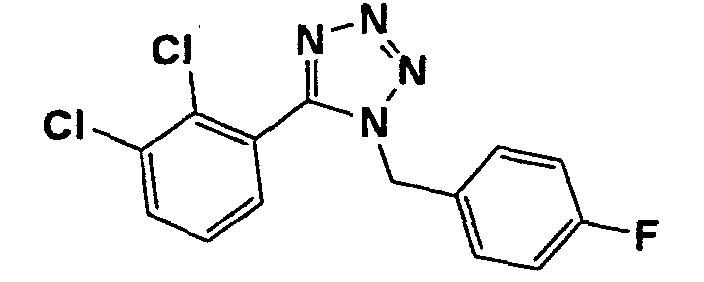
NMR (CDCl3):δ 7.71-7.67 (m, 1H), 7.31 (t, J = 8.1 Hz, 1H), 7.11-6.91 (m, 5H), 5.44 (s, 2H).
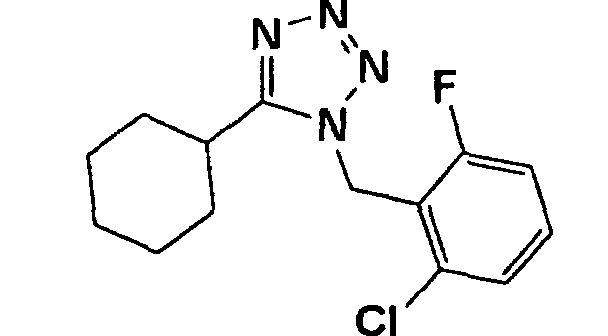
NMR (CDCl3):δ 7.40-7.25 (m, 2H), 7.09 (td, J = 8.7, 1.2 Hz, 1H), 5.59 (d, J = 1.2 Hz, 2H), 2.95-2.87 (m, 1H), 1.91-1.34 (m, 10H).
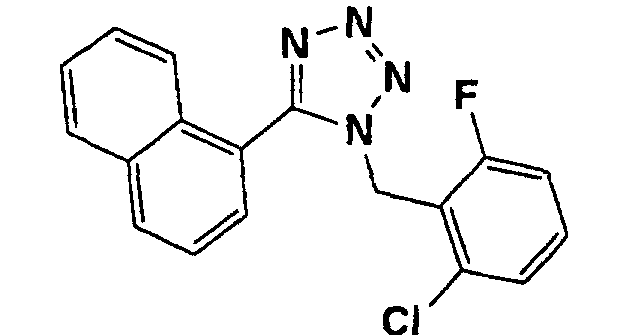
NMR (CDCl3):δ 8.07-8.04 (m, 1H), 7.93 (d, J = 7.8 Hz, 1H), 7.61-7.44 (m, 5H), 7.15 (td, J = 8.1, 6.0 Hz, 1H), 7.03 (d, J = 7.8 Hz, 1H), 6.83 (t, J = 8.9 Hz, 1H), 5.54 (s, 2H).
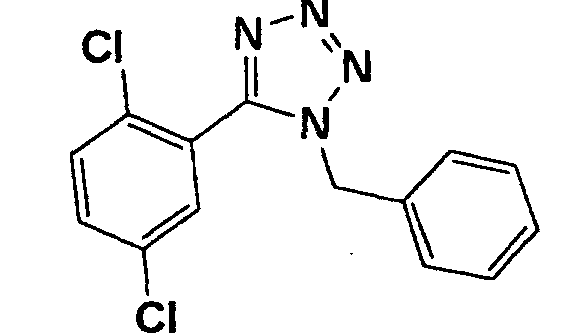
NMR(CDCl3):δ 7.47 (m, 2H), 7.37-7.24 (m, 3H), 7.12 (m, 1H), 7.03-7.00 (m, 2H), 5.49 (s, 2H).
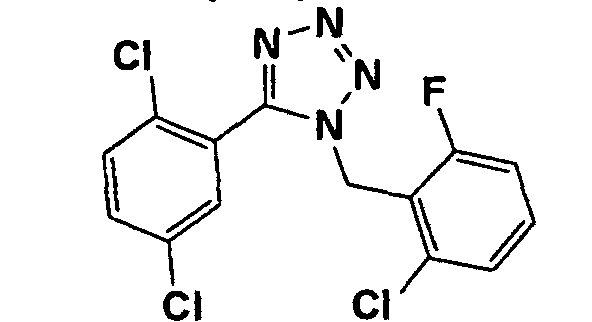
NMR (CDCl3):δ 7.49-7.25 (m, 4H), 7.18 (d, J = 8.7 Hz, 1H), 6.96 (td, J = 8.7, 0.9 Hz, 1H), 5.63 (d, J = 1.2 Hz, 2H).
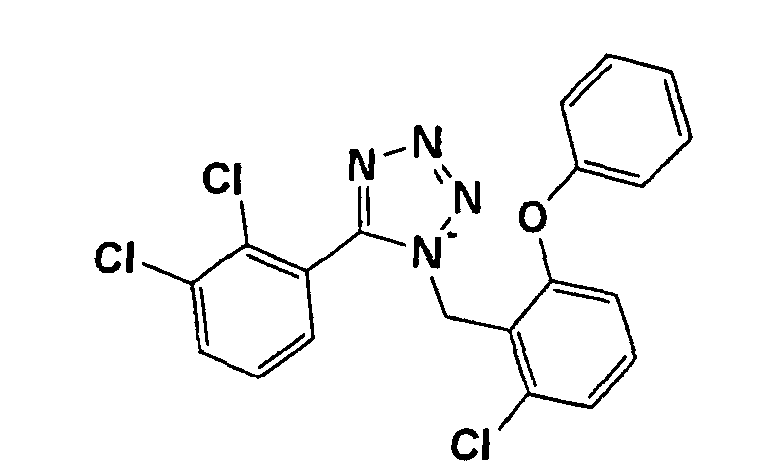
NMR (CDCl3):δ 7.64 (dd, J = 8.1, 1.5 Hz, 1H), 7.37-7.08 (m, 7H), 6.84-6.81 (m, 2H), 6.62 (dd, J = 8.1, 1.2 Hz, 1H), 5.67 (s, 2H).

NMR (CDCl3):δ 8.21 (s, 1H), 8.03 (d, J = 8.4 Hz, 1H), 7.97-7.94 (m, 2H), 7.77 (dd, J = 8.4, 1.5 Hz, 1H), 7.67-7.61 (m, 2H), 7.33-7.25 (m, 1H), 7.19 (d, J = 8.1 Hz, 1H), 7.00 (t, J = 8.4 Hz, 1H), 5.79 (d, J = 1.2 Hz, 2H).
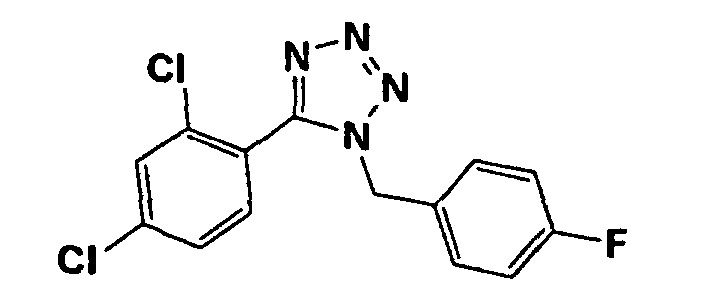
NMR (CDCl3):δ 7.59 (d, J = 1.8 Hz, 1H), 7.36 (dd, J = 8.4 Hz, 1.8 Hz, 1H), 7.14 (d, J = 8.4 Hz, 1H), 7.06-6.90 (m, 4H), 5.44 (s, 2H).

NMR (CDCl3):δ 8.43 (d, J = 2.1 Hz, 1H), 8.21 (dd, J = 8.4 Hz, 2.1 Hz, 1H), 7.41 (d, J = 8.4 Hz, 1H), 7.06-6.91 (m, 4H), 5.50 (s, 2H).

NMR (CDCl3):δ 7.86-7.79 (m, 2H), 7.75-7.69 (m, 2H), 7.18-7.02 (m, 4H), 5.62 (s, 2H).
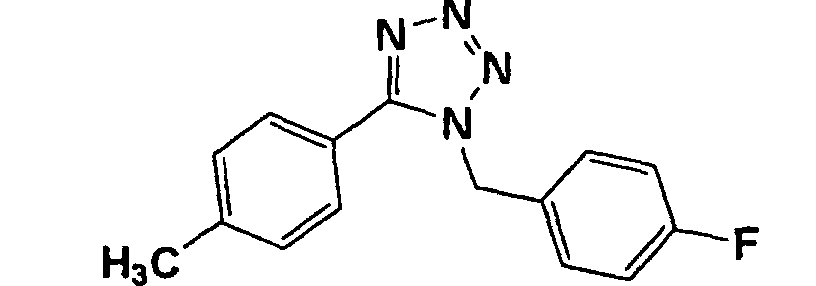
NMR (CDCl3):δ 7.49-7.44 (m, 2H), 7.35-7.30 (m, 2H), 7.19-7.12 (m, 2H), 7.08-7.00 (m, 2H), 5.57 (s, 2H), 2.44 (s, 3H).

NMR (CDCl3):δ 7.53-7.45 (m, 2H), 7.37 (dd, J = 8.7 Hz, 2.7 HZ, 1H), 7.28-7.16 (m, 3H), 5.63 (s, 2H).

NMR (CDCl3):δ 7.68 (d, J = 8.1 Hz, 1.8 Hz, 1H), 7.38-7.29 (m, 2H), 7.24-7.16 (m, 3H), 5.60 (s, 2H).
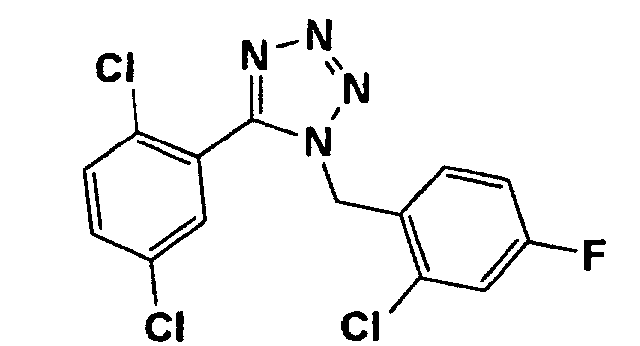
NMR (CDCl3):δ 7.53-7.45 (m, 2H), 7.28-7.24 (m, 1H), 7.20 (dd, J = 8.4, 2.4 Hz, 1H), 7.09 (td, J = 8.4 Hz, 6.0 Hz, 1H), 6.98-6.90 (m, 1H), 5.56 (s, 2H).
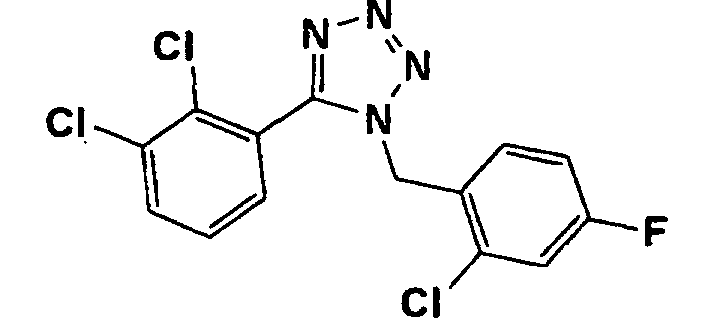
NMR (CDCl3):δ 7.68 (dd, J = 8.1, 1.5 Hz, 1H), 7.33 (t, J = 7.5 Hz, 1H), 7.22-7.15 (m, 2H), 7.05 (dd, J = 8.1, 2.7 Hz, 1H), 6.94 (td, J = 8.1, 2.7 Hz, 1H), 5.55 (s, 2H).
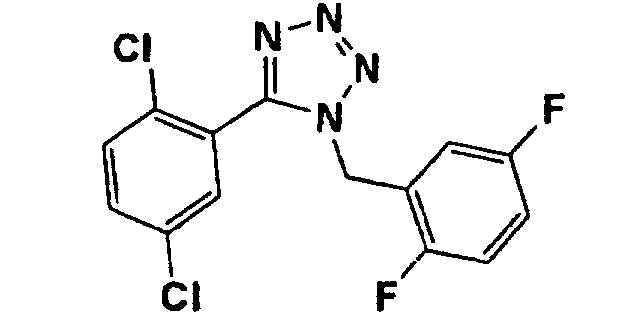
NMR (CDCl3):δ 7.55-7.48 (m, 2H), 7.31-7.28 (m, 1H), 7.07-6.87 (m, 3H), 5.48 (s, 2H).

NMR (CDCl3):δ 7.58-7.50 (m, 2H), 7.41-7.35 (m, 1H), 7.34-7.28 (m, 1H), 7.23 (s, 2H), 7.07 (s, 1H), 5.55 (s, 2H).

NMR (CDCl3):δ 7.60-7.52 (m, 2H), 7.44-7.38 (m, 1H), 7.36-7.31 (m, 1H), 7.04-6.90 (m, 2H), 6.88-6.81 (m, 1H), 5.48 (s, 2H).
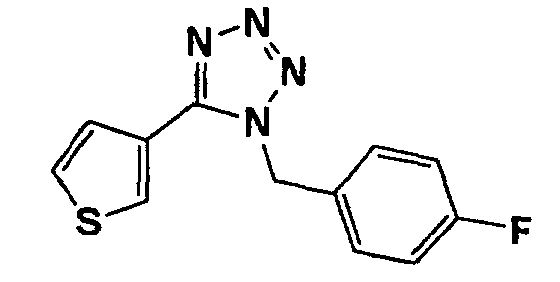
NMR (CDCl3):δ 7.70 (dd, J = 3.0 Hz, 1.2 Hz, 1H), 7.51 (dd, J = 5.1 Hz, 3.0 Hz, 1H), 7.43 (dd, J = 5.1 Hz, 1.2 Hz, 1H), 7.20-7.12 (m, 2H), 7.12-7.03 (m, 2H), 5.67 (s, 2H).
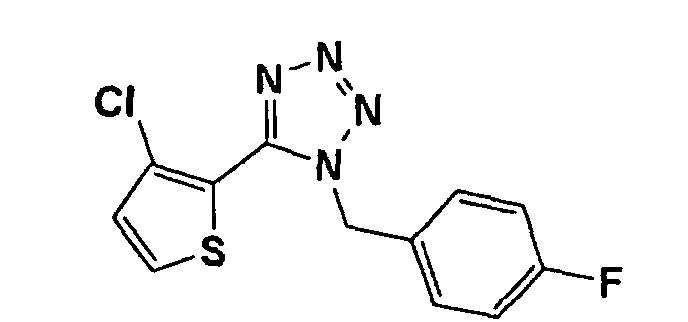
NMR (CDCl3):δ 7.61 (d, J = 5.4 Hz, 1H), 7.14-7 04 (m, 3H), 7.02-6.93 (m, 2H), 5.59 (s, 2H).

NMR (CDCl3):δ 7.87 (d, J = 8.1 Hz, 1H), 7.73 (t, J = 8.1 Hz, 1H), 7.64 (t, J = 8.1 Hz, 1H), 7.21 (d, J = 8.1 Hz, 1H), 7.15 (dd, J = 8.7 Hz, 6.0 HZ, 1H), 7.07 (dd, J = 8.4 Hz, 2.7 HZ, 1H), 6.97-6.90 (m, 1H), 5.47 (s, 2H).

NMR (CDCl3):δ 7.88 (dd, J = 9.0 Hz, 5.1 Hz, 1H), 7.45-7.34 (m, 2H), 7.28-7.23 (m, 2H), 6.86 (dd, J = 8.1 Hz, 2.7 Hz, 1H), 5.55 (s, 2H).
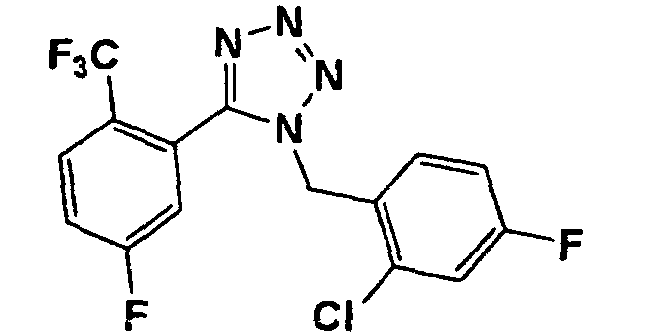
NMR (CDCl3):δ 7.88 (dd, J = 8.4 Hz, 5.4 Hz, 1H), 7.46-7.38 (m, 1H), 7.20 (dd, J = 8.7 Hz, 5.7 Hz, 1H), 7.10 (dd, J = 8.1 Hz, 2.7 Hz, 1H), 7.00-6.88 (m, 2H), 5.50 (s, 2H).
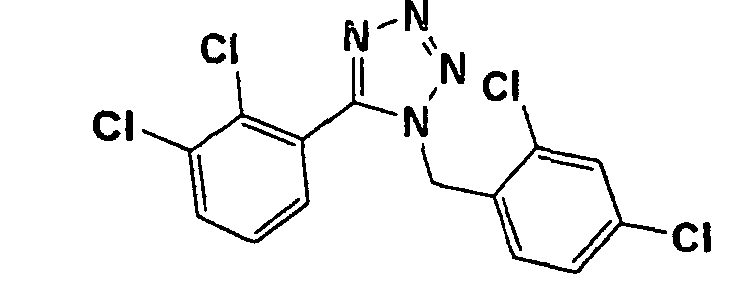
NMR (CDCl3):δ 7.68 (dd, J = 8.4 Hz, 1.8 Hz, 1H), 7.36-7.30 (m, 2H), 7.23-7.17 (m, 2H), 7.11 (d, J = 8.4 Hz, 1H), 5.54 (s, 2H).
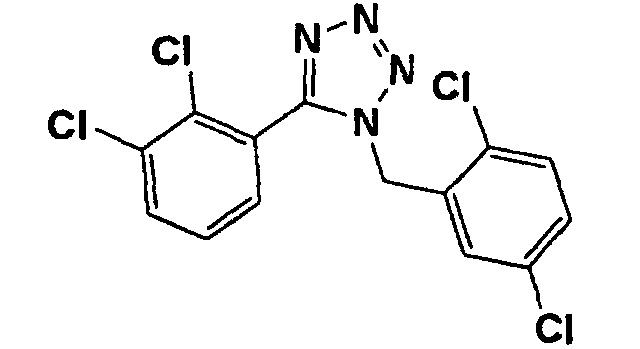
NMR (CDCl3):δ 7.69 (dd, J = 8.1 Hz, 1.8 Hz, 1H), 7.32 (t, J = 8.1 Hz, 1H), 7.25-7.23 (m, 2H), 7.20 (dd, J = 8.1 Hz, 1.8 Hz, 1H), 7.11-7.09 (m, 1H), 5.54 (s, 2H).
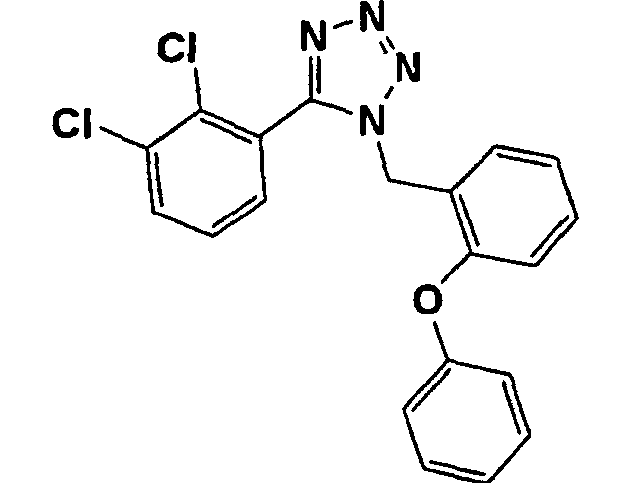
NMR (CDCl3):δ 7.60 (dd, J = 7.8 Hz, 1.5 Hz, 1H), 7.33-7.00 (m, 8H), 6.73-6.68 (m, 3H), 5.54 (s, 2H).

NMR (CDCl3):δ 7.53 (dd, J = 7.5 Hz, 1.5 Hz, 1H), 7.41-7.31 (m, 3H), 7.29-7.22 (m, 1H), 7.20-7.12 (m, 2H), 7.11-7.04 (m, 2H), 6.90-6.78 (m, 3H), 5.48 (s, 2H), 4.89 (s, 2H).
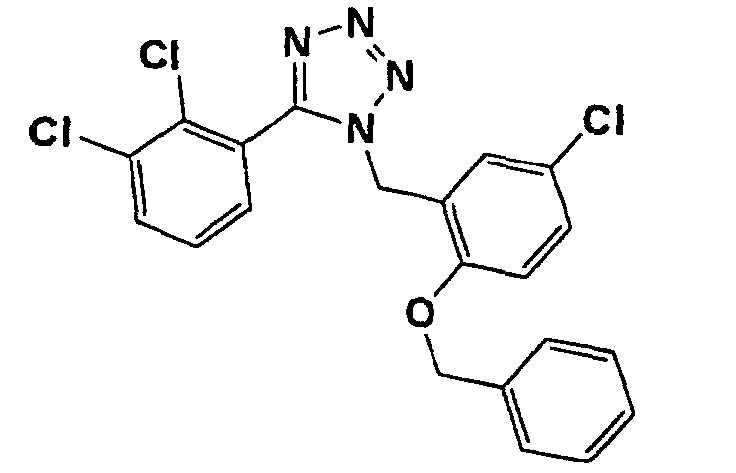
NMR (CDCl3):δ 7.57 (dd, J = 8.1 Hz, 1.5 Hz, 1H), 7.42-7.33 (m, 3H), 7.20 (dd, J = 8.7 Hz, 2.4 Hz, 1H), 7.16-7.08 (m, 3H), 7.01 (d, J = 2.4 Hz, 1H), 6.82 (dd, J = 7.5 Hz, 1.5 Hz, 1H), 6.77 (d, J = 8.7 Hz, 1H), 5.42 (s, 2H), 4.88 (s, 2H).
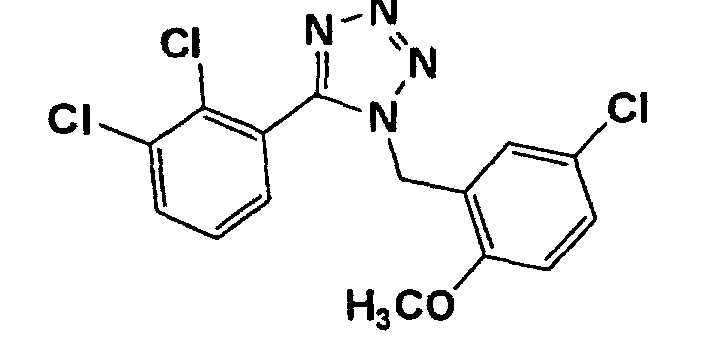
NMR (CDCl3):δ 7.68 (dd, J = 8.0 Hz, 1.5 Hz, 1H), 7.31 (t, J = 8.0 Hz, 1H), 7.21 (dd, J = 9.0 Hz, 2.4 Hz, 1H), 7.17 (dd, J = 8.0 Hz, 1.5 Hz, 1H), 7 02 (d, J = 2.4 Hz, 1H), 6.67 (d, J = 9.0 Hz, 1H), 5.43 (s, 2H), 3.58 (s, 3H).

NMR (CDCl3):δ 7.65 (dd, J = 7.8 Hz, 1.8 Hz, 1H), 7.25 (t, J = 7.8 Hz, 1H), 7.15 (dd, J = 9.0 Hz, 2.7 Hz, 1H), 7.09 (dd, J = 7.8 Hz, 1.8 Hz, 1H), 6.84 (d, J = 2.7 Hz, 1H), 6.67 (d, J = 9.0 Hz, 1H), 5.46 (s, 2H), 4.39 (quintet, J = 6.0 Hz, 1H), 1.15 (d, J = 6.0, 6H).

NMR (CDCl3):δ 7.65 (dd, J = 7.8 Hz, 1.5 Hz, 1H), 7.28 (t, J = 7.8 Hz, 1H), 7.22-7.16 (m, 2H), 7.00 (d, J = 2.7 Hz, 1H), 6.58 (d, J = 9.0 Hz, 1H), 5.54 (s, 2H), 4.42 (s, 2H), 4.19 (q, J = 7.2 Hz, 2H), 1.25 (t, J = 7.2, 3H).

NMR (CDCl3):δ 7.68 (dd, J = 8.1 Hz, 1.8 Hz, 1H), 7.43 (dd, J = 8.1 Hz, 1.8 Hz, 1H), 7.32 (t, J = 8.1 Hz, 1H), 7.21 (dd, J = 8.1 Hz, 1.8 Hz, 1H), 7.16 (t, J = 8.1 Hz, 1H), 7.03 (dd, J = 8.1 Hz, 1.8 Hz, 1H), 5.60 (s, 2H).

NMR (CDCl3):δ 7.71 (dd, J = 8.1 Hz, 1.5 Hz, 1H), 7.35 (t, J = 8.1 Hz, 1H), 7.23-7.12 (m, 4H), 4.29 (s, 2H).
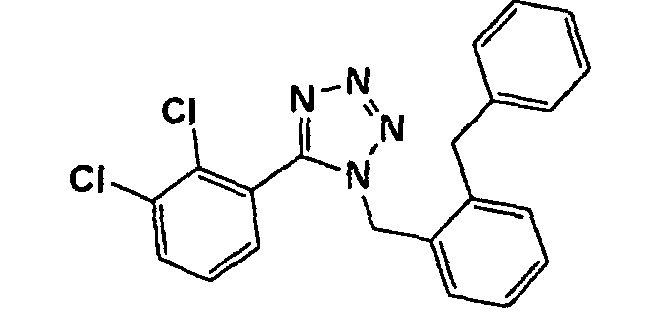
NMR (CDCl3):δ 7.64 (dd, J = 8.1, 1.5 Hz, 1H), 7.28-7.06 (m, 7H), 7.02 (dd, J = 7.6, 1.5 Hz, 1H), 6.96-6.91 (m, 2H), 6.77-6.73 (m, 1H), 5.38 (s, 2H), 3.84 (s, 2H).
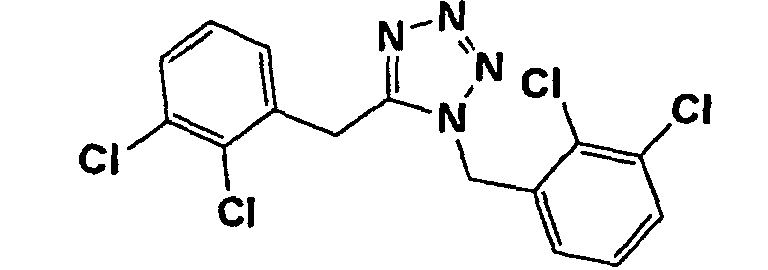
NMR (CDCl3):δ 7.41 (dd, J = 7.8 Hz, 1.5 Hz, 1H), 7.34 (dd, J = 7.8 Hz, 1.5 Hz, 1H), 7.10 (t, J = 7.8 Hz, 1H), 7.09 (t, J = 7.8 Hz, 1H), 6.96 (dd, J = 7.8 Hz, 1.5 Hz, 1H), 6.63 (dd, J = 7.8 Hz, 1.5 Hz, 1H), 5.60 (s, 2H), 4.39 (s, 2H).

NMR (CDCl3):δ 7.69 (dd, J = 8.1 Hz, 1.5 Hz, 1H), 7.40-7.30 (m, 2H), 7.15 (dd, J = 8.1 Hz, 1.5 Hz, 1H), 7.13-7.09 (m, 2H), 4.36 (s, 2H).
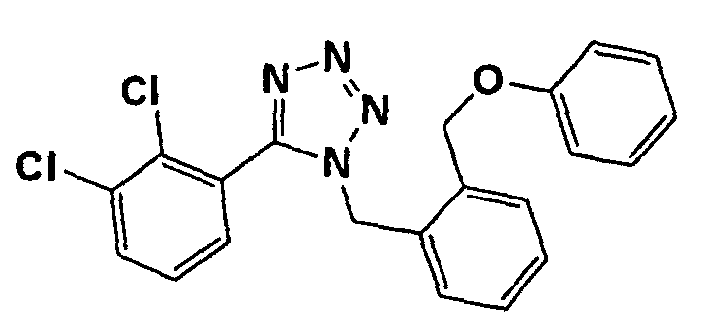
NMR (CDCl3):δ 7.61 (dd, J = 8.1 Hz, 1.5 Hz, 1H), 7.40-7.17 (m, 6H), 7.08 (dd, J = 7.5 Hz, 1.5 Hz, 1H), 7.03-6.96 (m, 1H), 6.93 (d, J = 7.5 Hz 1H), 6.86-6.80 (m, 2H), 5.63 (s, 2H), 4.87 (s, 2H).
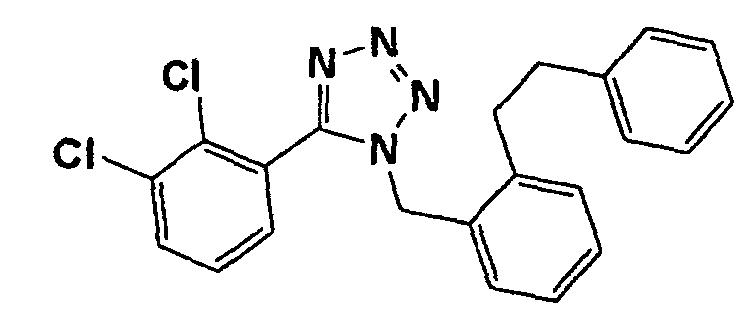
NMR (CDCl3):δ 7.63 (dd, J = 8.1 Hz, 1.5 Hz, 1H), 7.28-7.12 (m, 6H), 7.08-6.96 (m, 4H), 6.77 (d, J = 7.8 Hz 1H), 5.21 (s, 2H), 2.70 (s, 4H).

NMR (CDCl3):δ 7.64 (dd, J = 7.8 Hz, 1.5 Hz, 1H), 7.27 (t, J = 7.8 Hz, 1H), 7.20 (t, J = 8.4 Hz, 1H), 7.18 (dd, J = 7.8 Hz, 1.5 Hz, 1H), 6.93 (d, J = 8.4 Hz, 1H), 6.67 (d, J = 8.4 Hz, 1H), 5.63 (s, 2H), 3.64 (s, 3H).

NMR (CDCl3):δ 7.61 (dd, J = 8.4, 1.5 Hz, 1H), 7.37 (dt, J = 7.8, 1.5 Hz, 1H), 7.23-7 06 (m, 6H), 6.91 (dd, J = 7.8, 1.5 Hz, 1H), 6.79-6.74 (m, 1H), 6.35-6.31 (m, 2H), 5.33 (s, 2H), 2.94 (s, 3H).
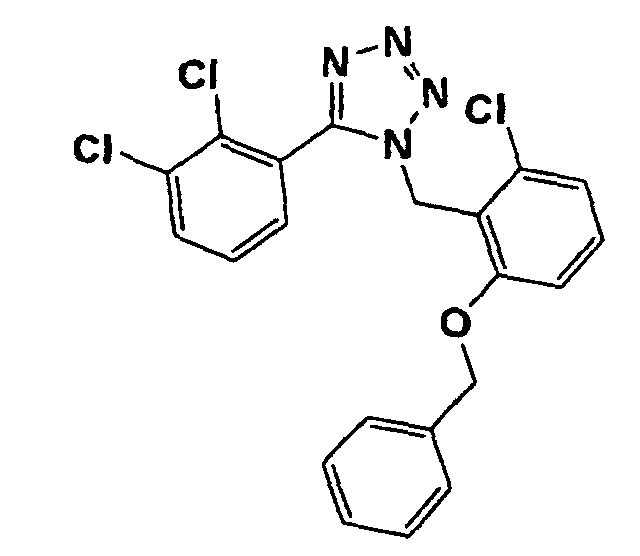
NMR (CDCl3):δ 7.58 (dd, J = 8.1 Hz, 1.5 Hz, 1H), 7.42-7.32 (m, 3H), 7.23-7.16 (m, 3H), 7.12 (t, J = 8.1 Hz, 1H), 6.95 (d, J = 8.1 Hz, 1H), 6.88 (dd, J = 8.1 Hz, 1.5 Hz, 1H), 6.78 (d, J = 8.1 Hz, 1H), 5.61 (s, 2H), 4.95 (s, 2H).

NMR (CDCl3):δ 7.55 (dd, J = 7.8 Hz, 1.5 Hz, 1H), 7.43-7.34 (m, 3H), 7.18-7.13 (m, 2H), 7.10 (t, J = 7.8 Hz, 1H), 7.03 (d, J = 7.8 Hz, 1H), 6.90-6.85 (m, 2H), 6.79 (dd, J = 8.1 Hz, 1.5 Hz, 1H), 5.41 (s, 2H), 4.87 (s, 2H).

NMR (CDCl3):δ 7.62 (dd, J = 8.1, 1.5 Hz, 1H), 7.23 (t, J = 7.8 Hz, 1H), 7.18-7.02 (m, 4H), 6.21 (d, J = 7.5 Hz, 1H), 5.51 (dd, J = 9.0, 3.0 Hz, 1H), 2.88-2.81 (m, 1H), 2.68-2.59 (m, 1H), 2.55-2.34 (m, 2H), 2.20-2.10 (m, 1H), 1.97-1.75 (m, 2H), 1.56-1.44 (m, 1H).
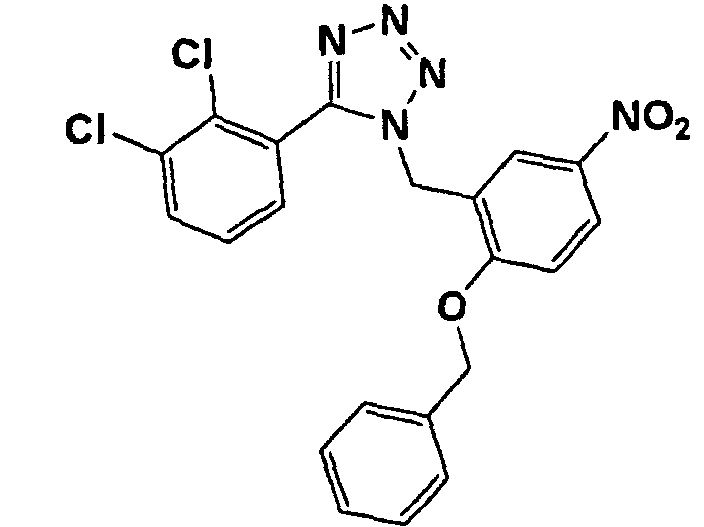
NMR (CDCl3):δ 8.20 (dd, J = 9.0 Hz, 2.7 Hz, 1H), 7.95 (d, J = 2.7 Hz, 1H), 7.59 (dd, J = 8.1 Hz, 1.5 Hz, 1H), 7.43-7.38 (m, 3H), 7.20-7.12 (m, 3H), 6.97 (d, J = 9.0 Hz, 1H), 6.83 (dd, J = 8.1 Hz, 1.5 Hz, 1H), 5.49 (s, 2H), 5.05 (s, 2H).

NMR (CDCl3):δ 7.56 (dd, J = 7.8, 1.8 Hz, 1H), 7.41-7.33 (m, 3H), 7.17-7.12 (m, 2H), 7.12 (t, J = 7.8 Hz, 1H), 6 95 (ddd, J = 9.0, 8.1, 3.0 Hz, 1H), 6.86 (dd, J = 7.8, 1.8 Hz, 1H), 6.82 (dd, J = 9.0, 3.0 Hz, 1H), 6.78 (dd, J = 9.0, 3.9 Hz, 1H), 5.43 (s, 2H), 4.86 (s, 2H).

NMR (CDCl3):δ 7.52 (dd, J = 7.8, 1.8 Hz, 1H), 7.40-7.29 (m, 3H), 7 17-7.12 (m, 2H), 7.07 (t, J = 7.8, 1H), 7.02 (dd, J = 8.4, 2.1 Hz, 1H), 6.84 (d, J = 2.1 Hz, 1H), 6.80 (dd, J = 7.8, 1.8 Hz, 1H), 6.71 (d, J = 8.4 Hz, 1H), 5.44 (s, 2H), 4.85 (s, 2H), 2.18 (s, 3H).

NMR (CDCl3):δ 7.51 (dd, J = 8.1 Hz, 1.5 Hz, 1H), 7.39-7.28 (m, 3H), 7.16-7.12 (m, 2H), 7.07 (t, J = 8.1 Hz, 1H), 6.83 (dd, J = 8.1 Hz, 1.5 Hz, 1H), 6.73 (d, J = 9.0 Hz, 1H), 6.61 (dd, J = 9.0 Hz, 3.3 Hz, 1H), 6.48 (d, J = 3.3 Hz, 1H), 5.45 (s, 2H), 4.79 (s, 2H), 2.80 (s, 6H).

NMR (CDCl3):δ 7.53 (dd, J = 8.4, 1.2 Hz, 1H), 7.40-7.31 (m, 3H), 7.23-7.15 (m, 3H), 7.12-7.03 (m, 2H), 6.88-6.81 (m, 2H), 6.57 (dd, J = 8.4, 1.2 Hz, 1H), 4.86 (s, 2H), 4.15 (s, 2H).
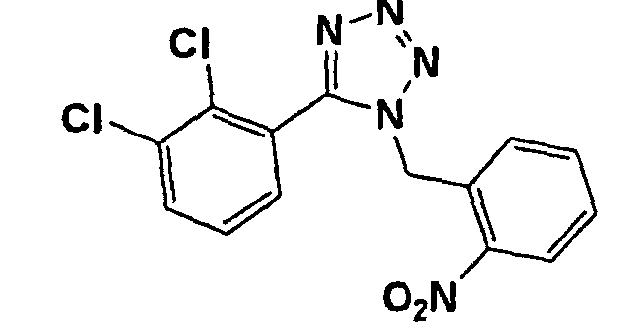
NMR (CDCl3):δ 8.13 (dd, J = 8.1, 1.5 Hz, 1H), 7.70 (dd, J = 7.2, 2.7 Hz, 1H), 7.65 (dd, J = 7.8, 1.5 Hz, 1H), 7.56 (dt, J = 7.8, 1.5 Hz, 1H), 7.41-7.33 (m, 2H), 7.23 (dd, J = 8.1, 1.5 Hz, 1H), 5.82 (s, 2H).

NMR (CDCl3):δ 7.58 (dd, J = 8.1, 1.8 Hz, 1H), 7.41-7.33 (m, 3H), 7.18-7.08 (m, 4H), 7.04 (d, J = 2.4 Hz, 1H), 6.76 (d, J = 7.8 Hz, 1H), 6.59 (dd, J = 7.8, 1.5 Hz, 1H), 4.85 (s, 2H), 4.10 (s, 2H).
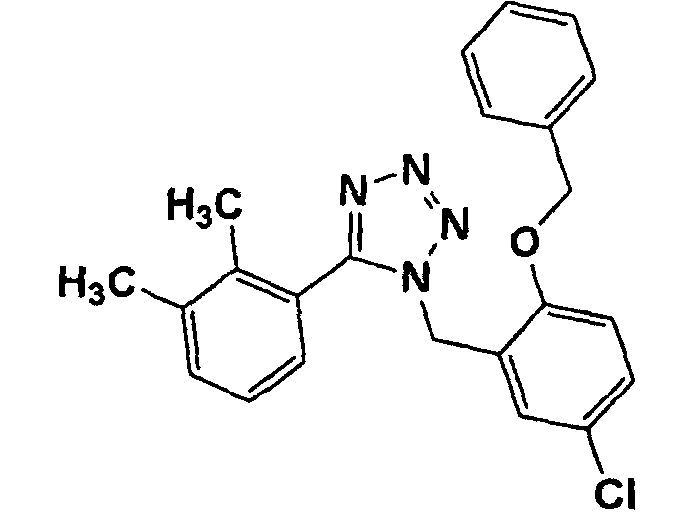
NMR (CDCl3):δ 7.39-7.26 (m, 4H), 7.22-7.16 (m, 3H), 7.11 (t, J = 7.8 Hz, 1H), 6.89 (d, J = 7.8 Hz, 1H), 6.80-6.74 (m, 2H), 5.38 (s, 2H), 4.93 (s, 2H), 2.26 (s, 3H), 1.83 (s, 3H).

NMR (CDCl3):δ 7.63 (dd, J = 7.8, 1.8 Hz, 1H), 7.22 (t, J = 7.8 Hz, 1H), 7.02 (dd, J = 7.8, 1.8 Hz, 1H), 7.00-6.89 (m, 2H), 6.51 (brs, 1H), 5.47 (s, 2H), 2.13 (s, 3H), 2.07 (s, 3H).

NMR (CDCl3):δ 7.47-7.33 (m, 5H), 7.24-7.13 (m, 4H), 6.99-6.94 (m, 2H), 6.76 (d, J = 8.7 Hz, 1H), 5.45 (s, 2H), 4.88 (s, 2H).
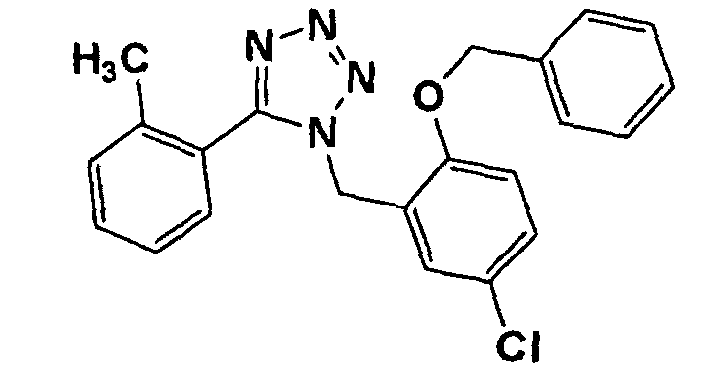
NMR (CDCl3):δ 7.43-7.25 (m, 5H), 7.22-7.16 (m, 4H), 7.03 (dd, J = 7.5, 1.2 Hz, 1H), 6.84 (d, J = 2.7 Hz, 1H), 6.78 (d, J = 8.7 Hz, 1H), 5.40 (s, 2H), 4.92 (s, 2H), 2.03 (s, 3H).

NMR (CDCl3):δ 7.67 (dd, J = 8.1, 1.5 Hz, 1H), 7.39-7.33 (m, 2H), 7.31-7.22 (m, 4H), 7.14-7.09 (m, 1H), 7.02 (dd, J = 7.8, 1.5 Hz, 1H), 6.60 (d, J = 8.1 Hz, 1H), 6.49-6.42 (m, 2H), 5.42 (s, 2H), 4.89-4.83 (br, 1H), 4.33 (d, J = 5.1 Hz, 2H).
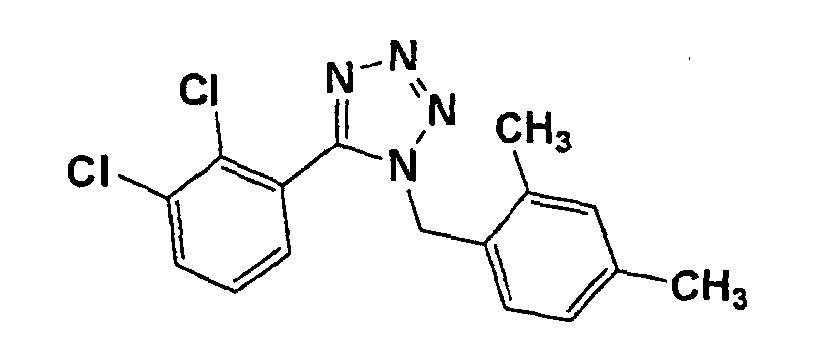
NMR (CDCl3):
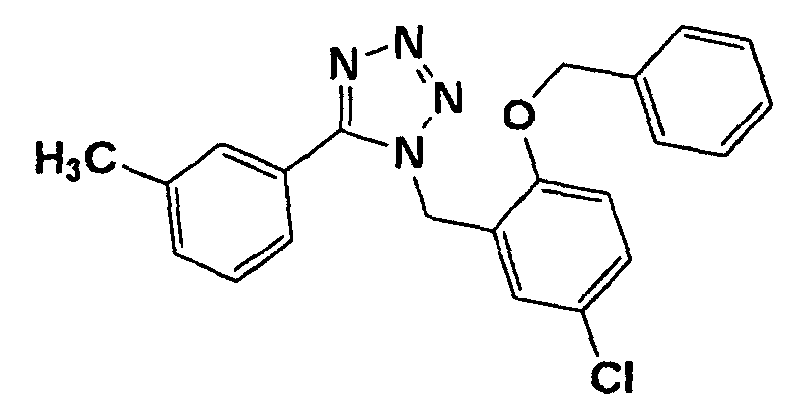
NMR (CDCl3):δ 7.73-7.18 (m, 10H), 6.98 (d, J = 2.4 Hz, 1H), 6.89 (d, J = 8.7 Hz, 1H), 5.59 (s, 2H), 4.99 (s, 2H), 2.35 (s, 3H).
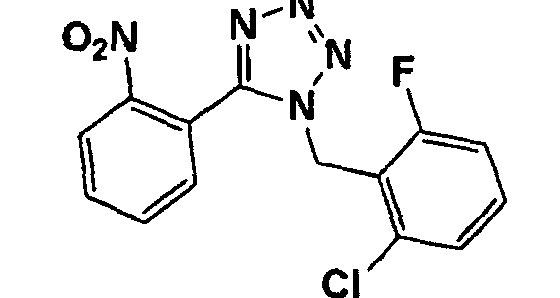
NMR (CDCl3):δ 8.35 (dd, J = 7.8, 1.2 Hz, 1H), 7.81-7.68 (m, 2H), 7.34-7.22 (m, 2H), 7.14 (dt, J = 7.8, 1.2 Hz, 1H), 6.89 (td, J = 9.0, 1.2 Hz, 1H), 5.60 (d, J = 1.2 Hz, 2H).

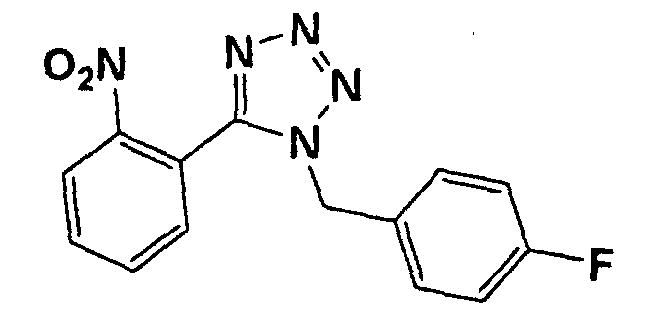
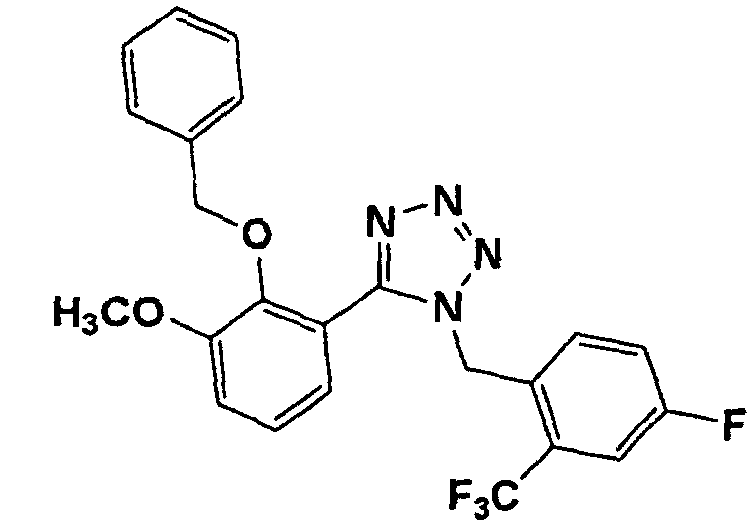
NMR (CDCl3):δ 7.33-7.25 (m, 4H), 7.22-7.12 (m, 2H), 7.08-6.86 (m, 5H), 5.44 (s, 2H), 4.87 (s, 2H), 3.96 (s, 3H).
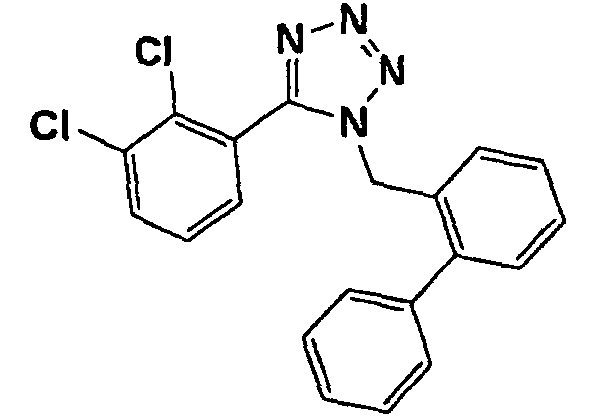
NMR (CDCl3):δ 7.61-7.11 (m, 9H), 6.95-6.84 (m, 3H), 5.47 (s, 2H).
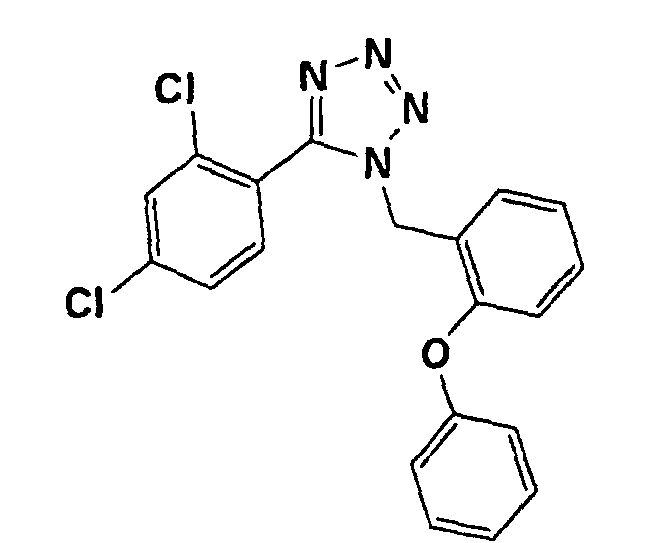
NMR (CDCl3):δ 7.53-7.50 (m, 1H), 7.34-7.01 (m, 8H), 6.74-6.61 (m, 3H), 5.55 (s, 2H).
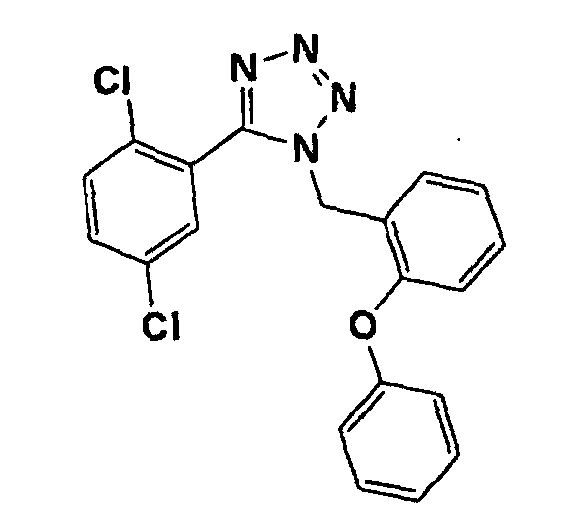
NMR (CDCl3):δ 7.44-7.40 (m, 1H), 7.34-7.21 (m, 5H), 7.14-7.02 (m, 3H), 6.76-6.62 (m, 3H), 5.54 (s, 2H).
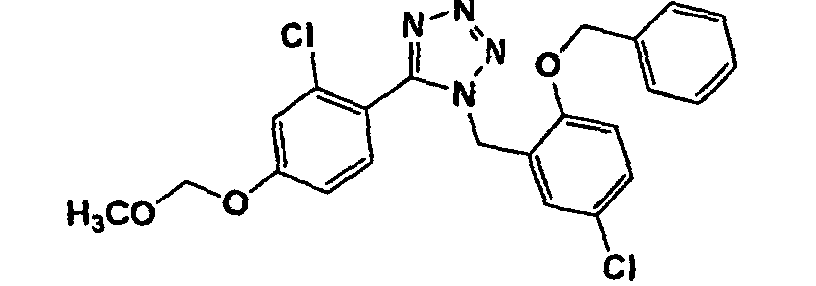
NMR (CDCl3):δ 7.41-7.30 (m, 3H), 7.22-7.12 (m, 4H), 6.97 (d, J = 2.7 Hz, 1H), 6.90-6.83 (m, 2H), 6.77 (d, J = 9.0 Hz, 1H), 5.43 (s, 2H), 5.18 (s, 2H), 4.90 (s, 2H), 3.48 (s, 3H).
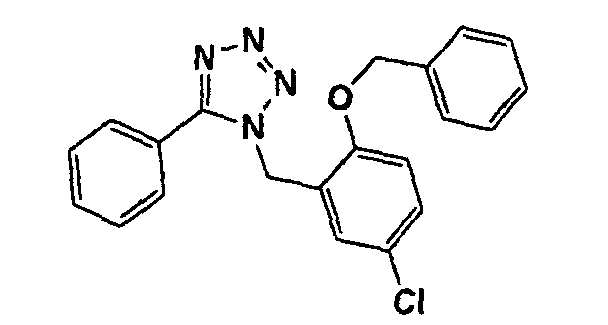
NMR (CDCl3):δ 7.57-7.19 (m, 11H), 6.98 (d, J = 2.4 Hz, 1H), 6.87 (d, J = 9.0 Hz, 1H), 5.59 (s, 2H), 4.99 (s, 2H).

NMR (CDCl3):δ 7.52-7.25 (m, 8H), 7.22-7.17 (m, 2H), 7.05 (d, J = 2.4 Hz, 1H), 6.90 (d, J = 9.0 Hz, 1H), 5.58 (s, 2H), 4.99 (s, 2H).
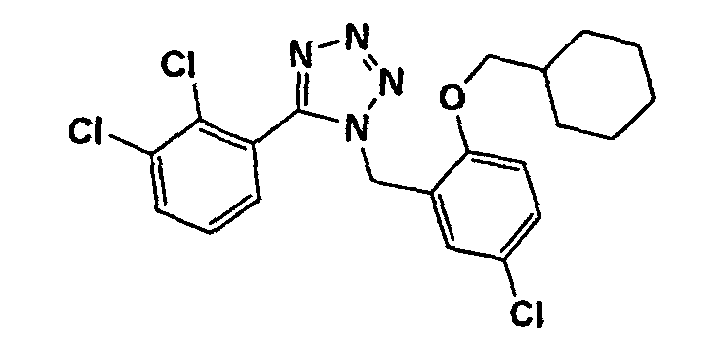
NMR (CDCl3):δ 7.63 (dd, J = 7.8, 1.5 Hz, 1H), 7.24 (t, J = 7.8 Hz, 1H), 7.16 (dd, J = 8.7, 2.7 Hz, 1H), 7.06 (dd, J = 7.8, 1.5 Hz, 1H), 6.86 (d, J = 2.7 Hz, 1H), 6.65 (d, J = 8.7 Hz, 1H), 5.48 (s, 2H), 3.57 (d, J = 6.0 Hz, 2H), 1.76-1.52 (m, 6H), 1.33-1.14 (m, 3H), 0.96-0.84 (m, 2H).
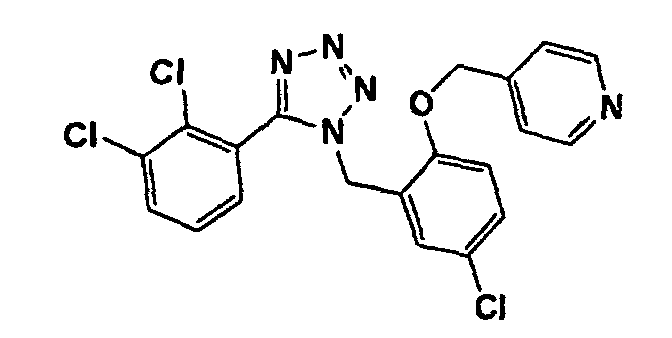
NMR (CDCl3):δ 8.62 (dd, J = 4.5, 1.5 Hz, 2H), 7.60 (dd, J = 7.8, 1.5 Hz, 1H), 7.23-7.18 (m, 2H), 7.14-7.12 (m, 2H), 7.02 (dd, J = 7.8, 1.5 Hz, 1H), 6.97 (d, J = 2.4 Hz, 1H), 6.70 (d, J = 9.0 Hz, 1H), 5.52 (s, 2H), 4.93 (s, 2H).
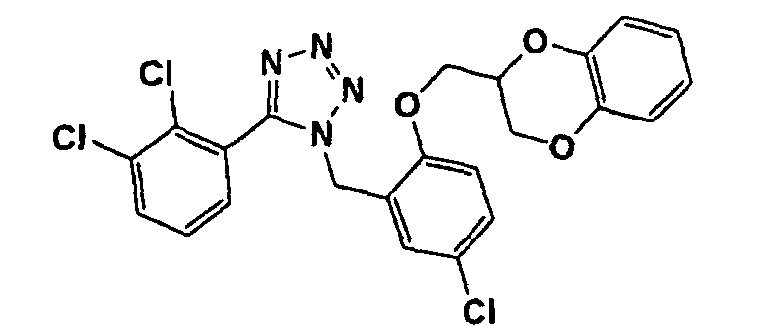
NMR (CDCl3):δ 7.62 (dd, J = 7.8, 1.5 Hz, 1H), 7.25-7.18 (m, 2H), 7.12 (dd, J = 7.8, 1.5 Hz, 1H), 6.92-6.85 (m, 5H), 6.72 (d, J = 8.7 Hz, 1H), 5.47 (s, 2H), 4.41-4.35 (m, 1H), 4.26 (dd, J = 11.7, 2.1 Hz, 1H), 4.10-3.99 (m, 3H).
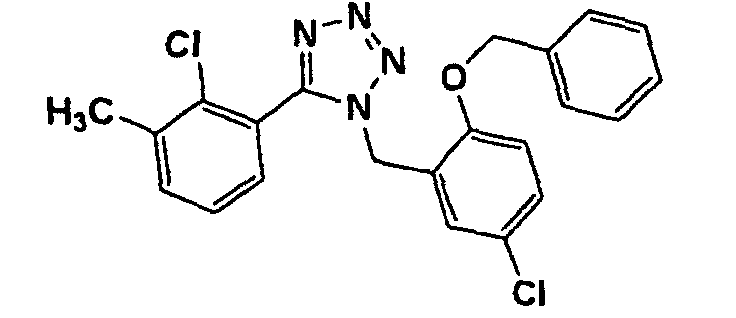
NMR (CDCl3):δ 7.41-7.32 (m, 4H), 7.20-7.08 (m, 4H), 6.93 (d, J = 2.7 Hz, 1H), 6.84-6.79 (m, 1H), 6.75 (d, J = 8.7 Hz, 1H), 5.43 (s, 2H), 4.89 (s, 2H), 2.39 (s, 3H).
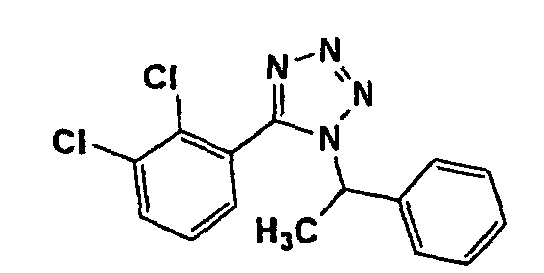
NMR (CDCl3):δ 7.66 (dd, J = 8.1, 1.5 Hz, 1H), 7.30-7.23 (m, 4H), 7.11-7.04 (m, 2H), 6.98 (dd, J = 8.1, 1.5 Hz, 1H), 5.39 (q, J = 6.9 Hz, 1H), 2.06 (d, J = 6.9 Hz, 3H).

NMR (CDCl3):δ 7.63 (dd, J = 7.8, 1.5 Hz, 1H), 7.36-7.14 (m, 7H), 7.01 (dd, J = 7.8, 1.5 Hz, 1H), 6.85 (d, J = 2.4 Hz, 1H), 6.65 (d, J = 9.0 Hz, 1H), 5.40 (s, 2H), 3.99 (t, J = 6.9 Hz, 2H), 2.91 (t, J = 6.9 Hz, 2H).

NMR (CDCl3):δ 7.63 (dd, J = 7.8, 1.5 Hz, 1H), 7.23 (t, J = 7.8 Hz, 1H), 7.13 (dd, J = 8.7, 2.4 Hz, 1H), 7.06 (dd, J = 7.8, 1.5 Hz, 1H), 6.80 (d, J = 2.4 Hz, 1H), 6.67 (d, J = 8.7 Hz, 1H), 5.49 (s, 2H), 4.16-4.06 (m, 1H), 1.79-1.48 (m, 5H), 1.34-1.22 (m, 5H).
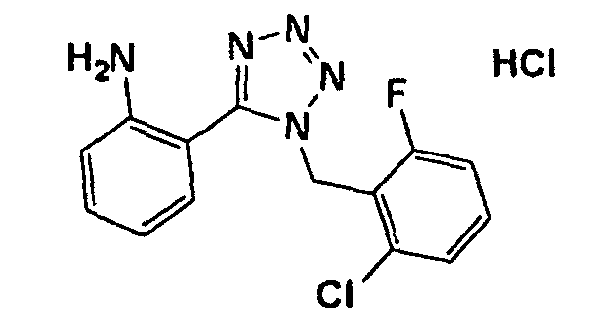
A solution of the compound prepared in Example 2(96) (276 mg) and tin chloride
dehydrate (373 mg) in ethanol (3.00 ml) were refluxed for 45 minutes. The reaction mixture was
cooled and the mixture was neutralized with a saturated sodium carbonate and was extracted with
methylene chloride. The organic layer was washed with brine, dried over magnesium sulfate and
was concentrated. The residue was purified by column chromatography on silica gel (n-hexane :
ethyl acetate = 7 : 3) to give a free compound (82.6 mg) of the compound present invention. To a
solution of the compound in methanol under cooling with ice, was added a solution of 4N
hydrochloric acid in dioxane (0.140 ml) dropwise and the mixture was stirred for 30 minutes at
room temperature. The precipitates were collected to give the compound of the present invention
(63 mg) having the following physical data.
TLC:Rf0.37 (ethyl acetate : n-hexane = 3 : 7);
NMR (DMSO-d6):δ 7.48-7.23 (m, 5H), 6.87 (dd, J = 8.4, 1.2 Hz, 1H), 6.69 (td, J = 7.8, 1.2 Hz, 1H), 5.62 (s, 2H).
TLC:Rf0.37 (ethyl acetate : n-hexane = 3 : 7);
NMR (DMSO-d6):δ 7.48-7.23 (m, 5H), 6.87 (dd, J = 8.4, 1.2 Hz, 1H), 6.69 (td, J = 7.8, 1.2 Hz, 1H), 5.62 (s, 2H).
By the same procedure as described in example 3 using the compound prepared in
Example 2(82) or Example 2(87), the compounds of the present invention having the following
physical data were given.
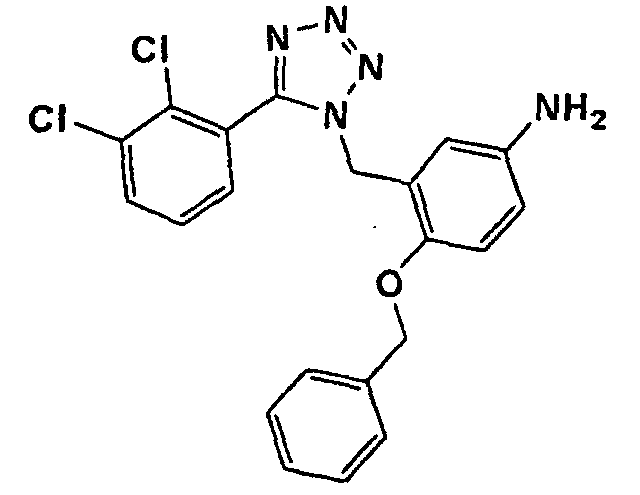
NMR (CDCl3):δ 7.53 (dd, J = 7.8 Hz, 1.5 Hz, 1H), 7.39-7.28 (m, 3H), 7.16-7.06 (m, 3H), 6.87 (dd, J = 7.8 Hz, 1.5 Hz, 1H), 6.65 (d, J = 8.4 Hz, 1H), 6.56 (dd, J = 8.4 Hz, 2.7 Hz, 1H), 6.44 (d, J = 2.7 Hz, 1H), 5.38 (s, 2H), 4.77 (s, 2H), 3.41 (bs, 2H).

NMR (CDCl3):δ 7.70 (dd, J = 8.1, 1.5 Hz, 1H), 7.31 (t, J = 8.1 Hz, 1H), 7.14-7.06 (m, 2H), 6.65 (dd, J = 8.1, 1.2 Hz, 1H), 6.53-6.43 (m, 2H), 5.39 (s, 2H), 4.13 (bs, 2H).
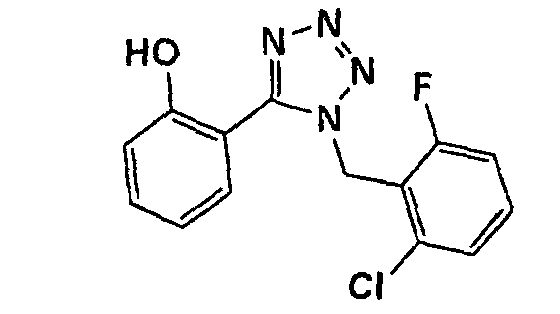
A solution of the compound prepared in example 2(32) (197 mg) and trimethylsilane
iodide(0.14 ml) in acetonitrile (3.00 ml) was stirred for 2 hours at 50°C. The reaction mixture
was concentrated. To the residue was added water, and the mixture was extracted with methylene
chloride The organic layer was washed with water, dried over anhydrous magnesium sulfate and
was concentrated. The residue was washed with n-hexane-ethyl acetate and dried to give the
compound of the present invention (109 mg) having the following physical data.
TLC:RF 0.19 (ethyl acetate : n-hexane = 3 : 7);
NMR (CDCl3):δ 9.82 (brs, 1H), 7.69 (dd, J = 8.1, 1.8 Hz, 1H), 7.49 (td, J = 7.8, 1.5 Hz, 1H), 7.40-7.33 (m, 1H), 7.26 (d, J = 7.8 Hz, 1H), 7.20 (d, J = 8.1 Hz, 1H), 7.11-7.05 (m, 2H), 5.87 (d, J = 0.9 Hz, 2H).
TLC:RF 0.19 (ethyl acetate : n-hexane = 3 : 7);
NMR (CDCl3):δ 9.82 (brs, 1H), 7.69 (dd, J = 8.1, 1.8 Hz, 1H), 7.49 (td, J = 7.8, 1.5 Hz, 1H), 7.40-7.33 (m, 1H), 7.26 (d, J = 7.8 Hz, 1H), 7.20 (d, J = 8.1 Hz, 1H), 7.11-7.05 (m, 2H), 5.87 (d, J = 0.9 Hz, 2H).
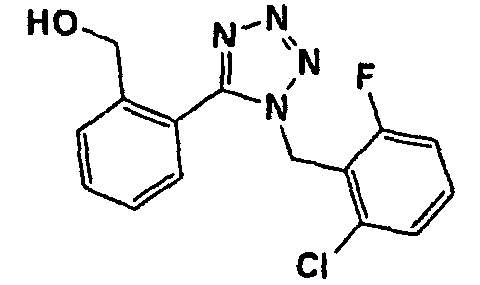
The solution of the compound prepared in Example 2(31) (38.8 mg) and cerium
ammonium nitrate (250 mg) in acetonitrile (3.00 ml)-water (1.00 ml) was stirred for 1 hour at room
temperature. The reaction mixture was extracted with methylene chloride, and the organic layer
was washed with water and brine successively, dried over magnesium suldate and concentrated.
The residue was purified by column chromatography on silica gel (n-hexane : ethyl acetate = 7 : 3)
to give the compound of the present invention (22.0 mg) having the following physical data.
TLC:Rf 0.57 (ethyl acetate : n-hexane = 1 : 1);
NMR (CDCl3):δ 7.61-7.45 (m, 4H), 7.34-7.26 (m, 1H), 7.19 (d, J = 7.8 Hz, 1H), 7.00 (td, J = 8.7, 1.2 Hz, 1H), 5.69 (d, J = 1.5 Hz, 2H), 4.42 (d, J = 6.9 Hz, 2H), 3.77 (t, J = 6.9 Hz, 1H).
TLC:Rf 0.57 (ethyl acetate : n-hexane = 1 : 1);
NMR (CDCl3):δ 7.61-7.45 (m, 4H), 7.34-7.26 (m, 1H), 7.19 (d, J = 7.8 Hz, 1H), 7.00 (td, J = 8.7, 1.2 Hz, 1H), 5.69 (d, J = 1.5 Hz, 2H), 4.42 (d, J = 6.9 Hz, 2H), 3.77 (t, J = 6.9 Hz, 1H).
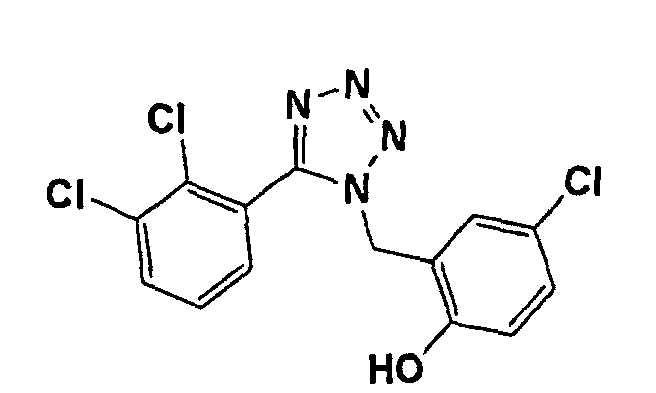
To a solution of the compound prepared in Example 2(66) (1.43 g) in methylene
chloride (10 ml) under cooling with ice in dry ice-methanol bath, was added tribromoboron (1M
methylene chloride solution, 9.7 ml) and the mixture was stirred for 2 hours. To the reaction
mixture was added a saturated aqueous solution of sodium bicarbonate, and extracted with ethyl
acetate. The organic layer was washed with brine, dried over anhydrous sodium sulfate and was
concentrated. The residue was purified by column chromatography on silica gel (n-hexane : ethyl
acetate = 2 : 1 → 1 : 1) and recrystallization (n-hexane / ethyl acetate), to give the compound of the
present invention having the following physical data.
TLC:Rf0.33 (ethyl acetate : n-hexane = 1 : 1);
NMR (CDCl3 + CD3OD):δ 7.66 (dd, J = 7.8 Hz, 1 5 Hz, 1H), 7.29 (t, J = 7.8 Hz, 1H), 7.15 (dd, J = 7.8 Hz, 1.5 Hz, 1H), 7.07 (dd, J = 8.7 Hz, 2.7 Hz, 1H), 6.93 (d, J = 2.7 Hz, 1H), 6.62 (d, J = 8.7 Hz, 1H), 5.40 (s, 2H).
TLC:Rf0.33 (ethyl acetate : n-hexane = 1 : 1);
NMR (CDCl3 + CD3OD):δ 7.66 (dd, J = 7.8 Hz, 1 5 Hz, 1H), 7.29 (t, J = 7.8 Hz, 1H), 7.15 (dd, J = 7.8 Hz, 1.5 Hz, 1H), 7.07 (dd, J = 8.7 Hz, 2.7 Hz, 1H), 6.93 (d, J = 2.7 Hz, 1H), 6.62 (d, J = 8.7 Hz, 1H), 5.40 (s, 2H).
By the same procedure as described in example 6 using corresponding compounds, the compounds
of the present invention having the following physical data were given.

NMR (CDCl3):δ 7.42-7.38 (m, 2H), 7.22-7.15 (m, 1H), 7.03 (dd, J = 7.5 Hz, 1.8 Hz, 1H), 7.00-6.90 (m, 3H), 5.82 (s, 2H), 3.95 (s, 3H).

NMR (CDCl3+CD3OD):δ 7.66 (dd, J = 8.1 Hz, 1.8 Hz, 1H), 7.30 (t, J = 8.1 Hz, 1H), 7.16 (dd, J = 8.1 Hz, 1.8 Hz, 1H), 7.00 (d, J = 8.7 Hz, 1H), 6.74 (d, J = 2.4 Hz, 1H), 6.62 (dd, J = 8.7 Hz, 2.4 Hz, 1H), 5.50 (s, 2H).
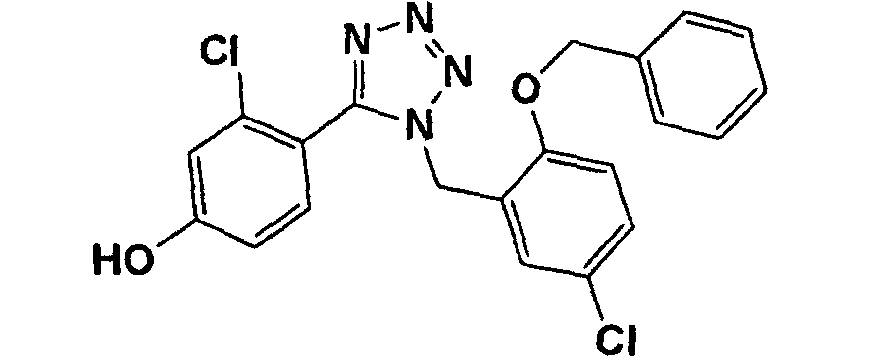
To a solution of the compound prepared in Example 2(104) (342 mg) in methanol (5
ml)-tetrahydrofuran (5 ml) was added 2N hydrochloric acid (2 ml) and the mixture was stirred for 3
hour at 80°C. To the reaction mixture was added water, the precipitate was collected by filtration,
dried and recrystallized by n-hexane-ethyl acetate, the compound of the present invention having
the following physical data (249 mg) was given.
TLC:Rf 0.20 (ethyl acetate : n-hexane = 1 : 2);
NMR (CDCl3+CD3OD) :δ 7.40-7.32 (m, 3H), 7.22-7.13 (m, 3H), 6.99 (d, J = 2.7 Hz, 1H), 6.93 (d, J = 2.4 Hz, 1H), 6.79 (d, J = 8.4 Hz, 1H), 6.78 (d, J = 9.0 Hz, 1H), 6.67 (dd, J = 8.4 Hz, 2.4 Hz, 1H), 5.43 (s, 2H), 4.91 (s, 2H).
TLC:Rf 0.20 (ethyl acetate : n-hexane = 1 : 2);
NMR (CDCl3+CD3OD) :δ 7.40-7.32 (m, 3H), 7.22-7.13 (m, 3H), 6.99 (d, J = 2.7 Hz, 1H), 6.93 (d, J = 2.4 Hz, 1H), 6.79 (d, J = 8.4 Hz, 1H), 6.78 (d, J = 9.0 Hz, 1H), 6.67 (dd, J = 8.4 Hz, 2.4 Hz, 1H), 5.43 (s, 2H), 4.91 (s, 2H).
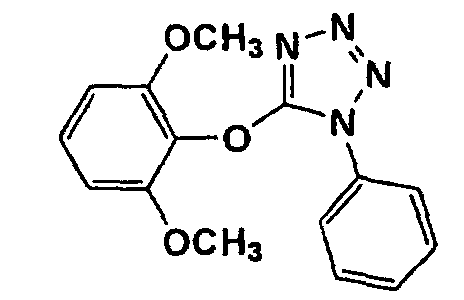
To a solution of 5-chloro-1-phenyl-1H-1,2,3,4-tetrazole (542 mg) in acetone (10.0 ml)
were added potassium carbonate (622 mg) and 2,6-dimethoxyphenol (463 mg) and the mixture was
refluxed for 10 hours. The reaction mixture was concentrated. To the residue was water added
and the mixture was extracted with ethyl acetate. The organic layer was washed with a saturated
aqueous ammonium chloride and brine, dried over anhydrous magnesium sulfate and was
concentrated. The residue was purified by column chromatography on silica gel (n-hexane : ethyl
acetate = 8 : 2 → 1 : 1) to give the compound of the present invention(338 mg) having the
following physical data.
TLC:Rf 0.29 (n-hexane : ethyl acetate = 7 : 3);
NMR (CDCl3):δ 7.91-7.88 (m, 2H), 7.60-7.45 (m, 3H), 7.26-7.19 (m, 1H), 6.67 (d, J = 8.4 Hz, 2H), 3.82 (s, 6H).
TLC:Rf 0.29 (n-hexane : ethyl acetate = 7 : 3);
NMR (CDCl3):δ 7.91-7.88 (m, 2H), 7.60-7.45 (m, 3H), 7.26-7.19 (m, 1H), 6.67 (d, J = 8.4 Hz, 2H), 3.82 (s, 6H).
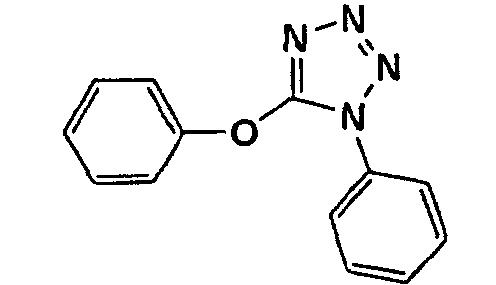
By the same procedure as described in example 8 using a corresponding compound,
the compound of the present invention having the following physical data was given.
TLC:Rf 0.29 (n-hexane : ethyl acetate = 5 : 1);
NMR (CDCl3):δ 7.83-7.80 (m, 2H), 7.62-7.29 (m, 8H).
TLC:Rf 0.29 (n-hexane : ethyl acetate = 5 : 1);
NMR (CDCl3):δ 7.83-7.80 (m, 2H), 7.62-7.29 (m, 8H).
By the same procedure as described in example 5 using a corresponding compound,
the compounds of the present invention having the following physical data were given.
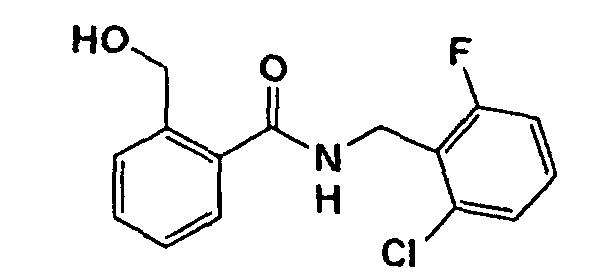
NMR (CDCl3):δ 7.53-7.23 (m, 6H), 7.09-7.03 (m, 1H), 6.61 (brs, 1H), 4.84 (dd, J = 5.7, 1.5 Hz, 2H), 4.61 (d, J = 6.9 Hz, 2H), 4.23 (t, J = 6.9 Hz, 1H).

NMR (CDCl3):δ 9.43 (s, 1H), 7.59-7.52 (m, 2H), 7.27 (t, J = 7.8 Hz, 1H), 7.22-7.13 (m, 2H), 6.98-6.92 (m, 2H), 4.71 (d, J = 6.6 Hz, 2H).
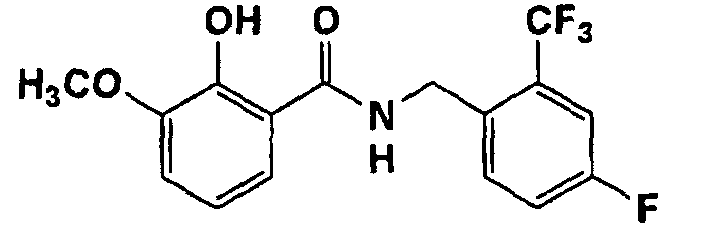
NMR (CDCl3):δ 11.05 (s, 1H), 7.66 (dd, J = 8.4 Hz, 5.7 Hz, 1H), 7.39 (dd, J = 8.7 Hz, 2.7 Hz, 1H), 7.28-7.20 (m, 1H), 7.12 (dd, J = 8.1 Hz, 1.2 Hz, 1H), 7.10-7.02 (m, 1H), 6.99 (dd, J = 8.1 Hz, 1.2 Hz, 1H), 6.83 (t, J = 8 1 Hz, 1H), 4.79 (d, J = 6.0 Hz, 2H), 3.91 (s, 3H).
By the same procedure as described in example 2 using a corresponding compound
(optionally followed by converting into a corresponding salt by a conventional method), the
following compounds having the following physical data were given.
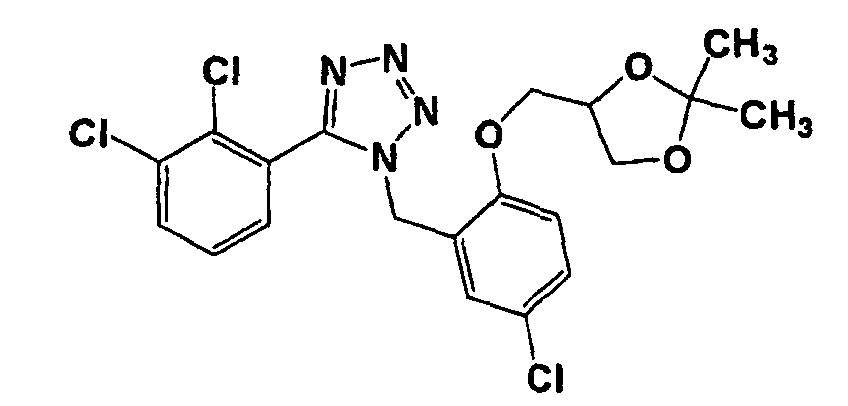
NMR (CDCl3):δ 7.66 (dd, J = 7.8, 1.5 Hz, 1H), 7.27 (t, J = 7.8 Hz, 1H), 7.19 (dd, J = 8.7, 2.4 Hz, 1H), 7.12 (dd, J = 7.8, 1.5 Hz, 1H), 6.80 (d, J = 2.4 Hz, 1H), 6.71 (d, J = 8.7 Hz, 1H), 5.49 (d, J = 15.0 Hz, 1H), 5.46 (d, J = 15.0 Hz, □1H), 4.29-4.22 (m, 1H), 4.09 (dd, J = 8.7, 6.3 Hz, 1H), 3.89 (dd, J = 9.6, 5.7 Hz, 1H), 3.78 (dd, J = 9.6, 6.3 Hz, 1H), 3.70 (dd, J = 8.7, 5.4 Hz, 1H), 1.40 (s, 3H), 1.37 (s, 3H).
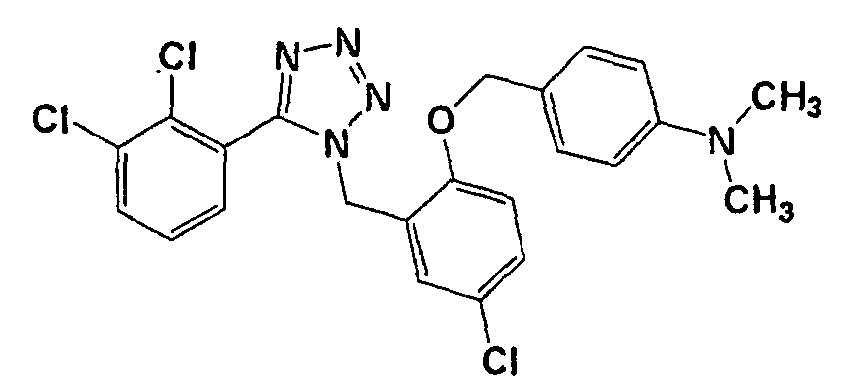
NMR (CDCl3):δ 7.57 (dd, J = 7.8, 1.5 Hz, 1H), 7.20 (dd, J = 8.7, 2.4 Hz, 1H), 7.09 (t, J = 7.8 Hz, 1H), 7.02 (d, J = 2.4 Hz, 1H), 7.01-6.96 (m, 2H), 6.80 (d, J = 8.7 Hz, 1H), 6.76 (dd, J = 7.8, 1.5 Hz, 1H), 6.71-6.66 (m, 2H), 5.35 (s, 2H), 4.75 (s, 2H), 2.97 (s, 6H).
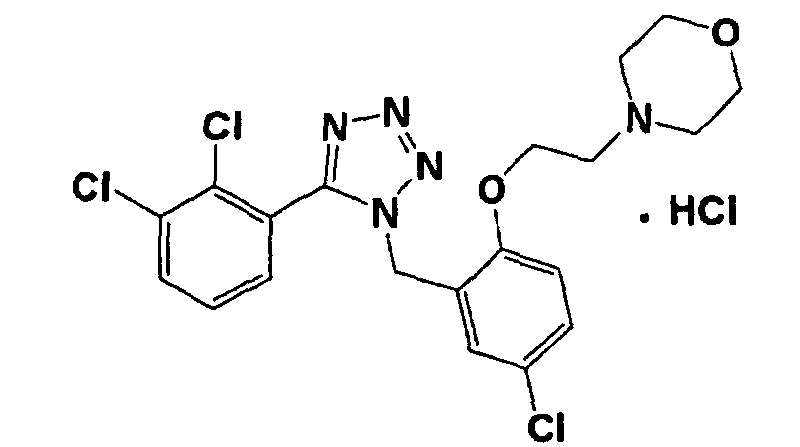
NMR (DMSO-d6):δ 11.42-11.26 (br, 1H), 7.86 (dd, J = 7.8, 1.5 Hz, 1H), 7.61 (dd, J = 7.8, 1.5 Hz, 1H), 7.53 (t, J = 7.8 Hz, 1H), 7.33 (dd, J = 8.7, 2.7 Hz, 1H), 6.97 (d, J = 8.7 Hz, 1H), 6.86 (d, J = 2.7 Hz, 1H), 5.63 (s, 2H), 4.36-4.26 (br, 2H), 3.93-3.75 (m, 4H), 3.38-3.25 (m, 4H), 3.16-3.01 (br, 2H).
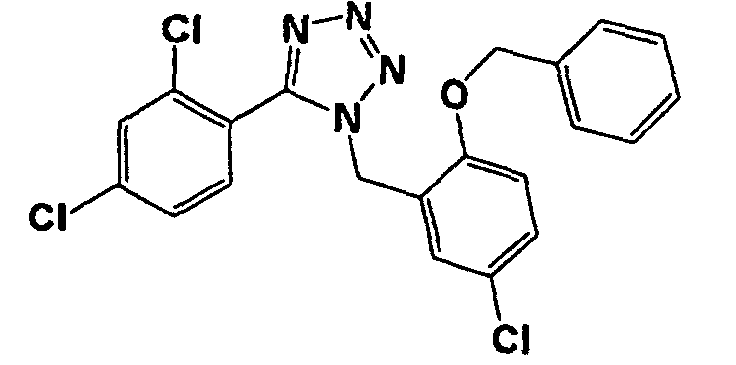
NMR (CDCl3):δ 7.44 (d, J = 2.1 Hz, 1H), 7.41-7.35 (m, 3H), 7.22 (dd, J = 8.7, 2.4 Hz, 1H), 7.17-7.12 (m, 3H), 7.05 (d, J = 2.4 Hz, 1H), 6.80 (d, J = 8.1 Hz, 1H), 6.78 (d, J = 8.7 Hz, 1H), 5.42 (s, 2H), 4.86 (s, 2H).
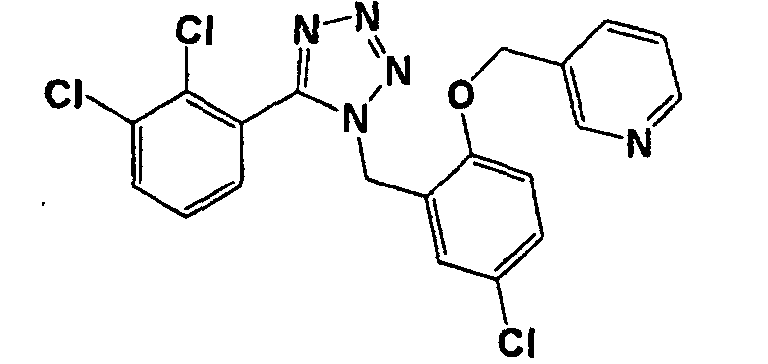
NMR (CDCl3):δ 8.62 (dd, J = 5.1, 1.5 Hz, 1H), 8.52 (d, J = 1.5 Hz, 1H), 7.59 (dd, J = 7.8, 1.5 Hz, 1H), 7.53-7.50 (m, 1H), 7.37-7.33 (m, 1H), 7.23 (dd, J = 8.7, 2.4 Hz, 1H), 7.19 (t, J = 7.8 Hz, 1H), 6.96 (d, J = 2.4 Hz, 1H), 6.92 (dd, J = 7.8, 1.5 Hz, 1H), 6.79 (d, J = 8.7 Hz, 1H), 5.45 (s, 2H), 4.92 (s, 2H).
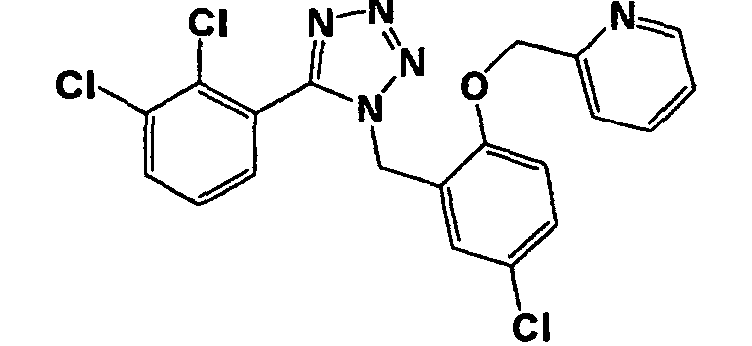
NMR (CDCl3):δ 8.58-8.55 (m, 1H), 7.72 (dt, J = 7.8, 1.8 Hz, 1H), 7 60 (dd, J = 7.8, 1.5 Hz, 1H), 7.25-7.13 (m, 4H), 7.01 (dd, J = 7.8, 1.5 Hz, 1H), 6.93 (d, J = 3.0 Hz, 1H), 6.75 (d, J = 7.8 Hz, 1H), 5.54 (s, 2H), 5.02 (s, 2H).
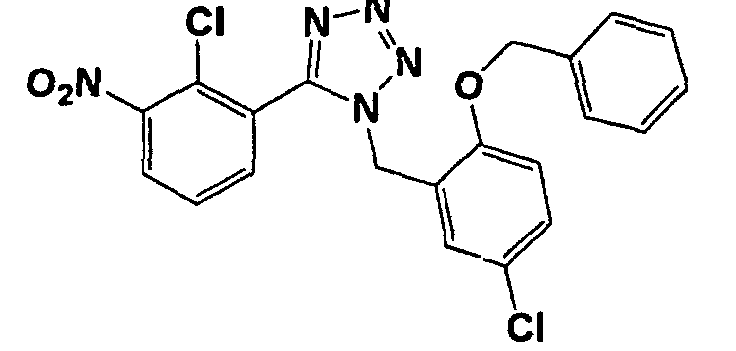
NMR (CDCl3):
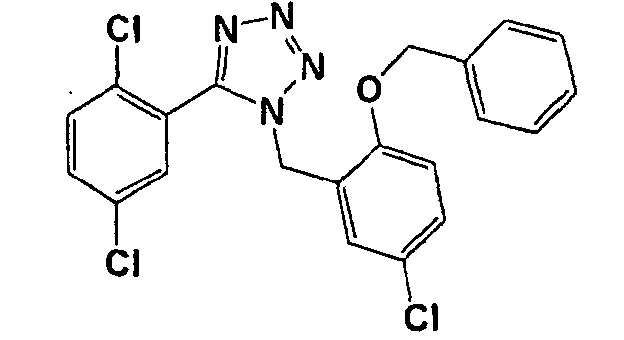
NMR (CDCl3):δ 7.41-7.32 (m, 5H), 7.22 (dd, J = 9.0, 2.4 Hz, 1H), 7.14-7.10 (m, 2H), 7.06 (d, J = 2.4 Hz, 1H), 6.83 (dd, J = 2.1, 0.9 Hz, 1H), 6.79 (d, J = 9.0 Hz, 1H), 5.45 (s, 2H), 4.89 (s, 2H).
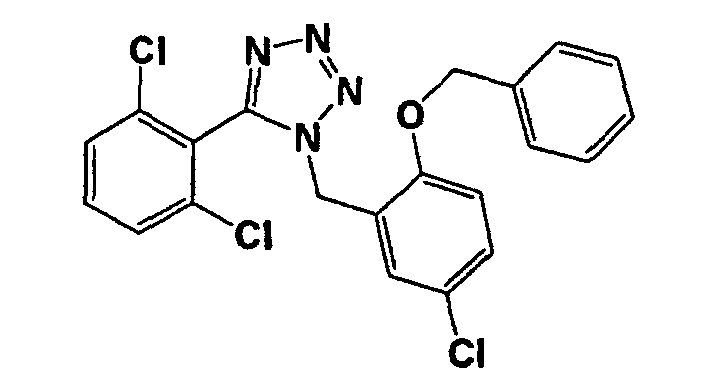
NMR (CDCl3):δ 7.40-7.27 (m, 6H), 7.23-7.19 (m, 2H), 7.16 (dd, J = 9.0, 2.7 Hz, 1H), 6.83 (d, J = 2.7 Hz, 1H), 6.76 (d, J = 9.0 Hz, 1H), 5.51 (s, 2H), 4.92 (s, 2H).

NMR (CD3OD):δ 7.81 (dd, J = 7.8, 1.5 Hz, 1H), 7.47 (t, J = 7.8 Hz, 1H), 7.35 (dd, J = 7.8, 1.5 Hz, 1H), 7.26 (dd, J = 9.0, 2 7 Hz, 1H), 6 96 (d, J = 9.0 Hz, 1H), 6.63 (bs, 1H), 5.77-5.61 (m, 2H), 4.89-4.81 (m, 1H), 3.70-3.38 (m, 4H), 3 09 (bs, 3H), 2 05-1.91 (m, 4H), 1.73-1.65 (m, 2H)
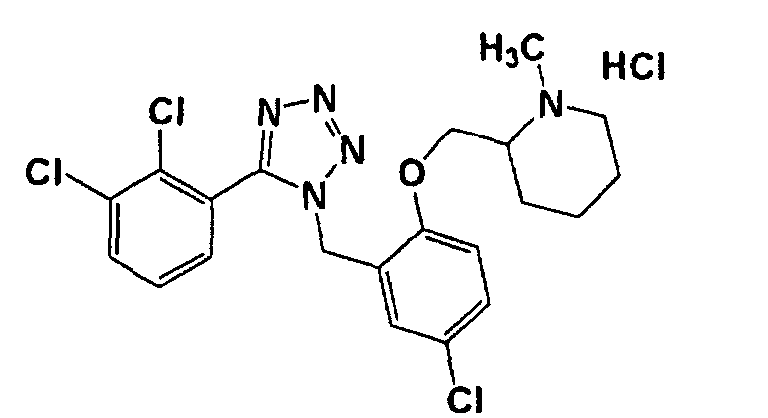
NMR (CD3OD):δ 7.80 (dd, J = 7.8, 1.5 Hz, 1H), 7.47 (t, J = 7.8 Hz, 1H), 7.35 (dd, J = 7.8, 1.5 Hz, 1H), 7.28 (dd, J = 8.7, 2.7 Hz, 1H), 6.97 (d, J = 8.7 Hz, 1H), 6.67 (d, J = 2.7 Hz, 1H), 5 92-5.80 (br, 1H), 5.67-5.54 (br, 1H), 4.40-4.24 (br, 1H), 4.20-4.06 (br, 1H), 3.64-3.34 (br, 2H), 3.26-3.12 (br, 1H), 2.93 (s, 3H), 2.10-1.55 (br, 6H).

NMR (CDCl3):δ 7.49 (dd, J = 8.1, 1.2 Hz, 1H), 7.40-7.32 (m, 3H), 7.22 (dd, J = 8.7, 3.0 Hz, 1H), 7.20-7.16 (m, 2H), 7.11 (t, J = 8.1 Hz, 1H), 6.91 (dd, J = 8.1, 1.2 Hz, 1H), 6.88 (d, J = 3 0 Hz, 1H), 6.80 (d, J = 8.7 Hz, 1H), 5.38 (s, 2H), 4.91 (s, 2H), 1.97 (s, 3H).
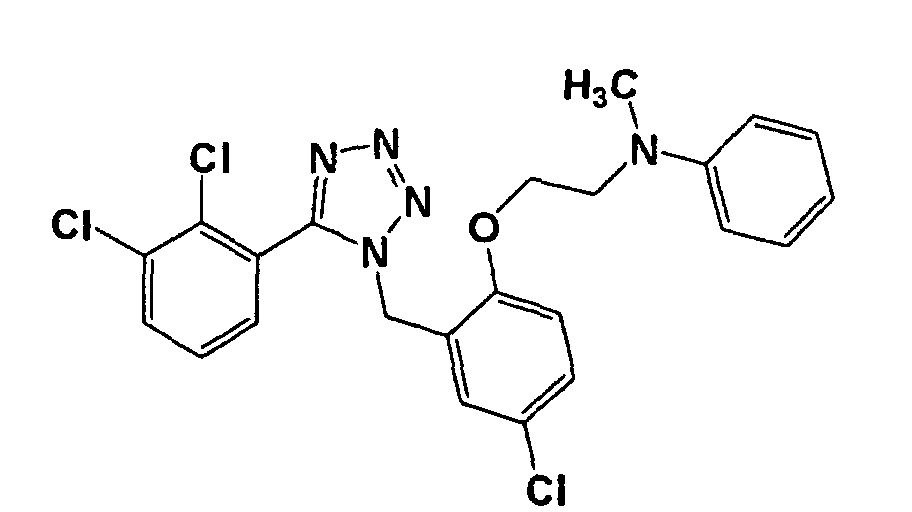
NMR (CDCl3):δ 7.63 (dd, J = 8.1, 1.5 Hz, 1H), 7.25-7.18 (m, 3H), 7.15 (dd, J = 8.7, 2.7 Hz, 1H), 7.05 (dd, J = 7.8, 1.5 Hz, 1H), 6.78 (d, J = 2.7 Hz, 1H), 6.73-6.63 (m, 4H), 5.35 (s, 2H), 3.98 (t, J = 5.7 Hz, 2H), 3.63 (t, J = 5.7 Hz, 2H), 2.95 (s, 3H).

NMR (CDCl3) 7.40-7.29 (m, 3H), 7.23-7.10 (m, 5H), 6.81 (d, J = 3.0 Hz, 1H), 6.78 (d, J = 8.7 Hz, 1H), 6.70 (dd, J = 7.2 Hz, 1.5 Hz, 1H), 5.40 (s, 2H), 5.21 (s, 2H), 4.94 (s, 2H), 3.48 (s, 3H), 1.88 (s, 3H).
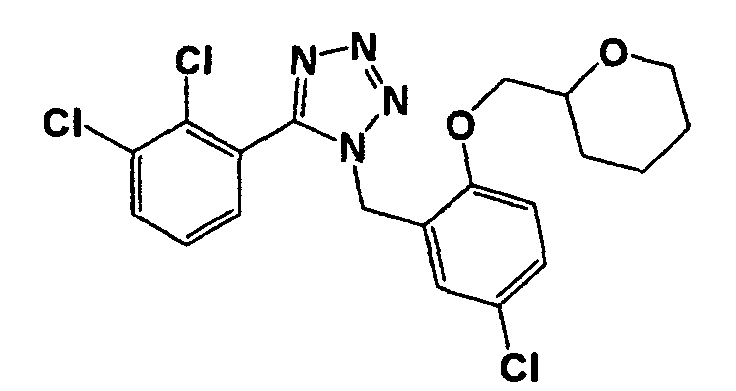
NMR (CDCl3):δ 7.63 (dd, J = 7.8, 1.5 Hz, 1H), 7.24 (t, J = 7.8 Hz, 1H), 7.18-7.11 (m, 2H), 6.87 (d, J = 2.7 Hz, 1H), 6.68 (d, J = 8.7 Hz, 1H), 5.52 (d, J = 15.0 Hz, 1H), 5.46 (d, J = 15.0 Hz, 1H), 3.98-3.93 (m, 1H), 3.80 (dd, J = 9.9, 6.3 Hz, 1H), 3.67 (dd, J = 9.9, 4.2 Hz, 1H), 3.47-3.37 (m, 2H), 1.91-1.85 (m, 1H), 1.60-1.49 (m, 4H), 1.30-1.20 (m, 1H).

NMR (CDCl3):δ 7.52-7.46 (m, 2H), 7.40-7.32 (m, 3H), 7.28-7.22 (m, 3H), 7.09-7.03 (m, 2H), 6.94 (d, J = 2.7 Hz, 1H), 6.89 (d, J = 8.7 Hz, 1H), 5.59 (s, 2H), 5.20 (s, 2H), 5.02 (s, 2H), 3.48 (s, 3H).
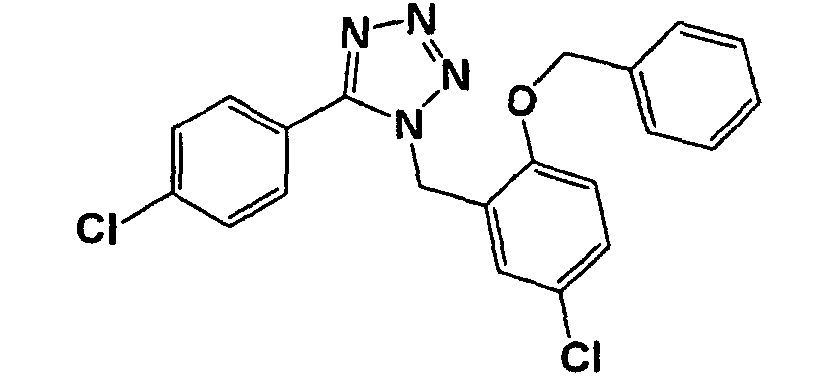
NMR (CDCl3):δ 7.48-7.41 (m, 2H), 7.39-7.32 (m, 5H), 7.28 (dd, J = 9.0, 2.4 Hz, 1H), 7.24-7.18 (m, 2H), 7.03 (d, J = 2.4 Hz, 1H), 6.90 (d, J = 9.0 Hz, 1H), 5.56 (s, 2H), 4.98 (s, 2H).
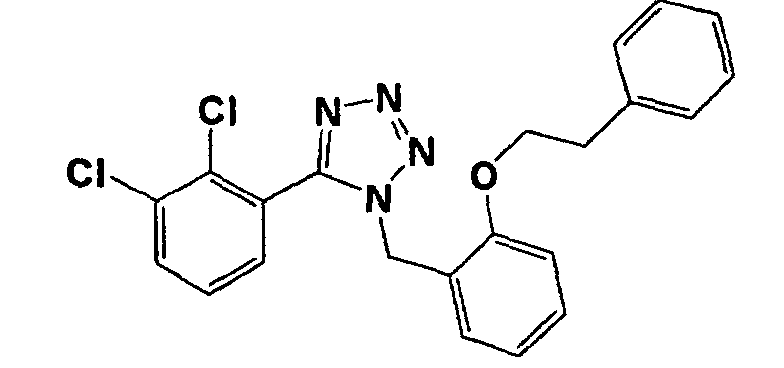
NMR (CDCl3):δ 7.59 (dd, J = 7.8, 1.5 Hz, 1H), 7.33-7.15 (m, 7H), 6.97 (dd, J = 7.8, 1.5 Hz, 1H), 6.92 (dd, J = 7.8, 1.5 Hz, 1H), 6.79 (dt, J = 7.8, 1.2 Hz, 1H), 6.71 (d, J = 8.1 Hz, 1H), 5.46 (s, 2H), 4.00 (t, J = 6.9 Hz, 2H), 2.91 (t, J = 6.9 Hz, 2H).
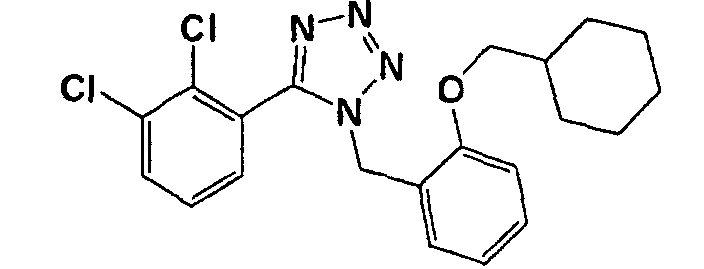
NMR (CDCl3):δ 7.58 (dd, J = 7.8, 1.5 Hz, 1H), 7.23-7.17 (m, 2H), 7.03 (dd, J = 7 8, 1.5 Hz, 1H), 6.93 (dd, J = 7.8, 1.5 Hz, 1H), 6.79-6.69 (m, 2H), 5.54 (s, 2H), 3.57 (d, J = 6.3 Hz, 2H), 1.76-1.51 (m, 6H), 1.34-1.11 (m, 3H), 0.96-0.85 (m, 2H).

NMR (CDCl3):δ 8.63-8.60 (m, 2H), 7.55 (dd, J = 8.1, 1.8 Hz, 1H), 7.28-7.22 (m, 1H), 7.18-7.13 (m, 3H), 7.04 (dd, J = 7.8, 1.8 Hz, 1H), 7.00 (dd, J = 7.8, 1.8 Hz, 1H), 6.88 (dt, J = 7.8, 1.2 Hz, 1H), 6.75 (d, J = 8.1 Hz, 1H), 5.57 (s, 2H), 4.93 (s, 2H).

NMR (CDCl3):δ 8.61 (dd, J = 4.5, 1.5 Hz, 1H), 8.53 (d, J = 2.1 Hz, 1H), 7.57-7.51 (m, 2H), 7.37-7.25 (m, 2H), 7.14 (t, J = 7.8 Hz, 1H), 7.03 (dd, J = 7.5, 1.8 Hz, 1H), 6.92-6.84 (m, 3H), 5.50 (s, 2H), 4.93 (s, 2H).
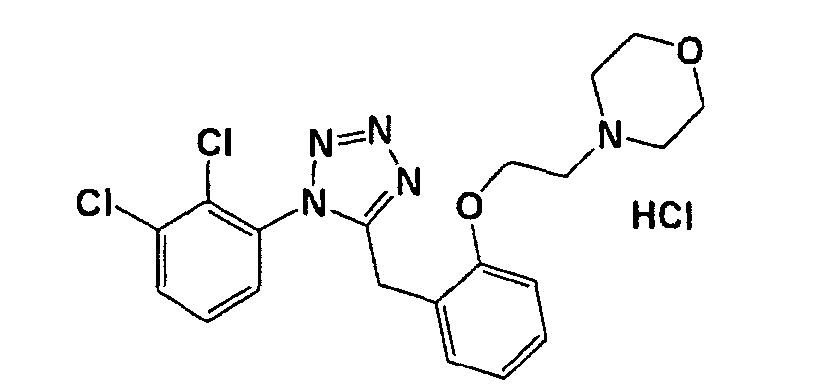
NMR (CD3OD):δ 7.88 (dd, J = 8.1 Hz, 1.5 Hz, 1H), 7.56 (t, J = 8.1 Hz, 1H), 7.48 (dd, J = 8.1 Hz, 1.5 Hz, 1H), 7.28-7.21 (m, 1H), 6.96 (d, J = 8.1 Hz, 1H), 6.75 (t, J = 7.5 Hz, 1H), 6.61 (dd, J = 7.5 Hz, 1 8 Hz, 1H), 4.42-4.36 (m, 2H), 4.31 (s, 2H), 4.18-4.10 (m, 4H), 3.80-3.30 (m, 6H).

NMR (CDCl3):δ 7.57 (dd, J = 7.8, 1.5 Hz, 1H), 7.27-7.21 (m, 1H), 7.17 (t, J = 7.8 Hz, 1H), 7.10 (dd, J = 7.8, 1.5 Hz, 1H), 6.94-6.76 (m, 7H), 5.54 (d, J = 14.7 Hz, 1H), 5.52 (d, J = 14.7 Hz, 1H), 4.42-4.35 (m, 1H), 4.26 (dd, J = 11.4, 2.4 Hz, 1H), 4.12-4.00 (m, 3H).

NMR (CD3OD):δ 7.77 (dd, J = 8.1 Hz, 1.5 Hz, 1H), 7.44 (t, J = 8.1 Hz, 1H), 7.36-7.26 (m, 2H), 6.98 (d, J = 8.1 Hz, 1H), 6.77 (dt, J = 1.2Hz, 7.5 Hz, 1H), 6.71 (dd, J = 7.5 Hz, 1.8 Hz, 1H), 5.71 (s, 2H), 4.39-4.32 (m, 2H), 4.12-3.90 (m, 4H), 3.60-3.34 (m, 6H).
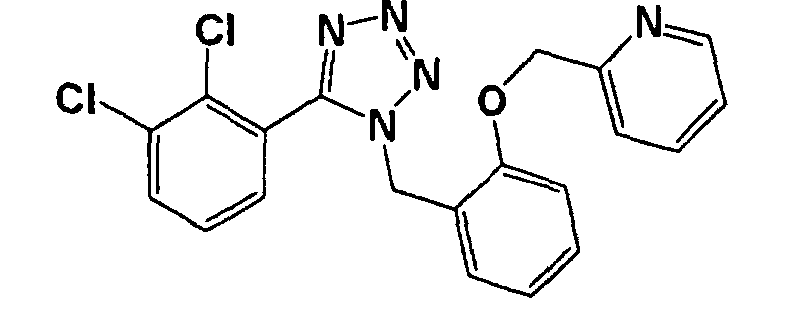
NMR (CDCl3):δ 8.59-8.55 (m, 1H), 7.71 (dt, J = 1.8 Hz, 7.8 Hz, 1H), 7.55 (dd, J = 8.1 Hz, 1.8Hz, 1H), 7.27-7.12 (m, 4H), 7.04-6.97 (m, 2H), 6.87-6.78 (m, 2H), 5.60 (s, 2H), 5.03 (s, 2H).
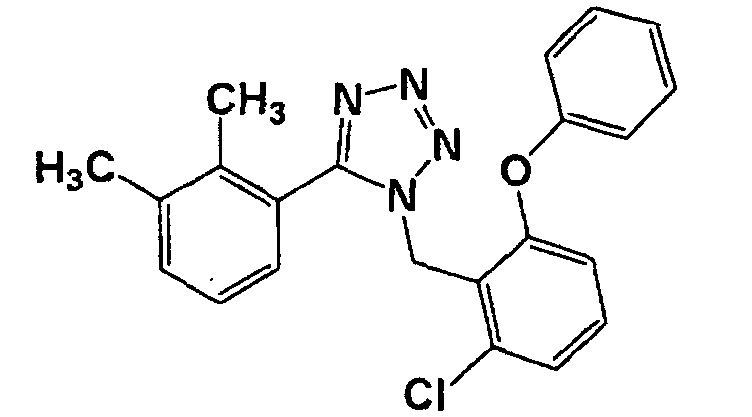
NMR (CDCl3):δ 7.38-7.28 (m, 3H), 7.21-7.04 (m, 5H), 6.90-6.84 (m, 2H), 6.65 (dd, J = 8.2, 1.1 Hz, 1H), 5.57 (s, 2H), 2.30 (s, 3H), 2.01 (s, 3H).

NMR (CDCl3):δ 7.39-7.30 (m, 3H), 7.30-7.18 (m, 4H), 7.08 (t, J = 7.5 Hz, 1H), 6.91-6.82 (m, 4H), 5.43 (s, 2H), 4.93 (s, 2H), 2.24 (s, 3H), 1.84 (s, 3H).
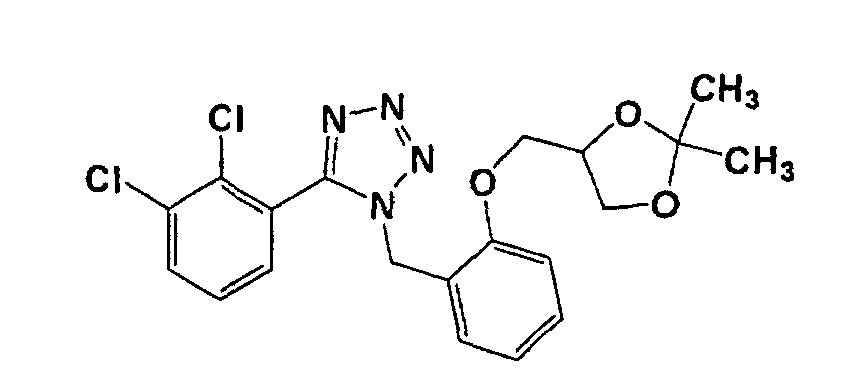
NMR (CDCl3):δ 7.61 (dd, J = 8.1, 1.5 Hz, 1H), 7.26-7.19 (m, 2H), 7.09 (dd, J = 7.8, 1.5 Hz, 1H), 6.87 (dd, J = 7.5, 2.1 Hz, 1H), 6.81 (dd, J = 7.5, 1.2 Hz, 1H), 6.76 (d, J = 8.1 Hz, 1H), 5.54 (d, J = 14.7 Hz, 1H), 5.51 (d, J = 14.7 Hz, 1H), 4.30-4.22 (m, 1H), 4.10 (dd, J = 8.4, 6.3 Hz, 1H), 3.91 (dd, J = 9.6, 5.4 Hz, 1H), 3.78 (dd, J = 9.6, 6.3 Hz, 1H), 3.71 (dd, J = 8.4, 5.4 Hz, 1H), 1.41 (s, 3H), 1.38 (s, 3H).
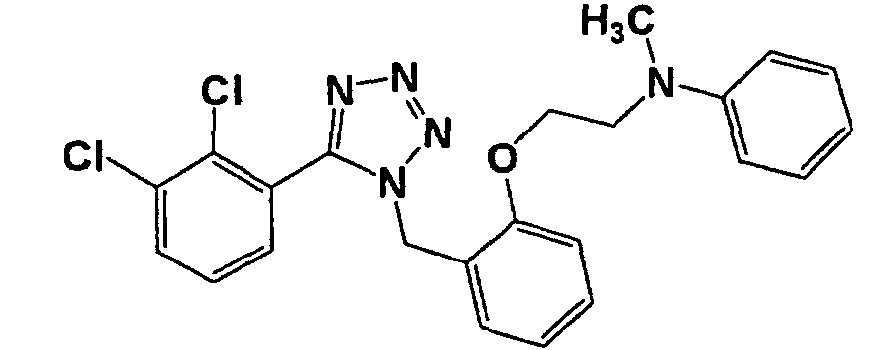
NMR (CDCl3):δ 7.59 (dd, J = 8.1, 1.5 Hz, 1H), 7.25-7.15 (m, 4H), 7.02 (dd, J = 7.5, 1.5 Hz, 1H), 6.85 (dd, J =7.5, 2.1 Hz, 1H), 6.78 (dt, J = 7.5, 0.9 Hz, 1H), 6.73-6.67 (m, 4H), 5.42 (s, 2H), 3.99 (t, J = 5.7 Hz, 2H), 3.63 (t, J = 5.7 Hz, 2H), 2.96 (s, 3H).
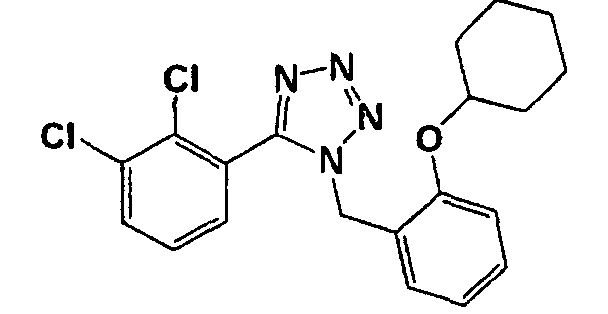
NMR (CDCl3):δ 7.58 (dd, J = 7.8, 1.5 Hz, 1H), 7.21-7.14 (m, 2H), 7.04 (dd, J = 7.8, 1.5 Hz, 1H), 6.87 (dd, J = 7.5, 1.5 Hz, 1H), 6.75-6.68 (m, 2H), 5.54 (s, 2H), 4.18-4.09 (m, 1H), 1.81-1.48 (m, 5H), 1.37-1.22 (m, 5H).
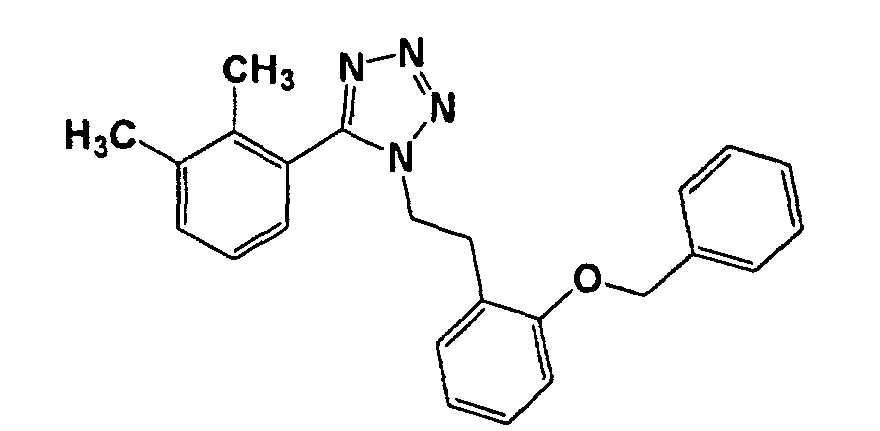
NMR (CDCl3):δ 7.39-7.30 (m, 3H), 7.30-7.22 (m, 1H), 7.20-7.14 (m, 3H), 7.03 (t, J = 7.8 Hz, 1H), 6.84-6.72 (m, 3H), 6.51 (d, J = 7.2 Hz, 1H), 4.72 (s, 2H), 4.44 (t, J = 6.6 Hz, 2H), 3.22 (t, J = 6.6 Hz, 2H), 2.25 (s, 3H), 1.81 (s, 3H).

NMR (CDCl3):δ 7.62 (dd, J = 8, 1 Hz, 1H), 7.44-7.32 (m, 5H), 7.25 (t, J = 8 Hz, 1H), 7.16 (dd, J = 8, 1 Hz, 1H), 7.08 (d, J = 9 Hz, 1H), 6.89 (d, J = 2 Hz, 1H), 6.77 (dd, J = 9, 2 Hz, 1H), 5.52 (s, 2H), 5.05 (s, 2H).
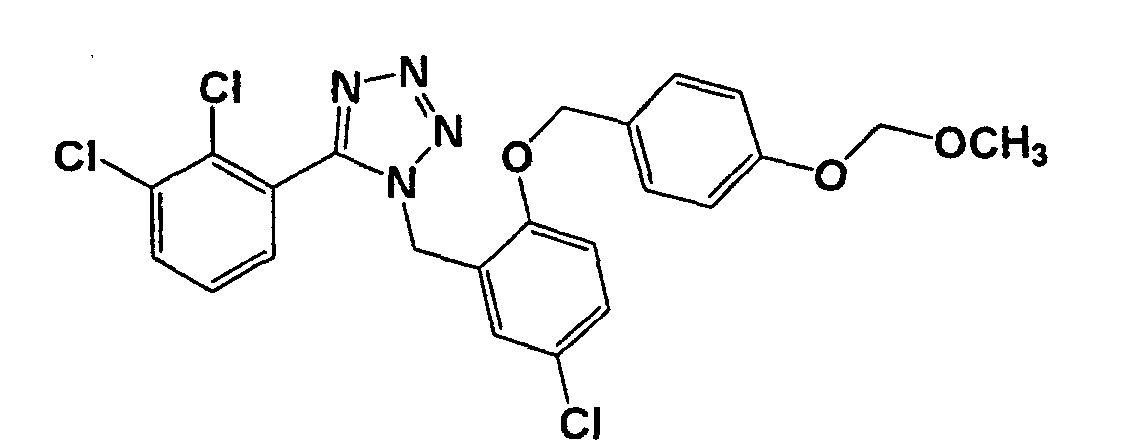
NMR (CDCl3):δ 7.58 (dd, J = 7.8, 1.5 Hz, 1H), 7.19 (dd, J = 9.0, 2.7 Hz, 1H), 7.14 (t, J = 7.8 Hz, 1H), 7.09-6.98 (m, 5H), 6 82 (dd, J = 7.8, 1.5 Hz, 1H), 6.78 (d, J = 9.0 Hz, 1H), 5.39 (s, 2H), 5.19 (s, 2H), 4.81 (s, 2H), 3.49 (s, 3H).
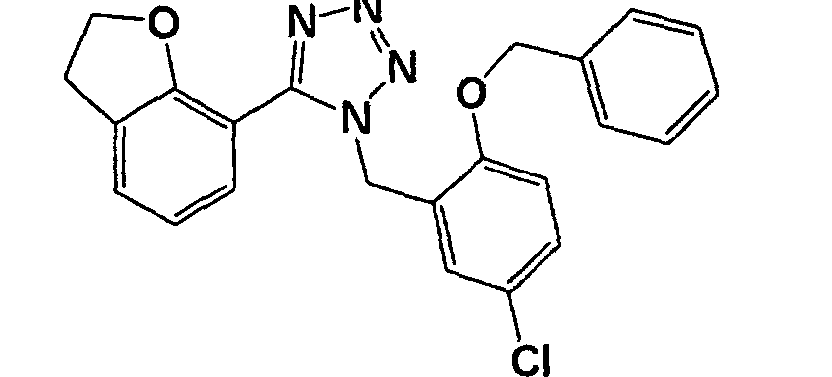
NMR (CDCl3):δ 7.38-7.29 (m, 4H), 7.20-7.11 (m, 4H), 7.01 (d, J = 2.7 Hz, 1H), 6.88 (t, J = 7.8 Hz, 1H), 6.76 (d, J = 8.7 Hz, 1H), 5.57 (s, 2H), 4.90 (s, 2H), 4.56 (t, J = 9.0 Hz, 2H), 3.23 (t, J = 9.0 Hz, 2H).
By the same procedure as described in example 6 using the compound prepared in
example 2(65) or example 2(86), the compounds of the present invention having the following
physical data.
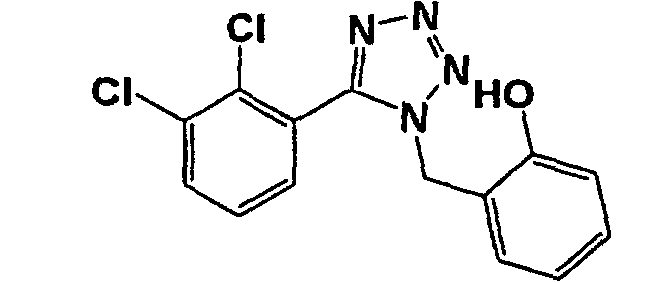
NMR (CDCl3):δ 7.64 (dd, J = 7.8, 1.5 Hz, 1H), 7.27 (t, J = 7.8 Hz, 1H), 7.18-7.13 (m, 2H), 7.00 (dd, J = 7.5, 1.8 Hz, 1H), 6.80 (dt, J = 7.8, 1.2 Hz, 1H), 6.74 (dd, J = 7.8, 1.2 Hz, 1H), 6.28 (s, 1H), 5.45 (s, 2H).
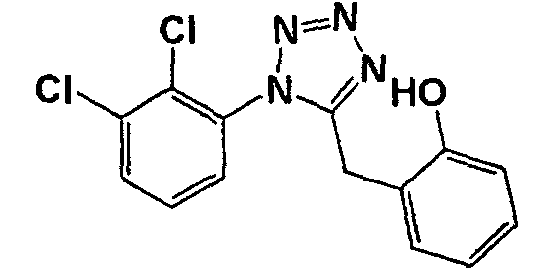
NMR (CDCl3+CD3OD):δ 7.65 (dd, J = 8.1 Hz, 1.5 Hz, 1H), 7.30 (t, J = 8.1 Hz, 1H), 7.16 (dd, J = 8.1 Hz, 1.5 Hz, 1H), 7 09-7.02 (m, 1H), 6.91-6.86 (m, 1H), 6.73-6.64 (m, 2H), 4.16 (s, 2H).
By the same procedure as described in example 7 using the compound prepared in
example 10(14) or example 10(16), the compounds of the present invention having the following
physical data were given.

NMR (CDCl3+CD3OD):δ 7.39-7.30 (m, 3H), 7.23-7.16 (m, 3H), 7.07-7.00 (m, 1H), 6.91 (dd, J = 8.4 Hz, 1.2 Hz, 1H), 6.84 (d, J = 2.4 Hz, 1H), 6.79 (d, J = 9.0 Hz, 1H), 6.57 (dd, J = 7.8 Hz, 1.2 Hz, 1H), 5.39 (s, 2H), 4.94 (s, 2H), 1.88 (s, 3H).

NMR (CDCl3+CD3OD):δ 7.42-7.31 (m, 5H), 7.28-7.20 (m, 3H), 6.94 (d, J = 2.7 Hz, 1H), 6.92-6.83 (m, 3H), 5.58 (s, 2H), 5.02 (s, 2H).

By the same procedure as described in Example 3 using the compound prepared in
Example 10(7), the compound of the present invention having the following physical data was
given.
TLC:Rf 0.53 (n-hexane : ethyl acetate =2:1);
NMR (CDCl3):δ 7.40-7.32 (m, 3H), 7.21-7.16 (m, 3H), 7.03 (dd, J = 8.1, 7.5 Hz, 1H), 6.94 (d, J = 2.4 Hz, 1H), 6.88 (dd, J = 8.1, 1.5 Hz, 1H), 6.76 (d, J = 8.7 Hz, 1H), 6.42 (dd, J = 7.5, 1.5 Hz, 1H), 5.43 (s, 2H), 4.92 (s, 2H), 4.19 (brs, 2H).
TLC:Rf 0.53 (n-hexane : ethyl acetate =2:1);
NMR (CDCl3):δ 7.40-7.32 (m, 3H), 7.21-7.16 (m, 3H), 7.03 (dd, J = 8.1, 7.5 Hz, 1H), 6.94 (d, J = 2.4 Hz, 1H), 6.88 (dd, J = 8.1, 1.5 Hz, 1H), 6.76 (d, J = 8.7 Hz, 1H), 6.42 (dd, J = 7.5, 1.5 Hz, 1H), 5.43 (s, 2H), 4.92 (s, 2H), 4.19 (brs, 2H).
By the same procedure as described in example 1 using a corresponding compound,
the compounds of the present invention were given.

NMR (CDCl3):δ 7.40-7.14 (m, 10H), 6.87 (d, J = 8.7 Hz, 1H), 6.53-6.42 (m, 1H), 5.09 (s, 2H), 4.65 (d, J = 6.0 Hz, 2H), 2.39 (s, 3H).

NMR (CDCl3):δ 7.60 (d, J = 8.4 Hz, 1H), 7.41-7.32 (m, 7H), 7.28 (dd, J = 8.4, 2.4 Hz, 1H), 7.22 (dd, J = 8.7, 2.7 Hz, 1H), 6.89 (d, J = 8.7 Hz, 1H), 6.80-6 69 (m, 1H), 5.09 (s, 2H), 4.64 (d, J = 6 0 Hz, 2H).
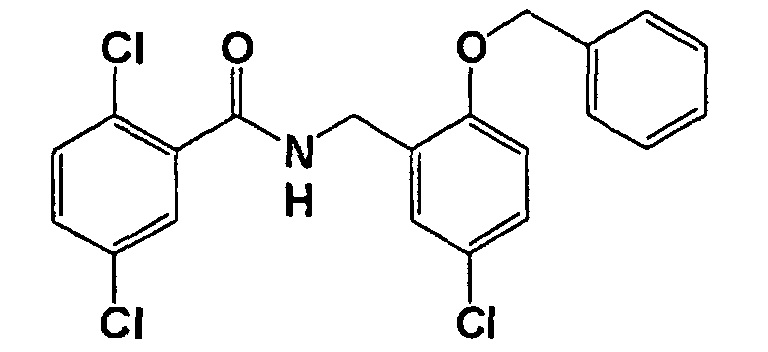
NMR (CDCl3):δ 7.62 (dd, J = 2.1, 0.9 Hz, 1H), 7.41-7.29 (m, 8H), 7.23 (dd, J = 9.0, 2.7 Hz, 1H), 6.89 (d, J = 9.0 Hz, 1H), 6.73-6.64 (m, 1H), 5 09 (s, 2H), 4.64 (d, J = 6.0 Hz, 2H)..

NMR (CDCl3):δ 7.47-7.18 (m, 10H), 6.87 (d, J = 8.7 Hz, 1H), 6.18-6.07 (m, 1H), 5.08 (s, 2H), 4.67 (d, J = 6.0 Hz, 2H).

NMR (CDCl3):δ 7.51 (dd, J = 7.5, 1.8 Hz, 1H), 7.46 (dd, J = 7 5, 1.8 Hz, 1H), 7.43-7 28 (m, 5H), 7.25 (t, J = 7.5 Hz, 1H), 6.25-6.16 (m, 1H), 5.40-5.28 (m, 1H), 1.63 (d, J = 6.9 Hz, 3H).
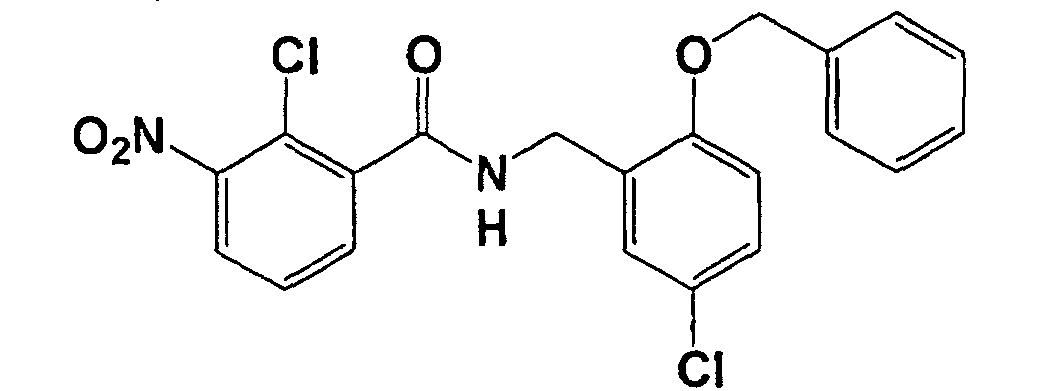
NMR (CDCl3):δ 7.80 (dd, J = 8.1, 1.5 Hz, 1H), 7.66 (dd, J = 8.1, 1.5 Hz, 1H), 7.45 (t, J = 8.1 Hz, 1H), 7.39-7.29 (m, 6H), 7.25 (dd, J = 8.7, 2.4 Hz, 1H), 6.91 (d, J = 8.7 Hz, 1H), 6.56-6.45 (m, 1H), 5.08 (s, 2H), 4.64 (d, J = 6.3 Hz, 2H).

NMR (CDCl3):δ 7.83 (dd, J = 8.4, 1.2 Hz, 1H), 7.42 (dd, J = 8.4, 1.2 Hz, 1H), 7.37-7.22 (m, 8H), 6.92 (d, J = 8.7 Hz, 1H), 6.24-6.18 (m, 1H), 5.08 (s, 2H), 4.61 (d, J = 6.0 Hz, 2H), 2.41 (s, 3H).

NMR (CDCl3):δ 8.18-8.10 (m, 1H), 7.96-7.91 (m, 1H), 7.48-7.26 (m, 7H), 7.17 (dd, J = 8.4, 2.7 Hz, 1H), 6.95 (t, J = 8.4 Hz, 1H), 6.84 (d, J = 8.7 Hz, 1H), 5.13 (s, 2H), 4.69 (d, J = 6.0 Hz, 2H), 4.49 (t, J = 9.0 Hz, 2H), 3.20 (t, J = 9.0 Hz, 2H).

NMR (CDCl3):δ 7.42-7.,30 (m, 7H), 7.23 (dd, J = 8.7,2.7 Hz, 1H), 7.16-7.06 (m, 2H), 6.89 (d, J = 8.7 Hz, 1H), 6.22-6.16 (m, 1H), 5.08 (s, 2H), 4.60 (d, J = 5.7 Hz, 2H), 2.35 (s, 3H).

NMR (CDCl3):δ 7.38-7.30 (m, 6H), 7.21 (dd, J = 8.7, 2.7 Hz, 1H), 7.14-7.07 (m, 2H), 6.92 (dd, J = 9.0, 3.0 Hz, 1H), 6.88 (d, J = 8.7 Hz, 1H), 6.20-6.14 (m, 1H), 5.20 (s, 2H), 5.08 (s, 2H), 4.62 (d, J = 5.7 Hz, 2H), 3.47 (s, 3H), 2.25 (s, 3H).

NMR (CDCl3):δ 7.64-7.58 (m, 2H), 7.44-7.36 (m, 5H), 7.33 (d, J = 2.7 Hz, 1H), 7.20 (dd, J = 8.7 Hz, 2.7 Hz, 1H), 7.04-6.98 (m, 2H), 6.88 (d, J = 8.7 Hz, 1H), 6.62-6.54 (m, 1H), 5.20 (s, 2H), 5.10 (s, 2H), 4.62 (d, J = 6.0 Hz, 2H), 3.48 (s, 3H).

NMR (CDCl3):δ 7.50 (dd, J = 7.5, 1.5 Hz, 1H), 7.35 (dd, J = 7.5, 1.5 Hz, 1H), 7.29-7.18 (m, 5H), 7.14-7.09 (m, 2H), 6.97-6.86 (m, 3H), 6.13-6.03 (br, 1H), 4.53 (d, J = 6.0 Hz, 2H), 4.25 (t, J = 6.3 Hz, 2H), 3.10 (t, J = 6.3 Hz, 2H).
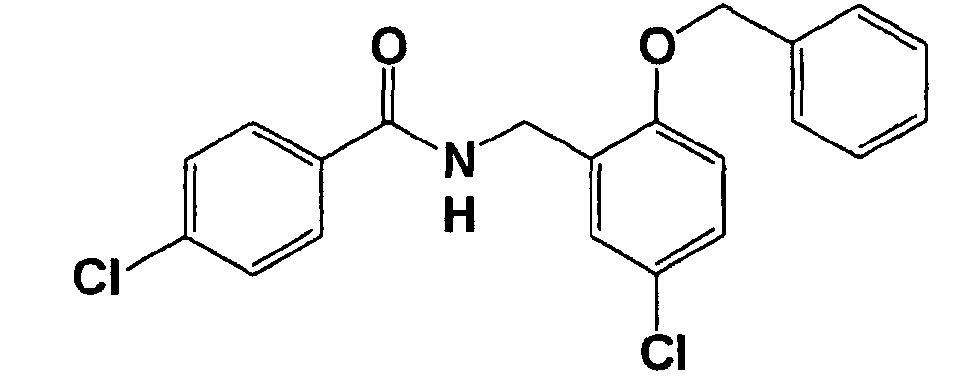
NMR (CDCl3):δ 7.58-7.52 (m, 2H), 7.44-7.30 (m, 8H), 7.22 (dd, J = 9.0 Hz, 3.0 Hz, 1H), 6.90 (d, J = 9.0 Hz, 1H), 5.10 (s, 2H), 4.62 (d, J = 5.7 Hz, 2H).
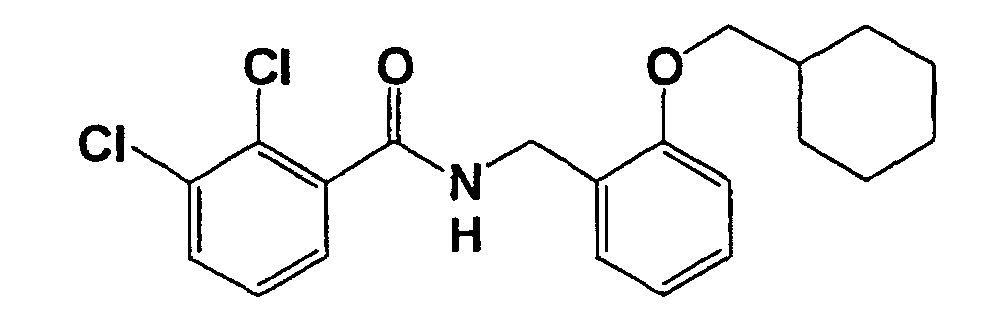
NMR (CDCl3):δ 7.50 (dd, J = 7.8, 1.5 Hz, 1H), 7.46 (dd, J = 7.8, 1.5 Hz, 1H), 7.35 (dd, J = 7.5, 1.2 Hz, 1H), 7.29-7.21 (m, 2H), 6.96-6.85 (m, 2H), 6.60-6.50 (br, 1H), 4.67 (d, J = 5.7 Hz, 2H), 3.80 (d, J = 5.7 Hz, 2H), 1.86-1.67 (m, 6H), 1.35-0.98 (m, 5H).
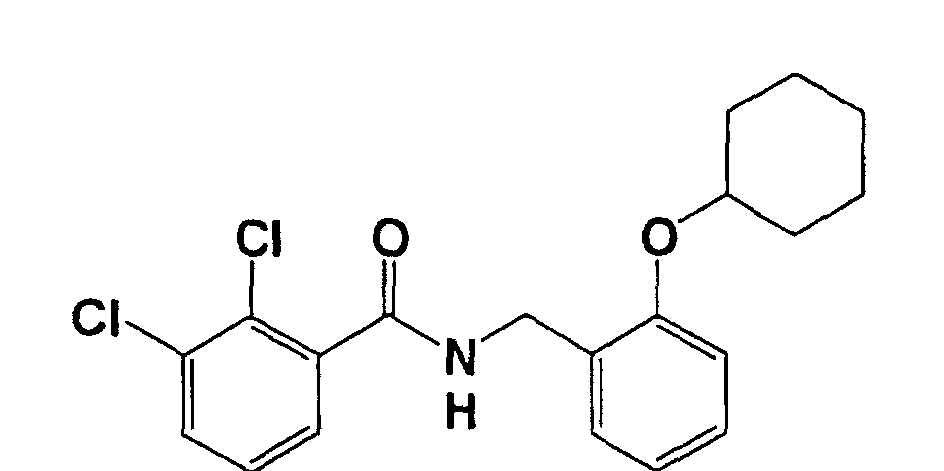
NMR (CDCl3):δ 7.52-7.46 (m, 2H), 7.36-7.34 (m, 1H), 7.28-7.21 (m, 2H), 6.94-6.88 (m, 2H), 6.64-6.54 (br, 1H), 4.65 (d, J = 5.7 Hz, 1H), 4.39-4.31 (m, 1H), 1.99-1.93 (m, 2H), 1.82-1.71 (m, 2H), 1.65-1.52 (m, 3H), 1.46-1.30 (m, 3H).
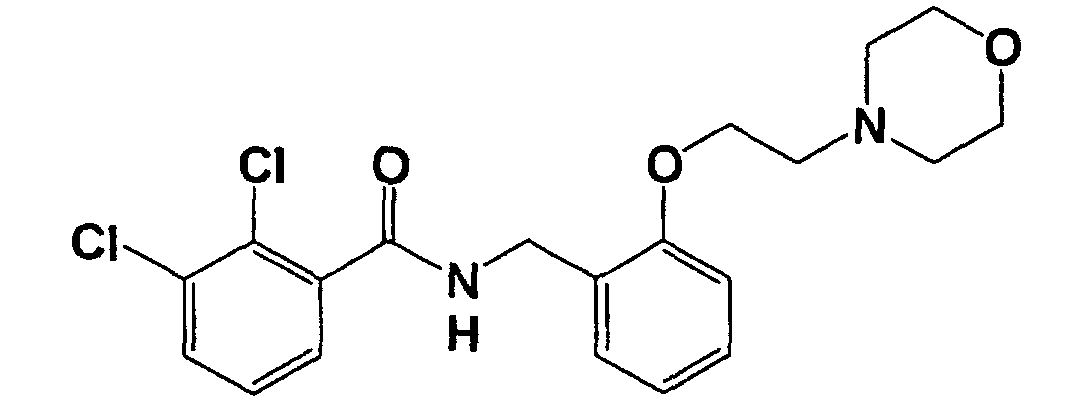
NMR (CDCl3):δ 7.51 (dd, J = 7.8, 1.5 Hz, 1H), 7.43 (dd, J = 7.8, 1.5 Hz, 1H), 7.38 (dd, J = 7.5, 1.8 Hz, 1H), 7.31-7.22 (m, 2H), 6.99-6.87 (m, 3H), 4.65 (d, J = 6.0 Hz, 2H), 4.14 (t, J = 5.4 Hz, 2H), 3.48 (t, J = 4.8 Hz, 4H), 2.78 (t, J = 5.4 Hz, 2H), 2.47 (t, J = 4.8 Hz, 4H).

NMR (CDCl3):δ 7.38-7.30 (m, 2H), 7.20-7.10 (m, 4H), 7.10-7.03 (m, 2H), 7.02-6.92 (m, 2H), 6.84-6.77 (m, 1H), 5.98-5.90 (m, 1H), 4.80 (d, J = 5.7 Hz, 2H), 2.27 (s, 3H), 2.26 (s, 3H).

NMR (CDCl3):δ 7.41-7.24 (m, 7H), 7.18-7.14 (m, 1H), 7.12-6.94 (m, 4H), 6.25-6.16 (m, 1H), 5.10 (s, 2H), 4.67 (d, J = 5.7 Hz, 2H), 2.26 (s, 3H), 2.22 (s, 3H).

NMR (CDCl3):δ 7.38-7.13 (m, 8H), 7.06-6.91 (m, 4H), 6.00-5.88 (m, 1H), 5.03 (s, 2H), 3.71 (q, J = 7 Hz, 2H), 2.99 (t, J = 7 Hz, 2H), 2.26 (s, 3H), 2.20 (s, 3H).
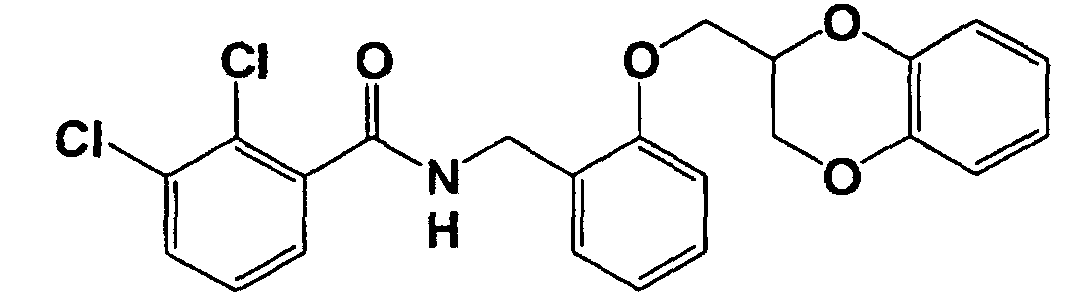
NMR (CDCl3):δ 7.50 (dd, J = 7.8, 1.5 Hz, 1H), 7.42-7.38 (m, 2H), 7.32-7.27 (m, 1H), 7.22 (t, J = 7.8 Hz, 1H), 6.99 (dt, J = 7.5, 0.9 Hz, 1H), 6.91-6.72 (m, 4H), 6.69-6.59 (br, 1H), 6.49 (dd, J = 7.8, 1.5 Hz, 1H), 4.66-4.55 (m, 3H), 4.38 (dd, J = 11.4, 2.4 Hz, 1H), 4.28-4.22 (m, 3H).
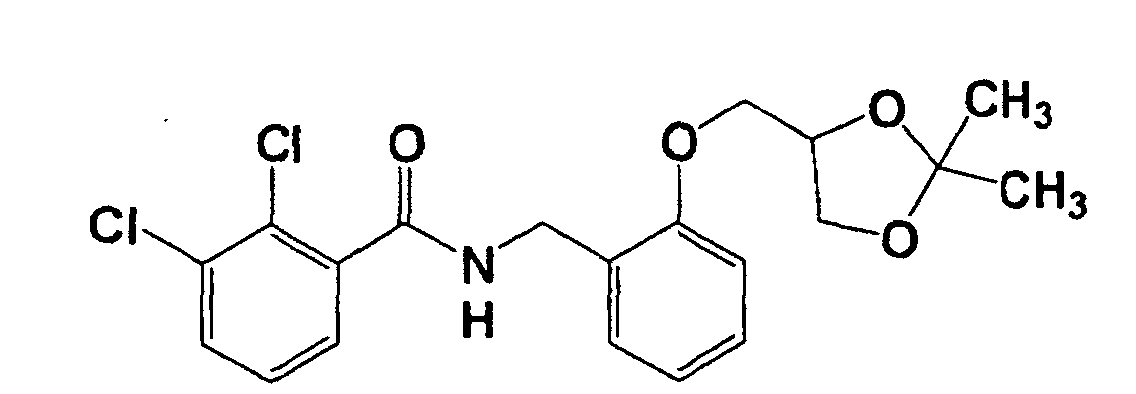
NMR (CDCl3):δ 7.49 (dd, J = 7.8, 1.5 Hz, 1H), 7.41-7.38 (m, 2H), 7.31-7.19 (m, 2H), 7.00-6.95 (m, 2H), 6 87 (d, J = 8.1 Hz, 1H), 4.71 (dd, J = 14.4, 6.6 Hz, 1H), 4.59 (dd, J = 14.4, 5.4 Hz, 1H), 4.52-4.44 (m, 1H), 4.13-4.07 (m, 2H), 3.98 (dd, J = 9.6, 6.0 Hz, 1H), 3.82 (dd, J = 14.4, 5.7 Hz, 1H), 1.24 (s, 3H), 1.23 (s, 3H).
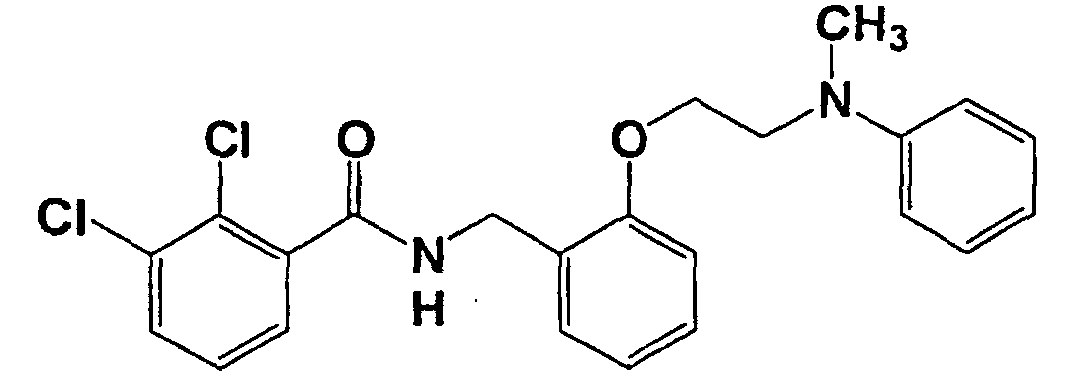
NMR (CDCl3):δ 7.47 (dd, J = 7.5, 2.1 Hz, 1H), 7.39-7.35 (m, 1H), 7.29-7.07 (m, 5H), 6.97-6.85 (m, 2H), 6.69-6.61 (m, 3H), 6.26 (bs, 1H), 4.50 (d, J = 6.3 Hz, 2H), 4.19 (t, J = 5.4 Hz, 2H), 3.76 (t, J = 5.4 Hz, 2H), 2.91 (s, 3H).

NMR (CDCl3):δ 8.67 (s, 1H), 7.54 (dd, J = 7.8, 1.5 Hz, 1H), 7.50 (dd, J = 7.8, 1.5 Hz, 1H), 7.27-7.21 (m, 2H), 7.15 (dd, J = 7.8, 1.5 Hz, 1H), 6.98-6.95 (m, 2H), 6.85 (dt, J = 7.5, 1.2 Hz, 1H), 4.57 (d, J = 6.6 Hz, 2H).
The following components were mixed by a conventional technique and punched out
to give 100 tablets each containing 50 mg of active ingredient.
| 1-(2-chloro-6-fluorobenzyl)-5-(2-trifluoromethylphenyl)-1H-1,2,3,4-tetrazole | 5.0 g |
| carboxymethylcellulose calcium (disintegrating agent) | 2 g |
| magnesium stearate(lubricating agent) | 0.1 g |
| microcrystalline cellulose | 4.7 g |
The following components were mixed by conventional technique, and the given
solution was sterilized by a conventional technique, filled into ampoules 5 ml each, freeze-dried by
a conventional technique, to give 100 ampoules each containing 20 mg of active ingredient.
| 1-(2-chloro-6-fluorobenzyl)-5-(2-trifluoromethylphenyl)-1H-1,2,3,4-tetrazole | 2.0 g |
| mannitol | 20 g |
| distilled water | 500 ml |
Claims (21)
- A pharmaceutical composition for the prophylaxis and/or treatment of diseases induced, exacerbated or reignited by a stressor, which comprises a mitochondrial benzodiazepine receptor antagonist.
- The pharmaceutical composition according to claim 1, which acts on mitochondrial benzodiazepine receptor and suppresses neurosteroid production.
- A mitochondrial benzodiazepine receptor antagonist, which comprises a compound represented by formula (I):wherein A and C are each independently a 5-10 membered carboring or heteroring, B is
 wherein R3 is hydrogen atom, C1-8 alkyl which may be substituted with phenyl, C2-8 acyl which may be substituted with phenyl or C1-8 alkoxycarbonyl, or R2 and R3 are taken together to represent C1-4 alkylene,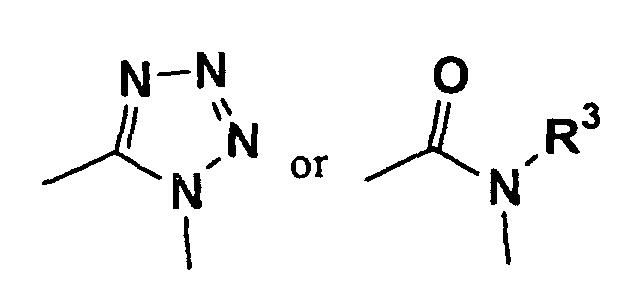
X and Y are each independently -CH2-; -O-; or -CHR4- wherein R4 is C1-4 alkyl, or taken together with R1 or R2, represents C2-5 alkylene,
p and q are each independently 0 or an integer of 1-2, wherein p and q do not represent 0 at the same time,
R1 and R2 are each independently1) halogen,2) OR5,3) SR5,4) NR6R7,5) nitro,6) cyano,7) COR8,8) 3-10 membered carboring or heteroring which may be substituted with 1-5 group(s) selected from C1-8 alkyl wherein the alkyl may be substituted with 1-5 group(s) selected from halogen, OR5, SR5, NR6R7, nitro, cyano, COR8, and phenyl; halogen; OR5; SR5; NR6R7; nitro; cyano, COR8; and 5-10 membered carboring or heteroring wherem the ring may be substituted with 1-5 group(s) selected from halogen, OR5, SR5, NR6R7, nitro, cyano, COR8, phenyl, and C1-8 alkyl, or9) C1-8 alkyl substituted with 1-5 group(s) selected from halogen; OR5; SR5; NR6R7; nitro; cyano; COR8; and 5-10 membered carboring or heteroring wherein the nng may be substituted with 1-5 group(s) selected from halogen, OR9, SR9, NR10R11, nitro, cyano, COR12, and C1-8 alkyl wherein the alkyl may be substituted with 1-5 group(s) selected from halogen, OR5, SR5, NR6R7, nitro, cyano, COR8, and phenyl;
R5 is1) hydrogen,2) C1-8 alkyl which may be substituted with 1-5 group(s) selected from halogen; OR9; SR9; NR10R11; nitro; cyano; COR12; and 3-10 membered carboring or heteroring wherein the ring may be substituted with 1-5 group(s) selected from halogen, OR9, SR9, NR10R11, nitro, cyano, COR12, phenyl, and C1-8 alkyl wherein the alkyl may be substituted with 1-5 group(s) selected from halogen, OR9, SR9, NR10R11, nitro, cyano, COR12, and phenyl;3) 3-10 membered carboring or heteroring which may be substituted with 1-5 group(s) selected from C1-8 alkyl wherein the alkyl may be substituted with 1-5 group(s) selected from halogen, OR9, SR9, NR10R11, nitro, cyano, COR12, and phenyl; halogen; OR9; SR9; NR10R11; nitro; cyano; COR12; and 3-10 membered carboring or heteroring wherein the ring may be substituted with 1-5 group(s) selected from, halogen, OR9, SR9, NR10R11, nitro, cyano, COR12, phenyl, and C1-8 alkyl, or4) COR13, wherein R13 is C1-8 alkyl wherein the alkyl may be substituted with 1-5 group(s) selected from halogen, OR9, SR9, NR10R11, nitro, cyano, COR12, and phenyl; or 3-10 membered carboring or heteroring wherein the ring may be substituted with 1-5 selected from halogen, OR9, SR9, NR10R11, nitro, cyano, COR12, phenyl, and C1-8 alkyl,
R6 and R7 are each independentlyR8 is1) hydrogen,2) C2-8 acyl which may be substituted with 1-5 group(s) selected from halogen, OR9, SR9, NR10R11, nitro, cyano, COR12, and 3-10 membered carboring or heteroring wherein the ring may be substituted with 1-5 group(s) selected from halogen, OR9, SR9, NR10R11, nitro, cyano, COR12, and 3-10 membered carboring or heteroring wherein the ring may be substituted with 1-5 group selected from, halogen, OR9, SR9, NR10R11, nitro, cyano, COR12, and C1-8 alkyl wherein the alkyl may be substituted with 1-5 selected from halogen, OR9, SR9, NR10R11, nitro, cyano, COR12, and phenyl,3) COOR12,4) CONR10R11,5) 3-10 membered carbonng which may substituted with 1-5 group(s) selected from C1-8 alkyl wherein the alkyl may be substituted with 1-5 group(s) selected from halogen, OR9, SR9, NR10R11, nitro, cyano, COR12, and phenyl; halogen; OR9; SR9; NR10R11; nitro; cyano; COR12; and 3-10 membered carboring or heteroring wherein the ring may be substituted with 1-5 group(s) selected from, halogen, OR9, SR9, NR10R11, nitro, cyano, COR12, and C1-8 alkyl wherein the alkyl may be substituted with 1-5 group(s) selected from halogen, OR9, SR9, NR10R11, nitro, cyano, and COR12, or6) C1-8 alkyl which may be substituted with 1-5 group(s) selected from halogen; OR9; SR9; NR10R11; nitro; cyano; COR12; and 3-10 membered carboring or heteroring wherein the ring may be substituted with 1-5 group(s) selected from halogen, OR9, SR9, NR10R11, nitro, cyano, COR12, and C1-8 alkyl wherein the alkyl may be substituted with 1-5 group(s) selected from halogen, OR9, SR9, NR10R11, nitro, cyano, and COR12,R9 is hydrogen atom, C1-8 alkyl or C2-8 acyl wherein the alkyl and alkoxy may be substituted with C1-8 alkoxy, C1-8 alkylthio or 3-10 membered carboring or heteroring,1) hydrogen,2) OR9,3) NR10R11,4) 3-10 membered carbonng or heteroring which may be substituted with 1-5 group(s) selected from halogen; OR9; SR9; NR10R11; nitro; cyano; COR12; phenyl; C1-8 alkyl wherein the alkyl may be substituted with 1-5 group(s) selected from halogen, OR9, SR9, NR10R11, nitro, cyano, COR12, and phenyl; and 3-10 membered carboring or heteroring wherein the ring may be substitutcd with 1-5 group(s) selected from halogen, OR9, SR9, NR10R11, nitro, cyano, COR12, C1-8 alkyl, and phenyl, or5) C1-8 alkyl which may be substituted with 1-5 group(s) selected from halogen; OR9; SR9; NR10R11; nitro; cyano; COR12; and 3-10 membered carboring or heteroring wherein the ring may be substituted with 1-5 group(s) selected from halogen, OR9, SR9, NR10R11, nitro, cyano, COR12, and C1-8 alkyl wherein the alkyl may be substituted with 1-5 group(s) selected from halogen, OR9, SR9, NR10R11, nitro, cyano, COR12, and phenyl,
R10 and R11 are each independently hydrogen atom, C1-8 alkyl or phenyl,
R12 is hydrogen atom, phenyl, C1-8 alkyl optionally substituted with phenyl, or C1-8 alkoxy optionally substituted with phenyl,
m and n are each independently 0 or 1-5, or
a non-toxic salt thereof. - The pharmaceutical composition according to claim 1, which comprises the mitochondrial benzodiazepine receptor antagonist of formula (I) according to claim 3, as an active ingredient.
- The mitochondrial benzodiazepine receptor antagonist according to claim 3, which comprises a tetrazole derivative compound, in the compound of formula (I), A iswhich is the compound of formula (I-a):
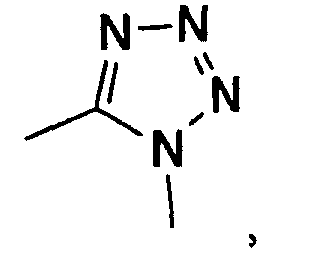 wherein all symbols have the same meaning as hereinbefore.
- The mitochondrial benzodiazepine receptor antagonist according to claim 3, which comprises, as an active ingredient, a compound among the compound of formula (I), wherein A is -CONR10-, that is, an amide derivative of formula (I-b):wherein all symbols have the same meaning as above

- The pharmaceutical composition for the prophylaxis and/or treatment of diseases induced, exacerbated or reignited by stressors according to claim 1, which comprises, as an active ingredient, a compound of formula (II):wherein RYA is hydrogen or hydroxy,

R1YA is hydrogen or methyl,
R2YA is pyridyl or phenyl substituted with 1-3 of the same or different substituent(s),
the substituents on phenyl are selected from halogen; trifluoromethyl; nitro; acetyl; straight or branched-chain alkyl having 1-4 carbon atom(s); straight or branched-chain alkoxy having 1-4 carbon atom(s); straight or branched-chain alkylmercapto having 1-7 carbon atom(s); substituted alkylmercapto of formula: -S-(CH2)nYA-CH(R3YA)(R4YA) wherein nYA is 1 or 2, R3YA is hydrogen or methyl, R4YA is hydroxy or substituted amino of formula: -NR8YAR9YA wherein R8YA is hydrogen or methyl, R9YA is methyl, benzyl, or substituted benzyl, or R8YA and R9YA are taken together to form substituted pyrrolidine ring with the nitrogen atom in the formula; sulfonyl of formula: -SO2R5YA wherein R5YA is amino or alkyl having 1-3 carbon atom(s); and aminoethoxycarbonyl of formula: -COO(CH2)2-NR6YAR7YA wherein R6YA and R7YA are each independently hydrogen atom, methyl, or ethyl. - The pharmaceutical composition for the prophylaxis and/or treatment of diseases induced, exacerbated or reignited by a stressor according to claim 1, which comprises, as an active ingredient, a compound of formula (III):wherein R1YB and R2YB are each independently straight or branched chain C1-6 alkyl, C3-7 cycloalkyl, phenylalkyl which has C1-3 in alkyl or cycloalkyl-substituted alkyl, or C3-6 alkenyl or C3-6 alkynyl wherein neither double bond nor triple bond is not located in 1-2 position to N atom,
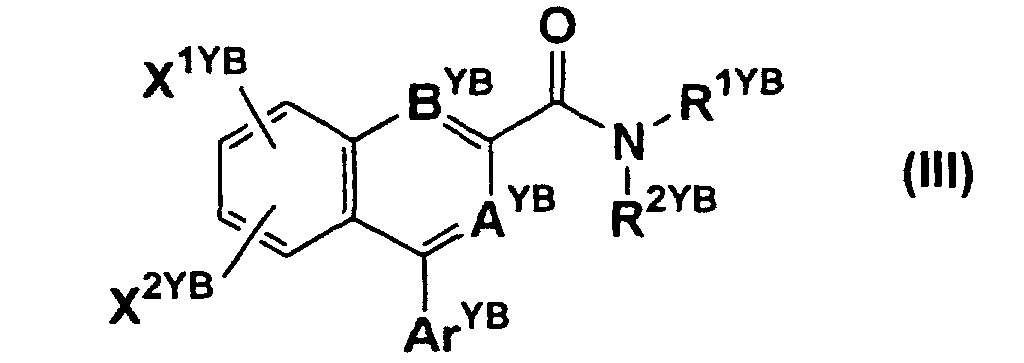
AYB and BYB are each independently N or CH,
X1YB and X2YB are each independently halogen, straight or branched-chain C1-3 alkyl, straight or branched-chain C1-3 alkoxy, nitro, or trifluoromethyl,
ArYB is phenyl, pyridyl, thienyl, or substituted phenyl wherein the substituent on phenyl is 1 or 2 selected from halogen, straight or branched-chain C1-4 alkyl, straight or branched-chain C1-4 alkoxy, straight or branched-chain C1-4 alkylthio, trifluoromethyl, and nitro, or
a non-toxic salt thereof. - The pharmaceutical composition for the prophylaxis and/or treatment of diseases induced, exacerbated or reignited by a stressor according to claim 1, which comprises, as an active ingredient, a compound of formula (IV):wherein R1YC is unsubstituted phenyl; substituted phenyl wherein substituent on phenyl is 1-2 group(s) selected from halogen, straight or branched chain alkyl having 1-6 carbon atom(s), and straight or branched chain alkoxy having 1-6 carbon atom(s); or thienyl,

R2YC is hydrogen; halogen; or optionally substituted straight or branched chain alkyl having 1-6 carbon atoms(s) wherein substituent is selected from amino, alkylamino and dialkylamino.),
R3YC is (R4YC)(R5YC)N-CO-QYC wherein QYC is straight or branched chain alkylene having 1-6 carbon atom(s), R4YC and R5YC are each independently straight or branched chain alkyl having 1-6 carbon atom(s), unsubstituted phenyl, or substituted phenyl wherein the substituent on phenyl is 1 or 2 selected from halogen, straight or branched-chain C1-6 alkyl, and straight or branched-chain C1-6 alkoxy,
XYC is hydrogen or halogen,
YYC is oxygen or sulfur, or
a non-toxic salt thereof. - The pharmaceutical composition for the prophylaxis and/or treatment of diseases induced, exacerbated or reignited by a stressor according to claim 1, which comprises, as an active ingredient, a compound of formula (V)wherein AYD and BYD are each independently N or CH,
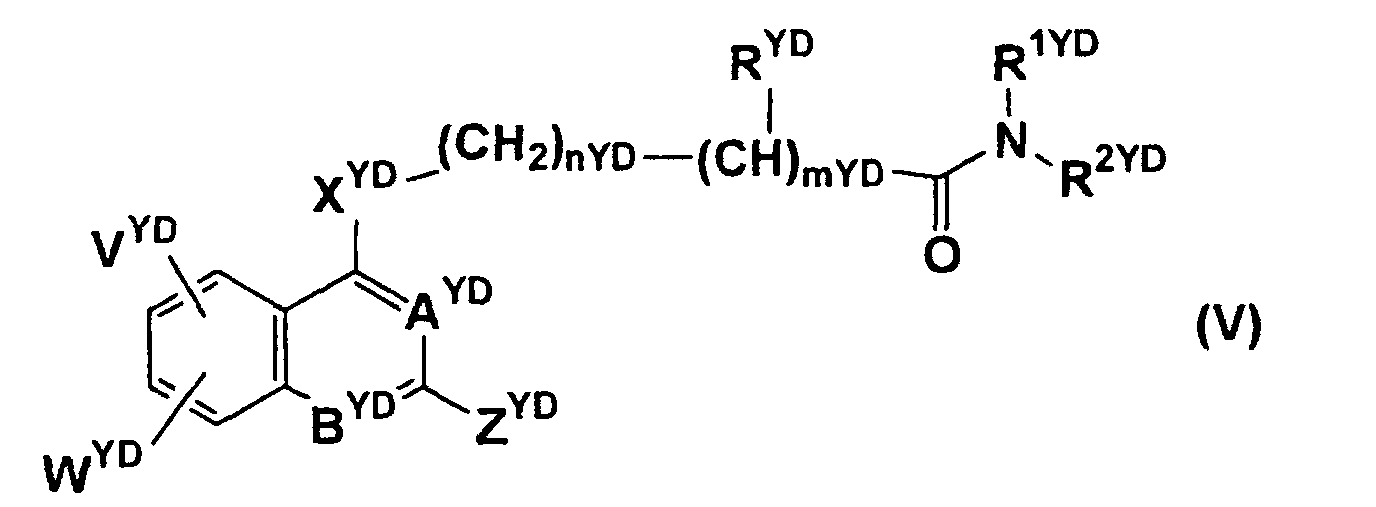
VYD and WYD are each independently hydrogen, halogen, C1-3 alkyl, C1-3 alkoxy, nitro or trifluoromethyl,
ZYD is phenyl, thienyl or pyridyl, above phenyl is unsubstituted or substituted with 1-2 selected from halogen, C1-4 alkyl, C1-4 alkoxy, trifluoromethyl, and nitro, and ZYD is located in ortho or para to BYD,
side chain -XYD-(CH2)nYD-(CHRYD)mYD-CONR1YDR2YD is located in ortho or para to BYD,
RYD is hydrogen or C1-3 alkyl,
R1YD, R2YD are each independently C1-6 alkyl, C3-6 cycloalkyl, phenyl, phenyl-C1-3 alkyl, C3-6 cycloalkyl-C1-3 alkyl or C3-6 alkenyl wherein the double bond in alkenyl is not located in 1-2 position, or NR1YDR2YD is pyrrolidino, piperidino, morpholino or thiomorpholino,
XYD is CHR3YD, NR4YD, SO, SO2, O or S,
R3YD is hydrogen or C 1-3 alkyl,
R4YD is C1-3 alkyl,
mYD is 0 or 1,
nYD is 0 or an integer of 1-2,
wherein(1) when XYD is SO, SO2 or NR4YD, mYD+nYD is 1 or more,(2) when AYD and BYD are each N and ZYD is located in para to BYD, XYD is not CHR3YD,(3) when AYD is CH, BYD is N, ZYD is ortho to BYD, XYD is O, RYD is hydrogen, mYD+nYD is not 1, and(4) 2-phenylquinolin-4-yl-N,N'-dimethylcarbamate is excluded, or
a non-toxic salt thereof. - A compound of formula (I-a'):wherein AA and CA are each independently 5-10 membered carboring or heteroring,

XA and YA are each independently -CH2-, -O- or -CHR4A- wherein R4A is C1-4 alkyl, or taken together with R1A or R2A to form C2-5 alkylene,
pA and qA are each independently 0 or an integer of 1-2 wherein pA and qA do not form 0 at the same time,
R1A and R2A are each independentlyR5A is1) halogen,2) OR5A,3) SR5A,4) NR6AR7A,5) nitro,6) cyano,7) COR8A,8) 3-10 membered carboring or heteroring which may be substituted with 1-5 group(s) selected from C1-8 alkyl wherein the alkyl may be substituted with 1-5 group(s) selected from halogen, OR5A, SR5A, NR6AR7A, nitro, cyano, COR8A, and phenyl; halogen; OR5A; SR5A; NR6AR7A; nitro; cyano; COR8A; and 5-10 membered carboring or heteroring wherein the rings may be substituted with 1-5 group(s) selected from halogen, OR5A, SR5A, NR6AR7A, nitro, cyano, COR8A, phenyl, and C1-8 alkyl, or9) C1-8 alkyl which may be substituted with 1-5 group(s) selected from halogen; OR5A; SR5A; NR6AR7A; nitro; cyano; COR8A; and 5-10 membered carboring or heteroring wherein the ring may be substituted with 1-5 group(s) selected from halogen, OR9A, SR9A, NR10AR11A, nitro, cyano, COR12A, and C1-8 alkyl wherein the alkyl may be substituted with 1-5 group(s) selected from halogen, OR5A, SR5A, NR6AR7A, nitro, cyano, COR8A, and phenyl,R6A and R7A are each independently1) hydrogen,2) C1-8 alkyl substituted with 1-5 group(s) selected from halogen; OR9A; SR9A; NR10AR11A; nitro; cyano; COR12A; and 3-10 membered carboring or heteroring wherein the rings may be substituted with 1-5 group(s) selected from halogen, OR9A, SR9A, NR10AR11A, nitro, cyano, COR12A, phenyl, and C1-8 alkyl wherein the alkyl may be substituted with 1-5 group(s) selected from halogen, OR9A, SR9A, NR10AR11A, nitro, cyano, COR12A, and phenyl,3) 3-10 membered carboring or heteroring which may be substituted with 1-5 group(s) selected from C1-8 alkyl wherein the alkyl may be substituted with 1-5 group(s) selected from halogen, OR9A, SR9A, NR10AR11A, nitro, cyano, COR12A, and phenyl; halogen; OR9A; SR9A; NR10AR11A; nitro; cyano; COR12A; and 3-10 membered carboring or heteroring wherein the ring may be substituted with 1-5 group(s) selected from halogen, OR9A, SR9A, NR10AR11A, nitro, cyano, COR12A, phenyl, and C1-8 alkyl, or4) COR13A, wherein R13A is C1-8 alkyl wherein the alkyl may be substituted with 1-5 group(s) selected from halogen, OR9A, SR9A, NR10AR11A, nitro, cyano, COR12A, and phenyl; or 3-10 membered carboring or heteroring wherein the ring may be substituted with 1-5 group(s) selected from halogen, OR9A, SR9A, NR10AR11A, nitro, cyano, COR12A, phenyl, and C1-8 alkyl,R8A is1) hydrogen,2) C2-8 acyl which may be substituted with 1-5 group(s) selected from halogen; OR9A; SR9A; NR10AR11A; nitro; cyano; COR12A; and 3-10 membered carboring or heteroring wherein the ring may be substituted with 1-5 group(s) selected from halogen, OR9A, SR9A, NR10AR11A, nitro, cyano, COR12A, and 3-10 membered carboring or heteroring wherein the ring may be substituted with 1-5 group(s) selected from halogen, OR9A, SR9A, NR10AR11A, nitro, cyano, COR12A, and C1-8 alkyl wherein the alkyl may be substituted with 1-5 group(s) selected from halogen, OR9A, SR9A, NR10AR11A, nitro, cyano, COR12A, and phenyl,3) COOR12A,4) CONR10AR11A,5) 3-10 membered carboring or heteronng which may be substituted with 1-5 group(s) selected from C1-8 alkyl wherein the alkyl may be substituted with 1-5 group(s) selected from 1-5 group selected from halogen, OR9A, SR9A, NR10AR11A, nitro, cyano, COR12A, and phenyl; halogen; OR9A; SR9A; NR10AR11A; nitro; cyano; COR12A; and 3-10 membered carboring or heteroring wherein the ring may be substituted with 1-5 group(s) selected from halogen, OR9A, SR9A, NR10AR11A, nitro, cyano, COR12A, and C1-8 alkyl wherein the alkyl may be substituted with 1-5 group(s) selected from halogen, OR9A, SR9A, NR10AR11A, nitro, cyano, and COR12A, or6) C1-8 alkyl which may be substituted with 1-5 group(s) selected from halogen; OR9A; SR9A; NR10AR11A; nitro; cyano; COR12A; and 3-10 membered carboring or heteroring wherein the ring may be substituted with 1-5 group(s) selected from halogen, OR9A, SR9A, NR10AR11A, nitro, cyano, COR12A, and C1-8 alkyl wherein the alkyl may be substituted with 1-5 group(s) selected from halogen, OR9A, SR9A, NR10AR11A, nitro, cyano, and COR12A,R9A is hydrogen, C1-8 alkyl or C2-8 acyl wherein the alkyl and alkoxy may be substituted with C1-8 alkoxy, C1-8 alkylthio or 3-10 membered carboring or heteroring,1) hydrogen,2) OR9A,3) NR10AR11A,4) 3-10 membered carboring or heteroring which may be substituted with 1-5 group(s) selected from halogen; OR9A; SR9A; NR10AR11A; nitro; cyano; COR12A; phenyl; C1-8 alkyl wherein the alkyl may be substituted with 1-5 group(s) selected from halogen, OR9A, SR9A, NR10AR11A, nitro, cyano, COR12A, and phenyl; and 3-10 membered carboring or heteroring wherein the ring may be substituted with 1-5 group(s) selected from halogen, OR9A, SR9A, NR10AR11A, nitro, cyano, COR12A, C1-8 alkyl, and phenyl, or5) C1-8 alkyl which may be substituted with 1-5 group(s) selected from halogen; OR9A; SR9A; NR10AR11A; nitro; cyano; COR12A; and 3-10 membered carboring or heteroring wherein the ring may be substituted with 1-5 group(s) selected from halogen, OR9A, SR9A, NR10AR11A, nitro, cyano, COR12A, and C1-8 alkyl wherein the alkyl may be substituted with 1-5 group(s) selected from halogen, OR9A, SR9A, NR10AR11A, nitro, cyano, COR12A, and phenyl,
R10A and R11A are each independently hydrogen, C1-8 alkyl or phenyl,
R12A is hydrogen, phenyl, C1-8 alkyl which may be substituted with phenyl, or C1-3 alkoxy which may be substituted with phenyl,
mA and nA are each independently 0 or an integer of 1-5; or
a non-toxic salt thereof,
wherein the compounds of following (1)-(73) are excluded;(1) 5-(4-chlorophenyl)-1-(3-chlorobenzyl)-1H-1,2,3,4-tetrazole,(2) 5-(4-chlorophenyl)-1-(3-trifluoromethylbenzyl)-1H-1,2,3,4-tetrazole,(3) 5-(3-chlorophenyl)-1-(3-chlorobenzyl)-1H-1,2,3,4-tetrazole,(4) 5-(3-chlorophenyl)-1-(3-trifluoromethylbenzyl)-1H-1,2,3,4-tetrazole,(5) 5-(3-trifluoromethylphenyl)-1-(3-chlorobenzyl)-1H-1,2,3,4-tetrazole,(6) 5-(3,5-dichlorophenyl)-1-(3-chlorobenzyl)-1H-1,2,3,4-tetrazole,(7) 5-(3-trifluoromethylphenyl)-1-(3-trifluoromethylbenzyl)-1H-1,2,3,4-tetrazole,(8) 5-(3,5-dichlorophenyl)-1-(3-trifluoromethylbenzyl)-1H-1,2,3,4-tetrazole,(9) 5-(4-bromophenyl)-1-benzyl-1H-1,2,3,4-tetrazole,(10) 5-(4-pyridyl)-1-(2,5-dimethyl-4-hydroxybenzyl)-1H-1,2,3,4-tetrazole,(11) 5-(4-bromophenyl)-1-(2,5-dimethyl-4-hydroxybenzyl)-1H-1,2,3,4-tetrazole(12) 5-phenyl-1-(5-formyl-2-hydroxy-3-methoxybenzyl)-1H-1,2,3,4-tetrazole,(13) 5-(3,4-dimethoxyphenyl)-1-(5-formyl-2-hydroxy-3-methoxybenzyl)-1H-1,2,3,4-tetrazole,(14) 5-(4-bromophenyl)-1-(3,5-dimethyl-4-hydroxybenzyl)-1H-1,2,3,4-tetrazole,(15) 5-(4-pyridyl)-1-(3,5-dimethyl-4-hydroxybenzyl)-1H-1,2,3,4-tetrazole,(16) 5-cyclohexyl-1-cyclohexylmethyl-1H-1,2,3,4-tetrazole,(17) 5-(4-nitrobenzyl)-1-phenyl-1H-1,2,3,4-tetrazole,(18) 5-(4-aminobenzyl)-1-phenyl-1H-1,2,3,4-tetrazole,(19) 5-(4-dimethylaminocarbonylaminobenzyl)-1-phenyl-1H-1,2,3,4-tetrazole,(20) 5-[2-(4-methylphenyl)phenyl]-1-(4-nitrobenzyl)-1H-1,2,3,4-tetrazole,(21) 5-phenyl-1-(4-methylbenzyl)-1H-1,2,3,4-tetrazole,(22) 5-[4-(4-chlorophenylhydroxymethyl)phenyl]-1-(4-fluorobenzyl)-1H-1,2,3,4-tetrazole,(23) 5-[4-(4-chlorobenzoyl)phenyl]-1-(4-fluorobenzyl)-1H-1,2,3,4-tetrazole,(24) 1-benzyl-5-(5-nitrofuran-2-yl)-1H-1,2,3,4-tetrazole,(25) 1-benzyl-5-[2-(4-bromomethylphenyl)phenyl]-1H-1,2,3,4-tetrazole,(26) -1-(3,5-dimethyl-4-hydroxybenzyl)-5-(4-pyridyl)1H-1,2,3,4-tetrazole,(27) 1-(3,5-dimethyl-4-hydroxybenzyl)-5-(4-nitrophenyl)-1H-1,2,3,4-tetrazole,(28) 5-(4-chlorophenyl)-1-(3,5-dimethyl-4-hydroxybenzyl)-1H-1,2,3,4-tetrazole,(29) 1-benzyl-5-(4-methylphenyl)-1H-1,2,3,4-tetrazole,(30) 1-benzyl-5-(4-fluorophenyl)-1H-1,2,3,4-tetrazole,(31) 1-benzyl-5-(4-methoxyphenyl)-1H-1,2,3,4-tetrazole,(32) 1-benzyl-5-(2-methoxyphenyl)-1H-1,2,3,4-tetrazole,(33) 1-benzyl-5-(4-benzyloxymethylphenyl)-1H-1,2,3,4-tetrazole,(34) 1-benzyl-5-(2-(4-methylphenyl)phenyl)-1H-1,2,3,4-tetrazole,(35) 5-(2-chlorophenyl)-1-(4-methoxybenzyl)-1H-1,2,3,4-tetrazole,(36) 1-benzyl-5-(2-chlorophenyl)-1H-1,2,3,4-tetrazole,(37) 1-(3,5-dimethyl-4-hydroxybenzyl)-5-phenyl-1H-1,2,3,4-tetrazole,(38) 1-(4-bromobenzyl)-5-(3-cyanophenyl)-1H-1,2,3,4-tetrazole,(39) 5-(3-cyanophenyl)-1-[4-(2-trifluoromethylphenyl)benzyl]-1H-1,2,3,4-tetrazole,(40) 5-(5-bromofuran-2-yl)-1-(4-methoxybenzyl)-1H-1,2,3,4-tetrazole,(41) 5-(6-bromopyridin-2-yl)-1-(4-methoxybenzyl)-1H-1,2,3,4-tetrazole,(42) 5-(6-iodopyridin-2-yl)-1-(4-methoxybenzyl)-1H-1,2,3,4-tetrazole,(43) 5-(3-ethoxycarbonylmethyloxy-5-iodophenyl)-1-(4-methoxybenzyl)-1H-1,2,3,4-tetrazole,(44) 5-(3-iodo-2-isopropyloxyphenyl)-1-(4-methoxybenzyl)-1H-1,2,3,4-tetrazole,(45) 5-(4-formylphenyl)- 1-(3-methoxycarbonylbenzyl)-1H-1,2,3,4-tetrazole,(46) 5-(2-aminophenyl)-1-benzyl-1H-1,2,3,4-tetrazole,(47) 5-(2-acetylaminophenyl)-1-benzyl-1H-1,2,3,4-tetrazole,(48) 5-phenyl-1-benzyl-1H-1,2,3,4-tetrazole,(49) 5-benzyl-1-(4-mercaptophenyl)-1H-1,2,3,4-tetrazole,(50) 5-benzyl-1-phenyl-1H-1,2,3,4-tetrazole,(51) 5-benzyl-1-(3,5-dimethyl-4-hydroxybenzyl)-1H-1,2,3,4-tetrazole,(52) 1-benzyl-5-benzyl-1H-1,2,3,4-tetrazole,(53) 5-phenyl-1-[2-(2-pyridyl)ethyl]-1H-1,2,3,4-tetrazole,(54) 5-(2,4-dimethoxy-5-ethylphenethyl)-1-benzyl-1H-1,2,3,4-tetrazole,(55) 5-(2,4-diethoxy-5-ethylphenethyl)-1-benzyl-1H-1,2,3,4-tetrazole,(56) 5-(2,4-diethoxy-5-ethylphenethyl)- 1-phenethyl-1H-1,2,3,4-tetrazole,(57) 5-(2,4-dimethoxy-5-ethylphenethyl)-1-phenethyl-1H-1,2,3,4-tetrazole,(58) 5-benzyl-1-N,N-diisopropylaminocarbonylbenzyl-1H-1,2,3,4-tetrazole,(59) 5-[4-(4-acetyl-3-hydroxy-2-propylphenyloxy)phenyl]-1-(4-cyanobenzyl)-1H-1,2,3,4-tetrazole,(60) 5-benzyl-1-(4-amino-2,5-dimethoxyphenyl)-1H-1,2,3,4-tetrazole,(61) 5-(2-aminophenyl)-1-benzyl-1H-1,2,3,4-tetrazole,(62) 5-(4-t-butylcarbonyloxyphenyl)-1-(4-aminomethylbenzyl)-1H-1,2,3,4-tetrazole,(63) 5-(4-t-butylcarbonyloxyphenyl)-1-(4-isopropylbenzyl)-1H-1,2,3,4-tetrazole,(64) 5-(4-t-butylcarbonyloxyphenyl)-1-(4-dimethylaminobenzyl)-1H-1,2,3,4-tetrazole,(65) 5-(4-t-butylcarbonyloxyphenyl)-1-(4-N-t-butoxycarbonyl-N-methylbenzyl)-1H-1,2,3,4-tetrazole,(66) 5-(1-hydroxycycloheptyl)-1-benzyl-1H-1,2,3,4-tetrazole,(67) 5-(1-naphthylmethyl)-1-(2-carboxyphenyl)-1H-1,2,3,4-tetrazole,(68) 5-(4-carboxy-2-methoxyphenyl)-1-(4-methoxybenzyl)-1H-1,2,3,4-tetrazole,(69) 5-(2-furyl)-1-benzyl-1H-1,2,3,4-tetrazole,(70) 5-[2-(5-nitro)thieno]-1-benzyl-1H-1,2,3,4-tetrazole,(71) 5-[4-methoxycarbonyl-3-(2-methylphenyl)benzyl]-1-benzyl-1H-1,2,3,4-tetrazole,(72) 5-[4-carboxy-3-(2-methylphenyl)benzyl]-1-benzyl-1H-1,2,3,4-tetrazole,(73) 5-thieno-1-benzyl-1H-1,2,3,4-tetrazole. - The compound according to claim 11, wherein both A ring and B ring are both carboring in formula (I-a'), or a non-toxic salt thereof,
wherein the following compounds (1)-(65) are excluded;(1) 5-(4-chlorophenyl)-1-(3-chlorobenzyl)-1H-1,2,3,4-tetrazole,(2) 5-(4-chlorophenyl)-1-(3-trifluoromethylbenzyl)-1H-1,2,3,4-tetrazole,(3) 5-(3-chlorophenyl)-1-(3-chlorobenzyl)-1H-1,2,3,4-tetrazole,(4) 5-(3-chlorophenyl)-1-(3-trifluoromethylbenzyl)-1H-1,2,3,4-tetrazole,(5) 5-(3-trifluoromethylphenyl)-1-(3-chlorobenzyl)-1H-1,2,3,4-tetrazole,(6) 5-(3,5-dichlorophenyl)-1-(3-chlorobenzyl)-1H-1,2,3,4-tetrazole,(7) 5-(3-trifluoromethylphenyl)-1-(3-trifluoromethylbenzyl)-1H-1,2,3,4-tetrazole,(8) 5-(3,5-dichlorophenyl)-1-(3-trifluoromethylbenzyl)-1H-1,2,3,4-tetrazole,(9) 5-(4-bromophenyl)-1-benzyl-1H-1,2,3,4-tetrazole,(10) 5-(4-pyridyl)-1-(2,5-dimethyl-4-hydroxybenzyl)-1H-1,2,3,4-tetrazole,(11) 5-(4-bromophenyl)-1-(2,5-dimethyl-4-hydroxybenzyl)-1H-1,2,3,4-tetrazole,(12) 5-phenyl-1-(5-formyl-2-hydroxy-3-methoxybenzyl)-1H-1,2,3,4-tetrazole,(13) 5-(3,4-dimethoxyphenyl)-1-(5-formyl-2-hydroxy-3-methoxybenzyl)-1H-1,2,3,4-tetrazole,(14) 5-(4-bromophenyl)-1-(3,5-dimethyl-4-hydroxybenzyl)-1H-1,2,3,4-tetrazole,(15) 5-(4-pyridyl)-1-(3,5-dimethyl-4-hydroxybenzyl)-1H-1,2,3,4-tetrazole,(16) 5-cyclohexyl-1-cyclohexylmethyl-1H-1,2,3,4-tetrazole,(17) 5-(4-nitrobenzyl)-1-phenyl-1H-1,2,3,4-tetrazole,(18) 5-(4-aminobenzyl)-1-phenyl-1H-1,2,3,4-tetrazole,(19) 5-(4-dimethylaminocarbonylaminobenzyl)-1-phenyl-1H-1,2,3,4-tetrazole,(20) 5-[2-(4-methylphenyl)phenyl]-1-(4-nitrobenzyl)-1H-1,2,3,4-tetrazole,(21) 5-phenyl-1-(4-methylbenzyl)-1H-1,2,3,4-tetrazole,(22) 5-[4-(4-chlorophenylhydroxymethyl)phenyl]-1-(4-fluorobenzyl)-1H-1,2,3,4-tetrazole,(23) 5-[4-(4-chlorobenzoyl)phenyl]-1-(4-fluorobenzyl)-1H-1,2,3,4-tetrazole,(24) 1-benzyl-5-[2-(4-bromomethylphenyl)phenyl]-1H-1,2,3,4-tetrazole,(25) 1-(3,5-dimethyl-4-hydroxybenzyl)-5-(4-nitrophenyl)-1H-1,2,3,4-tetrazole,(26) 5-(4-chlorophenyl)-1-(3,5-dimethyl-4-hydroxybenzyl)-1H-1,2,3,4-tetrazole,(27) 1-benzyl-5-(4-methylphenyl)-1H-1,2,3,4-tetrazole,(28) 1-benzyl-5-(4-fluorophenyl)-1H-1,2,3,4-tetrazole,(29) 1-benzyl-5-(4-methoxyphenyl)-1H-1,2,3,4-tetrazole,(30) 1-benzyl-5-(2-methoxyphenyl)-1H-1,2,3,4-tetrazole,(31) 1-benzyl-5-(4-benzyloxymethylphenyl)-1H-1,2,3,4-tetrazole,(32) 1-benzyl-5-(2-(4-methylphenyl)phenyl)-1H-1,2,3,4-tetrazole,(33) 5-(2-chlorophenyl)-1-(4-methoxybenzyl)-1H-1,2,3,4-tetrazole,(34) 1-benzyl-5-(2-chlorophenyl)-1H-1,2,3,4-tetrazole,(35) 1-(3,5-dimethyl-4-hydroxybenzyl)-5-phenyl-1H-1,2,3,4-tetrazole,(36) 1-(4-bromobenzyl)-5-(3-cyanophenyl)-1H-1,2,3,4-tetrazole,(37) 5-(3-cyanophenyl)-1-[4-(2-trifluoromethylphenyl)benzyl]-1H-1,2,3,4-tetrazole,(38) 5-(3-ethoxycarbonylmethyloxy-5-iodophenyl)-1-(4-methoxybenzyl)-1H-1,2,3,4-tetrazole,(39) 5-(3-iodo-2-isopropyloxyphenyl)-1-(4-methoxybenzyl)-1H-1,2,3,4-tetrazole,(40) 5-(4-formylphenyl)-1-(3-methoxycarbonylbenzyl)-1H-1,2,3,4-tetrazole,(41) 5-(2-aminophenyl)-1-benzyl-1H-1,2,3,4-tetrazole,(42) 5-(2-acetylaminophenyl)-1-benzyl-1H-1,2,3,4-tetrazole,(43) 5-phenyl-1-benzyl-1H-1,2,3,4-tetrazole,(44) 5-benzyl-1-(4-mercaptophenyl)-1H-1,2,3,4-tetrazole,(45) 5-benzyl-1-phenyl-1H-1,2,3,4-tetrazole,(46) 5-benzyl-1-(3,5-dimethyl-4-hydroxybenzyl)-1H-1,2,3,4-tetrazole,(47) 1-benzyl-5-benzyl-1H-1,2,3,4-tetrazole,(48) 5-phenyl-1-[2-(2-pyridyl)ethyl)-1H-1,2,3,4-tetrazole,(49) 5-(2,4-dimethoxy-5-ethylphenethyl)-1-benzyl-1H-1,2,3,4-tetrazole,(50) 5-(2,4-diethoxy-5-ethylphenethyl)-1-benzyl-1H-1,2,3,4-tetrazole,(51) 5-(2,4-diethoxy-5-ethylphenethyl)-1-phenethyl-1H-1,2,3,4-tetrazole,(52) 5-(2,4-dimethoxy-5-ethylphenethyl)-1-phenethyl-1H-1,2,3,4-tetrazole,(53) 5-benzyl-1-N,N-diisopropylaminocarbonylbenzyl-1H-1,2,3,4-tetrazole,(54) 5-[4-(4-acetyl-3-hydroxy-2-propylphenyloxy)phenyl]-1-(4-cyanobenzyl)-1H-1,2,3,4-tetrazole,(55) 5-benzyl-1-(4-amino-2,5-dimethoxyphenyl)-1H-1,2,3,4-tetrazole,(56) 5-(2-aminophenyl)-1-benzyl-1H-1,2,3,4-tetrazole,(57) 5-(4-t-butylcarbonyloxyphenyl)-1-(4-aminomethylbenzyl)-1H-1,2,3,4-tetrazole,(58) 5-(4-t-butylcarbonyloxyphenyl)-1-(4-isopropylbenzyl)-1H-1,2,3,4-tetrazole,(59) 5-(4-t-butylcarbonyloxyphenyl)-1-(4-dimethylaminobenzyl)-1H-1,2,3,4-tetrazole,(60) 5-(4-t-butylcarbonyloxyphenyl)-1-(4-N-t-butoxycarbonyl-N-methylbenzyl)-1H-1,2,3,4-tetrazole,(61) 5-(1-hydroxycycloheptyl)-1-benzyl-1H-1,2,3,4-tetrazole,(62) 5-(1-naphthylmethyl)-1-(2-carboxyphenyl)-1H-1,2,3,4-tetrazole,(63) 5-(4-carboxy-2-methoxyphenyl)-1-(4-methoxybenzyl)-1H-1,2,3,4-tetrazole,(64) 5-[4-methoxycarbonyl-3-(2-methylphenyl)benzyl]-1-benzyl-1H-1,2,3,4-tetrazole,(65) 5-[4-carboxy-3-(2-methylphenyl)benzyl]-1-benzyl-1H-1,2,3,4-tetrazole. - The compound according to claim 11, wherein either ring A or ring B is a carboring and the other is a heteroring, or a non-toxic salt thereof, wherein the following (1) to (8) are excluded;(1) 1-benzyl-5-(5-nitrofuran-2-yl)-1H-1,2,3,4-tetrazole,(2) 1-(3,5-dimethyl-4-hydroxybenzyl)-5-(4-pyridyl)1H-1,2,3,4-tetrazole,(3) 5-(5-bromofuran-2-yl)-1-(4-methoxybenzyl)-1H-1,2,3,4-tetrazole,(4) 5-(6-bromopyridin-2-yl)-1-(4-methoxybenzyl)-1H-1,2,3,4-tetrazole,(5) 5-(6-iodopyridin-2-yl)-1-(4-methoxybenzyl)-1H-1,2,3,4-tetrazole,(6) 5-(2-furyl)-1-benzyl-1H-1,2,3,4-tetrazole,(7) 5-[2-(5-nitro)thieno]-1-benzyl-1H-1,2,3,4-tetrazole,(8) 5-thieno-1-benzyl-1H-1,2,3,4-tetrazole.
- The compound according to claim 11, wherein both ring A and ring B are heterorings among the compound of formula (I-a') or a non-toxic salt thereof.
- The compound according to claim 11, which is selected from(1) 1-(2-chlorobenzyl)-5-(2-methoxyphenyl)-1H-1,2,3,4-tetrazole,(2) 1-(3-methoxybenzyl)-5-phenyl-1H-1,2,3,4-tetrazole,(3) 1-(2,6-dichlorobenzyl)-5-phenyl-1H-1,2,3,4-tetrazole,(4) 1-benzyl-5-(2-trifluoromethylphenyl)-1H-1,2,3,4-tetrazole,(5) 5-(2-chlorophenyl)-1-(2,6-dichlorobenzyl)-1H-1,2,3,4-tetrazole,(6) 1-(4-methylbenzyl)-5-(2-trifluoromethylphenyl)-1H-1,2,3,4-tetrazole,(7) 1-(2-chlorobenzyl)-5-phenyl-1H-1,2,3,4-tetrazole,(8) 1-(2-chloro-6-fluorobenzyl)-5-(2-trifluoromethylphenyl)-1H-1,2,3,4-tetrazole,(9) 1-(2-chlorobenzyl)-5-(3-methoxyphenyl)-1H-1,2,3,4-tetrazole,(10) 1-(2-chlorobenzyl)-5-(4-methoxyphenyl)-1H-1,2,3,4-tetrazole,(11) 1-(2-methoxybenzyl)-5-phenyl-1H-1,2,3,4-tetrazole,(12) 1-(4-methoxybenzyl)-5-phenyl-1H-1,2,3,4-tetrazole,(13) 1-(2-chlorobenzyl)-5-(4-dimethylaminophenyl)-1H-1,2,3,4-tetrazole,(14) 1-(2-chlorobenzyl)-5-(3-dimethylaminophenyl)-1H-1,2,3,4-tetrazole,(15) 1-(2-chlorobenzyl)-5-(2-dimethylaminophenyl)-1H-1,2,3,4-tetrazole,(16) 5-(2-chlorophenyl)-1-(2-methylbenzyl)-1H-1,2,3,4-tetrazole,(17) 5-(2-chlorophenyl)-1-(2,6-difluorobenzyl)-1H-1,2,3,4-tetrazole,(18) 1-(3-dimethylaminobenzyl)-5-phenyl-1H-1,2,3,4-tetrazole,(19) 1-(2-chloro-6-fluorobenzyl)-5-(2-methylphenyl)-1H-1,2,3,4-tetrazole,(20) 1-(2-chloro-6-fluorobenzyl)-5-(2-chlorophenyl)-1H-1,2,3,4-tetrazole,(21) 1-(2-chloro-6-fluorobenzyl)-5-(2-methoxyphenyl)-1H-1,2,3,4-tetrazole,(22) 5-(2-chlorophenyl)-1-(3,4-dichlorobenzyl)-1H-1,2,3,4-tetrazole,(23) 5-(2-chlorophenyl)-1-(4-trifluoromethylbenzyl)-1H-1,2,3,4-tetrazole,(24) 1-(2-chloro-6-fluorobenzyl)-5-[2-(4-methoxyphenyloxymethyl)phenyl]-1H-1,2,3,4-tetrazole,(25) 5-(2-benzyloxyphenyl)-1-(2-chloro-6-fluorobenzyl)-1H-1,2,3,4-tetrazole,(26) 1-(2-chloro-6-fluorobenzyl)-5-(2,3-dichlorophenyl)-1H-1,2,3,4-tetrazole,(27) 1-(4-fluorobenzyl)-5-(4-fluorophenyl)-1H-1,2,3,4-tetrazole,(28) 5-(2,6-dichlorophenyl)-1-(4-fluorobenzyl)-1H-1,2,3,4-tetrazole,(29) 5-(2,5-dichlorophenyl)-1-(4-fluorobenzyl)-1H-1,2,3,4-tetrazole,(30) 5-(2-chloro-4-fluorophenyl)-1-(4-fluorobenzyl)-1H-1,2,3,4-tetrazole,(31) 5-(2,3-dichlorophenyl)-1-cyclohexylinethyl-1H-1,2,3,4-tetrazole,(32) 5-(2,3-dichlorophenyl)-1-(4-fluorobenzyl)-1H-1,2,3,4-tetrazole,(33) 1-(2-chloro-6-fluorobenzyl)-5-cyclohexyl-1H-1,2,3,4-tetrazole,(34) 1-(2-chloro-6-fluorobenzyl)-5-(1-naphthyl)-1H-1,2,3,4-tetrazole,(35) 1-benzyl-5-(2,5-dichlorophenyl)-1H-1,2,3,4-tetrazole,(36) 1-(2-chloro-6-fluorobenzyl)-5-(2,5-dichlorophenyl)-1H-1,2,3,4-tetrazole,(37) 1-(2-chloro-6-phenoxybenzyl)-5-(2,3-dichlorophenyl)-1H-1,2,3,4-tetrazole,(38) 1-(2-chloro-6-fluorobenzyl)-5-(2-naphthyl)-1H-1,2,3,4-tetrazole,(39) 5-(2,4-dichlorophenyl)-1-(4-fluorobenzyl)-1H-1,2,3,4-tetrazole,(40) 5-(2-chloro-4-nitrophenyl)-1-(4-fluorobenzyl)-1H-1,2,3,4-tetrazole,(41) 5-(4-cyanophenyl)-1-(4-fluorobenzyl)-1H-1,2,3,4-tetrazole,(42) 1-(4-fluorobenzyl)-5-(4-methylphenyl)-1H-1,2,3,4-tetrazole,(43) 5-(2,5-dichlorophenyl)-1-(4-fluoro-2-trifluoromethylbenzyl)-1H-1,2,3,4-tetrazole,(44) 5-(2,3-dichlorophenyl)-1-(4-fluoro-2-trifluoromethylbenzyl)-1H-1,2,3,4-tetrazole,(45) 1-(2-chloro-4-fluorobenzyl)-5-(2,5-dichlorophenyl)-1H-1,2,3,4-tetrazole,(46) 1-(2-chloro-4-fluorobenzyl)-5-(2,3-dichlorophenyl)-1H-1,2,3,4-tetrazole,(47) 5-(2,5-dichlorophenyl)-1-(2,5-difluorobenzyl)-1H-1,2,3,4-tetrazole,(48) 5-(2-chlorophenyl)-1-(2,5-dichlorobenzyl)-1H-1,2,3,4-tetrazole,(49) 5-(2-chlorophenyl)-1-(2,5-difluorobenzyl)-1H-1,2,3,4-tetrazole,(50) 1-(2-chloro-4-fluorobenzyl)-5-(2-trifluoromethylphenyl)-1H-1,2,3,4-tetrazole,(51) 1-(4-fluoro-2-trifluoromethylbenzyl)-5-(5-fluoro-2-trifluoromethylphenyl)-1H-1,2,3,4-tetrazole,(52) 1-(2-chloro-4-fluorobenzyl)-5-(5-fluoro-2-trifluoromethylphenyl)-1H-1,2,3,4-tetrazole,(53) 1-(2,4-dichlorobenzyl)-5-(2,3-dichlorophenyl)-1H-1,2,3,4-tetrazole,(54) 1-(2,5-dichlorobenzyl)-5-(2,3-dichlorophenyl)-1H-1,2,3,4-tetrazole,(55) 5-(2,3-dichlorophenyl)-1-(2-phenoxybenzyl)-1H-1,2,3,4-tetrazole,(56) 1-(2-benzyloxybenzyl)-5-(2,3-dichlorophenyl)-1H-1,2,3,4-tetrazole,(57) 1-(2-benzyloxy-5-chlorobenzyl)-5-(2,3-dichlorophenyl)-1H-1,2,3,4-tetrazole,(58) 1-(5-chloro-2-methoxybenzyl)-5-(2,3-dichlorophenyl)-1H-1,2,3,4-tetrazole,(59) 1-(5-chloro-2-isopropyloxybenzyl)-5-(2,3-dichlorophenyl)-1H-1,2,3,4-tetrazole,(60) 1-(5-chloro-2-ethoxycarbonylmethyloxybenzyl)-5-(2,3-dichlorophenyl)-1H-1,2,3,4-tetrazole,(61) 1-(2,3-dichlorobenzyl)-5-(2,3-dichlorophenyl)-1H-1,2,3,4-tetrazole,(62) 5-(2,5-dichlorobenzyl)-1-(2,3-dichlorophenyl)-1H-1,2,3,4-tetrazole,(63) 1-(2-benzylbenzyl)-5-(2,3-dichlorophenyl)-1H-1,2,3,4-tetrazole,(64) 1-(2,3-dichlorobenzyl)-5-(2,3-dichlorobenzyl)-1H-1,2,3,4-tetrazole,(65) 5-(2,3-dichlorobenzyl)-1-(2,3-dichlorophenyl)-1H-1,2,3,4-tetrazole,(66) 5-(2,3-dichlorophenyl)-1-(2-phenoxymethylbenzyl)-1H-1,2,3,4-tetrazole,(67) 5-(2,3-dichlorophenyl)-1-(2-phenethylbenzyl)-1H-1,2,3,4-tetrazole,(68) 1-(2-chloro-6-methoxybenzyl)-5-(2,3-dichlorophenyl)-1H-1,2,3,4-tetrazole,(69) 5-(2,3-dichlorophenyl)-1-[2-(N-methyl-N-phenylamino)benzyl]-1H-1,2,3,4-tetrazole,(70) 1-(2-benzyloxy-6-chlorobenzyl)-5-(2,3-dichlorophenyl)-1H-1,2,3,4-tetrazole,(71) 1-(2-benzyloxy-4-chlorobenzyl)-5-(2,3-dichlorophenyl)-1H-1,2,3,4-tetrazole,(72) 1-(benzocyclohepten-5-yl)-5-(2,3-dichlorophenyl)-1H-1,2,3,4-tetrazole,(73) 1-(2-benzyloxy-5-nitrobenzyl)-5-(2,3-dichlorophenyl)-1H-1,2,3,4-tetrazole,(74) 1-(2-benzyloxy-5-fluorobenzyl)-5-(2,3-dichlorophenyl)-1H-1,2,3,4-tetrazole,(75) 1-(2-benzyloxy-5-methylbenzyl)-5-(2,3-dichlorophenyl)-1H-1,2,3,4-tetrazole,(76) 1-(2-benzyloxy-5-dimethylaminobenzyl)-5-(2,3-dichlorophenyl)-1H-1,2,3,4-tetrazole,(77) 1-(2-benzyloxybenzyl)-5-(2,3-dichlorophenyl)-1H-1,2,3,4-tetrazole,(78) 5-(2,3-dichlorophenyl)-1-(2-nitrobenzyl)-1H-1,2,3,4-tetrazole,(79) 5-(2-benzyloxy-5-chlorophenyl)-1-(2,3-dichlorophenyl)-1H-1,2,3,4-tetrazole,(80) 1-(2-benzyloxy-5-chlorobenzyl)-5-(2,3-dimethylphenyl)-1H-1,2,3,4-tetrazole,(81) 5-(2,3-dichlorophenyl)-1-(2,5-dimethylbenzyl)-1H-1,2,3,4-tetrazole,(82) 1-(2-benzyloxy-5-chlorobenzyl)-5-(2-chlorophenyl)-1H-1,2,3,4-tetrazole,(83) 1-(2-benzyloxy-5-chlorobenzyl)-5-(2-methylphenyl)-1H-1,2,3,4-tetrazole,(84) 1-(2-benzylaminobenzyl)-5-(2,3-dichlorophenyl)-1H-1,2,3,4-tetrazole,(85) 5-(2,3-dichlorophenyl)-1-(2,4-dimethylbenzyl)-1H-1,2,3,4-tetrazole,(86) 1-(2-benzyloxy-5-chlorobenzyl)-5-(3-methylphenyl)-1H-1,2,3,4-tetrazole,(87) 1-(2-chloro-6-fluorobenzyl)-5-(2-nitrophenyl)-1H-1,2,3,4-tetrazole,(88) 1-(4-fluorobenzyl)-5-(4-nitrophenyl)-1H-1,2,3,4-tetrazole,(89) 1-(4-fluorobenzyl)-5-(2-nitrophenyl)-1H-1,2,3,4-tetrazole,(90) 5-(2-benzyloxy-3-methoxyphenyl)-1-(4-fluoro-2-trifluoromethylbenzyl)-1H-1,2,3,4-tetrazole,(91) 5-(2,3-dichlorophenyl)-1-(2-phenylbenzyl)-1H-1,2,3,4-tetrazole,(92) 5-(2,4-dichlorophenyl)-1-(2-phenoxybenzyl)-1H-1,2,3,4-tetrazole,(93) 5-(2,5-dichlorophenyl)-1-(2-phenoxybenzyl)-1H-1,2,3,4-tetrazole,(94) 5-(2-chloro-5-methoxymethoxyphenyl)-1-(5-chloro-2-phenoxybenzyl)-1H-1,2,3,4-tetrazole,(95) 1-(2-benzyloxy-5-chlorobenzyl)-5-phenyl-1H-1,2,3,4-tetrazole,(96) 1-(2-benzyloxy-5-chlorobenzyl)-5-(3-chlorophenyl)-1H-1,2,3,4-tetrazole,(97) 1-(5-chloro-2-cyclohexylmethyloxybenzyl)-5-(2,3-dichlorophenyl)-1H-2,2,3,4-tetrazole,(98) 1-[5-chloro-2-(4-pyridylmethyloxy)benzyl]-5-(2,3-dichlorophenyl)-1H-1,2,3,4-tetrazole,(99) 1-[2-(benzodioxan-2-ylmethyloxy)-5-chlorobenzyl]-5-(2,3-dichlorophenyl)-1H-1,2,3,4-tetrazole,(100) 1-(2-benzyloxy-5-chlorobenzyl)-5-(2-chloro-3-methylphenyl)-1H-1,2,3,4-tetrazole,(101) 5-(2,3-chlorophenyl)-1-(1-phenylethyl)-1H-1,2,3,4-tetrazole,(102) 1-(5-chloro-2-phenethyloxybenzyl)-5-(2,3-dichlorophenyl)-1H-1,2,3,4-tetrazole,(103) 1-(2-cyclohexyloxy-5-chlorobenzyl)-5-(2,3-dichlorophenyl)-1H-1,2,3,4-tetrazole,(104) 5-(2-aminophenyl)-1-(2-chloro-6-fluorobenzyl)-1H-1,2,3,4-tetrazole,(105) 1-(2-benzyloxy-5-aminobenzyl)-5-(2,3-dichlorophenyl)-1H-1,2,3,4-tetrazole,(106) 1-(2-aminobenzyl)-5-(2,3-dichlorophenyl)-1H-1,2,3,4-tetrazole,(107) 5-(2-hydroxyphenyl)-1-(2-chloro-6-fluorobenzyl)-1H-1,2,3,4-tetrazole,(108) 5-(2-hydroxymethylphenyl)-1-(2-chloro-6-fluorobenzyl)-1H-1,2,3,4-tetrazole,(109) 1-(5-chloro-2-hydroxybenzyl)-5-(2,3-dichlorophenyl)-1H-1,2,3,4-tetrazole,(110) 1-(4-fluoro-2-trifluoromethylbenzyl)-5-(2-hydroxy-3-methoxyphenyl)-1H-1,2,3,4-tetrazole,(111) 1-(2-chloro-4-hydroxybenzyl)-5-(2,3-dichlorophenyl)-1H-1,2,3,4-tetrazole,(112) 1-(2-benzyloxy-5-chlorobenzyl)-5-(2-chloro-4-hydroxyphenyl)-1H-1,2,3,4-tetrazole,(113) 1-phenyl-5-(2,6-dimethoxyphenoxy)-1H-1,2,3,4-tetrazole,(114) 1-phenyl-5-phenoxy-1H-1,2,3,4-tetrazole,(115) 1-[5-chloro-2-(2,2-dimethyl-1,3-dioxolan-4-ylmethyloxy)benzyl]-5-(2,3-dichlorophenyl)-1H-1,2,3,4-tetrazole,(116) 1-[5-chloro-2-(4-dimethylaminobenzyloxy)benzyl]-5-(2,3-dichlorophenyl)-1H-1,2,3,4-tetrazole,(117) 1-[5-chloro-2-(2-morpholinoethyloxy)benzyl]-5-(2,3-dichlorophenyl)-1H-1,2,3,4-tetrazole,(118) 1-(2-benzyloxy-5-chlorobenzyl)-5-(2,4-dichlorophenyl)-1H-1,2,3,4-tetrazole,(119) 1-[5-chloro-2-(3-pyridylmethyloxy)benzyl]-5-(2,3-dichlorophenyl)-1H-1,2,3,4-tetrazole,(120) 1-[5-chloro-2-(2-pyridylmethyloxy)benzyl]-5-(2,3-dichlorophenyl)-1H-1,2,3,4-tetrazole,(121) 1-(2-benzyloxy-5-chlorobenzyl)-5-(2-chloro-3-nitrophenyl)-1H-1,2,3,4-tetrazole,(122) 1-(2-benzyloxy-5-chlorobenzyl)-5-(2,5-dichlorophenyl)-1H-1,2,3,4-tetrazole,(123) 1-(2-benzyloxy-5-chlorobenzyl)-5-(2,6-dichlorophenyl)-1H-1,2,3,4-tetrazole,(124) 1-[5-chloro-2-(N-methyl-2,3,4,5,6,7-hexahydroazepin-3-yl)benzyl]-5-(2,3-dichlorophenyl)-1H-1,2,3,4-tetrazole,(125) 1-[5-chloro-2-(N-methylpiperidin-2-ylmethyloxy)benzyl]-5-(2,3-dichlorophenyl)-1H-1,2,3,4-tetrazole,(126) 1-(2-benzyloxy-5-chlorobenzyl)-5-(3-chloro-2-methylphenyl)-1H-1,2,3,4-tetrazole,(127) 1-[5-chloro-2-(2-methylphenylamino)ethyloxybenzyl]-5-(2,3-dichlorophenyl)-1H-1,2,3,4-tetrazole,(128) 1-(2-benzyloxy-5-chlorobenzyl)-5-(3-methoxymethoxy-2-methylphenyl)-1H-1,2,3,4-tetrazole,(129) 1-[5-chloro-2-(tetrahydropyran-2-ylmethyloxy)-benzyl]-5-(2,3-dichlorophenyl)-1H-1,2,3,4-tetrazole,(130) 1-(2-benzyloxy-5-chlorobenzyl)-5-(4-methoxymethoxyphenyl)-1H-1,2,3,4-tetrazole,(131) 1-(2-benzyloxy-5-chlorobenzyl)-5-(4-chlorophenyl)-1H-1,2,3,4-tetrazole,(132) 5-(2,3-dichlorophenyl)1-(2-phenethyloxybenzyl)-1H-1,2,3,4-tetrazole,(133) 1-(2-cyclohexylmethyloxybenzyl)-5-(2,3-dichlorophenyl)-1H-1,2,3,4-tetrazole,(134) 5-(2,3-dichlorophenyl)-1-[2-(4-pyridylmethyloxy)benzyl]-1H-1,2,3,4-tetrazole,(135) 5-(2,3-dichlorophenyl)-1-[2-(3-pyridylmethyloxy)benzyl]-1H-1,2,3,4-tetrazole,(136) 1-(2,3-dichlorophenyl)-5-[2-(2-morpholinoethyloxy)benzyl]-1H-1,2,3,4-tetrazole,(137) 1-[2-(2H,3H-benzo[e] 1,4-dioxan-2-ylmethyloxy)benzyl]-5-(2,3-dichlorophenyl)-1H-1,2,3,4-tetrazole,(138) 5-(2,3-dichlorophenyl)-1-[2-(2-morpholinoethyloxy)benzyl]-1H-1,2,3,4-tetrazole,(139) 5-(2,3-dichlorophenyl)-1-[2-(2-pyridylmethyloxy)benzyl]-1H-1,2,3,4-tetrazole,(140) 1-(2-chloro-6-phenoxybenzyl)-5-(2,3-dimethylphenyl)-1H-1,2,3,4-tetrazole,(141) 1-(2-benzyloxybenzyl)-5-(2,3-dimethylphenyl)-1H-1,2,3,4-tetrazole,(142) 5-(2,3-dichlorophenyl)-1-[2-(2,2-dimethyl-1,3-dioxolan-4-ylmethyloxy)benzyl]-1H-1,2,3,4-tetrazole,(143) 5-(2,3-dichlorophenyl)-1-[2-[2-(N-methyl-N-phenylamino)ethyloxy]benzyl]-1H-1,2,3,4-tetrazole,(144) 1-(2-cyclohexyloxybenzyl)-5-(2,3-dichlorophenyl)-1H-1,2,3,4-tetrazole,(145) 1-(2-benzyloxyphenethyl)-5-(2,3-dimethylphenyl)-1H-1,2,3,4-tetrazole,(146) 1-(4-benzyloxy-2-chlorobenzyl)-5-(2,3-dichlorophenyl)-1H-1,2,3,4-tetrazole,(147) 1-[5-chloro-2-(4-methoxymethyloxybenzyloxy)benzyl]-5-(2,3-dichlorophenyl)-1H-1,2,3,4-tetrazole,(148) 5-(2,3-dichlorophenyl)-1-(2-hydroxybenzyl)-1H-1,2,3,4-tetrazole,(149) 1-(2,3-dichlorophenyl)-5-(2-hydroxybenzyl)-1H-1,2,3,4-tetrazole,(150) 1-(2-benzyloxy-5-chlorobenzyl)-5-(3-hydroxy-2-methylphenyl)-1H-1,2,3,4-tetrazole,(151) 1-(2-benzyloxy-5-chlorobenzyl)-5-(4-hydroxyphenyl)-1H-1,2,3,4-tetrazole, and(152) 5-(3-amino-2-chlorophenyl)-1-(2-benzyloxy-5-chlorobenzyl)-1H-1,2,3,4-tetrazole, or a non-toxic salt thereof.
- The compound according to claim 11, which is(1) 5-(2-chlorophenyl)-1-(pyridin-2-ylmethyl)-1H-1,2,3,4-tetrazole,(2) 5-(2-chlorophenyl)-1-(pyridin-3-ylmethyl)-1H-1,2,3,4-tetrazole,(3) 5-(2-chlorophenyl)-1-(pyridin-4-ylmethyl)-1H-1,2,3,4-tetrazole,(4) 1-(2,6-dichlorobenzyl)-5-(2-pyridyl)-1H-1,2,3,4-tetrazole,(5) 1-(2-chlorobenzyl)-5-(4-pyridyl)-1H-1,2,3,4-tetrazole,(6) 1-(2-chloro-6-fluorobenzyl)-5-(2-furyl)-1H-1,2,3,4-tetrazole,(7) 1-(4-fluorobenzyl)-5-(3-thienyl)-1H-1,2,3,4-tetrazole,(8) 5-[2-(5-chlorothienyl)]-1-(4-fluorobenzyl)-1H-1,2,3,4-tetrazole, or(9) 1-(2-benzyloxy-5-chlorobenzyl)-5-(2,3-dihydrobenzofuran-7-yl)-1H-1,2,3,4-tetrazole, or
a non-toxic salt thereof. - The mitochondrial benzodiazepine receptor antagonist according to claim 6, wherein the compound of formula (I-a') or the non-toxic salt thereof is selected from(1) 1-(2-chlorobenzyl)-5-(2-methoxyphenyl)-1H-1,2,3,4-tetrazole,(2) 1-(3-methoxybenzyl)-5-phenyl-1H-1,2,3,4-tetrazole,(3) 1-(2,6-dichlorobenzyl)-5-phenyl-1H-1,2,3,4-tetrazole,(4) 1-benzyl-5-phenyl-1H-1,2,3,4-tetrazole,(5) 1-benzyl-5-(2-trifluoromethylphenyl)-1H-1,2,3,4-tetrazole,(6) 1-benzyl-5-(2-chlorophenyl)-1H-1,2,3,4-tetrazole,(7) 5-(2-chlorophenyl)-1-(2,6-dichlorobenzyl)-1H-1,2,3,4-tetrazole,(8) 5-(2-chlorophenyl)-1-(pyridin-2-ylmethyl)-1H-1,2,3,4-tetrazole,(9) 5-(2-chlorophenyl)-1-(pyridin-3-ylmethyl)-1H-1,2,3,4-tetrazole,(10) 5-(2-chlorophenyl)-1-(pyridin-4-ylmethyl)-1H-1,2,3,4-tetrazole,(11) 1-(4-methylbenzyl)-5-(2-trifluoromethylphenyl)-1H-1,2,3,4-tetrazole,(12) 1-(2,6-dichlorobenzyl)-5-(2-pyridyl)-1H-1,2,3,4-tetrazole,(13) 1-(2-chlorobenzyl)-5-phenyl-1H-1,2,3,4-tetrazole,(14) 1-(2-chlorobenzyl)-5-(3-pyridyl)-1H-1,2,3,4-tetrazole,(15) 1-(2-chloro-6-fluorobenzyl)-5-(2-trifluoromethylphenyl)-1H-1,2,3,4-tetrazole,(16) 1-(2-chlorobenzyl)-5-(3-methoxyphenyl)-1H-1,2,3,4-tetrazole,(17) 1-(2-chlorobenzyl)-5-(4-methoxyphenyl)-1H-1,2,3,4-tetrazole,(18) 1-(2-methoxybenzyl)-5-phenyl-1H-1,2,3,4-tetrazole,(19) 1-(4-methoxybenzyl)-5-phenyl-1H-1,2,3,4-tetrazole,(20) 1-(2-chlorobenzyl)-5-(4-dimethylaminophenyl)-1H-1,2,3,4-tetrazole,(21) 1-(2-chlorobenzyl)-5-(3-dimethylaminophenyl)-1H-1,2,3,4-tetrazole,(22) 1-(2-chlorobenzyl)-5-(2-dimethylaminophenyl)-1H-1,2,3,4-tetrazole,(23) 5-(2-chlorophenyl)-1-(2-methylbenzyl)-1H-1,2,3,4-tetrazole,(24) 5-(2-chlorophenyl)-1-(2,6-difluorobenzyl)-1H-1,2,3,4-tetrazole,(25) 1-(3-dimethylaminobenzyl)-5-phenyl-1H-1,2,3,4-tetrazole,(26) 1-(2-chloro-6-fluorobenzyl)-5-(2-methylphenyl)-1H-1,2,3,4-tetrazole,(28) 1-(2-chloro-6-fluorobenzyl)-5-(2-methoxyphenyl)-1H-1,2,3,4-tetrazole,(29) 1-(2-chloro-6-fluorobenzyl)-5-(2-furyl)-1H-1,2,3,4-tetrazole,(30) 5-(2-chlorophenyl)-1-(3,4-dichlorobenzyl)-1H-1,2,3,4-tetrazole,(31) 5-(2-chlorophenyl)-1-(4-trifluoromethylbenzyl)-1H-1,2,3,4-tetrazole,(32) 1-(2-chloro-6-fluorobenzyl)-5-[2-(4-methoxyphenyloxymethyl)phenyl]-1H-1,2,3,4-tetrazole,(33) 5-(2-benzyloxyphenyl)-1-(2-chloro-6-fluorobenzyl)-1H-1,2,3,4-tetrazole,(34) 1-(2-chloro-6-fluorobenzyl)-5-(2,3-dichlorophenyl)-1H-1,2,3,4-tetrazole,(35) 1-(4-fluorobenzyl)-5-(4-fluorophenyl)-1H-1,2,3,4-tetrazole,(36) 5-(2,6-dichlorophenyl)-1-(4-fluorobenzyl)-1H-1,2,3,4-tetrazole,(37) 5-(2,5-dichlorophenyl)-1-(4-fluorobenzyl)-1H-1,2,3,4-tetrazole,(38) 5-(2-chloro-4-fluorophenyl)-1-(4-fluorobenzyl)-1H-1,2,3,4-tetrazole,(39) 5-(2,3-dichlorophenyl)-1-cyclohexylmethyl-1H-1,2,3,4-tetrazole,(40) 5-(2,3-dichlorophenyl)-1-(4-fluorobenzyl)-1H-1,2,3,4-tetrazole,(41) 1-(2-chloro-6-fluorobenzyl)-5-cyclohexyl-1H-1,2,3,4-tetrazole,(42) 1-(2-chloro-6-fluorobenzyl)-5-(1-naphthyl)-1H-1,2,3,4-tetrazole,(43) 1-benzyl-5-(2,5-dichlorophenyl)-1H-1,2,3,4-tetrazole,(44) 1-(2-chloro-6-fluorobenzyl)-5-(2,5-dichlorophenyl)-1H-1,2,3,4-tetrazole,(45) 1-(2-chloro-6-phenoxybenzyl)-5-(2,3-dichlorophenyl)-1H-1,2,3,4-tetrazole,(46) 1-(2-chloro-6-fluorobenzyl)-5-(2-naphthyl)-1H-1,2,3,4-tetrazole,(47) 5-(2,4-dichlorophenyl)-1-(4-fluorobenzyl)-1H-1,2,3,4-tetrazole,(48) 5-(2-chloro-4-nitrophenyl)-1-(4-fluorobenzyl)-1H-1,2,3,4-tetrazole,(49) 5-(4-cyanophenyl)-1-(4-fluorobenzyl)-1H-1,2,3,4-tetrazole,(50) 1-(4-fluorobenzyl)-5-(4-methylphenyl)-1H-1,2,3,4-tetrazole,(51) 5-(2,5-dichlorophenyl)- 1-(4-fluoro-2-trifluoromethylbenzyl)-1H-1,2,3,4-tetrazole,(52) 5-(2,3-dichlorophenyl)-1-(4-fluoro-2-trifluoromethylbenzyl)-1H-1,2,3,4-tetrazole,(53) 1-(2-chloro-4-fluorobenzyl)-5-(2,5-dichlorophenyl)-1H-1,2,3,4-tetrazole,(54) 1-(2-chloro-4-fluorobenzyl)-5-(2,3-dichlorophenyl)-1H-1,2,3,4-tetrazole,(55) 5-(2,5-dichlorophenyl)-1-(2,5-difluorobenzyl)-1H-1,2,3,4-tetrazole,(56) 5-(2-chlorophenyl)-1-(2,5-dichlorobenzyl)-1H-1,2,3,4-tetrazole,(57) 5-(2-chlorophenyl)-1-(2,5-difluorobenzyl)-1H-1,2,3,4-tetrazole,(58) 1-(4-fluorobenzyl)-5-(3-thienyl)-1H-1,2,3,4-tetrazole,(59) 5-[2-(5-chlorothienyl)]-1-(4-fluorobenzyl)-1H-1,2,3,4-tetrazole,(60) 1-(2-chloro-4-fluorobenzyl)-5-(2-trifluoromethylphenyl)-1H-1,2,3,4-tetrazole,(61) 1-(4-fluoro-2-trifluoromethylbenzyl)-5-(5-fluoro-2-trifluoromethylphenyl)-1H-1,2,3,4-tetrazole,(62) 1-(2-chloro-4-fluorobenzyl)-5-(5-fluoro-2-trifluoromethylphenyl)-1H-1,2,3,4-tetrazole,(63) 1-(2,4-dichlorobenzyl)-5-(2,3-dichlorophenyl)-1H-1,2,3,4-tetrazole,(64) 1-(2,5-dichlorobenzyl)-5-(2,3-dichlorophenyl)-1H-1,2,3,4-tetrazole,(65) 5-(2,3-dichlorophenyl)-1-(2-phenoxybenzyl)-1H-1,2,3,4-tetrazole,(66) 1-(2-benzyloxybenzyl)-5-(2,3-dichlorophenyl)-1H-1,2,3,4-tetrazole,(67) 1-(2-benzyloxy-5-chlorobenzyl)-5-(2,3-dichlorophenyl)-1H-1,2,3,4-tetrazole,(68) 1-(5-chloro-2-methoxybenzyl)-5-(2,3-dichlorophenyl)-1H-1,2,3,4-tetrazole,(69) 1-(5-chloro-2-isopropyloxybenzyl)-5-(2,3-dichlorophenyl)-1H-1,2,3,4-tetrazole,(70) 1-(5-chloro-2-ethoxycarbonylmethyloxybenzyl)-5-(2,3-dichlorophenyl)-1H-1,2,3,4-tetrazole,(71) 1-(2,3-dichlorobenzyl)-5-(2,3-dichlorophenyl)-1H-1,2,3,4-tetrazole,(72) 5-(2,5-dichlorobenzyl)-1-(2,3-dichlorophenyl)-1H-1,2,3,4-tetrazole,(73) 1-(2-benzylbenzyl)-5-(2,3-dichlorophenyl)-1H-1,2,3,4-tetrazole,(74) 1-(2,3-dichlorobenzyl)-5-(2,3-dichlorobenryl)-1H-1,2,3,4-tetrazole,(75) 5-(2,3-dichlorobenzyl)-1-(2,3-dichlorophenyl)-1H-1,2,3,4-tetrazole,(76) 5-(2,3-dichlorophenyl)-1-(2-phenoxymethylbenzyl)-1H-1,2,3,4-tetrazole,(77) 5-(2,3-dichlorophenyl)-1-(2-phenethylbenzyl)-1H-1,2,3,4-tetrazole,(78) 1-(2-chloro-6-methoxybenzyl)-5-(2,3-dichlorophenyl)-1H-1,2,3,4-tetrazole,(79) 5-(2,3-dichlorophenyl)-1-[2-(N-methyl-N-phenylamino)benzyl]-1H-1,2,3,4-tetrazole,(80) 1-(2-benzyloxy-6-chlorobenzyl)-5-(2,3-dichlorophenyl)-1H-1,2,3,4-tetrazole,(81) 1-(2-benzyloxy-4-chlorobenzyl)-5-(2,3-dichlorophenyl)-1H-1,2,3,4-tetrazole,(82) 1-(benzocyclohepten-1-yl)-5-(2,3-dichlorophenyl)-1H-1,2,3,4-tetrazole,(83) 1-(2-benzyloxy-5-nitrobenzyl)-5-(2,3-dichlorophenyl)-1H-1,2,3,4-tetrazole,(84) 1-(2-benzyloxy-5-fluorobenzyl)-5-(2,3-dichlorophenyl)-1H-1,2,3,4-tetrazole,(85) 1-(2-benzyloxy-5-methylbenzyl)-5-(2,3-dichlorophenyl)-1H-1,2,3,4-tetrazole,(86) 1-(2-benzyloxy-5-dimethylaminobenzyl)-5-(2,3-dichlorophenyl)-1H-1,2,3,4-tetrazole,(87) 5-(2-benzyloxybenzyl)-1-(2,3-dichlorophenyl)-1H-1,2,3,4-tetrazole,(88) 5-(2,3-dichlorophenyl)-1-(2-nitrobenzyl)-1H-1,2,3,4-tetrazole,(89) 5-(2-benzyloxy-5-chlorophenyl)-1-(2,3-dichlorophenyl)-1H-1,2,3,4-tetrazole,(90) 1-(2-benzyloxy-5-chlorobenzyl)-5-(2,3-dimethylphenyl)-1H-1,2,3,4-tetrazole,(91) 5-(2,3-dichlorophenyl)-1-(2,5-dimethylbenzyl)-1H-1,2,3,4-tetrazole,(92) 1-(2-benzyloxy-5-chlorobenzyl)-5-(2-chlorophenyl)-1H-1,2,3,4-tetrazole,(93) 1-(2-benzyloxy-5-chlorobenzyl)-5-(2-methylphenyl)-1H-1,2,3,4-tetrazole,(94) 1-(2-benzylaminobenzyl)-5-(2,3-dichlorophenyl)-1H-1,2,3,4-tetrazole,(95) 5-(2,3-dichlorophenyl)-1-(2,4-dimethylbenzyl)-1H-1,2,3,4-tetrazole,(96) 1-(2-benzyloxy-5-chlorobenzyl)-5-(3-methylphenyl)-1H-1,2,3,4-tetrazole,(97) 1-(2-chloro-6-fluorobenzyl)-5-(2-nitrophenyl)-1H-1,2,3,4-tetrazole,(98) 1-(4-fluorobenzyl)-5-(4-nitrophenyl)-1H-1,2,3,4-tetrazole,(99) 1-(4-fluorobenzyl)-5-(2-nitrophenyl)-1H-1,2,3,4-tetrazole,(100) 5-(2-benzyloxy-3-methoxyphenyl)-1-(4-fluoro-2-trifluoromethylbenzyl)-1H-1,2,3,4-tetrazole,(101) 5-(2,3 -dichlorophenyl)-1-(2-phenylbenzyl)-1H-1,2,3,4-tetrazole,(102) 5-(2,4-dichlorophenyl)-1-(2-phenoxybenzyl)-1H-1,2,3,4-tetrazole,(103) 5-(2,5-dichlorophenyl)-1-(2-phenoxybenzyl)-1H-1,2,3,4-tetrazole,(104) 5-(2-chloro-5-methoxymethoxyphenyl)-1-(5-chloro-2-benzyloxybenzyl)-1H-1,2,3,4-tetrazole,(105) 1-(2-benzyloxy-5-chlorobenzyl)-5-phenyl-1H-1,2,3,4-tetrazole,(106) 1-(2-benzyloxy-5-chlorobenzyl)-5-(3-chlorophenyl)-1H-1,2,3,4-tetrazole,(107) 1-(5-chloro-2-cyclohexylmethyloxybenzyl)-5-(2,3-dichlorophenyl)-1H-1,2,3,4-tetrazole,(108) 1-[5-chloro-2-(4-pyridylmethyloxy)benzyl]-5-(2,3-dichlorophenyl)-1H-1,2,3,4-tetrazole,(109) 1-[2-(2H,3H-benzo[e]1,4-dioxan-2-ylmethyloxy)-5-chlorobenzyl]-5-(2,3-dichlorophenyl)-1H-1,2,3,4-tetrazole,(110) 1-(2-benzyloxy-5-chlorobenzyl)-5-(2-chloro-3-methylphenyl)-1H-1,2,3,4-tetrazole,(111) 5-(2,3-chlorophenyl)-1-(1-phenylethyl)-1H-1,2,3,4-tetrazole,(112) 1-(5-chloro-2-phenethyloxybenzyl)-5-(2,3-dichlorophenyl)-1H-1,2,3,4-tetrazole,(113) 5-(2,3-dichlorophenyl)-1-(2-cyclohexyloxy-5-chlorobenzyl)-1H-1,2,3,4-tetrazole,(114) 5-(2-aminophenyl)-1-(2-chloro-6-fluorobenzyl)-1H-1,2,3,4-tetrazole,(115) 1-(5-amino-2-benzyloxybenzyl)-5-(2,3-dichlorophenyl)-1H-1,2,3,4-tetrazole,(116) 1-(2-aminobenzyl)-5-(2,3-dichlorophenyl)-1H-1,2,3,4-tetrazole,(117) 1-(2-chloro-6-fluorobenzyl)-5-(2-hydroxyphenyl)-1H-1,2,3,4-tetrazole,(118) 1-(2-chloro-6-fluorobenzyl)-5-(2-hydroxymethylphenyl)-1H-1,2,3,4-tetrazole,(119) 1-(5-chloro-2-hydroxybenzyl)-5-(2,3-dichlorophenyl)-1H-1,2,3,4-tetrazole,(120) 5-(2-hydroxy-3-methoxyphenyl)-1-(4-fluoro-2-trifluoromethylbenzyl)-1H-1,2,3,4-tetrazole,(121) 1-(2-chloro-4-hydroxybenzyl)-5-(2,3-dichlorophenyl)-1H-1,2,3,4-tetrazole,(122) 1-(2-benzyloxy-5-chlorobenzyl)-5-(2-chloro-4-hydroxyphenyl)-1H-1,2,3,4-tetrazole,(123) 5-(2,6-dimethoxyphenoxy)-1-phenyl-1H-1,2,3,4-tetrazole,(124) 5-phenoxy-1-phenyl-1H-1,2,3,4-tetrazole,(125) 1-[5-chloro-2-(2,2-dimethyl-1,3-dioxolan-4-ylmethyloxy)benzyl]-5-(2,3-dichlorophenyl)-1H-1,2,3,4-tetrazole,(126) 1-[5-chloro-2-(4-dimethylaminobenzyloxy)benzyl]-5-(2,3-dichlorophenyl)-1H-1,2,3,4-tetrazole,(127) 1-[5-chloro-2-(2-morpholinoethyloxy)benzyl]-5-(2,3-dichlorophenyl)-1H-1,2,3,4-tetrazole,(128) 1-(2-benzyloxy-5-chlorobenzyl)-5-(2,4-dichlorophenyl)-1H-1,2,3,4-tetrazole,(129) 1-[5-chloro-2-(3-pyridylmethyloxy)benzyl]-5-(2,3-dichlorophenyl)-1H-1,2,3,4-tetrazolc,(130) 1-[5-chloro-2-(2-pyridylmethyloxy)benzyl]-5-(2,3-dichlorophenyl)-1H-1,2,3,4-tetrazole,(131) 1-(2-benzyloxy-5-chlorobenzyl)-5-(2-chloro-3-nitrophenyl)-1H-1,2,3,4-tetrazole,(132) 1-(2-benzyloxy-5-chlorobenzyl)-5-(2,5-dichlorophenyl)-1H-1,2,3,4-tetrazole,(133) 1-(2-benzyloxy-5-chlorobenzyl)-5-(2,6-dichlorophenyl)-1H-1,2,3,4-tetrazole,(134) 1-[5-chloro-2-(N-methyl-2,3,4,5,6,7-hexahydroazepin-3-yl)benzyl]-5-(2,3-dichlorophenyl)-1H-1,2,3,4-tetrazole,(135) 1-[5-chloro-2-(N-methylpiperidin-2-ylmethyloxy)benzyl]-5-(2,3-dichlorophenyl)-1H-1,2,3,4-tetrazole,(136) 1-(2-benzyloxy-5-chlorobenzyl)-5-(3-chloro-2-methylphenyl)-1H-1,2,3,4-tetrazole,(137) 1-[5-chloro-2-(2-methylphenylamino)ethyloxybenzyl]-5-(2,3-dichlorophenyl)-1H-1,2,3,4-tetrazole,(138) 1-(2-benzyloxy-5-chlorobenzyl)-5-(3-methoxymethoxy-2-methylphenyl)-1H-1,2,3,4-tetrazole,(139) 1-[5-chloro-2-(tetrahydropyran-2-ylmethyloxy)-benzyl]-5-(2,3-dichlorophenyl)-1H-1,2,3,4-tetrazole,(140) 1-(2-benzyloxy-5-chlorobenzyl)-5-(4-methoxymethoxyphenyl)-1H-1,2,3,4-tetrazole,(141) 1-(2-benzyloxy-5-chlorobenzyl)-5-(4-chlorophenyl)-1H-1,2,3,4-tetrazole,(142) 5-(2,3-dichlorophenyl)1-(2-phenethyloxybenzyl)-1H-1,2,3,4-tetrazole,(143) 1-(2-cyclohexylmethyloxybenzyl)-5-(2,3-dichlorophenyl)-1H-1,2,3,4-tetrazole,(144) 5-(2,3-dichlorophenyl)-1-[2-(4-pyridylmethyloxy)benzyl]-1H-1,2,3,4-tetrazole,(145) 5-(2,3-dichlorophenyl)-1-[2-(3-pyridylmethyloxy)benzyl]-1H-1,2,3,4-tetrazole,(146) 1-(2,3-dichlorophenyl)-5-[2-(2-morpholinoethyloxy)benzyl]-1H-1,2,3,4-tetrazole,(147) 1-[2-(2H,3H-benzo[e]1,4-dioxan-2-ylmethyloxy)benzyl]-5-(2,3-dichlorophenyl)-1H-1,2,3,4-tetrazole,(148) 5-(2,3-dichlorophenyl)-1-[2-(2-morpholinoethyloxy)benzyl]-1H-1,2,3,4-tetrazole,(149) 5-(2,3-dichlorophenyl)-1-[2-(2-pyridylmethyloxy)benzyl]-1H-1,2,3,4-tetrazole,(150) 1-(2-chloro-6-phenoxybenzyl)-5-(2,3-dimethylphenyl)-1H-1,2,3,4-tetrazole,(151) 1-(2-benzyloxybenzyl)-5-(2,3-dimethylphenyl)-1H-1,2,3,4-tetrazole,(152) 5-(2,3-dichlorophenyl)-1-[2-(2,2-dimethyl-1,3-dioxolan-4-ylmethyloxy)benzyl]-1H-1,2,3,4-tetrazole,(153) 5-(2,3-dichlorophenyl)-1-[2-[2-(N-methyl-N-phenylamino)ethyloxy]benzyl]-1H-1,2,3,4-tetrazole,(154) 1-(2-cyclohexyloxybenzyl)-5-(2,3-dichlorophenyl)-1H-1,2,3,4-tetrazole,(155) 1-(2-benzyloxyphenethyl)-5-(2,3-dimethylphenyl)-1H-1,2,3,4-tetrazole,(156) 1-(4-benzyloxy-2-chlorobenzyl)-5-(2,3-dichlorophenyl)-1H-1,2,3,4-tetrazole,(157) 1-[5-chloro-2-(4-methoxymethyloxybenzyloxy)benzyl]-5-(2,3-dichlorophenyl)-1H-1,2,3,4-tetrazole,(158) 1-(2-benzyloxy-5-chlorobenzyl)-5-(2,3-dihydrobenzofuran-7-yl)-1H-1,2,3,4-tetrazole,(159) 5-(2,3-dichlorophenyl)-1-(2-hydroxybenzyl)-1H-1,2,3,4-tetrazole,(160) 1-(2,3-dichlorophenyl)-5-(2-hydroxybenzyl)-1H-1,2,3,4-tetrazole,(161) 1-(2-benzyloxy-5-chlorobenzyl)-5-(3-hydroxy-2-methylphenyl)-1H-1,2,3,4-tetrazole,(162) 1-(2-benzyloxy-5-chlorobenzyl)-5-(4-hydroxyphenyl)-1H-1,2,3,4-tetrazole, and(163) 5-(3-amino-2-chlorophenyl)-1-(2-benzyloxy-5-chlorobenzyl)-1H-1,2,3,4-tetrazole, or a non-toxic salt thereof.
- The mitochondrial benzodiazepine receptor antagonist according to claim 6, wherein the compound of formula (I-a') is selected froma non-toxic salt thereof.(1) N-(2-chlorobenzyl)-2-methoxybenzamide,(2) N-(2-chloro-6-fluorobenzyl)-2-trifluoromethylbenzamide,(3) N-(2-chloro-6-fluorobenzyl)-N-methyl-2-chlorobenzamide,(4) N-benzyl-N-(2-chloro-6-fluorobenzyl)-2-chlorobenzamide,(5) N-(2-methylbenzyl)-2,6-dichlorobenzamide,(6) N-(4-fluorobenzyl)-2-chloro-4-fluorobenzamide,(7) N-(4-fluorobenzyl)-2,3-dichlorobenzamide,(8) 2,5-dichlorophenyl-N-(4-fluorobenzyl)carboxamide,(9) N-benzyl-2,5-dichlorobenzamide,(10) 2-(4-fluorobenzylcarbamoyl)benzoic acid,(11) 2-(2-methylbenzylcarbamoyl)benzoic acid,(12) N-(2-methylbenzyl)-2-benzyloxybenzamide,(13) N-(2-phenylbenzyl)-2,6-dichlorobenzamide,(14) N-(2-chloro-6-fluorobenzyl)-2-benzyloxybenzamide,(15) N-(1,2,3,4-tetrahydronaphthalen-1-yl)-2, 6-dichlorobenzamide,(16) N-(4-fluoro-2-trifluoromethylbenzyl)-2,5-dichlorobenzamide,(17) N-(4-fluoro-2-trifluoromethylbenzyl)-2,3-dichlorobenzamide,(18) N-(2-chloro-4-fluorobenzyl)-2,5-dichlorobenzamide,(19) N-(2-chloro-4-fluorobenzyl)-2,3-dichlorobenzamide,(20) N-(2,5-dichlorobenzyl)-2,5-dichlorobenzamide,(21) N-(2,5-difluorobenzyl)-2,5-dichlorobenzamide,(22) N-(2,5-dichlorobenzyl)-2-chlorobenzamide,(23) N-(2,5-difluorobenzyl)-2-chlorobenzamide,(24) N-(4-fluoro-2-trifluoromethylbenzyl)-2-chlorobenzamide,(25) N-(2-chloro-4-fluorobenzyl)-2-chlorobenzamide,(26) N-(4-fluoro-2-trifluoromethylbenzyl)-5-fluoro-2-trifluoromethylbenzamide,(27) N-(2-chloro-4-fluorobenzyl)-5-fluoro-2-trifluoromethylbenzamide,(28) N-(3,5-dimethoxybenzyl)-2-chlorobenzamide,(29) N-phenethyl-2-chlorobenzamide,(30) N-(1-phenylethyl)-2-chlorobenzamide,(31) N-(indan-1-yl)-2-chlorobenzamide,(32) N-(2-methylbenzyl)-2-chlorobenzamide,(33) N-(2,6-difluorobenzyl)-2-chlorobenzamide,(34) N-(2-chloro-6-fluorobenzyl)-2-chlorobenzamide,(35) N-(2-chloro-6-fluorobenzyl)-2-methylbenzamide,(36) N-(2,6-dimethylbenzyl)-2-chlorobenzamide,(37) N-(2-chloro-6-fluorobenzyl)-2-methoxybenzamide,(38) N-(2-chloro-6-fluorobenzyl)-2-furylcarboxamide,(39) N-(2,4-dichlorobenzyl)-2-chlorobenzamide,(40) N-(3,4-dichlorobenzyl)-2-chlorobenzamide,(41) N-(4-trifluoromethylbenzyl)-2-chlorobenzamide,(42) N-(2-chloro-6-fluorobenzyl)phenylacetamide,(43) N-(4-chlorobenzyl)-2-chlorobenzamide,(44) N-(1-naphthyl)-2-chlorobenzamide,(45) N-(2-chloro-6-fluorobenzyl)-2,6-dimethoxybenzamide,(46) N-(2-chloro-6-fluorobenzyl)-2,6-dichlorobenzamide,(47) N-(2-chloro-6-fluorobenzyl)-2-nitrobenzamide,(48) N-(2-chloro-6-fluorobenzyl)-2-benzoyloxymethylbenzamide,(49) N-(2-chloro-6-fluorobenzyl)-2-dimethylaminobenzamide,(50) N-(2-chloro-6-fluorobenzyl)-2-(4-methoxyphenoxymethyl)benzamide,(51) N-(2-chloro-6-fluorobenzyl)-2,6-dimethylbenzamide,(52) N-(2-chloro-6-fluorobenzyl)-1-naphthylcarboxamide,(53) 2-(2,6-dichlorobenzoyl)-1,2,3,4-tetrahydroisoquinoline,(54) N-(2-chloro-6-fluorobenzyl)-2,3-dichlorobenzamide,(55) N-(2-chloro-6-fluorobenzyl)-2,4-dichlorobenzamide,(56) N-(2-methoxybenzyl)-2,6-dichlorobenzamide,(57) N-(4-methylbenzyl)-2,6-dichlorobenzamide,(58) N-(2-trifluoromethylbenzyl)-2,6-dichlorobenzamide,(59) N-(2-methoxybenzyl)-2-chloro-6-fluorobenzamide,(60) N-(2-methoxybenzyl)-2,6-difluorobenzamide,(61) N-(3-methoxybenzyl)-2,6-dichlorobenzamide,(62) N-(4-methoxybenzyl)-2,6-dichlorobenzamide,(63) N-(2-chloro-6-fluorobenzyl)-2,5-dichlorobenzamide,(64) N-(4-fluorobenzyl)-2,6-dichlorobenzamide,(65) N-(2-chloro-6-fluorobenzyl)-2,4,6-trichlorobenzamide,(66) N-(2-chloro-6-fluorobenzyl)-4-fluorobenzamide,(67) N-(4-fluorobenzyl)-4-fluorobenzamide,(68) N-(2-chloro-6-fluorobenzyl)cyclohexylcarboxamide,(69) N-(2-chloro-6-fluorobenzyl)cyclopentylcarboxamide,(70) N-cyclohexylmethyl-2,3-dichlorobenzamide,(71) N-(2-furylmethyl)-2,3-dichlorobenzamide,(72) N-(1-adamantylmethyl)-2,3-dichlorobenzamide,(73) N-((2R)-2-norbornyl)-2,3-dichlorobenzamide,(74) N-(2-chloro-6-phenoxybenzyl)-2,3-dichlorobenzamide,(75) N-(2-chloro-6-fluorobenzyl)-2-naphthylcarboxamide,(76) N-(4-fluorobenzyl)-2,4-dichlorobenzamide,(77) N-(4-fluorobenzyl)-2-chloro-4-nitrobenzamide,(78) N-(4-fluorobenzyl)-4-cyanobenzamide,(79) N-(4-fluorobenzyl)-4-methylbenzamide,(80) N-(4-fluorobenzyl)-4-chlorobenzamide,(81) N-(4-fluorobenzyl)-4-nitrobenzamide,(82) N-(4-fluorobenzyl)-2-nitrobenzamide,(83) N-(4-fluorobenzyl)-1-thienylcarboxamide,(84) N-(4-fluorobenzyl)-[2-(3-chlorothienyl)]carboxamide,(85) N-(4-fluorobenzyl)-3-thienylcarboxamide,(86) N-(2-phenoxybenzyl)-2,3-dichlorobenzamide,(87) N-(2-phenoxybenzyl)-2,4-dichlorobenzamide,(88) N-(2-phenoxybenzyl)-2,5-dichlorobenzamide,(89) N-(4-fluoro-2-trifluoromethylbenzyl)-2-trifluoromethylbenzamide,(90) N-(2-chloro-4-fluorobenzyl)-2-trifluoromethylbenzamide,(91) N-(4-fluoro-2-trifluoromethylbenzyl)-2-benzyloxy-3-methoxybenzamide,(92) N-(2,4-dichlorobenzyl)-2,3-dichlorobenzamide,(93) N-(2,5-dichlorobenzyl)-2,3-dichlorobenzamide,(94) N-(2-benzyloxybenzyl)-2,3-dichlorobenzamide,(95) N-(2-benzyloxy-5-chlorobenzyl)-2,3-dichlorobenzamide,(96) N-(2,3-dichlorobenzyl)-2,3-dichlorobenzamide,(97) N-(2,3-dichlorophenyl)-2,5-dichlorophenylacetamide,(98) N-(2-benzylbenzyl)-2,3-dichlorobenzamide,(99) N-(2,3-dichlorobenzyl)-2,3-dichlorophenylacetamide,(100) N-(2,3-dichlorophenyl)-2,3-dichlorophenylacetamide,(101) N-(2-phenylbenzyl)-2,3-dichlorobenzamide,(102) N-(2-phenoxymethylbenzyl)-2,3-dichlorobenzamide,(103) N-(2-phenethylbenzyl)-2,3-dichlorobenzamide,(104) N-(2-phenylaminobenzyl)-2,3-dichlorobenzamide,(105) N-(2-benzylaminobenzyl)-2,3-dichlorobenzamide,(106) N-(2-chloro-6-methoxybenzyl)-2,3-dichlorobenzamide,(107) N-[2-(N-methyl-N-phenylamino)benzyl]-2,3-dichlorobenzamide,(108) N-(2-benzyloxy-4-chlorobenzyl)-2,3-dichlorobenzamide,(109) N-(2-benzyloxy-6-chlorobenzyl)-2,3-dichlorobenzamide,(110) N-(benzocycloheptan-1-yl)-2,3-dichlorobenzamide,(111) N-(2-benzyloxy-5-fluorobenzyl)-2,3-dichlorobenzamide,(112) N-(2-benzyloxy-5-methylbenzyl)-2,3-dichlorobenzamide,(113) N-(2-benzyloxy-5-nitrobenzyl)-2,3-dichlorobenzamide,(114) N-(2-benzyloxy-5-methoxybenzyl)-2,3-dichlorobenzamide,(115) N-(2,3-dichlorophenyl)-2-benzyloxyphenylacetamide,(116) N-(2,3-dichlorophenyl)-2-benzyloxy-5-chlorophenylacetamide,(117) N-(5-chloro-2-methylbenzyl)-2,3-dichlorobenzamide,(118) N-(2,4-dimethylbenzyl)-2,3-dichlorobenzamide,(119) N-(2-benzyloxy-5-chlorobenzyl)benzamide,(120) N-(2-benzyloxy-5-chlorobenzyl)-2-chlorobenzamide,(121) N-(2-benzyloxy-5-chlorobenzyl)-2-methylbenzamide,(122) N-(2-benzyloxy-5-chlorobenzyl)-3-methylbenzamide,(123) N-(2-benzyloxy-5-chlorobenzyl)-2,3-dimethylbenzamide,(124) N-(2-nitrobenzyl)-2,3-dichlorobenzamide,(125) N-(2,5-dimethylbenzyl)-2,3-dichlorobenzamide,(126) N-(2-benzyloxy-5-chlorobenzyl)-3-chlorobenzamide,(127) N-(2-benzyloxy-5-chlorobenzyl)-2-chloro-4-methoxymethoxybenzamide,(128) N-(4-benzyloxy-2-chlorobenzyl)-2,3-dichlorobenzamide,(129) N-(2-chloro-6-fluorobenzyl)-2-hydroxymethylbenzamide,(130) N-(2-chloro-6-hydroxybenzyl)-2,3-dichlorobenzamide,(131) N-(4-fluoro-2-trifluoromethylbenzyl)-2-hydroxy-3-methoxybenzamide,(132) N-(2-benzyloxy-5-chlorobenzyl)-2-chloro-3-methylbenzamide,(133) N-(2-benzyloxy-5-chlorobenzyl)-2,4-dichlorobenzamide,(134) N-(2-benzyloxy-5-chlorobenzyl)-2,5-dichlorobenzamide,(135) N-(2-benzyloxy-5-chlorobenzyl)-2,6-dichlorobenzamide,(136) 2,3-dichloro-N-(1-phenylethyl)benzamide,(137) N-(2-benzyloxy-5-chlorobenzyl)-2-chloro-3-nitrobenzamide,(138) N-(2-benzyloxy-5-chlorobenzyl)-2-methyl-3-nitrobenzamide,(139) N-(2-benzyloxy-5-chlorobenzyl)-2,3-dihydrobenzofuran-7-ylcarbamide,(140) N-(2-benzyloxy-5-chlorobenzyl)-3-chloro-2-methylbenzamide,(141) N-(2-benzyloxy-5-chlorobenzyl)-3-methoxymethyloxy-2-methylbenzamide,(142) N-(2-benzyloxy-5-chlorobenzyl)-4-methoxymethoxy-2-methylbenzamide,(143) 2,3-dichloro-N-(2-phenethyloxybenzyl)benzamide,(144) N-(2-benzyloxy-5-chlorobenzyl)-4-chlorobenzamide,(145) N-(2-cyclohexylmethyloxybenzyl)-2,3-dichlorobenzamide,(146) N-(2-cyclohexyloxybenzyl)-2,3-dichlorobenzamide,(147) 2,3-dichloro-N-[2-(2-morpholinoethyloxy)benzyl]benzamide,(148) N-(2-chloro-6-phenoxybenzyl)-2,3-dimethylbenzamide,(149) N-(2-benzyloxybenzyl)-2,3-dimethylbenzamide,(150) N-(2-benzyloxyphenethyl)-2,3-dimethylbenzamide,(151) N-[2-(2H,3H-benzo[e]1,4-dioxan-2-ylmethyloxy)benzyl]-2,3-dichlorophenylbenzamide,(152) 2,3-dichloro-N-[2-(2,2-dimethyl-1,3-dioxolan-4-ylmethyloxy)benzyl]benzamide,(153) 2,3-dichloro-N-[2-[2-(N-methyl-N-phenylamino)ethyloxy]benzyl]benzamide, and(154) 2,3-dichloro-N-(2-hydroxybenzyl)benzamide, or
- The pharmaceutical composition for the treatment and/or prophylaxis according to claim 1, wherein the disease induced, exacerbated or reignited by stressors is selected from digestive system disease, circulatory system disease, endocrine system or metabolic system disease, respiratory system disease, nervous system or muscular system disease, cutaneous disease, surgical disease, orthopaedic disease, urinary or genital system disease, gynecological disease, ophthalmological disease, otorhinolaryngological disease, dental or oral surgeory disease and cancer.
- The pharmaceutical composition according to claim 19, wherein the digestive system disease is selected from functional digestive disturbance, gastric or duodenal ulcer, ulcerative colitis, irritable bowel syndrome, biliary dyskinesia, esophageal spasm, gastric atony, aerophagia, chronic hepatitis and chronic pancreatitis.
- The pharmaceutical composition according to claim 20, wherein the digestive system diseases is irritable bowel syndrome.
Applications Claiming Priority (3)
| Application Number | Priority Date | Filing Date | Title |
|---|---|---|---|
| JP2001310058 | 2001-10-05 | ||
| JP2001310058 | 2001-10-05 | ||
| PCT/JP2002/010377 WO2003030937A1 (en) | 2001-10-05 | 2002-10-04 | Remedies for stress diseases comprising mitochondrial benzodiazepine receptor antagonists |
Publications (2)
| Publication Number | Publication Date |
|---|---|
| EP1438973A1 true EP1438973A1 (en) | 2004-07-21 |
| EP1438973A4 EP1438973A4 (en) | 2005-07-13 |
Family
ID=19129105
Family Applications (1)
| Application Number | Title | Priority Date | Filing Date |
|---|---|---|---|
| EP02800776A Withdrawn EP1438973A4 (en) | 2001-10-05 | 2002-10-04 | Remedies for stress diseases comprising mitochondrial benzodiazepine receptor antagonists |
Country Status (4)
| Country | Link |
|---|---|
| US (1) | US20050009812A1 (en) |
| EP (1) | EP1438973A4 (en) |
| JP (1) | JPWO2003030937A1 (en) |
| WO (1) | WO2003030937A1 (en) |
Cited By (14)
| Publication number | Priority date | Publication date | Assignee | Title |
|---|---|---|---|---|
| WO2005120477A3 (en) * | 2004-06-07 | 2006-03-02 | Merck & Co Inc | N- (2-benzyl) -2-phenylbutanamides as androgen receptor modulators |
| WO2006086229A1 (en) * | 2005-02-08 | 2006-08-17 | Abbott Laboratories | The use of selective p2x7 receptor antagonists |
| WO2009049305A3 (en) * | 2007-10-12 | 2009-07-02 | Arqule Inc | 5- (2-hydroxyphenyl) tetrazoles as hsp90 inhibitors against cancer |
| US7569723B2 (en) | 2004-08-02 | 2009-08-04 | Boehringer Ingelheim International Gmbh | Benzoic acid derivatives as non nucleoside reverse-transcriptase inhibitors |
| EP1637521A4 (en) * | 2003-06-23 | 2009-08-26 | Ono Pharmaceutical Co | Novel tricyclic heterocycle compound |
| US7964726B2 (en) | 2004-12-22 | 2011-06-21 | Ono Pharmaceutical Co., Ltd. | Tricyclic compound and use thereof |
| WO2014009219A1 (en) * | 2012-07-10 | 2014-01-16 | Bayer Pharma Aktiengesellschaft | Method for preparing substituted triazolopyridines |
| US8658689B2 (en) | 2007-08-15 | 2014-02-25 | President And Fellows Of Harvard College | Heterocyclic inhibitors of necroptosis |
| WO2014160185A3 (en) * | 2013-03-14 | 2015-01-15 | The Board Of Trustees Of The Leland Stanford Junior University | Mitochondrial aldehyde dehydrogenase-2 modulators and methods of use thereof |
| US9345693B2 (en) | 2008-09-08 | 2016-05-24 | The Board of Trustees-Leland Stanford Junior University | Modulators of aldehyde dehydrogenase activity and methods of use thereof |
| US9370506B2 (en) | 2008-10-28 | 2016-06-21 | The Board Of Trustees Of The Leland Stanford Junior University | Modulators of aldehyde dehydrogenase and methods of use thereof |
| US9725452B2 (en) | 2013-03-15 | 2017-08-08 | Presidents And Fellows Of Harvard College | Substituted indoles and pyrroles as RIP kinase inhibitors |
| WO2018215610A1 (en) * | 2017-05-24 | 2018-11-29 | Johann Wolfgang Goethe-Universität Frankfurt am Main | Dual modulators of farnesoid x receptor and soluble epoxide hydrolase |
| US10457659B2 (en) | 2011-04-29 | 2019-10-29 | The Board Of Trustees Of The Leland Stanford Junior University | Compositions and methods for increasing proliferation of adult salivary stem cells |
Families Citing this family (18)
| Publication number | Priority date | Publication date | Assignee | Title |
|---|---|---|---|---|
| AU2003211951A1 (en) | 2002-02-14 | 2003-09-04 | Ono Pharmaceutical Co., Ltd. | N-carbamoyl nitrogen-containing fused ring compounds and drugs containing these compounds as the active ingredient |
| JP2007512227A (en) | 2003-08-06 | 2007-05-17 | セノミックス、インコーポレイテッド | T1R hetero-oligomer taste receptor, cell line expressing this receptor, and taste compound |
| EP1683797A1 (en) * | 2003-11-13 | 2006-07-26 | Ono Pharmaceutical Co., Ltd. | Heterocyclic spiro compound |
| WO2005063241A1 (en) * | 2003-12-26 | 2005-07-14 | Ono Pharmaceutical Co., Ltd. | Preventive and/or therapeutic agent for disease in which mitochondrial benzodiazepine receptor participates |
| MXPA06011555A (en) | 2004-05-04 | 2006-12-15 | Pfizer | Substituted methyl aryl or heteroaryl amide compounds. |
| US8653145B2 (en) | 2005-09-22 | 2014-02-18 | Eaton Scientific Systems, Ltd. | Method for alleviating climacteric symptoms |
| EP3235811B1 (en) | 2006-04-21 | 2018-07-25 | Senomyx, Inc. | Process of preparing oxalamides |
| JP2010510202A (en) | 2006-11-17 | 2010-04-02 | ファイザー株式会社 | Substituted bicyclocarboxamide compounds |
| WO2008112164A2 (en) | 2007-03-08 | 2008-09-18 | The Board Of Trustees Of The Leland Stanford Junior University | Mitochondrial aldehyde dehydrogenase-2 modulators and methods of use thereof |
| FR2918269B1 (en) | 2007-07-06 | 2016-11-25 | Oreal | SOLAR PROTECTION COMPOSITION CONTAINING THE ASSOCIATION OF SEMI-CRYSTALLINE POLYMER AND HOLLOW LATEX PARTICLES |
| FR2918561B1 (en) | 2007-07-09 | 2009-10-09 | Oreal | USE FOR COLORING THE SKIN OF DEHYDROASCORBIC ACID OR POLYMERIC DERIVATIVES; METHODS OF CARE AND / OR MAKE-UP. |
| FR2918563B1 (en) | 2007-07-12 | 2009-12-04 | Oreal | AQUEOUS FLUID PHOTOPROTECTIVE COMPOSITION BASED ON A POLYAMIDE POLYMER WITH TERTIARY AMIDE TERMINATION. |
| FR2931064B1 (en) | 2008-05-14 | 2010-08-13 | Oreal | COSMETIC COMPOSITION CONTAINING A DIBENZOYLMETHANE DERIVATIVE AND A PYRROLIDINONE DERIVATIVE; METHOD FOR PHOTOSTABILIZATION OF THE DIBENZOYLMETHANE DERIVATIVE |
| FR2936706B1 (en) | 2008-10-08 | 2010-12-17 | Oreal | COSMETIC COMPOSITION CONTAINING A DIBENZOYLMETHANE DERIVATIVE AND A DITHIOLANE COMPOUND; METHOD FOR PHOTOSTABILIZATION OF THE DIBENZOYLMETHANE DERIVATIVE |
| FR2939036B1 (en) | 2008-12-01 | 2010-12-17 | Oreal | METHOD OF ARTIFICIAL COLORING OF THE SKIN USING A MIXTURE OF CAROTENOID AND LIDOPHILE GREEN COLOR NEW MIXTURE OF LIPOPHILIC COLORANTS; COMPOSITION |
| EP2512416A2 (en) | 2009-12-18 | 2012-10-24 | L'Oréal | Cosmetic treatment method involving a compound capable of condensing in situ |
| FR2960773B1 (en) | 2010-06-03 | 2015-12-11 | Oreal | COSMETIC PROCESSING METHODS USING A POLYAMIDE-POLYETHER POLYMER-BASED COATING |
| US11098010B2 (en) | 2017-03-21 | 2021-08-24 | Arbutus Biopharma Corporation | Substituted dihydroindene-4-carboxamides and analogs thereof, and methods using same |
Family Cites Families (8)
| Publication number | Priority date | Publication date | Assignee | Title |
|---|---|---|---|---|
| NZ233752A (en) * | 1989-05-24 | 1993-05-26 | Merck Frosst Canada Inc | Substituted quinoline derivatives, preparation and pharmaceutical compositions thereof |
| FR2659329B1 (en) * | 1990-03-09 | 1994-06-03 | Adir | NOVEL IMIDAZO [1,2-C] QUINAZOLINE DERIVATIVES, THEIR PREPARATION PROCESS AND THE PHARMACEUTICAL COMPOSITIONS CONTAINING THEM. |
| US5260322A (en) * | 1990-10-08 | 1993-11-09 | Merck & Co., Inc. | Angiotension II antagonists in the treatment of hyperuricemia |
| IE914572A1 (en) * | 1991-01-17 | 1992-07-29 | Zeneca Ltd | Chemical process |
| JP3299100B2 (en) * | 1995-12-05 | 2002-07-08 | 株式会社資生堂 | Phenylenediamine derivative and radical scavenger, cerebral infarction inhibitor, cerebral edema inhibitor |
| US5861398A (en) * | 1996-08-26 | 1999-01-19 | Alanex Corporation | Benzoperimidine-carboxylic acids and derivatives thereof |
| CA2332825A1 (en) * | 1998-05-22 | 1999-12-02 | University Of British Columbia | Peripheral benzodiazepine receptor ligands |
| JP2000072734A (en) * | 1998-06-15 | 2000-03-07 | Nippon Nohyaku Co Ltd | Aniline derivative |
-
2002
- 2002-10-04 EP EP02800776A patent/EP1438973A4/en not_active Withdrawn
- 2002-10-04 WO PCT/JP2002/010377 patent/WO2003030937A1/en not_active Ceased
- 2002-10-04 US US10/491,565 patent/US20050009812A1/en not_active Abandoned
- 2002-10-04 JP JP2003533968A patent/JPWO2003030937A1/en active Pending
Cited By (26)
| Publication number | Priority date | Publication date | Assignee | Title |
|---|---|---|---|---|
| EP1637521A4 (en) * | 2003-06-23 | 2009-08-26 | Ono Pharmaceutical Co | Novel tricyclic heterocycle compound |
| US7872133B2 (en) | 2003-06-23 | 2011-01-18 | Ono Pharmaceutical Co., Ltd. | Tricyclic heterocycle compound |
| WO2005120477A3 (en) * | 2004-06-07 | 2006-03-02 | Merck & Co Inc | N- (2-benzyl) -2-phenylbutanamides as androgen receptor modulators |
| US7763659B2 (en) | 2004-06-07 | 2010-07-27 | Merck Sharp & Dohme Corp. | N-(2-benzyl)-2-phenylbutanamides as androgen receptor modulators |
| US7629367B2 (en) | 2004-06-07 | 2009-12-08 | Merck & Co., Inc. | N-(2-benzyl)-2-phenylbutanamides as androgen receptor modulators |
| US7569723B2 (en) | 2004-08-02 | 2009-08-04 | Boehringer Ingelheim International Gmbh | Benzoic acid derivatives as non nucleoside reverse-transcriptase inhibitors |
| US7964726B2 (en) | 2004-12-22 | 2011-06-21 | Ono Pharmaceutical Co., Ltd. | Tricyclic compound and use thereof |
| US8476293B2 (en) | 2004-12-22 | 2013-07-02 | Ono Pharmaceutical Co., Ltd. | Tricyclic compound and use thereof |
| US8952158B2 (en) | 2004-12-22 | 2015-02-10 | Ono Pharmaceutical Co., Ltd. | Tricyclic compound and use thereof |
| WO2006086229A1 (en) * | 2005-02-08 | 2006-08-17 | Abbott Laboratories | The use of selective p2x7 receptor antagonists |
| US9108955B2 (en) | 2007-08-15 | 2015-08-18 | President And Fellows Of Harvard College | Heterocyclic inhibitors of necroptosis |
| US8658689B2 (en) | 2007-08-15 | 2014-02-25 | President And Fellows Of Harvard College | Heterocyclic inhibitors of necroptosis |
| US7932279B2 (en) | 2007-10-12 | 2011-04-26 | Arqule, Inc. | Substituted tetrazole compounds and uses thereof |
| WO2009049305A3 (en) * | 2007-10-12 | 2009-07-02 | Arqule Inc | 5- (2-hydroxyphenyl) tetrazoles as hsp90 inhibitors against cancer |
| JP4792128B2 (en) * | 2007-10-12 | 2011-10-12 | アークル インコーポレイテッド | 5- (2-hydroxyphenyl) tetrazole as HSP90 inhibitor against cancer |
| US9345693B2 (en) | 2008-09-08 | 2016-05-24 | The Board of Trustees-Leland Stanford Junior University | Modulators of aldehyde dehydrogenase activity and methods of use thereof |
| US9370506B2 (en) | 2008-10-28 | 2016-06-21 | The Board Of Trustees Of The Leland Stanford Junior University | Modulators of aldehyde dehydrogenase and methods of use thereof |
| US10457659B2 (en) | 2011-04-29 | 2019-10-29 | The Board Of Trustees Of The Leland Stanford Junior University | Compositions and methods for increasing proliferation of adult salivary stem cells |
| WO2014009219A1 (en) * | 2012-07-10 | 2014-01-16 | Bayer Pharma Aktiengesellschaft | Method for preparing substituted triazolopyridines |
| EA027544B1 (en) * | 2012-07-10 | 2017-08-31 | Байер Фарма Акциенгезельшафт | Method for preparing substituted triazolopyridines |
| WO2014160185A3 (en) * | 2013-03-14 | 2015-01-15 | The Board Of Trustees Of The Leland Stanford Junior University | Mitochondrial aldehyde dehydrogenase-2 modulators and methods of use thereof |
| US9670162B2 (en) | 2013-03-14 | 2017-06-06 | The Board Of Trustees Of The Leland Stanford Junio | Mitochondrial aldehyde dehyrogenase-2 modulators and methods of use thereof |
| US10227304B2 (en) | 2013-03-14 | 2019-03-12 | The Board Of Trustees Of The Leland Stanford Junior University | Mitochondrial aldehyde dehydrogenase-2 modulators and methods of use thereof |
| US9725452B2 (en) | 2013-03-15 | 2017-08-08 | Presidents And Fellows Of Harvard College | Substituted indoles and pyrroles as RIP kinase inhibitors |
| WO2018215610A1 (en) * | 2017-05-24 | 2018-11-29 | Johann Wolfgang Goethe-Universität Frankfurt am Main | Dual modulators of farnesoid x receptor and soluble epoxide hydrolase |
| WO2018215070A1 (en) * | 2017-05-24 | 2018-11-29 | Johann Wolfgang Goethe-Universität Frankfurt am Main | Dual modulators of farnesoid x receptor and soluble epoxide hydrolase |
Also Published As
| Publication number | Publication date |
|---|---|
| WO2003030937A1 (en) | 2003-04-17 |
| US20050009812A1 (en) | 2005-01-13 |
| EP1438973A4 (en) | 2005-07-13 |
| JPWO2003030937A1 (en) | 2005-01-20 |
Similar Documents
| Publication | Publication Date | Title |
|---|---|---|
| US20050009812A1 (en) | Remedies for stress diseases comprising mitochondrial benzodiazepine receptor antagonists | |
| US20070099938A1 (en) | Antistress drug and medical use thereof | |
| US10765676B2 (en) | Trk-inhibiting compound | |
| JP5387997B2 (en) | Disease treatment by vasoconstriction or dilation | |
| US7872133B2 (en) | Tricyclic heterocycle compound | |
| US7368444B2 (en) | N-carbamoyl nitrogen-containing fused ring compounds and drugs containing these compounds as the active ingredient | |
| US20070275990A1 (en) | Heterocyclic Spiro Compound | |
| US20080249154A1 (en) | Preventive and/or Therapeutic Agent For Disease In Which Mitochondrial Benzodiazephine Receptor Participates | |
| JPWO2005063704A1 (en) | Azetidine ring compound and pharmaceuticals thereof | |
| JP5526777B2 (en) | Bicyclic heterocyclic compounds | |
| JPWO2004080943A1 (en) | Cinnamyl alcohol derivative compound and drug containing the compound as an active ingredient | |
| JP2002020386A (en) | Pyrazolopyridine derivative | |
| US20070167490A1 (en) | Imino ether derivative compounds and drugs containing the compounds as the active ingredient | |
| JP2006117568A (en) | Novel amide derivatives having a thiophene ring and their use as pharmaceuticals | |
| US20070004716A1 (en) | Carboxylic acid compounds and medicinal compositions containing the same as the active ingredient | |
| JP4661595B2 (en) | Phenylacetic acid derivative, its production method and use | |
| JPWO2007069671A1 (en) | Bicyclic heterocyclic compounds | |
| ZA200403594B (en) | Carboxylic acid derivative compounds and drugs containing the same as the active ingredient. | |
| JP2004189659A (en) | Inhalant containing neutrophil elastase inhibitor as active ingredient | |
| KR101152495B1 (en) | Carboxylic Acid Compounds and Pharmaceutical Compositions Containing These As Active Ingredients | |
| JP4198755B6 (en) | Arylalkanoylpyridazine derivatives | |
| JP4198755B2 (en) | Arylalkanoylpyridazine derivatives | |
| WO2006090850A1 (en) | Benzamide compound | |
| JP2005097196A (en) | N-type calcium channel inhibitor |
Legal Events
| Date | Code | Title | Description |
|---|---|---|---|
| PUAI | Public reference made under article 153(3) epc to a published international application that has entered the european phase |
Free format text: ORIGINAL CODE: 0009012 |
|
| 17P | Request for examination filed |
Effective date: 20040402 |
|
| AK | Designated contracting states |
Kind code of ref document: A1 Designated state(s): AT BE BG CH CY CZ DE DK EE ES FI FR GB GR IE IT LI LU MC NL PT SE SK TR |
|
| AX | Request for extension of the european patent |
Extension state: AL LT LV MK RO SI |
|
| A4 | Supplementary search report drawn up and despatched |
Effective date: 20050531 |
|
| STAA | Information on the status of an ep patent application or granted ep patent |
Free format text: STATUS: THE APPLICATION IS DEEMED TO BE WITHDRAWN |
|
| 18D | Application deemed to be withdrawn |
Effective date: 20060503 |