Field of the Invention
The present invention relates to odor control coatings and related articles of
manufacture. In particular, the present invention relates to ethylene diamine tetracetate
("EDTA") coatings that control odor without discoloring, e.g., imparting yellow color,
the substrate to which it is applied.
Background of Invention
Odor associated with bodily discharges, such as, menstrual fluid, urine, breast
milk, perspiration, and wound discharges, can be effectively eliminated or reduced by
many known routes. EDTA is a compound that is used to reduce odors in absorbent
articles.
Most odor control materials are available only in powder form, and as such, are
dusty and difficult to incorporate and contain in commercial body fluid absorbent
products. EDTA is the acid itself and it is only slightly soluble in water. Several salts
are available, e.g., Na, Na2, Na3, Na4, that increase solubility of EDTA in water.
One proposed solution to this problem is by means of a polymeric system that
facilitates the incorporation of antiodorant powders into sanitary napkins and other
absorbent products and contains them in a dust free manner, while allowing good
contact with the absorbed body fluid. This polymeric system utilizes hydrophilic, water
swellable, water insoluble absorbent polymers (i.e. absorbents and superabsorbents)
having dispersed therein the active deodorant powder. However, this solution is time
consuming and increases the cost of the absorbent product containing such a system.
Commonly, materials used to make absorbent articles are white or near white. It
is known that the use of zeolites are used as odor controlling agents in part because they
are white to off-white, so that sheet products having zeolite as the particulate material
for absorbing odorous substances can have a clean, unobtrusive appearance. In order to
give absorbent articles a white appearance, a colorant, such as titanium dioxide or
calcium carbonate, can be added to the material to produce a white color. Usually,
sufficient colorant is added to provide opacity sufficient to mask any body discharges,
such as, menstrual fluid, urine, breast milk, perspiration, and wound discharges, which
are absorbed by the article.
It has been found that coating at least one component of an absorbent article
with an aqueous solution of Na4-EDTA produced yellowing of the coated material.
Any discoloration of the white or off-white color of the absorbent article, e.g.,
yellowing, would not be acceptable to users.
What is needed is an odor control agent that is efficient, economical, and does
not produce discoloration. It has been surprisingly discovered that an odor control
coating that is applied as an aqueous solution of an odor control agent does not produce
discoloration and provides not only superior odor control properties, but is also
economical to use.
Summary of the Invention
An absorbent article having an odor control coating that not only controls odor,
but also prevents the substrate to which it is applied from discoloration, e.g., yellowing.
The coating is applied as an aqueous solution of the odor control agent in aqueous
solvent. The coating can be applied to any component of the absorbent article that
comes into contact with bodily fluids, excretions and discharges. One useful odor
control agent that meets these criteria is Na3-EDTA. Such odor control coating was
found to prevent yellowing of the substrate to which it is applied.
Brief Description of the Drawings
Figure 1A is a top plan view of one embodiment of a disposable sanitary napkin of the
present invention.
Figure 1B is a bottom plan view of one embodiment of a disposable sanitary napkin of
the present invention.
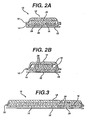
Figure 2A is an enlarged section taken along line 2-2 of Figure 1A.
Figure 2B is an enlarged section taken of an alternative embodiment along line 2-2 of
Figure 1A.
Figure 3 is an enlarged section taken along line 3-3 of Figure 1A.
Detailed Description
Absorbent articles that are useful in the present invention include any absorbent
article that absorbs bodily fluids, excretions and discharges. Such absorbent articles
include sanitary napkins, diapers, incontinence devices, breast pads, underarm shields,
shoe liners, surgical dressings, adhesive bandages, tampons, and the like.
As used herein, the term "sanitary napkin" is intended to include all products
conventionally used to absorb menstrual fluid or vaginal discharge, which are not
tampons, whether referred to as sanitary napkins, panty shields, pantiliners or similar or
synonymous names.
As used herein, the term "an effective amount of an odor control agent" means
an amount of odor control agent that provides an odor control rating of less than about
5.5 on a 10 cm line scale for overall smell intensity for blood and synthetic urine tests at
eight hours according to the ISO 8586/1 norm.
The odor control coating of the present invention may be applied to the substrate
as an aqueous solution of the odor control material as the solute and a solvent. The
solution is then allowed to dry, thereby resulting in a coated substrate.
Useful solvents in the present invention include any solvent in which the solute,
e.g., odor control material, is soluble. In particular, it has been found that a polar
solvent, such as water, is useful for salts of EDTA.
Useful solutes in the present invention include any solute that has odor control
properties and does not impart discoloration, e.g., yellowing of the substrate. Examples
of such solutes include chelating or sequestering agents (builders). Chelating agents
useful in the present invention include the sodium, potassium and ammonium salts of
diphosphoric acid, triphosphoric acid, pyrophosphoric acid, orthophosphoric acid,
hexametaphosphoric acid, 1-hydroxyethane-1,1- phosphonic acid, diethylenetriamine
penta(methylene diphosphonic acid), ethylenediamine tetraacetic acid (EDTA),
diethylenetriamine pentaacetic acid (DTPA), N-(hydroxyethyl) ethylenediamine
triacetic acid (HEDTA), propylenediamine tetraacetic acid (PDTA), nitrilotriacetic acid
(NTA), mellitic acid, 1,2,3,4-cyclopentane tetracarboxylic acid, succinic acid, lauryl
succinic acid, oxydisuccinic acid (ODS), carboxymethyloxysuccinic acid, citric acid,
lactic acid, tartaric acid, O-carboxymethyltartronic acid, polyacrylic acid, poly(.alpha.-hydroxyacrylic
acid), poly(tetramethylene-1,2-dicarboxylic acid), poly(4-methoxytetramethylene-
1,2-dicarboxylic acid), acrylic acid/maleic acid copolymer
(polycarboxylate), acrylic acid/allyl alcohol copolymer (polycarboxylate), sodium PCA,
gluconic acid, glucoheptonic acid, lactobionic acid, maltobionic acid, 1-hydroxyethylidene
biphosphate, etidronic acid, amino phosphanates, and mixtures
thereof. Na3-EDTA is one solute that has been identified as being particularly useful.
Useful substrates in the present invention include any substrate that contacts
bodily fluids, excretions and discharges. Such substrates include a cover, a transfer
layer, an absorbent core, wings, backsheet layer, and combinations thereof.
Any method of applying the coating solutions to the substrate is useful in the
present invention. Such methods include, but are not limited to, dip coating, curtain
flow coating method, spin coating, bar coating, roll coating, hand coating, brush
coating, spray coating, and the like.
When the present invention is in use, bodily fluids, excretions, and discharges
are in intimate contact with the odor control coated substrate, thereby maximizing the
efficacy of the odor control properties of the coating. Since the odor control material is
coated onto the substrate, it is now possible to design even more effective deodorizing
absorbent articles.
More specifically, one useful odor control agent was Na3-EDTA, which is
available as Dissolvine® Na3. Without being bound by theory, it is believed that the
high pH of Na4-EDTA (pH= about 10) caused oxidation of pulp fibers in a non-woven
substrate, which resulted in discoloration, e.g., yellow tint formation. It was found that
lowering the pH, whether by using a different salt for of EDTA, e.g., Na3-EDTA (pH=
about 8-9), or by adding acid to the high pH EDTA solution did not result in oxidation
of pulp fibers in a non-woven substrate as no discoloration was found.
Na3-EDTA is also available as Dissolvine® Na3-36 as a 36% aqueous solution.
Other possible options are Dissolvine® K3-123-S (K3-EDTA, 50% solution) and
Dissolvine® AM3-40 ((NH4)3-EDTA, 40% slution). Each is available from Akzo
Nobel. Versene® (NH4)4EDTA chelating agent (38% aqueous solution) is available
form Dow Chemicals.
It is well within the skill of one in the art to make a Na3-EDTA solution using
Na4-EDTA as a starting component. Na4-EDTA is available from many sources
including Dow Chemicals (Versene® Powder chelating agent, Versene® Powder A,
Versene® 220E, Versene® 220 Crystals Chelating agent, Versene® 100 XL (38 %
aqueous solution), Versene® 100 EP (38 % aqueous solution), Versene® 100 (39 %
aqueous solution)), Akzo Nobel (Dissolvine® 220-S, Dissolvine® NA-X, Dissolvine®
NA, Dissolvine® E-39 (39 % aqueous solution), Dissolvine® 100-S (38 % aqueous
solution)), or BASF (Trilon® B and Trilon® BX).
A prediction regarding the amount of EDTA needed can be determined for
absorbent products that do not contain any other means of preventing or neutralizing
ammonia formed by urea by applying Equation 1:
EQUATION 1
EDTA amount, mg = (Chelation Value mg of EDTA per mg Ca++) * (Concentration
of Ca++ Excreted in Urine) * (Amount of Urine)
Example:
Typical Chelation Value for EDTA = 9.9 g of EDTA needed per 1.0 g of Ca ++
Concentration of Ca++ = 300 mg Ca ++ excreted per 24 hours
Amount of Urine Excreted in 24 hours = 1000 g per 24 hours
Amount of Urine expected on a liner per use = 6.0 grams
EDTA amount, mg = 9.9 g of EDTA * .300 g * 1/1000 grams * 6.0 grams * 1000 mg/l
gram
EDTA amount, mg = 17.8
Because the equation is highly dependent on the assumption that is made for the
Ca++ concentration and the amount of urine excreted, the amount of EDTA needed can
vary significantly. For example, the amount of EDTA needed can range from a low of
2.97-mg (lowest concentration of Ca++) and a high of 22.3 mg (highest concentration
of Ca++). The above equation is meant to be used as a general understanding to
determine appropriate starting levels of EDTA for an absorbent article.
Some absorbent articles can contain components that can neutralize ammonia
formed from urea. A typical component found in some absorbent articles is a cross-linked
polymer of partially neutralized acrylic acid. Because the polymer is partially
neutralized the free acid groups can be used to neutralize ammonia. Although there is
not enough buffering capability to completely neutralize all the ammonia that can be
produced by urea, a combination of superabsorbent polymers and EDTA can be used
together to help eliminate the ammonia odor. Because of the buffering capability of the
superabsorbent polymers, a lower amount of EDTA can be used in these systems. To
determine the new amount of EDTA, the mole fraction of the potential amount of
ammonia remaining after neutralization of the superabsorbent polymer can be used to
determine the minimum amount of EDTA needed.
EQUATION 2
f (mole fraction of ammonia remaining) = ((Total potential ammonia from Urea) -
(Ammonia neutralized by acrylic acid)/Total potential ammonia formed from Urea))
EQUATION 3
(for absorbent articles containing a partially neutralized polyacrylate polymer)
EDTA amount needed, mg = Equation 2 * Equation 1
Example
Typical Chelation Value for EDTA = 9.9 g of EDTA needed per 1.0 g of Ca ++ Concentration of Ca++ = 300 mg Ca ++ excreted per 24 hours Amount of Urine Excreted in 24 hours = 1000 g per 24 hours Amount of Urine expected on a liner per use = 6.0 grams Amount of Urea excreted in 24 hours = 25 grams % Free Acid groups in a partially neutralized polyacrylate superabsorbent = 25% Amount of SAP in a liner = .2 grams EQUATION 2
f (mole fraction of ammonia remaining) = ((Total potential ammonia from Urea)-
(Ammonia neutralized by acrylic acid)/Total potential ammonia formed from Urea)) f = (Urine amount, g x (Urea, g/g of Urine) x 1/MW Urea * 2 mol NH3/l mol of Urea))
- ((Superabsorbent amount, g/ MW of Acrylic Acid)* % acid groups/100)) f = (6g * (25g/1000g)*(1/60 g/mol) * 2 mol NH3) - ((.2 g/72 g/mol) * (25/100)) f=.86 EQUATION 3
(for absorbent articles containing a partially neutralized polyacrylate polymer) EDTA amount needed, mg = Equation 2 * Equation 1
Or EDTA amount needed, mg = f (Equation 1)
Or
EDTA amount needed, mg = .86 (17.8 mg) EDTA amount needed, mg = 15.3
Equation 3 shows that for absorbent articles containing a partially neutralized
salt of acrylic acid, a lower amount of EDTA is needed, e.g., 15.3 mg versus 17.8, for
articles that do not contain the superabsorbent. The calculation can be used to
optimize cost and performance when designing absorbent articles that contain both
EDTA and superabsorbent polymers.
The range of EDTA needed in absorbent articles can be from about 2.97 mg to
about 22.3 mg based on the varied amounts of urine excreted and calcium ions present.
To determine a general concentration for absorbent articles the low range and high
range of EDTA needed would be divided by the absorbent capacity of the absorbent
article as determined by any number of methods known in the art, e.g., in vitro and in
vivo.
As a non-limiting example, a pantyliner has an absorbent capacity value of 10
grams. The EDTA concentration would be 2.97 mg EDTA/10 grams or .297 mg of
EDTA/gram of capacity (low) to 22.3/10 grams or 2.23 mg/gram of capacity of the
absorbent article (high).
While the above equation exemplified EDTA, the amount of any other odor
control agent could be similarly calculated based upon, e.g., the amount of calcium to
be chelated. In addition, the amount of any other salt of EDTA or other control agent
can also be calculated.
Absorbent articles that are useful in the present invention are often composed of
layers of materials, e.g. many sanitary napkins and disposable diapers have a body-facing
layer, a backing layer and an inside absorbent layer. The odor controlling
coating of the present invention can easily be incorporated in any desired location in the
body fluid absorbent structure. For example, where a suitable non-woven web or
impervious film already is being used as part of the total sanitary napkin structure, it
first can be coated with a solution containing an appropriate odor controlling solute and
then used as before in the sanitary napkin construction.
The actual placement of the coated substrate in the absorbent product structure
is not critical to the instant invention, and it can be placed wherever it is wished to have
the odor control solute available to contact the body fluid as it is absorbed in actual use.
Many commercially available types of sanitary napkins are constructed
somewhat similarly to that depicted in U.S. Patent No. 4,217,901, which has a (1) an
absorbent layer (made of any suitable absorbent material, e.g., comminuted wood pulp
fibers, cotton linters, rayon fiber, cotton staple etc.) as the absorbent core, (2) a body
fluid impervious backsheet (made of, e.g., polyethylene or polypropylene film) on the
undergarment facing side of the absorbent pad, which is provided to preclude absorbed
body fluid from striking through and wetting or staining the undergarment. (3) A sheet
of tissue paper surrounding the absorbent pad, (4) a body fluid pervious cover (made of
any of the commonly used absorbent product covers such as gauze, non- woven
material reinforced with adhesive binders etc.) enveloping the tissue paper wrapped
absorbent pad and body fluid impervious cover, and (5) an optional adhesive strip on
the undergarment facing surface for those products designed to be adhesively attached
to the wearers undergarment. Additionally, absorbent articles often include a transfer
layer, which is positioned between the cover and absorbent core. The transfer layer
may be any material that draws or transports fluid away from the cover and body
towards the absorbent core or layer.
While sanitary napkins often contain the above construction, such construction
is not critical to the present invention. While the above construction delineates various
layers, separate layers can be integrated into a unitized construction. For example, the
cover and absorbent layer can have a unitized construction wherein only one layer
would function as both the cover and the absorbent layer.
The odor control coating-containing substrate of the present invention can be
used as a layer directly under the cover of a sanitary napkin. There are many other
constructions known for sanitary napkins, panty liners, etc., some omitting the tissue
paper (3) above, but most constructions do have an impervious backsheet(2) and an
absorbent core (1). The cover and the backsheet encase all components of the article.
The cover and the backsheet are typically joined or sealed to each other along their
peripheral edge using any method known in the art.
The substrates of the present invention can be used in various places in the
sanitary napkin, the choice of which would dictate the specific substrate desired, and
they can even replace some of the required layers. Thus the water-insensitive film
substrate could be used as the impervious layer (2) above, while the tissue paper
substrate could replace that of (3) above, or could be used as a separate layer
underneath the tissue paper (3), while the non-woven fiber substrate could be
underneath the body fluid pervious cover of, (4) above, or be placed on either side of, or
even in the inside of, the absorbent pad (1) above.
Turing to FIGS. 1A and 1B, sanitary napkin 10 has a porous, body-side cover
12, a liquid-impervious barrier layer 14, and an absorbent layer 16 therebetween. The
article has lateral sides 18, and longitudinal ends 20.
FIGS. 2A and 2b are alternate view along line 2-2 of Fig. 1A depicting two
different embodiments as a cross-sectional view of the components making up sanitary
napkin 10. In particular, cover 12 is attached to backsheet 14 at lateral side 18.
Positioning adhesive 28 is deposited on backsheet 14. Release strip 32 protects
positioning adhesive 28. Absorbent core 16 lies between cover 12 and backsheet 14. In
FIG. 2B there is depicted two absorbent cores/layers 16. Construction adhesive 26 is
depicted as being used to secure cover 12 and backsheet 14 to absorbent core 16 and, in
FIG. 2B, both absorbent cores 16 to each other.
Fig. 3 is an alternate view along line 3-3 of Fig. 1A depicting the cross-sectional
view of the components making up sanitary napkin 10. In particular, cover 12 is
attached to backsheet 14 at longitudinal end 20. Positioning adhesive 28 is deposited
on backsheet 14. Release strip 32 protects positioning adhesive 28. Absorbent core 16
lies between cover 12 and backsheet 14. Construction adhesive 26 is depicted as being
used to secure cover 12 and backsheet 14 to absorbent core 16.
Cover
The cover 12 typically overlays the absorbent core 16. The exterior of the cover
forms the body-facing surface of the sanitary napkin 10. As known by those skilled in
the art, the cover may be formed from any fluid pervious material that is comfortable
against the skin and permits fluid to penetrate to the absorbent core 16, which retains
the fluid. The cover 12 should retain little or no fluid to provide a relatively dry surface
next to the skin when in use. A variety of cover materials are known in the art, and any
of these may be used. For instance, the cover has been made from fibrous non-woven
fabrics made of fibers or filaments of polymers, such as polyethylene, polypropylene,
polyester, or cellulose, and combinations or mixtures thereof. The fiber or filament can
be single denier or multidenier.
Other materials used in making covers include gauze or for example, a
nonwoven material such as the ones described in U.S. Patent No. 3,554,788 (Fechillas),
any known porous material with a suitable body contacting surface, including, but not
limited to nonwoven webs, apertured films, plastic nets, and the like. The cover 12
could also be made from a fibrous nonwoven composite of bicomponent fibers and pulp
fluff.
Alternatively, the cover 12 may be formed from an apertured polymeric film. In
addition, such a film may be treated with a surfactant to increase hydrophillicity.
Generally, the cover 12 is a single sheet or layer of material having a width
sufficient to form the body-facing surface of the absorbent article. The cover 12 may be
longer and wider than the absorbent core.
The cover 12 may be embossed with shapes within a given area. For example, a
series or a number of features, e.g., circles, triangles, squares, lines, honeycomb,
diamond, floral, etc. are embossed over the entire length and width of the outer surface
of web. Each embossed feature has a major and minor axis extending therethrough, the
major axis length being greater or equal to the minor axis length. The embossed
features may be in a repetitive pattern.
Bicomponent fibers are known in the art and are composed of two polymers
with different melting points. At least a portion of the outer surface of each
bicomponent fiber has the lower melting polymer. The two polymers may be arranged
such that a cross-section of the fiber shows the two polymers in a side-by-side array.
Alternatively, the polymers may be positioned in a so-called sheath/core arrangement,
in which a core of higher melting polymer is surrounded by a sheath of lower melting
polymer. A useful bicomponent fiber is BASF "BICO" code 1050 fiber, a 3.0 denier,
1.5" long staple fiber made of a polyester core and a high density polyethylene sheath
(BASF Corporation, Charlotte, North Carolina). Similar fibers (polyethylene sheath
and polypropylene core) are available as Danaklon ES-C or ES Bico (Danaklon A/S,
Varde Denmark). Pulp fibers may be obtained as IP '''SUPERSOFT'' ELM. supplied by
the International Paper Company (Memphis, Tennessee), "'RAYFLOC" XJ-HM E-Type
Cellulosic Fluff Pulp, (ITT Rayonier), or Korsnas Vigorfluf-EN White (KorsncAs,
Gavle, Finland).
Absorbent Core
The absorbent core or layer 16 of the present invention may contain any known
absorbent materials including, but not limited to, absorbent fibers, such as cellulose
fibers, including, but not limited to wood pulp, regenerated cellulose fibers, and cotton
fibers, rayon fibers and the like; superabsorbent fibers or particles; other naturally
occurring absorbent materials, such as peat moss; and other synthetic absorbent
materials, such as foams and the like. The absorbent layer may also include one or
more of the following: thermoplastic binder fibers, latex binder, perfumes, oils or odor-controlling
compounds. Additionally, the absorbent layer may be a mixture of two or
more types of thermoplastic fibers having different melting points. Bicomponent fibers,
fibers with an inner core of a thermoplastic fiber, e.g., polyester, surrounded by an outer
sheath of thermoplastic, e.g., polyethylene, having a melting point much lower than the
core, have been found to be the best fibers to work with from processing and
performance standpoints. Upon application of heat and pressure sufficient to melt at
least one of the fiber types, the remaining unmelted fibers will be thermobonded or
fused together into a porous web.
Cellulosic pulp fibers can also be included with thermoplastic fibers. Since
thermoplastic fibers, without further treatment, are essentially hydrophobic, the
absorbent layer will not effectively draw fluid away from the composite cover and
transfer layer absent some hydrophilic material. It is important to have sufficient pulp
to absorb fluid.
An absorbent structure may be delivered in roll-goods form, or in other
packaging formats such as festooning, and is particularly useful as an absorbent core for
disposable absorbent articles such as diapers, adult incontinence pads and briefs, and
feminine sanitary napkins.
In one useful embodiment, the structure of the present invention is prepared as
an airlaid web. The airlaid web is typically prepared by disintegrating or defiberizing a
cellulose pulp sheet or sheets, typically by hammermill, to provide individualized
fibers. The individualized fibers are optionally mixed with functional particles, and are
then air conveyed to one or more forming heads on the airlaid web forming machine.
The forming head then deposes a stratum in the forming wire. A stratum may contain,
for example, cellulose fibers, SAP and other functional particles, and bicomponent
fibers.
In some embodiments, the structures of the invention contain a carrier tissue.
The use of a compaction roll prior to the introduction of the particle areas eliminates the
need for the tissue.
Unit operations involve the use of multiple forming heads, for example, up to
four, five, six or seven forming heads may be used to provide additional strata to the
web. Several manufacturers make airlaid web forming machines, including M&J
Fibretech of Denmark and Dan-Web, also of Denmark. The forming heads include
rotating drums, or agitators generally in a racetrack configuration, which serve to
maintain fiber separation until the fibers are pulled by vacuum onto a foraminous
condensing drum or foraminous forming conveyor, or forming wire. For example, in
machines manufactured by M&J Fibretech, the forming head includes a rotary agitator
above a screen. Other fibers, such as a synthetic thermoplastic fiber, may also be
introduced to the forming head through a fiber dosing system, which includes a fiber
opener, a dosing unit and an air conveyor.
The airlaid web is transferred from the forming wire to a calender or other
densification stage to densify the web, increase its strength and control web thickness.
The fibers of the web may alternatively, or additionally, be bonded by application of a
binder or foam addition system, followed by drying or curing. As a result, heat seals
between the thermoplastic material and the fibers of the various strata are formed. The
finished web is then rolled for future use.
As contemplated by the present invention, one or more forming heads of the
airlaid web forming machine distributes the desired fiber for the various strata of the
absorbent core or structure. For example, a first forming head may be used to provide a
first fibrous stratum, for example a stratum comprising a cellulose fiber, bicomponent
fiber, and optionally a carrier tissue. The first stratum may be a wicking stratum.
Functional particles may optionally (or additionally) be applied to the strata by
particle applicator. Thus, SAP particles or other functional particles are thus applied.
Optionally the strata can be compacted or densified in a nip formed by a pair of
calender rolls. The fibers may be compressed to the desired thickness and density. The
lower stratum may be compacted at this point in the manufacturing process to close the
pores of the web if the particles are fine, and to prevent spillage on to the forming wire.
Additional strata can then be formed on top of lower strata in the same manner
the first stratum is formed, by use of forming heads, optionally particle applicators, and
optionally nips formed by calender rolls.
The airlaid web is transferred from the forming wire and is compacted or
densified, for example, by use of a calender or to increase its strength and control web
thickness. Preferred ranges of densification are from about 0.035 to about 0.50 g/cc,
more preferably about 0.050 to about 0.50 g/cc, even more preferably about 0.20 g/cc.
The web is then subjected to further treatment including pressure, heat and/or the
application of a binder. For example, a binder (such as a spray or foam binder), may be
applied at binder applicators, which may be disposed after the calendar. A series of
ovens also may be used in processes of the invention, after application of the binder, for
drying, curing or thermal bonding. The airlaid structure may be heated to a temperature
in the range of from about 125 to about 180°C. A further overall binder may then be
applied to the structure. This binder can be applied by spray, foam or mist, and is
applied to reduce dust-off on the surface of the structure.
The air laid structure may be heated in additional ovens at a temperature in the
range of from about 125 to about 180°C. The airlaid structure may be treated at
pressure in the range of from about 0.1 to about 10 psi, preferably about 1.5 psi.
The finished web is then rolled for future use. This continuous band of fibrous
web can be slit or cut to form individual absorbent articles in a cutting unit, which has
not been depicted in this figure.
Optionally, the finished web may be slit or perforated at the heat seal to yield
narrow slit core material having a heat seal along both edges. The heat seals to be slit
must be of sufficient width to provide two effective seals after slitting.
In other embodiments, various other strata containing other types and amounts
of fibers may be applied above or below the upper and lower strata of the structure of
the present invention. For example, the absorbent article may contain also a fluid
previous top sheet and a fluid impervious backsheet. Exemplary absorbent articles that
can be formed from absorbent cores of the invention include diapers, sanitary napkins,
and adult incontinence products.
In a useful embodiment, the absorbent layer is made from airlaid pulp and
includes about 15% by weight of superabsorbent polymer available as Hysorb CL 15
from BASF. The amount of superabsorbent in the absorbent core may be in the range
of from about 5 to about 50 % by weight of the absorbent core. The absorbent core may
be compressed or uncompressed, embossed, or calendered.
The absorbent core 16 may also be coated with the odor control coating of the
present invention.
The absorbent layer 16 may have one or more layers in an overlapping or side-by-side
arrangement. See for example, Fig. 2B which is an alternative view along line
2-2 of Fig. 1A. These multiple absorbent layer layers may be of similar width and
thickness or varying dimensions.
As indicated above, the absorbent core 16 is preferably located about the central
longitudinal axis of the absorbent article. The absorbent core 16 may be formed of a
material having parallel sides, or the absorbent core material may have a varying width
to correspond to an absorbent pad having a varying width along the length of the
sanitary napkin 10.
Backsheet
Backsheet 14 may be located adjacent to the absorbent core 16 and to the cover
layer 12 in portions elsewhere. The backsheet 14 of the present invention is a body
fluid impervious material, typically referred to as a "barrier," which is at least
substantially impermeable to liquids. Its exterior forms the garment-facing surface of
the absorbent article. The backsheet may be any thin, flexible, body fluid impermeable
material, such as, but not limited to, a polymeric film, e.g., polyethylene,
polypropylene, or cellophane, or a normally fluid pervious material that has been
treated to be impervious, such as impregnated fluid repellent paper or non-woven
material, including non-woven fabric material, or a flexible foam, such as polyurethane
or cross-linked polyethylene.
Optionally, the backsheet 14 may be breathable, i.e., permits vapor to transpire.
Known materials for this purpose include nonwoven materials, monolithic and
microporous films in which microporosity is created by, inter alia, stretching an
oriented film. Single or multiple layers of permeable films, fabrics, melt-blown
materials, and combinations thereof that provide a tortuous path, and/or whose surface
characteristics provide a liquid surface repellent to the penetration of liquids may also
be used to provide a breathable backsheet.
Bonding Methods
The layers of the absorbent article may be, but not necessarily, bonded, e.g.,
glued or adhered, to the adjacent layer. For example, the underside of the cover 12
composite may be adhered to the top side of the absorbent layer 16. The underside of
the absorbent layer 16 is adhered to the top side of the backsheet 14. As previously
stated, any methods known in the art, such as fusion bonding, adhesive attachment, or
by any other securement means can be used to secure the individual layers together to
form the final absorbent article. Included within such methods are co-embossing,
thermobonding, mechanical bonding, and the like. Fusion bonding includes heat
bonding, ultrasonic bonding, and the like.
Adhesive is typically used to attach the layers into a single absorbent article.
For example, in one embodiment, the body facing cover 16 is attached to the barrier
with adhesive HL 1491 available from H.B Fuller and Company (St. Paul, MN). The
adhesive may be applied in any method.
Adhesive may include pressure sensitive adhesive that is applied as strips,
swirls, or waves, and the like. As used herein, the term pressure-sensitive adhesive
refers to any releasable adhesive or releasable tenacious means. Suitable adhesive
compositions, include, for example, water-based pressure-sensitive adhesives such as
acrylate adhesives. Alternatively, the adhesive composition may include adhesives
based on the following: emulsion or solvent-borne adhesives of natural or synthetic
polyisoprene, styrene-butadiene, or polyacrylate, vinyl acetate copolymer or
combinations thereof; hot melt adhesives based on suitable block copoylmers - suitable
block copolymers for use in the invention include linear or radial co-polymer structures
having the formula (A-B)x wherein block A is a polyvinylarene block, block B is a
poly(monoalkenyl) block, x denotes the number of polymeric arms, and wherein x is an
integer greater than or equal to one. Suitable block A polyvinylarenes include, but are
not limited to Polystyrene, Polyalpha-methylstyrene, Polyvinyltoluene, and
combinations thereof. Suitable Block B poly(monoalkenyl) blocks include, but are not
limited to conjugated diene elastomers such as for example polybutadiene or
polyisoprene or hydrogenated elastomers such as ethylene butylene or ethylene
propylene or polyisobutylene, or combinations thereof. Commercial examples of these
types of block copolymers include KratonTM elastomers from Shell Chemical
Company, VectorTM elastomers from Dexco, SolpreneTM from Enichem Elastomers
and StereonTM from Firestone Tire & Rubber Co.; hot melt adhesive based on olefin
polymers and copolymers where in the olefin polymer is a terpolymer of ethylene and a
co-monomers, such as vinyl acetate, acrylic acid, methacrylic acid, ethyl acrylate,
methyl acrylate, n-butyl acrylate vinyl silane or maleic anhydride. Commercial
examples of these types of polymers include Ateva( polymers from AT plastics),
Nucrel( polymers from DuPont), Escor (from Exxon Chemical).
In an embodiment of the present invention, the layers 12, 14, and 16 of the
sanitary napkin 10 may be attached to one another to form a cohesive unit to enhance
the napkin's stability. In its preferred embodiment, the sanitary napkin 10 has
construction adhesive 26 present between the cover layer 12 and the absorbent layer 16
and also present between the absorbent layer 16 and the backsheet 14. The construction
adhesive 26 serves to hold the layers 12, 14, 16 together and to minimize pad
deformation during use. The construction adhesive 26 may be a hot melt adhesive
supplied by the H.B. Fuller Company (St. Paul, Minnesota) as code HL 1308x. The
adhesive can be applied as either a thin porous film, or in a random spray, in a
controlled spiral pattern, or in any other application pattern. The adhesive coat weight is
approximately 10 mg./in 2.
Secure attachment of absorbent article of the claimed invention to the garment
contributes to maintaining the feeling of the user that the absorbent article and the
garment are one in the same, i.e., permits the absorbent article to move with the
underwear.
The absorbent article of the present invention may be applied to the crotch by
placing the garment-facing surface against the inside surface of the crotch of the
garment. Various methods of attaching absorbent articles may be used. For example,
chemical means, e.g., adhesive, and mechanical attachment means, e.g., clips, laces,
ties, and interlocking devices, e.g., snaps, buttons, VELCRO (Velcro USA, Inc.,
Manchester, NH), zipper, and the like are examples of the various options available to
the artisan.
Additionally, positioning adhesive 28 may be applied to the garment facing side
of the absorbent article. The positioning adhesive 28 may be any adhesive known in the
art. As a non-limiting example, pressure sensitive adhesive strips, swirls, or waves may
be applied to help maintain the absorbent article in place. As used herein, the term
pressure-sensitive adhesive refers to any releasable adhesive, or releasable tenacious
means. Suitable adhesive compositions, include, for example, water-based pressure-sensitive
adhesives, such as acrylate adhesives. Alternatively, the adhesive composition
may include rapid setting thermoplastic "hot melt," rubber adhesives, two-sided
adhesive tape, and the like.
Where positioning adhesive 28 is used on the garment facing side of the
backsheet 14, as depicted in FIGS 2A, 2B, and 3, a release strip 32 may be applied to
protect the adhesive on the absorbent article prior to attaching the absorbent article to
the crotch. The release strip 32 can be formed from any suitable sheet-like material that
adheres with sufficient tenacity to the adhesive to remain in place prior to use but which
can be readily removed when the absorbent article is to be used. Optionally, a coating
may be applied to release strip 32 to improve the ease of removabilty of the release strip
32 from the adhesive. Any coating capable of achieving this result may be used, e.g.,
silicone.
Transfer Layer
Optionally, the absorbent article of the present invention may include a transfer
or distribution layer. If included, the transfer layer may be made of any known material
that will take up fluid and then distribute and release it to an adjacent absorbent layer
for storage. Transfer layers have a relatively open structure that allows for movement
of fluid within the layer. Suitable materials for such transfer layers include fibrous
webs, resilient foams, and the like.
The mass of materials making up the transfer layer may be absorbent, although
the materials themselves are not absorbent. Thus, transfer layers that are made of
hydrophobic, nonabsorbent fibers may be able to accept large volumes of fluid into
interfiber void spaces while the fibers themselves do not absorb any significant
quantities of fluid. Likewise, open-celled foam structures that are made from
nonabsorbent materials may also absorb fluid into the cells of the foam. The walls of
the cells, however, do not absorb any fluid. The cumulative spaces within the transfer
layer, i.e., the interfiber void spaces in the fibrous transfer layer or the open cells in the
foam transfer layer, function much like a container to hold fluid.
Typically, transfer layer fibrous webs are made of resilient, nonabsorbent
materials to provide void volume and to allow for free movement of fluid through the
structure. Transfer layers that are made from webs of mostly absorbent fibers absorb
the fluid as it enters the structure and do not distribute it throughout the rest of the
structure as efficiently as webs containing non-absorbent materials.
Transfer layers that are made from webs of mostly absorbent fibers absorb the
fluid as it enters the structure and do not distribute it throughout the rest of the structure
as efficiently as webs containing non-absorbent materials. Preferred transfer layer
fibrous webs include nonabsorbent materials to provide void volume and to allow for
free movement of fluid through the structure. Examples of preferred materials include
polypropylene, polyethylene, polyester, bicomponent materials, nylon and mixtures or
combinations thereof. In a preferred embodiment, the transfer layer is an apertured film
made from a carbon black pigmented polyethylene. An example useful in the present
invention is a black topsheet film available from the ADMA division of Tredegar
(Chieti, Italy) as 33-12-2001.
The transfer layer does not have to be apertured film; it can be any other
pigmented nonwoven material, such as, foam or netting, which transports fluid and in
combination with the cover, provides masking of the absorbent core. However, in one
embodiment, the transfer layer is a 25 gsm apertured film made from polyethylene.
In one embodiment, the cover and transfer layers are joined together by first
applying adhesive to the underside of the cover material and placing the cover web onto
the transfer layer material. While any adhesive may be used, such as any non-pressure
sensitive adhesive, a preferred adhesive is D 1280 BE (available from Fuller Co.,
Germany)
The composite layer formed from the cover and transfer layers may be further
processed. In a preferred embodiment, the composite layer includes an embossed
pattern on the outer cover surface. For example, flowers and rails under the
CAREFREE® pattern (e.g., U.S. Design Patent No. 439,057) are embossed after the
composite is formed, which results in an embossed pattern having flowers, rails, and
squares
Wings
Wings, also called, among other things, flaps or tabs, may also be part of the
absorbent article of the present invention. Wings and their use in sanitary protection
articles is described in U.S. Patent. No. 4,687,478 to Van Tilburg; U.S. Patent No.
4,589,876 also to Van Tilburg, U.S. Patent No. 4,900,320 to McCoy, and U.S. Patent
No. 4,608,047 to Mattingly. The disclosures of these patents are incorporated herein by
reference in their entirety. As disclosed in the above documents, wings are generally
speaking flexible and configured to be folded over the edges of the underwear so that
the wings are disposed between the edges of the underwear.
Miscellaneous
Any or all of the cover, absorbent layer, transfer layer, backsheet layer, and
adhesive layers may be colored. Such coloring includes, but is not limited to, white,
black, red, yellow, blue, orange, green, violet, and mixtures thereof. Color may be
imparted according the present invention through dying, pigmentation, and printing.
Colorants used according the present invention include dyes and inorganic and organic
pigments. The dyes include, but are not limited to, anthraquinone dyes (Solvent Red
111, Disperse Violet 1, Solvent Blue 56, and Solvent Green 3), Xanthene dyes (Solvent
Green 4, Acid Red 52, Basic Red 1, and Solvent Orange 63), azine dyes (Jet black), and
the like.
Inorganic pigments include, but are not limited to, titanium dioxide (white),
carbon black (black), iron oxides (red, yellow, and brown), chromium oxide (green),
ferric ammonium ferrocyanide (blue), and the like.
Organic pigments include, but are not limited to diarylide yellow AAOA
(Pigment Yellow 12), diarylide yellow AAOT (Pigment Yellow 14), phthalocyanine
blue (Pigment Blue 15), lithol red (Pigment Red 49:1), Red Lake C (Pigment Red), and
the like.
The absorbent article may include other known materials, layers, and additives,
such as, foam, net-like material, perfumes, medicaments or pharmaceutical agents,
moisturizers, odor control agents, and the like. The absorbent article can optionally be
embossed with decorative designs.
The absorbent article may be packaged as unwrapped absorbent articles within a
carton, box or bag. The consumer withdraws the ready-to-use article as needed. The
absorbent article may also be individually packaged (each absorbent article encased
within an overwrap).
Also contemplated herein include asymmetrical and symmetrical absorbent
articles having parallel longitudinal edges, dog bone- or peanut-shaped, and the like.
The absorbent article of the present invention may be used with conventional
underwear or may be shaped to conform to thong garments. As used herein, the term
thong garment includes, but is not limited to, thong underwear, thong swimming suit
bottom, G-strings, Rio cut underwear, Rio-cut swimming suit bottom, Brazilian cut
underwear, Brazilian cut swimming suit bottom, and any other garment that exposes the
buttocks, having a narrow strip of fabric or a cord that passes between the thighs
supported by a waistband, a waist cord, belt or the garment itself.
From the foregoing description, one skilled in the art can ascertain the essential
characteristics of this invention, and without departing from the spirit and scope
thereof, can make various changes and modifications. Embodiments set forth by way
of illustration are not intended as limitations on the variations possible in practicing the
present invention.
EXAMPLES
Example 1:
Control: Absorbent material was produced at 175 gsm in total basis weight and
a density of 0.09 g/cc. The absorbent material was produced using the Dan Web
forming head air laid technology. The material was made of 55% Rauma manufactured
cellulosic fiber, 27% Trevira® bicomponent fibers, 15% Salsorb-CL15 superabsorbent
powder from BASF, and 3% AF-192 latex adhesive from Air Products.
Sample K: Versene® 100XL from Dow Chemical is available as a 38%
aqueous solution of Na4-EDTA. This aqueous solution was diluted with water to 20%
prior to spraying. The absorbent material was produced using the Dan Web® forming
head air laid technology. The absorbent substrate had a total basis weight of 195 gsm
and a density of 0.10 g/cc. It was composed of 49% Rauma manufactured cellulosic
fiber, 24% Trevira® bicomponent fibers, 13% Salsorb-CL15 superabsorbent powder
from BASF, and 3% AF-192 latex adhesive from Air Products. The sodium
bicarbonate, BICAR® CODEX 27/50 from Solvay, was applied using the Walkisoft
powder dispensing system in the middle layers of the substrate. The Versene 100XL
solution was applied on one side of the substrate using the Walkisoft spray system
during the manufacturing of the absorbent article. The material was produced with 5.0
gsm EDTA (dry) and 15 gsm of sodium bicarbonate powder.
Sample E: Versene® 100XL from Dow Chemical is available as a 38% aqueous
solution of Na4-EDTA. This aqueous solution was diluted with water to 20% prior to
spraying. The absorbent material was produced using the Dan Web® forming head air
laid technology. The absorbent material had a total basis weight of 180 gsm and a
density of 0.10 g/cc. It was made of 54% Rauma manufactured cellulosic fiber, 26%
Trevira® bicomponent fibers, 15% Salsorb-CL15 superabsorbent powder from BASF,
and 3% AF-192 latex adhesive from Air Products. The Versene ®100XL solution was
applied on one side of the substrate using the Walkisoft spray system. The material was
produced with 5.0 gsm EDTA (dry).
Sample D: Versene® 100XL from Dow Chemical is available as a 38% aqueous
solution of Na4-EDTA. This aqueous solution was diluted with water to 20% prior to
spraying. The absorbent material was produced using the Dan Web® forming head air
laid technology. The absorbent substrate had a total basis weight of 178 gsm and a
density of 0.10 g/cc. It was made of 54% Rauma manufactured cellulosic fiber, 27%
Trevira® bicomponent fibers, 15% Salsorb-CL15 superabsorbent powder from BASF,
and 3% AF-192 latex adhesive from Air Products. The Versene 100XL solution was
applied on one side of the substrate using the Walkisoft spray system. The material was
produced with 2.5 gsm EDTA (dry).
Sample I: Sodium bicarbonate, BICAR® CODEX 27/50 from Solvay, and the
Versene 220 Chrystal Chelating agent, Na4 salt of EDTA were pre-mixed in a ratio of
25% EDTA and 75% sodium bicarbonate. The absorbent material was produced using
the Dan Web® forming head air laid technology. The absorbent substrate had a total
basis weight of 196 gsm and density of 0.11 g/cc. It was made of 49% Rauma
manufactured cellulosic fiber, 24% Trevira® bicomponent fibers, 13% Salsorb-CL15
superabsorbent powder from BASF, and 3% AF-192 latex adhesive from Air Products.
The superabsorbent powder from BASF was applied separately from the EDTA-bicarbonate
blend. The powder blend was applied at 10% in the middle layers using the
Walkisoft dispensing system during the process of the material. The material was
produced with 5 gsm EDTA (dry), 15 gsm NaHCO3.
Sample C: The Salsorb-CL15 superabsorbent powder and the Versene 220
Chrystal Chelating agent, Na4 salt of EDTA were pre-mixed in a ratio of 16% EDTA
and 84% superabsorbent powder. The absorbent material was produced using the Dan
Web® forming head air laid technology. The absorbent substrate had a total basis
weight of 180 gsm and a density of 0.11g/cc. It was composed of 18% Rauma
manufactured cellulosic fiber, 8.8% Trevira® bicomponent fibers, and 3% AF-192
latex adhesive from Air Products. The EDTA-SAP powder blend was applied at 17% in
the middle layers using the Walkisoft dispensing system during the process of the
material at 17% of the total weight.
Option 1: Dissolvine® Na3-36 is available as a 36% aqueous solution of Na3-EDTA.
This aqueous solution was diluted with water to 15% prior to spraying. The
absorbent material was produced using the Dan Web® forming head air laid
technology. The absorbent substrate had a total basis weight of 175 gsm and a density
of 0.10 g/cc. It was composed of 55% Rauma manufactured cellulosic fiber, 27%
Trevira® bicomponent fibers, 15% Salsorb-CL15 superabsorbent powder from BASF,
and 3% AF-192 latex adhesive from Air Products. The Dissolvine® Na3-36 solution
was applied on one side of the substrate using the Walkisoft spray system. The material
was produced with 2.5 gsm EDTA (dry).
Option 2a: The Dissolvine® Na3-36 is available as a 36% aqueous solution of
Na3-EDTA. This aqueous solution was diluted with water to 15% prior to spraying.
The absorbent material was produced using the Dan Web® forming head air laid
technology. The absorbent substrate had a total basis weight of 180 gsm and a density
of 0.10 g/cc. It was composed of 51% Rauma manufactured cellulosic fiber, 25%
Trevira® bicomponent fibers, 14% Salsorb-CL15 superabsorbent powder from BASF,
and 3% AF-192 latex adhesive from Air Products. The sodium bicarbonate, BICAR®
CODEX 27/50 from Solvay, was applied at 6%using the Walkisoft powder dispensing
system in the middle layers of the substrate. The Versene 100XL solution was applied
on one side of the substrate using the Walkisoft spray system during the manufacturing
of the absorbent article. The material was produced with 2.5 gsm EDTA (dry) and 12
gsm of sodium bicarbonate powder.
Example 2
The color of the coated absorbent core inserts made in Example 1 were
determined using a Minolta Chroma-Meter CR 300 according to the Manufacturer's
Guide as follows:
The following results were obtained:
| | | White | Green | Yellow |
| SAMPLE | Measurement Orientation | Average L | Average a | Average b |
| A CONTROL | Top side | 89.466 | -0.172 | 1.02 |
| Bottom side | 89.694 | -0.17 | 1.002 |
| K 5gsm Na4EDTA spray, 15gsm N2HCO3, dosed separately | Top side | 90.834 | -0.274 | 5.416 |
| Bottom side | 91.408 | -0.138 | 2.41 |
| E 5gsm Na4EDTA spray | Top side | 88.566 | -0.276 | 3.298 |
| Bottom side | 88.764 | -0.124 | 1.2 |
| D 2.5gsm Na4EDTA spray | Top side | 88.624 | -0.248 | 2.892 |
| Bottom side | 89.228 | -0.148 | 1.254 |
| I 5gsm Na4EDTA, 15gsm NaHCO3, Bicarb/EDTA blend | Top side | 90.176 | -0.114 | 1.126 |
| Bottom side | 89.904 | -0.128 | 1.136 |
| C 5gsm Na2EDTA, SAP/EDTA blend | Top side | 88.742 | -0.152 | 1.09 |
| Bottom side | 88.812 | -0.148 | 1.038 |
| 2nd Control | Top side | 91.518 | -0.098 | 1.282 |
| Bottom side | 91.414 | -0.126 | 1.39 |
| Option 1 Na3 EDTA 2.5gsm spray | Top side | 91.214 | -0.136 | 1.724 |
| Bottom side | 91.534 | -0.146 | 1.384 |
| Option 2a Na3EDTA 2.5gsm spray + baking Soda 12gsm | Top side | 91.802 | -0.124 | 2.038 |
| Bottom side | 91.918 | -0.184 | 1.592 |
The results for the L (white = 100 / black = 0) and for the red-green tendency a
(-a = green / +a = red) are not significantly different for any of the inserts tested. The
blue-yellow tendency b (-b = blue / +b = yellow) however do vary.
As can be seen by the above results, the absorbent core inserts having the
Na4EDTA coating became the most yellow on the top side, which was where the
aqueous odor control solution was applied by spraying. The absorbent core inserts
having solid Na4EDTA did not yellow significantly. The absorbent core inserts having
a Na3EDTA coating did not yellow significantly.
Example 3
The odor control efficacy was proven in a sensory sniff test involving a panel of
15 trained expert sniffers. The odor profile of pantiliner products was evaluated after
inoculating the surface of the pads with bacteria and lamb's blood or synthetic urine,
respectively. The differences of the overall urine odor and blood odor and of ammonia
odour (urine) and degraded blood (blood) were defined quantitatively 1h and 8h after
inoculation. Multiple comparison tests (DUNCAN tests) were used to identify the
statistical differences between samples.
Samples: Control, Option 1 and Option 2a where made according to Example 1
above. Comparative sample 1 was Alldays® Flexible, available from Proctor &
Gamble, and Comparative example 2 was Evax , available from Proctor & Gamble.
The training of the panelists was according to the ISO 8586/1 norm. The final
assessment was conducted according to the ISO 4121 norm.
Intensity scores were rated on a 10 cm line scales and can be interpreted as
follow:
| from [0 to 2] | very low intensity |
| from [2 to 4] | low intensity |
| from [4 to 5] | medium low intensity |
| from [5 to 6] | medium high intensity |
| from [6 to 8] | high intensity |
| from [8 to 10] | very high intensity |
For blood inoculation, the pantiliners were inoculated with natural bacteria
species of vaginal flora and pathogen opportunist bacteria in suspension in lamb's
blood: 106 - 107 cells/ml for Lactobacillus casei var rhamnosus (Doderlein bacillus)
and 103 - 104 cells/ml for Staphylococcus aureus, Pseudomonas aeruginosa, Proteus
mirabilis, Escherichia coli and Staphylococcus epidermidis.
For synthetic urine inoculation, the pantiliners were inoculated with natural
bacteria of pubic flora and pathogen opportunist bacteria in suspension in synthetic
urine. Synthetic urine used herein was made with 10 g/l NaCl (from CARLO ERBA), 2
g/l (NH4)H2PO4 (from Merck), and 25 g/l urea (from Q-biogène). 106 - 107 cells/ml for
bacteria Escherichia coli and 103 - 104 cells/ml for Staphylococcus aureus,
Pseudomonas aeruginosa, Proteus mirabilis and Staphylococcus epidermidis.
Each sample was inoculated on the surface with 5 ml of fluid and conditioned in
a sealed plastic bag in order to avoid any evaporation of the inoculums. Incubation
temperature was 35°C for both, blood and synthetic urine inoculums.
Descriptive statistics for blood inoculation:
|
SAMPLE
|
ATTRIBUTE
|
| |
OVERALL SMELL INTENSITY
|
DAMAGED BLOOD SMELL
|
|
PANTILINER CONTAINING INSERT
|
TIME OF INCUBATION
|
Mean
|
Mean
|
| A CONTROL |
1 HR |
3.2 |
1.7 |
| A CONTROL |
8 HR |
2.8 |
6.8 |
| Option 1 2.5gsm Na3 EDTA (spray) |
1 HR. |
2.8 |
1.5 |
| Option 1 2.5gsm Na3 EDTA (spray) |
8H |
2.8 |
1.9 |
| Option 2a 2.5gsm Na3EDTA (spray) + 12gsm NaHCO3 |
1H |
3.6 |
1.9 |
| Option 2a 2.5gsm Na3EDTA (spray) + 12gsm NaHCO3 |
8H |
3.2 |
1.8 |
| Comparative sample 1 |
1H |
5.5 |
4.1 |
| Comparative sample 1 |
8H |
7.8 |
7.7 |
| Comparative sample 2 |
1H |
5.5 |
4.2 |
| Comparative sample 2 |
8H |
7.4 |
6.6 |
Descriptive statistics for synthetic urine inoculation:
|
SAMPLE
|
ATTRIBUTE
|
| |
OVERALL SMELL INTENSITY
|
AMMONIA SMELL
|
|
PANTILINER CONTAINING INSERT
|
TIME OF INCUBATION
|
Mean
|
Mean
|
| A CONTROL |
1H |
3.4 |
1.0 |
| A CONTROL |
8H |
6.9 |
2.5 |
| Option 1 2.5gsm Na3 EDTA (spray) |
1H |
2.9 |
1.3 |
| Option 1 2.5gsm Na3 EDTA (spray) |
8H |
3.7 |
1.3 |
| Option 2a 2.5gsm Na3EDTA (spray) + 12gsm NaHCO3 |
1H |
4.7 |
1.1 |
| Option 2a 2.5gsm Na3EDTA (spray) + 12gsm NaHCO3 |
8H |
3.9 |
0.7 |
| Comparative sample 1 |
1H |
2.9 |
0.6 |
| Comparative sample 1 |
8H |
8.0 |
3.3 |
| Comparative sample 2 |
1H |
3.0 |
1.0 |
| Comparative sample 2 |
8H |
7.5 |
3.1 |
In all cases, the odor rating after 8 hours for the pantiliner products with insert
Option 1 and Option 2a was significantly lower compared to the pantiliner products
with insert A CONTROL to Comparative sample 1 and Comparative sample 2.