EP1438042B1 - Polymaleimide compounds and their medical use - Google Patents
Polymaleimide compounds and their medical use Download PDFInfo
- Publication number
- EP1438042B1 EP1438042B1 EP02801965A EP02801965A EP1438042B1 EP 1438042 B1 EP1438042 B1 EP 1438042B1 EP 02801965 A EP02801965 A EP 02801965A EP 02801965 A EP02801965 A EP 02801965A EP 1438042 B1 EP1438042 B1 EP 1438042B1
- Authority
- EP
- European Patent Office
- Prior art keywords
- group
- compound
- infection
- maleimide
- formula
- Prior art date
- Legal status (The legal status is an assumption and is not a legal conclusion. Google has not performed a legal analysis and makes no representation as to the accuracy of the status listed.)
- Expired - Lifetime
Links
- 150000001875 compounds Chemical class 0.000 title claims abstract description 49
- 150000003923 2,5-pyrrolediones Chemical class 0.000 claims abstract description 20
- -1 maleimide compound Chemical class 0.000 claims abstract description 14
- 238000011282 treatment Methods 0.000 claims abstract description 13
- 239000003814 drug Substances 0.000 claims abstract description 12
- 238000011321 prophylaxis Methods 0.000 claims abstract description 8
- 210000004994 reproductive system Anatomy 0.000 claims abstract description 7
- 208000035143 Bacterial infection Diseases 0.000 claims abstract description 6
- 206010017533 Fungal infection Diseases 0.000 claims abstract description 6
- 208000031888 Mycoses Diseases 0.000 claims abstract description 6
- 208000036142 Viral infection Diseases 0.000 claims abstract description 6
- 208000022362 bacterial infectious disease Diseases 0.000 claims abstract description 6
- 230000001580 bacterial effect Effects 0.000 claims abstract description 5
- 230000002538 fungal effect Effects 0.000 claims abstract description 5
- 238000004519 manufacturing process Methods 0.000 claims abstract description 5
- 150000003839 salts Chemical class 0.000 claims abstract description 5
- 150000002148 esters Chemical class 0.000 claims abstract description 4
- 208000028172 protozoa infectious disease Diseases 0.000 claims abstract description 3
- 125000004432 carbon atom Chemical group C* 0.000 claims description 23
- 208000015181 infectious disease Diseases 0.000 claims description 20
- 125000003118 aryl group Chemical group 0.000 claims description 14
- 125000000217 alkyl group Chemical group 0.000 claims description 8
- 125000006615 aromatic heterocyclic group Chemical group 0.000 claims description 7
- 125000001931 aliphatic group Chemical group 0.000 claims description 6
- 230000000813 microbial effect Effects 0.000 claims description 6
- 229920001515 polyalkylene glycol Polymers 0.000 claims description 6
- 230000009385 viral infection Effects 0.000 claims description 6
- 125000002950 monocyclic group Chemical group 0.000 claims description 5
- 125000003827 glycol group Chemical group 0.000 claims description 4
- 125000006413 ring segment Chemical group 0.000 claims description 4
- 125000000008 (C1-C10) alkyl group Chemical group 0.000 claims description 3
- 125000002015 acyclic group Chemical group 0.000 claims description 3
- 125000004122 cyclic group Chemical group 0.000 claims description 3
- 241001430294 unidentified retrovirus Species 0.000 claims description 3
- 239000008194 pharmaceutical composition Substances 0.000 claims description 2
- 125000005575 polycyclic aromatic hydrocarbon group Chemical group 0.000 claims description 2
- 125000003367 polycyclic group Chemical group 0.000 claims description 2
- PEEHTFAAVSWFBL-UHFFFAOYSA-N Maleimide Chemical compound O=C1NC(=O)C=C1 PEEHTFAAVSWFBL-UHFFFAOYSA-N 0.000 claims 1
- 230000003612 virological effect Effects 0.000 abstract description 4
- IAZDPXIOMUYVGZ-UHFFFAOYSA-N Dimethylsulphoxide Chemical compound CS(C)=O IAZDPXIOMUYVGZ-UHFFFAOYSA-N 0.000 description 21
- 125000001997 phenyl group Chemical group [H]C1=C([H])C([H])=C(*)C([H])=C1[H] 0.000 description 14
- 229920001223 polyethylene glycol Polymers 0.000 description 11
- 241000606161 Chlamydia Species 0.000 description 10
- 239000002202 Polyethylene glycol Substances 0.000 description 9
- 241000700605 Viruses Species 0.000 description 8
- 238000000034 method Methods 0.000 description 8
- HDFGOPSGAURCEO-UHFFFAOYSA-N N-ethylmaleimide Chemical compound CCN1C(=O)C=CC1=O HDFGOPSGAURCEO-UHFFFAOYSA-N 0.000 description 7
- 239000000203 mixture Substances 0.000 description 7
- 210000005000 reproductive tract Anatomy 0.000 description 7
- 125000001424 substituent group Chemical group 0.000 description 7
- 208000037265 diseases, disorders, signs and symptoms Diseases 0.000 description 6
- 229910052736 halogen Inorganic materials 0.000 description 6
- 150000002367 halogens Chemical group 0.000 description 6
- IYMZEPRSPLASMS-UHFFFAOYSA-N 3-phenylpyrrole-2,5-dione Chemical compound O=C1NC(=O)C(C=2C=CC=CC=2)=C1 IYMZEPRSPLASMS-UHFFFAOYSA-N 0.000 description 5
- 125000004093 cyano group Chemical group *C#N 0.000 description 5
- 201000010099 disease Diseases 0.000 description 5
- 125000000449 nitro group Chemical group [O-][N+](*)=O 0.000 description 5
- 125000004209 (C1-C8) alkyl group Chemical group 0.000 description 4
- XQUPVDVFXZDTLT-UHFFFAOYSA-N 1-[4-[[4-(2,5-dioxopyrrol-1-yl)phenyl]methyl]phenyl]pyrrole-2,5-dione Chemical class O=C1C=CC(=O)N1C(C=C1)=CC=C1CC1=CC=C(N2C(C=CC2=O)=O)C=C1 XQUPVDVFXZDTLT-UHFFFAOYSA-N 0.000 description 4
- ZUOUZKKEUPVFJK-UHFFFAOYSA-N diphenyl Chemical group C1=CC=CC=C1C1=CC=CC=C1 ZUOUZKKEUPVFJK-UHFFFAOYSA-N 0.000 description 4
- 230000000694 effects Effects 0.000 description 4
- 239000000499 gel Substances 0.000 description 4
- 229920003192 poly(bis maleimide) Polymers 0.000 description 4
- OKKJLVBELUTLKV-UHFFFAOYSA-N Methanol Chemical compound OC OKKJLVBELUTLKV-UHFFFAOYSA-N 0.000 description 3
- 206010037075 Protozoal infections Diseases 0.000 description 3
- 230000000052 comparative effect Effects 0.000 description 3
- 239000006071 cream Substances 0.000 description 3
- 230000000120 cytopathologic effect Effects 0.000 description 3
- 238000009472 formulation Methods 0.000 description 3
- 210000000056 organ Anatomy 0.000 description 3
- 125000004430 oxygen atom Chemical group O* 0.000 description 3
- 229920000642 polymer Polymers 0.000 description 3
- 230000001850 reproductive effect Effects 0.000 description 3
- 238000012360 testing method Methods 0.000 description 3
- 229940124597 therapeutic agent Drugs 0.000 description 3
- ZCYVEMRRCGMTRW-UHFFFAOYSA-N 7553-56-2 Chemical compound [I] ZCYVEMRRCGMTRW-UHFFFAOYSA-N 0.000 description 2
- 0 C*(*N(C(C=C1)=O)C1=O)*(C1OC1C=C1)C1=O Chemical compound C*(*N(C(C=C1)=O)C1=O)*(C1OC1C=C1)C1=O 0.000 description 2
- 241000222122 Candida albicans Species 0.000 description 2
- 206010007134 Candida infections Diseases 0.000 description 2
- 241000606153 Chlamydia trachomatis Species 0.000 description 2
- 206010018612 Gonorrhoea Diseases 0.000 description 2
- 208000009889 Herpes Simplex Diseases 0.000 description 2
- 241000725303 Human immunodeficiency virus Species 0.000 description 2
- 241000713772 Human immunodeficiency virus 1 Species 0.000 description 2
- 206010028980 Neoplasm Diseases 0.000 description 2
- DZBUGLKDJFMEHC-UHFFFAOYSA-N acridine Chemical compound C1=CC=CC2=CC3=CC=CC=C3N=C21 DZBUGLKDJFMEHC-UHFFFAOYSA-N 0.000 description 2
- 125000003342 alkenyl group Chemical group 0.000 description 2
- 125000000304 alkynyl group Chemical group 0.000 description 2
- 230000000844 anti-bacterial effect Effects 0.000 description 2
- 230000000843 anti-fungal effect Effects 0.000 description 2
- 238000002832 anti-viral assay Methods 0.000 description 2
- 125000002029 aromatic hydrocarbon group Chemical group 0.000 description 2
- 238000003556 assay Methods 0.000 description 2
- 125000002619 bicyclic group Chemical group 0.000 description 2
- 235000010290 biphenyl Nutrition 0.000 description 2
- 239000004305 biphenyl Substances 0.000 description 2
- 201000011510 cancer Diseases 0.000 description 2
- 201000003984 candidiasis Diseases 0.000 description 2
- 239000003795 chemical substances by application Substances 0.000 description 2
- 239000003433 contraceptive agent Substances 0.000 description 2
- 125000000392 cycloalkenyl group Chemical group 0.000 description 2
- 125000000753 cycloalkyl group Chemical group 0.000 description 2
- YPHMISFOHDHNIV-FSZOTQKASA-N cycloheximide Chemical compound C1[C@@H](C)C[C@H](C)C(=O)[C@@H]1[C@H](O)CC1CC(=O)NC(=O)C1 YPHMISFOHDHNIV-FSZOTQKASA-N 0.000 description 2
- 238000002474 experimental method Methods 0.000 description 2
- 125000001188 haloalkyl group Chemical group 0.000 description 2
- 208000002672 hepatitis B Diseases 0.000 description 2
- 125000001072 heteroaryl group Chemical group 0.000 description 2
- 125000005842 heteroatom Chemical group 0.000 description 2
- 125000000623 heterocyclic group Chemical group 0.000 description 2
- 229910052739 hydrogen Inorganic materials 0.000 description 2
- 239000001257 hydrogen Substances 0.000 description 2
- 125000004435 hydrogen atom Chemical class [H]* 0.000 description 2
- 230000004054 inflammatory process Effects 0.000 description 2
- 230000005764 inhibitory process Effects 0.000 description 2
- 229910052740 iodine Inorganic materials 0.000 description 2
- 239000011630 iodine Substances 0.000 description 2
- 239000002609 medium Substances 0.000 description 2
- 125000001624 naphthyl group Chemical group 0.000 description 2
- 229910052760 oxygen Inorganic materials 0.000 description 2
- 239000008188 pellet Substances 0.000 description 2
- 229920000729 poly(L-lysine) polymer Polymers 0.000 description 2
- 229920006395 saturated elastomer Polymers 0.000 description 2
- 210000002966 serum Anatomy 0.000 description 2
- UCSJYZPVAKXKNQ-HZYVHMACSA-N streptomycin Chemical compound CN[C@H]1[C@H](O)[C@@H](O)[C@H](CO)O[C@H]1O[C@@H]1[C@](C=O)(O)[C@H](C)O[C@H]1O[C@@H]1[C@@H](NC(N)=N)[C@H](O)[C@@H](NC(N)=N)[C@H](O)[C@H]1O UCSJYZPVAKXKNQ-HZYVHMACSA-N 0.000 description 2
- 229910052717 sulfur Inorganic materials 0.000 description 2
- 230000017960 syncytium formation Effects 0.000 description 2
- 238000003786 synthesis reaction Methods 0.000 description 2
- 125000001544 thienyl group Chemical group 0.000 description 2
- 230000001052 transient effect Effects 0.000 description 2
- 230000003253 viricidal effect Effects 0.000 description 2
- MEXAGTSTSPYCEP-JEDNCBNOSA-N (2s)-2,6-diaminohexanoic acid;hydrobromide Chemical compound Br.NCCCC[C@H](N)C(O)=O MEXAGTSTSPYCEP-JEDNCBNOSA-N 0.000 description 1
- 125000004178 (C1-C4) alkyl group Chemical group 0.000 description 1
- IRFSXVIRXMYULF-UHFFFAOYSA-N 1,2-dihydroquinoline Chemical compound C1=CC=C2C=CCNC2=C1 IRFSXVIRXMYULF-UHFFFAOYSA-N 0.000 description 1
- WFQDTOYDVUWQMS-UHFFFAOYSA-N 1-fluoro-4-nitrobenzene Chemical compound [O-][N+](=O)C1=CC=C(F)C=C1 WFQDTOYDVUWQMS-UHFFFAOYSA-N 0.000 description 1
- JVQIKJMSUIMUDI-UHFFFAOYSA-N 3-pyrroline Chemical group C1NCC=C1 JVQIKJMSUIMUDI-UHFFFAOYSA-N 0.000 description 1
- 125000002373 5 membered heterocyclic group Chemical group 0.000 description 1
- 125000004070 6 membered heterocyclic group Chemical group 0.000 description 1
- 208000030507 AIDS Diseases 0.000 description 1
- 208000004926 Bacterial Vaginosis Diseases 0.000 description 1
- SEEYREPSKCQBBF-UHFFFAOYSA-N CN(C(C=C1)=O)C1=O Chemical compound CN(C(C=C1)=O)C1=O SEEYREPSKCQBBF-UHFFFAOYSA-N 0.000 description 1
- MKMKABAAVWXMRN-UHFFFAOYSA-N COCCOCCOCCOCCOc(cc1)ccc1N(C(C=C1)=O)C1=O Chemical compound COCCOCCOCCOCCOc(cc1)ccc1N(C(C=C1)=O)C1=O MKMKABAAVWXMRN-UHFFFAOYSA-N 0.000 description 1
- QGBPIBGPTYQNQH-UHFFFAOYSA-N C[IH]N(C(C=C1)=O)C1=O Chemical compound C[IH]N(C(C=C1)=O)C1=O QGBPIBGPTYQNQH-UHFFFAOYSA-N 0.000 description 1
- 208000024172 Cardiovascular disease Diseases 0.000 description 1
- 208000007190 Chlamydia Infections Diseases 0.000 description 1
- ZAMOUSCENKQFHK-UHFFFAOYSA-N Chlorine atom Chemical compound [Cl] ZAMOUSCENKQFHK-UHFFFAOYSA-N 0.000 description 1
- 239000006144 Dulbecco’s modified Eagle's medium Substances 0.000 description 1
- 241000207201 Gardnerella vaginalis Species 0.000 description 1
- WQZGKKKJIJFFOK-GASJEMHNSA-N Glucose Natural products OC[C@H]1OC(O)[C@H](O)[C@@H](O)[C@@H]1O WQZGKKKJIJFFOK-GASJEMHNSA-N 0.000 description 1
- 208000031886 HIV Infections Diseases 0.000 description 1
- 208000037357 HIV infectious disease Diseases 0.000 description 1
- 241000598436 Human T-cell lymphotropic virus Species 0.000 description 1
- 241000701806 Human papillomavirus Species 0.000 description 1
- 206010020751 Hypersensitivity Diseases 0.000 description 1
- 206010061218 Inflammation Diseases 0.000 description 1
- DKNPRRRKHAEUMW-UHFFFAOYSA-N Iodine aqueous Chemical compound [K+].I[I-]I DKNPRRRKHAEUMW-UHFFFAOYSA-N 0.000 description 1
- 241000244587 Leucanthemopsis pallida Species 0.000 description 1
- 235000007688 Lycopersicon esculentum Nutrition 0.000 description 1
- ZMXDDKWLCZADIW-UHFFFAOYSA-N N,N-Dimethylformamide Chemical compound CN(C)C=O ZMXDDKWLCZADIW-UHFFFAOYSA-N 0.000 description 1
- 208000007027 Oral Candidiasis Diseases 0.000 description 1
- KDLHZDBZIXYQEI-UHFFFAOYSA-N Palladium Chemical compound [Pd] KDLHZDBZIXYQEI-UHFFFAOYSA-N 0.000 description 1
- 229920000604 Polyethylene Glycol 200 Polymers 0.000 description 1
- 102000003923 Protein Kinase C Human genes 0.000 description 1
- 108090000315 Protein Kinase C Proteins 0.000 description 1
- 229940123924 Protein kinase C inhibitor Drugs 0.000 description 1
- 239000012980 RPMI-1640 medium Substances 0.000 description 1
- 206010038997 Retroviral infections Diseases 0.000 description 1
- KEAYESYHFKHZAL-UHFFFAOYSA-N Sodium Chemical compound [Na] KEAYESYHFKHZAL-UHFFFAOYSA-N 0.000 description 1
- 240000003768 Solanum lycopersicum Species 0.000 description 1
- 208000005448 Trichomonas Infections Diseases 0.000 description 1
- 241000224527 Trichomonas vaginalis Species 0.000 description 1
- 206010044620 Trichomoniasis Diseases 0.000 description 1
- 241000287411 Turdidae Species 0.000 description 1
- 208000037009 Vaginitis bacterial Diseases 0.000 description 1
- 108010059993 Vancomycin Proteins 0.000 description 1
- 241000606834 [Haemophilus] ducreyi Species 0.000 description 1
- 238000002835 absorbance Methods 0.000 description 1
- 239000004480 active ingredient Substances 0.000 description 1
- 239000000443 aerosol Substances 0.000 description 1
- 230000007815 allergy Effects 0.000 description 1
- 150000001408 amides Chemical class 0.000 description 1
- 150000001412 amines Chemical class 0.000 description 1
- 125000005001 aminoaryl group Chemical group 0.000 description 1
- APKFDSVGJQXUKY-INPOYWNPSA-N amphotericin B Chemical compound O[C@H]1[C@@H](N)[C@H](O)[C@@H](C)O[C@H]1O[C@H]1/C=C/C=C/C=C/C=C/C=C/C=C/C=C/[C@H](C)[C@@H](O)[C@@H](C)[C@H](C)OC(=O)C[C@H](O)C[C@H](O)CC[C@@H](O)[C@H](O)C[C@H](O)C[C@](O)(C[C@H](O)[C@H]2C(O)=O)O[C@H]2C1 APKFDSVGJQXUKY-INPOYWNPSA-N 0.000 description 1
- 125000002490 anilino group Chemical group [H]N(*)C1=C([H])C([H])=C([H])C([H])=C1[H] 0.000 description 1
- 239000003242 anti bacterial agent Substances 0.000 description 1
- 230000000845 anti-microbial effect Effects 0.000 description 1
- 230000002141 anti-parasite Effects 0.000 description 1
- 239000003429 antifungal agent Substances 0.000 description 1
- 229940121375 antifungal agent Drugs 0.000 description 1
- 239000003443 antiviral agent Substances 0.000 description 1
- 125000004429 atom Chemical group 0.000 description 1
- 230000004888 barrier function Effects 0.000 description 1
- 125000003785 benzimidazolyl group Chemical group N1=C(NC2=C1C=CC=C2)* 0.000 description 1
- 125000000499 benzofuranyl group Chemical group O1C(=CC2=C1C=CC=C2)* 0.000 description 1
- 125000001164 benzothiazolyl group Chemical group S1C(=NC2=C1C=CC=C2)* 0.000 description 1
- 125000004196 benzothienyl group Chemical group S1C(=CC2=C1C=CC=C2)* 0.000 description 1
- 125000004622 benzoxazinyl group Chemical group O1NC(=CC2=C1C=CC=C2)* 0.000 description 1
- WQZGKKKJIJFFOK-VFUOTHLCSA-N beta-D-glucose Chemical compound OC[C@H]1O[C@@H](O)[C@H](O)[C@@H](O)[C@@H]1O WQZGKKKJIJFFOK-VFUOTHLCSA-N 0.000 description 1
- 239000000227 bioadhesive Substances 0.000 description 1
- 125000006267 biphenyl group Chemical group 0.000 description 1
- 150000003924 bisindolylmaleimides Chemical class 0.000 description 1
- 210000004204 blood vessel Anatomy 0.000 description 1
- 244000309466 calf Species 0.000 description 1
- 238000004113 cell culture Methods 0.000 description 1
- 230000003833 cell viability Effects 0.000 description 1
- 238000005119 centrifugation Methods 0.000 description 1
- 201000004308 chancroid Diseases 0.000 description 1
- 239000003638 chemical reducing agent Substances 0.000 description 1
- 239000007910 chewable tablet Substances 0.000 description 1
- 229940038705 chlamydia trachomatis Drugs 0.000 description 1
- 229910052801 chlorine Inorganic materials 0.000 description 1
- 239000000460 chlorine Substances 0.000 description 1
- HVYWMOMLDIMFJA-DPAQBDIFSA-N cholesterol Chemical compound C1C=C2C[C@@H](O)CC[C@]2(C)[C@@H]2[C@@H]1[C@@H]1CC[C@H]([C@H](C)CCCC(C)C)[C@@]1(C)CC2 HVYWMOMLDIMFJA-DPAQBDIFSA-N 0.000 description 1
- 125000000259 cinnolinyl group Chemical group N1=NC(=CC2=CC=CC=C12)* 0.000 description 1
- 229940126214 compound 3 Drugs 0.000 description 1
- 229940124558 contraceptive agent Drugs 0.000 description 1
- 230000002254 contraceptive effect Effects 0.000 description 1
- 238000007796 conventional method Methods 0.000 description 1
- 230000008878 coupling Effects 0.000 description 1
- 238000010168 coupling process Methods 0.000 description 1
- 238000005859 coupling reaction Methods 0.000 description 1
- 238000004132 cross linking Methods 0.000 description 1
- 230000003412 degenerative effect Effects 0.000 description 1
- 206010012601 diabetes mellitus Diseases 0.000 description 1
- 208000035475 disorder Diseases 0.000 description 1
- 150000002019 disulfides Chemical class 0.000 description 1
- 231100000673 dose–response relationship Toxicity 0.000 description 1
- 229920001971 elastomer Polymers 0.000 description 1
- 238000005538 encapsulation Methods 0.000 description 1
- 238000001704 evaporation Methods 0.000 description 1
- 230000008020 evaporation Effects 0.000 description 1
- 239000006260 foam Substances 0.000 description 1
- 238000005187 foaming Methods 0.000 description 1
- 230000000855 fungicidal effect Effects 0.000 description 1
- 239000000417 fungicide Substances 0.000 description 1
- 125000002541 furyl group Chemical group 0.000 description 1
- 239000008103 glucose Substances 0.000 description 1
- 229960001031 glucose Drugs 0.000 description 1
- 230000036541 health Effects 0.000 description 1
- 208000033519 human immunodeficiency virus infectious disease Diseases 0.000 description 1
- 125000002883 imidazolyl group Chemical group 0.000 description 1
- 210000000987 immune system Anatomy 0.000 description 1
- 238000000338 in vitro Methods 0.000 description 1
- 230000000415 inactivating effect Effects 0.000 description 1
- 238000011534 incubation Methods 0.000 description 1
- 125000003453 indazolyl group Chemical group N1N=C(C2=C1C=CC=C2)* 0.000 description 1
- 125000001041 indolyl group Chemical group 0.000 description 1
- 239000003112 inhibitor Substances 0.000 description 1
- 239000000976 ink Substances 0.000 description 1
- 208000028867 ischemia Diseases 0.000 description 1
- 239000007937 lozenge Substances 0.000 description 1
- 239000000314 lubricant Substances 0.000 description 1
- FPYJFEHAWHCUMM-UHFFFAOYSA-N maleic anhydride Chemical compound O=C1OC(=O)C=C1 FPYJFEHAWHCUMM-UHFFFAOYSA-N 0.000 description 1
- 239000000463 material Substances 0.000 description 1
- 239000002855 microbicide agent Substances 0.000 description 1
- 239000002324 mouth wash Substances 0.000 description 1
- 229910052757 nitrogen Inorganic materials 0.000 description 1
- 238000000424 optical density measurement Methods 0.000 description 1
- 230000003287 optical effect Effects 0.000 description 1
- 125000001715 oxadiazolyl group Chemical group 0.000 description 1
- 125000002971 oxazolyl group Chemical group 0.000 description 1
- 238000003359 percent control normalization Methods 0.000 description 1
- 239000000546 pharmaceutical excipient Substances 0.000 description 1
- 230000000144 pharmacologic effect Effects 0.000 description 1
- 125000003386 piperidinyl group Chemical group 0.000 description 1
- 229950005134 polycarbophil Drugs 0.000 description 1
- 229920001451 polypropylene glycol Polymers 0.000 description 1
- 239000013641 positive control Substances 0.000 description 1
- 230000003389 potentiating effect Effects 0.000 description 1
- 238000002360 preparation method Methods 0.000 description 1
- 230000002265 prevention Effects 0.000 description 1
- 125000002924 primary amino group Chemical group [H]N([H])* 0.000 description 1
- 239000000651 prodrug Substances 0.000 description 1
- 229940002612 prodrug Drugs 0.000 description 1
- 230000001737 promoting effect Effects 0.000 description 1
- 239000003881 protein kinase C inhibitor Substances 0.000 description 1
- 125000003226 pyrazolyl group Chemical group 0.000 description 1
- 125000005495 pyridazyl group Chemical group 0.000 description 1
- 125000004076 pyridyl group Chemical group 0.000 description 1
- 125000000714 pyrimidinyl group Chemical group 0.000 description 1
- 125000000168 pyrrolyl group Chemical group 0.000 description 1
- 125000002294 quinazolinyl group Chemical group N1=C(N=CC2=CC=CC=C12)* 0.000 description 1
- 125000002943 quinolinyl group Chemical group N1=C(C=CC2=CC=CC=C12)* 0.000 description 1
- 125000001567 quinoxalinyl group Chemical group N1=C(C=NC2=CC=CC=C12)* 0.000 description 1
- 230000009467 reduction Effects 0.000 description 1
- 239000012679 serum free medium Substances 0.000 description 1
- 230000001568 sexual effect Effects 0.000 description 1
- 229910000104 sodium hydride Inorganic materials 0.000 description 1
- 239000012312 sodium hydride Substances 0.000 description 1
- 239000007921 spray Substances 0.000 description 1
- 238000010186 staining Methods 0.000 description 1
- 229960005322 streptomycin Drugs 0.000 description 1
- 239000006228 supernatant Substances 0.000 description 1
- 238000013268 sustained release Methods 0.000 description 1
- 239000012730 sustained-release form Substances 0.000 description 1
- 239000003826 tablet Substances 0.000 description 1
- 125000001712 tetrahydronaphthyl group Chemical group C1(CCCC2=CC=CC=C12)* 0.000 description 1
- 125000005958 tetrahydrothienyl group Chemical group 0.000 description 1
- 125000001113 thiadiazolyl group Chemical group 0.000 description 1
- 125000000335 thiazolyl group Chemical group 0.000 description 1
- 125000004306 triazinyl group Chemical group 0.000 description 1
- 125000001425 triazolyl group Chemical group 0.000 description 1
- 241001148471 unidentified anaerobic bacterium Species 0.000 description 1
- MYPYJXKWCTUITO-LYRMYLQWSA-N vancomycin Chemical compound O([C@@H]1[C@@H](O)[C@H](O)[C@@H](CO)O[C@H]1OC1=C2C=C3C=C1OC1=CC=C(C=C1Cl)[C@@H](O)[C@H](C(N[C@@H](CC(N)=O)C(=O)N[C@H]3C(=O)N[C@H]1C(=O)N[C@H](C(N[C@@H](C3=CC(O)=CC(O)=C3C=3C(O)=CC=C1C=3)C(O)=O)=O)[C@H](O)C1=CC=C(C(=C1)Cl)O2)=O)NC(=O)[C@@H](CC(C)C)NC)[C@H]1C[C@](C)(N)[C@H](O)[C@H](C)O1 MYPYJXKWCTUITO-LYRMYLQWSA-N 0.000 description 1
- 229960003165 vancomycin Drugs 0.000 description 1
- MYPYJXKWCTUITO-UHFFFAOYSA-N vancomycin Natural products O1C(C(=C2)Cl)=CC=C2C(O)C(C(NC(C2=CC(O)=CC(O)=C2C=2C(O)=CC=C3C=2)C(O)=O)=O)NC(=O)C3NC(=O)C2NC(=O)C(CC(N)=O)NC(=O)C(NC(=O)C(CC(C)C)NC)C(O)C(C=C3Cl)=CC=C3OC3=CC2=CC1=C3OC1OC(CO)C(O)C(O)C1OC1CC(C)(N)C(O)C(C)O1 MYPYJXKWCTUITO-UHFFFAOYSA-N 0.000 description 1
- 239000011782 vitamin Substances 0.000 description 1
- 229940088594 vitamin Drugs 0.000 description 1
- 229930003231 vitamin Natural products 0.000 description 1
- 235000013343 vitamin Nutrition 0.000 description 1
- 150000003722 vitamin derivatives Chemical class 0.000 description 1
- 238000004073 vulcanization Methods 0.000 description 1
- 235000012431 wafers Nutrition 0.000 description 1
Images

Classifications
-
- C—CHEMISTRY; METALLURGY
- C07—ORGANIC CHEMISTRY
- C07D—HETEROCYCLIC COMPOUNDS
- C07D207/00—Heterocyclic compounds containing five-membered rings not condensed with other rings, with one nitrogen atom as the only ring hetero atom
- C07D207/02—Heterocyclic compounds containing five-membered rings not condensed with other rings, with one nitrogen atom as the only ring hetero atom with only hydrogen or carbon atoms directly attached to the ring nitrogen atom
- C07D207/44—Heterocyclic compounds containing five-membered rings not condensed with other rings, with one nitrogen atom as the only ring hetero atom with only hydrogen or carbon atoms directly attached to the ring nitrogen atom having three double bonds between ring members or between ring members and non-ring members
- C07D207/444—Heterocyclic compounds containing five-membered rings not condensed with other rings, with one nitrogen atom as the only ring hetero atom with only hydrogen or carbon atoms directly attached to the ring nitrogen atom having three double bonds between ring members or between ring members and non-ring members having two doubly-bound oxygen atoms directly attached in positions 2 and 5
- C07D207/448—Heterocyclic compounds containing five-membered rings not condensed with other rings, with one nitrogen atom as the only ring hetero atom with only hydrogen or carbon atoms directly attached to the ring nitrogen atom having three double bonds between ring members or between ring members and non-ring members having two doubly-bound oxygen atoms directly attached in positions 2 and 5 with only hydrogen atoms or radicals containing only hydrogen and carbon atoms directly attached to other ring carbon atoms, e.g. maleimide
- C07D207/452—Heterocyclic compounds containing five-membered rings not condensed with other rings, with one nitrogen atom as the only ring hetero atom with only hydrogen or carbon atoms directly attached to the ring nitrogen atom having three double bonds between ring members or between ring members and non-ring members having two doubly-bound oxygen atoms directly attached in positions 2 and 5 with only hydrogen atoms or radicals containing only hydrogen and carbon atoms directly attached to other ring carbon atoms, e.g. maleimide with hydrocarbon radicals, substituted by hetero atoms, directly attached to the ring nitrogen atom
-
- A—HUMAN NECESSITIES
- A61—MEDICAL OR VETERINARY SCIENCE; HYGIENE
- A61K—PREPARATIONS FOR MEDICAL, DENTAL OR TOILETRY PURPOSES
- A61K31/00—Medicinal preparations containing organic active ingredients
- A61K31/33—Heterocyclic compounds
- A61K31/395—Heterocyclic compounds having nitrogen as a ring hetero atom, e.g. guanethidine or rifamycins
- A61K31/40—Heterocyclic compounds having nitrogen as a ring hetero atom, e.g. guanethidine or rifamycins having five-membered rings with one nitrogen as the only ring hetero atom, e.g. sulpiride, succinimide, tolmetin, buflomedil
- A61K31/4015—Heterocyclic compounds having nitrogen as a ring hetero atom, e.g. guanethidine or rifamycins having five-membered rings with one nitrogen as the only ring hetero atom, e.g. sulpiride, succinimide, tolmetin, buflomedil having oxo groups directly attached to the heterocyclic ring, e.g. piracetam, ethosuximide
-
- A—HUMAN NECESSITIES
- A61—MEDICAL OR VETERINARY SCIENCE; HYGIENE
- A61P—SPECIFIC THERAPEUTIC ACTIVITY OF CHEMICAL COMPOUNDS OR MEDICINAL PREPARATIONS
- A61P31/00—Antiinfectives, i.e. antibiotics, antiseptics, chemotherapeutics
-
- A—HUMAN NECESSITIES
- A61—MEDICAL OR VETERINARY SCIENCE; HYGIENE
- A61P—SPECIFIC THERAPEUTIC ACTIVITY OF CHEMICAL COMPOUNDS OR MEDICINAL PREPARATIONS
- A61P31/00—Antiinfectives, i.e. antibiotics, antiseptics, chemotherapeutics
- A61P31/12—Antivirals
- A61P31/14—Antivirals for RNA viruses
- A61P31/18—Antivirals for RNA viruses for HIV
Definitions
- the present invention relates to the use of poly-maleimide derivatives as microbicidal agents.
- poly-maleimide derivatives preferably bis-maleimide compounds in the treatment of microbial infections of the reproductive tract, such as bacterial, fungal, protozoal and viral infections.
- Maleimide derivatives are known to have a wide variety of utilities, and find application in the biological and medicinal fields, as well as in general industrial use, for example in the preparation of polymers and inks.
- USP 3,129,225 (United States Vitamin and Pharmaceutical Corporation) describes maleimido betaines said to have antimicrobial and antiparasitic activity as well as pharmacological activity, in particular the reduction of serum cholesterol.
- German ALS 1,140,192 (United States Rubber Company) describes a novel bismaleimide with a CH 2 -O-CH 2 bridge, and its use in vulcanisation, cross-linking of polymers and as fungicide for tomatoes.
- USP 5,552,396 and WO 97/19080 (Eli Lilly) describe classes of N,N-bridged bisindolylmaleimides which are said to be inhibitors of protein kinase C, and to be useful for the treatment of diabetes, ischemia, inflammation, cns disorders, cardiovascular disease, dermatological disease and cancer.
- USP 5,380,764 (Goedecke AG) describes bis-indolemaleinimides, said to be protein kinase C inhibitors useful for treating diseases of heart or blood vessels, inflammatory processes, allergies, cancer and degenerative damage of cns, diseases of the immune system and viral diseases, including diseases caused by retroviruses HTLV -I, -II, -III.
- WO 96/09406 (The Government of the United States of America, represented by the Secretary of the Department of Health and Human Services) describes the use of disulfides, maleimides and a variety of other electron acceptor compounds in inactivating HIV-1 and other retroviruses.
- poly-maleimide derivatives of formula (I) inhibit the infectivity of the human HIV-1 virus.
- Such maleimides of formula (I) are useful in the prophylaxis and/or treatment of a variety of sexually transmitted infections and other infections which affect the reproductive system, including reproductive organs and reproductive tract.
- the present invention provides the use of a polymaleimide derivative of formula (I) in the manufacture of a medicament for the prophylaxis and/or treatment of microbial infections, in particular, sexually transmitted infections and other infections which affect the reproductive system.
- Microbial STIs and other infections which affect the reproductive system include bacterial, fungal, protozoal and viral infections.
- Bacterial infections include, chancroid, chlamydia, gonorrhoea, syphylis and bacterial vaginosis.
- Causitive agents of such infections include H. ducreyi, C. trachomatis, N. gonorrhoea, T. pallidum and anaerobic bacteria such as G. vaginalis.
- Fungal infections include candidiasis (commonly known as thrush) which is caused by C. albicans.
- Protozoal infections include trichomoniasis, caused by T. vaginalis.
- Viral STI's include those caused by a virus selected from HIV (AIDS) HSV (herpes simplex) HPV(human papilloma virus) and HBV (hepatitis B).
- HIV HIV
- HSV herpes simplex
- HPV human papilloma virus
- HBV hepatitis B
- the present invention therefore provides the use of a poly-maleimide compound of formula (I) in the manufacture of a medicament for the prophylaxis and/or treatment of a bacterial, fungal or protozoal infection of the reproductive system.
- poly-maleimide compound or derivative includes all derivatives, salts and substituted maleimides, including optionally substituted bis-maleimides and poly-maleimides. It does not relate to mono-maleimide compounds.
- the present invention also provides the use of a maleimide derivative of formula (I) in the manufacture of a medicament for the prophylaxis and/or treatment of a viral infection.
- the maleimide compound may preferably be represented by the general formula (I): wherein A is represented by (R 1 ) n -(R 2 ) p -(R 3 ) q , wherein each of R 1 , R 2 and R 3 is independently selected from:
- an acyclic aliphatic group or moiety may be branched or unbranched alkyl, which alkyl group may be optionally interrupted by one or more oxygen atoms; alkenyl; or alkynyl; any of which may be optionally substituted by one or more substituents selected from the group consisting of halogen, cyano, nitro, -C(O)R 4 , -CO 2 R 4 , -OR 4 , -SR 4 -SOR 4 , -SO 2 R 4 , -NR 4 R 5 , -C(O)NR 4 R 5 ; wherein R 4 and R 5 independently represent hydrogen, C 1-8 alkyl, aryl or arylC 1-8 alkyl.
- alkyl groups may have from 1 to 20 carbon atoms, preferably from 1 to 15 carbon atoms, more preferably from 1 to 10 carbon atoms.
- Alkenyl groups may have from 2 to 20 carbon atoms, preferably from 2 to 15 carbon atoms, more preferably from 2 to 10 carbon atoms.
- Alkynyl groups may have from 2 to 20 carbon atoms, preferably from 2 to 15 carbon atoms, more preferably from 2 to 10 carbon atoms.
- a polyalkyleneglycol group may be a polyethylene glycol (PEG) or a polypropylene glycol which may be represented by the formulae -(OCH 2 CH 2 ) m OH, -(OCH(CH 3 )CH 2 ) m OH or -(OCH 2 CH 2 CH 2 ) m OH, wherein m is in the range 4 to 20.
- PEG polyethylene glycol
- polypropylene glycol which may be represented by the formulae -(OCH 2 CH 2 ) m OH, -(OCH(CH 3 )CH 2 ) m OH or -(OCH 2 CH 2 CH 2 ) m OH, wherein m is in the range 4 to 20.
- polyalkylene glycols are generally a mixture of chain lengths and are therefore conventionally described in terms of average molecular weight and average values of m.
- Aryl is phenyl optionally substituted by one or more substituents selected from the group consisting of halogen, cyano, nitro, -C(O)R 6 , -CO 2 R 6 , -OR 6 , -SR 6 -SOR 6 , -SO 2 R 6 , -NR 6 R 7 , -C(O)NR 6 R 7 wherein R 6 and R 7 independently represent hydrogen, or C 1-8 alkyl.
- a cyclic aliphatic group or moiety may be cycloalkyl or cycloalkenyl, either of which may be optionally substituted by one or more substituents selected from the group consisting of halogen, cyano, nitro, -C(O)R 4 , -CO 2 R 4 , -OR 4 , -SR 4 -SOR 4 , -SO 2 R 4 , -NR 4 R 5 , -C(O)NR 4 R 5 ; wherein R 4 and R 5 are as defined above.
- Cycloalkyl groups of the present invention may have from 3 to 20 carbon atoms, preferably from 3 to 10 carbon atoms, more preferably from 3 to 6 carbon atoms.
- Cycloalkenyl groups of the present invention may have from 3 to 20 carbon atoms, preferably from 3 to 10 carbon atoms, more preferably from 3 to 6 carbon atoms.
- Aromatic hydrocarbon groups and moieties include for example optionally substituted unsaturated monocyclic, fused bicyclic or tricyclic rings of up to 18 carbon atoms, such as phenyl and naphthyl, and partially saturated bicyclic or tricyclic rings such as tetrahydro-naphthyl.
- Aromatic groups also include linked aromatic rings, such as a biphenyl group. The aromatic rings may also be linked by heteroatoms, e.g. O, S or NR 4 .
- substituents which may be present on an aromatic group or moiety include one or more of halogen, alkyl, haloalkyl, cyano, nitro, -C(O)R 4 , -CO 2 R 4 , -OR 4 , -SR 4 -SOR 4 , -SO 2 R 4 , -NR 4 R 5 , or -C(O)NR 4 R 5 .
- Substituents on the aromatic ring are preferably in the ortho or para position with respect to the maleimido group.
- An aromatic heterocyclic group or moiety may be unsaturated or partially saturated, for example an optionally substituted 5- or 6-membered heterocyclic aromatic ring which may contain from 1 to 4 heteroatoms selected from O, N and S.
- the heterocyclic ring may optionally be fused to one or more phenyl rings.
- heteroaryl groups thus include furyl, thienyl, pyrrolyl, oxazolyl, oxazinyl, thiazolyl, imidazolyl, oxadiazolyl, thiadiazolyl, pyridyl, triazolyl, triazinyl, pyridazyl, pyrimidinyl, pyrazolyl, indolyl, indazolyl, benzofuranyl, benzothienyl, benzimidazolyl,-benzoxazolyl, benzoxazinyl, quinoxalinyl, quinolinyl, quinazolinyl, cinnolinyl, benzothiazolyl, pyridopyrrolyl
- substituents which may be present on a heterocyclic aromatic group include one or more of halogen, oxo,, nitro, cyano, alkyl, haloalkyl, -C(O)R
- Non-aromatic heterocyclic groups include pyrrolidinyl tetrahydrofuryl, tetrahydrothienyl and piperidinyl.
- R 1 preferably represents an aromatic hydrocarbon group, e.g. phenyl or naphthyl; or an aromatic heterocyclic group e.g.thienyl or acridine.
- Optional substituents present on the phenyl group are preferably in the ortho or para position (relative to maleimido) and may be for example selected from amino, halogen, eg chlorine, C 1-4 alkyl, nitro, phenoxy and phenylamino.
- A represents phenyl
- the maleimido moieties are preferably in the para position relative to each other.
- a represents biphenyl the bonds between the maleimido and phenyl groups and the bond between the two phenyl groups are are also preferably in the para positions.
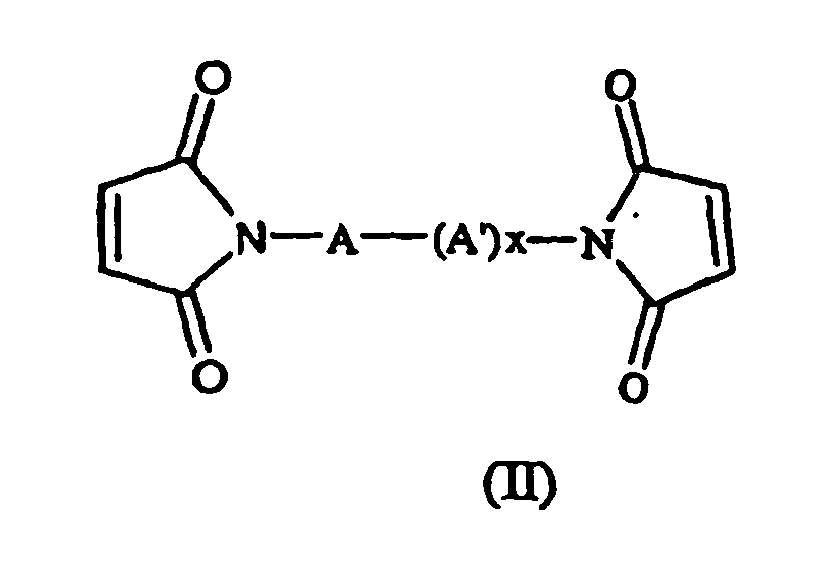
- a preferred class of compounds for use according to the invention is that of bismaleimide derivatives represented by formula (II): wherein A, A 1 and x are as defined above.
- x preferably represents 0 and A is as defined above.
- R 1 , R 2 , R 3 , n, p and q are preferably selected such that A represents a C 1-8 alkyl group, optionally interrupted by an oxygen atom; a polyalkylene glycol group having an average molecular weight in the range 100 to 1000; or a phenyl group; or n and q are preferably each 1, p represents 0 or 1,R 1 and R 3 preferably each represent phenyl and, when p is 1, R 2 preferably represents a C 1-8 alkyl group, optionally interrupted by an oxygen atom; or a polyalkylene glycol group having an average molecular weight in the range 100 to 1000.
- the maleimido moieties are preferably in the para position relative to each other.
- a represents biphenyl the bonds between the maleimido and phenyl groups and the bond between the two phenyl groups are are also preferably in the para positions.
- Maleimide derivatives for use according to the present invention are commercially available or can be prepared according to methods well known in the art.
- a maleimide derivative for use according to the present invention may be administered as the sole active ingredient or may be administered in combination with one or more other maleimide derivatives as defined herein and/or in combination with one or more other therapeutic agents.
- combination' means that the compounds may be administered simultaneously or sequentially, and there may be an interval of time between administration of the two or more compounds.
- Other therapeutic agents which may be administered in combination with one or more maleimide derivatives include antibacterial, antifungal and antiviral agents.
- the present invention provides the use of a compound of formula (I) and preferably the use of a compound of formula (II) for the prophylaxis and/or treatment of retroviral infections of the reproductive tract, in particular, HIV infection.
- the third aspect of the invention provides a pharmaceutical formulation comprising a compound as defined for the first aspect and a pharmaceutically acceptable excipient
- the compounds may be formulated for administration to the reproductive organs or reproductive tract (vaginal, cervical or uterine) or for rectal, buccal or oral administration.
- the compounds may be formulated using conventional methods known in the art.
- they may be formulated as creams, gels including thermoreversible gels, lubricants, pessaries, foaming tablets, aerosol foams, sprays, douches or films.
- the compounds may be incorporated into sustained release formulations, e.g. by micro-encapsulation, formulation with a bio-adhesive material, such as poly-carbophil, or other conventional means.
- Gels, creams and pessaries may, according to circumstance, be administered via an appropriate applicator.
- the formulations, in particular gels, creams and pessaries may be packaged with an appropriate applicator to facilitate administration.
- Compounds and compositions for use according to the present invention may also be incorporated into contraceptive devices.
- contraceptive devices may be incorporated into vaginal, cervical or uterine devices such as vaginal sponges or rings, and diaphragms or used to lubricate and/or coat condoms.
- the compounds may be formulated as lozenges, chewable tablets, wafers, mouthwashes and the like.
- a maleimide derivative may be administered at a dosage in the range 10-1000mg, e.g. 30 to 1000mg.
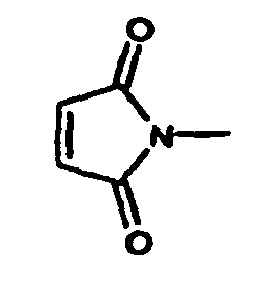
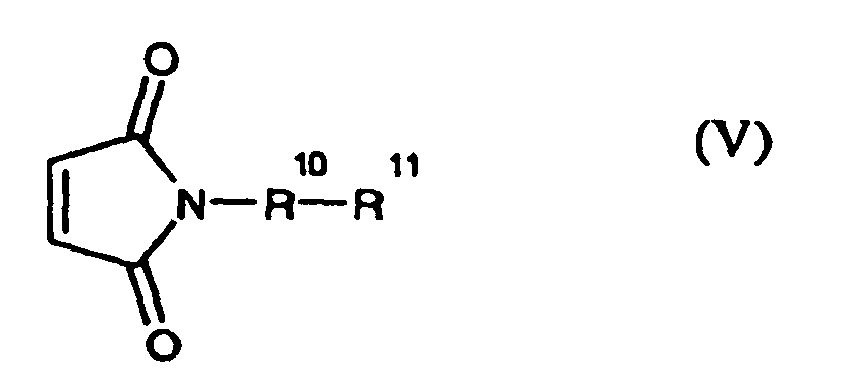
- a fourth aspect of the invention provides a compound of formula (V) wherein R 11 is and R 10 is C 2-10 alkyl, preferably wherein the alkyl group has 2, 3, 4, or 5 carbon atoms, or a group R 20 -R 21 -R 22 wherein R 20 is aryl, preferably phenyl; R 21 is -(OCH 2 CH 2 ) n - wherein n represents 3 to 15, preferably n is one of 4, 5, 6, 7, 8, 9, 10, 11,12 and 13; and R 23 is C 1-10 alkyl, or R 21 is - (OCH 2 -CH 2 ) 15 and R 22 is a group O-R 23 wherein R 23 is aryl.
- the fourth aspect of the invention also relates to salts, esters, amides or prodrugs of the compounds of formula V.
- the compounds of the fourth aspect can be synthesised according to methods well known in the art.
- PEG of the appropriate chain length is initially converted to the aminoaryl derivative using conventional chemical synthesis.
- One example of such a chemical synthesis includes the coupling of PEG with p-fluoronitrobenzene in the presence of sodium hydride and DMF to produce a nitro-substituted aryl-PEG moiety.
- the nitro-subsituted aryl-PEG moiety is then reduced with a reducing agent such as palladium/carbon to form the required amine compound.
- the amine compound can then be converted into the maleimide compound of formula V by a number of methods known in the art.
- One example of such a method includes reacting the amine with maleic anhydride.
- the fifth aspect of the invention provides a compound of formula V as defined in the fourth aspect of the invention for use in medicine.
- the compound of formula V is preferably provided as for the prevention or treatment of microbial infections which effect the reproductive tract.
- the compounds can be used to prevent or treat sexually transmitted infections and other infections which affect the reproductive tract.
- the cultures were centrifuged (3000 rpm, 1 hour at 37°C) and incubated for a further 2 hours prior to being changed onto MEM with 10% foetal calf serum, I ⁇ g/ml cycloheximide, 0.5% added glucose, vancomycin, streptomycin and amphoteracin B (Fungizone).
- the cultures were incubated for 68 hours, fixed in methanol and stained with Lugol's iodine. 3 replicates of each positive control (with and without DMSO) were included, as well as 2 uninoculated cell controls.
- Each coverslip culture was examined using low power (10X) objective to ensure that inclusions were evenly distributed and 5 high power (X40) fields were selected at random from different areas of the coverslip. Iodine stained inclusions were counted. Where no inclusions were seen on high power, the culture was re-examined under low power.
- HIV was attached to the surface of 96-well cell culture plates using 100 ⁇ l of 50 ⁇ g/ml poly L-lysine hydrobromide (PLL) of molecular weight >300K for 1h at RT.
- PLL poly L-lysine hydrobromide
- the outer wells were left uncoated and filled with 250 ⁇ l of PBS to counteract the effects of evaporation.
- the coated wells were washed twice with PBS and 25 ⁇ l of RPMI 1640 medium containing 5 x 10 3 TCID 50 of HIV-1 RF was added and incubated for 1h at RT.
- the wells were then washed twice with PBS and 25 ⁇ l of varying concentrations of the test compounds made up with serum free medium (containing a constant 10% DMSO) were added to the wells in quadruplicate and the plates incubated at 37°C for 10 minutes.
- the wells were again washed twice with PBS and 5 x 10 4 C8166 cells in a volume of 300 ⁇ l distributed to each well and the plates incubated for 5 and 6 days respectively. On days 5 and 6 the cells were assessed microscopically for the presence of cytopathic effect (syncytium formation) and recorded.
- XTT which is metabolised by viable but not dead cells, was added and the absorbance read at 450nm after 3-4hr incubation at 37°C.
- Comparative compound 3 PEG(5)PhMA
- Comparative compound 4 Ethyl maleimide
- PEG(5) phenyl maleimide (3) is less active than its PEG bis (phenyl maleimide) equivalent, PEG(5) bis phenyl bis maleimide (2).
- Table 1 Effect of Transient Treatment with maleimides on Chlamydia Infection of McCoy Cell In Vitro. Chlamydia was pre-treated with each of the indicated maleimides for 5 minutes and the compound removed by centrifugation. McCoy cells were then exposed to the compound pre-treated chlamydia for 68 hours and inclusions counted following staining of cells with Lugols iodine.
Landscapes
- Health & Medical Sciences (AREA)
- Chemical & Material Sciences (AREA)
- Organic Chemistry (AREA)
- Life Sciences & Earth Sciences (AREA)
- Medicinal Chemistry (AREA)
- Veterinary Medicine (AREA)
- Public Health (AREA)
- General Health & Medical Sciences (AREA)
- Animal Behavior & Ethology (AREA)
- Pharmacology & Pharmacy (AREA)
- Virology (AREA)
- General Chemical & Material Sciences (AREA)
- Nuclear Medicine, Radiotherapy & Molecular Imaging (AREA)
- Chemical Kinetics & Catalysis (AREA)
- Oncology (AREA)
- Communicable Diseases (AREA)
- Epidemiology (AREA)
- Molecular Biology (AREA)
- Tropical Medicine & Parasitology (AREA)
- AIDS & HIV (AREA)
- Pharmaceuticals Containing Other Organic And Inorganic Compounds (AREA)
- Saccharide Compounds (AREA)
- Polyesters Or Polycarbonates (AREA)
Abstract
Description
- The present invention relates to the use of poly-maleimide derivatives as microbicidal agents. In particular it relates to the use of poly-maleimide derivatives, preferably bis-maleimide compounds in the treatment of microbial infections of the reproductive tract, such as bacterial, fungal, protozoal and viral infections.
- Despite efforts to reduce the levels of sexually transmitted infections (STTs) for example by providing relevant information and education, and by promoting the use of barrier contraceptives, such as condoms, the level of such infections worldwide is increasing. There is therefore a continuing requirement for safe and effective therapeutic agents for the prophylaxis and treatment of STI's, in particular, agents which can readily be administered or applied at the time of sexual contact. Maleimides are a well known class of chemical compounds.
- Maleimide derivatives are known to have a wide variety of utilities, and find application in the biological and medicinal fields, as well as in general industrial use, for example in the preparation of polymers and inks.
- Thus for example, USP 3,129,225 (United States Vitamin and Pharmaceutical Corporation) describes maleimido betaines said to have antimicrobial and antiparasitic activity as well as pharmacological activity, in particular the reduction of serum cholesterol.
- German ALS 1,140,192 (United States Rubber Company) describes a novel bismaleimide with a CH2-O-CH2 bridge, and its use in vulcanisation, cross-linking of polymers and as fungicide for tomatoes.
- USP 4,876,358 (Texaco Inc.) describes novel bismaleimides having a (poly)oxyethylene bridge, for use in preparing polymers.
- USP 5,552,396 and WO 97/19080 (Eli Lilly) describe classes of N,N-bridged bisindolylmaleimides which are said to be inhibitors of protein kinase C, and to be useful for the treatment of diabetes, ischemia, inflammation, cns disorders, cardiovascular disease, dermatological disease and cancer.
- USP 5,380,764 (Goedecke AG) describes bis-indolemaleinimides, said to be protein kinase C inhibitors useful for treating diseases of heart or blood vessels, inflammatory processes, allergies, cancer and degenerative damage of cns, diseases of the immune system and viral diseases, including diseases caused by retroviruses HTLV -I, -II, -III.
- WO 96/09406 (The Government of the United States of America, represented by the Secretary of the Department of Health and Human Services) describes the use of disulfides, maleimides and a variety of other electron acceptor compounds in inactivating HIV-1 and other retroviruses.
- Igarashi et al., J. Industrial Microbiology, 6 (1990) pp223-225, report that various N-alkylmaleimides show antibacterial and antifungal activity.
- We have found that poly-maleimide derivatives of formula (I) inhibit the infectivity of the human HIV-1 virus. Such maleimides of formula (I) are useful in the prophylaxis and/or treatment of a variety of sexually transmitted infections and other infections which affect the reproductive system, including reproductive organs and reproductive tract.
- In a first aspect, there the present invention provides the use of a polymaleimide derivative of formula (I) in the manufacture of a medicament for the prophylaxis and/or treatment of microbial infections, in particular, sexually transmitted infections and other infections which affect the reproductive system.
- Microbial STIs and other infections which affect the reproductive system include bacterial, fungal, protozoal and viral infections.
- Bacterial infections include, chancroid, chlamydia, gonorrhoea, syphylis and bacterial vaginosis. Causitive agents of such infections include H. ducreyi, C. trachomatis, N. gonorrhoea, T. pallidum and anaerobic bacteria such as G. vaginalis.
- Fungal infections include candidiasis (commonly known as thrush) which is caused by C. albicans.
- Protozoal infections include trichomoniasis, caused by T. vaginalis.
- Viral STI's include those caused by a virus selected from HIV (AIDS) HSV (herpes simplex) HPV(human papilloma virus) and HBV (hepatitis B).
- The present invention therefore provides the use of a poly-maleimide compound of formula (I) in the manufacture of a medicament for the prophylaxis and/or treatment of a bacterial, fungal or protozoal infection of the reproductive system. The term poly-maleimide compound or derivative includes all derivatives, salts and substituted maleimides, including optionally substituted bis-maleimides and poly-maleimides. It does not relate to mono-maleimide compounds.
- The present invention also provides the use of a maleimide derivative of formula (I) in the manufacture of a medicament for the prophylaxis and/or treatment of a viral infection.
- The maleimide compound may preferably be represented by the general formula (I):

A is represented by (R1)n-(R2)p-(R3)q, wherein each of R1, R2 and R3 is independently selected from: - an acyclic aliphatic group having from 1-20 carbon atoms;
- a polyalkylene glycol group having an average molecular weight in the range 100 to 1000;
- a cyclic aliphatic group having from 4-20 carbon atoms;
- a monocyclic or polycyclic aromatic hydrocarbon group having from 6-18 ring carbon atoms;
- a non-aromatic heterocyclic group having from 3 to 8 ring atoms, or
- a monocyclic or polycyclic aromatic heterocyclic group having from 5 to 20 ring atoms;
- and n, p and q each represent 0 or 1 such that the sum of n+p+q = 1-3;
- or A substituted by one or more groups independently selected from:

- In compounds of formula (I) it is preferred that the total number of atoms in the moieties A and A' does not exceed 50.
- In the compounds of formula (I) above, an acyclic aliphatic group or moiety may be branched or unbranched alkyl, which alkyl group may be optionally interrupted by one or more oxygen atoms; alkenyl; or alkynyl; any of which may be optionally substituted by one or more substituents selected from the group consisting of halogen, cyano, nitro, -C(O)R4, -CO2R4, -OR4, -SR4-SOR4, -SO2R4, -NR4R5, -C(O)NR4R5; wherein R4 and R5 independently represent hydrogen, C1-8alkyl, aryl or arylC1-8alkyl.
- For the purposes of the present invention, alkyl groups may have from 1 to 20 carbon atoms, preferably from 1 to 15 carbon atoms, more preferably from 1 to 10 carbon atoms. Alkenyl groups may have from 2 to 20 carbon atoms, preferably from 2 to 15 carbon atoms, more preferably from 2 to 10 carbon atoms. Alkynyl groups may have from 2 to 20 carbon atoms, preferably from 2 to 15 carbon atoms, more preferably from 2 to 10 carbon atoms.
- A polyalkyleneglycol group may be a polyethylene glycol (PEG) or a polypropylene glycol which may be represented by the formulae -(OCH2CH2)mOH, -(OCH(CH3)CH2)mOH or -(OCH2CH2CH2)mOH, wherein m is in the
range 4 to 20. It will be appreciated that polyalkylene glycols are generally a mixture of chain lengths and are therefore conventionally described in terms of average molecular weight and average values of m. Thus for example PEG 200 has molecular weight in the range 190-210 and an average value of m=4 (The Merck Index, Eleventh edition). - Aryl is phenyl optionally substituted by one or more substituents selected from the group consisting of halogen, cyano, nitro, -C(O)R6, -CO2R6, -OR6, -SR6-SOR6, -SO2R6, -NR6R7, -C(O)NR6R7 wherein R6 and R7 independently represent hydrogen, or C1-8alkyl.
- A cyclic aliphatic group or moiety may be cycloalkyl or cycloalkenyl, either of which may be optionally substituted by one or more substituents selected from the group consisting of halogen, cyano, nitro, -C(O)R4, -CO2R4, -OR4, -SR4 -SOR4, -SO2R4, -NR4R5, -C(O)NR4R5; wherein R4 and R5 are as defined above.
- Cycloalkyl groups of the present invention may have from 3 to 20 carbon atoms, preferably from 3 to 10 carbon atoms, more preferably from 3 to 6 carbon atoms. Cycloalkenyl groups of the present invention may have from 3 to 20 carbon atoms, preferably from 3 to 10 carbon atoms, more preferably from 3 to 6 carbon atoms.
- Aromatic hydrocarbon groups and moieties include for example optionally substituted unsaturated monocyclic, fused bicyclic or tricyclic rings of up to 18 carbon atoms, such as phenyl and naphthyl, and partially saturated bicyclic or tricyclic rings such as tetrahydro-naphthyl. Aromatic groups also include linked aromatic rings, such as a biphenyl group. The aromatic rings may also be linked by heteroatoms, e.g. O, S or NR4. Examples of substituents which may be present on an aromatic group or moiety include one or more of halogen, alkyl, haloalkyl, cyano, nitro, -C(O)R4, -CO2R4, -OR4, -SR4 -SOR4, -SO2R4, -NR4R5, or -C(O)NR4R5. Substituents on the aromatic ring are preferably in the ortho or para position with respect to the maleimido group.
- An aromatic heterocyclic group or moiety may be unsaturated or partially saturated, for example an optionally substituted 5- or 6-membered heterocyclic aromatic ring which may contain from 1 to 4 heteroatoms selected from O, N and S. The heterocyclic ring may optionally be fused to one or more phenyl rings. Examples of heteroaryl groups thus include furyl, thienyl, pyrrolyl, oxazolyl, oxazinyl, thiazolyl, imidazolyl, oxadiazolyl, thiadiazolyl, pyridyl, triazolyl, triazinyl, pyridazyl, pyrimidinyl, pyrazolyl, indolyl, indazolyl, benzofuranyl, benzothienyl, benzimidazolyl,-benzoxazolyl, benzoxazinyl, quinoxalinyl, quinolinyl, quinazolinyl, cinnolinyl, benzothiazolyl, pyridopyrrolyl Examples of substituents which may be present on a heterocyclic aromatic group include one or more of halogen, oxo,, nitro, cyano, alkyl, haloalkyl, -C(O)R4, -CO2R4, -OR4, -SR4-SOR4, -SO2R4,-NR4R5, or -C(O)NR4R4, wherein R4 and R5 are as defined above. Partially saturated derivatives of the aforementioned heteroaryl groups include 3-pyrroline and 1,2-dihydroquinoline.
- Non-aromatic heterocyclic groups include pyrrolidinyl tetrahydrofuryl, tetrahydrothienyl and piperidinyl.
- In the compounds of formula (I) R1 preferably represents an aromatic hydrocarbon group, e.g. phenyl or naphthyl; or an aromatic heterocyclic group e.g.thienyl or acridine. Optional substituents present on the phenyl group are preferably in the ortho or para position (relative to maleimido) and may be for example selected from amino, halogen, eg chlorine, C1-4alkyl, nitro, phenoxy and phenylamino.
- When A represents phenyl the maleimido moieties are preferably in the para position relative to each other. When A represents biphenyl the bonds between the maleimido and phenyl groups and the bond between the two phenyl groups are are also preferably in the para positions.
- A preferred class of compounds for use according to the invention is that of bismaleimide derivatives represented by formula (II):
- In the compounds of formula (II) x preferably represents 0 and A is as defined above.
In the group A, R1, R2, R3, n, p and q are preferably selected such that A represents a C1-8alkyl group, optionally interrupted by an oxygen atom;
a polyalkylene glycol group having an average molecular weight in the range 100 to 1000; or
a phenyl group; or
n and q are preferably each 1, p represents 0 or 1,R1 and R3 preferably each represent phenyl and, when p is 1, R2 preferably represents a C1-8alkyl group, optionally interrupted by an oxygen atom; or
a polyalkylene glycol group having an average molecular weight in the range 100 to 1000. - When A represents phenyl, the maleimido moieties are preferably in the para position relative to each other. When A represents biphenyl, the bonds between the maleimido and phenyl groups and the bond between the two phenyl groups are are also preferably in the para positions.
- Maleimide derivatives for use according to the present invention are commercially available or can be prepared according to methods well known in the art.
- A maleimide derivative for use according to the present invention may be administered as the sole active ingredient or may be administered in combination with one or more other maleimide derivatives as defined herein and/or in combination with one or more other therapeutic agents. In this context 'in combination' means that the compounds may be administered simultaneously or sequentially, and there may be an interval of time between administration of the two or more compounds. Other therapeutic agents which may be administered in combination with one or more maleimide derivatives include antibacterial, antifungal and antiviral agents.
- In a second aspect, the present invention provides the use of a compound of formula (I) and preferably the use of a compound of formula (II) for the prophylaxis and/or treatment of retroviral infections of the reproductive tract, in particular, HIV infection.
- The third aspect of the invention provides a pharmaceutical formulation comprising a compound as defined for the first aspect and a pharmaceutically acceptable excipient
- For use in the treatment of STIs the compounds may be formulated for administration to the reproductive organs or reproductive tract (vaginal, cervical or uterine) or for rectal, buccal or oral administration. For administration to the reproductive organs or reproductive tract, or rectal administration the compounds may be formulated using conventional methods known in the art. Thus for example they may be formulated as creams, gels including thermoreversible gels, lubricants, pessaries, foaming tablets, aerosol foams, sprays, douches or films. The compounds may be incorporated into sustained release formulations, e.g. by micro-encapsulation, formulation with a bio-adhesive material, such as poly-carbophil, or other conventional means. Gels, creams and pessaries may, according to circumstance, be administered via an appropriate applicator. The formulations, in particular gels, creams and pessaries may be packaged with an appropriate applicator to facilitate administration.
- Compounds and compositions for use according to the present invention may also be incorporated into contraceptive devices. Thus for example they may be incorporated into vaginal, cervical or uterine devices such as vaginal sponges or rings, and diaphragms or used to lubricate and/or coat condoms.
- For buccal and oral administration the compounds may be formulated as lozenges, chewable tablets, wafers, mouthwashes and the like.
- For use according to the present invention, a maleimide derivative may be administered at a dosage in the range 10-1000mg, e.g. 30 to 1000mg.
- A fourth aspect of the invention provides a compound of formula (V)


wherein R20 is aryl, preferably phenyl;
R21 is -(OCH2CH2)n- wherein n represents 3 to 15, preferably n is one of 4, 5, 6, 7, 8, 9, 10, 11,12 and 13; and R23 is C1-10 alkyl, or R21 is - (OCH2-CH2)15
and R22 is a group O-R23 wherein R23 is aryl. - Preferred compounds of the fourth aspect are set out in the table below.
Compound number Structure 1 
2 
- The fourth aspect of the invention also relates to salts, esters, amides or prodrugs of the compounds of formula V.
- The compounds of the fourth aspect can be synthesised according to methods well known in the art. In particular, PEG of the appropriate chain length is initially converted to the aminoaryl derivative using conventional chemical synthesis. One example of such a chemical synthesis includes the coupling of PEG with p-fluoronitrobenzene in the presence of sodium hydride and DMF to produce a nitro-substituted aryl-PEG moiety. The nitro-subsituted aryl-PEG moiety is then reduced with a reducing agent such as palladium/carbon to form the required amine compound. The amine compound can then be converted into the maleimide compound of formula V by a number of methods known in the art. One example of such a method includes reacting the amine with maleic anhydride.
- The fifth aspect of the invention provides a compound of formula V as defined in the fourth aspect of the invention for use in medicine. The compound of formula V is preferably provided as for the prevention or treatment of microbial infections which effect the reproductive tract. The compounds can be used to prevent or treat sexually transmitted infections and other infections which affect the reproductive tract.
- All preferred features of different aspects of the invention apply to each other mutatis mutanadis.
- The invention will be further illustrated by the following examples:
-
- Figure 1 indicate optical density measurements versus various concentrations of the compounds of the invention.
- Purified Chlamydia trachomatis (250µl) was added to 250 µl of each compound concentration and the mixtures incubated at room temperature for 5 minutes. The tubes were then centrifuged (15000 rpm, 15 minutes), the supernatant decanted and the pellet washed serum free MEM (with 0.5mls). This step was repeated and the resultant pellet resuspended MEM (in 0.5ml) and inoculated into a confluent shell vial (coverslip) cultures of McCoy cells. The cultures were centrifuged (3000 rpm, 1 hour at 37°C) and incubated for a further 2 hours prior to being changed onto MEM with 10% foetal calf serum, I µg/ml cycloheximide, 0.5% added glucose, vancomycin, streptomycin and amphoteracin B (Fungizone). The cultures were incubated for 68 hours, fixed in methanol and stained with Lugol's iodine. 3 replicates of each positive control (with and without DMSO) were included, as well as 2 uninoculated cell controls. Each coverslip culture was examined using low power (10X) objective to ensure that inclusions were evenly distributed and 5 high power (X40) fields were selected at random from different areas of the coverslip. Iodine stained inclusions were counted. Where no inclusions were seen on high power, the culture was re-examined under low power.
- HIV was attached to the surface of 96-well cell culture plates using 100µl of 50µg/ml poly L-lysine hydrobromide (PLL) of molecular weight >300K for 1h at RT. The outer wells were left uncoated and filled with 250µl of PBS to counteract the effects of evaporation. The coated wells were washed twice with PBS and 25µl of RPMI 1640 medium containing 5 x 10³ TCID50 of HIV-1RF was added and incubated for 1h at RT. The wells were then washed twice with PBS and 25µl of varying concentrations of the test compounds made up with serum free medium (containing a constant 10% DMSO) were added to the wells in quadruplicate and the plates incubated at 37°C for 10 minutes. The wells were again washed twice with PBS and 5 x 10⁴ C8166 cells in a volume of 300µl distributed to each well and the plates incubated for 5 and 6 days respectively. On days 5 and 6 the cells were assessed microscopically for the presence of cytopathic effect (syncytium formation) and recorded. In order to quantify the cytopathic effect, XTT which is metabolised by viable but not dead cells, was added and the absorbance read at 450nm after 3-4hr incubation at 37°C.
- The following compounds of the invention were tested as set out in the above methods.
Compound number Structure 1 
2 
- The comparative compounds, ethyl maleimide and PEG(5)PhMA were also used in the above methods.
Comparative compound 3 (PEG(5)PhMA) 
Comparative compound 4 (Ethyl maleimide) 
- There is no apparent difference between the number of inclusions found in McCoy cells exposed to chlamydia transiently treated with either media (DMEM) or vehicle treated chlamydia (DMSO, 10% final) suggesting that this concentration of DMSO does not compromise the ability of chlamydia to infect McCoy cells. Transient exposure of chlamydia to
compounds 

- An assessment of viral cytopathic effect was made microscopically on days 5 and 6, but the end point of the experiment was on day 6 when the level of virus infection (as determined by cell viability) was quantified by the use of XTT. There is a good correlation between the microscopic scores for syncytium formation and the OD values obtained by XTT on day 6 and the presence of 10% DMSO in the medium used to treat the virus did not appear to make any difference to the results.
- The results of this experiment indicate that the most potent virucidal compound of the series was compound, 1 (IC50 = 1.0mM), collowed in order of activity by 2 (almost 50% inhibition at ImM), 4 (IC50 = 1.9mM) and 3 which showed no virucidal activity at concentrations up to 1.0mM.
Table 2 Compound Conc (mM) Syncytia score day 5 (quadruplicate wells) Syncytia score day 6 (quadruplicate wells) 1 1 ++ ++ 0 0 ++ ++/+++ 0 0 0.3 +++ +++ +++ +++ +++ +++ +++ +++ 0.1 ++++ ++++ ++++ ++++ ++++ ++++ ++++ ++++ 0.03 ++++ ++++ ++++ ++++ ++++ ++++ ++++ ++++ 0.01 ++++ ++++ ++++ ++++ ++++ ++++ ++++ ++++ 0.003 ++++ ++++ ++++ ++++ ++++ ++++ ++++ 2 1 +++ ++ ++ 0 +++ +++ ++ 0 0.3 +++ +++ +++ +++ ++++ ++++ ++++ ++++ 0.1 ++++ ++++ +++ ++++ ++++ ++++ ++++ ++++ 0.03 ++++ ++++ ++++ ++++ ++++ ++++ ++++ ++++ 0.01 ++++ ++++ ++++ ++++ ++++ ++++ ++++ ++++ 0.003 ++++ ++++ ++++ ++++ ++++ ++++ ++++ ++++ 3 1 +++ +++ +++ +++ +++ +++ +++ +++ 0.3 +++ +++ +++ +++ ++++ ++++ ++++ ++++ 0.1 +++ +++ +++ +++ ++++ ++++ ++++ ++++ 0.03 +++ +++ +++ +++ ++++ ++++ ++++ ++++ 0.01 +++ +++ +++ +++ ++++ ++++ ++++ ++++ 0.003 ++++ ++++ ++++ ++++ ++++ ++++ ++++ ++++ 4 3 0 0 0 0 0 0 0 +/- 1 +++ +++ +++ +++ ++ ++ +++ +++ 0.3 ++++ ++++ ++++ ++++ ++++ ++++ ++++ ++++ 0.1 ++++ ++++ ++++ ++++ ++++ ++++ ++++ ++++ 0.03 ++++ ++++ ++++ ++++ ++++ ++++ ++++ ++++ 0.01 ++++ ++++ ++++ ++++ ++++ ++++ ++++ ++++ Virus Control + DMSO ++++ ++++ ++++ ++++ ++++ ++++ ++++ ++++ Virus Control + Medium only ++++ ++++ ++++ ++++ ++++ ++++ ++++ ++++ No virus Control 0 0 0 0 0 0 0 0 Key: 0= No syncytia; += <10% syncytia; ++ =10-25% syncytia; +++= 25-50% syncytia; ++++ = 50-100% syncytia. Table 3 Mean Optical Readings at 450nm Conc mM 3 4 1.6305 1 nd 2 nd 3 nd Controls 1 0.5275 1.18075 0.9895 0.52675 Virus Control Virus Control+ 10% DMSO No Virus 50% Control 0.3 0.502 0.58525 0.50925 0.50925 0.5091 0.511 1.84955 1.1798 0.1 0.50475 0.53475 0.49825 0.51175 0.03 0.4915 0.51425 0.49275 0.50125 0.01 0.48 0.50275 0.4895 0.5085 0.003 0.4875 0.48825 0.50175 nd= not determined Table 4 Compound IC 50 mM 1 1.0 2 ~1.0 4 1.9 3 >1.0 - The foregoing description details specific compounds, compositions, methods and uses which can be employed to practice the present invention.
or a salt, ester or other physiologically equivalent derivative thereof.
Claims (11)
- Use of a poly-maleimide derivative in the manufacture of a medicament for the prophylaxis and/or treatment of microbial infection which affect the reproductive system wherein the maleimide compound is a compound of general formula (I):

A is represented by (R1)n-(R2)p-(R3)q, wherein each of R1, R2 and R3 is independently selected from:an acyclic aliphatic group having from 1-20 carbon atoms;a polyalkylene glycol group having an average molecular weight in the range 100 to 1000;a cyclic aliphatic group having from 4-20 carbon atoms;a monocyclic or polycyclic aromatic hydrocarbon group having from 6-18 ring carbon atoms;a non-aromatic heterocyclic group having from 3 to 8 ring atoms, ora monocyclic or polycyclic aromatic heterocyclic group having from 5 to 20 ring atoms;and n, p and q each represent 0 or 1 such that the sum of n+p+q = 1-3;or A substituted by one or more groups independently selected from:wherein A', which may be the same as or different from A, represents a group (R1)n-(R2)p-(R3)q, wherein R1, R2, R3, n, p and q are as defined above and wherein X is 0 or 1 and y is 1 to 6;
or a salt, or ester thereof. - Use according to claim 1 wherein the infection is a bacterial, fungal or protozoal infection.
- Use according to claim 1 wherein the infection is a viral infection.
- Use according to claim 3 wherein the viral infection is caused by a retrovirus, such as HIV.
- Use according to any of claims 1 to 4 wherein the infection is a sexually transmitted infection.
- Use according to claims 1 to 5 wherein the maleimide is a compound of formula (II):

- Pharmaceutical formulation comprising a maleimide derivative as defined in claim 1 or 6.
- A compound of formula (V)

wherein R20 is aryl;
R21 is -(OCH2CH2)n wherein n is 3 to 15;
R22 is a group O-R23 wherein R23 is C1-10 alkyl;
or R21 is -(OCH2CH2)n wherein n is 15;
R22 is a group O-R23 wherein R23 is aryl. - A compound of formula (V)

wherein R20 is aryl;
R21 is -(OCH2CH2)n- wherein n is 3 to 15;
R22 is a group O-R23 wherein R23 is aryl or C1-10 alkyl,
for use in medicine. - A compound as claimed in claim 9 selected from

- A compound as claimed in claim 9 or claim 10 for preventing or treating a microbial infection which affects the reproductive system.
Applications Claiming Priority (3)
| Application Number | Priority Date | Filing Date | Title |
|---|---|---|---|
| GB0125658 | 2001-10-25 | ||
| GBGB0125658.5A GB0125658D0 (en) | 2001-10-25 | 2001-10-25 | Medicaments |
| PCT/GB2002/004798 WO2003035058A2 (en) | 2001-10-25 | 2002-10-24 | Polymaleide compounds and their medical use |
Publications (2)
| Publication Number | Publication Date |
|---|---|
| EP1438042A2 EP1438042A2 (en) | 2004-07-21 |
| EP1438042B1 true EP1438042B1 (en) | 2006-09-06 |
Family
ID=9924532
Family Applications (1)
| Application Number | Title | Priority Date | Filing Date |
|---|---|---|---|
| EP02801965A Expired - Lifetime EP1438042B1 (en) | 2001-10-25 | 2002-10-24 | Polymaleimide compounds and their medical use |
Country Status (8)
| Country | Link |
|---|---|
| US (1) | US20050148653A1 (en) |
| EP (1) | EP1438042B1 (en) |
| AT (1) | ATE338545T1 (en) |
| AU (1) | AU2002334233A1 (en) |
| DE (1) | DE60214578T2 (en) |
| ES (1) | ES2269814T3 (en) |
| GB (1) | GB0125658D0 (en) |
| WO (1) | WO2003035058A2 (en) |
Family Cites Families (15)
| Publication number | Priority date | Publication date | Assignee | Title |
|---|---|---|---|---|
| US3129225A (en) * | 1961-06-07 | 1964-04-14 | Us Vitamin Pharm Corp | Novel 4-oxy-3-maleimidyl betaines |
| DE1545848A1 (en) * | 1965-08-23 | 1969-10-16 | Bayer Ag | Process for the production of maleimides or isomaleimides |
| US4810638A (en) * | 1986-07-24 | 1989-03-07 | Miles Inc. | Enzyme-labeled antibody reagent with polyalkyleneglycol linking group |
| EP0345356A4 (en) * | 1987-11-11 | 1990-10-10 | Toray Industries, Inc. | Platinum complex and therapeutic agent for malignant tumor |
| US4876358A (en) * | 1987-11-25 | 1989-10-24 | Texaco Inc. | Oxyethylene bismaleimide derivatives |
| US5380746A (en) * | 1989-05-05 | 1995-01-10 | Goedecke Aktiengesellschaft | Bis-(1H-indol-3-YL)-maleinimide derivatives, processes for the preparation thereof and pharmaceutical compositions containing them |
| CA2047078A1 (en) * | 1990-07-19 | 1992-01-20 | Steven S. Bondy | Cyclic hiv principal neutralizing determinant peptides |
| JPH04120004A (en) * | 1990-09-07 | 1992-04-21 | Ichikawa Gosei Kagaku Kk | Antimicrobial and antifungal agent |
| JPH05178825A (en) * | 1991-12-26 | 1993-07-20 | Yamanouchi Pharmaceut Co Ltd | Nen peptide derivative |
| US5624949A (en) * | 1993-12-07 | 1997-04-29 | Eli Lilly And Company | Protein kinase C inhibitors |
| US5539132A (en) * | 1994-01-24 | 1996-07-23 | Johns Hopkins University | Cerulenin compounds for fatty acid synthesis inhibition |
| US6001555A (en) * | 1994-09-23 | 1999-12-14 | The United States Of America As Represented By The Department Of Health And Human Services | Method for identifying and using compounds that inactivate HIV-1 and other retroviruses by attacking highly conserved zinc fingers in the viral nucleocapsid protein |
| US5658940A (en) * | 1995-10-06 | 1997-08-19 | Celgene Corporation | Succinimide and maleimide cytokine inhibitors |
| JP3329161B2 (en) * | 1995-10-31 | 2002-09-30 | 松下電器産業株式会社 | Non-aqueous electrolyte secondary battery |
| EP0817789B1 (en) * | 1996-01-26 | 2002-01-02 | Roche Diagnostics Corporation | Bis-maleimido cross-linking agents |
-
2001
- 2001-10-25 GB GBGB0125658.5A patent/GB0125658D0/en not_active Ceased
-
2002
- 2002-10-24 WO PCT/GB2002/004798 patent/WO2003035058A2/en not_active Ceased
- 2002-10-24 US US10/493,428 patent/US20050148653A1/en not_active Abandoned
- 2002-10-24 DE DE60214578T patent/DE60214578T2/en not_active Expired - Lifetime
- 2002-10-24 ES ES02801965T patent/ES2269814T3/en not_active Expired - Lifetime
- 2002-10-24 AU AU2002334233A patent/AU2002334233A1/en not_active Abandoned
- 2002-10-24 EP EP02801965A patent/EP1438042B1/en not_active Expired - Lifetime
- 2002-10-24 AT AT02801965T patent/ATE338545T1/en not_active IP Right Cessation
Also Published As
| Publication number | Publication date |
|---|---|
| GB0125658D0 (en) | 2001-12-19 |
| WO2003035058A3 (en) | 2003-12-31 |
| EP1438042A2 (en) | 2004-07-21 |
| ATE338545T1 (en) | 2006-09-15 |
| AU2002334233A1 (en) | 2003-05-06 |
| DE60214578T2 (en) | 2007-09-13 |
| WO2003035058A2 (en) | 2003-05-01 |
| DE60214578D1 (en) | 2006-10-19 |
| US20050148653A1 (en) | 2005-07-07 |
| ES2269814T3 (en) | 2007-04-01 |
Similar Documents
| Publication | Publication Date | Title |
|---|---|---|
| CN104486945B (en) | Be used for the treatment of the Compounds and methods for of candidiasis and aspergillus infection | |
| IE904619A1 (en) | Improvements in chemical compounds | |
| AU770656B2 (en) | Antifungal activity of dicationic molecules | |
| JP2013506716A (en) | Methods for treating diseases using proanthocyanidin oligomers such as crofelemer | |
| WO2021086567A1 (en) | Compounds and methods for potentiating colistin activity | |
| Mungroo et al. | Synthetic nanoparticle-conjugated bisindoles and hydrazinyl arylthiazole as novel antiamoebic agents against brain-eating amoebae | |
| CN101570496B (en) | Curcumin-4-nitrogen-containing derivatives and its preparation method and use | |
| EP2599783B1 (en) | N6-(ferrocenmethyl)quinazolin-2,4,6-triamin (h2) and the derivatives and prodrugs thereof as antileishmanial, antiprotozoal, antiparasitic and antimicrobial agents | |
| MXPA01006746A (en) | Phenethyl-5-bromopyridylthiourea (pbt) and dihydroalkoxybenzyloxopyrimidine (dabo) derivatives exhibiting spermicidal activity. | |
| WO2018081869A1 (en) | Antimicrobial compounds | |
| Gupta et al. | Design and synthesis of coumarin–glyoxal hybrids for spermicidal and antimicrobial actions: a dual approach to contraception | |
| US20050148653A1 (en) | Polymaleimide compounds and their medical use | |
| EP1937284B1 (en) | Microbicidal dendrimer composition delivery system | |
| US20050131238A1 (en) | Spermicides | |
| KR20080071182A (en) | Salts of 9-oxoacridin-10-acetic acid and 1-alkylamino-1-deoxypolyols, pharmaceutical compositions comprising them and methods of treatment | |
| CN102603677B (en) | Curcumin-4-mannich base derivative, preparation method and use of curcumin-4-mannich base derivative | |
| EP3661912B1 (en) | Compounds for treating infections | |
| US6281251B1 (en) | Iodo-nonoxynol-9-derivatives and methods for their use | |
| RU2835077C1 (en) | Obtaining a water-soluble 6-bromo-1-methyl-5-methoxy-2-(1-piperidinomethyl)-3-(2-diethylaminoethoxy) carbonylindole dihydrochloride compound | |
| US20230348365A1 (en) | Compounds for treating infections | |
| RU2448089C1 (en) | 4-METHYLANILIDE-N-n-PROPYLPYRROLIDINE-2-CARBOXYLIC ACID BORATE, HAVING ANTHELMINTHIC ACTIVITY | |
| US20260138957A1 (en) | Urea-linked 2-aminoimidazole dimer potentiators | |
| US20150152051A1 (en) | Pharmaceutical composition of a papillomavirus inhibitor | |
| EP0644869A1 (en) | Ion pairs of hypericin compounds having antiviral activity | |
| CN108440446A (en) | Benzothiazine -4- ketone compounds containing oximido segment and preparation method thereof |
Legal Events
| Date | Code | Title | Description |
|---|---|---|---|
| PUAI | Public reference made under article 153(3) epc to a published international application that has entered the european phase |
Free format text: ORIGINAL CODE: 0009012 |
|
| 17P | Request for examination filed |
Effective date: 20040429 |
|
| AK | Designated contracting states |
Kind code of ref document: A2 Designated state(s): AT BE BG CH CY CZ DE DK EE ES FI FR GB GR IE IT LI LU MC NL PT SE SK TR |
|
| AX | Request for extension of the european patent |
Extension state: AL LT LV MK RO SI |
|
| GRAP | Despatch of communication of intention to grant a patent |
Free format text: ORIGINAL CODE: EPIDOSNIGR1 |
|
| GRAS | Grant fee paid |
Free format text: ORIGINAL CODE: EPIDOSNIGR3 |
|
| GRAA | (expected) grant |
Free format text: ORIGINAL CODE: 0009210 |
|
| AK | Designated contracting states |
Kind code of ref document: B1 Designated state(s): AT BE BG CH CY CZ DE DK EE ES FI FR GB GR IE IT LI LU MC NL PT SE SK TR |
|
| PG25 | Lapsed in a contracting state [announced via postgrant information from national office to epo] |
Ref country code: IT Free format text: LAPSE BECAUSE OF FAILURE TO SUBMIT A TRANSLATION OF THE DESCRIPTION OR TO PAY THE FEE WITHIN THE PRESCRIBED TIME-LIMIT;WARNING: LAPSES OF ITALIAN PATENTS WITH EFFECTIVE DATE BEFORE 2007 MAY HAVE OCCURRED AT ANY TIME BEFORE 2007. THE CORRECT EFFECTIVE DATE MAY BE DIFFERENT FROM THE ONE RECORDED. Effective date: 20060906 Ref country code: AT Free format text: LAPSE BECAUSE OF FAILURE TO SUBMIT A TRANSLATION OF THE DESCRIPTION OR TO PAY THE FEE WITHIN THE PRESCRIBED TIME-LIMIT Effective date: 20060906 Ref country code: CZ Free format text: LAPSE BECAUSE OF FAILURE TO SUBMIT A TRANSLATION OF THE DESCRIPTION OR TO PAY THE FEE WITHIN THE PRESCRIBED TIME-LIMIT Effective date: 20060906 Ref country code: CH Free format text: LAPSE BECAUSE OF FAILURE TO SUBMIT A TRANSLATION OF THE DESCRIPTION OR TO PAY THE FEE WITHIN THE PRESCRIBED TIME-LIMIT Effective date: 20060906 Ref country code: FI Free format text: LAPSE BECAUSE OF FAILURE TO SUBMIT A TRANSLATION OF THE DESCRIPTION OR TO PAY THE FEE WITHIN THE PRESCRIBED TIME-LIMIT Effective date: 20060906 Ref country code: BE Free format text: LAPSE BECAUSE OF FAILURE TO SUBMIT A TRANSLATION OF THE DESCRIPTION OR TO PAY THE FEE WITHIN THE PRESCRIBED TIME-LIMIT Effective date: 20060906 Ref country code: NL Free format text: LAPSE BECAUSE OF FAILURE TO SUBMIT A TRANSLATION OF THE DESCRIPTION OR TO PAY THE FEE WITHIN THE PRESCRIBED TIME-LIMIT Effective date: 20060906 Ref country code: SK Free format text: LAPSE BECAUSE OF FAILURE TO SUBMIT A TRANSLATION OF THE DESCRIPTION OR TO PAY THE FEE WITHIN THE PRESCRIBED TIME-LIMIT Effective date: 20060906 Ref country code: LI Free format text: LAPSE BECAUSE OF FAILURE TO SUBMIT A TRANSLATION OF THE DESCRIPTION OR TO PAY THE FEE WITHIN THE PRESCRIBED TIME-LIMIT Effective date: 20060906 |
|
| RAP1 | Party data changed (applicant data changed or rights of an application transferred) |
Owner name: SSL INTERNATIONAL PLC |
|
| REG | Reference to a national code |
Ref country code: GB Ref legal event code: FG4D |
|
| REG | Reference to a national code |
Ref country code: CH Ref legal event code: EP |
|
| REG | Reference to a national code |
Ref country code: IE Ref legal event code: FG4D |
|
| REF | Corresponds to: |
Ref document number: 60214578 Country of ref document: DE Date of ref document: 20061019 Kind code of ref document: P |
|
| PG25 | Lapsed in a contracting state [announced via postgrant information from national office to epo] |
Ref country code: IE Free format text: LAPSE BECAUSE OF NON-PAYMENT OF DUE FEES Effective date: 20061024 |
|
| PG25 | Lapsed in a contracting state [announced via postgrant information from national office to epo] |
Ref country code: MC Free format text: LAPSE BECAUSE OF NON-PAYMENT OF DUE FEES Effective date: 20061031 |
|
| PG25 | Lapsed in a contracting state [announced via postgrant information from national office to epo] |
Ref country code: DK Free format text: LAPSE BECAUSE OF FAILURE TO SUBMIT A TRANSLATION OF THE DESCRIPTION OR TO PAY THE FEE WITHIN THE PRESCRIBED TIME-LIMIT Effective date: 20061206 Ref country code: BG Free format text: LAPSE BECAUSE OF FAILURE TO SUBMIT A TRANSLATION OF THE DESCRIPTION OR TO PAY THE FEE WITHIN THE PRESCRIBED TIME-LIMIT Effective date: 20061206 Ref country code: SE Free format text: LAPSE BECAUSE OF FAILURE TO SUBMIT A TRANSLATION OF THE DESCRIPTION OR TO PAY THE FEE WITHIN THE PRESCRIBED TIME-LIMIT Effective date: 20061206 |
|
| PG25 | Lapsed in a contracting state [announced via postgrant information from national office to epo] |
Ref country code: PT Free format text: LAPSE BECAUSE OF FAILURE TO SUBMIT A TRANSLATION OF THE DESCRIPTION OR TO PAY THE FEE WITHIN THE PRESCRIBED TIME-LIMIT Effective date: 20070219 |
|
| NLV1 | Nl: lapsed or annulled due to failure to fulfill the requirements of art. 29p and 29m of the patents act | ||
| ET | Fr: translation filed | ||
| REG | Reference to a national code |
Ref country code: CH Ref legal event code: PL |
|
| REG | Reference to a national code |
Ref country code: ES Ref legal event code: FG2A Ref document number: 2269814 Country of ref document: ES Kind code of ref document: T3 |
|
| PLBE | No opposition filed within time limit |
Free format text: ORIGINAL CODE: 0009261 |
|
| STAA | Information on the status of an ep patent application or granted ep patent |
Free format text: STATUS: NO OPPOSITION FILED WITHIN TIME LIMIT |
|
| 26N | No opposition filed |
Effective date: 20070607 |
|
| PG25 | Lapsed in a contracting state [announced via postgrant information from national office to epo] |
Ref country code: GR Free format text: LAPSE BECAUSE OF FAILURE TO SUBMIT A TRANSLATION OF THE DESCRIPTION OR TO PAY THE FEE WITHIN THE PRESCRIBED TIME-LIMIT Effective date: 20061207 |
|
| PG25 | Lapsed in a contracting state [announced via postgrant information from national office to epo] |
Ref country code: EE Free format text: LAPSE BECAUSE OF FAILURE TO SUBMIT A TRANSLATION OF THE DESCRIPTION OR TO PAY THE FEE WITHIN THE PRESCRIBED TIME-LIMIT Effective date: 20060906 |
|
| PG25 | Lapsed in a contracting state [announced via postgrant information from national office to epo] |
Ref country code: LU Free format text: LAPSE BECAUSE OF NON-PAYMENT OF DUE FEES Effective date: 20061024 Ref country code: TR Free format text: LAPSE BECAUSE OF FAILURE TO SUBMIT A TRANSLATION OF THE DESCRIPTION OR TO PAY THE FEE WITHIN THE PRESCRIBED TIME-LIMIT Effective date: 20060906 |
|
| PG25 | Lapsed in a contracting state [announced via postgrant information from national office to epo] |
Ref country code: CY Free format text: LAPSE BECAUSE OF FAILURE TO SUBMIT A TRANSLATION OF THE DESCRIPTION OR TO PAY THE FEE WITHIN THE PRESCRIBED TIME-LIMIT Effective date: 20060906 |
|
| REG | Reference to a national code |
Ref country code: FR Ref legal event code: PLFP Year of fee payment: 14 |
|
| REG | Reference to a national code |
Ref country code: FR Ref legal event code: PLFP Year of fee payment: 15 |
|
| REG | Reference to a national code |
Ref country code: FR Ref legal event code: PLFP Year of fee payment: 16 |
|
| REG | Reference to a national code |
Ref country code: FR Ref legal event code: PLFP Year of fee payment: 17 |
|
| PGFP | Annual fee paid to national office [announced via postgrant information from national office to epo] |
Ref country code: FR Payment date: 20210913 Year of fee payment: 20 Ref country code: IT Payment date: 20210910 Year of fee payment: 20 |
|
| PGFP | Annual fee paid to national office [announced via postgrant information from national office to epo] |
Ref country code: GB Payment date: 20210915 Year of fee payment: 20 |
|
| PGFP | Annual fee paid to national office [announced via postgrant information from national office to epo] |
Ref country code: ES Payment date: 20211108 Year of fee payment: 20 Ref country code: DE Payment date: 20210914 Year of fee payment: 20 |
|
| REG | Reference to a national code |
Ref country code: DE Ref legal event code: R071 Ref document number: 60214578 Country of ref document: DE |
|
| REG | Reference to a national code |
Ref country code: ES Ref legal event code: FD2A Effective date: 20221031 |
|
| REG | Reference to a national code |
Ref country code: GB Ref legal event code: PE20 Expiry date: 20221023 |
|
| PG25 | Lapsed in a contracting state [announced via postgrant information from national office to epo] |
Ref country code: GB Free format text: LAPSE BECAUSE OF EXPIRATION OF PROTECTION Effective date: 20221023 Ref country code: ES Free format text: LAPSE BECAUSE OF EXPIRATION OF PROTECTION Effective date: 20221025 |