EP1437417B1 - Beta-catenin oligonucleotide michrochip and method for detecting beta-catenin mutations employing same - Google Patents
Beta-catenin oligonucleotide michrochip and method for detecting beta-catenin mutations employing same Download PDFInfo
- Publication number
- EP1437417B1 EP1437417B1 EP20030019265 EP03019265A EP1437417B1 EP 1437417 B1 EP1437417 B1 EP 1437417B1 EP 20030019265 EP20030019265 EP 20030019265 EP 03019265 A EP03019265 A EP 03019265A EP 1437417 B1 EP1437417 B1 EP 1437417B1
- Authority
- EP
- European Patent Office
- Prior art keywords
- catenin
- dna
- oligonucleotides
- oligonucleotide
- artificial sequence
- Prior art date
- Legal status (The legal status is an assumption and is not a legal conclusion. Google has not performed a legal analysis and makes no representation as to the accuracy of the status listed.)
- Expired - Lifetime
Links
Images

Classifications
-
- C—CHEMISTRY; METALLURGY
- C12—BIOCHEMISTRY; BEER; SPIRITS; WINE; VINEGAR; MICROBIOLOGY; ENZYMOLOGY; MUTATION OR GENETIC ENGINEERING
- C12Q—MEASURING OR TESTING PROCESSES INVOLVING ENZYMES, NUCLEIC ACIDS OR MICROORGANISMS; COMPOSITIONS OR TEST PAPERS THEREFOR; PROCESSES OF PREPARING SUCH COMPOSITIONS; CONDITION-RESPONSIVE CONTROL IN MICROBIOLOGICAL OR ENZYMOLOGICAL PROCESSES
- C12Q1/00—Measuring or testing processes involving enzymes, nucleic acids or microorganisms; Compositions therefor; Processes of preparing such compositions
- C12Q1/68—Measuring or testing processes involving enzymes, nucleic acids or microorganisms; Compositions therefor; Processes of preparing such compositions involving nucleic acids
-
- C—CHEMISTRY; METALLURGY
- C12—BIOCHEMISTRY; BEER; SPIRITS; WINE; VINEGAR; MICROBIOLOGY; ENZYMOLOGY; MUTATION OR GENETIC ENGINEERING
- C12Q—MEASURING OR TESTING PROCESSES INVOLVING ENZYMES, NUCLEIC ACIDS OR MICROORGANISMS; COMPOSITIONS OR TEST PAPERS THEREFOR; PROCESSES OF PREPARING SUCH COMPOSITIONS; CONDITION-RESPONSIVE CONTROL IN MICROBIOLOGICAL OR ENZYMOLOGICAL PROCESSES
- C12Q1/00—Measuring or testing processes involving enzymes, nucleic acids or microorganisms; Compositions therefor; Processes of preparing such compositions
- C12Q1/68—Measuring or testing processes involving enzymes, nucleic acids or microorganisms; Compositions therefor; Processes of preparing such compositions involving nucleic acids
- C12Q1/6876—Nucleic acid products used in the analysis of nucleic acids, e.g. primers or probes
- C12Q1/6883—Nucleic acid products used in the analysis of nucleic acids, e.g. primers or probes for diseases caused by alterations of genetic material
- C12Q1/6886—Nucleic acid products used in the analysis of nucleic acids, e.g. primers or probes for diseases caused by alterations of genetic material for cancer
-
- C—CHEMISTRY; METALLURGY
- C12—BIOCHEMISTRY; BEER; SPIRITS; WINE; VINEGAR; MICROBIOLOGY; ENZYMOLOGY; MUTATION OR GENETIC ENGINEERING
- C12Q—MEASURING OR TESTING PROCESSES INVOLVING ENZYMES, NUCLEIC ACIDS OR MICROORGANISMS; COMPOSITIONS OR TEST PAPERS THEREFOR; PROCESSES OF PREPARING SUCH COMPOSITIONS; CONDITION-RESPONSIVE CONTROL IN MICROBIOLOGICAL OR ENZYMOLOGICAL PROCESSES
- C12Q1/00—Measuring or testing processes involving enzymes, nucleic acids or microorganisms; Compositions therefor; Processes of preparing such compositions
- C12Q1/68—Measuring or testing processes involving enzymes, nucleic acids or microorganisms; Compositions therefor; Processes of preparing such compositions involving nucleic acids
- C12Q1/6813—Hybridisation assays
- C12Q1/6834—Enzymatic or biochemical coupling of nucleic acids to a solid phase
- C12Q1/6837—Enzymatic or biochemical coupling of nucleic acids to a solid phase using probe arrays or probe chips
-
- C—CHEMISTRY; METALLURGY
- C12—BIOCHEMISTRY; BEER; SPIRITS; WINE; VINEGAR; MICROBIOLOGY; ENZYMOLOGY; MUTATION OR GENETIC ENGINEERING
- C12Q—MEASURING OR TESTING PROCESSES INVOLVING ENZYMES, NUCLEIC ACIDS OR MICROORGANISMS; COMPOSITIONS OR TEST PAPERS THEREFOR; PROCESSES OF PREPARING SUCH COMPOSITIONS; CONDITION-RESPONSIVE CONTROL IN MICROBIOLOGICAL OR ENZYMOLOGICAL PROCESSES
- C12Q2600/00—Oligonucleotides characterized by their use
- C12Q2600/156—Polymorphic or mutational markers
Definitions
- the present invention relates to a ⁇ -catenin oligonucleotide microchip for detecting mutations in the mutational hot spot regions of ⁇ -catenin gene, a manufacturing process thereof and a method for detecting ⁇ -catenin mutations employing same.
- ⁇ -Catenin which functions as a downstream transcriptional activator in the Wnt signaling pathway, is a submembrane component of the cadherin-mediated cell-cell adhesion system (Abraham, S. C. et al., Am. J. Pathol. 158:1005-1010, 2001; Abraham, S. C. et al., Am. J. Pathol. 158:1073-1078, 2001).
- APC adenomatus polyposis coli
- GSK-3 ⁇ glycogen synthase kinase-3 ⁇
- ⁇ -catenin mutations have been reported at specific GSK-3 ⁇ phosphorylation sites, i.e., Ser-33, Ser-37, Thr-41, Ser-45, and other residues (Asp-32 and Gly-34) in many human cancers, including endometrial, gastric, ovarian, hepatoblastomas, and colorectal cancers (Saegusa, M. and Okayasu, I. J. Pathol. 194:59-67, 2001). In colorectal cancers, various frequencies of the ⁇ -catenin mutations have been reported, ranging from 0 to 16% (Nilbert, M. and Rambech, E. Cancer Genet. Cytogenet.
- MSI-H microsatellite instability-H, MSI-H
- APC mutations Mirabelli-Primdahl, L. et al., Cancer Res. 59:3346-51, 1999
- ⁇ -catenin gene mutations are mainly induced in MSI-H colorectal carcinomas (Mirabelli-Primdahl, L. et al., Cancer Res. 59:3346-51, 1999; Shitoh, K. et al., Genes Chromosomes Cancer 30:32-37, 2001).
- Traverso et al. used MSI in the stool as a marker for the diagnosis of proximal colon cancers in stools (Traverso, G. et al., Lancet. 359:403-404, 2002), and several other markers, such as APC, p53, long DNA and K-ras, have been also used for colorectal cancer diagnosis using fecal DNA (Ahlquist, D. A. et al., Gastroenterology 119:1219-1227, 2000; Dong S. M. et al., J. Natl. Cancer. Inst. 93:858-865, 2001).
- ⁇ -catenin mutations might be used to diagnose proximal colon cancer.
- the present inventors have developed a ⁇ -catenin oligonucleotide microchip manufactured by fixing oligonucleotides on the surface of a solid matrix using an automatic microarrayer, the oligonucleotides being designed to detect various mutations at mutational hot spot regions of ⁇ -catenin gene.
- the ⁇ -catenin oligonucleotide microchip of the present invention can be used in studies to detect ⁇ -catenin mutations and to unravel the signal transduction mechanism and tumorigenesis related to ⁇ -catenin gene.
- an object of the present invention is to provide a ⁇ -catenin oligonucleotide microchip which can be used as a fast and reliable genetic diagnostic device for studying the signal transduction mechanism and tumorigenesis related to ⁇ -catenin gene.
- a ⁇ -catenin oligonucleotide microchip for detecting ⁇ -catenin mutations comprising a plurality of oligonucleotides fixed on the surface of a solid matrix, wherein the oligonucleotides are designed to detect mutations in the mutational hot spots of ⁇ -catenin gene and a manufacturing process thereof.
- the present invention provides a ⁇ -catenin oligonucleotide microchip (hereinafter, referred to as " ⁇ -catenin oligo chip”) for detecting ⁇ -catenin mutations, which comprises oligonucleotides fixed on the surface of a solid matrix using an automatic microarrayer, wherein the oligonucleotides are capable of detecting various mutations at mutational hot spot regions of ⁇ -catenin gene.
- ⁇ -catenin oligo chip for detecting ⁇ -catenin mutations, which comprises oligonucleotides fixed on the surface of a solid matrix using an automatic microarrayer, wherein the oligonucleotides are capable of detecting various mutations at mutational hot spot regions of ⁇ -catenin gene.
- the oligonucleotides are designed to detect all possible missense mutations and in-frame deletions at 11 codons (codons 29, 31, 32, 33, 34, 35, 37, 38, 41, 45 and 48) in exon 3, mutational hot spots of ⁇ -catenin gene.
- ⁇ -Catenin mutations have been identified in a variety of human malignancies, most of being missense mutations resctricted at hot-spot areas in exon 3. ⁇ -Catenin mutations are known to be associated with colorectal cancers with MSI. More than 70% of ⁇ -catenin mutations have been reported in colorectal cancers, and about 90% of those at the 11 codons in the hot spot region (codons 29, 31, 32, 33, 34, 35, 37, 38, 41, 45 and 48).
- the present invention provides oligonucleotides which can be used to detect all possible mutations at the above mentioned hot spots of ⁇ -catenin gene, which occur at a frequency of more than 90% of all cases examined. Therefore, the ⁇ -catenin oligo chip of the present invention makes it possible to detect mutation at a confidence level of over 90%.
- the oligonucleotides used in the inventive ⁇ -catenin oligo chip are designed to detect all possible missense mutations at the 11 codons, it is capable of detecting any missense mutation at these codons which have not yet been discovered.
- the inventive ⁇ -catenin oligo chip also includes the oligonucleotides for detecting in-frame deletion (3-bp deletion) at each of the hot spot codons. Namely, as the inventive oligonucleotides are specifically designed to detect mutations at the hot spots of ⁇ -catenin gene taking the gene characteristics into consideration, the inventive ⁇ -catenin oligo chip provides improved accuracy and efficiency in detecting ⁇ -catenin gene mutation.
- the inventive ⁇ -catenin oligo chip has 121 types of oligonucleotides spotted and fixed on the surface of a solid matrix, the oligonucleotides being capable of detecting various missense mutations and in-frame deletions at the 11 hot spot codons of ⁇ -catenin gene.
- Each oligonucleotide is spotted 4 times horizontally for increased accuracy of measured signals.
- Nine oligonucleotides (M) are designed to cover all possible substitutions at each hot spot codon, and one oligonucleotide (W) for the wild type.
- oligonucleotides are designed to detect missense mutations for codons 23, 29, 31, 32, 33, 34, 35, 38, 41 and 48.
- 11 oligonucleotides (D) are designed to detect in-frame deletions (3-bp deletion) for each hot spot codon.
- the 121 oligonucleotides cover all substitutions and in-frame deletions in the above 11 codons of exon 3.
- codon 29 used for codon 29 are 9 types of substituted oligonucleotides obtained by replacing TCT (serine) with ACT (threonine), GCT (alanine), CCT (proline), TAT (tyrosine), TGT (cytosine), TTT (phenylalanine), TCA (serine), TCG (serine) and TCC (serine), respectively, and one deletion oligonucleotide obtained by deleting 3 bp of TCT.
- Used for codon 31 are 9 types of substituted oligonucleotides obtained by replacing CTG (leucine) with ATG (methionine), TTG (leucine), GTG (valine), CAG (glutamine), CGG (arginine), CCG (proline), CTA (leucine), CTC (leucine) and CTT (leucine), respectively; and one deletion oligonucleotide obtained by deleting 3 bp of CTG.
- oligonucleotides used for codon 32 are 9 types of substituted oligonucleotides obtained by replacing GAC (aspartic acid) with CAC (histidine), TAC (tyrosine), AAC (asparagines), GCC (alanine), GTC (valine), GGC (glycine), GAG (glutamic acid), GAT (aspartic acid) and GAA (glutamic acid), respectively; and one deletion oligonucleotide obtained by deleting 3 bp of GAC.
- oligonucleotides used for codon 33 are 9 types of substituted oligonucleotides obtained by replacing TCT (serine) with ACT (threonine), GCT (alanine), CCT (proline), TGT (cysteine), TAT (tyrosine), TTT (phenylalanine), TCA (serine), TCG (serine) and TCC (serine), respectively; and one deletion oligonucleotide obtained by deleting 3 bp of TCT.
- Used for codon 34 are 9 types of substituted oligonucleotides obtained by replacing GGA (glycine) with TGA (stop codon), AGA (arginine), CGA (arginine), GTA (valine), GCA (alanine), GAA (glutamic acid), GGT (glycine), GGG (glycine) and GGC (glycine), respectively; and one deletion oligonucleotide obtained by deleting 3 bp of GGA.
- Used for codon 35 are 9 types of substituted oligonucleotides obtained by replacing ATC (isoleucine) with GTC (valine), CTC (leucine), TTC (phenylalanine), ACC (threonine), AGC (serine), AAC (asparagine), ATG (methionine), ATA (isoleucine) and ATT (isoleucine), respectively; and one deletion oligonucleotide obtained by deleting 3 bp of ATC.
- ATC isoleucine
- GTC valine
- CTC leucine
- TTC phenylalanine
- ACC threonine
- AGC seerine
- AAC asparagine
- ATG methionine
- ATA isoleucine
- ATT isoleucine
- oligonucleotides obtained by replacing TCT (serine) with ACT (threonine), CCT (proline), GCT (alanine), TAT (tyrosine), TGT (cysteine), TTT (phenylalanine), TCA (serine), TCG (serine) and TCC (serine), respectively; and one deletion oligonucleotide obtained by deleting 3 bp of ACT.
- oligonucleotides obtained by replacing GGT (glycine) with AGT (serine), CGT (arginine), TGT (cysteine), GAT (aspartic acid), GCT (alanine), GTT (valine), GGA (glycine), GGG (glycine) and GGC (glycine), respectively; and one deletion oligonucleotide obtained by deleting 3 bp of GGT.
- oligonucleotides obtained by replacing ACC (threonine) with TCC (serine), GCC (alanine), CCC (proline), AGC (serine), ATC (isoleucine), AAC (asparagine), ACA (threonine), ACT (threonine) and ACG (theronine), respectively; and one deletion oligonucleotide obtained by deleting 3 bp of ACC.
- Used for codon 45 are 9 types of substituted oligonucleotides obtained by replacing TCT (serine) with ACT (threonine), GCT (alanine), CCT (proline), TGT (cysteine), TAT (tyrosine), TTT (phenylalanine), TCA (serine), TCG (serine) and TCC (serine), respectively; and one deletion oligonucleotide obtained by deleting 3 bp of ACT.
- Used for codon 48 are 9 types of substituted oligonucleotides obtained by replacing GGT (glycine) with AGT (serine), TGT (cysteine), CGT (arginine), GAT (aspartic acid), GCT (alanine), GTT (valine), GGA (glycine), GGC (glycine) and GGG (glycine), respectively; and one deletion oligonucleotide obtained by deleting 3 bp of GGT.
- oligonucleotide One wild type of oligonucleotide (W) is designed for each codon to be directly compared with mutation types and to cover both homozygous and heterozygous mutations. For example, 12 oligonucleotides are spotted for codon 29, one is to detect a normal base sequence and the rest, the mutated base sequences. As a whole, 110 mutant oligonucleotides are designed for the 99 missense mutation types and 11 in-frame deletion types at the 11 hot spot codons, and 11 oligonucleotides, for the wild types and positive controls.
- the ⁇ -catenin oligo chip of the present invention is manufactured by fixing 121 oligonucleotides on the surface of a solid matrix using an automatic microarrayer by a process comprising the steps of:
- each of the oligonucleotides used in step (1) preferably has a functional group that can be used to form a stable bond with the solid matrix surface.
- each oligonucleotide may be linked with a 12 carbon spacer having a 5' amino modification, e.g., H 2 N-(CH 2 ) 12 -oligonucleotide. This amine group undergoes Schiff's base reaction with an aldehyde group on the solid matrix to form a firm bond therebetween.
- the 12 carbon spacer serves to enhance the hybridization rate by facilitating the contact between the oligonucleotide and a fluorescent dye-labeled target DNA.
- the micro spotting solution used in step (1) may contain suitable salts and polymers to facilitate the application of the oligonucleotides on the solid matrix.
- the solid matrix used in step (2) may be made of glass; modified silicone; plastic cassette; or polymer such as polycarbonate or a gel thereof.
- the surface of a solid matrix may be coated with a chemical compound that can serve to bind the oligonucleotide to the matrix substrate.
- Preferable chemicals that can be used for such coating have functional groups such as aldehyde or amine groups.
- the present invention uses a slide glass coated with an aldehyde.
- a total of 484 oligonucleotides are arranged in a specified manner on a solid matrix using an automatic pin microarrayer.
- Each oligonucleotide spot is preferably of circular shape with a diameter ranging from 100 to 500 ⁇ m.
- a preferable example of the solid matrix is a 3.7 cm ⁇ 7.6 cm slide glass, which can accommodate approximately 100 to 10,000 spots per chip.
- a total of 484 oligonucleotide spots, each of 130 ⁇ m diameter may be arranged in multiple columns and rows at intervals of 200 to 800 ⁇ m.
- step (3) the oligonucleotides are fixed on the solid matrix surface by way of forming covalent bonds between the amine groups of the oligonucleotide and the aldehyde groups of the solid matrix via Schiff's base reaction. Free unreacted oligonucleotides are removed by washing the solid matrix with SDS, SSC, SSPE, etc.
- step (4) the fixed oligonucleotides are denatured, and unreacted aldehyde groups remaining on the solid matrix are reduced and inactivated by sodium borohydride treatment.
- the ⁇ -catenin oligo chip of the present invention manufactured by the above process may be advantageously used to detect gene mutation, and this inventive method is much simpler and more economical than any of the conventional gene mutation detection methods: It takes several days to months on the average when the presence of gene mutation is examined using such conventional methods as SSCP (single strand conformation polymorphism), PTT (protein truncation test), RFLP (restriction fragment length polymorphism), cloning, direct sequencing, etc. However, analysis of a DNA sample for ⁇ -catenin gene mutation takes less than 10 to 11 hours when the inventive ⁇ -catenin oligo chip is employed.
- the ⁇ -catenin oligo chip of the present invention can be manufactured much more simply at a much less production cost than conventional chips. Once the required oligonucleotides are synthesized, it is possible to mass-produce the inventive slides. The amounts of reagents required when the inventive ⁇ -catenin oligo chip is used are far less than those required in any of the conventional methods.
- the ⁇ -catenin oligo chip of the present invention is easy to manufacture using a pin microarrayer, while the existing Affymetrix oligo chip must be prepared using a complicated and expense photolithography technique.
- the ⁇ -catenin oligo chip of the present invention to purify and modify the oligonucleotides, in contrast to the case of Affymetrix oligo chip which is prepared by directly synthesizing oligonucleotides on the surface of a solid matrix, wherein it is not possible to purify or modify the oligonucleotides.
- the inventive ⁇ -catenin oligo chip is capable of providing greater experimental accuracy than was possible before.
- the present invention provides a method for detecting the ⁇ -catenin mutation employing the ⁇ -catenin oligo chip, which comprises the steps of:
- a DNA sample is prepared by incorporating a fluorescent dye into a blood DNA sample obtained from a subject patient.
- a fluorescent dye include, but are not limited to, Cy5, Cy3, Texas Red, Fluorescein and Lissamine.
- step (2) the florescent dye-labeled DNA sample prepared in step (1) is mixed with a hybridization solution and transferred to each of the oligonucleotide.
- the hybridization reaction is performed in a 45 ⁇ 60°C incubator saturated with water vapor for 3 ⁇ 9 hours.
- the oligo chip is washed to remove unbound sample DNA and dried (step 3), and the resulting fluorescence is analyzed with a fluorescence reader using an appropriate software (step 4).
- step (5) setting a maximum value at 99% reliable range as a threshold value, any signal showing a fluorescence level higher than the threshold is regarded positive for the presence of mutation.
- the ⁇ -catenin oligo chip of the present invention can be effectively used to diagnose such cancer as colorectal carcinomas, endometrial cancer, stomach cancer, ovary cancer, hepatoblastoma cancer, etc. Since ⁇ -catenin gene function as a downstream transcriptional activator in the Wnt signaling pathway, the inventive ⁇ -catenin oligo chip can be used as an effective diagnostic tool for the study of signal transduction mechanism and tumorigenesis related to ⁇ -catenin gene.
- codon 32 is important for ⁇ -catenin ubiquitination and proteasome-dependent degradation (Tong, J. H. et al., Cancer Lett. 163:125-130, 1999). Mutations at codon 32 might influence serine 33 accessibility by GSK-3 ⁇ kinase, thus preventing its phosphorylation (Koch, A. et al., Cancer Res. 59:269-273, 1999).
- the in-frame deletion at codon 45 may result in the loss of highly conserved serine residues in a region of the protein that serves as a target for the enzyme GSK-3 ⁇ (Ilyas, M. et al., Proc. Natl. Acad. Sci. USA 94:10330-10334, 1997). These results indicate that codon 45 mutations, including the in-frame deletion, are common in colorectal carcinomas but are not common in other types of cancer.
- Mutational analysis of the ⁇ -catenin gene was performed using the oligonucleotide microarray. As the result of mutational analysis using the inventive ⁇ -catenin oligo chip, the 9 ⁇ -catenin mutation positive samples in a total of 60 samples were detected. The present inventors compared the 9 ⁇ -catenin mutations detected by the ⁇ -catenin oligo chip with several techniques, e.g., PCR-SSCP, DHPLC, direct sequencing, cloning-sequencing (see Table 2).
- MSI is intimately associated with proximal colon cancer, which agrees with previous reports (p ⁇ 0.01) (Mirabelli-Primdahl, L. et al., Cancer Res. 59:3346-51, 1999; Traverso, G. et al., Lancet. 359:403-404, 2002). MSI was shown in 10 of 34 proximal colon carcinomas (29%), but in only 2 of 40 distal colorectal carcinomas (5%).
- MSI has been used for colorectal cancer diagnosis using fecal DNA (Traverso, G. et al., Lancet. 359:403-404, 2002).
- MSI has been used for the diagnosis of proximal colon cancers, which is difficult to detect because, among colorectal cancers, they are located furthest from the anus.
- ⁇ -Catenin may be a diagnostic marker for proximal colon cancer if ⁇ -catenin mutations correlate with the tumor's location in the proximal colon.
- the results of the present invention show MSI in 29% and ⁇ -catenin mutations in 15% of proximal colon cancers, respectively.
- MSI MSI
- ⁇ -catenin alone or with MSI
- Example 1 Manufacture of ⁇ -catenin oligo chip
- oligonucleotides were designed to cover all possible substitutions at 11 mutational hot spot codons of ⁇ -catenin gene (codons 23, 29, 31, 32, 34, 35, 37, 38, 41, 45 and 48), and one oligonucleotide for the wild-type. Further, one oligonucleotide was designed to detect in-frame deletions (3-bp deletion) at each of those codons. A total of 121 oligonucleotides was designed to cover all substitutions and in-frame deletions at the above 11 codons of exon 3.
- Oligonucleotides described in SEQ ID Nos. 1, 12, 23, 34, 45, 56, 67, 78, 89, 100 and 111 are wild types. Oligonucleotides having missense mutation at one of the hot spot codons are: the oligonucleotides described in SEQ ID Nos. 2 to 10, at codon 29; the oligonucleotides described in SEQ ID Nos. 13 to 21, at codon 31; the oligonucleotides described in SEQ ID Nos. 24 to 32, at codon 32; the oligonucleotides described in SEQ ID Nos. 35 to 43, at codon 33; the oligonucleotides described in SEQ ID Nos.
- oligonucleotides having in-frame deletion at one of the hot spot codons are: the oligonucleotide described in SEQ ID No. 11, at codon 29; the oligonucleotide described in SEQ ID No. 22, at codon 31; the oligonucleotide described in SEQ ID No. 33, at codon 32; the oligonucleotide described in SEQ ID No. 44, at codon 33; the oligonucleotide described in SEQ ID No. 55, at codon 34; the oligonucleotide described in SEQ ID No. 66, at codon 35; the oligonucleotide described in SEQ ID No.
- Oligonucleotide Exon Codon Sequence 89 41 W 3 41 5'-GGTGCCACTACCACAGCTCCT-3' 90 41M1 5'-TGGTGCCACT TCC ACAGCTCC-3' 91 41M2 5'-TGGTGCCACT GCC ACAGCTCC-3' 92 41M3 5'-TGGTGCCACT CCC ACAGCTCC-3' 93 41M4 5'-GGTGCCACT AGC ACAGCTCCT-3' 94 41M5 5'-GGTGCCACT ATC ACAGCTCCT-3' 95 41M6 5'-GGTGCCACT AAC ACAGCTCCT-3' 96 41M7 5'-GTGCCACT ACA ACAGCTCCTT-3 97 41M8 5'-GTGCCACT ACT ACAGCTCCTT-3' 98 41M9 5'-GTGCCACT ACG ACAGCTCCTT-3' 99 41D 5'-TGGTGCCACTACAGCTCCTTC-3' 100 45W 45 5'-ACAGCTCCTTCTCTGAGTGGT
- Each oligonucleotide was mixed with a micro spotting solution (TeleChem International Inc, Sunnyvale, CA) at a mix ratio of 1:1, and 40 ⁇ l of each oligonucleotide was transferred to a 96 well plate. Twenty pmol/ ⁇ l of oligonucleotides were spotted for codons 37, 41 and 45, and 40 pmol/ ⁇ l for the remaining eight codons. After the charged 96 well plate was placed in a pin microarrayer (Microsys 5100 Cartesian, Cartesian Technologies Inc, Irvine, CA), each oligonucleotide was printed on an aldehyde-coated glass slide (26 ⁇ 76 ⁇ 1 mm, CEL Associates Inc, Houston, TX).
- Example 2 Examination of ⁇ -catenin mutation using ⁇ -catenin oligo chip
- Specimens of 74 colorectal carcinomas were collected from Seoul National University Hospital and 31 colorectal cancer cell lines were obtained from the Korean Cell Line Bank (KCLB).
- 34 were from the proximal colon (cecum to splenic flexure) and 40 were from the distal colorectum (splenic flexure to rectum).
- 31 colorectal cancer cell lines 7 originated from the proximal colon and 6 from the distal colorectum. The origin of the remaining 18 colorectal cancer cell lines was unknown.
- the gastric cancer cell lines SNU-638 and SNU-719 were used as positive controls for ⁇ -catenin mutations (Woo, D. K. et al., Int. J. Cancer 95:108-113, 2001).
- SNU-638 has ⁇ -catenin mutation at codon 41 (ACC ⁇ GCC, Thr ⁇ Ala) and SNU-791 mutation at codon 34 (GGA ⁇ GTA, Gly ⁇ Val).
- Genomic DNA was extracted from frozen specimens using TRI reagent (Molecular Research Center, Cincinnati, OH, USA) or the automatic magnetic bead-based system (KingFisher, ThermoLabsystems, Finland), following the manufacture's instructions.
- TRI reagent Molecular Research Center, Cincinnati, OH, USA
- KingFisher ThermoLabsystems, Finland
- PCR amplification was performed using the extracted DNA as a template and two pairs of primers described in SEQ ID Nos. 122 to 125 (MWG-Biotech, Ebersberg, Germany).
- SEQ ID Nos. 122 and 123 for exon 3 were used as described in Mirabelli-Primdahl, L. et al. ( Cancer Res.
- Each PCR reaction solution (25 ⁇ l) contained 100 ng of genomic DNA, 10 pmol of each primer, 40 ⁇ M of dCTP, 20 ⁇ M of fluorescent dye Cy5-dCTP (MEN) or Cy3-dCTP (Amersham-biotech Ltd., Buckinghamshire, UK). Reactions were initiated by denaturation for 5 min at 94 °C in a programmable thermal cycler (Perkin Elmer Cetus 9600; Roche Molecular Systems, Inc., NJ). PCR conditions consisted of 35 cycles of 30 sec at 94°C, 30 sec at 56°C, and 1 min at 72°C , with a final elongation of 7 min at 72 °C.
- Cy5- or Cy3-labeled PCR product was purified using a purification kit (Qiagen Inc, Valencia, CA) and digested with 0.25 U of DNase I (Takara, Shiga, Japan) at 25°C for 10 min. Remaining enzyme was inactivated at 85°C for 10 min, removed by repeating the above purification procedure, and the Cy5- or Cy3-labeled DNA sample was recovered.
- a purification kit Qiagen Inc, Valencia, CA
- DNase I Takara, Shiga, Japan
- the Cy5- or Cy3-labeled DNA samples prepared in step (1) were mixed and resuspended in 5 ⁇ hybridization solution (TeleChem International Inc, Sunnyvale, CA) to a volume of 2 ⁇ 4 ⁇ l.
- 5 ⁇ hybridization solution Telab International Inc, Sunnyvale, CA
- Two ⁇ l of the mixed DNA sample prepared in Example 1 was dropped on the glass slide and the glass slide was covered with a cover glass.
- the hybridization reaction was performed by incubating the glass slide in a saturated vapor tube at 56°C for 3 hours.
- the hybridized glass slide was rinsed at room temperature in a buffer of 0.2% SDS + 2 ⁇ SSC for 15 ⁇ 30 min, and then, in distilled water for 5 min, followed by centrifuging and drying.
- the glass slide was scanned using a ScanArray Lite (Parkard Instrument Co, Meriden, CT) and analyzed using Imagine (Biodiscovery, version 4.2) and Quantitative Microarray analysis software (QuantArray, version 2.0).
- a total of 9 mutations were found among 74 colorectal cancer tissues and 31 colorectal cancer cell lines. Eight mutations out of these 9 mutations were identified at GSK-3 ⁇ phosphrylation sites. All point mutations were amino acid substitutions and occurred at codons 32, 41 and 45. Six mutations were concentrated at codon 45. Four of these 6 point mutations at codon 45 were the identical missense mutations (TCT ⁇ TTT, Ser ⁇ Phe; in samples 395, 400, SNU-1047 and LS 174T) and the remaining 2 mutations, the same in-frame deletions as in samples 396 and HCT116. No interstitial large deletion of the ⁇ -catenin gene was detected.
- Example 3 Confirmation of ⁇ -catenin mutations detected by ⁇ -catenin oligo chip
- the nine ⁇ -catenin mutation samples were subjected to PCR-SSCP, DHPLC, PTT, cloning sequencing and direct sequencing as follows.
- PCR-SSCP and DHPLC analyses were performed as previously described (Kim, I. J. et al., Int. J. Cancer 86:529-532, 2000; Wagner, T. et al., Genomics 62:369-376, 1999).
- DHPLC analysis was done using WAVE (Transgenomic, Omaha, NE) and running conditions were optimized using WAVEMAKER software.
- a protein truncation test (PTT) was performed for mutation detection of the mutation cluster region (MCR, codon 1263-1513) of the APC gene, as previously described (Won, Y. J. et al., J. Hum. Genet. 44:103-108, 1999).
- MSI status can be meaningfully correlated with proximal colon cancers, and MSI may be used as a diagnostic marker for the diagnosis of proximal colon cancer (Traverso, G. et al., Lancet. 359:403-403, 2002).
- genomic DNAs extracted from 74 colorectal carcinomas were subjected to PCR using BAT-26 marker (Shitoh, K. et al., Genes Chromosomes Cancer 30:32-37, 2001; Samowits, W. S. et al., Am. J. Pathol. 158:1517-1524, 2001).
- Each PCR reaction solution (25 ⁇ l) contained 100 ng of genomic DNA extracted from normal and cancer tissues using Picoll-Paque and Trizol reagents, 10 pmol of each BAT26-F and BAT26-R primers of SEQ ID Nos. 126 and 127 0.25 ⁇ l, 2.5 mM of dNTP 0.5 ⁇ l, 10x PCR buffer solution 2.5 ⁇ l, [ ⁇ - 32 P]dCTP 0.25 ⁇ l, and Taq DNA polymerase (5 unit/ ⁇ l). Reactions were initiated by denaturation for 5 min at 94°C in a programmable thermal cycler (Perkin Elmer Cetus 9600; Roche Molecular Systems, Inc., NJ).
- PCR conditions consisted of 35 cycles of 30 sec at 94°C , 30 sec at 52°C, and 1 min at 72 °C, with a final elongation of 7 min at 72°C.
- the reaction mixture was heated at 95°C for 5 min and cooled down in a ice bath. Thirty-five ⁇ l of the cooled reaction mixture was subjected to 40% polyacrylamide gel (29:1) electrophoresis, and the gel was dried and exposed to X-ray.
Landscapes
- Chemical & Material Sciences (AREA)
- Life Sciences & Earth Sciences (AREA)
- Health & Medical Sciences (AREA)
- Organic Chemistry (AREA)
- Proteomics, Peptides & Aminoacids (AREA)
- Engineering & Computer Science (AREA)
- Zoology (AREA)
- Wood Science & Technology (AREA)
- Immunology (AREA)
- Analytical Chemistry (AREA)
- Genetics & Genomics (AREA)
- Pathology (AREA)
- Physics & Mathematics (AREA)
- Biotechnology (AREA)
- Microbiology (AREA)
- Molecular Biology (AREA)
- Biophysics (AREA)
- Biochemistry (AREA)
- Bioinformatics & Cheminformatics (AREA)
- General Engineering & Computer Science (AREA)
- General Health & Medical Sciences (AREA)
- Hospice & Palliative Care (AREA)
- Oncology (AREA)
- Measuring Or Testing Involving Enzymes Or Micro-Organisms (AREA)
- Apparatus Associated With Microorganisms And Enzymes (AREA)
Abstract
Description
- The present invention relates to a β-catenin oligonucleotide microchip for detecting mutations in the mutational hot spot regions of β-catenin gene, a manufacturing process thereof and a method for detecting β-catenin mutations employing same.
- β-Catenin, which functions as a downstream transcriptional activator in the Wnt signaling pathway, is a submembrane component of the cadherin-mediated cell-cell adhesion system (Abraham, S. C. et al., Am. J. Pathol. 158:1005-1010, 2001; Abraham, S. C. et al., Am. J. Pathol. 158:1073-1078, 2001). APC (adenomatus polyposis coli) tumor suppressor protein, along with GSK-3β (glycogen synthase kinase-3β), promotes the phosphorylation of the serine/thereonine residues in exon 3 of the β-catenin gene (Abraham, S. C. et al., Am. J. Pathol. 158:1073-1078, 2001). Mutation of the APC gene or the β-catenin gene was found to result in the accumulation of β-catenin protein and the loss of β-catenin regulatory activity (Abraham, S. C. et al., Am. J. Pathol. 158:1073-1078, 2001). The majority of β-catenin mutations have been reported at specific GSK-3β phosphorylation sites, i.e., Ser-33, Ser-37, Thr-41, Ser-45, and other residues (Asp-32 and Gly-34) in many human cancers, including endometrial, gastric, ovarian, hepatoblastomas, and colorectal cancers (Saegusa, M. and Okayasu, I. J. Pathol. 194:59-67, 2001). In colorectal cancers, various frequencies of the β-catenin mutations have been reported, ranging from 0 to 16% (Nilbert, M. and Rambech, E. Cancer Genet. Cytogenet. 128:43-45, 2001; Mirabelli-Primdahl, L. et al., Cancer Res. 59:3346-51, 1999). Most β-catenin mutations are restricted at some codons in exon 3, and substitution mutations causing amino acid changes predominate in the β-catenin gene (Devereux, T. R. et al., Mol. Carcinog. 31:68-73, 2001; Udatsu, Y et al., Pediatr. Surg. Int. 17:508-512, 2001; Koch, A. et al., Cancer Res. 59:269-273, 1999; de La Coste, A. et al., Proc. Natl. Acad. Sci. USA 95:8847-8851, 1998; Morin, Bioessays, 21, 1021-1030).
- Although it seems easy to detect β-catenin gene mutations using conventional methods, such as PCR-SSCP (single strand conformation polymorphism) and direct sequencing, technical problems associated with the low sensitivity of such β-catenin mutation detection methods have been reported (Abraham, S. C. et al., Am. J. Pathol. 158:1005-1010, 2001). Thus, there has been a need to develop a more reliable and faster mutation detection technique for β-catenin gene which can be used for various cancer studies, e.g., elucidation of the Wnt signaling related mechanism.
- Studies have suggested that the high frequency MSI (microsatellite instability-H, MSI-H) colorectal cancer is not linked to APC mutations (Mirabelli-Primdahl, L. et al., Cancer Res. 59:3346-51, 1999), and that β-catenin gene mutations are mainly induced in MSI-H colorectal carcinomas (Mirabelli-Primdahl, L. et al., Cancer Res. 59:3346-51, 1999; Shitoh, K. et al., Genes Chromosomes Cancer 30:32-37, 2001).
- Traverso et al. used MSI in the stool as a marker for the diagnosis of proximal colon cancers in stools (Traverso, G. et al., Lancet. 359:403-404, 2002), and several other markers, such as APC, p53, long DNA and K-ras, have been also used for colorectal cancer diagnosis using fecal DNA (Ahlquist, D. A. et al., Gastroenterology 119:1219-1227, 2000; Dong S. M. et al., J. Natl. Cancer. Inst. 93:858-865, 2001).
- The fact that β-catenin mutations are prone to occur in proximal colon cancers suggests β-catenin mutations might be used to diagnose proximal colon cancer. Accordingly, the present inventors have developed a β-catenin oligonucleotide microchip manufactured by fixing oligonucleotides on the surface of a solid matrix using an automatic microarrayer, the oligonucleotides being designed to detect various mutations at mutational hot spot regions of β-catenin gene. The β-catenin oligonucleotide microchip of the present invention can be used in studies to detect β-catenin mutations and to unravel the signal transduction mechanism and tumorigenesis related to β-catenin gene.
- Accordingly, an object of the present invention is to provide a β-catenin oligonucleotide microchip which can be used as a fast and reliable genetic diagnostic device for studying the signal transduction mechanism and tumorigenesis related to β-catenin gene.
- In accordance with one aspect of the present invention, there is provided a β-catenin oligonucleotide microchip for detecting β-catenin mutations comprising a plurality of oligonucleotides fixed on the surface of a solid matrix, wherein the oligonucleotides are designed to detect mutations in the mutational hot spots of β-catenin gene and a manufacturing process thereof.
- In accordance with still another aspect of the present invention, there is provided a method for detecting β-catenin mutations employing same.
- The above and other objects and features of the present invention will become apparent from the following description of the invention, when taken in conjunction with the accompanying drawings which respectively show;
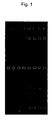
- Fig. 1: the result of detecting β-catenin mutation in colon cancer tissue using the inventive β-catenin oligonucleotide microchip;
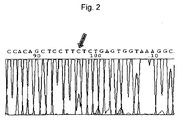
- Fig. 2: the direct sequencing result of colon cancer tissue which has a β-catenin mutation confirmed by the inventive β-catenin oligonucleotide microchip;
- Fig. 3: the PCR-SSCP analysis result of colon cancer tissue which has a β-catenin mutation confirmed by the inventive β-catenin oligonucleotide microchip.
- The present invention provides a β-catenin oligonucleotide microchip (hereinafter, referred to as "β-catenin oligo chip") for detecting β-catenin mutations, which comprises oligonucleotides fixed on the surface of a solid matrix using an automatic microarrayer, wherein the oligonucleotides are capable of detecting various mutations at mutational hot spot regions of β-catenin gene.
- First, the oligonucleotides are designed to detect all possible missense mutations and in-frame deletions at 11 codons (codons 29, 31, 32, 33, 34, 35, 37, 38, 41, 45 and 48) in exon 3, mutational hot spots of β-catenin gene.
- β-Catenin mutations have been identified in a variety of human malignancies, most of being missense mutations resctricted at hot-spot areas in exon 3. β-Catenin mutations are known to be associated with colorectal cancers with MSI. More than 70% of β-catenin mutations have been reported in colorectal cancers, and about 90% of those at the 11 codons in the hot spot region (codons 29, 31, 32, 33, 34, 35, 37, 38, 41, 45 and 48).
- The present invention provides oligonucleotides which can be used to detect all possible mutations at the above mentioned hot spots of β-catenin gene, which occur at a frequency of more than 90% of all cases examined. Therefore, the β-catenin oligo chip of the present invention makes it possible to detect mutation at a confidence level of over 90%. In addition, since the oligonucleotides used in the inventive β-catenin oligo chip are designed to detect all possible missense mutations at the 11 codons, it is capable of detecting any missense mutation at these codons which have not yet been discovered. Further, the inventive β-catenin oligo chip also includes the oligonucleotides for detecting in-frame deletion (3-bp deletion) at each of the hot spot codons. Namely, as the inventive oligonucleotides are specifically designed to detect mutations at the hot spots of β-catenin gene taking the gene characteristics into consideration, the inventive β-catenin oligo chip provides improved accuracy and efficiency in detecting β-catenin gene mutation.
- According to one aspect of the present invention, the inventive β-catenin oligo chip has 121 types of oligonucleotides spotted and fixed on the surface of a solid matrix, the oligonucleotides being capable of detecting various missense mutations and in-frame deletions at the 11 hot spot codons of β-catenin gene. Each oligonucleotide is spotted 4 times horizontally for increased accuracy of measured signals. Nine oligonucleotides (M) are designed to cover all possible substitutions at each hot spot codon, and one oligonucleotide (W) for the wild type. Thus, a total of 10 oligonucleotides are designed to detect missense mutations for codons 23, 29, 31, 32, 33, 34, 35, 38, 41 and 48. Further, 11 oligonucleotides (D) are designed to detect in-frame deletions (3-bp deletion) for each hot spot codon. In total, the 121 oligonucleotides cover all substitutions and in-frame deletions in the above 11 codons of exon 3.
- Specifically, used for codon 29 are 9 types of substituted oligonucleotides obtained by replacing TCT (serine) with ACT (threonine), GCT (alanine), CCT (proline), TAT (tyrosine), TGT (cytosine), TTT (phenylalanine), TCA (serine), TCG (serine) and TCC (serine), respectively, and one deletion oligonucleotide obtained by deleting 3 bp of TCT. Used for codon 31 are 9 types of substituted oligonucleotides obtained by replacing CTG (leucine) with ATG (methionine), TTG (leucine), GTG (valine), CAG (glutamine), CGG (arginine), CCG (proline), CTA (leucine), CTC (leucine) and CTT (leucine), respectively; and one deletion oligonucleotide obtained by deleting 3 bp of CTG. Used for codon 32 are 9 types of substituted oligonucleotides obtained by replacing GAC (aspartic acid) with CAC (histidine), TAC (tyrosine), AAC (asparagines), GCC (alanine), GTC (valine), GGC (glycine), GAG (glutamic acid), GAT (aspartic acid) and GAA (glutamic acid), respectively; and one deletion oligonucleotide obtained by deleting 3 bp of GAC. Used for codon 33 are 9 types of substituted oligonucleotides obtained by replacing TCT (serine) with ACT (threonine), GCT (alanine), CCT (proline), TGT (cysteine), TAT (tyrosine), TTT (phenylalanine), TCA (serine), TCG (serine) and TCC (serine), respectively; and one deletion oligonucleotide obtained by deleting 3 bp of TCT. Used for codon 34 are 9 types of substituted oligonucleotides obtained by replacing GGA (glycine) with TGA (stop codon), AGA (arginine), CGA (arginine), GTA (valine), GCA (alanine), GAA (glutamic acid), GGT (glycine), GGG (glycine) and GGC (glycine), respectively; and one deletion oligonucleotide obtained by deleting 3 bp of GGA. Used for codon 35 are 9 types of substituted oligonucleotides obtained by replacing ATC (isoleucine) with GTC (valine), CTC (leucine), TTC (phenylalanine), ACC (threonine), AGC (serine), AAC (asparagine), ATG (methionine), ATA (isoleucine) and ATT (isoleucine), respectively; and one deletion oligonucleotide obtained by deleting 3 bp of ATC. Used for codon 37 are 9 types of substituted oligonucleotides obtained by replacing TCT (serine) with ACT (threonine), CCT (proline), GCT (alanine), TAT (tyrosine), TGT (cysteine), TTT (phenylalanine), TCA (serine), TCG (serine) and TCC (serine), respectively; and one deletion oligonucleotide obtained by deleting 3 bp of ACT. Used for codon 38 are 9 types of oligonucleotides obtained by replacing GGT (glycine) with AGT (serine), CGT (arginine), TGT (cysteine), GAT (aspartic acid), GCT (alanine), GTT (valine), GGA (glycine), GGG (glycine) and GGC (glycine), respectively; and one deletion oligonucleotide obtained by deleting 3 bp of GGT. Used for codon 41 are 9 types of substituted oligonucleotides obtained by replacing ACC (threonine) with TCC (serine), GCC (alanine), CCC (proline), AGC (serine), ATC (isoleucine), AAC (asparagine), ACA (threonine), ACT (threonine) and ACG (theronine), respectively; and one deletion oligonucleotide obtained by deleting 3 bp of ACC. Used for codon 45 are 9 types of substituted oligonucleotides obtained by replacing TCT (serine) with ACT (threonine), GCT (alanine), CCT (proline), TGT (cysteine), TAT (tyrosine), TTT (phenylalanine), TCA (serine), TCG (serine) and TCC (serine), respectively; and one deletion oligonucleotide obtained by deleting 3 bp of ACT. Used for codon 48 are 9 types of substituted oligonucleotides obtained by replacing GGT (glycine) with AGT (serine), TGT (cysteine), CGT (arginine), GAT (aspartic acid), GCT (alanine), GTT (valine), GGA (glycine), GGC (glycine) and GGG (glycine), respectively; and one deletion oligonucleotide obtained by deleting 3 bp of GGT.
- One wild type of oligonucleotide (W) is designed for each codon to be directly compared with mutation types and to cover both homozygous and heterozygous mutations. For example, 12 oligonucleotides are spotted for codon 29, one is to detect a normal base sequence and the rest, the mutated base sequences. As a whole, 110 mutant oligonucleotides are designed for the 99 missense mutation types and 11 in-frame deletion types at the 11 hot spot codons, and 11 oligonucleotides, for the wild types and positive controls.
- The β-catenin oligo chip of the present invention is manufactured by fixing 121 oligonucleotides on the surface of a solid matrix using an automatic microarrayer by a process comprising the steps of:
- 1) mixing each of the oligonucleotides in a micro spotting solution and distributing to a well plate;
- 2) spotting the oligonucleotide on the surface of a solid matrix using a microarrayer;
- 3) fixing the oligonucleotides on the solid matrix surface and washing;
- 4) denaturing the fixed oligonucleotides by soaking the solid matrix in 95°C water, and then, treating the solid matrix with a sodium borohydride solution; and
- 5) washing and drying the solid matrix.
- Each of the oligonucleotides used in step (1) preferably has a functional group that can be used to form a stable bond with the solid matrix surface. For example, each oligonucleotide may be linked with a 12 carbon spacer having a 5' amino modification, e.g., H2N-(CH2)12-oligonucleotide. This amine group undergoes Schiff's base reaction with an aldehyde group on the solid matrix to form a firm bond therebetween. The 12 carbon spacer serves to enhance the hybridization rate by facilitating the contact between the oligonucleotide and a fluorescent dye-labeled target DNA.
- The micro spotting solution used in step (1) may contain suitable salts and polymers to facilitate the application of the oligonucleotides on the solid matrix.
- The solid matrix used in step (2) may be made of glass; modified silicone; plastic cassette; or polymer such as polycarbonate or a gel thereof. The surface of a solid matrix may be coated with a chemical compound that can serve to bind the oligonucleotide to the matrix substrate. Preferable chemicals that can be used for such coating have functional groups such as aldehyde or amine groups. In one preferred embodiment, the present invention uses a slide glass coated with an aldehyde.
- According to one embodiment of steps (1) and (2), a total of 484 oligonucleotides are arranged in a specified manner on a solid matrix using an automatic pin microarrayer. Each oligonucleotide spot is preferably of circular shape with a diameter ranging from 100 to 500 µm. A preferable example of the solid matrix is a 3.7 cm × 7.6 cm slide glass, which can accommodate approximately 100 to 10,000 spots per chip. Preferably, a total of 484 oligonucleotide spots, each of 130 µm diameter, may be arranged in multiple columns and rows at intervals of 200 to 800 µm.
- In step (3), the oligonucleotides are fixed on the solid matrix surface by way of forming covalent bonds between the amine groups of the oligonucleotide and the aldehyde groups of the solid matrix via Schiff's base reaction. Free unreacted oligonucleotides are removed by washing the solid matrix with SDS, SSC, SSPE, etc.
- In step (4), the fixed oligonucleotides are denatured, and unreacted aldehyde groups remaining on the solid matrix are reduced and inactivated by sodium borohydride treatment.
- The β-catenin oligo chip of the present invention manufactured by the above process may be advantageously used to detect gene mutation, and this inventive method is much simpler and more economical than any of the conventional gene mutation detection methods: It takes several days to months on the average when the presence of gene mutation is examined using such conventional methods as SSCP (single strand conformation polymorphism), PTT (protein truncation test), RFLP (restriction fragment length polymorphism), cloning, direct sequencing, etc. However, analysis of a DNA sample for β-catenin gene mutation takes less than 10 to 11 hours when the inventive β-catenin oligo chip is employed. In addition, the β-catenin oligo chip of the present invention can be manufactured much more simply at a much less production cost than conventional chips. Once the required oligonucleotides are synthesized, it is possible to mass-produce the inventive slides. The amounts of reagents required when the inventive β-catenin oligo chip is used are far less than those required in any of the conventional methods.
- The β-catenin oligo chip of the present invention is easy to manufacture using a pin microarrayer, while the existing Affymetrix oligo chip must be prepared using a complicated and expense photolithography technique.
- Further, it is possible with the β-catenin oligo chip of the present invention to purify and modify the oligonucleotides, in contrast to the case of Affymetrix oligo chip which is prepared by directly synthesizing oligonucleotides on the surface of a solid matrix, wherein it is not possible to purify or modify the oligonucleotides. Accordingly, the inventive β-catenin oligo chip is capable of providing greater experimental accuracy than was possible before.
- The present invention provides a method for detecting the β-catenin mutation employing the β-catenin oligo chip, which comprises the steps of:
- 1) preparing a fluorescent dye-labeled DNA sample from the blood of a subject patient;
- 2) reacting the labeled DNA sample with oligonucleotide spots on the β-catenin oligo chip;
- 3) washing the reacted oligo chip to remove unbound sample DNA;
- 4) detecting the mode of hybridization of specific oligonucleotide spots using a fluorescence reader; and
- 5) examining the presence of gene mutation.
- In step (1), a DNA sample is prepared by incorporating a fluorescent dye into a blood DNA sample obtained from a subject patient. In the hybridization of fluorescent dye-labeled DNA with certain oligonucleotide spot on the oligo chip, it can be analyzed with a fluorescence reader using an appropriate software. Preferable fluorescent dyes include, but are not limited to, Cy5, Cy3, Texas Red, Fluorescein and Lissamine.
- In step (2), the florescent dye-labeled DNA sample prepared in step (1) is mixed with a hybridization solution and transferred to each of the oligonucleotide. The hybridization reaction is performed in a 45~60°C incubator saturated with water vapor for 3~9 hours. Then, the oligo chip is washed to remove unbound sample DNA and dried (step 3), and the resulting fluorescence is analyzed with a fluorescence reader using an appropriate software (step 4). In step (5), setting a maximum value at 99% reliable range as a threshold value, any signal showing a fluorescence level higher than the threshold is regarded positive for the presence of mutation.
- The β-catenin oligo chip of the present invention can be effectively used to diagnose such cancer as colorectal carcinomas, endometrial cancer, stomach cancer, ovary cancer, hepatoblastoma cancer, etc. Since β-catenin gene function as a downstream transcriptional activator in the Wnt signaling pathway, the inventive β-catenin oligo chip can be used as an effective diagnostic tool for the study of signal transduction mechanism and tumorigenesis related to β-catenin gene.
- The present invention investigated 74 colorectal carcinomas and 31 colorectal cancer cell lines for the presence of β-catenin mutations (see Fig. 1). All 5 β-catenin mutations were identified in proximal colon cancers (N=34), but β-catenin mutations were absent in 40 distal colorectal cancers. Four out of the 5 β-catenin mutations were point mutations at codons 32, 41 and 45, and the remaining one was in-frame deletion (3 bp deletion) at codon 45. In 31 colorectal cancer cell lines, 4 β-catenin mutations were identified. Three of these 4 mutations occurred at codon 45, and the remaining one occurred at codon 41.
- In total 9 mutations were identified in the 74 colorectal carcinomas and 31 colorectal cancer cell lines. Six of the 9 mutations were found at codon 45 and 2 were at codon 41. Of the 6 mutations at codon 45, 4 were the identical missense mutations (TCT→TTT, Ser→Phe; in samples 395, 400, SNU-1047 and LSI17T) and 2 were the same in-frame deletion in samples 396 and HCT116. Codons 41 and 45 are known as GSK-3β phosphorylation sites and mutations at these sites might cause nuclear β-catenin accumulation (Saegusa, M. and Okayasu, I. J. Pathol. 194:59-67, 2001).
- The remaining β-catenin mutation occurred at codon 32 in colon tissue 207. It has been proposed that codon 32 is important for β-catenin ubiquitination and proteasome-dependent degradation (Tong, J. H. et al., Cancer Lett. 163:125-130, 1999). Mutations at codon 32 might influence serine 33 accessibility by GSK-3β kinase, thus preventing its phosphorylation (Koch, A. et al., Cancer Res. 59:269-273, 1999). It has been reported that specific codon 45 mutation (Ser45Phe) was frequent in colorectal carcinomas, and that codon 41 mutations, which predominate in hepatoblastomas, are rare in colorectal carcinomas (Koch, A. et al., Cancer Res. 59:269-273, 1999).
- In the present invention, three of the 5 β-catenin mutations from colorectal cancers and three of the 4 β-catenin mutations from cell lines were identified at codon 45, and two of the 6 mutations at codon 45 were in-frame deletions. The in-frame deletion at codon 45 was previously reported in a colorectal cancer cell line and in colorectal carcinomas, but not in other types of cancer (Ilyas, M. et al., Proc. Natl. Acad. Sci. USA 94:10330-10334, 1997; Muller, O. et al., Genes Chromosomes Cancer 22:37-41, 1998). The in-frame deletion at codon 45 may result in the loss of highly conserved serine residues in a region of the protein that serves as a target for the enzyme GSK-3β (Ilyas, M. et al., Proc. Natl. Acad. Sci. USA 94:10330-10334, 1997). These results indicate that codon 45 mutations, including the in-frame deletion, are common in colorectal carcinomas but are not common in other types of cancer.
- Mutational analysis of the β-catenin gene was performed using the oligonucleotide microarray. As the result of mutational analysis using the inventive β-catenin oligo chip, the 9 β-catenin mutation positive samples in a total of 60 samples were detected. The present inventors compared the 9 β-catenin mutations detected by the β-catenin oligo chip with several techniques, e.g., PCR-SSCP, DHPLC, direct sequencing, cloning-sequencing (see Table 2). Automatic direct sequencing, which has been widely used for mutational analysis was not capable of clearly detecting 2 of the 9 β-catenin mutations (see Fig, 2), and PCR-SSCP also missed one β-catenin mutation (see Fig. 3). These results might have been caused by excessive wild-type DNA in cancer tissues or by the low sensitivity of these two methods.
- In the MSI study using the BAT-26 marker, the present invention confirms that MSI is intimately associated with proximal colon cancer, which agrees with previous reports (p<0.01) (Mirabelli-Primdahl, L. et al., Cancer Res. 59:3346-51, 1999; Traverso, G. et al., Lancet. 359:403-404, 2002). MSI was shown in 10 of 34 proximal colon carcinomas (29%), but in only 2 of 40 distal colorectal carcinomas (5%). In terms of the correlation between MSI and β-catenin mutations, β-catenin mutations were detected in 5 of the 12 (42%) colorectal carcinomas with MSI, but none of the 62 (0%) MSS colorectal carcinomas were found to harbor β-catenin mutations. All 5 β-catenin mutations detected in colon carcinomas with MSI were found in proximal colon cancers. These results confirm that MSI is involved in β-catenin mutations and demonstrate that β-catenin mutations are directly associated with proximal colon cancer.
- It has been previously suggested that β-catenin mutations account for approximately are half of colorectal cancers with intact APC (Sparks, A. B. et al., Cancer Res. 59998:1130-1134, 1998). In the present invention, only one colorectal cancer cell line (SNU-1047) of the 9 samples with β-catenin mutations had APC mutations in the MCR. Recently, several groups have tried to diagnose colorectal cancers by using molecular markers such as APC, p53, long DNA, K-ras, etc (Traverso, G. et al., Lancet. 359:403-404, 2002; Ahlquist, D. A. et al., Gastroenterology 119:1219-1227, 2000; Dong, S. M. et al., J. Natl. Cancer Inst. 93:858-865, 2001). Three of 5 markers including MSI have been used for colorectal cancer diagnosis using fecal DNA (Traverso, G. et al., Lancet. 359:403-404, 2002). In addition, MSI has been used for the diagnosis of proximal colon cancers, which is difficult to detect because, among colorectal cancers, they are located furthest from the anus. β-Catenin may be a diagnostic marker for proximal colon cancer if β-catenin mutations correlate with the tumor's location in the proximal colon. The results of the present invention show MSI in 29% and β-catenin mutations in 15% of proximal colon cancers, respectively. Although all samples with β-catenin mutations exhibited MSI, β-catenin, alone or with MSI, may be used for the diagnosis of proximal colon cancer. Practically, such a system should not only be highly automated but also be usable as a high throughout diagnostic tool, especially if the substrate used in fecal DNA.
- The following Examples and Test Examples are given for the purpose of illustration only, and are not intended to limit the scope of the invention.
- Nine oligonucleotides were designed to cover all possible substitutions at 11 mutational hot spot codons of β-catenin gene (codons 23, 29, 31, 32, 34, 35, 37, 38, 41, 45 and 48), and one oligonucleotide for the wild-type. Further, one oligonucleotide was designed to detect in-frame deletions (3-bp deletion) at each of those codons. A total of 121 oligonucleotides was designed to cover all substitutions and in-frame deletions at the above 11 codons of exon 3.
- The oligonucleotides described in SEQ ID Nos. 1, 12, 23, 34, 45, 56, 67, 78, 89, 100 and 111 are wild types. Oligonucleotides having missense mutation at one of the hot spot codons are: the oligonucleotides described in SEQ ID Nos. 2 to 10, at codon 29; the oligonucleotides described in SEQ ID Nos. 13 to 21, at codon 31; the oligonucleotides described in SEQ ID Nos. 24 to 32, at codon 32; the oligonucleotides described in SEQ ID Nos. 35 to 43, at codon 33; the oligonucleotides described in SEQ ID Nos. 46 to 54, at codon 34; the oligonucleotides described in SEQ ID Nos. 57 to 65, at codon 35; the oligonucleotides described in SEQ ID Nos. 68 to 76, at codon 37; the oligonucleotides described in SEQ ID Nos. 79 to 87, at codon 38; the oligonucleotides described in SEQ ID Nos. 90 and 98, at codon 41; the oligonucleotides described in SEQ ID Nos. 101 and 109, at codon 45; and the oligonucleotides described in SEQ ID Nos. 112 and 120, at codon 48.
- Further, oligonucleotides having in-frame deletion at one of the hot spot codons are: the oligonucleotide described in SEQ ID No. 11, at codon 29; the oligonucleotide described in SEQ ID No. 22, at codon 31; the oligonucleotide described in SEQ ID No. 33, at codon 32; the oligonucleotide described in SEQ ID No. 44, at codon 33; the oligonucleotide described in SEQ ID No. 55, at codon 34; the oligonucleotide described in SEQ ID No. 66, at codon 35; the oligonucleotide described in SEQ ID No. 77, at codon 37; the oligonucleotide described in SEQ ID No. 88, at codon 38; the oligonucleotide described in SEQ ID No. 99, at codon 41; the oligonucleotide described in SEQ ID No. 110, at codon 45; and the oligonucleotide described in SEQ ID No. 121, at codon 48.
- All 121 oligonucleotides, each having a 12-carbon spacer to 5'-terminal modified with an amine residue which can undergo Schiff's base reaction with aldehyde groups, were obtained from MWG-Biotech (Eb e rsberg, Germany) and purified by HPLC.
<Table 1a> SEQ ID No. Oligonucleotide Exon Codon Sequence 1 29W 3 29 5'-CAGCAACAGTCTTACCTGGAC-3' 2 29M1 5'- GCAGCAACAG ACT TACCTGGA-3' 3 29M2 5'- GCAGCAACAG GCT TACCTGGA-3' 4 29M3 5'- GCAGCAACAG CCT TACCTGGA-3' 5 29M4 5'-CAGCAACAG TAT TACCTGGAC-3' 6 29M5 5'-CAGCAACAG TGT TACCTGGAC-3' 7 29M6 5'-CAGCAACAG TTT TACCTGGAC-3' 8 29M7 5'-AGCAACAG TCA TACCTGGACT-3' 9 29M8 5'-AGCAACAG TCG TACCTGGACT-3' 10 29M9 5'-AGCAACAG TCC TACCTGGACT-3' 11 29D 5'-GGCAGCAACAGTACCTGGACT-3' 12 31W 31 5'-CAGTCTTACCTGGACTCTGGA-3' 13 31M1 5'-ACAGTCTTAC ATG GACTCTGG-3' 14 31M2 5'-ACAGTCTTAC TTG GACTCTGG-3' 15 31M3 5'-ACAGTCTTAC GTG GACTCTGG-3' 16 31M4 5'-CAGTCTTAC CAG GACTCTGGA-3' 17 31M5 5'-CAGTCTTAC CGG GACTCTGGA-3' 18 31M6 5'-CAGTCTTAC CCG GACTCTGGA-3' 19 31M7 5'-AGTCTTAC CTA GACTCTGGAA-3' 20 31M8 5'-AGTCTTAC CTC GACTCTGGAA-3' 21 31M9 5'-AGTCTTAC CTT GACTCTGGAA-3' 22 31D 5'-AACAGTCTTACGACTCTGGAA-3' <Table 1b> SEQ ID No. Oligonucleotide Exon Codon Sequence 23 32W 3 32 5'-TCTTACCTGGACTCTGGAATC-3' 24 32M1 5'-GTCTTACCTG CAC TCTGGAAT-3' 25 32M2 5'-GTCTTACCTGB TAC TCTGGAAT-3' 26 32M3 5'-GTCTTACCTG AAC TCTGGAAT-3' 27 32M4 5'-TCTTACCTG GCC TCTGGAATC-3' 28 32M5 5'-TCTTACCTG GTC TCTGGAATC-3' 29 32M6 5'-TCTTACCTG GGC TCTGGAATC-3' 30 32M7 5'-CTTACCTG GAG TCTGGAATCC-3' 31 32M8 5'-CTTACCTG GAT TCTGGAATCC-3' 32 32M9 5'-CTTACCTG GAA TCTGGAATCC-3' 33 32D 5'-AGTCTTACCTGTCTGGAATCC-3' 34 33W 33 5'-TACCTGGACTCTGGAATCCAT-3' 35 33M1 5'-TTACCTGGAC ACT GGAATCCA-3' 36 33M2 5'-TTACCTGGAC GCT GGAATCCA-3' 37 33M3 5'-TTACCTGGAC CCT GGAATCCA-3' 38 33M4 5'-TACCTGGAC TGT GGAATCCAT-3' 39 33M5 5'-TACCTGGAC TAT GGAATCCAT-3' 40 33M6 5'-TACCTGGAC TTT GGAATCCAT-3' 41 33M7 5'-ACCTGGAC TCA GGAATCCATT-3' 42 33M8 5'-ACCTGGAC TCG GGAATCCATT-3' 43 33M9 5'-ACCTGGAC TCC GGAATCCATT-3' 44 33D 5'-TTACCTGGACGGAATCCATTC-3' <Table 1c> SEQ ID No. Oligonucleotide Exon Codon Sequence 45 34W 3 34 5'-CTGGACTCTGGAATCCATTCT-3' 46 34M1 5'-CCTGGACTCT TGA ATCCATTC-3' 47 34M2 5'-CCTGGACTCT AGA ATCCATTC-3' 48 34M3 5'-CCTGGACTCT CGA ATCCATTC-3' 49 34M4 5'-CTGGACTCT GTA ATCCATTCT-3' 50 34M5 5'-CTGGACTCT GCA ATCCATTCT-3' 51 34M6 5'-CTGGACTCT GAA ATCCATTCT-3' 52 34M7 5'-TGGACTCT GGT ATCCATTCTG-3' 53 34M8 5'-TGGACTCT GGG ATCCATTCTG-3' 54 34M9 5'-TGGACTCT GGC ATCCATTCTG-3' 55 34D 5'-CCTGGACTCTATCCATTCTGG-3' 56 35W 35 5'-GACTCTGGAATCCATTCTGGT-3' 57 35M1 5'-GGACTCTGGA GTC CATTCTGG-3' 58 35M2 5'-GGACTCTGGA CTC CATTCTGG-3' 59 35M3 5'-GGACTCTGGA TTC CATTCTGG-3' 60 35M4 5'-GACTCTGGA ACC CATTCTGGT-3' 61 35M5 5'-GACTCTGGA AGC CATTCTGGT-3' 62 35M6 5'-GACTCTGGA AAC CATTCTGGT-3' 63 35M7 5'-ACTCTGGA ATG CATTCTGGTG-3' 64 35M8 5'-ACTCTGGA ATA CATTCTGGTG-3' 65 35M9 5'-ACTCTGGA ATT CATTCTGGTG-3' 66 35D 5'-GGACTCTGGACATTCTGGTGC-3' <Table 1d> SEQ ID No. Oligonucleotide Exon Codon Sequence 67 37W 3 37 5'-GGAATCCATTCTGGTGCCACT-3' 68 37M1 5'-TGGAATCCAT ACT GGTGCCAC-3' 69 37M2 5'-TGGAATCCAT CCT GGTGCCAC-3' 70 37M3 5'-TGGAATCCAT GCT GGTGCCAC-3' 71 37M4 5'-GGAATCCAT TAT GGTGCCACT-3' 72 37M5 5'-GGAATCCAT TGT GGTGCCACT-3' 73 37M6 5'-GGAATCCAT TTT GGTGCCACT-3' 74 37M7 5'-GAATCCAT TCA GGTGCCACTA-3' 75 37M8 5'-GAATCCAT TCG GGTGCCACTA-3' 76 37M9 5'-GAATCCAT TCC GGTGCCACTA-3' 77 37D 5'-TGGAATCCATGGTGCCACTAC-3' 78 38W 38 5'-ATCCATTCTGGTGCCACTACC-3' 79 38M1 5'-AATCCATTCT AGT GCCACTAC-3' 80 38M2 5'-AATCCATTCT CGT GCCACTAC-3' 81 38M3 5'-AATCCATTCT TGT GCCACTAC-3' 82 38M4 5'-ATCCATTCT GAT GCCACTACC-3' 83 38M5 5'-ATCCATTCT GCT GCCACTACC-3' 84 38M6 5'-ATCCATTCT GTT GCCACTACC-3' 85 38M7 5'-TCCATTCT GGA GCCACTACCA-3' 86 38M8 5'-TCCATTCT GGG GCCACTACCA-3' 87 38M9 5'-TCCATTCT GGC GCCACTACCA-3' 88 38D 5'-AATCCATTCTGCCACTACCAC-3' <Table le> SEQ ID No. Oligonucleotide Exon Codon Sequence 89 41 W 3 41 5'-GGTGCCACTACCACAGCTCCT-3' 90 41M1 5'-TGGTGCCACT TCC ACAGCTCC-3' 91 41M2 5'-TGGTGCCACT GCC ACAGCTCC-3' 92 41M3 5'-TGGTGCCACT CCC ACAGCTCC-3' 93 41M4 5'-GGTGCCACT AGC ACAGCTCCT-3' 94 41M5 5'-GGTGCCACT ATC ACAGCTCCT-3' 95 41M6 5'-GGTGCCACT AAC ACAGCTCCT-3' 96 41M7 5'-GTGCCACT ACA ACAGCTCCTT-3 97 41M8 5'-GTGCCACT ACT ACAGCTCCTT-3' 98 41M9 5'-GTGCCACT ACG ACAGCTCCTT-3' 99 41D 5'-TGGTGCCACTACAGCTCCTTC-3' 100 45W 45 5'-ACAGCTCCTTCTCTGAGTGGT-3' 101 45M1 5'-CACAGCTCCT ACT CTGAGTGG-3' 102 45M2 5'-CACAGCTCCT GCT CTGAGTGG-3' 103 45M3 5'-CACAGCTCCT CCT CTGAGTGG-3' 104 45M4 5'-ACAGCTCCT TGT CTGAGTGGT-3' 105 45M5 5'-ACAGCTCCT TAT CTGAGTGGT-3' 106 45M6 5'-ACAGCTCCT TTT CTGAGTGGT-3' 107 45M7 5'-CAGCTCCT TCA CTGAGTGGTA-3' 108 45M8 5'-CAGCTCCT TCG CTGAGTGGTA-3' 109 45M9 5'-CAGCTCCT TCC CTGAGTGGTA-3' 110 45D 5'-CCACAGCTCCTCTGAGTGGTA-3' <Table 1f> SEQ ID No. Oligonucleotide Exon Codon Sequence 111 48W 3 48 5'-TCTCTGAGTGGTAAAGGCAAT-3' 112 48M1 5'-TTCTCTGAGT AGT AAAGGCAA-3' 113 48M2 5'-TTCTCTGAGT TGT AAAGGCAA-3' 114 48M3 5'-TTCTCTGAGT CGT AAAGGCAA-3' 115 48M4 5'-TCTCTGAGT GAT AAAGGCAAT-3' 116 48M5 5'-TCTCTGAGT GCT AAAGGCAAT-3' 117 48M6 5'-TCTCTGAGT GTT AAAGGCAAT-3' 118 48M7 5'-CTCTGAGT GGA AAAGGCAATC-3' 119 48M8 5'-CTCTGAGT GGC AAAGGCAATC-3' 120 48M9 5'-CTCTGAGT GGG AAAGGCAATC-3' 121 48D 5'-TTCTCTGAGTAAAGGCAATCC-3' - Each oligonucleotide was mixed with a micro spotting solution (TeleChem International Inc, Sunnyvale, CA) at a mix ratio of 1:1, and 40 µℓ of each oligonucleotide was transferred to a 96 well plate. Twenty pmol/µℓ of oligonucleotides were spotted for codons 37, 41 and 45, and 40 pmol/µℓ for the remaining eight codons. After the charged 96 well plate was placed in a pin microarrayer (Microsys 5100 Cartesian, Cartesian Technologies Inc, Irvine, CA), each oligonucleotide was printed on an aldehyde-coated glass slide (26× 76× 1 mm, CEL Associates Inc, Houston, TX). Spots, each of 130 µm diameter in size, were arranged in multiple columns and rows at intervals of 300 µm. The glass slide spotted with the oligonucleotides was washed twice with 0.2% SDS, and then, once with distilled water. The glass slide was soaked in hot water (95°C) to denature the oligonucleotides, and then, in sodium borohydride solution for 5 minutes to inactivate unreacted aldehyde groups. Then, the glass slide was washed twice with 0.2% SDS, and then, once with distilled water, centrifuged, and dried.
- Specimens of 74 colorectal carcinomas were collected from Seoul National University Hospital and 31 colorectal cancer cell lines were obtained from the Korean Cell Line Bank (KCLB). Of the 74 colorectal cancers, 34 were from the proximal colon (cecum to splenic flexure) and 40 were from the distal colorectum (splenic flexure to rectum). Of 31 colorectal cancer cell lines, 7 originated from the proximal colon and 6 from the distal colorectum. The origin of the remaining 18 colorectal cancer cell lines was unknown. The gastric cancer cell lines SNU-638 and SNU-719 were used as positive controls for β-catenin mutations (Woo, D. K. et al., Int. J. Cancer 95:108-113, 2001). SNU-638 has β-catenin mutation at codon 41 (ACC→GCC, Thr→ Ala) and SNU-791 mutation at codon 34 (GGA→GTA, Gly→Val).
- Genomic DNA was extracted from frozen specimens using TRI reagent (Molecular Research Center, Cincinnati, OH, USA) or the automatic magnetic bead-based system (KingFisher, ThermoLabsystems, Finland), following the manufacture's instructions. To generate a fluorescent dye-labeled DNA sample, PCR amplification was performed using the extracted DNA as a template and two pairs of primers described in SEQ ID Nos. 122 to 125 (MWG-Biotech, Ebersberg, Germany). As shown in table 2, PCR primers of SEQ ID Nos. 122 and 123 for exon 3 were used as described in Mirabelli-Primdahl, L. et al. (Cancer Res. 59:3346-51, 1999), and PCR primers of SEQ ID Nos. 124 and 125 for interstitial large deletion of β-catenin gene were used as described in Udatsu Y. et al. (Pediatr. Surg. Int. 17:508-512, 2001).
<Table 2> SEQ ID Primer Amplified Amplified Sequence No. region size 122 Exon-3F Exon 3 218 bp 5'-GATTTGATGGAGTTGGACATGG-3' 123 Exon-3R 5'-TGTTCTTGAGTGAAGGACTGAG-3' 124 Long-3F Part of exon 2~ 1115 bp 5'-AAAATCCAGCGTGGACAATGG-3' 125 Long-3R part of exon 3 5'-TGTGGCAAGTTCTGCATCATC-3' - Each PCR reaction solution (25 µℓ) contained 100 ng of genomic DNA, 10 pmol of each primer, 40 µM of dCTP, 20 µM of fluorescent dye Cy5-dCTP (MEN) or Cy3-dCTP (Amersham-biotech Ltd., Buckinghamshire, UK). Reactions were initiated by denaturation for 5 min at 94 °C in a programmable thermal cycler (Perkin Elmer Cetus 9600; Roche Molecular Systems, Inc., NJ). PCR conditions consisted of 35 cycles of 30 sec at 94°C, 30 sec at 56°C, and 1 min at 72°C , with a final elongation of 7 min at 72 °C. After the PCR amplification, Cy5- or Cy3-labeled PCR product was purified using a purification kit (Qiagen Inc, Valencia, CA) and digested with 0.25 U of DNase I (Takara, Shiga, Japan) at 25°C for 10 min. Remaining enzyme was inactivated at 85°C for 10 min, removed by repeating the above purification procedure, and the Cy5- or Cy3-labeled DNA sample was recovered.
- The Cy5- or Cy3-labeled DNA samples prepared in step (1) were mixed and resuspended in 5× hybridization solution (TeleChem International Inc, Sunnyvale, CA) to a volume of 2~4 µℓ. Two µℓ of the mixed DNA sample prepared in Example 1 was dropped on the glass slide and the glass slide was covered with a cover glass. The hybridization reaction was performed by incubating the glass slide in a saturated vapor tube at 56°C for 3 hours. The hybridized glass slide was rinsed at room temperature in a buffer of 0.2% SDS + 2× SSC for 15~30 min, and then, in distilled water for 5 min, followed by centrifuging and drying. The glass slide was scanned using a ScanArray Lite (Parkard Instrument Co, Meriden, CT) and analyzed using Imagine (Biodiscovery, version 4.2) and Quantitative Microarray analysis software (QuantArray, version 2.0).
- Eleven wild type signals were compared to each other and adjusted to be equal by signal normalization. The remaining 110 signals at each codon were also adjusted in the same way as the wild type signals. After signal normalization, all signals were re-analyzed as previously described (Kim, I. J. et al., Clin. Cancer Res. 8:457-463, 2002). The mean (BA) and the standard deviation (BSD) of the background signals were calculated, and the cutoff level was established to be BA+2.58BSD. (BA+2.58BSD) indicated the upper limit of the 99% confidence interval, and signals over this value were identified as meaningful signals. All data analysis was carried out using a SigmaPlot (SPSS Inc., San Rafael, CA), and means and standard deviations were calculated using Microsoft Excel program. The results of mutational analyses of colorectal carcinomas and colorectal cancer cell lines are shown in Table 3.
<Table 3> Sample β-catenin mutation MSI APC Name Type Location Codon Mutation mutation 207 Tumor Ascendingc 32 GAC→ AAC +f -g 395 Tumor Ascending 45 TCT→ TTT + - 396 Tumor Ascending 45 In-frame deletion + - 400 Tumor Ascending 45 TCT→ TTT + - 435 Tumor Ascending 41 ACC→ GCC + - SNU-407a Cell line Transversed 41 ACC→ GCC + - SNU-1047a Cell line Transverse 45 TCT→TTT + 4107delC LS174Tb Cell line Colone 45 TCT→ TTT + - HCT116b Cell line Colon 45 In-frame deletion + - a Oh, J. H. et al., Int. J. Cancer 81:902-910, 1999 b Ilyas, M. et al., Proc. Natl. Acad. Sci. USA 94:10330-10334, 1997 c Ascending colon d Transverse colon c Detailed information on the origin of these cell lines could not be found. It was confirmed that these cell lines originated from human colon adenocarcinomas. f MSI in BAT-26 g No APC mutation was found in MCR - As shown in Table 3, mutations of the β-catenin gene were identified in 5 (tissue samples 207, 395, 396, 400 and 435) of 74 colorectal carcinomas (5/14, 7%). These five β-catenin mutations were identified in 34 proximal colon cancers (5/34, 15%) and none were found in 40 distal colorectal cancers (0/40, 0%). Of 34 proximal colon cancers, five β-catenin mutations were found in 25 right-sided colon cancers, and no mutation, in the 9 traverse colon cancers. These results suggest that β-catenin mutations are associated with the tumors in the proximal colon (p=0.017).
- In 31 colorectal cancer cell lines, 4 β-catenin mutations were found in cell lines SNU-407, SNU-1047, LS174T and HCT116. Of these 4 β-catenin mutaions, two (SNU-407 and SNU-1047) were found in cell lines originating from the proximal colon (traverse colon). The origins of the other 2 cell lines (LS174T and HCT116) harboring β-catenin mutations were not determined.
- A total of 9 mutations were found among 74 colorectal cancer tissues and 31 colorectal cancer cell lines. Eight mutations out of these 9 mutations were identified at GSK-3β phosphrylation sites. All point mutations were amino acid substitutions and occurred at codons 32, 41 and 45. Six mutations were concentrated at codon 45. Four of these 6 point mutations at codon 45 were the identical missense mutations (TCT→ TTT, Ser→ Phe; in samples 395, 400, SNU-1047 and LS 174T) and the remaining 2 mutations, the same in-frame deletions as in samples 396 and HCT116. No interstitial large deletion of the β-catenin gene was detected.
- In the case of tissue 400, an additional signal in combination with wild type signals was observed, which indicated a missense mutation at codon 45 (TCT→TTT, Ser→Phe) (Fig. 1). Eight of the 9 samples with β-catenin mutations showed both wild type signals at each codon and an aberrant signal, which indicated the presence of heterozygous mutation. Meanwhile, LS 174T showed only an abnormal signal in the absence of a wild type signal at codon 45, which means that LS 174T has homozygous β-catenin mutation.
- All 9 samples with the β-catenin mutations were investigated for APC mutations in the MCR (codons 1263-1513). Only one cell line (SNU-1047) harbored APC truncation mutation at codon 1369 (4107delC). The cell line LS 174T, which had been reported not to carry β-catenin mutation was found to harbor β-catenin mutation (codon 45, TCT→ TTT, Ser→ Phe) in the present invention (Ilyas, M. et al., Proc. Natl. Acad. Sci. USA 94:10330-10334, 1997).
- In order to confirm β-catenin mutations detected by the inventive β-catenin oligo chip, the nine β-catenin mutation samples were subjected to PCR-SSCP, DHPLC, PTT, cloning sequencing and direct sequencing as follows.
- PCR-SSCP and DHPLC analyses were performed as previously described (Kim, I. J. et al., Int. J. Cancer 86:529-532, 2000; Wagner, T. et al., Genomics 62:369-376, 1999). DHPLC analysis was done using WAVE (Transgenomic, Omaha, NE) and running conditions were optimized using WAVEMAKER software. A protein truncation test (PTT) was performed for mutation detection of the mutation cluster region (MCR, codon 1263-1513) of the APC gene, as previously described (Won, Y. J. et al., J. Hum. Genet. 44:103-108, 1999). During the cloning, fresh PCR products were ligated into PCR-TOPO vectors, and subcloned using the TA cloning system (Invitrogen, Carlsbad, CA). Bi-directional sequencing was performed using a Taq dideoxy terminator cycle sequencing kit and an ABI 3100 DNA sequencer (Applied Biosystems, Forster City, CA).
<Table 4> Sample SSCP DHPLC Direct sequencing Cloning sequencing β-catenin oligo chip 207 +a + ND + + 395 + + + + + 396 + + + + + 400 NDb + ND + + 435 + + + + + SNU-407 + + + + + SNU-1047 + + + + + LS174T + + + + + HCT116 + + + + + aDetected b Not detected - Among the conventional techniques, the automatic direct sequencing method, which has been widely used for mutational analysis, did not clearly detect 2 of the 9 β-catenin mutations (Fig. 2). PCR-SSCP also missed one β-catenin mutation. These results might have been caused by excessive wild type DNA in cancer tissues or by the low sensitivity of these two methods.
- It has been reported that MSI status can be meaningfully correlated with proximal colon cancers, and MSI may be used as a diagnostic marker for the diagnosis of proximal colon cancer (Traverso, G. et al., Lancet. 359:403-403, 2002). To determine the MSI status, genomic DNAs extracted from 74 colorectal carcinomas were subjected to PCR using BAT-26 marker (Shitoh, K. et al., Genes Chromosomes Cancer 30:32-37, 2001; Samowits, W. S. et al., Am. J. Pathol. 158:1517-1524, 2001).
- Each PCR reaction solution (25 µℓ) contained 100 ng of genomic DNA extracted from normal and cancer tissues using Picoll-Paque and Trizol reagents, 10 pmol of each BAT26-F and BAT26-R primers of SEQ ID Nos. 126 and 127 0.25 µℓ, 2.5 mM of dNTP 0.5 µℓ, 10x PCR buffer solution 2.5 µℓ, [α-32P]dCTP 0.25 µℓ, and Taq DNA polymerase (5 unit/µℓ). Reactions were initiated by denaturation for 5 min at 94°C in a programmable thermal cycler (Perkin Elmer Cetus 9600; Roche Molecular Systems, Inc., NJ). PCR conditions consisted of 35 cycles of 30 sec at 94°C , 30 sec at 52°C, and 1 min at 72 °C, with a final elongation of 7 min at 72°C. The reaction mixture was heated at 95°C for 5 min and cooled down in a ice bath. Thirty-five µℓ of the cooled reaction mixture was subjected to 40% polyacrylamide gel (29:1) electrophoresis, and the gel was dried and exposed to X-ray.
- To determine the correlations between the β-catenin mutations, MSI and tumor location, statistical analyses were performed using the χ2 or Fisher's exact test, setting a=0.05 as the significance level using the STATISTICA software (StatSoft Inc., Tulsa, OK).
- As a result, 12 of 74 colorectal cancer tissues (16%) showed MSI in the BAT-26 marker. 10 out of 34 proximal colon cancers (29%) were found to carry MSI and only 2 of 40 distal colorectal cancers (5%) were found to harbor MSI. MSI was statistically correlated with the proximal location (p<0.01). All 5 β-catenin mutations were found in 12 colorectal cancers with MSI (5/12, 42%) and none were found in 62 colorectal cancers with MSS (microsatellite stability). β-catenin mutations were more common in colorectal carcinomas with MSI than in those with MSS (p<0.001).
- While the embodiments of the subject invention have been described and illustrated, it is obvious that various changes and modifications can be made therein without departing from the scope of the appended claims.
- The features in the foregoing description, in the claims and/or in the accompanying drawings may, both separately and in any combination thereof, be material for realizing the invention in diverse forms thereof.
-
- <110> National Cancer Center
- <120> BETA-CATENIN OLIGONUCLEOTIDE MICROCHIP AND METHOD FOR DETECTING BETA-CATENIN MUTATIONS EMPLOYING SAME
- <130> PCA30321/NCC
- <160> 127
- <170> KopatentIn 1.71
- <210> 1
<211> 21
<212> DNA
<213> Artificial Sequence - <220>
<223> 29W - <400> 1
cagcaacagt cttacctgga c 21 - <210> 2
<211> 21
<212> DNA
<213> Artificial Sequence - <220>
<223> 29M1 - <400> 2
gcagcaacag acttacctgg a 21 - <210> 3
<211> 21
<212> DNA
<213> Artificial Sequence - <220>
<223> 29M2 - <400> 3
gcagcaacag gcttacctgg a 21 - <210> 4
<211> 21
<212> DNA
<213> Artificial Sequence - <220>
<223> 29M3 - <400> 4
gcagcaacag ccttacctgg a 21 - <210> 5
<211> 21
<212> DNA
<213> Artificial Sequence - <220>
<223> 29M4 - <400> 5
cagcaacagt attacctgga c 21 - <210> 6
<211> 21
<212> DNA
<213> Artificial Sequence - <220>
<223> 29M5 - <400> 6
cagcaacagt gttacctgga c 21 - <210> 7
<211> 21
<212> DNA
<213> Artificial Sequence - <220>
<223> 29M6 - <400> 7
cagcaacagt tttacctgga c 21 - <210> 8
<211> 21
<212> DNA
<213> Artificial Sequence - <220>
<223> 29M7 - <400> 8
agcaacagtc atacctggac t 21 - <210> 9
<211> 21
<212> DNA
<213> Artificial Sequence - <220>
<223> 29M8 - <400> 9
agcaacagtc gtacctggac t 21 - <210> 10
<211> 21
<212> DNA
<213> Artificial Sequence - <220>
<223> 29M9 - <400> 10
agcaacagtc ctacctggac t 21 - <210> 11
<211> 21
<212> DNA
<213> Artificial Sequence - <220>
<223> 29D - <400> 11
ggcagcaaca gtacctggac t 21 - <210> 12
<211> 21
<212> DNA
<213> Artificial Sequence - <220>
<223> 31W - <400> 12
cagtcttacc tggactctgg a 21 - <210> 13
<211> 21
<212> DNA
<213> Artificial Sequence - <220>
<223> 31M1 - <400> 13
acagtcttac atggactctg g 21 - <210> 14
<211> 21
<212> DNA
<213> Artificial Sequence - <220>
<223> 31M2 - <400> 14
acagtcttac ttggactctg g 21 - <210> 15
<211> 21
<212> DNA
<213> Artificial Sequence - <220>
<223> 31M3 - <400> 15
acagtcttac gtggactctg g 21 - <210> 16
<211> 21
<212> DNA
<213> Artificial Sequence - <220>
<223> 31M4 - <400> 16
cagtcttacc aggactctgg a 21 - <210> 17
<211> 21
<212> DNA
<213> Artificial Sequence - <220>
<223> 31M5 - <400> 17
cagtcttacc gggactctgg a 21 - <210> 18
<211> 21
<212> DNA
<213> Artificial Sequence - <220>
<223> 31M6 - <400> 18
cagtcttacc cggactctgg a 21 - <210> 19
<211> 21
<212> DNA
<213> Artificial Sequence - <220>
<223> 31M7 - <400> 19
agtcttacct agactctgga a 21 - <210> 20
<211> 21
<212> DNA
<213> Artificial Sequence - <220>
<223> 31M8 - <400> 20
agtcttacct cgactctgga a 21 - <210> 21
<211> 21
<212> DNA
<213> Artificial Sequence - <220>
<223> 31M9 - <400> 21
agtcttacct tgactctgga a 21 - <210> 22
<211> 21
<212> DNA
<213> Artificial Sequence - <220>
<223> 31D - <400> 22
aacagtctta cgactctgga a 21 - <210> 23
<211> 21
<212> DNA
<213> Artificial Sequence - <220>
<223> 32W - <400> 23
tcttacctgg actctggaat c 21 - <210> 24
<211> 21
<212> DNA
<213> Artificial Sequence - <220>
<223> 32M1 - <400> 24
gtcttacctg cactctggaa t 21 - <210> 25
<211> 21
<212> DNA
<213> Artificial Sequence - <220>
<223> 32M2 - <400> 25
gtcttacctg tactctggaa t 21 - <210> 26
<211> 21
<212> DNA
<213> Artificial Sequence - <220>
<223> 32M3 - <400> 26
gtcttacctg aactctggaa t 21 - <210> 27
<211> 21
<212> DNA
<213> Artificial Sequence - <220>
<223> 32M4 - <400> 27
tcttacctgg cctctggaat c 21 - <210> 28
<211> 21
<212> DNA
<213> Artificial Sequence - <220>
<223> 32M5 - <400> 28
tcttacctgg tctctggaat c 21 - <210> 29
<211> 21
<212> DNA
<213> Artificial Sequence - <220>
<223> 32M6 - <400> 29
tcttacctgg gctctggaat c 21 - <210> 30
<211> 21
<212> DNA
<213> Artificial Sequence - <220>
<223> 32M7 - <400> 30
cttacctgga gtctggaatc c 21 - <210> 31
<211> 21
<212> DNA
<213> Artificial Sequence - <220>
<223> 32M8 - <400> 31
cttacctgga ttctggaatc c 21 - <210> 32
<211> 21
<212> DNA
<213> Artificial Sequence - <220>
<223> 32M9 - <400> 32
cttacctgga atctggaatc c 21 - <210> 33
<211> 21
<212> DNA
<213> Artificial Sequence - <220>
<223> 32D - <400> 33
agtcttacct gtctggaatc c 21 - <210> 34
<211> 21
<212> DNA
<213> Artificial Sequence - <220>
<223> 33W - <400> 34
tacctggact ctggaatcca t 21 - <210> 35
<211> 21
<212> DNA
<213> Artificial Sequence - <220>
<223> 33M1 - <400> 35
ttacctggac actggaatcc a 21 - <210> 36
<211> 21
<212> DNA
<213> Artificial Sequence - <220>
<223> 33M2 - <400> 36
ttacctggac gctggaatcc a 21 - <210> 37
<211> 21
<212> DNA
<213> Artificial Sequence - <220>
<223> 33M3 - <400> 37
ttacctggac cctggaatcc a 21 - <210> 38
<211> 21
<212> DNA
<213> Artificial Sequence - <220>
<223> 33M4 - <400> 38
tacctggact gtggaatcca t 21 - <210> 39
<211> 21
<212> DNA
<213> Artificial Sequence - <220>
<223> 33M5 - <400> 39
tacctggact atggaatcca t 21 - <210> 40
<211> 21
<212> DNA
<213> Artificial Sequence - <220>
<223> 33M6 - <400> 40
tacctggact ttggaatcca t 21 - <210> 41
<211> 21
<212> DNA
<213> Artificial Sequence - <220>
<223> 33M7 - <400> 41
acctggactc aggaatccat t 21 - <210> 42
<211> 21
<212> DNA
<213> Artificial Sequence - <220>
<223> 33M8 - <400> 42
acctggactc gggaatccat t 21 - <210> 43
<211> 21
<212> DNA
<213> Artificial Sequence - <220>
<223> 33M9 - <400> 43
acctggactc cggaatccat t 21 - <210> 44
<211> 21
<212> DNA
<213> Artificial Sequence - <220>
<223> 33D - <400> 44
ttacctggac ggaatccatt c 21 - <210> 45
<211> 21
<212> DNA
<213> Artificial Sequence - <220>
<223> 34W - <400> 45
ctggactctg gaatccattc t 21 - <210> 46
<211> 21
<212> DNA
<213> Artificial Sequence - <220>
<223> 34M1 - <400> 46
cctggactct tgaatccatt c 21 - <210> 47
<211> 21
<212> DNA
<213> Artificial Sequence - <220>
<223> 34M2 - <400> 47
cctggactct agaatccatt c 21 - <210> 48
<211> 21
<212> DNA
<213> Artificial Sequence - <220>
<223> 34M3 - <400> 48
cctggactct cgaatccatt c 21 - <210> 49
<211> 21
<212> DNA
<213> Artificial Sequence - <220>
<223> 34M4 - <400> 49
ctggactctg taatccattc t 21 - <210> 50
<211> 21
<212> DNA
<213> Artificial Sequence - <220>
<223> 34M5 - <400> 50
ctggactctg caatccattc t 21 - <210> 51
<211> 21
<212> DNA
<213> Artificial Sequence - <220>
<223> 34M6 - <400> 51
ctggactctg aaatccattc t 21 - <210> 52
<211> 21
<212> DNA
<213> Artificial Sequence - <220>
<223> 34M7 - <400> 52
tggactctgg tatccattct g 21 - <210> 53
<211> 21
<212> DNA
<213> Artificial Sequence - <220>
<223> 34M8 - <400> 53
tggactctgg gatccattct g 21 - <210> 54
<211> 21
<212> DNA
<213> Artificial Sequence - <220>
<223> 34M9 - <400> 54
tggactctgg catccattct g 21 - <210> 55
<211> 21
<212> DNA
<213> Artificial Sequence - <220>
<223> 34D - <400> 55
cctggactct atccattctg g 21 - <210> 56
<211> 21
<212> DNA
<213> Artificial Sequence - <220>
<223> 35W - <400> 56
gactctggaa tccattctgg t 21 - <210> 57
<211> 21
<212> DNA
<213> Artificial Sequence - <220>
<223> 35M1 - <400> 57
ggactctgga gtccattctg g 21 - <210> 58
<211> 21
<212> DNA
<213> Artificial Sequence - <220>
<223> 35M2 - <400> 58
ggactctgga ctccattctg g 21 - <210> 59
<211> 21
<212> DNA
<213> Artificial Sequence - <220>
<223> 35M3 - <400> 59
ggactctgga ttccattctg g 21 - <210> 60
<211> 21
<212> DNA
<213> Artificial Sequence - <220>
<223> 35M4 - <400> 60
gactctggaa cccattctgg t 21 - <210> 61
<211> 21
<212> DNA
<213> Artificial Sequence - <220>
<223> 35M5 - <400> 61
gactctggaa gccattctgg t 21 - <210> 62
<211> 21
<212> DNA
<213> Artificial Sequence - <220>
<223> 35M6 - <400> 62
gactctggaa accattctgg t 21 - <210> 63
<211> 21
<212> DNA
<213> Artificial Sequence - <220>
<223> 35M7 - <400> 63
actctggaat gcattctggt g 21 - <210> 64
<211> 21
<212 > DNA
<213> Artificial Sequence - <220>
<223> 35M8 - <400> 64
actctggaat acattctggt g 21 - <210> 65
<211> 21
<212> DNA
<213> Artificial Sequence - <220>
<223> 35M9 - <400> 65
actctggaat tcattctggt g 21 - <210> 66
<211> 21
<212> DNA
<213> Artificial Sequence - <220>
<223> 35D - <400> 66
ggactctgga cattctggtg c 21 - <210> 67
<211> 21
<212> DNA
<213> Artificial Sequence - <220>
<223> 37W - <400> 67
ggaatccatt ctggtgccac t 21 - <210> 68
<211> 21
<212> DNA
<213> Artificial Sequence - <220>
<223> 37M1 - <400> 68
tggaatccat actggtgcca c 21 - <210> 69
<211> 21
<212> DNA
<213> Artificial Sequence - <220>
<223> 37M2 - <400> 69
tggaatccat cctggtgcca c 21 - <210> 70
<211> 21
<212> DNA
<213> Artificial Sequence - <220>
<223> 37M3 - <400> 70
tggaatccat gctggtgcca c 21 - <210> 71
<211> 21
<212> DNA
<213> Artificial Sequence - <220>
<223> 37M4 - <400> 71
ggaatccatt atggtgccac t 21 - <210> 72
<211> 21
<212> DNA
<213> Artificial Sequence - <220>
<223> 37M5 - <400> 72
ggaatccatt gtggtgccac t 21 - <210> 73
<211> 21
<212> DNA
<213> Artificial Sequence - <220>
<223> 37M6 - <400> 73
ggaatccatt ttggtgccac t 21 - <210> 74
<211> 21
<212> DNA
<213> Artificial Sequence - <220>
<223> 37M7 - <400> 74
gaatccattc aggtgccact a 21 - <210> 75
<211> 21
<212> DNA
<213> Artificial Sequence - <220>
<223> 37M8 - <400> 75
gaatccattc gggtgccact a 21 - <210> 76
<211> 21
<212> DNA
<213> Artificial Sequence - <220>
<223> 37M9 - <400> 76
gaatccattc cggtgccact a 21 - <210> 77
<211> 21
<212> DNA
<213> Artificial Sequence - <220>
<223> 37D - <400> 77
tggaatccat ggtgccacta c 21 - <210> 78
<211> 21
<212> DNA
<213> Artificial Sequence - <220>
<223> 38W - <400> 78
atccattctg gtgccactac c 21 - <210> 79
<211> 21
<212> DNA
<213> Artificial Sequence - <220>
<223> 38M1 - <400> 79
aatccattct agtgccacta c 21 - <210> 80
<211> 21
<212> DNA
<213> Artificial Sequence - <220>
<223> 38M2 - <400> 80
aatccattct cgtgccacta c 21 - <210> 81
<211> 21
<212> DNA
<213> Artificial Sequence - <220>
<223> 38M3 - <400> 81
aatccattct tgtgccacta c 21 - <210> 82
<211> 21
<212> DNA
<213> Artificial Sequence - <220>
<223> 38M4 - <400> 82
atccattctg atgccactac c 21 - <210> 83
<211> 21
<212> DNA
<213> Artificial Sequence - <220>
<223> 38M5 - <400> 83
atccattctg ctgccactac c 21 - <210> 84
<211> 21
<212> DNA
<213> Artificial Sequence - <220>
<223> 38M6 - <400> 84
atccattctg ttgccactac c 21 - <210> 85
<211> 21
<212> DNA
<213> Artificial Sequence - <220>
<223> 38M7 - <400> 85
tccattctgg agccactacc a 21 - <210> 86
<211> 21
<212> DNA
<213> Artificial Sequence - <220>
<223> 38M8 - <400> 86
tccattctgg ggccactacc a 21 - <210> 87
<211> 21
<212> DNA
<213> Artificial Sequence - <220>
<223> 38M9 - <400> 87
tccattctgg cgccactacc a 21 - <210> 88
<211> 21
<212> DNA
<213> Artificial Sequence - <220>
<223> 38D - <400> 88
aatccattct gccactacca c 21 - <210> 89
<211> 21
<212> DNA
<213> Artificial Sequence - <220>
<223> 41W - <400> 89
ggtgccacta ccacagctcc t 21 - <210> 90
<211> 21
<212> DNA
<213> Artificial Sequence - <220>
<223> 41M1 - <400> 90
tggtgccact tccacagctc c 21 - <210> 91
<211> 21
<212> DNA
<213> Artificial Sequence - <220>
<223> 41M2 - <400> 91
tggtgccact gccacagctc c 21 - <210> 92
<211> 21
<212> DNA
<213> Artificial Sequence - <220>
<223> 41M3 - <400> 92
tggtgccact cccacagctc c 21 - <210> 93
<211> 21
<212> DNA
<213> Artificial Sequence - <220>
<223> 41M4 - <400> 93
ggtgccacta gcacagctcc t 21 - <210> 94
<211> 21
<212> DNA
<213> Artificial Sequence - <220>
<223> 41M5 - <400> 94
ggtgccacta tcacagctcc t 21 - <210> 95
<211> 21
<212> DNA
<213> Artificial Sequence - <220>
<223> 41M6 - <400> 95
ggtgccacta acacagctcc t 21 - <210> 96
<211> 21
<212> DNA
<213> Artificial Sequence - <220>
<223> 41M7 - <400> 96
gtgccactac aacagctcct t 21 - <210> 97
<211> 21
<212> DNA
<213> Artificial Sequence - <220>
<223> 41M8 - <400> 97
gtgccactac tacagctcct t 21 - <210> 98
<211> 21
<212> DNA
<213> Artificial Sequence - <220>
<223> 41M9 - <400> 98
gtgccactac gacagctcct t 21 - <210> 99
<211> 21
<212> DNA
<213> Artificial Sequence - <220>
<223> 41D - <400> 99
tggtgccact acagctcctt c 21 - <210> 100
<211> 21
<212> DNA
<213> Artificial Sequence - <220>
<223> 45W - <400> 100
acagctcctt ctctgagtgg t 21 - <210> 101
<211> 21
<212> DNA
<213> Artificial Sequence - <220>
<223> 45M1 - <400> 101
cacagctcct actctgagtg g 21 - <210> 102
<211> 21
<212> DNA
<213> Artificial Sequence - <220>
<223> 45M2 - <400> 102
cacagctcct gctctgagtg g 21 - <210> 103
<211> 21
<212> DNA
<213> Artificial Sequence - <220>
<223> 45M3 - <400> 103
cacagctcct cctctgagtg g 21 - <210> 104
<211> 21
<212> DNA
<213> Artificial Sequence - <220>
<223> 45M4 - <400> 104
acagctcctt gtctgagtgg t 21 - <210> 105
<211> 21
<212> DNA
<213> Artificial Sequence - <220>
<223> 45M5 - <400> 105
acagctcctt atctgagtgg t 21 - <210> 106
<211> 21
<212> DNA
<213> Artificial Sequence - <220>
<223> 45M6 - <400> 106
acagctcctt ttctgagtgg t 21 - <210> 107
<211> 21
<212> DNA
<213> Artificial Sequence - <220>
<223> 45M7 - <400> 107
cagctccttc actgagtggt a 21 - <210> 108
<211> 21
<212> DNA
<213> Artificial Sequence - <220>
<223> 45M8 - <400> 108
cagctccttc gctgagtggt a 21 - <210> 109
<211> 21
<212> DNA
<213> Artificial Sequence - <220>
<223> 45M9 - <400> 109
cagctccttc cctgagtggt a 21 - <210> 110
<211> 21
<212> DNA
<213> Artificial Sequence - <220>
<223> 45D - <400> 110
ccacagctcc tctgagtggt a 21 - <210> 111
<211> 21
<212> DNA
<213> Artificial Sequence - <220>
<223> 48W - <400> 111
tctctgagtg gtaaaggcaa t 21 - <210> 112
<211> 21
<212> DNA
<213> Artificial Sequence - <220>
<223> 48M1 - <400> 112
ttctctgagt agtaaaggca a 21 - <210> 113
<211> 21
<212> DNA
<213> Artificial Sequence - <220>
<223> 48M2 - <400> 113
ttctctgagt tgtaaaggca a 21 - <210> 114
<211> 21
<212> DNA
<213> Artificial Sequence - <220>
<223> 48M3 - <400> 114
ttctctgagt cgtaaaggca a 21 - <210> 115
<211> 21
<212> DNA
<213> Artificial Sequence - <220>
<223> 48M4 - <400> 115
tctctgagtg ataaaggcaa t 21 - <210> 116
<211> 21
<212> DNA
<213> Artificial Sequence - <220>
<223> 48M5 - <400> 116
tctctgagtg ctaaaggcaa t 21 - <210> 117
<211> 21
<212> DNA
<213> Artificial Sequence - <220>
<223> 48M6 - <400> 117
tctctgagtg ttaaaggcaa t 21 - <210> 118
<211> 21
<212> DNA
<213> Artificial Sequence - <220>
<223> 48M7 - <400> 118
ctctgagtgg aaaaggcaat c 21 - <210> 119
<211> 21
<212> DNA
<213> Artificial Sequence - <220>
<223> 48M8 - <400> 119
ctctgagtgg caaaggcaat c 21 - <210> 120
<211> 21
<212> DNA
<213> Artificial Sequence - <220>
<223> 48M9 - <400> 120
ctctgagtgg gaaaggcaat c 21 - <210> 121
<211> 21
<212> DNA
<213> Artificial Sequence - <220>
<223> 48D - <400> 121
ttctctgagt aaaggcaatc c 21 - <210> 122
<211> 22
<212> DNA
<213> Artificial Sequence - <220>
<223> Exon-3F - <400> 122
gatttgatgg agttggacat gg 22 - <210> 123
<211> 22
<212> DNA
<213> Artificial Sequence - <220>
<223> Exon-3R - <400> 123
tgttcttgag tgaaggactg ag 22 - <210> 124
<211> 21
<212> DNA
<213> Artificial Sequence - <220>
<223> Long-3F - <400> 124
aaaatccagc gtggacaatg g 21 - <210> 125
<211> 21
<212> DNA
<213> Artificial Sequence - <220>
<223> Long-3R - <400> 125
tgtggcaagt tctgcatcat c 21 - <210> 126
<211> 21
<212> DNA
<213> Artificial Sequence - <220>
<223> BAT26-F - <400> 126
tgactacttt tgacttcagc c 21 - <210> 127
<211> 22
<212> DNA
<213> Artificial Sequence - <220>
<223> BAT26-R - <400> 127
aaccattcaa catttttaac cc 22
Claims (10)
- A β-catenin oligonucleotide microchip for detecting β-catenin mutations comprising a set of oligonucleotides fixed on the surface of a solid matrix, wherein said oligonucleotides have the nucleotide sequences of SEQ ID NOs: 1 to 121.
- A manufacturing process for the β-catenin oligonucleotide microchip of claim 1, comprising1) mixing each of the oligonucleotides having the nucleotide sequences of SEQ ID NOs: 1 to 121 in a micro spotting solution and distributing to a well plate;2) spotting the oligonucleotides on the surface of a solid matrix using a microarrayer;3) fixing the oligonucleotides on the solid matrix surface and washing;4) denaturing the fixed oligonucleotides by soaking the solid matrix in 95°C water, and then, treating the solid matrix with a sodium borohydride solution; and5) washing and drying the solid matrix.
- The manufacturing process of claim 2, wherein each of the oligonucleotides used in step (1) has a 12 carbon spacer with 5' amino modification.
- The manufacturing process of claim 2, wherein the solid matrix of step (2) is a glass, modified silicone, plastic cassette or polymer plate.
- The manufacturing process of claim 4, wherein the solid matrix is coated with an aldehyde or amine.
- The manufacturing process of claim 2, each oligonucleotide spot of step (2) is of circular shape with a diameter ranging from 100 to 500 µm.
- The manufacturing process of claim 6, the oligonucleotide spots of step (2) are arranged in multiple column and rows of intervals of 200 to 800 µm.
- A method for detecting the β-catenin mutation using the β-catenin oligonucleotide microchip of claim 1, comprising1) preparing a fluorescent dye-labelled DNA sample from the blood of a subject patient;2) reacting the labelled DNA sample with oligonucleotide spots on the β-catenin oligo chip;3) washing the reacted oligo chip to remove unbound sample DNA;4) detecting the mode of hybridization of specific oligonucleotide spots using a fluorescence reader; and5) examining the presence of gene mutation.
- The method of claim 8, wherein the fluorescent dye of step (1) is selected from the group consisting of Cy5, Cy3, Texas Red, Fluorescein and Lissamine.
- The method of claim 8, wherein the reaction of step (2) is performed in a 45 ~ 60°C incubator saturated with water vapour for 3 ~ 9 hours.
Applications Claiming Priority (2)
| Application Number | Priority Date | Filing Date | Title |
|---|---|---|---|
| KR2003000987 | 2003-01-08 | ||
| KR10-2003-0000987A KR100508815B1 (en) | 2003-01-08 | 2003-01-08 | Beta-catenin oligonucleotide microchip and method for detecting beta-catenin mutations employing same |
Publications (2)
| Publication Number | Publication Date |
|---|---|
| EP1437417A1 EP1437417A1 (en) | 2004-07-14 |
| EP1437417B1 true EP1437417B1 (en) | 2006-07-19 |
Family
ID=36782375
Family Applications (1)
| Application Number | Title | Priority Date | Filing Date |
|---|---|---|---|
| EP20030019265 Expired - Lifetime EP1437417B1 (en) | 2003-01-08 | 2003-08-26 | Beta-catenin oligonucleotide michrochip and method for detecting beta-catenin mutations employing same |
Country Status (7)
| Country | Link |
|---|---|
| US (1) | US7312070B2 (en) |
| EP (1) | EP1437417B1 (en) |
| JP (1) | JP4313147B2 (en) |
| KR (1) | KR100508815B1 (en) |
| CN (1) | CN100405064C (en) |
| AT (1) | ATE333523T1 (en) |
| DE (1) | DE60306882T2 (en) |
Families Citing this family (4)
| Publication number | Priority date | Publication date | Assignee | Title |
|---|---|---|---|---|
| WO2008037432A2 (en) * | 2006-09-27 | 2008-04-03 | Charité - Universitätsmedizin Berlin | METHODS FOR DIAGNOSING METASTASIS BY ANALYZING MUTATIONS IN β-CATENIN |
| DE102008029513B3 (en) * | 2008-06-21 | 2009-05-20 | Andritz Küsters Gmbh | Heating device for inductive heating of calendar roll, has support beam with majority of individual ribs serving to calendar roll interspaced with each other, and inductor device transverse relocatably supported to beam at free ends of ribs |
| CN103114093B (en) * | 2011-11-16 | 2014-05-21 | 华中农业大学 | Pig catenin alpha-like 1 (CTNNAL1) gene as genetic marker of pig litter size traits |
| WO2014133071A1 (en) | 2013-02-27 | 2014-09-04 | 第一三共株式会社 | Method for predicting responsiveness to compound inhibiting mapk signal transduction pathway |
Family Cites Families (6)
| Publication number | Priority date | Publication date | Assignee | Title |
|---|---|---|---|---|
| US5474796A (en) * | 1991-09-04 | 1995-12-12 | Protogene Laboratories, Inc. | Method and apparatus for conducting an array of chemical reactions on a support surface |
| JP2002504808A (en) * | 1997-03-24 | 2002-02-12 | オニックス ファーマシューティカルズ,インコーポレイティド | Compositions and methods for diagnosing / treating diseases based on β-catenin / transcription factor interaction |
| US6307019B1 (en) * | 1997-07-10 | 2001-10-23 | The Trustees Of Columbia University In The City Of New York | Axin gene and uses thereof |
| EP1283906A4 (en) * | 2000-03-31 | 2005-04-27 | Univ Southern California | EPIGENETIC SEQUENCES FOR DININGENEROKARZINOME |
| JP2004520805A (en) * | 2000-07-28 | 2004-07-15 | カイロン コーポレイション | Isolation of Drosophila and human polynucleotides encoding PAR-1 kinase, polypeptides encoded by the polynucleotides, and methods utilizing the polynucleotides and polypeptides |
| WO2002024738A1 (en) * | 2000-09-22 | 2002-03-28 | Kyowa Hakko Kogyo Co., Ltd. | β-CATENIN NUCLEAR LOCALIZED PROTEIN |
-
2003
- 2003-01-08 KR KR10-2003-0000987A patent/KR100508815B1/en not_active Expired - Fee Related
- 2003-08-26 DE DE2003606882 patent/DE60306882T2/en not_active Expired - Lifetime
- 2003-08-26 EP EP20030019265 patent/EP1437417B1/en not_active Expired - Lifetime
- 2003-08-26 AT AT03019265T patent/ATE333523T1/en not_active IP Right Cessation
- 2003-09-09 US US10/659,583 patent/US7312070B2/en not_active Expired - Fee Related
- 2003-10-09 JP JP2003350690A patent/JP4313147B2/en not_active Expired - Fee Related
- 2003-10-24 CN CNB2003101025845A patent/CN100405064C/en not_active Expired - Fee Related
Also Published As
| Publication number | Publication date |
|---|---|
| JP2004208689A (en) | 2004-07-29 |
| KR20040064007A (en) | 2004-07-16 |
| EP1437417A1 (en) | 2004-07-14 |
| ATE333523T1 (en) | 2006-08-15 |
| US7312070B2 (en) | 2007-12-25 |
| CN100405064C (en) | 2008-07-23 |
| US20050176016A1 (en) | 2005-08-11 |
| DE60306882T2 (en) | 2007-02-15 |
| JP4313147B2 (en) | 2009-08-12 |
| DE60306882D1 (en) | 2006-08-31 |
| CN1517710A (en) | 2004-08-04 |
| KR100508815B1 (en) | 2005-08-19 |
Similar Documents
| Publication | Publication Date | Title |
|---|---|---|
| KR101074841B1 (en) | Diagnosis Kit and Chip for Bladder Cancer Using Bladder Cancer Specific Methylation Marker Gene | |
| JP4276691B2 (en) | Male infertility-related gene protamine-2 mutation and diagnostic method for male infertility | |
| US20040115630A1 (en) | Method and nucleic acids for the analysis of astrocytomas | |
| US20040048254A1 (en) | Diagnosis of diseases associated with tumor supressor genes and oncogenes | |
| CN101080499A (en) | Genomic screen for epigenetically silenced tumor suppressor genes | |
| WO2008106785A1 (en) | Assessment of risk for colorectal cancer | |
| CA2311680A1 (en) | Cancer susceptibility mutations of brca2 | |
| US20120207755A1 (en) | Cancer | |
| US7381808B2 (en) | Method and nucleic acids for the differentiation of prostate tumors | |
| EP1587959A1 (en) | Methods and nucleic acids for the analysis of cpg dinucleotide methylation status associated with the development of peripheral zone prostate cancer | |
| CN1957091B (en) | K-ras oligonucleotide microarray and method for detecting K-ras mutation by using same | |
| US7312070B2 (en) | β-catenin oligonucleotide microchip and method for detecting β-catenin mutations employing same | |
| WO2006034879A2 (en) | Epigenetic methods and nucleic acids for the detection of lung cell proliferative disorders | |
| JP2007513616A (en) | Use of mutations in the BRAF gene for determination of malignancy of melanoma cells | |
| EP1333100B1 (en) | RET oligonucleotide microchip for detecting hereditary cancer | |
| KR100892588B1 (en) | Diagnosis Kit and Chip For Gastric Cancer Using Gastric Cancer Specific Methylation Marker Gene | |
| Jeong et al. | The Study of X Chromosome Inactivation Mechanism in Klinefelter's Syndrome by cDNA Microarray Experiment | |
| WO2009050507A1 (en) | Colorectal cancer markers | |
| JPWO2003018807A1 (en) | Nucleic acids with differential expression between hepatoblastoma and normal liver | |
| WO2008061672A2 (en) | Genetic risk factor for cancer | |
| AU2002345626A1 (en) | Method and nucleic acids for the differentiation of prostate tumors |
Legal Events
| Date | Code | Title | Description |
|---|---|---|---|
| PUAI | Public reference made under article 153(3) epc to a published international application that has entered the european phase |
Free format text: ORIGINAL CODE: 0009012 |
|
| 17P | Request for examination filed |
Effective date: 20030826 |
|
| AK | Designated contracting states |
Kind code of ref document: A1 Designated state(s): AT BE BG CH CY CZ DE DK EE ES FI FR GB GR HU IE IT LI LU MC NL PT RO SE SI SK TR |
|
| AX | Request for extension of the european patent |
Extension state: AL LT LV MK |
|
| AKX | Designation fees paid |
Designated state(s): AT BE BG CH CY CZ DE DK EE ES FI FR GB GR HU IE IT LI LU MC NL PT RO SE SI SK TR |
|
| 17Q | First examination report despatched |
Effective date: 20050302 |
|
| GRAP | Despatch of communication of intention to grant a patent |
Free format text: ORIGINAL CODE: EPIDOSNIGR1 |
|
| GRAS | Grant fee paid |
Free format text: ORIGINAL CODE: EPIDOSNIGR3 |
|
| GRAA | (expected) grant |
Free format text: ORIGINAL CODE: 0009210 |
|
| AK | Designated contracting states |
Kind code of ref document: B1 Designated state(s): AT BE BG CH CY CZ DE DK EE ES FI FR GB GR HU IE IT LI LU MC NL PT RO SE SI SK TR |
|
| PG25 | Lapsed in a contracting state [announced via postgrant information from national office to epo] |
Ref country code: FI Free format text: LAPSE BECAUSE OF FAILURE TO SUBMIT A TRANSLATION OF THE DESCRIPTION OR TO PAY THE FEE WITHIN THE PRESCRIBED TIME-LIMIT Effective date: 20060719 Ref country code: RO Free format text: LAPSE BECAUSE OF FAILURE TO SUBMIT A TRANSLATION OF THE DESCRIPTION OR TO PAY THE FEE WITHIN THE PRESCRIBED TIME-LIMIT Effective date: 20060719 Ref country code: BE Free format text: LAPSE BECAUSE OF FAILURE TO SUBMIT A TRANSLATION OF THE DESCRIPTION OR TO PAY THE FEE WITHIN THE PRESCRIBED TIME-LIMIT Effective date: 20060719 Ref country code: AT Free format text: LAPSE BECAUSE OF FAILURE TO SUBMIT A TRANSLATION OF THE DESCRIPTION OR TO PAY THE FEE WITHIN THE PRESCRIBED TIME-LIMIT Effective date: 20060719 Ref country code: CZ Free format text: LAPSE BECAUSE OF FAILURE TO SUBMIT A TRANSLATION OF THE DESCRIPTION OR TO PAY THE FEE WITHIN THE PRESCRIBED TIME-LIMIT Effective date: 20060719 Ref country code: SI Free format text: LAPSE BECAUSE OF FAILURE TO SUBMIT A TRANSLATION OF THE DESCRIPTION OR TO PAY THE FEE WITHIN THE PRESCRIBED TIME-LIMIT Effective date: 20060719 Ref country code: SK Free format text: LAPSE BECAUSE OF FAILURE TO SUBMIT A TRANSLATION OF THE DESCRIPTION OR TO PAY THE FEE WITHIN THE PRESCRIBED TIME-LIMIT Effective date: 20060719 |
|
| REG | Reference to a national code |
Ref country code: GB Ref legal event code: FG4D |
|
| REG | Reference to a national code |
Ref country code: CH Ref legal event code: EP |
|
| REG | Reference to a national code |
Ref country code: IE Ref legal event code: FG4D |
|
| PG25 | Lapsed in a contracting state [announced via postgrant information from national office to epo] |
Ref country code: IE Free format text: LAPSE BECAUSE OF NON-PAYMENT OF DUE FEES Effective date: 20060828 |
|
| PG25 | Lapsed in a contracting state [announced via postgrant information from national office to epo] |
Ref country code: MC Free format text: LAPSE BECAUSE OF NON-PAYMENT OF DUE FEES Effective date: 20060831 |
|
| REF | Corresponds to: |
Ref document number: 60306882 Country of ref document: DE Date of ref document: 20060831 Kind code of ref document: P |
|
| PG25 | Lapsed in a contracting state [announced via postgrant information from national office to epo] |
Ref country code: DK Free format text: LAPSE BECAUSE OF FAILURE TO SUBMIT A TRANSLATION OF THE DESCRIPTION OR TO PAY THE FEE WITHIN THE PRESCRIBED TIME-LIMIT Effective date: 20061019 Ref country code: SE Free format text: LAPSE BECAUSE OF FAILURE TO SUBMIT A TRANSLATION OF THE DESCRIPTION OR TO PAY THE FEE WITHIN THE PRESCRIBED TIME-LIMIT Effective date: 20061019 Ref country code: BG Free format text: LAPSE BECAUSE OF FAILURE TO SUBMIT A TRANSLATION OF THE DESCRIPTION OR TO PAY THE FEE WITHIN THE PRESCRIBED TIME-LIMIT Effective date: 20061019 |
|
| PG25 | Lapsed in a contracting state [announced via postgrant information from national office to epo] |
Ref country code: ES Free format text: LAPSE BECAUSE OF FAILURE TO SUBMIT A TRANSLATION OF THE DESCRIPTION OR TO PAY THE FEE WITHIN THE PRESCRIBED TIME-LIMIT Effective date: 20061030 |
|
| REG | Reference to a national code |
Ref country code: CH Ref legal event code: NV Representative=s name: E. BLUM & CO. PATENTANWAELTE |
|
| PG25 | Lapsed in a contracting state [announced via postgrant information from national office to epo] |
Ref country code: PT Free format text: LAPSE BECAUSE OF FAILURE TO SUBMIT A TRANSLATION OF THE DESCRIPTION OR TO PAY THE FEE WITHIN THE PRESCRIBED TIME-LIMIT Effective date: 20061219 |
|
| ET | Fr: translation filed | ||
| PLBE | No opposition filed within time limit |
Free format text: ORIGINAL CODE: 0009261 |
|
| STAA | Information on the status of an ep patent application or granted ep patent |
Free format text: STATUS: NO OPPOSITION FILED WITHIN TIME LIMIT |
|
| 26N | No opposition filed |
Effective date: 20070420 |
|
| REG | Reference to a national code |
Ref country code: CH Ref legal event code: PFA Owner name: NATIONAL CANCER CENTER Free format text: NATIONAL CANCER CENTER#809, MADU-1-DONG, ILSAN-GU#KYUNGKI-DO 411-351 (KR) -TRANSFER TO- NATIONAL CANCER CENTER#809, MADU-1-DONG, ILSAN-GU#KYUNGKI-DO 411-351 (KR) |
|
| PG25 | Lapsed in a contracting state [announced via postgrant information from national office to epo] |
Ref country code: GR Free format text: LAPSE BECAUSE OF FAILURE TO SUBMIT A TRANSLATION OF THE DESCRIPTION OR TO PAY THE FEE WITHIN THE PRESCRIBED TIME-LIMIT Effective date: 20061020 |
|
| PG25 | Lapsed in a contracting state [announced via postgrant information from national office to epo] |
Ref country code: EE Free format text: LAPSE BECAUSE OF FAILURE TO SUBMIT A TRANSLATION OF THE DESCRIPTION OR TO PAY THE FEE WITHIN THE PRESCRIBED TIME-LIMIT Effective date: 20060719 |
|
| PG25 | Lapsed in a contracting state [announced via postgrant information from national office to epo] |
Ref country code: HU Free format text: LAPSE BECAUSE OF FAILURE TO SUBMIT A TRANSLATION OF THE DESCRIPTION OR TO PAY THE FEE WITHIN THE PRESCRIBED TIME-LIMIT Effective date: 20070120 Ref country code: LU Free format text: LAPSE BECAUSE OF NON-PAYMENT OF DUE FEES Effective date: 20060826 Ref country code: TR Free format text: LAPSE BECAUSE OF FAILURE TO SUBMIT A TRANSLATION OF THE DESCRIPTION OR TO PAY THE FEE WITHIN THE PRESCRIBED TIME-LIMIT Effective date: 20060719 |
|
| PG25 | Lapsed in a contracting state [announced via postgrant information from national office to epo] |
Ref country code: CY Free format text: LAPSE BECAUSE OF FAILURE TO SUBMIT A TRANSLATION OF THE DESCRIPTION OR TO PAY THE FEE WITHIN THE PRESCRIBED TIME-LIMIT Effective date: 20060719 |
|
| PG25 | Lapsed in a contracting state [announced via postgrant information from national office to epo] |
Ref country code: IT Free format text: LAPSE BECAUSE OF NON-PAYMENT OF DUE FEES Effective date: 20090826 |
|
| PGRI | Patent reinstated in contracting state [announced from national office to epo] |
Ref country code: IT Effective date: 20110616 |
|
| PGFP | Annual fee paid to national office [announced via postgrant information from national office to epo] |
Ref country code: CH Payment date: 20110826 Year of fee payment: 9 |
|
| PGFP | Annual fee paid to national office [announced via postgrant information from national office to epo] |
Ref country code: DE Payment date: 20110824 Year of fee payment: 9 Ref country code: FR Payment date: 20110901 Year of fee payment: 9 Ref country code: GB Payment date: 20110824 Year of fee payment: 9 |
|
| PGFP | Annual fee paid to national office [announced via postgrant information from national office to epo] |
Ref country code: IT Payment date: 20110824 Year of fee payment: 9 Ref country code: NL Payment date: 20110902 Year of fee payment: 9 |
|
| REG | Reference to a national code |
Ref country code: NL Ref legal event code: V1 Effective date: 20130301 |
|
| REG | Reference to a national code |
Ref country code: CH Ref legal event code: PL |
|
| GBPC | Gb: european patent ceased through non-payment of renewal fee |
Effective date: 20120826 |
|
| PG25 | Lapsed in a contracting state [announced via postgrant information from national office to epo] |
Ref country code: CH Free format text: LAPSE BECAUSE OF NON-PAYMENT OF DUE FEES Effective date: 20120831 Ref country code: NL Free format text: LAPSE BECAUSE OF NON-PAYMENT OF DUE FEES Effective date: 20130301 Ref country code: LI Free format text: LAPSE BECAUSE OF NON-PAYMENT OF DUE FEES Effective date: 20120831 |
|
| REG | Reference to a national code |
Ref country code: FR Ref legal event code: ST Effective date: 20130430 |
|
| PG25 | Lapsed in a contracting state [announced via postgrant information from national office to epo] |
Ref country code: IT Free format text: LAPSE BECAUSE OF NON-PAYMENT OF DUE FEES Effective date: 20120826 |
|
| PG25 | Lapsed in a contracting state [announced via postgrant information from national office to epo] |
Ref country code: DE Free format text: LAPSE BECAUSE OF NON-PAYMENT OF DUE FEES Effective date: 20130301 Ref country code: GB Free format text: LAPSE BECAUSE OF NON-PAYMENT OF DUE FEES Effective date: 20120826 |
|
| PG25 | Lapsed in a contracting state [announced via postgrant information from national office to epo] |
Ref country code: FR Free format text: LAPSE BECAUSE OF NON-PAYMENT OF DUE FEES Effective date: 20120831 |
|
| REG | Reference to a national code |
Ref country code: DE Ref legal event code: R119 Ref document number: 60306882 Country of ref document: DE Effective date: 20130301 |