EP1435360A1 - Novel peptide, novel adsorbent, adsorption unit and adsorption method - Google Patents
Novel peptide, novel adsorbent, adsorption unit and adsorption method Download PDFInfo
- Publication number
- EP1435360A1 EP1435360A1 EP02765585A EP02765585A EP1435360A1 EP 1435360 A1 EP1435360 A1 EP 1435360A1 EP 02765585 A EP02765585 A EP 02765585A EP 02765585 A EP02765585 A EP 02765585A EP 1435360 A1 EP1435360 A1 EP 1435360A1
- Authority
- EP
- European Patent Office
- Prior art keywords
- peptide
- adsorbent
- immunoglobulin
- immune complex
- seq
- Prior art date
- Legal status (The legal status is an assumption and is not a legal conclusion. Google has not performed a legal analysis and makes no representation as to the accuracy of the status listed.)
- Granted
Links
Images


Classifications
-
- C—CHEMISTRY; METALLURGY
- C07—ORGANIC CHEMISTRY
- C07K—PEPTIDES
- C07K14/00—Peptides having more than 20 amino acids; Gastrins; Somatostatins; Melanotropins; Derivatives thereof
-
- C—CHEMISTRY; METALLURGY
- C07—ORGANIC CHEMISTRY
- C07K—PEPTIDES
- C07K7/00—Peptides having 5 to 20 amino acids in a fully defined sequence; Derivatives thereof
- C07K7/04—Linear peptides containing only normal peptide links
- C07K7/06—Linear peptides containing only normal peptide links having 5 to 11 amino acids
-
- C—CHEMISTRY; METALLURGY
- C07—ORGANIC CHEMISTRY
- C07K—PEPTIDES
- C07K16/00—Immunoglobulins [IG], e.g. monoclonal or polyclonal antibodies
- C07K16/16—Immunoglobulins [IG], e.g. monoclonal or polyclonal antibodies against material from plants
-
- C—CHEMISTRY; METALLURGY
- C07—ORGANIC CHEMISTRY
- C07K—PEPTIDES
- C07K17/00—Carrier-bound or immobilised peptides; Preparation thereof
- C07K17/02—Peptides being immobilised on, or in, an organic carrier
- C07K17/06—Peptides being immobilised on, or in, an organic carrier attached to the carrier via a bridging agent
-
- C—CHEMISTRY; METALLURGY
- C07—ORGANIC CHEMISTRY
- C07K—PEPTIDES
- C07K17/00—Carrier-bound or immobilised peptides; Preparation thereof
- C07K17/02—Peptides being immobilised on, or in, an organic carrier
- C07K17/08—Peptides being immobilised on, or in, an organic carrier the carrier being a synthetic polymer
Definitions
- the present invention relates to a novel peptide having affinities for an immunoglobulin and/or an immune complex, a nucleotide sequence coding for said peptide, a recombinant DNA having said nucleotide sequence, a microorganism comprising the DNA, and use of said microorganism or said DNA for the production of said peptide.
- the invention further relates to an adsorbent utilizing the affinities of said peptide for an immunoglobulin and/or an immune complex for selective adsorption of an immunoglobulin and/or an immune complex present in an aqueous solution, particularly in a body fluid (for example, blood, plasma, serum, etc.), an adsorption unit using said adsorbent, and a method for adsorbing an immunoglobulin and/or an immune complex.
- a body fluid for example, blood, plasma, serum, etc.
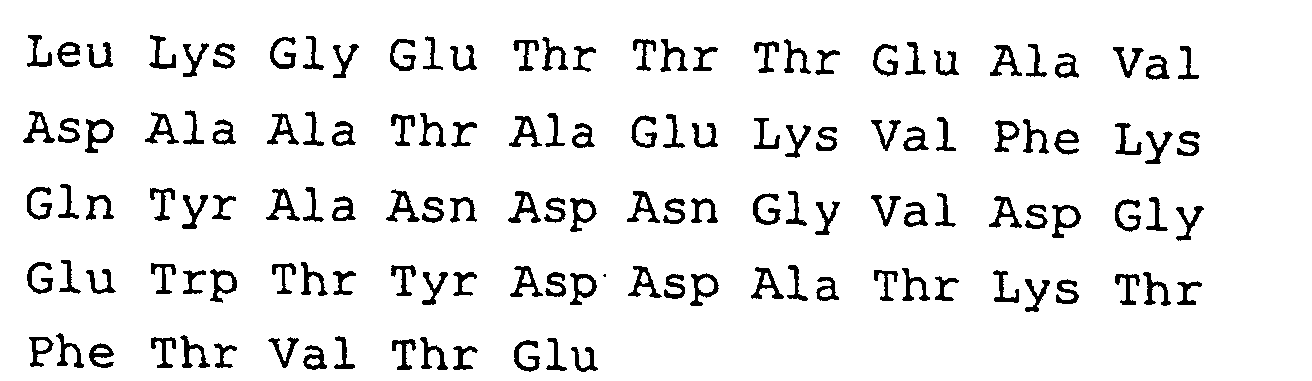
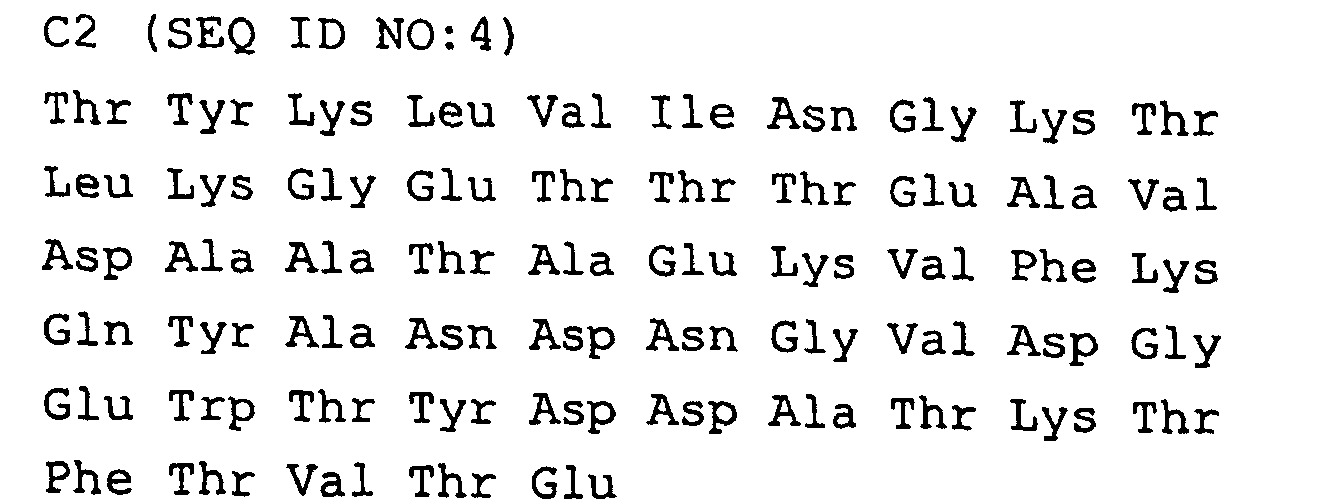
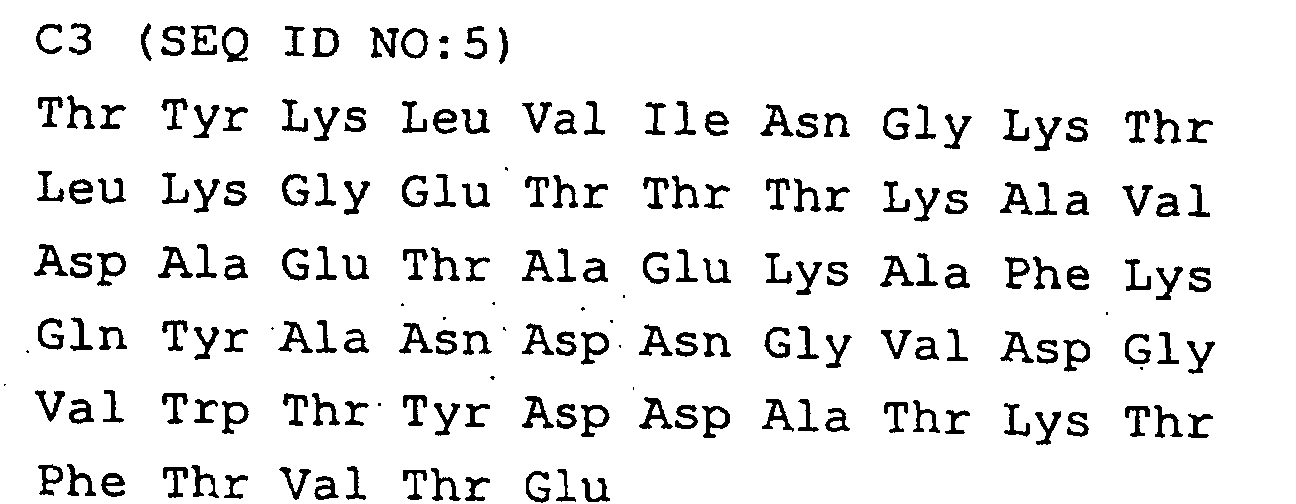
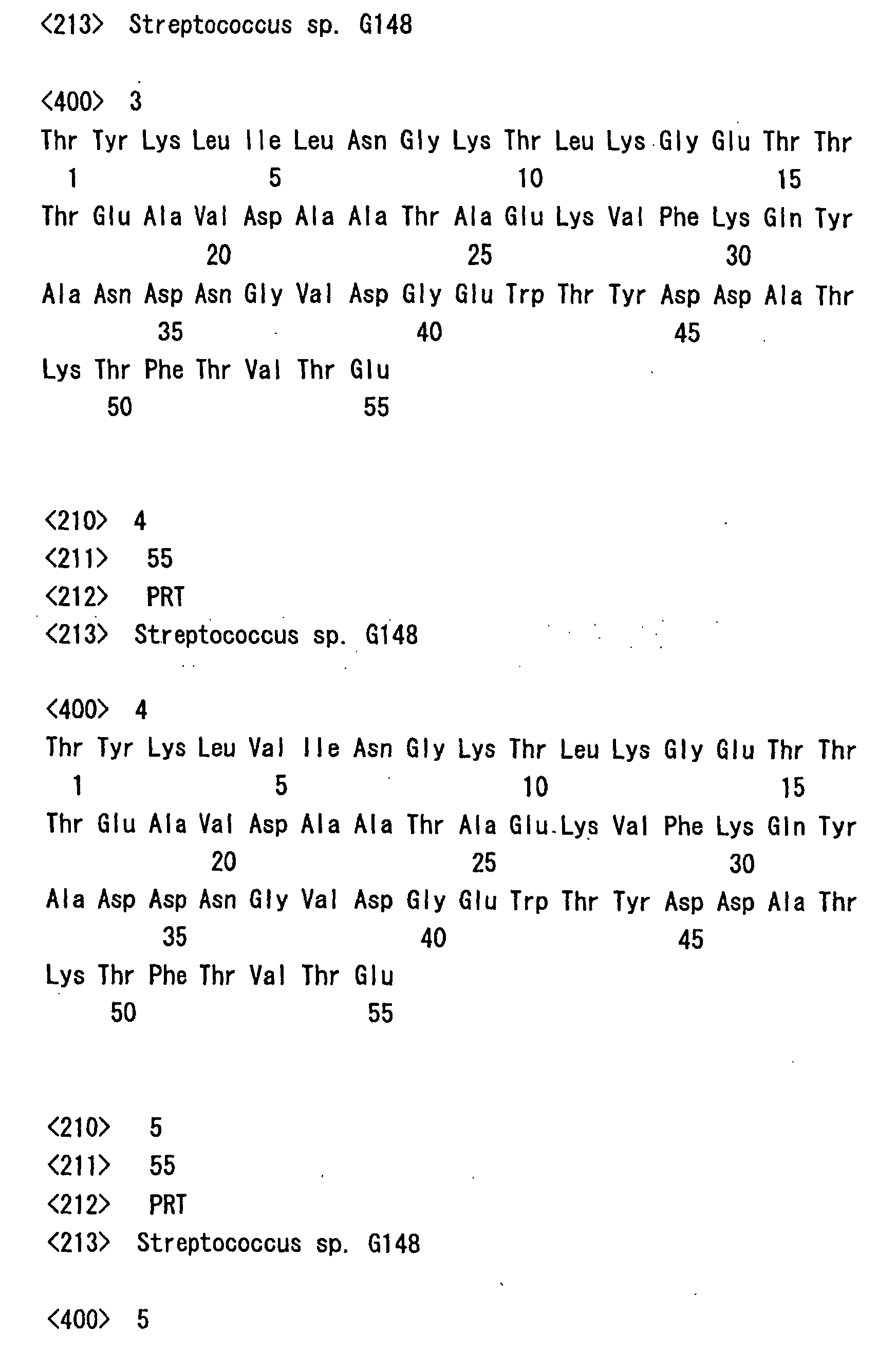
- Protein G A variety of proteins having affinities for an immunoglobulin and/or an immune complex are known and, among them, Protein A and Protein G have been particularly well studied. Both Protein A and Protein G have high affinities for an immunoglobulin and/or an immune complex, but whereas the affinity of Protein A for IgG3 is low, Protein G binds to IgG3 (Japanese Patent No.02764021). Furthermore, the Protein G gene has been shown to have nucleotide sequences coding for 3 kinds of peptide binding to an immunoglobulin and/or an immune complex, which are called C1, C2 and C3, and the corresponding amino acid sequences are as shown under the SEQ ID NOs:3, 4 and 5 of the sequence listing (Japanese Patent No.02764021).
- a peptide or protein having affinities for an immunoglobulin and/or an immune complex is its application to an adsorbent for the purification, isolation and/or removal of an immunoglobulin and/or an immune complex.
- said C1, C2 and C3 peptides are too thermally unstable to withstand the sterilization by autoclaving, and apt to sustain marked depressions in the binding activity by radiation sterilization.
- the present invention has objects to optimize amino acids inclusive of the Fc-binding amino acids (mentioned above) of a protein G-derived peptide, and to provide a novel peptide being not only at least equivalent to the original peptide (C3 mentioned above) in the affinities for an immunoglobulin and/or an immune complex but also stable against sterilization procedures; a nucleotide sequence coding for said peptide; a recombinant DNA having said nucleotide sequence; a microorganism comprising the DNA; use of said microorganism or said DNA for a production of said peptide; and furthermore, as an application example, an adsorbent for selective adsorption of an immunoglobulin and/or an immune complex present in aqueous solution, particularly in a body fluid (for example, blood, plasma, serum, etc.). Further objects of the invention are provision of an adsorption unit using said adsorbent and that of a method for adsorbing
- the inventors of the present invention constructed an extensive sequence of peptides using chemical and genetic-engineering techniques for accomplishing the above objects and have completed the present invention by applying various scientific techniques to characteristics of the resulting peptides.
- the present invention is related to:
- the present invention is related to:
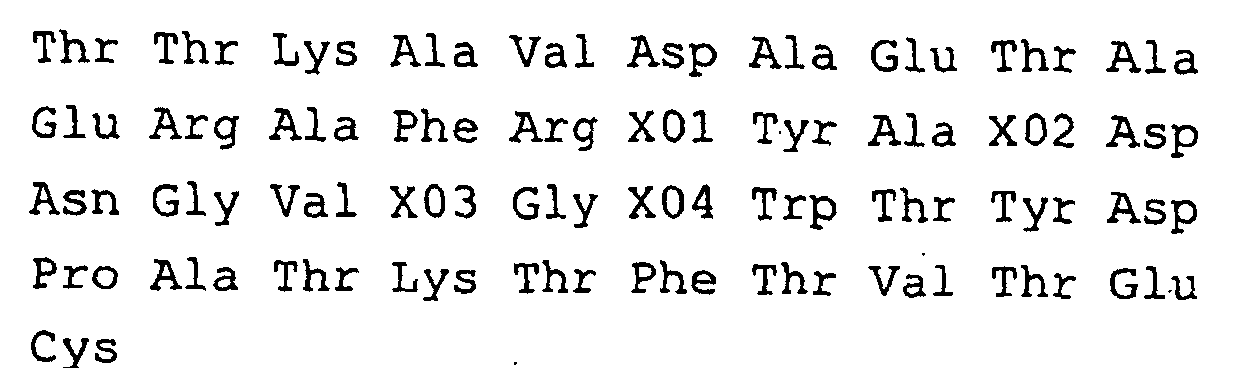
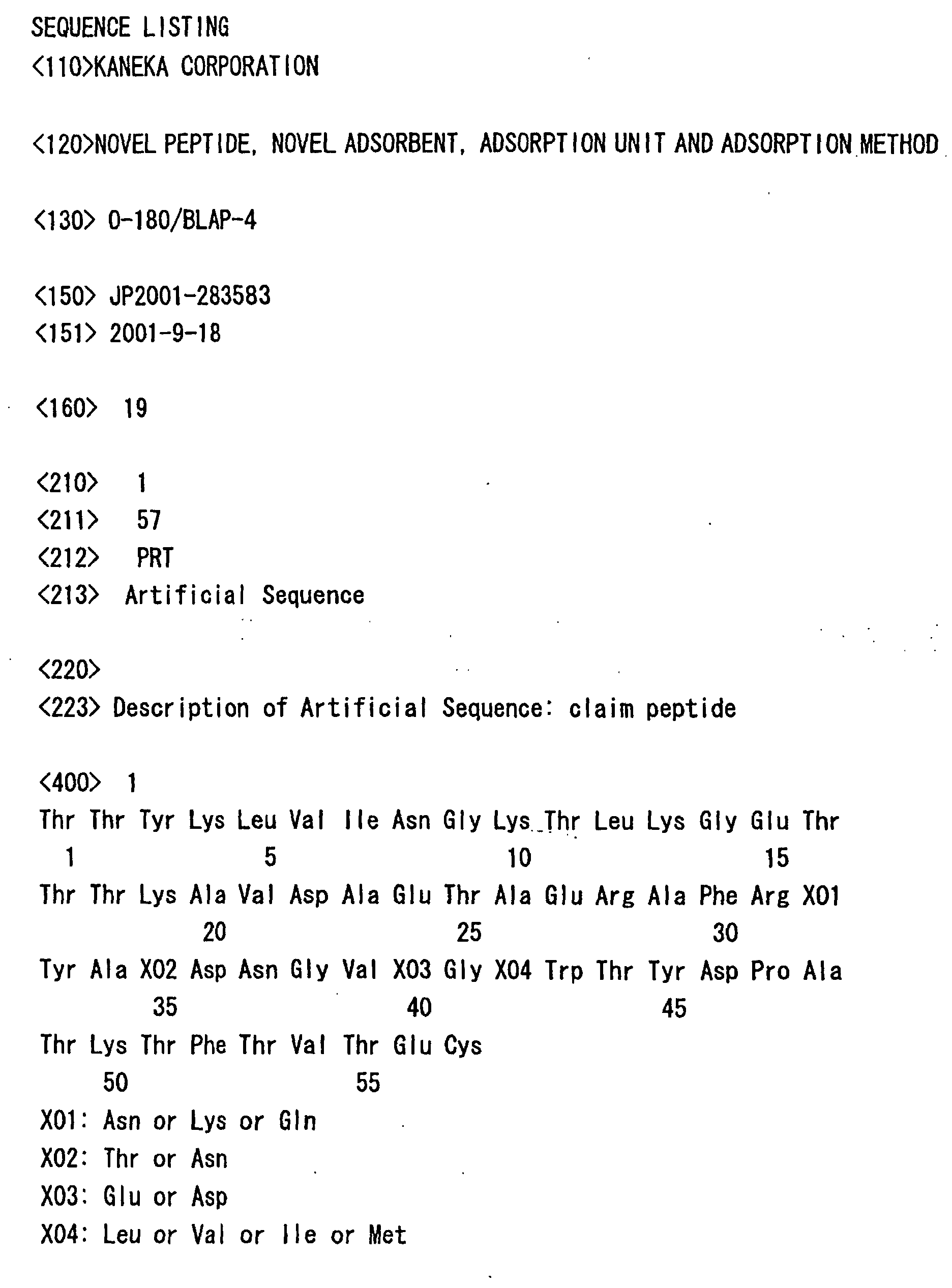
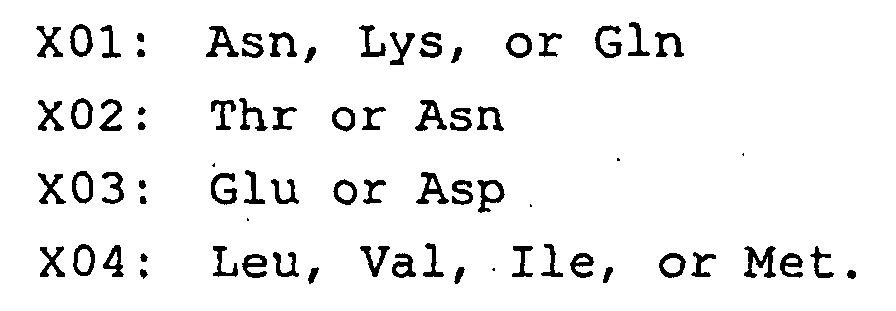
- the peptide having affinities for an immunoglobulin and/or an immune complex of the present invention is represented by the following amino acid sequence B (SEQ ID NO:1 of the sequence listing). (wherein, X01 is one species selected from three amino acids Asn, Lys and Gln, X02 is one species selected from two amino acids Thr and Asn, X03 is one species selected from two amino acids Glu and Asp, and X04 is one species selected from four amino acids Leu, Val, Ile and Met.)
- the term "affinity" refers to a property to have binding activity for a certain compound. That is, the peptide having affinities for an immunoglobulin and/or an immune complex of the present invention is characterized in having binding activity for an immunoglobulin and/or an immune complex.
- the peptide of the present invention was obtained from the investigations described below.
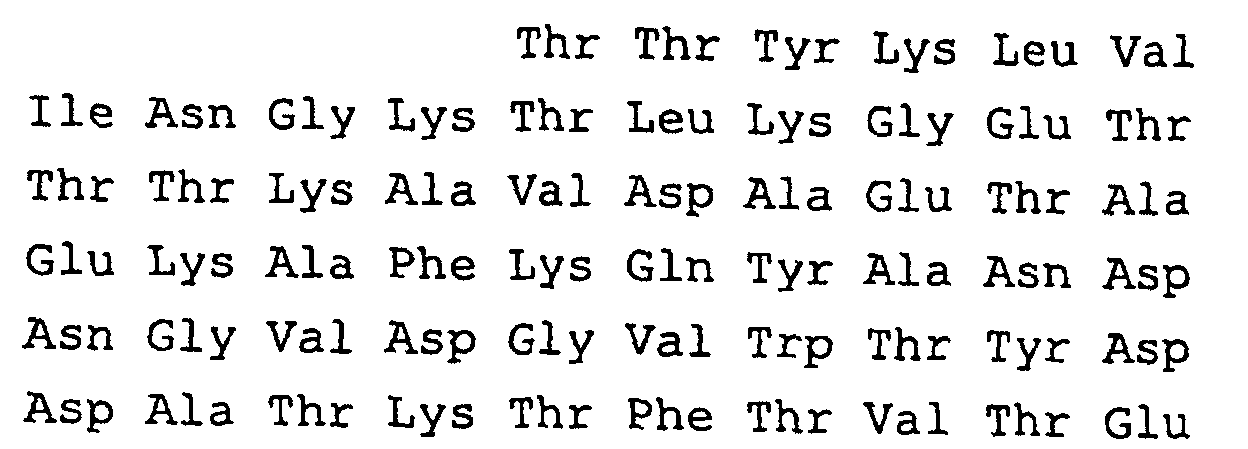
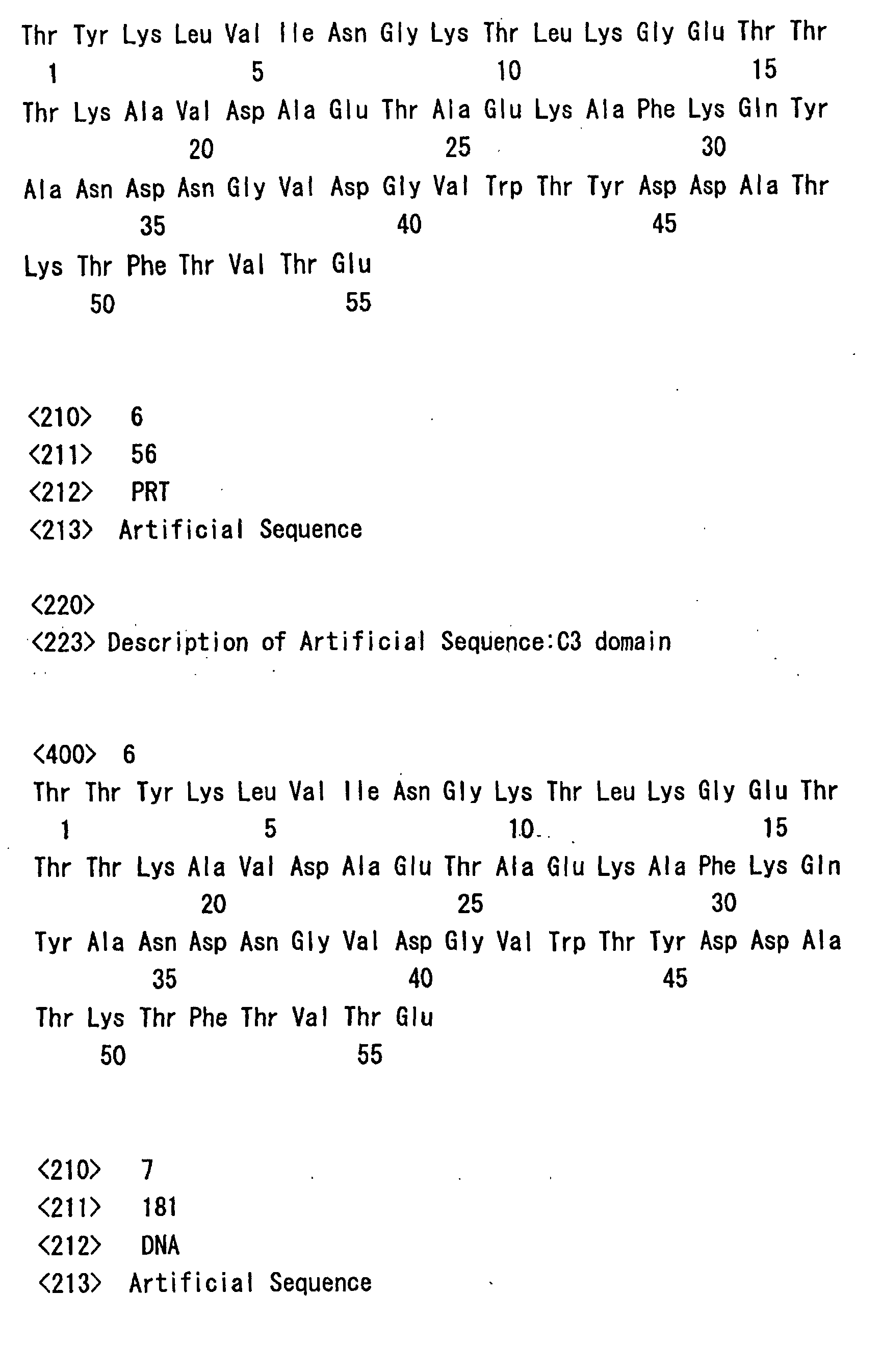
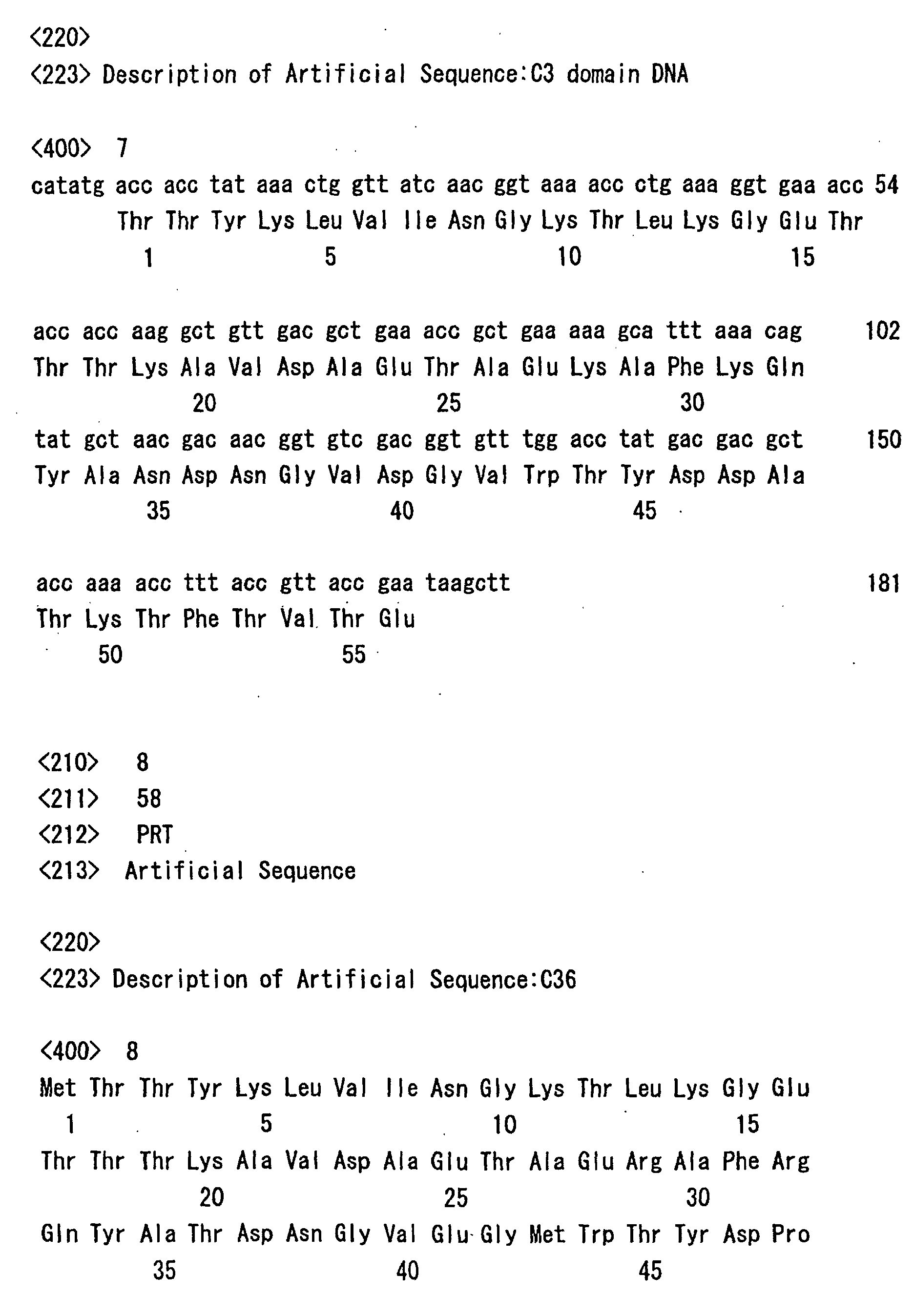
- the DNA shown under the SEQ ID NO:7 of the sequence listing (base sequence A) was prepared, which codes for a peptide (described in Japanese Patent No. 02764021 as a comparative peptide) (an amino acid sequence A: SEQ ID NO:6 of the sequence listing); , and has a restriction enzyme site for inserting the above DNA into a vector.
- the restriction enzyme sites (NdeI, HindIII) of the above base sequence are intended for the vector used in Examples to be described hereinafter (pUCNT: WO 94/03613), but since it is well known in the art that different restriction sites are required for a different kind of vector, a detailed explanation on the subject is omitted.
- the DNA represented by the base sequence A was inserted into the vector pUCNT, Escherichia coli (HB101) was transformed with the vector having said DNA, the transformant cells were then cultured and homogenized, and the supernatant was purified to obtain a peptide.
- This peptide was immobilized on a carrier to give an immunoglobulin and/or immune complex adsorbent but its immunoglobulin and/or immune complex adsorption capacity was drastically decreased on irradiation with ⁇ rays (25 kGy).
- the optimum peptide is the one containing the following amino acid sequence B (SEQ ID NO:1 of the sequence listing) as produced by the producer strain obtained by the procedure comprising adding (cat atg) and (taa gct t) to the 5' -end and 3' -end, respectively, of the DNA represented by the following base sequence B (SEQ ID NO:2 of the sequence listing), inserting the construct into a vector, and transforming E . coli HB101 therewith.
- SEQ ID NO:1 of the sequence listing amino acid sequence B (SEQ ID NO:1 of the sequence listing) as produced by the producer strain obtained by the procedure comprising adding (cat atg) and (taa gct t) to the 5' -end and 3' -end, respectively, of the DNA represented by the following base sequence B (SEQ ID NO:2 of the sequence listing), inserting the construct into a vector, and transforming E . coli HB101 therewith.
- the peptide represented by the amino acid sequence B was immobilized on a carrier to construct an immunoglobulin and/or immune complex adsorbent. It was found that even when this adsorbent was subjected to irradiation with ⁇ rays (25 kGy), the immunoglobulin and/or immune complex adsorption capacity of the adsorbent was equivalent to that of an unirradiated adsorbent.
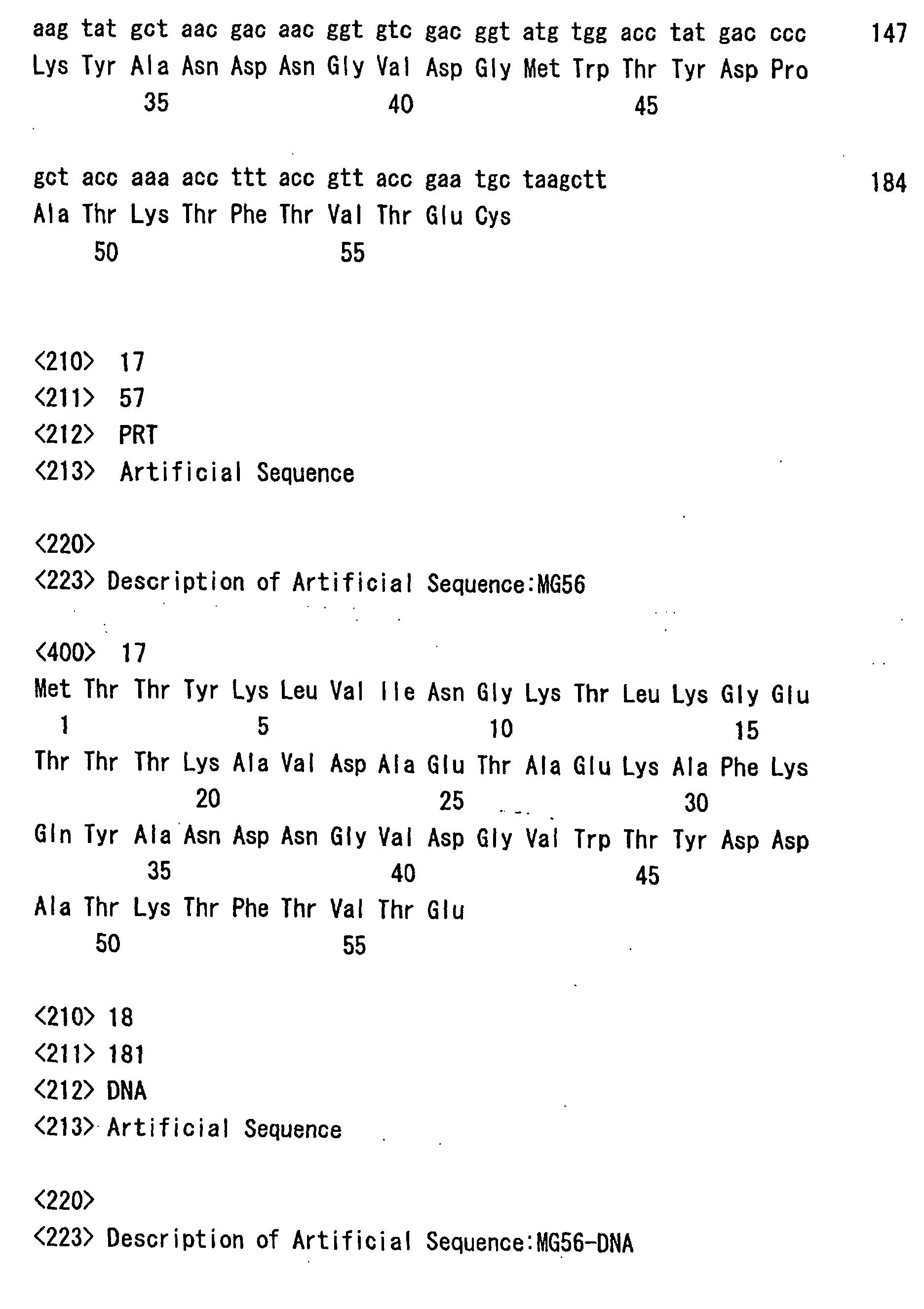
- the peptide containing the amino acid sequence B said peptide being shown under the SEQ ID NO:8 of the sequence listing (C36 peptide); ; was dissolved in physiological saline at a final concentration of 500 ⁇ g/mL and adjusted to pH 7.0 with an aqueous solution of sodium hydroxide and the resulting aqueous peptide solution was heated at 80°C for 30 minutes and compared with the unheated aqueous peptide solution in IgG-binding capacity. No significant difference was found between them.
- the IgG-binding capacity was measured by passing each aqueous peptide solution through an immobilized IgG column (IgG Sepharose Fast Flow; product of Pharmacia) , eluting the peptide in the indicated manner, and analyzing the eluate quantitatively by HPLC.
- immobilized IgG column IgG Sepharose Fast Flow; product of Pharmacia
- sequences containing the amino acid sequence shown under the SEQ ID NO:1 the sequences shown under the SEQ ID NO:10, 11, 13 and 15, for instance, can be mentioned.
- the nucleotide sequence of the invention is characterized by its coding for at least one species of the amino acid sequence shown under the SEQ ID NO:1.
- This nucleotide sequence preferably comprises at least one species of the base sequence shown under the SEQ ID NO:2.
- the sequence containing at least one species of the base sequence shown under the SEQ ID NO:2 includes the sequence shown under the SEQ ID NO:9, 12, 14 or 16, for example.
- the recombinant DNA of the present invention is characterized by its having one or more nucleotide sequences coding for the amino acid sequence shown under the SEQ ID NO:1.
- the nucleotide sequence preferably comprises at least one species of the base sequence shown under the SEQ ID NO:2.
- the recombinant DNA of the invention can be constructed by the known chemical and genetic-engineering techniques described in, for example, Molecular Cloning 2nd Edt., Cold Spring Harbor Laboratory Press (1989), etc.
- a DNA used in the construction of said recombinant DNA can be obtained, for example, by preparing a DNA library, in which the sequence thereof was partially modified base sequence A, and selecting the objective DNA by immunoscreening using said DNA library and an immunoglobulin and/or an immune complex.
- the kind of said recombinant DNA is not restricted, it is preferably a plasmid or phage in view of the ease of gene manipulation.
- the pUCNT vector WO 94/03613
- a commercial E . coli -derived vector for instance, can be employed.
- the microorganism of the present invention is characterized by its comprising at least one recombinant DNA having one or more nucleotide sequences coding for the amino acid sequence shown under the SEQ ID NO:1.
- the nucleotide sequence preferably comprises at least one species of the base sequence shown under the SEQ ID NO:2.
- the microorganism of the invention can be prepared by transforming a microorganism with the above recombinant DNA in accordance with the known genetic engineering technology described in, for example, Basic Methods in Molecular Biology, Appleton & Lange (1986), for example by calcium phosphate transfection.
- the microorganism which can be used for the preparation of the objective microorganism (transformant) includes Escherichia coli strains such as E . coli HB101 or the like microorganisms.
- the adsorbent of the present invention is now described.
- the adsorbent for an immunoglobulin and/or an immune complex of the invention is characterized by its comprising a water-insoluble carrier having, as immobilized thereon, a peptide containing at least one species of the amino acid sequence shown under the SEQ ID NO:1 and consisting of not more than 70 amino acid residues.
- the peptide which can be used for said adsorbent is not particularly restricted insofar as it contains at least one species of the amino acid sequence shown under the SEQ ID NO:1 and consisting of not more than 70 amino acid residues. Since the above peptide contains the amino acid sequence shown under the SEQ ID NO:1, it is characterized by its having affinities for an immunoglobulin and/or an immune complex.
- the above peptide is preferably a thermally stable peptide from the viewpoint that the peptide is able to withstand sterilization procedures.
- the thermally stable peptide mentioned above is a peptide such that its inherent properties will not be impaired even if heated to 80°C or higher temperatures for 30 minutes whether in a lyophilized solid state or in an aqueous solution state, or its characteristics before sterilization will not be lost even if the peptide is immobilized on a carrier and subjected to autoclaving (115°C, 30 min.; 121°C, 20 min.; or 126°C, 15 min.) or radiation sterilization (25 kGy).
- the water-insoluble carrier which can be used for the adsorbent of the invention includes inorganic carriers such as glass beads, silica gels, etc.; organic carriers composed of synthetic polymers, such as crosslinked polyvinyl alcohols, crosslinked polyacrylates, crosslinked polyacrylamides, crosslinked polystyrenes, etc., and/or polysaccharides such as crystalline cellulose, crosslinked cellulose, crosslinked agarose, crosslinked dextran, etc.; and various composite carriers each comprising an organic-organic composite, an organic-inorganic composite or the like composite, etc.
- hydrophilic carriers are preferred in view of their high adsorption selectivity for an immunoglobulin and/or an immune complex with a comparative freedom from nonspecific adsorption.
- hydrophilic carrier means a carrier such that, when the compound composing the carrier is molded into a flat sheet, its contact angle with respect to water is not more than 60 degrees.
- carriers made of polysaccharides such as cellulose, chitosan, dextran, etc., polyvinyl alcohol, a saponified ethylene-vinyl acetate copolymer, polyacrylamides, polyacrylic acid, polymethacrylic acid, poly(methyl methacrylate), polyacrylic acid-grafted polyethylene, polyacrylamide-grafted polyethylene, and glass.
- GCL2000 and GC700 which are porous cellulose gels
- Sephacryl S-1000 which is a covalently crosslinked allyldextran-methylenebisacrylamide
- TOYOPEARL which is an acrylate carrier
- Sepharose CL4B which is an agarose type crosslinked carrier
- Eupergit C250L which is an epoxy-activated polymethacrylamide
- the water-insoluble carrier for use in the present invention is preferably one having a large surface area in view of the intended use according to the invention, namely adsorption of an immunoglobulin and/or an immune complex, and the technological feature of the invention which utilizes the affinity of the peptide for these, that is to say a porous carrier having a multiplicity of appropriately-sized pores.
- a porous carrier having a multiplicity of appropriately-sized pores.
- the exclusion limit of molecular weight of the porous carrier according to the invention is not less than 150, 000 but the molecular weight of immunoglobulin class G (IgG) ranges from 140,000 to 170,000 and, therefore, in order that the IgG may be efficiently adsorbed with a porous carrier, the exclusion limit of molecular weight of the carrier is preferably not less than 250,000 which is larger than the molecular weight of IgG.
- the molecular weight of the complex is calculated to be not less than 560,000.
- the exclusion limit of molecular weight of the carrier is preferably not less than 600,000 and in order that it may be done so easily, the exclusion limit of molecular weight is more preferably not less than 3,000,000.
- the carrier considering the adsorption capacity per unit volume of the adsorbent, total porosity (a structure such that the carrier is porous in its entirety to permit ingress of the molecules to be adsorbed into the interior zone) is preferred to surface porosity (a structure such that the carrier is porous in the exterior zone but dense in the interior zone) . More preferably, the carrier has a void volume of not less than 20% as measured by mercury porosimetry and a specific surface area of not less than 1 m 2 /g as measured by mercury porosimetry.
- the water-insoluble carrier may assume various forms such as beads, filaments, membranes (inclusive of hollow fiber), and so forth and any of these forms can be liberally chosen. Beads are particularly preferred in view of the ease of constructing a carrier having a defined exclusion limit of molecular weight. Beads having an average particle diameter of 10 to 2,500 ⁇ m are easy to use and particularly those within the size range of 25 ⁇ m to 800 ⁇ m are recommended from the standpoint of the ease with which the ligand coupling reaction may take place.
- a functional group useful for said ligand coupling reaction on the surface of said water-insoluble carrier is advantageous for the purpose of coupling the ligand.
- said functional group are hydroxyl, amino, aldehyde, carboxyl, thiol, silanol, amido, epoxy, succinylimido, acid anhydride groups, etc.
- the water-insoluble carrier which can be used in the invention may be whichever of a hard carrier and a soft carrier but it is an important factor in its use as an adsorbent for extracorporeal circulation treatment that when it is packed into a column and a fluid is run thereon, no plugging troubles will take place. For this purpose, a sufficient mechanical strength is required. Therefore, the water-insoluble carrier for use in the invention is more preferably a hard carrier.
- hard carrier means a carrier such that, taking a granular gel as an example, when the gel is evenly packed into a glass cylinder (inside diameter; 9 mm: column length; 150 mm) under the following conditions and a hydrous fluid is passed through the column, the relation between pressure loss ⁇ P and flow rate is linear up to 0.3 kg/cm 2 .
- glass cylindric column (inside diameter; 9 mm: column length; 150 mm) each equipped with a filter having a pore size of 15 ⁇ m at either end were uniformly packed with agarose gel (Biogel-A5m, product of Bio-Rad, particle size 50 to 100 mesh), a vinyl polymer gel (TOYOPEARL HW-65, product of TOSOH, particle size 50 to 100 ⁇ m), and a cellulose gel (Cellulofine GC-700m, product of Chisso Corporation, particle size 45 to 105 ⁇ m), respectively, and using a peristaltic pump, water was passed through each column to determine the relationship of flow rate to pressure loss ⁇ P (Fig. 1).
- agarose gel Biogel-A5m, product of Bio-Rad, particle size 50 to 100 mesh
- vinyl polymer gel (TOYOPEARL HW-65, product of TOSOH, particle size 50 to 100 ⁇ m)
- a cellulose gel Cellulofine GC-700m
- the flow rate (cm/min.) was plotted on the ordinate and the pressure loss (kg/cm 2 ) was plotted on the abscissa.
- o represents TOYOPEARL HW-65, ⁇ Cellulofine GC-700m, and • Biogel-A5m. It was found that whereas the flow rate was increased in approximate proportion to the pressure gain in the cases of TOYOPEARL HW-65 and Cellulofine GC-700m, compaction occurred in the case of Biogel-A5m so that increasing the pressure did not increase the flow rate.
- a peptide having affinities for an immunoglobulin and/or an immune complex namely a peptide containing at least one species of the amino acid sequence shown under the SEQ ID NO:1 and consisting of not more than 70 amino acid residues on the water-insoluble carrier described hereinabove
- a poly(alkylene oxide) derivative as substituted with a carboxyl, amino, aldehyde, epoxy or the like group at either terminus, etc. is preferably used.
- the method of immobilizing said peptide having affinities for an immunoglobulin and/or an immune complex or said hydrophilic spacer is not particularly restricted.
- the technology used in immobilizing a protein or peptide on a carrier in general, can be employed.
- This technology includes (1) the method which comprises reacting the carrier with cyanogen bromide, epichlorohydrin, diglycidyl ether, tosyl chloride, tresyl chloride, hydrazine or the like to activate the carrier (converting the functional group originally present on the carrier to a functional group with which the compound to be immobilized as a ligand may react more readily) and reacting it with the ligand compound and (2) the method which comprises adding a condensing agent, such as carbodiimide, or a reagent having a plurality of functional groups per molecule, such as glutaraldehyde, to a system comprising both the carrier and the compound to be immobilized as a ligand to thereby effect condensation or crosslinking.
- a condensing agent such as carbodiimide
- a reagent having a plurality of functional groups per molecule such as glutaraldehyde
- the adsorption method of the present invention is characterized by its comprising bringing said adsorbent into contact with a body fluid containing an immunoglobulin and/or an immune complex.
- a variety of methods are available for bringing an adsorbent comprising a carrier and a peptide having affinities for an immunoglobulin and/or an immune complex as immobilized thereon into contact with a body fluid such as blood, plasma or serum to adsorb an immunoglobulin and/or an immune complex in the body fluid.
- the method which comprises withdrawing a body fluid and pooling it in a bag or the like, mixing it with the adsorbent to adsorb an immunoglobulin and/or an immune complex thereon, and filtering off the adsorbent to recover the body fluid deprived of an immunoglobulin and/or an immune complex and (2) the method which comprises filling the adsorbent into a container having a body fluid inlet and a body fluid outlet and equipped with a filter which is permeable to the body fluid but impermeable to the adsorbent at said outlet and passing the body fluid through the container.
- the adsorbent of the invention is suited to the latter method which is simple procedure-wise, and by applying it to an extracorporeal circuit, an immunoglobulin and/or an immune complex can be removed from the patient' s body fluid efficiently on line.
- Adsorption unit of the present invention comprises the adsorbent of the present invention filled in a container having a liquid inlet and a liquid outlet and equipped with at least one filter.
- Adsorption unit 7 shown in Fig. 2 comprises a liquid inlet 1, a liquid outlet 2, an adsorbent 3 of the present invention for an immunoglobulin and/or an immune complex, filters 4 and 5 through which liquid and components contained in the liquid can pass but the adsorbent for an immunoglobulin and/or an immune complex cannot pass, and a column 6.
- this container are not particularly restricted, but preferably, for example, a tube container having a content of about 20 to 400 mL and a diameter of about 2 to 10 cm may be used.
- the above filter is not particularly restricted as long as liquid and components contained in the liquid can pass through but the adsorbent for an immunoglobulin and/or an immune complex cannot pass through it.
- N-terminus amino terminus
- C-terminus carboxyl terminus
- a DNA shown under the SEQ ID NO:9 of the sequence listing was designed and synthesized so that it could be ligated to pUCNT vector (WO 94/03613) by using the restriction enzyme sites of NdeI and Hind III for the 5'-end and 3'-end, respectively.
- the DNA containing the sequence shown under the SEQ ID NO:9 was ligated to the pUCNT vector cleaved open by digestion with the restriction enzymes NdeI and HindIII (products of Takara Shuzo) using DNA Ligation Kit Ver. 2 (product of Takara Shuzo) in accordance with the manual to construct a pUCNT-C36 vector.
- DNA Ligation Kit Ver. 1 product of Takara Shuzo
- the above pUCNT-C36 vector was introduced into Escherichia coli HB101 (marketed by Funakoshi) and a transformant screening was carried out using resistance to the antibiotic ampicillin as an indicator.
- the plasmid DNA was extracted and sequenced using Flexi Prep(trade mark)(product of Amersham Pharmacia Biotech) in accordance with the manual to verify that the pUCNT-C36 vector had the designed DNA sequence.
- this transformant was shake-cultured in 6 L of L-broth (5 g/L NaCl, 10 g/L bactotrypsin, 5 g/L yeast extract) at 37°C for 20 hours and the cultured cells were centrifugally recovered (using Hitachi RPR9-2 rotor, 4°C, 6, 000 rpm, 20min.) .
- the pellet obtained was suspended in 300 mL of TE buffer (20 mM Tris-HCl, 1 mM EDTA, pH 7.5) and sonicated (using BRANSON 250, on ice, 6 min. x 3) and the supernatant was centrifugally recovered (using Hitachi RPR16 rotor, 4°C, 15, 000 rpm, 20 min.).
- This supernatant was heat-treated at 70°C for 10 minutes and further centrifuged (using Hitachi RPR16 rotor, 4°C, 15, 000 rpm, 20 min.) and the supernatant, 300 mL, was recovered.
- a high performance liquid chromatograph (column: ⁇ Bondasphere C18, product of Waters Japan), 40 mL of acetonitrile solution was passed at a flow rate of 5 mL/min to activate the column in advance and a 300 mL sample was run onto the column at the same flow rate.
- the column was washed with 200 mL of 0.1% TFA + 64% acetonitrile solution and the objective C36 peptide was eluted with 200 mL of 0.1% TFA (trifluoroacetic acid) + 40% acetonitrile solution.
- the eluate was concentrated to 100 mL on an evaporator and lyophilized to give a high-purity sample.
- Kac gel is a cellulosic porous hard gel and has an exclusion limit of molecular weight for spherical protein of 5, 000, 000 or more, in an amount for the total amount became 180 mL.
- 60 mL of 2 N sodium hydroxide was added, and the mixture was adjusted to 40°C.
- 21 mL of epichlorohydrin was added thereto and the mixture was subjected to reaction under stirring at 40°C for 2 hours. After completion of the reaction, the resultant was sufficiently washed with water to obtain an epoxy-activated Kac gel.
- C36 peptide (10 mg) was dissolved in 0.5 mL of 0.05 M boric acid buffer (pH 10). Then, the mixture was readjusted to pH 10 by adding 0.01 N sodium hydroxide solution in an amount for the total amount became 1.0 mL (C36 peptide solution). After adding the peptide solution (whole quantity) to 1 mL of the above epoxy-activated Kac gel, the mixture was shaken at 37°C for 16 hours and washed with sufficient amount of PBS (10 mM phosphate buffer containing 150 mM sodium chloride) to obtain Kac-C36.
- PBS 10 mM phosphate buffer containing 150 mM sodium chloride
- the amino acid was used in the form of Fmoc-L-Ala, Fmoc-L-Asn (Trt), Fmoc-L-Asp (OtBu), Fmoc-L-Cys (Trt), Fmoc-L-Gln (Trt), Fmoc-L-Glu (OtBu), Fmoc-L-Gly, Fmoc-L-Ile, Fmoc-L-Leu, Fmoc-L-Lys (Boc), Fmoc-L-Phe, Fmoc-L-Thr (tBu), Fmoc-L-Trp, Fmoc-L-Tyr (tBu) or Fmoc-L-Val.with the amount of about 5-fold in mol (0.5 mmol) to substrates in a vial (wherein Trt, tBu, Boc, and OtBu represent a trityl group, a tertiary butyl
- the resulting carrier was serially washed on a 3G-3 (pore) glass filter using tert-amyl alcohol, acetic acid, and diethyl ether in the order mentioned and then dried in vacuo to give a dry carrier.
- a dry carrier 20 mL of trifluoroacetic acid (briefly, TFA), 260 ⁇ L of 1,2-ethanedithiol, and 780 ⁇ L of anisole were added and the mixture was stirred at room temperature for 1.5 hours. Then, this mixture was filtered through a 3G-3 (pore) glass filter to separate the carrier and the filtrate was concentrated under reduced pressure at 35°C.
- the above semi-purified peptide was dissolved in 0.1% TFA and subjected to high-speed centrifugation at 3,000 rpm. The supernatant was filtered through a 0.45 ⁇ m membrane filter and the filtrate was subjected to high performance liquid chromatography (HPLC).
- HPLC HPLC
- Model LC-10A system manufactured by Shimadzu Corporation
- the column used was the reversed-phase ⁇ Bondasphere C18 (Waters Japan).
- As the mobile phase 0.1% aqueous solution of TFA was used for solution A and 0.1% TFA-containing 80% (v/v) acetonitrile/H 2 O for solution B, and elution was carried out on a linear concentration gradient from A to B.
- the DNA coding for the C04 peptide shown under the SEQ ID NO:11 of the sequence listing was designed as the one shown under the SEQ ID NO:12 of the sequence listing, synthesized, and made ligatable to pUCNT vector in the same manner as in Example 1.
- the DNA having the sequence of the SEQ ID NO:12 was introduced into pUCNT vector to construct pUCNT-C04 vector.
- Example 2 an E . coli transformant was constructed, cultured in 6 L of L-broth, and purified to give the objective high-purity C04 peptide for use in various studies.
- Example 1 Using C04 peptide in lieu of C36 peptide and the epoxy-activated GCL2000m gel in lieu of the epoxy-activated Kac gel, the corresponding procedure of Example 1 was otherwise repeated to give GCL2000m-C04 on which C04 peptide was immobilized.
- the DNA coding for the C15 peptide of the SEQ ID NO:13 of the sequence listing was designed as the one shown under the SEQ ID NO:14 of the sequence listing, synthesized, and made ligatable to pUCNT vector in the same manner as in Example 1.
- the DNA having the sequence of the SEQ ID NO:14 was introduced into pUCNT vector to construct pUCNT-C15 vector.
- Example 2 an E . coli transformant was constructed, cultured in 6 L of L-broth, and purified to give the objective high-purity C15 peptide for use in various studies.
- CNBr-activated Sepharose 4B product of Amersham Pharmacia Biotech: exclusion limit of molecular weight for spherical protein; ca 20, 000, 000
- (1 g) was caused to swell with a small amount of 1 mM aqueous hydrochloric acid solution for 15 minutes, washed with 1 mM aqueous hydrochloric acid solution, and further washed with coupling buffer (0.5 M sodium chloride, 0.1 M sodium hydrogencarbonate, pH 8.3).
- coupling buffer 0.5 M sodium chloride, 0.1 M sodium hydrogencarbonate, pH 8.3
- the DNA coding for the C24 peptide of the SEQ ID NO:15 of the sequence listing was designed as the one shown under the SEQ ID NO:16, synthesized, and made ligatable to pUCNT vector in the same manner as in Example 1.
- the DNA having the sequence of the SEQ ID NO:16 was introduced into pUCNT vector to construct pUCNT-C24 vector.
- Example 2 an E . coli transformant was constructed, cultured in 6 L of L-broth, and purified to give the objective high-purity C24 peptide for use in various studies.
- Sepharose 6B product of Amersham Pharmacia Biotech: exclusion limit of molecular weight for spherical protein; ca 4,000,000
- agarose beady gel an agarose beady gel
- 60 mL of 2 N sodium hydroxide was added, and the mixture was adjusted to 40°C.
- 21 mL of epichlorohydrin was added thereto and the mixture was subjected to reaction under stirring at 40°C for 2 hours. After completion of the reaction, the resultant was washed sufficiently with water to obtain an epoxy-activated Sepharose 6B gel.
- Example 1 Using the epoxy-activated Sepharose 6B in lieu of the epoxy-activated Kac gel, the corresponding procedure of Example 1 was otherwise repeated to give Sepharose 6B-C36 on which C36 peptide was immobilized.
- Example 1 Using 4 mg of protein G (product of Sigma) in lieu of 10 mg of the C36 peptide and the epoxy-activated GCL2000m gel prepared in Example 3 in lieu of the epoxy-activated Kac gel, the corresponding procedure of Example 1 was otherwise repeated to give GCL2000m-protein G on which protein G was immobilized.
- protein G product of Sigma
- Example 1 Using 4 mg of protein A (product of Sigma) in lieu of 10 mg of the C36 peptide, the corresponding procedure of Example 1 was otherwise repeated to give Kac-protein A on which protein A was immobilized.
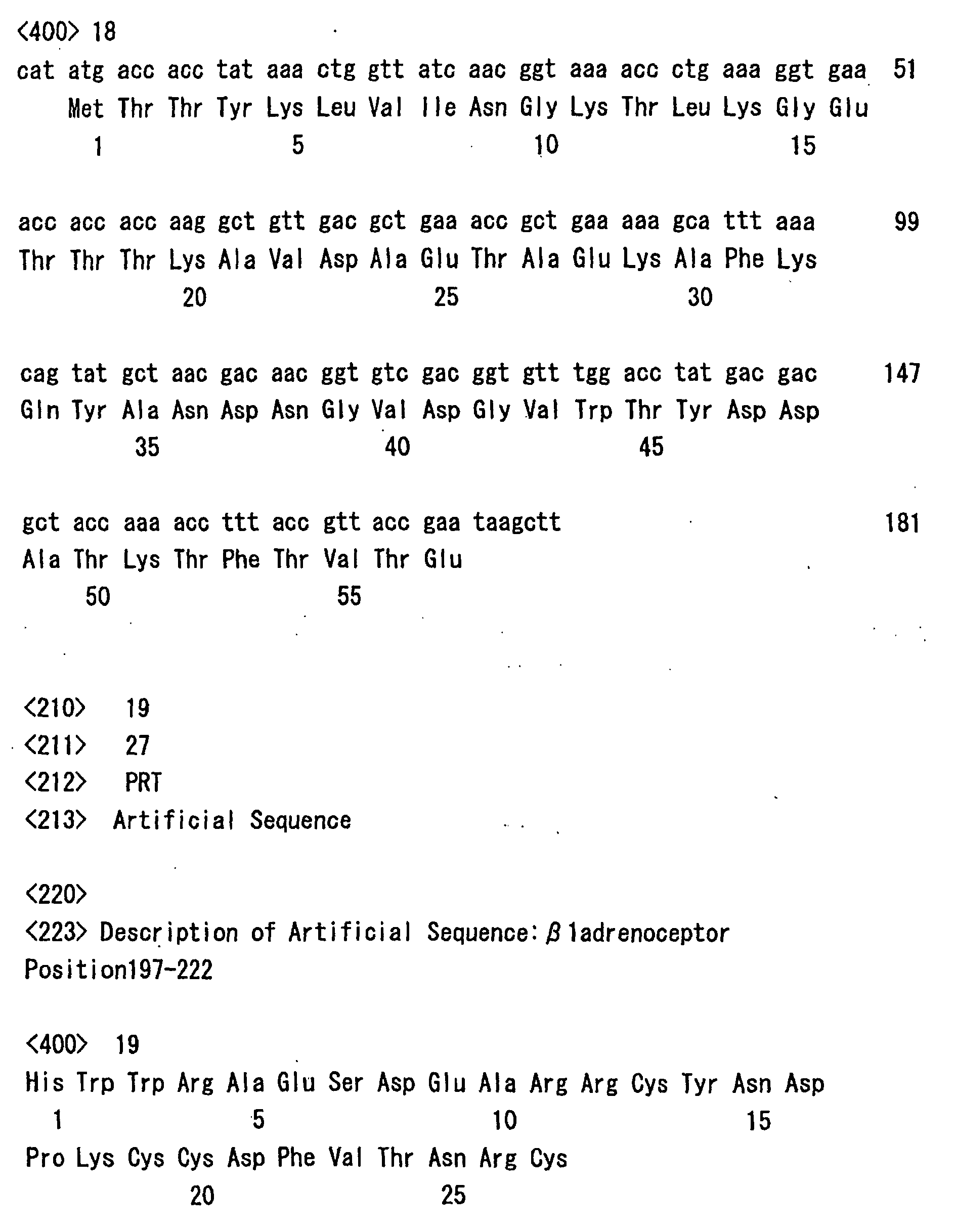
- the DNA coding for the peptide (SEQ ID NO:17 of the sequence listing) having the 57-residue sequence of protein G C3 domain with methionine added to its N-terminus was designed as the one shown under the SEQ ID NO:18, synthesized, and made ligatable to pUCNT vector in the same manner as in Example 1.
- the DNA having the sequence of the SEQ ID NO:18 was introduced into pUCNT vector to construct pUCNT-MG56 vector.
- Example 2 an E . coli transformant was constructed, cultured in 6 L of L-broth, and purified to give the objective high-purity MG56 peptide for use in various studies.
- the above peptide was immobilized on a porous Sepharose to produce an adsorbent as described below.
- sepharose thiopropyl-Sepharose 6B (product of Amersham Pharmacia Biotech) was used.
- To 50 mg of the thiopropyl-Sepharose 6B was added 50 mL of distilled water, and the mixture was allowed to stand at room temperature for 15 minutes to let the resin swell. The distilled water was then removed and replaced with 0.5 M NaCl-containing 0.1 M Tris-HCl (pH 7.5) coupling buffer.
- Each adsorbent 100 ⁇ L, was taken in a vial, 300 ⁇ L of healthy human serum was added, and the mixture was shaken at 37°C for 2 hours to effect adsorption. This suspension was centrifuged at 5,000 rpm for 1 minute and the determination of IgG concentration of the supernatant was commissioned to Shionogi Biomedical Laboratories.
- Adsorption ratio (%) ⁇ (V1r - V1t/V1r) ⁇ x 100
- Each adsorbent 100 ⁇ L, was taken in a vial, 300 ⁇ L of the anti- ⁇ 1 adrenoceptor antibody-positive serum of patients with dilated cardiomyopathy was added, and the mixture was shaken at 37°C for 2 hours to effect adsorption. This suspension was centrifuged at 5,000 rpm for 1 minute and the anti- ⁇ 1-adrenoceptor antibody titer of the supernatant was determined by ELISA.
- a 50 ⁇ g/mL (50 ⁇ L) solution of the second loop fragment peptide (SEQ ID NO:19) of the ⁇ 1-adrenoceptor synthesized by Kurabo Industries, Ltd. on a commission basis was added to an ELISA plate and allowed to stand at 4°C overnight. After plate washing, 100 ⁇ L of skim milk (product of Difco) solution was added, and the plate was allowed to sit at room temperature for 1 hour. After plate washing, 50 ⁇ L of the test sample (a 10-fold dilution of the above-mentioned supernatant) was added and the plate was allowed to sit at 4°C overnight.
- Each adsorbent 100 ⁇ L, was taken in a vial, 600 ⁇ L of the serum of rheumatism patients was added, and the mixture was shaken at 37°C for 2 hours to effect adsorption. This suspension was centrifuged at 5,000 rpm for 1 minute and the determination of rheumatoid factor concentration in the supernatant was commissioned to Shionogi Biomedical Laboratories.
- Adsorption ratio (%) ⁇ (V2r - V2t/V2r) ⁇ x 100
- the immune complex was prepared by heating a human IgG solution (10 mg/mL) at 63°C for 15 minutes.
- Each adsorbent 100 ⁇ L, was taken in a vial, 300 ⁇ L of healthy human serum to which the above immune complex solution had been added at a concentration of 20 ⁇ g/mL was added, and the mixture was shaken at 37°C for 2 hours to effect adsorption.
- This suspension was centrifuged at 5,000 rpm for 1 minute, and using Furelyzer C1q-CIC Kit, product of Fujirebio, Inc., the the immune complex concentration in the supernatant was determined.
- Adsorption ratio (%) ⁇ (V3r - V3t/V3r) ⁇ x 100
- Sephadex G-150 product of Amersham Pharmacia Biotech: exclusion limit of molecular weight for spherical protein; ca 300,000
- adsorbent Sephadex G-150-C36 by immobilizing C36 peptide on the gel.
- the present invention provides a novel peptide having capacity for selective adsorption of an immunoglobulin and/or an immune complex present in a body fluid, a recombinant DNA for synthesizing said peptide, a microorganism comprising the DNA, and a novel adsorbent produced by the above peptide. Furthermore, it becomes possible to selectively remove an immunoglobulin and/or an immune complex in a tested solution, such as blood, plasma and serum, to be treated by using body fluid treating equipment which is filled with said adsorbent.
- a tested solution such as blood, plasma and serum
Landscapes
- Chemical & Material Sciences (AREA)
- Organic Chemistry (AREA)
- Health & Medical Sciences (AREA)
- Life Sciences & Earth Sciences (AREA)
- Molecular Biology (AREA)
- General Health & Medical Sciences (AREA)
- Genetics & Genomics (AREA)
- Medicinal Chemistry (AREA)
- Biophysics (AREA)
- Proteomics, Peptides & Aminoacids (AREA)
- Biochemistry (AREA)
- Gastroenterology & Hepatology (AREA)
- Botany (AREA)
- Immunology (AREA)
- Peptides Or Proteins (AREA)
- External Artificial Organs (AREA)
- Solid-Sorbent Or Filter-Aiding Compositions (AREA)
- Micro-Organisms Or Cultivation Processes Thereof (AREA)
Abstract
Description




| Adsorbent | Adsorption ratio of IgG before sterilization (%) | Adsorption ratio of IgG after sterilization (%) | |
| Example 3 | GCL2000m-CO4 | 97.1 | 90. 2 |
| Comparative Example 1 | GCL2000m-Protein G | 98. 6 | 59.8 |
| Adsorbent | Adsorption ratio of β1 adrenoceptor (%) | |
| Example 1 | Kac-C36 | 77.8 |
| Comparative Example 2 | Kac-Protein A | 52.5 |
| Adsorbent | Adsorption ratio of rheumatoid factor (%) | |
| Example 6 | Sepharose 6B-C36 | 56. 3 |
| Comparative Example 3 | Sepharose 6B-MG56 | 34.4 |
| Adsorbent | Adsorption ratio of an immune complex before sterilization (%) | Adsorption ratio of an immune complex after sterilization (%) | |
| Example 2 | Sephacryl S1000-B04 | 92. 4 | 91. 6 |
| Example 4 | Sepharose 4B-C15 | 85. 2 | 84. 1 |
| Example 5 | TOYOPEARL-C24 | 81. 5 | 80. 5 |
| Adsorbent | Adsorption ratio of IgG (%) | |
| Example 11 | Sephadex G-150-C36 | 59. 7 |
| (Control) | Sephadex G-150 | 2. 1 |



Claims (15)
- A peptide having affinities for an immunoglobulin and/or an immune complex
which comprises the following amino acid sequence shown under the SEQ ID NO:1 of the sequence listing.wherein,
- A nucleotide sequence
which codes for at least one species of the amino acid sequence shown under the SEQ ID NO:1 of the sequence listing. - The nucleotide sequence according to Claim 2
which comprises at least one species of the base sequence shown under the SEQ ID NO:2 of the sequence listing. - A recombinant DNA
which has one or more nucleotide sequences coding for the amino acid sequence shown under the SEQ ID NO:1 of the sequence listing. - The recombinant DNA according to Claim 4,
wherein the nucleotide sequence comprises at least one species of the base sequence shown under the SEQ ID NO:2 of the sequence listing. - The recombinant DNA according to Claim 4 or 5,
which is a plasmid or a phage. - A microorganism
which comprises at least one recombinant DNA having one or more nucleotide sequences coding for the amino acid sequence shown under the SEQ ID NO:1 of the sequence listing. - The microorganism according to Claim 7,
wherein the nucleotide sequence comprises at lease one species of the base sequence shown under the SEQ ID NO:2 of the sequence listing. - An adsorbent for an immunoglobulin and/or an immune complex
which comprises a water-insoluble carrier having, as immobilized thereon, a peptide containing at least one species of the amino acid sequence shown under the SEQ ID NO:1 of the sequence listing and consisting of not more than 70 amino acid residues. - The adsorbent for an immunoglobulin and/or an immune complex according to Claim 9,
wherein the peptide is a thermally stable peptide. - The adsorbent for an immunoglobulin and/or an immune complex according to Claim 9,
wherein the water-insoluble carrier is porous. - The adsorbent for an immunoglobulin and/or an immune complex according to Claim 9,
wherein the water-insoluble carrier is hydrophilic one. - The adsorbent for an immunoglobulin and/or an immune complex according to Claim 11,
wherein the exclusion limit of molecular weight of the water-insoluble carrier is not less than 150,000. - A method for adsorbing an immunoglobulin and/or an immune complex
which comprises bringing the adsorbent according to Claim 9 into contact with a body fluid containing an immunoglobulin and/or an immune complex. - An adsorption unit
which comprises the absorbent according to Claim 9 filled in a container having a liquid inlet and a liquid outlet and equipped with at least one filter.
Applications Claiming Priority (3)
| Application Number | Priority Date | Filing Date | Title |
|---|---|---|---|
| JP2001283583 | 2001-09-18 | ||
| JP2001283583A JP4685294B2 (en) | 2001-09-18 | 2001-09-18 | Novel peptide, production method, novel adsorbent, adsorber and adsorption method |
| PCT/JP2002/009572 WO2003025011A1 (en) | 2001-09-18 | 2002-09-18 | Novel peptide, novel adsorbent, adsorption unit and adsorption method |
Publications (3)
| Publication Number | Publication Date |
|---|---|
| EP1435360A1 true EP1435360A1 (en) | 2004-07-07 |
| EP1435360A4 EP1435360A4 (en) | 2006-09-27 |
| EP1435360B1 EP1435360B1 (en) | 2009-08-19 |
Family
ID=19107047
Family Applications (1)
| Application Number | Title | Priority Date | Filing Date |
|---|---|---|---|
| EP02765585A Expired - Lifetime EP1435360B1 (en) | 2001-09-18 | 2002-09-18 | Novel peptide, novel adsorbent, adsorption unit and adsorption method |
Country Status (8)
| Country | Link |
|---|---|
| US (2) | US7153945B2 (en) |
| EP (1) | EP1435360B1 (en) |
| JP (1) | JP4685294B2 (en) |
| KR (1) | KR100960743B1 (en) |
| CN (1) | CN1282658C (en) |
| CA (1) | CA2460048A1 (en) |
| DE (1) | DE60233419D1 (en) |
| WO (1) | WO2003025011A1 (en) |
Cited By (2)
| Publication number | Priority date | Publication date | Assignee | Title |
|---|---|---|---|---|
| EP2196804A4 (en) * | 2007-10-05 | 2010-09-15 | Kaneka Corp | Labeled peptide having activity of binding to immunoglobulin and/or immunoglobulin complex and method of detecting or assaying immunoglobulin by using the peptide |
| CN104540853A (en) * | 2012-08-03 | 2015-04-22 | 独立行政法人产业技术综合研究所 | Scavenger containing protein formed from tandem-type multimer of mutant extracellular domain of protein g |
Families Citing this family (22)
| Publication number | Priority date | Publication date | Assignee | Title |
|---|---|---|---|---|
| ES2288760T3 (en) | 1996-04-25 | 2008-01-16 | Bioarray Solutions Ltd. | ELECTROCINETIC ASSEMBLY CONTROLLED BY LIGHT OF PARTICLES NEXT TO SURFACES. |
| US9709559B2 (en) | 2000-06-21 | 2017-07-18 | Bioarray Solutions, Ltd. | Multianalyte molecular analysis using application-specific random particle arrays |
| US7262063B2 (en) | 2001-06-21 | 2007-08-28 | Bio Array Solutions, Ltd. | Directed assembly of functional heterostructures |
| JP4685294B2 (en) | 2001-09-18 | 2011-05-18 | 株式会社カネカ | Novel peptide, production method, novel adsorbent, adsorber and adsorption method |
| CA2497740C (en) | 2001-10-15 | 2011-06-21 | Bioarray Solutions, Ltd. | Multiplexed analysis of polymorphic loci by probe elongation-mediated detection |
| WO2004047007A1 (en) | 2002-11-15 | 2004-06-03 | Bioarray Solutions, Ltd. | Analysis, secure access to, and transmission of array images |
| JP4564959B2 (en) * | 2003-09-22 | 2010-10-20 | バイオアレイ ソリューションズ リミテッド | Surface-immobilized polyelectrolyte with multiple functional groups that can be covalently bonded to biomolecules |
| US7563569B2 (en) | 2003-10-28 | 2009-07-21 | Michael Seul | Optimization of gene expression analysis using immobilized capture probes |
| KR100562050B1 (en) * | 2004-03-30 | 2006-03-17 | 한국화학연구원 | Crosslinked polyvinyl alcohol-based novel polymer membrane and method for preparing same |
| US7848889B2 (en) | 2004-08-02 | 2010-12-07 | Bioarray Solutions, Ltd. | Automated analysis of multiplexed probe-target interaction patterns: pattern matching and allele identification |
| US20090030362A1 (en) * | 2005-02-22 | 2009-01-29 | Kaneka Corporation | Contrast Agent-Removal System and Method of Activating the Contrast Agent-Removal System |
| KR100931027B1 (en) * | 2006-06-27 | 2009-12-10 | 한국생명공학연구원 | Cysteine-tagged Protein shock Variant at the N-terminus |
| JP5278940B2 (en) * | 2007-11-12 | 2013-09-04 | 独立行政法人産業技術総合研究所 | Stable antibody binding protein |
| JP5236311B2 (en) * | 2008-02-22 | 2013-07-17 | 株式会社カネカ | IgG-Fab fragment antibody binding peptide |
| US20140221613A1 (en) | 2011-08-04 | 2014-08-07 | Daicel Corporation | Novel modified protein comprising tandem-type multimer of mutant extracellular domain of protein g |
| JP2014529997A (en) * | 2011-09-23 | 2014-11-17 | ウニヴェルズィテート シュトゥットガルト | Serum half-life extension using immunoglobulin binding domains |
| JP6111384B2 (en) * | 2013-01-16 | 2017-04-12 | 公益財団法人ヒューマンサイエンス振興財団 | Peptide column |
| EP3054009A4 (en) | 2013-10-04 | 2017-06-14 | National Institute of Advanced Industrial Science and Technology | PROTEIN COMPRISED BY LINKING BY LINKER MULTIPLE DOMAINS HAVING AFFINITY FOR PROTEINS HAVING Fc PART OF IMMUNOGLOBULIN G (IgG) |
| CN103626873A (en) * | 2013-12-16 | 2014-03-12 | 首都医科大学 | Beta-1 adrenergic receptor monoclonal antibody for inducing myocardial cell apoptosis |
| PL3513821T3 (en) * | 2016-09-09 | 2021-01-25 | Toray Industries, Inc. | Material for blood purification |
| WO2018180204A1 (en) | 2017-03-31 | 2018-10-04 | 株式会社カネカ | Immunoglobulin-binding peptide with improved stability |
| CN112574979A (en) * | 2020-12-14 | 2021-03-30 | 北京华创精科生物技术有限公司 | Gel treatment equipment and method for plasma |
Family Cites Families (12)
| Publication number | Priority date | Publication date | Assignee | Title |
|---|---|---|---|---|
| US5312901A (en) * | 1986-02-14 | 1994-05-17 | Pharmacia Lkb Biotechnology Ab | Cloned streptococcal genes encoding protein G and their use to construct recombinant microorganisms to produce protein G |
| US4977247A (en) * | 1986-02-14 | 1990-12-11 | Genex Corporation | Immobilized protein G variants and the use thereof |
| US4956296A (en) * | 1987-06-19 | 1990-09-11 | Genex Corporation | Cloned streptococcal genes encoding protein G and their use to construct recombinant microorganisms to produce protein G |
| SE459662B (en) | 1986-03-21 | 1989-07-24 | Pharmacia Ab | HYBRID DNA MOLECULE CODING FOR A PROTEIN WITH THE SAME SPECIFICITY AS PROTEIN G, PLASMID CONTAINING ITS SAME AND PROCEDURE FOR PRODUCING THE PROTEIN |
| US5290690A (en) * | 1988-07-15 | 1994-03-01 | Plant Genetic Systems | Methods and means for controlling the stability of proteins |
| CA2166777A1 (en) * | 1993-07-07 | 1995-01-19 | Joseph Noozhumurry Varghese | (1-3,1-4)-.beta.-glucanase of enhanced stability |
| US6133431A (en) * | 1996-01-25 | 2000-10-17 | Kaneka Corporation | Adsorbent for immunoglobulins and complexes thereof, adsorption method, and adsorption device |
| GB9614033D0 (en) * | 1996-07-04 | 1996-09-04 | Univ Manchester | Modified protein G and fragments thereof |
| TW514537B (en) * | 1997-03-25 | 2002-12-21 | Kanegafuchi Chemical Ind | Adsorbent for removing hepatitis c virus and adsorption apparatus |
| US6677432B1 (en) * | 1998-10-07 | 2004-01-13 | Stryker Corporation | Mutations of the C-terminal portion of TGF-β superfamily proteins |
| JP2000154200A (en) * | 1998-11-20 | 2000-06-06 | Kanegafuchi Chem Ind Co Ltd | Compound immobilization method |
| JP4685294B2 (en) | 2001-09-18 | 2011-05-18 | 株式会社カネカ | Novel peptide, production method, novel adsorbent, adsorber and adsorption method |
-
2001
- 2001-09-18 JP JP2001283583A patent/JP4685294B2/en not_active Expired - Fee Related
-
2002
- 2002-09-18 WO PCT/JP2002/009572 patent/WO2003025011A1/en not_active Ceased
- 2002-09-18 DE DE60233419T patent/DE60233419D1/en not_active Expired - Lifetime
- 2002-09-18 EP EP02765585A patent/EP1435360B1/en not_active Expired - Lifetime
- 2002-09-18 CA CA002460048A patent/CA2460048A1/en not_active Abandoned
- 2002-09-18 KR KR1020047003892A patent/KR100960743B1/en not_active Expired - Fee Related
- 2002-09-18 CN CNB02818307XA patent/CN1282658C/en not_active Expired - Fee Related
- 2002-09-18 US US10/489,202 patent/US7153945B2/en not_active Expired - Fee Related
-
2006
- 2006-11-15 US US11/599,281 patent/US20070059800A1/en not_active Abandoned
Cited By (3)
| Publication number | Priority date | Publication date | Assignee | Title |
|---|---|---|---|---|
| EP2196804A4 (en) * | 2007-10-05 | 2010-09-15 | Kaneka Corp | Labeled peptide having activity of binding to immunoglobulin and/or immunoglobulin complex and method of detecting or assaying immunoglobulin by using the peptide |
| CN104540853A (en) * | 2012-08-03 | 2015-04-22 | 独立行政法人产业技术综合研究所 | Scavenger containing protein formed from tandem-type multimer of mutant extracellular domain of protein g |
| EP2881403A4 (en) * | 2012-08-03 | 2016-05-18 | Nat Inst Of Advanced Ind Scien | PROTEIN CONTAINING A DEACTIVATOR AGENT FORMED FROM A TANDEM-TYPE MULTIMER OF AN EXTRACELLULAR DOMAIN MUTED OF PROTEIN G |
Also Published As
| Publication number | Publication date |
|---|---|
| US7153945B2 (en) | 2006-12-26 |
| CN1282658C (en) | 2006-11-01 |
| CA2460048A1 (en) | 2003-03-27 |
| KR20040039367A (en) | 2004-05-10 |
| JP4685294B2 (en) | 2011-05-18 |
| US20070059800A1 (en) | 2007-03-15 |
| CN1555383A (en) | 2004-12-15 |
| KR100960743B1 (en) | 2010-06-01 |
| WO2003025011A1 (en) | 2003-03-27 |
| JP2003088381A (en) | 2003-03-25 |
| EP1435360B1 (en) | 2009-08-19 |
| US20050038228A1 (en) | 2005-02-17 |
| DE60233419D1 (en) | 2009-10-01 |
| EP1435360A4 (en) | 2006-09-27 |
Similar Documents
| Publication | Publication Date | Title |
|---|---|---|
| US7153945B2 (en) | Peptide, novel adsorbent, adsorption unit and adsorption method | |
| US6133431A (en) | Adsorbent for immunoglobulins and complexes thereof, adsorption method, and adsorption device | |
| US7056507B2 (en) | Adsorbent for eliminating hepatitis C virus, adsorber, and adsorption method | |
| JPWO1997026930A1 (en) | Adsorbent, adsorption method, and adsorption device for immunoglobulins and their complexes | |
| WO2015034000A1 (en) | Immunoglobulin-binding domain multimer | |
| KR20160054597A (en) | Novel antibody purification method and antibody obtained therefrom, and novel antibody purification method using cation exchanger and antibody obtained therefrom | |
| KR20130018699A (en) | Filler for affinity chromatography and method for isolating immunoglobulin | |
| US20160159857A1 (en) | Mutated Immunoglobulin-Binding Polypeptides | |
| CN112789295B (en) | Solid-phase carrier comprising IgG-binding peptide and method for isolating IgG | |
| CN110267969B (en) | Solid phase carrier containing IgG binding peptide and method for isolating IgG | |
| US7309488B2 (en) | Adsorbents for dilated cardiomyopathy | |
| CN103933947A (en) | Blood purification material for removing rheumatoid factors, and preparation method thereof | |
| JP3955379B2 (en) | Adsorbent for removing hepatitis C virus, adsorber and adsorption method | |
| HK1066016A (en) | Novel peptide, novel adsorbent, adsorption unit and adsorption method | |
| Korol'kov et al. | In situ preparation of peptidylated polymers as ready-to-use adsorbents for rapid immunoaffinity chromatography | |
| US8034785B2 (en) | Adsorbent adsorbing antibody against β1 adrenoreceptor | |
| JP7404689B2 (en) | Antibody adsorbent with immobilized Fc-binding protein and antibody separation method using the same | |
| JPH06261941A (en) | Adsorbent for anti-deoxyribo nucleic acid antibody | |
| CN116615433A (en) | Separation matrix | |
| JPH0544960B2 (en) | ||
| JPH01230526A (en) | Adsorbent and production thereof |
Legal Events
| Date | Code | Title | Description |
|---|---|---|---|
| PUAI | Public reference made under article 153(3) epc to a published international application that has entered the european phase |
Free format text: ORIGINAL CODE: 0009012 |
|
| 17P | Request for examination filed |
Effective date: 20040406 |
|
| AK | Designated contracting states |
Kind code of ref document: A1 Designated state(s): AT BE BG CH CY CZ DE DK EE ES FI FR GB GR IE IT LI LU MC NL PT SE SK TR |
|
| RIN1 | Information on inventor provided before grant (corrected) |
Inventor name: OGINO, EIJI,C/O OSAKA-FACTORY, KANEKA CORPORATION Inventor name: FURUYOSHI, SHIGEO,C/O KANEKA CORPORATION Inventor name: NISHIMOTO, TAKEHIRO,C/O KANEKA CORPORATION Inventor name: NOMURA, MICHIO,C/O KANEKA CORPORATION |
|
| REG | Reference to a national code |
Ref country code: HK Ref legal event code: DE Ref document number: 1066016 Country of ref document: HK |
|
| A4 | Supplementary search report drawn up and despatched |
Effective date: 20060824 |
|
| RIC1 | Information provided on ipc code assigned before grant |
Ipc: C12N 1/21 20060101ALI20060818BHEP Ipc: C12N 1/19 20060101ALI20060818BHEP Ipc: C07K 14/435 20060101AFI20030329BHEP Ipc: C12N 15/12 20060101ALI20060818BHEP |
|
| 17Q | First examination report despatched |
Effective date: 20061121 |
|
| 17Q | First examination report despatched |
Effective date: 20061121 |
|
| GRAP | Despatch of communication of intention to grant a patent |
Free format text: ORIGINAL CODE: EPIDOSNIGR1 |
|
| GRAS | Grant fee paid |
Free format text: ORIGINAL CODE: EPIDOSNIGR3 |
|
| GRAA | (expected) grant |
Free format text: ORIGINAL CODE: 0009210 |
|
| AK | Designated contracting states |
Kind code of ref document: B1 Designated state(s): DE FR GB IT |
|
| REG | Reference to a national code |
Ref country code: GB Ref legal event code: FG4D |
|
| REF | Corresponds to: |
Ref document number: 60233419 Country of ref document: DE Date of ref document: 20091001 Kind code of ref document: P |
|
| PLBE | No opposition filed within time limit |
Free format text: ORIGINAL CODE: 0009261 |
|
| STAA | Information on the status of an ep patent application or granted ep patent |
Free format text: STATUS: NO OPPOSITION FILED WITHIN TIME LIMIT |
|
| 26N | No opposition filed |
Effective date: 20100520 |
|
| GBPC | Gb: european patent ceased through non-payment of renewal fee |
Effective date: 20091119 |
|
| PG25 | Lapsed in a contracting state [announced via postgrant information from national office to epo] |
Ref country code: GB Free format text: LAPSE BECAUSE OF NON-PAYMENT OF DUE FEES Effective date: 20091119 |
|
| PG25 | Lapsed in a contracting state [announced via postgrant information from national office to epo] |
Ref country code: IT Free format text: LAPSE BECAUSE OF NON-PAYMENT OF DUE FEES Effective date: 20090918 |
|
| REG | Reference to a national code |
Ref country code: HK Ref legal event code: WD Ref document number: 1066016 Country of ref document: HK |
|
| PGRI | Patent reinstated in contracting state [announced from national office to epo] |
Ref country code: IT Effective date: 20110616 |
|
| REG | Reference to a national code |
Ref country code: FR Ref legal event code: CA Effective date: 20130416 |
|
| REG | Reference to a national code |
Ref country code: FR Ref legal event code: PLFP Year of fee payment: 14 |
|
| PGFP | Annual fee paid to national office [announced via postgrant information from national office to epo] |
Ref country code: DE Payment date: 20150916 Year of fee payment: 14 |
|
| PGFP | Annual fee paid to national office [announced via postgrant information from national office to epo] |
Ref country code: FR Payment date: 20150811 Year of fee payment: 14 |
|
| PGFP | Annual fee paid to national office [announced via postgrant information from national office to epo] |
Ref country code: IT Payment date: 20150925 Year of fee payment: 14 |
|
| REG | Reference to a national code |
Ref country code: DE Ref legal event code: R119 Ref document number: 60233419 Country of ref document: DE |
|
| REG | Reference to a national code |
Ref country code: FR Ref legal event code: ST Effective date: 20170531 |
|
| PG25 | Lapsed in a contracting state [announced via postgrant information from national office to epo] |
Ref country code: FR Free format text: LAPSE BECAUSE OF NON-PAYMENT OF DUE FEES Effective date: 20160930 Ref country code: DE Free format text: LAPSE BECAUSE OF NON-PAYMENT OF DUE FEES Effective date: 20170401 |
|
| PG25 | Lapsed in a contracting state [announced via postgrant information from national office to epo] |
Ref country code: IT Free format text: LAPSE BECAUSE OF NON-PAYMENT OF DUE FEES Effective date: 20160918 |