EP1429546A1 - BROADCAST TUNER, BROADCAST SYSTEM, PROGRAM, AND RECORDING MEDIUM - Google Patents
BROADCAST TUNER, BROADCAST SYSTEM, PROGRAM, AND RECORDING MEDIUM Download PDFInfo
- Publication number
- EP1429546A1 EP1429546A1 EP02762870A EP02762870A EP1429546A1 EP 1429546 A1 EP1429546 A1 EP 1429546A1 EP 02762870 A EP02762870 A EP 02762870A EP 02762870 A EP02762870 A EP 02762870A EP 1429546 A1 EP1429546 A1 EP 1429546A1
- Authority
- EP
- European Patent Office
- Prior art keywords
- picture
- broadcast
- game
- tuner
- broadcasting
- Prior art date
- Legal status (The legal status is an assumption and is not a legal conclusion. Google has not performed a legal analysis and makes no representation as to the accuracy of the status listed.)
- Withdrawn
Links
Images





Classifications
-
- A—HUMAN NECESSITIES
- A63—SPORTS; GAMES; AMUSEMENTS
- A63F—CARD, BOARD, OR ROULETTE GAMES; INDOOR GAMES USING SMALL MOVING PLAYING BODIES; VIDEO GAMES; GAMES NOT OTHERWISE PROVIDED FOR
- A63F13/00—Video games, i.e. games using an electronically generated display having two or more dimensions
- A63F13/30—Interconnection arrangements between game servers and game devices; Interconnection arrangements between game devices; Interconnection arrangements between game servers
- A63F13/35—Details of game servers
-
- A—HUMAN NECESSITIES
- A63—SPORTS; GAMES; AMUSEMENTS
- A63F—CARD, BOARD, OR ROULETTE GAMES; INDOOR GAMES USING SMALL MOVING PLAYING BODIES; VIDEO GAMES; GAMES NOT OTHERWISE PROVIDED FOR
- A63F13/00—Video games, i.e. games using an electronically generated display having two or more dimensions
- A63F13/30—Interconnection arrangements between game servers and game devices; Interconnection arrangements between game devices; Interconnection arrangements between game servers
- A63F13/33—Interconnection arrangements between game servers and game devices; Interconnection arrangements between game devices; Interconnection arrangements between game servers using wide area network [WAN] connections
- A63F13/338—Interconnection arrangements between game servers and game devices; Interconnection arrangements between game devices; Interconnection arrangements between game servers using wide area network [WAN] connections using television networks
-
- A—HUMAN NECESSITIES
- A63—SPORTS; GAMES; AMUSEMENTS
- A63F—CARD, BOARD, OR ROULETTE GAMES; INDOOR GAMES USING SMALL MOVING PLAYING BODIES; VIDEO GAMES; GAMES NOT OTHERWISE PROVIDED FOR
- A63F13/00—Video games, i.e. games using an electronically generated display having two or more dimensions
- A63F13/60—Generating or modifying game content before or while executing the game program, e.g. authoring tools specially adapted for game development or game-integrated level editor
- A63F13/65—Generating or modifying game content before or while executing the game program, e.g. authoring tools specially adapted for game development or game-integrated level editor automatically by game devices or servers from real world data, e.g. measurement in live racing competition
-
- A—HUMAN NECESSITIES
- A63—SPORTS; GAMES; AMUSEMENTS
- A63F—CARD, BOARD, OR ROULETTE GAMES; INDOOR GAMES USING SMALL MOVING PLAYING BODIES; VIDEO GAMES; GAMES NOT OTHERWISE PROVIDED FOR
- A63F13/00—Video games, i.e. games using an electronically generated display having two or more dimensions
- A63F13/60—Generating or modifying game content before or while executing the game program, e.g. authoring tools specially adapted for game development or game-integrated level editor
- A63F13/65—Generating or modifying game content before or while executing the game program, e.g. authoring tools specially adapted for game development or game-integrated level editor automatically by game devices or servers from real world data, e.g. measurement in live racing competition
- A63F13/655—Generating or modifying game content before or while executing the game program, e.g. authoring tools specially adapted for game development or game-integrated level editor automatically by game devices or servers from real world data, e.g. measurement in live racing competition by importing photos, e.g. of the player
-
- A—HUMAN NECESSITIES
- A63—SPORTS; GAMES; AMUSEMENTS
- A63F—CARD, BOARD, OR ROULETTE GAMES; INDOOR GAMES USING SMALL MOVING PLAYING BODIES; VIDEO GAMES; GAMES NOT OTHERWISE PROVIDED FOR
- A63F13/00—Video games, i.e. games using an electronically generated display having two or more dimensions
- A63F13/80—Special adaptations for executing a specific game genre or game mode
-
- H—ELECTRICITY
- H04—ELECTRIC COMMUNICATION TECHNIQUE
- H04N—PICTORIAL COMMUNICATION, e.g. TELEVISION
- H04N21/00—Selective content distribution, e.g. interactive television or video on demand [VOD]
- H04N21/40—Client devices specifically adapted for the reception of or interaction with content, e.g. set-top-box [STB]; Operations thereof
- H04N21/41—Structure of client; Structure of client peripherals
- H04N21/422—Input-only peripherals, i.e. input devices connected to specially adapted client devices, e.g. global positioning system [GPS]
- H04N21/42204—User interfaces specially adapted for controlling a client device through a remote control device; Remote control devices therefor
-
- H—ELECTRICITY
- H04—ELECTRIC COMMUNICATION TECHNIQUE
- H04N—PICTORIAL COMMUNICATION, e.g. TELEVISION
- H04N21/00—Selective content distribution, e.g. interactive television or video on demand [VOD]
- H04N21/40—Client devices specifically adapted for the reception of or interaction with content, e.g. set-top-box [STB]; Operations thereof
- H04N21/43—Processing of content or additional data, e.g. demultiplexing additional data from a digital video stream; Elementary client operations, e.g. monitoring of home network or synchronising decoder's clock; Client middleware
- H04N21/431—Generation of visual interfaces for content selection or interaction; Content or additional data rendering
- H04N21/4312—Generation of visual interfaces for content selection or interaction; Content or additional data rendering involving specific graphical features, e.g. screen layout, special fonts or colors, blinking icons, highlights or animations
-
- H—ELECTRICITY
- H04—ELECTRIC COMMUNICATION TECHNIQUE
- H04N—PICTORIAL COMMUNICATION, e.g. TELEVISION
- H04N21/00—Selective content distribution, e.g. interactive television or video on demand [VOD]
- H04N21/40—Client devices specifically adapted for the reception of or interaction with content, e.g. set-top-box [STB]; Operations thereof
- H04N21/43—Processing of content or additional data, e.g. demultiplexing additional data from a digital video stream; Elementary client operations, e.g. monitoring of home network or synchronising decoder's clock; Client middleware
- H04N21/431—Generation of visual interfaces for content selection or interaction; Content or additional data rendering
- H04N21/4312—Generation of visual interfaces for content selection or interaction; Content or additional data rendering involving specific graphical features, e.g. screen layout, special fonts or colors, blinking icons, highlights or animations
- H04N21/4314—Generation of visual interfaces for content selection or interaction; Content or additional data rendering involving specific graphical features, e.g. screen layout, special fonts or colors, blinking icons, highlights or animations for fitting data in a restricted space on the screen, e.g. EPG data in a rectangular grid
-
- H—ELECTRICITY
- H04—ELECTRIC COMMUNICATION TECHNIQUE
- H04N—PICTORIAL COMMUNICATION, e.g. TELEVISION
- H04N21/00—Selective content distribution, e.g. interactive television or video on demand [VOD]
- H04N21/40—Client devices specifically adapted for the reception of or interaction with content, e.g. set-top-box [STB]; Operations thereof
- H04N21/43—Processing of content or additional data, e.g. demultiplexing additional data from a digital video stream; Elementary client operations, e.g. monitoring of home network or synchronising decoder's clock; Client middleware
- H04N21/431—Generation of visual interfaces for content selection or interaction; Content or additional data rendering
- H04N21/4312—Generation of visual interfaces for content selection or interaction; Content or additional data rendering involving specific graphical features, e.g. screen layout, special fonts or colors, blinking icons, highlights or animations
- H04N21/4316—Generation of visual interfaces for content selection or interaction; Content or additional data rendering involving specific graphical features, e.g. screen layout, special fonts or colors, blinking icons, highlights or animations for displaying supplemental content in a region of the screen, e.g. an advertisement in a separate window
-
- H—ELECTRICITY
- H04—ELECTRIC COMMUNICATION TECHNIQUE
- H04N—PICTORIAL COMMUNICATION, e.g. TELEVISION
- H04N21/00—Selective content distribution, e.g. interactive television or video on demand [VOD]
- H04N21/40—Client devices specifically adapted for the reception of or interaction with content, e.g. set-top-box [STB]; Operations thereof
- H04N21/45—Management operations performed by the client for facilitating the reception of or the interaction with the content or administrating data related to the end-user or to the client device itself, e.g. learning user preferences for recommending movies, resolving scheduling conflicts
- H04N21/462—Content or additional data management e.g. creating a master electronic programme guide from data received from the Internet and a Head-end or controlling the complexity of a video stream by scaling the resolution or bit-rate based on the client capabilities
- H04N21/4622—Retrieving content or additional data from different sources, e.g. from a broadcast channel and the Internet
-
- H—ELECTRICITY
- H04—ELECTRIC COMMUNICATION TECHNIQUE
- H04N—PICTORIAL COMMUNICATION, e.g. TELEVISION
- H04N21/00—Selective content distribution, e.g. interactive television or video on demand [VOD]
- H04N21/40—Client devices specifically adapted for the reception of or interaction with content, e.g. set-top-box [STB]; Operations thereof
- H04N21/47—End-user applications
-
- H—ELECTRICITY
- H04—ELECTRIC COMMUNICATION TECHNIQUE
- H04N—PICTORIAL COMMUNICATION, e.g. TELEVISION
- H04N21/00—Selective content distribution, e.g. interactive television or video on demand [VOD]
- H04N21/40—Client devices specifically adapted for the reception of or interaction with content, e.g. set-top-box [STB]; Operations thereof
- H04N21/47—End-user applications
- H04N21/478—Supplemental services, e.g. displaying phone caller identification, shopping application
- H04N21/4781—Games
-
- H—ELECTRICITY
- H04—ELECTRIC COMMUNICATION TECHNIQUE
- H04N—PICTORIAL COMMUNICATION, e.g. TELEVISION
- H04N5/00—Details of television systems
- H04N5/44—Receiver circuitry for the reception of television signals according to analogue transmission standards
- H04N5/445—Receiver circuitry for the reception of television signals according to analogue transmission standards for displaying additional information
-
- A—HUMAN NECESSITIES
- A63—SPORTS; GAMES; AMUSEMENTS
- A63F—CARD, BOARD, OR ROULETTE GAMES; INDOOR GAMES USING SMALL MOVING PLAYING BODIES; VIDEO GAMES; GAMES NOT OTHERWISE PROVIDED FOR
- A63F13/00—Video games, i.e. games using an electronically generated display having two or more dimensions
- A63F13/90—Constructional details or arrangements of video game devices not provided for in groups A63F13/20 or A63F13/25, e.g. housing, wiring, connections or cabinets
- A63F13/95—Storage media specially adapted for storing game information, e.g. video game cartridges
-
- A—HUMAN NECESSITIES
- A63—SPORTS; GAMES; AMUSEMENTS
- A63F—CARD, BOARD, OR ROULETTE GAMES; INDOOR GAMES USING SMALL MOVING PLAYING BODIES; VIDEO GAMES; GAMES NOT OTHERWISE PROVIDED FOR
- A63F2300/00—Features of games using an electronically generated display having two or more dimensions, e.g. on a television screen, showing representations related to the game
- A63F2300/40—Features of games using an electronically generated display having two or more dimensions, e.g. on a television screen, showing representations related to the game characterised by details of platform network
- A63F2300/409—Data transfer via television network
-
- A—HUMAN NECESSITIES
- A63—SPORTS; GAMES; AMUSEMENTS
- A63F—CARD, BOARD, OR ROULETTE GAMES; INDOOR GAMES USING SMALL MOVING PLAYING BODIES; VIDEO GAMES; GAMES NOT OTHERWISE PROVIDED FOR
- A63F2300/00—Features of games using an electronically generated display having two or more dimensions, e.g. on a television screen, showing representations related to the game
- A63F2300/50—Features of games using an electronically generated display having two or more dimensions, e.g. on a television screen, showing representations related to the game characterized by details of game servers
-
- A—HUMAN NECESSITIES
- A63—SPORTS; GAMES; AMUSEMENTS
- A63F—CARD, BOARD, OR ROULETTE GAMES; INDOOR GAMES USING SMALL MOVING PLAYING BODIES; VIDEO GAMES; GAMES NOT OTHERWISE PROVIDED FOR
- A63F2300/00—Features of games using an electronically generated display having two or more dimensions, e.g. on a television screen, showing representations related to the game
- A63F2300/60—Methods for processing data by generating or executing the game program
- A63F2300/69—Involving elements of the real world in the game world, e.g. measurement in live races, real video
-
- A—HUMAN NECESSITIES
- A63—SPORTS; GAMES; AMUSEMENTS
- A63F—CARD, BOARD, OR ROULETTE GAMES; INDOOR GAMES USING SMALL MOVING PLAYING BODIES; VIDEO GAMES; GAMES NOT OTHERWISE PROVIDED FOR
- A63F2300/00—Features of games using an electronically generated display having two or more dimensions, e.g. on a television screen, showing representations related to the game
- A63F2300/80—Features of games using an electronically generated display having two or more dimensions, e.g. on a television screen, showing representations related to the game specially adapted for executing a specific type of game
- A63F2300/8094—Unusual game types, e.g. virtual cooking
-
- H—ELECTRICITY
- H04—ELECTRIC COMMUNICATION TECHNIQUE
- H04N—PICTORIAL COMMUNICATION, e.g. TELEVISION
- H04N21/00—Selective content distribution, e.g. interactive television or video on demand [VOD]
- H04N21/40—Client devices specifically adapted for the reception of or interaction with content, e.g. set-top-box [STB]; Operations thereof
- H04N21/47—End-user applications
- H04N21/478—Supplemental services, e.g. displaying phone caller identification, shopping application
-
- H—ELECTRICITY
- H04—ELECTRIC COMMUNICATION TECHNIQUE
- H04N—PICTORIAL COMMUNICATION, e.g. TELEVISION
- H04N5/00—Details of television systems
- H04N5/44—Receiver circuitry for the reception of television signals according to analogue transmission standards
- H04N5/445—Receiver circuitry for the reception of television signals according to analogue transmission standards for displaying additional information
- H04N5/44504—Circuit details of the additional information generator, e.g. details of the character or graphics signal generator, overlay mixing circuits
Definitions
- the present invention relates to a broadcast tuner, a broadcast system, a program and a recording medium, which combine a broadcast picture and a picture of a video game.
- broadcasting by ground wave broadcasting by cable television (CATV), and broadcasting by Broadcasting Satellite (hereinafter referred to as BS) or Communication Satellite (hereinafter referred to as CS), etc.
- CATV Broadcasting Satellite
- CS Communication Satellite
- delivering multi-channels using digital technology whereby new broadcasting services such as character broadcasting, data broadcasting, a bi-directional service and the Internet-related services, etc., are used, have attracted attention.
- a home video game system on which various games can be running with a connection to a television that also receives television broadcasting is known. Since the video game system can show a game picture on the television by outputting a video signal, it is possible to provide a position to play a game easily without a special display unit.
- the present invention has been made in view of the above circumstances, and thus has an object of providing a broadcast tuner, a broadcast system, program and recording medium, which are capable of showing a broadcast picture transmitted by a broadcasting station and a game picture of a video game system simultaneously on a television.
- the first gist of the present invention is a broadcast tuner comprising a broadcasting-reception means to receive a broadcast signal transmitted by a broadcasting station, a picture-reproducing means to reproduce a broadcast picture from the received broadcast signal, a first picture memory to store the broadcast picture reproduced by the picture-reproducing means, a game picture-reception means to receive a game picture generated by a game machine which executes a game program in which the contents of the game are described, a second picture memory to store the game picture, and a picture-combining means to combine the broadcast picture stored in the first picture memory and the game picture stored in the second picture memory, and to output the combined picture to a receiver.
- the picture-combining means since the picture-combining means combines the broadcast picture stored in the first picture memory and the game picture stored in the second picture memory, and outputs the combined picture to the receiver, the broadcast picture and the game picture can be simultaneously shown on the receiver.
- the second gist of the present invention is a broadcast tuner comprising a broadcasting-reception means to receive a broadcast signal transmitted by a broadcasting station, a picture-reproducing means to reproduce a broadcast picture from the received broadcast signal, a first picture memory to store the broadcast picture reproduced by the picture-reproducing means, a game memory to store a game program in which the contents of the game are described, a game-execution means to execute the game program stored in the game memory, a second picture memory to store a game picture generated by execution of the game program by the game-execution means, and a picture-combining means to combine the broadcast picture stored in the first picture memory and the game picture stored in the second picture memory, and to output the combined picture to a receiver.
- the picture-combining means since the picture-combining means combines the broadcast picture stored in the first picture memory and the game picture stored in the second picture memory, and outputs the combined picture to the receiver, the broadcast picture and the game picture can be simultaneously shown on the receiver.
- the game-execution means executes the game program stored in the game memory, a game can be executed without the connection of a game system.
- the third gist of the present invention is, according to the first or second gist of the present invention, that the picture-combining means combines the game picture and the broadcast picture so as to show a picture of a corresponding area of the broadcast picture on an area of the game picture, which satisfies prescribed conditions.
- the picture-combining means combines the game picture and the broadcast picture so as to show a picture of a corresponding area of the broadcast picture on an area of the game picture, which satisfies prescribed conditions, the ability to combine the broadcast picture and the game picture can be increased.
- the fourth gist of the present invention is, according to the first or second gist of the present invention, that the picture-combining means changes an area of the game picture which satisfies prescribed conditions so as to be semi-transparent and combines the game picture and the broadcast picture so as to show a picture of a corresponding area of the broadcast picture behind an area of a semi-transparent game picture.
- the picture-combining means changes an area of the game picture so as to be semi-transparent and combines the game picture and the broadcast picture so as to show a picture of a corresponding area of the broadcast picture behind an area of a semi-transparent game picture, the broadcast picture and the game picture can be simultaneously shown even if the game picture is occupying the whole area of the screen of the receiver.
- the fifth gist of the present invention is, according to the second gist of the present invention, that the broadcasting-reception means receives the broadcast signal, in which the game program is multiplexed, and further comprises a signal-splitting means to split the game program from the received broadcast signal, and a log data transmission means to transmit log data which indicates content of the broadcast picture reproduced by the picture-reproducing means and the content of the game program executed by the game-execution means.
- the signal-splitting means splits the game program from the received broadcast signal, the game program can be retrieved from the broadcast signal.
- the log data transmission means transmits log data which indicates the content of the broadcast picture reproduced by the picture-reproducing means and the content of the game program executed by the game-execution means, information required to analyze the correlation between the content of the reproduced broadcast picture and the executed game program can be provided.
- the sixth gist of the present invention is, according to the first or second gist of the present invention, that the broadcast tuner receives either BS digital broadcasting, digital broadcasting by a ground wave, CS broadcasting or cable television broadcasting.
- the seventh gist of the present invention is, according to the first or second gist of the present invention, that the broadcast tuner receives at least two broadcastings within BS digital broadcasting, digital broadcasting by a ground wave, CS broadcasting and cable television broadcasting.
- the eighth gist of the present invention is, according to the first or second gist of the present invention, that the broadcast tuner is integrated with the receiver.
- the ninth gist of the present invention is, according to the first or second gist of the present invention, that the game machine is integrated to the broadcast tuner.
- wiring between the broadcast tuner and the receiver can be facilitated and the required space around the receiver can be decreased.
- the tenth gist of the present invention is a broadcast system comprising a broadcasting apparatus to transmit a broadcast signal that includes a broadcast picture, a game server to store a game program in which the contents of the game are described, and a multiplex unit to multiplex the game program to the broadcast signal.
- the multiplex unit since the multiplex unit multiplexes the game program to the broadcast signal, the game program can be included in the broadcast signal and can thus be transmitted.
- the eleventh gist of the present invention is, according to the tenth gist of the present invention, that the broadcast system broadcasts either BS digital broadcasting, digital broadcasting by a ground wave, CS broadcasting or cable television broadcasting.
- the twelfth gist of the present invention is, according to the tenth gist of the present invention, that the broadcast system further comprises a log data acquisition means to acquire log data indicating the content of the broadcast picture outputted by a broadcast tuner which receives the broadcast signal and content of the game program executed by the broadcast tuner.
- the log data acquisition means acquires log data indicating the content of the outputted broadcast picture and the executed game program by the broadcast tuner, it can be used for analysis of the correlation between the content of the outputted broadcast picture and the executed game program.
- the thirteenth gist of the present invention is a broadcast system configured by a broadcasting station, which transmits a broadcast signal containing a broadcast picture and a game program in which the contents of the game are described are multiplexed, a broadcast tuner, which receives the broadcast signal and outputs the broadcast picture or a game picture generated by execution of the game program, and a receiver, which shows the broadcast picture or the game picture outputted by the broadcast tuner, wherein, the broadcast tuner comprising a broadcasting-reception means to receive the broadcast signal, a signal-splitting means to split the game program from the received broadcast signal, a picture-reproducing means to reproduce the broadcast picture from the received broadcast signal, a first picture memory to store the broadcast picture reproduced by the picture-reproducing means, a game memory to store the game program, a game-execution means to execute the game program stored in the game memory, a second picture memory to store the game picture generated by execution of the game program by the game-execution means, and a picture-combining means to combine the
- the picture-combining means since the picture-combining means combines the broadcast picture stored in the first picture memory and the game picture stored in the second picture memory, and outputs the combined picture to the receiver, the broadcast picture and the game picture can be simultaneously shown on the receiver.
- the game-execution means executes the game program stored in the game memory, a game can be executed without the connection of a game system.
- the multiplex unit since the multiplex unit multiplexes the game program to the broadcast signal, the game program can be included in the broadcast signal and can thus be transmitted.
- the fourteenth gist of the present invention is, according to the thirteenth gist of the present invention, that the picture-combining means of the broadcast tuner combines the game picture and the broadcast picture so as to show a picture of a corresponding area of the broadcast picture on an area of the game picture, which satisfies prescribed conditions.
- an ability of combining the broadcast picture and the game picture can be increased.
- the fifteenth gist of the present invention is, according to the thirteenth gist of the present invention, that the picture-combining means of the broadcast tuner changes an area of the game picture which satisfies prescribed conditions so as to be semi-transparent and combines the game picture and the broadcast picture so as to show a picture of a corresponding area of the broadcast picture behind an area of a semi-transparent game picture.
- the broadcast picture and the game picture can be simultaneously shown even if the game picture is occupying the whole area of the screen of the receiver.
- the sixteenth gist of the present invention is, according to the thirteenth gist of the present invention, that the broadcast tuner further comprising a log data transmission means to transmit log data which indicates the content of the broadcast picture reproduced by the picture-reproducing means and the content of the game program executed by the game-execution means, and the broadcasting station further comprising a log data acquisition means to acquire the log data transmitted by the log data transmission means.
- the log data transmission means transmits log data which indicates the content of the broadcast picture reproduced by the picture-reproducing means and the content of the game program executed by the game-execution means, information required to analyze the correlation between the content of the reproduced broadcast picture and the executed game program can be provided.
- the log data acquisition means acquires the log data transmitted by the log data transmission means, it can be used for analysis of the correlation between the content of the outputted broadcast picture and the executed game program.
- the seventeenth gist of the present invention is a program for causing a computer to execute, comprising, a broadcasting-reception process to receive a broadcast signal transmitted by a broadcasting station, a picture-reproducing process to reproduce a broadcast picture from the received broadcast signal, a game-execution process to execute a game program in which the contents of the game are described, and a picture-combining process to combine the broadcast picture reproduced by the picture-reproducing process and the game picture generated by the game-execution process, and to output the combined picture to a receiver.
- the eighteenth gist of the present invention is, according to the seventeenth gist of the present invention, that the picture-combining process combines the game picture and the broadcast picture so as to show a picture of a corresponding area of the broadcast picture on an area of the game picture, which satisfies prescribed conditions.
- the nineteenth gist of the present invention is, according to the seventeenth gist of the present invention, that the picture-combining process changes an area of the game picture which satisfies prescribed conditions so as to be semi-transparent and combines the game picture and the broadcast picture so as to show a picture of a corresponding area of the broadcast picture behind an area of a semi-transparent game picture.
- the picture-combining process since the picture-combining process combines the broadcast picture stored in the first picture memory and the game picture stored in the second picture memory, and outputs the combined picture to the receiver, the broadcast picture and the game picture can be simultaneously shown on the receiver.
- the twentieth gist of the present invention is a computer-readable recording medium in which a program for causing a computer to execute is stored, comprising a broadcasting-reception process to receive a broadcast signal transmitted by a broadcasting station, a picture-reproducing process to reproduce a broadcast picture from the received broadcast signal a game-execution process to execute a game program in which the contents of the game are described, and a picture-combining process to combine the broadcast picture reproduced by the picture-reproducing process and the game picture generated by the game-execution process, and to output the combined picture to a receiver.
- the twenty-first gist of the present invention is, according to the twentieth gist of the present invention, that the picture-combining process combines the game picture and the broadcast picture so as to show a picture of a corresponding area of the broadcast picture on an area of the game picture, which satisfies prescribed conditions.
- the twenty-second gist of the present invention is, according to the twentieth gist of the present invention, that the picture-combining process changes an area of the game picture which satisfies prescribed conditions so as to be semi-transparent and combines the game picture and the broadcast picture so as to show a picture of a corresponding area of the broadcast picture behind an area of a semi-transparent game picture.
- the picture-combining process since the picture-combining process combines the broadcast picture stored in the first picture memory and the game picture stored in the second picture memory, and outputs the combined picture to the receiver, the broadcast picture and the game picture can be simultaneously shown on the receiver.
- Fig. 1 is a diagram showing configuration of a broadcast system including a broadcast tuner according to the first embodiment of the invention.
- a BS tuner 1 is a broadcast tuner for receiving BS broadcasting.
- a television 2 is a television set to which the BS tuner 1 is connected, and configures the receiver in this embodiment.
- a game system 3 (the game machine) is a home video game system, to which the BS tuner 1 is connected, and which executes a game program and can output a video signal generated by executing the game program.
- a game controller 33 is a command input unit connected to the game system 3, to input a command to the game program running on the game system 3.
- a reception antenna 4 is an antenna to receive a broadcast signal of the BS broadcasting.
- a BS 5 is a geostationary satellite, which relays the broadcast signal of the BS broadcasting and an additional data signal, etc.
- a transmission antenna 6 is an antenna to transmit the broadcast signal to the BS 5.
- a broadcasting apparatus 7 transmits the broadcast signal that includes the broadcast picture and a sound.
- Fig. 2 is a block diagram showing configuration of the BS tuner 1 according to the first embodiment of the invention.
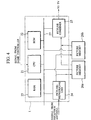
- a CPU 21 is a CPU (Central Processing Unit) which performs control of a signal that the BS tuner 1 transmits and receives.
- CPU Central Processing Unit
- a ROM 22 is a ROM (Read Only Memory), in which a program for administering operation of the BS tuner 1 is stored, and a RAM 23 is a RAM (Random Access Memory) which is configured by a volatile memory.
- a picture-reproducing unit 24 receives the broadcast signal from the reception antenna 4 and reproduces the broadcast picture and sound that can be shown on the television 2 based on the broadcast signal.
- the picture-reproducing unit 24 configures the broadcasting-reception means, which receives a broadcast signal that is transmitted by a broadcasting station, and the picture-reproducing means, which reproduces a broadcast picture based on the received broadcast signal.
- the picture-reproducing unit 24 is configured with a high-frequency reception circuit and a de-scrambler that de-scrambles an encrypted broadcast signal, etc.
- a picture combiner 25 combines a plurality of pictures by applying logical calculation to the plurality of pictures.
- the picture combiner 25 configures the picture-combining means, which combines the broadcast picture and the game picture and outputs the combined picture to the receiver.
- Picture memories 26a, 26b memorize and store picture data for one frame, respectively.
- the picture memory 26a configures the first picture memory, which stores the broadcast picture that is reproduced by the picture-reproducing means.
- the picture memory 26b configures the second picture memory, which stores the game picture.
- a data bus 27 is a communication line for transmitting and receiving signals between the CPU 21 and the RAM 23 or the picture-reproducing unit 24, etc.
- a game system connection unit 30 is connected to the game system 3 and receives a video signal that the game system 3 outputs.
- the game system connection unit 30 configures the game picture-reception means, which receives the game picture generated by a game system from the game system.
- the CPU 21 retrieves the program stored in the ROM 22 when the BS tuner 1 is turned on. The CPU 21 then executes the retrieved program and performs the setting of the picture-reproducing unit 24 so as to receive the broadcast signal.
- the picture-reproducing unit 24 selects the specified channel from the broadcast signal received by the reception antenna 4 and receives the broadcast signal of the channel according to the control of the CPU 21.
- the picture-reproducing unit 24 then demodulates the broadcast picture and audio signal encoded by the MPEG-2 (Moving Picture Experts Group-2) scheme, and decrypts the encrypted broadcast picture. Further, the picture-reproducing unit 24 stores picture data of the decrypted broadcast picture in the picture memory 26a and repeats said storing process with the frame frequency of the broadcast picture.
- MPEG-2 Motion Picture Experts Group-2
- the CPU 21 instructs the picture combiner 25 to output the picture data stored in the picture memory 26a.
- the picture combiner 25 acknowledges the instruction of the CPU 21 and retrieves the picture data of the broadcast picture stored in the picture memory 26a with the frame frequency of the broadcast picture.
- the picture combiner 25 then converts the picture data to a video signal of the NTSC scheme for example.
- the picture combiner 25 repeats said process and outputs the video signal to the television 2.
- the broadcast picture of the BS broadcasting is shown on the television 2.
- the game system connection unit 30 receives the video signal outputted by the game system 3 and performs A/D conversion of the video signal according to the control of the CPU 21. Further, the game system connection unit 30 stores picture data of the game picture included in the A/D converted video signal in the picture memory 26b. The game system connection unit 30 repeats said storing process of the picture data of the game picture in the picture memory 26b with the frame frequency of the game picture.
- the CPU 21 instructs the picture combiner 25 to combine the picture data stored in the picture memory 26a and the picture memory 26b, respectively, and outputs the combined picture data.
- the BS tuner 1 can provide different conditions, such as "no picture combination", “picture combination (segmentation of screen), “picture combination (overlapping)', or “picture combination (overlapping with semi-transparent)".
- either condition can be selected by operation according to the menu shown on the television 2 using the game controller 33.
- the picture combiner 25 retrieves the picture data stored in the picture memory 26a and the picture memory 26b.
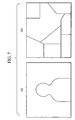
- the broadcast picture (Fig. 7(a)) and the game picture (Fig. 7(b)) have been stored in the picture memory 26a and the picture memory 26b, respectively.
- Fig. 7(a) shows the broadcast picture, which a person is located in the middle.
- Fig. 7(b) shows the game picture, which is in the process of a puzzle game running on the game system 3.
- the game program in this embodiment means, for example, the puzzle game and the like, in which pieces of the puzzle are to be erased one after another according to the given rules.
- the picture combiner 25 then combines the broadcast picture and the game picture according to the instruction of the CPU 21.
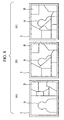
- the picture combiner 25 divides the screen into two areas as shown in Fig. 8(a), and combines the both pictures so as to show the broadcast picture (notation A in Fig. 8(a)) and the game picture (notation B in Fig. 8(a)) on the divided areas, respectively.
- the screen may also be divided into upper and lower sides for example.
- the picture combiner 25 can combine the game picture and the broadcast picture so as to show the picture of the corresponding area of the broadcast picture on the area of game picture, which satisfies prescribed conditions.
- the picture combiner 25 combines both the pictures so as to display that the broadcast picture (notation A in Fig. 8(b)) and the game picture (notation B in Fig. 8(b)) as overlapped.
- the picture combiner 25 combines both the pictures so as to show the broadcast picture in the area, in which only background is shown in the game picture (i.e., the area of the game picture, which satisfies the prescribed conditions), and to show the game picture on the area, in which the objects that configure the game (i.e., the pieces of the puzzle) are located. Accordingly, if the objects that configure the game occupy the whole area, the broadcast picture is not shown at all.
- the picture combiner 25 can change the area of the game picture, which satisfies prescribed conditions, so as to be semi-transparent, and can combine the broadcast picture and the game picture so as to show the picture of the corresponding area of the broadcast picture behind the area of the semi-transparent game picture.
- the picture combiner 25 changes the game picture so as to be semi-transparent (notation B in Fig. 8(c)), and combines the pictures so as to show the broadcast picture behind the semi-transparent game picture (notation A in Fig. 8(c)).
- the picture combiner 25 performs logical calculation so as to change the area where the objects that configure the game (i.e., the pieces of the puzzle) so as to be semi-transparent, and combines the game picture and the broadcast picture. By combining both the pictures as described, the broadcast picture can be shown even when the objects that configure the game are occupying the whole area due to the progress of the game.
- Fig. 9 shows the picture wherein the broadcast picture and the game picture of the puzzle game are combined by the picture combiner 25.
- the notation A indicates the broadcast picture, in which a person is located in the middle
- the notation B indicates a piece of the puzzle. Since the picture combiner 25 outputs the picture shown in Fig. 9, the mechanism in which the broadcast picture would be shown on the television 2 as a piece of the puzzle is erased due to the progress of the game can be achieved.
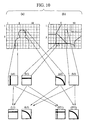
- the picture combiner 25 first retrieves the picture data shown in Fig. 10(a) and (b) stored in the picture memory 26a and picture memory 26b, respectively.
- Fig. 10(a) shows the broadcast picture stored in the picture memory 26a, in which a person is located in the middle
- Fig. 10(b) shows the game picture, in which the puzzle game is being played.
- the picture combiner 25 then divides the retrieved picture data of Fig. 10(a) and (b) into certain blocks. Incidentally, although the block is enlarged for explanation purposes, a smaller block configured with a certain amount of pixels is actually utilized.
- the picture combiner 25 detects the picture information of each block in Fig. 10(a) and Fig. 10(b).
- (a1) and (b1) of Fig. 10 show expanded pictures of the blocks, which have the same coordinates (4,8).
- (a2) and (b2) of Fig. 10 show expanded pictures of the blocks, which have the coordinates (7,3).
- the picture combiner 25 then memorizes the detected picture information and performs the process of the "overlapping" or the "overlapping with semi-transparent" command according to instruction by the CPU 21.
- the picture combiner 25 receives the "overlapping" from the CPU 21, the picture combiner 25 according to this embodiment defines the "background of the puzzle game", i.e., the area where no pieces of the puzzle are shown, as the area, which satisfies the prescribed conditions.
- the picture combiner 25 processes to output only the picture data of the broadcast picture (a1) block if the picture information, which satisfies the prescribed conditions, i.e., "background of the puzzle game", is detected in the game picture (b1) block.
- the picture combiner 25 processes to output only the picture data of the game picture (b1) block if the picture information, which differs from the prescribed conditions, i.e., "the piece of the puzzle" is detected in the game picture (b1) block.
- the picture combiner 25 receives the "overlapping with semi-transparent" command from the CPU 21, the picture combiner 25 according to this embodiment defines the area where pieces of the puzzle are shown, as the area, which satisfies the prescribed conditions.
- the picture combiner 25 changes the picture data of the game picture (b1) block so as to be semi-transparent if the picture, which satisfies the prescribed conditions, i.e., "the piece of puzzle". is detected in the game picture (b1) block.
- the picture combiner 25 then processes to output the combined picture so as to show the picture data of the broadcast picture (a1) block behind the picture data of the game picture (b1) block.
- the picture combiner 25 processes to output only the picture data of the broadcast picture (a1) block if the picture information, which differs from the prescribed conditions, i.e., "background of the puzzle game", is detected in the game picture (b1) block.
- (L1) of Fig. 10 shows the picture of the coordinates (4, 8), in which the process of the "overlapping" of the broadcast picture (a1) block and the game picture (b1) block has been performed by the picture combiner 25.
- the picture combiner 25 processes to output the picture data of the game picture (b1) block.
- the piece of the puzzle is shown on (L1).
- (ST1) of Fig. 10 shows the picture of the coordinates (4,8), in which the process of the "overlapping with semi-transparent" of the broadcast picture (a1) block and the game picture (b1) block has been performed by the picture combiner 25.
- the picture combiner 25 changes the picture data of the game picture (b1) block so as to be semi-transparent and processes to output the combined picture so as to show the picture data of the broadcast picture (a1) block behind the game picture (b1) block.
- the piece of the puzzle is changed so as to be semi-transparent, and the right arm part of the person, is shown behind the piece.
- (L2) and (ST2) of Fig. 10 also show the outputted pictures after similar processes of the (L1) and (ST1) are performed.
- the (L2) of Fig. 10 shows the picture of the coordinates (7,3), in which the process of the "overlapping" of the broadcast picture (a2) block and the game picture (b2) block has been performed by the picture combiner 25.
- the picture combiner 25 processes to output the picture data of the broadcast picture (a2) block.
- the left head part of the person is shown on (L2).
- (ST2) of Fig. 10 shows a picture of the coordinates (7, 3), in which the process of the "overlapping with semi-transparent" of the broadcast picture (a2) block and the game picture (b2) block has been performed by the picture combiner 25.
- the picture combiner 25 processes to output the picture data of the broadcast picture (a2) block.
- the left head part of the person is shown on (ST2).
- the picture combiner 25 performs the above described processes for the picture of each block, and repeats the processes with the frame frequencies of the game picture and the broadcast picture.
- the picture combiner 25 can output the pictures, in which the broadcast picture and the game picture are combined by "overlapping" and “overlapping with semi-transparent", as shown in Fig. 8(b) and (c).
- the BS tuner 1 can show the broadcast picture transmitted by the broadcasting station and a video game picture simultaneously on the television 2.
- Fig. 3 is a block diagram showing configuration of a broadcast system including a broadcast tuner according to the second embodiment.
- Fig. 3 since the same notations are assigned to the same parts, explanation of such parts is omitted.
- the difference between the broadcast system shown in Fig. 3 and the broadcast system shown in the first embodiment is that a game server 8, which stores a game program in which the contents of the game are described, and a multiplex unit 9, which multiplexes the game program stored in the game server 8 to the broadcast signal that the broadcasting apparatus 7 transmits, are deployed. Further, a function for executing the game program is installed in the BS tuner 1, and the game controller 33 is connected to the BS tuner 1.
- Fig. 4 is a block diagram showing configuration of the BS tuner 1 according to the second embodiment.
- Fig. 4 since the same notations are assigned to the same parts, explanation of such parts is omitted.
- the difference between the BS tuner 1 shown in Fig. 4 and the BS tuner 1 in the first embodiment is that the BS tuner 1 has a function to execute the game program, and a signal of the game controller 33 is taken in the CPU 21.
- the game server 8 stores a game program, which can run on the BS tuner 1.
- the broadcasting apparatus 7 transmits the broadcast signal that includes the broadcast picture and sound to the BS 5 via the transmission antenna 6.
- the multiplex unit 9 multiplexes the data of the game program stored in the game server 8 to the broadcast signal that is transmitted by the broadcasting apparatus 7.
- the data carousel scheme that is specified under the MPEG-2 TS (Transport Stream) can be utilized, as a method to multiplex and to transmit the data of the game program together with information of the broadcast picture and sound.
- the transmission antenna 6, the broadcasting apparatus 7, the game server 8 and the multiplex unit 9 are deployed in the broadcasting station.
- the picture-reproducing unit 24 splits the broadcast signal that is received via the reception antenna 4 into the broadcast picture including sound and the game program.
- the picture-reproducing unit 24 configures the signal-splitting means. Further, the picture-reproducing unit 24 stores the split data of the game program in the RAM 23.
- the RAM 23 configures the game memory that stores the game program in which the contents of game are described.
- the RAM 23 may be configured by NVRAM (Non Volatile RAM) in which EEPROM (Electrically Erasable Programmable ROM) is integrated. Accordingly, the data of the game program stored in the RAM 23 can be kept even if the power of the BS tuner 1 is turned off.
- NVRAM Non Volatile RAM
- EEPROM Electrical Erasable Programmable ROM
- a slot for connecting a card type EEPROM or an interface that can communicate with an external memory device may be integrated in the BS tuner 1, and the game program may be stored in the EEPROM connected to the slot or the external memory device connected to the interface.
- the game program can be executed on the other machines that can execute the game program, e.g., a PC and a game system.
- the broadcast picture split by the picture-reproducing unit 24 is stored in the picture memory 26a through an operation similar to the first embodiment.
- the CPU 21 configures the game-execution means, which executes the game program in which the contents of the game are described.
- the CPU 21 receives a signal inputted by the game controller 33 and executes the game program according to the received signal. Further, the CPU 21 stores a game picture generated by execution of the game program in the picture memory 26b.
- the picture combiner 25 retrieves and combines the picture data of the picture memory 26a and the picture memory 26b, and then outputs the combined picture to the television 2.
- the game program according to this embodiment may be an adventure type of game, i.e., a role-playing game in which the player of the game plays the hero and solves given challenges in the game, besides the puzzle game. Further, the game program according to this embodiment can only be retrieved from the broadcast signal transmitted by the broadcasting apparatus 7.
- the broadcasting apparatus 7 transmits a different types of game programs that are multiplexed to the broadcast signal depending on the timeframe so that the player can select the requested game program.
- the game program that is multiplexed to the broadcast signal and transmitted may also be retrieved at the BS tuner 1 by the method shown below.
- the BS tuner 1 can make the television 2 show the broadcast picture transmitted by the broadcasting station and the picture of the video game simultaneously.
- the BS tuner 1 according to this embodiment can retrieve the game program multiplexed to the broadcast signal, the player can easily acquire the game program and play the game.
- Fig. 5 is a block diagram showing configuration of the broadcast system including a broadcast tuner according to the third embodiment.
- Fig. 5 since the same notations are assigned to the same parts, explanation of such parts is omitted.
- the difference between the broadcast system shown in Fig. 5 and the broadcast system in the second embodiment is that the BS tuner 1 and the game server 8 are connected to the Internet 10. Further, there is a data-gathering apparatus 11, which gathers the log data of contents regarding the outputted broadcast picture and executed game program of the BS tuner 1.
- Fig. 6 is a block diagram showing configuration of the BS tuner 1 according to the third embodiment.
- Fig. 6 since the same notations are assigned to the same parts, explanation of such parts is omitted.
- the difference between the BS tuner 1 shown in Fig. 6 and the BS tuner 1 in the second embodiment is that a communication unit 28 and a modem 29 for connecting to the Internet 10 are equipped.
- the BS tuner 1, the game server 8 and the data-gathering apparatus 11 may be connected by a private leased circuit or a public network instead of the Internet 10.
- a digital circuit termination unit (DSU) or a terminal adapter (TA), etc. can be utilized instead of the modem 29.
- the CPU 21 can store log data in the RAM 23 including the channel number and the time range for the selected channel, whose broadcast pictures were reproduced by the picture-reproducing unit 24, and can store log data including the name of the game program executed by the CPU 21.
- the communication unit 28 retrieves the log data stored in the RAM 23 at the prescribed time (e.g., when it is turned on after the date changes), and transmits the retrieved data to the data-gathering apparatus 11 via the Internet 10.
- the communication unit 28 configures the log data transmission means, which transmits log data indicating the content of the broadcast picture that is reproduced by the picture-reproducing means and the content of the game program that is executed by the game-execution means.
- the data-gathering apparatus 11 configures the log data acquisition means, which acquires the log data transmitted by the BS tuner 1.
- the data stored in the data-gathering apparatus 11 can be analyzed by the computer system that executes an analytical type of application software providing a method of data mining, e.g., OLAP (Online Analytical Processing), together with attributes of the viewer, e.g., age, sex, hobbies and job.
- OLAP Online Analytical Processing
- this correlation means, for example, that after a certain sport program is broadcasted, the probability of male workers in their twenties playing the game for the sport is higher than other viewers.
- the computer system which stores the attributes of the viewers and executes the above analytical type of application software, may incorporate the function of the data-gathering apparatus 11 and may provide its function.
- the operator of the broadcasting station can select a game program whose probability of execution is high, and can make the game server 8 provide the selected game program.
- the embodiment in the case where the BS digital broadcasting is utilized digital broadcasting by a ground wave, CS broadcasting or CATV broadcasting may also be utilized.
- digital broadcasting by a ground wave, CS broadcasting and CATV broadcasting at least two broadcast tuners may be unified into one tuner.
- the broadcast tuner may be integrated in a television.
- the game system 3 may be integrated into the broadcast tuner.
- program to achieve the functions shown in Fig. 2, 4 and 6 may be recorded in a computer readable recording medium, and the program recorded in the recording medium may be retrieved and executed by a computer.
- the computer described here includes an operating system and hardware including peripheral devices, etc.
- the computer further includes the function to open web pages (homepages) that are built by HTML (Hyper Text Markup Language) via the Internet, and the function to display the web pages using a browser.
- homepages that are built by HTML (Hyper Text Markup Language) via the Internet
- HTML Hyper Text Markup Language
- the "computer readable recording medium” means an external memory device, such as a flexible disk, magneto-optic disk, ROM and CD-ROM for example, and a hard disk equipped in a computer.
- the "computer readable recording medium” includes the program being kept for a certain period of time in the RAM, etc. of the computer in a case where the program is transmitted via a communication network, e.g., the Internet, or a communication circuit, e.g., a telephone circuit.
- the program may be transmitted to the other computers via transmission medium.
- a communication network e.g., the Internet
- a communication circuit e.g., a telephone circuit
- the program may partially achieve the functions described above, and all the functions described above are achieved in combination with a part of the program that has already been stored in the computer, i.e., the program may be a differential file (differential program).
- the picture combiner 25 combines the broadcast picture stored in the picture memory 26a and the game picture stored in the picture memory 26b, and outputs the combined picture to the television 2, the broadcast picture and the game picture can be simultaneously shown on the television 2.
- the CPU 21 since the CPU 21 executes the game program stored in the RAM 23, the game can be executed without connection of the game system 3.
- the multiplex unit 9 multiplexes the game program to the broadcast signal, the player can easily retrieve the appropriate game program and play the game program using the broadcast tuner because the player does not need to buy the game program at a store.
- preparing the game program which can only be retrieved from the broadcast signal, contributes to the operator of the broadcasting station that transmits the broadcast signal to attract the viewers.
- the picture combiner 25, in the broadcast tuner and the broadcast system of the embodiments combines the game picture and the broadcast picture so as to show the picture of the corresponding area of the broadcast picture on the area of the game picture, which satisfies prescribed conditions. Further, the picture combiner 25, in the broadcast tuner and the broadcast system of the embodiments, changes the area of the game picture, which satisfies prescribed conditions, so as to be semi-transparent, and combines the broadcast picture and the game picture so as to show the picture of the corresponding area of the broadcast picture behind the area of the semi-transparent game picture.
- an ability of combining the broadcast picture and the game picture can be increased, and the game picture and the broadcast picture can therefore be shown on the television 2 regardless of the status of the game picture.
- the broadcast tuner and the broadcast system of the embodiments have the communication unit 28, which transmits log data regarding the content of the broadcast picture reproduced by the picture-reproducing unit 24 and the content regarding the game program executed by the CPU 21, the modem 29 and the data-gathering apparatus 11.
- the operator of the broadcasting station from which the broadcast signal transmits can recognize the viewer ratings, issue a direct mail based on the viewer's wishes, or examine the content of the broadcasting program based on the analytical result of the correlation between the content of the broadcasted program and the executed game program.
- a broadcast tuner and a broadcast system which are capable of showing a broadcast picture transmitted by a broadcasting station and a game picture of a video game system simultaneously on a television.
Landscapes
- Engineering & Computer Science (AREA)
- Multimedia (AREA)
- Signal Processing (AREA)
- Databases & Information Systems (AREA)
- Human Computer Interaction (AREA)
- Business, Economics & Management (AREA)
- Marketing (AREA)
- Two-Way Televisions, Distribution Of Moving Picture Or The Like (AREA)
Abstract
It is an object of the invention to provide a broadcast tuner
and a broadcast system, which are capable of showing a broadcast
picture transmitted by a broadcasting station and a game picture
of a video game simultaneously on a receiver. The present
invention comprises a broadcasting-reception means to receive
a broadcast signal transmitted by a broadcasting station, a
picture-reproducing means to reproduce a broadcast picture from
the received broadcast signal, a first picture memory to store
the broadcast picture reproduced by the picture-reproducing
means, a game picture-reception means to receive a game picture
generated by a game machine which executes a game program in
which the contents of the game are described, a second picture
memory to store the game picture, and a picture-combining means
to combine the broadcast picture stored in the first picture
memory and the game picture stored in the second picture memory,
and to output the combined picture to a receiver.
Description
The present invention relates to a broadcast tuner, a
broadcast system, a program and a recording medium, which
combine a broadcast picture and a picture of a video game.
As a type of television broadcasting, broadcasting by
ground wave, broadcasting by cable television (CATV), and
broadcasting by Broadcasting Satellite (hereinafter referred
to as BS) or Communication Satellite (hereinafter referred to
as CS), etc. are known. Within these types of broadcasting,
delivering multi-channels using digital technology whereby new
broadcasting services such as character broadcasting, data
broadcasting, a bi-directional service and the
Internet-related services, etc., are used, have attracted
attention.
On the other hand, a home video game system on which
various games can be running with a connection to a television
that also receives television broadcasting is known. Since the
video game system can show a game picture on the television by
outputting a video signal, it is possible to provide a position
to play a game easily without a special display unit.
However, since a conventional video game system occupies
the television while playing a game, there is a problem in that
the television is not able to show the television broadcast
picture.
Further, while the television shows the television
broadcast picture, there is a problem in that playing a game
using the video game system is not possible.
The present invention has been made in view of the above
circumstances, and thus has an object of providing a broadcast
tuner, a broadcast system, program and recording medium, which
are capable of showing a broadcast picture transmitted by a
broadcasting station and a game picture of a video game system
simultaneously on a television.
The first gist of the present invention is a broadcast
tuner comprising a broadcasting-reception means to receive a
broadcast signal transmitted by a broadcasting station, a
picture-reproducing means to reproduce a broadcast picture from
the received broadcast signal, a first picture memory to store
the broadcast picture reproduced by the picture-reproducing
means, a game picture-reception means to receive a game picture
generated by a game machine which executes a game program in
which the contents of the game are described, a second picture
memory to store the game picture, and a picture-combining means
to combine the broadcast picture stored in the first picture
memory and the game picture stored in the second picture memory,
and to output the combined picture to a receiver.
According to the gist, since the picture-combining means
combines the broadcast picture stored in the first picture
memory and the game picture stored in the second picture memory,
and outputs the combined picture to the receiver, the broadcast
picture and the game picture can be simultaneously shown on the
receiver.
The second gist of the present invention is a broadcast
tuner comprising a broadcasting-reception means to receive a
broadcast signal transmitted by a broadcasting station, a
picture-reproducing means to reproduce a broadcast picture from
the received broadcast signal, a first picture memory to store
the broadcast picture reproduced by the picture-reproducing
means, a game memory to store a game program in which the contents
of the game are described, a game-execution means to execute
the game program stored in the game memory, a second picture
memory to store a game picture generated by execution of the
game program by the game-execution means, and a
picture-combining means to combine the broadcast picture stored
in the first picture memory and the game picture stored in the
second picture memory, and to output the combined picture to
a receiver.
According to the gist, since the picture-combining means
combines the broadcast picture stored in the first picture
memory and the game picture stored in the second picture memory,
and outputs the combined picture to the receiver, the broadcast
picture and the game picture can be simultaneously shown on the
receiver.
According to the gist, since the game-execution means
executes the game program stored in the game memory, a game can
be executed without the connection of a game system.
The third gist of the present invention is, according to
the first or second gist of the present invention, that the
picture-combining means combines the game picture and the
broadcast picture so as to show a picture of a corresponding
area of the broadcast picture on an area of the game picture,
which satisfies prescribed conditions.
According to the gist, since the picture-combining means
combines the game picture and the broadcast picture so as to
show a picture of a corresponding area of the broadcast picture
on an area of the game picture, which satisfies prescribed
conditions, the ability to combine the broadcast picture and
the game picture can be increased.
The fourth gist of the present invention is, according
to the first or second gist of the present invention, that the
picture-combining means changes an area of the game picture
which satisfies prescribed conditions so as to be
semi-transparent and combines the game picture and the
broadcast picture so as to show a picture of a corresponding
area of the broadcast picture behind an area of a
semi-transparent game picture.
According to the gist, since the picture-combining means
changes an area of the game picture so as to be semi-transparent
and combines the game picture and the broadcast picture so as
to show a picture of a corresponding area of the broadcast
picture behind an area of a semi-transparent game picture, the
broadcast picture and the game picture can be simultaneously
shown even if the game picture is occupying the whole area of
the screen of the receiver.
The fifth gist of the present invention is, according to
the second gist of the present invention, that the
broadcasting-reception means receives the broadcast signal, in
which the game program is multiplexed, and further comprises
a signal-splitting means to split the game program from the
received broadcast signal, and a log data transmission means
to transmit log data which indicates content of the broadcast
picture reproduced by the picture-reproducing means and the
content of the game program executed by the game-execution
means.
According to the gist, since the signal-splitting means
splits the game program from the received broadcast signal, the
game program can be retrieved from the broadcast signal.
According to the gist, since the log data transmission
means transmits log data which indicates the content of the
broadcast picture reproduced by the picture-reproducing means
and the content of the game program executed by the
game-execution means, information required to analyze the
correlation between the content of the reproduced broadcast
picture and the executed game program can be provided.
The sixth gist of the present invention is, according to
the first or second gist of the present invention, that the
broadcast tuner receives either BS digital broadcasting,
digital broadcasting by a ground wave, CS broadcasting or cable
television broadcasting.
According to the gist, major broadcasting systems
currently being operated can be covered.
The seventh gist of the present invention is, according
to the first or second gist of the present invention, that the
broadcast tuner receives at least two broadcastings within BS
digital broadcasting, digital broadcasting by a ground wave,
CS broadcasting and cable television broadcasting.
The eighth gist of the present invention is, according
to the first or second gist of the present invention, that the
broadcast tuner is integrated with the receiver.
The ninth gist of the present invention is, according to
the first or second gist of the present invention, that the game
machine is integrated to the broadcast tuner.
According to the gist, wiring between the broadcast tuner
and the receiver can be facilitated and the required space
around the receiver can be decreased.
The tenth gist of the present invention is a broadcast
system comprising a broadcasting apparatus to transmit a
broadcast signal that includes a broadcast picture, a game
server to store a game program in which the contents of the game
are described, and a multiplex unit to multiplex the game
program to the broadcast signal.
According to the gist, since the multiplex unit
multiplexes the game program to the broadcast signal, the game
program can be included in the broadcast signal and can thus
be transmitted.
The eleventh gist of the present invention is, according
to the tenth gist of the present invention, that the broadcast
system broadcasts either BS digital broadcasting, digital
broadcasting by a ground wave, CS broadcasting or cable
television broadcasting.
According to the gist, major broadcasting systems
currently being operated can be covered.
The twelfth gist of the present invention is, according
to the tenth gist of the present invention, that the broadcast
system further comprises a log data acquisition means to acquire
log data indicating the content of the broadcast picture
outputted by a broadcast tuner which receives the broadcast
signal and content of the game program executed by the broadcast
tuner.
According to the gist, since the log data acquisition
means acquires log data indicating the content of the outputted
broadcast picture and the executed game program by the broadcast
tuner, it can be used for analysis of the correlation between
the content of the outputted broadcast picture and the executed
game program.
The thirteenth gist of the present invention is a
broadcast system configured by a broadcasting station, which
transmits a broadcast signal containing a broadcast picture and
a game program in which the contents of the game are described
are multiplexed, a broadcast tuner, which receives the
broadcast signal and outputs the broadcast picture or a game
picture generated by execution of the game program, and a
receiver, which shows the broadcast picture or the game picture
outputted by the broadcast tuner, wherein, the broadcast tuner
comprising a broadcasting-reception means to receive the
broadcast signal, a signal-splitting means to split the game
program from the received broadcast signal, a
picture-reproducing means to reproduce the broadcast picture
from the received broadcast signal, a first picture memory to
store the broadcast picture reproduced by the
picture-reproducing means, a game memory to store the game
program, a game-execution means to execute the game program
stored in the game memory, a second picture memory to store the
game picture generated by execution of the game program by the
game-execution means, and a picture-combining means to combine
the broadcast picture stored in the first picture memory and
the game picture stored in the second picture memory and to
output the combined picture to the receiver, and the
broadcasting station comprising, a broadcasting apparatus to
transmit the broadcast signal, a game server to store the game
program, and a multiplex unit to multiplex the game program to
the broadcast signal.
According to the gist, since the picture-combining means
combines the broadcast picture stored in the first picture
memory and the game picture stored in the second picture memory,
and outputs the combined picture to the receiver, the broadcast
picture and the game picture can be simultaneously shown on the
receiver.
According to the gist, since the game-execution means
executes the game program stored in the game memory, a game can
be executed without the connection of a game system.
According to the gist, since the multiplex unit
multiplexes the game program to the broadcast signal, the game
program can be included in the broadcast signal and can thus
be transmitted.
The fourteenth gist of the present invention is,
according to the thirteenth gist of the present invention, that
the picture-combining means of the broadcast tuner combines the
game picture and the broadcast picture so as to show a picture
of a corresponding area of the broadcast picture on an area of
the game picture, which satisfies prescribed conditions.
According to the gist, an ability of combining the
broadcast picture and the game picture can be increased.
The fifteenth gist of the present invention is, according
to the thirteenth gist of the present invention, that the
picture-combining means of the broadcast tuner changes an area
of the game picture which satisfies prescribed conditions so
as to be semi-transparent and combines the game picture and the
broadcast picture so as to show a picture of a corresponding
area of the broadcast picture behind an area of a
semi-transparent game picture.
According to the gist, the broadcast picture and the game
picture can be simultaneously shown even if the game picture
is occupying the whole area of the screen of the receiver.
The sixteenth gist of the present invention is, according
to the thirteenth gist of the present invention, that the
broadcast tuner further comprising a log data transmission
means to transmit log data which indicates the content of the
broadcast picture reproduced by the picture-reproducing means
and the content of the game program executed by the
game-execution means, and the broadcasting station further
comprising a log data acquisition means to acquire the log data
transmitted by the log data transmission means.
According to the gist, since the log data transmission
means transmits log data which indicates the content of the
broadcast picture reproduced by the picture-reproducing means
and the content of the game program executed by the
game-execution means, information required to analyze the
correlation between the content of the reproduced broadcast
picture and the executed game program can be provided.
According to the gist, since the log data acquisition
means acquires the log data transmitted by the log data
transmission means, it can be used for analysis of the
correlation between the content of the outputted broadcast
picture and the executed game program.
The seventeenth gist of the present invention is a program
for causing a computer to execute, comprising, a
broadcasting-reception process to receive a broadcast signal
transmitted by a broadcasting station, a picture-reproducing
process to reproduce a broadcast picture from the received
broadcast signal, a game-execution process to execute a game
program in which the contents of the game are described, and
a picture-combining process to combine the broadcast picture
reproduced by the picture-reproducing process and the game
picture generated by the game-execution process, and to output
the combined picture to a receiver.
The eighteenth gist of the present invention is,
according to the seventeenth gist of the present invention, that
the picture-combining process combines the game picture and the
broadcast picture so as to show a picture of a corresponding
area of the broadcast picture on an area of the game picture,
which satisfies prescribed conditions.
The nineteenth gist of the present invention is,
according to the seventeenth gist of the present invention, that
the picture-combining process changes an area of the game
picture which satisfies prescribed conditions so as to be
semi-transparent and combines the game picture and the
broadcast picture so as to show a picture of a corresponding
area of the broadcast picture behind an area of a
semi-transparent game picture.
According to the gist, since the picture-combining
process combines the broadcast picture stored in the first
picture memory and the game picture stored in the second picture
memory, and outputs the combined picture to the receiver, the
broadcast picture and the game picture can be simultaneously
shown on the receiver.
The twentieth gist of the present invention is a
computer-readable recording medium in which a program for
causing a computer to execute is stored, comprising a
broadcasting-reception process to receive a broadcast signal
transmitted by a broadcasting station, a picture-reproducing
process to reproduce a broadcast picture from the received
broadcast signal a game-execution process to execute a game
program in which the contents of the game are described, and
a picture-combining process to combine the broadcast picture
reproduced by the picture-reproducing process and the game
picture generated by the game-execution process, and to output
the combined picture to a receiver.
The twenty-first gist of the present invention is,
according to the twentieth gist of the present invention, that
the picture-combining process combines the game picture and the
broadcast picture so as to show a picture of a corresponding
area of the broadcast picture on an area of the game picture,
which satisfies prescribed conditions.
The twenty-second gist of the present invention is,
according to the twentieth gist of the present invention, that
the picture-combining process changes an area of the game
picture which satisfies prescribed conditions so as to be
semi-transparent and combines the game picture and the
broadcast picture so as to show a picture of a corresponding
area of the broadcast picture behind an area of a
semi-transparent game picture.
According to the gist, since the picture-combining
process combines the broadcast picture stored in the first
picture memory and the game picture stored in the second picture
memory, and outputs the combined picture to the receiver, the
broadcast picture and the game picture can be simultaneously
shown on the receiver.
Embodiments of the invention will now be described in
detail with reference to the drawings.
Fig. 1 is a diagram showing configuration of a broadcast
system including a broadcast tuner according to the first
embodiment of the invention.
A BS tuner 1 is a broadcast tuner for receiving BS
broadcasting.
A television 2 is a television set to which the BS tuner
1 is connected, and configures the receiver in this embodiment.
A game system 3 (the game machine) is a home video game
system, to which the BS tuner 1 is connected, and which executes
a game program and can output a video signal generated by
executing the game program.
A game controller 33 is a command input unit connected
to the game system 3, to input a command to the game program
running on the game system 3.
A reception antenna 4 is an antenna to receive a broadcast
signal of the BS broadcasting.
A BS 5 is a geostationary satellite, which relays the
broadcast signal of the BS broadcasting and an additional data
signal, etc.
A transmission antenna 6 is an antenna to transmit the
broadcast signal to the BS 5.
A broadcasting apparatus 7 transmits the broadcast signal
that includes the broadcast picture and a sound.
Fig. 2 is a block diagram showing configuration of the
BS tuner 1 according to the first embodiment of the invention.
In Fig. 2, a CPU 21 is a CPU (Central Processing Unit) which
performs control of a signal that the BS tuner 1 transmits and
receives.
A ROM 22 is a ROM (Read Only Memory), in which a program
for administering operation of the BS tuner 1 is stored, and
a RAM 23 is a RAM (Random Access Memory) which is configured
by a volatile memory.
A picture-reproducing unit 24 receives the broadcast
signal from the reception antenna 4 and reproduces the broadcast
picture and sound that can be shown on the television 2 based
on the broadcast signal. In this embodiment, the
picture-reproducing unit 24 configures the
broadcasting-reception means, which receives a broadcast
signal that is transmitted by a broadcasting station, and the
picture-reproducing means, which reproduces a broadcast
picture based on the received broadcast signal.
The picture-reproducing unit 24 according to this
embodiment is configured with a high-frequency reception
circuit and a de-scrambler that de-scrambles an encrypted
broadcast signal, etc.
A picture combiner 25 combines a plurality of pictures
by applying logical calculation to the plurality of pictures.
In this embodiment, the picture combiner 25 configures the
picture-combining means, which combines the broadcast picture
and the game picture and outputs the combined picture to the
receiver.
A data bus 27 is a communication line for transmitting
and receiving signals between the CPU 21 and the RAM 23 or the
picture-reproducing unit 24, etc.
A game system connection unit 30 is connected to the game
system 3 and receives a video signal that the game system 3
outputs. In this embodiment, the game system connection unit
30 configures the game picture-reception means, which receives
the game picture generated by a game system from the game system.
Hereinafter, operation of the BS tuner 1 will be described
with reference to Fig. 1 and 2. Firstly, operation to show the
BS broadcasting on the television 2 will be described.
The CPU 21 retrieves the program stored in the ROM 22 when
the BS tuner 1 is turned on. The CPU 21 then executes the
retrieved program and performs the setting of the
picture-reproducing unit 24 so as to receive the broadcast
signal.
The picture-reproducing unit 24 then selects the
specified channel from the broadcast signal received by the
reception antenna 4 and receives the broadcast signal of the
channel according to the control of the CPU 21.
The picture-reproducing unit 24 then demodulates the
broadcast picture and audio signal encoded by the MPEG-2 (Moving
Picture Experts Group-2) scheme, and decrypts the encrypted
broadcast picture. Further, the picture-reproducing unit 24
stores picture data of the decrypted broadcast picture in the
picture memory 26a and repeats said storing process with the
frame frequency of the broadcast picture.
On the other hand, the CPU 21 instructs the picture
combiner 25 to output the picture data stored in the picture
memory 26a. The picture combiner 25 acknowledges the
instruction of the CPU 21 and retrieves the picture data of the
broadcast picture stored in the picture memory 26a with the
frame frequency of the broadcast picture. The picture combiner
25 then converts the picture data to a video signal of the NTSC
scheme for example. The picture combiner 25 repeats said
process and outputs the video signal to the television 2.
By such process, the broadcast picture of the BS
broadcasting is shown on the television 2.
Hereinafter, operation in a case where the BS tuner 1
combines the broadcast picture and the game picture, and outputs
the combined picture to the television 2 will be described.
Since the picture-reproducing unit 24 operates in the same
manner as described above, description is omitted.
The game system connection unit 30 receives the video
signal outputted by the game system 3 and performs A/D
conversion of the video signal according to the control of the
CPU 21. Further, the game system connection unit 30 stores
picture data of the game picture included in the A/D converted
video signal in the picture memory 26b. The game system
connection unit 30 repeats said storing process of the picture
data of the game picture in the picture memory 26b with the frame
frequency of the game picture.
Further, the CPU 21 instructs the picture combiner 25 to
combine the picture data stored in the picture memory 26a and
the picture memory 26b, respectively, and outputs the combined
picture data.
The BS tuner 1 according to this embodiment can provide
different conditions, such as "no picture combination",
"picture combination (segmentation of screen), "picture
combination (overlapping)', or "picture combination
(overlapping with semi-transparent)". Incidentally, either
condition can be selected by operation according to the menu
shown on the television 2 using the game controller 33.
If the CPU 21 instructs to output either condition in
"segmentation of screen", "overlapping" or "overlapping with
semi-transparent", to the picture combiner 25, the picture
combiner 25 retrieves the picture data stored in the picture
memory 26a and the picture memory 26b.
At this point in time, as shown in Fig. 7, the broadcast
picture (Fig. 7(a)) and the game picture (Fig. 7(b)) have been
stored in the picture memory 26a and the picture memory 26b,
respectively. For example, Fig. 7(a) shows the broadcast
picture, which a person is located in the middle. Further, Fig.
7(b) shows the game picture, which is in the process of a puzzle
game running on the game system 3. Incidentally, the game
program in this embodiment means, for example, the puzzle game
and the like, in which pieces of the puzzle are to be erased
one after another according to the given rules.
The picture combiner 25 then combines the broadcast
picture and the game picture according to the instruction of
the CPU 21.
If the picture combiner 25 receives the "segmentation of
screen" command from the CPU 21, the picture combiner 25 divides
the screen into two areas as shown in Fig. 8(a), and combines
the both pictures so as to show the broadcast picture (notation
A in Fig. 8(a)) and the game picture (notation B in Fig. 8(a))
on the divided areas, respectively. Although an example in the
case where the screen is divided into left and right sides as
shown in Fig. 8(a), the screen may also be divided into upper
and lower sides for example.
Further, the picture combiner 25 can combine the game
picture and the broadcast picture so as to show the picture of
the corresponding area of the broadcast picture on the area of
game picture, which satisfies prescribed conditions.
Specifically, if the picture combiner 25 receives the
"overlapping" command from the CPU 21, as shown in Fig. 8(b),
the picture combiner 25 combines both the pictures so as to
display that the broadcast picture (notation A in Fig. 8(b))
and the game picture (notation B in Fig. 8(b)) as overlapped.
Here, the picture combiner 25 according to this
embodiment combines both the pictures so as to show the
broadcast picture in the area, in which only background is shown
in the game picture (i.e., the area of the game picture, which
satisfies the prescribed conditions), and to show the game
picture on the area, in which the objects that configure the
game (i.e., the pieces of the puzzle) are located. Accordingly,
if the objects that configure the game occupy the whole area,
the broadcast picture is not shown at all.
Further, the picture combiner 25 can change the area of
the game picture, which satisfies prescribed conditions, so as
to be semi-transparent, and can combine the broadcast picture
and the game picture so as to show the picture of the
corresponding area of the broadcast picture behind the area of
the semi-transparent game picture.
Specifically, if the picture combiner 25 receives the
"overlapping with semi-transparent" command from the CPU 21,
as shown in Fig. 8(c), the picture combiner 25 changes the game
picture so as to be semi-transparent (notation B in Fig. 8(c)),
and combines the pictures so as to show the broadcast picture
behind the semi-transparent game picture (notation A in Fig.
8(c)).
Here, the picture combiner 25 according to this
embodiment performs logical calculation so as to change the area
where the objects that configure the game (i.e., the pieces of
the puzzle) so as to be semi-transparent, and combines the game
picture and the broadcast picture. By combining both the
pictures as described, the broadcast picture can be shown even
when the objects that configure the game are occupying the whole
area due to the progress of the game.
Fig. 9 shows the picture wherein the broadcast picture
and the game picture of the puzzle game are combined by the
picture combiner 25. In Fig. 9, the notation A indicates the
broadcast picture, in which a person is located in the middle,
and the notation B indicates a piece of the puzzle. Since the
picture combiner 25 outputs the picture shown in Fig. 9, the
mechanism in which the broadcast picture would be shown on the
television 2 as a piece of the puzzle is erased due to the
progress of the game can be achieved.
Hereinafter, referring to Fig. 10, the process in a case
where the picture combiner 25 combines the pictures stored in
the picture memory 26a and picture memory 26b so as to perform
the "overlapping" or "overlapping with semi-transparent"
command by logical calculation will be described.
The picture combiner 25 first retrieves the picture data
shown in Fig. 10(a) and (b) stored in the picture memory 26a
and picture memory 26b, respectively. Here, Fig. 10(a) shows
the broadcast picture stored in the picture memory 26a, in which
a person is located in the middle, and Fig. 10(b) shows the game
picture, in which the puzzle game is being played.
The picture combiner 25 then divides the retrieved
picture data of Fig. 10(a) and (b) into certain blocks.
Incidentally, although the block is enlarged for explanation
purposes, a smaller block configured with a certain amount of
pixels is actually utilized.
Further, the picture combiner 25 detects the picture
information of each block in Fig. 10(a) and Fig. 10(b). (a1)
and (b1) of Fig. 10 show expanded pictures of the blocks, which
have the same coordinates (4,8). Similarly, (a2) and (b2) of
Fig. 10 show expanded pictures of the blocks, which have the
coordinates (7,3).
The picture combiner 25 then memorizes the detected
picture information and performs the process of the
"overlapping" or the "overlapping with semi-transparent"
command according to instruction by the CPU 21.
Firstly, the process of the "overlapping" of the game
picture and the broadcast picture will be described. If the
picture combiner 25 receives the "overlapping" from the CPU 21,
the picture combiner 25 according to this embodiment defines
the "background of the puzzle game", i.e., the area where no
pieces of the puzzle are shown, as the area, which satisfies
the prescribed conditions.
The picture combiner 25 processes to output only the
picture data of the broadcast picture (a1) block if the picture
information, which satisfies the prescribed conditions, i.e.,
"background of the puzzle game", is detected in the game picture
(b1) block.
Further, the picture combiner 25 processes to output only
the picture data of the game picture (b1) block if the picture
information, which differs from the prescribed conditions, i.e.,
"the piece of the puzzle" is detected in the game picture (b1)
block.
Hereinafter, the process of the "overlapping with
semi-transparent" of the game picture and the broadcast picture
will be described. If the picture combiner 25 receives the
"overlapping with semi-transparent" command from the CPU 21,
the picture combiner 25 according to this embodiment defines
the area where pieces of the puzzle are shown, as the area, which
satisfies the prescribed conditions.
The picture combiner 25 changes the picture data of the
game picture (b1) block so as to be semi-transparent if the
picture, which satisfies the prescribed conditions, i.e., "the
piece of puzzle". is detected in the game picture (b1) block.
The picture combiner 25 then processes to output the combined
picture so as to show the picture data of the broadcast picture
(a1) block behind the picture data of the game picture (b1)
block.
Further, the picture combiner 25 processes to output only
the picture data of the broadcast picture (a1) block if the
picture information, which differs from the prescribed
conditions, i.e., "background of the puzzle game", is detected
in the game picture (b1) block.
(L1) of Fig. 10 shows the picture of the coordinates (4, 8),
in which the process of the "overlapping" of the broadcast
picture (a1) block and the game picture (b1) block has been
performed by the picture combiner 25.
Here, since the game picture (b1) block differs from the
prescribed condition for the "overlapping", which means
"background of the puzzle game", the picture combiner 25
processes to output the picture data of the game picture (b1)
block. As a result, the piece of the puzzle is shown on (L1).
Further, (ST1) of Fig. 10 shows the picture of the
coordinates (4,8), in which the process of the "overlapping with
semi-transparent" of the broadcast picture (a1) block and the
game picture (b1) block has been performed by the picture
combiner 25.
Here, since the game picture (b1) block satisfies the
prescribed condition for the "overlapping with
semi-transparent", which means "the piece of the puzzle", the
picture combiner 25 changes the picture data of the game picture
(b1) block so as to be semi-transparent and processes to output
the combined picture so as to show the picture data of the
broadcast picture (a1) block behind the game picture (b1) block.
As a result, the piece of the puzzle, is changed so as to be
semi-transparent, and the right arm part of the person, is shown
behind the piece.
(L2) and (ST2) of Fig. 10 also show the outputted pictures
after similar processes of the (L1) and (ST1) are performed.
The (L2) of Fig. 10 shows the picture of the coordinates
(7,3), in which the process of the "overlapping" of the
broadcast picture (a2) block and the game picture (b2) block
has been performed by the picture combiner 25.
Here, since the game picture (b2) block satisfies the
prescribed condition for the "overlapping", which means
"background of the puzzle game", the picture combiner 25
processes to output the picture data of the broadcast picture
(a2) block. As a result, the left head part of the person is
shown on (L2).
Further, (ST2) of Fig. 10 shows a picture of the
coordinates (7, 3), in which the process of the "overlapping with
semi-transparent" of the broadcast picture (a2) block and the
game picture (b2) block has been performed by the picture
combiner 25.
Here, since the game picture (b2) block differs from the
prescribed condition for the "overlapping with
semi-transparent", which means "the piece of the puzzle", the
picture combiner 25 processes to output the picture data of the
broadcast picture (a2) block. As a result, the left head part
of the person is shown on (ST2).
The picture combiner 25 performs the above described
processes for the picture of each block, and repeats the
processes with the frame frequencies of the game picture and
the broadcast picture.
By performing the processes as described, the picture
combiner 25 can output the pictures, in which the broadcast
picture and the game picture are combined by "overlapping" and
"overlapping with semi-transparent", as shown in Fig. 8(b) and
(c).
Since the broadcast picture and the game picture can be
combined, the BS tuner 1 according to this embodiment can show
the broadcast picture transmitted by the broadcasting station
and a video game picture simultaneously on the television 2.
Fig. 3 is a block diagram showing configuration of a
broadcast system including a broadcast tuner according to the
second embodiment. In Fig. 3, since the same notations are
assigned to the same parts, explanation of such parts is
omitted.
The difference between the broadcast system shown in Fig.
3 and the broadcast system shown in the first embodiment is that
a game server 8, which stores a game program in which the contents
of the game are described, and a multiplex unit 9, which
multiplexes the game program stored in the game server 8 to the
broadcast signal that the broadcasting apparatus 7 transmits,
are deployed. Further, a function for executing the game
program is installed in the BS tuner 1, and the game controller
33 is connected to the BS tuner 1.
Fig. 4 is a block diagram showing configuration of the
BS tuner 1 according to the second embodiment. In Fig. 4, since
the same notations are assigned to the same parts, explanation
of such parts is omitted.
The difference between the BS tuner 1 shown in Fig. 4 and
the BS tuner 1 in the first embodiment is that the BS tuner 1
has a function to execute the game program, and a signal of the
game controller 33 is taken in the CPU 21.
Firstly, operation of a transmission side, where the game
server 8, multiplex unit 9 and so on according to the second
embodiment are deployed, will be described.
The game server 8 stores a game program, which can run
on the BS tuner 1.
The broadcasting apparatus 7 transmits the broadcast
signal that includes the broadcast picture and sound to the BS
5 via the transmission antenna 6.
The multiplex unit 9 multiplexes the data of the game
program stored in the game server 8 to the broadcast signal that
is transmitted by the broadcasting apparatus 7. For example,
the data carousel scheme that is specified under the MPEG-2 TS
(Transport Stream) can be utilized, as a method to multiplex
and to transmit the data of the game program together with
information of the broadcast picture and sound.
In this embodiment, the transmission antenna 6, the
broadcasting apparatus 7, the game server 8 and the multiplex
unit 9 are deployed in the broadcasting station.
Hereinafter, referring to Fig. 4, operation of the
reception side, e.g., the BS tuner 1 will be described.
The picture-reproducing unit 24 splits the broadcast
signal that is received via the reception antenna 4 into the
broadcast picture including sound and the game program. In this
embodiment, the picture-reproducing unit 24 configures the
signal-splitting means. Further, the picture-reproducing
unit 24 stores the split data of the game program in the RAM
23.
The RAM 23 according to this embodiment configures the
game memory that stores the game program in which the contents
of game are described.
Incidentally, the RAM 23 according to this embodiment may
be configured by NVRAM (Non Volatile RAM) in which EEPROM
(Electrically Erasable Programmable ROM) is integrated.
Accordingly, the data of the game program stored in the RAM 23
can be kept even if the power of the BS tuner 1 is turned off.
Further, a slot for connecting a card type EEPROM or an
interface that can communicate with an external memory device
may be integrated in the BS tuner 1, and the game program may
be stored in the EEPROM connected to the slot or the external
memory device connected to the interface.
By storing the game program in the external memory device,
the game program can be executed on the other machines that can
execute the game program, e.g., a PC and a game system.
On the other hand, the broadcast picture split by the
picture-reproducing unit 24 is stored in the picture memory 26a
through an operation similar to the first embodiment.
In this embodiment, the CPU 21 configures the
game-execution means, which executes the game program in which
the contents of the game are described. The CPU 21 receives
a signal inputted by the game controller 33 and executes the
game program according to the received signal. Further, the
CPU 21 stores a game picture generated by execution of the game
program in the picture memory 26b.
The picture combiner 25, as described in the first
embodiment, retrieves and combines the picture data of the
picture memory 26a and the picture memory 26b, and then outputs
the combined picture to the television 2.
Incidentally, the game program according to this
embodiment may be an adventure type of game, i.e., a
role-playing game in which the player of the game plays the hero
and solves given challenges in the game, besides the puzzle game.
Further, the game program according to this embodiment can only
be retrieved from the broadcast signal transmitted by the
broadcasting apparatus 7.
Moreover, the broadcasting apparatus 7 transmits a
different types of game programs that are multiplexed to the
broadcast signal depending on the timeframe so that the player
can select the requested game program.
The game program that is multiplexed to the broadcast
signal and transmitted may also be retrieved at the BS tuner
1 by the method shown below.
As described, the BS tuner 1 can make the television 2
show the broadcast picture transmitted by the broadcasting
station and the picture of the video game simultaneously. In
addition, since the BS tuner 1 according to this embodiment can
retrieve the game program multiplexed to the broadcast signal,
the player can easily acquire the game program and play the game.
Fig. 5 is a block diagram showing configuration of the
broadcast system including a broadcast tuner according to the
third embodiment. In Fig. 5, since the same notations are
assigned to the same parts, explanation of such parts is
omitted.
The difference between the broadcast system shown in Fig.
5 and the broadcast system in the second embodiment is that the
BS tuner 1 and the game server 8 are connected to the Internet
10. Further, there is a data-gathering apparatus 11, which
gathers the log data of contents regarding the outputted
broadcast picture and executed game program of the BS tuner 1.
Fig. 6 is a block diagram showing configuration of the
BS tuner 1 according to the third embodiment. In Fig. 6, since
the same notations are assigned to the same parts, explanation
of such parts is omitted.
The difference between the BS tuner 1 shown in Fig. 6 and
the BS tuner 1 in the second embodiment is that a communication
unit 28 and a modem 29 for connecting to the Internet 10 are
equipped.
Incidentally, the BS tuner 1, the game server 8 and the
data-gathering apparatus 11 may be connected by a private leased
circuit or a public network instead of the Internet 10. In this
case, a digital circuit termination unit (DSU) or a terminal
adapter (TA), etc. can be utilized instead of the modem 29.
Firstly, operation of the BS tuner 1 according to the third
embodiment and the data-gathering apparatus 11 will be
described.
The CPU 21 can store log data in the RAM 23 including the
channel number and the time range for the selected channel,
whose broadcast pictures were reproduced by the
picture-reproducing unit 24, and can store log data including
the name of the game program executed by the CPU 21.
The communication unit 28 retrieves the log data stored
in the RAM 23 at the prescribed time (e.g., when it is turned
on after the date changes), and transmits the retrieved data
to the data-gathering apparatus 11 via the Internet 10. In this
embodiment, the communication unit 28 configures the log data
transmission means, which transmits log data indicating the
content of the broadcast picture that is reproduced by the
picture-reproducing means and the content of the game program
that is executed by the game-execution means.
In this embodiment, the data-gathering apparatus 11
configures the log data acquisition means, which acquires the
log data transmitted by the BS tuner 1. The data stored in the
data-gathering apparatus 11 can be analyzed by the computer
system that executes an analytical type of application software
providing a method of data mining, e.g., OLAP (Online Analytical
Processing), together with attributes of the viewer, e.g., age,
sex, hobbies and job.
By executing such analysis, correlation between the type
of viewed broadcasting program and the type of the executed game
program can be found. Incidentally, this correlation means,
for example, that after a certain sport program is broadcasted,
the probability of male workers in their twenties playing the
game for the sport is higher than other viewers.
Further, the computer system, which stores the attributes
of the viewers and executes the above analytical type of
application software, may incorporate the function of the
data-gathering apparatus 11 and may provide its function.
Based on the analytical result provided by the above
described analytical method, the operator of the broadcasting
station can select a game program whose probability of execution
is high, and can make the game server 8 provide the selected
game program.
Incidentally, in the first through third embodiments
described above, although the embodiment in the case where the
BS digital broadcasting is utilized, digital broadcasting by
a ground wave, CS broadcasting or CATV broadcasting may also
be utilized. Further, within the BS digital broadcasting,
digital broadcasting by a ground wave, CS broadcasting and CATV
broadcasting, at least two broadcast tuners may be unified into
one tuner. Moreover, the broadcast tuner may be integrated in
a television.
In addition, the game system 3 may be integrated into the
broadcast tuner.
Further, the program to achieve the functions shown in
Fig. 2, 4 and 6 may be recorded in a computer readable recording
medium, and the program recorded in the recording medium may
be retrieved and executed by a computer.
Incidentally, the computer described here includes an
operating system and hardware including peripheral devices, etc.
The computer further includes the function to open web pages
(homepages) that are built by HTML (Hyper Text Markup Language)
via the Internet, and the function to display the web pages using
a browser.
In addition, the "computer readable recording medium"
means an external memory device, such as a flexible disk,
magneto-optic disk, ROM and CD-ROM for example, and a hard disk
equipped in a computer. Further, the "computer readable
recording medium" includes the program being kept for a certain
period of time in the RAM, etc. of the computer in a case where
the program is transmitted via a communication network, e.g.,
the Internet, or a communication circuit, e.g., a telephone
circuit.
Further, the program may be transmitted to the other
computers via transmission medium. For example, a
communication network, e.g., the Internet, and a communication
circuit, e.g., a telephone circuit, can be listed as the
transmission medium.
Moreover, the program may partially achieve the functions
described above, and all the functions described above are
achieved in combination with a part of the program that has
already been stored in the computer, i.e., the program may be
a differential file (differential program).
According to the broadcast tuner and the broadcast system
of the embodiments, since the picture combiner 25 combines the
broadcast picture stored in the picture memory 26a and the game
picture stored in the picture memory 26b, and outputs the
combined picture to the television 2, the broadcast picture and
the game picture can be simultaneously shown on the television
2.
Further, according to the broadcast tuner and the
broadcast system of the embodiments, since the CPU 21 executes
the game program stored in the RAM 23, the game can be executed
without connection of the game system 3.
Moreover, according to the broadcast tuner and the
broadcast system of the embodiments, since the multiplex unit
9 multiplexes the game program to the broadcast signal, the
player can easily retrieve the appropriate game program and play
the game program using the broadcast tuner because the player
does not need to buy the game program at a store. According
to the broadcast tuner and the broadcast system of the
embodiments, preparing the game program, which can only be
retrieved from the broadcast signal, contributes to the
operator of the broadcasting station that transmits the
broadcast signal to attract the viewers.
The picture combiner 25, in the broadcast tuner and the
broadcast system of the embodiments, combines the game picture
and the broadcast picture so as to show the picture of the
corresponding area of the broadcast picture on the area of the
game picture, which satisfies prescribed conditions. Further,
the picture combiner 25, in the broadcast tuner and the
broadcast system of the embodiments, changes the area of the
game picture, which satisfies prescribed conditions, so as to
be semi-transparent, and combines the broadcast picture and the
game picture so as to show the picture of the corresponding area
of the broadcast picture behind the area of the semi-transparent
game picture.
According to the broadcast tuner and the broadcast system
of the embodiments, an ability of combining the broadcast
picture and the game picture can be increased, and the game
picture and the broadcast picture can therefore be shown on the
television 2 regardless of the status of the game picture.
Further, the broadcast tuner and the broadcast system of
the embodiments have the communication unit 28, which transmits
log data regarding the content of the broadcast picture
reproduced by the picture-reproducing unit 24 and the content
regarding the game program executed by the CPU 21, the modem
29 and the data-gathering apparatus 11.
According to the broadcast tuner and the broadcast system
of the embodiments, the operator of the broadcasting station
from which the broadcast signal transmits can recognize the
viewer ratings, issue a direct mail based on the viewer's wishes,
or examine the content of the broadcasting program based on the
analytical result of the correlation between the content of the
broadcasted program and the executed game program.
As described above, according to the present invention,
a broadcast tuner and a broadcast system, which are capable of
showing a broadcast picture transmitted by a broadcasting
station and a game picture of a video game system simultaneously
on a television.
Claims (26)
- A broadcast tuner comprising:a broadcasting-reception means to receive a broadcast signal transmitted by a broadcasting station;a picture-reproducing means to reproduce a broadcast picture from the received broadcast signal;a first picture memory to store the broadcast picture reproduced by the picture-reproducing means;a game picture-reception means to receive a game picture generated by a game machine which executes a game program in which the contents of the game are described;a second picture memory to store the game picture; anda picture-combining means to combine the broadcast picture stored in the first picture memory and the game picture stored in the second picture memory, and to output the combined picture to a receiver.
- A broadcast tuner comprising:a broadcasting-reception means to receive a broadcast signal transmitted by a broadcasting station;a picture-reproducing means to reproduce a broadcast picture from the received broadcast signal;a first picture memory to store the broadcast picture reproduced by the picture-reproducing means;a game memory to store a game program in which the contents of the game are described;a game-execution means to execute the game program stored in the game memory;a second picture memory to store a game picture generated by execution of the game program by the game-execution means; anda picture-combining means to combine the broadcast picture stored in the first picture memory and the game picture stored in the second picture memory, and to output the combined picture to a receiver.
- The broadcast tuner according to Claim 1 or 2, wherein, the picture-combining means combines the game picture and the broadcast picture so as to show a picture of a corresponding area of the broadcast picture on an area of the game picture, which satisfies prescribed conditions.
- The broadcast tuner according to Claim 1 or 2, wherein, the picture-combining means changes an area of the game picture which satisfies prescribed conditions so as to be semi-transparent, and combines the game picture and the broadcast picture so as to show a picture of a corresponding area of the broadcast picture behind an area of a semi-transparent game picture.
- The broadcast tuner according to Claim 2, wherein, the broadcasting-reception means receives the broadcast signal, in which the game program is multiplexed, and further comprising:a signal-splitting means to split the game program from the received broadcast signal; anda log data transmission means to transmit log data which indicates the content of the broadcast picture reproduced by the picture-reproducing means and the content of the game program executed by the game-execution means.
- The broadcast tuner according to Claim 1 or 2, wherein, the broadcast tuner receives either BS digital broadcasting, digital broadcasting by a ground wave, CS broadcasting or cable television broadcasting.
- The broadcast tuner according to Claim 1 or 2, wherein, the broadcast tuner receives at least two broadcastings within BS digital broadcasting, digital broadcasting by a ground wave, CS broadcasting and cable television broadcasting.
- The broadcast tuner according to Claim 1 or 2, wherein, the broadcast tuner is integrated in the receiver.
- The broadcast tuner according to Claim 1, the game machine is integrated in the broadcast tuner.
- A broadcast system comprising:a broadcasting apparatus to transmit a broadcast signal that includes a broadcast picture;a game server to store a game program in which the contents of the game are described; anda multiplex unit to multiplex the game program to the broadcast signal.
- The broadcast system according to Claim 10, wherein, the broadcast system broadcasts either BS digital broadcasting, digital broadcasting by a ground wave, CS broadcasting or cable television broadcasting.
- The broadcast system according to Claim 10, further comprising a log data acquisition means to acquire log data indicating the content of the broadcast picture outputted by a broadcast tuner which receives the broadcast signal and the content of the game program executed by the broadcast tuner.
- A broadcast system comprising:a broadcast tuner to receive a broadcast signal, in which a broadcast picture and a game program in which the contents of the game are described are multiplexed, from a broadcasting station, and to output the broadcast picture or a game picture generated by execution of the game program;a game-execution means to execute the game program received by the broadcast tuner; anda receiver to show the broadcast picture or the game picture outputted by the broadcast tuner.
- The broadcast system according to Claim 13, wherein, the broadcast tuner further comprises a log data transmission means to transmit log data which indicates the content of the broadcast picture outputted by the broadcast tuner and the content of the game program executed by the game-execution means.
- A broadcast system comprising:a broadcasting station to transmit a broadcast signal, in which a broadcast picture and a game program in which the contents of the game are described are multiplexed;a broadcast tuner to receive the broadcast signal and to output the broadcast picture or a game picture generated by execution of the game program;a game-execution means to execute the game program received by the broadcast tuner; anda receiver to show the broadcast picture or the game picture outputted by the broadcast tuner.
- The broadcast system according to Claim 15, wherein, the broadcast tuner further comprises a log data transmission means to transmit log data which indicates the content of the broadcast picture outputted by the broadcast tuner and the content of the game program executed by the game-execution means, and
the broadcasting station further comprising a log data acquisition means to acquire the log data transmitted by the log data transmission means. - A broadcast system configured by a broadcasting station, which transmits a broadcast signal in which a broadcast picture and a game program in which the contents of the game are described are multiplexed, a broadcast tuner, which receives the broadcast signal and outputs the broadcast picture or a game picture generated by execution of the game program, and a receiver, which shows the broadcast picture or the game picture outputted by the broadcast tuner, wherein:the broadcast tuner comprising:a broadcasting-reception means to receive the broadcast signal;a signal-splitting means to split the game program from the received broadcast signal;a picture-reproducing means to reproduce the broadcast picture from the received broadcast signal;a first picture memory to store the broadcast picture reproduced by the picture-reproducing means;a game memory to store the game program;a game-execution means to execute the game program stored in the game memory;a second picture memory to store the game picture generated by execution of the game program by the game-execution means; anda picture-combining means to combine the broadcast picture stored in the first picture memory and the game picture stored in the second picture memory, and to output the combined picture to the receiver, andthe broadcasting station comprising:a broadcasting apparatus to transmit the broadcast signal;a game server to store the game program; anda multiplex unit to multiplex the game program to the broadcast signal.
- The broadcast system according to Claim 17, wherein, the picture-combining means of the broadcast tuner combines the game picture and the broadcast picture so as to show a picture of a corresponding area of the broadcast picture on an area of the game picture, which satisfies prescribed conditions.
- The broadcast system according to Claim 17, wherein, the picture-combining means of the broadcast tuner changes an area of the game picture which satisfies prescribed conditions so as to be semi-transparent and combines the game picture and the broadcast picture so as to show a picture of a corresponding area of the broadcast picture behind an area of a semi-transparent game picture.
- The broadcast system according to Claim 17, wherein, the broadcast tuner further comprises a log data transmission means to transmit log data which indicates the content of the broadcast picture reproduced by the picture-reproducing means and the content of the game program executed by the game-execution means, and
the broadcasting station further comprising a log data acquisition means to acquire the log data transmitted by the log data transmission means. - A program for causing a computer to execute, comprising:a broadcasting-reception process to receive a broadcast signal transmitted by a broadcasting station;a picture-reproducing process to reproduce a broadcast picture from the received broadcast signal;a game-execution process to execute a game program in which the contents of the game are described; anda picture-combining process to combine the broadcast picture reproduced by the picture-reproducing process and the game picture generated by the game-execution process, and to output the combined picture to a receiver.
- The program according to Claim 21, wherein, the picture-combining process combines the game picture and the broadcast picture so as to show a picture of a corresponding area of the broadcast picture on an area of the game picture, which satisfies prescribed conditions.
- The program according to Claim 21, wherein, the picture-combining process changes an area of the game picture which satisfies prescribed conditions so as to be semi-transparent and combines the game picture and the broadcast picture so as to show a picture of a corresponding area of the broadcast picture behind an area of a semi-transparent game picture.
- A computer-readable recording medium in which a program for causing a computer to execute is stored, comprising:a broadcasting-reception process to receive a broadcast signal transmitted by a broadcasting station;a picture-reproducing process to reproduce a broadcast picture from the received broadcast signal;a game-execution process to execute a game program in which the contents of the game are described; anda picture-combining process to combine the broadcast picture reproduced by the picture-reproducing process and the game picture generated by the game-execution process, and to output the combined picture to a receiver.
- The computer-readable recording medium according to Claim 24, wherein, the picture-combining process combines the game picture and the broadcast picture so as to show a picture of a corresponding area of the broadcast picture on an area of the game picture, which satisfies prescribed conditions.
- The computer-readable recording medium according to Claim 24, wherein, the picture-combining process changes an area of the game picture which satisfies prescribed conditions so as to be semi-transparent and combines the game picture and the broadcast picture so as to show a picture of a corresponding area of the broadcast picture behind an area of a semi-transparent game picture.
Applications Claiming Priority (3)
| Application Number | Priority Date | Filing Date | Title |
|---|---|---|---|
| JP2001256838 | 2001-08-27 | ||
| JP2001256838 | 2001-08-27 | ||
| PCT/JP2002/008615 WO2003019935A1 (en) | 2001-08-27 | 2002-08-27 | Broadcast tuner, broadcast system, program, and recording medium |
Publications (2)
| Publication Number | Publication Date |
|---|---|
| EP1429546A1 true EP1429546A1 (en) | 2004-06-16 |
| EP1429546A4 EP1429546A4 (en) | 2005-02-09 |
Family
ID=19084604
Family Applications (1)
| Application Number | Title | Priority Date | Filing Date |
|---|---|---|---|
| EP02762870A Withdrawn EP1429546A4 (en) | 2001-08-27 | 2002-08-27 | TRANSMISSION TUNER, TRANSMISSION SYSTEM, PROGRAM, AND RECORDING MEDIUM |
Country Status (5)
| Country | Link |
|---|---|
| US (1) | US20040205828A1 (en) |
| EP (1) | EP1429546A4 (en) |
| JP (1) | JP3994087B2 (en) |
| WO (1) | WO2003019935A1 (en) |
| ZA (1) | ZA200304058B (en) |
Cited By (1)
| Publication number | Priority date | Publication date | Assignee | Title |
|---|---|---|---|---|
| EP1653467A1 (en) * | 2004-10-29 | 2006-05-03 | Kabushiki Kaisha Toshiba | Video playback apparatus and video playback method |
Families Citing this family (4)
| Publication number | Priority date | Publication date | Assignee | Title |
|---|---|---|---|---|
| KR101015412B1 (en) * | 2003-01-17 | 2011-02-22 | 톰슨 라이센싱 | Method and electronic device for generating video signal |
| KR101101665B1 (en) * | 2004-11-16 | 2011-12-30 | 엘지전자 주식회사 | Game program controller of digital broadcasting receiver |
| JP5213354B2 (en) | 2007-05-22 | 2013-06-19 | キヤノン株式会社 | Information processing apparatus, information processing method, and program |
| JP2012213139A (en) * | 2011-03-18 | 2012-11-01 | Nippon Hoso Kyokai <Nhk> | Broadcast service reception device and program |
Family Cites Families (5)
| Publication number | Priority date | Publication date | Assignee | Title |
|---|---|---|---|---|
| US5423555A (en) * | 1993-04-14 | 1995-06-13 | Kidrin; Thom | Interactive television and video game system |
| JPH0723356A (en) * | 1993-06-30 | 1995-01-24 | Hitachi Ltd | Interactive television broadcasting system |
| US6264559B1 (en) * | 1999-10-05 | 2001-07-24 | Mediaone Group, Inc. | Interactive television system and remote control unit |
| JP2001144700A (en) * | 1999-11-17 | 2001-05-25 | Matsushita Electric Ind Co Ltd | Receiving device, transmitting device, and recording medium |
| JP4412515B2 (en) * | 2000-04-28 | 2010-02-10 | 徹 玉川 | TV broadcasting system |
-
2002
- 2002-08-27 WO PCT/JP2002/008615 patent/WO2003019935A1/en not_active Ceased
- 2002-08-27 US US10/486,921 patent/US20040205828A1/en not_active Abandoned
- 2002-08-27 JP JP2003524256A patent/JP3994087B2/en not_active Expired - Fee Related
- 2002-08-27 EP EP02762870A patent/EP1429546A4/en not_active Withdrawn
-
2003
- 2003-05-26 ZA ZA2003/04058A patent/ZA200304058B/en unknown
Cited By (1)
| Publication number | Priority date | Publication date | Assignee | Title |
|---|---|---|---|---|
| EP1653467A1 (en) * | 2004-10-29 | 2006-05-03 | Kabushiki Kaisha Toshiba | Video playback apparatus and video playback method |
Also Published As
| Publication number | Publication date |
|---|---|
| WO2003019935A1 (en) | 2003-03-06 |
| US20040205828A1 (en) | 2004-10-14 |
| JPWO2003019935A1 (en) | 2004-12-16 |
| ZA200304058B (en) | 2005-07-27 |
| EP1429546A4 (en) | 2005-02-09 |
| JP3994087B2 (en) | 2007-10-17 |
Similar Documents
| Publication | Publication Date | Title |
|---|---|---|
| JP4223099B2 (en) | Method and system for providing enhanced content with broadcast video | |
| JP4169182B2 (en) | Simulation of two-way connectivity for one-way data streams to multiple parties | |
| JP3601181B2 (en) | Receiver | |
| US20020152462A1 (en) | Method and apparatus for a frame work for structured overlay of real time graphics | |
| US20040216170A1 (en) | Providing content interruptions | |
| US20040043819A1 (en) | Gaming system emulating a set top box | |
| US20020152117A1 (en) | System and method for targeting object oriented audio and video content to users | |
| US20020007493A1 (en) | Providing enhanced content with broadcast video | |
| NO324620B1 (en) | Digital television system, decoder for use therein and methods for transmitting digital audiovisual information. | |
| MX2013002074A (en) | Receiver apparatus, reception method, transmitter apparatus, transmission method, program and broadcast system. | |
| JPH10154062A (en) | Display system showing information from plural sources | |
| JP4408549B2 (en) | Information display system | |
| US9021522B2 (en) | Concurrent interactive television for network connected devices | |
| KR100406631B1 (en) | Apparatus and method for providing and obtaining goods information through broadcast signal | |
| US6806913B2 (en) | Apparatus and method for processing additional information in data broadcast system | |
| CN103139633A (en) | Digital television receiving terminal and method for switching channel thereof | |
| EP1429546A1 (en) | BROADCAST TUNER&comma; BROADCAST SYSTEM&comma; PROGRAM&comma; AND RECORDING MEDIUM | |
| US9814988B2 (en) | Games console adaptor unit | |
| US20110107080A1 (en) | Data broadcasting system, server and program storage medium | |
| JPH10112829A (en) | Video broadcasting system and receiver | |
| US20020094190A1 (en) | Video image playback method in a digital TV image transmitting and receiving system | |
| CN111095943A (en) | Combined broadcasting method for television program and additional multimedia content | |
| EP1841104A1 (en) | Wireless communications device and operating method thereof | |
| JP3671871B2 (en) | Receiver | |
| US20120246694A1 (en) | Television apparatus and display control method |
Legal Events
| Date | Code | Title | Description |
|---|---|---|---|
| PUAI | Public reference made under article 153(3) epc to a published international application that has entered the european phase |
Free format text: ORIGINAL CODE: 0009012 |
|
| 17P | Request for examination filed |
Effective date: 20040325 |
|
| AK | Designated contracting states |
Kind code of ref document: A1 Designated state(s): AT CH DE FR GB LI |
|
| A4 | Supplementary search report drawn up and despatched |
Effective date: 20041229 |
|
| 17Q | First examination report despatched |
Effective date: 20071113 |
|
| STAA | Information on the status of an ep patent application or granted ep patent |
Free format text: STATUS: THE APPLICATION IS DEEMED TO BE WITHDRAWN |
|
| 18D | Application deemed to be withdrawn |
Effective date: 20100824 |