EP1426057B1 - A medical device - Google Patents
A medical device Download PDFInfo
- Publication number
- EP1426057B1 EP1426057B1 EP03027124A EP03027124A EP1426057B1 EP 1426057 B1 EP1426057 B1 EP 1426057B1 EP 03027124 A EP03027124 A EP 03027124A EP 03027124 A EP03027124 A EP 03027124A EP 1426057 B1 EP1426057 B1 EP 1426057B1
- Authority
- EP
- European Patent Office
- Prior art keywords
- tube
- medical device
- patient
- dosing
- proteins
- Prior art date
- Legal status (The legal status is an assumption and is not a legal conclusion. Google has not performed a legal analysis and makes no representation as to the accuracy of the status listed.)
- Expired - Lifetime
Links
- 102000004169 proteins and genes Human genes 0.000 claims description 28
- 108090000623 proteins and genes Proteins 0.000 claims description 28
- 238000004458 analytical method Methods 0.000 claims description 20
- 108010007131 Pulmonary Surfactant-Associated Protein B Proteins 0.000 claims description 12
- 102100032617 Pulmonary surfactant-associated protein B Human genes 0.000 claims description 12
- 230000007812 deficiency Effects 0.000 claims description 12
- 108010007125 Pulmonary Surfactant-Associated Protein C Proteins 0.000 claims description 11
- 102000007620 Pulmonary Surfactant-Associated Protein C Human genes 0.000 claims description 11
- 108010007100 Pulmonary Surfactant-Associated Protein A Proteins 0.000 claims description 10
- 108010007127 Pulmonary Surfactant-Associated Protein D Proteins 0.000 claims description 10
- 102100027773 Pulmonary surfactant-associated protein A2 Human genes 0.000 claims description 10
- 102100027845 Pulmonary surfactant-associated protein D Human genes 0.000 claims description 10
- 210000003097 mucus Anatomy 0.000 claims description 9
- 210000003437 trachea Anatomy 0.000 claims description 9
- 230000029058 respiratory gaseous exchange Effects 0.000 claims description 7
- 239000000126 substance Substances 0.000 claims description 6
- 239000003814 drug Substances 0.000 claims description 5
- 238000005070 sampling Methods 0.000 claims description 3
- 239000007921 spray Substances 0.000 claims description 3
- 239000004094 surface-active agent Substances 0.000 description 19
- 239000012530 fluid Substances 0.000 description 14
- 210000004072 lung Anatomy 0.000 description 9
- 239000012528 membrane Substances 0.000 description 8
- 238000000034 method Methods 0.000 description 5
- 230000001419 dependent effect Effects 0.000 description 4
- 238000012360 testing method Methods 0.000 description 4
- 230000008859 change Effects 0.000 description 3
- 238000005086 pumping Methods 0.000 description 3
- 241001465754 Metazoa Species 0.000 description 2
- 230000008901 benefit Effects 0.000 description 2
- 238000005399 mechanical ventilation Methods 0.000 description 2
- 239000002077 nanosphere Substances 0.000 description 2
- 230000009467 reduction Effects 0.000 description 2
- 208000008425 Protein deficiency Diseases 0.000 description 1
- 230000037396 body weight Effects 0.000 description 1
- 239000000470 constituent Substances 0.000 description 1
- 238000013461 design Methods 0.000 description 1
- 238000009792 diffusion process Methods 0.000 description 1
- 230000000694 effects Effects 0.000 description 1
- 208000014674 injury Diseases 0.000 description 1
- 238000003780 insertion Methods 0.000 description 1
- 230000037431 insertion Effects 0.000 description 1
- 230000003993 interaction Effects 0.000 description 1
- 238000007726 management method Methods 0.000 description 1
- 239000000463 material Substances 0.000 description 1
- 238000005259 measurement Methods 0.000 description 1
- 238000000691 measurement method Methods 0.000 description 1
- 238000012544 monitoring process Methods 0.000 description 1
- 210000000056 organ Anatomy 0.000 description 1
- 238000002360 preparation method Methods 0.000 description 1
- 238000004445 quantitative analysis Methods 0.000 description 1
- 230000000241 respiratory effect Effects 0.000 description 1
- 230000008733 trauma Effects 0.000 description 1
- 230000007306 turnover Effects 0.000 description 1
- 238000005303 weighing Methods 0.000 description 1
Images

Classifications
-
- A—HUMAN NECESSITIES
- A61—MEDICAL OR VETERINARY SCIENCE; HYGIENE
- A61B—DIAGNOSIS; SURGERY; IDENTIFICATION
- A61B5/00—Measuring for diagnostic purposes; Identification of persons
- A61B5/145—Measuring characteristics of blood in vivo, e.g. gas concentration or pH-value ; Measuring characteristics of body fluids or tissues, e.g. interstitial fluid or cerebral tissue
- A61B5/14525—Measuring characteristics of blood in vivo, e.g. gas concentration or pH-value ; Measuring characteristics of body fluids or tissues, e.g. interstitial fluid or cerebral tissue using microdialysis
-
- A—HUMAN NECESSITIES
- A61—MEDICAL OR VETERINARY SCIENCE; HYGIENE
- A61M—DEVICES FOR INTRODUCING MEDIA INTO, OR ONTO, THE BODY; DEVICES FOR TRANSDUCING BODY MEDIA OR FOR TAKING MEDIA FROM THE BODY; DEVICES FOR PRODUCING OR ENDING SLEEP OR STUPOR
- A61M16/00—Devices for influencing the respiratory system of patients by gas treatment, e.g. ventilators; Tracheal tubes
- A61M16/04—Tracheal tubes
-
- A—HUMAN NECESSITIES
- A61—MEDICAL OR VETERINARY SCIENCE; HYGIENE
- A61M—DEVICES FOR INTRODUCING MEDIA INTO, OR ONTO, THE BODY; DEVICES FOR TRANSDUCING BODY MEDIA OR FOR TAKING MEDIA FROM THE BODY; DEVICES FOR PRODUCING OR ENDING SLEEP OR STUPOR
- A61M16/00—Devices for influencing the respiratory system of patients by gas treatment, e.g. ventilators; Tracheal tubes
- A61M16/04—Tracheal tubes
- A61M16/0475—Tracheal tubes having openings in the tube
- A61M16/0477—Tracheal tubes having openings in the tube with incorporated means for delivering or removing fluids
- A61M16/0484—Tracheal tubes having openings in the tube with incorporated means for delivering or removing fluids at the distal end
-
- G—PHYSICS
- G01—MEASURING; TESTING
- G01N—INVESTIGATING OR ANALYSING MATERIALS BY DETERMINING THEIR CHEMICAL OR PHYSICAL PROPERTIES
- G01N33/00—Investigating or analysing materials by specific methods not covered by groups G01N1/00 - G01N31/00
- G01N33/48—Biological material, e.g. blood, urine; Haemocytometers
- G01N33/50—Chemical analysis of biological material, e.g. blood, urine; Testing involving biospecific ligand binding methods; Immunological testing
- G01N33/68—Chemical analysis of biological material, e.g. blood, urine; Testing involving biospecific ligand binding methods; Immunological testing involving proteins, peptides or amino acids
- G01N33/6884—Chemical analysis of biological material, e.g. blood, urine; Testing involving biospecific ligand binding methods; Immunological testing involving proteins, peptides or amino acids from lung
-
- A—HUMAN NECESSITIES
- A61—MEDICAL OR VETERINARY SCIENCE; HYGIENE
- A61B—DIAGNOSIS; SURGERY; IDENTIFICATION
- A61B5/00—Measuring for diagnostic purposes; Identification of persons
- A61B5/145—Measuring characteristics of blood in vivo, e.g. gas concentration or pH-value ; Measuring characteristics of body fluids or tissues, e.g. interstitial fluid or cerebral tissue
- A61B5/1455—Measuring characteristics of blood in vivo, e.g. gas concentration or pH-value ; Measuring characteristics of body fluids or tissues, e.g. interstitial fluid or cerebral tissue using optical sensors, e.g. spectral photometrical oximeters
- A61B5/1459—Measuring characteristics of blood in vivo, e.g. gas concentration or pH-value ; Measuring characteristics of body fluids or tissues, e.g. interstitial fluid or cerebral tissue using optical sensors, e.g. spectral photometrical oximeters invasive, e.g. introduced into the body by a catheter
-
- A—HUMAN NECESSITIES
- A61—MEDICAL OR VETERINARY SCIENCE; HYGIENE
- A61M—DEVICES FOR INTRODUCING MEDIA INTO, OR ONTO, THE BODY; DEVICES FOR TRANSDUCING BODY MEDIA OR FOR TAKING MEDIA FROM THE BODY; DEVICES FOR PRODUCING OR ENDING SLEEP OR STUPOR
- A61M2202/00—Special media to be introduced, removed or treated
- A61M2202/04—Liquids
- A61M2202/0468—Liquids non-physiological
- A61M2202/0488—Surfactant, e.g. for the lung
-
- A—HUMAN NECESSITIES
- A61—MEDICAL OR VETERINARY SCIENCE; HYGIENE
- A61M—DEVICES FOR INTRODUCING MEDIA INTO, OR ONTO, THE BODY; DEVICES FOR TRANSDUCING BODY MEDIA OR FOR TAKING MEDIA FROM THE BODY; DEVICES FOR PRODUCING OR ENDING SLEEP OR STUPOR
- A61M2202/00—Special media to be introduced, removed or treated
- A61M2202/04—Liquids
- A61M2202/0492—Pleural
Definitions
- the present invention relates to a medical device according to the preamble of claim 1.
- surfactant A substance known as surfactant is found in healthy lungs. An essential function performed by surfactant is the reduction of surface tension so that all of the alveoli can be kept open.
- Surfactant contains a number of proteins, the individual functions of which are not entirely understood. The main constituents are however known and comprise four different proteins. These proteins are usually named SP-A, SP-B, SP-C, and SP-D.
- Different lung trauma influences the occurrence of surfactant this may in part be brought about through a reduction in the total amount of surfactant (the creation of surfactant in the lungs is influenced) and in part through a change in the occurrence of one or more of the main proteins SP-A, SP-B, SP-C, and SP-D.
- the consequence of the change in the occurrence of surfactant is in most cases a stiffer lung, often with an unknown number of alveoli that have collapsed. Gas exchange is quickly worsened thereby and the patient risks becoming dependent on mechanical ventilation in order to survive.
- a first goal is to provide more effective procedures that make possible cheaper and more effective treatment.
- a second goal is better and more effective sample taking that can be carried out relatively continuously.
- a third goal is a better and more effective means for the dosing of surfactant.
- the aim of the present invention is to at least partly deal with some or other of the problems and goals that are stated above.
- a method that fulfils the aim with regard to the preparation of a medicament is provided.
- the actual deficiency of this protein is established. It is then sufficient to determine a dosage that is sufficient to compensate the established deficiency. The dose is thus specific for the actual deficiency.
- all the proteins may be analysed in an equivalent manner. For example, an analysis may indicate that there exists a deficiency of SP-B and SP-C only. The dosing can then be adapted after this. In this way an unnecessarily large supply of other proteins can also be avoided.
- a medical device that removes several problems is achieved in accordance with the invention by means of a device according to the preamble of claim 1 being devised as is set out in the characterising portion of claim 1.
- An analysis unit is arranged to analyse a test sample with regard to the existence of at least one of the proteins SP-A, SP-B, SP-C and SP-D.
- the test sample may be transported to the analysis unit in a number of different ways, but it is advantageous if it occurs in direct connection to the test sample that has been taken from the patient.
- the analysis unit can be connected to a suction device for the suction of mucus and such like from the trachea.
- a fluid filled cuff having a permeable membrane is described in a co-pending patent application.
- the membrane can be designed to allow through the protein (or proteins) to be analysed.
- the cuff may and the analysis unit may be coupled together.
- a calculations unit can determine if a protein deficiency exists and how large the dose of the protein (or an equivalent substance) should be in order to counter the deficiency. It is an advantage here if the body mass of the patient is known.
- a suitable dose of a protein can be dosed.
- the dosing unit can hereby include reservoirs for the protein to be added and, depending on the analysis of deficiency of protein, add a therapeutically efficient dose to the respiratory organs.
- the dose may be supplied to the breathing system via a suitable patient connection (tracheal tube or tracheotomy tube) or via a separate tube that is adapted for insertion into the trachea.
- a suitable patient connection tracheal tube or tracheotomy tube
- a separate tube may alternatively be fed down through an existing tube, devised as a separate channel in an existing tube, or be adapted to be connected with an existing tube.
- the tube may be provided with a spray nozzle in order to increase the effectiveness of the delivery.
- a direct supply via the tube should be coordinated with the breathing cycles, that is to say the supply should be done so as to achieve the greatest benefit, for example at some time from the end phase of expiration to the beginning of inspiration (in order to most effectively reduce the surface tension in the alveoli and facilitate inflation of the same).
- the cuff mentioned above can advantageously even be employed to dose proteins through the permeable membrane.
- FIG. 1 An embodiment of a medical device 2 according to the invention is shown in FIG. 1 .
- the medical device 2 may include or be connected to a tube 4, preferably a tracheal tube.
- the tube 4 is to be dimensioned for location in the trachea of a patient (not shown).
- patient it is meant both animals and humans.
- a cuff 6 is located on the tube 4.
- the cuff 6 is, in the present embodiment, designed to be located below a conventional cuff.
- the cuff 6 may be formed to locate the tube 4 in the trachea and to seal the gap between the tube 4 and the trachea.
- a first tube 8 leads fluid down to the cuff 6 and a second tube 10 leads fluid from the cuff 6.
- the fluid may be circulated at a known rate by means of a pumping device 12.
- the pumping device 12 may even include a (not shown) reservoir for the fluid.
- the entire outward facing surface of the cuff 6 is formed of a permeable membrane 6A.
- a permeable membrane 6A is selectively permeable to the or those main proteins in the surfactant, designated as SP-A, SP-B, SP-C and SP-D.
- Mucus and fluids will collect around the cuff 6 and if any of the proteins SP-A, SP-B, SP-C and SP-D are present external the cuff 6 then the partial pressures will cause the proteins to pass through the membrane 6A into the fluid in the cuff 6. Protein-containing fluid then flows through the second tube 10.
- the fluid can be analysed in an analysis unit 14, connected to the pumping device 12, in order to qualitatively and quantitatively determine the level of the respective protein.
- Antibodies selectively chosen for a respective protein, are common and may be used on nano-spheres that flow with the fluid.
- the presence of the proteins may, with the help of fluorescence, then be determined by means of lighting within the analyser unit 14.
- the nano-spheres can be marked with different colour substances dependent on the selected antibody and thereby permit a simultaneous measurement and analysis of all the desired proteins.
- the determination of whether there is a deficiency of protein may be carried out in a calculations unit 16 in the analysis unit 14.
- a therapeutically effective dose of this/these protein(s) can be determined and dosed to the patient from a dosing unit 18. In the present example this is achieved via a dosing tube 22 to the patient's trachea and further down to the lungs.
- the dosing unit 18 comprises a first reservoir 20A for SP-A, a second reservoir 20B for SP-B a third reservoir 20C for SP-C and a fourth reservoir 20D for SP-D.
- the determined doses of the proteins SP-A, SP-B, SP-C and SP-D can be dosed from respective reservoirs 20A-D via the dosing tube 22 to the patient.
- a user interface, internal communications within the device, regulation and monitoring and other functions that can exist have all been symbolically included in a central unit 24.
- a cleansing suction of the mucus can be done in a known manner (after sufficient analysis material has been collected). This also results in a better turnover of the fluids (mucus, etc) that carries with them the proteins from the lungs.
- the cuff may be provided with a permanent suction feed-through that regularly sucks up the mucus that lies closest to the cuff 6 (dependent on the diffusion rate across the membrane etc.).
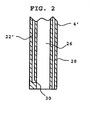
- FIG. 2 An alternative design of a tube 4' comprising a dosing tube 22' is illustrated in FIG. 2 .
- An air channel 26 and a sampling tube 28 are even found in the tube 4'.
- Breathing gas passes through the air channel 26 during inspiration and expiration.
- An effective dosing of the protein (proteins) is achieved by terminating the dosing tube 22' in the air channel 26 with a spray nozzle 30. The effectiveness increases if the dosing is coordinated with the provision of breathing gas through the air channel.
- the sampling tube 28 is shown as an example of that the collection of mucus and such for analysis can be done through a separate channel instead of via the cuff in FIG. 1 .
Landscapes
- Health & Medical Sciences (AREA)
- Life Sciences & Earth Sciences (AREA)
- Engineering & Computer Science (AREA)
- Biomedical Technology (AREA)
- General Health & Medical Sciences (AREA)
- Hematology (AREA)
- Pulmonology (AREA)
- Molecular Biology (AREA)
- Physics & Mathematics (AREA)
- Heart & Thoracic Surgery (AREA)
- Animal Behavior & Ethology (AREA)
- Public Health (AREA)
- Veterinary Medicine (AREA)
- Pathology (AREA)
- Immunology (AREA)
- Chemical & Material Sciences (AREA)
- Urology & Nephrology (AREA)
- Anesthesiology (AREA)
- Emergency Medicine (AREA)
- Microbiology (AREA)
- Biophysics (AREA)
- Biotechnology (AREA)
- Cell Biology (AREA)
- Surgery (AREA)
- Optics & Photonics (AREA)
- Medical Informatics (AREA)
- Proteomics, Peptides & Aminoacids (AREA)
- Food Science & Technology (AREA)
- Medicinal Chemistry (AREA)
- Analytical Chemistry (AREA)
- Biochemistry (AREA)
- General Physics & Mathematics (AREA)
- Investigating Or Analysing Biological Materials (AREA)
- Medicines Containing Antibodies Or Antigens For Use As Internal Diagnostic Agents (AREA)
- Medicines That Contain Protein Lipid Enzymes And Other Medicines (AREA)
Description
- The present invention relates to a medical device according to the preamble of claim 1.
- A substance known as surfactant is found in healthy lungs. An essential function performed by surfactant is the reduction of surface tension so that all of the alveoli can be kept open. Surfactant contains a number of proteins, the individual functions of which are not entirely understood. The main constituents are however known and comprise four different proteins. These proteins are usually named SP-A, SP-B, SP-C, and SP-D.
- Different lung trauma influences the occurrence of surfactant, this may in part be brought about through a reduction in the total amount of surfactant (the creation of surfactant in the lungs is influenced) and in part through a change in the occurrence of one or more of the main proteins SP-A, SP-B, SP-C, and SP-D. The consequence of the change in the occurrence of surfactant is in most cases a stiffer lung, often with an unknown number of alveoli that have collapsed. Gas exchange is quickly worsened thereby and the patient risks becoming dependent on mechanical ventilation in order to survive.
- A more complete background description of the role played by surfactant and the physiological interplay is provided in
US 6,020,307 . - An obvious treatment of surfactant deficiency is to supply exogenous surfactant. However this is not entirely without consequence. A completely synthetic surfactant is presently unavailable. Natural surfactant is manufactured from animal lungs but is expensive. The price of natural surfactant is in the region of €200 per millilitre (ml). The recommended dosage is 1.25 ml per kilogram bodyweight. For a child weighing 2 kg the cost of one dose is circa €500 but for an adult of 60 kg the cost of a dose is closer to €15,000! Dosing normally needs repeating several times during a treatment. Natural surfactant cannot therefore be used as a general treatment method, at least not for adult patients. At the same time it is true that a portion of the exogenous surfactant is forced from the lungs during expiration. This is at least in part due to the change in alveolar volume during expiration.
- Even if there exists known analysis methods to distinguish between the different proteins it is not possible to undertake continual or frequent analysis of the condition for every single patient. This is primarily because samples of surfactant are extracted from the lungs using bronchial washes or mucous suction. Both of these methods normally involve the discontinuation of the mechanical ventilation of the patient and in the worst case the patient must be disconnected from the ventilator.
- There therefore exists a desire to improve the management of surfactant deficiency. A first goal is to provide more effective procedures that make possible cheaper and more effective treatment. A second goal is better and more effective sample taking that can be carried out relatively continuously. A third goal is a better and more effective means for the dosing of surfactant.
- The aim of the present invention is to at least partly deal with some or other of the problems and goals that are stated above.
- A method that fulfils the aim with regard to the preparation of a medicament is provided.
- By performing a quantitative analysis of a sample, for example with respect to the protein SP-B, the actual deficiency of this protein is established. It is then sufficient to determine a dosage that is sufficient to compensate the established deficiency. The dose is thus specific for the actual deficiency.
- In principle all the proteins may be analysed in an equivalent manner. For example, an analysis may indicate that there exists a deficiency of SP-B and SP-C only. The dosing can then be adapted after this. In this way an unnecessarily large supply of other proteins can also be avoided.
- A medical device that removes several problems is achieved in accordance with the invention by means of a device according to the preamble of claim 1 being devised as is set out in the characterising portion of claim 1.
- Advantageous refinements and embodiments of the device are set out in the claims dependent on claim 1.
- An analysis unit is arranged to analyse a test sample with regard to the existence of at least one of the proteins SP-A, SP-B, SP-C and SP-D. The test sample may be transported to the analysis unit in a number of different ways, but it is advantageous if it occurs in direct connection to the test sample that has been taken from the patient. For example the analysis unit can be connected to a suction device for the suction of mucus and such like from the trachea.
- A fluid filled cuff having a permeable membrane is described in a co-pending patent application. The membrane can be designed to allow through the protein (or proteins) to be analysed. The cuff may and the analysis unit may be coupled together.
- From the analysis a calculations unit can determine if a protein deficiency exists and how large the dose of the protein (or an equivalent substance) should be in order to counter the deficiency. It is an advantage here if the body mass of the patient is known.
- Via a dosing unit a suitable dose of a protein can be dosed. The dosing unit can hereby include reservoirs for the protein to be added and, depending on the analysis of deficiency of protein, add a therapeutically efficient dose to the respiratory organs.
- The dose may be supplied to the breathing system via a suitable patient connection (tracheal tube or tracheotomy tube) or via a separate tube that is adapted for insertion into the trachea. Such a separate tube may alternatively be fed down through an existing tube, devised as a separate channel in an existing tube, or be adapted to be connected with an existing tube. The tube may be provided with a spray nozzle in order to increase the effectiveness of the delivery.
- Likewise, a direct supply via the tube should be coordinated with the breathing cycles, that is to say the supply should be done so as to achieve the greatest benefit, for example at some time from the end phase of expiration to the beginning of inspiration (in order to most effectively reduce the surface tension in the alveoli and facilitate inflation of the same).
- The cuff mentioned above can advantageously even be employed to dose proteins through the permeable membrane.
- Embodiments of the medical device according to the invention shall be described in more detail with reference to the accompanying figures, of which:
- FIG. 1
- shows an embodiment of a medical device according to the invention, and
- FIG. 2
- shows an alternative arrangement of a tube.
- An embodiment of a
medical device 2 according to the invention is shown inFIG. 1 . Themedical device 2 may include or be connected to atube 4, preferably a tracheal tube. Thetube 4 is to be dimensioned for location in the trachea of a patient (not shown). By patient it is meant both animals and humans. - A
cuff 6 is located on thetube 4. Thecuff 6 is, in the present embodiment, designed to be located below a conventional cuff. Alternatively, thecuff 6 may be formed to locate thetube 4 in the trachea and to seal the gap between thetube 4 and the trachea. - A
first tube 8 leads fluid down to thecuff 6 and asecond tube 10 leads fluid from thecuff 6. The fluid may be circulated at a known rate by means of apumping device 12. Thepumping device 12 may even include a (not shown) reservoir for the fluid. - It is obviously not essential that the fluid is re-circulated to the
cuff 6. New fluid may be supplied the whole time. This however results in a larger fluid usage. - In the present embodiment the entire outward facing surface of the
cuff 6 is formed of apermeable membrane 6A. In order to achieve the effects of the invention it is however sufficient that only a portion of the surface is formed of a permeable membrane. Themembrane 6A is selectively permeable to the or those main proteins in the surfactant, designated as SP-A, SP-B, SP-C and SP-D. - Mucus and fluids will collect around the
cuff 6 and if any of the proteins SP-A, SP-B, SP-C and SP-D are present external thecuff 6 then the partial pressures will cause the proteins to pass through themembrane 6A into the fluid in thecuff 6. Protein-containing fluid then flows through thesecond tube 10. - The fluid can be analysed in an
analysis unit 14, connected to thepumping device 12, in order to qualitatively and quantitatively determine the level of the respective protein. - There exists many known measurement techniques for the determination of the presence of the different proteins. Antibodies, selectively chosen for a respective protein, are common and may be used on nano-spheres that flow with the fluid. The presence of the proteins may, with the help of fluorescence, then be determined by means of lighting within the
analyser unit 14. - If desired, the nano-spheres can be marked with different colour substances dependent on the selected antibody and thereby permit a simultaneous measurement and analysis of all the desired proteins.
- The determination of whether there is a deficiency of protein (and in that case the extent of the deficiency) may be carried out in a
calculations unit 16 in theanalysis unit 14. - When it has been established that one or more of the proteins SP-A, SP-B, SP-C and SP-D is/are not present in a sufficient amount a therapeutically effective dose of this/these protein(s) can be determined and dosed to the patient from a
dosing unit 18. In the present example this is achieved via adosing tube 22 to the patient's trachea and further down to the lungs. - The
dosing unit 18 comprises afirst reservoir 20A for SP-A, asecond reservoir 20B for SP-B athird reservoir 20C for SP-C and afourth reservoir 20D for SP-D. The determined doses of the proteins SP-A, SP-B, SP-C and SP-D can be dosed fromrespective reservoirs 20A-D via thedosing tube 22 to the patient. - A user interface, internal communications within the device, regulation and monitoring and other functions that can exist have all been symbolically included in a
central unit 24. - If required a cleansing suction of the mucus can be done in a known manner (after sufficient analysis material has been collected). This also results in a better turnover of the fluids (mucus, etc) that carries with them the proteins from the lungs.
- As an alternative to the traditional suction (via the tube 4) the cuff may be provided with a permanent suction feed-through that regularly sucks up the mucus that lies closest to the cuff 6 (dependent on the diffusion rate across the membrane etc.).
- An alternative design of a tube 4' comprising a dosing tube 22' is illustrated in
FIG. 2 . Anair channel 26 and asampling tube 28 are even found in the tube 4'. - Breathing gas passes through the
air channel 26 during inspiration and expiration. An effective dosing of the protein (proteins) is achieved by terminating the dosing tube 22' in theair channel 26 with aspray nozzle 30. The effectiveness increases if the dosing is coordinated with the provision of breathing gas through the air channel. - The
sampling tube 28 is shown as an example of that the collection of mucus and such for analysis can be done through a separate channel instead of via the cuff inFIG. 1 . Naturally, it is also possible to exploit conventional suction methods in order to collect a test sample. - Combinations of the two embodiments are entirely possible. Just as several alternative embodiments can be simply envisaged.
Claims (6)
- A medical device (2) comprising an analysis unit (14) for at least the quantities analysis of a sample of mucus for the existence of at least one of the proteins SP-A, SP-B, SP-C and SP-D therein, the analysis unit (14) including a calculations unit (16) arranged to determine if a deficiency of one or more of the analysed proteins SP-A, SP-B, SP-C and SP-D exists and, if that is the case, to determine a therapeutically effective dose of a replacement substance for this or these protein(s), which dose is sufficient to compensate the deficiency, characterised in that the medical device (2) further comprises:- a suction device (12) connected to said analysis unit (14) for obtaining said sample through suction of mucus from the trachea of the patient,- a dosing unit (18) connected to said analysis unit (14) and arranged to dose a medicament containing said therapeutically effective dose of the replacement substance, and- means (22; 22') adapted to lead the medicament from the dosing unit (18) to the breathing system of the patient.
- A medical device according to claim 1, wherein the dosing unit (18) comprises a reservoir (20A, 20B, 20C, 20D) for the or those substances that can be included in the medicament.
- A medical device according to claim 1 or 2, wherein the means (22; 22') adapted to lead the medicament to the breathing system of the patient comprises a dosing tube (22; 22'), adapted to be inserted into the trachea of the patient.
- A medical device according to claim 3, further comprising a tracheal tube (4; 4') dimensioned for location in the trachea of a patient and comprising said dosing tube (22').
- A medical device according to claim 4, wherein the tracheal tube (4') comprises an air channel (26) for passing through breathing gas during inspiration and expiration of the patient, and wherein said dosing tube (22') is terminated in said air channel (26) with a spray nozzle (30).
- A medical device according to claim 4 or 5, wherein said tracheal tube (4') further comprises a sampling tube (28) for collecting the mucus.
Applications Claiming Priority (2)
| Application Number | Priority Date | Filing Date | Title |
|---|---|---|---|
| SE0203591 | 2002-12-04 | ||
| SE0203591A SE0203591D0 (en) | 2002-12-04 | 2002-12-04 | Method of preparing a media clamp and a medical device |
Publications (2)
| Publication Number | Publication Date |
|---|---|
| EP1426057A1 EP1426057A1 (en) | 2004-06-09 |
| EP1426057B1 true EP1426057B1 (en) | 2012-10-24 |
Family
ID=20289762
Family Applications (1)
| Application Number | Title | Priority Date | Filing Date |
|---|---|---|---|
| EP03027124A Expired - Lifetime EP1426057B1 (en) | 2002-12-04 | 2003-11-26 | A medical device |
Country Status (4)
| Country | Link |
|---|---|
| US (1) | US7266403B2 (en) |
| EP (1) | EP1426057B1 (en) |
| JP (1) | JP4528518B2 (en) |
| SE (1) | SE0203591D0 (en) |
Families Citing this family (2)
| Publication number | Priority date | Publication date | Assignee | Title |
|---|---|---|---|---|
| DE102008011013B4 (en) * | 2008-02-25 | 2014-11-13 | Mevitec Gmbh | Method and device for complex metabolic analysis |
| EA027030B1 (en) | 2012-04-23 | 2017-06-30 | КЬЕЗИ ФАРМАЧЕУТИЧИ С.п.А. | Method and system for the administration of a pulmonary surfactant by atomization |
Family Cites Families (20)
| Publication number | Priority date | Publication date | Assignee | Title |
|---|---|---|---|---|
| US4659805A (en) | 1984-12-11 | 1987-04-21 | California Biotechnology, Inc. | Recombinant alveolar surfactant protein |
| EP0485384A1 (en) * | 1989-03-31 | 1992-05-20 | Genentech, Inc. | Use of lung surfactants for the manufacture of a medicament for the treatment of respiratory distress syndrom prior to the birth |
| JPH04506809A (en) | 1989-07-11 | 1992-11-26 | ジェネンテク,インコーポレイテッド | Surfactant compositions and methods |
| US5238920A (en) | 1989-08-22 | 1993-08-24 | Abbott Laboratories | Pulmonary surfactant protein fragments |
| JP2517696B2 (en) * | 1990-04-27 | 1996-07-24 | 帝人株式会社 | Pulmonary Disease Marker Protein Assay |
| IE921342A1 (en) * | 1991-04-26 | 1992-11-04 | Surface Active Ltd | Novel antibodies, and methods for their use |
| DE9111239U1 (en) * | 1991-09-10 | 1991-10-31 | Dr. Karl Thomae Gmbh, 7950 Biberach | Adapter for continuous intratracheal instillation of a liquid medium |
| US5670328A (en) * | 1992-06-09 | 1997-09-23 | Yamasa Corporation | Monoclonal antibodies to human pulmonary surfactant apoprotein D and use thereof |
| JP2848705B2 (en) * | 1992-06-09 | 1999-01-20 | ヤマサ醤油株式会社 | Monoclonal antibody against human lung surfactant apoprotein D and its use |
| GB9224965D0 (en) * | 1992-11-28 | 1993-01-20 | Kodak Ltd | Antenatal screening for chromosomal abnormalities |
| US6020307A (en) | 1997-04-25 | 2000-02-01 | Ony, Inc. | Compositions and methods for isolating lung surfactant hydrophobic proteins SP-B and SP-C |
| IL134880A0 (en) * | 1997-09-05 | 2001-05-20 | Univ Southern Australia | A method of diagnosis |
| US6737243B1 (en) * | 1998-07-24 | 2004-05-18 | Altana Pharma Ag | Determination of the hydrophobic pulmonary surfactant protein SP-C |
| US6838428B2 (en) * | 1998-10-20 | 2005-01-04 | Children's Hospital Medical Center | Surfactant protein D for the prevention and diagnosis of pulmonary emphysema |
| WO2000023569A1 (en) * | 1998-10-20 | 2000-04-27 | Children's Hospital Medical Center | Surfactant protein d for the prevention and diagnosis of pulmonary emphysema |
| JP2002529394A (en) * | 1998-11-10 | 2002-09-10 | ビイク グルデン ロンベルク ヒエーミツシエ フアブリーク ゲゼルシヤフト ミツト ベシユレンクテル ハフツング | Therapeutic set containing a pulmonary surfactant composition |
| DE60011601T2 (en) * | 1999-01-19 | 2005-07-07 | Altana Pharma Ag | RECOMBINANT SP-A FOR THE TREATMENT AND PREVENTION OF PULMONARY INFECTIONS AND INFLAMMATION |
| AU6083899A (en) * | 1999-09-16 | 2001-04-17 | Aventis Behring Gmbh | Combination of c1-inh and lung surfactant for the treatment of respiratory disorders |
| US6308705B1 (en) * | 1999-12-21 | 2001-10-30 | Siemens Aktiengesellschaft | Integrated lung therapy method |
| US6660833B1 (en) * | 2000-02-29 | 2003-12-09 | Harbor-Ucla Research And Education Institute | Respiratory distress syndrome therapy with peptide analogs of human SP-B |
-
2002
- 2002-12-04 SE SE0203591A patent/SE0203591D0/en unknown
-
2003
- 2003-11-26 EP EP03027124A patent/EP1426057B1/en not_active Expired - Lifetime
- 2003-12-01 US US10/725,303 patent/US7266403B2/en not_active Expired - Fee Related
- 2003-12-03 JP JP2003404972A patent/JP4528518B2/en not_active Expired - Fee Related
Non-Patent Citations (2)
| Title |
|---|
| HAMVAS AARON ET AL: "Surfactant protein B deficiency: Antenatal diagnosis and prospective treatment with surfactant replacement", JOURNAL OF PEDIATRICS, vol. 125, no. 3, 1994, pages 356 - 361, ISSN: 0022-3476 * |
| MOYA F R ET AL: "SURFACTANT PROTEIN A AND SATURATED PHOSPHATIDYLCHOLINE IN RESPIRATORY DISTRESS SYNDROME", AMERICAN JOURNAL OF RESPIRATORY AND CRITICAL CARE MEDICINE, AMERICAN LUNG ASSOCIATION, NEW YORK, NY, US, vol. 150, no. 6, PART 01, 1 January 1994 (1994-01-01), pages 1672 - 1677, XP009027896, ISSN: 1073-449X * |
Also Published As
| Publication number | Publication date |
|---|---|
| EP1426057A1 (en) | 2004-06-09 |
| JP2004184419A (en) | 2004-07-02 |
| JP4528518B2 (en) | 2010-08-18 |
| SE0203591D0 (en) | 2002-12-04 |
| US20040192604A1 (en) | 2004-09-30 |
| US7266403B2 (en) | 2007-09-04 |
Similar Documents
| Publication | Publication Date | Title |
|---|---|---|
| CA2284796C (en) | Device and method for the determination of no in exhaled air | |
| US7814908B2 (en) | Method and device for reducing the carbon dioxide content in a dead volume | |
| Smaldone et al. | Characteristics of nebulizers used in the treatment of AIDS-related Pneumocystis carinii pneumonia | |
| JP6640832B2 (en) | Positive pressure inhaler for drug delivery | |
| SE506208C2 (en) | Device for collecting gas from the upper respiratory tract and delivering this gas to the inhalation air in a respirator | |
| Tonnellier et al. | Intravenous versus nebulized ceftazidime in ventilated piglets with and without experimental bronchopneumonia: comparative effects of helium and nitrogen | |
| WO2020103281A1 (en) | Apparatus for detecting exhaled gas and detection method | |
| CN109498923A (en) | A kind of atomising device of Dual module | |
| EP1426057A1 (en) | Method of preparation of a medicament and a medical device | |
| US11413408B2 (en) | Positive pressure inspiration device for delivery of medicaments | |
| EP1426070B1 (en) | Medical device | |
| Ren et al. | PACAP/VIP in the prefrontal cortex mediates the rapid antidepressant effects of Zhizichi Decoction | |
| Eljamal et al. | In situ and in vivo methods for pulmonary delivery | |
| CN218338467U (en) | Collection system of expired gas | |
| Morris | In vivo measurements of uptake | |
| SE503976C2 (en) | Method and aggregates for preparing a gas mixture intended for medical treatment via the respiratory tract | |
| DALHAMN et al. | Ciliastatic Action of Cigarette Smoke: Varying Exposure Times | |
| Oberst et al. | Retention of inhaled sarin vapor and its effect on red blood cell cholinesterase activity in man | |
| RU2637101C2 (en) | Device for determination of aspired dose of aerosols | |
| JP2553694Y2 (en) | Breath collection tube | |
| PL243509B1 (en) | Multifunctional device for sampling of animal respiratory aerosol or analysis of its composition or animal respiration | |
| Kim et al. | Actual pentamidine dose delivered by Respigard II nebulizer | |
| Diamond et al. | Oral inhalation system for exposing rabbits to cigarette smoke | |
| HK1027015B (en) | Device and method for the determination of no in exhaled air | |
| Talbot et al. | End-tidal sevoflurane and halothane concentrations during simulated airway occlusion in healthy humans |
Legal Events
| Date | Code | Title | Description |
|---|---|---|---|
| PUAI | Public reference made under article 153(3) epc to a published international application that has entered the european phase |
Free format text: ORIGINAL CODE: 0009012 |
|
| AK | Designated contracting states |
Kind code of ref document: A1 Designated state(s): AT BE BG CH CY CZ DE DK EE ES FI FR GB GR HU IE IT LI LU MC NL PT RO SE SI SK TR |
|
| AX | Request for extension of the european patent |
Extension state: AL LT LV MK |
|
| 17P | Request for examination filed |
Effective date: 20041117 |
|
| AKX | Designation fees paid |
Designated state(s): DE FR |
|
| 17Q | First examination report despatched |
Effective date: 20070628 |
|
| REG | Reference to a national code |
Ref country code: DE Ref legal event code: R079 Ref document number: 60342410 Country of ref document: DE Free format text: PREVIOUS MAIN CLASS: A61K0038170000 Ipc: A61M0016040000 |
|
| GRAP | Despatch of communication of intention to grant a patent |
Free format text: ORIGINAL CODE: EPIDOSNIGR1 |
|
| RIC1 | Information provided on ipc code assigned before grant |
Ipc: A61M 16/04 20060101AFI20120424BHEP Ipc: G01N 33/68 20060101ALI20120424BHEP |
|
| GRAS | Grant fee paid |
Free format text: ORIGINAL CODE: EPIDOSNIGR3 |
|
| GRAA | (expected) grant |
Free format text: ORIGINAL CODE: 0009210 |
|
| AK | Designated contracting states |
Kind code of ref document: B1 Designated state(s): DE FR |
|
| REG | Reference to a national code |
Ref country code: DE Ref legal event code: R096 Ref document number: 60342410 Country of ref document: DE Effective date: 20121220 |
|
| PLBE | No opposition filed within time limit |
Free format text: ORIGINAL CODE: 0009261 |
|
| STAA | Information on the status of an ep patent application or granted ep patent |
Free format text: STATUS: NO OPPOSITION FILED WITHIN TIME LIMIT |
|
| 26N | No opposition filed |
Effective date: 20130725 |
|
| REG | Reference to a national code |
Ref country code: DE Ref legal event code: R097 Ref document number: 60342410 Country of ref document: DE Effective date: 20130725 |
|
| REG | Reference to a national code |
Ref country code: FR Ref legal event code: PLFP Year of fee payment: 13 |
|
| REG | Reference to a national code |
Ref country code: FR Ref legal event code: PLFP Year of fee payment: 14 |
|
| PGFP | Annual fee paid to national office [announced via postgrant information from national office to epo] |
Ref country code: DE Payment date: 20161123 Year of fee payment: 14 Ref country code: FR Payment date: 20161014 Year of fee payment: 14 |
|
| REG | Reference to a national code |
Ref country code: DE Ref legal event code: R119 Ref document number: 60342410 Country of ref document: DE |
|
| REG | Reference to a national code |
Ref country code: FR Ref legal event code: ST Effective date: 20180731 |
|
| PG25 | Lapsed in a contracting state [announced via postgrant information from national office to epo] |
Ref country code: DE Free format text: LAPSE BECAUSE OF NON-PAYMENT OF DUE FEES Effective date: 20180602 Ref country code: FR Free format text: LAPSE BECAUSE OF NON-PAYMENT OF DUE FEES Effective date: 20171130 |