EP1422941A2 - Information playback apparatus and information playback method - Google Patents
Information playback apparatus and information playback method Download PDFInfo
- Publication number
- EP1422941A2 EP1422941A2 EP03021462A EP03021462A EP1422941A2 EP 1422941 A2 EP1422941 A2 EP 1422941A2 EP 03021462 A EP03021462 A EP 03021462A EP 03021462 A EP03021462 A EP 03021462A EP 1422941 A2 EP1422941 A2 EP 1422941A2
- Authority
- EP
- European Patent Office
- Prior art keywords
- contents
- information
- playback
- data
- dvd
- Prior art date
- Legal status (The legal status is an assumption and is not a legal conclusion. Google has not performed a legal analysis and makes no representation as to the accuracy of the status listed.)
- Withdrawn
Links
Images








Classifications
-
- G—PHYSICS
- G11—INFORMATION STORAGE
- G11B—INFORMATION STORAGE BASED ON RELATIVE MOVEMENT BETWEEN RECORD CARRIER AND TRANSDUCER
- G11B20/00—Signal processing not specific to the method of recording or reproducing; Circuits therefor
- G11B20/10—Digital recording or reproducing
-
- H—ELECTRICITY
- H04—ELECTRIC COMMUNICATION TECHNIQUE
- H04N—PICTORIAL COMMUNICATION, e.g. TELEVISION
- H04N9/00—Details of colour television systems
- H04N9/79—Processing of colour television signals in connection with recording
- H04N9/80—Transformation of the television signal for recording, e.g. modulation, frequency changing; Inverse transformation for playback
- H04N9/82—Transformation of the television signal for recording, e.g. modulation, frequency changing; Inverse transformation for playback the individual colour picture signal components being recorded simultaneously only
- H04N9/8205—Transformation of the television signal for recording, e.g. modulation, frequency changing; Inverse transformation for playback the individual colour picture signal components being recorded simultaneously only involving the multiplexing of an additional signal and the colour video signal
- H04N9/8227—Transformation of the television signal for recording, e.g. modulation, frequency changing; Inverse transformation for playback the individual colour picture signal components being recorded simultaneously only involving the multiplexing of an additional signal and the colour video signal the additional signal being at least another television signal
-
- G—PHYSICS
- G11—INFORMATION STORAGE
- G11B—INFORMATION STORAGE BASED ON RELATIVE MOVEMENT BETWEEN RECORD CARRIER AND TRANSDUCER
- G11B27/00—Editing; Indexing; Addressing; Timing or synchronising; Monitoring; Measuring tape travel
- G11B27/10—Indexing; Addressing; Timing or synchronising; Measuring tape travel
- G11B27/102—Programmed access in sequence to addressed parts of tracks of operating record carriers
- G11B27/105—Programmed access in sequence to addressed parts of tracks of operating record carriers of operating discs
-
- G—PHYSICS
- G11—INFORMATION STORAGE
- G11B—INFORMATION STORAGE BASED ON RELATIVE MOVEMENT BETWEEN RECORD CARRIER AND TRANSDUCER
- G11B27/00—Editing; Indexing; Addressing; Timing or synchronising; Monitoring; Measuring tape travel
- G11B27/10—Indexing; Addressing; Timing or synchronising; Measuring tape travel
- G11B27/11—Indexing; Addressing; Timing or synchronising; Measuring tape travel by using information not detectable on the record carrier
-
- G—PHYSICS
- G11—INFORMATION STORAGE
- G11B—INFORMATION STORAGE BASED ON RELATIVE MOVEMENT BETWEEN RECORD CARRIER AND TRANSDUCER
- G11B20/00—Signal processing not specific to the method of recording or reproducing; Circuits therefor
- G11B20/10—Digital recording or reproducing
- G11B20/10527—Audio or video recording; Data buffering arrangements
- G11B2020/1062—Data buffering arrangements, e.g. recording or playback buffers
- G11B2020/10675—Data buffering arrangements, e.g. recording or playback buffers aspects of buffer control
- G11B2020/10722—Data buffering arrangements, e.g. recording or playback buffers aspects of buffer control wherein the size of the buffer is variable, e.g. by adding additional memory cells for coping with input streams that have high bit rates
-
- G—PHYSICS
- G11—INFORMATION STORAGE
- G11B—INFORMATION STORAGE BASED ON RELATIVE MOVEMENT BETWEEN RECORD CARRIER AND TRANSDUCER
- G11B2220/00—Record carriers by type
- G11B2220/20—Disc-shaped record carriers
- G11B2220/25—Disc-shaped record carriers characterised in that the disc is based on a specific recording technology
- G11B2220/2537—Optical discs
- G11B2220/2562—DVDs [digital versatile discs]; Digital video discs; MMCDs; HDCDs
-
- H—ELECTRICITY
- H04—ELECTRIC COMMUNICATION TECHNIQUE
- H04N—PICTORIAL COMMUNICATION, e.g. TELEVISION
- H04N5/00—Details of television systems
- H04N5/76—Television signal recording
- H04N5/765—Interface circuits between an apparatus for recording and another apparatus
-
- H—ELECTRICITY
- H04—ELECTRIC COMMUNICATION TECHNIQUE
- H04N—PICTORIAL COMMUNICATION, e.g. TELEVISION
- H04N5/00—Details of television systems
- H04N5/76—Television signal recording
- H04N5/765—Interface circuits between an apparatus for recording and another apparatus
- H04N5/775—Interface circuits between an apparatus for recording and another apparatus between a recording apparatus and a television receiver
-
- H—ELECTRICITY
- H04—ELECTRIC COMMUNICATION TECHNIQUE
- H04N—PICTORIAL COMMUNICATION, e.g. TELEVISION
- H04N5/00—Details of television systems
- H04N5/76—Television signal recording
- H04N5/84—Television signal recording using optical recording
- H04N5/85—Television signal recording using optical recording on discs or drums
-
- H—ELECTRICITY
- H04—ELECTRIC COMMUNICATION TECHNIQUE
- H04N—PICTORIAL COMMUNICATION, e.g. TELEVISION
- H04N9/00—Details of colour television systems
- H04N9/79—Processing of colour television signals in connection with recording
- H04N9/80—Transformation of the television signal for recording, e.g. modulation, frequency changing; Inverse transformation for playback
- H04N9/804—Transformation of the television signal for recording, e.g. modulation, frequency changing; Inverse transformation for playback involving pulse code modulation of the colour picture signal components
- H04N9/8042—Transformation of the television signal for recording, e.g. modulation, frequency changing; Inverse transformation for playback involving pulse code modulation of the colour picture signal components involving data reduction
-
- H—ELECTRICITY
- H04—ELECTRIC COMMUNICATION TECHNIQUE
- H04N—PICTORIAL COMMUNICATION, e.g. TELEVISION
- H04N9/00—Details of colour television systems
- H04N9/79—Processing of colour television signals in connection with recording
- H04N9/87—Regeneration of colour television signals
- H04N9/8715—Regeneration of colour television signals involving the mixing of the reproduced video signal with a non-recorded signal, e.g. a text signal
Definitions
- the present invention relates to an information playback apparatus and information playback method for playing back contents stored in an information storage medium.
- the read-only DVD stores presentation data which records actual video and audio data, and navigation data used to manage the presentation data.
- the presentation data contains video data, audio data, and sub-picture data, which are multiplexed according to the specification of a program stream (2048 bytes) specified by MPEG2.
- the navigation data describes PGCs (ProGram Chains) and Cells, which set a time configuration and order of video and audio data to be played back. With this navigation data, multi-angle, multi-story, and parental functions can be implemented.
- an image display apparatus which provides a service that integrates a DVD-Video title and HTML file has been disclosed in Jpn. Pat. Appln. KOKAI Publication No. 11-161663.
- This image display apparatus extracts a URL from a navigation pack in a video object-unit, and establishes connection to the Internet based on the extracted URL, so as to display data in conjunction with a scene to be played back.
- a wait time required until data is downloaded after connection to the Internet is established poses a problem.
- the readout speed of information from a DVD is higher than the download speed of information via the Internet. That is, a given period of time is required to download information via the Internet, thus producing a certain wait time for the user.
- An information playback apparatus comprises a first acquisition unit configured to acquire first expansion information from an information storage medium, a first storage unit configured to store the first expansion information acquired by the first acquisition unit, a second acquisition unit configured to acquire second expansion information from an external apparatus via a communication line on the basis of information contained in the first expansion information, a second storage unit configured to store the second expansion information acquired by the second acquisition unit, a transfer unit configured to transfer the second expansion information stored in the second storage unit to the first storage unit in response to a request that requires the second expansion information, and a playback unit configured to play back the first expansion information and the second expansion information stored in the first storage unit.
- An information playback method comprises: acquiring first expansion information from an information storage medium and storing the acquired first expansion information in a first storage unit; acquiring second expansion information from an external apparatus via a communication line on the basis of information contained in the first expansion information, and storing the acquired second expansion information in a second storage unit; transferring the second expansion information stored in the second storage unit to the first storage unit in response to a request that requires the second expansion information; and playing back the first expansion information and the second expansion information stored in the first storage unit.
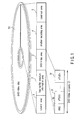
- FIGS. 1 and 2 show examples of the data structures of DVD-Video disks which can be played back by a DVD-Video player shown in FIG. 3 (to be described later) .
- FIG. 1 shows an example of the data structure of a standard DVD-Video disk D1.
- a DVD-Video area 3 of the standard DVD-Video disk D1 stores DVD-Video contents C1 (having an MPEG2 program stream structure).
- FIG. 2 shows the data structure of an enhanced DVD-Video disk D2.
- a DVD-Video area 3 of the enhanced DVD-Video disk D2 stores DVD-Video contents C1 (having an MPEG2 program stream structure) having the same data structure as the DVD-Video standard.
- another recording area 4 of the enhanced DVD-Video disk D2 stores enhanced navigation (to be abbreviated as ENAV hereinafter) contents C21 which allows a wide variety of playback of video contents. Note that the presence of the recording area 4 is also accepted in the DVD-Video standard.
- ENAV enhanced navigation
- the recording area of the DVD-Video disk includes a lead-in area 1, volume space, and lead-out area 5 in turn from its inner periphery.
- the volume space contains a volume/file structure information area 2, and DVD-Video area (DVD-Video zone) 3, and can also have another recording area (DVD other zone) 4 as an option.
- the volume/file structure information area 2 is assigned for a UDF (Universal Disk Format) bridge.
- the volume of the UDF bridge format is recognized according to ISO/IEC13346 Part 2.
- a space that recognizes this volume consists of successive sectors, and starts from the first logical sector of the volume space in FIGS. 1 and 2.
- First 16 logical sectors are reserved for system use specified by ISO9660.
- the volume/file structure information area 2 with such contents is required.
- the DVD-Video area 3 records management information called video manager VMG 30 and one or more video contents called video title sets VTS (VTS#1 to VTS#n).
- the VMG 30 is management information for all VTSs present in the DVD-Video area 3, and contains control data VMGI, VMG menu data VMGM_VOBS (option), and VMG backup data.
- Each VTS contains control data VTSI of that VTS, VTS menu data VTSM_VOBS (option), data VTSTT_VOBS of the contents (movie or the like) of that VTS (title), and VTSI backup data.
- the DVD-Video area with such contents is also required.
- a playback select menu or the like of each title (VTS#1 to VTS#n) is given in advance by a provider (the producer of a DVD video disk) using the VMG, and a playback chapter select menu, the playback order of recorded contents (cells), and the like in a specific title (e.g., VTS#1) are given in advance by the provider using the VTSI. Therefore, the viewer of the disk (the user of the DVD-Video player) can enjoy the recorded contents of that disk in accordance with menus of the VMG/VTSI prepared in advance by the provider and playback control information (program chain information PGCI) in the VTSI.
- program chain information PGCI program chain information
- the viewer (user) cannot play back the contents (movie or music) of each VTS by a method different from the VMG/VTSI prepared by the provider.
- the enhanced DVD-Video disk D2 shown in FIG. 2 is prepared for a mechanism that allows the user to play back the contents (movie or music) of each VTS by a method different from the VMG/VTSI prepared by the provider, and to play back while adding contents different from the VMG/VTSI prepared by the provider.
- the ENAV contents C21 contained in this disk D2 cannot be accessed by a DVD-Video player which is manufactured on the basis of the conventional DVD-Video standard (even if the ENAV contents can be accessed, their contents cannot be used).
- a DVD-Video player (player in FIG. 3 or the like) can access the ENAV contents C21, and can use their playback contents.
- the ENAV contents C21 are configured to contain audio data, still picture data, font/text data, moving picture data, animation data, and the like, and also an ENAV document (described in a Markup/Script language) as information for controlling playback of these data.
- This playback control information describes, using a Markup language or Script language, playback methods (display method, playback order, playback switch sequence, selection of data to be played back, and the like) of the ENAV contents (consisting of audio, still picture, font/text, moving picture, animation, and the like) and/or the DVD-Video contents C1.
- Markup languages such as HTML (Hyper Text Markup Language)/XHTML (extensible Hyper Text Markup Language), SMIL (Synchronized Multimedia Integration Language), and the like
- Script languages such as an ECMA (European Computer Manufacturers Association) script, JavaScript, and the' like, and so forth, may be used in combination.
- the ENAV contents C21 recorded on the other recording area cannot be played back (or used) by the conventional DVD-Video player but can be played back and used by a DVD-Video player (FIG. 3) according to an embodiment of the present invention. Therefore, when the ENAV contents C21 (and also ENAV contents C22) are played back using the DVD-Video player according to an embodiment of the present invention, the user can enjoy not only the contents of the VMG/VTSI prepared in advance by the provider but also a variety of video playback features.
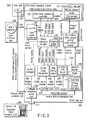
- FIG. 3 shows an example of a DVD-Video player used to play back an enhanced DVD-Video disk (FIG. 2) according to the embodiment of the present invention.
- This DVD-Video player plays back and processes recorded contents (DVD-Video contents C1 and/or ENAV contents C21) from the enhanced DVD-Video disk D2 (FIG. 2) which is compatible to the DVD-Video standard, and downloads and processes ENAV contents C22 via a communication line such as the Internet or the like.
- the ENAV contents C21 are first expansion information
- the ENAV contents C22 are second expansion information.
- the DVD-Video player shown in FIG. 3 comprises a DVD-Video playback engine 100, ENAV engine 200, disk unit 300, and user interface unit 400.
- the DVD-Video playback engine 100 plays back and processes an MPEG2 program stream (DVD-Video contents C1) recorded on the disk D2.
- the ENAV engine 200 plays back and processes the ENAV contents C21 and C22.
- the disk unit 300 reads out the DVD-Video contents C1 and/or ENAV contents C21 recorded on the disk D2.
- the user interface unit 400 transmits inputs (user's operations) by the user of the player as user events.
- the ENAV engine 200 comprises an Internet connection unit 211.
- the Internet connection unit 211 serves as a communication means used to establish connection to a communication line such as the Internet or the like.
- the ENAV engine 200 comprises preload/download buffer unit 209, XHTML+SMIL/CSS-parser 210, XHTML/CSS layout manager 207, ECMA Script interpreter 205, SMIL timing engine 206, ENAV interface handler 202, user event controller 201, element decoder 208, AV renderer 203, and buffer manager 204.
- a DVD-Video playback controller 102, a DVD-Video decoder 101, the user event controller 201, the ENAV interface handler 202, the XHTML+SMIL/CSS parser 210, the ECMA Script interpreter 205, the SMIL timing engine 206, the XHTML/CSS layout manager 207, the AV renderer 203, the element decoder 208, the buffer manager 204, and the like can be implemented by a microcomputer (and/or hardware logic) which serves as functions of the respective blocks by an installed program (firmware; not shown). A work area used upon executing this firmware can be assured on a semiconductor memory (and a hard disk as needed; not shown) in the respective blocks.
- the DVD-Video playback engine 100 is a device for playing back the DVD-Video contents C1 based on the existing DVD-Video standard, and includes the DVD-Video decoder 101 which decodes the DVD-Video contents C1 loaded by the disk unit 300, and the DVD-Video playback controller 102 which makes playback control of the DVD-Video contents C1.
- the DVD-Video decoder 101 has a function of decoding video data, audio data, and sub-picture data based on the existing DVD-Video standard, and outputting the decoded video data (mixed data of the aforementioned video and sub-picture data) and audio data, respectively.
- the DVD-Video playback engine 100 has the same function as that of a playback engine of a normal DVD-Video player, which is manufactured based on the existing DVD-Video standard. That is, the player shown in FIG. 3 can play back video data, audio data, and the like of an MPEG2 program stream as in a normal DVD-Video player, and can play back an existing DVD-Video disk (complying with the conventional DVD-Video standard) D1.
- the DVD-Video playback controller 102 can also control playback of the DVD-Video contents C1 in accordance with a "DVD control" signal output from the ENAV engine 200. More specifically, if an arbitrary event (e.g., menu call or title jump) has occurred in the DVD-Video playback engine 100 in a DVD-Video playback mode, the DVD-Video playback controller 102 can output a "DVD trigger" signal indicating the playback status of the DVD-Video contents C1 to the ENAV engine 200.
- a "DVD trigger" signal indicating the playback status of the DVD-Video contents C1 to the ENAV engine 200.
- the DVD-Video playback controller 102 can output a "DVD status" signal indicating property information (e.g., an audio language, sub-picture subtitle language, playback operation, playback position, various kinds of time information, disk contents, and the like set in the player) of the DVD-Video player to the ENAV engine 200.
- property information e.g., an audio language, sub-picture subtitle language, playback operation, playback position, various kinds of time information, disk contents, and the like set in the player
- the user event controller 201 makes control based on user's operations, and receives "user events" corresponding to user's operations (menu call, title jump, play start, play stop, play pause, etc.) from the user interface unit 400. After that, the user event controller 201 executes one of the following processes on the basis of a "user event control" signal sent from the ENAV interface handler 202.
- the aforementioned "user event control" signal specifically executes, e.g., the following control.
- the contents of the user event signal (user trigger signal) transmitted to the ENAV interface handler 202 may be transmitted to the AV renderer 203 as an "AV output control" signal.
- this operation is sent from the user event controller 201 to the ENAV interface handler 202 as a user trigger signal, which is output to the AV renderer 203 as a corresponding AV output control signal.
- the video/audio output can be switched in response to user's operation.
- the ENAV interface handler 202 exchanges a "DVD status" signal, "DVD trigger” signal, and/or “DVD control” signal with the DVD-Video playback controller 102, or exchanges a "user trigger” signal and/or “user event control” signal with the user event controller 201. Furthermore, the ENAV interface handler 202 exchanges an "ENAV event”, “ENAV property”, “ENAV command”, and “ENAV control” signal with the ECMA Script interpreter 205 and SMIL timing engine 206. More specifically, the ENAV interface handler 202 executes the following processes.
- the ENAV interface handler 202 has a function of parsing and interpreting ENAV contents, and then converting control signals and the like between the DVD-Video playback engine 100 and ENAV engine 200.
- the ENAV interface handler 202 is configured to exchange a first signal and to exchange a second signal on the basis of the contents which are parsed by the XHTML+SMIL/CSS parser 210 and are interpreted by the ECMA Script interpreter 205 and SMIL timing engine 206, or a user event from an input device.
- the ENAV interface handler 202 controls the output states of video and audio signals by the AV renderer 203 on the basis of at least one of the first signal exchanged with the DVD-Video playback controller 102, and the second signal exchanged with the ECMA Script interpreter 205 and SMIL timing engine 206.
- the first signal pertains to the playback status of the DVD-Video disk D2, and corresponds to the "DVD control” signal, "DVD trigger” signal, “DVD status” signal, and the like.
- the second signal pertains to the contents of the ENAV contents, and corresponds to the "ENAV event” signal, "ENAV command” signal, “ENAV property” signal, "ENAV control” signal, and the like.
- the XHTML+SMIL/CSS parser 210 parses an ENAV document indicating playback control information, which is contained in the ENAV contents C21 acquired from the DVD-Video disk D2 or the ENAV contents C22 acquired from the Internet or the like.
- the ENAV document is made up of a combination of Markup languages such as HTML/XHTML, SMIL, and the like, and Script languages such as ECMA Script, JavaScript, and the like, as described above.
- the XHTML+SMIL/CSS parser 210 has a function of transmitting an ECMA Script module to the ECMA Script interpreter 205, SMIL module to the SMIL timing engine 206, and XHTML module to the XHTML/CSS layout manager 207 in accordance with the parsing result.
- the ECMA Script interpreter 205 interprets the aforementioned ECMA Script module and follows its instruction. That is, the ECMA Script interpreter 205 has a function of issuing an "ENAV command" signal to the ENAV interface handler 202 in correspondence with an "ENAV event” signal sent from the ENAV interface handler 202 or an "ENAV property” signal read from the property buffer of the ENAV interface handler 202.
- the SMIL timing engine 206 interprets the aforementioned SMIL module and follows its instruction. That is, the SMIL timing engine 206 has a function of issuing an "ENAV control" signal to the ENAV interface handler 202 or element decoder 208 in correspondence with an "ENAV event” signal sent from the ENAV interface handler 202 or an "ENAV property” signal read from the property buffer of the ENAV interface handler 202 at a designated timing (in accordance with a time measured in the ENAV engine). With this function, control of the DVD-Video playback engine 100 and playback of video data (moving picture, still picture, animation) and audio data can be achieved at a desired timing.
- the XHTML/CSS layout manager 207 interprets the aforementioned XHTML module and follows its instruction. That is, the XHTML/CSS layout manager 207 outputs a "layout control" signal to the AV renderer.
- the "layout control" signal contains information associated with the size and position of a video window to be output (this information often contains information associated with a display time such as display start, end, or continue), and information associated with the level of audio data to be output (this information often contains information associated with an output time such as output start, end, or continue).
- text information to be displayed which is contained in the XHTML module, is sent to the element decoder 208, and is decoded and displayed using desired font data.
- commands and variables unique to a Markup or Script language in the ENAV document those which are used to change the video size from the DVD-Video playback engine 100 and/or ENAV engine 200 and to change the layout of that video data are available.
- a change in video size is designated using a size change command and a variable that designates the size after change.
- a change in video layout is designated by a display position change command and a variable that designates the coordinate position or the like after change. When objects to be displayed overlap on the screen, a variable that designates depth ordering is added.
- commands and variables used to change the audio level from the DVD-Video playback engine 100 and/or ENAV engine 200 or to select an audio language to be used are available.
- a change in audio level is designated by an audio level change command and a variable that designates an audio level after change.
- An audio language to be used is selected by an audio language change command and a variable that designates the type of language after change.
- commands and variables used to control user events in the user event controller 201 are available.
- a "layout control" signal is sent from the XHTML/CSS layout manager (some functions are often implemented by the SMIL timing engine 206) to the AV renderer 203.
- the "layout control" signal controls the layout on the screen, size, output timing, and output time of video data to be displayed on, e.g., an external monitor device or the like (not shown), and/or the tone volume, output timing, and output time of audio data to be played back from an external loudspeaker (not shown).
- the element decoder 208 decodes ENAV contents data such as audio data, still picture data, text/font data, moving picture data, animation data, and the like contained in the ENAV contents C21 or C22. That is, the element decoder 208 includes an audio decoder, still picture decoder, text/font decoder, and moving picture decoder in correspondence with objects to be decoded. For example, audio data in the ENAV contents, which is encoded by, e.g., MPEG or AC-3, is decoded by the audio decoder and is'converted into non-compressed audio data.
- ENAV contents data such as audio data, still picture data, text/font data, moving picture data, animation data, and the like contained in the ENAV contents C21 or C22. That is, the element decoder 208 includes an audio decoder, still picture decoder, text/font decoder, and moving picture decoder in correspondence with objects to be decoded.
- audio data in the ENAV contents which is encoded by
- Still picture data which is encoded by JPEG, GIF, or PNG, is decoded by the still picture decoder, and is converted into non-compressed image data.
- moving picture/animation data which is encoded by MPEG2, MPEG4, or MacromediaFlash, is decoded by the moving picture/animation decoder, and is converted into non-compressed moving picture data.
- Text data contained in the ENAV contents is decoded by the text/font decoder using font data contained in the ENAV contents, and is converted into text image data which can be superimposed on a moving or still picture.
- Video/audio data which contains these decoded audio data, image data, moving picture data, and text image data as needed, is sent from the element decoder 208 to the AV renderer 203.
- the AV renderer 203 has a function of controlling a video/output output. More specifically, the AV renderer 203 controls, e.g., the video display position and size (often including the display timing and display time together), and the audio level (often including the output timing and output time together) in accordance with the "layout control" signal output from the XHTML/CSS layout manager 207.
- the video/output outputs to be controlled are those from the DVD-Video playback engine 100 and element decoder 208.
- the AV renderer 203 has a function of controlling mixing and switching of the DVD-Video contents C1 and ENAV contents C21 or C22 in accordance with an "AV output control" signal output from the ENAV interface handler 202.
- the ENAV engine 200 in the DVD-Video player in FIG. 3 comprises an interface for sending the ENAV document in the ENAV contents C21 read from the DVD-Video disk D2 to the XHTML+SMIL/CSS parser 210 via the preload/download buffer unit 209, and an interface for sending data (audio data, still picture data, text/font data, moving picture data, and the like) in the read ENAV contents C21 to the element decoder 208 via the preload/download buffer unit 209.
- These interfaces form an interface (first interface) independent from the Internet connection unit 211 in FIG. 3.
- the DVD-Video player in FIG. 3 comprises an interface for receiving the ENAV contents C22 from a communication line such as the Internet or the like, and sending the ENAV document in the received ENAV contents C22 to the XHTML+SMIL/CSS parser 210 via the preload/download buffer unit 209, and an interface for sending data (audio data, still picture data, text/font data, moving picture data, and the like) in the received ENAV contents C22 to the element decoder 208 via the preload/download buffer unit 209.
- These interfaces form the Internet connection unit (second interface) shown in FIG. 3.
- the preload/download buffer unit 209 has a function of temporarily storing the ENAV contents C22 which is acquired from the disk unit 300 or from a server unit 500 via the Internet connection unit 211. Since the ENAV contents C22 is temporarily stored in the preload/download buffer unit 209, seamless playback of the DVD-Video contents C1 can be implemented even when the DVD-Video contents C1 and ENAV contents C22 (may include the ENAV contents C21) are to be simultaneously played back. If this is not the case, the disk unit 300 must access the DVD-Video contents C1 and ENAV contents C21 in the disk at high speed, and it becomes difficult to attain seamless playback.
- the buffer manager 204 has a function of controlling the aforementioned preload/download buffer unit 209 in accordance with a "buffer control" signal sent from the ENAV interface handler 202. These two functions will be described in detail later.
- the ENAV engine comprises:
- the ENAV interface handler 202 is configured to execute a process corresponding to a user event generated by the user event controller 201.
- the AV renderer 203 is configured to output data obtained by mixing video/audio data generated by the element decoder 208 to that played back by the DVD-Video playback engine 100 on the basis of the execution result of the ENAV command in the ENAV interface handler 202.
- the AV handler 203 is configured to selectively output one of video/audio data generated by the element decoder 208 and that played back by the DVD-Video playback engine 100 on the basis of the execution result of the ENAV command in the ENAV interface handler 202.
- FIG. 4 is a detailed block diagram of the aforementioned preload/download buffer unit 209.
- the preload/download buffer unit 209 comprises a download section 209a and preload section 209b.
- the download section 209a stores the ENAV contents C22 downloaded from the server unit 500.
- the preload section 209b stores the ENAV contents C21 loaded from the enhanced DVD disk D2 or the ENAV contents C22 transferred from the download section 209a.
- the download section 209a reads the ENAV contents C22 on an external server (server unit 500) under the control of the buffer manager 204 based on the markup/script language, and downloads the ENAV contents C22 via the Internet connection unit 211. Upon completion of downloading, the download section 209a informs the buffer manager 204 of completion of downloading (download complete signal), and transfers the ENAV contents 22 to the preload section 209b.
- the download section 209a can partially transfer the ENAV contents C22, which have not been completely downloaded yet, in turn from already downloaded data to the preload section 209b in accordance with a data transfer request (data transfer request signal) from the buffer manager 204.
- the preload section 209b loads the ENAV contents C21 recorded on the enhanced DVD disk D2 under the control of the buffer manager 204 based on the markup/script language.
- the disk unit 300 if the disk unit 300 is a device that can access the disk at high speed, the disk unit 300 can read out the ENAV contents C21 from the enhanced DVD disk D2 while playing back the DVD-Video contents C1, i.e., reading out DVD-Video data from the enhanced DVD disk D2. If the disk unit 300 is not a device that can make high-speed access, or if the playback operation of the DVD-Video contents C1 is to be perfectly guaranteed, playback of the DVD-Video contents C1 must not be interrupted.
- the ENAV contents C21 are read out from the enhanced DVD disk D2 and are stored in the preload section 209b in advance prior to the beginning of playback.
- the load on the disk unit 300 can be reduced.
- the DVD-Video contents C1 and ENAV contents can be simultaneously played back without interrupting playback of the DVD-Video contents C1.
- the preload section 209b receives and stores the ENAV contents C22, which are temporarily stored in the download section 209a.
- the ENAV contents downloaded from the external server (server unit 500) can also be read out simultaneously with the DVD-Video contents C1 as in the ENAV contents C21 recorded on the enhanced DVD disk D2.
- the download section 209a or preload section 209b has a limited storage capacity. That is, the data size of ENAV contents C21 or C22 that can be stored in the download section 209a or preload section 209b is limited. For this reason, it is possible to erase ENAV contents C21 or C22 with low necessity and to save those with high necessity under the control of the buffer manager 204 (buffer control). Such save control and erase control may be made based on the ENAV document, or may be automatically executed by the preload/download buffer unit 209.
- the buffer manager 204 can send the following instructions as "buffer control" to the download section 209a and preload section 209b in accordance with an instruction of the ENAV document.
- FIG. 5 shows an example of the arrangement of the download section 209a and preload section 209b.
- the download section 209a and preload section 209b respectively comprise a plurality of slots.
- Data of the ENAV contents C22 downloaded from the external server (server unit 500) and the ENAV contents C21 read out from the enhanced DVD disk D2 are segmented in correspondence with the slot size, and the segmented data are stored in respective slots. That is, in the preload/download buffer unit 209, the ENAV contents C21 and C22 can be managed not only for respective files but also for slots each having a smaller size.
- the ENAV contents C22 are downloaded from the external server (server unit 500)
- the following process can be made.
- only some of data of the file of the ENAV contents C22 have been downloaded, only those already downloaded data are read out (played back) in the meantime.
- the remaining non-downloaded data are continuously downloaded as a background process of the read-out (playback) process.
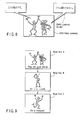
- FIG. 6 shows playback of the DVD-Video contents C1 alone.
- a given user plays back a DVD-Video disk (enhanced DVD disk D2), but that DVD disk contains only English audio or subtitle data. If that user can understand only Japanese, it is difficult for him or her to appreciate that DVD-Video disk.
- the player implements playback processes shown in FIGS. 7 to 9. That is, the player accesses the external server (server unit 500). On this external server, contents of image (moving or still picture) data with Japanese subtitle data or contents with Japanese audio data are prepared.
- a method of accessing that external server a method of specifying the external server on the basis of data on the DVD-Video disk, or a method of designating that external server by the user is available. In this way, the player can acquire contents with Japanese subtitle data or audio data by accessing the external server.
- the aforementioned contents for Japanese are downloaded from the external server via the Internet connection unit 211. That is, the contents are stored in the download section 209a in the preload/download buffer unit 209. Upon completion of downloading of the full contents, the contents are transferred to the preload section 209b, and begin to be played back together with the DVD-Video contents C1. In this case, since a long download time is required, the playback start time of the contents is delayed (wait time is produced). If all data are to be stored in the preload/download buffer unit 209, a buffer with a large storage capacity is required. If a buffer with a large storage capacity is prepared, and all data are stored in the preload/download buffer unit 209, the contents can be seamlessly played back irrespective of the connection state of the external server.
- the aforementioned contents for Japanese are downloaded from the external server via the Internet connection unit 211, and are stored in the download section 209a in the preload/download buffer unit 209.
- already downloaded data are transferred in turn to the preload section 209b.
- the already downloaded data begin to be played back together with the DVD-Video contents C1.
- playback of the contents can start with nearly no wait time.
- the contents data which have been played back and are not required are erased from the download section 209a or preload section 209b of the preload/download buffer unit 209. In this manner, the storage capacity required for the preload/download buffer unit 209 can be reduced.
- connection to the external server must be assured to attain seamless playback of the contents.
- FIG. 7 shows a display example of the ENAV contents C22, which are downloaded from the external server and are required to display Japanese subtitle data, together with the DVD-Video contents C1.
- the display region of the DVD-Video contents C1 is reduced from a normal size to assure a region for displaying the ENAV contents C22 (still picture, moving picture), as shown in FIG. 7.
- the ENAV contents C22 are transparent type image contents which can reflect the background, the ENAV contents C22 can be pasted on the DVD-Video contents C1 without reducing the size of the DVD-Video contents C1.
- ENAV contents C22 are made up of text and font data
- text/font data rasterized by the element decoder can be pasted and displayed on the DVD-Video contents C1.
- display can be made using alternative image data, e.g., image data that is already loaded or image data that are pre-stored in the player.
- FIG. 8 shows a playback example of the ENAV contents C22 for Japanese audio, which are downloaded from the external server, together with the DVD-Video contents C1.
- Japanese audio data of the ENAV contents C22 are played back in place of some or all audio data of the DVD-Video contents C1.
- FIG. 9 shows an example wherein font data to be displayed changes in the middle of the ENAV contents C22 to be played back.
- font data used in display changes like font A ⁇ font B ⁇ font C as pages are turned.
- font data required to display fonts A, B, and C must be loaded by the preload/download buffer unit 209 before fonts A, B, and C are displayed. If required font data cannot be loaded by the preload/download buffer unit 209 before that font is displayed due to the connection state of the Internet, display is made using an alternative font, e.g., font data that is already loaded or font data that is pre-stored in the player.
- desired font data is used as soon as the preload/download buffer unit 209 can load desired font data.
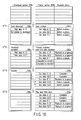
- FIGS. 10 to 13 show some examples when the ENAV contents C22 downloaded from the external server (server unit 500) are stored in respective slots of the download section 209a and are transferred to the preload section 209b.
- FIG. 10 shows an example wherein the ENAV contents C21 on the enhanced DVD disk D2 are loaded onto the preload section 209b, and the ENAV contents C22 acquired from the external server are loaded onto the preload section 209b via the download section 209a.
- the download section 209a and preload section 209b are formed of a plurality of slots, as shown in FIG. 5, and allow to move or erase data in units smaller than a file.
- the preload section 209b appends information indicating the playback status (before playback, playback in progress, complete) to data in each slot to manage data.
- Disk data A has a file size corresponding to two slots
- disk data B has a file size corresponding to one slot.
- one set of ENAV contents C22 and Web data A are present on the server.
- Web data A has a file size corresponding to two slots.
- the preload/download buffer unit 209 Upon reception of a contents playback request, the preload/download buffer unit 209 preloads the ENAV contents C21 recorded on the disk. Furthermore, the buffer unit 209 downloads the ENAV contents C22 present on the server unit to the download section 209a.
- the preload section 209b is a buffer used to play back the ENAV contents C21 and C22.
- the download section 209a is a buffer used to download the ENAV contents C22.
- the download section 209a and preload section 209b can operate independently.
- the ENAV contents C21 on the disk can be loaded onto the buffer faster than the ENAV contents C22 from the server. For this reason, assume that the download section 209a continues to download Web data A even after the preload section 209b has preloaded disk data A and B. However, since the file size of Web data A can be detected before the beginning of downloading, an area required to record the Web data can be assured in advance ("scheduled to download" in FIG. 10). Since playback of disk data A and B has not started yet, the playback status is "before playback".
- the player can start playback of the ENAV contents C21 as soon as the preload process of the ENAV contents C21 on the disk is complete.
- the playback status of the ENAV contents C21, which are played back is "playback in progress”.
- the playback status of the ENAV contents C21, which have been played back is "complete”.
- the ENAV contents C22 acquired from the server are transferred to the preload section 209b to start playback as soon as they have been downloaded to the download section 209b. At this time, transfer is made after an area required to record can be assured on the preload section 209b, i.e., after it is confirmed if the downloaded data are possible to transfer.
- both the ENAV contents C21 loaded from the disk and the ENAV contents C22 downloaded from the sever can be played back without discrimination.
- FIG. 11 shows an example wherein the ENAV contents C21 and C22, which have already been played back and are not required, are erased from the buffer, and new ENAV contents C22 are loaded and recorded.
- the download section 209a and preload section 209b are formed of a plurality of slots. Not only information indicating the playback status but also information indicating erasable/non-erasable status are appended to each slot of the preload section 209b.
- erasable In case of ENAV contents that can be erased, "erasable” is recorded. On the other hand, in case of ENAV contents which cannot be erased, "non-erasable" is recorded.
- disk data A having a size for two slots, disk data B having a size for one slot, and disk data C having a size for three slots are recorded on the disk, and Web data A having a size for two slots is present on the server.
- the erasable/non-erasable information is referred to. If erasable data is present on the preload section 209b, such data is erased from the preload section 209b, and the Web data is transferred to that empty area. If no erasable data is present on the preload section 209b, the transfer process is paused, and the control waits until data on the preload section 209b becomes erasable.
- disk data A is erasable, disk data A is erased from the preload section 209b, and Web data A on the download section is transferred to this area, thus playing back Web data A.
- FIG. 12 shows an example when already downloaded data is read out from a file whose downloading is in progress, and the readout data is played back.
- the download section 209a and preload section 209b are formed of a plurality of slots, and information indicating playback status is appended to each slot of the preload section 209b.
- disk data A having a size for two slots and disk data B having a size for one slot are recorded on the disk, and Web data A having a size for three slots is present on the server.
- disk data A and B are preloaded, and Web data A is downloaded.
- the ENAV contents C21 on the disk are played back as soon as the preload process is complete. (In this example, disk data A and B are played back in the order named.)
- Web data A1 and A2 are played back in turn as soon as they are transferred to the preload section 209b. Also, Web data A3 is transferred to the preserved area on the preload section 209b and is played back as soon as its download process is complete.
- FIG. 13 shows another example when already downloaded data is read out from a file whose downloading is in progress, and the readout data is played back.
- the download section 209a and preload section 209b are formed of a plurality of slots, and information indicating playback status is appended to each slot of the preload section 209b.
- disk data B having a size for one slot is recorded on the disk, and Web data A having a size for three slots is present on the server.
- disk data B Upon reception of a contents playback request, disk data B is preloaded, and Web data A is downloaded. The ENAV contents on the disk are played back as soon as the preload process is complete.
- Web data A1 is played back as soon as it is transferred to the preload section 209b.
- Web data A2 is transferred to the preserved area on the preload section 209b and is played back, as soon as its download process is complete. Also, Web data A3 is played back as soon as its download process is complete.
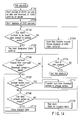
- FIG. 14 is a flow chart that summarizes the operation of the preload section 209b.
- the player Upon reception of a title playback request, the player controls the preload section 209b to start a preload process of the ENAV contents C21 on the disk (ST101). At the same time, the player requests the download section 209a to download ENAV contents C22 on the server (ST101).
- the player Upon completion of the preload process of the ENAV contents C21 on the disk, the player starts playback of the DVD-Video contents C1 (ST102).
- the player Upon reception of a playback request of the ENAV contents C22 in synchronism with playback of the DVD-Video contents C21, the player checks if the requested ENAV contents C22 are present on the preload section 209b (ST103). If the requested ENAV contents C22 are present on the preload section 209b (ST103, YES), the player plays back the designated ENAV contents C22 (ST105).
- the player issues a data transfer request signal from the download section 209a to the preload section 209b (ST104). This request presses downloading to the download section 209a. At this time, the playback process of the DVD-Video contents C21 must be paused, and the control waits for completion of the download process of the ENAV contents C22 in some cases.
- the player upon reception of a transfer request (download completion signal) from the download section 209a (ST106), the player checks if an area which can store transferred ENAV contents C22 is available on the preload section 209b (ST107). If no area which can store transferred ENAV contents C22 is available on the preload section 209b (ST107, NO), and if erasable ENAV contents C21 and C22 are found (ST108, YES), the player erases data of such erasable ENAV contents C21 and C22 (ST110). If no erasable ENAV contents C21 and C22 are found (ST108, NO), the preload section 209b waits until the status of ENAV contents C21 and C22 stored in it changes to "erasable" (ST109). After a free area is assured on the preload section 209b by repeating the aforementioned operation, data of the ENAV contents C22 are transferred from the download section 209a to the preload section 209b.
- FIG. 15 is a flow chart that summarizes the operation of the download section 209a.
- the player Upon reception of a title playback request, the player requests the download section 209a to download the ENAV contents C22 on the server (ST201).
- the download section 209a starts a download process in response to this request (ST202).
- the download section 209a Upon reception of a data transfer request (data transfer request signal) from the download section 209a to the preload section 209b during the download process (ST203, YES), the download section 209a checks if data of the ENAV contents C22 is ready to transfer (ST204). If data is not ready to transfer (ST204, NO), the download section 209a continues the download process until the data is ready to transfer (ST205). At this time, the playback process of the DVD-Video contents C1 must be paused in some cases until the download process is completed. If even partial data has been downloaded and is ready to transfer (ST204, YES), the download section 209a transfers the downloaded data to the preload section 209b (ST206). The aforementioned operation is repeated until all data of the designated ENAV contents C22 are downloaded and are transferred to the preload section 209b.
- the downloaded data are transferred to the preload section 209b (ST208) as soon as the download process is completed (ST207, YES).
- Modification 1 of the preload/download buffer unit will be explained below with reference to FIGS. 16 to 18.
- the ENAV contents C22 downloaded from the server are loaded onto the download section 209a, and the ENAV contents C21 preloaded from the enhanced DVD disk D2 are loaded onto the preload section 209b.
- the ENAV contents C21 and C22 to be sent to the element decoder 208 are loaded from the preload section 209b.
- the ENAV contents C22 downloaded from the server are loaded onto a download section 209c and preload section 209d, and the ENAV contents C21 preloaded from the enhanced DVD disk D2 are loaded onto the download section 209c and preload section 209d. Furthermore, the ENAV contents C21 and C22 loaded by the preload section 209d and download section 209c are sent to the element decoder 208. That is, the preload section 209d and download section 209c have the same function.
- the preload section 209d loads the ENAV contents C21 from the enhanced DVD disk D2, and sends them to the element decoder 208 and XHTML+SMIL/CSS parser 210.
- the download section 209c downloads the ENAV contents C22 from the server.
- the new preload section (the download section 209c serving as the preload section) has loaded the ENAV contents C22 downloaded from the server unit. For this reason, the new preload section sends these contents to the element decoder 208 and XHTML+SMIL/CSS parser 210.
- the new download section (the preload section 209d serving as the download section) erases unnecessary data of the ENAV contents C21, i.e., consumed data of the ENAV contents from the buffer, and downloads newly required ENAV contents C22 from the server.
- the new preload section is controlled to serve as the preload section
- the new download section is controlled to serve as the preload section. That is, the functions revert to those shown in FIG. 16.
- the ENAV contents C21 and C22 can be played back using a buffer with a small capacity while downloading data from the server.
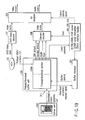
- the download timings of the download sections 209c and preload section 209d, and the playback timings of expansion information downloaded to the download sections 209c and preload section 209d will be described below with reference to FIG. 18.
- the downloaded expansion information is played back in synchronism with playback of the DVD-Video contents C1.
- the player Upon reception of a DVD playback request, the player downloads the ENAV contents C22 from the server unit to the download section 209c (average download rate Vd0). At the same time, the player downloads required ENAV contents C21 from the disk onto the preload section 209d (average preload rate Vp0). At this time, the preload section 209d may not become full depending on the data size of the ENAV contents C21.
- the preloaded ENAV contents C21 are immediately read out to the XHTML+SMIL/CSS parser 210 or element decoder 208. At this time, the ENAV contents C21, which have been read out and become unnecessary, are erased.
- the download section 209c serves as a preload section, and the downloaded ENAV contents C22 are read out to the element decoder 208 (average read rate Vol).
- DVD-Video playback starts, i.e., a synchronous playback process of the ENAV contents C22 decoded by the element decoder 208 and the DVD-Video contents C1 starts.
- the preload section 209d serves as a download section, and downloads ENAV contents C22 from the server unit (average download rate Vd1).
- the ENAV contents C22 stored in the download section 209c are played back (playback period 1).
- the download section 209c serves as a download section again. That is, the preload section 209d sends the downloaded ENAV contents C22 to the element decoder 208 (average read rate Vo2), and the download section 209c downloads ENAV contents C22 from the server unit (average download rate Vd2). At this time, the ENAV contents C22 stored in the preload section 209d are played back (playback period 2).
- one buffer (one of the download section 209c and preload section 209d) is used to download ENAV contents
- the other buffer (the other of the download section 209c and preload section 209d) is used to play back ENAV contents.
- the buffer manager 204 controls to selectively use the download section 209c and preload section 209d.
- each other's functions are exchanged. By repeating this operation, the ENAV contents can be played back in synchronism with the DVD-Video contents while being downloaded.
- Vdi ⁇ Voi (i ⁇ 1) is an essential condition in all playback periods i. If this condition is not met, the playback process of the DVD-Video contents is paused until the download process of the ENAV contents is completed. Or the ENAV contents cannot be played back during the next playback period or a part of that playback period immediately after the condition cannot be met. That is, no sound is generated, or no pictures or text are displayed.
- the DVD-Video player comprises: an acquisition unit configured to acquire expansion information from an external apparatus via a communication line; first and second storage units configured-to store the expansion information acquired by the acquisition unit; a transfer unit configured to transfer the expansion information to the first or second storage unit, so that the expansion information sequentially acquired by the acquisition unit is alternately stored in the first and second storage units; and a playback unit configured to sequentially play back the expansion information sequentially stored in the first and second storage units.
- Modification 2 of the preload/download buffer unit will be described below with reference to FIGS. 19 and 20.
- FIGS. 19 and 20 the case has been exemplified wherein given areas of the preload/download buffer unit are used as the preload and download sections. That is, the case has been exemplified wherein the preload and download sections have fixed capacities.
- the present invention is not limited to such specific arrangement.
- a preload/download section 209e in which the total capacity of the preload and download sections is fixed, and the capacity is distributed in correspondence with purposes (in accordance with preload and download processes) may be adopted.
- the data size to be preloaded is small, and the data size to be downloaded is large, a smaller size may be assigned to the preload section, and a larger size may be assigned to the download section.
- the whole area of the preload/download section 209e is used to preload all data of ENAV contents C21 before the beginning of playback of the DVD-Video contents C1, as shown in FIG. 20. In this way, the ENAV contents C21 can be played back without pausing playback of the DVD-Video contents C1.
- the preload storage capacity and download storage capacity in the preload/download section 209e are controlled in accordance with a buffer control instruction from the buffer manager 204.
- the DVD-Video player comprises: a first acquisition unit configured to acquire first expansion information from an information storage medium; a second acquisition unit configured to acquire second expansion information from an external apparatus via a communication line; a storage unit configured to be able to set a first storage area that stores the first expansion information, and a second storage area that stores the second expansion information; a transfer unit configured to control capacities of the first and second storage areas in the storage unit in accordance with data sizes or types of the first expansion information and the second expansion information, and to transfer the first expansion information to the first storage area and the second expansion information to the second storage area; and a playback unit configured to play back the first expansion information and the second expansion information stored in the storage unit.
- each slot can be both download section to store data to be being downloaded and preload section to store data to be used in Element decoder 208.
Landscapes
- Engineering & Computer Science (AREA)
- Signal Processing (AREA)
- Multimedia (AREA)
- Signal Processing For Digital Recording And Reproducing (AREA)
- Television Signal Processing For Recording (AREA)
- Management Or Editing Of Information On Record Carriers (AREA)
- Two-Way Televisions, Distribution Of Moving Picture Or The Like (AREA)
Abstract
Description
- XHTML+SMIL/
CSS parser 210 The XHTML+SMIL/CSS parser 210 parses the contents of the ENAV documents. -
ECMA Script Interpreter 205,SMIL timing engine 206, XHTML/CSS layout manager 207 TheECMA Script Interpreter 205,SMIL timing engine 206, and XHTML/CSS layout manager 207 respectively interpret the parsed modules. -
ENAV interface handler 202 TheENAV interface handler 202 handles control signals from theECMA Script Interpreter 205 andSMIL timing engine 206, and those from the DVD-Video playback controller 102. -
Element decoder 208 Theelement decoder 208 generates video/audio data corresponding to audio data, still picture data, text/font data, moving picture data, and the like contained in the ENAV contents C21 or C22. -
AV renderer 203 TheAV renderer 203 outputs data obtained by mixing video/audio data generated by theelement decoder 208 to that played back by the DVD-Video playback engine 100 on the basis of the execution result of the ENAV command in theENAV interface handler 202. Or theAV handler 203 selectively outputs one of video/audio data generated by theelement decoder 208 and that played back by the DVD-Video playback engine 100 on the basis of the execution result of the ENAV command in theENAV interface handler 202. -
User event controller 201 Theuser event controller 201 generates user events corresponding to user's operations. - Preload/
download buffer unit 209 The preload/download buffer unit 209 temporarily stores the ENAV contents C22 acquired from thedisk unit 300 or from theserver unit 500 via theInternet connection unit 211. -
Buffer manager 204 Thebuffer manager 204 loads or erases ENAV contents data to or from the preload/download buffer unit 209 in accordance with an instruction from the ENAV interface handler 202 (i.e., an instruction of the ENAV document).
- load a specific file or a part of file from a server (download)
- load a specific file or a part of file from a disk (preload)
- erase a specific file or a part of file from a buffer
- transfer a specific file or a part of file from
the
download section 209a to thepreload section 209b
Claims (10)
- An information playback apparatus characterized by comprising:a first acquisition unit (200, 300) configured to acquire first expansion information from an information storage medium;a first storage unit (209) configured to store the first expansion information acquired by the first acquisition unit;a second acquisition unit (200, 211) configured to acquire second expansion information from an external apparatus via a communication line;a second storage unit (209) configured to store the second expansion information acquired by the second acquisition unit;a transfer unit (204) configured to transfer the second expansion information stored in the second storage unit to the first storage unit in response to a request that requires the second expansion information; anda playback unit (203, 208) configured to play back the first expansion information and the second expansion information stored in the first storage unit.
- An apparatus according to claim 1, characterized in that the second storage unit sequentially stores the second expansion information sequentially acquired by the second acquisition unit, and
even when a storage process of full information of the second expansion information in the second storage unit is not complete at the time of reception of the request that requires the second expansion information, if a storage process of partial information of the second expansion information is complete, the transfer unit transfers the stored partial information to the first storage unit. - An apparatus according to claim 2,
characterized in that even when a storage process of full information of the second expansion information in the first storage unit is not complete, the playback unit sequentially plays back the first expansion information and partial information of the second expansion information stored in the first storage unit. - An apparatus according to claim 1, characterized by further comprising:a third acquisition unit (100) configured to acquire contents from the information storage medium, andwherein the playback unit plays back the contents acquired by the third acquisition unit, and plays back the first expansion information and the second expansion information stored in the first storage unit in synchronism with the playback process of the contents.
- An apparatus according to claim 4, characterized in that when the playback unit cannot play back the first expansion information and the second expansion information stored in the first storage unit in synchronism with the playback process of the contents since a storage process of full information of the second expansion information in the second storage unit is not complete, the playback unit pauses the playback process of the contents.
- An information playback method characterized by comprising:acquiring (ST101) first expansion information from an information storage medium and storing the acquired first expansion information in a first storage unit;acquiring (ST101) second expansion information from an external apparatus via a communication line, and storing the acquired second expansion information in a second storage unit;transferring (ST111) the second expansion information stored in the second storage unit to the first storage unit in response to a request that requires the second expansion information; andplaying back (ST105) the first expansion information and the second expansion information stored in the first storage unit.
- A method according to claim 6, characterized in that the second storage unit sequentially stores the sequentially acquired second expansion information, and
even when a storage process of full information of the second expansion information in the second storage unit is not complete at the time of reception of the request that requires the second expansion information, if a storage process of partial information of the second expansion information is complete, the stored partial information is transferred to the first storage unit. - A method according to claim 7, characterized in that even when a storage process of full information of the second expansion information in the first storage unit is not complete, the first expansion information and partial information of the second expansion information stored in the first storage unit are sequentially played back.
- A method according to claim 6, characterized by further comprising:acquiring (ST102) contents from the information storage medium, andwherein the contents are played back, and the first expansion information and the second expansion information stored in the first storage unit are played back in synchronism with the playback process of the contents.
- A method according to claim 9, characterized in that when the first expansion information and the second expansion information stored in the first storage unit cannot be played back in synchronism with the playback process of the contents since a storage process of full information of the second expansion information in the second storage unit is not complete, the playback process of the contents is paused.
Applications Claiming Priority (2)
| Application Number | Priority Date | Filing Date | Title |
|---|---|---|---|
| JP2002335373A JP3798745B2 (en) | 2002-11-19 | 2002-11-19 | Information reproducing apparatus and information reproducing method |
| JP2002335373 | 2002-11-19 |
Publications (2)
| Publication Number | Publication Date |
|---|---|
| EP1422941A2 true EP1422941A2 (en) | 2004-05-26 |
| EP1422941A3 EP1422941A3 (en) | 2006-07-19 |
Family
ID=32212068
Family Applications (1)
| Application Number | Title | Priority Date | Filing Date |
|---|---|---|---|
| EP03021462A Withdrawn EP1422941A3 (en) | 2002-11-19 | 2003-09-23 | Information playback apparatus and information playback method |
Country Status (6)
| Country | Link |
|---|---|
| US (1) | US20040096186A1 (en) |
| EP (1) | EP1422941A3 (en) |
| JP (1) | JP3798745B2 (en) |
| KR (1) | KR100584709B1 (en) |
| CN (1) | CN1503137A (en) |
| TW (1) | TWI259454B (en) |
Cited By (1)
| Publication number | Priority date | Publication date | Assignee | Title |
|---|---|---|---|---|
| EP1675016A3 (en) * | 2004-12-27 | 2008-04-30 | Kabushi Kaisha Toshiba | Picture reproducing apparatus, network system and picture reproducing method |
Families Citing this family (18)
| Publication number | Priority date | Publication date | Assignee | Title |
|---|---|---|---|---|
| JP2006503401A (en) * | 2002-10-17 | 2006-01-26 | サムスン エレクトロニクス カンパニー リミテッド | Information storage medium on which control information for controlling buffering state of markup document is recorded, reproducing apparatus and reproducing method thereof |
| JP2004296065A (en) * | 2003-03-10 | 2004-10-21 | Toshiba Corp | Information storage medium, information reproducing apparatus, and information reproducing method |
| KR20050049924A (en) * | 2003-11-24 | 2005-05-27 | 엘지전자 주식회사 | Method for managing and reproducing a playlist file of high density optical disc |
| JP2005276344A (en) * | 2004-03-25 | 2005-10-06 | Toshiba Corp | Information recording medium and information reproducing apparatus |
| JP2005332521A (en) * | 2004-05-21 | 2005-12-02 | Toshiba Corp | Information recording medium and information reproducing apparatus |
| JP4626799B2 (en) * | 2004-07-12 | 2011-02-09 | ソニー株式会社 | Playback apparatus and method, information providing apparatus and method, data, recording medium, and program |
| KR20060063601A (en) * | 2004-12-03 | 2006-06-12 | 엘지전자 주식회사 | Method and device to download / update data to local storage |
| US20060156354A1 (en) * | 2005-01-12 | 2006-07-13 | Samsung Electronics Co., Ltd. | Method and apparatus for reproducing data recorded on storage medium along with downloaded data |
| JP4387962B2 (en) * | 2005-02-18 | 2009-12-24 | 株式会社東芝 | Content reproduction apparatus, content reproduction method, and program |
| TW200634545A (en) * | 2005-03-22 | 2006-10-01 | Wellsyn Technology Inc | Method of initializing a peripheral device for operating a computer system |
| US8438577B2 (en) * | 2005-04-18 | 2013-05-07 | Research In Motion Limited | Method and system for extending scripting languages |
| CN1855095A (en) * | 2005-04-27 | 2006-11-01 | 国际商业机器公司 | System, method and engine for playing multimedia content based on SMIL |
| JP2007115293A (en) * | 2005-10-17 | 2007-05-10 | Toshiba Corp | Information storage medium, program, information reproducing method, information reproducing apparatus, data transfer method, and data processing method |
| JP4613870B2 (en) * | 2006-04-27 | 2011-01-19 | 三菱電機株式会社 | Playback apparatus and playback method |
| US7882336B2 (en) * | 2007-02-01 | 2011-02-01 | International Business Machines Corporation | Employing a buffer to facilitate instruction execution |
| JP5314915B2 (en) * | 2008-04-10 | 2013-10-16 | アルパイン株式会社 | In-vehicle video playback device |
| JP5595859B2 (en) * | 2010-10-01 | 2014-09-24 | アルパイン株式会社 | Video playback apparatus and data management method thereof |
| US11089349B2 (en) * | 2017-01-20 | 2021-08-10 | Hanwha Techwin Co., Ltd. | Apparatus and method for playing back and seeking media in web browser |
Family Cites Families (6)
| Publication number | Priority date | Publication date | Assignee | Title |
|---|---|---|---|---|
| JPH10106142A (en) * | 1996-09-27 | 1998-04-24 | Sony Corp | Data decoding system and data decoding method, transmission apparatus and method, and reception apparatus and method |
| JP3195284B2 (en) * | 1997-11-28 | 2001-08-06 | 株式会社東芝 | Moving image playback control method and image display device to which the method is applied |
| US6138175A (en) * | 1998-05-20 | 2000-10-24 | Oak Technology, Inc. | System for dynamically optimizing DVD navigational commands by combining a first and a second navigational commands retrieved from a medium for playback |
| US6188835B1 (en) * | 1998-08-21 | 2001-02-13 | Lsi Logic Corporation | Optical disk system and method for storing data allowing playback of selected portions of recorded presentations |
| JP3799301B2 (en) * | 2001-06-14 | 2006-07-19 | 三星電子株式会社 | Information storage medium on which preload information is recorded, reproducing apparatus and reproducing method thereof |
| JP3871123B2 (en) * | 2001-06-16 | 2007-01-24 | 三星電子株式会社 | Information storage medium having preloaded font information, reproducing apparatus and reproducing method thereof |
-
2002
- 2002-11-19 JP JP2002335373A patent/JP3798745B2/en not_active Expired - Fee Related
-
2003
- 2003-09-23 EP EP03021462A patent/EP1422941A3/en not_active Withdrawn
- 2003-10-09 TW TW092128168A patent/TWI259454B/en active
- 2003-10-14 US US10/682,876 patent/US20040096186A1/en not_active Abandoned
- 2003-10-29 KR KR1020030075783A patent/KR100584709B1/en not_active Expired - Fee Related
- 2003-10-30 CN CNA2003101029598A patent/CN1503137A/en active Pending
Cited By (1)
| Publication number | Priority date | Publication date | Assignee | Title |
|---|---|---|---|---|
| EP1675016A3 (en) * | 2004-12-27 | 2008-04-30 | Kabushi Kaisha Toshiba | Picture reproducing apparatus, network system and picture reproducing method |
Also Published As
| Publication number | Publication date |
|---|---|
| JP3798745B2 (en) | 2006-07-19 |
| TW200421291A (en) | 2004-10-16 |
| EP1422941A3 (en) | 2006-07-19 |
| KR100584709B1 (en) | 2006-05-30 |
| CN1503137A (en) | 2004-06-09 |
| KR20040044100A (en) | 2004-05-27 |
| US20040096186A1 (en) | 2004-05-20 |
| JP2004172868A (en) | 2004-06-17 |
| TWI259454B (en) | 2006-08-01 |
Similar Documents
| Publication | Publication Date | Title |
|---|---|---|
| US7580614B2 (en) | Information playback apparatus having expansion information storage unit and information playback method | |
| EP1357749B1 (en) | System and method for enhanced navigation of multimedia DVD | |
| KR100752260B1 (en) | System and method for processing video program for storage | |
| KR100682460B1 (en) | Method for converting digital video data of a first data format representing an image to a second data format | |
| KR100607092B1 (en) | User interface and processing system for digital video, audio and auxiliary data | |
| JP3195284B2 (en) | Moving image playback control method and image display device to which the method is applied | |
| KR100584709B1 (en) | Information playback apparatus and information playback method | |
| US20100166391A1 (en) | Information storage medium, information playback apparatus, and information playback method | |
| JP3840183B2 (en) | Information reproducing apparatus and information reproducing method | |
| KR20070054260A (en) | Information storage medium, information reproducing apparatus and information reproducing method | |
| US20040179824A1 (en) | Information playback apparatus and information playback method | |
| EP1693848A1 (en) | Information storage medium, information recording method, and information playback method | |
| JP3908724B2 (en) | Information reproducing apparatus and information reproducing method | |
| JP2005109742A (en) | Content recording apparatus, content reproducing apparatus, content recording / reproducing apparatus, and content deletion management method. | |
| JP2007122869A (en) | Information reproducing apparatus and information reproducing method | |
| JP3875685B2 (en) | Information reproducing apparatus and information reproducing method | |
| JP2007128643A (en) | Information playback device | |
| JP2007037167A (en) | Information reproducing apparatus and information reproducing method |
Legal Events
| Date | Code | Title | Description |
|---|---|---|---|
| PUAI | Public reference made under article 153(3) epc to a published international application that has entered the european phase |
Free format text: ORIGINAL CODE: 0009012 |
|
| 17P | Request for examination filed |
Effective date: 20030923 |
|
| AK | Designated contracting states |
Kind code of ref document: A2 Designated state(s): AT BE BG CH CY CZ DE DK EE ES FI FR GB GR HU IE IT LI LU MC NL PT RO SE SI SK TR |
|
| AX | Request for extension of the european patent |
Extension state: AL LT LV MK |
|
| PUAL | Search report despatched |
Free format text: ORIGINAL CODE: 0009013 |
|
| AK | Designated contracting states |
Kind code of ref document: A3 Designated state(s): AT BE BG CH CY CZ DE DK EE ES FI FR GB GR HU IE IT LI LU MC NL PT RO SE SI SK TR |
|
| AX | Request for extension of the european patent |
Extension state: AL LT LV MK |
|
| AKX | Designation fees paid |
Designated state(s): DE FR GB |
|
| STAA | Information on the status of an ep patent application or granted ep patent |
Free format text: STATUS: THE APPLICATION HAS BEEN WITHDRAWN |
|
| 18W | Application withdrawn |
Effective date: 20070719 |