EP1422608A1 - Printing apparatus, content output apparatus, and printing system - Google Patents
Printing apparatus, content output apparatus, and printing system Download PDFInfo
- Publication number
- EP1422608A1 EP1422608A1 EP02762942A EP02762942A EP1422608A1 EP 1422608 A1 EP1422608 A1 EP 1422608A1 EP 02762942 A EP02762942 A EP 02762942A EP 02762942 A EP02762942 A EP 02762942A EP 1422608 A1 EP1422608 A1 EP 1422608A1
- Authority
- EP
- European Patent Office
- Prior art keywords
- data
- printing
- contents
- vertical
- image
- Prior art date
- Legal status (The legal status is an assumption and is not a legal conclusion. Google has not performed a legal analysis and makes no representation as to the accuracy of the status listed.)
- Withdrawn
Links
Images





Classifications
-
- H—ELECTRICITY
- H04—ELECTRIC COMMUNICATION TECHNIQUE
- H04N—PICTORIAL COMMUNICATION, e.g. TELEVISION
- H04N1/00—Scanning, transmission or reproduction of documents or the like, e.g. facsimile transmission; Details thereof
- H04N1/00127—Connection or combination of a still picture apparatus with another apparatus, e.g. for storage, processing or transmission of still picture signals or of information associated with a still picture
- H04N1/00281—Connection or combination of a still picture apparatus with another apparatus, e.g. for storage, processing or transmission of still picture signals or of information associated with a still picture with a telecommunication apparatus, e.g. a switched network of teleprinters for the distribution of text-based information, a selective call terminal
- H04N1/00283—Connection or combination of a still picture apparatus with another apparatus, e.g. for storage, processing or transmission of still picture signals or of information associated with a still picture with a telecommunication apparatus, e.g. a switched network of teleprinters for the distribution of text-based information, a selective call terminal with a television apparatus
- H04N1/00291—Connection or combination of a still picture apparatus with another apparatus, e.g. for storage, processing or transmission of still picture signals or of information associated with a still picture with a telecommunication apparatus, e.g. a switched network of teleprinters for the distribution of text-based information, a selective call terminal with a television apparatus with receiver circuitry
-
- H—ELECTRICITY
- H04—ELECTRIC COMMUNICATION TECHNIQUE
- H04N—PICTORIAL COMMUNICATION, e.g. TELEVISION
- H04N1/00—Scanning, transmission or reproduction of documents or the like, e.g. facsimile transmission; Details thereof
- H04N1/00127—Connection or combination of a still picture apparatus with another apparatus, e.g. for storage, processing or transmission of still picture signals or of information associated with a still picture
- H04N1/00281—Connection or combination of a still picture apparatus with another apparatus, e.g. for storage, processing or transmission of still picture signals or of information associated with a still picture with a telecommunication apparatus, e.g. a switched network of teleprinters for the distribution of text-based information, a selective call terminal
- H04N1/00283—Connection or combination of a still picture apparatus with another apparatus, e.g. for storage, processing or transmission of still picture signals or of information associated with a still picture with a telecommunication apparatus, e.g. a switched network of teleprinters for the distribution of text-based information, a selective call terminal with a television apparatus
- H04N1/00291—Connection or combination of a still picture apparatus with another apparatus, e.g. for storage, processing or transmission of still picture signals or of information associated with a still picture with a telecommunication apparatus, e.g. a switched network of teleprinters for the distribution of text-based information, a selective call terminal with a television apparatus with receiver circuitry
- H04N1/00294—Connection or combination of a still picture apparatus with another apparatus, e.g. for storage, processing or transmission of still picture signals or of information associated with a still picture with a telecommunication apparatus, e.g. a switched network of teleprinters for the distribution of text-based information, a selective call terminal with a television apparatus with receiver circuitry for printing images at a television receiver
-
- H—ELECTRICITY
- H04—ELECTRIC COMMUNICATION TECHNIQUE
- H04N—PICTORIAL COMMUNICATION, e.g. TELEVISION
- H04N1/00—Scanning, transmission or reproduction of documents or the like, e.g. facsimile transmission; Details thereof
- H04N1/387—Composing, repositioning or otherwise geometrically modifying originals
- H04N1/3872—Repositioning or masking
- H04N1/3873—Repositioning or masking defined only by a limited number of coordinate points or parameters, e.g. corners, centre; for trimming
-
- H—ELECTRICITY
- H04—ELECTRIC COMMUNICATION TECHNIQUE
- H04N—PICTORIAL COMMUNICATION, e.g. TELEVISION
- H04N21/00—Selective content distribution, e.g. interactive television or video on demand [VOD]
- H04N21/40—Client devices specifically adapted for the reception of or interaction with content, e.g. set-top-box [STB]; Operations thereof
- H04N21/41—Structure of client; Structure of client peripherals
- H04N21/4104—Peripherals receiving signals from specially adapted client devices
- H04N21/4117—Peripherals receiving signals from specially adapted client devices for generating hard copies of the content, e.g. printer, electronic paper
-
- H—ELECTRICITY
- H04—ELECTRIC COMMUNICATION TECHNIQUE
- H04N—PICTORIAL COMMUNICATION, e.g. TELEVISION
- H04N21/00—Selective content distribution, e.g. interactive television or video on demand [VOD]
- H04N21/40—Client devices specifically adapted for the reception of or interaction with content, e.g. set-top-box [STB]; Operations thereof
- H04N21/43—Processing of content or additional data, e.g. demultiplexing additional data from a digital video stream; Elementary client operations, e.g. monitoring of home network or synchronising decoder's clock; Client middleware
- H04N21/436—Interfacing a local distribution network, e.g. communicating with another STB or one or more peripheral devices inside the home
-
- H—ELECTRICITY
- H04—ELECTRIC COMMUNICATION TECHNIQUE
- H04N—PICTORIAL COMMUNICATION, e.g. TELEVISION
- H04N21/00—Selective content distribution, e.g. interactive television or video on demand [VOD]
- H04N21/40—Client devices specifically adapted for the reception of or interaction with content, e.g. set-top-box [STB]; Operations thereof
- H04N21/43—Processing of content or additional data, e.g. demultiplexing additional data from a digital video stream; Elementary client operations, e.g. monitoring of home network or synchronising decoder's clock; Client middleware
- H04N21/44—Processing of video elementary streams, e.g. splicing a video clip retrieved from local storage with an incoming video stream or rendering scenes according to encoded video stream scene graphs
- H04N21/44004—Processing of video elementary streams, e.g. splicing a video clip retrieved from local storage with an incoming video stream or rendering scenes according to encoded video stream scene graphs involving video buffer management, e.g. video decoder buffer or video display buffer
-
- H—ELECTRICITY
- H04—ELECTRIC COMMUNICATION TECHNIQUE
- H04N—PICTORIAL COMMUNICATION, e.g. TELEVISION
- H04N21/00—Selective content distribution, e.g. interactive television or video on demand [VOD]
- H04N21/40—Client devices specifically adapted for the reception of or interaction with content, e.g. set-top-box [STB]; Operations thereof
- H04N21/43—Processing of content or additional data, e.g. demultiplexing additional data from a digital video stream; Elementary client operations, e.g. monitoring of home network or synchronising decoder's clock; Client middleware
- H04N21/443—OS processes, e.g. booting an STB, implementing a Java virtual machine in an STB or power management in an STB
-
- H—ELECTRICITY
- H04—ELECTRIC COMMUNICATION TECHNIQUE
- H04N—PICTORIAL COMMUNICATION, e.g. TELEVISION
- H04N21/00—Selective content distribution, e.g. interactive television or video on demand [VOD]
- H04N21/80—Generation or processing of content or additional data by content creator independently of the distribution process; Content per se
- H04N21/81—Monomedia components thereof
- H04N21/8146—Monomedia components thereof involving graphical data, e.g. 3D object, 2D graphics
- H04N21/8153—Monomedia components thereof involving graphical data, e.g. 3D object, 2D graphics comprising still images, e.g. texture, background image
-
- H—ELECTRICITY
- H04—ELECTRIC COMMUNICATION TECHNIQUE
- H04N—PICTORIAL COMMUNICATION, e.g. TELEVISION
- H04N1/00—Scanning, transmission or reproduction of documents or the like, e.g. facsimile transmission; Details thereof
- H04N1/32—Circuits or arrangements for control or supervision between transmitter and receiver or between image input and image output device, e.g. between a still-image camera and its memory or between a still-image camera and a printer device
- H04N1/32101—Display, printing, storage or transmission of additional information, e.g. ID code, date and time or title
-
- H—ELECTRICITY
- H04—ELECTRIC COMMUNICATION TECHNIQUE
- H04N—PICTORIAL COMMUNICATION, e.g. TELEVISION
- H04N2201/00—Indexing scheme relating to scanning, transmission or reproduction of documents or the like, and to details thereof
- H04N2201/0008—Connection or combination of a still picture apparatus with another apparatus
- H04N2201/0015—Control of image communication with the connected apparatus, e.g. signalling capability
-
- H—ELECTRICITY
- H04—ELECTRIC COMMUNICATION TECHNIQUE
- H04N—PICTORIAL COMMUNICATION, e.g. TELEVISION
- H04N2201/00—Indexing scheme relating to scanning, transmission or reproduction of documents or the like, and to details thereof
- H04N2201/0008—Connection or combination of a still picture apparatus with another apparatus
- H04N2201/0034—Details of the connection, e.g. connector, interface
- H04N2201/0037—Topological details of the connection
- H04N2201/0041—Point to point
-
- H—ELECTRICITY
- H04—ELECTRIC COMMUNICATION TECHNIQUE
- H04N—PICTORIAL COMMUNICATION, e.g. TELEVISION
- H04N2201/00—Indexing scheme relating to scanning, transmission or reproduction of documents or the like, and to details thereof
- H04N2201/0008—Connection or combination of a still picture apparatus with another apparatus
- H04N2201/0034—Details of the connection, e.g. connector, interface
- H04N2201/0048—Type of connection
- H04N2201/0049—By wire, cable or the like
-
- H—ELECTRICITY
- H04—ELECTRIC COMMUNICATION TECHNIQUE
- H04N—PICTORIAL COMMUNICATION, e.g. TELEVISION
- H04N2201/00—Indexing scheme relating to scanning, transmission or reproduction of documents or the like, and to details thereof
- H04N2201/0077—Types of the still picture apparatus
- H04N2201/0082—Image hardcopy reproducer
-
- H—ELECTRICITY
- H04—ELECTRIC COMMUNICATION TECHNIQUE
- H04N—PICTORIAL COMMUNICATION, e.g. TELEVISION
- H04N2201/00—Indexing scheme relating to scanning, transmission or reproduction of documents or the like, and to details thereof
- H04N2201/32—Circuits or arrangements for control or supervision between transmitter and receiver or between image input and image output device, e.g. between a still-image camera and its memory or between a still-image camera and a printer device
- H04N2201/333—Mode signalling or mode changing; Handshaking therefor
- H04N2201/33307—Mode signalling or mode changing; Handshaking therefor of a particular mode
- H04N2201/33314—Mode signalling or mode changing; Handshaking therefor of a particular mode of reading or reproducing mode
- H04N2201/33321—Image or page size, e.g. A3, A4
Definitions
- This present invention relates to an apparatus and the like for printing documents and images, especially a printing technology and a printing method used when printing documents and images displayed on a digital television and the like.
- printing data to be printed (means “print data” from here) showing a document to be printed (such as an XML document contains an image) using a printer connected to a personal computer (abbreviated as "PC” from here)
- printing is performed by representing print data using a control language (such as Page Description Language) for a PC, then transforming it to an object image (abbreviated as "OI” from here) with the descriptions of the image data, further transforming the transformed OI to a print image data, and processing the print image data using a printer.
- a control language such as Page Description Language
- Fig. 1 is a diagram showing the process of making the print image data from a file represented using a control language in the case of the above-mentioned conventional printing.
- a file to which information on a page written in a control language is added for all the print data next, page by page data necessary for printing in the file is sent.
- the printer prints based on the received data. In this case, all the data of text data, image data and the like in the document are written in a control language.
- printers are made without considering the case where printing is performed by connecting to a device (such as an STB of a digital television) that does not have the function for transforming print data to a file written in a control language unlike a PC while they have the function for receiving data sent from outside.
- a device such as an STB of a digital television
- a screen display of a digital broadcasting program displayed on a digital television screen comprises a plurality of files, that is, a BML file contains the component information of the screen display, a JPEG (Joint Photographic Experts Group being an image compression standard) file and an AAC (Advanced Audio Coding being an audio compression standard) file which are components of a display screen and the like, which means that a printer must receive data (such as a BML file or a JPEG file) that is sent from an STB and the like as it is before transforming the data to a file written in a control language, and perform transformation processing that is performed conventionally by a PC when performing printing by connecting a printer to a device such as this distal television. Therefore, the processing load necessary for such as a transformation processing in the printer increases and the needed memory capacity at the time of printing also increases, which results in a drawback of high cost and the like.
- a BML file contains the component information of the screen display
- JPEG Joint Photographic Experts Group being an image
- this present invention is made considering the above-mentioned problems and its aim is providing a printing apparatus, a content output apparatus and a printing system operable to transform a BML file, a JPEG file or the like into a file written in a control language while the processing is conventionally performed by a PC, and further, transform the file written in a control language into an OI more efficiently while the processing is conventionally performed by a printer using a smaller memory capacity.
- the printing apparatus in the present invention is connectable to a content storage device that stores contents containing an image, and comprises a data obtainment unit operable to obtain a part or all of the contents, a size extraction unit operable to extract the vertical and horizontal sizes of an image from the obtained data, a layout unit operable to lay out the image for printing using the extracted vertical and horizontal sizes of the image, an image obtainment unit operable to request the content storage apparatus for the image data and obtain the image data based on the layout, and a printing unit operable to generate and print out a print image data based on the obtained image data and layout.
- Fig. 2 is a diagram showing the process from representing the print data printed by the printing apparatus in the present invention in a control language to making an OI.
- Fig. 2 when it is compared with the above-mentioned Fig. 1, it is possible to save the memory capacity in the printer because a file in which image data is stored is written as link information in the file written in a control language. In this case, if a need arises, the image data is decompressed based on the link information and the vertical and horizontal sizes of the image.
- the present invention is realized not only as the above-mentioned printing apparatus, but also as a printing method regarding the unique units of the above-mentioned printing apparatuses as steps or as a program operable to have a computer such as a PC execute these steps. It is needless to say that it is possible to distribute such a program using a storage medium such as a CD-ROM or via a communication medium such as the Internet.
- Fig. 3 is a diagram showing the functional structures of an STB 100 and a printer 200 which comprise the printing system 10 in this embodiment.
- the STB 100 is a tuner terminal of a digital television broadcasting, and it comprises a communication I/F unit 101 operable to input and output data when communicating with a printer 200, an HDD 102 operable to store program contents of digital television broadcasting and the like, the first memory 103 operable to store the data of a program on air or before broadcasting (more specifically, before displaying the data on the screen display of a digital television and the like), the second memory 104 operable to save the data stored in this first memory 103, a controller unit 105 operable to control the above-mentioned respective units and so on. Further, each unit of the STB 100 is connected to each other by an I/O bus 109.
- the reason why the STB 100 comprises the second memory 104 is as follows: for example, in the case of digital television broadcasting, as the data of a program that is already broadcast is usually stored only in the first memory 103 in the STB 100, the data is deleted when switching programs or the program finishes unless an explicit store instruction is made by a user. Besides, if it receives a print instruction from a user during the on-air time, in the case that the program is switched or finished before its printing completes, the data expected to be printed is deleted in the first memory 103 of the STB 100 and thus there emerges a problem that it is impossible to complete printing. In order to solve this problem, the second memory 104 is prepared so as to save the data necessary expected to be printed unless there is an explicit delete instruction or the like.
- the data for printing exists in the first memory 103
- any one of an HDD 102 in the STB 100, a printer 200, an external storage medium connected to the STB 100 and the like is available when saving the above-mentioned data, and it is also possible to send from the first memory 103 when the necessary print data can be stored in the first memory 103 without the second memory 104.
- the printer 200 is a printer that is so-called "PULL" type, and actively obtains necessary data from the STB 100 when receiving a print instruction notification from the STB 100 and the like.
- the printer 200 comprises a communication I/F unit 201 operable to input and output data when communicating with the STB 100, a storage unit 203 operable to store data received from the STB 100 or print image data or the like that are made during the printing process, a transformation unit 202 operable to control transformation from the received data to a file written in a control language or respective images generated by executing respective instructions written in a file in a control language (object image: OI) to respective print image data, a print engine unit 204 operable to draw text or images on a paper and the like based on print image data, a print instruction receiving unit 206 operable to receive a print instruction from a user via the STB 100, a controller 205 operable to control the above-mentioned respective units and the like.
- each unit of the printer 200 is connected to an I/
- the print instruction reception unit 206 can also receive a print instruction via, for example, a remote controller of a digital television and the like excluding the above-mentioned STB 100.
- the storage unit 203 comprises an input file buffer 203a operable to store data received from an STB 100, a decompression buffer 203b operable to decompress data stored in the input file buffer 203a to a file written in a control language, an OI buffer 203c operable to store object images when executing a file written in a control language, and an image data buffer 203d operable to store print image data made by synthesizing respective object images.
- the STB 100 is connected with the printer 200 via serial connection such as the IEEE 1394. Any one of the IEEE 1394, a USB, and the like is available when connecting the STB 100 with the printer 200.
- the printer 200 is, for example, a printer like an inkjet printer or a laser printer, or a facsimile apparatus, a copy machine and the like.
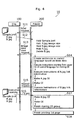
- Fig. 4 is a communication sequence that shows data communication between the STB 100 and the printer 200.
- Print data in Fig. 4 is composed of a group of broadcasting program files made of "Sample. bml", “A. jpg", and “B. jpg”.
- Document structure of respective image data files file size, the vertical and horizontal sizes of images and so on), places in which an image data file is stored (link destinations) are written in "Sample. bml”.
- jpg are image data (for example, a JPEG file with a header part and a body part) of images that constitutes a screen display.
- the contents of the print data and so on are not manipulated (for example, without changing color information), and printed as they are.
- the printer 200 receives a print instruction from a user via the STB 100 and the like. In this way, the printer 200 notifies the STB 100 of a print data send instruction (S11). After that, the printer 200 receives print data sent from the STB 100 (S12), and tries to store the received data in the input file buffer 203a of the printer 200.
- a controller unit 205 judges whether the input file buffer 203a has the capacity for storing all the received print data. When the judgment is yes, in other words, when it is judged that the size of print data is smaller than that of the input file buffer 203a of the printer 200, the transformation unit 202 starts to pre-printing processing (that is, layout processing for printing).
- the controller unit 205 issues a save request from the printer 200 to the STB 100 so as to store the whole print data tried to be received in the STB 100 (S13), and control the communication I/F unit 201 so as to save the concerning data in the second memory 104 in the STB 100.
- the reason why the data is saved is, as mentioned above, to prevent an in-process printing from terminating because of a program's completion or the like.
- the sizes of the respective buffers in the storage unit 203 are shown in Fig. 10.
- Whether the printer 200 is capable of storing the print data to be received from the STB 100 completely in the input file buffer 203a is judged by receiving data that indicates the size of print data, that is, 190KB in total of 7KB for "Sample. bml", 40KB for "A. jpg", and 143KB for "B. jpg” and then comparing the size with 110KB, that is, the size of the input file buffer 203a in controller unit 205.
- the controller unit 205 judges that it is impossible to store the whole print data by referring to the contents of Fig. 10 because the data amount of the print data is larger than 110KB, that is, the capacity of the input file buffer 203a.
- sample. bml providing that the “Sample. bml” is held in the input file buffer 203a after received until its printing finishes (in other words, providing that it is not deleted until its printing finishes), it is possible to start the above-mentioned transformation processing and the like immediately without receiving the print data even when printing the pages starting from the second page.
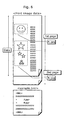
- the input file buffer 203a can store "Sample. bml” and “A. jpg” but cannot store “B. jpg". However, "B. jpg” is necessary for printing the first page.
- the input file buffer 203a in the printer 200 should hold the vertical and horizontal sizes of the image of "Sample. bml", “A. jpg", and “B. jpg” until printing finishes.
- these vertical and horizontal sizes of the images are gotten by reading the information on these vertical and horizontal sizes written in the header part and the like of the image data. More specifically, information shown in Fig. 8 is stored in the input file buffer 203a and the like.
- the vertical and horizontal sizes of images can be received from the STB 100 or calculated in the printer 200 (for example, the controller unit 205).
- the STB 100 may store the vertical and horizontal sizes of the image data in advance in "Sample. bml", and then function to send the data to the printer 200. It is also possible to perform image enlarge or shrink processing based on the vertical and horizontal sizes of these images when executing printing processing.
- While the data including the image data are conventionally written as statements when transforming data that contains image data into a file written in a control language, only statement specifying the file name of the image data is written instead of the descriptions of the image data as statements when the data is transformed into a file written in a control language in this embodiment because image data is not always stored in the input file buffer 203a. This method is especially effective when there is no need to print all the pages of image data that requires plural pages. Also, a file written in a control language is made for all the respective pages, and the number of pages in total can be grasped when these files written in a control language are made.
- Fig. 7 is a diagram showing the object images to be displayed in the OI buffer 203c.
- the transformation unit 202 executes instructions starting from the one written in the first line of the file and the stage has come in which the instruction for making object images of "A. jpg" in the OI buffer 203c is executed, and the transformation unit 202 confirms the data stored in the input file buffer 203a. Then the transformation unit 202 makes object images in the OI buffer 203c using "A. jpg" because "A.
- the transformation unit 202 further executes the instruction for making object images of "B. jpg” in the OI buffer 203c.
- the transformation unit 202 has to obtain "B. jpg” in advance from the STB 100 unlike in the case of "A. jpg” because "B. jpg” does not exist in the input file buffer 203a.
- the printer 200 makes a resend request for "B. jpg" to the STB 100.
- "B. jpg” is sent as a group of files of the print data from the second memory 104 in the STB 100
- "B. jpg” is overwritten in a memory space in which necessary data, that is, "A. jpg” is stored.
- "B. jpg” can be stored in the input file buffer 203a by overwriting the data on the file that has already processed and becomes useless, or by writing the data after deleting the previously stored file. If image data requires plural pages as shown in Fig. 6, only storing the number of byte necessary for constituting one page is needed. In practical, as it is possible to specify which part of the "B.
- jpg is the first page when making files written in a control language, it becomes possible to use the number of bytes of the first page of "B. jpg" when performing printing processing of the following page by storing the data separately as shown in Fig. 9.
- "B. jpg” is stored in the input file buffer 203a, the instruction for making object images of "B. jpg” in the OI buffer 203c is executed.
- This embodiment is a case where "A. jpg” and “B. jpg” are aligned vertically and “B. jpg” is processed after "A. jpg", but it is possible to execute OI making processing regardless of the locations of images because image data are processed one by one in the order of having been written in a control language regardless of image locations.
- Fig. 7 is for specifying object images made in this way.
- the print image data for the first page is made in the image data buffer 203d by the transformation unit 202 using these object images that stores location information.
- the state of the print image data to be decompressed in the image data buffer 203d will be shown in Fig. 6.
- the print engine unit 204 of the printer 200 executes printing using these image data.
- Judgment on whether the second page should be printed or not after the first page is printed is on hold until a user gives an instruction.
- a user gives an instruction for executing printing the second page the printing processing is continued.
- Data when making the first page, that is, files written in a control language corresponding to all of the respective pages have already stored, more specifically in the decompression buffer 203b. Therefore, the second page is processed considering the processing of the first page.
- Fig. 5 is a flow chart showing the processing flow in the printer 200 when executing printing explained in the above-mentioned Fig. 4.
- the printer 200 When there is a print request from a user (S201), the printer 200 makes a send request for print data to the STB 100 (S202) first and receives the print data (such as BML data and image data) (S203).
- the print data such as BML data and image data
- the printer 200 extracts the vertical and horizontal sizes of these images based on the image data and deletes the image data themselves because the memory capacity is limited.
- the printer 200 determines the layout for printing based on BML data and the above-mentioned vertical and horizontal sizes (S206 and S207), and makes a send request for the image data to the STB 100 (S208).
- the printer 200 receives the printing data from the STB 100, completes the image data for printing and executes printing the first page (S210).
- Pages from the second page are printed in a same manner. (S211 and S206 to S210).
- the processing method mentioned above makes it possible to print data that requires plural pages even when data that are not transformed into files written in a control language (more specifically, "Sample. bml", “A. jpg” and “B. jpg”) are inputted and reduce the processing workload of apparatuses to be connected to the printer because complicated data processing in the image data sending side, that is, the STB 100 becomes unnecessary. Also, there is no need to write the descriptions of "A. jpg” and "B. jpg” whose data sizes are big in files written in a control language while an instruction specifying these file names should be written in files written in a control language because the printer 200 makes both of files written in a control language and object images. By doing this, it is possible to use the decompression buffer 203b effectively in the printer 200, and further, it is also possible to use the input file buffer 203a effectively by storing only the necessary image data in the input file buffer 203a only when the need arises.
- An example of the STB 100 as the sending side of image data is explained in the above-mentioned embodiment, it is also possible to connect the printer 200 to a mobile device such as a mobile phone or the like and receive image data from an external data server via the mobile device.
- a mobile device such as a mobile phone or the like
- an information electrical apparatus such as a microwave oven or a refrigerator with a storage medium such as an SD memory
- a storage medium such as an SD memory
- these apparatuses without a function for a complicated processing have a data send function, it becomes possible to print print data in the same method as in this embodiment.
- a BML file is used as a standard for making files written in a control language in the above-mentioned embodiment
- a file written in an ML (Markup Language) such as an HTML file, an XHTM file and an XML file or any other file can also be used on condition that the file includes standard information of the file components.
- print data is explained as data displayed on a television display screen in this embodiment, but invisible data that are not displayed on a screen display are included when the data can be scrolled.
- print data can be the data such as cooking recipe information that are not displayed on the television screen in a cooking program.
- files written in a control language are directly made from data stored in the input file buffer 203a in the above-mentioned embodiment, it is also possible to make files written in a control language after transforming the data into another format once.
- the printing processing can be terminated without confirming the end of printing after printing the last page. Also, it is advisable to notify the STB 100 of a print termination message each time a printing processing terminates. Also, notifying the STB 100 of a print termination message each time a printing terminates enables the STB to keep a start instruction in another printing processing on hold, which makes it possible to avoid a collision of a resend instruction in the process of a printing and the start instruction in the printing processing.
- Printing is executed in the order of pages starting from the 1st page in this embodiment, it is desirable that printable pages be displayed to a user when there are plural pages, the user can select the pages to be printed, and that printing in no particular order, for example, printing the fifth page next to the third page be possible.
- the storage unit 203 is clearly divided into the input file buffer 203a, the decompression buffer 203b, the OI buffer 203c and the image data buffer 203d, but it is possible to regard the whole storage unit 203 as a memory instead of dividing it physically. For example, it is possible to reduce receiving times by preparing a bigger buffer area for an input file when the decompression buffer 203b has a free space.
- Fig. 11 is a diagram showing a communication sequence indicating the data communication between the STB 300 and the printer 400 that consist the printing system 20 concerning this embodiment.
- the STB 300 has the same level functions as the STB 100 in the above-mentioned first embodiment, but the STB 300 differs from the above-mentioned STB 100 in that the STB 300 is useful when the printer 400 makes a send request for only the header of image data.
- the printer 400 has the same level functions as the printer 200 in the above-mentioned first embodiment, but the printer 400 differs from the printer 200 in that the printer 400 makes a send request for only the header of image data to the STB 300.
- the printer 400 receives only "Sample. bml" from the STB 300 first (S21 and S22), and extracts image files whose vertical and horizontal sizes are unknown (such as "B. jpg") of "Sample. bml".
- the printer 400 obtains the header of "B. jpg” whose vertical and horizontal sizes are unknown from the STB 300 (S22 and S24).
- the printer 400 may delete the header of "B. jpg” after extracting the vertical and horizontal sizes of "B. jpg” from the header of "B. jpg".
- the layout for printing is performed (S14 and S17) like the case of the above-mentioned first embodiment.
- the printer 400 obtains "A. jpg” and “B. jpg” from the STB 300 as the need arises (S25 and S26), and making image data for printing and executing printing (S18).
- Fig. 12 is a flow chart showing the processing flow in the printer 400 in this embodiment.
- the printer 400 requests the STB 300 for only "Sample. bml” as print data and obtains "Sample. bml” (S401 and S402).
- the printer 400 starts laying out object images based on "Sample. bml” (S403), and checks whether the vertical and horizontal sizes of image data are written (S404). When the vertical and horizontal sizes are not written in "Sample. bml” (S404: No), the printer 400 obtains the header of "B. jpg" from the STB 300 (S405).
- the printer 400 extracts the vertical and horizontal sizes from the header of "B. jpg” and completes laying out object images for printing (S207). Next, printing is executed (S208 to S211) like the case of the above-mentioned first embodiment.
- the printing system 20 in this embodiment makes it possible to print images on a digital television screen and the like even when the buffer capacity for printing in the printer is small because the header in which the vertical and horizontal sizes necessary for laying out object images are preobtained from the STB, the layout for printing is completed, and then, necessary image data is received from the STB, and print image data are generated in advance.
- Fig. 13 is a communication sequence diagram showing the data communication between the STB 500 and the printer 600 that constitute the printing system 30 concerning this embodiment.
- the STB 500 has the same level functions as the STB 100 in the above-mentioned first embodiment, but the STB 500 differs from the above-mentioned STB 100 in that the STB 500 is useful when there is a send request for only the vertical and horizontal sizes of image data made by the printer 600.
- the printer 600 has the same level functions as the printer 200 in the above-mentioned first embodiment, but the printer 600 differs from the printer 200 in that the printer 600 makes a send request for only the vertical and horizontal sizes of image data to the STB 500.
- the printer 600 extracts image files whose vertical and horizontal sizes are unknown (such as "B. jpg") of "Sample. bml” and receives only the vertical and horizontal sizes (for example, of "B. jpg") from the STB 500 after extracting the images whose vertical and horizontal sizes are unknown (S31 and S32).
- the layout is made like the case in the above-mentioned second embodiment (S14 and S17) and printing is performed (S25, S26 and S18) below.
- Fig. 14 is a flow chart showing the processing flow in the printer 600 in this embodiment.
- the printer 600 obtains only "Sample. bml" in the same manner as the above-mentioned second embodiment (S201, S401 and S402).
- the printer 600 extracts images whose vertical and horizontal sizes are unknown (S601) based on "Sample. bml", and obtains only the vertical and horizontal sizes of these images from the STB 500 (S604 and S605).
- the printer 400 completes the layout for printing (S403 and S207) as the vertical and horizontal sizes of all the images are clarified by these steps.
- Printing is performed in the same manner as the above-mentioned second embodiment (S208 to S211).
- the printing system 30 in this embodiment makes it possible to print a digital television screen and the like even when the buffer capacity for printing in the printer is small because the vertical and horizontal sizes necessary for the layout are obtained from the STB, the layout for printing is completed, and then, the necessary image data is received from the STB, and print image data are generated in advance.
- Fig. 15 is a block diagram showing the functional structure of the server 900, the STB 700 and the printer 800 that constitute the printing system 40 in the fourth embodiment. Units different from the ones in the printing system in the above-mentioned embodiments will be focused on in the following explanation, while the same reference number is given to the units used in common and explanations on those units are omitted.
- the server 900 has the communication I/F unit 901 operable to exchange data and so on when communicating with the STB 700, the memory 902 operable to store an HDD (hard disc drive) and the like for storing data and the like to be sent to the STB 700, the vertical and horizontal size writing unit 903 operable to specify the vertical and horizontal sizes of images in advance and write those sizes in "Sample. bml", and the controller unit 904 operable to control the above-mentioned respective units, all of which are connected with the I/O bus 909.
- the communication I/F unit 901 operable to exchange data and so on when communicating with the STB 700
- the memory 902 operable to store an HDD (hard disc drive) and the like for storing data and the like to be sent to the STB 700
- the vertical and horizontal size writing unit 903 operable to specify the vertical and horizontal sizes of images in advance and write those sizes in "Sample. bml”
- the controller unit 904 operable to control the above-mentioned respective units
- the communication I/F unit 701 in the STB 700 executes data transformation and so on when communicating with the server 900 and the printer 800.
- the communication I/F unit 801 in the printer 800 executes data transformation and so on when communicating with the STB 700.
- Other units are the same as the ones in the above-mentioned first embodiment.
- Fig. 16 is a communication sequence diagram showing the data communication between the above-mentioned server 900, the STB 700 and the printer 800.
- the vertical and horizontal size writing unit 903 in the server 900 judges whether the vertical and horizontal sizes of these images in the respective image files that comprise the display screen are written in "Sample. bml", as to the written image files, specifies the vertical and horizontal sizes with reference to the headers of these image files and writes those sizes in "Sample. bml".
- the STB 700 receives print data from the server 900 via a line or a broadcasting wave (S41) and stores the data in the HDD 102.
- the printer 800 obtains only "Sample. bml" from the STB 700 (S21 and S22) in the same manner as the above-mentioned third embodiment, and performs the layout for printing based on the vertical and horizontal sizes of the respective images written in this "Sample. bml".
- the following communication sequence is the same as the above-mentioned third embodiment.
- Fig. 17 is a flow chart showing the processing flow in the printer 800 in this embodiment.
- the printer 800 obtains only "Sample. bml” like the case of the above-mentioned third embodiment (S201, S401 and S402). Next, the printer 800 completes laying out of all the images necessary for printing (S403 and S207) based on "Sample. bml" and next, executes printing in the same manner as the third embodiment (S208 to S211).
- the printing system 40 in this embodiment makes it possible to reduce the time needed for printing because the necessary vertical and horizontal sizes are specified in a server and written in "Sample. bml" in advance and thus there is no need to communicate data for specifying the vertical and horizontal sizes after that.
- the printing apparatus and the printing method in the present invention is suitable for a printing system in a digital television and the like that can realize reduction in the memory cost and acceleration in printing speed because the memory capacity needed for printing is smaller, and data communication is performed more efficiently than before when printing the images displayed on a digital television or the like.
Landscapes
- Engineering & Computer Science (AREA)
- Multimedia (AREA)
- Signal Processing (AREA)
- Human Computer Interaction (AREA)
- Software Systems (AREA)
- Computer Graphics (AREA)
- Record Information Processing For Printing (AREA)
- Accessory Devices And Overall Control Thereof (AREA)
Abstract
When a print instruction is made by a user who is watching
a digital television or the like, a printer (600) makes a send request
for print data necessary for printing the first page to an STB (500)
(S21) and receives "Sample. bml" from the STB (500). Next, the
printer (600) refers to the contents written in "Sample. bml", and
specifies image data whose vertical and horizontal sizes are
unknown. Next, the printer (600) makes a send request for the
vertical and horizontal sizes of an image data whose vertical and
horizontal sizes are unknown (such as "B. jpg") to the STB (500)
(S31), and receives the vertical and horizontal sizes from the STB
(500)(S32). Further, the printer (600) obtains actual image data
("A. jpg" and "B. jpg") from the STB (500) after performing the
layout for printing based on the received vertical and horizontal
sizes and executes printing page by page.
Description
This present invention relates to an apparatus and the like
for printing documents and images, especially a printing
technology and a printing method used when printing documents
and images displayed on a digital television and the like.
Conventionally, when printing data to be printed (means
"print data" from here) showing a document to be printed (such as
an XML document contains an image) using a printer connected to
a personal computer (abbreviated as "PC" from here), printing is
performed by representing print data using a control language
(such as Page Description Language) for a PC, then transforming it
to an object image (abbreviated as "OI" from here) with the
descriptions of the image data, further transforming the
transformed OI to a print image data, and processing the print
image data using a printer.
Fig. 1 is a diagram showing the process of making the print
image data from a file represented using a control language in the
case of the above-mentioned conventional printing. As shown in
Fig. 1, first, a file to which information on a page written in a
control language is added for all the print data, next, page by page
data necessary for printing in the file is sent. The printer prints
based on the received data. In this case, all the data of text data,
image data and the like in the document are written in a control
language.
Conventional printers are made without considering the case
where printing is performed by connecting to a device (such as an
STB of a digital television) that does not have the function for
transforming print data to a file written in a control language unlike
a PC while they have the function for receiving data sent from
outside. More specifically, a screen display of a digital
broadcasting program displayed on a digital television screen
comprises a plurality of files, that is, a BML file contains the
component information of the screen display, a JPEG (Joint
Photographic Experts Group being an image compression
standard) file and an AAC (Advanced Audio Coding being an audio
compression standard) file which are components of a display
screen and the like, which means that a printer must receive data
(such as a BML file or a JPEG file) that is sent from an STB and the
like as it is before transforming the data to a file written in a control
language, and perform transformation processing that is
performed conventionally by a PC when performing printing by
connecting a printer to a device such as this distal television.
Therefore, the processing load necessary for such as a
transformation processing in the printer increases and the needed
memory capacity at the time of printing also increases, which
results in a drawback of high cost and the like.
Therefore, this present invention is made considering the
above-mentioned problems and its aim is providing a printing
apparatus, a content output apparatus and a printing system
operable to transform a BML file, a JPEG file or the like into a file
written in a control language while the processing is conventionally
performed by a PC, and further, transform the file written in a
control language into an OI more efficiently while the processing is
conventionally performed by a printer using a smaller memory
capacity.
In order to achieve the above-mentioned aim, the printing
apparatus in the present invention is connectable to a content
storage device that stores contents containing an image, and
comprises a data obtainment unit operable to obtain a part or all of
the contents, a size extraction unit operable to extract the vertical
and horizontal sizes of an image from the obtained data, a layout
unit operable to lay out the image for printing using the extracted
vertical and horizontal sizes of the image, an image obtainment
unit operable to request the content storage apparatus for the
image data and obtain the image data based on the layout, and a
printing unit operable to generate and print out a print image data
based on the obtained image data and layout.
Fig. 2 is a diagram showing the process from representing
the print data printed by the printing apparatus in the present
invention in a control language to making an OI. As shown in Fig.
2, when it is compared with the above-mentioned Fig. 1, it is
possible to save the memory capacity in the printer because a file
in which image data is stored is written as link information in the
file written in a control language. In this case, if a need arises,
the image data is decompressed based on the link information and
the vertical and horizontal sizes of the image.
In this way, as an OI of image data is made by a direct access
to the image data as a need arises, it becomes no need to write the
data corresponding to the image data in the file written in a control
language, and thus it becomes possible to prevent doubly storing
the received image data and the after-transformation data written
in a control language. Also, it is possible to perform printing
processing efficiently using the memory of the printer without
putting heavy load on an STB.
Note that, the present invention is realized not only as the
above-mentioned printing apparatus, but also as a printing method
regarding the unique units of the above-mentioned printing
apparatuses as steps or as a program operable to have a computer
such as a PC execute these steps. It is needless to say that it is
possible to distribute such a program using a storage medium such
as a CD-ROM or via a communication medium such as the Internet.
filed , is incorporated herein by reference.
Japanese Patent application No. 2003-031214 filed February
7, 2003.
These and other objects, advantages and features of the
invention will become apparent from the following description
thereof taken in conjunction with the accompanying drawings that
illustrate a specific embodiment of the invention. In the
Drawings:
Further explanations on embodiments in the present
invention will be made below with reference to figures.
Fig. 3 is a diagram showing the functional structures of an
STB 100 and a printer 200 which comprise the printing system 10
in this embodiment.
The STB 100 is a tuner terminal of a digital television
broadcasting, and it comprises a communication I/F unit 101
operable to input and output data when communicating with a
printer 200, an HDD 102 operable to store program contents of
digital television broadcasting and the like, the first memory 103
operable to store the data of a program on air or before
broadcasting (more specifically, before displaying the data on the
screen display of a digital television and the like), the second
memory 104 operable to save the data stored in this first memory
103, a controller unit 105 operable to control the above-mentioned
respective units and so on. Further, each unit of the STB 100 is
connected to each other by an I/O bus 109.
The reason why the STB 100 comprises the second memory
104 is as follows: for example, in the case of digital television
broadcasting, as the data of a program that is already broadcast is
usually stored only in the first memory 103 in the STB 100, the
data is deleted when switching programs or the program finishes
unless an explicit store instruction is made by a user. Besides, if
it receives a print instruction from a user during the on-air time, in
the case that the program is switched or finished before its printing
completes, the data expected to be printed is deleted in the first
memory 103 of the STB 100 and thus there emerges a problem that
it is impossible to complete printing. In order to solve this
problem, the second memory 104 is prepared so as to save the
data necessary expected to be printed unless there is an explicit
delete instruction or the like. Of course, when the data for
printing exists in the first memory 103, it is also possible to send
the data from the first memory 103 to the printer 200. In other
words, any one of an HDD 102 in the STB 100, a printer 200, an
external storage medium connected to the STB 100 and the like is
available when saving the above-mentioned data, and it is also
possible to send from the first memory 103 when the necessary
print data can be stored in the first memory 103 without the second
memory 104.
The printer 200 is a printer that is so-called "PULL" type, and
actively obtains necessary data from the STB 100 when receiving a
print instruction notification from the STB 100 and the like. The
printer 200 comprises a communication I/F unit 201 operable to
input and output data when communicating with the STB 100, a
storage unit 203 operable to store data received from the STB 100
or print image data or the like that are made during the printing
process, a transformation unit 202 operable to control
transformation from the received data to a file written in a control
language or respective images generated by executing respective
instructions written in a file in a control language (object image:
OI) to respective print image data, a print engine unit 204 operable
to draw text or images on a paper and the like based on print image
data, a print instruction receiving unit 206 operable to receive a
print instruction from a user via the STB 100, a controller 205
operable to control the above-mentioned respective units and the
like. In addition, each unit of the printer 200 is connected to an
I/O bus 209. An object image has information on location in the
whole page along with being a small piece of image.
Also, the print instruction reception unit 206 can also receive
a print instruction via, for example, a remote controller of a digital
television and the like excluding the above-mentioned STB 100.
Further, the storage unit 203 comprises an input file buffer
203a operable to store data received from an STB 100, a
decompression buffer 203b operable to decompress data stored in
the input file buffer 203a to a file written in a control language, an
OI buffer 203c operable to store object images when executing a
file written in a control language, and an image data buffer 203d
operable to store print image data made by synthesizing respective
object images.
Also, the STB 100 is connected with the printer 200 via serial
connection such as the IEEE 1394. Any one of the IEEE 1394, a
USB, and the like is available when connecting the STB 100 with
the printer 200. The printer 200 is, for example, a printer like an
inkjet printer or a laser printer, or a facsimile apparatus, a copy
machine and the like.
Next, explanation on data communication when printing in
the printing system 10 will be made. Fig. 4 is a communication
sequence that shows data communication between the STB 100
and the printer 200. In Fig. 4, it is assumed that there is a print
instruction from a user for printing "the first page" shown in the
later-explained Fig. 6. Print data in Fig. 4 is composed of a group
of broadcasting program files made of "Sample. bml", "A. jpg", and
"B. jpg". Document structure of respective image data files (file
size, the vertical and horizontal sizes of images and so on), places
in which an image data file is stored (link destinations) are written
in "Sample. bml". "A. jpg" and "B. jpg" are image data (for
example, a JPEG file with a header part and a body part) of images
that constitutes a screen display. In this embodiment, the
contents of the print data and so on are not manipulated (for
example, without changing color information), and printed as they
are.
First, the printer 200 (the print instruction receiving unit
206) receives a print instruction from a user via the STB 100 and
the like. In this way, the printer 200 notifies the STB 100 of a
print data send instruction (S11). After that, the printer 200
receives print data sent from the STB 100 (S12), and tries to store
the received data in the input file buffer 203a of the printer 200.
Here, a controller unit 205 judges whether the input file
buffer 203a has the capacity for storing all the received print data.
When the judgment is yes, in other words, when it is judged that
the size of print data is smaller than that of the input file buffer
203a of the printer 200, the transformation unit 202 starts to
pre-printing processing (that is, layout processing for printing).
On the other hand, when it is judged that the print data to be
received cannot be completely stored in the input file buffer 203a,
the controller unit 205 issues a save request from the printer 200
to the STB 100 so as to store the whole print data tried to be
received in the STB 100 (S13), and control the communication I/F
unit 201 so as to save the concerning data in the second memory
104 in the STB 100. The reason why the data is saved is, as
mentioned above, to prevent an in-process printing from
terminating because of a program's completion or the like.
Note that it is also possible to save the concerning data in
the second memory 104 triggered by a print instruction, regardless
of whether it is possible to store the data in the input file buffer
203a or not when it is specified in advance that the STB 100
executes a pull-type communication with the printer 200 in its
specification and the like.
Here, the sizes of the respective buffers in the storage unit
203 are shown in Fig. 10. Whether the printer 200 is capable of
storing the print data to be received from the STB 100 completely
in the input file buffer 203a is judged by receiving data that
indicates the size of print data, that is, 190KB in total of 7KB for
"Sample. bml", 40KB for "A. jpg", and 143KB for "B. jpg" and then
comparing the size with 110KB, that is, the size of the input file
buffer 203a in controller unit 205. In the case of this embodiment,
the controller unit 205 judges that it is impossible to store the
whole print data by referring to the contents of Fig. 10 because the
data amount of the print data is larger than 110KB, that is, the
capacity of the input file buffer 203a.
It is also possible to calculate the data size of the print data
to be received in the printer 200 side (for example, the controller
205) without receiving the information that shows the size of the
print data from the STB 100.
As to the above-mentioned "Sample. bml", providing that
the "Sample. bml" is held in the input file buffer 203a after
received until its printing finishes (in other words, providing that it
is not deleted until its printing finishes), it is possible to start the
above-mentioned transformation processing and the like
immediately without receiving the print data even when printing
the pages starting from the second page.
Here, the printing processing when it is impossible to store
the whole print data in the input file buffer 203a at one time will be
explained more specifically with reference to Fig. 6. The input file
buffer 203a can store "Sample. bml" and "A. jpg" but cannot store
"B. jpg". However, "B. jpg" is necessary for printing the first page.
In addition, as the component information of the file as a standard
(such as the vertical and horizontal sizes of the display screen and
the like) is necessary for making a file written in a control language
as a stage before making print image data, the input file buffer
203a in the printer 200 should hold the vertical and horizontal sizes
of the image of "Sample. bml", "A. jpg", and "B. jpg" until printing
finishes.
Generally, these vertical and horizontal sizes of the images
are gotten by reading the information on these vertical and
horizontal sizes written in the header part and the like of the image
data. More specifically, information shown in Fig. 8 is stored in
the input file buffer 203a and the like. The vertical and horizontal
sizes of images can be received from the STB 100 or calculated in
the printer 200 (for example, the controller unit 205).
Further, the STB 100 may store the vertical and horizontal
sizes of the image data in advance in "Sample. bml", and then
function to send the data to the printer 200. It is also possible to
perform image enlarge or shrink processing based on the vertical
and horizontal sizes of these images when executing printing
processing.
The above-mentioned pre-printing processing will be
explained below.
First, information showing that the vertical size of the image
"A. jpg" is 200 [pixel] and the horizontal size is 500 [pixel] is
gotten from the data stored in the input file buffer 203a such as the
component information stored in "A. jpg", and "Sample. bml" in Fig.
8 (more specifically, information shown in the table as Fig. 8), and
the input file is transformed into a file written in a control language
by the transformation unit 202 and decompressed in the
decompression buffer 203b. While the data including the image
data are conventionally written as statements when transforming
data that contains image data into a file written in a control
language, only statement specifying the file name of the image
data is written instead of the descriptions of the image data as
statements when the data is transformed into a file written in a
control language in this embodiment because image data is not
always stored in the input file buffer 203a. This method is
especially effective when there is no need to print all the pages of
image data that requires plural pages. Also, a file written in a
control language is made for all the respective pages, and the
number of pages in total can be grasped when these files written in
a control language are made.
When these files written in a control language are made in
the decompression buffer 203b by the transformation unit 202,
respective instructions written in a control language are executed
in order by the transformation unit 202 so as to decompress the
object images in the first page in the OI buffer 203c. Fig. 7 is a
diagram showing the object images to be displayed in the OI buffer
203c. When the transformation unit 202 executes instructions
starting from the one written in the first line of the file and the
stage has come in which the instruction for making object images
of "A. jpg" in the OI buffer 203c is executed, and the
transformation unit 202 confirms the data stored in the input file
buffer 203a. Then the transformation unit 202 makes object
images in the OI buffer 203c using "A. jpg" because "A. jpg" itself
is stored in the input file buffer 203a. After this processing, the
transformation unit 202 further executes the instruction for
making object images of "B. jpg" in the OI buffer 203c. However,
the transformation unit 202 has to obtain "B. jpg" in advance from
the STB 100 unlike in the case of "A. jpg" because "B. jpg" does not
exist in the input file buffer 203a.
Therefore, the printer 200 makes a resend request for "B.
jpg" to the STB 100. As "B. jpg" is sent as a group of files of the
print data from the second memory 104 in the STB 100, "B. jpg" is
overwritten in a memory space in which necessary data, that is, "A.
jpg" is stored. "B. jpg" can be stored in the input file buffer 203a
by overwriting the data on the file that has already processed and
becomes useless, or by writing the data after deleting the
previously stored file. If image data requires plural pages as
shown in Fig. 6, only storing the number of byte necessary for
constituting one page is needed. In practical, as it is possible to
specify which part of the "B. jpg" is the first page when making files
written in a control language, it becomes possible to use the
number of bytes of the first page of "B. jpg" when performing
printing processing of the following page by storing the data
separately as shown in Fig. 9. When "B. jpg" is stored in the input
file buffer 203a, the instruction for making object images of "B.
jpg" in the OI buffer 203c is executed.
This embodiment is a case where "A. jpg" and "B. jpg" are
aligned vertically and "B. jpg" is processed after "A. jpg", but it is
possible to execute OI making processing regardless of the
locations of images because image data are processed one by one
in the order of having been written in a control language regardless
of image locations.
Fig. 7 is for specifying object images made in this way. The
print image data for the first page is made in the image data buffer
203d by the transformation unit 202 using these object images
that stores location information. The state of the print image data
to be decompressed in the image data buffer 203d will be shown in
Fig. 6. The print engine unit 204 of the printer 200 executes
printing using these image data.
Judgment on whether the second page should be printed or
not after the first page is printed is on hold until a user gives an
instruction. When a user gives an instruction for executing
printing the second page, the printing processing is continued.
Data when making the first page, that is, files written in a control
language corresponding to all of the respective pages have already
stored, more specifically in the decompression buffer 203b.
Therefore, the second page is processed considering the
processing of the first page.
There is a need to make object images considering files
written in a control language for the first page so as to print the
second page. There is a need to obtain these data so as to make
object images of the second page because there is no data on the
latter part of "B. jpg". The rest of the "B. jpg" data should be
stored in the input file buffer 203a based on the number of bytes of
"B. jpg" obtained when receiving "B. jpg" in the first page. The
processing for making the following print image data is the same as
the processing for the first page.
Fig. 5 is a flow chart showing the processing flow in the
printer 200 when executing printing explained in the
above-mentioned Fig. 4.
When there is a print request from a user (S201), the printer
200 makes a send request for print data to the STB 100 (S202) first
and receives the print data (such as BML data and image data)
(S203).
Next, the printer 200 extracts the vertical and horizontal
sizes of these images based on the image data and deletes the
image data themselves because the memory capacity is limited.
Further, the printer 200 determines the layout for printing
based on BML data and the above-mentioned vertical and
horizontal sizes (S206 and S207), and makes a send request for
the image data to the STB 100 (S208).
After this, the printer 200 receives the printing data from
the STB 100, completes the image data for printing and executes
printing the first page (S210).
Pages from the second page are printed in a same manner.
(S211 and S206 to S210).
The processing method mentioned above makes it possible
to print data that requires plural pages even when data that are not
transformed into files written in a control language (more
specifically, "Sample. bml", "A. jpg" and "B. jpg") are inputted and
reduce the processing workload of apparatuses to be connected to
the printer because complicated data processing in the image data
sending side, that is, the STB 100 becomes unnecessary. Also,
there is no need to write the descriptions of "A. jpg" and "B. jpg"
whose data sizes are big in files written in a control language while
an instruction specifying these file names should be written in files
written in a control language because the printer 200 makes both
of files written in a control language and object images. By doing
this, it is possible to use the decompression buffer 203b effectively
in the printer 200, and further, it is also possible to use the input
file buffer 203a effectively by storing only the necessary image
data in the input file buffer 203a only when the need arises.
An example of the STB 100 as the sending side of image data
is explained in the above-mentioned embodiment, it is also
possible to connect the printer 200 to a mobile device such as a
mobile phone or the like and receive image data from an external
data server via the mobile device.
Also, via an information electrical apparatus such as a
microwave oven or a refrigerator with a storage medium such as an
SD memory, it is possible to receive data stored in the storage unit
of an apparatus of those listed above. When these apparatuses
without a function for a complicated processing have a data send
function, it becomes possible to print print data in the same
method as in this embodiment. Further, while a BML file is used as
a standard for making files written in a control language in the
above-mentioned embodiment, a file written in an ML (Markup
Language) such as an HTML file, an XHTM file and an XML file or any
other file can also be used on condition that the file includes
standard information of the file components.
The print data is explained as data displayed on a television
display screen in this embodiment, but invisible data that are not
displayed on a screen display are included when the data can be
scrolled. For example, print data can be the data such as cooking
recipe information that are not displayed on the television screen
in a cooking program. When there is a description for linking to
data except these visible data such as audio data in the standard
information of the file structure, it is advisable to execute the
processing for removing the linking to these visible data when
making files written in a control language.
An example of writing link information in files to be written
in a control language using file names of these image data is shown
as to image data in this embodiment. On the other hand, the
following is an explanation on the processing in the case where
another standard file existing as a slave of a master standard file
that is a standard for making files written in a control language.
The name of the slave standard file is written as link information in
a file written in a control language when transforming the master
standard file into a control language. It is possible to execute the
processing of printing the whole print data like this embodiment
when transforming the slave standard file into a control language
by executing the processing according to the contents of the
contents of the slave standard file like this embodiment - for
example, writing text data in a control language as they are,
writing file names of image data as link destinations in a control
language, and making OI and image data according to the
instructions written in a control language that is made here.
Also, while files written in a control language are directly
made from data stored in the input file buffer 203a in the
above-mentioned embodiment, it is also possible to make files
written in a control language after transforming the data into
another format once.
In addition, the printing processing can be terminated
without confirming the end of printing after printing the last page.
Also, it is advisable to notify the STB 100 of a print termination
message each time a printing processing terminates. Also,
notifying the STB 100 of a print termination message each time a
printing terminates enables the STB to keep a start instruction in
another printing processing on hold, which makes it possible to
avoid a collision of a resend instruction in the process of a printing
and the start instruction in the printing processing.
Printing is executed in the order of pages starting from the
1st page in this embodiment, it is desirable that printable pages be
displayed to a user when there are plural pages, the user can select
the pages to be printed, and that printing in no particular order, for
example, printing the fifth page next to the third page be possible.
Also, the storage unit 203 is clearly divided into the input file buffer
203a, the decompression buffer 203b, the OI buffer 203c and the
image data buffer 203d, but it is possible to regard the whole
storage unit 203 as a memory instead of dividing it physically. For
example, it is possible to reduce receiving times by preparing a
bigger buffer area for an input file when the decompression buffer
203b has a free space.
Next, a printing system in the second embodiment of the
present invention will be explained.
In this embodiment, the case where the vertical and
horizontal sizes of image data are extracted from its header, layout
for printing is performed, the entity data of the images necessary
for printing is obtained, and printing is executed will be explained
while the above-mentioned first embodiment is shown as the case
where the part of the print data (more specifically, "B. jpg") is
temporally deleted and the layout for printing is performed, and
then the print data is reobtained and printed when it is judged
whether the image data received from an STB can be stored in the
input file buffer or not and the result is "impossible".
Fig. 11 is a diagram showing a communication sequence
indicating the data communication between the STB 300 and the
printer 400 that consist the printing system 20 concerning this
embodiment.
The STB 300 has the same level functions as the STB 100 in
the above-mentioned first embodiment, but the STB 300 differs
from the above-mentioned STB 100 in that the STB 300 is useful
when the printer 400 makes a send request for only the header of
image data.
The printer 400 has the same level functions as the printer
200 in the above-mentioned first embodiment, but the printer 400
differs from the printer 200 in that the printer 400 makes a send
request for only the header of image data to the STB 300.
Units different from the ones in the printing system in the
above-mentioned first embodiment will be focused on in the
following explanation, while the same reference number is given to
the units used in common and explanations on those units are
omitted.
As shown in Fig. 11, the printer 400 receives only "Sample.
bml" from the STB 300 first (S21 and S22), and extracts image files
whose vertical and horizontal sizes are unknown (such as "B. jpg")
of "Sample. bml".
Next, the printer 400 obtains the header of "B. jpg" whose
vertical and horizontal sizes are unknown from the STB 300 (S22
and S24). The printer 400 may delete the header of "B. jpg" after
extracting the vertical and horizontal sizes of "B. jpg" from the
header of "B. jpg". Next, the layout for printing is performed (S14
and S17) like the case of the above-mentioned first embodiment.
After that, the printer 400 obtains "A. jpg" and "B. jpg" from
the STB 300 as the need arises (S25 and S26), and making image
data for printing and executing printing (S18).
Fig. 12 is a flow chart showing the processing flow in the
printer 400 in this embodiment.
First, the printer 400 requests the STB 300 for only "Sample.
bml" as print data and obtains "Sample. bml" (S401 and S402).
Next, the printer 400 starts laying out object images based
on "Sample. bml" (S403), and checks whether the vertical and
horizontal sizes of image data are written (S404). When the
vertical and horizontal sizes are not written in "Sample. bml"
(S404: No), the printer 400 obtains the header of "B. jpg" from the
STB 300 (S405).
In this way, the printer 400 extracts the vertical and
horizontal sizes from the header of "B. jpg" and completes laying
out object images for printing (S207). Next, printing is executed
(S208 to S211) like the case of the above-mentioned first
embodiment.
As mentioned up to this point, the printing system 20 in this
embodiment makes it possible to print images on a digital
television screen and the like even when the buffer capacity for
printing in the printer is small because the header in which the
vertical and horizontal sizes necessary for laying out object images
are preobtained from the STB, the layout for printing is completed,
and then, necessary image data is received from the STB, and print
image data are generated in advance.
Next, a printing system in the third embodiment of the
present invention will be explained.
In this embodiment, the case where the layout for printing is
performed after the vertical and horizontal sizes are obtained from
the STB, the entity data of images necessary for printing is
obtained, and printing is performed is explained, while the
above-mentioned first embodiment is shown as the case where
whether the image data received from the STB can be stored in the
input file buffer is judged, when the judgment is "impossible", part
of the print data (more specifically, "B. jpg") is temporarily deleted,
layout for printing is performed, the print data is reobtained, and
then printing is performed.
Fig. 13 is a communication sequence diagram showing the
data communication between the STB 500 and the printer 600 that
constitute the printing system 30 concerning this embodiment.
The STB 500 has the same level functions as the STB 100 in
the above-mentioned first embodiment, but the STB 500 differs
from the above-mentioned STB 100 in that the STB 500 is useful
when there is a send request for only the vertical and horizontal
sizes of image data made by the printer 600.
The printer 600 has the same level functions as the printer
200 in the above-mentioned first embodiment, but the printer 600
differs from the printer 200 in that the printer 600 makes a send
request for only the vertical and horizontal sizes of image data to
the STB 500.
Units different from the ones in the printing system in the
earlier-mentioned embodiment will be focused on in the following
explanation, while a same reference number is given to the units
used in common and explanations on those units are omitted.
As shown in Fig. 13, the printer 600 extracts image files
whose vertical and horizontal sizes are unknown (such as "B. jpg")
of "Sample. bml" and receives only the vertical and horizontal sizes
(for example, of "B. jpg") from the STB 500 after extracting the
images whose vertical and horizontal sizes are unknown (S31 and
S32).
The layout is made like the case in the above-mentioned
second embodiment (S14 and S17) and printing is performed (S25,
S26 and S18) below.
Fig. 14 is a flow chart showing the processing flow in the
printer 600 in this embodiment.
First, the printer 600 obtains only "Sample. bml" in the same
manner as the above-mentioned second embodiment (S201, S401
and S402). Next, the printer 600 extracts images whose vertical
and horizontal sizes are unknown (S601) based on "Sample. bml",
and obtains only the vertical and horizontal sizes of these images
from the STB 500 (S604 and S605).
The printer 400 completes the layout for printing (S403 and
S207) as the vertical and horizontal sizes of all the images are
clarified by these steps.
Printing is performed in the same manner as the
above-mentioned second embodiment (S208 to S211).
As mentioned up to this point, the printing system 30 in this
embodiment makes it possible to print a digital television screen
and the like even when the buffer capacity for printing in the
printer is small because the vertical and horizontal sizes necessary
for the layout are obtained from the STB, the layout for printing is
completed, and then, the necessary image data is received from
the STB, and print image data are generated in advance.
Next, a printing system in the fourth embodiment of the
present invention will be explained.
In this embodiment, the case where a server which is an
image data sending source sends image data to which the vertical
and horizontal sizes of the images are added in advance to the STB
and the processing concerning the vertical and horizontal sizes
executed between the STB and the printer is unnecessary will be
explained, while the above-mentioned first embodiment is shown
as the case where whether the image data received from the STB
can be stored in the input file buffer is judged, when the judgment
is "impossible", part of the print data (more specifically, "B. jpg") is
temporarily deleted, the layout for printing is performed, the print
data is reobtained, and printing is performed.
Fig. 15 is a block diagram showing the functional structure of
the server 900, the STB 700 and the printer 800 that constitute the
printing system 40 in the fourth embodiment. Units different from
the ones in the printing system in the above-mentioned
embodiments will be focused on in the following explanation, while
the same reference number is given to the units used in common
and explanations on those units are omitted.
The server 900 has the communication I/F unit 901 operable
to exchange data and so on when communicating with the STB 700,
the memory 902 operable to store an HDD (hard disc drive) and the
like for storing data and the like to be sent to the STB 700, the
vertical and horizontal size writing unit 903 operable to specify the
vertical and horizontal sizes of images in advance and write those
sizes in "Sample. bml", and the controller unit 904 operable to
control the above-mentioned respective units, all of which are
connected with the I/O bus 909.
The communication I/F unit 701 in the STB 700 executes
data transformation and so on when communicating with the
server 900 and the printer 800.
The communication I/F unit 801 in the printer 800 executes
data transformation and so on when communicating with the STB
700. Other units are the same as the ones in the
above-mentioned first embodiment.
Fig. 16 is a communication sequence diagram showing the
data communication between the above-mentioned server 900, the
STB 700 and the printer 800. As shown in Fig. 16, the vertical and
horizontal size writing unit 903 in the server 900 judges whether
the vertical and horizontal sizes of these images in the respective
image files that comprise the display screen are written in "Sample.
bml", as to the written image files, specifies the vertical and
horizontal sizes with reference to the headers of these image files
and writes those sizes in "Sample. bml".
The STB 700 receives print data from the server 900 via a
line or a broadcasting wave (S41) and stores the data in the HDD
102. The printer 800 obtains only "Sample. bml" from the STB
700 (S21 and S22) in the same manner as the above-mentioned
third embodiment, and performs the layout for printing based on
the vertical and horizontal sizes of the respective images written in
this "Sample. bml". The following communication sequence is the
same as the above-mentioned third embodiment.
Fig. 17 is a flow chart showing the processing flow in the
printer 800 in this embodiment.
First, the printer 800 obtains only "Sample. bml" like the
case of the above-mentioned third embodiment (S201, S401 and
S402). Next, the printer 800 completes laying out of all the
images necessary for printing (S403 and S207) based on "Sample.
bml" and next, executes printing in the same manner as the third
embodiment (S208 to S211).
As mentioned up to this point, the printing system 40 in this
embodiment makes it possible to reduce the time needed for
printing because the necessary vertical and horizontal sizes are
specified in a server and written in "Sample. bml" in advance and
thus there is no need to communicate data for specifying the
vertical and horizontal sizes after that.
As mentioned up to this point, the printing apparatus and
the printing method in the present invention is suitable for a
printing system in a digital television and the like that can realize
reduction in the memory cost and acceleration in printing speed
because the memory capacity needed for printing is smaller, and
data communication is performed more efficiently than before
when printing the images displayed on a digital television or the
like.
Claims (18)
- A printing apparatus which is connected with a content storage device for storing contents including an image, comprising:a data obtainment unit operable to obtain a part or all of data of the contents;a size extraction unit operable to extract a vertical and horizontal sizes of the image from the obtained data;a layout unit operable to lay out the image for printing using the extracted vertical and horizontal sizes;an image obtainment unit operable to request the contents storage device for the image data and obtain said image data based on a layout result outputted by the layout unit; anda printing unit operable to generate print image data based on the obtained image data and the layout result, and print out the image data.
- A printing apparatus according to Claim 1,
wherein the contents includes component information on components of the contents,
the data obtainment unit obtains the component information included in the contents, and
the size extraction unit extracts the vertical and horizontal sizes from the obtained component information. - A printing apparatus according to Claim 1,
wherein the data obtainment unit comprises:a storage unit operable to store obtained contents;a judgment unit operable to judge whether the obtained contents can be stored in the storage unit or not; anda deletion unit operable to delete a part of the contents when the judgment unit judges that the obtained contents cannot be stored. - A printing apparatus according to any one of Claim 1 and Claim 2,
wherein the contents includes a header part and a body part, and the header part includes data indicating the vertical and horizontal sizes,
the data obtainment unit obtains the header part of the contents, and
the size extraction unit extracts data indicating the vertical and horizontal sizes included in the obtained header part. - A printing apparatus according to Claim 4,
wherein the data obtainment unit obtains only data indicating the vertical and horizontal sizes in the header part, the obtained data showing the vertical and horizontal sizes being regarded as the extracted vertical and horizontal sizes. - A printing apparatus according to Claim 5, further comprising a storage unit operable to store data,
wherein the storage unit holds data indicating the component information until the layout is completed. - A printing apparatus according to Claim 6,
wherein the storage unit further stores data indicating the vertical and horizontal sizes. - A printing apparatus according to Claim 7,
wherein the data indicating the component information is data written in a markup language. - A printing apparatus according to Claim 8,
wherein the data written in the markup language is data written in Broadcast Markup Language. - A content output apparatus for outputting contents including an image to a printing apparatus,
wherein data indicating the vertical and horizontal sizes of an image is included in the contents and sent to the printing apparatus. - A content output apparatus for outputting contents including an image to a printing apparatus,
wherein the contents include a header part and a body part, and the header part includes data indicating the vertical and horizontal sizes, and
the content output apparatus extracts the header part from the contents, and sends the header part to the printing apparatus. - A content output apparatus for outputting contents including an image to a printing apparatus,
wherein the contents include a header part and a body part, and the header part includes data indicating the vertical and horizontal sizes, and
the content output apparatus extracts the vertical and horizontal sizes from the header part and sends the vertical and horizontal sizes to the printing apparatus. - A printing method for a printing apparatus connected to a content storage device that stores contents including an image, the printing method comprising:a data obtainment step for obtaining a part or all of data of the contents;a size extraction step of extracting the vertical and horizontal sizes of the image from the obtained data;a layout step of performing layout for printing the image with reference to the extracted vertical and horizontal sizes;an image obtainment step of requesting the image data from the content storage device based on a layout result outputted by the layout unit and obtains the image data; anda printing step of generating print image data based on the obtained image data and the layout result and printing out the data.
- The printing method according to Claim 13,
wherein the contents includes component information that is information on components of the contents,
in the data obtainment step, the component information included in the contents is obtained, and
in the size extraction step, the vertical and horizontal sizes are extracted from the obtained component information. - The printing method according to Claim 13,
wherein the data obtainment step comprises:a storage sub-step of storing obtained contents;a judgment sub-step of judging whether the obtained contents can be stored in the storage unit or not; anda deletion sub-step of deleting a part of the contents when the judgment unit judges that the obtained contents cannot be stored. - The printing method according to any one of Claim 13 and Claim 14,
wherein the image data includes a header part and a body part, and the header part includes data indicating the vertical and horizontal sizes,
in the data obtainment step, the header part of the image data is obtained, and
in the size extraction step, data showing the vertical and horizontal sizes included in the obtained header part is extracted. - The printing method according to Claim 16,
wherein in the data obtainment step, only data showing the vertical and horizontal sizes in the header part is obtained, and
in the size extraction step, the obtained data showing the vertical and horizontal sizes being regarded as the extracted vertical and horizontal sizes. - A printing system comprising a content output apparatus and a printing apparatus,
wherein the content output apparatus stores contents including an image, adds data indicating the vertical and horizontal sizes of the image to the contents and sends the data together with the contents to the printing apparatus,
the printing apparatus includes:a data obtainment unit operable to obtain a part or all of data of the contents;a size extraction unit operable to extract the vertical and horizontal sizes of the image from the obtained data;a layout unit operable to lay out the image for printing with reference to the extracted vertical and horizontal sizes;an image obtainment unit operable to request to the contents output apparatus for the image data based on a layout result outputted by the layout unit and obtains the image data; anda printing unit operable to generate print image data based on the obtained image data and the layout and print out the print image data.
Applications Claiming Priority (3)
| Application Number | Priority Date | Filing Date | Title |
|---|---|---|---|
| JP2001260748 | 2001-08-30 | ||
| JP2001260748 | 2001-08-30 | ||
| PCT/JP2002/008849 WO2003019348A1 (en) | 2001-08-30 | 2002-08-30 | Printing apparatus, content output apparatus, and printing system |
Publications (2)
| Publication Number | Publication Date |
|---|---|
| EP1422608A1 true EP1422608A1 (en) | 2004-05-26 |
| EP1422608A4 EP1422608A4 (en) | 2007-07-04 |
Family
ID=19087907
Family Applications (1)
| Application Number | Title | Priority Date | Filing Date |
|---|---|---|---|
| EP02762942A Withdrawn EP1422608A4 (en) | 2001-08-30 | 2002-08-30 | PRINTING DEVICE, CONTENT PRODUCTION DEVICE, AND PRINTING SYSTEM |
Country Status (5)
| Country | Link |
|---|---|
| US (2) | US7077586B2 (en) |
| EP (1) | EP1422608A4 (en) |
| JP (1) | JP3850834B2 (en) |
| CN (1) | CN1280704C (en) |
| WO (1) | WO2003019348A1 (en) |
Families Citing this family (8)
| Publication number | Priority date | Publication date | Assignee | Title |
|---|---|---|---|---|
| JP4579578B2 (en) * | 2003-07-03 | 2010-11-10 | キヤノン株式会社 | Printing method, printing control apparatus, storage medium, and program |
| KR100772376B1 (en) * | 2005-06-23 | 2007-11-01 | 삼성전자주식회사 | Image forming apparatus and method |
| JP4785660B2 (en) * | 2006-07-21 | 2011-10-05 | 株式会社リコー | Image processing device |
| JP5034659B2 (en) * | 2007-04-30 | 2012-09-26 | ブラザー工業株式会社 | Image forming apparatus |
| US8904468B2 (en) * | 2007-08-08 | 2014-12-02 | At&T Intellectual Property I, Lp | Television printing device and methods thereof |
| JP5323555B2 (en) | 2009-03-27 | 2013-10-23 | 大日本スクリーン製造株式会社 | Printing system and printing method |
| CN102034020B (en) * | 2010-10-15 | 2013-02-13 | 冠捷显示科技(厦门)有限公司 | Implementation method for integrating health management system in television |
| JP6776639B2 (en) * | 2016-06-10 | 2020-10-28 | コニカミノルタ株式会社 | Information processing system, electronic device, information processing device, information processing method, electronic device processing method, and program |
Family Cites Families (29)
| Publication number | Priority date | Publication date | Assignee | Title |
|---|---|---|---|---|
| DE68927970T2 (en) * | 1988-09-08 | 1997-10-09 | Canon Kk | Point image data output device |
| JPH03248262A (en) * | 1990-02-27 | 1991-11-06 | Canon Inc | document processing device |
| JPH05183674A (en) * | 1992-01-06 | 1993-07-23 | Canon Inc | Picture input output device |
| JPH0630272A (en) * | 1992-04-17 | 1994-02-04 | Canon Inc | Device and method for processing image |
| JPH06169395A (en) * | 1992-11-27 | 1994-06-14 | Sharp Corp | Image forming device |
| US5787414A (en) * | 1993-06-03 | 1998-07-28 | Kabushiki Kaisha Toshiba | Data retrieval system using secondary information of primary data to be retrieved as retrieval key |
| JPH0787291A (en) * | 1993-09-14 | 1995-03-31 | Fujitsu Ltd | Recording method of electrophotographic printer |
| JPH0981763A (en) * | 1995-07-07 | 1997-03-28 | Oki Data:Kk | Method and device for compressing character and image mixed data |
| JP3478670B2 (en) * | 1996-06-18 | 2003-12-15 | キヤノン株式会社 | PRINT CONTROL DEVICE, PRINTING DEVICE, THEIR METHOD, AND PRINTING SYSTEM |
| JPH10143403A (en) | 1996-11-12 | 1998-05-29 | Fujitsu Ltd | Information management apparatus and information management program storage medium |
| JP3950514B2 (en) * | 1997-06-05 | 2007-08-01 | キヤノン株式会社 | Image editing apparatus and method, and medium storing program |
| JPH11175425A (en) * | 1997-12-11 | 1999-07-02 | Fuji Xerox Co Ltd | Service repeater system |
| JPH11245455A (en) * | 1998-03-03 | 1999-09-14 | Seiko Epson Corp | PRINTING APPARATUS, PRINTING APPARATUS CONTROL METHOD, AND RECORDING MEDIUM |
| JPH11316672A (en) * | 1998-04-30 | 1999-11-16 | Ricoh Co Ltd | Internet print system |
| JP4332907B2 (en) * | 1998-07-15 | 2009-09-16 | ソニー株式会社 | Printing method and printer apparatus |
| JP4329135B2 (en) * | 1998-08-06 | 2009-09-09 | ソニー株式会社 | Printer device |
| JP4135226B2 (en) * | 1998-08-26 | 2008-08-20 | ソニー株式会社 | Printer device |
| JP2000118054A (en) * | 1998-10-12 | 2000-04-25 | Nec Data Terminal Ltd | Printer and method for reducing amount of consumption of toner |
| US6731407B1 (en) * | 1998-11-02 | 2004-05-04 | Seiko Epson Corporation | Image processing method and device |
| JP2000222330A (en) * | 1999-02-01 | 2000-08-11 | Nec Corp | Home page display device for mobile communication terminal equipment and its method |
| CA2272723A1 (en) * | 1999-05-25 | 2000-11-25 | Rdm Corporation | Digital signature server |
| JP2001080141A (en) * | 1999-09-14 | 2001-03-27 | Sony Corp | Print control device and method, printer device and printing method, printing system and printing method |
| JP4192371B2 (en) * | 1999-12-09 | 2008-12-10 | ソニー株式会社 | Data receiving apparatus, data transmitting apparatus, and data transmitting / receiving system |
| JP2001195391A (en) * | 2000-01-14 | 2001-07-19 | Nec Information Service Ltd | Format conversion and page division relay server |
| JP2001202212A (en) * | 2000-01-18 | 2001-07-27 | Sony Corp | Printing device, printing control device, and printing system |
| JP2001218139A (en) * | 2000-02-02 | 2001-08-10 | Sony Corp | Digital broadcast receiving system and digital broadcast receiving device |
| JP2001228857A (en) * | 2000-02-21 | 2001-08-24 | Sony Corp | Image display device and image display method |
| JP4192383B2 (en) * | 2000-02-24 | 2008-12-10 | ソニー株式会社 | Digital broadcast receiving system, digital broadcast receiving apparatus, and digital broadcast printing apparatus |
| JP3527211B2 (en) * | 2000-08-01 | 2004-05-17 | 日立マクセル株式会社 | Electronic coupon system |
-
2002
- 2002-08-30 EP EP02762942A patent/EP1422608A4/en not_active Withdrawn
- 2002-08-30 US US10/487,275 patent/US7077586B2/en not_active Expired - Fee Related
- 2002-08-30 CN CNB028136551A patent/CN1280704C/en not_active Expired - Fee Related
- 2002-08-30 WO PCT/JP2002/008849 patent/WO2003019348A1/en not_active Ceased
- 2002-08-30 JP JP2003523345A patent/JP3850834B2/en not_active Expired - Fee Related
-
2005
- 2005-09-15 US US11/226,391 patent/US20060008306A1/en not_active Abandoned
Also Published As
| Publication number | Publication date |
|---|---|
| US20040240919A1 (en) | 2004-12-02 |
| US20060008306A1 (en) | 2006-01-12 |
| CN1524214A (en) | 2004-08-25 |
| EP1422608A4 (en) | 2007-07-04 |
| WO2003019348A1 (en) | 2003-03-06 |
| US7077586B2 (en) | 2006-07-18 |
| CN1280704C (en) | 2006-10-18 |
| JPWO2003019348A1 (en) | 2005-10-20 |
| JP3850834B2 (en) | 2006-11-29 |
Similar Documents
| Publication | Publication Date | Title |
|---|---|---|
| US8102573B2 (en) | Image forming apparatus, image reading apparatus and program | |
| US9916117B2 (en) | Remote data access for image output apparatus via a control device | |
| JP5226553B2 (en) | Image processing apparatus, image processing method, program, and recording medium | |
| US8830492B2 (en) | Data processing apparatus for sending a single job based on common document information | |
| JP2009077145A (en) | Image processing apparatus, image processing method, program thereof, and storage medium | |
| US7077586B2 (en) | Printing apparatus, content output apparatus, and printing system | |
| US8125671B2 (en) | Image forming apparatus and PDF document direct printing method thereof | |
| US20050111035A1 (en) | Printing apparatus, printing system, printing method, and program therefor | |
| JP5135963B2 (en) | Image storage system | |
| JPH11317833A (en) | Image input device and image input method | |
| US7532335B2 (en) | Print data supply apparatus, printing apparatus, print system and print data transmission method | |
| US20060132820A1 (en) | Image processing apparatus configured to obtain electronic data stored in storage by reading image document and method for the same | |
| US7973956B2 (en) | High speed printing method and apparatus | |
| US7336972B2 (en) | Data processing system for a multi-function device | |
| JP2006012151A (en) | Printing apparatus, content output apparatus, and printing system | |
| JP2005170037A (en) | Printing apparatus, printing system, printing method, and program | |
| JP3555528B2 (en) | Attachment file display method, display method and recording medium for recording display program in e-mail | |
| JP4532728B2 (en) | Printing system, printing method, and printing apparatus | |
| JP2022118499A (en) | IMAGE FORMING APPARATUS, CONTROL METHOD, AND PROGRAM | |
| JP5080325B2 (en) | Information processing apparatus, information processing method, information processing program, and recording medium | |
| JP2002335366A (en) | Server scanning device and server scanning method | |
| JP2008290426A (en) | Image forming system, external device, image forming method, and image forming program | |
| JP2004214892A (en) | Image forming device | |
| JP2006309411A (en) | File converter | |
| JPH10217559A (en) | Printing control device |
Legal Events
| Date | Code | Title | Description |
|---|---|---|---|
| PUAI | Public reference made under article 153(3) epc to a published international application that has entered the european phase |
Free format text: ORIGINAL CODE: 0009012 |
|
| 17P | Request for examination filed |
Effective date: 20040227 |
|
| AK | Designated contracting states |
Kind code of ref document: A1 Designated state(s): DE FR GB |
|
| RIN1 | Information on inventor provided before grant (corrected) |
Inventor name: HISATOMI, KENJI |
|
| A4 | Supplementary search report drawn up and despatched |
Effective date: 20070604 |
|
| 17Q | First examination report despatched |
Effective date: 20070827 |
|
| RAP1 | Party data changed (applicant data changed or rights of an application transferred) |
Owner name: PANASONIC CORPORATION |
|
| STAA | Information on the status of an ep patent application or granted ep patent |
Free format text: STATUS: THE APPLICATION IS DEEMED TO BE WITHDRAWN |
|
| 18D | Application deemed to be withdrawn |
Effective date: 20120403 |