EP1421934A1 - Remedial agent for arthrosis deformans - Google Patents
Remedial agent for arthrosis deformans Download PDFInfo
- Publication number
- EP1421934A1 EP1421934A1 EP02755820A EP02755820A EP1421934A1 EP 1421934 A1 EP1421934 A1 EP 1421934A1 EP 02755820 A EP02755820 A EP 02755820A EP 02755820 A EP02755820 A EP 02755820A EP 1421934 A1 EP1421934 A1 EP 1421934A1
- Authority
- EP
- European Patent Office
- Prior art keywords
- hydroxy
- methyl
- alkyl
- formula
- aminopentanamide
- Prior art date
- Legal status (The legal status is an assumption and is not a legal conclusion. Google has not performed a legal analysis and makes no representation as to the accuracy of the status listed.)
- Withdrawn
Links
Images
Classifications
-
- A—HUMAN NECESSITIES
- A61—MEDICAL OR VETERINARY SCIENCE; HYGIENE
- A61K—PREPARATIONS FOR MEDICAL, DENTAL OR TOILETRY PURPOSES
- A61K31/00—Medicinal preparations containing organic active ingredients
- A61K31/16—Amides, e.g. hydroxamic acids
- A61K31/165—Amides, e.g. hydroxamic acids having aromatic rings, e.g. colchicine, atenolol, progabide
- A61K31/166—Amides, e.g. hydroxamic acids having aromatic rings, e.g. colchicine, atenolol, progabide having the carbon of a carboxamide group directly attached to the aromatic ring, e.g. procainamide, procarbazine, metoclopramide, labetalol
-
- A—HUMAN NECESSITIES
- A61—MEDICAL OR VETERINARY SCIENCE; HYGIENE
- A61P—SPECIFIC THERAPEUTIC ACTIVITY OF CHEMICAL COMPOUNDS OR MEDICINAL PREPARATIONS
- A61P19/00—Drugs for skeletal disorders
- A61P19/02—Drugs for skeletal disorders for joint disorders, e.g. arthritis, arthrosis
-
- A—HUMAN NECESSITIES
- A61—MEDICAL OR VETERINARY SCIENCE; HYGIENE
- A61P—SPECIFIC THERAPEUTIC ACTIVITY OF CHEMICAL COMPOUNDS OR MEDICINAL PREPARATIONS
- A61P43/00—Drugs for specific purposes, not provided for in groups A61P1/00-A61P41/00
Definitions
- the present invention relates to a medicine for osteoarthritis.
- Matrix metalloproteinases are neutral metalloproteinases that have zinc (hereafter, it is abbreviated with Zn 2+ ) in the active center. So far, at least, the molecular species more than 20 species with different primary structure have been identified. Concretely, interstitial collagenase (MMP-1), neutrophil collagenase (MMP-8), collagenase-3 (MMP-13), gelatinase A (MMP-2), gelatinase B (MMP-9), stromelysin-1 (MMP-3), stromelysin-2 (MMP-10), matrilysin (MMP-7), metalloelastase (MMP-12), etc. are enumerated.
- MMP-1 interstitial collagenase
- MMP-8 neutrophil collagenase
- MMP-13 collagenase-3
- MMP-2 gelatinase A
- MMP-9 gelatinase B
- MMP-9 stromelysin-1
- MMP-10 matri
- MMPs are effective in growth and tissue remodeling of articulation tissue, bone tissue and connective tissue by degrading collagen, laminin, proteoglycans, fibronectin, elastin, gelatin, etc. under physiological condition.
- disorganization of various tissues under morbid condition was caused by increase in expressions or activities of MMPs, which was caused by bankruptcy of MMP modulation.
- MMP-1, 2, 3, 8, 9, and 13 could be highly expressed in a part of damaged cartilage of patients with osteoarthritis, and deeply concerned with degradation of cartilage [Igaku no ayumi, 182, 549-553 (1997); J. Clin. Invest., 84, 678-685 (1989)].
- Non-steroidal analgesic and anti-inflammatory drugs were used as drugs of first alternative for the above disease. Besides, intraarticular injection of hyaluronic acid preparation, which improves lubrication function of joint and has anti-inflammatory effect, was carried out. However, These are only symptomatic therapy, and a fundamental method of the treatment has not been established.
- the present invention relates to therapeutic and/or prophylactic drugs for osteoarthritis comprising derivatives of hydroxamic acid, which are represented by the formula (I) (wherein R 1 represents a halogen atom, C1-8 alkyl, or C1-8 alkyl substituted with -OR 2 , in which R 2 represents a halogen atom, C1-8 alkyl, benzyl, or C1-8 alkyl substituted with C1-8 alkoxy(s), except for N-hydroxy-5-ethoxymethyloxy-2(S)-methyl-4(S)-(4-phenoxybenzoyl)aminopentanamide.) or the non-toxic salts.
- R 1 represents a halogen atom, C1-8 alkyl, or C1-8 alkyl substituted with -OR 2 , in which R 2 represents a halogen atom, C1-8 alkyl, benzyl, or C1-8 alkyl substituted with C1-8 alkoxy(s), except for N-hydroxy
- C1-8 alkyl in the formula (I) of the present invention represents methyl, ethyl, propyl, butyl, pentyl, hexyl, heptyl, octyl group, or these isomers.
- R 1 All groups represented by R 1 are suitable for R 1 in the formula (I), more suitably, a hydrogen atom, C1-4 alkyl, or C1-4 alkyl substituted with a single -OR 2 .
- the compounds used in the present invention may be used as the following, non-toxic salts, which non-toxic and water-soluble one are suitable.
- compound (II) N-hydroxy-5-hydroxy-2(S)-methyl-4(S)-(4-phenoxybenzoyl)aminopentanamide (hereafter, compound (II)) represented by the following (II) , which the applied dose per a day are 1, 3, and 10 mg/kg, respectively, were administered twice a day.
- beclometasone dipropionate, fluticasone propionate, budesonide, flunisolide, triamcinolone, ST-126P, ciclesonide, dexamethasone palmitate, mometasone furoate, prasterone sulfonate, deflazacort, methylprednisolone suleptanate, and methylprednisolone sodium succinate, etc. are enumerated.
- Gels are manufactured by a well-known or usually used prescription. For example, they are manufactured by melting one or more activators to base.
- Gel bases are chosen from the well-known one or the one usually used one. They are used mixing single or two kinds or more chosen from, for example, lower alcohol (ethanol and isopropyl alcohol, etc.), gelatinizer (carboxymethylcellulose, hydroxyethyl cellulose, hydroxypropylcellulose, and ethyl cellulose, etc.), neutralizer (triethanolamine and diisopropanolamine, etc.), surfactant (polyethyleneglycol monostearate, etc.), gums, water, absorption promoter, and rash inhibitor. In addition, they may contain preservative, antioxidant, and flavor, etc.
- Fomentations are manufactured by a well-known or usually used prescription. For example, they are manufactured by melting one or more activators to base, kneading and roll spreading on support medium.
- Compress bases are chosen from the well-known or usually used one. They are used mixing a single or two kinds or more chosen from, for example, thickener (polyacrylic acid, polyvinylpyrrolidone, acacia, starch, gelatin, and methylcellulose, etc.), humectants (urea, glycerin, and propylene glycol, etc.), filler (china clay, zinc oxide, talc, calcium, and magnesium, etc.), water, solubilizer, tackifier, and rash inhibitor. In addition, they may contain preservative, antioxidant, and flavor, etc.
- Liniments are manufactured by a well-known or usually used prescription.
- one or more activators is/are manufactured by being dissolved, suspended or emulsified to one or two kinds or more chosen from water, alcohol (ethanol and polyethyleneglycol, etc.), higher fatty acid, glycerin, soap, or emulsifier, etc.
- they may contain preservative, antioxidant, and flavor, etc.
- Aerosols, inhalants, and aerosols may include stabilizers such as sodium hydrogen sulfite besides diluent usually used and isotonicity medicine like buffer giving isotonicity, for example, sodium chloride, sodium citrate, or citrate.
- stabilizers such as sodium hydrogen sulfite besides diluent usually used and isotonicity medicine like buffer giving isotonicity, for example, sodium chloride, sodium citrate, or citrate.
- Inhalants for parenteral administration may include aerosol agent, inhalant powder or inhalant liquid, which may be used by being dissolved or suspended in water or other suitable media before using.
- sprayer atomizer and nebulizer
- inhalant powders are administered, an inhalation administering machine for powder is usually used.
- the following components were admixed in conventional method and punched out to obtain 100 tablets each containing 50 mg of active ingredient in a tablet.
Landscapes
- Health & Medical Sciences (AREA)
- Pharmacology & Pharmacy (AREA)
- Veterinary Medicine (AREA)
- Chemical & Material Sciences (AREA)
- Public Health (AREA)
- General Health & Medical Sciences (AREA)
- Medicinal Chemistry (AREA)
- Animal Behavior & Ethology (AREA)
- Life Sciences & Earth Sciences (AREA)
- Epidemiology (AREA)
- Organic Chemistry (AREA)
- Nuclear Medicine, Radiotherapy & Molecular Imaging (AREA)
- General Chemical & Material Sciences (AREA)
- Chemical Kinetics & Catalysis (AREA)
- Bioinformatics & Cheminformatics (AREA)
- Engineering & Computer Science (AREA)
- Immunology (AREA)
- Orthopedic Medicine & Surgery (AREA)
- Rheumatology (AREA)
- Physical Education & Sports Medicine (AREA)
- Acyclic And Carbocyclic Compounds In Medicinal Compositions (AREA)
Abstract
A therapeutic and/or prophylactic drug for osteoarthritis, comprising a
derivative of hydroxamic acid, which is represented by the formula (I)
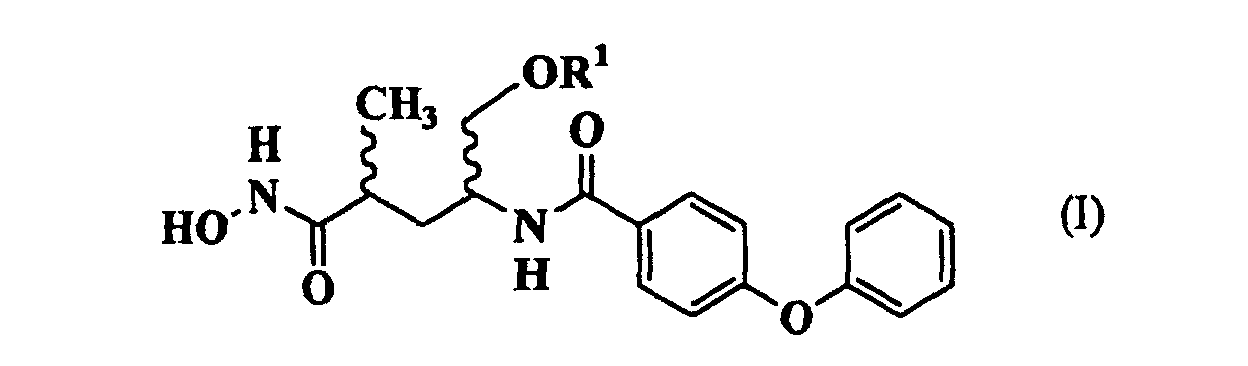 (wherein R1 represents a halogen atom, C1-8 alkyl, or C1-8 alkyl substituted
with -OR2, in which R2 represents a halogen atom, C1-8 alkyl, benzyl, or C1-8
alkyl substituted with C1-8 alkoxy), or the non-toxic salts with inhibitory effect of
matrix metalloproteinase.
(wherein R1 represents a halogen atom, C1-8 alkyl, or C1-8 alkyl substituted
with -OR2, in which R2 represents a halogen atom, C1-8 alkyl, benzyl, or C1-8
alkyl substituted with C1-8 alkoxy), or the non-toxic salts with inhibitory effect of
matrix metalloproteinase.
Description
The present invention relates to a medicine for osteoarthritis.
More particularly, the present invention relates to therapeutic and/or
prophylactic drugs for osteoarthritis, comprising derivatives of hydroxamic acid,
which are represented by the formula (I)
 (all signs in the formula represent the same meanings as postscripts.) having
inhibitory activities for matrix metalloproteinases or these non-toxic salts, as
active ingredients.
(all signs in the formula represent the same meanings as postscripts.) having
inhibitory activities for matrix metalloproteinases or these non-toxic salts, as
active ingredients.
Matrix metalloproteinases (hereafter, it is abbreviated with MMP.) are
neutral metalloproteinases that have zinc (hereafter, it is abbreviated with Zn2+)
in the active center. So far, at least, the molecular species more than 20
species with different primary structure have been identified. Concretely,
interstitial collagenase (MMP-1), neutrophil collagenase (MMP-8), collagenase-3
(MMP-13), gelatinase A (MMP-2), gelatinase B (MMP-9), stromelysin-1
(MMP-3), stromelysin-2 (MMP-10), matrilysin (MMP-7), metalloelastase (MMP-12),
etc. are enumerated.
They are effective in growth and tissue remodeling of articulation
tissue, bone tissue and connective tissue by degrading collagen, laminin,
proteoglycans, fibronectin, elastin, gelatin, etc. under physiological condition.
However, it is considered that disorganization of various tissues under morbid
condition was caused by increase in expressions or activities of MMPs, which
was caused by bankruptcy of MMP modulation. For example, it has been
reported that MMP-1, 2, 3, 8, 9, and 13 could be highly expressed in a part of
damaged cartilage of patients with osteoarthritis, and deeply concerned with
degradation of cartilage [Igaku no ayumi, 182, 549-553 (1997); J. Clin. Invest.,
84, 678-685 (1989)].
On the other hand, osteoarthritis (OA) is the majority of arthralgia for
middle-aged and elderly patients. A decrease in resilienc, abrasion, and
fissure, etc. was caused by retrograde degeneration of articular cartilage, and
so increasing chondral ossification and osteoplasty around joint was
encouraged, at last, an articular cartilage was disappeared and so a bone was
outcropped at joint, and arthralgia and pooling of synovial fluid were caused. A
favorite site was knee, crotch, spinal cord, cubitus, shoulder or finger. A lot of
the causes are uncertain.
Non-steroidal analgesic and anti-inflammatory drugs were used as
drugs of first alternative for the above disease. Besides, intraarticular injection
of hyaluronic acid preparation, which improves lubrication function of joint and
has anti-inflammatory effect, was carried out. However, These are only
symptomatic therapy, and a fundamental method of the treatment has not been
established.
For example, specifications of GB2268934 and EP606046 are
enumerated as patent applications that enumerate osteoarthrosis as subject
diseases of compound with MMP inhibitory effect. It has been reported that
CGS-27023A: 2(R)-[N-(4-methoxyphenylsulfonyl)-N-(3-pyridylmethyl)amino]-3-methylbutanohydroxamic
acid hydrochloride, which was a MMP inhibitor, could
be effect on a model of OA in rabbits [Inflamm Res 44, Supplemet 2, S117-118
(1995)]. However, there are no MMP inhibitors as therapeutic and/or
prophylactic agents for OA, and precious few compound with MMP inhibitory
activity under development for OA.
As previously described, it was eagerly looking forward to supply a
therapeutic and/or prophylactic agents for OA, and expected that MMP
inhibitors will become the therapeutic and/or prophylactic agents. However, it
is already natural that all known MMP inhibitory agents are not necessarily
effective in OA, and it is not achieved still.
Under the above condition, as a result that the present inventors
examined assiduously, they have first found that derivatives of hydroxamic acid,
which are represented by the formula (I), or the non-toxic salts could be useful
for OA, and accomplished the present invention.
The present invention relates to therapeutic and/or prophylactic
drugs for osteoarthritis comprising derivatives of hydroxamic acid, which are
represented by the formula (I)
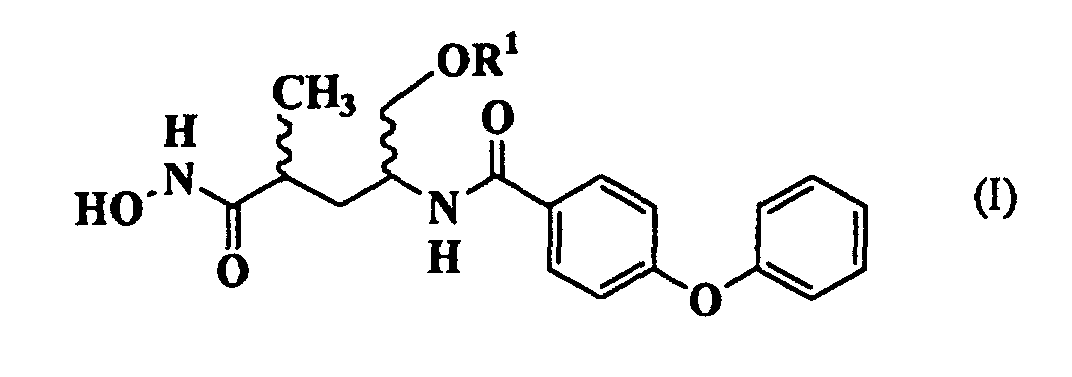 (wherein R1 represents a halogen atom, C1-8 alkyl, or C1-8 alkyl substituted
with -OR2, in which R2 represents a halogen atom, C1-8 alkyl, benzyl, or C1-8
alkyl substituted with C1-8 alkoxy(s), except for N-hydroxy-5-ethoxymethyloxy-2(S)-methyl-4(S)-(4-phenoxybenzoyl)aminopentanamide.)
or the non-toxic salts.
(wherein R1 represents a halogen atom, C1-8 alkyl, or C1-8 alkyl substituted
with -OR2, in which R2 represents a halogen atom, C1-8 alkyl, benzyl, or C1-8
alkyl substituted with C1-8 alkoxy(s), except for N-hydroxy-5-ethoxymethyloxy-2(S)-methyl-4(S)-(4-phenoxybenzoyl)aminopentanamide.)
or the non-toxic salts.
The derivatives of hydroxamic acid, which are represented by the
formula (I), has been described in a specification of WO99/19296 as
compounds with MMP inhibitory activity.
In the above specification, it have been described that the derivatives
of hydroxamic acid including the compounds represented by the formula (I),
have MMP inhibitory activity, so they are useful for treatment and/or prevention
of diseases, for example, rheumatoid diseases, arthrosteitis, unusual bone
resorption, osteoporosis, periodontitis, interstitial nephritis, arteriosclerosis,
pulmonary emphysema, cirrhosis, cornea injury, cornea ulcer, metastasis,
invasion or growth of tumor cells, autoimmune disease (Crohn's disease,
Sjogren's syndrome), disease caused by vascular emigration or infiltration of
leukocytes, arterialization, multiple sclerosis, arota aneurysm, endometriosis,
etc. However, there is no description that the compounds represented by the
formula (I) are useful for OA.
Although some relations between MMP and OA were known, the
present inventors applied some MMP inhibitors to a partial meniscectomy model
of osteoarthritis rabbits, then only compounds represented by the formula (I)
showed efficiency.
C1-8 alkyl in the formula (I) of the present invention represents
methyl, ethyl, propyl, butyl, pentyl, hexyl, heptyl, octyl group, or these isomers.
In the formula (I), C1-8 alkyl substituted with -OR2 represents methyl,
ethyl, propyl, butyl, pentyl, hexyl, heptyl, or octyl group, which is substituted with
a single -OR2, or these isomers.
In the formula (I), C1-8 alkyl substituted with C1-8 alkoxy(s)
represents methoxy, ethoxy, propoxy, butoxy, pentyloxy, hexyloxy, heptyloxy, or
octyloxy group; methyl, ethyl, propyl, butyl, pentyl, hexyl, heptyl, octyl group, or
these isomers, which is substituted with a group selected from these isomers.
In the formula (I),  sign represents a bond that shows an
isomer with asymmetric carbon or the mixture, concretely,
sign represents a bond that shows an
isomer with asymmetric carbon or the mixture, concretely,  sign
represents a bind forward space, and
sign
represents a bind forward space, and  sign represents a bind backward
space, or these mixture.
sign represents a bind backward
space, or these mixture.
In the present invention, isomers contain all isomers as long as it
does not especially direct it. For example, straight chains and branched chains
are contained in alkyl and alkoxy group. In addition, isomers with asymmetric
carbons, etc. (R, S body, α, β body, enantiomer, and diastereomer), optical
isomers with optical rotation (D, L, d, and I body), polarity bodies separated by
chromatograph (high polarity body and low polarity body), balanced compounds,
these arbitrary ratio compounds, and racemic mixtures are contained in the
present invention.
All groups represented by R1 are suitable for R1 in the formula (I),
more suitably, a hydrogen atom, C1-4 alkyl, or C1-4 alkyl substituted with a
single -OR2.
All groups represented by R2 are suitable for R2 in the formula (I),
more suitably, a hydrogen atom, C1-4 alkyl, benzyl, or C1-4 alkyl substituted
with a single C1-4 alkoxy.
Especially, as R1 in this specification, a hydrogen atom and methyl,
ethyl, methoxymethyl, ethoxymethyl, ethoxyethyl, benzyloxymethyl,
methoxymethoxymethyl, or methoxyethoxymethyl group are suitable.
As concrete compounds used for the present invention,
N-hydroxy-5-hydroxy-2(S)-methyl-4(S)-(4-phenoxybenzoyl)aminopentanamide,
N-hydroxy-5-methoxymethyloxy-2(S)-methyl-4(S)-(4-phenoxybenzoyl)aminopentanamide,
N-hydroxy-5-ethoxymethyloxy-2(R)-methyl-4(R)-(4-phenoxybenzoyl)aminopentanamide,
N-hydroxy-5-ethoxymethyloxy-2(R)-methyl-4(S)-(4-phenoxybenzoyl)aminopentanamide,
N-hydroxy-5-benzyloxymethyloxy-2(S)-methyl-4(S)-(4-phenoxybenzoyl)aminopentanamide, or
N-hydroxy-5-(2-methoxyethoxy)methyloxy-2(S)-methyl-4(S)-(4-phenoxybenzoyl)aminopentanamide, or these non-toxicity salts are enumerated.
N-hydroxy-5-hydroxy-2(S)-methyl-4(S)-(4-phenoxybenzoyl)aminopentanamide,
N-hydroxy-5-methoxymethyloxy-2(S)-methyl-4(S)-(4-phenoxybenzoyl)aminopentanamide,
N-hydroxy-5-ethoxymethyloxy-2(R)-methyl-4(R)-(4-phenoxybenzoyl)aminopentanamide,
N-hydroxy-5-ethoxymethyloxy-2(R)-methyl-4(S)-(4-phenoxybenzoyl)aminopentanamide,
N-hydroxy-5-benzyloxymethyloxy-2(S)-methyl-4(S)-(4-phenoxybenzoyl)aminopentanamide, or
N-hydroxy-5-(2-methoxyethoxy)methyloxy-2(S)-methyl-4(S)-(4-phenoxybenzoyl)aminopentanamide, or these non-toxicity salts are enumerated.
The compounds used in the present invention may be used as the
following, non-toxic salts, which non-toxic and water-soluble one are suitable.
As suitable salts, alkaline earth salts (potassium, sodium, etc.),
alkaline earth metal salts (calcium, magnesium, etc.), ammonium salts,
pharmaceutically acceptable organic amine salts (tetramethylammonium,
triethylamine, methylamine, dimethylamine, cyclopentylamine, benzylamine,
phenethylamine, piperidine, monoethanolamine, diethanolamine,
tris(hydroxymethyl)amine, lysine, arginine, N-methyl-D-glucamine, etc.) are
enumerated. The compounds represented by formula (I) and their salts may
be converted into the hydrate by a conventional manner.
The compounds represented by the formula (I) can be manufactured
by the method described in a specification of WO99/19296.
Efficiencies of the compounds in the present invention on
osteoarthrosis were proven, for example, by an experiment of a partial
meniscectomy model in rabbits.
Female rabbits (Kbs: NZW (Healthy)) were preliminarily bred for a
week and subjected to ablative operation of meniscus by the following method.
Each animal was anesthetized by a subcutaneous injection of 2%
parenteral celactal (0.05 ml/kg) to the poll and an intravenous injection of
nembutal (20 mg/kg) to the marginal auricle. Their right knees were
disinfected with Iodine tincture that dilutes five times with distilled water. If
necessary, local anesthesia was performed by dropping 2% of parenteral
xylocaine to incised part.
Then, skins and articular capsules outside knees of right hind legs
were incised at right angle to patellar ligament, fibular collateral ligaments and
sesamoid ligaments were transected. In that case, parenteral solution of
bosmin was dropped for the arrest of hemorrhage. Tissues connecting with
tissues forward lateral meniscuses were picked up with forceps, the meniscuses
were drawn out forward, and 1/3 of the centra were excised. After washing the
operated area with saline solution, the synoviums and articular capsules were
sutured together. Then muscular coats and skins were sutured, respectively.
After operation, potassium penicillin G (5000 U/animal) and
streptomycin sulfate (100 mg/animal) were intramuscularly administered to left
hind leg to prevent infection.
While they are bred until being dissected on 7 days after operative,
as a subject compound, N-hydroxy-5-hydroxy-2(S)-methyl-4(S)-(4-phenoxybenzoyl)aminopentanamide
(hereafter, compound (II)) represented by
the following (II)
 , which the applied dose per a day are 1, 3, and 10 mg/kg, respectively, were
administered twice a day.
, which the applied dose per a day are 1, 3, and 10 mg/kg, respectively, were
administered twice a day.
After anesthesia by an intravenous injection of parenteral nembutal
(40 mg/kg) to marginal auricle, the animals were made to die by venesection
and gathered their right knees of joint part. The knee joints were incised, and
the thigh bones and the shinbone heads were gathered. They were stored in
10% of formalin neutral buffer at room temperature. After collecting all
samples and masking them, their erosion areas were measured with a
stereoscopic microscope.
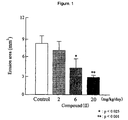
Their erosive areas of subject compound groups were compared to
one of a vehicle group by using statistical analysis of Williams multiple
comparison test. The result was shown in Figure 1.
The above experimental model, which has been generally
acknowledged as osteoarthritis model, can induce the cartilage destruction that
closely resembles to human osteoarthrosis. It was understood that the
compound represented by the formula (I) could be highly effective in this model.
Therefore, it was considered that the compounds represented by the formula (I)
could be effective in osteoarthrosis.
It was considered that the toxicities of the compounds represented by
the formula (I) could be very low and safe to use as a medicine. For example,
the lowest lethal dose in oral administration of compound (II) to rat once was
2000 mg/kg or more.
The compounds of the present invention, which are hydroxamic acid
derivatives represented by the formula (I) or the non-toxic salts with inhibitory
activities of matrix metalloproteinases, for example, gelatinase, stromelysin, or
collagenase, etc., are useful for the treatment and/or prevention of osteoarthritis
in animals including human, especially human.
The compounds represented by the formula (I) or the non-toxicity
salts,
Other concomitant drugs with the compounds represented by the
formula (I) and other medicines may be administered in the combined form that
mixes both elements in the formulation or in the form administered as separate
formulation. In the form administered as separate formulation, the different
and simultaneous administration are included. In the different administration,
the compounds represented by the formula (I) may be previously administered,
followed by other medicines, or other medicines may be previously
administered, followed by the compounds represented by the formula (I). Each
medication method may be different or same.
Illnesses that the prophylactic and/or therapeutic effects of the above
other concomitant drugs can be expected, which only has to be one that the
prophylactic and/or therapeutic effects of the compounds represented by the
formula (I) is/are supplemented and/or reinforced, are not limited especially.
As other medicines to supplement and/or reinforce the prophylactic
and/or therapeutic effects of the compounds represented by the formula (I) on
osteoarthrosis, for example, non-steroidal anti-inflammatory drug, steroid drug,
immunosuppressive drug, antiflammatory exogenous enzyme, cartilage
protective drug, T cell inhibitor, TNFα inhibitor, prostaglandin synthase inhibitor,
IL-6 inhibitor, interferon γ agonist, IL-1 inhibitor, prostaglandins, and
phosphodiesterase 4 inhibitor, etc. are enumerated.
As non-steroidal anti-inflammatory drugs, for example, sasapyrine,
sodiumsalicylate, aspirin, aspirin, dialuminates combination, diflunisal,
indomethacin, suprofen, ufenamate, dimethyl isopropyl azulene, bufexamac,
felbinac, diclofenac, tolmetin sodium, clinoril, fenbufen, puroglumetacine,
indomethacin famesyl, acemetacin, proglumetacin maleate, amfenac sodium,
mofezolac, etodolac, ibuprofen, ibuprofen piconol, naproxen, flurbiprofen,
flurbiprofen axetil, ketoprofen, fenoprofen calcium, tiaprofen, oxaprozin,
pranoprofen, loxoprofen sodium, aluminoprophen, zaltoprofen, mefenamic acid,
mefenamic acid aluminum, tolfenamic acid, floctafenine, ketophenylbutazone,
oxyphenbutazone, piroxicam, tenoxicam, ampiroxicam, napageln ointment,
epirizole, tiaramide hydrochloride, tinoridine hydrochloride, emorfazone
sulpyrine, migrenin, saridon, sedes-g, amipylo-n, mysis relicta, pillow, sorbon,
pyrine drug for common cold, acetaminophen, phenacetin, dimetotiazine
mesilate, simetride combination drug, and non-pyrine drug for common cold, etc.
are enumerated.
In steroid drugs, for example, as drugs for external use, clobetasol
propionate, diflorazone diacetate, fluocinonide, mometasone furate,
betamethasone dipropionate, betamethasone butyrate propionate,
betamethasone valerate, difluprednate, budesonid, diflucortolone valerate,
amcinonide, halcinonide, dexamethasone, dexamethasone propionate,
dexamethason valerate, dexamethasone acetate, hydrocortisone acetate,
butyric acid hydrocortisone, hydrocortisone butyrate propionate, deprodone
propionate, prednisolone valerate-acetate, fluocinolone acetonide,
beclometasone dipropionate, triamcinolone acetonide, flumetasone pivalate,
alclometasone propionate, clobetasone butyrate, prednisolone,
beclomethasone propionate, and fludroxycortide, etc. are enumerated.
As internal medicines and injections, cortisone acetate,
hydrocortisone, hydrocortisone sodium phosphate, hydrocortisone sodium
succinate, fludrocortisone acetate, Prednisolone, prednisolone acetate,
prednisolone sodium succinate, prednisolone butylacetate, prednisolone
sodium phosphate, halopredone acetate, methylprednisolone,
methylprednisolone acetate, sodium methylprednisolone succinate,
triamcinolone, triamcinolone diacetate, triamcinolone acetonide,
dexamethasone, dexamethasone acetate, dexamethasone sodium phosphate,
dexamethasone palmitate, paramethasone acetate, and betamethasone, etc.
are enumerated.
As inhalants, beclometasone dipropionate, fluticasone propionate,
budesonide, flunisolide, triamcinolone, ST-126P, ciclesonide, dexamethasone
palmitate, mometasone furoate, prasterone sulfonate, deflazacort,
methylprednisolone suleptanate, and methylprednisolone sodium succinate, etc.
are enumerated.
As cartilage protective drugs, for example, sodium hyaluronate,
glucosamine, chondroitin sulfuric acid, and polysulfate glycosaminoglycan, etc.
are enumerated.
Mass ratio of the compounds represented by the formula (I) to other
medicines is not especially limited.
Other medicines may be administered combining with two arbitrary
kinds or more.
And, in other medicines that supplement and/or reinforce
prophylactic and/or therapeutic effects of the compounds represented by the
formula (I), not only one that has been found by present based on the above
mechanism but also one that will be found in the future are contained.
To use the compounds represented by the formula (I) or other
concomitant drugs containing the compounds represented by the formula (I)
and other medicines by the above purpose, they are usually administered
systemically or locally, and orally or parenterally.
Applied doses are determined depending upon, for example, age,
body weight, symptom, the desired therapeutic effect, the route of
administration, and the duration of the treatment. Generally, a dose from 1 ng
to 100 mg per an adult is orally administrated from once to several times per
day, parenterally from 0.1 ng to 100 mg, or intravenously from 1 to 24 hours per
day, continuously.
As above mentioned, because the dose depends upon various
conditions, there are cases in which the dose is lower or higher than the above
dose.
When the compounds represented by the formula (I) or other
concomitant drugs containing them and other medicines are administered, they
are used as solid medicines and liquid medicines for internal use, and injections,
liquid medicines, external preparations, suppositoriums, eye drops, and
inhalants, etc. for parenteral administration.
Solid forms for oral administration may include compressed tablets,
pills, capsules, dispersible powders, and granules, etc. Capsules may include
hard capsules and soft capsules.
In such solid forms for oral administration, one or more of active
compound(s) may be admixed itself (themselves) or with vehicles (lactose,
mannitol, glucose, microcrystalline cellulose, starch, etc.), binders
(hydroxypropyl cellulose, polyvinylpyrrolidone or magnesium metasilicate
aluminate, etc.), disintegrants (cellulose calcium glycolate, etc.), lubricants
(magnesium stearate, etc.), stabilizers, and/or solubilizers (glutamic acid or
aspartic acid, etc.) and used manufacturing pharmaceutically according to well
known methods. If desired, they may be coated with coating agents (sugar,
gelatin, hydroxypropyl cellulose or hydroxypropylmethyl cellulose phthalate,
etc.) or coated with two or more films. Further, they may include capsules
comprising absorbable materials such as gelatin.
Liquid forms for oral administration may include pharmaceutically
acceptable solutions, suspensions, emulsions, syrups and elixirs, etc. In such
forms, one or more of active compound(s) may be dissolved, suspended or
emulized into diluent(s) (such as purified water, ethanol or a mixture thereof)
generally used. Besides this liquid forms may also comprise wetting agent,
suspending agent, emulsifying agent, sweetening agent, flavoring agent, aroma,
preservatives, or buffer, etc.
In external preparations for parenteral administration, for example,
ointment, gel, cream, fomentation, patch, liniment, aerosol, inhalant, spray,
aerosol, and nasal drop, etc. are contained. They contain one or any more
activators, and are prepared by a well-known method or usually used
prescription.
Ointments are manufactured by a well-known or usually used
prescription. For example, they are made by incorporating or melting one or
more activators to the base. Ointment bases are chosen from the well-known
or usually used one. They are used mixing a single or two kinds or more
chosen from, for example, higher fatty acid or higher fatty acid ester (adipic acid,
myristic acid, palmitic acid, stearic acid, oleic acid, adipic acid ester, myristic
acid ester, retinol palmitate, stearic acid ester, and oleic acid ester, etc.), wax
(wax, spermaceti, and ceresin, etc.), surfactant (polyoxyethylene alkyl ether
phosphate ester, etc.), higher alcohol (cetanol, stearyl alcohol, and cetostearyl
alcohol, etc.), silicone oil (dimethylpolysiloxane), hydrocarbon (hydrophilic
petrolatum, white petrolatum, purified lanolin, and liquid paraffin, etc.), glycol
(ethylene glycol, diethylene glycol, propylene glycol, polyethylene glycol, and
macrogol, etc.), vegetable oil (castor oil, olive oil, sesame oil, and turpentine oil,
etc.), animal oil (mink oil, yolk oil, squalane, and squalene, etc.), water,
absorption promoter, and rash inhibitor. In addition, they may contain
moisturizing agent, preservative, stabilizer, antioxidant, and flavor, etc.
Gels are manufactured by a well-known or usually used prescription.
For example, they are manufactured by melting one or more activators to base.
Gel bases are chosen from the well-known one or the one usually used one.
They are used mixing single or two kinds or more chosen from, for example,
lower alcohol (ethanol and isopropyl alcohol, etc.), gelatinizer
(carboxymethylcellulose, hydroxyethyl cellulose, hydroxypropylcellulose, and
ethyl cellulose, etc.), neutralizer (triethanolamine and diisopropanolamine, etc.),
surfactant (polyethyleneglycol monostearate, etc.), gums, water, absorption
promoter, and rash inhibitor. In addition, they may contain preservative,
antioxidant, and flavor, etc.
Creams are manufactured by a well-known or usually used
prescription. For example, they are manufactured by melting one or more
activators to base and emulsifying. Creams are chosen from the well-known or
usually used one. They are used mixing a single or two kinds or more chosen
from, for example, higher fatty acid ester, lower alcohol, hydrocarbons,
polyhydric alcohol (propylene glycol, 1, 3-butylene glycol, etc.), higher alcohol
(2-hexyldecanol and cetanol, etc.), emulsifier (polyoxyethylene alkyl ether and
fatty acid ester, etc.), water, absorption promoter, and rash inhibitor. In
addition, they may contain preservative, antioxidant, and flavor, etc.
Fomentations are manufactured by a well-known or usually used
prescription. For example, they are manufactured by melting one or more
activators to base, kneading and roll spreading on support medium. Compress
bases are chosen from the well-known or usually used one. They are used
mixing a single or two kinds or more chosen from, for example, thickener
(polyacrylic acid, polyvinylpyrrolidone, acacia, starch, gelatin, and
methylcellulose, etc.), humectants (urea, glycerin, and propylene glycol, etc.),
filler (china clay, zinc oxide, talc, calcium, and magnesium, etc.), water,
solubilizer, tackifier, and rash inhibitor. In addition, they may contain
preservative, antioxidant, and flavor, etc.
Patchs are manufactured by a well-known or usually used
prescription. For example, they are manufactured by melting one or more
activators to base, kneading and roll spreading on support medium. Bases for
patch are chosen from well-known or usually used one. For example, one or
two kinds or more chosen from high molecular group base, fats and oils, higher
fatty acid, tackifier, and rash inhibitor is/are used by mixing. In addition, they
may contain preservative, antioxidant, and flavor, etc.
Liniments are manufactured by a well-known or usually used
prescription. For example, one or more activators is/are manufactured by
being dissolved, suspended or emulsified to one or two kinds or more chosen
from water, alcohol (ethanol and polyethyleneglycol, etc.), higher fatty acid,
glycerin, soap, or emulsifier, etc. In addition, they may contain preservative,
antioxidant, and flavor, etc.
Aerosols, inhalants, and aerosols may include stabilizers such as
sodium hydrogen sulfite besides diluent usually used and isotonicity medicine
like buffer giving isotonicity, for example, sodium chloride, sodium citrate, or
citrate. The manufacturing method of aerosol has been described in detail, for
example, in U.S. patent No.2,868,691 and No.3,095,355.
Injections for parenteral administration may include solution,
suspension, emulsion, and solid injections which are used dissolving or
suspending in solvent for time of use. The injections are used dissolving,
suspending, and emulsifying one or more of active compound(s) to solvent. As
solvent, distilled water for injection, physiological salt solution, vegetable oil,
propylene glycol, polyethylene glycol, alcohols like ethanol, or their mixtures
may be used. Further, these injections may contain stabilizer, solubilizer
(glutamic acid, aspartic acid or POLYSORBATE80 (registered trade mark), etc.),
suspending agent, emulsifying agent, soothing agent, buffer, preservative, etc.
These may be sterilized at a final step or prepared by aseptic manipulation.
These may also be used by being manufactured as sterile solid forms, for
example, freeze-dried products and dissolved in aseptic or sterile water or other
sterile diluent(s) for injection immediately before using.
Inhalants for parenteral administration may include aerosol agent,
inhalant powder or inhalant liquid, which may be used by being dissolved or
suspended in water or other suitable media before using.
Inhalants are manufactured based on a well-known method.
For example, inhalant liquids are prepared properly selecting, if
necessary, preservative (benzalkonium chloride and paraben, etc.), coloring
agent, buffer (sodium phosphate and sodium acetate, etc.), tonicity agent
(sodium chloride and concentrated glycerin, etc.), thickener (carboxyvinyl
polymer, etc.), and absorption enhancers, etc.
Inhalant powders are preparated properly selecting, if necessary,
lubricant (stearic acid and the salt, etc.), binder (starch and dextrin, etc.), filler
(lactose and cellulose, etc.), coloring agent, preservative (benzalkonium
chloride and paraben, etc.), and absorption enhancer, etc.
When inhalant liquids are administered, sprayer (atomizer and
nebulizer) is usually used, and when inhalant powders are administered, an
inhalation administering machine for powder is usually used.
Pessaries, etc for a suppository and intravaginal administration to
intrarectally administrate with common procedure, which contains one or more
activators are included as other compositions for parenteral administration.
The following components were admixed in conventional method and
punched out to obtain 100 tablets each containing 50 mg of active ingredient in
a tablet.
- N-hydroxy-5-hydroxy-2(S)-methyl-4(S)-(4-phenoxybenzoyl)aminopentanamide 5.0 g
- Carboxymethylcellulose calcium (disintegrator) 0.2 g
- Magnesium stearate (lubricant) 0.1 g
- Crystallite cellulose 4.7 g
After the following components were admixed in conventional
method, the solution was sterilized in conventional manner, placed 5 ml portions
into ampoules and freeze-dried to obtain 100 ampoules each containing 20 mg
of the active ingredient.
- N-hydroxy-5-hydroxy-2(S)-methyl-4(S)-(4-phenoxybenzoyl)aminopentanamide 2.0 g
- mannitol 20 g
- distilled water 500 ml
Claims (4)
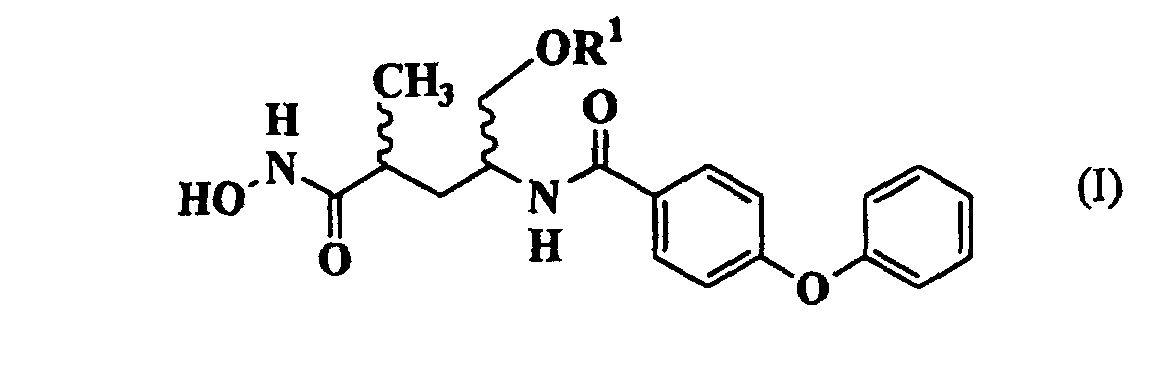
- A therapeutic and/or prophylactic drug for osteoarthritis, comprising a derivative compound of hydroxamic acid, which is represented by the formula (I),wherein R1 represents a halogen atom, C1-8 alkyl, or C1-8 alkyl substituted with -OR2, in which R2 represents a halogen atom, C1-8 alkyl, benzyl, or C1-8 alkyl substituted with C1-8 alkoxy(s), except for N-hydroxy-5-ethoxymethyloxy-2(S)-methyl-4(S)-(4-phenoxylbenzoyl)pentanamide, or a non-toxic salt thereof.
- The therapeutic and/or prophylactic drug for osteoarthritis, comprising the derivative compound of hydroxamic acid or the non-toxic salt of claim 1, wherein R1 is a halogen atom, C 1-4 alkyl, or C1-4 alkyl substituted with a single -OR2, in which R2 is a halogen atom, C1-4 alkyl, benzyl, or C1-4 alkyl substituted with C1-4 alkoxy(s).
- The therapeutic and/or prophylactic drug for osteoarthritis, comprising the derivative compound of hydroxamic acid or the non-toxic salt of claim 2, wherein R1 is a hydrogen atom, methyl, ethyl, methoxymethyl, ethoxymethyl, ethoxyethyl, benzyloxymethyl, methoxymethoxymethyl, or methoxyethoxymethyl.
- The therapeutic and/or prophylactic drug for osteoarthritis, comprising the compound of claim 1, wherein the compound is(1) N-hydroxy-5-hydroxy-2(S)-methyl-4(S)-(4-phenoxybenzoyl)aminopentanamide,(2) N-hydroxy-5-methoxymethyloxy-2(S)-methyl-4(S)-(4-phenoxybenzoyl)aminopentanamide,(3) N-hydroxy-5-ethoxymethyloxy-2(R)-methyl-4(R)-(4-phenoxybenzoyl)aminopentanamide,(4) N-hydroxy-5-ethoxymethyloxy-2(R)-methyl-4(S)-(4-phenoxybenzoyl)aminopentanamide,(5) N-hydroxy-5-benzyloxymethyloxy-2(S)-methyl-4(S)-(4-phenoxybenzoyl)aminopentanamide,(6) N-hydroxy-5-(2-methoxyethoxy)methyloxy-2(S)-methyl-4(S)-(4-phenoxybenzoyl)aminopentanamide, or a non-toxicity salt thereof.
Applications Claiming Priority (3)
| Application Number | Priority Date | Filing Date | Title |
|---|---|---|---|
| JP2001237345 | 2001-08-06 | ||
| JP2001237345 | 2001-08-06 | ||
| PCT/JP2002/007961 WO2003013494A1 (en) | 2001-08-06 | 2002-08-05 | Remedial agent for arthrosis deformans |
Publications (2)
| Publication Number | Publication Date |
|---|---|
| EP1421934A1 true EP1421934A1 (en) | 2004-05-26 |
| EP1421934A4 EP1421934A4 (en) | 2006-03-29 |
Family
ID=19068440
Family Applications (1)
| Application Number | Title | Priority Date | Filing Date |
|---|---|---|---|
| EP02755820A Withdrawn EP1421934A4 (en) | 2001-08-06 | 2002-08-05 | Remedial agent for arthrosis deformans |
Country Status (6)
| Country | Link |
|---|---|
| US (1) | US20040198831A1 (en) |
| EP (1) | EP1421934A4 (en) |
| JP (1) | JPWO2003013494A1 (en) |
| KR (1) | KR20040019106A (en) |
| CA (1) | CA2456965A1 (en) |
| WO (1) | WO2003013494A1 (en) |
Family Cites Families (5)
| Publication number | Priority date | Publication date | Assignee | Title |
|---|---|---|---|---|
| US6420427B1 (en) * | 1997-10-09 | 2002-07-16 | Ono Pharmaceutical Co., Ltd. | Aminobutyric acid derivatives |
| JPH11199512A (en) * | 1997-10-24 | 1999-07-27 | Pfizer Prod Inc | Use of mmp-13 selective inhibitor for the treatment of arthrosis deformans and other mmp-mediated disease |
| KR20010042412A (en) * | 1998-04-03 | 2001-05-25 | 가와무라 요시부미 | Sulfonamide derivatives |
| EP1167346A4 (en) * | 1999-04-06 | 2003-07-23 | Ono Pharmaceutical Co | 4-aminobutanoic acid derivatives and drugs containing these derivatives as the active ingredient |
| HUP0300379A3 (en) * | 2000-02-10 | 2004-08-30 | Ono Pharmaceutical Co | Composition for degenerative arthritis |
-
2002
- 2002-08-05 JP JP2003518504A patent/JPWO2003013494A1/en not_active Withdrawn
- 2002-08-05 WO PCT/JP2002/007961 patent/WO2003013494A1/en not_active Ceased
- 2002-08-05 CA CA002456965A patent/CA2456965A1/en not_active Abandoned
- 2002-08-05 EP EP02755820A patent/EP1421934A4/en not_active Withdrawn
- 2002-08-05 US US10/485,862 patent/US20040198831A1/en not_active Abandoned
- 2002-08-05 KR KR10-2004-7001682A patent/KR20040019106A/en not_active Withdrawn
Also Published As
| Publication number | Publication date |
|---|---|
| KR20040019106A (en) | 2004-03-04 |
| CA2456965A1 (en) | 2003-02-20 |
| EP1421934A4 (en) | 2006-03-29 |
| JPWO2003013494A1 (en) | 2004-11-25 |
| US20040198831A1 (en) | 2004-10-07 |
| WO2003013494A1 (en) | 2003-02-20 |
Similar Documents
| Publication | Publication Date | Title |
|---|---|---|
| JP4804004B2 (en) | Articular cartilage extracellular matrix degradation inhibitor | |
| US20040152745A1 (en) | Dipeptidyl peptidase IV inhibitors and methods of making and using dipeptidyl peptidase IV inhibitors | |
| JPS6339855A (en) | Hypertension treatment agent from neutral metalloendopeptidase inhibitor | |
| KR20150132306A (en) | Methods for treating inflammation, autoimmune disorders and pain | |
| JPH06122663A (en) | Drugs that prevent excessive collagen destruction | |
| JP2000515526A (en) | Method of lowering serum lipid levels using a combination of MTP inhibitors and other cholesterol lowering drugs | |
| US4201788A (en) | Process for alleviating proliferative skin diseases | |
| JPH085780B2 (en) | Osteoarthritis treatment | |
| JPH10502656A (en) | Use of inhibitors of human S-CD23 | |
| US20040198831A1 (en) | Remedial agent for arthrosis deformans | |
| US20060058310A1 (en) | Remedies for vertebral canal stenosis | |
| EP1609480A1 (en) | Remedy for spinal canal stenosis | |
| BRPI0807942A2 (en) | THERAPEUTIC AGENT FOR URINARY EXCRETION DISORDER | |
| CA2453478A1 (en) | Agent for treatment of cerebral ischemic diseases | |
| US20040235955A1 (en) | Remedies for pruritus | |
| US20030114530A1 (en) | Remedies for degenerative arthritis | |
| EP1419767A1 (en) | Remedial agent for cardiac failure | |
| JP2006021998A (en) | Treatment for dysmenorrhea containing EP2 agonist as an active ingredient | |
| JPWO2001076587A1 (en) | Drugs for treating diseases based on stenotic vascular lesions | |
| Caputo et al. | Osteoarthritis as a target for drug intervention | |
| MXPA01000561A (en) | Therapeutic agents for allergic diseases | |
| US20050101633A1 (en) | Remedial agent for myelopathic disease | |
| WO2020262317A1 (en) | Drug for treating and preventing dementia | |
| JPWO2005058879A1 (en) | Preventive and / or therapeutic agent for exudative otitis media | |
| EP1510209A1 (en) | Therapeutic agent for inflammatory intestinal diseases containing hydroxamic acid compound as active ingredient |
Legal Events
| Date | Code | Title | Description |
|---|---|---|---|
| PUAI | Public reference made under article 153(3) epc to a published international application that has entered the european phase |
Free format text: ORIGINAL CODE: 0009012 |
|
| 17P | Request for examination filed |
Effective date: 20040205 |
|
| AK | Designated contracting states |
Kind code of ref document: A1 Designated state(s): AT BE BG CH CY CZ DE DK EE ES FI FR GB GR IE IT LI LU MC NL PT SE SK TR |
|
| AX | Request for extension of the european patent |
Extension state: AL LT LV MK RO SI |
|
| A4 | Supplementary search report drawn up and despatched |
Effective date: 20060215 |
|
| STAA | Information on the status of an ep patent application or granted ep patent |
Free format text: STATUS: THE APPLICATION HAS BEEN WITHDRAWN |
|
| 18W | Application withdrawn |
Effective date: 20060508 |