EP1420249A1 - Methode de detection et d'analyse de composes mimetiques du paclitaxel - Google Patents
Methode de detection et d'analyse de composes mimetiques du paclitaxel Download PDFInfo
- Publication number
- EP1420249A1 EP1420249A1 EP02735435A EP02735435A EP1420249A1 EP 1420249 A1 EP1420249 A1 EP 1420249A1 EP 02735435 A EP02735435 A EP 02735435A EP 02735435 A EP02735435 A EP 02735435A EP 1420249 A1 EP1420249 A1 EP 1420249A1
- Authority
- EP
- European Patent Office
- Prior art keywords
- paclitaxel
- microtubules
- probe
- flutax
- accordance
- Prior art date
- Legal status (The legal status is an assumption and is not a legal conclusion. Google has not performed a legal analysis and makes no representation as to the accuracy of the status listed.)
- Granted
Links
- 238000000034 method Methods 0.000 title claims description 34
- 150000001875 compounds Chemical class 0.000 title claims description 14
- 229960001592 paclitaxel Drugs 0.000 claims abstract description 102
- RCINICONZNJXQF-MZXODVADSA-N taxol Chemical compound O([C@@H]1[C@@]2(C[C@@H](C(C)=C(C2(C)C)[C@H](C([C@]2(C)[C@@H](O)C[C@H]3OC[C@]3([C@H]21)OC(C)=O)=O)OC(=O)C)OC(=O)[C@H](O)[C@@H](NC(=O)C=1C=CC=CC=1)C=1C=CC=CC=1)O)C(=O)C1=CC=CC=C1 RCINICONZNJXQF-MZXODVADSA-N 0.000 claims abstract description 101
- 229930012538 Paclitaxel Natural products 0.000 claims abstract description 95
- 102000029749 Microtubule Human genes 0.000 claims abstract description 91
- 108091022875 Microtubule Proteins 0.000 claims abstract description 91
- 210000004688 microtubule Anatomy 0.000 claims abstract description 91
- 230000027455 binding Effects 0.000 claims abstract description 75
- 238000012360 testing method Methods 0.000 claims abstract description 27
- 239000000126 substance Substances 0.000 claims abstract description 13
- 230000000259 anti-tumor effect Effects 0.000 claims abstract description 9
- 230000001413 cellular effect Effects 0.000 claims abstract description 4
- 239000003446 ligand Substances 0.000 claims description 27
- 239000000523 sample Substances 0.000 claims description 25
- 238000005259 measurement Methods 0.000 claims description 18
- 238000001514 detection method Methods 0.000 claims description 14
- 238000006073 displacement reaction Methods 0.000 claims description 12
- 238000002165 resonance energy transfer Methods 0.000 claims description 10
- 238000011156 evaluation Methods 0.000 claims description 6
- 230000003993 interaction Effects 0.000 claims description 5
- 229940123237 Taxane Drugs 0.000 claims description 4
- 230000003592 biomimetic effect Effects 0.000 claims description 4
- 238000002360 preparation method Methods 0.000 claims description 4
- 238000010382 chemical cross-linking Methods 0.000 claims description 3
- 238000011161 development Methods 0.000 claims description 3
- 238000000502 dialysis Methods 0.000 claims description 3
- 238000000338 in vitro Methods 0.000 claims description 3
- 230000000771 oncological effect Effects 0.000 claims description 3
- 238000011160 research Methods 0.000 claims description 3
- 238000005138 cryopreservation Methods 0.000 claims description 2
- 239000007850 fluorescent dye Substances 0.000 claims description 2
- 239000002243 precursor Substances 0.000 claims description 2
- 239000013543 active substance Substances 0.000 claims 2
- 238000000605 extraction Methods 0.000 claims 1
- 238000004519 manufacturing process Methods 0.000 claims 1
- 230000000694 effects Effects 0.000 abstract description 7
- 239000003795 chemical substances by application Substances 0.000 abstract description 5
- RCINICONZNJXQF-XAZOAEDWSA-N taxol® Chemical compound O([C@@H]1[C@@]2(CC(C(C)=C(C2(C)C)[C@H](C([C@]2(C)[C@@H](O)C[C@H]3OC[C@]3(C21)OC(C)=O)=O)OC(=O)C)OC(=O)[C@H](O)[C@@H](NC(=O)C=1C=CC=CC=1)C=1C=CC=CC=1)O)C(=O)C1=CC=CC=C1 RCINICONZNJXQF-XAZOAEDWSA-N 0.000 abstract description 2
- 230000001093 anti-cancer Effects 0.000 abstract 1
- 239000000824 cytostatic agent Substances 0.000 abstract 1
- 230000001085 cytostatic effect Effects 0.000 abstract 1
- 230000003278 mimic effect Effects 0.000 abstract 1
- UTOYCOKRJWZPNT-SQNCZLKBSA-N flutax 2 Chemical compound O([C@H]1[C@@H]2[C@]3(OC(C)=O)CO[C@@H]3C[C@@H]([C@]2(C(=O)[C@H](OC(C)=O)C2=C(C)[C@@H](OC(=O)[C@H](O)[C@@H](NC(=O)C=3C=CC=CC=3)C=3C=CC=CC=3)C[C@]1(O)C2(C)C)C)OC(=O)[C@@H](NC(=O)C=1C=C(C(=CC=1)C1=C2C=C(F)C(=O)C=C2OC2=CC(O)=C(F)C=C21)C(O)=O)C)C(=O)C1=CC=CC=C1 UTOYCOKRJWZPNT-SQNCZLKBSA-N 0.000 description 56
- 102000004243 Tubulin Human genes 0.000 description 19
- 108090000704 Tubulin Proteins 0.000 description 19
- IAZDPXIOMUYVGZ-UHFFFAOYSA-N Dimethylsulphoxide Chemical compound CS(C)=O IAZDPXIOMUYVGZ-UHFFFAOYSA-N 0.000 description 16
- 239000000243 solution Substances 0.000 description 13
- OVMSOCFBDVBLFW-VHLOTGQHSA-N 5beta,20-epoxy-1,7beta,13alpha-trihydroxy-9-oxotax-11-ene-2alpha,4alpha,10beta-triyl 4,10-diacetate 2-benzoate Chemical compound O([C@@H]1[C@@]2(C[C@H](O)C(C)=C(C2(C)C)[C@H](C([C@]2(C)[C@@H](O)C[C@H]3OC[C@]3([C@H]21)OC(C)=O)=O)OC(=O)C)O)C(=O)C1=CC=CC=C1 OVMSOCFBDVBLFW-VHLOTGQHSA-N 0.000 description 12
- PEDCQBHIVMGVHV-UHFFFAOYSA-N Glycerine Chemical compound OCC(O)CO PEDCQBHIVMGVHV-UHFFFAOYSA-N 0.000 description 12
- 238000000198 fluorescence anisotropy Methods 0.000 description 11
- OKKJLVBELUTLKV-UHFFFAOYSA-N Methanol Chemical compound OC OKKJLVBELUTLKV-UHFFFAOYSA-N 0.000 description 9
- IJGRMHOSHXDMSA-UHFFFAOYSA-N Atomic nitrogen Chemical compound N#N IJGRMHOSHXDMSA-UHFFFAOYSA-N 0.000 description 8
- 230000005284 excitation Effects 0.000 description 8
- ZDZOTLJHXYCWBA-VCVYQWHSSA-N N-debenzoyl-N-(tert-butoxycarbonyl)-10-deacetyltaxol Chemical compound O([C@H]1[C@H]2[C@@](C([C@H](O)C3=C(C)[C@@H](OC(=O)[C@H](O)[C@@H](NC(=O)OC(C)(C)C)C=4C=CC=CC=4)C[C@]1(O)C3(C)C)=O)(C)[C@@H](O)C[C@H]1OC[C@]12OC(=O)C)C(=O)C1=CC=CC=C1 ZDZOTLJHXYCWBA-VCVYQWHSSA-N 0.000 description 6
- 229960003668 docetaxel Drugs 0.000 description 6
- 239000007788 liquid Substances 0.000 description 6
- 230000008859 change Effects 0.000 description 5
- 150000004702 methyl esters Chemical class 0.000 description 5
- AADVCYNFEREWOS-UHFFFAOYSA-N (+)-DDM Natural products C=CC=CC(C)C(OC(N)=O)C(C)C(O)C(C)CC(C)=CC(C)C(O)C(C)C=CC(O)CC1OC(=O)C(C)C(O)C1C AADVCYNFEREWOS-UHFFFAOYSA-N 0.000 description 4
- AADVCYNFEREWOS-OBRABYBLSA-N Discodermolide Chemical compound C=C\C=C/[C@H](C)[C@H](OC(N)=O)[C@@H](C)[C@H](O)[C@@H](C)C\C(C)=C/[C@H](C)[C@@H](O)[C@@H](C)\C=C/[C@@H](O)C[C@@H]1OC(=O)[C@H](C)[C@@H](O)[C@H]1C AADVCYNFEREWOS-OBRABYBLSA-N 0.000 description 4
- TWRXJAOTZQYOKJ-UHFFFAOYSA-L Magnesium chloride Chemical compound [Mg+2].[Cl-].[Cl-] TWRXJAOTZQYOKJ-UHFFFAOYSA-L 0.000 description 4
- 239000000539 dimer Substances 0.000 description 4
- GNBHRKFJIUUOQI-UHFFFAOYSA-N fluorescein Chemical compound O1C(=O)C2=CC=CC=C2C21C1=CC=C(O)C=C1OC1=CC(O)=CC=C21 GNBHRKFJIUUOQI-UHFFFAOYSA-N 0.000 description 4
- JMWJJMCMRRQCSY-ADONSEPTSA-N flutax-1 Chemical compound O([C@H]1[C@@H]2[C@]3(OC(C)=O)CO[C@@H]3C[C@H]([C@]2(C(=O)[C@H](OC(C)=O)C2=C(C)[C@@H](OC(=O)[C@H](O)[C@@H](NC(=O)C=3C=CC=CC=3)C=3C=CC=CC=3)C[C@]1(O)C2(C)C)C)OC(=O)[C@@H](NC(=O)C=1C=C(C(=CC=1)C1=C2C=CC(=O)C=C2OC2=CC(O)=CC=C21)C(O)=O)C)C(=O)C1=CC=CC=C1 JMWJJMCMRRQCSY-ADONSEPTSA-N 0.000 description 4
- 229910052757 nitrogen Inorganic materials 0.000 description 4
- 230000035945 sensitivity Effects 0.000 description 4
- YXIWHUQXZSMYRE-UHFFFAOYSA-N 1,3-benzothiazole-2-thiol Chemical compound C1=CC=C2SC(S)=NC2=C1 YXIWHUQXZSMYRE-UHFFFAOYSA-N 0.000 description 3
- WEVYAHXRMPXWCK-UHFFFAOYSA-N Acetonitrile Chemical compound CC#N WEVYAHXRMPXWCK-UHFFFAOYSA-N 0.000 description 3
- 108091003079 Bovine Serum Albumin Proteins 0.000 description 3
- LYCAIKOWRPUZTN-UHFFFAOYSA-N Ethylene glycol Chemical compound OCCO LYCAIKOWRPUZTN-UHFFFAOYSA-N 0.000 description 3
- 208000036815 beta tubulin Diseases 0.000 description 3
- 230000008033 biological extinction Effects 0.000 description 3
- 229940098773 bovine serum albumin Drugs 0.000 description 3
- 238000005119 centrifugation Methods 0.000 description 3
- 238000010790 dilution Methods 0.000 description 3
- 239000012895 dilution Substances 0.000 description 3
- -1 diterpenoid compound Chemical class 0.000 description 3
- 238000004062 sedimentation Methods 0.000 description 3
- 238000001228 spectrum Methods 0.000 description 3
- 238000010200 validation analysis Methods 0.000 description 3
- PXIPVTKHYLBLMZ-UHFFFAOYSA-N Sodium azide Chemical compound [Na+].[N-]=[N+]=[N-] PXIPVTKHYLBLMZ-UHFFFAOYSA-N 0.000 description 2
- DTQVDTLACAAQTR-UHFFFAOYSA-N Trifluoroacetic acid Chemical compound OC(=O)C(F)(F)F DTQVDTLACAAQTR-UHFFFAOYSA-N 0.000 description 2
- 239000002253 acid Substances 0.000 description 2
- 238000004458 analytical method Methods 0.000 description 2
- 230000002860 competitive effect Effects 0.000 description 2
- 231100000433 cytotoxic Toxicity 0.000 description 2
- 230000001472 cytotoxic effect Effects 0.000 description 2
- 238000002474 experimental method Methods 0.000 description 2
- IKIBJHWXDSKRKV-UHFFFAOYSA-N fijianolide B Natural products CC1CC(=C)CC(O)C2OC2CC(OC(=O)C=C/CC3OC(C)(CC=C3)C1)C(O)C=CC4CC(=CCO4)C IKIBJHWXDSKRKV-UHFFFAOYSA-N 0.000 description 2
- 238000002875 fluorescence polarization Methods 0.000 description 2
- 230000014509 gene expression Effects 0.000 description 2
- MSBQEQDLFWWWMV-XZZGLLCESA-N laulimalide Chemical compound C(/[C@H](O)[C@H]1OC(=O)\C=C/C[C@@H]2C=CC[C@H](O2)C[C@H](CC(=C)C[C@H](O)[C@@H]2O[C@H]2C1)C)=C\[C@@H]1CC(C)=CCO1 MSBQEQDLFWWWMV-XZZGLLCESA-N 0.000 description 2
- 229910001629 magnesium chloride Inorganic materials 0.000 description 2
- 239000004417 polycarbonate Substances 0.000 description 2
- 229920000515 polycarbonate Polymers 0.000 description 2
- 235000018102 proteins Nutrition 0.000 description 2
- 102000004169 proteins and genes Human genes 0.000 description 2
- 108090000623 proteins and genes Proteins 0.000 description 2
- 230000002285 radioactive effect Effects 0.000 description 2
- PYWVYCXTNDRMGF-UHFFFAOYSA-N rhodamine B Chemical compound [Cl-].C=12C=CC(=[N+](CC)CC)C=C2OC2=CC(N(CC)CC)=CC=C2C=1C1=CC=CC=C1C(O)=O PYWVYCXTNDRMGF-UHFFFAOYSA-N 0.000 description 2
- 239000001488 sodium phosphate Substances 0.000 description 2
- 229910000162 sodium phosphate Inorganic materials 0.000 description 2
- 241000894007 species Species 0.000 description 2
- 230000009870 specific binding Effects 0.000 description 2
- 238000012546 transfer Methods 0.000 description 2
- RYFMWSXOAZQYPI-UHFFFAOYSA-K trisodium phosphate Chemical compound [Na+].[Na+].[Na+].[O-]P([O-])([O-])=O RYFMWSXOAZQYPI-UHFFFAOYSA-K 0.000 description 2
- LOBCDGHHHHGHFA-LBPRGKRZSA-N (S)-monastrol Chemical compound CCOC(=O)C1=C(C)NC(=S)N[C@H]1C1=CC=CC(O)=C1 LOBCDGHHHHGHFA-LBPRGKRZSA-N 0.000 description 1
- GXVUZYLYWKWJIM-UHFFFAOYSA-N 2-(2-aminoethoxy)ethanamine Chemical compound NCCOCCN GXVUZYLYWKWJIM-UHFFFAOYSA-N 0.000 description 1
- FWBHETKCLVMNFS-UHFFFAOYSA-N 4',6-Diamino-2-phenylindol Chemical compound C1=CC(C(=N)N)=CC=C1C1=CC2=CC=C(C(N)=N)C=C2N1 FWBHETKCLVMNFS-UHFFFAOYSA-N 0.000 description 1
- 108020004414 DNA Proteins 0.000 description 1
- 241000196324 Embryophyta Species 0.000 description 1
- 241000233866 Fungi Species 0.000 description 1
- SXRSQZLOMIGNAQ-UHFFFAOYSA-N Glutaraldehyde Chemical compound O=CCCCC=O SXRSQZLOMIGNAQ-UHFFFAOYSA-N 0.000 description 1
- QNAYBMKLOCPYGJ-REOHCLBHSA-N L-alanine Chemical compound C[C@H](N)C(O)=O QNAYBMKLOCPYGJ-REOHCLBHSA-N 0.000 description 1
- 206010028980 Neoplasm Diseases 0.000 description 1
- 108091028043 Nucleic acid sequence Proteins 0.000 description 1
- 241001523629 Pestalotiopsis Species 0.000 description 1
- 239000004793 Polystyrene Substances 0.000 description 1
- 229920005654 Sephadex Polymers 0.000 description 1
- 239000012507 Sephadex™ Substances 0.000 description 1
- DBMJMQXJHONAFJ-UHFFFAOYSA-M Sodium laurylsulphate Chemical compound [Na+].CCCCCCCCCCCCOS([O-])(=O)=O DBMJMQXJHONAFJ-UHFFFAOYSA-M 0.000 description 1
- 241001116498 Taxus baccata Species 0.000 description 1
- 241000202349 Taxus brevifolia Species 0.000 description 1
- 238000010521 absorption reaction Methods 0.000 description 1
- 230000004913 activation Effects 0.000 description 1
- 235000004279 alanine Nutrition 0.000 description 1
- 230000004071 biological effect Effects 0.000 description 1
- 230000033228 biological regulation Effects 0.000 description 1
- 230000015572 biosynthetic process Effects 0.000 description 1
- 201000011510 cancer Diseases 0.000 description 1
- 150000001768 cations Chemical group 0.000 description 1
- 210000004027 cell Anatomy 0.000 description 1
- 210000003793 centrosome Anatomy 0.000 description 1
- 238000007385 chemical modification Methods 0.000 description 1
- 238000006243 chemical reaction Methods 0.000 description 1
- 238000002512 chemotherapy Methods 0.000 description 1
- 239000012829 chemotherapy agent Substances 0.000 description 1
- 230000000295 complement effect Effects 0.000 description 1
- 238000004590 computer program Methods 0.000 description 1
- 230000007423 decrease Effects 0.000 description 1
- 230000003247 decreasing effect Effects 0.000 description 1
- 230000001419 dependent effect Effects 0.000 description 1
- 238000007865 diluting Methods 0.000 description 1
- 238000010494 dissociation reaction Methods 0.000 description 1
- 230000005593 dissociations Effects 0.000 description 1
- 229940079593 drug Drugs 0.000 description 1
- 239000003814 drug Substances 0.000 description 1
- 238000000295 emission spectrum Methods 0.000 description 1
- 229940093476 ethylene glycol Drugs 0.000 description 1
- 239000000284 extract Substances 0.000 description 1
- 238000002795 fluorescence method Methods 0.000 description 1
- 238000002189 fluorescence spectrum Methods 0.000 description 1
- 230000005484 gravity Effects 0.000 description 1
- 238000004128 high performance liquid chromatography Methods 0.000 description 1
- 230000007062 hydrolysis Effects 0.000 description 1
- 238000006460 hydrolysis reaction Methods 0.000 description 1
- 239000012535 impurity Substances 0.000 description 1
- 239000003112 inhibitor Substances 0.000 description 1
- 238000011835 investigation Methods 0.000 description 1
- 238000004020 luminiscence type Methods 0.000 description 1
- 230000000394 mitotic effect Effects 0.000 description 1
- ZDZOTLJHXYCWBA-BSEPLHNVSA-N molport-006-823-826 Chemical compound O([C@H]1[C@H]2[C@@](C([C@H](O)C3=C(C)[C@@H](OC(=O)[C@H](O)[C@@H](NC(=O)OC(C)(C)C)C=4C=CC=CC=4)C[C@@]1(O)C3(C)C)=O)(C)[C@@H](O)C[C@H]1OC[C@]12OC(=O)C)C(=O)C1=CC=CC=C1 ZDZOTLJHXYCWBA-BSEPLHNVSA-N 0.000 description 1
- 239000000178 monomer Substances 0.000 description 1
- 239000005445 natural material Substances 0.000 description 1
- 230000021616 negative regulation of cell division Effects 0.000 description 1
- 230000007935 neutral effect Effects 0.000 description 1
- 239000002773 nucleotide Substances 0.000 description 1
- 125000003729 nucleotide group Chemical group 0.000 description 1
- 229940127084 other anti-cancer agent Drugs 0.000 description 1
- 229920002223 polystyrene Polymers 0.000 description 1
- 230000003334 potential effect Effects 0.000 description 1
- 230000008569 process Effects 0.000 description 1
- 108090000765 processed proteins & peptides Proteins 0.000 description 1
- 239000000047 product Substances 0.000 description 1
- 239000000700 radioactive tracer Substances 0.000 description 1
- 238000011084 recovery Methods 0.000 description 1
- 238000012216 screening Methods 0.000 description 1
- 239000013049 sediment Substances 0.000 description 1
- 238000000926 separation method Methods 0.000 description 1
- 238000004088 simulation Methods 0.000 description 1
- 239000012279 sodium borohydride Substances 0.000 description 1
- 229910000033 sodium borohydride Inorganic materials 0.000 description 1
- 235000019333 sodium laurylsulphate Nutrition 0.000 description 1
- 239000007787 solid Substances 0.000 description 1
- 238000001179 sorption measurement Methods 0.000 description 1
- 238000002798 spectrophotometry method Methods 0.000 description 1
- 230000006641 stabilisation Effects 0.000 description 1
- 230000003019 stabilising effect Effects 0.000 description 1
- 239000012134 supernatant fraction Substances 0.000 description 1
- 230000001629 suppression Effects 0.000 description 1
- DKPFODGZWDEEBT-QFIAKTPHSA-N taxane Chemical class C([C@]1(C)CCC[C@@H](C)[C@H]1C1)C[C@H]2[C@H](C)CC[C@@H]1C2(C)C DKPFODGZWDEEBT-QFIAKTPHSA-N 0.000 description 1
- 230000007704 transition Effects 0.000 description 1
- 210000004881 tumor cell Anatomy 0.000 description 1
Images

Classifications
-
- G—PHYSICS
- G01—MEASURING; TESTING
- G01N—INVESTIGATING OR ANALYSING MATERIALS BY DETERMINING THEIR CHEMICAL OR PHYSICAL PROPERTIES
- G01N33/00—Investigating or analysing materials by specific methods not covered by groups G01N1/00 - G01N31/00
- G01N33/48—Biological material, e.g. blood, urine; Haemocytometers
- G01N33/50—Chemical analysis of biological material, e.g. blood, urine; Testing involving biospecific ligand binding methods; Immunological testing
- G01N33/58—Chemical analysis of biological material, e.g. blood, urine; Testing involving biospecific ligand binding methods; Immunological testing involving labelled substances
- G01N33/582—Chemical analysis of biological material, e.g. blood, urine; Testing involving biospecific ligand binding methods; Immunological testing involving labelled substances with fluorescent label
-
- G—PHYSICS
- G01—MEASURING; TESTING
- G01N—INVESTIGATING OR ANALYSING MATERIALS BY DETERMINING THEIR CHEMICAL OR PHYSICAL PROPERTIES
- G01N33/00—Investigating or analysing materials by specific methods not covered by groups G01N1/00 - G01N31/00
- G01N33/48—Biological material, e.g. blood, urine; Haemocytometers
- G01N33/50—Chemical analysis of biological material, e.g. blood, urine; Testing involving biospecific ligand binding methods; Immunological testing
- G01N33/53—Immunoassay; Biospecific binding assay; Materials therefor
- G01N33/566—Immunoassay; Biospecific binding assay; Materials therefor using specific carrier or receptor proteins as ligand binding reagents where possible specific carrier or receptor proteins are classified with their target compounds
-
- G—PHYSICS
- G01—MEASURING; TESTING
- G01N—INVESTIGATING OR ANALYSING MATERIALS BY DETERMINING THEIR CHEMICAL OR PHYSICAL PROPERTIES
- G01N33/00—Investigating or analysing materials by specific methods not covered by groups G01N1/00 - G01N31/00
- G01N33/48—Biological material, e.g. blood, urine; Haemocytometers
- G01N33/50—Chemical analysis of biological material, e.g. blood, urine; Testing involving biospecific ligand binding methods; Immunological testing
- G01N33/68—Chemical analysis of biological material, e.g. blood, urine; Testing involving biospecific ligand binding methods; Immunological testing involving proteins, peptides or amino acids
-
- G—PHYSICS
- G01—MEASURING; TESTING
- G01N—INVESTIGATING OR ANALYSING MATERIALS BY DETERMINING THEIR CHEMICAL OR PHYSICAL PROPERTIES
- G01N2500/00—Screening for compounds of potential therapeutic value
-
- G—PHYSICS
- G01—MEASURING; TESTING
- G01N—INVESTIGATING OR ANALYSING MATERIALS BY DETERMINING THEIR CHEMICAL OR PHYSICAL PROPERTIES
- G01N2500/00—Screening for compounds of potential therapeutic value
- G01N2500/02—Screening involving studying the effect of compounds C on the interaction between interacting molecules A and B (e.g. A = enzyme and B = substrate for A, or A = receptor and B = ligand for the receptor)
Definitions
- Antitumour agents High-efficiency homogeneous test for the detection of substances that can substitute paclitaxel in its binding site in microtubules and therefore with potential activity as antitumour agents.
- Paclitaxel (Taxol ®), a compound much used in chemotherapy of cancer, displays side effects just as other anticancer agents do. This diterpenoid compound was originally extracted from the bark of a plant, Taxus brevifolia , a slow-growing species which entailed a problem of the lack of a cheap and available source of paclitaxel.
- the paclitaxel currently used is a semisynthetic product starting from a precursor extracted from the leaves of yew trees. Moreover, paclitaxel displays problems of extreme insolubility. So, although paclitaxel is a chemotherapy agent with considerable biological activity, the discovery of new sources of paclitaxel or of mimetic compounds of paclitaxel has a decisive utility.
- Paclitaxel promotes the assembly of ⁇ -tubulin in microtubules by preferential binding to assembled tubulin rather than to unassembled tubulin. Its effect is related to that of the GTP nucleotide, with important differences.
- the GTP binds to one end of the tubulin dimer making contact with the following dimer along each protofilament forming the microtubule, while the paclitaxel binds to one side of the of ⁇ -tubulin close to the contact with the following protofilament; in the ⁇ -tubulin, the zone corresponding to the binding cavity to paclitaxel is occupied by a loop of the peptide chain (Nogales, E.).
- the unassembled tubular dimers bind the GTP and the binding site is hidden by the assemblage; while the binding site to paclitaxel exists only in assembled tubulin.
- the hydrolysis of GTP permits disassemblage and regulation of the microtubules systems. Nevertheless, the activation of the tubulin by paclitaxel is permanent stabilising the microtubules.
- paclitaxel The suppression of the dynamics of cellular microtubules by paclitaxel is a primary cause of the inhibition of cell division and of the death of tumour cells (Jordan, M.A. and Wilson., L.).
- tumour cells Jordan, M.A. and Wilson., L.
- a number of different natural substances including epotilones (Bollag, D.M., et al.), discodermolide (Ter Haar, E., et al.), eleuterobine (Long, B.H. et al.) and laulimalide (Mooberry, S.I., et al.) imitate the cytotoxic effects of paclitaxel, apparently becoming bound to its site in the microtubules.
- epotilones Bollag, D.M., et al.
- discodermolide Ter Haar, E., et al.
- eleuterobine Long, B.H. et al.
- PCT WO 9953295 (California University), consists of a method for the detection of agents that modulate the depolymerisation of microtubules, bringing into contact polymerised microtubules, a protein which depolymerises them and the substances to be tested in the presence of ATP or GTP and detecting the formation of monomers, dimers or oligomers of tubulin by means of different methods such as change of fluorescence (DAPI), centrifugation, etc.
- DAPI change of fluorescence
- Fluorescent, hydrosoluble and active derivatives of paclitaxel, bound to an intermediate of alanine in the non-essential position 7 are specific probes for the binding site of paclitaxel to microtubules (Evangelio, J.A., et al.).
- fluorescent taxoids have mainly been used for localising subcellular binding sites of cytotoxic taxoid to microtubules of the pole of the spindle and to centrosomes (Abal, M.A. et al.), as well as for measuring the fast kinetics of binding and of dissociation of the paclitaxel site exposed in microtubules (Diaz, J.F et al.).
- the primary objective of this invention is the development of a homogeneous fluorescent test of ligand binding to the paclitaxel site in microtubules, which permits high-efficiency detection of new paclitaxel mimetics.
- the method is based upon the combination of two components, a target and a probe.
- the target consists of microtubules assembled in vitro, which are stabilised by means of chemical cross-linking and conserved in liquid nitrogen. This conservation method is novel.
- Fluorescent derivatives of paclitaxel which are specifically bound to the microtubules (patents ES-2121549, ES-2105983, WO-9719938, Consejo Superior de Investigaations Cientificas) (Diaz, J.F., et al.) are used as probe.
- the applications of this method are: search for new antitumour agents starting from libraries of natural and synthetic extracts and compounds; evaluation of chemical modifications of series of existing compounds (including paclitaxel, epotilone, discodermolide, euterobine, laulimalide); valuation of content in active taxanes in natural sources; biological and oncological research.
- the binding site of microtubules to paclitaxel also binds other recently discovered ligands having antitumour activity.
- a high-efficiency homogeneous test has been designed for the detection of paclitaxel biomimetics based on the displacement of the fluorescent taxoid 7-O-[N-(2,7-difluoro-4'-fluoresceincarbonyl)-L-alanyl]paclitaxel of its binding site in diluted solutions of conserved microtubules.
- the detection method object of the present invention is based on the combination of the two components, the target, which consists of microtubules assembled in vitro, which are stabilised by means of chemical cross-linking and conserved indefinitely frozen in liquid nitrogen until they are used, this method of conserving the microtubules also being claimed in the present invention, and the probe, which consists of the said fluoresceinated derivative of paclitaxel, which is specifically bound to the microtubules.
- the method consists of the addition of the substances (non-fluorescent) to test to multiple aliquots of a diluted solution of the target and the probe in multi-well microplates.
- the substances to test can be compounds of the families of discodermolide, eleuterobine, sarcodicitine, epotilone and paclitaxel. This method can also have application for measuring active paclitaxel-type contents of natural sources and for the high-efficiency detection of new biomimetics of paclitaxel.
- the probe bound to the target possesses a much greater fluorescence anisotropy value than that of the free probe; displacement by any competitor substances of the interaction of the probe (reference ligand) with the target is detected by means of the drop in fluorescence anisotropy of the probe with a fluorescence polarisation microplate reader.
- RET drop in resonance energy transfer
- an object of the present invention is the method for conserving the microtubules indefinitely. This method consists of dialysing the cross-linked microtubules against a conservation buffer and cryopreserving them.
- the intensity of fluorescence of Flutax-2 changes very little with the binding to microtubules. There is a small change in the excitation maximum from 494nm to 495nm (isosbestic point at 500nm) and a blue shift in emission from 523nm to 520nm (not shown here; isosbestic point at 525nm; Diaz, J.F. et al.). Nevertheless, the fluorescence polarisation of Flutax-2 increases significantly as a result of the binding.
- the excitation anisotropy spectrum of a 50nM solution of microtubule sites / Flutax-2 was compared with the spectrum of a similar solution in which the binding sites were blocked by an excess of paclitaxel and of free Flutax-2.
- Both the negative anisotropy of the 329nm band and the positive anisotropy of the lower energy excitation transition (495nm) of the difluoro-fluorescein are specifically increased by the binding of Flutax-2 to microtubules.
- the binding of Flutax-2 at these concentrations is entirely annulled by 10 ⁇ M paclitaxel.
- Flutax-2 can be considered a genuine probe for the paclitaxel binding site of microtubules.
- the closest distances between binding sites to paclitaxel in ⁇ -tubulin sub-units of microtubules are ca. 5.5, 8 and 9.5nm (Nogales, E. et al.), an appropriate interval of distance for RET from fluorescein to fluorophores of rhodamine.
- the displacement of the donor or acceptor from its binding sites by another non-fluorescent ligand would suppress emission by the acceptor due to excitation of the donor.
- Flutax-1 it is possible to characterise the displacement by variation of the intensity of fluorescence.
- Fluorescent test for detection and evaluation of ligands interacting with the binding site of paclitaxel in microtubules
- Flutax-2 as a reference probe for the binding site to paclitaxel, the binding of other non-fluorescent ligands which displace Flutax-2 from the microtubules (see Figure 1) can easily be measured by the changes in their own fluorescence properties in a competition test.
- Figure 2 shows how the paclitaxel and the docetaxel effectively decrease the fluorescence anisotropy of solutions of 50 nM Flutax-2 / 50 nM microtubule sites.
- the numerical analysis of the displacement isotherms indicated that paclitaxel and docetaxel bind to microtubules with equilibrium binding constants of (3.7 ⁇ 1.5) x 10 7 M -1 (four determinations) and (6.0 ⁇ 2.3) x 10 7 M -1 (two determinations), respectively, at 25°C.
- the ratio of affinities of docetaxel to paclitaxel was 2.7 ⁇ 0.3 on the basis of the individual experiments.
- An affinity of docetaxel twice that of paclitaxel is in accordance with a previous direct determination (Diaz J.F and Andreu, J.M.).
- the affinity of paclitaxel is of the same order of magnitude as the values previously determined for paclitaxel (Parness J and Horwitz, S.B.), 2-dibenzoyl-2-(m-aminobenzoyl) paclitaxel (Han, Y. et al.) and 3'-N-m-aminobenzamide-3'-N-debenzamidepaclitaxel (Li, Y. et al.).
- Baccatine III so far generally considered to be an inactive compound, entirely inhibited the anisotropy of microtubule Flutax-2, though at total concentrations approximately 200 times greater than paclitaxel (see Fig. 1).
- the analysis of the displacement data indicated that baccatine III is recognised by the paclitaxel binding site of microtubules with an equilibrium constant of 1.5 ⁇ 0.5) x 10 5 M -1 (seven determinations).
- Baccatine III is equivalent to the taxane ring system, in which the group C-13 OH substitutes the paclitaxel side chain (see chemical structures in Fig. 2).
- the C-13 side chain has previously been considered as an essential determinant for recognition of paclitaxel.
- the fluorescence method for the detection of binding of ligands to the paclitaxel site of microtubules developed in this work constitutes a first homogeneous test for any other substance acting on this important antitumour target. Its simplicity compares favourably with screening methods based on the stabilisation of microtubules (Bollag, D.M., et al., www.cytoskeleton.com ) and with the competitive tests using radioactively marked paclitaxel (above, Bollag, D.M. et al., Diaz, J.F. and Andreu, J.M.).
- the specific monoclonal antibodies of taxane offer a possibly unsurpassable sensitivity for the determination of drug contents and closely related compounds (Grothaus, P.G. et al; O'Boyle, K.P.; Bicamumpaka, C and Page, M.), nevertheless, they can fail to recognise ligands that are not chemically related to the paclitaxel binding site of the microtubule. Since multiple samples can be easily analysed with the method of polarisation by fluorescence, this test constitutes a useful tool for the evaluation of the affinity of binding of recently designed compounds of the families of discodermolide, eleuterobine, epotilones and paclitaxel.
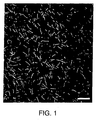
- FIGURE 1 A fluorescence micrograph of a typical reaction mixture used in this invention, which consists of stabilised microtubules (taxoid sites 100 nM) and Flutax-2 fluorescent taxoid (100nM). The bar indicates 10 ⁇ m.
- FIGURE 2 Competition isotherms of ligands bound to the paclitaxel site of microtubules in GAB-GDP buffer at 25°C.
- the fluorescence anisotropy of multiple solutions of 50nM Flutax-2 and binding sites of 50nM microtubules with various concentrations of competitors were measured in duplicate, using a microplate reader.
- each competition curve starts with an anisotropy value corresponding to two thirds of bound Flutax-2 molecules, which are progressively reduced by the competitor that substitutes Flutax-2 in the binding sites.
- the equilibrium binding constant of Flutax-2 is 1.5 x 10 8 M -1 .
- paclitaxel from the National Cancer Institute, Bethesda, MD
- the paclitaxel was measured spectroscopically at 273nm following dilution in methanol, using an extinction coefficient of 1,700 M -1 cm -1 (Diaz, J.F. and Andreu, J.M.) 3 H-paclitaxel (4 Ci mmol -1 ) was obtained from Moravek Biochemicals (Brea, CA), Docetaxel (Taxotere) was supplied by Rhone-Poulenc Rorer (Antony, France).
- Baccatine III was obtained from Sigma; it was found to be free of impurities by means of HPLC (a 20-80% gradient of acetonitrile in 0.05% of aqueous trifluoroacetic acid in a C-18 column, monitored at 228nm). An extinction coefficient of baccatine III determined approximately was 900 ⁇ 100 M -1 cm -1 (273nm, methanol).
- Baccatine III was soluble at the concentrations used in 10mM sodium phosphate, 1mM ethyleneglycol bis ( ⁇ -aminoethylether)-N,N,N',N'-tetracetic acid (EGTA), 0.1mM GTP, 6mM MgCl 2 , 3.4 M glycerol, (GAB buffer) pH 6.5 with DMSO at 1%.
- the methyl ester of the C-13 side chain of paclitaxel was supplied by E. Baloglu and D.G.I. Scientific of the Virginia Polytechnic Institute (Blacksburg, VA).
- the molar absorptivity of this compound is around 75.0 M -1 cm -1 at 273nM (absorption queue, methanol) and was soluble at 0.75mM in 1% GAB-DMSO buffer.
- Tubulin from bovine brain was purified and stored, and its concentration was measured as has been described (Andreu, J.M. et al.). Prior to its use it was balanced in 10mM sodium phosphate, 1mM EGTA, 0.1mM GTP, 3.5M glycerol pH 6.8, with a Sephadex G-25 gravity column used cold, and it was centrifuged cold for 10 min at 50,000 in a TLA 100.4 rotor (Beckman) cold.
- the 50 ⁇ M tubulin was made 6mM in MgCl 2 (in other words, glycerol assembly buffer GAB, final pH 6.5) and 1mM GTP, it was assembled in microtubules at 37°C and these were gently cross-linked with 20mM glutaraldehyde, the reaction being stopped with NaBH 4 as has been described (Diaz, J.F. et al.). These cross-linked microtubules have the same specificity, kinetics and stoichiometry for binding to Flutax-2 as the uncross-linked controls, they have a normal morphology under the electron microscope (Diaz, J.F. et al.).
- the cross-linked microtubules were dialysed against GAB-0.1 mM nucleotide (GTP or GDP) for more than 16h, cold, in dialysis cassettes (Pierce) and were conserved frozen drop by drop in liquid nitrogen, or at 4°C with 0.05% of sodium azide.
- GTP or GDP GAB-0.1 mM nucleotide
- Pierce dialysis cassettes
- the concentration of binding sites of taxoids of the preparations of cross-linked microtubules turned out to be stable in liquid nitrogen, decaying at speeds between 0.02 and 0.05 day -1 at 4°C (mean lives of five and two weeks respectively).
- the cross-linked microtubules were used within one average life starting from the preparation. A fluorescence micrography of these microtubules with Flutax-2 is shown in Fig. 1.
- Fluorescence spectra were obtained corrected with a Fluorolog-3-221 photon count instrument (Jobin Yvon-Spex, Longlumean, France), with an emission bandwidth of 5nm and excitation of 1 ⁇ m at 25°C.
- the fluorometric measurements of concentration were made with a Shimadzu RF-540 spectrofluorometer.
- the anisotropy spectra and measurements were gathered in the Flourolog format-T mode with vertically polarised excitation and were corrected by the sensitivity of each channel with horizontally polarised excitation (Lackowitz, J.R.).
- the multiple measurements of anisotropy were made with a PolarStar microplate reader (BMG Labtechnologies, Offenburg, Germany) at 25°C.
- the solutions were excited with 200 pulses of vertically polarised light (band-pass filter 485-P, 480-492nm) and the emission was simultaneously analysed with vertical and horizontal polarisation filters (band-pass 520-P, 515-550nm).
- the sensitivity of the two channels was adjusted in order to give an anisotropy value of free Flutax-2 (0.055, polarisation 0.080; GAB buffer at 25°C) in wells that contained Flutax-2 and not microtubules.
- the values of well blanks with microtubules and without Flutex-2 were subtracted from the values of fluorescence intensity (the blanks typically represented less than 4% of the measurement).
- Flutax-2 (50 ⁇ M) was valuated with growing concentrations of binding sites provided by cross-linked microtubules, in GAB buffer at 25C.
- the control measurements with binding sites of microtubules blocked by 10 ⁇ M paclitaxel gave values of r very close to r min , within an [S] 0 interval from 0 to 100 nM.
- the cross-linked microtubules (50-100nM of total tubulin) were afterwards valued with known concentrations of Flutax-2.
- the ligands to test were added in small volumes of DMSO (concentration of final DMSO 2% v/v) in order to make the desired duplicated concentrations.
- a check was also made that the paclitaxel was not adsorbed onto the plate during the test, using 3 H-paclitaxel and a scintillation counter.
- the wells without protein and without Flutax-2 were included for calibration and background measurements respectively (see anisotropy measurements, above).
- the plates were stirred by rotation for 10 minutes and were measured twice within 30-90 minutes following balancing at 25°C in the microplate reader.
- the anisotropy data of Flutax-2 was calculated with the evaluation software (BMG) and was traced against the total concentration of the competitor.
- a personal computer program which implemented the solutions to equations (9-13) starting from the known values of [F] 0 , [L] 0 , [S] 0 and K (F) was used to find the best value of fit by means of least squares of the equilibrium binding constant of the competitor ligand K(L) to the data [F] b /[S] 0 versus [L] 0 (Medrano, F.J et al.; J.F. Diaz, unpublished program Equigra 4). The fitted displacement curve was expressed as anisotropy and traced together with the data (see Fig. 2).
Landscapes
- Life Sciences & Earth Sciences (AREA)
- Health & Medical Sciences (AREA)
- Engineering & Computer Science (AREA)
- Immunology (AREA)
- Molecular Biology (AREA)
- Biomedical Technology (AREA)
- Chemical & Material Sciences (AREA)
- Hematology (AREA)
- Urology & Nephrology (AREA)
- Food Science & Technology (AREA)
- General Physics & Mathematics (AREA)
- Cell Biology (AREA)
- Biotechnology (AREA)
- Medicinal Chemistry (AREA)
- Physics & Mathematics (AREA)
- Analytical Chemistry (AREA)
- Biochemistry (AREA)
- General Health & Medical Sciences (AREA)
- Microbiology (AREA)
- Pathology (AREA)
- Proteomics, Peptides & Aminoacids (AREA)
- Epoxy Compounds (AREA)
- Pharmaceuticals Containing Other Organic And Inorganic Compounds (AREA)
- Investigating Or Analysing Biological Materials (AREA)
- Investigating, Analyzing Materials By Fluorescence Or Luminescence (AREA)
- Nitrogen And Oxygen Or Sulfur-Condensed Heterocyclic Ring Systems (AREA)
- Saccharide Compounds (AREA)
Applications Claiming Priority (3)
| Application Number | Priority Date | Filing Date | Title |
|---|---|---|---|
| ES200101710A ES2180453B1 (es) | 2001-07-20 | 2001-07-20 | Metodo de deteccion y evaluacion de compuestos mimeticos de paclitaxel. |
| ES200101710 | 2001-07-20 | ||
| PCT/ES2002/000262 WO2003008965A1 (fr) | 2001-07-20 | 2002-05-31 | Methode de detection et d'analyse de composes mimetiques du paclitaxel |
Publications (2)
| Publication Number | Publication Date |
|---|---|
| EP1420249A1 true EP1420249A1 (fr) | 2004-05-19 |
| EP1420249B1 EP1420249B1 (fr) | 2007-05-23 |
Family
ID=8498472
Family Applications (1)
| Application Number | Title | Priority Date | Filing Date |
|---|---|---|---|
| EP02735435A Expired - Lifetime EP1420249B1 (fr) | 2001-07-20 | 2002-05-31 | Methode de detection et d'analyse de composes mimetiques du paclitaxel |
Country Status (7)
| Country | Link |
|---|---|
| US (1) | US7476511B2 (fr) |
| EP (1) | EP1420249B1 (fr) |
| AT (1) | ATE363071T1 (fr) |
| CA (1) | CA2454396A1 (fr) |
| DE (1) | DE60220286D1 (fr) |
| ES (2) | ES2180453B1 (fr) |
| WO (1) | WO2003008965A1 (fr) |
Families Citing this family (1)
| Publication number | Priority date | Publication date | Assignee | Title |
|---|---|---|---|---|
| US10399964B2 (en) | 2017-03-30 | 2019-09-03 | The University Of Kansas | Coumarin-linked taxanes for detection and circumvention of cellular efflux |
Family Cites Families (5)
| Publication number | Priority date | Publication date | Assignee | Title |
|---|---|---|---|---|
| US5340724A (en) * | 1991-04-25 | 1994-08-23 | The Upjohn Company | Use of taxol-dependent cells to identify and isolate taxol-like compounds |
| US5756301A (en) * | 1993-03-03 | 1998-05-26 | The Trustees Of Columbia University In The City Of New York | Endogenous taxol-like substance in human serum, monoclonal antibodies directed thereto and methods of assaying therefor |
| WO1997019938A1 (fr) * | 1995-11-29 | 1997-06-05 | Consejo Superior Investigaciones Cientificas | Derives fluorescents de paclitaxel et docetaxel avec activite antineoplasique, procede d'obtention et leurs applications |
| WO1999053295A1 (fr) * | 1998-04-14 | 1999-10-21 | The Regents Of The University Of California | Dosages de detection d'inhibiteurs de depolymerisation de microtubules |
| EP1163345A1 (fr) * | 1999-03-23 | 2001-12-19 | Cytoclonal Pharmaceutics Inc. | Genes fongiques de beta-tubuline |
-
2001
- 2001-07-20 ES ES200101710A patent/ES2180453B1/es not_active Expired - Fee Related
-
2002
- 2002-05-31 DE DE60220286T patent/DE60220286D1/de not_active Expired - Lifetime
- 2002-05-31 CA CA002454396A patent/CA2454396A1/fr not_active Abandoned
- 2002-05-31 AT AT02735435T patent/ATE363071T1/de not_active IP Right Cessation
- 2002-05-31 WO PCT/ES2002/000262 patent/WO2003008965A1/fr not_active Ceased
- 2002-05-31 ES ES02735435T patent/ES2287280T3/es not_active Expired - Lifetime
- 2002-05-31 EP EP02735435A patent/EP1420249B1/fr not_active Expired - Lifetime
-
2004
- 2004-01-20 US US10/761,150 patent/US7476511B2/en not_active Expired - Fee Related
Non-Patent Citations (1)
| Title |
|---|
| See references of WO03008965A1 * |
Also Published As
| Publication number | Publication date |
|---|---|
| US20040203082A1 (en) | 2004-10-14 |
| WO2003008965A1 (fr) | 2003-01-30 |
| ES2180453A1 (es) | 2003-02-01 |
| ES2180453B1 (es) | 2004-05-01 |
| EP1420249B1 (fr) | 2007-05-23 |
| ATE363071T1 (de) | 2007-06-15 |
| US7476511B2 (en) | 2009-01-13 |
| DE60220286D1 (de) | 2007-07-05 |
| ES2287280T3 (es) | 2007-12-16 |
| CA2454396A1 (fr) | 2003-01-30 |
Similar Documents
| Publication | Publication Date | Title |
|---|---|---|
| Bijari et al. | Spectroscopic study of interaction between osthole and human serum albumin: Identification of possible binding site of the compound | |
| Gough et al. | Fluorescence anisotropy imaging microscopy maps calmodulin binding during cellular contraction and locomotion. | |
| Franke et al. | Targeting heat-shock-protein 90 (Hsp90) by natural products: geldanamycin, a show case in cancer therapy | |
| Wang et al. | Study on the interaction of ertugliflozin with human serum albumin in vitro by multispectroscopic methods, molecular docking, and molecular dynamics simulation | |
| Wang et al. | Studies on the interaction between imidacloprid and human serum albumin: spectroscopic approach | |
| Yu et al. | Carbon-dot-based ratiometric fluorescent sensor for detecting hydrogen sulfide in aqueous media and inside live cells | |
| Torgerson et al. | Inclusion complexes of poly-. beta.-cyclodextrin: a model for pressure effects upon ligand-protein complexes | |
| Telbisz et al. | Antibody binding shift assay for rapid screening of drug interactions with the human ABCG2 multidrug transporter | |
| Andreu et al. | The interaction of baccatin III with the taxol binding site of microtubules determined by a homogeneous assay with fluorescent taxoid | |
| Yeggoni et al. | Elucidating the binding interaction of andrographolide with the plasma proteins: biophysical and computational approach | |
| Schneider et al. | Synthesis and characterization of the first fluorescent nonpeptide NPY Y1 receptor antagonist | |
| Abou-Zied et al. | Site-specific recognition of fluorescein by human serum albumin: A steady-state and time-resolved spectroscopic study | |
| Mahmoud et al. | Dual modulation of blue-fluorescent carbon dots for simultaneous detection of topotecan and pantoprazole | |
| Xu et al. | Probing the binding reaction of cytarabine to human serum albumin using multispectroscopic techniques with the aid of molecular docking | |
| Lavanya et al. | Steady-state and 3D fluorescence study reveals the binding of a dicoumarol analogue in subdomain IIA of human serum albumin with structural variation | |
| El-Wekil et al. | A novel fluorescent sensing platform for glutathione based on Förster resonance energy transfer and aggregation-induced emission | |
| Cao et al. | Highly selective peptide-based fluorescent probe with aggregation induced emission (AIE) for detection of chondroitin sulfate and its application in living cells and zebrafish imaging | |
| Bhattacharyya et al. | Fluorescence spectroscopic methods to analyze drug–tubulin interactions | |
| EP1420249B1 (fr) | Methode de detection et d'analyse de composes mimetiques du paclitaxel | |
| Datta et al. | Effect of encapsulation in the anion receptor pocket of sub-domain IIA of human serum albumin on the modulation of pKa of warfarin and structurally similar acidic guests: A possible implication on biological activity | |
| Ferreira et al. | The effects of jatrophane derivatives on the reversion of MDR1-and MRP-mediated multidrug resistance in the MDA-MB-231 (HTB-26) cell line | |
| Ali et al. | Analytical investigation of the influence of ornidazole on the native protein fluorescence | |
| Liu et al. | Comparing the effects of Fe (III) and Cu (II) on the binding affinity of erlotinib to bovine serum albumin using spectroscopic methods | |
| Odom et al. | The synthesis of polyphenylalanine on ribosomes to which erythromycin is bound | |
| Mu et al. | Probing the stereoselective interaction of ofloxacin enantiomers with corresponding monoclonal antibodies by multiple spectrometry |
Legal Events
| Date | Code | Title | Description |
|---|---|---|---|
| PUAI | Public reference made under article 153(3) epc to a published international application that has entered the european phase |
Free format text: ORIGINAL CODE: 0009012 |
|
| 17P | Request for examination filed |
Effective date: 20040219 |
|
| AK | Designated contracting states |
Kind code of ref document: A1 Designated state(s): AT BE CH CY DE DK ES FI FR GB GR IE IT LI LU MC NL PT SE TR |
|
| AX | Request for extension of the european patent |
Extension state: AL LT LV MK RO SI |
|
| GRAP | Despatch of communication of intention to grant a patent |
Free format text: ORIGINAL CODE: EPIDOSNIGR1 |
|
| GRAS | Grant fee paid |
Free format text: ORIGINAL CODE: EPIDOSNIGR3 |
|
| GRAA | (expected) grant |
Free format text: ORIGINAL CODE: 0009210 |
|
| AK | Designated contracting states |
Kind code of ref document: B1 Designated state(s): AT BE CH CY DE DK ES FI FR GB GR IE IT LI LU MC NL PT SE TR |
|
| PG25 | Lapsed in a contracting state [announced via postgrant information from national office to epo] |
Ref country code: CH Free format text: LAPSE BECAUSE OF FAILURE TO SUBMIT A TRANSLATION OF THE DESCRIPTION OR TO PAY THE FEE WITHIN THE PRESCRIBED TIME-LIMIT Effective date: 20070523 Ref country code: FI Free format text: LAPSE BECAUSE OF FAILURE TO SUBMIT A TRANSLATION OF THE DESCRIPTION OR TO PAY THE FEE WITHIN THE PRESCRIBED TIME-LIMIT Effective date: 20070523 Ref country code: LI Free format text: LAPSE BECAUSE OF FAILURE TO SUBMIT A TRANSLATION OF THE DESCRIPTION OR TO PAY THE FEE WITHIN THE PRESCRIBED TIME-LIMIT Effective date: 20070523 |
|
| REG | Reference to a national code |
Ref country code: GB Ref legal event code: FG4D |
|
| REG | Reference to a national code |
Ref country code: CH Ref legal event code: EP |
|
| REG | Reference to a national code |
Ref country code: IE Ref legal event code: FG4D |
|
| REF | Corresponds to: |
Ref document number: 60220286 Country of ref document: DE Date of ref document: 20070705 Kind code of ref document: P |
|
| PG25 | Lapsed in a contracting state [announced via postgrant information from national office to epo] |
Ref country code: SE Free format text: LAPSE BECAUSE OF FAILURE TO SUBMIT A TRANSLATION OF THE DESCRIPTION OR TO PAY THE FEE WITHIN THE PRESCRIBED TIME-LIMIT Effective date: 20070823 |
|
| NLV1 | Nl: lapsed or annulled due to failure to fulfill the requirements of art. 29p and 29m of the patents act | ||
| PG25 | Lapsed in a contracting state [announced via postgrant information from national office to epo] |
Ref country code: AT Free format text: LAPSE BECAUSE OF FAILURE TO SUBMIT A TRANSLATION OF THE DESCRIPTION OR TO PAY THE FEE WITHIN THE PRESCRIBED TIME-LIMIT Effective date: 20070523 |
|
| REG | Reference to a national code |
Ref country code: CH Ref legal event code: PL |
|
| REG | Reference to a national code |
Ref country code: ES Ref legal event code: FG2A Ref document number: 2287280 Country of ref document: ES Kind code of ref document: T3 |
|
| PG25 | Lapsed in a contracting state [announced via postgrant information from national office to epo] |
Ref country code: BE Free format text: LAPSE BECAUSE OF FAILURE TO SUBMIT A TRANSLATION OF THE DESCRIPTION OR TO PAY THE FEE WITHIN THE PRESCRIBED TIME-LIMIT Effective date: 20070523 |
|
| EN | Fr: translation not filed | ||
| PG25 | Lapsed in a contracting state [announced via postgrant information from national office to epo] |
Ref country code: DE Free format text: LAPSE BECAUSE OF FAILURE TO SUBMIT A TRANSLATION OF THE DESCRIPTION OR TO PAY THE FEE WITHIN THE PRESCRIBED TIME-LIMIT Effective date: 20070824 Ref country code: DK Free format text: LAPSE BECAUSE OF FAILURE TO SUBMIT A TRANSLATION OF THE DESCRIPTION OR TO PAY THE FEE WITHIN THE PRESCRIBED TIME-LIMIT Effective date: 20070523 Ref country code: NL Free format text: LAPSE BECAUSE OF FAILURE TO SUBMIT A TRANSLATION OF THE DESCRIPTION OR TO PAY THE FEE WITHIN THE PRESCRIBED TIME-LIMIT Effective date: 20070523 Ref country code: MC Free format text: LAPSE BECAUSE OF NON-PAYMENT OF DUE FEES Effective date: 20070531 Ref country code: PT Free format text: LAPSE BECAUSE OF FAILURE TO SUBMIT A TRANSLATION OF THE DESCRIPTION OR TO PAY THE FEE WITHIN THE PRESCRIBED TIME-LIMIT Effective date: 20071023 |
|
| PLBE | No opposition filed within time limit |
Free format text: ORIGINAL CODE: 0009261 |
|
| STAA | Information on the status of an ep patent application or granted ep patent |
Free format text: STATUS: NO OPPOSITION FILED WITHIN TIME LIMIT |
|
| 26N | No opposition filed |
Effective date: 20080226 |
|
| PG25 | Lapsed in a contracting state [announced via postgrant information from national office to epo] |
Ref country code: IT Free format text: LAPSE BECAUSE OF FAILURE TO SUBMIT A TRANSLATION OF THE DESCRIPTION OR TO PAY THE FEE WITHIN THE PRESCRIBED TIME-LIMIT Effective date: 20070523 Ref country code: GR Free format text: LAPSE BECAUSE OF FAILURE TO SUBMIT A TRANSLATION OF THE DESCRIPTION OR TO PAY THE FEE WITHIN THE PRESCRIBED TIME-LIMIT Effective date: 20070824 |
|
| PG25 | Lapsed in a contracting state [announced via postgrant information from national office to epo] |
Ref country code: IE Free format text: LAPSE BECAUSE OF NON-PAYMENT OF DUE FEES Effective date: 20070531 |
|
| PG25 | Lapsed in a contracting state [announced via postgrant information from national office to epo] |
Ref country code: FR Free format text: LAPSE BECAUSE OF FAILURE TO SUBMIT A TRANSLATION OF THE DESCRIPTION OR TO PAY THE FEE WITHIN THE PRESCRIBED TIME-LIMIT Effective date: 20080118 |
|
| PGFP | Annual fee paid to national office [announced via postgrant information from national office to epo] |
Ref country code: GB Payment date: 20080604 Year of fee payment: 7 |
|
| PGFP | Annual fee paid to national office [announced via postgrant information from national office to epo] |
Ref country code: ES Payment date: 20090119 Year of fee payment: 7 |
|
| PG25 | Lapsed in a contracting state [announced via postgrant information from national office to epo] |
Ref country code: CY Free format text: LAPSE BECAUSE OF FAILURE TO SUBMIT A TRANSLATION OF THE DESCRIPTION OR TO PAY THE FEE WITHIN THE PRESCRIBED TIME-LIMIT Effective date: 20070523 |
|
| PG25 | Lapsed in a contracting state [announced via postgrant information from national office to epo] |
Ref country code: LU Free format text: LAPSE BECAUSE OF NON-PAYMENT OF DUE FEES Effective date: 20070531 |
|
| PG25 | Lapsed in a contracting state [announced via postgrant information from national office to epo] |
Ref country code: TR Free format text: LAPSE BECAUSE OF FAILURE TO SUBMIT A TRANSLATION OF THE DESCRIPTION OR TO PAY THE FEE WITHIN THE PRESCRIBED TIME-LIMIT Effective date: 20070523 |
|
| GBPC | Gb: european patent ceased through non-payment of renewal fee |
Effective date: 20090531 |
|
| PG25 | Lapsed in a contracting state [announced via postgrant information from national office to epo] |
Ref country code: GB Free format text: LAPSE BECAUSE OF NON-PAYMENT OF DUE FEES Effective date: 20090531 |
|
| REG | Reference to a national code |
Ref country code: ES Ref legal event code: FD2A Effective date: 20090601 |
|
| PG25 | Lapsed in a contracting state [announced via postgrant information from national office to epo] |
Ref country code: ES Free format text: LAPSE BECAUSE OF NON-PAYMENT OF DUE FEES Effective date: 20090601 |