EP1419817A1 - Modification of the pore structure of mixed metal oxide catalyst supports - Google Patents
Modification of the pore structure of mixed metal oxide catalyst supports Download PDFInfo
- Publication number
- EP1419817A1 EP1419817A1 EP03256823A EP03256823A EP1419817A1 EP 1419817 A1 EP1419817 A1 EP 1419817A1 EP 03256823 A EP03256823 A EP 03256823A EP 03256823 A EP03256823 A EP 03256823A EP 1419817 A1 EP1419817 A1 EP 1419817A1
- Authority
- EP
- European Patent Office
- Prior art keywords
- metal oxide
- mixed metal
- leaching
- precursor
- metals
- Prior art date
- Legal status (The legal status is an assumption and is not a legal conclusion. Google has not performed a legal analysis and makes no representation as to the accuracy of the status listed.)
- Withdrawn
Links
Images
Classifications
-
- C—CHEMISTRY; METALLURGY
- C01—INORGANIC CHEMISTRY
- C01B—NON-METALLIC ELEMENTS; COMPOUNDS THEREOF; METALLOIDS OR COMPOUNDS THEREOF NOT COVERED BY SUBCLASS C01C
- C01B13/00—Oxygen; Ozone; Oxides or hydroxides in general
- C01B13/14—Methods for preparing oxides or hydroxides in general
- C01B13/18—Methods for preparing oxides or hydroxides in general by thermal decomposition of compounds, e.g. of salts or hydroxides
-
- B—PERFORMING OPERATIONS; TRANSPORTING
- B01—PHYSICAL OR CHEMICAL PROCESSES OR APPARATUS IN GENERAL
- B01J—CHEMICAL OR PHYSICAL PROCESSES, e.g. CATALYSIS OR COLLOID CHEMISTRY; THEIR RELEVANT APPARATUS
- B01J37/00—Processes, in general, for preparing catalysts; Processes, in general, for activation of catalysts
- B01J37/0009—Use of binding agents; Moulding; Pressing; Powdering; Granulating; Addition of materials ameliorating the mechanical properties of the product catalyst
- B01J37/0018—Addition of a binding agent or of material, later completely removed among others as result of heat treatment, leaching or washing,(e.g. forming of pores; protective layer, desintegrating by heat)
-
- B—PERFORMING OPERATIONS; TRANSPORTING
- B01—PHYSICAL OR CHEMICAL PROCESSES OR APPARATUS IN GENERAL
- B01J—CHEMICAL OR PHYSICAL PROCESSES, e.g. CATALYSIS OR COLLOID CHEMISTRY; THEIR RELEVANT APPARATUS
- B01J37/00—Processes, in general, for preparing catalysts; Processes, in general, for activation of catalysts
- B01J37/06—Washing
-
- C—CHEMISTRY; METALLURGY
- C01—INORGANIC CHEMISTRY
- C01B—NON-METALLIC ELEMENTS; COMPOUNDS THEREOF; METALLOIDS OR COMPOUNDS THEREOF NOT COVERED BY SUBCLASS C01C
- C01B13/00—Oxygen; Ozone; Oxides or hydroxides in general
- C01B13/14—Methods for preparing oxides or hydroxides in general
-
- C—CHEMISTRY; METALLURGY
- C01—INORGANIC CHEMISTRY
- C01B—NON-METALLIC ELEMENTS; COMPOUNDS THEREOF; METALLOIDS OR COMPOUNDS THEREOF NOT COVERED BY SUBCLASS C01C
- C01B3/00—Hydrogen; Gaseous mixtures containing hydrogen; Separation of hydrogen from mixtures containing it; Purification of hydrogen; Reversible storage of hydrogen
- C01B3/02—Production of hydrogen; Production of gaseous mixtures containing hydrogen
- C01B3/32—Production of hydrogen; Production of gaseous mixtures containing hydrogen by reaction of gaseous or liquid organic compounds with gasifying agents, e.g. water, carbon dioxide or air
- C01B3/34—Production of hydrogen; Production of gaseous mixtures containing hydrogen by reaction of gaseous or liquid organic compounds with gasifying agents, e.g. water, carbon dioxide or air by reaction of hydrocarbons with gasifying agents
- C01B3/38—Production of hydrogen; Production of gaseous mixtures containing hydrogen by reaction of gaseous or liquid organic compounds with gasifying agents, e.g. water, carbon dioxide or air by reaction of hydrocarbons with gasifying agents using catalysts
- C01B3/386—Catalytic partial combustion
-
- C—CHEMISTRY; METALLURGY
- C01—INORGANIC CHEMISTRY
- C01B—NON-METALLIC ELEMENTS; COMPOUNDS THEREOF; METALLOIDS OR COMPOUNDS THEREOF NOT COVERED BY SUBCLASS C01C
- C01B3/00—Hydrogen; Gaseous mixtures containing hydrogen; Separation of hydrogen from mixtures containing it; Purification of hydrogen; Reversible storage of hydrogen
- C01B3/02—Production of hydrogen; Production of gaseous mixtures containing hydrogen
- C01B3/32—Production of hydrogen; Production of gaseous mixtures containing hydrogen by reaction of gaseous or liquid organic compounds with gasifying agents, e.g. water, carbon dioxide or air
- C01B3/34—Production of hydrogen; Production of gaseous mixtures containing hydrogen by reaction of gaseous or liquid organic compounds with gasifying agents, e.g. water, carbon dioxide or air by reaction of hydrocarbons with gasifying agents
- C01B3/38—Production of hydrogen; Production of gaseous mixtures containing hydrogen by reaction of gaseous or liquid organic compounds with gasifying agents, e.g. water, carbon dioxide or air by reaction of hydrocarbons with gasifying agents using catalysts
- C01B3/40—Production of hydrogen; Production of gaseous mixtures containing hydrogen by reaction of gaseous or liquid organic compounds with gasifying agents, e.g. water, carbon dioxide or air by reaction of hydrocarbons with gasifying agents using catalysts characterised by the catalyst
-
- C—CHEMISTRY; METALLURGY
- C01—INORGANIC CHEMISTRY
- C01G—COMPOUNDS CONTAINING METALS NOT COVERED BY SUBCLASSES C01D OR C01F
- C01G1/00—Methods of preparing compounds of metals not covered by subclasses C01B, C01C, C01D, or C01F, in general
- C01G1/02—Oxides
-
- C—CHEMISTRY; METALLURGY
- C01—INORGANIC CHEMISTRY
- C01G—COMPOUNDS CONTAINING METALS NOT COVERED BY SUBCLASSES C01D OR C01F
- C01G25/00—Compounds of zirconium
-
- C—CHEMISTRY; METALLURGY
- C01—INORGANIC CHEMISTRY
- C01G—COMPOUNDS CONTAINING METALS NOT COVERED BY SUBCLASSES C01D OR C01F
- C01G25/00—Compounds of zirconium
- C01G25/02—Oxides
-
- C—CHEMISTRY; METALLURGY
- C01—INORGANIC CHEMISTRY
- C01B—NON-METALLIC ELEMENTS; COMPOUNDS THEREOF; METALLOIDS OR COMPOUNDS THEREOF NOT COVERED BY SUBCLASS C01C
- C01B2203/00—Integrated processes for the production of hydrogen or synthesis gas
- C01B2203/02—Processes for making hydrogen or synthesis gas
- C01B2203/025—Processes for making hydrogen or synthesis gas containing a partial oxidation step
- C01B2203/0261—Processes for making hydrogen or synthesis gas containing a partial oxidation step containing a catalytic partial oxidation step [CPO]
-
- C—CHEMISTRY; METALLURGY
- C01—INORGANIC CHEMISTRY
- C01B—NON-METALLIC ELEMENTS; COMPOUNDS THEREOF; METALLOIDS OR COMPOUNDS THEREOF NOT COVERED BY SUBCLASS C01C
- C01B2203/00—Integrated processes for the production of hydrogen or synthesis gas
- C01B2203/10—Catalysts for performing the hydrogen forming reactions
- C01B2203/1041—Composition of the catalyst
- C01B2203/1047—Group VIII metal catalysts
-
- C—CHEMISTRY; METALLURGY
- C01—INORGANIC CHEMISTRY
- C01B—NON-METALLIC ELEMENTS; COMPOUNDS THEREOF; METALLOIDS OR COMPOUNDS THEREOF NOT COVERED BY SUBCLASS C01C
- C01B2203/00—Integrated processes for the production of hydrogen or synthesis gas
- C01B2203/10—Catalysts for performing the hydrogen forming reactions
- C01B2203/1041—Composition of the catalyst
- C01B2203/1082—Composition of support materials
-
- C—CHEMISTRY; METALLURGY
- C01—INORGANIC CHEMISTRY
- C01P—INDEXING SCHEME RELATING TO STRUCTURAL AND PHYSICAL ASPECTS OF SOLID INORGANIC COMPOUNDS
- C01P2006/00—Physical properties of inorganic compounds
- C01P2006/12—Surface area
-
- C—CHEMISTRY; METALLURGY
- C01—INORGANIC CHEMISTRY
- C01P—INDEXING SCHEME RELATING TO STRUCTURAL AND PHYSICAL ASPECTS OF SOLID INORGANIC COMPOUNDS
- C01P2006/00—Physical properties of inorganic compounds
- C01P2006/14—Pore volume
-
- C—CHEMISTRY; METALLURGY
- C01—INORGANIC CHEMISTRY
- C01P—INDEXING SCHEME RELATING TO STRUCTURAL AND PHYSICAL ASPECTS OF SOLID INORGANIC COMPOUNDS
- C01P2006/00—Physical properties of inorganic compounds
- C01P2006/16—Pore diameter
-
- C—CHEMISTRY; METALLURGY
- C01—INORGANIC CHEMISTRY
- C01P—INDEXING SCHEME RELATING TO STRUCTURAL AND PHYSICAL ASPECTS OF SOLID INORGANIC COMPOUNDS
- C01P2006/00—Physical properties of inorganic compounds
- C01P2006/16—Pore diameter
- C01P2006/17—Pore diameter distribution
-
- Y—GENERAL TAGGING OF NEW TECHNOLOGICAL DEVELOPMENTS; GENERAL TAGGING OF CROSS-SECTIONAL TECHNOLOGIES SPANNING OVER SEVERAL SECTIONS OF THE IPC; TECHNICAL SUBJECTS COVERED BY FORMER USPC CROSS-REFERENCE ART COLLECTIONS [XRACs] AND DIGESTS
- Y02—TECHNOLOGIES OR APPLICATIONS FOR MITIGATION OR ADAPTATION AGAINST CLIMATE CHANGE
- Y02P—CLIMATE CHANGE MITIGATION TECHNOLOGIES IN THE PRODUCTION OR PROCESSING OF GOODS
- Y02P20/00—Technologies relating to chemical industry
- Y02P20/50—Improvements relating to the production of bulk chemicals
- Y02P20/52—Improvements relating to the production of bulk chemicals using catalysts, e.g. selective catalysts
Definitions
- the present invention generally relates to a method for controlling the porosity of a catalyst support. More particularly, the invention relates to a method for producing a support with an increased average pore size from a mixed metal oxide material. Still more particularly, the invention relates to a catalyst that is active for catalytically converting light hydrocarbons (e.g., natural gas) to synthesis gas.
- light hydrocarbons e.g., natural gas
- Heterogeneous catalysts and or their supports are prepared with various methods, such as precipitation, with pore sizes rang from around 3-50 ⁇ for zeolite catalysts to the order of micrometers for form and monolith catalysts.
- the pore sizes are often optimized to fit the application by adjusting the preparation procedure.
- zeolite materials are generally synthesized through crystallization of silicon, aluminum, sodium, sodium hydroxide and an organic template (For details see Vaughan, D. E. W., The synthesis and manufacture of zeolites, Chem. Eng. Progr., 84(2), 25-31, 1988).
- the organic template typically an organic amine or alkyl ammonium compound, works as molecular mold to generate the porous network.
- the template is then removed through oxidation.
- Pore generation reagents such as carbon, sulfur are used to increase the porosity of corresponding catalyst or its support. These reagents are mixed with the catalyst precursor and compressed to form the desired shape. Calcination of the shapes material to combust the carbon (e.g. graphite) or sulfur results in the formation of pores. Due to the low temperature of removing such reagent, the catalyst prepared in such a way typically do no have good thermal stability, due to the lack of high temperature treatment in its preparation.
- this invention discloses a new method of using inorganic compound as template to prepare catalyst its support material with desired porosity and high thermal stability.
- a method for preparing a mixed metal oxide material with an increased average pore size includes providing a mixed metal oxide precursor containing at least two metals, calcining the mixed metal oxide precursor at a temperature sufficient to form a thermally and mechanically stable mixed metal oxide material, and leaching the mixed metal oxide material in a leach solution with a constituent that dissolves one metal oxide.
- the calcination temperature is approximately between 300°C and 1300°C.
- the leaching constituent may be chosen from the group including acidic solutions of HCl, HNO 3 , H 2 SO 4 , H 3 PO 3 , and their combinations, or basic solutions of NH 3 , NaOH, KOH, and their combinations.
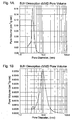
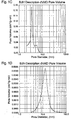
- Figures 1(A)-(D) are plots illustrating the pore structure of the mixed oxide samples after various treatments, where (A) relates to sample 1A, (B) relates to sample 3B, (C) relates to sample 2A, and (D) relates to sample 3A.
- catalyst properties include high activity, high selectivity, high recycle capability and filterability. Catalyst performance is determined mainly by the active metal components. For example, a metal might be chosen based both on its ability to complete the desired reaction and its inability to complete an unwanted reaction. Additionally, a catalyst may also include a support and may take any desired shape, including monolithic, spherical, etc.
- Metal oxides i.e. alumina, zirconia, titania, silica, etc.
- alumina, zirconia, titania, silica, etc. are often used as support materials in partial oxidation catalyst systems because they generally possess low thermal expansion coefficients, good mechanical strength and thermal stability at elevated temperatures.
- the other properties within the metal oxide group vary.
- zirconia possesses excellent chemical inertness and corrosion resistance at temperatures well above the melting point of alumina.
- the present invention includes a method for increasing the average pore size of a mixed metal oxide material using the following steps:
- the mixed metal oxide precursor may be prepared by numerous methods including precipitation (i.e. coprecipitation, stepwise precipitation) and/or mechanical mixing (i.e. milling, kneading).
- the leach solution may completely or partially dissolve one metal oxide.
- the mixed metal oxide precursor preferably comprises at least two metal oxides.
- Particularly suitable metal oxides are oxides of Group IIA, IIIA, VIIIB and rare earth metals.
- the precursors of the components for the support are first dissolved in water or other suitable medium to form a homogenous solution.
- the metal oxide precursors have different solubilities.
- the solution is then subjected to pH adjustment or evaporation to force the salts to precipitate.
- the salts may be hydrolyzed into hydroxide forms or oxides.
- concentration of salt, temperature, the actual pH value, and the rate of pH change all influence crystal growth and aggregation. Abrupt change of pH and high concentration of salt results in small particles and large aggregate.
- ammonium hydroxide is used to increase pH value to avoid introduction of alkali metal in the final material.
- the precipitated solid mass is then collected and dried gradually to about or greater than the boiling point of the medium.
- the temperature is raised slowly (i.e. 2°C to 5°C per minute), to allow the evaporation of water or solvent in the equilibrium state to help the component molecules redistribute to attain a more even distribution.
- the dry mass obtained is in a loose state with an irregular shape, it is preferably ground to powder form.
- the powder may then be formed into a desired shape by a forming process and the use of suitable additives (i.e. binders, lubricants, etc.).
- a chosen binder is preferably one that can be burned into a volatile vapor of steam and carbon dioxide during calcination or activation. In extrusion or pelletization, a lubricant may be added to make the forming process smoother and faster.
- the dry mass is calcined and leached prior to being ground into powder and formed into a desired shape.
- the precursors of the components for the support are mechanically mixed (i.e. via kneading or milling) to form a uniform mixture.
- the resultant uniform mixture preferably comprises a fine powder formed from the precursors.
- a liquid such as water, is desirable. If a liquid is added, it is preferable to dry the mixture before shaping and calcination.
- Calcination is undertaken to convert the salt or hydroxide form of the active components into oxides by reacting metal salts with air at elevated temperature. During calcination, the materials also solidify into final form (i.e. amorphous ⁇ crystalline). As a result, the surface and mechanical properties are mainly determined in this step. Therefore, temperature increase is preferably slow (e.g. 2°C to 5°C per minute), to allow the component molecules to develop into a stable structure without strain.
- the final temperature of calcination is preferably higher than the intended reaction temperature. Usually, about 50°C higher than the reaction temperature is a good margin to ensure the thermal stability of the catalyst during the reaction. In a preferred embodiment, the calcination temperature is approximately between 300°C and 1300°C.
- the mixed metal oxide material is packed into an ion-exchange column as slurry with deionized (DI) water.
- DI deionized
- a leaching constituent is used to leach out one metal oxide from the mixed metal oxide material at a predetermined rate.
- the mixed metal oxide material may be leached in a batch tank. Because the different metal oxides in the mixed metal oxide material will have different solubilities, a leaching constituent may be chosen which dissolves one of the metal oxides, but leaves the other metal oxide intact.
- the leaching constituent is preferably chosen from the group including acidic solutions of HCl, HNO 3 H 2 SO 4 , H 3 PO 3 , and their combinations, or basic solutions of NH 3 , NaOH, KOH, and their combinations.
- the leaching constituent is NH 3 , ranging from 1M to 10M NH 3
- the leaching constituent is HCl of 0.1-1M.
- the present invention discloses a technique for preparing a support material having an increased average pore size.
- a macropore is herein defined as a pore greater than 100 Angstroms (A) in diameter.
- the pore structure can be controlled by changing the aging time of the precursors, the ratio of the metal oxide precursors, the concentration of the leaching constituent, the leaching time, etc.
- the support material of the present invention is preferably for use in an active, or fresh, catalyst.
- the catalysts of the present invention may be prepared by any of the methods known to those skilled in the art. By way of illustration and not limitation, such methods include impregnating the catalytically active compounds or precursors onto the support material and/or precipitating the catalytically active compounds or precursors onto the support material. Accordingly, the supported catalysts of the present invention may be used in the form of powders, particles, pellets, monoliths, honeycombs, packed beds, foams, aerogels, granules, beads, pills, cylinders, trilobes, extrudates, spheres or other rounded shapes, or another manufactured configurations.
- the most preferred method of preparation may vary among those skilled in the art, depending for example on the desired catalyst particle size. Those skilled in the art are able to select the most suitable method for a given set of requirements.
- One method of preparing a supported metal catalyst is by incipient wetness impregnation of the support For higher metal loading, the method may be repeated until desired loading is achieved.
- additional promoters and/or base metals may be used.
- the prepared catalysts are preferably used in partial oxidation operating conditions.
- the above two precipitates were mixed and agitated for 30 minutes at 50°C.
- the suspension was filtered and dried at room temperature and subsequently calcined at 700°C for 5 hours.
- the resultant sample was named 1A.
- sample 1A 11.8 grams was agitated in 300ml de-ionized water. The pH of the suspension was adjusted to 0.08 by adding a hydrochloride solution and stirring it for 6 hours at 60-70°C. The suspension was filtered and dried at 120°C overnight. The resultant sample was named 2A.
- samples 1A and 2A were further calcined at 1100°C for three hours in air to obtain samples 3B and 3A, respectively.
- Pore structure and BET surface area of the mixed oxides Sample code Sample description BET surface area (m 2 /g) Average pore diameter, (nm) 1A Mixed oxide of alumina and zirconia calcined at 700°C 161 3.6 2A Sample 1A washed with HCl 169 3.8 3A Calcined sample 2A at 1100°C 11.4 13.2 3B Calcined sample 1A at 1100°C 12 10.4
Landscapes
- Chemical & Material Sciences (AREA)
- Organic Chemistry (AREA)
- Chemical Kinetics & Catalysis (AREA)
- Inorganic Chemistry (AREA)
- Engineering & Computer Science (AREA)
- Combustion & Propulsion (AREA)
- Materials Engineering (AREA)
- Health & Medical Sciences (AREA)
- General Health & Medical Sciences (AREA)
- Catalysts (AREA)
Abstract
Description
- The present invention generally relates to a method for controlling the porosity of a catalyst support. More particularly, the invention relates to a method for producing a support with an increased average pore size from a mixed metal oxide material. Still more particularly, the invention relates to a catalyst that is active for catalytically converting light hydrocarbons (e.g., natural gas) to synthesis gas.
- In many heterogeneous catalytic reactions, especially those carried out at high temperature and high reaction rate such as selective oxidation reaction for syngas production, diffusion of reactants and/or products in the catalyst pores may affect the efficiency of catalyst material. Consequently, use of supports with small internal pores leads to inefficient use of catalyst because (i) the reactants do not have enough time to reach catalytic metals in the pores and (ii) the reactants may become trapped in the pores and interact in undesired secondary reactions during the diffusion of CO and H2 from the pores.
- Accordingly, there is a continuing need for better, more economical processes and catalysts for the catalytic partial oxidation of hydrocarbons, particularly methane, or methane containing feeds, in which the catalyst retains a high level of activity and selectivity to carbon monoxide and hydrogen under conditions of high gas space velocity and elevated pressure.
- Heterogeneous catalysts and or their supports are prepared with various methods, such as precipitation, with pore sizes rang from around 3-50 Å for zeolite catalysts to the order of micrometers for form and monolith catalysts. The pore sizes are often optimized to fit the application by adjusting the preparation procedure. For example, zeolite materials are generally synthesized through crystallization of silicon, aluminum, sodium, sodium hydroxide and an organic template (For details see Vaughan, D. E. W., The synthesis and manufacture of zeolites, Chem. Eng. Progr., 84(2), 25-31, 1988). The organic template, typically an organic amine or alkyl ammonium compound, works as molecular mold to generate the porous network. The template is then removed through oxidation.
- Pore generation reagents, such as carbon, sulfur are used to increase the porosity of corresponding catalyst or its support. These reagents are mixed with the catalyst precursor and compressed to form the desired shape. Calcination of the shapes material to combust the carbon (e.g. graphite) or sulfur results in the formation of pores. Due to the low temperature of removing such reagent, the catalyst prepared in such a way typically do no have good thermal stability, due to the lack of high temperature treatment in its preparation.
- In contrast to the prior art, this invention discloses a new method of using inorganic compound as template to prepare catalyst its support material with desired porosity and high thermal stability.
- A method for controlling the pore structure of a catalyst support is disclosed. In accordance with a preferred embodiment of the present invention, a method for preparing a mixed metal oxide material with an increased average pore size includes providing a mixed metal oxide precursor containing at least two metals, calcining the mixed metal oxide precursor at a temperature sufficient to form a thermally and mechanically stable mixed metal oxide material, and leaching the mixed metal oxide material in a leach solution with a constituent that dissolves one metal oxide. Preferably, the calcination temperature is approximately between 300°C and 1300°C. The leaching constituent may be chosen from the group including acidic solutions of HCl, HNO3, H2SO4, H3PO3, and their combinations, or basic solutions of NH3, NaOH, KOH, and their combinations.
- These and other embodiments, features and advantages of the present invention will become apparent with reference to the following description.
- A better understanding of the present invention can be obtained when the following detailed description of the preferred embodiment is considered in conjunction with the following drawing:
Figures 1(A)-(D) are plots illustrating the pore structure of the mixed oxide samples after various treatments, where (A) relates to sample 1A, (B) relates to sample 3B, (C) relates to sample 2A, and (D) relates to sample 3A. - The selection of a catalyst or catalyst system requires many technical and economic considerations. Key catalyst properties include high activity, high selectivity, high recycle capability and filterability. Catalyst performance is determined mainly by the active metal components. For example, a metal might be chosen based both on its ability to complete the desired reaction and its inability to complete an unwanted reaction. Additionally, a catalyst may also include a support and may take any desired shape, including monolithic, spherical, etc.
- Metal oxides (i.e. alumina, zirconia, titania, silica, etc.) are often used as support materials in partial oxidation catalyst systems because they generally possess low thermal expansion coefficients, good mechanical strength and thermal stability at elevated temperatures. However, the other properties within the metal oxide group vary. For example, zirconia possesses excellent chemical inertness and corrosion resistance at temperatures well above the melting point of alumina. By taking advantage of the differences in properties within the metal oxide group (i.e. melting point, solubility, etc.) it is possible to create highly desirable composites, which may be manipulated to form porous materials.
- The present invention includes a method for increasing the average pore size of a mixed metal oxide material using the following steps:
- i) providing a mixed metal oxide precursor containing at least two metals,
- ii) calcining the mixed metal oxide precursor at temperatures sufficient to form a thermally and mechanically stable mixed metal oxide material; and
- iii) leaching the mixed metal oxide material in a leach solution with a constituent that dissolves one metal oxide.
-
- The mixed metal oxide precursor may be prepared by numerous methods including precipitation (i.e. coprecipitation, stepwise precipitation) and/or mechanical mixing (i.e. milling, kneading). In addition, the leach solution may completely or partially dissolve one metal oxide.
- The mixed metal oxide precursor preferably comprises at least two metal oxides. Particularly suitable metal oxides are oxides of Group IIA, IIIA, VIIIB and rare earth metals.
- In precipitation, the precursors of the components for the support, often in their salt forms, are first dissolved in water or other suitable medium to form a homogenous solution. In a preferred embodiment, the metal oxide precursors have different solubilities. The solution is then subjected to pH adjustment or evaporation to force the salts to precipitate. The salts may be hydrolyzed into hydroxide forms or oxides. The concentration of salt, temperature, the actual pH value, and the rate of pH change all influence crystal growth and aggregation. Abrupt change of pH and high concentration of salt results in small particles and large aggregate. In some embodiments, ammonium hydroxide is used to increase pH value to avoid introduction of alkali metal in the final material.
- The precipitated solid mass is then collected and dried gradually to about or greater than the boiling point of the medium. In a preferred embodiment, the temperature is raised slowly (i.e. 2°C to 5°C per minute), to allow the evaporation of water or solvent in the equilibrium state to help the component molecules redistribute to attain a more even distribution.
- Because the dry mass obtained is in a loose state with an irregular shape, it is preferably ground to powder form. The powder may then be formed into a desired shape by a forming process and the use of suitable additives (i.e. binders, lubricants, etc.). A chosen binder is preferably one that can be burned into a volatile vapor of steam and carbon dioxide during calcination or activation. In extrusion or pelletization, a lubricant may be added to make the forming process smoother and faster. Alternatively, in some embodiments, the dry mass is calcined and leached prior to being ground into powder and formed into a desired shape.
- In mechanical mixing, the precursors of the components for the support are mechanically mixed (i.e. via kneading or milling) to form a uniform mixture. The resultant uniform mixture preferably comprises a fine powder formed from the precursors. In some embodiments, the addition of a liquid, such as water, is desirable. If a liquid is added, it is preferable to dry the mixture before shaping and calcination.
- Calcination is undertaken to convert the salt or hydroxide form of the active components into oxides by reacting metal salts with air at elevated temperature. During calcination, the materials also solidify into final form (i.e. amorphous → crystalline). As a result, the surface and mechanical properties are mainly determined in this step. Therefore, temperature increase is preferably slow (e.g. 2°C to 5°C per minute), to allow the component molecules to develop into a stable structure without strain.
- As a guideline, the final temperature of calcination is preferably higher than the intended reaction temperature. Usually, about 50°C higher than the reaction temperature is a good margin to ensure the thermal stability of the catalyst during the reaction. In a preferred embodiment, the calcination temperature is approximately between 300°C and 1300°C.
- In a preferred embodiment of the present invention, following calcination, the mixed metal oxide material is packed into an ion-exchange column as slurry with deionized (DI) water. Once the column is sufficiently packed, a leaching constituent is used to leach out one metal oxide from the mixed metal oxide material at a predetermined rate. Alternatively, the mixed metal oxide material may be leached in a batch tank. Because the different metal oxides in the mixed metal oxide material will have different solubilities, a leaching constituent may be chosen which dissolves one of the metal oxides, but leaves the other metal oxide intact. The leaching constituent is preferably chosen from the group including acidic solutions of HCl, HNO3 H2SO4, H3PO3, and their combinations, or basic solutions of NH3, NaOH, KOH, and their combinations. In a preferred embodiment, the leaching constituent is NH3, ranging from 1M to 10M NH3 In another embodiment, the leaching constituent is HCl of 0.1-1M.
- The present invention discloses a technique for preparing a support material having an increased average pore size. In some embodiments, it may be desirable to produce macroporous support materials using the present method. A macropore is herein defined as a pore greater than 100 Angstroms (A) in diameter. The pore structure can be controlled by changing the aging time of the precursors, the ratio of the metal oxide precursors, the concentration of the leaching constituent, the leaching time, etc.
- The support material of the present invention is preferably for use in an active, or fresh, catalyst. The catalysts of the present invention may be prepared by any of the methods known to those skilled in the art. By way of illustration and not limitation, such methods include impregnating the catalytically active compounds or precursors onto the support material and/or precipitating the catalytically active compounds or precursors onto the support material. Accordingly, the supported catalysts of the present invention may be used in the form of powders, particles, pellets, monoliths, honeycombs, packed beds, foams, aerogels, granules, beads, pills, cylinders, trilobes, extrudates, spheres or other rounded shapes, or another manufactured configurations.
- The most preferred method of preparation may vary among those skilled in the art, depending for example on the desired catalyst particle size. Those skilled in the art are able to select the most suitable method for a given set of requirements.
- One method of preparing a supported metal catalyst is by incipient wetness impregnation of the support For higher metal loading, the method may be repeated until desired loading is achieved.
- In some embodiments, additional promoters and/or base metals may be used. The prepared catalysts are preferably used in partial oxidation operating conditions.
- 150g ZrO(NO3)·2H2O was dissolved into 1200ml de-ionized water by heating up the solution for 2 hours at 70°C. The pH value of this solution was gradually adjusted to 7.92 by adding 28-30 wt.% ammonium hydroxide solution. A zirconium compound precipitated while the pH was above 2. During the precipitation, the temperature was controlled at 50±3°C.
- 147g Al(NO3)·9H2O was dissolved into 800ml de-ionized water. 28-30 wt.% ammonium hydroxide solution was added to adjust the pH of the aluminum solution to 8, while keeping its temperature at 50±3°C. An aluminum hydroxide compound started to form when pH was increased to above 5.
- The above two precipitates were mixed and agitated for 30 minutes at 50°C. The suspension was filtered and dried at room temperature and subsequently calcined at 700°C for 5 hours. The resultant sample was named 1A.
- 11.8 grams of sample 1A was agitated in 300ml de-ionized water. The pH of the suspension was adjusted to 0.08 by adding a hydrochloride solution and stirring it for 6 hours at 60-70°C. The suspension was filtered and dried at 120°C overnight. The resultant sample was named 2A.
- A portion of samples 1A and 2A were further calcined at 1100°C for three hours in air to obtain samples 3B and 3A, respectively.
-
Pore structure and BET surface area of the mixed oxides Sample code Sample description BET surface area (m2/g) Average pore diameter, (nm) 1A Mixed oxide of alumina and zirconia calcined at 700°C 161 3.6 2A Sample 1A washed with HCl 169 3.8 3A Calcined sample 2A at 1100°C 11.4 13.2 3B Calcined sample 1A at 1100°C 12 10.4 - As is shown in Table 1, acid washing increased the BET surface area of the mixed oxide support from 161 m2/g to 169 m2/g and increased the average pore size from 3.6nm to 3.8nm. Although the samples that were calcined at 1100°C had similar surface areas, the average pore size of the acid-washed sample (3A) is clearly larger (13.2nm versus 10.4nm).
- Referring now to Figure 1, the pore volume distribution data for samples 1A, 2A, 3A and 3B obtained through nitrogen adsorption is shown. Acid-washed samples (calcined at 700°C) contain larger pores in the diameter range of 5-6nm than non-acid-washed samples. After calcination at 1100°C, the acid-washed samples have still larger pores (14nm) than non-acid-washed samples (9-10nm). From the results, it appears that acid washing and higher calcination temperatures yield the best results.
- While the preferred embodiments of the invention have been shown and described, modifications thereof can be made by one skilled in the art without departing from the spirit and teachings of the invention. The embodiments described herein are exemplary only, and are not intended to be limiting. For example, while the invention has been described in a syngas process, it can be translated to any supported catalyst wherein an increased average pore size is desirable. Many variations and modifications of the invention disclosed herein are possible and are within the scope of the invention. Accordingly, the scope of protection is not limited by the description set out above, but is only limited by the claims which follow, that scope including all equivalents of the subject matter of the claims. The disclosures of all patents, patent applications, and publications cited herein are incorporated by reference.
Claims (16)
- A method for preparing a mixed metal oxide material the method comprising the steps of:a) providing a mixed metal oxide precursor comprising at least two metals;b) calcining the mixed metal oxide precursor at a temperature sufficient to form a thermally and mechanically stable mixed metal oxide material; andc) leaching the mixed metal oxide material in a leach solution with a leaching constituent that at least partially dissolves one metal oxide.
- The method of claim 1 wherein the metals in the mixed metal oxide precursor have different solubilities in water.
- The method of claim 1 or claim 2 wherein said at least two metals in said mixed metal oxide precursor are selected from the group consisting of Group IIA, IIIA, VIIIB and rare earth metals.
- The method of any one of claims 1 to 3 wherein the mixed metal oxide is a mixture of alumina and zirconia.
- The method of any one of claims 1 to 4 wherein the mixed metal precursor is prepared by a precipitation or mechanical mixing method.
- The method of claim 5 wherein the mixed metal precursor is prepared by coprecipitation.
- The method of any one of claims 1 to 6 wherein the calcination temperature is between 300°C and 1300°C.
- The method of any one of claims 1 to 7 wherein the leaching step occurs in a continuous flowing column or a batch tank.
- The method of any one of claims 1 to 8 wherein the leaching constituent completely dissolves one metal oxide.
- The method of any one of claims 1 to 9 wherein the leaching constituent is selected from the group consisting of acidic solutions of HCl, HNO3, H2SO4, H3PO3, and their combinations, or basic solutions of NH3, NaOH, KOH, and their combinations
- The method of claim 10 wherein the leaching constituent is a basic solution of NH3.
- The method of claim 11 wherein the concentration of NH3 in the solution ranges from approximately 1M to 10M.
- A method for preparing a supported catalyst comprising the method according to any one claims 1 to 12 and additionally comprising the step of impregnating the mixed metal oxide support with a catalytically active metal.
- The method of claim 13 wherein the supported catalyst is a partial oxidation catalyst.
- The method of claim 13 or claim 14 wherein the catalytically active metal is selected from the group consisting of Group VIII noble metals.
- The method of any one of claims 13 to 15 wherein the impregnation step is achieved by an incipient wetness technique.
Applications Claiming Priority (2)
| Application Number | Priority Date | Filing Date | Title |
|---|---|---|---|
| US10/293,825 US7001866B2 (en) | 2002-11-13 | 2002-11-13 | Modification of the pore structure of metal oxide and mixed metal oxide supports for catalysts synthesis |
| US293825 | 2002-11-13 |
Publications (1)
| Publication Number | Publication Date |
|---|---|
| EP1419817A1 true EP1419817A1 (en) | 2004-05-19 |
Family
ID=32176186
Family Applications (1)
| Application Number | Title | Priority Date | Filing Date |
|---|---|---|---|
| EP03256823A Withdrawn EP1419817A1 (en) | 2002-11-13 | 2003-10-28 | Modification of the pore structure of mixed metal oxide catalyst supports |
Country Status (5)
| Country | Link |
|---|---|
| US (1) | US7001866B2 (en) |
| EP (1) | EP1419817A1 (en) |
| AU (2) | AU2003254740A1 (en) |
| CA (1) | CA2444682A1 (en) |
| WO (1) | WO2004043585A2 (en) |
Cited By (7)
| Publication number | Priority date | Publication date | Assignee | Title |
|---|---|---|---|---|
| US10087355B2 (en) | 2016-03-17 | 2018-10-02 | Saudi Arabian Oil Company | Oil-based drilling fluids containing an alkaline-earth diamondoid compound as rheology modifier |
| US10105684B2 (en) | 2016-03-17 | 2018-10-23 | Saudi Arabian Oil Company | Synthesis of transition-metal adamantane salts and oxide nanocomposites, and systems and methods including the salts or the nanocomposites |
| US10106482B2 (en) | 2016-03-17 | 2018-10-23 | Saudi Arabian Oil Company | Synthesis of magnesium adamantane salts and magnesium oxide nanocomposites, and systems and methods including the salts or the nanocomposites |
| US10138199B2 (en) | 2016-03-17 | 2018-11-27 | Saudi Arabian Oil Company | High aspect ratio layered double hydroxide materials and methods for preparation thereof |
| US10252245B2 (en) | 2016-03-17 | 2019-04-09 | Saudi Arabian Oil Company | High temperature layered mixed-metal oxide materials with enhanced stability |
| US10875092B2 (en) | 2017-05-19 | 2020-12-29 | Saudi Arabian Oil Company | Methods for preparing mixed-metal oxide diamondoid nanocomposites and catalytic systems including the nanocomposites |
| US10906028B2 (en) | 2017-05-19 | 2021-02-02 | Saudi Arabian Oil Company | Synthesis of transition-metal adamantane salts and oxide nanocomposites, and systems and methods including the salts or the nanocomposites |
Families Citing this family (9)
| Publication number | Priority date | Publication date | Assignee | Title |
|---|---|---|---|---|
| US20040194505A1 (en) * | 2003-04-01 | 2004-10-07 | Ji Wang | Method of making a photonic crystal preform |
| US7935653B2 (en) | 2004-06-11 | 2011-05-03 | Kabushiki Kaisha Toyota Chuo Kenkyusho | Metal oxide nanoporous material, coating composition to obtain the same, and methods of manufacturing them |
| US20070203022A1 (en) * | 2004-07-22 | 2007-08-30 | Fritz Haber Institut Der Max Planck Gesellschaft | Metal Oxide Catalyst And Method For The Preparation Thereof |
| US7713908B2 (en) * | 2004-08-30 | 2010-05-11 | Kabushiki Kaisha Toyota Chuo Kenkyusho | Porous composite metal oxide and method of producing the same |
| RU2409421C2 (en) * | 2004-12-23 | 2011-01-20 | Шелл Интернэшнл Рисерч Маатсхаппий Б.В. | Method of producing catalyst carrier from used catalyst |
| JP2007001826A (en) * | 2005-06-24 | 2007-01-11 | Hitachi Ltd | Metal oxide material, production method thereof and use thereof |
| KR101310883B1 (en) * | 2006-03-29 | 2013-09-25 | 삼성에스디아이 주식회사 | Porous metal oxide and process for preparing the same |
| KR100818257B1 (en) * | 2006-09-07 | 2008-04-01 | 삼성에스디아이 주식회사 | Porous carbon and its manufacturing method |
| US9889429B2 (en) | 2012-10-16 | 2018-02-13 | Bill W. Helton | Hydrogen production catalysts and associated systems and methods |
Citations (7)
| Publication number | Priority date | Publication date | Assignee | Title |
|---|---|---|---|---|
| US3881944A (en) * | 1972-12-11 | 1975-05-06 | Corning Glass Works | Porous glass-ceramic bodies for catalyst supports |
| US4545797A (en) * | 1983-06-13 | 1985-10-08 | Texaco Inc. | Process for manufacturing porous slag |
| US4601997A (en) * | 1984-12-14 | 1986-07-22 | Engelhard Corporation | Porous mullite |
| US4836913A (en) * | 1983-04-13 | 1989-06-06 | W. R. Grace & Co.-Conn. | Catalytic cracking process exploying a zeolite as catalysts and catalyst supports |
| US5952259A (en) * | 1996-06-26 | 1999-09-14 | Phillips Petroleum Company | Process for making an acid-base leached zeolite catalyst |
| WO2000012209A1 (en) * | 1998-08-28 | 2000-03-09 | Asahi Kasei Kabushiki Kaisha | Method for producing oxide catalyst for use in producing acrylonitrile or methacrylonitrile from propane or isobutane |
| US6284207B1 (en) * | 1997-08-25 | 2001-09-04 | Mccauley John R. | Process for producing high surface area material by controlled leaching of blast furnace slag |
Family Cites Families (10)
| Publication number | Priority date | Publication date | Assignee | Title |
|---|---|---|---|---|
| US3236662A (en) * | 1962-03-19 | 1966-02-22 | Corning Glass Works | Semicrystalline body and method of making it |
| US4844837A (en) * | 1982-09-30 | 1989-07-04 | Engelhard Corporation | Catalytic partial oxidation process |
| US5302773A (en) * | 1989-07-20 | 1994-04-12 | The Dow Chemical Company | Process of oxidizing aliphatic hydrocarbons employing a molybdate catalyst encapsulated in a hard, glassy silica matrix |
| FR2681373B1 (en) * | 1991-09-17 | 1993-10-29 | Institut Francais Petrole | IMPROVED DEVICE FOR MONITORING A DEPOSIT FOR PRODUCTION WELLS. |
| MY131526A (en) * | 1993-12-27 | 2007-08-30 | Shell Int Research | A process for the preparation of carbon monoxide and/or hydrogen |
| US5977017A (en) * | 1996-04-10 | 1999-11-02 | Catalytic Solutions, Inc. | Perovskite-type metal oxide compounds |
| DE69825884D1 (en) * | 1997-04-11 | 2004-09-30 | Chiyoda Chem Eng Construct Co | METHOD FOR PRODUCING SYNTHESIS GAS BY means of OUTOTHERM REFORMING |
| US6149882A (en) * | 1998-06-09 | 2000-11-21 | Symyx Technologies, Inc. | Parallel fixed bed reactor and fluid contacting apparatus |
| AU9061701A (en) * | 2000-09-05 | 2002-03-22 | Conoco Inc | Lanthanide-promoted rhodium catalysts and process for producing synthesis gas |
| WO2002066403A1 (en) * | 2001-02-16 | 2002-08-29 | Conoco Inc. | Supported rhodium-spinel catalysts and process for producing synthesis gas |
-
2002
- 2002-11-13 US US10/293,825 patent/US7001866B2/en not_active Expired - Lifetime
-
2003
- 2003-10-10 AU AU2003254740A patent/AU2003254740A1/en not_active Abandoned
- 2003-10-15 CA CA002444682A patent/CA2444682A1/en not_active Abandoned
- 2003-10-28 EP EP03256823A patent/EP1419817A1/en not_active Withdrawn
- 2003-11-13 AU AU2003290911A patent/AU2003290911A1/en not_active Abandoned
- 2003-11-13 WO PCT/US2003/036469 patent/WO2004043585A2/en not_active Ceased
Patent Citations (8)
| Publication number | Priority date | Publication date | Assignee | Title |
|---|---|---|---|---|
| US3881944A (en) * | 1972-12-11 | 1975-05-06 | Corning Glass Works | Porous glass-ceramic bodies for catalyst supports |
| US4836913A (en) * | 1983-04-13 | 1989-06-06 | W. R. Grace & Co.-Conn. | Catalytic cracking process exploying a zeolite as catalysts and catalyst supports |
| US4545797A (en) * | 1983-06-13 | 1985-10-08 | Texaco Inc. | Process for manufacturing porous slag |
| US4601997A (en) * | 1984-12-14 | 1986-07-22 | Engelhard Corporation | Porous mullite |
| US5952259A (en) * | 1996-06-26 | 1999-09-14 | Phillips Petroleum Company | Process for making an acid-base leached zeolite catalyst |
| US6284207B1 (en) * | 1997-08-25 | 2001-09-04 | Mccauley John R. | Process for producing high surface area material by controlled leaching of blast furnace slag |
| WO2000012209A1 (en) * | 1998-08-28 | 2000-03-09 | Asahi Kasei Kabushiki Kaisha | Method for producing oxide catalyst for use in producing acrylonitrile or methacrylonitrile from propane or isobutane |
| US6514902B1 (en) * | 1998-08-28 | 2003-02-04 | Asahi Kasei Kogyo Kabushiki Kaisha | Method for producing an oxide catalyst for use in producing acrylonitrile or methacrylonitrile from propane or isobutane |
Cited By (9)
| Publication number | Priority date | Publication date | Assignee | Title |
|---|---|---|---|---|
| US10087355B2 (en) | 2016-03-17 | 2018-10-02 | Saudi Arabian Oil Company | Oil-based drilling fluids containing an alkaline-earth diamondoid compound as rheology modifier |
| US10105684B2 (en) | 2016-03-17 | 2018-10-23 | Saudi Arabian Oil Company | Synthesis of transition-metal adamantane salts and oxide nanocomposites, and systems and methods including the salts or the nanocomposites |
| US10106482B2 (en) | 2016-03-17 | 2018-10-23 | Saudi Arabian Oil Company | Synthesis of magnesium adamantane salts and magnesium oxide nanocomposites, and systems and methods including the salts or the nanocomposites |
| US10138199B2 (en) | 2016-03-17 | 2018-11-27 | Saudi Arabian Oil Company | High aspect ratio layered double hydroxide materials and methods for preparation thereof |
| US10252245B2 (en) | 2016-03-17 | 2019-04-09 | Saudi Arabian Oil Company | High temperature layered mixed-metal oxide materials with enhanced stability |
| US10906859B2 (en) | 2016-03-17 | 2021-02-02 | Saudi Arabian Oil Company | Adamantane-intercalated layered double hydroxide |
| US10875092B2 (en) | 2017-05-19 | 2020-12-29 | Saudi Arabian Oil Company | Methods for preparing mixed-metal oxide diamondoid nanocomposites and catalytic systems including the nanocomposites |
| US10906028B2 (en) | 2017-05-19 | 2021-02-02 | Saudi Arabian Oil Company | Synthesis of transition-metal adamantane salts and oxide nanocomposites, and systems and methods including the salts or the nanocomposites |
| US11351604B2 (en) | 2017-05-19 | 2022-06-07 | Saudi Arabian Oil Company | Methods for preparing mixed-metal oxide diamondoid nanocomposites and catalytic systems including the nanocomposites |
Also Published As
| Publication number | Publication date |
|---|---|
| AU2003290911A1 (en) | 2004-06-03 |
| CA2444682A1 (en) | 2004-05-13 |
| AU2003254740A1 (en) | 2004-05-27 |
| US7001866B2 (en) | 2006-02-21 |
| WO2004043585A2 (en) | 2004-05-27 |
| WO2004043585A3 (en) | 2004-08-26 |
| AU2003290911A8 (en) | 2004-06-03 |
| US20040092392A1 (en) | 2004-05-13 |
Similar Documents
| Publication | Publication Date | Title |
|---|---|---|
| US7001866B2 (en) | Modification of the pore structure of metal oxide and mixed metal oxide supports for catalysts synthesis | |
| CN107206356B (en) | Catalyst manufacturing method | |
| KR101431919B1 (en) | Composition comprising cerium oxide and zirconium oxide having a specific porosity, preparation method thereof and use of same in catalysis | |
| CN100496741C (en) | Production of supported oxide catalysts | |
| KR100693956B1 (en) | Compositions of oxide bases of zirconium oxide and cerium, lanthanum and other rare earths, methods for their preparation and their use as catalysts | |
| NO853038L (en) | Catalyst for the removal of nitrous oxide from exhaust gases. | |
| KR20170083606A (en) | Afx zeolite | |
| US20160304344A1 (en) | Reactor, CO2 sorbent system, and process of making H2 with simultaneous CO2 sorption | |
| TW201022203A (en) | Carbonylation process using a bound H-mordenite catalyst | |
| JP2006527065A5 (en) | ||
| EP1117481A1 (en) | Nickel catalyst | |
| JP2011121859A (en) | Method for producing aluminosilicate | |
| JP4724973B2 (en) | Dimethyl ether reforming catalyst and method for producing hydrogen-containing gas using the catalyst | |
| JP2025025023A (en) | METHANALYSIS CATALYST FOR METHANALYSIS OF CARBON DIOXIDE, METHOD FOR PRODUCTION THEREOF, AND METHANALYSIS METHOD FOR CARBON DIOXIDE | |
| CN112165986B (en) | Supported cobalt-containing Fischer-Tropsch catalyst, its preparation method and use | |
| CN121969439A (en) | Catalyst preparation | |
| Tang et al. | Catalytic carbonylation of glycerol with carbon dioxide towards glycerol carbonate on Ca2+-and Mg2+-doped ZnO nanosized catalysts and enhancement by 3A zeolite dehydrating agent | |
| JP4931099B2 (en) | Catalyst for producing cycloolefin and method for producing cycloolefin | |
| KR100790012B1 (en) | Method for preparing titania particles having mesopores using mesoporous silica synthesized using organic acid as a template and water gas reaction using the same | |
| KR102869854B1 (en) | Method for preparing a solvent-free alumina-based metal catalyst having a plurality of pores | |
| RU2745214C1 (en) | Catalyst for fischer-tropsch synthesis and method for its production | |
| US20040002422A1 (en) | Method for large-scale production of combustion deposited metal-metal oxide catalysts | |
| WO2026105821A1 (en) | Catalyst body, method for producing catalyst body, method for producing fuel, and gas phase reaction device | |
| AU1458101A (en) | Chromium-based catalysts and process for converting hydrocarbons to synthesis gas | |
| JP3882071B2 (en) | Method for producing styrene monomer |
Legal Events
| Date | Code | Title | Description |
|---|---|---|---|
| PUAI | Public reference made under article 153(3) epc to a published international application that has entered the european phase |
Free format text: ORIGINAL CODE: 0009012 |
|
| AK | Designated contracting states |
Kind code of ref document: A1 Designated state(s): AT BE BG CH CY CZ DE DK EE ES FI FR GB GR HU IE IT LI LU MC NL PT RO SE SI SK TR |
|
| AX | Request for extension of the european patent |
Extension state: AL LT LV MK |
|
| 17P | Request for examination filed |
Effective date: 20040709 |
|
| AKX | Designation fees paid |
Designated state(s): AT BE BG CH CY CZ DE DK EE ES FI FR GB GR HU IE IT LI LU MC NL PT RO SE SI SK TR |
|
| STAA | Information on the status of an ep patent application or granted ep patent |
Free format text: STATUS: THE APPLICATION IS DEEMED TO BE WITHDRAWN |
|
| 18D | Application deemed to be withdrawn |
Effective date: 20060209 |