EP1416728B1 - Language selection in digital broadcasting receiver - Google Patents
Language selection in digital broadcasting receiver Download PDFInfo
- Publication number
- EP1416728B1 EP1416728B1 EP03256946A EP03256946A EP1416728B1 EP 1416728 B1 EP1416728 B1 EP 1416728B1 EP 03256946 A EP03256946 A EP 03256946A EP 03256946 A EP03256946 A EP 03256946A EP 1416728 B1 EP1416728 B1 EP 1416728B1
- Authority
- EP
- European Patent Office
- Prior art keywords
- audio
- language
- current
- pmt
- screen display
- Prior art date
- Legal status (The legal status is an assumption and is not a legal conclusion. Google has not performed a legal analysis and makes no representation as to the accuracy of the status listed.)
- Revoked
Links
Images

Classifications
-
- H—ELECTRICITY
- H04—ELECTRIC COMMUNICATION TECHNIQUE
- H04N—PICTORIAL COMMUNICATION, e.g. TELEVISION
- H04N5/00—Details of television systems
- H04N5/44—Receiver circuitry for the reception of television signals according to analogue transmission standards
- H04N5/60—Receiver circuitry for the reception of television signals according to analogue transmission standards for the sound signals
- H04N5/607—Receiver circuitry for the reception of television signals according to analogue transmission standards for the sound signals for more than one sound signal, e.g. stereo, multilanguages
-
- H—ELECTRICITY
- H04—ELECTRIC COMMUNICATION TECHNIQUE
- H04N—PICTORIAL COMMUNICATION, e.g. TELEVISION
- H04N5/00—Details of television systems
- H04N5/44—Receiver circuitry for the reception of television signals according to analogue transmission standards
- H04N5/60—Receiver circuitry for the reception of television signals according to analogue transmission standards for the sound signals
-
- H—ELECTRICITY
- H04—ELECTRIC COMMUNICATION TECHNIQUE
- H04N—PICTORIAL COMMUNICATION, e.g. TELEVISION
- H04N21/00—Selective content distribution, e.g. interactive television or video on demand [VOD]
- H04N21/40—Client devices specifically adapted for the reception of or interaction with content, e.g. set-top-box [STB]; Operations thereof
- H04N21/47—End-user applications
-
- H—ELECTRICITY
- H04—ELECTRIC COMMUNICATION TECHNIQUE
- H04N—PICTORIAL COMMUNICATION, e.g. TELEVISION
- H04N21/00—Selective content distribution, e.g. interactive television or video on demand [VOD]
- H04N21/40—Client devices specifically adapted for the reception of or interaction with content, e.g. set-top-box [STB]; Operations thereof
- H04N21/47—End-user applications
- H04N21/485—End-user interface for client configuration
- H04N21/4856—End-user interface for client configuration for language selection, e.g. for the menu or subtitles
-
- H—ELECTRICITY
- H04—ELECTRIC COMMUNICATION TECHNIQUE
- H04N—PICTORIAL COMMUNICATION, e.g. TELEVISION
- H04N21/00—Selective content distribution, e.g. interactive television or video on demand [VOD]
- H04N21/80—Generation or processing of content or additional data by content creator independently of the distribution process; Content per se
- H04N21/81—Monomedia components thereof
- H04N21/8106—Monomedia components thereof involving special audio data, e.g. different tracks for different languages
Definitions
- the present invention relates to a method of setting the audio output language of a digital broadcasting receiver, receiving a data stream comprising a video stream, a plurality of associated audio streams, each of said audio streams being in a different language, and a PMT signal containing a list of the audio streams associated with the video stream and language descriptor data for each of the audio streams, the method comprising: updating a PMT according to changes in the PMT signal, and performing a user-controlled audio output language selection process
- separate audio data types may be embedded with one video data (video elementary stream) in a data stream in a digital broadcast.
- a programme may comprise a video elementary stream and a plurality of elementary audio streams containing audio in different languages.
- Users of a digital broadcasting receiver may select one audio data type, corresponding to a desired audio language, out of a plurality of audio data types, i.e., out of a plurality of audio languages.
- separate audio data types, representing separate available audio languages, respectively may represent multiple national languages, for a multi-sound broadcasting.
- a user can select one of the audio languages as a default, in a displayed menu.
- the digital broadcasting receiver then outputs the selected audio language, if the selected audio language is embedded in the data stream. However, if the selected audio language is not present in the data stream, the receiver will output an audio language first in order of the audio languages embedded in the data stream.
- the receiver will further display an audio language index so the user may then select one language in the index to determine the audio language audio data type, embedded in the data stream, to be accessed for output by the receiver.
- the index of the available audio languages embedded in the data stream is displayed to a user to permit the user to select one of the audio languages for output by the receiver as the selected audio language.
- the user will initiate the display of an audio language selection menu, initialized with information of the available audio languages embedded in a current data stream, to display the index of available audio languages.
- the user selects a desired audio language from the displayed available audio languages for use by the receiver when outputting audio.
- the audio language previously selected and actual audio language information in the data stream may not match, thereby causing an error.
- the user cannot select the desired audio language for output by the receiver.
- US-A-2002/0044222 discloses a plurality of audio streams associated with a programme and user selection of a language for output with a programme.
- a method according to the present invention is characterised in that following selection of a new language, the language information, used for display of an audio language selection menu in the user-controlled audio output language selection process, is updated, if it is detected that the PMT has been updated since said language information was last set.
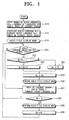
- Figure 1 is a flow chart for a method of selecting an audio language for reproduction by a receiver according to the present invention.
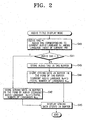
- Figure 2 is a flow chart for a method of displaying an audio language index in a process embodiment implementing the method of Figure 1 .
- Figure 3 is a flow chart for a method of updating a stored Programme Map Table (PMT) including the audio language referenced in Figure 1 .
- PMT Programme Map Table
- a method for selecting an audio language includes the operations of: changing a set audio language, set to be reproduced by a receiver, in response to an audio language selection button being pressed; checking whether audio language information of a data stream changes as a PMT of the data stream is updated; updating the set audio language if there is a change; and displaying available audio indices reflecting the changed information on a screen.
- the PMT may include information on programmes of a channel transmitted with an audio and video signal in a data stream, e.g., in a digital broadcasting signal, and include audio track data including information of available audio languages for particular programmes.
- a total number of audio languages Ntot, and their respective on-screen display order numbers are stored, corresponding to audio track data of a currently stored PMT, for initializing an audio language selection menu (S11, S12).
- a previous audio language on-screen display order number Np, and a current audio language on-screen display order number Nc are set to correspond to audio language indices of an audio track of a current channel.
- the audio language indices and the total number of the audio languages Ntot, etc. can be displayed (S13), e.g., in accordance with an audio title display mode.
- the current audio language on-screen display order number Nc is greater than or equal to the total number Ntot minus one (S22), then the current audio language on-screen display order number Nc is initialized as "0" (S24). Alternatively, the current audio language on-screen display order number Nc is increased by one (S23). The previously stored audio language on-screen display order number Np is then set to a value of the changed current audio language on-screen display order number Nc (S25) and updated in the current audio index. The audio title display mode is thereafter controlled to display the changed data (S26).
- the current audio language on-screen display order number Nc is now set (S31) to correspond with a current audio index, thereby reflecting an update of the PMT.
- the previous audio language on-screen display order number Np, assigned in step S25, is then compared with the current audio language on-screen display order number Nc, set in step S31, to see if the audio language on-screen display order numbers match (S32).
- the audio title display mode displays the changed audio language information (S33) and previous on-screen display order number Np is set to have the value or the current on-screen display order number Nc (534).
- the on-screen display order numbers are the same, as determined in step S32, the method returns to step S21 to repeat the above processes.
- an audio tag is stored (S40), with the audio tag corresponding to the current audio language on-screen display order number Nc in the audio language index of the PMT audio track.
- a string "Audio (current audio index +1)/total number of audio languages” is stored in a buffer (S42). For example, when the current audio language on-screen display order number is initialized and the total number of the audio languages is 2, the string "Audio 1/2" is stored in the buffer.
- the audio tag information is stored in a tag buffer (S43), and a string of "tag buffer (current audio index +1)/total number of the audio languages" is stored in the buffer (S44).
- the tag buffer may be used in various methods for display.
- the string stored at the buffer is then displayed on the screen (S45).
- Figure 3 shows the PMT update mode for determining whether the PMT has been updated to reflect the update of the PMT on the audio language selection menu.
- the PMT includes information on programmes of a channel transmitted with audio and video data, of a digital broadcasting stream, and version information for determining whether the version of the PMT has changed in order to determine whether there has been a change of information for corresponding programmes.
- the PMT version has changed, the changed PMT is thereafter analyzed to update audio language information.
- a current version of the PMT is stored as Vc (S50), a current PMT of a current channel (S51) is then received. It is then determined whether the PMT of the current channel has been received (S52), and then a version of the received PMT is stored as Vr (S53). Thereafter, the Vc and Vr are compared (S54), and if the Vc is different from the Vr then the current PMT is determined to have been updated and audio track information of the PMT is then read (S55). A currently set audio language index and audio tag from the audio track are then stored (S56).
- the PMT version stored as Vr is then stored as the current version Vc (S57), and then it is determined whether a command for newly receiving a PMT has been received (S58), whereby the method returns to step S51 to receive an updated PMT and to repeat the PMT update mode.
- the PMT update mode continues to be performed while the audio language selection menu is operated, thereby enabling the audio language selection menu to be performed by using the audio language indices reflecting the updated PMT.
- a PMT including audio language information
- on-screen display orders and corresponding names of actual audio languages are updated by checking the changed PMT, thereby enabling the prevention of a user from accidentally selecting the wrong audio language or from generating an error due to the difference between the actual audio language information and the initialized information, when selecting an audio language using the audio language selection menu.
Landscapes
- Engineering & Computer Science (AREA)
- Multimedia (AREA)
- Signal Processing (AREA)
- Human Computer Interaction (AREA)
- Circuits Of Receivers In General (AREA)
Description
- The present invention relates to a method of setting the audio output language of a digital broadcasting receiver, receiving a data stream comprising a video stream, a plurality of associated audio streams, each of said audio streams being in a different language, and a PMT signal containing a list of the audio streams associated with the video stream and language descriptor data for each of the audio streams, the method comprising: updating a PMT according to changes in the PMT signal, and performing a user-controlled audio output language selection process
- Generally, separate audio data types (audio elementary streams) may be embedded with one video data (video elementary stream) in a data stream in a digital broadcast. In other words, a programme may comprise a video elementary stream and a plurality of elementary audio streams containing audio in different languages. Users of a digital broadcasting receiver may select one audio data type, corresponding to a desired audio language, out of a plurality of audio data types, i.e., out of a plurality of audio languages. Here, separate audio data types, representing separate available audio languages, respectively, may represent multiple national languages, for a multi-sound broadcasting.
- When the separate audio languages are embedded in a data stream, a user can select one of the audio languages as a default, in a displayed menu. The digital broadcasting receiver then outputs the selected audio language, if the selected audio language is embedded in the data stream. However, if the selected audio language is not present in the data stream, the receiver will output an audio language first in order of the audio languages embedded in the data stream. The receiver will further display an audio language index so the user may then select one language in the index to determine the audio language audio data type, embedded in the data stream, to be accessed for output by the receiver.
- Typically, the index of the available audio languages embedded in the data stream is displayed to a user to permit the user to select one of the audio languages for output by the receiver as the selected audio language. First, the user will initiate the display of an audio language selection menu, initialized with information of the available audio languages embedded in a current data stream, to display the index of available audio languages. The user then selects a desired audio language from the displayed available audio languages for use by the receiver when outputting audio.
- However, if an order in the data stream of any of the available audio languages or the availability of any of audio languages is changed, e.g., by an end of transmission after the audio selection menu has been initialized, the audio language previously selected and actual audio language information in the data stream may not match, thereby causing an error. In this case, the user cannot select the desired audio language for output by the receiver.
-
US-A-2002/0044222 discloses a plurality of audio streams associated with a programme and user selection of a language for output with a programme. - A method according to the present invention is characterised in that following selection of a new language, the language information, used for display of an audio language selection menu in the user-controlled audio output language selection process, is updated, if it is detected that the PMT has been updated since said language information was last set.
- Further preferred and optional features are set forth in claims 2 to 7 appended hereto.
- An embodiment of the present invention will now be described, by way of example, with reference to the accompanying drawings, in which:
-
Figure 1 is a flowchart illustrating an audio language selection process according to the present invention; -
Figure 2 is a flowchart illustrating the audio titles displaying process within the process ofFigure 1 ; and -
Figure 3 is a flowchart illustrating a method of updating a PMT (Programme Map - Table) in the process of
Figure 1 . -
Figure 1 is a flow chart for a method of selecting an audio language for reproduction by a receiver according to the present invention. Similarly,Figure 2 is a flow chart for a method of displaying an audio language index in a process embodiment implementing the method ofFigure 1 .Figure 3 is a flow chart for a method of updating a stored Programme Map Table (PMT) including the audio language referenced inFigure 1 . - When a user presses a predetermined button of a digital broadcasting receiver to select an audio language available with a digital broadcasting programme, the display of an audio language selection menu is initiated.
- A method for selecting an audio language, according to the present invention, includes the operations of: changing a set audio language, set to be reproduced by a receiver, in response to an audio language selection button being pressed; checking whether audio language information of a data stream changes as a PMT of the data stream is updated; updating the set audio language if there is a change; and displaying available audio indices reflecting the changed information on a screen. The PMT may include information on programmes of a channel transmitted with an audio and video signal in a data stream, e.g., in a digital broadcasting signal, and include audio track data including information of available audio languages for particular programmes.
- As shown in
Figure 1 , a total number of audio languages Ntot, and their respective on-screen display order numbers, are stored, corresponding to audio track data of a currently stored PMT, for initializing an audio language selection menu (S11, S12). A previous audio language on-screen display order number Np, and a current audio language on-screen display order number Nc, are set to correspond to audio language indices of an audio track of a current channel. Upon initiating the audio selection menu, the audio language indices and the total number of the audio languages Ntot, etc., can be displayed (S13), e.g., in accordance with an audio title display mode. - As an example, while the audio language indices are displayed, it is determined whether an audio language selection button, generating a language selection key signal, for example, has been pressed (S21). If the current audio language on-screen display order number Nc is greater than or equal to the total number Ntot minus one (S22), then the current audio language on-screen display order number Nc is initialized as "0" (S24). Alternatively, the current audio language on-screen display order number Nc is increased by one (S23). The previously stored audio language on-screen display order number Np is then set to a value of the changed current audio language on-screen display order number Nc (S25) and updated in the current audio index. The audio title display mode is thereafter controlled to display the changed data (S26).
- Subsequently, the current audio language on-screen display order number Nc is now set (S31) to correspond with a current audio index, thereby reflecting an update of the PMT. The previous audio language on-screen display order number Np, assigned in step S25, is then compared with the current audio language on-screen display order number Nc, set in step S31, to see if the audio language on-screen display order numbers match (S32). When the on-screen display order numbers are not the same, the audio title display mode displays the changed audio language information (S33) and previous on-screen display order number Np is set to have the value or the current on-screen display order number Nc (534). When the on-screen display order numbers are the same, as determined in step S32, the method returns to step S21 to repeat the above processes.
- As illustrated in
Figure 2 , regarding the audio title mode S26 ofFigure 1 , an audio tag is stored (S40), with the audio tag corresponding to the current audio language on-screen display order number Nc in the audio language index of the PMT audio track. When it is determined that the stored audio tag information is "0" (S41), a string "Audio (current audio index +1)/total number of audio languages" is stored in a buffer (S42). For example, when the current audio language on-screen display order number is initialized and the total number of the audio languages is 2, the string "Audio 1/2" is stored in the buffer. When the audio tag is not "0", the audio tag information is stored in a tag buffer (S43), and a string of "tag buffer (current audio index +1)/total number of the audio languages" is stored in the buffer (S44). The tag buffer may be used in various methods for display. - The string stored at the buffer is then displayed on the screen (S45).
-
Figure 3 shows the PMT update mode for determining whether the PMT has been updated to reflect the update of the PMT on the audio language selection menu. The PMT includes information on programmes of a channel transmitted with audio and video data, of a digital broadcasting stream, and version information for determining whether the version of the PMT has changed in order to determine whether there has been a change of information for corresponding programmes. When the PMT version has changed, the changed PMT is thereafter analyzed to update audio language information. - As illustrated in
Figure 3 , a current version of the PMT is stored as Vc (S50), a current PMT of a current channel (S51) is then received. It is then determined whether the PMT of the current channel has been received (S52), and then a version of the received PMT is stored as Vr (S53). Thereafter, the Vc and Vr are compared (S54), and if the Vc is different from the Vr then the current PMT is determined to have been updated and audio track information of the PMT is then read (S55). A currently set audio language index and audio tag from the audio track are then stored (S56). The PMT version stored as Vr is then stored as the current version Vc (S57), and then it is determined whether a command for newly receiving a PMT has been received (S58), whereby the method returns to step S51 to receive an updated PMT and to repeat the PMT update mode. - The PMT update mode continues to be performed while the audio language selection menu is operated, thereby enabling the audio language selection menu to be performed by using the audio language indices reflecting the updated PMT.
- According to embodiments of the invention, when a PMT, including audio language information, changes after a user starts an audio language selection menu, on-screen display orders and corresponding names of actual audio languages are updated by checking the changed PMT, thereby enabling the prevention of a user from accidentally selecting the wrong audio language or from generating an error due to the difference between the actual audio language information and the initialized information, when selecting an audio language using the audio language selection menu.
Claims (7)
- A method of setting the audio output language of a digital broadcasting receiver, receiving a data stream comprising a video stream, a plurality of associated audio streams, each of said audio streams being in a different language, and a PMT signal containing a list of the audio streams associated with the video stream and language descriptor data for each of the audio streams, the method comprising:updating a PMT according to changes in the PMT signal; andperforming a user-controlled audio output language selection process,characterised in that, following selection of a new language, the language information, used for display of an audio language selection menu in the user-controlled audio output language selection process, is updated, if it is detected that the PMT has been updated since said language information was last set.
- A method according to claim 1, wherein the user-controlled audio output language selection process comprises:incrementing a current audio output language on-screen display order number (NC) by one in response to a language selection user input;setting a previous audio output language on-screen display order number (NP) to the current audio output language on-screen display order number (NC);displaying an indication of the currently selected language with reference to the current PMT (VC) and the current audio output language on-screen display order number (NC);resetting the current audio output language on-screen display order number (NC) on the basis of the current PMT (VC);comparing the reset current audio output language on-screen display order number (NC) with the previous audio output language on-screen display order number (NP); andif the previous audio output language on-screen display order number (NP) does not equal the reset previous audio output language on-screen display order number (NP), displaying an indication of the currently selected language with reference to an updated current PMT (VR) and the reset current audio output language on-screen display order number (NC) and setting the previous audio output languages on-screen display order number (NP) to the reset current audio output language on-screen display order number (NC).
- A method according to claim 2, wherein said incrementing is modulo Ntot incrementing, where Ntot is the total number of languages in the PMT.
- A method according to claim 2, comprising storing the total number of audio languages in the data stream, the current audio index and the current audio language on-screen display order number, corresponding to the audio track data of the current PMT, before the setting of an audio output language.
- A method according to claim 2, comprising:storing the current version of the PMT;downloading a new PMT of the current programme;comparing the current PMT with the downloaded new PMT;determining that the current PMT should be updated when the current PMT and the downloaded new PMT are different and reading out audio track information from the downloaded new PMT; andstoring an audio track index and audio tag from the audio track information and returning to the operation of storing the current version of the current PMT.
- A method according to claim 2, wherein the displaying of an indication of the currently selected language with reference to the current PMT and the current audio output language on-screen display order number (NC) comprises:storing an audio tag corresponding to the current audio language on-screen display order number from audio track information of the current PMT in an audio tag;storing the audio tag in a tag buffer if the audio tag is not "0" else storing, in a buffer, a string referencing the tag buffer and including (a current audio index number +1)/ a total number of audio languages in the data stream and displaying the string referencing the tag buffer; andstoring, in the buffer, a string referencing "audio" and including (the current audio index number +1)/the total number of audio languages in the data stream when it is determined that the audio tag is "0" and displaying the string referencing "audio".
- A medium comprising computer readable code controlling a computer to perform a method according to any one of claims 2 to 6.
Applications Claiming Priority (2)
| Application Number | Priority Date | Filing Date | Title |
|---|---|---|---|
| KR1020020067822A KR100811167B1 (en) | 2002-11-04 | 2002-11-04 | Audio language selection method of digital broadcasting receiver |
| KR2002067822 | 2002-11-04 |
Publications (2)
| Publication Number | Publication Date |
|---|---|
| EP1416728A1 EP1416728A1 (en) | 2004-05-06 |
| EP1416728B1 true EP1416728B1 (en) | 2009-09-16 |
Family
ID=32089786
Family Applications (1)
| Application Number | Title | Priority Date | Filing Date |
|---|---|---|---|
| EP03256946A Revoked EP1416728B1 (en) | 2002-11-04 | 2003-11-04 | Language selection in digital broadcasting receiver |
Country Status (4)
| Country | Link |
|---|---|
| US (1) | US7259795B2 (en) |
| EP (1) | EP1416728B1 (en) |
| KR (1) | KR100811167B1 (en) |
| DE (1) | DE60329263D1 (en) |
Families Citing this family (13)
| Publication number | Priority date | Publication date | Assignee | Title |
|---|---|---|---|---|
| KR100606827B1 (en) * | 2004-01-27 | 2006-08-01 | 엘지전자 주식회사 | Virtual Channel Table Data Structure, Transport Stream Determination Method, and Broadcast Receiver |
| KR20060004425A (en) * | 2004-07-09 | 2006-01-12 | 엘지전자 주식회사 | How to set up digital TV and its multivoice sequence |
| US20060221233A1 (en) * | 2005-04-01 | 2006-10-05 | Freimann Felix | Audio Modifications in Digital Media Decoders |
| KR101258987B1 (en) * | 2005-08-02 | 2013-04-26 | 삼성전자주식회사 | Broadcasting receiving apparatus and channel changing method thereof |
| KR100833883B1 (en) * | 2006-10-17 | 2008-06-02 | 엘지전자 주식회사 | How to Display Voice Information by Channel in Digital Broadcasting Equipment |
| US8239767B2 (en) | 2007-06-25 | 2012-08-07 | Microsoft Corporation | Audio stream management for television content |
| TW201309009A (en) * | 2011-08-04 | 2013-02-16 | Hannstar Display Corp | Method for auto-detecting audio language name and television using the same |
| FR3004052A1 (en) * | 2013-03-29 | 2014-10-03 | France Telecom | METHOD AND DEVICE FOR TRANSMITTING VIDEO CONTENT, METHOD AND DEVICE FOR RESTITUTING VIDEO CONTENT, VIDEO FLOW AND CORRESPONDING COMPUTER PROGRAM. |
| US9571870B1 (en) * | 2014-07-15 | 2017-02-14 | Netflix, Inc. | Automatic detection of preferences for subtitles and dubbing |
| EP3319331B1 (en) * | 2016-11-04 | 2020-01-29 | Nagravision S.A. | Transmission of audio streams |
| CN107872703B (en) * | 2017-11-22 | 2020-03-06 | 青岛海信电器股份有限公司 | Method for optimizing preferred audio track language setting item and digital system thereof |
| JP7199872B2 (en) * | 2018-08-10 | 2023-01-06 | ナブテスコ株式会社 | Multilingual voice guidance device and multilingual voice guidance method |
| CN111131871B (en) * | 2019-12-03 | 2021-03-19 | 海信视像科技股份有限公司 | A method and display device for displaying EPG user interface when playing a program |
Family Cites Families (13)
| Publication number | Priority date | Publication date | Assignee | Title |
|---|---|---|---|---|
| DE69637700D1 (en) * | 1995-11-13 | 2008-11-13 | Gemstar Dev Corp | Method and device for displaying text or graphic data on a television screen |
| JPH10154373A (en) * | 1996-09-27 | 1998-06-09 | Sony Corp | Data decoding system and data decoding method, transmission apparatus and method, and reception apparatus and method |
| KR20000021589A (en) * | 1998-09-30 | 2000-04-25 | 전주범 | Broadcasting satellite receiver having function for selecting language of osd menu screen |
| US7051360B1 (en) * | 1998-11-30 | 2006-05-23 | United Video Properties, Inc. | Interactive television program guide with selectable languages |
| US6320621B1 (en) * | 1999-03-27 | 2001-11-20 | Sharp Laboratories Of America, Inc. | Method of selecting a digital closed captioning service |
| US6978471B1 (en) * | 1999-05-25 | 2005-12-20 | Thomson Licensing S.A. | System for acquiring and processing broadcast programs and program guide data |
| US6661466B1 (en) * | 2000-09-18 | 2003-12-09 | Sony Corporation | System and method for setting default audio and subtitling language preferences for a video tuner |
| KR100664012B1 (en) * | 2000-10-14 | 2007-01-03 | 엘지전자 주식회사 | How to display the output language of digital TV |
| JP3525913B2 (en) | 2001-05-10 | 2004-05-10 | 船井電機株式会社 | Broadcast receiver having automatic audio selection function |
| JP3506177B2 (en) * | 2001-05-10 | 2004-03-15 | 船井電機株式会社 | Language switching method and digital broadcast receiver using the method |
| JP3518749B2 (en) * | 2001-05-28 | 2004-04-12 | 船井電機株式会社 | Television receiver |
| KR100425679B1 (en) * | 2001-06-16 | 2004-04-03 | 엘지전자 주식회사 | Audio information selection method and apparatus for digital broadcasting system |
| KR20030016602A (en) * | 2001-08-21 | 2003-03-03 | 엘지이노텍 주식회사 | Method setting language of set top box menu |
-
2002
- 2002-11-04 KR KR1020020067822A patent/KR100811167B1/en not_active Expired - Lifetime
-
2003
- 2003-11-04 DE DE60329263T patent/DE60329263D1/en not_active Expired - Lifetime
- 2003-11-04 US US10/700,055 patent/US7259795B2/en not_active Expired - Lifetime
- 2003-11-04 EP EP03256946A patent/EP1416728B1/en not_active Revoked
Also Published As
| Publication number | Publication date |
|---|---|
| KR100811167B1 (en) | 2008-03-07 |
| DE60329263D1 (en) | 2009-10-29 |
| KR20040039678A (en) | 2004-05-12 |
| US20040143429A1 (en) | 2004-07-22 |
| EP1416728A1 (en) | 2004-05-06 |
| US7259795B2 (en) | 2007-08-21 |
Similar Documents
| Publication | Publication Date | Title |
|---|---|---|
| EP1416728A1 (en) | Language selection in digital broadcasting receiver | |
| US20110320947A1 (en) | Method of generating a guidance route to a target menu and image processing apparatus using the same | |
| US10313724B1 (en) | Media-broadcasting system with broadcast schedule simulation feature | |
| JP2000101467A (en) | Digital broadcast receiving terminal | |
| EP1936961A2 (en) | Method and apparatus for selecting a broadcast channel | |
| US6556255B1 (en) | Method and apparatus for generating and resetting melody for remote controller function keys | |
| US20060127038A1 (en) | Method and apparatus for modifying scheduled recordings | |
| US7164843B2 (en) | Data recording system and recording objective determination device | |
| US20050141871A1 (en) | Apparatus and program for reserving a broadcast program | |
| US7020889B1 (en) | Method for calling up information about current radio and television programmes | |
| US20090013277A1 (en) | Content type registration apparatus and content type registration program | |
| JP2005012787A (en) | Operation screen control method, operation screen control program, and display device | |
| JP2009065597A (en) | Preference information generation apparatus and preference information generation program | |
| US20040010799A1 (en) | Channel control method and apparatus for television having channel reservation function | |
| WO2016133587A1 (en) | Use of program-schedule text and closed-captioning text to facilitate selection of a portion of a media-program recording | |
| GB2392336A (en) | Receiver apparatus which allows transitions between different EPG modes | |
| JP4038737B2 (en) | Remote control device | |
| US20070212020A1 (en) | Timer reservation device and information recording apparatus | |
| JP4729033B2 (en) | Controlled device and remote processing system controlled by remote control device | |
| JP2007116472A (en) | Recording and reproducing device | |
| KR100588945B1 (en) | How to enter menu codes for optical disc recording and playback devices | |
| EP1747671B1 (en) | Audit trail management for a menu system in a digital consumer product | |
| KR100765767B1 (en) | Surround Mode Editing Method and Applied Audio / Video System | |
| JP4682642B2 (en) | Reproduction content selection device for image receiving device and recording device | |
| KR100542577B1 (en) | Image storage / playback device and file name modification method to modify file name of saved audio and / or video file |
Legal Events
| Date | Code | Title | Description |
|---|---|---|---|
| PUAI | Public reference made under article 153(3) epc to a published international application that has entered the european phase |
Free format text: ORIGINAL CODE: 0009012 |
|
| AK | Designated contracting states |
Kind code of ref document: A1 Designated state(s): AT BE BG CH CY CZ DE DK EE ES FI FR GB GR HU IE IT LI LU MC NL PT RO SE SI SK TR |
|
| AX | Request for extension of the european patent |
Extension state: AL LT LV MK |
|
| 17P | Request for examination filed |
Effective date: 20040605 |
|
| 17Q | First examination report despatched |
Effective date: 20040427 |
|
| AKX | Designation fees paid |
Designated state(s): DE GB IT NL |
|
| RBV | Designated contracting states (corrected) |
Designated state(s): DE GB IT NL |
|
| GRAP | Despatch of communication of intention to grant a patent |
Free format text: ORIGINAL CODE: EPIDOSNIGR1 |
|
| GRAS | Grant fee paid |
Free format text: ORIGINAL CODE: EPIDOSNIGR3 |
|
| GRAA | (expected) grant |
Free format text: ORIGINAL CODE: 0009210 |
|
| AK | Designated contracting states |
Kind code of ref document: B1 Designated state(s): DE GB IT NL |
|
| REG | Reference to a national code |
Ref country code: GB Ref legal event code: FG4D |
|
| REF | Corresponds to: |
Ref document number: 60329263 Country of ref document: DE Date of ref document: 20091029 Kind code of ref document: P |
|
| PLBI | Opposition filed |
Free format text: ORIGINAL CODE: 0009260 |
|
| PLAX | Notice of opposition and request to file observation + time limit sent |
Free format text: ORIGINAL CODE: EPIDOSNOBS2 |
|
| 26 | Opposition filed |
Opponent name: INTERESSENGEMEINSCHAFT FUER RUNDFUNKSCHUTZ- RECHTE Effective date: 20100615 |
|
| PLBB | Reply of patent proprietor to notice(s) of opposition received |
Free format text: ORIGINAL CODE: EPIDOSNOBS3 |
|
| RDAF | Communication despatched that patent is revoked |
Free format text: ORIGINAL CODE: EPIDOSNREV1 |
|
| APBM | Appeal reference recorded |
Free format text: ORIGINAL CODE: EPIDOSNREFNO |
|
| APBP | Date of receipt of notice of appeal recorded |
Free format text: ORIGINAL CODE: EPIDOSNNOA2O |
|
| APAH | Appeal reference modified |
Free format text: ORIGINAL CODE: EPIDOSCREFNO |
|
| APBQ | Date of receipt of statement of grounds of appeal recorded |
Free format text: ORIGINAL CODE: EPIDOSNNOA3O |
|
| RAP2 | Party data changed (patent owner data changed or rights of a patent transferred) |
Owner name: SAMSUNG ELECTRONICS CO., LTD. |
|
| PLAB | Opposition data, opponent's data or that of the opponent's representative modified |
Free format text: ORIGINAL CODE: 0009299OPPO |
|
| R26 | Opposition filed (corrected) |
Opponent name: INTERESSENGEMEINSCHAFT FUER RUNDFUNKSCHUTZRECHTE E Effective date: 20100615 |
|
| PGFP | Annual fee paid to national office [announced via postgrant information from national office to epo] |
Ref country code: DE Payment date: 20171018 Year of fee payment: 15 |
|
| PGFP | Annual fee paid to national office [announced via postgrant information from national office to epo] |
Ref country code: IT Payment date: 20171115 Year of fee payment: 15 |
|
| REG | Reference to a national code |
Ref country code: DE Ref legal event code: R064 Ref document number: 60329263 Country of ref document: DE Ref country code: DE Ref legal event code: R103 Ref document number: 60329263 Country of ref document: DE |
|
| APBU | Appeal procedure closed |
Free format text: ORIGINAL CODE: EPIDOSNNOA9O |
|
| RDAG | Patent revoked |
Free format text: ORIGINAL CODE: 0009271 |
|
| STAA | Information on the status of an ep patent application or granted ep patent |
Free format text: STATUS: PATENT REVOKED |
|
| 27W | Patent revoked |
Effective date: 20180705 |
|
| GBPR | Gb: patent revoked under art. 102 of the ep convention designating the uk as contracting state |
Effective date: 20180705 |
|
| PGFP | Annual fee paid to national office [announced via postgrant information from national office to epo] |
Ref country code: NL Payment date: 20181023 Year of fee payment: 16 |
|
| PGFP | Annual fee paid to national office [announced via postgrant information from national office to epo] |
Ref country code: GB Payment date: 20181023 Year of fee payment: 16 |