EP1416279A1 - Methods for diagnosis and therapy of pancreatic cancer and composition useful therein - Google Patents
Methods for diagnosis and therapy of pancreatic cancer and composition useful therein Download PDFInfo
- Publication number
- EP1416279A1 EP1416279A1 EP20030024982 EP03024982A EP1416279A1 EP 1416279 A1 EP1416279 A1 EP 1416279A1 EP 20030024982 EP20030024982 EP 20030024982 EP 03024982 A EP03024982 A EP 03024982A EP 1416279 A1 EP1416279 A1 EP 1416279A1
- Authority
- EP
- European Patent Office
- Prior art keywords
- polypeptide
- ukw
- nucleic acid
- sample
- compound
- Prior art date
- Legal status (The legal status is an assumption and is not a legal conclusion. Google has not performed a legal analysis and makes no representation as to the accuracy of the status listed.)
- Granted
Links
Images



Classifications
-
- G—PHYSICS
- G01—MEASURING; TESTING
- G01N—INVESTIGATING OR ANALYSING MATERIALS BY DETERMINING THEIR CHEMICAL OR PHYSICAL PROPERTIES
- G01N33/00—Investigating or analysing materials by specific methods not covered by groups G01N1/00 - G01N31/00
- G01N33/48—Biological material, e.g. blood, urine; Haemocytometers
- G01N33/50—Chemical analysis of biological material, e.g. blood, urine; Testing involving biospecific ligand binding methods; Immunological testing
- G01N33/53—Immunoassay; Biospecific binding assay; Materials therefor
- G01N33/575—Immunoassay; Biospecific binding assay; Materials therefor for cancer
- G01N33/57525—Immunoassay; Biospecific binding assay; Materials therefor for cancer of the liver or pancreas
-
- A—HUMAN NECESSITIES
- A61—MEDICAL OR VETERINARY SCIENCE; HYGIENE
- A61P—SPECIFIC THERAPEUTIC ACTIVITY OF CHEMICAL COMPOUNDS OR MEDICINAL PREPARATIONS
- A61P35/00—Antineoplastic agents
Definitions
- the invention relates to the specific diagnosis of pancreatic cancer, compositions therefore and therapeutic methods for the treatment of pancreatic cancer.
- Pancreatic cancer is a cancer type which is difficult to diagnose and to control and most of such cancers can grow very rapidly.
- Neoplasms of the exocrine pancreas may arise from ductal, acinar and stromal cells. 80% of pancreatic carcinomas are derived from ductal epithelium. 60% of these tumors are located in the head of the pancreas, 10% in the tail and 30% are located in the body of the pancreas or are diffuse (Warshau, A.L., and Fernandez-del, C.C., N. Engl. J. Med. 326 (1992) 4555-4565). Histologically, these tumors are graded as well as differentiated, moderately differentiated and poorly differentiated.
- Some tumors are classified as adenosquamous, mucinous, undifferentiated or undifferentiated with osteoblast-like giant cells (Gibson, J.B., and Sobin, L.H., Histological typing of tumors of the liver, biliary tract and pancreas, WHO, Geneva, 1978). Since the disease is asymptomatic in its early stages, because of the lack of any test for early diagnosis and due to its aggressive character with respect to metastasis locally and to visceral organs, this disease is associated with a dismal prognosis. Only 20% of the tumors are resectable and the survival benefit of approved chemotherapy regiments is rather poor (Kroep, J.R., et al., Ann. Oncol. 10, Suppl. 4 (1999) 234-238). Identification of new targets for early diagnosis of pancreatic tumors is therefore a challenge of paramount importance.
- WO 02/08288 describes secreted and transmembrane polypeptides and nucleic acids encoding the same.
- Fig. 130 shows the polypeptide sequence of UKW.
- the present invention therefore provides a method for determining the presence or absence of pancreatic cancer in a patient comprising
- the detection is performed by the use of a binding agent which binds to UKW nucleic acid or polypeptide.
- the binding agent is a probe hybridizing under stringent conditions with UKW nucleic acid or an antibody, preferably a monoclonal antibody binding to UKW polypeptide, preferably to the extracellular domain.
- the present invention provides a process for determining whether or not a test sample of tissue or fluid of a patient contains pancreatic tumor cells or is derived from pancreatic tumor cells, wherein the test sample and a second sample originating from non-pancreatic-tumor cells from the same individual or a different individual of the same species are used, which process comprises the following steps:
- the invention also includes a method for the detection of pancreatic tumors, comprising
- Both methods can also be performed by the use of antibodies, whereby the UKW polypeptide is detected by interaction between the antibody and the polypeptide.
- the invention further provides a method for monitoring the progression of pancreatic cancer in the patient.
- the amount of UKW nucleic acid or polypeptide in a biological sample e.g., body fluids such as blood, cell lysates or a reverse transcript of an RNA sample
- a biological sample e.g., body fluids such as blood, cell lysates or a reverse transcript of an RNA sample
- the invention further comprises diagnostic kits comprising one or more oligonucleotide probes or primers for hybridization with UKW nucleic acid in a diagnostic assay using a sample obtained from a patient suffering from, or being suspected to have, pancreatic cancer.
- the invention further comprises the use of antibodies against UKW polypeptide in a therapeutically effective amount in the treatment of pancreatic cancer.
- the antibody is administered locally to the pancreas and especially preferably to the head of the pancreas.
- the antibody against UKW polypeptide is administered to the patient in a therapeutically effective amount for the treatment of pancreatic cancer diseases and/or for preventing and/or inhibiting metastasis caused by pancreatic cancer diseases.
- UKW means a nucleic acid encoding a polypeptide of SEQ ID NO:2, preferably the DNA sequence and the related mRNA sequence of SEQ ID NO:1 as well as the encoded polypeptide of SEQ ID NO:2.
- the polypeptide is of outstanding interest for diagnosis and as an epitope for antibody binding the extracellular domain of UKW polypeptide is preferred. Therefore, it is preferred to direct the nucleic acid sample and probes to this region and especially to parts thereof which have low homology with other genes and polypeptides.
- the UKW receptor is a transmembrane protein composed of 373 amino acids with a signal sequence of 18 amino acids.
- the receptor consists of an extracellular domain of 215 amino acids, a transmembrane domain of 23 amino acids and a cytoplasmic domain of 117 amino acids.
- the extracellular domains displays two immunoglobulin C2-type folds composed of 93 amino acids and 72 amino acids.
- nucleic acid or polypeptide refers to a nucleic acid or polypeptide having a UKW activity which is substantially free of cellular material or culture medium when produced by recombinant DNA techniques, or substantially free of chemical precursors or other chemicals when synthesized chemically.
- a nucleic acid is preferably free of sequences which naturally flank the nucleic acid (i.e. sequences located at the 5' and the 3' ends of the nucleic acid) in the organism from which the nucleic acid is derived.
- Nucleic acid probes and primers for UKW as used herein means nucleic acid fragments useful for the detection of UKW nucleic acids by hybridization methods.
- Hybridization techniques and conditions are well-known to one skilled in the art. Such hybridization conditions are, for example, moderate stringent conditions including washing with a solution of 5 x SSC, 0.5% SDS, 1.0 mmol/l EDTA, pH 8.0, followed by hybridization at 50-60°C 5 x SSC overnight, washing at room temperature for 40 minutes with 2 x SSC containing 0.1% SDS and afterwards washing with 0.1 x SSC, 0.1% SDS at 50°C for 40 min with one change of fresh solution. It is also possible to use higher temperatures for hybridization (e.g.
- the nucleic acid probes and primers usually consist of a UKW nucleic acid segment of at least about 50 contiguous positions most preferably of 200 to 300 nucleotides
- the optimization of the probes and primers can be performed according to the state of the art. There exists informatic software (http://www-genome.wi.mit.edu/genome_ software/other/primer3.html) which is generally used for such probe and primer design.
- relatively low salt and/or high temperature conditions for example, a salt concentration from about 0.02 mol/l to about 0.15 mol/l and temperatures of from about 50°C to about 70°C.
- UKW polypeptides can be identified in diagnostic assays using specific probes and primers. Usually such methods include amplifying the target sequence in the sample by amplification methods such as the PCR method. Quantitative detection can be performed by PCR techniques, preferably by the use of quantitative RT-PCR using, e.g., the LightCycler® of Roche Diagnostics GmbH, DE.
- the coding nucleic acid of the sample is amplified before the test, for example by means of the known PCR technique.
- a derivatized (labeled) nucleic acid probe is used within the framework of nucleic acid diagnostics. This probe is contacted with a denatured DNA, RNA or RT-DNA from the sample which is bound to a carrier and in this process the temperature, ionic strength, pH and other buffer conditions are selected - depending on the length and composition of the nucleic acid probe and the resulting melting temperature of the expected hybrid - such that the labeled DNA or RNA can bind to homologous DNA or RNA (hybridization see also Wahl, G.M., et al., Proc. Natl.
- Suitable carriers are membranes or carrier materials based on nitrocellulose (e.g., Schleicher and Schüll, BA 85, Amersham Hybond, C.), strengthened or bound nitrocellulose in powder form or nylon membranes derivatized with various functional groups (e.g., nitro groups) (e.g., Schleicher and Schüll, Nytran; NEN, Gene Screen; Amersham Hybond M.; Pall Biodyne).
- nitrocellulose e.g., Schleicher and Schüll, BA 85, Amersham Hybond, C.
- functional groups e.g., nitro groups
- the approximate amount of hybridization of the nucleic acid with the target nucleic acid or nucleic acids is determined.
- the approximate amount of hybridization need not be determined quantitatively, although a quantitative determination is encompassed by the present invention.
- the approximate amount of hybridization is determined qualitatively, for example, by a sight inspection upon detecting hybridization. For example, if a gel is used to resolve labelled nucleic acid which hybridizes to target nucleic acid in the sample, the resulting band can be inspected visually.
- no second sample is used.
- the level of mRNA of UKW is compared with the level of mRNA of a standard gene (housekeeping gene (see, e.g., Shaper, N.L., et al., J. Mammary Gland Biol. Neoplasia 3 (1998) 315-324; Wu, Y.Y., and Rees, J.L., Acta Derm. Venereol. 80 (2000) 2-3) of the cell, preferably by RT-PCR.
- the UKW nucleic acid is expressed in a greater amount in a pancreatic tumor sample than in a sample free from pancreatic_tumor cells and/or in a greater amount than a housekeeping gene.
- a test sample containing pancreatic tumor cells will have a greater amount of the UKW nucleic acid than does a sample which is free from pancreatic tumor cells.
- a test sample having an upregulated UKW gene may have approximately 15- to approximately 60-fold increased amount of UKW gene than a sample free of pancreatic tumor cells or an at least 3-fold greater amount of UKW mRNA than mRNA of a housekeeping gene like glycerolaldehyde-3-phosphate dehydrogenase (GAPDH) or porphobilinogen deaminase.
- GPDH glycerolaldehyde-3-phosphate dehydrogenase
- porphobilinogen deaminase porphobilinogen deaminase
- Hybridizing DNA or RNA is then detected by incubating the carrier with an antibody or antibody fragment after thorough washing and saturation to prevent unspecific binding.
- the antibody or the antibody fragment is directed towards the substance incorporated during hybridization to the nucleic acid probe.
- the antibody is in turn labeled.
- the detection of the expression can be carried out for example as:
- the nucleic acids according to the invention are hence valuable markers in the diagnosis and characterization of pancreatic tumors.
- inhibitors for the expression of UKW e.g., antibodies or antisense nucleotides
- UKW can be used to inhibit pancreatic tumor progression in vivo.
- the invention further provides methods for the identification and isolation of antagonists of UKW or inhibitors for the expression of UKW (e.g., antibodies and antisense nucleotides).
- antagonists or inhibitors can be used to inhibit pancreatic tumor progression and cause massive apoptosis of pancreatic tumor cells in vivo.
- methods for identifying and isolating of UKW antagonists which have utility in the treatment of cancer. These methods include methods for modulating the expression of the polypeptides according to the invention, methods for identifying UKW antagonists which can selectively bind to the proteins according to the invention, and methods of identifying UKW antagonists which can modulate the activity of said polypeptides. The methods further include methods for modulating, preferably inhibiting, the transcription of UKW gene to mRNA. These methods can be conducted in vitro or in vivo and may make use of and establish cell lines and transgenic animal models of the invention.
- a UKW antagonist is defined as a substance or compound which decreases or inhibits the biological activity of UKW, a polypeptide and/or inhibits the transcription or translation of UKW gene.
- screening procedures for UKW antagonists involve contacting candidate substances with host cells in which invasiveness is mediated by expression of UKW under conditions favorable for measuring UKW activity.
- UKW activity may be measured in several ways. Typically, the activation is apparent by a change in cell physiology, such as increased mobility and invasiveness in vitro, or by a change in the differentiation state, or by a change in cell metabolism leading to an increase of proliferation.
- the UKW polypeptides can be produced by recombinant means or synthetically. Non-glycosylated UKW polypeptide is obtained when it is produced recombinantly in prokaryotes. With the aid of the nucleic acid sequences provided by the invention it is possible to search for the UKW gene or its variants in genomes of any desired cells (e.g. apart from human cells, also in cells of other mammals), to identify these and to isolate the desired gene coding for the UKW proteins.
- the polypeptide according to the invention can be obtained in a reproducible manner and in large amounts.
- the nucleic acid is integrated into suitable expression vectors, according to methods familiar to a person skilled in the art.
- suitable expression vectors preferably contains a regulatable/inducible promoter. These recombinant vectors are then introduced for the expression into suitable host cells such as, e.g., E.
- coli as a prokaryotic host cell or Saccharomyces cerevisiae, teratocarcinoma cell line PA-1, sc 9117 (Büttner, R., et al., Mol. Cell. Biol. 11 (1991) 3573-3583), insect cells, CHO or COS cells as eukaryotic host cells and the transformed or transduced host cells are cultured under conditions which allow expression of the heterologous gene.
- the isolation of the protein can be carried out according to known methods from the host cell or from the culture supernatant of the host cell. Such methods are described for example by Ausubel I., Frederick M., Current Protocols in Mol. Biol. (1992), John Wiley and Sons, New York. Also in vitro reactivation of the protein may be necessary if it is not found in soluble form in the cell culture.
- UKW polypeptide or fragments thereof can be purified after recombinant production by affinity chromatography using known protein purification techniques, including immunoprecipitation, gel filtration, ion exchange chromatography, chromatofocussing, isoelectric focussing, selective precipitation, electrophoresis, or the like and can be used for the generation of antibodies against UKW.
- affinity chromatography using known protein purification techniques, including immunoprecipitation, gel filtration, ion exchange chromatography, chromatofocussing, isoelectric focussing, selective precipitation, electrophoresis, or the like and can be used for the generation of antibodies against UKW.
- the invention further comprises recombinant expression vectors which are suitable for the expression of UKW, recombinant host cells transfected with such expression vectors, as well as a process for the recombinant production of a protein which is encoded by the UKW gene.
- the invention further comprises a screening method for identifying a compound which inhibits the biological activity of the UKW polypeptide comprising:
- the invention further comprises a screening method for identifying a compound which either inhibits the biological activity of the UKW polypeptide or inhibits the transcription or translation of the UKW gene, comprising:
- the invention further comprises a screening method according to the invention, wherein the detection of the interaction between said compound or plurality of compounds with said host cell is measured by at least one of a change in cell physiology, a change in the differentiation state, and a change in cell metabolism leading to an increase of proliferation.
- the invention further comprises a screening method for identifying a compound which is an an antagonist of a UKW polypeptide comprising:
- Antibodies against UKW can be produced according to the methods known in the state of the art.
- monoclonal or polyclonal antibodies can be produced using a polypeptide comprising about 10 to 100 amino acids of the UKW polypeptide sequence.
- Suitable polypeptides derived from UKW include preferably amino acids from the extracellular domain, preferably amino acids 70-80, 99-113, 120-140 and 167-182.
- the resulting antibodies can be screened for the ability to bind to UKW using standard techniques such as enzyme-linked immunoabsorbent assays.
- Methods for identifying antigen epitopes and for the production of antibodies are described, for example, in Mole, "Epitope Mapping", In: Methods in Molecular Biology, Vol. 10, Manson (ed.), pages 105-116, The Humana Press, Inc., 1992; Price, "Production and Characterization of Synthetic Peptide-Derived Antibodies", In: Monoclonal Antibodies: Production, Engineering, and Clinical Application, Ritter and Ladyman (eds.), pp.
- Antibodies which are useful according to the invention, especially for therapeutic purposes, can be identified by reducing the proliferation and invasive potential of pancreatic tumor cells.
- pancreatic tumor cells or a pancreatic tumor cell line, preferably cell line SUIT-2 007 are treated with an antibody against UKW and proliferation and invasive potential are measured by Cell Proliferation Reagent WST-1 (a tetrazolium salt reagent, Roche Diagnostics GmbH, DE) and Matrigel invasion assay (BDS Biosciences, www.bdbiosciences.com).
- Anti-UKW antibodies can be derived from any animal species or are chimeric or humanized antibodies. Especially preferred are human antibodies.
- Human monoclonal antibodies are obtained, for example, from transgenic mice that have been engineered to produce specific human antibodies in response to antigenic challenge.
- elements of the human heavy and light chain locus are introduced into strains of mice derived from embryonic stem cell lines that contain targeted disruptions of the endogenous heavy chain and light chain loci.
- the transgenic mice can synthesize human antibodies specific for human antigens, and the mice can be used to produce human antibody-secreting hybridomas.
- Methods for obtaining human antibodies from transgenic mice are described, for example, by Green, L.L., et al., Nat. Genet. 7 (1994) 13-21; Lonberg, N., et al., Nature 368 (1994) 856-859; and Taylor, L.D., et al., Int. Immun. 6 (1994) 579-591.
- Monoclonal antibodies can be isolated and purified from hybridoma cultures by a variety of well-established techniques. Such isolation techniques include affinity chromatography with Protein-A Sepharose, size-exclusion chromatography, and ion-exchange chromatography (see, for example, Coligan at pages 2.7.1-2.7.12 and pages 2.9.1-2.9.3; Baines et al., "Purification of Immunoglobulin G (IgG)", In: Methods in Molecular Biology, Vol. 10, pages 79-104, The Humana Press, Inc., 1992).
- the antibodies can be used for immunoassays according to the invention. Detection can be performed by contacting a biological sample with an antibody, and then contacting the biological sample with a detectably labeled molecule, which binds to the antibody.
- the antibody can be conjugated with avidin/streptavidin (or biotin) and the detectably labeled molecule can comprise biotin (or avidin/streptavidin). Numerous variations of this basic technique are well-known to those of skill in the art. Alternatively, an antibody can be conjugated with a detectable label to form an immunoconjugate.
- Suitable detectable labels include, for example, a radioisotope, a fluorescent label, a chemiluminescent label, an enzyme label, a bioluminescent label or colloidal gold. Methods of making and detecting such detectably-labeled immunoconjugates are well-known to those of ordinary skill in the art and are described in more detail below.
- the antibodies according to the invention can be used for the treatment of a patient suffering from a pancreatic tumor.
- a pharmaceutical composition comprising an anti-UKW antibody can be demonstrated in an in vivo pancreas tumor model.
- Such a model is described by Alves, F., et al., Pancreas 23 (2001) 227-235.
- This in vivo model comprises an orthotopic transplant model for pancreatic ductal adenocarcinoma in severe combined immunodeficient (SCID) mice.
- SCID severe combined immunodeficient
- anti-UKW antibodies compositions can be administered at low protein doses, such as 20 to 100 milligrams protein per dose, given once, or repeatedly.
- the antibodies can be administered in doses of 30 to 90 milligrams protein per dose, or 40 to 80 milligrams protein per dose, or 50 to 70 milligrams protein per dose.
- Administration of antibody components to a subject can be preferably intravenous, intramuscular, by perfusion through a regional catheter, preferably directly or vicinal to the pancreas organ.
- the administration may be by continuous infusion or by single or multiple boluses.
- a pharmaceutical composition comprising an anti-UKW antibody can be formulated according to known methods to prepare pharmaceutically useful compositions, whereby the therapeutic proteins are combined in a mixture with a pharmaceutically acceptable carrier.
- a composition is said to be a "pharmaceutically acceptable carrier” if its administration can be tolerated by a recipient patient.
- Sterile phosphate-buffered saline is one example of a pharmaceutically acceptable carrier.
- Other suitable carriers are well- known to those skilled in the art. See, for example, Gennaro (ed.), Remington's Pharmaceutical Sciences, 19th edition, Mack Publishing Company, 1995.
- anti-UKW antibodies and a pharmaceutically acceptable carrier are administered to a patient in a therapeutically effective amount.
- a combination of the antibody and a pharmaceutically acceptable carrier is said to be administered in a "therapeutically effective amount" if the amount administered is physiologically significant.
- a pharmaceutical composition comprising anti-UKW antibodies is preferably established in liquid injectable or infusable form.
- RNA from SUIT-2 007 and SUIT-2 028 cell lines were loaded side by side on a denaturing 1% agarose formaldehyde gel and size-separated by electrophoresis. Blotting to BrightStar-Plus TM positively charged nylon membrane was performed by capillary downward transfer. After UV-crosslinking (Stratagene UV Stratalinker 2400) the blot was hybridized. The RT-PCR product was labeled with ⁇ -[ 32 P]dATP to a specific activity of 2x10 9 cpm/ ⁇ g using the Strip-EZ TM DNA Kit (Ambion Inc., Austin, Texas).
- MTETM Multiple tissue expression array
- the blot was hybridized with an ⁇ -[ 32 P]dATP labeled probe derived from UKW cDNA according to the instructions of the manufacturer and exposed to X-ray film at -70°C for 62 h.
- RNA isolated from frozen adenocarcinomas of the pancreas, chronic pancreatitis and normal pancreatic tissues were used for reverse transcriptase reactions in a volume of 20 ⁇ l.
- PCRs were then carried out by mixing 200 ng cDNA with 4 ⁇ l of 10x SYBR-Green buffer, 3 mM MgCl 2 , 1 mM dNTDs, 0.2 units Uracil-N Glycosylase, 1 unit AmpliTaq Gold, 4 ⁇ l primer mix (300 nM each primer: forward 5'TTCTCTTTGACAGGTTCTGGGC3' (SEQ ID NO:3); reverse 5'GGTTGGAACCAGTAGGGCCTC3') (SEQ ID NO:4) in a final volume of 40 ⁇ l.
- PCR primers were designed to generate a DNA fragment of 50 bp using the Primer Express Software (PE Biosystems, CA, USA).
- the amplification cycles were as follows: 2 min at 50°C followed by 10 min at 95°C and 40 amplification cycles (95°C for 15 sec and 60°C for 60 sec). These experiments were performed twice. The results were calculated by subtraction of gene UKW and housekeeping gene RNA steady-state levels for each sample. Each value was divided by the averaged steady-state level of UKW mRNA of three healthy tissues. Ratios were squared and a reciprocal value was formed.
- LightCycler-PCR was performed with a LightCycler (Roche Molecular Biochemicals, Mannheim, Germany) in LightCycler capillaries using a commercially available master mix containing Taq DNA polymerase, SYBR-Green I, deoxyribonucleoside triphosphates (LightCycler DNA master SYBR-Green I, Roche Molecular Biochemicals).
- Relative expression of gene UKW was calculated as a normalized value generated by dividing the steady-state levels of gene UKW and calnexin for each sample.
- peptides aa 167-182 and aa 306-320 were synthesized and coupled to a carrier molecule. Immunization of two rabbits with the mix of the peptides.
- the antiserum recovered was purified by affinity chromatography.
Landscapes
- Health & Medical Sciences (AREA)
- Life Sciences & Earth Sciences (AREA)
- Immunology (AREA)
- Engineering & Computer Science (AREA)
- Chemical & Material Sciences (AREA)
- Urology & Nephrology (AREA)
- Molecular Biology (AREA)
- Hematology (AREA)
- Biomedical Technology (AREA)
- Medicinal Chemistry (AREA)
- General Health & Medical Sciences (AREA)
- Biotechnology (AREA)
- Food Science & Technology (AREA)
- Pathology (AREA)
- General Physics & Mathematics (AREA)
- Biochemistry (AREA)
- Analytical Chemistry (AREA)
- Cell Biology (AREA)
- Physics & Mathematics (AREA)
- Microbiology (AREA)
- Animal Behavior & Ethology (AREA)
- Chemical Kinetics & Catalysis (AREA)
- Veterinary Medicine (AREA)
- Nuclear Medicine, Radiotherapy & Molecular Imaging (AREA)
- Organic Chemistry (AREA)
- Pharmacology & Pharmacy (AREA)
- General Chemical & Material Sciences (AREA)
- Public Health (AREA)
- Measuring Or Testing Involving Enzymes Or Micro-Organisms (AREA)
- Medicines Containing Antibodies Or Antigens For Use As Internal Diagnostic Agents (AREA)
- Peptides Or Proteins (AREA)
- Medicines That Contain Protein Lipid Enzymes And Other Medicines (AREA)
- Steroid Compounds (AREA)
Abstract
Description
- The invention relates to the specific diagnosis of pancreatic cancer, compositions therefore and therapeutic methods for the treatment of pancreatic cancer.
- Pancreatic cancer is a cancer type which is difficult to diagnose and to control and most of such cancers can grow very rapidly.
- Neoplasms of the exocrine pancreas may arise from ductal, acinar and stromal cells. 80% of pancreatic carcinomas are derived from ductal epithelium. 60% of these tumors are located in the head of the pancreas, 10% in the tail and 30% are located in the body of the pancreas or are diffuse (Warshau, A.L., and Fernandez-del, C.C., N. Engl. J. Med. 326 (1992) 4555-4565). Histologically, these tumors are graded as well as differentiated, moderately differentiated and poorly differentiated. Some tumors are classified as adenosquamous, mucinous, undifferentiated or undifferentiated with osteoblast-like giant cells (Gibson, J.B., and Sobin, L.H., Histological typing of tumors of the liver, biliary tract and pancreas, WHO, Geneva, 1978). Since the disease is asymptomatic in its early stages, because of the lack of any test for early diagnosis and due to its aggressive character with respect to metastasis locally and to visceral organs, this disease is associated with a dismal prognosis. Only 20% of the tumors are resectable and the survival benefit of approved chemotherapy regiments is rather poor (Kroep, J.R., et al., Ann. Oncol. 10, Suppl. 4 (1999) 234-238). Identification of new targets for early diagnosis of pancreatic tumors is therefore a challenge of paramount importance.
- WO 02/08288 describes secreted and transmembrane polypeptides and nucleic acids encoding the same. Fig. 130 shows the polypeptide sequence of UKW.
- It was surprisingly found that nucleic acids coding for polypeptide UKW are overexpressed specifically in pancreatic tumor cells, whereas expression is considerably lower in normal pancreatic cells or in tumor cells of other origin, e.g., breast cancer or colon cancer cells. Therefore, UKW is a valuable new target for specific diagnosis and therapy of pancreatic cancer.
- The present invention therefore provides a method for determining the presence or absence of pancreatic cancer in a patient comprising
- (i) obtaining a biological sample from a patient;
- (ii) detecting in the sample an amount of nucleic acid encoding UKW or an amount of polypeptide UKW; and
- (iii) comparing the amount of nucleic acid or polypeptide with a predetermined standard value indicating the decision line for tumor-induced or non-tumor-induced UKW expression or presence in the cell and therefrom determining the presence or absence of pancreatic cancer in the patient.
-
- Preferably, the detection is performed by the use of a binding agent which binds to UKW nucleic acid or polypeptide. More preferably, the binding agent is a probe hybridizing under stringent conditions with UKW nucleic acid or an antibody, preferably a monoclonal antibody binding to UKW polypeptide, preferably to the extracellular domain.
- Moreover, the present invention provides a process for determining whether or not a test sample of tissue or fluid of a patient contains pancreatic tumor cells or is derived from pancreatic tumor cells, wherein the test sample and a second sample originating from non-pancreatic-tumor cells from the same individual or a different individual of the same species are used, which process comprises the following steps:
- (a) incubating each respective sample under stringent hybridization conditions
with a nucleic acid probe which is selected from the group consisting of:
- (i) a nucleic acid sequence of SEQ ID NO: 1, or a fragment thereof;
- (ii) a nucleic acid sequence which is complementary to any nucleic acid sequence of (i);
- (iii) a nucleic acid sequence which hybridizes under stringent conditions with the sequence of (i); and
- (iv) a nucleic acid sequence which hybridizes under stringent conditions with the sequence of (ii); and
- (b) determining the approximate amount of hybridization of each respective sample with said probe, and
- (c) comparing the approximate amount of hybridization of the test sample to an approximate amount of hybridization of said second sample to identify whether or not the test sample contains a greater amount of the specific nucleic acid or mixture of nucleic acids than does said second sample.
-
- The invention also includes a method for the detection of pancreatic tumors, comprising
- a) incubating a sample of a patient suspected of suffering from pancreatic
cancer, selected from the group of body fluid, of cells, or of a cell extract or
cell culture supernatants of said cells, whereby said sample contains nucleic
acids with a nucleic acid probe which is selected from the group consisting of
- (i) the nucleic acid shown in SEQ ID NO:1 or a nucleic acid which is complementary to said sequence, and
- (ii) nucleic acids which hybridize with one of the nucleic acids from (i) and
- b) detecting hybridization, preferably by means of a further binding partner of the nucleic acid of the sample and/or the nucleic acid probe or by X-ray radiography.
-
- Both methods can also be performed by the use of antibodies, whereby the UKW polypeptide is detected by interaction between the antibody and the polypeptide.
- The invention further provides a method for monitoring the progression of pancreatic cancer in the patient. In such a method, the amount of UKW nucleic acid or polypeptide in a biological sample (e.g., body fluids such as blood, cell lysates or a reverse transcript of an RNA sample) of a patient suffering from pancreatic cancer is determined at at least two different points in time and compared. From the change of the amount, information on the progression of said pancreatic cancer can be deduced.
- The invention further comprises diagnostic kits comprising one or more oligonucleotide probes or primers for hybridization with UKW nucleic acid in a diagnostic assay using a sample obtained from a patient suffering from, or being suspected to have, pancreatic cancer.
- The invention further comprises the use of antibodies against UKW polypeptide in a therapeutically effective amount in the treatment of pancreatic cancer. Preferably, the antibody is administered locally to the pancreas and especially preferably to the head of the pancreas.
- In a further embodiment of the invention, the antibody against UKW polypeptide is administered to the patient in a therapeutically effective amount for the treatment of pancreatic cancer diseases and/or for preventing and/or inhibiting metastasis caused by pancreatic cancer diseases.
- As used herein, the term "UKW" means a nucleic acid encoding a polypeptide of SEQ ID NO:2, preferably the DNA sequence and the related mRNA sequence of SEQ ID NO:1 as well as the encoded polypeptide of SEQ ID NO:2. As UKW is a transmembrane receptor protein, the polypeptide is of outstanding interest for diagnosis and as an epitope for antibody binding the extracellular domain of UKW polypeptide is preferred. Therefore, it is preferred to direct the nucleic acid sample and probes to this region and especially to parts thereof which have low homology with other genes and polypeptides.
- The UKW receptor is a transmembrane protein composed of 373 amino acids with a signal sequence of 18 amino acids. The receptor consists of an extracellular domain of 215 amino acids, a transmembrane domain of 23 amino acids and a cytoplasmic domain of 117 amino acids. The extracellular domains displays two immunoglobulin C2-type folds composed of 93 amino acids and 72 amino acids.
- The phrase "nucleic acid or polypeptide" as used throughout this application refers to a nucleic acid or polypeptide having a UKW activity which is substantially free of cellular material or culture medium when produced by recombinant DNA techniques, or substantially free of chemical precursors or other chemicals when synthesized chemically. Such a nucleic acid is preferably free of sequences which naturally flank the nucleic acid (i.e. sequences located at the 5' and the 3' ends of the nucleic acid) in the organism from which the nucleic acid is derived.
- "Nucleic acid probes and primers for UKW" as used herein means nucleic acid fragments useful for the detection of UKW nucleic acids by hybridization methods. Hybridization techniques and conditions are well-known to one skilled in the art. Such hybridization conditions are, for example, moderate stringent conditions including washing with a solution of 5 x SSC, 0.5% SDS, 1.0 mmol/l EDTA, pH 8.0, followed by hybridization at 50-60°C 5 x SSC overnight, washing at room temperature for 40 minutes with 2 x SSC containing 0.1% SDS and afterwards washing with 0.1 x SSC, 0.1% SDS at 50°C for 40 min with one change of fresh solution. It is also possible to use higher temperatures for hybridization (e.g. 65-70°C) as high stringent hybridization conditions. The nucleic acid probes and primers usually consist of a UKW nucleic acid segment of at least about 50 contiguous positions most preferably of 200 to 300 nucleotides The optimization of the probes and primers can be performed according to the state of the art. There exists informatic software (http://www-genome.wi.mit.edu/genome_ software/other/primer3.html) which is generally used for such probe and primer design.
- For high selectivity it is preferred to use relatively low salt and/or high temperature conditions, for example, a salt concentration from about 0.02 mol/l to about 0.15 mol/l and temperatures of from about 50°C to about 70°C.
- UKW polypeptides can be identified in diagnostic assays using specific probes and primers. Usually such methods include amplifying the target sequence in the sample by amplification methods such as the PCR method. Quantitative detection can be performed by PCR techniques, preferably by the use of quantitative RT-PCR using, e.g., the LightCycler® of Roche Diagnostics GmbH, DE.
- In a preferred embodiment of the invention the coding nucleic acid of the sample is amplified before the test, for example by means of the known PCR technique. Usually a derivatized (labeled) nucleic acid probe is used within the framework of nucleic acid diagnostics. This probe is contacted with a denatured DNA, RNA or RT-DNA from the sample which is bound to a carrier and in this process the temperature, ionic strength, pH and other buffer conditions are selected - depending on the length and composition of the nucleic acid probe and the resulting melting temperature of the expected hybrid - such that the labeled DNA or RNA can bind to homologous DNA or RNA (hybridization see also Wahl, G.M., et al., Proc. Natl. Acad. Sci. USA 76 (1979) 3683-3687). Suitable carriers are membranes or carrier materials based on nitrocellulose (e.g., Schleicher and Schüll, BA 85, Amersham Hybond, C.), strengthened or bound nitrocellulose in powder form or nylon membranes derivatized with various functional groups (e.g., nitro groups) (e.g., Schleicher and Schüll, Nytran; NEN, Gene Screen; Amersham Hybond M.; Pall Biodyne).
- To determine whether a test sample contains pancreatic tumor cells, the approximate amount of hybridization of the nucleic acid with the target nucleic acid or nucleic acids is determined. The approximate amount of hybridization need not be determined quantitatively, although a quantitative determination is encompassed by the present invention. Typically, the approximate amount of hybridization is determined qualitatively, for example, by a sight inspection upon detecting hybridization. For example, if a gel is used to resolve labelled nucleic acid which hybridizes to target nucleic acid in the sample, the resulting band can be inspected visually. When performing a hybridization of isolated nucleic acid which is free from pancreatic tumor cells from an individual of the same species, the same protocol is followed. One can compare the approximate amount of hybridization in the test sample to the approximate amount of hybridization in the sample free from pancreatic tumor cells, to identify whether or not the test sample contains a greater amount of the target nucleic acid or nucleic acids than does the sample which is free from pancreatic tumor cells.
- In a further method according to the invention no second sample is used. For the detection whether the expression of UKW gene is upregulated, the level of mRNA of UKW is compared with the level of mRNA of a standard gene (housekeeping gene (see, e.g., Shaper, N.L., et al., J. Mammary Gland Biol. Neoplasia 3 (1998) 315-324; Wu, Y.Y., and Rees, J.L., Acta Derm. Venereol. 80 (2000) 2-3) of the cell, preferably by RT-PCR.
- As is shown in accordance with the present invention, the UKW nucleic acid is expressed in a greater amount in a pancreatic tumor sample than in a sample free from pancreatic_tumor cells and/or in a greater amount than a housekeeping gene. A test sample containing pancreatic tumor cells will have a greater amount of the UKW nucleic acid than does a sample which is free from pancreatic tumor cells. To identify a test sample as containing upregulated UKW nucleic acid, i.e., wherein the cells are pancreatic tumor cells or are tumor cells of a mammary carcinoma, it is preferable that the test sample have an approximate amount of UKW nucleic acid which is appreciably greater than the approximate amount in a sample free of pancreatic tumor cells. For example, a test sample having an upregulated UKW gene may have approximately 15- to approximately 60-fold increased amount of UKW gene than a sample free of pancreatic tumor cells or an at least 3-fold greater amount of UKW mRNA than mRNA of a housekeeping gene like glycerolaldehyde-3-phosphate dehydrogenase (GAPDH) or porphobilinogen deaminase.
- Methods of hybridization of a probe and a nucleic acid are known to a person skilled in the art and are described, for example, in WO 89/06698, EP-
A 0 200 362, US 2,915,082, EP-A 0 063 879, EP-A 0 173 251, EP-A 0 128 018. - Hybridizing DNA or RNA is then detected by incubating the carrier with an antibody or antibody fragment after thorough washing and saturation to prevent unspecific binding. The antibody or the antibody fragment is directed towards the substance incorporated during hybridization to the nucleic acid probe. The antibody is in turn labeled. However, it is also possible to use a directly labeled DNA. After incubation with the antibodies it is washed again in order to only detect specifically bound antibody conjugates. The determination is then carried out according to known methods by means of the label on the antibody or the antibody fragment.
- The detection of the expression can be carried out for example as:
- in situ hybridization with fixed whole cells, with fixed tissue smears,
- colony hybridization (cells) and plaque hybridization (phages and viruses),
- Southern hybridization (DNA detection),
- Northern hybridization (RNA detection),
- serum analysis (e.g., cell type analysis of cells in the serum by slot-blot analysis),
- after amplification (e.g., PCR technique).
- The nucleic acids according to the invention are hence valuable markers in the diagnosis and characterization of pancreatic tumors.
- According to the invention inhibitors for the expression of UKW (e.g., antibodies or antisense nucleotides) can be used to inhibit pancreatic tumor progression in vivo.
- The invention further provides methods for the identification and isolation of antagonists of UKW or inhibitors for the expression of UKW (e.g., antibodies and antisense nucleotides). Such antagonists or inhibitors can be used to inhibit pancreatic tumor progression and cause massive apoptosis of pancreatic tumor cells in vivo.
- According to the invention there are provided methods for identifying and isolating of UKW antagonists which have utility in the treatment of cancer. These methods include methods for modulating the expression of the polypeptides according to the invention, methods for identifying UKW antagonists which can selectively bind to the proteins according to the invention, and methods of identifying UKW antagonists which can modulate the activity of said polypeptides. The methods further include methods for modulating, preferably inhibiting, the transcription of UKW gene to mRNA. These methods can be conducted in vitro or in vivo and may make use of and establish cell lines and transgenic animal models of the invention.
- A UKW antagonist is defined as a substance or compound which decreases or inhibits the biological activity of UKW, a polypeptide and/or inhibits the transcription or translation of UKW gene. In general, screening procedures for UKW antagonists involve contacting candidate substances with host cells in which invasiveness is mediated by expression of UKW under conditions favorable for measuring UKW activity.
- UKW activity may be measured in several ways. Typically, the activation is apparent by a change in cell physiology, such as increased mobility and invasiveness in vitro, or by a change in the differentiation state, or by a change in cell metabolism leading to an increase of proliferation.
- The UKW polypeptides can be produced by recombinant means or synthetically. Non-glycosylated UKW polypeptide is obtained when it is produced recombinantly in prokaryotes. With the aid of the nucleic acid sequences provided by the invention it is possible to search for the UKW gene or its variants in genomes of any desired cells (e.g. apart from human cells, also in cells of other mammals), to identify these and to isolate the desired gene coding for the UKW proteins. Such processes and suitable hybridization conditions are known to a person skilled in the art and are described, for example, by Sambrook et al., Molecular Cloning: A Laboratory Manual (1989) Cold Spring Harbor Laboratory Press, New York, USA, and Hames, B.D., Higgins, S.G., Nucleic Acid Hybridisation - A Practical Approach (1985) IRL Press, Oxford, England. In this case the standard protocols described in these publications are usually used for the experiments.
- With the aid of such nucleic acids coding for a UKW polypeptide, the polypeptide according to the invention can be obtained in a reproducible manner and in large amounts. For expression in prokaryotic or eukaryotic organisms, such as prokaryotic host cells or eukaryotic host cells, the nucleic acid is integrated into suitable expression vectors, according to methods familiar to a person skilled in the art. Such an expression vector preferably contains a regulatable/inducible promoter. These recombinant vectors are then introduced for the expression into suitable host cells such as, e.g., E. coli as a prokaryotic host cell or Saccharomyces cerevisiae, teratocarcinoma cell line PA-1, sc 9117 (Büttner, R., et al., Mol. Cell. Biol. 11 (1991) 3573-3583), insect cells, CHO or COS cells as eukaryotic host cells and the transformed or transduced host cells are cultured under conditions which allow expression of the heterologous gene. The isolation of the protein can be carried out according to known methods from the host cell or from the culture supernatant of the host cell. Such methods are described for example by Ausubel I., Frederick M., Current Protocols in Mol. Biol. (1992), John Wiley and Sons, New York. Also in vitro reactivation of the protein may be necessary if it is not found in soluble form in the cell culture.
- UKW polypeptide or fragments thereof can be purified after recombinant production by affinity chromatography using known protein purification techniques, including immunoprecipitation, gel filtration, ion exchange chromatography, chromatofocussing, isoelectric focussing, selective precipitation, electrophoresis, or the like and can be used for the generation of antibodies against UKW.
- The invention further comprises recombinant expression vectors which are suitable for the expression of UKW, recombinant host cells transfected with such expression vectors, as well as a process for the recombinant production of a protein which is encoded by the UKW gene.
- The invention further comprises a screening method for identifying a compound which inhibits the biological activity of the UKW polypeptide comprising:
- contacting said polypeptide with a compound or a plurality of compounds under conditions which allow interaction of said compound with said polypeptide; and
- detecting the interaction between said compound or plurality of compounds with said polypeptide.
-
- The invention further comprises a screening method for identifying a compound which either inhibits the biological activity of the UKW polypeptide or inhibits the transcription or translation of the UKW gene, comprising:
- contacting said compound or plurality of said compounds with a host cell in which invasiveness is mediated by expression of UKW; and
- detecting the interaction between said compound or plurality of compounds with said host cell.
-
- The invention further comprises a screening method according to the invention, wherein the detection of the interaction between said compound or plurality of compounds with said host cell is measured by at least one of a change in cell physiology, a change in the differentiation state, and a change in cell metabolism leading to an increase of proliferation.
- The invention further comprises a screening method for identifying a compound which is an an antagonist of a UKW polypeptide comprising:
- contacting said UKW polypeptide with a compound under conditions which allow interaction of said compound with said polypeptide;
- determining a first level of activity of said polypeptide;
- determining a second level of activity of said polypeptide expressed in a host which has not been contacted with said compound; and
- quantitatively relating the first level of activity with the second level of activity, wherein when said first level of activity is less than said second level of activity, said compound is identified as an antagonist of said polypeptide.
-
- Antibodies against UKW can be produced according to the methods known in the state of the art. For example, monoclonal or polyclonal antibodies can be produced using a polypeptide comprising about 10 to 100 amino acids of the UKW polypeptide sequence. Suitable polypeptides derived from UKW include preferably amino acids from the extracellular domain, preferably amino acids 70-80, 99-113, 120-140 and 167-182.
- The resulting antibodies can be screened for the ability to bind to UKW using standard techniques such as enzyme-linked immunoabsorbent assays. Methods for identifying antigen epitopes and for the production of antibodies are described, for example, in Mole, "Epitope Mapping", In: Methods in Molecular Biology, Vol. 10, Manson (ed.), pages 105-116, The Humana Press, Inc., 1992; Price, "Production and Characterization of Synthetic Peptide-Derived Antibodies", In: Monoclonal Antibodies: Production, Engineering, and Clinical Application, Ritter and Ladyman (eds.), pp. 60-84, Cambridge University Press, 1995; Morris (ed.), Epitope Mapping Protocols 25, Humane Press, Inc., 1996; and Coligan et al. (eds.), Current Protocols in Immunology, pp. 9.3.1-9.3.5 and pp. 9.4.1-9.4.11, John Wiley & Sons, 1997.
- Antibodies which are useful according to the invention, especially for therapeutic purposes, can be identified by reducing the proliferation and invasive potential of pancreatic tumor cells. For this purpose, pancreatic tumor cells or a pancreatic tumor cell line, preferably cell line SUIT-2 007 are treated with an antibody against UKW and proliferation and invasive potential are measured by Cell Proliferation Reagent WST-1 (a tetrazolium salt reagent, Roche Diagnostics GmbH, DE) and Matrigel invasion assay (BDS Biosciences, www.bdbiosciences.com).
- Anti-UKW antibodies can be derived from any animal species or are chimeric or humanized antibodies. Especially preferred are human antibodies. Human monoclonal antibodies are obtained, for example, from transgenic mice that have been engineered to produce specific human antibodies in response to antigenic challenge. In this technique, elements of the human heavy and light chain locus are introduced into strains of mice derived from embryonic stem cell lines that contain targeted disruptions of the endogenous heavy chain and light chain loci. The transgenic mice can synthesize human antibodies specific for human antigens, and the mice can be used to produce human antibody-secreting hybridomas. Methods for obtaining human antibodies from transgenic mice are described, for example, by Green, L.L., et al., Nat. Genet. 7 (1994) 13-21; Lonberg, N., et al., Nature 368 (1994) 856-859; and Taylor, L.D., et al., Int. Immun. 6 (1994) 579-591.
- Monoclonal antibodies can be isolated and purified from hybridoma cultures by a variety of well-established techniques. Such isolation techniques include affinity chromatography with Protein-A Sepharose, size-exclusion chromatography, and ion-exchange chromatography (see, for example, Coligan at pages 2.7.1-2.7.12 and pages 2.9.1-2.9.3; Baines et al., "Purification of Immunoglobulin G (IgG)", In: Methods in Molecular Biology, Vol. 10, pages 79-104, The Humana Press, Inc., 1992).
- The antibodies can be used for immunoassays according to the invention. Detection can be performed by contacting a biological sample with an antibody, and then contacting the biological sample with a detectably labeled molecule, which binds to the antibody. The antibody can be conjugated with avidin/streptavidin (or biotin) and the detectably labeled molecule can comprise biotin (or avidin/streptavidin). Numerous variations of this basic technique are well-known to those of skill in the art. Alternatively, an antibody can be conjugated with a detectable label to form an immunoconjugate. Suitable detectable labels include, for example, a radioisotope, a fluorescent label, a chemiluminescent label, an enzyme label, a bioluminescent label or colloidal gold. Methods of making and detecting such detectably-labeled immunoconjugates are well-known to those of ordinary skill in the art and are described in more detail below.
- Preferably, the antibodies according to the invention can be used for the treatment of a patient suffering from a pancreatic tumor. The advantage of such a therapy with a pharmaceutical composition comprising an anti-UKW antibody can be demonstrated in an in vivo pancreas tumor model. Such a model is described by Alves, F., et al., Pancreas 23 (2001) 227-235. This in vivo model comprises an orthotopic transplant model for pancreatic ductal adenocarcinoma in severe combined immunodeficient (SCID) mice.
- Generally, the dosage of administered anti-UKW antibodies will vary depending upon such factors as the subject's age, weight, height, sex, general medical condition and previous medical history. As an illustration, anti-UKW antibodies compositions can be administered at low protein doses, such as 20 to 100 milligrams protein per dose, given once, or repeatedly. Alternatively, the antibodies can be administered in doses of 30 to 90 milligrams protein per dose, or 40 to 80 milligrams protein per dose, or 50 to 70 milligrams protein per dose.
- Administration of antibody components to a subject can be preferably intravenous, intramuscular, by perfusion through a regional catheter, preferably directly or vicinal to the pancreas organ. The administration may be by continuous infusion or by single or multiple boluses.
- A pharmaceutical composition comprising an anti-UKW antibody, can be formulated according to known methods to prepare pharmaceutically useful compositions, whereby the therapeutic proteins are combined in a mixture with a pharmaceutically acceptable carrier. A composition is said to be a "pharmaceutically acceptable carrier" if its administration can be tolerated by a recipient patient. Sterile phosphate-buffered saline is one example of a pharmaceutically acceptable carrier. Other suitable carriers are well- known to those skilled in the art. See, for example, Gennaro (ed.), Remington's Pharmaceutical Sciences, 19th edition, Mack Publishing Company, 1995.
- For purposes of therapy, anti-UKW antibodies and a pharmaceutically acceptable carrier are administered to a patient in a therapeutically effective amount. A combination of the antibody and a pharmaceutically acceptable carrier is said to be administered in a "therapeutically effective amount" if the amount administered is physiologically significant.
- A pharmaceutical composition comprising anti-UKW antibodies is preferably established in liquid injectable or infusable form.
- The following examples, references, sequence listing and figures are provided to aid the understanding of the present invention, the true scope of which is set forth in the appended claims. It is understood that modifications can be made in the procedures set forth without departing from the spirit of the invention.
-
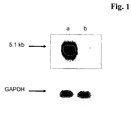
- Figure 1
- Differential expression of UKW mRNA in pancreatic tumor cell
lines SUIT-2 007 and SUIT-2 028 analyzed by Northern blot
analysis.
(a: pancreatic tumor cell line SUIT-2 007; b: pancreatic tumor cell line SUIT-2 028) - Figure 2
- Multiple Tissue Expression (MTE™) Array (Clontech, Palo Alto, CA, USA). This array contains normalized loadings of poly A+-RNA from 76 different tissues as well as control RNA's and DNA's and enables to screen for the presence and relative abundance of a target mRNA in a broad spectrum of fetal and adult tissues. H6 corresponds to 1 µg total RNA from pancreatic tumor cell line SUIT-2 007. The code is revealed below.
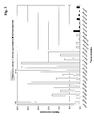
- Figure 3
- Relative expression (Taqman© -PCR) of mRNA in samples derived from adenocarcinomas of the pancreas (PaCa), chronic pancreatitis (ChronPa) and normal pancreatic tissues (NorPA).
- Figure 4
- Relative expression of UKW mRNA in invasive and non-invasive pancreatic tumor cell lines.
- Figure 5
- Relative expression of UKW mRNA in invasive and non-invasive mammary tumor cell lines.
- 10 µg of total RNA from SUIT-2 007 and SUIT-2 028 cell lines were loaded side by side on a
denaturing 1% agarose formaldehyde gel and size-separated by electrophoresis. Blotting to BrightStar-Plus TM positively charged nylon membrane was performed by capillary downward transfer. After UV-crosslinking (Stratagene UV Stratalinker 2400) the blot was hybridized. The RT-PCR product was labeled with α-[32P]dATP to a specific activity of 2x10⁹ cpm/µg using the Strip-EZTM DNA Kit (Ambion Inc., Austin, Texas). Pre-hybridization (30 min) and hybridization (over-night) with the radioactive probe was performed in ExpressHybTM Hybridization Solution (Clontech, Palo Alto, CA, USA) at 68°C. The membrane was washed in solution 1 (2x SSC, 0.05% SDS) at room temperature for 30-40 min with continuous agitation and several replacements of thewash solution 1 followed by a washing step with solution 2 (0.1 x SSC, 0.1% SDS) at 50°C for 40 min with one change of fresh solution. The membrane was then exposed to Cronex, Medical X-Ray Films (Sterling Diagnostic Imaging Inc., USA) at -70°C for 2 h. Equal loading and transfer of mRNA to the membrane was assessed by rehybridizing the blot with α-[32P]dATP-labeled GAPDH cDNA probe. - The blot was hybridized with an α-[32P]dATP labeled probe derived from UKW cDNA according to the instructions of the manufacturer and exposed to X-ray film at -70°C for 62 h.
- Real-time quantitative PCRs were performed with the TaqMan® technology and the ABI PRISM 7700 apparatus (Applied Biosystems, Foster City, CA). 10 µg total RNA isolated from frozen adenocarcinomas of the pancreas, chronic pancreatitis and normal pancreatic tissues were used for reverse transcriptase reactions in a volume of 20 µl. The PCRs were then carried out by mixing 200 ng cDNA with 4µl of 10x SYBR-Green buffer, 3 mM MgCl2, 1 mM dNTDs, 0.2 units Uracil-N Glycosylase, 1 unit AmpliTaq Gold, 4µl primer mix (300 nM each primer: forward 5'TTCTCTTTGACAGGTTCTGGGC3' (SEQ ID NO:3); reverse 5'GGTTGGAACCAGTAGGGCCTC3') (SEQ ID NO:4) in a final volume of 40 µl. PCR primers were designed to generate a DNA fragment of 50 bp using the Primer Express Software (PE Biosystems, CA, USA). The amplification cycles were as follows: 2 min at 50°C followed by 10 min at 95°C and 40 amplification cycles (95°C for 15 sec and 60°C for 60 sec). These experiments were performed twice. The results were calculated by subtraction of gene UKW and housekeeping gene RNA steady-state levels for each sample. Each value was divided by the averaged steady-state level of UKW mRNA of three healthy tissues. Ratios were squared and a reciprocal value was formed.
-


- LightCycler-PCR was performed with a LightCycler (Roche Molecular Biochemicals, Mannheim, Germany) in LightCycler capillaries using a commercially available master mix containing Taq DNA polymerase, SYBR-Green I, deoxyribonucleoside triphosphates (LightCycler DNA master SYBR-Green I, Roche Molecular Biochemicals). After addition of primers (forward 5'CCCCAGGAGTTTATGCTTGG3' (SEQ ID NO:7); reverse 5'GCCTGGATACCACACTACCAG3' (SEQ ID NO:8); final concentration: 0.5 µM), MgCl2 (3 mM) and template DNA to the master mix, 37 cycles of denaturation (95°C for 1 sec), annealing (58°C for 5 sec) and extension (72°C for 8 sec) were performed. All temperature transition rates were set to 20°C per sec. After completion of PCR amplification, melting curve analysis was performed. For this procedure, PCR products were denatured at 95°C, annealed at 65°C, and gradually heated to 95°C. SYBR-Green I fluorescence was monitored stepwise every 0.1°C. The melting curve was analyzed by visual inspection, amplified UKW gene rearranged structures were melting at 85-88°C. To control for primer dimer formation a control without template DNA ('water control') was included in each experiment. A small peak was usually visible at 78°C, which could be differentiated from the peak caused by the specific amplification product at 85-88°C. Calibration curve for calnexin was generated using serial dilutions (1:10, 1:50 and 1:80) of cDNA from pancreatic cancer cell line Suit-2 007. The relative amounts of UKW cDNA and calnexin were determined based on a calibration curve. Relative expression of gene UKW was calculated as a normalized value generated by dividing the steady-state levels of gene UKW and calnexin for each sample. Calnexin forward primer 5'ATTGTCAGATCGTTCATTGC3' (SEQ ID NO:9); reverse primer 5'ATGGAACAGGTAACCAGCAT3' (SEQ ID NO:10).
- For immunization the peptides aa 167-182 and aa 306-320 (SEQ ID NO:2) were synthesized and coupled to a carrier molecule. Immunization of two rabbits with the mix of the peptides.
-
- Day 0: Taking of pre-immune serum followed by the first immunization
- Day 14: Second immunization
- Day 28: Third immunization
- Day 38: Blood sampling
- Day 56: Fourth immunization
- Day 66: Blood sampling
- Day 80: Complete bleeding
-
- The antiserum recovered was purified by affinity chromatography.
-
- Alves, F., et al., Pancreas 23 (2001) 227-235
- Ausubel I., Frederick M., Current Protocols in Mol. Biol. (1992), John Wiley and Sons, New York
- Baines et al., "Purification of Immunoglobulin G (IgG)", In: Methods in Molecular Biology, Vol. 10, pages 79-104, The Humana Press, Inc., 1992
- Büttner, R., et al., Mol. Cell. Biol. 11 (1991) 3573-3583
- Coligan et al. (eds.), Current Protocols in Immunology, pp. 9.3.1-9.3.5 and pp. 9.4.1-9.4.11, John Wiley & Sons, 1997
- Elsasser, H.P., et al., Virchows Arch. B Cell Pathol. Incl. Mol. Pathol. 64 (1993) 201-207
- EP-
A 0 063 879 - EP-
A 0 128 018 - EP-
A 0 173 251 - EP-
A 0 200 362 - Gennaro (ed.), Remington's Pharmaceutical Sciences, 19th edition, Mack Publishing Company, 1995
- Gibson, J.B., and Sobin, L.H., Histological typing of tumors of the liver, biliary tract and pancreas, WHO, Geneva, 1978
- Green, L.L., et al., Nat. Genet. 7 (1994) 13-21
- Hames, B.D., Higgins, S.G., Nucleic Acid Hybridisation - A Practical Approach (1985) IRL Press, Oxford, England
- Kroep, J.R., et al., Ann. Oncol. 10, Suppl. 4 (1999) 234-238
- Lonberg, N., et al., Nature 368 (1994) 856-859
- Mole, "Epitope Mapping", In: Methods in Molecular Biology, Vol. 10, Manson (ed.), pages 105-116, The Humana Press, Inc., 1992
- Morris (ed.), Epitope Mapping Protocols 25, Humane Press, Inc., 1996
- Price, "Production and Characterization of Synthetic Peptide-Derived Antibodies", In: Monoclonal Antibodies: Production, Engineering, and Clinical Application, Ritter and Ladyman (eds.), pp. 60-84, Cambridge University Press, 1995
- Sambrook et al., Molecular Cloning: A Laboratory Manual (1989) Cold Spring Harbor Laboratory Press, New York, USA
- Shaper, N.L., et al., J. Mammary Gland Biol. Neoplasia 3 (1998) 315-324
- Taniguchi, S., et al., Clin. Exp. Metastasis 10 (1992) 259-266
- Taylor, L.D., et al., Int. Immun. 6 (1994) 579-591
- Tong, D., et al., Breast Cancer Res. Treat. 56 (1999) 91-97
- US 2,915,082
- Wahl, G.M., et al., Proc. Natl. Acad. Sci. USA 76 (1979) 3683-3687
- Warshau, A.L., and Fernandez-del, C.C., N. Engl. J. Med. 326 (1992) 4555-4565
- Wenger, C., et al., Oncogene 18 (1999) 1073-1080
- WO 02/08288
- WO 89/06698
- Wu, Y.Y., and Rees, J.L., Acta Derm. Venereol. 80 (2000) 2-3
-
| Pancreatic tumor cell lines | Suit-2 0071 |
| MiaPaca-2, ATCC CRL 1420 | |
| AsPC1, ATCC CRL 1682 | |
| BxPC-3, ATCC CRL 1687 | |
| Capan-1, ATCC HTB79 | |
| IMIM-PC-1 | |
| IMIM-PC-2 | |
| Panc-1, ATCC CRL 1469 | |
| Suit-2 028 | |
| Capan-2, | |
| Patu | |
| 8902 | |
| |
|
| |
|
| Mammary tumor cell lines | BT-549, ATCC HTB 122 |
| Hs578T, ATCC HTB126 | |
| MCF-10A, ATCC CRL 10317 | |
| MCF-12A, ATCC CRL 10782 | |
| MDA-MB-436 | |
| MDA-MB-231, ATCC 45518 | |
| MDA-MB-435, ATCC 45526 | |
| MDA-MB-157, ATCC HTB24 | |
| BT-20, ATCC HTB19 | |
| BT-483, ATCC HTB 121 | |
| CAMA-1, ATCC HTB-21 | |
| Du4475, DSM ACC427 | |
| MCF-7, ATCC HTB22 | |
| MDA-MB-175, ATCC 45516 | |
| MDA-MB-361, ATCC HTB27 | |
| MDA-MB-453, DSM ACC65 | |
| SK-BR-3, ATCC 45520 | |
| T47D, ATCC HTB133 | |
| UCAA-812 | |
| ZR-75-1, ATCC CRL 1500 | |
| ZR-75-30, ATCC CRL 1504 |


Claims (13)
- Method for determining the presence or absence of pancreatic cancer in a patient comprising(i) obtaining a biological sample from a patient;(ii) detecting in the sample an amount of nucleic acid encoding UKW or an amount of polypeptide UKW; and(iii) comparing the amount of nucleic acid or polypeptide with a predetermined standard value indicating the decision line for tumor-induced or non-tumor-induced UKW expression or presence in the cell and therefrom determining the presence or absence of pancreatic cancer in the patient.
- Process for determining whether or not a test sample of tissue or fluid of a patient contains pancreatic tumor cells or is derived from pancreatic tumor cells, wherein the test sample and a second sample originating from non-pancreatic-tumor cells from the same individual or a different individual of the same species are used, which process comprises the following steps:(a) incubating each respective sample under stringent hybridization conditions with a nucleic acid probe which is selected from the group consisting of:(i) a nucleic acid sequence of SEQ ID NO: 1, or a fragment thereof;(ii) a nucleic acid sequence which is complementary to any nucleic acid sequence of (i);(iii) a nucleic acid sequence which hybridizes under stringent conditions with the sequence of (i); and(iv) a nucleic acid sequence which hybridizes under stringent conditions with the sequence of (ii); and(b) determining the approximate amount of hybridization of each respective sample with said probe, and(c) comparing the approximate amount of hybridization of the test sample to an approximate amount of hybridization of said second sample to identify whether or not the test sample contains a greater amount of the specific nucleic acid or mixture of nucleic acids than does said second sample.
- Method for the detection of pancreatic tumor, comprisinga) incubating a sample of a patient suspected of suffering from pancreatic cancer, selected from the group of body fluid, of cells, or of a cell extract or cell culture supernatants of said cells, whereby said sample contains nucleic acids with a nucleic acid probe which is selected from the group consisting of(i) the nucleic acid shown in SEQ ID NO:1 or a nucleic acid which is complementary to said sequence, and(ii) nucleic acids which hybridize with one of the nucleic acids from(i) andb) detecting hybridization, preferably by means of a further binding partner of the nucleic acid of the sample and/or the nucleic acid probe or by X-ray radiography.
- A screening method for identifying a compound which inhibits the biological activity of the UKW polypeptide comprising:contacting said polypeptide with a compound or a plurality of compounds under conditions which allow interaction of said compound with said polypeptide; anddetecting the interaction between said compound or plurality of compounds with said polypeptide.
- A screening method for identifying a compound which either inhibits the biological activity of the UKW polypeptide or inhibits the transcription or translation of the UKW gene, comprising:contacting said compound or plurality of said compounds with a host cell in which invasiveness is mediated by expression of UKW; anddetecting the interaction between said compound or plurality of compounds with said host cell.
- The screening method according to claim 5, wherein the detection of the interaction between said compound or plurality of compounds with said host cell is measured by at least one of a change in cell physiology, a change in the differentiation state, and a change in cell metabolism leading to an increase of proliferation.
- A screening method for identifying a compound which is an an antagonist of a UKW polypeptide comprising:contacting said UKW polypeptide with a compound under conditions which allow interaction of said compound with said polypeptide;determining a first level of activity of said polypeptide;determining a second level of activity of said polypeptide expressed in a host which has not been contacted with said compound; andquantitatively relating the first level of activity with the second level of activity, wherein when said first level of activity is less than said second level of activity, said compound is identified as an antagonist of said polypeptide.
- An antibody against the UKW polypeptide of SEQ ID NO:2.
- Use of an antibody according to claim 8 in the manufacture of a composition for inhibiting the proliferation and/or invasive potential of pancreatic tumor cells.
- Use according to claim 9, wherein the composition is administered to cell cultures in vitro.
- Use according to claim 9, wherein the composition is a pharmaceutical composition and wherein the pharmaceutical composition is administered to a mammalian subject suffering from a pancreatic tumor.
- A pharmaceutical composition for inhibiting the proliferation and/or invasive potential of pancreatic tumor cells comprising:an antibody that binds to the polypeptide UKW of the sequence SEQ ID NO:2; and a pharmaceutically acceptable carrier.
- A kit for for the diagnosis of a pancreatic tumor comprising the antibody of claim 8.
Priority Applications (1)
| Application Number | Priority Date | Filing Date | Title |
|---|---|---|---|
| EP03024982A EP1416279B1 (en) | 2002-10-31 | 2003-10-29 | Methods for diagnosis of pancreatic cancer and composition useful therein |
Applications Claiming Priority (3)
| Application Number | Priority Date | Filing Date | Title |
|---|---|---|---|
| EP02024539 | 2002-10-31 | ||
| EP02024539 | 2002-10-31 | ||
| EP03024982A EP1416279B1 (en) | 2002-10-31 | 2003-10-29 | Methods for diagnosis of pancreatic cancer and composition useful therein |
Publications (2)
| Publication Number | Publication Date |
|---|---|
| EP1416279A1 true EP1416279A1 (en) | 2004-05-06 |
| EP1416279B1 EP1416279B1 (en) | 2008-12-31 |
Family
ID=32405681
Family Applications (1)
| Application Number | Title | Priority Date | Filing Date |
|---|---|---|---|
| EP03024982A Expired - Lifetime EP1416279B1 (en) | 2002-10-31 | 2003-10-29 | Methods for diagnosis of pancreatic cancer and composition useful therein |
Country Status (6)
| Country | Link |
|---|---|
| US (2) | US7429452B2 (en) |
| EP (1) | EP1416279B1 (en) |
| JP (2) | JP4394924B2 (en) |
| AT (1) | ATE419533T1 (en) |
| DE (1) | DE60325541D1 (en) |
| ES (1) | ES2318079T3 (en) |
Cited By (2)
| Publication number | Priority date | Publication date | Assignee | Title |
|---|---|---|---|---|
| WO2006022690A1 (en) * | 2004-08-06 | 2006-03-02 | Applera Corporation | Method and compositions for treating diseases targeting cd71 |
| WO2006038904A3 (en) * | 2004-08-06 | 2006-05-26 | Applera Corp | Method and compositions for treating diseases targeting e-cadherin |
Families Citing this family (12)
| Publication number | Priority date | Publication date | Assignee | Title |
|---|---|---|---|---|
| US11001881B2 (en) | 2006-08-24 | 2021-05-11 | California Institute Of Technology | Methods for detecting analytes |
| US8048626B2 (en) * | 2006-07-28 | 2011-11-01 | California Institute Of Technology | Multiplex Q-PCR arrays |
| US11525156B2 (en) | 2006-07-28 | 2022-12-13 | California Institute Of Technology | Multiplex Q-PCR arrays |
| US11560588B2 (en) | 2006-08-24 | 2023-01-24 | California Institute Of Technology | Multiplex Q-PCR arrays |
| WO2008117067A2 (en) | 2007-03-27 | 2008-10-02 | Carl Arne Krister Borrebaeck | Protein signature/markers for the detection of adenocarcinoma |
| US8538733B2 (en) | 2008-01-25 | 2013-09-17 | Life Technologies Corporation | Methods for the analysis of dissociation melt curve data |
| US9708647B2 (en) | 2015-03-23 | 2017-07-18 | Insilixa, Inc. | Multiplexed analysis of nucleic acid hybridization thermodynamics using integrated arrays |
| US9499861B1 (en) | 2015-09-10 | 2016-11-22 | Insilixa, Inc. | Methods and systems for multiplex quantitative nucleic acid amplification |
| WO2017155858A1 (en) | 2016-03-07 | 2017-09-14 | Insilixa, Inc. | Nucleic acid sequence identification using solid-phase cyclic single base extension |
| GB201608192D0 (en) * | 2016-05-10 | 2016-06-22 | Immunovia Ab | Method, array and use thereof |
| JP7687957B2 (en) | 2019-03-14 | 2025-06-03 | インシリクサ, インコーポレイテッド | Methods and systems for time-gated fluorescence-based detection |
| GB202010970D0 (en) | 2020-07-16 | 2020-09-02 | Immunovia Ab | Methods, arrays and uses thereof |
Citations (3)
| Publication number | Priority date | Publication date | Assignee | Title |
|---|---|---|---|---|
| EP0279669A2 (en) * | 1987-02-19 | 1988-08-24 | Scripps Clinic And Research Foundation | Cell surface marker of human pancreatic carcinoma cells |
| WO2002008288A2 (en) * | 2000-07-20 | 2002-01-31 | Genentech, Inc. | Secreted and transmembrane polypeptides and nucleic acids encoding the same |
| US20020081659A1 (en) * | 1999-03-12 | 2002-06-27 | Rosen Craig A. | Nucleic acids, proteins and antibodies |
Family Cites Families (2)
| Publication number | Priority date | Publication date | Assignee | Title |
|---|---|---|---|---|
| US81659A (en) * | 1868-09-01 | m ax i mi | ||
| US5912143A (en) * | 1996-12-27 | 1999-06-15 | Incyte Pharmaceuticals, Inc. | Polynucleotides encoding a human mage protein homolog |
-
2003
- 2003-10-29 DE DE60325541T patent/DE60325541D1/en not_active Expired - Lifetime
- 2003-10-29 AT AT03024982T patent/ATE419533T1/en not_active IP Right Cessation
- 2003-10-29 US US10/696,487 patent/US7429452B2/en not_active Expired - Fee Related
- 2003-10-29 ES ES03024982T patent/ES2318079T3/en not_active Expired - Lifetime
- 2003-10-29 EP EP03024982A patent/EP1416279B1/en not_active Expired - Lifetime
- 2003-10-31 JP JP2003371406A patent/JP4394924B2/en not_active Expired - Fee Related
-
2008
- 2008-04-24 US US12/150,089 patent/US20090136939A1/en not_active Abandoned
-
2009
- 2009-09-01 JP JP2009201213A patent/JP2009284907A/en not_active Withdrawn
Patent Citations (3)
| Publication number | Priority date | Publication date | Assignee | Title |
|---|---|---|---|---|
| EP0279669A2 (en) * | 1987-02-19 | 1988-08-24 | Scripps Clinic And Research Foundation | Cell surface marker of human pancreatic carcinoma cells |
| US20020081659A1 (en) * | 1999-03-12 | 2002-06-27 | Rosen Craig A. | Nucleic acids, proteins and antibodies |
| WO2002008288A2 (en) * | 2000-07-20 | 2002-01-31 | Genentech, Inc. | Secreted and transmembrane polypeptides and nucleic acids encoding the same |
Non-Patent Citations (2)
| Title |
|---|
| TONG DAN ET AL: "Association of in vitro invasiveness and gene expression of estrogen receptor, progesterone receptor, pS2 and plasminogen activator inhibitor-1 in human breast cancer cell lines.", BREAST CANCER RESEARCH AND TREATMENT, vol. 56, no. 1, July 1999 (1999-07-01), pages 91 - 97, XP009009736, ISSN: 0167-6806 * |
| WENGER CHRISTOPH ET AL: "Expression and differential regulation of connective tissue growth factor in pancreatic cancer cells.", ONCOGENE, vol. 18, no. 4, January 1999 (1999-01-01), pages 1073 - 1080, XP009009737, ISSN: 0950-9232 * |
Cited By (2)
| Publication number | Priority date | Publication date | Assignee | Title |
|---|---|---|---|---|
| WO2006022690A1 (en) * | 2004-08-06 | 2006-03-02 | Applera Corporation | Method and compositions for treating diseases targeting cd71 |
| WO2006038904A3 (en) * | 2004-08-06 | 2006-05-26 | Applera Corp | Method and compositions for treating diseases targeting e-cadherin |
Also Published As
| Publication number | Publication date |
|---|---|
| JP2009284907A (en) | 2009-12-10 |
| EP1416279B1 (en) | 2008-12-31 |
| ATE419533T1 (en) | 2009-01-15 |
| DE60325541D1 (en) | 2009-02-12 |
| US20040110219A1 (en) | 2004-06-10 |
| ES2318079T3 (en) | 2009-05-01 |
| JP2004147656A (en) | 2004-05-27 |
| JP4394924B2 (en) | 2010-01-06 |
| US7429452B2 (en) | 2008-09-30 |
| US20090136939A1 (en) | 2009-05-28 |
Similar Documents
| Publication | Publication Date | Title |
|---|---|---|
| US20090136939A1 (en) | Methods for diagnosis and therapy for pancreatic cancer and composition useful therein | |
| MX2011001445A (en) | METHOD FOR DETECTING CANCER. | |
| CA2249618A1 (en) | Method for molecular diagnosis of tumor angiogenesis and metastasis | |
| JP2005510734A (en) | Diagnosis and treatment method of epithelial induced cancer | |
| Pyle-Chenault et al. | VSGP/F-spondin: a new ovarian cancer marker | |
| KR102180982B1 (en) | ADM2 gene marker for predicting diagnosis or prognosis of thyroid cancer and uses thereof | |
| AU2008296927B2 (en) | Methods for diagnosing and treating cancers | |
| JP2004513074A (en) | Diagnostic and therapeutic methods based on L1 adhesion molecules for ovarian and endometrial tumors | |
| JP5145549B2 (en) | Tumor marker | |
| EP1621637A1 (en) | ppGalNac-T6 mRNA or peptide as a new marker for the detection of cancer cells | |
| US7928188B2 (en) | Antigen polypeptide for the diagnosis and/or treatment of ovarian cancer | |
| JP4923252B2 (en) | Cancer determination method and cancer diagnostic kit | |
| EP1503212B1 (en) | Methods for diagnosis and therapy of metastasis and composition useful therein | |
| US20050032101A1 (en) | Methods for diagnosis and therapy of cancer and composition useful therein | |
| HK40076464A (en) | Biomarkers for predicting the response to checkpoint inhibitors | |
| WO2007050798A2 (en) | Lrrtm1 compositions and methods of their use for the diagnosis and treatment of cancer | |
| US20090214540A1 (en) | Protein involved in cancer | |
| CN115485559A (en) | Biomarkers to Predict Response to Checkpoint Inhibitors | |
| GB2455634A (en) | Treatment of cancer | |
| TW201632202A (en) | Breast cancer treatment | |
| HK1165482A (en) | In tumours differentially expressed gene products and use of the same | |
| EP1395830A2 (en) | Bcmp-101, a cancer associated protein |
Legal Events
| Date | Code | Title | Description |
|---|---|---|---|
| PUAI | Public reference made under article 153(3) epc to a published international application that has entered the european phase |
Free format text: ORIGINAL CODE: 0009012 |
|
| AK | Designated contracting states |
Kind code of ref document: A1 Designated state(s): AT BE BG CH CY CZ DE DK EE ES FI FR GB GR HU IE IT LI LU MC NL PT RO SE SI SK TR |
|
| AX | Request for extension of the european patent |
Extension state: AL LT LV MK |
|
| 17P | Request for examination filed |
Effective date: 20041108 |
|
| AKX | Designation fees paid |
Designated state(s): AT BE BG CH CY CZ DE DK EE ES FI FR GB GR HU IE IT LI LU MC NL PT RO SE SI SK TR |
|
| 17Q | First examination report despatched |
Effective date: 20060412 |
|
| GRAP | Despatch of communication of intention to grant a patent |
Free format text: ORIGINAL CODE: EPIDOSNIGR1 |
|
| RTI1 | Title (correction) |
Free format text: METHODS FOR DIAGNOSIS OF PANCREATIC CANCER AND COMPOSITION USEFUL THEREIN |
|
| GRAS | Grant fee paid |
Free format text: ORIGINAL CODE: EPIDOSNIGR3 |
|
| GRAA | (expected) grant |
Free format text: ORIGINAL CODE: 0009210 |
|
| AK | Designated contracting states |
Kind code of ref document: B1 Designated state(s): AT BE BG CH CY CZ DE DK EE ES FI FR GB GR HU IE IT LI LU MC NL PT RO SE SI SK TR |
|
| REG | Reference to a national code |
Ref country code: CH Ref legal event code: EP Ref country code: GB Ref legal event code: FG4D |
|
| REF | Corresponds to: |
Ref document number: 60325541 Country of ref document: DE Date of ref document: 20090212 Kind code of ref document: P |
|
| REG | Reference to a national code |
Ref country code: IE Ref legal event code: FG4D |
|
| REG | Reference to a national code |
Ref country code: ES Ref legal event code: FG2A Ref document number: 2318079 Country of ref document: ES Kind code of ref document: T3 |
|
| PG25 | Lapsed in a contracting state [announced via postgrant information from national office to epo] |
Ref country code: NL Free format text: LAPSE BECAUSE OF FAILURE TO SUBMIT A TRANSLATION OF THE DESCRIPTION OR TO PAY THE FEE WITHIN THE PRESCRIBED TIME-LIMIT Effective date: 20081231 Ref country code: SI Free format text: LAPSE BECAUSE OF FAILURE TO SUBMIT A TRANSLATION OF THE DESCRIPTION OR TO PAY THE FEE WITHIN THE PRESCRIBED TIME-LIMIT Effective date: 20081231 Ref country code: FI Free format text: LAPSE BECAUSE OF FAILURE TO SUBMIT A TRANSLATION OF THE DESCRIPTION OR TO PAY THE FEE WITHIN THE PRESCRIBED TIME-LIMIT Effective date: 20081231 |
|
| NLV1 | Nl: lapsed or annulled due to failure to fulfill the requirements of art. 29p and 29m of the patents act | ||
| PG25 | Lapsed in a contracting state [announced via postgrant information from national office to epo] |
Ref country code: EE Free format text: LAPSE BECAUSE OF FAILURE TO SUBMIT A TRANSLATION OF THE DESCRIPTION OR TO PAY THE FEE WITHIN THE PRESCRIBED TIME-LIMIT Effective date: 20081231 Ref country code: RO Free format text: LAPSE BECAUSE OF FAILURE TO SUBMIT A TRANSLATION OF THE DESCRIPTION OR TO PAY THE FEE WITHIN THE PRESCRIBED TIME-LIMIT Effective date: 20081231 Ref country code: BE Free format text: LAPSE BECAUSE OF FAILURE TO SUBMIT A TRANSLATION OF THE DESCRIPTION OR TO PAY THE FEE WITHIN THE PRESCRIBED TIME-LIMIT Effective date: 20081231 |
|
| PG25 | Lapsed in a contracting state [announced via postgrant information from national office to epo] |
Ref country code: CZ Free format text: LAPSE BECAUSE OF FAILURE TO SUBMIT A TRANSLATION OF THE DESCRIPTION OR TO PAY THE FEE WITHIN THE PRESCRIBED TIME-LIMIT Effective date: 20081231 Ref country code: SE Free format text: LAPSE BECAUSE OF FAILURE TO SUBMIT A TRANSLATION OF THE DESCRIPTION OR TO PAY THE FEE WITHIN THE PRESCRIBED TIME-LIMIT Effective date: 20090331 Ref country code: PT Free format text: LAPSE BECAUSE OF FAILURE TO SUBMIT A TRANSLATION OF THE DESCRIPTION OR TO PAY THE FEE WITHIN THE PRESCRIBED TIME-LIMIT Effective date: 20090601 Ref country code: AT Free format text: LAPSE BECAUSE OF FAILURE TO SUBMIT A TRANSLATION OF THE DESCRIPTION OR TO PAY THE FEE WITHIN THE PRESCRIBED TIME-LIMIT Effective date: 20081231 |
|
| PG25 | Lapsed in a contracting state [announced via postgrant information from national office to epo] |
Ref country code: SK Free format text: LAPSE BECAUSE OF FAILURE TO SUBMIT A TRANSLATION OF THE DESCRIPTION OR TO PAY THE FEE WITHIN THE PRESCRIBED TIME-LIMIT Effective date: 20081231 |
|
| PG25 | Lapsed in a contracting state [announced via postgrant information from national office to epo] |
Ref country code: DK Free format text: LAPSE BECAUSE OF FAILURE TO SUBMIT A TRANSLATION OF THE DESCRIPTION OR TO PAY THE FEE WITHIN THE PRESCRIBED TIME-LIMIT Effective date: 20081231 |
|
| PLBE | No opposition filed within time limit |
Free format text: ORIGINAL CODE: 0009261 |
|
| STAA | Information on the status of an ep patent application or granted ep patent |
Free format text: STATUS: NO OPPOSITION FILED WITHIN TIME LIMIT |
|
| 26N | No opposition filed |
Effective date: 20091001 |
|
| PG25 | Lapsed in a contracting state [announced via postgrant information from national office to epo] |
Ref country code: BG Free format text: LAPSE BECAUSE OF FAILURE TO SUBMIT A TRANSLATION OF THE DESCRIPTION OR TO PAY THE FEE WITHIN THE PRESCRIBED TIME-LIMIT Effective date: 20090331 |
|
| PG25 | Lapsed in a contracting state [announced via postgrant information from national office to epo] |
Ref country code: MC Free format text: LAPSE BECAUSE OF NON-PAYMENT OF DUE FEES Effective date: 20091031 |
|
| PG25 | Lapsed in a contracting state [announced via postgrant information from national office to epo] |
Ref country code: IE Free format text: LAPSE BECAUSE OF NON-PAYMENT OF DUE FEES Effective date: 20091029 Ref country code: GR Free format text: LAPSE BECAUSE OF FAILURE TO SUBMIT A TRANSLATION OF THE DESCRIPTION OR TO PAY THE FEE WITHIN THE PRESCRIBED TIME-LIMIT Effective date: 20090401 |
|
| PGFP | Annual fee paid to national office [announced via postgrant information from national office to epo] |
Ref country code: FR Payment date: 20101004 Year of fee payment: 8 |
|
| PGFP | Annual fee paid to national office [announced via postgrant information from national office to epo] |
Ref country code: GB Payment date: 20100923 Year of fee payment: 8 |
|
| PGFP | Annual fee paid to national office [announced via postgrant information from national office to epo] |
Ref country code: CH Payment date: 20101026 Year of fee payment: 8 Ref country code: DE Payment date: 20101029 Year of fee payment: 8 |
|
| PGFP | Annual fee paid to national office [announced via postgrant information from national office to epo] |
Ref country code: IT Payment date: 20101021 Year of fee payment: 8 |
|
| PG25 | Lapsed in a contracting state [announced via postgrant information from national office to epo] |
Ref country code: LU Free format text: LAPSE BECAUSE OF NON-PAYMENT OF DUE FEES Effective date: 20091029 |
|
| PG25 | Lapsed in a contracting state [announced via postgrant information from national office to epo] |
Ref country code: HU Free format text: LAPSE BECAUSE OF FAILURE TO SUBMIT A TRANSLATION OF THE DESCRIPTION OR TO PAY THE FEE WITHIN THE PRESCRIBED TIME-LIMIT Effective date: 20090701 |
|
| PGFP | Annual fee paid to national office [announced via postgrant information from national office to epo] |
Ref country code: ES Payment date: 20101007 Year of fee payment: 8 |
|
| PG25 | Lapsed in a contracting state [announced via postgrant information from national office to epo] |
Ref country code: TR Free format text: LAPSE BECAUSE OF FAILURE TO SUBMIT A TRANSLATION OF THE DESCRIPTION OR TO PAY THE FEE WITHIN THE PRESCRIBED TIME-LIMIT Effective date: 20081231 |
|
| PG25 | Lapsed in a contracting state [announced via postgrant information from national office to epo] |
Ref country code: CY Free format text: LAPSE BECAUSE OF FAILURE TO SUBMIT A TRANSLATION OF THE DESCRIPTION OR TO PAY THE FEE WITHIN THE PRESCRIBED TIME-LIMIT Effective date: 20081231 |
|
| REG | Reference to a national code |
Ref country code: CH Ref legal event code: PL |
|
| GBPC | Gb: european patent ceased through non-payment of renewal fee |
Effective date: 20111029 |
|
| REG | Reference to a national code |
Ref country code: FR Ref legal event code: ST Effective date: 20120629 |
|
| PG25 | Lapsed in a contracting state [announced via postgrant information from national office to epo] |
Ref country code: CH Free format text: LAPSE BECAUSE OF NON-PAYMENT OF DUE FEES Effective date: 20111031 Ref country code: LI Free format text: LAPSE BECAUSE OF NON-PAYMENT OF DUE FEES Effective date: 20111031 Ref country code: DE Free format text: LAPSE BECAUSE OF NON-PAYMENT OF DUE FEES Effective date: 20120501 |
|
| REG | Reference to a national code |
Ref country code: DE Ref legal event code: R119 Ref document number: 60325541 Country of ref document: DE Effective date: 20120501 |
|
| PG25 | Lapsed in a contracting state [announced via postgrant information from national office to epo] |
Ref country code: IT Free format text: LAPSE BECAUSE OF NON-PAYMENT OF DUE FEES Effective date: 20111029 Ref country code: GB Free format text: LAPSE BECAUSE OF NON-PAYMENT OF DUE FEES Effective date: 20111029 Ref country code: FR Free format text: LAPSE BECAUSE OF NON-PAYMENT OF DUE FEES Effective date: 20111102 |
|
| REG | Reference to a national code |
Ref country code: ES Ref legal event code: FD2A Effective date: 20130606 |
|
| PG25 | Lapsed in a contracting state [announced via postgrant information from national office to epo] |
Ref country code: ES Free format text: LAPSE BECAUSE OF NON-PAYMENT OF DUE FEES Effective date: 20111030 |