EP1409032B1 - Bone cement containing coated radiopaque particles and its preparation - Google Patents
Bone cement containing coated radiopaque particles and its preparation Download PDFInfo
- Publication number
- EP1409032B1 EP1409032B1 EP02735681A EP02735681A EP1409032B1 EP 1409032 B1 EP1409032 B1 EP 1409032B1 EP 02735681 A EP02735681 A EP 02735681A EP 02735681 A EP02735681 A EP 02735681A EP 1409032 B1 EP1409032 B1 EP 1409032B1
- Authority
- EP
- European Patent Office
- Prior art keywords
- bone cement
- particles
- polymer
- solid phase
- acrylic
- Prior art date
- Legal status (The legal status is an assumption and is not a legal conclusion. Google has not performed a legal analysis and makes no representation as to the accuracy of the status listed.)
- Expired - Lifetime
Links
- 239000002639 bone cement Substances 0.000 title claims abstract description 54
- 239000002245 particle Substances 0.000 title claims abstract description 31
- 238000002360 preparation method Methods 0.000 title abstract description 5
- -1 poly(methyl acrylate) Polymers 0.000 claims abstract description 63
- 229920003229 poly(methyl methacrylate) Polymers 0.000 claims abstract description 36
- 239000004926 polymethyl methacrylate Substances 0.000 claims abstract description 36
- 229920000642 polymer Polymers 0.000 claims abstract description 35
- 239000007790 solid phase Substances 0.000 claims abstract description 32
- GUVRBAGPIYLISA-UHFFFAOYSA-N tantalum atom Chemical compound [Ta] GUVRBAGPIYLISA-UHFFFAOYSA-N 0.000 claims abstract description 27
- 239000002923 metal particle Substances 0.000 claims abstract description 24
- 239000000463 material Substances 0.000 claims abstract description 23
- 239000000203 mixture Substances 0.000 claims abstract description 21
- 239000007791 liquid phase Substances 0.000 claims abstract description 20
- 229910052715 tantalum Inorganic materials 0.000 claims abstract description 20
- 238000000034 method Methods 0.000 claims abstract description 16
- 239000011247 coating layer Substances 0.000 claims abstract description 15
- QVGXLLKOCUKJST-UHFFFAOYSA-N atomic oxygen Chemical compound [O] QVGXLLKOCUKJST-UHFFFAOYSA-N 0.000 claims abstract description 14
- 239000001301 oxygen Substances 0.000 claims abstract description 14
- 229910052760 oxygen Inorganic materials 0.000 claims abstract description 14
- WFKWXMTUELFFGS-UHFFFAOYSA-N tungsten Chemical compound [W] WFKWXMTUELFFGS-UHFFFAOYSA-N 0.000 claims abstract description 14
- 229910052721 tungsten Inorganic materials 0.000 claims abstract description 14
- 239000010937 tungsten Substances 0.000 claims abstract description 14
- 239000011159 matrix material Substances 0.000 claims abstract description 12
- 239000011248 coating agent Substances 0.000 claims abstract description 7
- 238000000576 coating method Methods 0.000 claims abstract description 7
- 239000000178 monomer Substances 0.000 claims abstract description 7
- 230000004888 barrier function Effects 0.000 claims abstract description 5
- 150000001875 compounds Chemical class 0.000 claims abstract description 5
- 239000010410 layer Substances 0.000 claims abstract description 5
- 239000003381 stabilizer Substances 0.000 claims abstract description 5
- 239000013543 active substance Substances 0.000 claims abstract description 4
- 239000007870 radical polymerization initiator Substances 0.000 claims abstract description 4
- 229920002319 Poly(methyl acrylate) Polymers 0.000 claims abstract 2
- 239000003522 acrylic cement Substances 0.000 claims description 31
- VVQNEPGJFQJSBK-UHFFFAOYSA-N Methyl methacrylate Chemical compound COC(=O)C(C)=C VVQNEPGJFQJSBK-UHFFFAOYSA-N 0.000 claims description 16
- 229910052751 metal Inorganic materials 0.000 claims description 14
- 239000002184 metal Substances 0.000 claims description 14
- 239000000843 powder Substances 0.000 claims description 13
- 238000002156 mixing Methods 0.000 claims description 7
- 238000006116 polymerization reaction Methods 0.000 claims description 7
- PPBRXRYQALVLMV-UHFFFAOYSA-N Styrene Chemical compound C=CC1=CC=CC=C1 PPBRXRYQALVLMV-UHFFFAOYSA-N 0.000 claims description 6
- 150000002739 metals Chemical class 0.000 claims description 6
- 239000006185 dispersion Substances 0.000 claims description 5
- 229920001688 coating polymer Polymers 0.000 claims description 4
- 239000000956 alloy Substances 0.000 claims description 3
- 229910045601 alloy Inorganic materials 0.000 claims description 3
- 229920001577 copolymer Polymers 0.000 claims description 3
- 229920001490 poly(butyl methacrylate) polymer Polymers 0.000 claims description 3
- 239000002904 solvent Substances 0.000 claims description 3
- 238000001035 drying Methods 0.000 claims description 2
- 230000008020 evaporation Effects 0.000 claims description 2
- 238000001704 evaporation Methods 0.000 claims description 2
- 239000002344 surface layer Substances 0.000 claims description 2
- 239000003960 organic solvent Substances 0.000 claims 1
- 239000000126 substance Substances 0.000 abstract description 10
- NIXOWILDQLNWCW-UHFFFAOYSA-N acrylic acid group Chemical group C(C=C)(=O)O NIXOWILDQLNWCW-UHFFFAOYSA-N 0.000 abstract description 4
- 229920000058 polyacrylate Polymers 0.000 abstract description 3
- 230000000399 orthopedic effect Effects 0.000 abstract 1
- TZCXTZWJZNENPQ-UHFFFAOYSA-L barium sulfate Chemical compound [Ba+2].[O-]S([O-])(=O)=O TZCXTZWJZNENPQ-UHFFFAOYSA-L 0.000 description 34
- QIGBRXMKCJKVMJ-UHFFFAOYSA-N Hydroquinone Chemical compound OC1=CC=C(O)C=C1 QIGBRXMKCJKVMJ-UHFFFAOYSA-N 0.000 description 26
- 239000004342 Benzoyl peroxide Substances 0.000 description 14
- OMPJBNCRMGITSC-UHFFFAOYSA-N Benzoylperoxide Chemical compound C=1C=CC=CC=1C(=O)OOC(=O)C1=CC=CC=C1 OMPJBNCRMGITSC-UHFFFAOYSA-N 0.000 description 14
- 235000019400 benzoyl peroxide Nutrition 0.000 description 14
- GYVGXEWAOAAJEU-UHFFFAOYSA-N n,n,4-trimethylaniline Chemical compound CN(C)C1=CC=C(C)C=C1 GYVGXEWAOAAJEU-UHFFFAOYSA-N 0.000 description 14
- 239000004568 cement Substances 0.000 description 11
- 239000007788 liquid Substances 0.000 description 10
- 230000008901 benefit Effects 0.000 description 7
- RVTZCBVAJQQJTK-UHFFFAOYSA-N oxygen(2-);zirconium(4+) Chemical compound [O-2].[O-2].[Zr+4] RVTZCBVAJQQJTK-UHFFFAOYSA-N 0.000 description 7
- 229910001928 zirconium oxide Inorganic materials 0.000 description 7
- 239000000654 additive Substances 0.000 description 5
- 210000000988 bone and bone Anatomy 0.000 description 5
- 208000037265 diseases, disorders, signs and symptoms Diseases 0.000 description 5
- 208000035475 disorder Diseases 0.000 description 5
- 238000002347 injection Methods 0.000 description 5
- 239000007924 injection Substances 0.000 description 5
- 239000011347 resin Substances 0.000 description 5
- 229920005989 resin Polymers 0.000 description 5
- 238000005452 bending Methods 0.000 description 4
- 230000015572 biosynthetic process Effects 0.000 description 4
- 239000002872 contrast media Substances 0.000 description 4
- 238000005259 measurement Methods 0.000 description 4
- 229910052797 bismuth Inorganic materials 0.000 description 3
- JCXGWMGPZLAOME-UHFFFAOYSA-N bismuth atom Chemical compound [Bi] JCXGWMGPZLAOME-UHFFFAOYSA-N 0.000 description 3
- 230000000694 effects Effects 0.000 description 3
- 238000009472 formulation Methods 0.000 description 3
- 238000011065 in-situ storage Methods 0.000 description 3
- 239000012071 phase Substances 0.000 description 3
- 239000002861 polymer material Substances 0.000 description 3
- 230000001681 protective effect Effects 0.000 description 3
- 238000011477 surgical intervention Methods 0.000 description 3
- 238000012360 testing method Methods 0.000 description 3
- 238000010521 absorption reaction Methods 0.000 description 2
- 230000000996 additive effect Effects 0.000 description 2
- 230000003321 amplification Effects 0.000 description 2
- 239000002131 composite material Substances 0.000 description 2
- 238000007906 compression Methods 0.000 description 2
- 230000006835 compression Effects 0.000 description 2
- 238000000151 deposition Methods 0.000 description 2
- 238000011049 filling Methods 0.000 description 2
- 230000000977 initiatory effect Effects 0.000 description 2
- 238000012544 monitoring process Methods 0.000 description 2
- 210000001640 nerve ending Anatomy 0.000 description 2
- 231100000252 nontoxic Toxicity 0.000 description 2
- 230000003000 nontoxic effect Effects 0.000 description 2
- 238000003199 nucleic acid amplification method Methods 0.000 description 2
- 238000012829 orthopaedic surgery Methods 0.000 description 2
- 150000002978 peroxides Chemical class 0.000 description 2
- BASFCYQUMIYNBI-UHFFFAOYSA-N platinum Chemical compound [Pt] BASFCYQUMIYNBI-UHFFFAOYSA-N 0.000 description 2
- 230000005855 radiation Effects 0.000 description 2
- 150000003839 salts Chemical class 0.000 description 2
- 238000001356 surgical procedure Methods 0.000 description 2
- JRLTTZUODKEYDH-UHFFFAOYSA-N 8-methylquinoline Chemical group C1=CN=C2C(C)=CC=CC2=C1 JRLTTZUODKEYDH-UHFFFAOYSA-N 0.000 description 1
- 239000004925 Acrylic resin Substances 0.000 description 1
- 229920000178 Acrylic resin Polymers 0.000 description 1
- BVKZGUZCCUSVTD-UHFFFAOYSA-L Carbonate Chemical compound [O-]C([O-])=O BVKZGUZCCUSVTD-UHFFFAOYSA-L 0.000 description 1
- 206010028980 Neoplasm Diseases 0.000 description 1
- 206010033799 Paralysis Diseases 0.000 description 1
- QAOWNCQODCNURD-UHFFFAOYSA-L Sulfate Chemical compound [O-]S([O-])(=O)=O QAOWNCQODCNURD-UHFFFAOYSA-L 0.000 description 1
- 239000003708 ampul Substances 0.000 description 1
- 229940035676 analgesics Drugs 0.000 description 1
- 238000004873 anchoring Methods 0.000 description 1
- 239000000730 antalgic agent Substances 0.000 description 1
- 229910052788 barium Inorganic materials 0.000 description 1
- DSAJWYNOEDNPEQ-UHFFFAOYSA-N barium atom Chemical compound [Ba] DSAJWYNOEDNPEQ-UHFFFAOYSA-N 0.000 description 1
- 159000000009 barium salts Chemical class 0.000 description 1
- 239000000560 biocompatible material Substances 0.000 description 1
- 230000037396 body weight Effects 0.000 description 1
- 239000003795 chemical substances by application Substances 0.000 description 1
- 230000003247 decreasing effect Effects 0.000 description 1
- 230000008021 deposition Effects 0.000 description 1
- 239000003814 drug Substances 0.000 description 1
- 238000005538 encapsulation Methods 0.000 description 1
- 230000006870 function Effects 0.000 description 1
- 239000011521 glass Substances 0.000 description 1
- PCHJSUWPFVWCPO-UHFFFAOYSA-N gold Chemical compound [Au] PCHJSUWPFVWCPO-UHFFFAOYSA-N 0.000 description 1
- 229910052737 gold Inorganic materials 0.000 description 1
- 239000010931 gold Substances 0.000 description 1
- 239000007970 homogeneous dispersion Substances 0.000 description 1
- 239000007943 implant Substances 0.000 description 1
- 238000002513 implantation Methods 0.000 description 1
- 230000036512 infertility Effects 0.000 description 1
- 239000003999 initiator Substances 0.000 description 1
- 238000003780 insertion Methods 0.000 description 1
- 230000037431 insertion Effects 0.000 description 1
- PNDPGZBMCMUPRI-UHFFFAOYSA-N iodine Chemical compound II PNDPGZBMCMUPRI-UHFFFAOYSA-N 0.000 description 1
- 230000000670 limiting effect Effects 0.000 description 1
- 150000002736 metal compounds Chemical class 0.000 description 1
- 239000007769 metal material Substances 0.000 description 1
- 239000003094 microcapsule Substances 0.000 description 1
- 238000012986 modification Methods 0.000 description 1
- 230000004048 modification Effects 0.000 description 1
- 230000007659 motor function Effects 0.000 description 1
- 210000005036 nerve Anatomy 0.000 description 1
- BPUBBGLMJRNUCC-UHFFFAOYSA-N oxygen(2-);tantalum(5+) Chemical compound [O-2].[O-2].[O-2].[O-2].[O-2].[Ta+5].[Ta+5] BPUBBGLMJRNUCC-UHFFFAOYSA-N 0.000 description 1
- 230000036961 partial effect Effects 0.000 description 1
- 230000000144 pharmacologic effect Effects 0.000 description 1
- 230000000704 physical effect Effects 0.000 description 1
- 229910052697 platinum Inorganic materials 0.000 description 1
- 229920001483 poly(ethyl methacrylate) polymer Polymers 0.000 description 1
- 239000003505 polymerization initiator Substances 0.000 description 1
- 230000001012 protector Effects 0.000 description 1
- 230000009467 reduction Effects 0.000 description 1
- 230000003014 reinforcing effect Effects 0.000 description 1
- 239000007787 solid Substances 0.000 description 1
- 239000000243 solution Substances 0.000 description 1
- 230000003068 static effect Effects 0.000 description 1
- 229910021653 sulphate ion Inorganic materials 0.000 description 1
- 229910001936 tantalum oxide Inorganic materials 0.000 description 1
- 210000001519 tissue Anatomy 0.000 description 1
- 231100000419 toxicity Toxicity 0.000 description 1
- 230000001988 toxicity Effects 0.000 description 1
- XLYOFNOQVPJJNP-UHFFFAOYSA-N water Substances O XLYOFNOQVPJJNP-UHFFFAOYSA-N 0.000 description 1
- 230000003313 weakening effect Effects 0.000 description 1
Images



Classifications
-
- A—HUMAN NECESSITIES
- A61—MEDICAL OR VETERINARY SCIENCE; HYGIENE
- A61L—METHODS OR APPARATUS FOR STERILISING MATERIALS OR OBJECTS IN GENERAL; DISINFECTION, STERILISATION OR DEODORISATION OF AIR; CHEMICAL ASPECTS OF BANDAGES, DRESSINGS, ABSORBENT PADS OR SURGICAL ARTICLES; MATERIALS FOR BANDAGES, DRESSINGS, ABSORBENT PADS OR SURGICAL ARTICLES
- A61L24/00—Surgical adhesives or cements; Adhesives for colostomy devices
- A61L24/001—Use of materials characterised by their function or physical properties
-
- A—HUMAN NECESSITIES
- A61—MEDICAL OR VETERINARY SCIENCE; HYGIENE
- A61L—METHODS OR APPARATUS FOR STERILISING MATERIALS OR OBJECTS IN GENERAL; DISINFECTION, STERILISATION OR DEODORISATION OF AIR; CHEMICAL ASPECTS OF BANDAGES, DRESSINGS, ABSORBENT PADS OR SURGICAL ARTICLES; MATERIALS FOR BANDAGES, DRESSINGS, ABSORBENT PADS OR SURGICAL ARTICLES
- A61L24/00—Surgical adhesives or cements; Adhesives for colostomy devices
- A61L24/0047—Composite materials, i.e. containing one material dispersed in a matrix of the same or different material
- A61L24/0073—Composite materials, i.e. containing one material dispersed in a matrix of the same or different material with a macromolecular matrix
- A61L24/0089—Composite materials, i.e. containing one material dispersed in a matrix of the same or different material with a macromolecular matrix containing inorganic fillers not covered by groups A61L24/0078 or A61L24/0084
-
- A—HUMAN NECESSITIES
- A61—MEDICAL OR VETERINARY SCIENCE; HYGIENE
- A61L—METHODS OR APPARATUS FOR STERILISING MATERIALS OR OBJECTS IN GENERAL; DISINFECTION, STERILISATION OR DEODORISATION OF AIR; CHEMICAL ASPECTS OF BANDAGES, DRESSINGS, ABSORBENT PADS OR SURGICAL ARTICLES; MATERIALS FOR BANDAGES, DRESSINGS, ABSORBENT PADS OR SURGICAL ARTICLES
- A61L27/00—Materials for grafts or prostheses or for coating grafts or prostheses
- A61L27/14—Macromolecular materials
- A61L27/16—Macromolecular materials obtained by reactions only involving carbon-to-carbon unsaturated bonds
-
- A—HUMAN NECESSITIES
- A61—MEDICAL OR VETERINARY SCIENCE; HYGIENE
- A61L—METHODS OR APPARATUS FOR STERILISING MATERIALS OR OBJECTS IN GENERAL; DISINFECTION, STERILISATION OR DEODORISATION OF AIR; CHEMICAL ASPECTS OF BANDAGES, DRESSINGS, ABSORBENT PADS OR SURGICAL ARTICLES; MATERIALS FOR BANDAGES, DRESSINGS, ABSORBENT PADS OR SURGICAL ARTICLES
- A61L27/00—Materials for grafts or prostheses or for coating grafts or prostheses
- A61L27/40—Composite materials, i.e. containing one material dispersed in a matrix of the same or different material
- A61L27/44—Composite materials, i.e. containing one material dispersed in a matrix of the same or different material having a macromolecular matrix
-
- A—HUMAN NECESSITIES
- A61—MEDICAL OR VETERINARY SCIENCE; HYGIENE
- A61L—METHODS OR APPARATUS FOR STERILISING MATERIALS OR OBJECTS IN GENERAL; DISINFECTION, STERILISATION OR DEODORISATION OF AIR; CHEMICAL ASPECTS OF BANDAGES, DRESSINGS, ABSORBENT PADS OR SURGICAL ARTICLES; MATERIALS FOR BANDAGES, DRESSINGS, ABSORBENT PADS OR SURGICAL ARTICLES
- A61L27/00—Materials for grafts or prostheses or for coating grafts or prostheses
- A61L27/50—Materials characterised by their function or physical properties, e.g. injectable or lubricating compositions, shape-memory materials, surface modified materials
-
- A—HUMAN NECESSITIES
- A61—MEDICAL OR VETERINARY SCIENCE; HYGIENE
- A61L—METHODS OR APPARATUS FOR STERILISING MATERIALS OR OBJECTS IN GENERAL; DISINFECTION, STERILISATION OR DEODORISATION OF AIR; CHEMICAL ASPECTS OF BANDAGES, DRESSINGS, ABSORBENT PADS OR SURGICAL ARTICLES; MATERIALS FOR BANDAGES, DRESSINGS, ABSORBENT PADS OR SURGICAL ARTICLES
- A61L2430/00—Materials or treatment for tissue regeneration
- A61L2430/02—Materials or treatment for tissue regeneration for reconstruction of bones; weight-bearing implants
Definitions
- the present invention relates to the field of bone cements and specifically concerns a radiopaque acrylic bone cement having improved mechanical characteristics and a method for its preparation.
- the bone cement according to the invention is therefore suitable for use advantageously in surgery where the combination of a high degree of radiopacity and notable mechanical strength are required.
- the present invention relates to a bone cement which is suitable in particular for applications in vertebroplasty, cranioplasty, maxillofacial surgery and for fixing prostheses in orthopaedic surgery.
- bone cements composed of a mixture of resins biocompatible with the bone tissues are known and commonly used for stably fixing prostheses of different types in a wide range of locations on the skeleton or for restoring the continuity of tissues.
- the most commonly used resins belong to the acrylic materials.
- the more widely used bone cements are composed of two phases, a liquid phase substantially composed of methyl methacrylate with an addition of N,N-dimethyl-p-toluidine as accelerator and hydroquinone as stabilizer, and a solid phase composed of a dry powder substantially composed of poly(methyl methacrylate) with a peroxide, usually benzoyl peroxide, as polymerization initiator.
- the two phases are mixed, the polymer powder representing the solid phase is dissolved in the monomer present in the liquid phase, giving a liquid viscous solution.
- the N,N-dimethyl-p-toluidine causes the peroxide to decompose with the formation of free radicals which initiate the polymerization reaction, resulting in hardening of the mixture.
- bone cements which contain a solid phase containing resins of the poly(ethyl methacrylate), poly(butyl methacrylate), poly(methyl methacrylate/styrene) types and/or copolymers thereof, which belong to the class of acrylic resins.
- the effect of the bone cement consists in completely filling the voids present between the prostheses and the bone cavity prepared for implantation thereof, so as to ensure mechanical anchoring and a perfect fit of the bone implant.
- the mechanical strength of the hardened cement thus obtained is not as high as that of the original bone tissues. Indeed, as a result of the considerable loads or as a result of fatigue stress at a high cycle number, the bone cement fillings can give way and fracture. The modification of such fillings with time, their eventual flaking-off and their mechanical weakening must therefore be able to be detected and monitored, for example using standard radiological and tomographic techniques.
- the bone cement Since the synthetic base resin is transparent to X rays, the bone cement must be rendered opaque by adding suitable inorganic biocompatible substances.
- contrast agents are iodine, either in elemental or bonded form, bismuth in the form of carbonate and barium in the form of sulphate.
- the radiopaque element constitutes only a portion of the additive.
- the metal amounts to only 58% of barium sulphate, the remaining material being substantially transparent to X rays.
- radiopacifying materials usually consist of barium sulphate or zirconium oxide additives, in an amount of about 10% by weight, relative to the dry polymer.
- Such additives which introduce discontinuities in the polymer, weaken further the mechanical properties of the hardened cement, increasing the risk of failure and frequency of fracturing or flaking off.
- US-A-5,795,922 propose encapsulation of the radiopacifying substance, in this case selected from the group consisting of barium salts, zirconium oxide and bismuth glasses, in microcapsules of a compatible polymer material.
- the polymer material dissolves completely in the liquid phase releasing its contents, the radiopaque substance, which is enveloped by the polymer being formed.
- a further known technique for such disorders consists in opening the vertebra, introducing the bone cement of the type described above, and closing it again.
- the hardened bone cement substitutes the missing part of the vertebra.
- This technique requires the use of a low-viscosity liquid bone cement so as to be able to inject it easily by means of a needle which may have a diameter of even less than 2 mm.
- the medico-scientific literature has reported several cases in which the surgeon has added an appreciable quantity of the radiopacifying contrast agent barium sulphate of up to 30-40% by weight, so as to render the cement used sufficiently radiopaque,.
- the medico-scientific literature has described other cases in which the surgeon adds to the bone cement of the type described above containing approximately 10% by weight of barium sulphate, relative to the dry polymer, or approximately 15% by weight of zirconium oxide, relative to the dry polymer, a quantity of powdery tungsten amounting to about 2% by weight as further radiopacifier.
- a first disadvantage is the fact that powdery tantalum, in contrast to tantalum in plaque form, is not considered biocompatible according to current regulations.
- the biocompatibility of tantalum is related to oxygen absorption, a phenomenon which is increased by the considerable specfic surface area of the finely divided form necessary for efficient dispersion in the acrylic cement. Even if the cement is prepared immediately before use, it is almost impossible to prevent the oxygen from being absorbed by the metal and to keep its level at values below 300 ppm as required by the current regulations (ISO 13782), and the use of tantalum oxide is prohibited by the Pharmacopoeia.
- a second drawback consists in the fact that the tantalum powder must be prepared by the surgeon at the moment of using it since, due to the sterility and biocompatibility requirements mentioned above, it is practically Impossible to purchase tantalum powder in sterile form on the market.
- a further drawback consists in the fact that it is difficult to obtain a diameter distribution of the particles forming the fine powder suitable for injection by means of a syringe.
- a further drawback consists in the fact that the dispersion phase of the tantalum powder has the tendency to form inclusions of air in the bone cement.
- a further drawback consists in the fact that it is extremely difficult to obtain a homogeneous dispersion of the powder in the polymer matrix.
- WO-A-9204924 discloses a radiopaque bone cement comprising a solid phase of polymethylmethacrylate powder and a liquid phase of polymethylmethacrylate monomer, wherein the solid phase id added with particles of radiopaque material coated with polymethylmethacrylate before mixing with the liquid phase.
- the radiopaque material is zirconium oxide or barium sulfate having diameter from 1 ⁇ m and 250 ⁇ m.
- the preamble of the present claim 1 is based on this document.
- the use of zirconium oxide or barium sulfate as radiopaque materials does not permit to improve radiopacity combined with increased mechanical strength and fatigue resistance as specifically required for vertebroplastly.
- the coating layer applied to the radiopaque materials of this prior art is aimed at avoiding the porosity and non uniformity of the cement and therefore is not purported to prevent the formation of oxides.
- WO-A-9918894 discloses a bone cement specifically intended for vertebroplastly wherein the radiopaque material comprises particles of barium sulfate, tungsten or tantalum and therefore exhibits higher radiopacity as compared writh the known bone cement compositions.
- the surface of the tungsten and/or tantalum particles used in this prior art document are free of protection and has no coating to prevent oxygen absorption and accordingly some embodiments of this bone cement may be prohibited by the Pharmacopoeia.
- This prior art document gives no hint to provide a whatever form of protection of the tungsten and /or tantalum particles used as radiopacifying agent.
- a general object of the present invention consists in eliminating the drawbacks of the abovementioned prior art by providing an acrylic bone cement which exhibits improved radiopacity and mechanical strength properties.
- a particular object is to provide an acrylic bone cement which has improved mechanical strength properties, in particular better fatigue behaviour, compared to the known bone cements of the past.
- a particular object is to provide an acrylic bone cement which has improved radiopacity properties without the addition of additives consisting only in part of radiopacifiers.
- Another particular object of the present invention is to provide a liquid acrylic bone cement, prepared with biocompatible materials without a reduction in biocompatibility.
- Another object of the present invention is to provide a liquid acrylic bone cement, prepared in sterile fashion using a sterile or readily sterilizable material.
- Another object of the present invention is to provide an acrylic bone cement which is particularly suitable for vertebroplasty.
- Another object of the present invention is to provide a method for the preparation of an acrylic bone cement which is relatively easy for the surgeon to perform.
- the bone cement exhibits considerable radiopacity achieved by adding a limited amount of a radiopaque contrast agent.
- the bone cement possesses mechanical properties which are considerably better than those of the prior art, in which the contrast element is added, but not bonded to the polymer matrix and constitutes an initiating element for fracturing of the polymerized mass.
- the polymer coating layer of the metal defines at the moment of polymerization a zone of chemical adhesion between the polymer chains being formed and the metal particles. This determines the increase in mechanical properties of the composite in which the metal particles are no longer an element which is not bonded to the polymer matrix.
- a further advantage of the bone cement according to the invention consists in the fact that the biocompatible and sterilizable polymer coating layer protects each single tantalum or tungsten metal particle contained in the mixture from exposure to oxygen. This prevents the oxygen from being absorbed, thus avoiding the formation of oxides and overcoming the drawbacks and pharmacological limitations linked to the presence of oxygen.
- the bone cement can be delivered in the same package as the contrast agent and added directly by the manufacturer to the solid phase in the optimum amount and diametral distribution for the desired application as sterile medical remedy.
- a further advantage of the invention is that it is possible to add to the bone cement active substances, which will be released in-situ for the treatment of possible disorders.
- a further advantage of the bone cement according to the invention is that it can be formulated with such a fluidity that it can be administered through a cannula having an internal diameter of less than 2 mm.
- the device according to the present invention can advantageously be used for the filling of deep and critical bone holes by means of operations with limited invasiveness, for example using percutaneous techniques. Moreover, the use can be extended to zones in which high radiopacity and mechanical properties, not satisfied by the known bone cements, are required.
- radiopaque acrylic bone cement according to the invention it is possible, for example, to perform vertebroplasty interventions under absolutely safe conditions, with continuous monitoring of the operation, achieved by administering to the patient a limited amount of X rays and obtaining a hardened support having considerable mechanical strength with respect to the stresses induced during walking.
- a radiopaque acrylic bone cement for orthopaedic use according to the invention essentially comprises a solid phase dissolved in a liquid phase.
- the solid phase is essentially composed of a mixture of at least one acrylic polymer, for example based on poly(methyl methacrylate), at least one free-radical polymerization initiator and at least one or more substances which are opaque to X rays. More specifically, the mixture can contain poly(methyl methacrylate), poly(methyl methacrylate/styrene), poly(butyl methacrylate) and copolymers thereof and benzoyl peroxide as initiator. Moreover, the solid-phase mixture may contain one or more pharmacologically active substances.
- the liquid phase is essentially composed of a mixture of a monomer, at least one accelerator and at least one stabilizer. More specifically, the monomer can consist of monomethylmethacrylate and the accelerator can consist of N,N-dimethyl-p-toluidine.
- the hardened bone cement is composed of a polymer matrix 2 in which irregularly shaped particles 3 composed of radiopaque elements 4 coated with a polymer compatible with the polymer matrix 2 are dispersed homogeneously.
- the irregularly shaped particle 3 shown schematically in FIG. 2 is composed of the radiopaque element 4 completely coated with a polymer layer 5 compatible with the matrix 2 and having such a thickness 6 that it does not dissolve completely in the liquid phase during polymerization.
- a particular characteristic of the present invention consists in adding radiopaque elements of high molecular weight, greater than 130 Dalton, in the form of metals, mixtures of metals, or metal compounds such as alloys. Indeed, many elements of high atomic weight, for example more than 125 Dalton, are highly radiopaque and thus suitable for use as long as they are non-toxic or can be used in non-toxic form.
- the radiopaque substances contained in the solid phase comprise tungsten and/or tantalum particles in the form of metals, compounds or mixtures thereof, which particles are covered with a coating layer of a polymer compatible with said bone cement.
- tantalum or tungsten it is also possible to use other metals of high atomic weight such as gold, platinum, bismuth or lead.
- the coating layer of the particles is an acrylic polymer based on poly(methyl methacrylate).
- the coating layer can be obtained by adding the polymer based on poly(methyl methacrylate), dissolved in a water-miscible solvent, to an aqueous dispersion of the metal particles from which the surface layer had previously been removed, followed by evaporation of the solvents and drying of said layer.
- the oxygen content of the tantalum metal is preferably less than about 300 ppm.
- the diameter of the radiopaque particles coated with poly(methyl methacrylate) can be between 1 ⁇ m and 150 ⁇ m.
- the diameter of radiopacifying metal particles can be between 1 ⁇ m and 100 ⁇ m.
- the radiopacifying particles Prior to the deposition of the coating, can have nanometre size, for example a diameter between 25 nanometres and 1000 nanometres.
- the diameter of the coated radiopacifying particles which have a plurality or an aggregate of nanometre-sized metal particles, can be between 20 ⁇ m and 60 ⁇ m, with the noteworthy advantage of a more homogeneous and easier dispersion of said particles in the polymer powder.
- said nanometre-sized metal particles may have been pre-sinterized.
- the tantalum or tungsten to poly(methyl methacrylate) weight ratio in the particles is between 95/5 and 70/30.
- the molecular weight of the particle coating polymer can advantageously be between 20,000 and 800,000 Dalton.
- the amount of radiopacifying element can advantageously vary between 1 and 20% by weight, relative to the solid phase, and is preferably between 2% and 5% by weight, relative to the solid phase.
- the solid phase and the coated radiopaque particles can be contained in the same package.
- the solid phase and the coated radiopaque particles can be contained in different packages.
- the cement-containing shell In the case of a single package, it can consist of a shell containing both the solid phase and the liquid phase.
- the cement-containing shell In clinical use, the cement-containing shell is opened, and its contents consisting of an envelope containing the powder and the vial containing the liquid phase is transferred to the operating room aseptically on a sterile shelf.
- the ampoule In preparing the cement, the ampoule is opened, and the entire liquid is placed in the mixing bowl, and all the powder is introduced into the liquid. In order to minimize the inclusion of bubbles, the cement must be mixed by moving the spatula from the outside to the centre of the bowl. Since the whole powder must be impregnated with liquid, any solid residues not impregnated with liquid are carefully immersed in the moist mass using the spatula.
- liquid mass can be transferred into a syringe for in-situ injection.
- the radiopacifying powder according to the present invention can be mixed with the solid phase of the bone cement system.
- Table 1 shows a few indicative but not exhaustive examples of preferred formulations.
- Liquid phase Solid phase (Values in percent by weight) (Values in percent by weight) Cemex RX (reference) Methyl methacrylate 98.20 Poly(methyl methacrylate) 88.00 N,N-dirinethyl-p-toluidine 1.80 Benzoyl peroxide 3.00 Hydroquinone 75 ppm Barium sulphate FU 9.00 Cemex XL (reference) Methyl methacrylate 98.20 Poly(methyl methacrylate) 85.00 N,N-dimethyl-p-toluidine 1.80 Benzoyl peroxide 3.00 Hydroquinone 75 ppm Barium sulphate FU 12.00
- Example 1 (reference) Methyl methacrylate 98.20 Poly(methyl methacrylate) 82.5 N,N-dimethyl-p-toluidine 1.80 Benzoyl peroxide 3.00
- Tables 2, 3 and 4 list the values, expressed in MPa, obtained with the samples.
- Compression Standard deviation Tensile strength Standard deviation Cemex RX (reference) 106 7.75 36 4.20
- Example 1 108 3.51 38 1.04
- Example 3 131 6.68 44 0.14 ISO 5833 > 70 > 30 Bending Standard deviation Modulus of Elasticity Standard deviation Cemex RX (reference) 61 4.78 2974 64
- Example 1 62 2.09 2850 334
- Example 2 2.22 0.23 0.79 0.22
- Example 3 2.72 0.39 1.11 0.31
- the tests were carried out at ambient temperature and humidity.
- the samples, prepared according to ISO 5833, were kept in water at 37°C for 48 hours, taken out a few minutes prior to the test and deformed at a set speed of 20 mm/min for the compression measurements, 10 mm/min for the tensile measurements, and 5 mm/min for the bending stress measurements.
- the work at break of the bone cement according to the present invention shows an increase of 26%, relative to the value of conventional bone cement and of 40%, compared to the bone cement made radiopaque by addition of a vast amount (30%) of barium sulphate.
- ⁇ ' 4 of the apparent dynamic viscosity at 4' from mixing, measured at 22°C and a humidity of 32%, is customarily taken as a descriptive parameter of the rheological behaviour of the material.
- the flow behaviour represents the mass of cement, expressed in grams, which flows from the inclined mixing bowl at 90°C in 60 seconds after 1' and 30" from the beginning of mixing.
- the bone cement according to the present invention exhibits very high properties in all stress directions, and in particular the metal additive improves the compressive strength.
- the polymerization temperature is increased in the tantalum material even though it is still substantially below the values required by the standards.
- the bone cement according to the invention can advantageously be used for surgical interventions in vertebroplasty by means of percutaneous in-situ injection of the cement or else for surgical interventions of osteosynthesis in which superior radiopacity and mechanical properties are required.
Landscapes
- Health & Medical Sciences (AREA)
- Chemical & Material Sciences (AREA)
- Epidemiology (AREA)
- Veterinary Medicine (AREA)
- Public Health (AREA)
- General Health & Medical Sciences (AREA)
- Animal Behavior & Ethology (AREA)
- Life Sciences & Earth Sciences (AREA)
- Dermatology (AREA)
- Transplantation (AREA)
- Oral & Maxillofacial Surgery (AREA)
- Medicinal Chemistry (AREA)
- Materials Engineering (AREA)
- Engineering & Computer Science (AREA)
- Composite Materials (AREA)
- Surgery (AREA)
- Chemical Kinetics & Catalysis (AREA)
- Inorganic Chemistry (AREA)
- Materials For Medical Uses (AREA)
- Prostheses (AREA)
Abstract
Description
- The present invention relates to the field of bone cements and specifically concerns a radiopaque acrylic bone cement having improved mechanical characteristics and a method for its preparation.
- The bone cement according to the invention is therefore suitable for use advantageously in surgery where the combination of a high degree of radiopacity and notable mechanical strength are required.
- More particularly, the present invention relates to a bone cement which is suitable in particular for applications in vertebroplasty, cranioplasty, maxillofacial surgery and for fixing prostheses in orthopaedic surgery.
- In the orthopaedic surgery sector, bone cements composed of a mixture of resins biocompatible with the bone tissues are known and commonly used for stably fixing prostheses of different types in a wide range of locations on the skeleton or for restoring the continuity of tissues.
- The most commonly used resins belong to the acrylic materials. The more widely used bone cements are composed of two phases, a liquid phase substantially composed of methyl methacrylate with an addition of N,N-dimethyl-p-toluidine as accelerator and hydroquinone as stabilizer, and a solid phase composed of a dry powder substantially composed of poly(methyl methacrylate) with a peroxide, usually benzoyl peroxide, as polymerization initiator. At the moment of use, the two phases are mixed, the polymer powder representing the solid phase is dissolved in the monomer present in the liquid phase, giving a liquid viscous solution. In the meantime, the N,N-dimethyl-p-toluidine causes the peroxide to decompose with the formation of free radicals which initiate the polymerization reaction, resulting in hardening of the mixture.
- In addition to poly(methyl methacrylate), bone cements are known which contain a solid phase containing resins of the poly(ethyl methacrylate), poly(butyl methacrylate), poly(methyl methacrylate/styrene) types and/or copolymers thereof, which belong to the class of acrylic resins.
- The effect of the bone cement consists in completely filling the voids present between the prostheses and the bone cavity prepared for implantation thereof, so as to ensure mechanical anchoring and a perfect fit of the bone implant.
- The mechanical strength of the hardened cement thus obtained is not as high as that of the original bone tissues. Indeed, as a result of the considerable loads or as a result of fatigue stress at a high cycle number, the bone cement fillings can give way and fracture. The modification of such fillings with time, their eventual flaking-off and their mechanical weakening must therefore be able to be detected and monitored, for example using standard radiological and tomographic techniques.
- Since the synthetic base resin is transparent to X rays, the bone cement must be rendered opaque by adding suitable inorganic biocompatible substances.
- The opacity to X rays of the elements increases substantially in proportion to their atomic weight. In general, especially for the heavier elements, their toxicity also increases. In medicine the known and most commonly used contrast agents are iodine, either in elemental or bonded form, bismuth in the form of carbonate and barium in the form of sulphate.
- By using compounds such as salts or oxides, the radiopaque element constitutes only a portion of the additive. For example, the metal amounts to only 58% of barium sulphate, the remaining material being substantially transparent to X rays.
- In the known bone cements, such radiopacifying materials usually consist of barium sulphate or zirconium oxide additives, in an amount of about 10% by weight, relative to the dry polymer.
- Such additives, which introduce discontinuities in the polymer, weaken further the mechanical properties of the hardened cement, increasing the risk of failure and frequency of fracturing or flaking off.
- With the aim of reducing such disadvantages, the teachings of US patent US-A-5,795,922 propose encapsulation of the radiopacifying substance, in this case selected from the group consisting of barium salts, zirconium oxide and bismuth glasses, in microcapsules of a compatible polymer material. During formation of the bone cement, the polymer material dissolves completely in the liquid phase releasing its contents, the radiopaque substance, which is enveloped by the polymer being formed.
- These known bone cements are not suitable for the treatment of certain disorders, for example in the case of vertebroplasty.
- Indeed, in the case of disorders of the general tumour type, in which an emptying of the vertebra structure is produced, the latter loses its mechanical strength and collapses under the body weight, resulting in crushing of the nerve endings, causing intense suffering of the patient and a partial loss of motor function.
- At the present time, in accordance with the prior art hitherto, such disorders are treated with prostheses, metal plates or by administering analgesics.
- A further known technique for such disorders consists in opening the vertebra, introducing the bone cement of the type described above, and closing it again. The hardened bone cement substitutes the missing part of the vertebra.
- Recently, a new technique has been proposed which consists in injecting liquid bone cement, by means of a needle, inside the vertebra, thus avoiding the invasive surgical intervention referred to above.
- This technique requires the use of a low-viscosity liquid bone cement so as to be able to inject it easily by means of a needle which may have a diameter of even less than 2 mm.
- This operation is complicated and not free of risks since an error in positioning of the cement could result in a contact of the resin with the nerve endings of the spinal column, resulting in a paralysis of the patient or in a substantial increase in pain, owing to the insertion of protrusions in direct contact with the nerve centres which pass through the spinal column.
- In order to be able to perform this operation with absolute safety, the surgeon must be well-informed of the state of progress of the injection, which is controlled in real time by means of X rays. Since the time during which monitoring must take place is quite long, usually several hours, the intensity of exposure to the radiation must be extremely low. Accordingly, it is not possible to use radiological or tomographic techniques involving significant radiation doses, but instead fluoroscopic techniques in which the patient is subjected to low-intensity X rays must be used.
- The known bone cements described above, which are particularly suitable for the fixing of prostheses, have proved to be insufficiently opaque to low-intensity X rays, poorly visible, practically transparent and substantially unsuitable for performing the injection with adequate safety.
- The medico-scientific literature has reported several cases in which the surgeon has added an appreciable quantity of the radiopacifying contrast agent barium sulphate of up to 30-40% by weight, so as to render the cement used sufficiently radiopaque,.
- On the other hand, the use of a metal in the form of salt has the consequence that only 58% by weight of the material introduced has an actual radiopacifying effect.
- The presence of a voluminous quantity of powdery radiopacifier in the acrylic matrix increases the probability of initiating fractures and thus undermines the integrity of the structure and jeopardizes the mechanical strength of the material in the long run (fatigue strength). This phenomenon is confirmed even in those cases in which the static performances comply with the minimum requirements of the ISO standard 5833.
- In any case, this benefits the patient, but the intervention cannot guarantee that the expected result will be maintained over a long period, since the reinforcing structure is extremely weak.
- The medico-scientific literature has described other cases in which the surgeon adds to the bone cement of the type described above containing approximately 10% by weight of barium sulphate, relative to the dry polymer, or approximately 15% by weight of zirconium oxide, relative to the dry polymer, a quantity of powdery tungsten amounting to about 2% by weight as further radiopacifier.
- The addition of about 9% by weight of tantalum powder to a bone cement devoid of radiopacifiers is likewise known.
- In all abovementioned cases, the addition is made directly by the surgeon, shortly before the intervention, under his responsibility and using a non-certified material. This has made it possible to improve the radiopacifying effect without decreasing excessively the mechanical properties of the resulting acrylic cement.
- Nevertheless, the latter bone cements have also proved to be not without drawbacks.
- A first disadvantage is the fact that powdery tantalum, in contrast to tantalum in plaque form, is not considered biocompatible according to current regulations. The biocompatibility of tantalum is related to oxygen absorption, a phenomenon which is increased by the considerable specfic surface area of the finely divided form necessary for efficient dispersion in the acrylic cement. Even if the cement is prepared immediately before use, it is almost impossible to prevent the oxygen from being absorbed by the metal and to keep its level at values below 300 ppm as required by the current regulations (ISO 13782), and the use of tantalum oxide is prohibited by the Pharmacopoeia.
- A second drawback consists in the fact that the tantalum powder must be prepared by the surgeon at the moment of using it since, due to the sterility and biocompatibility requirements mentioned above, it is practically Impossible to purchase tantalum powder in sterile form on the market.
- A further drawback consists in the fact that it is difficult to obtain a diameter distribution of the particles forming the fine powder suitable for injection by means of a syringe.
- A further drawback consists in the fact that the dispersion phase of the tantalum powder has the tendency to form inclusions of air in the bone cement.
- A further drawback consists in the fact that it is extremely difficult to obtain a homogeneous dispersion of the powder in the polymer matrix.
- WO-A-9204924 discloses a radiopaque bone cement comprising a solid phase of polymethylmethacrylate powder and a liquid phase of polymethylmethacrylate monomer, wherein the solid phase id added with particles of radiopaque material coated with polymethylmethacrylate before mixing with the liquid phase. The radiopaque material is zirconium oxide or barium sulfate having diameter from 1 µm and 250 µm. The preamble of the present claim 1 is based on this document. However, the use of zirconium oxide or barium sulfate as radiopaque materials does not permit to improve radiopacity combined with increased mechanical strength and fatigue resistance as specifically required for vertebroplastly. Moreover, the coating layer applied to the radiopaque materials of this prior art is aimed at avoiding the porosity and non uniformity of the cement and therefore is not purported to prevent the formation of oxides.
- WO-A-9918894 discloses a bone cement specifically intended for vertebroplastly wherein the radiopaque material comprises particles of barium sulfate, tungsten or tantalum and therefore exhibits higher radiopacity as compared writh the known bone cement compositions. However, the surface of the tungsten and/or tantalum particles used in this prior art document are free of protection and has no coating to prevent oxygen absorption and accordingly some embodiments of this bone cement may be prohibited by the Pharmacopoeia. This prior art document gives no hint to provide a whatever form of protection of the tungsten and /or tantalum particles used as radiopacifying agent.
- A general object of the present invention consists in eliminating the drawbacks of the abovementioned prior art by providing an acrylic bone cement which exhibits improved radiopacity and mechanical strength properties.
- A particular object is to provide an acrylic bone cement which has improved mechanical strength properties, in particular better fatigue behaviour, compared to the known bone cements of the past.
- A particular object is to provide an acrylic bone cement which has improved radiopacity properties without the addition of additives consisting only in part of radiopacifiers.
- Another particular object of the present invention is to provide a liquid acrylic bone cement, prepared with biocompatible materials without a reduction in biocompatibility.
- Another object of the present invention is to provide a liquid acrylic bone cement, prepared in sterile fashion using a sterile or readily sterilizable material.
- Another object of the present invention is to provide an acrylic bone cement which is particularly suitable for vertebroplasty.
- Another object of the present invention is to provide a method for the preparation of an acrylic bone cement which is relatively easy for the surgeon to perform.
- The aforementioned objects, together with others, which will become clearer hereinafter, are achieved by means of a radiopaque acrylic bone cement for orthopaedic use in accordance with Claim 1.
- As a result of such a composition, the bone cement exhibits considerable radiopacity achieved by adding a limited amount of a radiopaque contrast agent.
- Furthermore, the bone cement possesses mechanical properties which are considerably better than those of the prior art, in which the contrast element is added, but not bonded to the polymer matrix and constitutes an initiating element for fracturing of the polymerized mass.
- In the method for preparation of the bone cement, the polymer coating layer of the metal defines at the moment of polymerization a zone of chemical adhesion between the polymer chains being formed and the metal particles. This determines the increase in mechanical properties of the composite in which the metal particles are no longer an element which is not bonded to the polymer matrix.
- This makes it possible to take advantage of the higher ductility of the metallic material compared to the fragility of the polymer material, imparting to the composite as a whole better mechanical properties, especially a better tenacity and fatigue strength.
- A further advantage of the bone cement according to the invention consists in the fact that the biocompatible and sterilizable polymer coating layer protects each single tantalum or tungsten metal particle contained in the mixture from exposure to oxygen. This prevents the oxygen from being absorbed, thus avoiding the formation of oxides and overcoming the drawbacks and pharmacological limitations linked to the presence of oxygen.
- Even after addition of the solid phase to the liquid phase, this coating, owing to the fact that it is not dissolved completely, retains its function as barrier and protector of the metal present therein.
- Moreover, the bone cement can be delivered in the same package as the contrast agent and added directly by the manufacturer to the solid phase in the optimum amount and diametral distribution for the desired application as sterile medical remedy.
- A further advantage of the invention is that it is possible to add to the bone cement active substances, which will be released in-situ for the treatment of possible disorders.
- A further advantage of the bone cement according to the invention is that it can be formulated with such a fluidity that it can be administered through a cannula having an internal diameter of less than 2 mm.
- The device according to the present invention can advantageously be used for the filling of deep and critical bone holes by means of operations with limited invasiveness, for example using percutaneous techniques. Moreover, the use can be extended to zones in which high radiopacity and mechanical properties, not satisfied by the known bone cements, are required.
- Using the radiopaque acrylic bone cement according to the invention it is possible, for example, to perform vertebroplasty interventions under absolutely safe conditions, with continuous monitoring of the operation, achieved by administering to the patient a limited amount of X rays and obtaining a hardened support having considerable mechanical strength with respect to the stresses induced during walking.
- Further features and advantages of the invention will be more clearly understood from the detailed description of several preferred, but not exclusive embodiments of the radiopacified acrylic bone cements, furnished by way of a non-limiting example, with reference to the accompanying drawings, in which:
- FIG. 1 shows a schematic representation of the bone cement;
- FIG. 2 shows a partially sectioned view of a radiopaque metal particle coated with a poly(methyl methacrylate)-based protective polymer;
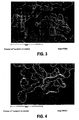
- FIG. 3, FIG. 4 and FIG.5 show SEM (Scanning Electron Microscope) pictures of different amplification. i.e. 1000x, 3000x and 10,000x respectively, of the radiopaque tantalum metal particles as obtained before being coated with the protective polymer;
- FIG. 6 and FIG. 7 show SEM (Scanning Electron Microscope) pictures of different amplifications, i.e. 3000x and 10,000x, respectively, of the radiopaque tantalum metal particles coated with protective polymer.
-
- A radiopaque acrylic bone cement for orthopaedic use according to the invention essentially comprises a solid phase dissolved in a liquid phase.
- The solid phase is essentially composed of a mixture of at least one acrylic polymer, for example based on poly(methyl methacrylate), at least one free-radical polymerization initiator and at least one or more substances which are opaque to X rays. More specifically, the mixture can contain poly(methyl methacrylate), poly(methyl methacrylate/styrene), poly(butyl methacrylate) and copolymers thereof and benzoyl peroxide as initiator. Moreover, the solid-phase mixture may contain one or more pharmacologically active substances.
- The liquid phase is essentially composed of a mixture of a monomer, at least one accelerator and at least one stabilizer. More specifically, the monomer can consist of monomethylmethacrylate and the accelerator can consist of N,N-dimethyl-p-toluidine.
- Referring to Fig. 1, the hardened bone cement, indicated overall by 1, is composed of a
polymer matrix 2 in which irregularly shapedparticles 3 composed ofradiopaque elements 4 coated with a polymer compatible with thepolymer matrix 2 are dispersed homogeneously. - The irregularly shaped
particle 3, shown schematically in FIG. 2, is composed of theradiopaque element 4 completely coated with apolymer layer 5 compatible with thematrix 2 and having such athickness 6 that it does not dissolve completely in the liquid phase during polymerization. - A particular characteristic of the present invention consists in adding radiopaque elements of high molecular weight, greater than 130 Dalton, in the form of metals, mixtures of metals, or metal compounds such as alloys. Indeed, many elements of high atomic weight, for example more than 125 Dalton, are highly radiopaque and thus suitable for use as long as they are non-toxic or can be used in non-toxic form.
- Preferably, the radiopaque substances contained in the solid phase comprise tungsten and/or tantalum particles in the form of metals, compounds or mixtures thereof, which particles are covered with a coating layer of a polymer compatible with said bone cement. In place of tantalum or tungsten, it is also possible to use other metals of high atomic weight such as gold, platinum, bismuth or lead.
- Ideally the coating layer of the particles is an acrylic polymer based on poly(methyl methacrylate).
- Advantageously, the coating layer can be obtained by adding the polymer based on poly(methyl methacrylate), dissolved in a water-miscible solvent, to an aqueous dispersion of the metal particles from which the surface layer had previously been removed, followed by evaporation of the solvents and drying of said layer.
- The oxygen content of the tantalum metal is preferably less than about 300 ppm.
- The diameter of the radiopaque particles coated with poly(methyl methacrylate) can be between 1µm and 150 µm.
- Before depositing the coating, the diameter of radiopacifying metal particles can be between 1 µm and 100 µm.
- Prior to the deposition of the coating, the radiopacifying particles can have nanometre size, for example a diameter between 25 nanometres and 1000 nanometres. In this manner, the diameter of the coated radiopacifying particles, which have a plurality or an aggregate of nanometre-sized metal particles, can be between 20 µm and 60 µm, with the noteworthy advantage of a more homogeneous and easier dispersion of said particles in the polymer powder.
- Ideally said nanometre-sized metal particles may have been pre-sinterized.
- Preferably, the tantalum or tungsten to poly(methyl methacrylate) weight ratio in the particles is between 95/5 and 70/30.
- The molecular weight of the particle coating polymer can advantageously be between 20,000 and 800,000 Dalton.
- The amount of radiopacifying element can advantageously vary between 1 and 20% by weight, relative to the solid phase, and is preferably between 2% and 5% by weight, relative to the solid phase.
- Advantageously, the solid phase and the coated radiopaque particles can be contained in the same package. Alternatively, the solid phase and the coated radiopaque particles can be contained in different packages.
- In the case of a single package, it can consist of a shell containing both the solid phase and the liquid phase. In clinical use, the cement-containing shell is opened, and its contents consisting of an envelope containing the powder and the vial containing the liquid phase is transferred to the operating room aseptically on a sterile shelf.
- In preparing the cement, the ampoule is opened, and the entire liquid is placed in the mixing bowl, and all the powder is introduced into the liquid. In order to minimize the inclusion of bubbles, the cement must be mixed by moving the spatula from the outside to the centre of the bowl. Since the whole powder must be impregnated with liquid, any solid residues not impregnated with liquid are carefully immersed in the moist mass using the spatula.
- At this point, the liquid mass can be transferred into a syringe for in-situ injection.
- The radiopacifying powder according to the present invention can be mixed with the solid phase of the bone cement system.
- Table 1 shows a few indicative but not exhaustive examples of preferred formulations.
Liquid phase Solid phase (Values in percent by weight) (Values in percent by weight) Cemex RX (reference) Methyl methacrylate 98.20 Poly(methyl methacrylate) 88.00 N,N-dirinethyl-p-toluidine 1.80 Benzoyl peroxide 3.00 Hydroquinone 75 ppm Barium sulphate FU 9.00 Cemex XL (reference) Methyl methacrylate 98.20 Poly(methyl methacrylate) 85.00 N,N-dimethyl-p-toluidine 1.80 Benzoyl peroxide 3.00 Hydroquinone 75 ppm Barium sulphate FU 12.00 Example 1 (reference) Methyl methacrylate 98.20 Poly(methyl methacrylate) 82.5 N,N-dimethyl-p-toluidine 1.80 Benzoyl peroxide 3.00 Hydroquinone 75 ppm Barium sulphate FU 12.00 Tantalum as-delivered 2.50 Example 2 (reference) Methyl methacrylate 98.20 Poly(methyl methacrylate) 67.00 N,N-dimethyl-p-toluidine 1.80 Benzoyl peroxide 3.00 Hydroquinone 75 ppm Barium sulphate FU 30.00 Example 3 Methyl methacrylate 98.20 Poly(methyl methacrylate) 82.00 N,N-dimethyl-p-toluidine 1.80 Benzoyl peroxide 3.00 Hydroquinone 75 ppm Barium sulphate FU 10.00 PMMA-coated tantalum 5.00 Example 4 Methyl methacrylate 98.20 Poly(methyl methacrylate) 82 N,N-dimethyl-p-toluidine 1.80 Benzoyl peroxide 3.00 Hydroquinone 75 ppm Barium sulphate FU 12.50 PMMA-coated tantalum 2.50 Example 5 Methyl methacrylate 98.20 Poly(methyl methacrylate) 87 N,N-dimethyl-p-toluidine 1.80 Benzoyl peroxide 3.00 Hydroquinone 75 ppm PMMA-coated tantalum 10.00 Example 6 Methyl methacrylate 98.20 Poly(methyl methacrylate) 82 N,N-dimethyl-p-toluidine 1.80 Benzoyl peroxide 3.00 Hydroquinone 75 ppm Zirconium oxide 10.00 PMMA-coated tantalum 5.00 Example 7 Methyl methacrylate 98.20 Poly(methyl methacrylate) 80 N,N-dimethyl-p-toluidine 1.80 Benzoyl peroxide 3.00 Hydroquinone 75 ppm Zirconium oxide 14.50 PMMA-coated tantalum 2.50 Example 8 Methyl methacrylate 98.20 Poly(methyl methacrylate) 86 N,N-dimethyl-p-toluidine 1.80 Benzoyl peroxide 3.00 Hydroquinone 75 ppm Barium sulphate FU 8.50 PMMA-coated tungsten 2.50 Example 9 Methyl methacrylate 98.20 Poly(methyl methacrylate) 82.00 N,N-dimethyl-p-toluidine 1.80 Benzoyl peroxide 3.00 Hydroquinone 75 ppm Barium sulphate FU 10.00 PMMA-coated tungsten 5.00 Example 10 Methyl methacrylate 98.20 Poly(methyl methacrylate) 82 N,N-dimethyl-p-toluidine 1.80 Benzoyl peroxide 3.00 Hydroquinone 75 ppm Barium sulphate FU 12.50 PMMA-coated tungsten 2.50 - Using the bone cements prepared by the abovementioned methodology and the formulations listed in Table 1, in accordance ISO standard 5833, ASTM standard F451-99 and ISO standard 527, a few samples were prepared for measuring the compressive strength, the tensile strength, the bending strength and the work at break. The latter, expressed in MJ/m3, is calculated as the integral of the stress/deformation curve obtained in the bending test.
- Tables 2, 3 and 4 list the values, expressed in MPa, obtained with the samples.
Compression Standard deviation Tensile strength Standard deviation Cemex RX (reference) 106 7.75 36 4.20 Example 1 108 3.51 38 1.04 Example 3 131 6.68 44 0.14 ISO 5833 > 70 > 30 Bending Standard deviation Modulus of Elasticity Standard deviation Cemex RX (reference) 61 4.78 2974 64 Example 1 62 2.09 2850 334 Example 3 70 5.19 2909 102 ISO 5833 > 50 > 1800 Deformation at break (%) Standard deviation Work at break (MJ/m3) Standard deviation Cemex RX (reference) 2.01 0.17 0.88 0.14 Example 2 2.22 0.23 0.79 0.22 Example 3 2.72 0.39 1.11 0.31 - The tests were carried out at ambient temperature and humidity. The samples, prepared according to ISO 5833, were kept in water at 37°C for 48 hours, taken out a few minutes prior to the test and deformed at a set speed of 20 mm/min for the compression measurements, 10 mm/min for the tensile measurements, and 5 mm/min for the bending stress measurements.
- The work at break of the bone cement according to the present invention shows an increase of 26%, relative to the value of conventional bone cement and of 40%, compared to the bone cement made radiopaque by addition of a vast amount (30%) of barium sulphate.
- Using the bone cements prepared by the abovementioned methodology and the formulations listed in Table 1, the values of the chemical and physical properties such as viscosity, flow behaviour, doughing time, setting time and the maximum polymerization temperature were measured according to ISO standard 5833:92 and ASTM standard F451-99. The values obtained are listed in Tables 5 and 6.
Viscosity η'4 (Pa*s) Doughing time (DT) (min) Setting time (ST) (min) Maximum temperature (°C) Cemex XL 13,900 ± 2970 4' 55" 12'50" 64 Example 4 27,000 ± 1414 9' 30" 16'00" 72 ISO 5833 < 5' < 15' < 90 - The value η'4, of the apparent dynamic viscosity at 4' from mixing, measured at 22°C and a humidity of 32%, is customarily taken as a descriptive parameter of the rheological behaviour of the material.
- The measurements of DT, ST and the maximum polymerization temperature were performed in a laboratory temperature-controlled at 23°C ± 1 and at a relative humidity greater than 40%, using material which, in turn, was left in a thermostat under the same conditions for at least 16 hours.
Flow behaviour (g) Standard deviation % by weight Cemex XL 60.5 0.70 89 Example 4 58 85 - The flow behaviour represents the mass of cement, expressed in grams, which flows from the inclined mixing bowl at 90°C in 60 seconds after 1' and 30" from the beginning of mixing.
- The bone cement according to the present invention exhibits very high properties in all stress directions, and in particular the metal additive improves the compressive strength.
- In all cases, the materials have exceeded the limits required by the regulations and thus, from a mechanical point of view, fall entirely within the class of bone cements.
- The polymerization temperature is increased in the tantalum material even though it is still substantially below the values required by the standards.
- It must be pointed out that the bone cement according to the invention can advantageously be used for surgical interventions in vertebroplasty by means of percutaneous in-situ injection of the cement or else for surgical interventions of osteosynthesis in which superior radiopacity and mechanical properties are required.
Claims (19)
- Radiopaque acrylic bone cement for orthopaedic use, comprising a solid phase essentially composed of a powder of at least one poly(methyl acrylate)-based polymer, one free-radical polymerization initiator and one radiopacifying material, and a liquid phase substantially composed of a mixture of at least one monomer, one accelerator and one stabilizer, said solid phase being capable of hardening upon mixing thereof with said liquid phase so as to give a bone cement matrix, wherein said radiopacifying material comprises particles of metals having molecular weight equal to or higher than 130 Dalton, mixtures, alloys or compounds thereof, which particles are covered with a coating layer of a polymer which is compatible with said matrix, characterised in that said metal particles comprise tantalum and/or tungsten particles, said polymer coating layer covering each of said metal particles to protect them from exposure to oxygen, said coating layer being so sized that it does not completely dissolve in said liquid phase during polymerisation of said bone cement so as to keep its oxygen barrier properties.
- Acrylic bone cement according to Claim 1, characterized in that said metals of high molecular weight are selected in such a way as to have an oxygen content of less than 300 ppm by weight
- Acrylic bone cement according to Claim 1, characterized in that said coating layer of said metal particles is a poly(methyl methacrylate)-based polymer.
- Acrylic bone cement according to Claim 1, characterized in that each single uncoated metal particle has an average diameter of between 1 µm and 100 µm.
- Acrylic bone cement according to Claim 1, characterized in that each single coated metal particle has an average diameter of between 1 µm and 150 µm.
- Acrylic bone cement according to Claim 1, characterized in that said polymer coating layer covers an aggregate of previously synthesized nanometre-sized metal particles.
- Acrylic bone cement according to Claim 6, characterized in that said metal particles of said aggregate have an average diameter of between 25 nm and 1000 nm.
- Acrylic bone cement according to Claim 1, characterized in that the molecular weight of the coating polymer of said particles which is compatible with said bone cement is between 20,000 and 800,000 Dalton.
- Acrylic bone cement according to Claim 1, characterized in that the molecular weight of the coating polymer of said particles which is compatible with said bone cement is between 300,000 and 800,000 Dalton.
- Acrylic bone cement according to Claim 1, characterized in that the weight ratio between the metal contained in said particles and their coating polymer is between 95:5 and 70:30.
- Acrylic bone cement according to any of the preceding claims, characterized in that the amount of the radiopacifying material is between 1 and 20% by weight, relative to said solid phase.
- Acrylic bone cement according to Claim 11, characterized in that the amount of radiopacifying material is preferably between 2% and 5% by weight, relative to said solid phase.
- Acrylic bone cement according to any one of the preceding claims, characterized in that said solid phase further comprises one or more pharmacologically active substances.
- Acrylic bone cement according to any one of the preceding claims, characterized in that said solid phase and said coated radiopaque particles are contained in the same package.
- Acrylic bone cement according to any one of the preceding claims, characterized in that said solid phase and said coated radiopaque particles are contained in separate packages.
- Acrylic bone cement according to any one of the preceding claims, characterized in that said solid phase comprises poly(methyl methacrylate), poly(methyl methacrylate/styrene), poly(butyl methacrylate) and copolymers thereof.
- Method for preparing a radiopaque acrylic bone cement for orthopaedic use, comprising the steps of:preparing a solid phase essentially composed of a powder of at least one poly(methyl methacrylate)-based polymer, one free-radical polymerization initiator and one radiopacifying material;preparing a liquid phase composed of a mixture of at least one monomer, one accelerator and one stabilizer,mixing said solid phase with said liquid phase so as to perform polymerization in such a way that a bone cement matrix is obtained:in which the radiopacifying material is obtained by preparing a powder of metal particles of molecular weight equal or higher than 136 Dalton, mixtures, alloys or compounds thereof, said metal particles comprising tantalum and/or tungsten particles, and coating said particles with a layer of a polymer which is compatible with said matrix, said polymer coating layer being so selected to protect said metal particles from exposure to oxygen, said polymer coating layer being so sized that it does not completely dissolve in said liquid phase so as to keep its oxygen barrier properties.
- Method according to Claim 17, characterized in that said metal particles, before being coated, are subjected to a step of removal of their surface layer.
- Method according to Claim 17, characterized in that said coating layer of said metal particles is obtained by adding said polymer, dissolved in water-miscible organic solvents, to an aqueous dispersion of said radiopaque metal particles, followed by evaporation and drying of said solvents.
Applications Claiming Priority (3)
| Application Number | Priority Date | Filing Date | Title |
|---|---|---|---|
| IT2001VI000126A ITVI20010126A1 (en) | 2001-05-30 | 2001-05-30 | RADIOPACO BONE CEMENT FOR ORTHOPEDIC USE AND METHOD OF REALIZATION |
| ITVI20010126 | 2001-05-30 | ||
| PCT/IB2002/001860 WO2002096474A1 (en) | 2001-05-30 | 2002-05-28 | Bone cement containing coated radiopaque particles and its preparation |
Publications (2)
| Publication Number | Publication Date |
|---|---|
| EP1409032A1 EP1409032A1 (en) | 2004-04-21 |
| EP1409032B1 true EP1409032B1 (en) | 2005-08-31 |
Family
ID=11461630
Family Applications (1)
| Application Number | Title | Priority Date | Filing Date |
|---|---|---|---|
| EP02735681A Expired - Lifetime EP1409032B1 (en) | 2001-05-30 | 2002-05-28 | Bone cement containing coated radiopaque particles and its preparation |
Country Status (13)
| Country | Link |
|---|---|
| US (1) | US7186761B2 (en) |
| EP (1) | EP1409032B1 (en) |
| JP (1) | JP2004534575A (en) |
| CN (1) | CN100355464C (en) |
| AT (1) | ATE303166T1 (en) |
| CA (1) | CA2447046C (en) |
| DE (1) | DE60205914T2 (en) |
| DK (1) | DK1409032T3 (en) |
| ES (1) | ES2247341T3 (en) |
| IT (1) | ITVI20010126A1 (en) |
| MX (1) | MXPA03010856A (en) |
| NZ (1) | NZ529157A (en) |
| WO (1) | WO2002096474A1 (en) |
Families Citing this family (81)
| Publication number | Priority date | Publication date | Assignee | Title |
|---|---|---|---|---|
| US8177762B2 (en) | 1998-12-07 | 2012-05-15 | C. R. Bard, Inc. | Septum including at least one identifiable feature, access ports including same, and related methods |
| DE10032220A1 (en) | 2000-07-03 | 2002-01-24 | Sanatis Gmbh | Magnesium ammonium phosphate cements, their manufacture and use |
| US7273523B2 (en) | 2002-06-07 | 2007-09-25 | Kyphon Inc. | Strontium-apatite-cement-preparations, cements formed therefrom, and uses thereof |
| DE10340800A1 (en) * | 2002-12-20 | 2004-07-01 | Merck Patent Gmbh | Production of acrylic bone cement, e.g. for anchoring prostheses in bone, involves using X-ray contrast medium which has been functionalised with (meth)acrylate after coating with melamine-formaldehyde resin |
| ATE488205T1 (en) | 2003-03-14 | 2010-12-15 | Depuy Spine Inc | HYDRAULIC DEVICE FOR BONE CEMENT INJECTION IN PERCUTANEOUS VERTEBROPLASTY |
| US8066713B2 (en) | 2003-03-31 | 2011-11-29 | Depuy Spine, Inc. | Remotely-activated vertebroplasty injection device |
| GB0307834D0 (en) * | 2003-04-04 | 2003-05-14 | Ta Contrast Ab | Composition |
| US8415407B2 (en) * | 2004-03-21 | 2013-04-09 | Depuy Spine, Inc. | Methods, materials, and apparatus for treating bone and other tissue |
| US20050064223A1 (en) | 2003-09-22 | 2005-03-24 | Bavaro Vincent Peter | Polymeric marker with high radiopacity |
| WO2005030034A2 (en) | 2003-09-26 | 2005-04-07 | Depuy Spine, Inc. | Device for delivering viscous material |
| AU2004284933A1 (en) * | 2003-10-20 | 2005-05-12 | Blackstone Medical, Inc. | Vertebral body replacement apparatus and method |
| US20070031339A1 (en) | 2003-11-28 | 2007-02-08 | Oskar Axelsson | Contrast agents |
| CN1988923B (en) | 2004-04-27 | 2012-10-03 | 凯丰有限责任公司 | Bone substitute compositions and methods of use thereof |
| EP1786343B1 (en) | 2004-07-30 | 2012-05-02 | Depuy Spine, Inc. | Apparatus for treating bone and other tissue |
| DE102004049121B4 (en) * | 2004-10-07 | 2008-01-10 | Heraeus Kulzer Gmbh | Antibiotic / antibiotics containing PMMA bone cement |
| DE102004052203A1 (en) | 2004-10-20 | 2006-05-04 | Aesculap Ag & Co. Kg | Reabsorbable carrier material, useful e.g. in medicinal-technical product and in the human or animal body, comprises silver particles |
| ES2561492T3 (en) * | 2005-02-22 | 2016-02-26 | Depuy Spine, Inc. | Bone treatment materials |
| US9474888B2 (en) | 2005-03-04 | 2016-10-25 | C. R. Bard, Inc. | Implantable access port including a sandwiched radiopaque insert |
| US7947022B2 (en) | 2005-03-04 | 2011-05-24 | C. R. Bard, Inc. | Access port identification systems and methods |
| WO2006096686A1 (en) | 2005-03-04 | 2006-09-14 | C.R. Bard, Inc. | Access port identification systems and methods |
| US8029482B2 (en) | 2005-03-04 | 2011-10-04 | C. R. Bard, Inc. | Systems and methods for radiographically identifying an access port |
| US8147455B2 (en) | 2005-04-27 | 2012-04-03 | C. R. Bard, Inc. | Infusion apparatuses and methods of use |
| US10307581B2 (en) | 2005-04-27 | 2019-06-04 | C. R. Bard, Inc. | Reinforced septum for an implantable medical device |
| EP2324880B1 (en) | 2005-04-27 | 2014-12-24 | C.R. Bard, Inc. | Infusion apparatuses provided with septum |
| US9381024B2 (en) | 2005-07-31 | 2016-07-05 | DePuy Synthes Products, Inc. | Marked tools |
| US9918767B2 (en) | 2005-08-01 | 2018-03-20 | DePuy Synthes Products, Inc. | Temperature control system |
| US7651701B2 (en) * | 2005-08-29 | 2010-01-26 | Sanatis Gmbh | Bone cement composition and method of making the same |
| WO2007145657A2 (en) * | 2005-11-01 | 2007-12-21 | Massachusetts Institute Of Technology | Initiated chemical vapor deposition of vinyl polymers for the encapsulation of particles |
| US8360629B2 (en) | 2005-11-22 | 2013-01-29 | Depuy Spine, Inc. | Mixing apparatus having central and planetary mixing elements |
| US7754005B2 (en) * | 2006-05-02 | 2010-07-13 | Kyphon Sarl | Bone cement compositions comprising an indicator agent and related methods thereof |
| US7507286B2 (en) * | 2006-06-08 | 2009-03-24 | Sanatis Gmbh | Self-foaming cement for void filling and/or delivery systems |
| US9642932B2 (en) | 2006-09-14 | 2017-05-09 | DePuy Synthes Products, Inc. | Bone cement and methods of use thereof |
| US20080075788A1 (en) * | 2006-09-21 | 2008-03-27 | Samuel Lee | Diammonium phosphate and other ammonium salts and their use in preventing clotting |
| US8021324B2 (en) | 2007-07-19 | 2011-09-20 | Medical Components, Inc. | Venous access port assembly with X-ray discernable indicia |
| CA2665995C (en) | 2006-10-19 | 2011-11-29 | Oren Globerman | Fluid delivery system |
| WO2008073190A2 (en) * | 2006-11-03 | 2008-06-19 | Kyphon Sarl | Materials and methods and systems for delivering localized medical treatments |
| US9265912B2 (en) | 2006-11-08 | 2016-02-23 | C. R. Bard, Inc. | Indicia informative of characteristics of insertable medical devices |
| US9642986B2 (en) | 2006-11-08 | 2017-05-09 | C. R. Bard, Inc. | Resource information key for an insertable medical device |
| NL1032851C2 (en) * | 2006-11-10 | 2008-05-14 | Fondel Finance B V | Kit and method for fixing a prosthesis or part thereof and / or filling bony defects. |
| ES3051388T3 (en) | 2007-06-20 | 2025-12-29 | Medical Components Inc | Implantable access port with molded and/or radiopaque indicia |
| WO2009012395A1 (en) | 2007-07-19 | 2009-01-22 | Innovative Medical Devices, Llc | Venous access port assembly with x-ray discernable indicia |
| US9579496B2 (en) | 2007-11-07 | 2017-02-28 | C. R. Bard, Inc. | Radiopaque and septum-based indicators for a multi-lumen implantable port |
| US20090131886A1 (en) | 2007-11-16 | 2009-05-21 | Liu Y King | Steerable vertebroplasty system |
| US9510885B2 (en) | 2007-11-16 | 2016-12-06 | Osseon Llc | Steerable and curvable cavity creation system |
| US20090131867A1 (en) | 2007-11-16 | 2009-05-21 | Liu Y King | Steerable vertebroplasty system with cavity creation element |
| WO2009073209A1 (en) * | 2007-12-06 | 2009-06-11 | Osseon Therapeutics, Inc. | Vertebroplasty implant with enhanced interfacial shear strength |
| DE102008013620A1 (en) * | 2008-02-12 | 2009-08-13 | Charité - Universitätsmedizin Berlin | Bone cement mixture for the preparation of an MRI-signaling bone cement |
| US7968616B2 (en) * | 2008-04-22 | 2011-06-28 | Kyphon Sarl | Bone cement composition and method |
| DE102008064657A1 (en) * | 2008-06-30 | 2010-04-08 | Heraeus Medical Gmbh | PMMA-paste |
| EP2346553B1 (en) | 2008-10-31 | 2022-01-19 | C.R. Bard, Inc. | Systems and methods for identifying an access port |
| US11890443B2 (en) | 2008-11-13 | 2024-02-06 | C. R. Bard, Inc. | Implantable medical devices including septum-based indicators |
| US8932271B2 (en) | 2008-11-13 | 2015-01-13 | C. R. Bard, Inc. | Implantable medical devices including septum-based indicators |
| DE102009005534B3 (en) * | 2008-12-18 | 2010-04-01 | Heraeus Medical Gmbh | Sporicidal composition for producing bone cement pastes and for use in monomer solutions for cement powder and polymethylmethacrylate bone cement, comprises methacrylate monomer or hydrogen peroxide |
| FR2942723B1 (en) * | 2009-03-05 | 2011-06-10 | Teknimes | CEMENT FOR BONE FILLING |
| US20100298832A1 (en) | 2009-05-20 | 2010-11-25 | Osseon Therapeutics, Inc. | Steerable curvable vertebroplasty drill |
| US8715244B2 (en) | 2009-07-07 | 2014-05-06 | C. R. Bard, Inc. | Extensible internal bolster for a medical device |
| CN105288836B (en) | 2009-11-17 | 2018-09-25 | C·R·巴德股份有限公司 | Cladding molding including anchoring device and identification division enters port |
| CN106618669B (en) | 2010-04-29 | 2019-11-12 | Dfine有限公司 | System for treating vertebral fracture |
| MX363758B (en) | 2010-05-05 | 2019-04-02 | Medical Components Inc Star | METHOD and APPARATUS FOR PRINTING RADIOPAQUE INDICIA. |
| US20120010601A1 (en) * | 2010-07-09 | 2012-01-12 | Vanderbilt University | Orthopedic cement and use of same in radiation therapy |
| USD676955S1 (en) | 2010-12-30 | 2013-02-26 | C. R. Bard, Inc. | Implantable access port |
| USD682416S1 (en) | 2010-12-30 | 2013-05-14 | C. R. Bard, Inc. | Implantable access port |
| FR2983734B1 (en) * | 2011-12-09 | 2014-02-28 | Polymerexpert Sa | POLYMERIC CEMENTS FOR THE FIXATION OF PROSTHESES, BONE REPAIR AND VERTEBROPLASTY OBTAINED FROM LIQUID MONOPHASIC FORMULATIONS |
| WO2014110284A1 (en) | 2013-01-09 | 2014-07-17 | Bacterin International, Inc. | Bone graft substitute containing a temporary contrast agent and a method of generating such and a method of use thereof |
| GB201317299D0 (en) * | 2013-09-30 | 2013-11-13 | Lucite Int Uk Ltd | A hardenable multi-part acrylic composition |
| EP2990061A1 (en) | 2014-08-26 | 2016-03-02 | Maastricht University | Radiopaque composition and preparation thereof |
| ITUB20150555A1 (en) | 2015-02-12 | 2016-08-12 | Tecres Spa | TERNARY MIXTURE FOR BONE CEMENT AND METHOD FOR ITS REALIZATION |
| JP6956424B2 (en) * | 2016-07-11 | 2021-11-02 | エコール・ポリテクニーク・フェデラル・ドゥ・ローザンヌ (ウ・ペ・エフ・エル)Ecole Polytechnique Federale De Lausanne (Epfl) | Curable filling material for tubular structures |
| CN109862834B (en) | 2016-10-27 | 2022-05-24 | Dfine有限公司 | Bendable osteotome with cement delivery channel |
| WO2018098433A1 (en) | 2016-11-28 | 2018-05-31 | Dfine, Inc. | Tumor ablation devices and related methods |
| US10463380B2 (en) | 2016-12-09 | 2019-11-05 | Dfine, Inc. | Medical devices for treating hard tissues and related methods |
| WO2018129180A1 (en) | 2017-01-06 | 2018-07-12 | Dfine, Inc. | Osteotome with a distal portion for simultaneous advancement and articulation |
| JP7097544B2 (en) | 2017-03-30 | 2022-07-08 | 学校法人千葉工業大学 | Hard Tissue Adhesive, Hard Tissue Adhesive Kit, and Bone Cement |
| US11510723B2 (en) | 2018-11-08 | 2022-11-29 | Dfine, Inc. | Tumor ablation device and related systems and methods |
| US11986229B2 (en) | 2019-09-18 | 2024-05-21 | Merit Medical Systems, Inc. | Osteotome with inflatable portion and multiwire articulation |
| KR102836400B1 (en) * | 2019-11-19 | 2025-07-18 | 주식회사 엘지에너지솔루션 | Battery Module Comprising Metal Nanoparticle Dispersed Thermal Conductive Resin and Testing Method Thereof |
| WO2021167608A1 (en) * | 2020-02-19 | 2021-08-26 | Nusmile, Ltd. | Bioactive medical ceramic cement |
| US11543322B2 (en) * | 2020-05-01 | 2023-01-03 | Globalfoundries U.S. Inc. | Crack identification in IC chip package using encapsulated liquid penetrant contrast agent |
| IT202100023183A1 (en) * | 2021-09-08 | 2023-03-08 | Tecres Spa | Composition of at least one radiopaque agent, method for obtaining it and filler material comprising said composition |
| CN115300667A (en) * | 2022-08-01 | 2022-11-08 | 北京大学人民医院 | Sodium chloride bone cement with broad-spectrum antitumor and antibacterial effects and preparation method thereof |
| WO2025043346A1 (en) * | 2023-09-01 | 2025-03-06 | UNIVERSITé LAVAL | Method of producing a radiopaque object, and radiopaque structure therefore |
Family Cites Families (16)
| Publication number | Priority date | Publication date | Assignee | Title |
|---|---|---|---|---|
| DE3018966A1 (en) | 1980-05-17 | 1981-12-10 | Bayer Ag, 5090 Leverkusen | BASO (ARROW DOWN) 4 (ARROW DOWN) POWDER COATED WITH ORGANIC MATERIAL |
| JPH01274768A (en) * | 1988-04-27 | 1989-11-02 | Tokuyama Soda Co Ltd | composite particles |
| US5289831A (en) * | 1989-03-09 | 1994-03-01 | Vance Products Incorporated | Surface-treated stent, catheter, cannula, and the like |
| ATE241395T1 (en) * | 1990-09-13 | 2003-06-15 | Klaus Draenert | MULTI-COMPONENT MATERIAL AND METHOD FOR PRODUCING IT |
| DE4033343A1 (en) * | 1990-10-19 | 1992-04-23 | Draenert Klaus | MATERIAL AS THE STARTING MATERIAL FOR THE PRODUCTION OF BONE CEMENT AND METHOD FOR THE PRODUCTION THEREOF |
| US5336699A (en) * | 1992-02-20 | 1994-08-09 | Orthopaedic Research Institute | Bone cement having chemically joined reinforcing fillers |
| US5334626A (en) * | 1992-07-28 | 1994-08-02 | Zimmer, Inc. | Bone cement composition and method of manufacture |
| JP3495099B2 (en) * | 1993-08-02 | 2004-02-09 | サンメディカル株式会社 | Curable adhesive composition and adhesive kit |
| WO1996001096A2 (en) * | 1994-07-04 | 1996-01-18 | Smith & Nephew Plc | Dressing |
| US5795922A (en) * | 1995-06-06 | 1998-08-18 | Clemson University | Bone cement composistion containing microencapsulated radiopacifier and method of making same |
| JP3389427B2 (en) * | 1995-08-10 | 2003-03-24 | サンメディカル株式会社 | Dental or surgical adhesive and polymerization initiator composition therefor |
| US6355705B1 (en) * | 1997-02-07 | 2002-03-12 | Queen's University At Kingston | Anaesthetic bone cement |
| US6309420B1 (en) | 1997-10-14 | 2001-10-30 | Parallax Medical, Inc. | Enhanced visibility materials for implantation in hard tissue |
| US6203779B1 (en) * | 1999-03-19 | 2001-03-20 | Charlie Ricci | Methods for treating endoleaks during endovascular repair of abdominal aortic aneurysms |
| DE10006896A1 (en) | 2000-02-16 | 2001-08-30 | Wavelight Laser Technologie Ag | Production of an intraocular or optical contact lens a blank is produced mechanically and the surface profile material is removed by laser beams according to the calculated structure required to correct the vision |
| US6585755B2 (en) * | 2001-06-29 | 2003-07-01 | Advanced Cardiovascular | Polymeric stent suitable for imaging by MRI and fluoroscopy |
-
2001
- 2001-05-30 IT IT2001VI000126A patent/ITVI20010126A1/en unknown
-
2002
- 2002-05-28 DK DK02735681T patent/DK1409032T3/en active
- 2002-05-28 JP JP2002592982A patent/JP2004534575A/en active Pending
- 2002-05-28 US US10/475,374 patent/US7186761B2/en not_active Expired - Lifetime
- 2002-05-28 CA CA2447046A patent/CA2447046C/en not_active Expired - Fee Related
- 2002-05-28 MX MXPA03010856A patent/MXPA03010856A/en active IP Right Grant
- 2002-05-28 CN CNB028108302A patent/CN100355464C/en not_active Expired - Fee Related
- 2002-05-28 WO PCT/IB2002/001860 patent/WO2002096474A1/en not_active Ceased
- 2002-05-28 ES ES02735681T patent/ES2247341T3/en not_active Expired - Lifetime
- 2002-05-28 DE DE60205914T patent/DE60205914T2/en not_active Expired - Lifetime
- 2002-05-28 NZ NZ529157A patent/NZ529157A/en not_active IP Right Cessation
- 2002-05-28 EP EP02735681A patent/EP1409032B1/en not_active Expired - Lifetime
- 2002-05-28 AT AT02735681T patent/ATE303166T1/en not_active IP Right Cessation
Also Published As
| Publication number | Publication date |
|---|---|
| CN1512898A (en) | 2004-07-14 |
| ITVI20010126A1 (en) | 2002-11-30 |
| DE60205914D1 (en) | 2005-10-06 |
| US7186761B2 (en) | 2007-03-06 |
| ATE303166T1 (en) | 2005-09-15 |
| CA2447046A1 (en) | 2002-12-05 |
| EP1409032A1 (en) | 2004-04-21 |
| MXPA03010856A (en) | 2004-02-17 |
| CA2447046C (en) | 2010-07-20 |
| CN100355464C (en) | 2007-12-19 |
| US20040157952A1 (en) | 2004-08-12 |
| NZ529157A (en) | 2007-04-27 |
| DE60205914T2 (en) | 2006-06-08 |
| JP2004534575A (en) | 2004-11-18 |
| DK1409032T3 (en) | 2005-12-19 |
| WO2002096474A1 (en) | 2002-12-05 |
| ES2247341T3 (en) | 2006-03-01 |
Similar Documents
| Publication | Publication Date | Title |
|---|---|---|
| CA2447046C (en) | Bone cement containing coated radiopaque particles and its preparation | |
| US4141864A (en) | Osseous cement composition | |
| EP1246651B1 (en) | Bioactive and osteoporotic bone cement | |
| US6231615B1 (en) | Enhanced visibility materials for implantation in hard tissue | |
| CA2279200C (en) | Anaesthetic bone cement | |
| Higashi et al. | Polymer-hydroxyapatite composites for biodegradable bone fillers | |
| Harper | Bioactive bone cements | |
| Dall’Oca et al. | The biocompatibility of porous vs non-porous bone cements: a new methodological approach | |
| US20070191964A1 (en) | Enhanced visibility materials for implantation in hard tissue | |
| de Lacerda Schickert et al. | Tough and injectable fiber reinforced calcium phosphate cement as an alternative to polymethylmethacrylate cement for vertebral augmentation: a biomechanical study | |
| WO2002058592A9 (en) | Bone cement and a system for mixing and delivery thereof | |
| US9649404B2 (en) | Bone filling cement | |
| US6713527B2 (en) | Anaesthetic bone cement | |
| JP2009502404A (en) | Bone cement and method of use | |
| CN107223060B (en) | Ternary mixture for bone cements and method for its implementation | |
| WO2006053212A2 (en) | Hydrogel bone void filler | |
| AU2002310568B2 (en) | Bone cement containing coated radiopaque particles and its preparation | |
| PT2403545E (en) | Cement for filling bones | |
| AU2002310568A1 (en) | Bone cement containing coated radiopaque particles and its preparation | |
| Arabmotlagh et al. | Nanocrystalline hydroxyapatite facilitates bone apposition to polymethylmethacrylate: histological investigation using a sheep model | |
| GB1560992A (en) | Osseous cement | |
| Serbetci et al. | Recent developments in bone cements | |
| EP2094324A1 (en) | Two component bone cement composition for vertebroplasty |
Legal Events
| Date | Code | Title | Description |
|---|---|---|---|
| PUAI | Public reference made under article 153(3) epc to a published international application that has entered the european phase |
Free format text: ORIGINAL CODE: 0009012 |
|
| 17P | Request for examination filed |
Effective date: 20040129 |
|
| AK | Designated contracting states |
Kind code of ref document: A1 Designated state(s): AT BE CH CY DE DK ES FI FR GB GR IE IT LI LU MC NL PT SE TR |
|
| AX | Request for extension of the european patent |
Extension state: AL LT LV MK RO SI |
|
| R17P | Request for examination filed (corrected) |
Effective date: 20040129 |
|
| RAP1 | Party data changed (applicant data changed or rights of an application transferred) |
Owner name: TECRES S.P.A. |
|
| REG | Reference to a national code |
Ref country code: HK Ref legal event code: DE Ref document number: 1065492 Country of ref document: HK |
|
| GRAP | Despatch of communication of intention to grant a patent |
Free format text: ORIGINAL CODE: EPIDOSNIGR1 |
|
| RAP1 | Party data changed (applicant data changed or rights of an application transferred) |
Owner name: TECRES S.P.A. |
|
| RIN1 | Information on inventor provided before grant (corrected) |
Inventor name: SOFFIATI, RENZO Inventor name: ROBOTTI, PIERFRANCESCO |
|
| GRAS | Grant fee paid |
Free format text: ORIGINAL CODE: EPIDOSNIGR3 |
|
| GRAA | (expected) grant |
Free format text: ORIGINAL CODE: 0009210 |
|
| AK | Designated contracting states |
Kind code of ref document: B1 Designated state(s): AT BE CH CY DE DK ES FI FR GB GR IE IT LI LU MC NL PT SE TR |
|
| AX | Request for extension of the european patent |
Extension state: AL LT LV MK RO SI |
|
| PG25 | Lapsed in a contracting state [announced via postgrant information from national office to epo] |
Ref country code: CH Free format text: LAPSE BECAUSE OF FAILURE TO SUBMIT A TRANSLATION OF THE DESCRIPTION OR TO PAY THE FEE WITHIN THE PRESCRIBED TIME-LIMIT Effective date: 20050831 Ref country code: BE Free format text: LAPSE BECAUSE OF FAILURE TO SUBMIT A TRANSLATION OF THE DESCRIPTION OR TO PAY THE FEE WITHIN THE PRESCRIBED TIME-LIMIT Effective date: 20050831 Ref country code: AT Free format text: LAPSE BECAUSE OF FAILURE TO SUBMIT A TRANSLATION OF THE DESCRIPTION OR TO PAY THE FEE WITHIN THE PRESCRIBED TIME-LIMIT Effective date: 20050831 Ref country code: LI Free format text: LAPSE BECAUSE OF FAILURE TO SUBMIT A TRANSLATION OF THE DESCRIPTION OR TO PAY THE FEE WITHIN THE PRESCRIBED TIME-LIMIT Effective date: 20050831 Ref country code: FI Free format text: LAPSE BECAUSE OF FAILURE TO SUBMIT A TRANSLATION OF THE DESCRIPTION OR TO PAY THE FEE WITHIN THE PRESCRIBED TIME-LIMIT Effective date: 20050831 |
|
| REG | Reference to a national code |
Ref country code: CH Ref legal event code: EP Ref country code: GB Ref legal event code: FG4D |
|
| REG | Reference to a national code |
Ref country code: IE Ref legal event code: FG4D |
|
| REF | Corresponds to: |
Ref document number: 60205914 Country of ref document: DE Date of ref document: 20051006 Kind code of ref document: P |
|
| PG25 | Lapsed in a contracting state [announced via postgrant information from national office to epo] |
Ref country code: SE Free format text: LAPSE BECAUSE OF FAILURE TO SUBMIT A TRANSLATION OF THE DESCRIPTION OR TO PAY THE FEE WITHIN THE PRESCRIBED TIME-LIMIT Effective date: 20051130 |
|
| REG | Reference to a national code |
Ref country code: DK Ref legal event code: T3 |
|
| REG | Reference to a national code |
Ref country code: GR Ref legal event code: EP Ref document number: 20050403569 Country of ref document: GR |
|
| PG25 | Lapsed in a contracting state [announced via postgrant information from national office to epo] |
Ref country code: PT Free format text: LAPSE BECAUSE OF FAILURE TO SUBMIT A TRANSLATION OF THE DESCRIPTION OR TO PAY THE FEE WITHIN THE PRESCRIBED TIME-LIMIT Effective date: 20060222 |
|
| LTIE | Lt: invalidation of european patent or patent extension |
Effective date: 20050831 |
|
| REG | Reference to a national code |
Ref country code: ES Ref legal event code: FG2A Ref document number: 2247341 Country of ref document: ES Kind code of ref document: T3 |
|
| REG | Reference to a national code |
Ref country code: CH Ref legal event code: PL |
|
| PG25 | Lapsed in a contracting state [announced via postgrant information from national office to epo] |
Ref country code: MC Free format text: LAPSE BECAUSE OF NON-PAYMENT OF DUE FEES Effective date: 20060531 |
|
| ET | Fr: translation filed | ||
| PLBE | No opposition filed within time limit |
Free format text: ORIGINAL CODE: 0009261 |
|
| STAA | Information on the status of an ep patent application or granted ep patent |
Free format text: STATUS: NO OPPOSITION FILED WITHIN TIME LIMIT |
|
| 26N | No opposition filed |
Effective date: 20060601 |
|
| PG25 | Lapsed in a contracting state [announced via postgrant information from national office to epo] |
Ref country code: LU Free format text: LAPSE BECAUSE OF NON-PAYMENT OF DUE FEES Effective date: 20060528 |
|
| PG25 | Lapsed in a contracting state [announced via postgrant information from national office to epo] |
Ref country code: CY Free format text: LAPSE BECAUSE OF FAILURE TO SUBMIT A TRANSLATION OF THE DESCRIPTION OR TO PAY THE FEE WITHIN THE PRESCRIBED TIME-LIMIT Effective date: 20050831 |
|
| REG | Reference to a national code |
Ref country code: HK Ref legal event code: WD Ref document number: 1065492 Country of ref document: HK |
|
| REG | Reference to a national code |
Ref country code: FR Ref legal event code: PLFP Year of fee payment: 15 |
|
| REG | Reference to a national code |
Ref country code: FR Ref legal event code: PLFP Year of fee payment: 16 |
|
| REG | Reference to a national code |
Ref country code: FR Ref legal event code: PLFP Year of fee payment: 17 |
|
| PGFP | Annual fee paid to national office [announced via postgrant information from national office to epo] |
Ref country code: NL Payment date: 20180426 Year of fee payment: 17 |
|
| PGFP | Annual fee paid to national office [announced via postgrant information from national office to epo] |
Ref country code: ES Payment date: 20180601 Year of fee payment: 17 Ref country code: IE Payment date: 20180424 Year of fee payment: 17 Ref country code: DK Payment date: 20180420 Year of fee payment: 17 Ref country code: DE Payment date: 20180419 Year of fee payment: 17 |
|
| PGFP | Annual fee paid to national office [announced via postgrant information from national office to epo] |
Ref country code: FR Payment date: 20180423 Year of fee payment: 17 Ref country code: GR Payment date: 20180426 Year of fee payment: 17 Ref country code: IT Payment date: 20180420 Year of fee payment: 17 Ref country code: TR Payment date: 20180511 Year of fee payment: 17 |
|
| PGFP | Annual fee paid to national office [announced via postgrant information from national office to epo] |
Ref country code: GB Payment date: 20180419 Year of fee payment: 17 |
|
| REG | Reference to a national code |
Ref country code: DE Ref legal event code: R119 Ref document number: 60205914 Country of ref document: DE |
|
| REG | Reference to a national code |
Ref country code: DK Ref legal event code: EBP Effective date: 20190531 |
|
| REG | Reference to a national code |
Ref country code: NL Ref legal event code: MM Effective date: 20190601 |
|
| GBPC | Gb: european patent ceased through non-payment of renewal fee |
Effective date: 20190528 |
|
| PG25 | Lapsed in a contracting state [announced via postgrant information from national office to epo] |
Ref country code: GR Free format text: LAPSE BECAUSE OF NON-PAYMENT OF DUE FEES Effective date: 20191205 |
|
| PG25 | Lapsed in a contracting state [announced via postgrant information from national office to epo] |
Ref country code: IE Free format text: LAPSE BECAUSE OF NON-PAYMENT OF DUE FEES Effective date: 20190528 Ref country code: DK Free format text: LAPSE BECAUSE OF NON-PAYMENT OF DUE FEES Effective date: 20190531 Ref country code: DE Free format text: LAPSE BECAUSE OF NON-PAYMENT OF DUE FEES Effective date: 20191203 Ref country code: NL Free format text: LAPSE BECAUSE OF NON-PAYMENT OF DUE FEES Effective date: 20190601 Ref country code: GB Free format text: LAPSE BECAUSE OF NON-PAYMENT OF DUE FEES Effective date: 20190528 Ref country code: IT Free format text: LAPSE BECAUSE OF NON-PAYMENT OF DUE FEES Effective date: 20190528 |
|
| PG25 | Lapsed in a contracting state [announced via postgrant information from national office to epo] |
Ref country code: FR Free format text: LAPSE BECAUSE OF NON-PAYMENT OF DUE FEES Effective date: 20190531 |
|
| REG | Reference to a national code |
Ref country code: ES Ref legal event code: FD2A Effective date: 20200928 |
|
| PG25 | Lapsed in a contracting state [announced via postgrant information from national office to epo] |
Ref country code: ES Free format text: LAPSE BECAUSE OF NON-PAYMENT OF DUE FEES Effective date: 20190529 |
|
| PG25 | Lapsed in a contracting state [announced via postgrant information from national office to epo] |
Ref country code: TR Free format text: LAPSE BECAUSE OF NON-PAYMENT OF DUE FEES Effective date: 20190528 |
|
| P01 | Opt-out of the competence of the unified patent court (upc) registered |
Effective date: 20230509 |