FIELD OF THE INVENTION
The present invention relates to an apparatus for foodstuffs processing, such as weighing,
packaging, and inspecting.
RELATED ART
As an example of the related art, combination weighers used for automatic weighing of
foodstuffs, such as snacks and candies, are provided with numerous weigh hoppers. Therein, a
pool hopper is arranged above each weigh hopper, foodstuffs are dispersed and fed, via the pool
hoppers, into the respective weigh hoppers where they are weighed, and a combination
calculation is performed based on the weight values thereof. Further, the combination weigher
selects the combination whose weight equals the target weight or is closest thereto within an
allowable range, discharges the foodstuffs only from the weigh hoppers corresponding to this
optimal combination, thereby obtaining a weight of products equal to or closest to the target
weight.
From the perspective of production efficiency, weighing operations using such
combination weighers are performed in shifts, with a plurality of shift operators each handing
over operation to the next operator at the end of their shift. Further, if an operator is unable to
hand over operation to the next operator in person, but has a message to give to the next operator
regarding the condition of the apparatus or the status of work progress, and the like, then the
operator may stick a memo sheet containing such details on the operation unit of the apparatus
where it will be seen by the next operator when they operate the apparatus. In addition, even if
there is no message to be given to the next operator, memo sheets are still stuck onto the
operation unit as reminders for oneself. These actions help promote the continuity of smooth
production activities by ensuring handover between operators is performed without fail, and that
operators themselves do not forget anything.
However, using the aforementioned method, e.g., sticking memo sheets to the operation
unit with adhesive tape and the like, invites blemishing of the operation unit due to the adhesive
compound. On the other hand, memo sheets that combine suitable sticking and removal
characteristics and that can be repeatedly affixed and removed are popular and in use. However,
in such cases, rather than the comparatively minor blemishing of the operation unit, the problem
is that the memo sheets peel off and get lost, and there is even a risk that the memo sheets will
get mixed into the foodstuffs. In either case, the sticking of numerous memo sheets to the
operation unit becomes visually unaesthetic, and their recorded content eventually becomes
illegible, thus no longer serving their function as a memo sheet.
DISCLOSURE OF THE INVENTION
It is an object of the present invention to provide a foodstuffs processing apparatus
capable of eliminating the need for memo paper for messages and memos.
First, the present invention as recited in Claim 1 is a foodstuffs processing apparatus that
performs prescribed processing related to foodstuffs. The present foodstuffs processing apparatus
comprises: a memo information storage means that stores memo information; a memo
information input means for inputting the memo information; a memo information retrieval
means that retrieves the memo information stored in the memo information storage means; and a
memo information display means that displays the memo information retrieved by the memo
information retrieval means.
The present invention eliminates the need to stick conventional sticky-type memo sheets
onto the operation unit, and the like, making it possible to convey information between the
inputter and reader of memo information, without degrading aesthetics, and to prevent a lapse in
memory of the inputter themselves. Further, there is no risk of losing the memo sheet or of the
memo sheet mixing into foodstuffs. The present invention is advantageous if, for example, a shift
work system is introduced and handover between shifts cannot be done in person.
Next, the invention as recited in Claim 2 is the foodstuffs processing apparatus as recited
in Claim 1, wherein the memo information input means has a character code input function and a
handwriting input function.
According to the present invention, the inputter, when inputting memo information, can
select a character code input function and a handwriting input function, thereby enhancing
convenience. The present invention makes it possible to easily convey information, particularly
if using the handwriting input function, between people who, for example, can only recognize a
specific language. Furthermore, in such cases, the present invention is also advantageous from
the perspective of cost because it is unnecessary to provide a function for inputting and
displaying the specialized language.
In addition, the invention as recited in Claim 3 is the foodstuffs processing apparatus as
recited in Claim 1 or Claim 2, wherein the memo information storage means associates and
stores as the memo information the time, error symptoms, error cause, error handling status, and
apparatus state after error handling.
According to the present invention, if the inputter of memo information principally inputs
visual information of the apparatus, then the reader of the memo information can read the memo
information while facing the foodstuffs processing apparatus. Because the memo information
relates to error information of the foodstuffs processing apparatus, the effectiveness in conveying
that information is enhanced.
In addition, the invention as recited in Claim 4 is the foodstuffs processing apparatus as
recited in Claim 3, wherein the memo information storage means associates and stores the memo
information and post-error-handling operation enable/disable information. In addition, the
foodstuffs processing apparatus is further provided with an operation restricting means that
restricts operation if operation disabled information is stored.
According to the present invention, if the inputter of the memo information judges, after
error handling, that the foodstuffs processing apparatus should not be operated and inputs
operation disabled information, then the operation restricting means restricts the operation of the
foodstuffs processing apparatus, thus avoiding further abnormal operation of the foodstuffs
processing apparatus.
In addition, the invention as recited in Claim 5 is the foodstuffs processing apparatus as
recited in any one claim of Claim 1 through Claim 4, further provided with an operation
inputting means. The operation inputting means is for inputting operation related to prescribed
processing related to foodstuffs. The memo information storage means associates and stores the
memo information and an operation level that specifies the range in which operations can be
input in the operation inputting means. In addition, the memo information retrieval means
retrieves memo information corresponding to the operation level.
According to the present invention, because the memo information retrieval means
retrieves memo information corresponding to the operation level, and the memo information
displaying means displays this specialized retrieved memo information, it is no longer tedious for
the reader when reading memo information.
In addition, the invention as recited in Claim 6 is the foodstuffs processing apparatus as
recited in any one claim of Claim 1 through Claim 4, wherein the memo information storage
means associates and stores the memo information and a preset number that specifies a
foodstuffs item. In addition, the memo information retrieval means retrieves memo information
corresponding to the preset number.
According to the present invention, because the memo information retrieval means
retrieves memo information corresponding to a preset number, and the memo information
displaying means displays that specialized retrieved memo information, it is no longer tedious
for the reader when reading memo information.
Further, the invention as recited in Claim 7 is the foodstuffs processing apparatus as
recited in any one claim of Claim 1 through Claim 4, wherein the memo information storage
means associates and stores the memo information and an identifier that specifies a reader of the
memo information. In addition, the memo information retrieval means retrieves the memo
information corresponding to the identifier.
According to the present invention, the memo information retrieval means retrieves
memo information corresponding to an identifier like the operator code of the reader, and the
memo information displaying means displays that specialized retrieved memo information, and
therefore it is no longer tedious for the reader when reading memo information.
In addition, if the inputter of memo information specifies a reader, e.g., if the inputter is
an operator who inputs error information of the foodstuffs processing apparatus, and the reader is
a maintenance engineer, then an extremely advantageous messaging means is provided.
BRIEF EXPLANATION OF DRAWINGS
FIG. 1 is a schematic side view that depicts the overall configuration of the combination
weigher.
FIG. 2 depicts the initialization screen.
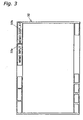
FIG. 3 depicts the menu screen.
FIG. 4 depicts the memo information input screen when inputting character codes.
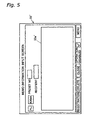
FIG. 5 depicts the memo information input screen when inputting by handwriting.
FIG. 6 is a table of the contents of the memory in the memo information storage unit.
FIG. 7 depicts the memo information display screen.
PREFERRED EMBODIMENTS
The following explains the combination weigher according to the embodiments of the
present invention.
OVERALL CONFIGURATION
As shown in FIG. 1, the present combination weighing apparatus 1 has a box-shaped
main body case 12 supported by a plurality of support legs 11 on a frame F. Further, a dispersion
table 13, which disperses foodstuffs like snacks and candies; a plurality of radial troughs 14...14,
arranged radially around the circumference of the dispersion table 13; and a vertically arranged
pair of pool hoppers 15...15 and weigh hoppers 16...16 provided for each of the radial troughs
14...14; and the like are installed on the main body case 12.
The foodstuffs fed into the combination weighing apparatus 1 are first dispersed evenly
onto the radial troughs 14...14 by the dispersion table 13, then supplied from the radial troughs
14...14 to the weigh hoppers 16...16 via the pool hoppers 15...15, weighed by weight detectors
16a... 16a respectively coupled to each of the weigh hoppers 16...16, whereupon a combination
calculation is performed.
Further, individual chutes 17...17 are respectively arranged below the weigh hoppers
16...16, and foodstuffs from the weigh-hoppers 16...16 corresponding to the optimal
combination as a result of a combination calculation are discharged to the individual chutes
17...17. The foodstuffs that were discharged and slid down through the individual chutes 17... 17
are further supplied toward the downstream side to, for example, a packaging machine, via a
funnel-shaped collection chute 18 arranged at the approximate center of the present combination
weighing apparatus 1.
CONTROL SYSTEM
As shown in FIG. 1, the control system of the combination weighing apparatus 1 is
provided with a control unit 20, which is a characterizing portion of the present invention, and
that comprehensively controls the operation of the combination weighing apparatus 1. Further, a
touch screen 30, which is likewise a characterizing portion of the present invention, is connected,
capable of exchanging signals, to the control unit 20 as an operation input means for performing
operations necessary to run the combination weighing apparatus 1, and as a memo information
input means for inputting memo information.
The control unit 20 has a CPU 21 and a memory 22, and outputs a control signal that
controls the discharge of foodstuffs from the pool hoppers 15...15 and weigh hoppers 16...16. In
addition, the control unit 20 inputs weight signals from the weight detectors 16a... 16a, one each
in each of the weigh hoppers 16...16, performs a combination calculation based on these weight
signals, and selects the optimal combination comprising a weight that is equal to or closest
within a permissible range to the target weight.
The memory 22 comprises a registration information storage unit 22a and a memo
information storage unit 22b. The registration information storage unit 22a stores various data
that is set and registered for each preset number, each preset number signifying a foodstuffs item;
the operator code, name, operation password, and the like, of the person who will operate the
touch screen 30. On the other hand, the memo information storage unit 22b stores inputted memo
information. The memo information includes items like the state of the combination weighing
apparatus 1, the work progress status, as well as messages passed between operators and items to
prevent memory lapses of the operators themselves. However, the memo information is not
limited thereto.
The touch screen 30 is provided proximate to the combination weighing apparatus 1. The
touch screen 30 has a display screen like a liquid crystal display, and functions as an operation
input means for inputting operations needed to run the combination weighing apparatus 1, and as
an input means for inputting memo information and for inputting to perform various types of
setup and registration. In addition, the touch screen 30 can display this information. The touch
screen 30 is configured so that operations can be input by touching the display screen at a
prescribed display location. In addition, the touch screen 30 has a character code input function
and a handwriting input function when inputting the memo information.
Further, the CPU 21 is provided with a retrieval control unit 21a, a display control unit
21 b, and an operation restricting unit 21c.
The retrieval control unit 21a of the CPU 21 is a retrieval means for retrieving various
information, including memo information, from the memory 22, and can perform control so that,
when retrieving memo information stored in the memo information storage unit 22b, the memo
information is retrieved in accordance with the operation level, the preset number, or the operator
code of the reader.
Because the operation level specifies a range of available key operations in the touch
screen 30, it is customary to set the operation level generally in accordance with the assigned
duties of the person operating the touch screen 30. In one example, the operation level is
partitioned into a "working level," an "administration level," and an "installation adjustment
level." This example is in superordinate order. Mainly, the person to perform operation in the
"working level" is the operator, and the operation details of the "working level" correspond to the
basic operations in the performance of daily work, e.g., including keying operations related to
operation, zero adjustment, and the like. The person to perform operation in the "administration
level" is the system administrator. The operation details of the "administration level" correspond
to, in addition to those of the aforementioned operator level, the adjustment operation and
registration for processing like weighing, e.g., including keying operations related to setting and
registering of the preset number, the target weight, and the like. Further, the person to perform
operation in the "installation adjustment level" is a technical service person of the manufacturer
of the combination weighing apparatus 1. The operation details of the "installation adjustment
level" correspond to, in addition to those of the aforementioned administration level, operation of
the adjustments and the like required when installing the apparatus, e.g., including keying
operations related to the setting of various operation parameters. An operation password,
preassigned respectively to each person to perform operation, is input via the touch screen 30,
and the range of available key operations is thereby set in accordance with the operation level to
which they belong. Furthermore, each operation password is stored along with the corresponding
operation level in the registration information storage unit 22a.
The preset number is a foodstuffs item that is preregistered and stored in the registration
information storage unit 22a. For example, a product name, product weight, production
performance (e.g., the number of weighments per minute), the operating conditions of the
dispersion table 13 and radial troughs 14...14, the open and close timing conditions of the pool
hoppers 15...15 and the weigh hoppers 16...16, the target weight, the weight upper limit, the
weight lower limit, and the like are registered for each preset number.
To discriminate the person operating the touch screen 30 when running the combination
weighing apparatus 1, an operator code is preassigned to each person who performs operations.
Each operator code and the corresponding name are stored in the registration information storage
unit 22a. The employee number, for example, is used as the operator code.
The display control unit 21b of the CPU 21 displays on the touch screen 30 various
information, including memo information retrieved from the memory 22 by the retrieval control
unit 21a.
If the operation restricting unit 21c of the CPU 21 inputs a signal to disable operation of
the combination weighing apparatus 1, then it performs control to restrict operation of the
combination weighing apparatus 1.
WORKING EXAMPLES
The following explains working examples of the memo information in the combination
weighing apparatus 1.
First, the operator of the combination weighing apparatus 1 turns on the main power
supply switch (not shown) when starting operation, and then uses a numeric key pad 31c,
displayed when needed, to respectively input the operator code and operation password assigned
to the operator in an operator code input field 31 a and an operation password input field 31b of
an initialization screen 31, depicted in FIG. 2, displayed on the touch screen 30. Further, the
operator operates the combination weighing apparatus 1 by operating keys displayed newly on
the touch screen 30 via a menu screen 32, depicted in FIG. 3. In this case, inputting the operation
password sets, in accordance with the inputted operation level of the operator, the range of
available key operations (range of operations available for input).
In addition, the combination weighing apparatus 1 is configured so that, if an error, i.e.,
operational trouble as discussed later, occurs, an alarm sounds and operation stops. In this event,
an error message is automatically displayed on the touch screen 30 of the combination weighing
apparatus 1. An error message includes, for example, an error name such as "zero point error,"
"overload," "weigh hopper error," "failed transmission," and the like; the error location, the error
symptoms, the probable cause of the error, and representative countermeasures.
The operator normally deals with the error based on the aforementioned display. From
the perspective of subsequently continuing smooth production activity, it is advantageous in that
case to record the details of the action taken, centering on the visual information, in the memo
information as a message to the maintenance person-in-charge or the next operator to assume
operation of the combination weighing apparatus 1, or as a reminder for oneself. Therefore, the
following explains in greater detail the procedures for inputting, retrieving, and displaying memo
information related to the aforementioned error, and memo information related to the state of the
combination weighing apparatus 1 and the work progress status and the like.
INPUT OF MEMO INFORMATION
The operator touches a memo information input key 32a of the menu screen 32, shown in
FIG. 3, and displays a memo information input screen 33, shown in FIG. 4. The memo
information input screen 33 displays a memo information input area 33a for inputting the memo
information, a keyboard 33b (the example in the figure is a 50 kana input keyboard in syllabary
order) for inputting character codes, a registration key 33c, a delete key 33d, a close key 33e, a
disable operation key 33f, a menu key 33g for returning to the menu screen 32, an alphabet input
key 33h and a handwriting input key 33i for changing the input from the kana input shown in the
figure to alphabetic input or handwriting input. Furthermore, a preset number input field 33j for
inputting the preset number, and a recipient input field 33k for inputting the recipient if
specifying the reader, i.e., the recipient, of the memo information, are displayed. Further, if the
operator touches the recipient input field 33k, a recipient list 33l (details not shown), comprising
names and operator codes is displayed within the chain link line, then the operator can input a
recipient into the recipient input field 33k by selecting an appropriate recipient.
By touching a keyboard 33b in the memo information input screen 33, the operator can
input as the memo information into the memo information input area 33a the error information,
focusing on the visual information of the error name, the error cause, the error countermeasure,
the post-countermeasure state, whether subsequent operation is allowable, and the like, as well as
the state of the combination weighing apparatus 1 and the work progress status.
Further, the operator touches the operation disable key 33f particularly if the memo
information is error information, the result of the countermeasure cannot resolve the error, and
the operator judges that operation of the combination weighing apparatus 1 should be disabled. If
the operation disable key 33f is touched, then a checkmark is displayed in the operation disable
key 33f, the CPU 21 that input the touch signal sets the operation disabled flag to 1, and
operation of the combination weighing apparatus 1 is thereby restricted. Furthermore, if the
combination weighing apparatus 1 recovers to the normal state, then the operation disabled flag
is set by changing it from 1 to 0.
In the example depicted in FIG. 4, memo information has been input about a situation
where "an overload error has occurred, the cause is judged to be excessive supply to the WH
(weigh hopper), the status did not return to normal despite measures to adjust the feeder strength,
and it was judged necessary to disable operation because the cause was unclear." In addition, if
the operation disable key 33f is touched, then a checkmark is displayed in the operation disable
key 33f.
Further, if storing the memo information associated with a preset number, then the
operator inputs the preset number ("2" in the example of the figure) in the preset number input
field 33j. In addition, if specifying the reader of the memo information, the operator touches the
recipient input field 33k, selects the corresponding recipient ("123456" in the example of the
figure) from the displayed recipient list 33l, and thereby enters the recipient in the recipient input
field 33k.
Although the operator has input the memo information using the keyboard 33b, the touch
screen 30 also enables alphabetic input and handwriting input. For example, if performing input
by handwriting, the operator touches the handwriting input key 33i of the memo information
input screen 33, then the memo information input screen 33' shown in FIG. 5, is displayed on the
touch screen 30 when inputting by handwriting, and the operator therefore should input the
memo information into the memo information input area 33a' of the memo information input
screen 33', using the handwriting input pen. Furthermore, the memo information that was input
by handwriting is stored in the memo information storage unit 22b as an image file, such as a
"TIFF" or a "JPEG" file and the like.
Thereby, when inputting memo information, the operator can select character code input
using the keyboard or handwriting input, making it more convenient. Particularly if using the
handwriting input function, the transmission of information is facilitated between persons who
can recognize only a specific language. In such a case, there is no need for a function for
inputting and displaying the specific language, making it advantageous from the perspective of
cost. In addition, there is also the merit in that the memo information can be illustrated.
Further, when the inputting of the memo information is completed, the operator touches
the registration key 33c (refer to FIG. 4), and uses the keyboard 33b to store the inputted memo
information into the memo information storage unit 22b. This memo information is stored as a
text file. At this time, the preset number and operator code of the recipient are also stored; in
addition, the time when the memo information was entered, and the operator code and operation
password of the operator, which was input via the initialization screen 31 when starting operation,
are automatically stored.
However, if the inputted memo information is not to be stored in the memo information
storage unit 22b, then the operator deletes the memo information by touching the delete key 33d.
In addition, if the operator touches the close key 33e without touching the registration key 33c,
then a message is displayed before the memo information input screen 33 closes asking whether
to register the inputted memo information. The operator can reconfirm whether to register the
memo information.
CONFIGURATION OF THE MEMO INFORMATION STORAGE UNIT
FIG. 6 shows the content stored in the memo information storage unit 22b in tabular form.
Furthermore, the usual configuration is to appropriately delete registered memo information that
is no longer needed, and to actually store in the memo information storage unit 22b only the
memo information that is not to be deleted. However, since there are various types of memo
information, all registered memo information is stored without deleting any.
The memo information is assigned a memo number, which is a chronological serial
number, and is associated with an input time; the inputter code, i.e., the operator code of the
inputter; the operation level based on the operation password; the preset number, the recipient
code, i.e., the operator code of the specified reader; the operation disabled flag; and the like. As
an example, the memory information for the memory number 0008 shows that the operator of the
"345678" operator code who belongs to the "X" operation level and was involved with the
production work of the "2" preset number has specified the operator whose operator code is
"456789" to be the reader, performed the input by handwriting on February 26, 2002 at 5:55 a.m.,
and the memo information is stored as an image file with a filename assigned "0202260555.jpg."
RETRIEVAL AND DISPLAY OF MEMO INFORMATION
The next operator who assumes operation turns on the main power supply switch of the
combination weighing apparatus 1, inputs the operator code and operation password assigned to
the operator respectively in the operator code input field 31a and the operation password input
field 31b of the initialization screen 31 displayed on the touch screen 30, the same as discussed
earlier, whereupon the menu screen 32 is displayed on the touch screen 30.
WORKING EXAMPLE 1
If no special control is performed when retrieving the memo information, then the
retrieval control unit 21a of the CPU 21 retrieves all memo information stored in the memo
information storage unit 22b. Furthermore, if there is corresponding memo information, then the
display control unit 21b of the CPU 21 flashes a memo information display key 32b (refer to FIG.
3) of the menu screen 32. Thereby, the operator can recognize that there is memo information
available to be read.
Further, the operator retrieves a memo information display screen 34, shown in FIG. 7,
by touching the flashing memo information display key 32b, and then reads the memo
information displayed in a memo information display area 34a. Furthermore, the display control
unit 21b of the CPU 21 automatically displays the memo number assigned to the memo
information, the input time, the operator code and name of the inputter, the operator code and
name of the recipient, and the preset number in a memo number display field 34b; an input time
display field 34c; an inputter display field 34d; a recipient display field 34e; and a preset number
display field 34f of the memo information display screen 34. The operator can therefore, for
example, recognize who the inputter of the memo information is, whether this memo information
concerns any preset number, and the like.
In addition, if there is a plurality of memo information files available for the operator to
read, then the operator can display the desired memo information by touching a next key 34g or a
back key 34h in the lower right hand side in the exemplary figure of the memo information
display screen 34. Further, the operator can delete, from the memo information storage unit 22b,
memo information displayed in the memo information display screen 34 by touching a delete key
34i. In addition, it is also acceptable to automatically delete memo information after a prescribed
period of time has elapsed. This avoids the tedium of reading unnecessary memo information on
the display, as well as the use of the memo information storage unit 22b for unnecessary memo
information.
Thereby, the operator can read the memo information input by the previous operator, and
the like, thus enabling a smooth handover. Moreover, because the touch screen 30 is provided
and arranged proximate to the combination weighing apparatus 1, the operator can read the
memo information while in full view of the combination weighing apparatus 1. If the memo
information particularly relates to error information that focuses on the visual results of the
combination weighing apparatus 1, then the effectiveness of conveying information is further
enhanced. Furthermore, even if the reader is the one who input the memo information, it can help
prevent a memory lapse of the inputter.
However, if there is no memo information available for that operator to read, then the
memo information display key 32b does not flash, and there is therefore no risk that the operator
will waste time touching the memo information display key 32b when there are no memo
information files available for that operator to read. Furthermore, the constitution of the
aforementioned screens 31, 32, 33, 33', 34 displayed in the touch screen 30 are only one example,
and the present invention is not limited thereto.
WORKING EXAMPLE 2
The retrieval control unit 21a of the CPU 21 can perform control so that, when retrieving
memo information, the memo information is retrieved in accordance with the operation level of
the reader of the memo information. In such a case, it is essential to input the operation password.
Namely, when starting operation, the next operator inputs the operation password via the
initialization screen 31, whereupon the retrieval control unit 21a of the CPU 21 recalls memo
information, in accordance with the operation level to which the operator belongs, from among
the memo information files stored in the memo information storage unit 22b. Furthermore, if
there is corresponding memo information, then the CPU 21 flashes the memo information
display key 32b of the menu screen 32. Thereby, the operator can recognize that there is memo
information available for that operator to read. The operator retrieves the memo information
display screen 34 by touching the flashing memo information display key 32b, and then reads the
memo information displayed in the memo information display area 34a.
In such a case, the reader, such as an operator, can read memo information files in
accordance with the operation level to which they themselves belong, as well as subordinate
operation levels. For example, based on FIG. 6, the reader belonging to the X operation level (in
this case, the working level) can read all memo information files corresponding to memo
numbers 0003 - 0008, and 0010; a reader who belongs to the Y operation level (likewise, the
administration level) can read memo information files corresponding to memo numbers 0003-0008,
and 0010, as well as 0009; and a reader who belongs to the Z operation level (likewise, the
installation adjustment level) can read all memo information files. Accordingly, the reader reads
retrieved memo information specialized to the operation level to which they belong, thus
eliminating tedium when reading.
However, if there is no corresponding memo information, then the memo information
display key 32b does not flash, and there is no risk that the operator will waste time touching the
memo information display key 32b when there is no memo information available for that
operator to read.
WORKING EXAMPLE 3
The retrieval control unit 21a of the CPU 21 can perform control when retrieving memo
information so that memo information is retrieved in accordance with the preset number. In such
a case, it is essential to input the preset number.
In other words, when starting operation, the next operator inputs a prescribed preset
number as a series of normal key operations via the menu screen 32, whereupon the retrieval
control unit 21a of the CPU 21 retrieves, in accordance with the aforementioned preset number,
memo information from among the memo information files stored in the memo information
storage unit 22b. Furthermore, if there is corresponding memo information, then the CPU 21
flashes the memo information display key 32b of the menu screen 32. Thereby, the operator can
recognize that there is memo information available for that operator to read. The operator
retrieves the memo information display screen 34 by touching the flashing memo information
display key 32b, and reads the memo information displayed in the memo information display
area 34a.
In such a case, because the operator reads retrieved memo information specialized to the
relevant preset number, information useful to perform smooth production work can be
effectively obtained.
However, if there is no corresponding memo information, then the memo information
display key 32b does not flash, and there is no risk that the operator will waste time touching the
memo information display key 32b when there is no memo information available for that
operator to read.
WORKING EXAMPLE 4
The retrieval control unit 21a of the CPU 21 can perform control so that, when retrieving
memo information, memo information corresponding to the operator code is retrieved. In such a
case, it is essential to input the operator code.
Namely, when starting operation, the next operator inputs the operator code via the
initialization screen 31, whereupon the retrieval control unit 21 a of the CPU 21 retrieves, from
among the memo information files stored in the memo information storage unit 22b, memo
information corresponding to the aforementioned operator code. Further, if there is
corresponding memo information, then the CPU 21 flashes the memo information display key
32b of the menu screen 32. Thereby, the operator can recognize that there is memo information
available for that operator to read. The operator retrieves the memo information display screen
34 by touching the flashing memo information display key 32b, and reads the memo information
displayed in the memo information display area 34a.
In such a case, the operator reads retrieved memo information specialized to their own
operator code, thereby eliminating tedium when reading. In addition, the inputter of the memo
information can specify the reader of the memo information, e.g., if the inputter is an operator
who inputs the error information of the combination weighing apparatus 1 and the reader is a
service person, an extremely effective messaging means is provided. In addition, if the inputter
of the memo information specifies themselves as the reader, then it serves an effective function
as a reminder to avoid forgetting the memo information.
However, if there is no corresponding memo information, then the memo information
display key 32b does not flash, and there is no risk that the operator will waste time touching the
memo information display key 32b even when there is no memo information available for that
operator to read.
WORKING EXAMPLE 5
If there is memo information for which the operation disabled flag is set to 1 when
retrieving memo information, then this message contains extremely critical information and, the
retrieval control unit 21a of the CPU 21 retrieves the memo information with priority
independent of the control based on the operation level, the preset number, and the operator code
as explained in working examples 2 to 4, and makes that the memo information that should be
displayed. In such a case, it is essential to touch the disable operation key 33f in the memo
information input screen 33. In other words, when retrieving memo information, the retrieval
control unit 21a of the CPU 21 which retrieves, from among the memo information files stored
in the memo information storage unit 22b, prescribed memo information required as described in
working example 2 through working example 4, including the most recent memo information, in
which the operation disabled flag is 1. Further, if there is corresponding memo information, then
the display control unit 21b of the CPU 21 flashes the memo information display key 32b of the
menu screen 32.
Subsequently, if the memo information for which the operation disabled flag is 1 is
displayed with highest priority, the operator can clearly recognize, when touching the memo
information display key 32b, the contents of the error information and that operation is disabled.
Moreover, if the disable operation key 33f is touched first, then the combination weighing
apparatus 1 performs control so that the operation restricting unit 21c of the CPU 21 does not
enter the operation mode, and therefore apparatus errors can be reliably avoided.
OTHER EMBODIMENTS
In the abovementioned embodiments, the memo information inputted by handwriting was
stored as an image file in the memo information storage unit 22b. However, if this image file
comprises handwritten characters, then it is also acceptable to convert the image file to a text file
by OCR (optical character recognition apparatus) and then store it. Thereby, the stored memo
information can be more flexibly utilized.
In addition, it is also acceptable to connect a scanner as a means for inputting memo
information into the control unit 20 in the abovementioned embodiments. Thereby, if, for
example, the location of an error is additionally written onto a printed drawing and that drawing
is input as an image file via a scanner, then more accurate memo information is provided.
In addition, it is also acceptable to connect to the control unit 20 in the abovementioned
embodiments a voice input/output apparatus provided with a microphone, speaker, and the like,
so that the memo information is input and output via that voice input/output apparatus, thereby
enhancing convenience.
In addition, in the abovementioned embodiments, the touch screen 30 was used as the
units for the operation input means and the memo information input means. However, it is also
acceptable to use a combination of a regular keyboard and a regular display. Thereby,
operational advantages similar to the abovementioned embodiments are obtained.
In addition, in the abovementioned embodiments, the preset number input field 33j was
provided when inputting memo information, and a preset number corresponding to the preset
number input field 33j was input. However, it is also acceptable to automatically store the preset
numbers that the operator has retrieved to date for production work. Thereby, the time used for
inputting can be saved.
In addition, in the abovementioned embodiments, the memo information display key 32b
of the menu screen 32 was flashed if there was memo information available for the operator to
read. However, it is also acceptable to display the memo information display key 32b on the
screen only if there is memo information available for that operator to read. Thereby, the
operator can recognize that there is memo information available for that operator to read.
In addition, it is also possible to expand the abovementioned embodiments so that, if
memo information is error information that particularly includes a judgment of operation
disablement, then the touch signal of the disable operation key or a registration key, or the memo
information can be assigned a unique machine code of the combination weighing apparatus 1 and
then transmitted to the computer of the facility's equipment maintenance department via a LAN
such as an Ethernet LAN and the like, or assigned the manufacturer's serial number of the
combination weighing apparatus 1 and then e-mailed to the manufacturer. Thereby, information
and awareness of the problem can be shared in a timely fashion, leading to prevention of a
recurrence of the problem.
In addition, in the abovementioned embodiments, the retrieval control unit 21a of the
CPU 21 performed control as described in working example 2 through working example 5 when
retrieving memo information. However, the present invention is not limited thereto, and it is also
possible to perform control by appropriately combining the various working examples.
Further, the abovementioned embodiments explained a combination weighing apparatus
1 in which the present invention was applied. However, the present invention is also applicable
to a variety of other foodstuffs processing apparatuses, such as an automatic weighing apparatus,
a bag manufacturing and packaging apparatus, a case packing apparatus, a checkweigher, a seal
checker, and an X-ray inspection apparatus.
INDUSTRIAL FIELD OF APPLICATION
Use of the foodstuffs processing apparatus according to the present invention eliminates
the need for conventional sticky-type memo sheets that are stuck onto the operation unit, and the
like. The present invention is broadly suited to the technical field of a variety of foodstuffs
processing apparatuses.