EP1403787A2 - Generieren von Statistiken in einem Datenbanksystem auf der Basis von Stichproben - Google Patents
Generieren von Statistiken in einem Datenbanksystem auf der Basis von Stichproben Download PDFInfo
- Publication number
- EP1403787A2 EP1403787A2 EP03255225A EP03255225A EP1403787A2 EP 1403787 A2 EP1403787 A2 EP 1403787A2 EP 03255225 A EP03255225 A EP 03255225A EP 03255225 A EP03255225 A EP 03255225A EP 1403787 A2 EP1403787 A2 EP 1403787A2
- Authority
- EP
- European Patent Office
- Prior art keywords
- sample
- database system
- statistics
- data
- size
- Prior art date
- Legal status (The legal status is an assumption and is not a legal conclusion. Google has not performed a legal analysis and makes no representation as to the accuracy of the status listed.)
- Withdrawn
Links
Images


Classifications
-
- G—PHYSICS
- G06—COMPUTING OR CALCULATING; COUNTING
- G06F—ELECTRIC DIGITAL DATA PROCESSING
- G06F16/00—Information retrieval; Database structures therefor; File system structures therefor
- G06F16/20—Information retrieval; Database structures therefor; File system structures therefor of structured data, e.g. relational data
- G06F16/24—Querying
- G06F16/245—Query processing
- G06F16/2458—Special types of queries, e.g. statistical queries, fuzzy queries or distributed queries
- G06F16/2462—Approximate or statistical queries
Definitions
- a database is a collection of stored data that is logically related and that is accessible by one or more users or applications.
- a popular type of database is the relational database management system (RDBMS), which includes relational tables made up of rows and columns (also referred to as tuples and attributes). Each row represents an occurrence of an entity defined by a table, with an entity being a person, place, thing, or other object about which the table contains information.
- RDBMS relational database management system
- SQL Structured Query Language
- a database system includes multiple nodes that manage access to multiple portions of data to enhance concurrent processing of data access and updates.
- concurrent data processing is enhanced by the use of virtual processors, referred to as access module processors (AMPs), to further divide database tasks.
- AMPs access module processors
- Each AMP is responsible for a logical disk space.
- one or more of the AMPs are invoked to perform database accesses, updates, and other manipulations.
- One of the goals of a database management system is to optimize the performance of queries for access and manipulation of data stored in the database.
- an optimal query plan is selected, with the optimal query plan being the one with the lowest cost (e.g., response time) as determined by an optimizer.
- the response time is the amount of time it takes to complete the execution of a query on a given system.
- an optimizer calculates cost and/or other useful metrics based on statistics of one or more columns (or attributes) of each table.
- statistics are stored in the form of a histogram.
- the cost of collecting statistics for such large tables can be quite high, especially if all rows of a table need to be scanned to collect the statistics.
- some database users may choose not to collect statistics for columns of tables over a certain size.
- the lack of statistics for some tables may adversely affect operation of certain components in the database system, such as the optimizer and other tools.
- a mechanism for more effective collection of statistics in a database system.
- a method for use in a database system includes scanning a sample containing less than all rows of the table. A characteristic of data (e.g., data skew) being read is determined, and a size of the sample is adjusted as the sample is scanned based on the determined characteristic.
- a characteristic of data e.g., data skew
- a database system 14 is coupled over a data network 12 to one or more client terminals 10.
- the data network 12 include a local area network (LAN), a wide area network (WAN), the Internet, and so forth.
- the client terminal 10 is capable of issuing queries according to a standard database query language to the database system 14 to access or update data or to create or alter data structures (e.g., tables, rows, and so forth) in the database system 14.
- Each client terminal 10 includes application software 11 through which a user can issue various queries to the database system 14.
- SQL Structured Query Language
- ANSI American National Standards Institute
- One version of SQL is the SQL-92 Standard, while another version is the SQL-99 Standard. In other embodiments, other versions of SQL or other standard database query languages are used.
- a client terminal is able to issue a COLLECT STATISTICS query to the database system 14 to collect statistics about one or more tables stored in the database system 14.
- a sample (less than all) of the rows of each table is scanned so that the statistics are based on a percentage (less than 100%) of each table.
- the sampled statistics collecting technique requires less processing time and input/output (I/O) accesses so that the user does not need to wait a long period of time while the database system 14 is collecting statistics.
- the database system 14 is a parallel database system with multiple nodes 26. However, in other embodiments, single-processor database systems are employed. Certain of the nodes 26 of the database system 14 include access module processors (AMPS) 16 (more generally referred to as "access modules”) that are capable of concurrently managing access of data stored in respective storage modules 18. The storage modules 18 collectively make up a storage 20 in which various tables and other data structures are stored.
- the AMPs 16 are software modules that are executable in respective nodes 26. More than one AMP 16 is executable in each node 26. In one embodiment, the AMPs 16 are based on AMPs used in TERADATA® systems from NCR Corporation.
- One or more of the nodes 26 include a parsing engine 24, which is coupled to the AMPs 16 over an interconnect layer 22.
- the AMPs respond to steps (in the form of instructions or commands) received from the parsing engine 24. Responsibilities of the AMPs include locking databases, tables, and portions of tables; creating, modifying, or deleting definitions of tables; inserting, deleting, or modifying rows within tables; and retrieving information from definitions and tables.
- the AMPs 16 also return responses (e.g., data accessed from a table stored in storage modules 18) to the parsing engine 24.
- the parsing engine 24 includes a parser 26 and a scheduler 28.
- the parser 28 interprets the SQL statement, checks it for proper SQL syntax, and evaluates it semantically.
- the parser 28 also includes an optimizer 32, whose role is to develop the least expensive plan to return the requested response. Several alternative query plans are evaluated and the most efficient query plan is selected by the optimizer 32. As part of the query selection procedure, the optimizer 32 relies on statistics collected by the database system 14. As discussed further below, such statistics are based on a sample of each table so that all rows of a table do not need to be scanned.
- a selected query plan is converted into executable steps that are submitted to the AMPs 16 for execution.
- the parser 26 passes the generated steps to a scheduler 24, which controls the sequence in which the steps are communicated to the AMPs for execution.
- One technique of query optimization performed by the optimizer 32 is to use a cost model to estimate the response times of a given query plan and to search the space of query plans to return a plan with low cost.
- a cost model In the cost-based optimization model, different methods for doing a unit of work are compared and the most efficient method is selected (the plan with the lowest cost). Because the number of alternatives can be quite large, especially in a parallel database system with a large number of nodes storing a large relational database (with many tables), the optimizer 32 uses statistics to reduce the search space in optimizing queries.
- Fig. 2 shows an embodiment of collecting statistics for use by the optimizer 32 based on a sample of a table (or a sample of multiple tables) stored in the database system 14.
- Collecting statistics based on a sample refers to collecting statistics based on reading a percentage (less than 100%) of the rows of a table.
- Collecting statistics based on a sample reduces the number I/O accesses that are required of the storage 20 of the database system 14, since a smaller number of rows need to be read. This is particularly important for a database system 14 with a large database, since the tables tend to be large and contain many rows.
- sampling also reduces the subsequent CPU costs associated with aggregating and sorting the data.
- the data contained in the tables of database system 14 is divided into blocks of data.
- a "block” refers to a portion of data of a predetermined size.
- the database system 14 reads rows contained in one block, skips N blocks, reads the next block, skips another N blocks, and so forth. By skipping N blocks, wherein N is greater than or equal to 1, only some predetermined percentage (which is dependent upon the value of N) of data of each table is read. For example, if N equals to 1, then the percentage of rows of a table read is 50%. If N equals to 2, then the percentage of rows read is 33%. N is referred to as the skip factor.
- the value of N is varied by the database system 14 based on certain characteristics of the data being read from a given table.
- One such characteristic is if an attribute data value is skewed.
- a data value is considered to be skewed if there is a high frequency (higher than some predefined threshold) of the data value in the table.
- Data distribution is skewed when some values have much higher frequencies than others. For example, given a column (or attribute) C in a table T with M rows, assume one of the column values of C is C1.
- the value C1 of the column C is considered to be skewed if the frequency of occurrence of C1 in table T is greater than some predefined percentage (e.g., 1%, 2%, etc.) of the total table size (M). If skewed data is detected, then the value of N is reduced.
- some predefined percentage e.g., 1%, 2%, etc.
- the query optimizer 32 is more sensitive to a data distribution that is skewed than a data distribution that is uniform. Therefore, when it is determined that the data contained in a given table is skewed, then the value of N is reduced so that a larger number of rows from the given table are read. In effect, by reducing N in response to detection of skewed data, the sample size is increased or made larger for purposes of collecting statistics. Increasing the sample size in the presence of skewed data enhances the accuracy of the statistics that are collected.
- the statistics collected for a given table are on columns or attributes that are arranged or ordered in the database system 14 according to some predefined algorithm, such as by a hash code or value of the attribute.
- a given data value is stored on one of the storage modules 18 based on the hash value for the given data value.
- the data value of an attribute is provided to a hashing algorithm, which produces a row hash.
- the row hash is applied to select an entry of a hash map, with the entry containing a number that corresponds to a specific one of the AMPs 16. The corresponding row is then stored in the storage module associated with the selected AMP.
- the attributes of a base table that are sorted according to their hash values are the primary indexes of the tables.
- the sampled statistics collection technique according to some embodiments is thus applied to collect statistics on the primary index of a table, since the primary index is ordered according to the hash value.
- the sampled statistics collection technique can also be applied to collect statistics of a secondary index in a secondary index table (referred to as a subtable).
- a subtable contains an indexed column (the secondary index) that contains data values sorted by their hash values.
- a secondary index is typically used to enhance the speed in which a database system is able to access data in a base table.
- a subtable includes the indexed column as well as respective pointers to rows of the base table. Given a specific value of the indexed column, the pointer(s) to a row or rows of the base table can be used to more quickly retrieve the corresponding row(s) of the base table.
- the data to be scanned is sorted by hash code on a given storage module (base table for primary indexes or subtable for secondary indexes). This ensures that equal data values are physically adjacent within the data blocks, which in turn makes it possible to compute accurate counts for those data values that are included in the sample.
- sampled statistics collection technique can be applied to any attribute(s) that is sorted or ordered according to some predefined algorithm.
- Fig. 2 shows a flow diagram of a process according to one embodiment of performing sampled statistics collection.
- the process shown in Fig. 2 is performed by each of the AMPs 16 in parallel.
- each AMP 16 scans a portion of the base table 202 or subtable 204 in collecting sampled statistics.
- Each AMP is able to adjust the skip factor N independently (and thus adjust the sample size).
- the sampled statistics collection technique can also be applied to a uni-processing system, e.g., a single-AMP system.
- a variable i is initialized (at 102).
- i can be initialized to the value 0.
- the skip factor N is also initialized to a predefined value to achieve a specific sample size.
- N can be set to some value that specifies a sample size of about 1%, 2%, 5%, 10%, 25%, and so forth.
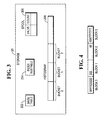
- the AMP 16 scans (at 104) block i of a base table 202 or subtable 204 (Fig. 3).
- a (Value, Count) data structure is updated (at 106) based on the identification of a value and its duplicates. "Value” represents the value of the attribute on which statistics is being collected, and "Count” refers to the number of occurrences of the associated value.
- the (Value, Count) data structure is stored in a temporary location, referred to as a spool 206, as shown in Fig. 3. If a given value of an attribute occurs just once, Count is set to one.
- the AMP 16 determines (at 108) if a skewed value has been detected. This occurs when a given attribute value exceeds a predetermined frequency of occurrence. In other words, Value is skewed if Count is greater than some predefined number. If this is detected, then the skip factor N is adjusted (at 110). In one embodiment, the skip factor N is reduced to increase the sample size. The value of N is adjusted based on the number of instances of detecting skew. The more instances of skewed values detected, the lower the value of N. In other words, if there is a lot of skew detected when scanning the table, the sample size continues to be increased by successively decreasing the value of N. In one embodiment, the minimum value of N is 1, so that the sample size is typically less than or equal to 50% of a given table. Under certain conditions, the sample size can be greater than 50%.
- the AMP 16 increments (at 112) the value of by adding to itself the value (N+1).
- the AMP 16 determines (at 114) if all the blocks of the table portion have been scanned. If not, the AMP 16 scans (at 104) the next block i (which has been incremented by N+1). If all blocks have been processed, then the AMP 16 generates (at 116) a histogram 208 (Fig. 3). As shown in Fig. 3, the histogram 208 contains multiple intervals or buckets.
- Each bucket contains the following information (according to one example implementation): a maximum value covered by an interval; a mode value (which is the most frequently occurring value in the interval); a number corresponding to the frequency of mode value; a number corresponding to the number of values not equal to the mode value in the interval; and a total number of rows in the bucket/interval.
- a maximum value covered by an interval a maximum value covered by an interval
- a mode value which is the most frequently occurring value in the interval
- a number corresponding to the frequency of mode value a number corresponding to the number of values not equal to the mode value in the interval
- a total number of rows in the bucket/interval In other implementations, other types of statistics can be collected.
- the frequencies of the non-mode values and the total number of rows are multiplied by some factor to reflect estimated frequencies in the entire table. For example, if an effective sample size is 5%, and the total number of rows is 1000, then that frequency is multiplexed by a factor of 20 (1000x20) to obtain a value of 20000, which is the estimated total number of rows for the entire table.
- each AMP builds a local histogram that is based on the (Value, Count) pairs stored in spool 206.
- block 0 contains attribute values 0,1, and 2.
- the attribute value 2 is also stored in block 1.
- the scan of block 0 extends into a portion of the adjacent block 1 to identify all duplicates of the value 2. Since data values are ordered by hash code in one embodiment, equal data values are physically adjacent.
- the scan of block 3 can extend backwards into block 2 to retrieve all duplicate values that span blocks 2 and 3.
- the value 6 starts somewhere in block 2 and continues into block 3.
- portions of adjacent blocks are also scanned to retrieve duplicates so that an accurate duplicate count is recorded.
- control units or processors include microprocessors, microcontrollers, processor modules or subsystems (including one or more microprocessors or microcontrollers), or other control or computing devices.
- a “controller” refers to hardware, software, or a combination thereof.
- a “controller” can refer to a single component or to plural components (whether software or hardware).
- Data and instructions are stored in respective storage units, which can be implemented as one or more machine-readable storage media.
- the storage media include different forms of memory including semiconductor memory devices such as dynamic or static random access memories (DRAMs or SRAMs), erasable and programmable read-only memories (EPROMs), electrically erasable and programmable read-only memories (EEPROMs) and flash memories; magnetic disks such as fixed, floppy and removable disks; other magnetic media including tape; and optical media such as compact disks (CDs) or digital video disks (DVDs).
- DRAMs or SRAMs dynamic or static random access memories
- EPROMs erasable and programmable read-only memories
- EEPROMs electrically erasable and programmable read-only memories
- flash memories such as fixed, floppy and removable disks; other magnetic media including tape; and optical media such as compact disks (CDs) or digital video disks (DVDs).
- the instructions of the software modules or layers are loaded or transported to each device or system in one of many different ways. For example, code segments including instructions stored on floppy disks, CD or DVD media, a hard disk, or transported through a network interface card, modem, or other interface device are loaded into the device or system and executed as corresponding software modules or layers.
- data signals that are embodied in carrier waves (transmitted over telephone lines, network lines, wireless links, cables, and the like) communicate the code segments, including instructions, to the device or system.
- carrier waves are in the form of electrical, optical, acoustical, electromagnetic, or other types of signals.
Landscapes
- Engineering & Computer Science (AREA)
- Physics & Mathematics (AREA)
- Probability & Statistics with Applications (AREA)
- Theoretical Computer Science (AREA)
- Computational Linguistics (AREA)
- Software Systems (AREA)
- Mathematical Physics (AREA)
- Data Mining & Analysis (AREA)
- Databases & Information Systems (AREA)
- General Engineering & Computer Science (AREA)
- General Physics & Mathematics (AREA)
- Fuzzy Systems (AREA)
- Information Retrieval, Db Structures And Fs Structures Therefor (AREA)
Applications Claiming Priority (2)
| Application Number | Priority Date | Filing Date | Title |
|---|---|---|---|
| US10/255,734 US7778996B2 (en) | 2002-09-25 | 2002-09-25 | Sampling statistics in a database system |
| US255734 | 2002-09-25 |
Publications (2)
| Publication Number | Publication Date |
|---|---|
| EP1403787A2 true EP1403787A2 (de) | 2004-03-31 |
| EP1403787A3 EP1403787A3 (de) | 2009-04-29 |
Family
ID=31977850
Family Applications (1)
| Application Number | Title | Priority Date | Filing Date |
|---|---|---|---|
| EP03255225A Withdrawn EP1403787A3 (de) | 2002-09-25 | 2003-08-23 | Generieren von Statistiken in einem Datenbanksystem auf der Basis von Stichproben |
Country Status (2)
| Country | Link |
|---|---|
| US (1) | US7778996B2 (de) |
| EP (1) | EP1403787A3 (de) |
Families Citing this family (32)
| Publication number | Priority date | Publication date | Assignee | Title |
|---|---|---|---|---|
| US7136850B2 (en) * | 2002-12-20 | 2006-11-14 | International Business Machines Corporation | Self tuning database retrieval optimization using regression functions |
| US7203685B2 (en) * | 2003-12-11 | 2007-04-10 | International Business Machines Corporation | Apparatus and method for estimating cardinality when data skew is present |
| US7412439B2 (en) * | 2004-01-07 | 2008-08-12 | International Business Machines Corporation | Method for statistics management |
| US7343369B2 (en) * | 2004-11-18 | 2008-03-11 | International Business Machines Corporation | Method and apparatus for predicting selectivity of database query join conditions using hypothetical query predicates having skewed value constants |
| US7814072B2 (en) * | 2004-12-30 | 2010-10-12 | International Business Machines Corporation | Management of database statistics |
| US7805447B2 (en) * | 2008-01-16 | 2010-09-28 | Yahoo! Inc. | Generating example data for testing database queries |
| US7987177B2 (en) * | 2008-01-30 | 2011-07-26 | International Business Machines Corporation | Method for estimating the number of distinct values in a partitioned dataset |
| US8131711B2 (en) * | 2008-05-22 | 2012-03-06 | Teradata Corporation | System, method, and computer-readable medium for partial redistribution, partial duplication of rows of parallel join operation on skewed data |
| US8195644B2 (en) | 2008-10-06 | 2012-06-05 | Teradata Us, Inc. | System, method, and computer-readable medium for optimization of multiple parallel join operations on skewed data |
| US20100138456A1 (en) * | 2008-12-02 | 2010-06-03 | Alireza Aghili | System, method, and computer-readable medium for a locality-sensitive non-unique secondary index |
| US20100332791A1 (en) * | 2009-06-25 | 2010-12-30 | Yu Xu | System, method, and computer-readable medium for optimizing processing of group-by queries featuring maximum or minimum equality conditions in a parallel processing system |
| US9235622B2 (en) * | 2009-02-27 | 2016-01-12 | International Business Machines Corporation | System and method for an efficient query sort of a data stream with duplicate key values |
| JP5833629B2 (ja) | 2010-04-06 | 2015-12-16 | ジャストワン・データベース・インコーポレイテッドJustone Database,Inc. | データベースモデル非依存、スキーマ非依存および作業負荷非依存のデータ記憶ならびにアクセスモデルに基づくデータ記憶および/または検索 |
| US8718070B2 (en) | 2010-07-06 | 2014-05-06 | Nicira, Inc. | Distributed network virtualization apparatus and method |
| US10103939B2 (en) | 2010-07-06 | 2018-10-16 | Nicira, Inc. | Network control apparatus and method for populating logical datapath sets |
| US9525647B2 (en) | 2010-07-06 | 2016-12-20 | Nicira, Inc. | Network control apparatus and method for creating and modifying logical switching elements |
| US20120191639A1 (en) * | 2011-01-26 | 2012-07-26 | International Business Machines Corporation | Statistics forecast for range partitioned tables |
| US9286343B2 (en) * | 2012-07-03 | 2016-03-15 | Salesforce.Com, Inc. | Statistics mechanisms in multitenant database environments |
| US9135300B1 (en) * | 2012-12-20 | 2015-09-15 | Emc Corporation | Efficient sampling with replacement |
| US9870398B1 (en) * | 2012-12-31 | 2018-01-16 | Teradata Us, Inc. | Database-table sampling-percentage selection |
| US10255318B2 (en) * | 2013-02-25 | 2019-04-09 | Facebook, Inc. | Sampling a set of data |
| US9811938B2 (en) | 2013-03-14 | 2017-11-07 | Business Objects Software Ltd. | Methods, apparatus and system for analytics replay utilizing random sampling |
| US9529849B2 (en) | 2013-12-31 | 2016-12-27 | Sybase, Inc. | Online hash based optimizer statistics gathering in a database |
| US9354896B1 (en) * | 2014-02-28 | 2016-05-31 | Emc Corporation | Hypervisor utilization to reduce bootstrap time for data storage system |
| US9798775B2 (en) | 2015-01-16 | 2017-10-24 | International Business Machines Corporation | Database statistical histogram forecasting |
| US10922314B2 (en) | 2015-04-29 | 2021-02-16 | Micro Focus Llc | Incrementally updating a database statistic |
| US10558633B1 (en) * | 2015-12-30 | 2020-02-11 | Teradata Us, Inc. | Hash-value-based single-pass data store statistics collection |
| US10169364B2 (en) * | 2016-01-13 | 2019-01-01 | International Business Machines Corporation | Gauging accuracy of sampling-based distinct element estimation |
| US10198455B2 (en) * | 2016-01-13 | 2019-02-05 | International Business Machines Corporation | Sampling-based deduplication estimation |
| US11061898B2 (en) * | 2016-09-15 | 2021-07-13 | Sap Se | Uncertainty-aware selection of query execution plan |
| US10324929B2 (en) * | 2016-10-31 | 2019-06-18 | Sap Se | Provision of position data for query runtime errors |
| CN113569200A (zh) * | 2021-08-03 | 2021-10-29 | 北京金山云网络技术有限公司 | 数据统计的方法、装置及服务器 |
Family Cites Families (18)
| Publication number | Priority date | Publication date | Assignee | Title |
|---|---|---|---|---|
| US5321813A (en) * | 1991-05-01 | 1994-06-14 | Teradata Corporation | Reconfigurable, fault tolerant, multistage interconnect network and protocol |
| US5627533A (en) * | 1994-08-05 | 1997-05-06 | Hayes Microcomputer Products, Inc. | Adjusting encoding table size and memory allocation for data compression in response to input data |
| US5640584A (en) * | 1994-12-12 | 1997-06-17 | Ncr Corporation | Virtual processor method and apparatus for enhancing parallelism and availability in computer systems |
| US5511190A (en) * | 1995-01-20 | 1996-04-23 | Tandem Computers, Inc. | Hash-based database grouping system and method |
| CA2167790A1 (en) * | 1995-01-23 | 1996-07-24 | Donald S. Maier | Relational database system and method with high data availability during table data restructuring |
| CA2159269C (en) * | 1995-09-27 | 2000-11-21 | Chaitanya K. Baru | Method and apparatus for achieving uniform data distribution in a parallel database system |
| US5864842A (en) * | 1995-10-23 | 1999-01-26 | Ncr Corporation | Optimization of SQL queries using hash star join operations |
| US5950188A (en) * | 1996-11-14 | 1999-09-07 | Sybase, Inc. | Database system with methods for executing system-created internal SQL command statements |
| US5878426A (en) * | 1996-12-23 | 1999-03-02 | Unisys Corporation | Statistical database query using random sampling of records |
| US5893090A (en) * | 1997-01-31 | 1999-04-06 | Informix Software, Inc. | Method and apparatus for performing an aggregate query in a database system |
| US5884299A (en) * | 1997-02-06 | 1999-03-16 | Ncr Corporation | Optimization of SQL queries involving aggregate expressions using a plurality of local and global aggregation operations |
| US5870752A (en) * | 1997-08-21 | 1999-02-09 | Lucent Technologies Inc. | Incremental maintenance of an approximate histogram in a database system |
| US6278989B1 (en) * | 1998-08-25 | 2001-08-21 | Microsoft Corporation | Histogram construction using adaptive random sampling with cross-validation for database systems |
| US6223171B1 (en) * | 1998-08-25 | 2001-04-24 | Microsoft Corporation | What-if index analysis utility for database systems |
| US6842753B2 (en) * | 2001-01-12 | 2005-01-11 | Microsoft Corporation | Sampling for aggregation queries |
| US20020120435A1 (en) * | 2001-02-28 | 2002-08-29 | Frazier John D. | Implementing a neural network in a database system |
| US6691099B1 (en) * | 2001-05-31 | 2004-02-10 | Oracle International Corporation | Method and system for histogram determination in a database |
| US6801903B2 (en) * | 2001-10-12 | 2004-10-05 | Ncr Corporation | Collecting statistics in a database system |
-
2002
- 2002-09-25 US US10/255,734 patent/US7778996B2/en not_active Expired - Lifetime
-
2003
- 2003-08-23 EP EP03255225A patent/EP1403787A3/de not_active Withdrawn
Also Published As
| Publication number | Publication date |
|---|---|
| US7778996B2 (en) | 2010-08-17 |
| US20040059743A1 (en) | 2004-03-25 |
| EP1403787A3 (de) | 2009-04-29 |
Similar Documents
| Publication | Publication Date | Title |
|---|---|---|
| US7778996B2 (en) | Sampling statistics in a database system | |
| US6272487B1 (en) | Query optimization through the use of multi-column statistics to avoid the problems of non-indexed column correlation | |
| US6801903B2 (en) | Collecting statistics in a database system | |
| Morfonios et al. | ROLAP implementations of the data cube | |
| US10387411B2 (en) | Determining a density of a key value referenced in a database query over a range of rows | |
| US7469241B2 (en) | Efficient data aggregation operations using hash tables | |
| EP3748515B1 (de) | Richtliniengesteuerte datenplatzierung und lebenszyklusverwaltung von informationen | |
| US7069264B2 (en) | Stratified sampling of data in a database system | |
| US5870752A (en) | Incremental maintenance of an approximate histogram in a database system | |
| US8108355B2 (en) | Providing a partially sorted index | |
| US20090210445A1 (en) | Method and system for optimizing data access in a database using multi-class objects | |
| US8935233B2 (en) | Approximate index in relational databases | |
| JP2019530068A (ja) | テーブルのインクリメンタルクラスタリング保守 | |
| US7447679B2 (en) | Optimizing execution of a database query by using the partitioning schema of a partitioned object to select a subset of partitions from another partitioned object | |
| US6636846B1 (en) | Method for providing a system maintained materialized functionally dependent column for a database management system | |
| US20030167275A1 (en) | Computation of frequent data values | |
| Gibbons et al. | Aqua project white paper | |
| US8255388B1 (en) | Providing a progress indicator in a database system | |
| US20080040334A1 (en) | Operation of Relational Database Optimizers by Inserting Redundant Sub-Queries in Complex Queries | |
| US7321898B1 (en) | Locking mechanism for materialized views in a database system | |
| US7236971B1 (en) | Method and system for deriving data through interpolation in a database system | |
| US7814080B1 (en) | Grouping database queries and/or transactions | |
| US7386536B1 (en) | Statistical representation of skewed data | |
| Hua et al. | Efficient evaluation of traversal recursive queries using connectivity index | |
| US8140520B2 (en) | Embedding densities in a data structure |
Legal Events
| Date | Code | Title | Description |
|---|---|---|---|
| PUAI | Public reference made under article 153(3) epc to a published international application that has entered the european phase |
Free format text: ORIGINAL CODE: 0009012 |
|
| AK | Designated contracting states |
Kind code of ref document: A2 Designated state(s): AT BE BG CH CY CZ DE DK EE ES FI FR GB GR HU IE IT LI LU MC NL PT RO SE SI SK TR |
|
| AX | Request for extension of the european patent |
Extension state: AL LT LV MK |
|
| RAP1 | Party data changed (applicant data changed or rights of an application transferred) |
Owner name: TERADATA US, INC. |
|
| PUAL | Search report despatched |
Free format text: ORIGINAL CODE: 0009013 |
|
| AK | Designated contracting states |
Kind code of ref document: A3 Designated state(s): AT BE BG CH CY CZ DE DK EE ES FI FR GB GR HU IE IT LI LU MC NL PT RO SE SI SK TR |
|
| AX | Request for extension of the european patent |
Extension state: AL LT LV MK |
|
| 17P | Request for examination filed |
Effective date: 20091029 |
|
| AKX | Designation fees paid |
Designated state(s): DE FR GB |
|
| 17Q | First examination report despatched |
Effective date: 20100114 |
|
| STAA | Information on the status of an ep patent application or granted ep patent |
Free format text: STATUS: THE APPLICATION IS DEEMED TO BE WITHDRAWN |
|
| 18D | Application deemed to be withdrawn |
Effective date: 20100526 |