EP1400682A2 - Electromechanical choke system for an internal combustion engine - Google Patents
Electromechanical choke system for an internal combustion engine Download PDFInfo
- Publication number
- EP1400682A2 EP1400682A2 EP03254963A EP03254963A EP1400682A2 EP 1400682 A2 EP1400682 A2 EP 1400682A2 EP 03254963 A EP03254963 A EP 03254963A EP 03254963 A EP03254963 A EP 03254963A EP 1400682 A2 EP1400682 A2 EP 1400682A2
- Authority
- EP
- European Patent Office
- Prior art keywords
- solenoid actuator
- engine
- choke valve
- starting system
- electrically connected
- Prior art date
- Legal status (The legal status is an assumption and is not a legal conclusion. Google has not performed a legal analysis and makes no representation as to the accuracy of the status listed.)
- Granted
Links
Images

Classifications
-
- F—MECHANICAL ENGINEERING; LIGHTING; HEATING; WEAPONS; BLASTING
- F02—COMBUSTION ENGINES; HOT-GAS OR COMBUSTION-PRODUCT ENGINE PLANTS
- F02M—SUPPLYING COMBUSTION ENGINES IN GENERAL WITH COMBUSTIBLE MIXTURES OR CONSTITUENTS THEREOF
- F02M1/00—Carburettors with means for facilitating engine's starting or its idling below operational temperatures
- F02M1/08—Carburettors with means for facilitating engine's starting or its idling below operational temperatures the means to facilitate starting or idling becoming operative or inoperative automatically
- F02M1/10—Carburettors with means for facilitating engine's starting or its idling below operational temperatures the means to facilitate starting or idling becoming operative or inoperative automatically dependent on engine temperature, e.g. having thermostat
-
- F—MECHANICAL ENGINEERING; LIGHTING; HEATING; WEAPONS; BLASTING
- F02—COMBUSTION ENGINES; HOT-GAS OR COMBUSTION-PRODUCT ENGINE PLANTS
- F02D—CONTROLLING COMBUSTION ENGINES
- F02D41/00—Electrical control of supply of combustible mixture or its constituents
- F02D41/02—Circuit arrangements for generating control signals
- F02D41/04—Introducing corrections for particular operating conditions
- F02D41/06—Introducing corrections for particular operating conditions for engine starting or warming up
- F02D41/062—Introducing corrections for particular operating conditions for engine starting or warming up for starting
- F02D41/067—Introducing corrections for particular operating conditions for engine starting or warming up for starting with control of the choke
-
- F—MECHANICAL ENGINEERING; LIGHTING; HEATING; WEAPONS; BLASTING
- F02—COMBUSTION ENGINES; HOT-GAS OR COMBUSTION-PRODUCT ENGINE PLANTS
- F02D—CONTROLLING COMBUSTION ENGINES
- F02D9/00—Controlling engines by throttling air or fuel-and-air induction conduits or exhaust conduits
- F02D9/02—Controlling engines by throttling air or fuel-and-air induction conduits or exhaust conduits concerning induction conduits
- F02D2009/0201—Arrangements; Control features; Details thereof
- F02D2009/0244—Choking air flow at low speed and load
-
- F—MECHANICAL ENGINEERING; LIGHTING; HEATING; WEAPONS; BLASTING
- F02—COMBUSTION ENGINES; HOT-GAS OR COMBUSTION-PRODUCT ENGINE PLANTS
- F02D—CONTROLLING COMBUSTION ENGINES
- F02D41/00—Electrical control of supply of combustible mixture or its constituents
- F02D41/20—Output circuits, e.g. for controlling currents in command coils
- F02D2041/202—Output circuits, e.g. for controlling currents in command coils characterised by the control of the circuit
- F02D2041/2065—Output circuits, e.g. for controlling currents in command coils characterised by the control of the circuit the control being related to the coil temperature
Definitions
- the present invention relates to an engine starting system for an internal combustion engine. More particularly, the invention relates to an automatic choke system for a small engine.
- a choke valve typically regulates the airflow to the engine.
- the choke valve reduces the airflow to the engine to enrich the air/fuel mixture.
- the choke valve is not needed because the engine no longer requires a rich air/fuel mixture.
- the invention provides an engine starting system that includes a battery, a starter motor, a starter switch, a solenoid actuator, a choke valve, and a temperature switch.
- the starter switch is electrically connected between the battery and the starter motor for the engine.
- the choke valve is disposed in an air intake of an air/fuel-mixing device for the engine.
- the choke valve interconnects with and moves in response to the solenoid actuator.
- the solenoid actuator is electrically connected to the starter switch and the temperature switch. Above a certain threshold temperature, the temperature switch interrupts the power supplied to the solenoid actuator. If the power to the solenoid is interrupted, a bias spring connected to the solenoid actuator moves the choke valve to an open position.
- the engine starting system further includes a time delay electrically connected to the solenoid.
- the time delay energizes the solenoid actuator for an extended period of time after the starter switch closes.
- the engine starting system further includes a free wheeling diode electrically connected between the positive and negative terminals of the solenoid actuator. After electrical power is interrupted to the solenoid actuator, the free wheeling diode re-circulates and dissipates the electrical current of the solenoid actuator.
- the invention regulates the air intake of an air/fuel-mixing device based on starter motor activation and temperature conditions. Electrically connecting a solenoid actuator between a temperature switch and starter switch provides an economical means for regulating the open position of a choke valve when powering a starter motor at hot versus cold temperatures.
- the invention provides an engine starting system that regulates the intake of air to the air/fuel-mixing-device of an engine based on temperature.
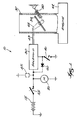
- FIG. 1 illustrates an exemplary embodiment of an engine starting system 10 embodying the invention.
- the system includes a battery 15, a starter motor 20, a starter switch 25, a solenoid actuator 30, a choke valve 35 disposed in an air intake 37 to an air/fuel-mixing device (not shown), and a temperature switch 40.
- the starter switch 25 is electrically connected between the battery 15 and a positive terminal of the starter motor 20 for an engine 42.
- the negative terminal of the starter motor 20 is electrically connected to electrical ground.
- the starter switch 25 closes enabling the battery 15 to provide power to the starter motor 20.
- An exemplary battery 15 is a 12-volt DC battery suitable to energize the motor 20.
- the starter motor 20 cranks the engine 42 to start.
- the starter switch 25 opens and interrupts the electrical power to the starter motor 20.
- the positive terminal of the starter motor 20 is also electrically connected to the positive terminal of the solenoid actuator 30.
- the negative terminal of the solenoid actuator 30 is electrically connected to a temperature switch 40 (discussed below).
- the starter switch 25 closes enabling the battery 15 to provide power to the solenoid actuator 30.
- the solenoid actuator 30 moves the choke valve 35 to a closed position (discussed below).
- FIG. 1 shows an exemplary solenoid actuator 30 that includes a linear actuator 43.
- the linear actuator 43 is connected by a linkage 45 to the choke valve 35 located in the intake 37 of air/fuel-mixing device.
- the linkage 45 pivotally connects to the choke valve 35 using any suitable means (e.g., pin, hinge, bolt, etc.).
- the linear actuator 30 can be directly connected the choke valve 35 using a suitable pivotal connection means known in the art.
- the direct movement of the solenoid actuator 30 can control the intake of air to the air/fuel-mixing device.
- the choke valve 35 and its connecting means to the solenoid actuator 30 can be removed.
- the rod of the solenoid actuator 30 and/or air intake is sized such that the rod spans the diameter of air intake 37 to the air/fuel-mixing. Thereby, the rod acts as the choke valve 35 in regulating the intake of air to the air/fuel-mixing device.
- the solenoid actuator 30 can include a rotary actuator 47 directly connected the choke valve 35.
- a fixed connecting means e.g., spot weld, screw, etc.
- other suitable types of solenoid actuators or DC machines known in the art can be used to move the choke valve 35.
- a spring return 50 is connected to the choke valve 35 to bias the choke valve 35 toward a closed position.
- the solenoid actuator 30 can include a spring return to bias the choke valve 35 to an open position.
- the choke valve 35 interconnects with and moves in response to the solenoid actuator 30.
- the choke valve 35 is normally positioned in the intake of an air/fuel-mixing device for the engine 42.
- the choke valve 35 regulates the intake of air to the air/fuel-mixing device, thereby regulating the air/fuel ratio.
- FIG. 1 shows an exemplary choke valve 35 that includes a gate valve.
- Other suitable types of choke valves 35 known to those in the art can be used as well.
- the temperature switch 40 is electrically connected to the solenoid actuator 30 as shown in FIG. 1. Above a certain threshold temperature, the temperature switch 40 interrupts the electrical power supplied to the solenoid actuator 30. As shown in FIG. 4, the solenoid actuator 30 includes positive and negative electrical terminals. The positive terminal of the solenoid actuator 30 receives electrical power from the battery 15 via the electrical connection with the starter switch 25. The negative terminal of the actuator 30 is electrically connected to one terminal of the temperature switch 40. The other terminal of the temperature switch 40 is electrically connected to electrical ground.
- the temperature switch 40 is mounted in a suitable location on or near the engine 42 (e.g., the exhaust port, the engine housing, etc.) to provide a measure of the temperature.
- the temperature switch 40 can be mounted using any suitable means (e.g., bolt, screw, spot-weld, adhesive, etc.) known to those in the art.
- An exemplary temperature switch 40 is an Elmwood TM sensor Part No. 3455RC. Other suitable types of temperature switches 40 known to those in the art can be used as well.
- the system 10 can include an electronic time delay 55 (shown in dashed lines).
- the time delay 55 is electrically connected to provide electrical power to the solenoid actuator 30 for a delay time period (e.g., about 5 seconds after cranking the starter) before de-energizing the actuator 30 and opening the choke valve 35.
- the solenoid actuator 30 is energized to hold the choke in a closed position for an extended time period beyond the opening of the starter switch 25.
- Any suitable electronic time delay 55 known in the art can be used (e.g., delay circuit, capacitor, etc.).
- the system 10 can include a free-wheeling diode 60 (shown in dashed lines) electrically connected between the positive and negative terminals of the solenoid actuator 30.
- the free-wheeling diode 60 allows current to re-circulate and dissipate after the electrical power is interrupted to the solenoid actuator 30. Thereby, the solenoid actuator 30 more readily responds to an opening of the starter switch 25 or temperature switch 40. Any suitable free-wheeling diode 60 known in the art can be used.
- an operator engages the electrical starter that closes the starter switch 25 to start the engine 42.
- the starter switch 25 When the starter switch 25 is closed, the battery 15 supplies power to the starter motor 20 and the solenoid actuator 30.
- the temperature switch 40 closes the circuit with the battery 15 to energize the solenoid actuator 30.
- the energized solenoid actuator 30 moves the choke valve 35 to a closed position to reduce the airflow to the engine and thereby enrich the air/fuel mixture.
- the temperature switch 40 opens. An example when this temperature condition can occur is after normal operation of the engine. Above the threshold temperature, the rich air/fuel mixture is not needed by the engine.
- the open temperature switch 40 opens and interrupts the electrical power to the solenoid actuator 30.
- the solenoid actuator 30 de-energizes and the spring 45 biases the choke valve 35 to an open position.
- the starter switch 25 opens and interrupts the power from the battery 15 to the starter motor 20 and the solenoid actuator 30.
- the solenoid actuator 30 is not energized to move the choke valve 35 to the closed position.
- the spring 50 biases the choke valve 35 to an open position.
- the invention provides, among other things, an exemplary engine starting system 10 that regulates the intake of air to the air/fuel-mixing system.
Landscapes
- Engineering & Computer Science (AREA)
- Chemical & Material Sciences (AREA)
- Combustion & Propulsion (AREA)
- Mechanical Engineering (AREA)
- General Engineering & Computer Science (AREA)
- Electrical Control Of Air Or Fuel Supplied To Internal-Combustion Engine (AREA)
- Means For Warming Up And Starting Carburetors (AREA)
- Control Of Throttle Valves Provided In The Intake System Or In The Exhaust System (AREA)
Abstract
Description
Claims (8)
- An engine starting system, comprising:a battery;a starter motor powered by said battery, the starter motor including a positive terminal and a negative terminal;a starter switch electrically connected between the battery and the starter motor;a solenoid actuator powered by said battery and directly electrically connected to the positive terminal of the starter motor;a choke valve disposed in an air intake of an air/fuel-mixing device, the choke valve interconnected with and movable in response to the solenoid actuator; anda temperature switch electrically connected to the negative terminal of the solenoid actuator, wherein the temperature switch interrupts the electrical power supplied to the solenoid actuator above a threshold temperature.
- The engine starting system as claimed in claim 1, wherein the solenoid actuator includes a rotary actuator.
- The engine starting system as claimed in claim 1, wherein the solenoid actuator includes a linear actuator.
- The engine starting system as claimed in claim 3, further comprising:a linkage that couples the linear actuator to the choke valve.
- The engine starting system as claimed in claim 1, further comprising:a spring that biases the solenoid actuator to move the choke valve to a substantially open position.
- The engine starting system as claimed in claim 1, further comprising:a delay switch electrically connected to the positive terminal of the solenoid actuator, wherein the delay switch provides electrical power for a selected period of time to the solenoid actuator after the starter switch moves from a closed to an open position.
- The engine starting system as claimed in claim 1, further comprising:a free-wheeling diode electrically connected between the positive and negative terminals of the solenoid actuator.
- The engine starting system as claimed in claim 1, wherein the starter motor is used to start a lawnmower engine.
Applications Claiming Priority (2)
| Application Number | Priority Date | Filing Date | Title |
|---|---|---|---|
| US251382 | 2002-09-20 | ||
| US10/251,382 US6752110B2 (en) | 2002-09-20 | 2002-09-20 | Electromechanical choke system for an internal combustion engine |
Publications (3)
| Publication Number | Publication Date |
|---|---|
| EP1400682A2 true EP1400682A2 (en) | 2004-03-24 |
| EP1400682A3 EP1400682A3 (en) | 2005-05-04 |
| EP1400682B1 EP1400682B1 (en) | 2007-07-04 |
Family
ID=31946471
Family Applications (1)
| Application Number | Title | Priority Date | Filing Date |
|---|---|---|---|
| EP03254963A Expired - Lifetime EP1400682B1 (en) | 2002-09-20 | 2003-08-09 | Electromechanical choke system for an internal combustion engine |
Country Status (4)
| Country | Link |
|---|---|
| US (1) | US6752110B2 (en) |
| EP (1) | EP1400682B1 (en) |
| CN (1) | CN100335765C (en) |
| DE (1) | DE60314700T2 (en) |
Cited By (1)
| Publication number | Priority date | Publication date | Assignee | Title |
|---|---|---|---|---|
| EP3404239A4 (en) * | 2016-01-15 | 2019-08-07 | Suzhou Cleva Precision Machinery & Technology Co., Ltd. | GARDEN TOOL |
Families Citing this family (14)
| Publication number | Priority date | Publication date | Assignee | Title |
|---|---|---|---|---|
| US6895175B2 (en) * | 2001-10-01 | 2005-05-17 | Cummins, Inc. | Electrical control circuit and method |
| US6830023B2 (en) * | 2002-11-07 | 2004-12-14 | Briggs & Stratton Corporation | Electromagnetic choke system for an internal combustion engine |
| US7628387B1 (en) | 2008-07-03 | 2009-12-08 | Briggs And Stratton Corporation | Engine air/fuel mixing apparatus |
| US8339762B2 (en) * | 2009-01-15 | 2012-12-25 | Sturman Industries, Inc. | Control valve coil temperature controller |
| CN102192069A (en) * | 2010-03-09 | 2011-09-21 | 张连志 | Multifunctional engine starter |
| JP5426529B2 (en) * | 2010-12-28 | 2014-02-26 | 本田技研工業株式会社 | Auto choke device for carburetor for general purpose engine |
| US10215130B2 (en) | 2012-02-10 | 2019-02-26 | Briggs & Stratton Corporation | Choke override for an engine |
| US9429107B2 (en) * | 2013-02-22 | 2016-08-30 | Briggs & Stratton Corporation | Solenoid autochoke for an engine |
| US9464588B2 (en) | 2013-08-15 | 2016-10-11 | Kohler Co. | Systems and methods for electronically controlling fuel-to-air ratio for an internal combustion engine |
| JP6674379B2 (en) * | 2013-12-27 | 2020-04-01 | ロベルト・ボッシュ・モトレス・デ・パルティダ・エ・オルタネドレス・リミターダ | Diode housing core |
| US10054081B2 (en) | 2014-10-17 | 2018-08-21 | Kohler Co. | Automatic starting system |
| US9945326B2 (en) | 2015-05-07 | 2018-04-17 | Briggs & Stratton Corporation | Automatic choking mechanism for internal combustion engines |
| US9932936B2 (en) | 2015-11-11 | 2018-04-03 | Briggs & Stratton Corporation | Carburetor choke removal mechanism for pressure washers |
| CN105626285B (en) * | 2016-01-29 | 2019-01-25 | 深圳市力骏泰燃气动力科技有限公司 | An intelligent adjustment system for engine mixture |
Family Cites Families (37)
| Publication number | Priority date | Publication date | Assignee | Title |
|---|---|---|---|---|
| US1515830A (en) * | 1921-01-14 | 1924-11-18 | Simplex Utilities Corp | Carburetor control |
| US1528484A (en) * | 1922-01-12 | 1925-03-03 | Holley Earl | Carburetor choke-valve control |
| US1577765A (en) * | 1923-04-25 | 1926-03-23 | Glen R Sisson | Automatic choker for carburetors |
| US1534742A (en) * | 1923-05-22 | 1925-04-21 | Gen Motors Res Corp | Carburetor control |
| US1577766A (en) * | 1923-07-16 | 1926-03-23 | Glen R Sisson | Automatic choker for carburetors |
| US1907351A (en) * | 1928-06-05 | 1933-05-02 | Pratt & Whitney Aircraft Compa | Internal combustion engine |
| US1994807A (en) * | 1932-02-23 | 1935-03-19 | Bendix Aviat Corp | Carburetor choke valve control |
| US1995145A (en) * | 1932-03-26 | 1935-03-19 | Wood Conversion Co | Manufacture of artificial boards and like structures |
| US2969785A (en) * | 1959-01-05 | 1961-01-31 | Acf Ind Inc | Choke system |
| US3534720A (en) * | 1967-05-10 | 1970-10-20 | Outboard Marine Corp | Solenoid operated choke |
| FR1596001A (en) * | 1968-12-10 | 1970-06-15 | ||
| US3732856A (en) * | 1970-08-27 | 1973-05-15 | J Firey | Gasoline engine choke delay devices |
| JPS5326608B2 (en) * | 1974-03-15 | 1978-08-03 | ||
| US3960130A (en) * | 1974-05-28 | 1976-06-01 | The Bendix Corporation | Start air control system |
| US4031872A (en) * | 1974-10-21 | 1977-06-28 | Briggs & Stratton Corporation | Thermostatic automatic choke control for small engines |
| US3978835A (en) * | 1974-12-04 | 1976-09-07 | Kohler Company | Automatic choke assembly for small engines |
| US4005690A (en) * | 1975-06-23 | 1977-02-01 | Honda Giken Kogyo Kabushiki Kaisha | Automatic choke valve apparatus in an internal combustion engine |
| US4027640A (en) * | 1975-08-15 | 1977-06-07 | Honda Giken Kogyo Kabushiki Kaisha | Automatic choke valve apparatus in an internal combustion engine |
| DE2546076C2 (en) * | 1975-10-15 | 1982-07-15 | Volkswagenwerk Ag, 3180 Wolfsburg | Control arrangement for internal combustion engines with a speed control device that can be switched on via a switch |
| DE2621555A1 (en) * | 1976-05-14 | 1977-12-01 | Bosch Gmbh Robert | FUEL INJECTION SYSTEM |
| US4093931A (en) * | 1977-05-19 | 1978-06-06 | Kohler Co. | Magnetic armature piece for rotary solenoid |
| DE2945230A1 (en) * | 1979-11-09 | 1981-05-21 | BBC AG Brown, Boveri & Cie., Baden, Aargau | ACTUATOR FOR AN AIR VALVE ARRANGED IN THE CHARGING AIR PIPE OF AN INTERNAL COMBUSTION ENGINE |
| US4373479A (en) * | 1980-08-07 | 1983-02-15 | Outboard Marine Corporation | Fuel system providing priming and automatic warm up |
| JPS57181955A (en) * | 1981-04-30 | 1982-11-09 | Sanshin Ind Co Ltd | Overheat preventer for engine |
| JPS5920539A (en) * | 1982-07-26 | 1984-02-02 | Hitachi Ltd | Internal combustion engine throttle valve control device |
| JPS5954743A (en) * | 1982-09-21 | 1984-03-29 | Kawasaki Heavy Ind Ltd | Engine control system |
| FR2603948B1 (en) * | 1986-09-17 | 1991-01-11 | Solex | ELECTRICAL ASSISTANCE ON SHUTTER |
| US5158051A (en) * | 1987-07-06 | 1992-10-27 | Komatsu Zenoah Kabushiki Kaisha | Fuel supply system for engine |
| US5121719A (en) * | 1988-07-20 | 1992-06-16 | Sanshin Kogyo Kabushiki Kaisha | Start boosting device for internal combustion engine |
| US5092301A (en) * | 1990-02-13 | 1992-03-03 | Zenith Fuel Systems, Inc. | Digital fuel control system for small engines |
| JP3543119B2 (en) * | 1993-09-08 | 2004-07-14 | ヤマハマリン株式会社 | Engine start control device |
| US5511519A (en) * | 1994-07-05 | 1996-04-30 | Homelite, Inc. | Temperature adjusting automatic choke system |
| JP3166546B2 (en) * | 1994-08-17 | 2001-05-14 | トヨタ自動車株式会社 | Internal combustion engine |
| US5611312A (en) * | 1995-02-07 | 1997-03-18 | Walbro Corporation | Carburetor and method and apparatus for controlling air/fuel ratio of same |
| JP3764187B2 (en) * | 1995-06-02 | 2006-04-05 | ヤマハマリン株式会社 | Engine start control device |
| US5660765A (en) * | 1996-06-26 | 1997-08-26 | Kohler Co. | Thermostatic element for controlling a solenoid operated carburetor choke |
| US5832888A (en) * | 1997-01-07 | 1998-11-10 | Brunswick Corporation | Thermostatic override switch for an automatic choke in an internal combustion engine |
-
2002
- 2002-09-20 US US10/251,382 patent/US6752110B2/en not_active Expired - Lifetime
-
2003
- 2003-08-09 EP EP03254963A patent/EP1400682B1/en not_active Expired - Lifetime
- 2003-08-09 DE DE60314700T patent/DE60314700T2/en not_active Expired - Lifetime
- 2003-08-26 CN CNB03155069XA patent/CN100335765C/en not_active Expired - Fee Related
Cited By (1)
| Publication number | Priority date | Publication date | Assignee | Title |
|---|---|---|---|---|
| EP3404239A4 (en) * | 2016-01-15 | 2019-08-07 | Suzhou Cleva Precision Machinery & Technology Co., Ltd. | GARDEN TOOL |
Also Published As
| Publication number | Publication date |
|---|---|
| CN1487184A (en) | 2004-04-07 |
| CN100335765C (en) | 2007-09-05 |
| EP1400682A3 (en) | 2005-05-04 |
| DE60314700T2 (en) | 2008-07-24 |
| EP1400682B1 (en) | 2007-07-04 |
| US6752110B2 (en) | 2004-06-22 |
| DE60314700D1 (en) | 2007-08-16 |
| US20040055554A1 (en) | 2004-03-25 |
Similar Documents
| Publication | Publication Date | Title |
|---|---|---|
| US6752110B2 (en) | Electromechanical choke system for an internal combustion engine | |
| US9429107B2 (en) | Solenoid autochoke for an engine | |
| US4181107A (en) | Carburetor choke valve controlling device | |
| CN100422535C (en) | Electronic governor for general-purpose internal combustion engines | |
| US5832888A (en) | Thermostatic override switch for an automatic choke in an internal combustion engine | |
| US7204232B2 (en) | Carburetor electrically-operated automatic choke system | |
| JP2006170191A (en) | Automatic starting device of carburetor | |
| JP2543299Y2 (en) | Diesel engine stop device | |
| JPH07116989B2 (en) | Starting fuel supply system for engine equipped with diaphragm type carburetor | |
| US8448622B2 (en) | Choke and priming system for an internal combustion engine | |
| JPH03121267A (en) | Starter for diesel engine | |
| JPH03249361A (en) | Automatic choke device for carburetor | |
| JP2844226B2 (en) | Fuel control device for internal combustion engine | |
| US9410487B2 (en) | Control apparatus for general purpose machine | |
| JPS6147726B2 (en) | ||
| JPH05280425A (en) | Auto choke device | |
| JP2719824B2 (en) | Engine fuel supply stop device | |
| JP2780053B2 (en) | Starter fuel supply for carburetor | |
| JPH0723563Y2 (en) | Engine yoke device | |
| JPS6323574Y2 (en) | ||
| JP2004232529A (en) | Auto-choke device | |
| JPS62126255A (en) | Starting circuit for carburetor | |
| KR100198499B1 (en) | Starting motor control method for an automobile | |
| JPS6350435Y2 (en) | ||
| JPH066221Y2 (en) | engine |
Legal Events
| Date | Code | Title | Description |
|---|---|---|---|
| PUAI | Public reference made under article 153(3) epc to a published international application that has entered the european phase |
Free format text: ORIGINAL CODE: 0009012 |
|
| AK | Designated contracting states |
Kind code of ref document: A2 Designated state(s): AT BE BG CH CY CZ DE DK EE ES FI FR GB GR HU IE IT LI LU MC NL PT RO SE SI SK TR |
|
| AX | Request for extension of the european patent |
Extension state: AL LT LV MK |
|
| PUAL | Search report despatched |
Free format text: ORIGINAL CODE: 0009013 |
|
| AK | Designated contracting states |
Kind code of ref document: A3 Designated state(s): AT BE BG CH CY CZ DE DK EE ES FI FR GB GR HU IE IT LI LU MC NL PT RO SE SI SK TR |
|
| AX | Request for extension of the european patent |
Extension state: AL LT LV MK |
|
| 17P | Request for examination filed |
Effective date: 20050725 |
|
| AKX | Designation fees paid |
Designated state(s): DE FR IT |
|
| GRAP | Despatch of communication of intention to grant a patent |
Free format text: ORIGINAL CODE: EPIDOSNIGR1 |
|
| GRAS | Grant fee paid |
Free format text: ORIGINAL CODE: EPIDOSNIGR3 |
|
| GRAA | (expected) grant |
Free format text: ORIGINAL CODE: 0009210 |
|
| AK | Designated contracting states |
Kind code of ref document: B1 Designated state(s): DE FR IT |
|
| REF | Corresponds to: |
Ref document number: 60314700 Country of ref document: DE Date of ref document: 20070816 Kind code of ref document: P |
|
| ET | Fr: translation filed | ||
| PLBE | No opposition filed within time limit |
Free format text: ORIGINAL CODE: 0009261 |
|
| STAA | Information on the status of an ep patent application or granted ep patent |
Free format text: STATUS: NO OPPOSITION FILED WITHIN TIME LIMIT |
|
| 26N | No opposition filed |
Effective date: 20080407 |
|
| PGFP | Annual fee paid to national office [announced via postgrant information from national office to epo] |
Ref country code: DE Payment date: 20130807 Year of fee payment: 11 |
|
| PGFP | Annual fee paid to national office [announced via postgrant information from national office to epo] |
Ref country code: FR Payment date: 20130808 Year of fee payment: 11 |
|
| PGFP | Annual fee paid to national office [announced via postgrant information from national office to epo] |
Ref country code: IT Payment date: 20140822 Year of fee payment: 12 |
|
| REG | Reference to a national code |
Ref country code: DE Ref legal event code: R119 Ref document number: 60314700 Country of ref document: DE |
|
| REG | Reference to a national code |
Ref country code: FR Ref legal event code: ST Effective date: 20150430 |
|
| PG25 | Lapsed in a contracting state [announced via postgrant information from national office to epo] |
Ref country code: DE Free format text: LAPSE BECAUSE OF NON-PAYMENT OF DUE FEES Effective date: 20150303 |
|
| PG25 | Lapsed in a contracting state [announced via postgrant information from national office to epo] |
Ref country code: FR Free format text: LAPSE BECAUSE OF NON-PAYMENT OF DUE FEES Effective date: 20140901 |
|
| PG25 | Lapsed in a contracting state [announced via postgrant information from national office to epo] |
Ref country code: IT Free format text: LAPSE BECAUSE OF NON-PAYMENT OF DUE FEES Effective date: 20150809 |