EP1400516A1 - Substituted anilide derivatives, intermediates thereof, agricultural and horticultural chemicals, and their usage - Google Patents
Substituted anilide derivatives, intermediates thereof, agricultural and horticultural chemicals, and their usage Download PDFInfo
- Publication number
- EP1400516A1 EP1400516A1 EP02730796A EP02730796A EP1400516A1 EP 1400516 A1 EP1400516 A1 EP 1400516A1 EP 02730796 A EP02730796 A EP 02730796A EP 02730796 A EP02730796 A EP 02730796A EP 1400516 A1 EP1400516 A1 EP 1400516A1
- Authority
- EP
- European Patent Office
- Prior art keywords
- groups
- group
- halo
- alkyl
- alkoxy
- Prior art date
- Legal status (The legal status is an assumption and is not a legal conclusion. Google has not performed a legal analysis and makes no representation as to the accuracy of the status listed.)
- Granted
Links
- 0 Cc1c(*)nn[s]1 Chemical compound Cc1c(*)nn[s]1 0.000 description 3
- QENGPZGAWFQWCZ-UHFFFAOYSA-N Cc1c[s]cc1 Chemical compound Cc1c[s]cc1 QENGPZGAWFQWCZ-UHFFFAOYSA-N 0.000 description 1
Classifications
-
- C—CHEMISTRY; METALLURGY
- C07—ORGANIC CHEMISTRY
- C07D—HETEROCYCLIC COMPOUNDS
- C07D213/00—Heterocyclic compounds containing six-membered rings, not condensed with other rings, with one nitrogen atom as the only ring hetero atom and three or more double bonds between ring members or between ring members and non-ring members
- C07D213/02—Heterocyclic compounds containing six-membered rings, not condensed with other rings, with one nitrogen atom as the only ring hetero atom and three or more double bonds between ring members or between ring members and non-ring members having three double bonds between ring members or between ring members and non-ring members
- C07D213/04—Heterocyclic compounds containing six-membered rings, not condensed with other rings, with one nitrogen atom as the only ring hetero atom and three or more double bonds between ring members or between ring members and non-ring members having three double bonds between ring members or between ring members and non-ring members having no bond between the ring nitrogen atom and a non-ring member or having only hydrogen or carbon atoms directly attached to the ring nitrogen atom
- C07D213/60—Heterocyclic compounds containing six-membered rings, not condensed with other rings, with one nitrogen atom as the only ring hetero atom and three or more double bonds between ring members or between ring members and non-ring members having three double bonds between ring members or between ring members and non-ring members having no bond between the ring nitrogen atom and a non-ring member or having only hydrogen or carbon atoms directly attached to the ring nitrogen atom with hetero atoms or with carbon atoms having three bonds to hetero atoms with at the most one bond to halogen, e.g. ester or nitrile radicals, directly attached to ring carbon atoms
- C07D213/78—Carbon atoms having three bonds to hetero atoms, with at the most one bond to halogen, e.g. ester or nitrile radicals
- C07D213/81—Amides; Imides
-
- A—HUMAN NECESSITIES
- A01—AGRICULTURE; FORESTRY; ANIMAL HUSBANDRY; HUNTING; TRAPPING; FISHING
- A01N—PRESERVATION OF BODIES OF HUMANS OR ANIMALS OR PLANTS OR PARTS THEREOF; BIOCIDES, e.g. AS DISINFECTANTS, AS PESTICIDES OR AS HERBICIDES; PEST REPELLANTS OR ATTRACTANTS; PLANT GROWTH REGULATORS
- A01N43/00—Biocides, pest repellants or attractants, or plant growth regulators containing heterocyclic compounds
- A01N43/02—Biocides, pest repellants or attractants, or plant growth regulators containing heterocyclic compounds having rings with one or more oxygen or sulfur atoms as the only ring hetero atoms
- A01N43/04—Biocides, pest repellants or attractants, or plant growth regulators containing heterocyclic compounds having rings with one or more oxygen or sulfur atoms as the only ring hetero atoms with one hetero atom
- A01N43/06—Biocides, pest repellants or attractants, or plant growth regulators containing heterocyclic compounds having rings with one or more oxygen or sulfur atoms as the only ring hetero atoms with one hetero atom five-membered rings
- A01N43/08—Biocides, pest repellants or attractants, or plant growth regulators containing heterocyclic compounds having rings with one or more oxygen or sulfur atoms as the only ring hetero atoms with one hetero atom five-membered rings with oxygen as the ring hetero atom
-
- A—HUMAN NECESSITIES
- A01—AGRICULTURE; FORESTRY; ANIMAL HUSBANDRY; HUNTING; TRAPPING; FISHING
- A01N—PRESERVATION OF BODIES OF HUMANS OR ANIMALS OR PLANTS OR PARTS THEREOF; BIOCIDES, e.g. AS DISINFECTANTS, AS PESTICIDES OR AS HERBICIDES; PEST REPELLANTS OR ATTRACTANTS; PLANT GROWTH REGULATORS
- A01N43/00—Biocides, pest repellants or attractants, or plant growth regulators containing heterocyclic compounds
- A01N43/02—Biocides, pest repellants or attractants, or plant growth regulators containing heterocyclic compounds having rings with one or more oxygen or sulfur atoms as the only ring hetero atoms
- A01N43/04—Biocides, pest repellants or attractants, or plant growth regulators containing heterocyclic compounds having rings with one or more oxygen or sulfur atoms as the only ring hetero atoms with one hetero atom
- A01N43/06—Biocides, pest repellants or attractants, or plant growth regulators containing heterocyclic compounds having rings with one or more oxygen or sulfur atoms as the only ring hetero atoms with one hetero atom five-membered rings
- A01N43/10—Biocides, pest repellants or attractants, or plant growth regulators containing heterocyclic compounds having rings with one or more oxygen or sulfur atoms as the only ring hetero atoms with one hetero atom five-membered rings with sulfur as the ring hetero atom
-
- A—HUMAN NECESSITIES
- A01—AGRICULTURE; FORESTRY; ANIMAL HUSBANDRY; HUNTING; TRAPPING; FISHING
- A01N—PRESERVATION OF BODIES OF HUMANS OR ANIMALS OR PLANTS OR PARTS THEREOF; BIOCIDES, e.g. AS DISINFECTANTS, AS PESTICIDES OR AS HERBICIDES; PEST REPELLANTS OR ATTRACTANTS; PLANT GROWTH REGULATORS
- A01N43/00—Biocides, pest repellants or attractants, or plant growth regulators containing heterocyclic compounds
- A01N43/34—Biocides, pest repellants or attractants, or plant growth regulators containing heterocyclic compounds having rings with one nitrogen atom as the only ring hetero atom
- A01N43/40—Biocides, pest repellants or attractants, or plant growth regulators containing heterocyclic compounds having rings with one nitrogen atom as the only ring hetero atom six-membered rings
-
- A—HUMAN NECESSITIES
- A01—AGRICULTURE; FORESTRY; ANIMAL HUSBANDRY; HUNTING; TRAPPING; FISHING
- A01N—PRESERVATION OF BODIES OF HUMANS OR ANIMALS OR PLANTS OR PARTS THEREOF; BIOCIDES, e.g. AS DISINFECTANTS, AS PESTICIDES OR AS HERBICIDES; PEST REPELLANTS OR ATTRACTANTS; PLANT GROWTH REGULATORS
- A01N43/00—Biocides, pest repellants or attractants, or plant growth regulators containing heterocyclic compounds
- A01N43/48—Biocides, pest repellants or attractants, or plant growth regulators containing heterocyclic compounds having rings with two nitrogen atoms as the only ring hetero atoms
- A01N43/54—1,3-Diazines; Hydrogenated 1,3-diazines
-
- A—HUMAN NECESSITIES
- A01—AGRICULTURE; FORESTRY; ANIMAL HUSBANDRY; HUNTING; TRAPPING; FISHING
- A01N—PRESERVATION OF BODIES OF HUMANS OR ANIMALS OR PLANTS OR PARTS THEREOF; BIOCIDES, e.g. AS DISINFECTANTS, AS PESTICIDES OR AS HERBICIDES; PEST REPELLANTS OR ATTRACTANTS; PLANT GROWTH REGULATORS
- A01N43/00—Biocides, pest repellants or attractants, or plant growth regulators containing heterocyclic compounds
- A01N43/48—Biocides, pest repellants or attractants, or plant growth regulators containing heterocyclic compounds having rings with two nitrogen atoms as the only ring hetero atoms
- A01N43/56—1,2-Diazoles; Hydrogenated 1,2-diazoles
-
- A—HUMAN NECESSITIES
- A01—AGRICULTURE; FORESTRY; ANIMAL HUSBANDRY; HUNTING; TRAPPING; FISHING
- A01N—PRESERVATION OF BODIES OF HUMANS OR ANIMALS OR PLANTS OR PARTS THEREOF; BIOCIDES, e.g. AS DISINFECTANTS, AS PESTICIDES OR AS HERBICIDES; PEST REPELLANTS OR ATTRACTANTS; PLANT GROWTH REGULATORS
- A01N43/00—Biocides, pest repellants or attractants, or plant growth regulators containing heterocyclic compounds
- A01N43/72—Biocides, pest repellants or attractants, or plant growth regulators containing heterocyclic compounds having rings with nitrogen atoms and oxygen or sulfur atoms as ring hetero atoms
- A01N43/74—Biocides, pest repellants or attractants, or plant growth regulators containing heterocyclic compounds having rings with nitrogen atoms and oxygen or sulfur atoms as ring hetero atoms five-membered rings with one nitrogen atom and either one oxygen atom or one sulfur atom in positions 1,3
- A01N43/78—1,3-Thiazoles; Hydrogenated 1,3-thiazoles
-
- A—HUMAN NECESSITIES
- A01—AGRICULTURE; FORESTRY; ANIMAL HUSBANDRY; HUNTING; TRAPPING; FISHING
- A01N—PRESERVATION OF BODIES OF HUMANS OR ANIMALS OR PLANTS OR PARTS THEREOF; BIOCIDES, e.g. AS DISINFECTANTS, AS PESTICIDES OR AS HERBICIDES; PEST REPELLANTS OR ATTRACTANTS; PLANT GROWTH REGULATORS
- A01N43/00—Biocides, pest repellants or attractants, or plant growth regulators containing heterocyclic compounds
- A01N43/72—Biocides, pest repellants or attractants, or plant growth regulators containing heterocyclic compounds having rings with nitrogen atoms and oxygen or sulfur atoms as ring hetero atoms
- A01N43/80—Biocides, pest repellants or attractants, or plant growth regulators containing heterocyclic compounds having rings with nitrogen atoms and oxygen or sulfur atoms as ring hetero atoms five-membered rings with one nitrogen atom and either one oxygen atom or one sulfur atom in positions 1,2
-
- A—HUMAN NECESSITIES
- A01—AGRICULTURE; FORESTRY; ANIMAL HUSBANDRY; HUNTING; TRAPPING; FISHING
- A01N—PRESERVATION OF BODIES OF HUMANS OR ANIMALS OR PLANTS OR PARTS THEREOF; BIOCIDES, e.g. AS DISINFECTANTS, AS PESTICIDES OR AS HERBICIDES; PEST REPELLANTS OR ATTRACTANTS; PLANT GROWTH REGULATORS
- A01N43/00—Biocides, pest repellants or attractants, or plant growth regulators containing heterocyclic compounds
- A01N43/72—Biocides, pest repellants or attractants, or plant growth regulators containing heterocyclic compounds having rings with nitrogen atoms and oxygen or sulfur atoms as ring hetero atoms
- A01N43/82—Biocides, pest repellants or attractants, or plant growth regulators containing heterocyclic compounds having rings with nitrogen atoms and oxygen or sulfur atoms as ring hetero atoms five-membered rings with three ring hetero atoms
-
- C—CHEMISTRY; METALLURGY
- C07—ORGANIC CHEMISTRY
- C07C—ACYCLIC OR CARBOCYCLIC COMPOUNDS
- C07C211/00—Compounds containing amino groups bound to a carbon skeleton
- C07C211/43—Compounds containing amino groups bound to a carbon skeleton having amino groups bound to carbon atoms of six-membered aromatic rings of the carbon skeleton
- C07C211/44—Compounds containing amino groups bound to a carbon skeleton having amino groups bound to carbon atoms of six-membered aromatic rings of the carbon skeleton having amino groups bound to only one six-membered aromatic ring
- C07C211/52—Compounds containing amino groups bound to a carbon skeleton having amino groups bound to carbon atoms of six-membered aromatic rings of the carbon skeleton having amino groups bound to only one six-membered aromatic ring the carbon skeleton being further substituted by halogen atoms or by nitro or nitroso groups
-
- C—CHEMISTRY; METALLURGY
- C07—ORGANIC CHEMISTRY
- C07C—ACYCLIC OR CARBOCYCLIC COMPOUNDS
- C07C215/00—Compounds containing amino and hydroxy groups bound to the same carbon skeleton
- C07C215/68—Compounds containing amino and hydroxy groups bound to the same carbon skeleton having amino groups bound to carbon atoms of six-membered aromatic rings and hydroxy groups bound to acyclic carbon atoms or to carbon atoms of rings other than six-membered aromatic rings of the same carbon skeleton
-
- C—CHEMISTRY; METALLURGY
- C07—ORGANIC CHEMISTRY
- C07C—ACYCLIC OR CARBOCYCLIC COMPOUNDS
- C07C217/00—Compounds containing amino and etherified hydroxy groups bound to the same carbon skeleton
- C07C217/76—Compounds containing amino and etherified hydroxy groups bound to the same carbon skeleton having amino groups bound to carbon atoms of six-membered aromatic rings and etherified hydroxy groups bound to acyclic carbon atoms or to carbon atoms of rings other than six-membered aromatic rings of the same carbon skeleton
-
- C—CHEMISTRY; METALLURGY
- C07—ORGANIC CHEMISTRY
- C07D—HETEROCYCLIC COMPOUNDS
- C07D207/00—Heterocyclic compounds containing five-membered rings not condensed with other rings, with one nitrogen atom as the only ring hetero atom
- C07D207/02—Heterocyclic compounds containing five-membered rings not condensed with other rings, with one nitrogen atom as the only ring hetero atom with only hydrogen or carbon atoms directly attached to the ring nitrogen atom
- C07D207/30—Heterocyclic compounds containing five-membered rings not condensed with other rings, with one nitrogen atom as the only ring hetero atom with only hydrogen or carbon atoms directly attached to the ring nitrogen atom having two double bonds between ring members or between ring members and non-ring members
- C07D207/34—Heterocyclic compounds containing five-membered rings not condensed with other rings, with one nitrogen atom as the only ring hetero atom with only hydrogen or carbon atoms directly attached to the ring nitrogen atom having two double bonds between ring members or between ring members and non-ring members with hetero atoms or with carbon atoms having three bonds to hetero atoms with at the most one bond to halogen, e.g. ester or nitrile radicals, directly attached to ring carbon atoms
-
- C—CHEMISTRY; METALLURGY
- C07—ORGANIC CHEMISTRY
- C07D—HETEROCYCLIC COMPOUNDS
- C07D213/00—Heterocyclic compounds containing six-membered rings, not condensed with other rings, with one nitrogen atom as the only ring hetero atom and three or more double bonds between ring members or between ring members and non-ring members
- C07D213/02—Heterocyclic compounds containing six-membered rings, not condensed with other rings, with one nitrogen atom as the only ring hetero atom and three or more double bonds between ring members or between ring members and non-ring members having three double bonds between ring members or between ring members and non-ring members
- C07D213/04—Heterocyclic compounds containing six-membered rings, not condensed with other rings, with one nitrogen atom as the only ring hetero atom and three or more double bonds between ring members or between ring members and non-ring members having three double bonds between ring members or between ring members and non-ring members having no bond between the ring nitrogen atom and a non-ring member or having only hydrogen or carbon atoms directly attached to the ring nitrogen atom
- C07D213/60—Heterocyclic compounds containing six-membered rings, not condensed with other rings, with one nitrogen atom as the only ring hetero atom and three or more double bonds between ring members or between ring members and non-ring members having three double bonds between ring members or between ring members and non-ring members having no bond between the ring nitrogen atom and a non-ring member or having only hydrogen or carbon atoms directly attached to the ring nitrogen atom with hetero atoms or with carbon atoms having three bonds to hetero atoms with at the most one bond to halogen, e.g. ester or nitrile radicals, directly attached to ring carbon atoms
- C07D213/78—Carbon atoms having three bonds to hetero atoms, with at the most one bond to halogen, e.g. ester or nitrile radicals
- C07D213/81—Amides; Imides
- C07D213/82—Amides; Imides in position 3
-
- C—CHEMISTRY; METALLURGY
- C07—ORGANIC CHEMISTRY
- C07D—HETEROCYCLIC COMPOUNDS
- C07D231/00—Heterocyclic compounds containing 1,2-diazole or hydrogenated 1,2-diazole rings
- C07D231/02—Heterocyclic compounds containing 1,2-diazole or hydrogenated 1,2-diazole rings not condensed with other rings
- C07D231/10—Heterocyclic compounds containing 1,2-diazole or hydrogenated 1,2-diazole rings not condensed with other rings having two or three double bonds between ring members or between ring members and non-ring members
- C07D231/14—Heterocyclic compounds containing 1,2-diazole or hydrogenated 1,2-diazole rings not condensed with other rings having two or three double bonds between ring members or between ring members and non-ring members with hetero atoms or with carbon atoms having three bonds to hetero atoms with at the most one bond to halogen, e.g. ester or nitrile radicals, directly attached to ring carbon atoms
-
- C—CHEMISTRY; METALLURGY
- C07—ORGANIC CHEMISTRY
- C07D—HETEROCYCLIC COMPOUNDS
- C07D231/00—Heterocyclic compounds containing 1,2-diazole or hydrogenated 1,2-diazole rings
- C07D231/02—Heterocyclic compounds containing 1,2-diazole or hydrogenated 1,2-diazole rings not condensed with other rings
- C07D231/10—Heterocyclic compounds containing 1,2-diazole or hydrogenated 1,2-diazole rings not condensed with other rings having two or three double bonds between ring members or between ring members and non-ring members
- C07D231/14—Heterocyclic compounds containing 1,2-diazole or hydrogenated 1,2-diazole rings not condensed with other rings having two or three double bonds between ring members or between ring members and non-ring members with hetero atoms or with carbon atoms having three bonds to hetero atoms with at the most one bond to halogen, e.g. ester or nitrile radicals, directly attached to ring carbon atoms
- C07D231/16—Halogen atoms or nitro radicals
-
- C—CHEMISTRY; METALLURGY
- C07—ORGANIC CHEMISTRY
- C07D—HETEROCYCLIC COMPOUNDS
- C07D231/00—Heterocyclic compounds containing 1,2-diazole or hydrogenated 1,2-diazole rings
- C07D231/02—Heterocyclic compounds containing 1,2-diazole or hydrogenated 1,2-diazole rings not condensed with other rings
- C07D231/10—Heterocyclic compounds containing 1,2-diazole or hydrogenated 1,2-diazole rings not condensed with other rings having two or three double bonds between ring members or between ring members and non-ring members
- C07D231/14—Heterocyclic compounds containing 1,2-diazole or hydrogenated 1,2-diazole rings not condensed with other rings having two or three double bonds between ring members or between ring members and non-ring members with hetero atoms or with carbon atoms having three bonds to hetero atoms with at the most one bond to halogen, e.g. ester or nitrile radicals, directly attached to ring carbon atoms
- C07D231/18—One oxygen or sulfur atom
-
- C—CHEMISTRY; METALLURGY
- C07—ORGANIC CHEMISTRY
- C07D—HETEROCYCLIC COMPOUNDS
- C07D231/00—Heterocyclic compounds containing 1,2-diazole or hydrogenated 1,2-diazole rings
- C07D231/02—Heterocyclic compounds containing 1,2-diazole or hydrogenated 1,2-diazole rings not condensed with other rings
- C07D231/10—Heterocyclic compounds containing 1,2-diazole or hydrogenated 1,2-diazole rings not condensed with other rings having two or three double bonds between ring members or between ring members and non-ring members
- C07D231/14—Heterocyclic compounds containing 1,2-diazole or hydrogenated 1,2-diazole rings not condensed with other rings having two or three double bonds between ring members or between ring members and non-ring members with hetero atoms or with carbon atoms having three bonds to hetero atoms with at the most one bond to halogen, e.g. ester or nitrile radicals, directly attached to ring carbon atoms
- C07D231/18—One oxygen or sulfur atom
- C07D231/20—One oxygen atom attached in position 3 or 5
-
- C—CHEMISTRY; METALLURGY
- C07—ORGANIC CHEMISTRY
- C07D—HETEROCYCLIC COMPOUNDS
- C07D239/00—Heterocyclic compounds containing 1,3-diazine or hydrogenated 1,3-diazine rings
- C07D239/02—Heterocyclic compounds containing 1,3-diazine or hydrogenated 1,3-diazine rings not condensed with other rings
- C07D239/24—Heterocyclic compounds containing 1,3-diazine or hydrogenated 1,3-diazine rings not condensed with other rings having three or more double bonds between ring members or between ring members and non-ring members
- C07D239/28—Heterocyclic compounds containing 1,3-diazine or hydrogenated 1,3-diazine rings not condensed with other rings having three or more double bonds between ring members or between ring members and non-ring members with hetero atoms or with carbon atoms having three bonds to hetero atoms with at the most one bond to halogen, directly attached to ring carbon atoms
-
- C—CHEMISTRY; METALLURGY
- C07—ORGANIC CHEMISTRY
- C07D—HETEROCYCLIC COMPOUNDS
- C07D239/00—Heterocyclic compounds containing 1,3-diazine or hydrogenated 1,3-diazine rings
- C07D239/02—Heterocyclic compounds containing 1,3-diazine or hydrogenated 1,3-diazine rings not condensed with other rings
- C07D239/24—Heterocyclic compounds containing 1,3-diazine or hydrogenated 1,3-diazine rings not condensed with other rings having three or more double bonds between ring members or between ring members and non-ring members
- C07D239/28—Heterocyclic compounds containing 1,3-diazine or hydrogenated 1,3-diazine rings not condensed with other rings having three or more double bonds between ring members or between ring members and non-ring members with hetero atoms or with carbon atoms having three bonds to hetero atoms with at the most one bond to halogen, directly attached to ring carbon atoms
- C07D239/32—One oxygen, sulfur or nitrogen atom
- C07D239/38—One sulfur atom
-
- C—CHEMISTRY; METALLURGY
- C07—ORGANIC CHEMISTRY
- C07D—HETEROCYCLIC COMPOUNDS
- C07D261/00—Heterocyclic compounds containing 1,2-oxazole or hydrogenated 1,2-oxazole rings
- C07D261/02—Heterocyclic compounds containing 1,2-oxazole or hydrogenated 1,2-oxazole rings not condensed with other rings
- C07D261/06—Heterocyclic compounds containing 1,2-oxazole or hydrogenated 1,2-oxazole rings not condensed with other rings having two or more double bonds between ring members or between ring members and non-ring members
- C07D261/10—Heterocyclic compounds containing 1,2-oxazole or hydrogenated 1,2-oxazole rings not condensed with other rings having two or more double bonds between ring members or between ring members and non-ring members with hetero atoms or with carbon atoms having three bonds to hetero atoms with at the most one bond to halogen, e.g. ester or nitrile radicals, directly attached to ring carbon atoms
- C07D261/18—Carbon atoms having three bonds to hetero atoms, with at the most one bond to halogen
-
- C—CHEMISTRY; METALLURGY
- C07—ORGANIC CHEMISTRY
- C07D—HETEROCYCLIC COMPOUNDS
- C07D275/00—Heterocyclic compounds containing 1,2-thiazole or hydrogenated 1,2-thiazole rings
- C07D275/02—Heterocyclic compounds containing 1,2-thiazole or hydrogenated 1,2-thiazole rings not condensed with other rings
- C07D275/03—Heterocyclic compounds containing 1,2-thiazole or hydrogenated 1,2-thiazole rings not condensed with other rings with hetero atoms or with carbon atoms having three bonds to hetero atoms with at the most one bond to halogen, e.g. ester or nitrile radicals, directly attached to ring carbon atoms
-
- C—CHEMISTRY; METALLURGY
- C07—ORGANIC CHEMISTRY
- C07D—HETEROCYCLIC COMPOUNDS
- C07D277/00—Heterocyclic compounds containing 1,3-thiazole or hydrogenated 1,3-thiazole rings
- C07D277/02—Heterocyclic compounds containing 1,3-thiazole or hydrogenated 1,3-thiazole rings not condensed with other rings
- C07D277/20—Heterocyclic compounds containing 1,3-thiazole or hydrogenated 1,3-thiazole rings not condensed with other rings having two or three double bonds between ring members or between ring members and non-ring members
- C07D277/32—Heterocyclic compounds containing 1,3-thiazole or hydrogenated 1,3-thiazole rings not condensed with other rings having two or three double bonds between ring members or between ring members and non-ring members with hetero atoms or with carbon atoms having three bonds to hetero atoms with at the most one bond to halogen, e.g. ester or nitrile radicals, directly attached to ring carbon atoms
- C07D277/56—Carbon atoms having three bonds to hetero atoms with at the most one bond to halogen
-
- C—CHEMISTRY; METALLURGY
- C07—ORGANIC CHEMISTRY
- C07D—HETEROCYCLIC COMPOUNDS
- C07D285/00—Heterocyclic compounds containing rings having nitrogen and sulfur atoms as the only ring hetero atoms, not provided for by groups C07D275/00 - C07D283/00
- C07D285/01—Five-membered rings
- C07D285/02—Thiadiazoles; Hydrogenated thiadiazoles
- C07D285/04—Thiadiazoles; Hydrogenated thiadiazoles not condensed with other rings
- C07D285/06—1,2,3-Thiadiazoles; Hydrogenated 1,2,3-thiadiazoles
-
- C—CHEMISTRY; METALLURGY
- C07—ORGANIC CHEMISTRY
- C07D—HETEROCYCLIC COMPOUNDS
- C07D307/00—Heterocyclic compounds containing five-membered rings having one oxygen atom as the only ring hetero atom
- C07D307/02—Heterocyclic compounds containing five-membered rings having one oxygen atom as the only ring hetero atom not condensed with other rings
- C07D307/34—Heterocyclic compounds containing five-membered rings having one oxygen atom as the only ring hetero atom not condensed with other rings having two or three double bonds between ring members or between ring members and non-ring members
- C07D307/56—Heterocyclic compounds containing five-membered rings having one oxygen atom as the only ring hetero atom not condensed with other rings having two or three double bonds between ring members or between ring members and non-ring members with hetero atoms or with carbon atoms having three bonds to hetero atoms with at the most one bond to halogen, e.g. ester or nitrile radicals, directly attached to ring carbon atoms
- C07D307/68—Carbon atoms having three bonds to hetero atoms with at the most one bond to halogen
-
- C—CHEMISTRY; METALLURGY
- C07—ORGANIC CHEMISTRY
- C07D—HETEROCYCLIC COMPOUNDS
- C07D333/00—Heterocyclic compounds containing five-membered rings having one sulfur atom as the only ring hetero atom
- C07D333/02—Heterocyclic compounds containing five-membered rings having one sulfur atom as the only ring hetero atom not condensed with other rings
- C07D333/04—Heterocyclic compounds containing five-membered rings having one sulfur atom as the only ring hetero atom not condensed with other rings not substituted on the ring sulphur atom
- C07D333/26—Heterocyclic compounds containing five-membered rings having one sulfur atom as the only ring hetero atom not condensed with other rings not substituted on the ring sulphur atom with hetero atoms or with carbon atoms having three bonds to hetero atoms with at the most one bond to halogen, e.g. ester or nitrile radicals, directly attached to ring carbon atoms
- C07D333/38—Carbon atoms having three bonds to hetero atoms with at the most one bond to halogen, e.g. ester or nitrile radicals
Definitions
- the present invention relates to substituted anilide derivatives; intermediates thereof; an agricultural and horticultural chemical, in particular, an agricultural and horticultural insecticide, fungicide or acaricide, which contains said compound as an active ingredient; and a usage of the chemical.
- JP-A-5-221994 and JP-A-10-251240 disclose that compounds analogous to the substituted anilide derivative of the present invention are useful as an agricultural and horticultural fungicide.
- the substituted aniline derivative represented by general formula (II) of the present invention is a novel compound not known in any literature, which is a useful intermediate for the production of various derivatives having physiological activity as a medicine, an agrochemical or the like, and that a substituted anilide derivative of general formula (I) derived from said compound is a novel compound not known in any literature and is useful as an agricultural and horticultural chemical, in particular, an agricultural and horticultural insecticide, fungicide or acaricide, whereby the present invention has been accomplished.
- the present invention relates to a substituted anilide derivative represented by general formula (I): ⁇ wherein R 1 is a hydrogen atom, a (C 1 -C 6 )alkyl group, a halo(C 1 -C 6 )alkyl group, a (C 1 -C 6 )alkylcarbonyl group, a halo(C 1 -C 6 )alkylcarbonyl group, a phenyl group, or a substituted phenyl group having one or more substituents which may be the same or different and are selected from halogen atoms, cyano group, nitro group, (C 1 -C 6 )alkyl groups, halo(C 1 -C 6 )alkyl groups, (C 1 -C 6 )alkoxy groups, halo (C 1 -C 6 )alkoxy groups, (C 1 -C 6 )alkylthio groups, halo (C 1 -C 6 )
- the present invention relates to a substituted aniline derivative represented by general formula (II): (wherein R 1 is a hydrogen atom, a (C 1 -C 6 )alkyl group, a halo(C 1 -C 6 )alkyl group, a phenyl group, or a substituted phenyl group having one or more substituents which may be the same or different and are selected from halogen atoms, cyano group, nitro group, (C 1 -C 6 )alkyl groups, halo(C 1 -C 6 )alkyl groups, (C 1 -C 6 )alkoxy groups, halo(C 1 -C 6 )alkoxy groups, (C 1 -C 6 )alkylthio groups, halo(C 1 -C 6 )alkylthio groups, (C 1 -C 6 )alkylsulfinyl groups, halo(C 1 -C 6 )alkyl
- halogen atom means a chlorine atom, a bromine atom, an iodine atom or a fluorine atom.
- n- is a prefix for "normal”
- s- is a prefix for "secondary”
- t- is a prefix for "tertiary”
- i- is a prefix for "iso”.
- (C 1 -C 6 )alkyl means a linear or branched alkyl group of 1 to 6 carbon atoms, such as methyl, ethyl, n-propyl, i-propyl, n-butyl, i-butyl, s-butyl, t-butyl, n-pentyl, n-hexyl or the like.
- halo(C 1 -C 6 )alkyl means a substituted and linear or branched alkyl group of 1 to 6 carbon atoms having as the substituent(s) one or more halogen atoms which may be the same or different.
- (C 3 -C 6 )cycloalkyl means a cyclic alkyl group of 3 to 6 carbon atoms, such as cyclopropyl, cyclobutyl, cyclopentyl, cyclohexyl or the like.
- heterocyclic group means a 5- or 6-membered heterocyclic group having one or more heteroatoms selected from oxygen atom, sulfur atom and nitrogen atom.
- the heterocyclic group includes, for example, pyridyl group, pyridine-N-oxide group, pyrimidinyl group, furyl group, tetrahydrofuryl group, thienyl group, tetrahydrothienyl group, tetrahydropyranyl group, tetrahydrothiopyranyl group, oxazolyl group, isoxazolyl group, oxadiazolyl group, thiazolyl group, isothiazolyl group, thiadiazolyl group, imidazolyl group, triazolyl group and pyrazolyl group.
- the "fused ring” includes, for example, naphthalene, tetrahydronaphthalene, indene, indane, quinoline, quinazoline, indole, indoline, chroman, isochroman, benzodioxane, benzodioxole, benzofuran, dihydrobenzofuran, benzothiophene, dihydrobenzothiophene, benzoxazole, benzothiazole, benzimidazole and indazole.
- the substituted anilide derivative of general formula (I) of the present invention contains one or more asymmetric centers in its structural formula in some cases and has two or more optical isomers and diastereomers in some cases.
- the present invention also includes all of the individual optical isomers and mixtures consisting of these isomers in any ratio.
- the substituted anilide derivative of general formula (I) of the present invention has two geometrical isomers due to a carbon-carbon double bond in its structural formula in some cases.
- the present invention also includes all of the individual geometrical isomers and mixtures consisting of these isomers in any ratio.
- Q is preferably Q9, Q14 and Q15, particularly preferably Q9;
- Y 1 is preferably a halogen atom or a (C 1 -C 2 )alkyl group, particularly preferably a 3,5-dimethyl group;
- Y 3 is preferably a (C 1 -C 3 )alkyl group or a phenyl group, particularly preferably a methyl group;
- X n is preferably a (C 5 -C 7 )alkyl group at the 2-position, particularly preferably C 6 alkyl group at the 2-position;
- Z is particularly preferably an oxygen atom;
- R 1 is particularly preferably a hydrogen atom;
- R 2 is particularly preferably a trifluoromethyl group;
- R 3 is preferably a hydrogen atom, a halogen atom or a (C 1 -C 2 )alkoxy group, particularly preferably a hydrogen atom;
- R 1 , R 2 , R 3 , X, m, n, t and Q are as defined above
- R 4 is a hydrogen atom, a (C 1 -C 6 )alkyl group, a halo(C 1 -C 6 )alkyl group, a phenyl group, a substituted phenyl group or a phenyl(C 1 -C 4 )alkyl group
- W is -O-, -S- or -N(R 4 )- wherein R 4 is as defined above.
- a substituted anilide derivative (I-3), i.e., a substituted anilide derivative of general formula (I) in which Z is O, can be produced by allowing an aniline derivative of any of general formula (II-1) to general formula (II-3) to react with a heterocyclic carboxylic acid chloride of general formula (III) in an inert solvent in the presence or absence of a base, or by allowing an aniline derivative of any of general formula (II-1) to general formula (II-3) to react with a heterocyclic carboxylic acid of general formula (IV) in an inert solvent in the presence of a condensing agent and in the presence or absence of a base.
- the production may be carried out by any conventional production process of an amide.
- the aniline derivative of general formula (II-2) can be produced by reducing the aniline derivative of general formula (II-1) in an inert solvent in the presence of a reducing agent.
- the aniline derivative of general formula (II-3) can be produced by allowing the aniline derivative of general formula (II-1) to react with an alcohol derivative, thiol derivative or amine derivative of general formula (V) in an inert solvent in the presence or absence of a base.
- the reducing agent usable in this reaction includes, for example, metal hydrides such as aluminum lithium hydride, lithium boron hydride, sodium boron hydride, diisobutylaluminum hydride, sodium bis(2-methoxyethoxy)aluminum hydride, etc.; and metals or metal salts, such as metallic lithium, etc.
- metal hydrides such as aluminum lithium hydride, lithium boron hydride, sodium boron hydride, diisobutylaluminum hydride, sodium bis(2-methoxyethoxy)aluminum hydride, etc.
- metals or metal salts such as metallic lithium, etc.
- the reducing agent may be used in an amount properly chosen in the range of 1 equivalent to excess equivalents per equivalent of the aniline derivative of general formula (II-1).
- any inert solvent may be used so long as it does not markedly inhibit the progress of the reaction.
- inert solvent including, for example, aromatic hydrocarbons such as benzene, toluene, xylene, etc.; halogenated hydrocarbons such as methylene chloride, chloroform, carbon tetrachloride, etc.; halogenated aromatic hydrocarbons such as chlorobenzene, dichlorobenzene, etc.; and acyclic or cyclic ethers such as diethyl ether, dioxane, tetrahydrofuran, etc.
- aromatic hydrocarbons such as benzene, toluene, xylene, etc.
- halogenated hydrocarbons such as methylene chloride, chloroform, carbon tetrachloride, etc.
- halogenated aromatic hydrocarbons such as chlorobenzene, dichlorobenzene, etc.
- acyclic or cyclic ethers such as
- the reaction can be carried out at room temperature to the boiling point of the inert solvent used.
- the reaction time is varied depending on the scale of reaction, the reaction temperature, etc., the reaction may be carried out for a period ranging from several minutes to 50 hours.
- the desired compound is isolated from the reaction system containing the desired compound by a conventional method, and if necessary, purified by recrystallization, column chromatography, etc., whereby the desired compound can be produced.
- the desired compound can be subjected to the subsequent reaction step without isolation from the reaction system.
- the base usable in this reaction includes metal hydrides such as lithium hydride, sodium hydride, potassium hydride, etc.; metal alcoholates such as sodium methoxide, sodium ethoxide, potassium t-butoxide, etc.; and alkyl metals such as n-butyllithium, s-butyllithium, t-butyllithium, etc.
- the base may be used in an amount properly chosen in the range of 1 equivalent to excess equivalents per equivalent of the aniline derivative of general formula (II-1).
- any inert solvent may be used so long as it does not markedly inhibit the progress of the reaction.
- inert solvent including, for example, aromatic hydrocarbons such as benzene, toluene, xylene, etc.; alcohols such as methanol, ethanol, etc.; and acyclic or cyclic ethers such as diethyl ether, 1,2-dimethoxyethane, dioxane, tetrahydrofuran, etc.
- aromatic hydrocarbons such as benzene, toluene, xylene, etc.
- alcohols such as methanol, ethanol, etc.
- acyclic or cyclic ethers such as diethyl ether, 1,2-dimethoxyethane, dioxane, tetrahydrofuran, etc.
- the reaction temperature the reaction can be carried out at -70°C to the boiling point of the inert solvent used.
- the reaction time is varied depending on the scale of reaction, the reaction temperature, etc., the reaction may be carried out for a period ranging from several minutes to 50 hours.
- the desired compound is isolated from the reaction system containing the desired compound by a conventional method, and if necessary, purified by recrystallization, column chromatography, etc., whereby the desired compound can be produced.
- the desired compound can be subjected to the subsequent reaction step without isolation from the reaction system.
- the condensing agent used in this reaction includes, for example, diethyl cyanophosphonate (DEPC), carbonyl- diimidazole (CDI), 1,3-dicyclohexylcarbodiimide (DCC), chlorocarbonic acid esters and 2-chloro-1-methylpyridinium iodide.
- DEPC diethyl cyanophosphonate
- CDI carbonyl- diimidazole
- DCC 1,3-dicyclohexylcarbodiimide
- chlorocarbonic acid esters 2-chloro-1-methylpyridinium iodide.
- the inorganic bases include, for example, hydroxides of alkali metal atoms, such as sodium hydroxide, potassium hydroxide, etc.; hydrides of alkali metals, such as sodium hydride, potassium hydride, etc.; alkali metal salts of alcohols, such as sodium ethoxide, potassium t-butoxide, etc.; and carbonates such as sodium carbonate, potassium carbonate, sodium hydrogencarbonate, etc.
- the organic bases include, for example, triethylamine, pyridine and DBU.
- the base may be used in an amount properly chosen in the range of 1 mole to excess moles per mole of the heterocyclic carboxylic acid derivative of general formula (IV).
- any inert solvent may be used so long as it does not markedly inhibit the progress of the reaction.
- inert solvent including aromatic hydrocarbons such as benzene, toluene, xylene, etc.; halogenated hydrocarbons such as methylene chloride, chloroform, carbon tetrachloride, etc.; halogenated aromatic hydrocarbons such as chlorobenzene, dichlorobenzene, etc.; acyclic or cyclic ethers such as diethyl ether, dioxane, tetrahydrofuran, etc.; esters such as ethyl acetate, etc.; amides such as dimethylformamide, dimethylacetamide, etc.; dimethyl sulfoxide; 1,3-dimethyl-2-imidazolidinone; acetone; methyl ethyl ketone; and the like.
- aromatic hydrocarbons such as benzene, toluene, xylene, etc.
- reaction is an equimolar reaction, it is sufficient that the reactants are used in equimolar amounts, though either of them may be used in excess.
- reaction temperature the reaction can be carried out at room temperature to the boiling point of the inert solvent used. Although the reaction time is varied depending on the scale of reaction, the reaction temperature, etc., the reaction may be carried out for a period ranging from several minutes to 48 hours.
- the desired compound is isolated from the reaction system containing the desired compound by a conventional method, and if necessary, purified by recrystallization, column chromatography, etc., whereby the desired compound can be produced.
- the aniline derivative of general formula (II-1), i.e., the starting material in the reaction can be produced according to the production process disclosed in JP-A-11-302233 or JP-A-2001-122836.
- R 1 , R 2 , R 3 , X, m, n, t and Q are as defined above.
- a substituted anilide derivative (I-4), i.e., a substituted anilide derivative of general formula (I) in which Z is S, can be produced by allowing a substituted anilide derivative of general formula (I-3) to react with Lawson reagent according to a well-known method (Tetrahedron Lett., 21 (42), 4061 (1980)).
- Typical compounds as the substituted anilide derivative of general formula (I) are listed in Tables 1 to 4 and typical compounds as the substituted aniline derivative of general formula (II) are listed in Table 6, but they are not intended in any way to limit the scope of the present invention.
- the physical property is melting point (°C) or refractive index (the value in the parenthesis is temperature (°C)), and "Me” indicates a methyl group, "Et” an ethyl group, "Pr” a propyl group, "Bu” a butyl group, and "Ph” a phenyl group.
- Table 5 shows 1 H-NMR data of compounds having a physical property expressed by the word "amorphous" in Table 1 to 4.
- reaction mixture was diluted with ethyl acetate and then washed with water.
- 1,3,5-Trimethylpyrazole-4-carboxylic acid (154 mg, 1mmol) was dissolved in thionyl chloride (5 ml), and the solution was heated under reflux for 2 hours. The reaction solution was concentrated under reduced pressure, and the resulting acid chloride was added to a solution of 2-(1,3-dimethylbutyl)-4-[1-methoxy-2,2,2-trifluoro-1-(trifluoromethyl)ethyl]-aniline (345 mg, 1 mmol) and triethylamine (150 mg, 1.5 mmol) in tetrahydrofuran (10 ml) under ice-cooling, after which the resulting mixture was heated under reflux for 2 hours.
- reaction mixture was diluted with ethyl acetate and then washed with water.
- Example 3-1 After 2.7 g (13.1 mols) of the 2-(1-hydroxy-1,4-dimethylpentyl)aniline obtained in Example 3-1 was diluted with toluene, p-toluenesulfonic acid monohydrate (225 mg) was added thereto, and the resulting mixture was dehydrated with refluxing over a period of 3 hours by the use of a Dean-Stark trap. The reaction mixture was diluted with ethyl acetate and then washed with an aqueous sodium hydrogencarbonate solution and saturated aqueous sodium chloride solution. The organic layer was dried over magnesium sulfate and then concentrated under reduced pressure.
- the 2-(1,4-dimethylpentyl)aniline (1.8 g, 9.4 mmol) obtained in Example 3-2 was dissolved in a solution (50 ml) consisting of t-butyl methyl ether and water in the ratio of 1 : 1. To the resulting solution were added 1,2,2,2-tetrafluoro-1-(trifluoromethyl)ethyl iodide (2.78 g, 9.4 mmol), tetra-n-butylammonium hydrogensulfate (318 mg, 0.94 mmol), sodium hydrogencarbonate (795 mg, 9.4 mmol) and then sodium dithionite (1.63 g, 9.4 mmol), and the resulting mixture was stirred at room temperature for 12 hours.
- the desired compound was obtained by carrying out reaction for 4 hours in the same manner as in Example 1-1 except for using 2-(1,4-dimethylpentyl)-4-[1,2,2,2-tetrafluoro-1-(trifluoromethyl)ethyl]aniline in place of 2-(1,3-dimethylbutyl)-4-[1,2,2,2-tetrafluoro-1-(trifluoromethyl)ethyl]aniline. Yield: 82%.
- 5-Chloro-1,3-dimethylpyrazole-4-carboxylic acid (349 mg, 2 mmol) was dissolved in thionyl chloride (10 ml), and the solution was stirred at reflux temperature for 2 hours. After concentration under reduced pressure, the resulting acid chloride was added to a solution of 2-(1,4-dimethylpentyl)-4-[2,2,2-trifluoro-1-(trifluoromethyl)ethyl]aniline (682 mg, 2 mmol) and triethylamine (300 mg, 3 mmol) in tetrahydrofuran (20 ml) under ice-cooling, and the resulting mixture was stirred at reflux temperature for 2 hours.
- reaction mixture was diluted with ethyl acetate and then washed with water.
- the desired compound was obtained by carrying out reaction for 4 hours in the same manner as in Example 4-2 except for using nonafluorobutyl iodide in place of pentafluoroethyl iodide.
- the desired compound was obtained by stirring for 3 hours in the same manner as in Example 4-3 except for using 2-(1,3-dimethylbutyl)-4-nonafluorobutylaniline in place of 2-(1,3-dimethylbutyl)-4-pentafluoroethylaniline. Yield: 92%.
- the desired compound was obtained by carrying out reaction for 4 hours in the same manner as in Example 4-2 except for using tridecafluorohexyl iodide in place of pentafluoroethyl iodide.
- the desired compound was obtained by stirring for 3 hours in the same manner as in Example 4-3 except for using 2-(1,3-dimethylbutyl)-4-tridecafluorohexylaniline in place of 2-(1,3-dimethylbutyl)-4-pentafluoroethylaniline. Yield: 85%.
- the desired compound was obtained by carrying out reaction for 4 hours in the same manner as in Example 4-2 except for using heptadecafluorooctyl iodide in place of pentafluoroethyl iodide.
- the desired compound was obtained by stirring for 3 hours in the same manner as in Example 4-3 except for using 2-(1,3-dimethylbutyl)-4-heptadecafluorooctylaniline in place of 2-(1,3-dimethylbutyl)-4-pentafluoroethylaniline. Yield: 58%.
- the agrohorticultural agent in particular, agrohorticultural insecticide or acaricides, containing the substituted anilide derivative represented by the formula (I) or salt thereof of the present invention as an active ingredient, are suitable for controlling various insect pests such as agrohorticultural insect pests, stored grain insect pests, sanitary insect pests, nematodes, etc., which are injurious to paddy rice, fruit trees, vegetables, other crops, flowers, ornamental plants, etc. They have a marked insecticidal effect, for example, on LEPIDOPTERA including summer fruit tortrix ( Adoxophes orana fasciata ), smaller tea tortrix ( Adoxophyes sp.
- Manchurian fruit moth Grapholita inopinata
- oriental fruit moth Grapholita molesta
- soybean pod borer Leguminovora glycinivorella
- mulberry leafroller Olethreutes mori
- tea leafroller Caloptilia thevivora
- Caloptilia sp. Caloptilia zachrysa
- apple leafminer Phyllonorycter ringoniella
- pear barkminer Spulerrina astaurota
- common white Piers rapae crucivora
- tobacco budworm Heliothis sp.
- soybean beetle Anomala rufocuprea
- Japanese beetle Popillia japonica
- tobacco beetle Lasioderma serricorne
- powderpost beetle Lyctus brunneus
- twenty-eight-spotted ladybird Epilachna vigintiotopunctata
- azuki bean weevil Callosobruchus chinensis
- vegetable weevil Listroderes costirostris
- maize weevil Sitophilus zeamais
- boll weevil Anthonomus grandis grandis
- rice water weevil Lissorhoptrus oryzophilus
- cucurbit leaf beetle Aulacophora femoralis
- rice leaf beetle Oulema oryzae
- striped flea beetle Phyllotreta striolata
- pine shoot beetle Tomic
- DIPTERA including ( Dacus(Zeugodacus) cucurbitae ), oriental fruit fly ( Dacus(Bactrocera) dorsalis ), rice leafminer ( Agnomyza oryzae ), onion maggot ( Delia antiqua ), seedcorn maggot ( Delia platura ), soybean pod gall midge ( Asphondylia sp. ), muscid fly ( Musca domestica ), house mosquito ( Culex pipiens pipiens ), etc.; TYLENCHIDA including root-lesion nematode ( Pratylenchus sp.
- ACARINA including citrus red mite ( Panonychus citri ), fruit tree red spider mite ( Panonychus ulmi ), carmine spider mite ( Tetranychus cinnabarinus ), Kanzawa spider mite ( Tetranychus Kanzawai Kishida ), two-spotted spider mite ( Tetranychus urticae Koch ), pink tea rust mite ( Acaphylla theae ), pink citrus rust mite ( Aculops pelekassi ), purple tea mice ( Calacarus carinatus ), pear rust mite ( Epitrimerus pyri ), etc.
- the agrohorticultural agent containing a substituted anilide derivatives represented by general formula (I) is also useful as an agrohorticultural fungicide, and they exhibit a very high fungicidal effect against various diseases.
- Specific examples of the diseases against which the compounds of the present invention exhibit a marked effect include rice blast ( Pyricularia oryzae ), rice sheath blight ( Rhizoctonia solani ), rice helminthosporium leaf spot ( Cochiobolus miyabeanus ), powdery mildew of various host plants such as powdery mildew of barley and wheat ( Erysiphe graminis ), oats crown rust ( Puccinia coronata ), stem rust of other plants, late blight of tomato ( Phytophthora infestans ), late blight of other plants, late blight or Phytophthora rots of various plants such as cucumber downy mildew ( Pseudoperonospor
- Genus Xanthomonas such as cabbage black rot ( Xanthomonas campestris ), rice bacterial leaf blight ( Xanthomonas oryzae ) and citrus canker ( Xanthomonas citri ), and bacterial diseases due to Genus Erwinia such as cabbage bacterial soft rot ( Erwinia carotovora ), and viral diseases such as tobacco mosaic ( tobacco mosaic virus), etc.
- the agrohorticultural agent in particular, agrohorticultural insecticide, which contains as an active ingredient the substituted anilide derivative of the general formula (I) or salt thereof of the present invention has a marked insecticidal effect on the above-exemplified insect pests injurious to paddy field crops, upland crops, fruit trees, vegetables, other crops, flowers and ornamental plants, and the like.
- the desired effect of the agrohorticultural agent, in particular, agrohorticultural insecticide of the present invention can be obtained by applying the present agrohorticultural agent to the paddy field water, stalks and leaves of fruit trees, vegetables, other crops, flowers and ornamental plants, soil, etc., at a season at which the insect pests are expected to appear, before their appearance or at the time when their appearance is confirmed.
- the agrohorticultural agent of the present invention is generally prepared into conveniently usable forms according to an ordinary manner for preparation of agrochemicals.
- the substituted anilide derivative of the general formula (I) or a salt thereof and, optionally, an adjuvant are blended with a suitable inert carrier in a proper proportion and prepared into a suitable preparation form such as a suspension, emulsifiable concentrate, soluble concentrate, wettable powder, granules, dust, tablets, pack or the like through dissolution, dispersion, suspension, mixing, impregnation, adsorption or sticking.
- the inert carrier usable in the present invention may be either solid or liquid.
- a material usable as the solid carrier there can be exemplified soybean flour, cereal flour, wood flour, bark flour, saw dust, powdered tobacco stalks, powdered walnut shells, bran, powdered cellulose, extraction residue of vegetables, powdered synthetic polymers or resins, clays (e.g. kaolin, bentonite, and acid clay), talcs (e.g. talc and pyrophyllite), silica powders or flakes (e.g.
- diatomaceous earth silica sand, mica and white carbon
- synthetic, high-dispersion silicic acid also called finely divided hydrated silica or hydrated silicic acid, some of commercially available products contain calcium silicate as the major component
- activated carbon powdered sulfur, pumice, calcined diatomaceous earth, ground brick, fly ash, sand, calcium carbonate, calcium phosphate and other inorganic or mineral powders
- chemical fertilizers e.g. ammonium sulfate, ammonium phosphate, ammonium nitrate, urea and ammonium chloride
- compost may be used alone or as a mixture thereof.
- a material usable as the liquid carrier is selected from materials that have solubility in themselves or which are without such solubility but are capable of dispersing an active ingredient with the aid of an adjuvant.
- the following are typical examples of the liquid carrier and can be used alone or as a mixture thereof: water, alcohols (e.g. methanol, ethanol, isopropanol, butanol and ethylene glycol), ketones (e.g. acetone, methyl ethyl ketone, methyl isobutyl ketone, diisobutyl ketone and cyclohexanone), ethers (e.g.
- ethyl ether dioxane, Cellosolve, dipropyl ether and tetrahydrofuran
- aliphatic hydrocarbon e.g. kerosene and mineral oils
- aromatic hydrocarbons e.g. benzene, toluene, xylene, solvent naphtha and alkylnaphthalenes
- halogenated hydrocarbons e.g. dichloroethane, chloroform, carbon tetrachloride and chlorobenzene
- esters e.g. ethyl acetate, diisopropyl phthalate, dibutyl phthalate and dioctyl phthalate
- amides e.g. dimethylformamide, diethylformamide and dimethylacetamide
- nitriles e.g. acetonitrile
- a surfactant is used as the surfactant.
- the surfactant there can be exemplified polyoxyethylene alkyl ethers, polyoxyethylene alkylaryl ethers, polyoxyethylene higher fatty acid esters, polyoxyethylene resonates, polyoxyethylene sorbitan monolaurate, polyoxyethylene sorbitan monooleate, alkylarylsulfonates, naphthalene sulfonic acid condensation products, ligninsulfonates and higher alcohol sulfate esters.
- the adjuvants exemplified below may also be used, namely, there may also be used adjuvants such as casein, gelatin, starch, methyl cellulose, carboxymethyl cellulose, gum arabic, poly(vinyl alcohol)s, turpentine, bran oil, bentonite and ligninsulfonates.
- the following adjuvants may also be used, namely, there may be used adjuvants such as waxes, stearates, alkyl phosphates, etc.
- Adjuvants such as naphthalenesulfonic acid condensation products and polycondensates of phosphates may be used as a peptizer for dispersible products.
- Adjuvants such as silicone oils may also be used as a defoaming agent.
- Adjuvants such as 1,2-benzisothiazoline-3-one, 4-chloro-3,5-xylenol, butyl p-hydroxybenzoate may also be added as a preservative.
- active enhancers such as metabolic decomposition inhibitor like piperonyl butoxide
- anti-freezing agents such as propylene glycol
- antioxidants such as BHT, ultraviolet absorbers, and the like
- the content of the compound as active ingredient may be varied as required, and the compound as active ingredient may be used in a proportion properly chosen in the range of 0.01 to 90 parts by weight per 100 parts of the agrohorticultural agent.
- the suitable content of the compound as active ingredient is from 0.01 to 50 % by weight.
- emulsifiable concentrates or flowable wettable powders it is also from 0.01 to 50 % by weight.
- the agrohorticultural agent of the present invention is used to control a variety of insect pests in the following manner: it is applied to a crop on which the insect pests are expected to appear, or a site where appearance or growth of the insect pests is undesirable, as it is or after being properly diluted with or suspended in water or the like, in an amount effective for control of the insect pests.
- the applying dosage of the agrohorticultural insecticide of the present invention is varied depending upon various factors such as a purpose, insect pests to be controlled, a growth state of a plant, tendency of insect pests appearance, weather, environmental conditions, a preparation form, an application method, an application site and application time. It may be properly chosen in the range of 0.001 g to 10 kg, preferably 0.01 g to 1 kg, (in terms of the compound as active ingredient) per 10 ares depending upon purposes.
- the agrohorticultural agent of the present invention may be used in admixture with other agrohorticultural insecticides, acaricides, nematocides, fungicides, biotic pesticides or the like in order to expand both spectrum of controllable insect pest species and the period of time when effective application are possible or to reduce the dosage. Furthermore, the agrohorticultural agent of the present invention may be used in admixture with herbicides, plant growth regulators, fertilizers or the like, depending upon application situations.
- agrohorticultural insecticides such as Ethion, Trichlorfon, Metamidophos, Acephate, Dichlorvos, Mevinphos, Monocrotophos, Malathion, Dimethoate, Formothion, Mecarbam, Vamidothion, Thiometon, Disulfoton, Oxydeprofos, Naled, Methylparathion, Fenitrothion, Cyanophos, Propaphos, Fenthion, Prothiofos, Profenofos, Isofenphos, Temephos, Phenthoate, Dimethylvinphos, Chlorfenvinphos, Tetrachlorvinphos, Phoxim, Isoxathion, Pyraclofos, Methidathion, Ethion, Trichlorfon, Metamidophos, Acephate, Dichlorvos, Mevinphos, Monocrotophos, Malathion, Dimethoate, Formothion, Me
- agrohorticultural fungicides such as sulfur, lime sulfur, copper sulfate basic, Iprobenfos, Edifenfos, Tolclofos-methyl, Thiram, Polycarbamate, Zineb, Maneb, Mancozeb, Propineb, Thiophanate, Thiophanate methyl, Benomyl, Iminoctadin acetate, Iminocutadin albecylate, Mepronil, Flutolanil, Pencycuron, Furametpyl, Thifluzamide, Metalaxyl, Oxadixyl, Carpropamid, Dichlofluanid, Flusulfamide, Chlorothalonil, Kresoxim-methyl, Fenoxanil (NNF-9425), Himexazol, Etridiazol, Fluoroimide, Procymidone, Vinclozolin, Iprodi
- herbicides there can be exemplified herbicides such as Glyphosate, Sulfosate, Glyfosinate, Bialaphos, Butamifos, Esprocarb, Prosulcarb, Benthiocarb, Pyributycarb, Asulam, Linulon, Dymron, Bensulfuron methyl, Cyclosulfamuron, Cinosulfuron, Pyrazosulfuron ethyl, Azimsulfuron, Imazosulfuron, Tenylchlor, Alachlor, Pretilachlor, Clomeprop, Etobenzanid, Mefenacet, Pendimethalin, Bifenox, Acifluorfen, Lactfen, Cyhalofop-butyl, Ioxynil, Bromobutide, Alloxydim, Setoxydim, Napropamide, Indanofan, Pyrazolate, Benzofenap, Pyraflufen
- the same effect as above can be expected by using the agrohorticultural agent of the present invention in admixture with, for example, viral formulations obtained from nuclear polyhedrosis virus (NPV), granulosis virus (GV), cytoplasmic polyhedrosis virus (CPV), entomopox virus (EPV), etc.; microbial pesticides utilized as insecticides or nematicides, such as Monacrosporium phymatophagum, Steinernema carpocapsae, Steinernema kushidai, Pasteuria penetrans, etc.; microbial pesticides utilized as fungicides, such as Trichoderma lignorum, Agrobacterium radiobactor, nonpathogenic Erwinia carotovora, Bacillus subtilis, etc.; and biotic pesticides utilized as herbicides, such as Xanthomonas campestris, etc.
- NPV nuclear polyhedrosis virus
- GV
- Granules were prepared by mixing the above ingredients uniformly, and kneading the resulting mixture together with a suitable amount of water, followed by granulation and drying.
- Formulation Example 4 Each compound listed in Tables 1 to 4 20 parts Mixture of kaolin and synthetic kaoline and high-dispersion silicic acid 75 parts Mixture of polyoxyethylene nonylphenyl ether and calcium alkylbenzenesulfonate 5 parts
- a wettable powder was prepared by mixing uniformly and grinding the above ingredients.
- a leaf disc with a diameter of 2 cm was made of a kidney bean leaf, placed on wet filter paper, inoculated with female adult two-spotted spider mites, and then uniformly sprayed, on a turntable, with 50 ml of a liquid chemical prepared by diluting a preparation containing each compound listed in Tables 1 to 4 as an active ingredient to adjust the concentration to 500 ppm. After the spraying, the leaf disc was allowed to stand in a room thermostated at 25°C. Two days after the treatment with the preparation, the dead insects were counted and the acaricidal effect was judged according to the criterion shown in Test Example 1. The test was carried out with two replications of 10 insects.
- Potted barley plants at the 1 leaf stage were inoculated with spores of powdery mildew fungus (Erysiphe graminis hordei) by sprinkling. After one day, they were sprayed with a liquid chemical prepared by diluting a preparation containing each compound listed in Table 1, Table 3 or Table 4 as an active ingredient to adjust the concentration to 200 ppm. Then, they were allowed to stand in a room thermostated at 25°C. One week after the inoculation, the lesion area of each leaf was measured and then compared with that on the untreated plot, whereby the controlling effect was judged according to the following criterion.
Landscapes
- Chemical & Material Sciences (AREA)
- Organic Chemistry (AREA)
- Life Sciences & Earth Sciences (AREA)
- Environmental Sciences (AREA)
- Pest Control & Pesticides (AREA)
- Plant Pathology (AREA)
- Health & Medical Sciences (AREA)
- Engineering & Computer Science (AREA)
- Dentistry (AREA)
- General Health & Medical Sciences (AREA)
- Wood Science & Technology (AREA)
- Zoology (AREA)
- Agronomy & Crop Science (AREA)
- Organic Low-Molecular-Weight Compounds And Preparation Thereof (AREA)
- Agricultural Chemicals And Associated Chemicals (AREA)
- Pyridine Compounds (AREA)
- Heterocyclic Compounds Containing Sulfur Atoms (AREA)
- Furan Compounds (AREA)
- Thiazole And Isothizaole Compounds (AREA)
- Nitrogen- Or Sulfur-Containing Heterocyclic Ring Compounds With Rings Of Six Or More Members (AREA)
- Heterocyclic Carbon Compounds Containing A Hetero Ring Having Nitrogen And Oxygen As The Only Ring Hetero Atoms (AREA)
- Pyrrole Compounds (AREA)
- Plural Heterocyclic Compounds (AREA)
- Nitrogen Condensed Heterocyclic Rings (AREA)
Abstract

Description

R2 is a hydrogen atom, a halogen atom or a halo(C1-C6)alkyl group,
R3 is a hydrogen atom; a halogen atom; a (C1-C6)alkyl group; a halo(C1-C6)alkyl group; a cyano group; a hydroxyl group; a (C1-C6)alkoxy group; a halo(C1-C6)-alkoxy group; a (C1-C6)alkoxy(C1-C3)alkoxy group; a halo (C1-C6) alkoxy(C1-C3)alkoxy group; a (C1-C6)alkylthio(C1-C3)alkoxy group; a halo(C1-C6)alkylthio(C1-C3)alkoxy group; a (C1-C6)alkylsulfinyl(C1-C3)alkoxy group; a halo (C1-C6)alkylsulfinyl(C1-C3)alkoxy group; a (C1-C6)alkylsulfonyl(C1-C3)alkoxy group; a halo (C1-C6)alkylsulfonyl(C1-C3)alkoxy group; a mono (C1-C6)alkylamino(C1-C3)alkoxy group; a di(C1-C6)alkylamino(C1-C3)alkoxy group whose (C1-C6)alkyl groups may be the same or different; a (C1-C6)alkylthio group; a halo(C1-C6)alkylthio group; a (C1-C6)alkylsulfinyl group; a halo(C1-C6)alkylsulfinyl group; a (C1-C6)alkylsulfonyl group; a halo(C1-C6)alkylsulfonyl group; an amino group; a mono(C1-C6)alkylamino group; a di(C1-C6)alkylamino group whose (C1-C6)alkyl groups may be the same or different; a phenoxy group; a substituted phenoxy group having one or more substituents which may be the same or different and are selected from halogen atoms, cyano group, nitro group, (C1-C6)alkyl groups, halo(C1-C6)alkyl groups, (C1-C6)alkoxy groups, halo(C1-C6)alkoxy groups, (C1-C6)alkylthio groups, halo(C1-C6)alkylthio groups, (C1-C6)alkylsulfinyl groups, halo(C1-C6)alkylsulfinyl groups, (C1-C6)alkylsulfonyl groups, halo(C1-C6)alkylsulfonyl groups, mono(C1-C6)alkylamino groups, di(C1-C6)alkylamino groups whose (C1-C6)alkyl groups may be the same or different, and (C1-C6)alkoxycarbonyl groups; a phenylthio group; a substituted phenylthio group having one or more substituents which may be the same or different and are selected from halogen atoms, cyano group, nitro group, (C1-C6)alkyl groups, halo(C1-C6)alkyl groups, (C1-C6)alkoxy groups, halo(C1-C6)alkoxy groups, (C1-C6)alkylthio groups, halo(C1-C6)alkylthio groups, (C1-C6)alkylsulfinyl groups, halo(C1-C6)alkylsulfinyl groups, (C1-C6)alkylsulfonyl groups, halo(C1-C6)alkylsulfonyl groups, mono(C1-C6)alkylamino groups, di(C1-C6)alkylamino groups whose (C1-C6)alkyl groups may be the same or different, and (C1-C6)alkoxycarbonyl groups; a phenylsulfinyl group; a substituted phenylsulfinyl group having one or more substituents which may be the same or different and are selected from halogen atoms, cyano group, nitro group, (C1-C6)alkyl groups, halo(C1-C6)alkyl groups, (C1-C6)alkoxy groups, halo(C1-C6)alkoxy groups, (C1-C6)alkylthio groups, halo(C1-C6)alkylthio groups, (C1-C6)alkylsulfinyl groups, halo(C1-C6)alkylsulfinyl groups, (C1-C6)alkylsulfonyl groups, halo(C1-C6)alkylsulfonyl groups, mono(C1-C6)alkylamino groups, di(C1-C6)alkylamino groups whose (C1-C6)alkyl groups may be the same or different, and (C1-C6)alkoxycarbonyl groups; a phenylsulfonyl group; a substituted phenylsulfonyl group having one or more substituents which may be the same or different and are selected from halogen atoms, cyano group, nitro group, (C1-C6)alkyl groups, halo (C1-C6)alkyl groups, (C1-C6)alkoxy groups, halo(C1-C6)alkoxy groups, (C1-C6)alkylthio groups, halo(C1-C6)alkylthio groups, (C1-C6)alkylsulfinyl groups, halo(C1-C6)alkylsulfinyl groups, (C1-C6)alkylsulfonyl groups, halo(C1-C6)alkylsulfonyl groups, mono(C1-C6)alkylamino groups, di(C1-C6)alkylamino groups whose (C1-C6)alkyl groups may be the same or different, and (C1-C6)alkoxycarbonyl groups; a phenyl(C1-C6)alkoxy group; or a substituted phenyl(C1-C6)alkoxy group having on the ring one or more substituents which may be the same or different and are selected from halogen atoms, cyano group, nitro group, (C1-C6)alkyl groups, halo(C1-C6)alkyl groups, (C1-C6)alkoxy groups, halo(C1-C6)alkoxy groups, (C1-C6)alkylthio groups, halo(C1-C6)alkylthio groups, (C1-C6)alkylsulfinyl groups, halo(C1-C6)alkylsulfinyl groups, (C1-C6)alkylsulfonyl groups, halo(C1-C6)alkylsulfonyl groups, mono(C1-C6)alkylamino groups, di(C1-C6)alkylamino groups whose (C1-C6)alkyl groups may be the same or different, and (C1-C6)alkoxycarbonyl groups,
t is 0 or 1, m is an integer of 0 to 6,
in the case of t being 0, each of Xs, which may be the same or different, is a (C2-C8)alkyl group, a (C1-C8)alkoxy group, a (C1-C6)alkylthio group, a (C1-C6)alkylsulfinyl group, a (C1-C6)alkylsulfonyl group, a (C1-C6)alkoxy(C1-C6)alkyl group, a mono (C1-C6)alkylamino(C1-C6)alkyl group, or a di(C1-C6)alkylamino(C1-C6)alkyl group in which the (C1-C6)alkyl groups of the di(C1-C6)alkylamino group may be the same or different, and n is an integer of 1 to 4,
in the case of t being 1, each of Xs, which may be the same or different, is a halogen atom; a cyano group; a (C1-C8)alkyl group; a halo(C1-C8)alkyl group; a (C2-C8)alkenyl group; a halo(C2-C8)alkenyl group; a (C2-C8)alkynyl group; a halo(C2-C8)alkynyl group; a (C3-C6)cycloalkyl group; a (C3-C6)cycloalkyl(C1-C6)alkyl group; a (C1-C8)alkoxy group; a halo(C1-C8)alkoxy group; a (C1-C6)alkylthio group; a (C1-C6)alkylsulfinyl group; a (C1-C6)alkylsulfonyl group; a mono(C1-C6)alkylamino group; a di(C1-C6)alkylamino group whose (C1-C6)alkyl groups may be the same or different; a (C1-C8)alkylcarbonyl group; a halo(C1-C8)alkylcarbonyl group; a (C1-C8)alkylthiocarbonyl group; a halo(C1-C8)alkylthiocarbonyl group; a (C1-C6)alkylcarbonyl(C1-C6)alkyl group; a halo (C1-C6)alkylcarbonyl(C1-C6)alkyl group; a (C1-C6)alkylthiocarbonyl(C1-C6)alkyl group; a halo(C1-C6)alkylthiocarbonyl(C1-C6)alkyl group; a (C1-C6)alkoxy(C1-C6)alkyl group; a halo(C1-C6)alkoxy(C1-C6)alkyl group; a (C1-C6)alkylthio(C1-C6)alkyl group; a (C1-C6)alkylsulfinyl(C1-C6)alkyl group; a (C1-C6)alkylsulfonyl(C1-C6)alkyl group; a mono (C1-C6)alkylamino (C1-C6)alkyl group; a di(C1-C6)alkylamino(C1-C6)alkyl group in which the (C1-C6)alkyl groups of the di(C1-C6)alkylamino group may be the same or different; a phenyl group; a substituted phenyl group having one or more substituents which may be the same or different and are selected from halogen atoms, cyano group, nitro group, (C1-C6)alkyl groups, halo (C1-C6)alkyl groups, (C1-C6)alkoxy groups, halo (C1-C6)alkoxy groups, (C1-C6)alkylthio groups, halo (C1-C6)alkylthio groups, (C1-C6)alkylsulfinyl groups, halo(C1-C6)alkylsulfinyl groups, (C1-C6)alkylsulfonyl groups, halo(C1-C6)alkylsulfonyl groups, mono(C1-C6)alkylamino groups, di(C1-C6)alkylamino groups whose (C1-C6)alkyl groups may be the same or different, and (C1-C6)alkoxycarbonyl groups; a phenoxy group; a substituted phenoxy group having one or more substituents which may be the same or different and are selected from halogen atoms, cyano group, nitro group, (C1-C6)alkyl groups, halo(C1-C6)alkyl groups, (C1-C6)alkoxy groups, halo(C1-C6)alkoxy groups, (C1-C6)alkylthio groups, halo (C1-C6)alkylthio groups, (C1-C6)alkylsulfinyl groups, halo (C1-C6)alkylsulfinyl groups, (C1-C6)alkylsulfonyl groups, halo(C1-C6)alkylsulfonyl groups, mono(C1-C6)alkylamino groups, di(C1-C6)alkylamino groups whose (C1-C6)alkyl groups may be the same or different, and (C1-C6)alkoxycarbonyl groups; a phenylthio group; a substituted phenylthio group having one or more substituents which may be the same or different and are selected from halogen atoms, cyano group, nitro group, (C1-C6)alkyl groups, halo(C1-C6)alkyl groups, (C1-C6)alkoxy groups, halo(C1-C6)alkoxy groups, (C1-C6)alkylthio groups, halo(C1-C6)alkylthio groups, (C1-C6)alkylsulfinyl groups, halo (C1-C6)alkylsulfinyl groups, (C1-C6)alkylsulfonyl groups, halo(C1-C6)alkylsulfonyl groups, mono(C1-C6)alkylamino groups, di(C1-C6)alkylamino groups whose (C1-C6)alkyl groups may be the same or different, and (C1-C6)alkoxycarbonyl groups; a heterocyclic group; or a substituted heterocyclic group having one or more substituents which may be the same or different and are selected from halogen atoms, cyano group, nitro group, (C1-C6)alkyl groups, halo (C1-C6)alkyl groups, (C1-C6)alkoxy groups, halo(C1-C6)alkoxy groups, (C1-C6)alkylthio groups, halo (C1-C6)alkylthio groups, (C1-C6)alkylsulfinyl groups, halo (C1-C6)alkylsulfinyl groups, (C1-C6)alkylsulfonyl groups, halo(C1-C6)alkylsulfonyl groups, mono(C1-C6)alkylamino groups, di(C1-C6)alkylamino groups whose (C1-C6)alkyl groups may be the same or different, and (C1-C6)alkoxycarbonyl groups, and n is an integer of 1 to 4,
further, two adjacent Xs on the aromatic ring being able to be taken together to represent a fused ring that may have one or more substituents which may be the same or different and are selected from halogen atoms, cyano group, nitro group, (C1-C6)alkyl groups, halo(C1-C6)alkyl groups, (C1-C6)alkoxy groups, halo(C1-C6)alkoxy groups, (C1-C6)alkylthio groups, halo(C1-C6)alkylthio groups, (C1-C6)alkylsulfinyl groups, halo (C1-C6)alkylsulfinyl groups, (C1-C6)alkylsulfonyl groups, halo(C1-C6)alkylsulfonyl groups, mono(C1-C6)alkylamino groups, di(C1-C6)alkylamino groups whose (C1-C6)alkyl groups may be the same or different, and (C1-C6)alkoxycarbonyl groups, and X being able to bind to R1 to form a 5- to 8-membered ring that may contain one or two atoms which may be the same or different and are selected from oxygen atom, sulfur atom and nitrogen atom, between adjacent carbon atoms constituting the ring,
Z is an oxygen atom or a sulfur atom, and
Q is a substituent represented by any of the formulas Q1 to Q25:


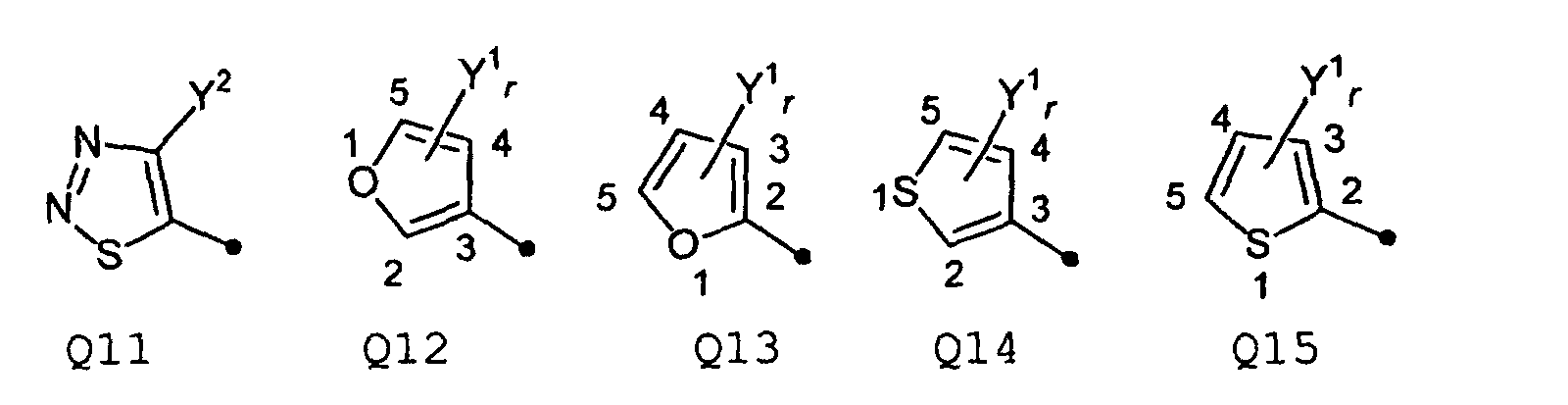
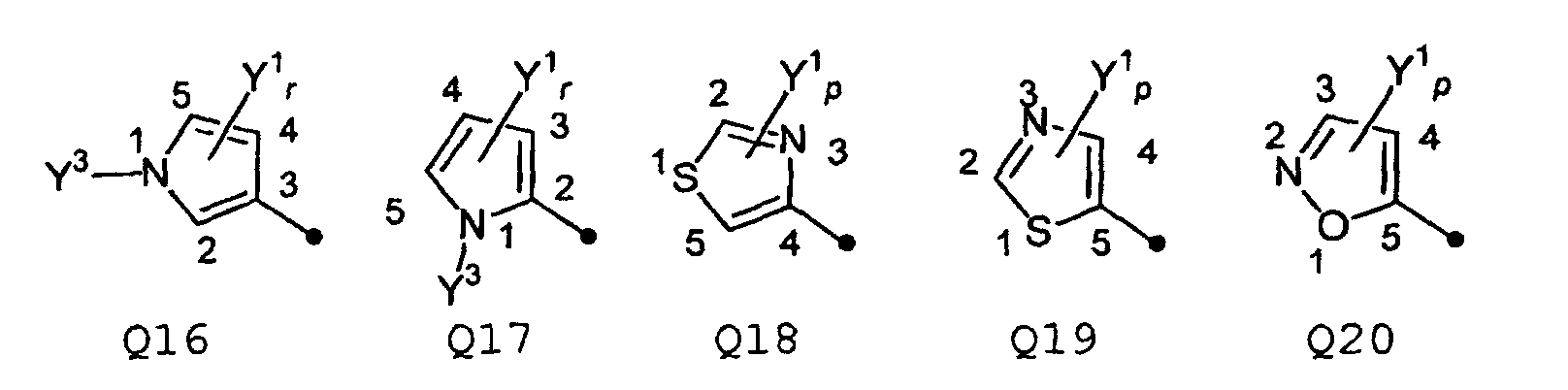
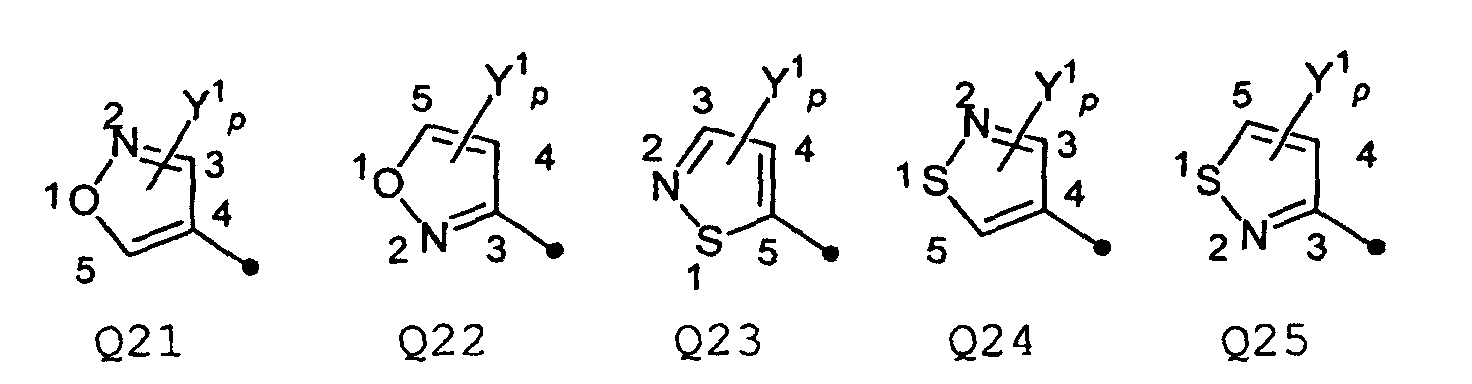
further, two adjacent Y1s on the aromatic ring being able to be taken together to represent a fused ring that may have one or more substituents which may be the same or different and are selected from halogen atoms, cyano group, nitro group, (C1-C6)alkyl groups, halo(C1-C6)alkyl groups, (C1-C6)alkoxy groups, halo(C1-C6)alkoxy groups, (C1-C6)alkylthio groups, halo(C1-C6)alkylthio groups, (C1-C6)alkylsulfinyl groups, halo(C1-C6)alkylsulfinyl groups, (C1-C6)alkylsulfonyl groups, halo(C1-C6)alkylsulfonyl groups, mono(C1-C6)alkylamino groups, di(C1-C6)alkylamino groups whose (C1-C6)alkyl groups may be the same or different, and (C1-C6)alkoxycarbonyl groups,
Y2 is a halogen atom; a cyano group; a nitro group; a (C1-C6)alkyl group; a halo(C1-C6)alkyl group; a (C1-C6)alkoxy group; a halo(C1-C6)alkoxy group; a (C1-C6)alkylthio group; a halo(C1-C6)alkylthio group; a (C1-C6)alkylsulfinyl group; a halo(C1-C6)alkylsulfinyl group; a (C1-C6)alkylsulfonyl group; a halo(C1-C6)alkylsulfonyl group; a mono(C1-C6)alkylamino group; a di(C1-C6)alkylamino group whose (C1-C6)alkyl groups may be the same or different; a phenyl group; a substituted phenyl group having one or more substituents which may be the same or different and are selected from halogen atoms, cyano group, nitro group, (C1-C6)alkyl groups, halo(C1-C6)alkyl groups, (C1-C6)alkoxy groups, halo (C1-C6)alkoxy groups, (C1-C6)alkylthio groups, halo(C1-C6)alkylthio groups, (C1-C6)alkylsulfinyl groups, halo(C1-C6)alkylsulfinyl groups, (C1-C6)alkylsulfonyl groups, halo (C1-C6)alkylsulfonyl groups, mono(C1-C6)alkylamino groups, di(C1-C6)alkylamino groups whose (C1-C6)alkyl groups may be the same or different, and (C1-C6)alkoxycarbonyl groups; a phenoxy group; a substituted phenoxy group having one or more substituents which may be the same or different and are selected from halogen atoms, cyano group, nitro group, (C1-C6)alkyl groups, halo(C1-C6)alkyl groups, (C1-C6)alkoxy groups, halo (C1-C6)alkoxy groups, (C1-C6)alkylthio groups, halo(C1-C6)alkylthio groups, (C1-C6)alkylsulfinyl groups, halo(C1-C6)alkylsulfinyl groups, (C1-C6)alkylsulfonyl groups, halo(C1-C6)alkylsulfonyl groups, mono(C1-C6)alkylamino groups, di(C1-C6)alkylamino groups whose (C1-C6)alkyl groups may be the same or different, and (C1-C6)alkoxycarbonyl groups; a heterocyclic group; or a substituted heterocyclic group having one or more substituents which may be the same or different and are selected from halogen atoms, cyano group, nitro group, (C1-C6)alkyl groups, halo(C1-C6)alkyl groups, (C1-C6)alkoxy groups, halo (C1-C6)alkoxy groups, (C1-C6)alkylthio groups, halo(C1-C6)alkylthio groups, (C1-C6)alkylsulfinyl groups, halo(C1-C6)alkylsulfinyl groups, (C1-C6)alkylsulfonyl groups, halo(C1-C6)alkylsulfonyl groups, mono(C1-C6)alkylamino groups, di(C1-C6)alkylamino groups whose (C1-C6)alkyl groups may be the same or different, and (C1-C6)alkoxycarbonyl groups,
Y3 is a hydrogen atom, a (C1-C6)alkyl group, a halo(C1-C6)alkyl group, a phenyl group, or a substituted phenyl group having one or more substituents which may be the same or different and are selected from halogen atoms, cyano group, nitro group, (C1-C6)alkyl groups, halo (C1-C6)alkyl groups, (C1-C6)alkoxy groups, halo(C1-C6)alkoxy groups, (C1-C6)alkylthio groups, halo(C1-C6)alkylthio groups, (C1-C6)alkylsulfinyl groups, halo(C1-C6)alkylsulfinyl groups, (C1-C6)alkylsulfonyl groups, halo(C1-C6)alkylsulfonyl groups, mono(C1-C6)alkylamino groups, di(C1-C6)alkylamino groups whose (C1-C6)alkyl groups may be the same or different, and (C1-C6)alkoxycarbonyl groups,
p is an integer of 0 to 2, q is an integer of 0 to 4, and r is an integer of 0 to 3)}, an agricultural and horticultural chemical, and a usage of the same. Furthermore, the present invention relates to a substituted aniline derivative represented by general formula (II):
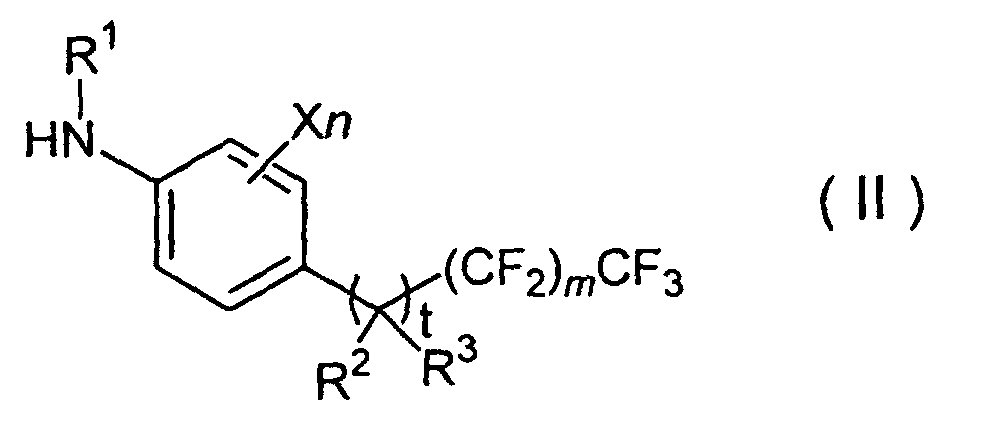
R2 is a hydrogen atom, a halogen atom or a halo(C1-C6)alkyl group,
R3 is a hydrogen atom; a halogen atom; a (C1-C6)alkyl group; a halo(C1-C6)alkyl group; a cyano group; a hydroxyl group; a (C1-C6)alkoxy group; a halo(C1-C6)alkoxy group; a (C1-C6)alkoxy(C1-C6)alkoxy group; a halo(C1-C6)alkoxy(C1-C6)alkoxy group; a (C1-C6)alkylthio(C1-C6)alkoxy group; a halo (C1-C6)alkylthio(C1-C6)alkoxy group; a (C1-C6)alkylsulfinyl(C1-C6)alkoxy group; a halo(C1-C6)alkylsulfinyl(C1-C6)alkoxy group; a (C1-C6)alkylsulfonyl(C1-C6)alkoxy group; a halo(C1-C6)alkylsulfonyl (C1-C6)alkoxy group; a mono(C1-C6)alkylamino(C1-C6)alkoxy group; a di(C1-C6)alkylamino(C1-C6)alkoxy group whose (C1-C6)alkyl groups may be the same or different; a (C1-C6)alkylthio group; a halo(C1-C6)alkylthio group; a (C1-C6)alkylsulfinyl group; a halo(C1-C6)alkylsulfinyl group; a (C1-C6)alkylsulfonyl group; a halo(C1-C6) alkylsulfonyl group; an amino group; a mono(C1-C6)alkylamino group; a di(C1-C6)alkylamino group whose (C1-C6)alkyl groups may be the same or different; a phenoxy group; a substituted phenoxy group having one or more substituents which may be the same or different and are selected from halogen atoms, cyano group, nitro group, (C1-C6)alkyl groups, halo (C1-C6)alkyl groups, (C1-C6)alkoxy groups, halo(C1-C6)alkoxy groups, (C1-C6)alkylthio groups, halo(C1-C6)alkylthio groups, (C1-C6)alkylsulfinyl groups, halo(C1-C6)alkylsulfinyl groups, (C1-C6)alkylsulfonyl groups, halo(C1-C6)alkylsulfonyl groups, mono(C1-C6)alkylamino groups, di(C1-C6)alkylamino groups whose (C1-C6)alkyl groups may be the same or different, and (C1-C6)alkoxycarbonyl groups; a phenylthio group; a substituted phenylthio group having one or more substituents which may be the same or different and are selected from halogen atoms, cyano group, nitro group, (C1-C6)alkyl groups, halo(C1-C6)alkyl groups, (C1-C6)alkoxy groups, halo(C1-C6)alkoxy groups, (C1-C6)alkylthio groups, halo(C1-C6)alkylthio groups, (C1-C6)alkylsulfinyl groups, halo (C1-C6)alkylsulfinyl groups, (C1-C6)alkylsulfonyl groups, halo(C1-C6)alkylsulfonyl groups, mono(C1-C6)alkylamino groups, di(C1-C6)alkylamino groups whose (C1-C6)alkyl groups may be the same or different, and (C1-C6)alkoxycarbonyl groups; a phenylsulfinyl group; a substituted phenylsulfinyl group having one or more substituents which may be the same or different and are selected from halogen atoms, cyano group, nitro group, (C1-C6)alkyl groups, halo (C1-C6) alkyl groups, (C1-C6)alkoxy groups, halo(C1-C6)alkoxy groups, (C1-C6)alkylthio groups, halo(C1-C6)alkylthio groups, (C1-C6)alkylsulfinyl groups, halo(C1-C6)alkylsulfinyl groups, (C1-C6)alkylsulfonyl groups, halo(C1-C6)alkylsulfonyl groups, mono(C1-C6)alkylamino groups, di(C1-C6)alkylamino groups whose (C1-C6)alkyl groups may be the same or different, and (C1-C6)alkoxycarbonyl groups; a phenylsulfonyl group; a substituted phenylsulfonyl group having one or more substituents which may be the same or different and are selected from halogen atoms, cyano group, nitro group, (C1-C6)alkyl groups, halo (C1-C6)alkyl groups, (C1-C6)alkoxy groups, halo (C1-C6)alkoxy groups, (C1-C6)alkylthio groups, halo(C1-C6)alkylthio groups, (C1-C6)alkylsulfinyl groups, halo(C1-C6)alkylsulfinyl groups, (C1-C6)alkylsulfonyl groups, halo(C1-C6)alkylsulfonyl groups, mono(C1-C6)alkylamino groups, di(C1-C6)alkylamino groups whose (C1-C6)alkyl groups may be the same or different, and (C1-C6)alkoxycarbonyl groups; a phenyl(C1-C6)alkoxy group; or a substituted phenyl(C1-C6)alkoxy group having on the ring one or more substituents which may be the same or different and are selected from halogen atoms, cyano group, nitro group, (C1-C6)alkyl groups, halo(C1-C6)alkyl groups, (C1-C6)alkoxy groups, halo (C1-C6)alkoxy groups, (C1-C6)alkylthio groups, halo(C1-C6)alkylthio groups, (C1-C6)alkylsulfinyl groups, halo(C1-C6)alkylsulfinyl groups, (C1-C6)alkylsulfonyl groups, halo(C1-C6)alkylsulfonyl groups, mono(C1-C6)alkylamino groups, di(C1-C6)alkylamino groups whose (C1-C6)alkyl groups may be the same or different, and (C1-C6)alkoxycarbonyl groups,
t is 1, m is an integer of 0 to 6,
each of Xs, which may be the same or different, is a halogen atom, a cyano group, a (C1-C8)alkyl group, a halo(C1-C8)alkyl group, a (C2-C8)alkenyl group, a halo(C2-C8)alkenyl group, a (C2-C8)alkynyl group, a halo(C2-C8)alkynyl group, a (C3-C6)cycloalkyl group, a (C3-C6)cycloalkyl(C1-C6)alkyl group, a (C1-C8)alkoxy group, a halo(C1-C8)alkoxy group, a (C1-C6)alkylthio group, a (C1-C6)alkylsulfinyl group, a (C1-C6)alkylsulfonyl group, a mono(C1-C6)alkylamino group, a di(C1-C6)alkylamino group whose (C1-C6)alkyl groups may be the same or different, a (C1-C6)alkylcarbonyl(C1-C6)alkyl group, a halo(C1-C6)alkylcarbonyl(C1-C6)alkyl group, a (C1-C6)alkylthiocarbonyl(C1-C6)alkyl group, a (C1-C6)alkoxy(C1-C6)alkyl group, a halo(C1-C6)alkoxy(C1-C6)alkyl group, a (C1-C6)alkylthio(C1-C6)alkyl group, a (C1-C6)alkylsulfinyl(C1-C6)alkyl group, a (C1-C6)alkylsulfonyl(C1-C6)alkyl group, a mono (C1-C6)alkylamino(C1-C6)alkyl group, a di(C1-C6)alkylamino(C1-C6)alkyl group in which the (C1-C6)alkyl groups of the di(C1-C6)alkylamino group may be the same or different, a phenyl group, or a substituted phenyl group having one or more substituents which may be the same or different and are selected from halogen atoms, cyano group, nitro group, (C1-C6)alkyl groups, halo(C1-C6)alkyl groups, (C1-C6)alkoxy groups, halo(C1-C6)alkoxy groups, (C1-C6)alkylthio groups, halo (C1-C6)alkylthio groups, (C1-C6)alkylsulfinyl groups, halo (C1-C6)alkylsulfinyl groups, (C1-C6)alkylsulfonyl groups, halo(C1-C6)alkylsulfonyl groups, mono(C1-C6)alkylamino groups, di(C1-C6)alkylamino groups whose (C1-C6)alkyl groups may be the same or different, and (C1-C6)alkoxycarbonyl groups, and n is an integer of 1 to 4,
further, two adjacent Xs on the aromatic ring being able to be taken together to represent a fused ring that may have one or more substituents which may be the same or different and are selected from halogen atoms, cyano group, nitro group, (C1-C6)alkyl groups, halo(C1-C6)alkyl groups, (C1-C6)alkoxy groups, halo(C1-C6)alkoxy groups, (C1-C6)alkylthio groups, halo(C1-C6)alkylthio groups, (C1-C6)alkylsulfinyl groups, halo(C1-C6)alkylsulfinyl groups, (C1-C6)alkylsulfonyl groups, halo(C1-C6)alkylsulfonyl groups, mono(C1-C6)alkylamino groups, di(C1-C6)alkylamino groups whose (C1-C6)alkyl groups may be the same or different, and (C1-C6)alkoxycarbonyl groups) which is an intermediate compound for the production of a substituted anilide derivative.

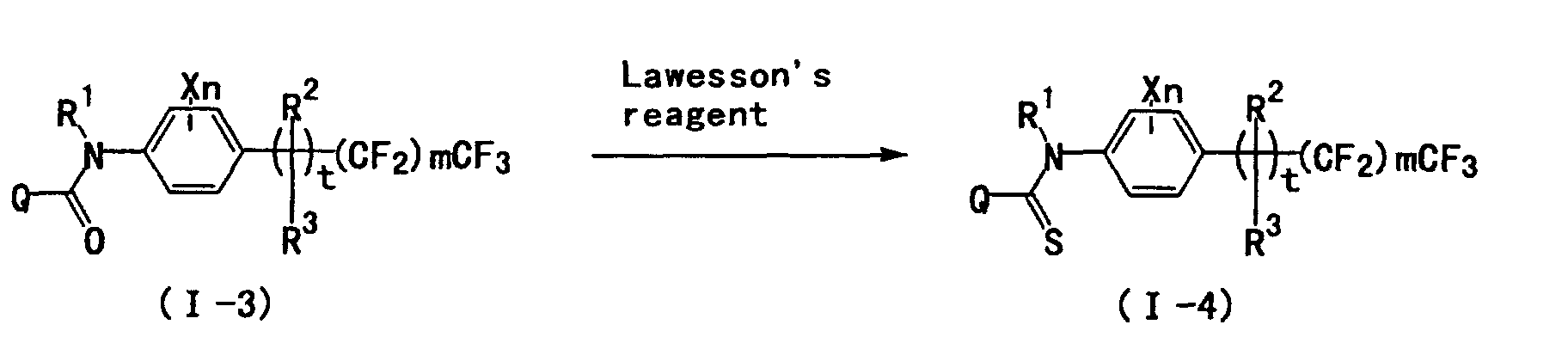
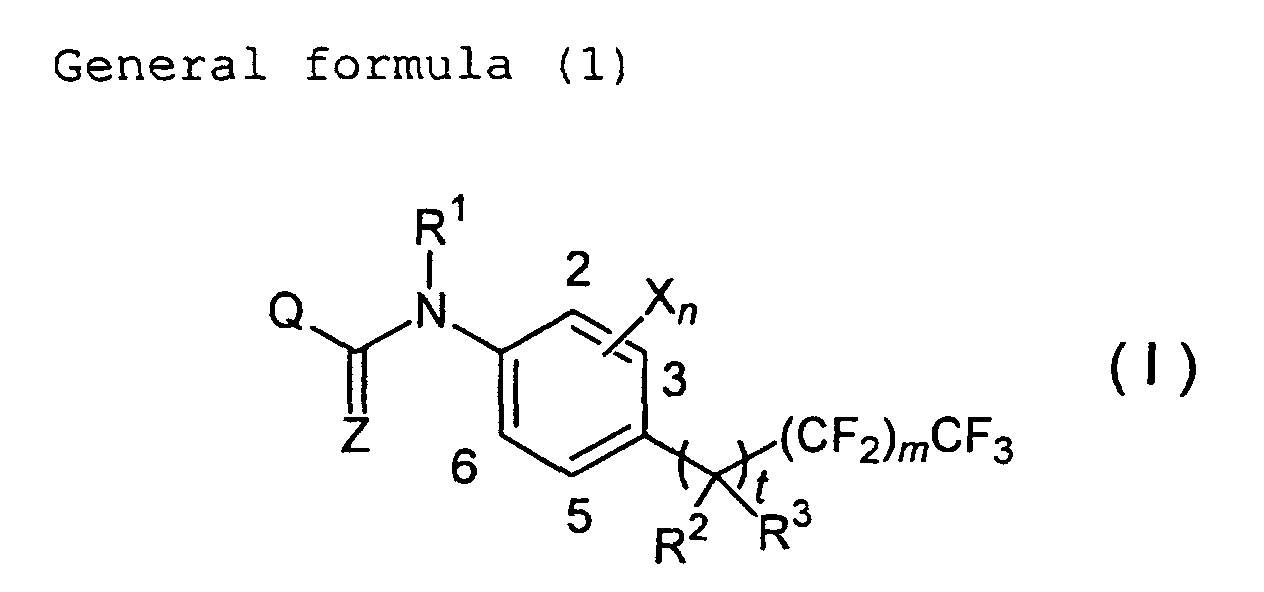
| (Q=Q9, R1=H, R2=CF3, Z=O, t=1) | ||||||
| No. | Xn | Y1 p | Y3 | m | R3 | Physical property |
| 1-1 | 2-Me | 3-CF3 | Me | 0 | F | 146-148 |
| 1-2 | 2-Et-6-s-Bu | 3-Me-5-Cl | Me | 0 | H | 119 |
| 1-3 | 2-n-Pr | 3-CF3 | Me | 0 | F | 152-153 |
| 1-4 | 2-n-Pr | 3-Me-5-Cl | Me | 0 | H | 85-87 |
| 1-5 | 2-i-Pr | 3-CF3 | Me | 0 | F | 170-172 |
| 1-6 | 2-i-Bu | 3-Me-5-Cl | Me | 0 | H | |
| 1-7 | 2-i-Bu | 3-Me-5-Cl | Me | 0 | OMe | |
| 1-8 | 2-s-Bu | 3-Me-5-Cl | Me | 0 | H | 106 |
| 1-9 | 2-s-Bu | 3-Me-5-Cl | Me | 0 | OMe | |
| 1-10 | 2-t-Bu | 3-Me-5-Cl | Me | 0 | H | 124-125 |
| 1-11 | 2-t-Bu | 3-Me-5-Cl | Me | 0 | OMe | |
| 1-12 | 2-(CH2)4-3 | 3-CF3 | Me | 0 | F | 125-128 |
| 1-13 | 2-(CH2)4-3 | 3-Me-5-Cl | Me | 0 | F | |
| 1-14 | 2- (CH2)4-3 | 3-Me-5-Cl | Me | 0 | H | 165-166 |
| 1-15 | 2- (CH2)4-3 | 3-Me-5-Cl | Me | 0 | OMe | |
| 1-16 | 2-CH=CH-CH=CH-3 | 3-Me-5-Cl | Me | 0 | F | |
| 1-17 | 2-CH=CH-CH=CH-3 | 3-Me-5-Cl | Me | 0 | H | 130-131 |
| 1-18 | 2-CH=CH-CH=CH-3 | 3-Me-5-Cl | Me | 0 | OMe | |
| 1-19 | 2-Ph | 3-CF3 | Me | 0 | F | 139-140 |
| 1-20 | 2-Ph | 3-Me-5-Cl | Me | 0 | H | 145-147 |
| 1-21 | 2-CH(Me)CHMe2 | 3-Me-5-Cl | Me | 0 | F | 121 |
| 1-22 | 2-CH(Me)CH2CH2CH3 | 3-Me-5-Cl | Me | 0 | H | 82-83 |
| 1-23 | 2-CH(Me)CH2CH2CH3 | 3-Me-5-Cl | Me | 0 | OMe | 1.4983(19.1) |
| 1-24 | 2-CH(Me)CHMe2 | 3,5-Me2 | Me | 0 | F | |
| 1-25 | 2-CH(Me)CH2CH2CH3 | 3,5-Me2 | Me | 0 | H | 1.5051(20.1) |
| 1-26 | 2-CH (Me) CH2CH2CH3 | 3, 5-Me2 | Me | 0 | OMe | 1.4921(20.2) |
| 1-27 | 2-CH(Me)CH2CHMe2 | H | Me | 0 | H | |
| 1-28 | 2-CH(Me)CH2CHMe2 | 3-CF3 | Me | 0 | F | 138-139 |
| 1-29 | 2-CH(Me)CH2CHMe2 | 3-CF3 | Et | 0 | H | |
| 1-30 | 2-CH(Me)CH2CHMe2 | 3-CF3 | Me | 0 | H | 146-147 |
| 1-31 | 2-CH(Me)CH2CHMe2 | 3-CF3 | Me | 0 | OMe | |
| 1-32 | 2-CH(Me)CH2CHMe2 | 3-CF3 | Me | 0 | OEt | |
| 1-33 | 2-CH (Me) CH2CHMe2 | 3-CF3 | CHF2 | 0 | H | 1. 4650 (19.9) |
| 1-34 | 2-CH(Me)CH2CHMe2 | 3-Me | Me | 0 | H | 1.4970(19.9) |
| 1-35 | 2-CH(Me)CH2CHMe2 | 3-Et | Me | 0 | H | 35-38 |
| 1-36 | 2-CH(Me)CH2CHMe2 | 3-i-Pr | Me | 0 | H | 45-47 |
| 1-37 | 2-CH (Me) CH2CHMe2 | 3-F | Me | 0 | H | |
| 1-38 | 2-CH(Me)CH2CHMe2 | 3-Cl | Me | 0 | H | |
| 1-39 | 2-CH(Me)CH2CHMe2 | 3-Br | Me | 0 | H | 1.5111(22.2) |
| 1-40 | 2-CH (Me) CH2CHMe2 | 3-I | Me | 0 | H | Amorphous |
| 1-41 | 2-CH(Me)CH2CHMe2 | 3-SMe | Me | 0 | H | 129-130 |
| 1-42 | 2-CH(Me)CH2CHMe2 | 3-SOMe | Me | 0 | H | |
| 1-43 | 2-CH(Me)CH2CHMe2 | 3-SO2Me | Me | 0 | H | |
| 1-44 | 2-CH (Me) CH2CHMe2 | 3-OMe | Me | 0 | H | 102-105 |
| 1-45 | 2-CH(Me)CH2CHMe2 | 5-Me | Me | 0 | H | 1.4790(25.2) |
| 1-46 | 2-CH(Me)CH2CHMe2 | 5-SMe | Me | 0 | H | 1.6201(16.8) |
| 1-47 | 2-CH(Me)CH2CHMe2 | 5-SOMe | Me | 0 | H | 1.4930(23.7) |
| 1-48 | 2-CH(Me)CH2CHMe2 | 5-SO2Me | Me | 0 | H | 48 |
| 1-49 | 2-CH (Me) CH2CHMe2 | 5-F | Me | 0 | H | |
| 1-50 | 2-CH(Me)CH2CHMe2 | 5-Cl | Me | 0 | H | |
| 1-51 | 2-CH(Me)CH2CHMe2 | 5-Cl | Et | 0 | H | 1.5110(21.7) |
| 1-52 | 2-CH (Me)CH2CHMe2 | 5-Cl | CH2CH2F | 0 | H | 1.4931(22.5) |
| 1-53 | 2-CH(Me)CH2CHMe2 | 5-Br | Me | 0 | H | |
| 1-54 | 2-CH(Me)CH2CHMe2 | 5-Br | Et | 0 | H | 1.5061 |
| 1-55 | 2-CH (Me) CH2CHMe2 | 5-Br | t-Bu | 0 | H | 67-68 |
| 1-56 | 2-CH(Me)CH2CHMe2 | 5-I | Me | 0 | H | 119-120 |
| 1-57 | 2-CH (Me) CH2CHMe2 | 5-I | Et | 0 | H | 132-133 |
| 1-58 | 2-CH(Me)CH2CHMe2 | 5-I | t-Bu | 0 | H | 98-99 |
| 1-59 | 2-CH (Me) CH2CHMe2 | 5-I | Ph | 0 | H | 127-128 |
| 1-60 | 2-CH (Me) CH2CHMe2 | 3-Cl-5-Me | Me | 0 | H | 95-97 |
| 1-61 | 2-CH (Me) CH2CHMe2 | 3-Br-5-Me | Me | 0 | H | 1. 5208 (21.1) |
| 1-62 | 2-CH(Me)CH2CHMe2 | 3-I-5-Me | Me | 0 | H | 1.5252(21.1) |
| 1-63 | 2-CH(Me)CH2CHMe2 | 3-I-5-Me | Et | 0 | H | 170-171 |
| 1-64 | 2-CH(Me)CH2CHMe2 | 3-Me-5-F | Me | 0 | F | |
| 1-65 | 2-CH(Me)CH2CHMe2 | 3-Me-5-F | Me | 0 | H | 1.4974(22.8) |
| 1-66 | 2-CH(Me)CH2CHMe2 | 3-Me-5-F | Me | 0 | OMe | |
| 1-67 | 2-CH (Me) CH2CHMe2 | 3-Me-5-F | Me | 1 | F | |
| 1-68 | 2-CH (Me) CH2CHMe2 | 3-Me-5-F | Me | 1 | H | |
| 1-69 | 2-CH (Me) CH2CHMe2 | 3-Me-5-F | Me | 1 | OMe | |
| 1-70 | 2-CH (Me) CH2CHMe2 | 3-Me-5-Cl | Me | 0 | F | 88-90 |
| 1-71 | 2-CH(Me)CH2CHMe2 | 3-Me-5-Cl | Me | 0 | H | 1.5025(23.7) |
| 1-72 | 2-CH (Me) CH2CHMe2 | 3-Me-5-Cl | Me | 0 | OMe | Amorphous |
| 1-73 | 2-CH(Me)CH2CHMe2 | 3-Me-5-Cl | Me | 0 | OEt | 1.5003(15.7) |
| 1-74 | 2-CH (Me) CH2CHMe2 | 3-Me-5-Cl | Me | 1 | F | |
| 1-75 | 2-CH(Me)CH2CHMe2 | 3-Me-5-Cl | Me | 1 | H | |
| 1-76 | 2-CH(Me)CH2CHMe2 | 3-Me-5-Cl | Me | 1 | OMe | |
| 1-77 | 2-CH(Me)CH2CHMe2 | 3-Me-5-Cl | Me | 1 | OEt | |
| 1-78 | 2-CH (Me) CH2CHMe2 | 3-Me-5-Cl | Et | 0 | H | 1.4905(21.2) |
| 1-79 | 2-CH(Me)CH2CHMe2 | 3-Me-5-Cl | Et | 0 | OMe | |
| 1-80 | 2-CH(Me)CH2CHMe2 | 3-Me-5-Cl | Et | 0 | OEt | |
| 1-81 | 2-CH (Me) CH2CHMe2 | 3-Me-5-Br | Me | 0 | H | 134-135 |
| 1-82 | 2-CH (Me) CH2CHMe2 | 3-Me-5-Br | Me | 0 | OMe | 96-97 |
| 1-83 | 2-CH (Me) CH2CHMe2 | 3-Me-5-Br | Et | 0 | OH | 1.5140 (22.2) |
| 1-84 | 2-CH(Me)CH2CHMe2 | 3-Me-5-Br | Et | 0 | H | 153-155 |
| 1-85 | 2-CH(Me)CH2CHMe2 | 3-Et-5-Br | Me | 0 | H | 110-112 |
| 1-86 | 2-CH(Me)CH2CHMe2 | 3-Et-5-Br | Me | 0 | OMe | Amorphous |
| 1-87 | 2-CH (Me) CH2CHMe2 | 3-Me-5-I | Me | 0 | H | 184-185 |
| 1-88 | 2-CH(Me)CH2CHMe2 | 3-Me-5-I | Me | 0 | OMe | |
| 1-89 | 2-CH(Me)CH2CHMe2 | 3-Me-5-I | Et | 0 | H | 174 |
| 1-90 | 2-CH(Me)CH2CHMe2 | 3-Me-5-SMe | Me | 0 | H | 1.5140(22.2) |
| 1-91 | 2-CH(Me)CH2CHMe2 | 3-Me-5-SMe | Me | 0 | OMe | |
| 1-92 | 2-CH(Me)CH2CHMe2 | 3-Me-5-SOMe | Me | 0 | H | 42-43 |
| 1-93 | 2-CH(Me)CH2CHMe2 | 3-Me-5-SOMe | Me | 0 | OMe | |
| 1-94 | 2-CH (Me) CH2CHMe2 | 3-Me-5-SO2Me | Me | 0 | H | 1. 4993 (22.1) |
| 1-95 | 2-CH (Me) CH2CHMe2 | 3-Me-5-SO2Me | Me | 0 | OMe | |
| 1-96 | 2-CH(Me)CH2CHMe2 | 3-Me-5-OMe | Me | 0 | H | 1.5020(20.9) |
| 1-97 | 2-CH(Me)CH2CHMe2 | 3-Me-5-OMe | Me | 0 | OMe | |
| 1-98 | 2-CH(Me)CH2CHMe2 | 3-Me-5-OPh | Me | 0 | H | 1.5182(20.5) |
| 1-99 | 2-CH(Me)CH2CHMe2 | 3-Me-5-OPh | Me | 0 | OMe | |
| 1-100 | 2-CH(Me)CH2CHMe2 | 3-OMe-5-Br | Me | 0 | H | 143-144 |
| 1-101 | 2-CH(Me)CH2CHMe2 | 3-OMe-5-SPr-n | Me | 0 | H | 102 |
| 1-102 | 2-CH(Me)CH2CHMe2 | 3-CF3 5-Cl | Et | 0 | H | |
| 1-103 | 2-CH(Me)CH2CHMe2 | 3-CF3-5-Cl | Me | 0 | H | 102-104 |
| 1-104 | 2-CH(Me)CH2CHMe2 | 3-CF3-5-Cl | Me | 0 | OMe | 1.4712(18.2) |
| 1-105 | 2-CH (Me) CH2CHMe2 | 3-CF3-5-OPh | Me | 0 | H | 1.4951(19.4) |
| 1-106 | 2-CH(Me)CH2CHMe2 | 3,5-Me2 | Me | 0 | F | 81-82 |
| 1-107 | 2-CH (Me) CH2CHMe2 | 3,5-Me2 | Me | 0 | H | 1.4958(15.7) |
| 1-108 | 2-CH(Me)CH2CHMe2 | 3,5-Me2 | Me | 0 | OMe | 94-96 |
| 1-109 | 2-CH(Me)CH2CHMe2 | 3,5-Me2 | Me | 0 | OEt | 1.4958(20.1) |
| 1-110 | 2-CH(Me)CH2CHMe2 | 3,5-Me2 | Me | 1 | F | |
| 1-111 | 2-CH(Me)CH2CHMe2 | 3,5-Me2 | Me | 1 | H | |
| 1-112 | 2-CH (Me) CH2CHMe2 | 3,5-Me2 | Me | 1 | OMe | |
| 1-113 | 2-CH(Me)CH2CHMe2 | 3,5-Me2 | Me | 1 | OEt | |
| 1-114 | 2-CH(Me)CH2CHMe2 | 3,5-Me2 | Et | 0 | F | 1.4950(18.4) |
| 1-115 | 2-CH (Me) CH2CHMe2 | 3,5-Me2 | Et | 0 | H | |
| 1-116 | 2-CH (Me) CH2CHMe2 | 3,5-Me2 | Et | 0 | OMe | |
| 1-117 | 2-CH(Me)CH2CHMe2 | 3,5-Me2 | Et | 0 | OEt | |
| 1-118 | 2-CH(Me)CH2CHMe2 | 3,5-Me2 | n-Pr | 0 | F | 1.4907(19.2) |
| 1-119 | 2-CH(Me)CH2CHMe2 | 3,5-Me2 | n-Pr | 0 | H | 1.4970(17.4) |
| 1-120 | 2-CH (Me) CH2CHMe2 | 3,5-Me2 | n-Pr | 0 | OMe | |
| 1-121 | 2-CH (Me) CH2CHMe2 | 3,5-Me2 | n-Pr | 0 | OEt | |
| 1-122 | 2-CH (Me) CH2CHMe2 | 3, 5-Me2 | Ph | 0 | F | |
| 1-123 | 2-CH (Me) CH2CHMe2 | 3,5-Me2 | Ph | 0 | H | |
| 1-124 | 2-CH (Me) CH2CHMe2 | 3,5-Me2 | Ph | 0 | OMe | |
| 1-125 | 2-CH (Me) CH2CHMe2 | 3,5-Me2 | Ph | 0 | OEt | |
| 1-126 | 2-CH (Me) CH2CHMe2 | 3,5-F2 | Me | 0 | F | |
| 1-127 | 2-CH(Me)CH2CHMe2 | 3,5-F2 | Me | 0 | H | |
| 1-128 | 2-CH (Me) CH2CHMe2 | 3,5-F2 | Me | 0 | OMe | |
| 1-129 | 2-CH (Me) CH2CHMe2 | 3, 5-Cl2 | Me | 0 | H | 73 |
| 1-130 | 2-CH(Me)CH2CHMe2 | 3,5-Cl2 | Me | 0 | OMe | |
| 1-131 | 2-CH(Me)CH2CHMe2 | 3,5-Cl2 | Et | 0 | H | 129-130 |
| 1-132 | 2-CH(Me)CH2CHMe2 | 3-Et-5-Cl | Me | 0 | H | Amorphous |
| 1-133 | 2-CH(Me)CH2CHMe2 | 3-n-Pr-5-Cl | Me | 0 | H | 1.4890(21.5) |
| 1-134 | 2-CH(Me)CH2CHMe2 | 3-i-Pr-5-Cl | Me | 0 | H | 1.4822(20.3) |
| 1-135 | 2-CH(Me)CH2CHMe2 | 3-t-Bu-5-Cl | Me | 0 | H | 1.4881(20.3) |
| 1-136 | 2-CH(Me)CH2CMe2-3 | 3-Me-5-Cl | Me | 0 | F | |
| 1-137 | 2-CH (Me) CH2CMe2-3 | 3-Me-5-Cl | Me | 0 | H | |
| 1-138 | 2-CH (Me) CH2CMe2-3 | 3-Me-5-Cl | Me | 0 | OMe | |
| 1-139 | 2-CH(Me)CH2CMe2-3 | 3-Me-5-Cl | Me | 1 | F | |
| 1-140 | 2-CH (Me) CH2CMe2-3 | 3-Me-5-Cl | Me | 1 | H | |
| 1-141 | 2-CH (Me) CH2CMe2-3 | 3-Me-5-Cl | Me | 1 | OMe | |
| 1-142 | 2-CH(Me)(CH2)3Me | 3-Me-5-Cl | Me | 0 | F | 1.4931 (19.5) |
| 1-143 | 2-CH(Me)(CH2)3Me | 3-Me-5-Cl | Me | 0 | H | 1.5020(19.5) |
| 1-144 | 2-CH(Me)(CH2)3Me | 3-Me-5-Cl | Me | 0 | OMe | 1.5003(19.6) |
| 1-145 | 2-CH (Me) (CH2)2CH Me2 | 3-Me-5-Cl | Me | 0 | F | 1.4907(20.3) |
| 1-146 | 2-CH(Me)(CH2)2CH Me2 | 3-Me-5-Cl | Me | 0 | H | 1.4905(20.4) |
| 1-147 | 2-CH (Me) (CH2)2CH Me2 | 3-Me-5-Cl | Me | 0 | OMe | |
| 1-148 | 2-CH (Me) (CH2)2CH Me2 | 3,5-Me2 | Me | 0 | F | Amorphous |
| 1-149 | 2-CH(Me)(CH2)2CH Me2 | 3,5-Me2 | Me | 0 | H | |
| 1-150 | 2-CH (Me) (CH2)2CH Me2 | 3,5-Me2 | Me | 0 | OMe | |
| 1-151 | 2-CH(Me)CH2CHMe2-3-Me | 3,5-Me2 | Me | 0 | F | 1.4904(25.5) |
| 1-152 | 2-CH(Me)CH2CHMe2-3-Me | 3,5-Me2 | Me | 0 | H | 1.4863(25.5) |
| 1-153 | 2-CH(Me)CH2CH(Me)CH2CH3 | 3-Me-5-Cl | Me | 0 | OMe | |
| 1-154 | 2-C(Me)=CHCHMe2-3-Me | 3,5-Me2 | Me | 0 | F | 1.4950(25.5) |
| 1-155 | 2-C (Me) =CHCHMe2-3-Me | 3,5-Me2 | Me | 0 | H | 1.5052(25.2) |
| 1-156 | 2-CH(Me)CH2CH(Me)CH2CH3 | 3,5-Me2 | Me | 0 | OMe | |
| 1-157 | 2-CH(Me)Ph | 3,5-Me2 | Me | 0 | F | |
| 1-158 | 2-CH (Me) Ph | 3,5-Me2 | Me | 0 | H | |
| 1-159 | 2-CH(Me)Ph | 3,5-Me2 | Me | 0 | OMe | |
| 1-160 | 2-CH(Me)CH2CMe3 | 3,5-Me2 | Me | 0 | F | |
| 1-161 | 2-CH(Me)CH2CMe3 | 3,5-Me2 | Me | 0 | H | |
| 1-162 | 2-CH(Me)CH2CMe3 | 3,5-Me2 | Me | 0 | OMe | |
| 1-163 | 2,3-Me2 | 3,5-Me2 | Me | 0 | F | 132-136 |
| 1-164 | 2,3-Me2 | 3,5-Me2 | Me | 0 | H | 167-170 |
| (Q=Q9, R1=H, Z=O, t=1) | |||||||
| No. | Xn | Y1 p | Y3 | m | R2 | R3 | Physical property |
| 2-1 | 2-CH(Me)CH2CHMe2 | 3,5-Me2 | Me | 0 | F | F | |
| 2-2 | 2-CH(Me)CH2CHMe2 | 3,5-Me2 | Me | 0 | H | H | |
| 2-3 | 2-CH(Me)CH2CHMe2 | 3,5-Me2 | Me | 2 | F | F | |
| 2-4 | 2-CH(Me)CH2CHMe2 | 3,5-Me2 | Me | 2 | H | H | |
| 2-5 | 2-CH (Me) CH2CHMe2 | 3,5-Me2 | Me | 4 | F | F | |
| 2-6 | 2-CH(Me)CH2CHMe2 | 3,5-Me2 | Me | 4 | H | H | |
| 2-7 | 2-CH(Me)CH2CHMe2 | 3,5-Me2 | Me | 6 | F | F | |
| 2-8 | 2-CH (Me) CH2CHMe2 | 3,5-Me2 | Me | 6 | H | H | |
| 2-9 | 2-CH (Me) CH2CHMe2 | 3-Me-5-Cl | Me | 0 | F | F | |
| 2-10 | 2-CH(Me)CH2CHMe2 | 3-Me-5-Cl | Me | 0 | H | H | |
| 2-11 | 2-CH(Me)CH2CHMe2 | 3-Me-5-Cl | Me | 2 | F | F | |
| 2-12 | 2-CH(Me)CH2CHMe2 | 3-Me-5-Cl | Me | 2 | H | H | |
| 2-13 | 2-CH(Me)CH2CHMe2 | 3-Me-5-Cl | Me | 4 | F | F | |
| 2-14 | 2-CH(Me)CH2CHMe2 | 3-Me-5-Cl | Me | 4 | H | H | |
| 2-15 | 2-CH(Me)CH2CHMe2 | 3-Me-5-Cl | Me | 6 | F | F | |
| 2-16 | 2-CH(Me)CH2CHMe2 | 3-Me-5-Cl | Me | 6 | H | H |
| (R1=H, R2=CF3, Z=O, m=0, t=1) | |||||
| No. | Q | Xn | Y1 p,q,r or Y2 | R3 | Physical property |
| 3-1 | Q1 | 2-CH (Me) CH2CHMe2 | 3-CF3 | H | |
| 3-2 | Q1 | 2-CH (Me) CH2CHMe2 | 3,5-Cl2 | H | 108-109 |
| 3-3 | Q2 | 2-CH(Me)CH2CHMe2 | 4-CF3 | H | 1.4860 |
| (22.7) | |||||
| 3-4 | Q2 | 2-CH (Me) CH2CHMe2 | 2-Cl | H | 68 |
| 3-5 | Q2 | 2-CH (Me) CH2CHMe2 | 2-Cl-6-Me | H | Amorphous |
| 3-6 | Q3 | 2-CH (Me) CH2CHMe2 | 3-CF3 | H | |
| 3-7 | Q3 | 2-CH(Me)CH2CHMe2 | 2,6-Cl2 | H | 1.5182 (20.5) |
| 3-8 | Q6 | 2-CH (Me) CH2CHMe2 | 2-SMe-4-CF3 | H | |
| 3-9 | Q6 | 2-CH (Me) CH2CHMe2 | 4-CF3 | H | |
| 3-10 | Q11 | 2-CH(Me)CH2CHMe2 | Me | F | 104 |
| 3-11 | Q11 | 2-CH(Me)CH2CHMe2 | Me | H | Amorphous |
| 3-12 | Q11 | 2-CH(Me)CH2CHMe2 | CF3 | H | 85-88 |
| 3-13 | Q12 | 2-CH(Me)CH2CHMe2 | 2,4-Me2 | H | 72-73 |
| 3-14 | Q12 | 2-CH(Me)CH2CHMe2 | 2,4-Me2 | OMe | |
| 3-15 | Q13 | 2-CH (Me) CH2CHMe2 | 3-Br | F | |
| 3-16 | Q13 | 2-CH(Me)CH2CHMe2 | 3-Br | H | |
| 3-17 | Q13 | 2-CH(Me)CH2CHMe2 | 3-Br | OMe | |
| 3-18 | Q14 | 2-CH(Me)CH2CHMe2 | 2-Br | H | |
| 3-19 | Q14 | 2-CH(Me)CH2CHMe2 | 2-Br | OMe | |
| 3-20 | Q14 | 2-CH(Me)CH2CHMe2 | 2-Br | OEt | |
| 3-21 | Q14 | 2-CH(Me)CH2CHMe2 | 4-Br | H | 1.5080 (20.4) |
| 3-22 | Q14 | 2-CH(Me)CH2CHMe2 | 4-Br | OMe | |
| 3-23 | Q14 | 2-CH(Me)CH2CHMe2 | 4-Br | OEt | |
| 3-24 | Q14 | 2-CH(Me)CH2CHMe2 | 2,4-Me2 | H | |
| 3-25 | Q14 | 2-CH(Me)CH2CHMe2 | 2,4-Me2 | OMe | |
| 3-26 | Q14 | 2-CH(Me)CH2CHMe2 | 2,4-Me2 | OEt | |
| 3-27 | Q15 | 2-CH(Me)CH2CHMe2 | H | H | 133.5-135 |
| 3-28 | Q15 | 2-CH(Me)CH2CHMe2 | 3-Cl | H | |
| 3-29 | Q15 | 2-CH(Me)CH2CHMe2 | 3-Br | H | |
| 3-30 | Q15 | 2-CH(Me)CH2CHMe2 | 3-I | H | 1.5365 (18.4) |
| 3-31 | Q15 | 2-CH(Me)CH2CHMe2 | 3-I | OMe | 1.5081 (18.5) |
| 3-32 | Q18 | 2-CH(Me)CH2CHMe2 | 2-Cl | H | 104.5-106 |
| 3-33 | Q18 | 2-CH(Me)CH2CHMe2 | 2-Me-5-(2-Cl-Ph) | H | 1.5425 (21.1) |
| 3-34 | Q21 | 2-CH(Me)CH2CHMe2 | 3,5-Me2 | H | Amorphous |
| 3-35 | Q21 | 2-CH(Me)CH2CHMe2 | 3,5-Me2 | OMe | 1.4870 (19.4) |
| 3-36 | Q24 | 2-CH(Me)CH2CHMe2 | 3,5-Me2 | H | |
| 3-37 | Q24 | 2-CH(Me)CH2CHMe2 | 3,5-Me2 | OMe |
| (R1=H, R2=CF3, Z=O, m=0, t=1) | ||||||
| No. | Q | Xn | Y1 p or r | Y3 | R3 | Physical property |
| 4-1 | Q8 | 2-CH(Me)CH2CHMe2 | 4-Cl-5-Me | Me | H | 160 |
| 4-2 | Q8 | 2-CH(Me)CH2CHMe2 | 4-Br-5-Me | Me | H | 149-150 |
| 4-3 | Q10 | 2-CH(Me)CH2CHMe2 | 3-Me | Me | H | 1.4848(23.6) |
| 4-4 | Q10 | 2-CH (Me) CH2CHMe2 | 3-Me-4-Cl | Me | H | 108-109 |
| 4-5 | Q10 | 2-CH(Me)CH2CHMe2 | 3-Me-4-Br | Me | H | 112-113 |
| 4-6 | Q10 | 2-CH(Me)CH2CHMe2 | 3-t-Bu-4-Cl | Me | H | 1.4915(23.9) |
| 4-7 | Q10 | 2-CH(Me)CH2CHMe2 | 3-Me-4-NO2 | Me | H | 1.4971(25.3) |
| 4-8 | Q16 | 2-CH (Me) CH2CHMe2 | 2,4-Me2 | Me | F | |
| 4-9 | Q16 | 2-CH(Me)CH2CHMe2 | 2,4-Me2 | Me | H | 1.5062(18.4) |
| 4-10 | Q16 | 2-CH(Me)CH2CHMe2 | 2,4-Me2 | Me | OMe | |
| 4-11 | Q16 | 2-CH(Me)CH2CHMe2 | 2,4-Me2 | Me | OEt | |
| 4-12 | Q16 | 2-CH(Me)CH2CHMe2 | 2,4-Me2 | Et | F | |
| 4-13 | Q16 | 2-CH (Me) CH2CHMe2 | 2,4-Me2 | Et | H | |
| 4-14 | Q16 | 2-CH(Me)CH2CHMe2 | 2,4-Me2 | Et | OMe | |
| 4-15 | Q16 | 2-CH(Me)CH2CHMe2 | 2,4-Me2 | Et | OEt | |
| 4-16 | Q17 | 2-CH(Me)CH2CHMe2 | 3-Me | Me | F | |
| 4-17 | Q17 | 2-CH(Me)CH2CHMe2 | 3-Me | Me | H | |
| 4-18 | Q17 | 2-CH(Me)CH2CHMe2 | 3-Me | Me | OMe | |
| 4-19 | Q17 | 2-CH(Me)CH2CHMe2 | 3-Me | Me | OEt | |
| 4-20 | Q17 | 2-CH(Me)CH2CHMe2 | 3-Cl | Et | F | |
| 4-21 | Q17 | 2-CH(Me)CH2CHMe2 | 3-Cl | Et | H | |
| 4-22 | Q17 | 2-CH(Me)CH2CHMe2 | 3-Cl | Et | OMe | |
| 4-23 | Q17 | 2-CH (Me) CH2CHMe2 | 3-Cl | Et | OEt |
| No. | 1H-NMR[CDCl3/TMS, δ value (ppm)] |
| 8.20(s,1H),7.98(s,1H),7.90(d,1H),7.32-7.25(m,2H), | |
| 1-40 | 4.05(m,1H),3.96(s,3H),3.20(m,1H),1.65-1.40(m,3H), |
| 1.24(d,3H),0.84(m,6H) | |
| 8.04(d,1H),7.87(s,1H),7.46-7.39(m,2H), | |
| 1-72 | 3.86(s,3H),3.47(s,3H),3.03(m,3H),2.52(s,3H), |
| 1.69-1.40(m,3H),1.23(d,3H),0.84(d,6H) | |
| 8.01(d,1H),7.83(s,1H),7.47-7.39(m,2H), | |
| 1-86 | 3.91(s,3H),3.47(s,3H),3.07(m,1H),2.94(m,1H), |
| 1.67-1.40(m,3H),1.30-1.20(m,6H),0.84(d,6H) | |
| 7.98(d,1H),7.83(s,1H),7.30-7.21(m,2H),4.04(m,1H), | |
| 1-132 | 3.87(s,3H),3.10-2.80(m,3H),1.63-1.40(m,3H), |
| 1.33-1.18(m,6H),0.84(d,6H) | |
| 8.13(d,1H),7.50-7.40(m,2H),7.33(s,1H), 3.77(s,3H), | |
| 1-148 | 2.82(m,1H),2.54(s,3H),2.51(s,3H),1.72-1.52(m,2H), |
| 1.52-1.39(m,1H),1.27(d,3H),1.21-1.10(m,1H), | |
| 1.10-0.91(m,1H),0.82(d,6H) | |
| 8.32(s,1H),8.20(d,1H),8.01(d,1H),7.35-7.20(m,3H), | |
| 3-5 | 4.06(m,1H),3.05(m,1H),2.61(s,3H),1.60-1.40(m,3H), |
| 1.22(d,3H),0.84(d,6H) | |
| 7.85(d,1H),7.31-7.20(m,3H),4.06(m,1H),2.92(m,1H), | |
| 3-34 | 2.67(s,3H),2.51(s,3H),1.60-1.40(m,3H),1.22(t,3H), |
| 0.85(m,6H) |

| (R1=H, t=1) | |||||
| No. | Xn | m | R2 | R3 | 1H-NMR[CDCl3/TMS, δ value(ppm)] |
| 5-1 | 2-n-Pr | 0 | CF3 | H | 7.12-7.02(m,2H),6.69(d,1H),4.0-3.7 (m,3H),2.52(q,2H),1.27(t,3H) |
| 5-2 | 2-t-Bu | 0 | CF3 | H | 7.17(s,1H),7.06(d,1H),6.64(d,1H), 4.1-3.9(br,2H),3.91(m,1H),1.41(s,9H) |
| 5-3 | 2-Ph | 0 | CF3 | H | 7.52-7.32(m,5H),7.19-7.10(m,2H), 6,77(d,1H),4.08-3.85(m,3H) |
| 5-4 | 2-CH(Me) CHMe2 | 0 | CF3 | H | 7.08-7.01(m,2H),6.71(s,1H), 3.91(m,1H), 2.50(m,1H),1.87(m,1H),1.21(d,3H), 0.92(d,3H),0.87(d,3H) |
| 5-5 | 2-CH(Me) CHMe2-6-Et | 0 | CF3 | H | 6.96(d,2H),3.92(m,1H),3.85-3.70(br,2H), 2.65(m,1H),2.53(dd,2H),1.80-1.50(m,2H), 1.23(d,3H),0.90(t,3H) |
| 5-6 | 2-(CH2)4-3 | 0 | CF3 | H | 7.24(d,1H),6.60(d,1H),4.41(m,1H), 3.76(br,2H),2.70(br,2H),2.47(br,2H), 1.84(m,4H) |
| 5-7 | 2-CH=CH-CH =CH-3 | 0 | CF3 | H | 7.91-7.84(m,2H),7.68-7.47(m,3H), 6.82(d,1H),4.96(m,1H),4.40-4.20(br,2H) |
| 5-8 | 2-CH(Me) 0 CH2CH3 | CF3 | H | 7.06-6.98(m,2H),6.67(d,1H), 3.91(m,1H),3.85-3.70(br,2H),2.62(m,1H), 1.78-1.50(m,2H),1.22(d,3H),0.89(t,3H) | |
| 5-9 | 2-CH(Me) CH2CH2CH3 | 0 | CF3 | H | 7.08-7.00(m,2H),6.67(d,1H),3.91(m,1H), 3.82-3.70(br,2H),2.71(m,1H),1.70-1.50 (m,2H),1.40-1.20(m,5H),0.90(t,3H) |
| 5-10 | 2-CH(Me) CH2CH2CH3 | 0 | CF3 | OMe | 7.24(s,1H),7.16(d,1H),6.70(d,1H), 4.00-3.82(br,2H),3.43(s,3H),2.73(m,1H), 1.70-1.45(m,2H),1.40-1.20(m,5H), 0.90(t,3H) |
| 5-11 | 2-CH(Me) CH2CHMe2 | 0 | CF3 | H | 7.10-7.00(m,2H),6.69(s,1H),3.91(m,1H), 2.80(m,1H),1.65-1.50(m,2H),1.43-1.32 (m,1H),1.21(d,3H),0.89(t,6H) |
| 5-12 | 2-CH(Me) CH2CHMe2 | 0 | CF3 | OH | 7.39(s,1H),7.30(d,1H),6.68(d,1H), 3.90-3.60(br,2H),2.79(m,1H),1.61-1.50 (m, 1H),1.45-1.35(m,1H),1.21(d,3H), 0.89(q,6H) |
| 5-13 | 2-CH(Me) CH2CHMe2 | 0 | CF3 | OMe | 7.26(s,1H),7.15(d,1H),6.70(d,1H), 4.00-3.65(br,2H),3.43(s,1H),2.79(m,1H), 1.56(m,2H),1.37(m,1H),1.20(d,3H), 0.91(t,6H) |
| 5-14 | 2-CH(Me)CH2 CHMe2 | 0 | CF3 | OEt | 7.26(s,1H),7.16(d,1H),6.69(d,1H), 3.98-3.67(br,2H),3.59(q,2H),2.80(m,1H), 1.56(m,2H),1.38(m,1H),1.30(t,3H), 1.20(d,3H),0.89(t,6H) |
| 2-CH(Me) | 7.08-7.00 (m, 2H) , 6. 68 (d,1H),3.92 (m,1H), | ||||
| 5-15 | CH2CH2CH | 0 | CF3 | H | 3.99-3.70(br,2H),2.65(m,1H),1.78-1.42 |
| Me2 | (m,4H),1.30-1.10(m,5H),0.86(d,6H) | ||||
| 2-CH(Me) | 7.26(s,1H),7.20(d,1H),6.71(d,1H), | ||||
| 5-16 | CH2CH2CH2 | 0 | CF3 | H | 3.95-3.78(br,2H),2.69(m,1H),1.72-1.42 |
| CH3 | (m,2H),1.40-1.18(m,7H),0.88(t,3H) | ||||
| 6.98(s,1H),6.92(d,1H),6.65(d,1H), | |||||
| 2-CH(Me) CH2CHMe2 | 3.85-3.60(br,2H),3.24 (dd,2H), | ||||
| 5-17 | 0 | H | H | 2.79(m,1H), | |
| 1.65-1.48(m,2H),1.45-1.30(m,1H), | |||||
| 1.19(d,3H),0.90(t,6H) | |||||
| 6.97(s,1H),6.90(d,1H),6.65(d,1H), | |||||
| 5-18 | 2-CH(Me) | 2 | H | H | 3.82-3.40(br,2H),3.23(t,2H),2.79(m,1H), |
| CH2CHMe2 | 1. 70-1. 50 (m,2H),1.39(m,1H), | ||||
| 1.20(d,3H),0.90(t,6H) | |||||
| 6. 97 (s,1H),6. 92 (d, 1H),6. 65 (d, 1H) , | |||||
| 5-19 | 2-CH(Me) | 4 | H | H | 4.00-3.70(br,2H),3.24(t,2H), |
| CH2CHMe2 | 2.79(m,1H),1.68-1.48 (m, 2H), 1.45-1.30 | ||||
| (m,1H),1.22(d,3H),0.89(m,6H) | |||||
| 6.97(s,1H),6.90(d,1H),6.65(d,1H), | |||||
| 5-20 | 2-CH(Me) | 6 | H | H | 3.24(t,2H),2.79(m,1H),1.67-1.45(m,2H), |
| CH2CHMe2 | 1.42-1.30(m,1H),1.22(d,3H),0.90(t,6H) |
Yield: 98%.
Physical property: melting point 102-104°C.
Yield: 43%.
Yield: 87%.
Physical property: melting point 94-96°C.
Yield: 41%.
Physical property: 1H-NMR [CDCl3/TMS, δ values (ppm)]
7.10-7.00(m, 2H), 6.72-6.60(m, 2H), 4.00-3.70(br,2H), 2.03(m, 2H), 1.61(s, 3H), 1.50(m, 2H), 1.20-1.00(m, 1H), 0.90-0.83 (m, 6H).
Yield: 99%.
Physical property: 1H-NMR [CDCl3/TMS, δ values (ppm)]
7.10(dd, 2H), 7.02(dt, 1H), 6.79(dt, 1H), 6.69(dd, 1H), 3.67(bs, 2H), 2.68(m, 1H), 1.80-1.42(m, 4H), 1.30-1.10(m, 5H), 0.87(d, 6H).
Yield: 87%.
Physical property: 1H-NMR [CDCl3/TMS, δ values (ppm)]
7.26(s, 1H), 7.21(d, 1H), 6.72(d, 1H), 4.05-3.80(br, 2H), 2.67(m, 1H), 1.78-1.40(m, 4H), 1.30-1.00(m, 5H), 0.85(d, 6H).
Yield: 97%.
Yield: 82%.
Physical property: refractive index 1.4905 (20.4°C). Yield: 41%.
Yield: 89%.
Physical property: 1H-NMR [CDCl3/TMS, δ values (ppm)]
7.26(s, 1H), 7.20(d, 1H), 6.70(d, 1H), 4.00-3.85(br, 2H), 3.00(m, 1H), 1.68-1.50(m, 2H), 1.48-1.30(m, 1H), 1.22(t, 3H), 0. 94 (m, 6H).
Yield: 95%.
Yield: 30%.
Physical property: 1H-NMR [CDCl3/TMS, δ values (ppm)]
7.25(s, 1H), 7.20(d, 1H), 6.71(d, 1H), 4.02-3.85(m, 2H), 2.79(m, 1H), 1.68-1.50(m, 2H), 1.50-1.35(m, 1H), 1.22(d, 3H), 0.90(t, 6H).
Yield: 90%.
Yield: 92%.
Physical property: 1H-NMR [CDCl3/TMS, δ values (ppm)]
7.25(s, 1H), 7.20(d, 1H), 6.71(d, 1H), 4.05-3.87(m, 2H), 2.79(m, 1H), 1.68-1.50(m, 2H), 1.48-1.30(m, 1H), 1.22(d, 3H), 0.90(t, 6H).
Yield: 87%.
Yield: 85%.
Physical property: 1H-NMR [CDCl3/TMS, δ values (ppm)]
7.24(s, 1H), 7.19(d, 1H), 6.70(d, 1H), 4.05-3.85(br, 2H), 2.78(m, 1H), 1.67-1.50(m, 3H), 1.50-1.32(m, 1H), 1.21(d, 3H), 0.89(t, 6H).
Yield: 40%.
Yield: 58%.
| Formulation Example 1 | |
| Each compound listed in Tables 1 to 4 | 10 parts |
| Xylene | 70 parts |
| N-methylprrolidone | 10 parts |
| Mixture of polyoxyethylene nonylphenyl | 10 parts |
| ether and calcium alkylbenzenesulfonate |
| Formulation Example 2 | |
| Each compound listed in Tables 1 to 4 | 3 parts |
| Clay powder | 82 parts |
| Diatomaceous earth powder | 15 parts |
| Formulation Example 3 | |
| Each compound listed in Tables 1 to 4 | 5 parts |
| Mixed powder of bentonite and clay | 90 parts |
| Calcium ligninsulfonate | 5 parts |
| Formulation Example 4 | |
| Each compound listed in Tables 1 to 4 | 20 parts |
| Mixture of kaolin and synthetic | |
| kaoline and high-dispersion silicic acid | 75 parts |
| Mixture of polyoxyethylene nonylphenyl | |
| ether and calcium alkylbenzenesulfonate | 5 parts |
- Ta:
- number of parasites before spraying in treated group,
- T :
- number of parasites after spraying in treated group,
- Ca:
- number of parasites before spraying in untreated group,
- T :
- number of parasites after spraying in untreated group.
Claims (8)
- A substituted anilide derivative represented by general formula (I):(wherein R1 is a hydrogen atom, a (C1-C6)alkyl group, a halo(C1-C6)alkyl group, a (C1-C6)alkylcarbonyl group, a halo(C1-C6)alkylcarbonyl group, a phenyl group, or a substituted phenyl group having one or more substituents which may be the same or different and are selected from halogen atoms, cyano group, nitro group, (C1-C6)alkyl groups, halo (C1-C6)alkyl groups, (C1-C6)alkoxy groups, halo (C1-C6)alkoxy groups, (C1-C6)alkylthio groups, halo (C1-C6)alkylthio groups, (C1-C6)alkylsulfinyl groups, halo (C1-C6)alkylsulfinyl groups, (C1-C6)alkylsulfonyl groups, halo(C1-C6)alkylsulfonyl groups, mono (C1-C6)alkylamino groups, di(C1-C6)alkylamino groups whose (C1-C6)alkyl groups may be the same or different, and (C1-C6)alkoxycarbonyl groups,

R2 is a hydrogen atom, a halogen atom or a halo(C1-C6)alkyl group,
R3 is a hydrogen atom; a halogen atom; a (C1-C6)alkyl group; a halo(C1-C6)alkyl group; a cyano group; a hydroxyl group; a (C1-C6)alkoxy group; a halo(C1-C6)alkoxy group; a (C1-C6)alkoxy(C1-C3)alkoxy group; a halo(C1-C6)alkoxy(C1-C3)alkoxy group; a (C1-C6)alkylthio(C1-C3)alkoxy group; a halo(C1-C6)alkylthio(C1-C3)alkoxy group; a (C1-C6)alkylsulfinyl(C1-C3)alkoxy group; a halo (C1-C6)alkylsulfinyl(C1-C3)alkoxy group; a (C1-C6)alkylsulfonyl(C1-C3)alkoxy group; a halo(C1-C6)alkylsulfonyl (C1-C3)alkoxy group; a mono(C1-C6)alkylamino(C1-C3)alkoxy group; a di (C1-C6)alkylamino(C1-C3)alkoxy group whose (C1-C6)alkyl groups may be the same or different; a (C1-C6)alkylthio group; a halo(C1-C6)alkylthio group; a (C1-C6)alkylsulfinyl group; a halo(C1-C6)alkylsulfinyl group; a (C1-C6)alkylsulfonyl group; a halo(C1-C6)alkylsulfonyl group; an amino group; a mono(C1-C6)alkylamino group; a di (C1-C6)alkylamino group whose (C1-C6)alkyl groups may be the same or different; a phenoxy group; a substituted phenoxy group having one or more substituents which may be the same or different and are selected from halogen atoms, cyano group, nitro group, (C1-C6)alkyl groups, halo(C1-C6)alkyl groups, (C1-C6)alkoxy groups, halo(C1-C6)alkoxy groups, (C1-C6)alkylthio groups, halo(C1-C6)alkylthio groups, (C1-C6)alkylsulfinyl groups, halo(C1-C6)alkylsulfinyl groups, (C1-C6)alkylsulfonyl groups, halo(C1-C6)alkylsulfonyl groups, mono(C1-C6)alkylamino groups, di(C1-C6)alkylamino groups whose (C1-C6)alkyl groups may be the same or different, and (C1-C6)alkoxycarbonyl groups; a phenylthio group; a substituted phenylthio group having one or more substituents which may be the same or different and are selected from halogen atoms, cyano group, nitro group, (C1-C6)alkyl groups, halo(C1-C6)alkyl groups, (C1-C6)alkoxy groups, halo (C1-C6)alkoxy groups, (C1-C6)alkylthio groups, halo (C1-C6)alkylthio groups, (C1-C6)alkylsulfinyl groups, halo (C1-C6)alkylsulfinyl groups, (C1-C6)alkylsulfonyl groups, halo(C1-C6)alkylsulfonyl groups, mono(C1-C6)alkylamino groups, di(C1-C6)alkylamino groups whose (C1-C6)alkyl groups may be the same or different, and (C1-C6)alkoxycarbonyl groups; a phenylsulfinyl group; a substituted phenylsulfinyl group having one or more substituents which may be the same or different and are selected from halogen atoms, cyano group, nitro group, (C1-C6)alkyl groups, halo(C1-C6)alkyl groups, (C1-C6)alkoxy groups, halo (C1-C6)alkoxy groups, (C1-C6)alkylthio groups, halo(C1-C6)alkylthio groups, (C1-C6)alkylsulfinyl groups, halo(C1-C6)alkylsulfinyl groups, (C1-C6)alkylsulfonyl groups, halo(C1-C6)alkylsulfonyl groups, mono(C1-C6)alkylamino groups, di(C1-C6)alkylamino groups whose (C1-C6)alkyl groups may be the same or different, and (C1-C6)alkoxycarbonyl groups; a phenylsulfonyl group; a substituted phenylsulfonyl group having one or more substituents which may be the same or different and are selected from halogen atoms, cyano group, nitro group, (C1-C6)alkyl groups, halo (C1-C6)alkyl groups, (C1-C6)alkoxy groups, halo(C1-C6)alkoxy groups, (C1-C6)alkylthio groups, halo(C1-C6)alkylthio groups, (C1-C6)alkylsulfinyl groups, halo(C1-C6)alkylsulfinyl groups, (C1-C6)alkylsulfonyl groups, halo(C1-C6)alkylsulfonyl groups, mono(C1-C6)alkylamino groups, di(C1-C6)alkylamino groups whose (C1-C6)alkyl groups may be the same or different, and (C1-C6)alkoxycarbonyl groups; a phenyl(C1-C6)alkoxy group; or a substituted phenyl(C1-C6)alkoxy group having on the ring one or more substituents which may be the same or different and are selected from halogen atoms, cyano group, nitro group, (C1-C6)alkyl groups, halo(C1-C6)alkyl groups, (C1-C6)alkoxy groups, halo(C1-C6)alkoxy groups, (C1-C6)alkylthio groups, halo(C1-C6)alkylthio groups, (C1-C6)alkylsulfinyl groups, halo(C1-C6)alkylsulfinyl groups, (C1-C6)alkylsulfonyl groups, halo(C1-C6)alkylsulfonyl groups, mono(C1-C6)alkylamino groups, di(C1-C6)alkylamino groups whose (C1-C6)alkyl groups may be the same or different, and (C1-C6)alkoxycarbonyl groups,
t is 0 or 1, m is an integer of 0 to 6,
in the case of t being 0, each of Xs, which may be the same or different, is a (C2-C8)alkyl group, a (C1-C8)alkoxy group, a (C1-C6)alkylthio group, a (C1-C6)alkylsulfinyl group, a (C1-C6)alkylsulfonyl group, a (C1-C6)alkoxy(C1-C6)alkyl group, a mono(C1-C6)alkylamino(C1-C6)alkyl group, or a di(C1-C6)alkylamino(C1-C6)alkyl group in which the (C1-C6)alkyl groups of the di(C1-C6)alkylamino group may be the same or different, and n is an integer of 1 to 4,
in the case of t being 1, each of Xs, which may be the same or different, is a halogen atom; a cyano group; a (C1-C8)alkyl group; a halo(C1-C8)alkyl group; a (C2-C8)alkenyl group; a halo(C2-C8)alkenyl group; a (C2-C8)alkynyl group; a halo(C2- C8)alkynyl group; a (C3-C6)cycloalkyl group; a (C3-C6)cycloalkyl(C1-C6)alkyl group; a (C1-C8)alkoxy group; a halo(C1-C8)alkoxy group; a (C1-C6)alkylthio group; a (C1-C6)alkylsulfinyl group; a (C1-C6)alkylsulfonyl group; a mono(C1-C6)alkylamino group; a di(C1-C6)alkylamino group whose (C1-C6)alkyl groups may be the same or different; a (C1-C8)alkylcarbonyl group; a halo(C1-C8)alkylcarbonyl group; a (C1-C8)alkylthiocarbonyl group; a halo(C1-C8)alkylthiocarbonyl group; a (C1-C6)alkylcarbonyl(C1-C6)alkyl group; a halo (C1-C6)alkylcarbonyl (C1- C6)alkyl group; a (C1-C6)alkylthiocarbonyl(C1-C6)alkyl group; a halo(C1-C6)alkylthiocarbonyl(C1-C6)alkyl group; a (C1-C6)alkoxy(C1-C6)alkyl group; a halo(C1-C6)alkoxy(C1-C6)alkyl group; a (C1-C6)alkylthio(C1-C6)alkyl group; a (C1-C6)alkylsulfinyl(C1-C6)alkyl group; a (C1-C6)alkylsulfonyl(C1-C6)alkyl group; a mono (C1-C6) alkylamino (C1-C6)alkyl group; a di(C1-C6)alkylamino(C1-C6)alkyl group in which the (C1-C6)alkyl groups of the di(C1-C6)alkylamino group may be the same or different; a phenyl group; a substituted phenyl group having one or more substituents which may be the same or different and are selected from halogen atoms, cyano group, nitro group, (C1-C6)alkyl groups, halo(C1-C6)alkyl groups, (C1-C6)alkoxy groups, halo (C1-C6)alkoxy groups, (C1-C6)alkylthio groups, halo (C1-C6)alkylthio groups, (C1-C6)alkylsulfinyl groups, halo(C1-C6)alkylsulfinyl groups, (C1-C6)alkylsulfonyl groups, halo(C1-C6)alkylsulfonyl groups, mono(C1-C6)alkylamino groups, di(C1-C6)alkylamino groups whose (C1-C6)alkyl groups may be the same or different, and (C1-C6)alkoxycarbonyl groups; a phenoxy group; a substituted phenoxy group having one or more substituents which may be the same or different and are selected from halogen atoms, cyano group, nitro group, (C1-C6)alkyl groups, halo(C1-C6)alkyl groups, (C1-C6)alkoxy groups, halo(C1-C6)alkoxy groups, (C1-C6)alkylthio groups, halo(C1-C6)alkylthio groups, (C1-C6)alkylsulfinyl groups, halo(C1-C6)alkylsulfinyl groups, (C1-C6)alkylsulfonyl groups, halo(C1-C6)alkylsulfonyl groups, mono(C1-C6)alkylamino groups, di(C1-C6)alkylamino groups whose (C1-C6)alkyl groups may be the same or different, and (C1-C6)alkoxycarbonyl groups; a phenylthio group; a substituted phenylthio group having one or more substituents which may be the same or different and are selected from halogen atoms, cyano group, nitro group, (C1-C6)alkyl groups, halo(C1-C6)alkyl groups, (C1-C6)alkoxy groups, halo(C1-C6)alkoxy groups, (C1-C6)alkylthio groups, halo (C1-C6)alkylthio groups, (C1-C6)alkylsulfinyl groups, halo(C1-C6)alkylsulfinyl groups, (C1-C6)alkylsulfonyl groups, halo(C1-C6)alkylsulfonyl groups, mono(C1-C6)alkylamino groups, di(C1-C6)alkylamino groups whose (C1-C6)alkyl groups may be the same or different, and (C1-C6)alkoxycarbonyl groups; a heterocyclic group; or a substituted heterocyclic group having one or more substituents which may be the same or different and are selected from halogen atoms, cyano group, nitro group, (C1-C6)alkyl groups, halo(C1-C6)alkyl groups, (C1-C6)alkoxy groups, halo(C1-C6)alkoxy groups, (C1-C6)alkylthio groups, halo(C1-C6)alkylthio groups, (C1-C6)alkylsulfinyl groups, halo (C1-C6)alkylsulfinyl groups, (C1-C6)alkylsulfonyl groups, halo(C1-C6)alkylsulfonyl groups, mono(C1-C6)alkylamino groups, di(C1-C6)alkylamino groups whose (C1-C6)alkyl groups may be the same or different, and (C1-C6)alkoxycarbonyl groups, and n is an integer of 1 to 4,
further, two adjacent Xs on the aromatic ring being able to be taken together to represent a fused ring that may have one or more substituents which may be the same or different and are selected from halogen atoms, cyano group, nitro group, (C1-C6)alkyl groups, halo (C1-C6)alkyl groups, (C1-C6)alkoxy groups, halo(C1-C6)alkoxy groups, (C1-C6)alkylthio groups, halo(C1-C6)alkylthio groups, (C1-C6)alkylsulfinyl groups, halo(C1-C6)alkylsulfinyl groups, (C1-C6)alkylsulfonyl groups, halo(C1-C6)alkylsulfonyl groups, mono(C1-C6)alkylamino groups, di(C1-C6)alkylamino groups whose (C1-C6)alkyl groups may be the same or different, and (C1-C6)alkoxycarbonyl groups, and X being able to bind to R1 to form a 5- to 8-membered ring that may contain one or two atoms which may be the same or different and are selected from oxygen atom, sulfur atom and nitrogen atom, between adjacent carbon atoms constituting the ring,
Z is an oxygen atom or a sulfur atom, and
Q is a substituent represented by any of the formulas Q1 to Q25:
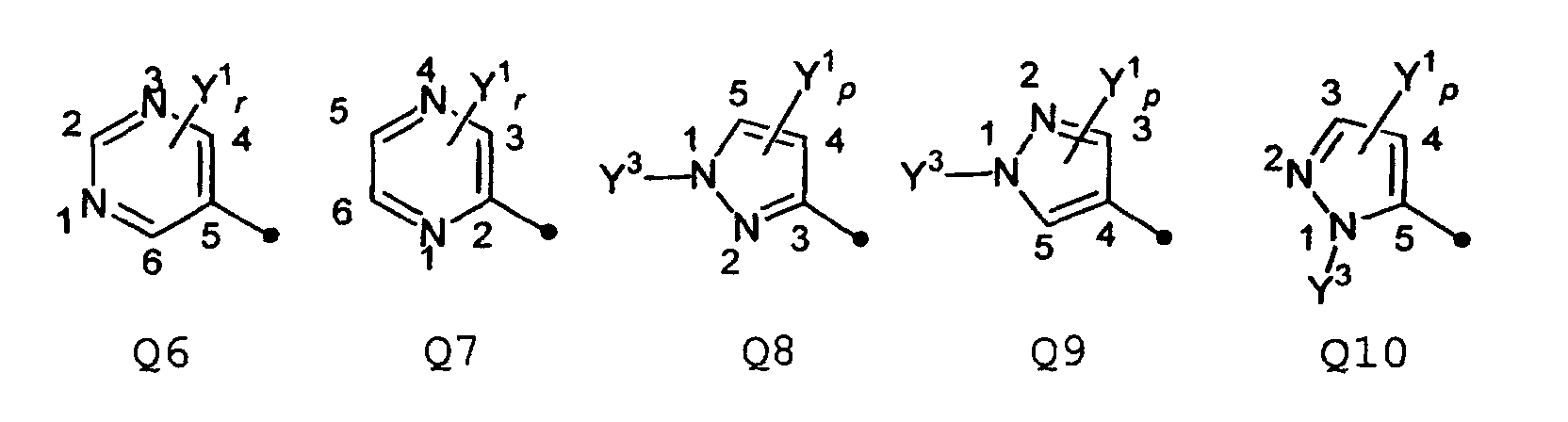
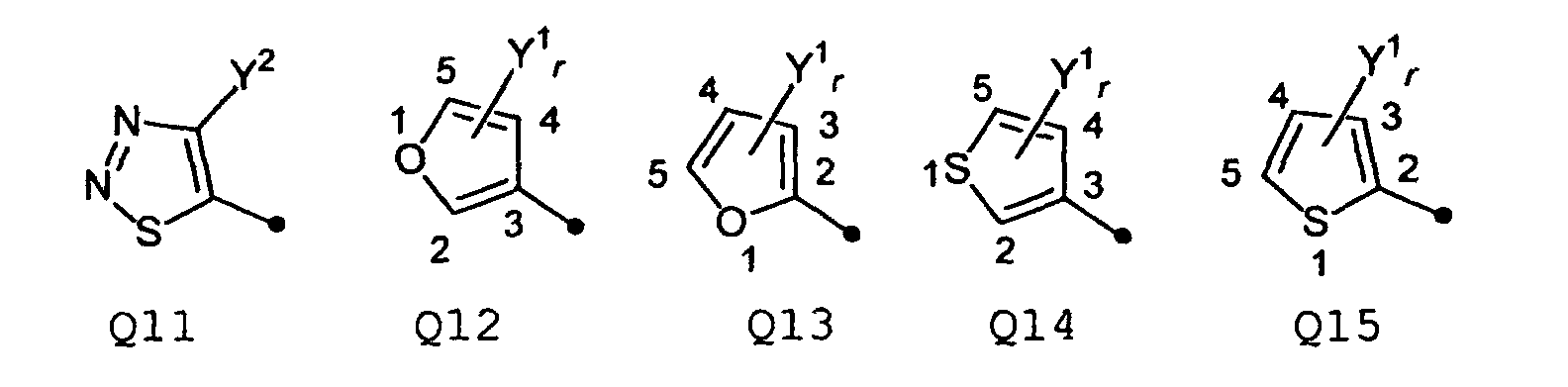
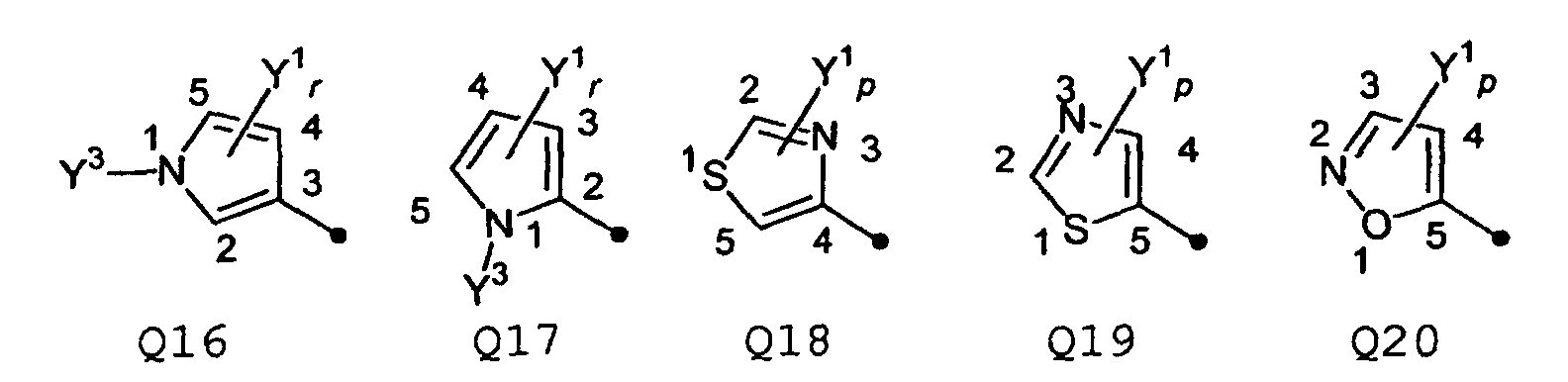 (wherein each of Y1s, which may be the same or different, is a halogen atom; a cyano group; a nitro group; a (C1-C6)alkyl group; a halo(C1-C6)alkyl group; a (C2-C6)alkenyl group; a halo(C2-C6)alkenyl group; a (C2-C6)alkynyl group; a halo (C2-C6)alkynyl group; a (C1-C6)alkoxy group; a halo(C1- C6)alkoxy group; a (C1-C6)alkylthio group; a halo(C1-C6)alkylthio group; a (C1-C6)alkylsulfinyl group; a halo(C1-C6)alkylsulfinyl group; a (C1-C6)alkylsulfonyl group; a halo(C1-C6)alkylsulfonyl group; a mono (C1-C6)alkylamino group; a di(C1-C6)alkylamino group whose (C1-C6)alkyl groups may be the same or different; a phenyl group; a substituted phenyl group having one or more substituents which may be the same or different and are selected from halogen atoms, cyano group, nitro group, (C1-C6)alkyl groups, halo(C1-C6)alkyl groups, (C1-C6)alkoxy groups, halo (C1-C6)alkoxy groups, (C1-C6)alkylthio groups, halo(C1-C6)alkylthio groups, (C1-C6)alkylsulfinyl groups, halo(C1-C6)alkylsulfinyl groups, (C1-C6)alkylsulfonyl groups, halo (C1-C6) alkylsulfonyl groups, mono(C1-C6)alkylamino groups, di(C1-C6)alkylamino groups whose (C1-C6)alkyl groups may be the same or different, and (C1-C6)alkoxycarbonyl groups; a phenoxy group; a substituted phenoxy group having one or more substituents which may be the same or different and are selected from halogen atoms, cyano group, nitro group, (C1-C6)alkyl groups, halo(C1-C6)alkyl groups, (C1-C6)alkoxy groups, halo (C1-C6)alkoxy groups, (C1-C6)alkylthio groups, halo(C1-C6)alkylthio groups, (C1-C6)alkylsulfinyl groups, halo(C1-C6)alkylsulfinyl groups, (C1-C6)alkylsulfonyl groups, halo(C1-C6)alkylsulfonyl groups, mono(C1-C6)alkylamino groups, di(C1-C6)alkylamino groups whose (C1-C6)alkyl groups may be the same or different, and (C1-C6)alkoxycarbonyl groups; a heterocyclic group; or a substituted heterocyclic group having one or more substituents which may be the same or different and are selected from halogen atoms, cyano group, nitro group, (C1-C6)alkyl groups, halo(C1-C6)alkyl groups, (C1-C6)alkoxy groups, halo(C1-C6)alkoxy groups, (C1-C6)alkylthio groups, halo (C1-C6)alkylthio groups, (C1-C6)alkylsulfinyl groups, halo (C1-C6)alkylsulfinyl groups, (C1-C6)alkylsulfonyl groups, halo(C1-C6)alkylsulfonyl groups, mono(C1-C6)alkylamino groups, di(C1-C6)alkylamino groups whose (C1-C6)alkyl groups may be the same or different, and (C1-C6)alkoxycarbonyl groups,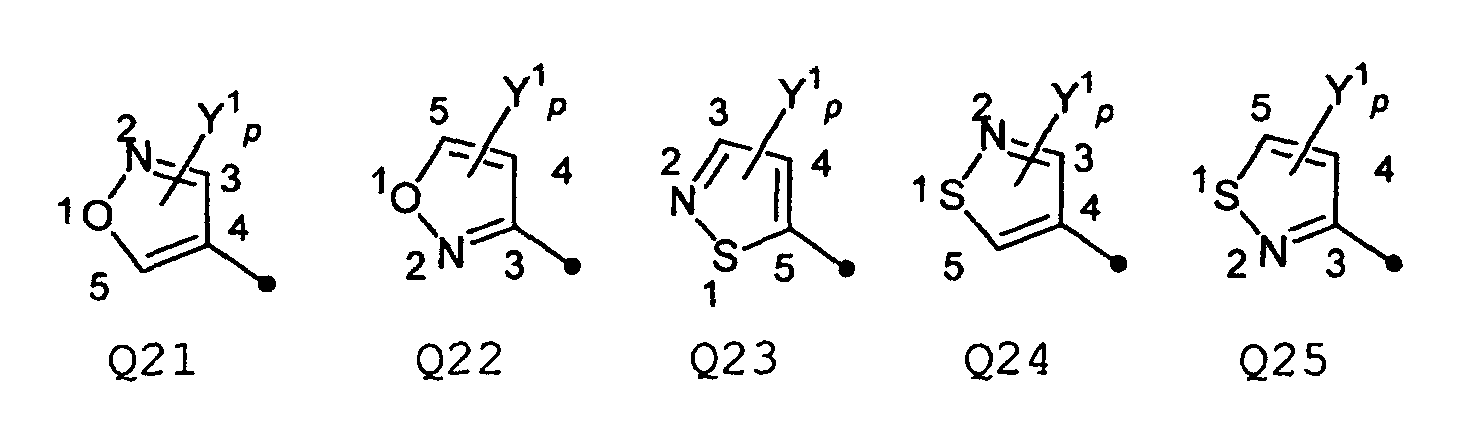
further, two adjacent Y1s on the aromatic ring being able to be taken together to represent a fused ring that may have one or more substituents which may be the same or different and are selected from halogen atoms, cyano group, nitro group, (C1-C6)alkyl groups, halo (C1-C6)alkyl groups, (C1-C6)alkoxy groups, halo(C1-C6)alkoxy groups, (C1-C6)alkylthio groups, halo(C1-C6)alkylthio groups, (C1-C6)alkylsulfinyl groups, halo(C1-C6)alkylsulfinyl groups, (C1-C6)alkylsulfonyl groups, halo(C1-C6)alkylsulfonyl groups, mono(C1-C6)alkylamino groups, di(C1-C6)alkylamino groups whose (C1-C6)alkyl groups may be the same or different, and (C1-C6)alkoxycarbonyl groups,
Y2 is a halogen atom; a cyano group; a nitro group; a (C1-C6)alkyl group; a halo(C1-C6)alkyl group; a (C1-C6)alkoxy group; a halo(C1-C6)alkoxy group; a (C1-C6)-alkylthio group; a halo(C1-C6)alkylthio group; a (C1-C6)alkylsulfinyl group; a halo(C1-C6)alkylsulfinyl group; a (C1-C6)alkylsulfonyl group; a halo(C1-C6)alkylsulfonyl group; a mono(C1-C6)alkylamino group; a di(C1-C6)alkylamino group whose (C1-C6)alkyl groups may be the same or different; a phenyl group; a substituted phenyl group having one or more substituents which may be the same or different and are selected from halogen atoms, cyano group, nitro group, (C1-C6)alkyl groups, halo (C1-C6) alkyl groups, (C1-C6)alkoxy groups, halo(C1-C6)alkoxy groups, (C1-C6)alkylthio groups, halo(C1-C6)alkylthio groups, (C1-C6)alkylsulfinyl groups, halo(C1-C6)alkylsulfinyl groups, (C1-C6)alkylsulfonyl groups, halo (C1-C6)alkylsulfonyl groups, mono(C1-C6)alkylamino groups, di(C1-C6)alkylamino groups whose (C1-C6)alkyl groups may be the same or different, and (C1-C6)alkoxycarbonyl groups; a phenoxy group; a substituted phenoxy group having one or more substituents which may be the same or different and are selected from halogen atoms, cyano group, nitro group, (C1-C6)alkyl groups, halo(C1-C6)alkyl groups, (C1-C6)alkoxy groups, halo(C1-C6)alkoxy groups, (C1-C6)alkylthio groups, halo (C1-C6)alkylthio groups, (C1-C6)alkylsulfinyl groups, halo(C1-C6)alkylsulfinyl groups, (C1-C6)alkylsulfonyl groups, halo(C1-C6)alkylsulfonyl groups, mono(C1-C6)alkylamino groups, di(C1-C6)alkylamino groups whose (C1-C6)alkyl groups may be the same or different, and (C1-C6)alkoxycarbonyl groups; a heterocyclic group; or a substituted heterocyclic group having one or more substituents which may be the same or different and are selected from halogen atoms, cyano group, nitro group, (C1-C6)alkyl groups, halo(C1-C6)alkyl groups, (C1-C6)alkoxy groups, halo(C1-C6)alkoxy groups, (C1-C6)alkylthio groups, halo (C1-C6)alkylthio groups, (C1-C6)alkylsulfinyl groups, halo (C1-C6)alkylsulfinyl groups, (C1-C6)alkylsulfonyl groups, halo(C1-C6)alkylsulfonyl groups, mono(C1-C6)alkylamino groups, di(C1-C6)alkylamino groups whose (C1-C6)alkyl groups may be the same or different, and (C1-C6)alkoxycarbonyl groups,
Y3 is a hydrogen atom, a (C1-C6)alkyl group, a halo(C1-C6)alkyl group, a phenyl group, or a substituted phenyl group having one or more substituents which may be the same or different and are selected from halogen atoms, cyano group, nitro group, (C1-C6)alkyl groups, halo(C1-C6)alkyl groups, (C1-C6)alkoxy groups, halo(C1-C6)alkoxy groups, (C1-C6)alkylthio groups, halo(C1-C6)alkylthio groups, (C1-C6)alkylsulfinyl groups, halo(C1-C6)alkylsulfinyl groups, (C1-C6)alkylsulfonyl groups, halo(C1-C6)alkylsulfonyl groups, mono(C1-C6)alkylamino groups, di(C1-C6)alkylamino groups whose (C1-C6)alkyl groups may be the same or different, and (C1-C6)alkoxycarbonyl groups,
p is an integer of 0 to 2, q is an integer of 0 to 4, and r is an integer of 0 to 3)}. - A substituted anilide derivative represented by general formula (I-1):{wherein R1 is a hydrogen atom, a (C1-C6)alkyl group, a halo(C1-C6)alkyl group, a (C1-C6)alkylcarbonyl group or a halo(C1-C6)alkylcarbonyl group,

R2 is a hydrogen atom, a halogen atom or a halo(C1-C6)alkyl group,
R3 is a hydrogen atom, a halogen atom, a (C1-C6)alkyl group, a halo(C1-C6)alkyl group, a cyano group, a hydroxyl group, a (C1-C6)alkoxy group, a halo(C1-C6)alkoxy group, a (C1-C6)alkoxy(C1-C3)alkoxy group, a halo(C1-C6)alkoxy(C1-C3)alkoxy group, a (C1-C6)alkylthio(C1-C3)alkoxy group, a halo(C1-C6)alkylthio(C1-C3)alkoxy group, a (C1-C6)alkylsulfinyl(C1-C3)alkoxy group, a halo (C1-C6)alkylsulfinyl (C1-C3)alkoxy group, a (C1-C6)alkylsulfonyl(C1-C3)alkoxy group, a halo(C1-C6)alkylsulfonyl(C1-C3)alkoxy group, a mono(C1-C6)alkylamino(C1-C3)alkoxy group, a di(C1-C6)alkylamino(C1-C3)alkoxy group whose (C1-C6)alkyl groups may be the same or different, a (C1-C6)alkylthio group, a halo(C1-C6)alkylthio group, a (C1-C6)alkylsulfinyl group, a halo(C1-C6)alkylsulfinyl group, a (C1-C6)alkylsulfonyl group or a halo(C1-C6)alkylsulfonyl group,
m is an integer of 0 to 6,
each of Xs, which may be the same or different, is a halogen atom, a cyano group, a (C1-C8)alkyl group, a halo(C1-C8)alkyl group, a (C2-C8)alkenyl group, a halo(C2-C8)alkenyl group, a (C2-C8)alkynyl group, a halo(C2-C8)alkynyl group, a (C3-C6)cycloalkyl group, a (C3-C6)cycloalkyl(C1-C6)alkyl group, a (C1-C8)alkoxy group, a halo (C1-C8)alkoxy group, a (C1-C6)alkylthio group, a (C1-C6)alkylsulfinyl group, a (C1-C6)alkylsulfonyl group, a mono(C1-C6)alkylamino group, a di(C1-C6)alkylamino group whose (C1-C6)alkyl groups may be the same or different, a (C1-C8)alkylcarbonyl group, a halo(C1-C8)alkylcarbonyl group, a (C1-C8)alkylthiocarbonyl group, a halo(C1-C8)alkylthiocarbonyl group, a (C1-C6)alkylcarbonyl(C1-C6)alkyl group, a halo(C1-C6)alkylcarbonyl(C1-C6)alkyl group, a (C1-C6)alkylthiocarbonyl(C1-C6)alkyl group, a halo(C1-C6)alkylthiocarbonyl(C1-C6)alkyl group, a (C1-C6)alkoxy(C1-C6)alkyl group, a halo(C1-C6)alkoxy(C1-C6)alkyl group, a (C1-C6)alkylthio(C1-C6)alkyl group, a (C1-C6)alkylsulfinyl(C1-C6)alkyl group, a (C1-C6)alkylsulfonyl(C1-C6)alkyl group, a mono (C1-C6)alkylamino(C1-C6)alkyl group, a di(C1-C6)alkylamino(C1-C6)alkyl group in which the (C1-C6)alkyl groups of the di(C1-C6)alkylamino group may be the same or different, a phenyl group, or a substituted phenyl group having one or more substituents which may be the same or different and are selected from halogen atoms, cyano group, nitro group, (C1-C6)alkyl groups, halo(C1-C6)alkyl groups, (C1-C6)alkoxy groups, halo (C1-C6)alkoxy groups, (C1-C6)alkylthio groups, halo(C1-C6)alkylthio groups, (C1-C6)alkylsulfinyl groups, halo(C1-C6)alkylsulfinyl groups, (C1-C6)alkylsulfonyl groups, halo(C1-C6)alkylsulfonyl groups, mono(C1-C6)alkylamino groups, di(C1-C6)alkylamino groups whose (C1-C6)alkyl groups may be the same or different, and (C1-C6)alkoxycarbonyl groups, n is an integer of 1 to 4,
further, two adjacent Xs on the aromatic ring being able to be taken together to represent a fused ring that may have one or more substituents which may be the same or different and are selected from halogen atoms, cyano group, nitro group, (C1-C6)alkyl groups, halo(C1-C6)alkyl groups, (C1-C6)alkoxy groups, halo(C1-C6)alkoxy groups, (C1-C6)alkylthio groups, halo(C1-C6)alkylthio groups, (C1-C6)alkylsulfinyl groups, halo(C1-C6)alkylsulfinyl groups, (C1-C6)alkylsulfonyl groups, halo(C1-C6)alkylsulfonyl groups, mono(C1-C6)alkylamino groups, di(C1-C6)alkylamino groups whose (C1-C6)alkyl groups may be the same or different, and (C1-C6)alkoxycarbonyl groups, and X being able to bind to R1 to form a 5- to 8-membered ring that may contain one or two atoms which may be the same or different and are selected from oxygen atom, sulfur atom and nitrogen atom, between adjacent carbon atoms constituting the ring,
Z is an oxygen atom or a sulfur atom, and
Q is a substituent represented by any of the formulas Q1 to Q25:
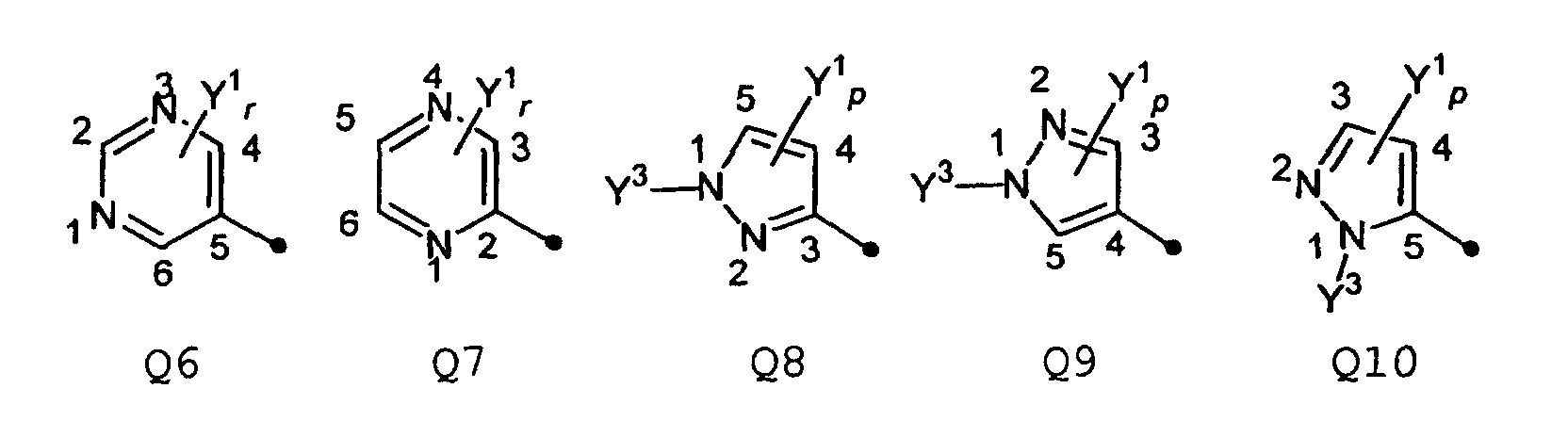

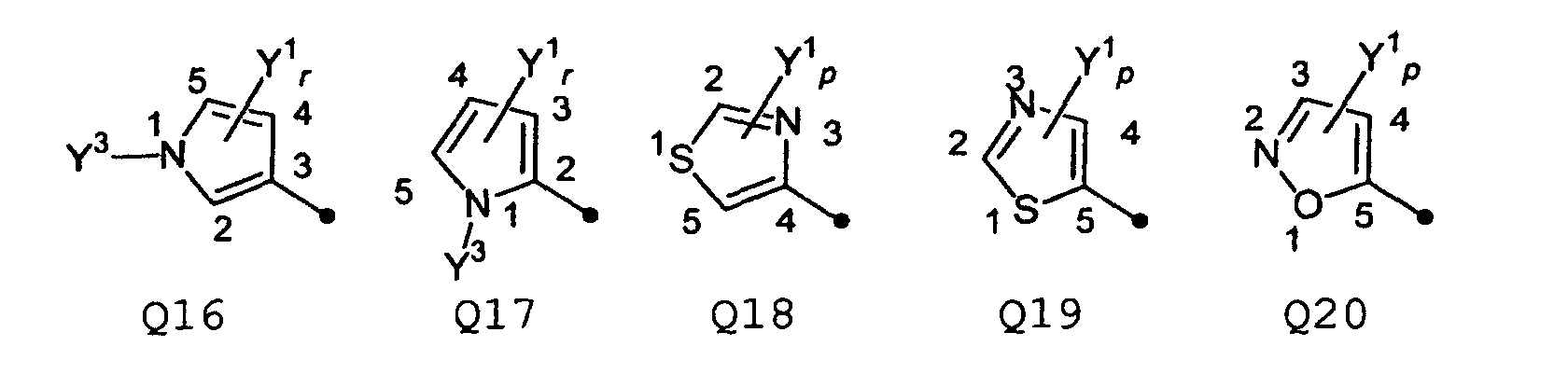 (wherein each of Y1s, which may be the same or different, is a halogen atom; a cyano group; a nitro group; a (C1-C6)alkyl group; a halo(C1-C6)alkyl group; a (C2-C6)alkenyl group; a halo(C2-C6)alkenyl group; a (C2-C6)alkynyl group; a halo(C2-C6)alkynyl group; a (C1-C6)alkoxy group; a halo(C1-C6)alkoxy group; a (C1-C6)alkylthio group; a halo(C1-C6)alkylthio group; a (C1-C6)alkylsulfinyl group; a halo(C1-C6)alkylsulfinyl group; a (C1-C6)alkylsulfonyl group; a halo(C1-C6)alkylsulfonyl group; a mono(C1-C6)alkylamino group; a di(C1-C6)alkylamino group whose (C1-C6)alkyl groups may be the same or different; a phenyl group; a substituted phenyl group having one or more substituents which may be the same or different and are selected from halogen atoms, cyano group, nitro group, (C1-C6)alkyl groups, halo (C1-C6)alkyl groups, (C1-C6)alkoxy groups, halo(C1-C6)alkoxy groups, (C1-C6)alkylthio groups, halo(C1-C6)alkylthio groups, (C1-C6)alkylsulfinyl groups, halo(C1-C6)alkylsulfinyl groups, (C1-C6)alkylsulfonyl groups, halo(C1-C6)alkylsulfonyl groups, mono(C1-C6)alkylamino groups, di(C1-C6)alkylamino groups whose (C1-C6)alkyl groups may be the same or different, and (C1-C6)alkoxycarbonyl groups; a phenoxy group; a substituted phenoxy group having one or more substituents which may be the same or different and are selected from halogen atoms, cyano group, nitro group, (C1-C6)alkyl groups, halo (C1-C6)alkyl groups, (C1-C6)alkoxy groups, halo(C1-C6)alkoxy groups, (C1-C6)alkylthio groups, halo(C1-C6)alkylthio groups, (C1-C6)alkylsulfinyl groups, halo(C1-C6)alkylsulfinyl groups, (C1-C6)alkylsulfonyl groups, halo(C1-C6)alkylsulfonyl groups, mono(C1-C6)alkylamino groups, di(C1-C6)alkylamino groups whose (C1-C6)alkyl groups may be the same or different, and (C1-C6)alkoxycarbonyl groups; a heterocyclic group; or a substituted heterocyclic group having one or more substituents which may be the same or different and are selected from halogen atoms, cyano group, nitro group, (C1-C6)alkyl groups, halo(C1-C6)alkyl groups, (C1-C6)alkoxy groups, halo(C1-C6)alkoxy groups, (C1-C6)alkylthio groups, halo (C1-C6)alkylthio groups, (C1-C6)alkylsulfinyl groups, halo (C1-C6)alkylsulfinyl groups, (C1-C6)alkylsulfonyl groups, halo(C1-C6)alkylsulfonyl groups, mono(C1-C6)alkylamino groups, di(C1-C6)alkylamino groups whose (C1-C6)alkyl groups may be the same or different, and (C1-C6)alkoxycarbonyl groups,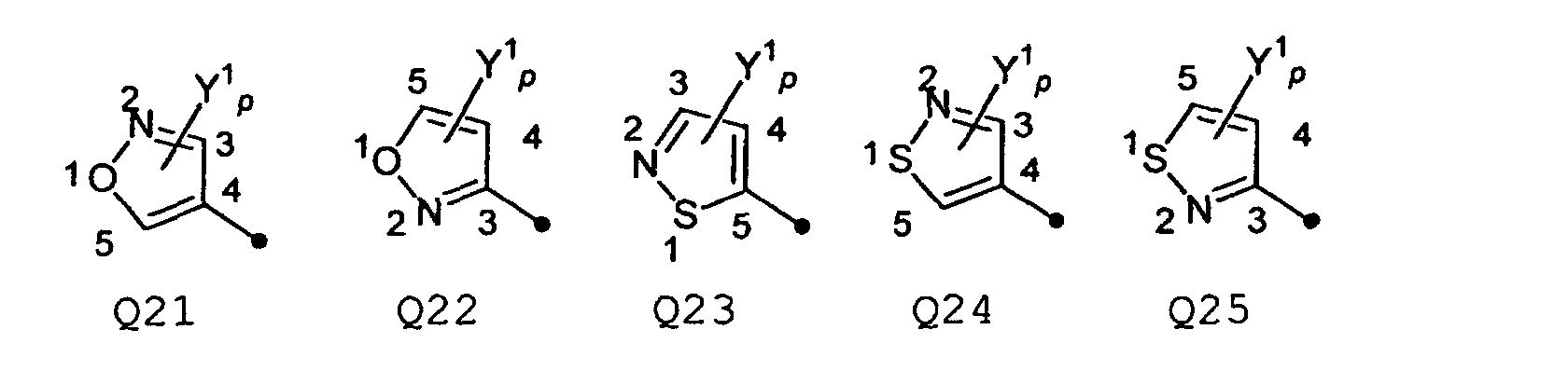
further, two adjacent Y1s on the aromatic ring being able to be taken together to represent a fused ring that may have one or more substituents which may be the same or different and are selected from halogen atoms, cyano group, nitro group, (C1-C6)alkyl groups, halo (C1-C6)alkyl groups, (C1-C6)alkoxy groups, halo(C1-C6)alkoxy groups, (C1-C6)alkylthio groups, halo(C1-C6)alkylthio groups, (C1-C6)alkylsulfinyl groups, halo (C1-C6)alkylsulfinyl groups, (C1-C6)alkylsulfonyl groups, halo(C1-C6)alkylsulfonyl groups, mono(C1-C6)alkylamino groups, di(C1-C6)alkylamino groups whose (C1-C6)alkyl groups may be the same or different, and (C1-C6)alkoxycarbonyl groups,
Y2 is a halogen atom; a cyano group; a nitro group; a (C1-C6)alkyl group; a halo(C1-C6)alkyl group; a (C1-C6)alkoxy group; a halo(C1-C6)alkoxy group; a (C1-C6)alkylthio group; a halo(C1-C6)alkylthio group; a (C1-C6)alkylsulfinyl group; a halo(C1-C6)alkylsulfinyl group; a (C1-C6)alkylsulfonyl group; a halo(C1-C6)alkylsulfonyl group; a mono (C1-C6)alkylamino group; a di(C1-C6)alkylamino group whose (C1-C6)alkyl groups may be the same or different; a phenyl group; a substituted phenyl group having one or more substituents which may be the same or different and are selected from halogen atoms, cyano group, nitro group, (C1-C6)alkyl groups, halo(C1-C6)alkyl groups, (C1-C6)alkoxy groups, halo(C1-C6)alkoxy groups, (C1-C6)alkylthio groups, halo(C1-C6)alkylthio groups, (C1-C6)alkylsulfinyl groups, halo (C1-C6)alkylsulfinyl groups, (C1-C6)alkylsulfonyl groups, halo (C1-C6)alkylsulfonyl groups, mono(C1-C6)alkylamino groups, di(C1-C6)alkylamino groups whose (C1-C6)alkyl groups may be the same or different, and (C1-C6)alkoxycarbonyl groups; a phenoxy group; a substituted phenoxy group having one or more substituents which may be the same or different and are selected from halogen atoms, cyano group, nitro group, (C1-C6)alkyl groups, halo (C1-C6)alkyl groups, (C1-C6)alkoxy groups, halo (C1-C6)alkoxy groups, (C1-C6)alkylthio groups, halo(C1-C6)alkylthio groups, (C1-C6)alkylsulfinyl groups, halo(C1-C6)alkylsulfinyl groups, (C1-C6)alkylsulfonyl groups, halo(C1-C6)alkylsulfonyl groups, mono(C1-C6)alkylamino groups, di(C1-C6)alkylamino groups whose (C1-C6)alkyl groups may be the same or different, and (C1-C6)alkoxycarbonyl groups; a heterocyclic group; or a substituted heterocyclic group having one or more substituents which may be the same or different and are selected from halogen atoms, cyano group, nitro group, (C1-C6)alkyl groups, halo(C1-C6)alkyl groups, (C1-C6)alkoxy groups, halo (C1-C6)alkoxy groups, (C1-C6)alkylthio groups, halo (C1-C6)alkylthio groups, (C1-C6)alkylsulfinyl groups, halo (C1-C6)alkylsulfinyl groups, (C1-C6)alkylsulfonyl groups, halo(C1-C6)alkylsulfonyl groups, mono(C1-C6)alkylamino groups, di(C1-C6)alkylamino groups whose (C1-C6)alkyl groups may be the same or different, and (C1-C6)alkoxycarbonyl groups,
Y3 is a hydrogen atom, a (C1-C6)alkyl group, a halo(C1-C6)alkyl group, a phenyl group, or a substituted phenyl group having one or more substituents which may be the same or different and are selected from halogen atoms, cyano group, nitro group, (C1-C6)alkyl groups, halo (C1-C6)alkyl groups, (C1-C6) alkoxy groups, halo(C1-C6)alkoxy groups, (C1-C6)alkylthio groups, halo (C1-C6)alkylthio groups, (C1-C6)alkylsulfinyl groups, halo(C1-C6)alkylsulfinyl groups, (C1-C6)alkylsulfonyl groups, halo(C1-C6)alkylsulfonyl groups, mono(C1-C6)alkylamino groups, di(C1-C6)alkylamino groups whose (C1-C6)alkyl groups may be the same or different, and (C1-C6)alkoxycarbonyl groups,
p is an integer of 0 to 2, q is an integer of 0 to 4, and r is an integer of 0 to 3)}. - A substituted anilide derivative represented by general formula (I-2):{wherein R1 is a hydrogen atom, a (C1-C6)alkyl group or a halo(C1-C6)alkyl group,

R2 is a hydrogen atom, a halogen atom or a halo(C1-C6)alkyl group,
R3 is a hydrogen atom, a halogen atom, a hydroxyl group, a (C1-C6)alkoxy group, a halo(C1-C6)alkoxy group, a (C1-C6)alkoxyalkoxy group, a halo(C1-C6)alkoxyalkoxy group, a (C1-C6)alkylthioalkoxy group, a (C1-C6)alkylsulfinylalkoxy group, a (C1-C6)alkylsulfonylalkoxy group, a mono(C1-C6)alkylaminoalkoxy group, a di(C1-C6)alkylaminoalkoxy group whose (C1-C6)alkyl groups may be the same or different, a (C1-C6)alkylthio group, a halo(C1-C6)alkylthio group, a (C1-C6)alkylsulfinyl group, a halo(C1-C6)alkylsulfinyl group, a (C1-C6)alkylsulfonyl group or a halo(C1-C6)alkylsulfonyl group,
m is an integer of 0 to 6,
A is a (C3-C8)alkyl group, a halo(C3-C8)alkyl group, a (C3-C8)alkenyl group, a halo(C3-C8)alkenyl group, a (C3-C8)alkynyl group, a halo(C3-C8)alkynyl group, a (C3-C6)cycloalkyl group, a (C3-C6)cycloalkyl(C1-C6)alkyl group, a phenyl group, or a substituted phenyl group having one or more substituents which may be the same or different and are selected from halogen atoms, cyano group, nitro group, (C1-C6)alkyl groups, halo(C1-C6)alkyl groups, (C1-C6)alkoxy groups, halo (C1-C6)alkoxy groups, (C1-C6)alkylthio groups, halo(C1-C6)alkylthio groups, (C1-C6)alkylsulfinyl groups, halo (C1-C6)alkylsulfinyl groups, (C1-C6)alkylsulfonyl groups, halo(C1-C6)alkylsulfonyl groups, mono(C1-C6)alkylamino groups, di(C1-C6)alkylamino groups whose (C1-C6)alkyl groups may be the same or different, and (C1-C6)alkoxycarbonyl groups,
each of Xs, which may be the same or different, is a halogen atom, a cyano group, a (C1-C8)alkyl group, a halo (C1-C8)alkyl group, a (C2-C8)alkenyl group, a halo(C2-C8)alkenyl group, a (C2-C8)alkynyl group, a halo(C2-C8)alkynyl group, a (C3-C6)cycloalkyl group, a (C3-C6)cycloalkyl(C1-C6)alkyl group, a (C1-C8)alkoxy group, a halo(C1-C8)alkoxy group, a (C1-C6)alkylthio group, a (C1-C6)alkylsulfinyl group, a (C1-C6)alkylsulfonyl group, a mono(C1-C6)alkylamino group, a di(C1-C6)alkylamino group whose (C1-C6)alkyl groups may be the same or different, a (C1-C6)alkylcarbonyl(C1-C6)alkyl group, a halo(C1-C6)alkylcarbonyl(C1-C6)alkyl group, a (C1-C6)alkylthiocarbonyl(C1-C6)alkyl group, a (C1-C6)alkoxy(C1-C6)alkyl group, a halo(C1-C6)alkoxy(C1-C6)alkyl group, a (C1-C6)alkylthio(C1-C6)alkyl group, a (C1-C6)alkylsulfinyl(C1-C6)alkyl group, a (C1-C6)alkylsulfonyl(C1-C6)alkyl group, a mono(C1-C6)alkyl-amino (C1-C6)alkyl group, or a di(C1-C6)alkylamino(C1-C6)alkyl group in which the (C1-C6)alkyl groups of the di(C1-C6)alkylamino group may be the same or different, n is an integer of 0 to 3,
Z is an oxygen atom or a sulfur atom, and
Q is a substituent represented by any of the formulas Q1 to Q25:

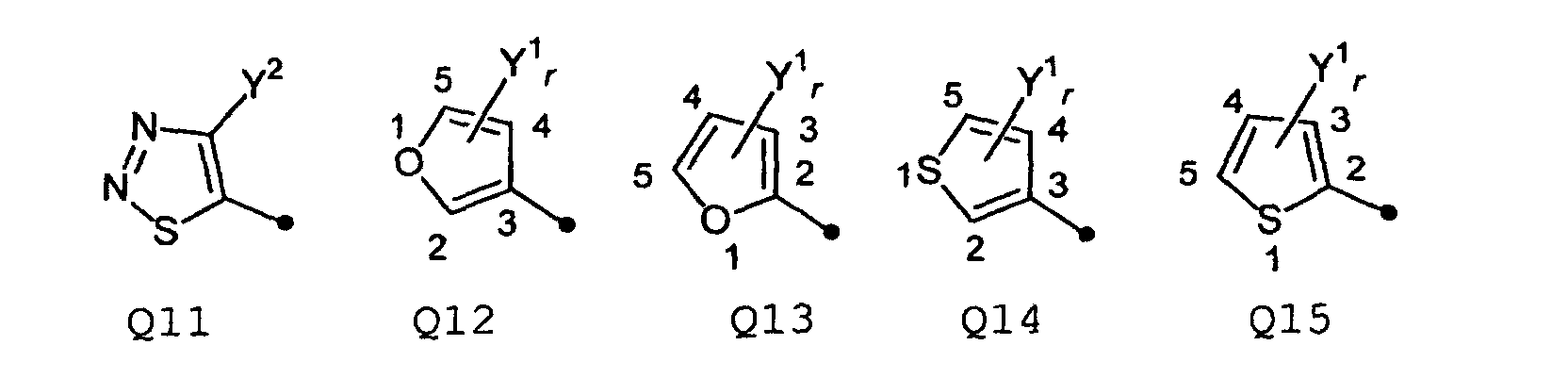
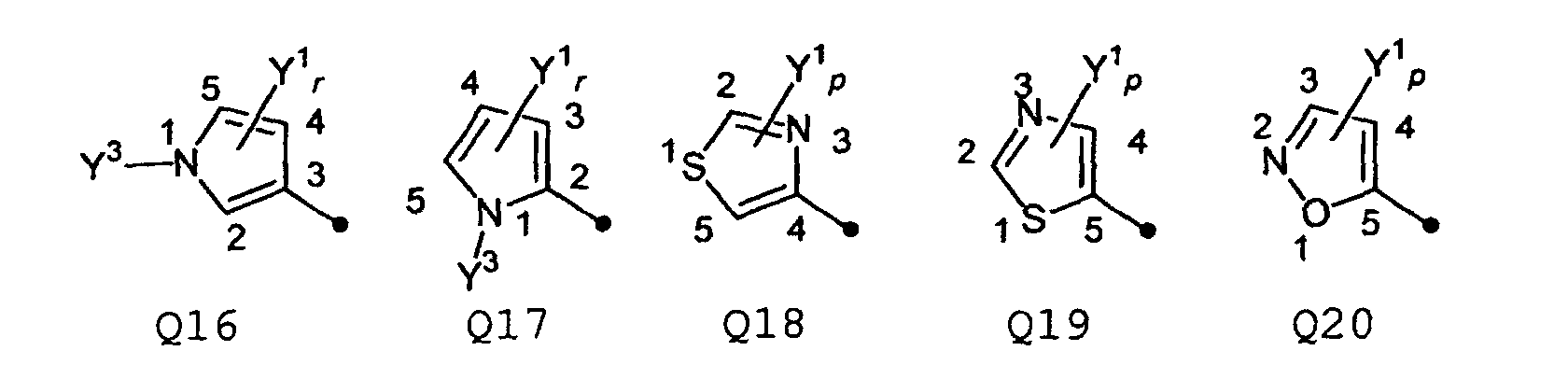 (wherein each of Y1s, which may be the same or different, is a halogen atom; a cyano group; a nitro group; a (C1-C6)alkyl group; a halo(C1-C6)alkyl group; a (C2-C6)alkenyl group; a halo(C2-C6)alkenyl group; a (C2-C6)alkynyl group; a halo(C2-C6)alkynyl group; a (C1-C6)alkoxy group; a halo (C1- C6)alkoxy group; a (C1-C6)alkylthio group; a halo(C1-C6)alkylthio group; a (C1-C6)alkylsulfinyl group; a halo(C1-C6)alkylsulfinyl group; a (C1-C6)alkylsulfonyl group; a halo(C1-C6)alkylsulfonyl group; a mono(C1-C6)alkylamino group; a di(C1-C6)alkylamino group whose (C1-C6)alkyl groups may be the same or different; a phenyl group; a substituted phenyl group having one or more substituents which may be the same or different and are selected from halogen atoms, cyano group, nitro group, (C1-C6)alkyl groups, halo(C1-C6)alkyl groups, (C1-C6)alkoxy groups, halo (C1-C6)alkoxy groups, (C1-C6)alkylthio groups, halo(C1-C6)alkylthio groups, (C1-C6)alkylsulfinyl groups, halo(C1-C6)alkylsulfinyl groups, (C1-C6)alkylsulfonyl groups, halo (C1-C6)alkylsulfonyl groups, mono(C1-C6)alkylamino groups, di(C1-C6)alkylamino groups whose (C1-C6)alkyl groups may be the same or different, and (C1-C6)alkoxycarbonyl groups; a phenoxy group; a substituted phenoxy group having one or more substituents which may be the same or different and are selected from halogen atoms, cyano group, nitro group, (C1-C6)alkyl groups, halo(C1-C6)alkyl groups, (C1-C6)alkoxy groups, halo (C1-C6)alkoxy groups, (C1-C6)alkylthio groups, halo(C1-C6)alkylthio groups, (C1-C6)alkylsulfinyl groups, halo(C1-C6)alkylsulfinyl groups, (C1-C6)alkylsulfonyl groups, halo(C1-C6)alkylsulfonyl groups, mono(C1-C6)alkylamino groups, di(C1-C6)alkylamino groups whose (C1-C6)alkyl groups may be the same or different, and (C1-C6)alkoxycarbonyl groups; a heterocyclic group; or a substituted heterocyclic group having one or more substituents which may be the same or different and are selected from halogen atoms, cyano group, nitro group, (C1-C6)alkyl groups, halo (C1-C6)alkyl groups, (C1-C6)alkoxy groups, halo(C1-C6)alkoxy groups, (C1-C6)alkylthio groups, halo(C1-C6)alkylthio groups, (C1-C6)alkylsulfinyl groups, halo (C1-C6)alkylsulfinyl groups, (C1-C6)alkylsulfonyl groups, halo(C1-C6)alkylsulfonyl groups, mono(C1-C6)alkylamino groups, di(C1-C6)alkylamino groups whose (C1-C6)alkyl groups may be the same or different, and (C1-C6)alkoxycarbonyl groups,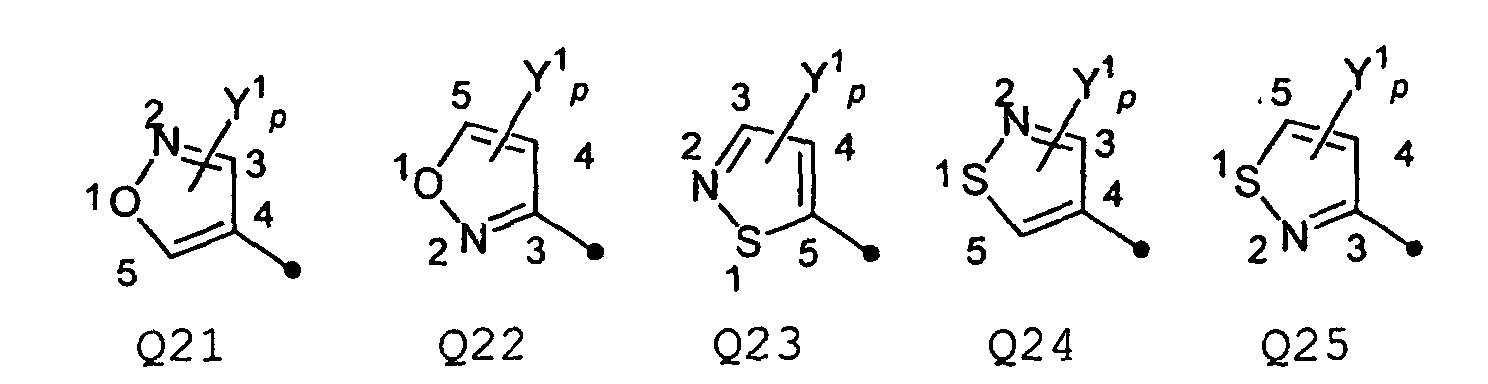
further, two adjacent Y1s on the aromatic ring being able to be taken together to represent a fused ring that may have one or more substituents which may be the same or different and are selected from halogen atoms, cyano group, nitro group, (C1-C6)alkyl groups, halo (C1-C6)alkyl groups, (C1-C6)alkoxy groups, halo(C1-C6)alkoxy groups, (C1-C6)alkylthio groups, halo(C1-C6)alkylthio groups, (C1-C6)alkylsulfinyl groups, halo(C1-C6)alkylsulfinyl groups, (C1-C6)alkylsulfonyl groups, halo(C1-C6)alkylsulfonyl groups, mono(C1-C6)alkylamino groups, di(C1-C6)alkylamino groups whose (C1-C6)alkyl groups may be the same or different, and (C1-C6)alkoxycarbonyl groups,
Y2 is a halogen atom; a cyano group; a nitro group; a (C1-C6)alkyl group; a halo(C1-C6)alkyl group; a (C1-C6)alkoxy group; a halo(C1-C6)alkoxy group; a (C1-C6)alkylthio group; a halo(C1-C6)alkylthio group; a (C1-C6)alkylsulfinyl group; a halo(C1-C6)alkylsulfinyl group; a (C1-C6)alkylsulfonyl group; a halo (C1-C6)alkylsulfonyl group; a mono(C1-C6)alkylamino group; a di(C1-C6)alkylamino group whose (C1-C6)alkyl groups may be the same or different; a phenyl group; a substituted phenyl group having one or more substituents which may be the same or different and are selected from halogen atoms, cyano group, nitro group, (C1-C6)alkyl groups, halo(C1-C6)alkyl groups, (C1-C6)alkoxy groups, halo (C1-C6)alkoxy groups, (C1-C6)alkylthio groups, halo(C1-C6)alkylthio groups, (C1-C6)alkylsulfinyl groups, halo(C1-C6)alkylsulfinyl groups, (C1-C6)alkylsulfonyl groups, halo(C1-C6)alkylsulfonyl groups, mono(C1-C6)alkylamino groups, di(C1-C6)alkylamino groups whose (C1-C6)alkyl groups may be the same or different, and (C1-C6)alkoxycarbonyl groups; a phenoxy group; a substituted phenoxy group having one or more substituents which may be the same or different and are selected from halogen atoms, cyano group, nitro group, (C1-C6)alkyl groups, halo (C1-C6)alkyl groups, (C1-C6)alkoxy groups, halo (C1-C6) alkoxy groups, (C1-C6)alkylthio groups, halo(C1-C6)alkylthio groups, (C1-C6)alkylsulfinyl groups, halo(C1-C6)alkylsulfinyl groups, (C1-C6)alkylsulfonyl groups, halo(C1-C6)alkylsulfonyl groups, mono(C1-C6)alkylamino groups, di(C1-C6)alkylamino groups whose (C1-C6)alkyl groups may be the same or different, and (C1-C6)alkoxycarbonyl groups; a heterocyclic group; or a substituted heterocyclic group having one or more substituents which may be the same or different and are selected from halogen atoms, cyano group, nitro group, (C1-C6)alkyl groups, halo(C1-C6)alkyl groups, (C1-C6)alkoxy groups, halo(C1-C6)alkoxy groups, (C1-C6)alkylthio groups, halo (C1-C6)alkylthio groups, (C1-C6)alkylsulfinyl groups, halo (C1-C6)alkylsulfinyl groups, (C1-C6)alkylsulfonyl groups, halo(C1-C6)alkylsulfonyl groups, mono(C1-C6)alkylamino groups, di(C1-C6)alkylamino groups whose (C1-C6)alkyl groups may be the same or different, and (C1-C6)alkoxycarbonyl groups,
Y3 is a hydrogen atom, a (C1-C6)alkyl group, a halo(C1-C6)alkyl group, a phenyl group, or a substituted phenyl group having one or more substituents which may be the same or different and are selected from halogen atoms, cyano group, nitro group, (C1-C6)alkyl groups, halo(C1-C6)alkyl groups, (C1-C6)alkoxy groups, halo(C1-C6)alkoxy groups, (C1-C6)alkylthio groups, halo(C1-C6)alkylthio groups, (C1-C6)alkylsulfinyl groups, halo(C1-C6)alkylsulfinyl groups, (C1-C6)alkylsulfonyl groups, halo(C1-C6)alkylsulfonyl groups, mono(C1-C6)alkylamino groups, di(C1-C6)alkylamino groups whose (C1-C6)alkyl groups may be the same or different, and (C1-C6)alkoxycarbonyl groups,
p is an integer of 0 to 2, q is an integer of 0 to 4, and r is an integer of 0 to 3)}. - A substituted anilide derivative according to claim 3, represented by general formula (I-2) wherein R1, R2, R3, A, X, Z, n and m are as defined in claim 3, and Q is Q9, Q14 or Q15.
- An agricultural and horticultural chemical characterized by comprising a substituted anilide derivative according to any one of claims 1 to 4 as an active ingredient.
- An agricultural and horticultural chemical according to claim 5, which is an agricultural and horticultural insecticide, fungicide or acaricide.
- A method for applying an agricultural and horticultural chemical, characterized by applying an agricultural and horticultural chemical according to either claim 5 or claim 6 to a plant to be protected or soil in an effective dosage for protecting useful plants against pests.
- A substituted aniline derivative represented by general formula (II):(wherein R1 is a hydrogen atom, a (C1-C6)alkyl group, a halo(C1-C6)alkyl group, a phenyl group, or a substituted phenyl group having one or more substituents which may be the same or different and are selected from halogen atoms, cyano group, nitro group, (C1-C6)alkyl groups, halo (C1-C6)alkyl groups, (C1-C6)alkoxy groups, halo(C1-C6)alkoxy groups, (C1-C6)alkylthio groups, halo (C1-C6)alkylthio groups, (C1-C6)alkylsulfinyl groups, halo (C1-C6)alkylsulfinyl groups, (C1-C6)alkylsulfonyl groups, halo(C1-C6)alkylsulfonyl groups, mono(C1-C6)alkylamino groups, di(C1-C6)alkylamino groups whose (C1-C6)alkyl groups may be the same or different, and (C1-C6)alkoxycarbonyl groups,

R2 is a hydrogen atom, a halogen atom or a halo(C1-C6)alkyl group,
R3 is a hydrogen atom; a halogen atom; a (C1-C6)alkyl group; a halo(C1-C6)alkyl group; a cyano group; a hydroxyl group; a (C1-C6)alkoxy group; a halo(C1-C6)alkoxy group; a (C1-C6)alkoxy(C1-C6)alkoxy group; a halo(C1-C6)alkoxy(C1-C6)alkoxy group; a (C1-C6)alkylthio(C1-C6)alkoxy group; a halo (C1-C6)alkylthio(C1-C6)alkoxy group; a (C1-C6)alkylsulfinyl(C1-C6)alkoxy group; a halo (C1-C6)alkylsulfinyl(C1-C6)alkoxy group; a (C1-C6)alkylsulfonyl(C1-C6)alkoxy group; a halo(C1-C6)alkylsulfonyl(C1-C6)alkoxy group; a mono (C1-C6)alkylamino (C1-C6)alkoxy group; a di(C1-C6)alkylamino(C1-C6)alkoxy group whose (C1-C6)alkyl groups may be the same or different; a (C1-C6)alkylthio group; a halo(C1-C6)alkylthio group; a (C1-C6)alkylsulfinyl group; a halo(C1-C6)alkylsulfinyl group; a (C1-C6)alkylsulfonyl group; a halo(C1-C6)alkylsulfonyl group; an amino group; a mono(C1-C6)alkylamino group; a di(C1-C6)alkylamino group whose (C1-C6)alkyl groups may be the same or different; a phenoxy group; a substituted phenoxy group having one or more substituents which may be the same or different and are selected from halogen atoms, cyano group, nitro group, (C1-C6)alkyl groups, halo(C1-C6)alkyl groups, (C1-C6)alkoxy groups, halo(C1-C6)alkoxy groups, (C1-C6)alkylthio groups, halo(C1-C6)alkylthio groups, (C1-C6)alkylsulfinyl groups, halo(C1-C6)alkylsulfinyl groups, (C1-C6)alkylsulfonyl groups, halo(C1-C6)alkylsulfonyl groups, mono(C1-C6)alkylamino groups, di(C1-C6)alkylamino groups whose (C1-C6)alkyl groups may be the same or different, and (C1-C6)alkoxycarbonyl groups; a phenylthio group; a substituted phenylthio group having one or more substituents which may be the same or different and are selected from halogen atoms, cyano group, nitro group, (C1-C6)alkyl groups, halo(C1-C6)alkyl groups, (C1-C6)alkoxy groups, halo(C1-C6)alkoxy groups, (C1-C6)alkylthio groups, halo(C1-C6)alkylthio groups, (C1-C6)alkylsulfinyl groups, halo (C1-C6)alkylsulfinyl groups, (C1-C6)alkylsulfonyl groups, halo(C1-C6)alkylsulfonyl groups, mono(C1-C6)alkylamino groups, di(C1-C6)alkylamino groups whose (C1-C6)alkyl groups may be the same or different, and (C1-C6)alkoxycarbonyl groups; a phenylsulfinyl group; a substituted phenylsulfinyl group having one or more substituents which may be the same or different and are selected from halogen atoms, cyano group, nitro group, (C1-C6)alkyl groups, halo (C1-C6)alkyl groups, (C1-C6)alkoxy groups, halo(C1-C6)alkoxy groups, (C1-C6)alkylthio groups, halo(C1-C6)alkylthio groups, (C1-C6)alkylsulfinyl groups, halo(C1-C6)alkylsulfinyl groups, (C1-C6)alkylsulfonyl groups, halo(C1-C6)alkylsulfonyl groups, mono(C1-C6)alkylamino groups, di(C1-C6)alkylamino groups whose (C1-C6)alkyl groups may be the same or different, and (C1-C6)alkoxycarbonyl groups; a phenylsulfonyl group; a substituted phenylsulfonyl group having one or more substituents which may be the same or different and are selected from halogen atoms, cyano group, nitro group, (C1-C6)alkyl groups, halo(C1-C6)alkyl groups, (C1-C6)alkoxy groups, halo(C1-C6)alkoxy groups, (C1-C6)alkylthio groups, halo(C1-C6)alkylthio groups, (C1-C6)alkylsulfinyl groups, halo (C1-C6)alkylsulfinyl groups, (C1-C6)alkylsulfonyl groups, halo(C1-C6)alkylsulfonyl groups, mono(C1-C6)alkylamino groups, di(C1-C6)alkylamino groups whose (C1-C6)alkyl groups may be the same or different, and (C1-C6)alkoxycarbonyl groups; a phenyl(C1-C6)alkoxy group; or a substituted phenyl(C1-C6)alkoxy group having on the ring one or more substituents which may be the same or different and are selected from halogen atoms, cyano group, nitro group, (C1-C6)alkyl groups, halo(C1-C6)alkyl groups, (C1-C6)alkoxy groups, halo (C1-C6)alkoxy groups, (C1-C6)alkylthio groups, halo (C1-C6)alkylthio groups, (C1-C6)alkylsulfinyl groups, halo(C1-C6)alkylsulfinyl groups, (C1-C6)alkylsulfonyl groups, halo(C1-C6)alkylsulfonyl groups, mono(C1-C6)alkylamino groups, di(C1-C6)alkylamino groups whose (C1-C6)alkyl groups may be the same or different, and (C1-C6)alkoxycarbonyl groups,
t is 1, m is an integer of 0 to 6,
each of Xs, which may be the same or different, is a halogen atom, a cyano group, a (C1-C8)alkyl group, a halo(C1-C8)alkyl group, a (C2-C8)alkenyl group, a halo(C2-C8)alkenyl group, a (C2-C8)alkynyl group, a halo(C2-C8)alkynyl group, a (C3-C6)cycloalkyl group, a (C3-C6)cycloalkyl(C1-C6)alkyl group, a (C1-C8)alkoxy group, a halo(C1-C8)alkoxy group, a (C1-C6)alkylthio group, a (C1-C6)alkylsulfinyl group, a (C1-C6)alkylsulfonyl group, a mono(C1-C6)alkylamino group, a di(C1-C6)alkylamino group whose (C1-C6)alkyl groups may be the same or different, a (C1-C6)alkylcarbonyl(C1-C6)alkyl group, a halo(C1-C6)alkylcarbonyl(C1-C6)alkyl group, a (C1-C6)alkylthiocarbonyl(C1-C6)alkyl group, a (C1-C6)alkoxy(C1-C6)alkyl group, a halo (C1-C6)alkoxy (C1-C6)alkyl group, a (C1-C6)alkylthio(C1-C6)alkyl group, a (C1-C6)alkylsulfinyl(C1-C6)alkyl group, a (C1-C6)alkylsulfonyl(C1-C6)alkyl group, a mono (C1-C6)alkylamino (C1-C6)alkyl group, a di(C1-C6)alkylamino(C1-C6)alkyl group in which the (C1-C6)alkyl groups of the di(C1-C6)alkylamino group may be the same or different, a phenyl group, or a substituted phenyl group having one or more substituents which may be the same or different and are selected from halogen atoms, cyano group, nitro group, (C1-C6)alkyl groups, halo(C1-C6)alkyl groups, (C1-C6)alkoxy groups, halo(C1-C6)alkoxy groups, (C1-C6)alkylthio groups, halo(C1-C6)alkylthio groups, (C1-C6)alkylsulfinyl groups, halo(C1-C6)alkylsulfinyl groups, (C1-C6)alkylsulfonyl groups, halo(C1-C6)alkylsulfonyl groups, mono(C1-C6)alkylamino groups, di(C1-C6)alkylamino groups whose (C1-C6)alkyl groups may be the same or different, and (C1-C6)alkoxycarbonyl groups, and n is an integer of 1 to 4,
further, two adjacent Xs on the aromatic ring being able to be taken together to represent a fused ring that may have one or more substituents which may be the same or different and are selected from halogen atoms, cyano group, nitro group, (C1-C6)alkyl groups, halo (C1-C6)alkyl groups, (C1-C6)alkoxy groups, halo(C1-C6)alkoxy groups, (C1-C6)alkylthio groups, halo(C1-C6)alkylthio groups, (C1-C6)alkylsulfinyl groups, halo(C1-C6)alkylsulfinyl groups, (C1-C6)alkylsulfonyl groups, halo(C1-C6)alkylsulfonyl groups, mono(C1-C6)alkylamino groups, di(C1-C6)alkylamino groups whose (C1-C6)alkyl groups may be the same or different, and (C1-C6)alkoxycarbonyl groups).
Applications Claiming Priority (3)
| Application Number | Priority Date | Filing Date | Title |
|---|---|---|---|
| JP2001164787 | 2001-05-31 | ||
| JP2001164787 | 2001-05-31 | ||
| PCT/JP2002/005285 WO2002096882A1 (en) | 2001-05-31 | 2002-05-30 | Substituted anilide derivatives, intermediates thereof, agricultural and horticultural chemicals, and their usage |
Publications (3)
| Publication Number | Publication Date |
|---|---|
| EP1400516A1 true EP1400516A1 (en) | 2004-03-24 |
| EP1400516A4 EP1400516A4 (en) | 2006-05-17 |
| EP1400516B1 EP1400516B1 (en) | 2011-12-07 |
Family
ID=19007558
Family Applications (1)
| Application Number | Title | Priority Date | Filing Date |
|---|---|---|---|
| EP02730796A Expired - Lifetime EP1400516B1 (en) | 2001-05-31 | 2002-05-30 | Substituted anilide derivatives, intermediates thereof, agricultural and horticultural chemicals, and their usage |
Country Status (14)
| Country | Link |
|---|---|
| US (1) | US7459477B2 (en) |
| EP (1) | EP1400516B1 (en) |
| JP (1) | JP4355991B2 (en) |
| KR (1) | KR100567619B1 (en) |
| CN (1) | CN1294121C (en) |
| AT (1) | ATE536345T1 (en) |
| AU (1) | AU2002304109B2 (en) |
| BR (1) | BRPI0209726B1 (en) |
| CA (1) | CA2447640C (en) |
| ES (1) | ES2375223T3 (en) |
| RU (1) | RU2266285C2 (en) |
| TW (1) | TWI296619B (en) |
| WO (1) | WO2002096882A1 (en) |
| ZA (1) | ZA200308813B (en) |
Cited By (8)
| Publication number | Priority date | Publication date | Assignee | Title |
|---|---|---|---|---|
| WO2005063710A1 (en) * | 2003-12-23 | 2005-07-14 | Basf Aktiengesellschaft | 3-trifluoromethyl picolinic acid anilides, and use thereof as fungicides |
| WO2005115994A1 (en) | 2004-05-27 | 2005-12-08 | Nihon Nohyaku Co., Ltd. | Substituted pyrazinecarboxylic acid anilide derivatives or salts thereof, intermediates of the same, pesticides for agricultural and horticultural use, and usage thereof |
| US8324265B2 (en) | 2005-11-21 | 2012-12-04 | Shionogi & Co., Ltd. | Heterocyclic compounds having type I 11β hydroxysteroid dehydrogenase inhibitory activity |
| US8383622B2 (en) | 2007-05-18 | 2013-02-26 | Shionogi & Co., Ltd. | Nitrogen-containing heterocyclic derivative having 11β-hydroxysteroid dehydrogenase type I inhibitory activity |
| EP2662364A1 (en) * | 2012-05-09 | 2013-11-13 | Bayer CropScience AG | Pyrazole tetrahydronaphthyl carboxamides |
| WO2013167548A1 (en) * | 2012-05-09 | 2013-11-14 | Bayer Cropscience Ag | Pyrazole tetrahydronaphthyl carboxamides |
| WO2014095678A1 (en) * | 2012-12-19 | 2014-06-26 | Bayer Cropscience Ag | Tetrahydronaphthyl(thio) carboxamides |
| EP2850065A1 (en) * | 2012-05-09 | 2015-03-25 | Bayer CropScience AG | Pyrazole indanyl carboxamides |
Families Citing this family (115)
| Publication number | Priority date | Publication date | Assignee | Title |
|---|---|---|---|---|
| AR035884A1 (en) * | 2001-05-18 | 2004-07-21 | Nihon Nohyaku Co Ltd | DERIVED FROM AROMATIC AMIDA REPLACED, DERIVED FROM AROMATIC AMINA REPLACED WITH A USEFUL FLUOROALKYL GROUP AS AN INTERMEDIARY TO OBTAIN THE SAME, INSECTICIATED FOR AGROHORTICULTURE THAT CONTAINS AND METHOD TO USE THIS LAST |
| JP2004269515A (en) * | 2003-02-18 | 2004-09-30 | Nippon Nohyaku Co Ltd | Substituted heterocyclic amide derivatives, intermediates thereof, agricultural and horticultural drugs, and methods of using the same |
| ZA200601765B (en) | 2003-08-29 | 2008-03-26 | Mitsui Chemicals Inc | Insecticide for agricultural or horticultural use and method of use thereof |
| DE10349501A1 (en) | 2003-10-23 | 2005-05-25 | Bayer Cropscience Ag | Synergistic fungicidal drug combinations |
| DE10349502A1 (en) * | 2003-10-23 | 2005-05-25 | Bayer Cropscience Ag | 1.3 Dimethylbutylcarboxanilide |
| DE10352067A1 (en) * | 2003-10-23 | 2005-05-25 | Bayer Cropscience Ag | Isopentylcarboxanilide |
| DE10354607A1 (en) * | 2003-11-21 | 2005-06-16 | Bayer Cropscience Ag | Siylated carboxamides |
| WO2005058839A1 (en) * | 2003-12-18 | 2005-06-30 | Bayer Cropscience Aktiengesellschaft | Optically active carboxamides and use thereof to combat undesirable microorganisms |
| WO2005070889A1 (en) * | 2004-01-23 | 2005-08-04 | E.I. Dupont De Nemours And Company | Herbicidal amides |
| DE102004005786A1 (en) * | 2004-02-06 | 2005-08-25 | Bayer Cropscience Ag | Haloalkylcarboxamide |
| JP4853759B2 (en) * | 2004-05-27 | 2012-01-11 | 日本農薬株式会社 | Substituted pyrazinecarboxylic acid anilide derivatives or salts thereof, intermediates thereof, agricultural and horticultural agents, and methods of use thereof |
| CA2593156C (en) * | 2005-01-10 | 2015-05-05 | Exelixis, Inc. | Heterocyclic carboxamide compounds as steroid nuclear receptors ligands |
| JP2006290883A (en) * | 2005-03-17 | 2006-10-26 | Nippon Nohyaku Co Ltd | Substituted heterocyclic carboxylic acid anilide derivatives, intermediates thereof, agricultural and horticultural agents, and methods of use thereof |
| TWI378921B (en) | 2005-08-12 | 2012-12-11 | Nihon Nohyaku Co Ltd | Substituted pyrazolecarboxanilide derivatives or salts thereof, intermediates thereof, agrohorticultural agents, and method for use thereof |
| RU2375348C1 (en) * | 2005-08-12 | 2009-12-10 | Нихон Нохияку Ко.,Лтд. | Substituted anilide derivative of pyrazole-carbonic acid or its salt, its intermediate compound, agent for application in agriculture and gardening and its application |
| CN101243049B (en) * | 2005-08-12 | 2011-11-16 | 日本农药株式会社 | Substituted pyrazolecarboxylic acid anilide derivatives or salts thereof, intermediates thereof, reagents for agricultural and horticultural uses, and uses thereof |
| JP5077523B2 (en) * | 2005-08-12 | 2012-11-21 | 日本農薬株式会社 | Substituted pyrazolecarboxylic acid anilide derivatives or salts thereof, intermediates thereof, agricultural and horticultural agents, and methods of use thereof |
| WO2008044713A1 (en) * | 2006-10-10 | 2008-04-17 | Nihon Nohyaku Co., Ltd. | Substituted pyridinecarboxanilide derivative or salt thereof, and agricultural or horticultural agent, and use thereof |
| WO2008053991A1 (en) * | 2006-11-02 | 2008-05-08 | Nihon Nohyaku Co., Ltd. | Substituted pyrazolecarboxanilide derivative or salt thereof, agricultural or horticultural chemical, and method of using the same |
| JP2008222709A (en) * | 2007-02-14 | 2008-09-25 | Nippon Nohyaku Co Ltd | Pest control composition and method of using the same |
| CA2692767C (en) * | 2007-07-31 | 2016-02-09 | Bayer Cropscience Sa | Fungicidal n-cycloalkyl-benzyl-thiocarboxamides or n-cycloalkyl-benzyl-n'-substituted-amidine derivatives |
| US8236988B2 (en) * | 2007-08-30 | 2012-08-07 | Albemarle Corporation | Preparation of 2-(1,3-dimethylbutyl)aniline and other branched alkyl-substituted-anilines |
| GB0720320D0 (en) * | 2007-10-17 | 2007-11-28 | Syngenta Participations Ag | Insecticidal compounds |
| KR101012307B1 (en) * | 2008-11-27 | 2011-02-10 | 최승선 | Concrete product assembly |
| AU2010261291B2 (en) * | 2009-06-17 | 2013-09-26 | Ishihara Sangyo Kaisha, Ltd. | Control agent for soft rot and control method for the same |
| KR200457831Y1 (en) * | 2009-07-02 | 2012-01-05 | 양학래 | Precast concrete culvert block with partially embedded fixture head and structure of the anchorage |
| JP5868957B2 (en) | 2010-05-05 | 2016-02-24 | バイエル・インテレクチュアル・プロパティ・ゲゼルシャフト・ミット・ベシュレンクテル・ハフツングBayer Intellectual Property GmbH | Thiazole derivatives as insecticides |
| CN101836626A (en) * | 2010-05-17 | 2010-09-22 | 天津师范大学 | Fluazinam-containing pesticide suspension concentrate and preparation method thereof |
| MX341267B (en) | 2010-06-18 | 2016-08-09 | Bayer Ip Gmbh | COMBINATIONS OF ACTIVE PRINCIPLES WITH INSECTICIDES AND ACARICIDES. |
| ES2626601T3 (en) | 2010-06-28 | 2017-07-25 | Bayer Intellectual Property Gmbh | Heterocyclic compounds such as pesticides |
| JP2012017289A (en) | 2010-07-08 | 2012-01-26 | Bayer Cropscience Ag | Pesticidal pyrroline derivative |
| WO2012004293A2 (en) | 2010-07-08 | 2012-01-12 | Bayer Cropscience Ag | Insecticide and fungicide active ingredient combinations |
| JP2012062267A (en) | 2010-09-15 | 2012-03-29 | Bayer Cropscience Ag | Pesticidal pyrroline n-oxide derivative |
| JP2012082186A (en) | 2010-09-15 | 2012-04-26 | Bayer Cropscience Ag | Insecticidal arylpyrrolidines |
| WO2012045680A2 (en) | 2010-10-04 | 2012-04-12 | Bayer Cropscience Ag | Insecticidal and fungicidal active substance combinations |
| US9084424B2 (en) | 2010-10-21 | 2015-07-21 | Bayer Intellectual Property Gmbh | N-benzyl heterocyclic carboxamides |
| CA2815117A1 (en) | 2010-11-02 | 2012-05-10 | Bayer Intellectual Property Gmbh | N-hetarylmethyl pyrazolylcarboxamides |
| EP2640706B1 (en) | 2010-11-15 | 2017-03-01 | Bayer Intellectual Property GmbH | N-aryl pyrazole(thio)carboxamides |
| SG190295A1 (en) | 2010-11-29 | 2013-06-28 | Bayer Ip Gmbh | Alpha,beta-unsaturated imines |
| AP3519A (en) | 2010-12-01 | 2016-01-11 | Bayer Ip Gmbh | Use of fluopyram for controlling nematodes in crops and for increasing yield |
| TWI667347B (en) | 2010-12-15 | 2019-08-01 | 瑞士商先正達合夥公司 | Soybean event syht0h2 and compositions and methods for detection thereof |
| CN103476256B (en) | 2011-02-17 | 2016-01-20 | 拜耳知识产权有限责任公司 | SDHI fungicide is used for the stem canker resistance of ASR tolerance and/or the purposes of frogeye leaf spot resistant soybean kind of conventional breeding |
| BR112013021019A2 (en) | 2011-02-17 | 2019-02-26 | Bayer Ip Gmbh | use of sdhi fungicides in conventionally cultivated soybean varieties with Asian soybean rust (asr) tolerance, stem cancer resistance and / or frog eye leaf spot |
| EP2675789A1 (en) | 2011-02-17 | 2013-12-25 | Bayer Intellectual Property GmbH | Substituted 3-(biphenyl-3-yl)-8,8-difluoro-hydroxy-1-azaspiro[4.5]dec-3-en-2-ones for therapy and halogen-substituted spirocyclic ketoenols |
| CA2828639C (en) | 2011-03-01 | 2019-02-12 | Bayer Intellectual Property Gmbh | 2-acyloxypyrrolin-4-ones |
| AR085509A1 (en) | 2011-03-09 | 2013-10-09 | Bayer Cropscience Ag | INDOL- AND BENCIMIDAZOLCARBOXAMIDS AS INSECTICIDES AND ACARICIDES |
| WO2012120105A1 (en) | 2011-03-10 | 2012-09-13 | Bayer Cropscience Ag | Use of lipochito-oligosaccharide compounds for safeguarding seed safety of treated seeds |
| AU2012230503B2 (en) | 2011-03-18 | 2016-07-07 | Bayer Intellectual Property Gmbh | N-(3-carbamoylphenyl)-1H-pyrazole-5-carboxamide derivatives and the use thereof for controlling animal pests |
| EP2535334A1 (en) | 2011-06-17 | 2012-12-19 | Bayer CropScience AG | Crystalline modifications of penflufen |
| EP2540163A1 (en) | 2011-06-30 | 2013-01-02 | Bayer CropScience AG | Nematocide N-cyclopropyl-sulfonylamide derivatives |
| DK2736327T3 (en) | 2011-07-26 | 2018-04-23 | Clariant Int Ltd | Etherized lactate esters, processes for their preparation and their use in improving the action of plant protection products |
| UA115128C2 (en) | 2011-07-27 | 2017-09-25 | Байєр Інтеллектуал Проперті Гмбх | Seed dressing for controlling phytopathogenic fungi |
| JP2013082632A (en) | 2011-10-05 | 2013-05-09 | Bayer Cropscience Ag | Agrochemical formulation and manufacturing method of the same |
| EP2604118A1 (en) | 2011-12-15 | 2013-06-19 | Bayer CropScience AG | Active ingredient combinations having insecticidal and acaricidal properties |
| IN2014CN04325A (en) | 2011-12-19 | 2015-09-04 | Bayer Cropscience Ag | |
| BR112014014972A2 (en) | 2011-12-20 | 2017-06-13 | Bayer Ip Gmbh | new aromatic insecticide amides |
| EP2606726A1 (en) | 2011-12-21 | 2013-06-26 | Bayer CropScience AG | N-Arylamidine-substituted trifluoroethylsulfide derivatives as acaricides and insecticides |
| US20150011394A1 (en) | 2012-01-21 | 2015-01-08 | Bayer Intellectual Property Gmbh | Use of host defense inducers for controlling bacterial harmful organisms in useful plants |
| CN104321317B (en) | 2012-03-14 | 2016-09-21 | 拜耳知识产权有限责任公司 | Insecticidal arylpyrrolidines |
| CN104302173B (en) | 2012-05-16 | 2019-10-15 | 拜尔农作物科学股份公司 | Oil-in-water (O/W) insecticide formulations |
| AP2014008101A0 (en) | 2012-05-16 | 2014-12-31 | Bayer Cropscience Ag | Insecticidal water-in-oil (W/O) formulation |
| AR091104A1 (en) | 2012-05-22 | 2015-01-14 | Bayer Cropscience Ag | COMBINATIONS OF ACTIVE COMPOUNDS THAT INCLUDE A LIPO-CHYTOOLIGOSACARIDE DERIVATIVE AND A NEMATICIDE, INSECTICIDE OR FUNGICIDE COMPOUND |
| CN104540494B (en) | 2012-05-30 | 2017-10-24 | 科莱恩金融(Bvi)有限公司 | N methyl Ns acyl glucamides as solubilizer purposes |
| NZ701724A (en) | 2012-05-30 | 2016-11-25 | Bayer Cropscience Ag | Compositions comprising a biological control agent and an insecticide |
| US10864275B2 (en) | 2012-05-30 | 2020-12-15 | Clariant International Ltd. | N-methyl-N-acylglucamine-containing composition |
| WO2013178658A1 (en) | 2012-05-30 | 2013-12-05 | Bayer Cropscience Ag | Compositions comprising a biological control agent and an insecticide |
| EP2879493B1 (en) | 2012-07-31 | 2018-09-19 | Bayer CropScience AG | Pesticidal compositions comprising a terpene mixture and flupyradifurone |
| US9345247B2 (en) | 2012-08-17 | 2016-05-24 | Bayer Cropscience Ag | Azaindole carboxylic acid amides and azaindole thiocarboxylic acid amides for use as insecticides and acaricides |
| ES2651074T3 (en) | 2012-10-02 | 2018-01-24 | Bayer Cropscience Ag | Heterocyclic compounds as pesticides |
| WO2014060381A1 (en) | 2012-10-18 | 2014-04-24 | Bayer Cropscience Ag | Heterocyclic compounds as pesticides |
| CN104884449A (en) | 2012-10-31 | 2015-09-02 | 拜尔农作物科学股份公司 | Novel heterocyclic compounds as pest control agents |
| DE102012021647A1 (en) | 2012-11-03 | 2014-05-08 | Clariant International Ltd. | Aqueous adjuvant compositions |
| UA117816C2 (en) | 2012-11-06 | 2018-10-10 | Байєр Кропсайєнс Акцієнгезелльшафт | Herbicidal combinations for tolerant soybean cultures |
| WO2014083088A2 (en) | 2012-11-30 | 2014-06-05 | Bayer Cropscience Ag | Binary fungicidal mixtures |
| CN104837351A (en) | 2012-11-30 | 2015-08-12 | 拜耳作物科学股份公司 | Binary fungicidal or pesticidal mixture |
| WO2014086749A2 (en) | 2012-12-03 | 2014-06-12 | Bayer Cropscience Ag | Composition comprising a biological control agent and an insecticide |
| US9867377B2 (en) | 2012-12-03 | 2018-01-16 | Bayer Cropscience Ag | Composition comprising a biological control agent and an insecticide |
| WO2014086753A2 (en) | 2012-12-03 | 2014-06-12 | Bayer Cropscience Ag | Composition comprising biological control agents |
| MX2015006631A (en) | 2012-12-03 | 2015-08-05 | Bayer Cropscience Ag | Composition comprising a biological control agent and an insecticide. |
| BR112015012781A2 (en) | 2012-12-03 | 2018-06-26 | Bayer Cropscience Ag | composition comprising biological control agents |
| AR093909A1 (en) | 2012-12-12 | 2015-06-24 | Bayer Cropscience Ag | USE OF ACTIVE INGREDIENTS TO CONTROL NEMATODES IN CULTURES RESISTANT TO NEMATODES |
| AR093996A1 (en) | 2012-12-18 | 2015-07-01 | Bayer Cropscience Ag | BACTERICIDAL COMBINATIONS AND BINARY FUNGICIDES |
| EP2935218A1 (en) | 2012-12-19 | 2015-10-28 | Bayer CropScience AG | Difluoromethyl-nicotinic- tetrahydronaphtyl carboxamides |
| CA2895268A1 (en) | 2012-12-19 | 2014-06-26 | Bayer Cropscience Aktiengesellschaft | Difluoromethyl-nicotinic-indanyl carboxamides |
| JP6321042B2 (en) | 2013-02-06 | 2018-05-09 | バイエル・クロップサイエンス・アクチェンゲゼルシャフト | New halogen-substituted compounds |
| BR112015018676A2 (en) | 2013-02-11 | 2017-07-18 | Bayer Cropscience Lp | compositions comprising gougerotine and a biological control agent |
| CA2898725A1 (en) | 2013-02-11 | 2014-08-14 | Bayer Cropscience Lp | Compositions comprising a streptomyces-based biological control agent and an insecticide |
| US20160024108A1 (en) | 2013-03-12 | 2016-01-28 | Bayer Cropscience Aktiengesellschaft | Use of dithiine-tetracarboximides for controlling bacterial harmful organisms in useful plants |
| BR112015026113A2 (en) | 2013-04-19 | 2017-07-25 | Bayer Cropscience Ag | combinations of active compounds with insecticidal properties |
| US9554573B2 (en) | 2013-04-19 | 2017-01-31 | Bayer Cropscience Aktiengesellschaft | Binary insecticidal or pesticidal mixture |
| EP3010889B1 (en) | 2013-06-20 | 2018-10-03 | Bayer CropScience Aktiengesellschaft | Arylsulfide and arylsulfoxide derivatives as acaricides and insecticides |
| BR112015031291A2 (en) | 2013-06-20 | 2017-07-25 | Bayer Cropscience Ag | aryl sulfide derivatives and arylalkyl sulfoxide derivatives as acaricides and insecticides |
| EP3019481B1 (en) | 2013-07-08 | 2019-03-06 | Bayer CropScience Aktiengesellschaft | Six-membered c-n linked arylsulfide and arylsulfoxide derivatives as pesticides |
| EP3062617B1 (en) | 2013-10-30 | 2017-12-06 | Bayer CropScience Aktiengesellschaft | Benzocyclobutane(thio) carboxamides |
| DE202014008415U1 (en) | 2014-02-19 | 2014-11-25 | Clariant International Ltd. | Aqueous adjuvant composition for increasing the effectiveness of electrolyte active substances |
| DE202014008418U1 (en) | 2014-02-19 | 2014-11-14 | Clariant International Ltd. | Low foaming agrochemical compositions |
| WO2015160620A1 (en) | 2014-04-16 | 2015-10-22 | Bayer Cropscience Lp | Compositions comprising ningnanmycin and an insecticide |
| WO2015160618A1 (en) | 2014-04-16 | 2015-10-22 | Bayer Cropscience Lp | Compositions comprising ningnanmycin and a biological control agent |
| DE102014005771A1 (en) | 2014-04-23 | 2015-10-29 | Clariant International Ltd. | Use of aqueous drift-reducing compositions |
| DE102014012022A1 (en) | 2014-08-13 | 2016-02-18 | Clariant International Ltd. | Organic ammonium salts of anionic pesticides |
| WO2016035858A1 (en) * | 2014-09-05 | 2016-03-10 | 日本農薬株式会社 | Agricultural and horticultural insecticide/miticide composition and method for using same |
| DE102014018274A1 (en) | 2014-12-12 | 2015-07-30 | Clariant International Ltd. | Sugar surfactants and their use in agrochemical compositions |
| EP3232780B1 (en) | 2014-12-19 | 2021-08-04 | Clariant International Ltd | Aqueous electrolyte-containing adjuvant compositions, active ingredient-containing compositions and the use thereof |
| MX383651B (en) | 2014-12-22 | 2025-03-14 | Bayer Cropscience Lp | METHOD FOR USING A STRAIN OF BACILLUS SUBTILIS OR BACILLUS PUMILUS TO TREAT OR PREVENT PINEAPPLE DISEASE. |
| CN104628646B (en) * | 2015-02-16 | 2017-11-07 | 中国科学院上海有机化学研究所 | N-pyrazolyl formanilide compound, intermediate, composition, preparation method and application |
| DE202015008045U1 (en) | 2015-10-09 | 2015-12-09 | Clariant International Ltd. | Universal pigment dispersions based on N-alkylglucamines |
| DE102015219651A1 (en) | 2015-10-09 | 2017-04-13 | Clariant International Ltd. | Compositions containing sugar amine and fatty acid |
| CN106831646B (en) * | 2015-12-04 | 2019-03-12 | 沈阳中化农药化工研发有限公司 | Thiadiazoles amides compound and application |
| CN106831647B (en) * | 2015-12-04 | 2019-09-27 | 沈阳中化农药化工研发有限公司 | A kind of thiadiazoles amides compound and application thereof |
| WO2017102635A1 (en) * | 2015-12-15 | 2017-06-22 | Syngenta Participations Ag | Microbiocidal phenylamidine derivatives |
| BR122021026787B1 (en) | 2016-04-24 | 2023-05-16 | Bayer Cropscience Aktiengesellschaft | USE OF BACILLUS SUBTILIS STRAIN QST 713, AND METHOD TO CONTROL FUSARIUM WILT IN PLANTS OF THE MUSACEAE FAMILY |
| DE202016003070U1 (en) | 2016-05-09 | 2016-06-07 | Clariant International Ltd. | Stabilizers for silicate paints |
| US20190159451A1 (en) | 2016-07-29 | 2019-05-30 | Bayer Cropscience Aktiengesellschaft | Active compound combinations and methods to protect the propagation material of plants |
| JP2021066664A (en) * | 2018-02-22 | 2021-04-30 | 石原産業株式会社 | Pest control agent containing substituted pyridine compound or salt thereof as active ingredient |
| CN108503599B (en) * | 2018-06-11 | 2020-07-07 | 青岛泰源科技发展有限公司 | Pyrazinamide compounds, and preparation method and application thereof |
Family Cites Families (16)
| Publication number | Priority date | Publication date | Assignee | Title |
|---|---|---|---|---|
| US3405177A (en) * | 1963-12-11 | 1968-10-08 | Allied Chem | Hexahalohydroxyisopropyl-aromatic amines |
| NL7402417A (en) * | 1973-03-01 | 1974-09-03 | ||
| IL64220A (en) * | 1980-11-21 | 1985-06-30 | May & Baker Ltd | Nicotinamide derivatives,their preparation and their use as herbicides |
| ATE57690T1 (en) * | 1987-01-05 | 1990-11-15 | Du Pont | PYRAZOLINE WITH INSECTICIDAL ACTIVITY. |
| US5045554A (en) | 1988-11-29 | 1991-09-03 | Monsanto Company | Substituted thiazoles and their use as fungicides |
| AU6049590A (en) * | 1989-07-25 | 1991-02-22 | Monsanto Company | Substituted carboxanilidothiazoles and their use as fungicides |
| CA2081935C (en) | 1991-11-22 | 2004-05-25 | Karl Eicken | Anilide derivatives and their use for combating botrytis |
| CA2187879C (en) * | 1994-04-15 | 2004-08-10 | Sankyo Company, Limited | Dimethylfurancarboxyanilide derivative |
| DE19629828A1 (en) * | 1996-07-24 | 1998-01-29 | Bayer Ag | Carbanilides |
| JP3982879B2 (en) | 1996-08-15 | 2007-09-26 | 三井化学株式会社 | Substituted carboxylic acid anilide derivatives and plant disease control agents comprising the same as active ingredients |
| US6362369B2 (en) | 1997-11-25 | 2002-03-26 | Nihon Nohyaku Co., Ltd. | Phthalic acid diamide derivatives fluorine-containing aniline compounds as starting material, agricultural and horticultural insecticides, and a method for application of the insecticides |
| JP4123397B2 (en) | 1998-02-17 | 2008-07-23 | 日本農薬株式会社 | Fluorine-containing aniline compound |
| JP2000204085A (en) * | 1998-11-13 | 2000-07-25 | Nippon Bayer Agrochem Co Ltd | Isothiazole carboxylic acid derivative and disease controlling agent |
| AU731777B2 (en) | 1998-11-30 | 2001-04-05 | Nihon Nohyaku Co., Ltd. | Aniline derivative and process for producing the same |
| KR20020016839A (en) * | 1999-06-24 | 2002-03-06 | 무라타 도시카즈 | Heterocyclic dicarboxylic acid diamide derivatives, agricultural/horticultural insecticides and method of using the same |
| DE19946852A1 (en) * | 1999-09-30 | 2001-04-05 | Bayer Ag | Substituted N-phenylphenoxynicotinic acid (thio) amides |
-
2002
- 2002-05-30 AU AU2002304109A patent/AU2002304109B2/en not_active Ceased
- 2002-05-30 JP JP2002157757A patent/JP4355991B2/en not_active Expired - Fee Related
- 2002-05-30 AT AT02730796T patent/ATE536345T1/en active
- 2002-05-30 US US10/478,834 patent/US7459477B2/en not_active Expired - Fee Related
- 2002-05-30 RU RU2003134631/04A patent/RU2266285C2/en not_active IP Right Cessation
- 2002-05-30 ES ES02730796T patent/ES2375223T3/en not_active Expired - Lifetime
- 2002-05-30 CA CA002447640A patent/CA2447640C/en not_active Expired - Fee Related
- 2002-05-30 EP EP02730796A patent/EP1400516B1/en not_active Expired - Lifetime
- 2002-05-30 BR BRPI0209726-5A patent/BRPI0209726B1/en not_active IP Right Cessation
- 2002-05-30 KR KR1020037015514A patent/KR100567619B1/en not_active Expired - Fee Related
- 2002-05-30 WO PCT/JP2002/005285 patent/WO2002096882A1/en not_active Ceased
- 2002-05-30 TW TW091111549A patent/TWI296619B/zh not_active IP Right Cessation
- 2002-05-30 CN CNB028108442A patent/CN1294121C/en not_active Expired - Fee Related
-
2003
- 2003-11-12 ZA ZA2003/08813A patent/ZA200308813B/en unknown
Cited By (14)
| Publication number | Priority date | Publication date | Assignee | Title |
|---|---|---|---|---|
| WO2005063710A1 (en) * | 2003-12-23 | 2005-07-14 | Basf Aktiengesellschaft | 3-trifluoromethyl picolinic acid anilides, and use thereof as fungicides |
| EP1757595B1 (en) * | 2004-05-27 | 2013-11-20 | Nihon Nohyaku Co., Ltd. | Substituted pyrazinecarboxylic acid anilide derivatives or salts thereof, intermediates of the same, pesticides for agricultural and horticultural use, and usage thereof |
| WO2005115994A1 (en) | 2004-05-27 | 2005-12-08 | Nihon Nohyaku Co., Ltd. | Substituted pyrazinecarboxylic acid anilide derivatives or salts thereof, intermediates of the same, pesticides for agricultural and horticultural use, and usage thereof |
| US7910735B2 (en) | 2004-05-27 | 2011-03-22 | Nihon Nohyaku Co., Ltd. | Substituted pyrazinecarboxylic acid anilide derivatives or salts thereof, intermediates of the same, pesticides for agricultural and horticultural use, and usage thereof |
| US8269045B2 (en) | 2004-05-27 | 2012-09-18 | Nihon Nohyaku Co., Ltd. | Substituted pyrazinecarboxylic acid anilide derivatives or salts thereof, intermediates of the same, pesticides for agricultural and horticultural use, and usage thereof |
| US8324265B2 (en) | 2005-11-21 | 2012-12-04 | Shionogi & Co., Ltd. | Heterocyclic compounds having type I 11β hydroxysteroid dehydrogenase inhibitory activity |
| US8383622B2 (en) | 2007-05-18 | 2013-02-26 | Shionogi & Co., Ltd. | Nitrogen-containing heterocyclic derivative having 11β-hydroxysteroid dehydrogenase type I inhibitory activity |
| EP2662364A1 (en) * | 2012-05-09 | 2013-11-13 | Bayer CropScience AG | Pyrazole tetrahydronaphthyl carboxamides |
| WO2013167548A1 (en) * | 2012-05-09 | 2013-11-14 | Bayer Cropscience Ag | Pyrazole tetrahydronaphthyl carboxamides |
| EP2850065A1 (en) * | 2012-05-09 | 2015-03-25 | Bayer CropScience AG | Pyrazole indanyl carboxamides |
| US9204646B2 (en) | 2012-05-09 | 2015-12-08 | Bayer Cropscience Ag | Pyrazole tetrahydronaphthyl carboxamides |
| US9688608B2 (en) | 2012-05-09 | 2017-06-27 | Bayer Cropscience Ag | Pyrazole tetrahydronaphthyl carboxamides |
| WO2014095678A1 (en) * | 2012-12-19 | 2014-06-26 | Bayer Cropscience Ag | Tetrahydronaphthyl(thio) carboxamides |
| US9630943B2 (en) | 2012-12-19 | 2017-04-25 | Bayer Cropscience Ag | Tetrahydronaphthyl(thio) carboxamides |
Also Published As
| Publication number | Publication date |
|---|---|
| RU2266285C2 (en) | 2005-12-20 |
| ES2375223T3 (en) | 2012-02-27 |
| KR100567619B1 (en) | 2006-04-04 |
| ATE536345T1 (en) | 2011-12-15 |
| BRPI0209726B1 (en) | 2015-06-30 |
| AU2002304109B2 (en) | 2005-07-21 |
| EP1400516A4 (en) | 2006-05-17 |
| CN1294121C (en) | 2007-01-10 |
| TWI296619B (en) | 2008-05-11 |
| CA2447640C (en) | 2009-06-16 |
| US20040116744A1 (en) | 2004-06-17 |
| CN1512986A (en) | 2004-07-14 |
| US7459477B2 (en) | 2008-12-02 |
| RU2003134631A (en) | 2005-05-10 |
| JP2003048878A (en) | 2003-02-21 |
| EP1400516B1 (en) | 2011-12-07 |
| CA2447640A1 (en) | 2002-12-05 |
| WO2002096882A1 (en) | 2002-12-05 |
| JP4355991B2 (en) | 2009-11-04 |
| KR20040007613A (en) | 2004-01-24 |
| ZA200308813B (en) | 2005-01-26 |
| BR0209726A (en) | 2004-04-20 |
Similar Documents
| Publication | Publication Date | Title |
|---|---|---|
| US7459477B2 (en) | Substituted N-phenyl-phenoxy nicotinic acid-(thio)amides and their use as herbicides | |
| US7256192B2 (en) | Aromatic diamide derivatives, chemicals for agricultural or horticultural use and usage thereof | |
| US8269045B2 (en) | Substituted pyrazinecarboxylic acid anilide derivatives or salts thereof, intermediates of the same, pesticides for agricultural and horticultural use, and usage thereof | |
| IL189394A (en) | Substituted pyrazolecarboxylic acid anilide derivatives and agricultural compositions containing the same | |
| JP2004189738A (en) | Substituted anilide derivatives, intermediates thereof, agricultural and horticultural agents, and methods of using the same | |
| JP2003034671A (en) | Benzamide derivatives, agricultural and horticultural agents and methods of using the same | |
| US20040097595A1 (en) | Phthalamide derivatives, insecticides for agricultural and horticultural use and method for application thereof | |
| JPWO2008044713A1 (en) | Substituted pyridinecarboxylic acid anilide derivatives or salts thereof, agricultural and horticultural agents, and methods of use thereof | |
| US20040116299A1 (en) | Phthalamide derivates, insecticides for agricultural and horticultural use and method for application thereof | |
| JP4993049B2 (en) | Aromatic diamide derivatives or salts thereof, agricultural and horticultural agents and methods of use thereof | |
| JP2001064268A (en) | Benzamide derivatives, agricultural and horticultural insecticides and methods of using the same | |
| JP4217948B2 (en) | Substituted aromatic amide derivatives, intermediates thereof, agricultural and horticultural insecticides, and methods of use thereof | |
| JP2001240580A (en) | Aromatic diamide derivatives, agricultural and horticultural agents and methods of using the same | |
| US7994339B2 (en) | Phthalamide derivative, agricultural or horticultural pesticide, and use of the pesticide | |
| JP2002326980A (en) | Diamide derivatives, agricultural and horticultural agents and methods of using the same | |
| JP2003034685A (en) | Thiadiazole derivatives, agricultural and horticultural agents and methods of using the same | |
| JP4217947B2 (en) | Phthalamide derivatives, agricultural and horticultural insecticides and methods of use thereof | |
| AU773774B2 (en) | Aromatic diamide derivatives, chemicals for agricultural or horticultural use and usage thereof | |
| KR20050018812A (en) | Phthalamind derivativrs, agricultural or horticultural insecticide, and method of use thereof |
Legal Events
| Date | Code | Title | Description |
|---|---|---|---|
| PUAI | Public reference made under article 153(3) epc to a published international application that has entered the european phase |
Free format text: ORIGINAL CODE: 0009012 |
|
| 17P | Request for examination filed |
Effective date: 20031128 |
|
| AK | Designated contracting states |
Kind code of ref document: A1 Designated state(s): AT BE CH CY DE DK ES FI FR GB GR IE IT LI LU MC NL PT SE TR |
|
| AX | Request for extension of the european patent |
Extension state: AL LT LV MK RO SI |
|
| A4 | Supplementary search report drawn up and despatched |
Effective date: 20060331 |
|
| 17Q | First examination report despatched |
Effective date: 20070112 |
|
| GRAP | Despatch of communication of intention to grant a patent |
Free format text: ORIGINAL CODE: EPIDOSNIGR1 |
|
| GRAS | Grant fee paid |
Free format text: ORIGINAL CODE: EPIDOSNIGR3 |
|
| GRAA | (expected) grant |
Free format text: ORIGINAL CODE: 0009210 |
|
| AK | Designated contracting states |
Kind code of ref document: B1 Designated state(s): AT BE CH CY DE DK ES FI FR GB GR IE IT LI LU MC NL PT SE TR |
|
| REG | Reference to a national code |
Ref country code: GB Ref legal event code: FG4D |
|
| REG | Reference to a national code |
Ref country code: CH Ref legal event code: EP |
|
| REG | Reference to a national code |
Ref country code: IE Ref legal event code: FG4D |
|
| REG | Reference to a national code |
Ref country code: DE Ref legal event code: R096 Ref document number: 60241705 Country of ref document: DE Effective date: 20120202 |
|
| REG | Reference to a national code |
Ref country code: ES Ref legal event code: FG2A Ref document number: 2375223 Country of ref document: ES Kind code of ref document: T3 Effective date: 20120227 |
|
| REG | Reference to a national code |
Ref country code: NL Ref legal event code: T3 |
|
| REG | Reference to a national code |
Ref country code: GR Ref legal event code: EP Ref document number: 20110403091 Country of ref document: GR Effective date: 20120206 |
|
| PG25 | Lapsed in a contracting state [announced via postgrant information from national office to epo] |
Ref country code: SE Free format text: LAPSE BECAUSE OF FAILURE TO SUBMIT A TRANSLATION OF THE DESCRIPTION OR TO PAY THE FEE WITHIN THE PRESCRIBED TIME-LIMIT Effective date: 20111207 |
|
| PG25 | Lapsed in a contracting state [announced via postgrant information from national office to epo] |
Ref country code: BE Free format text: LAPSE BECAUSE OF FAILURE TO SUBMIT A TRANSLATION OF THE DESCRIPTION OR TO PAY THE FEE WITHIN THE PRESCRIBED TIME-LIMIT Effective date: 20111207 Ref country code: CY Free format text: LAPSE BECAUSE OF FAILURE TO SUBMIT A TRANSLATION OF THE DESCRIPTION OR TO PAY THE FEE WITHIN THE PRESCRIBED TIME-LIMIT Effective date: 20111207 |
|
| PG25 | Lapsed in a contracting state [announced via postgrant information from national office to epo] |
Ref country code: PT Free format text: LAPSE BECAUSE OF FAILURE TO SUBMIT A TRANSLATION OF THE DESCRIPTION OR TO PAY THE FEE WITHIN THE PRESCRIBED TIME-LIMIT Effective date: 20120409 |
|
| REG | Reference to a national code |
Ref country code: AT Ref legal event code: MK05 Ref document number: 536345 Country of ref document: AT Kind code of ref document: T Effective date: 20111207 |
|
| PLBE | No opposition filed within time limit |
Free format text: ORIGINAL CODE: 0009261 |
|
| STAA | Information on the status of an ep patent application or granted ep patent |
Free format text: STATUS: NO OPPOSITION FILED WITHIN TIME LIMIT |
|
| PG25 | Lapsed in a contracting state [announced via postgrant information from national office to epo] |
Ref country code: DK Free format text: LAPSE BECAUSE OF FAILURE TO SUBMIT A TRANSLATION OF THE DESCRIPTION OR TO PAY THE FEE WITHIN THE PRESCRIBED TIME-LIMIT Effective date: 20111207 |
|
| 26N | No opposition filed |
Effective date: 20120910 |
|
| PG25 | Lapsed in a contracting state [announced via postgrant information from national office to epo] |
Ref country code: MC Free format text: LAPSE BECAUSE OF NON-PAYMENT OF DUE FEES Effective date: 20120531 |
|
| REG | Reference to a national code |
Ref country code: CH Ref legal event code: PL |
|
| REG | Reference to a national code |
Ref country code: DE Ref legal event code: R097 Ref document number: 60241705 Country of ref document: DE Effective date: 20120910 |
|
| GBPC | Gb: european patent ceased through non-payment of renewal fee |
Effective date: 20120530 |
|
| PG25 | Lapsed in a contracting state [announced via postgrant information from national office to epo] |
Ref country code: LI Free format text: LAPSE BECAUSE OF NON-PAYMENT OF DUE FEES Effective date: 20120531 Ref country code: CH Free format text: LAPSE BECAUSE OF NON-PAYMENT OF DUE FEES Effective date: 20120531 Ref country code: AT Free format text: LAPSE BECAUSE OF FAILURE TO SUBMIT A TRANSLATION OF THE DESCRIPTION OR TO PAY THE FEE WITHIN THE PRESCRIBED TIME-LIMIT Effective date: 20111207 |
|
| REG | Reference to a national code |
Ref country code: IE Ref legal event code: MM4A |
|
| PG25 | Lapsed in a contracting state [announced via postgrant information from national office to epo] |
Ref country code: IE Free format text: LAPSE BECAUSE OF NON-PAYMENT OF DUE FEES Effective date: 20120530 Ref country code: GB Free format text: LAPSE BECAUSE OF NON-PAYMENT OF DUE FEES Effective date: 20120530 |
|
| PG25 | Lapsed in a contracting state [announced via postgrant information from national office to epo] |
Ref country code: FI Free format text: LAPSE BECAUSE OF FAILURE TO SUBMIT A TRANSLATION OF THE DESCRIPTION OR TO PAY THE FEE WITHIN THE PRESCRIBED TIME-LIMIT Effective date: 20111207 |
|
| PG25 | Lapsed in a contracting state [announced via postgrant information from national office to epo] |
Ref country code: LU Free format text: LAPSE BECAUSE OF NON-PAYMENT OF DUE FEES Effective date: 20120530 |
|
| PGFP | Annual fee paid to national office [announced via postgrant information from national office to epo] |
Ref country code: GR Payment date: 20150323 Year of fee payment: 14 |
|
| REG | Reference to a national code |
Ref country code: FR Ref legal event code: PLFP Year of fee payment: 14 |
|
| PGFP | Annual fee paid to national office [announced via postgrant information from national office to epo] |
Ref country code: NL Payment date: 20150331 Year of fee payment: 14 |
|
| PGFP | Annual fee paid to national office [announced via postgrant information from national office to epo] |
Ref country code: DE Payment date: 20150527 Year of fee payment: 14 Ref country code: TR Payment date: 20150504 Year of fee payment: 14 Ref country code: ES Payment date: 20150416 Year of fee payment: 14 |
|
| PGFP | Annual fee paid to national office [announced via postgrant information from national office to epo] |
Ref country code: FR Payment date: 20150601 Year of fee payment: 14 Ref country code: IT Payment date: 20150427 Year of fee payment: 14 |
|
| REG | Reference to a national code |
Ref country code: DE Ref legal event code: R119 Ref document number: 60241705 Country of ref document: DE |
|
| REG | Reference to a national code |
Ref country code: NL Ref legal event code: MM Effective date: 20160601 |
|
| REG | Reference to a national code |
Ref country code: GR Ref legal event code: ML Ref document number: 20110403091 Country of ref document: GR Effective date: 20161207 |
|
| PG25 | Lapsed in a contracting state [announced via postgrant information from national office to epo] |
Ref country code: NL Free format text: LAPSE BECAUSE OF NON-PAYMENT OF DUE FEES Effective date: 20160601 Ref country code: IT Free format text: LAPSE BECAUSE OF NON-PAYMENT OF DUE FEES Effective date: 20160530 Ref country code: GR Free format text: LAPSE BECAUSE OF NON-PAYMENT OF DUE FEES Effective date: 20161207 |
|
| REG | Reference to a national code |
Ref country code: FR Ref legal event code: ST Effective date: 20170131 |
|
| PG25 | Lapsed in a contracting state [announced via postgrant information from national office to epo] |
Ref country code: FR Free format text: LAPSE BECAUSE OF NON-PAYMENT OF DUE FEES Effective date: 20160531 Ref country code: DE Free format text: LAPSE BECAUSE OF NON-PAYMENT OF DUE FEES Effective date: 20161201 |
|
| PG25 | Lapsed in a contracting state [announced via postgrant information from national office to epo] |
Ref country code: ES Free format text: LAPSE BECAUSE OF NON-PAYMENT OF DUE FEES Effective date: 20160531 |
|
| REG | Reference to a national code |
Ref country code: ES Ref legal event code: FD2A Effective date: 20181203 |
|
| PG25 | Lapsed in a contracting state [announced via postgrant information from national office to epo] |
Ref country code: TR Free format text: LAPSE BECAUSE OF NON-PAYMENT OF DUE FEES Effective date: 20160530 |