EP1398382A1 - Sd1 gene involved in plant semidwarfing and uses thereof - Google Patents
Sd1 gene involved in plant semidwarfing and uses thereof Download PDFInfo
- Publication number
- EP1398382A1 EP1398382A1 EP02733402A EP02733402A EP1398382A1 EP 1398382 A1 EP1398382 A1 EP 1398382A1 EP 02733402 A EP02733402 A EP 02733402A EP 02733402 A EP02733402 A EP 02733402A EP 1398382 A1 EP1398382 A1 EP 1398382A1
- Authority
- EP
- European Patent Office
- Prior art keywords
- plant
- gene
- dna
- rice
- plants
- Prior art date
- Legal status (The legal status is an assumption and is not a legal conclusion. Google has not performed a legal analysis and makes no representation as to the accuracy of the status listed.)
- Granted
Links
Images
Classifications
-
- C—CHEMISTRY; METALLURGY
- C12—BIOCHEMISTRY; BEER; SPIRITS; WINE; VINEGAR; MICROBIOLOGY; ENZYMOLOGY; MUTATION OR GENETIC ENGINEERING
- C12N—MICROORGANISMS OR ENZYMES; COMPOSITIONS THEREOF; PROPAGATING, PRESERVING, OR MAINTAINING MICROORGANISMS; MUTATION OR GENETIC ENGINEERING; CULTURE MEDIA
- C12N15/00—Mutation or genetic engineering; DNA or RNA concerning genetic engineering, vectors, e.g. plasmids, or their isolation, preparation or purification; Use of hosts therefor
- C12N15/09—Recombinant DNA-technology
-
- C—CHEMISTRY; METALLURGY
- C12—BIOCHEMISTRY; BEER; SPIRITS; WINE; VINEGAR; MICROBIOLOGY; ENZYMOLOGY; MUTATION OR GENETIC ENGINEERING
- C12N—MICROORGANISMS OR ENZYMES; COMPOSITIONS THEREOF; PROPAGATING, PRESERVING, OR MAINTAINING MICROORGANISMS; MUTATION OR GENETIC ENGINEERING; CULTURE MEDIA
- C12N9/00—Enzymes; Proenzymes; Compositions thereof; Processes for preparing, activating, inhibiting, separating or purifying enzymes
- C12N9/0004—Oxidoreductases (1.)
- C12N9/0071—Oxidoreductases (1.) acting on paired donors with incorporation of molecular oxygen (1.14)
-
- C—CHEMISTRY; METALLURGY
- C12—BIOCHEMISTRY; BEER; SPIRITS; WINE; VINEGAR; MICROBIOLOGY; ENZYMOLOGY; MUTATION OR GENETIC ENGINEERING
- C12N—MICROORGANISMS OR ENZYMES; COMPOSITIONS THEREOF; PROPAGATING, PRESERVING, OR MAINTAINING MICROORGANISMS; MUTATION OR GENETIC ENGINEERING; CULTURE MEDIA
- C12N15/00—Mutation or genetic engineering; DNA or RNA concerning genetic engineering, vectors, e.g. plasmids, or their isolation, preparation or purification; Use of hosts therefor
- C12N15/09—Recombinant DNA-technology
- C12N15/11—DNA or RNA fragments; Modified forms thereof; Non-coding nucleic acids having a biological activity
-
- C—CHEMISTRY; METALLURGY
- C12—BIOCHEMISTRY; BEER; SPIRITS; WINE; VINEGAR; MICROBIOLOGY; ENZYMOLOGY; MUTATION OR GENETIC ENGINEERING
- C12N—MICROORGANISMS OR ENZYMES; COMPOSITIONS THEREOF; PROPAGATING, PRESERVING, OR MAINTAINING MICROORGANISMS; MUTATION OR GENETIC ENGINEERING; CULTURE MEDIA
- C12N15/00—Mutation or genetic engineering; DNA or RNA concerning genetic engineering, vectors, e.g. plasmids, or their isolation, preparation or purification; Use of hosts therefor
- C12N15/09—Recombinant DNA-technology
- C12N15/63—Introduction of foreign genetic material using vectors; Vectors; Use of hosts therefor; Regulation of expression
-
- C—CHEMISTRY; METALLURGY
- C12—BIOCHEMISTRY; BEER; SPIRITS; WINE; VINEGAR; MICROBIOLOGY; ENZYMOLOGY; MUTATION OR GENETIC ENGINEERING
- C12N—MICROORGANISMS OR ENZYMES; COMPOSITIONS THEREOF; PROPAGATING, PRESERVING, OR MAINTAINING MICROORGANISMS; MUTATION OR GENETIC ENGINEERING; CULTURE MEDIA
- C12N15/00—Mutation or genetic engineering; DNA or RNA concerning genetic engineering, vectors, e.g. plasmids, or their isolation, preparation or purification; Use of hosts therefor
- C12N15/09—Recombinant DNA-technology
- C12N15/63—Introduction of foreign genetic material using vectors; Vectors; Use of hosts therefor; Regulation of expression
- C12N15/79—Vectors or expression systems specially adapted for eukaryotic hosts
- C12N15/82—Vectors or expression systems specially adapted for eukaryotic hosts for plant cells, e.g. plant artificial chromosomes (PACs)
- C12N15/8241—Phenotypically and genetically modified plants via recombinant DNA technology
- C12N15/8261—Phenotypically and genetically modified plants via recombinant DNA technology with agronomic (input) traits, e.g. crop yield
- C12N15/8291—Hormone-influenced development
- C12N15/8297—Gibberellins; GA3
-
- C—CHEMISTRY; METALLURGY
- C12—BIOCHEMISTRY; BEER; SPIRITS; WINE; VINEGAR; MICROBIOLOGY; ENZYMOLOGY; MUTATION OR GENETIC ENGINEERING
- C12N—MICROORGANISMS OR ENZYMES; COMPOSITIONS THEREOF; PROPAGATING, PRESERVING, OR MAINTAINING MICROORGANISMS; MUTATION OR GENETIC ENGINEERING; CULTURE MEDIA
- C12N5/00—Undifferentiated human, animal or plant cells, e.g. cell lines; Tissues; Cultivation or maintenance thereof; Culture media therefor
- C12N5/10—Cells modified by introduction of foreign genetic material
- C12N5/12—Fused cells, e.g. hybridomas
- C12N5/14—Plant cells
Definitions
- the present invention relates to the isolation and identification of a gene involved in plant semidwarfing and the semidwarfing of plants utilizing said gene.
- plants In general, plants, particularly useful agricultural crops such as rice, must be cultivated under well-fertilized conditions (i.e., nitrogen-rich conditions) if their yields are to be enhanced. In such conditions however, plants become so tall that they are apt to be blown down by typhoons and such, thereby resulting in the reduction of yields.
- One method for resolving such problems is to dwarf plants and cultivate them under well-fertilized conditions.
- the sd1 gene dwarfs plants only slightly and does so without reducing the number of tillers or size of the grain, or decreasing the number of seeds. It also prevents plants from falling down under well-fertilized conditions and improves plant shape.
- the sd1 gene results in phenotypes different from those induced by the already-known dwarf genes, d1 and d61 (Ashikari M. et al., Proc. Natl. Acad. Sci. USA., 96: 10284-10289, 1999; Yamamuro C. et al., Plant Cell, 12: 1591-1605, 2000).
- This improvement in resistance to falling down enables plant cultivation under fertilized conditions; likewise, the improvement of plant shape enhances substance producing capability and distribution ratio of assimilation products into grains and seeds.
- many rice varieties, including IR64 having the largest rice planted area in the world have been conferred with phenotypes induced by the sd1 gene through back cross to breed novel rice varieties.
- the present invention was made in view of these circumstances.
- An objective of this invention is to provide the sd1 gene involved in plant semidwarfing.
- another objective of the present invention is to provide a method for semidwarfing plants using the sd1 gene.
- GA Gibberellin
- a plant hormone is involved in a number of growth processes such as germination, stem/leaf elongation, and formation of flower-buds.
- the GA synthesis pathway has been studied in detail, and some genes that encode enzymes catalyzing GA synthesis have been isolated from Arabidopsis , rice, maize, pumpkin, and the like. (Hedden and Kamiya, Annu. Rev. Plant Physiol. Plant Mol. Biol. 48: 431-460, 1997).
- genes involved in GA synthesis or signal transduction become aberrant, a plant is unable to utilize GA for its growth and, thus, becomes dwarfed.
- C20 oxidase a GA biosynthesis enzyme, catalyzes the following steps: GA53 - GA44 - GA19 - GA20 and GA12 - GA15 - GA24 - GA9 in the GA biosynthetic pathway.
- C20 oxidase has been isolated from pumpkin, Arabidopsis, and rice (Lange et al., Proc. Natl. Acad. Sci. USA., 91: 8552-8556, 1994; Phillips et al., Plant physiol. 108: 1049-1057, 1995; Xu et al., Proc. Natl. Acad. Sci.
- the present inventors presumed that the sd1 gene is a gene involved in GA biosynthesis, in particular, that it is a C20 oxidase gene repeatedly present in plant genomes. If so, this explains why the rice sd1 gene does not induce a dramatic dwarfing of plant shape. Therefore, the inventors first aimed to isolate and identify the rice counterpart of Arabidopsis C20 oxidase.
- the present inventors succeeded in isolating and identifying a novel rice GA C20 oxidase gene. Furthermore, the inventors examined whether the chromosomal locus of this gene is close to the rice sd1 locus, and also whether the novel rice GA C20 oxidase gene is mutated in rice semidwarf varieties. In consequence, it was discovered that the chromosomal locus of the gene is extremely close to that of the rice sd1 .
- the plant sd1 gene can be used in the efficient breeding by marker selection.
- a variety introduced with the sd1 gene is prepared using the conventional cross breeding, for example, when Koshihikari, which is the most widely cultivated rice variety in Japan, is introduced with the sd1 gene, it is necessary to prepare F1s by crossing Koshihikari with IR64 or such having the sd1 gene, followed by backcrossing the F1s with Koshihikari repeatedly until all the chromosomes other than the sd1 gene locus are substituted with those of Koshihikari.
- Isolation of the sd1 gene permits the saving of a great deal of time and labor required for breeding since the use of the sd1 gene as a molecular marker allows one to efficiently select individual plants having Koshihikari chromosomes substituted only with the sd1 gene. Furthermore, the use of the plant sd1 gene permits the production of plant transformants using molecular biological techniques, such as antisense and RNAi methods. It is also expected to enhance the yield of useful agricultural crops, including grains such as wheat, barley, and maize, vegetables, and fruit plants, and furthermore, provide aesthetic values to ornamental plants, such as foliage plants, through dwarfing, resulting in the production of novel varieties.
- the present invention relates to the isolation and identification of a gene involved in plant semidwarfing, and semidwarfing of plants using the sd1 gene, more specifically provides the following:
- the present invention revealed that mutation of the plant sd1 gene induces plant semidwarfing. Therefore, it is possible to produce a semidwarf variety giving stable high yields under fertilized conditions by suppressing expression of the plant sd1 gene.
- plant semidwarfing merely refers to a slight dwarfing of plant height without reducing the number of tillers, the size of grains, or number of seeds.
- this semidwarfing the plant is conferred a resistance to falling-down under fertilized conditions and its shape is improved. As a result, a stable high yield can be obtained.
- plant sd1 gene refers to a gene encoding a plant C20 oxidase, and includes the rice sd1 gene (DNA encoding SEQ ID NOs: 3 and 4), Arabidopsis sd1 gene (Phillips et al., Plant physiol. 108: 1049-1057, 1995), and sd1 genes derived from other plants.
- DNAs highly homologous to the sd1 gene from other desired plants and determine their sequences, for example, by using as a probe the nucleotide sequence of rice sd1 gene (DNA encoding SEQ ID NOs: 3 and 4), or a portion of it, or by using as a primer oligonucleotides specifically hybridizing to the sd1 gene nucleotide sequence.
- Hybridization reactions are usually conducted under stringent conditions to isolate such DNAs.
- Stringent hybridization conditions include conditions such as: 6 M urea, 0.4% SDS, and 0.5x SSC; and those with a similar stringency to that condition.
- Isolation of DNAs with higher homology may be achieved by performing hybridization under conditions of higher stringency, for example, 6 M urea, 0.4% SDS, and 0.1x SSC. Isolated DNAs can be sequenced by known methods.
- Sequence homology can be determined using programs such as BLASTN (nucleic acid sequence level) and BLASTX (amino acid sequence level) (Altschul et al. J. Mol. Biol. 215: 403-410, 1990). Such programs are based on the algorithm "BLAST" described by Karlin and Altschul (Proc. Natl. Acad. Sci. USA 87: 2264-2268, 1990; Proc. Natl. Acad. Sci. USA 90: 5873-5877, 1993).
- BLASTX amino acid sequences by BLASTX
- Gapped BLAST program analysis can be performed as described by Altschul et al. (Nucleic Acids Res. 25: 3389-3402, 1997). Default parameters of each program are used when BLAST and Gapped BLAST program are used. Specific techniques for such analyses are known in the art (see http://www.ncbi.nlm.nih.gov.).
- any plants to be semidwarfed can be semidwarfed, though it is preferable to utilize useful agricultural crops and ornamental plants.
- Useful agricultural crops include, for example, monocotyledonous plants, such as rice, maize, wheat, and barley, and dicotyledonous plants, such as rapeseed, soybean, cotton, tomato, and potato.
- Ornamental plants include ornamental flowers, such as chrysanthemum, rose, carnation, and cyclamen.
- a plant transformant semidwarfed according to the present invention is created by inserting a DNA that suppresses the expression of the sd1 gene into an appropriate vector, introducing this vector into a plant cell, and then regenerating the resulting transformed plant cell.
- suppression of the sd1 gene expression refers to suppression of sd1 gene transcription as well as suppression of translation to protein. It also encompasses not only the complete cessation of DNA expression but also a reduction in such expression.
- an antisense sequence of the present invention can suppress the target gene expression by any of the above mechanisms.
- an antisense sequence is designed to be complementary to the untranslated region near the 5' end of the gene's mRNA, it will effectively inhibit translation of a gene. It is also possible to use sequences complementary to the coding regions or to the untranslated region on the 3' side.
- the antisense DNA used in the present invention includes DNA having antisense sequences against both the untranslated regions and the translated regions of the gene.
- the antisense DNA to be used is connected downstream of an appropriate promoter, and, preferably, a sequence containing the transcription termination signal is connected on the 3' side.
- Antisense DNA can be prepared based on the sequence information of the DNA according to SEQ ID NO: 3, for example, by the phosphorothioate method (Stein, Nucleic. Acid. Res. 16: 3209-3221, 1988).
- the prepared DNA can be transfected into the desired plant by known methods.
- the sequence of the antisense DNA is preferably a sequence complementary to the endogenous gene of the plant to be transformed or a part thereof, but it need not be perfectly (100%) complementary, so long as it can effectively inhibit the gene expression.
- the transcribed RNA is preferably 90% or more, and even more preferably 95% or more complementary to the transcribed products of the target gene.
- the antisense DNA In order to effectively inhibit the expression of the target gene by means of an antisense sequence, the antisense DNA should be at least 15 nucleotides or more in length, preferably 100 nucleotides or more, and more preferably 500 nucleotides or more.
- the antisense DNA to be used is generally shorter than 5 kb, and preferably shorter than 2.5 kb.
- DNAs encoding ribozymes can be used to suppress the expression of an endogenous gene.
- a ribozyme is an RNA molecule that has catalytic activities. There are many ribozymes having various activities. Research on ribozymes as RNA cleaving enzymes has enabled the design of a ribozyme that site-specifically cleaves RNA.
- ribozymes such as those of the group I intron-type and MIRNA contained in RnaseP can be large, with 400 nucleotides or more, there are smaller ones as well, including the hammerhead type and the hairpin type that have an activity domain of about 40 nucleotides or more (Koizumi and Ohtsuka (1990) Tanpakushitsu Kakusan Kohso (Protein, Nucleic acid, and Enzyme) 35: 2191).
- the self-cleavage domain of a hammerhead type ribozyme cleaves at the 3' side of C15 of the sequence G13U14C15. Formation of a nucleotide pair between U14 and A at the ninth position is considered to be important for the ribozyme activity. Furthermore, it has been shown that the cleavage also occurs when the nucleotide at the 15th position is A or U instead of C (Koizumi et al. (1988) FEBS Lett. 228: 225).
- the substrate binding site of the ribozyme is designed to be complementary to the RNA sequences adjacent to the target site, one can create a restriction-enzyme-like RNA cleaving ribozyme which recognizes the sequence UC, UU, or UA within the target RNA (Koizumi et al. (1988) FEBS Lett. 239: 285; Koizumi and Ohtsuka (1990) Tanpakushitsu Kakusan Kohso (Protein, Nucleic acid, and Enzyme), 35: 2191; Koizumi et al. (1989) Nucleic Acids Res. 17: 7059).
- the hairpin type ribozyme is also useful in the present invention.
- a hairpin type ribozyme can be found, for example, in the minus strand of the satellite RNA of tobacco ringspot virus (Buzayan (1986) Nature 323: 349). This ribozyme has also been shown to target-specifically cleave RNA (Kikuchi and Sasaki (1992) Nucleic Acids Res. 19: 6751; Kikuchi (1992) Kagaku To Seibutsu (Chemistry and Biology) 30: 112).
- a ribozyme designed to cleave the target is fused with a promoter, such as the cauliflower mosaic virus 35S promoter, and with a transcription termination sequence, so that it will be transcribed in plant cells.
- a promoter such as the cauliflower mosaic virus 35S promoter
- a transcription termination sequence so that it will be transcribed in plant cells.
- the ribozyme activity can be lost.
- Endogenous gene expression can also be suppressed by co-suppression, through transformation with a DNA having a sequence identical or similar to the target gene sequence.
- Co-suppression refers to the phenomenon wherein, when a gene having a sequence identical or similar to the target endogenous gene sequence is. introduced into plants by transformation, expression of both the introduced exogenous gene and the target endogenous gene becomes suppressed. Although the detailed mechanism of co-suppression is not fully understood, it is frequently observed in plants (Curr. Biol. 7: R793, 1997; Curr. Biol. 6: 810, 1996).
- the plant in question can be transformed with a vector DNA designed to express the sd1 gene or DNA having a similar sequence to select a plant having a property of the sd1 mutant, i.e. a semidwarfed plant, among the resultant plants.
- the gene to be used for co-suppression need not be completely identical to the target gene, but it should have at least 70% or more, preferably 80% or more, and more preferably 90% or more (e.g. 95% or more) sequence identity thereto.
- endogenous gene expression in the present invention can also be suppressed by transforming the plant with a gene having the dominant negative phenotype of the target gene.
- a gene having the dominant negative phenotype refers to a gene which, when expressed, can eliminate or reduce the activity of the wild type endogenous gene inherent to the plant.
- the present invention also provides vectors comprising DNAs capable of suppressing the expression of an above-described endogenous gene, transformed plant cells retaining such DNAs in an expressible state, plant transformants comprising the transformed plant cells, plant transformants that are progenies or clones of the above plant transformants, and breeding material from the plant transformants.
- this invention relates to a method for producing an aforementioned plant transformant, comprising the steps of: introducing a DNA capable of suppressing the expression of an endogenous gene into plant cells; and regenerating a plant from the plant cells.
- DNAs of this invention can be introduced into plant cells by methods known to one skilled in the art, such as the Agrobacterium -mediated transfer method, the electroporation method, and the particle bombardment method.
- the method of Nagel et al. may be used.
- a recombinant vector is transformed into Agrobacterium bacterial cells, and then the transformed Agrobacterium is introduced into plant cells by known methods, such as the leaf disk method.
- the above-described vector for example, comprises a promoter that allows the DNA of this invention to be expressed after its introduction into a plant.
- the DNA of this invention is localized downstream of such a promoter, and furthermore a terminator lies downstream of the DNA.
- Recombinant vectors used for such a transformation are appropriately selected by one skilled in the art, depending on the transformation method or the type of a plant.
- the aforementioned promoters include, for example, the CaMV35S promoter derived from cauliflower mosaic virus and ubiquitin promoter of maize (Unexamined Published Japanese Patent Application No. (JP-A) Hei2-79983).
- terminators include one derived from the cauliflower mosaic virus and one derived from the nopaline synthase gene.
- the invention is not limited thereto; any promoters or terminators that can function in plants may be used.
- the plant into which a DNA of this invention is introduced may be an explanted graft.
- cultured cells may be prepared from these plants, and such DNA may be introduced into the cultured cells.
- plant cells includes, for example, cells from leaves, roots, stems, flowers, seed scutellum, calluses, and culture cell suspensions.
- the above-described recombinant vectors preferably contain an appropriate selection marker gene, or are preferably introduced into plant cells together with a plasmid vector comprising such a selection marker gene.
- Selection marker genes used herein include, for example, the hygromycin phosphotransferase gene resistant to the antibiotic hygromycin, the neomycin phosphotransferase gene resistant to kanamycin or gentamycin, and the acetyltransferase gene resistant to a herbicide, phosphinothricin.
- Plant cells introduced with recombinant vectors are plated and cultured on known selection media comprising an appropriate selection drug, which varies according to the type of introduced selection marker gene. As a result, transformed plant cultured cells can be obtained.
- Plants can then be regenerated from the plant cells transformed with the DNA according to the present invention.
- Plant regeneration can be performed by known methods depending on the type of the plant cell (Toki et al., (1995) Plant Physiol. 100:1503-1507).
- transformation and regeneration methods for rice plants include: (1) introducing genes into protoplasts using polyethylene glycol, and regenerating the plant body (suitable for indica rice varieties) (Datta et al., (1995) in "Gene Transfer To Plants", Potrykus I and Spangenberg Eds., pp66-74); (2) introducing genes into protoplasts using electric pulse, and regenerating the plant body (suitable for japonica rice varieties)(Toki et al. (1992) Plant Physiol.
- a plant body regenerated from transformed cells is then cultured in a conditioned medium.
- acclimatized regenerated plant body is subsequently cultivated under the usual culture condition, a semidwarf plant body is obtained, which then matures and fruits to yield seeds.
- the presence of the introduced foreign DNA can be confirmed in the plant transformant which has been regenerated and cultivated as mentioned above, by the known PCR or Southern hybridization methods, or through nucleotide sequence analysis of the DNA in the plant body.
- DNA extraction from the plant transformant can be conducted according to the known method of J. Sambrook et al. (Molecular Cloning, 2 nd ed, Cold Spring Harbor Laboratory Press, 1989).
- amplification reaction is performed using as a template the DNA extracted from the regenerated plant body as described above.
- synthetic oligonucleotides having nucleotide sequences appropriately selected according to those of the DNA of this invention or the DNA modified by this invention can be used as primers to perform amplification reaction in a reaction solution comprising the mixture of such oligonucleotides.
- amplified products of DNA fragments comprising a DNA sequence of this invention can be obtained by repeating the denaturation, annealing, and elongation reactions of DNA several ten times.
- a reaction solution comprising amplification products is, for example, electrophoresed on agarose gel, various amplified DNA fragments are fractionated to confirm how that DNA fragment corresponds to the DNA of this invention.
- a transformed plant in which a DNA of the present invention is introduced into the chromosome, is obtained, it is possible to gain descendants from that plant body by sexual or vegetative propagation.
- plants can be mass-produced from breeding materials (for example, seeds, fruits, ears, tubers, tubercles, tubs, callus, and protoplast) obtained from the original transformed plant, as well as its descendants or clones.
- breeding materials for example, seeds, fruits, ears, tubers, tubercles, tubs, callus, and protoplast
- plant semidwarfing can be induced by suppressing the expression of the sd1 gene as described above.
- Semidwarfed plants produced by the method of this invention are expected to, for example, be useful as agricultural crops that can stably give high yields, and also provide novel aesthetic values to ornamental plants.
- this invention provides a DNA encoding the rice sd1 protein.
- the sd1 DNA may be used in the plant growth promotion, especially in enhancement of the stem/leaf elongation.
- Preparation of a plant transformant using a DNA encoding the rice sd1 protein can be performed by the above-described method. Namely, such preparation can be carried out by inserting the DNA into the aforementioned vector, introducing the resulting recombinant vector into plant cells, and regenerating a plant body from the transformed plant cells.
- DNA sequence encoding the rice sd1 protein of this invention it is possible to prepare DNA encoding antisense RNA, DNA encoding RNA having the ribozyme activity and further DNA encoding RNA having co-suppression effects and so on, which are used to suppress the expression of the plant sd1 gene. DNAs thus prepared can be used to induce plant semidwarfing.
- the "rice sd1 protein” in the present invention comprises not only a protein of SEQ ID NO: 4 but also rice-derived proteins functionally equivalent to that protein.
- Such proteins include both those which are artificially prepared and those endogenously present in rice.
- the term “functionally equivalent” indicates that the protein of interest has the GA synthesis activity and stem/leaf elongation activity when introduced into plants.
- Such proteins include mutants, homologues, and variants of the protein according to SEQ ID NO: 4.
- Proteins functionally equivalent to the rice sd1 protein can be prepared using, for example, a mutagenesis method known to one skilled in the art for introducing mutation(s) in the amino acid sequence of a protein [e.g. site-directed mutagenesis method (Ausubel et al., Current Protocols in Molecular Biology edit. Publish. Johon Wily & Sons Section 8: 1-8.5, 1987)].
- site-directed mutagenesis method Ausubel et al., Current Protocols in Molecular Biology edit. Publish. Johon Wily & Sons Section 8: 1-8.5, 1987
- endogenous proteins in rice produced by amino acid mutation(s) arising nature can be isolated based on DNA of SEQ ID NO: 3, using hybridization techniques, gene amplification techniques (PCR), and the like.
- Proteins having the amino acid sequence of SEQ ID NO: 4 in which one or more amino acids are substituted, deleted, inserted, and/or added, are included in this invention so long as they have a function equivalent to that of the rice sd1 protein.
- the number of mutations in the protein is typically 30 amino acids or less, preferably 10 amino acids or less, more preferably 5 amino acids or less (for example, 3 amino acids or less); however, there is no limitation in the number and site of mutations so long as the protein function is retained. From the aspect of retaining the protein function, an amino acid for substitution preferably has a similar property to that of amino acid being substituted.
- non-polar amino acids since Ala, Val, Leu, Ile, Pro, Met, Phe, and Trp are all classified into non-polar amino acids, they are likely to have similar properties each other.
- non-charged amino acids include Gly, Ser, Thr, Cys, Tyr, Asn, and Gln.
- acidic amino acids are exemplified by Asp and Glu, while basic amino acids by Lys, Arg, and His.
- DNAs encoding a rice sd1 protein there is no particular limitation on the type of DNAs encoding a rice sd1 protein, so long as they are capable of encoding the above-described protein; they may be genomic DNAs, chemically synthesized DNAs or cDNA.
- DNAs of this invention comprise those having arbitrary nucleotide sequences based on degeneracy of genetic codes, so long as they are capable of encoding a rice sd1 protein.
- DNAs encoding a rice sd1 protein of this invention can be isolated as described above, by standard methods such as hybridization techniques using the DNA sequence of SEQ ID NO: 3 or its portion as probes and gene amplification methods (PCR) using primers designed based on information on such DNA sequences. These probes and primers can be easily prepared by one skilled in the art using known techniques, based on the DNA encoding the rice sd1 protein of this invention.
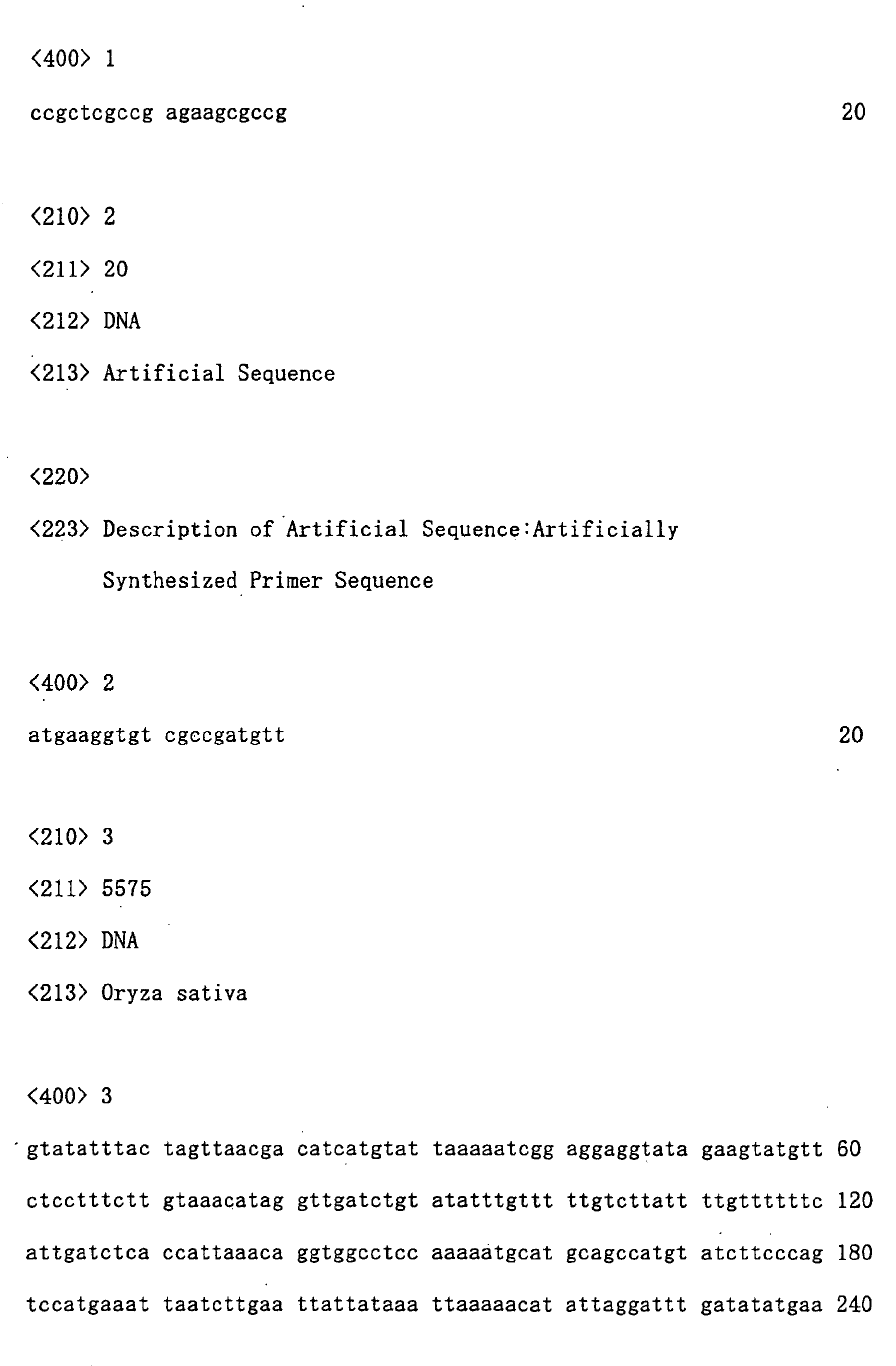
- primers OsC20U (5'- ccgctcgccgagaagcgccg -3'/SEQ ID NO: 1) and OsC20L (5'- atgaaggtgtcgccgatgtt -3'/SEQ ID NO: 2) were designed.
- PCR was performed with the Nipponbare rice genomic DNA as a template, aiming to isolate the GA C20 oxidase gene of rice.
- an amplification product of 618 bp was obtained, and sequenced to reveal that it is a novel GA oxidase gene of rice.
- GAC20 belongs to the 2-oxoglutarate-dependent dioxygenase (2-ODD) family, conserving the functionally essential domain (NYYPXCXXP) for binding to 2-oxoglutarate. Furthermore, GAC20 also conserves three histidine residues to bind the Fe ion and the LPWKET domain that may be involved in GA binding.
- the rice GAC20 gene shows a 50% homology to that of Arabidopsis.
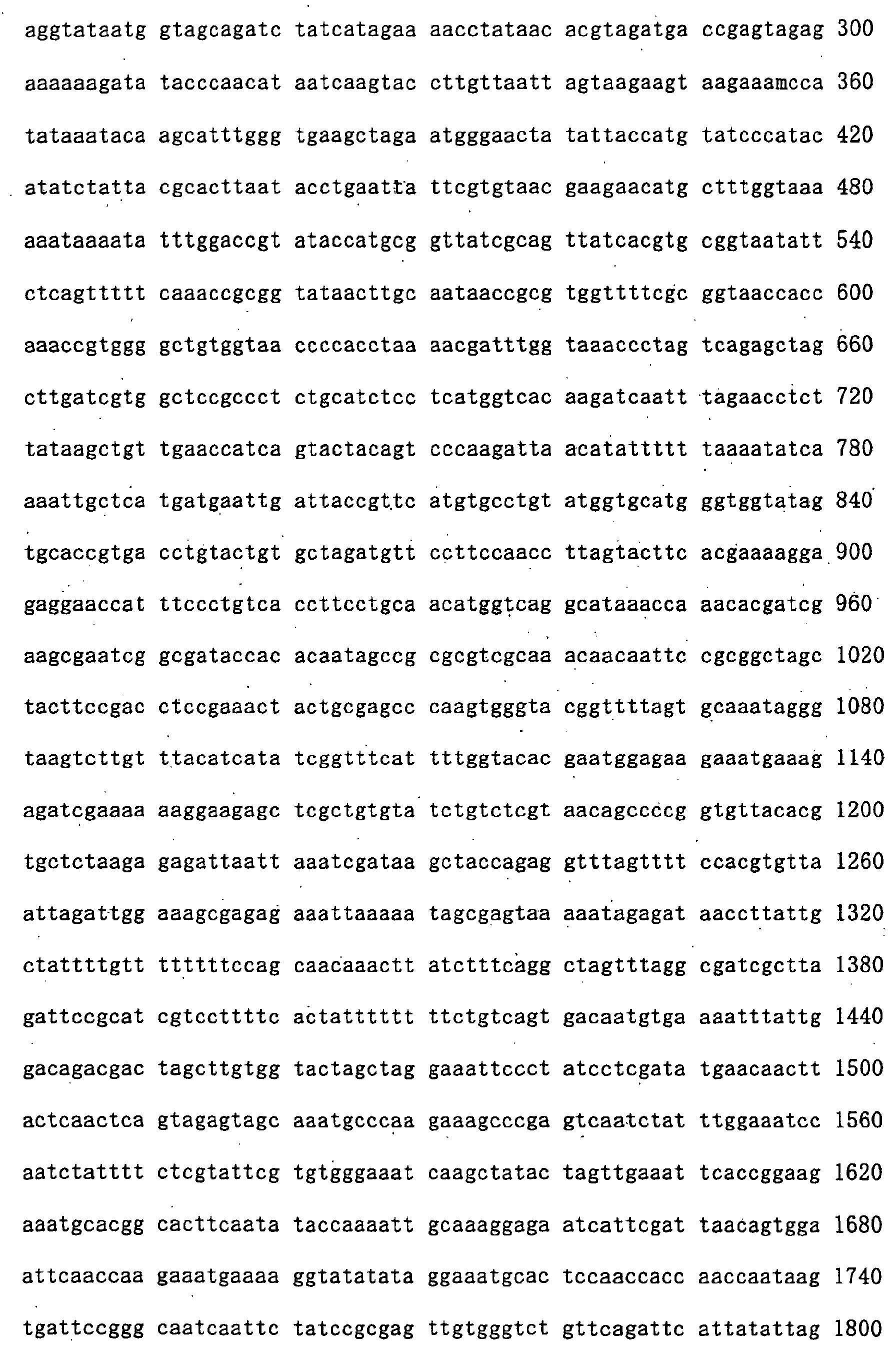
- a genomic library was constructed from the wild type Nipponbare, and genome clones comprising the GAC20 oxidase gene were isolated using plaque hybridization methods to determine the whole nucleotide sequence of the gene (SEQ ID NO: 3).
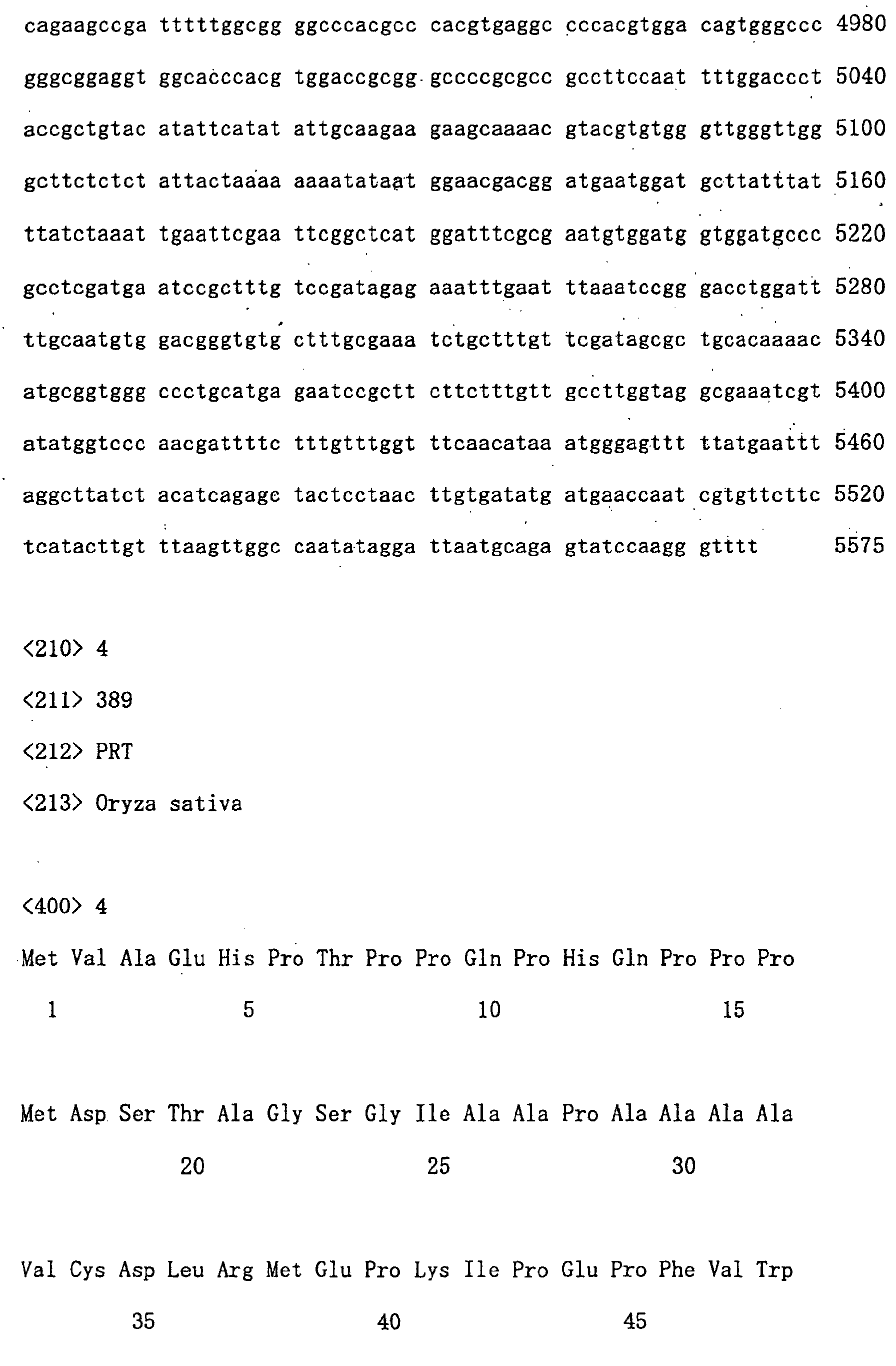
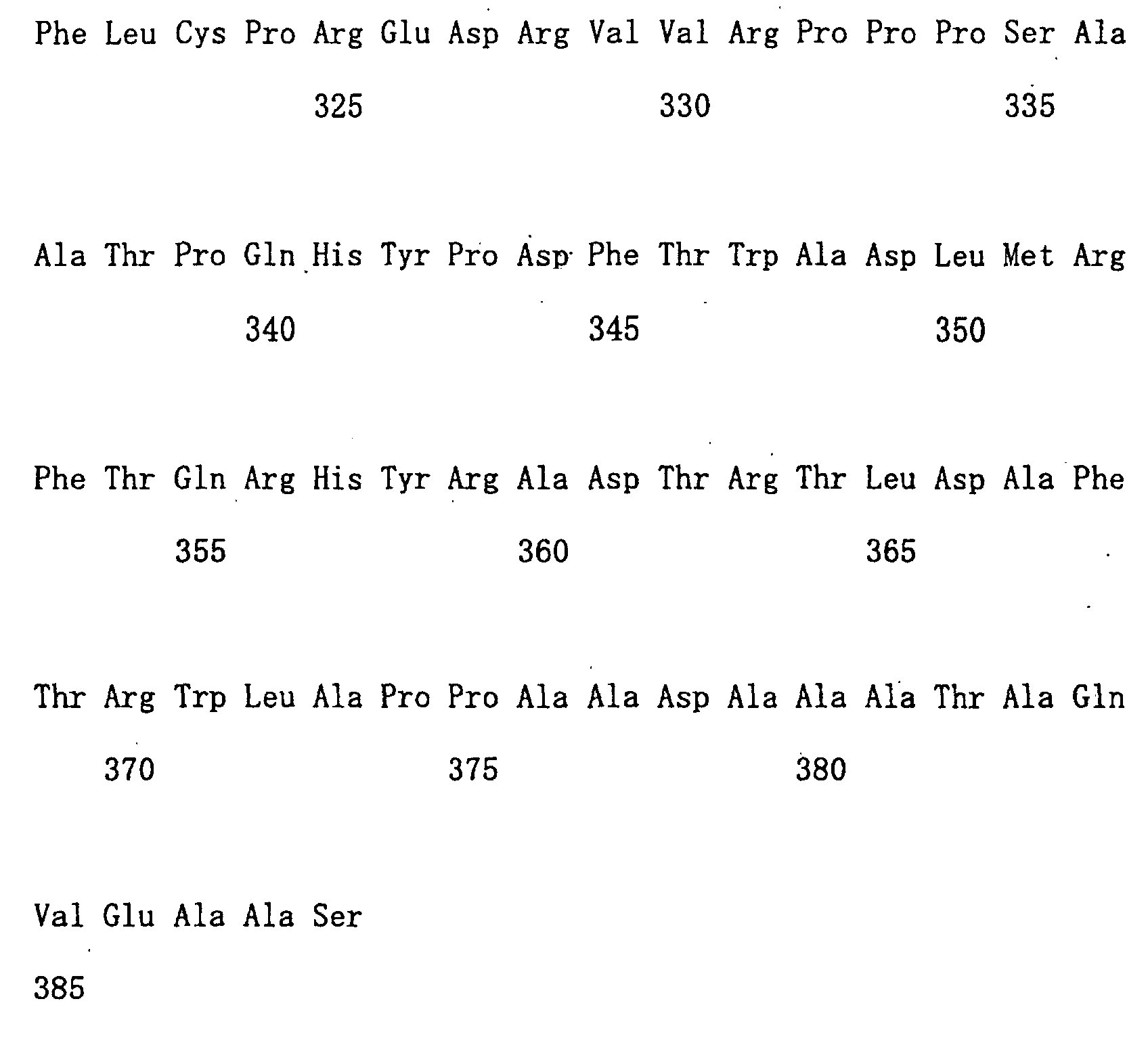
- the deduced amino acid sequence of GAC20 oxidase is set forth in SEQ ID NO: 4.
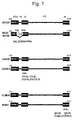
- Nucleotide sequences of GAC20 oxidase gene in the sd1 mutant Dee-geo-woo-gen and the corresponding wild type Woo-gen were determined for comparison. It was thus discovered that a nucleotide sequence of 386 bp extending from exon 1 to exon 2 was deleted in Dee-geo-woo-gen. Nucleotide sequences of GAC20 oxidase gene in other sd1 mutants were also determined. As a result, in an sd1 mutant Calrose 76, one nucleotide (cytosine) in exon 2 was replaced by thymine, and on the amino acid level, leucine was substituted with phenylalanine. Similarly in an sd1 mutant Reimei, one nucleotide (guanine) in exon 3 was changed to cytosine, and on the amino acid level, aspartic acid was substituted with histidine (Fig. 1).
- the present invention provides a plant sd1 gene and a method for utilizing the gene to semidwarf plants. It is highly expected that utilization of plant sd1 genes would enable the enhancement of the yield of plants, particularly useful agricultural crops and ornamental plants, add aesthetic value to ornamental plants through dwarfing, and furthermore, increase the yield and efficient breeding of dwarfed plants by marker selection.
Landscapes
- Health & Medical Sciences (AREA)
- Life Sciences & Earth Sciences (AREA)
- Genetics & Genomics (AREA)
- Engineering & Computer Science (AREA)
- Chemical & Material Sciences (AREA)
- Organic Chemistry (AREA)
- Wood Science & Technology (AREA)
- Bioinformatics & Cheminformatics (AREA)
- Zoology (AREA)
- Biomedical Technology (AREA)
- Biotechnology (AREA)
- General Engineering & Computer Science (AREA)
- Molecular Biology (AREA)
- Biochemistry (AREA)
- General Health & Medical Sciences (AREA)
- Microbiology (AREA)
- Physics & Mathematics (AREA)
- Plant Pathology (AREA)
- Biophysics (AREA)
- Cell Biology (AREA)
- Endocrinology (AREA)
- Medicinal Chemistry (AREA)
- Botany (AREA)
- Breeding Of Plants And Reproduction By Means Of Culturing (AREA)
- Micro-Organisms Or Cultivation Processes Thereof (AREA)
Abstract
Description





Claims (14)
- A DNA according to any one of (a) to (c) for semidwarfing a plant:(a) a DNA encoding an antisense RNA complementary to a transcriptional product of a plant sd1 gene,(b) a DNA encoding an RNA having a ribozyme activity to specifically cleave a transcriptional product of a plant sd1 gene, or(c) a DNA encoding an RNA inhibiting expression of a plant sd1 gene by co-suppressing effects.
- The DNA of claim 1, wherein said plant sd1 gene is a rice sd1 gene.
- A vector comprising the DNA of claims 1 or 2.
- A transformed plant cell retaining the DNA of claims 1 or 2 in an expressible state.
- The transformed plant cell of claim 4, wherein said plant is rice.
- A plant transformant comprising the transformed plant cell of claims 4 or 5.
- A plant transformant that is a descendant or clone of the plant transformant of claim 6.
- The plant transformant of claims 6 or 7, wherein said plant is rice.
- A breeding material of the plant transformant of any one of claims 6 to 8.
- A method for producing the plant transformant of any one of claims 6 to 8, wherein said method comprises the steps of: introducing the DNA of claim 1 or 2 into a plant cell, and regenerating a plant body from said plant cell.
- A method for semidwarfing a plant, wherein said method comprises the step of suppressing the expression of an endogenous sd1 gene in plant cells.
- The method of claim 11 comprising introducing the DNA of claims 1 or 2 into a plant.
- The method of any one of claims 10 to 12, wherein said plant is rice.
- A DNA encoding a rice sd1 protein.
Applications Claiming Priority (3)
| Application Number | Priority Date | Filing Date | Title |
|---|---|---|---|
| JP2001185128A JP2003000260A (en) | 2001-06-19 | 2001-06-19 | Sd1 gene involved in plant semidwarfing and its use |
| JP2001185128 | 2001-06-19 | ||
| PCT/JP2002/005678 WO2003006655A1 (en) | 2001-06-19 | 2002-06-07 | Sd1 gene participating in plant semidwarfing and utilization thereof |
Publications (4)
| Publication Number | Publication Date |
|---|---|
| EP1398382A1 true EP1398382A1 (en) | 2004-03-17 |
| EP1398382A4 EP1398382A4 (en) | 2004-08-18 |
| EP1398382B1 EP1398382B1 (en) | 2005-11-30 |
| EP1398382B9 EP1398382B9 (en) | 2007-01-03 |
Family
ID=19024765
Family Applications (1)
| Application Number | Title | Priority Date | Filing Date |
|---|---|---|---|
| EP02733402A Expired - Lifetime EP1398382B9 (en) | 2001-06-19 | 2002-06-07 | Sd1 gene involved in plant semidwarfing and uses thereof |
Country Status (11)
| Country | Link |
|---|---|
| US (1) | US7138567B2 (en) |
| EP (1) | EP1398382B9 (en) |
| JP (1) | JP2003000260A (en) |
| KR (1) | KR100550960B1 (en) |
| CN (3) | CN1539016A (en) |
| AT (1) | ATE311462T1 (en) |
| AU (1) | AU2002306308B2 (en) |
| BR (1) | BR0210452A (en) |
| CA (1) | CA2451216C (en) |
| DE (1) | DE60207714T2 (en) |
| WO (1) | WO2003006655A1 (en) |
Cited By (1)
| Publication number | Priority date | Publication date | Assignee | Title |
|---|---|---|---|---|
| CN106957855A (en) * | 2017-02-16 | 2017-07-18 | 上海市农业科学院 | Use CRISPR/Cas9 technology targeting knock out paddy rice Dwarfing genes SD1 method |
Families Citing this family (23)
| Publication number | Priority date | Publication date | Assignee | Title |
|---|---|---|---|---|
| WO2003070934A1 (en) * | 2002-02-25 | 2003-08-28 | Plant Genome Center Co., Ltd. | METHOD OF JUDGING GENOTYPE OF REGION AROUND PLANT sd-1 GENE AND METHOD OF EXAMINING SEMI-DWARF CHARACTERISTIC OF PLANT USING THE JUDGMENT METHOD |
| JP2005333832A (en) * | 2004-05-24 | 2005-12-08 | Nippon Flour Mills Co Ltd | WheatStarSynthase II (wSSII) gene mutation wheat detection method, wSSII gene mutation wheat classification method, and wSSII gene mutant |
| JP4368391B2 (en) | 2007-05-17 | 2009-11-18 | 本田技研工業株式会社 | Rice and its production method |
| US7687690B2 (en) * | 2007-08-29 | 2010-03-30 | California Cooperative Rice Research Foundation, Inc. | Rice mutant allele |
| CN101607989B (en) * | 2008-06-20 | 2011-12-14 | 中国科学院遗传与发育生物学研究所 | Rice dwarf-related protein and coding gene and application thereof |
| AU2009267007B2 (en) * | 2008-07-01 | 2016-02-25 | Monsanto Technology, Llc | Recombinant DNA constructs and methods for modulating expression of a target gene |
| CN102432679B (en) * | 2011-12-12 | 2014-03-05 | 华南农业大学 | Rice extensin OsPEX1 and application thereof |
| JP6056042B2 (en) | 2012-03-29 | 2017-01-11 | 国立大学法人静岡大学 | Genes for shortening gramineous plants and methods for producing short gramineous plants |
| CN103923915A (en) * | 2013-01-10 | 2014-07-16 | 中国科学院植物研究所 | Application of OsFLA19 protein in regulation of plant height |
| CN106086064B (en) * | 2014-03-13 | 2020-05-05 | 中国科学院遗传与发育生物学研究所 | Gene for controlling plant height, improving lodging resistance, increasing effective tiller number and yield in rice and its application |
| CN107201396B (en) * | 2016-03-18 | 2020-11-27 | 中国科学院分子植物科学卓越创新中心 | CAPS marker for detection of rice semidwarf gene sd-1 allele |
| MX2019001956A (en) | 2016-08-17 | 2019-09-04 | Monsanto Technology Llc | METHODS AND COMPOSITIONS FOR SHORT STATURE PLANTS THROUGH THE MANIPULATION OF THE METABOLISM OF GIBERELIN TO INCREASE THE HARVESTABLE YIELD. |
| AR114124A1 (en) | 2018-02-15 | 2020-07-22 | Monsanto Technology Llc | COMPOSITIONS AND METHODS TO IMPROVE CROP YIELD THROUGH TRAIT STACKING |
| BR112020015480A2 (en) * | 2018-02-15 | 2020-12-08 | Monsanto Technology Llc | COMPOSITIONS AND METHODS TO IMPROVE CULTURE INCOME BY STACKING TRACES |
| CA3090007A1 (en) | 2018-02-15 | 2019-08-22 | Monsanto Technology Llc | Improved methods for hybrid corn seed production |
| US20210032649A1 (en) * | 2018-02-15 | 2021-02-04 | Monsanto Technology Llc | Methods and compositions for short stature plants through manipulation of gibberellin metabolism to increase harvestable yield |
| WO2019161149A1 (en) * | 2018-02-15 | 2019-08-22 | Monsanto Technology Llc | Methods and compositions for increasing harvestable yield via editing ga20 oxidase genes to generate short stature plants |
| CN109486829B (en) * | 2018-11-01 | 2020-11-03 | 浙江省农业科学院 | A rice semi-dwarf gene sd1 allele and its identification method |
| US12274205B2 (en) | 2018-12-12 | 2025-04-15 | Monsanto Technology Llc | Delayed harvest of short stature corn plants |
| JP7605390B2 (en) * | 2019-10-10 | 2024-12-24 | 国立研究開発法人農業・食品産業技術総合研究機構 | Method for genome editing of wheat and its use |
| US20220162632A1 (en) | 2020-11-23 | 2022-05-26 | Monsanto Technology Llc | Delayed harvest of short stature corn plants |
| CN112813067B (en) * | 2021-02-02 | 2023-05-02 | 中国科学院遗传与发育生物学研究所 | Method for reducing tetraploid wild rice plant height by inhibiting expression of SD1 gene |
| US12577624B2 (en) | 2021-11-02 | 2026-03-17 | Monsanto Technology Llc | Transgenic corn event ZM_BCS216090 and methods for detection and uses thereof |
Family Cites Families (4)
| Publication number | Priority date | Publication date | Assignee | Title |
|---|---|---|---|---|
| BR9107191A (en) * | 1990-12-26 | 1994-06-14 | Monsanto Co | Control of fruit ripening and senescence in plants |
| JPH11290082A (en) | 1998-04-17 | 1999-10-26 | Iwate Prefecture | Rice OSDIM gene |
| JP3051874B2 (en) | 1998-06-19 | 2000-06-12 | 農林水産省農業生物資源研究所長 | How to make plants dwarf |
| WO2003070934A1 (en) | 2002-02-25 | 2003-08-28 | Plant Genome Center Co., Ltd. | METHOD OF JUDGING GENOTYPE OF REGION AROUND PLANT sd-1 GENE AND METHOD OF EXAMINING SEMI-DWARF CHARACTERISTIC OF PLANT USING THE JUDGMENT METHOD |
-
2001
- 2001-06-19 JP JP2001185128A patent/JP2003000260A/en active Pending
-
2002
- 2002-06-07 CN CNA028153308A patent/CN1539016A/en active Pending
- 2002-06-07 AU AU2002306308A patent/AU2002306308B2/en not_active Ceased
- 2002-06-07 EP EP02733402A patent/EP1398382B9/en not_active Expired - Lifetime
- 2002-06-07 CN CNA2006100842058A patent/CN1896240A/en active Pending
- 2002-06-07 WO PCT/JP2002/005678 patent/WO2003006655A1/en not_active Ceased
- 2002-06-07 US US10/481,381 patent/US7138567B2/en not_active Expired - Lifetime
- 2002-06-07 CN CNA2008102106240A patent/CN101440374A/en active Pending
- 2002-06-07 AT AT02733402T patent/ATE311462T1/en not_active IP Right Cessation
- 2002-06-07 CA CA002451216A patent/CA2451216C/en not_active Expired - Fee Related
- 2002-06-07 DE DE60207714T patent/DE60207714T2/en not_active Expired - Lifetime
- 2002-06-07 KR KR1020037016443A patent/KR100550960B1/en not_active Expired - Fee Related
- 2002-06-07 BR BR0210452-0A patent/BR0210452A/en not_active Application Discontinuation
Cited By (1)
| Publication number | Priority date | Publication date | Assignee | Title |
|---|---|---|---|---|
| CN106957855A (en) * | 2017-02-16 | 2017-07-18 | 上海市农业科学院 | Use CRISPR/Cas9 technology targeting knock out paddy rice Dwarfing genes SD1 method |
Also Published As
| Publication number | Publication date |
|---|---|
| CN1896240A (en) | 2007-01-17 |
| CN1539016A (en) | 2004-10-20 |
| US20040250315A1 (en) | 2004-12-09 |
| ATE311462T1 (en) | 2005-12-15 |
| CN101440374A (en) | 2009-05-27 |
| EP1398382A4 (en) | 2004-08-18 |
| KR20040019016A (en) | 2004-03-04 |
| AU2002306308B2 (en) | 2006-07-27 |
| US7138567B2 (en) | 2006-11-21 |
| WO2003006655A1 (en) | 2003-01-23 |
| EP1398382B1 (en) | 2005-11-30 |
| JP2003000260A (en) | 2003-01-07 |
| DE60207714D1 (en) | 2006-01-05 |
| EP1398382B9 (en) | 2007-01-03 |
| CA2451216C (en) | 2008-10-07 |
| CA2451216A1 (en) | 2003-01-23 |
| KR100550960B1 (en) | 2006-02-13 |
| DE60207714T2 (en) | 2006-09-07 |
| BR0210452A (en) | 2004-08-17 |
Similar Documents
| Publication | Publication Date | Title |
|---|---|---|
| EP1398382B1 (en) | Sd1 gene involved in plant semidwarfing and uses thereof | |
| de Borne Dorlhac et al. | Co-suppression of nitrate reductase host genes and transgenes in transgenic tobacco plants | |
| DK3033354T3 (en) | Methods for modulating seed and organ size in plants | |
| AU726846B2 (en) | Nucleic acid molecules encoding cytochrome p450-type proteins involved in the brassinosteroid synthesis in plants | |
| EP1342785B1 (en) | Hd3a gene inducing flowering of plant and utilization thereof | |
| AU778179B2 (en) | Gibberellin 3 beta-hydroxylase genes of rice and uses thereof | |
| AU2002328631B2 (en) | Control of Plant Flowering Time by Regulation of Phytocrome C Expression | |
| CA2626304C (en) | Cereals with altered dormancy | |
| US6987025B1 (en) | Dwf4 polynucleotides, polypeptides and uses thereof | |
| EP1016722A1 (en) | Method of dwarfing plants | |
| US20070101457A1 (en) | Methods of controlling reproduction in plants | |
| CA2362603A1 (en) | Dwf4 polynucleotides, polypeptides and uses thereof | |
| JP3781622B2 (en) | Rice-derived gibberellin 3β-hydroxylase gene and use thereof | |
| US20020152495A1 (en) | Plants having seedless fruit | |
| US20040103451A1 (en) | Abscisic acid 8'-and 7'-hydroxylase genes and related sequences from plants | |
| US7199285B2 (en) | Modulation of abscisic acid signal transduction in plants | |
| AU2008201822B2 (en) | Modification of plant and seed development and plant responses to stresses and stimuli (2) |
Legal Events
| Date | Code | Title | Description |
|---|---|---|---|
| PUAI | Public reference made under article 153(3) epc to a published international application that has entered the european phase |
Free format text: ORIGINAL CODE: 0009012 |
|
| 17P | Request for examination filed |
Effective date: 20031210 |
|
| AK | Designated contracting states |
Kind code of ref document: A1 Designated state(s): AT BE CH CY DE DK ES FI FR GB GR IE IT LI LU MC NL PT SE TR |
|
| AX | Request for extension of the european patent |
Extension state: AL LT LV MK RO SI |
|
| A4 | Supplementary search report drawn up and despatched |
Effective date: 20040706 |
|
| 17Q | First examination report despatched |
Effective date: 20041102 |
|
| GRAP | Despatch of communication of intention to grant a patent |
Free format text: ORIGINAL CODE: EPIDOSNIGR1 |
|
| GRAS | Grant fee paid |
Free format text: ORIGINAL CODE: EPIDOSNIGR3 |
|
| GRAA | (expected) grant |
Free format text: ORIGINAL CODE: 0009210 |
|
| AK | Designated contracting states |
Kind code of ref document: B1 Designated state(s): AT BE CH CY DE DK ES FI FR GB GR IE IT LI LU MC NL PT SE TR |
|
| PG25 | Lapsed in a contracting state [announced via postgrant information from national office to epo] |
Ref country code: AT Free format text: LAPSE BECAUSE OF FAILURE TO SUBMIT A TRANSLATION OF THE DESCRIPTION OR TO PAY THE FEE WITHIN THE PRESCRIBED TIME-LIMIT Effective date: 20051130 Ref country code: FI Free format text: LAPSE BECAUSE OF FAILURE TO SUBMIT A TRANSLATION OF THE DESCRIPTION OR TO PAY THE FEE WITHIN THE PRESCRIBED TIME-LIMIT Effective date: 20051130 |
|
| REG | Reference to a national code |
Ref country code: CH Ref legal event code: EP Ref country code: GB Ref legal event code: FG4D |
|
| REG | Reference to a national code |
Ref country code: IE Ref legal event code: FG4D |
|
| REF | Corresponds to: |
Ref document number: 60207714 Country of ref document: DE Date of ref document: 20060105 Kind code of ref document: P |
|
| PG25 | Lapsed in a contracting state [announced via postgrant information from national office to epo] |
Ref country code: DK Free format text: LAPSE BECAUSE OF FAILURE TO SUBMIT A TRANSLATION OF THE DESCRIPTION OR TO PAY THE FEE WITHIN THE PRESCRIBED TIME-LIMIT Effective date: 20060228 Ref country code: GR Free format text: LAPSE BECAUSE OF FAILURE TO SUBMIT A TRANSLATION OF THE DESCRIPTION OR TO PAY THE FEE WITHIN THE PRESCRIBED TIME-LIMIT Effective date: 20060228 Ref country code: SE Free format text: LAPSE BECAUSE OF FAILURE TO SUBMIT A TRANSLATION OF THE DESCRIPTION OR TO PAY THE FEE WITHIN THE PRESCRIBED TIME-LIMIT Effective date: 20060228 |
|
| PG25 | Lapsed in a contracting state [announced via postgrant information from national office to epo] |
Ref country code: ES Free format text: LAPSE BECAUSE OF FAILURE TO SUBMIT A TRANSLATION OF THE DESCRIPTION OR TO PAY THE FEE WITHIN THE PRESCRIBED TIME-LIMIT Effective date: 20060313 |
|
| REG | Reference to a national code |
Ref country code: CH Ref legal event code: NV Representative=s name: R. A. EGLI & CO. PATENTANWAELTE |
|
| PG25 | Lapsed in a contracting state [announced via postgrant information from national office to epo] |
Ref country code: PT Free format text: LAPSE BECAUSE OF FAILURE TO SUBMIT A TRANSLATION OF THE DESCRIPTION OR TO PAY THE FEE WITHIN THE PRESCRIBED TIME-LIMIT Effective date: 20060502 |
|
| PG25 | Lapsed in a contracting state [announced via postgrant information from national office to epo] |
Ref country code: IE Free format text: LAPSE BECAUSE OF NON-PAYMENT OF DUE FEES Effective date: 20060607 |
|
| PG25 | Lapsed in a contracting state [announced via postgrant information from national office to epo] |
Ref country code: MC Free format text: LAPSE BECAUSE OF NON-PAYMENT OF DUE FEES Effective date: 20060630 |
|
| ET | Fr: translation filed | ||
| PLBE | No opposition filed within time limit |
Free format text: ORIGINAL CODE: 0009261 |
|
| STAA | Information on the status of an ep patent application or granted ep patent |
Free format text: STATUS: NO OPPOSITION FILED WITHIN TIME LIMIT |
|
| 26N | No opposition filed |
Effective date: 20060831 |
|
| REG | Reference to a national code |
Ref country code: IE Ref legal event code: MM4A |
|
| PG25 | Lapsed in a contracting state [announced via postgrant information from national office to epo] |
Ref country code: LU Free format text: LAPSE BECAUSE OF NON-PAYMENT OF DUE FEES Effective date: 20060607 Ref country code: TR Free format text: LAPSE BECAUSE OF FAILURE TO SUBMIT A TRANSLATION OF THE DESCRIPTION OR TO PAY THE FEE WITHIN THE PRESCRIBED TIME-LIMIT Effective date: 20051130 |
|
| PG25 | Lapsed in a contracting state [announced via postgrant information from national office to epo] |
Ref country code: CY Free format text: LAPSE BECAUSE OF FAILURE TO SUBMIT A TRANSLATION OF THE DESCRIPTION OR TO PAY THE FEE WITHIN THE PRESCRIBED TIME-LIMIT Effective date: 20051130 |
|
| REG | Reference to a national code |
Ref country code: DE Ref legal event code: R084 Ref document number: 60207714 Country of ref document: DE |
|
| REG | Reference to a national code |
Ref country code: GB Ref legal event code: 746 Effective date: 20150217 |
|
| REG | Reference to a national code |
Ref country code: DE Ref legal event code: R084 Ref document number: 60207714 Country of ref document: DE Effective date: 20150210 |
|
| REG | Reference to a national code |
Ref country code: FR Ref legal event code: PLFP Year of fee payment: 15 |
|
| REG | Reference to a national code |
Ref country code: FR Ref legal event code: PLFP Year of fee payment: 16 |
|
| REG | Reference to a national code |
Ref country code: FR Ref legal event code: PLFP Year of fee payment: 17 |
|
| PGFP | Annual fee paid to national office [announced via postgrant information from national office to epo] |
Ref country code: DE Payment date: 20180522 Year of fee payment: 17 Ref country code: CH Payment date: 20180614 Year of fee payment: 17 Ref country code: NL Payment date: 20180613 Year of fee payment: 17 |
|
| PGFP | Annual fee paid to national office [announced via postgrant information from national office to epo] |
Ref country code: FR Payment date: 20180511 Year of fee payment: 17 Ref country code: BE Payment date: 20180417 Year of fee payment: 17 |
|
| PGFP | Annual fee paid to national office [announced via postgrant information from national office to epo] |
Ref country code: IT Payment date: 20180625 Year of fee payment: 17 Ref country code: GB Payment date: 20180403 Year of fee payment: 17 |
|
| REG | Reference to a national code |
Ref country code: DE Ref legal event code: R119 Ref document number: 60207714 Country of ref document: DE |
|
| REG | Reference to a national code |
Ref country code: CH Ref legal event code: PL |
|
| REG | Reference to a national code |
Ref country code: NL Ref legal event code: MM Effective date: 20190701 |
|
| GBPC | Gb: european patent ceased through non-payment of renewal fee |
Effective date: 20190607 |
|
| REG | Reference to a national code |
Ref country code: BE Ref legal event code: MM Effective date: 20190630 |
|
| PG25 | Lapsed in a contracting state [announced via postgrant information from national office to epo] |
Ref country code: GB Free format text: LAPSE BECAUSE OF NON-PAYMENT OF DUE FEES Effective date: 20190607 Ref country code: NL Free format text: LAPSE BECAUSE OF NON-PAYMENT OF DUE FEES Effective date: 20190701 Ref country code: DE Free format text: LAPSE BECAUSE OF NON-PAYMENT OF DUE FEES Effective date: 20200101 Ref country code: IT Free format text: LAPSE BECAUSE OF NON-PAYMENT OF DUE FEES Effective date: 20190607 |
|
| PG25 | Lapsed in a contracting state [announced via postgrant information from national office to epo] |
Ref country code: LI Free format text: LAPSE BECAUSE OF NON-PAYMENT OF DUE FEES Effective date: 20190630 Ref country code: BE Free format text: LAPSE BECAUSE OF NON-PAYMENT OF DUE FEES Effective date: 20190630 Ref country code: CH Free format text: LAPSE BECAUSE OF NON-PAYMENT OF DUE FEES Effective date: 20190630 |
|
| PG25 | Lapsed in a contracting state [announced via postgrant information from national office to epo] |
Ref country code: FR Free format text: LAPSE BECAUSE OF NON-PAYMENT OF DUE FEES Effective date: 20190630 |