EP1395054A1 - PROGRAM RECORDING SYSTEM, REMOTE CONTROL APPARATUS, METHOD, AND PROGRAM - Google Patents
PROGRAM RECORDING SYSTEM, REMOTE CONTROL APPARATUS, METHOD, AND PROGRAM Download PDFInfo
- Publication number
- EP1395054A1 EP1395054A1 EP02726512A EP02726512A EP1395054A1 EP 1395054 A1 EP1395054 A1 EP 1395054A1 EP 02726512 A EP02726512 A EP 02726512A EP 02726512 A EP02726512 A EP 02726512A EP 1395054 A1 EP1395054 A1 EP 1395054A1
- Authority
- EP
- European Patent Office
- Prior art keywords
- recording
- program
- information
- recorder
- recorded
- Prior art date
- Legal status (The legal status is an assumption and is not a legal conclusion. Google has not performed a legal analysis and makes no representation as to the accuracy of the status listed.)
- Withdrawn
Links
Images



















Classifications
-
- H—ELECTRICITY
- H04—ELECTRIC COMMUNICATION TECHNIQUE
- H04N—PICTORIAL COMMUNICATION, e.g. TELEVISION
- H04N5/00—Details of television systems
- H04N5/76—Television signal recording
- H04N5/78—Television signal recording using magnetic recording
- H04N5/782—Television signal recording using magnetic recording on tape
-
- H—ELECTRICITY
- H04—ELECTRIC COMMUNICATION TECHNIQUE
- H04H—BROADCAST COMMUNICATION
- H04H60/00—Arrangements for broadcast applications with a direct linking to broadcast information or broadcast space-time; Broadcast-related systems
- H04H60/27—Arrangements for recording or accumulating broadcast information or broadcast-related information
-
- H—ELECTRICITY
- H04—ELECTRIC COMMUNICATION TECHNIQUE
- H04N—PICTORIAL COMMUNICATION, e.g. TELEVISION
- H04N21/00—Selective content distribution, e.g. interactive television or video on demand [VOD]
- H04N21/40—Client devices specifically adapted for the reception of or interaction with content, e.g. set-top-box [STB]; Operations thereof
- H04N21/41—Structure of client; Structure of client peripherals
- H04N21/4104—Peripherals receiving signals from specially adapted client devices
- H04N21/4126—The peripheral being portable, e.g. PDAs or mobile phones
- H04N21/41265—The peripheral being portable, e.g. PDAs or mobile phones having a remote control device for bidirectional communication between the remote control device and client device
-
- H—ELECTRICITY
- H04—ELECTRIC COMMUNICATION TECHNIQUE
- H04N—PICTORIAL COMMUNICATION, e.g. TELEVISION
- H04N21/00—Selective content distribution, e.g. interactive television or video on demand [VOD]
- H04N21/40—Client devices specifically adapted for the reception of or interaction with content, e.g. set-top-box [STB]; Operations thereof
- H04N21/41—Structure of client; Structure of client peripherals
- H04N21/414—Specialised client platforms, e.g. receiver in car or embedded in a mobile appliance
- H04N21/4147—PVR [Personal Video Recorder]
-
- H—ELECTRICITY
- H04—ELECTRIC COMMUNICATION TECHNIQUE
- H04N—PICTORIAL COMMUNICATION, e.g. TELEVISION
- H04N21/00—Selective content distribution, e.g. interactive television or video on demand [VOD]
- H04N21/40—Client devices specifically adapted for the reception of or interaction with content, e.g. set-top-box [STB]; Operations thereof
- H04N21/41—Structure of client; Structure of client peripherals
- H04N21/422—Input-only peripherals, i.e. input devices connected to specially adapted client devices, e.g. global positioning system [GPS]
- H04N21/42204—User interfaces specially adapted for controlling a client device through a remote control device; Remote control devices therefor
- H04N21/42206—User interfaces specially adapted for controlling a client device through a remote control device; Remote control devices therefor characterized by hardware details
- H04N21/42208—Display device provided on the remote control
- H04N21/42209—Display device provided on the remote control for displaying non-command information, e.g. electronic programme guide [EPG], e-mail, messages or a second television channel
-
- H—ELECTRICITY
- H04—ELECTRIC COMMUNICATION TECHNIQUE
- H04N—PICTORIAL COMMUNICATION, e.g. TELEVISION
- H04N21/00—Selective content distribution, e.g. interactive television or video on demand [VOD]
- H04N21/40—Client devices specifically adapted for the reception of or interaction with content, e.g. set-top-box [STB]; Operations thereof
- H04N21/41—Structure of client; Structure of client peripherals
- H04N21/422—Input-only peripherals, i.e. input devices connected to specially adapted client devices, e.g. global positioning system [GPS]
- H04N21/42204—User interfaces specially adapted for controlling a client device through a remote control device; Remote control devices therefor
- H04N21/42206—User interfaces specially adapted for controlling a client device through a remote control device; Remote control devices therefor characterized by hardware details
- H04N21/4222—Remote control device emulator integrated into a non-television apparatus, e.g. a PDA, media center or smart toy
-
- H—ELECTRICITY
- H04—ELECTRIC COMMUNICATION TECHNIQUE
- H04N—PICTORIAL COMMUNICATION, e.g. TELEVISION
- H04N21/00—Selective content distribution, e.g. interactive television or video on demand [VOD]
- H04N21/40—Client devices specifically adapted for the reception of or interaction with content, e.g. set-top-box [STB]; Operations thereof
- H04N21/43—Processing of content or additional data, e.g. demultiplexing additional data from a digital video stream; Elementary client operations, e.g. monitoring of home network or synchronising decoder's clock; Client middleware
- H04N21/433—Content storage operation, e.g. storage operation in response to a pause request, caching operations
- H04N21/4334—Recording operations
-
- H—ELECTRICITY
- H04—ELECTRIC COMMUNICATION TECHNIQUE
- H04N—PICTORIAL COMMUNICATION, e.g. TELEVISION
- H04N21/00—Selective content distribution, e.g. interactive television or video on demand [VOD]
- H04N21/40—Client devices specifically adapted for the reception of or interaction with content, e.g. set-top-box [STB]; Operations thereof
- H04N21/43—Processing of content or additional data, e.g. demultiplexing additional data from a digital video stream; Elementary client operations, e.g. monitoring of home network or synchronising decoder's clock; Client middleware
- H04N21/436—Interfacing a local distribution network, e.g. communicating with another STB or one or more peripheral devices inside the home
- H04N21/43615—Interfacing a Home Network, e.g. for connecting the client to a plurality of peripherals
-
- H—ELECTRICITY
- H04—ELECTRIC COMMUNICATION TECHNIQUE
- H04N—PICTORIAL COMMUNICATION, e.g. TELEVISION
- H04N21/00—Selective content distribution, e.g. interactive television or video on demand [VOD]
- H04N21/40—Client devices specifically adapted for the reception of or interaction with content, e.g. set-top-box [STB]; Operations thereof
- H04N21/43—Processing of content or additional data, e.g. demultiplexing additional data from a digital video stream; Elementary client operations, e.g. monitoring of home network or synchronising decoder's clock; Client middleware
- H04N21/44—Processing of video elementary streams, e.g. splicing a video clip retrieved from local storage with an incoming video stream or rendering scenes according to encoded video stream scene graphs
- H04N21/4402—Processing of video elementary streams, e.g. splicing a video clip retrieved from local storage with an incoming video stream or rendering scenes according to encoded video stream scene graphs involving reformatting operations of video signals for household redistribution, storage or real-time display
- H04N21/440254—Processing of video elementary streams, e.g. splicing a video clip retrieved from local storage with an incoming video stream or rendering scenes according to encoded video stream scene graphs involving reformatting operations of video signals for household redistribution, storage or real-time display by altering signal-to-noise parameters, e.g. requantization
-
- H—ELECTRICITY
- H04—ELECTRIC COMMUNICATION TECHNIQUE
- H04N—PICTORIAL COMMUNICATION, e.g. TELEVISION
- H04N21/00—Selective content distribution, e.g. interactive television or video on demand [VOD]
- H04N21/40—Client devices specifically adapted for the reception of or interaction with content, e.g. set-top-box [STB]; Operations thereof
- H04N21/43—Processing of content or additional data, e.g. demultiplexing additional data from a digital video stream; Elementary client operations, e.g. monitoring of home network or synchronising decoder's clock; Client middleware
- H04N21/441—Acquiring end-user identification, e.g. using personal code sent by the remote control or by inserting a card
-
- H—ELECTRICITY
- H04—ELECTRIC COMMUNICATION TECHNIQUE
- H04N—PICTORIAL COMMUNICATION, e.g. TELEVISION
- H04N21/00—Selective content distribution, e.g. interactive television or video on demand [VOD]
- H04N21/40—Client devices specifically adapted for the reception of or interaction with content, e.g. set-top-box [STB]; Operations thereof
- H04N21/45—Management operations performed by the client for facilitating the reception of or the interaction with the content or administrating data related to the end-user or to the client device itself, e.g. learning user preferences for recommending movies, resolving scheduling conflicts
- H04N21/4508—Management of client data or end-user data
- H04N21/4532—Management of client data or end-user data involving end-user characteristics, e.g. viewer profile, preferences
-
- H—ELECTRICITY
- H04—ELECTRIC COMMUNICATION TECHNIQUE
- H04N—PICTORIAL COMMUNICATION, e.g. TELEVISION
- H04N21/00—Selective content distribution, e.g. interactive television or video on demand [VOD]
- H04N21/40—Client devices specifically adapted for the reception of or interaction with content, e.g. set-top-box [STB]; Operations thereof
- H04N21/45—Management operations performed by the client for facilitating the reception of or the interaction with the content or administrating data related to the end-user or to the client device itself, e.g. learning user preferences for recommending movies, resolving scheduling conflicts
- H04N21/454—Content or additional data filtering, e.g. blocking advertisements
-
- H—ELECTRICITY
- H04—ELECTRIC COMMUNICATION TECHNIQUE
- H04N—PICTORIAL COMMUNICATION, e.g. TELEVISION
- H04N21/00—Selective content distribution, e.g. interactive television or video on demand [VOD]
- H04N21/40—Client devices specifically adapted for the reception of or interaction with content, e.g. set-top-box [STB]; Operations thereof
- H04N21/47—End-user applications
- H04N21/472—End-user interface for requesting content, additional data or services; End-user interface for interacting with content, e.g. for content reservation or setting reminders, for requesting event notification, for manipulating displayed content
- H04N21/47214—End-user interface for requesting content, additional data or services; End-user interface for interacting with content, e.g. for content reservation or setting reminders, for requesting event notification, for manipulating displayed content for content reservation or setting reminders; for requesting event notification, e.g. of sport results or stock market
-
- H—ELECTRICITY
- H04—ELECTRIC COMMUNICATION TECHNIQUE
- H04N—PICTORIAL COMMUNICATION, e.g. TELEVISION
- H04N21/00—Selective content distribution, e.g. interactive television or video on demand [VOD]
- H04N21/40—Client devices specifically adapted for the reception of or interaction with content, e.g. set-top-box [STB]; Operations thereof
- H04N21/41—Structure of client; Structure of client peripherals
- H04N21/422—Input-only peripherals, i.e. input devices connected to specially adapted client devices, e.g. global positioning system [GPS]
- H04N21/42204—User interfaces specially adapted for controlling a client device through a remote control device; Remote control devices therefor
Definitions
- the present invention relates to a program recording system for recording a broadcast program, and relates to a remote controller, and a method and a program for remote control.
- a television broadcasting by satellite, ground wave, or the like is being digitized.
- the digitization of broadcasting allows the number of channels to be increased. By increase in the number of channels, the number of options of programs selected by the user also increases. However, it is getting more difficult for the user to select programs only by changing channels. Consequently, for example, in digital BS broadcasting, information for electronic program guide (hereinafter, called "EPG information") is transmitted by being multiplexed on a television signal together with video and audio signals and the like.
- the EPG information shows a schedule of broadcast programs.
- a receiver for broadcasting displays a program table on a monitor on the basis of the EPG information. The user can select a program to watch from programs included in the program table displayed on the monitor. If the selected program is not being broadcast at present, the program is reserved for watching or recording.
- the EPG information is repeatedly broadcast. If the broadcasting schedule of programs is changed, the change is reflected on the EPG information on the side of a broadcasting station. Even though a program is added, for example, if a user finds the program on the program table corresponding to the changed EPG information, the user can select the added program for watching or recording and watch the program or reserve the newly selected program for recording.
- the EPG information is not only broadcasted but also provided through the Internet. As described in Japanese Unexamined Patent Publication No.2001-145140, a user can see the program table on the mobile telephone with the function as the browser and reserve the program for recording.
- the present invention has been achieved in consideration of such problems of conventional techniques and its object is to provide a program recording system that allows the user find the change of the broadcasting schedule easily and surely, and to provide a remote controller, and a method and a program for remote control.
- a program recording system including a recorder recording a broadcast program, a sever device storing information of a broadcasting schedule of broadcast programs and a remote controller for operating the recorder by remote control.
- retaining means retains recording reservation information including at least recording start time, and duration or recording end time of a program reserved for recording.
- Control means controls recording means on the basis of the retained recording reservation information, and the recording means records the program reserved for recording.
- Updating means updates the recording reservation information in a response to an update request from an external device.
- a user can update the recording reservation information with the remote controller.
- acquiring means acquires the information of the broadcasting schedule from the server device and the recording reservation information from the recorder. Deciding means decides displayed information shown on the display on the basis of a point of difference between the acquired recording reservation information and the acquired recording reservation information of the broadcasting schedule.
- remote control means requests to the recorder for updating the recording reservation information.
- the displayed information includes information for displaying a program of which a broadcasting schedule is changed in the state that the program is discriminated from the programs reserved for recording.
- the user may see the recording reservation information only for the program of which the broadcasting schedule is changed without confirmation of the information for all of the programs.
- the update request is a request for matching the recording reservation of the program of which the broadcasting schedule is changed with the changed broadcasting schedule.
- the server device may not be separated from the recorder but be in the recorder.
- the retaining means practically retains the recording reservation information and the broadcasting schedule from the recorder.
- the user may be notified of the added program by including the program on the displayed information, and also the recorder may positively notify the user of the added program as described in Japanese Unexamined Patent Publication No. 2000-358199, for example.
- a receiver for broadcasting described in the publication determines that a program newly added into the program schedule information is a program desired by the user, the receiver notifies the user of the addition of the program desired by the user. Determination is made on the basis of program narrowing information that is preset by the user.
- the program narrowing information is information of keywords and types entered or selected by the user to narrow programs desired by the user.
- the recorder may further comprise addition program selecting means and notifying means.
- the addition program selecting means selects a program from programs added into the broadcasting schedule on the basis of at least one of recorded program information regarding a recorded program and the recording reservation information.
- the notifying means notifies the remote controller of the selected program.
- the interest of the user is reflected on recorded programs and programs reserved for recording.
- the recorded program information or the recording reservation information is not information set by the user to narrow notified programs. Because the recorder can automatically retain such information, the burden of the user is greatly lightened by selecting the notified program on the basis of the recorded program information and the recording reservation information.
- control means may automatically reserve for recording and record the program added into the broadcasting schedule.
- the program added into the broadcasting schedule is automatically reserved for recording or recorded, the time from the addition to the broadcast of the program gets short, and even if the user knows nothing about the addition of the program, the user can avoid to miss the program.
- the recorder sends to the remote controller a message that the program added into the broadcasting schedule is reserved for recording or is recorded.
- the remote controller may comprise comparing means and deleting instruction means.
- the comparing means compares recording volume needed for recording a program to be additionally reserved for recording with remaining volume of a recording medium, and shows the result of comparison on the display.
- the user determines that the remaining volume is insufficient to record the program according to the displayed result of comparison, the user deletes the program recorded on the recording medium with the deleting instruction means.
- the remote controller may comprise bit-rate instruction means.
- the user determines that the remaining volume is insufficient to record the program according to the displayed result of comparison, the user gives instructions to a bit rate for recording the program with the bit-rate instruction means.
- the recording volume for recording the program is suitably obtained.
- the update request to the recorder from the remote control means of the remote controller may include personal information specifying a user of the remote controller.
- a phone number of a mobile telephone and an ID stored in an IC card removably mounted on a mobile telephone are used as the personal information, for example.
- the recorder can identify the user of the remote controller, and control the recording and the reproduction on the basis of the result of the identification.
- the recorder capable of reproducing and displaying the program is often shared by family members. And the recording volume of the recording medium is large. Thus, the amount of the programs to be recorded is greatly larger. In result, it is difficult for the user to find programs reserved for recording or recorded personally.
- the remote controller and a remote control method are also provided.
- the information of the broadcasting schedule and the recording reservation information are respectively acquired from the server device and the recorder.
- the displayed information shown on the display is decided on the basis of a point of difference between the acquired recording reservation information and the acquired information of the broadcasting schedule. And, the request for updating the recording reservation information to the recorder is made.
- a program that makes a computer execute the remote control method.
- the computer working as the remote controller acquires the information of the broadcasting schedule and the recording reservation information, decides the displayed information, and requests for the updating.
- This program is on market through the electronic communication line for example the Internet, and also is on market in the form of being recorded on a computer readable recording medium for example CD-ROM.
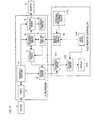
- the program recording system on the first embodiment comprises a recorder 1 and a remote controller 100.
- the recorder 1 receives output signals of a plurality of transponders (relays) by an antenna 2.
- a tuner 3 selects one of the signals received by the antenna 2 and outputs the selected signal to a transport decoder 4.
- the transport decoder 4 selects one of a plurality of channels included in the signal. Usually, programs of four to six channels are included in the output signal (transport stream). Further, the transport decoder 4 separates a video signal, an audio signal, and SI ( Service Information) from the signal of the selected channel (called "channel 1" in the following description) and outputs the video and audio signals to an AV decoder 5.
- the SI includes an EIT (Event Information Table) of the programs of the channel.
- the EIT is a table in which information of each event (program) is described.
- the EIT is used as information of a broadcasting schedule of programs.
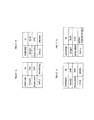
- the information of a program includes a "eventid” field in which an identification number of the program is described, a "start” field in which start time of the program is described, a “duration” field in which duration of broadcast of the program is described, and a program title field in which the title of the program is described.
- Recording control means M takes such an EIT from the transport decoder 4. Recording means 5 the information of the EIT as a program table on the monitor 6.
- the recording control means M extracts the identification number, title, start time, and duration of the selected program from the EIT.
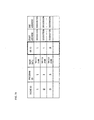
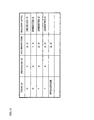
- the recording control means M determines the extracted start time and duration as recording start time and recording duration, and stores the identification number, title, broadcasting channel, recording start time, recording duration as program recording information on retaining means 7. If the program of "01" in the identification number shown in FIG. 2 is reserved for recording, retaining means 7 retains recording reservation information including information of "01" as the identification number, "baseball” as the title, and "2:00” as the recording duration.
- the recording control means M controls the recording means 5 on the basis of the recording reservation information retained by retaining means 7, the recording means 5 decodes video and audio signals of channel 1 outputted from transport decoder 4, and records the decoded video and audio signals on the recording medium 8.
- the recording means 5 records the video and audio signals on the recording medium 8 according to the control of the recording control means M, and ends the recording after the recording duration.
- the program of which the recording reservation information is retained by retaining means 7 is recorded.
- Updating means 9 updates the recording reservation information retained by retaining means 7 in a response to an external device.
- the user can use the remote controller 100 for operating the recorder 1 by remote control, for example, for requesting for updating the recording reservation information.
- the remote controller 100 corresponds to a remote attached to the recorder 1 or the mobile telephone owned by the user.
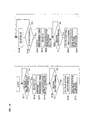
- acquiring means 101, deciding means 10 and remote control means N work according to the steps shown in FIG. 3.
- the acquiring means 101 acquires information of a broadcasting schedule and the recording reservation information from the recorder1 (S1).
- the server device 10 is provided in the recorder 1.
- the server device 10 receives a request from the acquiring means 101, and sends to the acquiring means 101 the information of the broadcasting schedule and the recording reservation information.
- the server device 10 works as a HTTP server
- the acquiring means 101 works as a HTTP client.
- the server device 10 usually extracts information of the EIT from the transport decoder 4, and stores the information as the information of the broadcasting schedule.
- the server device 10 receives the request from the acquiring means 101, the program runs on the server device 10, and the recording reservation information retained by retaining means 7 is read out to the server device 10 according to the program.
- the information read out to the server device 10 is transmitted along with the information of the broadcasting schedule to the acquiring means 101 from the server device 10.
- the acquiring means 101 may acquire the information of the broadcasting schedule from the server device 10 and the recording reservation information from the retaining means 7 respectively.
- the program recording system may comprise the server device 10 separated from the recorder 1 as a HTTP server on the Internet as shown in FIG. 4, for example.
- the acquiring means 101 acquires the information of the broadcasting schedule from the server device 10 and the recording reservation information from the recorder 1.
- the deciding means 102 decides displayed information shown on the display 103 on the basis of a point of difference between the acquired recording reservation information and the acquired information of the broadcasting schedule.
- the deciding means 102 compares the title, recording start time and recording duration of the recording reservation information with the title, recording start time and recording duration included in the EIT for each program of which the recording reservation information is acquired, and determines that there are differences. In the case that there are differences for a program, the deciding means 102 extracts the program as the program of which the broadcasting schedule is changed, and prepares the displayed information on the basis of that.
- This displayed information includes information for displaying the extracted program in a stat that the program is discriminated from the programs reserved for recording. This information may be information showing a display color of the character expressing the extracted program. And also this information may be a background color of the area on which the extracted program is expressed or a thickness of the rectangular frame enclosing the area.
- the recorder 1 can prepare difference information based on the difference between the both without communication to an external device, because the both of the recording reservation information and the broadcasting schedule is retained in the recorder 1.
- the recorder 1 will comprise difference information preparing means 7A for preparing the difference information based on a difference between the recording reservation information and the broadcasting schedule, as shown in FIG. 5.
- the acquiring means 101 of the remote controller 100 acquires the difference information from the recorder 1.
- the deciding means 102 prepares the displayed information on the basis of the difference information acquired by the acquiring means 101 or transmitted from the recorder 1.
- the deciding means 102 When the deciding means 102 prepares displayed information, the deciding means 102 outputs the displayed information to the display 103, and the displayed information is shown on the display 103 (S3).
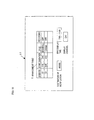
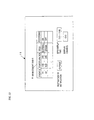
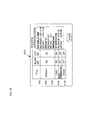
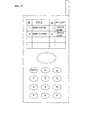
- the recording reservation screen is shown on the display 103, as shown in FIG. 6.
- a thickness of a rectangular frame enclosing an area for a program of which the broadcasting schedule is changed is larger that for programs of which the broadcasting schedule is not changed. Consequently, the user can discriminate the both on the basis of the difference in the thickness of the rectangular frame.
- only two programs are reserved for recording in the above-cited example. Even if three or more programs are reserved for recording, the user can easily and surely find the program of which the broadcasting schedule is changed in the same way, and immediately determine whether it is necessary to update the recording reservation information.
- the remote control means N requests for updating the recording reservation information to the recorder 1 on the basis of the instructions (S5).
- the request is transmitted to the updating means 9, and the updating means 9 deletes the corresponding recording reservation information retained by retaining means 7.
- the remote control means N request for updating the recording reservation information to the recorder 1 on the basis of the instructions.
- the update request is a request for matching the recording reservation of the program of which the broadcasting schedule is changed with the changed broadcasting schedule.
- the remote control means N transmits to the updating means 9 the new recording reservation information prepared from the information of the broadcasting schedule, and the updating means 9 overwrites the corresponding recording reservation information retained by retaining means 7 with the received recording reservation information.
- the updating means 9 may update the corresponding recording reservation information retained by retaining means 7 according to the changed broadcasting schedule.
- the remote controller 100 is a mobile telephone with the function as the browser and is provided with a CPU and a memory for accomplishing the function as the browser and the other function, even if the exclusive hardware is installed on the remote controller 100, the CPU can execute the above procedure and work as the above means by being described the above procedure in the program.
- the recorder 1 and the remote controller 100 as shown FIG. 7 are used as the recorder and the remote controller of the program recording system.
- an AV decoder 5A is used as the recording means 5, and a HDD 8A is used as the recording medium on which the program is recorded.
- a RAM 11 is used as the retaining means 7, and the recording reservation information is retained on the management table in the RAM 11.
- the recorder 1 can use for the communication with the remote controller 11 an infrared interface 12 or a communication network interface 13.
- the communication network interface is an interface for using the communication interface such as the public telephone network, the mobile communication network and the Internet.
- the recorder 1 is provided with a CPU 104 and a ROM 15, and the CPU 104 executes various programs stored on the ROM 15 to accomplish various functions.
- the updating means 9 and the recording control means M are also accomplished if the CPU 104 executes the programs.
- a monitor 103A is used as the display 103, and an input interface 104A is used as the input means 104.
- the remote controller 100 is provided with an infrared interface 105, a communication interface 106, a RAM 107, a CPU 108 and a ROM 109 in the same way as the recorder 1.
- the CPU 108 executes various programs stored on the ROM 109 to accomplish various functions.
- the acquiring means 101, the deciding means 102 and the remote control means N are also accomplished if the CPU 108 executes the programs.
- the infrared interface 105 or the communication interface 107 is used for the communication between the acquiring means 101 or the remote control means N and the recorder 1. In this embodiment, the remote control means N not only requests for the updating but also controls the whole of the remote controller 100.
- a plurality of selection keys K is installed on the input interface 104A on the remote controller 100.
- the user can give various instructions by operating the selection keys K.
- the instruction is sent to the remote control means N of the remote controller 100.
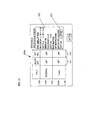
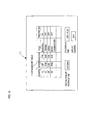
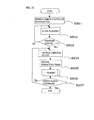
- the remote control means N displays an initial screen as shown in FIG. 8 onto a monitor 103A of the remote controller 100 (step S101 in FIG. 9).
- the user sets EPG display time, EPG display channel, and the place of use, while seeing the display.
- the EPG display time denotes a period of time of the EPG information displayed on the monitor 103A.
- the EPG display time denotes a period of time of the EPG information displayed on the monitor 103A.
- the EPG display channel denotes a channel of the EPG information displayed on the monitor 103A.
- "channel 1" is set in a display channel setting area E3.
- the place of use denotes a place where the remote controller 100 is used at the time of making a recording reservation.
- "inside of room” is set in a use place setting area E4.
- the communication between the recorder 1 and the remote controller 100 is through the infrared interfaces 12 and 105.
- "outside of room” is set in the use place setting area E4.
- the communication between the recorder 1 and the remote controller 100 is through the communication interfaces 13 and 106.
- the user can set a value of "ALL" indicative of no necessity of limitation in all of the items.
- ALL the number of objects to be displayed increases, so that the communication time and communication cost required for communication between the recorder 1 and remote controller 100 increase.
- the user After setting the EPG display time, EPG display channel, and use place, the user puts the cursor on an enter button on the monitor 103A. If the user clicks a selection key K included in the input interface 104A of the remote controller 100 in such a state (step S102 in FIG. 9) , the information set as described above is notified to the remote control means N.
- a recording reservation start command including parameters indicating that the EPG display time is from 7: 00 to 11:00 and the EPG display channel is channel 1 is transmitted to the recording control means M of the recorder 1 (step S103 in FIG. 9).
- the recording control means M interprets the contents of the parameters included in the command, recognizes that the EPG display channel is the channel 1, and controls the tuner 3 so as to select the channel 1.
- the recording control means M stores the parameters included in the recording reservation start command into a RAM 11 and starts a process of taking the EIT from the transport decoder 4 on the basis of the contents of the parameters (step S12 in FIG. 10).
- the recording control means M extracts information of all of programs each having a value described in the start field from 7:00 to 11:00. However, it is now assumed that information of two programs shown in FIGS. 2A and 2B are extracted.
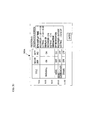
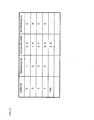
- the recording control means M recognizes that a baseball game is to be broadcast from 7:00 to 9:00 and a drama is to be broadcast from 9:00 to 11:00. Specifically, the recording control means M generates the management table T on the RAM 11 and stores information of the baseball game broadcast and information of the drama broadcast into the fields in the management table T (step S13 in FIG. 10). As shown in FIG. 11, the management table T stores the recording reservation state showing whether the setting of the recording reservation is put at ON or OFF and the information relevant to the EIT so as to be associated with each other. In the example shown in FIG. 11, the recording reservation state is written in the recording setting field corresponding to each of the information of the two programs shown in FIGS. 2A and 2B.
- the baseball game broadcast and the drama broadcast are not yet reserved for recording but are just candidates to be reserved for recording at this point in time. Consequently, "OFF" is set in the recording setting field of the management table T regarding the broadcast of the programs.
- the recording control means M stores the information indicating that the destination of notification is the inside of the room into the RAM 11 and transmits an EPG information notification including the information stored in the RAM 11 as parameters to the remote controller 100 (step S14 in FIG. 10).
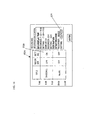
- the remote control means N of the remote controller 100 a recording reservation screen on which whether the broadcast program has to be reserved for recording or not can be selected is displayed on the monitor 103A (steps S104 and S105 in FIG. 9).
- the user can easily know the contents of the setting on the recorder 1 side at this point of time by referring to the data displayed in the area E11.
- the areas E11 and E12 are separately provided.
- a default is displayed as the contents of the setting on the recorder 1 side (that is, the contents displayed in the area E11) in the pull-down menu.
- a setting information display area E20 is provided.
- the EPG display time, display channel, and destination of notification are displayed for each of the "recorder” and “setting”.
- the user can easily confirm the contents of setting.
- the EPG display time and the like displayed with the title of "recorder” are settings on the recorder 1 side at this point in time.
- the EPG display time and the like displayed with the title of "setting” are settings made by the user on the screen.
- the destination of notification in the items to be set denotes the destination to which occurrence of a change in a broadcasting schedule is notified by the recorder 1 which detects the occurrence.
- the recorder 1 determines whether a broadcasting schedule is changed or not.
- the recorder 1 notifies the remote controller 100 of the program added into the broadcasting schedule.
- the recorder 1 is provided with program notifying means 16 by the execution of the programs by the CPU 104.
- the program notifying means 16 gives notification of the added program.
- there is a fear that the notification is not given appropriately if the setting of the destination of the notification is not fixed.
- the value of "inside of room” is set in a circumstance where it is expected that the user is notified of the change in the broadcasting schedule on the inside of the room, and "outside of room” is set in a circumstance where it is expected that the user is notified of the change on the outside of the room.
- the cursor is put on a baseball setting area E12A on the recording reservation screen to change the setting from "OFF" to "ON".
- the user puts the cursor on a notification destination setting area E21 on the recording reservation screen to change the setting from "inside of room” to "outside of room”.
- the remote control means N detecting the depression transmits the recording setting command including the parameters indicative of the contents of a change to the recorder 1 (step S107 in FIG. 9).
- the updating means 9 updates various information stored in the RAM 11 on the basis of the contents of the command (steps S15 and S16 in FIG. 10). Specifically, as shown in FIG. 15, the updating means 9 changes the data in the recording setting field of a record regarding a baseball game from "OFF" to "ON” and changes the destination of notification from "inside of room” to "outside of room”.
- the recording control means M After the data in the RAM 11 is updated, the recording control means M returns a notification of completion of the setting to the remote controller 100.
- the remote control means N in the remote controller 100 that has received the notification displays the recording reservation screen in which the settings on the recorder 1 side are reflected onto the monitor 106, as shown in FIG. 16 (steps S108 and S109 in FIG. 9).
- the recording control means M After completion of the recording reservation, the recording control means M always checks whether a change occurs in the broadcasting schedule or not by comparing the information of the program stored in the management table T with the EIT repeated broadcast at specific time intervals. If no change occurs in the broadcasting schedule, the recording control means M controls the AV decoder 5A so that writing to an HDD 8A becomes "ON" in the period from 7:00 to 9:00.
- the EIT includes information of four programs shown in FIGS. 17A to 17D.
- FIG. 17A information of a program in which "01” is written in the “eventid” field, "7:00” is written in the start field, "2:30” is written in the duration field, and “baseball” is written in the program title field shows that the baseball game broadcast is extended to the period from 7:00 to 9:30.
- FIG. 17B information of a program in which "02" is written in the “eventid” field, “10:30” is written in the start field, "2:00” is written in the duration field, and “drama” is written in the program title field shows that the broadcast start time of the drama is moved back to 10:30.
- the recording control means M takes the EIT in which the information of the programs are written from the transport decoder 4 (step S18 in FIG. 10).
- the recording control means M recognizes a change in the schedule of the baseball game broadcast which is reserved for recording, as shown in FIG. 18, the data in the duration field in the management table T is changed from "2:00" to "2:30".
- the EIT taken as described above includes information of programs that do not exist in the management table T at this point in time (that is, information of "98” in the “eventid” and information of "99” in “eventid”).
- the recording control means M recognizes that new programs are to be additionally broadcast and, as shown in FIG. 18, adds the information of the news and news commentary as addition programs to the management table T (steps S19 and S20 in FIG. 10).
- the recording control means M selects the communication network interface 13 since "outside of room” is set as the destination of notification and transmits a notification of program addition including the contents of the management table T to the remote controller 100 (steps S21 and S22 in FIG. 10).
- the remote control means N of the remote controller 100 which has received the notification of program addition displays the recording reservation screen in which the contents of the notification of program addition is reflected onto the monitor 106 as shown in FIG. 19 (steps S110 and S111 in FIG. 9).
- the user cannot expect when such a notification is received, so that it is preferable to generate a notification reception sound at the time of displaying the recording reservation screen.
- the notification may be transmitted as the recording reservation information at the time of being requested for acquirement by the acquiring means 9.
- the user recognizes that a new program is to be additionally broadcast.
- the user wishes to record, for example, the news broadcast among the addition programs, it is sufficient to put the cursor on the setting area of the news in the recording reservation screen to change the setting from "OFF" to "ON” as shown in FIG. 20.
- the remote control means N prepares the recording setting command including the parameter indicative of the contents of the change, and the recording setting command is transmitted to the recorder 1 via the communication network interfaces 106 and 13 (step S113 in FIG. 9).
- the recording setting command is transmitted via the infrared interfaces 105 and 12.
- the recorder 1 selects the communication network interface 13 to generate a call (step S21 in FIG. 10)
- the remote control means N receiving the call automatically selects the communication network interface 106.
- the user changes the place of use from “inside of room” to "outside of room” in advance. That is, the place of use from "inside of room” to "outside of room” can be freely changed only by displaying the screen shown in FIG. 8.
- the recording control means M which has received the recording setting command changes the contents of the management table T shown in FIG. 18 to the contents shown in FIG. 21 and, after that, transmits a notification of completion of setting (steps S23, S24, and S25 of FIG. 10)
- the recording reservation screen having the contents shown in FIG. 22 is displayed onto the monitor 103A by the remote control means N which has received the notification of completion of setting (steps S114 and S115 in FIG. 9).
- the recorder 1 records the baseball game broadcast from 7:00 to 9:30 and the news broadcast onto the HDD 11 from 9:30 to 10:00 on the basis of the remote operation accepted by the remote controller 100.
- the recording system can record a program reserved for recording with reliability and also record a program newly additionally broadcast due to a change in the broadcasting schedule with reliability.
- the user can recognize the program additionally broadcast, and the selecting operation is facilitated as compared with the case of selecting a program to be watched from all of programs to be broadcast.
- the user can not only add but also change or cancel the recording reservation by using the input interface 104 of the remote controller 100.
- ON is set for recording reservation on the recorder 1 side regarding to the baseball broadcast.
- the user can cancel the recording reservation for the program.
- the user puts the cursor on the setting area regarding to the baseball broadcast in the recording reservation screen, changes the setting from "ON" to "OFF", and then moves the cursor onto the enter button.
- the user depresses the selection key K.
- the remote control means N detects that, the remote control means N transmits to the recording control means M of the recorder 1 the command including the parameter to show the contents of the cancel.
- the recording control means M sets the recording reservation of the recorder 1 side of the information for the baseball broadcast stored in the management table T to OFF on the basis of the parameter included in the command.
- the remote control means N sets the recording reservation of the recorder 1 side regarding to the baseball broadcast to OFF also in the recording reservation screen.
- the user can change the recording start time and the like.
- the recording control means M may automatically reserve for recording or record the program added into the broadcasting schedule.
- the recording control means M adds the information for the added programs described in the EIT to the management table T, and absolutely sets the recording reservation state to ON.
- the recorder 1 since it is possible to reserve for recording or record a program even if the user recognizes the necessity of that, it is preferable that the recorder 1 sends to the remote controller 100 a message that the program added into the broadcasting schedule is reserved for recording or recorded.
- the recording control means M prepares the list of pieces of information such as title, broadcasting channel, recording start time and recording duration of the program automatically reserved for recording or recorded to output the list to the communication network interface 13.
- the communication network interface 13 sends the list to the remote controller 1 according to control by the recording control means M.
- the remote controller 1 receives the list, the list is displayed on the monitor 103A according to control by the remote control means N.
- the recording reservation may be cancelled or changed in the same way as described in the first embodiment.
- the recording control means M may automatically reserve for recording only part of the programs.
- the user decides the conditions of addition programs automatically reserved for recording by the recording control means M in advance. If a program meeting the conditions is included among the addition programs, the recording control means M adds the information of the addition program to the management table T, and puts the setting of the recoding reservation for the program at ON.
- the user can decide the conditions such as the conditions that a program is broadcast during a specific time period, the conditions that a program is broadcast on a specific channel and the conditions a program has a specific name as the conditions of addition programs automatically reserved for recording in advance. Since the special program such as disaster reporting and the like is likely important for the user, it is preferable to decide the conditions so as to automatically record the special program.
- the program recording system may comprise addition program selecting means 17, as shown in FIG. 13.
- the addition program selecting means 17 is also accomplished by executing the programs by the CPU 14.
- the addition program selecting means 17 selects a program from programs added into the broadcasting schedule, here on the basis of the recording reservation information.
- the recording control means M recognizes that a program is newly added by comparing information of a program stored in the management table T with information of a program included in the EIT which is repeatedly broadcast, and notifies the addition program selecting means 17 of the added program.
- the addition program selecting means 17 takes the information of the program of which the setting of the recording reservation is put at ON from the management table T.
- the information of the program described in the EIT includes not only the title of the program and broadcasting time but also detailed information such as the cast, genre, outline, andproducer of the program.
- the addition program selecting means 17 takes out the information.
- the addition program selecting means 17 takes the information of the added program also from the updated EIT and compares the information of the added program with the information of the program for which the setting of the recording reservation is put at ON. If there is a relation between the both that coincide with each other and the like, the addition program selecting means 17 selects the added program.
- the addition program selecting means 17 selects the added program.
- the case where information of both programs coincides with each other includes not only a case where the information of both programs perfectly coincides with each other but also a case where the information coincides partially.
- the addition program selecting means 17 may select not only a program for which the setting of the recording reservation is put at ON but also a program from the addition programs on the basis of only recorded program information for the already recorded programs or the both of the recorded program information and the recording reservation information.
- the recorded program information is relevant information to the recording reservation regarding to the program already recorded.
- the recording means 5 records the recorded program information along with the program on the HDD 8A.
- the recording means 5 may record not only the information of EIT a bit-rate for recording a program, volume spent for recording the program and the like as recorded information on the HDD8A.
- the addition program selecting means 17 takes out the recorded program information from the HDD 8A, in a manner similar to the information of a program for which the setting of the recording reservation is put at ON, compares the recorded information with information of an added program.
- the addition program selecting means 17 can select a program by using statistics of the recorded information of each program.
- the addition program selecting means 17 may select only the sports programs and news programs.
- the addition program selecting means 17 may use only the statistics with respect to information of already recorded programs and select a program on the basis of the statistics and a program for which the setting of the recording reservation is put at ON.
- the addition program selecting means 17 selects the new news program.
- the program selected in such a manner is given from the addition program selecting means 17 to the program notifying means 16.
- the program notifying means 16 notifies the remote controller 100 of only the selected program as the program added into the broadcasting schedule.
- the notification screen showing only the selected program is displayed on the monitor 103A of the remote controller 100. Because the interest of the user is naturally reflected in the selected program, in this case, the user has no need of burdensome registrations for narrowing the notified programs.
- the remote controller 100 instead of the addition program selecting means 17, can select a program from added programs on the basis of the stored information.
- the remote controller 100 in this embodiment comprises comparing means 110.
- the comparing means 110 compares recording volume needed for recording a program to be additionally reserved for recording with remaining volume of a recording medium on which a program is recorded, and shows a result of a comparison on the display 103.
- the recording control means M manages the remaining volume of the recording medium 8.
- the remaining medium is given by subtraction of a volume (hereinafter, called “recorded volume”) of area on which a program is recorded and a volume (hereinafter, called “reserved volume”) spent for recording a program already reserved for recording from the whole volume of the recording medium 8.
- the reserved volume is 2.8 Gbytes and the remaining volume is 10.1 Gbytes.
- the recording control means M sends information showing the remaining volume of the recording medium 8 at the time of sending the recording reservation information to the remote controller 100.
- the comparing means 110 takes from the remote control means N the recording time and the recording bit-rate of the program to be additionally reserved for recording.
- the comparing means 110 compares the volume with the received volume to show a difference between the both as a result of a comparison on the display 103.
- the volume of the recording medium 8 is left even if all programs reserved for recording, which includes programs to be additionally reserved for recording, are recorded. The user can easily know whether the volume of the recording medium 8 is left or not by confirming the display of the result of comparison.
- the user will give the remote controller 100 instructions to update the recording reservation information.
- the remote controller 100 sends an update request to the recorder 1 according to the instructions of the user.
- the updating means 9 adds the recording reservation according to the instructions of the user.
- the recording control means M adds a volume of the program additionally reserved for recording to the reserved volume, and updates the remaining volume. Since the volume of the program additionally reserved for recording is 8.1 Gbytes in this example, the reserved volume is 10.9 Gbytes. The addition changes the reserved volume from 2.8 Gbytes to 10.9 Gbytes. Therefore, the remaining is updated from the 10.1 Gbytes to 2.0 Gbytes.
- the recording control means M subtracts a volume of a recorded program from the reserved volume and adds the volume of the recorded program to the recorded volume, every time a program reserved for recording is actually recorded.
- the recording of the program reserved for recording brings no change of the remaining volume.
- the reserved volume is 0 Gbytes.
- the recording control means M calculates the volume of each program, and the comparing means 110 selects one among those according to the instructions of the user.
- the recording reservation for the two hours program is additionally made after all the programs reserved for recording is recorded. If the bit-rate for recording the program is 9.2 Mbps, the remaining volume is 2.0 Gbytes, and the difference when the volume of the program for which the recording reservation is additionally made is subtracted from the remaining volume is -6.1 Gbytes.
- the comparing means 110 shows the difference when he volume of the program for which the recording reservation is additionally made is subtracted from the remaining volume as the result of comparison on the display 103.
- the comparing means 110 may show a mark such as " ⁇ " and "x" representing whether the volume of the recording medium 8 is left of not instead of the calculation result as the result of comparison on the display 103.
- the user can easily know whether the volume of the recording medium 8 is insufficient for recording the program to be additionally reserved for recording.
- the program recording system comprises bit-rate instruction means 111 and deleting instruction means 112.
- the user can decrease the volume to be spent to the remaining volume or less by reducing the volume spent for recording the program to be additionally reserved for recording with the bit-rate instruction means 111.
- the volume spent for recording the program to be additionally reserved for recording is 3.5 Gbytes. Therefore, if the program is recorded at the bit-rate, the remaining volume is -1.5 Gbytes. If the user confirming that decrease the setting value of the recording bit-rate to 2.0 Mbps, the volume spent for recording the program to be additionally reserved for recording is 1.8 Gbytes. When the program is recorded at the bit-rate, the remaining volume is 0.2 Gbytes.
- the user can adjust the recording bit-rate so as to record all of the programs additionally reserved for recording by confirming the display of the result of comparison.
- the recording means 5 has not only AV decoder but also AV encoder and makes a recording at the recording bit-rate included in the updated recording reservation according to the control of the recording control means M. Thus, even if, when the recording reservation is additionally made, the volume of the recording medium is insufficient for recording the program additionally reserved for recording, all of the programs can be recorded.
- the user can obtain the volume spent for recording the program to be additionally reserved for recording on the recording medium by deleting the recorded program with the deleting instruction means 112.
- information of all of the programs that the user gives instructions of recording is transmitted along with the recording reservation information to the remote controller 100 from the recorder 1.
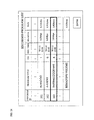
- the list of recorded programs including information such as recording time, size, recording bit-rate is shown on the display 103, as shown in FIG. 24.
- the remaining volume is shown on the list of the recorded program.
- the remaining volume of the recording medium 8 is 6.5 Gbytes, and the volume spent for recording the program to be additionally reserved for recording is 8.1 Gbytes. Accordingly, the volume is insufficient.
- the user can select an expendable program from the recorded programs by using the deleting instruction means 112 and delete the selectedprogram.
- the user selects the program with the program ID of "103".
- the remote controller 100 requests for deleting the selected recorded program. If the recorder 1 receives the request, the corresponding program is deleted from the recording medium 8. As the result of that, the remaining volume of the recording medium 8 is 8.3 Gbytes. Therefore, all of the programs to be additionally reserved for recording can be recorded.
- the programs the programs to be subjects of deleting are basically all of the programs which the user gives instructions of recording. That is because the user usually has no right to delete the recorded program of others.
- the recording control means M may specify the program to be a subject of deleting on the basis of a user ID appended to information of each program and a deleting permission flag appended to a program that permission to delete is given in advance. For example, where a memory card storing a user ID is inserted in the remote controller 100, the recording control means M extracts from the recorded programs only the programs corresponding to the ID received from the remote controller 100.
- the recording control means M determines whether a program recorded on a recording medium is deleted or not on the basis of recording time of a program reserved for recording, a recording bit rate for recording the program, and the remaining volume of the recording medium on which the program reserved for recording is to be recorded.
- the determination of the deletion is done in the case where the recorder 1 receives a request for recording reservation from the remote controller 100.
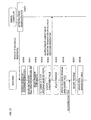
- the remote control means N When the data of the recording reservation is input by the user (S200 in FIG. 25) and the remote control means N detects the input operation, the remote control means N transmits a command to request for recording reservation which includes a parameter indicative of addition of the recording reservation to the recorder 1 by using the infrared interface 105 or the communication network interface 106.
- the recording control means M obtains recording time of the program to be additionally reserved for recording from the parameter included in the command. Further, the recording control means M obtains the setting of the present recording bit-rate and the remaining volume of the HDD 8A. The recording control means M calculates, for example, the volume spent for recording the program on the basis of the recording time of the program additionally reserved for recording and the setting of the recording bit-rate, and compares the spent volume with the remaining volume of the HDD 8A. On the basis of the result of comparison, the recording control means M determines whether the program recorded on the HDD 8A is to be deleted or not (S301 in FIG. 25).
- the result of determination expresses that the program recorded on the HDD 8A is to be deleted.
- the result of determination expresses that the program recorded on the HDD 8A is not deleted.
- a program to be deleted is selected from programs recorded on the recording medium on the basis of predetermined conditions (S302 in FIG. 25).
- the predetermined condition is such that the program to be deleted is a program of which recording timing is the oldest among programs that the permission to delete is given.
- the recording control means M refers to a recorded program management table.
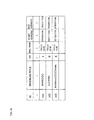
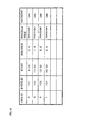
- the recorded program management table includes, for example as shown in FIG. 26, the ID of a program, program title, channel, recording date and time, start address, and end address.
- “baseball ⁇ game” is the program of which recording timing is the oldest, the recording control means M selects the recorded program as a program to be deleted, and calculates the volume occupied by the recorded program in the HDD 8A on the basis of the start and end addresses.
- the recording control means M adds the notified occupied volume and the remaining volume of the HDD 8A to calculate the remaining volume after deletion of the selected deletion program.
- the recording control means M compares the remaining volume after deletion with the volume spent for the program to be reserved for recording, and determines whether the program is to be deleted or not on the basis of the result of comparison. The procedures performed by the recording control means M are repeated until the result of determination indicates that a program recorded on the HDD 8A is not deleted.
- the recording control means M determines that the program to be reserved for recording cannot be recorded. On the other hand, when the remaining volume after deletion becomes equal to or larger than the volume spent for the program to be reserved for recording, the recording control means M determines that the program to be reserved for recording can be recorded.
- the recording control means M updates the management table T (S304 in FIG. 25), adds the information of the program into the management table T, and puts the setting of the recording reservation of the information at ON.
- the recording control means M transmits a notification of completion of recording reservation or a notification indicating that the program cannot be reserved for recording to the remote controller 100 by using the infrared interface 12 or communication network interface 13.
- the selected program to be deleted is actually deleted just before the recording start time of the program reserved for recording after the recording reservation completion is notified.
- the recording control means M updates the recorded program management table stored according to the deletion (S306 in FIG. 25).
- the recording control means M starts recording the program reserved for recording in accordance with information of the program stored in management table and the like (S307 in FIG. 25).
- the recording control means M deletes the information of the program which has been just recorded from the management table T and adds information corresponding to the information into the recorded program management table (S308 in FIG. 25).
- the remote controller 100 of the program recording system is provided with personal information storing means 113, as shown in FIG. 27.
- the remote control means N reads personal information to specify a user from the personal information storing means 113, and includes the personal information in the request for the updating.
- the personal information to specify a user may be a telephone number of a mobile telephone or an ID unique to a user.
- the recorder 1 receives the update request including such personal information
- the updated recording reservation and the personal information can be managed so as to be associated with each other, and reproduction display of the recorded program and the marked image can be controlled on the basis of the personal information.
- the reproduction display control will be explained hereinafter on a recording/reproducing system shown in FIG. 28.
- the recording/reproducing system is constructed by a mobile telephone 500 and a recording/reproducing apparatus 600.
- the mobile telephone 500 of the recording/reproducing system corresponds to the remote controller 100 of the program recording system, and the recording/reproducing apparatus 600 corresponds to the recorder 1.
- the mobile telephone 500 is constructed by a telephone function part 500A and a remote controller function part 600A.
- a telephone number storing unit 501 stores a telephone number of the mobile telephone 500.
- a secret number storing unit 502 stores a secret number of the mobile telephone 500.
- An input unit 503 is used to operate the mobile telephone 500.
- a display 504 displays information to control the recording/reproducing apparatus 600.
- a user authenticating means 511 identifies the person who is operating the mobile telephone 500.
- An external device control unit 512 controls an external device from the mobile telephone 500.
- a transmitting/receiving unit 513 transmits/receives a command for controlling an external device.
- a transmitting/receiving unit 621 transmits/receives a command to/from the mobile telephone 500.
- An operator specifying unit 622 specifies the operator of the recording/reproducing apparatus 600 through the mobile telephone 500, on the basis of the telephone number and the secret number sent from the mobile telephone 500.
- a program registering unit 623 records the person who performs a recording operation into a recording information management table.
- a program retrieving unit 624 retrieves a program recorded by a person who performed a reproducing operation.
- a marker registering unit 626 records a person who performs a marker registering operation into a marker information management table.
- a marker retrieving unit 627 retrieves a video image marked by the person who performed a marking operation.
- a scene reproducing unit 628 reproduces a scene selected by a person who performed a marked image reproducing operation.
- a user management table 629 of the recording/reproducing apparatus 600 information of a person who performs operation by using the mobile telephone 500 is preliminarily registered in a format shown in FIG. 29.
- the user management table 629 is constructed by the telephone number of the mobile telephone 500 of the user, the secret number, user' s name, and user's ID.
- the user performs an operation of recording a program to the recording/reproducing apparatus 600 by using the mobile telephone 500.
- the procedures in this case are shown in FIG. 32.
- the mobile telephone 500 After the input password coincides with the secret number stored in the secret number storing unit 502, when the user depresses a recording correspondence button of the mobile telephone 500 (S504), the mobile telephone 500 prepares a transmission command for instructing the recording/reproducing apparatus 600 to start recording operation (S505), and the command is transmitted from the transmitting/receiving unit 513 in the mobile telephone 500 to the recording/reproducing apparatus 600.
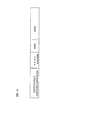
- the control command transferred between the mobile telephone 500 and the recording/reproducing apparatus 600 includes, for example, as shown in FIG. 33, a telephone number, a secret number, an operation code (OPC), and an operand OPR.
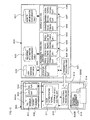
- FIG. 38 shows a list of the OPCs and OPRs. In the case of a command for instructing start of recording, "1" is set in the OPC of the command.
- the program registering unit 623 sets the title of a program to be recorded, channel, and recording date and time in a recorded information management table 630 in FIG. 30, and sets the user ID specified in the user management table 29 in FIG. 29 as the operator ID. Further, the recording start position is set in the start address, and recording of the program is started.
- the user can allow the recording/reproducing apparatus 600 to reproduce the recorded program by using the mobile telephone 500.
- the program retrieving unit 624 searches the recorded information management table 630 in FIG. 30 on the basis of the operator specified by the operator specifying unit 622.
- the program retrieving unit 624 extracts the title of the program recorded and reproduced by the same operator, and generates a specified operator recording title list table.
- the specified operator recording title list table is constructed by program title, program ID, and recording date and time.
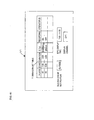
- the mobile telephone 500 When the transmitting/receiving unit 513 of the mobile telephone 500 receives the command, the mobile telephone 500 shows the program title and the recording date and time in the operand onto the display 504 as shown in FIG. 35.
- the transmitting/receiving unit 621 of the recording/reproducing apparatus 600 receives the command transmitted from the mobile telephone 500 and sends the program ID selected for reproduction to a program reproducing unit 625.
- the program reproducing unit 625 reproduces the program of the title selected from the specified operator recording title list table (FIG. 34).
- the transmitting/receiving unit 621 of the recording/reproducing apparatus 600 receives the transmission command sent from the mobile telephone 500 and notifies the marker registering unit 626 of the marker registration command.
- the marker registering unit 626 registers information of the relevant scene of the program being reproduced or recorded to the marker management table.
- the marker management table includes, as shown in FIG. 31, for example, scene ID, program ID, date and time of marking, operator ID, start address, and end address.
- the user can instruct the recording/reproducing apparatus 600 to reproduce the marked scene by using the mobile telephone 500.
- the password input screen is displayed, and the user enters his/her password (S502).
- the password inputting operation is repeated until the input password coincides with the secret number stored in the secret number storing unit 502 (S503).
- the operator specifying unit 622 searches the user management table 629 of FIG. 29 on the basis of the telephone number in the received command. If the secret number of the operator ID in the user management table 629 coincides with the received secret number as a result of the search, the marker retrieving unit 627 searches the marker information management table 631 of FIG. 31 on the basis of the operator specified by the operator specifying unit 622 to extract the coincided scene.
- the marker retrieving unit 627 prepares a table of a list of marker registration made by the specified operator of the extracted scene.
- the specified operator's marker registration list table includes, as shown in FIG.
- the potable telephone 500 shows, as shown in FIG. 37, the program title, scene ID, and recording date and time in the operand onto the display 504.
- the transmitting/receiving unit 621 of the recording/reproducing apparatus 600 receives the command transmitted from the mobile telephone 500 and sends the scene ID selected to be reproduced to the scene reproducing unit 628.
- the scene reproducing unit 628 reproduces the selected scene from the specified operator's marker registration list table (FIG. 36).
- the recording/reproducing system only a program or scene recorded or registered by the operator is displayed in a list. Also, in the program recording system in the fourth embodiment, the display control is done in the same manner. Even when there are a number of programs or scenes is recorded or registered, selection of a program or scene is facilitated, and it becomes more convenient to the user.
- the recording/reproducing system in this embodiment is accomplished by the program corresponding to the function and the hardware such as a CPU and a memory.
- the CPU of the mobile telephone 500 detects depressing the recording correspondence button, the CPU of the mobile telephone 500 gets the transmitting/receiving unit 513 to transmit the user ID according to the program.
- the transmitting/receiving unit 621 of the recording/reproducing apparatus 600 receives the user ID, the CPU of the recording/reproducing apparatus 600 registers the user ID in the recorded information management table 630 as the operator ID according to the program.
- the CPU of the mobile telephone 500 detects depressing the reproduction correspondence button, the CPU of the mobile telephone 500 gets the transmitting/receiving unit 513 to transmit the user ID according to the program.
- the CPU of the recording/reproducing apparatus 600 searches the recorded information management table 630 on the basis of the user ID and extracts the relevant program. In the case that the recording/reproducing apparatus 600 reproduces the recorded program, the recording/reproducing apparatus 600 extracts the program recorded by the operator of the reproducing and the displays the program.
- an operator is authenticated on the basis of the telephone number and the secret number.
- the IC card having therein a CPU which is called the UIM (User Identify Module)
- the UIM is removably attached to the mobile equipment of the mobile telephone, and stores information of identifying a subscriber, the telephone number and the like.
- the UIM has to be attached to the mobile equipment. Consequently, information of the subscriber stored in the UIM can be used for authentication as user specifying information for specifying a user.
- the SD (Secure Digital) memory card which is a memory card with a copyright protection function, also has therein a CPU. And the SD memory card can accomplish functions equivalent to those of the IC card like the UIM by extending its hardware and software. That is, instead of the UIM, the extended SD memory card can be also used for authentication of an operator.
- the remote controller 100 of the program recording system does not comprise the personal information storing unit, the IC card is mounted on the remote controller 100 instead.
- the remote control means N reads the personal information from the IC card, the personal information is included in a request for the updating.
- the recording/reproducing system includes, as shown in FIG. 39, not only components shown in FIG. 28 but also IC card function unit 500C in the mobile telephone 500.
- the IC card function unit 500C has personal information management means 515.
- the personal information management means 515 controls reading from and writing in an IC card 514 removably attached to the IC card function unit 500C and manages the personal information stored in the IC card 514.
- the user management table 629 of the recording/reproducing apparatus 600 stores, as shown in FIG. 40, operator ID, operator name, identification of a subscriber stored in the IC card 514 and password corresponding to it.
- the identification and password of a user are sent from the mobile telephone 500 to the recording/reproducing apparatus 600, and are stored in the user management table 629.
- the password is used for authentication between a subscriber and the mobile telephone 500.
- the password is a secret word consisting of characters, symbols, numerals and the like.
- information for biometrics such as a fingerprint and a voiceprint can be also used for authentication between a subscriber and the mobile telephone 500.
- a user enters his/her password by using the input unit 503 of the mobile telephone 500.
- the password is supplied from the input unit 503 to the personal information management means 515.
- An authorized password is registered in the personal information management means 515 in advance. Only if the registered password and the input password coincide with each other, the personal information management means 515 gives the permission to read the personal information from the IC card 514.
- the mobile telephone 500 When an authorized password is entered and the identification of the subscriber is read from the IC card 514, the mobile telephone 500 prepares the command to register it and transmits the command to the recording/reproducing apparatus 600 by using the transmitting/receiving unit 513.
- a control command communicated between the mobile telephone 500 and the recording/reproducing apparatus 600 includes, for example as shown in FIG. 41, subscriber identification, password, OPC and OPR.
- the OPCs and OPRs are basically similar to those shown in FIG. 38. It is assumed now that "0" is set in the OPC of the command for registering the subscriber identification and password.
- the operator specifying unit 622 stores the subscriber identification and password included in the received command in the user management table 629 shown in FIG. 40.
- the user can perform operation of the recording/reproducing apparatus 600 by using the mobile telephone 500 to which the IC card 514 is attached.
- the password input screen is displayed, and the user enters his/her password.
- the personal information management means 515 reads the identification of the subscriber from the IC card 514.
- the mobile telephone 500 prepares a command of which "2" is set in the OPC, and transmits the command to the recording/reproducing apparatus 600 from the transmitting/receiving unit 513 of the mobile telephone 500.
- the program registering unit 623 sets the title of a program to be recorded, channel, and recording date and time in a recorded information management table 630 in FIG. 30, and sets the user ID specified in the user management table 29 in FIG. 40 as the operator ID. Further, the recording start position is set in the start address, and recording of the program is started.
- the user can allow the recording/reproducing apparatus 200 to reproduce the recorded program by using the mobile telephone 500 with the IC card 514.
- OPC 2
- the program retrieving unit 624 searches the recorded information management table 630 in FIG. 30 on the basis of the operator specified by the operator specifying unit 622.
- the program retrieving unit 624 extracts the title of the program recorded and reproduced by the same operator, and generates a specified operator recording title list table.
- the transmitting/receiving unit 513 of the mobile telephone 500 receives the command, the mobile telephone 500 shows the program title and the recording date and time in the operand onto the display 504 as shown in FIG. 35.
- the transmitting/receiving unit 621 of the recording/reproducing apparatus 600 receives the command transmitted from the mobile telephone 500 and sends the program ID selected for reproduction to a program reproducing unit 625.
- the program reproducing unit 625 reproduces the program of the title selected from the specified operator recording title list table (FIG. 34).
- an operator of the reproduction is specified on the basis of the subscriber identification stored in the IC card, only programs recorded by the operator of the reproduction are displayed. Consequently, even when there are a number of recorded programs, selection of a program is facilitated, and it becomes more convenient to the user.
- the marker registration can be performed at the recording/reproducing apparatus 600 by using the mobile telephone to which the IC card is attached.
- the setting attendant on the operation of the recording or the recording reservation by the operator himself/herself may be stored in the nonvolatile memory of the IC card.
- the setting information includes program title, channel, recording date and time, recording mode (recording bit-rate), recording duration, marking information, thumbnail of the marked scene and the like.
- the user can manage the setting attendant on the operation of the recording by himself/herself only with the IC card.
- a nonvolatile memory of such a card having therein a CPU not only the subscriber identification and telephone number but also other personal information such as address, date of birth, and card information of a credit card are often stored.
- the recording/reproducing apparatus 600 can perform controls on recording and reproduction of a program on the basis of the personal information received from the mobile telephone 500.
- recorded programs displayed in a list are basically limited to programs recorded by the operator himself/herself, but there is no limitation to which program the operator records.
- the date of birth of the personal information may be used.
- a program determining unit 632 is provided in a recording/reproducing system in the sixth embodiment. The program determining unit 632 determines whether the specified operator is a minor or not on the basis of the date of birth.
- the recording information management table 630 for example, as shown in FIG. 43, not only the program ID of the recorded program, program title, channel, recording date and time, operator ID, start address, and end address, but also a program category of each recorded program are included.
- the category of each recorded program is, for example, a genre included in information regarding the program in the EIT.
- the category of the program is also stored in the recording information management table 630.
- the program determining unit 632 determines a program belonging to a category which is not permitted to minors among the programs retrieved by the program retrieving unit 624, and notifies the program retrieving unit 624 of the program.
- the password input screen is shown on the display 504.
- the personal information managing means 515 reads out the subscriber identification and the date of the birth from the IC card 514.
- OPC 2
- the mobile telephone 500 transmits the command from the transmitting/receiving unit 513 of the mobile telephone 500 to the recording/reproducing apparatus 600.
- the program retrieving unit 624 searches the recorded information management table 630 of FIG. 43 on the basis of the operator specified by the operator specifying unit 622.
- the program determining unit 632 determines whether the specified operator is a minor or not on the basis of the date of birth of the operator in the command received from the mobile telephone 500. If it is determined that the specified operator is not a minor, the program determining unit 632 notifies the program retrieving unit 624 of the result of determination.
- the program retrieving unit 624 extracts titles of all programs recorded and reproduced by the same operator and prepares a specified operator's recording title list table.
- the program determining unit 632 determines a not-permitted program belonging to the category which is not permitted to minors among the programs retrieved by the program retrieving unit 624, and notifies the program retrieving unit 624 of the program.
- the program retrieving unit 624 extracts the program except for the not-permitted program among the programs recorded and reproduced by the same operator and prepares the specified operator's program title list table.
- the transmitting/receiving unit 513 of the mobile telephone 500 receives command
- the mobile telephone 500 displays the program title and recording date in the operand onto the display 504 as shown in FIG. 35.
- the transmitting/receiving unit 21 of the recording/reproducing apparatus 600 receives the command transmitted from the mobile telephone 500 and transmits the program ID selected to be reproduced to the program reproducing unit 625.
- the program reproducing unit 625 reproduces the program of the title selected from the specified operator's recording title list table (FIG. 34).
- the recording/reproducing apparatus 600 may regulate recording itself of the program in the case where the operator is a minor.
- the recording/reproducing apparatus 600 may perform a control to select a program for displaying the EPG information.
- the recording/reproducing apparatus 600 selects a program that is not permitted to minors from the EPG information and does not display the information of the selected program.
- selection of programs to be watched by using the EPG information is regulated.
- the limitation on watching of the program can be put without the personal information stored in the IC card 514.
- a flag shows whether there is limitation or no limitation on watching of the program may be associated with the respective operator IDs of the user management table 629, for example.
- program determining unit 632 determines a program belonging to the specific category among the programs retrieved by the program retrieving unit 624 and notifies the program retrieving unit 624 of the program.
- the program retrieving unit 624 extracts programs except for the notified program among the programs recorded and reproduced by the same operator and prepares the specified operator title list table.
- the addition program selecting means 17 in the second embodiment selects a program from added programs on the basis of not only recording reservation information but also recorded programs, as compared with the case where a program is selected on the basis of a program reserved for recording, the number of programs to be selected is usually larger. Further, in the case where, for example, the recorder 1 is shared by family members, there is the possibility that a program is selected on the basis of programs recorded or reserved for recording by someone else in the family member.
- the recorder 1 has history management means 18 for managing history of information specifying the operator who performed recording or recording reservation operation.
- the remote controller 100 a mobile telephone to which the IC card 110 storing identification of a subscriber and the like is removably attached is used.
- the history management means 18 manages a user management table and a recording operator management table similar to those shown in FIG. 40.
- the recording operator management table stores, as shown in FIG. 45, the ID of a recorded program and the ID of the operator who performed operation of recording the program are stored so as to be associated with each other.
- the ID of the program corresponds to the ID of the recorded program.
- the ID of the operator and a piece of information of the recorded program are associated with each other via the ID of the program.
- a management table T as well, as shown in FIG.46, an operator ID is stored in correspondence with each ID of a program.
- the recording operator management table the ID of an operator who performed recording operation is stored.
- the management table T the operator ID of the operator who performed recording reservation operation is stored.
- the addition program selecting means 17 selects a program from added programs.
- the addition program selecting means 17 obtains the operator ID associated with a program of which the setting of recording reservation is ON from the management table T.
- the program of which the setting of recording reservation is ON is only the baseball game broadcast, and the operator ID associated with the program is "1.”
- the addition program selecting means 17 notifies the history management means 18 of the operator ID.
- the history management means 18 obtains the program ID corresponding to the notified operator ID from the recording operator management table. In the example of FIG. 45, the program IDs obtained are "1" and "2.” The history management means 18 notifies the addition program selecting means 17 of the obtained program ID.
- the addition program selecting means 17 obtains only recorded information identified by the program ID.
- information of programs obtained by the addition program selecting means 17 is information only for "news ⁇ " and " ⁇ news.”
- the addition program selecting means 17 does not obtain information for "baseball xxx game" recorded by another operator.
- the addition program selecting means 17 selects a program from added programs on the basis of only information for three programs of the same operator, that is, a baseball broadcast reserved for recording, "news ⁇ ,” and " ⁇ news".
- an operator in order to obtain volume for recording the program to be additionally reserved for recording on a recording medium, an operator can delete a program recorded on the recording medium.
- a list of recorded programs includes not only a program which an operator performs an operation of recording by himself/herself but also a program which another operator performs an operation of recording.
- the remote control means N may display on monitor 103A only a program which an operator of a mobile telephone performs an operation of recording on the HDD 8A among programs recorded on the HDD 8A.
- the recording control means M obtains an operator ID corresponding to the program recorded on the HDD 8A. And the recording control means M adds the operator ID to the information of each recorded program and sends the information to the mobile telephone.
- the remote control means N obtains an ID from the IC card 114 and extracts the information of recorded program to which the added ID coincides with the obtained ID from the received information.
- the remote control means N prepares a list of recorded programs on the basis of only the extracted information of the recorded program and displays the list of the recorded programs on the monitor 103A.
- the remote control means N works as the addition program selecting means 17, if the recorder 1 not only performs notification of the addition program but also sends the information of each recorded program to which the operator ID is added, in a manner similar to the addition program selecting means in the this embodiment, the remote control means N can select a program from added programs on the basis of the operator ID.
- the remote control means N may display on the monitor 103A only a program permitted to be deleted in advance among programs recoded on the HDD 8A.
- a user selects a program that the permission to delete is given from a list of recorded programs in advance.
- the remote control means M prepares a command giving a deleting permission of the selected program, and sends the command to the recorder 1.
- the recording control means M appends a flag showing that the permission to delete a program is given to the recorded information of the program which the permission to delete is given.
- the remote control means N prepares a list of recorded programs on the basis of only the recorded information to which the flag is appended, and displays the list of the recorded programs on the monitor 103A.
- the operator can also select a program to be deleted easily, there becomes to be no fear that the recorded program is deleted inadvertently.
- the recording control means M selects a program to be deleted on the basis of the condition that the program is a program of which recording timing is the oldest among the programs which the permission to delete is given.
- the invention is not limited to the above.
- the recording control means M may select a program to be deleted on the basis of a condition that the program is a program which is recorded onto a recording medium and is reserved for recording by the same operator and on the basis of a condition that the program is simply a deletable program which the permission to delete is given.
- a program to be deleted is selected on the condition following the deletion level of the program that the operator who performed the recording reservation operation performed an operation of recording.
- the mobile telephone to which the IC card 110 is removably attached is used as the remote controller 100.
- the user ID of "0" is stored in the IC card 108 attached to one of the mobile telephones
- the user ID of "1” is stored in the IC card 108 attached to the other mobile telephone.
- the deletion level is set by the two users using the mobile telephones or a default value is set by the recorder 1.
- the deletion level is basically constructed by the three levels of a deletion-arranged level, a deletable level, and a deletion-inhibited level.
- the deletion-arranged level is a level at which a recorded program is deleted from a recording medium.
- the deletable level is a level at which the recording control means M can select a recorded program as a program to be deleted.
- the deletion inhibited level is a level at which the recording control means M is inhibited from selecting a recorded program as a program to be deleted.
- a recoded program management table is prepared as shown in FIG. 47, for example.
- each program is associated with the user ID of an operator who recorded the program, recording time of the program, and the deletion level.
- the value "0" of the deletion level denotes the deletion arranged level
- the value "2" indicates the deletion inhibited level
- the value "1" indicates the deletable level.
- the value "100" of the user ID in FIG. 47 indicates that the value of the recording time corresponding to the value "100" is time during which a program can be recorded on a recording medium. In this example, remaining time during which a program can be recorded on a recording medium is 2.5 hours.
- each program is associated with the user ID of an operator who performed operation of reserving the program for recording.
- the user ID included in the recorded program management table and the management table T is extracted from the IC card 108 when each user performs the recording or recording reservation operation by using his/her mobile telephone, and transmitted from the mobile telephone to the recorder 1.
- a procedure taken in the case where the user reserves a program for recording in the recorder 1 by using the mobile telephone (remote controller 100) is as shown in FIG. 25.
- step 200 when the user adds a program to be reserved for recording by using a mobile telephone to which an IC card storing the user ID of the value "1" is attached as shown in FIG. 50, the mobile telephone transmits a command for requesting recording reservation including parameters which indicate the user ID and the contents of addition to the recorder 1.
- the recording control means M obtains recording time of the program additionally reserved for recording from the parameters included in the command (S300 in FIG. 25). In the example of FIG. 50, the recording time of the program additionally reserved for recording is four hours. The recording control means M obtains recording time corresponding to the user ID of the value "100," that is, the recordable time of the recording medium from the management table T. In the example of FIG. 48, the recordable time is 2.5 hours. The recording control means M determines whether a program recorded on the recording medium is deleted or not on the basis of the recording time of the program additionally reserved for recording and the recordable time (S301 in FIG. 25).
- the recording control means M determines that the program recorded on the recording medium is to be deleted. When the deletion is determined, the recording control means M obtains the user ID from the parameters included in the command and selects the program to be deleted from recorded programs associated with the user ID (S302 in FIG. 25). The recording control means M refers to the recorded program management table for the selection. In the example of FIG. 48, there is no program associated with the user ID of the value "1" and the deletion level of the value "1.” In this case, there is no recorded program that can be deleted.
- the recording control means M refers to the recorded program management table and obtains the recording time of the program associated with the deletion level of the value "0" or "1.” If there are a plurality of programs satisfying the condition, the recording time of the programs is totaled.
- the recording control means M compares an addition value obtained by adding the recording time or the total recording time and the recordable time with the recording time of the program to be reserved for recording, and determines whether the program to be reserved for recording can be recorded or not on the basis of the result of comparison (S303 in Fig. 25).
- the recording control means M updates the management table T as shown in FIG. 49 (S304 in FIG. 25).
- the recording control means M notifies the mobile telephone of the fact that the program cannot be reserved for recording.
- the mobile telephone transmits a command including the user ID stored in the IC card 108, which demands the contents of display to the recorder 1.
- the recording control means M extracts information of a recorded program in the recorded program management table (S451 in FIG. 50). At this time, the recording control means M may extract only information of a program corresponding to the user ID included in the command.
- the recorder 1 transmits the information of the extracted recorded program to the mobile telephone (S452 in FIG. 50).
- a deletion level setting screen as shown in FIG. 51 is displayed on the monitor of the mobile telephone.
- the user When the user refers to the deletion level setting screen and determines a program to be deleted from programs recorded by himself/herself, the user sends a command to change the value of the deletion level of the program "2" to "0" to the mobile telephone (S401 in FIG. 50). For example, as shown in FIG. 53, it is assumed that the deletion level of the program name "3" is changed to "0" on the deletion level setting screen.
- the mobile telephone transmits a command for requesting a setting change in the deletion level, including the parameter indicative of the contents of the change to the recorder 1.
- the recording control means M updates the recorded program management table on the basis of the contents of the change indicated by the parameters included in the command (S454 in FIG. 50). After that, the recorder 1 notifies the mobile telephone of completion of the setting (S455 in FIG. 50).
- the deletion level in the recorded program management table is changed as shown in FIG. 53.
- the value of the deletion level corresponding to the program ID of the value "3" is changed from “2" to "0.”
- the recording control means M determines that the program to be reserved for recording can be recorded.
- the user can confirm a point of difference between the recording reservation information and the information of the broadcasting schedule on the basis of the displayed information shown on the display of the remote controller. Therefore, the user can easily and surely find the change of the broadcasting schedule and update the recording reservation information according to the change.
- the displayed information includes information for displaying a program of which a broadcasting schedule is changed in the state that the program is discriminated from the programs reserved for recording, the user can immediately find the program of which the broadcasting schedule is changed, and there becomes to be no necessity for confirming the recording reservation information for all of the programs reserved for recording.
- control means of the recording controller automatically reserves for recording or records a program added into the broadcasting schedule, even in a case like that a user does not know the addition of the program because of shortness of the time from the addition of the program to the broadcasting of the program, a failure to watch the program can be avoided.
- the recorder sends to the remote controller a message that the program added into the broadcasting schedule is reserved for recording or is recorded, the user can confirm the addition of the program and also confirm whether an unnecessary program is recorded or not.
- the recorder shows a result of comparison between recording volume needed for recording a program to be additionally reserved for recording and remaining volume of a recording medium on which the program is to be recorded on the display
- the user can determine that the remaining volume is insufficient to record the program according to the displayed result of comparison.
- the user can delete the recorded program from the recording medium or change a bit-rate of the program to be additionally reserved for recording to obtain the recording volume for recording the program suitably. Thereby, it can be avoided that only a part of the program is recorded or that the recorded program is inadvertently overwritten.
- the update request to the recorder from the remote control means of the remote controller includes personal information specifying a user of the remote controller
- the recorder can identify the user of the remote controller, and control the recording and the reproduction on the basis of the result of the identification.
- the recorder displays a recorded program or a marked image filtered through the personal information, even a recorder capable of reproducing and displaying a program is shared by a plurality of people, a user can easily select a program or a scene to be reproduced and displayed from the programs or in the program with the recording operated by the user.
Landscapes
- Engineering & Computer Science (AREA)
- Signal Processing (AREA)
- Multimedia (AREA)
- Databases & Information Systems (AREA)
- Human Computer Interaction (AREA)
- Business, Economics & Management (AREA)
- Finance (AREA)
- Strategic Management (AREA)
- Television Signal Processing For Recording (AREA)
- Two-Way Televisions, Distribution Of Moving Picture Or The Like (AREA)
- Details Of Television Systems (AREA)
Abstract
Because of limitations of a display area allocated on
a mobile telephone or a remote controller, even if a program
table is displayed according to the EPG information, the
browsability of programs is mostly insufficient, and it
is likely for a user to miss the program. In a case where
a user updates recording reservation information of a
program reserved for recording by using a mobile telephone
of the present invention, the mobile telephone acquires
the recording reservation information and information of
broadcasting schedule, and displays point of difference
between the recording reservation information and the
information of the broadcasting schedule. Consequently,
the user can easily and surely find the change of the
broadcasting schedule, and match contents of update with
the change.
Description
The present invention relates to a program recording
system for recording a broadcast program, and relates to
a remote controller, and a method and a program for remote
control.
A television broadcasting by satellite, ground wave,
or the like is being digitized. The digitization of
broadcasting allows the number of channels to be increased.
By increase in the number of channels, the number of options
of programs selected by the user also increases. However,
it is getting more difficult for the user to select programs
only by changing channels. Consequently, for example,
in digital BS broadcasting, information for electronic
program guide (hereinafter, called "EPG information") is
transmitted by being multiplexed on a television signal
together with video and audio signals and the like. The
EPG information shows a schedule of broadcast programs.
A receiver for broadcasting displays a program table on
a monitor on the basis of the EPG information. The user
can select a program to watch from programs included in
the program table displayed on the monitor. If the
selected program is not being broadcast at present, the
program is reserved for watching or recording.
The EPG information is repeatedly broadcast. If the
broadcasting schedule of programs is changed, the change
is reflected on the EPG information on the side of a
broadcasting station. Even though a program is added,
for example, if a user finds the program on the program
table corresponding to the changed EPG information, the
user can select the added program for watching or recording
and watch the program or reserve the newly selected program
for recording.
If the user goes out, the user may see the program
table on the mobile telephone. The EPG information is
not only broadcasted but also provided through the Internet.
As described in Japanese Unexamined Patent Publication
No.2001-145140, a user can see the program table on the
mobile telephone with the function as the browser and
reserve the program for recording.
However, because of limitations of a display area
allocated on a remote control device such as the mobile
telephone and the remote controller, the browsability of
programs is mostly insufficient, and even if the latest
program table includes the added program, it is likely
for the user to miss the program.
The present invention has been achieved in
consideration of such problems of conventional techniques
and its object is to provide a program recording system
that allows the user find the change of the broadcasting
schedule easily and surely, and to provide a remote
controller, and a method and a program for remote control.
In accordance with the present invention, there is
provided a program recording system including a recorder
recording a broadcast program, a sever device storing
information of a broadcasting schedule of broadcast
programs and a remote controller for operating the recorder
by remote control.
In the recorder, retaining means retains recording
reservation information including at least recording start
time, and duration or recording end time of a program
reserved for recording. Control means controls recording
means on the basis of the retained recording reservation
information, and the recording means records the program
reserved for recording. Updating means updates the
recording reservation information in a response to an
update request from an external device.
A user can update the recording reservation
information with the remote controller. In this case,
acquiring means acquires the information of the
broadcasting schedule from the server device and the
recording reservation information from the recorder.
Deciding means decides displayed information shown on the
display on the basis of a point of difference between the
acquired recording reservation information and the
acquired recording reservation information of the
broadcasting schedule. And, remote control means
requests to the recorder for updating the recording
reservation information.
With such program recording system, the user can
easily and surely find the change of the broadcasting
schedule by seeing the displayed information.
The displayed information includes information for
displaying a program of which a broadcasting schedule is
changed in the state that the program is discriminated
from the programs reserved for recording. The user may
see the recording reservation information only for the
program of which the broadcasting schedule is changed
without confirmation of the information for all of the
programs.
In the case that the user changes the recording
reservation information on the basis of the change of the
broadcasting schedule, the update request is a request
for matching the recording reservation of the program of
which the broadcasting schedule is changed with the changed
broadcasting schedule.
The server device may not be separated from the
recorder but be in the recorder. In this case, the
retaining means practically retains the recording
reservation information and the broadcasting schedule from
the recorder.
In the case that the new program is added into the
broadcasting schedule, the user may be notified of the
added program by including the program on the displayed
information, and also the recorder may positively notify
the user of the added program as described in Japanese
Unexamined Patent Publication No. 2000-358199, for example.
When a receiver for broadcasting described in the
publication determines that a program newly added into
the program schedule information is a program desired by
the user, the receiver notifies the user of the addition
of the program desired by the user. Determination is made
on the basis of program narrowing information that is preset
by the user. The program narrowing information is
information of keywords and types entered or selected by
the user to narrow programs desired by the user. However,
it is necessary for the user to preset the keywords and
types, and to set the program narrowing information every
time programs desired by the user change due to changes
in program schedule, taste, and the like. If the user
feels burdensome to change the setting, the recent interest
of the user is less reflected in a new program to be notified.
In order to avoid such burden, the recorder may
further comprise addition program selecting means and
notifying means. The addition program selecting means
selects a program from programs added into the broadcasting
schedule on the basis of at least one of recorded program
information regarding a recorded program and the recording
reservation information. The notifying means notifies
the remote controller of the selected program. The
interest of the user is reflected on recorded programs
and programs reserved for recording. The recorded program
information or the recording reservation information is
not information set by the user to narrow notified programs.
Because the recorder can automatically retain such
information, the burden of the user is greatly lightened
by selecting the notified program on the basis of the
recorded program information and the recording reservation
information.
In the recorder, the control means may automatically
reserve for recording and record the program added into
the broadcasting schedule. When the program added into
the broadcasting schedule is automatically reserved for
recording or recorded, the time from the addition to the
broadcast of the program gets short, and even if the user
knows nothing about the addition of the program, the user
can avoid to miss the program.
However, in this case, there is a fear that the program
that the user feels no need of reserving for recording
or of recording is reserved for recording or is recorded.
Therefore, it is preferable that the recorder sends to
the remote controller a message that the program added
into the broadcasting schedule is reserved for recording
or is recorded.
The remote controller may comprise comparing means
and deleting instruction means. The comparing means
compares recording volume needed for recording a program
to be additionally reserved for recording with remaining
volume of a recording medium, and shows the result of
comparison on the display. When the user determines that
the remaining volume is insufficient to record the program
according to the displayed result of comparison, the user
deletes the program recorded on the recording medium with
the deleting instruction means. Thus, even if the user
adds the program reserved for recording with the remote
controller, it is avoided that only a part of the program
is recorded and the recorded program is accidentally
overwritten.
In order to obtain recording volume for recording
a program, the remote controller may comprise bit-rate
instruction means. When the user determines that the
remaining volume is insufficient to record the program
according to the displayed result of comparison, the user
gives instructions to a bit rate for recording the program
with the bit-rate instruction means. Thus, even if the
user adds the program reserved for recording with the remote
controller, the recording volume for recording the program
is suitably obtained.
The update request to the recorder from the remote
control means of the remote controller may include personal
information specifying a user of the remote controller.
A phone number of a mobile telephone and an ID stored in
an IC card removably mounted on a mobile telephone are
used as the personal information, for example. By using
the personal information included in the update request,
the recorder can identify the user of the remote controller,
and control the recording and the reproduction on the basis
of the result of the identification.
For example, the recorder capable of reproducing and
displaying the program is often shared by family members.
And the recording volume of the recording medium is large.
Thus, the amount of the programs to be recorded is greatly
larger. In result, it is difficult for the user to find
programs reserved for recording or recorded personally.
There also may be a case of marking different scenes
in a single program by a plurality of people. Even in
the case, if the recorder displays a recorded program or
a marked image filtered through the personal information,
a user can easily select a program or a scene to be reproduced
and displayed from the programs or in the program with
the recording operated by the user.
In accordance with another aspect of the present
invention, there is also provided the above-mentioned
remote controller and a remote control method. In the
remote control method for operating the recorder by remote
control with the remote controller, the information of
the broadcasting schedule and the recording reservation
information are respectively acquired from the server
device and the recorder. The displayed information shown
on the display is decided on the basis of a point of
difference between the acquired recording reservation
information and the acquired information of the
broadcasting schedule. And, the request for updating the
recording reservation information to the recorder is made.
Further, there is provided a program that makes a
computer execute the remote control method. In this case,
for example, the computer working as the remote controller
acquires the information of the broadcasting schedule and
the recording reservation information, decides the
displayed information, and requests for the updating.
This program is on market through the electronic
communication line for example the Internet, and also is
on market in the form of being recorded on a computer
readable recording medium for example CD-ROM.
Embodiments of the invention will be described
hereinafter with reference to the drawings.
As shown in FIG. 1, the program recording system on
the first embodiment comprises a recorder 1 and a remote
controller 100.
The recorder 1 receives output signals of a plurality
of transponders (relays) by an antenna 2. A tuner 3 selects
one of the signals received by the antenna 2 and outputs
the selected signal to a transport decoder 4. The
transport decoder 4 selects one of a plurality of channels
included in the signal. Usually, programs of four to six
channels are included in the output signal (transport
stream). Further, the transport decoder 4 separates a
video signal, an audio signal, and SI ( Service Information)
from the signal of the selected channel (called "channel
1" in the following description) and outputs the video
and audio signals to an AV decoder 5. The SI includes
an EIT (Event Information Table) of the programs of the
channel.
The EIT is a table in which information of each event
(program) is described. In this embodiment, the EIT is
used as information of a broadcasting schedule of programs.
The information of a program includes a "eventid" field
in which an identification number of the program is
described, a "start" field in which start time of the program
is described, a "duration" field in which duration of
broadcast of the program is described, and a program title
field in which the title of the program is described.
For example, in the case where a baseball game is
broadcast from 7:00 to 9:00, as shown in FIG. 2A, "01"
is described in the eventid field of the program, "7:00"
is described in the "start" field, "2:00" is described
in the duration field, and "baseball" is described in the
program title field. In the case where a drama is broadcast
from 9:00 to 11:00, as shown in FIG. 2B, "02" is described
in the eventid field of the program, "9:00" is described
in the start field, "2:00" is described in the duration
field, and "drama" is described in the program title field.
Recording control means M takes such an EIT from the
transport decoder 4. Recording means 5 the information
of the EIT as a program table on the monitor 6.
When the program selected from the program table is
reserved for recording, the recording control means M
extracts the identification number, title, start time,
and duration of the selected program from the EIT. The
recording control means M determines the extracted start
time and duration as recording start time and recording
duration, and stores the identification number, title,
broadcasting channel, recording start time, recording
duration as program recording information on retaining
means 7. If the program of "01" in the identification
number shown in FIG. 2 is reserved for recording, retaining
means 7 retains recording reservation information
including information of "01" as the identification number,
"baseball" as the title, and "2:00" as the recording
duration.
When it is the recording start time, the recording
control means M controls the recording means 5 on the basis
of the recording reservation information retained by
retaining means 7, the recording means 5 decodes video
and audio signals of channel 1 outputted from transport
decoder 4, and records the decoded video and audio signals
on the recording medium 8. For the recording duration
from the recording start time, the recording means 5 records
the video and audio signals on the recording medium 8
according to the control of the recording control means
M, and ends the recording after the recording duration.
Thus, the program of which the recording reservation
information is retained by retaining means 7 is recorded.
Updating means 9 updates the recording reservation
information retained by retaining means 7 in a response
to an external device.
The user can use the remote controller 100 for
operating the recorder 1 by remote control, for example,
for requesting for updating the recording reservation
information. The remote controller 100 corresponds to
a remote attached to the recorder 1 or the mobile telephone
owned by the user.
In the case that the user gives instructions of
updating the recording reservation information with the
remote controller 100, acquiring means 101, deciding means
10 and remote control means N work according to the steps
shown in FIG. 3.
First, the acquiring means 101 acquires information
of a broadcasting schedule and the recording reservation
information from the recorder1 (S1). In this embodiment,
the server device 10 is provided in the recorder 1. The
server device 10 receives a request from the acquiring
means 101, and sends to the acquiring means 101 the
information of the broadcasting schedule and the recording
reservation information. For example, the server device
10 works as a HTTP server, and the acquiring means 101
works as a HTTP client. The server device 10 usually
extracts information of the EIT from the transport decoder
4, and stores the information as the information of the
broadcasting schedule. In this embodiment, if the server
device 10 receives the request from the acquiring means
101, the program runs on the server device 10, and the
recording reservation information retained by retaining
means 7 is read out to the server device 10 according to
the program. The information read out to the server device
10 is transmitted along with the information of the
broadcasting schedule to the acquiring means 101 from the
server device 10. The acquiring means 101 may acquire
the information of the broadcasting schedule from the
server device 10 and the recording reservation information
from the retaining means 7 respectively. The program
recording system may comprise the server device 10
separated from the recorder 1 as a HTTP server on the
Internet as shown in FIG. 4, for example. In the case,
the acquiring means 101 acquires the information of the
broadcasting schedule from the server device 10 and the
recording reservation information from the recorder 1.
When the acquiring means 101 acquires the information
of the broadcasting schedule and the recording reservation
information, the deciding means 102 decides displayed
information shown on the display 103 on the basis of a
point of difference between the acquired recording
reservation information and the acquired information of
the broadcasting schedule.
For example, the deciding means 102 compares the title,
recording start time and recording duration of the
recording reservation information with the title,
recording start time and recording duration included in
the EIT for each program of which the recording reservation
information is acquired, and determines that there are
differences. In the case that there are differences for
a program, the deciding means 102 extracts the program
as the program of which the broadcasting schedule is changed,
and prepares the displayed information on the basis of
that. This displayed information includes information
for displaying the extracted program in a stat that the
program is discriminated from the programs reserved for
recording. This information may be information showing
a display color of the character expressing the extracted
program. And also this information may be a background
color of the area on which the extracted program is expressed
or a thickness of the rectangular frame enclosing the area.
Such information for the extracted program is different
from other programs reserved for recording. In the case
that the server device 10 is provided in the recorder 1,
the recorder 1 can prepare difference information based
on the difference between the both without communication
to an external device, because the both of the recording
reservation information and the broadcasting schedule is
retained in the recorder 1. In this case, the recorder
1 will comprise difference information preparing means
7A for preparing the difference information based on a
difference between the recording reservation information
and the broadcasting schedule, as shown in FIG. 5. The
acquiring means 101 of the remote controller 100 acquires
the difference information from the recorder 1. The
deciding means 102 prepares the displayed information on
the basis of the difference information acquired by the
acquiring means 101 or transmitted from the recorder 1.
When the deciding means 102 prepares displayed
information, the deciding means 102 outputs the displayed
information to the display 103, and the displayed
information is shown on the display 103 (S3).
It is assumed that only the two programs are reserved
for recording shown in FIG. 2, and the program broadcast
for two hours from nine on channel 1 is changed from the
drama to the news. In this case, the recording reservation
screen is shown on the display 103, as shown in FIG. 6.
A thickness of a rectangular frame enclosing an area for
a program of which the broadcasting schedule is changed
is larger that for programs of which the broadcasting
schedule is not changed. Consequently, the user can
discriminate the both on the basis of the difference in
the thickness of the rectangular frame. For brief
description, only two programs are reserved for recording
in the above-cited example. Even if three or more programs
are reserved for recording, the user can easily and surely
find the program of which the broadcasting schedule is
changed in the same way, and immediately determine whether
it is necessary to update the recording reservation
information.
When the user who determines that there is no
necessity for recording the news updates the recording
reservation information with the input means 104 and gives
the remote controller 100 instructions to cancel the
recording reservation (S4), the remote control means N
requests for updating the recording reservation
information to the recorder 1 on the basis of the
instructions (S5). The request is transmitted to the
updating means 9, and the updating means 9 deletes the
corresponding recording reservation information retained
by retaining means 7.
In the case that the user determines that it is
necessary to record the news and gives the remote controller
instructions to change the recording reservation, also
the remote control means N request for updating the
recording reservation information to the recorder 1 on
the basis of the instructions. In this case, the update
request is a request for matching the recording reservation
of the program of which the broadcasting schedule is changed
with the changed broadcasting schedule. The remote
control means N transmits to the updating means 9 the new
recording reservation information prepared from the
information of the broadcasting schedule, and the updating
means 9 overwrites the corresponding recording reservation
information retained by retaining means 7 with the received
recording reservation information. When the remote
control means 7 only requests for matching, the updating
means 9 may update the corresponding recording reservation
information retained by retaining means 7 according to
the changed broadcasting schedule.
By the way, in the case that the remote controller
100 is a mobile telephone with the function as the browser
and is provided with a CPU and a memory for accomplishing
the function as the browser and the other function, even
if the exclusive hardware is installed on the remote
controller 100, the CPU can execute the above procedure
and work as the above means by being described the above
procedure in the program.
In this embodiment, the recorder 1 and the remote
controller 100 as shown FIG. 7 are used as the recorder
and the remote controller of the program recording system.
In the recorder 1, an AV decoder 5A is used as the
recording means 5, and a HDD 8A is used as the recording
medium on which the program is recorded. A RAM 11 is used
as the retaining means 7, and the recording reservation
information is retained on the management table in the
RAM 11. The recorder 1 can use for the communication with
the remote controller 11 an infrared interface 12 or a
communication network interface 13. The communication
network interface is an interface for using the
communication interface such as the public telephone
network, the mobile communication network and the Internet.
The recorder 1 is provided with a CPU 104 and a ROM 15,
and the CPU 104 executes various programs stored on the
ROM 15 to accomplish various functions. The updating means
9 and the recording control means M are also accomplished
if the CPU 104 executes the programs.
In the remote controller 100, a monitor 103A is used
as the display 103, and an input interface 104A is used
as the input means 104. The remote controller 100 is
provided with an infrared interface 105, a communication
interface 106, a RAM 107, a CPU 108 and a ROM 109 in the
same way as the recorder 1. The CPU 108 executes various
programs stored on the ROM 109 to accomplish various
functions. The acquiring means 101, the deciding means
102 and the remote control means N are also accomplished
if the CPU 108 executes the programs. The infrared
interface 105 or the communication interface 107 is used
for the communication between the acquiring means 101 or
the remote control means N and the recorder 1. In this
embodiment, the remote control means N not only requests
for the updating but also controls the whole of the remote
controller 100.
As shown in FIG. 6, a plurality of selection keys
K is installed on the input interface 104A on the remote
controller 100. The user can give various instructions
by operating the selection keys K.
When the user gives an instruction of preset recording
by using the input interface 104 A, the instruction is
sent to the remote control means N of the remote controller
100. On receipt of the instruction, the remote control
means N displays an initial screen as shown in FIG. 8 onto
a monitor 103A of the remote controller 100 (step S101
in FIG. 9). The user sets EPG display time, EPG display
channel, and the place of use, while seeing the display.
The EPG display time denotes a period of time of the
EPG information displayed on the monitor 103A. When the
user wishes to display the EPG information from 7:00 to
11:00, by using the input interface 104A, "7:00" is set
in a display start time setting area E1 and "11:00" is
set in a display end time setting area E2.
The EPG display channel denotes a channel of the EPG
information displayed on the monitor 103A. When the user
wishes to display the EPG information of channel 1, "channel
1" is set in a display channel setting area E3.
The place of use denotes a place where the remote
controller 100 is used at the time of making a recording
reservation. When the remote controller 100 is used in
a room where the recorder 1 is disposed, "inside of room"
is set in a use place setting area E4. In the case that
"inside of room" is set as the place of use, the
communication between the recorder 1 and the remote
controller 100 is through the infrared interfaces 12 and
105. On the other hand, when the remote controller 100
is used out of the room where the recorder 1 is disposed,
"outside of room" is set in the use place setting area
E4. In the case that "outside of room" is set as the place
of use, the communication between the recorder 1 and the
remote controller 100 is through the communication
interfaces 13 and 106.
In the case where it is not particularly necessary
to limit the EPG display time and EPG display channel,
the user can set a value of "ALL" indicative of no necessity
of limitation in all of the items. However, in this setting,
the number of objects to be displayed increases, so that
the communication time and communication cost required
for communication between the recorder 1 and remote
controller 100 increase.
After setting the EPG display time, EPG display
channel, and use place, the user puts the cursor on an
enter button on the monitor 103A. If the user clicks a
selection key K included in the input interface 104A of
the remote controller 100 in such a state (step S102 in
FIG. 9) , the information set as described above is notified
to the remote control means N.
In this case, a recording reservation start command
including parameters indicating that the EPG display time
is from 7: 00 to 11:00 and the EPG display channel is channel
1 is transmitted to the recording control means M of the
recorder 1 (step S103 in FIG. 9).
When the recorder 1 receives the recording
reservation start command (step S11 in FIG. 10), the
recording control means M interprets the contents of the
parameters included in the command, recognizes that the
EPG display channel is the channel 1, and controls the
tuner 3 so as to select the channel 1. The recording control
means M stores the parameters included in the recording
reservation start command into a RAM 11 and starts a process
of taking the EIT from the transport decoder 4 on the basis
of the contents of the parameters (step S12 in FIG. 10).
Since it is shown in the parameters that the EPG
display time is from 7:00 to 11:00, in this case, the
recording control means M extracts information of all of
programs each having a value described in the start field
from 7:00 to 11:00. However, it is now assumed that
information of two programs shown in FIGS. 2A and 2B are
extracted.
The recording control means M recognizes that a
baseball game is to be broadcast from 7:00 to 9:00 and
a drama is to be broadcast from 9:00 to 11:00. Specifically,
the recording control means M generates the management
table T on the RAM 11 and stores information of the baseball
game broadcast and information of the drama broadcast into
the fields in the management table T (step S13 in FIG.
10). As shown in FIG. 11, the management table T stores
the recording reservation state showing whether the
setting of the recording reservation is put at ON or OFF
and the information relevant to the EIT so as to be
associated with each other. In the example shown in FIG.
11, the recording reservation state is written in the
recording setting field corresponding to each of the
information of the two programs shown in FIGS. 2A and 2B.
The baseball game broadcast and the drama broadcast
are not yet reserved for recording but are just candidates
to be reserved for recording at this point in time.
Consequently, "OFF" is set in the recording setting field
of the management table T regarding the broadcast of the
programs.
Subsequently, the recording control means M stores
the information indicating that the destination of
notification is the inside of the room into the RAM 11
and transmits an EPG information notification including
the information stored in the RAM 11 as parameters to the
remote controller 100 (step S14 in FIG. 10). When the
EPG information notification is received by the remote
control means N of the remote controller 100, a recording
reservation screen on which whether the broadcast program
has to be reserved for recording or not can be selected
is displayed on the monitor 103A (steps S104 and S105 in
FIG. 9).
In the recording reservation screen, as shown in FIG.
12, not only an area E12 for setting whether the broadcast
program has to be reserved for recording or not but also
an area E11 for displaying the contents of setting on the
recorder 1 (that is, parameters included in the EPG
information notification) are provided.
The user can easily know the contents of the setting
on the recorder 1 side at this point of time by referring
to the data displayed in the area E11.
It is not always necessary that the areas E11 and
E12 are separately provided. For example, in the case
of setting whether a broadcast program has to be reserved
for recording or not by using a pull-down menu, a default
is displayed as the contents of the setting on the recorder
1 side (that is, the contents displayed in the area E11)
in the pull-down menu.
In the recording reservation screen, a setting
information display area E20 is provided.
In the setting information display area E20, the EPG
display time, display channel, and destination of
notification are displayed for each of the "recorder" and
"setting". By displaying information for each of the
"recorder" and "setting", in a manner similar to the case
where not only the area E12 but also the area E11 is provided
in the EPG information display area, the user can easily
confirm the contents of setting.
That is, the EPG display time and the like displayed
with the title of "recorder" are settings on the recorder
1 side at this point in time. On the other hand, the EPG
display time and the like displayed with the title of
"setting" are settings made by the user on the screen.
The destination of notification in the items to be
set denotes the destination to which occurrence of a change
in a broadcasting schedule is notified by the recorder
1 which detects the occurrence. In the program recording
system in this embodiment, whether a broadcasting schedule
is changed or not is determined, and the recorder 1 notifies
the remote controller 100 of the program added into the
broadcasting schedule. As shown in FIG. 13, the recorder
1 is provided with program notifying means 16 by the
execution of the programs by the CPU 104. The program
notifying means 16 gives notification of the added program.
However, there is a fear that the notification is not given
appropriately if the setting of the destination of the
notification is not fixed. Accordingly, in an area E21
for setting the destination of notification, the value
of "inside of room" is set in a circumstance where it is
expected that the user is notified of the change in the
broadcasting schedule on the inside of the room, and
"outside of room" is set in a circumstance where it is
expected that the user is notified of the change on the
outside of the room.
It is therefore preferable to set "outside of room"
when the user is going out during the period from 7:00
to 11:00 set as the EPG display time. "Outside of room"
can be set in the case where the user is not going out,
but that is not proper from the viewpoint of communication
time and communication costs.
In the case where the user reserves a baseball game
broadcast for recording, as shown in FIG. 14, the cursor
is put on a baseball setting area E12A on the recording
reservation screen to change the setting from "OFF" to
"ON". In the case where the user is going out during the
period from 7:00 to 11:00, the user puts the cursor on
a notification destination setting area E21 on the
recording reservation screen to change the setting from
"inside of room" to "outside of room".
When the user depresses the selection key K included
in the input interface 104A in a state where the cursor
is put on the enter button (step S106 in FIG. 9), the remote
control means N detecting the depression transmits the
recording setting command including the parameters
indicative of the contents of a change to the recorder
1 (step S107 in FIG. 9).
When the recorder 1 receives the recording setting
command, the updating means 9 updates various information
stored in the RAM 11 on the basis of the contents of the
command (steps S15 and S16 in FIG. 10). Specifically,
as shown in FIG. 15, the updating means 9 changes the data
in the recording setting field of a record regarding a
baseball game from "OFF" to "ON" and changes the destination
of notification from "inside of room" to "outside of room".
After the data in the RAM 11 is updated, the recording
control means M returns a notification of completion of
the setting to the remote controller 100. The remote
control means N in the remote controller 100 that has
received the notification displays the recording
reservation screen in which the settings on the recorder
1 side are reflected onto the monitor 106, as shown in
FIG. 16 (steps S108 and S109 in FIG. 9).
After completion of the recording reservation, the
recording control means M always checks whether a change
occurs in the broadcasting schedule or not by comparing
the information of the program stored in the management
table T with the EIT repeated broadcast at specific time
intervals. If no change occurs in the broadcasting
schedule, the recording control means M controls the AV
decoder 5A so that writing to an HDD 8A becomes "ON" in
the period from 7:00 to 9:00.
For example, in the case where, due to extra innings
of the baseball game for 30 minutes, news and news commentary
are to be additionally broadcast between the baseball game
and a drama, the EIT includes information of four programs
shown in FIGS. 17A to 17D.
Specifically, as shown in FIG. 17A, information of
a program in which "01" is written in the "eventid" field,
"7:00" is written in the start field, "2:30" is written
in the duration field, and "baseball" is written in the
program title field shows that the baseball game broadcast
is extended to the period from 7:00 to 9:30. As shown
in FIG. 17B, information of a program in which "02" is
written in the "eventid" field, "10:30" is written in the
start field, "2:00" is written in the duration field, and
"drama" is written in the program title field shows that
the broadcast start time of the drama is moved back to
10:30.
As shown in FIG. 17C, information of a program in
which "98" is written in the "eventid" field, "9:30" is
written in the start field, "0: 30" is written in the duration
field, and "news" is written in the program title field
shows that news is additionally broadcast after the
baseball game broadcast. As shown in FIG. 17D, information
of a program in which "99" is written in the "eventid"
field, "10:00" is written in the start field, "0:30" is
written in the duration field, and "news commentary" is
written in the program title field shows that the news
commentary is additionally broadcast after the news.
The recording control means M takes the EIT in which
the information of the programs are written from the
transport decoder 4 (step S18 in FIG. 10). When the
recording control means M recognizes a change in the
schedule of the baseball game broadcast which is reserved
for recording, as shown in FIG. 18, the data in the duration
field in the management table T is changed from "2:00"
to "2:30".
The EIT taken as described above includes information
of programs that do not exist in the management table T
at this point in time (that is, information of "98" in
the "eventid" and information of "99" in "eventid").
Consequently, the recording control means M
recognizes that new programs are to be additionally
broadcast and, as shown in FIG. 18, adds the information
of the news and news commentary as addition programs to
the management table T (steps S19 and S20 in FIG. 10).
The recording control means M selects the communication
network interface 13 since "outside of room" is set as
the destination of notification and transmits a
notification of program addition including the contents
of the management table T to the remote controller 100
(steps S21 and S22 in FIG. 10).
The remote control means N of the remote controller
100 which has received the notification of program addition
displays the recording reservation screen in which the
contents of the notification of program addition is
reflected onto the monitor 106 as shown in FIG. 19 (steps
S110 and S111 in FIG. 9). However, the user cannot expect
when such a notification is received, so that it is
preferable to generate a notification reception sound at
the time of displaying the recording reservation screen.
The notification may be transmitted as the recording
reservation information at the time of being requested
for acquirement by the acquiring means 9.
In such a manner, the user recognizes that a new
program is to be additionally broadcast. When the user
wishes to record, for example, the news broadcast among
the addition programs, it is sufficient to put the cursor
on the setting area of the news in the recording reservation
screen to change the setting from "OFF" to "ON" as shown
in FIG. 20. When the user depresses the selection key
K in a state where the cursor is put on the enter button
(step S112 in FIG. 9), the remote control means N prepares
the recording setting command including the parameter
indicative of the contents of the change, and the recording
setting command is transmitted to the recorder 1 via the
communication network interfaces 106 and 13 (step S113
in FIG. 9).
Since "inside of room" is unchangeably set in the
place of use in the above description, it may be considered
that the recording setting command is transmitted via the
infrared interfaces 105 and 12. However, in this case,
since the recorder 1 selects the communication network
interface 13 to generate a call (step S21 in FIG. 10),
the remote control means N receiving the call automatically
selects the communication network interface 106.
To select the communication network interface 106
by the remote control means N when the remote controller
100 generates a call, the user changes the place of use
from "inside of room" to "outside of room" in advance.
That is, the place of use from "inside of room" to "outside
of room" can be freely changed only by displaying the screen
shown in FIG. 8.
When the recording control means M which has received
the recording setting command changes the contents of the
management table T shown in FIG. 18 to the contents shown
in FIG. 21 and, after that, transmits a notification of
completion of setting (steps S23, S24, and S25 of FIG.
10), the recording reservation screen having the contents
shown in FIG. 22 is displayed onto the monitor 103A by
the remote control means N which has received the
notification of completion of setting (steps S114 and S115
in FIG. 9). Thus, the recorder 1 records the baseball
game broadcast from 7:00 to 9:30 and the news broadcast
onto the HDD 11 from 9:30 to 10:00 on the basis of the
remote operation accepted by the remote controller 100.
In such a manner, the recording system can record
a program reserved for recording with reliability and also
record a program newly additionally broadcast due to a
change in the broadcasting schedule with reliability.
Moreover, the user can recognize the program
additionally broadcast, and the selecting operation is
facilitated as compared with the case of selecting a program
to be watched from all of programs to be broadcast.
The user can not only add but also change or cancel
the recording reservation by using the input interface
104 of the remote controller 100.
As shown in FIG. 16, ON is set for recording
reservation on the recorder 1 side regarding to the baseball
broadcast. In the example, the user can cancel the recording
reservation for the program. In this case, the user puts
the cursor on the setting area regarding to the baseball
broadcast in the recording reservation screen, changes
the setting from "ON" to "OFF", and then moves the cursor
onto the enter button. In the state, the user depresses
the selection key K. When the remote control means N
detects that, the remote control means N transmits to the
recording control means M of the recorder 1 the command
including the parameter to show the contents of the cancel.
When the recorder 1 receives the command, the recording
control means M sets the recording reservation of the
recorder 1 side of the information for the baseball
broadcast stored in the management table T to OFF on the
basis of the parameter included in the command. After
that, when the remote controller 100 receives a
notification of completion of cancel, the remote control
means N sets the recording reservation of the recorder
1 side regarding to the baseball broadcast to OFF also
in the recording reservation screen.
In the same way as the cancel of the recording
reservation, the user can change the recording start time
and the like.
In the above description, when the program is newly
added due to the occurrence of the change in the broadcasting
schedule, the remote controller 100 is notified of the
addition of the program. The recording control means M
may automatically reserve for recording or record the
program added into the broadcasting schedule. In this
case, the recording control means M adds the information
for the added programs described in the EIT to the management
table T, and absolutely sets the recording reservation
state to ON. In this case, since it is possible to reserve
for recording or record a program even if the user recognizes
the necessity of that, it is preferable that the recorder
1 sends to the remote controller 100 a message that the
program added into the broadcasting schedule is reserved
for recording or recorded. For example, the recording
control means M prepares the list of pieces of information
such as title, broadcasting channel, recording start time
and recording duration of the program automatically
reserved for recording or recorded to output the list to
the communication network interface 13. The
communication network interface 13 sends the list to the
remote controller 1 according to control by the recording
control means M. When the remote controller 1 receives
the list, the list is displayed on the monitor 103A according
to control by the remote control means N. In the case
that the user determines that it is necessary to update
the reservation information by confirming the list, the
recording reservation may be cancelled or changed in the
same way as described in the first embodiment.
Further, the recording control means M may
automatically reserve for recording only part of the
programs. In this case, the user decides the conditions
of addition programs automatically reserved for recording
by the recording control means M in advance. If a program
meeting the conditions is included among the addition
programs, the recording control means M adds the
information of the addition program to the management table
T, and puts the setting of the recoding reservation for
the program at ON. The user can decide the conditions
such as the conditions that a program is broadcast during
a specific time period, the conditions that a program is
broadcast on a specific channel and the conditions a program
has a specific name as the conditions of addition programs
automatically reserved for recording in advance. Since
the special program such as disaster reporting and the
like is likely important for the user, it is preferable
to decide the conditions so as to automatically record
the special program.
Further, in the program recording system as described
above, there is a possibility that a program to which the
user is entirely indifferent is included among addition
programs to be notified.
Therefore, the program recording system may comprise
addition program selecting means 17, as shown in FIG. 13.
The addition program selecting means 17 is also
accomplished by executing the programs by the CPU 14.
The addition program selecting means 17 selects a
program from programs added into the broadcasting schedule,
here on the basis of the recording reservation information.
The recording control means M recognizes that a
program is newly added by comparing information of a program
stored in the management table T with information of a
program included in the EIT which is repeatedly broadcast,
and notifies the addition program selecting means 17 of
the added program.
When the added program is notified from the recording
control means M, the addition program selecting means 17
takes the information of the program of which the setting
of the recording reservation is put at ON from the management
table T.
The information of the program described in the EIT
includes not only the title of the program and broadcasting
time but also detailed information such as the cast, genre,
outline, andproducer of the program. The addition program
selecting means 17 takes out the information.
The addition program selecting means 17 takes the
information of the added program also from the updated
EIT and compares the information of the added program with
the information of the program for which the setting of
the recording reservation is put at ON. If there is a
relation between the both that coincide with each other
and the like, the addition program selecting means 17
selects the added program.
For example, if a performer of a program for which
the setting of the recording reservation is put at ON is
included in the cast of the added program, the addition
program selecting means 17 selects the added program. The
case where information of both programs coincides with
each other includes not only a case where the information
of both programs perfectly coincides with each other but
also a case where the information coincides partially.
Also, the addition program selecting means 17 may
select not only a program for which the setting of the
recording reservation is put at ON but also a program from
the addition programs on the basis of only recorded program
information for the already recorded programs or the both
of the recorded program information and the recording
reservation information.
The recorded program information is relevant
information to the recording reservation regarding to the
program already recorded. The recording means 5 records
the recorded program information along with the program
on the HDD 8A. The recording means 5 may record not only
the information of EIT a bit-rate for recording a program,
volume spent for recording the program and the like as
recorded information on the HDD8A.
The addition program selecting means 17 takes out
the recorded program information from the HDD 8A, in a
manner similar to the information of a program for which
the setting of the recording reservation is put at ON,
compares the recorded information with information of an
added program.
If recorded program information of a plurality of
programs is stored on the HDD 8A, the addition program
selecting means 17 can select a program by using statistics
of the recorded information of each program.
For example, when a plurality of programs already
recorded include a specific number of sports programs and
news programs or more, the addition program selecting means
17 may select only the sports programs and news programs.
The addition program selecting means 17 may use only
the statistics with respect to information of already
recorded programs and select a program on the basis of
the statistics and a program for which the setting of the
recording reservation is put at ON.
If a news program is notified as an addition program
in a state where a specific number of sports programs and
news programs are included in a plurality of programs
already recorded and the setting of the recording
reservation for sports program is ON, even when the setting
of the recording reservation for the news program is not
ON, the addition program selecting means 17 selects the
new news program.
The program selected in such a manner is given from
the addition program selecting means 17 to the program
notifying means 16. The program notifying means 16
notifies the remote controller 100 of only the selected
program as the program added into the broadcasting
schedule.
Thus, the notification screen showing only the
selected program is displayed on the monitor 103A of the
remote controller 100. Because the interest of the user
is naturally reflected in the selected program, in this
case, the user has no need of burdensome registrations
for narrowing the notified programs.
Further, if the recording reservation information
and the recorded program information is stored in a
nonvolatile memory that the remote controller 100 has
built-in or a removable memory card, the remote controller
100, instead of the addition program selecting means 17,
can select a program from added programs on the basis of
the stored information.
In the case that the recording reservation of the
program is added as described above, the recording medium
8 on which the program is recorded is not always left for
the program of which the recording reservation is added.
Therefore, the remote controller 100 in this embodiment,
as shown in FIG. 23, comprises comparing means 110. The
comparing means 110 compares recording volume needed for
recording a program to be additionally reserved for
recording with remaining volume of a recording medium on
which a program is recorded, and shows a result of a
comparison on the display 103.
In this embodiment, the recording control means M
manages the remaining volume of the recording medium 8.
The remaining medium is given by subtraction of a volume
(hereinafter, called "recorded volume") of area on which
a program is recorded and a volume (hereinafter, called
"reserved volume") spent for recording a program already
reserved for recording from the whole volume of the
recording medium 8. Here, it is supposed that the reserved
volume is 2.8 Gbytes and the remaining volume is 10.1 Gbytes.
The recording control means M sends information showing
the remaining volume of the recording medium 8 at the time
of sending the recording reservation information to the
remote controller 100.
When the remote controller 100 receives the
information, the comparing means 110 takes from the remote
control means N the recording time and the recording
bit-rate of the program to be additionally reserved for
recording.
In the case that the recording time of the program
is two hours and the recording bit-rate is 9.2 Mbps (1024M
= 1G) , the volume spent for recording the program is about
8.1 Gbytes. The comparing means 110 compares the volume
with the received volume to show a difference between the
both as a result of a comparison on the display 103.
In this case, since the difference between the both
is 2.0Gbytes, the volume of the recording medium 8 is left
even if all programs reserved for recording, which includes
programs to be additionally reserved for recording, are
recorded. The user can easily know whether the volume
of the recording medium 8 is left or not by confirming
the display of the result of comparison.
If the user confirms that the volume of the recording
medium 8 is left, the user will give the remote controller
100 instructions to update the recording reservation
information. The remote controller 100 sends an update
request to the recorder 1 according to the instructions
of the user. When the recorder 1 receives the update
request, the updating means 9 adds the recording
reservation according to the instructions of the user.
The recording control means M adds a volume of the program
additionally reserved for recording to the reserved volume,
and updates the remaining volume. Since the volume of
the program additionally reserved for recording is 8.1
Gbytes in this example, the reserved volume is 10.9 Gbytes.
The addition changes the reserved volume from 2.8 Gbytes
to 10.9 Gbytes. Therefore, the remaining is updated from
the 10.1 Gbytes to 2.0 Gbytes.
The recording control means M subtracts a volume of
a recorded program from the reserved volume and adds the
volume of the recorded program to the recorded volume,
every time a program reserved for recording is actually
recorded. As described above, since there is a relation
of the remaining volume = the whole volume - the recorded
volume - the reserved volume, The recording of the program
reserved for recording brings no change of the remaining
volume. When all the programs reserved for recording is
recorded, the reserved volume is 0 Gbytes.
In this embodiment, if the recorder 1 sends the
remaining volume to the remote controller 100, the
calculation for which the user confirms the volume can
be performed on the side of the remote controller 100.
The remote controller 100 may send to the recorder 1 not
only the remaining volume but also the volume spent for
recording the addition program. In this case, the
comparing means 100 does not calculate the volume of the
program to be additionally reserved for recording. The
comparing means 100 can use the received volume of the
addition program as the volume of the program to be
additionally reserved for recording. Where there is a
plurality of the addition programs, the recording control
means M calculates the volume of each program, and the
comparing means 110 selects one among those according to
the instructions of the user.
It is supposed that the recording reservation for
the two hours program is additionally made after all the
programs reserved for recording is recorded. If the
bit-rate for recording the program is 9.2 Mbps, the
remaining volume is 2.0 Gbytes, and the difference when
the volume of the program for which the recording
reservation is additionally made is subtracted from the
remaining volume is -6.1 Gbytes.
In this case, the comparing means 110 shows the
difference when he volume of the program for which the
recording reservation is additionally made is subtracted
from the remaining volume as the result of comparison on
the display 103. The comparing means 110 may show a mark
such as "ο" and "x" representing whether the volume of
the recording medium 8 is left of not instead of the
calculation result as the result of comparison on the
display 103.
The user can easily know whether the volume of the
recording medium 8 is insufficient for recording the
program to be additionally reserved for recording.
In the case that the result of comparison shows that
the volume is insufficient, in order to record the whole
part of the program to be additionally reserved for
recording, it is necessary to increase the volume of the
recording medium or to decrease the volume spent for
recording the program.
Therefore, the program recording system comprises
bit-rate instruction means 111 and deleting instruction
means 112. The user can decrease the volume to be spent
to the remaining volume or less by reducing the volume
spent for recording the program to be additionally reserved
for recording with the bit-rate instruction means 111.
For example, when the recording bit-rate is changed from
9.2 Mbps to 4.0 Mbps by using the bit-rate instruction
means 111, the volume spent for recording the program to
be additionally reserved for recording is 3.5 Gbytes.
Therefore, if the program is recorded at the bit-rate,
the remaining volume is -1.5 Gbytes. If the user
confirming that decrease the setting value of the recording
bit-rate to 2.0 Mbps, the volume spent for recording the
program to be additionally reserved for recording is 1.8
Gbytes. When the program is recorded at the bit-rate,
the remaining volume is 0.2 Gbytes. The user can adjust
the recording bit-rate so as to record all of the programs
additionally reserved for recording by confirming the
display of the result of comparison.
When the remote control means N requests for updating
the recording reservation of the corresponding program,
the bit-rate adjusted as described above is included in
the request for the updating. The recording means 5 has
not only AV decoder but also AV encoder and makes a recording
at the recording bit-rate included in the updated recording
reservation according to the control of the recording
control means M. Thus, even if, when the recording
reservation is additionally made, the volume of the
recording medium is insufficient for recording the program
additionally reserved for recording, all of the programs
can be recorded.
The user can obtain the volume spent for recording
the program to be additionally reserved for recording on
the recording medium by deleting the recorded program with
the deleting instruction means 112.
In this embodiment, information of all of the programs
that the user gives instructions of recording is
transmitted along with the recording reservation
information to the remote controller 100 from the recorder
1. When the user deletes a recorded program, for example,
the list of recorded programs including information such
as recording time, size, recording bit-rate is shown on
the display 103, as shown in FIG. 24.
The remaining volume is shown on the list of the
recorded program. In this example, the remaining volume
of the recording medium 8 is 6.5 Gbytes, and the volume
spent for recording the program to be additionally reserved
for recording is 8.1 Gbytes. Accordingly, the volume is
insufficient. When the volume is insufficient, the user
can select an expendable program from the recorded programs
by using the deleting instruction means 112 and delete
the selectedprogram. In this embodiment, the user selects
the program with the program ID of "103". When the program
is selected, the remote controller 100 requests for
deleting the selected recorded program. If the recorder
1 receives the request, the corresponding program is
deleted from the recording medium 8. As the result of
that, the remaining volume of the recording medium 8 is
8.3 Gbytes. Therefore, all of the programs to be
additionally reserved for recording can be recorded.
By the way, in the above description, the programs
the programs to be subjects of deleting, which are included
in the list of the recorded programs, are basically all
of the programs which the user gives instructions of
recording. That is because the user usually has no right
to delete the recorded program of others. The recording
control means M may specify the program to be a subject
of deleting on the basis of a user ID appended to information
of each program and a deleting permission flag appended
to a program that permission to delete is given in advance.
For example, where a memory card storing a user ID is
inserted in the remote controller 100, the recording
control means M extracts from the recorded programs only
the programs corresponding to the ID received from the
remote controller 100.
When the volume of the recording medium becomes
insufficient due to a new recording reservation for a
program, if the recording control means M automatically
and properly deletes a program already recorded on the
recording medium, the insufficiency of the volume will
be solved.
In this case, the recording control means M determines
whether a program recorded on a recording medium is deleted
or not on the basis of recording time of a program reserved
for recording, a recording bit rate for recording the
program, and the remaining volume of the recording medium
on which the program reserved for recording is to be
recorded.
The determination of the deletion is done in the case
where the recorder 1 receives a request for recording
reservation from the remote controller 100.
In the example of FIG. 10, it is assumed that the
user changes the setting of the recording reservation of
drama from "OFF" to "ON" to add a recording reservation
for the drama by using the input interface 104A of the
remote controller 100.
When the data of the recording reservation is input
by the user (S200 in FIG. 25) and the remote control means
N detects the input operation, the remote control means
N transmits a command to request for recording reservation
which includes a parameter indicative of addition of the
recording reservation to the recorder 1 by using the
infrared interface 105 or the communication network
interface 106.
When the recorder 1 receives the command (S300 in
FIG. 25), the recording control means M obtains recording
time of the program to be additionally reserved for
recording from the parameter included in the command.
Further, the recording control means M obtains the setting
of the present recording bit-rate and the remaining volume
of the HDD 8A. The recording control means M calculates,
for example, the volume spent for recording the program
on the basis of the recording time of the program
additionally reserved for recording and the setting of
the recording bit-rate, and compares the spent volume with
the remaining volume of the HDD 8A. On the basis of the
result of comparison, the recording control means M
determines whether the program recorded on the HDD 8A is
to be deleted or not (S301 in FIG. 25).
In the case where the spent volume is larger than
the remaining volume of the HDD 8A, the result of
determination expresses that the program recorded on the
HDD 8A is to be deleted. When the spent volume is equal
to or smaller than the remaining volume of the HDD 8A,
the result of determination expresses that the program
recorded on the HDD 8A is not deleted.
In the case where the result of determination
expresses that the program recorded on the recording medium
is to be deleted, a program to be deleted is selected from
programs recorded on the recording medium on the basis
of predetermined conditions (S302 in FIG. 25).
The predetermined condition is such that the program
to be deleted is a program of which recording timing is
the oldest among programs that the permission to delete
is given.
To select a program to be deleted, the recording
control means M refers to a recorded program management
table. The recorded program management table includes,
for example as shown in FIG. 26, the ID of a program, program
title, channel, recording date and time, start address,
and end address.
In the example of FIG. 26, "baseball □□□ game" is
the program of which recording timing is the oldest, the
recording control means M selects the recorded program
as a program to be deleted, and calculates the volume
occupied by the recorded program in the HDD 8A on the basis
of the start and end addresses.
The recording control means M adds the notified
occupied volume and the remaining volume of the HDD 8A
to calculate the remaining volume after deletion of the
selected deletion program. The recording control means
M compares the remaining volume after deletion with the
volume spent for the program to be reserved for recording,
and determines whether the program is to be deleted or
not on the basis of the result of comparison. The
procedures performed by the recording control means M are
repeated until the result of determination indicates that
a program recorded on the HDD 8A is not deleted.
In the case where the remaining volume after deletion
is smaller than the volume spent for programs to be reserved
for recording though all the recorded programs that
permission to delete is given are selected as the deletion
programs by repeating such procedures, the recording
control means M determines that the program to be reserved
for recording cannot be recorded. On the other hand, when
the remaining volume after deletion becomes equal to or
larger than the volume spent for the program to be reserved
for recording, the recording control means M determines
that the program to be reserved for recording can be
recorded.
Whether the recording of the program to be reserved
for recording is possible or impossible is determined (S303
in FIG. 25). If it is determined that the program to be
reserved for recording can be recorded, the recording
control means M updates the management table T (S304 in
FIG. 25), adds the information of the program into the
management table T, and puts the setting of the recording
reservation of the information at ON.
After the management table T is updated or when it
is determined that the program which is requested to reserve
for recording cannot be recorded, the recording control
means M transmits a notification of completion of recording
reservation or a notification indicating that the program
cannot be reserved for recording to the remote controller
100 by using the infrared interface 12 or communication
network interface 13.
Preferably, the selected program to be deleted is
actually deleted just before the recording start time of
the program reserved for recording after the recording
reservation completion is notified.
This is to avoid a situation such that, in the case
where the user cancels the recording reservation, the
program to be deleted has been already deleted.
On deletion of the program to be deleted just before
the recording start time (S305 in FIG. 25), the recording
control means M updates the recorded program management
table stored according to the deletion (S306 in FIG. 25).
And when the present time becomes the recording start
time, the recording control means M starts recording the
program reserved for recording in accordance with
information of the program stored in management table and
the like (S307 in FIG. 25).
After completion of recording of the program reserved
for recording, the recording control means M deletes the
information of the program which has been just recorded
from the management table T and adds information
corresponding to the information into the recorded program
management table (S308 in FIG. 25).
In this embodiment, the remote controller 100 of the
program recording system is provided with personal
information storing means 113, as shown in FIG. 27. At
the time of requesting for the updating, the remote control
means N reads personal information to specify a user from
the personal information storing means 113, and includes
the personal information in the request for the updating.
The personal information to specify a user may be a telephone
number of a mobile telephone or an ID unique to a user.
If the recorder 1 receives the update request
including such personal information, the updated recording
reservation and the personal information can be managed
so as to be associated with each other, and reproduction
display of the recorded program and the marked image can
be controlled on the basis of the personal information.
The reproduction display control will be explained
hereinafter on a recording/reproducing system shown in
FIG. 28. The recording/reproducing system is constructed
by a mobile telephone 500 and a recording/reproducing
apparatus 600. The mobile telephone 500 of the
recording/reproducing system corresponds to the remote
controller 100 of the program recording system, and the
recording/reproducing apparatus 600 corresponds to the
recorder 1.
The mobile telephone 500 is constructed by a telephone
function part 500A and a remote controller function part
600A. In the telephone function part 500A, a telephone
number storing unit 501 stores a telephone number of the
mobile telephone 500. A secret number storing unit 502
stores a secret number of the mobile telephone 500. An
input unit 503 is used to operate the mobile telephone
500. A display 504 displays information to control the
recording/reproducing apparatus 600. In the remote
controller function part 500B, a user authenticating means
511 identifies the person who is operating the mobile
telephone 500. An external device control unit 512
controls an external device from the mobile telephone 500.
A transmitting/receiving unit 513 transmits/receives a
command for controlling an external device.
In the recording/reproducing apparatus 600, a
transmitting/receiving unit 621 transmits/receives a
command to/from the mobile telephone 500. An operator
specifying unit 622 specifies the operator of the
recording/reproducing apparatus 600 through the mobile
telephone 500, on the basis of the telephone number and
the secret number sent from the mobile telephone 500. A
program registering unit 623 records the person who
performs a recording operation into a recording
information management table. A program retrieving unit
624 retrieves a program recorded by a person who performed
a reproducing operation. A marker registering unit 626
records a person who performs a marker registering
operation into a marker information management table. A
marker retrieving unit 627 retrieves a video image marked
by the person who performed a marking operation. A scene
reproducing unit 628 reproduces a scene selected by a person
who performed a marked image reproducing operation.
In a user management table 629 of the
recording/reproducing apparatus 600, information of a
person who performs operation by using the mobile telephone
500 is preliminarily registered in a format shown in FIG.
29.
As shown in FIG. 29, the user management table 629
is constructed by the telephone number of the mobile
telephone 500 of the user, the secret number, user' s name,
and user's ID.
The user performs an operation of recording a program
to the recording/reproducing apparatus 600 by using the
mobile telephone 500. The procedures in this case are
shown in FIG. 32.
When the user depresses remote controller switching
button of the mobile telephone 500 (S501), a password input
screen is displayed, and the user enters his/her password
(S502). Password inputting operation is repeated until
the input password coincides with the secret number stored
in the secret number storing unit 502 (S503).
After the input password coincides with the secret
number stored in the secret number storing unit 502, when
the user depresses a recording correspondence button of
the mobile telephone 500 (S504), the mobile telephone 500
prepares a transmission command for instructing the
recording/reproducing apparatus 600 to start recording
operation (S505), and the command is transmitted from the
transmitting/receiving unit 513 in the mobile telephone
500 to the recording/reproducing apparatus 600.
The control command transferred between the mobile
telephone 500 and the recording/reproducing apparatus 600
includes, for example, as shown in FIG. 33, a telephone
number, a secret number, an operation code (OPC), and an
operand OPR. FIG. 38 shows a list of the OPCs and OPRs.
In the case of a command for instructing start of recording,
"1" is set in the OPC of the command.
When the transmitting/receiving unit 621 of the
recording/reproducing apparatus 600 receives the
transmission command sent from the mobile telephone 500,
the operator specifying unit 622 searches the user
management table 629 in FIG. 29 on the basis of the telephone
number in the received command. As a result of the search,
if the secrete number of the operator ID in the user
management table 629 coincides with the received secret
number, the operator specifying unit 622 notifies the
program registering unit 623 of a recording start command.
In this case, the recording/reproducing apparatus 600 sets
"0 (authenticated)" in the operand of the transmission
command (OPC = 9) in FIG. 33, and transmits the command
from the transmitting/receiving unit 621 to the mobile
telephone 500.
If the secret number of the user management table
629 and the received secret number are different from each
other, the recording/reproducing apparatus 600 sets "1
(not authenticated)" in the operand of the transmission
command (OPC = 9) in FIG. 33 and transmits the command
from the transmitting/receiving unit 621 to the mobile
telephone 500.
On receipt of the recording start instruction, the
program registering unit 623 sets the title of a program
to be recorded, channel, and recording date and time in
a recorded information management table 630 in FIG. 30,
and sets the user ID specified in the user management table
29 in FIG. 29 as the operator ID. Further, the recording
start position is set in the start address, and recording
of the program is started.
After the program is recorded in such a manner, the
user can allow the recording/reproducing apparatus 600
to reproduce the recorded program by using the mobile
telephone 500.
In a fashion similar to the case of recording, when
the user depresses the remote controller switching button
of the mobile telephone 500 (S501), the password input
screen is displayed, and the user enters his/her password
(S502). The password inputting operation is repeated
until the input password coincides with the secret number
stored in the secret number storing unit 502 (S503). After
the input password coincides with the secret number, when
the user depresses the reproduction correspondence button
of the mobile telephone 500 (S504), the mobile telephone
500 generates a transmission command (OPC = 2) shown in
FIG. 32, for instructing the recording/reproducing
apparatus 600 to start reproduction (S505), and transmits
the command from the transmitting/receiving unit 513 of
the mobile telephone 500 to the recording/reproducing
apparatus 600.
When the transmitting/receiving unit 621 of the
recording/reproducing apparatus 600 receives the
transmission command sent from the mobile telephone 500,
the operator specifying unit 622 searches the user
management table 629 of FIG. 29 on the basis of the telephone
number in the command received. If the secret number of
the operator ID in the user management table 629 coincides
with the received secret number as a result of search,
the operator specifying unit 622 notifies the program
retrieving unit 624 of a reproduction command, and the
recording/reproducing apparatus sets "0 (authenticated)"
in the operand of the transmission command (OPC = 9) in
FIG. 33, and transmits the command from the
transmitting/receiving unit 21 to the mobile telephone
100.
If the secret number of the user management table
629 and the received secret number are different from each
other, the recording/reproducing apparatus 600 sets "1
(not authenticated)" in the operand of the transmission
command (OPC = 9) in FIG. 33, and transmits the command
from the transmitting/receiving unit 621 to the mobile
telephone 500.
The program retrieving unit 624 searches the recorded
information management table 630 in FIG. 30 on the basis
of the operator specified by the operator specifying unit
622. The program retrieving unit 624 extracts the title
of the program recorded and reproduced by the same operator,
and generates a specified operator recording title list
table. As shown in FIG. 34, the specified operator
recording title list table is constructed by program title,
program ID, and recording date and time. After that, the
recording/reproducing apparatus prepares a transmission
command (OPC = 3) shown in FIG. 33, and transmits it from
the transmitting/receiving unit 621 to the mobile
telephone 500. When the transmitting/receiving unit 513
of the mobile telephone 500 receives the command, the mobile
telephone 500 shows the program title and the recording
date and time in the operand onto the display 504 as shown
in FIG. 35. When the operator selects a program to be
reproduced from the program titles displayed, the mobile
telephone500 transmits the selected program ID from the
transmitting/receiving unit 513 to the
recording/reproducing apparatus 600 (OPC = 4). The
transmitting/receiving unit 621 of the
recording/reproducing apparatus 600 receives the command
transmitted from the mobile telephone 500 and sends the
program ID selected for reproduction to a program
reproducing unit 625. The program reproducing unit 625
reproduces the program of the title selected from the
specified operator recording title list table (FIG. 34).
Operation in the case where the user performs marker
registration at the recording/reproducing apparatus 600
by using the mobile telephone 500 will now be described.
When the user depresses a marker registration
correspondence button of the mobile telephone 500 during
the recording/reproducing apparatus 600 is recording or
reproducing a program, the mobile telephone 500 prepares
a transmission command (OPC = 5) shown in FIG.33, for
instructing the recording/reproducing apparatus 600 to
perform marker registration, and transmits the command
from the transmitting/receiving unit 513 of the mobile
telephone 500 to the recording/reproducing apparatus 600.
The transmitting/receiving unit 621 of the
recording/reproducing apparatus 600 receives the
transmission command sent from the mobile telephone 500
and notifies the marker registering unit 626 of the marker
registration command. The marker registering unit 626
registers information of the relevant scene of the program
being reproduced or recorded to the marker management
table.
The marker management table includes, as shown in
FIG. 31, for example, scene ID, program ID, date and time
of marking, operator ID, start address, and end address.
After the marker is registered in such a manner, the
user can instruct the recording/reproducing apparatus 600
to reproduce the marked scene by using the mobile telephone
500.
When the user depresses the remote controller
switching button of the mobile telephone 500 (S501), the
password input screen is displayed, and the user enters
his/her password (S502). The password inputting
operation is repeated until the input password coincides
with the secret number stored in the secret number storing
unit 502 (S503). After the input password and the secret
number stored in the secret number storing unit 502 coincide
with each other, when the user depresses the marker
reproduction correspondence button of the mobile telephone
500 (S504), the mobile telephone 500 prepares a
transmission command (OPC = 6) shown in FIG. 33 (S5), for
instructing the recording/reproducing apparatus 600 to
reproduce the marked scene (S505) and transmits the command
from the transmitting/receiving unit 513 of the mobile
telephone 500 to the recording/reproducing apparatus 600.
When the transmitting/receiving unit 621 of the
recording/reproducing apparatus 600 receives the
transmission command sent from the mobile telephone 500,
the operator specifying unit 622 searches the user
management table 629 of FIG. 29 on the basis of the telephone
number in the received command. If the secret number of
the operator ID in the user management table 629 coincides
with the received secret number as a result of the search,
the marker retrieving unit 627 searches the marker
information management table 631 of FIG. 31 on the basis
of the operator specified by the operator specifying unit
622 to extract the coincided scene. The marker retrieving
unit 627 prepares a table of a list of marker registration
made by the specified operator of the extracted scene.
The specified operator's marker registration list table
includes, as shown in FIG. 36, for example, the title,
channel, recording date and time, and scene ID. After
that, the recording/reproducing apparatus 600 prepares
a transmission command (OPC = 7) shown in FIG. 33 and
transmits the command from the transmitting/receiving unit
621 to the mobile telephone 500.
When the transmitting/receiving unit 513 of the
mobile telephone 500 receives the command, the potable
telephone 500 shows, as shown in FIG. 37, the program title,
scene ID, and recording date and time in the operand onto
the display 504. When the operator selects a scene to
be reproduced from scene information displayed, the mobile
telephone 500 transmits the selected scene ID from the
transmitting/receiving unit 513 to the
recording/reproducing apparatus 600 (OPC = 8). The
transmitting/receiving unit 621 of the
recording/reproducing apparatus 600 receives the command
transmitted from the mobile telephone 500 and sends the
scene ID selected to be reproduced to the scene reproducing
unit 628. The scene reproducing unit 628 reproduces the
selected scene from the specified operator's marker
registration list table (FIG. 36).
As described above, in the recording/reproducing
system, only a program or scene recorded or registered
by the operator is displayed in a list. Also, in the program
recording system in the fourth embodiment, the display
control is done in the same manner. Even when there are
a number of programs or scenes is recorded or registered,
selection of a program or scene is facilitated, and it
becomes more convenient to the user.
Even in the case where the recording/reproducing
apparatus is commonly used by a plurality of people, only
programs recorded by the operator himself/herself are
displayed in the specified operator's recording title list
table, so that privacy or the like is protected among the
people sharing the apparatus.
By the way, the recording/reproducing system in this
embodiment is accomplished by the program corresponding
to the function and the hardware such as a CPU and a memory.
For example, when the CPU of the mobile telephone 500 detects
depressing the recording correspondence button, the CPU
of the mobile telephone 500 gets the
transmitting/receiving unit 513 to transmit the user ID
according to the program. When the
transmitting/receiving unit 621 of the
recording/reproducing apparatus 600 receives the user ID,
the CPU of the recording/reproducing apparatus 600
registers the user ID in the recorded information
management table 630 as the operator ID according to the
program. When the CPU of the mobile telephone 500 detects
depressing the reproduction correspondence button, the
CPU of the mobile telephone 500 gets the
transmitting/receiving unit 513 to transmit the user ID
according to the program. When the
transmitting/receiving unit 621 of the
recording/reproducing apparatus 600 receives the user ID,
the CPU of the recording/reproducing apparatus 600
searches the recorded information management table 630
on the basis of the user ID and extracts the relevant program.
In the case that the recording/reproducing apparatus 600
reproduces the recorded program, the
recording/reproducing apparatus 600 extracts the program
recorded by the operator of the reproducing and the displays
the program.
In the embodiment 4, an operator is authenticated
on the basis of the telephone number and the secret number.
The invention is not limited to that. For example, the
IC card having therein a CPU, which is called the UIM (User
Identify Module), is used in the third-generation mobile
telephone. Usually, the UIM is removably attached to the
mobile equipment of the mobile telephone, and stores
information of identifying a subscriber, the telephone
number and the like. In order to use the mobile equipment
as the mobile telephone, the UIM has to be attached to
the mobile equipment. Consequently, information of the
subscriber stored in the UIM can be used for authentication
as user specifying information for specifying a user. The
SD (Secure Digital) memory card, which is a memory card
with a copyright protection function, also has therein
a CPU. And the SD memory card can accomplish functions
equivalent to those of the IC card like the UIM by extending
its hardware and software. That is, instead of the UIM,
the extended SD memory card can be also used for
authentication of an operator.
In the case that information of a subscriber stored
in such an IC card is used for authentication of an operator,
the remote controller 100 of the program recording system
does not comprise the personal information storing unit,
the IC card is mounted on the remote controller 100 instead.
The remote control means N reads the personal information
from the IC card, the personal information is included
in a request for the updating.
In this case, the recording/reproducing system
includes, as shown in FIG. 39, not only components shown
in FIG. 28 but also IC card function unit 500C in the mobile
telephone 500.
The IC card function unit 500C has personal
information management means 515. The personal
information management means 515 controls reading from
and writing in an IC card 514 removably attached to the
IC card function unit 500C and manages the personal
information stored in the IC card 514.
The user management table 629 of the
recording/reproducing apparatus 600 stores, as shown in
FIG. 40, operator ID, operator name, identification of
a subscriber stored in the IC card 514 and password
corresponding to it.
When the mobile telephone 500 is used for operating
the recording/reproducing apparatus 600 for the first time,
the identification and password of a user are sent from
the mobile telephone 500 to the recording/reproducing
apparatus 600, and are stored in the user management table
629.
The password is used for authentication between a
subscriber and the mobile telephone 500. The password
is a secret word consisting of characters, symbols,
numerals and the like.
Instead of the password, information for biometrics
such as a fingerprint and a voiceprint can be also used
for authentication between a subscriber and the mobile
telephone 500.
When the mobile telephone 500 is used for operating
the recording/reproducing apparatus 600 for the first time,
a user enters his/her password by using the input unit
503 of the mobile telephone 500. The password is supplied
from the input unit 503 to the personal information
management means 515. An authorized password is
registered in the personal information management means
515 in advance. Only if the registered password and the
input password coincide with each other, the personal
information management means 515 gives the permission to
read the personal information from the IC card 514.
When an authorized password is entered and the
identification of the subscriber is read from the IC card
514, the mobile telephone 500 prepares the command to
register it and transmits the command to the
recording/reproducing apparatus 600 by using the
transmitting/receiving unit 513.
In this embodiment, a control command communicated
between the mobile telephone 500 and the
recording/reproducing apparatus 600 includes, for example
as shown in FIG. 41, subscriber identification, password,
OPC and OPR. The OPCs and OPRs are basically similar to
those shown in FIG. 38. It is assumed now that "0" is
set in the OPC of the command for registering the subscriber
identification and password.
When the transmitting/receiving unit 621 of the
recording/reproducing apparatus 600 receives the
transmission command sent from the mobile telephone 500,
the operator specifying unit 622 stores the subscriber
identification and password included in the received
command in the user management table 629 shown in FIG.
40.
When the subscriber identification and password are
registered in the user management table 629 in such a manner,
the user can perform operation of the
recording/reproducing apparatus 600 by using the mobile
telephone 500 to which the IC card 514 is attached.
If the user depresses the remote controller switching
button of the mobile telephone 500, the password input
screen is displayed, and the user enters his/her password.
After the input password coincides with the registered
password coincide, when the user depresses a recording
correspondence button of the mobile telephone 500, the
personal information management means 515 reads the
identification of the subscriber from the IC card 514.
When the identification of the subscriber is read from
the IC card 514, the mobile telephone 500 prepares a command
of which "2" is set in the OPC, and transmits the command
to the recording/reproducing apparatus 600 from the
transmitting/receiving unit 513 of the mobile telephone
500.
When the transmitting/receiving unit 621 of the
recording/reproducing apparatus 600 receives the
transmission command sent from the mobile telephone 500,
the operator specifying unit 622 searches the user
management table 629 in FIG. 40 on the basis of the
subscriber identification in the received command. As
a result of the search, if the password corresponding to
the operator ID in the user management table 629 coincides
with the received password, the operator specifying unit
622 notifies the program registering unit 623 of a recording
start command. In this case, the recording/reproducing
apparatus 600 sets "0 (authenticated)" in the operand of
the transmission command (OPC = 9) in FIG. 41, and transmits
the command from the transmitting/receiving unit 621 to
the mobile telephone 500.
If the password of the user management table 629 and
the received password are different from each other, the
recording/reproducing apparatus 600 sets "1 (not
authenticated) " in the operand of the transmission command
(OPC = 9) in FIG. 41 and transmits the command from the
transmitting/receiving unit 621 to the mobile telephone
500.
On receipt of the recording start instruction, the
program registering unit 623 sets the title of a program
to be recorded, channel, and recording date and time in
a recorded information management table 630 in FIG. 30,
and sets the user ID specified in the user management table
29 in FIG. 40 as the operator ID. Further, the recording
start position is set in the start address, and recording
of the program is started.
If the program is recorded in such a manner, the user
can allow the recording/reproducing apparatus 200 to
reproduce the recorded program by using the mobile
telephone 500 with the IC card 514.
In a manner similar to the case of recording, when
the user depresses the remote controller switching button
of the mobile telephone 500, the password input screen
is displayed, and the user enters his/her password. After
the input password coincides with the password registered
in the personal information management means 515, when
the user depresses the reproduction correspondence button
of the mobile telephone 500, the mobile telephone 500
prepares a transmission command (OPC = 2) shown in FIG.
41, for instructing the recording/reproducing apparatus
200 to start reproduction, and transmits the command from
the transmitting/receiving unit 513 of the mobile
telephone 500 to the recording/reproducing apparatus 600.
When the transmitting/receiving unit 621 of the
recording/reproducing apparatus 600 receives the
transmission command sent from the mobile telephone 500,
the operator specifying unit 622 searches the user
management table 629 of FIG. 40 on the basis of the telephone
number in the command received. If the password of the
operator ID in the user management table 629 coincides
with the received password as a result of search, the
operator specifying unit 622 notifies the program
retrieving unit 624 of a reproduction command, and the
recording/reproducing apparatus sets "0 (authenticated)"
in the operand of the transmission command (OPC = 9) in
FIG. 41, and transmits the command from the
transmitting/receiving unit 21 to the mobile telephone
100.
If the password of the user management table 629 and
the received password are different from each other, the
recording/reproducing apparatus 600 sets "1 (not
authenticated)" in the operand of the transmission command
(OPC = 9) in FIG. 41, and transmits the command from the
transmitting/receiving unit 621 to the mobile telephone
500.
The program retrieving unit 624 searches the recorded
information management table 630 in FIG. 30 on the basis
of the operator specified by the operator specifying unit
622. The program retrieving unit 624 extracts the title
of the program recorded and reproduced by the same operator,
and generates a specified operator recording title list
table. After that, the recording/reproducing apparatus
prepares a transmission command (OPC = 3) shown in FIG.
41, and transmits the command from the
transmitting/receiving unit 621 to the mobile telephone
500. When the transmitting/receiving unit 513 of the
mobile telephone 500 receives the command, the mobile
telephone 500 shows the program title and the recording
date and time in the operand onto the display 504 as shown
in FIG. 35. When the operator selects a program to be
reproduced from the program titles displayed, the mobile
telephone500 transmits the selected program ID from the
transmitting/receiving unit 513 to the
recording/reproducing apparatus 600 (OPC = 4). The
transmitting/receiving unit 621 of the
recording/reproducing apparatus 600 receives the command
transmitted from the mobile telephone 500 and sends the
program ID selected for reproduction to a program
reproducing unit 625. The program reproducing unit 625
reproduces the program of the title selected from the
specified operator recording title list table (FIG. 34).
As described above, in the recording/reproducing
system in this embodiment, an operator of the reproduction
is specified on the basis of the subscriber identification
stored in the IC card, only programs recorded by the operator
of the reproduction are displayed. Consequently, even
when there are a number of recorded programs, selection
of a program is facilitated, and it becomes more convenient
to the user. The marker registration can be performed
at the recording/reproducing apparatus 600 by using the
mobile telephone to which the IC card is attached.
By the way, in a case like that the mobile telephone
on which the IC card is removably mounted is used as the
external device, the setting attendant on the operation
of the recording or the recording reservation by the
operator himself/herself may be stored in the nonvolatile
memory of the IC card.
The setting information includes program title,
channel, recording date and time, recording mode
(recording bit-rate), recording duration, marking
information, thumbnail of the marked scene and the like.
Consequently, the user can manage the setting
attendant on the operation of the recording by
himself/herself only with the IC card.
In a nonvolatile memory of such a card having therein
a CPU, not only the subscriber identification and telephone
number but also other personal information such as address,
date of birth, and card information of a credit card are
often stored.
By adding the personal information stored in the IC
card 514 to the command for giving the
recording/reproducing apparatus 600
By adding the personal information stored in the IC
card 514 to the command for giving the
recording/reproducing apparatus 600 instructions
according to an operation on the mobile telephone 500,
the recording/reproducing apparatus 600 can perform
controls on recording and reproduction of a program on
the basis of the personal information received from the
mobile telephone 500.
For example, in the recording/reproducing system in
the fifth embodiment, recorded programs displayed in a
list are basically limited to programs recorded by the
operator himself/herself, but there is no limitation to
which program the operator records.
Even if a minor records a program for adults, since
the program is displayed in the specified operator's
recording title list table, the minor can watch the program.
To regulate reproduction of the recorded program,
the date of birth of the personal information may be used.
In a recording/reproducing system in the sixth embodiment,
as shown in FIG. 42, a program determining unit 632 is
provided. The program determining unit 632 determines
whether the specified operator is a minor or not on the
basis of the date of birth.
In the recording information management table 630,
for example, as shown in FIG. 43, not only the program
ID of the recorded program, program title, channel,
recording date and time, operator ID, start address, and
end address, but also a program category of each recorded
program are included. The category of each recorded
program is, for example, a genre included in information
regarding the program in the EIT. At the time of recording,
the category of the program is also stored in the recording
information management table 630. When the specified
operator is determined as a minor, the program determining
unit 632 determines a program belonging to a category which
is not permitted to minors among the programs retrieved
by the program retrieving unit 624, and notifies the program
retrieving unit 624 of the program.
When the use depresses the remote controller
switching button of the mobile telephone 500 to reproduce
the recorded program by using the recording/reproducing
system in the sixth embodiment, the password input screen
is shown on the display 504. In the case where the password
entered by the user coincides with the password registered
in the personal information managing means 515, the
personal information managing means 515 reads out the
subscriber identification and the date of the birth from
the IC card 514. After that, when the user depresses the
reproduction correspondence button of the mobile telephone
500, the mobile telephone 500 prepares the transmission
command (OPC = 2) shown in FIG.41, for instructing the
recording/reproducing apparatus 600 to perform
reproduction. In the list shown in FIG. 38, there is no
operand in the command for instructing "reproduction."
In this case, the date of birth is set in the operand of
the command. The mobile telephone 500 transmits the
command from the transmitting/receiving unit 513 of the
mobile telephone 500 to the recording/reproducing
apparatus 600.
When the transmitting/receiving unit 621 of the
recording/reproducing apparatus 600 receives the
transmission command sent from the mobile telephone 500,
the operator specifying unit 622 searches the user
management table 629 of FIG. 40 on the basis of the
subscriber identification in the command received. If
the password of the operator ID in the user management
table 629 coincides with the received password as a result
of the search, the operator specifying unit 622 notifies
the program retrieving unit 624 of the reproduction
instruction, and the recording/reproducing apparatus sets
"0 (= authenticated)" in the operand of the transmission
command (OPC = 9) in FIG. 41 and transmits the command
from the transmitting/receiving unit 621 to the mobile
telephone 500.
If the password in the user management table 629 and
the received password are different from each other, the
recording/reproducing apparatus sets "1 (= not
authenticated) " in the operand of the transmission command
(OPC = 9) in FIG. 41, and transmits the command from the
transmitting/receiving unit 621 to the mobile telephone
500.
The program retrieving unit 624 searches the recorded
information management table 630 of FIG. 43 on the basis
of the operator specified by the operator specifying unit
622. The program determining unit 632 determines whether
the specified operator is a minor or not on the basis of
the date of birth of the operator in the command received
from the mobile telephone 500. If it is determined that
the specified operator is not a minor, the program
determining unit 632 notifies the program retrieving unit
624 of the result of determination.
In this case, the program retrieving unit 624 extracts
titles of all programs recorded and reproduced by the same
operator and prepares a specified operator's recording
title list table.
On the other hand, if it is determined that the
specified operator is a minor, the program determining
unit 632 determines a not-permitted program belonging to
the category which is not permitted to minors among the
programs retrieved by the program retrieving unit 624,
and notifies the program retrieving unit 624 of the program.
The program retrieving unit 624 extracts the program except
for the not-permitted program among the programs recorded
and reproduced by the same operator and prepares the
specified operator's program title list table.
After that, the recording/reproducing apparatus 600
prepares the transmission command (OPC = 3) shown in FIG.
41 and transmits the command from the
transmitting/receiving unit 621 to the mobile telephone
500. When the transmitting/receiving unit 513 of the
mobile telephone 500 receives command, the mobile
telephone 500 displays the program title and recording
date in the operand onto the display 504 as shown in FIG.
35. When the operator selects a program to be reproduced
from the program title displayed, the mobile telephone
500 transmits the selected program ID from the
transmitting/receiving unit 513 to the
recording/reproducing apparatus 600 (OPC = 4). The
transmitting/receiving unit 21 of the
recording/reproducing apparatus 600 receives the command
transmitted from the mobile telephone 500 and transmits
the program ID selected to be reproduced to the program
reproducing unit 625. The program reproducing unit 625
reproduces the program of the title selected from the
specified operator's recording title list table (FIG. 34).
In such a recording/reproducing system, even if the
operator who is a minor records a program that is not
permitted to minors, the program that is not permitted
to minors is eliminated from options of programs the
operator wishes to reproduce, the operator cannot
reproduce the program. In such a manner, watching of such
a program can be regulated.
Although, by regulating reproduction of the recorded
program, watching of the program is regulated in the above
description, the invention is not limited to that. The
recording/reproducing apparatus 600 may regulate
recording itself of the program in the case where the
operator is a minor.
In the case where, for example, the
recording/reproducing apparatus 600 is requested to
display the EPG information, the recording/reproducing
apparatus 600 may perform a control to select a program
for displaying the EPG information.
In this case, when the operator is determined to be
a minor, the recording/reproducing apparatus 600 selects
a program that is not permitted to minors from the EPG
information and does not display the information of the
selected program. By the operation, when the operator is
a minor, selection of programs to be watched by using the
EPG information is regulated.
The limitation on watching of the program can be put
without the personal information stored in the IC card
514. A flag shows whether there is limitation or no
limitation on watching of the program may be associated
with the respective operator IDs of the user management
table 629, for example.
In this case, if the flag associated with the operator
ID of the operator shows that there is limitation on watching
the program, program determining unit 632 determines a
program belonging to the specific category among the
programs retrieved by the program retrieving unit 624 and
notifies the program retrieving unit 624 of the program.
The program retrieving unit 624 extracts programs except
for the notified program among the programs recorded and
reproduced by the same operator and prepares the specified
operator title list table.
When the addition program selecting means 17 in the
second embodiment selects a program from added programs
on the basis of not only recording reservation information
but also recorded programs, as compared with the case where
a program is selected on the basis of a program reserved
for recording, the number of programs to be selected is
usually larger. Further, in the case where, for example,
the recorder 1 is shared by family members, there is the
possibility that a program is selected on the basis of
programs recorded or reserved for recording by someone
else in the family member.
Consequently, like the recording/reproducing
systems in the fourth and fifth embodiments, the operator
is specified, and based on this, a program may be selected.
In a recording system in the seventh embodiment, as
shown in FIG. 44, the recorder 1 has history management
means 18 for managing history of information specifying
the operator who performed recording or recording
reservation operation.
As the remote controller 100, a mobile telephone to
which the IC card 110 storing identification of a subscriber
and the like is removably attached is used.
It is now assumed that family members sharing the
recorder 1 have mobile telephones of their own and use
their mobile telephones as the remote controllers 100.
In this case, the subscriber identification stored in the
IC card 114 attached to each remote controller 100 is used
as the information specifying the operator.
In the recording system, the history management means
18 manages a user management table and a recording operator
management table similar to those shown in FIG. 40. The
recording operator management table stores, as shown in
FIG. 45, the ID of a recorded program and the ID of the
operator who performed operation of recording the program
are stored so as to be associated with each other. The
ID of the program corresponds to the ID of the recorded
program. And the ID of the operator and a piece of
information of the recorded program are associated with
each other via the ID of the program. In a management
table T as well, as shown in FIG.46, an operator ID is
stored in correspondence with each ID of a program. In
the recording operator management table, the ID of an
operator who performed recording operation is stored. On
the other hand, in the management table T, the operator
ID of the operator who performed recording reservation
operation is stored.
On the basis of history managed by the history
management means 18, the addition program selecting means
17 selects a program from added programs.
When it is recognized that a program is newly added,
for example, the addition program selecting means 17
obtains the operator ID associated with a program of which
the setting of recording reservation is ON from the
management table T. In the example of FIG. 46, the program
of which the setting of recording reservation is ON is
only the baseball game broadcast, and the operator ID
associated with the program is "1." When the operator
ID of the program reserved for recording is obtained, the
addition program selecting means 17 notifies the history
management means 18 of the operator ID. When the operator
ID is notified, the history management means 18 obtains
the program ID corresponding to the notified operator ID
from the recording operator management table. In the
example of FIG. 45, the program IDs obtained are "1" and
"2." The history management means 18 notifies the addition
program selecting means 17 of the obtained program ID.
After the program ID is notified, the addition program
selecting means 17 obtains only recorded information
identified by the program ID. When it is assumed that
information corresponding to the recorded information
management table shown in FIG. 43 is stored as recorded
program information, information of programs obtained by
the addition program selecting means 17 is information
only for "news οοο" and "ΔΔ news." The addition program
selecting means 17 does not obtain information for
"baseball xxx game" recorded by another operator.
As a result, the addition program selecting means
17 selects a program from added programs on the basis of
only information for three programs of the same operator,
that is, a baseball broadcast reserved for recording, "news
οοο," and "ΔΔ news".
Consequently, even in the case where the recorder
1 is shared by a plurality of people, the interest of the
operator is reflected in the selected program.
As described in the third embodiment, in order to
obtain volume for recording the program to be additionally
reserved for recording on a recording medium, an operator
can delete a program recorded on the recording medium.
In the case where the recorder 1 is shared by a
plurality of people, a list of recorded programs includes
not only a program which an operator performs an operation
of recording by himself/herself but also a program which
another operator performs an operation of recording.
It is difficult for an operator to decide whether
a program which the operator performs no operation of
recording must be deleted or not. When the operator looks
for a program which the operator performs an operation
of recording by himself/herself on a list of recorded
programs, the operator spends much time for selecting
programs to be deleted. Even if the operator does not intend
to delete a program which the operator performs no operation
of recording, when the program is included in a list of
recorded programs, the operator may delete the program
which another operator performs an operation of recording
by mistake.
Therefore, the remote control means N may display
on monitor 103A only a program which an operator of a mobile
telephone performs an operation of recording on the HDD
8A among programs recorded on the HDD 8A.
In this case, when the recorder 1 receives a command
requesting information of the recorded program from the
mobile telephone, the recording control means M obtains
an operator ID corresponding to the program recorded on
the HDD 8A. And the recording control means M adds the
operator ID to the information of each recorded program
and sends the information to the mobile telephone. When
the mobile telephone receives the information of the
recorded program to which the operator ID is added, the
remote control means N obtains an ID from the IC card 114
and extracts the information of recorded program to which
the added ID coincides with the obtained ID from the received
information. The remote control means N prepares a list
of recorded programs on the basis of only the extracted
information of the recorded program and displays the list
of the recorded programs on the monitor 103A.
Thus, an operator can easily select a program to be
deleted and there is no fear that the operator deletes
the program recorded by others in error.
In the case where the remote control means N works
as the addition program selecting means 17, if the recorder
1 not only performs notification of the addition program
but also sends the information of each recorded program
to which the operator ID is added, in a manner similar
to the addition program selecting means in the this
embodiment, the remote control means N can select a program
from added programs on the basis of the operator ID.
The remote control means N may display on the monitor
103A only a program permitted to be deleted in advance
among programs recoded on the HDD 8A.
In this case, a user selects a program that the
permission to delete is given from a list of recorded
programs in advance. When the user selects the program,
the remote control means M prepares a command giving a
deleting permission of the selected program, and sends
the command to the recorder 1. When the recorder 1 receives
the command, the recording control means M appends a flag
showing that the permission to delete a program is given
to the recorded information of the program which the
permission to delete is given.
When the mobile telephone receives the recorded
information, the remote control means N prepares a list
of recorded programs on the basis of only the recorded
information to which the flag is appended, and displays
the list of the recorded programs on the monitor 103A.
In this case, the operator can also select a program
to be deleted easily, there becomes to be no fear that
the recorded program is deleted inadvertently.
In the foregoing third embodiment, the recording
control means M selects a program to be deleted on the
basis of the condition that the program is a program of
which recording timing is the oldest among the programs
which the permission to delete is given. However, the
invention is not limited to the above.
For example, the recording control means M may select
a program to be deleted on the basis of a condition that
the program is a program which is recorded onto a recording
medium and is reserved for recording by the same operator
and on the basis of a condition that the program is simply
a deletable program which the permission to delete is given.
In the eighth embodiment, a program to be deleted
is selected on the condition following the deletion level
of the program that the operator who performed the recording
reservation operation performed an operation of recording.
As shown in FIG. 44, in the recording system in the
eighth embodiment, the mobile telephone to which the IC
card 110 is removably attached is used as the remote
controller 100.
For convenience, it is now assumed that two mobile
telephones as the remote controllers 100 are used, the
user ID of "0" is stored in the IC card 108 attached to
one of the mobile telephones, and the user ID of "1" is
stored in the IC card 108 attached to the other mobile
telephone.
The deletion level is set by the two users using the
mobile telephones or a default value is set by the recorder
1.
The deletion level is basically constructed by the
three levels of a deletion-arranged level, a deletable
level, and a deletion-inhibited level. The
deletion-arranged level is a level at which a recorded
program is deleted from a recording medium. The deletable
level is a level at which the recording control means M
can select a recorded program as a program to be deleted.
The deletion inhibited level is a level at which the
recording control means M is inhibited from selecting a
recorded program as a program to be deleted.
In the eighth embodiment, a recoded program
management table is prepared as shown in FIG. 47, for example.
In the recorded program management table, each program
is associated with the user ID of an operator who recorded
the program, recording time of the program, and the deletion
level.
The value "0" of the deletion level denotes the
deletion arranged level, the value "2" indicates the
deletion inhibited level and, although not shown in FIG.
47, the value "1" indicates the deletable level.
The value "100" of the user ID in FIG. 47 indicates
that the value of the recording time corresponding to the
value "100" is time during which a program can be recorded
on a recording medium. In this example, remaining time
during which a program can be recorded on a recording medium
is 2.5 hours.
Further, in the management table T, as shown in FIG.
48, each program is associated with the user ID of an
operator who performed operation of reserving the program
for recording.
The user ID included in the recorded program
management table and the management table T is extracted
from the IC card 108 when each user performs the recording
or recording reservation operation by using his/her mobile
telephone, and transmitted from the mobile telephone to
the recorder 1.
A procedure taken in the case where the user reserves
a program for recording in the recorder 1 by using the
mobile telephone (remote controller 100) is as shown in
FIG. 25.
For example, in step 200, when the user adds a program
to be reserved for recording by using a mobile telephone
to which an IC card storing the user ID of the value "1"
is attached as shown in FIG. 50, the mobile telephone
transmits a command for requesting recording reservation
including parameters which indicate the user ID and the
contents of addition to the recorder 1.
When the recorder 1 receives the command, the
recording control means M obtains recording time of the
program additionally reserved for recording from the
parameters included in the command (S300 in FIG. 25). In
the example of FIG. 50, the recording time of the program
additionally reserved for recording is four hours. The
recording control means M obtains recording time
corresponding to the user ID of the value "100," that is,
the recordable time of the recording medium from the
management table T. In the example of FIG. 48, the
recordable time is 2.5 hours. The recording control means
M determines whether a program recorded on the recording
medium is deleted or not on the basis of the recording
time of the program additionally reserved for recording
and the recordable time (S301 in FIG. 25).
In the example, since the recording time of the
program additionally reserved for recording is longer than
the recordable time, the recording control means M
determines that the program recorded on the recording
medium is to be deleted. When the deletion is determined,
the recording control means M obtains the user ID from
the parameters included in the command and selects the
program to be deleted from recorded programs associated
with the user ID (S302 in FIG. 25). The recording control
means M refers to the recorded program management table
for the selection. In the example of FIG. 48, there is
no program associated with the user ID of the value "1"
and the deletion level of the value "1." In this case,
there is no recorded program that can be deleted.
Consequently, the recording control means M refers
to the recorded program management table and obtains the
recording time of the program associated with the deletion
level of the value "0" or "1." If there are a plurality
of programs satisfying the condition, the recording time
of the programs is totaled. The recording control means
M compares an addition value obtained by adding the
recording time or the total recording time and the
recordable time with the recording time of the program
to be reserved for recording, and determines whether the
program to be reserved for recording can be recorded or
not on the basis of the result of comparison (S303 in Fig.
25).
If the addition value is equal to or longer than the
recording time of the program to be reserved for recording,
it is determined that the program to be reserved for
recording can be recorded, and the recording control means
M updates the management table T as shown in FIG. 49 (S304
in FIG. 25).
On the other hand, if the addition value is shorter
than the recording time of the program to be reserved for
recording, the recording control means M notifies the
mobile telephone of the fact that the program cannot be
reserved for recording.
In the case where the fact that the program cannot
be reserved for recording is notified, to record the program
that was to be reserved for recording onto the recording
medium, the user has to change the setting of the deletion
level.
In this case, when the user instructs the mobile
telephone to display the contents of the recorded program
management table in the recorder 1 (S400 in FIG. 50), the
mobile telephone transmits a command including the user
ID stored in the IC card 108, which demands the contents
of display to the recorder 1. When the command is received
by the recorder 1 (S450 in FIG. 50), the recording control
means M extracts information of a recorded program in the
recorded program management table (S451 in FIG. 50). At
this time, the recording control means M may extract only
information of a program corresponding to the user ID
included in the command. After information is extracted
from the recorded program management table, the recorder
1 transmits the information of the extracted recorded
program to the mobile telephone (S452 in FIG. 50). When
the mobile telephone receives information of the recorded
program, a deletion level setting screen as shown in FIG.
51 is displayed on the monitor of the mobile telephone.
When the user refers to the deletion level setting
screen and determines a program to be deleted from programs
recorded by himself/herself, the user sends a command to
change the value of the deletion level of the program "2"
to "0" to the mobile telephone (S401 in FIG. 50). For example,
as shown in FIG. 53, it is assumed that the deletion level
of the program name "3" is changed to "0" on the deletion
level setting screen. When the input contents are
determined by the operation of the user, the mobile
telephone transmits a command for requesting a setting
change in the deletion level, including the parameter
indicative of the contents of the change to the recorder
1.
When the recorder 1 receives the command (S453 in
FIG. 50), the recording control means M updates the recorded
program management table on the basis of the contents of
the change indicated by the parameters included in the
command (S454 in FIG. 50). After that, the recorder 1
notifies the mobile telephone of completion of the setting
(S455 in FIG. 50).
As a result, the deletion level in the recorded
program management table is changed as shown in FIG. 53.
The value of the deletion level corresponding to the program
ID of the value "3" is changed from "2" to "0."
As described above, by setting the deletion level
of a program to the deletion arranged level, the total
value of the recording time corresponding to the deletion
level of the value "0" becomes four hours (2 + 2 = 4),
and the addition value obtained by adding the total value
and the recordable time becomes 6.5 hours. Since the
addition value is longer than the recording time of the
program to be reserved for recording, in this state, the
recording control means M determines that the program to
be reserved for recording can be recorded.
In accordance with the present invention, as
described in the above embodiments, the user can confirm
a point of difference between the recording reservation
information and the information of the broadcasting
schedule on the basis of the displayed information shown
on the display of the remote controller. Therefore, the
user can easily and surely find the change of the
broadcasting schedule and update the recording reservation
information according to the change.
In the case that the displayed information includes
information for displaying a program of which a
broadcasting schedule is changed in the state that the
program is discriminated from the programs reserved for
recording, the user can immediately find the program of
which the broadcasting schedule is changed, and there
becomes to be no necessity for confirming the recording
reservation information for all of the programs reserved
for recording.
By the notification of the program selected on the
basis of at least one of the recorded program information
and recording reservation information from the recorder
to the remote controller, without feeling tired, a user
can be notified of addition of the program interesting
the user.
If the control means of the recording controller
automatically reserves for recording or records a program
added into the broadcasting schedule, even in a case like
that a user does not know the addition of the program because
of shortness of the time from the addition of the program
to the broadcasting of the program, a failure to watch
the program can be avoided.
In this case, if the recorder sends to the remote
controller a message that the program added into the
broadcasting schedule is reserved for recording or is
recorded, the user can confirm the addition of the program
and also confirm whether an unnecessary program is recorded
or not.
If the recorder shows a result of comparison between
recording volume needed for recording a program to be
additionally reserved for recording and remaining volume
of a recording medium on which the program is to be recorded
on the display, the user can determine that the remaining
volume is insufficient to record the program according
to the displayed result of comparison. When it is determined
that the remaining volume is insufficient, the user can
delete the recorded program from the recording medium or
change a bit-rate of the program to be additionally reserved
for recording to obtain the recording volume for recording
the program suitably. Thereby, it can be avoided that
only a part of the program is recorded or that the recorded
program is inadvertently overwritten.
In the case that the update request to the recorder
from the remote control means of the remote controller
includes personal information specifying a user of the
remote controller, by using the personal information
included in the update request, the recorder can identify
the user of the remote controller, and control the recording
and the reproduction on the basis of the result of the
identification.
In this case, if the recorder displays a recorded
program or a marked image filtered through the personal
information, even a recorder capable of reproducing and
displaying a program is shared by a plurality of people,
a user can easily select a program or a scene to be reproduced
and displayed from the programs or in the program with
the recording operated by the user.
Claims (15)
- A program recording system including a recorder recording a broadcast program, a server device storing information of a broadcasting schedule of broadcast programs and a remote controller for operating the recorder by remote control, comprising:in the recorder,recording means for recording a broadcast program;retaining means for retaining recording reservation information including at least recording start time, and duration or recording end time of a program reserved for recording;control means for controlling the recording means on the basis of the retained recording reservation information; andupdating means for updating the recording reservation information in a response to an update request from an external device; and,in the remote controller,a display;acquiring means for acquiring the information of the broadcasting schedule from the server device and the recording reservation information from the recorder;deciding means for deciding displayed information shown on the display on the basis of a point of difference between the acquired recording reservation information and the acquired information of the broadcasting schedule; andremote control means for requesting to the recorder for updating the recording reservation information.
- The program recording system according to claim 1, wherein the displayed information includes information for displaying a program of which a broadcasting schedule is changed in a stat that the program is discriminated from the programs reserved for recording.
- The program recording system according to claim 1, wherein the update request is a request for matching the recording reservation of the program of which the broadcasting schedule is changed with the changed broadcasting schedule.
- The program recording system according to claim 1, wherein the server device is in the recorder.
- The program recording system according to claim 1, further comprising in the recorder,
addition program selecting means for selecting a program from programs added into the broadcasting schedule on the basis of at least one of recorded program information regarding a recorded program and the recording reservation information and,
notifying means for notifying the remote controller of the selected program. - The program recording system according to claim 1, wherein the control means automatically reserves for recording or records a program added into the broadcasting schedule.
- The program recording system according to claim 6, wherein the recorder sends to the remote controller a message that the program added into the broadcasting schedule is reserved for recording or is recorded.
- The program recording system according to claim 1, further comprising
comparing means for comparing recording volume needed for recording a program to be additionally reserved for recording with remaining volume of a recording medium on which the program is to be recorded and for showing the result of comparison on the display, and
deleting instruction means for giving instructions to delete a recorded program, and wherein
the remote control means requests to the recorder for deleting a recorded program. - The program recording system according to claim 1, further comprising
comparing means for comparing recording volume needed for recording a program to be additionally reserved for recording with remaining volume of a recording medium on which the program is to be recorded and for showing the result of comparison on the display, and
bit-rate instruction means for giving instructions to a bit rate for recording the program to be additionally reserved for recording, and wherein
the remote control means includes a bit rate for recording a program to be additionally reserved for recording in an update request. - The program recording system according to claim 1, wherein the update request includes personal information specifying a user of the remote controller.
- The program recording system according to claim 10, wherein the recorder displays a recorded program filtered through the personal information.
- The program recording system according to claim 10, wherein the recorder displays a marked image filtered through the personal information.
- A remote controller including a display and for operating by remote control a recorder including recording means for recording a broadcast program, retaining means for retaining recording reservation information including at least recording start time, and duration or recording end time of a program reserved for recording, control means for controlling the recording means on the basis of the retained recording reservation information, and updating means for updating the recording reservation information in a response to an update request from an external device, comprising:acquiring means for acquiring from a server device storing information of a broadcasting schedule of broadcast programs the information of the broadcasting schedule and from the recorder the recording reservation information;deciding means for deciding displayed information shown on the display on the basis of a point of difference between the acquired recording reservation information and the acquired information of the broadcasting schedule; andremote control means for requesting to the recorder for updating the recording reservation information.
- A remote control method for operating by remote control with a remote controller including a display a recorder including recording means for recording a broadcast program, retaining means for retaining recording reservation information including at least recording start time, and duration or recording end time of a program reserved for recording, control means for controlling the recording means on the basis of the retained recording reservation information, and updating means for updating the recording reservation information in a response to an update request from an external device, comprising the steps of:acquiring from a server device storing information of a broadcasting schedule of broadcast programs the information of the broadcasting schedule and from the recorder the recording reservation information;deciding displayed information shown on the display on the basis of a point of difference between the acquired recording reservation information and the acquired information of the broadcasting schedule; andrequesting to the recorder for updating the recording reservation information.
- A program which makes a computer execute a remote control method for operating by remote control with a remote controller including a display a recorder including recording means for recording a broadcast program, retaining means for retaining recording reservation information including at least recording start time, and duration or recording end time of a program reserved for recording, control means for controlling the recording means on the basis of the retained recording reservation information, and updating means for updating the recording reservation information in a response to an update request from an external device, comprising the steps of:acquiring from a server device storing information of a broadcasting schedule of broadcast programs the information of the broadcasting schedule and from the recorder the recording reservation information;deciding displayed information shown on the display on the basis of a point of difference between the acquired recording reservation information and the acquired information of the broadcasting schedule; andrequesting to the recorder for updating the recording reservation information.
Applications Claiming Priority (5)
| Application Number | Priority Date | Filing Date | Title |
|---|---|---|---|
| JP2001160284 | 2001-05-29 | ||
| JP2001160284 | 2001-05-29 | ||
| JP2001172606 | 2001-06-07 | ||
| JP2001172606 | 2001-06-07 | ||
| PCT/JP2002/005172 WO2002098131A1 (en) | 2001-05-29 | 2002-05-28 | Program recording system, remote control apparatus, method, and program |
Publications (2)
| Publication Number | Publication Date |
|---|---|
| EP1395054A1 true EP1395054A1 (en) | 2004-03-03 |
| EP1395054A4 EP1395054A4 (en) | 2006-09-06 |
Family
ID=26615846
Family Applications (1)
| Application Number | Title | Priority Date | Filing Date |
|---|---|---|---|
| EP02726512A Withdrawn EP1395054A4 (en) | 2001-05-29 | 2002-05-28 | PROGRAM RECORDING SYSTEM, REMOTE CONTROL APPARATUS, METHOD, AND PROGRAM |
Country Status (4)
| Country | Link |
|---|---|
| US (1) | US20030023987A1 (en) |
| EP (1) | EP1395054A4 (en) |
| CN (1) | CN1254097C (en) |
| WO (1) | WO2002098131A1 (en) |
Families Citing this family (46)
| Publication number | Priority date | Publication date | Assignee | Title |
|---|---|---|---|---|
| JP2003058453A (en) * | 2001-08-10 | 2003-02-28 | Yamaha Corp | Network service system, contents providing service device, and repeat service device |
| JP3979226B2 (en) * | 2002-08-23 | 2007-09-19 | ソニー株式会社 | Recording / reproducing apparatus, recording management method, recording medium, and program |
| GB2403868A (en) * | 2003-06-30 | 2005-01-12 | Nokia Corp | Content transfer |
| US20070067801A1 (en) * | 2003-10-07 | 2007-03-22 | Matsushita Electric Industrial Co., Ltd. | View programming system |
| KR100982511B1 (en) | 2003-10-08 | 2010-09-16 | 삼성전자주식회사 | Remote control device and method |
| JP2005123754A (en) * | 2003-10-15 | 2005-05-12 | Nec Corp | Broadcast communication composite terminal |
| US20050091681A1 (en) * | 2003-10-22 | 2005-04-28 | Bruce Borden | Systems and methods for video storage and display |
| JP2005197925A (en) * | 2004-01-06 | 2005-07-21 | Pioneer Electronic Corp | Device and method for record editing, computer program, and server for record content editing |
| JP4393215B2 (en) * | 2004-02-06 | 2010-01-06 | 株式会社東芝 | Broadcast receiving apparatus and broadcast receiving method |
| JP4276969B2 (en) * | 2004-03-05 | 2009-06-10 | オリオン電機株式会社 | Broadcast receiving device with viewing reservation function |
| US8087057B2 (en) | 2004-04-28 | 2011-12-27 | Echostar Technologies L.L.C. | Television converter device including an internet protocol interface |
| US8112784B1 (en) | 2004-04-28 | 2012-02-07 | Echostar Corporation | Device comprising multiple channel selectors |
| JP4164763B2 (en) * | 2004-05-07 | 2008-10-15 | ソニー株式会社 | Information processing apparatus and method, and program |
| JP2005328330A (en) * | 2004-05-14 | 2005-11-24 | Matsushita Electric Ind Co Ltd | Recording / playback system |
| JP4333516B2 (en) * | 2004-08-05 | 2009-09-16 | ソニー株式会社 | Recording control apparatus and method, and program |
| JP2006054818A (en) * | 2004-08-16 | 2006-02-23 | Sony Corp | Information processing system, recording apparatus, communication apparatus, information processing method, and program |
| KR101087102B1 (en) * | 2005-02-01 | 2011-11-25 | 엘지전자 주식회사 | Program notification method of digital broadcasting receiver |
| WO2007010779A1 (en) | 2005-07-15 | 2007-01-25 | Matsushita Electric Industrial Co., Ltd. | Packet transmitter |
| US9948882B2 (en) | 2005-08-11 | 2018-04-17 | DISH Technologies L.L.C. | Method and system for toasted video distribution |
| JP4264657B2 (en) * | 2005-10-31 | 2009-05-20 | ソニー株式会社 | Program reservation system and remote control device |
| KR100813047B1 (en) * | 2005-12-12 | 2008-03-14 | 엘지전자 주식회사 | Method and device for displaying stored program information |
| KR100777282B1 (en) * | 2005-12-15 | 2007-11-20 | 엘지전자 주식회사 | Broadcast program storage method and device |
| JP2007281602A (en) * | 2006-04-03 | 2007-10-25 | Canon Inc | Receiving apparatus and program reservation method |
| US8561109B2 (en) * | 2006-04-03 | 2013-10-15 | Alcatel Lucent | Method and system for aggregating TV program information from different live TV feeds |
| KR101227499B1 (en) * | 2006-04-28 | 2013-01-29 | 엘지전자 주식회사 | Method and apparatus of receiving Digital broadcast signal |
| JP4911584B2 (en) * | 2006-08-28 | 2012-04-04 | 三洋電機株式会社 | Broadcast signal receiver |
| US20080127254A1 (en) * | 2006-09-22 | 2008-05-29 | Satoshi Nakajima | Subscriber based tv operation |
| CN100461892C (en) * | 2006-12-14 | 2009-02-11 | 中兴通讯股份有限公司 | Method for updating and transmitting mobile multimedia broadcasting electronic service guide |
| US8209424B2 (en) | 2006-12-20 | 2012-06-26 | United Video Properties, Inc. | Systems and methods for providing remote access to interactive media guidance applications |
| CN101212530B (en) * | 2006-12-27 | 2010-07-14 | 中兴通讯股份有限公司 | A method for updating electronic service guide of mobile multimedia broadcasting terminal |
| JP4876962B2 (en) * | 2007-02-20 | 2012-02-15 | ソニー株式会社 | Network system, service server, method for determining remote recording reservation destination recording apparatus, and computer program |
| US20090150940A1 (en) * | 2007-12-05 | 2009-06-11 | Echostar Technologies Corporation | Downloading of an interactive application to a broadcast programming receiver |
| US20090165057A1 (en) * | 2007-12-20 | 2009-06-25 | Kerry Philip Miller | Concurrent program content processing apparatus, systems, and methods |
| KR101467758B1 (en) * | 2008-02-12 | 2014-12-03 | 엘지전자 주식회사 | Terminal and method of controlling broadcasting therein |
| US9106798B2 (en) * | 2008-02-22 | 2015-08-11 | Tvworks, Llc | Sharing video recording resources over a network |
| US10895898B2 (en) * | 2008-04-16 | 2021-01-19 | Deka Products Limited Partnership | Management of remotely controlled devices |
| JP5310007B2 (en) * | 2008-10-16 | 2013-10-09 | ソニー株式会社 | Information processing system, display device, output device, and information processing device |
| CN102148036B (en) * | 2010-02-09 | 2016-03-02 | 新奥特(北京)视频技术有限公司 | A kind of store method of race data and device |
| WO2011123656A1 (en) | 2010-03-31 | 2011-10-06 | United States Foundation For Inspiration And Recognition Of Science And Technology | Systems and methods for remotely controlled device position and orientation determination |
| CN101883256A (en) * | 2010-06-29 | 2010-11-10 | 中兴通讯股份有限公司 | A method and device for realizing program display |
| CN101917587A (en) * | 2010-08-10 | 2010-12-15 | 华为终端有限公司 | Program filtering method and set-top box |
| CN102821327A (en) * | 2011-06-09 | 2012-12-12 | 上海帕科软件科技有限公司 | Program reservation system based on EPG (electronic program guide) platform |
| WO2013128487A1 (en) * | 2012-02-29 | 2013-09-06 | 日立コンシューマエレクトロニクス株式会社 | Program information transmission device, program information reception device, and program information transmission method |
| US8806529B2 (en) | 2012-04-06 | 2014-08-12 | Time Warner Cable Enterprises Llc | Variability in available levels of quality of encoded content |
| CN106797501B (en) * | 2014-10-15 | 2020-03-20 | 麦克赛尔株式会社 | Broadcast receiving apparatus, broadcast receiving method, and broadcast receiving program |
| CN106454493B (en) | 2016-10-20 | 2019-09-17 | 青岛海信电器股份有限公司 | Currently playing TV program information querying method and smart television |
Family Cites Families (18)
| Publication number | Priority date | Publication date | Assignee | Title |
|---|---|---|---|---|
| US6832385B2 (en) * | 1990-09-10 | 2004-12-14 | United Video Properties, Inc. | Television schedule system |
| JP3200895B2 (en) * | 1991-11-29 | 2001-08-20 | ソニー株式会社 | Video tape recorder |
| JP3472659B2 (en) * | 1995-02-20 | 2003-12-02 | 株式会社日立製作所 | Video supply method and video supply system |
| JPH09102827A (en) * | 1995-10-05 | 1997-04-15 | Sony Corp | Remote control device and communication device |
| JPH11259927A (en) * | 1998-03-06 | 1999-09-24 | Matsushita Electric Ind Co Ltd | Program recording reservation device |
| US20050204388A1 (en) * | 1998-06-11 | 2005-09-15 | Knudson Edward B. | Series reminders and series recording from an interactive television program guide |
| JP2000013708A (en) * | 1998-06-26 | 2000-01-14 | Hitachi Ltd | Program selection support device |
| JP3873463B2 (en) * | 1998-07-15 | 2007-01-24 | 株式会社日立製作所 | Information recording device |
| CA2821607C (en) * | 1998-07-17 | 2018-08-28 | United Video Properties, Inc. | Interactive television program guide with remote access |
| AR020608A1 (en) * | 1998-07-17 | 2002-05-22 | United Video Properties Inc | A METHOD AND A PROVISION TO SUPPLY A USER REMOTE ACCESS TO AN INTERACTIVE PROGRAMMING GUIDE BY A REMOTE ACCESS LINK |
| US6847778B1 (en) * | 1999-03-30 | 2005-01-25 | Tivo, Inc. | Multimedia visual progress indication system |
| JP2000306314A (en) * | 1999-04-21 | 2000-11-02 | Sharp Corp | Program recording and playback system |
| JP2000354221A (en) * | 1999-06-10 | 2000-12-19 | Hitachi Ltd | Broadcast information recording and playback system |
| JP2000358199A (en) * | 1999-06-17 | 2000-12-26 | Victor Co Of Japan Ltd | Broadcast receiver |
| US7080396B2 (en) * | 2000-04-14 | 2006-07-18 | Lg Electronics Inc. | Event overrun and downstream event shift technology |
| US20020054750A1 (en) * | 2000-04-25 | 2002-05-09 | Michael Ficco | DVR functions status indicator |
| US8302127B2 (en) * | 2000-09-25 | 2012-10-30 | Thomson Licensing | System and method for personalized TV |
| CA2666635C (en) * | 2001-02-21 | 2016-03-22 | United Video Properties, Inc. | Systems and methods for interactive program guides with personal video recording features |
-
2002
- 2002-05-28 CN CNB028018931A patent/CN1254097C/en not_active Expired - Fee Related
- 2002-05-28 EP EP02726512A patent/EP1395054A4/en not_active Withdrawn
- 2002-05-28 WO PCT/JP2002/005172 patent/WO2002098131A1/en not_active Ceased
- 2002-05-29 US US10/155,995 patent/US20030023987A1/en not_active Abandoned
Also Published As
| Publication number | Publication date |
|---|---|
| CN1254097C (en) | 2006-04-26 |
| EP1395054A4 (en) | 2006-09-06 |
| WO2002098131A1 (en) | 2002-12-05 |
| CN1463543A (en) | 2003-12-24 |
| US20030023987A1 (en) | 2003-01-30 |
Similar Documents
| Publication | Publication Date | Title |
|---|---|---|
| EP1395054A1 (en) | PROGRAM RECORDING SYSTEM, REMOTE CONTROL APPARATUS, METHOD, AND PROGRAM | |
| JP3720001B2 (en) | Program recording system, remote control apparatus, method, and program | |
| KR100609962B1 (en) | Reservation recording device and method using broadcast receiver on network | |
| US6732372B2 (en) | Transmission device and terminal device for automatic reception/recording of broadcast programs | |
| EP1387575B1 (en) | Broadcast program processing apparatus, computer system, broadcast program evaluation system, and computer program | |
| JP6157345B2 (en) | Broadcast receiver | |
| US7937730B2 (en) | Recording control apparatus and control method thereof | |
| JP3682162B2 (en) | Automatic recording method | |
| US8615162B2 (en) | Content reproduction device | |
| JPWO2005071951A1 (en) | Program recommendation device, program recommendation device, and program recommendation system | |
| JP2002084524A (en) | Video / audio / data broadcast receiving / encoding / recording / transmission method and broadcast recording / playback server device | |
| US20080052744A1 (en) | Scheduling Device, Instruction Method for Recording of Scheduled Content, and Recording Device | |
| US20070027764A1 (en) | Information managing apparatus, information managing method, and information managing system | |
| JP6355964B2 (en) | Broadcast receiver | |
| JP3903793B2 (en) | Broadcast receiver | |
| JP2004153702A (en) | Program control device for video viewing device, control method therefor, and program | |
| JP2004260447A (en) | Broadcast receiver | |
| JP6370095B2 (en) | Broadcast receiving apparatus and broadcast receiving system | |
| JP2007300402A (en) | Electronic device system and method for controlling electronic device system | |
| JP2018196125A (en) | Application control method | |
| JP2007334831A (en) | Content reproduction system and content reproduction apparatus | |
| JP2004153729A (en) | Recording apparatus, recording method, and program | |
| JP3849785B2 (en) | Digital broadcast receiver | |
| JP2008021366A (en) | Content reproduction apparatus, content reproduction method, computer program, and computer program recording medium | |
| JP6744439B2 (en) | Broadcast receiver |
Legal Events
| Date | Code | Title | Description |
|---|---|---|---|
| PUAI | Public reference made under article 153(3) epc to a published international application that has entered the european phase |
Free format text: ORIGINAL CODE: 0009012 |
|
| 17P | Request for examination filed |
Effective date: 20030203 |
|
| AK | Designated contracting states |
Kind code of ref document: A1 Designated state(s): DE FR GB |
|
| A4 | Supplementary search report drawn up and despatched |
Effective date: 20060807 |
|
| 17Q | First examination report despatched |
Effective date: 20061204 |
|
| RAP1 | Party data changed (applicant data changed or rights of an application transferred) |
Owner name: PANASONIC CORPORATION |
|
| STAA | Information on the status of an ep patent application or granted ep patent |
Free format text: STATUS: THE APPLICATION IS DEEMED TO BE WITHDRAWN |
|
| 18D | Application deemed to be withdrawn |
Effective date: 20091201 |