EP1394993A2 - Method for communication among mobile units and vehicular communication apparatus - Google Patents
Method for communication among mobile units and vehicular communication apparatus Download PDFInfo
- Publication number
- EP1394993A2 EP1394993A2 EP03254443A EP03254443A EP1394993A2 EP 1394993 A2 EP1394993 A2 EP 1394993A2 EP 03254443 A EP03254443 A EP 03254443A EP 03254443 A EP03254443 A EP 03254443A EP 1394993 A2 EP1394993 A2 EP 1394993A2
- Authority
- EP
- European Patent Office
- Prior art keywords
- information
- network
- vehicle
- virtual logic
- driver
- Prior art date
- Legal status (The legal status is an assumption and is not a legal conclusion. Google has not performed a legal analysis and makes no representation as to the accuracy of the status listed.)
- Granted
Links
Images




Classifications
-
- H—ELECTRICITY
- H04—ELECTRIC COMMUNICATION TECHNIQUE
- H04W—WIRELESS COMMUNICATION NETWORKS
- H04W4/00—Services specially adapted for wireless communication networks; Facilities therefor
- H04W4/06—Selective distribution of broadcast services, e.g. multimedia broadcast multicast service [MBMS]; Services to user groups; One-way selective calling services
- H04W4/08—User group management
-
- H—ELECTRICITY
- H04—ELECTRIC COMMUNICATION TECHNIQUE
- H04L—TRANSMISSION OF DIGITAL INFORMATION, e.g. TELEGRAPHIC COMMUNICATION
- H04L67/00—Network arrangements or protocols for supporting network services or applications
- H04L67/01—Protocols
- H04L67/12—Protocols specially adapted for proprietary or special-purpose networking environments, e.g. medical networks, sensor networks, networks in vehicles or remote metering networks
-
- H—ELECTRICITY
- H04—ELECTRIC COMMUNICATION TECHNIQUE
- H04L—TRANSMISSION OF DIGITAL INFORMATION, e.g. TELEGRAPHIC COMMUNICATION
- H04L9/00—Cryptographic mechanisms or cryptographic arrangements for secret or secure communications; Network security protocols
- H04L9/40—Network security protocols
-
- H—ELECTRICITY
- H04—ELECTRIC COMMUNICATION TECHNIQUE
- H04L—TRANSMISSION OF DIGITAL INFORMATION, e.g. TELEGRAPHIC COMMUNICATION
- H04L67/00—Network arrangements or protocols for supporting network services or applications
- H04L67/01—Protocols
- H04L67/131—Protocols for games, networked simulations or virtual reality
-
- H—ELECTRICITY
- H04—ELECTRIC COMMUNICATION TECHNIQUE
- H04L—TRANSMISSION OF DIGITAL INFORMATION, e.g. TELEGRAPHIC COMMUNICATION
- H04L69/00—Network arrangements, protocols or services independent of the application payload and not provided for in the other groups of this subclass
- H04L69/30—Definitions, standards or architectural aspects of layered protocol stacks
- H04L69/32—Architecture of open systems interconnection [OSI] 7-layer type protocol stacks, e.g. the interfaces between the data link level and the physical level
- H04L69/322—Intralayer communication protocols among peer entities or protocol data unit [PDU] definitions
- H04L69/329—Intralayer communication protocols among peer entities or protocol data unit [PDU] definitions in the application layer [OSI layer 7]
-
- H—ELECTRICITY
- H04—ELECTRIC COMMUNICATION TECHNIQUE
- H04W—WIRELESS COMMUNICATION NETWORKS
- H04W72/00—Local resource management
- H04W72/30—Resource management for broadcast services
-
- H—ELECTRICITY
- H04—ELECTRIC COMMUNICATION TECHNIQUE
- H04W—WIRELESS COMMUNICATION NETWORKS
- H04W84/00—Network topologies
- H04W84/005—Moving wireless networks
-
- H—ELECTRICITY
- H04—ELECTRIC COMMUNICATION TECHNIQUE
- H04W—WIRELESS COMMUNICATION NETWORKS
- H04W84/00—Network topologies
- H04W84/18—Self-organising networks, e.g. ad-hoc networks or sensor networks
Definitions
- the present invention relates to a method for communication among mobile units and a vehicular communication apparatus and, more particularly, to a method for communication among mobile units and a vehicular communication apparatus that make it possible to automatically connect to a party who is capable of providing necessary information in response to an environment or condition change of a driver or a vehicle or in response to a driver's request so as to effect communication with the party.
- inter-vehicle communication With increasingly advanced communication technology, the communication between mobile units, such as between automobiles (hereinafter referred to as “inter-vehicle communication”), has become possible.
- Conventional inter-vehicle communication has been such that a driver specifies a party to be connected and establishes connection with the party through a network to effect communication.
- the conventional inter-vehicle communication does not permit automatic connection and communication with an optimum party in response to an environment or condition change of a driver or a vehicle or in response to a driver's request.
- a compartment of a vehicle is usually a closed space, and vehicles or pedestrians around the vehicle can hardly know a condition in the compartment.
- anomalies or accidents happen in the compartment such as a driver suddenly developing a physical disorder, although they cannot be visually recognized from outside.
- a driver may want to ask another driver to yield a way or to ask a pedestrian nearby a direction to go to a predetermined destination when the driver is inching in a traffic jam, or may want to say thank you to a driver who kindly yields the way. This has not been possible.
- geographical information can be shared as long as navigation devices are made by the same manufacturer. It would be convenient if a driver who wishes to acquire geographical information but cannot access the center due to a busy line could communicate with a driver of a vehicle equipped with a navigating device made by the same manufacturer so as to acquire geographical information from the vehicle. This has not been possible in the conventional inter-vehicle communication, either.
- an object of the present invention is to make it possible to automatically connect and communicate with a driver who is able provide required information in response to an environment or condition change of a driver or a vehicle or in response to a driver's request.
- a method for communication among mobile units including the steps of: (1) acquiring information from another mobile unit through a physical network while an automobile is moving or stopped; (2) registering a mobile unit that satisfies predetermined conditions as a member of a virtual logic network by referring to the acquired information; and (3) selecting a communicating party from among the members of an appropriate virtual logic network according to an event when it takes place and communicating with the party.
- a method for communication among mobile units including the steps of: (1) acquiring information from another mobile unit through a physical network during travel or stop of an automobile; (2) registering mobile units that satisfy predetermined conditions as members of virtual logic networks based on the conditions by referring to the acquired information; (3) selecting one virtual logic network from among the plurality of virtual logic networks according to an environment or situation change of a driver or a vehicle or in response to a driver's request; and (4) setting the selected virtual logic network as an active network, and establishing connection with a particular mobile unit constituting the active network to request or supply necessary information.
- a vehicular communication apparatus for effecting communication between mobile units, including: (1) an information acquirer for acquiring information from another mobile unit through a physical network while an automobile is moving or stopped; (2) a registerer for registering, in a member table, a mobile unit that satisfies a predetermined condition as a member of a virtual logic network based on the condition by referring to the acquired information; and (3) a communicating party selector for selecting a communicating party by using the table of the virtual logic networks according to an event when it takes place and communicating with the selected party.
- a vehicular communication apparatus for effecting communicate among mobile units, including: (1) an information acquirer for acquiring information from another mobile unit through a physical network while an automobile is moving or stopped; (2) a virtual network generator for registering a mobile unit that satisfies a predetermined condition as a member of a virtual logic network based on the conditions by referring to the acquired information; (3) a selector for selecting a particular virtual logic network from the plurality of virtual logic networks on the basis of an environment and situation change of the driver or vehicle or in response to a driver's request; and (4) a device for setting the selected virtual logic network as an active network, thus establishing connection with a particular mobile unit constituting the active network to request or supply necessary information.
- the above arrangements make it possible to automatically connect and communicate with a driver who is able to provide required information in response to an environment or condition change of a driver or a vehicle or in response to a driver's request.
- desired or necessary information can be acquired from or supplied to the communicating party.
- Fig. 1 is a block diagram illustrating the present invention adapted to effect communication according to the following procedure (1) through (3).
- the inter-vehicle communication controller detects that the vehicle of interest has continuously moved at low speed for a predetermined time or more, then it sets same lane drivers network C as the active network. The controller then checks the capabilities or the current positions of the members or vehicles of the active network, and communicates with a vehicle ahead or an intermediate vehicle to notify the controller of their speeds. If the reported speeds are a set speed or less, then it may be determined that a traffic jam is taking place ahead.
- the inter-vehicle communication controller detects an automobile entering an arterial highway or an express highway, then the controller sets neighboring vehicle drivers network A as an active network. The controller then checks the capabilities or the current positions of the members or vehicles of the active network, and communicates with a vehicle on the arterial highway or the express highway behind its own vehicle to notify the vehicle of the driver's intention of entering the highway. When an acknowledgment is received, a message of appreciation is sent to the vehicle after completion of the entry.
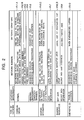
- Fig. 2 is an explanatory diagram illustrating virtual logic networks and switching conditions or communication starting conditions.
- the virtual logic networks are formed by registering members and local resources or members' capabilities selected on the basis of predetermined conditions.
- the logic network ranges are formed by relaying information. Triggering conditions include:
- virtual logic networks VN1 through VN10 virtual logic networks VN1, VN2, VN6 and VN8 correspond to the foregoing neighboring vehicle drivers network A, peers network B, same lane drivers network C and communication navigator users network D, respectively.
- Virtual logic networks VN1 through VN5 are characterized by mutual communication between mobile units.
- the virtual logic network VN1 includes, as its members, neighboring vehicles, neighboring drivers and pedestrians, and is actuated when a driver wishes to say hello or thank you, or to give warning, or when the driver cuts in a line of vehicles or enters an express highway, or when approaching or entering an intersection.
- the virtual logic network VN2 includes friends, peers and family members as its members, and is actuated when the members wish to effect communication, which is expressed by, for example, pressing a key.
- the virtual logic network VN3 includes members sharing the same interests or hobbies, and is actuated when the members wish to effect communication.
- the virtual logic network VN4 includes business-related members, and is actuated when the members wish to effect communication.
- the virtual logic network VN5 includes neighboring vehicles, neighboring drivers and pedestrians as its members, and is actuated when an anomaly of a driver is detected, requiring help or warning.
- Virtual logic networks VN6 through VN7 are characterized by sharing information on traffic, accidents, constructions or other local situations. These networks include, as their members, neighboring vehicles moving in the same lane or direction, and are actuated when a drop in vehicular speed is detected, when information on ambient situations is obtained, or when a route is changed.
- the virtual logic network VN7 includes, as its members, mobile units capable of sharing local information or POIs (facilities) around their own vehicles. This network is actuated when a request is issued.
- Virtual logic networks VN8 and VN9 are characterized by sharing resources, such as map data or information on secret paths.
- the members of the virtual logic network VN8 are vehicles capable of sharing map data, and the network is actuated when a driver of a member vehicle has lost map data and tries to contact a map supplying center in vain due to a busy line.
- the members of the virtual logic network VN9 are mobile units capable of supplying secret path maps or know-how, and the network is actuated when a driver of a member mobile unit requests the information or when a traffic jam is recognized.
- the virtual logic network VN10 is used to deal with emergencies, such as failure and accidents.
- the VN10 includes, as its members, neighboring vehicles, neighboring drivers, pedestrians, mechanic's shops and insurance companies, and is actuated by the occurrence of accidents or failure.
- Fig. 3 is a block diagram of an inter-vehicle communication apparatus.
- Each vehicle is equipped with a communication apparatus CCA having the same construction.
- the CCA is provided with an inter-vehicle transmitter/receiver TRV and inter-vehicle communication controller CMU, which has a resource database RSDB.
- the resource database RSDB includes (1) a map database MPDB, (2) a know-how database KHDB, (3) a user profile database PFDB, and (4) an emergency database EMDB. The following shows the details of each database.
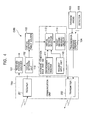
- a vehicular communication apparatus shown in Fig. 6 is formed of a transmitter 300 and a receiver 400.
- the transmitter 300 has sensors 301 through 303 for monitoring various conditions, a user interface 304 through which a user request or a user decision is entered, a condition determiner 305 for determining a condition in a vehicular compartment, a total importance level determiner 306 for determining the level of importance or emergency related to the need for communication with neighboring members on the basis of a determined condition in the vehicular compartment, an information-to-be-sent decider 307 for deciding on a specific means for indicating communication information on the basis of a total importance level if it is determined that communication with neighboring members is necessary, and an information transmitter 308 for wirelessly transmitting necessary information to neighboring members.
- the sensors mainly include a vehicular condition sensor 301 for monitoring vehicular conditions, a vital sensor 302 for detecting the body temperature, respiration, pulses, blood pressure, etc. of a driver, and a visual sensor 303 for monitoring the conditions in a vehicular compartment.
- a final decision on the transmission of information will be made by a user.
- Such a user decision is input to the condition determiner 305 through the user interface 304.
- the user enters a level of importance or emergency in addition to the information to be sent.
- An objective level of importance or emergency cannot be decided merely by user's subjectivity.
- the total importance level determiner 306 decides a total importance or emergency level by comprehensively judging a user's opinion and the data received from the diverse sensors.
- the receiver 400 has an information receiver 401 for receiving information wirelessly transmitted, an importance level determiner 402 for determining the importance level or the emergency level of received information, a received information presentation controller 403 for deciding on a specific means for furnishing a user with received information if it determines that received information should be conveyed to the user, a display unit 404 for displaying received information, a loud speaker 405 for audibly outputting received information and a user interface 406.
- a user enters the importance level or the emergency level of information to be received to the importance level determiner 402 through the user interface 406.
- the prior definition of the importance levels makes it possible to prevent information of a low importance level from being output.
- a receiving user may enter an acknowledgement response through the user interface to transmit it to a signal sender vehicle.
- a receiver 400' is a receiver of a PDA carried by a pedestrian and has the same construction as that of the vehicular receiver 400 and is capable of outputting received information, as necessary.
- the arrangement described above makes it possible to detect an anomaly or accident, such as a case where a driver suddenly develops a bad physical condition, if it happens in a vehicular compartment, and automatically communicate with another mobile unit making up a neighboring vehicle drivers network to notify the mobile unit of the occurrence of the anomaly.
Landscapes
- Engineering & Computer Science (AREA)
- Computer Networks & Wireless Communication (AREA)
- Signal Processing (AREA)
- Computer Security & Cryptography (AREA)
- Multimedia (AREA)
- Health & Medical Sciences (AREA)
- Computing Systems (AREA)
- General Health & Medical Sciences (AREA)
- Medical Informatics (AREA)
- Traffic Control Systems (AREA)
- Mobile Radio Communication Systems (AREA)
Abstract
Description
Claims (11)
- A method for communication among mobile units, comprising the steps of:acquiring information from another mobile unit through a physical network while an automobile is moving or stopped;registering a mobile unit that satisfies a predetermined condition as a member of a virtual logic network based on the condition by referring to the acquired information; andselecting a communicating party from among the members of an appropriate virtual logic network according to an event when the event takes place, and communicating with the selected party.
- The method for communication among mobile units according to Claim 1, wherein
the step for registering a member creates a member table for registering members of networks in association with the virtual logic networks and also creates a resource table for registering a capability of each member, and
the communication step looks for an appropriate virtual logic network according to an event when the event takes place and selects a communicating party by using the member table of the virtual logic networks and the resource table to perform communication with the selected party. - A method for communication among mobile units, comprising the steps of:acquiring information from another mobile unit through a physical network while an automobile is moving or stopped;registering mobile units that satisfy predetermined conditions as members of virtual logic networks based on the conditions by referring to the acquired information;selecting one virtual logic network from among the plurality of virtual logic networks in response to an environment or situation change of a driver or a vehicle or in response to a driver's request; andsetting the selected virtual logic network as an active network.
- The method for communication among mobile units according to Claim 3, wherein the step for registering members
receives information for specifying a mobile unit identity and the condition from a mobile unit, and
refers to the received information, and if the mobile unit satisfies any one of various conditions, then registers the mobile unit as a network member of a virtual network based on the condition. - A vehicular communication apparatus mounted in a vehicle to communicate with another mobile unit, comprising:an information acquirer (101) for acquiring information from another mobile unit through a physical network while an automobile is moving or stopped;a registration means (102) for registering a mobile unit that satisfies a predetermined condition as a member of a virtual logic network based on the condition in a member table by referring to the acquired information; anda communicating party selector (110) for selecting a communicating party by using the table of the virtual logic networks according to an event when the event takes place and communicating with the selected party.
- The vehicular communication apparatus according to Claim 5, wherein
the registration means (102) further creates a resource table for registering the capabilities of members in virtual logic networks to which they belong in association with the members, and
the communicating party selector (110) carries out communication by using the member table of virtual logic networks and the resource table according to an event when the event takes place. - A vehicular communication apparatus mounted in a vehicle to communicate with another mobile unit, comprising:an information acquirer (101) for acquiring information from another mobile unit through a physical network while an automobile is moving or stopped;a registration means (102) for registering mobile units that satisfy predetermined conditions as members of virtual logic networks based on the conditions by referring to the acquired information; anda communicating party selector (110) for selecting a particular virtual logic network from the plurality of virtual logic networks on the basis of an environment and situation change of the driver or vehicle or in response to a driver's request, setting the selected virtual logic network as an active network, and selecting a communicating party to effect communication with the selected party.
- The vehicular communication apparatus according to Claim 7, wherein the registration means (102)
receives information for specifying a mobile unit identity and a condition from a mobile unit, and
refers to the received information, and if the mobile unit satisfies any one of various conditions, then registers the mobile unit as a network member of a virtual network based on the condition. - The vehicular communication apparatus according to Claim 7, wherein the communicating party selector (110) further selects a particular member from among the members constituting the active network in response to an environment and situation change of the driver or vehicle or in response to a driver's request, and makes connection to the selected member to communicate with the member.
- A vehicular communication apparatus mounted in a vehicle to communicate with another mobile unit, comprising:a sensor (302) for detecting a physical condition of a driver;a monitoring sensor (303) for monitoring a condition in a vehicle;a condition determiner (305) for determining the condition of the driver on the basis of detection signals of the sensors;an importance level determiner (306) for determining an importance level regarding the necessity for communication with a neighbor on the basis of the condition;an information-to-be-sent decider (307) for deciding on information to be sent on the basis of the importance level when the decider determines it necessary to communicate with the neighbor; andan information transmitter (308) for wirelessly transmitting the information to be transmitted to the neighbor.
- The vehicular communication apparatus according to Claim 10, further comprising:an information receiver (401) for receiving information wirelessly transmitted;an importance level determiner (402) for determining the importance level of the received information; andan information output unit (403) for outputting the received information if it is determined that the received information must be supplied to a user.
Applications Claiming Priority (2)
| Application Number | Priority Date | Filing Date | Title |
|---|---|---|---|
| JP2002237928A JP4076071B2 (en) | 2002-08-19 | 2002-08-19 | Communication method and vehicle communication apparatus between moving bodies |
| JP2002237928 | 2002-08-19 |
Publications (3)
| Publication Number | Publication Date |
|---|---|
| EP1394993A2 true EP1394993A2 (en) | 2004-03-03 |
| EP1394993A3 EP1394993A3 (en) | 2007-02-14 |
| EP1394993B1 EP1394993B1 (en) | 2016-03-23 |
Family
ID=31492478
Family Applications (1)
| Application Number | Title | Priority Date | Filing Date |
|---|---|---|---|
| EP03254443.9A Expired - Lifetime EP1394993B1 (en) | 2002-08-19 | 2003-07-15 | Method for communication among mobile units and vehicular communication apparatus |
Country Status (4)
| Country | Link |
|---|---|
| US (1) | US7286825B2 (en) |
| EP (1) | EP1394993B1 (en) |
| JP (1) | JP4076071B2 (en) |
| CN (1) | CN1249959C (en) |
Cited By (4)
| Publication number | Priority date | Publication date | Assignee | Title |
|---|---|---|---|---|
| WO2006011109A1 (en) * | 2004-07-22 | 2006-02-02 | Philips Intellectual Property & Standards Gmbh | Scheduling the transmission of messages on a broadcast channel of an ad-hoc network dependent on the usage of this channel |
| EP1919164A1 (en) * | 2006-09-25 | 2008-05-07 | Volkswagen Aktiengesellschaft | Method for collecting data in a requestor vehicle from other vehicles in a network |
| GB2493779A (en) * | 2011-08-19 | 2013-02-20 | Bae Systems Plc | Adaptive communications network for mobile client platforms |
| EP2706765A1 (en) * | 2012-09-07 | 2014-03-12 | Nagravision S.A. | Method to create and manage a group of devices by a management center |
Families Citing this family (104)
| Publication number | Priority date | Publication date | Assignee | Title |
|---|---|---|---|---|
| WO2005028057A1 (en) * | 2003-09-19 | 2005-03-31 | Nokia Corporation | Method and device for supporting wireless multi-player gaming with a multi-player game hub |
| US7277028B1 (en) * | 2003-10-20 | 2007-10-02 | Garth Janke | Method and system for inter-vehicular communications and information reporting |
| US8521185B2 (en) * | 2004-02-28 | 2013-08-27 | Charles Martin Hymes | Wireless communications with visually-identified targets |
| US7501934B2 (en) * | 2004-09-15 | 2009-03-10 | At&T Intellectual Property I, Lp | System and methods for vehicle sound font creation, playback, and networking |
| US8606516B2 (en) * | 2004-11-30 | 2013-12-10 | Dash Navigation, Inc. | User interface system and method for a vehicle navigation device |
| JP2006166211A (en) * | 2004-12-09 | 2006-06-22 | Mitsubishi Motors Corp | Inter-vehicle communication device |
| JP2006195580A (en) * | 2005-01-11 | 2006-07-27 | Toyota Motor Corp | Emergency call system |
| JP4539362B2 (en) * | 2005-02-16 | 2010-09-08 | アイシン精機株式会社 | Vehicle communication device |
| JP4581767B2 (en) * | 2005-03-16 | 2010-11-17 | 株式会社デンソー | Communication device |
| US7183932B2 (en) | 2005-03-21 | 2007-02-27 | Toyota Technical Center Usa, Inc | Inter-vehicle drowsy driver advisory system |
| DK1891848T3 (en) | 2005-06-13 | 2015-10-19 | Intelligent Mechatronic Sys | VEHICLE SIMMERSIVE COMMUNICATION SYSTEM |
| US7894982B2 (en) * | 2005-08-01 | 2011-02-22 | General Motors Llc | Method and system for linked vehicle navigation |
| US7561846B2 (en) * | 2005-09-07 | 2009-07-14 | Gm Gobal Technology Operations, Inc. | Vehicle-to-vehicle communication |
| US20070111672A1 (en) * | 2005-11-14 | 2007-05-17 | Microsoft Corporation | Vehicle-to-vehicle communication |
| JP4710575B2 (en) * | 2005-12-02 | 2011-06-29 | アイシン・エィ・ダブリュ株式会社 | Inter-vehicle communication system |
| US8000857B2 (en) * | 2006-01-27 | 2011-08-16 | GM Global Technology Operations LLC | Vehicle presence indication |
| US20070233371A1 (en) | 2006-03-31 | 2007-10-04 | Arne Stoschek | Navigation system for a motor vehicle |
| US9478133B2 (en) * | 2006-03-31 | 2016-10-25 | Volkswagen Ag | Motor vehicle and navigation arrangement for a motor vehicle |
| US8554463B2 (en) * | 2006-03-31 | 2013-10-08 | Volkswagen Ag | Navigation system for a motor vehicle |
| US8700308B2 (en) * | 2006-03-31 | 2014-04-15 | Volkswagen Ag | Navigation system for a motor vehicle |
| US9052214B2 (en) * | 2006-05-22 | 2015-06-09 | Volkswagen Ag | Navigation system for a motor vehicle, method for operating a navigation system and motor vehicle including a navigation system |
| US7859392B2 (en) | 2006-05-22 | 2010-12-28 | Iwi, Inc. | System and method for monitoring and updating speed-by-street data |
| US9976865B2 (en) | 2006-07-28 | 2018-05-22 | Ridetones, Inc. | Vehicle communication system with navigation |
| US20080051033A1 (en) * | 2006-08-28 | 2008-02-28 | Charles Martin Hymes | Wireless communications with visually- identified targets |
| US8554827B2 (en) * | 2006-09-29 | 2013-10-08 | Qurio Holdings, Inc. | Virtual peer for a content sharing system |
| JP4770684B2 (en) * | 2006-10-03 | 2011-09-14 | 株式会社デンソー | Inter-vehicle communication system |
| JP4840230B2 (en) * | 2007-03-30 | 2011-12-21 | ブラザー工業株式会社 | Wireless network system and wireless device for configuring the same |
| US9932033B2 (en) | 2007-05-10 | 2018-04-03 | Allstate Insurance Company | Route risk mitigation |
| US8606512B1 (en) | 2007-05-10 | 2013-12-10 | Allstate Insurance Company | Route risk mitigation |
| US10096038B2 (en) | 2007-05-10 | 2018-10-09 | Allstate Insurance Company | Road segment safety rating system |
| US10157422B2 (en) | 2007-05-10 | 2018-12-18 | Allstate Insurance Company | Road segment safety rating |
| KR100919680B1 (en) | 2007-11-16 | 2009-10-06 | 한국전자통신연구원 | Sensor network based data transfer device and method |
| CA2719301C (en) | 2008-03-25 | 2016-10-04 | E-Lane Systems Inc. | Multi-participant, mixed-initiative voice interaction system |
| US7770929B2 (en) * | 2008-04-22 | 2010-08-10 | Freescale Semiconductor, Inc. | Vehicular seatbelt restraint with selectively disabled inertia reel assembly |
| US8838075B2 (en) * | 2008-06-19 | 2014-09-16 | Intelligent Mechatronic Systems Inc. | Communication system with voice mail access and call by spelling functionality |
| US9652023B2 (en) * | 2008-07-24 | 2017-05-16 | Intelligent Mechatronic Systems Inc. | Power management system |
| US8885039B2 (en) * | 2008-07-25 | 2014-11-11 | Lg Electronics Inc. | Providing vehicle information |
| US8194550B2 (en) * | 2009-02-09 | 2012-06-05 | GM Global Technology Operations LLC | Trust-based methodology for securing vehicle-to-vehicle communications |
| US20100202346A1 (en) * | 2009-02-12 | 2010-08-12 | Sitzes Ryan Z | Wireless communication system and method |
| WO2010135837A1 (en) * | 2009-05-28 | 2010-12-02 | Intelligent Mechatronic Systems Inc | Communication system with personal information management and remote vehicle monitoring and control features |
| WO2010148518A1 (en) * | 2009-06-27 | 2010-12-29 | Intelligent Mechatronic Systems | Vehicle internet radio interface |
| US9978272B2 (en) * | 2009-11-25 | 2018-05-22 | Ridetones, Inc | Vehicle to vehicle chatting and communication system |
| KR101325807B1 (en) * | 2009-12-17 | 2013-11-05 | 한국전자통신연구원 | APPARATUS AND METHOD FOR COMMUNICATION OF VEHICLE USING IPv6 NETWORK |
| US9042873B2 (en) | 2010-06-07 | 2015-05-26 | Intelligent Mechatronic Systems Inc. | On the road groups |
| US20120038489A1 (en) * | 2010-08-12 | 2012-02-16 | Goldshmidt Ehud | System and method for spontaneous p2p communication between identified vehicles |
| US8976744B2 (en) * | 2010-11-03 | 2015-03-10 | Broadcom Corporation | Vehicle communication network including wireless communications |
| JP5872764B2 (en) * | 2010-12-06 | 2016-03-01 | 富士通テン株式会社 | Image display system |
| US8738280B2 (en) * | 2011-06-09 | 2014-05-27 | Autotalks Ltd. | Methods for activity reduction in pedestrian-to-vehicle communication networks |
| US20170242443A1 (en) | 2015-11-02 | 2017-08-24 | Peloton Technology, Inc. | Gap measurement for vehicle convoying |
| US10474166B2 (en) | 2011-07-06 | 2019-11-12 | Peloton Technology, Inc. | System and method for implementing pre-cognition braking and/or avoiding or mitigation risks among platooning vehicles |
| US10520952B1 (en) | 2011-07-06 | 2019-12-31 | Peloton Technology, Inc. | Devices, systems, and methods for transmitting vehicle data |
| US8744666B2 (en) | 2011-07-06 | 2014-06-03 | Peloton Technology, Inc. | Systems and methods for semi-autonomous vehicular convoys |
| US11334092B2 (en) | 2011-07-06 | 2022-05-17 | Peloton Technology, Inc. | Devices, systems, and methods for transmitting vehicle data |
| US10520581B2 (en) | 2011-07-06 | 2019-12-31 | Peloton Technology, Inc. | Sensor fusion for autonomous or partially autonomous vehicle control |
| US9065869B2 (en) | 2011-10-08 | 2015-06-23 | Broadcom Corporation | Social network device memberships and applications |
| US8810431B2 (en) * | 2011-10-20 | 2014-08-19 | GM Global Technology Operations LLC | Highway merge assistant and control |
| DE102011085814B3 (en) * | 2011-11-07 | 2013-03-28 | Robert Bosch Gmbh | Interconnecting device for interconnecting travel groups existing in multiple vehicles, is configured with system linked with mobile telephones connected with one another over common central server |
| JP5974498B2 (en) | 2012-01-24 | 2016-08-23 | 株式会社デンソー | Inter-vehicle communication device |
| SE537958C2 (en) * | 2012-09-24 | 2015-12-08 | Scania Cv Ab | Procedure, measuring device and control unit for adapting vehicle train control |
| CN102915669A (en) * | 2012-10-17 | 2013-02-06 | 中兴通讯股份有限公司 | Method and device for manufacturing live-action map |
| KR101916039B1 (en) * | 2012-10-26 | 2018-11-07 | 현대자동차 주식회사 | Method and system for providing information about parking space through communication between vehicles |
| US20140164582A1 (en) * | 2012-12-06 | 2014-06-12 | SXCVS XM Connected Vehicle Services Inc. | Method and system for providing configurable communication network routing |
| US11294396B2 (en) | 2013-03-15 | 2022-04-05 | Peloton Technology, Inc. | System and method for implementing pre-cognition braking and/or avoiding or mitigation risks among platooning vehicles |
| CA2907452A1 (en) | 2013-03-15 | 2014-09-18 | Peloton Technology Inc. | Vehicle platooning systems and methods |
| US9147353B1 (en) * | 2013-05-29 | 2015-09-29 | Allstate Insurance Company | Driving analysis using vehicle-to-vehicle communication |
| KR101500103B1 (en) * | 2013-07-10 | 2015-03-06 | 현대자동차주식회사 | Apparatus and Method for Communication of Vehicles |
| US9141112B1 (en) | 2013-10-16 | 2015-09-22 | Allstate Insurance Company | Caravan management |
| US10692149B1 (en) | 2013-12-06 | 2020-06-23 | Allstate Insurance Company | Event based insurance model |
| US9390451B1 (en) | 2014-01-24 | 2016-07-12 | Allstate Insurance Company | Insurance system related to a vehicle-to-vehicle communication system |
| US9355423B1 (en) | 2014-01-24 | 2016-05-31 | Allstate Insurance Company | Reward system related to a vehicle-to-vehicle communication system |
| US10096067B1 (en) | 2014-01-24 | 2018-10-09 | Allstate Insurance Company | Reward system related to a vehicle-to-vehicle communication system |
| US10803525B1 (en) | 2014-02-19 | 2020-10-13 | Allstate Insurance Company | Determining a property of an insurance policy based on the autonomous features of a vehicle |
| US9940676B1 (en) | 2014-02-19 | 2018-04-10 | Allstate Insurance Company | Insurance system for analysis of autonomous driving |
| US10783587B1 (en) | 2014-02-19 | 2020-09-22 | Allstate Insurance Company | Determining a driver score based on the driver's response to autonomous features of a vehicle |
| US10783586B1 (en) | 2014-02-19 | 2020-09-22 | Allstate Insurance Company | Determining a property of an insurance policy based on the density of vehicles |
| US10796369B1 (en) | 2014-02-19 | 2020-10-06 | Allstate Insurance Company | Determining a property of an insurance policy based on the level of autonomy of a vehicle |
| DE102014217499A1 (en) * | 2014-09-02 | 2016-03-03 | Bayerische Motoren Werke Aktiengesellschaft | A vehicle model, system and method for signaling vehicle related information |
| US10069919B2 (en) | 2014-10-08 | 2018-09-04 | Huawei Technologies Co., Ltd. | Method for exchanging information between in-vehicle terminals and in-vehicle terminal |
| JP2016091309A (en) * | 2014-11-05 | 2016-05-23 | 三菱電機株式会社 | Warning notification system and warning notification method |
| US9448079B2 (en) | 2015-02-11 | 2016-09-20 | Here Global B.V. | Method and apparatus for providing navigation guidance via proximate devices |
| US10712748B2 (en) | 2015-08-26 | 2020-07-14 | Peloton Technology, Inc. | Devices, systems, and methods for generating travel forecasts for vehicle pairing |
| US10269075B2 (en) | 2016-02-02 | 2019-04-23 | Allstate Insurance Company | Subjective route risk mapping and mitigation |
| DE102016002603A1 (en) * | 2016-03-03 | 2017-09-07 | Audi Ag | Method for determining and providing a database containing environmental data relating to a predetermined environment |
| CN105959908B (en) * | 2016-04-26 | 2019-04-30 | 中国联合网络通信集团有限公司 | Vehicle-to-vehicle communication system and method |
| EP3465371A4 (en) | 2016-05-31 | 2019-12-18 | Peloton Technology Inc. | STATE MACHINE FOR PLATOON REGULATOR |
| US20170365105A1 (en) * | 2016-06-17 | 2017-12-21 | Ford Global Technologies, Llc | Method and apparatus for inter-vehicular safety awareness and alert |
| JP6656098B2 (en) * | 2016-06-29 | 2020-03-04 | 三菱電機株式会社 | In-vehicle device, vehicle control method, and biological information processing method |
| DE102016212185A1 (en) | 2016-07-05 | 2018-01-11 | Volkswagen Aktiengesellschaft | Procedure for exchanging and displaying location-related information |
| EP3273424B1 (en) * | 2016-07-21 | 2019-03-13 | The Boeing Company | System and method of aircraft surveillance and tracking |
| US10369998B2 (en) | 2016-08-22 | 2019-08-06 | Peloton Technology, Inc. | Dynamic gap control for automated driving |
| JP6690056B2 (en) | 2016-08-22 | 2020-04-28 | ぺロトン テクノロジー インコーポレイテッド | Control system architecture for motor vehicle |
| US10162357B2 (en) * | 2017-03-15 | 2018-12-25 | Toyota Research Institute, Inc. | Distributed computing among vehicles |
| US10408633B2 (en) | 2017-08-30 | 2019-09-10 | Denso International America, Inc. | System and method for dynamic route guidance |
| JP6989429B2 (en) * | 2018-03-28 | 2022-01-05 | 株式会社東芝 | The platooning operation system and the platooning operation method |
| US10899323B2 (en) | 2018-07-08 | 2021-01-26 | Peloton Technology, Inc. | Devices, systems, and methods for vehicle braking |
| US10762791B2 (en) | 2018-10-29 | 2020-09-01 | Peloton Technology, Inc. | Systems and methods for managing communications between vehicles |
| JP2020166585A (en) * | 2019-03-29 | 2020-10-08 | トヨタ自動車株式会社 | Map information distribution system and vehicle |
| US11427196B2 (en) | 2019-04-15 | 2022-08-30 | Peloton Technology, Inc. | Systems and methods for managing tractor-trailers |
| US10787152B1 (en) | 2019-08-13 | 2020-09-29 | Honda Motor Co., Ltd. | Systems and methods for rental vehicle driver verification |
| US11304026B2 (en) * | 2019-12-10 | 2022-04-12 | At&T Intellectual Property I, L.P. | Assisted micro-environment interaction |
| JP7294199B2 (en) * | 2020-03-13 | 2023-06-20 | トヨタ自動車株式会社 | Communication device, communication system, vehicle, communication program, and communication method |
| JP2022034782A (en) * | 2020-08-19 | 2022-03-04 | トヨタ自動車株式会社 | Information processing device, vehicle, and information processing method |
| JP7256785B2 (en) * | 2020-12-02 | 2023-04-12 | 本田技研工業株式会社 | Information management device and information management system |
| JP2023049145A (en) * | 2021-09-29 | 2023-04-10 | 本田技研工業株式会社 | Monitoring system and monitoring device |
Family Cites Families (21)
| Publication number | Priority date | Publication date | Assignee | Title |
|---|---|---|---|---|
| DE3337648A1 (en) * | 1983-10-17 | 1987-02-26 | Licentia Gmbh | Radio network with a multiplicity of mobile stations |
| JPS6399662A (en) * | 1986-10-16 | 1988-04-30 | Oki Electric Ind Co Ltd | Line switching control system for car telephone equipment |
| US5729619A (en) * | 1995-08-08 | 1998-03-17 | Northrop Grumman Corporation | Operator identity, intoxication and drowsiness monitoring system and method |
| JP4145965B2 (en) * | 1996-01-10 | 2008-09-03 | 沖電気工業株式会社 | Mobile communication system |
| JP3276057B2 (en) | 1996-06-04 | 2002-04-22 | 日本電信電話株式会社 | 3D virtual world display system |
| US5867587A (en) * | 1997-05-19 | 1999-02-02 | Northrop Grumman Corporation | Impaired operator detection and warning system employing eyeblink analysis |
| US6091334A (en) * | 1998-09-04 | 2000-07-18 | Massachusetts Institute Of Technology | Drowsiness/alertness monitor |
| JP2000090395A (en) | 1998-09-16 | 2000-03-31 | Maruyasu Industries Co Ltd | Transmission apparatus and method for inter-vehicle communication |
| DE19903909A1 (en) * | 1999-02-01 | 2000-08-03 | Delphi 2 Creative Tech Gmbh | Method and device for obtaining relevant traffic information and for dynamic route optimization |
| US6647270B1 (en) * | 1999-09-10 | 2003-11-11 | Richard B. Himmelstein | Vehicletalk |
| JP3868166B2 (en) | 1999-10-20 | 2007-01-17 | クラリオン株式会社 | Inter-vehicle wireless communication system |
| EP1143400B1 (en) | 1999-11-12 | 2005-02-23 | Matsushita Electric Industrial Co., Ltd. | On-board communication terminal and information service center communicating with on-board communication terminal |
| US7382274B1 (en) | 2000-01-21 | 2008-06-03 | Agere Systems Inc. | Vehicle interaction communication system |
| JP3437990B2 (en) * | 2000-03-17 | 2003-08-18 | インターナショナル・ビジネス・マシーンズ・コーポレーション | Communication method, communication terminal, wireless ad hoc network, and mobile phone |
| US6292747B1 (en) * | 2000-04-20 | 2001-09-18 | International Business Machines Corporation | Heterogeneous wireless network for traveler information |
| JP2001358641A (en) | 2000-06-15 | 2001-12-26 | Matsushita Electric Ind Co Ltd | Inter-vehicle communication system and inter-vehicle communication device |
| JP3729042B2 (en) | 2000-08-07 | 2005-12-21 | 株式会社デンソー | Emergency vehicle approach notification system, in-vehicle communication device and roadside communication device |
| US6642844B2 (en) * | 2000-08-22 | 2003-11-04 | Sivan Llc | Direct dispatcherless automatic vehicle-to-vehicle and non-vehicle to vehicle police/emergency medical service notification system for life threatening accidents, hijackings, thefts and medical emergencies |
| JP2002183899A (en) | 2000-12-18 | 2002-06-28 | Mitsubishi Electric Corp | On-board vehicle speed monitoring device |
| US7149534B2 (en) * | 2001-01-23 | 2006-12-12 | Ericsson Inc. | Peer to peer information exchange for mobile communications devices |
| EP1446891B1 (en) * | 2001-10-24 | 2013-08-21 | Mouhamad Ahmad Naboulsi | Safety control system for vehicles |
-
2002
- 2002-08-19 JP JP2002237928A patent/JP4076071B2/en not_active Expired - Fee Related
-
2003
- 2003-07-15 EP EP03254443.9A patent/EP1394993B1/en not_active Expired - Lifetime
- 2003-08-19 CN CNB03154973XA patent/CN1249959C/en not_active Expired - Fee Related
- 2003-08-19 US US10/643,763 patent/US7286825B2/en not_active Expired - Lifetime
Cited By (4)
| Publication number | Priority date | Publication date | Assignee | Title |
|---|---|---|---|---|
| WO2006011109A1 (en) * | 2004-07-22 | 2006-02-02 | Philips Intellectual Property & Standards Gmbh | Scheduling the transmission of messages on a broadcast channel of an ad-hoc network dependent on the usage of this channel |
| EP1919164A1 (en) * | 2006-09-25 | 2008-05-07 | Volkswagen Aktiengesellschaft | Method for collecting data in a requestor vehicle from other vehicles in a network |
| GB2493779A (en) * | 2011-08-19 | 2013-02-20 | Bae Systems Plc | Adaptive communications network for mobile client platforms |
| EP2706765A1 (en) * | 2012-09-07 | 2014-03-12 | Nagravision S.A. | Method to create and manage a group of devices by a management center |
Also Published As
| Publication number | Publication date |
|---|---|
| JP2004078562A (en) | 2004-03-11 |
| US20040116106A1 (en) | 2004-06-17 |
| EP1394993B1 (en) | 2016-03-23 |
| CN1487676A (en) | 2004-04-07 |
| EP1394993A3 (en) | 2007-02-14 |
| US7286825B2 (en) | 2007-10-23 |
| JP4076071B2 (en) | 2008-04-16 |
| CN1249959C (en) | 2006-04-05 |
Similar Documents
| Publication | Publication Date | Title |
|---|---|---|
| EP1394993B1 (en) | Method for communication among mobile units and vehicular communication apparatus | |
| US12567008B2 (en) | Identifying unassigned passengers for autonomous vehicles | |
| CN110942332B (en) | Information processing device and information processing method | |
| US20220299324A1 (en) | Accident fault detection based on multiple sensor devices | |
| KR101500472B1 (en) | Method and apparatus for transmitting vehicle-related information in and out of a vehicle | |
| US7911360B2 (en) | Method and system for vehicular communications and information reporting | |
| US20140302774A1 (en) | Methods systems and apparatus for sharing information among a group of vehicles | |
| US12142148B2 (en) | Technology for balancing journeys of motor vehicles | |
| US20140207357A1 (en) | Vehicle-side system | |
| JP6269562B2 (en) | Driving support system, in-vehicle device | |
| US11176819B2 (en) | Systems and methods for adaptive protocol implementation for vehicle head units | |
| US20220390938A1 (en) | Stages of component controls for autonomous vehicles | |
| WO2014054153A1 (en) | Vehicle-mounted information processing device | |
| JP4102181B2 (en) | Signal waiting time prediction method and navigation apparatus | |
| WO2013136499A1 (en) | Mobile communication apparatus, management apparatus, mobile communication method, mobile communication program, and recording medium | |
| GB2547986A (en) | Altitude intergrated navigation with DSRC network | |
| WO2021201304A1 (en) | Method and device for assisting autonomous driving | |
| JP2000207685A (en) | In-vehicle device and vehicle communication system having the same | |
| CN112930698B (en) | Communication system, communication terminal, control method, and storage medium storing program | |
| WO2021201305A1 (en) | Method and device for changing communication protocol for vehicle | |
| JP2004362025A (en) | Vehicle communication equipment, vehicle communication method and vehicle communication program | |
| US12337861B2 (en) | Inter-vehicle distance sharing device, inter-vehicle distance sharing method, and non-transitory storage medium | |
| JP2004246567A (en) | In-vehicle information presentation device and vehicle information acquisition method |
Legal Events
| Date | Code | Title | Description |
|---|---|---|---|
| PUAI | Public reference made under article 153(3) epc to a published international application that has entered the european phase |
Free format text: ORIGINAL CODE: 0009012 |
|
| AK | Designated contracting states |
Kind code of ref document: A2 Designated state(s): AT BE BG CH CY CZ DE DK EE ES FI FR GB GR HU IE IT LI LU MC NL PT RO SE SI SK TR |
|
| AX | Request for extension of the european patent |
Extension state: AL LT LV MK |
|
| PUAL | Search report despatched |
Free format text: ORIGINAL CODE: 0009013 |
|
| AK | Designated contracting states |
Kind code of ref document: A3 Designated state(s): AT BE BG CH CY CZ DE DK EE ES FI FR GB GR HU IE IT LI LU MC NL PT RO SE SI SK TR |
|
| AX | Request for extension of the european patent |
Extension state: AL LT LV MK |
|
| 17P | Request for examination filed |
Effective date: 20070131 |
|
| 17Q | First examination report despatched |
Effective date: 20070516 |
|
| AKX | Designation fees paid |
Designated state(s): DE FR GB |
|
| REG | Reference to a national code |
Ref country code: DE Ref legal event code: R079 Ref document number: 60348701 Country of ref document: DE Free format text: PREVIOUS MAIN CLASS: H04L0012280000 Ipc: H04L0029060000 |
|
| RIC1 | Information provided on ipc code assigned before grant |
Ipc: H04W 84/00 20090101ALN20151020BHEP Ipc: H04W 4/08 20090101ALI20151020BHEP Ipc: H04L 29/06 20060101AFI20151020BHEP Ipc: H04W 72/00 20090101ALN20151020BHEP Ipc: H04W 84/18 20090101ALN20151020BHEP Ipc: H04L 29/08 20060101ALI20151020BHEP |
|
| GRAP | Despatch of communication of intention to grant a patent |
Free format text: ORIGINAL CODE: EPIDOSNIGR1 |
|
| INTG | Intention to grant announced |
Effective date: 20151203 |
|
| GRAS | Grant fee paid |
Free format text: ORIGINAL CODE: EPIDOSNIGR3 |
|
| GRAA | (expected) grant |
Free format text: ORIGINAL CODE: 0009210 |
|
| RIN1 | Information on inventor provided before grant (corrected) |
Inventor name: SHISHIDO, HIROSHI C/O ALPINE ELECTRONICS, INC. Inventor name: MINAMI, MASANA, C/O ALPINE ELECTRONICS, INC. Inventor name: SAITO, NOZOMU C/O ALPINE ELECTRONICS, INC. Inventor name: HASEGAWA, KOYO, C/O ALPINE ELECTRONICS, INC. |
|
| AK | Designated contracting states |
Kind code of ref document: B1 Designated state(s): DE FR GB |
|
| REG | Reference to a national code |
Ref country code: GB Ref legal event code: FG4D |
|
| REG | Reference to a national code |
Ref country code: DE Ref legal event code: R096 Ref document number: 60348701 Country of ref document: DE |
|
| REG | Reference to a national code |
Ref country code: FR Ref legal event code: PLFP Year of fee payment: 14 |
|
| REG | Reference to a national code |
Ref country code: DE Ref legal event code: R097 Ref document number: 60348701 Country of ref document: DE |
|
| PLBE | No opposition filed within time limit |
Free format text: ORIGINAL CODE: 0009261 |
|
| STAA | Information on the status of an ep patent application or granted ep patent |
Free format text: STATUS: NO OPPOSITION FILED WITHIN TIME LIMIT |
|
| 26N | No opposition filed |
Effective date: 20170102 |
|
| REG | Reference to a national code |
Ref country code: DE Ref legal event code: R082 Ref document number: 60348701 Country of ref document: DE Representative=s name: SCHMITT-NILSON SCHRAUD WAIBEL WOHLFROM PATENTA, DE |
|
| REG | Reference to a national code |
Ref country code: FR Ref legal event code: PLFP Year of fee payment: 15 |
|
| REG | Reference to a national code |
Ref country code: FR Ref legal event code: PLFP Year of fee payment: 16 |
|
| PGFP | Annual fee paid to national office [announced via postgrant information from national office to epo] |
Ref country code: DE Payment date: 20190719 Year of fee payment: 17 Ref country code: FR Payment date: 20190719 Year of fee payment: 17 |
|
| PGFP | Annual fee paid to national office [announced via postgrant information from national office to epo] |
Ref country code: GB Payment date: 20190719 Year of fee payment: 17 |
|
| REG | Reference to a national code |
Ref country code: DE Ref legal event code: R119 Ref document number: 60348701 Country of ref document: DE |
|
| GBPC | Gb: european patent ceased through non-payment of renewal fee |
Effective date: 20200715 |
|
| PG25 | Lapsed in a contracting state [announced via postgrant information from national office to epo] |
Ref country code: GB Free format text: LAPSE BECAUSE OF NON-PAYMENT OF DUE FEES Effective date: 20200715 Ref country code: FR Free format text: LAPSE BECAUSE OF NON-PAYMENT OF DUE FEES Effective date: 20200731 |
|
| PG25 | Lapsed in a contracting state [announced via postgrant information from national office to epo] |
Ref country code: DE Free format text: LAPSE BECAUSE OF NON-PAYMENT OF DUE FEES Effective date: 20210202 |