The present invention relates to a concrete cask
suitable for transportation and long-term storage of
radioactive materials, such as spent nuclear fuel. More
particularly, the invention is concerned with technology
for increasing the performance of the concrete cask through
improvements of its cement composite and construction.
Conventional technologies concerning concrete casks
are disclosed in Japanese Unexamined Patent Publication
Nos. 2001-141891 and 2001-305375, for example.
Patent Publication No. 2001-305375 describes an
construction of a concrete cask, in which surfaces of the
concrete cask are covered by steel plates to prevent its
cracking and loss of water content and to achieve enhanced
durability, and partitions are provided in the cask to
prevent concrete cracking.
Patent Publication No. 2001-141891 describes a
concrete cask manufactured by using an ordinary low heat-resistance
concrete blend. According to the Publication,
there is formed a gap between the concrete cask and a
canister taking into consideration temperature limitations
of concrete. The concrete cask has air inlets and air
outlets. External air introduced through the air inlets is
caused to convent inside the cask to directly cool the
canister and avoid temperature increase of the concrete.
To further decrease the temperature of the concrete, the
concrete cask is provided with liners and internal fins.
While the technology of Publication No. 2001-305375
helps prevent concrete cracking, the concrete cask has poor
heat resistance. It is therefore necessary to continuously
introduce external air into the cask. An opening for
introducing the external air acts as a "shielding defect"
which could increase streaming of radioactive rays. The
external air is likely to contain corrosive substances,
such as chlorides, which would accelerate corrosion of a
steel-made canister. Therefore, the concrete cask of this
prior art technology tends to pose problems related to
sealing performance.
Since the concrete cask of Publication No. 2001-141891
is made of concrete having low heat resistance, it is
necessary to introduce air to the interior of the cask.
This would require a complicated structure of the concrete
cask and pose a risk of releasing radioactive gases in case
of canister breakage.
The conventional concrete casks is made of concrete of
which heat-resisting temperature is 90°C or less, so that
they generally necessitate complicated structures such as
the provision of through holes for ventilation. If such
through holes are made in the concrete cask, the external
air goes into direct contact with the canister provided
inside the cask, resulting in corrosion of the canister and
accidental release of radioactive material into the
environment from inside the canister. Conventional
concrete retains hydrogen, which is effective for shielding
neutrons, in the form of free water which evaporates at
temperatures of 100°C or above. Thus, the conventional
concrete casks have a problem that their neutron-shielding
performance considerably decreases when used under high-temperature
conditions (100°C or above).
Under such circumstances, it is an object of the
invention to provide a composite from which concrete
featuring a sufficiently high heat resistance can be
produced. It is another object of the invention to design
and manufacture a high-safety sealed concrete cask using
the composite that can prevent corrosion of an internal
canister and release of radioactive material to the
exterior and offer high shielding performance without the
provision of any opening (shielding defect) in the cask.
It is a further object of the invention to provide a
concrete cask of which concrete structure can retain a
water content that is effective for shielding neutrons even
at a temperature of 100°C or above. (In this invention, a
practical operating temperature of the concrete cask is
assumed to be 150°C.)
According to the invention, a composite includes
Portland cement or blended cement containing Portland
cement, and at least one metallic material selected from
the group consisting of iron, carbon steel and stainless
steel in particulate, powder or fiber form, wherein the
content of calcium hydroxide falls in a range of 15% to 60%
by mass after hardening through hydration reaction, and the
content of the metallic material falls in a range of 10% to
70% by mass after hardening through hydration reaction.
These and other objects, features and advantages of
the invention will become more apparent upon reading the
following detailed description along with the accompanying
drawings.
The invention is now described with reference to
specific embodiments thereof. The following discussion
first deals with cement composites and concretes.
A cement composite of the invention is a composite
containing Portland cement or a composite containing
blended cement containing Portland cement, in which raw
materials are blended in such a manner that the content of
calcium hydroxide is 15% to 60% by mass, preferably 20% to
50% by mass, after hardening through hydration reaction.
Also, a cement composite of the invention is a
composite containing Portland cement which is blended in
such a manner that the composite contains after hardening
through hydration reaction at least 15% by mass of
hydroxide material which retains water in the form of a
crystalline structure of which melting temperature and
decomposition temperature (the temperature at which
dissociation pressure becomes 1 atmosphere) exceed 100°C.
More preferably, the composite is blended in such a manner
that the content of the hydroxide material is 20% by mass
or higher after hardening. Still more preferably, the
composite is blended in such a manner that the content of
the hydroxide material is 80% by mass or higher after
hardening.
Typical hydroxide materials of which melting and
decomposition temperatures are higher than 100°C are
hydroxides of alkaline earth metals, such as calcium (Ca),
strontium (Sr), barium (Ba) and radium (Ra), as well as
magnesium (Mg) which is a member of a homologous series of
the alkaline earth metals. These hydroxides are mixed in
concrete and retain water (hydrogen) in the form of water
of crystallization, which provides excellent neutron-shielding
performance. For example, the decomposition
temperature of calcium hydroxide is 580°C and the melting
and decomposition temperatures of barium hydroxide is 325°C
and 998°C, respectively, so that they retain water
(hydrogen) up to high temperature ranges. Other hydroxides
often blended in a cement composite or concrete include
lithium hydroxide, sodium hydroxide, potassium hydroxide,
lanthanum hydroxide, chromium hydroxide, manganese
hydroxide, iron hydroxide, cobalt hydroxide, nickel
hydroxide, copper hydroxide, zinc hydroxide, aluminum
hydroxide, lead hydroxide, gold hydroxide, platinum
hydroxide and ammonium hydroxide.
Hydroxides least soluble or insoluble in water are
preferable for producing a cement composite. By the
addition of such hydroxides, it is possible to ensure that
concrete obtained through hydration reaction contains
hydroxides which do not decompose and release water at
100°C or above.
The solubility of a hydroxide to be blended in a
cement composite in pure water should be such that the
soluble amount of the hydroxide is preferably 15 g or less,
more preferably 5 g or less, and most preferably 1 g or
less, per 100 g of pure water at 20°C. The aforementioned
hydroxides of alkaline earth metals and magnesium which is
a member of the homologous series are most excellent
compounds from the viewpoint of solubility. For example,
the solubilities of the hydroxides of calcium, strontium
and magnesium are 1 g or less per 100 g of pure water, and
the solubility of the hydroxide of barium is 5 g or less
per 100 g of pure water.
Among these hydroxides, the hydroxides of calcium and
magnesium are particularly effective for improving the
neutron-shielding performance. This is because the atomic
weights of calcium and magnesium are so small that their
hydroxides have high hydrogen contents.
Since calcium contained in calcium hydroxide is a main
component of Portland cement and calcium hydroxide is a
material produced by the ordinary reaction of hydration,
calcium hydroxide is most preferable among the
aforementioned hydroxides.
Concretes of the invention are produced by using the
aforementioned cement composites, in which the percentage
contents of the hydroxides, such as calcium hydroxide, are
based on the results of experiments which will be discussed
below.
In order to ensure that hydroxides, such as calcium
hydroxide, are present in concrete obtained after hardening
through hydration reaction, the hydroxides like calcium
hydroxide may be directly added to a composite (which may
be Portland cement or blended cement containing Portland
cement) as shown in the following discussion of the
experiments. Alternatively, a material other than calcium
hydroxide may be added to the composite (which may be
Portland cement or blended cement containing Portland
cement) so that concrete obtained after hardening through
hydration reaction contains the hydroxides like calcium
hydroxide at the aforementioned percentage contents. An
example of such alternative material is calcium oxide
(quick lime).
EXPERIMENT 1
Assuming composites and concretes produced by blending
appropriate quantities of Portland cement, silica fume,
metallic material, chemical admixture and water and adding
calcium hydroxide at various ratios, relative dose rates of
the concrete cask were calculated on a simulation basis in
Experiment 1. Here, the relative dose rate is defined as
the ratio of dose equivalent rate at a central part of a
concrete cask produced by using ordinary concrete to dose
equivalent rate at a central part of a concrete cask
produced by using the concrete of the invention.
FIG. 1 shows the relationship between the content of
calcium hydroxide and the relative dose rate. In carrying
out the simulation, an assumption was made that an iron
shield was 20 cm thick, a concrete shield was 35 cm thick,
the type of fuel was pressurized water reactor (PWR) fuel,
burnup was 50,000 MWD/MTU, and cooling time was 10 years.
It can be seen from FIG. 1 that as the content of
calcium hydroxide reaches 15% by mass, the relative dose
rate with respect to neutrons becomes equal to about 1,
whereby the concrete of the invention exerts neutron-shielding
performance approximately equivalent to that of
the ordinary (conventional) concrete. As the content of
calcium hydroxide exceeds 15% by mass, the relative dose
rate becomes smaller than 1, whereby the concrete of the
invention exerts higher neutron-shielding performance than
the ordinary concrete. Thus, the content of calcium
hydroxide in concrete should preferably be 15% by mass or
higher. As the content of calcium hydroxide reaches about
60% by mass, the curve of the relative dose rate becomes
almost flat indicating that a further improvement in the
neutron-shielding performance is scarcely obtained. From
this observation, it is recognized that the content of
calcium hydroxide in concrete should preferably be 15% to
60% by mass. A minimum density of about 1.8 g/cm3 is
needed to obtain neutron and gamma-shielding performance
comparable to ordinary concrete material. Thus, it can be
said that the maximum amount of calcium hydroxide to be
added is preferably 80% by mass to obtain the minimum
density of 1.8 g/cm3.
While FIG. 1 indicates that the neutron-shielding
performance improves with an increase in the content of
calcium hydroxide, the relative dose rate with respect to
neutrons becomes equal to about 0.5 or less at a calcium
hydroxide content of 20% by mass or higher. Thus, the
concrete cask of the invention exhibits high neutron-shielding
performance at the calcium hydroxide content of
20% by mass or higher compared to the conventional concrete
cask. When the content of calcium hydroxide exceeds 50% by
mass, the curve of the relative dose rate becomes almost
flat. This indicates that no significant improvement in
the neutron-shielding performance is achieved any more even
if further quantities of calcium hydroxide are added.
Therefore, from the viewpoint of cost-effectiveness, i.e.,
the balance between manufacturing cost and adequate
shielding performance, the content of calcium hydroxide in
the concrete should preferably be 20% to 50% by mass.
As shown in the foregoing discussion, the content of
hydroxides, such as calcium hydroxide, should preferably be
15% to 60% by mass or 15% to 80% by mass, more preferably
be 20% to 50% by mass. The composite and concrete of the
invention make it possible to manufacture a concrete
structure featuring excellent neutron-shielding
performance. This characteristic serves to reduce the
thickness of a shielding structure compared to prior art
structures, permitting an eventual reduction in the size
and weight of the concrete cask.
Although the aforementioned calculation results of
Experiment 1 were obtained on the assumption that the
concrete structure of the invention was used at 150°C,
calcium hydroxide contained in the concrete does not begin
to decompose until its temperature reaches approximately
450°C. Thus, the concrete structure of the invention
exhibits the same neutron-shielding performance even under
high-temperature conditions exceeding 150°C. Calculation
results for the ordinary concrete, which was used as a
comparative example, were obtained on the assumption that
the ordinary concrete was used at room temperature. Since
free water evaporates at 100°C and above, the neutron-shielding
performance of the ordinary concrete remarkably
deteriorates under high-temperature conditions. The
concrete of the invention is therefore significantly
superior to the ordinary concrete with respect to the
neutron-shielding performance under high-temperature
conditions. As previously mentioned, the practical
operating temperature of the concrete cask is assumed to be
150°C in this invention.
It is desirable that the composite of the invention be
blended with at least one of metallic materials which
include iron, carbon steel, stainless steel, copper, copper
alloy, tungsten, tungsten alloy and tungsten compound
shaped into particulate, powder or fiber form. It is
possible to produce high-density concrete by blending one
or more of these metallic materials. Inclusion of at least
one of such metallic materials as iron, carbon steel and
stainless steel makes it particularly easy to achieve a
high density. Compared to such iron-based metallic
materials, inclusion of such materials as copper, copper
alloy, tungsten, tungsten alloy and tungsten compound makes
it possible to achieve a yet higher density. The concrete
blended with any of such nonferrous metallic materials can
contain larger amounts of hydroxides if the concrete is
regulated in such a manner that its density equals the
density of the concrete blended with any of the
aforementioned ferrous metallic materials. Furthermore,
copper and copper alloy have higher thermal conductivities
than iron and tungsten, so that inclusion of copper or
copper alloy serves to increase the thermal conductivity of
the concrete.
When at least one of metallic materials to be blended
is selected from iron, carbon steel and stainless steel, or
when at least one of metallic materials to be blended is
selected from copper and copper alloy, it is preferable
that the metallic material selected be blended such that
its content becomes 10% to 70% by mass after hardening
through hydration reaction.
When at least one of metallic materials to be blended
is selected from tungsten, tungsten alloy and tungsten
compound it is preferable that the metallic material
selected be blended such that its content becomes 10% to
85% by mass after hardening through hydration reaction.
Generally, the higher the density of a material, the better
the gamma-ray shielding performance of the material. On
the other hand, workability of a composite depends on the
volumetric mixing ratio of metallic material. It is
understood from the foregoing that if tungsten having a
higher density (specific gravity = 1) than iron is blended
at the same volumetric mixing ratio as iron, it is possible
to manufacture higher density concrete with little
influence on workability.
In order to increase the content of hydroxides, such
as calcium hydroxide, in the concrete as much as possible
while maintaining approximately the same density, i.e., 2.0
g/cm3 or above, as that of the ordinary concrete, the lower
limit of the proportion of the metallic material to be
added should preferably be 30% by mass (refer to FIG. 4).
To meet this requirement, the metallic material is mixed in
such a manner that its percentage content becomes 30% to
70% by mass after hardening through hydration reaction.
This knowledge about the amounts of metallic materials to
be added has been obtained from three kinds of experiments
(Experiments 2 to 4) which will be described in the
following.
EXPERIMENT 2
Assuming composites and concretes produced by blending
appropriate quantities of Portland cement, silica fume,
calcium hydroxide, chemical admixture and water and adding
iron (metallic material) at various ratios, relative dose
rates of the concrete cask were calculated on a simulation
basis in Experiment 2.
FIG. 2 shows the relationship between the content of
iron and the relative dose rate. In carrying out the
simulation, an assumption was made that an iron shield was
17 cm thick, a concrete shield was 41 cm thick, the type of
fuel was PWR fuel, burnup was 50,000 MWD/MTU, and cooling
time was 10 years.
It can be seen from FIG. 2 that as the content of iron
(metallic material) reaches 10% by mass, the relative dose
rate with respect to primary gamma rays becomes lower than
0.6, whereby the concrete of the invention exerts primary
gamma ray shielding performance approximately equivalent to
or better than that of the ordinary concrete. It can also
be seen that the shielding performance of the concrete of
the invention is by far superior to the ordinary concrete
in a region where the content of iron is 15% by mass or
higher.
EXPERIMENT 3
In this Experiment, composites and concretes were
produced by mixing calcium hydroxide and metallic materials
(a mixture of iron powder and steel fibers) with Portland
cement at various mixing ratios, and the relationship
between the proportions of calcium hydroxide and metallic
materials in the concrete and its water content at an
operating temperature of 150°C was determined.
FIG. 3 shows results of this analysis, in which the
horizontal axis represents the content of calcium hydroxide
and the vertical axis represents the content of the
metallic material in terms of mass ratio. If the content
of a particular materials is zero, the relevant material is
not contained at all. If the content of a particular
material is 1, it means that the relevant material has
substituted the entirety of cement. Therefore, the sum of
the content of calcium hydroxide and the content of the
metallic materials does not exceed the value 1 in any case.
The water content is expressed by different shades of
hatching, where the smaller the distance between parallel
lines of hatching, the higher the water content.
It can be seen from FIG. 3 that the water content
increases as the content of calcium hydroxide is increased,
and the water content gradually decreases as the content of
the metallic materials is increased.
Point P1 in FIG. 3 shows one example of a composite of
which composition is given in Table 1. It is to be noted
that numerical values of Table 1 representing the contents
of individual constituents were corrected by the measured
amount of air. It is known that concrete manufactured
according to the composition of Table 1 exhibits shielding
performance approximately equivalent to that of the
ordinary concrete at least against primary gamma rays.
| Quantity per unit volume (kg/m3) |
| Low-heat Portland cement | Silica fume | Calcium hydroxide | Metallic materials | Chemical admixture | Water |
| | | | Iron powder | Steel fibers | High-range water-reducing and air-entraining admixture | Antifoamer |
| 743 | 83 | 551 | 268 | 152 | 83 | 0 | 248 |
As already mentioned with reference to Experiment 1
(FIG. 1), the content of calcium hydroxide in concrete
should preferably be 15% by mass (0.15 in mass ratio) or
higher in order for the concrete to exhibit shielding
performance comparable to the ordinary concrete.
Point P2 in FIG. 3 shows another example of
composition in which the content of calcium hydroxide is
set to the aforementioned minimum level of 0.15 in mass
ratio to reduce cost while maintaining the content of the
metallic materials shown above to ensure the necessary
shielding performance against primary gamma rays.
It is noted from FIG. 3 that the water content in
concrete at 150°C of which composition is shown by point P2
is just 0.1. This indicates that the shielding performance
equivalent to that of the ordinary concrete is obtained if
the water content at 150°C is made equal to 0.1 or higher
in mass ratio.
Enclosed by thick solid lines in FIG. 3 is a region in
which the water content at 150°C is 0.1 or higher and the
content of calcium hydroxide is 0.15 or higher but not
higher than 0.6. Also, enclosed by broken lines in FIG. 3
is a region in which the content of calcium hydroxide is
0.2 or higher but not higher than 0.4.
It is seen that the content of the metallic materials
is 0.7 or lower in mass ratio at any point in these two
regions. This indicates that the content of the metallic
materials should preferably be 0.7 or lower in mass ratio
whether the content of calcium hydroxide is within a range
of 15% to 60% by mass or a range of 20% to 40% by mass.
EXPERIMENT 4
Subsequently, Experiment 4 was conducted to determine
the relationship between the proportions of calcium
hydroxide and metallic materials in the aforementioned
concrete and its density at 150°C. FIG. 4 shows results of
this analysis, in which the density of the concrete is
expressed by different shades of hatching, where the
smaller the distance between parallel lines of hatching,
the higher the density.
FIG. 4 also shows point P1 corresponding to the
composition of Table 1 as well as point P2 corresponding to
the composition in which the content of calcium hydroxide
is set to the minimum level based on the composition of
Table 1.
It can be seen from FIG. 4 that, because the density
of the concrete of the composition shown by point P2 is 2.0
g/cm3 at 150°C, it is necessary that the density at 150°C
should approximately be 2.0 g/cm3 to achieve shielding
performance at least equivalent to that of the ordinary
concrete.
Enclosed by thick solid lines in FIG. 4 is a region
satisfying these conditions, in which the content of
calcium hydroxide is 0.15 or higher but not higher than
0.6. Also, enclosed by thick broken lines in FIG. 4 is a
region in which the content of calcium hydroxide is 0.2 or
higher but not higher than 0.4.
Taking this into consideration, it is understood that
the content of the metallic materials should be 0.2 or
higher in mass ratio when the content of calcium hydroxide
is within a range of 15% to 60% by mass and that the
content of the metallic materials should also be about 0.2
or higher in mass ratio when the content of calcium
hydroxide is within a range of 20% to 40% by mass. It
should however be appreciated that the content of the
metallic materials may be 0.1 or higher in mass ratio if
the shielding performance exerted by the aforementioned
composition (i.e., the performance obtained by the
composition shown by point P1 in FIG. 3 where the density
at 150°C is approximately 1.8 g/cm3) is sufficient.
Also, it is recognized that the lower limit of the
proportion of the metallic materials to be added should
preferably be 0.3 in mass ratio in order to increase the
content of calcium hydroxide as much as possible while
maintaining approximately the same density as that of the
ordinary concrete after hardening through hydration
reaction. In this case, the maximum content of calcium
hydroxide is 0.7 in mass ratio. Significantly high
shielding performance against primary and secondary gamma
rays, in particular, is achieved if the proportion of the
metallic materials to be added is increased in the
aforementioned fashion.
The foregoing discussion can be summarized by saying
that the content of the metallic materials should
preferably 10% to 70% by mass, and more preferably 30% to
70% by mass, and according to the invention, it is possible
to manufacture concrete having excellent shielding
performance against gamma rays, so that the thickness of a
shielding structure can be reduced compared to prior art
structures.
EXPERIMENT 5
Next, Experiment 5 was conducted on the performance of
concrete.
Specifically, characteristics of various samples of
Portland cement concrete in which calcium hydroxide and
metallic materials (a mixture of iron powder and steel
fibers) were mixed at different ratios were analyzed in
Experiment 5. FIG. 5 shows the relationship between the
compressive strength of the concrete samples and the
proportions of calcium hydroxide and the metallic materials
in the concrete.
Enclosed by thick solid lines in FIG. 5 is a region in
which the content of calcium hydroxide is 15% to 60% by
mass and the content of the metallic materials is 10% to
70% by mass. It can be seen from FIG. 5 that composites
meeting these conditions exhibit compressive strengths of
10 to 110 MPa.
Results of this Experiment indicate that a sufficient
compressive strength is obtained as long as the contents of
calcium hydroxide and the metallic materials fall within
the aforementioned ranges.
Furthermore, addition of a neutron-absorbing material
(e.g., a boron compound) produces the following effects.
Generally, when neutrons are intercepted by a shielding
structure, they react with elements contained in shielding
materials and generate secondary gamma rays. If a neutron-absorbing
material such as a boron compound is added to a
composite for manufacturing the shielding structure,
neutrons are absorbed and generation of secondary gamma
rays is suppressed. Examples of such neutron-absorbing
materials are boron carbide, boric acid, boron oxide,
ferroboron, borated stainless steel containing boron and a
mixture containing at least one of these materials.
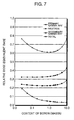
FIG. 6 is a table showing results of calculation of
the amount of boron expressed in terms of its ratio to the
total amount of materials and the dose equivalent rate
relative to a case where boron is not added, and FIG. 7 is
a graph showing the relationship between the amount of
boron expressed in terms of its ratio to the total amount
of materials and the relative dose equivalent rate. It is
recognized from these calculation results that the amount
of secondary gamma rays can be reduced by half or more if
boron is added at 0.025% by mass.
It can be seen from FIGS. 6 and 7 that the total dose
equivalent rate gradually decreases at first with an
increase in the amount of boron added mainly due to its
effect of reducing secondary gamma rays. While the total
dose equivalent rate reaches a minimum level at about 1.0%
by mass of boron added, the total dose equivalent rate
increases with a further increase in the amount of boron
added. This is because while the effect of reducing
secondary gamma rays exerted by boron levels off at a
particular point, an increase in the amount of boron added
beyond this point results in a relative reduction in the
amount of elements which contribute to shielding primary
gamma rays and neutrons. Since the content of the elements
exhibiting ordinary shielding effects relatively decreases
with an increase in the amount of boron added, the content
of boron in the shielding structure should be made as small
as possible within a range in which positive effects are
obtained by the addition of boron. Careful examination of
the calculation results shown in FIGS. 6 and 7 indicates
that the content of the neutron-absorbing material, such as
boron, should held within its optimum range, that is,
preferably 0.025% to 10.0% by mass.
If borated stainless steel is used as a metallic
additive to the concrete, it is possible to obtain an
effect of reducing secondary gamma rays without causing
deterioration of the shielding performance of the concrete
against primary gamma rays and neutrons.
Referring now to specific examples, concrete casks
manufactured by using the aforementioned composites and
concretes are described.
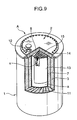
FIGS. 8A and 8B are vertical and horizontal cross-sectional
views a concrete cask A dedicated exclusively to
storage employing a canister which serves as a sealed
vessel, and FIG. 9 is a partially cutaway perspective view
showing how a radioactive material is stored in the
concrete cask of FIGS. 8A and 8B.
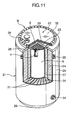
FIGS. 10A and 10B are vertical and horizontal cross-sectional
views a concrete cask B intended for both
transportation and storage, and FIG. 11 is a partially
cutaway perspective view showing how a radioactive material
is transported or stored using the concrete cask of FIGS.
10A and 10B.
FIRST EMBODIMENT
(CONCRETE CASK DEDICATED TO STORAGE)
The concrete cask (storage cask) A shown in FIGS. 8A-8B
and 9 is constructed mainly of a cylindrical container
body 1 having a bottom but no lid in itself and a separate
lid 2. Dedicated exclusively to storage of a radioactive
material, this concrete cask A incorporates an internal
canister "a".
The cylindrical container body 1 includes a concrete
vessel 3 made of the aforementioned concrete of the
invention manufactured by adding calcium hydroxide to
cement, which is covered by an outer cylinder 4 made of
carbon steel, a bottom covering 5 made of carbon steel, a
thick flange 6 made of carbon steel, and an inner cylinder
7 made of carbon steel.
The lid 2 includes a lid member 8 made also of the
concrete of the invention, which is covered by a thick lid
top covering 9 made of carbon steel and a lid bottom
covering 10 made of carbon steel. As illustrated in FIGS.
8B and 9, a number of heat-transfer fins 11 made of copper,
carbon steel or aluminum alloy and arranged in a spiral
stair-like form are embedded in the concrete vessel 3. The
lid 2 is equipped with a seal monitoring device 12 as shown
in FIG. 9.
The canister "a" is a containment vessel constructed
of a receptacle 13 and a lid 14. A radioactive material x
like spent nuclear fuel is filled in the canister "a" as
depicted in FIG. 9.
The thickness of the outer cylinder 4 and the inner
cylinder 7 are made as small as possible taking into
account the need to prevent their expansion when filling
cement paste as well as the need to make sure that the heat
transfer fins 11 can be welded to the outer cylinder 4 and
the inner cylinder 7. The thickness necessary for
achieving the desired shielding performance is entirely
provided by the concrete. This construction of the
concrete cask A suffices the need of practical applications
since a lightweight construction is not so critical for
dedicated storage casks. In this concrete cask A, it is
not necessary for the outer cylinder 4 or the inner
cylinder 7 made of carbon steel to provide any substantial
shielding effect.
The heat-transfer fins 11 may be eliminated if the
amount of heat generated from the spent nuclear fuel to be
stored is small.
While the concrete cask A of this embodiment has been
explained as incorporating the sealed canister "a", an
unsealed (open-top) basket may be used instead of the
canister "a". When using the basket, the cask should be
covered by a double-sealed metallic lids (primary and
secondary lids) provided with an arrangement for monitoring
sealing performance of the cask as is the case with a
metallic cask. The concrete cask A of the embodiment
employing the canister "a" is provided with the concrete
lid 2 since the canister "a" does not necessarily require
an arrangement for monitoring the sealing performance.
SECOND EMBODIMENT
(CONCRETE CASK FOR BOTH TRANSPORTATION AND STORAGE)
The concrete cask (transportation and storage cask) B
shown in FIGS. 10A-10B and 11 is constructed mainly of a
cylindrical container body 21 having a bottom but no lid in
itself and a separate lid 22. Intended for both
transportation and storage, this concrete cask B
incorporates a basket b inside.
The container body 21 includes a cylindrical vessel 24
made of shielding concrete which is covered by an outer
cylinder 25 made of carbon steel, a flange 26 made of
carbon steel, an inner cylinder 27 made of carbon steel,
and a bottom shielding plate 27a made of carbon steel. As
shown in FIG. 10A, the bottom shielding plate 28 made of a
neutron-shielding material is fitted to a bottom portion
27a of the inner cylinder 27 in direct contact with its
bottom surface. The bottom shielding plate 28 is covered
by a ring support 29 and a bottom covering plate 30, both
made of carbon steel. Designated by the numeral 35 in FIG.
11 is one of trunnions attached to the outer cylinder 25.
As illustrated in FIGS. 10B and 11, a number of heat-transfer
fins 31 made of copper, carbon steel or aluminum
alloy and arranged in a spiral stairlike form are embedded
in the cylindrical vessel 24.
The lid 22 has a double-sealed structure including a
primary lid member 23 and a secondary lid member 32 as
shown in FIGS. 10A and 11. The primary lid member 23 is
made of Carbon steel and the secondary lid member 32 is
structured by covering a lid shielding plate 33 made of a
neutron-shielding material with carbon steel. The lid 22
is equipped with seal monitoring devices 34 as shown in
FIG. 11. The basket b is filled with a radioactive
material x like spent nuclear fuel as illustrated.
FIRST AND SECOND EMBODIMENTS
As it is necessary for transportation containers to
meet the specific testing criteria under the accidental
test conditions (e.g., drop test), the outer cylinder 25 of
the concrete cask B of the second embodiment should be made
more or less thicker than the outer cylinder 4 of the
concrete cask A of the first embodiment. Also, there are
limitations in the total weight and external dimensions of
the concrete cask B for reasons of ease of handling in a
nuclear reactor, so that the thickness of the inner
cylinder 27 is adjusted to ensure that the concrete cask B
does not violate these limitations. Generally, the inner
cylinder 27 is made much thicker than the inner cylinder 7
of the concrete cask A dedicated to storage. In the second
embodiment, the inner cylinder 27 is given a property to
positively shield gamma rays to reduce the total weight and
dimensions of the concrete cask B.
While it might be possible to employ a concrete
structure for shielding neutrons penetrating the bottom
portion 27a of the inner cylinder 27, it is desirable to
use a high-performance neutron-shielding material other
than concrete, when taking into account the limitations in
weight. The concrete cask B is so structured to
accommodate the basket b in the interior and the lid 22 has
the double-sealed structure including the primary and
secondary lid members 23, 32 as stated above. Further,
there are provided the seal monitoring devices 34 to enable
monitoring of the sealing performance of the cask B.
The concrete cask of the invention can only be
manufactured through the development of heat-resistant
concrete which can maintain a desirable water content even
under high-temperature conditions. Since the concrete cask
employs a completely sealed structure, it provides improved
shielding performance as well as sealing performance. Even
if a radioactive material accidentally leaks from the
internal canister, for instance, the concrete cask performs
its function as a secondary barrier having the sealing
performance.
Since a sealed-type concrete cask has no vent holes,
the temperature of concrete is apt to increase. Normally,
the neutron-shielding performance of the ordinary concrete,
when it is used for the sealed type concrete cask,
deteriorates under high-temperature conditions (e.g., at
around an assumed maximum temperature of 150°C), as it is
difficult to maintain the water content in concrete under
such conditions. The inventors of the present Patent
Application have developed concrete which can maintain a
desirable water content even at a temperature of 150°C.
To achieve this, the inventors added calcium hydroxide
which has a strong affinity with cement and contains water
of crystallization at a high ratio, so that the water
content retained in the form of crystal structure is not
lost even at 100°C. In addition, the inventors did not use
aggregate which does not contribute to retaining the water
content.
On the other hand, adding too much calcium hydroxide
results in a reduction in the density of concrete as well
as in its gamma-ray shielding performance. Thus, the
inventors used iron powder and steel fibers which have
larger specific gravities than the aggregate. Adding these
metallic materials helps improve mechanical characteristics
of the concrete. This is particularly effective for
transportation casks for which shock-resisting capability
is critical. The inventors have succeeded in developing
concrete having a specific water content and density even
at 150°C using the aforementioned approach.
As previously mentioned, calcium hydroxide itself may
be added directly to a composite, or a material other than
calcium hydroxide, such as calcium oxide, may be added
before the composite hardens, to ensure that the concrete
contains calcium hydroxide. Still alternatively, other
kind of hydroxide selected from various alkaline earth
metals may be added to the composite before hardening.
In the concrete cask A of the first embodiment, outer
surfaces of the concrete vessel 3 are isolated from
external air as they are covered by such coverings as the
outer cylinder 4, the bottom covering 5, the flange 6 and
the inner cylinder 7. The lid 2 of the first embodiment
and the cylindrical vessel 24 of the second embodiment are
also isolated in a similar fashion. Since the outer
surfaces of these components are made of concrete, at least
part (outer surfaces) of the concrete structures is covered
by the coverings, whereby the concrete structures are
isolated from the external air. This means that the
concrete structures are formed in spaces shut off from
carbon dioxide in the atmosphere.
If reacted with carbon dioxide present in the
atmosphere, calcium hydroxide contained in the concrete
structures eventually turns into calcium carbonate and its
water content (hydrogen) is released from the crystalline
structure. This could cause a risk of deterioration of the
neutron-shielding performance of the concrete structures in
the long run (refer to the chemical formula shown below).
Ca(OH)2 + CO2 → CaCO3↓ + H2O
To avoid this, it is necessary in manufacturing the
concrete cask that concrete be formed in spaces sealed off
by such coverings as inner and outer cylinders, a flange
and a bottom covering which are made of carbon steel or
stainless steel, for instance, and at least outer surfaces
of the concrete be covered by the coverings.
The sealed structure of this invention for isolating
concrete from the external air refers to a structure which
prevents the external air including carbon dioxide from
going into contact with the concrete. In this sense, the
sealed structure may be provided with a relief valve for
releasing gases to the exterior for the sake of safety
during the useful life of the concrete cask. Furthermore,
the sealed structure may be so constructed that carbon
dioxide is adsorbed by an appropriate adsorbent to prevent
direct contact between the concrete and carbon dioxide.
VARIATIONS OF THE EMBODIMENTS
Various variations of cement can be used for
manufacturing the concrete casks of the invention. While
widely used Portland cement is one of the best choices,
blended cement is also a workable alternative. In order to
lower heat of hydration, it is desirable to use low-heat
Portland cement.
Portland cement may be blended with one or more
silica-bearing materials, such as various kinds of slag,
silica fume, fly ash, coal ash, clay, shirasu, diatomaceous
earth and grain ash. Such silica-bearing materials produce
a hydration reaction (pozzolanic reaction) with cement and
forms a stable, insoluble compound, such as calcium
silicate. Therefore, these silica-bearing materials, if
added to Portland cement, serve to increase the strength of
concrete over a long period of time and improve its
watertightness and durability. Alternative silica-bearing
materials include byproducts of stone crushing, such as
sludge cake and crushed rock fine, construction wastes,
such as waste earth, sludge cake obtained by treating
dredged soil or construction debris, or other industrial
wastes containing silica. This alternative contributes to
effective use of industrial wastes.
While ingredients of blended cement are not
particularly limited in this invention, it may be produced
by mixing one or more of such materials as blast-furnace
slag, water-granulated blast-furnace slag, air-cooled
blast-furnace slag, air-cooled slag, converter slag, copper
slag, ferronickel slag, silica fume, fly ash, coal ash,
clay, shirasu, diatomaceous earth and grain ash with
Portland cement.
The aforementioned neutron-absorbing material may be
selected from such materials as boron carbide, boric acid,
boron oxide, ferroboron and borated stainless steel.
Further, the material for producing the heat- transfer
fins 11, 31 is not limited to copper, carbon steel or
aluminum alloy but may be stainless steel, for example.
Methods of manufacturing concrete of the invention are
described in the following.
The methods of manufacturing concrete of the invention
are characterized in that a mixture produced by adding at
least water to one of the aforementioned composites of the
invention is mixed and placed in a mold and cured for at
least 8 hours at a temperature of 120°C to 240°C and a
relative humidity of 80% to 100%. More preferably, the
mixture should be cured for at least 24 hours at a
temperature of 60°C to 120°C and a relative humidity of 80%
to 100%.
In addition to water, other materials may be added to
the composite where necessary. For example, a chemical
admixture may be added as in the aforementioned
Experiments. Also, an aggregate may be added if necessary.
The mold used for making a concrete structure may be
removed during its curing process or left as it is till the
end of the curing process.
SPECIFIC EXAMPLES AND COMPARATIVE EXAMPLES
The methods of manufacturing concrete of the invention
are now described with reference to specific examples and
comparative examples thereof.
EXAMPLE 1
Concrete of Example 1 was produced using a composite
of which composition is given in Table 2 below. After
mixing, the composite was placed in a mold. Then, at
first, the composite was cured for 48 hours at 20°C on the
sealed condition, and then continuously cured for 48 hours
at 90°C and 100% RH. Upon completion of hardening, the
compressive strength of the concrete and other properties
(water content and density) at 150°C were measured.
Measurement results are shown in Table 3.
COMPARATIVE EXAMPLES 1 AND 2
As Comparative Example 1, concrete was produced using
the same composite of which composition is given in Table
2. The composite mixed and molded was sealed and cured for
28 days at 20°C. Also, as Comparative Example 2, concrete
was produced using the same composite of which composition
is given in Table 2 below. The composite mixed and molded
was sealed and cured for 91 days at 20°C. Upon completion
of hardening, the compressive strength and other properties
(water content and density) of the concretes at 150°C were
measured. Measurement results are shown in Table 3.
| Quantity per unit volume (kg/m3) |
| Low-heat Portland cement | Silica fume | Calcium hydroxide | Metallic materials | Chemical admixture | Water |
| | | | Iron powder | Steel fibers | High-range water-reducing and air-entraining admixture | Antifoamer |
| 907 | 129 | 672 | 513 | 185 | 91 | 16 | 256 |
| | Compressive strength (MPa) | Properties at 150°C |
| | | Water content(%) | Density (g/cm3) |
| Example 1 | 109 | 12 | 2.2 |
| Comparative Example 1 | 92 | 12 | 2.2 |
| Comparative Example 2 | 112 | 12 | 2.2 |
A comparison of the measurement results on Example 1
and Comparative Examples 1 and 2 shown above indicates that
the manufacturing method of the invention makes it possible
in an extremely short period of time to produce concrete
having as high a water content and density as the concrete
made by a conventional method under high-temperature
conditions of 150°C while achieving a high compressive
strength.
EXAMPLE 2
Concrete of Example 2 was produced using a composite
of which composition is given in Table 4 below. After
mixing, the composite was placed in a mold. Upon
completion of hardening, the thermal conductivity of the
concrete at room temperature and other properties (water
content and density) at 150°C were measured. Measurement
results are shown in Table 6.
| Quantity per unit volume (kg/m3) |
| Low-heat Portland cement | Silica fume | Calcium hydroxide | Metallic materials | Chemical admixture | Water |
| | | | Iron powder | Steel fibers | High-range water-reducing and air-entraining admixture | Antifoamer |
| 287 | 32 | 1131 | 640 | 157 | 94 | 0.9 | 281 |
Concrete of Example 3 was produced using a composite
of which composition is given in Table 5 below. After
mixing, the composite was placed in a mold. Upon
completion of hardening, the thermal conductivity of the
concrete at room temperature and other properties (water
content and density) at 150°C were measured. Measurement
results are shown in Table 6.
| Quantity per unit volume (kg/m3) |
| Low-heat Portland cement | Silica fume | Calcium hydroxide | Metallic materials | Chemical admixture | Water |
| | | | Copper powder | Copper fibers | High-range water-reducing and air-entraining admixture | Antifoamer |
| 287 | 32 | 1131 | 730 | 179 | 94 | 0.9 | 281 |
Ordinary concrete was produced as Comparative Example
3. After mixing and molding, the thermal conductivity of
the concrete at room temperature and other properties
(water content and density) at 150°C were measured.
Measurement results are shown in Table 6.
| Characteristics of Concrete Products |
| | Properties at 150°C | Thermal conductivity at room temp. (W/m·K) | Remarks |
| | Water content (%) | Density (g/cm3) |
| Example 2 | 12.5 | 2.2 | 2.0 | Iron content 30mass% |
| Example 3 | 12.9 | 2.3 | 8.5 | Copper content 33mass% |
| Comparative Example 3 | - | - | 1.2-1.5 | Ordinary concrete |
A comparison of the measurement results on Examples 2
and 3 and Comparative Example 3 shown above indicates that
the concretes of the invention have higher thermal
conductivities than the ordinary concrete. It is further
recognized that the thermal conductivity of the concrete
can be improved by adding a material having a high thermal
conductivity.
In summary, a composite of the invention includes
Portland cement or blended cement including Portland
cement, and at least one metallic material selected from
the group consisting of iron, carbon steel and stainless
steel in any of particulate, powder and fiber forms. Where
the content of calcium hydroxide is in a range of 15% to
60% by mass after hardening through hydration reaction, and
the content of the metallic material is in a range of 10%
to 70% by mass after hardening through hydration reaction.
Alternatively, a composite including Portland cement
or blended cement containing Portland cement is mixed with
water in such a manner that the content of calcium
hydroxide falls in a range of 20% to 50% by mass after
hardening through hydration reaction.
Alternatively, the aforementioned composite further
includes at least one metallic material selected from the
group consisting of iron, carbon steel and stainless steel
in particulate, powder or fiber form at such a proportion
that the content of the metallic material falls in a range
of 30% to 70% by mass after hardening through hydration
reaction.
In another feature of the invention, the
aforementioned composite includes the blended cement which
is prepared by mixing at least one material selected from
the group consisting of blast-furnace slag, water-granulated
blast-furnace slag, air-cooled blast-furnace
slag, air-cooled slag, converter slag, copper slag,
ferronickel slag, silica fume, fly ash, coal ash, clay,
shirasu, diatomaceous earth and grain ash with Portland
cement.
In another feature of the invention, the
aforementioned composite further includes a neutron-absorbing
material which is mixed in such a manner that the
content of the neutron-absorbing material falls in a range
of 0.025% to 10% by mass after hardening through hydration
reaction.
The aforementioned neutron-absorbing material may
include at least one substance selected from the group
consisting of boron carbide, boric acid, boron oxide,
ferroboron and borated stainless steel.
According to the invention, concrete is manufactured
by using any of the aforementioned composites including
Portland cement or blended cement containing Portland
cement.
According to the invention, a concrete cask includes a
cask body having a bottom but no lid in itself, and a lid
which can open and close off a top opening of the cask
body, wherein at least one of the cask body and the lid is
made of concrete manufactured by using any of the
aforementioned composites.
In one feature of the invention, the cask body of the
concrete cask is made of the aforementioned concrete of the
invention and metallic heat-transfer fins are embedded in
the container body.
According to the invention, a method of manufacturing
concrete by using any of the aforementioned composites
including Portland cement or blended cement containing
Portland cement includes the steps of adding at least water
to the composite, mixing the composite with the water and
shaping a resultant mixture, and curing the mixture for at
least 8 hours at a temperature of 120°C to 240°C and a
relative humidity of 80% to 100%.
Alternatively, a method of manufacturing concrete by
using any of the aforementioned composites including
Portland cement or blended cement containing Portland
cement includes the steps of adding at least water to the
composite, mixing the composite with the water and shaping
a resultant mixture, and curing the mixture for at least 24
hours at a temperature of 60°C to 120°C and a relative
humidity of 80% to 100%.
To solve the earlier-mentioned object of the
invention, a composite includes Portland cement. This
composite is mixed with water in such a manner that the
content of a hydroxide material retaining water in the form
of a crystalline structure of which melting and
decomposition temperatures exceed 100°C is at least 15% by
mass after hardening through hydration reaction.
The hydroxide material of this composite may be a
hydroxide which is least soluble or insoluble in pure
water, wherein the soluble amount of the hydroxide may be
15 g or less per 100 g of pure water at 20°C.
In one feature of the invention, the composite further
includes at least one metallic material selected from the
group consisting of iron, copper, tungsten, iron alloy,
copper alloy, tungsten alloy, iron compound, copper
compound and tungsten compound in particulate, powder or
fiber form.
In another feature of the invention, at least one
metallic material selected from the group consisting of
iron, iron alloy, copper and copper alloy is mixed in the
composite in such a manner that the content of the metallic
material falls in a range of 10% to 70% by mass after
hardening through hydration reaction.
In another feature of the invention, the metallic
material is selected from the group consisting of copper,
copper alloy, tungsten, tungsten alloy and tungsten
compound.
In another feature of the invention, at least one
metallic material selected from the group consisting of
tungsten, tungsten alloy and tungsten compound is mixed in
the composite in such a manner that the content of the
metallic material falls in a range of 10% to 85% by mass
after hardening through hydration reaction.
The aforementioned composite may further include a
neutron-absorbing material selected from the group
consisting of boron carbide, boric acid, boron oxide,
ferroboron and borated stainless steel, wherein the
neutron-absorbing material is mixed in such a manner that
the content of the neutron-absorbing material falls in a
range of 0.025% to 10% by mass after hardening through
hydration reaction.
Also, the composite may further include a silica-bearing
material.
According to the invention, concrete is manufactured
by using any of the aforementioned composites including
Portland cement.
According to the invention, a concrete cask is
manufactured by using the aforementioned concrete in which
at least part of a structure made of the concrete is
covered by a covering for isolating the concrete from
external air.
According to the invention, a method of manufacturing
concrete by using any of the aforementioned composites
including Portland cement includes the steps of adding at
least water to the composite, mixing the composite with the
water and shaping a resultant mixture, and curing the
mixture for at least 8 hours at a temperature of 120°C to
240°C and a relative humidity of 80% to 100%.
Alternatively, a method of manufacturing concrete by
using any of the aforementioned composites including
Portland cement includes the steps of adding at least water
to the composite, mixing the composite with the water and
shaping a resultant mixture, and curing the mixture for at
least 24 hours at a temperature of 60°C to 120°C and a
relative humidity of 80% to 100%.
The inventors have verified from the foregoing that it
is possible to manufacture a concrete cask which makes it
unnecessary to provide an air passage for removing heat
between the concrete cask itself and an internal basket or
canister accommodating a heat-generating material, such as
high-level radioactive wastes or spent nuclear fuel, by
using the aforementioned composites and concrete of the
invention. It is also possible to manufacture a simple,
low-cost, yet highly safe concrete cask by using the heat-resistant
concrete of the invention. In addition, since
the concrete cask made of the heat-resistant concrete does
not need any ventilation air inlet or outlet which acts as
a "shielding defect," there occurs no streaming of
radioactive rays or corrosion of the canister.
If metallic heat-transfer fins are embedded in a
concrete container body of the concrete cask, they serve to
improve the efficiency of heat transfer between inner and
outer cylinders of the cask, thereby making up for a
relatively low thermal conductivity of the concrete.
Without such heat-transfer fins, the permissible amount of
heat generation from radioactive wastes or spent nuclear
fuel held in a concrete cask is limited. The provision of
the heat-transfer fins makes it possible to overcome such
limitations and use concrete in making a cask even when the
cask is intended for accommodating spent nuclear fuel which
generates a large amount of heat.