EP1393739A1 - Liver generation promoter - Google Patents
Liver generation promoter Download PDFInfo
- Publication number
- EP1393739A1 EP1393739A1 EP02733330A EP02733330A EP1393739A1 EP 1393739 A1 EP1393739 A1 EP 1393739A1 EP 02733330 A EP02733330 A EP 02733330A EP 02733330 A EP02733330 A EP 02733330A EP 1393739 A1 EP1393739 A1 EP 1393739A1
- Authority
- EP
- European Patent Office
- Prior art keywords
- adiponectin
- liver
- liver regeneration
- cells
- tgfβ
- Prior art date
- Legal status (The legal status is an assumption and is not a legal conclusion. Google has not performed a legal analysis and makes no representation as to the accuracy of the status listed.)
- Granted
Links
Images
Classifications
-
- A—HUMAN NECESSITIES
- A61—MEDICAL OR VETERINARY SCIENCE; HYGIENE
- A61K—PREPARATIONS FOR MEDICAL, DENTAL OR TOILETRY PURPOSES
- A61K38/00—Medicinal preparations containing peptides
- A61K38/16—Peptides having more than 20 amino acids; Gastrins; Somatostatins; Melanotropins; Derivatives thereof
- A61K38/17—Peptides having more than 20 amino acids; Gastrins; Somatostatins; Melanotropins; Derivatives thereof from animals; from humans
- A61K38/22—Hormones
- A61K38/2264—Obesity-gene products, e.g. leptin
-
- A—HUMAN NECESSITIES
- A61—MEDICAL OR VETERINARY SCIENCE; HYGIENE
- A61P—SPECIFIC THERAPEUTIC ACTIVITY OF CHEMICAL COMPOUNDS OR MEDICINAL PREPARATIONS
- A61P1/00—Drugs for disorders of the alimentary tract or the digestive system
- A61P1/16—Drugs for disorders of the alimentary tract or the digestive system for liver or gallbladder disorders, e.g. hepatoprotective agents, cholagogues, litholytics
-
- A—HUMAN NECESSITIES
- A61—MEDICAL OR VETERINARY SCIENCE; HYGIENE
- A61P—SPECIFIC THERAPEUTIC ACTIVITY OF CHEMICAL COMPOUNDS OR MEDICINAL PREPARATIONS
- A61P43/00—Drugs for specific purposes, not provided for in groups A61P1/00-A61P41/00
Definitions
- the present invention relates to a liver regeneration promoting agent comprising adiponectin, a liver regeneration promoting method by administering adiponectin to a patient and use of adiponectin for producing a liver regeneration promoting agent.
- liver is an organ having an extremely high ability of regenerating itself.
- liver undergoes fibrosis during the process of the liver regeneration after continuous necrosis of hepatocytes, resulting in suppressing normal hepatocyte regeneration. This may be assumed to be due to a reduced sinusoidal blood flow resulting from an increase in an extracellular matrix involved in hepatic fibrosis, and also due to loss of space for the liver regeneration resulting from the occupation by the fibers produced.
- HSC hepatic stellate cell
- cytokines such as TGF (transforming growth factor)- ⁇ or PDGF (platelet derived growth factor) produced by platelet Kupffer cells and the like, or activated by oxidation stress
- cytokines such as TGF (transforming growth factor)- ⁇ or PDGF (platelet derived growth factor) produced by platelet Kupffer cells and the like, or activated by oxidation stress
- ⁇ SMA ⁇ -smooth muscle actin
- activated HSC exhibits an excessive expression of TGF ⁇ receptor and the production of the extracellular matrix protein is promoted by an autocrine mechanism.
- the TGF ⁇ also has a hepatocyte proliferation inhibiting effect.
- An objective of the invention is to provide a medicament which suppresses the hepatic fibrosis, promotes the liver regeneration and normalizes the liver.
- Adiponectin is an animal adipose tissue-specific protein separated newly from human adipose tissue by Maeda et al in 1996, and its amino acid sequence is also known (Maeda K, et al. Biochem. Biophys. Res. Commun. 221: 286 (1996)).
- This adiponectin is abundantly present not only in an adipose tissue but also in blood. In normal human blood it is present at a level as high as 5 to 10 ⁇ g/ml (Arita Y et al., Biochem. Biophys. Res. Commun. 257: 79-83 (1999)).
- the blood level of this adiponectin is reduced as obesity advance.
- adiponectin The effect of the adiponectin was not elucidated entirely, although some researchers reported that it had a vascular smooth muscle proliferation on suppressing effect, a cell migration suppressing effect, an anti-arteriosclerotic effect, a suppressive effect on the activation of monocyte and macrophage, an anti-inflammatory effect and the like.
- adiponectin has actions which were not known so far, such as a hepatic stellate cell activation suppressive effect, an extracellular matrix production suppressive effect, a hepatic stellate cell proliferation suppressive effect, a liver regeneration promoting effect and the like. Based on such findings, we made a further effort and established the invention.
- the present invention relates to:
- the adiponectin is a protein which is produced in adipose tissue of an animal including human and which is abundantly present also in blood.
- Human adiponectin has been obtained as a highly purified substance by a gene recombination method from a cDNA encoding it (Arita, Y et al., Biochem. Biophys. Res. Commun. 257, 79-83 (1999)).
- Mouse-derived ACRP 30 is obtained as a highly purified substance by gene recombination techniques as described in the reference described above and is also available.
- a patient to which an inventive liver regeneration promoting agent is administered is a patient whose liver is undergoing or at a risk of fibrosis due to chronic liver disease, especially chronic hepatitis.
- a liver regeneration promoting agent of this invention can be administered systemically or locally to a patient in need thereof.
- a systemic administration may for example be a parenteral administration such as an intravenous injection, subcutaneous injection, intramuscular injection and the like, an oral administration.
- the gene therapy is also applicable.
- the dosage form of a medicament according to the present invention may for example be a liquid formulation such as an injection formulation, as well as a solid formulation such as a powder, granule, tablet, capsule, suppository and the like.
- a pharmaceutical preparation to be given parenterally to a human may for example be an injection formulation and a suppository.
- the pharmaceutical preparation is formulated as an injection formulation, those which may be employed are solvents (distilled water for injection and the like), stabilizers (sodium edetate and the like), osmotic agents (sodium chloride, glycerin, mannitol and the like), pH modifiers (hydrochloric acid, citric acid, sodium hydroxide and the like), suspending agents (methyl cellulose, sodium carboxymethyl cellulose and the like), while a suppository base (cocoa butter, Macrogol and the like may appropriately be selected and employed when it is formulated as a suppository.
- solvents distilled water for injection and the like
- stabilizers sodium edetate and the like
- osmotic agents sodium chloride, glycerin, mannitol and the like
- pH modifiers hydroochloric acid, citric acid, sodium hydroxide and the like
- the dosage forms for oral administration to human may for example be a powder, granule, tablet, capsule, syrup and liquid formulation.
- appropriate pharmaceutical carriers for a solid formulation such as excipients (starch, corn starch, glucose, fructose, sugar and the like), lubricants (magnesium stearate), disintegrants (starch, crystalline cellulose, binders (starch, gum arabic and the like) may be employed, and the formulation may be coated with an appropriate coating (gelatin, sugar, gum arabic, carnauba wax and the like), enteric coating (cellulose acetate phthalate, methacrylic acid copolymer, hydroxypropyl cellulose phthalate, carboxymethyl ethyl cellulose and the like).
- a sustained release formulation drug delivery system (DDS) formulation
- DDS drug delivery system
- those which may be mentioned are hydroxypropylmethyl cellulose, ethyl cellulose, hydroxymethyl cellulose, hydroxypropyl cellulose, polyoxyethylene glycol, Tween 80, Pluronic F68, cellulose acetate phthalate, hydroxypropylmethyl cellulose phthalate, hydroxymethyl cellulose acetate succinate, Eudragit (Rohm, Germany, copolymer of methacrylic acid and acrylic acid) and the like.
- an appropriate excipient including those for improving the fluidity and the lubrication such as magnesium stearate, calcium stearate, talc, light silicic anhydride and the like, those for obtaining a fluidity under pressure such as crystalline cellulose and lactose as well as disintegrants mentioned above are added and mixed uniformly to form a particle with or without any suitable coating which is then filled in a capsule, or encapsulated using a capsule base having an increased plasticity obtained by supplementing a suitable capsule base (such as gelatin) with glycerin sorbitol or the like.
- a suitable capsule base such as gelatin
- Such a capsule may be supplemented if desired with colorants, preservatives [sulfur dioxide, parabenes (methyl, ethyl or propyl paraoxybenzoate) and the like].
- the capsule may be an ordinary capsule or enteric coated capsule, gastric resistant capsule, controlled release capsule and the like.
- a liposome coated with an enteric coating may be filled in an ordinary capsule, or the capsule itself may be coated with an enteric coating, or may be molded using an enteric polymer as a base.
- compositions When the composition is formulated as syrup or a liquid formulation, those which may be selected and employed appropriately are stabilizers (sodium edetate and the like), suspending agents (gum arabic, carmellose and the like), seasonings (simple syrup, glucose and the like) and flavors.
- the dose may vary depending on the type of the disease, sex and age of the patient, degree of the disease, administration mode and route and the like, it may be given for example via an intravenous injection to an adult suffering from liver cirrhosis at a daily dose of 1 to 100 mg/kg, preferably 3 to 20 mg/kg.
- a male SD rat of 8 weeks old was anesthetized with nenbtal and subjected to laparotomy, and the portal vein was cannulated.
- the liver is digested first by the perfusion with Ca 2+ and Mg 2+ -free Hanks solution followed by the perfusion with collagenase solution, and the hepatocytes were removed by centrifuging at a low speed and sieved through a mesh to obtain non-parenchymal cell suspension. Then the hepatic stellate cells were isolated using an elutriation rotor (3250 rpm/min, 18 ml/min). The resultant stellate cells were seeded onto a plastic dish, subcultured by a trypsin/EDTA method, and the 3rd to 5th passages were employed in the following experiments.
- the culture medium was DMEM medium supplemented with 10 % FCS and 25 mg/l cefamedin and 30 mg/l kanamycin as antibiotics.
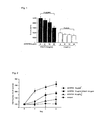
- the DNA synthesis suppressive effect on RHSC was evaluated on the basis of 3 H-thymidine incorporation of the cell.
- the RHSC after subcultured over 4 passages was seeded at 9 x 10 3 cells/well in a 96-well ⁇ plate. After verifying the adhesion of the cells on the following day, the cells were washed twice with PBS and incubated with serum-free medium. After 48 hours, stimulation with the adiponectin (ACRP30) at respective 0, 3, 10 and 30 ⁇ g/ml was conducted for 18 hours each in 6 wells containing the medium in the presence or absence of 10 ng/ml of PDGF. Subsequently, each well was pulsed with 1.0 ⁇ Ci/ml 3 H-thymidine for 5 hours and then the radioactivity was analyzed. The results are represented as counts per 30 seconds per well ( Figure 1).
- the adiponectin suppressed the DNA synthesis by PDGF in a dose dependent manner.
- the RHSC after subcultured over 4 passages was seeded at 2 x 10 4 cells/well in a 12-well ⁇ plate. After verifying the adhesion of the cells on the following day, the cells were washed twice with PBS and incubated with serum-free medium. After 48 hours, 10 ng/ml PDGF-supplemented adiponectin at 0, 10 and 30 ⁇ g/ml was added each to 3 wells whereby effecting the stimulation. On the 1st, 2nd, 4th and 6th days, the cells were harvested by a trypsin/EDTA method, and the number of cells was counted by a hemocytometer.
- the adiponectin suppressed dose-dependently the proliferation of RHSC cell induced by PDGF.
- the migrating ability was tested using a 24-well ⁇ plate and a cell culture insert whose pore size was 8 ⁇ m (Chemotaxicell, KURABO).
- a dish and a cell culture insert had previously been coated with type I collagen for 1 hour.
- the cells were incubated with serum-free medium for 48 hours.
- the cells were incubated for 30 minutes in the presence or absence of 30 ⁇ g/ml adiponectin, and then harvested by a trypsin/EDTA method.
- the cells were introduced into serum-free DMEM.
- the inserts were allowed to stand gently on a 24-well ⁇ plate containing various medium formulations.
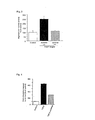
- the formulations of the medium were all serum-free, and contained no adiponectin, or contained 10 ng/ml of PDGF and 30 ⁇ g/ml of adiponectin, and each was provided with 3 inserts. Each insert was seeded with 4 x 10 4 of RHSC. Subsequently, the cells were incubated at 37°C for 5 hours and then the RHSC which emerged on the back of the insert were subjected to May-Giemsa staining and observed as magnified by 200 times to count the cells. The results are represented in Figure 3 as percents based on the mean cell count in the control as 100 %.
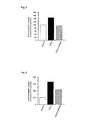
- the RHSC was seeded in a 6-well ⁇ plate and washed at subconfluent twice with PBS, and incubated with serum-free DMEM. After incubating for 48 hours, the cells were cultured for 24 hours in various medium formulations including a control (TGF ⁇ -free, adiponectin-free), 50 pg/ml TGF ⁇ , 50 pg/ml TGF ⁇ + 30 ⁇ g/ml adiponectin. Subsequently, RNA was extracted from the RHSC in each well by Trizol method. The concentration of the RNA was measured by an spectro photometer, and each 1 ⁇ g was used as a template to prepare cDNA with RT (Reverse transcriptase).
- a 0.5 ⁇ l aliquot was used as a template to perform PCR.
- the PCR product was subjected to an electrophoresis on 1.5 % agarose gel, and stained with Cyber Green.
- the PCR was conducted to the number of cycles which gave a linear amplification of each of the primers including TGF ⁇ , TGF ⁇ type II receptor or collagen I ⁇ 1 (25 cycles for TGF ⁇ , 24 cycles for TGF ⁇ type II receptor and 23 cycles for collagen I ⁇ 1).
- the bands were scanned by an image scanner and inputted into a computer, where it was quantified by an Image Quant software.
- the adiponectin gave a marked suppression of the expression of TGF ⁇ mRNA by the autocrine mechanism of TGF ⁇ .
- the TGF ⁇ type II receptor expression was also suppressed. Accordingly, the adiponectin was proven to have a TGF ⁇ signal suppressive effect.
- the expression of collagen I ⁇ 1 gene whose expression is increased by TGF ⁇ was also suppressed by the adiponectin.
- the above formulation was dispensed into 2 ml glass ampoules and sealed.
- adiponectin, lactose and corn starch were combined and mixed thoroughly to obtain a granule for tablet compression in accordance with a wet tableting process.
- Magnesium stearate was added and the mixture was compressed into 400 tablets.
- Each tablet was coated with methacrylate copolymer for enteric coating.
- an inventive liver regeneration promoting agent suppresses an activated hepatic stellate cell-induced hepatic fibrosis and promotes normal hepatocyte regeneration and proliferation, it can promotes the liver regeneration and normalize the hepatic functions when administered to a patient undergoing the hepatic fibrosis or at a risk of the hepatic fibrosis due for example to chronic hepatitis.
Landscapes
- Health & Medical Sciences (AREA)
- Life Sciences & Earth Sciences (AREA)
- General Health & Medical Sciences (AREA)
- Engineering & Computer Science (AREA)
- Veterinary Medicine (AREA)
- Medicinal Chemistry (AREA)
- Chemical & Material Sciences (AREA)
- Public Health (AREA)
- Pharmacology & Pharmacy (AREA)
- Bioinformatics & Cheminformatics (AREA)
- Animal Behavior & Ethology (AREA)
- Gastroenterology & Hepatology (AREA)
- Proteomics, Peptides & Aminoacids (AREA)
- Zoology (AREA)
- Nuclear Medicine, Radiotherapy & Molecular Imaging (AREA)
- Chemical Kinetics & Catalysis (AREA)
- General Chemical & Material Sciences (AREA)
- Obesity (AREA)
- Endocrinology (AREA)
- Organic Chemistry (AREA)
- Immunology (AREA)
- Genetics & Genomics (AREA)
- Epidemiology (AREA)
- Medicines That Contain Protein Lipid Enzymes And Other Medicines (AREA)
- Pharmaceuticals Containing Other Organic And Inorganic Compounds (AREA)
- Medicines Containing Material From Animals Or Micro-Organisms (AREA)
- Compounds Of Unknown Constitution (AREA)
Abstract
Description
| Injection formulation | |
| Adiponectin | 2 mg |
| Phosphate buffer (pH 7.0) | suitable amount |
| Total | 1 ml |
| Tablet (Enteric coating) | |
| Adiponectin | 0.8 g |
| Corn starch | 12 g |
| Lactose | 27.2 g |
| Magnesium stearate | 0.4 g |
Claims (9)
- A liver regeneration promoting agent comprising adiponectin.
- A liver regeneration promoting agent according to Claim 1 which is a preventive or therapeutic agent against liver cirrhosis.
- A liver regeneration promoting agent according to Claim 1 which is a preventive or therapeutic agent against chronic hepatitis.
- A method for promoting liver regeneration comprising administering an effective amount of adiponectin to a patient in need thereof.
- A method for promoting liver regeneration according to Claim 4 which is a method for preventing or treating liver cirrhosis.
- A method for promoting liver regeneration according to Claim 4 which is a method for preventing or treating chronic hepatitis.
- Use of adiponectin for producing a liver regeneration promoting agent.
- Use of adiponectin according to Claim 7 wherein the liver regeneration promoting agent is a preventive or therapeutic agent against liver cirrhosis.
- Use of adiponectin according to Claim 7 wherein the liver regeneration promoting agent is a preventive or therapeutic agent against chronic hepatitis.
Applications Claiming Priority (3)
| Application Number | Priority Date | Filing Date | Title |
|---|---|---|---|
| JP2001172882 | 2001-06-07 | ||
| JP2001172882A JP4547696B2 (en) | 2001-06-07 | 2001-06-07 | Cirrhosis prevention / treatment agent |
| PCT/JP2002/005574 WO2002100427A1 (en) | 2001-06-07 | 2002-06-05 | Liver generation promoter |
Publications (3)
| Publication Number | Publication Date |
|---|---|
| EP1393739A1 true EP1393739A1 (en) | 2004-03-03 |
| EP1393739A4 EP1393739A4 (en) | 2005-03-02 |
| EP1393739B1 EP1393739B1 (en) | 2008-11-05 |
Family
ID=19014439
Family Applications (1)
| Application Number | Title | Priority Date | Filing Date |
|---|---|---|---|
| EP02733330A Expired - Lifetime EP1393739B1 (en) | 2001-06-07 | 2002-06-05 | Adiponection for liver regeneration |
Country Status (7)
| Country | Link |
|---|---|
| US (2) | US7074756B2 (en) |
| EP (1) | EP1393739B1 (en) |
| JP (1) | JP4547696B2 (en) |
| AT (1) | ATE413186T1 (en) |
| DE (1) | DE60229741D1 (en) |
| ES (1) | ES2316567T3 (en) |
| WO (1) | WO2002100427A1 (en) |
Cited By (2)
| Publication number | Priority date | Publication date | Assignee | Title |
|---|---|---|---|---|
| WO2006062422A1 (en) | 2004-12-10 | 2006-06-15 | Protemix Corporation Limited | Glyponectin (glycosylated adiponectin) for the treatment of diseases and conditions |
| US7863243B2 (en) | 2003-11-04 | 2011-01-04 | Sankyo Company, Limited | Anti-tumor agent |
Families Citing this family (23)
| Publication number | Priority date | Publication date | Assignee | Title |
|---|---|---|---|---|
| JP2005535561A (en) | 2002-01-18 | 2005-11-24 | プロテミックス コーポレイション リミティド | Adiponectin glycoisoform and use thereof |
| AU2003285686A1 (en) * | 2002-12-23 | 2004-07-14 | Protemix Corporation Limited | Glycoisoforms of adiponectin and uses thereof |
| ES2329582T3 (en) | 2003-10-15 | 2009-11-27 | Sekisui Medical Co., Ltd. | SELECTIVE DOSAGE PROCEDURE FOR ADIPONECTINE MULTIMERS. |
| US20060057718A1 (en) * | 2004-04-27 | 2006-03-16 | Duke University | Stem cell and progenitor cell expansion |
| JP4634065B2 (en) * | 2004-05-14 | 2011-02-16 | 花王株式会社 | Adiponectin reduction inhibitor |
| US20120269886A1 (en) | 2004-12-22 | 2012-10-25 | Nitto Denko Corporation | Therapeutic agent for pulmonary fibrosis |
| JP2009221164A (en) | 2008-03-17 | 2009-10-01 | Nitto Denko Corp | Drug for treating pulmonary fibrosis |
| SI2727583T1 (en) | 2004-12-22 | 2022-01-31 | Nitto Denko Corporation | Drug carrier and drug carrier kit for inhibiting fibrosis |
| JP2008526885A (en) * | 2005-01-07 | 2008-07-24 | ゼンコア | Adiponectin mutant |
| US7592423B2 (en) * | 2005-01-07 | 2009-09-22 | Xencor, Inc. | Globular adiponectin variants |
| US7749956B2 (en) * | 2005-01-07 | 2010-07-06 | Xencor, Inc. | Method of treatment using adiponectin variants |
| US7678886B2 (en) * | 2005-01-07 | 2010-03-16 | Xencor, Inc. | Pharmaceutical compositions of adiponectin variants and methods of storage |
| US20070054359A1 (en) * | 2005-07-11 | 2007-03-08 | Jonathan Zalevsky | Rational Chemical Modification of Adiponectin Variants |
| EP1902722B1 (en) * | 2005-07-12 | 2020-12-16 | Kabushiki Kaisha Yakult Honsha | Agent for elevating adiponectin concentration |
| US9572886B2 (en) | 2005-12-22 | 2017-02-21 | Nitto Denko Corporation | Agent for treating myelofibrosis |
| KR20130140215A (en) | 2006-04-28 | 2013-12-23 | 유키지루시 메그밀크 가부시키가이샤 | Peptide |
| TWI407971B (en) | 2007-03-30 | 2013-09-11 | 日東電工股份有限公司 | Cancer cells and tumor-related fibroblasts |
| JP4750213B1 (en) | 2010-05-21 | 2011-08-17 | 株式会社 ファイナルフューチャーインターナショナル | Adiponectin production promoting composition |
| JP2010241832A (en) * | 2010-07-20 | 2010-10-28 | Kao Corp | Adiponectin reduction inhibitor |
| JP5950428B2 (en) | 2010-08-05 | 2016-07-13 | 日東電工株式会社 | Composition for regenerating normal tissue from fibrotic tissue |
| JP6340162B2 (en) | 2012-12-20 | 2018-06-06 | 日東電工株式会社 | Apoptosis inducer |
| JP6602034B2 (en) | 2014-04-02 | 2019-11-06 | 日東電工株式会社 | Targeted molecules and uses thereof |
| CA2943733C (en) | 2014-04-07 | 2022-03-01 | Nitto Denko Corporation | Polymer-based hydrotropes for hydrophobic drug delivery |
Family Cites Families (6)
| Publication number | Priority date | Publication date | Assignee | Title |
|---|---|---|---|---|
| JP3879938B2 (en) * | 1994-03-31 | 2007-02-14 | 日本ケミカルリサーチ株式会社 | Anti-inflammatory agent |
| FR2767135B1 (en) * | 1997-08-06 | 2002-07-12 | Genset Sa | LSR COMPLEX RECEPTOR, ACTIVITY, CLONING, AND APPLICATION TO DIAGNOSIS, PREVENTION AND / OR TREATMENT OF OBESITY AND THE RISKS OR COMPLICATIONS THEREOF |
| JP3018186B1 (en) * | 1999-03-09 | 2000-03-13 | 大阪大学長 | Anti-inflammatory, monocytic cell growth inhibitor |
| JP5030319B2 (en) * | 1999-05-28 | 2012-09-19 | 日本化薬株式会社 | Preventive or therapeutic agent for myofibroblastic diseases |
| JP2004521930A (en) * | 2001-03-14 | 2004-07-22 | オクラホマ メディカル リサーチ ファウンデーション | A method for reducing fat by administering adiponectin. |
| AU2003209226A1 (en) * | 2002-01-11 | 2003-07-30 | Michael Tennant | Adiponectin gene therapy |
-
2001
- 2001-06-07 JP JP2001172882A patent/JP4547696B2/en not_active Expired - Lifetime
-
2002
- 2002-06-05 EP EP02733330A patent/EP1393739B1/en not_active Expired - Lifetime
- 2002-06-05 AT AT02733330T patent/ATE413186T1/en not_active IP Right Cessation
- 2002-06-05 US US10/479,581 patent/US7074756B2/en not_active Expired - Lifetime
- 2002-06-05 DE DE60229741T patent/DE60229741D1/en not_active Expired - Lifetime
- 2002-06-05 ES ES02733330T patent/ES2316567T3/en not_active Expired - Lifetime
- 2002-06-05 WO PCT/JP2002/005574 patent/WO2002100427A1/en not_active Ceased
-
2006
- 2006-03-09 US US11/371,104 patent/US7375189B2/en not_active Expired - Lifetime
Cited By (3)
| Publication number | Priority date | Publication date | Assignee | Title |
|---|---|---|---|---|
| US7863243B2 (en) | 2003-11-04 | 2011-01-04 | Sankyo Company, Limited | Anti-tumor agent |
| WO2006062422A1 (en) | 2004-12-10 | 2006-06-15 | Protemix Corporation Limited | Glyponectin (glycosylated adiponectin) for the treatment of diseases and conditions |
| EP1830873A4 (en) * | 2004-12-10 | 2008-04-02 | Protemix Corp Ltd | GLYPONECTIN (ADIPONECTIN GLYCOSYLE) FOR THE TREATMENT OF DISEASES AND CONDITIONS |
Also Published As
| Publication number | Publication date |
|---|---|
| ATE413186T1 (en) | 2008-11-15 |
| JP4547696B2 (en) | 2010-09-22 |
| US7074756B2 (en) | 2006-07-11 |
| US7375189B2 (en) | 2008-05-20 |
| DE60229741D1 (en) | 2008-12-18 |
| US20060154869A1 (en) | 2006-07-13 |
| EP1393739B1 (en) | 2008-11-05 |
| US20040180818A1 (en) | 2004-09-16 |
| WO2002100427A1 (en) | 2002-12-19 |
| JP2002363094A (en) | 2002-12-18 |
| EP1393739A4 (en) | 2005-03-02 |
| ES2316567T3 (en) | 2009-04-16 |
Similar Documents
| Publication | Publication Date | Title |
|---|---|---|
| US7074756B2 (en) | Liver generation promoter | |
| CA2093806C (en) | Method of treating or preventing type 1 diabetes by oral administration of insulin | |
| US9782429B2 (en) | Formulation having mobilizing activity | |
| US20250042964A1 (en) | Method of treating nash using a long-acting mutant human fibroblast growth factor | |
| CA2312475A1 (en) | Method of suppressing .beta.-amyloid-related changes in alzheimer's disease | |
| CN101366692A (en) | Stable Exenatide formulation | |
| WO1997027870A1 (en) | Preventives and remedies for thrombocytopenia | |
| Yang et al. | The protective effect of rhBNP on postresuscitation myocardial dysfunction in a rat cardiac arrest model | |
| US20040131588A1 (en) | Formulation having mobilising activity | |
| EP4212158B1 (en) | (s)-1-((4-cyano-3-(trifluoromethyl)phenyl)amino)-3-(4-cyanophenoxy)-2-methyl-1-oxopropan-2-yl nicotinate for use in the treatment of heart failure | |
| CN110038114B (en) | Application of polypeptide in preparation of medicine for preventing or treating metabolic syndrome | |
| US7423009B2 (en) | Method for treatment of kidney diseases | |
| JP4053107B2 (en) | Preventive and therapeutic agents for thrombocytopenia | |
| EP1685846B1 (en) | Antitumor agent | |
| WO2022061962A1 (en) | Method for effectively intervening diabetes by using l-type amino acid transporter inhibitor or antagonist | |
| CN120695156A (en) | Application of a polypeptide in the preparation of a drug for treating difficult wound healing | |
| WO1999027951A1 (en) | Preparation for continuous intravenous administration | |
| CN120919093A (en) | Application of metformin in preparation of medicine for treating Graves eye diseases | |
| CN114099637A (en) | Application of Apelin in preparation of medicine for treating silicosis | |
| JP2023151051A (en) | Agent for inducing differentiation into skeletal muscle Type I cells | |
| WO2021042321A1 (en) | Genetically modified mscs for treatment of type 2 diabetes | |
| CN101219208A (en) | Medicinal uses of interleukin-22 | |
| CN121243177A (en) | Application of Phb inhibitor YL-939 in preparation of medicines for treating pulmonary arterial hypertension | |
| JP2517956B2 (en) | Hypoglycemic agent | |
| JP2008024722A (en) | Preventive and therapeutic agents for thrombocytopenia |
Legal Events
| Date | Code | Title | Description |
|---|---|---|---|
| PUAI | Public reference made under article 153(3) epc to a published international application that has entered the european phase |
Free format text: ORIGINAL CODE: 0009012 |
|
| 17P | Request for examination filed |
Effective date: 20031127 |
|
| AK | Designated contracting states |
Kind code of ref document: A1 Designated state(s): AT BE CH CY DE DK ES FI FR GB GR IE IT LI LU MC NL PT SE TR |
|
| AX | Request for extension of the european patent |
Extension state: AL LT LV MK RO SI |
|
| RAP1 | Party data changed (applicant data changed or rights of an application transferred) |
Owner name: SANKYO CO., LTD. |
|
| A4 | Supplementary search report drawn up and despatched |
Effective date: 20050117 |
|
| RIC1 | Information provided on ipc code assigned before grant |
Ipc: 7A 61P 1/16 B Ipc: 7A 61K 38/17 A |
|
| 17Q | First examination report despatched |
Effective date: 20051013 |
|
| GRAP | Despatch of communication of intention to grant a patent |
Free format text: ORIGINAL CODE: EPIDOSNIGR1 |
|
| RTI1 | Title (correction) |
Free format text: ADIPONECTION FOR LIVER REGENERATION |
|
| GRAS | Grant fee paid |
Free format text: ORIGINAL CODE: EPIDOSNIGR3 |
|
| GRAA | (expected) grant |
Free format text: ORIGINAL CODE: 0009210 |
|
| RAP1 | Party data changed (applicant data changed or rights of an application transferred) |
Owner name: DAIICHI SANKYO COMPANY, LIMITED |
|
| AK | Designated contracting states |
Kind code of ref document: B1 Designated state(s): AT BE CH CY DE DK ES FI FR GB GR IE IT LI LU MC NL PT SE TR |
|
| REG | Reference to a national code |
Ref country code: GB Ref legal event code: FG4D |
|
| REG | Reference to a national code |
Ref country code: CH Ref legal event code: EP |
|
| REG | Reference to a national code |
Ref country code: IE Ref legal event code: FG4D |
|
| REF | Corresponds to: |
Ref document number: 60229741 Country of ref document: DE Date of ref document: 20081218 Kind code of ref document: P |
|
| NLV1 | Nl: lapsed or annulled due to failure to fulfill the requirements of art. 29p and 29m of the patents act | ||
| REG | Reference to a national code |
Ref country code: ES Ref legal event code: FG2A Ref document number: 2316567 Country of ref document: ES Kind code of ref document: T3 |
|
| PG25 | Lapsed in a contracting state [announced via postgrant information from national office to epo] |
Ref country code: AT Free format text: LAPSE BECAUSE OF FAILURE TO SUBMIT A TRANSLATION OF THE DESCRIPTION OR TO PAY THE FEE WITHIN THE PRESCRIBED TIME-LIMIT Effective date: 20081105 |
|
| PG25 | Lapsed in a contracting state [announced via postgrant information from national office to epo] |
Ref country code: FI Free format text: LAPSE BECAUSE OF FAILURE TO SUBMIT A TRANSLATION OF THE DESCRIPTION OR TO PAY THE FEE WITHIN THE PRESCRIBED TIME-LIMIT Effective date: 20081105 Ref country code: NL Free format text: LAPSE BECAUSE OF FAILURE TO SUBMIT A TRANSLATION OF THE DESCRIPTION OR TO PAY THE FEE WITHIN THE PRESCRIBED TIME-LIMIT Effective date: 20081105 |
|
| PG25 | Lapsed in a contracting state [announced via postgrant information from national office to epo] |
Ref country code: DK Free format text: LAPSE BECAUSE OF FAILURE TO SUBMIT A TRANSLATION OF THE DESCRIPTION OR TO PAY THE FEE WITHIN THE PRESCRIBED TIME-LIMIT Effective date: 20081105 Ref country code: BE Free format text: LAPSE BECAUSE OF FAILURE TO SUBMIT A TRANSLATION OF THE DESCRIPTION OR TO PAY THE FEE WITHIN THE PRESCRIBED TIME-LIMIT Effective date: 20081105 |
|
| PG25 | Lapsed in a contracting state [announced via postgrant information from national office to epo] |
Ref country code: SE Free format text: LAPSE BECAUSE OF FAILURE TO SUBMIT A TRANSLATION OF THE DESCRIPTION OR TO PAY THE FEE WITHIN THE PRESCRIBED TIME-LIMIT Effective date: 20090205 Ref country code: PT Free format text: LAPSE BECAUSE OF FAILURE TO SUBMIT A TRANSLATION OF THE DESCRIPTION OR TO PAY THE FEE WITHIN THE PRESCRIBED TIME-LIMIT Effective date: 20090406 |
|
| PLBE | No opposition filed within time limit |
Free format text: ORIGINAL CODE: 0009261 |
|
| STAA | Information on the status of an ep patent application or granted ep patent |
Free format text: STATUS: NO OPPOSITION FILED WITHIN TIME LIMIT |
|
| 26N | No opposition filed |
Effective date: 20090806 |
|
| PG25 | Lapsed in a contracting state [announced via postgrant information from national office to epo] |
Ref country code: MC Free format text: LAPSE BECAUSE OF NON-PAYMENT OF DUE FEES Effective date: 20090630 |
|
| REG | Reference to a national code |
Ref country code: CH Ref legal event code: PL |
|
| REG | Reference to a national code |
Ref country code: IE Ref legal event code: MM4A |
|
| PG25 | Lapsed in a contracting state [announced via postgrant information from national office to epo] |
Ref country code: LI Free format text: LAPSE BECAUSE OF NON-PAYMENT OF DUE FEES Effective date: 20090630 Ref country code: CH Free format text: LAPSE BECAUSE OF NON-PAYMENT OF DUE FEES Effective date: 20090630 Ref country code: IE Free format text: LAPSE BECAUSE OF NON-PAYMENT OF DUE FEES Effective date: 20090605 |
|
| PG25 | Lapsed in a contracting state [announced via postgrant information from national office to epo] |
Ref country code: GR Free format text: LAPSE BECAUSE OF FAILURE TO SUBMIT A TRANSLATION OF THE DESCRIPTION OR TO PAY THE FEE WITHIN THE PRESCRIBED TIME-LIMIT Effective date: 20090206 |
|
| PG25 | Lapsed in a contracting state [announced via postgrant information from national office to epo] |
Ref country code: LU Free format text: LAPSE BECAUSE OF NON-PAYMENT OF DUE FEES Effective date: 20090605 |
|
| PG25 | Lapsed in a contracting state [announced via postgrant information from national office to epo] |
Ref country code: TR Free format text: LAPSE BECAUSE OF FAILURE TO SUBMIT A TRANSLATION OF THE DESCRIPTION OR TO PAY THE FEE WITHIN THE PRESCRIBED TIME-LIMIT Effective date: 20081105 |
|
| PG25 | Lapsed in a contracting state [announced via postgrant information from national office to epo] |
Ref country code: CY Free format text: LAPSE BECAUSE OF FAILURE TO SUBMIT A TRANSLATION OF THE DESCRIPTION OR TO PAY THE FEE WITHIN THE PRESCRIBED TIME-LIMIT Effective date: 20081105 |
|
| REG | Reference to a national code |
Ref country code: FR Ref legal event code: PLFP Year of fee payment: 15 |
|
| REG | Reference to a national code |
Ref country code: FR Ref legal event code: PLFP Year of fee payment: 16 |
|
| REG | Reference to a national code |
Ref country code: FR Ref legal event code: PLFP Year of fee payment: 17 |
|
| PGFP | Annual fee paid to national office [announced via postgrant information from national office to epo] |
Ref country code: IT Payment date: 20210511 Year of fee payment: 20 Ref country code: FR Payment date: 20210513 Year of fee payment: 20 Ref country code: DE Payment date: 20210511 Year of fee payment: 20 |
|
| PGFP | Annual fee paid to national office [announced via postgrant information from national office to epo] |
Ref country code: GB Payment date: 20210512 Year of fee payment: 20 |
|
| PGFP | Annual fee paid to national office [announced via postgrant information from national office to epo] |
Ref country code: ES Payment date: 20210705 Year of fee payment: 20 |
|
| REG | Reference to a national code |
Ref country code: DE Ref legal event code: R071 Ref document number: 60229741 Country of ref document: DE |
|
| REG | Reference to a national code |
Ref country code: GB Ref legal event code: PE20 Expiry date: 20220604 |
|
| PG25 | Lapsed in a contracting state [announced via postgrant information from national office to epo] |
Ref country code: GB Free format text: LAPSE BECAUSE OF EXPIRATION OF PROTECTION Effective date: 20220604 |
|
| REG | Reference to a national code |
Ref country code: ES Ref legal event code: FD2A Effective date: 20220801 |
|
| PG25 | Lapsed in a contracting state [announced via postgrant information from national office to epo] |
Ref country code: ES Free format text: LAPSE BECAUSE OF EXPIRATION OF PROTECTION Effective date: 20220606 |