EP1393738A1 - Drugs for diabetes - Google Patents
Drugs for diabetes Download PDFInfo
- Publication number
- EP1393738A1 EP1393738A1 EP02728123A EP02728123A EP1393738A1 EP 1393738 A1 EP1393738 A1 EP 1393738A1 EP 02728123 A EP02728123 A EP 02728123A EP 02728123 A EP02728123 A EP 02728123A EP 1393738 A1 EP1393738 A1 EP 1393738A1
- Authority
- EP
- European Patent Office
- Prior art keywords
- product
- drug product
- diabetes
- drug
- glucan
- Prior art date
- Legal status (The legal status is an assumption and is not a legal conclusion. Google has not performed a legal analysis and makes no representation as to the accuracy of the status listed.)
- Withdrawn
Links
Images


Classifications
-
- A—HUMAN NECESSITIES
- A61—MEDICAL OR VETERINARY SCIENCE; HYGIENE
- A61K—PREPARATIONS FOR MEDICAL, DENTAL OR TOILETRY PURPOSES
- A61K31/00—Medicinal preparations containing organic active ingredients
- A61K31/70—Carbohydrates; Sugars; Derivatives thereof
- A61K31/715—Polysaccharides, i.e. having more than five saccharide radicals attached to each other by glycosidic linkages; Derivatives thereof, e.g. ethers, esters
- A61K31/716—Glucans
-
- A—HUMAN NECESSITIES
- A23—FOODS OR FOODSTUFFS; TREATMENT THEREOF, NOT COVERED BY OTHER CLASSES
- A23L—FOODS, FOODSTUFFS OR NON-ALCOHOLIC BEVERAGES, NOT OTHERWISE PROVIDED FOR; PREPARATION OR TREATMENT THEREOF
- A23L2/00—Non-alcoholic beverages; Dry compositions or concentrates therefor; Preparation or treatment thereof
- A23L2/52—Adding ingredients
-
- A—HUMAN NECESSITIES
- A23—FOODS OR FOODSTUFFS; TREATMENT THEREOF, NOT COVERED BY OTHER CLASSES
- A23L—FOODS, FOODSTUFFS OR NON-ALCOHOLIC BEVERAGES, NOT OTHERWISE PROVIDED FOR; PREPARATION OR TREATMENT THEREOF
- A23L31/00—Edible extracts or preparations of fungi; Preparation or treatment thereof
-
- A—HUMAN NECESSITIES
- A23—FOODS OR FOODSTUFFS; TREATMENT THEREOF, NOT COVERED BY OTHER CLASSES
- A23L—FOODS, FOODSTUFFS OR NON-ALCOHOLIC BEVERAGES, NOT OTHERWISE PROVIDED FOR; PREPARATION OR TREATMENT THEREOF
- A23L33/00—Modifying nutritive qualities of foods; Dietetic products; Preparation or treatment thereof
- A23L33/20—Reducing nutritive value; Dietetic products with reduced nutritive value
- A23L33/21—Addition of substantially indigestible substances, e.g. dietary fibres
-
- A—HUMAN NECESSITIES
- A23—FOODS OR FOODSTUFFS; TREATMENT THEREOF, NOT COVERED BY OTHER CLASSES
- A23L—FOODS, FOODSTUFFS OR NON-ALCOHOLIC BEVERAGES, NOT OTHERWISE PROVIDED FOR; PREPARATION OR TREATMENT THEREOF
- A23L33/00—Modifying nutritive qualities of foods; Dietetic products; Preparation or treatment thereof
- A23L33/20—Reducing nutritive value; Dietetic products with reduced nutritive value
- A23L33/21—Addition of substantially indigestible substances, e.g. dietary fibres
- A23L33/22—Comminuted fibrous parts of plants, e.g. bagasse or pulp
-
- A—HUMAN NECESSITIES
- A61—MEDICAL OR VETERINARY SCIENCE; HYGIENE
- A61K—PREPARATIONS FOR MEDICAL, DENTAL OR TOILETRY PURPOSES
- A61K36/00—Medicinal preparations of undetermined constitution containing material from algae, lichens, fungi or plants, or derivatives thereof, e.g. traditional herbal medicines
- A61K36/06—Fungi, e.g. yeasts
- A61K36/07—Basidiomycota, e.g. Cryptococcus
-
- A—HUMAN NECESSITIES
- A61—MEDICAL OR VETERINARY SCIENCE; HYGIENE
- A61K—PREPARATIONS FOR MEDICAL, DENTAL OR TOILETRY PURPOSES
- A61K36/00—Medicinal preparations of undetermined constitution containing material from algae, lichens, fungi or plants, or derivatives thereof, e.g. traditional herbal medicines
- A61K36/06—Fungi, e.g. yeasts
- A61K36/07—Basidiomycota, e.g. Cryptococcus
- A61K36/076—Poria
-
- A—HUMAN NECESSITIES
- A61—MEDICAL OR VETERINARY SCIENCE; HYGIENE
- A61P—SPECIFIC THERAPEUTIC ACTIVITY OF CHEMICAL COMPOUNDS OR MEDICINAL PREPARATIONS
- A61P3/00—Drugs for disorders of the metabolism
- A61P3/08—Drugs for disorders of the metabolism for glucose homeostasis
- A61P3/10—Drugs for disorders of the metabolism for glucose homeostasis for hyperglycaemia, e.g. antidiabetics
-
- A—HUMAN NECESSITIES
- A23—FOODS OR FOODSTUFFS; TREATMENT THEREOF, NOT COVERED BY OTHER CLASSES
- A23V—INDEXING SCHEME RELATING TO FOODS, FOODSTUFFS OR NON-ALCOHOLIC BEVERAGES AND LACTIC OR PROPIONIC ACID BACTERIA USED IN FOODSTUFFS OR FOOD PREPARATION
- A23V2002/00—Food compositions, function of food ingredients or processes for food or foodstuffs
Definitions
- the present invention relates to a novel drug product specifically suited to the prevention, improvement in conditions relating to, and/or treatment of insulin-dependent diabetes mellitus (IDDM) and non-insulin-dependent diabetes mellitus (NIDDM). It may be administered orally, and due to a high degree of safety, employed in the form of food products such as health foods.
- IDDM insulin-dependent diabetes mellitus
- NIDDM non-insulin-dependent diabetes mellitus
- the present invention further relates to a method of preventing, improving conditions relating to, and/or treating diabetes, and the use in drug products of the active component employed in this drug product for the prevention, improvement in conditions relating to, and/or treatment of diabetes.
- Diabetes is a chronic illness the main symptom of which is continuous high blood glucose.
- the number of patients suffering from diabetes is increasing worldwide, but there is no drug product that can be widely employed that is, for example, suited to numerous patients and safe, as well as desirably being effective when taken orally.
- Diabetes includes insulin-dependent diabetes mellitus (IDDM) and non-insulin-dependent diabetes mellitus (NIDDM).
- IDDM is a disease, often seen in youth, that tends to become life-threatening by deteriorating into hyperketosis for which there is no effective drug product and which is currently handled by administering insulin. Further, when NIDDM is left untreated, there is a risk of developing severe complications; early treatment is necessary. However, some patients upon which post-meal blood glucose.
- ameliorating agents have no effect are encountered, and there are no drug products that can be widely and conveniently employed in large numbers of patients due to side-effects and the inducing of obesity.
- development of drug products that, with the onset of diabetes, prevent the occurrence or development of complications is an important issue and goal in the treatment of diabetes.
- the present inventors conducted extensive research into solving the above-stated problem. They discovered that in model animal experiments on mice given drinking water containing ⁇ (1 ⁇ 3) glucan with a specific molecular weight derived from vegetable material, the above-described desirable pharmacological effects were achieved. They discovered that this specific glucan could be used as a drug product for preventing, improving conditions relating to, and treating diabetes. And they discovered that this drug product could be specifically employed as a medical drug, be orally administered, could be consumed at meals by persons requiring treatment due to its good safety, and could be applied to, for example, healthy individuals in the form of a food or drink such as a health food product with the goal of prevention or improvement. The present invention was devised on the basis of these discoveries.
- the present invention is a drug product for the prevention, improvement in conditions relating to, and/or treatment of diabetes, characterized by comprising an active component in the form of ⁇ (1 ⁇ 3) glucan derived from vegetable material and having a molecular weight of from 5,000 to 20,000.
- a further form of the present invention is a method of preventing, improving conditions relating to, and/or treating diabetes characterized in that ⁇ (1 ⁇ 3) glucan derived from vegetable material and having a molecular weight of from 5,000 to 20,000 is ingested by or administered to the body.
- ⁇ (1 ⁇ 3) glucan derived from vegetable material and having a molecular weight of from 5,000 to 20,000 is ingested by or administered to the body.
- the various above-described forms of the drug of the present invention may be employed in this administration or ingestion.
- a still further form of the present invention is the use of ⁇ (1 ⁇ 3) glucan derived from vegetable material and having a molecular weight of from 5,000 to 20,000 as a drug product for the prevention, improvement in conditions relating to, and/or treatment of diabetes.
- the various above-described forms of the drug product of the present invention may be employed as the drug product used in the prevention, improvement in conditions relating to, and/or treatment of diabetes.
- the application of the drug product of the present invention is not specifically limited beyond the prevention, improvement in conditions relating to, and treatment of diabetic disease, IDDM and NIDDM.
- As a medical drug it is applied to mammals, usually humans (patients), and as a food or beverage, to healthy persons and patients seeking prevention or improvement.
- the active component employed in the drug product of the present invention is ⁇ (1 ⁇ 3) glucan derived from vegetable material and having a molecular weight of from 5,000 to 20,000.
- a component having a molecular weight denoted as an average molecular weight of from 5,000-20,000 as the principal component is convenient.
- a glucan of relatively high molecular weight that has been hydrolyzed to obtain a molecule of low molecular weight ⁇ for example, degradated with an enzyme such as ⁇ -(1-3) glucanase, chemically decomposed with formic acid or the like, or degradated through the use of a physical method ⁇ is employed.
- ⁇ (1 ⁇ 3) glucan includes all glucans having a ⁇ (1 ⁇ 3) bond, as well as glucans having a main chain in the form of a ⁇ (1 ⁇ 3) glusoside.
- ⁇ (1 ⁇ 3) glucans obtained from mushrooms such as Matsutake [ Tricholoma matsudake ], Shiitake [ Lentinus edodes ], Bukuryo [ Poria cocos ], Kawaratake [ Coriolus versicolor ], Enokidake [Flammulina veltipes ], Hiratake [Pleurotus ostreatus ], Yamabushitake [ Hericium erinaceum ], and Agarikusuku [ Agaricus blazei murrill ] can be employed as the ⁇ (1 ⁇ 3) glucan derived from vegetable material (See Sasaki et al., Gann, 67, 191-195, April, 1976.).
- Such components can be readily prepared from mushrooms by, for example, obtaining an aqueous (hot water) extract, followed by precipitating with an alcohol (ethanol or the like) and, when needed, reducing the molecular weight thereof.
- aqueous (hot water) extract can be obtained from mushrooms by, for example, obtaining an aqueous (hot water) extract, followed by precipitating with an alcohol (ethanol or the like) and, when needed, reducing the molecular weight thereof.
- suitable methods enzyme decomposition, hydrolysis with an acid such as formic acid, and decomposition by physical methods).
- One of characteristics of the drug product of the present invention is orally effective and also can be applied to IDDM (non-insulin dependent diabetes mellitus). Safety is afforded, and there is no effect with regard to obesity. Accordingly, the form of administration is not specifically limited. Various forms of administration are possible, including oral administration, non-oral administration (intravenous administration and the like) are possible. Convenient, broad prevention and treatment is possible in diabetics and high risk patients.
- the active component employed in the drug product of the present invention is highly safe and is suited to oral administration, permitting application in the form of health food products to prevention and improvement for such diseases. Further, the drug product of the present invention can be applied not just to the treatment of patients, but also in the form of food and drink products such as health food products to healthy persons in a preventive and ameliorative fashion.
- the present invention also permits mixing and combining with other drug product components (pharmaceutically active substances). In such cases, so long as the active component of the present invention is present and the above-described targeted pharmacological activity is exhibited, the product is covered by the drug product of the present invention.
- Formulation-use substances may be suitably selected based on the type of formulation. Examples are excipients, diluting agents, additives, anticaking agents, binders, coatings, lubricants, slipping agents, gloss-imparting agents, flavoring agents, sweetening agents, and solubilizing agents.
- formulation-use substances are magnesium carbonate, titanium dioxide, lactose, mannitol, other sugars, talc, milk protein, gelatin, starch, cellulose and its derivatives, animal and plant oils, polyethylene glycol, and solvents such as sterile water and monohydric and polyhydric alcohols such as glycerol.
- the drug product of the present invention can be prepared in the above-described known forms as well as various medical drug formulations to be discovered in the future for, for example, oral administration, intraperitoneal administration, cutaneous administration, and inhalation.
- Known methods and methods developed in the future can be suitably employed to prepare various types of medical drug formulations of the drug product of the present invention.
- suitable solid and liquid formulations such as grains, powders, coated tablets, tablets, (micro) capsules, suppositories, syrups, juices, suspensions, emulsions, titrations, injection solutions, and formulations affording extended release of active substances.
- the dosage of the drug product of the present invention is suitably selected based on the degree of severity of symptoms presented by the diabetic patient, the absence or presence, degree, and type of complications, the type of formulation, and the like.
- a daily dosage per patient of about 10 mg to 10 g is desirable, about 30 mg to 3 g is preferred, and about 500 mg to 2 g is even more preferred. In severe cases, even larger doses are possible.
- administration frequency and intervals one administration every few days or one administration a day are both possible. Usually, however, there are several administrations per day, perhaps divided into 2 to 4 administrations, preferably before meals. Further, when administered intravenously, a dosage of about one-tenth to one-twentieth that of the above-described oral administration dosage is sufficient.
- the drug product of the present invention can be broadly applied preventively and amelioratively to healthy persons, and to combat diabetes in patients who have already contracted the disease as a health food product, medical food product, or special health food product to provide meals.
- a health food product or the like the above-described orally administered formulation can be referred to and orally administrable components and additives required by health food products can be added to the preparation.
- the drug product of the present invention can be provided in the form of food products (including all items placed in the mouth and chewed, such as chewing gum, teeth paste), nutrition agents, infusion formulations, and the like. These are also covered by the use of the drug product of the present invention.
- Medical food products may be in any form, including solids and liquids.
- a further mode of the present invention is a method of preventing, improving conditions relating to, and/or treating diabetes characterized in that ⁇ (1 ⁇ 3) glucan derived from vegetable material and having a molecular weight of from 5,000 to 20,000 is ingested by or administered to the body, and a still further mode is the use of ⁇ (1 ⁇ 3) glucan derived from vegetable material and having a molecular weight of from 5,000 to 20,000 as a drug product for the prevention, improvement in conditions relating to, and/or treatment of diabetes.
- the Dry L consisted of 1 kg of raw Shiitake ( Lentinus edodes ) extracted in 5,000 mL of hot water and then precipitated (320 g) from 5,000 mL of ethanol. 2) 30-Min Hydrolysis Product
- the clear supernatant was separated and the product was processed in an ultrasonic bath with ultrasound, yielding a clear solution.
- the solution obtained was rapidly frozen in a dry ice ⁇ alcohol bath and freeze dried, yielding 32.4 g of solid product.
- the 0.22 % (by weight) suspension of this solid had a pH of 6.52.
- the average molecular weight was 9,200.
- Onset was determined by the detection of glucose in urine using a BM Test Glucose 5000 made by Yamanouchi Seiyaku once a week from the first week after the administration of cyclophosphamide.
- db/db mice naturally contract obese-type NIDDM. Blood sugar level measurement was conducted to determine the degree of NIDDM onset.
- a db/db mouse was driven into work gloves and a wound was made in a vein with a razor (made by Kaijirushi) about 1 cm from the front end of the tail of the mouse.
- About 6 ⁇ L of blood were collected with a pipette from the wound and suspended (twofold dilution) in 6 ⁇ L of physiological saline (made by Otsuka Seiyaku) prepared in advance.
- a 6 mL quantity was added onto a Fuji DryChem slide GLU-W (made by Fuji Photographic Film) that had been set on a Fuji DryChem 5000 (made by Fuji Photographic Film), light absorbance at 505 nm was measured, and the concentration (mg/dL) was calculated.
- NOD mice are known as IDDM onset model animals. Insulitis occurs in NOD mice at about 4 to 6 weeks of age. The Langerhans islets of the pancreas are damaged through a cellular immunological mechanism at 14 to 18 weeks, causing a failure to produce insulin and thus causing the onset of IDDM in NOD mice. Two different morbid states are thought to be found in varying tissue inflammation states. Accordingly, during the period of insulitis and during the period of damage to the Langerhans islets, aqueous solutions (aqueous solutions of Dry L formic acid decomposed products) of Dry L hydrolysis decomposed product were provided as drinking water and the resulting IDDM onset rate was compared with that of a control group. a) Even when an aqueous solution of Dry L hydrolysis product was ingested orally during the preliminary Langerhans islet destruction period by NOD mice, no suppression of onset was observed. A specific description is given below.
- a 0.02 weight % Dry L60-min formic acid decomposed product aqueous solution was provided as drinking water at age 12-16 weeks to NOD female mice.
- the control group was given sterile water.
- the natural onset rates of the two were compared.
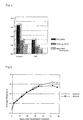
- the onset rate of the control group was 75 %, while that of the group drinking 0.02 weight % Dry L60-min formic acid decomposed product aqueous solution was 50 %.
- a significant difference was thus not observed between the onset rates of the two (see Fig. 1). This shows that even when an aqueous solution of Dry L hydrolysis product is orally ingested during the Langerhans islet destruction period, no suppression of onset is observed.
- aqueous solution of Dry L hydrolysis product was orally administered to NOD mice during the insulitis period, onset was suppressed.
- a specific description is given below.
- the rate of onset at week 7 following the administration of cyclophosphamide was 60 % in the control group, 16.6 % in the group that had been given drinking water containing 0.02 weight % Dry L60-min formic acid decomposed production, and 35 % in the group that had been given drinking water containing Dry L30-min formic acid decomposed product (see Fig. 2).
- db/db mice are known as a model of the morbid state of obese-type NIDDM. With the progression of NIDDM, a rise in the level of blood glucose is observed. Using the blood glucose level and body weight as indicators of the progression of morbidity, db/db mice were given drinking water containing 0.02 weight % Dry L60-min formic acid decomposed product, the progression of the state of morbidity of this group was compared with that of a control group given sterile water as drinking water, and the results of oral ingestion of Dry L were examined.
- mice Male db/db mice were given drinking water containing Dry L60-min formic acid decomposed product from age 5 weeks to 13 weeks. The blood glucose level was measured once a week during feeding or during fasting with a Fuji DryChem (fasting was conducted from the afternoon of the day preceding measurement to the time of measurement).
- the group ingesting drinking water containing Dry L60-min formic acid decomposed product had lower blood glucose levels than the control group, both when fed and when fasting.
- a significant increase in the suppression of blood glucose levels was observed in the group ingesting drinking water containing Dry L60-min formic acid decomposed product.
- a comparison of the maximum level of blood glucose of each group during the period of ingestion of drinking water with the blood glucose level at the start of ingestion of drinking water was 120 % for the control group and 50 % for the group ingesting drinking water containing Dry L60-min formic acid decomposed product; a significant increase in the suppression of blood glucose level was confirmed.
- db/db mice were given drinking water containing 0.01 weight % of Shiitake hot-water extract that had been enzymatically broken down. The progression of morbidity was compared to that of a control group given drinking water in the form of sterile water, and the results of the suppression of the onset of NIDDM by oral ingestion were examined.
- mice Male db/db mice were given drinking water containing enzymatically degradated product from 5 weeks to 13 weeks of age, and blood glucose was measured once a week when fed and when fasting with a Fuji DryChem (fasting was conducted from the afternoon of the day preceding measurement to the time of measurement).
- the group ingesting drinking water in the form of an aqueous solution of enzymatically decomposed product exhibited lower blood glucose levels than the control group, both when fed and when fasting.
- Significant suppression of blood glucose was confirmed in the group ingesting drinking water containing enzymatically decomposed product.
- a comparison of the maximum level of blood glucose of each group during the period of ingestion of drinking water with the blood glucose level at the start of ingestion of drinking water was 140 % for the control group and 38 % for the group ingesting drinking water containing enzymatically decomposed product; a significant increase in the suppression of blood glucose level was confirmed. This resulting suppression of the increase in blood glucose level continued for four weeks following the termination of administration. No difference was observed in the quantity of feed consumed between the two groups during that time.
- the present invention provides a drug product that can be widely used on states of both IDDM and NIDDM diabetic morbidity, has almost no side effects, has no obese effect, and is effective even when orally administered, thus making it suitable as a medical drug product for widespread and convention use by patients in various morbid states, in the prevention, improvement in conditions relating to, treatment, and the like of diabetes.
- the drug product of the present invention can be provided for use as a food and drink product to healthy persons for prevention and improvement in conditions relating to, to suppress the further progression of diabetes, and as a food product to patients suffering from such conditions. Accordingly, the drug product of the present invention can be provided in the form of health food products, therapeutic food products, and the like. Still further, the present invention provides a method of preventing, improving conditions relating to, and/or treating diabetes, and the use of specific ⁇ (1 ⁇ 3) glucan in such drug products.
- the present invention can be widely implemented in the fields of medical drugs, food products, medical treatment, feeds, and veterinary drugs, and is thus extremely useful from an industrial perspective.
Landscapes
- Health & Medical Sciences (AREA)
- Life Sciences & Earth Sciences (AREA)
- Chemical & Material Sciences (AREA)
- Natural Medicines & Medicinal Plants (AREA)
- Mycology (AREA)
- Engineering & Computer Science (AREA)
- Polymers & Plastics (AREA)
- Food Science & Technology (AREA)
- Nutrition Science (AREA)
- Public Health (AREA)
- Veterinary Medicine (AREA)
- Medicinal Chemistry (AREA)
- Pharmacology & Pharmacy (AREA)
- Animal Behavior & Ethology (AREA)
- General Health & Medical Sciences (AREA)
- Botany (AREA)
- Microbiology (AREA)
- Epidemiology (AREA)
- Alternative & Traditional Medicine (AREA)
- Biotechnology (AREA)
- Medical Informatics (AREA)
- Diabetes (AREA)
- Molecular Biology (AREA)
- General Chemical & Material Sciences (AREA)
- Chemical Kinetics & Catalysis (AREA)
- Organic Chemistry (AREA)
- Emergency Medicine (AREA)
- Obesity (AREA)
- Endocrinology (AREA)
- Bioinformatics & Cheminformatics (AREA)
- Nuclear Medicine, Radiotherapy & Molecular Imaging (AREA)
- Hematology (AREA)
- Pharmaceuticals Containing Other Organic And Inorganic Compounds (AREA)
- Coloring Foods And Improving Nutritive Qualities (AREA)
- Medicines Containing Plant Substances (AREA)
- Polysaccharides And Polysaccharide Derivatives (AREA)
Abstract
Description
□ : Control; ○ : Dry L60-min formic acid decomposed product.
a) Even when an aqueous solution of Dry L hydrolysis product was ingested orally during the preliminary Langerhans islet destruction period by NOD mice, no suppression of onset was observed. A specific description is given below.
b) When an aqueous solution of Dry L hydrolysis product was orally administered to NOD mice during the insulitis period, onset was suppressed. A specific description is given below.
Claims (14)
- A drug product for the prevention, improvement in conditions relating to, and/or treatment of diabetes, characterized by comprising an active component in the form of β (1→3) glucan derived from vegetable material and having a molecular weight of from 5,000 to 20,000.
- The drug product of claim 1 wherein said vegetable matter is a mushroom.
- The drug product of claim 1 or 2 wherein said β (1→3) glucan is obtained by hydrolysis of a glucan.
- The drug product of any of claims 1 to 3 wherein said β (1→3) glucan is obtained from the aqueous extraction product of a mushroom.
- The drug product of claim 4 wherein said glucan obtained from the aqueous extraction product of a mushroom is obtained by the aqueous extraction ― alcohol precipitation of a mushroom or the further decomposition of the precipitate to obtain a compound of low molecular weight.
- The drug product of any of claims 1 to 4 that is administered orally.
- The drug product of claim 1 where said diabetes is insulin-dependent or non-insulin dependent diabetes mellitus.
- The drug product of claim 1 where said molecular weight of from 5,000 to 20,000 denotes an average molecular weight of from 5,000 to 20,000.
- The drug product of claim 2 wherein the type of mushroom is Shiitake.
- The drug product of claim 1 in the form of a health food product.
- A method of preventing, improving conditions relating to, and/or treating diabetes characterized in that β (1→3) glucan derived from vegetable material and having a molecular weight of from 5,000 to 20,000 is ingested by or administered to the body.
- The method of claim 11 wherein the form that is ingested or administered is that of the drug product described in any of claims 1 to 10.
- The use of β (1→3) glucan derived from vegetable material and having a molecular weight of from 5,000 to 20,000 as a drug product for the prevention, improvement in conditions relating to, and/or treatment of diabetes.
- The use of the drug product described in claim 13 in the form of the any of the drug products described in claims 1 to 10.
Applications Claiming Priority (3)
| Application Number | Priority Date | Filing Date | Title |
|---|---|---|---|
| JP2001166919 | 2001-06-01 | ||
| JP2001166919 | 2001-06-01 | ||
| PCT/JP2002/004981 WO2002098440A1 (en) | 2001-06-01 | 2002-05-23 | Drugs for diabetes |
Publications (2)
| Publication Number | Publication Date |
|---|---|
| EP1393738A1 true EP1393738A1 (en) | 2004-03-03 |
| EP1393738A4 EP1393738A4 (en) | 2004-11-17 |
Family
ID=19009386
Family Applications (1)
| Application Number | Title | Priority Date | Filing Date |
|---|---|---|---|
| EP02728123A Withdrawn EP1393738A4 (en) | 2001-06-01 | 2002-05-23 | ANTIDIABETIC TREATMENT |
Country Status (4)
| Country | Link |
|---|---|
| US (2) | US20040137012A1 (en) |
| EP (1) | EP1393738A4 (en) |
| JP (1) | JP4561098B2 (en) |
| WO (1) | WO2002098440A1 (en) |
Families Citing this family (13)
| Publication number | Priority date | Publication date | Assignee | Title |
|---|---|---|---|---|
| JP4238726B2 (en) * | 2001-06-01 | 2009-03-18 | 味の素株式会社 | Drugs for bowel disease |
| NO20014256D0 (en) | 2001-09-03 | 2001-09-03 | Bjoern Kristiansen | Preparation of immunostimulatory compound |
| EP1663266B1 (en) * | 2003-08-11 | 2013-02-20 | Lesaffre et Compagnie | Yeast cell walls for the treatment or prevention of hyperglycemia or for the stabilisation of glycemia |
| JP4587441B2 (en) * | 2004-02-12 | 2010-11-24 | 株式会社クレハ | Novel diabetes treatment and food |
| US7514085B2 (en) | 2004-07-16 | 2009-04-07 | Medimush A/S | Immune modulating compounds from fungi |
| WO2006133707A2 (en) | 2005-06-15 | 2006-12-21 | Medimush A/S | Anti-cancer combination treatment and kit-of-part |
| JP2007204717A (en) * | 2006-02-06 | 2007-08-16 | Nagaoka Univ Of Technology | Method for obtaining polysaccharides derived from mushrooms |
| US7854936B2 (en) * | 2008-01-14 | 2010-12-21 | Active Organics, Inc. | Anti-inflammatory hydrolysate of C. versicolor |
| JP5506229B2 (en) * | 2009-04-09 | 2014-05-28 | サッポロビール株式会社 | Metabolic syndrome improvement or prevention agent |
| CN101851356B (en) * | 2010-06-04 | 2012-12-12 | 北京三浦百草绿色植物制剂有限公司 | Shitake mushroom extract and application thereof |
| JP2012077004A (en) * | 2010-09-30 | 2012-04-19 | Tokyo Institute Of Technology | Insulin secretion promoter, agent for preventing/ameliorating diabetes, comprising the same as main component or containing the same and food for preventing/ameliorating diabetes |
| JP6312074B2 (en) * | 2013-08-09 | 2018-04-18 | 学校法人明治大学 | Insulin resistance reducing food and insulin resistance reducing drug |
| US10092609B2 (en) | 2015-01-16 | 2018-10-09 | James A. Wieser | Process for preparing medicinal mycological preparations |
Family Cites Families (23)
| Publication number | Priority date | Publication date | Assignee | Title |
|---|---|---|---|---|
| GB1356449A (en) * | 1970-12-30 | 1974-06-12 | Iizuka C | Process for extracting water soluble components of the hyphae of edible fungi |
| DE3448144C2 (en) * | 1983-08-11 | 1989-10-05 | Kureha Kagaku Kogyo K.K., Tokio/Tokyo, Jp | |
| JPS6045532A (en) * | 1983-08-11 | 1985-03-12 | Kureha Chem Ind Co Ltd | Blood sugar-lowering agent |
| US4739046A (en) * | 1985-08-19 | 1988-04-19 | Luzio Nicholas R Di | Soluble phosphorylated glucan |
| US4975421A (en) * | 1985-08-19 | 1990-12-04 | Bioglucan, Lp. | Soluble phosphorylated glucan: methods and compositions for wound healing |
| JPH0692441B2 (en) * | 1986-03-03 | 1994-11-16 | 株式会社林原生物化学研究所 | β-D-glucan, production method and use thereof |
| JPH0643336B2 (en) * | 1988-06-30 | 1994-06-08 | 呉羽化学工業株式会社 | Vascular growth inhibitor |
| CA2066172A1 (en) * | 1989-09-08 | 1991-03-09 | Alpha Beta Technology, Inc. | Method for producing soluble glucans |
| JP3650409B2 (en) * | 1993-03-29 | 2005-05-18 | 台糖株式会社 | Process for producing low molecular weight branched β-1,3-glucan and branched laminary oligosaccharide |
| DE69531900T2 (en) * | 1993-12-28 | 2004-09-09 | Société des Produits Nestlé S.A. | FOOD CONTAINING CEREALS WITH A HIGH SOLUBLE SOLVENT |
| AUPN166195A0 (en) * | 1995-03-13 | 1995-04-06 | Norvet Research Pty Limited | Process for glucan extraction |
| US5773426A (en) * | 1996-06-07 | 1998-06-30 | Masaki Shirota | Proteoglucan and antidiabetic drug thereof |
| JPH1160495A (en) * | 1997-08-20 | 1999-03-02 | Kureha Chem Ind Co Ltd | Medicine for preventing disease for immune system immature animal |
| JP3243559B2 (en) * | 1998-02-18 | 2002-01-07 | 株式会社はくばく | Process for producing water-soluble dietary fiber mainly composed of barley bran-derived β-glucan |
| US6190680B1 (en) * | 1998-04-01 | 2001-02-20 | The Nisshin Oil Mills, Ltd. | Oily composition and process for producing the same |
| US6616928B1 (en) * | 1998-10-20 | 2003-09-09 | Yukiguni Maitake Co., Ltd. | Active oxygen scavenger and cancer chemopreventer from Grifola |
| JP2000069919A (en) * | 1998-08-31 | 2000-03-07 | Api Co Ltd | Propolis-containing foods |
| JP2000159682A (en) * | 1998-09-17 | 2000-06-13 | Kozo Niwa | Crude drug antitumor activity enhancing method, antitumor activity enhancing crude drug-containing composition, antitumor efficacy evaluating method of crude drug treatment, and antitumor efficacy evaluating method of crude drug |
| EP1004302A3 (en) * | 1998-10-29 | 2003-06-04 | Ajinomoto Co., Inc. | Immunomodulator |
| US6143883A (en) * | 1998-12-31 | 2000-11-07 | Marlyn Nutraceuticals, Inc. | Water-soluble low molecular weight beta-glucans for modulating immunological responses in mammalian system |
| WO2000041541A2 (en) * | 1999-01-12 | 2000-07-20 | Vito-Mannan Polysaccharide L.L.C. | Method of isolating mucilaginous polysaccharides and uses thereof |
| JP2000309543A (en) * | 1999-04-28 | 2000-11-07 | Ajinomoto Co Inc | Antidiabetic agent |
| JP4238726B2 (en) * | 2001-06-01 | 2009-03-18 | 味の素株式会社 | Drugs for bowel disease |
-
2002
- 2002-05-23 EP EP02728123A patent/EP1393738A4/en not_active Withdrawn
- 2002-05-23 JP JP2003501479A patent/JP4561098B2/en not_active Expired - Fee Related
- 2002-05-23 WO PCT/JP2002/004981 patent/WO2002098440A1/en not_active Ceased
-
2003
- 2003-11-25 US US10/720,164 patent/US20040137012A1/en not_active Abandoned
-
2006
- 2006-04-04 US US11/278,590 patent/US20060165720A1/en not_active Abandoned
Also Published As
| Publication number | Publication date |
|---|---|
| EP1393738A4 (en) | 2004-11-17 |
| US20060165720A1 (en) | 2006-07-27 |
| JPWO2002098440A1 (en) | 2004-09-16 |
| US20040137012A1 (en) | 2004-07-15 |
| JP4561098B2 (en) | 2010-10-13 |
| WO2002098440A1 (en) | 2002-12-12 |
Similar Documents
| Publication | Publication Date | Title |
|---|---|---|
| JP3633601B2 (en) | Immunostimulator | |
| TWI329516B (en) | Composition for preventing or ameliorating multiple risk factor syndromes and visceral fat-type obesity | |
| EP1393734A1 (en) | Drugs for intestinal diseases | |
| JP7069490B2 (en) | Yuricoma longifolia extract and its use in enhancing and / or stimulating the immune system | |
| US20040137012A1 (en) | Drug product for diabetes | |
| WO2005056035A1 (en) | Alga extract and sugar hydrolase inhibitor containing the same | |
| EP2153839A1 (en) | Composition for prevention and/or treatment of peptic ulcer | |
| EP4331581A1 (en) | Composition for ameliorating or suppressing decline of kidney functions | |
| KR100716490B1 (en) | Composition and foods for lowering glycemic index | |
| JP3691685B2 (en) | Blood sugar level rise inhibitor | |
| US4629725A (en) | Method for inhibiting increase in blood sugar content | |
| US4988513A (en) | Method of treating hypokalemia | |
| JP2010111646A (en) | Treating agent for ulcerative colitis | |
| CN112971154A (en) | Solid mixture rich in water-soluble dietary fibers and alpha-amylase inhibitor, and preparation method and application thereof | |
| JPH0965836A (en) | α-Glucosidase inhibitor, sugar composition containing the same, sweetener, food and feed | |
| JP4752233B2 (en) | Immunostimulator | |
| JP3234113B2 (en) | Blood glucose elevation inhibitors and uses | |
| ES2402643A1 (en) | Anticholesteremic fibre combination | |
| US4913925A (en) | Foodstuff containing a hyperglycemia controlling agent | |
| JPH05117156A (en) | Agent for the prevention and treatment of diseases associated with hyperglycemia | |
| AU2021201581A1 (en) | Use of antrodia cinnamomea for increasing alcohol metabolism or/and hangover | |
| KR101372526B1 (en) | Composition for reducing the body fat and strengthening the physical strength | |
| JP2009298768A (en) | METABOLIC SYNDROME IMPROVER USING beta-1,3-1,6-D-GLUCAN | |
| CN112004423A (en) | Isomaltulose syrup capable of inhibiting crystallization and inhibiting blood sugar rise | |
| RU2360683C1 (en) | Corrective composition for pathologic carbohydrate, lipid disbolism and antioxidant organism state involvement |
Legal Events
| Date | Code | Title | Description |
|---|---|---|---|
| PUAI | Public reference made under article 153(3) epc to a published international application that has entered the european phase |
Free format text: ORIGINAL CODE: 0009012 |
|
| 17P | Request for examination filed |
Effective date: 20031119 |
|
| AK | Designated contracting states |
Kind code of ref document: A1 Designated state(s): AT BE CH CY DE DK ES FI FR GB GR IE IT LI LU MC NL PT SE TR |
|
| AX | Request for extension of the european patent |
Extension state: AL LT LV MK RO SI |
|
| A4 | Supplementary search report drawn up and despatched |
Effective date: 20041004 |
|
| RIC1 | Information provided on ipc code assigned before grant |
Ipc: 7A 23L 1/054 B Ipc: 7A 61K 35/78 B Ipc: 7A 61K 31/70 B Ipc: 7A 23L 1/30 B Ipc: 7A 61P 3/10 B Ipc: 7A 61K 31/716 B Ipc: 7A 61K 35/84 A |
|
| 17Q | First examination report despatched |
Effective date: 20071213 |
|
| STAA | Information on the status of an ep patent application or granted ep patent |
Free format text: STATUS: THE APPLICATION IS DEEMED TO BE WITHDRAWN |
|
| 18D | Application deemed to be withdrawn |
Effective date: 20100105 |