EP1392053A2 - Single Chip Set Top Box with reconfigurable interface - Google Patents
Single Chip Set Top Box with reconfigurable interface Download PDFInfo
- Publication number
- EP1392053A2 EP1392053A2 EP03016793A EP03016793A EP1392053A2 EP 1392053 A2 EP1392053 A2 EP 1392053A2 EP 03016793 A EP03016793 A EP 03016793A EP 03016793 A EP03016793 A EP 03016793A EP 1392053 A2 EP1392053 A2 EP 1392053A2
- Authority
- EP
- European Patent Office
- Prior art keywords
- chip
- signals
- card
- pod
- mpeg transport
- Prior art date
- Legal status (The legal status is an assumption and is not a legal conclusion. Google has not performed a legal analysis and makes no representation as to the accuracy of the status listed.)
- Withdrawn
Links
Images


Classifications
-
- H—ELECTRICITY
- H04—ELECTRIC COMMUNICATION TECHNIQUE
- H04N—PICTORIAL COMMUNICATION, e.g. TELEVISION
- H04N21/00—Selective content distribution, e.g. interactive television or video on demand [VOD]
- H04N21/40—Client devices specifically adapted for the reception of or interaction with content, e.g. set-top-box [STB]; Operations thereof
- H04N21/41—Structure of client; Structure of client peripherals
- H04N21/418—External card to be used in combination with the client device, e.g. for conditional access
- H04N21/4181—External card to be used in combination with the client device, e.g. for conditional access for conditional access
-
- H—ELECTRICITY
- H04—ELECTRIC COMMUNICATION TECHNIQUE
- H04N—PICTORIAL COMMUNICATION, e.g. TELEVISION
- H04N21/00—Selective content distribution, e.g. interactive television or video on demand [VOD]
- H04N21/40—Client devices specifically adapted for the reception of or interaction with content, e.g. set-top-box [STB]; Operations thereof
- H04N21/41—Structure of client; Structure of client peripherals
- H04N21/426—Internal components of the client ; Characteristics thereof
- H04N21/42607—Internal components of the client ; Characteristics thereof for processing the incoming bitstream
- H04N21/42623—Internal components of the client ; Characteristics thereof for processing the incoming bitstream involving specific decryption arrangements
-
- H—ELECTRICITY
- H04—ELECTRIC COMMUNICATION TECHNIQUE
- H04N—PICTORIAL COMMUNICATION, e.g. TELEVISION
- H04N21/00—Selective content distribution, e.g. interactive television or video on demand [VOD]
- H04N21/40—Client devices specifically adapted for the reception of or interaction with content, e.g. set-top-box [STB]; Operations thereof
- H04N21/43—Processing of content or additional data, e.g. demultiplexing additional data from a digital video stream; Elementary client operations, e.g. monitoring of home network or synchronising decoder's clock; Client middleware
- H04N21/438—Interfacing the downstream path of the transmission network originating from a server, e.g. retrieving encoded video stream packets from an IP network
- H04N21/4385—Multiplex stream processing, e.g. multiplex stream decrypting
- H04N21/43853—Multiplex stream processing, e.g. multiplex stream decrypting involving multiplex stream decryption
-
- H—ELECTRICITY
- H04—ELECTRIC COMMUNICATION TECHNIQUE
- H04N—PICTORIAL COMMUNICATION, e.g. TELEVISION
- H04N21/00—Selective content distribution, e.g. interactive television or video on demand [VOD]
- H04N21/60—Network structure or processes for video distribution between server and client or between remote clients; Control signalling between clients, server and network components; Transmission of management data between server and client, e.g. sending from server to client commands for recording incoming content stream; Communication details between server and client
- H04N21/63—Control signaling related to video distribution between client, server and network components; Network processes for video distribution between server and clients or between remote clients, e.g. transmitting basic layer and enhancement layers over different transmission paths, setting up a peer-to-peer communication via Internet between remote STB's; Communication protocols; Addressing
- H04N21/633—Control signals issued by server directed to the network components or client
- H04N21/6332—Control signals issued by server directed to the network components or client directed to client
- H04N21/6336—Control signals issued by server directed to the network components or client directed to client directed to decoder
-
- H—ELECTRICITY
- H04—ELECTRIC COMMUNICATION TECHNIQUE
- H04N—PICTORIAL COMMUNICATION, e.g. TELEVISION
- H04N21/00—Selective content distribution, e.g. interactive television or video on demand [VOD]
- H04N21/60—Network structure or processes for video distribution between server and client or between remote clients; Control signalling between clients, server and network components; Transmission of management data between server and client, e.g. sending from server to client commands for recording incoming content stream; Communication details between server and client
- H04N21/63—Control signaling related to video distribution between client, server and network components; Network processes for video distribution between server and clients or between remote clients, e.g. transmitting basic layer and enhancement layers over different transmission paths, setting up a peer-to-peer communication via Internet between remote STB's; Communication protocols; Addressing
- H04N21/637—Control signals issued by the client directed to the server or network components
- H04N21/6377—Control signals issued by the client directed to the server or network components directed to server
-
- H—ELECTRICITY
- H04—ELECTRIC COMMUNICATION TECHNIQUE
- H04N—PICTORIAL COMMUNICATION, e.g. TELEVISION
- H04N7/00—Television systems
- H04N7/16—Analogue secrecy systems; Analogue subscription systems
- H04N7/162—Authorising the user terminal, e.g. by paying; Registering the use of a subscription channel, e.g. billing
- H04N7/163—Authorising the user terminal, e.g. by paying; Registering the use of a subscription channel, e.g. billing by receiver means only
Definitions
- Embodiments of the present invention relate generally to integrated circuits and systems, and more particularly to an interactive broadband set-top box on a single integrated circuit (IC) chip.
- IC integrated circuit
- a set-top box interfaces with RF devices to receive and process audio, video, data, and/or graphics information for display on a display device such as a high definition television, standard definition television, or a computer monitor.
- the video and graphics signals transmitted to the display device by the set-top box may comprise, for example, RGB, NTSC, PAL, SECAM, ATSC, S-video, and DVI-compatible signals as well as any other standard or non-standard video and/or graphics signals.
- the audio, video, data, and/or graphics information may originate, for example, at a cable headend.
- a headend is the mainframe of a cable television system where inputs from satellites, local signals, and other sources are combined, balanced, and amplified for subsequent distribution to customers on a single cable.
- the headend includes various RF devices including antennas, preamplifiers, frequency converters, demodulators, modulators, processors, and other related devices.
- headend is used generally to simply indicate a source of audio, video, data, and/or graphics information.
- a set-top box system may receive audio, video, data, and/or graphics information using any combination of available communication media such as, for example, cable, landline (eg. PSTN, ISDN, DSL), Internet, satellite links, free space, wireless links, and the like.
- the set-top box system may interface to a memory device to store data during audio, video, data, and/or graphics processing.
- a typical set-top box may include a broadband receiver, an MPEG decoder, a video encoder, an upstream RF transmitter, and a CPU all implemented on separate integrated circuit (IC) chips or systems.
- a set-top box may include peripheral interfaces including PCMCIA-compatible interfaces and a POD interface implemented on separate chips or systems.
- Peripheral interfaces may include various types of installed PC cards that are communicated to/from using a PCMCIA (Personal Computer Memory Card International Association) standard communication protocol.
- PCMCIA Personal Computer Memory Card International Association
- the purpose of the PCMCIA protocol is to support the interoperability of PC cards in computers, automobiles, cable TV, digital cameras, and set-top box systems.
- the PCMCIA protocol defines the electrical interface, associated software, socket design, and physical size of the cards and, as an example, may be in compliance with PC Card Standard 8.0 Release, April 2001 which is incorporated by reference herein in its entirety.
- Some examples of PC cards include memory cards, modems, sound cards, floppy disk controllers, hard drives, CD ROM and SCSI controllers, GPS cards, data acquisition and LAN cards, pagers, radios, wireless network cards, etc.
- peripheral interfaces may include a point-of-deployment (POD) interface.
- POD point-of-deployment
- a POD module is a programmable card that may be installed in a set-top box system and is communicated to/from using a POD communication protocol through the POD interface.
- the functions of the POD module are to receive, de-encrypt, and transmit parallel MPEG transport streams and receive, process, and transmit out-of-band (OOB) signals.
- OOB out-of-band
- a cable provider may download data to the POD module using the OOB channels to, for example, enable pay-per-view channels requested by a user.
- the POD module may transmit upstream signals through the POD interface using the OOB channels to provide requests and status information to the cable provider, for example, such that a user's account may be updated.
- the POD protocol may be in compliance with OpenCableTM Host-POD Interface Specification IS-POD-131-INT07-010803, dated August 3, 2001 which is incorporated herein by reference in its entirety.
- Certain embodiments of the present invention provide a method and apparatus, in an interactive broadband set-top box receiving broadband signals from, for example, a headend, to facilitate communications with an installed card within the set-top box using a single IC chip that processes the broadband signals.
- a method of the present invention provides for configuring a single IC chip to a PCMCIA PC-card mode such that certain existing I/O pins of the single IC chip carry PC card signals when operating in the PCMCIA PC-card mode.
- the single IC chip may detect the presence of an installed card interfacing to the single IC chip and may identify the installed card as a PC card or a POD module.
- the single IC chip may be reconfigured from the PCMCIA PC-card mode to a POD mode, if the installed card is identified as a POD module, such that POD-compatible signals are multiplexed to certain existing I/O pins of the single IC chip when operating in the POD mode.
- Apparatus of the present invention provides, within a single IC chip, a broadband digital signal processing module (BDSPM) to process broadband signals.
- BDSPM broadband digital signal processing module
- the apparatus also provides, within the single IC chip, a PC-card/POD interface module (PPIM) interfacing to the BDSPM.
- PPIM is capable of being configured to operate in a PCMCIA PC-card mode or a POD mode, along with the BDSPM, in order to communicate with an installed card in an interactive broadband set-top box by multiplexing signals onto shared I/O pins of the single IC chip.
- Certain embodiments of the present invention afford an approach for a single IC chip to multiplex certain I/O pins between PC card signals and POD-compatible signals in order to communicate with a PCMCIA module or a POD module installed in an interactive broadband set-top box.
- Fig. 1 is a schematic block diagram of a single IC chip 5 in a set-top box and processing broadband signals from a headend 110 and interfacing to a POD module 150 in accordance with an embodiment of the present invention.
- the single IC chip 5 may also interface to certain PC cards as well.
- the single IC chip 5 comprises two main sections including a Broadband Digital Signal Processing module (BDSPM) 100 and a PC-card/POD Interface Module (PPIM).
- BDSPM Broadband Digital Signal Processing module
- PPIM PC-card/POD Interface Module
- the BDSPM 100 receives broadband audio, video, data, and/or graphics information from a headend 110, processes the information, interfaces to PPIM 200 within the single IC chip 5, outputs upstream RF signals to the headend 110, and outputs other signals for display to, for example, a television 120.
- the PPIM 200 receives/transmits signals from/to the BDSPM 100 and multiplexes the appropriate signals to I/O pins of the single IC chip 5 such that the single IC chip 5 may interface to a PC card or a POD module installed in the set-top box.
- the BDSPM 100 comprises an MPEG decoder/video encoder 10, a transport processor 20, an in-band receiver 30, and out-of-band receiver 40, an upstream RF module 50, and a CPU 60.
- broadband signals are received by the BDSPM 100 in the form of in-band signals and out-of-band signals.
- the in-band signals are received by in-band receiver 30 which generates a digital serial MPEG transport stream from the received in-band signals.
- in-band receiver 30 comprises a QAM receiver.
- OOB receiver 40 which generates digital OOB signals.
- the OOB receiver 40 comprises a QPSK receiver.
- the CPU 60 controls the functionality of the single IC chip 5 by generating various control signals within the chip.
- Digital upstream signals generated by a POD module 150 external to the single IC chip 5, may be converted to upstream RF signals by upstream RF module 50 and transmitted to the headend 110.
- Upstream RF module 50 may comprise a QPSK/16-QAM upstream transmitter in accordance with an embodiment of the present invention.
- the transport processor 20 receives a serial MPEG transport stream from the PPIM 200.
- the serial MPEG transport stream may include one or more in-band streams (high data rate streams such as audio or video data).
- the transport processor 20 may perform one or more of, but not limited to, signal parsing, PID filtering, encrypting, de-encrypting, and packet buffering of the received serial MPEG transport stream.
- the transport processor 20 transmits a de-encrypted, parsed serial MPEG transport stream to MPEG Decoder/Video Encoder 10 for audio and video decoding (i.e. decompression).
- the MPEG Decoder/Video Encoder 10 performs dual functions.
- the MPEG decoder section receives compressed signals from a parsed serial MPEG transport stream and performs signal decompression.
- the signal decompression operation may, in an embodiment of the present invention, decode a compressed video signal of the parsed serial MPEG transport stream into a CCIR-656 standard digital signal.
- the MPEG decoder may format the compressed signals into other types of decompressed signal formats.
- the video encoder section of the MPEG Decoder/Video Encoder 10 receives a video signal (e.g. a CCIR-656 stream) as a parsed serial MPEG transport stream and encodes the received video signal by converting it to, for example, a NTSC or PAL video signal for display.
- a video signal e.g. a CCIR-656 stream
- Fig. 1 shows the BDSPM 100 and PPIM 200 of the single IC chip 5 configured in the POD mode as opposed to the PCMCIA PC-card mode.
- the single IC chip 5 may be configured to either the POD mode or the PCMCIA PC-card mode.
- the BDSPM 100 of the single IC chip 5 processes broadband signals received from the headend as previously described.
- the BDSPM 100 and PPIM 200 of the single IC chip 5 are configured to the PCMCIA PC-card mode by CPU 60 by configuring a control register in the BDSPM 100, as shown in Fig. 3, for the PCMCIA PC-card mode.
- the CPU 60 While in the PCMCIA PC-card mode, the CPU 60 detects the presence of an installed card 150 (such as a POD module or a PC card) in step 330. If the CPU 60 detects the presence of an installed card 150, then the CPU 60 reads an identification register in installed card 150 and identifies the installed card as a particular PC card or a POD module in step 340.
- an installed card 150 such as a POD module or a PC card
- step 350 if the installed card 150 is a POD module, then the CPU reconfigures the BDSPM 100 and PPIM 200 in single IC chip 5 to the POD mode by configuring a control register in the BDSPM 100, as shown in Fig. 3, for the POD mode (step 360 in Fig. 2).
- the single IC chip 5 when configured to the POD mode, the single IC chip 5 will operate in the POD mode in compliance with OpenCable TM Host-POD Interface Specification IS-POD-131-INT07-010803, dated August 3, 2001 (step 370 in Fig. 2).
- the single IC chip 5 remains in the PCMCIA PC-card mode and operates in compliance with PC Card Standard 8.0 Release, April 2001 (step 380 in Fig. 2) in accordance with an embodiment of the present invention.
- Other embodiments complying with other standards and/or specifications are possible as well.
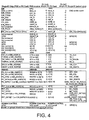
- Fig. 4 is a table illustrating the various POD or PC card signals that may be multiplexed onto certain I/O pins of the single IC chip 5 of Fig. 1 in accordance with an embodiment of the present invention.
- the signals and pins that are boxed are multiplexed between PC card signals and POD signals depending on the mode of operation (PCMCIA PC-card or POD).
- PCMCIA PC-card or POD the mode of operation
- the direction of the signals (input, output or both) with respect to the single IC chip 5 is also shown in Fig. 4.
- the TX_CLK pin carries a clock signal from the single IC chip 5 to the POD module 150 and the TX_I, TX_Q, and TX_ENABb pins carry data from the POD module 5 to the single IC chip 5.
- the same pins carry address information, A[4] to A[7], from the single IC chip 5 to a PC card.
- the PPIM 200 comprises an MPEG parallel-to-serial converter/multiplexer (MPSCM) 70, an MPEG serial-to-parallel converter/multiplexer (MSPCM) 80, and a CPU/OOB/Upstream muxed interface (COUMI) 90 which support the POD mode of the single IC chip 5.
- MPSCM MPEG parallel-to-serial converter/multiplexer
- MSPCM MPEG serial-to-parallel converter/multiplexer
- COUMI CPU/OOB/Upstream muxed interface
- the CPU 60 in the BDSPM 100 communicates through the PPIM 200 to a CPU in the POD module 150 to coordinate activities and functions between the single IC chip 5 and the external POD module 150.
- an encrypted serial MPEG transport stream from in-band receiver 30 is input to MSPCM 80 in PPIM 200.
- MSPCM 80 converts the serial MPEG transport stream to parallel MPEG transport signals and multiplexes the parallel MPEG transport signals to POD module 150.
- POD module 150 de-encrypts the parallel MPEG transport signals and sends the de-encrypted parallel MPEG transport signals to MPSCM 70 in PPIM 200.
- MPSCM 70 multiplexes the de-encrypted parallel MPEG transport signals from the POD module 150 and converts the de-encrypted parallel MPEG transport signals to a de-encrypted serial MPEG transport stream and sends the de-encrypted serial MPEG transport stream to transport processor 20 in BDSPM 100.
- Transport processor 20 generates a parsed serial MPEG transport stream from the de-encrypted serial MPEG transport stream and sends the parsed stream to MPEG Decoder/Video Encoder 10 for audio and/or video decoding (i.e. decompression) and/or video encoding.
- conditional access may be provided using the OOB channels.
- Digital OOB signals from OOB receiver 40 are transmitted to COUMI 90 and multiplexed to POD module 150.
- the OOB signals may contain programming information from the headend.
- the headend may download a key or code to the POD through the single IC chip 5 to enable de-encryption of a particular cable channel such as a pay-per-view channel.
- the POD module 150 may also send digital upstream signals to single IC chip 5 that are multiplexed through COUMI 90 to upstream RF module 50.
- Upstream RF module 50 converts the digital upstream signals to upstream RF signals that are transmitted to the headend 110.
- the upstream signals may contain user request information, such as requesting that an additional channel (e.g. a pay-per-view channel) be de-encrypted by POD module 150.
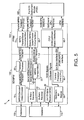
- Fig. 5 is a schematic block diagram of an alternative embodiment of a single IC chip 5 processing broadband signals from a headend 110 and interfacing to a POD module 150 in accordance with an embodiment of the present invention.
- two in-band receivers 31 and 32 are shown, each generating a serial MPEG transport stream that are sent to PPIM 200.
- MPEG Transport Multiplexer (MTM) 33 combines the two streams and sends the resultant combined stream to PPIM 200.
- MSPCM 80 selects one of the three transport streams for subsequent MPEG serial-to-parallel conversion and multiplexing to the POD module 200.
- the single IC chip 5 may generate more than two serial MPEG transport streams and multiplex various combinations of them to POD module 150.
- the single IC chip 5 may support the multiplexing of other functional signals onto the existing shared pins of single IC chip 5 in addition to PC card signals and POD signals.
- other functional modes may also be supported by sharing of pins.
- the single IC chip 5 may support a PCMCIA PC-card mode and a POD mode by having dedicated pins for each mode. No multiplexing or sharing of pins is performed to accommodate the two modes in the single IC chip 5.
- transport processor 20 may be combined with MPEG Decoder/Video Encoder 10 in accordance with an embodiment of the present invention.
- certain embodiments of the present invention afford an approach to configure a single IC chip, processing broadband signals in a set-top box, to a PCMCIA PC-card mode or a POD mode and to multiplex PC card signals or POD-compatible signals within the single IC chip to certain pins of the single IC chip in order to interface with a PC card in the PCMCIA PC-card mode or a POD module in the POD mode.
Landscapes
- Engineering & Computer Science (AREA)
- Multimedia (AREA)
- Signal Processing (AREA)
- Computer Security & Cryptography (AREA)
- Theoretical Computer Science (AREA)
- Two-Way Televisions, Distribution Of Moving Picture Or The Like (AREA)
- Television Systems (AREA)
- Credit Cards Or The Like (AREA)
Abstract
Description
Claims (31)
- In an interactive broadband set-top box receiving broadband signals from a headend, a method to facilitate communications with an installed card within said set-top box using a single IC chip processing said broadband signals, said method comprising:configuring said single IC chip to a PCMCIA PC-card mode such that said single IC chip multiplexes PC card signals to certain I/O pins of said single IC chip when operating in said PCMCIA PC-card mode;detecting the presence of said installed card interfacing to said single IC chip;identifying said installed card as a PC card or a POD module; andreconfiguring said single IC chip from said PCMCIA PC-card mode to a POD mode, if said installed card is identified as said POD module, such that said single IC chip muliplexes POD-compatible signals to at least one of said certain I/O pins or other existing pins of said single IC chip when operating in said POD mode.
- The method of claim 1 further comprising applying appropriate power to said installed card based on, at least in part, said identifying.
- The method of claim 1 further comprising operating said single IC chip in said POD mode with said POD module after said single IC chip is reconfigured to said POD mode.
- The method of claim 1 further comprising operating said single IC chip in said PCMCIA PC-card mode with said PC card if said installed card is identified as said PCMCIA PC card.
- The method of claim 1 wherein said detecting is performed by said single IC chip.
- The method of claim 1 wherein said identifying is performed by said single IC chip.
- The method of claim 2 wherein said applying is commanded, at least in part, by said single IC chip.
- The method of claim 1 wherein said configuring and said reconfiguring each comprise changing a communication protocol of said single IC chip and multiplexing between said PC card signals and said POD-compatible signals within said single IC chip.
- The method of claim 1 wherein said POD-compatible signals comprise parallel MPEG transport signals generated by said single IC chip from said broadband signals processed by said single IC chip and wherein said parallel MPEG transport signals are multiplexed to said POD module by said single IC chip.
- The method of claim 1 wherein said POD-compatible signals comprise de-encrypted parallel MPEG transport signals generated by said POD module and received by said single IC chip.
- The method of claim 1 wherein said POD-compatible signals comprise digital out-of-band (OOB) signals generated by said single IC chip from said broadband signals processed by said single IC chip and wherein said digital OOB signals are multiplexed to said POD module by said single IC chip.
- The method of claim 1 wherein said POD-compatible signals comprise CPU signals generated by a first CPU within said single IC chip and a second CPU within said POD module.
- The method of claim 1 wherein said POD-compatible signals comprise digital upstream signals generated by said POD module and wherein said digital upstream signals are received and processed by said single IC chip to generate upstream RF signals and wherein said upstream RF signals are subsequently sent to said headend.
- The method of claim 1 further comprising:generating multiple serial MPEG transport streams within said single IC chip from said broadband signals;combining at least two of said multiple serial MPEG transport streams within said single IC chip to form at least one muxed transport stream;converting at least one of said multiple serial MPEG transport streams or said at least one muxed transport stream to parallel MPEG transport signals within said single IC chip when said single IC chip is in said POD mode; andmultiplexing said parallel MPEG transport signals to said POD module.
- The method of claim 1 further comprising:generating a serial MPEG transport stream within said single IC chip from de-encrypted parallel MPEG signals from said POD module; anddecoding said serial MPEG transport stream within said single IC chip by decompressing audio and/or video signal components of said serial MPEG transport stream.
- The method of claim 1 further comprising:generating a serial MPEG transport stream within said single IC chip from de-encrypted parallel MPEG signals from said POD module;video encoding a video signal component of said serial MPEG transport stream to generate an encoded video signal; andsending said encoded video signal to a device for further processing and/or display.
- In an interactive broadband set-top box receiving broadband signals from a headend, a method to facilitate communications with an installed card within said set-top box using a single IC chip processing said broadband signals, said method comprising:configuring said single IC chip to a PCMCIA PC-card mode;detecting the presence of said installed card interfacing to said single IC chip;identifying said installed card as a PC card or a POD module; andreconfiguring said single IC chip from said PCMCIA PC-card mode to a POD mode, if said installed card is identified as said POD module.
- In an interactive broadband set-top box receiving broadband signals from a headend, a method to facilitate communications with an installed card within said set-top box using a single IC chip processing said broadband signals, said method comprising:processing said broadband signals using said single IC chip;communicating directly between said single IC chip and said installed card when said installed card is a PC card; andcommunicating directly between said single IC chip and said installed card when said installed card is a POD module.
- In an interactive broadband set-top box receiving broadband signals from a headend, apparatus within a single IC chip to facilitate communications with an installed card within said set-top box, said apparatus comprising:a broadband digital signal processing module (BDSPM) residing on said single IC chip to process said broadband signals; anda PC-card/POD interface module (PPIM) residing on said single IC chip and interfacing to said BDSPM and capable of being configured to operate in a PCMCIA PC-card mode or a POD mode, along with said BDSPM, in order to communicate with said installed card by multiplexing PC card signals or POD-compatible signals to said installed card.
- The apparatus of claim 19 wherein said BDSPM comprises an in-band receiver to generate at least one serial MPEG transport stream from said broadband signals.
- The apparatus of claim 19 wherein said BDSPM comprises an out-of-band (OOB) receiver to generate OOB signals from said broadband signals.
- The apparatus of claim 19 wherein said BDSPM comprises a CPU to control functionality of said single IC chip.
- The apparatus of claim 19 wherein said PPIM multiplexes PC card signals or POD-compatible signals, generated within said single IC chip, to/from said installed card and performs MPEG serial-to-parallel transport stream conversion and MPEG parallel-to-serial transport stream conversion.
- The apparatus of claim 19 wherein said BDSPM comprises a transport processor to generate at least one parsed serial MPEG transport stream from an unparsed serial MPEG transport stream.
- The apparatus of claim 19 wherein said BDSPM comprises an MPEG decoder/video encoder to decompress a parsed serial MPEG transport stream and to convert said parsed serial MPEG transport stream to a video format for display.
- The apparatus of claim 19 wherein said BDSPM comprises an upstream RF module to generate upstream RF signals, to be sent to said headend, from digital upstream signals multiplexed through said PPIM from said installed card.
- The apparatus of claim 19 wherein said BDSPM comprises an MPEG transport multiplexer to combine at least two of a plurality of serial MPEG transport streams generated within said BDSPM for subsequent serial-to-parallel conversion within said PPIM.
- The apparatus of claim 19 wherein said PPIM comprises an MPEG serial-to-parallel converter/multiplexer to convert a serial MPEG transport stream, received from said BDSPM in said POD mode, into parallel MPEG transport signals to be multiplexed to said installed card.
- The apparatus of claim 19 wherein said PPIM comprises an MPEG parallel-to-serial converter/multiplexer to convert parallel MPEG transport signals, multiplexed from said installed card in said POD mode, into a serial MPEG transport stream to be sent to said BDSPM.
- The apparatus of claim 19 wherein said PPIM comprises a Selector/MPEG Serial-to-Parallel Converter/Muitiplexer to select one of a plurality of serial MPEG transport streams generated within said BDSPM and to convert said one into parallel MPEG transport signals to be multiplexed to said installed card.
- In an interactive broadband set-top box receiving broadband signals from a headend, apparatus within a single IC chip to facilitate communications with an installed card within said set-top box, said apparatus comprising:a broadband digital signal processing module (BDSPM) residing on said single IC chip to process said broadband signals; anda PC-card/POD interface module (PPIM) residing on said single IC chip and interfacing to said BDSPM and capable of being configured to operate in a PCMCIA PC-card mode or a POD mode, along with said BDSPM, in order to communicate with said installed card.
Applications Claiming Priority (2)
| Application Number | Priority Date | Filing Date | Title |
|---|---|---|---|
| US202124 | 2002-07-24 | ||
| US10/202,124 US7526791B2 (en) | 2002-07-24 | 2002-07-24 | System and method for an interactive broadband system-on-chip with a reconfigurable interface |
Publications (2)
| Publication Number | Publication Date |
|---|---|
| EP1392053A2 true EP1392053A2 (en) | 2004-02-25 |
| EP1392053A3 EP1392053A3 (en) | 2011-07-27 |
Family
ID=30769755
Family Applications (1)
| Application Number | Title | Priority Date | Filing Date |
|---|---|---|---|
| EP03016793A Withdrawn EP1392053A3 (en) | 2002-07-24 | 2003-07-23 | Single Chip Set Top Box with reconfigurable interface |
Country Status (2)
| Country | Link |
|---|---|
| US (2) | US7526791B2 (en) |
| EP (1) | EP1392053A3 (en) |
Cited By (1)
| Publication number | Priority date | Publication date | Assignee | Title |
|---|---|---|---|---|
| US9087230B2 (en) | 2005-01-07 | 2015-07-21 | Thomson Licensing | Method for communicating by a detector of the presence of chip cards in a reader chip cards and a reading device communicating by the presence detector |
Families Citing this family (28)
| Publication number | Priority date | Publication date | Assignee | Title |
|---|---|---|---|---|
| US7398544B2 (en) * | 2003-05-12 | 2008-07-08 | Sony Corporation | Configurable cableCARD |
| US7334132B1 (en) * | 2003-06-27 | 2008-02-19 | Zoran Corporation | Flexible and scalable architecture for transport processing |
| KR100519360B1 (en) * | 2003-09-17 | 2005-10-07 | 엘지전자 주식회사 | Digital Cable Receiver |
| US20060037040A1 (en) * | 2004-08-12 | 2006-02-16 | Mahalick Scott G | Method of transmitting audio and video signals over radio and television channels |
| KR100599120B1 (en) | 2004-08-26 | 2006-07-12 | 삼성전자주식회사 | Initialization method and device of cable card and channel list using reset menu on OSD screen |
| US20060184702A1 (en) * | 2005-01-31 | 2006-08-17 | You-Min Yeh | Apparatus and related method for sharing address and data pins of a cryptocard module and external memory |
| US20060174298A1 (en) * | 2005-01-31 | 2006-08-03 | Wei-Jen Chen | Apparatus and related method for sharing address and data pins of a cryptocard module and external memory |
| WO2006108866A1 (en) * | 2005-04-15 | 2006-10-19 | Thomson Licensing | High-definition and single-definition digital television decoder |
| KR20080007511A (en) * | 2005-05-10 | 2008-01-21 | 톰슨 라이센싱 | Method and apparatus for caching access information for high speed digital cable tuning |
| WO2008054980A2 (en) * | 2006-10-13 | 2008-05-08 | Aspect Medical System, Inc. | Physiological sensor system with an integrated rfid interrogator system |
| US9398346B2 (en) | 2007-05-04 | 2016-07-19 | Time Warner Cable Enterprises Llc | Methods and apparatus for predictive capacity allocation |
| US7746878B2 (en) | 2007-07-05 | 2010-06-29 | Lg Electronics Inc. | Host device interface with a point of deployment (POD) and a method of processing broadcast data |
| US8166513B2 (en) * | 2007-09-04 | 2012-04-24 | Sony Corporation | TV receiver using cable card for abstracting open cable application platform (OCAP) messages to and from the head end |
| US9060208B2 (en) | 2008-01-30 | 2015-06-16 | Time Warner Cable Enterprises Llc | Methods and apparatus for predictive delivery of content over a network |
| US9164945B2 (en) * | 2008-12-01 | 2015-10-20 | Micron Technology, Inc. | Devices, systems, and methods to synchronize parallel processing of a single data stream |
| CN101489057B (en) * | 2009-01-03 | 2011-02-09 | 海尔集团公司 | Television function expansion component using golden finger connector |
| US11076189B2 (en) | 2009-03-30 | 2021-07-27 | Time Warner Cable Enterprises Llc | Personal media channel apparatus and methods |
| US9215423B2 (en) | 2009-03-30 | 2015-12-15 | Time Warner Cable Enterprises Llc | Recommendation engine apparatus and methods |
| US8396055B2 (en) | 2009-10-20 | 2013-03-12 | Time Warner Cable Inc. | Methods and apparatus for enabling media functionality in a content-based network |
| US9027062B2 (en) * | 2009-10-20 | 2015-05-05 | Time Warner Cable Enterprises Llc | Gateway apparatus and methods for digital content delivery in a network |
| US8997136B2 (en) | 2010-07-22 | 2015-03-31 | Time Warner Cable Enterprises Llc | Apparatus and methods for packetized content delivery over a bandwidth-efficient network |
| US9602414B2 (en) | 2011-02-09 | 2017-03-21 | Time Warner Cable Enterprises Llc | Apparatus and methods for controlled bandwidth reclamation |
| US8978079B2 (en) | 2012-03-23 | 2015-03-10 | Time Warner Cable Enterprises Llc | Apparatus and methods for managing delivery of content in a network with limited bandwidth using pre-caching |
| US9467723B2 (en) | 2012-04-04 | 2016-10-11 | Time Warner Cable Enterprises Llc | Apparatus and methods for automated highlight reel creation in a content delivery network |
| US20140082645A1 (en) | 2012-09-14 | 2014-03-20 | Peter Stern | Apparatus and methods for providing enhanced or interactive features |
| EP2759285A1 (en) * | 2013-01-28 | 2014-07-30 | Becton Dickinson France | Adaptor for coupling with a medical container |
| CN103607662A (en) * | 2013-11-21 | 2014-02-26 | 乐视致新电子科技(天津)有限公司 | Method and apparatus for communication protocol control in intelligent television equipment |
| US10116676B2 (en) | 2015-02-13 | 2018-10-30 | Time Warner Cable Enterprises Llc | Apparatus and methods for data collection, analysis and service modification based on online activity |
Family Cites Families (9)
| Publication number | Priority date | Publication date | Assignee | Title |
|---|---|---|---|---|
| US4991085A (en) * | 1988-04-13 | 1991-02-05 | Chips And Technologies, Inc. | Personal computer bus interface chip with multi-function address relocation pins |
| US5583562A (en) * | 1993-12-03 | 1996-12-10 | Scientific-Atlanta, Inc. | System and method for transmitting a plurality of digital services including imaging services |
| US5848247A (en) * | 1994-09-13 | 1998-12-08 | Hitachi, Ltd. | Microprocessor having PC card interface |
| JP3671543B2 (en) * | 1996-09-10 | 2005-07-13 | ソニー株式会社 | Data transmission method, data transmission device, data reception device parameter setting method, data reception device, and data transmission system |
| US6550008B1 (en) * | 1999-02-26 | 2003-04-15 | Intel Corporation | Protection of information transmitted over communications channels |
| US6694396B1 (en) * | 1999-06-18 | 2004-02-17 | Sony Corporation | Interfacing an NRSS-A smart card within an NRSS-B PCMCIA |
| US9668011B2 (en) * | 2001-02-05 | 2017-05-30 | Avago Technologies General Ip (Singapore) Pte. Ltd. | Single chip set-top box system |
| JP4649009B2 (en) * | 2000-03-08 | 2011-03-09 | 株式会社東芝 | Information processing apparatus having a card interface, card-type electronic equipment that can be mounted on the apparatus, and operation mode setting method in the apparatus |
| US7024683B1 (en) * | 2000-11-01 | 2006-04-04 | Ip Co., Llc | System and method for adaptively interfacing different POD modules to a navigation device |
-
2002
- 2002-07-24 US US10/202,124 patent/US7526791B2/en not_active Expired - Lifetime
-
2003
- 2003-07-23 EP EP03016793A patent/EP1392053A3/en not_active Withdrawn
-
2009
- 2009-03-27 US US12/413,420 patent/US20090328128A1/en not_active Abandoned
Cited By (1)
| Publication number | Priority date | Publication date | Assignee | Title |
|---|---|---|---|---|
| US9087230B2 (en) | 2005-01-07 | 2015-07-21 | Thomson Licensing | Method for communicating by a detector of the presence of chip cards in a reader chip cards and a reading device communicating by the presence detector |
Also Published As
| Publication number | Publication date |
|---|---|
| US7526791B2 (en) | 2009-04-28 |
| US20090328128A1 (en) | 2009-12-31 |
| US20040019913A1 (en) | 2004-01-29 |
| EP1392053A3 (en) | 2011-07-27 |
Similar Documents
| Publication | Publication Date | Title |
|---|---|---|
| US7526791B2 (en) | System and method for an interactive broadband system-on-chip with a reconfigurable interface | |
| US8718198B2 (en) | Multipurpose television module | |
| US8126391B2 (en) | Method and system for single chip satellite set-top box system | |
| US7421024B2 (en) | Method for transcoding MPEG encoded streams | |
| EP1716481B1 (en) | Method and system of providing signals | |
| CN101124827B (en) | System and method for error correction in high definition television signals | |
| KR20060040429A (en) | Apparatus and method for providing digital broadcast data using wireless LAN | |
| US20060159070A1 (en) | Wireless network base stations capable of receiving video signals | |
| US7961192B2 (en) | Multi-graphics processor system and method for processing content communicated over a network for display purposes | |
| US20170099509A1 (en) | Method and apparatus for transmitting high bandwidth signals with low bandwidth transponders | |
| US20050108778A1 (en) | Method and apparatus for simultaneous display of multiple audio/video programs transmitted over a digital link | |
| EP1154641A1 (en) | Method and apparatus for digital signal processing | |
| US20040205254A1 (en) | System for media capture and processing and method thereof | |
| US20080060015A1 (en) | Digital Broadcast Reception System | |
| KR100995326B1 (en) | Open cable application device that can communicate with external device and communication method using the same | |
| EP3383053B1 (en) | Broadcast receiving device, data transfer method, and recording medium | |
| EP1517503B1 (en) | Method, device and system for distributing media channels over a communication network | |
| KR200385300Y1 (en) | Embedded Interactive DOCSIS Set-Top Gateway Module for a Digital Open Cable Broadcasting | |
| WO2014159667A1 (en) | Method and apparatus for transmitting high bandwidth signals with low bandwidth transponders | |
| WO2004030362A1 (en) | A two-module digital television decoder | |
| KR20070017498A (en) | Method and system to provide a signal | |
| JP2003198565A (en) | Wireless communication system and wireless communication method | |
| KR20130068572A (en) | Apparatus and method for receiving multi-function broadcast service |
Legal Events
| Date | Code | Title | Description |
|---|---|---|---|
| PUAI | Public reference made under article 153(3) epc to a published international application that has entered the european phase |
Free format text: ORIGINAL CODE: 0009012 |
|
| AK | Designated contracting states |
Kind code of ref document: A2 Designated state(s): AT BE BG CH CY CZ DE DK EE ES FI FR GB GR HU IE IT LI LU MC NL PT RO SE SI SK TR |
|
| AX | Request for extension of the european patent |
Extension state: AL LT LV MK |
|
| RAP1 | Party data changed (applicant data changed or rights of an application transferred) |
Owner name: BROADCOM CORPORATION |
|
| PUAL | Search report despatched |
Free format text: ORIGINAL CODE: 0009013 |
|
| RIC1 | Information provided on ipc code assigned before grant |
Ipc: H04N 7/16 20110101ALI20110531BHEP Ipc: H04N 5/00 20110101AFI20031229BHEP |
|
| AK | Designated contracting states |
Kind code of ref document: A3 Designated state(s): AT BE BG CH CY CZ DE DK EE ES FI FR GB GR HU IE IT LI LU MC NL PT RO SE SI SK TR |
|
| AX | Request for extension of the european patent |
Extension state: AL LT LV MK |
|
| 17P | Request for examination filed |
Effective date: 20120127 |
|
| AKX | Designation fees paid |
Designated state(s): DE FR GB |
|
| 17Q | First examination report despatched |
Effective date: 20120719 |
|
| STAA | Information on the status of an ep patent application or granted ep patent |
Free format text: STATUS: THE APPLICATION IS DEEMED TO BE WITHDRAWN |
|
| 18D | Application deemed to be withdrawn |
Effective date: 20121130 |