EP1391203A1 - Antitumor agents - Google Patents
Antitumor agents Download PDFInfo
- Publication number
- EP1391203A1 EP1391203A1 EP02769548A EP02769548A EP1391203A1 EP 1391203 A1 EP1391203 A1 EP 1391203A1 EP 02769548 A EP02769548 A EP 02769548A EP 02769548 A EP02769548 A EP 02769548A EP 1391203 A1 EP1391203 A1 EP 1391203A1
- Authority
- EP
- European Patent Office
- Prior art keywords
- cancer
- antitumor
- agent
- compound
- administration
- Prior art date
- Legal status (The legal status is an assumption and is not a legal conclusion. Google has not performed a legal analysis and makes no representation as to the accuracy of the status listed.)
- Withdrawn
Links
Classifications
-
- A—HUMAN NECESSITIES
- A61—MEDICAL OR VETERINARY SCIENCE; HYGIENE
- A61K—PREPARATIONS FOR MEDICAL, DENTAL OR TOILETRY PURPOSES
- A61K31/00—Medicinal preparations containing organic active ingredients
- A61K31/33—Heterocyclic compounds
- A61K31/395—Heterocyclic compounds having nitrogen as a ring hetero atom, e.g. guanethidine or rifamycins
- A61K31/55—Heterocyclic compounds having nitrogen as a ring hetero atom, e.g. guanethidine or rifamycins having seven-membered rings, e.g. azelastine, pentylenetetrazole
- A61K31/551—Heterocyclic compounds having nitrogen as a ring hetero atom, e.g. guanethidine or rifamycins having seven-membered rings, e.g. azelastine, pentylenetetrazole having two nitrogen atoms, e.g. dilazep
- A61K31/5513—1,4-Benzodiazepines, e.g. diazepam or clozapine
-
- A—HUMAN NECESSITIES
- A61—MEDICAL OR VETERINARY SCIENCE; HYGIENE
- A61P—SPECIFIC THERAPEUTIC ACTIVITY OF CHEMICAL COMPOUNDS OR MEDICINAL PREPARATIONS
- A61P1/00—Drugs for disorders of the alimentary tract or the digestive system
- A61P1/18—Drugs for disorders of the alimentary tract or the digestive system for pancreatic disorders, e.g. pancreatic enzymes
-
- A—HUMAN NECESSITIES
- A61—MEDICAL OR VETERINARY SCIENCE; HYGIENE
- A61P—SPECIFIC THERAPEUTIC ACTIVITY OF CHEMICAL COMPOUNDS OR MEDICINAL PREPARATIONS
- A61P35/00—Antineoplastic agents
-
- C—CHEMISTRY; METALLURGY
- C07—ORGANIC CHEMISTRY
- C07D—HETEROCYCLIC COMPOUNDS
- C07D401/00—Heterocyclic compounds containing two or more hetero rings, having nitrogen atoms as the only ring hetero atoms, at least one ring being a six-membered ring with only one nitrogen atom
- C07D401/02—Heterocyclic compounds containing two or more hetero rings, having nitrogen atoms as the only ring hetero atoms, at least one ring being a six-membered ring with only one nitrogen atom containing two hetero rings
- C07D401/04—Heterocyclic compounds containing two or more hetero rings, having nitrogen atoms as the only ring hetero atoms, at least one ring being a six-membered ring with only one nitrogen atom containing two hetero rings directly linked by a ring-member-to-ring-member bond
Definitions
- This invention relates to medicaments, particularly antitumor agents useful for treating pancreatic cancer.
- chemotherapeutic agents capable of showing high efficacy on pancreatic cancer which is one of the intractable cancers, and a standard regimen is not established yet.
- a antimetabolite gemcitabine (GEM) showed a relatively good result, but it has side effects such as myelosuppression, fever, nausea, vomiting and the like.
- GEM antimetabolite gemcitabine
- great concern has been directed toward the creation of a new type and effective antitumor agent ( Kagaku Ryoho-no Ryoiki (Region of Chemotherapy), Vol. 14, S-1, pp.
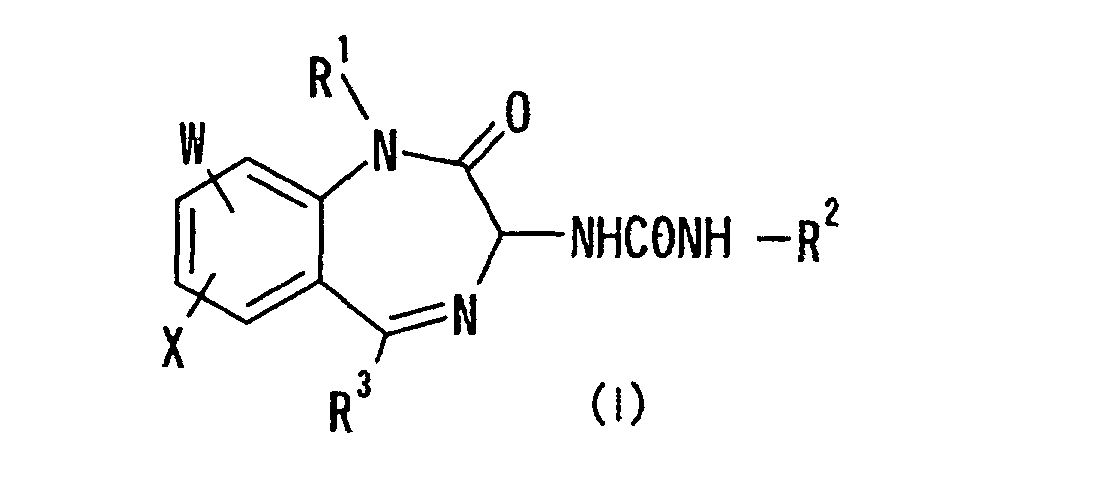
- WO 93/16999 discloses medical compositions which act as a gastrin or CCK-B receptor antagonist and contain benzodiazepine derivatives of the following general formula (I) or salts thereof and these compounds as the active ingredients, particularly the aforementioned compositions which are medicaments for treating diseases induced by incompleteness of physiological functions controlled by gastrin.
- a racemic body of the compound A is disclosed in Example 57, but there is no disclosure on the compound A itself as an optically active substance.
- R 1 is -CH 2 CHOH(CH 2 ) a R 4 , a ketone group - CH 2 CO (CH 2 ) a R 5 or -CH 2 COC(CH 3 ) 2 R 5 , a is 0 or 1, R 4 and R 5 are selected from alkyl and cycloalkyl groups and saturated heterocyclic groups whose hetero atoms are optionally substituted, (omission), R 2 and R 3 are independently selected from optionally substituted aromatic carbon rings and optionally substituted aromatic heterocyclic ring residues, and W and X are independently selected from halogen and hydrogen atoms and alkyl and alkoxy groups.
- Example 52 of WO 95/06040 which also discloses a synthetic method thereof and a medical composition containing said compound as the active ingredient, for use in the treatment of diseases induced by incompleteness of physiological functions controlled by gastrin.
- stomach and colon cancers are cited, in addition to gastric and duodenal ulcers, gastritis, reflux esophagitis and the like, as the diseases induced by incompleteness of physiological functions controlled by gastrin.
- these official gazettes disclose only binding affinity for CCK-B receptors and inhibitory action upon pentagastrin-stimulus gastric acid secretion in rats, and there is no illustrative disclosure on the action upon stomach and colon cancers.
- a selective gastrin/CCK-B receptor antagonist CI-988 as a non-benzodiazepine compound showed a growth inhibitory action without exogenous gastrin stimulation in human large bowel cancer-bearing mice at 25 mg/kg of oral administration, but the effect was not found at 50 mg/kg (Clinical and Experimental Pharmacology and Physiology, 23, 438 - 40, 1996).
- the present inventors have conducted intensive studies on the physiological activity and action of the compound A and unexpectedly found as a result that the compound A ((3R)-N-(1-(1-tert-butylcarbonylmethyl)-2,3-dihydro-2-oxo-5-(2-pyridyl)-1H-1,4-benzodiazepin-3-yl)-N-(3-(methylamino)phenyl)urea) has good antitumor effects, particularly an excellent antitumor action upon pancreatic cancer and has reduced side effects even by a high dose administration, thereby accomplishing the invention.
- the invention relates to an antitumor agent which contains the compound A or a salt thereof as the active ingredient.
- it is an antitumor agent whose oral administration dose per day is from 0.1 to 1,000 mg/kg, more preferably 1 mg/kg or more, and an antitumor agent whose intravenous administration dose per day is from 0.01 to 100 mg/kg, more preferably 0.1 mg/kg.
- the antitumor agent of the invention is desirable as a therapeutic agent of pancreatic cancer, large bowel cancer or gastric cancer, and it is particularly desirable a therapeutic agent of pancreatic cancer.
- the antitumor agent of the invention includes an antitumor agent to be used in a polypharmaceutical chemotherapy, namely an antitumor agent which is administered jointly with at least one other antitumor agent, simultaneously or at different times, with the same or different frequencies and by the same or different administration routes.
- the invention also include use of the compound A or a salt thereof in producing an antitumor agent, particularly a medicament as an antitumor agent for use in polypharmaceutical chemotherapy, a method for treating a patient of cancer, which comprises administering an effective amount of the compound A or a salt thereof to the patient, and a method for treating a patient of cancer by polypharmaceutical chemotherapy, which comprises administering an effective amount of the compound A or a salt thereof and at least one other antitumor agent.
- the compound A or a salt thereof as the active ingredient of the invention can be synthesized by the aforementioned method described in J. Med. Chem ., 1997, 40 (3), 331 - 341, or WO 95/06040.
- salts with inorganic acids e.g., hydrochloride, sulfate, nitrate, acetate and the like
- organic acids can be exemplified as the salt of compound A.
- the pharmaceutical composition of the invention can be prepared by a generally used method using pharmaceutical carriers, fillers and the like which are generally used in this field.
- the administration may be carried out by either oral administration using tablets, pills, capsules, granules, powders, solutions and the like, or parenteral administration using intravenous, intramuscular and the like injections.
- the solid composition for use in the oral administration according to the invention tablets, powders, granules and the like are used.
- the active substances is mixed with at least one inert diluent such as lactose, mannitol, glucose, hydroxypropylcellulose, microcrystalline cellulose, starch, polyvinyl pyrrolidone, magnesium aluminate metasilicate or the like.
- the composition may contain other additives than the inert diluent, such as lubricant (e.g., magnesium stearate), a disintegrating agent, a stabilizing agent and a solubilization assisting agent.
- tablets or pills may be coated with a sugar coat or a film of a gastric or enteric substance, such as sucrose, gelatin, hydroxypropylcellulose, hydroxypropylmethylcellulose phthalate or the like.
- the liquid composition for oral administration includes pharmaceutically acceptable emulsions, solutions, suspensions, syrups, elixirs and the like and contains a generally used inert diluent such as purified water or ethyl alcohol.
- this composition may also contain auxiliary agents such as a moistening agent, a suspending agent and the like, as well as sweeteners, flavors, aromatics and antiseptics.
- the injections for parenteral administration includes aseptic aqueous or non-aqueous solutions, suspensions and emulsions.
- the diluent for use in the aqueous solutions and suspensions include distilled water for injection use and physiological saline.
- the diluent for use in the non-aqueous solutions and suspensions include propylene glycol, polyethylene glycol, plant oil (e.g., olive oil), alcohol (e.g., ethanol), polysorbate 80 (trade name) and the like.
- Such a composition may further contain auxiliary agents such as an antiseptic, a moistening agent, an emulsifying agent, a dispersing agent, a stabilizing agent and a solubilization assisting agent.
- compositions are sterilized by filtration through a bacteria retaining filter, blending of a germicide or irradiation. Alternatively, they may be used by firstly making into sterile solid compositions and dissolving them in sterile water or a sterile solvent for injection prior to their use.
- Clinical dose of the compound A in the medicament of the invention is optionally decided in response to each case by taking its administration method and symptoms, age, sex and the like of each patient into consideration.
- its daily dose is from 0.1 to 1,000 mg/kg, preferably from 0.5 to 500 mg/kg, more preferably from 1 to 100 mg/kg, in the case of oral administration, and the daily dose in the case of intravenous injection is approximately from 0.01 to 100 mg/kg, preferably from 0.1 to 10 mg/kg, and the daily dose is divided into 1 to several doses per day.
- the medicament of the invention when used in polypharmaceutical chemotherapy, it can be applied by adding it to a variety of the polypharmaceutical chemotherapy described in the aforementioned "Cancer Chemotherapy Handbook, Method for using antitumor agents and anti-side effects policy” or by substituting it with one or two antitumor agents described therein.
- antitumor agents which are used in the polypharmaceutical chemotherapy, such as antimetabolites (5-FU and derivatives thereof (tegafur, UFT, carmofur, doxifluridine, tegafur-gimestat and otastat potassium), GEM, methotrexate, 6-mercaptopurine, enocitabine, cytarabine and the like), carcinostatic antibiotics (MMC, ADM, epirubicin, aclarubicin, pirarubicin, THR, bleomycin, neocarzinostatin and the like), alkylating agents (nimustine, carboquone, ACNU, cisplatin, carboplatin and the like), carcinostatic plant alkaloids (vincristeine, vinblasteine, etoposide and the like), taxan (taxol and taxotere) and others (irinotecan, streptozocin
- antimetabolites 5-FU and derivatives thereof (tegafur, UFT
- Doses of the compound A and other antitumor agent to be jointly use are optionally decided for each drug in response to the drug to be used jointly, symptoms of each patient, administration method and the like.
- Dose of the compound A in the polypharmaceutical chemotherapy is as described in the foregoing.
- most suitable method is selected for each drug to be used jointly. That is, the medicament of the invention is administered together with at least one (preferably one to four) of other antitumor agents, simultaneously or at different times, with the same or different frequencies and by the same or different administration routes.
- As the administration route of the compound A in polypharmaceutical chemotherapy its one or two or more times of oral administration per day is desirable.
- the medicament of the invention can achieve excellent antitumor effects without increasing side effects. Accordingly, by introducing the medicament of the invention into polypharmaceutical chemotherapy, it is possible to reduce doses of other antitumor agents having strong side effects and it is expected that more superior antitumor effects can be obtained.
- Antitumor actions and toxicity of the compound A are shown by the following Examples 1 to 5. Also, a preparation example of the antitumor agent of the invention is shown in Example 6.
- Tumor growth inhibition ratio (%) [(tumor volume of control group - tumor volume of compound A administration group)/tumor volume of control group] x 100
- the medicament of the invention has good antitumor action upon human pancreatic cancer, human large bowel cancer and human gastric cancer.
- the tumor growth inhibition ratio was calculated by the following calculation formula.
- Tumor growth inhibition ratio (%) ⁇ [(tumor volume of control group on the administration-finished day - tumor volume of control group before commencement of the administration) - (tumor volume of compound A-treated group on the administration-finished day - tumor volume of compound A-treated group before commencement of the administration)]/(tumor volume of control group on the administration-finished day - tumor volume of control group before commencement of the administration) ⁇ x 100
- the tumor growth inhibition ratio at the dose of 200 or 600 mg/kg was 48% or 79%, respectively, confirming dose-dependent antitumor action.
- changes in body weight in this test are shown in the following table.
- the compound A did not exert influence on the mouse body weight even when it was administered at a daily dose of 600 mg/kg continuously for 21 days, and side effects were not observed too. Accordingly, it was confirmed that the compound A can become a good antitumor agent with less side effects even at a high dosage.
- the tumor growth inhibition ratio was calculated in a similar manner to that described in Example 2.
- the tumor growth inhibition ratio when 60 or 200 mg/kg of the compound A was administered was 20 or 27%, respectively.
- the comparative compound did not show the tumor growth inhibitory action.
- the selective gastrin/CCK-B receptor antagonist disclosed in the prior art did not show the antitumor action under such a condition that the compound A of the invention showed the antitumor action.
- a total of 3 x 10 6 cells of a human pancreatic cancer cell line BxPC-3 was injected into the dorsal side skin of female Balb/c nude mice (6 weeks of age).
- 0.5% methylcellulose solution was administered in the same schedule to the control group. The administration period was 14 days.
- GEM pancreatic cancer therapeutic agent Gemcitabine
- the tumor growth inhibition ratio was calculated by same calculation formula in Example 2.
- the tumor growth inhibition ratio in the compound A-treated group is shown in Table 3, and that in the GEM-treated group in Table 4, together with various parameters which indicate the degree of side effects.
- the compound A showed a dose-dependent antitumor action in the BxPC-3-bearing model. In this case, it did not affect the body weight, the weight of organs (the spleen, kidney and liver) and the erythrocyte count. In addition, it did not affect other hematological parameters too (leukocyte count and platelet count).
- the compound A of the invention can become a useful antitumor agent, because it has a good antitumor action similar to the known antitumor agent GEM, and its side effects are not particularly found.
- the antitumor action was further improved and a growth inhibition ratio of 100% or more, namely regression of tumor, was observed.
- side effects there was a tendency to reinforce the reduction of erythrocyte count, body weight gain and liver weight found in the single GEM-treated group, but serious side effects such as death were not found.
- the medicaments of the invention favorably inhibit the proliferation of cancer in various cancer-bearing mice and have a low toxicity, they are particularly useful as antitumor agents for pancreatic cancer, intestinal cancer, gastric cancer and the like. Particularly, since they have excellent antitumor action upon intractable pancreatic cancer, they are useful in treating pancreatic cancer. Also, since the medicaments of the invention have low toxicity, their high dose administration is also possible. In addition, since they can be administered orally, their administration route is also simple.
- administration dose of an antitumor agent having strong side effects can be lowered, so that realization of a polypharmaceutical chemotherapy achieving a favorable antitumor effect and relieved side effects is expected.
Landscapes
- Chemical & Material Sciences (AREA)
- Health & Medical Sciences (AREA)
- Organic Chemistry (AREA)
- Life Sciences & Earth Sciences (AREA)
- General Health & Medical Sciences (AREA)
- Veterinary Medicine (AREA)
- Public Health (AREA)
- Pharmacology & Pharmacy (AREA)
- Medicinal Chemistry (AREA)
- Animal Behavior & Ethology (AREA)
- Chemical Kinetics & Catalysis (AREA)
- General Chemical & Material Sciences (AREA)
- Nuclear Medicine, Radiotherapy & Molecular Imaging (AREA)
- Epidemiology (AREA)
- Engineering & Computer Science (AREA)
- Bioinformatics & Cheminformatics (AREA)
- Pharmaceuticals Containing Other Organic And Inorganic Compounds (AREA)
Abstract
Description

| Cell line | Administration period | Tumor growth inhibition ratio |
| BxPC-3 | 23 days | 65% |
| PANC-1 | 49 days | 52% |
| HT29 | 27 days | 36% |
| COL0320DM | 21 days | 47% |
| MKN28 | 20 days | 31% |
| Measured day | Body weight (g) | ||
| Control group | Group of 200 mg/kg dose | Group of 600 mg/kg dose | |
| The day before commencement of administration | 20.4 ± 0.7 | 22.1 ± 0.5 | 21.4 ± 0.6 |
| On the 21st day | 22.8 ± 0.7 | 23.8 ± 0.5 | 23.3 ± 0.7 |
| Control | Compound A 60 mg/kg p.o. | Compound A 200 mg/kg p.o. | Compound A 600 mg/kg p.o. | |
| Tumor growth inhibition ratio | - | 19.3 ± 23.6% | 25.1 ± 21.1% | 78.2 ± 28.3% |
| Body weight gain (Δ g) | +3.5 ± 0.3 | +3.5 ± 0.2 | +3.4 ± 0.2 | +3.6 ± 0.2 |
| Spleen weight (mg) | 97.9 ± 6.8 | 88.8 ± 9.2 | 88.6 ± 2.5 | 102.7 ± 6.5 |
| Kidney weight (mg) | 284.0 ± 14.2 | 293.8 ± 4.3 | 286.4 ± 7.1 | 296.2 ± 3.7 |
| Liver weight (g) | 1.34 ± 0.05 | 1.38 ± 0.03 | 1.32 ± 0.04 | 1.37 ± 0.02 |
| Erythrocyte count (104/µl) | 890.8 ± 36.4 | 902.2 ± 28.1 | 906.0 ± 14.3 | 956.2 ± 12.7 |
| Control | GEM 60 mg/kg i.v. | GEM 120 mg/kg i.v. | GEM 240 mg/kg i.v. | |
| Tumor growth inhibition ratio | - | 22.2 ± 26.7% | 80.2 ± 20.1% | 3/5 dead cases |
| Body weight gain (Δ g) | +4.0 ± 0.4 | +2.7 ± 0.3 | +2.8 ± 0.7 | - |
| Spleen weight (mg) | 103.7 ± 7.7 | 111.7 ± 8.6 | 124.4 ± 12.1 | - |
| Kidney weight (mg) | 306.6 ± 8.4 | 284.8 ± 9.3 | 298.9 ± 14.3 | - |
| Liver weight (g) | 1.43 ± 0.05 | 1.21 ± 0.04 | 1.27 ± 0.06 | - |
| Erythrocyte count (104/µl) | 903.0 ± 27.5 | 795.8 ± 20.6 | 734.6 ± 3.9 | - |
| Compound A 200 mg/kg + GEM 60 mg/kg | Compound A 600 mg/kg + GEM 120 mg/kg | |
| Tumor growth inhibition ratio | 93.4 ± 16.3% | 104.0 ± 15.2% |
| Body weight gain (Δ g) | +2.5 ± 0.3 | +1.6 ± 0.4 |
| Spleen weight (mg) | 124.7 ± 10.1 | 113.5 ± 5.4 |
| Kidney weight (mg) | 287.4 ± 13.3 | 273.5 ± 22.2 |
| Liver weight (g) | 1.31 ± 0.06 | 1.13 ± 0.05 |
| Erythrocyte count (104/µl) | 772.6 ± 24.4 | 706.2 ± 18.7 |
Claims (8)
- An antitumor agent which comprises (3R)-N-(1-(1-tert-butylcarbonylmethyl)-2,3-dihydro-2-oxo-5-(2-pyridyl)-1H-1,4-benzodiazepin-3-yl)-N'-(3-(methylamino)phenyl)urea or a salt thereof as the active ingredient.
- The agent according to claim 1, wherein it is an agent for treating pancreatic cancer, intestinal cancer or gastric cancer.
- The agent according to claim 2, wherein it is an agent for treating pancreatic cancer.
- The agent according to claims 1 to 3, wherein it is administered jointly with at least one other antitumor agent, simultaneously or at different times, with the same or different frequencies and by the same or different administration routes.
- Use of (3R)-N-(1-(1-tert-butylcarbonylmethyl)-2,3-dihydro-2-oxo-5-(2-pyridyl)-1H-1,4-benzodiazepin-3-yl)-N'-(3-(methylamino)phenyl)urea or a salt thereof for producing a medicament which is an antitumor agent.
- The use according to claim 5, wherein the medicament is an antitumor agent which is administered jointly with at least one other antitumor agent, simultaneously or at different times, with the same or different frequencies and by the same or different administration routes.
- A method for treating a cancer patient, which comprises administering an effective amount of (3R)-N-(1-(1-tert-butylcarbonylmethyl)-2,3-dihydro-2-oxo-5-(2-pyridyl)-1H-1,4-benzodiazepin-3-yl)-N'-(3-(methylamino)phenyl)urea or a salt thereof to the patient.
- The treating method according to claim 7, wherein it further comprises administering at least one other antitumor agent to the patient, simultaneously or at different times, with the same or different frequencies and by the same or different administration routes.
Applications Claiming Priority (3)
| Application Number | Priority Date | Filing Date | Title |
|---|---|---|---|
| JP2001141020 | 2001-05-11 | ||
| JP2001141020 | 2001-05-11 | ||
| PCT/JP2002/004482 WO2002092096A1 (en) | 2001-05-11 | 2002-05-08 | Antitumor agents |
Publications (2)
| Publication Number | Publication Date |
|---|---|
| EP1391203A1 true EP1391203A1 (en) | 2004-02-25 |
| EP1391203A4 EP1391203A4 (en) | 2005-09-14 |
Family
ID=18987532
Family Applications (1)
| Application Number | Title | Priority Date | Filing Date |
|---|---|---|---|
| EP02769548A Withdrawn EP1391203A4 (en) | 2001-05-11 | 2002-05-08 | ANTITUMOR AGENTS |
Country Status (5)
| Country | Link |
|---|---|
| US (1) | US20040138207A1 (en) |
| EP (1) | EP1391203A4 (en) |
| JP (1) | JPWO2002092096A1 (en) |
| CA (1) | CA2445477A1 (en) |
| WO (1) | WO2002092096A1 (en) |
Cited By (1)
| Publication number | Priority date | Publication date | Assignee | Title |
|---|---|---|---|---|
| EP1839662A4 (en) * | 2005-01-19 | 2008-05-21 | Zeria Pharm Co Ltd | ANTITUMOR AGENT |
Families Citing this family (3)
| Publication number | Priority date | Publication date | Assignee | Title |
|---|---|---|---|---|
| RU2693484C1 (en) | 2013-11-22 | 2019-07-03 | СиЭль БАЙОСАЕНСИЗ ЭлЭлСи | Gastrin antagonists for treating and preventing osteoporosis |
| US10881667B2 (en) | 2018-10-30 | 2021-01-05 | City University Of Hong Kong | Method and composition for treating epilepsy |
| US11285161B2 (en) | 2019-04-26 | 2022-03-29 | City University Of Hong Kong | Method and composition for treating mental disorder and pain associated with nerve damage |
Family Cites Families (7)
| Publication number | Priority date | Publication date | Assignee | Title |
|---|---|---|---|---|
| IL104853A (en) * | 1992-02-27 | 1997-11-20 | Yamanouchi Pharma Co Ltd | Benzodiazepine derivatives, their preparation and pharmaceutical compositions containing them |
| GB2282595A (en) * | 1993-08-25 | 1995-04-12 | Yamanouchi Pharma Co Ltd | Benzodiazepine derivatives |
| JPH0840908A (en) * | 1994-07-28 | 1996-02-13 | Yamanouchi Pharmaceut Co Ltd | Cancer cell growth inhibitor |
| WO1996028416A1 (en) * | 1995-03-14 | 1996-09-19 | Daiichi Pharmaceutical Co., Ltd. | Aminophenol derivatives |
| IT1286141B1 (en) * | 1996-07-02 | 1998-07-07 | Rotta Research Lab | DIAMID DERIVATIVES OF ANTRANILIC ACID WITH ANTI-GASTRINIC ACTIVITY PROCEDURE FOR THEIR PREPARATION AND THEIR PHARMACEUTICAL USE. |
| WO1998002419A1 (en) * | 1996-07-12 | 1998-01-22 | Chugai Seiyaku Kabushiki Kaisha | Cancer cell proliferation inhibitors |
| JP2000026434A (en) * | 1998-06-05 | 2000-01-25 | Zeria Pharmaceut Co Ltd | New 1,5-benzodiazepine derivatives |
-
2002
- 2002-05-08 JP JP2002589013A patent/JPWO2002092096A1/en not_active Withdrawn
- 2002-05-08 EP EP02769548A patent/EP1391203A4/en not_active Withdrawn
- 2002-05-08 CA CA002445477A patent/CA2445477A1/en not_active Abandoned
- 2002-05-08 WO PCT/JP2002/004482 patent/WO2002092096A1/en not_active Ceased
- 2002-05-08 US US10/476,539 patent/US20040138207A1/en not_active Abandoned
Cited By (3)
| Publication number | Priority date | Publication date | Assignee | Title |
|---|---|---|---|---|
| EP1839662A4 (en) * | 2005-01-19 | 2008-05-21 | Zeria Pharm Co Ltd | ANTITUMOR AGENT |
| AU2006207152B2 (en) * | 2005-01-19 | 2011-02-24 | Zeria Pharmaceutical Co., Ltd. | Antitumor agent |
| CN101102776B (en) * | 2005-01-19 | 2011-08-24 | 善利亚新药工业股份有限公司 | Antitumor agent |
Also Published As
| Publication number | Publication date |
|---|---|
| WO2002092096A1 (en) | 2002-11-21 |
| US20040138207A1 (en) | 2004-07-15 |
| EP1391203A4 (en) | 2005-09-14 |
| CA2445477A1 (en) | 2002-11-21 |
| JPWO2002092096A1 (en) | 2004-08-26 |
Similar Documents
| Publication | Publication Date | Title |
|---|---|---|
| KR0148589B1 (en) | Compositions and Kits for Elevation of Antitumor Effects and Treatment of Tumors | |
| EP0753301B1 (en) | Combination of a benzimidazole having angiotensin-II antagonistic activity with a diuretic | |
| US20180318314A1 (en) | Antitumor agent | |
| US20030232874A1 (en) | Methods and compositions for the treatment of chronic lymphocytic leukemia | |
| CN121752273A (en) | Combination comprising a BCR ABL-1 inhibitor and a second tyrosine kinase inhibitor for the treatment of cancer | |
| EP1408977B1 (en) | A combination therapy for the treatment of heart failure | |
| US20040006023A1 (en) | Antitumor theraphy comprising distamycin derivatives | |
| US20040138207A1 (en) | Antitumor agents | |
| US20220395575A1 (en) | Combination therapy with protein kinase b activation inhibitor to treat cancer | |
| KR20120104574A (en) | Tivozanib and temsirolimus in combination | |
| JPH11503721A (en) | New uses of benzamide derivatives | |
| US4005204A (en) | Treatment of neoplasms in the brain with diamino dichloroalkyl pyrimidine | |
| US4005203A (en) | Treatment of meningeal leukemia with diamino dichlorophenyl pyrimidine | |
| JP2006306738A (en) | Neuropathic pain treatment | |
| JP2006518722A (en) | 1- (2- for treatment of pancreatic cancer, soft tissue sarcoma, testicular tumor, lymphoma, thymoma, Wilms tumor, kidney cancer, melanoma, lung tumor, intracerebral metastasis, head and neck tumor, and breast cancer Method for using chloroethyl) -1-nitroso-3- (2-hydroxyethyl) urea | |
| EP1465633A1 (en) | Quinazolinone compounds in combined modalities for improved cancer treatment | |
| MX2007008753A (en) | Antitumor agent. | |
| JPH10287568A (en) | Alcoholism treatment | |
| HK1148204B (en) | Radiotherapy enhancer | |
| HK1148204A1 (en) | Radiotherapy enhancer | |
| HK1116064B (en) | Antitumor agent | |
| HK1118704B (en) | Radiotherapy enhancer | |
| HK1072723B (en) | Combinations comprising an epothilone derivatives and an imidazotetrazinone | |
| HK1072723A1 (en) | Combinations comprising an epothilone derivatives and an imidazotetrazinone |
Legal Events
| Date | Code | Title | Description |
|---|---|---|---|
| PUAI | Public reference made under article 153(3) epc to a published international application that has entered the european phase |
Free format text: ORIGINAL CODE: 0009012 |
|
| 17P | Request for examination filed |
Effective date: 20031111 |
|
| AK | Designated contracting states |
Kind code of ref document: A1 Designated state(s): AT BE CH CY DE DK ES FI FR GB GR IE IT LI LU MC NL PT SE TR |
|
| AX | Request for extension of the european patent |
Extension state: AL LT LV MK RO SI |
|
| RAP1 | Party data changed (applicant data changed or rights of an application transferred) |
Owner name: ASTELLAS PHARMA INC. |
|
| A4 | Supplementary search report drawn up and despatched |
Effective date: 20050803 |
|
| RIC1 | Information provided on ipc code assigned before grant |
Ipc: 7C 07M 7/00 B Ipc: 7C 07D 401/04 B Ipc: 7A 61P 35/00 B Ipc: 7A 61K 31/5513 A |
|
| GRAP | Despatch of communication of intention to grant a patent |
Free format text: ORIGINAL CODE: EPIDOSNIGR1 |
|
| RIC1 | Information provided on ipc code assigned before grant |
Ipc: A61P 35/00 20060101ALI20060928BHEP Ipc: A61K 31/5513 20060101AFI20060928BHEP |
|
| STAA | Information on the status of an ep patent application or granted ep patent |
Free format text: STATUS: THE APPLICATION IS DEEMED TO BE WITHDRAWN |
|
| 18D | Application deemed to be withdrawn |
Effective date: 20070313 |