EP1385347A1 - Procédé pour restituer au moins un stimulus à un utilisateur d'un dispositif récepteur de signaux - Google Patents
Procédé pour restituer au moins un stimulus à un utilisateur d'un dispositif récepteur de signaux Download PDFInfo
- Publication number
- EP1385347A1 EP1385347A1 EP03291799A EP03291799A EP1385347A1 EP 1385347 A1 EP1385347 A1 EP 1385347A1 EP 03291799 A EP03291799 A EP 03291799A EP 03291799 A EP03291799 A EP 03291799A EP 1385347 A1 EP1385347 A1 EP 1385347A1
- Authority
- EP
- European Patent Office
- Prior art keywords
- memory
- stimulus
- model
- coded information
- priority
- Prior art date
- Legal status (The legal status is an assumption and is not a legal conclusion. Google has not performed a legal analysis and makes no representation as to the accuracy of the status listed.)
- Withdrawn
Links
- 238000000034 method Methods 0.000 title claims abstract description 20
- 230000015654 memory Effects 0.000 claims abstract description 149
- 238000012545 processing Methods 0.000 description 8
- 238000012552 review Methods 0.000 description 5
- 101000674728 Homo sapiens TGF-beta-activated kinase 1 and MAP3K7-binding protein 2 Proteins 0.000 description 4
- 102100021227 TGF-beta-activated kinase 1 and MAP3K7-binding protein 2 Human genes 0.000 description 4
- 101000674731 Homo sapiens TGF-beta-activated kinase 1 and MAP3K7-binding protein 1 Proteins 0.000 description 3
- 102100021228 TGF-beta-activated kinase 1 and MAP3K7-binding protein 1 Human genes 0.000 description 3
- 230000000717 retained effect Effects 0.000 description 3
- 238000012550 audit Methods 0.000 description 2
- 230000003595 spectral effect Effects 0.000 description 2
- 230000009897 systematic effect Effects 0.000 description 2
- 230000000007 visual effect Effects 0.000 description 2
- 230000005540 biological transmission Effects 0.000 description 1
- 239000000969 carrier Substances 0.000 description 1
- 238000013479 data entry Methods 0.000 description 1
- 238000010586 diagram Methods 0.000 description 1
- 238000001914 filtration Methods 0.000 description 1
- 230000006870 function Effects 0.000 description 1
- 238000004519 manufacturing process Methods 0.000 description 1
- 239000000463 material Substances 0.000 description 1
- 238000009877 rendering Methods 0.000 description 1
- 238000011160 research Methods 0.000 description 1
Images
Classifications
-
- H—ELECTRICITY
- H04—ELECTRIC COMMUNICATION TECHNIQUE
- H04W—WIRELESS COMMUNICATION NETWORKS
- H04W4/00—Services specially adapted for wireless communication networks; Facilities therefor
- H04W4/12—Messaging; Mailboxes; Announcements
- H04W4/14—Short messaging services, e.g. short message services [SMS] or unstructured supplementary service data [USSD]
-
- H—ELECTRICITY
- H04—ELECTRIC COMMUNICATION TECHNIQUE
- H04M—TELEPHONIC COMMUNICATION
- H04M1/00—Substation equipment, e.g. for use by subscribers
- H04M1/72—Mobile telephones; Cordless telephones, i.e. devices for establishing wireless links to base stations without route selection
- H04M1/724—User interfaces specially adapted for cordless or mobile telephones
-
- H—ELECTRICITY
- H04—ELECTRIC COMMUNICATION TECHNIQUE
- H04M—TELEPHONIC COMMUNICATION
- H04M1/00—Substation equipment, e.g. for use by subscribers
- H04M1/72—Mobile telephones; Cordless telephones, i.e. devices for establishing wireless links to base stations without route selection
- H04M1/724—User interfaces specially adapted for cordless or mobile telephones
- H04M1/72403—User interfaces specially adapted for cordless or mobile telephones with means for local support of applications that increase the functionality
- H04M1/72427—User interfaces specially adapted for cordless or mobile telephones with means for local support of applications that increase the functionality for supporting games or graphical animations
-
- H—ELECTRICITY
- H04—ELECTRIC COMMUNICATION TECHNIQUE
- H04M—TELEPHONIC COMMUNICATION
- H04M1/00—Substation equipment, e.g. for use by subscribers
- H04M1/72—Mobile telephones; Cordless telephones, i.e. devices for establishing wireless links to base stations without route selection
- H04M1/724—User interfaces specially adapted for cordless or mobile telephones
- H04M1/72403—User interfaces specially adapted for cordless or mobile telephones with means for local support of applications that increase the functionality
- H04M1/7243—User interfaces specially adapted for cordless or mobile telephones with means for local support of applications that increase the functionality with interactive means for internal management of messages
- H04M1/72436—User interfaces specially adapted for cordless or mobile telephones with means for local support of applications that increase the functionality with interactive means for internal management of messages for text messaging, e.g. short messaging services [SMS] or e-mails
Definitions
- the present invention relates to a method for restoring at least one stimulus to a user of a signal receiving device, which stimulus is defined by a transmitter of such a signal by means of at least coded information conveyed by said signal, which method includes at least one step of selecting and reading a first memory area, included in said receiver and containing a model of said stimulus, which model is identifiable by means of said coded information.
- Such methods are commonly used to allow cell phone users to communicate with each other, using stimuli audio or video predetermined and conveyed by short messages, which stimuli are intrinsically meaningful, for example being able to express more effectively that a chain of characters a feeling of joy, sadness or perplexity felt by a sender of such a message, the user of a receiver of said message being able to intuitively understand its meaning as soon as it exposure to the corresponding stimulus.
- a service for exchanging information contained in short messages to means of mobile phones is defined in a 3GPP TS 23.040 standard. This kind of services is known by the Anglo-Saxon name “Short Message Service”, commonly abbreviated by the acronym SMS.
- a signal conveying a stimulus does not contain a model describing said stimulus exhaustively, as a spectral representation of a sound sequence or a frame of an image, but only information defining in coded form which model it is.
- an image with a number 1 corresponds to the model of an image expressing a theme "I'm happy”
- an image with a number 3 corresponds to model of an image expressing a theme "I am sad”, etc.
- said images possibly also be animated or not, depending on the content of the model, which can in the case of a moving image contain frames of different still images to be displayed in succession to create an impression of movement.
- the device for receiving such a signal is able to identify, among a plurality of models previously stored in various memory areas, the model relevant which corresponds to the coded information conveyed by said signal, and to reproduce the stimulus thus modeled, for example by displaying an image on a screen or by emitting a sound sequence through a loudspeaker.
- Such coding of symbol models is advantageous in that it allows limit the volume of data exchanged by users of the SMS service, since, for example, a complete model of a still image in GIF format represents a data volume of several hundred bytes, while it will generally suffice a byte to define in coded form the identity of such a model.
- each model will express a theme that will correspond to the defined meaning by the content of its associated coded information, but may present different features from one receiving device to another, depending on the interpretation that will have been made by each manufacturer of the subject considered. For example, in an icon identified by coded information bearing the number 1 and representing in the form schematic the image of a smiling face to express the theme "I'm happy", eyes may or may not be full, a curved line representing a smile may or not be embellished with dimples at its ends, etc.
- One of the aims of the present invention is to remedy this drawback, by proposing a process for restoring stimuli making it possible to replace models of stimuli defined by the manufacturers of receiving devices of the models which will have been defined by users of these devices or by a network operator telecommunications with which said users have subscribed to be able to benefit from a short message exchange service.
- the invention allows, by conferring on a receiving device an ability to use several memory areas to store several models of the same type of stimulus, to multiply the possible sources of such models, and therefore to break with exclusive supply of such models, for which the manufacturer of the said device is responsible in the current state of the art.
- the order of priority defined before the execution of a selection and reading step will indicate to a device in which the invention is implemented which model must be taken into account if two models different corresponding to the same coded information are available.
- the receiving device may for example contain two memories physically separate from each other, one being intended to contain in a first group of memory zones of the models defined by the manufacturer of said device, the other being intended to contain in a second group of memory areas models defined by a user of said device or by an operator with whom said user will have subscribed.
- the order of priority may be defined by the user of the receiving device or by the operator, or even by the manufacturer of the device.
- the order of priority between memory areas will be materialized by preference indices assigned to said memory areas.
- This particular embodiment of the invention makes it possible to define the order of priority in a quantified form and therefore easily translatable in digital form, which will simplify the execution of the selection step.
- the step of defining an order of priority may in particular include a sub-step of memorizing each preference index in a field of preference specific to the memory area to which this index is assigned.
- This preference field specific to a memory zone can be included in the address of said memory area.
- the receiving device will suffice for the receiving device to review the addresses of the various memory zones it contains, without consulting its content, to identify that of the different models of the stimulus associated with the coded information which must be selected in priority over the others.
- Each preference index may also be cumulatively or alternately stored in at least one table intended to list a plurality memory areas.
- the step of defining an order of priority of the different memory areas may consist in defining an order in which the different storage means during the selection and reading step, which will be executed as soon as one of said memory areas has been identified by means of coded information.
- At least a storage means will advantageously consist of an integral memory an object separable from the receiver, which will have been brought into contact with said receiver at during a connection stage prior to the selection and reading stage.
- Such a separable object could be a smart card of the SIM or micro-SIM type, or a Memory Stick of the Memory Stick type.
- Such a separable object is usually provided to the user of the device.
- said operator can thus write in the memory implanted in said object templates that will be defined uniformly for all users subscribed to this operator, so that one of these subscribers can be assured that the stimulus it transmits to a recipient will be effectively reproduced with this recipient under the form that the sending subscriber has chosen, regardless of the identity of the manufacturer of the recipient's receiving device and the corresponding model which will have been defined by this manufacturer.
- the user of the device may have the capacity to register himself its own data, and therefore define its own models of stimulus, in the integral memory of said separable object.
- Such registration may be performed after connection of said memory to said receiver, via an interface between said receiver and said user, which interface can be tactile, visual or sound and then implement a keyboard, screen or microphone and a speaker implanted in the receiving device.
- This registration may also be performed by the user before connecting said memory to the receiver, by example using a personal computer usually with an interface more user-friendly than the interface offered by the receiving device.
- Data entry in other memory areas than the first area memory which entry makes it possible to define at least one other stimulus model that the model defined by the manufacturer of the receiving device in which the invention is implemented, can also be executed on the sole initiative of the operator with whom the user of the said device has subscribed to a service allowing the exchange of short messages.
- a method as described above will advantageously include, at within the storage step, a sub-step of receiving a signal containing at minus said other model of said stimulus.
- This embodiment of the invention allows systematic updating, and effortlessly from the user of the receiving device, the content of a library of templates predefined by the operator in a uniform manner for all its subscribers.
- the invention relates also a signal intended to be received by the receiver during a substep of reception as described above.
- the order of priority between memory areas will be materialized by preference indices assigned to say memory zones.
- Each preference index will advantageously be intended to be stored in a preference field specific to the memory area to which this index is assigned.
- the preference field specific to a memory zone can be included in the address of said memory area.
- each preference index may be stored in at least one table intended to list a plurality of zones memory.
- the means of defining an order of priority of the different memory areas can then define an order in which will be successively scrutinized the different storage means by the selection and reading means, until a of said memory areas is identified by means of the coded information.
- At least one means memory can be constituted by a memory attached to a separable object of the receiver, intended to be connected with said device.
- the invention thus also relates to a portable object to which a memory is attached intended to be connected with a receiving device as described above.
- a device receiver as described above may further include means for receiving a signal containing said other model of said stimulus.
- the invention thus also relates to a signal containing a stimulus model intended to be received by a receiving device as described above.
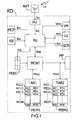
- Fig. 1 shows in highly schematic form a receiving device RD, which could for example be a radiotelephone conforming to GSM standards, GPRS or UMTS, or an organizer with reception functions and optionally issue.
- RD receiving device
- RD could for example be a radiotelephone conforming to GSM standards, GPRS or UMTS, or an organizer with reception functions and optionally issue.
- This receiver device RD includes means for receiving a radio signal Irs, and is capable of delivering at least one stimulus to a user of said RD device, who stimulus will have been defined by a transmitter of said Irs signal by means of at least one coded information conveyed by said Irs signal.
- This stimulus could be constituted by a sound emitted by an LS speaker, an image displayed on an SCR screen, or a vibration generated by a VM vibratory motor, or a combination of such stimuli.
- the receiving means comprise a ANT antenna, able to receive an Irs radio signal and transform it into a signal input electronics Sin.
- This Sin input signal will be transmitted to a unit of PU processing, via a reception unit RU intended to apply to said input signal If not filtering and converting to frequency and producing a resulting signal.
- the processing unit PU will then identify the resulting signal Ies as a request for restitution of a stimulus and extract from said resulting signal Ies the coded information allowing the identification of the stimulus whose restitution has been requested by the transmitter of the Irs radio signal.
- the processing unit PU will then send to the selection means and of reading materialized by the MCNT memory controller a data stream Mda memory containing said coded information and a request for selection and reading a memory area containing a model of the corresponding stimulus.
- the selection and reading means materialized by the MCNT memory controller provide in return to the processing unit PU another stream of memory data Mda which will contain for example a spectral representation of a sound to be emitted or a frame of a video image to display, or a vibration frequency to generate.
- the PU processing unit will translate this memory data stream into one or more Vos, Aos or Vms control signals, respectively, from an SCR screen, a speaker LS or a vibratory motor VM, which will then effectively restore the stimulus according to the model contained in the extracted Mda memory data by the selection and reading means materialized by the memory controller CNCD.
- all of the first memory zones and all second memory zones may be included in a single memory, of which portions including the first memory areas will not be writable only by the manufacturer of the RD receiving device, and of which portions including the second memory areas will only be write-accessible to a user of said RD receiving device
- a manufacturer of an RD receiver device such as that described here will, during of one of the manufacturing stages, an inscription of the content of the first memory MEM1, and will define on this occasion N models of N different stimuli, corresponding each one has an interpretation of N themes that these stimuli are supposed to express.
- a user of the receiving device can also register in the second memory P different models of P stimuli, each corresponding to an interpretation, specific to the user audit, of the P themes that these stimuli are supposed to Express.
- the user of the RD receiving device can make such a registration to the by means of an interface constituted in this example by a KB keyboard and a MCP microphone, which generate Kis and Ais data signals, which will be sent via the processing unit PU to the selection and reading MCNT in the form of memory data Mda, which means of selection and reading MCNT will then organize the writing of this data in the second MEM2 memory.
- the human / machine interface offered by the RD receiving device being usually not very user-friendly in the case of a portable device, this device RD receiver is also equipped with an MP memory port allowing direct access to the second memory MEM2 via a bus which could, for example, conform to a standard USB or RS232.
- This MP memory port will then allow the user to RD receiving device to use external equipment, such as a computer staff, to define their own models with more flexibility and precision, then to write these models directly in the second memory MEM2 without passing via the interface (KB, MCP) of the RD receiving device.
- This interface (KB, MCP) will however advantageously serve the user of the RD receiving device to define an order of priority between several sources different from different models of the same stimulus, as the means of selection and MCNT reading limits must be observed when selecting a memory zone.
- Kis signals supplied by the KB keyboard and / or Ais signals supplied by the microphone MCP will be analyzed by the processing unit PU which will deduce Prs data representative of the priority order defined by the user by means of the KB keyboard and / or MCP microphone.
- This data will be stored in this example of implementation in a PREG priority register, that the selection means and reading materialized by the MCNT memory controller will consult before each operation of selecting and reading a memory area.
- the signal Irs radio will then contain a request to write to said memory, accompanied an address of a memory area in which such writing is desired, and of a corresponding stimulus model.
- Said request after having passed through of the reception unit RU and of the processing unit PU, will then be transmitted under the form of a memory data stream Mda to the selection and reading means materialized by the MCNT memory controller which will select said memory area and to a writing, in said memory area, of the model defined by the operator.
- Such an embodiment of the invention will allow an update systematic, and without effort on the part of the user of the receiving device RD, the contents of a library of templates predefined by the operator in a uniform manner for all its subscribers.
- the order of priority is here materialized by preference indices 2 and 1 allocated to the various memory areas.
- the data contained in the PREG priority register may for example express a convention that the higher the value of an index assigned to a certain area the greater the memory, the higher the priority of said memory area.
- the selection and reading means materialized by the MCNT memory will deduce from a consultation of the PREG priority register that the content of the second memory zone MZ2k must be selected in priority to extract Mda2 data.
- This order of priority is in this example materialized by the order in which the digits 2 and 1 were entered in the priority register PREG.
- the number 2 is entered in a part of the PREG priority register containing bits of the most significant weights, the number 1 being entered in a part of the register of PREG priority containing the least significant bits of weight.
- the priority register will advantageously contain M digits representing the preference indices assigned to the models from the different sources, which indices will be ranked in descending order of priority from the bits from the most significant weights to the least significant bits.
- the means for selecting and reading materialized by the MCNT memory controller will scan in priority the second memory MEM2, and, after not having found a model corresponding to it integer k, will scan the first memory MEM1 and select the first memory area MZ1 to extract Mda1 data therefrom.
- the preference index will be memorized in a preference field specific to the memory area to which this index is assigned.
- the second memory MEM2 may, in certain applications, be integral an object separable from the receiver, which object could for example consist of a SIM or micro-SIM type smart card, or a type memory stick Memory Stick.
- the second table TAB2 could be constituted by a service table known from the person skilled in the art under the Anglo-Saxon name "SIM service table”, and the areas memory may be constituted by files known to the person skilled in the art under the Anglo-Saxon name "Elementary Files", possibly grouped within "Data Fields" directories when several models participate in the rendering of a same stimulus as several still images can be successively displayed to restore an animated image.
- SIM service table an Anglo-Saxon name
- the areas memory may be constituted by files known to the person skilled in the art under the Anglo-Saxon name "Elementary Files", possibly grouped within "Data Fields" directories when several models participate in the rendering of a same stimulus as several still images can be successively displayed to restore an animated image.
- the tables, files and directories mentioned above are defined
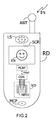
- Fig. 2 is a schematic representation of an RD receiving device according to a particular embodiment of the invention.
- This RD receiving device is here a radiotelephone with SCR screen and LS speaker, respectively intended to reproduce video and audio stimuli defined by a transmitter of a radio signal Irs that the RD receiving device is able to receive via reception means including an ANT antenna.
- the stimulus returned is visual and materialized by an ICN icon, which expresses a theme identified by a information coded by means of a number whose value is 1, which identifies the subject "I'm happy" according to the 3GPP TS 23.040 standard mentioned above.
- the model of the stimulus reproduced by the RD receiver device is extracted as a Mda2 memory data stream a memory MEM2 which is integral with an object separable from the receiving device RD, in this case a micro-SIM type SCD chip card, which has been previously connected, via a CON connector, to the materialized selection and reading means by the memory controller MCNT included in said receiver device RD.
- a memory MEM2 which is integral with an object separable from the receiving device RD, in this case a micro-SIM type SCD chip card, which has been previously connected, via a CON connector, to the materialized selection and reading means by the memory controller MCNT included in said receiver device RD.
- the RD receiving device After reception of a request, for the purpose of restoring said stimulus contained in the signal Irs radio, the RD receiving device will have sought in priority in said second memory MEM2 a model of said stimulus, which will have been previously defined by a user of said RD receiving device or by an operator with from which said user has subscribed, which model will constitute a interpretation of the "I'm happy" theme which will be specific to the user or audit operator and should therefore have been preferred to the model defined by the manufacturer of said RD receiver device.
Landscapes
- Engineering & Computer Science (AREA)
- Computer Networks & Wireless Communication (AREA)
- Signal Processing (AREA)
- Human Computer Interaction (AREA)
- Mobile Radio Communication Systems (AREA)
Abstract
- une étape de sélection et de lecture d'une première zone mémoire (MZ1i, pour i=1 à N) contenant un modèle (MDi) dudit stimulus.
- une étape de mémorisation préalable, au sein d'une deuxième zone mémoire (MZ2j, pour j=1 à P), d'un autre modèle (MDj) dudit stimulus, et
- une étape de définition préalable d'un ordre de priorité entre lesdites zones mémoire (MZ1i et MZ2j), ledit ordre étant matérialisé par des indices de préférence attribués aux dites zones mémoire.
Description
- une étape de mémorisation, au sein d'au moins une deuxième zone mémoire, d'au moins un autre modèle dudit stimulus, lequel autre modèle est également identifiable au moyen de ladite information codée, et
- une étape de définition d'un ordre de priorité entre lesdites zones mémoire à respecter lors d'une exécution d'une étape de sélection de l'une desdites zones mémoire.
- des moyens de sélection et de lecture d'une première zone mémoire, incluse dans ledit récepteur et contenant un modèle dudit stimulus, lequel modèle est identifiable au moyen de ladite information codée,
- dispositif caractérisé en ce qu'il inclut en outre :
- au moins une deuxième zone mémoire, destinée à mémoriser au moins un autre modèle dudit stimulus, lequel autre modèle est également identifiable au moyen de ladite information codée, et
- des moyens de définition d'un ordre de priorité entre lesdites zones mémoire à respecter lors d'une sélection de l'une desdites zones mémoire.
Claims (19)
- Procédé pour restituer au moins un stimulus à un utilisateur d'un dispositif récepteur de signaux, lequel stimulus est défini par un émetteur d'un tel signal au moyen d'au moins une information codée véhiculée par ledit signal, lequel procédé inclut au moins :procédé caractérisé en ce qu'il inclut en outre, en vue d'une exécution préalableune étape de sélection et de lecture d'une première zone mémoire, incluse dans ledit récepteur et contenant un modèle dudit stimulus, lequel modèle est identifiable au moyen de ladite information codée,une étape de mémorisation, au sein d'au moins une deuxième zone mémoire, d'au moins un autre modèle dudit stimulus, lequel autre modèle est également identifiable au moyen de ladite information codée, etune étape de définition d'un ordre de priorité entre lesdites zones mémoire à respecter lors d'une exécution d'une étape de sélection de l'une desdites zones mémoire, ledit ordre de priorité étant matérialisé par des indices de préférence attribués aux dites zones mémoire.
- Procédé selon la revendication 1, caractérisé en ce que l'étape de définition d'un ordre de priorité inclut une sous-étape de mémorisation de chaque indice de préférence dans un champ de préférence propre à la zone mémoire à laquelle cet indice est attribué.
- Procédé selon la revendication 2, caractérisé en ce que le champ de préférence propre à une zone mémoire est inclus dans l'adresse de ladite zone mémoire.
- Procédé selon l'une des revendications 1 à 3, caractérisé en ce que chaque indice de préférence est mémorisé dans au moins une table destinée à répertorier une pluralité de zones mémoire.
- Procédé selon la revendication 1, caractérisé en ce que différents modèles d'un même stimulus qui sont identifiables au moyen d'une même information codée sont mémorisés dans des zones mémoire incluses dans différents moyens de mémorisation physiquement distincts les uns des autres.
- Procédé selon la revendication 5, caractérisé en ce que l'étape de définition d'un ordre de priorité des différentes zones mémoire consiste à définir un ordre dans lequel seront successivement scrutés les différents moyens de mémorisation lors de l'étape de sélection et de lecture, qui sera exécutée dès qu'une desdites zones mémoire aura été identifiée au moyen de l'information codée.
- Procédé selon l'une des revendications 5 ou 6, caractérisé en ce qu'au moins un moyen de mémorisation est constitué par une mémoire solidaire d'un objet séparable du récepteur, qui aura été mis en contact avec ledit récepteur au cours d'une étape de connexion préalable à l'étape de sélection et de lecture.
- Procédé selon la revendication 1, caractérisé en ce que l'étape de mémorisation inclut une sous-étape de réception d'un signal contenant ledit autre modèle dudit stimulus.
- Signal contenant un modèle de stimulus destiné à être reçu par le récepteur au cours d'une sous-étape de réception dans un procédé selon la revendication 8.
- Dispositif récepteur de signaux apte à restituer au moins un stimulus à un utilisateur dudit dispositif, lequel stimulus est défini par un émetteur d'un tel signal au moyen d'au moins une information codée véhiculée par ledit signal, lequel dispositif inclut au moins :dispositif caractérisé en ce qu'il inclut en outre :des moyens de sélection et de lecture d'une première zone mémoire, incluse dans ledit récepteur et contenant un modèle dudit stimulus, lequel modèle est identifiable au moyen de ladite information codée,au moins une deuxième zone mémoire, destinée à mémoriser au moins un autre modèle dudit stimulus, lequel autre modèle est également identifiable au moyen de ladite information codée, etdes moyens de définition d'un ordre de priorité entre lesdites zones mémoire à respecter lors d'une sélection de l'une desdites zones mémoire, ledit ordre de priorité étant matérialisé par des indices de préférence attribués aux dites zones mémoire.
- Dispositif selon la revendication 10, caractérisé en ce que chaque indice de préférence est destiné à être mémorisé dans un champ de préférence propre à la zone mémoire à laquelle cet indice est attribué.
- Dispositif selon la revendication 11, caractérisé en ce que le champ de préférence propre à une zone mémoire est inclus dans l'adresse de ladite zone mémoire.
- Dispositif selon l'une des revendications 10 à 12, caractérisé en ce que chaque indice de préférence est mémorisé dans au moins une table destinée à répertorier une pluralité de zones mémoire.
- Dispositif selon la revendication 10, caractérisé en ce que différents modèles d'un même stimulus qui sont identifiables au moyen d'une même information codée sont mémorisés dans des zones mémoire incluses dans différents moyens de mémorisation physiquement distincts les uns des autres.
- Dispositif selon la revendication 14, caractérisé en ce que les moyens de définition d'un ordre de priorité des différentes zones mémoire sont destinés à définir un ordre dans lequel seront successivement scrutés les différents moyens de mémorisation par les moyens de sélection et de lecture, jusqu'à ce qu'une desdites zones mémoire soit identifiée au moyen de l'information codée.
- Dispositif selon l'une des revendications 14 ou 15, caractérisé en ce qu'au moins un moyen de mémorisation est constitué par une mémoire solidaire d'un objet séparable du récepteur, destinée à être connectée avec ledit dispositif.
- Dispositif selon l'une des revendications 10 à 16, caractérisé en ce qu'il inclut des moyens de réception d'un signal contenant ledit autre modèle dudit stimulus.
- Signal contenant un modèle de stimulus destiné à être reçu par un dispositif selon la revendication 17.
- Objet portable dont est solidaire une mémoire destinée à être connectée avec un dispositif selon la revendication 16.
Applications Claiming Priority (2)
| Application Number | Priority Date | Filing Date | Title |
|---|---|---|---|
| FR0209404 | 2002-07-22 | ||
| FR0209404A FR2842695B1 (fr) | 2002-07-22 | 2002-07-22 | Procede pour restituer au moins un stimulus a un utilisateur d'un dispositif recepteur de signaux |
Publications (1)
| Publication Number | Publication Date |
|---|---|
| EP1385347A1 true EP1385347A1 (fr) | 2004-01-28 |
Family
ID=29797659
Family Applications (1)
| Application Number | Title | Priority Date | Filing Date |
|---|---|---|---|
| EP03291799A Withdrawn EP1385347A1 (fr) | 2002-07-22 | 2003-07-21 | Procédé pour restituer au moins un stimulus à un utilisateur d'un dispositif récepteur de signaux |
Country Status (2)
| Country | Link |
|---|---|
| EP (1) | EP1385347A1 (fr) |
| FR (1) | FR2842695B1 (fr) |
Cited By (1)
| Publication number | Priority date | Publication date | Assignee | Title |
|---|---|---|---|---|
| FR2998077A1 (fr) * | 2012-11-09 | 2014-05-16 | Fabrice Boutain | Dispositif interacti de suivi d'activite et d'emotion de bonheur |
Citations (5)
| Publication number | Priority date | Publication date | Assignee | Title |
|---|---|---|---|---|
| EP0393794A1 (fr) * | 1989-04-20 | 1990-10-24 | Ericsson Radio Systems B.V. | Méthode d'affichage selon application de données sur un écran d'un système d'appel de personnes et système pour l'utilisation de cette méthode |
| EP0851649A2 (fr) * | 1996-12-30 | 1998-07-01 | Nokia Mobile Phones Ltd. | Programmation d'une tonalité se sonnerie téléphonique |
| US6111654A (en) * | 1999-04-21 | 2000-08-29 | Lexmark International, Inc. | Method and apparatus for replacing or modifying a postscript built-in font in a printer |
| GB2355563A (en) * | 1999-10-20 | 2001-04-25 | Nec Corp | Changing output font in wireless communication |
| WO2002054802A1 (fr) * | 2000-12-15 | 2002-07-11 | Futurice Oy | Procede d'edition et d'emission de donnees |
-
2002
- 2002-07-22 FR FR0209404A patent/FR2842695B1/fr not_active Expired - Lifetime
-
2003
- 2003-07-21 EP EP03291799A patent/EP1385347A1/fr not_active Withdrawn
Patent Citations (5)
| Publication number | Priority date | Publication date | Assignee | Title |
|---|---|---|---|---|
| EP0393794A1 (fr) * | 1989-04-20 | 1990-10-24 | Ericsson Radio Systems B.V. | Méthode d'affichage selon application de données sur un écran d'un système d'appel de personnes et système pour l'utilisation de cette méthode |
| EP0851649A2 (fr) * | 1996-12-30 | 1998-07-01 | Nokia Mobile Phones Ltd. | Programmation d'une tonalité se sonnerie téléphonique |
| US6111654A (en) * | 1999-04-21 | 2000-08-29 | Lexmark International, Inc. | Method and apparatus for replacing or modifying a postscript built-in font in a printer |
| GB2355563A (en) * | 1999-10-20 | 2001-04-25 | Nec Corp | Changing output font in wireless communication |
| WO2002054802A1 (fr) * | 2000-12-15 | 2002-07-11 | Futurice Oy | Procede d'edition et d'emission de donnees |
Cited By (1)
| Publication number | Priority date | Publication date | Assignee | Title |
|---|---|---|---|---|
| FR2998077A1 (fr) * | 2012-11-09 | 2014-05-16 | Fabrice Boutain | Dispositif interacti de suivi d'activite et d'emotion de bonheur |
Also Published As
| Publication number | Publication date |
|---|---|
| FR2842695A1 (fr) | 2004-01-23 |
| FR2842695B1 (fr) | 2005-01-28 |
Similar Documents
| Publication | Publication Date | Title |
|---|---|---|
| CN110286976B (zh) | 界面显示方法、装置、终端及存储介质 | |
| US7551916B2 (en) | Method and device for automatically changing a digital content on a mobile device according to sensor data | |
| WO2020187086A1 (fr) | Procédé et appareil de montage vidéo, dispositif, et support d'informations | |
| US8548531B2 (en) | Method and system of creating customized ringtones | |
| JP2006085681A (ja) | データ転換及びシェアのシステム及び方法 | |
| US20250044875A1 (en) | Haptic scene representation format | |
| WO2018108013A1 (fr) | Procédé et terminal d'affichage de support | |
| KR20050032589A (ko) | 통신 네트워크와 관련 송신자 단말기상으로의 메세지전송방법 및 시스템 | |
| CN1220152C (zh) | 个性信息提供系统和方法 | |
| CN111835621A (zh) | 会话消息处理方法、装置、计算机设备及可读存储介质 | |
| CN105187692A (zh) | 视频拍摄方法及装置 | |
| US20060125819A1 (en) | Creating effects for images | |
| US10965629B1 (en) | Method for generating imitated mobile messages on a chat writer server | |
| CN115700870A (zh) | 一种音频数据的处理方法及装置 | |
| EP1385347A1 (fr) | Procédé pour restituer au moins un stimulus à un utilisateur d'un dispositif récepteur de signaux | |
| CN114880062A (zh) | 聊天表情展示方法、设备、电子设备及存储介质 | |
| CN104485122B (zh) | 通信信息导出方法、装置,以及终端设备 | |
| KR100686076B1 (ko) | 피사체의 감정 상태에 대응하는 메시지 출력 기능을 갖는무선 통신 단말기 및 이를 이용한 메시지 출력 방법 | |
| KR20050030711A (ko) | 바코드 인식을 이용한 멀티미디어 컨텐츠 재생 기능을가지는 무선통신단말기 및 그 방법 | |
| CN101217751A (zh) | 一种通过pc侧软件从pc机内下载多媒体文件的方法 | |
| EP2014050A1 (fr) | Systeme et procede de telecommunication entre un utilisateur et des interlocuteurs selectionnes | |
| KR100818978B1 (ko) | 왑 페이지의 한글 표시 및 한글 입력을 수행하는 이동통신단말장치 및 한글 입출력 방법 및 그 방법을 제공하는서비스 서버 | |
| KR100678170B1 (ko) | 이동통신 단말기에서 캐리커쳐 또는 스케치 이미지를 제공하기 위한 장치 및 방법 | |
| CN1288936C (zh) | 以多变化背景画面显示文字简讯的手机及相关方法 | |
| CN113343146A (zh) | 一种基于h5的素材编辑方法和系统 |
Legal Events
| Date | Code | Title | Description |
|---|---|---|---|
| PUAI | Public reference made under article 153(3) epc to a published international application that has entered the european phase |
Free format text: ORIGINAL CODE: 0009012 |
|
| AK | Designated contracting states |
Kind code of ref document: A1 Designated state(s): AT BE BG CH CY CZ DE DK EE ES FI FR GB GR HU IE IT LI LU MC NL PT RO SE SI SK TR |
|
| AX | Request for extension of the european patent |
Extension state: AL LT LV MK |
|
| 17P | Request for examination filed |
Effective date: 20040403 |
|
| AKX | Designation fees paid |
Designated state(s): DE ES FR GB IT |
|
| RAP1 | Party data changed (applicant data changed or rights of an application transferred) |
Owner name: SAGEM COMMUNICATION |
|
| 17Q | First examination report despatched |
Effective date: 20080704 |
|
| RAP1 | Party data changed (applicant data changed or rights of an application transferred) |
Owner name: SAGEM MOBILES |
|
| RAP1 | Party data changed (applicant data changed or rights of an application transferred) |
Owner name: APPLE INC. |
|
| RAP1 | Party data changed (applicant data changed or rights of an application transferred) |
Owner name: APPLE INC. |
|
| STAA | Information on the status of an ep patent application or granted ep patent |
Free format text: STATUS: EXAMINATION IS IN PROGRESS |
|
| RIC1 | Information provided on ipc code assigned before grant |
Ipc: H04W 4/14 20090101AFI20190916BHEP Ipc: H04M 1/725 20060101ALI20190916BHEP |
|
| GRAP | Despatch of communication of intention to grant a patent |
Free format text: ORIGINAL CODE: EPIDOSNIGR1 |
|
| STAA | Information on the status of an ep patent application or granted ep patent |
Free format text: STATUS: GRANT OF PATENT IS INTENDED |
|
| INTG | Intention to grant announced |
Effective date: 20201118 |
|
| STAA | Information on the status of an ep patent application or granted ep patent |
Free format text: STATUS: THE APPLICATION IS DEEMED TO BE WITHDRAWN |
|
| 18D | Application deemed to be withdrawn |
Effective date: 20210330 |