EP1385223A2 - Fuel cell system with anti-freezing Operation Modes - Google Patents
Fuel cell system with anti-freezing Operation Modes Download PDFInfo
- Publication number
- EP1385223A2 EP1385223A2 EP03006797A EP03006797A EP1385223A2 EP 1385223 A2 EP1385223 A2 EP 1385223A2 EP 03006797 A EP03006797 A EP 03006797A EP 03006797 A EP03006797 A EP 03006797A EP 1385223 A2 EP1385223 A2 EP 1385223A2
- Authority
- EP
- European Patent Office
- Prior art keywords
- fuel cell
- water
- hot water
- passage
- cell system
- Prior art date
- Legal status (The legal status is an assumption and is not a legal conclusion. Google has not performed a legal analysis and makes no representation as to the accuracy of the status listed.)
- Withdrawn
Links
Images




Classifications
-
- H—ELECTRICITY
- H01—ELECTRIC ELEMENTS
- H01M—PROCESSES OR MEANS, e.g. BATTERIES, FOR THE DIRECT CONVERSION OF CHEMICAL ENERGY INTO ELECTRICAL ENERGY
- H01M8/00—Fuel cells; Manufacture thereof
- H01M8/06—Combination of fuel cells with means for production of reactants or for treatment of residues
- H01M8/0606—Combination of fuel cells with means for production of reactants or for treatment of residues with means for production of gaseous reactants
- H01M8/0612—Combination of fuel cells with means for production of reactants or for treatment of residues with means for production of gaseous reactants from carbon-containing material
-
- F—MECHANICAL ENGINEERING; LIGHTING; HEATING; WEAPONS; BLASTING
- F21—LIGHTING
- F21L—LIGHTING DEVICES OR SYSTEMS THEREOF, BEING PORTABLE OR SPECIALLY ADAPTED FOR TRANSPORTATION
- F21L14/00—Electric lighting devices without a self-contained power source, e.g. for mains connection
- F21L14/02—Electric lighting devices without a self-contained power source, e.g. for mains connection capable of hand-held use, e.g. inspection lamps
-
- C—CHEMISTRY; METALLURGY
- C01—INORGANIC CHEMISTRY
- C01B—NON-METALLIC ELEMENTS; COMPOUNDS THEREOF; METALLOIDS OR COMPOUNDS THEREOF NOT COVERED BY SUBCLASS C01C
- C01B3/00—Hydrogen; Gaseous mixtures containing hydrogen; Separation of hydrogen from mixtures containing it; Purification of hydrogen; Reversible storage of hydrogen
- C01B3/02—Production of hydrogen; Production of gaseous mixtures containing hydrogen
- C01B3/32—Production of hydrogen; Production of gaseous mixtures containing hydrogen by reaction of gaseous or liquid organic compounds with gasifying agents, e.g. water, carbon dioxide or air
-
- F—MECHANICAL ENGINEERING; LIGHTING; HEATING; WEAPONS; BLASTING
- F21—LIGHTING
- F21V—FUNCTIONAL FEATURES OR DETAILS OF LIGHTING DEVICES OR SYSTEMS THEREOF; STRUCTURAL COMBINATIONS OF LIGHTING DEVICES WITH OTHER ARTICLES, NOT OTHERWISE PROVIDED FOR
- F21V29/00—Protecting lighting devices from thermal damage; Cooling or heating arrangements specially adapted for lighting devices or systems
- F21V29/50—Cooling arrangements
- F21V29/70—Cooling arrangements characterised by passive heat-dissipating elements, e.g. heat-sinks
-
- H—ELECTRICITY
- H01—ELECTRIC ELEMENTS
- H01M—PROCESSES OR MEANS, e.g. BATTERIES, FOR THE DIRECT CONVERSION OF CHEMICAL ENERGY INTO ELECTRICAL ENERGY
- H01M8/00—Fuel cells; Manufacture thereof
- H01M8/04—Auxiliary arrangements, e.g. for control of pressure or for circulation of fluids
- H01M8/04007—Auxiliary arrangements, e.g. for control of pressure or for circulation of fluids related to heat exchange
- H01M8/04029—Heat exchange using liquids
-
- C—CHEMISTRY; METALLURGY
- C01—INORGANIC CHEMISTRY
- C01B—NON-METALLIC ELEMENTS; COMPOUNDS THEREOF; METALLOIDS OR COMPOUNDS THEREOF NOT COVERED BY SUBCLASS C01C
- C01B2203/00—Integrated processes for the production of hydrogen or synthesis gas
- C01B2203/02—Processes for making hydrogen or synthesis gas
- C01B2203/0205—Processes for making hydrogen or synthesis gas containing a reforming step
-
- C—CHEMISTRY; METALLURGY
- C01—INORGANIC CHEMISTRY
- C01B—NON-METALLIC ELEMENTS; COMPOUNDS THEREOF; METALLOIDS OR COMPOUNDS THEREOF NOT COVERED BY SUBCLASS C01C
- C01B2203/00—Integrated processes for the production of hydrogen or synthesis gas
- C01B2203/06—Integration with other chemical processes
- C01B2203/066—Integration with other chemical processes with fuel cells
-
- C—CHEMISTRY; METALLURGY
- C01—INORGANIC CHEMISTRY
- C01B—NON-METALLIC ELEMENTS; COMPOUNDS THEREOF; METALLOIDS OR COMPOUNDS THEREOF NOT COVERED BY SUBCLASS C01C
- C01B2203/00—Integrated processes for the production of hydrogen or synthesis gas
- C01B2203/16—Controlling the process
- C01B2203/1614—Controlling the temperature
-
- C—CHEMISTRY; METALLURGY
- C01—INORGANIC CHEMISTRY
- C01B—NON-METALLIC ELEMENTS; COMPOUNDS THEREOF; METALLOIDS OR COMPOUNDS THEREOF NOT COVERED BY SUBCLASS C01C
- C01B2203/00—Integrated processes for the production of hydrogen or synthesis gas
- C01B2203/16—Controlling the process
- C01B2203/1614—Controlling the temperature
- C01B2203/1619—Measuring the temperature
-
- Y—GENERAL TAGGING OF NEW TECHNOLOGICAL DEVELOPMENTS; GENERAL TAGGING OF CROSS-SECTIONAL TECHNOLOGIES SPANNING OVER SEVERAL SECTIONS OF THE IPC; TECHNICAL SUBJECTS COVERED BY FORMER USPC CROSS-REFERENCE ART COLLECTIONS [XRACs] AND DIGESTS
- Y02—TECHNOLOGIES OR APPLICATIONS FOR MITIGATION OR ADAPTATION AGAINST CLIMATE CHANGE
- Y02B—CLIMATE CHANGE MITIGATION TECHNOLOGIES RELATED TO BUILDINGS, e.g. HOUSING, HOUSE APPLIANCES OR RELATED END-USER APPLICATIONS
- Y02B20/00—Energy efficient lighting technologies, e.g. halogen lamps or gas discharge lamps
-
- Y—GENERAL TAGGING OF NEW TECHNOLOGICAL DEVELOPMENTS; GENERAL TAGGING OF CROSS-SECTIONAL TECHNOLOGIES SPANNING OVER SEVERAL SECTIONS OF THE IPC; TECHNICAL SUBJECTS COVERED BY FORMER USPC CROSS-REFERENCE ART COLLECTIONS [XRACs] AND DIGESTS
- Y02—TECHNOLOGIES OR APPLICATIONS FOR MITIGATION OR ADAPTATION AGAINST CLIMATE CHANGE
- Y02E—REDUCTION OF GREENHOUSE GAS [GHG] EMISSIONS, RELATED TO ENERGY GENERATION, TRANSMISSION OR DISTRIBUTION
- Y02E60/00—Enabling technologies; Technologies with a potential or indirect contribution to GHG emissions mitigation
- Y02E60/30—Hydrogen technology
- Y02E60/50—Fuel cells
Definitions
- the present invention relates to a fuel cell system configured to generate a power by reacting a reformed gas containing hydrogen obtained by reforming of a feed material with an oxidizing gas.
- Fig. 6 shows a configuration of the conventional fuel cell system (Japanese Laid-Open Patent Application Publication No. 11 - 214025).
- the fuel cell system comprises a fuel cell 33 that generates a power by reacting hydrogen supplied from a hydrogen supply means 31 with oxygen contained in air supplied from an air supply means 32, a water circulating means 34 that circulates water within a passage including the fuel cell 33, an output control unit 35 that controls the power output from the fuel cell 33, a temperature sensor 36 that detects ambient air temperature, and a control unit 37.
- the water circulating means 34 comprises a main tank 38, a water supply passage 40 that supplies water inside the main tank 38 to a hydrogen electrode 33a of the fuel cell 33 by using a pump 39, and water discharge passages 41 through which water is discharged from the hydrogen electrode 33a and the oxygen electrode 33b of the fuel cell 33 and is collected into the main tank 38.
- the hydrogen electrode 33a of the fuel cell 33 is required to be always humidified when the fuel cell 33 is conducting a power generation reaction. To this end, water is supplied from the main tank 38 to the hydrogen electrode 33a. Water in the oxygen electrode 33b which is generated by power generation reaction in the fuel cell 33 and excess water in the hydrogen electrode 33a are delivered through the water discharge passages 41 and are circulated between the fuel cell 33 and the main tank 38. The power generated in the fuel cell 33 is controlled by the output control unit 35 and then supplied to a power load.
- PEFC polymer electrolyte fuel cell
- the control unit 37 causes the hydrogen supply means 31 and the air supply means 32 to respectively supply hydrogen and air to the fuel cell 33, which generates a power. Simultaneously, the water inside the main tank 38 is supplied to the hydrogen electrode 33a, and the excess water in the hydrogen electrode 33a and the water in the oxygen electrode 33b obtained by power generation reaction in the fuel cell 33 are delivered through the water discharge passages 41 and are circulated between the fuel cell 33 and the main tank 38. In power generation reaction in the fuel cell 33, heat is also generated and serves to prevent freezing of water within the main tank 38, the water supply passage 40, and the water discharge passages 41 which are the water circulating means 34.
- the fuel cell for the purpose of preventing freezing, the fuel cell needs to operate to generate a power regardless of a request from the power load, and the generated power is discarded. This results in an increased running cost.
- the ratio between a generated heat energy and a generated power energy in power generation operation is approximately 1 : 1, energy equal to twice or more of the minimum generated heat energy required to prevent freezing needs to be supplied to the fuel cell system.
- the storage battery needs to have a huge capacity, thereby leading to increased initial cost of the system.
- the present invention has been made under the circumstances. and an object of the present invention is to provide a fuel cell system that reduces a running cost or an initial cost associated with an antifreezing operation.
- a fuel cell system comprising: a reformer for reforming a feed material to generate a reformed gas containing hydrogen; a material feed means for feeding the feed material to the reformer; a heater for heating the reformer; a fuel cell for generating a power by reacting the reformed gas supplied from the reformer with an oxidizing gas; and a temperature detector for detecting a temperature at a predetermined position in the fuel cell system, wherein in a first antifreezing operation mode, when the detector detects a temperature which is not higher than a threshold, the feed material heated in the reformer by the heater is caused to flow through a flow passage of the reformed gas.
- the fuel cell when the system judges that a request for power generation is made, the fuel cell may generate the power, and when the system judges that the request for power generation is not made, and the temperature detector detects the temperature which is not higher than the threshold, the system may go into the first antifreezing operation mode.
- the flow passage of the reformed gas may have a hydrogen discharge passage through which an off gas containing an excess reformed gas in power generation is discharged from the fuel cell and is introduced into the heater as a fuel, and the heated feed material may be caused to flow through the reformer, the fuel cell, the hydrogen discharge passage, and the heater, in this order. Thereby, freezing of at least the water within the hydrogen discharge passage can be prevented.
- the hydrogen discharge passage may have a hydrogen passage condenser for condensing moisture of the off gas into water and a hydrogen passage condensed water tank for reserving the condensed water, and the heated feed material may be also caused to flow into the hydrogen passage condenser and the hydrogen passage condensed water tank. Thereby, freezing of the water inside the hydrogen passage condenser and the water inside the hydrogen passage condensed water tank can be prevented.
- the fuel cell system may further comprise: a discharged oxidizing gas discharge passage into which an oxidizing gas including an excess oxidizing gas in the power generation is discharged from the fuel cell; an oxidizing gas passage condenser for condensing moisture of the discharged oxidizing as into water; and an oxidizing gas passage condensed water tank for reserving the condensed water, wherein the oxidizing gas passage condensed water tank and the hydrogen passage condensed water tank may be connected to each other at a position lower than their liquid levels.
- the fuel cell system may further comprise: a water supply means for supplying the water reserved in at least one of the hydrogen passage condensed water tank and the oxidizing gas passage condensed water tank to the reformer, wherein in the first antifreezing operation mode, the reserved water may be supplied from the water supply means to the reformer.
- the fuel cell system may further comprise: a cooling water circulating passage through which water for cooling the fuel cell is circulated, wherein in the first antifreezing operation mode, the water may be circulated through the cooling water circulating passage. Thereby, freezing of the water within the cooling water circulating passage is prevented.
- the water being circulated through the cooling water circulating passage may be subjected to heat exchange with water inside a hot water reserve tank or water outflowing from the hot water reserve tank and returning into the hot water reserve tank through a hot water circulating passage.
- the heat generated in the fuel cell in power generation is transferred through the cooling water and is reserved in the hot water reserve tank as hot water.
- freezing of water inside the hot water reserve tank is prevented in the state in which no power is generated.
- the heater in the first antifreezing operation mode, may be adapted to heat the reformer to a temperature at which reforming reaction does not occur, and thereby the heated feed material maybe delivered from the reformer. This easily achieves the configuration in which the heated feed material is delivered from the reformer.
- the fuel cell system has one or more passages within which water resides and the temperature detector is attached to a position in the one or more passages at which temperature of the water is assumed to become lowest. With this configuration, freezing of the water residing within the fuel cell system can be suitably prevented.
- the temperature detector is attached to a position in the fuel cell system where ambient air temperature can be detected. By monitoring the ambient air temperature, freezing is reliably prevented by using one temperature detector, and cost is kept low.
- a fuel cell system comprising: a fuel cell for generating a power and heat; a hot water reserve tank for reserving heat obtained by heat generation in the fuel cell as hot water; a heater for heating water reserved in the hot water reserve tank or water within a circulating passage including the hot water reserve tank with the power obtained by power generation in the fuel cell; and a temperature detector for detecting a temperature at a predetermined position in the fuel cell system, wherein when the system judges that a request for power generation is made, the fuel cell generates the power, and when the system judges that the request for power generation is not made and the temperature detector detects a temperature which is not higher than a threshold, the system goes into a second antifreezing operation mode, the fuel cell generates the power.
- the power generated in the fuel cell is reserved in the hot water reserve tank as heat energy without discarding heat when generating the power in the fuel cell to prevent freezing. This eliminates aneed for a storage battery for temporarily preserving a power and controls an initial cost of the fuel cell system.
- the fuel cell In the fuel cell system, the fuel cell generates the power and heat, and the fuel cell system may further comprise: a hot water reserve tank for reserving heat obtained by heat generation in the fuel cell as hot water; and a heater for heating water inside the hot water reserve tank or water within a circulating passage including the hot water reserve tank with the power obtained by power generation in the fuel cell, wherein when the system judges that a request for power generation is made, the fuel cell may generate the power, and when the system judges that the request for power generation is not made and the temperature detector detects a temperature which is not higher than a threshold, the systemmay go into a second antifreezing operation mode, and the fuel cell generates the power, and the first antifreezing operation mode or the second antifreezing operation mode may be selected by the system.
- the first antifreezing operation mode in which the power is not generated or the second antifreezing operation mode in which the power is generated is suitably selected and the running cost and the initial cost associated with the antifreezing operation can be effectively reduced.
- predicted amount of heat of hot water generated and reserved in the hot water reserve tank when an operation for power generation is conducted based on predicted amount of power generation requested per day may be compared with predicted amount of heat of hot water used per day, and when the predicted amount of heat of hot water used per day is larger than the predicted amount of heat of hot water generated and reserved in the hot water reserve tank, the system may operate in the second antifreezing operation mode until heat corresponding to difference between the predicted amount of heat of hot water used per day and the predicted amount of heat of hot water generated and reserved in the hot water reserve tank is reserved, and thereafter, the system may operate in the first antifreezing operation mode.
- the antifreezing operation by power generation is conducted to convert all the generated energy into heat, or otherwise, the antifreezing operation is conducted with a minimum energy without conducting power generation.
- the running cost and initial cost associated with the antifreezing operation can be reduced more effectively.
- Fig. 1 is a block diagram showing a configuration of a fuel cell system according to a first embodiment of the present invention.
- a reformer 1 is configured to generate a hydrogen-rich gas by reforming reaction of a feed material fed from a material feed means 2 using heat from a burner 3 as an example of a heater of the present invention.
- a fuel cell 4 is configured to generate a power by reacting the hydrogen-rich gas supplied from the reformer 1 with air as an example of an oxidizing gas.
- the fuel cell 4 has a hydrogen electrode 4a into which hydrogen flows and an oxygen electrode 4b into which the oxidizing gas flows .
- a hydrogen supply passage 5 connects the reformer 1 to the hydrogen electrode 4a of the fuel cell 4.
- the hydrogen supply passage 5 branches into a supply passage leading to the fuel cell 4 and a bypass passage 7 leading to a hydrogen passage condenser 8a, and a selector valve 6 is adapted to suitably select destination of the hydrogen flowing through the hydrogen supply passage 5 between the fuel cell 4 and the hydrogen passage condenser 8a.
- a hydrogen discharge passage 8 connects the hydrogen electrode 4a of the fuel cell 4 to the burner 3.
- the hydrogen discharge passage 8 is provided with the hydrogen passage condenser 8a and a hydrogen passage condensed water tank (hereinafter simply referred to as a condensed water tank) 8b.
- An oxidizing gas supply means 9 for supplying an oxidizing gas and an oxidizing gas discharge passage 10 for discharging an excess oxidizing gas are connected to the oxygen electrode 4b of the fuel cell 4.
- the oxidizing gas discharge passage 10 is provided with an oxidizing gas passage condenser 10a and an oxidizing gas passage condensed water tank (hereinafter simply referred to as a condensed water tank)10b.
- the condensed water tank 10a communicates with the condensed water tank 8a through a connecting portion 11 at a position lower than their liquid levels. This prevents mixing between the oxidizing gas and the hydrogen gas.
- a water supply means 12 is configured to supply water required for reforming reaction to the reformer 1.
- the water supply means 12 is configured to draw water from at least one of the condensed water tank 8b and the condensed water tank 10b by using a reforming water pump 12a. In the first embodiment, the water is drawn from the condensed water tank 10b.
- a cooling water circulating passage 13 serves to cool heat derived from the fuel cell 4. Through the cooling water circulating passage 13, cooling water is circulated between the fuel cell 4 and a heat exchanger 14 by using a cooling water pump 13a.
- Heat derived from the fuel cell 4 is transferred through the heat exchanger 14 in the cooling water circulating passage 13 and through a hot water circulating passage 15 and is reserved in a hot water reserve tank 16.
- a hot water pump 15a Through the circulating passage 15, hot water is circulated between the heat exchanger 14 and the hot water reserve tank 16 by using a hot water pump 15a.
- An output control unit 17 serves to control and supply a power generated in the fuel cell 4 to a power load such as home.
- a temperature detector 18 comprised of a sensor or the like is provided at any suitable location inside or outside of the fuel cell system, where temperature can be appropriately detected to prevent freezing of water within various passages in the fuel cell system. In order to reliably detect beginning of freezing, the temperature detector 18 is preferably provided at a location where temperature of water residing in the passages is assumed to become lowest. In the first embodiment, the temperature detector 18 is attached to a position where a temperature of the water inside the condensed water tank 10b can be detected.
- control unit 19 comprised of a computer.
- the control unit 19 is provided with an operation portion (not shown) for entering an instruction such as an ON/OFF of the system.
- the control unit 19 is configured to control the fuel cell system.
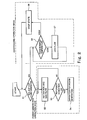
- Fig. 2 is a flowchart schematically showing an operation of the fuel cell system in Fig. 1. Since the operation of the fuel cell system is controlled according to a control program of the control unit 19, a control process of the control unit 19 will be described as the operation of the fuel cell system.
- the fuel cell system has a power generation mode for normally generating a power and an antifreezing operation mode (hereinafter referred to as a first antifreezing operation mode) for preventing freezing.
- a power generation mode for normally generating a power
- an antifreezing operation mode for preventing freezing.
- the fuel cell system starts, and first of all, judges whether or not there is a request for power generation (Step 1).
- the request for power generation is made from an event that a value for the power load is larger than a predetermined value.
- an instruction for power generation may be entered with the operation portion (not shown), and based on whether or not there is an entering operation, it is judged whether or not the request for the power generation is made.
- the fuel cell system goes into the power generation operation mode, in which the fuel cell system is activated and gas flow is conducted (Step S2).
- the selector valve 6 selects the bypass passage 7.
- a feed material such as hydrocarbon, including methane, utility gas, propane, etc, or a liquid fuel capable of being evaporated by heating in the reformer 1 (an alcohol fuel with a low boiling point such as ethanol, or methanol) is fed from the material feed means 2 to the reformer 1.
- the feed material in the reformer 1 is heated by the burner 3 and is converted into a hydrogen-rich reformed gas through reforming reaction with water. Nonetheless, at the start of the system, since the temperature of the reformer 1 is low and thereby the hydrogen-rich gas is not sufficiently generated, the reformed gas delivered from the reformer 1 contains more feed material (gas) and less hydrogen.
- the reformed gas flows through the bypass passage 7 and the hydrogen discharge passage 8 and is used as the fuel gas in the burner 3.
- a temperature at a predetermined position of the reformer 1 e.g., reaction portion
- the selector valve 6 switches the bypass passage 7 to the passage leading to the fuel cell 4, and the operation for power generation is started (Step S4).
- a starting state of the reformer 1 may be judged by monitoring a concentration of hydrogen contained in the reformed gas.
- the hydrogen and the oxygen contained in air are reacted with each other and converted into water, which is converted into steam, which is then discharged together with air into the oxidizing gas discharge passage 10.
- the moisture of the air containing steam is condensed into water in the oxidizing gas passage condenser 10a, and the resulting condensed water is separated from the air in the condensed water tank 10b.
- the water which has been collected into the condensed water tank 10b and the condensed water tank 8b, is supplied into the reformer 1 by using the reforming water pump 12a to be used for reforming reaction.
- the power generated in the fuel cell 4 is controlled by the output control unit 17, and supplied to the power load such as home. Meanwhile, the heat generated through the power generation in the fuel cell 4 is transferred to the heat exchanger 14 by circulating the water within the cooling water circulating passage 13 by using the cooling water pump 13a, for heat exchange with the water within the hot water circulating passage 15.
- the heat after heat exchange is delivered to the hot water reserve tank 16 by water circulation by the hot water pump 15a and is reserved therein as hot water.
- the hot water is supplied for various applications such as water feeding or heating at home. Thus, the heat derived from the fuel cell 4 is effectively used.
- the heat exchanger 14 may be provided within the hot water reserve tank 16.
- Step S5 the fuel cell system goes into the first antifreezing operation mode, in which the temperature at the predetermined position is monitored.
- the fuel cell system maintain a stop state (Step S6), whereas when the temperature is not higher than the predetermined temperature, the gas flow is conducted (Step S7).
- Step S6 when the request for power generation is not made and the temperature detector 18 detects a temperature higher than a threshold (at which freezing can be prevented by the antifreezing operation), for example, 0°C, the fuel cell system maintains the stop state (Step S6).
- the selector valve 6 selects the fuel cell 4, so that the feed material sequentially flows from the material feed means 2 to the reformer 1, the hydrogen supply passage 5, the fuel cell 4, the hydrogen passage condenser 8a of the hydrogen discharge passage 8, the condensed water tank 8b, and the burner 3, where the feed material is combusted (Step S7).
- the water is supplied from the water supply means 12 to the reformer 1, where the reaction portion is kept at a temperature required for reaction or lower by adjusting combustion of the burner 3.
- reaction requires a temperature of about 400°C or higher, but in this case, the temperature is kept at about 300°C.
- the feed material is not reformed in the reformer 1, and the feed material heated to this temperature is delivered from the reformer 1.
- the oxidizing gas supply means 9 is in a stop state, and therefore air is not supplied to the oxygen electrode 4a. Under the condition, the fuel cell 4 does not generate a power.
- the feed material heated in the reformer 1 by the burner 3 sequentially flows through the hydrogen supply passage 5, the fuel cell 4, the hydrogen passage condenser 8a of the hydrogen discharge passage 8, the condensed water tank 8b, and the burner 3, in this order within the fuel cell system, thereby preventing freezing of the water residing within the passages and the water inside the condensed water tank 8b.
- the condensed water tank 8b communicates with the condensed water tank 10b through the connecting portion 11 at the position lower than their liquid levels, in the first antifreezing operation mode, heat transfer from the water inside the tank 8b prevents freezing of the water inside the tank 10b.
- the reforming water pump 12a pumps the water inside the condensed water tank 10b into the reformer 1, thereby preventing freezing of water within the water supply means 12.
- the fuel cell system may be operated as in the power generation operation mode except that the feed material is partially reformed (so that concentration of hydrogen becomes lower than that of hydrogen in the power generation operation mode) in the reformer 1.
- Fig. 3 is a block diagram showing a configuration of a fuel cell system according to a second embodiment of the present invention.
- the same reference numerals as those in Fig. 1 denote the same or corresponding parts, which will not be further described.
- the configuration of the second embodiment is identical to that of the first embodiment except that a temperature detector 20 is attached to a position where anbient air temperature can be detected.
- Fig. 4 is a block diagram showing a configuration of a fuel cell system according to a third embodiment of the present invention.
- the same reference numerals as those in Fig. 1 denote the same or corresponding parts, which will not be further described.
- the configuration of the third embodiment is identical to that of the first embodiment except that a heater 21 electrically connected to the output control unit 17 is provided in the hot water circulating passage 15 in the fuel cell system, and the fuel cell system has a second antifreezing operation mode.
- the fuel cell system goes into the second antifreezing operation mode.
- a threshold at which freezing can be prevented by the antifreezing operation
- the fuel cell system goes into the second antifreezing operation mode.
- the feed material is fed from the material feed means 2 to the reformer 1 and air is supplied from the oxidizing gas supply means 9 to the fuel cell 4.
- the power is generated in such a manner that the reformed gas generated in the reformer 1 reacts with the air as the oxidizing gas.
- the heat resulting from this power generation not only warms an inside of the passages such as the hydrogen discharge passage 8, or the oxidizing gas discharge passage 10, but also is transferred into the hot water reserve tank 16 through the heat exchanger 14 in the cooling water circulating passage 13 and the hot water circulating passage 15. The heat is reserved in the hot water reserve tank 16 as the hot water.
- An excess power in the fuel cell 4 is controlled by the output control unit 17 to energize the heater 21.
- the fuel cell 4 In the second antifreezing operation mode, the fuel cell 4 generates a power and the generated power is reserved in the hot water reserve tank 16 as heat energy without discarding heat. This eliminates a need for a storage battery that temporarily preserves a power, and consequently, initial cost of the system can be kept low. It should be appreciated that the same effects are obtained by providing the heater 21 inside the hot water reserve tank 16.
- control unit 19 is configured to control the fuel cell system so that the second antifreezing operation mode or the first antifreezing operation mode is suitably selected. In this configuration, the running cost and initial cost associated with the antifreezing operation can be reduced more effectively.
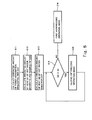
- Fig. 5 is a flowchart showing a process of an antifreezing operation mode according to a modification of the third embodiment.
- the fuel cell 4 in response to a request for power generation, the fuel cell 4 operates for power generation. And, the control unit 19 executes control as described below.
- control unit 19 calculates predicted amount of power generation requested per day (Step S11).
- control unit 19 calculates predicted amount of heat Q1 of hot water generated and reserved in the hot water reserve tank 16, when the operation for power generation is conducted based on the predicted amount of power generation requested per day (Step S12).
- control unit 19 calculates predicted amount of heat Q2 of hot water used per day (Step S13).
- control unit 19 compares the predicted amount of heat Q2 to the predicted amount of heat Q1 (Step S14).
- the fuel cell system When the predicted amount of heat Q2 is larger than the predicted amount of heat Q1 and the temperature detector 18 detects a temperature which is not higher than the threshold, the fuel cell system operates in the second antifreezing mode until heat corresponding to difference (Q2 - Q1)is reserved (Step S15, 14) and thereafter, the fuel cell system operates in the first antifreezing operation mode (Step S16).
Landscapes
- Chemical & Material Sciences (AREA)
- Engineering & Computer Science (AREA)
- Chemical Kinetics & Catalysis (AREA)
- Electrochemistry (AREA)
- Sustainable Development (AREA)
- Sustainable Energy (AREA)
- Manufacturing & Machinery (AREA)
- Life Sciences & Earth Sciences (AREA)
- General Chemical & Material Sciences (AREA)
- Organic Chemistry (AREA)
- General Engineering & Computer Science (AREA)
- Health & Medical Sciences (AREA)
- General Health & Medical Sciences (AREA)
- Combustion & Propulsion (AREA)
- Inorganic Chemistry (AREA)
- Fuel Cell (AREA)
Abstract
Description
Claims (14)
- A fuel cell system comprising:a reformer for reforming a feed material to generate a reformed gas containing hydrogen;a material feed means for feeding the feed material to the reformer;a heater for heating the reformer;a fuel cell for generating a power by reacting the reformed gas supplied from the reformer with an oxidizing gas; anda temperature detector for detecting a temperature at a predetermined position in the fuel cell system, whereinin a first antifreezing operation mode, when the detector detects a temperature which is not higher than a threshold, the feed material heated in the reformer by the heater is caused to flow through a flow passage of the reformed gas.
- The fuel cell system according to Claim 1, wherein
when the system judges that a request for power generation is made, the fuel cell generates the power, and
when the system judges that the request for power generation is not made and the temperature detector detects the temperature which is not higher than the threshold, the system goes into the first antifreezing operation mode. - The fuel cell system according to Claim 1, wherein the flow passage of the reformed gas has a hydrogen discharge passage through which an off gas containing an excess reformed gas in power generation is discharged from the fuel cell and is introduced into the heater as a fuel, and the heated feed material is caused to flow through the reformer, the fuel cell, the hydrogen discharge passage, and the heater, in this order.
- The fuel cell system according to Claim 3, wherein the hydrogen discharge passage has a hydrogen passage condenser for condensing moisture of the off gas into water and a hydrogen passage condensed water tank for reserving the condensed water, and the heated feed material is also caused to flow into the hydrogen passage condenser and the hydrogen passage condensed water tank.
- The fuel cell system according to Claim 4, further comprising:an oxidizing gas discharge passage into which a discharged oxidizing gas including an excess oxidizing gas in the power generation is discharged from the fuel cell;an oxidizing gas passage condenser for condensing moisture of the discharged oxidizing gas into water; andan oxidizing gas passage condensed water tank for reserving the condensed water, whereinthe oxidizing gas passage condensed water tank and the hydrogen passage condensed water tank are connected to each other at a position lower than their liquid levels.
- The fuel cell system according to Claim 5, further comprising:a water supply means for supplying the water reserved in at least one of the hydrogen passage condensed water tank and the oxidizing gas passage condensed water tank to the reformer, whereinin the first antifreezing operation mode, the reserved water is supplied from the water supply means to the reformer.
- The fuel cell system according to Claim 1, further comprising:a cooling water circulating passage through which water for cooling the fuel cell is circulated, whereinin the first antifreezing operation mode, the water is circulated through the cooling water circulating passage.
- The fuel cell system according to Claim 7, wherein the water being circulated through the cooling water circulating passage is subjected to heat exchange with water inside a hot water reserve tank or water outflowing from the hot water reserve tank and returning into the hot water reserve tank through a hot water circulating passage.
- The fuel cell system according to Claim 1, wherein
in the first antifreezing operation mode, the heater is adapted to heat the reformer to a temperature at which reforming reaction does not occur, and thereby the heated feed material is delivered from the reformer. - The fuel cell system according to Claim 1, wherein
the fuel cell system has one or more passages within which water resides and the temperature detector is attached to a position in the one or more passages at which temperature of the water is assumed to become lowest. - The fuel cell system according to Claim 1, wherein the temperature detector is attached to a position in the fuel cell system where ambient air temperature can be detected.
- A fuel cell system comprising:a fuel cell for generating a power and heat;a hot water reserve tank for reserving heat obtained by heat generation in the fuel cell as hot water;a heater for heating water reserved in the hot water reserve tank or water within a circulating passage including the hot water reserve tank with the power obtained by power generation in the fuel cell; anda temperature detector for detecting a temperature at a predetermined position in the fuel cell system, whereinwhen the system judges that a request for power generation is made, the fuel cell generates the power, andwhen the system judges that the request for power generation is not made and the temperature detector detects a temperature which is not higher than a threshold, the system goes into a second antifreezing operation mode, and the fuel cell generates the power.
- The fuel cell system according to Claim 1, wherein the fuel cell generates the power and heat, the fuel cell system further comprising:a hot water reserve tank for reserving heat obtained by heat generation in the fuel cell as hot water; anda heater for heating water inside the hot water reserve tank or water within a circulating passage including the hot water reserve tank with the power obtained by power generation in the fuel cell , whereinwhen the system judges that a request for power generation is made, the fuel cell generates the power,when the system judges that the request for power generation is not made and the temperature detector detects a temperature which is not higher than a threshold, the system goes into a second antifreezing operation mode and the fuel cell generates the power, andthe first antifreezing operation mode or the second antifreezing operation mode is selected by the system.
- The fuel cell system according to Claim 13, wherein
predicted amount of heat of hot water generated and reserved in the hot water reserve tank when an operation for power generation is conducted based on predicted amount of power generation requested per day is compared with predicted amount of heat of hot water used per day, and when the predicted amount of heat of hot water used per day is larger than the predicted amount of heat of hot water generated and reserved in the hot water reserve tank, the system operates in the second antifreezing operation mode until heat corresponding to difference between the predicted amount of heat of hot water used per day and the predicted amount of heat of hot water generated and reserved in the hot water reserve tank is reserved, and thereafter, the system operates in the first antifreezing operation mode.
Applications Claiming Priority (2)
| Application Number | Priority Date | Filing Date | Title |
|---|---|---|---|
| JP2002085270 | 2002-03-26 | ||
| JP2002085270 | 2002-03-26 |
Publications (2)
| Publication Number | Publication Date |
|---|---|
| EP1385223A2 true EP1385223A2 (en) | 2004-01-28 |
| EP1385223A3 EP1385223A3 (en) | 2004-04-07 |
Family
ID=28449248
Family Applications (1)
| Application Number | Title | Priority Date | Filing Date |
|---|---|---|---|
| EP03006797A Withdrawn EP1385223A3 (en) | 2002-03-26 | 2003-03-26 | Fuel cell system with anti-freezing Operation Modes |
Country Status (4)
| Country | Link |
|---|---|
| US (1) | US20030211373A1 (en) |
| EP (1) | EP1385223A3 (en) |
| KR (1) | KR100525668B1 (en) |
| CN (1) | CN1280937C (en) |
Families Citing this family (23)
| Publication number | Priority date | Publication date | Assignee | Title |
|---|---|---|---|---|
| JP4307823B2 (en) * | 2002-11-28 | 2009-08-05 | 本田技研工業株式会社 | Failure determination method for air supply system of fuel cell device |
| US20050019631A1 (en) * | 2003-07-23 | 2005-01-27 | Matsushita Electric Industrial Co., Ltd. | Fuel cell cogeneration system |
| JP4675780B2 (en) * | 2004-01-15 | 2011-04-27 | パナソニック株式会社 | Hydrogen generator, operation method of hydrogen generator, fuel cell system, and operation method of fuel cell system |
| JP4993240B2 (en) * | 2004-03-17 | 2012-08-08 | トヨタ自動車株式会社 | Control device |
| JP2005327494A (en) * | 2004-05-12 | 2005-11-24 | Aisin Seiki Co Ltd | Fuel cell power generation system for collective housing and operation method thereof |
| KR101093701B1 (en) * | 2004-06-07 | 2011-12-19 | 삼성에스디아이 주식회사 | A fuel cell stack and a fuel cell having the fuel cell stack |
| KR100700546B1 (en) * | 2005-08-22 | 2007-03-28 | 엘지전자 주식회사 | Fuel cell freezing prevention device |
| KR100700547B1 (en) * | 2005-08-23 | 2007-03-28 | 엘지전자 주식회사 | Fuel cell system |
| KR100740542B1 (en) * | 2006-05-30 | 2007-07-18 | 최성환 | Fuel Cell Waste Heat Recovery System |
| CN101467293B (en) | 2006-06-06 | 2011-07-27 | 松下电器产业株式会社 | Fuel cell system |
| JP5064387B2 (en) * | 2006-06-15 | 2012-10-31 | パナソニック株式会社 | Hydrogen generator and fuel cell system |
| KR100798452B1 (en) * | 2006-07-31 | 2008-01-28 | (주)퓨얼셀 파워 | Fuel cell system |
| CN101512815B (en) * | 2006-09-27 | 2011-06-08 | 松下电器产业株式会社 | Fuel cell system |
| KR100805444B1 (en) * | 2006-12-01 | 2008-02-20 | 현대자동차주식회사 | Hydrogen Recirculation System for Fuel Cell Vehicles |
| CN101207215B (en) * | 2006-12-20 | 2010-10-06 | 比亚迪股份有限公司 | Anti-freezing device and method of fuel cell system |
| KR100884538B1 (en) * | 2007-10-30 | 2009-02-18 | 삼성에스디아이 주식회사 | Fuel reformer and fuel cell system having same |
| KR101283247B1 (en) * | 2010-04-07 | 2013-07-11 | 엘에스산전 주식회사 | Fuel cell system |
| JP6549601B2 (en) | 2013-11-06 | 2019-07-24 | ワット・フューエル・セル・コーポレイションWatt Fuel Cell Corp. | Integrated system of gaseous fuel CPOX reformer and fuel cell, and method of generating electricity |
| JP6253795B2 (en) | 2013-11-06 | 2017-12-27 | ワット・フューエル・セル・コーポレイションWatt Fuel Cell Corp. | Gaseous fuel CPOX reformer and CPOX reforming method |
| EP3065855B1 (en) | 2013-11-06 | 2022-06-29 | Watt Fuel Cell Corp. | Liquid fuel cpox reformer and fuel cell systems, and methods of producing electricity |
| EP3065861A2 (en) | 2013-11-06 | 2016-09-14 | Watt Fuel Cell Corp. | Chemical reactor with manifold for management of a flow of gaseous reaction medium thereto |
| CN105705226B (en) | 2013-11-06 | 2018-03-27 | 瓦特燃料电池公司 | Liquid fuel CPOX reformer and catalytic partial oxidation reforming method |
| EP3065854A2 (en) | 2013-11-06 | 2016-09-14 | Watt Fuel Cell Corp. | Reformer with perovskite as structural component thereof |
Family Cites Families (13)
| Publication number | Priority date | Publication date | Assignee | Title |
|---|---|---|---|---|
| JPH03283361A (en) * | 1990-03-30 | 1991-12-13 | Mitsubishi Electric Corp | Fuel cell power generating system |
| JPH07296834A (en) * | 1994-04-26 | 1995-11-10 | Hitachi Ltd | Fuel cell power generation plant and method for operating reformer of the plant |
| US6329089B1 (en) * | 1997-12-23 | 2001-12-11 | Ballard Power Systems Inc. | Method and apparatus for increasing the temperature of a fuel cell |
| JPH11214025A (en) * | 1998-01-21 | 1999-08-06 | Sanyo Electric Co Ltd | Fuel cell apparatus |
| EP1094031A4 (en) * | 1999-04-20 | 2005-02-02 | Tokyo Gas Co Ltd | MONOTUBE CYLINDRICAL REFORMER AND METHOD FOR OPERATING THE SAME |
| US6248462B1 (en) * | 1999-05-28 | 2001-06-19 | International Fuel Cells, Llc | Method and apparatus for thermal management of a fuel cell assembly |
| JP2001176527A (en) * | 1999-12-16 | 2001-06-29 | Daikin Ind Ltd | Fuel cell system and fuel cell cogeneration system |
| US6489048B1 (en) * | 2000-02-11 | 2002-12-03 | Plug Power Inc. | Operating a fuel cell system during low power demand |
| US6376112B1 (en) * | 2000-02-11 | 2002-04-23 | General Motors Corporation | Controlled shutdown of a fuel cell |
| JP2001351653A (en) * | 2000-06-02 | 2001-12-21 | Yamaha Motor Co Ltd | Fuel cell system |
| US6432568B1 (en) * | 2000-08-03 | 2002-08-13 | General Motors Corporation | Water management system for electrochemical engine |
| JP4830197B2 (en) * | 2000-09-13 | 2011-12-07 | トヨタ自動車株式会社 | Fuel reformer |
| JP2002289227A (en) * | 2001-03-23 | 2002-10-04 | Aisin Seiki Co Ltd | Fuel cell cogeneration system |
-
2003
- 2003-03-25 US US10/397,860 patent/US20030211373A1/en not_active Abandoned
- 2003-03-25 KR KR10-2003-0018612A patent/KR100525668B1/en not_active Expired - Fee Related
- 2003-03-26 EP EP03006797A patent/EP1385223A3/en not_active Withdrawn
- 2003-03-26 CN CNB031213693A patent/CN1280937C/en not_active Expired - Fee Related
Also Published As
| Publication number | Publication date |
|---|---|
| US20030211373A1 (en) | 2003-11-13 |
| CN1280937C (en) | 2006-10-18 |
| EP1385223A3 (en) | 2004-04-07 |
| CN1447470A (en) | 2003-10-08 |
| KR100525668B1 (en) | 2005-11-02 |
| KR20030077454A (en) | 2003-10-01 |
Similar Documents
| Publication | Publication Date | Title |
|---|---|---|
| EP1385223A2 (en) | Fuel cell system with anti-freezing Operation Modes | |
| JP4284378B2 (en) | Fuel cell system | |
| JP5418529B2 (en) | Fuel cell system | |
| US9929415B2 (en) | Fuel cell system and control method thereof | |
| EP2215679B1 (en) | Fuel cell system | |
| EP2756538B1 (en) | Fuel cell system | |
| US20070275281A1 (en) | Fuel cell thermal management system | |
| EP2416416A1 (en) | Fuel cell system | |
| US20070134526A1 (en) | Fuel cell system and water recovery method thereof | |
| JP4845899B2 (en) | Fuel cell system | |
| JP4087840B2 (en) | Fuel cell system | |
| JP2004006270A (en) | Fuel cell system | |
| JP4690023B2 (en) | Fuel cell system | |
| JP2008091096A (en) | Fuel cell system | |
| JP2005011621A (en) | Fuel cell system | |
| JP3939333B2 (en) | Hot water system | |
| JP2001325978A (en) | Fuel cell and its running method |
Legal Events
| Date | Code | Title | Description |
|---|---|---|---|
| PUAI | Public reference made under article 153(3) epc to a published international application that has entered the european phase |
Free format text: ORIGINAL CODE: 0009012 |
|
| 17P | Request for examination filed |
Effective date: 20030407 |
|
| AK | Designated contracting states |
Kind code of ref document: A2 Designated state(s): AT BE BG CH CY CZ DE DK EE ES FI FR GB GR HU IE IT LI LU MC NL PT RO SE SI SK TR |
|
| AX | Request for extension of the european patent |
Extension state: AL LT LV MK |
|
| PUAL | Search report despatched |
Free format text: ORIGINAL CODE: 0009013 |
|
| AK | Designated contracting states |
Kind code of ref document: A3 Designated state(s): AT BE BG CH CY CZ DE DK EE ES FI FR GB GR HU IE IT LI LU MC NL PT RO SE SI SK TR |
|
| AX | Request for extension of the european patent |
Extension state: AL LT LV MK |
|
| AKX | Designation fees paid |
Designated state(s): DE FR GB IT |
|
| STAA | Information on the status of an ep patent application or granted ep patent |
Free format text: STATUS: THE APPLICATION HAS BEEN WITHDRAWN |
|
| 18W | Application withdrawn |
Effective date: 20070823 |